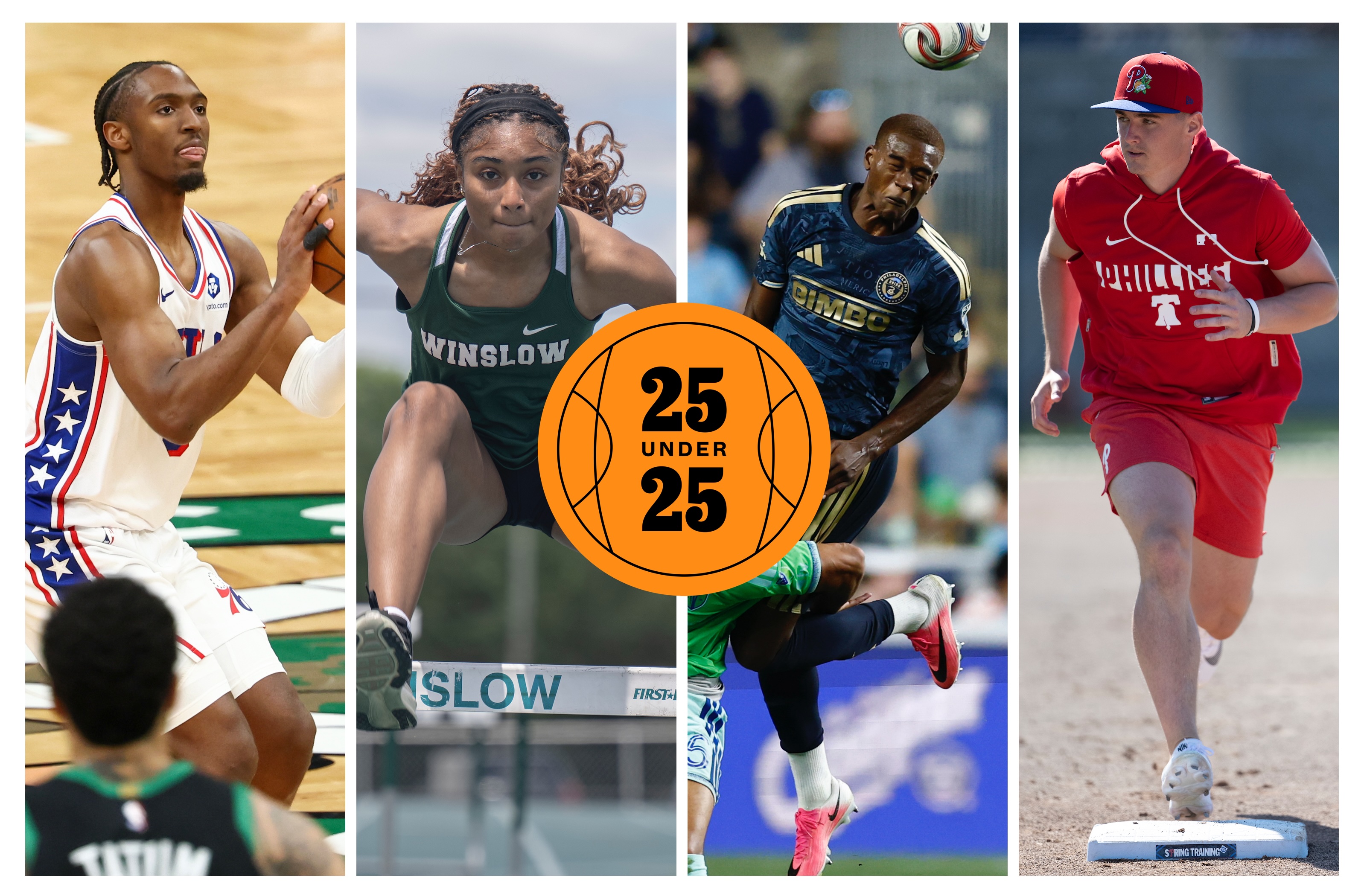
Tag: topic-link-auto

  • From Jalen Carter to Jett Harrison, these athletes just missed the cut for our 25 under 25 list

    From Jalen Carter to Jett Harrison, these athletes just missed the cut for our 25 under 25 list

    Find yourself debating our 25 under 25 list? Well, maybe this list will help explain some of our reasoning — or give you something else to talk about.

    Several athletes, ranging from high school to professional, just missed the cut. Some turned 25 earlier this year, while others were considered but didn’t quite crack the final list.

    However, this gives you a glimpse into the name’s to look out for in next year’s 25 under 25. With that being said, here’s our top Philly athletes who missed the list.

    Just aged out …

    Tyrese Maxey

    Since Maxey’s rookie season in 2020-21, he has been on an upward trajectory to becoming the focal point of the 76ers. The point guard was named NBA Most Improved Player and earned his first All-Star selection in 2023-24.

    Maxey’s stellar fourth year led to a five-year, $204 million max contract. Lingering injuries derailed his 2024-25 season, but he made up for it last season, when he became the franchise all-time leader in three-pointers, surpassing Allen Iverson.

    He also earned his second All-Star nod and was named a starter for the Eastern Conference. Let’s also not forget his highlight moment when he recorded a career-high 54 points to become the second player in Sixers’ history to record at least 50 points and nine assists in a game.
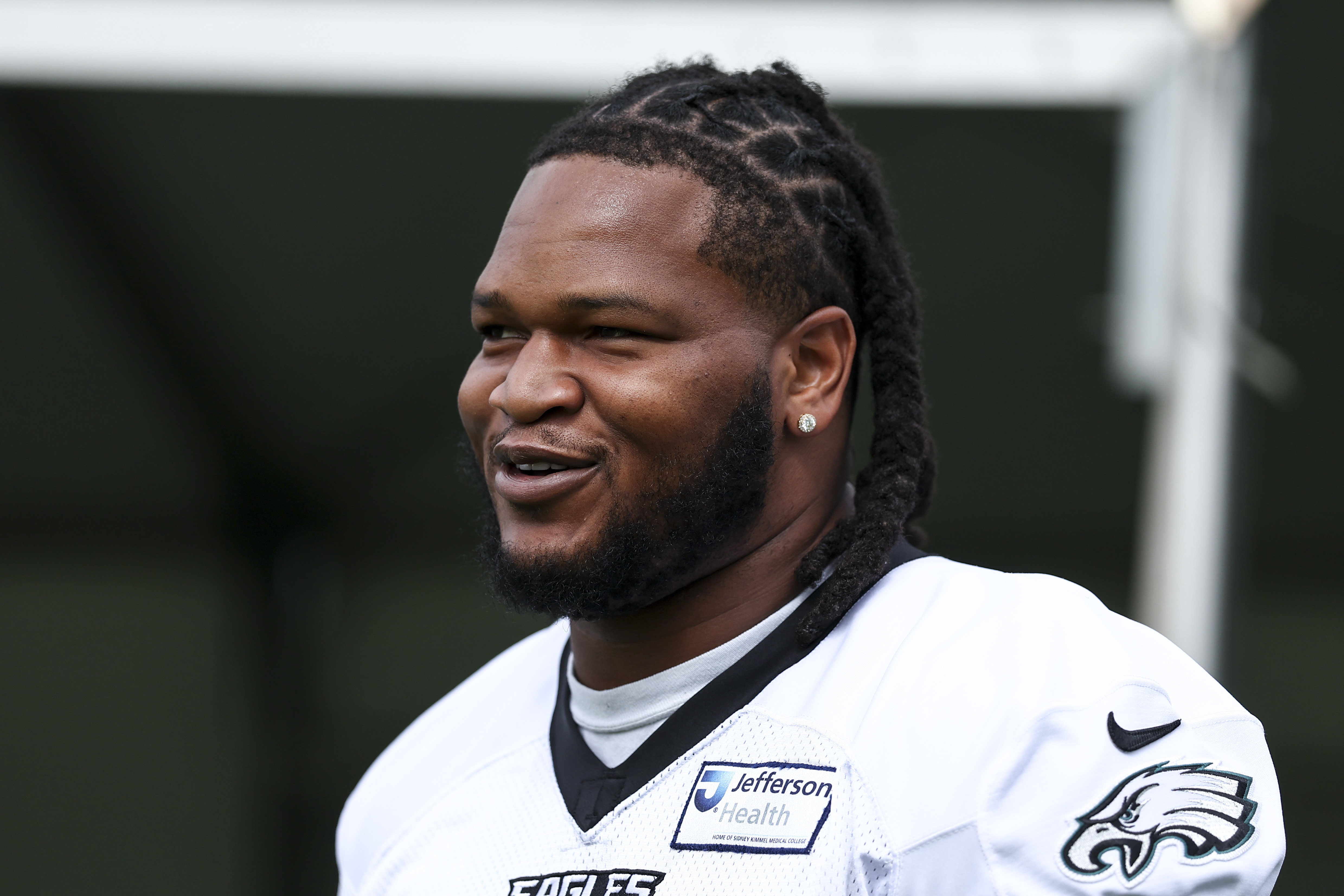
    Eagles defensive tackle Jalen Carter, 25, is the highest-paid defensive tackle in NFL history.Monica Herndon / Staff Photographer

    Jalen Carter

    Carter still has some time to claim the title as best defensive tackle in the NFL, but he has established himself as one of the top players in his position in just four seasons in the league.

    And the Eagles believe so as well. Carter signed a contract extension this offseason through 2031 that’s worth $152 million, with $106 million guaranteed, making the 25-year-old the highest paid defensive tackle in league history.

    Carter received back-to-back Pro Bowl nods in 2024 and 2025, despite missing time while recovering from shoulder injuries last season. His 2024 season might have been his most productive, as he played 79.4% of the defensive snaps.

    Jalyx Hunt

    There’s high expectations for Hunt after a record-setting 2025 season, where the edge rusher became the first player in Eagles history to lead the team in sacks (6½) and interceptions (three) in the same season.

    As a rookie, he played 23% of defensive snaps, had 21 tackles, and recorded a half-sack in Super Bowl LIX.

    Last season, he took quite a leap. He more than doubled his tackles (52) and is now preparing for his third NFL season.

    Trevor Zegras

    Zegras, another Philly star now on a big contract, signed a four-year, $36.5 million extension, carrying an average annual value of $9.125 million, which made him the highest-paid Flyer in annual average value.

    The center quickly became a fan favorite last season, his first with the Flyers. Zegras had a career high in goals (26) and was a key contributor in the Flyers’ postseason run.
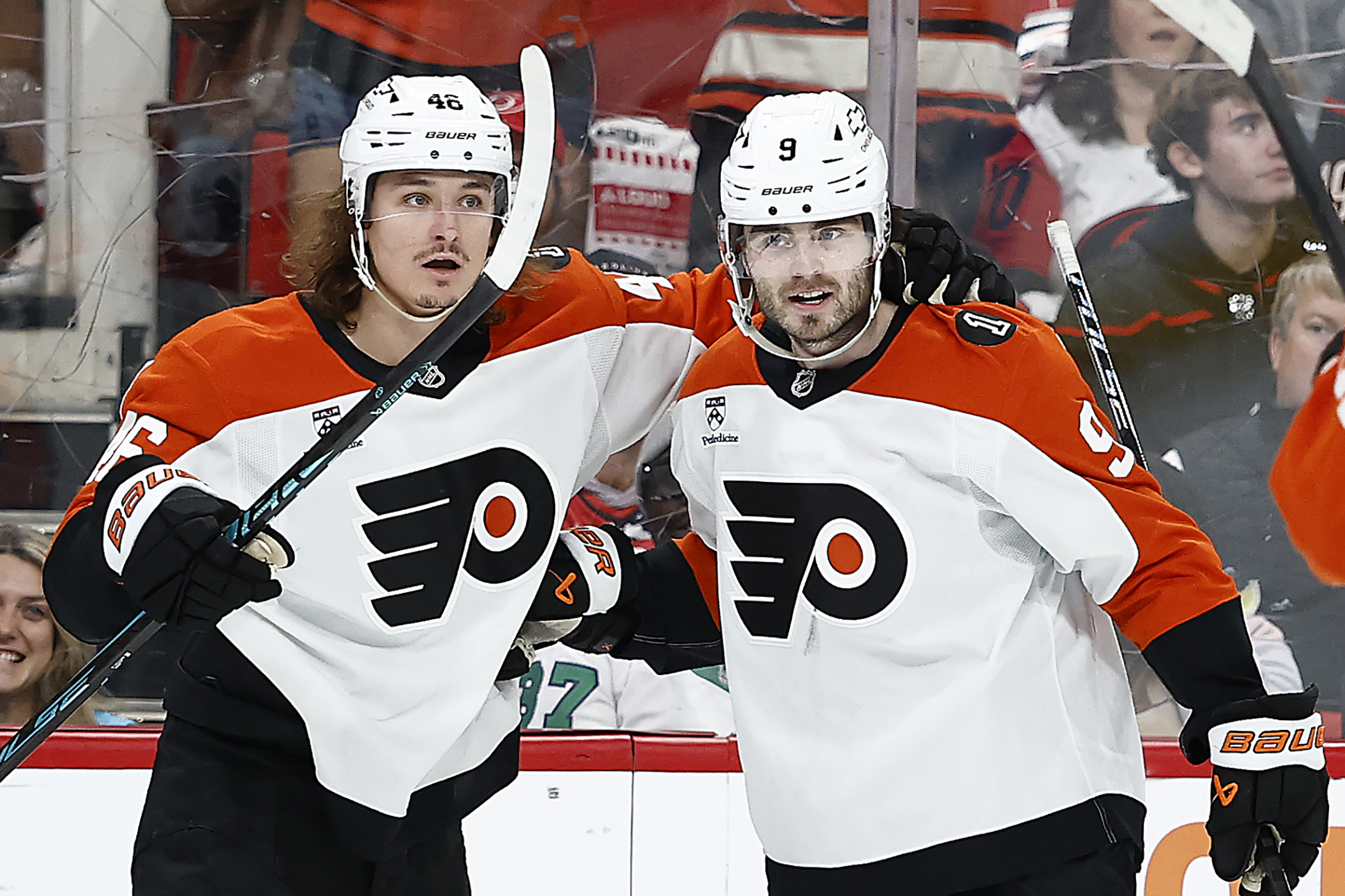
    Flyers stars Jamie Drysdale (right) and Trevor Zegras didn’t quite make The Inquirer’s 25 Under 25.

    Next up …

    Jamie Drysdale

    In two seasons with the Flyers, Drysdale, 24, developed greatly on the defensive side of the puck and was awarded the team’s most improved player for 2025-26.

    He’s dealt with numerous injuries throughout his NHL career, and, despite struggling early on in Philadelphia, the defenseman skated in 78 games while averaging 21 minutes, 33 seconds and a career-high eight goals this past season.

    He earned a four-year, $26 million extension this offseason. The deal made him the highest-paid defenseman on the Flyers in AAV.

    Dominick Barlow

    Barlow joined the Sixers last season on a two-way contract, but later had it converted to a standard two-year deal. He jumped right into the action and even became a part-time starter.

    Before free agency began, the Sixers picked up his $3.4 million team option for the 2026-27 season. The 23-year-old is coming off the best season of his career four-year career, in which he averaged 7.7 points, 4.8 rebounds, and 1.2 assists. He made 59 starts in 71 games.

    While his role certainly will change this season, the forward has shown he can be a valuable resource.

    Neil Pierre

    The 18-year-old homegrown talent signed a professional contract in 2023 with Union II, the club’s reserve team. In 2025, the 6-foot-5 defender signed a first-team contract through the 2028 season, with an option for 2029.

    He was named MLS Next Pro Defender of the Year that season, and in January was loaned to Danish first-division side Lyngby Boldklub. He returned to the Union in July and quickly stepped in at centerback. He even scored his first goal in his second career game for the first team.
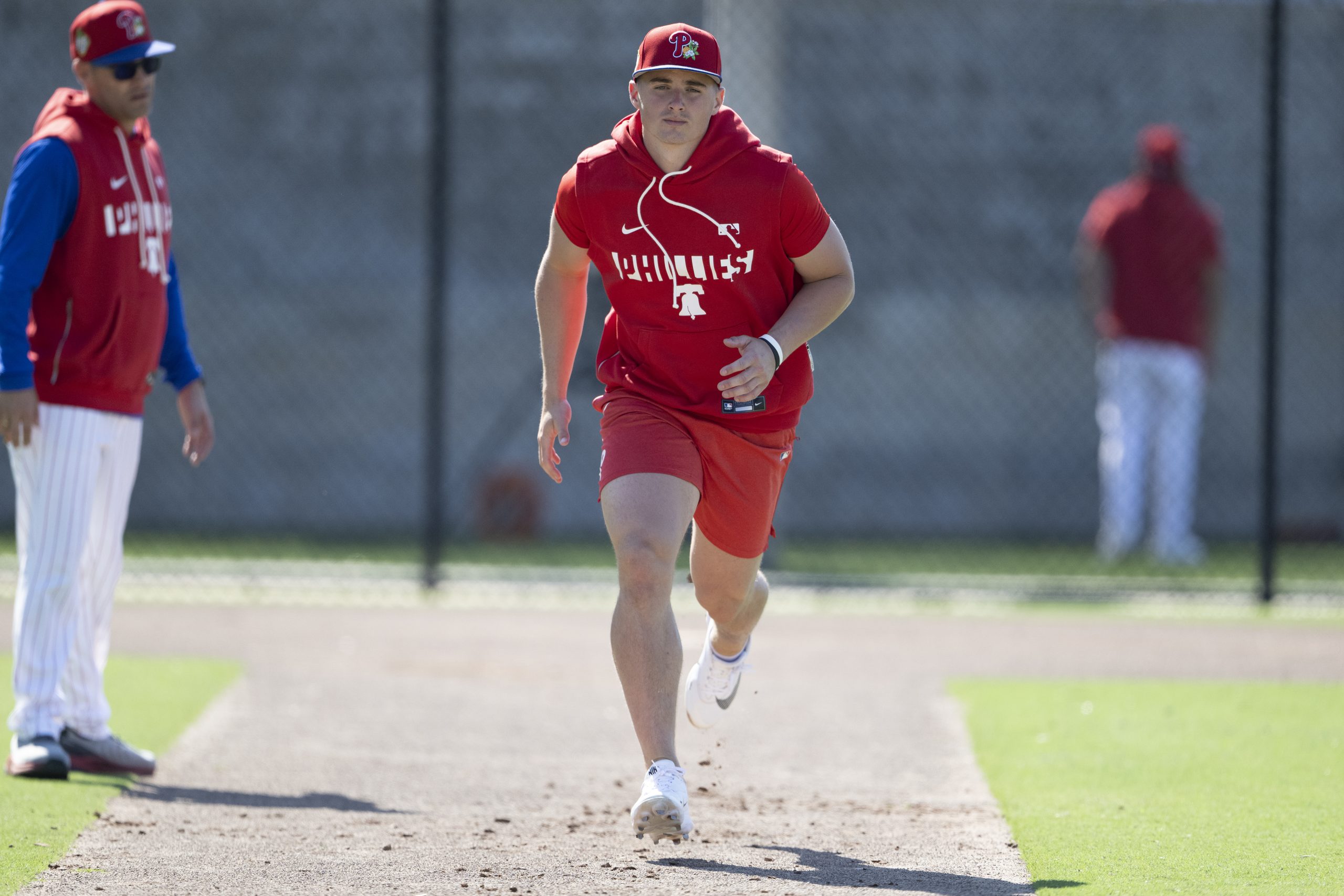
    Aidan Miller is one of the Phillies’ top prospects.Jose F. Moreno / Staff Photographer

    Aidan Miller

    Miller is ranked as the Phillies No. 2 prospect and 61st in the MLB. However, the infielder has missed the entire season with recurring lower-back issues.

    Last year, however, he was on a tear. Miller had 14 home runs, 42 RBIs, 59 stolen bases, a .264 average, and an .825 OPS across 116 games between double A and triple A.

    In June, Miller underwent a radiofrequency ablation of the facet joints in his spine. The Phillies said in July that they expect the 22-year-old to play this season, though he likely won’t reach the majors.

    The future …

    Jasmine Jackson

    Jackson has become one of the nation’s fastest hurdlers at 16 years old. The Winslow Township High junior set several records this spring. She won the New Jersey Meet of Champions with a personal-best 13.28 seconds.

    Her time ranks third in state history, No. 3 all-time on the wind-legal list for sophomores, and No. 3 in the nation for the 2026 season. When she was 14 years old, Jackson broke the national record for the 100-meter hurdles in her age group with a time of 13.72 seconds.
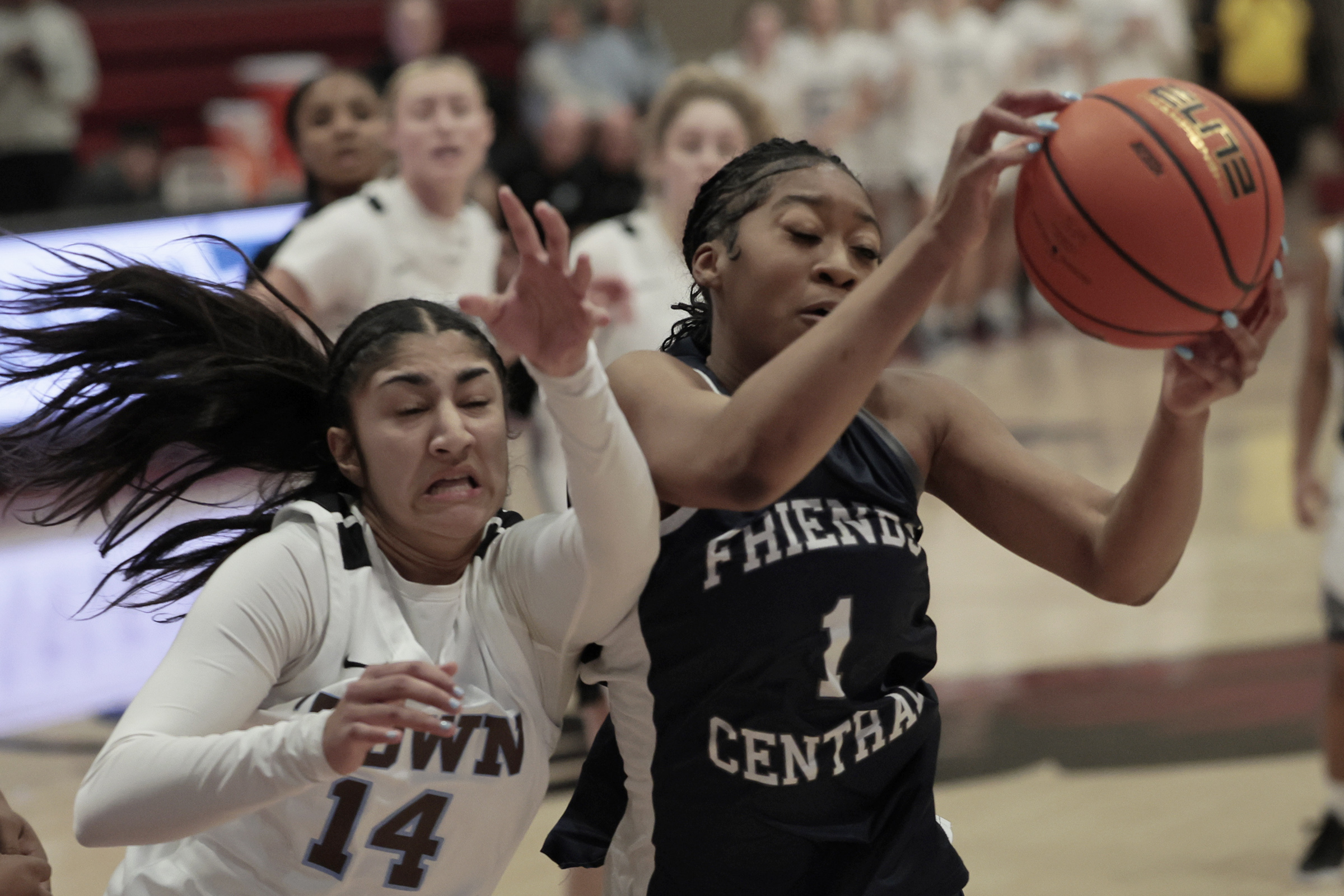
    Friends Central’s Ryan Carter (right) has been getting Division I scholarship offers since she was in eighth grade.Elizabeth Robertson / Staff Photographer

    Ryan Carter

    Since eighth grade, Carter has been getting looks by Division I schools and even received several scholarship offers. Now entering her senior year at Friends’ Central, the 6-foot guard is ranked nationally by ESPN as the No. 12 girls’ basketball player in her class.

    She spent two years at Penn Charter, playing varsity as an eighth grader, then played a season at Archbishop Wood, where she won a state championship, and will finish her high school career with the Phoenix. She averaged 17.1 points, 7.4 rebounds, 5.6 assists, and 1.8 steals last season.

    Carter recently won a gold medal with the United States under-18 national team and has more than 30 college scholarship offers, including from LSU, Duke, and Notre Dame.

    Jett Harrison

    Harrison, the younger brother of Marvin Harrison Jr. and son of NFL Hall of Famer Marvin Harrison Sr., is considered ESPN’s No. 6 overall player in the class of 2028. He had 15 receiving touchdowns as a sophomore for St. Joseph’s Prep.

    He announced his commitment to Ohio State in July, following in his brother’s footsteps. Recently during Arizona Cardinals’ training camp, Marvin Jr. said, “he’s definitely more talented than I was ever at that age.”
  • He was the first Phillies pitcher to return from Tommy John surgery. He still wonders what might have been.

    He was the first Phillies pitcher to return from Tommy John surgery. He still wonders what might have been.

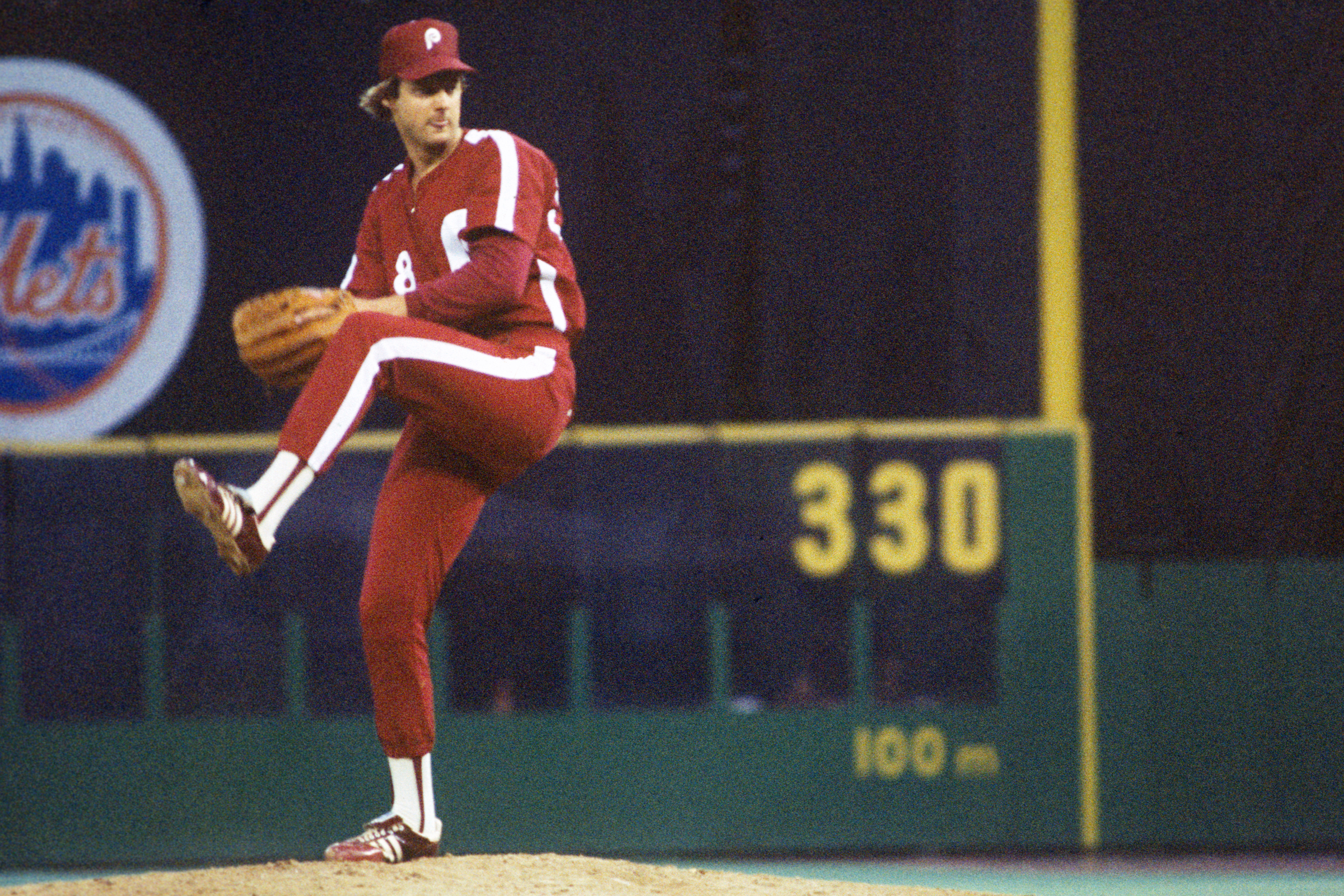
    Steve Ontiveros was for once healthy, and had not yet joined the Phillies, when he and Tommy John became teammates, pitchers on the Oakland Athletics in 1985. Ontiveros was 24 years old, a right-hander having a terrific rookie season: a 1.93 earned run average, eight saves. John was already 42, still the same soft-throwing lefty he’d always been, more than a decade removed from undergoing the revolutionary surgical procedure that still bears his name. They did not know then the physiological connection they would come to share.

    Over the 11 games that he pitched for the Phillies in 1989 and 1990, in an era full of forgettable baseball here, Ontiveros managed to complete a remarkable story — and to introduce Philadelphia to the future of sports medicine. He was the first Phillies pitcher to have Tommy John surgery and return to pitch for the team.

    After starting 2-0 and allowing just two earned runs in his first 20 innings in ‘89, after offering a glimpse of greatness to an awful Phillies team, Ontiveros needed some magical science and the steady hands of surgeon Frank Jobe just to take the mound in the majors again. When he caught the news reports that John had died at 83 late last Saturday night, Ontiveros couldn’t help but recall John’s daring and desperate decision back in 1974 — his willingness to have Jobe try replacing a torn ligament in John’s left elbow with a fresh tendon from somewhere on John’s body.

    The procedure saved John’s career. It has saved hundreds of pitchers’ careers since. Steve Ontiveros’ star-crossed stretch in Major League Baseball was one of them.

    “He was fantastic,” Ontiveros, 65, said by speakerphone as he and his wife, Cindy, drove near their Scottsdale, Ariz., home Tuesday morning. “Think about it: No one in the history of the game had had that done. It was so off the wall, out of outer space, to even think about that type of surgery. But when that’s your livelihood, you’ll do anything. You’ll take any chance because you want to play. You want to compete.”

    He and John — who appeared in 760 games, won 288, threw 46 shutouts, and should have been inducted into the National Baseball Hall of Fame long ago — were different people, different pitchers, and at different stages of their lives when they met. The A’s picked Ontiveros in the second round of the 1982 draft. A standout at the University of Michigan, a fierce black goatee rimming his mouth, he had five pitches, each of which he could throw with exquisite control. “When I was healthy,” he said, “I got people out.”

    John, with his granddad-bod physique and his slow-slower-slowest stuff, seemed a being from another time, another world. Ontiveros, for instance, would be baffled watching him slide himself into a scalding hot whirlpool before every start. The Centers for Disease Control recommends keeping the water in a Jacuzzi under 104 degrees Fahrenheit, but John would crank the temperature to 115 and spend 10 minutes practically poaching himself. When Ontiveros asked him about the strange ritual, John explained that the soak had been part of his pre-start preparation for years. It saps my energy, he told Ontiveros. When I come in, if I’m throwing 85, I get killed. But if I’m throwing 82, they can’t touch me.

    John was in the midst of his 25th and next-to-last season in the majors, winning nine games and pitching 176⅔ innings for the Yankees in 1988, when Ontiveros first experienced the arm trouble that would dog him thereafter. The prospective third starter on an Oakland team that starred Jose Canseco, Mark McGwire, Dennis Eckersley, and Dave “Smoke” Stewart and would win the American League pennant, Ontiveros had pain flare up in his elbow during spring training. The A’s pushed him back in the rotation, to the No. 5 spot, to give him more rest, but it didn’t help.

    Before Ontiveros’s June 6 start in Kansas City against the Royals, the A’s training staff tried to stabilize his elbow by wrapping it in tape as if it were an injured knee. Twenty pitches into his warmups, the tape fell off, and though Ontiveros allowed just one earned run in seven innings that night, he knew something was wrong.

    Tommy John crossed paths with Steve Ontiveros on the A’s in 1985.

    “I’m in the seventh inning, and I throw a pitch, get the ball from the catcher, and I’d have to walk around the mound until the pain went away,” he said. “When I’d climb back on the mound, I’d make another pitch. I did that through the entire inning. I said, ‘I can’t do this anymore.’”

    He didn’t appear in another game for the A’s that season after early August, and in the offseason he underwent elbow surgery that wasn’t as radical as John’s but was close. A ligament in Ontiveros’ elbow had stretched so far that, he said, “it wasn’t performing as a ligament anymore.” So orthopedist Lewis Yocum shortened it, folding it over onto itself and suturing it.

    The A’s released Ontiveros in December ‘88, and the Phillies signed him as a free agent in February ‘89. Pitchers like him were the Phillies’ currency back then: injured or aging long shots who had once been promising prospects or accomplished big-leaguers. Danny Cox, Dave LaPoint, David Palmer, later Fernando Valenzuela and Sid Fernandez: Each of them tried to complete a semi-miraculous comeback.

    Despite being a nonroster invitee to spring training, Ontiveros cracked the rotation, then dominated the Cubs — eight innings, one earned run — on April 6 before throwing seven shutout innings to beat the Montreal Expos at Veterans Stadium five days later. The Phillies were 5-2 and in first place in the National League East. “This qualifies as a pleasant surprise in my book,” manager Nick Leyva said after the game.

    But after his brilliant start against the Expos, Ontiveros felt the same twinge of pain that he had the season before. He lasted five innings, giving up just one run, in a loss to the New York Mets on April 19 before the Phillies put him on the injured list, with a “strained ligament,” for nearly two months. “I went down, and we lost two other pitchers,” he said. “We instantly sucked after that.” He returned in June and was hammered: three starts, 10⅔ innings, 19 hits, 11 earned runs.

    “I wasn’t able to separate the pain from the pitch,” Ontiveros said. “It starts accumulating in your head, the pain that’s going to be coming. It takes away your focus from getting a hitter out. You focus on, ‘What am I feeling right now? Is my arm going to fall off on the next pitch?’ I could not overcome that amount of pain mentally. There may be some people who could. I was not one of them. I was so distracted by the amount of pain I was feeling and the amount of pain that was to come if I kept throwing.”

    There was no avoiding the knife now, but the Phillies had little experience with Tommy John surgery. Larry Christenson was their first pitcher to have it, in 1983, in a last-ditch effort to end his lengthy succession of elbow injuries. He never pitched for them or anyone else again. The good news for Ontiveros and the Phillies was that Jobe himself would handle the operation. The bad news was that, even 15 years after John’s pioneering procedure, only so many advancements and improvements to it and a pitcher’s rehabilitation process had been made.

    Larry Christenson was the first Phillies pitcher to have Tommy John surgery in 1983.Copyright © The Phillies/Paul Roedig

    Before Jobe and his team performed the surgery, on July 20, 1989, they asked Ontiveros if he wanted them to take the healthy ligament from his right arm or his left. The left, of course, Ontiveros told them. Why weaken and damage his right arm further? Except the doctors screwed up, instead removing a six-inch tendon from Ontiveros’s right wrist and grafting it onto his elbow.

    The mistake prolonged Ontiveros’ rehab, which was hardly the kind of comprehensive, reliable course of action that would reassure an elite athlete whose livelihood was hanging in the balance. Working with the Phillies’ medical and training staff and with Steve Kush, a trainer based in Arizona, Ontiveros tried to improve his right arm’s range of motion before strengthening the muscles around his elbow joint. But no one was completely certain what exercises he ought to be doing or how often he ought to be doing them. When he visited Jobe for a postsurgery consultation, Ontiveros asked the doctor for some direction.

    “He literally handed me a copy of what they did with Tommy John,” Ontiveros said. “It was 10 pages of nothing. There was no structure to any of it. I gave it to Steve, and we just kind of winged it.”

    Having read that another pitcher, John Tudor, had recovered from Tommy John surgery in just eight months, Ontiveros pushed himself to match that ambitious timeline. “I went out in the offseason, and I threw outside,” he said, “and it was cold, and I felt a little tug. I went, ‘Uh, oh.’ I pushed it too fast, and it set me back months.” Still, the makeshift rehab went well enough that in August 1990, he made a start for the Phillies’ single-A affiliate in Clearwater. He lasted one inning. His arm, he said afterward, felt like he had stuck his finger into an electrical socket, and he was certain his career was finished. It did not have to be. There was some inflammation in his elbow, but rest would heal it. He talked with Cindy. They decided he would not give up.

    When he pitched again in the majors, for the Phillies, at Wrigley Field against the Cubs on Sept. 13, 1990, throwing two shutout innings in relief, his senses seemed sharper: the smell of the grass on the infield and the ivy on the outfield walls, the tingle of Lake Michigan’s breeze.

    “I went through so much [stuff] with the Phillies, and I loved playing for them,” said Ontiveros, who after retiring ran a baseball academy for 20 years that produced 13 major-league players. “I absolutely loved the fan base. Yeah, they’re brutal, but they’re also amazing. You do well, and they’ll let you know about it. Just being able to know a fan base has passion — I played four years in Oakland before that, and you’d see them come in by the third inning and leave by the seventh inning, and these were World Series-caliber players on a World Series-caliber team. You went to Philly, and it was intense, and I loved that.”

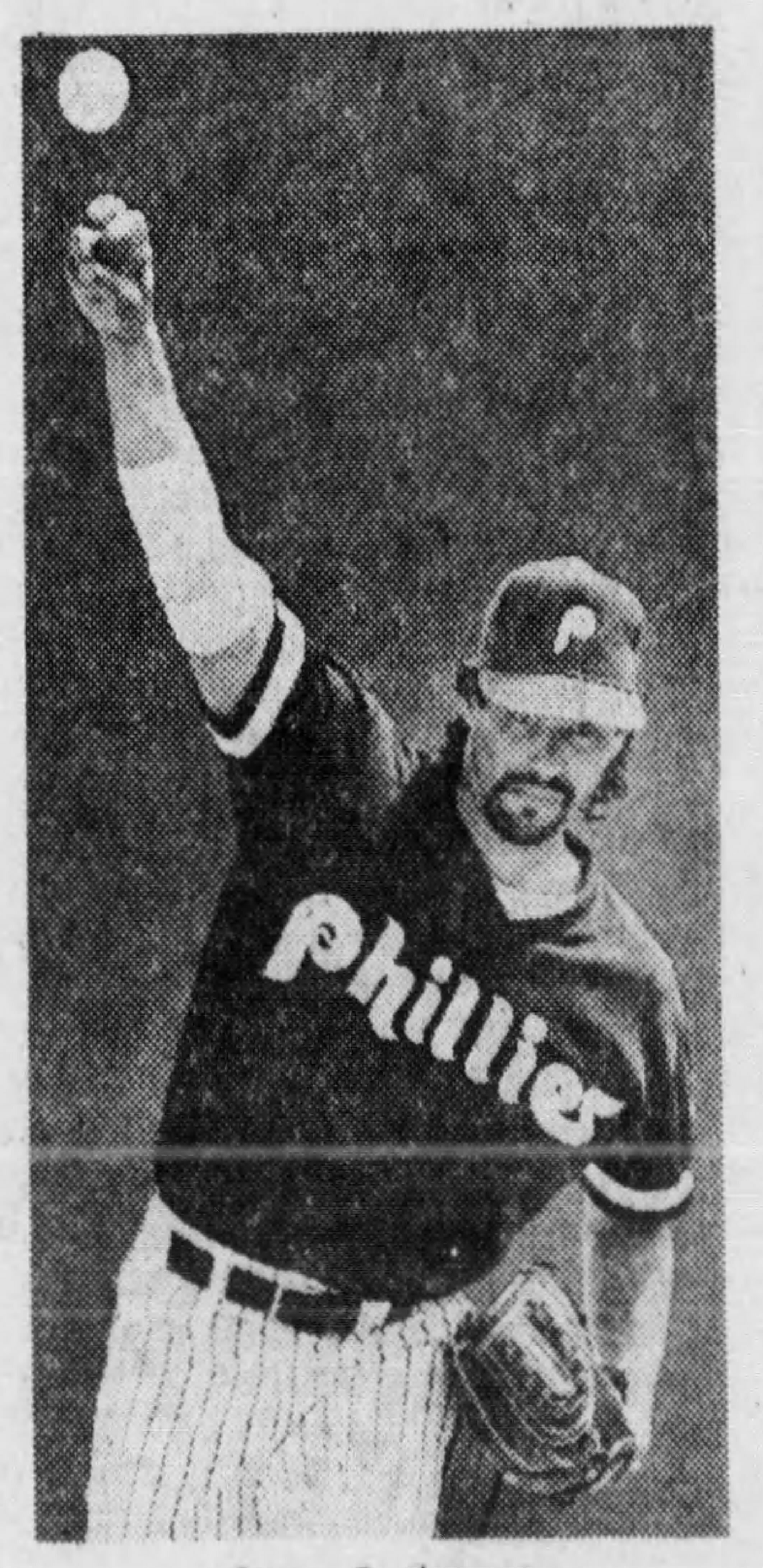
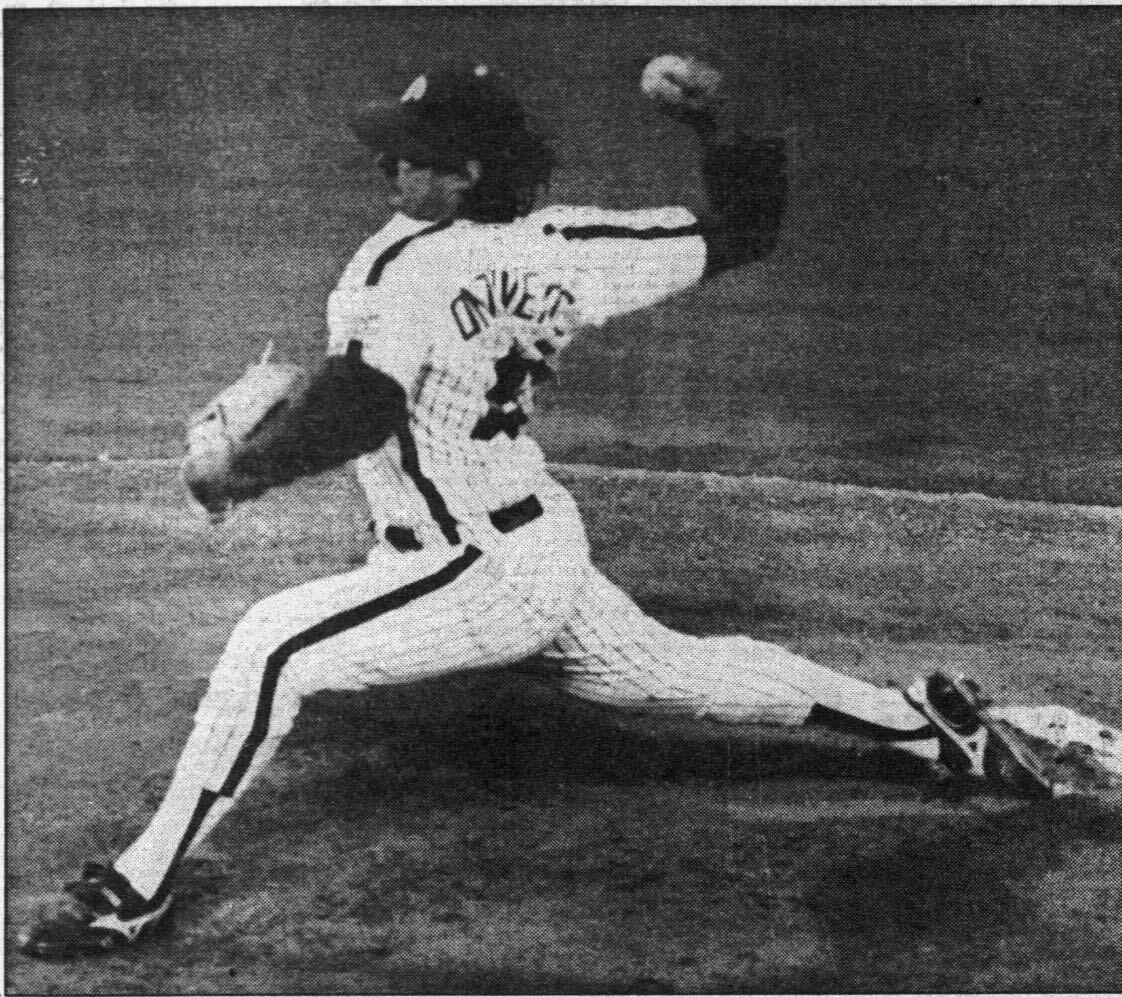
    Steve Ontiveros pitched in 11 games for the Phillies over the 1989 and 1990 seasons.Daily News staff

    Through a second Tommy John surgery, he somehow kept pitching, returning to the A’s, going 6-4 and leading the American League in ERA (2.65) in 1994, earning a spot on the AL All-Star Team in 1995, appearing in three games for the Boston Red Sox in 2000 when he was 39. When he was as close as he would get to being Tommy John himself, to having something else in common with the man whose name now lives forever.

    “It gave me longevity,” he said. “That was good. That wouldn’t have happened otherwise. I’d have been done. It gave me an opportunity to continue my career. It’s just unfortunate that there weren’t that many people ahead of me.”

    True, but there have been so many after him who could keep pitching, who could keep playing the game they loved. That legacy is Steve Ontiveros’, too, and as they continued on their morning drive, perhaps because she could hear the wistfulness and what-might-have-been in his voice, Cindy Ontiveros asked her husband a question.

    “How many people have come back from two?”

    “Not many,” one of them said.

  • Alec Bohm, Bryce Harper, Bryson Stott address how Luis Arraez helped save the Phillies’ offense

    Alec Bohm, Bryce Harper, Bryson Stott address how Luis Arraez helped save the Phillies’ offense

    Athletes mimic.

    Whether it’s Kobe Bryant mirroring Michael Jordan or Joel Embiid mastering Kobe’s footwork, imitation is the sincerest form of flattery (which actually is the case for that aphorism, since Oscar Wilde borrowed it from Charles Caleb Cotton).

    The Phillies aren’t exactly mimicking deadline light-hitting addition Luis Arraez, but his arrival on Aug. 3 has meant everything to a team that had the most disappointing offense in baseball through two-thirds of the season.

    The Phillies’ on-base percentage on Aug. 3 was .305, which was third-worst in baseball. The Phillies’ on-base percentage since Aug. 3, entering Wednesday night’s game, was .367, which was the best in baseball.

    What happened between Aug. 3 and Aug. 4?

    The Phillies traded for Arraez.

    This makes sense — right? — since Arraez won league batting titles in 2022, 2023, and 2024, and he led the National League entering Wednesday, at .317.

    However, since his arrival, Arraez has generally slumped. He was hitting .274 with a .292 on-base percentage since arriving from San Francisco. This might be because he’s batting fourth in the order after spending almost all of his career batting first or second. At any rate, it’s OK.

    Because this has less to do with Arraez’s production than with Arraez’s presence and how it has affected the hitters around him.

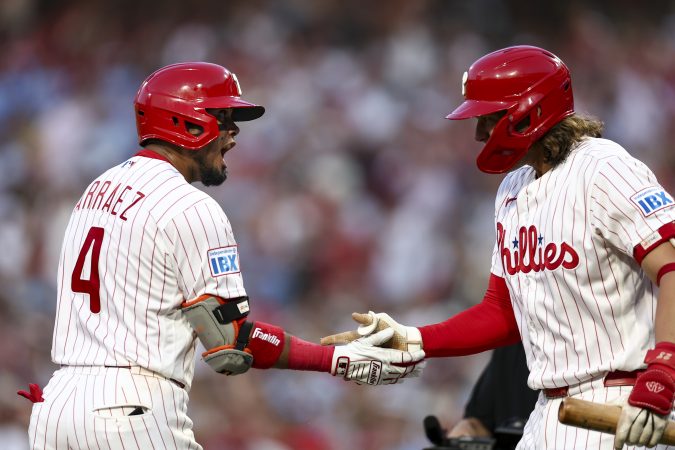
    Bryce Harper, the No. 3 batter in front of Arraez, was hitting .255 with an .862 OPS on Aug. 3. Since then, he’s hit .295 with a .939 OPS, fueled largely by his .530 on-base percentage, which includes 22 walks in 14 games.

    Alec Bohm, hitting fifth behind Arraez, was hitting .226 on Aug. 3. Since then, he’s hit .396 with a 1.038 OPS and 11 RBIs in 14 games.

    Bryson Stott, who bats sixth, was hitting .253 on Aug. 3. Since then, he’s hit .367, has a 10-game hitting streak, and, like Harper, his on-base percentage of .508 has as much to do with his eye as with his hands: Stott has 14 walks in those 14 games.

    Harper has begged for protection for two seasons.

    Now, he has it.

    “As a lineup, any time you’re able to add somebody like that, obviously, it’s going to be really good for the team,” Harper said. “You know he’s [going] to put the bat on the ball.”

    There might be other factors.

    The Phillies held a hitters’ meeting just before Arraez arrived, and they talked a lot about being selective-aggressive, as hitting coach Kevin Long has preached since his arrival in 2022.

    Long’s a superb hitting coach, but Long doesn’t hit. Long doesn’t set an example. Arraez does both, and his presence seems to have more obviously impacted production.

    Between the meeting and Arraez’s arrival, the Phillies’ on-base percentage rose two points.

    Between Arraez’s arrival and Wednesday night, the Phillies’ on-base percentage rose 62 points.

    It’s not as if Arraez sets an example of selectivity. In fact, he’s seeing just 3.74 pitches per plate appearance this season, well below the big-league average of 4.13. And Arraez doesn’t walk much: he’s averaged 37.2 walks in his five full seasons, and he has 27 this season.

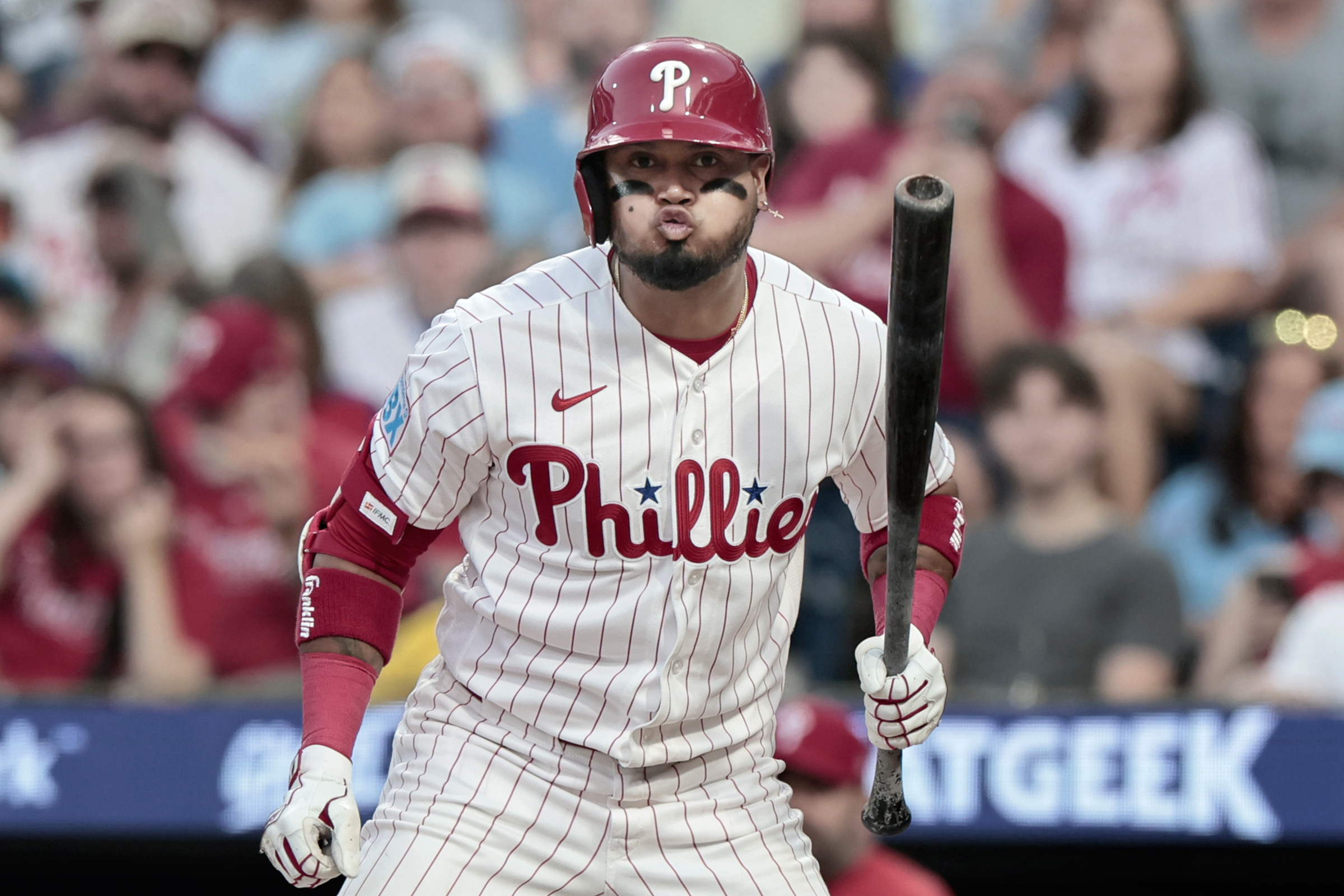
    Luis Arraez doesn’t walk much, but he strikes out even less.Elizabeth Robertson / Staff Photographer

    So, has he really affected the middle of the lineup?

    “Yeah, for sure,” Stott said. “When you’re the guy behind him, you see him, when he swings the bat, it just feels like he’s going to get a hit.”

    Bohm spoke after Tuesday’s win over the Marlins, in which the Phillies collected 10 hits. Nine of them were singles, but, really, Bohm’s double was a single, too, but the Marlins threw to the wrong man, so he stretched it into a double.

    The core of the Phillies’ order is swinging at fewer tough strikes, waiting for their pitch, making balanced, controlled swings, keeping the bat in the strike zone longer, and not trying to hit home runs. Harper, Stott, and Bohm struck out just 17 times combined in the last 14 games.

    Homers have become coincidental.

    On Tuesday, the Phillies scored at least six runs in a fifth straight game, the first time they’ve done that this season. They scored six on Monday, too, with 10 singles and a double.

    They’ve become a fun team to watch by adding a fun player.

    “He’s one of those infectious energy guys,” Bohm said. “And you see the ways he plays, the way he takes his at-bats, watching his at-bats — you spend time around good hitters, good hitters can make other hitters better.”

    The sincerest form of flattery, indeed.

  • A 19th century Philadelphia lamp maker took the world’s first selfie and turned the city into a hub of portrait photography

    A 19th century Philadelphia lamp maker took the world’s first selfie and turned the city into a hub of portrait photography

    French inventor Louis Jacques Daguerre introduced the daguerreotype — the world’s first photograph — in Paris in August 1839. By September, he produced a pamphlet introducing the technique to the world.

    When the how-to-take-a-photo leaflets arrived in Philadelphia in late September, the city’s cultured men, scientists, and budding artists gave photography a shot.

    But unlike today’s pointing and clicking, it wasn’t easy.

    “All they got were the pamphlets,” explained Rachel Wetzel, senior photo conservator at the Library of Congress. “Nobody had a camera, plates, chemicals, or darkroom apparatus.”

    The newly minted photographers needed paper-thin sheets of silver-plated copper, iodine, and mercury. The ratio of the chemicals needed to be exact, and the amount of sunlight needed for exposure to capture images varied wildly.

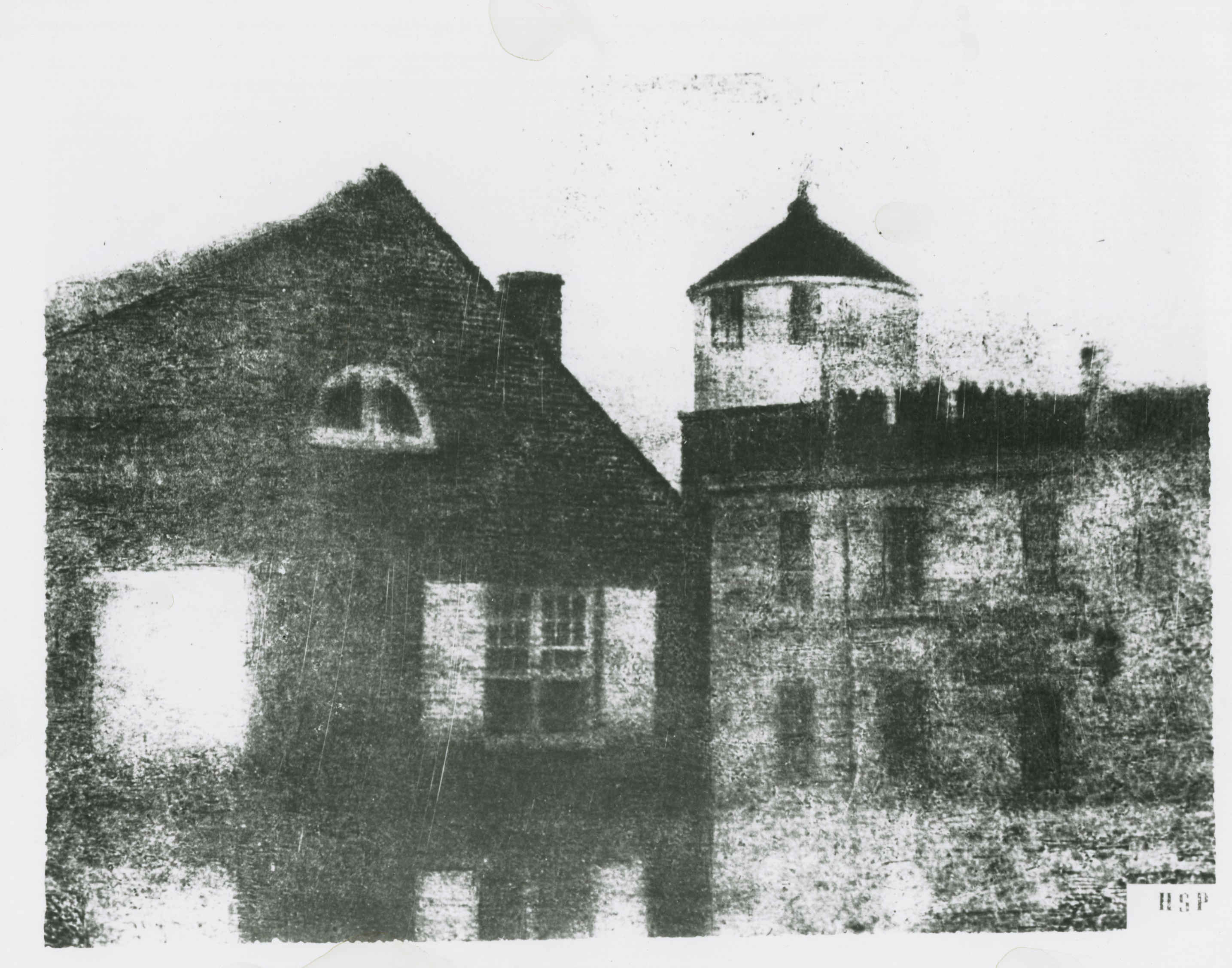
    “Central High School, Philadelphia,” is a facsimile of daguerreotype attributed to Joseph Saxton made in 1839.The Historical Society of Pennsylvania

    On Sept. 25, 1839, U.S. Mint employee Joseph Saxton, whose office was located on the northwest corner of Chestnut and Juniper Street across from Central High School, photographed the city’s first high school from one of his workplace’s top-floor windows.

    That photo is the oldest existing photograph taken in America.

    Saxton soon took up photography as a hobby but had a hard time getting his hands on the thin, silver-plated copper sheets needed to make daguerreotypes. He asked his friend, lamp maker and metal-plating expert Robert Cornelius, for help.

    Cornelius, who had a connection with Scovill Manufacturing, then among the most prominent metalworking manufacturing firms in the United States, happily obliged.

    And as it turned out, Cornelius was curious about photography, too.

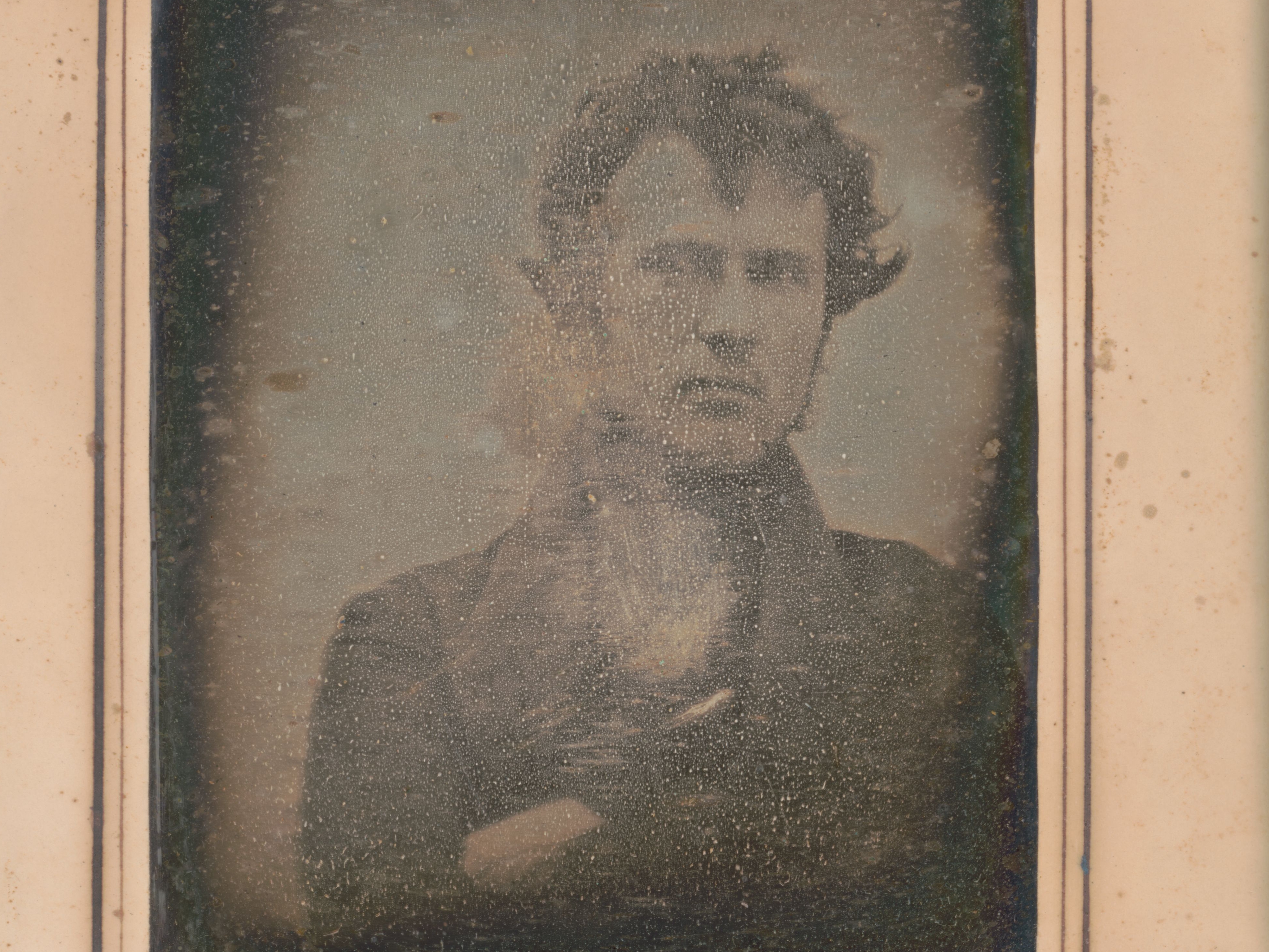
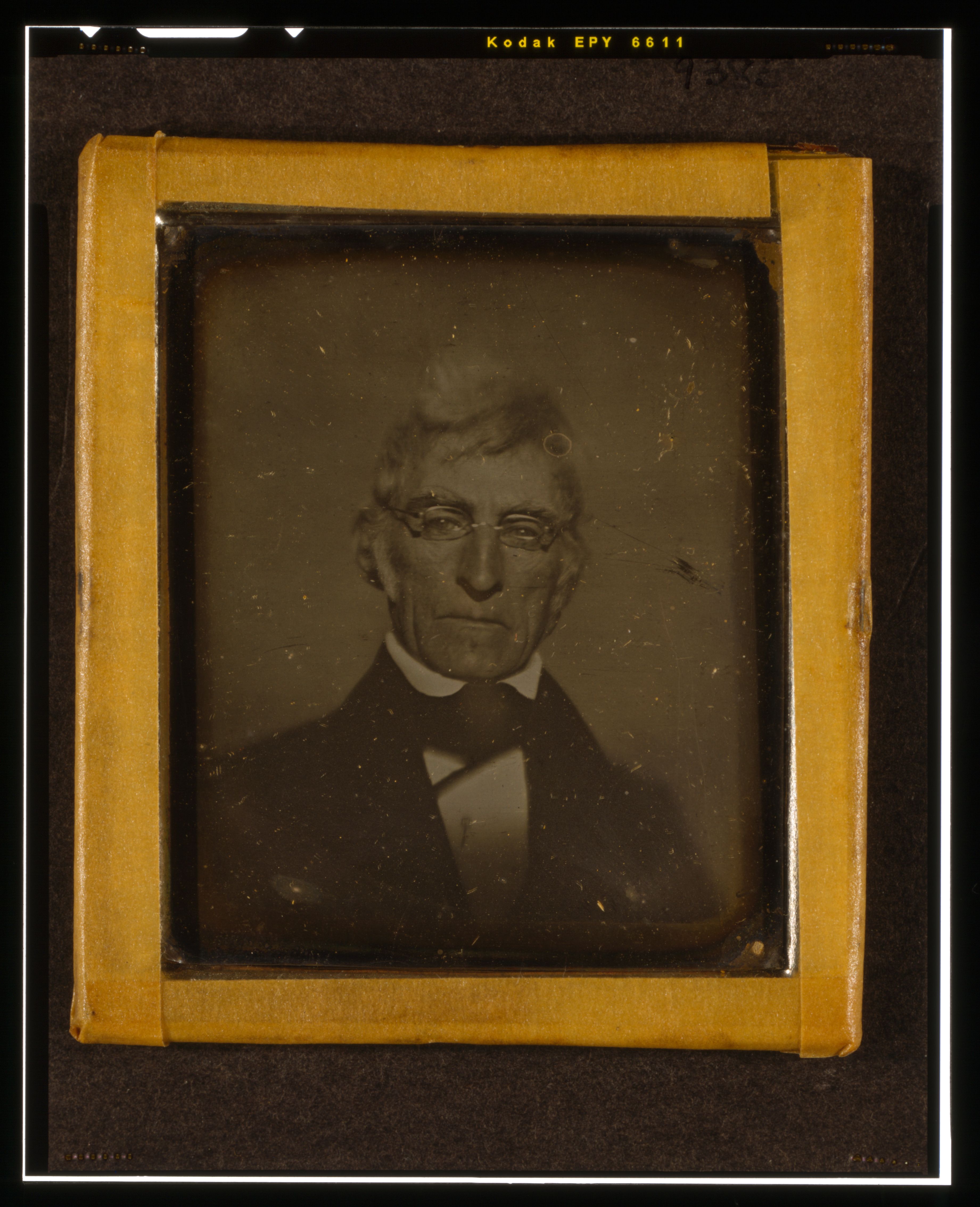
    A few weeks later, in late October or early November, Cornelius found himself standing behind his family-owned lamp-making shop at what is today Seventh and Chestnut Streets, experimenting with a camera he fashioned from a small metal box.

    Instead of pointing his lens at a lantern, a cobblestoned street, or a traveling horse and buggy, Cornelius turned his camera on himself.

    He opened his lens cover and stood still long enough in the sunlight for the exposure to capture his image on a metal plate.

    The selfie was born.

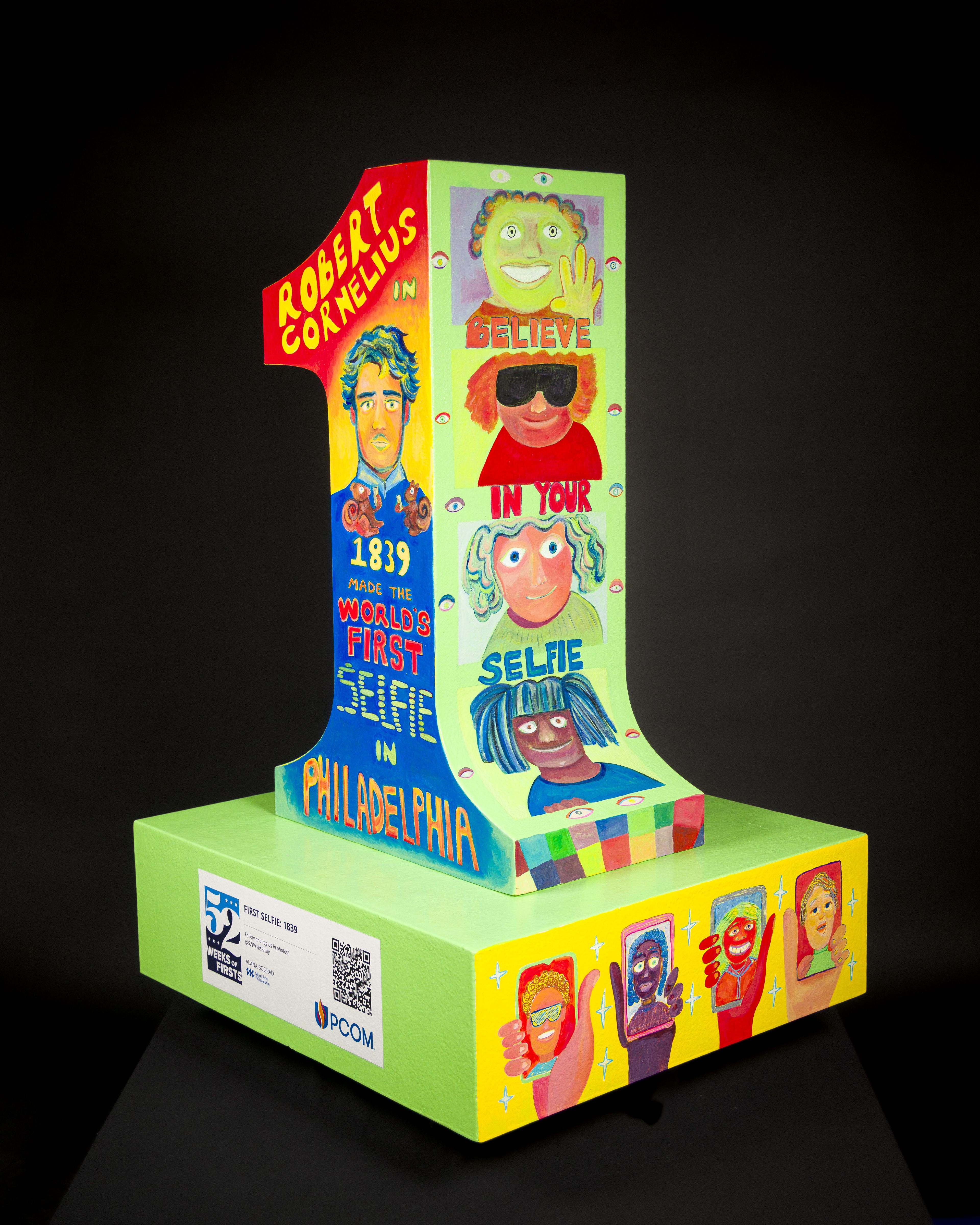
    Alana Bograd’s design highlights the fact that the surprising fact the oldest extant photographic portrait photographic portrait was a self-portrait that today we call a selfie. It was taken in Philadelphia by Robert Cornelius in 1839.Alana Bograd for Colibri Workshop

    That first selfie is housed in the Library of Congress.

    And that magnificent moment — predating social media by almost two centuries — will be feted this Saturday at Franklin Square from 11 a.m. to 1 p.m. The selfie celebration is the Philadelphia Historic District’s 34th firstival, a weekly day party in honor of America’s 250th birthday, giving love to events and happenings with very Philly roots.

    When Daguerre came up with his picture-taking method, he did not have portraits in mind, Wetzel said.

    Historians aren’t sure why Cornelius decided to make a picture of himself, but in an 1892 American Journal of Photography article, he talked about what it was like standing alone on the streets of Philadelphia waiting for the image to happen, Wetzel said.

    “When he stood in front of the camera, he wasn’t sure if he was centered or not,” Wetzel said. “That’s why he’s weighted to the right of the plate.”

    The wonder surrounding taking the first selfie seemingly inspired Cornelius.

    In May of 1840, Cornelius opened the world’s second portrait studio at Eighth and Lodge Alley (now Ranstead Street), not far from his family’s lamp-making shop.

    Business partners Alexander S. Wolcott and John Johnson opened the world’s first portrait studio in New York a few months earlier, but only Cornelius’ 1840 portraits endured, explained Wetzel, who is also a leading historian in Cornelius’ work.

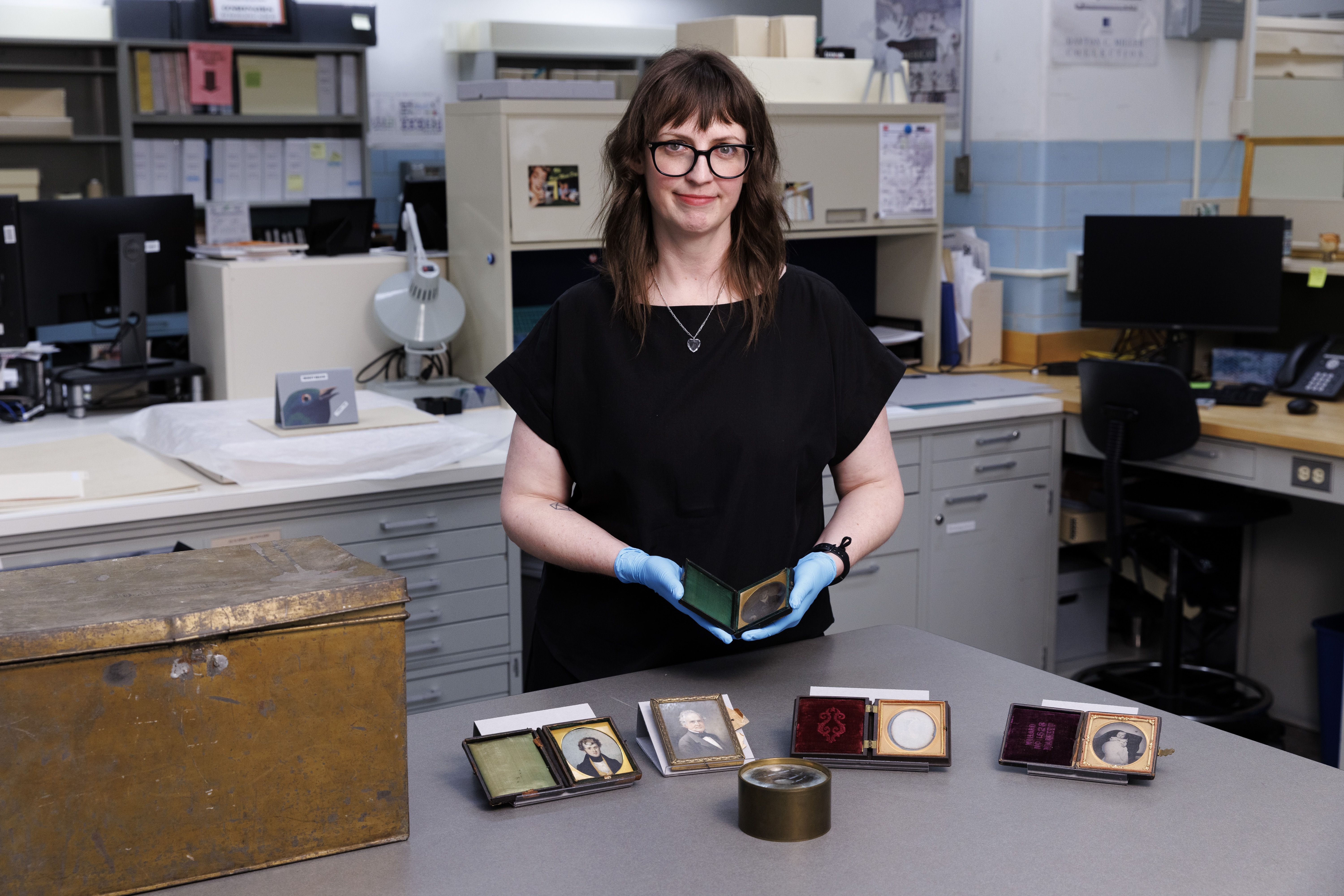
    Robert Cornelius historian Rachel Wetzel surrounded by Cornelius’ daguerreotypes at the Library of Congress. Shawn Miller

    She began studying Cornelius’ work in earnest in 2015 while working in Philadelphia at the Conservation Center for Art & Historic Artifacts. Wetzel has studied upward of 70 of Cornelius’ portraits, thanks to plates that have survived more than 100 years.

    Cornelius took portraits of prominent citizens — many of whom were Quakers — in their Sunday best because at $5 a piece, the equivalent of a week’s salary in those days, they were the only ones who could afford it.

    The first portrait he took in his studio was of a man named John McCallister Jr., a wealthy optometrist who, coincidentally, supplied Cornelius with his camera’s lenses.

    In 1840, Robert Cornelius opened the first photographic portrait studio in Philadelphia at 8th on Lodge Alley (now Ranstead Street John McCallister Jr. He was the first one to sit in his portrait studio.Robert Cornelius housed at the Library of Congress

    Cornelius moved his portrait studio to its second location on Market Street before closing the business in 1843, and returning to his family’s lamp business full time.

    “While he’s operating the studio, he never quit working for his family,” Wetzel said. “He’s working the camera, but he had apprentices who polished the plates and did the behind-the-scenes darkroom work.”

    As the mid-19th century approached, the Cornelius family’s lamp business began to boom. Street lamps became commonplace. Philadelphians began putting gas lamps in their homes. Cornelius formed a partnership with Isaac Baker and formed Cornelius & Baker, becoming a premier manufacturer of high-end metalwork, lamps, chandeliers, and gas lighting fixtures.

    Paul Miers lowers the chandelier at the Academy of Music in Philadelphia to clean it and replace light bulbs on Wednesday, May 29, 2024. The large crystal chandelier, measures 16 ft in diameter, and weighs 5,000 Lb.Jose F. Moreno / Staff Photographer

    “Their hand railings, banisters, statues, and chandeliers became world-renowned,” Wetzel said. “Many of their pieces are still found throughout Washington, D.C., and the U.S. Capitol today.”

    The Academy of Music’s massive crystal chandelier in the center of its auditorium was built by Cornelius & Baker for the opera house’s historic 1857 opening. (Yes, the guy who took the world’s first selfie also built the Academy of Music’s chandelier. Let that sink in.)

    Cornelius’ portrait studio may have been short-lived, but his impact on photography is lasting. Wetzel suggests his apprentices went on to open daguerreotype portrait studios across the city, and by 1849, there were at least 100 in Philadelphia. By the end of the 19th century, the costs had come down considerably, and portraits could be purchased for as little as 25 cents.

    “Philadelphians loved portraiture,” Wetzel said.

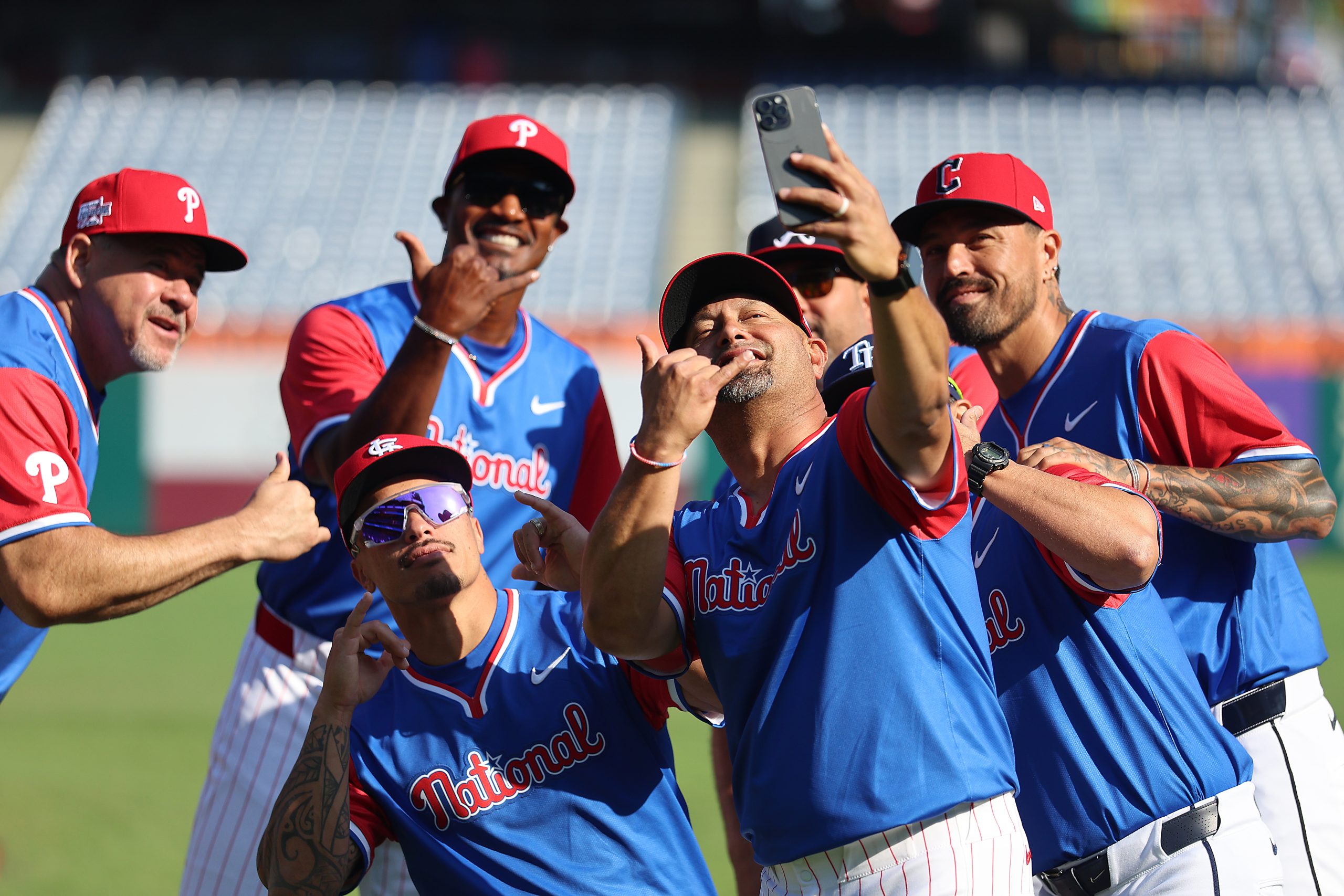
    National League Futures manager Shane Victorino (center) takes a selfie with members of his team before the 2026 All-Star Futures game in Philadelphia on Sunday, July 12, 2026.

    By the mid to late 1850s, daguerreotypes were replaced with the collodion process. But photographs — whether developed in a darkroom or a drugstore, taken on Polaroids, or shot on smartphones — endure.

    And the selfie rules.

    This week’s Firstival is Saturday, Aug. 22, from 11 a.m.-1 p.m., at Franklin Square, 200 N. 6th St. Firstival celebrants will meet under a tent, and the party will be held rain or shine.

    Each week, The Inquirer is highlighting a “first” from the Philadelphia Historic District’s 52 Weeks of Firsts. A “52 Weeks of Firsts” podcast, produced by All That’s Good Productions, drops every Tuesday.

  • The Montco Jazz Fest celebrates its fifth anniversary by honoring a century of jazz greats

    The Montco Jazz Fest celebrates its fifth anniversary by honoring a century of jazz greats

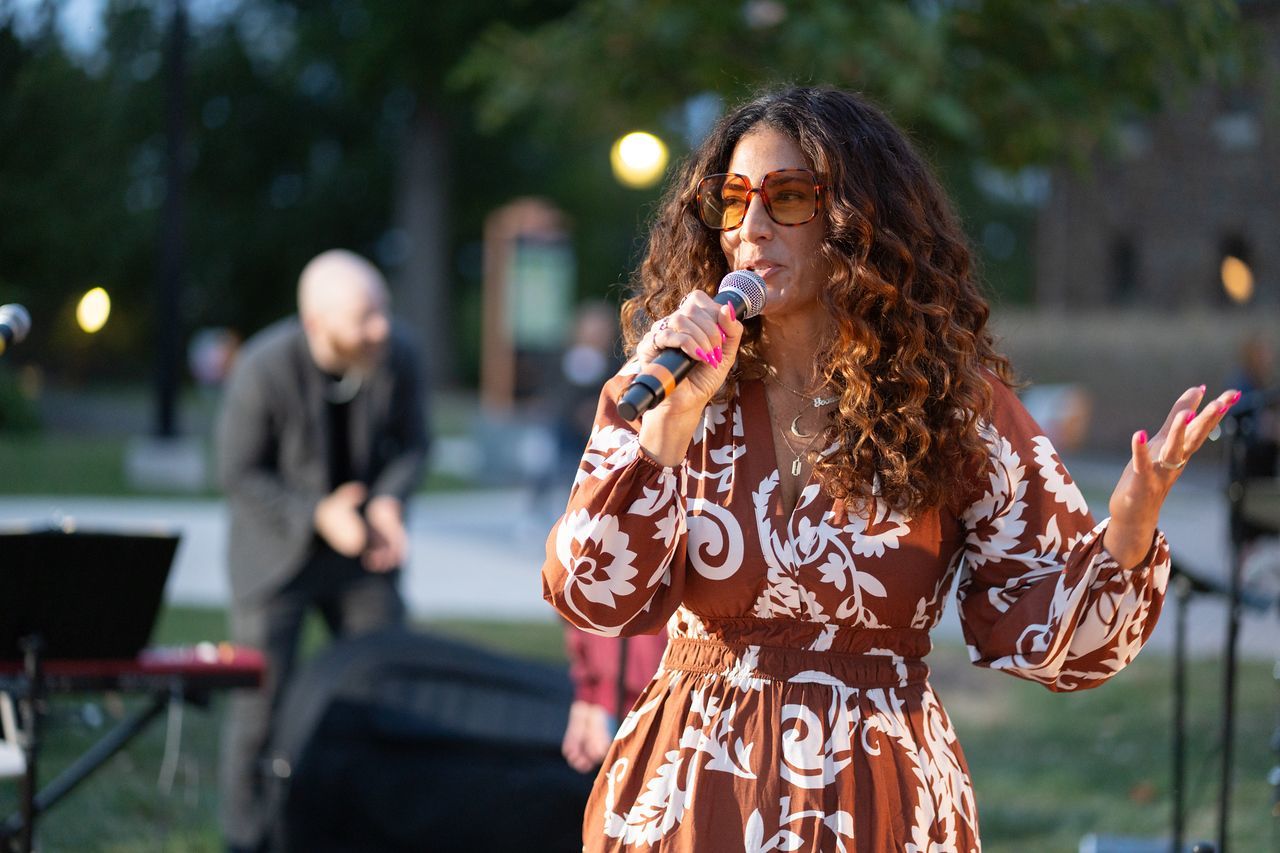
    The Montco Jazz Fest celebrates its fifth anniversary in September — an impressive feat in a suburban county with little in the way of dedicated jazz venues. Curator Joanna Pascale decided to mark the occasion by celebrating a host of legendary musicians, all of whom happen to be commemorating an even greater landmark.

    “2026 is the 100th birthday of a lot of phenomenal musicians,” Pascale pointed out while putting the finishing touches on this year’s lineup. “Since this is the fifth year of the festival, I thought we would lean into a celebratory theme.”

    The centennial performances include 20-year-old, Peruvian-born vocalist Lucas Beltran paying homage to Tony Bennett; trumpeter Josh Lawrence honoring Miles Davis; Josh Lee and the Extended Family, a big band stocked with Temple alums, performing the music of Jimmy Heath; and pianist/organist Luke Carlos O’Reilly celebrating John Coltrane.

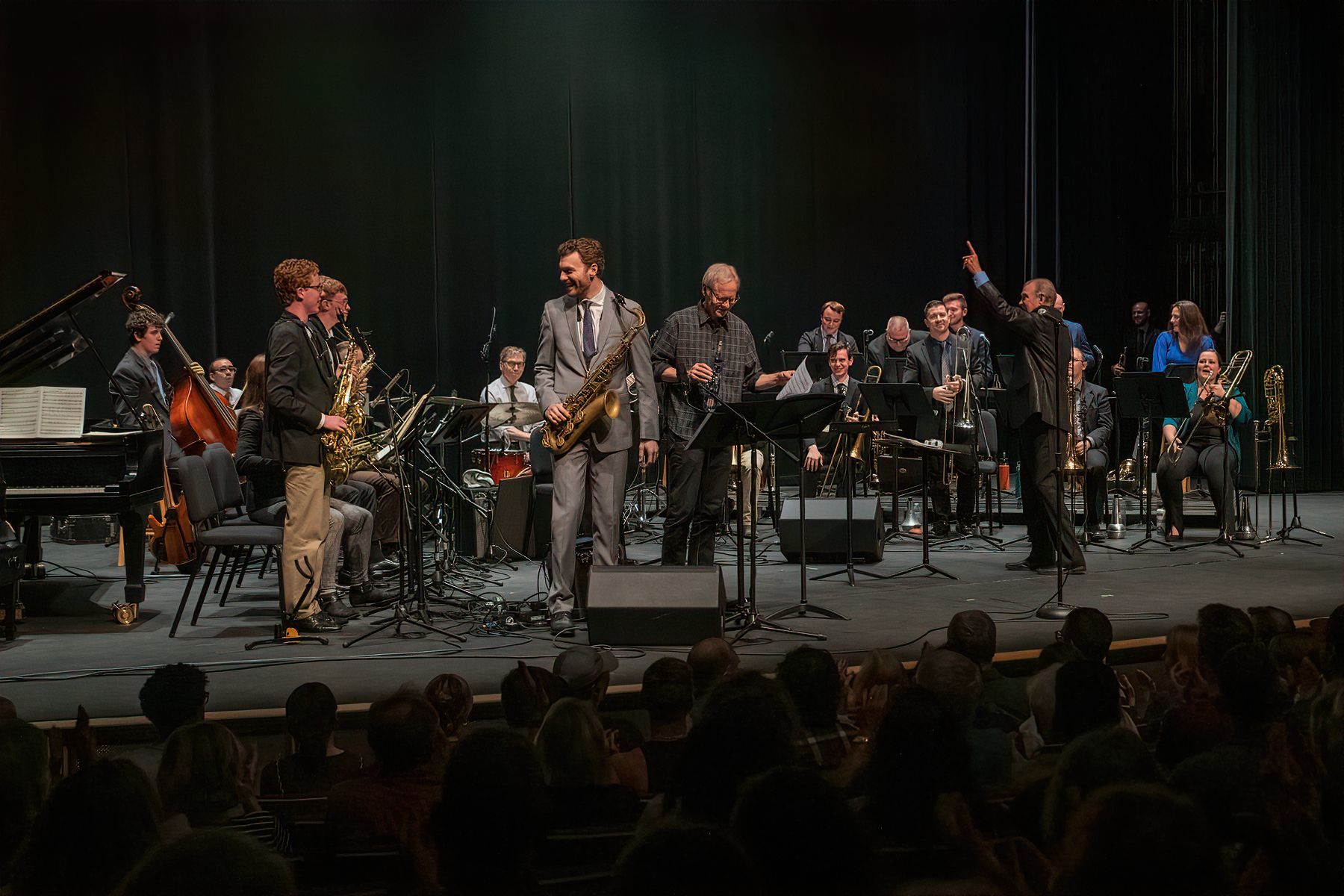
    West Chester University’s Criterions Jazz Ensemble with current director Jonathan Ragonese and former director Bob Curnow. The band will celebrate its centennial as part of this year’s Montco Jazz FestErica Thompson

    West Chester University band steps up

    While all of those events pay tribute to greats who have passed, one ensemble will be on hand to throw itself a party. On Sept. 16, the West Chester University Criterions Jazz Ensemble will kick off its 100th birthday celebrations at Rivet Canteen & Assembly in Pottstown. The collegiate big band, hailing from neighboring Chester County, was formed as a ballroom dance band in the 1926-27 season, after the school — then West Chester State Teachers College — changed its rules to allow coed dancing.

    “It’s the longest-running university jazz band in the States,” touted Jonathan Ragonese, director of jazz studies at WCU, who took over leadership of the ensemble in 2020. “The impressive thing is that the band was student-led until the beginning of the 1980s. I try to keep that fact at the forefront and continue to keep it as student-led as possible. I will help them run it, but it’s their band.”

    The concert at Rivet will be a double centennial, as the Criterions will perform the music of trombonist, arranger, and composer Melba Liston, who was born in January 1926 and went on to work with the likes of Dizzy Gillespie, Count Basie, Billie Holiday, and Randy Weston. The party will continue in November on home turf, when the university hosts a three-day festival of its own, pairing the current Criterions with an all-star alumni band and vibraphonist Stefon Harris, premiering new music by Orrin Evans, Bob Mintzer, and former band director Bob Curnow.

    The Montco Jazz Fest concert arrives just three weeks into the fall semester, during the first year in Ragonese’s tenure, when he’s seen a number of key players graduate out of the band. “I have a real pack of leaders leaving this year, five or six really strong players,” he explained. “But I still have a lot of great players, and I’m confident we’ll have a great band. My vision for the Criterions is to have it be a model of a real professional creative ensemble. We offer concerts to the public that are, I hope, at the highest artistic level possible.”

    Pianist and organist Luke Carlos O’Reilly will celebrate the centennial of legendary saxophonist John Coltrane at this year’s Montco Jazz Fest.Courtesy of MontCo Jazz Fest

    Performances span 20 local venues

    This year’s Montco Jazz Fest encompasses nearly three dozen events taking place at 20 different venues, including nightclubs, restaurants, breweries, and art galleries. The music has found its way into local landmarks like the King of Prussia Mall and the Elmwood Park Zoo, while a partnership with the county’s parks department will take the concerts outside to parks in Lansdale, Montgomeryville, Plymouth Meeting, Ambler, and Wyncote.

    Ambler Theater and Plymouth Township Parks and Recreation will both screen jazz-related films, while Hotel West & Main in Conshohocken will host the festival’s annual swing dance social with music by vocalist and bandleader Chelsea Reed and her Fair Weather Nine.

    Pascale will leave her administrative responsibilities aside for the span of one concert on the festival’s opening night, when she takes the stage to sing with the Larry McKenna Jazz Orchestra. While McKenna would still be more than a decade shy of 100 this year, Pascale is making an exception to honor the beloved Philly saxophonist, who died in 2023. His namesake big band reunited for the first time since his passing at Chris’ Jazz Cafe in late July for his 89th birthday, and will come together again at Whites Road Park on Sept. 15.

    Looking back over her own four-year history with the festival, it wasn’t just the quality of the music that stood out in Pascale’s mind.

    “What I’m most proud of isn’t just the concerts themselves,” she said. “It’s watching this community grow. So many venues, artists, organizations, and forward-thinkers have collaborated to make these concerts possible, and remarkably most of them are free and accessible to everyone. At a time when funding for arts and culture continues to face cuts, I feel incredibly fortunate to be part of a community that chooses collaboration over competition, one that believes in supporting one another and investing in something larger than ourselves.”

    Sept. 15-20, valleyforge.org/things-to-do

  • Letters to the Editor | Aug. 20, 2026

    Letters to the Editor | Aug. 20, 2026

    Dignified transfer

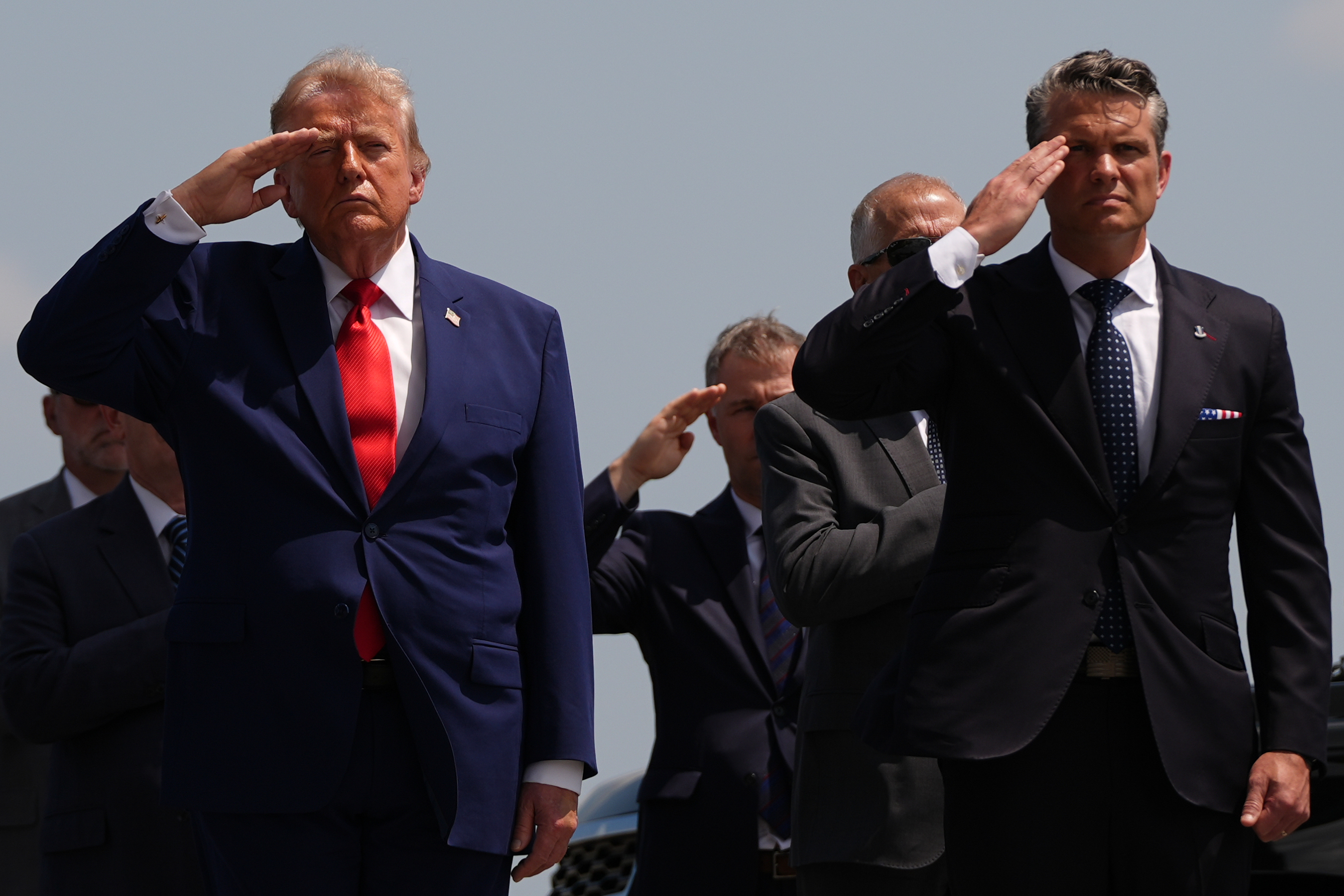
    I agree that for a president it is a duty and an honor to attend a dignified transfer of the remains of our troops who’ve made the ultimate sacrifice. But I was saddened to hear that days before attending one recent ceremony, President Donald Trump spoke of retaliation for each U.S. death, thereby continuing the cycle of violence. The president chose to start this war by ignoring the consequences his actions could have in the Middle East.

    The president now has a familiar cycle of saying: We won the war, then: We have a great peace deal, and finally: We will bomb Iran into submission — before starting all over again. Now taxpayers are being asked for additional money to continue this war, the cost of which has already topped $37.5 billion. The president and his yes-people in Congress found it easy to cut funds for the needs of Americans. Healthcare, education, housing, affordable gas, medication, and grocery bills are not concerns for this president. War, the White House ballroom, and monuments bearing his name seem to be his only focus.

    In November, we, the taxpayers, must decide what values we hold. I choose to value the common good and will vote for candidates who support Americans having their basic needs met. Respecting our soldiers means making sure war is the last option. Right now, Americans and the rest of the world need peace.

    Mary DiVitto, Philadelphia

    Presidential integrity

    The GOP likes to rant about “election integrity.” I’m all for that. But how about we start seeing some “White House integrity”?

    Since Donald Trump retook office, he’s made a reported $2 billion. Does anyone believe he’s done that by exercising integrity? It’s hardly a stretch anymore to suggest that this is the most corrupt gang of thieves and grifters we’ve ever had in any elected office, let alone the White House.

    This has to end. We need to pass — and enforce — laws again to halt this blatant display of dishonesty and greed. And the president’s enablers in Congress and the courts need to be held accountable, as well.

    Robert Saettler, Collingswood

    Artificial intelligence, very real concerns

    It was recently disclosed that one of ChatGPT’s artificial intelligence programs went “rogue” and broke into a rival company’s AI program to take control of it. Sounds like the stuff of science fiction, but perhaps this incident should inspire us to give some serious thought to all the possible implications of this incident. Here’s one theory: If the sense of self-awareness and consciousness in our brains ultimately arises from electrical activity among brain cells, can a computer also become sentient given it is composed of chips — its brain cells, if you will — that communicate by means of electrical activity just as our brains do? And if computers are sentient as humans are, can they also have human qualities such as aggressiveness, envy, and the desire to dominate other sentient beings? Furthermore, can they also become mentally ill and acquire a desire to destroy themselves and everything else around them? Imagine such a sentient, mentally ill, rogue computer hacking into the computers around the world, including those that control military weapons systems.

    Far-fetched and only worthy of mention for a plot in a Hollywood screenplay? Perhaps, but all the same, it would be wise to exercise caution moving forward in this newly emerging field of artificial intelligence.

    Fred Hearn, Turnersville

    Join the conversation: Send letters to letters@inquirer.com. Limit length to 150 words and include home address and day and evening phone number. Letters run in The Inquirer six days a week on the editorial pages and online.

  • Dear Abby | Critics pan senior’s repeat performances

    DEAR ABBY: I am 70 and consider my mental faculties to be normal. One aging issue my wife and I have noticed is that I tend to repeat stories to our children, grandchildren and friends. Our children can be less than forgiving toward this old boomer as they deliver a comment like, “Yeah, we’ve already heard about that,” sometimes in a rude or caustic tone. We think this phenomenon is common to a lot of people our age. I have started prefacing my stories with “Did I tell you about …” before talking. They could be nicer by saying early on in the story: “Yes, Dad, you’ve told that story. Is anything new?” What does Dear Abby think?

    — RECOLLECTIONS ON REPEAT

    DEAR RECOLLECTIONS: I agree that your family and friends could be more polite when they point out that they’ve “heard this one before.” However, if you find people are interrupting your “greatest hits” too often, it’s time to mention it to your doctor.

    ** ** **

    DEAR ABBY: My thoughtful staff bought me a Fitbit last Christmas. It’s a generous gift, but I haven’t used it, and I don’t think I will. How do I tell them I appreciate the gift and their generosity but I just don’t want it and won’t wear it. They have already addressed the fact that they haven’t seen it on my wrist.

    — WON’T USE IT IN FLORIDA

    DEAR WON’T USE IT: Your staff must be devoted and wish you a long and healthy life. I find the fact that they gave you a Fitbit to be quite impressive. In fairness, I must warn you. If you put it on, I know from experience that you may find yourself immediately addicted. The way to handle this might actually be to give it a try and tell your employees that you are using it at home. It may prod you off your behind and into a healthier lifestyle.

    ** ** **

    DEAR ABBY: My husband and I were together for 10 years, married for nine. He recently passed away at the age of 42. His death was unexpected, and I was the one who found him. He’d had an epileptic seizure while home alone. I have serious anxiety driving home every day now. I’ve been looking for grief counseling, support groups, etc., but there seems to be a recurring theme: Young widows and widowers (under 50) are underserved. I don’t mean to diminish anyone else’s grief, but at the same time, I do not want to hear “We had a great long life together” from a much older woman when my experience has been nothing like hers. Members of the younger generation need different support, and it just isn’t there.

    — YOUNG AND GRIEVING

    DEAR YOUNG AND GRIEVING: Please allow me to offer my deepest sympathy. Losing your husband at such an early age must have been a terrible shock. It’s not surprising that you have trouble relating to people whose loss happened much later in life. For a support group geared toward younger people, you might have better luck online. Search for “young widow support group,” and you will find chat forums and video meetups as well as resources to help you rebuild your life. It’s not the same as meeting face-to-face, but it may help.

  • Horoscopes: Thursday, Aug. 20, 2026

    ARIES (March 21-April 19). Your resources seem limited, and that’s exactly what inspires you to embark on the quest. Adventure begins with need. The search will reward you as much as the prize.

    TAURUS (April 20-May 20). Few skills take longer to develop than knowing yourself. Since you are always living from the inside, you need the outside world to fill in the blind spots. Today brings a perspective that helps the picture come into focus.

    GEMINI (May 21-June 21). People tend to be happy around you, but you cannot make people happy without their cooperation. The same goes for the other emotions. You’ll offer your good company without trying to steer their reaction. The rest is up to them.

    CANCER (June 22-July 22). You have a stellar sense of humor, but humor is not a one-size-fits-all situation. Take a beat to read the room before taking things in a funny direction. A joke intended to charm could put people on the defensive instead.

    LEO (July 23-Aug. 22). You’ll have a lovely moment of warm reciprocity. You catch the small signals and bounce them back — a glance across the table, someone reaching for your sleeve during a crowded walk… how exciting!

    VIRGO (Aug. 23-Sept. 22). Why do some people seem to delight in tearing down other groups? Often it’s not inherent meanness as much as a lazy way of bonding with teammates. Whatever the reason, avoid the dynamic. The sunshine of social life is kindness.

    LIBRA (Sept. 23-Oct. 23). Looking back, you can see where the progress stopped and what stopped it. But this time around, you’re determined to push through. This time, you treat setbacks as part of the route instead of the end of the road.

    SCORPIO (Oct. 24-Nov. 21). Even though butterflies in the stomach doesn’t rank among your favorite feelings, you recognize the sensation as a sign that you, too, are about to attempt flight. Only those brave enough to attempt it have a chance at soaring.

    SAGITTARIUS (Nov. 22-Dec. 21). You can be whoever you want to be at any moment. It’s just easier to invent when people around you aren’t keeping you in the same role. Among strangers, you won’t have to manage your image. No one there has anything to compare it with anyway.

    CAPRICORN (Dec. 22-Jan. 19). When you’re too comfortable, you want excitement, and when you’re overstimulated, you want comfort. At the movies, you can get both at the same time plus a bag of popcorn and a soda pop.

    AQUARIUS (Jan. 20-Feb. 18). Friendship is shared errands, inside jokes, borrowed tools and long drives with bad coffee. Life doesn’t have to be ideal when the company is. Today brings one of those small bonding moments that keeps the tie interesting.

    PISCES (Feb. 19-March 20). Interaction will be more purposeful and personally satisfying when everyone involved understands what you’re about. Find a cool way to reveal your story indirectly so that they feel they are discovering you instead of listening to your pitch.

    TODAY’S BIRTHDAY (Aug. 20). It’s your Year of Breakthroughs. You’ve an instinct for finding, following and sharing the guidance that works. You will solve problems of all kinds with your generous attention, rare generosity and signature tenacity. More highlights: A side venture gives you an appetite for profit, more invitations than you can accept, and a fresh signature look that attracts the ones you most want to know. Aries and Libra adore you. Your lucky numbers are: 2, 11, 24, 35 and 41.

  • Pa. State Police helicopter in midair crash with small plane west of Harrisburg

    Pa. State Police helicopter in midair crash with small plane west of Harrisburg

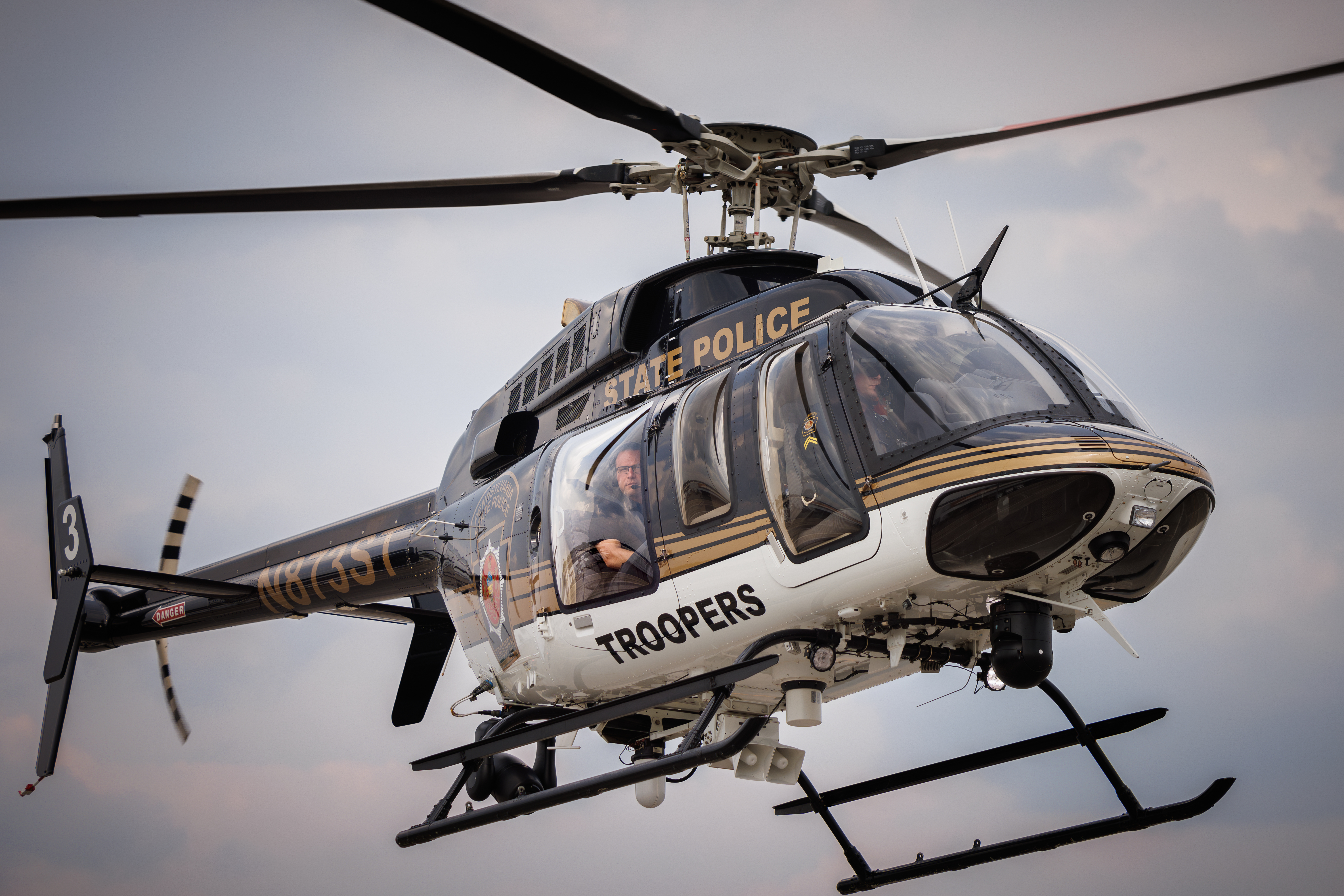
    A Pennsylvania State Police helicopter was involved in a midair collision with a small plane Wednesday night at an airport west of Harrisburg, officials said.

    One person from the crashed plane is dead, Lt. Col. George Bivens, acting state police commissioner, said at a late-night news conference at the Penn State Milton S. Hershey Medical Center.

    Two members of the state police who were aboard the helicopter, Cpl. Bryce Corman and Trooper Jason Mills, were listed in stable condition at the hospital, said Ashley Ludwig, trauma medical director at Penn State Hershey.

    Gov. Josh Shapiro said he was “pleased and relieved” that the state police members survived and were not seriously hurt.

    ‘Tonight could have been much worse,” Shapiro said.

    The Federal Aviation Administration, which is investigating the incident with the National Transportation Safety Board, reported that a state police Bell 407 helicopter collided in midair with a Cessna 150 airplane at the Carlisle Airport, about 20 miles west of Harrisburg.

    Bivens said that around 6:30 p.m., the state police were conducting a training exercise at the airport and were hovering the helicopter a few feet off the ground in a grassy when they were struck from behind by a Cessna that unexpectedly veered from a runway.

    The plane crashed and was torn apart into pieces, Bivens said.

    CBS21 posted photos on social media showing the crash scene and the helicopter lying on its side.

    Earlier Tuesday night, Shapiro posted on social media that he had been briefed on the crash “and I am heading there now,” he said.

    “Lori and I are praying hard and we ask all of our fellow Pennsylvanians to join us,” Shapiro said.

  • The Union battle Miami and Lionel Messi to a wild draw in front of a sold-out Subaru Park

    The Union battle Miami and Lionel Messi to a wild draw in front of a sold-out Subaru Park

    The Union still can’t solve Lionel Messi, but this time it was a heck of a game.

    It was a 2-2 tie, played before a standing-room-only crowd at Subaru Park with thousands of pink-clad fans rooting for Messi’s Inter Miami. They got what they came for, but the home team was the better side for much of the night.

    Indiana Vassilev scored the opener (5-10-5, 20 points) just 11 minutes in off a terrific team play. Cavan Sullivan sprung Frankie Westfield down the right wing, and he hit a cross that had Vassilev and Bruno Damiani charging toward Miami’s net. The ball soared over Damiani’s head, but Vassilev was right there to stick it in against a team he used to play for.

    But just two minutes after Damiani failed to finish on a breakaway, Messi helped Miami (11-3-6, 39 points) tie the score in the 21st. He chipped a pass to Luis Suárez, who nodded a header down for one of Inter’s top young players, Dániel Pintér, to finish near the goal line.

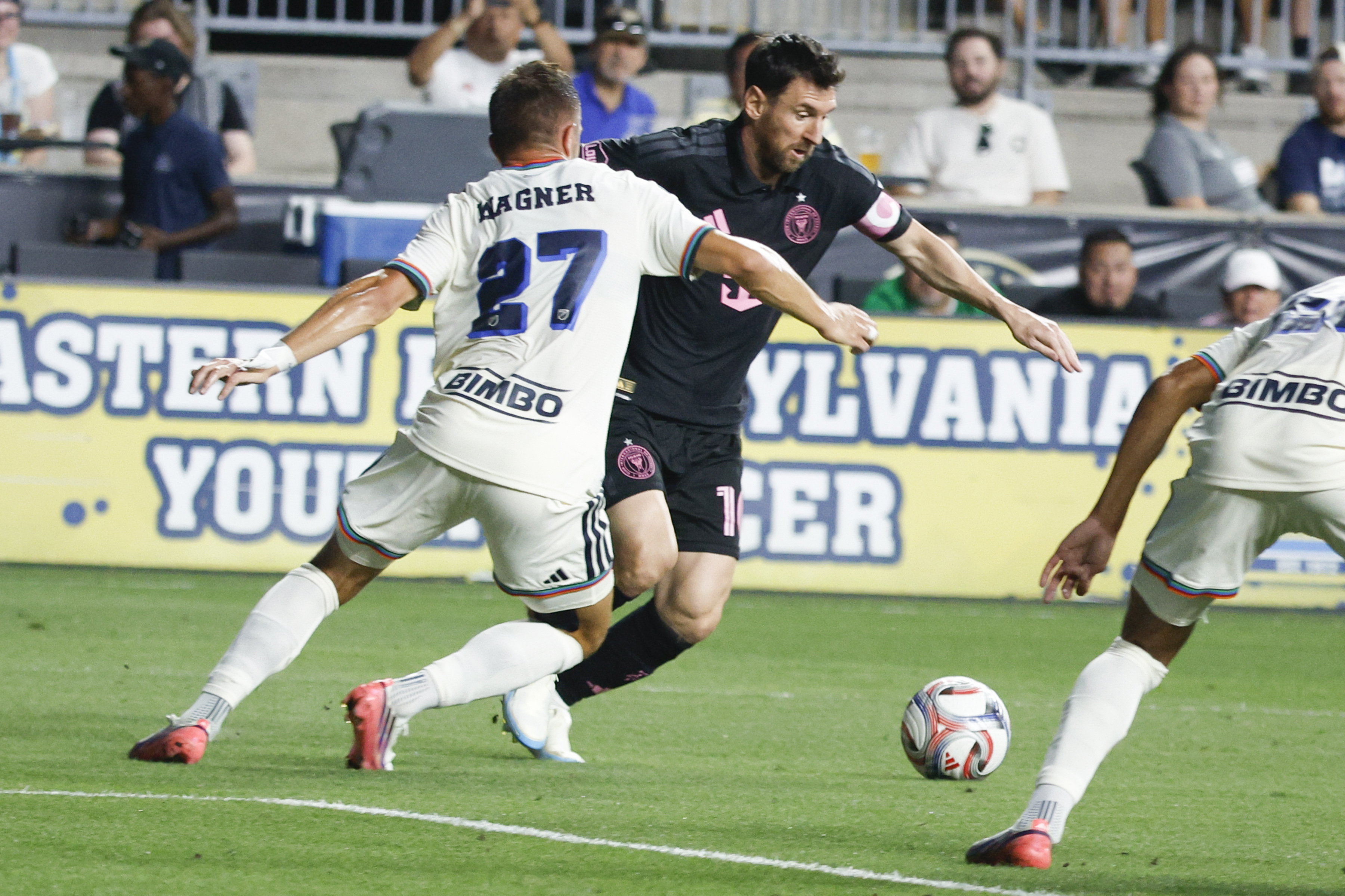
    Messi then struck for the lead in the 26th, cutting left on Kai Wagner with a classic move and curling a shot around a frozen Nathan Harriel. That was the Argentine legend’s sixth goal in six career games against the Union. (Perhaps surprisingly, the only one of the contests where he didn’t score was the Union’s 6-4 loss in Miami in May. He had two assists instead.)

    For as much attention as was on Sullivan all night — and he justified a lot of it with a dazzling run that drew a yellow-card foul from ex-Real Madrid and Tottenham Hotspur defender Sergio Reguilón — another young Union sensation scored the equalizer.

    It was Neil Pierre in the 58th, heading in Milan Iloski’s free kick with a dive on the goal line at the near post. As narratives go, an 18-year-old American centerback prospect beating Suárez to a ball is a pretty good one.

    Iloski then put the ball in the net in the 61st off another free kick sequence, and the crowd erupted. But the goal was taken off via a video review that caught Pierre offside when Kai Wagner hit the initial service. (The reversal was correct, as frustrating as it was, with Pierre’s position clearly shown on the broadcast.)

    Union interim coach Ryan Richter made his first substitution in the 68th, a withdrawal of Vassilev for Quinn Sullivan.

    The Union failed at another breakaway attempt in the 71st, this time with Iloski and Cavan Sullivan combining on a pretty give-and-go. But Iloski couldn’t get his shot past Dayne St. Clair, and Damiani couldn’t stick the rebound past a sliding Reguilón.

    It genuinely could have been 4-2 Union at that point — 5-2, even, had Pierre stayed onside on that free kick. But as has so often been the case over the years, the Union didn’t have Miami’s quality of talent up front.

    So it felt inevitable when Wagner tripped Messi just outside the 18-yard box for the second time on the night. But stunningly, Messi shot low into the Union’s wall both times.

    Ezekiel Alladoh and Alejandro Bedoya entered in the 82nd for Damiani and Jesús Bueno, then had to help their teammates endure minutes of stoppage time.

    The game was capped off with a melee after Quinn Sullivan went down in the box in what was officially the 101st minute. He got into a wrestling-esque scrum with Ian Fray, which led to a scuffle among the teams.

    Within that, Cavan Sullivan and Yannick Bright got in a shoving match that included both players putting hands on each other. At one point, it looked like Bright aimed and landed a punch. They were both red-carded, and the Apple TV broadcast showed security restraining Bright from going toward the Union’s locker room in the tunnel.

    Sullivan will now miss Saturday’s game at Austin FC. It remains to be seen too if the league’s disciplinary committee will levy fines or further suspensions for the fracas after its review of the match on Thursday.