Tag: topic-link-auto

  • Bill to raise minimum wage to $25 an hour will be introduced in Senate

    Bill to raise minimum wage to $25 an hour will be introduced in Senate

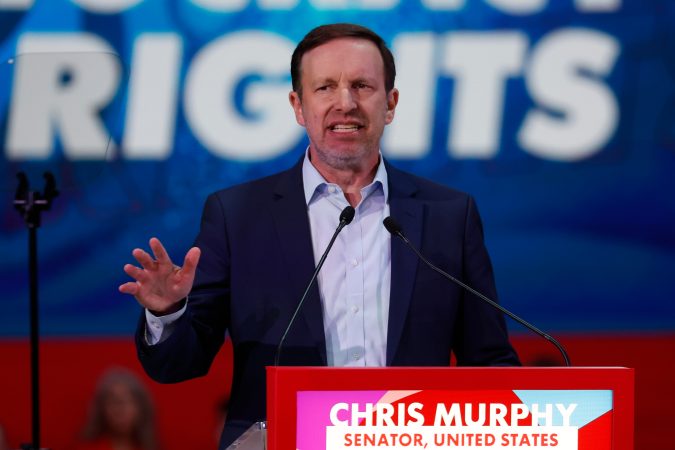
    The minimum wage would be raised to $25 an hour under a new bill to be introduced by Sen. Chris Murphy (D., Conn.) on Thursday, in a bid to enthuse the working-class voters who have abandoned the Democratic Party.

    The legislation, dubbed the Living Wage for All Act, has a companion bill already introduced in the House.

    Murphy, whose name is frequently floated as a potential 2028 presidential candidate, said he is pushing his party to take more aggressive stances on affordability, following its punishing defeats in the 2024 elections.

    “Democrats need to offer solutions that are as big as the problems people are facing,” Murphy said in an interview. “The way you solve people’s basic economic problem — not having enough money to pay the bills — is by making a minimum wage be a living wage.”

    The bill would incrementally increase the minimum wage from its current rate of $7.25, with the first jump to $12 an hour in the first year of enactment. Major corporations would have six years to work up to a $25 minimum wage, while smaller employers would have a 13-year runway. The legislation would also do away with subminimum wages for tipped workers, such as restaurant servers, youth workers and workers with disabilities. Nearly half of the American workforce makes less than $25 an hour.

    The legislation is unlikely to get very far in this Congress, with Republicans in control of both chambers, but the $25-an-hour push is one of the more significant proposals aimed at boosting Americans’ wages, which have been rising but not as quickly as inflation, especially in recent months.

    Some 34 states, territories or districts, including Washington, D.C., have increased the minimum wage above the federal minimum, according to the National Conference of State Legislatures.

    Saru Jayaraman, president of One Fair Wage, a left-leaning advocacy group that worked with Murphy on the bill, credited support for a $25 minimum wage for primary wins in competitive races in Illinois, New Jersey, Pennsylvania, and California. She said she has heard support for the proposal from liberal and MAGA voters alike.

    The $25 figure was drawn from calculations by MIT that analyzed a living wage, which takes into account costs such as food, childcare, healthcare, housing and transportation.

    Democrats have long advocated raising the federal minimum wage from its current $7.25, but Murphy’s bill would set the highest floor of any proposal in the Senate. Rep. Delia C. Ramirez (D., Ill.) is leading a House version of the bill, which she introduced earlier this year with wide support across the Democratic caucus. A similar bill by Sen. Bernie Sanders (Ind., Vt.) would set a $17 minimum wage and has 33 Democratic senators as cosponsors, including Murphy.

    Murphy’s bill also has the backing of Democratic Sens. Richard Blumenthal (Connecticut), Andy Kim (New Jersey), and Ron Wyden (Oregon).

    Congress has not raised the federal minimum wage since 2009, though only about 1% of workers make $7.25 an hour or less.

    Business groups have often campaigned against raising the minimum wage, suggesting that the economy works best when employers are responsive to market forces.

    A higher federal minimum wage could create “really damaging consequences,” including businesses closing or cutting jobs, especially in rural areas where the cost of living is low, said Ryan Bourne, an economist at the libertarian Cato Institute.

    He said the rising average wage shows that state and local governments are already responding to market changes.

    “I think it makes much more sense for it to be set at a local level where policymakers have a better sense of the local industries,” Bourne said.

    Murphy called those kinds of arguments a “red herring,” saying cities that have already established a $15 minimum wage have not seen major adverse effects. He said the staggered adoption would help assuage employers’ concerns.

    “The business community cried murder, and the job losses they predicted did not materialize,” Murphy said.

    Alex Jacquez, the chief of policy and advocacy at the left-leaning Groundwork Collaborative and a former Sanders aide, helped craft a $15 minimum wage proposal that Democrats attempted to include in their climate and economic policy bill in 2021. He said the surge in wage growth as the economy recovered from the coronavirus pandemic has led more liberal policymakers to believe that a $15 minimum wage would now be too low.

    “It’s also an organizing tool,” he said. “It’s something big and bold that people can hang on to and run on and be able to see the Democrats are fighting for them.”

    So far, most congressional action has tried to address affordability through tax cuts, including the child tax credit, covid-era Affordable Care Act credits or the numerous tax cuts in Republicans’ One Big Beautiful Bill.

    While Murphy supports programs such as the child tax credits and student loan forgiveness, he said tax cuts have proved insufficient in motivating voters.

    “People don’t want to be written a check. People want to work for pay,” Murphy said. “[Tax breaks] are designed to compensate for a rigged system. Why don’t we just unrig the system?”

  • Rep. Tom Kean, missing for months, is back home in New Jersey

    Rep. Tom Kean, missing for months, is back home in New Jersey

    Rep. Thomas Kean Jr., who has been missing from Washington for nearly four months with little explanation, is back home in New Jersey.

    He could be seen from the street Wednesday evening, standing in a brightly lit front room of his Westfield home just before 8:45 p.m.

    “It’s good to see you,” he said after a reporter for the New York Times rang his doorbell. He was wearing a dark suit and a red tie. “I’ll talk to you next week,” he said. “Thank you.”

    Kean’s wife, Rhonda, stood in the background, smiling pleasantly. He declined additional comment and closed the door.

    Aides had said that Kean, 57, was being treated for a health condition and was expected to fully recover, but had offered no additional details as their boss missed more than 100 floor votes since the middle of March.

    Kean, a Republican, is running for a third term in November in one of the country’s most competitive midterm races. His absence from the campaign trail, though, had left even some of his biggest Republican boosters frustrated.

    A spokesperson for Kean, Harrison Neely, said last week that Kean was expected to return to Washington on June 30. He declined to say how long Kean had been home or to offer any additional details about the representative’s long absence.

    “He will be fully transparent on the 30th,” Neely wrote in a text message.

    Earlier this month, Kean, in absentia, locked in the Republican nomination for his 7th District seat; he was running unopposed. Democrats selected Rebecca Bennett, 39, a former Navy helicopter pilot.

    The Democratic Party considers Kean’s seat one of its best pickup opportunities as it seeks to tip the balance of power in Washington and had been aggressively targeting the race long before he began missing votes in Washington.

    Kean was last spotted on Capitol Hill on March 5. He spoke that day during a committee hearing and cast a crucial “yea” vote in support of funding President Donald Trump’s immigration crackdown and moving to end a government shutdown.

    Then, he seemingly vanished. Neighbors in Westfield said there had been no obvious sign of Kean for months, and the family’s vacation house in Bay Head, N.J., appeared shuttered the weekend before Memorial Day. Year-round residents of Fishers Island, N.Y., where the Kean family owns a large estate, said they had not seen him, either.

    Kean’s aides repeatedly insisted that he had no plans to abandon his reelection effort and that he was expected to return to work “soon,” even as they refused to discuss the medical condition that had sidelined him.

    In May, after a debate between the four Democrats vying to run against him, Dan Scharfenberger, Kean’s chief of staff, offered a cryptic explanation for why there had been no sightings of the representative in Washington or in his New Jersey district. “There’s no cameras where Tom is,” he said, and did not elaborate.

    During his absence, Kean has nonetheless bought and sold stock, introduced remarks into the Congressional Record and urged House colleagues from afar to oppose Ireland’s effort to limit trade with Israel.

    A handful of Republican leaders in the 7th District’s six counties reported getting calls from Kean. And his office has released two statements attributed to Kean, including one on primary day, June 2, when he made no public appearances.

    “Right now I am focused on my recovery and under the advice of healthcare professionals,” the June 2 statement said.

    The statement indicated that he planned to be “completely transparent as to the nature of my medical condition.”

    “I understand the need for transparency on this matter,” he wrote, “and I look forward to sharing my experience with the public.”

    This article originally appeared in The New York Times.

  • Judge throws out federal suit against 4 N.J. ‘sanctuary’ cities

    Judge throws out federal suit against 4 N.J. ‘sanctuary’ cities

    A federal judge on Wednesday tossed out a lawsuit filed by the Justice Department that accused four New Jersey cities of having “sanctuary” policies that shield immigrants in the U.S. illegally from federal immigration enforcement.

    Justice Department lawyers had sued the mayors and City Council members of Newark, Jersey City, Hoboken, and Paterson last month as tensions were rising between local governments in the Garden State and immigration authorities.

    The complaint accused local officials of thwarting federal immigration enforcement by impeding access to immigrants in local custody, restricting the ability of local officers to turn over immigrants to agents, and barring “willing local officers from providing mission-critical information to federal immigration authorities.”

    But Judge Evelyn Padin, who was appointed by President Joe Biden, ruled that the federal lawsuit had “a fundamental flaw” because it challenged only the cities’ policies and did not take into account an order from the state attorney general’s office, known as the immigrant trust directive, that dictates how local law enforcement officers must engage with immigration authorities.

    That 2008 directive, which has been upheld by previous court rulings, was not raised in the lawsuit, Padin wrote. That means, as a legal matter, the federal government lacks the standing to file the suit.

    The judge dismissed the lawsuit without prejudice, meaning the Justice Department could refile it. A spokesperson for the department did not immediately return a request for comment.

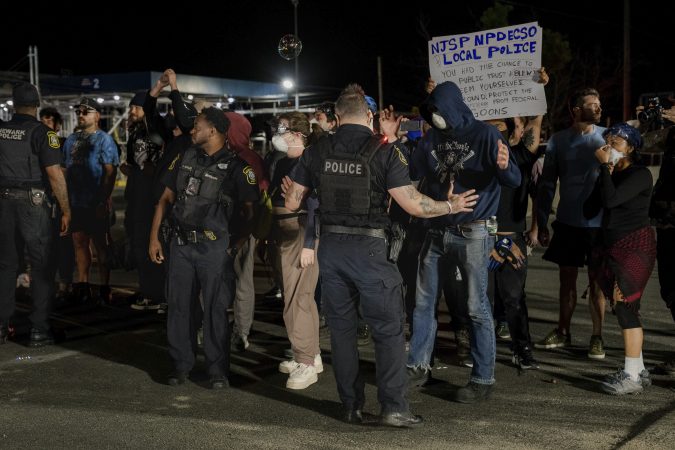
    The ruling came as protesters have swarmed Delaney Hall, an immigration facility in Newark, with nearly daily demonstrations.

    Local officials praised Padin’s ruling, saying the immigrant trust directive was one key to maintaining good relationships between local police agencies and immigrants without permanent legal status. Police departments depend on cooperation in immigrant neighborhoods to stop crime.

    Amol Sinha, the executive director for the American Civil Liberties Union of New Jersey, wrote in a statement that the sanctuary policies “help people access public services” without fear of being detained, separated from their families and perhaps deported.

    “Public safety is strengthened when people can report crimes, and public health is improved when people can seek medical care,” he said.

    This article originally appeared in The New York Times.

  • A 188-apartment building is the latest new development slated for North Broad Street area

    A 188-apartment building is the latest new development slated for North Broad Street area

    A new 188-unit apartment building is the latest in a burst of development proposals around North Broad Street between City Hall and Temple University.

    The eight-story building at 1527 Callowhill St. is being developed by Philadelphia-based Omega Home Builders with architecture from locally based firm Designblendz.

    The project features 13,300 square feet of commercial space and 24 parking spaces accessible from 16th Street. The building will have a green roof, and the developer plans to plant additional street trees.

    The property is currently a surface parking lot that was once owned by The Philadelphia Inquirer, as an annex of the media company’s former 400 N. Broad St. offices. The building is now the Philadelphia Police Department’s headquarters.

    The Inquirer’s former properties were bought by Philadelphia developer Bart Blatstein 15 years ago. He sold the parking lot to Omega Homes’ Roman Ovrutsky at the end of last year for $5.6 million.

    “I think it’s [a] good location, next to cops, plenty [of] parking around,” Ovrutsky said in a text message, “so I think it’ll thrive with our finishes and competitive pricing.”

    Ovrutsky’s project is the latest development proposed for this area. In the past eight months, not including this project, at least 1,221 apartments have been permitted along this stretch of North Broad Street.

    The majority of the apartments in this Callowhill Street project, 111 units, will be one-bedrooms, which Ovrutsky says will rent for between $2,200 and $2,400.

    The building also will include 52 two-bedroom apartments, starting at $2,800, and seven three-bedrooms with two bathrooms each and over 1,000 square feet. Those will start at $3,400.

    There will be 18 studio apartments, although the development team wanted to minimize that number. They believe the market currently has too many small studios, which they argue do not incentivize long-term living.

    “We will have a little bit more space for residents to actually live here, not necessarily the kind of studio-esque [apartments] which Center City often gets hit with,” said Scott Woodruff of Designblendz Architecture.

    We are “sizing these units with more storage space and generously sized bedrooms, so it doesn’t feel like you’re living in a shoebox,” Woodruff said.

    Ovrutsky said that he hopes to start construction by this time next year and finish by early 2029.

    Woodruff said they have been asked why the project isn’t including more parking. He noted that the proposed apartment building is within a short stroll of the Broad Street subway line and on a number of bus routes.

    A rendering of the building’s garage entrance on 16th Street, with the police headquarters visible in the background.DesignBlendz

    It is also walkable to multiple grocery stores and restaurants, and the area has excess parking capacity.

    “With the access to public transit and where this is in the city, we didn’t feel like there was a great need to try and push a lot of parking,” Woodruff said.

    The commercial space could be ideal for a restaurant and could even be carved up between two tenants, he said.

    The property does not require zoning changes to move forward, but it is large enough to trigger consideration by the city’s advisory-only Civic Design Review committee on July 7.

    It was warmly received at a presentation to the Logan Square Neighborhood Association.

    “The group was very pleased with the building as described,” said Alan Williams of the association. “We liked the green roof, the focus on new street trees, sizing in line with neighboring buildings, and the overall aesthetics.”

    The proposed building is on the left side of this rendering.DesignBlendz

    The burst of development attention along this stretch of North Broad Street was partly spurred by a City Council bill that would have banned new housing around the former Hahnemann University Hospital campus.

    That pushed a number of property owners to try to secure permits for apartment projects before the bill went into effect, which means these units aren’t necessarily coming any time soon. Council eventually shelved the bill.

    The North Broad Street corridor’s popularity for developers also relates to the large parcels available at attractive prices. More residents will also activate the streets in the area, which are often devoid of pedestrians at present.

    “This is a big chunk of open parking lot right now, flanked by two parking garages, so it just ruins the fabric,” Woodruff said.

  • Medford bans data centers within town limits amid public debate about AI

    Medford bans data centers within town limits amid public debate about AI

    Large-scale data centers will not be moving into Medford any time soon thanks to a new ordinance adopted unanimously by the Medford Township Council this week.

    While the township has not yet received any formal applications for data centers, officials are taking steps like the ordinance passed Tuesday that specifically prohibits the land use within town limits as a chance to be proactive.

    “These are extra precautions to ensure that we don’t move forward in a direction that we can’t come back from until we know full well what the impacts of data centers will be,” Medford Mayor Michael Czyzyk said at Tuesday’s public hearing.

    The ordinance received support from Medford-area residents at the hearing but some questioned whether the township might be making its bed too early considering how quickly technology evolves, especially if there’s a chance to reap the rewards of a data center project without negatively impacting the surrounding community.

    “If there’s no impacts to the residents and there’s only a financial benefit, I believe I would consider looking at that at that time, but we’re not there yet,” Czyzyk said.

    While the ordinance constraints may seem all-limiting as it exists today, Czyzyk said, council maintains the authority to at any point amend the ordinance to permit data centers in the township’s redevelopment district.

    “I definitely understand that things will evolve and there may be a time in the future that the term data center is something that is more amenable to the residents and the body that governs them,” Czyzyk said.

    “I will feel comfortable with the vote I cast on this ordinance tonight knowing full well that today I feel that way and that there’s mechanisms in the future if things do change, a process will be undertaken to remedy that,” he said.

    Nearby in Cherry Hill, Mayor David Fleisher has explicitly vowed to block the construction of any large AI or commercial data facilities in the township citing concerns of high energy usage, water consumption, and proximity to residents.

    There are dozens of data centers currently operating throughout the state with major hubs located primarily in North Jersey urban centers like Secaucus and Newark. But more recently, developers have been eyeing spots in rural South Jersey as the industry expands to meet growing demands for generative AI.

    For months, South Jersey residents have been protesting a major AI data center that is currently under construction in Vineland.

    Developers and other data-center proponents say the facilities bring in tax revenue, create jobs, make use of old industrial sites, and put towns on the cutting edge of a hot industry, all without straining school districts or emergency services.

    Opponents, meanwhile, cite concerns about pollution, noise, power and water use, and the impact on their electric bills. Some also say they worry the AI boom is a bubble that could soon burst.

    As concerns continue to grow among towns across the Garden State, representatives from more than 60 environmental, labor, and community groups sent a letter to New Jersey Gov. Mikie Sherrill last month calling for a statewide moratorium on the approval and construction of new facilities that use 20 megawatts or more of power.

    So far in response to the public pressure, Sherrill has proposed a plan that would require new data centers to cover grid upgrades, utilize their own power generators, and publicly report resource usage.

    While some municipalities like Medford have issued moratoriums on new data centers, no state governments have successfully done so, according to the National Conference of State Legislatures.

  • Philadelphia budget’s ugly attack on the arts | Editorial

    Philadelphia budget’s ugly attack on the arts | Editorial

    At $5 million, Philadelphia’s primary arts and cultural fund is not one of its many substantial burdens for taxpayers, amounting to well under a thousandth of the multibillion-dollar municipal budget. And yet, the city’s politicians can’t seem to resist the allure of the minuscule expense as a canvas for their financial creativity.

    Having narrowly survived fiscal extinction during the pandemic, the Philadelphia Cultural Fund took another disproportionate cut in the city’s recently enacted budget for fiscal 2027, which begins next week. The spending plan recently passed by City Council and signed by Mayor Cherelle L. Parker appropriates $3.5 million for the fund, nearly a third less than this year, according to the fund’s executive director, Gabriela Sanchez. It’s hardly a rounding error in Philadelphia’s $7.1 billion budget, but it’s likely to devastate many of the tiny arts and cultural groups the line item supports citywide.

    Nearly 100 of the almost 300 arts organizations that depend on the fund are expected to lose the aid as a result, Sanchez said in a statement. She said the fund would halve its eligibility threshold, limiting grants to groups with budgets of no more than $1.5 million, among other “untenable decisions,” hobbling neighborhood theaters, festivals, music programs, and more. “In practice,” Sanchez added, “this means that community-based arts and culture groups … will lose essential operating funding that sustains their day-to-day work.”

    Created three decades ago to supplant more traditionally Philadelphian methods for distributing tax money — according to the whims and still less defensible motives of local politicians — the cultural fund brought a measure of evenhandedness and transparency to bear, offering clear rules and a fair process. Today, it funds groups ranging from A Book a Day, which has donated thousands of books to institutions serving young readers in West Philadelphia, to the Wyck Association, dedicated to preserving and interpreting the historic house of that name in Germantown.

    The impact of these groups, economic and otherwise, is far greater than their cost: A 2024 report by the Greater Philadelphia Cultural Alliance found that nonprofit arts groups generate more than $2 billion in yearly economic activity, providing $1 billion in household incomes and $265 million in tax revenues. The alliance also found that the sector suffers from inadequate, unreliable, and uneven public funding.

    The cut is cruelly contrary to what city arts groups and some Council members argued for amid the Trump administration’s retreat from federal arts funding, which was to increase the cultural fund’s allocation by 20%. It’s also at odds with a city budget that raises overall spending by about 3% over this fiscal year. At that rate, given the fund’s benefits, the city should at least be able to hold it harmless and maintain this year’s relatively meager contribution.

    Philadelphia’s arts groups shouldn’t be perpetually on the budgetary brink just because most of them are small and lack powerful political patrons, making them easy to pick on. The mayor and Council should find a way to restore this funding and stop creating trouble for the city’s invaluable creators.

  • What this former Inquirer columnist learned from writing 468 parenthood columns over nine years

    What this former Inquirer columnist learned from writing 468 parenthood columns over nine years

    For nine years, every week, writer Anndee Hochman attempted to answer one question.

    What does the road to parenthood look like for people who don’t follow the family “norm”?

    For her Inquirer column “The Parent Trip,” she profiled different Philadelphia-area families with children, all with atypical experiences creating their family.

    This included queer parents, single parents, interracial parents, interfaith parents, and so on. Hochman spoke to parents who adopted children, conceived them through IVF, got pregnant unexpectedly, and more.

    Anyone who had a story around parenthood with a less talked-about aspect found themselves in Hochman’s column. Forty-two of 468 of those profiles have now been compiled into a new book, Parent Trip: Unexpected Roads to Form a Family, published by Temple University Press.

    Hochman, who is queer, started writing about family life in 1990, when she was living in Portland, Ore. After her straight housemates got engaged, she wrote an essay for the now-shuttered LGBTQ publication Just Out, detailing her feelings on the discrepancies between how straight and queer relationships are perceived socially.

    The Eighth Mountain Press publisher Ruth Gundle reached out to Hochman, asking if she had more to say on the subject. As it turned out, she had a whole book’s worth. Her first book, Everyday Acts and Small Subversions: Women Reinventing Family, Community and Home, released on Eighth Mountain in 1994.

    Anndee Hochman’s “Parent Trip: Unexpected Roads to Form a Family” is a collection of stories from her original column.Temple University Press

    By 1999, Hochman had moved to Philadelphia and began freelancing for The Inquirer, still writing about family. In 2014, former Inquirer features editor Cathy Rubin asked her if she’d be interested in writing a weekly feature on people becoming parents.

    That’s how “The Parent Trip,” the column, was born. Hochman began by reaching out to midwives and OB/GYN offices to see if any of their clients would be willing to participate. The column asked readers to submit their stories.

    “Becoming a parent and forming a family felt like a messier version of the Wedding column, and that’s exactly what we got,” said Rubin, referring to the column on marital stories that “Parent Trip” replaced. “It was beyond my wildest dreams to witness and experience all of the different ways that families formed and the challenges that people had.”

    Hochman, whose daughter with her long-term partner, Elissa, was born in 2001, was able to use her own experience as a parent to inform the column.

    “When I was interviewing families who didn’t fit the norm and I shared my own family configuration with them,” she said, “I felt like I could feel their shoulders relax a little bit, particularly with the queer families.”

    “The Parent Trip” began nine months before marriage equality for same-sex couples was legalized and concluded just over a year after Roe v. Wade was overturned, reversing a half-century of legalized abortion.

    Hochman makes clear with this book that families will always exist beyond the heteronormative structures society deems “normal.”

    The book is categorized into nine chapters, each carrying three to seven profiles. Through these, Hochman covers topics such as infertility, adoption, age gaps in relationships, religious differences, interracial marriages, and other circumstances that make families less “normal” per social mores.

    “I wanted the 42 [profiles] that ended up in the book to reflect the same diversity and span as the 468 that comprised nine years worth of columns,” Hochman said. “You will not find a section of stories all about single parents, or a section all about queer parents. I was more interested in the themes that echoed across all kinds of families.”

    Through writing this column, Hochman says she learned about situations she never experienced in becoming a parent, including adoption and how common miscarriages are.

    A phrase repeated by many of the parents she interviewed was “you just don’t know what’s going to happen.” Whether that be when you try to adopt, conceive, when you’re in the delivery room, once the baby is home, and once they’re 2, 6, or 25, she said.

    “There is no one right or normative way to be a family,” Hochman said. “I hope people come away with an expanded sense of what a family can look like and how children can be welcomed into one’s life.”

    “Parent Trip: Unexpected Roads to Form a Family” by Anndee Hochman is now available all over the country. $20.

  • Daryl Morey planned on the decline of Paul George and Joel Embiid with the Sixers as the Heat land Giannis

    Daryl Morey planned on the decline of Paul George and Joel Embiid with the Sixers as the Heat land Giannis

    At an early summer lunch just before free agency began two years ago, Daryl Morey mapped out the 76ers’ dream scenario.

    If the Sixers could somehow land free agent Paul George, a future Hall of Famer who then was 34, Morey told a trio of esteemed scribes that the Sixers would open a two-year window in which they could contend for the Eastern Conference title, if not an NBA championship. The East looked relatively toothless.

    To his credit, or perhaps not, the team’s former president of basketball operations was being realistic. George had just made his ninth All-Star team and played in 74 games, but he’d also missed about 35 games on average in the previous four seasons.

    Further, Morey had modest expectations for Joel Embiid. Yes, Embiid had just made his seventh straight All-Star team; yes, he was only 30; and yes, he was one season removed from winning his MVP award. But Embiid underwent a second surgery on his left knee a few months before and was significantly hobbled when he returned. Nevertheless, doctors told Morey that, if Embiid was diligent with his conditioning and his rehab, with proper load management, he could resume his NBA career without significant regression.

    Doctors aside, Morey was no fool. He told the writers that if he got two more really good years from Embiid, that would be a good enough return on investment. Overpaying on the back ends of contracts are necessary evils in the sports industry.

    That’s why Morey signed them both to max contracts — George, a delightful surprise in July; Embiid, a necessary evil in September.

    The Sixers still owe Paul George and Joel Embiid almost $300 million.Monica Herndon / Staff Photographer

    Disaster struck.

    Embiid played in the 2024 Summer Olympics in Paris, but, six weeks later, he reported to camp out of shape and so far behind in his rehab that he was unable to start the season. He needed further surgery in the spring of 2025. By the end of last season he’d finally recovered from the knee problem, but he suffered three more injuries: oblique, right ankle, and right hip. He has played in just 64 games in the last two seasons, including playoffs.

    Predictably, George endured a slew of injuries in his first season as a Sixer, then, in an effort to recover from injury, he was suspended 25 games last season for violating the NBA’s antidrug program. He has played a total of 89 games as a Sixer, including the playoffs.

    Which brings us to Monday.

    Blockbuster

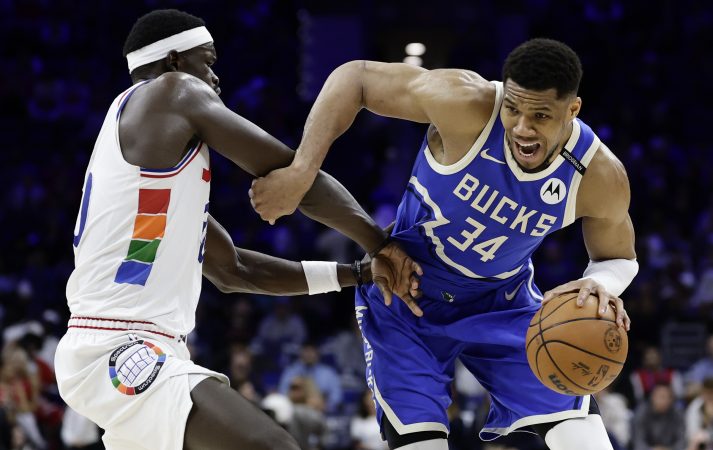
    In perhaps the biggest transaction since LeBron James took his talents to South Beach 16 years ago, Giannis Antetokounmpo did the same.

    The Heat and Bucks on Monday reportedly authored a two-team, blockbuster trade. Miami saw blood in the water, jettisoned its ballast, and attacked. Pat Riley, now 81, mortgaged a Heat future in which he likely will play a diminishing a role to support the chances of second-tier star Bam Adebayo.

    Brilliant.

    There have been other big deals, such as the idiocy in Dallas of trading Luka Dončić in 2025 to the Lakers, but Giannis is a bigger deal. He has two MVPs, an NBA championship, and an acceptable BMI. Luka has none of those.

    With the Greek Freak on board, the East is ripe for Miami, and Riley, the Heat president for the past 31 seasons, knows it. After all, he orchestrated the last trade with this sort of effect, when he brought Shaquille O’Neal to Miami in 2004, then won a title with him in 2006. On Monday, Riley’s team immediately became a contender again in a vulnerable Eastern Conference.

    The principals

    Celtics? The patchwork Sixers upset the mighty Celtics in the first round of the playoffs.

    Knicks? The hodgepodge overachievers, the most fun team to watch since Larry Brown pushed the Pistons to the 2004 title, ran off 11 consecutive wins in the conference playoffs to reach the NBA Finals, in which they wore down an inexperienced team and its inexperienced coach.

    The Cavs? They collapsed due to the cold left hand of James Harden, who, to no one’s surprise, shot just 38.9% in the conference final against the Knicks.

    The Pistons? Two words: Tobias Harris.

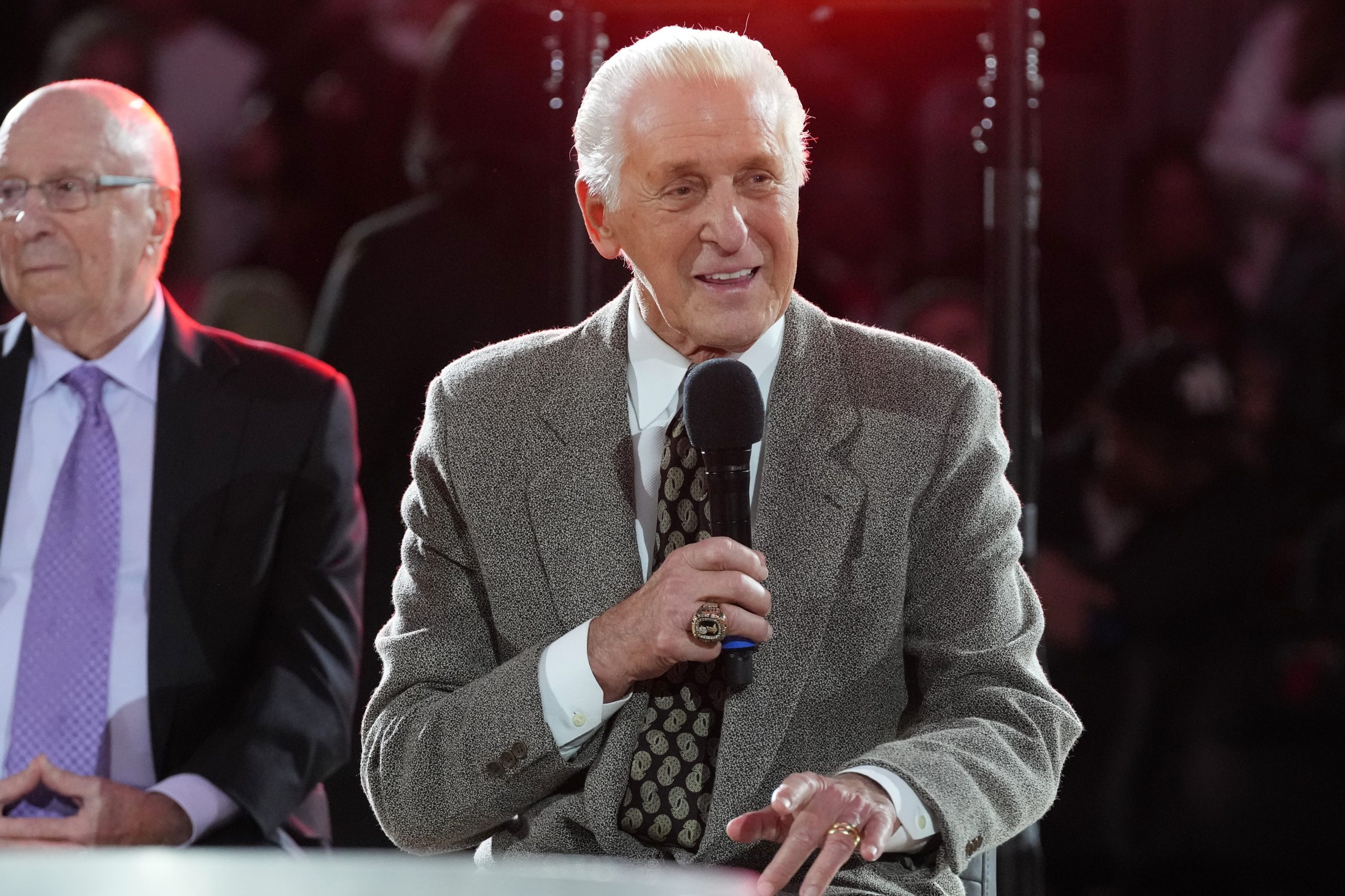
    Pat Riley, 81, orchestrated the trade of another superstar to Miami in landing Giannis Antetokounmpo in a reported trade with the Bucks.Marta Lavandier

    The Pacers? Two words: Tyrese Haliburton. He pushed the Pacers to the NBA Finals in 2025 but blew out his Achilles in Game 7. With all due respect to Jalen Brunson, if Haliburton returns at 100%, then he’s the best player in the East. How good is he? The Pacers’ 19 wins were second-worst last season, but with Haliburton returning, their DraftKings odds to win the East are 12-1.

    Upon news of the trade, the Heat’s odds to win the conference on DraftKings improved from 12-1 to 6-1. That’s behind the Celtics, at 2.25-1, and the Knicks, who are at 3-1.

    The Sixers? They’re still seventh, at 19-1, behind the Cavs, who are 13-1, after Tuesday night’s draft. The Sixers used their 22nd overall pick on Labaron Philon Jr., a 6-foot-4 sophomore sniper out of Alabama whom they hope will compensate for Morey’s deadline trade of popular second-year shooter Jared McCain, who flourished in Oklahoma City.

    Philon’s arrival did not move the DraftKings needle.

    Don’t expect those odds to get any better July 6, when free-agent deals and proposed trades like the Giannis deal can be ratified.

    All the Sixers will be able to do is watch.

    They’re still saddled with the crippling contract of Embiid, now 32 going on 52 and who is owed almost $188 million over the next three seasons.

    They’re still saddled with the last two years and almost $111 million owed George, who is 36. A second positive drug test would cost him 55 games. Maybe he needs them.

    He averaged just 14.5 points and shot 40.7% from the field when the Knicks swept the Sixers out of the second round — a sweep that, two days, later, cost Morey his job as president.

    These twin albatrosses will haunt the Sixers for at least two more years. This, remember, is by design.

  • These Philadelphians planned the perfect World Cup weekends for their families. Then their tickets never came.

    These Philadelphians planned the perfect World Cup weekends for their families. Then their tickets never came.

    Georgette Luna planned her Father’s Day weekend down to a T, splurging $3,000 on three tickets to the Friday World Cup match in Philadelphia. The Fishtown resident, her husband, and her father — who traveled from New York — would go to Reading Terminal Market, she thought, barhop to mingle with fans before the game, and then head to the stadium early to tailgate before seeing Brazil take on Haiti.

    She had purchased the tickets on the third-party ticket resale platform StubHub last fall, but the seller she bought the tickets from never transferred them. She called StubHub frequently in the months, weeks, and finally days leading up to the match, wondering when the transfer would go through.

    Every time, a StubHub representative said her “tickets would transfer to her on the day of the game,” Luna said. But by Friday, the group — who could not wait to see Brazil play, since their favored Chileans did not qualify for the World Cup — never made it into the stadium.

    “We’re standing outside the stadium and obviously everybody is in full celebration, and here we are, supposed to be living this World Cup moment together for the first time, and there’s just this feeling of disappointment,” Luna said.

    As the World Cup takes over the country, people across U.S. host cities have shared the same story: Fans in Atlanta, Boston, Dallas, Houston, New Jersey, Seattle, and, of course, Philadelphia arrived at stadiums hoping their tickets would be transferred to no avail, with most facing issues with StubHub. Other reports indicate fans are having similar issues on SeatGeek.

    StubHub, for one, blames FIFA’s tech infrastructure and the rollout of a new mobile phone app weeks before the tournament for why tickets have not been transferring on time. FIFA has urged fans not to buy tickets on third-party platforms, saying it “may result in issues, including the inability to cancel or accept transfers,” as well as a higher risk of fake or invalid tickets.

    This confusion is in addition to the long wait times, glitches, and extra hurdles placed on ticket buyers for original, face-value tickets from FIFA. FIFA’s ticketing practices are under investigation by the New York and New Jersey attorneys general.

    But fans who lost out on a generational moment are more interested in how platforms like StubHub plan to resolve these issues.

    Stephanie Fred of Bristol and her 9-year-old son, Levi, are heartbroken after their tickets to the Monday France vs. Iraq game never materialized, even as they stood outside the stadium. To make matters worse, Levi, a soccer player himself, had been trying to see his favorite player, French superstar Kylian Mbappé.

    Mbappé scored two goals, tying for the second-most goals scored by a player in men’s World Cup history. Fred’s son could hear the cheers from outside the stadium. He broke down into tears that did not stop even later that night, she said.

    During Philadelphia’s first World Cup game, between Ecuador and Ivory Coast, Jayden Quezada, 17, and his parents came to Philadelphia from Bensalem, hoping for an Ecuadorian victory. But they were turned away. The night before the game, the trio had spent $4,350 to get three tickets through the TickPick app after seeing a social media advertisement. By the time they arrived at the stadium, the tickets still had not been transferred to their FIFA app.

    “They have been the biggest fans since before I was born, and they don’t get to go to Ecuador often because of work,” Quezada said. He said they would try to get a refund, but missing the game was “really sad because we were looking forward to feeling the Ecuadorian pride.”

    For that game, a line of more than 50 fans waited for help with their failed tickets. Monica Rojas, 22, and her friend Jose Avil, both Spanish speakers, were confused about what to do after the ticket office explained the problem with their ticket in English. The pair had driven two hours from New York, after having bought tickets on StubHub for $2,000, including parking. After a FIFA volunteer interpreter intervened, the pair found out their tickets had been refunded.

    Brazilian fans cheers before a FIFA World Cup Group C soccer match between Brazil and Haiti at Lincoln Financial Field on Friday, June 19, 2026, in Philadelphia.Jose F. Moreno / Staff Photographer

    StubHub blames FIFA

    StubHub is aware that fans are not receiving the tickets that they bought, and a company representative blamed FIFA.

    “The issues fans have experienced at this World Cup are largely driven by performance problems with the event organizer’s own ticketing infrastructure, which has created transfer failures across all resale platforms,” a StubHub spokesperson said.

    StubHub said the launch of a new FIFA app right before the World Cup began has led to delays, failed transfers, and access issues that have affected all resale platforms, not just StubHub.

    The ticket reseller also said sellers are required to fulfill their ticket orders or they face financial penalties and bans from the platform.

    Bad actors on resale platforms can engage in a practice called “speculative ticketing,” where buyers will list a ticket that they do not yet own on StubHub and other platforms, in the hope that they will find a cheaper ticket later and recover profit, said Scott Friedman, owner of the Ticket Talk Network podcast and an industry veteran who is helping to sue StubHub on behalf of 160 buyers and sellers who said company practices harmed them.

    StubHub does offer a “FanProtect Guarantee‚” a promise the company will find replacement tickets or refund the order when a ticket does not transfer. But the policy repeatedly states that resolving these issues falls under StubHub’s “sole discretion.”

    StubHub ticket protection measures can look like replacement tickets, a full refund, or a voucher worth 120% of the value of the tickets. During the World Cup, the company said, it is prioritizing replacement tickets so fans can get to a match.

    France forward Kylian Mbappé sprints for a pass against Iraq during the first half of a FIFA World Cup Group I soccer match Monday, June 22, 2026, at Lincoln Financial Field in Philadelphia.Jose F. Moreno / Staff Photographer

    Refunds can’t replace a once-in-a-lifetime moment

    All of this leads to confusion, and eventually disappointment, when the tickets never show, Luna said. As she and her family, hanging their heads low, took a depressing train ride home from the stadium last week, Luna continued to try to get answers.

    Finally, on Monday, she said, she received word StubHub would refund her June 19 match tickets and gift her similar tickets to the July 4 match in Philadelphia, which she said she would accept. But, later, Luna was told she would only receive replacement tickets.

    “Is this a wonderful outcome? For sure, but my father and I would have been happy with the perfect weekend that we had planned for ourselves as it was,” Luna said. “While they’re doing right by us, there are so many people who aren’t getting this result.”

    Fred’s family got word Tuesday that StubHub would provide them with tickets to France vs. Norway in Boston on Friday. Fred does not mind the drive as long as Levi can achieve his dream of seeing Mbappé play.

    “We don’t get this type of opportunity from where we come from,” Fred said. “Being able to provide a World Cup experience for our kids just means the world to us, and having that be ripped away from us, it was just so hard to process.”

  • ⚽ Keep it rolling | Sports Daily Newsletter

    ⚽ Keep it rolling | Sports Daily Newsletter

    We’re approaching the point of the World Cup where things start to move fast.

    By Sunday, the knockout round begins. And tonight (at 10 p.m.), the U.S. men’s national team will compete in its final match in Group D against Turkey.

    We already know that the U.S. advanced to the round of 32 after its win over Australia, but we’re still awaiting its opponent for the July 1 showdown.

    As for tonight, it’s anyone’s guess whom head coach Mauricio Pochettino will start. Right now, Christian Pulisic looks to return to the lineup — and it might be in his best interest after being sidelined. Is it worth the risk in a match that matters very little?

    Let’s see how our soccer writers weigh this one.

    The U.S. men’s team has never won all three of their group-stage games in a single World Cup. While, there’s still a long way to go beyond Thursday’s group stage finale, this could be a moment to stop and survey just how far the team has come, writes Jonathan Tannenwald.

    — Isabella DiAmore, @phillysport, sports.daily@inquirer.com.

    If someone forwarded you this email, sign up for free here.

    ❓How far do you think Team USA will go in the World Cup? Email us back for a chance to be featured in the newsletter.

    The ‘perfect spot’

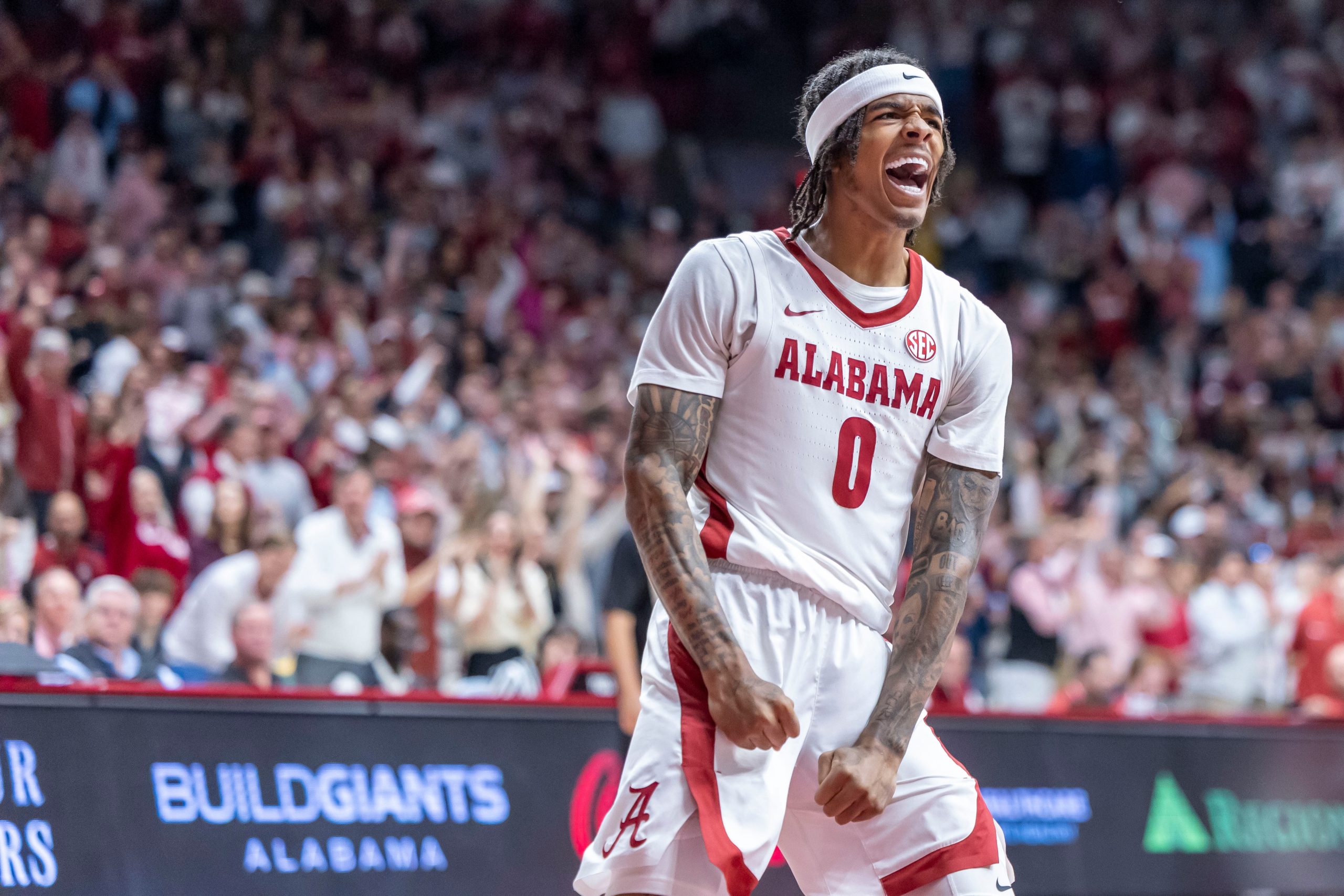
    A year ago, Labaron Philon Jr. delayed his draft night after originally declaring in 2025. The guard from Alabama then sat in the Barclays Center on Tuesday for longer than expected, as a projected lottery pick who slipped past that portion of the first round. However, landing with the Sixers was worth the wait.

    And the national media is divided Philon — some are calling him the steal of the first round while others expressed concern on how he’ll fit with the team.

    What we’re …

    👀 Watching: Highlight moments from Jason Kelce’s sixth annual Sea Isle fundraiser, which had plenty of surprise appearances.

    🤔 Wondering: What Zach and Julie Ertz said about the Eagles on ‘New Heights’ — that left the former tight end emotional.

    📖 Reading: Twin pitchers Austin and Blake Havertine left their mark at Radnor. Now, they’re heading to different colleges.

    🏀 Learning: About the 6-foot-10 freshman center who will play under Penn coach Fran McCaffery next season.

    Welcome newcomers

    Joseph Woll (right) and Simon Benoît are now going to be teammates in orange and black.Adrian Wyld

    Joseph Woll and Simon Benoît met with the media on Zoom Wednesday and expressed excitement about being part of the organization. The two newest Flyers were traded from the Leafs for goalie Sam Ersson, defenseman Emil Andrae, and a third-round 2026 draft pick on June 16.

    Benoît played with Trevor Zegras and Jamie Drysdale for several seasons with the Anaheim Ducks. He’s expected to bring a physical defensive presence, while Woll is already forming a relationship with his new goalie partner, Dan Vladař.

    And to get you ready for Friday’s NHL draft, here’s three defensemen who keep getting mentioned as an option for the Flyers at No. 21.

    Schwarber being ‘cautious’

    Kyle Schwarber missed a second straight game on Wednesday with tightness in his lower back.Elizabeth Robertson / Staff Photographer

    Kyle Schwarber was out of the Phillies lineup for the second consecutive game with tightness in his lower back. Don Mattingly said Schwarber was feeling better, but the interim manager wanted to be cautious and give him another day off.

    Schwarber, though, helped start the Phillies’ rally on Wednesday when he entered the game in the ninth inning, drew a 10 pitch walk with two outs, and made way for Derek Hill’s go-ahead two-run homer for a 5-4 win over the Nationals.

    David Murphy’s take

    New Sixers president of basketball operations Mike Gansey says first-round pick Labaron Philon Jr., “fell into our lap.”Elizabeth Robertson / Staff Photographer

    Mike Gansey aced his first test as Sixers president on Tuesday night. He took the player he graded as the best talent. Of course, the real test is whether he’s right.

    But, however Labaron Philon Jr. turns out, the Sixers did what a team in their position should be doing: Using the opportunity to draft a player they think will someday belong in a championship caliber rotation, writes columnist David Murphy.

    Join us!

    Jackie Spiegel answers your questions about the Flyers during our Reddit AMA at noon on Thursday.Vaughn Johnson

    After making the second round of the playoffs, how will the Flyers approach the NHL draft?

    The Inquirer’s Jackie Spiegel will provide answers on that and more in an AMA tomorrow in the r/Flyers Subreddit!

    What you’re saying about the Sixers’ pick

    Alabama guard Labaron Philon Jr.is the newest member of the Sixers.Vasha Hunt

    We asked: Are you happy with the Sixers’ first-round pick? Why or why not? Among your responses:

    Another Guard? We are well stacked with Maxey and VJ, which is why the Sixers shipped Jared McCain out to OKC (or was it a salary dump). If he is indeed a shooter, great! If not, the Sixers could have used a “Big” given the ongoing uncertainty around Embiid. — Bob C.

    Thought they had 3 guards, but traded one to Oklahoma City. Do they have a clue?? — Bill M.

    Just surprised that they went for a guard. I thought they would go for a big man to support our two guys who struggle every season with injuries etc. — Everett S.

    Makes no matter if they would have drafted the second coming of Michael Jordon. Until they move Joel to his new home, their chances of winning any championship are nil. He’s a great part time player and that’s it! Not knowing if he’s playing in each and every game until he shows up in the locker room is just plain wrong. — Ronald R.

    We compiled today’s newsletter using reporting from David Murphy, Jonathan Tannenwald, Owen Hewitt, Kerith Gabriel, Rob Tornoe, Jackie Spiegel, Lochlahn March, Gina Mizell, Ariel Simpson, Joseph Santoliquito, Conor Smith, Mia Messina, and Ethan Kopelman.

    By submitting your written, visual, and/or audio contributions, you agree to The Inquirer’s Terms of Use, including the grant of rights in Section 10.

    As always, thanks for reading. Have yourself a terrific Thursday, I’ll be back in your inbox tomorrow to wrap up the week. — Bella