Leonard Abramson, 93, of Jupiter, Fla., a former pharmacist, founder, chair, and chief executive officer of U.S. Healthcare Inc., author, trustee emeritus at Johns Hopkins University, and one of the world’s most generous cancer research and clinical care philanthropists, died Saturday, July 4, of age-associated decline at his home in Blue Bell, Montgomery County.
Born and reared in the Strawberry Mansion section of Philadelphia, Mr. Abramson earned degrees at Pennsylvania State University and the old Philadelphia College of Pharmacy. He worked as a pharmaceutical salesperson, pharmacist, and hospital management executive in the 1960s, founded U.S. Healthcare in 1975, and nurtured the company into one of the country’s first and largest health maintenance organizations.
“Abramson accurately predicted the need for prepaid medical plans to manage spiraling medical spending in the ’60s and ’70s and founded U.S. Healthcare to capitalize on this opportunity,” officials at Harvard Business School said when they named him one of their Great American Business Leaders of the 20th Century.
Under Mr. Abramson, U.S. Healthcare was known for promoting childhood immunizations, mammograms for older women, reduced fees to specialists, and shorter hospital stays. He championed strict standards and accountability for medical professionals, and criticized those who abused a healthcare system then rife with loopholes.
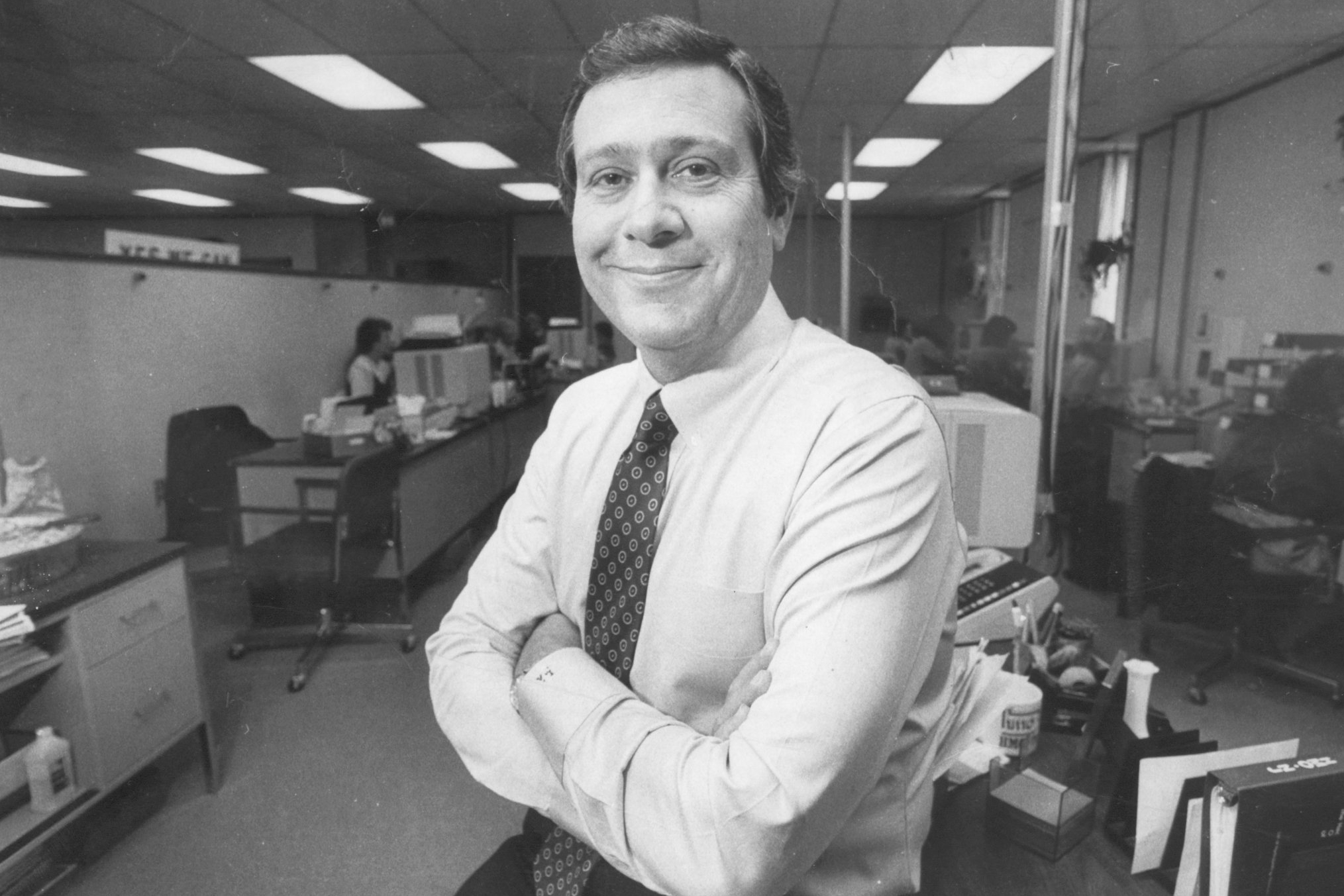
Mr. Abramson “was a brilliant man whose leadership and vision made the company truly exceptional,” a former colleague at U.S. Healthcare said in a tribute.Larry Price / Staff Photographer
He wrote Healing Our Health Care System in 1990, and told The Inquirer: “If industry leaders know there are solutions, they’re going to call for them. Innovation leads to emulation.” In 1996, he sold U.S. Healthcare to Aetna Life & Casualty Co. for $8.9 billion, established the Abramson Group, and consulted for Aetna and other companies.
“He was a brilliant man whose leadership and vision made the company truly exceptional,” a former colleague at U.S. Healthcare said in a tribute. Another said: “He encouraged a commitment to customer service that stayed with me throughout my career.”
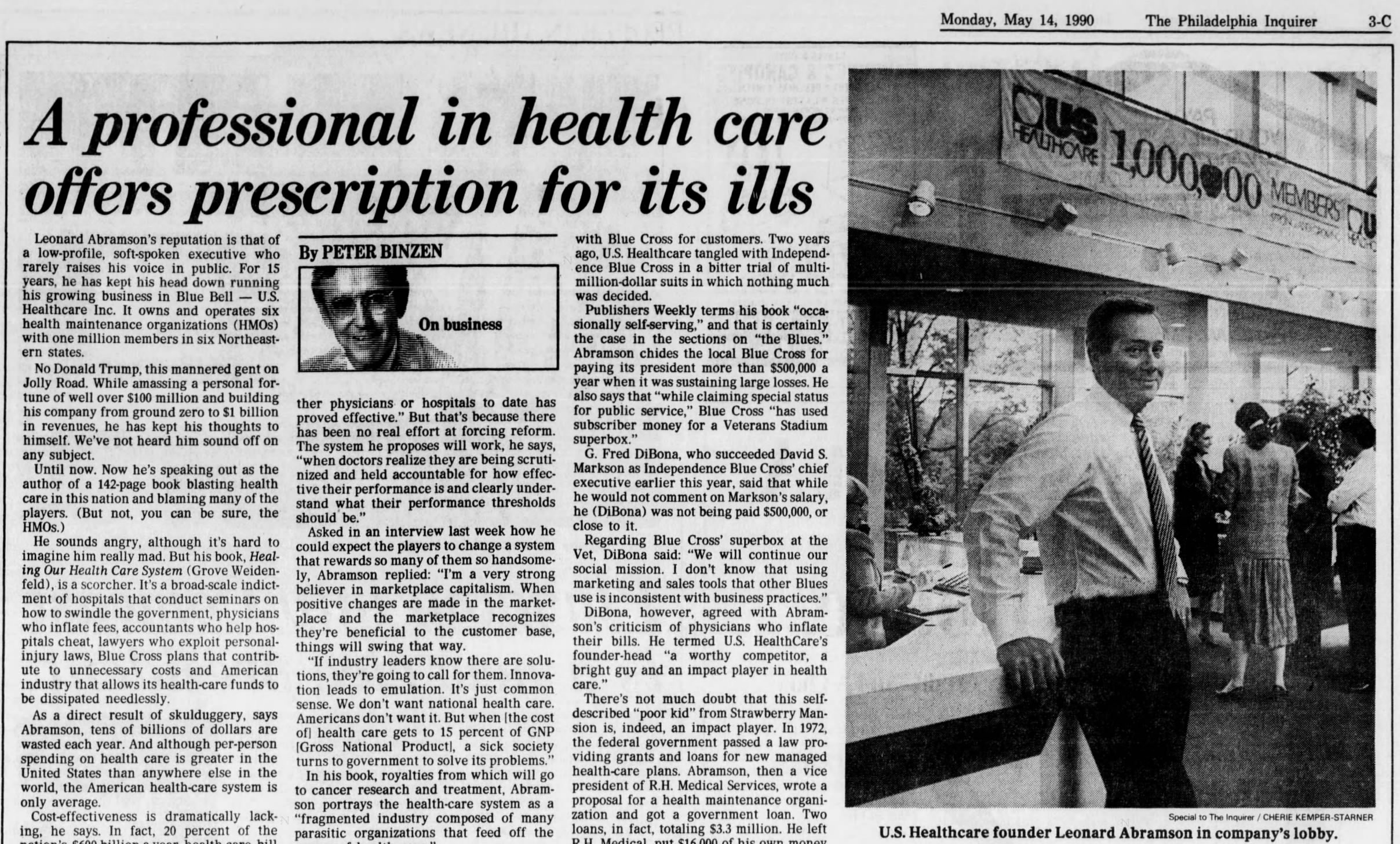
Routinely one of the highest-paid CEOs in the Philadelphia region, Mr. Abramson was a “low-profile, soft-spoken executive who rarely raised his voice in public,” Inquirer business writer Peter Binzen said in 1990. A former colleague at U.S. Healthcare said: “I never worked for a better man.”
As a philanthropist, Mr. Abramson and his wife, Madlyn, established the Leonard and Madlyn Abramson Family Foundation in 1996 and donated more than $140 million to the University of Pennsylvania’s Perelman School of Medicine and the Penn Medicine network. In 2002, Penn Medicine renamed its main cancer facility in University City the Abramson Cancer Center.
This article and photo of Mr. Abramson appeared in The Inquirer in 1990.Newspapers.com
In a tribute, officials at Penn said he “touched countless lives across the world through his generosity, compassion, and leadership.”
At Children’s Hospital of Philadelphia, they supported the Leonard and Madlyn Abramson Pediatric Research Center and a pediatric emergency department at CHOP’s hospital in King of Prussia. In 2013, they donated $10 million to fund scholarships at the Temple University dental school.
Mr. Abramson and his wife, Madlyn, married in 1957.
Mr. Abramson’s wife, a cancer survivor, died in 2020, and he donated $10 million in 2021 to establish an endowed chair of cardiac surgery in her honor at Jupiter Medical Center in Florida. He was an honorary trustee for the Brookings Institution, trustee emeritus for Johns Hopkins, board member for many organizations, and a supporter of Project HOME for affordable housing.
Friends and former colleagues called him a “caring humanitarian,” “a class act,” and “a visionary” in online tributes. One longtime friend said: “Leonard’s kindness and generosity made a difference in the lives of countless individuals.”
Leonard Abramson was born Nov. 12, 1932. He graduated from Northeast High School and drove a cab to help pay his way through pharmacy school.
“Not too many people started off with less than I did,” he told Forbes magazine in 1994.
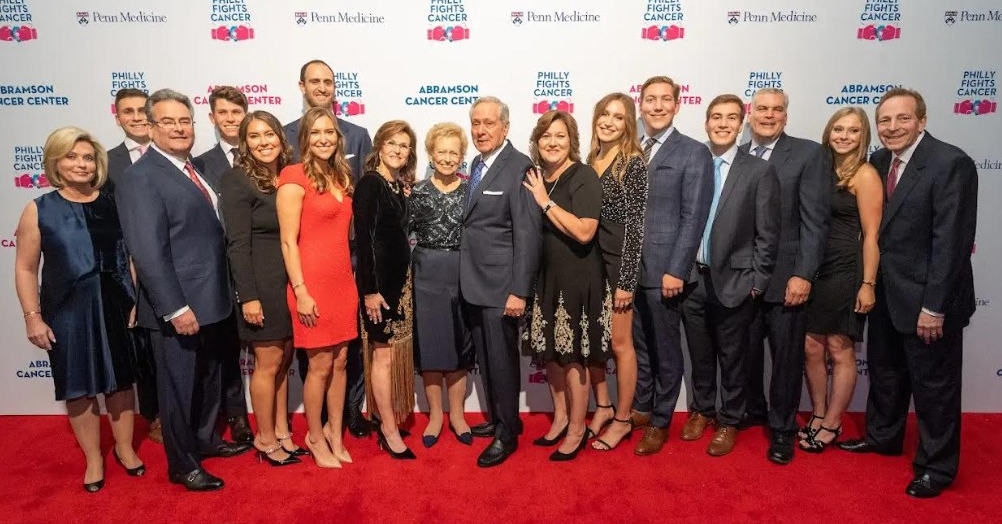
Mr. Abramson (center) enjoyed time with family and friends. Courtesy of the family
He met Madlyn Kornberg in college through a mutual friend, and they married in 1957. They had daughters Marcy, Nancy, and Judy, and lived in Blue Bell, Jupiter, Fla., and Camden, Maine.
Mr. Abramson enjoyed boating, golf, and painting. “He was multifaceted,” his daughter Judy said. His daughter Nancy said: “He was extremely family oriented.”
He told The Inquirer in 1990: “I’ll never retire.” He never really did.
In addition to his daughters, Mr. Abramson is survived by nine grandchildren, two great-grandchildren, and other relatives.
This book by Mr. Abramson was published in 1990.Leonard Abramson
A memorial service is to be held later.
Donations in his name may be made to the Abramson Cancer Center at the Hospital of the University of Pennsylvania, 3535 Market St., Suite 750, Philadelphia, Pa. 19104, and Philly Fights Cancer, Box 9, Wynnewood, Pa. 19096.
One hundred and twenty years ago Sunday, Alfred Dreyfus, a French army captain, was exonerated of his wrongful conviction on espionage charges— bringing to an end an explosive and tortuous process marked by antisemitism, deceit, and the complicity of France’s military in aiding one of the first great miscarriages of justice to play out in the modern media age.
Dreyfus was arrested in December 1894 after being accused of passing military secrets to the German Embassy in Paris. He was court-martialed, convicted, and sentenced to life imprisonment on France’s notorious Devil’s Island.
Historians now agree that a major factor in Dreyfus’ conviction was antisemitism. Dreyfus was a Jew from the Alsace region of France at a time when Jewish officers were rare in the army. They were subject to the same kinds of prejudice and discrimination faced in other parts of French society. A case was trumped up against him by the French military establishment, looking for a convenient scapegoat.
Following the trial, a French officer, Lt. Col. Georges Picquart, conducted further investigations that indicated that it was not Dreyfus, but another French officer, Maj. Ferdinand Walsin Esterhazy, who was responsible for passing the secrets to the Germans.
Astonishingly, in 1899, Dreyfus was again court-martialed and found guilty. Though he subsequently received a pardon from the president, he was not fully exonerated by France’s highest civilian appeals court until July 12, 1906.
There were many examples of great drama and heroism during what came to be known as the Dreyfus affair.
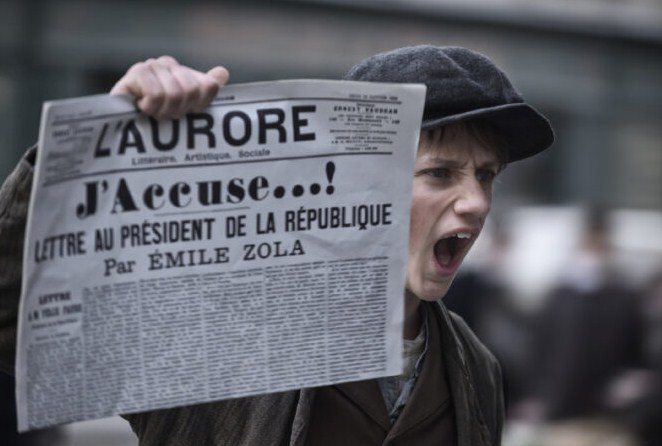
In 1898, the French author Émile Zola published an open letter to the French president in support of Dreyfus, headlined “J’accuse.” The power of Zola’s piece and its wide dissemination launched a movement in defense of Dreyfus but also reinforced divides: Dreyfusards and anti-Dreyfusards, liberal/secularists vs. conservatives, left vs. right.
A scene from Roman Polanski’s 2019 historical drama about the Dreyfus affair, “J’accuse” (“An Officer and a Spy”).Venice International Film Fest /
That the story spread so widely is even more remarkable considering that the key events in the case took place long before the emergence of electronic media — the widespread use of radios wouldn’t take hold for another 20 years or so after Dreyfus was cleared.
Nevertheless, the Dreyfus affair became a watershed moment in the media’s role in high-profile trialsanda yardstick by which subsequent miscarriages of justice were measured.
In the United States, the 1925 Scopes trial became a cause célèbre with a reach thatapproximated the Dreyfus affair, despite the very different facts surrounding that case.
In 1944, South Carolina executed 14-year-old George Stinney Jr. after a 10-minute trial. Decades later, a judge declared his conviction unjust. Pictured are George Stinney Jr. in an undated booking photo and an article from Atlanta Daily World on June 23, 1944.Illustration: Andrea Brunty, USA
The execution of George Stinney Jr. — a 14-year-old Black boy who was wrongfully convicted of killing two white girls in South Carolina in 1944 — is one of the many controversial death penalty convictions that have also betrayed the principles of justice.
What distinguishes the Dreyfus affair is not just the case itself, but its aftermath. The exoneration of Dreyfus ultimately became an indictment of a political culture in France that was defined by secrecy, prejudice, institutional corruption, and arrogance.
Sadly, none of that is unfamiliar to us — so what have we learned in the past 120 years?
What have we learned? A dozen decades after Alfred Dreyfus was finally cleared — and at a time when antisemitic hate crimes continue to rise — that is a crucial question we must continue to ask ourselves.
Paul McElhinney is a writer and journalist living in Wexford, Ireland. He has contributed to many Irish, British, and American journals.
They were at a travel ball tournament in Marietta, Ga., 30 miles north of Atlanta. Schwarber played for a team from Ohio, and Harper for, well, who can remember? He was a travel ball star, competing for more than a dozen teams across the country, often against older kids.
“We all knew about him,” Schwarber said.
And once word circulated around the eight fields at the East Cobb Baseball Complex that Harper was somewhere on site, Schwarber and his teammates set off in search of the teenage baseball prodigy.
“I remember we were out, just walking around getting ready to go, and we heard and we’re like, ‘Oh, we’re running over there to go watch him play. Get on the fence,’” Schwarber recalled the other day. “It was fun. As a young kid, you’re like, ‘Oh, he’s on the cover of Sports Illustrated.’ So, it was really cool.”
Schwarber chuckled.
“It’s funny,” he said. “Look where we’re at now. We’re, what, 33? It’s a long time.”
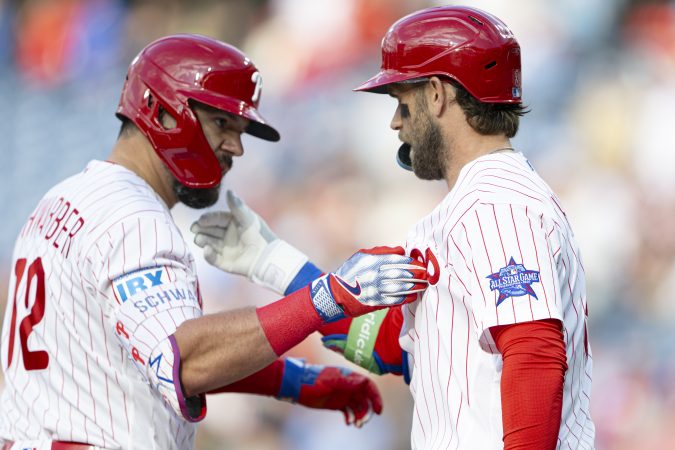
Indeed, look at them now. Harper and Schwarber are not only in their fifth season as Phillies teammates. They’re also the main attractions as baseball gathers for Philly’s first All-Star Game in 30 years.
Harper, the face of the Phillies and among the most marketable players in the sport, announced Thursday on Instagram that he will enter the Home Run Derby for the first time since 2018, when he won it in his then-home ballpark in Washington.
Schwarber, the National League’s preeminent slugger and a consummate leader, a force with his personality as much as his Louisville Slugger, committed to the Derby on Friday, setting up a rematch from his runner-up finish to Harper eight years ago.
Harper hit for the cycle for the first time as a major leaguer, while Schwarber blasted three home runs, two in one inning. They were the second teammates to achieve those feats in the same game, joining Lou Gehrig (four homers) and Tony Lazzeri (cycle), Hall of Fame Yankees, in 1932.
And there’s more. Harper entered the weekend with 20 homers and 383 for his career, and was on pace to finish the season with 397; Schwarber was leading the majors with 32, giving him 372 overall and putting him on pace to finish with 395.
The last teammates to chase down 400 homers in the same season: Mark Teixeira and Carlos Beltrán with the Yankees in 2016.
“I think it’s cool,” Schwarber said. “The fact of having milestones, one, you’re celebrating for yourself. But then also to have someone else doing the same thing as well, it’s impressive, especially for a player of his caliber.”
As their mutual milestone draws closer, and with the All-Star Game upon us, Harper and Schwarber talked recently about one another in separate conversations with The Inquirer.
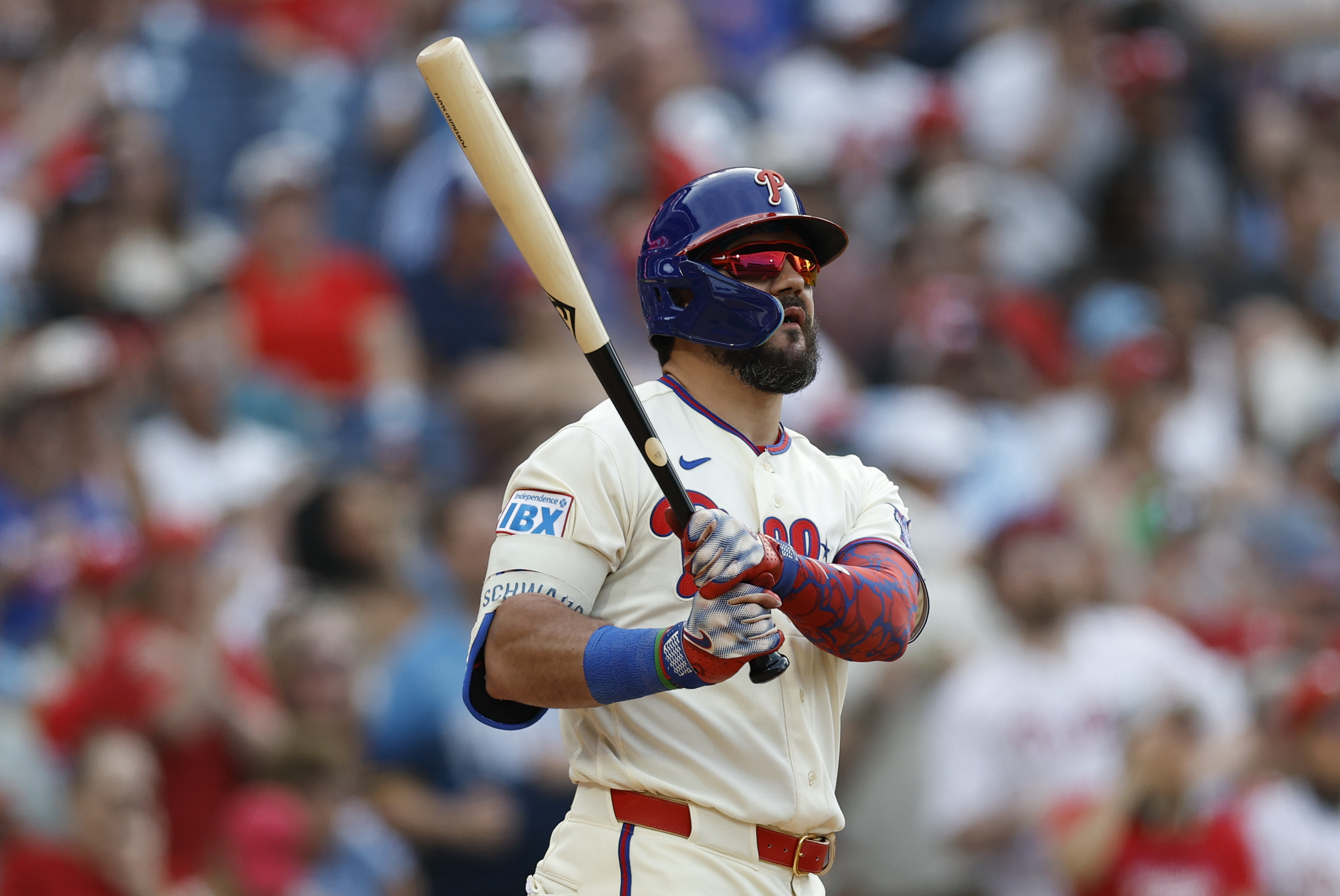
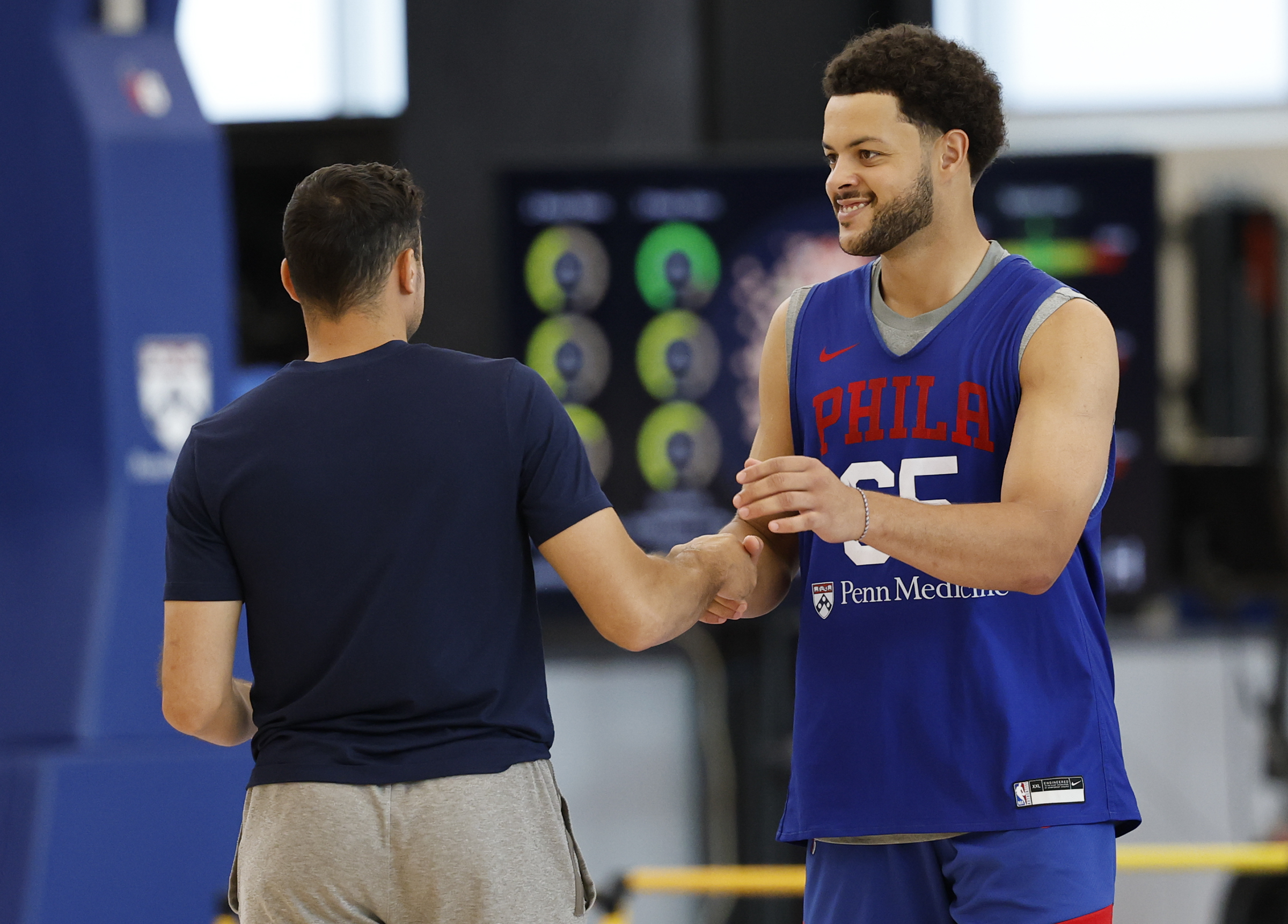
Kyle Schwarber has 219 homers since he signed with the Phillies in 2022. Only the Yankees’ Aaron Judge has more in that span.Yong Kim / Staff Photographer
Harper on Schwarber
Nobody can top Harper’s view of the Schwarber Show.
“It’s a lot of fun to be on deck to watch him do what he does,” Harper said. “It’s impressive.”
Two things stand out most to Harper: the simplicity of Schwarber’s short, left-handed swing and how often he’s able to repeat it.
Harper is notorious for tinkering. When the hits aren’t falling, he alters his stance or switches batting gloves. Last month, the night he hit for the cycle, he dragged a 35-ounce bat — four ounces heavier than his usual model — to the plate.
“You know how I am: I change crap all the time, or I’m doing something different,” Harper said. “Him being able to repeat each swing, understanding what he needs to do on each pitch, is very impressive. I would say it’s one thing that I would be a little bit jealous about, just because he can repeat it so well.”
Schwarber is also the Benjamin Button of sluggers. He’s aging in reverse.
In his first seven major league seasons, from 2015 to 2021, Schwarber hit 153 homers and was 19% more productive than league average, based on OPS+. Since signing with the Phillies in 2022, he has hit 219 homers and is 35% more productive than league average. His OPS has improved each year since 2023, from .817 to .851, .928, and .945 through Wednesday.
“I think he’s just kind of bought into what he’s good at,” Harper said. “This isn’t anything bad, but I don’t know if he’s ever going to hit over .260, or whatever. But he’s bought into hitting homers and walking, and he’s very, very good at it. I mean, he’s on an elite level doing those things.”
The homers come with high strikeout totals. Schwarber led the majors in strikeouts in 2022 and ‘23 and is on pace for a career-high 238 whiffs this season.
Harper doesn’t mind the tradeoff.
“I kind of throw the strikeouts out the window,” Harper said. “It’s like hitting a ground ball to second, right? You’re still out. I’m glad that he doesn’t take that too much into consideration. He kind of just plays along with it, and it’s like, whatever. And then he goes up there, hits a homer.
“And it’s really cool to see his day-to-day work and why he does things. He’s bought into the DH role so well, and I think that’s helped him, too, over the years, not having to worry about defense. He’s just been able to maintain hitting. And it’s great for him because he can buy into what he’s good at.
“It just makes me laugh because he’s such a good dude. It couldn’t happen to a better person, right? I love watching him play. I love watching him hit. I love guys that hit homers, you know?”
But Schwarber’s career path hasn’t been linear.
Drafted fourth overall by the Cubs in 2014, he reached the majors within 12 months and blasted 16 homers in 69 games. He tore a knee ligament two games into the 2016 season and beat every projection to play in the Cubs’ hex-breaking World Series. He got demoted to triple A in 2017, averaged 31 homers per year from 2017-19 despite lingering doubts that he could handle left-handed pitching, and got nontendered after the 2020 season.
Harper believes Schwarber’s range of experiences contributes to his leadership by making him relatable to teammates at every stage of a career.
“I think that’s why everybody gravitates to Schwarbs so much,” Harper said. “Obviously he’s a great human being, great teammate. But he can be a superstar player; he can also be the guy that got hurt; he can also be the guy that gets [nontendered] and they think he’s the worst player in the league.”
Schwarber bounced from the Nationals to the Red Sox in 2021 and signed a four-year, $79 million contract with the Phillies the following spring. He has hit 46, 47, 38, and 56 homers over the last four years, a mid-career surge that reminds Phillies hitting coach Kevin Long of David Ortiz.
“Yeah, I agree,” Harper said. “Obviously the last couple of years have been incredible. And I just see him doing that again. I just don’t see it going anywhere. And I say that because the swing is so repeatable. I’m impressed by him every day.”
Bryce Harper is a nine-time All-Star in a 15-year major-league career.Yong Kim / Staff Photographer
Schwarber on Harper
It’s one thing to be 11 years old and tell your dad, “I’m gonna be the No. 1 pick.” Or to be 16 and labeled as “Baseball’s Chosen One” by Sports Illustrated. Or to leave high school after two years and enroll in junior college to play against older competition.
“But this guy,” Schwarber said, “has been able to be that kid and do even more in the game.”
As he predicted, Harper got drafted first overall in 2010, four months before his 18th birthday. At 19, he made his major league debut … and the All-Star team … and was crowned NL Rookie of the Year.
Harper has spent almost half his life in the majors. This is his 15th season; he won’t turn 34 until October.
“We’re always like, ‘What were you doing when [Harper] came up?’ ” Schwarber said. “He made his debut in ‘12, I think. I’m like, ‘Well, I was a sophomore in college.’ You know what I mean?”
There are times when Schwarber has to remind himself that he’s only six months younger than Harper.
“No one really knows what it’s like to have expectations at such a young age,” Schwarber said. “There have been people who, when you talk about younger kids and they go, ‘Man, this kid’s going to be a prodigy’ or whatever, and then it doesn’t work out. To have that at such a young age and to be able to be fulfilling it and more, it’s pretty hard to do. Right?
“Even I’m sure now there’s expectation for him. He’s handled it every single year the way he should. He goes out there and he produces, and he’s able to be the same guy on a daily basis, which is awesome.”
It’s Harper’s consistency that stands out to Schwarber.
With a strong first half, Harper quieted all the offseason chatter, fueled by Dave Dombrowski’s answer to a question last October, about whether he’s still “elite.” Was it ever really debatable? Harper has hit at least 20 homers in 10 of the last 11 full seasons. He’s a nine-time All-Star and two-time MVP. He’s eighth among active position players in wins above replacement, according to Fangraphs.
“To be able to do it on a year-in and year-out basis,” Schwarber said, “to be consistent on a year-to-year deal, that’s what makes the greats the greats.“
“Not to be like the nerdy kid, but the way his hips move, the way his hands are able to get to the slot, and the way he’s able to stay inside the ball and hit the ball to left-center for power and still be able to turn on a 98-mph fastball and pull it out to right field,” Schwarber said. “I’ve seen many times where he’s taken the 90-whatever mph fastball on the inside corner and taken it out to left-center field.
“I don’t do that. I wish I could. My body type is not his body type. I’m short and stocky. For him to be able to move the way he does, it’s controlled but also still fast. Those are like the really geeky things I think about. Those are the things that impress me.”
And so, their march to 400 homers continues, with an All-Star detour — and maybe even a Home Run Derby rematch — in their home ballpark this week.
“For the career that he’s had — and that he’s going to continue to have,” Schwarber said, “to be able to be in the same category in one thing with him, I think it would be pretty cool to celebrate together one day.”
With Eagles training camp drawing nearer, The Inquirer is taking a closer look at the more than three dozen new faces who are expected to report along with the rest of the team on July 28.
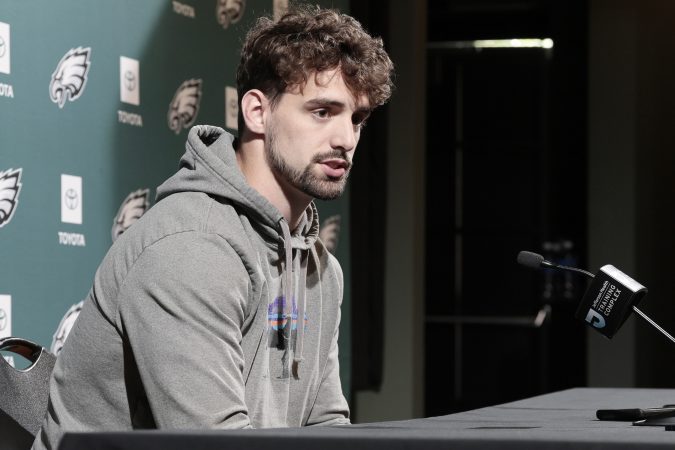
Player: Cole Wisniewski
Position: Safety
Age: 24
Previous experience: Wisniewski enters his first NFL training camp with a lot of football under his belt. He spent six years in college, five at North Dakota State and last year at Texas Tech, where he helped the Red Raiders win the Big 12 title and reach the College Football Playoff. Wisniewski, largely a linebacker at NDSU, had 78 tackles and was an All-Big 12 honorable mention in addition to being a semifinalist for comeback player of the year after missing 2024 with a foot injury. Wisniewski is a big safety at 6-foot-3. There’s some Reed Blankenship in his game. While Wisniewski was a seventh-round pick, Blankenship went undrafted. They were similarly rated as average athletes who make up for that with good tackling instincts.
Path to a roster spot: Safety is an interesting position for the Eagles entering camp. Andrew Mukuba will man one of the spots, with Cooper DeJean slated to play safety when the Eagles are in base. In nickel or other packages, which the Eagles are in the vast majority of the time, Mukuba will need a partner with DeJean playing nickel. That spot is Marcus Epps’ right now, with Michael Carter II and others, including Wisniewski, next in line. Can Wisniewski beat out Andre’ Sam and J.T. Gray for a roster spot? Will undrafted free agent Kapena Gushiken make a charge? Wisniewski may have a leg up on his competition as a draft pick, but the Eagles haven’t shied away from cutting a late-round pick, if necessary.
Fun fact: Wisniewski was a multisport athlete at Sparta High School in Wisconsin. In addition to football, he lettered in basketball, track, and cheer. No, he wasn’t a cheerleader, but he did fill in as the mascot.
Quotable: “He’s one of the godfathers,” Wisniewski said of playing in Vic Fangio’s system during Eagles rookie camp. “I’m just really excited to learn the ins and outs and how he operates. … Being able to come to the source is awesome.”
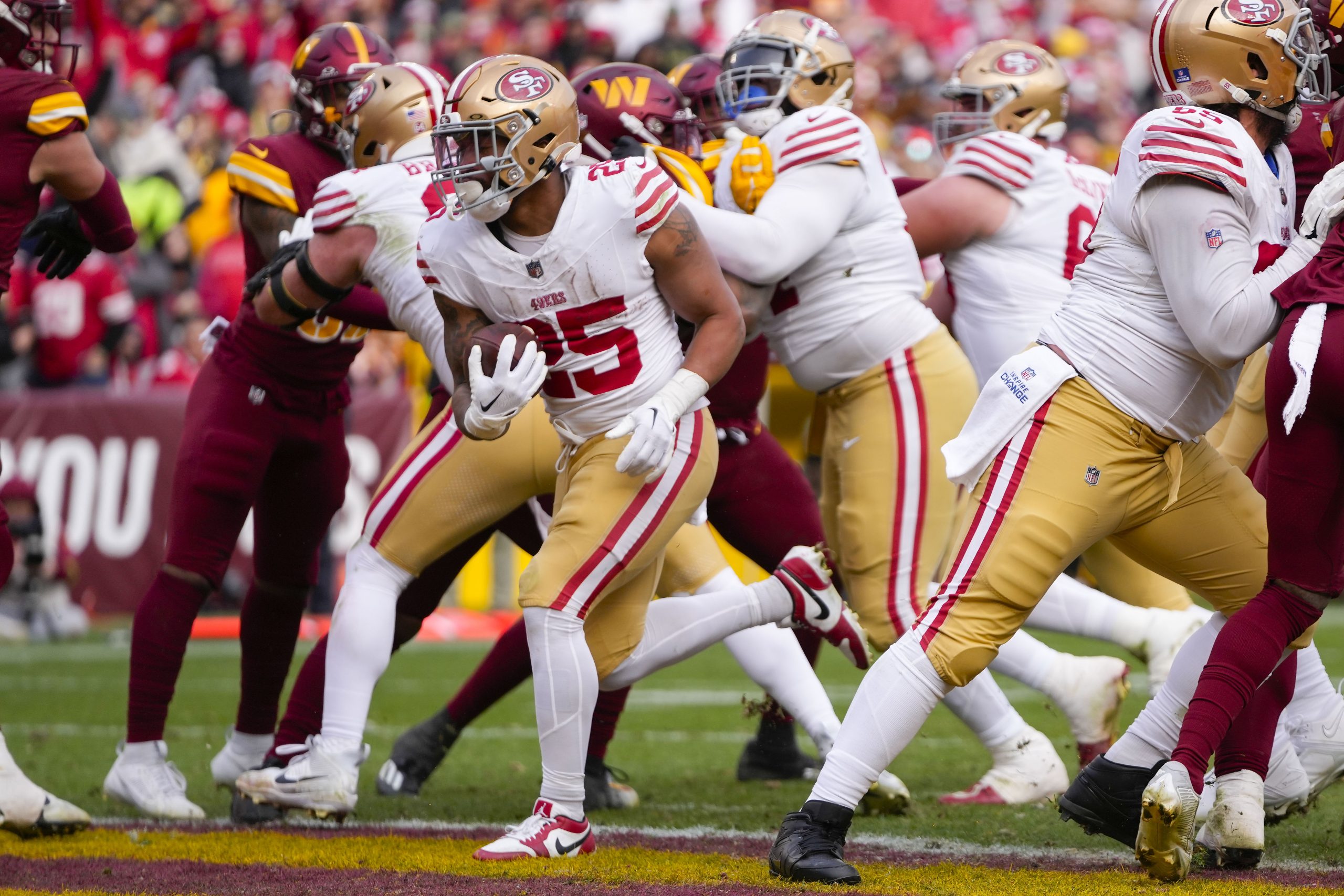
Elijah Mitchell (25) played in 27 games (as well as eight playoff games) as a member of the 49ers from 2021 to 2023. Mark Schiefelbein
Player: Elijah Mitchell
Position: Running back
Age: 28
Previous experience: Mitchell is the most experienced running back in camp not named Saquon Barkley, having been in the NFL since 2021, when the 49ers selected him in the sixth round. Mitchell rushed for nearly 1,000 yards as a rookie before combining for 560 yards in his next two seasons. A knee injury cut his 2022 season short, and he hasn’t had a carry in a regular season game since 2023. Mitchell’s 2024 season then was derailed by a hamstring injury. He signed in 2025 with Kansas City and made one appearance before being released in December.
Path to a roster spot: Mitchell is a long shot to make the team out of camp. The Eagles are pretty set at the position with Barkley at the top of the depth chart and Tank Bigsby a lock to be his backup. The No. 3 spot is up for grabs, but it likely will be Will Shipley or Dameon Pierce. The Eagles seem most likely to keep three running backs on the initial 53-man roster, but a fourth is possible. If they go heavy in the backfield, Mitchell could have a chance of pushing for a spot.
Fun fact: Mitchell has a career yards per carry of 4.7 yards. That’s slightly higher than Barkley and Christian McCaffrey at 4.6 and would rank tied for 12th among active players with Miles Sanders. Speed has never been the issue with Mitchell, who ran a 4.32 40-yard dash at his college pro day in 2021. Staying healthy has been.
Quotable: “It was very challenging,” Mitchell told Kansas City media last March when asked about missing the 2024 season. “Just having the love for football and not being able to compete against the best really weighed on me a lot. I’m hungrier than ever, and I’m ready to roll.”
LAS VEGAS — When Labaron Philon Jr. got the ball at the top of the key with less than a minute to play, 76ers summer league coach T.J. DiLeo told everybody else to get out of the way.
So Philon went to work on his defender with multiple between-the-legs moves as the shot clock ticked inside five seconds. He pulled up and buried the game-clinching shot.
It was a dynamite capper to a terrific summer league debut for the Sixers’ first-round draft pick. Philon compiled 18 points and seven assists in a 101-93 victory over the Detroit Pistons on Thursday afternoon at Cox Pavillon, making good on his quest to be a “smart guard” by mixing in sound playmaking with a hot shooting start and clutch finish.
“Showing I can compete,” Philon said. “Having the same ‘dawg’ mentality that I had at Alabama, and being the same person. Being me, really.”
Philon, whom the Sixers took 22nd overall last month, opened the game with a three-pointer, then dished to big man Johni Broome for his own deep shot on the next possession. When another Philon long ball forced a Pistons timeout less than two minutes later, he flexed and hollered before returning to the bench.
After that, Philon again flashed his crafty ballhandling while getting to the rim for a left-handed layup. He delivered a slick bounce pass to Broome for a dunk between two defenders. And before hitting that dagger three-pointer, Philon drove to the basket late in the shot clock for the and-1 conversion to break an 85-85 tie with less than four minutes remaining.
“That’s who he is,” DiLeo said. “He’s a gamer.”
T.J. DiLeo (left) is coaching the Sixers’ summer league team for the second straight year.Yong Kim / Staff Photographer
DiLeo, who is coaching the summer Sixers for the second consecutive year, emphasized that combination of scoring and distributing — along with playing hard defensively — with Philon ahead of Thursday’s opener in Las Vegas. The coach put the ball in Philon’s hands during practices, and came away impressed with the rookie’s pace, natural instincts, and willingness to pass.
“It’s a big responsibility,” DiLeo said. “ … You’ve got to find a good balance of it, because the team will take [on] your identity. He was getting guys shots. Now everybody’s moving the ball a little bit and they kind of follow him.
“I was proud of him for tonight. Obviously, he’s going to grow and get better, but it was a good first step.”
That “smart guard” mentality also comes with some foresight. Philon knows he is joining a Sixers roster that already boasts All-NBA third-teamer Tyrese Maxey and electric youngster VJ Edgecombe, and recently added sharpshooter Anfernee Simons in free agency. Philon recognizes the value in taking pressure off those teammates.
“Once you’re able to get [that playmaking] going,” Philon said, “guys [start] to step up.”
Minutes after Thursday’s performance, DiLeo had already identified improvement areas he would show Philon on film. The Pistons began switching more defensively in the second half, and the coach noticed a couple times when Philon got past his defender but pulled back his dribble instead of remaining aggressive.
Philon, meanwhile, lamented the “easy looks” he missed during his cold streak in the second and third quarters of a 6-of-19 shooting outing. But he appreciated that trust in him did not waver down the stretch.
Because when the summer Sixers gathered for the first time, DiLeo showed clips of each player’s strengths. He called Philon a “big shot taker, big shot maker,” as a similar one-on-one sequence flashed across the screen.
“You’ve got to let him go one-on-one a little bit,” DiLeo said. He’s going to make some of these.”
So DiLeo put the ball in Philon’s hands at the top of the key in the final minute, and insisted that no other players get involved in the play. An additional motivational boost came from Philon spotting Mike Gansey — the Sixers’ new president of basketball operations who was thrilled Philon was still available for them to select on draft night — along with executive Jameer Nelson and future teammates Adem Bona and Dominick Barlow sitting courtside.
“I think they knew what I was going to do,” Philon said. “So I was solid. After I hit the shot, I looked at Mike. He was like, ‘OK’ [with a head nod].”
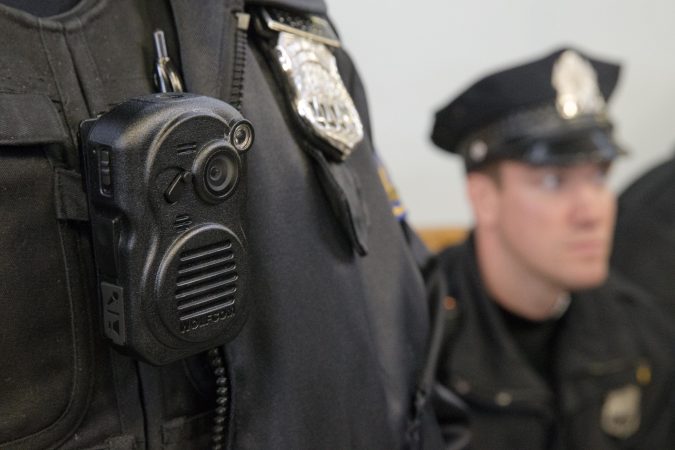
Police officers in one of Philadelphia’s largest districts frequently failed to activate their body-worn cameras during encounters that department policy required them to record, according to a new audit by the Citizens Police Oversight Commission.
The commission’s review of a random sample of 125 police incidents in North Philadelphia’s 22nd District found that officers recorded only 23 of 83 encounters that required camera footage.
The findings, released Wednesday, mark the final report in a series of audits examining body-worn camera compliance in four police districts across Philadelphia. Of the districts reviewed, the 22nd had the lowest rate of required recordings, raising concerns about whether one of the department’s primary accountability tools is being used consistently in the field, the commission said.
Janine Zajac, the commission’s director of auditing, policy, and research, said body-worn cameras are intended to provide accountability for both officers and the public. “It feels concerning when a really important tool for accountability isn’t being used,” she said.
The 22nd District, which spans neighborhoods includingYorktown, Strawberry Mansion, and Brewerytown, was selected alongside the 24th, 18th, and 15th Districts as part of an audit series designed to examine camera use across different parts of the city. The districts were chosen for their geographic diversity, activity levels, and the volume of complaints the commission receives from residents, Zajac said.
The audits looked at several measures of compliance with the department’s policy, including whether officers activated cameras when required, whether all officers on a scene recorded, and whether footage captured the full encounter.
Performance varied across the districts, said Michael Tooley Jr., a senior analyst for the commission. But the 22nd District stood out, he said: Officers recorded only 28% of incidents requiring footage, compared with 62% in the 18th District and 73% in the 15th District, and 88% of vehicle stops in the 24th District.
The commission reviewed incidents from April and June 2025 in the 22nd District, while the other audits examined a single month. Tooley said the commission expanded its review in the 22nd District because so few camera recordings were available from the first month requested.
The missed recordings occurred most often during investigations of premises — a category that includes domestic incidents, minor disturbances, and weapons-related calls — the review found, while vehicle stops and safety checks made up the second-largest share of incidents with absent videos.
The audit found that once officers turned their cameras on, they generally followed department procedures. Of the recordings reviewed, 91% captured the full duration of the encounter, 88% showed proper activation from standby mode, and 97% were correctly labeled and categorized.
Sgt. Eric Gripp said, a police spokesperson, the department takes the findings seriously. “Any instance in which an officer fails to activate a body-worn camera when required is inconsistent with department policy and our expectations,” he said.
Gripp noted that the 22nd District is one of the city’s busiest police districts, generating tens of thousands of body-worn camera recordings each year as officers respond to a high volume of calls and other interactions. While “that workload does not lessen our expectations for policy compliance,” he said, “it does highlight the scale of the body-worn camera program” and the demands placed on officers in the district.
City Councilmember Jeffrey Young, whose district includes much of the area served by the 22nd District, said the audit’s findings underscore the importance of adhering to body-worn camera policies, which “exist to protect everyone involved.”
He added: “I have confidence in [the department’s] ability to address these findings with transparency and professionalism.”
The audits of other districts revealed different weaknesses. In the 24th District, the commission found that nearly four in 10 videos failed to capture the entire traffic stop and that backup officers frequently did not record. In the 15th District, auditors found that officers often powered cameras completely off instead of leaving them in standby mode.
The 18th District in West Philadelphia posted some of the strongest results, with 98% standby-mode compliance and no video-labeling errors.
Joseph Giacalone, an adjunct professor at John Jay College of Criminal Justice and a retired sergeant with the New York City Police Department, said officers often arrive at chaotic scenes where remembering to activate a body-worn camera might not be their first instinct.
“It’s just not a natural thing,” he said.
But he also said departments must find ways to make camera activation routine because the footage can benefit both officers and the public. “Those videos provide better insight into what the police actually do — and most of the time, they’re right when they’re doing it,” he said.
Paula Sen, who coleads the Defender Association of Philadelphia’s police accountability unit and has conducted reviews of officers’ body-worn camera usage, said the footage is equally important for defendants and defense attorneys.
“Every attorney in this office watches hundreds to thousands of body-worn cameras each year,” Sen said. The recordings provide objective evidence that can contradict an officer’s account of an incident, she said, and help defense attorneys successfully challenge evidence in court.
Zajac said police department officials were receptive when the commission shared its findings and recommendations in May, with district leaders expressing interest in better understanding what might be preventing officers from properly using the cameras.
Gripp said the department continues to reinforce its body-worn camera policy through roll-call reminders, additional training, and supervisory oversight. Supervisors are expected to review footage, reinforce compliance, and address deficiencies when they are identified, he said.
Since launching its body-worn cameras more than a decade ago, Gripp said, the department has recorded millions of interactions. “Like any large-scale accountability program, our responsibility is to continually evaluate performance, identify opportunities for improvement, and strengthen compliance,” he said.
Clarification: A quote about the number of body-worn cameras viewed by the Defender Association of Philadelphia has been updated.
Shortly after the Pennsylvania Supreme Court dealt a legal blow to so-called skill games in June, the CEO of Parx Casino celebrated the decision and blamed the unregulated slot machine-like devices for attracting “rampant crime, money laundering, compulsive gambling and underage gambling.”
Days later, hundreds of small-business owners, veterans, and other supporters of skill games had a very different message at a state Capitol rally. They had signs reading “SUPPORT SKILL GAMES, SUPPORT SMALL BUSINESSES” and others declaring that the machines help generate revenue for American Legion and Veterans of Foreign Wars posts.
Some supporters arrived on buses paid for by Pace-O-Matic, the out-of-state game developer that in recent years has become a political heavyweight in Pennsylvania, spending millions on lobbying and electoral campaigns, and growing an unregulated market that swept across corner stores, bars, gas stations, and other locations.
The dueling messages marked the latest clash between Parx and Pace-O-Matic in a yearslong political, legal, and public relations fight over the games, which has featured accusations of conflicts of interest and attempts to influence legislators, law enforcement authorities, and other government officials.
An Inquirer review of hundreds of pages of court records and interviews with key players offer an inside look at the behind-the-scenes battle to shape public policy in Harrisburg between Georgia-based Pace-O-Matic — a leading developer of software for the video game machines — and Bensalem’s Parx Casino, which reported the most gross slot machine revenue, $375 million, of any Pennsylvania casino operator last year.
Pace-O-Matic’s “Pennsylvania Skill” game seen in a gas station convenience store in Philadelphia.Tom Gralish / Staff Photographer
In the last decade, skill game developers and manufacturers seized on a huge business opportunity, which casinos and other gambling interests say cost them market share. And some politicians were salivating over a new potential source of tax revenue, while others saw an unacceptable expansion of the vice economy.
That debate has reached a turning point, as the high court found that unregulated skill games are unlawful. But the court paused its order, giving lawmakers a window until October to legalize, tax, and regulate the games — or leave owners and operators vulnerable to prosecution.
Pennsylvania made a bet on gambling two decades ago, legalizing slot machines in casinos in 2004 as lawmakers sought a new stream of tax revenue. The legislature has since authorized more games such as poker and blackjack, sports betting, and video game terminals at truck stops.
Gambling outside casinos and other licensed establishments remains illegal. But corner store skill games managed to take off — in part because of a 2014 court decision that found Pace-O-Matic’s game was not a “gambling device” under the state crimes code.
There are now an estimated 70,000 machines across the state, according to the Pennsylvania Attorney General’s Office, not subject to the taxes or regulations on casino slot machines.
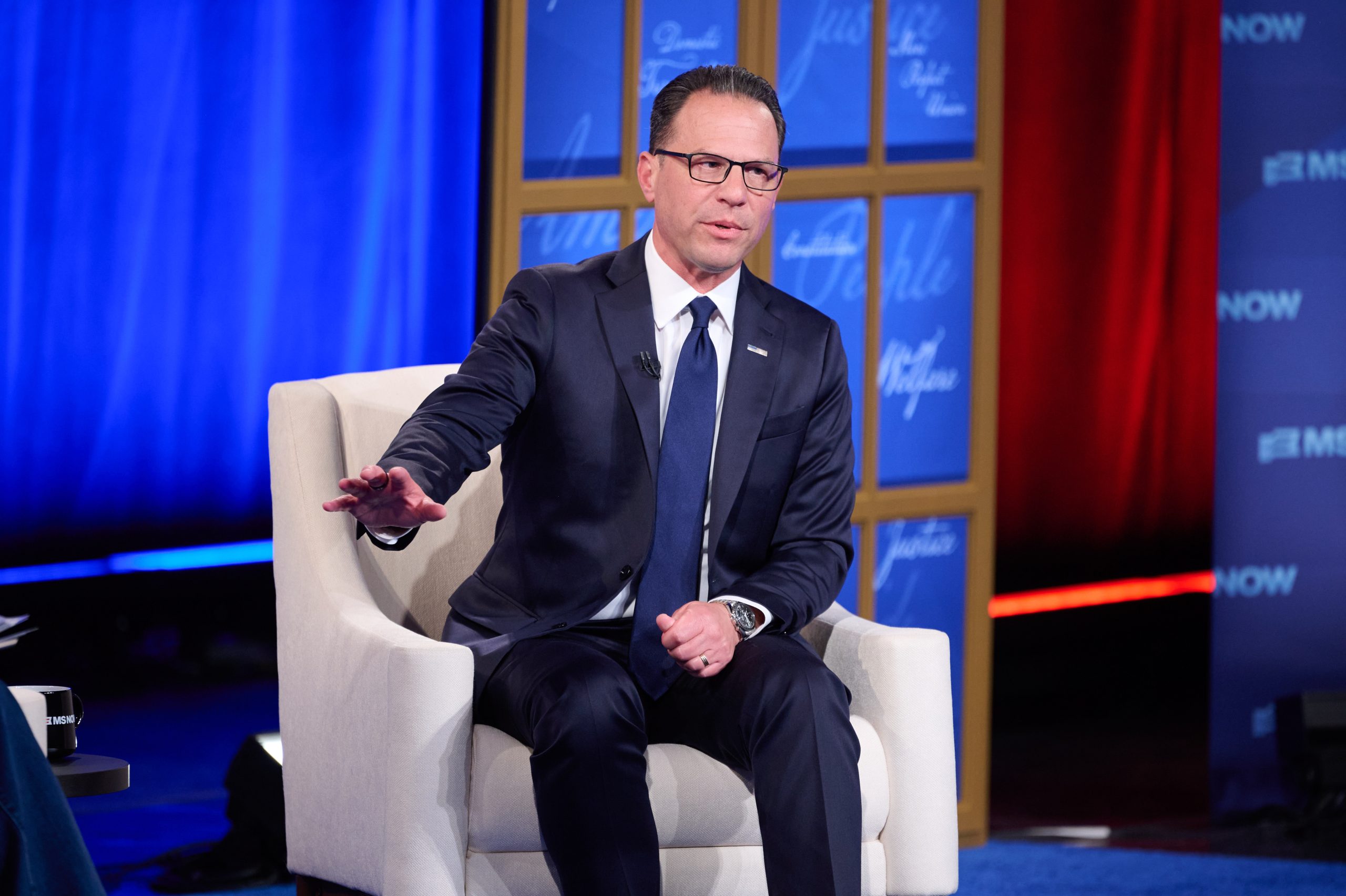
In his February budget address, Democratic Gov. Josh Shapiro proposed a 52% tax on gross skill game revenues — roughly in line with the rate that applies to casino slot machines — which the administration projects could generate almost $800 million in the first year of implementation.
Under his proposal, Shapiro would authorize 40,000 skill game machines and video game terminals — which are already legal — statewide. That means tens of thousands of skill machines currently operating would be considered unlawful.
Pennsylvania Gov. Josh Shapiro in June.Courtesy of MS NOW / Scott Gries
Separately, a bill supported by the skill game industry would impose a $500 monthly fee on each machine, cap the number of total machines at 50,000, and raise an estimated $300 million in tax dollars in the first year. The games are “a small, lifeline raft to help mom-and-pop business owners,” said State Rep. Danilo Burgos (D., Philadelphia), a sponsor of the bill.
Casinos and other gaming interests are trying to protect a $6.8 billion market in Pennsylvania. Pace-O-Matic’s machines across the state generated about $525 million in gross revenue in 2024, with the company receiving 20% of that, minus certain discounts, and the rest going to operators that scout locations and stores that house the machines, according to court documents.
But, come October, if its skill game machines ultimately are not legalized by the state legislature, Pace-O-Matic will pull out of Pennsylvania, said Mike Barley, the company’s chief public affairs officer. “We’ll always abide by the law.”
Millions in lobbying
Pace-O-Matic has spent $8.4 million on lobbying in Harrisburg over the last five years, records show, the most by any single gaming company. In contrast, the operators of more than a dozen Pennsylvania casinos spent $7.6 million combined on lobbying during that time period, according to an Inquirer review of disclosures.
Lobbyists help draft legislation, communicate their clients’ interests to policymakers, and wine and dine government officials.
And Pace-O-Matic has recruited Harrisburg insiders with close ties to state lawmakers for the job: a former member of the Republican National Committee, a former state senator, a onetime top aide to House and Senate Republicans, and a former chief of staff to then-Gov. Tom Wolf, a Democrat.
(function(){function e(){window.addEventListener(`message`,function(e){if(e.data[`datawrapper-height`]!==void 0){var t=document.querySelectorAll(`iframe`);for(var n in e.data[`datawrapper-height`])for(var r=0,i;i=t[r];r++)if(i.contentWindow===e.source){var a=e.data[`datawrapper-height`][n]+`px`;i.style.height=a}}})}e()})();
Since 2021, a political action committee affiliated with the company has reported spending more than $9 million in Pennsylvania, with about two-thirds of that coming this year.
Part of that war chest was aimed at unseating three incumbent Republican state senators in primary elections this spring, as Pace-O-Matic took exception to a proposed skill games tax backed by Senate GOP leaders last year. More than $3 million went toward loan repayments to donors.
Pace-O-Matic has also devoted resources to fighting with its competitor, Parx Casino, in court.
Pace-O-Matic has filed numerous lawsuits, including several that accuse Parx’s lobbyists of going beyond lawful advocacy and wrongfully interfering with its business relationships.
Parx has fought Pace-O-Matic’s growth by privately drafting legislation to ban skill games, filing briefs opposing skill games to the state Supreme Court, and accusing Pace-O-Matic in a lawsuit of leading a criminal enterprise.
Parx spent almost $1.3 million on lobbying during the last five years, the most of any casino. Among its lobbyists is a former state senator who sponsored Parx-backed legislation to ban skill games. Parx’s affiliated PAC, 2999 Group, has reported almost $1 million in expenditures since 2021.
A row of slot machines on the gaming floor of Parx Casino in Bensalem in 2018.James Blocker / Staff Photographer
“It’s a scorched-earth campaign that nobody in town who I know has ever seen anything quite like it,” said Pete Shelly, one of the Harrisburg lobbyists for Parx who was personally sued by Pace-O-Matic. “The amount of money they were able to spend, and the resources they threw at protecting their franchise, was astounding. And their tactics speak for themselves.”
In response, Pace-O-Matic’s Barley responded simply: “Ditto.”
Drafting a bill
Founded in 2000 by Michael Pace — a pioneer of countertop video games — Pace-O-Matic expanded to Pennsylvania in 2014. The company took its game straight to the cops.
Pace-O-Matic says it asked the Pennsylvania State Police whether its coin-operated tabletop machine qualified as a legal game of skill — or as an illegal gambling device. In an effort to test this legal question, the company and the Pennsylvania Bureau of Liquor Control Enforcement in November 2013 arranged for a “friendly” seizure of its game at the American Italian Club in Aliquippa, Beaver County, according to court records.
Whereas in a game of chance like a slot machine, the outcome is decided predominantly “on the basis of probability,” the Pace-O-Matic game featured a level of interactivity that required skill, the judge wrote. That meant the state had failed to prove it was a gambling device.
Skill games in a barber shop in Hazelton.Tom Gralish / Staff Photographer
The opinion gave the skill industry a boost, leading to a boom in machines across the state. Within a few years, Parx went on the offensive.
In 2019, representatives for Parx privately drafted legislation, at the request of then-State Sen. Tommy Tomlinson (R., Bucks), to ban skill games, Spotlight PA reported.
In a March 2019 memo to colleagues about his legislation, Tomlinson cited a lack of consumer protections to prevent minors from playing skill games and pointed to testimony from Pennsylvania Lottery officials that the machines divert funds from programs for seniors.
‘Coordinated litigation strike’
Later that year, in July 2019, Parx outside attorney Mark Stewart e-mailed lawyers representing other casinos, proposing they join together to “launch a coordinated litigation strike on the same day against a large number” of stores that hosted Pace-O-Matic games, according to court papers.
The strike would put “PA Skill” — a reference to Pace-O-Matic’s Pennsylvania Skill games — “on the defensive, having to run around, spend money, and dedicate time and personnel resources to defending the numerous suits,” Stewart wrote.
He added that this would also “draw public and political attention to the illegality of the machines,” according to a lawsuit Pace-O-Matic later filed against Stewart and his firm, Eckert Seamans Cherin & Mellott.
A few months later, Eckert filed dozens of lawsuits on behalf of Parx against retail locations that had skill games, including many that hosted Pace-O-Matic machines, the lawsuit said.
The law firm’s involvement caught Pace-O-Matic’s attention, the company says, because Eckert had represented the company in Virginia even as Stewart advocated against its interests in Pennsylvania.
Pace-O-Matic in 2020 filed a lawsuit accusing Eckert of violating the firm’s fiduciary duties. In court filings, Eckert has denied the allegations, saying that the company knew about the firm’s representation of gaming clients in Pennsylvania. A judge in 2022 signed an order prohibiting Eckert from advocating against the legality of Pace-O-Matic’s skill games. The litigation is ongoing.
Stewart — now an executive vice president at the Cordish Cos., a Baltimore real estate and entertainment company whose properties include two Pennsylvania casinos — did not respond to a request for comment. A spokesperson for Eckert did not return a message.
That litigation unearthed emails showing coordination between Parx representatives and Tomlinson’s office on the proposed legislative ban.
In the two years after he proposed that legislation, Tomlinson’s campaigns received $20,000 in contributions from 2999 Group, the PAC led by Parx founder and chairman Robert W. Green. The PAC formed in 2020 after federal courts struck down a Pennsylvania law banning political contributions from people involved in the gaming industry.
Tomlinson retired in 2022. He registered a lobbying firm, RMT Legislative Consulting, in October 2024. He started lobbying for Parx the following month, records show.
Tomlinson did not respond to requests for comment.
‘STOP THESE MACHINES’
While Tomlinson’s legislation to ban skill games failed to advance, casinos pursued other avenues to protect their interests as the unregulated and untaxed games continued to proliferate throughout the state.
Ahead of a planned meeting with the office of then-Pennsylvania Attorney General Josh Shapiro in July 2021, Parx representatives drafted a PowerPoint presentation depicting a child playing a skill game under the heading “STOP THESE MACHINES,” according to emails reviewed by The Inquirer.
The presentation argued that skill games were illegal, undercut revenue for the Pennsylvania Lottery and the programs it funds for seniors, and failed to comply with anti-money laundering rules that “guard against organized crime and terrorist groups.”
Parx lobbyists wanted to meet with the attorney general’s office, emails show, because they believed prosecutors were preventing the state police from seizing skill games. The attorney general’s office had said in a statement that while the office maintained that skill games were illegal, it would not “actively seize machines” until the state Commonwealth Court provided guidance on whether they were legal.
Reached by The Inquirer, the Pennsylvania Attorney General’s Office — now led by Republican Dave Sunday — said it was unable to confirm if that meeting took place. A spokesperson said the office maintained the posture reflected in its public statement and “successfully advocated for that position leading to the Supreme Court’s decisive ruling.”
Pennsylvania Attorney General Dave Sunday in 2025.Kalim A. Bhatti / For The Inquirer
Pace-O-Matic’s Barley said that around this time, there was a “notable shift in the way the OAG’s office treated our games.” Prosecutors started working with counties to coordinate seizures of games, he said, but Pace-O-Matic successfully challenged those actions and its property was returned.
Casino interests reached out to local law enforcement authorities as well.
When an executive at Mohegan Pennsylvania casino in Wilkes-Barre spotted a new coffee shop in nearby Kingston that advertised Pace-O-Matic games, he contacted his lobbying team, including Stewart and Shelly, the lobbyist who was later sued by Pace-O-Matic, emails show.
“Maybe instead of [Pennsylvania State Police] or local police, we send letter to Luzerne County DA,” Shelly wrote in a March 2021 email to colleagues.
“Seems good idea,” Stewart responded, noting that they had previously sent a letter to the district attorney in Monroe County about skill games.
An alleged conflict of interest
Soon after, the fight over skill games became personal.
Pace-O-Matic in 2022 filed lawsuits against three Parx lobbyists — Shelly, Richard Gmerek, and Sean Schafer — accusing them of attempting to sabotage Pace-O-Matic’s business. In court papers, attorneys for the lobbyists have denied the allegations. The case is ongoing.
In an interview, Parx CEO Eric Hausler said Pace-O-Matic’s lawsuits aimed to “shut our people up, and shut us up, by trying to intimidate our people into being silent about what we believed and continue to believe was a form of illegal gambling.”
He said the firm’s lobbying was appropriate. “We reached out to anybody that would listen to us, whether it was regulators or the attorney general’s office or the legislature, to say, ‘These are slot machines,’” Hausler said.
The Parx CEO noted that the law firm representing Pace-O-Matic in those cases, the McCormick Law Firm, employs State Sen. Gene Yaw (R., Lycoming), a proponent of legislation favored by the skill games industry. Yaw’s wife, Ann S. Pepperman, is a partner at Williamsport-based McCormick. The CEO described Yaw’s association with the firm as a “clear conflict of interest.”
Pa. State Sen. Gene Yaw in August 2023.Frank Kummer / Pa. House of Representatives
Yaw has benefited from Pace-O-Matic’s political giving. Operators for Skill, a PAC led and funded in part by Pace-O-Matic executives, has contributed $47,500 to Yaw’s campaigns since 2021, records show.
His district is home to Miele Manufacturing, a company that makes and distributes Pace-O-Matic’s Pennsylvania Skill machines.
In response to written questions about whether Yaw or his wife has benefited financially from McCormick’s representation of Pace-O-Matic, a spokesperson said the senator had no comment.
Pace-O-Matic representatives have said the company’s leaders and PAC donate to many candidates in both parties.
Targeting incumbent senators
Beyond Yaw, Pace-O-Matic has cultivated plenty of allies in Harrisburg, contributing millions to politicians’ campaigns and inviting lawmakers to an outdoor rodeo festival in Wyoming — and helping pay for some members’ travel. The company has said the purpose of the 2022 trip was to help lawmakers learn from Wyoming legislators about that state’s regulated skill game industry.
But Pace-O-Matic has also alienated some lawmakers, who have described its tactics as overly aggressive.
Last year, the company contributed hundreds of thousands of dollars to a federal super PAC called Citizens Alliance Political Action Committee Inc., which in turn donated to an Ohio-based PAC called Defeating Communism.
Defeating Communism distributed flyers attacking Pennsylvania Republican state senators who had taken positions at odds with the skill game industry. “Tell Senator Farry to stop targeting PA Firefighters + Veterans!” read one flyer targeting State Sen. Frank Farry, a Bucks County Republican and longtime volunteer firefighter who had introduced legislation to tax skill games at the same rate as casinos.
Sen. Frank Farry (R., Bucks), right, has been the Langhorne-Middletown Fire Company fire chief for more than two decades.Jessica Griffin / Staff Photographer
The skill games industry says many volunteer fire departments and Veterans of Foreign Wars posts generate income from their machines.
Pace-O-Matic upped the ante this year, targeting three sitting Republican senators who were facing primary campaigns this spring. A company affiliate contributed $1 million this year to the Citizens Alliance super PAC, which contributed $2.8 million to a state PAC of the same name.
The state PAC spent that money in part on TV ads and mail literature against incumbent Sens. Lisa Baker (R., Luzerne), Camera Bartolotta (R., Washington) — both of whom are members of GOP leadership — and Chris Gebhard (R., Lebanon). Gebhard wrote a bill last year that proposed taxing skill games at a rate the industry argued was too high.
Operators for Skill, the Pace-O-Matic-affiliated PAC, gave $950,000 this year to Citizens Alliance of Pennsylvania PAC, a separate state group that also invested in campaigns against the three senators.
Citizens Alliance is a national organization with chapters in several states, including Pennsylvania. Citizens Alliance CEO Cliff Maloney said his group opposes net increases in taxes and fees, and it works “with partners who agree and want to advance our principles.”
In Bartolotta’s race, voters were getting upward of six mailers each day about her that she described as filled with “every ridiculous lie and smear.”
She remains confused why she was targeted by Pace-O-Matic, arguing that she has always supported fraternal organizations and other small businesses using the machines as an additional revenue source.
“Clearly Pace-O-Matic was making money hand over fist and they didn’t want to be regulated and they didn’t want to be taxed,” Bartolotta said. “They wanted it to be the wild, wild west.”
The outside money prompted Senate Republicans’ campaign arm to spend hundreds of thousands of dollars protecting the incumbents, who ultimately prevailed. The senators also got a boost from sports betting interests, which spent millions backing their campaigns, Spotlight PA reported. That intervention came after a coalition of online sports betting sites helped stave off a last-minute effort to tax sports bets last year.
Asked about Pace-O-Matic’s decision to invest in those races, Barley said, “There’s a part of us that doesn’t feel like our positions were being heard fairly.”
Political skill
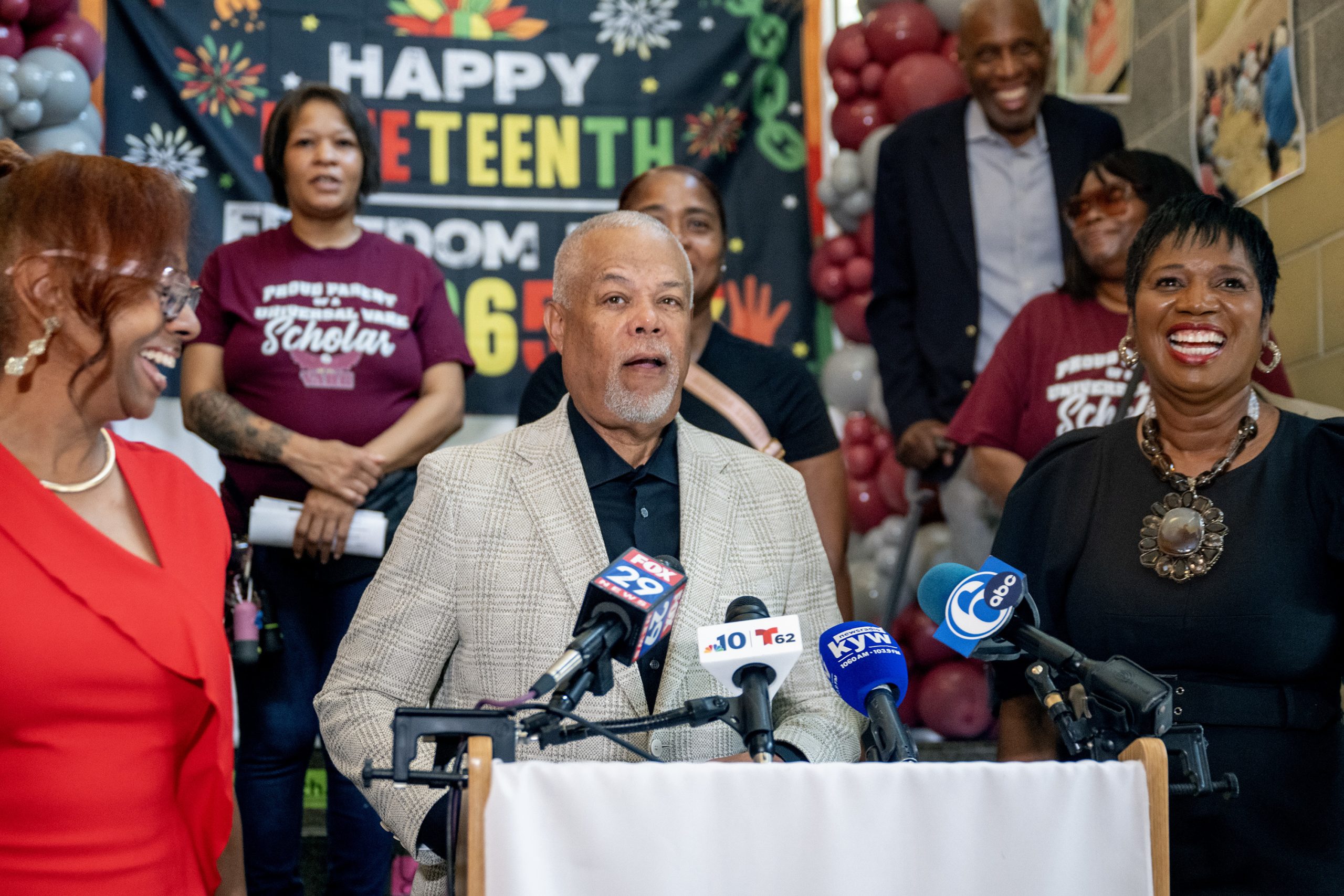
Despite the electoral setbacks, Pace-O-Matic has maintained support among a broad cross-section of lawmakers — from State Sen. Anthony H. Williams, a Philadelphia Democrat, to Yaw, the Lycoming County Republican — who point to the revenue skill games generate for small businesses.
“We signed up to protect the small-business owner, and in this time when everybody talks about affordability, I can’t afford a 52% tax,” Williams said at the recent rally, referring to the governor’s proposal.
He and Yaw have sponsored legislation backed by the industry that would impose the $500 monthly fees on game terminals. In an interview, Williams said the bill would reduce the number of skill games operators in his community “significantly” and ensure proper regulation, adding that he was concerned about locations that offer games in addition to selling liquor by the drink and loose cigarettes.
State. Sen. Anthony H. Williams in 2025.Tom Gralish / Staff Photographer
The political committee aligned with Pace-O-Matic, Operators for Skill, has contributed $70,000 to Williams’ campaign account since last year, records show. Williams, the top Democrat on a Senate panel that oversees gambling, said he developed his policy position before receiving that campaign money. He noted he has also received contributions from casino interests.
“I don’t get a contribution and then decide to support something,” he said. “I’ve never done that.”
Parx CEO Hausler said he is sympathetic to small businesses that host the machines but argued regulation will improve the quality of the games and reduce the number of locations competing with them.
But he argued that skill games should face the same tax rate as casino slot machines, and called the Yaw-Williams bill a “sweetheart deal.”
“I think of it like, ‘I was making $20 an hour in cash off the books. And now I gotta pay taxes,’” he said.
Hausler said Pennsylvania’s casino industry employs 15,000 people and pays more than $2 billion annually in gaming taxes that fund property tax relief, horse racing, and local government grants.
How legislators will balance those interests — and address a perennial budget deficit — is still taking shape. Under Shapiro’s proposed $53 billion budget, the state would spend $4.8 billion more than it is projected to take in over the next fiscal year.
“It’s important that lawmakers act. We don’t want something that’s rushed. We want something that grows the foundation for our future,” Doug Sprankle, a Western Pennsylvania grocery store owner who runs a skill games advocacy group, said during the Capitol rally.
There are signs that at least some lawmakers are not ready to cut ties with Pace-O-Matic or the skill game industry.
Pennsylvania House Republican leaders have invited prospective donors to a July 27 outing at the Aronimink Golf Club in Newtown Square, with a reception and dinner to follow the tournament, according to a fundraising solicitation obtained by The Inquirer.
Listed alongside the event’s sponsors was Operators for Skill, the Pace-O-Matic PAC.
Staff writer Gillian McGoldrick contributed to this article.
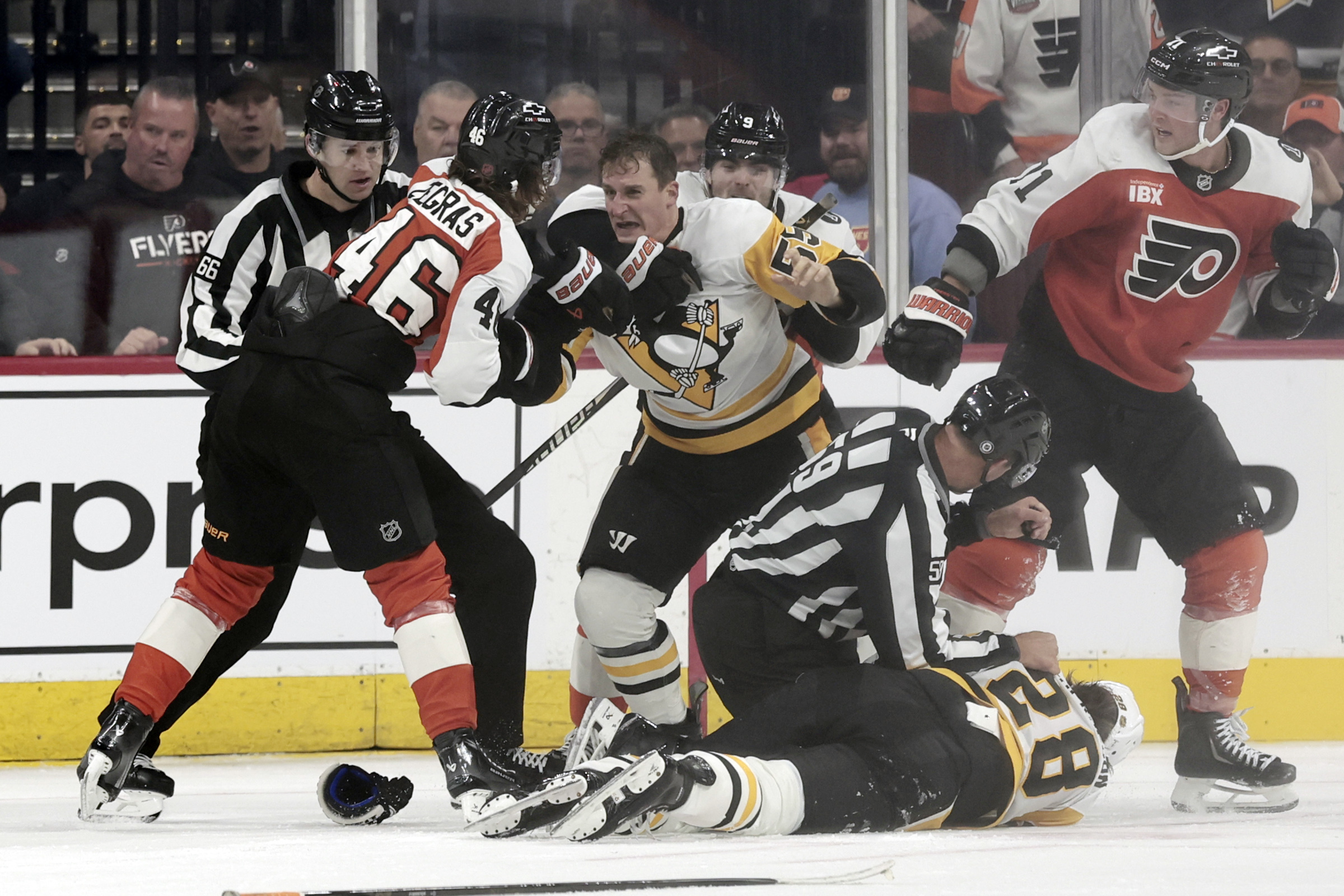
In a world where the salary cap is rising, free agency is dwindling and trade partners want the world, the opportunity to get a top-line center who fits the Flyers’ timeline required a drastic step.
So what’s next for the Flyers? Let’s answer some questions.
What is next for the Flyers?
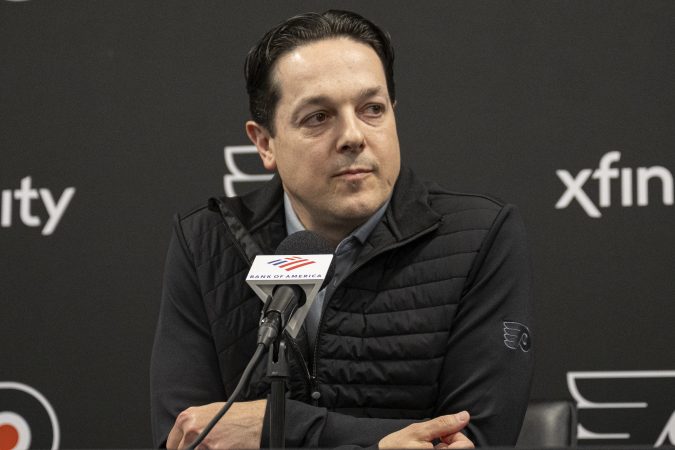
Flyers general manager Danny Brière and his staff took a home run swing and ended up striking out. But the fact that they swung for the fences in this scenario was a solid attempt and showed that the organization is willing to pony up and take a big risk to acquire talent.
According to Puckpedia, the Flyers have a smidge above $29.5 million in cap space; however, as we have reported, that number includes center Jett Luchanko’s contract ($941,667), and Brière told The Inquirer in early June that the expectation is he will be in Lehigh Valley of the American Hockey League this upcoming season.
Trevor Zegras is among the Flyers’ restricted free agents who need new contracts.Yong Kim / Staff Photographer
Regardless of whether Luchanko is around, that is a lot of cap space. Philly does need to sign its four restricted free agents: forwards Trevor Zegras and Nikita Grebenkin, and defensemen Jamie Drysdale and Hunter McDonald. Grebenkin and, especially, McDonald, could start the 2026-27 season with the Phantoms, meaning their salaries would not count against the cap.
Zegras and Drysdale’s new contracts should be around a combined $15 million AAV. Both players did file for salary arbitration — protecting them from getting an offer sheet — although the expectation is that it will not get that far.
But those are things that the team has to get done. After Brière and Co. tried to upgrade their team, are they finished? From what we’re hearing, it sounds like there was always a Plan B.
Who could the Flyers turn their attention to now?
It feels like the Orange and Black have been in on everyone this summer, but thus far have only upgraded their backup goalie, with Joseph Woll, and their fourth line with Noel Acciari, and added a depth defenseman in Simon Benoît. Necessary adds, but it still feels like more is needed.
The unrestricted free-agent market does not have a 1C remaining — and never really did with everyone signing extensions. How about a top-four defenseman with power-play punch? There’s not really one of those on the market either, but names like John Klingberg, who has some power-play experience, Carson Soucy, and Logan Stanley could be interesting depth additions.
But this is about the 1C spot that the Flyers have needed for years. There is always the offer sheet route again. Most would argue that’s not the best move considering how the hockey world functions and how it could burn bridges. But it is fair game, and there is still an intriguing name out there: Adam Fantilli.
The Flyers could be setting their sights on the Columbus Blue Jackets’ Adam Fantilli (right) after failing to land Leo Carlsson.Elizabeth Robertson / Staff Photographer
The Athletic’s Aaron Portzline reported Monday that the 21-year-old center could be the Flyers’ next target. It doesn’t sound like the Flyers want to go the route of another $90 million contract, but he does fit their timeline and has upside that still needs to be drawn out. According to Puckpedia, the Columbus Blue Jackets have more than $23 million in cap space, and while they have to re-sign Cole Sillinger and Jet Greaves, it doesn’t sound like matching would be an issue for them.
So that leaves the trade route. Mavrik Bourque and Mason McTavish have already been traded to the Nashville Predators and St. Louis Blues, respectively. Seattle Kraken forward Shane Wright continues to be a hot topic on social media as a possible solution to the Flyers’ need at center, along with teammate Matty Beniers. But the ask for Wright, a 22-year-old center, was reportedly high in June — the Flyers’ interest wasn’t high back then either — and there was also no indication that Beniers was available at that time.
Could the Flyers circle back on Shane Pinto or Dylan Cozens with the Ottawa Senators? Both are young centers with size and skill. Dylan Larkin was someone that the Flyers were reportedly interested in; however, the Detroit Red Wings center has a full no-move clause and wants to choose his next destination — MLive reported on Thursday that he added the Dallas Stars to the original list of the Minnesota Wild, Vegas Golden Knights, and Florida Panthers as teams he’d waive for a trade.
If the Flyers do acquire a 1C or top-four defenseman, does long-rumored trade asset Rasmus Ristolainen finally get moved? He is a top-four defenseman, but at almost 32 years old, the thought is the Flyers are aiming for a younger defenseman who fits their timeline a little better.
Could the answer then be an RFA defenseman who is not eligible for an offer sheet but sounds like he is on his way out of Carolina and could be available via trade? On the 32 Thoughts Podcast, NHL insider Elliotte Friedman suggested Alexander Nikishin, who played with Egor Zavragin in 2024-25 and briefly suited up with Matvei Michkov across two seasons for SKA St. Petersburg in the Kontinental Hockey League, was almost traded to the New York Rangers. He fits the Flyers’ timeline, can play on the power play, was plus-18, had a 58.39% Corsi For at five-on-five during the regular season, and has the valuable experience of winning a Stanley Cup.
And are there other options that no one has seen coming? The general sense we’re getting is that the Flyers are still cooking.
Trevor Zegras (left) and Noel Acciari (center) are now teammates and are among the current center options for the Flyers.Elizabeth Robertson / Staff Photographer
What does the lineup look like now without Leo Carlsson?
The Flyers have six players who can play center: Christian Dvorak, Noah Cates, Sean Couturier, Denver Barkey, Zegras, and Acciari.
Barkey didn’t look bad down the middle when called upon in the postseason, but the expectation is he will play wing next season. Couturier shared the middle spot with current unrestricted free agent Luke Glendening toward the end of last season, and for all intents and purposes, that’s probably the case with Acciari.
The biggest question mark: where does Zegras fit?
Brière told The Inquirer on March 7 that the team “felt he’s been a little better on the wing this year.” An hour later, Zegras was centering a line, and he held that spot for pretty much the rest of the season and into the playoffs.
So do they see Zegras as the answer for the No. 1 center slot heading into the season? Time will tell how Rick Tocchet lays out his lines; however, there is another layer to this. If Zegras is a center, his asking price for his new contract just went up.
But in the end, overall, where do the Flyers stand now? This is a team that is largely the same as last season, with a few small upgrades to the goaltending, the fourth line, and the defense. That is not the big splash everyone was hoping for.
They will still be a young team, with Porter Martone as a centerpiece, while Michkov will be expected to have a better season, and another young player, David Jiříček, will be in the lineup on the blue line as he is no longer waiver-exempt.
Brière suggested that “there’s a chance, and a good chance, that we take a little bit of a step back” in the upcoming season at his July 1 press conference. With Carlsson, that probably wasn’t happening. Without Carlsson, is that statement setting the tone?
Can we please not fixate on the direct economic benefits that the FIFA World Cup is bringing to Philadelphia? The more important and enduring impact is on the city’s image and reputation. We have answered all questions and indisputably proven that we are more than capable of handling a global event like the World Cup. And more importantly, we are showing every visitor who comes to Philadelphia that we are indeed a world-class city. I am lucky enough to serve as a FIFA volunteer in Philadelphia, and my fellow volunteers and I can personally attest to the overwhelmingly positive reaction we are receiving from these visitors. They love the city, the historical attractions, the food and restaurants, and the overall positive and friendly vibe they are soaking in from our City of Brotherly Love and Sisterly Affection. They all talk about how they will spread the word when they go back home. Having spent time at Love Park, the Liberty Bell, Independence Hall, the Art Museum, the Rocky steps, and Fanfest, it’s clear Philadelphia is the biggest winner this summer.
Scott Applebaum, Philadelphia
. . .
I live in Old City, which is a tourist magnet with several major hotels. Thus, during the past month, I had the good fortune to share our local parks, pubs, and places — both famous and obscure — with visitors from around the world. Tens of thousands of folks came here to attend World Cup games and ceremonies. I encountered and interacted with individuals, families, and travel groups from Brazil, Croatia, Ecuador, France, and Ghana. These sightseers were almost universally celebratory, colorful, and comradely. I felt proud of Philadelphia’s warm and welcoming embrace of the international community. I am very thankful for the opportunity to have been a part of a planetary fiesta. Philly’s hosting of the World Cup reminded me how diversity enhances our lives and how building walls and enacting policies to keep the world out diminish our nation.
Terry Rumsey,Philadelphia
. . .
Working in economic development for Philadelphia, I learned what makes people want to visit our city, live in it, and invest here.
Fifteen million dollars is a significant amount to host a Fourth of July concert, yes. But the moment that concert marks is just as important: America turning 250 in the city where it was born — at the same time that we’re hosting the World Cup and gearing up for the MLB All-Star Game. The world’s eyes are on Philly — as they should be — and we are looking good. A concert on our magnificent Parkway, open to anyone who walks in, is not a waste. It fills hotel rooms, restaurants, and streets, and it gives the whole city something to share.
Music and art bring people together safely and joyfully, and they show what kind of city we are: one that opens its arms to every person of every background.
Mayor Cherelle L. Parker is simply leading Philly as the world-class city it already is.
Alba Martínez, former director, commerce, City of Philadelphia
Join the conversation: Send letters to letters@inquirer.com. Limit length to 150 words and include home address and day and evening phone number. Letters run in The Inquirer six days a week on the editorial pages and online.
ARIES (March 21-April 19). You’re about to share something when a small voice says: “Hold up! Take one more look.” Heed it for best results. Double and triple check. Polish will make a big difference in the reception.
TAURUS (April 20-May 20). Someone relays an idea. Someone else relays the same idea. The idea won’t be accepted equally from these two sources. Bias is always in effect. If your message isn’t getting through, consider whether it needs a different messenger.
GEMINI (May 21-June 21). An attractive someone presents a bit of a mystery. Don’t try to solve it too quickly. You wouldn’t skip to the last page of a good story. The pleasure comes from watching the character reveal themselves one chapter at a time.
CANCER (June 22-July 22). When what you’re doing really matters, it still matters whether others know you did it or not. When the work is inherently important like this, it doesn’t need publicity or praise, it just needs to happen.
LEO (July 23-Aug. 22). You reach out expecting an exchange that’s short and sweet and end up talking for an hour. Your easy vibe together is no accident. It was built through years of shared experiences, small kindnesses and mutual trust.
VIRGO (Aug. 23-Sept. 22). Don’t strive. No reason to believe you should be anywhere but where you are. Status is an illusion. What appears to be higher is really just a different way to be at the same elevation. And anyway, higher isn’t better.
LIBRA (Sept. 23-Oct. 23). You’ve already read the article, lived through the experience, tested the process, sat through the meeting or learned the lesson. Now someone else wants the distilled version. Because what often helps the most is not a high volume of information, it’s a few points that truly matter.
SCORPIO (Oct. 24-Nov. 21). It’s as though you’re pulled in and out of a relationship by a tide that’s too strong to successfully fight against. Still, the struggle is always an option. You’ll find more peace in accepting the ebb and flow than in trying to control it.
SAGITTARIUS (Nov. 22-Dec. 21). It doesn’t matter how old you are. Today’s energy has a way of bringing out the younger version of everyone. People stay out longer, laugh harder, take chances and forget the practicalities. A little mischief is good for the soul.
CAPRICORN (Dec. 22-Jan. 19). It will take creativity to solve today’s problem. The real dilemma isn’t: “Do I have good ideas?” It’s: “Am I shutting them down before they’ve had a chance to become something?” Go for numbers. Quality will be the byproduct of quantity.
AQUARIUS (Jan. 20-Feb. 18). You’ll bring a little levity to an otherwise serious discourse. In the spirit of fun, you’ll make a new friend. Humor has a way of skipping introductions and creating instant familiarity.
PISCES (Feb. 19-March 20). In theory, someone should only be able to hurt your feelings once. But feelings don’t obey that rule. People hurt us repeatedly even when we can predict them. You’d rather risk it than never give anyone another chance.
TODAY’S BIRTHDAY (July 10). It’s your Year of the Kalpavriksha. In Hindu tradition, the Kalpavriksha is a divine tree associated with abundance and fulfilled wishes. A single good decision branches into opportunities you couldn’t have predicted at the start. Age-old family tensions ease, beginning a harmonious era. Your energy returns in a way that makes life feel bigger and more inviting. Luxury entirely suited to you. More highlights: Sagittarius and Pisces adore you. Your lucky numbers are: 5, 20, 24, 15 and 7.