Even on 100-degree days, Philly’s chefs and cooks are still in the kitchen. For the most part, they only call it quits when the food they’re making can’t take the heat.
How do theymake it through their stifling shifts? The answer comes down to preparedness, hydration, and lots of icy treats to lower body temps and boost morale.
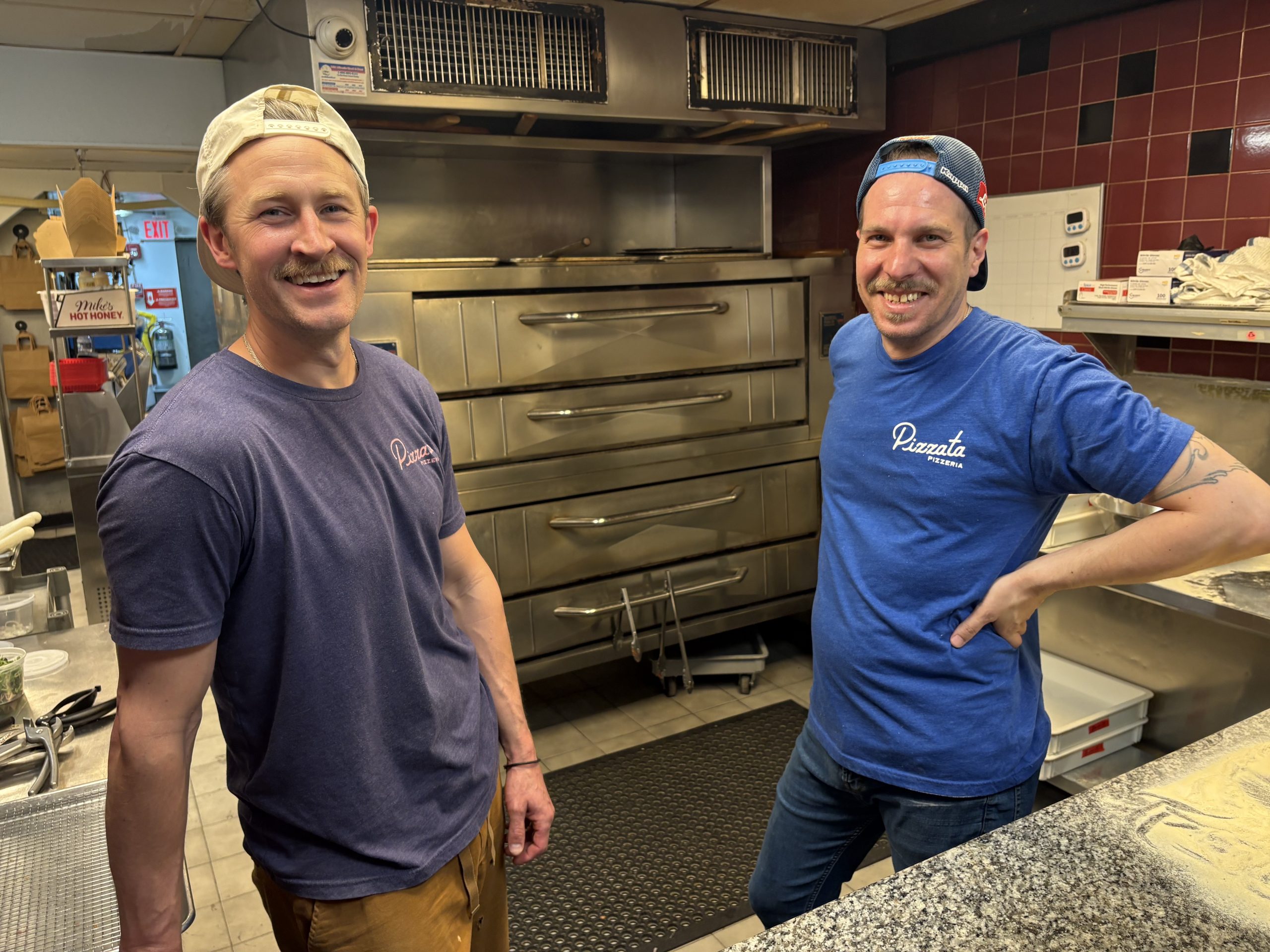
The planning for heat waves starts long before the mercury rises. At Pizzata Pizzeria‘s South Philly location, recently added split-unit air conditioners and commercial kitchen fans have kept temperatures moderate. “They have been tremendously beneficial and helpful to our staff,” said owner Davide Lubrano Lavadera. “For our Rittenhouse spot, we didn’t have a chance to install these units, so we added an evaporative air cooler there.”
Pizzata Pizzeria co-owners and chefs Vinny Gallagher and Davide Lubrano Lavadera pose in the kitchen of their original pizzeria location on 22nd Street near Fitler Square.Craig LaBan / Staff
Two weeks ago, when temperatures spiked over 100 degrees three days in a row, Gilda chef-owner Brian Mattera warned customers on social media that the cafe would close if the heat tipped above 120 degrees in the kitchen — besides being uncomfortable, it would compromise the cooking. The flaky, laminated dough for Gilda’s signature pastéis de nata is notoriously temperamental, Mattera said.
“Our pastry chef, Sophia Fiorenza, is the star of the show. When she comes to me and says the temperature is one or two degrees up, she’s not being dramatic,” Mattera said. “The dough is tacky and difficult to work with. It’s unfortified and it can feel like papier mache.”
When the kitchen temperature is too high, the dough expands and falls off the sheeter, the machine that folds the dough into its many layers. “We say the dough is angry with us,” Mattera said.
The pastéis de nata at Gilda get harder to make in hot weather. Monica Herndon / Staff Photographer
Even in Gilda’s diminutive space,with just six gas burners and a flat-top, Mattera needs five separate HVAC units to maintain the perfect temperature for the dough, around 70 degrees. They weren’t enough to keep the kitchen open during early July’s heat waves: Gilda’s crew called it a day when the temperature behind the line reached 137 degrees.
When the heat’s that intense, Mattera has a trick. “I’ll get a deli container of ice water, bring it into the bathroom, pour it over my head, and go back on the line.”
Chefs in nontraditional kitchens also battle the heat. Josh Broder owns Root to Fruit, a vegan meal-delivery service that operates out of the Culinary Collective commissary space in the Bridesburg neighborhood.“We’ve basically become professional heat dodgers. We start cooking earlier, pack our delivery bags like they’re headed to the Arctic with insulated bags and extra ice packs, and everyone’s usually carrying a water bottle in one hand and a spatula in the other,” he said.
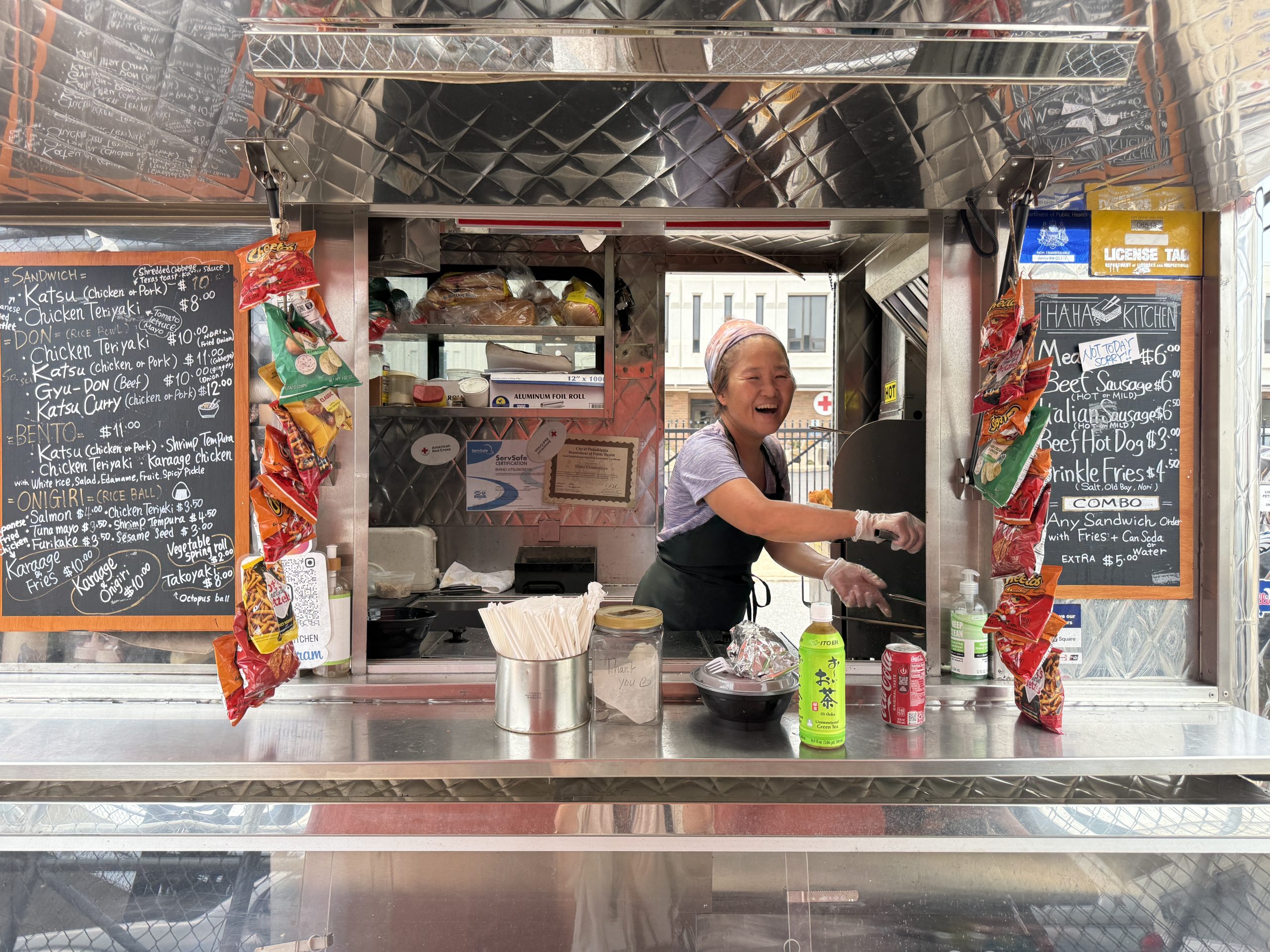
Shiho Utsonomiya, the chef operator of Haha’s Kitchen, rarely closes the tiny food cart she has operated at the corner of Seventh and Spring Garden Streets since 2018. But she was forced to break for a few days leading up to July 4 this year, when the heat became unbearable. She closed the cart Wednesday for the same reason.
Shiho Utsunomiya in her food cart during a heat wave.Kiki Aranita / Staff
“It’s been getting hotter every year,” she said. “Winter, I don’t mind! Minus 17 degrees, no problem. But the heat just kills me.” She’s surrounded by a burner, steam tables, a fryer, and rice cooker. She’s enhanced her setup this year with a rechargeable fan with a mister.
Utsonomiya’s location has a significant benefit: free ice from her best customer. United Refrigeration’s offices are nearby and her cart is popular with their workers.
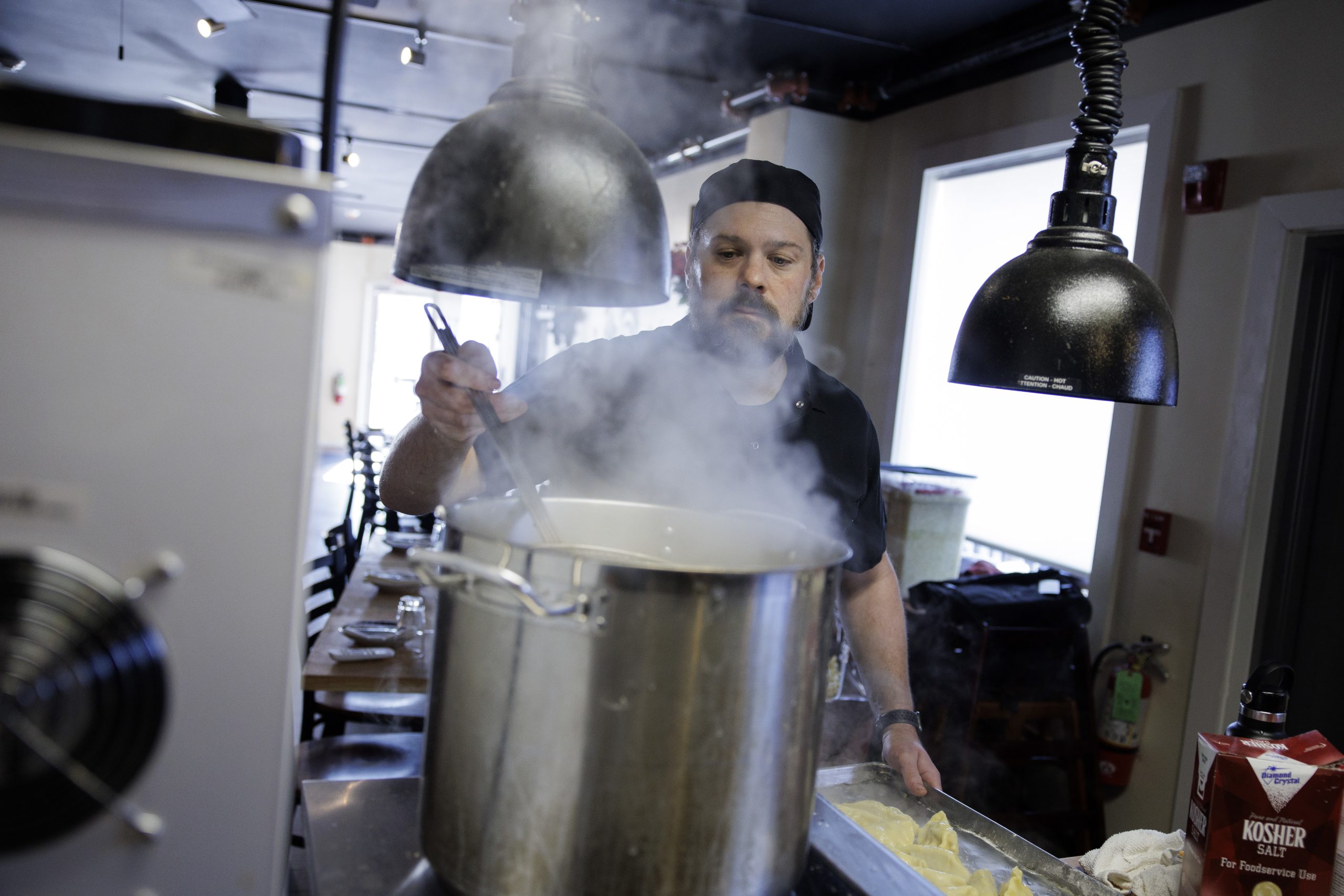
Extreme heat also prompted Little Walter’s — where the wood-fired grill casts off 120-degree heat, according to chef-owner Michael Brenfleck — to close in early July. Brenfleck said reservations were light during the holiday weekend, but the same could not be said of the following Friday, when the restaurant was nearly fully booked. That presents a challenge in itself: The busier the restaurant, the hotter it is inside.
Chef Michael Brenfleck cooks pierogi at Little Walter’s in Philadelphia on Wednesday, Sept. 4, 2024.Monica Herndon / Staff Photographer
“Every person’s body radiates a certain number of BTUs, both in the kitchen and in the dining room,” said Brenfleck. His solution:“We’re going to put some cold specials on the menu, like a chilled pickle soup.”
Brenfleck and Phila Lorn, the chef-owner of Sao and Mawn, were both amazed their respective staff endured the heat without complaint.
“The real ones plan for these times and problem-solve,” Lorn said. “It amazes me to see my chefs in the kitchen crushing it. They’re eating popsicles,[mopping themselves with]cold wet towels, using Gatorade powder, but I swear to you, not one complaint from the back of house.”
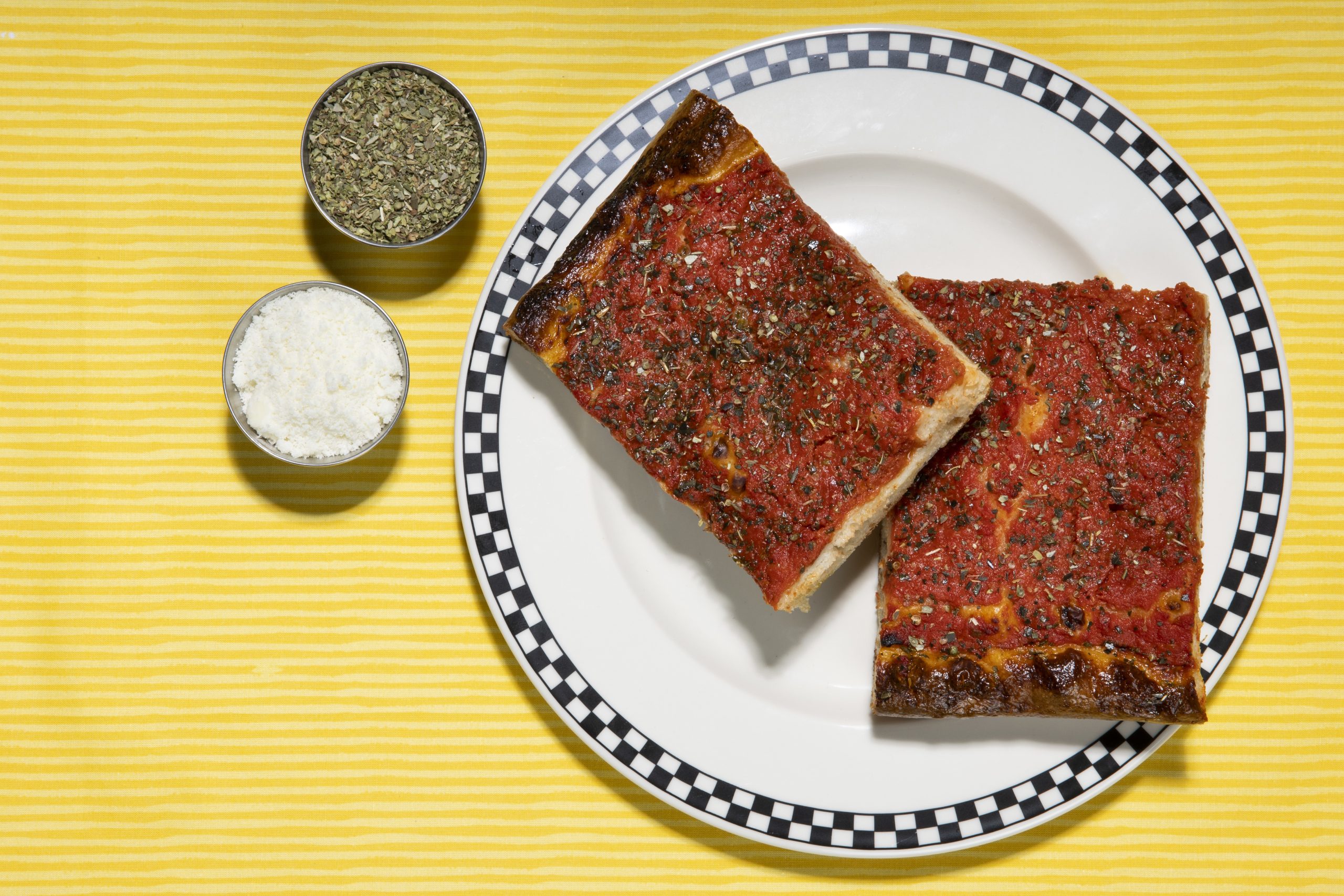
Liberty Kitchen staff trades tomato pie for soft serve on hot days. Monica Herndon / Staff Photographer
Heat waves tend to foster community among restaurants — especially when there’s an ice cream shop involved. On the hottest days, the staff at Liberty Kitchen trades boxes of tomato pie with 1-900-ICE-CREAM, according to Liberty Kitchen chef Beau Neidhardt. “They’ll give us individual cups of soft serve for our staff. It’s very neighborly.”
For many restaurant workers, it’s just part of the job.
“We aren’t doing anything that needs to be applauded,” said Mattera. “At the end of the day, we’re all professionals. This is what we do. We can handle the heat.”
Nazareth Hospital was not cited by the Pennsylvania Department of Health for any safety violations between April 2025 and March of this year.
Located in northeast Philadelphia, the hospital is part of Trinity Health Mid-Atlantic.
Here’s a look at the publicly available details:
July 1, 2025: Inspectors came to investigate a complaint but found the hospital was in compliance. Complaint details are not made public when inspectors determine it was unfounded.
Feb. 18, 2026: Inspectors came to investigate a complaint but found the hospital was in compliance.
With Eagles training camp drawing nearer, The Inquirer is taking a closer look at the more than three dozen new faces who are expected to report along with the rest of the team on July 28.
Player: J.T. Gray
Position: Safety
Age: 30
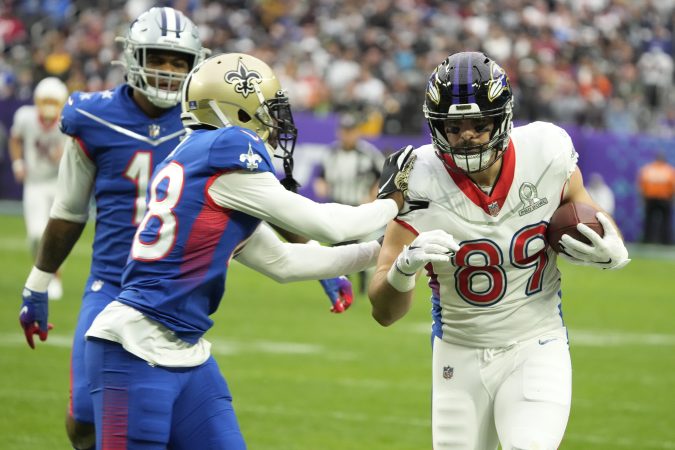
Previous experience: Gray is a veteran safety with eight years of NFL experience. His primary position is safety, but he cut his teeth as a special teamer, even earning a first-team All-Pro nod there with the Saints in 2021. He spent his first seven years in the league with the Saints before bouncing around to the Ravens, Broncos, and Buccaneers. The Eagles signed him to a one-year contract in March.
Path to a roster spot: Gray’s chances of making the final 53 are decent. He’s just two years removed from being a second-team All-Pro special teamer, so he’d bring much-needed experience to that unit. He also has some safety experience, which projects as the Eagles’ weakest position group at present.
Fun fact: Gray’s nickname in New Orleans was “kingpin” because he’s an avid bowler. His best score was a 285.
Quotable: “I’m certainly a little biased, I coach him every day, but I don’t know if there’s a core special teams player in the league that I would trade J.T. Gray for,” said former Saints coach Darren Rizzi. “He’s an outstanding gunner. That’s where he probably gets most of his recognition, but at the same time, here’s a guy who’s really good in the return game as a blocker.”
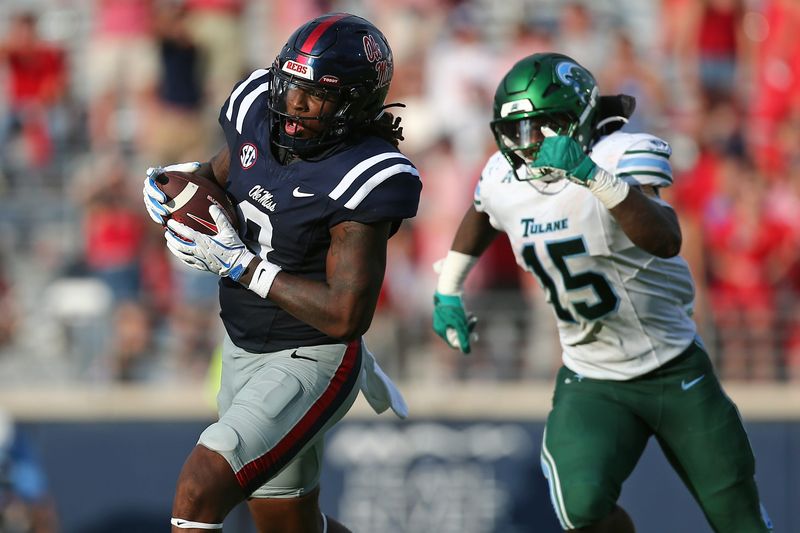
Tight end Dae’Quan Wright (8) was part of a College Football Playoff team at Ole Miss last year. Petre Thomas, Petre Thomas-Imagn
Player: Dae’Quan Wright
Position: Tight end
Age: 22
Previous experience: The Eagles signed Wright as an undrafted free agent in May. He played four years of college football at Virginia Tech (2022-23) and Ole Miss (2024-25). The Athletic’s Dane Brugler described him as a “joker” tight end “whose snap count should increase with every game.”
Path to a roster spot: It won’t be an easy road for Wright to make the final roster. His college resumé wasn’t stellar, and he’ll have to beat out a crowded tight end room that features Dallas Goedert, rookie Eli Stowers, Johnny Mundt, Grant Calcaterra, Stone Smartt, and E.J. Jenkins, among others.
Fun fact: Wright’s first position at Perry High School in Georgia was quarterback. He once threw an 85-yard touchdown and claims he can “still do that.”
A change to Division I men’s soccer looks to be on the horizon.
After years of discussion and debate, the NCAA Men’s Soccer Oversight Committee adopted legislation to shift the sport’s season from the fall to a two-semester schedule. The change was set to go into effect before the 2027 season. But on June 24, the NCAA announced that the Division I Cabinet remanded the proposal for additional review.
Twenty conferences opposed the measure, according to the NCAA’s release, taking issue with “the duration of the season” and “the lack of clarity about related rules.” Additionally, the Cabinet noted issues relating to how the change could impact the “student-athlete academic experience.”
Philadelphia has six Division I men’s soccer programs: Penn, La Salle, Drexel, Villanova, Temple, and St. Joseph’s. The head coaches of each program reacted to the possible change. Some supported it, while others pointed out a variety of flaws.
Player development
Critics of the one-semester season have long lamented that the current setup impacts player development. Villanova head coach Mark Fetrow, who noted his program has been “big supporters” of the new legislation, believes a two-semester format will accelerate development and may be a necessity for college programs.
“When you space the games out, and now you’re saying we’ve got a year of competition, we can now periodize our training in a way where we’re getting more out of our training sessions from a week-to-week basis,” Fetrow said. “We’re really maximizing performance because guys are just healthier on game days. If we want to stay relevant, if we want to evolve, because the game has evolved a lot in the United States in the past 10 years, then we have got to be willing to make some changes as well.”
A main competitor for colleges, in terms of acquiring and developing talent on a path to the professional ranks, has been Major League Soccer Next Pro, MLS’s path to pro league. But a longer season could put college soccer on par with the emerging professional league, says Taylor Thames, La Salle’s head coach.
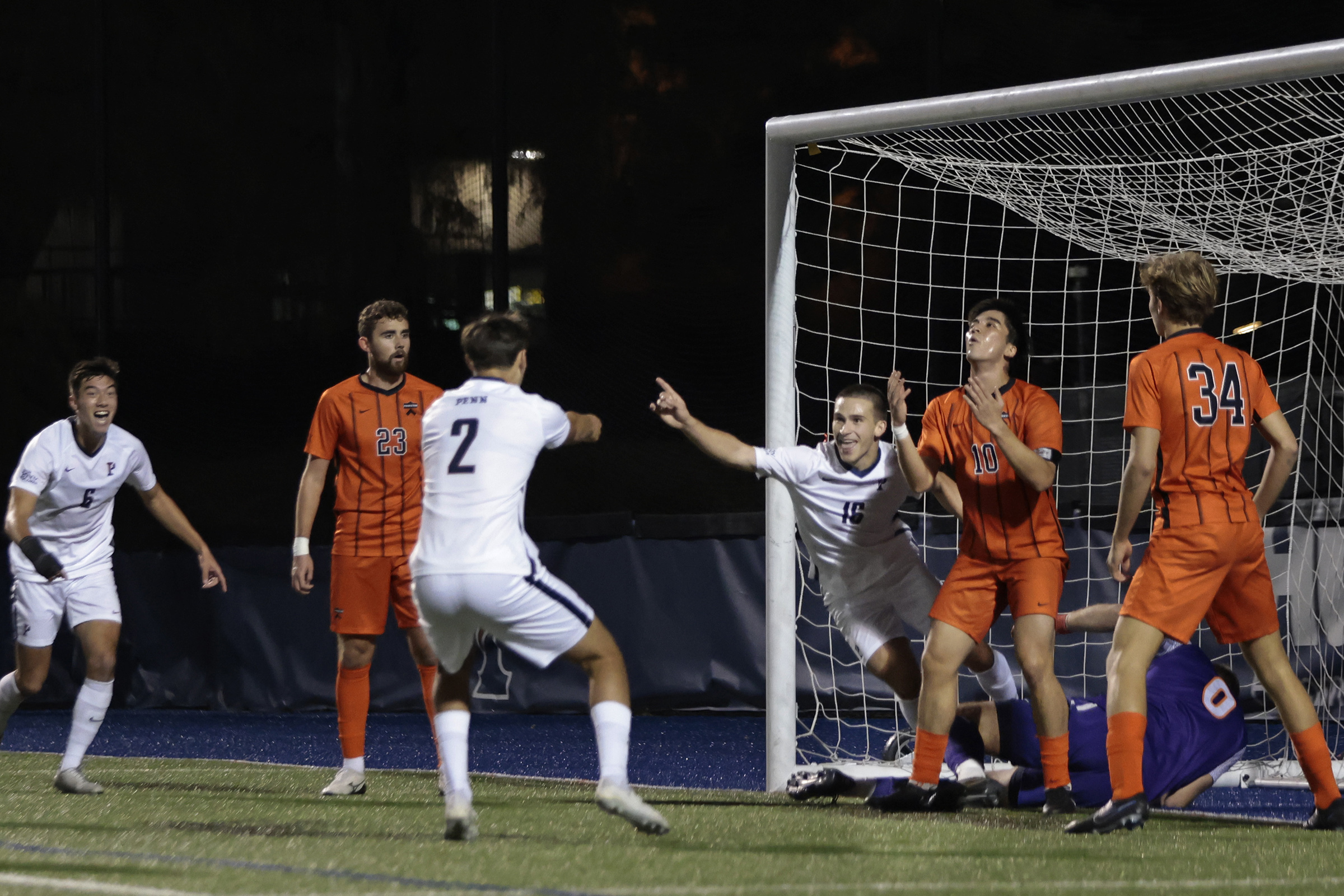
Oliver Pratt (No. 16) played four years at Penn before signing a pro contract.Elizabeth Robertson / Staff Photographer
“I think it makes us much more competitive in relation to MLS Next Pro, and some of these USL One contracts that are starting to take some high-level players from the college landscape, and it helps us develop them for longer spells,” Thames said. “There’s a bigger development cycle.”
Oliver Pratt, a 22-year old defender for MLS Next Pro’s Union II, played four years at Penn. He had to graduate a semester early to sign with an MLS team in time for the season. Having now experienced a full year of training in the pros, Pratt better understands the upside to shifting the college format.
“I definitely would have been able to maximize [training] more, and I would say be able to significantly improve within one season,” Pratt said. “It’s a different transition for me now. I’m dealing with a 10-month season, and my body’s definitely taking a toll.”
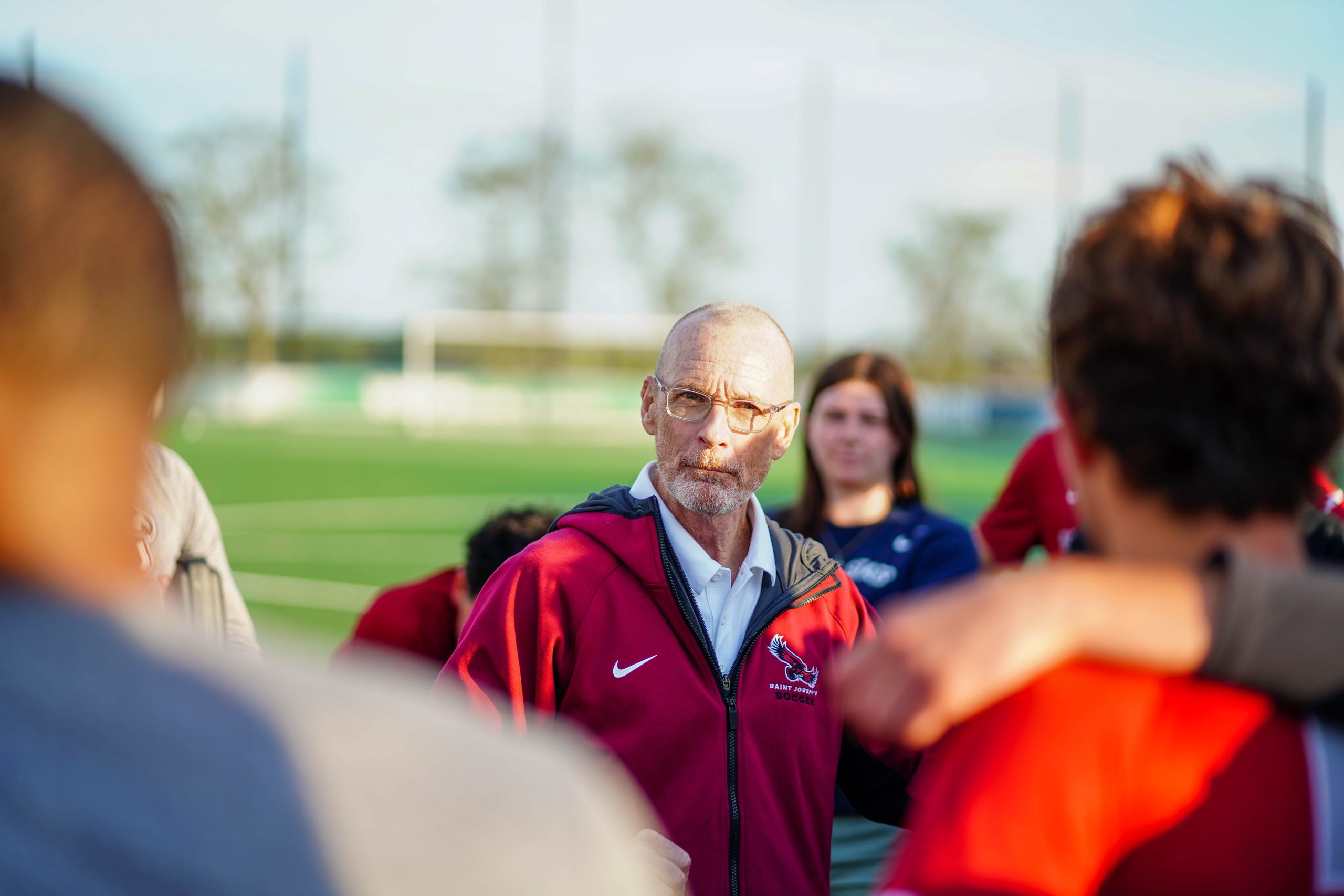
However, the majority of college players are not going pro, St. Joe’s coach Tim Mulqueen pointed out. He also noted that increased development would benefit the “top 1% or 2%,” but argued “that would happen for the top players anyway.” Mulqueen has seen premier development firsthand. He served in multiple roles with U.S. Soccer, including as an assistant coach for the 2008 U.S. men’s Olympic team.
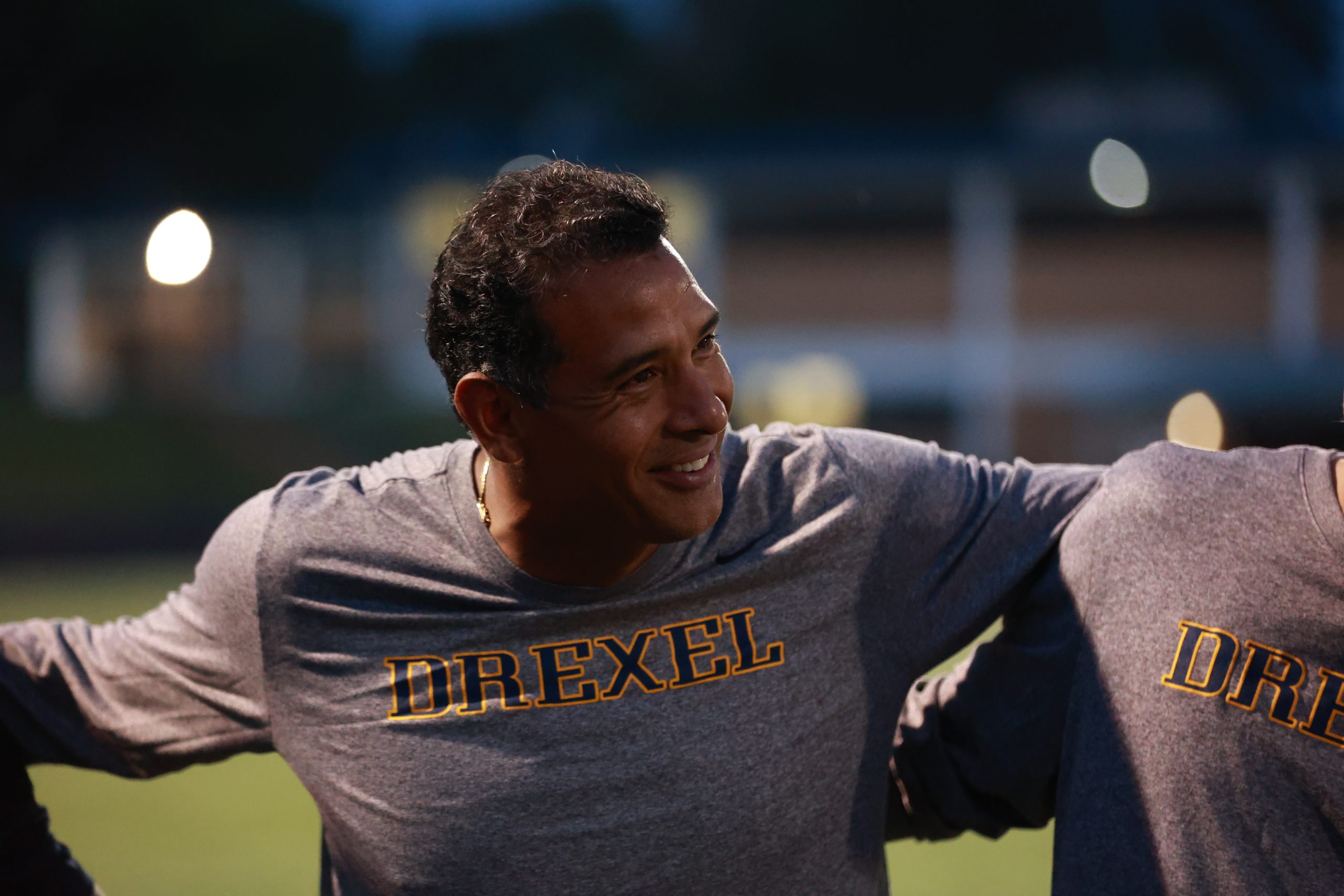
Meanwhile, Drexel coach David Castellanos believes the current system is yielding strong results and a “drastic change” would not be necessary. He said that the old model has produced “national team guys in the 1990 World Cup” and “MLS head coaches.”
Scheduling games, shifting operations
In a two-semester season, programs would have to adjust how and where games are scheduled.
Under the new format, the maximum match limit for each team would stay at the current cap of 25, meaning no additional games would be added in the 2027 season. With this, programs are required to schedule at least seven games or at most 10 games in the spring season. A team cannot opt to play all of its games in the fall.
Having to schedule games and additional practices in the spring could create issues for teams that share their facilities with other programs. For example, St. Joe’s shares Sean Sweeney Field with both of the school’s lacrosse teams and the women’s soccer program.
Tim Mulqueen has served in multiple roles with U.S. Soccer, including as an assistant coach for the 2008 U.S. men’s Olympic team. St. Joseph's Athletics
“When you’re sharing [facilities] with lacrosse or field hockey, that’s going to stress training times,” Mulqueen said. “It’s going to stress the [operations] people, it’s going to stress our trainers, who in small schools do multiple teams.”
Penn and Villanova are the only two local Division I programs that boast soccer-specific facilities, meaning that intra-program scheduling conflicts are unlikely to occur. Still, Quakers coach Brian Gill expressed concern with how the change may affect the other resources that his program relies on.
“Your infrastructure gets shared, so if that’s the actual facility or some of the people: trainers and strength coaches, sports information,” Gill said. “There’s a lot of shared overlap there, so that’s probably one of the biggest challenges. … How do you make this all feasible when it comes down to that stuff?”
Then, there’s the case of weather. Philadelphia boasts relatively cold Februaries, when spring play is slated to resume. From 1992 to 2021, the city’s average temperature in the month was 36 degrees — a cause of concern for a few of the City 6 coaches.
“It’s going to be brutal,” said Castellanos. “If you take, for example, the winter that we just had this year and then you’re telling me our playing season is going to be in the spring. You need January, February for preseason to ramp these guys up.”
Added Thames: “I think any coach should be concerned about competitive advantages — how to protect their program and fight for their program. That’s one concern that I would imagine for teams that don’t have an [indoor] bubble. [La Salle], for example.”
However, Temple head coach Bryan Green did not feel Philadelphia’s climate was a cause for concern.
“All the leagues in Europe, like Germany, have a pretty similar climate to us,” he said. “They play in December and January. It’s part of the sport to play outdoors and play in different environments and conditions”
David Castellanos believes college soccer’s current system is yielding strong results and a “drastic change” would not be necessary.Drexel Athletics
One way to escape the cold is to schedule early spring matches down South, which is what most of the area’s college baseball teams do. Fetrow noted that he has been in conversation with Villanova to “try to go down to a place like North Carolina” to start the second half of the season. Thames, Mulqueen, and Castellanos all shared similar interest.
Like anything, though, that will come with additional costs.
“Those are going to be travel expenses. I don’t see how you can get around it,” Mulqueen said. “We’ve gotten to the stage where the smaller schools, we have to adapt to what’s being done at an NCAA level that we really don’t have much say in.”
Player health
A leading factor in the new format’s adaption was the idea that spacing out games would result in fewer total matches missed due to injuries. The NCAA, in its formal announcement, wrote that increased recovery time “could support injury prevention and return-to-play protocol.”
For the most part, the area’s coaches agreed with the reasoning.
“Say a kid needs two and a half weeks to get back [from an injury], there’s a good chance that the player missed five or six games through one injury,” Gill said. “Versus [in the new format], the player maybe misses two to three games. You’re sort of giving some space for guys to naturally come back.”
While Castellanos agrees that total games missed will be cut down due to the new format, he believes that a longer season may bring more “wear and tear” injuries.
“When we think about these injuries, we think about some of the major ones, but we’re not talking about the soft tissue ones,” Castellanos said. “Now that you go 10 months, you’re on it every single day, right? I think that you know these things can linger. It’s going to put a lot more pressure on the training staff to maintain these guys to be healthy for 10 months.”
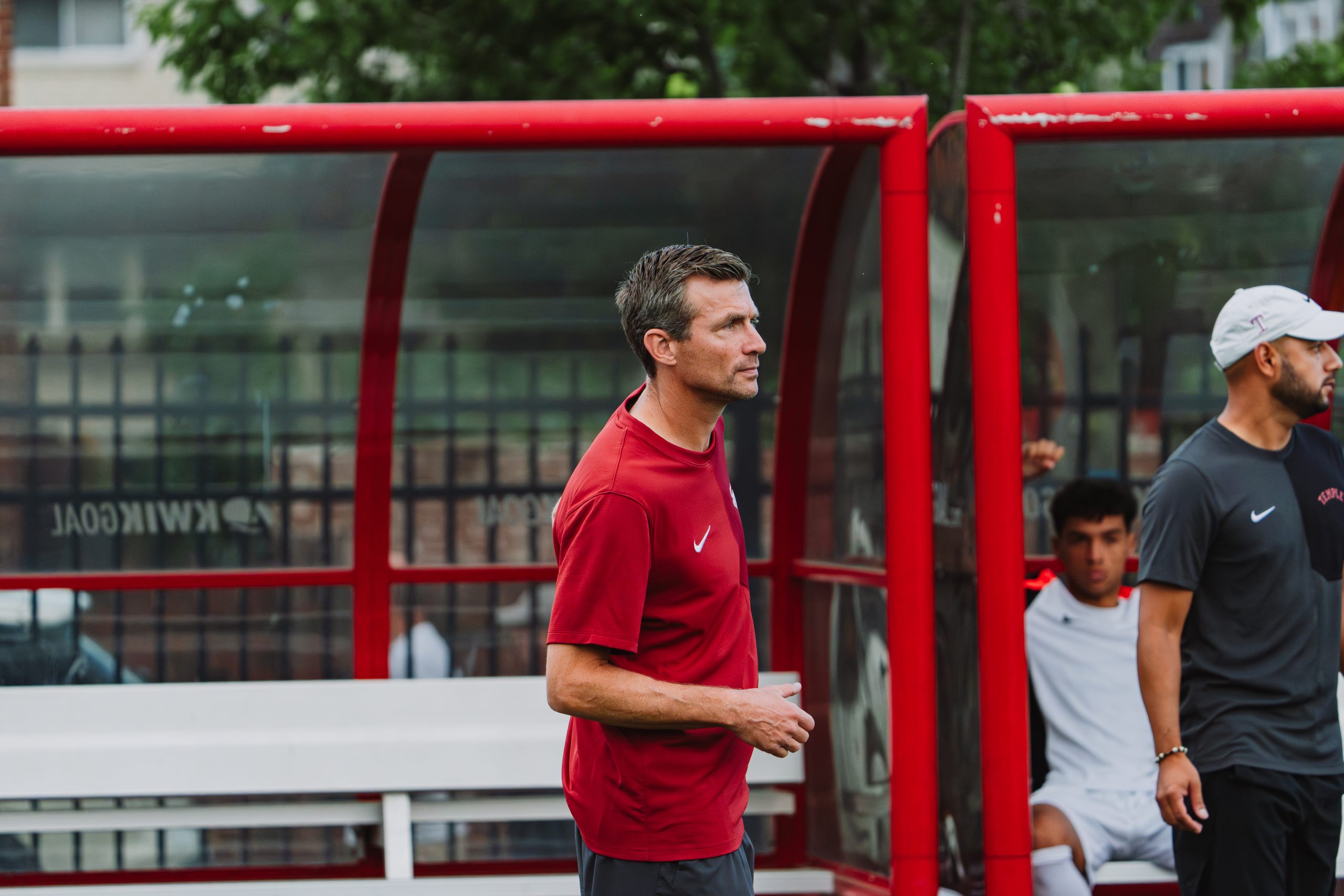
Bryan Green has led the Owls as head coach since 2022.Temple Athletics
Mulqueen is also concerned about new injuries sprouting due to the format.
“In my experiences, when you have more time, you do more things,” Mulqueen said. “No one’s going to sit idly by and say, ‘Right, we have 10 months now, or we’re going to give guys time off.’ Well [if] you get bad results, you’re going to do more.”
Now, Philadelphia’s coaches are in a waiting game to see when the proposal will make its way back to the NCAA’s desk. In the meantime, they will continue to prepare for what feels like the inevitable.
“There’s all kinds of different challenges every season, no matter what,” Green said. “I think that’s the one thing that college athletics does really well, is they’re nimble and adaptable, and this is just one more thing that we can prove that we can do.”
When Shane Gillis fans file into Lincoln Financial Field on Friday night for the actor and comedian’s almost sold-out show, they’ll never know that the venue was the center of the soccer universe in Philadelphia for two weeks of the FIFA World Cup.
At least there will hardly be any reminders.
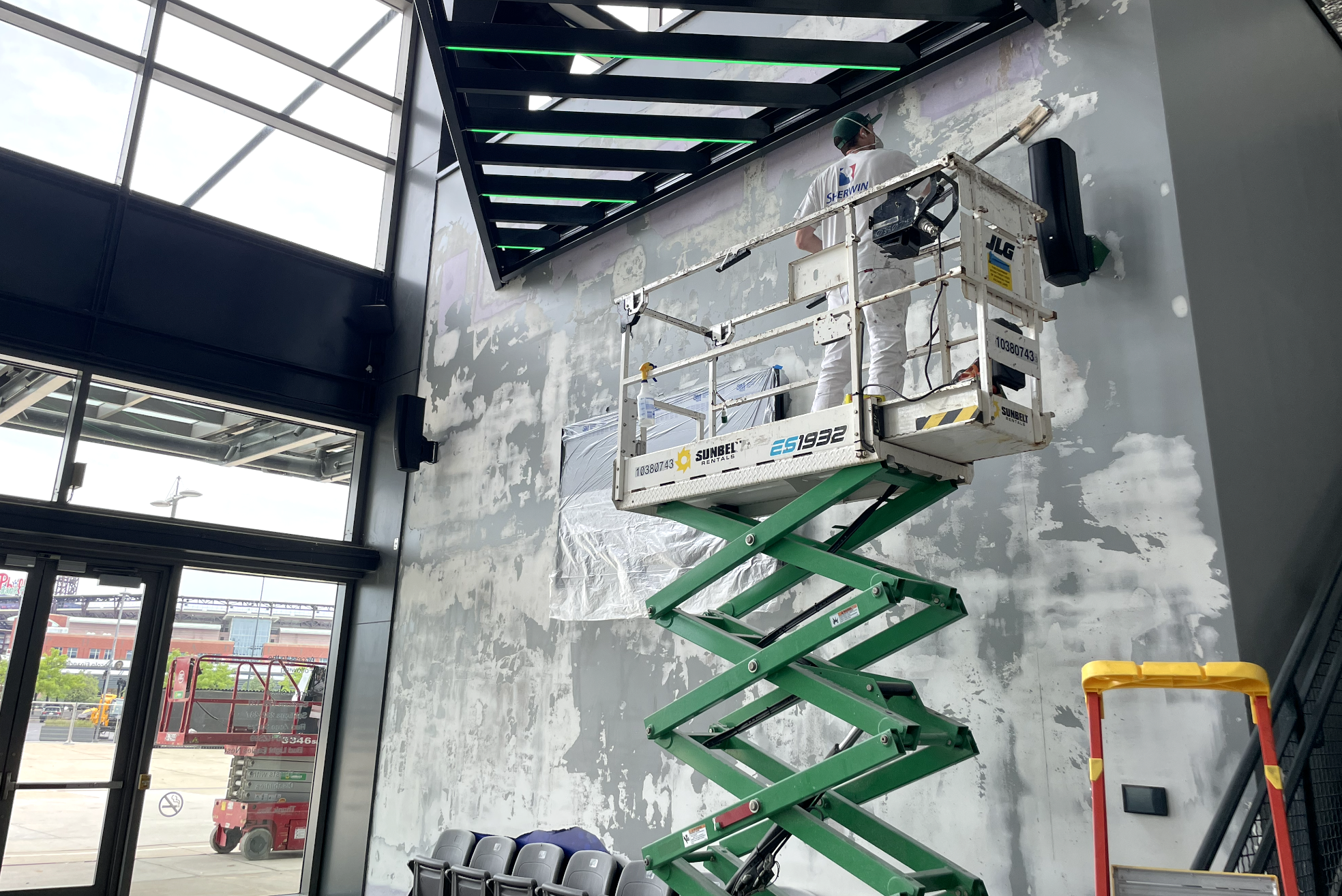
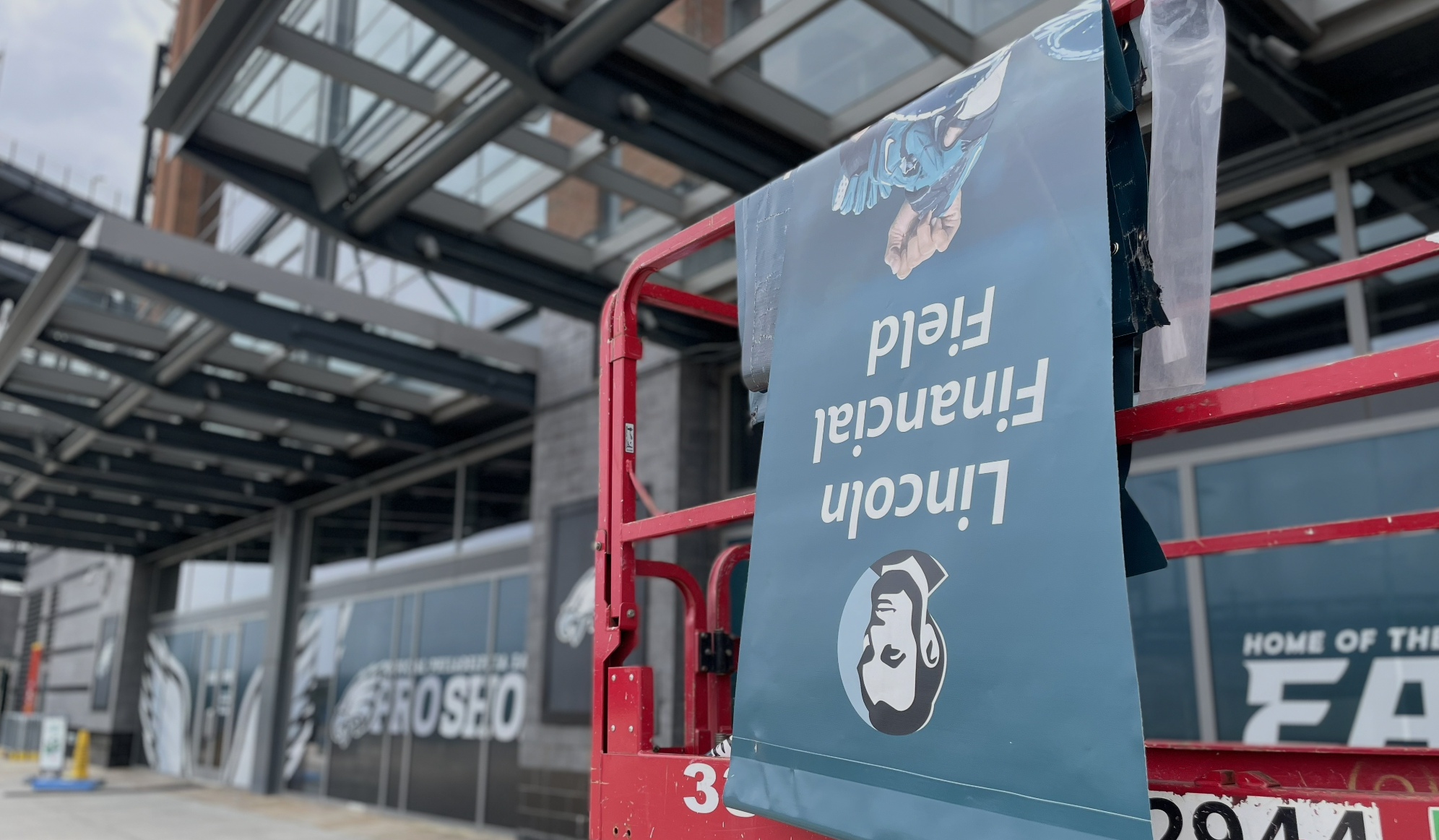
Signage is gone. Seats that were removed to make way for a wider field have been replaced. And when you drive past the south end of the field along I-95, the outline of Abraham Lincoln’s head has returned, instead of the giant blue banner that covered the Lincoln Financial Field sign.
In just 11 days, a team of union workers — from crane operators to field turf professionals to painters — flooded the venue, ripped down anything that had FIFA attached to it, and turned Philadelphia Stadium back into the Linc.
The giant flags during pregame ceremonies? The way finders located both inside and outside the stadium? The caps on the team benches conveying which side each nation has on the sideline?
There’s a WhatsApp group for that.
“A lot of our staff and volunteers who come from those countries get to take them, and people get just so excited when we post them in our WhatsApp group,” said Jolyon Bowman, FIFA’s chief venue operations director for the matches in Philadelphia. “We had a member of our staff the other day show off the banner that she received, and hung it up in her backyard. There’s a lot of pride among all our staff in what we accomplished. And I think people wanted to keep that.”
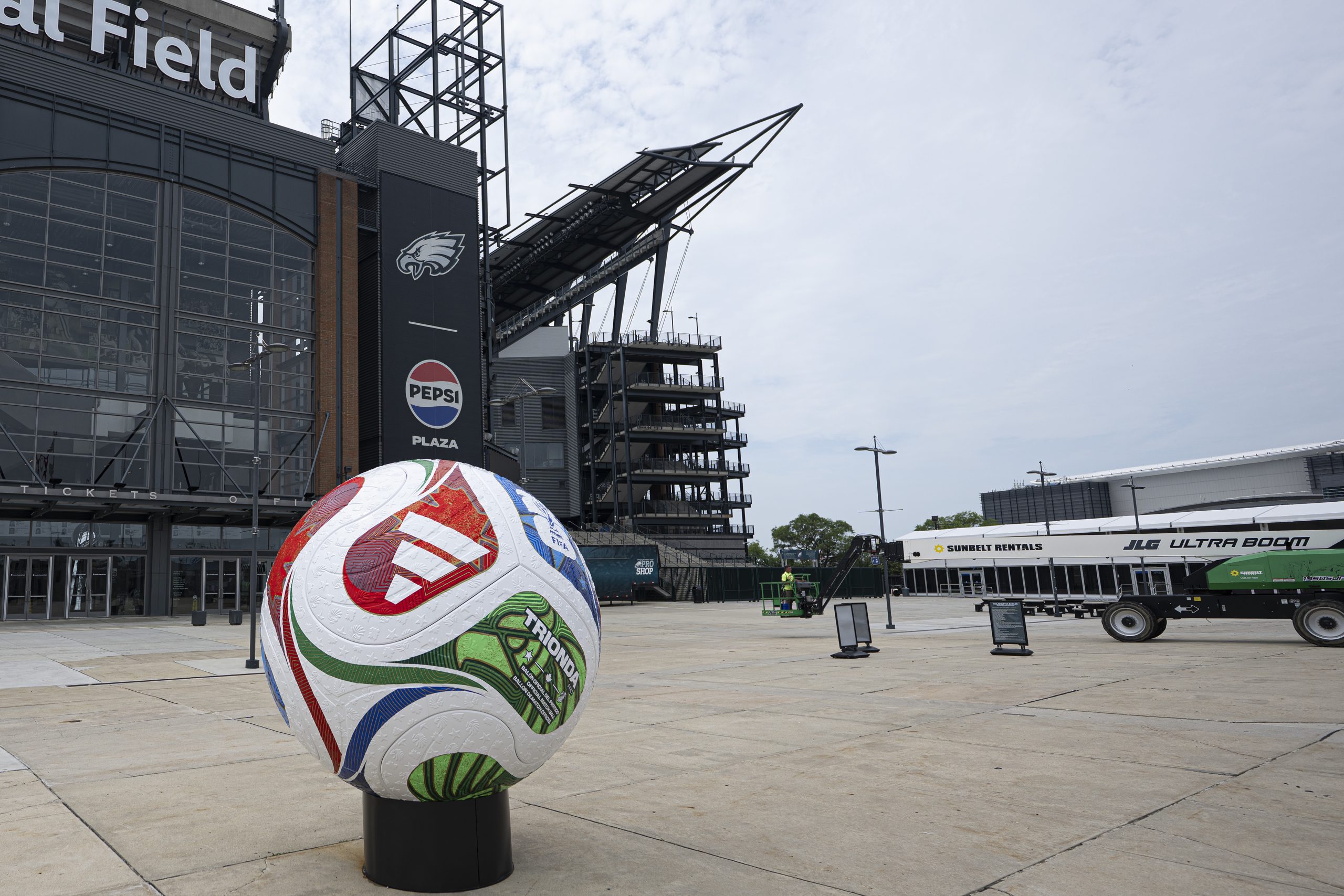
A giant sculpture of the Adidas Trionda match ball remains the only thing that recalls Lincoln Financial Field as a host for World Cup matches, as workers began dismantling signage last week.Jose F. Moreno / Staff Photographer
Bowman says for many of the banners, there’s actually a company FIFA works with that takes them and will create tote bags that also get passed on to staff members as a commemoration of the work they put in.
“We try — I mean, as much as we can — to reduce, reuse, and recycle, and I think we sure did that,” Bowman said. “There are just some things that have to go in the garbage, but a lot of that stuff ends up in the hands of the people [who] have worked the event here; they’re free to take that stuff.”
Staff at Lincoln Financial Field got an opportunity to keep some items as well, but FIFA also noted that it donated leftover food to local charities. Televisions that were used as monitors during the tournament were gifted to the School District of Philadelphia.
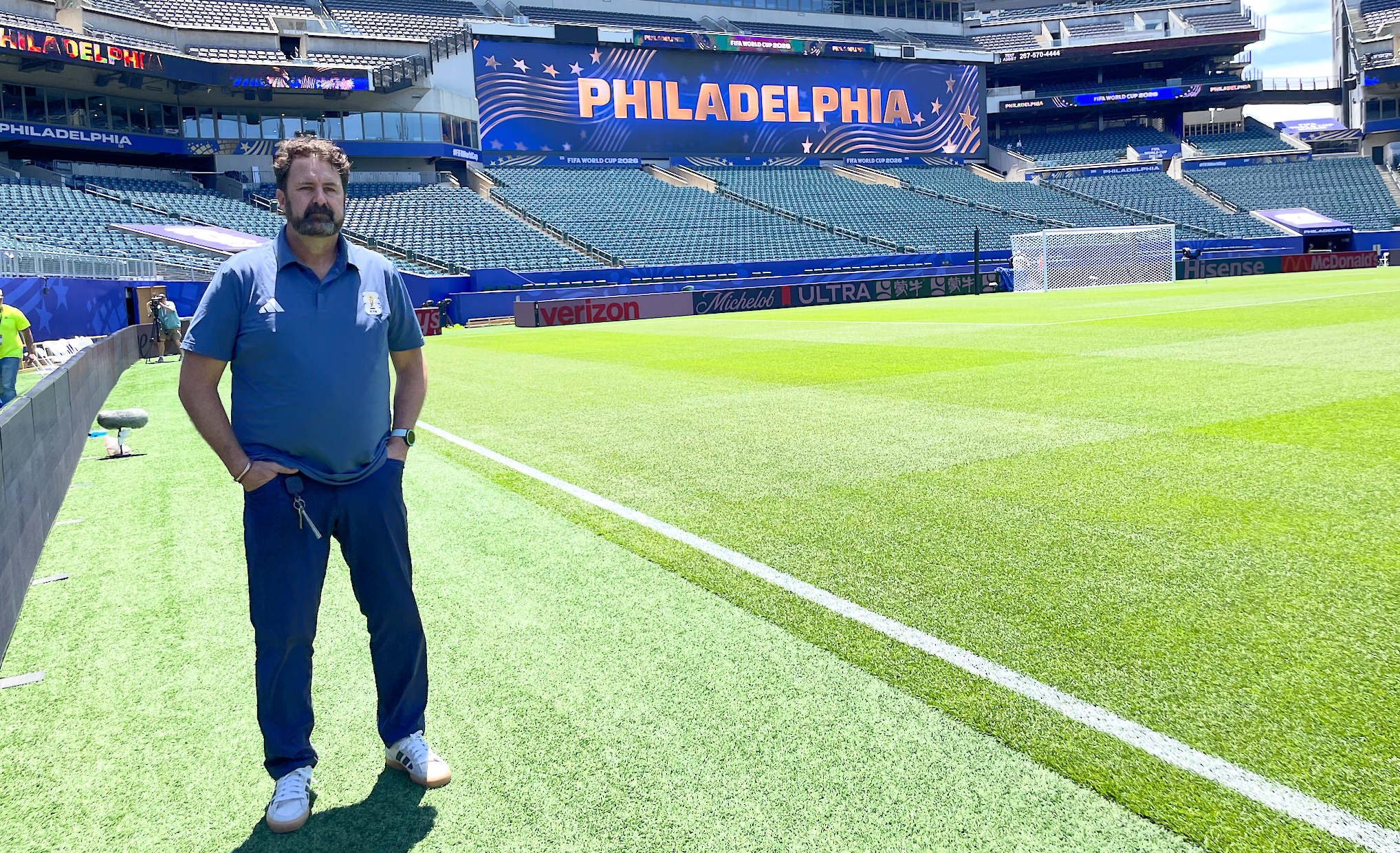
Jolyon Bowman, was the venue operations director for FIFA in Philadelphia for the World Cup and says that planning the breakdown happened 18 months in advance of the tournament. Kerith Gabriel / Staff
‘No room for improvisation’
The efficiency in restoring an arena back to its original look in just 11 days began 18 months before the start of the tournament, says Bowman. Coordinating labor, collaborating with the Eagles, and looking at the calendar of events for the Linc all come into play — especially when you’re not trying to overstay your welcome.
“One-hundred percent of it is all talked about and organized before. There’s no room for improvisation when you’re dealing with a change of this scale,” Bowman said. “We start talking about bumping out on the first match day of the whole tournament. We knew there was a huge concert [in Shane Gillis’ show] coming up. Lincoln Financial is going to be hosting 60,000 people on Friday, so we knew we were under the gun to get it done.”
Bowman is very familiar with the process — he’s been in venue operations for nearly 30 years. He can trace his footprint in Philly working as an operations volunteer back to when the Linc first opened in 2003 with a soccer match between European club powers Barcelona and Manchester United.
Though he’s not originally from the area, the native Ugandan who now resides in Washington D.C., says his touchpoints here are numerous, including staying in a section of West Philadelphia while his now wife attended Penn.
Work to restore Lincoln Financial Field to its original look following the FIFA World Cup took place for 11 days, with union working crews doing everything from painting to ripping up the field.Kerith Gabriel / Staff
Above and beyond
During his 18-month preparation, which also included last summer’s FIFA Club World Cup, Bowman says he got acclimated to Philly courtesy of the Eagles, to better understand the day-to-day workings and how to incorporate what they wanted to do both on and off the field.
Perks of the job? He and his team received a season credential to Eagles games to better understand gameday operations, Philly style.
“I spent almost two years in Philadelphia preparing for this,” Bowman said. “The Eagles were on board for the World Cup right after their Super Bowl victory. They gave us the keys to the stadium. I saw a lot of Eagles games and was able to prep at any event I wanted to go to.
“The Eagles gave me a credential to learn as much as I wanted and it really prepared me for the whole thing. Talking to other venue directors [in other World Cup cities], I can tell you that was really unique experience. I just felt like the Eagles went beyond what was expected in trying to host and be a great host, and that just trickled down to everybody in the city.”
That gracious hosting experience started with the Club World Cup, which offered a beta test for how FIFA stadium workers, operations at Lincoln Financial Field, and outside contractors would coexist.
Crews work to put Eagles banners back on the outside of Headhouse Plaza at Lincoln Financial Field on Friday, July 10.Kerith Gabriel / Staff
Bowman estimates “hundreds” of people were directly involved in the operations process from the set up to the restoration, along with scores more who worked in a temporary capacity.
He notes that it’s what made for one of the smoothest restoration projects he’s been apart of, piggybacking what he personally felt was one of the best FIFA World Cups in recent memory.
He would know, considering his life has been setting them up and breaking them down for over a decade.
“I’ve been doing sporting events all my life, but there’s nothing quite like the World Cup that brings that international joy and just happiness of being together,” Bowman said. “[During the June 27 Croatia-Ghana match], I left the soccer game for about 15 minutes to go check out the fan experience [in the Linc’s Headhouse Plaza], and when the DJ played Ghanaian songs, Croatians were dancing. And then the DJ plays the Croatian songs, and the Ghanaians are dancing.
“There was just so much joy, [I think people] enjoyed being together, enjoyed being in Philadelphia. This world needed a World Cup, and I’m happy that I was able to be a little piece of it.”
It would certainly explain the vague but consistent discomfort that the Angels superstar projected throughout his All-Star weekend at Citizens Bank Park. From the obligatory arrival-day media free-for-all to a small postgame scrum that included some folks who’d covered him since high school, Trout politely but steadfastly declined to don the homecoming crown.
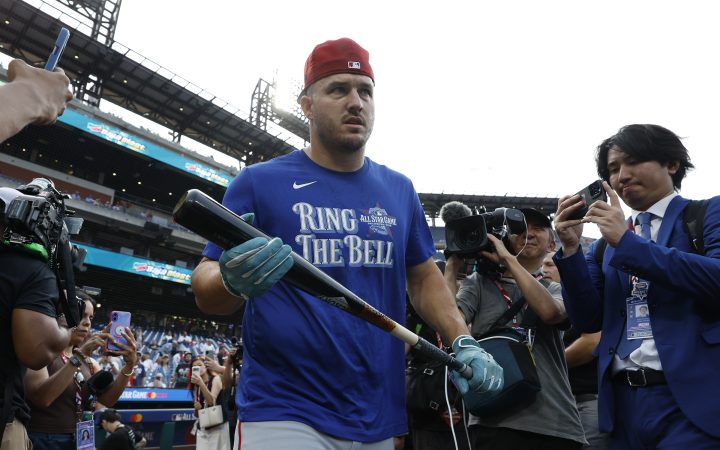
“It’s been great,” the Millville native said after Tuesday night’s All-Star Game. “Being out there with the guys, seeing my family, friends, it was a special night, special couple days.”
A questioner wanted to know where it ranked. He’d played at Citizens Bank Park in high school, after all. He routinely attends Eagles games across the street. He was applauded wildly during pregame introductions.
“It’s up there,” was all Trout would allow.
Philly loves nothing more than when someone loves it back. Trout surely knows this. Yet his responses were the ones you’d expect if somebody had asked if he enjoyed the meal.
Virtually every year since Trout’s MVP runner-up rookie season, the idea of him in a Phillies uniform has surfaced like a white whale. From the trade-deadline fan fiction to the free-agent fantasy, nobody ever bothered to consider a fundamental question.
Would Trout actually want to play here?
In a lot of ways, Millville is as far away from the insanity of Philadelphia as Anaheim itself is. Trout has seen that insanity close enough at Lincoln Financial Field. Surely, he can imagine all that would await him and his family were he suddenly to become the potential savior of the Phillies.
Mike Trout, a Millville native, went 0-for-3 in Tuesday’s All-Star Game at Citizens Bank Park.Yong Kim / Staff Photographer
“I hear this a lot,” Trout told reporters on Monday before the Home Run Derby. “I enjoy coming to Philly. I’m an Angel, obviously. I got a no-trade clause, so it’s ultimately my decision. But, like I said, I love Philly.”
Even if Trout wants to be here, which he has given no indication he does …
Even if the Angels are willing to accommodate it on the Phillies’ terms, which they have given no indication they do …
Even if the Phillies would dramatically increase their World Series odds by adding Trout’s stout right-handed bat to a lineup that leans further left than the DSA. Which is debatable at best …
Even if all that is true — which, again, it very likely isn’t — the Phillies would need to think long and hard about whether such a move makes sense for them.
The rest of us would need to ask ourselves if we really want to see it.
Instead of focusing on the fairy-tale beginning, let’s start with how the thing is most likely to end. That is, poorly. Very, very poorly.
Frankly, the strongest argument for Trout in a Phillies uniform is that the world as we know it may have ceased to exist by the time his contract is off the books in 2030. You only die once, right? Might as well have lived.
Other than that, let’s make sure we think about the likely reality of 2030.
Think about how Trout’s last days, maybe years, in a Phillies uniform would likely look. Think about how the Phillies would likely look as a whole.
Trout is one of the greatest athletes to ever play baseball. He is unquestionably the greatest to do it while holding Eagles season tickets (sorry, Kevin Mench). But Trout’s civic legacy has greatly benefited from the insulation of 2,700 miles. The injuries, the missed postseasons, the diminished production. Thus far, they’ve been the burden of Angels fans, whoever they are.
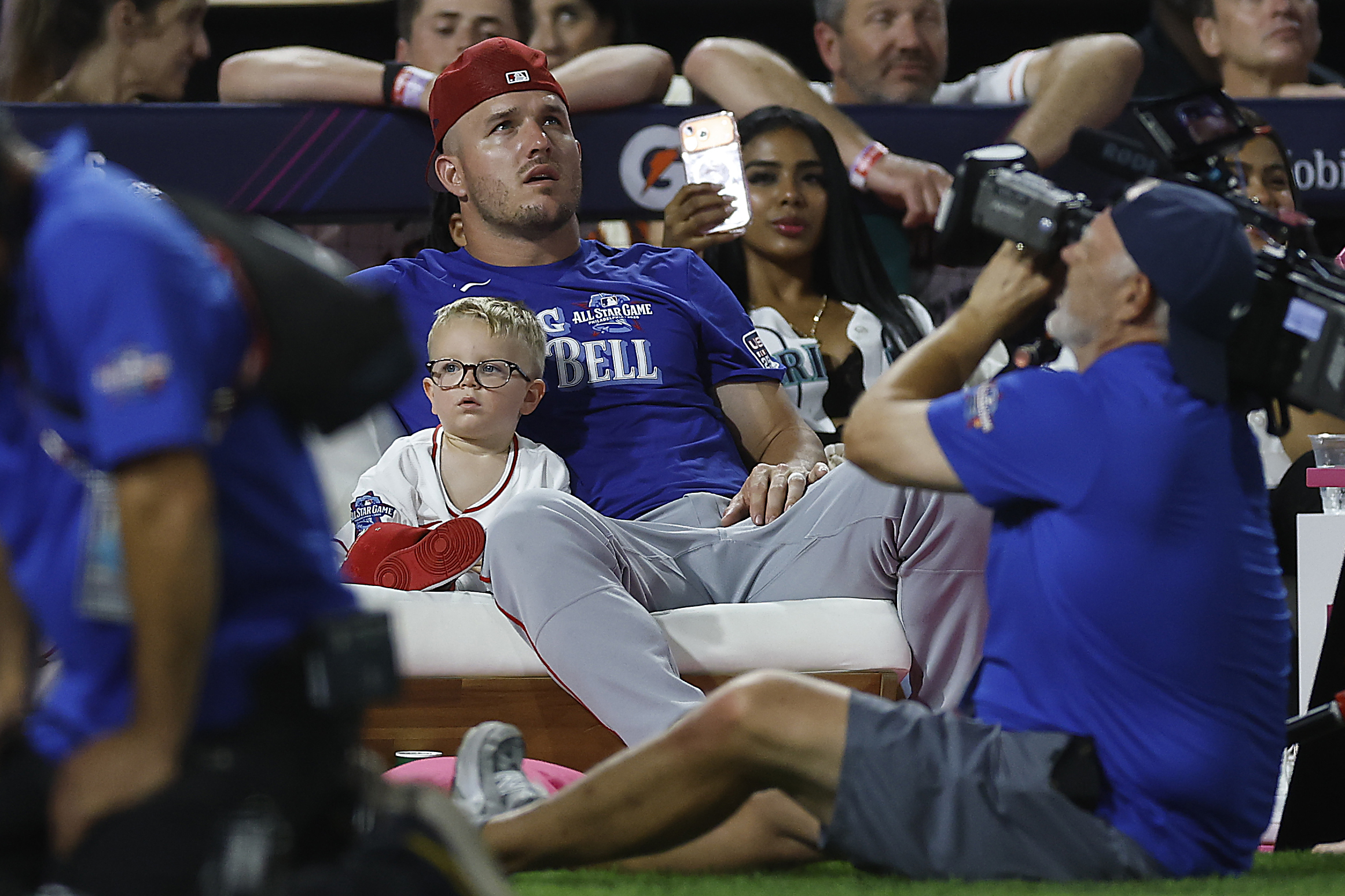
Mike Trout had a .739 OPS with a .326 OBP in his last 20 games before the All-Star break.Yong Kim / Staff Photographer
There will be no insulation when he is 38 years old and being paid $37 million to limp into the last year of his contract alongside a 37-year-old Bryce Harper and a 37-year-old Kyle Schwarber and a 37-year-old Aaron Nola and a 37-year-old Trea Turner and a Phillies team that needs to get its development house in order to be anything other than a soul-sucking disappointment when the year of our lord 2030 arrives.
Sure, maybe this time will be different. But there are very few scenarios where Trout in a Phillies uniform is sensible for the organization and something other than cringeworthy to watch at the end.
From the Phillies’ perspective, the depreciation calculus would be complex enough to jeopardize a deal even if both sides were open to one. Health is a significant variable. That’s true for most 34-year-old players. It is especially true for Trout, who has played 85+ games just twice in his previous six seasons and hasn’t played more than 140 since 2016, when he was 24. He is barely a week removed from returning from a hamstring strain that sidelined him for three weeks. He missed a month last season after reinjuring a knee that had previously cost him most of 2024. The 2021-23 seasons saw him deal with a calf strain, a back injury, and a fractured hamate bone. The actuarial work will require more than a cocktail napkin just to calculate Trout’s likely availability from now through October. Even more complicated is figuring out how to price the risk/reward of the rest of Trout’s contract, which will pay him about $150 million through 2030, when he will be 38 years old.
That would be true even if the short-term payoff were as decisive as many envision. It isn’t. Trout’s production has cooled off considerably since a sizzling start. He had a .739 OPS with a .326 OBP in his last 20 games before the All-Star break and a .750 OPS with a .349 OBP in his last 42. Those numbers are better than they may sound, particularly compared with what the Phillies’ overall numbers have been in the outfield alongside Brandon Marsh. But they are far from vintage Trout, which is what he was in his first 36 games, reaching base at a .436 clip with a 1.000 OPS and 11 home runs in 126 at-bats.
In the meantime, the Phillies are dealing with the reality that they have exactly one proven late-innings bullpen arm. Their trade deadline focus crystallized on Thursday with the news that setup man Brad Keller will miss the rest of the season — and presumably 2027 — with a torn UCL.
It’s pretty easy to envision how October will end if the Phillies sink resources into Trout instead of allocating them for the bullpen.
After taking the pulpit at the First Haitian Church of God of Prophecy on Sunday, the Rev. Frantz Ulysse immediately spoke to the calamity that confronts families in his congregation:
The end of the special immigration status that for years has allowed thousands of Haitians to live and work in Philadelphia and across the United States with their homeland in chaos ― ruinous natural disasters, governmental collapse, and gang violence that has displaced more than a million people.
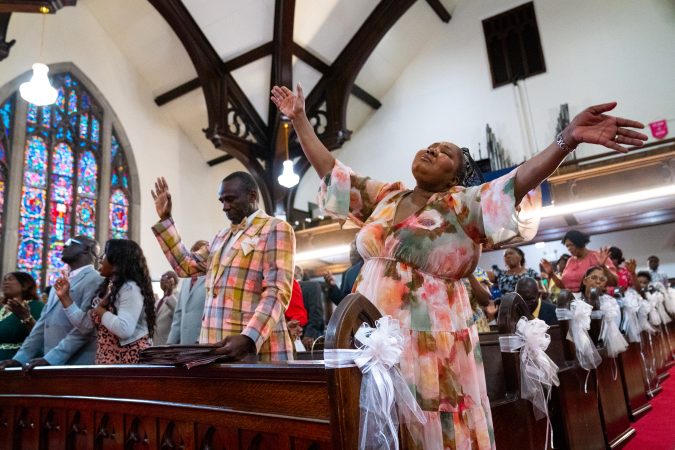
“We, as Haitians, we are in trouble,” Ulysse told worshipers at the Olney church. “We need to pray, because our God is a faithful God, and I believe he’s going to do something for us. … Our homeland, Haiti, it is not a safe place to go back to right now.”
Prayers have been buttressed by petitions and by pleas to Congress to help before it’s too late.
President Donald Trump is poised to return roughly 350,000 Haitians to a country that the U.S. government says is too dangerous for Americans, after the Supreme Court ruled last month that he could end temporary protected status for immigrants from Haiti and Syria.
TPS is a humanitarian status that the U.S. can grant to foreign nationals whose nations are embroiled in war, environmental disasters, epidemics, or other extraordinary circumstances. It provides work authorization and protection from removal, but no path to permanent residency or citizenship.
Among Philadelphia’s 11,000-strong Haitian community, disbelief over the court decision has turned to misery and fear, advocates say.
The U.S. State Department has told Americans to stay out of Haiti, issuing its highest “Do Not Travel” advisory and warning those who insist on going to prepare a last will and testament.
Many Haitians ask: How can Haiti be safe for my family if it’s not safe for others? Some face the prospect of separation from spouses and children who are U.S. citizens. Some will not step outside their homes to go to work, church, or school, afraid that federal agents could be watching, advocates said.
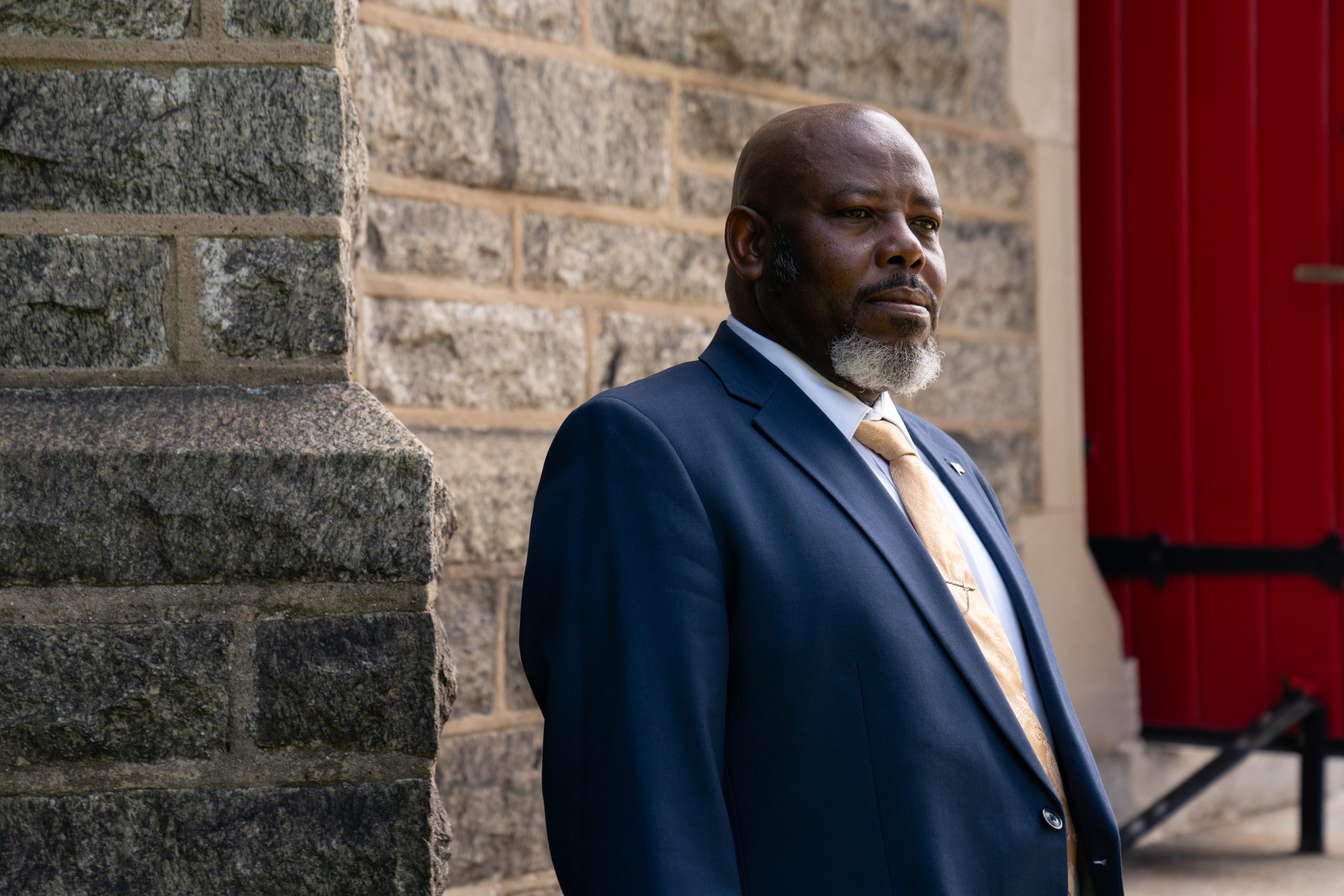
“A lot of people are suffering now,” said Clifford Solomon, a church usher who is the father of four American children and whose wife is about to deliver a fifth. “A lot of my family is here [under TPS], my friends, my neighbors, all of them.”
Clifford Solomon, a church usher at the First Haitian Church of God of Prophecy, poses for a portrait before service in Philadelphia on July 12.Sarah Silbiger / For The Inquirer
The Trump administration insists that “temporary” means temporary. The president tried and failed to end TPS for Haiti, the poorest nation in the Western Hemisphere ― two-thirds of residents live in poverty ― during his first term.
While running for president in 2024, he falsely accused Haitian immigrants in Springfield, Ohio, of eating cats and dogs, and blamed those in tiny Charleroi, Pa., set on the Monongahela River about 20 miles south of Pittsburgh, of causing “massive crime.”
The court decision did not immediately terminate TPS for people from Haiti and Syria, but started the process for implementing an order that typically takes 32 days. Once TPS ends, holders revert to their previous immigration status, meaning those Haitians who were undocumented or have no other protection will be subject to arrest and deportation.
Meanwhile, U.S. Citizenship and Immigration Services says work authorizations for Haitians will expire on July 24.
“We are seeing the impact on the community in Pennsylvania, in Philadelphia, and across the country,” said Guerline Jozef, founder of the California-based Haitian Bridge Alliance, a national nonprofit. “The fear of deportation, the fear of family separation, the fear of losing everything.”
The alliance has helped commence a series of pro-TPS rallies led by labor unions, faith leaders, and immigrant rights groups in cities from San Diego to Boston, proclaiming that “families who have built their lives, careers, and communities in the United States deserve stability, dignity, and protection — not fear and uncertainty.”
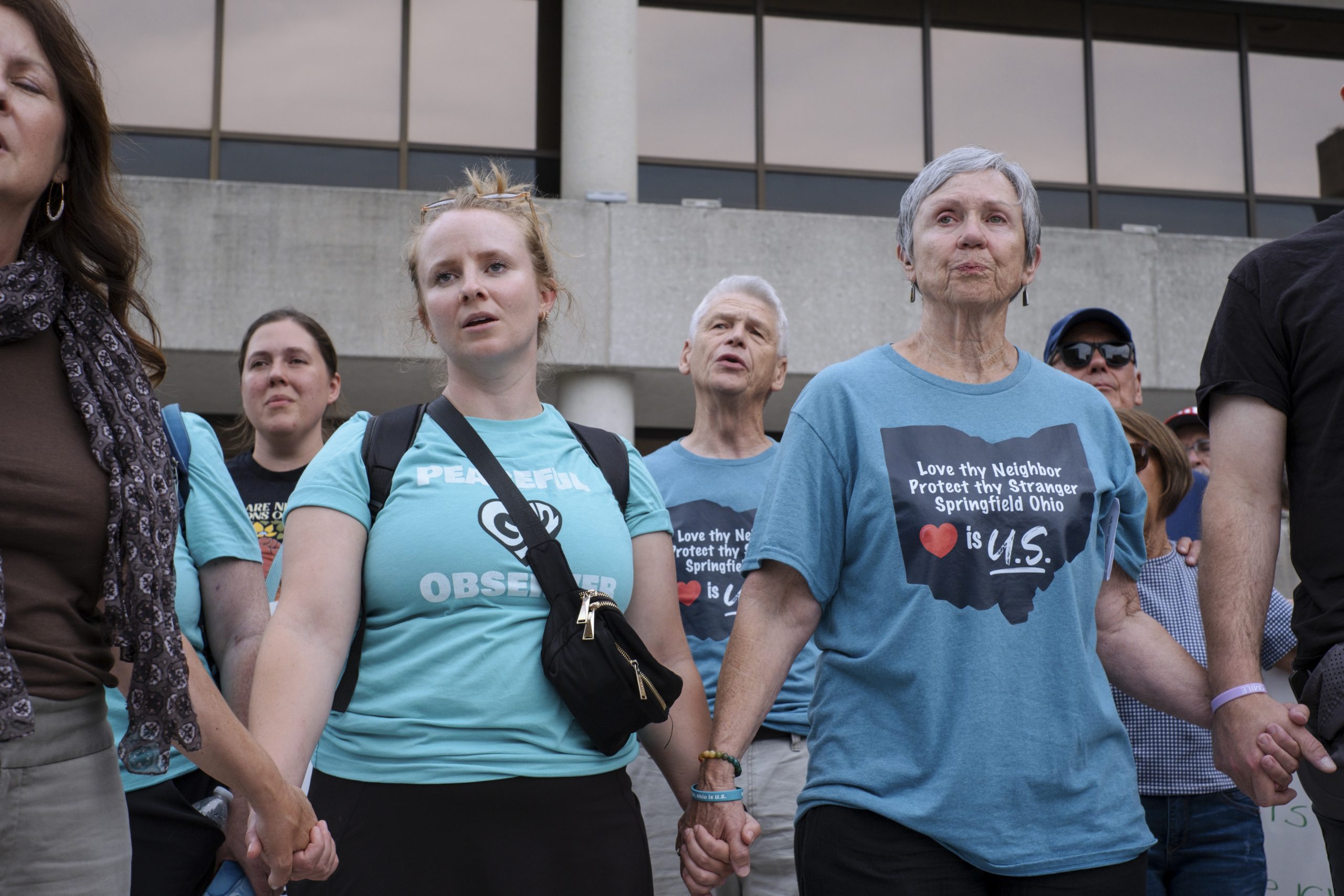
Supporters of the Haitian community rally at City Hall in Springfield, Ohio, June 25. In Springfield, some residents see the end of an economic boom after the end of a humanitarian program for immigrants. Others see still darker possibilities. AMY POWELL
Yet uncertainty rules, and many Haitians with TPS are investigating options even as they hope for relief from Congress.
Esaie Pierre, founder of Men Anpil, a Philadelphia-based nonprofit that helps Haitian migrants, said he is assisting people who want to apply for asylum in the United States. Others who come to him are considering where else in the world they might be able to live.
One young man is thinking about Chile, Pierre said.
“They are not wanted here, but have established some kind of life here,” Pierre said. “We’ve assimilated. I’ve assimilated.”
The events that led to this moment began in January 2010, when Haiti suffered a massive earthquake ― the 7.0-magnitude seism followed by a 6.1-magnitude aftershock ― that, as the National Immigration Forum put it, fundamentally altered the nation’s trajectory.
Estimates of the death toll ranged from 100,000 to 300,000 people, while about 1.5 million were forced into unsanitary, overcrowded camps. The damage crippled the government.
Three days after the initial quake, the Obama administration announced that undocumented Haitian immigrants in the U.S. would be granted TPS.
Thousands more would be welcomed over time under humanitarian programs, and become eligible for TPS, as Haiti grew mired in crisis ― a deadly cholera epidemic the same year, Hurricane Sandy in 2012 and Hurricane Matthew in 2016, and a 7.2-magnitude earthquake in 2021 that killed more than 1,000.
That year the assassination of President Jovenel Moïse ― elected four years earlier amid allegations of fraud and corruption ― saw the collapse of basic government functions and the rise of armed gangs.
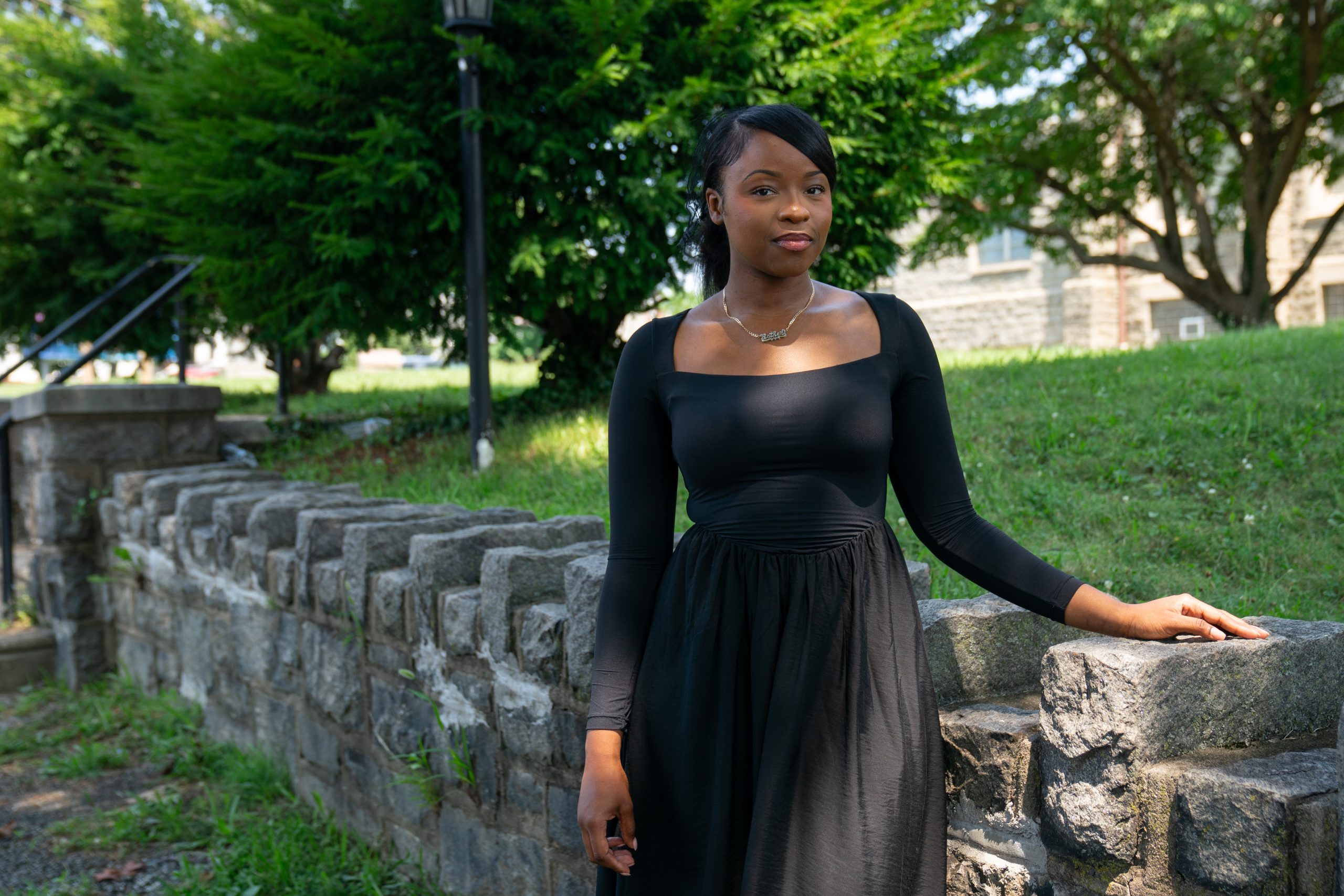
“You send them back, it’s like you’re signing a death sentence for them,” said Esther Emmanuel, a church soloist who has family members here under TPS. “We’re asking God to do a miracle and to hear the cries of his people, and to also soften the hearts of Congress.”
Esther Emmanuel, a church soloist who has family members in the United States under temporary protected status at the First Haitian Church of God of Prophecy in Philadelphia on July 12.Sarah Silbiger / For The Inquirer
Today the United Nations estimates that 90% of Port-au-Prince, the capital and largest city, is under the control of criminal groups, the violence having left thousands dead and displaced more than 1.4 million people.
The State Department warns of robberies, carjackings, and sexual assaults. It advises U.S. citizens who go to Haiti to establish plans in case they are kidnapped ― including a “proof of life” protocol, so family members can ask specific questions to kidnappers as a way to determine if their loved one is still alive.
“The only general hospital in Port-au-Prince has been closed for over two years,” Jozef said. “There’s no infrastructure in Haiti for people to be received. … We find ourselves as a community without a home, without a home to go to, without a home to stay in.”
Talie Cerin, who lives in Philadelphia’s Cobbs Creek neighborhood, was visiting Haiti at the time of the 2010 earthquake. She watched her childhood home crumble.
She has lived here under TPS, graduating from Immaculata University, then earning a master’s degree in education from Eastern University, and now working as the founder and lead editor of Woy Magazine, an internet publication about Haitian experiences.
“The toughest part about being a TPS recipient is the ambiguity,” Cerin said. “The confusion keeps you from making long-term plans. It traps you in a prison of conjecture, whispers of ICE raids, and stories of people in detention centers.”
Her sister, Lunise Cerin, was born in Philadelphia but lived in Haiti from age 5 to 16 before returning here to attend high school and college. The worry of losing her sister, and possibly their home, has been disorienting, Lunise Cerin said, generating “an enormous cloud of grief.”
Her family has lived in Philadelphia since the 1980s, she said, and for them the end of TPS would mean the end of an established, multigenerational life.
“Are we going to be gone?” she wondered.
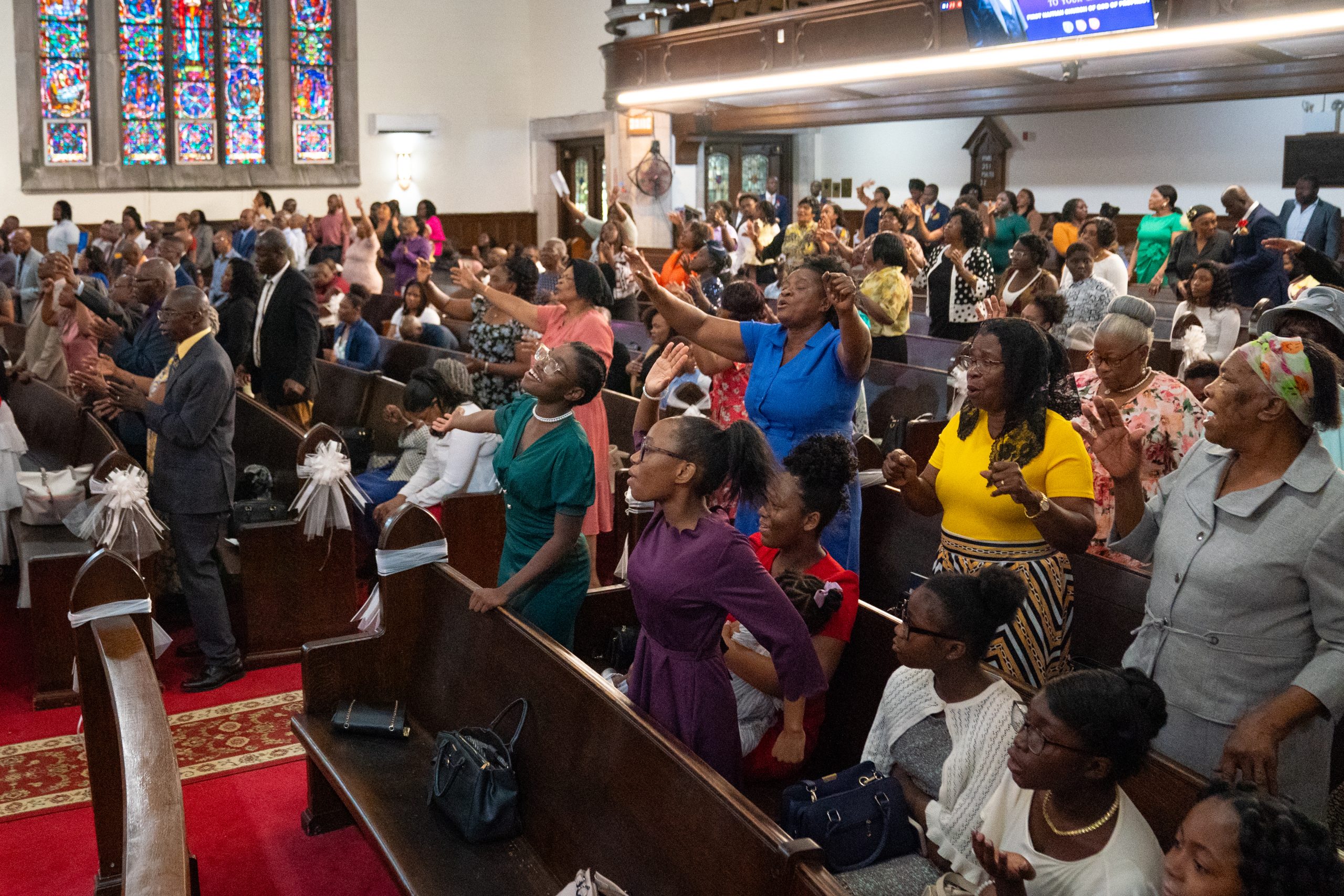
Congregants sing during service at the First Haitian Church of God of Prophecy in Philadelphia on July 12.Sarah Silbiger / For The Inquirer
Many at the First Haitian Church of God of Prophecy ask the same.
The pastor’s office has been deluged with phone calls. Some people tell Ulysse that they might as well die, that returning to Haiti is impossible, but trying to stay here without TPS means they cannot work to pay rent or to buy food for their children.
“They don’t know what to do,” Ulysse said. “I let them know God is the same yesterday, today, and forever, to trust the Lord. … Me, my heart is telling me something good is going to happen.”
Marie McCool’s buzzer-beater led to her being named MVP of the inaugural Women’s Lacrosse League All-Star Game, but it’s about more than the accolades for the Moorestown High School alumna.
“Being an MVP is a great honor,” McCool said after the 16-15 win for Team Scane on July 5, “but I personally feel like there were so many people on the field that deserved it. I happened to be the last one with the ball in my stick, and I glanced at the shot clock and saw that there was only 10 seconds left, so I was like, ‘All right, gotta try and make a play here.’”
McCool is one of 20 players and coaches in the WLL who are from the Philadelphia area, and she’s continuing her trailblazing career in the nascent league as a midfielder for the California Palms. The team, which is in its second season in the four-team league, currently is 2-1 and is atop the standings by virtue of goal differential (plus-8).
“She was something very special and left a lasting legacy at Moorestown,” said her high school coach, Deanna Knobloch. “She had been the first at the time to be a three-time All-American at Moorestown. She was a two-time high school player of the year in the state of New Jersey, back to back, junior and senior years.”
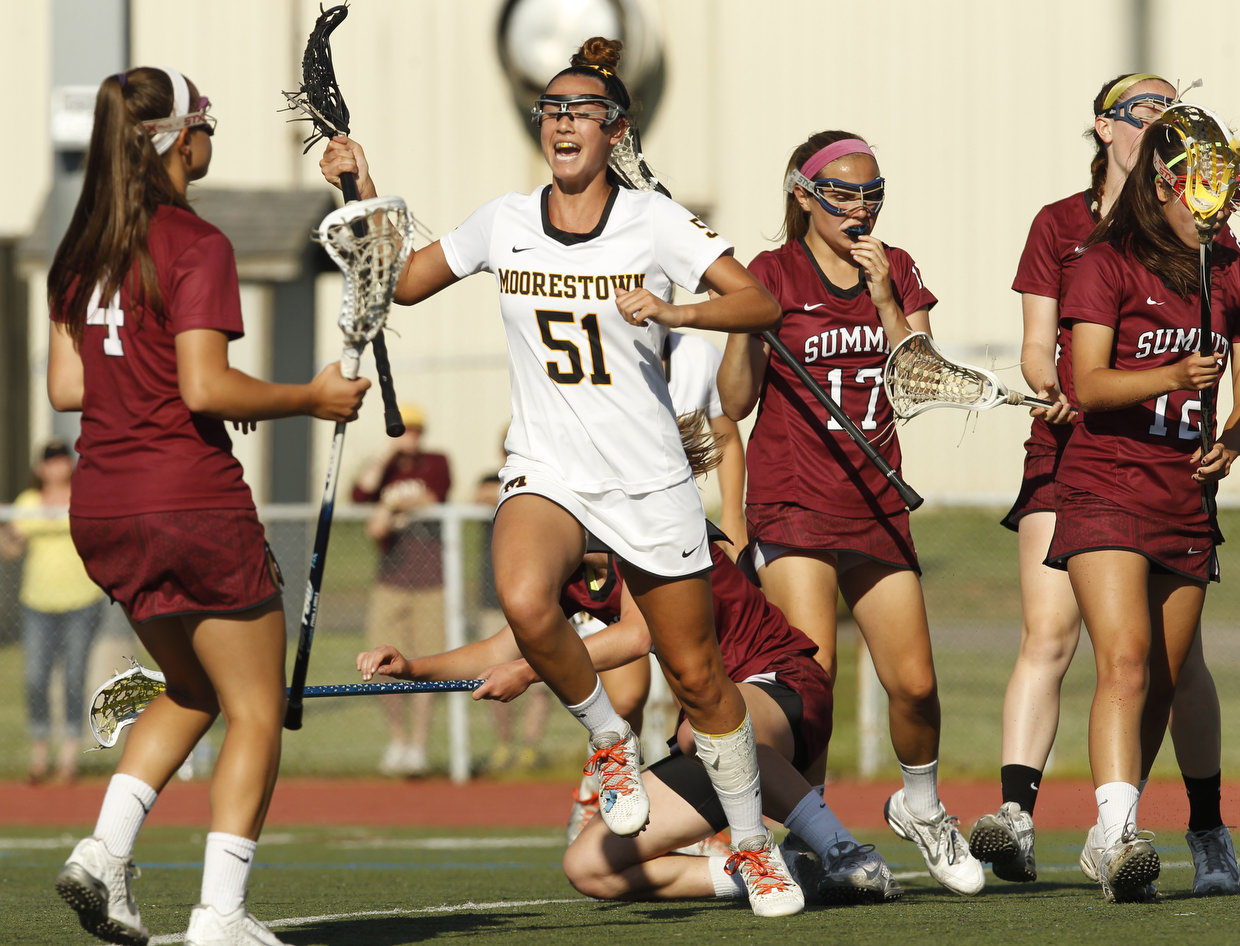
Moorestown’s Marie McCool was a two-time high school player of the year.
After winning three state titles in high school, she had a historic run at North Carolina. While still a student, she tried out for the national team, and, at just 19, she became the youngest player on Team USA in the 2017 World Championship. McCool, who has been a Tar Heels assistant coach since 2021, also is preparing for the 2026 World Championship in Tokyo and hopes to secure her third title on Aug. 2.
But amid the accolades, including MVP at the 2025 World Games, it all goes back to her local roots.
“I wouldn’t be where I am today without Moorestown,” McCool said. “Just the program that the Knoblochs built, and the legacy, and the dynasty, just to be a part of that has really shaped me into who I am today.”
Her best advice for continuing to grow is shaped by leaning on her teammates, from Moorestown to Team USA.
“We always say at UNC, ‘Iron sharpens iron,’” she said. “Just being surrounded by the best of the best every day challenged me to continue to get better.”
Now, McCool has a chance to return to the area for the WLL championship game on Aug. 15 at the Union’s Subaru Park, a stadium that is no stranger to McCool’s talents.
“It’s a pretty full-circle moment because the championship is actually on the same field that I won a championship on as a player in Carolina [in 2016], and hopefully [we will] win the first-ever WLL championship,” she said.
The establishment of the WLL in late 2024 is a sign of the sport’s growing popularity. It expanded quickly at the college level, growing from 600 to more than 900 men’s and women’s NCAA lacrosse teams in the past decade — paving the way for lacrosse to appear at the 2028 Olympics in Los Angeles for the first time in a century.
This boom added motivation for McCool within the WLL, despite the short season.
“This being a four-game season, some are like, ‘Oh, only four games,’ but for me, I’m like, ‘It’s a great opportunity,’” she said. “I really do believe that we’re moving in the right direction to continue to get the women’s game on the biggest stage and continue to help grow it.”
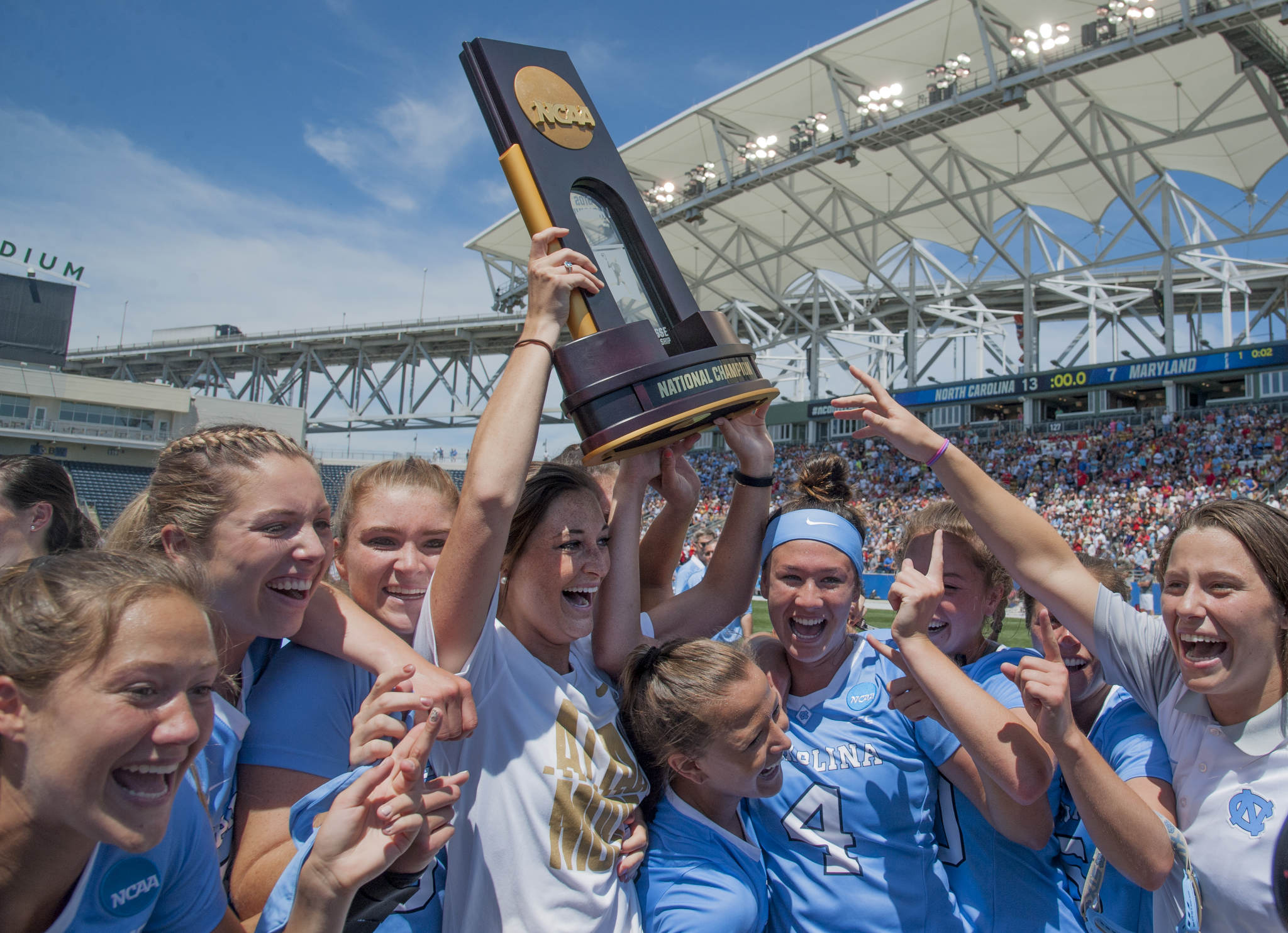
Marie McCool (No. 4) won a national championship in 2016 with North Carolina at Subaru Park.
McCool has played no small part in the growth. Knobloch, who coached at Moorestown for 27 years before retiring in 2018, says it takes players like McCool to keep the sport in the spotlight.
“I watch her now, and I still watch in awe of the player that she has become,” Knobloch said. “I absolutely loved coaching Marie and watching her grow, not only as a player, but, more importantly, as a leader, like the captain that she became, and how she continued representing the sport, and having all these next generations want to be just like her. I’m just grateful to have been a small part of that.”
Meanwhile, the 29-year-old McCool says she is approaching the end of her playing career, but isn’t quite done yet.
“I know I still have some gas left in the tank,” McCool said. “I’m excited to just continue to play and have the opportunity to do so, and hopefully leave the game better than I found it.”
Each Friday, Inquirer photo editors pick the best sports images from the last seven days. And this week, there’s no question what the biggest show in town was: the MLB All-Star festivities. After a month of World Cup soccer dominating the Philly sports scene, it was time for baseball to take over. Here’s what our photographers saw …
Phillies first baseman Bryce Harper lives up to his “Showman” nickname by climbing up the ropes of a boxing ring on the field during his MLB Home Run Derby introduction.Yong Kim / Staff Photographer
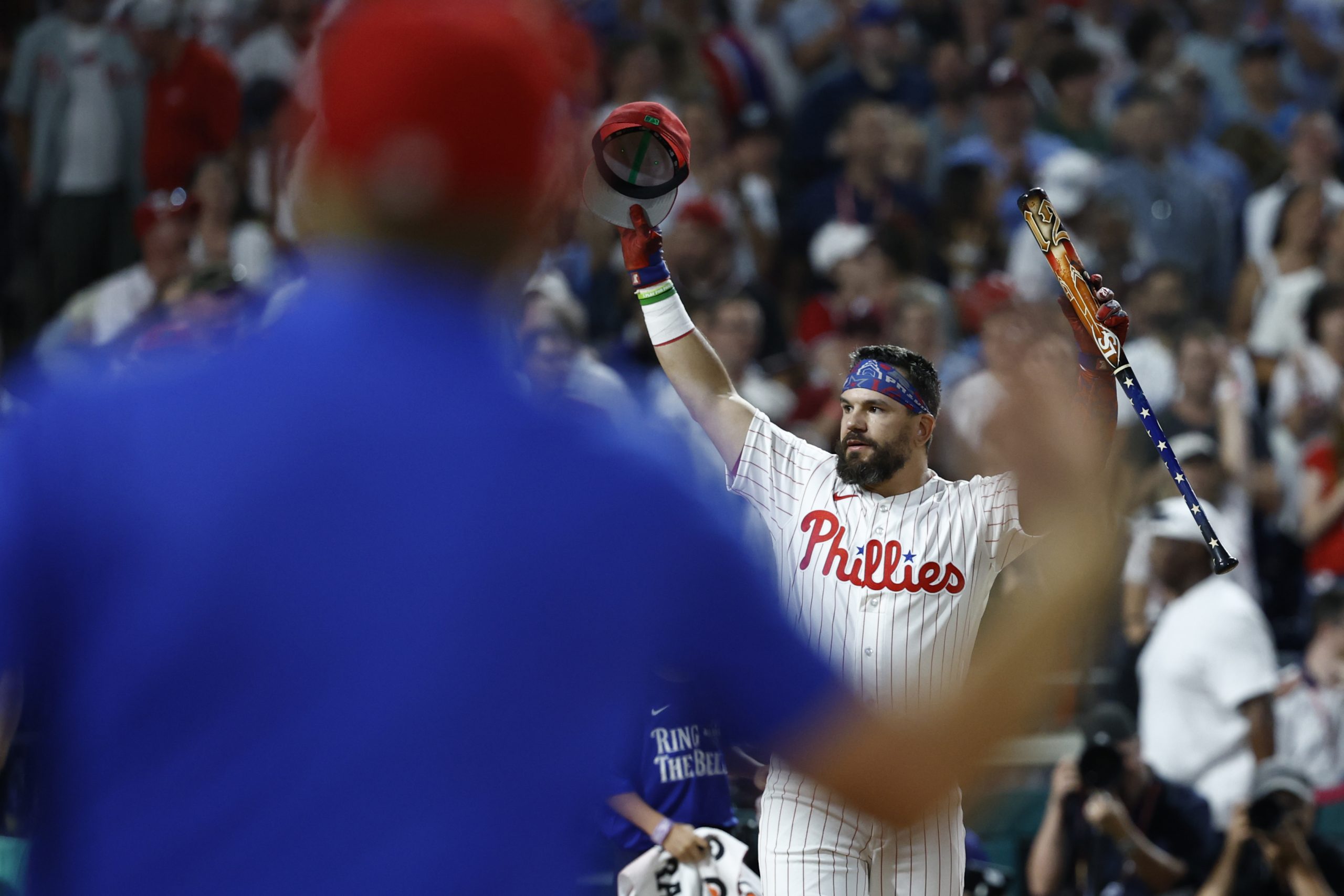
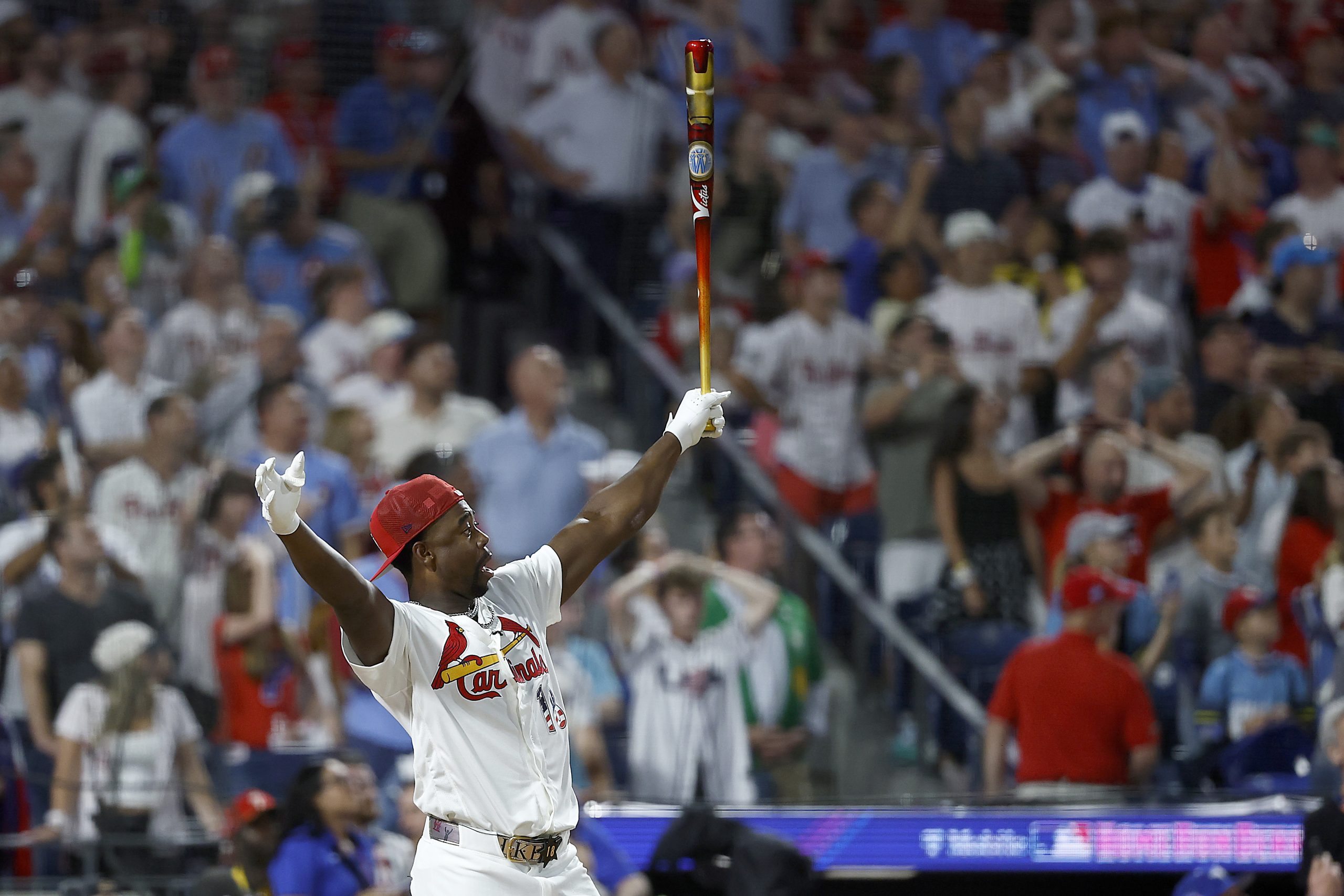
Phillies designated hitter Kyle Schwarber reacts after his turn in the final round of the Home Run Derby. He lost to Cardinals outfielder Jordan Walker.Yong Kim / Staff Photographer
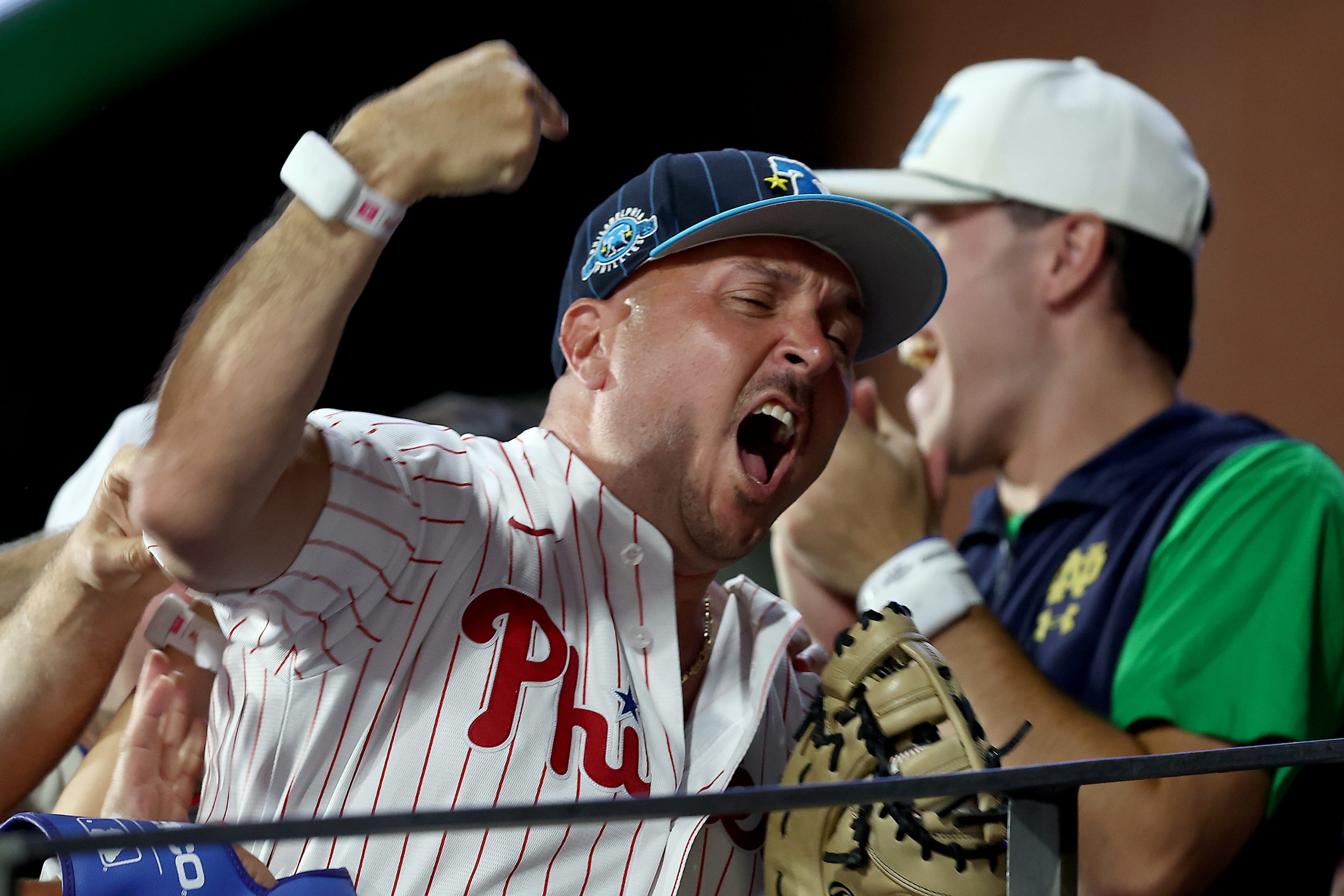
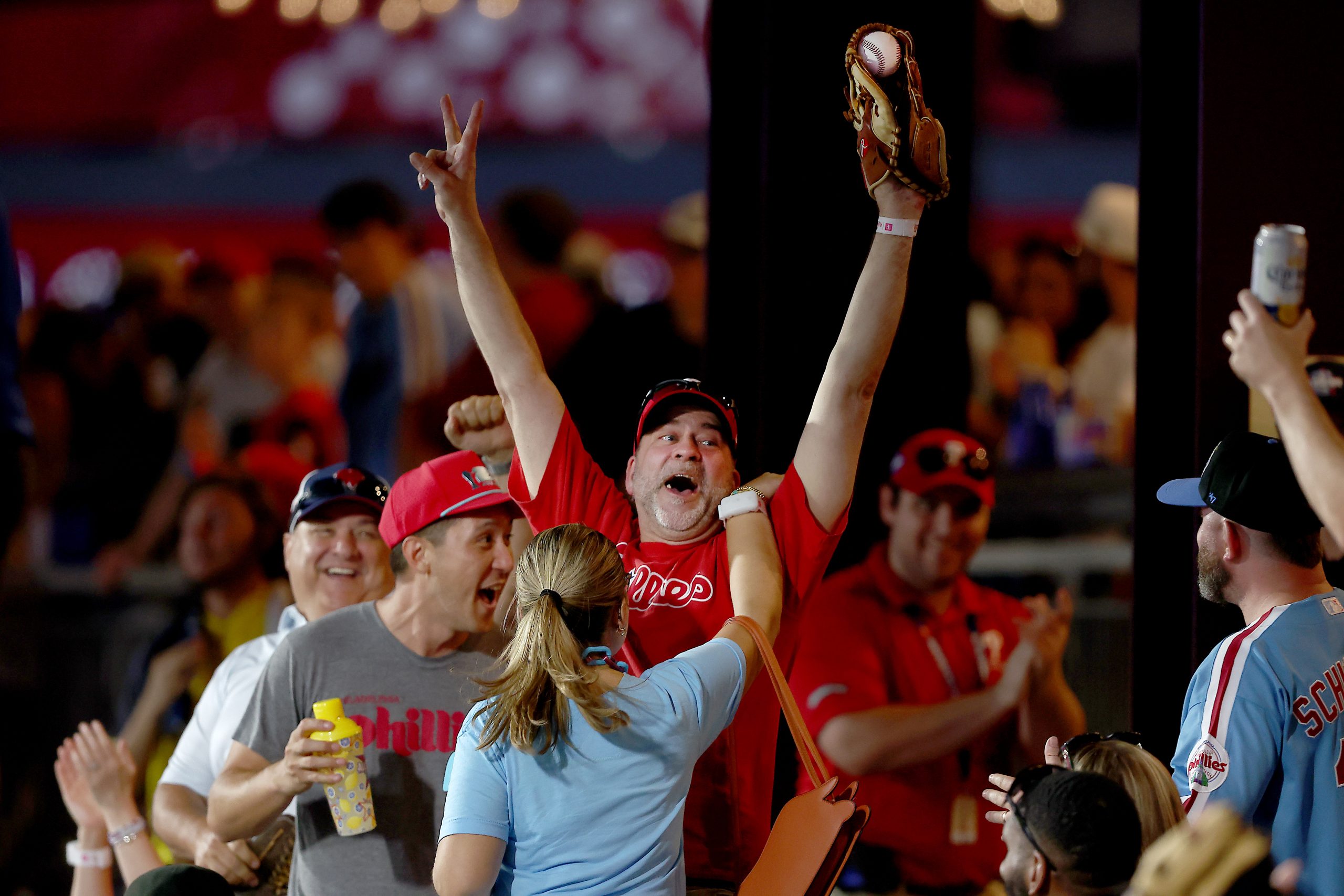
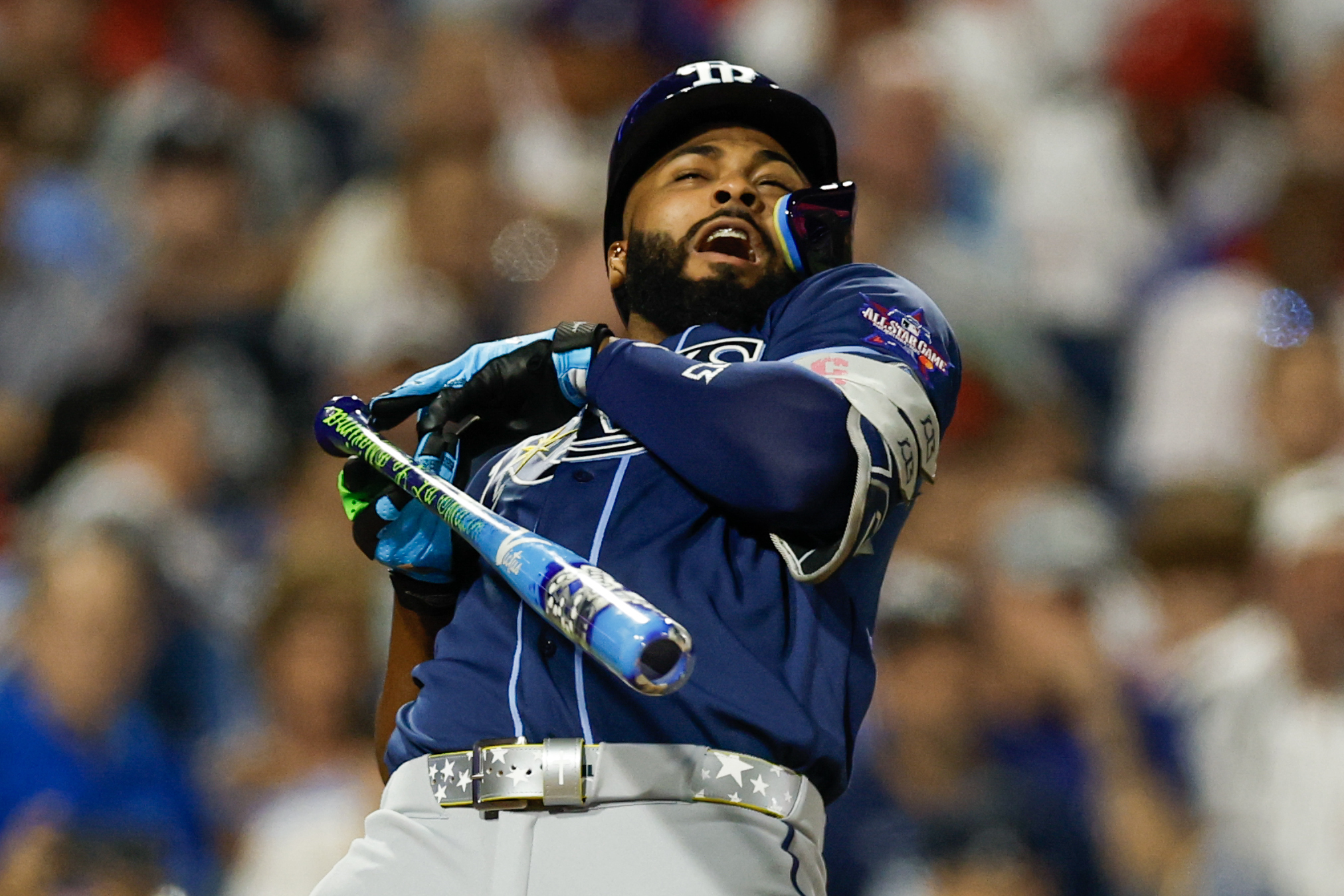
A fan reacts after catching a home run from Tampa Bay Rays third baseman Junior Caminero during the MLB Home Run Derby.Monica Herndon / Staff PhotographerSt. Louis Cardinals outfielder Jordan Walker celebrates after hitting the winning home run at the MLB Home Run Derby.Yong Kim / Staff Photographer
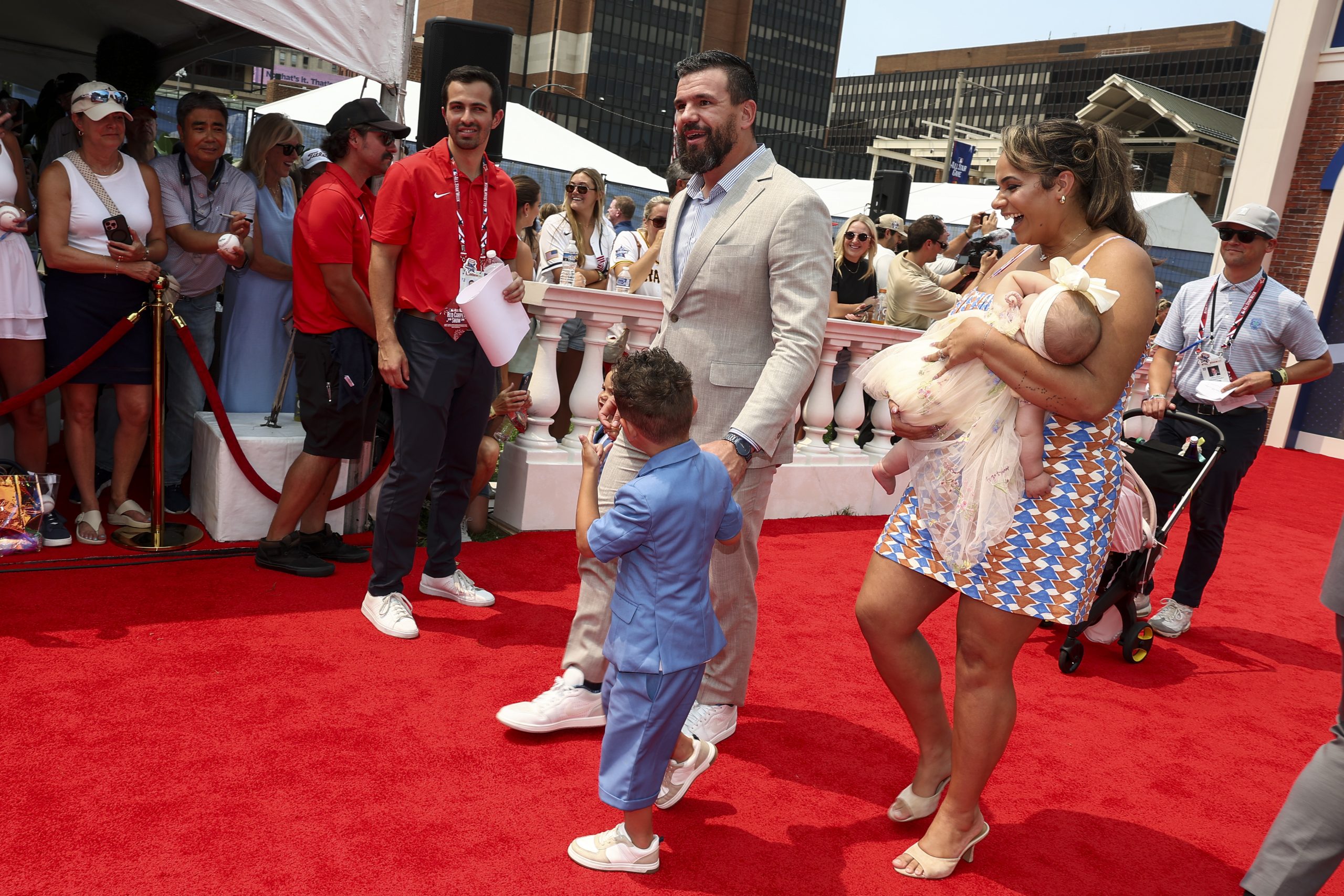
Phillies closer pitcher Jhoan Duran poses for photos with his family at the MLB All-Star Game Red Carpet on Independence Mall on Tuesday afternoon.Monica Herndon / Staff PhotographerKyle Schwarber walks the red carpet with his family.Monica Herndon / Staff Photographer
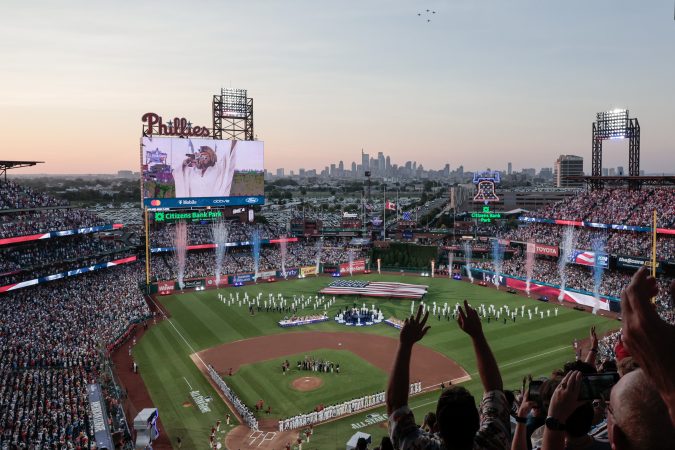
Philly’s Patti LaBelle performs the national anthem before the start of the All-Star Game.Yong Kim / Staff PhotographerPhillies pitcher Jesus Luzardo tossed a 1-2-3 inning, while teammate Cristopher Sànchez allowed the only three runs of the game.Yong Kim / Staff Photographer
Jimmy Rollins celebrates after hitting a home run during the MLBx: All-Star 3-on-3 event on Sunday at Citizens Bank Park, but his team ultimately lost to Shane Victorino’s squad.Yong Kim / Staff Photographer
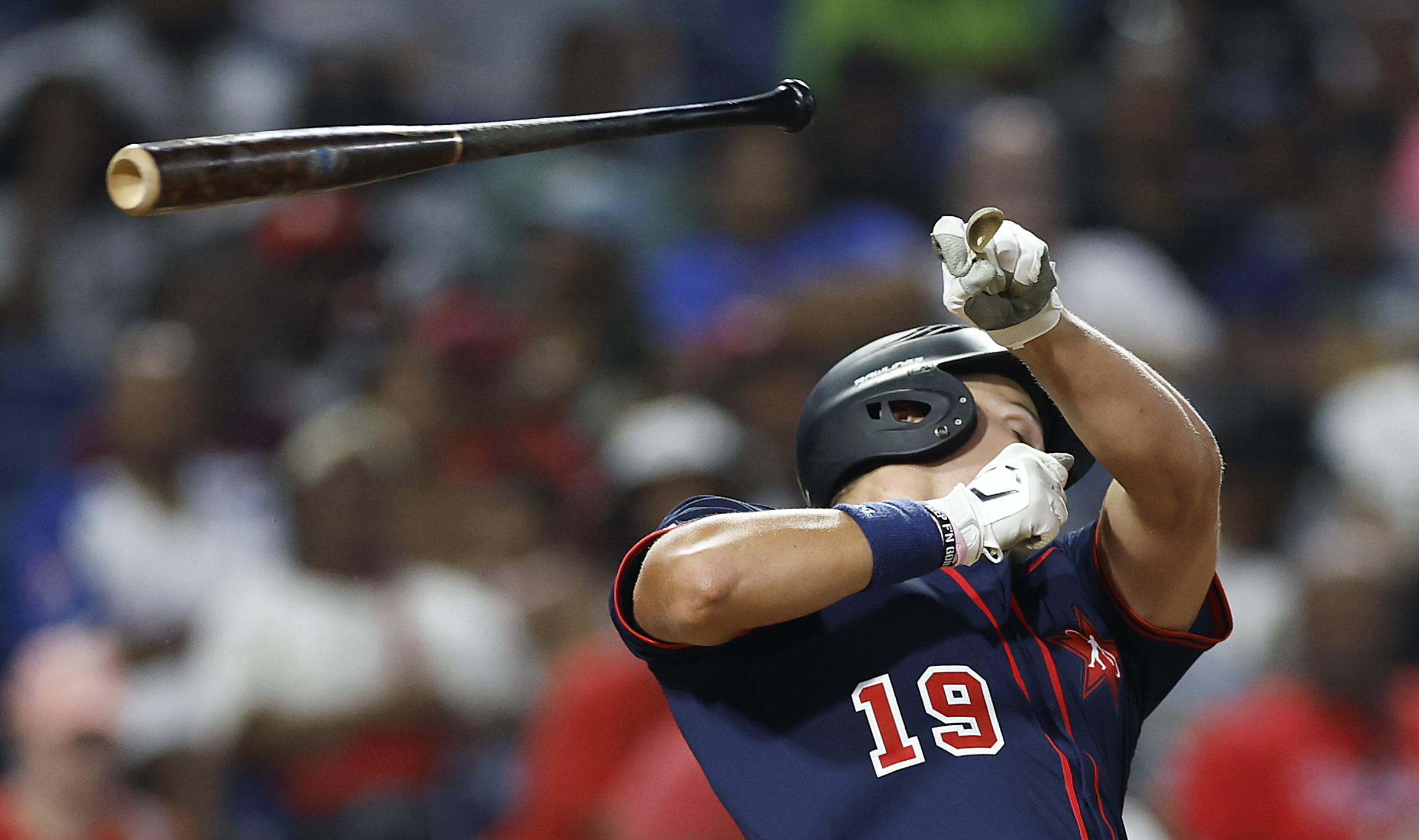
Florida A&M University’s Jackson McKenzie, a member of the HBCU American League team, loses his bat in the seventh inning of the HBCU Swingman Classic, which featured baseball players from historically Black colleges and universities.Yong Kim / Staff Photographer
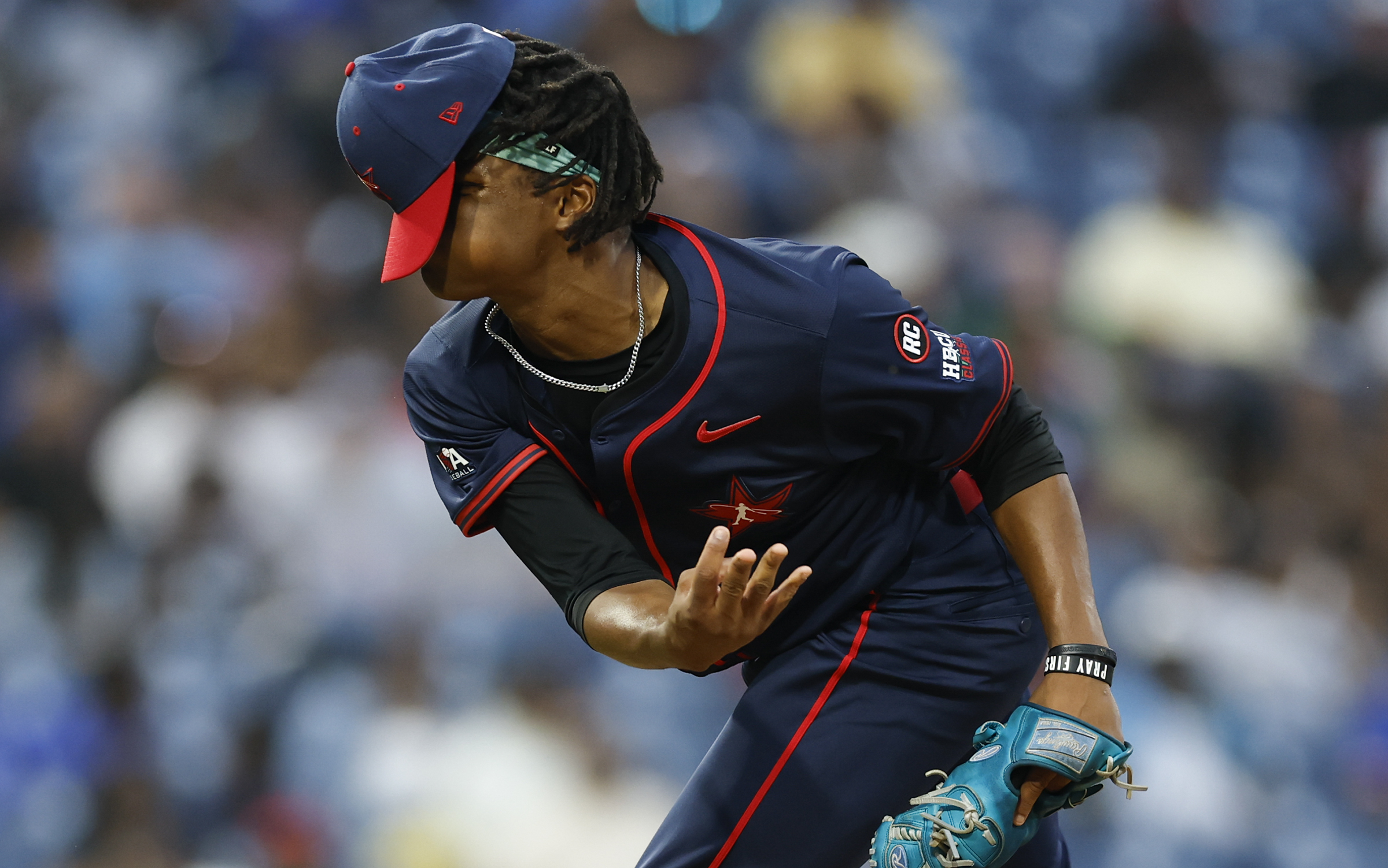
HBCU American League pitcher James Peterson, of Alabama State University, loses his hat during the second inning of the Swingman Classic.Yong Kim / Staff Photographer
Phillies prospect Wen-Hui Pan pitches in the sixth inning of the 2026 All-Star Futures Game. Fellow Phillies prospect Gage Wood started the game for the National League.David Maialetti / Staff Photographer
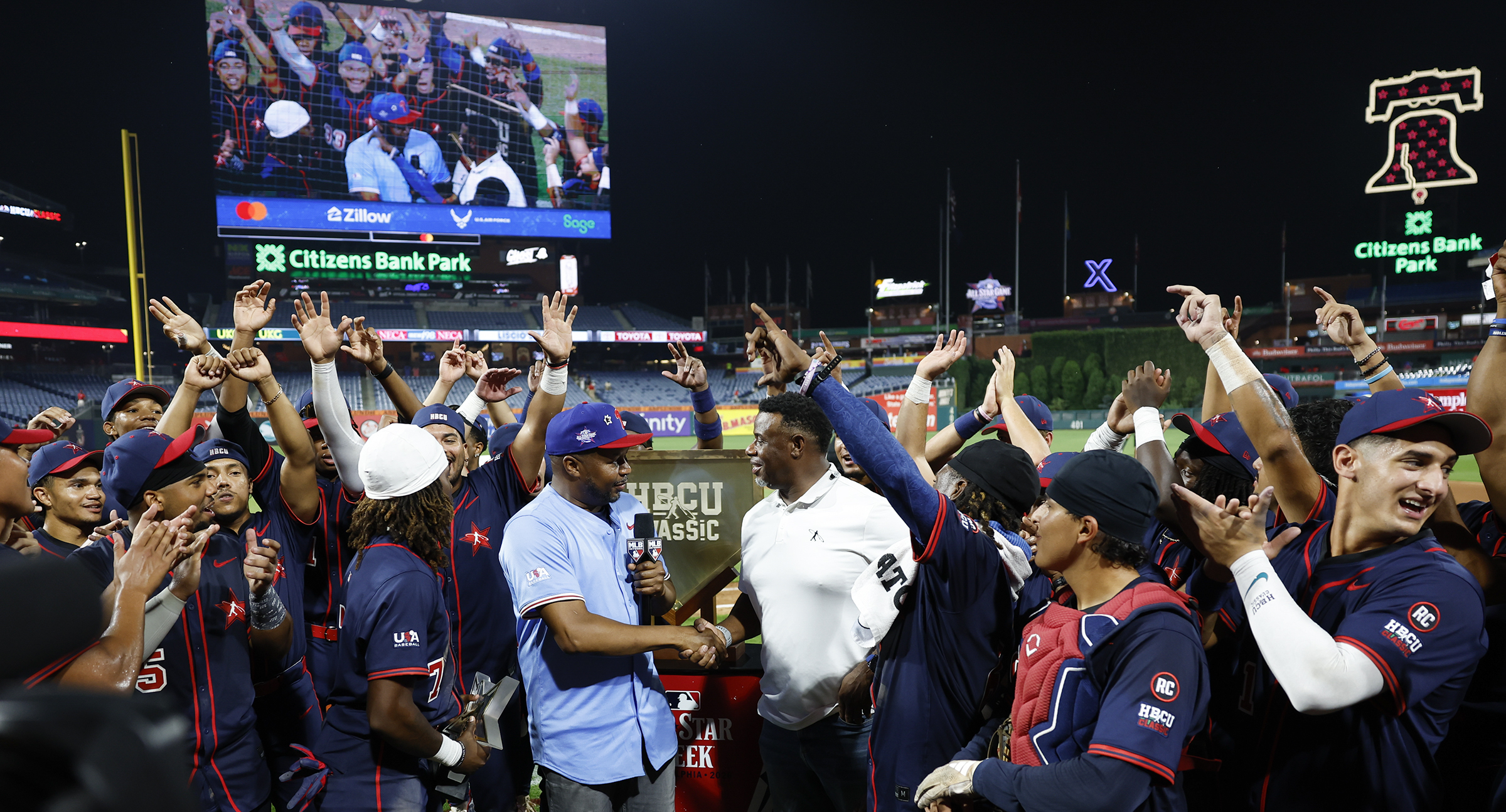
National League Futures manager Shane Victorino (center) takes a selfie with members of his team before the start of the game.David Maialetti / Staff PhotographerHBCU American League team members celebrate around Ken Griffey Jr. (center, in white shirt) after winning the HBCU Swingman Classic.Yong Kim / Staff Photographer
BERLIN, N.J. — Blake Zielinski carried the puck around the ice at Pennsauken Skate Zone in Camden County on a muggy late June day. He skated around an Edgebosshockey mini-stick, dangled and weaved before putting a shot into the upper corner.
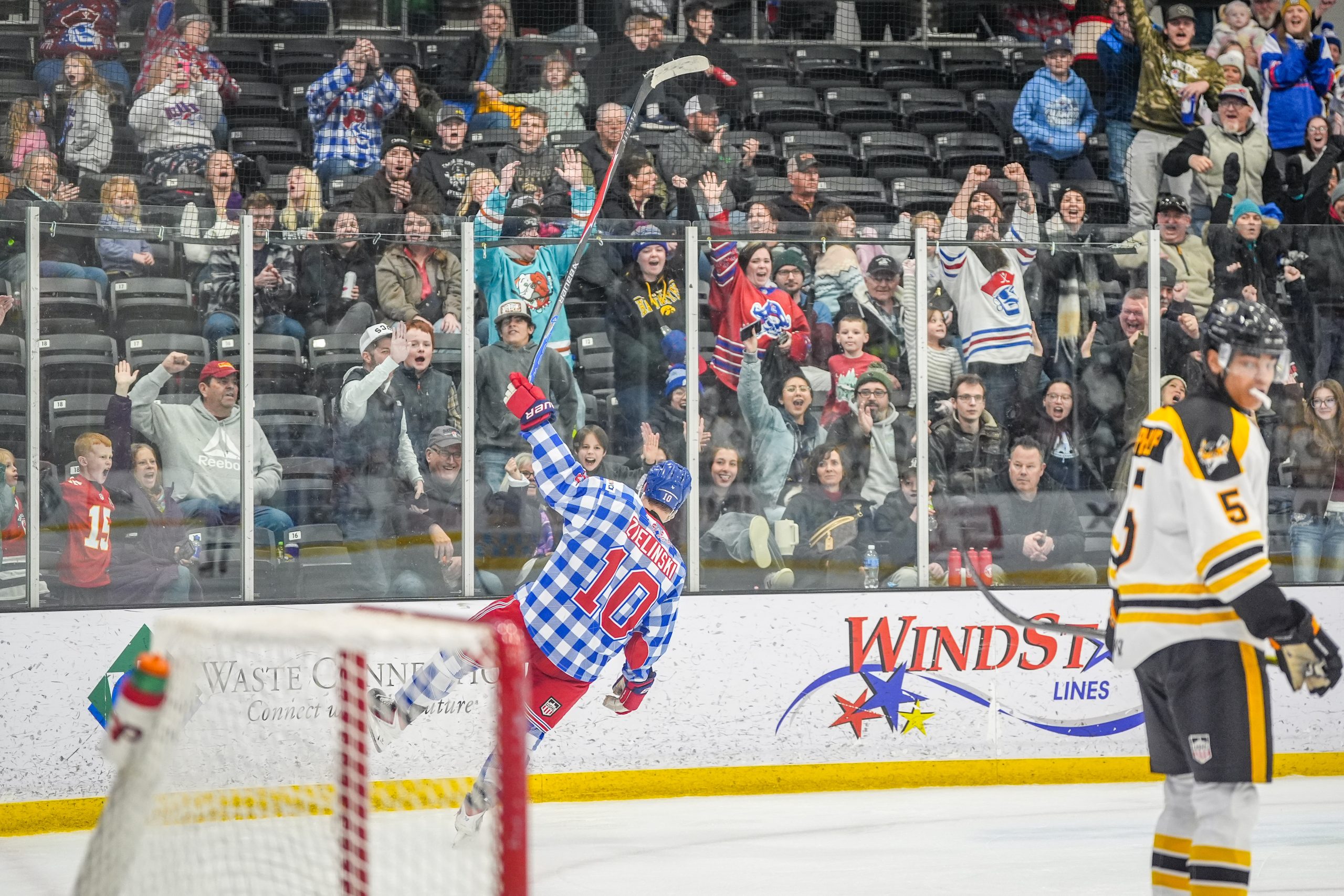
There was some hooting and hollering, a raised stick, and a celebration with one knee touching the ice before the winger with a big grin threw a hit into the glass at the end boards.
Peering through the glass along the sideline were Ed Snider Youth Hockey & Education campers who one day hoped to follow in Zielinski’s footsteps. Above him hung banners that also dotted the other sheet of ice at the Skate Zone. Each banner includes a name, a logo, and a year. There are Mattias Samuelsson-Buffalo Sabres-2018; Cam Dineen, who just signed with the Flyers, with Arizona Coyotes-2016; Tyler Boucher-Ottawa Senators-2021; Cayden Primeau-Montreal Canadiens-2017; and the late Johnny Gaudreau-Calgary Flames-2011.
A 15th banner is now set to join them: One for Blake Zielinski, Los Angeles Kings, 2026.
“Obviously being drafted is a dream come true,” he told The Inquirer via text while on the West Coast for the Kings’ development camp. “It’s what I’ve been working toward my entire life. There’s honestly no words that you can describe the feeling that went through me after my name was called. I couldn’t have done it without my family and everyone who helped along the way, and it’s just the beginning, for sure!”
While the beginning of Zielinski’s NHL dreams is on the West Coast in gray, black, and white, his origin story is in orange and black.
Blake Zielinski had to wait until Day 2 of the NHL draft, but not for long, as he was selected 80th overall by the Los Angeles Kings.Courtesy of Julie Zie
A natural skater finds his calling
On a quiet street in Berlin, Camden County, nicely manicured lawns dot the landscape. Inside one of those houses lies a basement that has seen its fair share of knee hockey, and the living room’s hardwood floor is scratched because of a makeshift puck made out of an old tobacco tin and tape. Three kids, Grant, Kylie, and Blake, the youngest, filled this house with memories.
The backyard is typical, with a comfortable sitting area, green grass, lighting, and a white fence. The fence looks tall, but it is actually not tall enough. Despite its majestic height, it cannot stop hard rubber disks from heading into a neighbor’s yard.
“I broke a couple of fences when I was younger,” Blake said with a chuckle. That is why two summers ago, Blake, his father, Joe, and one of Joe’s friends dug a foot down into the dirt, built a shooting platform — it has a BZ97 on it — and set up netting that stretches all around a hockey goal, almost touching the fence on both sides and going vertically to the sky.
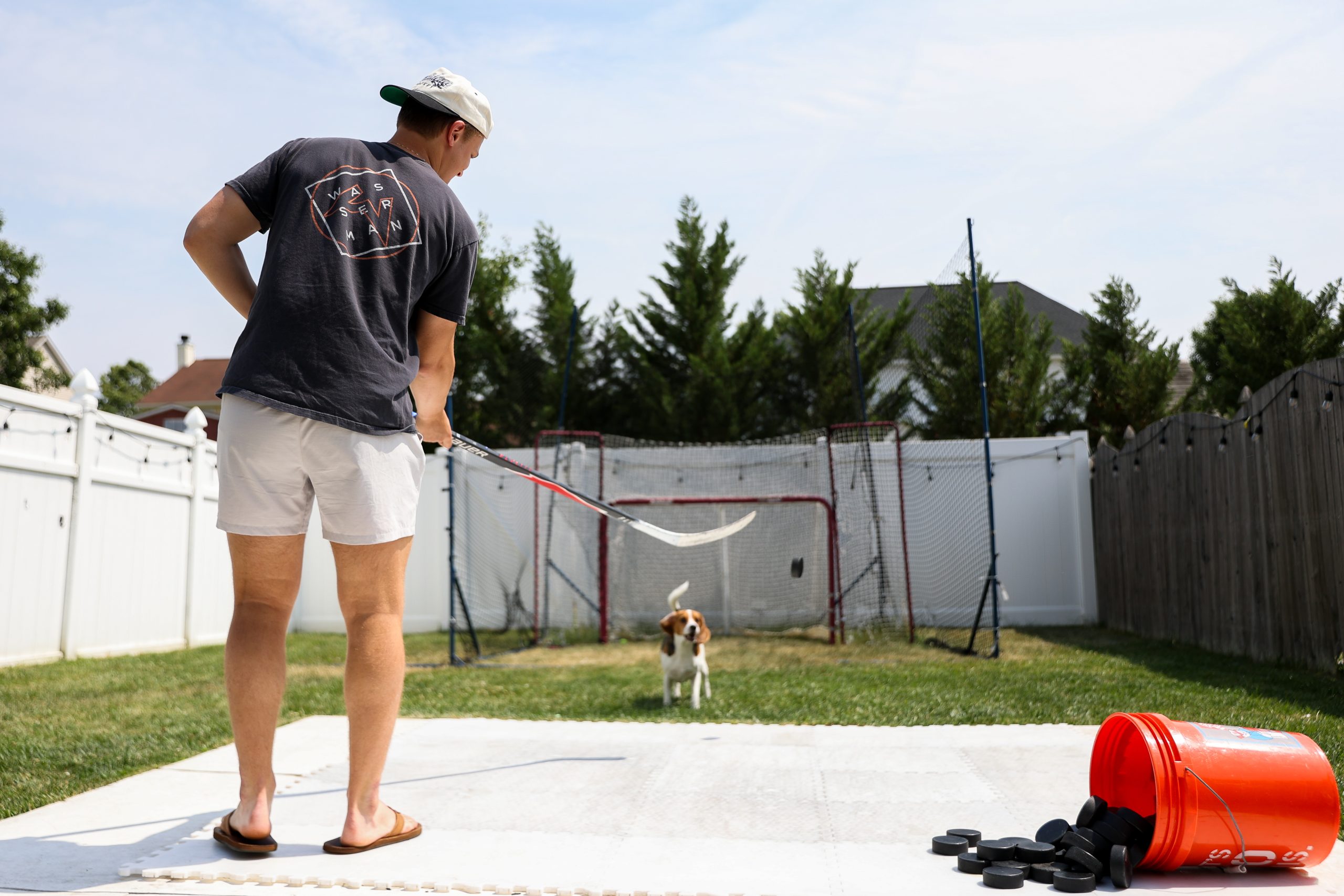
Blake Zielinski shoots pucks in the backyard with his dog, Mabel, at his family home in Berlin.Isaiah Vazquez / For The Inquirer
This spot, regardless of the weather, has seen several buckets of pucks find the netting — preferably between the pipes of the 6-by-4-foot goal — or stopped by Mabel, the family dog.
All of these moments have been tinder, lighting up easily as Blake’s love of the game and his skill level have grown to become a third-round NHL draft pick. But the initial spark came from the Flyers, of course.
“My first hockey game [that] I think I ever watched was the Flyers in the Stanley Cup Finals in 2010,” he said. “I was 2 or 3 years old, and I saw Patrick Kane score the goal on the Flyers, and it stuck with me. I don’t know why. But that’s one reason I really love hockey, and just, in general, after that, I just fell in love with it.”
Blake would often accompany his older brother Grant’s ball hockey games in Marlton, Burlington County. He was handed a stick and ball, and spent time hitting the ball off the rink before finally playing games from his preschool days until the eighth grade. The ice hockey itch came early.
By the age of 3, he wanted to skate, his mom Julie recalls.
“My friend Jenn [Edwards], I just happened to meet with her because our daughters played field hockey together and she said, ‘Oh, I’m a skater. … I can teach him,’” Julie said.
“So I said, ‘Let’s go.’ Put on his little jacket … he had a helmet. And went over to the Flyers Skate Zone, met with her. And she said, ‘He’s doing great. How long has he skated for?’ I said, ‘About 20 minutes.’”
Blake Zielinski skates for the first time, working with family friend Jenn Edwards, at the Flyers Skate Zone in Voorhees. According to his mother, Julie Zielinski, he threw the walker aside and “that was it.”Courtesy of Julie Zielinski
The family still jokes that Jenn said it just because she wanted to make money with lessons, but that was far from the case. It was easy to see Blake’s knack for moving on ice — and for the record, Edwards jokes in return that she wants credit for him becoming a draft pick.
A Flyers fan, and an audience with Johnny Hockey
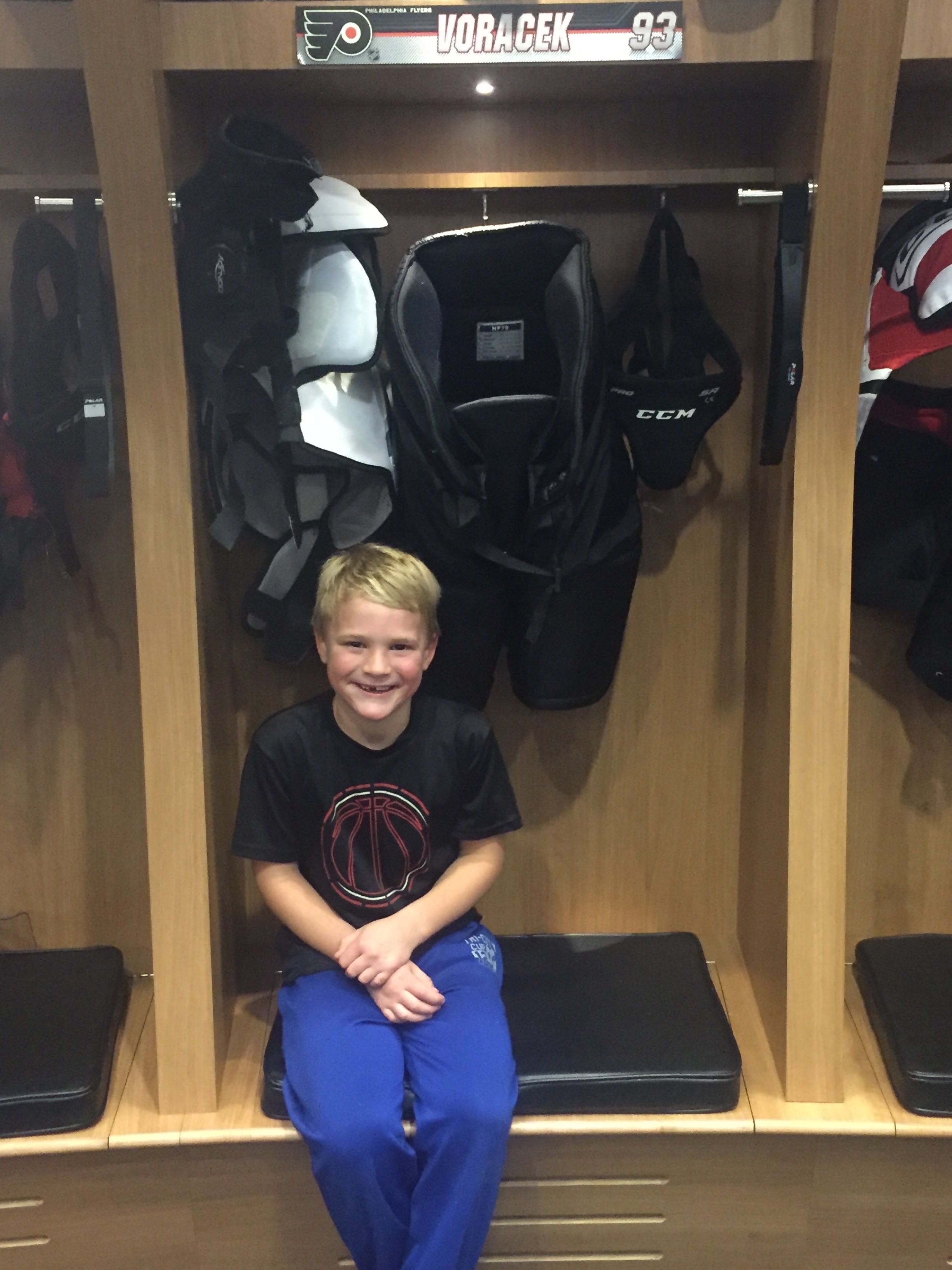
Over time, Zielinski progressed through the youth hockey ranks in the Greater Philly Area. While his number has changed over the years — he was, coincidentally, given Danny Brière’s No. 48 by the Kings at development camp — some of it was with a No. 93 on the back. One of his favorite players growing up was former Flyers right wing Jakub Voráček.
“My first game, I was pretty young. I think I had this Voráček jersey. I got surprised for my birthday,” Blake said. “ … I think there used to be a restaurant in Wells Fargo where you can see the ice when you’re up there eating. Just enjoyed it with my family.”
The number of games he has attended over the years is too big to count. Joe would often take Grant and Blake on Thursday nights, and they would have to begrudgingly leave early because it was a school night, his sons often chirping at their dad if they’d left a game that the Flyers came back to win.
Recently, Blake was there watching the Flyers take on the Pittsburgh Penguins in almost every home game of the first round of the Stanley Cup playoffs, dreaming of what it would be like under those same bright lights.
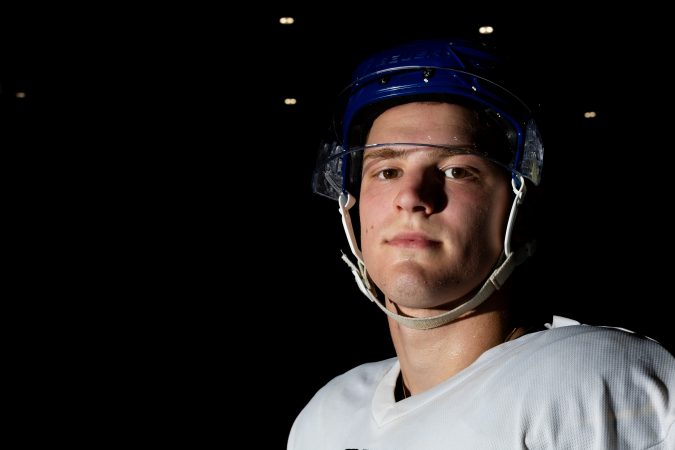
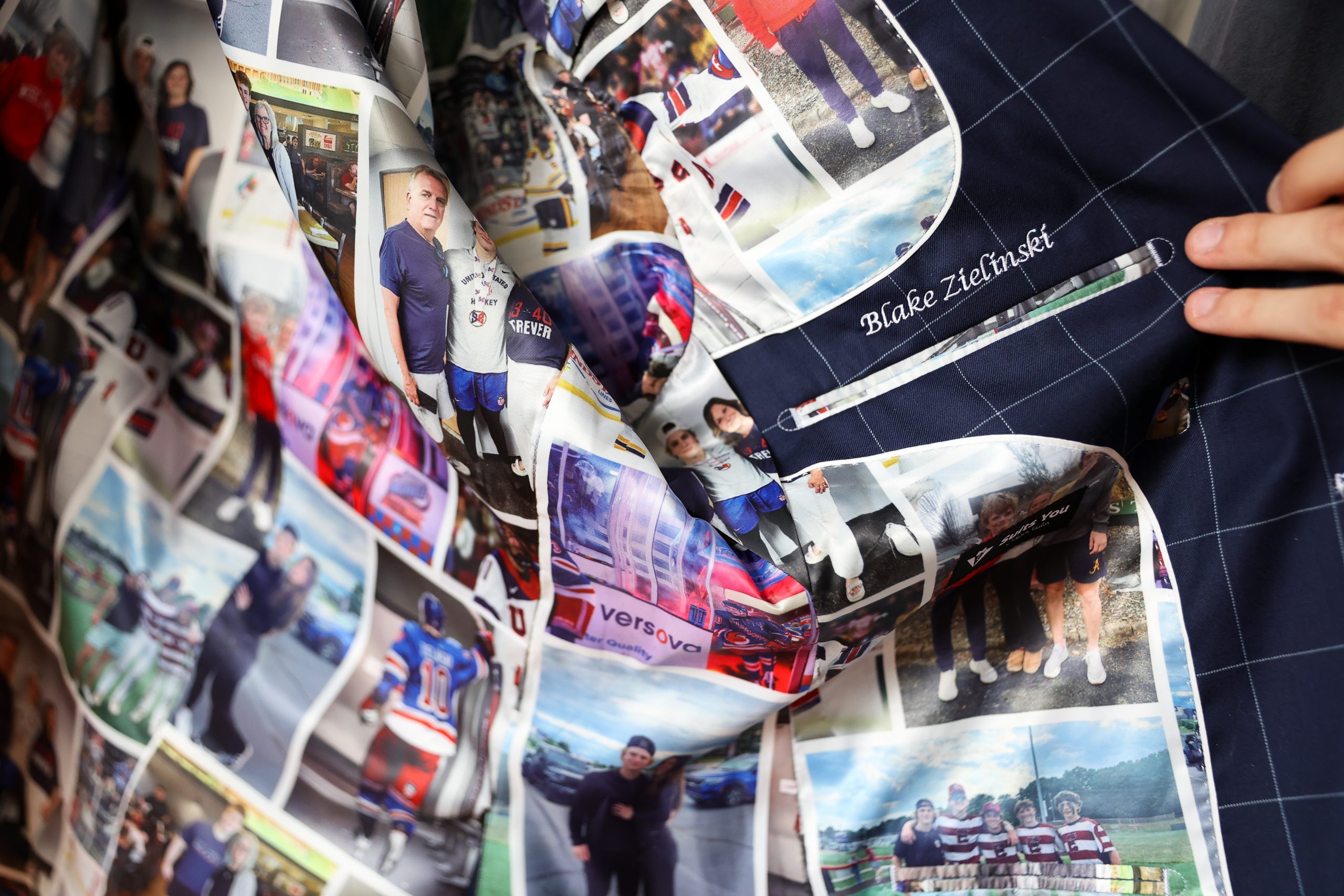
Blake Zielinski’s suit jacket for the draft featured moments and memories from throughout his hockey career. More than 20 people were in Buffalo, N.Y., to hear his name called, including his 82-year-old grandmother, Patricia Mayer, and his billet mom from Iowa, Kelly Schofield.Isaiah Vazquez / For The Inquirer
“When he was in preschool, he made a book, and the whole book was based on the Flyers,” Julie said. “The rink, the number, all of it, the little stick figures. And it was, one day, when I grew up, I’m going to play for the Flyers. … He wore Flyers stuff all the time to school. And every picture was always Flyers or [a] rink or something.”
Blake would actually don orange and black, playing for Virtua and Flyers Elite, which is where people began noticing the kid racking up points. As a youngster, he skated with the kids of Flyers players and coaches, and he suited up for Tony Voce, the first Philly native to play for the Flyers organization, a few times, including at the World Selects Invitational.
And like any local kid, he plied his trade not only at Pennsauken and Voorhees, but also at Holleydell Ice Arena in Sewell, Gloucester County, working with South Jersey coaching legend Guy Gaudreau and skating a few times with his son Johnny in the summer.
“When I was on a summer team, Guy was coaching us; Johnny would always come on the ice a little bit and come around,” Zielinski said. “And so he came out to one of the practices, and he demoed one of these drills, and just came down — we were like 7- or 8-year-olds, and he just ripped it on our goalie.
“That was always one of the moments that I remember, just him coming down and always giving the kids in the community a good laugh, and just that was the person he was,” Blake recalled of the Calgary Flames and Columbus Blue Jackets forward, who was a fatal victim in an alleged drunken-driving incident while cycling along with his brother Matthew in August 2024 in South Jersey.
A young Blake Zielinski grew up dreaming of being a Flyer, he is now a member of the LA Kings organization.
The hockey world takes notice
At the age of 15, Blake started playing with the North Jersey Avalanche, a top-tier U16 squad based out of Ice House in Hackensack.
It took a village to get him up and down the state for practices and games, with his sister Kylie picking Blake up from school and dropping him off at Julie’s school before she got him to Joe’s office for the drive north. There were a lot of late-night dinners at home — often after midnight — before getting up early for school.
Although he eventually billeted in North Jersey, the long trips paid off. It was with the Avalanche that Providence College first saw Zielinski play; he will be a freshman there in the fall. And it was there that he was asked to head to Des Moines, Iowa, for a two-week stint in November 2024 with the Buccaneers of the United States Hockey League. He went out again in December and was in the airport in Chicago, eating and watching YouTube videos, waiting to head home, when he got the call that the Bucs wanted him to play the rest of the season with them.
“When I went out and watched him play in Des Moines, I was really impressed with how well he wanted the puck and was holding on to the puck in the game,” Friars coach Nate Leaman said during a recent phone interview.
Blake Zielinski scored 25 goals this past season for the Buccaneers.Courtesy of Des Moines Buccaneers
“He’s like the youngest guy in the game, and he was really good at getting the puck, holding on to the puck and making plays with the puck. Typically, you see young guys go in the USHL, and they’re a little timid, but I thought he did a really good job with that.
“He’s really crafty around the net. He can score. He’s another kid who is pretty physically put together,” he added about the 6-foot, 187-pound winger. “I think that’s good, but I think the big thing with him is just that you get him below the tops of circles, on the power play, around the net, he’s really crafty and quick in those situations.”
He notched 32 points in 41 games to finish the year, with the hockey world starting to take notice. Last summer, he opened more eyes when he helped the United States win gold at the Hlinka Gretzky Cup, leading the team with four goals and nine points. In the semifinals, he was named USA Hockey’s player of the game after potting a goal and an assist and scoring in the shootout with a “T.J. Oshie move” to beat Canada, 4-3.
This past season was a busy one. Aside from 55 points in 53 regular-season games and two goals in three playoff games for the Bucs, he was a late addition to the U.S. roster at the CHL USA Prospects Challenge, a two-game series between top prospects for the 2026 draft from the Canadian Hockey League and the U.S. National Team Development Program Under-18 Team.
In December, as a 17-year-old, he was part of the U.S. team that won gold at the World Junior “A” Challenge, a U-19 tournament, notching two goals and four points in five games. And in January, he played in the Chipotle All-American Game, showcasing the top draft-eligible players from USA Hockey’s U-18 National Team and other teams in the USHL.
And at the end of the USHL season, Zielinski received the Gaudreau Award, an honor given annually to the player in the United States Hockey League who best embodies the legacy of Johnny and Matthew.
“Despite his elite talent, Blake competes with humility and respect for the game,” his coach for Des Moines, Derek Damon, told USHL.com. “He understands that success is built through team effort, and he consistently uses his ability not just to stand out, but to lift the performance and confidence of everyone around him.”
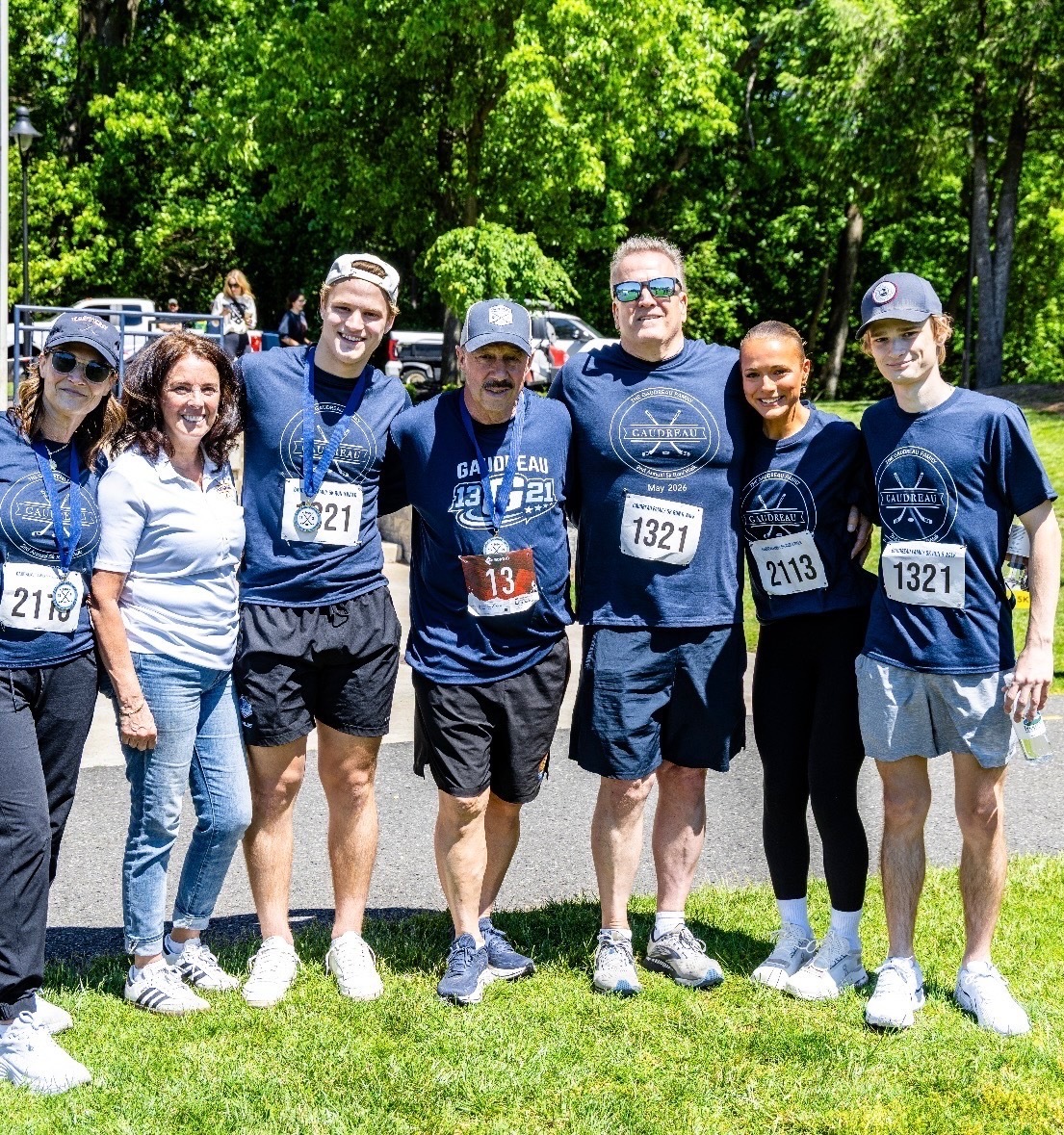
Jane (second from left) and Guy Gaudreau (middle) with Blake Zielinski at the Second Annual Gaudreau 5K & Family Fun Day in May.Courtesy of Julie Z
Soon Blake Zielinski’s banner will hang near the one with Johnny Gaudreau’s name on it. It went by fast for the Zielinski clan. One day, he was a kid, bigger than others his age, unable to stop, and now the hope is that another South Jersey kid will follow in the footsteps of Johnny and live out his NHL dreams.
“It’s just been a great ride, and the time went so fast, you didn’t have time to think about anything,” Joe said. The ride is not done, but, as Voce, who died in July 2024, would advise, have fun.
“I think that’s one of the biggest things,” Blake said. “When I was younger, just go out there and enjoy it. My dad said that a lot to me when I was growing up, you have to enjoy every day, every second, because you never really know what could happen.”