Tag: topic-link-auto

  • LeBron James said he wants to go to a team that ‘trusts the process’ — but claimed it’s not a Sixers hint

    LeBron James said he wants to go to a team that ‘trusts the process’ — but claimed it’s not a Sixers hint

    Hey, LeBron, could you say that again?

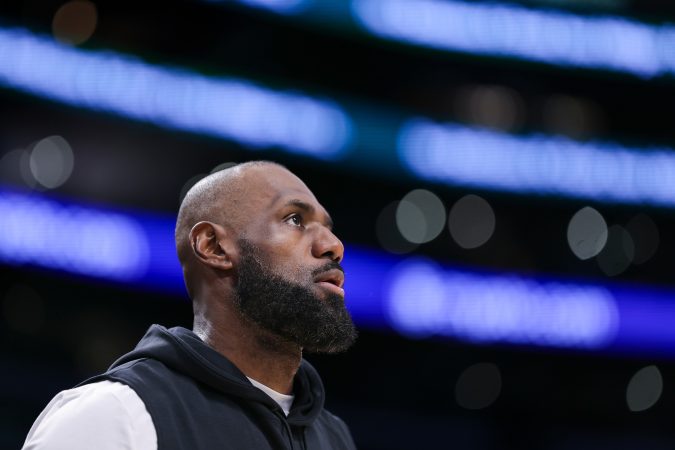
    On Friday, during a live taping of LeBron James’ The Shop talk show at Fanatics Fest, the four-time champion used some choice words while describing what team he would like to join next.

    “I want to compete at a high level,” James said on stage at the Javits Center in New York City. “I want to join a franchise that kind of shares the same, you know, model as myself. And that’s like practicing championship habits every day, but trusting the process more than anything. I think you actually trust the process of actually getting to that point.”

    Cheers from the festival’s crowd interrupted James’ thought after he said “trust the process” a second time — for good reason. The phrase, popularized by former 76ers general manager Sam Hinkie and later adopted by Sixers star Joel Embiid, has since become synonymous with the team. James, noticing what he said, quickly clarified his comments.

    “I’ve been saying ‘to trust the process’ since I was drafted in like 2003,” James said. “I don’t even know if Embiid was even born yet.”

    It seems that James’ “trust the process” comment was just a coincidence and not a hint toward his next team. Or was it?

    On Thursday, during a live recording of James’ podcast Mind the Game, his co-host and Pacers star Tyrese Haliburton also seemed to not-so-subtly drop the Sixers in conversation. Haliburton asked James, “What are you going on, what is this … Year 76?”

    James has not otherwise spoken about his free agency — and shut Haliburton down when he tried to broach the subject.

    The idea of James joining the Sixers a few months ago seemed near-impossible. Today, a few weeks after the team’s blockbuster trade for former Celtics star Jaylen Brown, it is a genuine possibility that the all-time great wraps up his career in Philadelphia.

    James’ agent and Klutch Sports head Rich Paul has already confirmed that the Sixers are a possible landing spot for his longtime client, and even had Bob Myers on his podcast, where the Harris Blitzer Sports & Entertainment president made his pitch. The Sixers front office has also made their interest public, with team president of basketball operations Mike Gansey telling The Inquirer on Tuesday that he would “love to have [James] in Philly.” Additionally, Embiid, Brown, and Tyrese Maxey, who has been pointed to as one of the main things attracting James to Philly, have already been in contact with the future Hall of Famer, per ESPN’s Dave McMenamin.

    With James’ “trust the process” comment, Sixers fans have gone full conspiracy mode on social media. Some are even celebrating as if it is confirmation James is headed to Philadelphia.

    Friday marks 18 days since NBA free agency began. And James said on CNBC’s Boardroom on Thursday that “that he “won’t hold you guys up too much longer.” But some Sixers and NBA fans are fed up with James for taking so long to make a decision:

  • Touring Camden’s Cathedral Kitchen, Andy Kim calls Trump’s cuts to SNAP ‘devastating and cruel’

    Touring Camden’s Cathedral Kitchen, Andy Kim calls Trump’s cuts to SNAP ‘devastating and cruel’

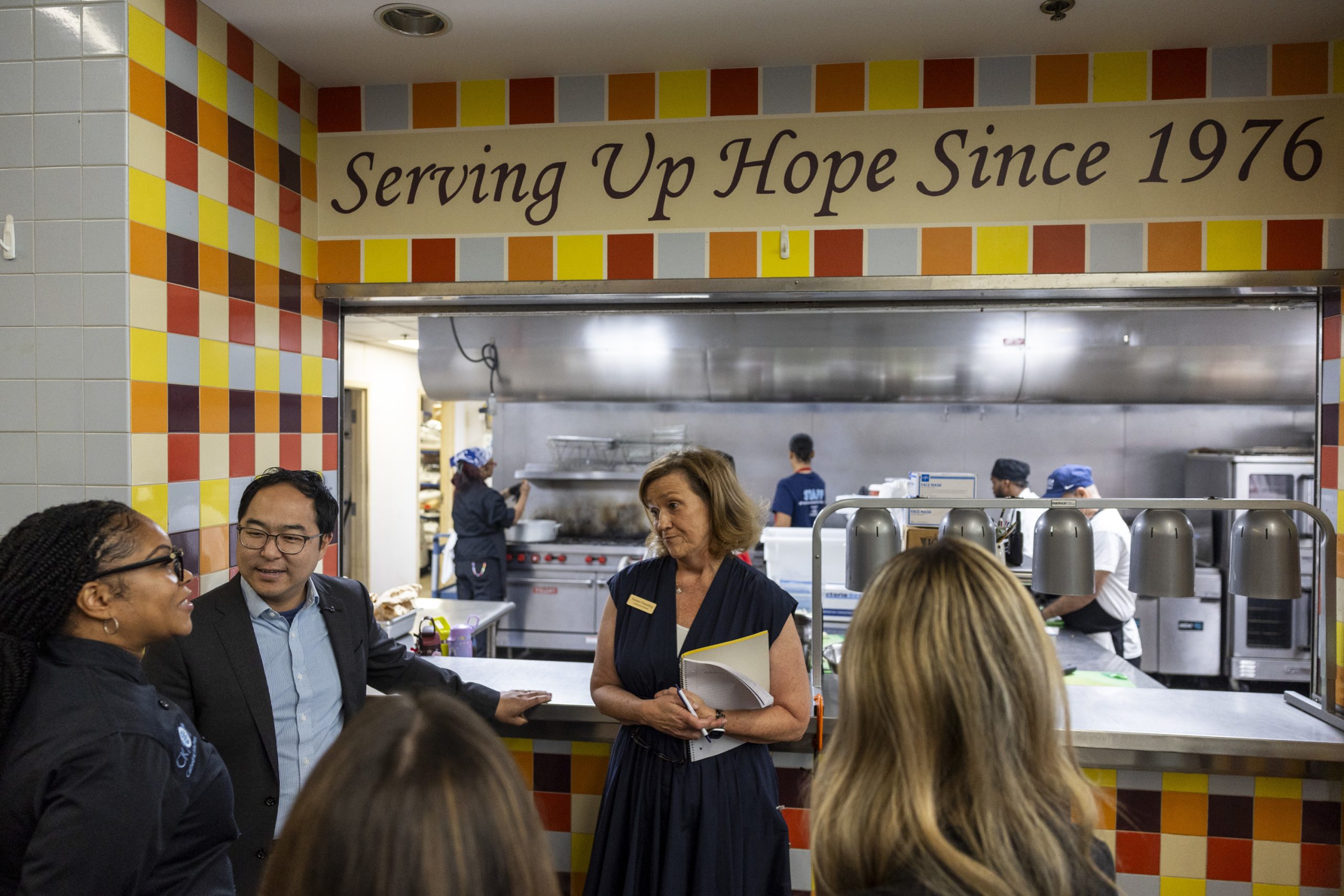
    Touring Cathedral Kitchen, the largest emergency meal supplier in South Jersey, Democratic Sen. Andy Kim praised the 50-year-old Camden institution Friday for the food it has served and the people it has saved.

    “The Kitchen is building community, right here in New Jersey,” said Kim, who noted that the nonprofit distributes 28,000 meals a month while training low-income people to be chefs and restaurant workers. Cathedral Kitchen also works to help people obtain IDs, apply for jobs and benefits, and find housing.

    Its work is needed more than ever, the New Jersey lawmaker said, with hunger on the rise because of high food prices and President Donald Trump’s One Big Beautiful Bill Act, which reduced federal food assistance such as SNAP (the Supplemental Nutrition Assistance Program) beginning July 4 of last year.

    Cutting SNAP benefits and changing eligibility requirements, Kim said, is a “devastating and cruel thing to do” at a time when cost of living has been climbing.

    “Why are we taking away necessary support at this time?” Kim asked. “I mean, we’re talking about food, the basics of being a human. Why is this happening now, at a time when people are struggling with affordability?”

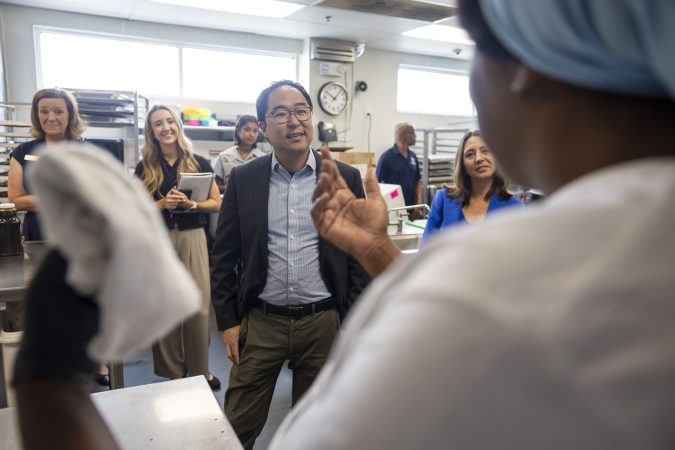
    New Jersey Sen. Andy Kim visits Cathedral Kitchen in Camden, speaking to the workers who provide food for their community and those in need.Tyger Williams / Staff Photographer

    The food assistance cuts are coinciding with the economic fallout from tariffs and the Iran war, Kim noted.

    Nationwide, between January 2025 and January 2026, SNAP rolls decreased by more than 4 million people — from 42 million to 38 million — according to USDA figures.

    In New Jersey, SNAP participation has fallen by more than 50,000 individuals between March 2025 and March of this year, New Jersey Department of Human Services figures show.

    And in Pennsylvania, nearly 90,000 people lost SNAP benefits between July 2025 and April due to new eligibility requirements, according to an analysis by the Pennsylvania Department of Human Services (DHS).

    At the same time, food prices have risen more than 3% in the last year.

    As a result, in Camden, Burlington, Gloucester, and Salem Counties, the number of meals distributed to help those in need grew by 34% over the last four years, according to the Food Bank of South Jersey

    “I know the Camden area,” said Kim, who grew up in nearby Marlton and Cherry Hill. “I’ve seen the struggles that have been here and still persist.”

    The Trump administration has said the cuts it’s made to SNAP, Medicaid, and other programs were necessary to staunch “waste, fraud, and abuse.” It maintains that it’s instituted strict work requirements for SNAP to move more people into the workforce and reduce dependency on government support.

    Kim said many Americans don’t understand that a large number of people who live in poverty also work. “Millions with jobs are still poor, and this country needs a mindset shift to understand that,” Kim said.

    Sen. Andy Kim (D., N.J.) speaks with Naimah Rutling, executive chef at Cathedral Kitchen in Camden, N.J., on Friday.Tyger Williams / Staff Photographer

    As he continued his Tour of Cathedral Kitchen, Kim invariably found himself in the organization’s actual kitchen, bustling with food workers slicing carrots and onions, preparing for meals ahead.

    Clearly enjoying the moment, Kim said that at home, he makes his own bread, including pizza dough.

    Kim asked executive chef Naimah Rutling what her favorite food is. “Grilled cheese,” she said without hesitating. Kim laughed and said, “I have a 9-year-old and a 10-year-old. About 90% of what we eat is grilled cheese.”

    Before leaving, Kim praised workers in the kitchen for their diligence and dedication in preparing food for those who need it.

    “It gives meaning and purpose to their lives,” he said. “I love the passion I see.”

  • PEMA is opening resource centers after microburst storms result in more than 1,000 damage reports

    PEMA is opening resource centers after microburst storms result in more than 1,000 damage reports

    The Pennsylvania Emergency Management Agency is opening three resource centers this weekend in Philadelphia to aid the hundreds of people who experienced damage from last weekend’s major storms.

    Each center will have representatives from state and city agencies, including the Pennsylvania Department of Human Services, Pennsylvania Insurance Department, Philadelphia Housing Authority, Peco, and local community organizations.

    Visitors can receive resources and assistance with their insurance coverage, avoiding scams, benefits and disability support, and other information related to the storm’s damage and aftermath.

    Four “microburst” storms downed hundreds of trees in Philadelphia and Montgomery County Saturday in just a few minutes. The brief storms brought wind gusts between 60 to 70 mph, and toppled trees that had likely been weakened after weeks of heavy snow cover this winter.

    The three resource centers will be held at the following dates and locations:

    • Saturday, July 18: Noon to 8 p.m. at Lucien Blackwell Community Center, 761 N. 47th St.
    • Sunday, July 19: Noon to 8 p.m. at Vare Recreation Center, 2600 Morris St.
    • Monday, July 20: 11 a.m. to 7 p.m. at Wynnefield Library, 5325 Overbrook Ave.

    The city’s Office of Emergency Management has received more than 1,000 reports of storm damage from residents as of Thursday, according to a PEMA spokesperson. The agency encourages residents who experienced damage to their homes, businesses or other property to fill out the city’s online damage survey so officials can properly document damages and allocate resources appropriately.

  • Flyers sign defenseman Jamie Drysdale to a four-year contract, avoiding arbitration

    Flyers sign defenseman Jamie Drysdale to a four-year contract, avoiding arbitration

    What a capper to the year for Jamie Drysdale.

    After posting a career-best season, the 24-year-old blueliner signed a four-year, $26 million extension on Friday with a $6.5 million average annual value to stay with the Flyers. According to a team source, the contract comes with very limited trade protections in the final two years, and per Puckpedia, it is a six-team no-trade list in Year 3 and a four-team no-trade list in Year 4.

    Drysdale became a restricted free agent on July 1 and filed for salary arbitration July 5, two days after the Flyers tendered a five-year, $90 million offer sheet to Leo Carlsson that the Anaheim Ducks matched. Drysdale’s arbitration hearing was scheduled for Monday.

    The signing comes two days after the Flyers inked Trevor Zegras to a four-year, $36.5 million contract. Drysdale is now the highest-paid defenseman on the Flyers in AAV. The core of Drysdale, Cam York, and Travis Sanheim is locked up for several seasons, with Sanheim signed through 2030-31 and York’s contract expiring at the same time as Drysdale’s, after the 2029-30 season. The final member of the top-four blueliners, Rasmus Ristolainen, is in the final year of his contract.

    “I love it here,” Drysdale said on locker cleanout day. “I’ve made that very clear, kind of the second that I got here. Everyone’s treated me amazingly since I’ve gotten here.”

    Acquired for Cutter Gauthier from the Anaheim Ducks in January 2024, alongside a second-round pick that the Flyers eventually used to select forward Jack Murtagh, Drysdale struggled early on to find his footing in Philadelphia. But there’s a reason why his teammates awarded the defenseman the Pelle Lindbergh Memorial Trophy in April as the team’s most improved player.

    “We’re excited to have Jamie remain a key part of our organization for years to come,” Flyers general manager Danny Brière said in the team’s press release.

    “Since we acquired him, Jamie has worked extremely hard and taken big steps in his development, and has established himself as a reliable piece on our back end with the ability to impact the game in all situations. We believe his best hockey is still ahead of him, and he’s going to play an important role in strengthening our blue line as we continue to build.”

    After several injury-plagued seasons, Drysdale skated in 78 games this past season, missing three games due to an upper-body injury from a blindside hit in January and the last game of the regular season to rest. It was the most he’s played since skating in 81 during his second NHL season of 2021-22.

    He averaged a career-high 21 minutes, 33 seconds per game, set a new mark in goals (eight), and tied his previous best in points (32). According to Natural Stat Trick, the Flyers had a 50.5% goal share with Drysdale on the ice.

    “I think I took a few steps this year,” he said. “The biggest step, I think, was just confidence level. That might not be like an actual hockey thing, but I think just coming to the rink and believing that I was a good player and could make an impact. That was probably the biggest kind of shift for me. And I guess that kind of carries all over the ice.”

    Maybe that confidence played a role in his biggest improvement: his plus-minus. It still isn’t in the positives, but it jumped from minus-32 in 2024-25 to minus-3 this season.

    The Flyers believe defenseman Jamie Drysdale is just scratching the surface of his potential.Yong Kim / Staff Photographer

    “I saw some guys take a big step, Jamie, especially in the way that he defends,” Sanheim said at locker cleanout day. “It was awesome to see from my point of view, and the way that he may continue to get better and better with more minutes and harder competition. I’m excited to see where his game gets to as we move this thing along.”

    In the first postseason action of his career, Drysdale posted two goals, tying him for the team lead with several players, and two assists. His goal in Game 1 against the Pittsburgh Penguins was the first playoff goal by a Flyer since Ivan Provorov’s overtime winner against the New York Islanders in Game 6 of the second round of the 2020 bubble.

    But the blueliner knows that last season was just one chapter in his hockey story. He’s heading off for the summer to work on his game because, while happy with his season, he thinks he can bring a lot more to the table.

    “I think just puck play, to be honest with you, that’s kind of the biggest thing,” he said when asked what he wants to improve on. “With that, obviously, shot, shooting it, things like that.

    “And then, just hanging onto pucks, making more plays in the offensive zone. And I think that’s just something that I can work on, something that I will work on. Just taking guys on, maybe more one-on-one, things like that, just making more plays overall is the thing that I’ll focus on and lean into.”

  • Phoenixville native Tyler Nase is announced as head coach of Penn’s women’s rowing program

    Phoenixville native Tyler Nase is announced as head coach of Penn’s women’s rowing program

    Tyler Nase is the new head coach of women’s rowing at Penn, the school announced Friday.

    Nase, a Phoenixville native and graduate of La Salle College High School, will take over the program after former head coach Bill Manning resigned in May to focus on his health.

    Nase will begin his duties starting on Monday.

    Nase most recently served as the head coach of the men’s lightweight program at Cornell. Under Nase, Cornell finished sixth at the 2026 Intercollegiate Rowing Association national championship.

    Nase’s coaching career started at Penn in 2017, where he served as an assistant coach for the men’s lightweight program. He became the head coach at Cornell in 2022.

    Nase is a former Olympian who trained and competed with the U.S. team from 2013 to 2016. He rowed in the men’s lightweight coxless four race at the 2016 Olympics in Rio de Janeiro.

    Before becoming an Olympian, Nase rowed at Princeton, helping lead the Tigers to an Intercollegiate Rowing Association varsity lightweight eight title in 2010.

    “Twenty years ago, my rowing career began on the Schuylkill, and my coaching career began right here at Penn, so stepping into this role feels like coming home,” Nase said in Penn’s release. “I’ve witnessed what this program is capable of, and I’m excited to be a part of it. Women’s rowing is one of the largest and most competitive sports in college athletics — the female equivalent of college football in scale and depth.

    “Penn has the foundation for success: a world-class boathouse, a phenomenal body of water in the Schuylkill, and an amazing strength and conditioning facility in the Greene Family Intercollegiate Strength and Conditioning Center, all right in the heart of Philadelphia.”

    Penn finished seventh at this years’ Ivy League championship, with its third varsity eight boat earning bronze.

    “Coming into this role, I want to listen first, then lead,” Nase said. “My goal is to build a program where every athlete feels heard, supported, and pushed to become the best version of herself on and off the water. This next chapter is about continued development and growth for our athletes and for this program.”

  • Ewart Rouse, retired award-winning Inquirer reporter and editor, author, and journalism professor, has died at 85

    Ewart Rouse, retired award-winning Inquirer reporter and editor, author, and journalism professor, has died at 85

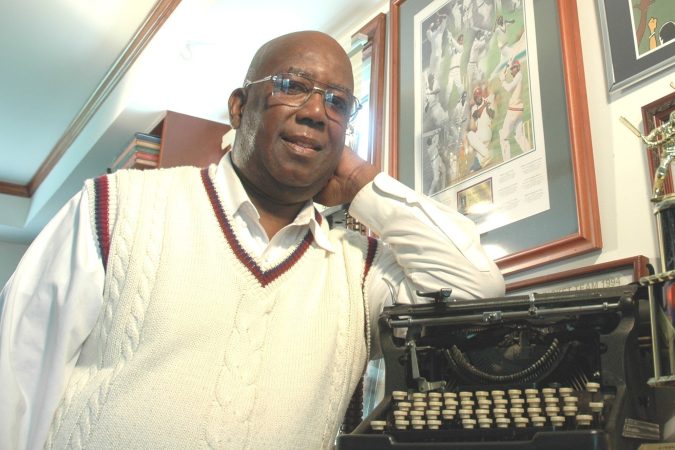
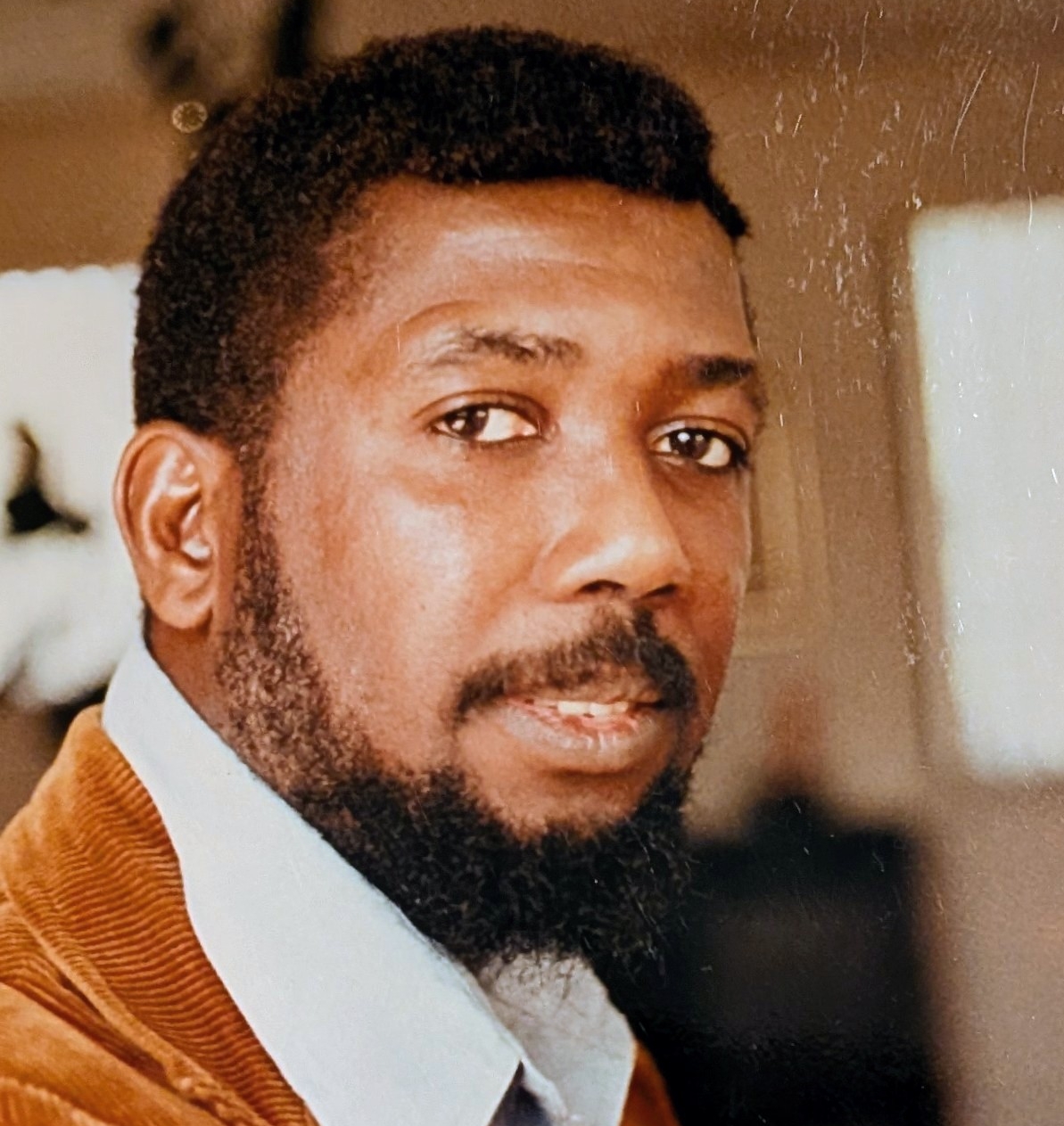
    Ewart Rouse, 85, of Lawnside, retired award-winning reporter and editor for The Inquirer, author, journalism adjunct professor, mentor, immigrant advocate, and indomitable cricketer, died Thursday, July 2, of age-associated decline at the Samaritan Center at Voorhees.

    Born in Trinidad, West Indies, Mr. Rouse immigrated to New York in 1969 and joined The Inquirer in 1974. For nearly 30 years, until he retired in 2002, Mr. Rouse was an award-winning business and news reporter, suburban editor, and mentor to hundreds of young journalists.

    He won a 1980 Keystone Award for a news series on city taxi service and was recognized for another series on street gang homicides involving Black youth. Later, he wrote business columns and covered South Jersey news.

    He opened a 1975 story about former President Gerald Ford’s first visit to Philadelphia with: “The old man sat alone and dejectedly with his flags against the wall of the Philadelphia National Bank building at 5th and Market Streets. ‘Not one,’ he muttered. ‘I haven’t sold not one flag today.’”

    Mr. Rouse worked for the Associated Press in Washington DC.Courtesy of the family

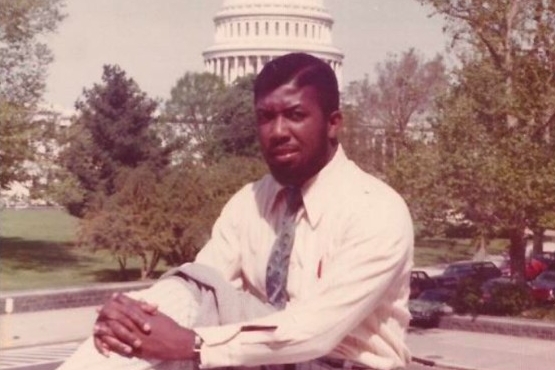
    Before The Inquirer, Mr. Rouse was a news and political reporter for the Associated Press in Newark, N.J., Atlantic City, and Washington, D.C. “He was a popular colleague who contributed importantly to the paper’s growth,” Gene Foreman, retired managing editor at The Inquirer, said on Facebook.

    Other former Inquirer colleagues called Mr. Rouse “professional and gracious,” “careful and respectful,” and “kind and generous.” Retired Inquirer editor Lil Swanson said on Facebook: “Ewart was filled with wisdom and grace. When he was an editor, young writers flocked to him because he always made their stories better and helped them grow.”

    He covered courts and politics for the Trinidad Guardian in Port-of-Spain before leaving for New York, and interviewed Trinidad Nobel laureate V.S. Naipaul for the 1997 book Conversations with V.S. Naipaul. In Philadelphia and South Jersey, he taught news writing, business writing, and investigative journalism at Temple, Rutgers, and Arcadia Universities.

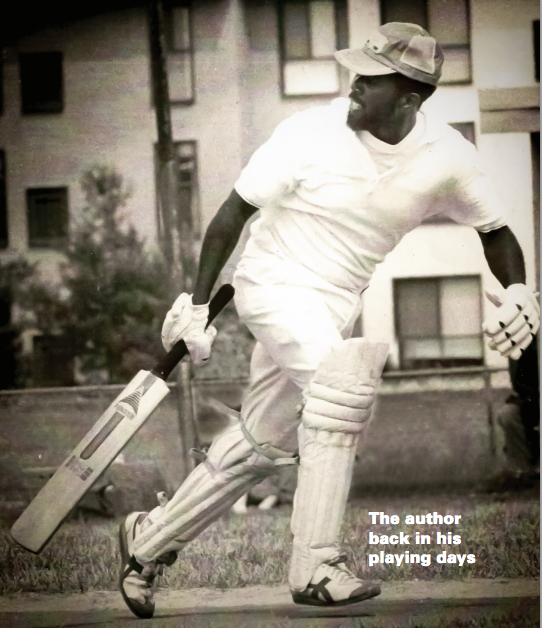
    He mentored many students of color and edited books for other writers. He enjoyed fiction and detailed plots, and wrote a four-book series of cricket-themed novels he called the Sticky Wicket Collection.

    Mr. Rouse loved to play, watch, and write about cricket.Ewart Rouse

    Readers called his books “highly entertaining” and “a wonderful addition to cricket literature” in reviews. His daughter Karen said: “The clackety-clack (zing!) of his typewriter was a constant in our home.”

    Mr. Rouse played cricket in Trinidad and later in South Jersey, and he cofounded the Philadelphia Cricket League, the New Jersey Cricket Association, and the Echelon Cricket Club. He played the game, managed teams, and became one of the region’s greatest advocates for cricket and its immigrant players.

    In 2013, he earned a lifetime achievement award from the South Jersey Caribbean Cultural and Development Organization, and recognition from then-Camden Mayor Dana Redd for his contributions to the community as a journalist, teacher, and cricket activist. “It truly was an honor to be recognized by my own community,” he said on his website, ewartrouse.com.

    In a 2016 online interview, Mr. Rouse was asked to advise young writers. “Read anything you get your hands on,” he said, “From books and newspapers … to labels on paint. Each contains nuggets of information that the mind will retrieve for just the right spot in your next project.”

    Mr. Rouse and his wife, Vanda, met in Trinidad.Courtesy of the family

    Ewart Rigsby Rouse was born Sept. 16, 1940, in Tunapuna, Trinidad. He was an avid reader and creative writer as a boy, and noticed one day that several of his favorite writers — Charles Dickens, John Steinbeck, and Ernest Hemingway — started out as newspaper reporters.

    “And now I wanted to be a journalist like them,” he said in a short self-published autobiography.

    He met his wife, Vanda, in Trinidad, and they married and had daughters Joann, Karen, and Kristin. They lived in New York, Pleasantville, N.J., and Washington, and settled in Lawnside in the 1970s.

    Mr. Rouse was active with the C.C. Morris Cricket Library Association, the South Jersey Writers’ Group, and the Rainy Tuesday Writers Group. He was an avid gardener and routinely gave away bags of home-grown tomatoes to friends and neighbors.

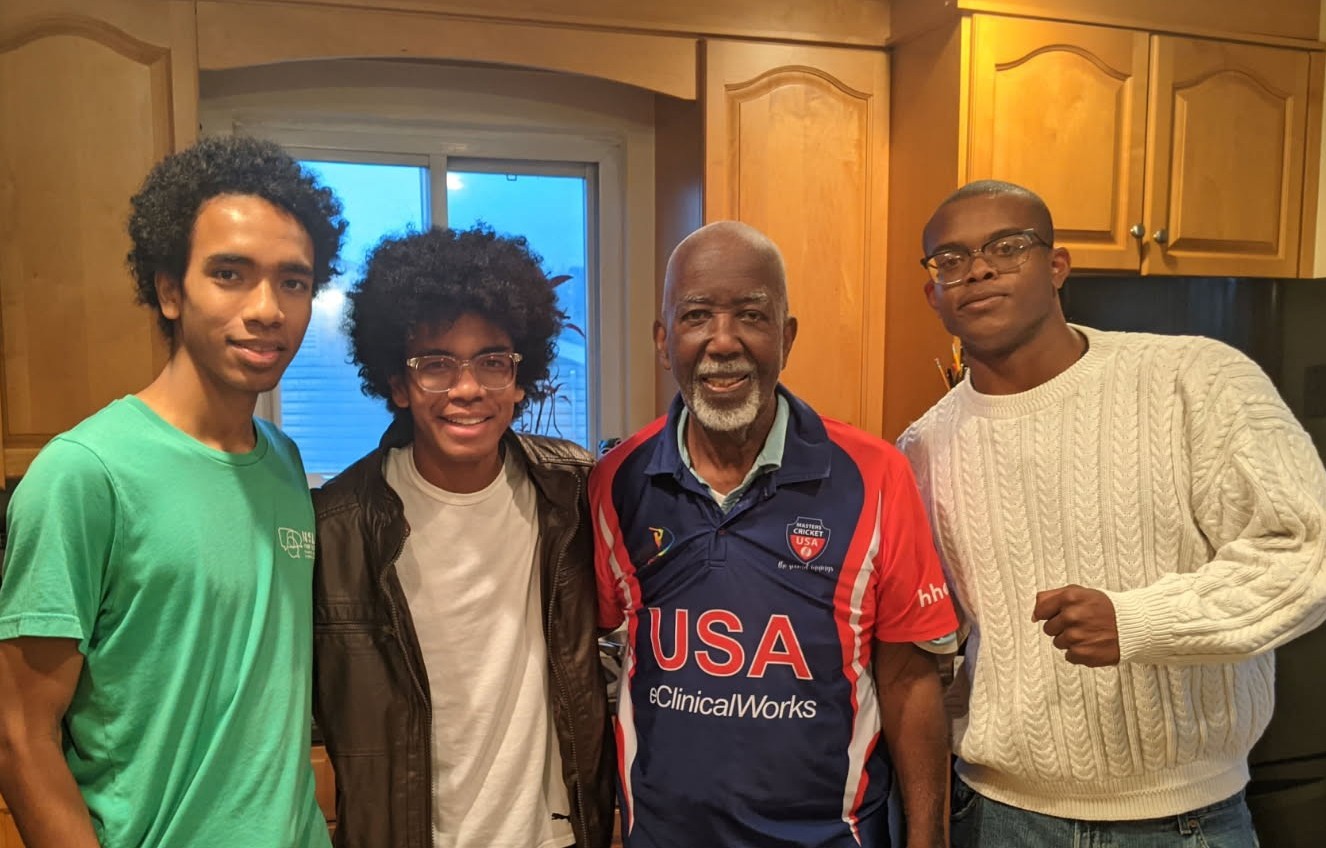
    Mr. Rouse enjoyed time with his grandsons. Courtesy of the family

    He collected records, listened to Nat King Cole and Frank Sinatra, followed the 76ers, and grilled outdoors as often as possible. He took his family on memorable trips to Trinidad that “opened up a world to us that was accessible, one that we could dare to explore,” said his daughter Karen.

    In 2016, Mr. Rouse told aspiring writers: “Who knows, maybe you end up with a bestseller. Some might call you a dreamer. But, hey, as the saying goes, you can’t have a dream come [true] if you don’t have a dream.”

    In addition to his wife and daughters, Mr. Rouse is survived by three grandsons, two sisters, a brother, and other relatives.

    A private celebration of his life is to be held later.

    Donations in his name may be made to the Philadelphia Association of Black Journalists, 30 S. 15th St., 15th Floor, Philadelphia, Pa. 19102.

    A former Inquirer colleague called Mr. Rouse “a true and kind gentleman.”Courtesy of the family
  • Headed to Sunday’s World Cup final? Here’s how to get there and back from Philly for $60.

    Headed to Sunday’s World Cup final? Here’s how to get there and back from Philly for $60.

    So, thinking about going to MetLife Stadium for the World Cup final?

    It’s easier coming from Philly than you might think. I know because I’ve taken the trip to New York/New Jersey Stadium (or MetLife Stadium as it’s customarily called) three times for matches between Brazil and Morocco, France against Senegal, and Norway’s quarterfinal win against Brazil.

    Certainly learned a lot along the way. Each time felt very different from the first.

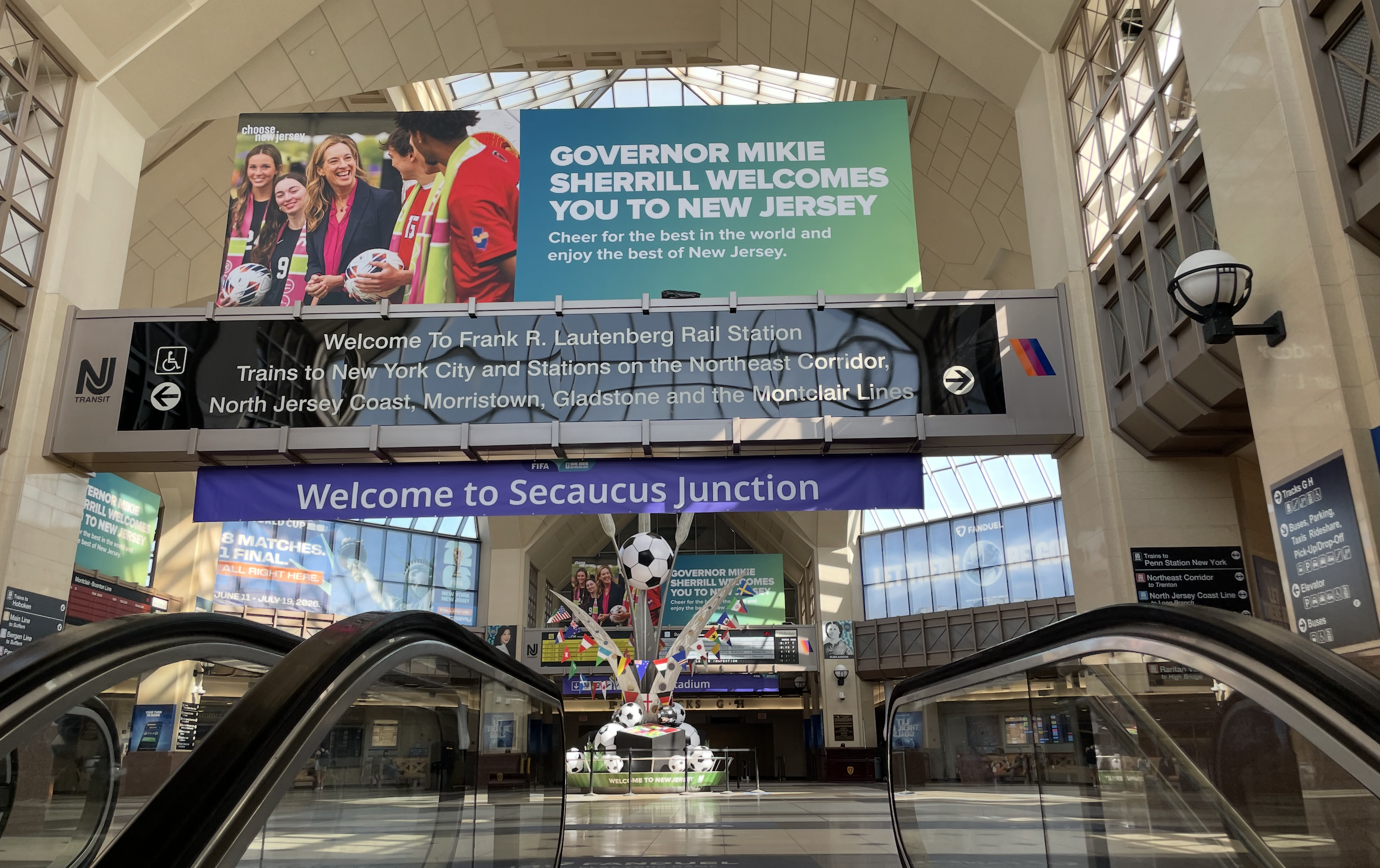
    I took the public transit route to save some dough and avoid traffic: SEPTA’s Trenton line on Regional Rail from William H. Gray 30th Street Station, and then the NJ Transit Northeast Corridor line to Secaucus Junction.

    Based on the gridlock I saw on the highways while riding the train — not to mention the cost of gas — this is the cheapest and most efficient way to travel from Philly to MetLife Stadium.

    Just make sure you’re ready to get your steps in.

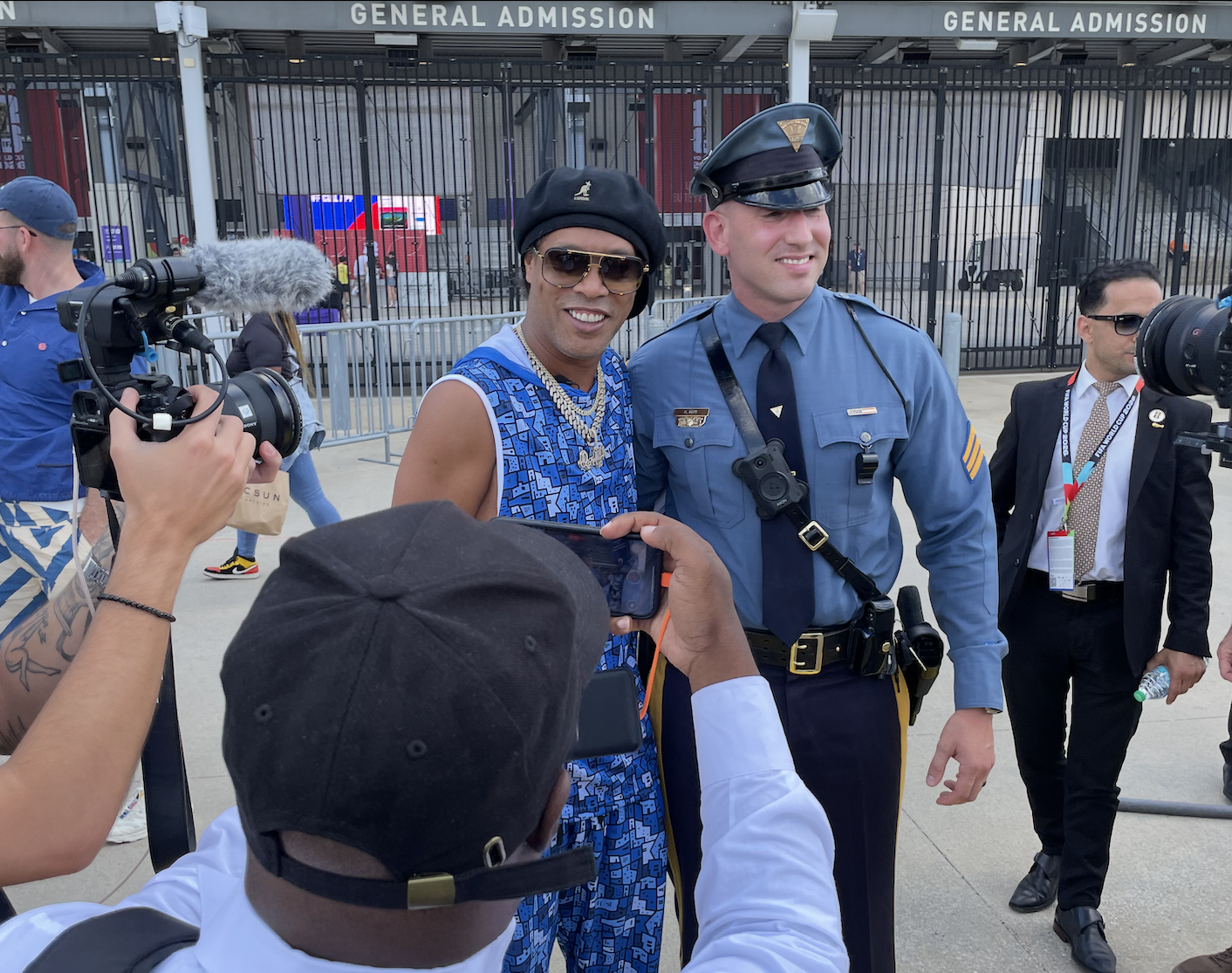
    You’ll never know who you might run into once you’re at New York/New Jersey Stadium, kind of like when we stumbled upon soccer great Ronaldinho outside the main gates during the June 13 Brazil-Morocco match.Kerith Gabriel / Staff

    Buy your tickets online

    Purchasing your trip ahead of time is the way to go, and you can lock that in right now. I bought my train tickets 12 days before through the SEPTA and NJ Transit websites.

    A round-trip ticket on SEPTA’s Trenton line on Regional Rail from Jefferson, Suburban, or 30th Street Station is $20. It’s $26 if you purchase on the train. Not only is it cheaper, but buying online allows you to skip the lines at the station.

    NJ Transit round-trip tickets to Secaucus Junction are just $40.70 and available for purchase on the NJ Transit website. (It almost makes you feel fortunate you’re coming from Philly and not Penn Station, where tickets are upward of $100.)

    The total cost for a trip to MetLife Stadium and back to Center City? Right around $60. For comparison, parking a car in Philly for World Cup games cost between $115-180, and reached $700 for an oversized vehicle.

    Getting there

    The beauty of taking the train out of the city is that Trenton is the last stop on the line, so no need to ask the conductor when it’s your stop; you’ll know, given that the whole train clears out.

    Once you step off the train at Trenton, you’ll need to switch trains. Find the escalators that only go up to the main floor, and according to an NJ Transit ambassador at the station, Northeast Corridor local and express trains have left from a combination of either Track 1 or Track 2, which are located on the same platform.

    When in doubt? Look at the big board, which will read New York-SEC (SEC for Secaucus). Secaucus Junction is one of the final station stops before New York Penn Station, so yes, you’re on the right train.

    From there, it’s a straight shot to Secaucus. Getting on at Trenton means you’re the first stop on the line, so you’re sure to find a good seat.

    Every stop was announced, and conductors shouted instructions to fans on how to navigate Secaucus upon arrival.

    New Jersey is going to great lengths to get people over to matches at MetLife Stadium. If you do it by regional rail, Secaucus is going to be your final stop. Kerith Gabriel / Staff

    You’ve arrived in Secaucus …

    FIFA volunteers and NJ Transit ambassadors were stationed on the platform to answer questions and direct fans to the ground floor, where NJ Transit buses are ready to shuttle people to the stadium.

    The shuttle fare? It’s included in your train ticket, and ambassadors will ask to see both your ticket to the match and your train ticket.

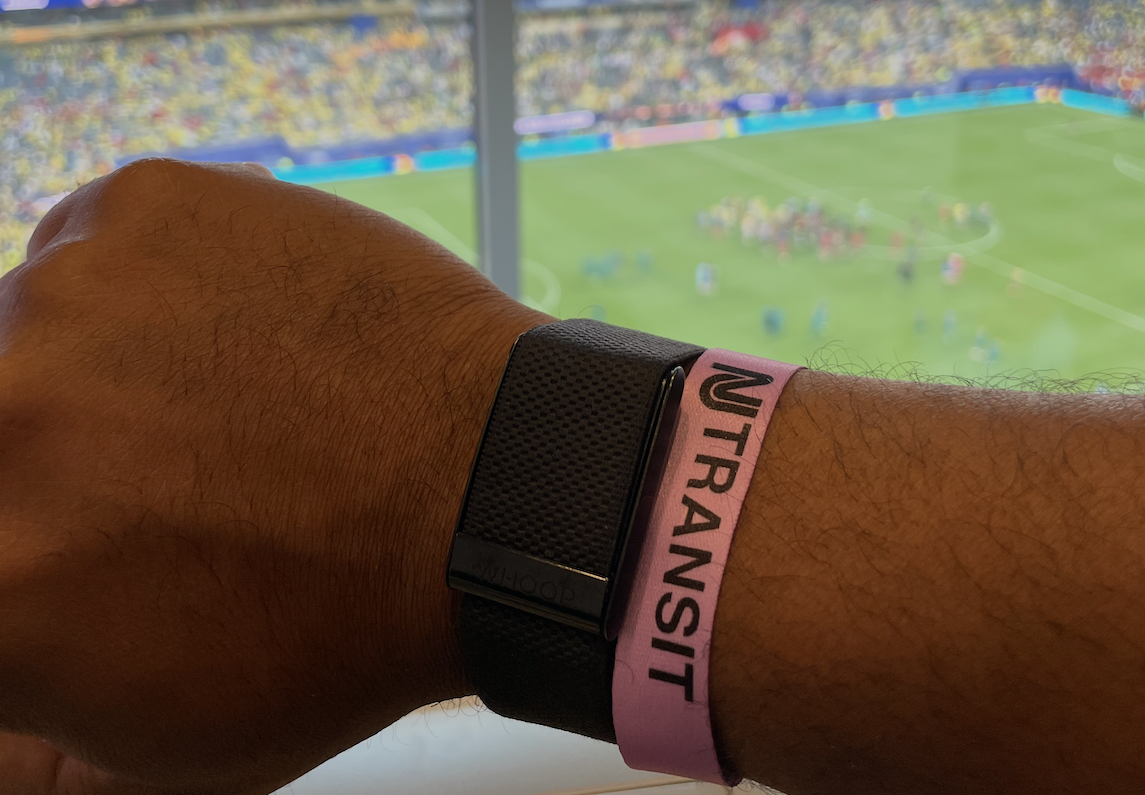
    Also, with the snaking line to get to the shuttle, have that ticket ready to show so you’re not holding up the line. You’ll receive a wristband that allows you to board there and come back when the game is over. Don’t lose it.

    Technically, you don’t have to worry about losing it, it’s one of those that will require something sharp or really skinny wrists to remove.

    If you’re headed to the World Cup final, consider the train, but make sure ambassadors give you a bracelet so you can get back on the train.Kerith Gabriel / Staff

    Shuttles run continuously up to an hour before the match. After that, there’s a final courtesy train that makes a run over to MetLife for any remaining passengers. There’s no parking at MetLife, so if you miss that, a ride share is your best bet.

    Heading back

    Outside MetLife, there are giant purple signs that direct fans looking for shuttle buses. If you get turned around after exiting the stadium, walk toward American Dream, the concert venue adjacent to the stadium. You’ll see the massive bus terminal that shuttles fans back to Secaucus Junction.

    You’ll need to show your NJ Transit wristband to ambassadors and some police. Then you’ll board a bus back to Secaucus. The ride will take about 15 minutes, depending on traffic. Then you’re on your way back to Philly, where you’ll have earned bragging rights for your cheap and efficient travel to the world’s grandest sporting event. Enjoy.

  • George Gould, a pioneering Philadelphia legal aid lawyer, has died at 83

    George Gould, a pioneering Philadelphia legal aid lawyer, has died at 83

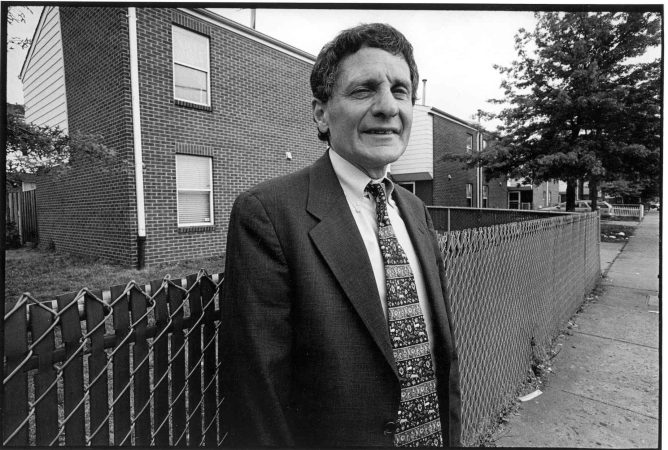
    George Gould, 83, of Philadelphia, who founded the housing unit at Community Legal Services and fought for the rights of struggling Philadelphians, died on Sunday, June 28, at Abington Hospital after a long illness.

    For over 50 years, Mr. Gould worked in legal aid and housing law, arguing unique angles in the courtroom and often winning precedent-setting rulings.

    Mr. Gould represented public housing residents and families stricken by lead paint poisoning, while lobbying for new laws and regulations in City Hall and Harrisburg. He clashed with powerful politicians, but he also knew how to wield influence with officials and build alliances.

    “He was the archetypal legal services lawyer,” said Jonathan Stein, a longtime colleague at Community Legal Services. “He brought so much unbound energy, dedication, aggressiveness, and creative lawyering to his work.”

    Mr. Gould was born in Philadelphia on March 12, 1943, grew up in Elkins Park, and played football at Cheltenham High School and Muhlenberg College, where he majored in history. After a stint as a public school teacher in North Philly, he attended Dickinson School of Law.

    He joined Community Legal Services in 1970 and was soon tasked with founding its housing unit, where he won rights for public housing tenants and fought to ensure that affordable homes were built even in neighborhoods where residents resisted.

    “George was full of passion, he lived deeply, and with such enthusiasm and energy,” said his wife, Diane Lee Gallagher. “It was hard to keep up with him, but I have to say he challenged me in so many good ways.”

    In a landmark case in the 1970s, Mr. Gould went up against Mayor Frank Rizzo with Stein and Richard Nixon‘s housing department. He and his teammates proved in court that the mayor’s intent to block public housing from the overwhelmingly white South Philly neighborhood was racially motivated.

    Their victory got 120 homes built in Whitman after over a decade of delay.

    “It did have an impact on the city, especially finding a mayor guilty of intentional racial discrimination,” Mr. Gould recollected in a 2015 interview. “That was … unheard of.”

    Mr. Gould sought to get utility allowances adjusted for public housing residents when rates change, a case in which he fought the Philadelphia Housing Authority for 15 years before eventually winning in federal court.

    “It was just very creative and courageous lawyering,” said former colleague Irv Ackelsberg. “It’s hard to minimize just how important he was and how much he was loved by his colleagues.”

    Mr. Gould’s passion for his work was legendary and at times intimidating.

    In the days before computers or online legal databases, Mr. Gould would pore over law books for hours looking for precedent on which to build his cases, slamming the thick tomes in frustration.

    “Then all of a sudden, he’d find a good case, and you would hear ‘oh baby, oh baby, oh baby,’” Ackelsberg recalled. “It was just so much fun.”

    Mr. Gould also lent his expertise to brothers John and Milton Street, who went on to become Philadelphia’s mayor and a state senator, respectively, as they made a name for themselves by protesting the status quo in city politics and housing policy.

    “With the help of [Mr. Gould], we had indisputable information to validate our public policy positions,” former Mayor John Street said of his relationship with Mr. Gould during the 1970s. “When we talked about our issues we were armed with legitimate and very valuable facts and figures to substantiate our position — something that is often missing when community groups protest.”

    During the harsh recession of the early 1980s, Mr. Gould helped craft the state-level Homeowners Emergency Mortgage Assistance Program, which allowed unemployed people to make lower payments on their homes for up to three years. Close to 60,000 applicants have been approved.

    Later, Mr. Gould served as a mentor for generations of younger lawyers, including Councilmember Rue Landau.

    “He taught me the foundations of everything I know,” Landau said. “His fighting and optimistic outlook was super helpful when you were drowning in your cases.”

    During his early decades at Community Legal Services, he was known for his work ethic. John Street recalls that he could call Mr. Gould any time and that “his work-life balance appeared to me to be totally out of wack.”

    That changed as Mr. Gould got older. He married his longtime partner Diane L. Gallagher in 1990, and a few years later they adopted their son Peter.

    “He really modeled for me that can be very invested in your family,” while working very hard, said a former colleague Rachel Garland, who now leads the Housing Unit. “It’s like he was the ultimate workaholic, but he also took lots of really fun vacations.”

    Mr. Gould loved skiing, ran marathons, fished, rode his bike to work, and was obsessed with the Eagles. He cooked seafood and enjoyed gin gibsons, a martini with cocktail onions instead of olives. When dining out, he sometimes brought his own jar of onions.

    Until his retirement, Mr. Gould could still be found in City Hall lobbying for stricter regulations on lead paint in rental properties and other tenant rights issues.

    In addition to his wife and son, Mr. Gould is survived by two cousins who were like brothers to him, Stephen and Robert Isard.

    Services are scheduled for 2:30 p.m. Friday, July 24, at Trinity Memorial Church, 2212 Spruce St., Philadelphia 19103.

  • $2.5 billion Navy submarine contract expected to keep 700 working in Philly

    $2.5 billion Navy submarine contract expected to keep 700 working in Philly

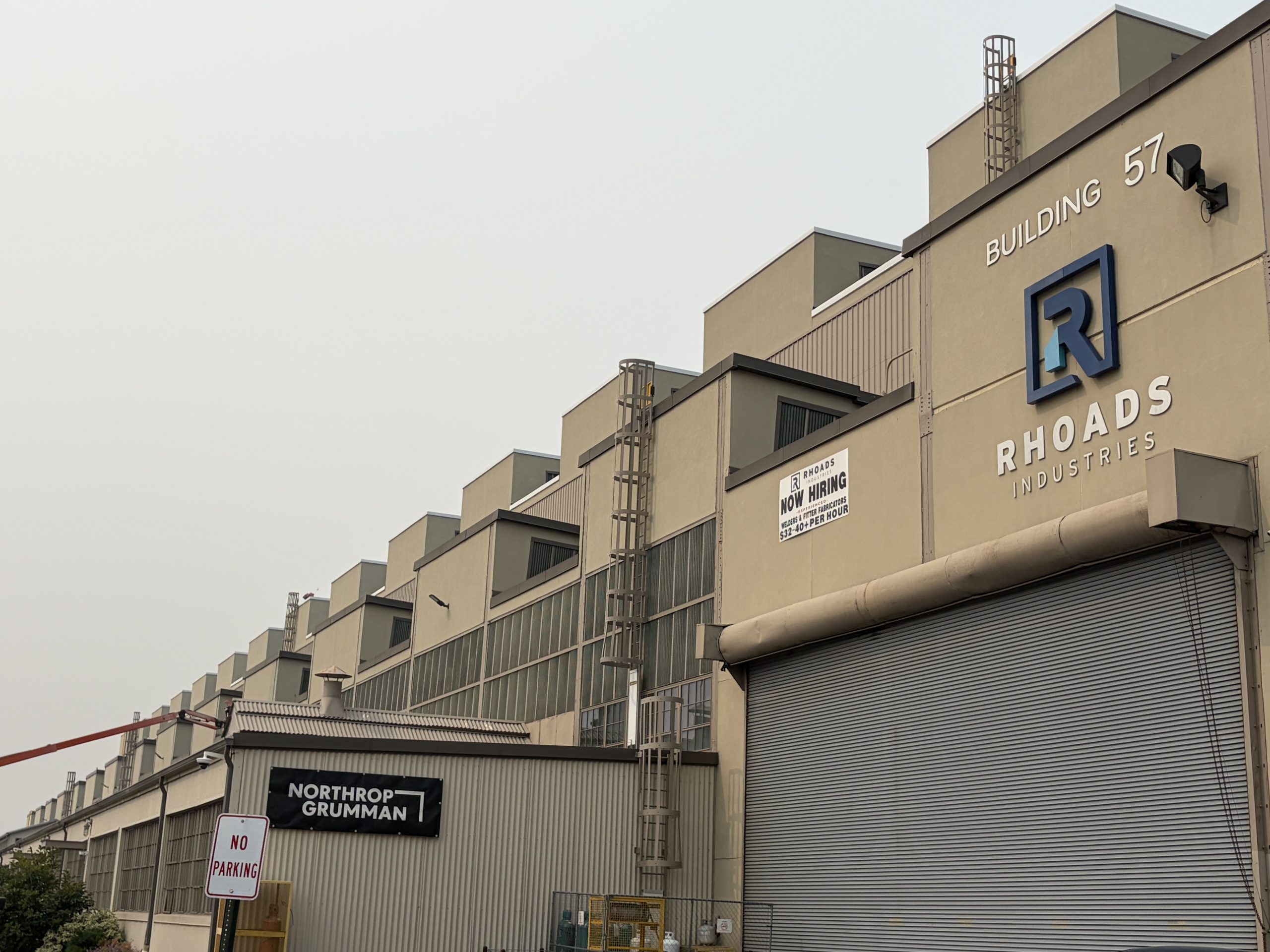
    Rhoads Industries Inc. has confirmed some details of a long-term deal to extend the work the family-owned ship repair company is doing for General Dynamics Electric Boat, which builds and upgrades Virginia- and Columbia-class nuclear submarines for the U.S. Navy.

    “Rhoads will continue providing steel fabrication, structural assembly, outfitting, and other shipbuilding support services” from its Navy Yard operations, the family-owned business said in a statement Wednesday. The contract, which Rhoads estimates is worth $2.5 billion over 10 years, is expected to keep around 700 people working 40 hours a week for a year.

    Rhoads has done work for General Dynamics since 2021, according to a spokesperson for the Reston, Va., company, whose annual sales top $50 billion.

    With the contract and other work Rhoads does at its ship-repair and testing facilities, Rhoads says it will eventually employ nearly 1,500 workers, roughly double its current headcount and five times what Rhoads employed three years ago.

    Like the larger workforce at neighboring Hanwha Philly Shipyard, Rhoads shipyard workers and contractors are represented by the Philadelphia Metal Trades Council, a coalition of unions including locals of the Operating Engineers, Boilermakers, Ironworkers, Sheet Metal Workers, and other trades.

    In a statement, company president Mike Rhoads said the expanded General Dynamics work would pay for “high-quality careers in skilled trades, engineering, project management, and manufacturing, further strengthening the Greater Philadelphia region as a center for advanced maritime manufacturing.”

    Rhoads Industries is a family-owned ship repair company in Philadelphia’s Navy Yard, which also builds submarine components. Joseph N. DiStefano

    Rhoads last year said it was building a $100 million manufacturing shed specifically for the Navy submarine work, designated Building 57A. On Tuesday, JPMorgan CEO Jamie Dimon visited the Navy Yard business district and announced a $13 million loan funded by federal tax incentives to aid completion of the facility, which Rhoads said should be finished next year. JPMorgan also is funding $11 million in loans and grants to Chamber of Commerce-affiliated worker training and subcontractor assistance nonprofits.

    Rhoads added that his company has met Navy performance targets.

    The Navy’s attempts to speed production and updating of the submarines have met delays, which industry observers tie to a national shortage of ship construction workers and to the Navy’s time-consuming design, approval, and change-order processes.

    The Trump administration has vowed to speed production of submarines, which are considered less vulnerable than surface ships to the proliferation of drones that have extensively damaged shipping in Ukraine and Iran conflicts.

    The Rhoads deal was briefly disclosed Wednesday by Sen. Dave McCormick (R., Pa.) when President Donald Trump spoke at the Pennsylvania Defense and Innovation Summit in Carlisle.

    General Dynamics Electric Boat builds Columbia- and Virginia-class nuclear Navy submarines at its yards in Groton, Conn., and Quonset, R.I., in partnership with Huntington Ingalls Newport News Shipbuilding in Virginia.

  • DA Larry Krasner’s office asks court to throw out AG’s Office appeal of overturned convictions

    The Philadelphia District Attorney’s Office has asked a state appeals court to block the Pennsylvania Attorney General’s Office from reopening a case that freed three men who spent nearly 30 years in prison for murder, saying state officials are overstepping their authority.

    The request is the latest chapter in a legal fight over the scope of the attorney general’s newly expanded power in Philadelphia post-conviction cases. The dispute could determine whether the office can step in only before a judge acts — or whether it can challenge closed cases that are still within the window for appeal.

    Common Pleas Court Judge Jennifer Schultz vacated the convictions of Marc Brittingham, Jermal Shuler, and Rasheed Turner in the 1997 killing of Essie Mae Thomas in May, after Philadelphia prosecutors and defense attorneys presented newly uncovered evidence that she said undermined confidence in the jury’s verdict.

    The district attorney’s office declined to retry the men, and they were released from prison after 28 years.

    Weeks later, after the Pennsylvania Supreme Court issued a landmark decision expanding the attorney general’s role in Philadelphia post-conviction cases, state prosecutors sought to intervene and appeal Schultz’s ruling.

    In a motion filed Friday, the district attorney’s office said state prosecutors are twisting the high court’s decision and trying to bypass longstanding rules.

    The decision gives the attorney general’s office the chance to weigh in before a judge grants a request supported by prosecutors to change a past conviction or sentence.

    But Schultz issued her ruling in the men’s case weeks before the high court’s decision, and the window for state intervention had already closed, prosecutors Matthew Stiegler and Rebecca McDonald wrote in Friday’s filing.

    The district attorney’s office argued that Pennsylvania Attorney General Dave Sunday knew this to be true, because he had said so an interview with The Inquirer.

    In that interview, Sunday said that cases in which people have already been released from prison “are done.”

    Attorneys for Brittingham, Shuler, and Turner made similar arguments in separate filings. They have also argued that reopening the case would unfairly upend the lives the men have begun rebuilding since their release.

    The men were convicted of murder in 1998, a year after Thomas, 73, was found stabbed to death in her North Philadelphia home. But the testimony of the lone witness who placed them at the scene was discredited after new evidence upended Thomas’ time of death.

    A spokesperson for the attorney general’s office did not immediately respond to a request for comment Friday.

    In earlier court filings, the attorney general’s office has taken a different view, writing that the high court’s decision gave state prosecutors the right to independently review Philadelphia cases — even if a judge ruled before the office had an opportunity to participate.

    And in his interview with the Inquirer, Sunday also said his office would “have to take a look” at “cases that are still going through the appellate process.”

    Philadelphia prosecutors contend that the Supreme Court has already rejected that reasoning, citing past decisions in which justices said that a case is closed with a judge’s final order — regardless of whether the deadline to appeal has expired.

    The attorney general’s office has not challenged the newly discovered evidence that prompted the district attorney’s office to support vacating the convictions.

    That evidence included information about the disciplinary history of Bennett Preston, a former assistant medical examiner whose trial testimony about Thomas’ time of death helped to corroborate the account of the only witness who linked the men to the killing. Two independent forensic pathologists later concluded Preston had incorrectly estimated when Thomas died. The experts said Thomas was likely killed as many as two days later than Preston had said.

    State prosecutors, however, said they found “troubling inconsistencies” between the findings of Preston and the other pathologists, and believe the case warrants review.