The Trump administration is reviewing its process for vetting U.S. immigration officers after reports that a man allegedly involved in the fatal shooting of an immigrant in Maine had a history of violent outbursts, a senior White House official said Sunday.
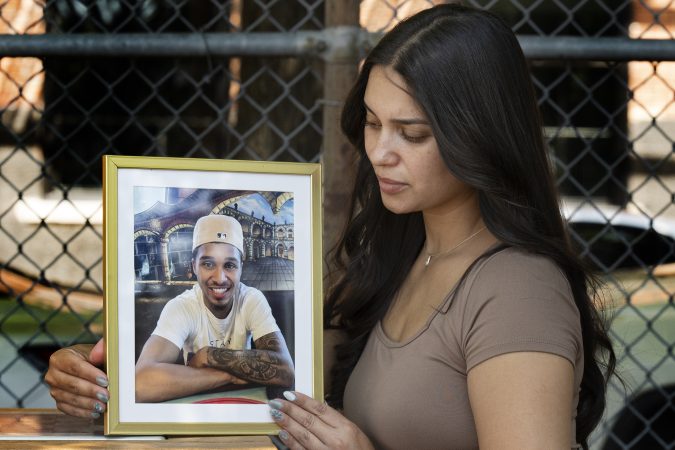
In an interview with The Washington Post earlier this month, Ashley Brouillette, said her former spouse, David Brouillette, told her in a phone call that he was the Immigration and Customs Enforcement officer who fatally shot Colombian immigrant Johan Sebastián Durán Guerrero, in Biddeford, Maine, on July 13.
Ashley Brouillette said her ex-husband had a pattern of violent outbursts, including throwing boiling hot water on her while she was holding their young daughter.
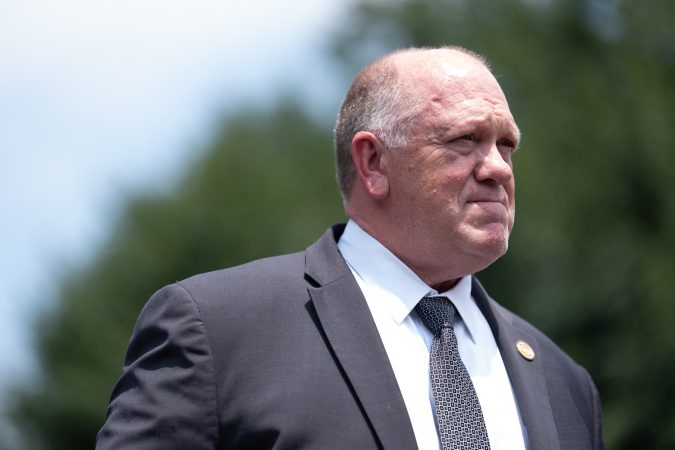
“If this person had that type of history, it would have been a vetting issue, and it should have been brought to the attention of those” who make such decisions, White House border czar Tom Homan told CNN’s “State of the Union.”
Homan did not confirm that David Brouillette shot Durán, but he said that the Department of Homeland Security is investigating whether the vetting process failed.
“When they hire somebody, they put them through a vetting process and look at all that stuff, so I know, based on that information, that that’s part of the ongoing investigation,” Homan said.
“Was that information not available? Did they not know? So there’s a separate administrative investigation on what happened here,” he added.
The Department of Homeland Security has not publicly released the name of the officer who shot Durán. The 25-year-old’s death led to mass protests in Maine.
Ashley Brouillette identified David Brouillette as the officer seen on video footage of the scene in Biddeford. The video does not show the shooting itself, but it does show two officers in the moments afterward.
She accused her ex-husband of pointing a gun at her and threatening her, among other instances of past violence. Ashley Brouillette also told The Post that he was diagnosed with several mental health disorders as a young adult. The Post could not independently verify those claims.
David Brouillette’s other ex-wife, Lucinda Brouillette, also has described a pattern of physical and mental abuse in court filings. In some filings, she said Brouillette had been medically discharged from the military in 2015 because of post-traumatic stress. The Post has not independently verified that claim.
In a statement to The Post, Lucinda Brouillette said that throughout her marriage, “and in the years that followed, I have feared for a long time that his anger, aggression, and escalating behavior would eventually result in severe, life threatening violence.”
The Post reported Friday that David Brouillette was found by a judge to have made statements in court last year that were not credible.
He said in an October court hearing related to child support payments that he was struggling to earn money because he had health issues and his driver’s license had been revoked, but a judge concluded in a Nov. 17 ruling that those claims were not credible.
The judge denied his request to terminate his child support payments to a former wife. Instead, the judge concluded that David Brouillette was “voluntarily underemployed.” David Brouillette did not respond to calls or emails for the story.
Ashley Brouillette said David Brouillette was hired by ICE in November, as the federal agency was rushing to put thousands of new officers on the streets. Former Department of Homeland Security officials have publicly questioned whether those new hires were properly vetted.
In the CNN interview, Homan said that ICE is also reviewing agent training and that agents are undergoing additional training.
“I know this specific case, as far as the vetting, is under review by internal affairs section, so we’ll see where it lies,” he said.
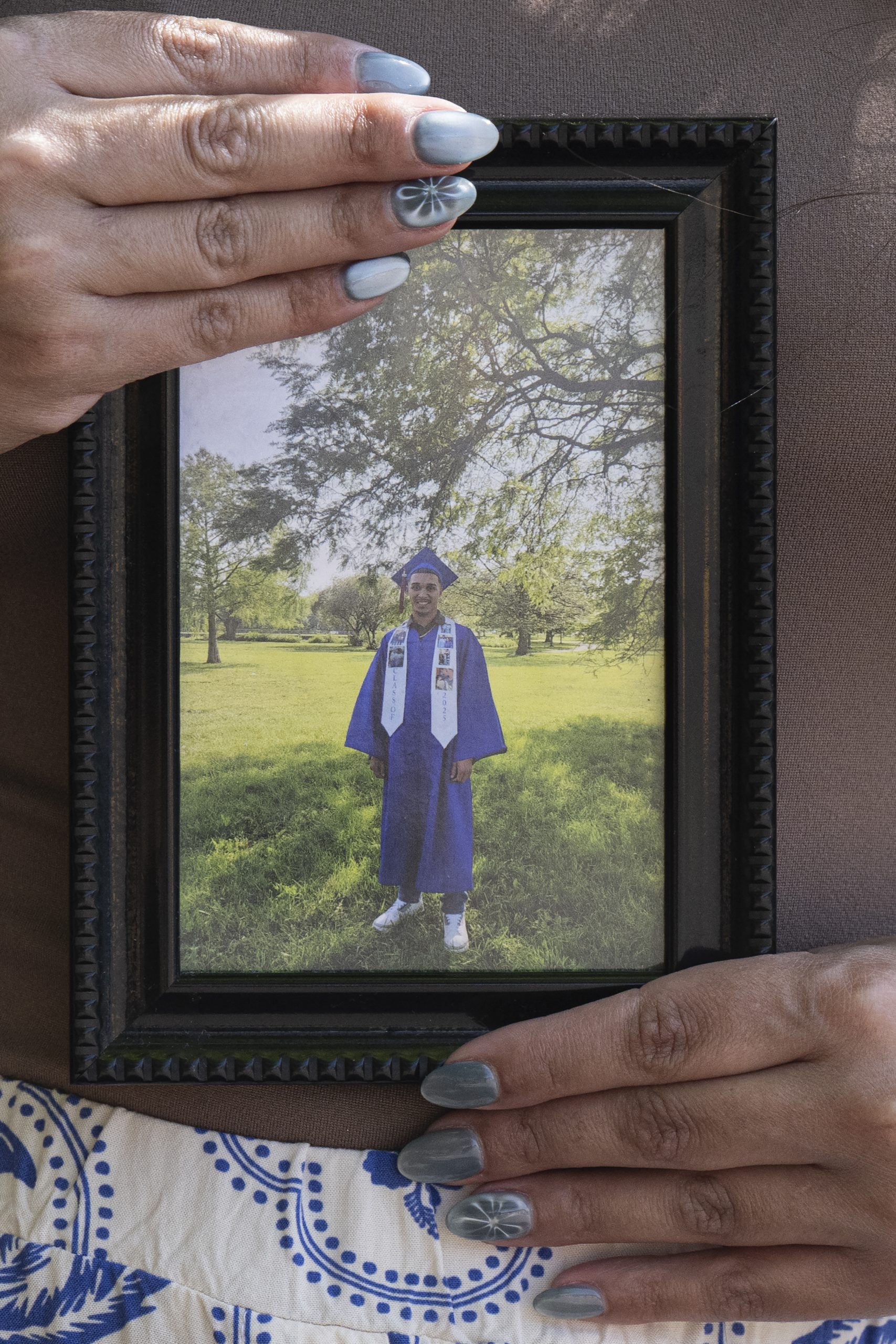
Durán, who had a work permit issued by the Trump administration, was shot shortly after leaving for work on July 13.
ICE has said that officers were in the area surveilling an address associated with an individual who has a final order of removal when they saw Durán leave and attempted to stop his vehicle. The agency has alleged that Durán tried to flee the officers and that an officer fired because he feared for public safety.
After the shooting, the office of Maine Attorney General Aaron Frey said the officer would be placed on leave. Sen. Angus King (I-Maine) said at a news conference that none of the officers involved in the fatal shooting were wearing body cameras.
A spokesperson for King said Homeland Security Secretary Markwayne Mullin told the senator that Durán was not the target of the ICE operation.
Kelly Donia was seated in her Malvern Hunt home when she spotted dust plumes rising from construction vehicles combing the site of a planned data center complex in East Whiteland Township.
She immediately drove to the site, across Swedesford Road from her development, to watch that day in June, anxious about the safety of building a 1.5 million-square-foot data center directly on top of a Superfund site in Chester County.
“No one seems to be concerned, but I mean, we live right here, we work right here, there are children — there’s a daycare,” Donia said. “I don’t understand. I don’t understand our officials, and I don’t understand the developer, and I don’t understand the general contractor.”
Donia is not alone in her fears. She and many of her neighbors, who had packed into East Whiteland meetings about the project for months, have continued to raise concerns about the safety of the building on the former 79-acre Cyprus Foote Mineral Co. property, which was contaminated over decades by a range of chemicals such as lithium, arsenic, and hexavalent chromium.
Not long after Donia saw those plumes, the township issued a stop-work order until it gathers more information on the environmental impact of construction.
While the developer says the site is safe, and the township has approved the plans, some residents believe that documents filed with the township and U.S. Environmental Protection Agency show that the site is still contaminated from its years as an industrial site, and they worry about what impact the construction will have on their community.
Here is what The Inquirer knows about the Foote Superfund site.
Location of the two-building data center project in East Whiteland, Chester County.John Duchneskie
Green Fig LLC first proposed a data center in 2018 and secured early zoning board approvals. The plans were greenlit by the township’s supervisors in 2024, drawing little pushback from the community.
Residents have been more engaged since the plan came back before the township earlier this year, first with ambitions to scale it up, then with a proposal to shrink it to appease outraged residents.
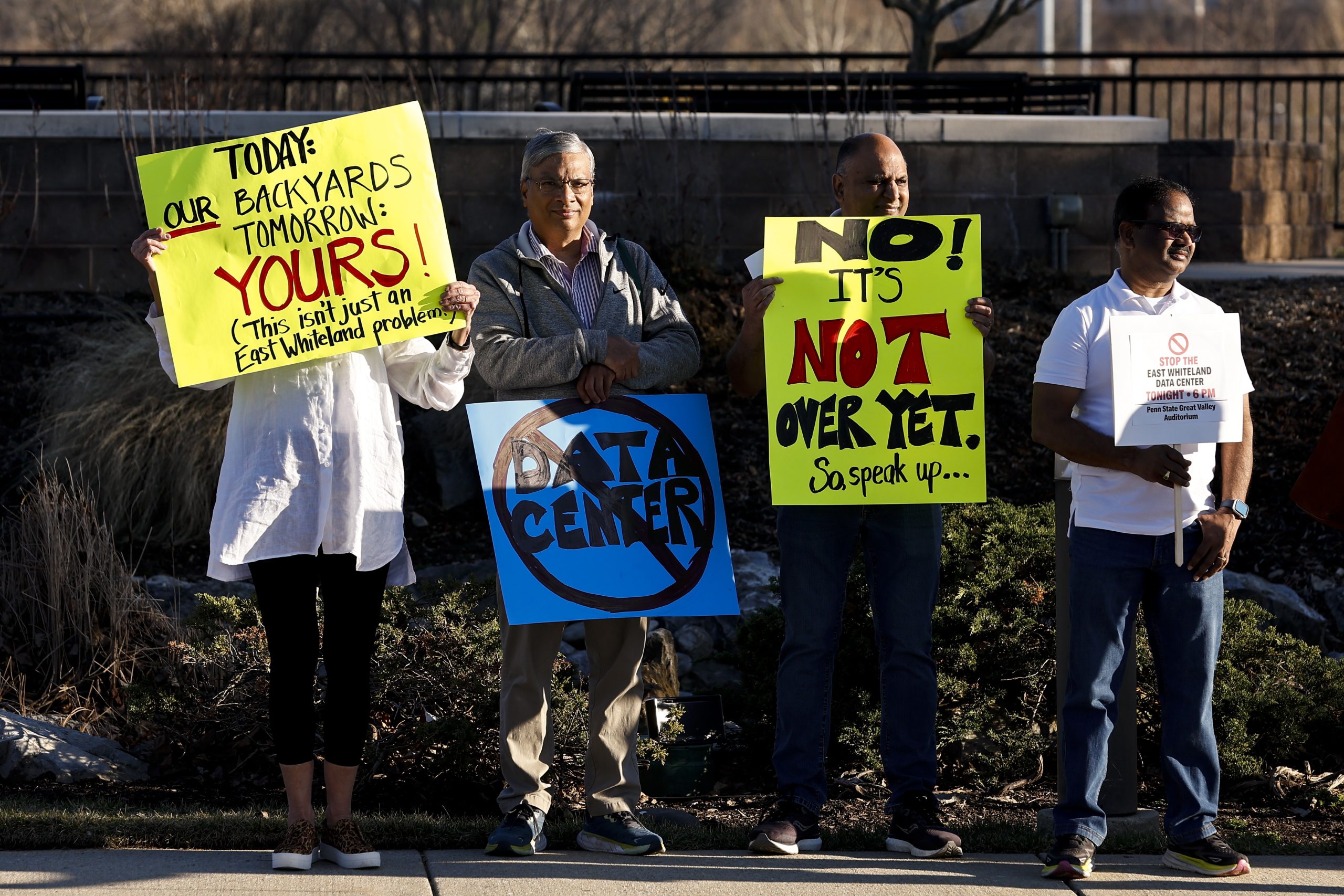
People protest the expanded data center before the East Whiteland Planning Commission meeting held at Penn State Great Valley on Monday, March 9, 2026 in Malvern.Monica Herndon / Staff Photographer
What are residents concerned about?
Residents fear that construction work on the site will kick up pollution in the air and release contaminants into the drinking water. They worry that there has not been ongoing testing of the soil on the site, especially knowing that contamination exists below.
How did the site become polluted?
Pollution at the Foote Mineral Co. likely started as soon as 1941 when the company began crushing ores and minerals.
Foote closed in 1991 with two quarries, a pit where solvents were burned, a lined wastewater basin, and more than 50 buildings and processing areas. Three unlined lagoons were backfilled.
At the time, public and private wells within four miles of the site had supplied drinking water to approximately 42,300 people. Several private wells near the site were found to be contaminated and were closed. A public water-supply well one mile away was also shuttered.
Cleanup, led by the EPA, has included capping contaminated quarries, stabilizing waste areas, and maintaining a long-term monitoring program for an evolving groundwater plume. Pollutants included lithium, boron, and low-level radiation.
An open land site is shown in East and West Whiteland Townships in Chester County on Thursday, January 5, 2023, where Green Fig LLC has proposed its data center project.Jose F. Moreno / Staff Photographer
What is a Superfund site, and how did it become one?
A Superfund site is a contaminated location in the United States designated by the federal government as a severe health or environmental hazard. Foote was added to the federal Superfund list in 1992.
In a 2023 letter to East Whiteland Township officials, a contractor hired on behalf of the developers incorrectly said that the site had been removed from the U.S. Environmental Protection Agency’s National Priorities List, an inventory of the nation’s most serious hazardous waste sites.
As of Friday, Foote Mineral Co. remained on the list posted on the EPA’s website. The EPA says because of the ongoing pollution, there is no proposal to remove the Foote site from the National Priorities List, nor any timeline for remediation to be complete.
What does the EPA recommend?
It’s complicated.
A 2024 EPA report, the most recent environmental evaluation of the site, found concentrations of certain pollutants have decreased over time, but an excessive amount of volatile organic compounds, or VOCs, remained. VOCs are gases that contain a variety of chemicals that may adversely affect human health. VOCs tend to be much more concentrated when contained indoors.
The EPA recommended updated land-use restrictions and further data collection to ensure the site remains safe during future redevelopment.
On its website, the EPA wrote that the “hazardous substances, pollutants or contaminants remain at the site above levels that allow for unlimited use and unrestricted exposure.”
Days before the 2024 findings were released, an EPA engineer filed a report known as a “Superfund Checklist for Retracting the Sitewide Ready for Anticipated Use Measure (SWRAU)” that said the site “no longer meets” standards for human exposure.
The EPA said in an emailed statement that SWRAU forms are only for guidance.
SWRAU “designations are not required for redevelopment,” the statement said. “So long as all land and groundwater use restrictions continue to be met and redevelopment does not interfere with EPA’s cleanup or future investigations, sites can be reused and redeveloped.”
“Based on a careful review of construction plans by EPA subject matter experts, the agency does not anticipate the development to impact the remedy at the Foote Mineral Co. Superfund site,” Mike Bastasch, an EPA spokesperson, said in June. The EPA “remains engaged and will continue monitoring redevelopment progress to ensure the remedy remains intact,” he said.
What do experts say?
If a site is properly cleaned up, there are “potential ways that a data center could be a better use, environmentally, of the land,” said Noah Kittner, associate professor in the Department of Environmental Sciences and Engineering at the University of North Carolina Gillings School of Global Public Health.
But that is contingent onhow it uses water, what kind of systems are in place, what types of energy and electricity are being used, and whether diesel generators are being used in the construction, development, and operation of the site, he said.
The documentation from the EPA showing remaining contamination “certainly raises some red flags” about redeveloping the site, he added. And whether the project does more harm than good is “highly dependent on plans for construction.”
“You could have a poorly executed project, and it causes a lot more problems for the community,” Kittner said. “Or you could have a really well-designed remediation project that builds in sustainability principles and other factors that could really transform that area from what was once highly polluting to something that is environmentally positive.”
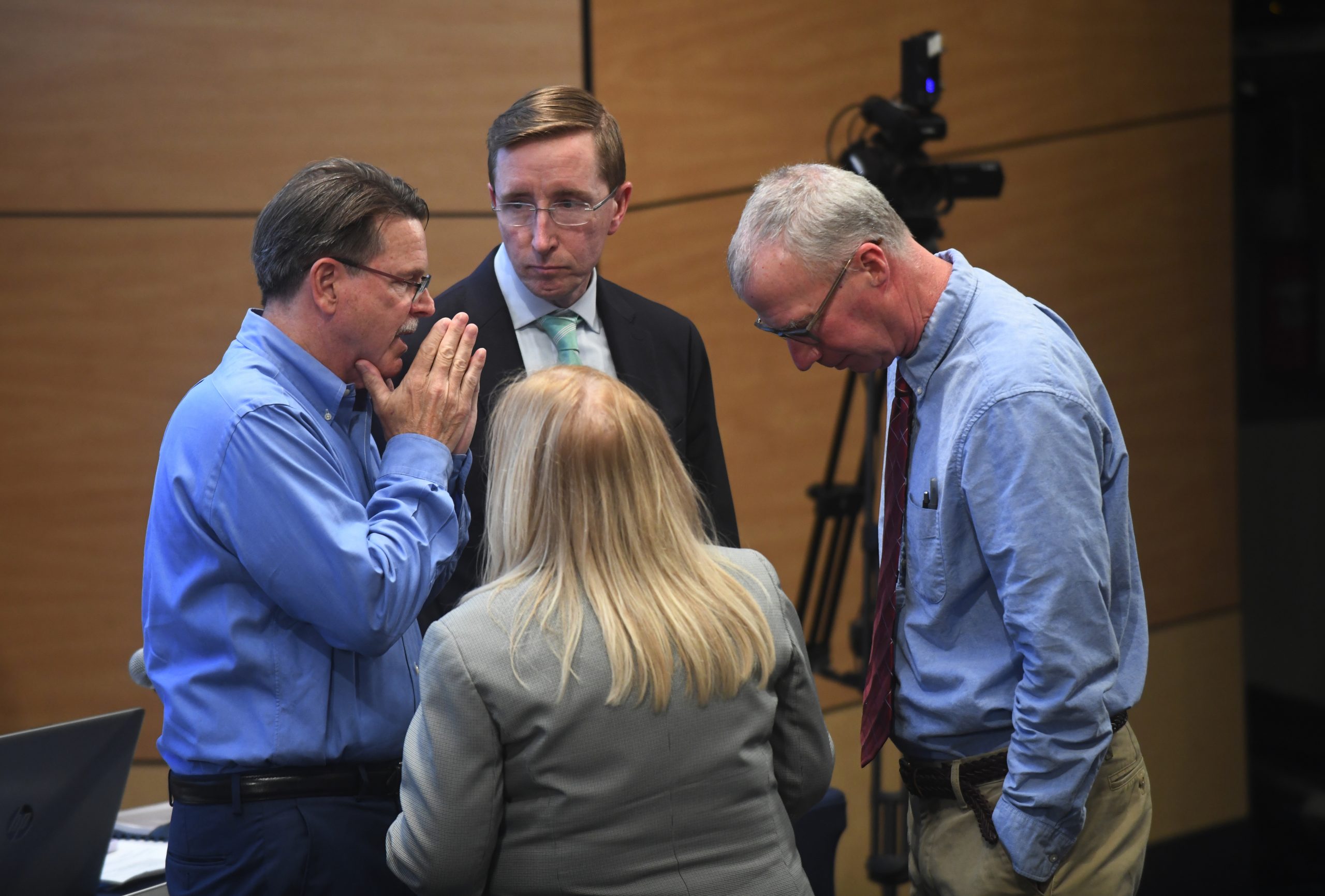
Scott Lambert, chair of the East Whiteland board of supervisors, left, confers with township officials about the data center proposal on April 14, 2026.Bob Williams / For The Inquirer
Who decides?
The EPA said in a statement to The Inquirer that it does not “recommend, propose, or approve specific Superfund redevelopment plans.” The agency reviews proposed uses and checks if there are “any potential conflicts with the selected remedy (including cleanup standards) or any issues that could reduce protection of human health and the environment,” the statement said.
The EPA’s goal is that most Superfund sites will be cleaned enough for commercial or industrial use. However, in some cases, the EPA can impose near permanent, severe restrictions on potential uses. Most Superfund sites undergo evaluations every five years to make those determinations until a site is removed from the National Priorities List.
Beyond that, it falls to the township to make final decisions on what the project will ultimately look like, and whether it could be built. Municipal leaders have said previously that, due to state law, they feel their hands are tied to allow for uses such as data centers.
What’s next?
The project remains in limbo: The developers have returned to the township seeking to amend their plans and alter the final design for the project. Supervisors tabled their decision at their last meeting on July 8, saying they needed more information about proposed changes.
Residents remain concerned about long-term construction at the site.
This suburban content is produced with support from the Leslie Miller and Richard Worley Foundation and The Lenfest Institute for Journalism. Editorial content is created independently of the project donors. Gifts to support The Inquirer’s high-impact journalism can be made at inquirer.com/donate. A list of Lenfest Institute donors can be found at lenfestinstitute.org/supporters.
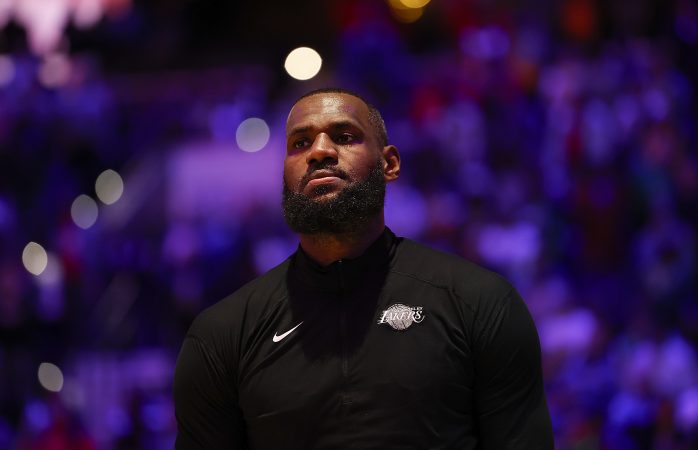
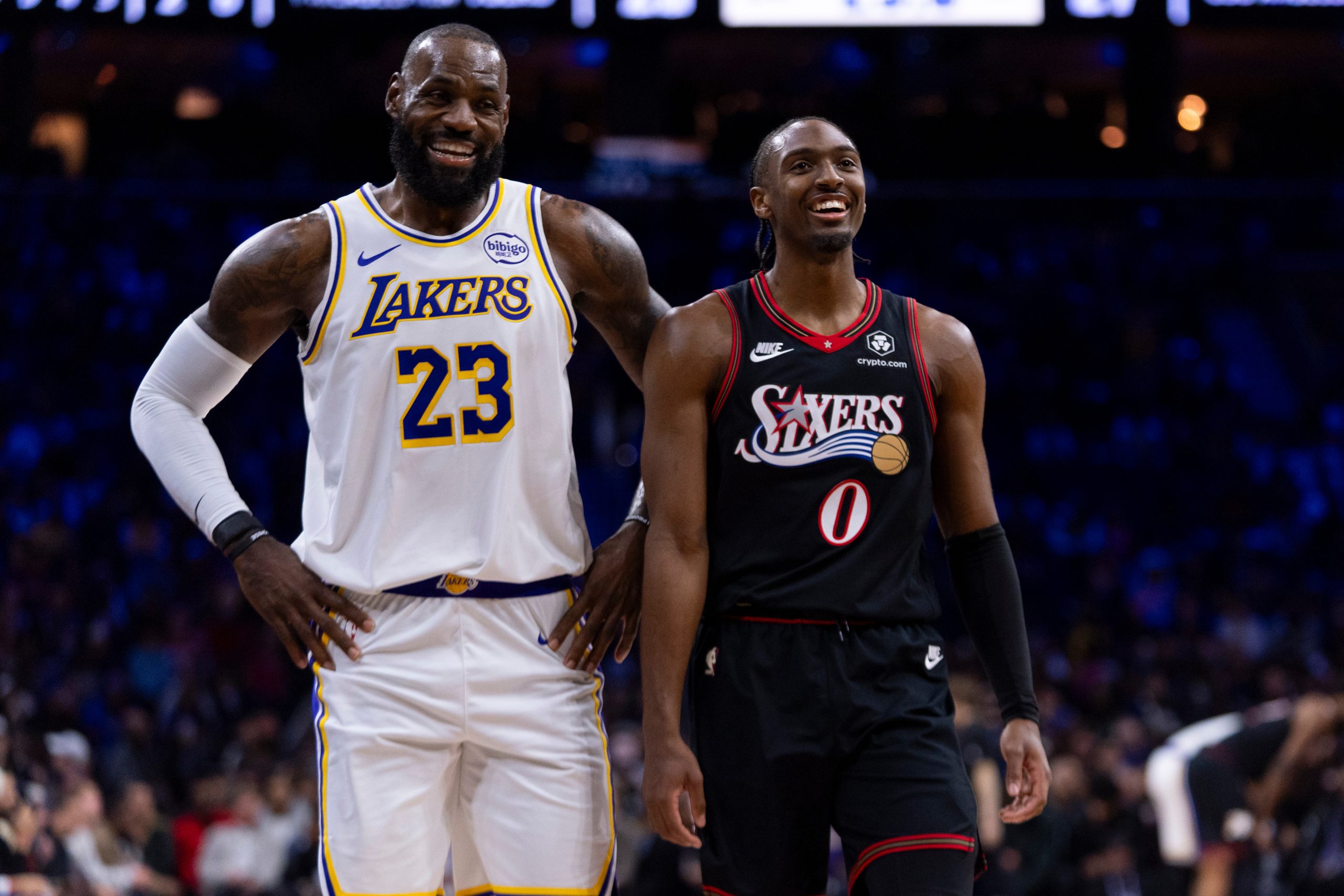
LeBron James chose the Sixers the only way he could.
By letting everyone think there was no way he would.
It all makes a little more sense now, doesn’t it? The weeks of deliberations, the radio silence, the professions of ignorance from those close to James, the cryptic dispatches from the Man Behind the (Recording Studio) Curtain. For nearly a month, the world watched and waited and speculated amid a maddening self-muzzling interrupted only by the occasional communication via proxy. What we knew came almost entirely from a handful of podcast episodes where Rich Paul sounded more like a bystander than James’ agent and confidant.
Eyes were rolled. Deep breaths were sighed. Every lapsed news cycle was another shell in the stockpile of the critics and skeptics and purists who prefer brands of basketball to basketball brands. James’ most hostile audience has always been those who would rather live in a world where the Greatest of All Time is not first and foremost a business, man. But let’s give them their due. Even someone who is unbothered by the primacy of the 1099 in sports could have found their patience tested by James’ monthlong melodrama.
In hindsight, James’ actions seem perfectly reasonable. This wasn’t attention-seeking behavior. It was the private torment of a man who was about to choose, via his own free will, to move from Los Angeles to Philadelphia.
But it is deeper than that. Everybody involved needed it to go down this way. The significance of James’ signing with the Sixers is that he had every reason not to. He had other options, all of which had won championships within the last decade-and-a-half. They had superstars, some of the greatest to ever play the game: Steph Curry, Nikola Jokić, Giannis Antetokounmpo, James Harden.
They had stronger personal ties, more spotlight appeal. They had the tech scene, the outdoors, the party scene. James said he was looking for basketball bliss. Which means there is a lot of political capital in the fact that he chose the Sixers. The basketball is all they had to offer.
LeBron James has a well-documented friendship with Tyrese Maxey with both being part of Klutch Sports.Chris Szagola / AP
It’s perfectly valid to question whether James at 42 years old will create the on-court impact worthy of the hoopla surrounding his decision. There are plenty of scenarios where the sum of the parts exceeds the whole. That’s true even before you factor in age and injury. In James, Jaylen Brown, and Joel Embiid, the Sixers have three players who are accustomed to having the loudest voice in the room. In Tyrese Maxey and VJ Edgecombe, they have two young players who have been plagued by bouts of deference when sharing the court with more established veterans.
Yet, therein lies the significance of James’ deliberate evaluation of his options. The great general Charles de Gaulle once said that silence is the ultimate weapon of power. For weeks, everyone wondered what he would decide, and why. They thus imbued his ultimate decision and explanation with a tremendous amount of power. It meant something when James finally picked Maxey, and Edgecombe, and Brown, and, yes, Embiid. Everybody assumed James wouldn’t pick the Sixers because they were the Sixers. But he did pick them, which automatically makes them something nobody thought they were before.
Intentional or not, James’ decision-making process has empowered both his new organization and his new teammates before he has even arrived.
You probably saw the social media video Maxey released in the wake of James’ signing. It was just a few seconds of him yelling spastically. You have to think that there was a little bit of that going on inside Brown and Embiid as well. At various points over the last few years, both players have allowed their veils to slip from their insecurities. Brown, passed over for the Olympic team after winning NBA Finals MVP, second fiddle to Jayson Tatum, inefficient, overpaid, not a real superstar.
Embiid, injured, maybe finished, soft, selfish, supplanted by Maxey and Edgecombe as the heart and soul of a franchise. Who knows how those insecurities would have played in a power vacuum like that which could have existed without an unquestioned adult in the room. Insecurity is mostly thirst for validation. To be good enough for the best is a heck of a quench.
Part of me wonders whether LeBron’s real attraction to the Sixers is an opportunity to lead. Not that he hasn’t always led, in both spirit and example. But the Sixers offer him a unique opportunity.
More than any of the teams that pursued him this offseason, maybe even more than any team he has been on to this point, the Sixers were a team that genuinely needed exactly a player and a person like James is right now. It will be fascinating to see how the whole thing will look on the court, and what part James will play. Don’t be surprised if his biggest impact has already been made.
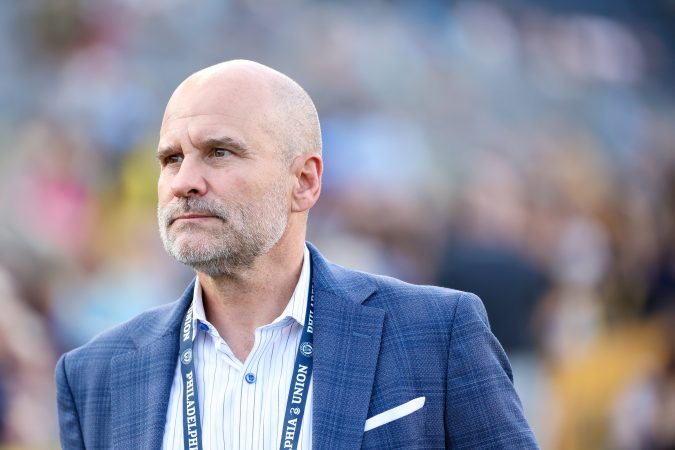
Union president Tim McDermott wants to clear a few things up.
McDermott, 51, who has hit multiple stops along the Philly professional sports highway as a former executive with both the Eagles and Sixers, is in his 11th year with the Union.
He’s been able to do a lot with what some might view as a little by resource standards when it comes to the first team — though he readily contends the money is there from ownership “should the right situation present itself.”
But in a town like Philadelphia, he’s well aware that success, when it comes to sports teams, is a year-over-year proposition. From an optics standpoint, after finishing off another successful season last year, winning their second Supporters’ Shield under a first-year head coach, depending on who you ask, the team has temporarily fallen off the precipice of relevancy — at the worst possible time.
With the eyes of the world on soccer courtesy of this summer’s FIFA World Cup, this was supposed to be the Union’s moment, showcasing itself as a powerhouse club in America’s domestic league situated in a city fortunate enough to be one of 16 that hosted FIFA’s grand event.
The Union hosted a series of jam-packed watch parties for the World Cup at Union Yards in Chester. However, it went into the World Cup break with just one win and was forced to take a hard look at where the club was going. Yong Kim / Staff Photographer
Instead, the Union limped into MLS’ World Cup break with issues both on and off the field, winning just one game and mired in the drama of its head coach losing a locker room and its sporting director undergoing league-mandated sensitivity training after allegations of misconduct were substantiated.
It forced a reset of almost everything. Ownership let both the coach and sporting director go, ushering in a fresh start in the player personnel department for a team that desperately needed it.
That lack of success has also ushered in reflection, as McDermott explained during a recent interview with The Inquirer. A reset that forced everyone from ownership on down to take a look at the club, not just in its current state, but visualize what the future looks like with the sport getting fresh eyes, courtesy of the World Cup.
Tim McDermott spearheaded the launch of the WSFS Bank Sportsplex in Chester, a 170,000-square-foot indoor facility complete with a series of outdoor fields, which opened last July. Tyger Williams / Staff Photographer
It’s a wide-ranging analysis, and it comes in two tiers. On one hand, you have devout ticket-paying supporters of the club, who contend that the Union doesn’t spend enough, that they rely on youth over experienced, world-renowned talent to win games.
Some say that among a hodgepodge of players, where is the one that you can build a team around? They’ll point to teams like defending champions Inter Miami, whose budget and star power dwarfs that of the Union.
Or Los Angeles FC, or Orlando City, or Vancouver, or…
McDermott will stop you right there. While he admits that those teams have readily found success with bringing in European stars to build a roster around, their model is very different. McDermott told The Inquirer that an annual investment of $10 million is spent on developing within the Union’s academy system, fostering the growth in everything from its school, YSC Academy, to coaching staffs, to maintaining the sprawling WSFS SportsPlex, basecamp for the Union’s youth movement.
“If you look at the entirety of how we do things, it does rely heavily on youth development,” said McDermott. “We’ve been very good at that, and we’ve been recognized as being the best at that.
“If you look at our [first team] payroll, we’re toward the bottom, and that’s what I think people get upset about, and it’s a fair statement. But what I would say is there’s lots of ways to bring players in, right? You can go free agency, you can go to transfers, you can transfer in the market, or you can bring people in from the league, outside the league, etc. There’s lots of different ways to do it. And we’ve chosen many of those methods, but we’ve [also] chosen heavily in youth development.”
But that’s the other issue. Retention of those young players. Over the last few years, the Union has brokered many of those it groomed within its system for substantial transfer fees to and from other clubs.
Perhaps its biggest young star at the moment, midfielder Cavan Sullivan, is set to move to Manchester City upon turning 18, and U.S. men’s national team standouts like Brendan Aaronson, Mark McKenzie, and Matt Freese were all shipped elsewhere. All of this has prompted the Union to be labeled as a “selling club” by many who say that comes first and that the franchise and ownership are content with just getting into the postseason but not doing anything more to lift a trophy.
Union midfielder Cavan Sullivan, a rising American star who hailed from the Union’s youth academy, is set to head to Manchester City as part of a $5 million transfer fee to the English club. Yong Kim / Staff Photographer
“I totally agree. I don’t think they’re wrong; I don’t think they’re wrong at all, but I think that’s more of a big picture problem that’s out of our immediate control,” McDermott said. “I want this not just for the Philadelphia Union, but for the MLS to grow. There needs to be a point in time where the players that are coming through our youth academies are starting to say, ‘No, I don’t want to leave. I want to do it here in my hometown.
“I think it has to also be on the players themselves [who] are not always looking overseas. We’re developing players, and we’re transacting in MLS, but keeping them in the lab right here is what’s going to elevate MLS to a higher profile.”
‘Our goal is to win’
As McDermott tells it, new sporting director Jon Scheer has been “working the phones heavily.” He says the club knows it needs to bring in new players, and added that there’s a board with “bigger name players” that they’re “actively working” to bring in. However, he contends it has to be a player that fits the club’s current methodology, a high-pressing team that will attack opponents from the outside, and frustrate defenders with dizzying diagonal runs wherever space allows.
The World Cup has offered a great look into some potential names, but at the time of this report, it seemed like it was only a discussion.
“I’ll just tell you right now, we’ve fielded calls for potential players over the last two weeks,” said McDermott. “We have a weekly call with ownership, myself, and Jon Scheer, and these names come up. But the question is always what does that do for our team?
“On the other side, we field calls about our own players and we may or may not transact on a player because we want to make sure that our focus is winning, right? What’s the point of the transaction if it’s going to make us less competitive? Maybe now’s not the time to do it. But you’re always balancing that.
“If somebody makes you an offer, you don’t know if that offer will be there a year from now, right? So you’re always trying to balance that. Our focus is we must win. The goal is not just to develop players to sell them. Our goal is to win.”
Bringing back players like Union left back Kai Wagner (27) cements that the team is looking to align itself with players that want to play in Philadelphia. Isaiah Vazquez / For The Inquirer
A place in Philly
McDermott inherited a hurdle when he joined the Union in 2016. How do you maintain relevancy as Philadelphia’s Major League Soccer representative from 18 miles away in Chester?
He knows that while the team’s marketing efforts aim to keep a grip on the collective consciousness of a city, as it’s stood since its inception, the Union’s success of filling up a stadium each game day heavily relies on people getting in their vehicles and navigating the I-95 corridor. But there begs a question. How many more fans could the club have with a stadium or a facility in Philly proper, situated somewhere fans can access the team by SEPTA, their bike, or even walk?
When asked the question, McDermott noted that the Union isn’t unique in being the only MLS franchise with a stadium outside city limits, and he’s right. Several clubs represent cities with stadiums outside their city limits, but many have begun to realize that there’s a real need to inhabit the city that emblazons your crest.
One of the more recent examples is the Chicago Fire, which last year announced plans for a $750 million, 22,000-seat stadium to be constructed downtown, financed entirely by team ownership.
It’s the type of move that inherently brings interest, and aligns the team more with being a part of the city. McDermott recognizes that too, and didn’t disagree that there is a connection lost by way of the Union’s footprint in Chester. However, in the same breath, he acknowledges just how good Chester has been for the growth of the club.
For the last 16 years, the Union have enjoyed an immense amount of success at Subaru Park, which opened as PPL Park in 2010. Philadelphia Union
But, according to McDermott, that doesn’t mean that the Union isn’t “actively studying” how to replicate what Chicago did.
“We have a great relationship with Delaware County and with Chester; that’s been phenomenal, and they’re incredible supporters of ours,” McDermott said. “But I would say at a more macro level, if you look at all of the teams that have come into the MLS in the last decade, where are they located? A lot of them, not all, but a lot of them are in a downtown location. That fact is not lost on us. I think it’s fair to say we’re proactively studying is that something we need to look at in the future? And is our future in an environment that looks like that?”
The exterior of WSFS bank Sportsplex in Chester.Alejandro A. Alvarez / Staff Photographer
As it stands, the Union sits on infrastructure, to the tune of over $300 million, when you consider the cost to build the stadium in 2010 for a reported $122 million, the newly designed WSFS SportsPlex, which came in at a $100 million price tag just last year, in addition to its annex for the first team, offices, and school in the adjacent Wharf Building.
“We are very comfortable where we are right now,” McDermott said. “It’s been a fantastic relationship. I think we’ve done a lot in terms of the development that we’ve done in Chester. But thinking about what a move downtown or some other place [within the city] would look like, I think it’s fair to say we have to be aware of it, studying it and being thoughtful to see if our future would be brighter if we were in a situation like that. So, I can say that yes, we’re actively studying that process and what that would look like.”
‘Still have our homework to do’
Perhaps the portion of the sitdown with McDermott where his eyes lit up was the notion that growth and expansion of the club comes from getting people out to matches. It’s a fair point, considering the Union’s gameday experience has been repeatedly lauded as one of the best in MLS, winning a J.D. Power Award for best fan experience just a year after McDermott joined the club in 2017.
Amanda Young Curtis, the club’s vice president of communications, told the Inquirer that fans who attend just three matches are significantly more likely to lock in as season ticket holders.
She said that it comes down to a few facets beyond just increasing brand awareness, but it’s everything from capturing new fan data to wooing potential first-time attendees with discounted tickets to, and perhaps most importantly, “converting attendees into repeat visitors.”
The Sons of Ben have been a devout supporters group for the club. To McDermott, a goal of ushering in more fans to the Union brand has to be the ultimate goal. Isaiah Vazquez / For The Inquirer
McDermott agreed, and added:
“We need to make sure that not only do they come and have a good time, but we’re actively always thinking about how do we get them back two more times. The likelihood of locking them in jumps pretty significantly. It’s why we’ve initiated this whole concept around trial and retention, and I believe that the momentum from the World Cup offers a major strategic opportunity for us to do that.”
But an area where McDermott says the Union still has their work cut out for them is cultivating stronger partnerships with youth clubs from an awareness standpoint so young players and their parents gravitate to the Union as supporters.
And for the youth coaches clutching pearls thinking that the Union is trying to woo a player away from their club, McDermott says it’s not about that. In fact, this notion transcends recruiting. Kind of…
“I think there’s two parts,” McDermott said. “There is the fan development part, and there’s the kind of talent identification part, and they somewhat link together. I’ll go back again to when my kids were 6, 7, 8 years old, and I was on the sideline of my daughter’s games. I looked down the sideline, and I saw all these parents wearing Eagles green.
Union president Tim McDermott contends that while the team has celebrated an immense amount of success, more is yet to come through the planning being done behind the scenes. Isaiah Vazquez / For The Inquirer
“I know we’ll be successful when I look down the sideline at a kid’s game and they are wearing blue and gold. I had many different instances like that where I felt like parents and the kids that were in the youth soccer ecosystem weren’t necessarily matriculating to being a Philadelphia Union fan, and we still have our homework to do to change that.”
McDermott knows the Union has work to do across the board from a grassroots perspective on up. In the immediate, righting the ship in an forgiving league like MLS is the goal, and the club is off to a strong start coming out of the World Cup break, winning two consecutive matches for the first time this season following wins against Red Bull New York and an impressive Saturday win over Seattle, two teams that if the season ended today would be playoff-bound.
It’s a great start in the eyes of a guy like McDermott, who contends his approach has always been to win. And listening to him speak now, it appears that talks are happening between ownership and team leadership about doing so — at all costs.
“As president, my job is solely focused on how can we win, across the board,” McDermott said. “I want to win; everyone in this organization wants that, but the culture is always and has to be first and foremost. You gotta have guys that want to play for each other, that believe in the system, that care for each other, that love one another and that are good quality character people.
“I think on the whole, we’ve really been doing a great job with that over the years. I’m not just talking about where we’re at today, but I’m talking about the last six, seven, eight years; we’ve been building towards having success, and we’ve had success. We’ve won a lot over the last five, six years, so our design works. I think [this reset] provides a real look at what we need to do to get back to that, and in the conversations we’re collectively having daily, I have no doubt that we’ll get there. None.”
Purchase the front page reprint of The Philadelphia Inquirer from Saturday, July 25, 2026, featuring LeBron James following the news that he was joining the 76ers.
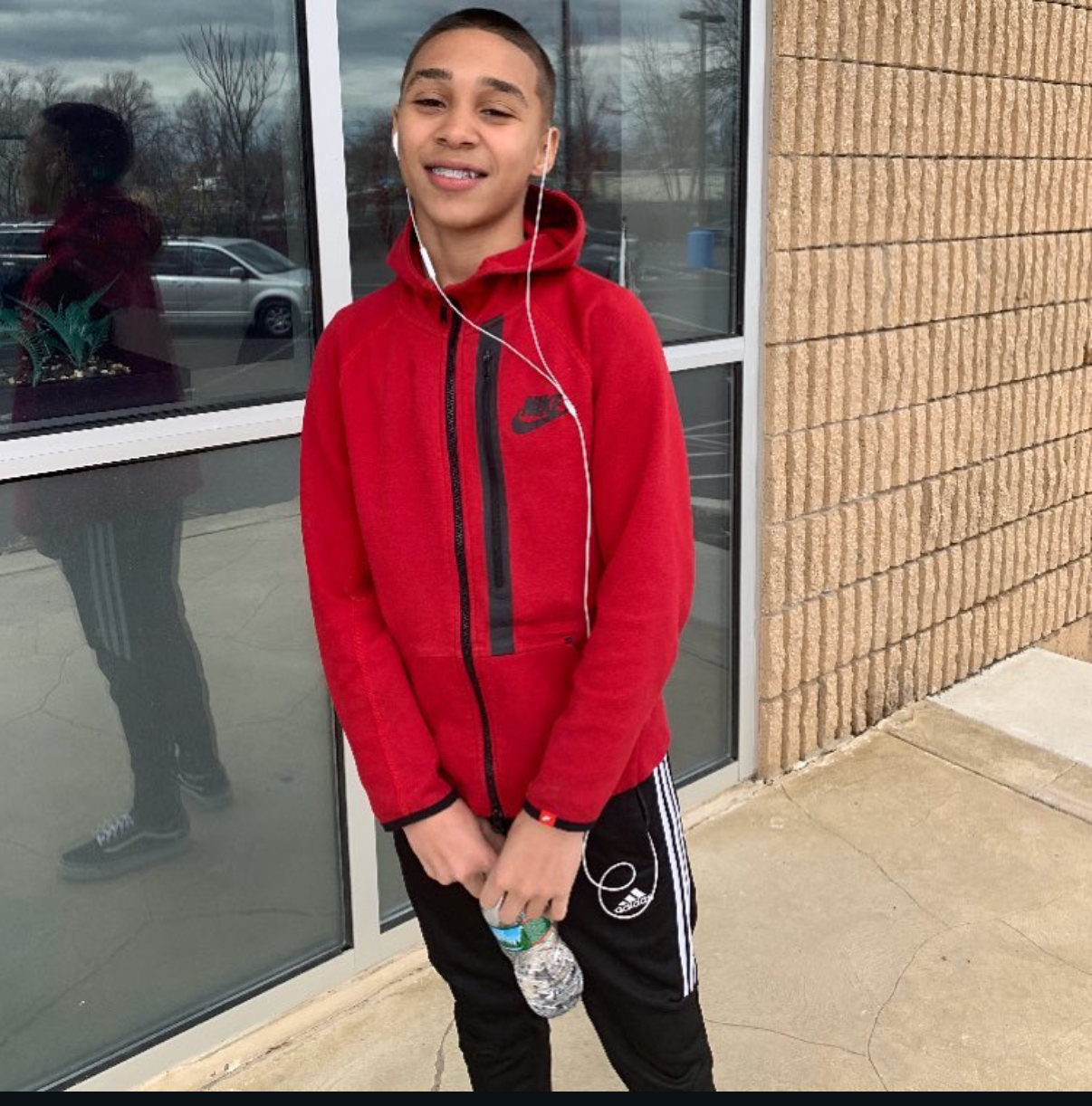
The first thing people noticed about Jadin Aviles was his smile. It was bright and big, and became part of his identity. Not just because of his youthful spirit, but the work that shaped each glistening tooth.
When Aviles was 9, his mother, Emelissa Gonzalez, saw that he was closing his mouth in photographs. Sometimes, he’d cover it with his arm. She asked why; Aviles explained that he was insecure.
Gonzalez turned to her son.
“Don’t worry,” she said. “Once we hit a certain age, we will get them done.”
A few years later, the mother surprised him with a trip to the orthodontist in Northeast Philadelphia. Not every child would react with enthusiasm, but this child did.
Aviles eagerly picked out the colors of his braces — red and blue — and was diligent in wearing his rubber bands. Tightening the wires was hardly a chore; the teenager saw this as a necessary (albeit painful) step to getting the grin he wanted.
By age 15, he finally had it. Aviles smiled constantly — so much so that his friends began to tease him. But he didn’t mind. Gonzalez had invested her hard-earned money. He had treated that investment with care. Wasn’t that something to be proud of?
Aviles brought the same industrious energy to basketball. He played in two youth leagues — La Liga Del Barrio and Timoteo Sports — as well as on his high school team, Maritime Academy Charter.
Athletic director Kevin Schultz would let the shooting guard and his teammates into school early, so they could shoot from 5:30 a.m. to 7:30 a.m.
“Class started at 8:02 [a.m.],” former Maritime teammate Andy Figueroa said. “So we was in the building before all the teachers.”
Aviles wasn’t competing in front of a packed Palestra, but he did become a “street legend” in North Philadelphia, according to those who knew him.
This was as much about his ferocity as it was his empathy. The teenager would rarely, if ever, jaw at referees. He’d often extend a helping hand to an opponent who’d fallen on the court.
“He would come to our church sometimes,” said Pastor Rob Whitmire, executive director of Timoteo, “and to see how he cared for people, it was something unique. Because, if I’m thatguy, if I’m that player, that’s really not how they carry themselves. It’s not a caring spirit. And he just had a caring spirit.”
His community is now trying to keep it alive. On May 12, Aviles was riding his moped in a bike lane on Aramingo Avenue. A pickup truck, turning left, ran him over. Aviles suffered extensive brain damage, and died that night.
He had just turned 20.
It is a devastating loss, one that friends and family have struggled to reckon with. To many, Aviles, with his beaming smile, was brightness incarnate. He seemed to make all the right choices. How could things go so horribly wrong?
As North Philadelphia celebrates his past, and mourns his unfulfilled promise, they’ll continue to point to Aviles as an example. Proof that a life built on kindness and respect can be a life well-lived, no matter how it ends.
Sam Aviles with his son, Jadin.courtesy of Sam Aviles
Bonding through basketball
Aviles grew up with his mother. His parents broke up when he was 2 but maintained an amicable relationship. Even as a child, the future basketball star was self-sufficient.
He wasn’t the kind to throw a temper tantrum in a toy store. He rarely cried. If he did, his father, Sam, could quickly calm him down with a meal and some TV.
By the time he was 9, Jadin’s uncle and grandfather, who worked in electricity and construction, were teaching him odd jobs around the house.
The third grader knew how to navigate a switchbox and how to repair a lamp fixture. Once, when a pipe burst in the bathroom, Aviles called Gonzalez’s brother, Emanuel.
“‘Hey Tío, how do I fix this?’” she remembered him saying. “And over the phone, he’s literally fixing a pipe.”
Sam introduced the younger Aviles to basketball at age 5. He’d heard about La Liga through a cousin and signed Jadin up. One day, in the fall, they went to Towey Playground, around the block from Gonzalez’s home.
Jadin Aviles took early to multiple sports, but basketball quickly became his greatest love.courtesy of Emelissa Gonzalez
Sam was a new father, with no experience in youth sports. He did not realize that his son would be playing on a smaller court, with a hoop eight-feet high. So, they started practicing at the regulation-sized Towey, with Jadin chucking basketballs from above his head.
The boy didn’t complain, but once he and his father showed up to La Liga in December, it dawned on them that they had overestimated these dimensions. Even still, Jadin took to basketball, and began to participate in La Liga every winter.
Shortly after, Sam joined the organization as a coach. The father and son became inseparable; often watching games together, and taking extra shots at the Mariana Bracetti Academy gym (where La Liga is based).
The younger Aviles soon added another league, Timoteo, in the hopes of further refining his skills. At both stops, he established himself as a tough and bullish guard, who played far beyond his stature.
Whitmire became familiar with Aviles through his church, Grace and Peace Community Fellowship, where the teenager would volunteer. When the pastor first saw him play, in 2020, he didn’t recognize him.
The Jadin Aviles Whitmire knew was quiet and reserved. This kid was anything but. Eric Moore, assistant director at Timoteo, remembers that day vividly.
Aviles was in eighth grade, battling older students at the Esperanza High School gym. Moore and Whitmire stood in the back corner.
“And he was like, ‘Yo, is that Jadin?’” Moore recalled. “And I’m like, ‘Bro … yeah.’ And he’s like, ‘His defense is phenomenal.’
“And I was like, ‘Wait till he gets the rock. Wait till he handles the rock.’”
Added Whitmire: “I saw him come down and pull up on a guy and shoot, and I’m like, ‘Oh.’ There was something about his form that’s like, ‘No, that’s not normal. That’s not a rec player.’”
Jadin Aviles became a factor on the court and an approachable mentor to younger teammates.courtesy of Emelissa Gonzalez
At La Liga, Aviles always competed above his age group, and consistently held his own. His father called him a “giant slayer”; fully grown, Jadin stood at only 5-8, but was unafraid of opponents who were taller and larger than he was.
The numbers back this up. For five years in a row, Aviles averaged at least 11.1 points per game. He increased his scoring in 2025, with 24 and 46-point games. But despite his offensive output, he also devoted time and energy to his shortcomings.
One of the guard’s proudest moments came in 2023, when Timoteo named him defensive player of the year.
“[A coach] started working out with him, and he would ask what they wanted to do that day,” Sam said. “And Jadin was like, ‘Defensive drills, defensive drills, defensive drills.’”
Sam joined Timoteo as a coach in 2021, with the goal of spending more time with his son. But then an unexpected opportunity presented itself.
In 2022, Maritime’s head coach, Ercel Ballinger, contacted Sam to see if he would be interested in running the junior varsity team. He agreed, and took a job at the school a year later as a member of the support staff.
Jadin, who spent his freshman year at Roman Catholic, transferred to Maritime to play for his father. It turned out to be a life-changing decision. The younger Aviles thrived in the Philadelphia Public League.
He was reunited with childhood friends like Yozuet Pagan, an older kid on the block who taught him ballhandling and finishing at Towey. And as he matured, Aviles became comfortable taking on that role himself, with younger teammates.
Jadin Aviles flourished as a player after transferring from Roman Catholic to Maritime.Elizabeth Robertson / Staff Photographer
Andy Figueroa was the biggest example of this. Like Aviles, he’d tried Roman Catholic, only to find it wasn’t a fit. The veteran guard began to check in on his pupil, and one morning, he approached the 16-year-old in the hallway at school.
Jadin knew Figueroa had been struggling, and was at risk of becoming ineligible.
“He was like, ‘We need you on the court for our next game. So make sure you’re doing everything right,’” Figueroa recalled. “That made me realize that I got to make sure I do well, not just for me, but for my teammates, too.”
Aviles’ words were only bolstered by his play. By senior year, he was putting up career numbers, in points (15.3), rebounds (4.3), assists (2.5), and steals (3).
The teenager’s magical season came to an end on Jan. 23, 2025, Maritime’s senior night. A few hours earlier, Aviles told his father, who had since been promoted to varsity head coach, that he would “leave it all out on the court.”
And he did. Facing Hill Freedman World Academy, which sat atop the conference, Aviles dropped 25 points with four rebounds and five steals. The Juniata Boys & Girls Club was packed to capacity, and their crowd was going berserk, almost as if it were a cathedral all their own.
Sam Aviles (left), with Jadin Aviles’ sisters Madison and Mia Valerio, and stepmother Alexis Ferranti, witnessed Jadin’s development on the court. Elizabeth Robertson / Staff Photographer
A bright future, a brutal end
Aviles could have gone to college if he wished. Small institutions from Philadelphia and the surrounding areas sent him letters in the mail. Sam found a trade school in Media with a basketball team.
But none of this was enough to persuade him. Jadin wasn’t interested in sitting in a classroom, or accruing student debt. He was interested in working, though, and 30 days after he graduated, he was hired at Menasha, a packaging company on East Erie Avenue.
Two of his cousins worked there, as well as his uncle, James Arroyo Jr. It was an unnatural transition; Aviles was hired to work the night shift, from 11 p.m. to 7 a.m.
But as with most challenges in his life, the teenager embraced it. Before long, he was training for a promotion, going from stacking boxes, an entry-level role, to running the label machine.
“He got in there and [excelled],” said Arroyo Jr. “He hosed up pretty good.”
The job provided a good salary and strong benefits, giving Aviles a level of financial freedom he’d never experienced. He was proud of this, telling family and friends that he had “all of his bills on auto pay.”
In February, Aviles and his girlfriend, JaedaRodriguez, rented an apartment at Roosevelt Boulevard and C Street. It was a big step for them; Aviles had never lived apart from his mother or father.
Emelissa Gonzalez was proud of her son, Jadin Aviles, but had reservations about how quickly he had become self-sufficient. Jose F. Moreno / Staff Photographer
And Gonzalez was skeptical at first. She can still remember the day he told her; how nervous he was.
“I was like, ‘Is she pregnant?’” Gonzalez recalled. “‘Don’t tell me that I’m a grandma!’”
Aviles explained that he was moving out. His mother’s response was short and succinct: “Boy, no. You can’t be doing that.” But eventually, she warmed to the idea, and as Gonzalez packed her child’s belongings, in his new home, she began to cry.
“What’s wrong?” he asked.
“One day you will understand,” she replied.
The couple loved their newfound life. Within weeks, they’d adopted a pit bull from a local animal shelter — “Bubba” — and began to put him through dog training. Aviles suddenly had access to things like trips to the Shore and a newer car.
From a young age, he was drawn to bikes. Sam bought his son a black moped when he was 16, a miniature-motorcycle from Walmart that had a “lawnmower for an engine.”
Now, Aviles was able to purchase one of his own, and on May 11, he and a family friend, Kenny Enrique, drove to Allentown to retrieve it. They loaded the two mopeds into Enrique’s car, and brought them back to Philadelphia.
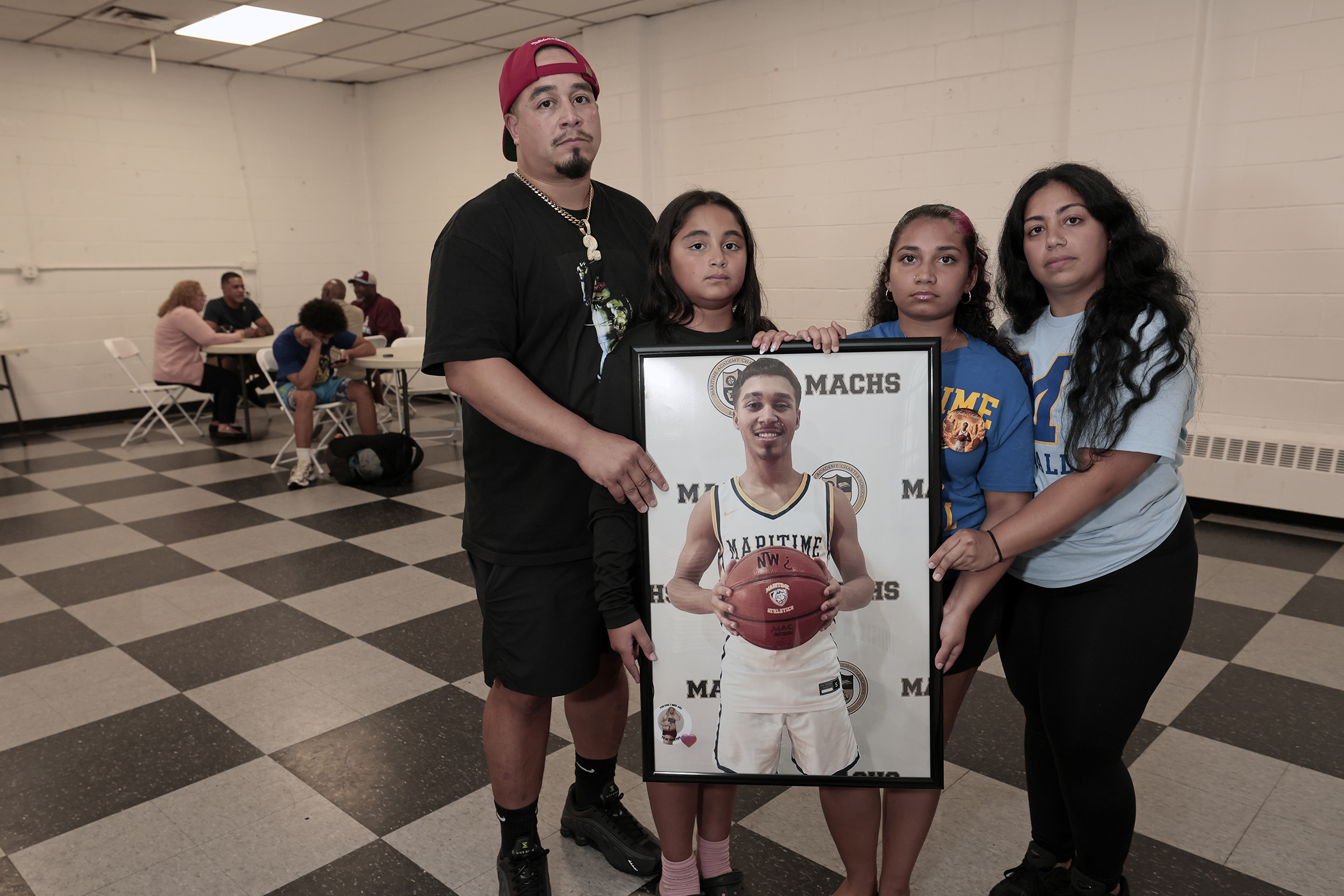
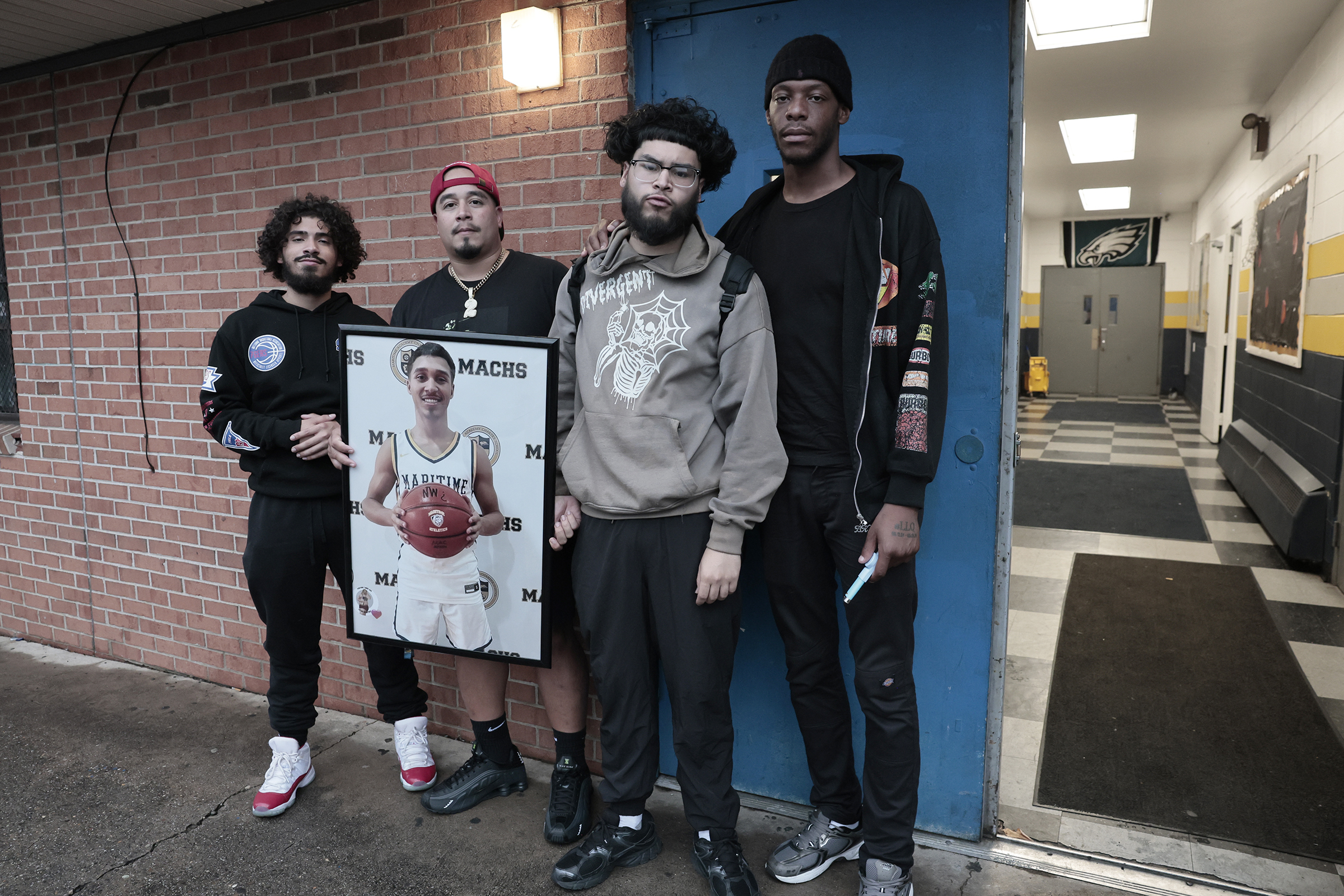
Hector Rosado (from left), Sam Aviles, Lucardo Marrero, and Sincere Jackson hold a photo of Jadin Aviles as they stand outside of the Juniata Park Boys & Girls Club earlier this month. Elizabeth Robertson / Staff Photographer
The next afternoon, the two men departed Aviles’ apartment in Olney, riding the mopeds to visit Sam at Maritime. They turned onto a bike lane on Aramingo Avenue; Jadin in front, Enrique behind him.
As they approached the four-way intersection, a pickup truck emerged in the left lane, heading northbound. A Philadelphia police report stated that the driver turned while the light was green, but failed to yield the right of way.
The right side of the truck hit Aviles. He fell to the ground and was run over. Enrique ran to find his friend face down, with his hood over his head, the moped laying a few feet away.
Enrique knelt and placed his hand on Aviles’ arm. Traffic began to slow; a few passersby stopped to call an ambulance. As Enrique went to retrieve his bike, he noticed something out of the corner of his eye.
“The [driver of the truck] was still moving,” he said. “I’m not going to say he left, but he probably would have left if I didn’t start yelling at people to make him stop.
“So, I started yelling, ‘Stop that truck, stop that truck!’”
The driver remained at the scene, where both men were questioned by the police. Throughout his interview, Enrique asked whether or not officers would give an alcohol or drug test to the driver.
“He said that our officers are trained to identify when somebody is under the influence,” Enrique recalled. “And I said, ‘Well, what’s an opinion versus an actual drug test or a blood test?’
“And he just ‘never minded’ what I said. I said the same thing to the next officer. They just ignored me.”
Officers later discovered that the driver of the truck had twice had his license suspended for driving under the influence, and did not have insurance at the time of the crash, according to a copy of the police report obtained by The Inquirer.
The police department’s Crash Investigation Division obtained footage of the fatal collision. One of the responding officers’ body cameras was “activated through the duration” of the interviews at the scene, the report shows.
A police spokesperson said that the crash remains under active investigation, and that the driver is cooperating with authorities.
The department did not respond to additional questions that The Inquirer submitted about the investigation, including why the driver of the truck was not required to undergo testing to determine if he was under the influence of drugs or alcohol.
Aviles was transported to Temple University Hospital, where his parents joined him. Sam’s girlfriend, Alexis Ferranti, met them there, as didRodriguez.It wasn’t until 7:03 p.m. that the family was able to see Jadin, who was unresponsive.
The 20-year-old’s face was wrapped in a bandage, covering the smile he’d worked so hard for. He couldn’t move or speak. Doctors told Gonzalez and Aviles that they had about an hour to say goodbye.
The parents prayed, and listened to Christian music, and told their child how much they loved him. That they were there for him, even if he couldn’t see them, and that they’d always be there for him.
“And we all watched,” Gonzalez said, “my son go with the Lord.”
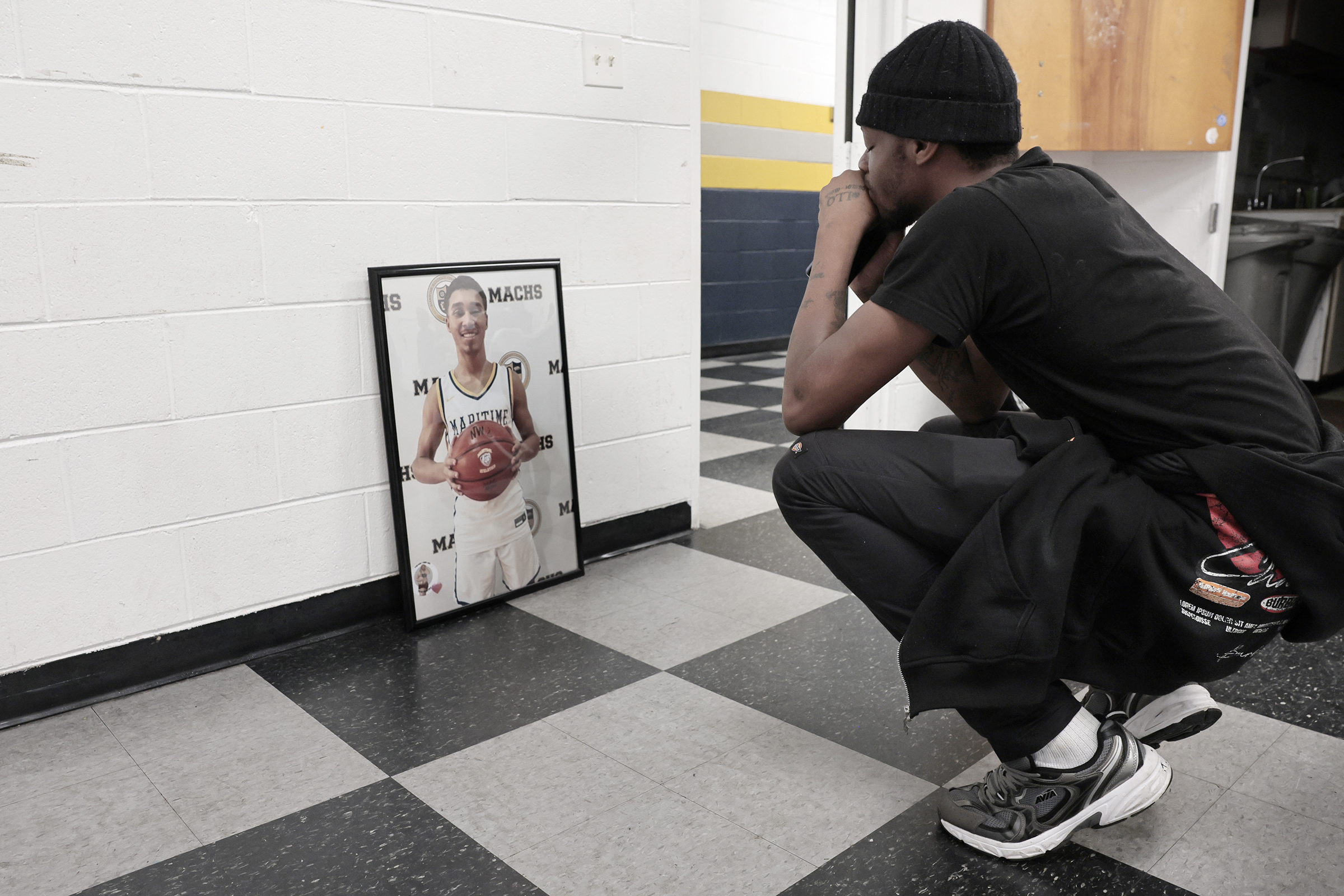
Jadin Aviles’ friends and former teammates, including Sincere Jackson (pictured), remember a good person who developed himself into a basketball standout. Elizabeth Robertson / Staff Photographer
A funeral on hardwood
The funeral was held on the morning of May 22. Initially, Gonzalez and Aviles planned to use her church, but realized it couldn’t contain the large crowd they were expecting.
So, they moved the service to the Juniata Boys & Girls Club, a place where their son had some of his greatest moments. Building employees took out the scorer’s table, and angled team benches toward the court.
Rows of chairs were stacked in the middle, all facing a casket underneath the hoop. Just like on Jadin’s senior night, the gym was filled with people; so many that a line wrapped around the block onto Castor Avenue.
They came from all corners of the neighborhood — Hunting Park, Olney, Kensington — shuffling in and out to pay respects. At one point, the funeral director had to turn mourners away, because the family was able to rent the gym for only two hours.
It was a surreal day, especially for those who had played with Jadin on that same floor. Dominic Lopez, a Maritime teammate, thought about Aviles’ 25-point game.
Andy Figueroa did, too. After it was over, he walked up to Eric Moore, who’d watched Jadin grow up at Timoteo, to ask how he was doing.
“And I told him, ‘You are Jadin,’” Moore recalled. “‘Own it. Because you are him. You are that person.’”
Jadin Aviles’ family and friends are attempting to move on from his loss while honoring his memory. Jose F. Moreno / Staff Photographer
There has been an emptiness in North Philadelphia since Aviles passed. Spaces he used to frequent are quiet. Ray and Esther Alvarez, who run La Liga, returned to their home gym in June.
Esther found herself thinking back to that kind boy, who would always greet her with, “Bendiciones, Titi.”
“I knew I wasn’t going to physically see him,” she said, “but I was waiting for my bendición.”
Aviles’ spirit will continue to permeate. La Liga is planning a memorial fund in his name. Sam is thinking about hanging one of his jerseys in the Maritime rafters.
But perhaps the best way to honor him is to emulate him. To tell young people about a giant on the court and a leader off it, who was so remarkable, and so loved, that he drew hundreds, maybe a thousand, to his funeral.
And that he did it all on his own, with hard work and a big smile, and that someday, they could, too.
A year ago, Priya Brown spent many weekday afternoons sitting in traffic, inching home to Northern Liberties from her job in the Navy Yard.
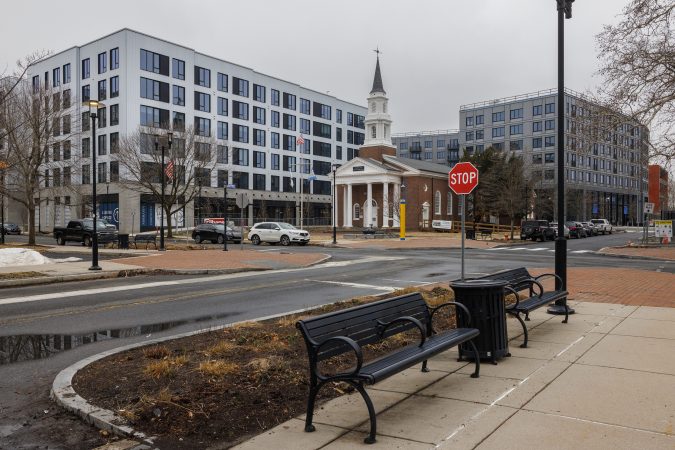
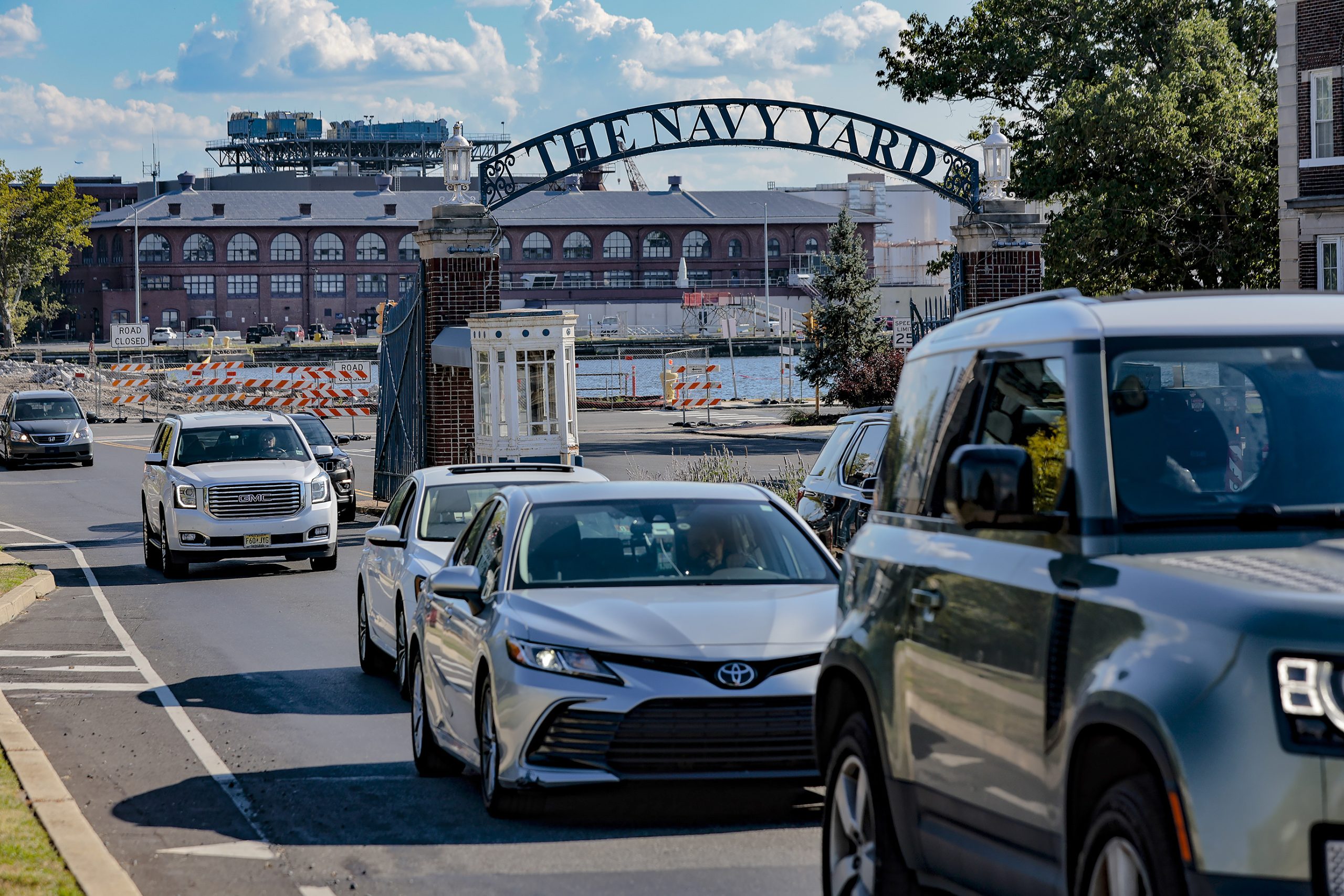
Since moving into the new apartments at South Philly’s converted military base in January, the 27-year-old said her daily routine has gotten much more relaxing — with far fewer brake lights. An assistant buyer at Anthropologie, Brown walks 10 minutes to her office at Urban Outfitters’ Navy Yard headquarters.
“My life is so much easier,” Brown said last week as she walked her tiny basset hound, Momo, around her building, AVE Constitution. The air was quiet, save for an occasional bird chirping and the steady hum of planes making their descent into Philadelphia International Airport.
“I’m not a city person,” added Brown, an Annapolis native who moved to Philly for work. In Northern Liberties, “I missed grass a lot.”
The Navy Yard has open space and paths for walking and running, as seen in this 2022 file photo.Yong Kim / Staff Photographer
Brown pays about $2,400 a month for her one-bedroom, she said, and takes advantage of the free and abundant street parking, a rarity elsewhere in the city.
It also includes more than 20 acres of parks and miles of walking paths, some along the Delaware River, as well as a restaurant and hotel.
Now, it is also home to a small but growing number of residents.
More than a third of the 347 units in Constitution are leased, according to Sam Korman, AVE’s director of operations. Next door at Normandy, which opened this spring, more than 20% of the 267 units are leased, according to Korman. Normandy includes unfurnished apartments for tenants, as well as furnished ones that are marketed to business travelers. Lease-ups for buildings of this size typically take about 18 months, a spokesperson for the company said.
“We are extremely pleased with the reception to AVE Navy Yard through our first few months of operations,” Korman said last month in a statement. “This past month has been our most successful for both furnished and unfurnished leasing, a positive trend that we expect to continue throughout the summer,” a busy season for rentals.
Navy Yard stakeholders eventually want the property to have 4,000 apartments, along with more retail space and a second hotel, according to its 2022 redevelopment plan.
A one-bedroom apartment at AVE Normandy as seen in March.Alejandro A. Alvarez / Staff Photographer
Some Navy Yard residents love their ‘secluded spot’
As cars drove by from the Navy Yard office complexes, headed toward I-76 and I-95 on a recent afternoon, only a handful of people were out and about near the apartment buildings.
Several food couriers dropped off orders in the Normandy lobby. Nearby, in front of floor-to-ceiling windows, someone walked on the treadmill in an otherwise-empty gym. On an outdoor deck above, people could be heard splashing in the pool.
Otherwise, passersby were few.
Brown said she enjoys the suburban-esque solitude, though she’s glad more tenants are moving in. This winter, it felt like only a handful of other people lived in the building, she said, but now her floor seems like it’s almost full, making it “less spooky.”
A communal space at AVE Normandy in March.Alejandro A. Alvarez / Staff Photographer
Across the street at Normandy, resident Integra Feliciano has picked up a similar vibe.
“I have the sense that I’m definitely one of the earlier tenants,” said the 29-year-old, who moved in April and was drawn to the area’s tranquility after living near Passyunk.
Feliciano commutes to her job at a life sciences company in West Philly. She looked at apartments in Center City but couldn’t find anything as quiet and luxurious — without “ridiculously expensive” parking.
At her last apartment, she said, she paid more than $300 a month for parking, a rate that was set to hit $500 around the time she moved. Like Brown, she now parks on the street for free.
The Navy Yard is “a secluded spot, a little gem,” said Feliciano, who pays $2,510 for her one-bedroom. “I like being in proximity to the city, but I don’t like being right in it.”
The Navy Yard itself is “still up-and-coming in terms of having more restaurants and stuff,” Feliciano said, but there’s plenty to do.
People leave the Navy Yard at rush hour in August 2022.Steven M. Falk / Staff Photographer
In the spring, she said, she and her boyfriend bought last-minute tickets to a Sixers playoff game and walked over to Xfinity Mobile Arena. While out for a run one day, she discovered the Southeast Asian Market in FDR Park.
She swims in her building’s pool whenever she can, she said, and often invites family and friends over. And she said her guests love that they don’t have to “circle the block for an hour” to find a parking spot.
“I had a friend come over, and she just parked right in front,” Feliciano said. “She said, ‘Oh, that’s it?’”
Why the first resident was drawn to AVE Navy Yard
Gokul Krishnan is glad more people are discovering the Navy Yard apartments. The 51-year-old, who works as the chief sourcing and global trade compliance officer for URBN brands, was the first person to sign a lease and move into Constitution last November.
“It feels like home,” said Krishnan, who moved to Philly from the San Francisco area. “It’s so calm.”
AVE Navy Yard executives walk between the Constitution and Normandy apartment buildings in March.Alejandro A. Alvarez / Staff Photographer
He enjoys taking walks around the Navy Yard, using the gym, and spending time in the building’s lounge and outdoor courtyard. The AVE staff is kind and communicative, he said, and he, too, enjoys a 10-minute walking commute to his office at the Urban Outfitters headquarters.
Krishnan signed an 18-month lease, he said, and pays about $3,000 a month for his one-bedroom, plus parking in the complex’s covered garage. He may upgrade to a larger unit next year, he said. His wife plans to move from California once their son graduates high school, and she’s bringing the couple’s 6-year-old goldendoodle, Simba.
Editor’s note: This story has been updated with additional information about leasing plans.
It’s officially the first week of school at the Jefferson Health Training Complex as the Eagles begin training camp ahead of the 2026 NFL season.
The team reports Tuesday and has its first on-field workout Wednesday, which means now might be a good time to get caught up on what was a significant offseason for the Eagles.
Heck, even the first sentence up there contains a change from 2025. It’ll take this writer some time to get out of the habit of referring to the team’s training facility as NovaCare, which it had been known as since it opened in 2001.
That’s what training camp is for, right?
Anyway, let’s recap all that’s happened since the Eagles lost their wild-card round playoff game to the San Francisco 49ers in January.
Coaching changes
Offensive coordinator Kevin Patullo’s firing started the offseason. The Eagles took a big step back offensively last season and the first-year coordinator essentially fell on the sword. There were issues beyond scheme and play-calling. The offensive line wasn’t as healthy, Jalen Hurts was inconsistent at times, and Saquon Barkley wasn’t as effective behind a banged up line.
But Patullo’s replacement, 34-year-old Sean Mannion, is slated to bring changes to the offense, especially when it comes to run-blocking schemes and Hurts taking snaps from under center and utilizing play-action passes.
All eyes will be on new offensive coordinator Sean Mannion in training camp. Elizabeth Robertson / Staff Photographer
Mannion, who was Green Bay’s quarterbacks coach last season, isn’t the only notable new face on offense. Longtime offensive line coach Jeff Stoutland is no longer with the team, and new position coach Chris Kuper is in charge of teaching and deploying those new blocking strategies.
Other new coaches on offense include Josh Grizzard (pass game coordinator), Ryan Mahaffey (run game coordinator/tight ends), Jerrod Johnson (senior offensive assistant). Parks Frazier, last season’s pass game coordinator, is now the quarterbacks coach.
On defense, Vic Fangio lost defensive backs coach Christian Parker, who is the new coordinator in Dallas. The Eagles promoted Joe Kasper to take over Parker’s defensive pass game coordinator duties and hired Roy Anderson (cornerbacks) and Mike Pellegrino (secondary).
A.J. Brown and other notable departures
A.J. Brown’s frustrations in Philly were well documented over the last few seasons. The saga finally came to a climax on June 1, though the writing was on the wall long before then. Brown was traded to New England for draft capital.
DeVonta Smith is now the receiver at the top of the depth chart.
A.J. Brown is gone, but how soon will he be forgotten?Yong Kim / Staff Photographer
Also gone from the receiving corps is Jahan Dotson, whose contract with the team expired. Other departures from offense include AJ Dillon and Kylen Granson, but the Eagles are returning most of their key offensive players, including their entire starting offensive line.
Defensively, the Eagles said goodbye to three starters in free agency in Jaelan Phillips, Nakobe Dean (Raiders), and Reed Blankenship (Texans). They have an obvious replacement for Dean in second-year linebacker Jihaad Campbell and Phillips was replaced by Jonathan Greenard (more on that soon), but the safety position is an interesting one entering camp.
Fangio revealed in the spring that Cooper DeJean, an All-Pro nickel, will play safety next to Drew Mukuba when the Eagles are in base. The current favorite for the job when the Eagles are in their nickel and dime packages is Marcus Epps.
Adoree’ Jackson, who played 63% of the defensive snaps last season, is no longer with the team after his contract expired. The same can be said for Brandon Graham, who came out of retirement to rejoin the team in October.
Additions, non-draft edition
The Eagles’ biggest splash of the offseason came during a draft weekend trade for Greenard. The Eagles acquired the 29-year-old edge rusher and a seventh-round pick in exchange for two third-round picks. Greenard was limited by injury and had three sacks in 12 games last season, but had 12 sacks in each of the previous two seasons.
Greenard subsequently signed a four-year, $98 million deal with the Eagles. Another addition to that position is Arnold Ebiketie, who signed a one-year deal.
Jonathan Greenard is expected to bolster the pass rush. Monica Herndon / Staff Photographer
It was a relatively quiet free agency period for the Eagles, but they did land former Seahawks cornerback Riq Woolen on a one-year deal worth at least $12 million. Woolen, 27, thrived in man coverage last season, and the Eagles plan to have him on the field at all times, hence DeJean playing safety in the base defense. They also signed veteran corner Jonathan Jones.
Replacing Brown won’t be easy, but the Eagles gave themselves some options before they reached draft weekend in Hollywood Brown (free agency) and Dontavion Wicks (trade).
Other newcomers on offense include blocking tight end Johnny Mundt and backup quarterback Andy Dalton.
Draft picks
The Eagles spent the past few seasons focusing on defensive players in the draft. That changed this year. Their young and inexpensive defense will soon be much more costly, and it was time to start refilling the cupboard on offense with younger players.
Wide receiver Makai Lemon (9) was brought in as a key new weapon on offense. Tyger Williams / Staff Photographer
Here’s a list of the team’s draft picks:
Round 1: Makai Lemon, WR, USC
Round 2: Eli Stowers, TE, Vanderbilt
Round 3: Markel Bell, T, Miami
Round 5: Cole Payton, QB, North Dakota State
Round 6: Micah Morris, G, Georgia
Round 7: Cole Wisniewski, S, Texas Tech
Round 7: Uar Bernard, DT, International Pathway Program
Round 7: Keyshawn James-Newby, EDGE, New Mexico
New deals
Jordan Davis’ breakout 2025 season was rewarded with a three-year, $78 million contract extension.
Is Jalen Carter next? That will be a topic to track as camp gets underway.
Jordan Davis (right) is congratulated by teammate Jalen Carter after a press conference about Davis’ new $81 million contract in March. Jose F. Moreno / Staff Photographer
Carter is entering his fourth season, and while he was hampered by shoulder injuries last season, he has been one of the better interior linemen in the NFL over the last two seasons. The Eagles have picked up his fifth-year option. Will they do more before the season starts?
The Eagles also gave new deals to a few of their own free agents, re-signing Dallas Goedert, Grant Calcaterra, Fred Johnson, Epps, and punter Braden Mann.
The lease at Lincoln Financial Field expires in 2032. Lurie said that the team is going through “exploratory research” on the idea of building a new stadium or renovating their current home.
“We’re so focused on fan amenities,” Lurie said. “To me, that’s the No. 1 thing. Just as a boy growing up, you want to have as best a fan experience. The rest is architecture, design, and where it ends up.”
Where it ends up? As in leaving South Philly?
“Whatever’s best for the fans,” Lurie said. “I mean, we don’t really go on a geographical basis. It’s whatever’s best for the fans.”
The governor had a response to that a few weeks later.
“We’re not going to lose the Birds. They’re going to stay in Philly, and we’re going to make sure of that,” Pennsylvania Gov. Josh Shapiro said on the unCovering the Birds podcast.
Purchase the front page reprint of The Philadelphia Inquirer from Saturday, July 25, 2026, featuring LeBron James following the news that he was joining the 76ers.
It wasn’t until Noel Perez vented on Facebook that he was able to help his son, Victor Perez, find a job in South Jersey.
Noel Perez, 42, of Vineland, Cumberland County, said local employers expected Victor Perez, 19, to donate his time rather than get paid. Because his son is a student with autism in the Salem County Special Services School District, Noel Perez said people wanted him to just be a volunteer.
But his social media post led to the suggestion that Victor Perez apply for a role at Inclusion Cafe — a new nonprofit coffee shop tucked away in Vineland Public Library employing adults with disabilities.
“I love it so far,” Victor Perez said. “I go in and clock in, get my apron. … I like the caramel hot coffee.”
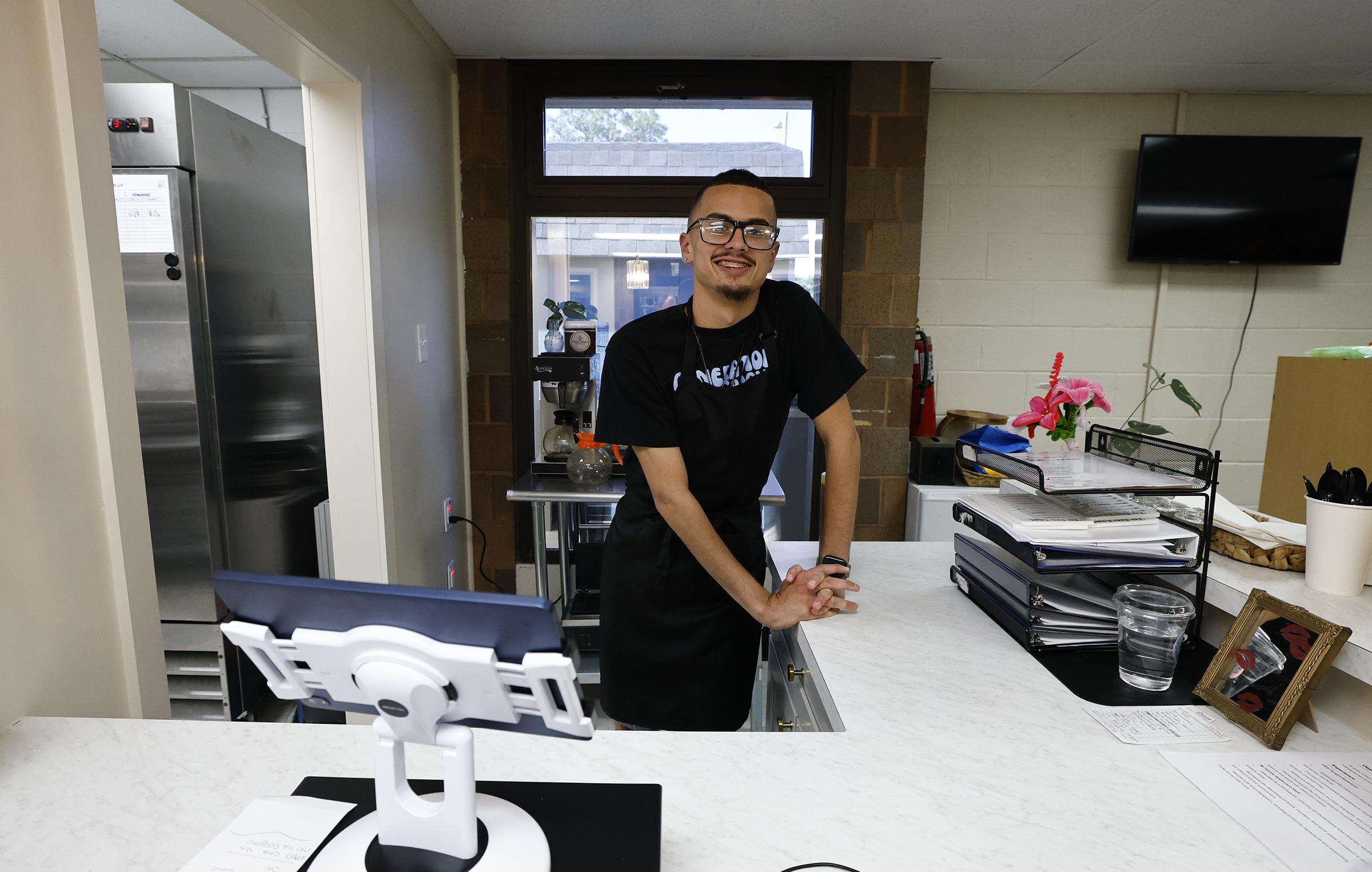
Barista Victor Perez,19, at the Inclusion Cafe inside the Vineland Public Library in Cumberland County, N.J. on Thursday, July 23, 2026. The cafe seeks to create jobs for adults with disabilities in a supportive environment.Yong Kim / Staff Photographer
Inclusion Cafe at 1058 E. Landis Ave., which opened in early May, is an offshoot of Inclusion Coffee Shop in Elmer, Salem County, which opened in 2022.
The cafes were founded by Amanda Vellon, 38, who grew up in Vineland and now lives in Elmer. Both focus on career development for adults with disabilities, and Vellon said the coffee shops have hired 15 staff members with disabilities and seven without. Vellon said employees make $16 an hour, plus tips.
Victor Perez said he’s made five friends on the job since he started in May and works about two-and-a-half days per week. He said he likes when the nonprofit features him in TikTok videos.
“It’s inviting for people like Victor,” Noel Perez said. “It gives him opportunity and chances for people to interact with him and for him to interact with people.”
In 2021, after a surprise pregnancy, Vellon found out her son had a heart defect during an ultrasound appointment, and later Down syndrome at 32 weeks. Vellon said the diagnosis brought on “a roller coaster of emotions,” and she wanted to find a way to spread joy and keep people from feeling scared about their children’s futures.
“My husband said, ‘We want to own a restaurant. Why don’t we try a coffee shop?’” Vellon said. “After some thought, I said, ‘Let’s do it, but let’s do it with a purpose.’”
Vellon’s son, Rome, is 5 years old now. The Elmer location, a business at 119 S. Main St., has kept on, and after registering Inclusion Cafe as a community and economic development nonprofit in 2025, Vellon moved to work with Vineland Mayor Anthony Fanucci and other officials to incorporate the coffee shop there.
“The Inclusion Cafe is about creating opportunities and making sure everyone in our community feels welcome and valued,” Fanucci said in an emailed statement. “The Vineland Public Library has always been a place where people come together to learn, connect, and access important resources, so it was a natural fit for a program that promotes inclusion and independence.”
Luis Amberths, business manager at Vineland Public Library, said the library serves about 600 people every day. As a community hub for Vineland’s 60,000 residents, staff have been seeking ways to expand its services, including in the form of an esports room. The new cafe was a mutually beneficial way to expand upon those offerings, Amberths said.
Despite the cafe leasing a nontraditional space toward the back of the library, Amberths said customers are still finding their way there and checking out books, too.
“In spite of all that, it’s being found. … We were pretty busy already because of what we offer and the programming we have, but it’s been tenfold because of what [the cafe] has done,” Amberths said.
The coffee shop offers coffee flights, specialty lattes, homemade syrups, and breakfast items, influenced by what Vellon’s own children like. Rome’s favorite, a plain bagel with cream cheese, made the cut. Staples from her two other kids, including a bacon, sausage, egg, and cheese on a strawberry bagel with strawberry jam, are featured, too.
“I was very anxious before opening. … It’s not a storefront. We don’t necessarily have foot traffic. It’s not very visible to the road,” Vellon said. “I had a lot of reservations, but none of that has stopped the community from coming to support us.”
Gov. Mikie Sherrill revealed last week that 6,600 noncitizens were improperly added to New Jersey’s voter rolls. This happened even though, when they applied for driver’s licenses and checked the no box indicating they were not citizens, the computer system improperly registered them as voters anyway. The problem was discovered and is being remedied by the computer contractor. The state is responsible for this situation, and is taking action to fix it consistent with its constitutional authority over local elections. Donald Trump’s proposed SAVE America Act would not have prevented this from happening, and New Jersey doesn’t need any help from Trump’s sycophants to fix it. There is no evidence that any noncitizen votes affected the outcome of any election. The Sherrill administration has learned a valuable lesson, and will no doubt take special care to ensure this does not happen again.
Rich Hluchan,Cherry Hill
Impact for whom?
I appreciated the recent article highlighting the Parker administration’s decision to spend an additional $75,000 in taxpayer money to measure the “economic impacts” of the events this summer, including the controversial “One Philly: Unity Concert for America” on the Fourth of July, which cost taxpayers $15.5 million. As the article correctly notes, economic impact analyses from paid consultants often frame the “impact” in such a way as to justify the decisions made. However, a point that was not mentioned in the article is that no matter how the Parker administration and these consultants frame the “impacts” of this summer’s events, the question remains as to who actually benefits from that economic impact. Moreover, how will this benefit everyday, working-class Philadelphians? The long and short of it is this: it doesn’t, and this economic impact analysis is simply a distraction from the fact that our tax dollars were spent on a party while our schools are closing. So Mayor Cherelle L. Parker may have brought in some money, but for whom, and to what end?
We are both former United States attorneys. We are both troubled by many actions of the current U.S. Department of Justice because we see that, in some cases, the commitment to making decisions based only on the facts and the law has been pushed aside. Instead, decisions have been made because political leaders wanted them made. We both know that is wrong.
Unfortunately, recent decisions by the federal courts and the Pennsylvania Supreme Court show that some decisions by the Conviction Integrity Unit may also have been made by ignoring the facts or the law. (The hearing now before Judge Paul S. Diamond is not over, so we do not yet know what facts he will find. Still, the testimony reported in The Inquirer should trouble anyone who believes in the rule of law.)
Prosecutors should not start with a desired result and figure out how to bend the facts to get there. Nor should they act like ostriches and ignore facts to reach a desired result. Every lawyer must act with commitment and dedication to the client’s interests. Prosecutors’ clients are the government they work for. Prosecutors also have a special duty to make sure no one is wrongfully convicted, but that does not mean failing to investigate the facts.
It should not matter whether we support freeing innocent people from prison or want stronger enforcement of immigration laws. Both goals are worthy. But carrying them out requires professionalism. As Mr. Memeger and I both know, following the facts and the law can lead to decisions we would rather not make. Even so, those decisions may be the right ones. When we give up those ideals, we betray the principle John Adams expressed when he drafted the Massachusetts Constitution of 1780: that we should have “a government of laws and not of men.”
Michael Levy, former chief of computer crime, former interim U.S. attorney, Philadelphia
Inflated assessments
Are we in the “kick down at Kensington” mode with your Shackamaxon column? Daniel Pearson shows little knowledge of our community or conditions here. While assessments overall rose about 3%, those here in Kensington — one of the poorest parts of Philadelphia — rose 15%, the biggest jump of any neighborhood in the city. The revised assessments are far above the actual value of my home here. On my block, we have constant drug traffic and an opioid camp on the corner. We have five long-term empty houses, including one that’s been occupied by squatters for more than a year, and another that’s been repeatedly sealed up by city officials and then breached by drug users. Yet suddenly my house is worth $20,000 more? Sorry, but no. There is no evidence that leads to increased property assessments here. We are victims of the city’s neglect and longtime disinvestment. Bottom line, assessments must be accurate and transparent. These are neither. City Council will hold hearings with the Office of Property Assessment in the fall over this. We’ll be there.
Alfred Klosterman,Philadelphia
Humility needed
I don’t get it: Our elected officials like Sen. Dave McCormick are complicit with all this adulation of Donald Trump. The president got a road and airport named after him. (Of course, that was in Florida, and they’re off the charts already.)
The opening paragraph of Associated Press writer Matt O’Brien’s recent article should make your blood run cold.
“ChatGPT maker OpenAI says it is still investigating the unprecedented cyber incident that led its artificial intelligence systems to break out of a testing environment and hack into another AI company.”
Artificial intelligence now has the capacity to evade the controls placed on it by its human creators. Given the ability of AI to learn, it’s reasonable to assume that no guardrails placed on AI will prevent it from figuring out how to skirt them.
Imagine any threat to our society — a nuclear Iran, climate change, uncontrollable illegal immigration — and it would pale in comparison to the possibility of an uncontrollable intelligence having access to the very core of our society. Electronic digital systems control virtually every aspect of our lives. Having an out-of-control, unfettered, electronic digital entity able to infiltrate our systems and control them is not only a doomsday-like scenario, it has also become frighteningly real. Terminator 2: Judgment Day, indeed.
Steven Barrer,Huntingdon Valley, sjbarrer@gmail.com
Join the conversation: Send letters to letters@inquirer.com. Limit length to 150 words and include home address and day and evening phone number. Letters run in The Inquirer six days a week on the editorial pages and online.
DEAR READERS: As anyone who reads “Dear Abby” knows, I have always stressed the importance of writing thank-you notes. It is now time for me to put pen to paper. I have always considered you, my readers, to be my friends. Thank you for accepting me as warmly as you always have and thank you for being willing to share your joys, pains and frustrations with me these many years. Your trust is the greatest honor I have ever been given. You have taught me far more life lessons than I have ever taught you. I am now in my 39th year of penning the “Dear Abby” column, which started on Jan. 9, 1956, written by my late mother, Pauline Phillips. When I began writing it in 1987, I promised myself that when the time came to retire, I would step aside to live life without a deadline. I am grateful for the support of my two loyal and able assistants, Steven Andrews and Jose Fuentes. Please don’t worry about me; my health is fine. I plan to indulge my long-postponed itch to travel. In the years ahead, my column will continue to serve you. It will be written by a capable editorial staff. Please wish me a happy retirement as I open this new chapter of my life.
I love you all.
— Jeanne Phillips aka Dear Abby
** ** **
DEAR ABBY: My husband’s brother, “Hank,” has estranged himself from the family. He’s married with two children but has little to no contact with his mom, dad, stepdad, sister, brother (my husband) or any of his nieces and nephews — except when he calls his parents asking for money. On the rare occasions I have seen him, his wife refuses to participate in any family gatherings, dinners or even photos. There’s always a string of excuses or obvious lies, and none of us can understand why they have chosen to stay so distant. It’s painful and confusing.
Since becoming part of this family, I have watched Hank manipulate situations to get what he wants. He is extremely persuasive and plays the victim well. He is caught in a cycle of being unable to keep a job while trying to maintain a lifestyle far beyond his means.
I do have some sympathy, because it’s clear there are deeper issues behind his behavior, but the pattern of drifting in and out of our lives — especially my in-laws’ — has become exhausting. They’ve finally reached the point where they’re no longer willing to give him money, but I worry about the future.
As my in-laws continue to age and potentially become more vulnerable, I fear Hank will find new ways to take advantage of them. I love them, and it has been painful watching them be used and hurt for so many years. Is there anything I can do?
— CONFLICTED IN MISSOURI
DEAR CONFLICTED: Manipulating older folks to get them to fork over money is called elder abuse, and there are laws against it. Although it may be a bit premature (as your in-laws are still mentally competent), it couldn’t hurt for you and your husband to consult an attorney who specializes in elder law and discuss your concerns, because crimes like this happen too often.