Tag: topic-link-auto

  • House of the Week: A three-bedroom rancher in Lansdale for $599,900

    House of the Week: A three-bedroom rancher in Lansdale for $599,900

    Andrew Conolly noted the huge driveway and two-car garage of the three-bedroom, 3½-bathroom house in Lansdale.

    His wife, Catie, liked the rancher’s first-floor living for a family with a small child and two dogs.

    And both cited the huge, fenced backyard, rare for the neighborhood, and a location off a main road.

    The living room has a stone-encrusted, wood-burning fireplace.Amy Mawby

    Catie, a psychiatric nurse, and Andrew, who is in automotive parts sales, bought the house in 2023, moving from Perkiomenville.

    But they are now headed to Perkasie for family reasons.

    The house, on almost an acre, is 2,089 square feet on the main level and 1,783 square feet in the newly finished basement.

    It has curved archways and French doors and, in most rooms, crown molding.

    The living room has a stone-encrusted, wood-burning fireplace, and there is electrical service above the fireplace for mounting a TV.

    The kitchen has new cabinetry, stainless steel appliances, and butcher block countertops.Amy Mawby

    The kitchen has new cabinetry, stainless steel appliances, butcher block countertops, an oversized sink, and tile flooring.

    The formal dining room features a bay window. The three bedrooms have hardwood flooring and updated bathrooms.

    The lower level has two living areas with luxury vinyl plank flooring and oversized baseboards. There is a full bathroom with walk-in shower, laundry room, and separate storage room.

    One staircase leads directly to the garage.

    The dining area.Amy Mawby

    The house has central air-conditioning, and the roof and attic fan were replaced in 2023. Outside is a covered patio with a sitting area.

    The house is easily accessible to Routes 309 and 202 and the Pennsylvania Turnpike.

    The house is listed by Jeff Falterbauer of Keller Williams Montgomeryville for $599,900.

  • Jaylen Brown exits win over Nets with a head wound, a ‘tight’ hamstring, and another big stat line

    Jaylen Brown exits win over Nets with a head wound, a ‘tight’ hamstring, and another big stat line

    NEW YORK — Jaylen Brown exited Barclays Center late Monday with a gash on his forehead, and “a little” tightness in his hamstring.

    And with another impressive stat line, after totaling 31 points, 13 rebounds, and four assists in the 76ers’ 135-123 victory over the Brooklyn Nets.

    The All-NBA wing will miss Wednesday’s game at the Orlando Magic, per the league’s initial injury report released Tuesday evening.

    “I’ve had a lot of hamstring stuff,” Brown said from his locker. “I don’t think it’s concerning.”

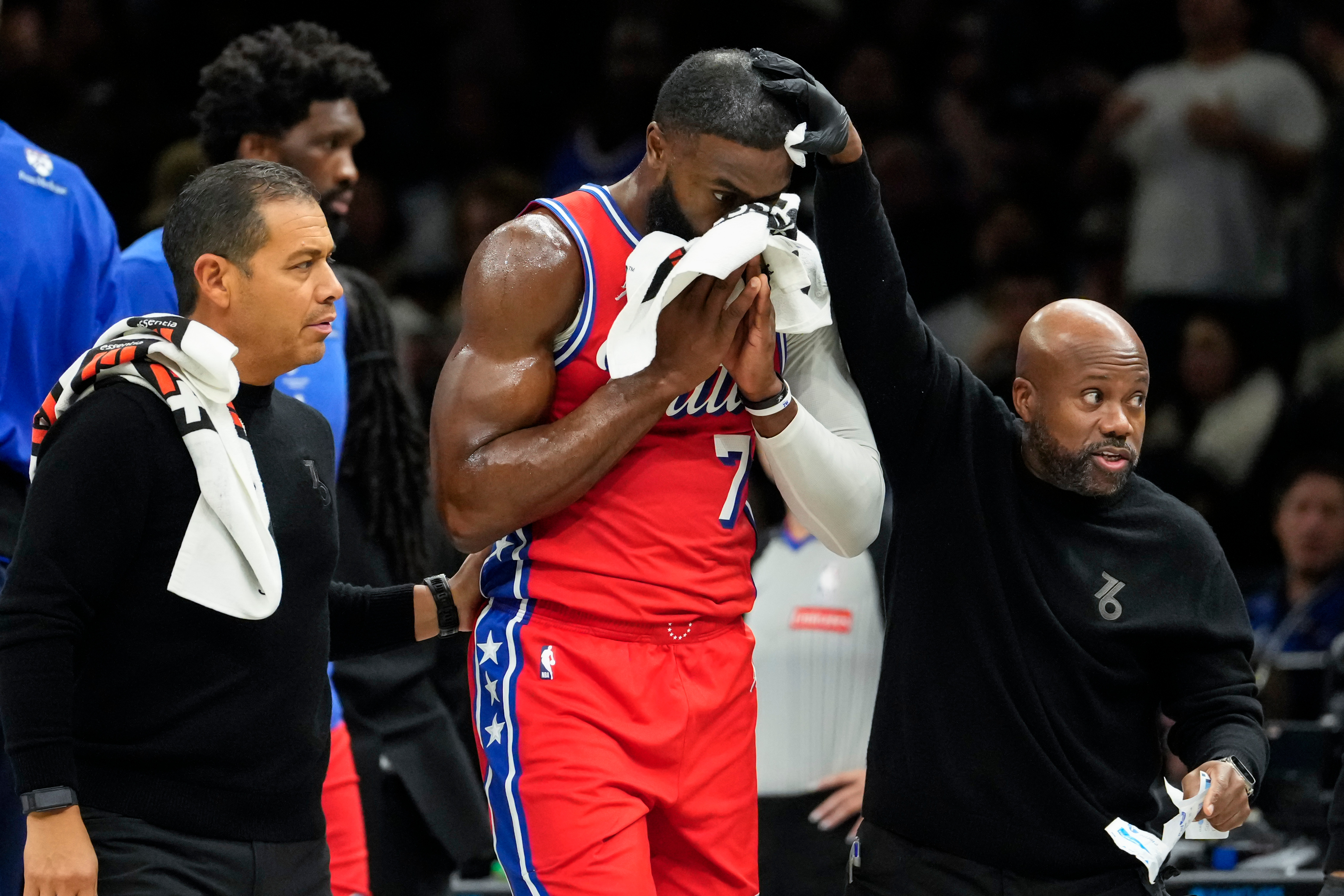
    The head injury occurred on an accidental fourth-quarter collision with Nets big man Julius Randle. That left Brown lying on the floor, with players from both teams hovering over him and teammate VJ Edgecombe wiping blood off Brown’s head.

    Brown is unsure when exactly his hamstring tightened during the game. But after being cleared to return from the head injury, he played about five minutes of crunch time because the Nets had rallied from a 24-point first-half deficit to get within five on multiple occasions. Once Brown “knew we were in a good position to win,” he said, “I just checked myself back out.”

    “It would have been a lot worse of an injury if we had lost and I got injured,” Brown said. “So at least we won.”

    Before that early departure, Brown’s on-court impact was multifaceted.

    Sixers players gather around guard Jaylen Brown after he was injured during the second half on Monday against Brooklyn.Yuki Iwamura

    Though he missed all five of his first-quarter shots, he compiled the “winning plays” on which he prides himself by manufacturing points at the free throw line (5-of-6), grabbing five rebounds, and dishing out two assists in the frame.

    Then his shot-making exploded in the second quarter, with 14 points on 5-of-7 from the floor. He executed a slick dribble move to the basket and buried a fadeaway three-pointer just before halftime. He scored another nine points in the third quarter. And with less than four minutes remaining in the final frame, his pull-up jumper put the Sixers up, 122-111.

    Sixers coach Nick Nurse commended Brown’s quicker, more aggressive decisions in the lane, instead of resorting back to dribbling in the middle of the floor.

    “He turned the corner a little better tonight,” Nurse said. “And he’s pretty tough, man, when he breaks that kind of free throw line area going downhill. He’s got a good chance of scoring or getting fouled — or both.”

    It was another bounce-back performance for Brown after last week’s dud in his first regular-season matchup against his former team, the Boston Celtics. He scored 13 points in that game and had as many turnovers as made shots (four).

    After that, Brown scored 18 points in Thursday’s win over the Toronto Raptors. Then in Sunday’s victory against the Indiana Pacers, he scored 31 points on an efficient 12-of-18 shooting.

    LeBron James on how he’s developing chemistry with Sixers teammates
    Video: LeBron James on how he’s developing chemistry with Sixers teammates

    Brown reiterated Monday that his comfort level with his new teammates — and in getting to his preferred spots on the court within the offense — is “starting to feel a little bit more at home.” That continues to be a process for the Sixers’ entire new-look roster, featuring four All-Stars who have previously been their team’s leading scorer. Brown on Monday attributed much of the Sixers’ 12-3 start to pure offensive talent, complemented statistically by a top-10 defense and 10-0 mark in “clutch” games.

    “We’re now starting to understand each other and be in the right place at the right time,” Brown said. “That makes everything so much clearer. It makes the game so much easier. … So, it’s just about getting better and trusting the journey.”

    More evidence of Brown’s growing chemistry with those teammates? Their reactions to how he protected his fresh wound.

    He started with a bandage, then moved to a headband. Brown said that prompted “jokes” from All-NBA guard Tyrese Maxey and close friend Tacko Fall. Edgecombe, who typically wears a headband, playfully called the look on Brown “nasty” because he “don’t got no swag like that.”

    “Gotta cover his little boo-boo,” Edgecombe added.

    Yet Brown pondered continuing to use the accessory, because “I do martial arts and [stuff], so maybe it’s time.”

  • Duffy wants $50 billion to avert another ground stop. Experts say money isn’t the issue.

    Duffy wants $50 billion to avert another ground stop. Experts say money isn’t the issue.

    Just two months ago, the nation’s top aviation official sounded pretty pleased with Congress and its financial support for modernizing the nation’s air traffic systems.

    “That initial $12.5 billion investment?” FAA Administrator Bryan Bedford said during a House hearing, sounding bullish on the agency’s progress. “Yes, it’s allowing us to build a solid foundation.”

    But that $12.5 billion emerged as a contentious flashpoint after Friday’s calamitous 4½-hour nationwide ground stop trigged by a telecommunications failure.

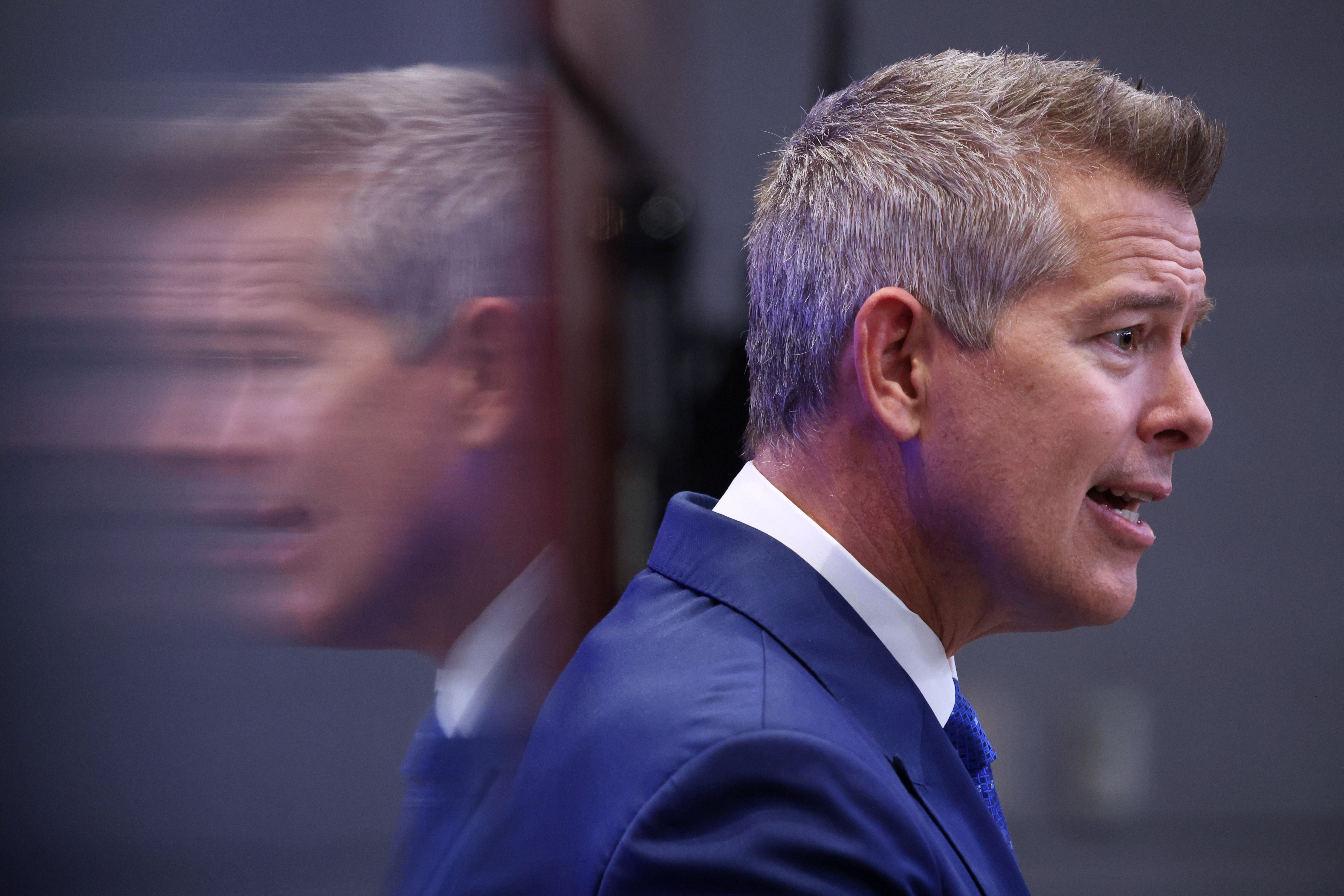
    In the days since, Transportation Secretary Sean Duffy, with Bedford often by his side, has repeatedly complained about what he says is a lack of money for the FAA to update its systems, implying that Friday’s stoppage could’ve been avoided if only the agency had received more funding.

    Duffy, turning the outage into a fundraising appeal, made his case again Monday.

    The FAA needed billions more for the contractors to begin work on the next stage of updating systems, he said.

    “They’re ready to go and work with us at a very fast pace. I just can’t tell them to go until we get the money for investment,” Duffy said about the project’s contractors in a CNBC clip he reposted on social media.

    But the surprise ground stop was not tied to a lack of funding, according to experts and former agency officials.

    “That’s not what caused Friday,” said Tom Lintner, a former FAA air traffic program manager. “Four decades of procrastination and poor program management is what caused Friday.”

    Outside experts say transitioning from old systems needs to be done with more extensive planning and care, with backup plans for backup plans, so that a single point of vulnerability — in this case an overactive router in Arkansas — doesn’t bring the nation’s aviation industry to a halt.

    Congress gave the FAA $12.5 billion last year as down payment on its efforts, such as replacing old copper wire with new fiber cables — the same work that is believed to have caused the technical issues that resulted in Friday’s decision to close down the airspace.

    Duffy acknowledged that first installment of money, but he said the FAA now needed $30.1 billion more for a more extensive modernization effort. On Friday night, he upped the request to $50 billion. He acknowledged the fluctuating figures.

    “I was trying to get a number that I think Congress will give me,” he said Saturday.

    But the proposed $30 billion funding package — or $50 billion — is only partly aimed at air traffic modernization.

    About $10 billion is for a long-range plan to update the air traffic controller computer platform and workstations. Another $10 billion is for renovating air traffic control towers and grants to improve airport runways and terminals. Another $10 billion is to replace or renovate certain airport terminals.

    The FAA’s initial modernization push received bipartisan support. At the House hearing in September, Bedford thanked President Donald Trump, Duffy and Congress for passing “a historic $12.5 billion down-payment,” noting that, “We are executing on the most ambitious modernization project of our time and delivering it in record time.”

    Now, as the ask has escalated, some Democrats on Capitol Hill have objected that the original $12.5 billion hasn’t even been fully exhausted.

    The FAA so far has spent only about $1 billion of the funding it requested, with another $4.3 billion obligated to projects, said Reps. Rick Larsen of Washington and Andre Carson of Indiana.

    The ground stop was an expensive interruption for major U.S. airlines, according to report from the brokerage firm Bernstein.

    Bernstein analysts estimated the stoppage cost American, Delta, United and Southwest about $345 million. A main driver was the thousands of canceled flights and refunds for passengers who decided not to rebook their flights.

  • CDC declined to alert risk of measles in pregnancy. A journal released the data.

    CDC declined to alert risk of measles in pregnancy. A journal released the data.

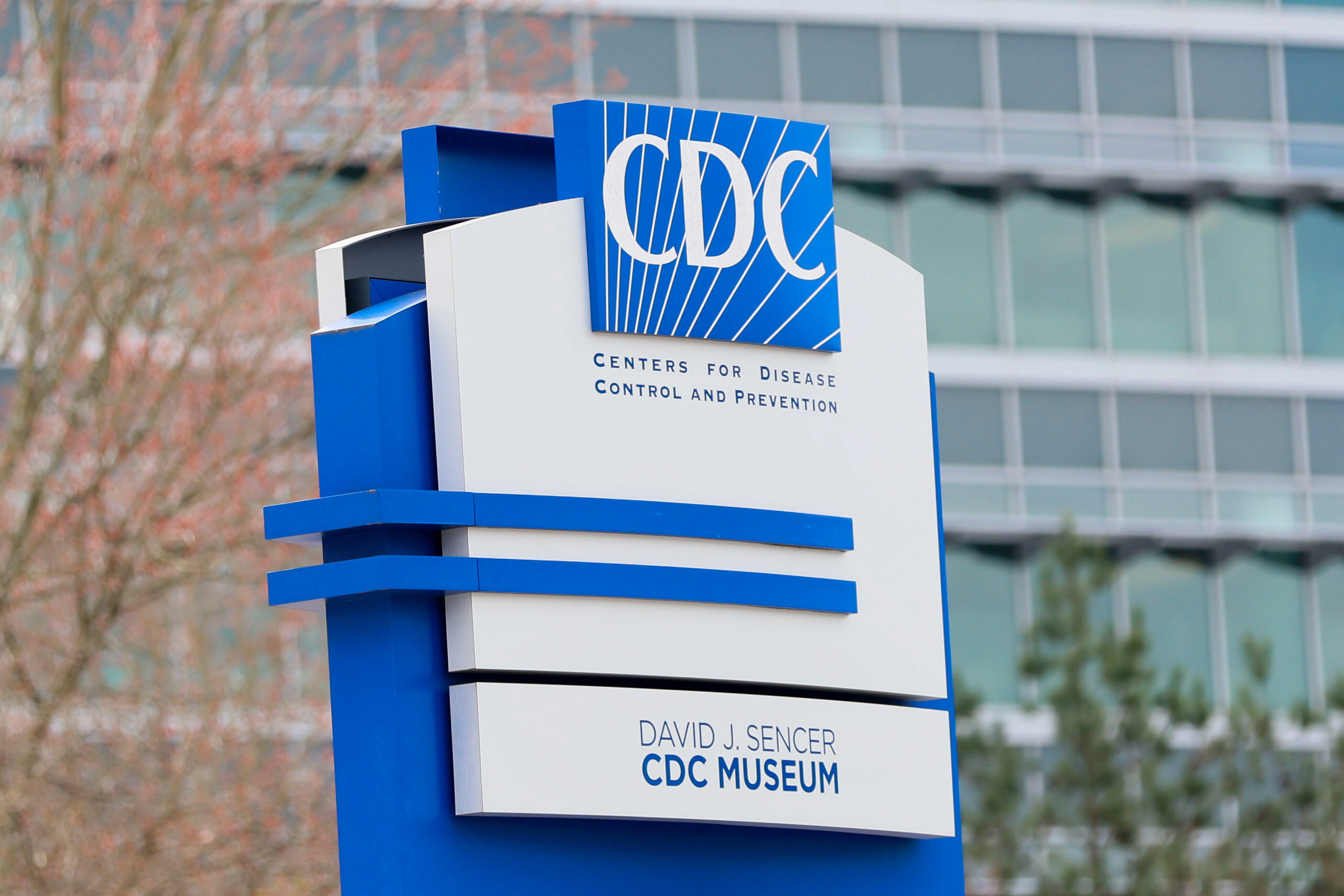
    Months after the CDC denied a request from federal health scientists to issue a national alert warning doctors about the risks of measles during pregnancy, the information was published Monday in an independent medical journal.

    The data in NEJM Evidence reports instances of pneumonia, premature births, and early hospitalizations among pregnant women and their newborns and provides the first national picture of measles complications that Centers for Disease Control and Prevention scientists were trying to alert health care professionals to earlier this fall.

    The United States has been told it has lost its status as a country that has eliminated measles, a public health achievement celebrated more than a quarter century ago. The Pan American Health Organization formally announced the decision publicly Tuesday. Until the current resurgence, which has driven cases to the highest levels in decades, measles during pregnancy had been rare in the United States because most women reached childbearing age were already immune, either through vaccination or an earlier infection.

    The analysis said 112 pregnant women had measles during the 21 months from January 2025 through Sept. 28 of this year. The report found:

    • Twenty-six of the pregnant women with measles were hospitalized for reasons other than labor, although the reason for hospitalization was not reported in every case. Eleven developed pneumonia, two experienced respiratory failure, and one was admitted to intensive care.
    • Thirteen newborns met the report’s definition of congenital measles: a baby born to a mother with confirmed measles who either tested positive for the virus within 10 days of birth or who developed fever and rash within that period. Six developed measles-related symptoms, including one with symptoms suggesting a serious, potentially life-threatening inflammation of the brain and surrounding membranes.
    • Of 19 babies delivered within 14 days of their mothers developing a measles rash, eight were born prematurely and eight were admitted to neonatal intensive care.
    • Among the pregnancy outcomes reported to CDC were two miscarriages and one stillbirth, although the report does not say whether measles caused those losses. The report cautioned that much information was missing: Pregnancy outcomes were not known for 56 of the 112 women, or half of the cases.

    All but two of the women were unvaccinated or had an unknown vaccination status.

    The analysis provides some of the first contemporary U.S. data on measles during pregnancy in decades and the first from the current outbreak.

    CDC scientists had sought to notify clinicians in September of the rising threat to pregnant women and newborns through its Health Alert Network, the Washington Post earlier reported. But the alert, which usually requires sign-off from the CDC director’s office, was not approved, according to two people familiar with the matter, who did not know why. They spoke on the condition of anonymity to share internal deliberations.

    A spokespersn for the Department of Health and Human Services said CDC researchers selected an external journal for the study “early in the publication process to reach clinicians as quickly as possible.” She said Health Secretary Robert F. Kennedy Jr. and CDC Director Erica Schwartz are taking “aggressive action to combat measles outbreaks and ensure clinicians have timely access to critical public health information.”

    She did not address why a CDC alert, which is a fast way of distributing critical public health information, was not approved.

    This analysis includes recommendations for treatment that some doctors said would have been useful to receive earlier because there is only a short window after an exposure to protect a susceptible pregnant woman, said Kevin Ault, an obstetrician-gynecologist at Penn State Health in Hershey.

    If a timely health alert were issued by the CDC, “emergency rooms and hospitals could have been made more aware of this option,” Ault said of treatment with immune globulin, which contains antibodies that help protect against the virus because the measles, mumps, and rubella vaccine cannot be given during pregnancy.

    Ault noted that roughly 40% of the 19 known live births were premature, compared with about 10% of U.S. births overall. He also pointed to the relatively high proportion requiring intensive care.

    The analysis highlights how much remains unknown. The authors, CDC scientists, and researchers collaborating with the agency said mothers and babies need to be followed over time to better understand the effects of measles during pregnancy.

    Still, the national analysis does not identify the states where the infections occurred, saying only that cases were reported by 16 jurisdictions.

    The country has tallied more than 5,400 cases so far this year, according to CDC data, more than double the total reported in 2025. Two more measles deaths were reported Friday, in Wisconsin and Pennsylvania, bringing the U.S. toll this year to at least 10. In 2025, three people died of measles.

    Pennsylvania is currently home to the nation’s largest outbreak, reporting more than 1,560 cases. In a little more than six months, the state alone has now reported nearly the same number of measles infections in pregnant women — 101 — as examined in the national analysis. The state’s outbreak began in late April, and its count has continued to rise since the Sept. 28 cutoff for the national analysis.

    Nearly all the infections among pregnant women in the national analysis were linked to large outbreaks. The study does not identify them, but outbreaks have swept through undervaccinated communities since early 2025, in West Texas, Utah, Arizona, South Carolina, and other states.

    The report spelled out specific steps for protecting pregnant women and newborns as clinicians confront complications of measles that many have never encountered in their careers. Pregnant women who have not been vaccinated or have no evidence of immunity should receive immune globulin within six days after exposure, according to CDC recommendations cited in the report.

    Newborns exposed to measles in the womb should also receive immune globulin at birth to reduce the risk of serious illness from congenital measles, the scientists said.

    “Health care systems and clinicians should be prepared to provide care to pregnant women and their infants with measles, particularly in communities with a high proportion of unvaccinated people,” the study said.

    Margot Savoy, a family physician and chief medical officer with the American Academy of Family Physicians, said earlier guidance could also have prompted doctors to check pregnant patients’ immunity; tell susceptible patients to call immediately after an exposure; and prepare emergency departments, labor and delivery units, pediatricians, and neonatal intensive care units for possible cases.

    “We would have treated every pregnant patient’s measles immunity as an urgent question, not a routine one,” she said in an email.

    The CDC’s health alerts are communications that send urgent, practical guidance to clinicians at the same time — including, for example, family physicians in rural practices who may never read the journal article, she said.

    “Journal articles are for the record,” Savoy said. “Health alerts are for the patient in front of you today.”

    A spokesperson with the Department of Health and Human Services did not previously address questions about why the earlier CDC alert was not approved, but said the agency is closely tracking measles and providing clinicians and public health officials with guidance to protect mothers and babies. The spokesperson had earlier added that a report on pregnancy and measles for publication in the agency’s flagship scientific journal, the Morbidity and Mortality Weekly Report, was moving through the CDC’s scientific review and clearance process, “which informs publication decisions and timing.”

    The scientists ultimately turned to an outside medical journal, in part because doing so would make the clearance process for CDC publication less onerous and reduce the potential for further delays or political interference, the Post previously reported, citing multiple people familiar with the discussions.

    The analysis was published as part of a collaboration between NEJM Evidence and the University of Minnesota’s Center for Infectious Disease Research and Policy, which publishes brief reports to provide early public health information about disease outbreaks and other urgent health threats, according to a CIDRAP spokesman.

    The analysis focuses on the characteristics of people who had measles during pregnancy and their infants. But the scientists lacked outcome information for many of the pregnancies.

    Alexandra Medoro, a pediatric infectious-disease and neonatology specialist at Children’s Hospital of Philadelphia who has helped care for babies during Pennsylvania’s outbreak, said the missing information illustrates a larger problem confronting doctors.

    “The large number of pregnancies with unknown outcomes described in this study illustrates the difficulty in following these patients longitudinally,” she said in an email. That has implications both for their medical care and “our ability to counsel families in the future,” she said.

    The scientists also had to develop a definition of congenital measles for the analysis because no national surveillance definition exists. Ault said establishing a case definition “will be useful going forward” as doctors and public health agencies encounter more cases.


  • There’s now more room for rigatoni at one of Philly’s top Italian restaurants

    There’s now more room for rigatoni at one of Philly’s top Italian restaurants

    The alley next to Fiorella Pasta used to hold propane tanks, ladders, and random outdoor furniture. Now it’s home to an extension of the dining room at Marc Vetri’s South Philadelphia pasta bar.

    With eight seats at three tables, it has boosted the indoor capacity by more than 50%.

    Fiorella has been a tough reservation since opening in February 2020, just weeks before the pandemic shut down indoor dining for months. During the surge of streeteries, the restaurant added about 30 outdoor seats, which it has since used year-round.

    But as temperatures drop, Vetri said, keeping diners warm becomes more difficult. With just 14 seats inside, including the counter and a couple of tables, plenty of customers were left out in the cold.

    The recently renovated and enlarged interior at Fiorella.Monica Herndon / Staff Photographer

    Vetri and his team began sketching out what they could fit if they removed the wall separating the dining room from the alley. Like homeowners cleaning out a basement, staff sorted through the alley’s accumulated items, throwing away what they could, Vetri said.

    Then they broke through the wall — after removing and saving the former butcher shop’s decorative tile — and created a recessed nook framed with wooden paneling and mirrors, with a wooden bench for seating.

    The conversion took about two months, with construction done during off-hours.

    The new section blends into the dining room and faces the counter and open kitchen, where chef Matt Rodrigue turns out menu staples such as rigatoni with sausage ragù, ricotta gnocchi, and cacio e pepe, along with seasonal specials.

    Fiorella occupies the former butcher shop that Luigi Fiorella opened in 1892 at 817 Christian St., near the Italian Market. Vetri had tested the pasta-bar concept at pop-ups in the demonstration kitchen at Vetri Cucina before bringing it to Christian Street.

    Fiorella glows in neon on Nov. 12.Monica Herndon / Staff Photographer

    He kept the Fiorella family name, the original tin ceiling, and a brass cash register that had briefly gone missing before resurfacing in a Northeast Philadelphia antiques shop.

    When Fiorella opened, customers could leave a phone number and wander the neighborhood while waiting for a seat. Today, it takes indoor and outdoor reservations through OpenTable.

    As for the new dining area, Vetri said, “It looks like it was always there.”

  • Justice Alito warns court overhaul could threaten judicial independence

    Justice Alito warns court overhaul could threaten judicial independence

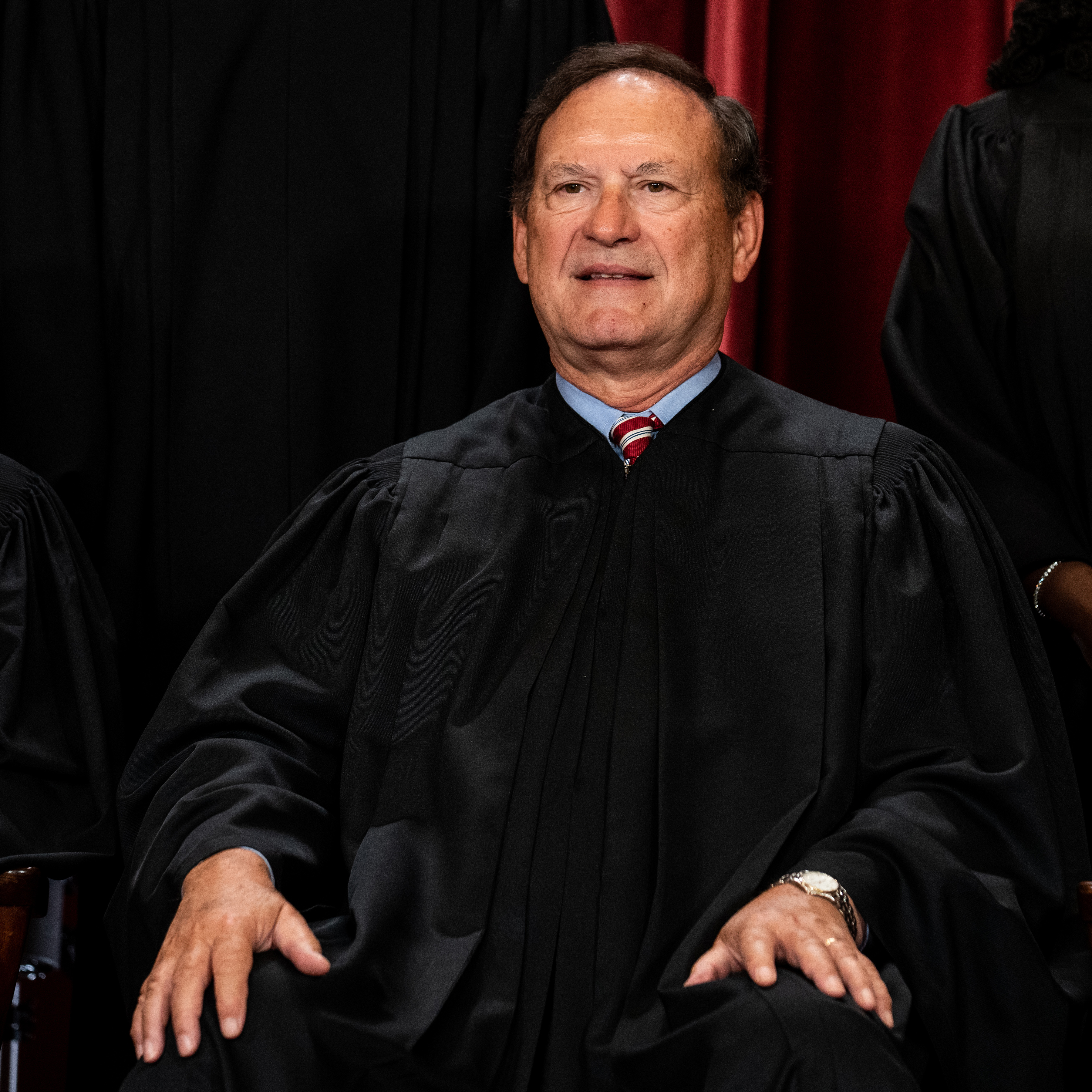
    WASHINGTON — Justice Samuel Alito on Monday warned against proposals to overhaul the Supreme Court by altering its composition, a move that he said would threaten the judiciary’s traditional independence.

    His remarks came as Democrats, many of whom have advocated changes to the court, including expanding its membership or adopting term limits for the justices, prepare to take control of Congress in January.

    Alito did not detail any specific legislative proposal or refer to the change in political control on the horizon. However, speaking during a black-tie dinner in his honor hosted by the American Enterprise Institute, a right-leaning think tank, he pointedly critiqued the court’s critics, wading into the public debate over the justices’ rulings.

    He described what he characterized as a mounting campaign in recent years by those opposed to the court’s rulings to change the direction of its decisions by intimidating and harassing justices.

    “Or,” he said, “if that fails, by seriously damaging the court’s standing in the eyes of the public, and then altering the court’s composition,” he said.

    “If that campaign succeeds, the Supreme Court as an institution will be fundamentally changed, and perhaps permanently,” he told the hundreds of people gathered at the ornate National Building Museum.

    The court, Alito said, could “soon face a structural question of greater magnitude: whether the court will be allowed to continue as an independent tribunal that decides cases based on its understanding of the law, not political pressure.”

    In recent years, the Supreme Court’s conservative majority has overturned long-standing precedent, ending race-conscious policies in college admissions, eliminating the nationwide right to abortion, and limiting the power of federal agencies.

    In 2022, Alito wrote the decision reversing Roe v. Wade and overturning the constitutional right to abortion.

    Recent polls have shown declining public opinion of the Supreme Court, with a majority of Americans saying the justices are motivated mainly by politics rather than law, according to a September survey conducted by Marquette University Law School.

    As poll numbers have dropped, elected leaders and newly elected Democrats in Congress have called for an overhaul of the court. Such proposals in the past have included expanding the size of the court, ending life tenure for justices, and strengthening ethics policies for the justices.

    Following the court’s decision last term to significantly weaken the landmark Voting Rights Act, members of the Congressional Black Caucus, for instance, said they would work to “aggressively advance Supreme Court reform. We will work to establish term limits for justices to help restore independence, neutrality, and legitimacy to the court.”

    In a letter this month seeking support for his candidacy for House speaker, Rep. Hakeem Jeffries (D., N.Y.) said lawmakers must “clean up the mess at the Supreme Court.”

    While polls have shown that Democrats have been particularly upset with the court’s decisions, displeasure has also been rising among Republicans. President Donald Trump has been particularly vocal and personal in his criticism, especially when any of the three justices he nominated to the bench have ruled against him.

    Along with Justice Clarence Thomas, Alito has emerged as the member of the court most likely to side with Trump’s policies. Speculation had mounted following the midterm election that he might retire to allow Trump to name his replacement before Democrats take control of the Senate in January.

    He has told people close to him, however, that he has no intention of announcing his retirement and plans to remain on the bench at least through the conclusion of the court’s current term next summer.

    In his remarks on Monday, Alito described the judiciary as the weakest of the three branches of government and said its independence ultimately depended on “the sufferance of the other more powerful branches.”

    “What may matter most in the end,” he added, “is popular support for an independent judiciary.”

    This article originally appeared in the New York Times.

  • Facing criticism, Trump administration says it’s investigating Megaspeed

    Facing criticism, Trump administration says it’s investigating Megaspeed

    The Justice and Commerce departments announced late Monday that they were pursuing a criminal investigation into Megaspeed, a Singaporean data center firm suspected of chip smuggling and whose former executive had an affair with Nvidia’s Jensen Huang.

    The announcement appeared to be an effort to counter criticism of the Commerce Department in recent days for its failure to pursue penalties against Megaspeed, which has been under investigation for allegedly shipping advanced artificial intelligence chips into China.

    The company was created and led for a time by Alice Huang, whom U.S. officials believe China’s Ministry of State Security recruited as an intelligence asset. Megaspeed has said that it complies with all laws and that Alice Huang currently has no role in the company.

    On Friday, Treasury Secretary Scott Bessent said in a TV interview that his department had been pushing for months to add Megaspeed to a trade blacklist known as the entity list, but that the Commerce Department “holds the pen.”

    “You will have to ask them about their internal processes,” he said.

    The announcement of a criminal investigation is extraordinary because officials do not typically comment on such matters before they are completed. The departments said that they would work together to “bring the full extent of the law against Megaspeed for any criminal conduct that may have occurred.”

    President Donald Trump acknowledged Monday that Bessent and Commerce Secretary Howard Lutnick had been at odds over how hard to crack down on the loophole that has allowed China to access advanced AI chips through data centers in other countries.

    “One wants to be friendly with China, and one wants to have a blowup with China,” Trump said of his two Cabinet secretaries, speaking to reporters on the South Lawn before leaving for a trip to Asia. “Both are acceptable, but they’re different views.”

    The release said that the Commerce Department had initiated an investigation into Megaspeed in 2024 for potential export control violations. In May 2025, the department requested records from Nvidia on its sales to Megaspeed. Commerce officials visited Megaspeed in June 2025 and interviewed Alice Huang, it said.

    Following this, the Justice Department took the lead role in the criminal investigation of Megaspeed.

    The New York Times reported on Nov. 9 that the Commerce Department investigation of Megaspeed was halted last fall under atypical circumstances, after department investigators working on the case received an email from Nvidia’s general counsel seeking information about the inquiry.

    Nvidia’s general counsel said that a top official at the department had given him permission to reach out about the case, alarming others in the department. The incident raised questions about what Commerce officials had discussed with Nvidia, and some viewed the interaction as potentially tainting the case. The case was then transferred to the Justice Department.

    The Commerce Department announcement also said that, in June 2025, Nvidia had placed Megaspeed on its “no sell” list.

    But trade records obtained by the Times from ImportGenius, a data platform, show that a subsidiary of Megaspeed’s in Malaysia called Speedmatrix continued receiving large shipments of Nvidia technology for eight months after that.

    Between October 2026 and February 2026, Speedmatrix received shipments of more than $800 million of export-controlled Nvidia AI technology, including Blackwell and H200 chips, which were banned from being sent to China.

    Most of those shipments went to Speedmatrix through third-party manufacturers that buy chips from Nvidia and make them into servers. But in February 2026, trade records show that Nvidia International Inc. sent a $13 million shipment of electronic equipment to Speedmatrix.

    Nvidia provided a similar statement to the Times about the “block list” last week. It said that it received permission from the Commerce Department to ship some repair parts to Megaspeed after imposing its “block.”

    Nvidia continues to list Megaspeed on its website as a cloud partner. Megaspeed advertised the relationship as recently as October, calling its Indonesian unit “a premier business partner of Nvidia.”

    The Commerce Department said it had charged 17 defendants across six separate investigations over allegations of smuggling and sharply increased monetary penalties compared with those in the Biden administration.

    Lutnick had also clashed in recent months with other senior officials over rules that would clamp down on data centers in Southeast Asia serving Chinese clients. The Commerce Department issued that rule Monday, but took the unusual step of saying that it had been “written by and at the direction of the Department of Treasury and the National Security Council,” both agencies it had clashed with.

    This article originally appeared in The New York Times.

  • Do school phone bans help students learn? So far, gains are ‘modest’

    Do school phone bans help students learn? So far, gains are ‘modest’

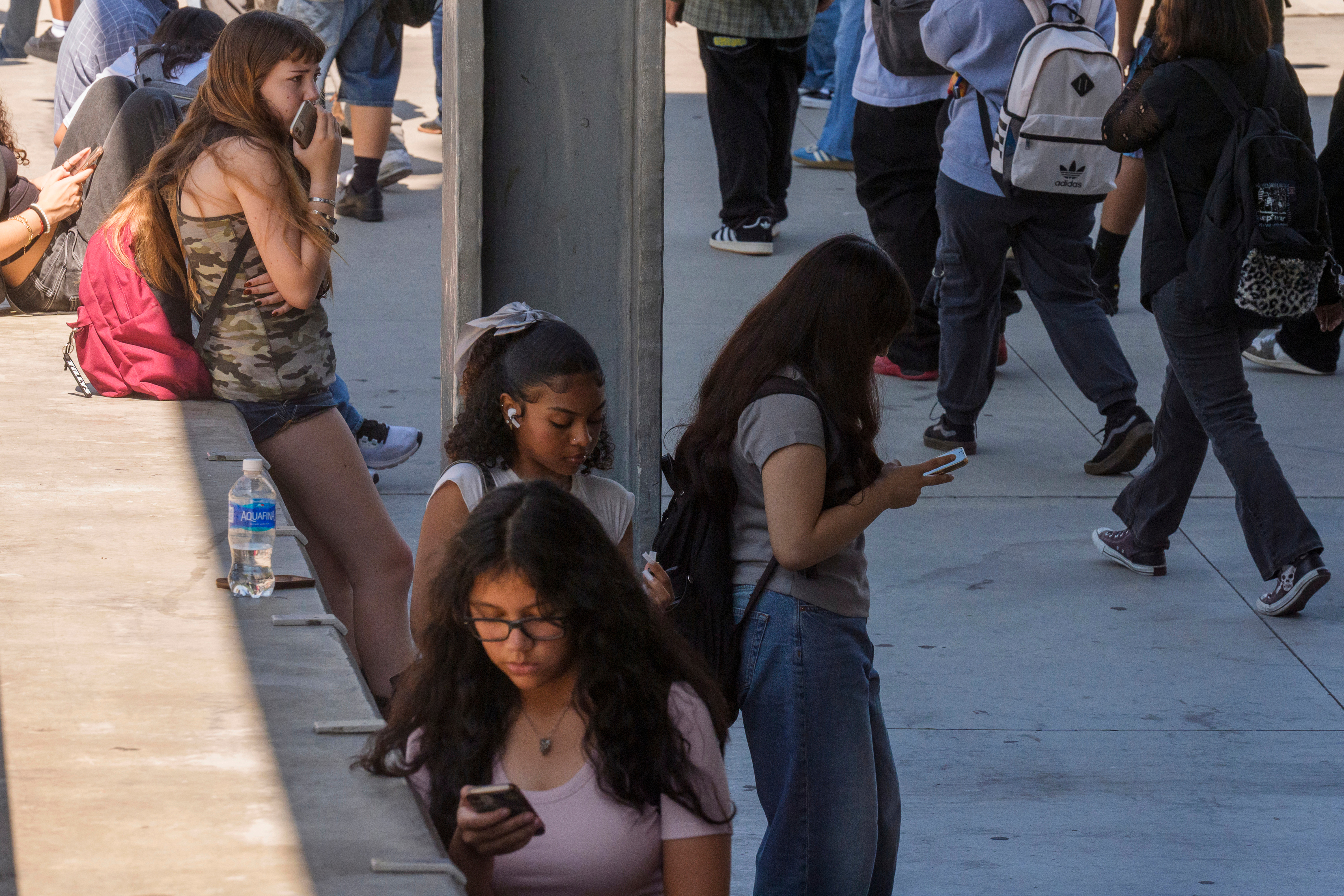
    The argument for school cellphone bans is simple: Phones offer endless distraction. Take them away and students can focus on classwork, engage with peers and, ultimately, learn more.

    But the reality is more complicated, as emerging research shows. Schools can lock phones away in pouches or banish them to backpacks, but they can’t shut out the digital world.

    In the past few years, more than 40 U.S. states have passed laws that restrict cellphones at schools, according to the Phone Free Schools State Report Card, which tracks state phone legislation. But those laws vary widely and often let schools design their own policies, resulting in a patchwork of rules and enforcement across the country.

    A large-scale study published Tuesday found strict cellphone restrictions — ones that require students to put phones in locked pouches for the entire school day — result in small academic gains. But, the researchers said, the gains can add up if schools continue banning phones.

    Phone bans appear to help, to a point

    The study, led by Harvard’s Center for Education Policy Research, found the schools with strict phone restrictions saw “modest” improvements in academic growth, compared with students in similar schools without those restrictions. The study, which analyzed test scores of 3.3 million students at 4,600 schools nationally, estimates the academic gains were equivalent to about an additional week or two of learning over a school year.

    Student achievement has been falling globally since 2013, which is roughly when social media-enabled smartphones took off. The researchers sought to determine if the decline is being reversed now that schools have started taking phones away, said Harvard professor Thomas Kane, one of the study’s authors.

    “Our answer is yes, phone bans do have a positive effect on growth. But it’s not a panacea,” Kane said. Learning loss was gradual over a decade, he notes, and it’s not surprising that gains would also be gradual. The study used math and reading test data for grades four through 10 from the past five academic years.

    “While schools should not expect large boosts in achievement immediately, storing students’ phones seems to be a cost-effective way to add 1-2 weeks of instruction each year, which could add up over time, just as the initial declines did,” the study says.

    The boost is equal to about half the annual decline in test scores since smartphones became mainstream, the study said.

    Academic gains are overall ‘disappointing,’ one researcher says

    Still, the connection between phones and learning is not clear-cut.

    A different study published in May concluded strict school phone bans had “close to zero” effect on test scores. It compared schools with bans with tens of thousands of other schools.

    The National Bureau of Economic Research study looked at a different set of standardized test scores than Harvard’s study, as well as GPS phone activity, teacher surveys and data from Yondr, the leading provider of lockable phone pouches, at 4,600 schools that use the pouches.

    The study had found “modest positive effects” in high school test scores over three years, particularly in math. But the report’s authors, researchers at Stanford, the University of Michigan, Duke and the University of Pennsylvania, were hesitant to conclude overall learning benefits from the bans.

    Both studies point to a similar conclusion, said Stanford education economist Thomas Dee, an author of the NBER study. “The early results from school phone bans are largely disappointing and raise unresolved questions,” Dee said.

    Noting that the Harvard study showed learning gains may accumulate over time, Dee said: “I hope they’re right. However, I’m not comfortable making that extrapolation from estimates that are small, sensitive and based on just a few years of phone bans.”

    The reasons, Dee said, could be that students are still distracted on other devices at school. Or, he said, “it may be that we see these disappointing results because out-of-school phone use is harming child development.”

    Phones aren’t the only tech distracting teens

    Just because schools or states have phone bans does not mean they’re being enforced, said Jean Twenge, a psychologist at San Diego State University and author of “10 Rules for Raising Kids in a High-Tech World.”

    Ask any teacher — or teenager — and they’ll tell you that some phone bans are largely cosmetic. Teens come up with creative workarounds, including stowing burner phones or even phone-shaped rocks in their locked pouches. At schools that rely on students to keep phones in backpacks, adherence to the ban can be spotty.

    “It happens pretty often that there’s a policy of no phones during the school day, bell-to-bell, and you go into the school and phones are everywhere,” Twenge said.

    Even without phones, “Do they have laptops at school? Are they just doing social media on laptops instead?” Twenge said.

    Phone use outside of school affects academics too, Twenge said. “If they have that phone available when they’re studying, how much are they really taking in?”

    Kane, of the Harvard study, agrees the effect of cellphone use outside of school is “the big question.” But researchers have not been able to investigate parents and educators’ suspicions that late-night binges on YouTube and other platforms are costly for students.

    “I find it astonishing that social media companies know how much time kids spend on their platforms, but that data has never been linked to student outcomes,” Kane said. “We can’t provide answers until the social media companies share data.”

  • Trump arrives in Philippines to kick off Asia trip with economic deals and talks with allies

    Trump arrives in Philippines to kick off Asia trip with economic deals and talks with allies

    MANILA, Philippines — President Donald Trump arrived in the Philippines on Tuesday, where he was scheduled to meet regional partners, talk trade, and seek a break from a series of setbacks at home, ranging from a major disruption to the U.S. aviation industry to a scandal that has shaken the global AI industry.

    Manila, the Philippine capital, is Trump’s first stop on a three-day trip that will later take him to China for historic three-way nuclear talks with Chinese President Xi Jinping and Russian President Vladimir Putin, and, according to Trump, potentially for a meeting with North Korea’s leader Kim Jong Un.

    The visit marks Trump’s first travel abroad since his party suffered deep losses in midterm elections. The White House and stock market alike have been rattled by the departure of Jensen Huang from Nvidia last week after admitting to an affair with an alleged Chinese government agent. Beijing has said it was not involved.

    As he descended the stairs from Air Force One, Trump pumped his fist. A child handed him small American and Philippine flags, which Trump waved and then swooped in big circular motions as he smiled. The U.S. president was greeted by a marching band playing “YMCA” while he walked to a waiting helicopter.

    Trump to be feted at the annual ASEAN summit

    Trump’s first hours in the Philippines will include all the reassuring optics from Washington’s oldest treaty ally in Asia, including a cocktail reception and dinner with other world leaders, an intermission from some of the thorniest issues at home. He’s being feted Tuesday night at a gala as the “guest of honor” at the annual summit of the Association of Southeast Asian Nations.

    The ASEAN leaders have been working on a non-aggression pact with China in the contested waters of the South China Sea, a key global trade route. Confrontations have escalated in recent years, particularly between Chinese and Philippine coast guard and naval forces in disputed shoals.

    First on Trump’s agenda Tuesday is a meeting with the leaders of the Quad nations, comprising the U.S., Australia, India, and Japan that have aimed to counter China’s influence in the Asia Pacific. It will be their first meeting since Trump returned to the White House last year.

    Trump is then scheduled to sign a trade deal with Thailand, the type of agreement he has relished striking since launching a trade war last year buttressed by steep tariff threats.

    The U.S. had announced a trade framework last October in which Thailand would remove tariffs on most American goods, as well as barriers for importing U.S. autos, food products and pharmaceutical drugs, according to the Office of the U.S. Trade Representative. At the time, the Trump administration said Thailand would also spend more than $18 billion on U.S. aircraft and buy U.S. farm goods and liquefied natural gas.

    The U.S. Supreme Court overturned in February the 19% tariff that Trump placed on goods from Thailand. The administration sought replacement tariffs in July by levying a 12.5% tax on imports from Thailand for not taking steps to oppose the use of forced labor.

    Before the gala dinner Tuesday night, Trump will participate in what’s billed as a “special summit” with the ASEAN leaders, where they are expected to discuss efforts to deepen trade and security ties as well as the region’s longstanding conflicts, including yearslong violence in Myanmar and escalating disputes in the South China Sea, which Beijing claims virtually in its entirety.

    Washington rejects China’s expansive claim in the waterway, and has repeatedly stated that it’s obligated to defend the Philippines if Filipino forces come under an armed attack.

    Anti-Trump protesters are gathered in Manila

    About 1,500 left-wing protesters held a noisy rally in a downtown Manila square ahead of Trump’s arrival, calling on Philippine leaders not to take their foreign policy cues from the U.S.

    They waved red flags and held up a large streamer that read, “Resist U.S. war and plunder!” They planned to burn an effigy of Trump. Riot police with shields and wooden truncheons stood nearby.

    “The Philippine government should not deal with such a loser so our call to the Marcos administration is to stop being a puppet of Donald Trump and to uphold an independent foreign policy for the Philippines,” protest leader Teddy Casiño told The Associated Press at the Liwasang Bonifacio square, referring to President Ferdinand Marcos Jr.

    Planned meetings with the Philippine president — and possibly an old friend

    On Wednesday, Trump is set to receive a red-carpet welcome and full military honors from Marcos Jr., followed by a state banquet as part of his visit to the Malacanang presidential palace. Trump and Marcos are expected to affirm their commitment to their countries’ longstanding treaty alliance.

    Officials are arranging a possible brief reunion in Malacanang with an old acquaintance — Imelda Marcos — if she’s well enough and gets her doctors’ nod.

    Now 97 and using a wheelchair, the former jet set Philippine first lady and mother of the incumbent president partied in New York decades ago in her heyday as the controversial wife of a strongman leader, who was to be ousted in a pro-democracy 1986 “People Power” public uprising.

    But the friendship with Trump endured, with Trump often asking Marcos Jr. and other Philippine officials: “How’s Imelda?” Philippine Ambassador to Washington Jose Manuel Romualdez told The Associated Press.

    “Personal connections are very important to him,” Romualdez said.

    When the Philippine leader met Trump in the White House last year, he carried a note from his mother that thanked the U.S. president for his strong backing of the Philippines. “President Trump was very happy and told Marcos, ‘please say hello to your mother,’” according to Romualdez.

    Trump is also expected to announce a series of commercial deals and investments in the aviation, defense, energy, and technology sectors, before heading to Shenzhen, China, for the Asia-Pacific Economic Cooperation summit.

  • A fence meant to keep deer out of Randolph Woods is trapping them, worrying residents and prompting vandalism

    A fence meant to keep deer out of Randolph Woods is trapping them, worrying residents and prompting vandalism

    A fence installed to help keep deer out so depleted vegetation in Randolph Woods Nature Preserve can regrow has inadvertently been trapping deer inside, leading to vandalism as some residents worry about the animals’ welfare.

    Photos of deer and foxes peering out from behind the fence have circulated on social media, with Malvern residents concerned that the issue is too recurrent and dangerous for the wildlife.

    Borough officials said that residents intentionally tried to reintroduce deer to the preserve, and that the fence was “intentionally cut” earlier this month.

    “We are going to investigate it and if and when we do find anyone damaging the fence or the gates or anything you will be charged appropriately,” Malvern police chief Louis Marcelli said at a Nov. 4 public meeting.

    Several instances of cutting the fence have occurred, said Sylvie MacKenzie, director of communications for the borough. Cameras have been installed to monitor the fence. No one has been charged.

    The deer fence, installed last December, is part of a long-term, grant-funded plan to revitalize the 43-acre woodlands, the largest park and a beloved open space in Malvern. The preserve’s vegetation declined in recent years, prompting a years-long improvement plan to better nurture the wooded slopes and rolling creek.

    The deer are among the culprits for that decline, by chowing down on native understory and ignoring the invasive species, officials said. Deer removal is part of the borough’s phased plan to protect young trees and native species, officials said.

    But the fence has prompted pushback from some residents, who see the animals stuck behind it and worry they have no access to water just beyond the fence line. They also worry it was installed too quickly, disrupting the ecosystem.

    “I think it’s time to take it down. It’s not serving the purpose it was intended to and it’s actually creating a mess,” resident Cassandra Doughty said during public comment at the Nov. 4 meeting. “At this point it’s just kind of cruel.”

    Malvern officials said that people propping open pedestrian gates, which are spring-loaded to close automatically, are leading to deer gaining entry, as well as intentional cutting.

    Council president Brendan Phillips said the plan was something the borough “thought about long and hard” with two committees informing it. Changing it could force the borough to return the grant funding, he said.

    “Who’s going to pay for that? Are you going to insure the borough for the money that we have to pay back?” he said. “You’re not.”

    Why a deer fence?

    When deer are overabundant, they can “negatively impact” both plants and animals, said Kate Hasapes, wildlife management supervisor for the Pennsylvania Game Commission’s southeast region. They can decimate habitats for ground-nesting birds — turkeys and grouse, for instance — and rabbits. It’s often seen in southeastern suburban areas, where there is little hunting, she said.

    The commission uses fencing in areas where deer populations are too high, and are negatively affecting state game lands, as a way to “mitigate negative deer impacts on the ecosystem.”

    Hasapes was among a group of state biologists who met with Malvern officials earlier this month to walk through the fenced area and look for improvements. She saw where cuts had been made (and also evidence people were dumping their yard waste into the preserve).

    The fence is too high for deer to jump, she said.

    “While some more stubborn deer are able to find a way through a fence, most deer cannot,” she said. “People with good intentions for wildlife ended up allowing deer to more easily access the fenced-in area by cutting these holes and leaving the gates propped open.”

    The larger mesh at the base of the fence allows smaller animals such as foxes, possums, and turtles to navigate through as they please, she said.

    Game Commission officials told the borough that the deer weren’t suffering, MacKenzie said.

    Deer get water from three sources, Hasapes said: through metabolic water, like a camel, which stores water in fat; through the plants they eat, like one would a juicy fruit; and through free water, be that the creek or eating plants after rain or dew in the mornings, she said.

    Game Commission regional staff are working with the borough public outreach about the importance of the fence and ways to get deer out when they become trapped, she said.

    Meanwhile, public works employees have been walking through the fenced areas, now with increased frequency, to check for deer and “guid[e] them safely outside,” MacKenzie said.