A wedding in Fort Washington turned violent over the weekend, investigators say, when two women were arrested for fighting with and resisting police officers.
Samantha Dick, 30, was charged with assault of a law enforcement officer, resisting arrest, and related crimes after authorities said she head-butted, shoved, and spat on a Whitemarsh Township police officer who was dispatched to the Highlands Mansion & Gardens on Saturday for reports of a fight.
Another wedding guest, Janet Nordheim-Remig, 65, faces charges of obstruction of law enforcement and resisting arrest after she allegedly attempted to block officers as they took Dick into custody.
Both women remained in custody with bail set at $10,000 for Dick and 10% of $5,000 for Nordheim-Remig, according to court records.
There was no indication either of them had hired an attorney.
The incident started when Dick, of Bonita Springs, Fla., flirted with the husbands of other guests at the wedding, sparking a fight with another woman, according to the affidavit of probable cause for her arrest.
A spokesperson for the Highlands did not immediately respond to a request for comment about the fight.
Staff intervened and broke up the fight between Dick and Danielle Pellegrino, the affidavit said. Pellegrino was later issued a summary citation for harassment and released by police.
But when officers tried to speak with Dick about the dispute, she refused to listen, and walked away from them toward her mother’s car parked nearby, the affidavit said.
Nordheim-Remig, of North Wales, walked in front of the officers to prevent them from speaking with Dick, and ignored their commands to leave the area.
At one point, Nordheim-Remig pushed one of the officers, the affidavit said. She was placed in handcuffs and taken into custody.
Meanwhile, Dick, who smelled strongly of alcohol, refused commands to leave her mother’s vehicle, according to the affidavit.
She shoved one of the officers in the chest, and was taken into custody, according to the affidavit. While handcuffed in the back of the officer’s vehicle, Dick head-butted him, and kicked another officer in the groin, the document said.
Later, while left alone in the car, she slammed her head against its rear divider multiple times, the affidavit said.
The women are scheduled to appear before a district judge on Nov. 25 for a preliminary hearing.
It’s never too early to start giving thanks — for all the voters who endured long lines to cast their history-altering ballots from Mississippi to Maine, for the sisters whose elder care labors needed a Saturday Night Livesketch to get nationally recognized, or for the Sullivan family out of Northeast Philly for having that fourth kid. This is my way of saying there’s no newsletter next week. Happy Thanksgiving, everyone.
How ‘blood money’ from ICE is helping towns balance their books
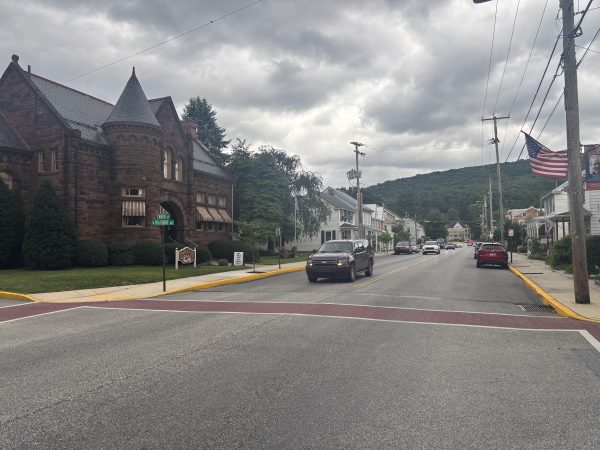
The main drag in Mount Holly Springs, a small borough in Cumberland County, Pa., in July. The community has seen controversy over local police cooperation with federal immigration authorities.Will Bunch
The recent headline on the website of Carlisle’s Sentinel newspaper could best be described as banal: “Mount Holly proposes no tax increase as ICE payments flow into borough funds.”
Taxes are stable in Mount Holly Springs, Pa., a small borough of 2,333 people in Cumberland County, about 25 miles southwest of Harrisburg. Federal dollars are flowing into the municipality’s bank account thanks to its partnership with U.S. Immigration and Customs Enforcement (ICE) under a program known as 287(g). Life sounds good …
… Except, of course, for at least 34 immigrants, many of them driving essential goods through central Pennsylvania, who’ve been arrested by the four-person police force in Mount Holly Springs since March and turned over to ICE for detention in squalid facilities like the Moshannon Valley Processing Center, with the ultimate goal of placing them in shackles and flying them out of the United States for good.
The mid-20th century writer and philosopher Hannah Arendt famously coined the phrase “the banality of evil” as she sought to explain the humanitarian abuses that took place in Germany after she’d fled Nazi rule in the 1930s. She argued that bureaucrats and functionaries didn’t ponder the moral consequences of their actions but saw themselves merely as cogs in a system, with a “reluctance ever to imagine what the other person is experiencing.”
Arendt could have been writing about Mount Holly Springs or hundreds of other small towns or counties where federal dollars for arresting immigrants, breaking apart their families, and terrifying their neighbors have become just a civic budget line item to avoid tax increases or allow a tiny hamlet to keep its local cops well equipped.
At the recent borough council meeting in which the Mount Holly Springs annual budget was reviewed, Tom Day — who is both police chief and borough manager — said that, other than $10,000 for bulletproof vests, the initial $130,000 windfall from the Donald Trump regime for apprehending immigrants under 287(g) is sitting in the bank. Monthly cash payments averaging $1,000 are helping the tiny locality balance its books, he explained.
Yet, not all of this sits well with a band of local critics of the police partnership with ICE, including council member Pam Still, who worry not just about the potential legal liability from the arrest surge in Mount Holly Springs, but also the moral trade-offs.
“Mount Holly Springs should not be doing the federal government’s work,” Still told me by phone Monday night. “It’s disruptive to the town. People are upset. I’ve had so many people say to me, ‘It’s blood money,’ that it feels like blood money.”
Yet, Mount Holly Springs is just the tip of ICE’s financial iceberg, as the feds dole out several billion dollars to local law enforcement agencies willing to deputize officers to assist them in striving toward Trump’s mass deportation goal of arresting as many as 3,000 immigrants from coast to coast every day.
Pennsylvania, where at least 146 law enforcement agencies — most in counties that voted for Trump, most coming on board in the last year as the financial incentives were added — have now partnered with ICE, is on the cutting edge of a national debate over local cops making immigration busts. Neighboring states — including New York, New Jersey, and Maryland — have banned 287(g) pacts on the argument that immigrants’ fear of the police would make their communities less safe.
In Sunbelt states such as Florida and Texas, where the program thrives with state-level encouragement or mandates, the financial arrangement that ICE critics call “blood money” has become a substantial source of income. Last month, the Wall Street Journal published a story detailing how 287(g) has become “a cash cow” for rural spots like Doddridge County, W.Va., which took in $137,000 to buy a new police car for a community with few, if any, immigrants.
I’d argue the Journal’s perspective is not wrong — the ICE initiative is a waste of tax dollars, at a time when the outdated routers that keep our jetliners aloft are melting down — yet it gives a wrong impression. The problem with 287(g) — named for the section of a 1996 immigration law that authorized it — is not that too few folks are getting arrested for all that money, but too many.
Democratic U.S. Rep. Chris Deluzio, who represents a stretch of Western Pennsylvania west and north of Pittsburgh, issued a report last week that found that more than half of the209 recent ICE arrests in his district were made by local cops under 287(g), and that 140 of those apprehended had no criminal record.
“Remember, ICE is now the most funded law enforcement agency in the country,” Deluzio said in a news conference last week. “And what are they doing with this power? Endangering America’s lives and liberties. Making our communities less safe.”
In the community of Mount Holly Springs, the police chief Day did respond to my email for comment, but largely to criticize my earlier column on the 287(g) program there, which he called “a story to fit my agenda.” He continues to insist that the primary goal of the borough’s immigration enforcement is to improve truck safety by stopping “drivers that cannot understand the signage,” and noted that the Chinese human rights lawyer and asylum-seeker caught up in the dragnet, Wu Shaoping, is now a free man, with his traffic charges dismissed.
It was the July arrest of Wu, who was cited for running a stop sign while making Amazon deliveries, handed over to a nearby ICE agent, and detained for 10 days, that first led me to Mount Holly Springs to investigate the ugly realities of 287(g). His case put a human face on a program that police and local officials prefer to keep as a boring budget line item, deflecting requests for meaningful information.
Still told me local activists have been filing Right-to-Know requests in an effort to understand how Day and his three officers are running the program. She said one partially blacked-out report detailed the arrest of two undocumented immigrants who were passengers in a broken-down car, with a child in the back — arrests that, just like that of Wu, had nothing to do with the chief’s “truck safety” agenda.
As has been the case in other localities, the growing controversy over ICE cooperation has also threatened public information and open debate. At the same meeting in which Mount Holly Springs council members discussed the budget, a resolution that would restrict public comment, including a ban on out-of-town speakers and the possibility of arrest for attendees who don’t comply, was debated but put on hold.
Deluzio, in his report, agreed that one of the biggest problems with the 287(g) program is that the data that have been released to the taxpayers funding Trump’s mass deportation push is faulty and grossly incomplete. The congressman hopes the new Democratic-led Congress can address that, and do even more.
“The Congress now, with a new Democratic majority, I think will want to put a stop to the overfunding and abuses under ICE, and that accountability will come,” he said. Perhaps, although doing that, and clawing back some of the ungodly $250 billion or so that this GOP-led Congress has thrown at ICE, will surely face Trump’s veto pen, whatwith white supremacist Stephen Miller all but running the White House.
A better hope would be for the new Democratic trifecta in Harrisburg to put its newfound powers to use and simply follow the lead of our progressive neighbors and ban 287(g) programs across the state.
Police chief Day was exactly right about one thing: This opinion writer does have an agenda. I want to see local cops actually making their communities safer, which would mean not leaving our immigrant neighbors so fearful that they are terrified to go outside or report actual crimes, lest a broken headlight or a missed stop sign ends their freedom and puts them in shackles.
I’d love to see the banality of evil removed from the borough council agenda.
Yo, do this!
There’s a reason Rachel Maddow’s Monday night appearances on MS NOW have become appointment TV, and it’s not because she delivers the news. Maddow’s one weird trick is her storytelling ability. I’m happy to report that it is on full display in her brand-new book, The Department of Fate: The Promise, the Power, and the Collapse of America’s Most Consequential Institution, which tells the complicated history of the U.S. Department of Justice since its inception in 1870. That might not sound exciting, but Maddow brings a broader tale of occasional do-gooding corrupted by power and greed to life, through dramatic clashes like the 1871 war on the KKK and the 1894 Pullman strike. A compelling read (or, in my case, listen).
This past week’s communications breakdowns have taken the edge off the postelection giddiness in Anti-Trump World. We still need a good laugh from somewhere. Thank God for Philomena Cunk. The latest in a series of Netflix-streaming mockumentaries that I was tragically unaware of until this weekend, Cunk on Cinema, is a deadpan romp (the fictional Cunk is brilliantly portrayed by British actress Diane Morgan) that offers a sort of drunk — or at least buzzed — history of more than a century of motion pictures. You might even learn a new thing or two if you can stop laughing.
Ask me anything
Question: Given Republican anger at Biden’s pardons and Democratic anger at Trump’s, could there be sufficient bipartisan support for an amendment to limit pardon power to overcome the extreme difficulty of constitutional amendments? Is it a worthwhile anti-corruption measure? — Richard Robbins (@richnyc.bsky.social) via Bluesky
Answer: I received so many great questions this week, which says a lot about the revolutionary moment we are living in. Richard’s query is something I’ve been pondering a lot, as Donald Trump and his cronies have made a mockery of the ancient concept of clemency by springing all their crooked friends (or paying clients) from behind bars. The founders made a bunch of well-intentioned mistakes in writing the Constitution, although it’s weird that the likes of James Madison and Alexander Hamilton were smart enough to fear a man on a white horse but didn’t realize how easily pardons could be abused by a rogue president. You make a good argument: Cite the pardons by Joe Biden or Bill Clinton to argue the whole system has turned rotten. Undoing this mess will be hard, but it must be attempted.
What you’re saying about …
It’s hardly a surprise that newsletter readers are solidly behind the campaign to replace New York’s Chuck Schumer as Democratic leader when the party takes over the Senate in January, and that most would prefer Maryland Sen. Chris Van Hollen, who has emerged as chief rival. “Definitely replace him and all the old white men,” wrote Ginger Osborne. “Bring on the young people. The Democratic party needs many shots in the arm. I say this as a white woman who will turn 76 in 8 days.” But Stephen Rourke thinks Schumer has the votes — this time. “I see Van Hollen as mounting a challenge to Schumer’s leadership but settling for being his whip, allowing Schumer to retire at the end of his current term (in 2028) and replacing him at that point,” he suggested.
📮 This week’s question: The flights are finally back to normal, but the blame game is just beginning for the air traffic meltdown last Friday that stranded thousands of travelers. Do we agree that it’s poor management from Transportation Secretary Sean Duffy and the Trump regime, or do they have a point in blaming the Biden administration or Congress? Are bigger forces, including AI, in the mix? Please email me your answer and put the exact phrase “Blame for air meltdown” in the subject line.
Backstory on why Rahm Emanuel can never be POTUS
A tombstone marks the grave of Laquan McDonald at the Forest Home Cemetery in Forest Park, Ill. Martha Irvine
Rahm Emanuel, who served as Chicago’s mayor during much of the 2010s and has been a congressman, a White House chief of staff, and an ambassador, is apparently running for the Democratic presidential nomination in 2028, according to at least 10 different mainstream news organizations that keep telling me this, again and again.
I’m here to remind you about one of Emanuel’s former Chicago constituents who won’t be voting for him in the Illinois primary less than two years from now: Laquan McDonald. He would have been 30 on primary day — had he not been murdered on Oct. 20, 2014, by a white Chicago police officer named Jason Van Dyke, who fired 16 shots into a Black teenager’s body even as McDonald, then 17, appeared to be walking away, and then as he writhed on the pavement in agony. I can write “murdered” because something happened to Van Dyke that you rarely see in America: A jury convicted the now ex-cop of second-degree murder.
So justice was done? Yes, and no. On the “no” side of the ledger, Van Dyke was released after just three years in prison — less than half his sentence. But more importantly, his case may have never gone to trial at all. For 13 agonizing months, even as thousands of angry Chicagoans marched through the streets, the city’s Emanuel administration refused to release the key evidence: a police dashcam video that showed what really happened. The delay meant the city’s official response was that McDonald was shot only after he “lunged” at officers with a small knife in his possession. That was a complete fiction.
Emanuel insisted throughout the 13 months and afterward that a) he’d never seen the video while its release was blocked and b) that the city’s hands were tied because of a U.S. Department of Justice investigation. There’s no way of knowing if the first claim is true, but it was reported that the DOJ had no issue with releasing the footage. Meanwhile, Emanuel was seeking reelection and locked in a tight runoff race with future U.S. Rep. Jesús “Chuy” García — an effort that might have faltered if the evidence of a police murder and cover-up had emerged.
In April 2015, Emanuel administration lawyers agreed to a $5 million settlement with the McDonald family — even though the teen’s survivors hadn’t yet filed a lawsuit — that included a gag order that kept the video under wraps for months, until the mayor was on his way to a new term. “The idea that the mayor of Chicago would make the city pay $5 million to preemptively settle this case — including a provision that the dashcam video is to remain confidential — without having seen the video himself strikes me as extraordinarily difficult to believe,” Bernard Harcourt, a Chicago law professor, told the Guardian in December 2015, after a county judge finally ordered the video’s release.
There were calls for Emanuel to resign, and when he finally did leave office in 2018, his approval rating of 32% was lower than Donald Trump’s is today. This information can all be found in a nanosecond with a Google search, and yet to the nattering nabobs of Beltway political journalism, Emanuel’s shameful past is buried like ancient hieroglyphics. One outstanding journalist, however, is Heather Cherone of Chicago’s PBS station, who’s noted 10 fawning media profiles of Emanuel and his presidential prospects as “a radical centrist” (as the Wall Street Journal called him this week) that have made no mention of the McDonald murder and cover-up.
Look, there is a lot to loathe about an Emanuel presidential candidacy — the American Prospect calling him “Wall Street’s favorite Democrat,” his history of supporting mass incarceration and welfare cuts, his annoyingly abrasive personality, etc., etc. That’s a column I’ll probably never have to write because it’s clear on social media that the regular folks who vote in Democratic primaries hate him as much as I do.
But the continued journalistic fluffing of Emanuel and his doomed White House bid is both inexplicable and inexcusable. Maybe it’s fun to expense $80 steaks at the Capital Grille with Rahm and make fun of the dirty hippies who want to raise your taxes and integrate your kid’s elite school. But to dare to call yourself a journalist when you’re too lazy or ignorant or morally corrupt not to mention “Laquan McDonald” in your article that rises from the putrid cigar smoke … that’s beyond shameful.
What I wrote on this date in 2020
There are two reasons why I’ve been returning to 2020 so often in this feature. One is that it was such a momentous year, but the other is that the dates that are Tuesdays in 2026 were also newsletter Tuesdays six years ago! On Nov. 17, 2020, I was pondering the imminent departure of Donald Trump from the White House, and how much his retirement plan of nonstop media attention and running for office yet again looked like Philly’s own Frank Rizzo. I wrote that “in the spirit of series like House of Cards or Veep, the White House was just the middle of a story arc — maybe Season 3 or 4 — in a production that will unfortunately keep getting renewed even as the show gets both lousier and more implausible (just like House of Cards!).” Ugh, how right that was.
Only one column last week as I attempted to grind my way through some investigative reporting. In that piece, I looked at the scariest Friday the 13th in American history — especially, but not limited to, the meltdown in nationwide air traffic — and what that told us about enduring more than two more years of the Trump regime. As with today’s newsletter, I invoked the late great Hannah Arendt, with her explanation that incompetence is a feature and not a bug in authoritarian governments. The new Congress can reject Trump’s bad appointees, but it can’t force him to pick good people.
Every few days here in Philadelphia comes a jarring reminder that, for all the focus on the mess down in Washington, D.C., the struggles of managing and sometimes mismanaging the poorest big city in America come with life-and-death consequences. When a 10-year-old girl named Malayshia Allford went missing and was eventually discovered dead in the car trunk of her foster mom, a Philadelphia schoolteacher, The Inquirer didn’t let the story come and go as just another breaking news alert. We published a guest essay calling for an overhaul that would end the broken system of foster care as we know it, as well as an in-depth investigation of what went so wrong for Malayshia’s tragically short life. And we’re not done. I wish more cities and small towns had the people and the resources to cover what matters to the community. You support this mission in Philly when you subscribe to The Inquirer.
By submitting your written, visual, and/or audio contributions, you agree to The Inquirer’s Terms of Use, including the grant of rights in Section 10.
The Army-Navy game is renewing its partnership with Philadelphia.
On Tuesday, it was announced that the annual football game between the two military academies will be held in Philadelphia in 2028, 2030, 2032, and 2034. Lincoln Financial Field is already hosting the matchup Dec. 4, 2027, which was awarded in the previous bid cycle. The last time the city hosted the Army-Navy game was in 2022.
“I am honored to welcome the Army-Navy Game back to Philadelphia right where America’s Army, Navy, and Marine Corps began, established to secure the blessings of liberty for our new nation,” Gov. Josh Shapiro said in a statement. “Pennsylvania has a proud and storied history of military service, with generations of veterans, active-duty members, and military families serving here and calling the Commonwealth home.”
Philadelphia has hosted “America’s Game” 90 of the previous 126 matchups. The 2027 Army-Navy game is expected to bring 70,000 fans to South Philadelphia. In a statement, President and CEO of the Philadelphia Convention and Visitors Bureau Gregg Caren thanked Shapiro, Mayor Cherelle L. Parker, Sen. Dave McCormick, and State Sen. Vincent Hughes for supporting the game’s return.
“Philly is ready to welcome America’s Game back home,” Parker said in the release. “As our city celebrates the nation’s 250th anniversary, securing four more Army-Navy Games is another historic moment for Philadelphia. We’re ready for great games and to welcome visitors with the warmth Philly is known for.”
Army cadets celebrate after winning the 123rd Army vs Navy football game in 2022.Elizabeth Robertson / Staff Photographer
Added McCormick: “The Army-Navy Game belongs in Philadelphia. As a West Point graduate and Army veteran, I know this historic rivalry represents so much more than football. Bringing America’s Game back to Pennsylvania has been a priority of mine since the day I was sworn into the Senate, and I’m proud to have played a role in making it happen.”
This year’s game will be played Dec. 12 at MetLife Stadium in East Rutherford, N.J.
For the first time in its 43-year history, the Pennsylvania State System of Higher Education plans to shut down one of its original 14 universities due to plummeting enrollment and a deficit.
The Mansfield campus of Commonwealth University would close by June 2028 under a plan announced by the system Tuesday morning. Mansfield in 2022 was merged with Bloomsburg University and Lock Haven University into Commonwealth University as PASSHE attempted to cope with declining enrollment.
But that did not stave off enrollment declines. The campus, which enrolls just over 1,000 students, has lost 71.6% of its enrollment since 2009, and that figure is expected to decline a further 20% by 2028 to 802 students, according to PASSHE. The campus’ freshman-to-sophomore retention rate has dropped to 60% this fall, the system said. That means 40% of freshmen who entered in fall 2025 did not return this fall.
The campus ran a deficit of $7.7 million in 2025-26, and nearly 60% of its residence hall beds are empty this fall.
Founded in 1857 as a seminary, Mansfield became a teachers college in 1927 and then a state college in 1960. In 1983, it became a university and a part of PASSHE.
PASSHE until this point has been reluctant to close campuses, despite a 30% decline in overall enrollment since 2010, worrying it would leave some areas of the state unserved by higher education. Mansfield is located in Tioga County.
“Planning now for an orderly wind-down of operations at the Mansfield campus will put Commonwealth University on a stronger path to long-term success and better position it to continue providing a relevant, rigorous and affordable education to students,” PASSHE chancellor Christopher Fiorentino said in a statement. “Our top priority through this process is that students at the Mansfield campus have a path to finish their degree at Commonwealth University.”
Fiorentino directed Commonwealth University president Jeffery Osgood to develop a plan for the closure and submit it by Dec. 8. The campus would close by June 30, 2028.
“I understand how deeply people care about Mansfield and how difficult this will be for those who have dedicated years of their lives to the campus,” Fiorentino said.
But in a letter to Osgood, he said that if the system continued to cover deficits, the money would have to come out of the reserves of the other universities.
The plan will address how current students on the Mansfield campus will be able to continue to get their degrees from Commonwealth, he said.
The move by PASSHE comes as Pennsylvania State University prepares to close seven of its Commonwealth campuses at the end of this academic year and signifies a continued shake-up in the state’s higher education landscape amid falling enrollments.
Mansfield is among a growing string of Pennsylvania universities to close in recent years. The University of the Arts in Philadelphia abruptly shut in 2024 and Cabrini University also closed that year. Rosemont College plans to conclude operations by 2028; Peirce College recently merged into Lackawanna College. Earlier, the University of the Sciences was absorbed by St. Joseph’s University and Philadelphia University by Thomas Jefferson University.
The PASSHE plan to shut Mansfield is subject to approval by the board of governors, which would have to vote at a forthcoming meeting. It does not require state approval because it became a branch campus in 2022 and is not a stand-alone university, PASSHE spokesperson Kevin Hensil said.
The recommendation by Fiorentino to direct a wind-down of operations at Mansfield followed analysis of enrollment, finances, regional demographics, and infrastructure needs at Bloomsburg, Lock Haven, and Mansfield that began in July.
But Kenneth M. Mash, president of the statewide faculty union, the Association of Pennsylvania State College and University Faculties, said there are a lot of questions to be answered before the plan could proceed. He opposes the closure and is looking forward to hearing the governor’s and legislature’s response, he said.
“This is the first time we have given up on our commitment through public higher education to provide high-quality, low-cost education throughout the commonwealth,” he said. “This is now going to be a higher education desert. There is no institution near there.”
He also said steps the system and university have taken over the years have facilitated — not corrected — the enrollment decline. He questioned why a plan to close the campus was not discussed at a public meeting.
Roadwork will cause detours, delays, and closures in about a dozen municipalities throughout the county this week.
Here are the traffic changes you need to know as of Nov. 17:
Caln Township:Caln Road will be closed between Blackhorse Hill Road and Jennifer Drive from 9 a.m. to 3 p.m. on weekdays through Nov. 30.
East Marlborough and Kennett Townships: There will be lane closures in both directions of Route 1 between Greenwood and Schoolhouse Roads through Nov. 20 for roadwork.
East Nantmeal Township:Iron Bridge is currently closed for structural repairs. There’s no timeline yet for reopening.
Honey Brook and West Nantmeal Townships:Chestnut Tree Road will have a weekday lane closure between Horseshoe Pike and Manor Road from 8 a.m. to 4 p.m. through Nov. 24 for milling and paving.
Kennett Square Borough: The 100 block of South Broad Street will be closed through Nov. 18 for storm water repairs. Marshall Street will be closed between Cypress and Juniper Streets on Nov. 20 from 7 a.m. to 11 p.m.. There will also be parking restrictions on sections of Marshall Street from Nov. 18 to Nov. 20 and on Nov. 23. Sections of Broad, Juniper, East Linden, and Willow Streets will have parking restrictions Nov. 20 from 7 a.m. to 11 p.m.
London Britain Township:Good Hope Road will be closed between Parsons Road and Route 896 from 9 a.m. to 2 p.m. on Nov. 17 for vegetation maintenance.
Parkesburg Borough: There will be maintenance work on the 200 block of Grant Street on Nov. 19 from 8 a.m. to 4 p.m., during which time parking won’t be allowed.
Phoenixville Borough:Jones Street will be closed from 7 a.m. to 5 p.m. between Second and Third Avenues for water line replacement work through about the end of November.
Thornbury Township:Westtown Road will be closed between Route 926 and Cheyney Road from 7 a.m. to 4 p.m. Mondays through Saturdays through Nov. 20 for bridge repair work.
Tredyffrin Township: There will be weekday closures on Route 252 between Lancaster Avenue and Swedesford and Howellville Roads from 7 p.m. to 5 a.m. through Nov. 20 for utility construction.
West Brandywine Township: East Reeceville Road will be closed for utility work between Sweet Briar Road and Sills Lane/Gala Road through Nov. 25.
This suburban content is produced with support from the Leslie Miller and Richard Worley Foundation and The Lenfest Institute for Journalism. Editorial content is created independently of the project donors. Gifts to support The Inquirer’s high-impact journalism can be made at inquirer.com/donate. A list of Lenfest Institute donors can be found at lenfestinstitute.org/supporters.
“Shop small!” seems to be a popular sentiment as we head into the holiday season — perhaps to the benefit of local Main Streets.
Despite economic and affordability challenges, Visa predicts that holiday sales will grow at their fastest pace since 2021. And a new study from American Express is pointing to “strong momentum” for small businesses this year, with more than 88% of those surveyed saying they are likely to “shop small” this holiday season.
Small Business Saturday on Nov. 28 kicks things off. Most small businesses I know will be offering special deals, discounts, gift bags, and other incentives that day. But for some owners, Small Business Saturday goes beyond sales.
This year’s Small Business Saturday will be bittersweet at the Boro Vintage in Yardley, owner Adam Hiner said. The store recently announced plans to close its physical storefront in February to prioritize family. The company will still be selling online.
“We’re planning to offer even greater discounts as we begin winding down our time on Main Street,” Hiner said. “The day will allow us to give our customers an opportunity to take home some wonderful treasures while celebrating everything we’ve built together.”
Adam’s wife, Nicole, owns the Boro Piercing Studio, a needle-only piercing studio and boutique next door to the Boro Vintage. Small Business Saturday is one of her favorite days on Main Street.
“We get to catch up with people who’ve been coming to us for years and meet neighbors who’ve walked past the shop a dozen times and finally have a chance to come in,” she said. “I love that a family can make an afternoon of it, stop in to see us, grab something to eat and discover another shop down the block.”
Small Business Saturday reminds people that where they choose to spend their money truly matters, said Dianna DeStefano who owns West Chester shop Pine + Quill.
“More money stays local so I can reinvest in my community through creating local jobs, [and hiring] vendors and other services,” she said. “It supports real people and families because every purchase helps me be able to cover expenses and continue to employ people as well as continue to do what I love and bring something truly unique to a small town.
Small businesses are what keeps towns like West Chester vibrant, DeStefano says.
“Empty storefronts don’t do that,” she said. “We must have a good season so we can keep our doors open the following year.”
Occasionette’s three Philadelphia-area shops will not only be offering discounts but collecting and matching donations for charities.
“Small Business Saturday is an important celebration of what makes each neighborhood special,” Occasionette founder Sara Villari said. “It’s a time to expect the unexpected and to do your best to think about how you can make this time of year as seamless and memorable for your customers” as possible.
Occasionette owner Sara Villari is shown in her Passyunk store in 2022.Steven M. Falk / Staff Photographer
Tropical Juice Bar, the New Jersey-based chain with 11 locations, is preparing for Small Business Saturday with special discounts and training to ensure that their locations are ready for increased customer traffic. Their goal is to not only make it easy for a first-timer to walk in but also take care of their regulars. “A good day can turn into a bad review fast if the line moves slow,” CEO Carlos Lopez noted.
“Our stores are neighborhood stores,” Lopez said. “Small Business Saturday is when our regulars bring in friends and family, and it is a good reminder that money spent locally stays local.”
KAFX Body founder Skip Chapman said Small Business Saturday is a great way to emphasize the importance of family businesses to the economy. The family-owned operation in Manasquan manufactures and sells a natural body deodorant and has seen fast growth thanks to its social media activities.
Chapman says they are preparing for the holiday season by increasing manufacturing, making sure they are well staffed, increasing their online live-show schedule, and putting together gift bundles, gifts with orders, and seasonal exclusive scents.
“We want to show that there is a real family making the products, packing orders, and going live on social media to talk about them,” he said.
Joe Waroquier, who owns a full-service interior design-build firm and curated retail boutique in Bryn Mawr and Washington, D.C., doesn’t plan on offering any discounts for Small Business Saturday. But he plans to make sure his boutique is “looking its best.”
For him, Small Business Saturday isn’t so much about offering deals as it is about reminding people to support local businesses and showing off your business to a new group of prospective customers.
“Shopping small means supporting local entrepreneurs, employees, and the unique businesses that give a community its character,” he said. His advice: “Make people feel welcome, show them what makes your business special, and remember that building long-term relationships is far more valuable than a single day’s sales.”
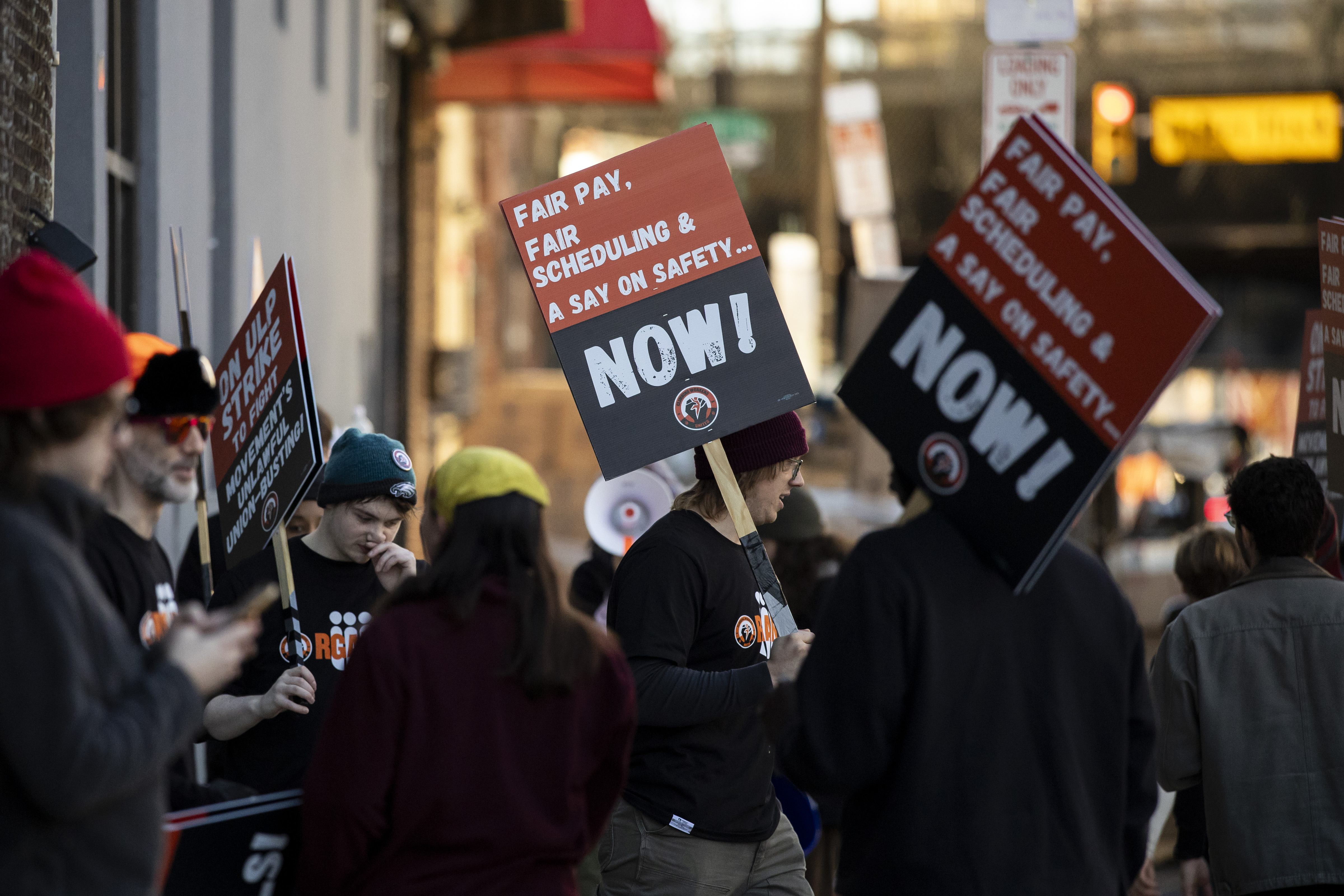
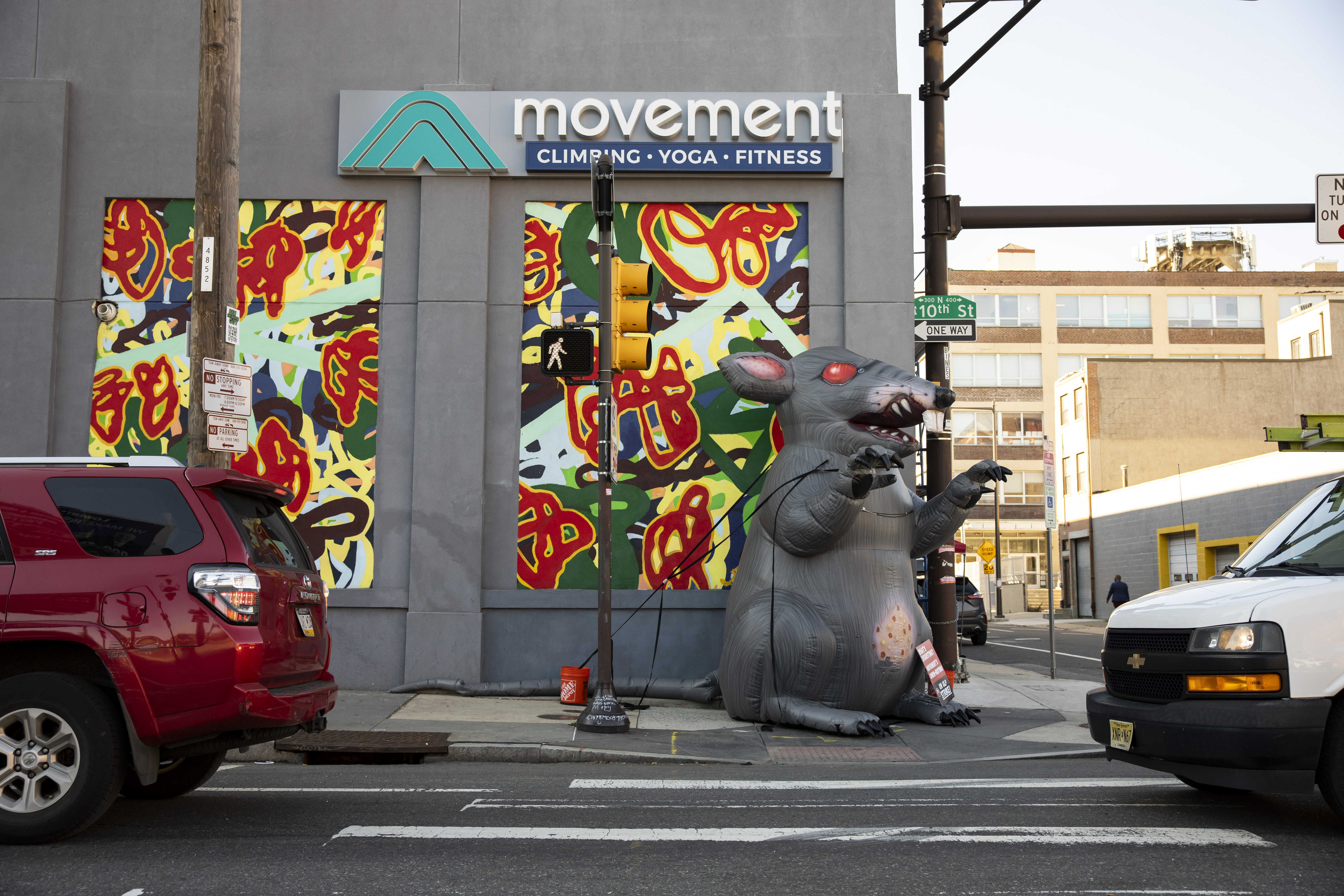
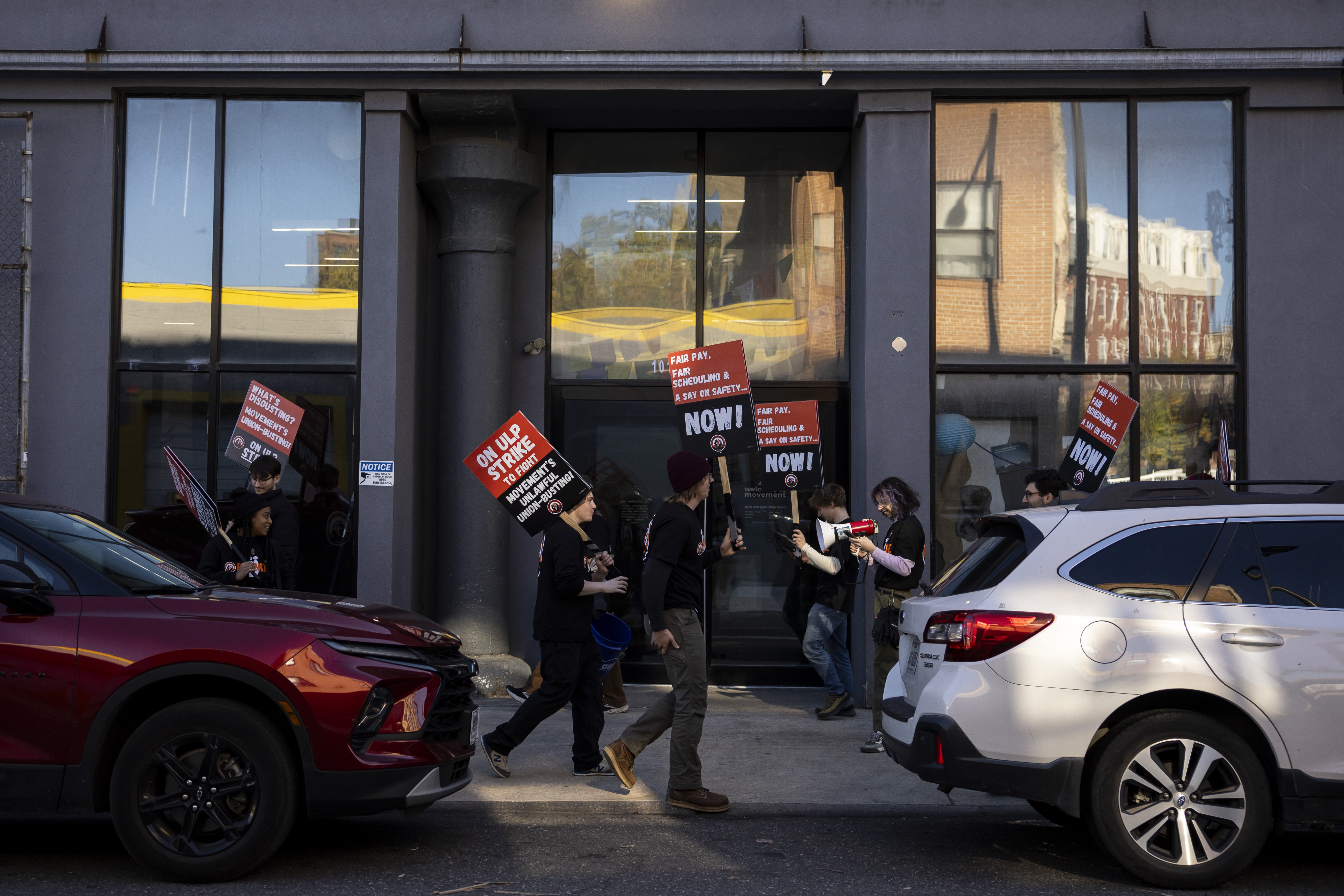
Employees of Movement Callowhill climbing gym went out on strike on Tuesday morning, their union announced.
The planned single-day strike comes as workers have been seeking a first union contract with higher wages, better staffing, and more consistent work schedules. The gym has 54 total workers, 48 of which are union members, including coaches and climbing instructors.
Employees of the Callowhill gym unionized in 2023 and have been negotiating for a first contract as far back as June 2024, according to Ben Bennett, deputy organizing director at Workers United, which represents the workers. He says the company is not bargaining in good faith.
“The company has refused to budge at all from the status quo on wages, hours, and benefits,” said Bennett. “They have repeatedly come to us and said that they’re not going to improve anything from the current status quo.”
A representative for Movement Gyms did not respond to a request for comment Tuesday.
Scabby the Rat appears outside of Movement Callowhill on Tuesday as workers walked out for a one-day strike.Monica Herndon / Staff Photographer
Workers have been organizing for years at Movement locations across the country, beginning with the Arlington, Va., location in 2021. Today over 500 Movement employees across 10 locations are represented by Workers United, which also represents Starbucks baristas. None of the climbing gym locations have reached a first union contract.
“Workers have really reasonable bargaining demands,” said Bennett. “They want to reach an agreement that makes the gyms better for everyone involved. We just have not seen that the company is ready to come to the table and negotiate in good faith [with] workers to reach an agreement, and it’s unfortunate.”
What are Movement workers asking for?
The union would prefer to bargain for a single agreement across unionized locations, Bennett said, but the company has insisted on keeping negotiations separate for each location.
Still, workers across the unionized gyms have developed common bargaining proposals, he said.
Across locations, the union said earlier this year that workers report “inadequate staffing, inconsistent training, excessive heat and ventilation issues, and maintenance problems that impact both worker safety and the experience of climbers.”
The minimum wage for workers at the Callowhill gym is currently $15.50, and workers would like to see that rise to $20 an hour.
Adam Clary, 27, a front desk worker at the Callowhill gym, described workers going out on strike as a “last resort.”
“We’re the people who make the money for your gym,” he said. “We’re not disposable. We’re not just going to get kicked around.”
Clary currently makes $15.50 an hour and works there roughly 20 hours a week while in grad school and doing hospital work related to his schooling.
If he were to make $20 an hour at Movement, he said “groceries and rent wouldn’t be near as much of a struggle.”
“I’d like to be able to make enough money that I could support myself,” said Clary, who is on Medicaid and receives SNAP benefits. “But right now, I’m relying more on some government support to pick up some of the slack.”
With higher wages, he’d have more time to see friends, he said, and “I’d be able to save a little bit more instead of kind of living [by the] skin of the teeth.”
Adam Clary, 27, a front desk worker at Movement Gym, says that with higher wages, “groceries and rent wouldn’t be near as much of a struggle.”Monica Herndon / Staff Photographer
Workers also want a contract to include minimum staffing levels, as well as guidelines to make scheduling more consistent.
Employees also want more of them to be able to work enough hours to be considered full time and qualify for health insurance through their employer — which “relatively few” workers currently have, said Bennett. He said the gym generally doesn’t schedule people for 30 hours a week, which would make them full time.
Movement workers have been asking gym members to commit to putting their memberships on pause if the union calls for it. In recent months, more than 2,000 members have pledged to do so, according to the union. A recurring monthly membership to the Callowhill gym costs $109 and a day pass is $28.
The gym in Philadelphia, which formerly went by The Cliffs at Callowhill, was acquired by Movement in 2023. Today, Movement has over 30 locations including sites in New York, Maryland, Illinois, Texas, and California. Beyond climbing, the gym also offers yoga and fitness classes.
The most recent bargaining session between the union and the employer at Callowhill was in July. Before then, the company and the union hadn’t met for nearly a year, said Bennett, adding that the company canceled several sessions. The next negotiation is scheduled for Thursday, he said.
Movement Callowhill’s unionized employees have been seeking a first union contract with higher wages, better staffing, and more consistent work schedules. Their union called a one-day strike on Tuesday. Monica Herndon / Staff Photographer
So, the Federal Aviation Administration’s (FAA) snap decision to ground all flights across the country seemed like just another manic Friday when it comes to Trump making America less great. But as the hours passed and no one from the White House could explain what the heck was going on, the Trump team’s incompetence played out in real time for all to see.
And what a dismal display it was for the more than 1.5 million passengers booked on the roughly 11,000 flights that were grounded after a routine telecommunications upgrade at an air traffic facility triggered a network failure.
The disruption dragged into Monday as stranded passengers scrambled to get to their destinations. Roughly 1,100 flights were reportedly canceled or delayed just in Philadelphia.
The ground stop cost the top four airlines an estimated $345 million, while Transportation Secretary Sean Duffy said the overall economic cost would be “billions of dollars.” Not to mention the personal cost to the traveling public who missed weddings, funerals, sports games, and other family or business events.
Did Trump apologize to the millions of Americans who were impacted?
Of course not.
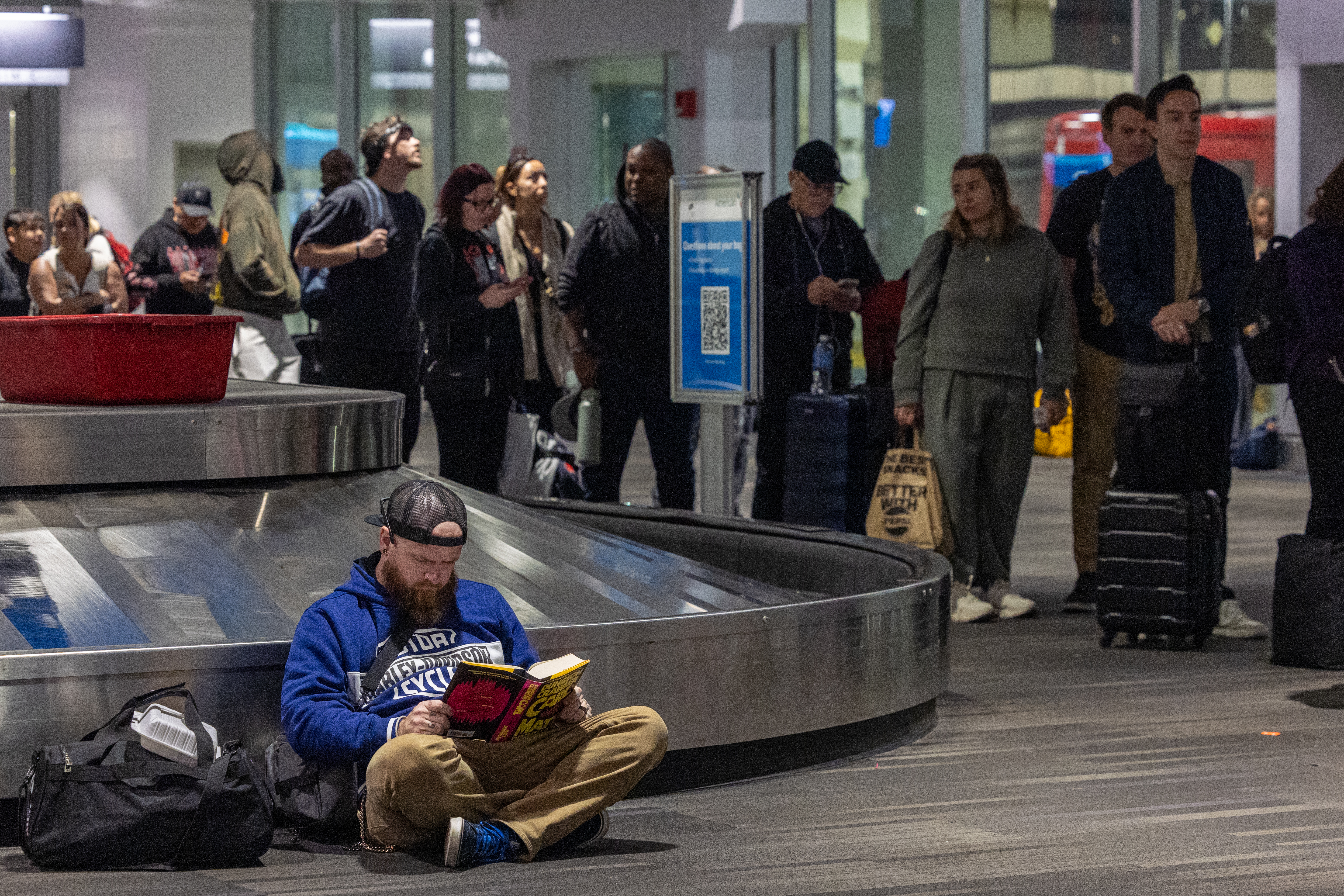
Mike Alcorn, of New Jersey, reads a book while others wait in line to receive their luggage inside Philadelphia International Airport after nationwide flights were canceled by the FAA on Friday.Aidan T. Gallo / Staff Photographer
Instead, Trump went missing in action and issued no social media posts about the airline crisis through much of the weekend.
Apparently, he was at a loss for lies.
Or maybe he was focused on something he really cared about.
Two hours into the nationwide ground stop — while some passengers remained stranded on tarmacs and no one knew when planes would be allowed to fly again — the president took to social media to call for tax incentives to lure movie production back to the United States.
“MAKE OUR ENTERTAINMENT INDUSTRY GREAT AGAIN!” he wrote on Truth Social.
Meanwhile, the Trump administration’s painful reality show played on.
Two of the B-team actors from Trump’s cadre of incompetent cabinet members took center stage to manage the crisis.
Homeland Security Secretary Markwayne Mullin and Transportation chief Duffy stumbled through a briefing that provided little substantive information, shifted the blame to Congress, and repeatedly praised Trump. It was enough to make the folks at Pravda blush.
Mullin, a former plumber and mixed martial arts fighter with no experience in law enforcement, military service, or counterterrorism prior to being put in charge of protecting the homeland less than eight months ago, tried to assure the public the ground stop was not a terror attack.
“There was no indication as of yet that this was a nefarious attack against us,” Mullin said. There was also no indication as of yet that Mullin knew what he was doing.
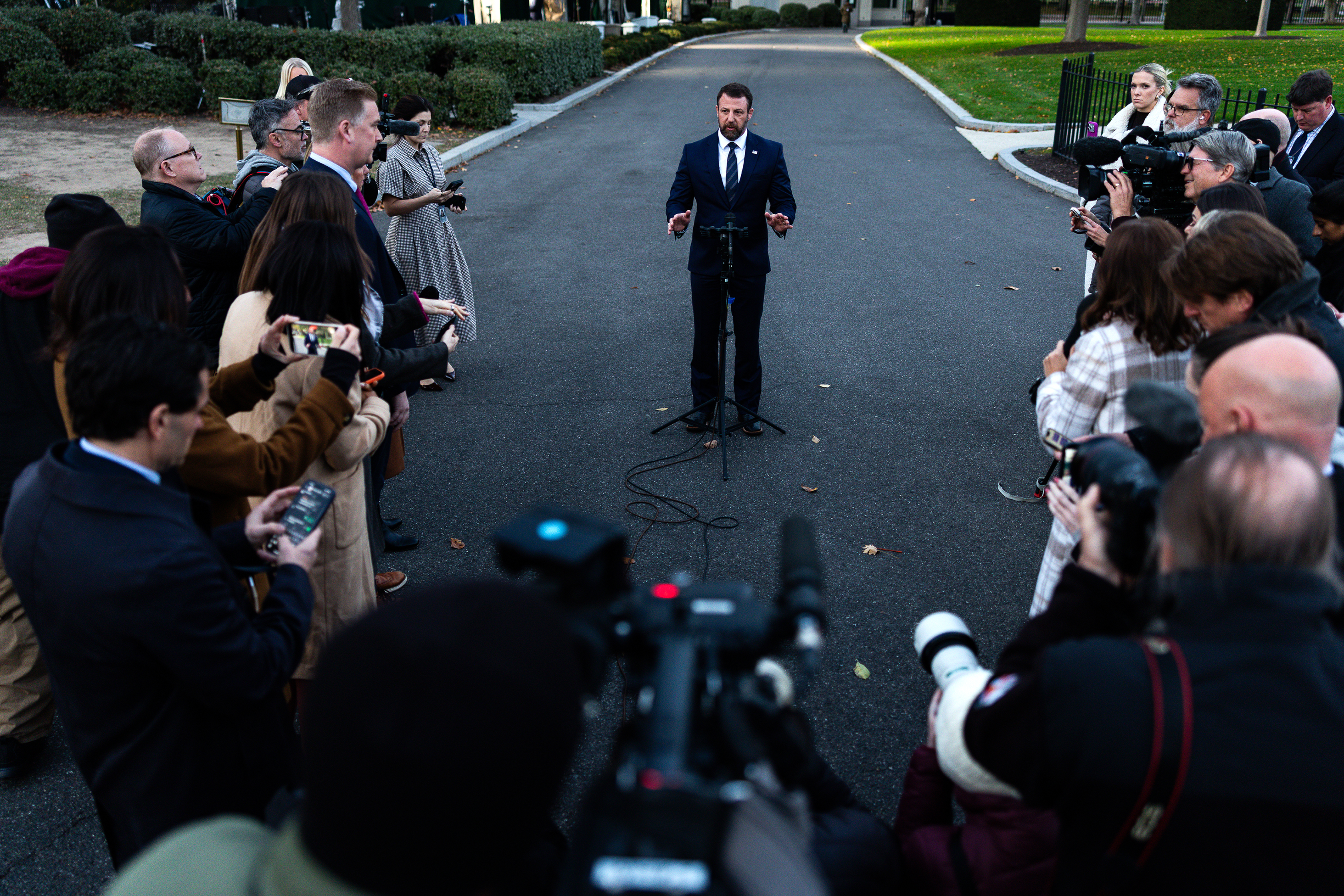
Markwayne Mullin, the secretary of Homeland Security, speaks to reporters outside the White House in Washington during a ground stop on Friday.TIERNEY L. CROSS
Duffy used his time before the cameras to mainly call on Congress to provide $50 billion in emergency funding to upgrade the FAA’s air traffic control system.
No one is arguing against doing what it takes to modernize and ensure the system is safe. But Duffy glossed over some key points, namely, Congress gave the FAA an additional $12.5 billion last year. And $9 billion remains unspent.
Of course, nearly every action by the Trump team includes graft.
Early reporting indicates a company that received an $875 million contract to develop the FAA’s new AI-powered air traffic management system gave a $2,500 campaign contribution to Duffy’s son-in-law, Michael Alfonso, who was just elected to Congress in Wisconsin.
The record indicates there will likely be more to come on that front.
During Elon Musk’s brief and disastrous tenure last year at the made-up DOGE office, he wanted to cancel a $2.4 billion air traffic communications contract with Verizon and give it to his Starlink company, but relented after pushback about conflict of interest.
The Department of Government Efficiency did eliminate more than 400 FAA jobs, including some that supported air safety.
The bottom line is no one in the Trump cabinet has shown the temperament or the experience to manage things when they’re running relatively smoothly, let alone in a crisis. Everyone is too busy performing for Trump while working side hustles.
Duffy recently spent seven months filming a reality TV show with his wife and nine children, in which they drove around the country. The show was sponsored by a host of major companies directly regulated by Duffy’s Department of Transportation.
Duffy’s call for more FAA funding comes while Trump fritters away billions on vanity projects like the White House ballroom, a triumphal arch, and the Lincoln Memorial Reflecting Pool.
After low-keying it all weekend, Trump looked in the mirror and finally figured out who to blame for the airline nightmare: Joe Biden. In a social media post on Sunday, Trump faulted his predecessor, the Democrats, and old technology for all the upheaval that brought the airline system to its knees.
“I don’t take any responsibility,” Trump said on Monday before heading to a summit in Asia aboard the $400 million jet Qatar gave him.
Mullin said it best during his briefing with Duffy, “This is what the leadership of President Trump looks like.”
Lockheed Martin Corp. wants to build a new machine shop in Upper Merion Township, but neither the company nor the government will say what will be produced there.
The weapons and aerospace company,a major Defense Department contractor, submitted plans for the 73,000-square-foot building to Montgomery County in September, and the township is set to consider the proposal in December. Some of the parking details are public, but Upper Merion officials denied a records request for the building plans, citing public safety exemptions.
Lockheed Martin directed questions about what the building will be used for to the Defense Department, which referred the questions back to Lockheed Martin.
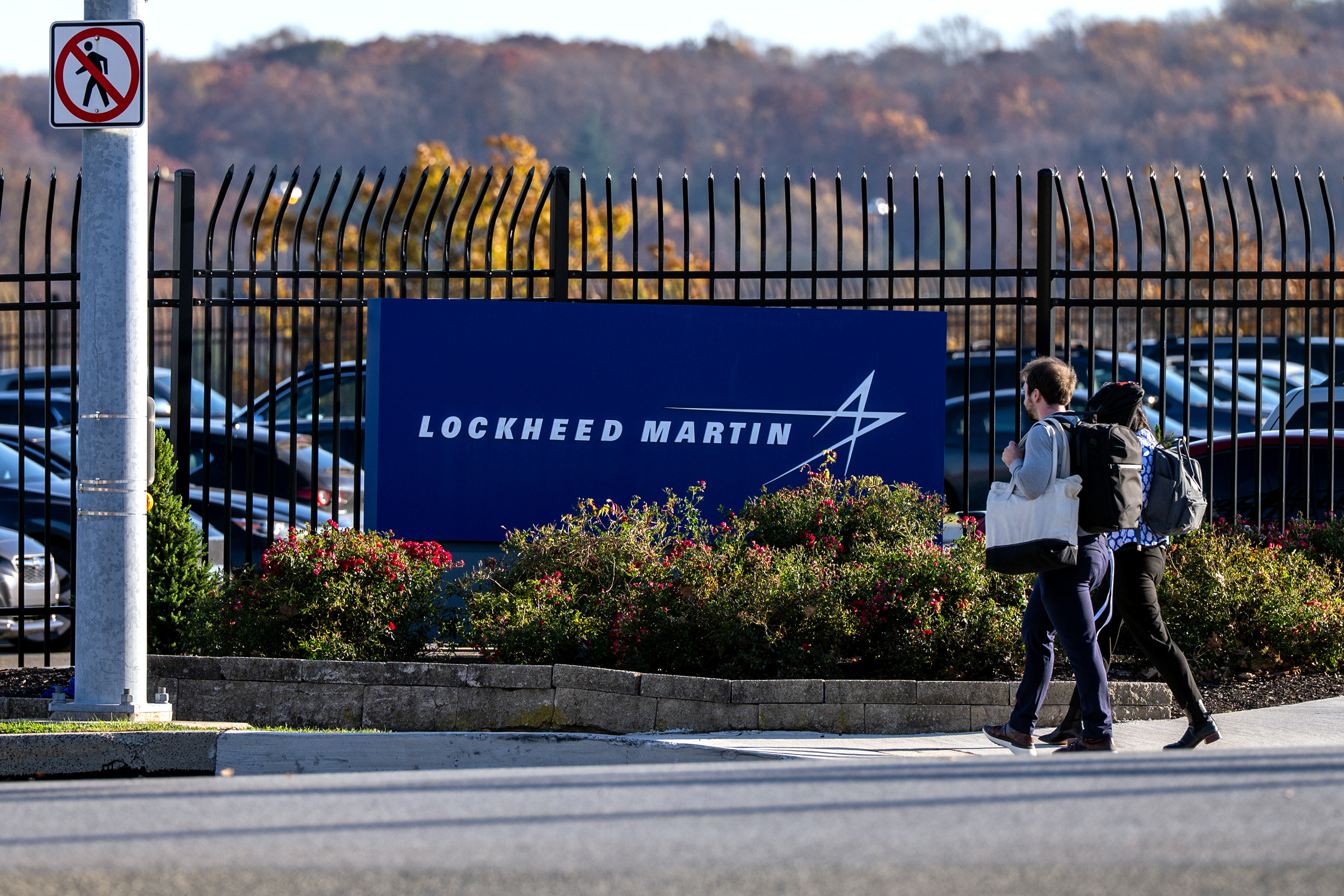
Lockheed Martin main entrance on Goddard Boulevard on the northeast side of the facility in King of Prussia Tuesday, Nov. 10, 2026. The private defense manufacturing facility is putting a 73,000-square-foot addition on the western side of the site, plus a parking garage. Some believe it will be used for chemical processing.Tom Gralish / Staff Photographer
What is Lockheed building in Upper Merion?
The new machine shop and chemical process linewould be part of Lockheed Martin’s 90-acre King of Prussia campus, along with a three-story, 45,000-square-foot parking garage, according to Montgomery County planning documents. If approved, it would bring Lockheed’s total footprint there to 1 million square feet, property records show.
Lockheed plans to adjust two other parking lots, in part because the company decided to end remote work this year, a manager wrote to Upper Merion in September.
“Lockheed Martin is also experiencing growth in terms of our production and test capabilities,” the manager wrote.
The company expects the machine shop to add 40 employees.
Though Lockheed is across the street from the fourth-largest mall in the United States, it’s difficult to see from public areas. Set on a hill, much of the site is surrounded by trees and fences.
Upper Merion denied a records request for details about the proposal this month under an exemption for a “military, homeland security, national defense, law enforcement or other public safety activity that, if disclosed, would be reasonably likely to jeopardize or threaten public safety or preparedness or public protection activity or a record that is designated classified by an appropriate Federal or State military authority.” The Inquirer has appealed the denial.
Matt Popek, chair of Upper Merion’s planning commission, said officials will share the building proposal with the public before the December meeting.
“We continue to invest in our infrastructure in thriving communities like Valley Forge to stay ahead of ready relative to warfighter demands,” Lockheed spokesperson Adam Smith said.
Lockheed Martin on Goddard Boulevard on the northeast side of the facility in King of Prussia, pictured on Nov. 10.Tom Gralish / Staff Photographer
This would be the second major development at the King of Prussia campus in five years, according to county planning records.
Lockheed Martin recently built a 55,000-square-foot laboratory. Upper Merion granted a height waiver for the building, which is more than 90 feet tall.
What does Lockheed Martin do in King of Prussia?
Although the purpose of the proposed facility is unclear, King of Prussia staff have played a significant role in more than a dozenDefense Department contracts awarded to Lockheed in the past five years, according to public contract information.
Since 2023, the Air Force has awarded contracts worth more than $1.4 billion to Lockheed’s King of Prussia and Utah sites to update the cone-shaped vehicles that take nuclear weapons in and out of the Earth’s atmosphere, according to Defense Department contract award postings. Lockheed and the Air Force tested a new version of the reentry vehicle over the Pacific Ocean earlier this month,the company announced.
The contracts are part of an Air Force project aiming to create a more accurate and deadly nuclear weapons system before 2036, according to a Pentagon budget document.
In this image provided by the U.S. Air Force, Senior Airman Jacob Deas (left) and Airman 1st Class Jonathan Marrs secure a titanium shroud, beneath which is a nuclear warhead, at the top of a Minuteman III intercontinental ballistic missile. Lockheed Martin developed the reentry vehicle used for this ICBM, and is working on an updated version for a new missile system.John Turner
The King of Prussia site is also involved in several software projects, including for Army artificial intelligence and missiles for foreign militaries.
Staff photographer Tom Gralish contributed to this article.
This suburban content is produced with support from the Leslie Miller and Richard Worley Foundation and The Lenfest Institute for Journalism. Editorial content is created independently of the project donors. Gifts to support The Inquirer’s high-impact journalism can be made at inquirer.com/donate. A list of Lenfest Institute donors can be found at lenfestinstitute.org/supporters.
NEW YORK — In the final minutes of the fourth quarter Monday, the Sixers, once up 24 points, found themselves in an unexpectedly close four-point game against the Brooklyn Nets.
Then, Tyrese Maxey found Joel Embiid in the corner for a three-pointer, putting a bow on Embiid’s 37-point night, his best scoring performance of the year in a 135-123 victory at Barclays Center. Embiid has especially struggled from deep to start the year, but he went 2-for-4 on Monday, his first game with multiple three-point baskets since the season opener.
Embiid noted the impact of the Nets trapping Maxey, giving him more open lanes to shoot. But he also said he changed his process, working to build back more aggression into his game.
“Nothing was with force,” Embiid said of his game to begin the year. “Everything was slow, that means the way you step into your shots, that’s going to be slow, that’s not the same rhythm. Everything was just different, and I think the second half of last game, and the way I started the game, make or miss, just got me playing hard.
“Everything I do has to be with force, that’s how I’ve always been successful. That’s a part you’ve got to manage, because that’s what I did in the past and now I’m in a position where I’m like, I want to stay healthy, I gotta stay healthy. So it’s kind of finding that balance.”
Joel Embiid (21) made key shots on Monday as the Sixers hung on after nearly surrendering a big lead. Yuki Iwamura
After getting off to a heavy-usage start thanks to a lot of close games, Embiid’s minutes have hovered around 30 over the last six games, dipping as low as 24 minutes, 40 seconds against Chicago on Nov. 8. He said that his 36- and 38-minute games earlier this season were “not the plan,” but he’s ramping back up and played 32:10 against Brooklyn, his most since Nov. 4 in Detroit.
“We scaled back a little bit and coming out of games, especially the last six games, I feel fresh,” Embiid said. “The next day usually I feel it a little bit and then it’s a recovery day and then you get up one morning, it takes a little bit longer than usual. But the last, probably two weeks, it feels like normal. It feels like I could play a back-to-back. So that’s a good feeling.”
Monday marked the completion of the Sixers’ third of 10 back-to-backs this season. LeBron James played the first game against the Pacers, while Embiid played the second, and the Sixers won both games. That’s the same strategy coach Nick Nurse deployed for the team’s first back-to-back: James sat out the first game against Milwaukee (a win) on Oct. 24, and Embiid sat against Detroit (a loss) on Oct. 25. The Sixers have also played James and Embiid together in a back-to-back scenario, with both appearing in a win over the Knicks at home on Oct. 30 before both sat the next night in a victory over a weaker Hornets team.
It remains to be seen whether Embiid will play in back-to-back games at any point this season — he joked before the second leg of the team’s first back-to-back that he wanted to play the next day. In his or James’ absence, Nurse has turned to Dean Wade as his fifth starter for his shooting, rebounding, and defensive versatility. With James and Embiid out against Charlotte, the now-injured Adem Bona also entered the starting lineup. Jabari Walker also got a start against Indiana.
Nurse said the deployment on back-to-backs will continue to shift depending on the schedule, among other factors. The Sixers will play seven more back-to-backs this season, with the next scheduled for Nov. 27-28 in Indiana and Houston. The Rockets are off to a hot start, while Tyrese Haliburton remains out for the Pacers, although he is set to be re-evaluated in the near future and could return.
“I was a little concerned coming into this one because I thought LeBron really was a focal point of the offense [Sunday],” Nurse said. “I thought it was great that Jo came out with great energy, and we knew he was going to be a scoring factor tonight. I think that was a big, big deal, but yeah, we’re certainly going to kind of have to play just a little bit different styles on the back-to-backs.”