Tag: topic-link-auto

  • No, immigrants aren’t making America more dangerous. But the truth is messier than that.

    No, immigrants aren’t making America more dangerous. But the truth is messier than that.

    I like to consider myself a reasonable person open to all reasonable points of view. Politically, my favorite people are those who will fight for what they think is right but can understand and respect those they disagree with because they’re standing up for their own beliefs.

    Of course, beliefs can be mistaken.

    Take my belief that the rules were being followed regarding people presenting themselves at the southern border during the Biden administration. My left-leaning bias led me to assume that officials were following the law for those seeking asylum to be allowed into the country while their case was being processed.

    Doing some reporting last year, it turns out the administration was — at least during the early days — processing people regardless of any legal claims, under the assumption they would be seeking asylum.

    As a reasonable person, my objection to this is twofold. One, you may be acting humanely in allowing someone who risked their life to come to the U.S. to enter the country, but you are not following the law. Two, you are giving all these immigrants false hope they can stay, when asylum, even under the best of times, is not widely granted — especially if an immigrant has no legal representation.

    What happened under Biden wasn’t illegal, per se; the White House has huge discretion regarding immigration policy. But much like what President Donald Trump is doing on immigration today, it’s just not right.

    I was thinking of how things are never black and white when reader Mark Fenstermaker asked that I write about “the growing number of U.S. citizens who have been killed by illegal immigrants” along with U.S. Immigration and Customs Enforcement efforts to “remove thousands of known criminals who had the potential to add to that number.”

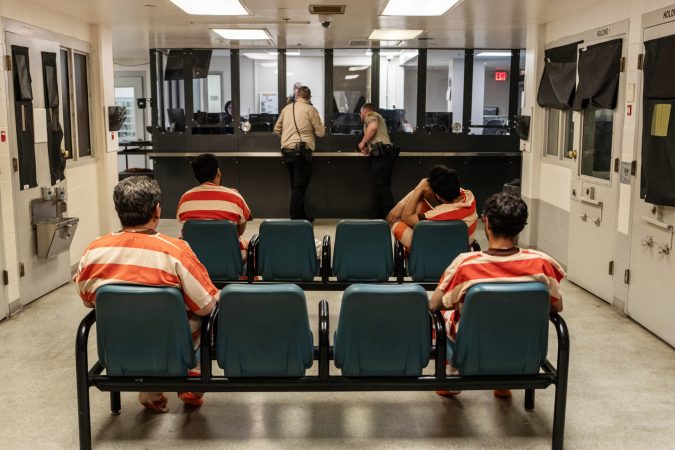
    Data wise it’s difficult to offer a conclusive answer to that specific allegation, since law enforcement agencies rarely collect immigration or citizenship status (for victims or offenders). Fortunately, the great state of Texas once again comes through.

    Analyses of Texas data, which include immigration status, find that the crime rate of undocumented immigrants in general is lower than that of the U.S.-born population, which is generally understood to be the case.

    Regarding homicide, from 2013 to 2022 the conviction rate in Texas for illegal immigrants was 2.2 per 100,000 people, compared with 3.0 per 100,000 for native-born Americans, according to the libertarian Cato Institute. There are a couple of caveats that may push the conviction rate for illegal immigrants higher, but regardless, the rate is hardly zero.

    Some immigrants in the country illegally kill, that is a fact. Another fact is that in the U.S., random killings are statistically rare. Yet the right-wing fearmongers will not tell you that broadly speaking, you are more likely to be hit by lightning than you are to be killed by a stranger, let alone a stranger who’s in the country illegally.

    Even then, whether that immigrant came here under Biden or under Trump, the ultimate responsibility falls on the person who committed the crime.

    Now, the impression that there is a “growing number” of people killed by immigrants is not helped by the Trump administration’s propaganda efforts. I do not begrudge the Department of Homeland Security regularly trumpeting that ICE has detained some of the “worst of the worst” — as immigration enforcement should. But claiming that crime rates have “plummeted” under Trump’s leadership because they’ve removed “criminal illegal aliens” is overblown to say the least.

    Crime rates spiked during the pandemic, at a time when Trump closed the border to asylum seekers using the threat of COVID-19 as an excuse. The number of violent crimes committed has been steadily dropping since 2023. Using the administration’s logic, if anything, those six million or so immigrants who Biden let in are making America safer.

    None of what I’m saying should be understood as minimizing the death of anyone at the hands of an immigrant who’s in the country illegally. As I’ve said before, there is no comfort for a victim’s loved ones to hear that immigrants commit fewer crimes than the U.S.-born. It would be ridiculous and heartless to answer someone’s pain with such a meaningless fact.

    The best we can do is to demand that our media and our leaders do better. That they tell the real story and not whatever fits into their ideological narrative.

    To the concerns of my conservative readers like Mr. Fenstermaker, there is often a knee-jerk reaction from many in the mainstream media to downplay crime by undocumented immigrants. Even when telling stories related to immigration, there is a penchant to focus on the unimpeachable “perfect immigrant” when the truth is that people are complicated and reality is messy. But there is also an undeniable push on the right to demonize and scare that should be unacceptable.

    What’s much worse is that this is how too many of our leaders operate. You have Democrats who will romanticize immigrants and their experience to the point that people become a symbol and bad policy decisions are made. Then you have Republicans under Trump who push hate and division, and whose policies lead to suffering and harm.

    I will choose the Democrats’ mistakes on this over the Trump administration’s anti-immigrant rampage any day of the week, but one cannot exist without the other. If we keep casting things in black and white, we will never be able to reasonably move forward.

  • South Philly will soon have a new path to the Delaware with the Washington Avenue Connector

    South Philly will soon have a new path to the Delaware with the Washington Avenue Connector

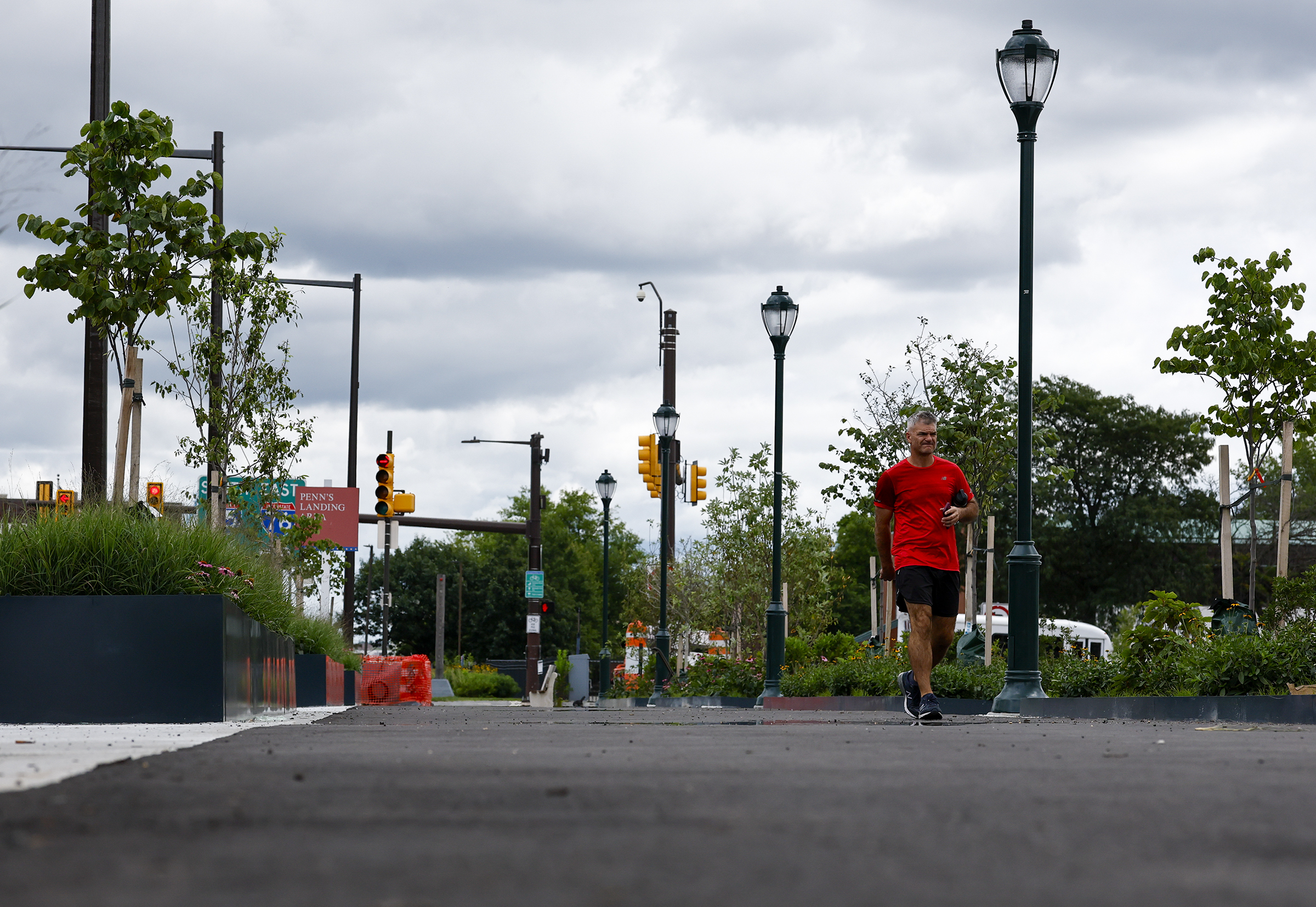
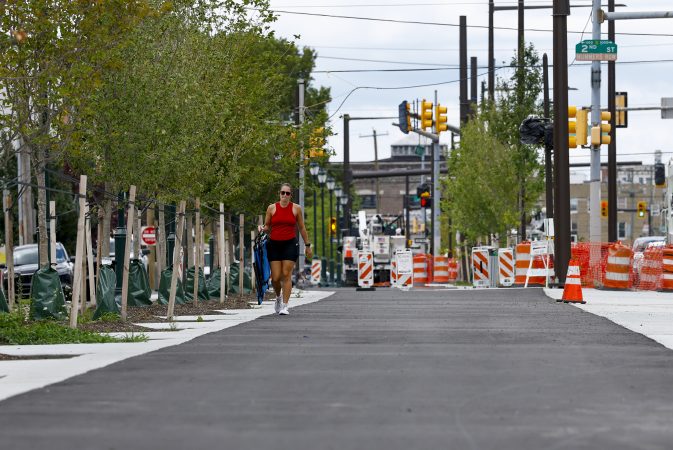
    A new pedestrian and bicycle route connecting Jefferson Square Park to the Delaware River is expected to be completed this month, with the asphalt median largely in place and other construction continuing.

    Along portions of the unfinished route, new plantings soften the expanse of pavement, offering an early glimpse of the connection planners hope to create: a path that makes the river feel less like the far side of a highway and more like part of the neighborhood.

    For now, the stretch of Washington Avenue between the South Philadelphia neighborhood park and Columbus Boulevard remains an overwhelming landscape of asphalt and concrete, with a multilane roadway separating pedestrians from the riverfront trail to the east.

    The Washington Avenue Connector is intended to change that. Plans from the Delaware River Waterfront Corp. and the City of Philadelphia call for a tree-lined route planted with seasonal flowers, a curb-separated shared-use path, and safer crossings to guide pedestrians and cyclists from Fourth Street to the Delaware River Trail. The $9.5 million project — funded by the city, the state, and grants provided to the waterfront corporation — is one piece of an ambitious plan to revitalize Philadelphia’s riverfront by making it more accessible to pedestrians and cyclists and encouraging investment by nearby businesses.

    Bicyclists ride along the Washington Avenue Connector heading westbound near Jefferson Square Park in South Philadelphia on Thursday, July 30, 2026.Yong Kim / Staff Photographer

    The connector is “meant to bridge this gap of the physical and psychological connection that I-95 created when it was built and sort of cut off certain neighborhoods from the waterfront,” said Joe Forkin, president and CEO of the Delaware River Waterfront Corp.

    Although waterfront connector projects often extend only about a block, the Washington Avenue Connector will reach four blocks inland, extending to Jefferson Square Park and connecting the waterfront with nearby South Philadelphia homes and businesses.

    The project is designed to transform the area not only aesthetically, but also by making it safer and easier to navigate on foot or by bicycle, said Lizzie Woods, senior vice president for strategic planning and real estate development at the Delaware River Waterfront Corp.

    Designers had to contend with what Forkin described as “a crazy tangle of transportation infrastructure.”

    From Race Street to Walnut Street, the highway creates a physical divide between the waterfront and Old City. Farther south, the barrier is less absolute but still discourages people from approaching the river.

    “That’s where there’s more of a psychological barrier,” Forkin said. “You can get through it, you can approach the neighborhood and you can approach the waterfront, but it’s not always very welcoming to do so.”

    Forkin pointed to the Race Street Connector, completed in 2016, as an example of how a redesigned route can change the way people move between a neighborhood and the river. He said he once rarely saw people turn to walk to the river. Today, he said, there is a steady flow of pedestrians between Old City and the waterfront.

    A walker strolls westbound using the Washington Avenue Connector in South Philadelphia on Thursday, July 30, 2026.Yong Kim / Staff Photographer

    The Washington Avenue project will create a curb-separated path along the south side of the road, running from Fourth Street to Columbus Boulevard and connecting directly with the Delaware River Trail. On the north side, a parking-protected bicycle lane will carry cyclists westbound and connect with improvements the city previously installed west of Fourth Street.

    At Jefferson Square Park, the slip lane between Third and Fourth Streets will be closed and converted into a plaza intended to function as a “front porch” for the park. The project also includes curb extensions and pedestrian islands designed to shorten street crossings and give people a protected place to pause. By forcing turning vehicles to travel more slowly and make wider turns, planners say, the changes should improve pedestrian safety.

    New traffic signals have been installed but are not yet operational between Fourth Street and Columbus Boulevard on Washington Avenue. The improvements are intended to make crossings clearer and safer while keeping vehicle traffic moving at a more consistent speed. A dedicated left-turn lane at Front Street and Washington Avenue will also address a longstanding request from the Pennsport community.

    At Washington Avenue and Columbus Boulevard, another under-construction plaza will mark the entrance to the waterfront. Trees, flowers, and other plantings are meant to signal the transition from the city street to the river’s network of parks and trails.

  • AI surveillance is already here. Urban governance isn’t.

    AI surveillance is already here. Urban governance isn’t.

    When the largest World Cup in history ended at MetLife Stadium, it marked the culmination of a summer in which millions of visitors moved through American host cities under the eyes of computerized systems most of them never noticed.

    The federal government directed more than $1 billion to World Cup security, funding facial recognition cameras in and around stadiums, police drones over crowds, and AI-driven monitoring of transit hubs. More than 120 civil society organizations issued a travel advisory warning visitors about the screening they would face.

    The tournament turned host cities into laboratories for urban artificial intelligence, and the experiments ran on tourists.

    The two of us have conducted research on the use of electronic monitoring in urban areas, and we do not write to argue that cities should abandon these tools. Tourism contributed $10.9 trillion to the global economy in 2024, roughly 10% of global GDP, and safety increasingly decides where that money goes. Thirty-two percent of travelers now call safety the primary factor in choosing a destination, up from 23% in 2021.

    AI can genuinely help cities deliver that safety. London’s transit authority uses smart video to spot trouble on crowded platforms. Singapore’s police fly drones that map crowd density at large events in real time. Used well, these systems find lost children, reroute crowds before crushes form, and speed emergency response.

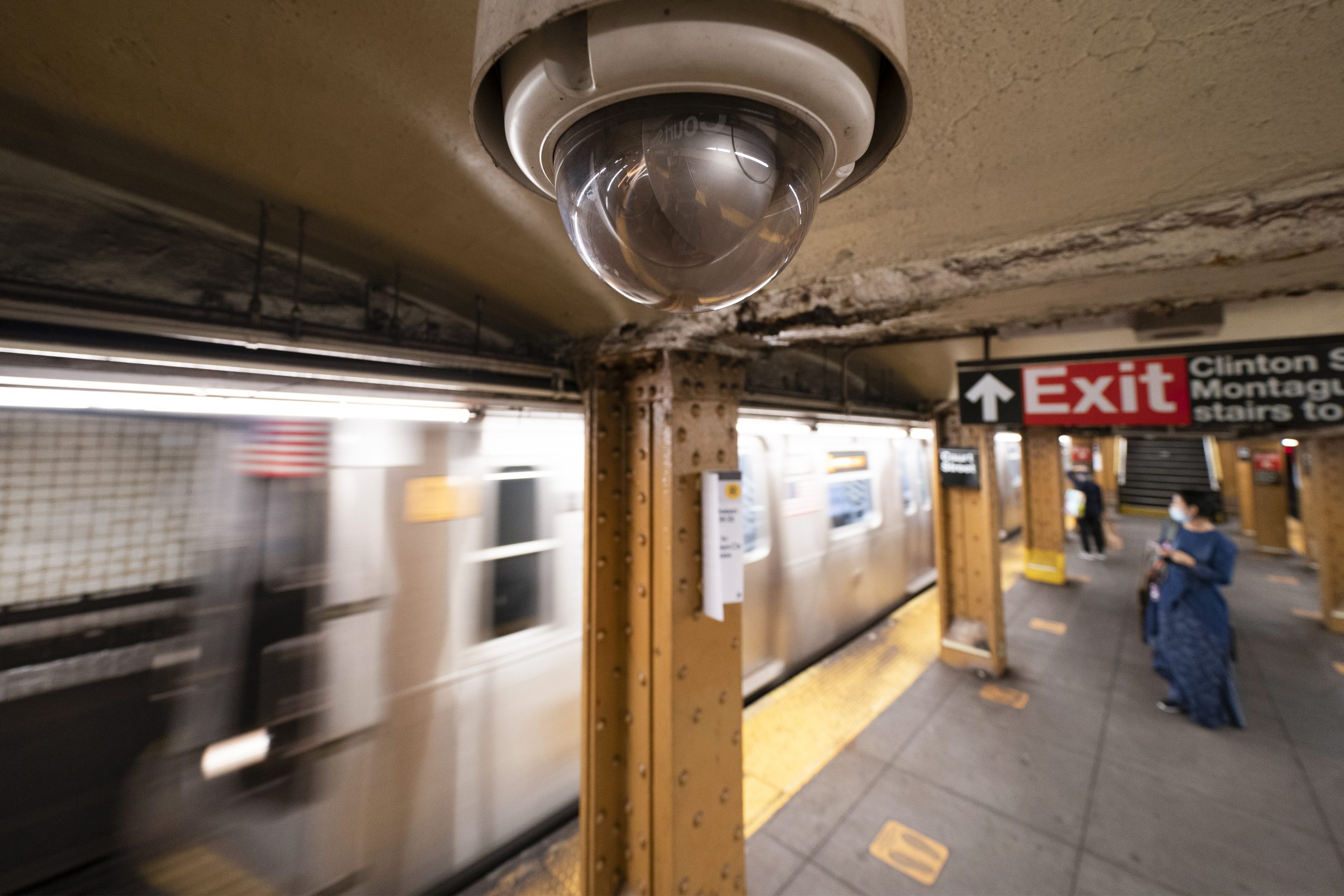
    A video surveillance camera hangs from the ceiling above a New York City subway platform in October 2020. Mark Lennihan

    The problem is the gap between deployment and governance.

    In research we published with the University of Pennsylvania’s Institute for Urban Research in December, we found that 52% of surveyed cities already use AI in some capacity and another 32% plan to, yet only 31% have established a formal ethics review process — even though 88% of them rate ethics as very or absolutely important.

    Cities are running the experiment first and writing the protocol later.

    That order of operations should worry anyone who remembers that surveillance systems, once installed, rarely come down. Mega-events have long served as the justification for permanent expansions of monitoring capacity.

    The gap matters because safety is not only physical. Our research frames tourist safety in three dimensions: physical safety from crime and disaster, digital safety from data breaches and fraud, and psychological safety, the felt sense of trust that makes a visitor relax in an unfamiliar place. An algorithm that marginally improves the first while quietly eroding the other two is a bad trade.

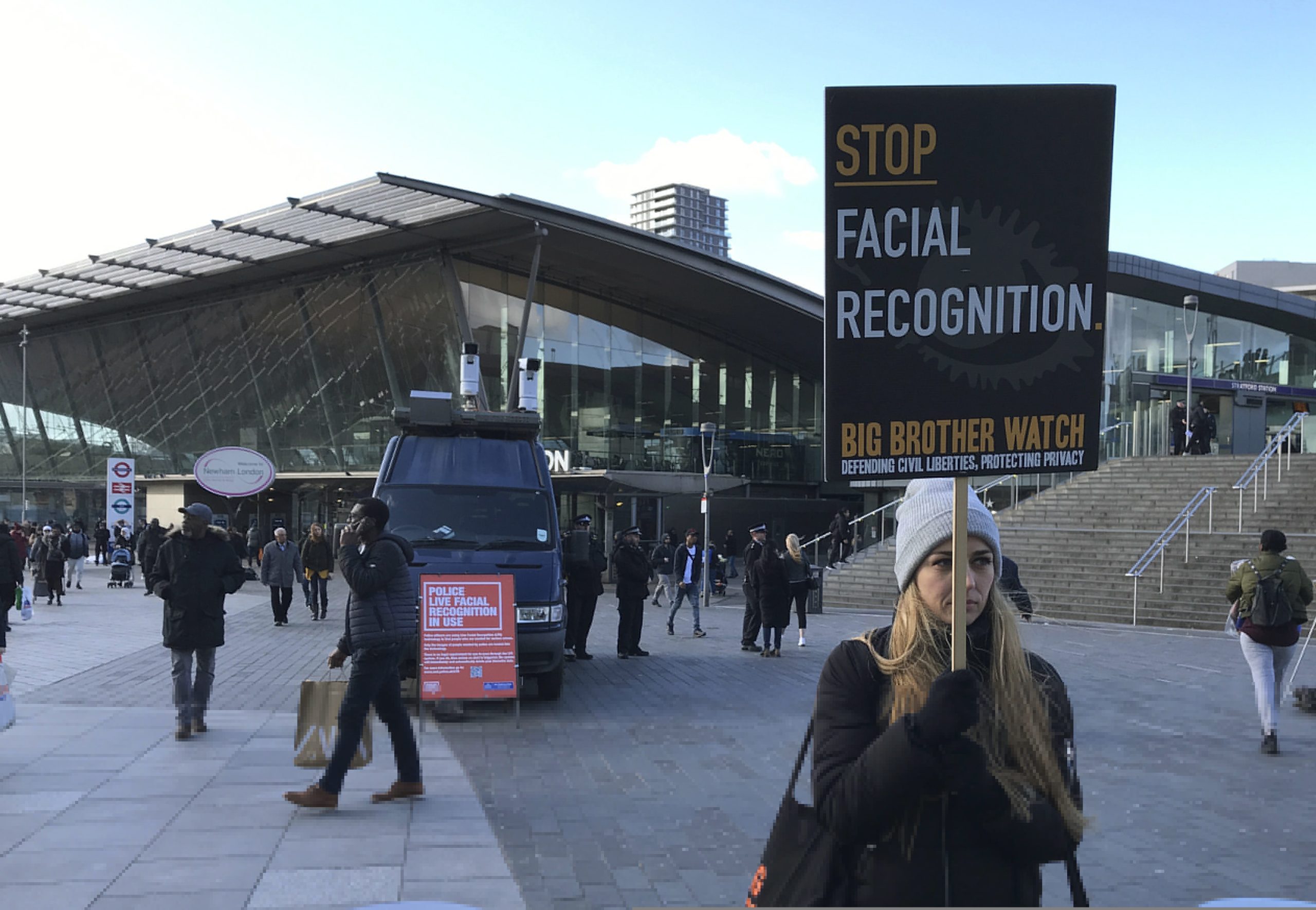
    Rights campaigner Silkie Carlo demonstrates in front of a mobile police facial recognition facility outside a shopping center in London in February 2020.Kelvin Chan

    The public senses this. Two-thirds of respondents in surveys we reviewed insist that people should be informed when AI is used to prevent, detect, or investigate crime. London learned the hard way that deploying facial recognition vans in high-footfall areas without that transparency generates backlash that outlasts the deployment.

    Some cities show what the alternative looks like.

    Barcelona created an external advisory council of independent experts that evaluates high-stakes algorithms before deployment; that panel rejected fully automated decision-making outright. Helsinki maintains a public AI register that lists every municipal algorithmic system — what it does, what data it uses, and what safeguards constrain it — so any resident or visitor can look up exactly what is watching them. Neither city sacrificed safety for principle. They built the trust that makes safety technology legitimate.

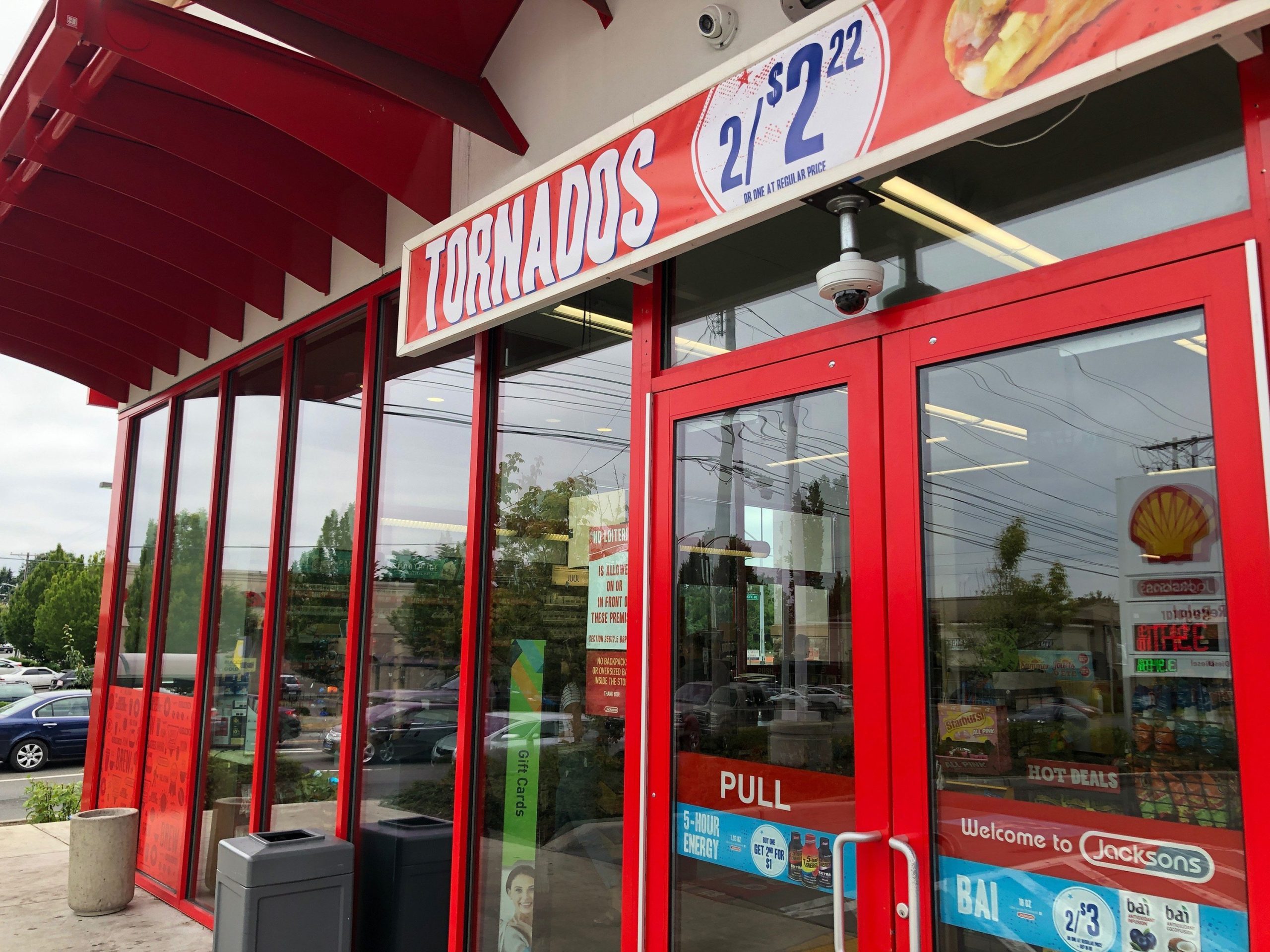
    This convenience store in Tacoma, Wash., tested facial recognition technology to prevent theft in 2019. Melissa Hellmann / MCT

    American cities do not need to invent this from scratch. The road map we propose starts with three steps any city council can take this year:

    1. adopt an AI governance framework tailored to tourism and public safety;
    2. extend legal protection to residents’ and visitors’ data whenever private vendors handle it;
    3. publish a public register of every AI system the city operates.

    None of these steps requires new technology. All of them require political will.

    The window is small. Nine in 10 mayors worldwide say they want AI in city management, while only 2% actively deploy it today.

    That means the great wave of municipal AI adoption is still ahead of us, and so is the chance to shape it.

    Los Angeles hosts the Olympics in 2028. The cities that spent this summer as laboratories should spend the next two years writing the rules — in public — before the next surge of visitors arrives. Tourists chose these cities for a sense of welcome and security. Cities owe them systems worthy of that trust.

    Eugènie L. Birch is the Nussdorf professor of urban research at the Weitzman School of Design, and co-director, Penn Institute for Urban Research at the University of Pennsylvania. Mauricio Rodas is the former mayor of Quito, Ecuador, and professor of practice at the Weitzman School of Design. Luke Campo, a graduate of the University of Pennsylvania, supported this research.

  • ⏰ Time’s ticking | Sports Daily Newsletter

    ⏰ Time’s ticking | Sports Daily Newsletter

    Ahead of the MLB trade deadline, one team made a blockbuster trade in what’s considered to be one of the biggest deadline deals in recent memory.

    That team wasn’t the Phillies. Instead, it was a team the Phils will most likely have to get through in the postseason.

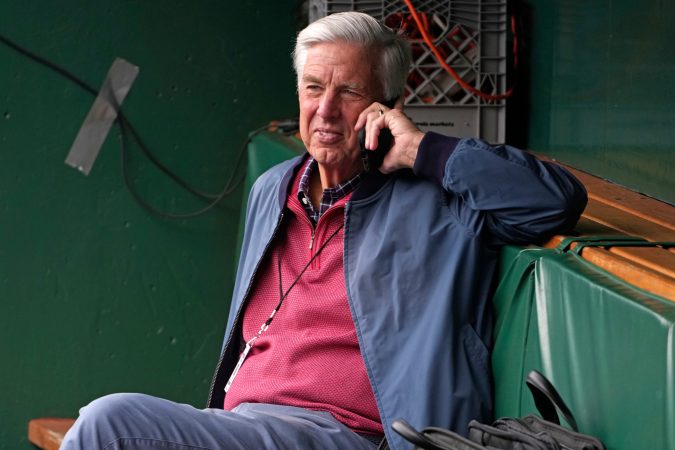
    The Dodgers landing two-time reigning AL Cy Young Award winner Tarik Skubal from the Tigers for three minor league prospects, puts Dave Dombrowski in a tough spot.

    The Phillies couldn’t put together a package to compete for Skubal, but Dombrowski also has multiple holes to fill and few high-level prospects to cash in with.

    The Dodgers traded for Skubal because they could, and it’s blunted the one competitive advantage the Phillies might have against them in a series, writes David Murphy.

    However, there’s still time. Dombrowski has till 6 p.m. tonight to fill needs in the lineup and pitching staff. On the eve of the deadline last year, the Phillies completed a massive trade for star closer Jhoan Duran during a rain delay.

    After a rain-shortened victory over the Orioles on Sunday, Bryan De La Cruz gave the Phillies something to think about.

    — Isabella DiAmore, @phillysport, sports.daily@inquirer.com.

    If someone forwarded you this email, sign up for free here.

    ❓What moves do you hope to see the Phillies make today? Email us back for a chance to be featured in the newsletter.

    Safety competition

    Eagles safety Marcus Epps is battling Michael Carter for the starting safety spot in the team’s nickel and dime packages, when Cooper DeJean will move to cornerback.Yong Kim / Staff Photographer

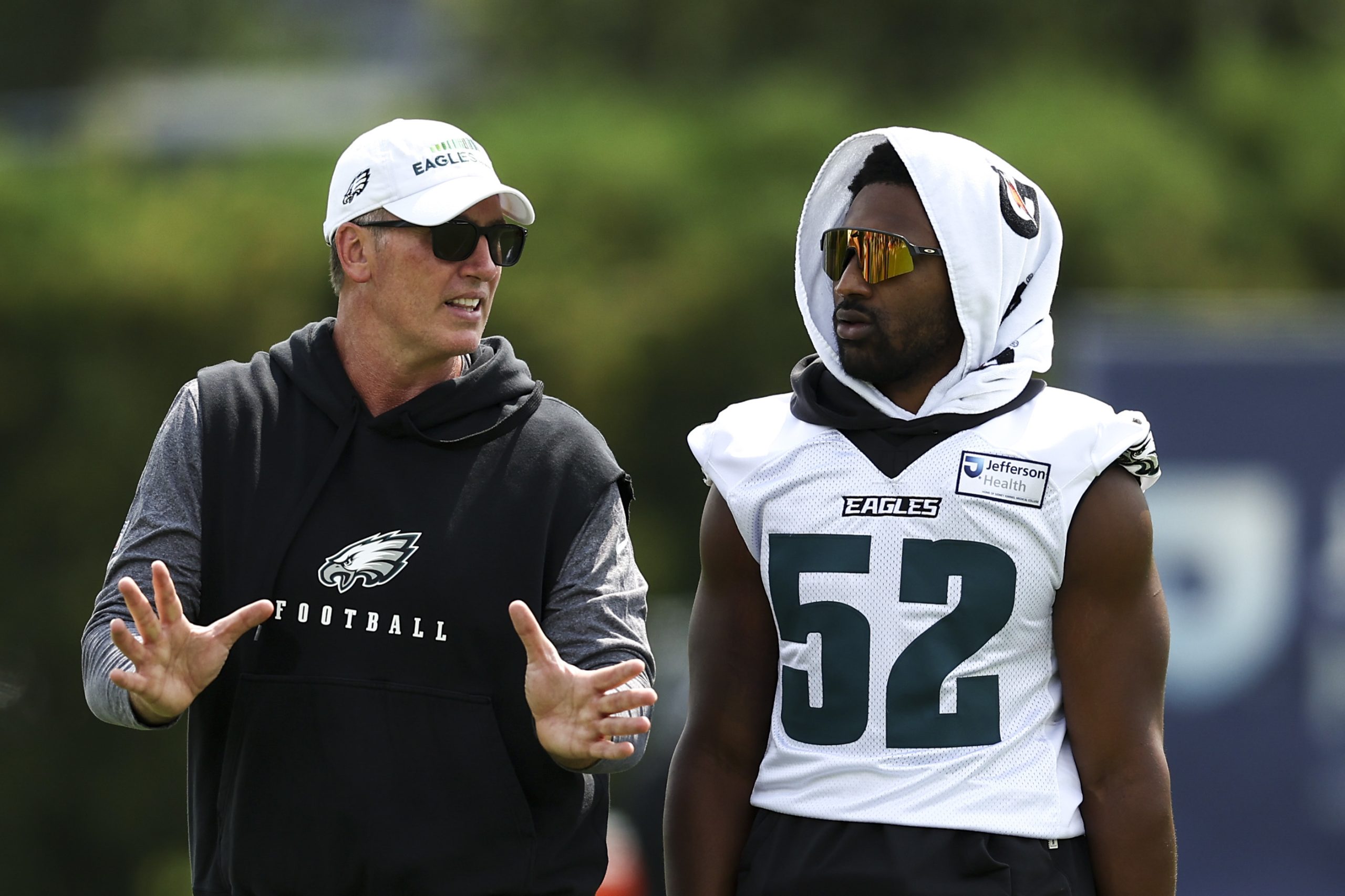
    Through three days of camp, the battle for the starting safety job has been as intense as advertised. With Cooper DeJean expected to spend a lot of time as the Eagles nickel cornerback, the second safety spot in those formations remains an “open competition.”

    As of now, Marcus Epps has been getting the majority of first-team reps, while Michael Carter II has taken a few, too. Jeff Neiburg predicts those two, along with Drew Mukuba and Cole Wisniewski, to make the Eagles’ 53-man roster in the latest roster projection.

    Also, Landon Dickerson shared on Saturday that he believed his return to action last year following meniscus surgery was premature. That mistake, in addition to his lengthy injury history, will factor into how he will approach playing through future ailments.

    If you missed Jeff McLane’s observations from Day 3 of training camp — where Jalen Hurts frequently targeted Makai Lemon — let’s get you up to speed.

    What we’re…

    🎉 Celebrating: Mo’ne Davis had a crowd of family, fans, and supporters watch her back home compete in the WPBL’s inaugural game.

    🏈 Learning: After the federal courts granted athletes the right to a fifth season, it seems that Villanova quarterback Pat McQuaide will be back.

    ⚽ Seeing: Rob Mac and Wrexham fans took over Subaru Park on Sunday for a preseason friendly against Sunderland.

    🤔 Wondering: How the Union completed an improbable three-goal comeback win over Atlanta United on Saturday.

    Roster shakeup

    Dean Wade is one of several Sixers role players who will have a diminished position after a blockbuster offseason.Phil Long / AP

    To this point, the Sixers’ offseason has been mostly focused on the Sixers’ star-studded lineup of LeBron James, Jaylen Brown, Tyrese Maxey, Joel Embiid, and VJ Edgecombe. But what about Dean Wade, Anfernee Simons, and more?

    DeAntae Prince takes a closer look at how things will change for the Sixers’ new additions and returning role players since James’ signing.

    Changed his life

    Will Yip takes in a Phillies game against the Dodgers on July 22 at Citizens Bank Park.Elizabeth Robertson / Staff Photographer

    Will Yip, a Northeast Philly native, works with some of the biggest acts in rock.

    But a record producer does not clock out. When he arrives at Memory Music Studios — at Swanson and Wolf Streets — each morning, he does not leave until late at night. So Yip will put the Phillies on the TV in the lobby.

    Yip says a game is the reward at the end of a day, and it’s his fandom that helped the 39-year-old win a Grammy earlier this year.

    Taking the big stage

    At 17, Reese D’Ariano made USA field hockey’s roster for the FIH Hockey World Cup.World Sport Pics / USA Field Hockey

    Reese D’Ariano, at 17 years old, will compete at the FIH Hockey World Cup in Belgium and the Netherlands from Aug. 14-30. The West Chester native is the youngest player to make the U.S. women’s national team roster for the World Cup.

    While her first stint with USA field hockey came at age 12, this marks her biggest stage with the national team, and she’s looking to contribute.

    Mike Sielski’s take

    Jalen Carter told the media members last Wednesday that he’s “thankful for you guys, too — we’re all one family.”Monica Herndon / Staff Photographer

    Jalen Carter said something very sweet and very incorrect during a news conference last Wednesday. He nodded toward the media members gathered in front of him and said: “You guys put out some good information, some good facts about me, stuff like that. We’re all one family.” No, we’re not, writes Mike Sielski.

    We compiled today’s newsletter using reporting from Scott Lauber, David Murphy, Mike Sielski, DeAntae Prince, Jeff Neiburg, Jeff McLane, Olivia Reiner, Ryan Novozinsky, Jonathan Tannenwald, Matt Breen, Ariel Simpson, Conor Smith, Becca O’Reilly, and Mia Messina.

    By submitting your written, visual, and/or audio contributions, you agree to The Inquirer’s Terms of Use, including the grant of rights in Section 10.

    Thanks for getting your Monday started with me. Hope you had a restful weekend. We’ll be back in your inbox tomorrow. — Bella

  • Eagles’ 53-man roster projection: How the picture looks entering training camp Week 2

    Eagles’ 53-man roster projection: How the picture looks entering training camp Week 2

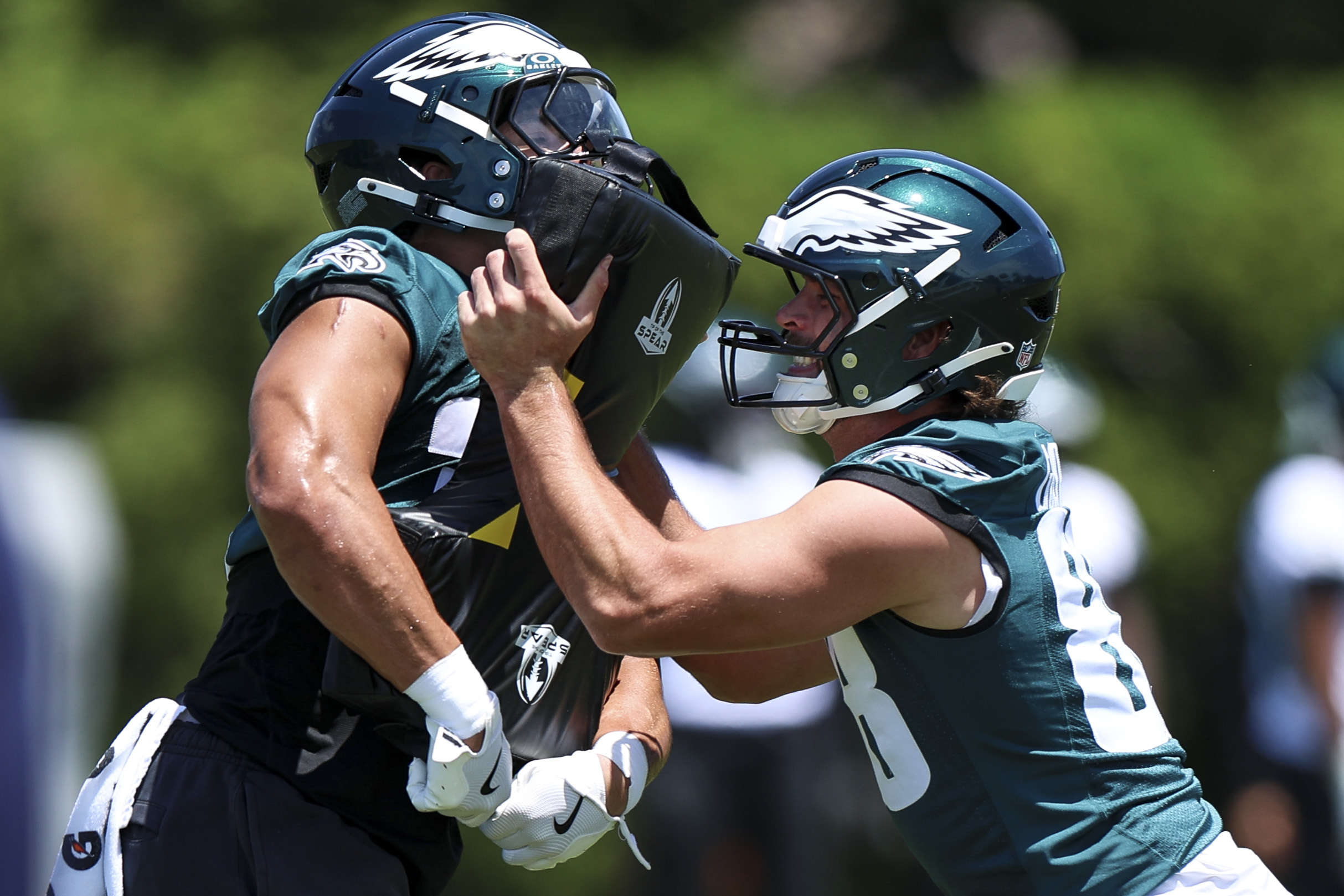
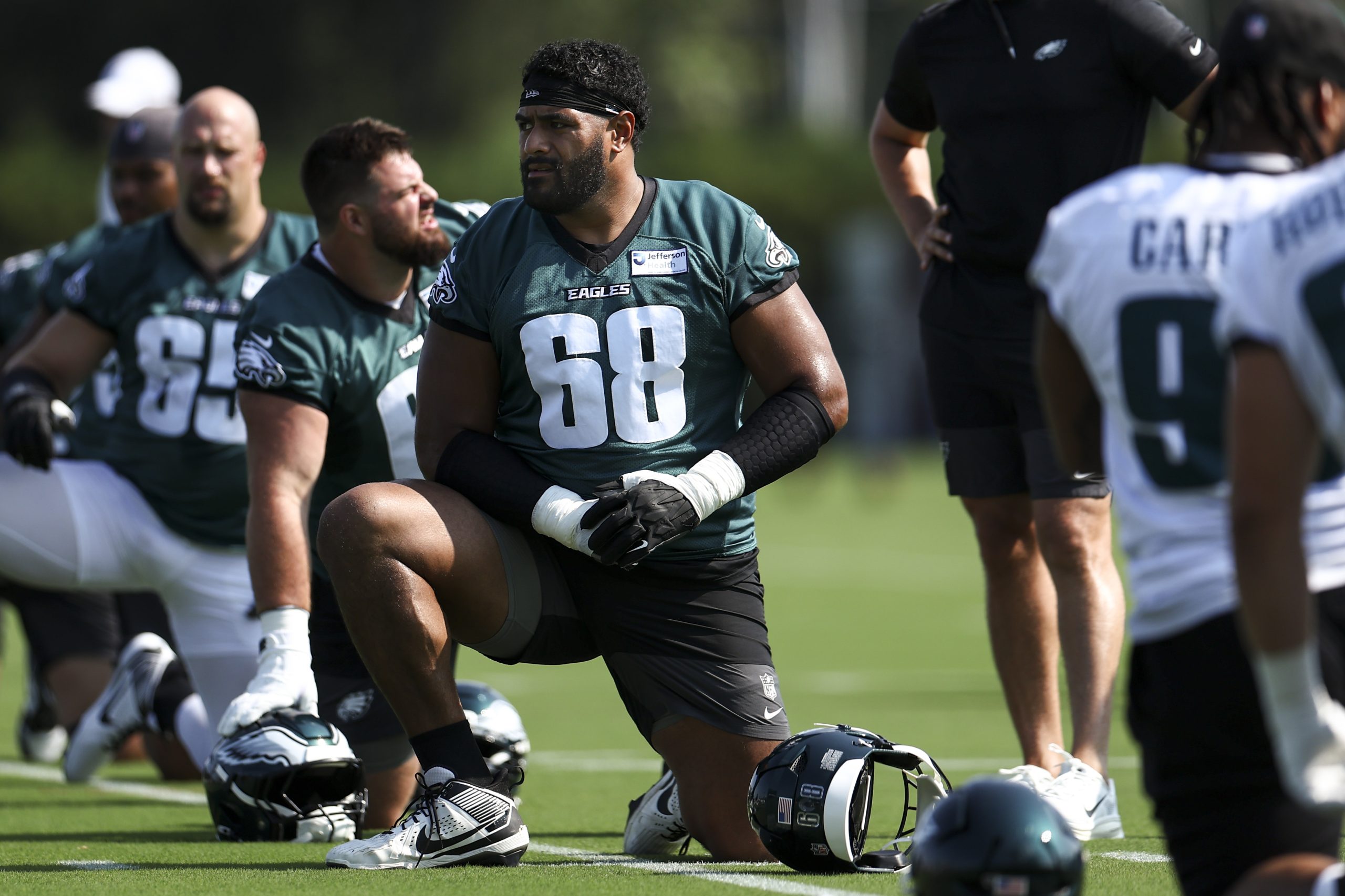
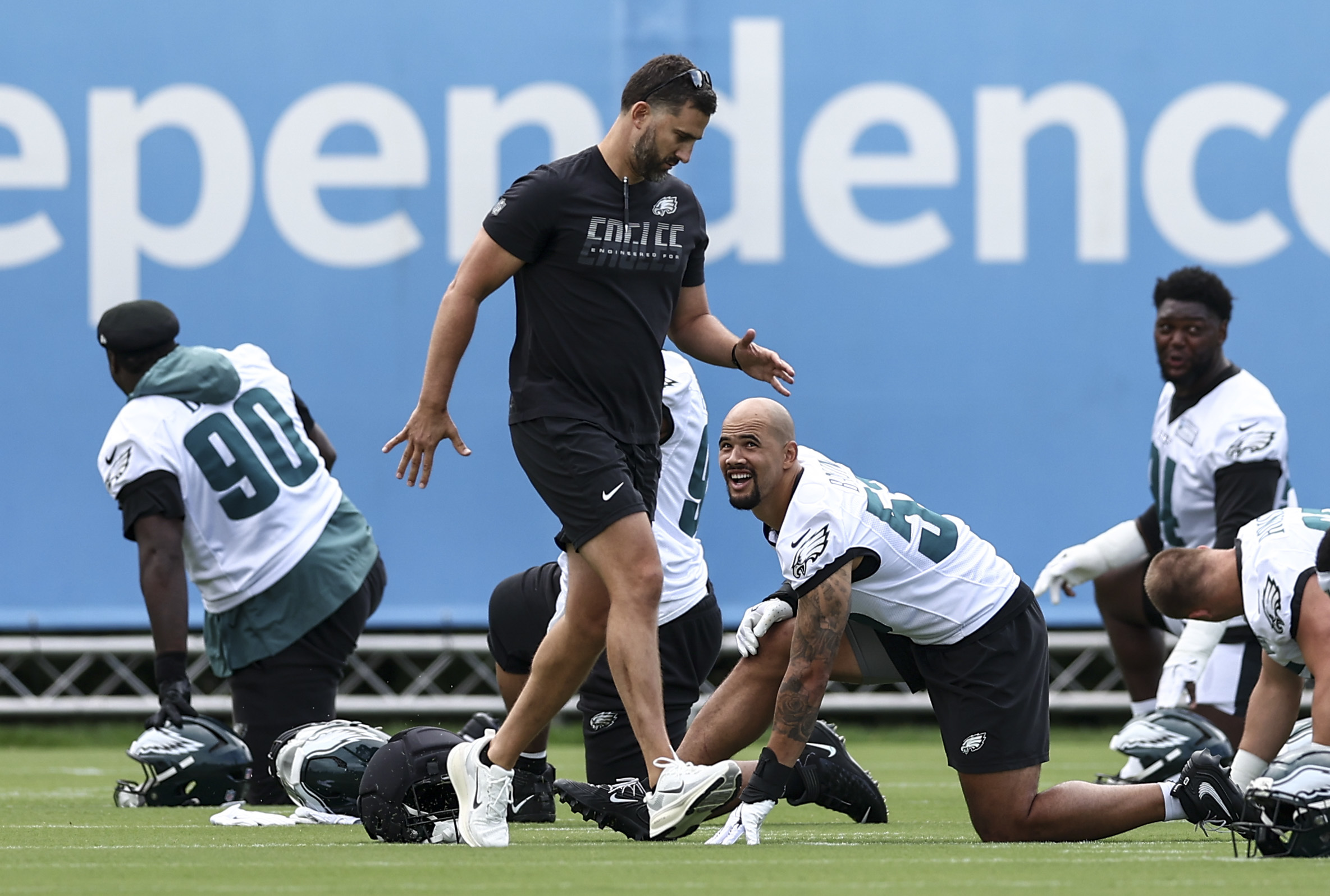
    The Eagles are three practices into the 2026 training camp and, after a day off Sunday, are scheduled to return to the field Monday morning for practice No. 4.

    That starts the busiest six-day practice stretch of camp. The team is scheduled to be on the field Monday, Tuesday, Wednesday, Friday, and Saturday.

    Let’s take a look at where things stand in our latest 53-man roster projection before the week kicks off:

    Andy Dalton has taken more second-team reps than Tanner McKee.Monica Herndon / Staff Photographer

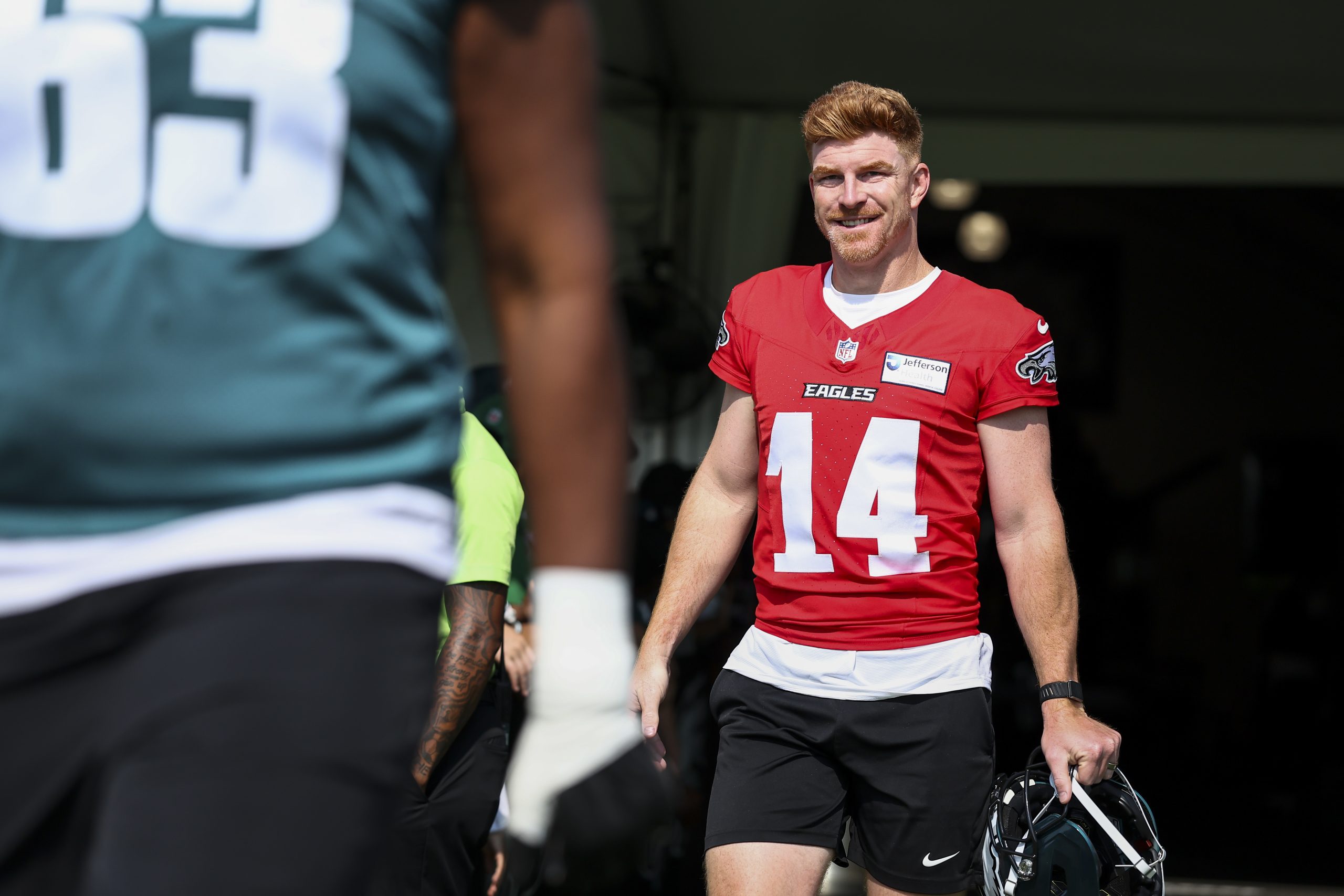
    Quarterbacks (3): Jalen Hurts, Andy Dalton, Cole Payton

    Traded: Tanner McKee

    Nothing has changed here from our previous, way-too-early first look at the 53 in June. It remains hard to believe that the Eagles keep Dalton and McKee on the roster. Dalton has taken more second-team reps than McKee to this point, so we’ll stick with McKee as the one who gets flipped for a draft asset later in camp. Of course, Dalton is a candidate to have the same fate. Both quarterbacks are slated to be free agents after the season. Payton has had an up-and-down start to camp, but the Eagles will take some of the struggles in stride if they believe he can be a developmental player in their system. And if they believe that, they would be taking a risk by trying to get the fifth-round pick through waivers.

    Eagles running back Saquon Barkley and quarterback Jalen Hurts have battles shaping up behind them on the depth chart.Monica Herndon / Staff Photographer

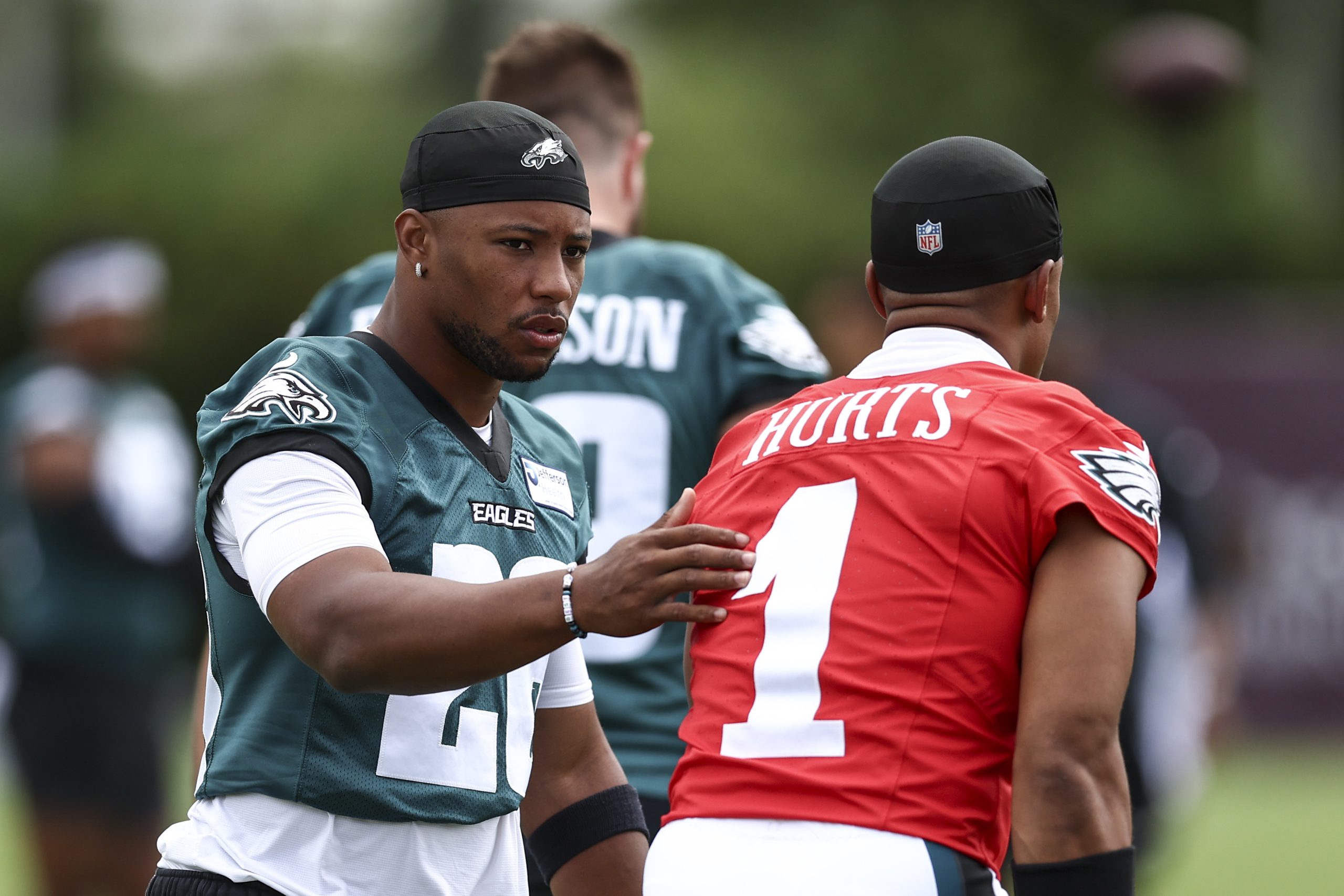
    Running backs (3): Saquon Barkley, Tank Bigsby, Will Shipley

    Cut: Dameon Pierce, Elijah Mitchell, Carson Steele

    Bigsby certainly looks like he’s going to have a bigger role in this offense than he did in last year’s. Shipley hasn’t done anything spectacular yet, and Pierce has popped a little bit, but Shipley gets the nod again for now. Pierce could make the Eagles if they keep a fourth running back, but we’ll stick with three for now. (Note: We listed Cameron Latu here last time as a fullback, but we’ll shift him to tight ends, where the Eagles roster him. Spoiler alert: He’s still on the 53.)

    Eagles wide receiver DeVonta Smith is among the locks for the roster.Yong Kim / Staff Photographer

    Wide receivers (6): DeVonta Smith, Dontayvion Wicks, Makai Lemon, Hollywood Brown, Darius Cooper, Elijah Moore

    Cut: Johnny Wilson, Danny Gray, Britain Covey, Quez Watkins, Erik Ezukanma, Samori Toure

    The top four players should be considered locks. Cooper is competing with Wilson for a role that Nick Sirianni described as doing the “dirty work.” Keeping both seems redundant. Cooper currently has the edge in that competition. Moore is a wild card. If the Eagles decide to go with just five here, he likely would be the odd man out. Gray had the play of the day Saturday, but there’s a lot of traffic ahead of him.

    Cameron Latu (left), here participating in a drill with Dallas Goedert, likely has a spot on the 53-man roster because of his versatility.Monica Herndon / Staff Photographer

    Tight ends (4): Dallas Goedert, Johnny Mundt, Eli Stowers, Cameron Latu

    Cut: Grant Calcaterra, Stone Smartt, E.J. Jenkins, Dae’Quan Wright

    No change here. We haven’t seen a lot of targets going to the tight ends so far in camp. Goedert, Mundt, and Stowers likely will be the main trio at tight end, and Latu’s value as a fullback, tight end, and special teamer gets him on the 53 right now.

    The Eagles offensive line features a lot of depth behind the likes of Jordan Mailata.Monica Herndon / Staff Photographer

    Offensive line (10): Jordan Mailata, Landon Dickerson, Cam Jurgens, Tyler Steen, Lane Johnson, Fred Johnson, Markel Bell, Drew Kendall, Myles Hinton, Michael Jordan

    Cut: Micah Morris, Jake Majors, Cameron Williams, Willie Lampkin, Jaeden Roberts, Hollin Pierce, John Ojukwu

    We went extra heavy in Vol. 1 of this exercise by keeping 11 guys, but 10 still is pretty deep. There’s been some shuffling, though the bottom of the depth chart remains plenty up in the air. The first eight guys listed are locks, and the only real competition among that group currently is which of the backup tackles, Bell and Fred Johnson, gets the swing tackle spot. The makeup of the reserves on the interior is still to be determined. Kendall got some work with the first team at left guard, spelling Dickerson, on Saturday. He also took some second-team center reps, flipping with Majors, who played center with the second team during the first two practices. The Eagles seem to like Majors, and they’ve moved Hinton inside. Jordan has experience, which could prove useful. Morris was banged up Saturday and left the field, Roberts appeared to suffer a more significant injury on the final play of practice, and Williams sat out with an injury. Those will be worth monitoring this week.

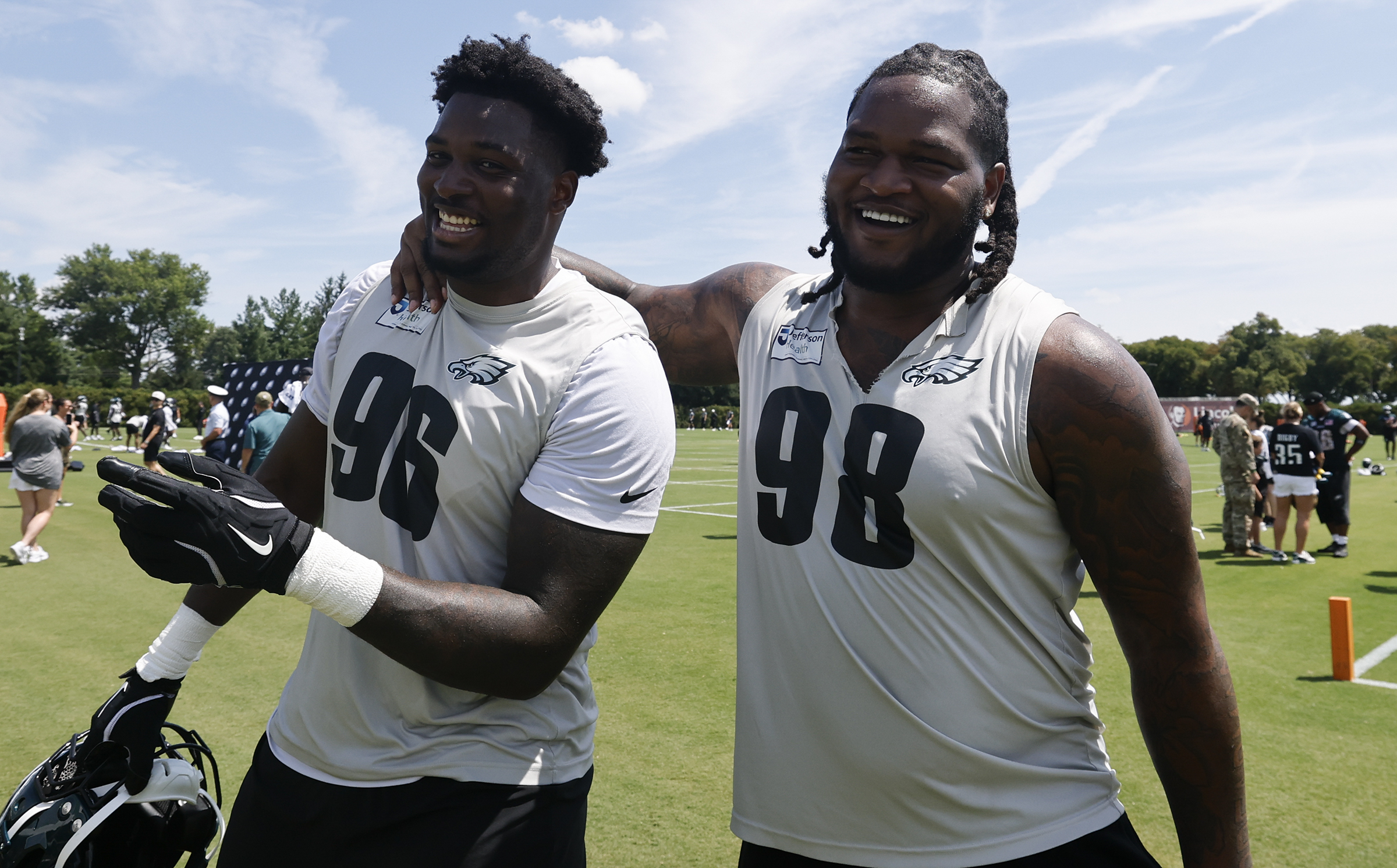
    Eagles defensive tackles Jalen Carter (right) and Gabe Hall share a laugh at the end of practice Saturday at Jefferson Health Training Complex.Yong Kim / Staff Photographer

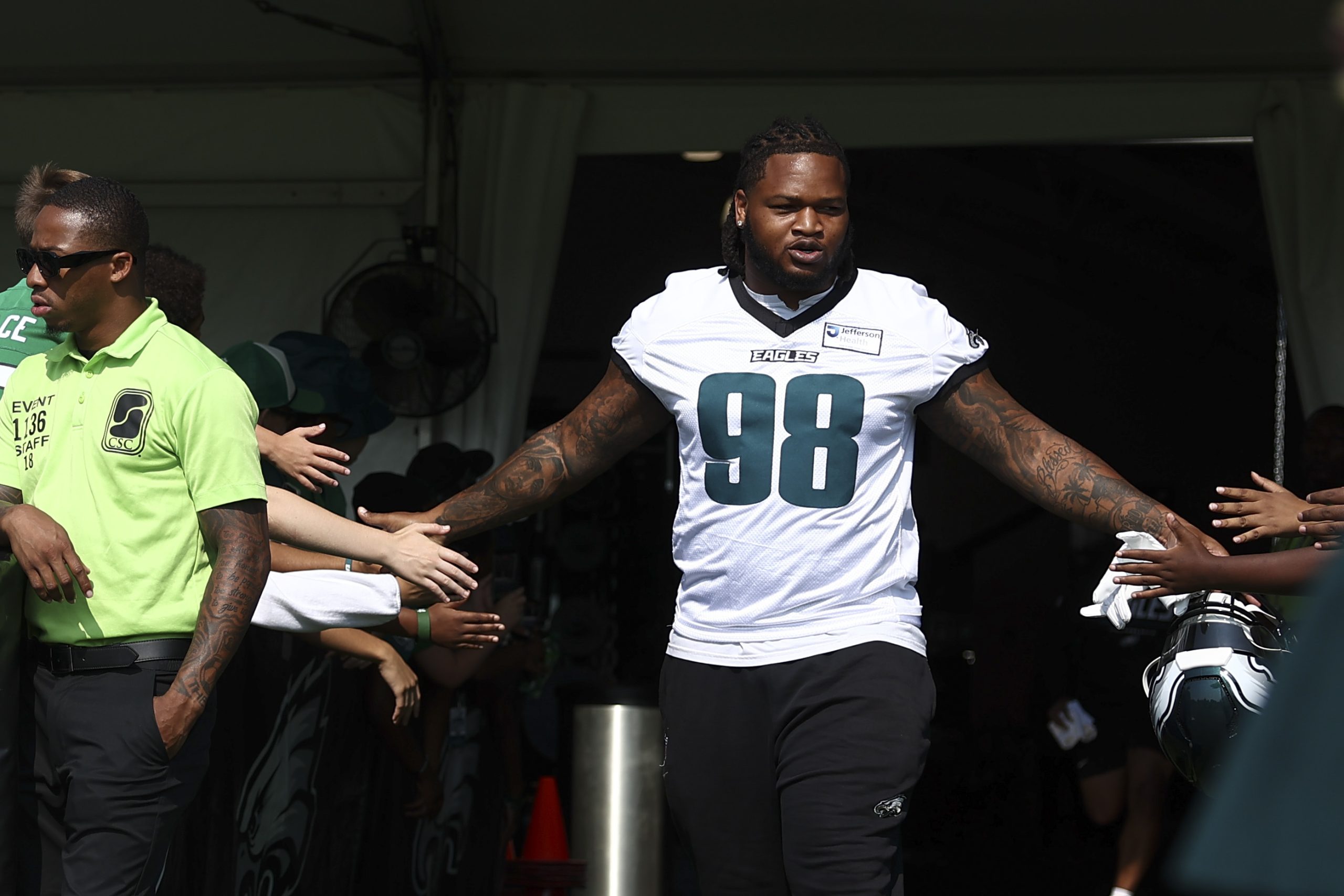
    Defensive tackles (5): Jalen Carter, Jordan Davis, Moro Ojomo, Byron Young, Uar Bernard

    Cut: Ty Robinson, Gabe Hall, Zion Wilson

    No change from June. We had Robinson off the list then, and that prediction looks better now. The fourth-round pick from last season has been taking developmental reps next to Bernard. That’s not a good sign. The last Eagles fourth-round pick to not make the roster in his second season was running back Donnel Pumphrey. Shoutout to NBC Sports’ Reuben Frank for that stat. Bernard’s roster situation is fascinating. Will the Eagles keep a guy on the 53 who won’t play a snap this season because of the fear that another team would claim the first-time football player on waivers? We’ll find out eventually, as long as Bernard gets through camp healthy. Rostering Bernard could make the Eagles want to keep six linemen here, since Bernard likely won’t see a snap. Robinson and Hall would be the beneficiaries there.

    Eagles defensive ends/outside linebackers coach Jeremiah Washburn speaks with linebacker Jonathan Greenard at training camp.Monica Herndon / Staff Photographer

    Edge rushers (5): Jonathan Greenard, Jalyx Hunt, Nolan Smith, Arnold Ebiketie, A.J. Epenesa

    Cut: Keyshawn James-Newby, Jose Ramirez, Joshua Weru

    Status quo on the edge. Greenard seems likely to miss the bulk of training camp with his pectoral injury. Hunt has been dominant so far in practice and seems likely to out-rep Smith during games. Behind that trio, Ebiketie and Epenesa seem like the most likely pair to fill out the back of the rotation. James-Newby, a seventh-round pick, was carted to the tent and then walked gingerly into the building Saturday, cutting his practice short.

    Nick Sirianni talks with linebacker Zack Baun during training camp on Thursday.Monica Herndon / Staff Photographer

    Linebackers (4): Zack Baun, Jihaad Campbell, Jeremiah Trotter Jr., Smael Mondon Jr.

    Cut: Chance Campbell, Deontae Lawson

    The only way this changes (besides a major injury or roster addition) is if Chance Campbell gives the Eagles a reason to keep a fifth linebacker. He was a highly regarded practice squad player last season and had a nice interception on Thursday. Keeping a fifth linebacker would mean going lighter at another spot, like cornerback, offensive line, or wide receiver, and the other positions on this roster are more important than a deep reserve at off-ball linebacker.

    Eagles cornerback Riq Woolen (right) works with cornerback Mac McWilliams during training camp drills on Saturday.Yong Kim / Staff Photographer

    Cornerbacks (6): Quinyon Mitchell, Cooper DeJean, Riq Woolen, Jonathan Jones, Kelee Ringo, Mac McWilliams

    Cut: Jakorian Bennett, Ambry Thomas, Shaun Wade, Tariq Castro-Fields

    Mitchell, DeJean, and Woolen make up what could be one of the best cornerback units in the NFL. Their backups have different skill sets. Jones can play inside and out and is the veteran of the bunch with 10 NFL seasons under his belt. That combination should get him on the roster. Ringo, meanwhile, has excelled on special teams. McWilliams, a fifth-round pick last season, also has inside-outside versatility. The Eagles could end up going lighter here given safety Michael Carter II’s nickel background.

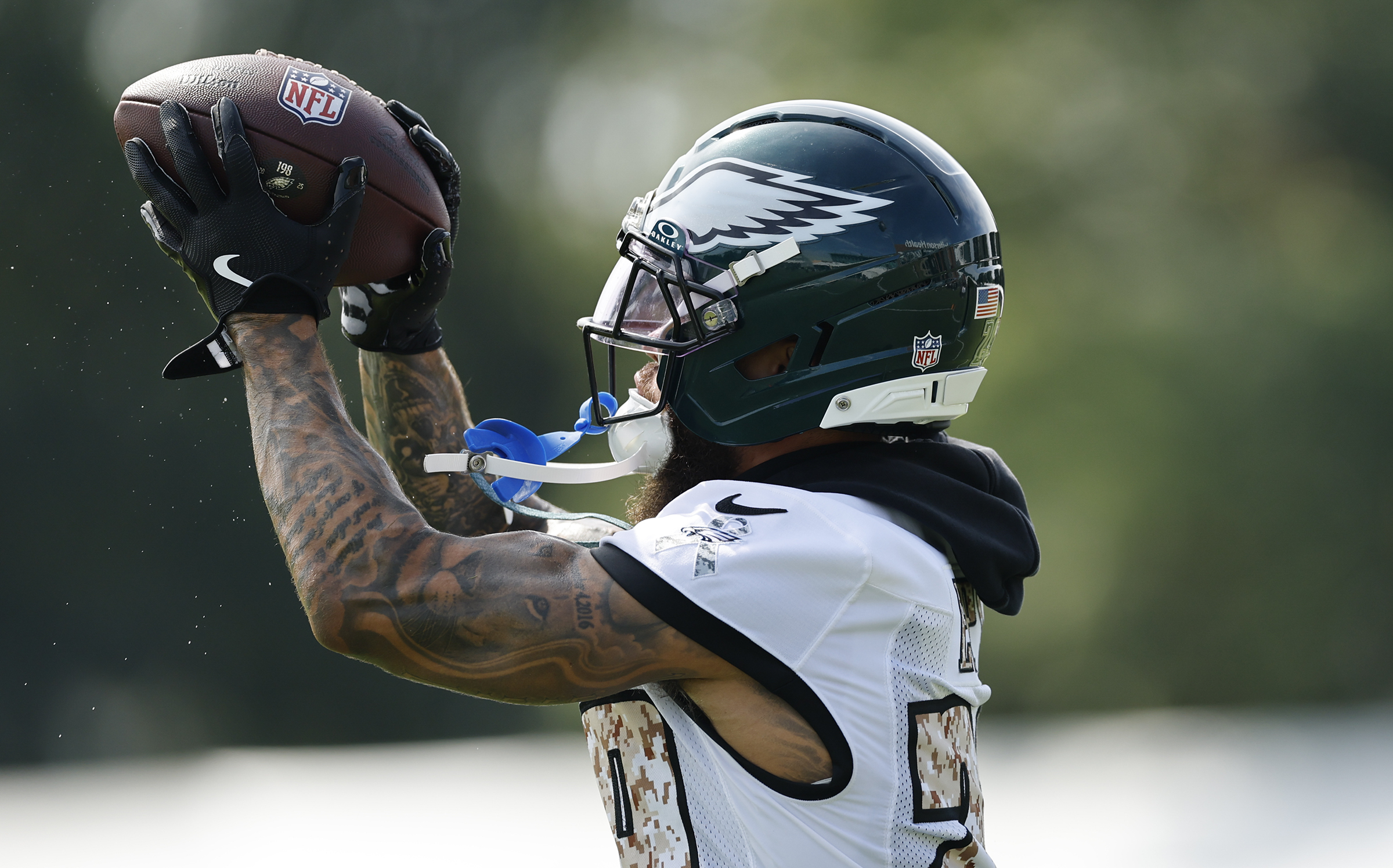
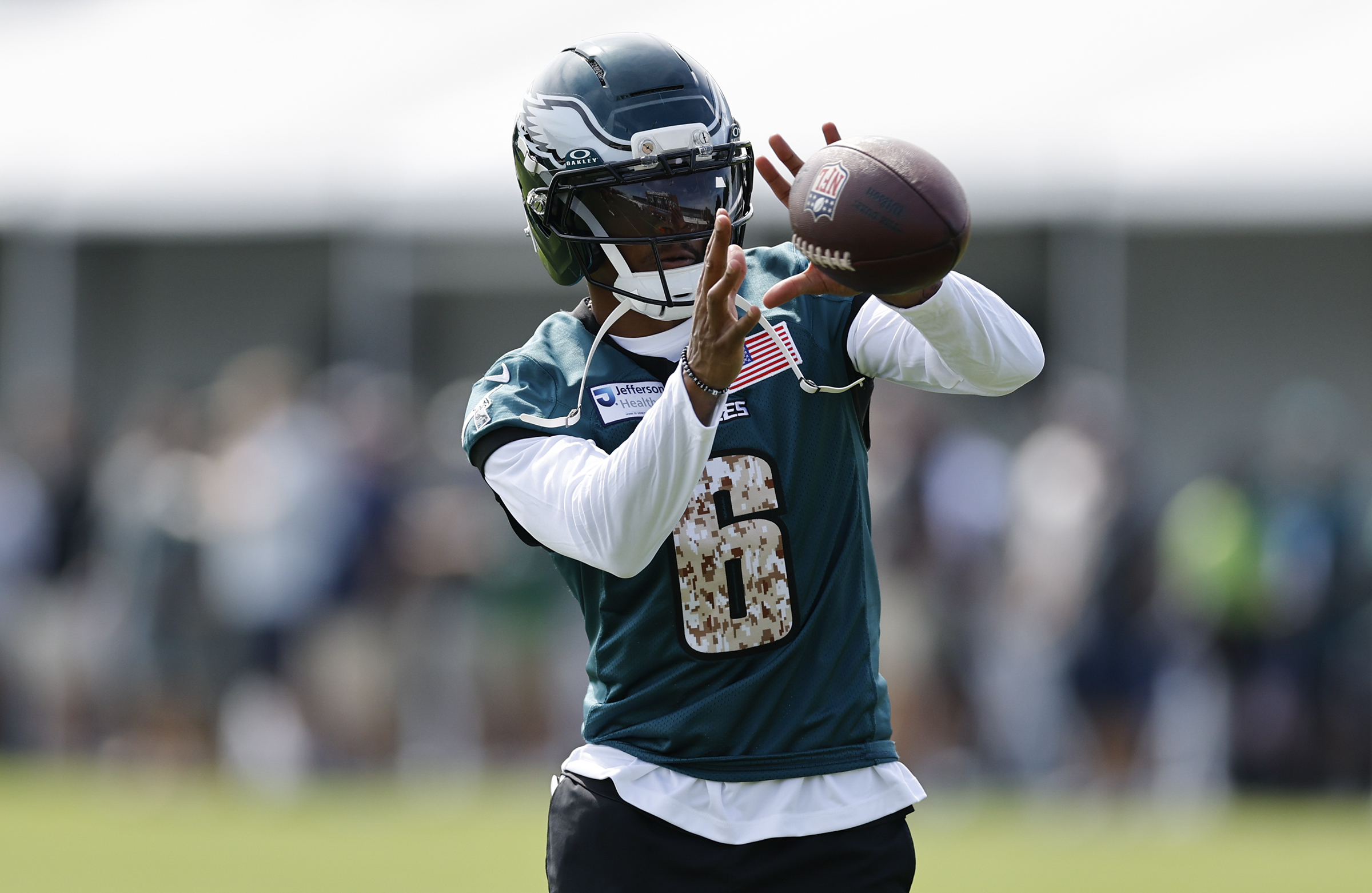
    Eagles safety Marcus Epps catches the football during training camp on Saturday.Yong Kim / Staff Photographer

    Safeties (4): Drew Mukuba, Marcus Epps, Michael Carter II, Cole Wisniewski

    Cut: J.T. Gray, Andre’ Sam, Kapena Gushiken, Max Pulley

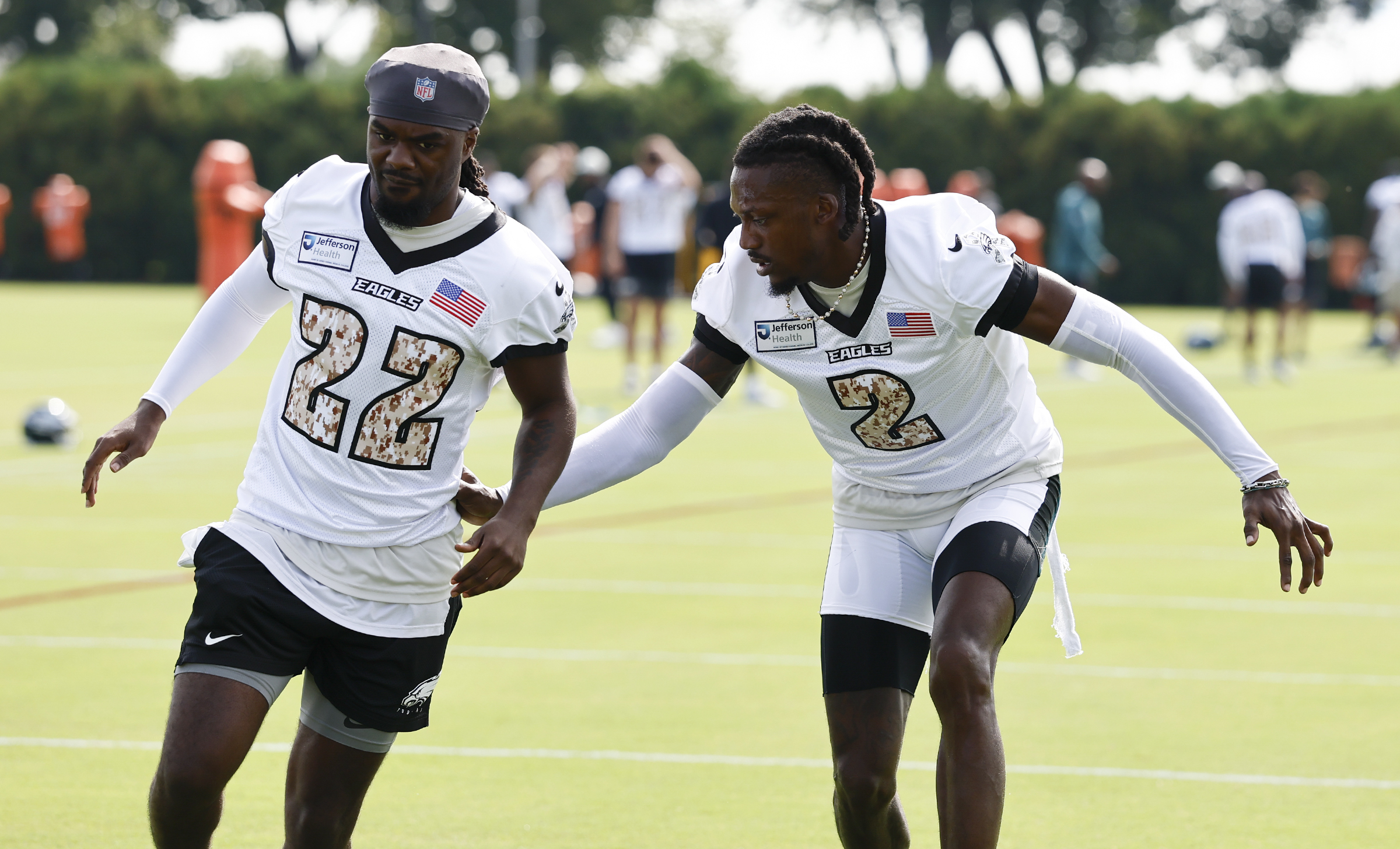
    DeJean will play safety in base defense, and when he’s at nickel Epps is getting the majority of first-team reps. Carter has taken a few, too. Wisniewski gets the nod over Gray, who has been a career special teamer. Howie Roseman hasn’t been afraid of August trades, and safety is the position most likely to see an upgrade between now and the end of camp.

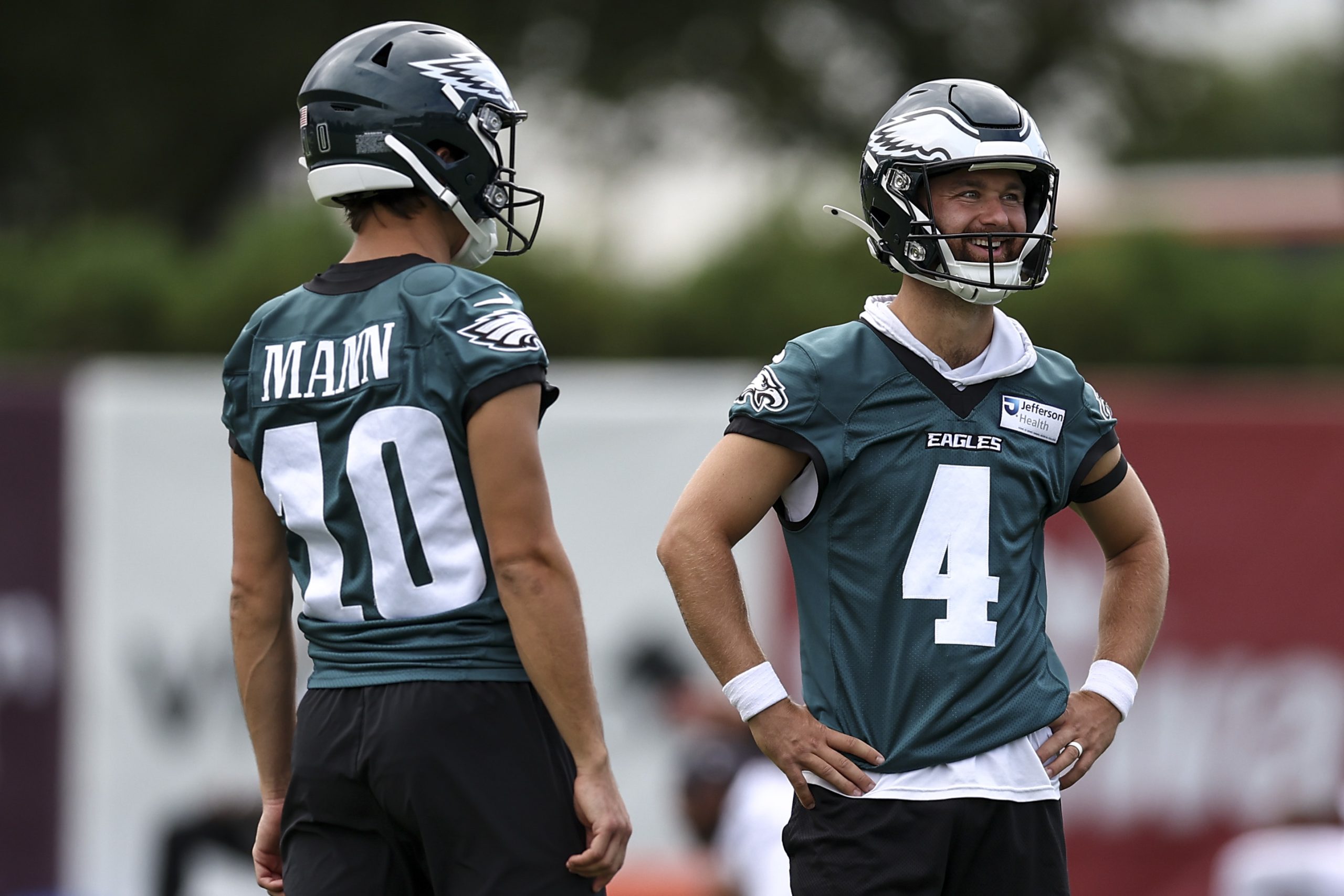
    Eagles punter Braden Mann and kicker Jake Elliott are two of the three specialists on the roster.Monica Herndon / Staff Photographer

    Special teams (3): Jake Elliott (kicker), Braden Mann (punter), Rocco Underwood (long snapper)

    These are the only three specialists on the roster.

  • Reese D’Ariano embraces role as youngest player on USA field hockey’s World Cup roster

    Reese D’Ariano embraces role as youngest player on USA field hockey’s World Cup roster

    Reese D’Ariano’s field hockey journey began at the swimming pool.

    The youngest of three children, Reese was always put into the same sports as her two older brothers. One day, when accompanying her mother, Jodie, and her middle brother Landon, to his swim practice, the mother of one of Reese’s friends mentioned a field hockey clinic being held at a nearby high school.

    Rather than staying to watch her brother swim, eight-year-old Reese picked up a field hockey stick.

    The following nine years of Reese’s career led her to representing the United States as a member of the women’s national team at the indoor and outdoor Pan American Cups, Indoor World Cups, Women’s junior World Cup, and the U18 and U16 National Teams for Four Nations Tournaments.

    Now, at 17 years old, the West Chester native is playing on her biggest stage yet. Reese will compete at the FIH Hockey World Cup in Belgium and the Netherlands from Aug. 14-30. Team USA will play its first game on Aug. 15 against Argentina.

    Reese is the youngest player to make the U.S. women’s national team. But before any accolades or national team appearances, her journey continued at the pool.

    While her brother was practicing, Reese and her mother would go to the multipurpose fields nearby to work on drills. Coming straight from school, she would carry her stick and a bag of balls with her, watching videos and analyzing the game.

    “Obviously, the progression was slow if you saw it day to day,” Reese said. “But as the weeks and months went on, it was a pretty drastic change in how I progressed.”

    Her progression eventually landed her a spot on the national team.

    The forward/midfielder noted that while it’s cool to acknowledge her role as the youngest player and the only high school student on the team in this tournament, she doesn’t think about it too much.

    “People have graduated from college, and I walked in, [a few] weeks ago, saying ‘I just got my license, guys, stay off the roads,’” Reese said. “Everything’s just really lighthearted about it because I’m just as an equal member of the team as anybody else.”

    Reese D’Ariano first stint with the U.S. national team came at age 12, when she played on the U16 team for a series against Canada in Vancouver.World Sport Pics / USA Field Hockey

    Playing alongside older teammates isn’t new for Reese, whose club career with the WC Eagles saw her playing with older age groups from the time she was 10. As one of the top field hockey clubs in the nation, the environment challenged her, Jodie said.

    “I’m not surprised by anything that she’s achieved,” Jodie said. “I always say she’s built differently.”

    An athlete herself, Jodie D’Ariano ran track at Stanford and her husband, Frank, played soccer at The College of New Jersey. Reese’s brother, Ryan, golfed at West Chester University and Landon swims at North Carolina State. Jodie said she has tried to match her kids’ efforts by giving them the best opportunities she could within their respective sports.

    Reese’s first big opportunity in field hockey came in 2022, when she was put on the U16 team at age 12 for a series against Canada in Vancouver. A year later, in 2023, she was 13 playing at the FIH Indoor Hockey World Cup in South America, where she earned the Junior Player of the Tournament Award.
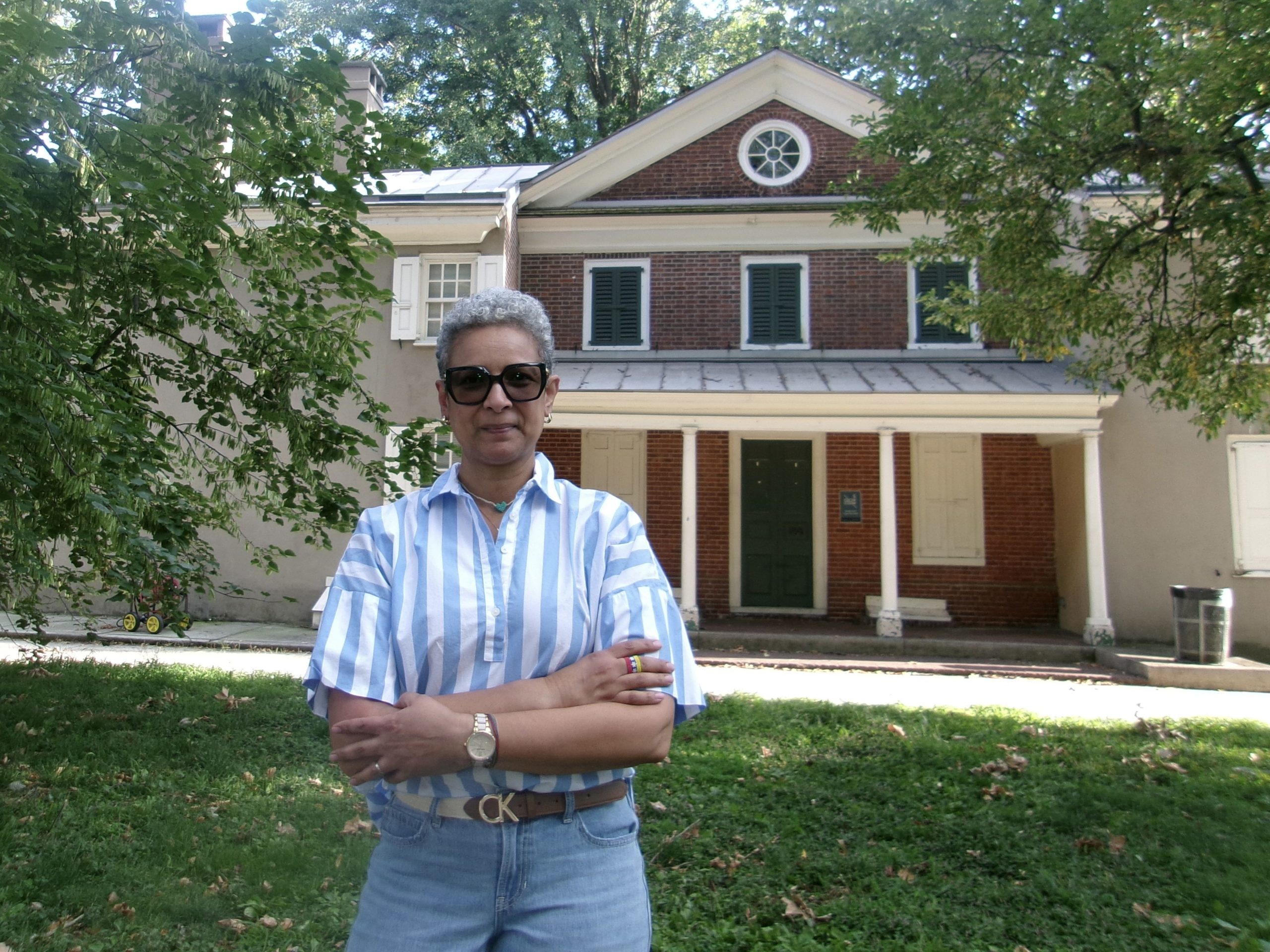
    Currently enrolled at Pennsylvania Leadership Charter School, a cyberschool, Reese said she’s sacrificed the “normal” high school experience in favor of field hockey.

    Making the switch to cyberschool around eighth grade has given Reese the flexibility to train in the Netherlands in the fall. In turn, Jodie said field hockey has taken her and her family to incredible places, including Belgium in August, when she and her husband will travel to watch Reese play in the World Cup.

    “We try to get to everything that she’s in,” Jodie said. “It’s a small window of time that you get to see kids compete, so obviously, I want to take advantage of it.”
    With Team USA, Reese has played in 17 international matches as a member of the senior national team. She has won two gold medals, one at the 2025 Rohrmax Cup in Vienna, Austria, where she was the top goal scorer of the tournament, and another at the 2024 Indoor Pan American Cup in Calgary, Canada, where she was awarded the most valuable player of the tournament and top goal scorer.
    She earned two silver medals at the 2026 Junior Pan American Cup in Santiago, Chile, and the 2025 Pan American Cup in Montevideo, Uruguay. Her one bronze medal comes from the 2026 FIH Hockey Nations Cup in Auckland, New Zealand.

    But playing in a senior World Cup is a big step up, says Team USA head coach David Passmore.

    “The whole size and scale of the event is enormous,” Passmore said. “But I think the other thing is that we also need to not overexpect too much from her too soon. I don’t want to place any additional pressure than her own standards, [which] bring enough pressure on herself.”

    This year marks the first time since 2018 that the U.S. women’s national team qualified for the World Cup. Only two players on the roster have prior experience in the tournament. However, others have competed on the Olympic stage. Regardless of their previous background, Passmore expects each of the players to come away with a new experience.

    “When you come away from something, a big event like that, you understand the whole mental side of the game, the preparation, the need to also be relaxed, because being relaxed helps you make better decisions,” Passmore said. “[Reese] will bring that towards the rest of her career and hopefully it will help her in her career with the USA national team as well.”

    Reese D’Ariano is committed to play field hockey at North Carolina under Chadds Ford native Erin Matson.World Sport Pics / USA Field Hockey

    As one of the top recruits for the class of 2027, Reese is committed to play for Chadds Ford native Erin Matson, head coach of the University of North Carolina in Chapel Hill.

    But first, she’s focused on competing in the World Cup, and then, finishing high school.

    “I just look at it as just another tournament, another opportunity to show what I’ve been working for, and what the team’s been working for,” Reese said. “Stepping on the field for the World Cup is a big deal, but I think having the experience that I have, I’m going to be much more calm and prepared for the moment.”

  • A ‘Join or Die’ sculpture on Independence Mall is slithering its way into completion

    A ‘Join or Die’ sculpture on Independence Mall is slithering its way into completion

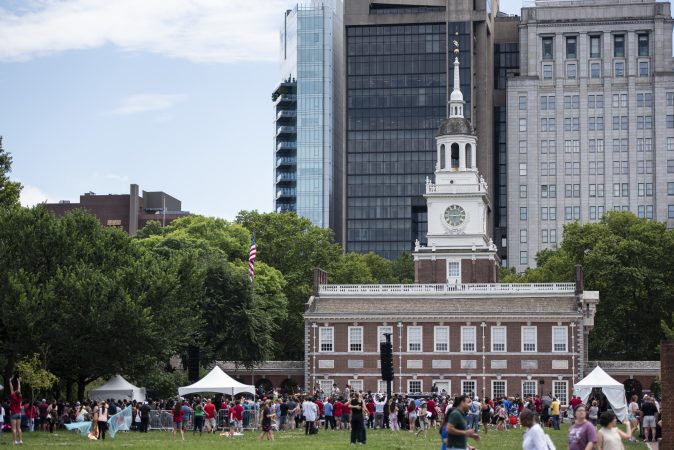
    In a historic addition, Independence Mall will soon be home to a sculpture derived from an iconic political cartoon.

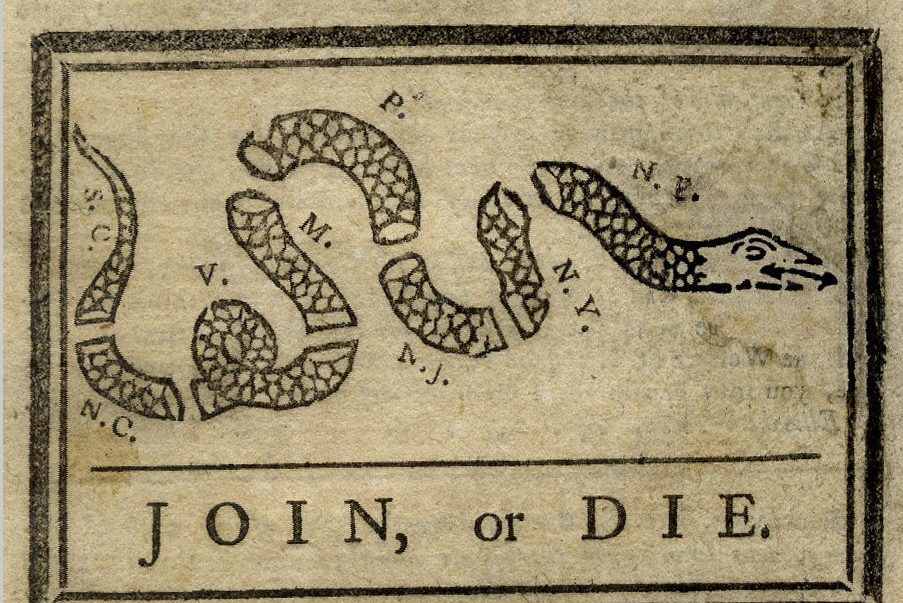
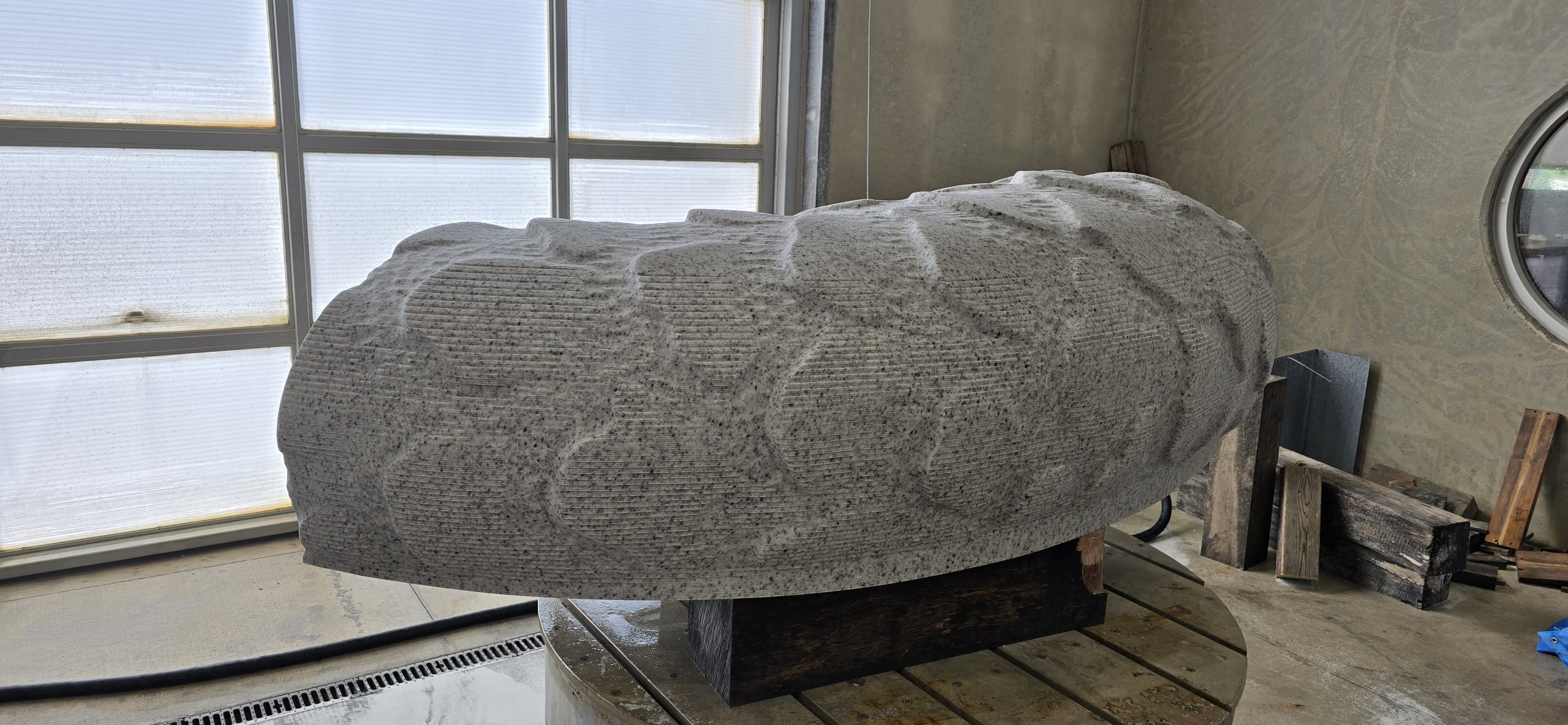
    A 46-foot-long sculpture of Benjamin Franklin’s “Join or Die” snake is set to be unveiled this fall on the Liberty Bell Center block of the Independence Mall, near the corner of Fifth and Chestnut Streets. The sculpture will feature eight pieces that represent segments of the snake’s body. These will be carved out of granite, each marked with the initials of the respective colony it’s meant to represent.

    The political cartoon created by Franklin in 1754 was first published in his newspaper, the Pennsylvania Gazette. Each piece of the snake is meant to represent one of the 13 original colonies, except for the snake’s head which represents the six colonies of New England.

    The cartoon called for unity among the colonies, particularly during the French and Indian War.

    This political cartoon, long said to be the work of Ben Franklin, appeared in the May 9, 1754, edition of Franklin’s Pennsylvania Gazette,Nate D. Sanders Auction

    The Independence Mall sculpture will be installed on the ground, allowing visitors to interact directly with the sculpture.

    “I thought it was a great idea to have that on the mall because it’s considered the first political cartoon in the country before we were a country in 1754,” said John Collins, the artist behind the sculpture. “I thought interpreting that into a large sculptural work that still has a playful element to it, that the mall is really lacking in, would be a great addition.”

    Collins, who was an architect for 15 years after graduating from Penn State, had first heard of the project in the 2000s while working at landscape architecture and urban design firm OLIN. Founder Laurie Olin had proposed the snake sculpture to be included in an interpretive art program for Independence Mall in 1997, but that part never came to fruition.

    An aerial-view rendering of the “Join or Die” sculpture, set to be displayed near the corner of Fifth and Chestnut Streets on Independence Mall.Courtesy of Independence Historical Trust

    “During the pandemic I sent an email to Laurie asking if we could try to resuscitate the snake project and he responded within a couple hours,” said Collins, who left OLIN in 2009. “He said if I put together a proposal with a team and some costs and graphics, we could then shop it around to private donors and try to raise money for it and treat it essentially as a gift to the Park Service.”

    This “gift” has come to a total of approximately $3.9 million, with funds raised by Independence Historical Trust, the park’s nonprofit fundraising organization.

    The sculpture was originally one of several other improvements to the park proposed in 2025 to be completed before this year’s Semiquincentennial. An America250 time capsule was buried at that same corner at Fifth and Chestnut Streets — just a few feet south of where the snake’s head will be.

    A rendering of the “Join or Die” sculpture, which is set to be installed this fall near the corner of Fifth and Chestnut Streets on Independence Mall.Courtesy of National Park Service

    In July of 2025, the Inquirer reported that the project was short the $1.6 million needed to complete the project by this summer.

    Severe budget cuts to the National Park Service and other federal funding gaps forced the trust to turn to public fundraising for their improvement efforts. They were able to secure funding for this project from the state, the city, private foundations, legacy groups, and individual philanthropists.

    Despite the delay, Jonathan Burton, the trust’s director of development, maintains that the fundraising was “intentionally phased.”

    “Early commitments allowed the project to advance through design and engineering while additional support was secured for fabrication,” he said. “We are now working on installation fundraising.”

    A piece of the “Join or Die” snake sculpture carved out of granite stone.Courtesy of John Collins

    The installation of the sculpture still requires an additional $800,000. The trust has set up a public donation page for fundraising.

    “The sculpture will create a new civic destination in the heart of Historic Philadelphia, inviting residents and visitors alike to engage with one of America’s most enduring symbols,” said Burton. “It will strengthen Philadelphia’s reputation as a city where history is not simply preserved but experienced, inspiring new conversations about the values that continue to shape our nation.”

    No official unveiling date for the sculpture has been announced.

    The article has been updated to reflect accurate numbers for the funding shortfall received from the Independence Historical Trust, and details about the America 250 time capsule.

  • ‘People are sacrificing necessities.’ Ahead of Pa. governor’s race, the economy weighs heavily for Latino voters

    ‘People are sacrificing necessities.’ Ahead of Pa. governor’s race, the economy weighs heavily for Latino voters

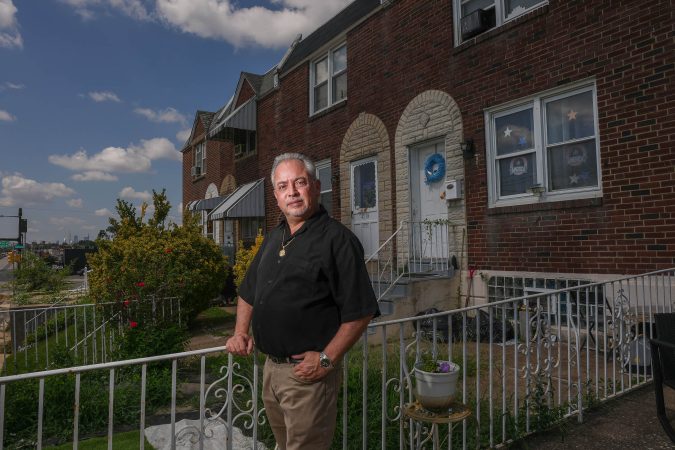
    Jorge Luis Burgos of North Philadelphia, a registered Democrat, was one of many Latino voters who shifted to the right and voted for President Donald Trump in the 2024 presidential election.

    Now he’s planning to shift back and vote for Democratic Gov. Josh Shapiro as he runs for reelection in the key swing state.

    “Shapiro 100%. I love the way he manages everything,” Burgos said while attending Arte en las Calles, an event last weekend celebrating Latino culture held by the Esperanza Art Center in North Philadelphia.

    Burgos, 57, who moved to Philadelphia from Puerto Rico in 1980, said he voted for Trump in 2024 because he was worried about inflation and felt betrayed by the last-minute switch that swapped then-President Joe Biden for Vice President Kamala Harris as the Democratic nominee. But he said Trump has failed to fulfill his promises, and he has found himself turning back to the Democratic Party.

    “I was disappointed, and that’s why I switched. But you ask me now, I’m disappointed, too. Big time,” Burgos said. “Trump didn’t accomplish his promise: ‘On Day One,’ inflation is gonna go down. It didn’t happen.”

    In the past decade, support of Republican candidates, specifically Trump, has grown in the majority Latino precincts of Philadelphia — with Trump’s share of the vote increasing from 6.1% in 2016 to 21.8% in 2024.

    While Harris still won these wards — and a slight majority of Latino voters nationally, according to exit polls — Trump’s improved performance with this voter group helped him win both Pennsylvania and the presidency.

    Burgos, like many other supporters who shifted to the right, said Trump’s promises to bring the cost of living down to its pre-COVID rate ultimately won over their vote.

    Ninety-three percent of Trump’s Latino supporters cited the economy as the main issue driving their vote in the 2024 election, according to a September 2024 Pew Research Center poll.

    Jorge Luis Burgos with his grandchildren Luis Burgos Jr. and Athena Burgos, in Philadelphia. His wife Carmen is standing in the doorway in this photo.Jessica Griffin / Staff Photographer

    But now many Latino voters have not seen the outcomes they were hoping for, with a May poll from Pew finding that Trump’s support has fallen more sharply with Latino voters than other voters. Only 66% of Hispanic Trump voters approved of his job performance in the poll, falling 27 percentage points from the start of his presidency.

    According to a May poll from UnidosUS, a national Latino civil rights organization, 66% of Latino voters say Trump and congressional Republicans are not focused on fixing the economy.

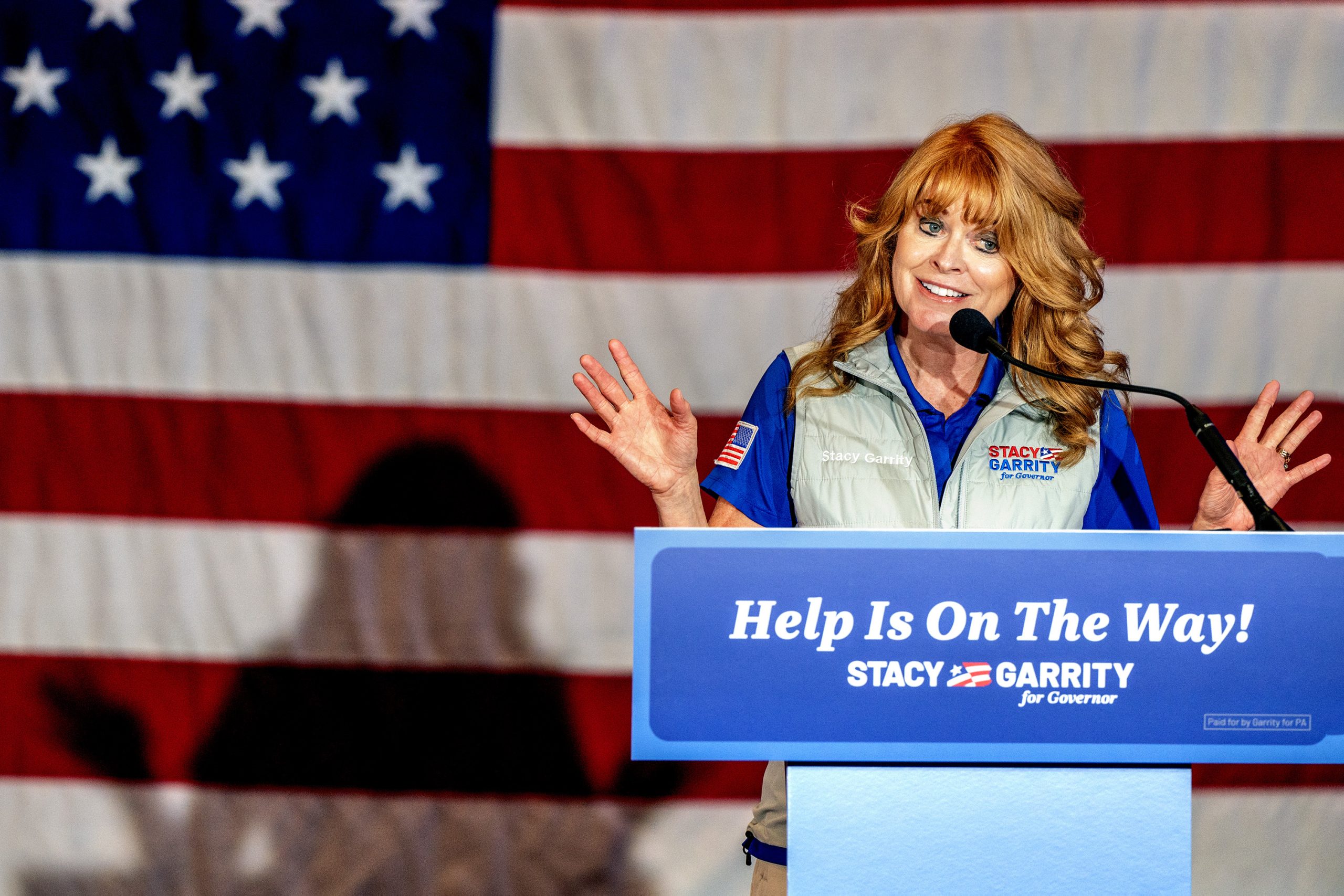
    Pennsylvania Democrats and Republicans will be seeking to sway these voters in November when Shapiro faces off against Republican nominee Stacy Garrity, the state’s treasurer, in the race for governor.

    What are the issues on the minds of Latino voters?

    Latino voters, who make up more than 600,000 of eligible voters in Pennsylvania and are the fastest-growing demographic group in Philadelphia, said in interviews that the economy, immigration, and support for small businesses are the issues that will determine who they vote for.

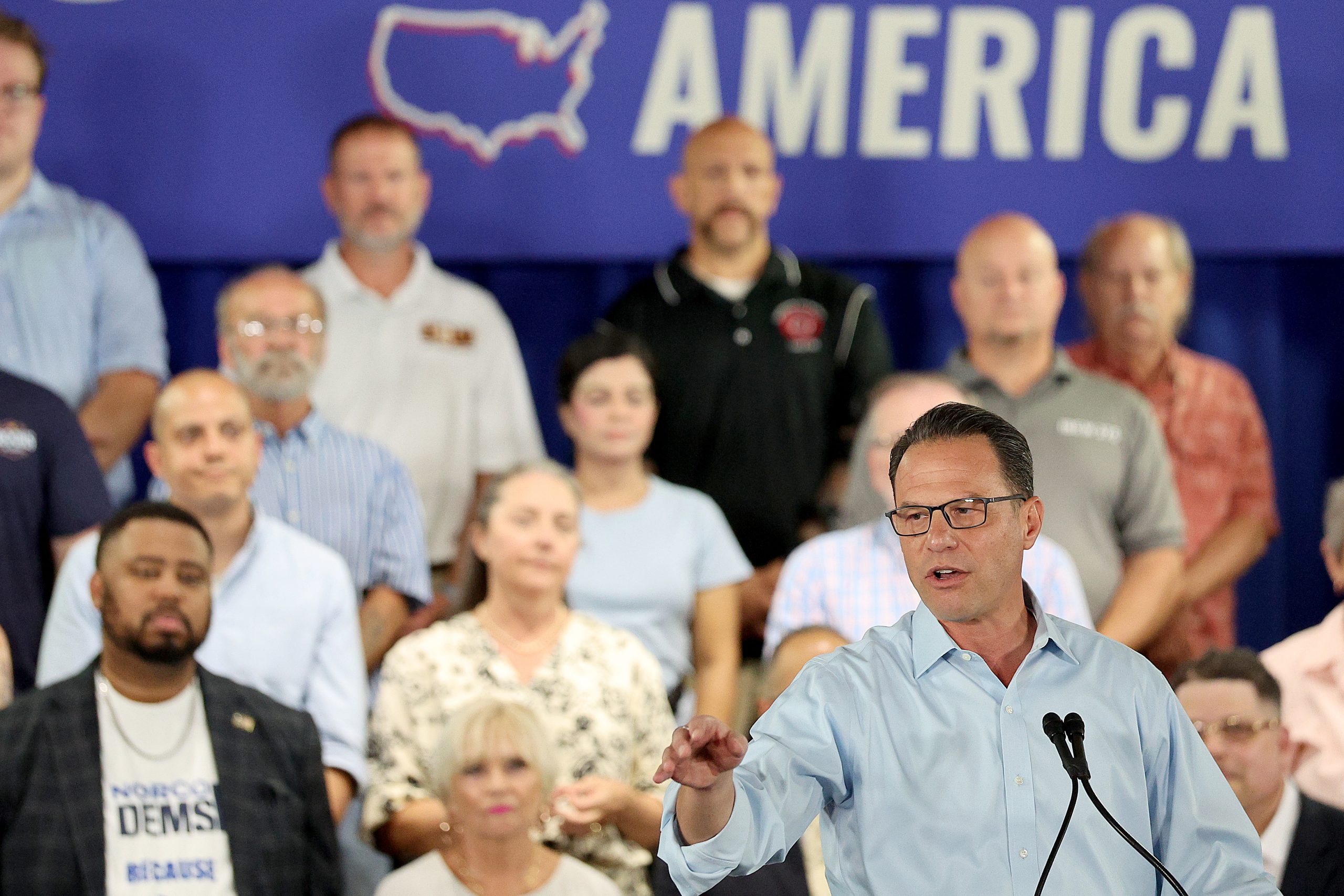
    “They’re focused on cutting costs,” Shapiro said of the region’s Latino voters at a rally with congressional candidate Bob Brooks and House Minority Leader Hakeem Jeffries in the 7th Congressional District, one of four GOP-held seats in the state Democrats are hoping to flip after the area accounted for some of Trump’s biggest Pennsylvania gains in 2024.

    “They’re focused on their small businesses getting help,” Shapiro said. “They’re focused on more cops on the street for safer communities and schools that are stronger.”

    Gov. Josh Shapiro addresses the audience during a rally for congressional candidate Bob Brooks at the United Steelworkers Union Hall in Bethlehem, Pa. on Sunday, July 26, 2026.David Maialetti / Staff Photographer

    Jaime Negrone, 67, from North Philadelphia, has lived in Pennsylvania his whole life but has roots in Puerto Rico. He said the cost of living is the major issue he is hoping to see tackled.

    “Everything has become so expensive,” Negrone said. “People are sacrificing necessities on one end to cover for the other end: food, gas, housing.”

    Negrone said he will vote for Shapiro over Garrity because the governor seems to be more connected to the people of Pennsylvania.

    “Shapiro has a pulse on the issues in Pennsylvania,” Negrone said. “He’s been in the office, he knows the politics, and he seems to be a politician for the people.”

    Seth Ortiz, 30, a second-generation Puerto Rican from Northeast Philadelphia, said he’s going to vote for Democratic candidates in November because he feels that’s the only way to protect people’s rights amid increased immigration enforcement.

    “I don’t like the fact that ICE is pretty much doing what they want in U.S. cities. At some point, even killing American citizens and getting away with it, it’s horrible,” Ortiz said. “So anyone who is going to stand up for immigrant rights is probably the most important thing for me. And it’s probably always going to be the Democrat.”

    Gladis Avila, 55, a Venezuelan business owner from South Philadelphia, said she is not sure who she is going to cast her vote for yet. She wants a candidate who is going to stand up for her community and small businesses but has not heard much outreach from either campaign.

    “The Latino community needs people who work more for our community,” Avila said. “…When we vote, we want to feel like we are voting for someone who is going to help our community. Because that’s our voice, and our voice has an impact.”

    Gladis Avila stands in a park near her house in South Philadelphia.Andrea Padilla

    Echoing this, Jennifer Rodriguez, president of the Greater Philadelphia Hispanic Chamber of Commerce, a nonprofit focused on the economic growth of the Hispanic community, said she’s heard worries from businesses about being able to keep up with their expenses.

    “Small businesses are very, very concerned about the viability of their businesses,” she said. “And in the really escalating cost environments. Particularly, the labor force has become very costly.”

    How are campaigns reaching the Latino community?

    Matt Beynon, a representative for the Garrity campaign, said that helping small businesses is the main concern the campaign has heard from Latino voters.

    “And a lot of concerns she’s hearing are about the overregulation and red tape that is preventing them from either starting a business, growing their business, expanding their business,” he said.

    Outreach to the Latino community has so far included attending community events in Philadelphia and other communities with large Latino populations, like Allentown, Beynon said.

    State Treasurer and Republican candidate for governor Stacy Garrity holds a rally in Bucks County Sept. 25, 2025 at the Newtown Sports & Events Center.Tom Gralish / Staff Photographer

    Shapiro has also spent time in majority Latino areas. In May, he attended and co-hosted “Fiesta on Hamilton,” in Allentown, a street festival that celebrates Latino culture in the Lehigh Valley.

    “During Fiesta on Hamilton, Gov. Shapiro met with local small business owners, entrepreneurs, creators, cultural leaders, and local officials as part of Shapiro for Pennsylvania’s ongoing commitment to engaging, uplifting, and investing in Latino communities across the Commonwealth,” the Shapiro campaign wrote in a statement.

    Samantha Reposa, a representative for the Shapiro campaign, said the campaign is also running Spanish-language radio ads to further engage voters.

    ‘I feel left behind’

    Despite this, many Latino voters in Philly said they haven’t felt reached by either campaign.

    Rodriguez expects messaging to ramp up closer to the election. Because of the Latino community’s lower voter turnout in relation to other groups, Rodriguez said they are often the last to be reached, a strategy she is hoping to see change

    “One thing that typically happens is that the Latino community oftentimes is the last community to be approached by politicians and their systems,” Rodriguez said. “The Latin community’s voter engagement is relatively low. And a lot needs to be improved, but a lot of it has to do with candidates really seeking the relationship with our community much earlier on.”

    Carolina Hansell, 61, immigrated from Venezuela 33 years ago and is planning to vote for Shapiro, but said she has seen and felt the conservative shift in her community and that it’s in part due to a lack of outreach.

    “They need to work and talk to real people and the neighbors over here,” Hansell said. “It’s the only way to convince people and have a good plan. There’s not a plan right now, not in that Democratic Party.”

    Anjoli Santiago, 41, said it’s not just the Democrats that are lacking but feels like both political parties have lost touch with the Latino community and sees that trend continuing.

    “I think it will continue if we don’t have more conversations about how diverse our people are and the different needs that our people have,” Santiago said. “I feel left behind by both parties definitely. It feels like we are voting and those who we vote for no longer represent us.”

    Staff writer Michelle Baruchman contributed to this article.

  • Former state lawmaker, now leading Delco transit agency, charged with DUI and child endangerment

    Former state lawmaker, now leading Delco transit agency, charged with DUI and child endangerment

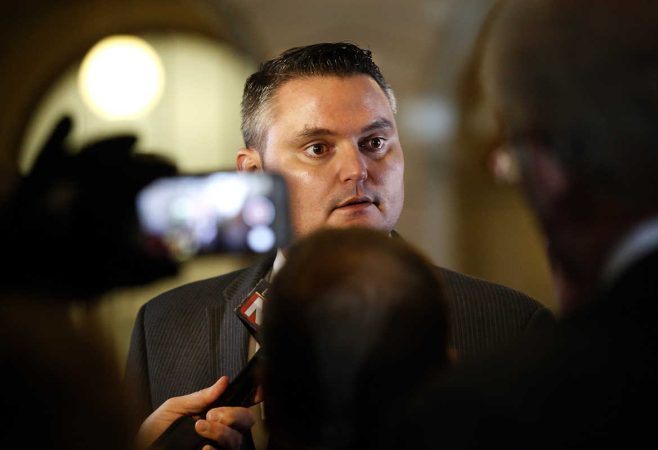
    Former State Rep. Nick Miccarelli, who left Harrisburg in 2018 during the #MeToo reckoning and then landed a higher-paying job running a publicly funded transit agency, is facing felony charges of child endangerment after a DUI arrest on the Pennsylvania Turnpike.

    Miccarelli, 44, executive director of DELGO Community Transit, which provides subsidized transportation to Delaware County seniors and people with disabilities, was pulled over last Thanksgiving after his ex-wife called 911 as she was headed to meet him for a custody exchange of their two children.

    “As she was driving near the King of Prussia exit, she noticed a vehicle ahead almost strike the center barrier,” according to a police report filed in Lancaster County in January. “She came closer to the vehicle and recognized it as Nicholas’ vehicle and it was ‘all over the place.’”

    State Trooper John Huffstutler stopped Miccarelli — who was driving his two children, ages 4 and 5 — after watching him tailgate another vehicle on the highway and repeatedly swerve left and right out of the driving lane. The arrest has not been previously reported.

    Miccarelli said he had not been drinking or using drugs and explained an odor of mouthwash by saying, “I drink mouthwash from time to time,” according to the complaint.

    A blood sample later put his blood alcohol content at 0.198% — more than twice the legal threshold for intoxication — and also showed the presence of Lorazepam, a prescription benzodiazepine that is not supposed to be mixed with alcohol.

    Huffstutler also noted in his report that Miccarelli’s children were not in a booster seat, as required by law.

    Miccarelli was charged in January with DUI at the highest level (above 0.16%), DUI in combination with a controlled substance, two felony counts of endangering the welfare of children, reckless endangerment, and related offenses.

    The case was transferred to Lancaster County Common Pleas Court after Miccarelli waived his preliminary hearing in February. He is free on bail.

    Miccarelli declined to comment last week. The arrest report did not indicate whether he was driving his personal vehicle or a vehicle that Community Transit provided to him and insured.

    Roger Joseph, chairman of the transit agency’s board of directors, said on Friday that Miccarelli’s arrest was a “personal incident.”

    “The board is fully aware of it,” he said.

    Joseph said the agency’s “insurance carrier is aware of everything that happened” but declined to say whether Miccarelli was driving a Community Transit vehicle.

    Delaware County Council, which allocates state money to Community Transit and appoints some of its board members, “has not been formally notified about this,” county spokesperson Michael Connolly said on Friday.

    “It’s certainly something we’re going to dig into and monitor,” Connolly said.

    #MeToo troubles

    Miccarelli, an Iraq War veteran from Ridley Park, was once seen as a rising star within the Delaware County GOP. He won an election to represent the state’s 162nd House district in 2008.

    Ten years later, then-State Rep. Tarah Toohil and an unnamed political consultant filed a confidential complaint with House lawyers accusing him of a range of abuse when they had dated him.

    The complaint, which included allegations of physical and sexual assault, was first reported in February 2018 by The Inquirer and the Caucus, a news organization that covered state politics. It came as the #MeToo movement was roiling state legislatures across the country.

    Toohil, a Republican from Luzerne County, said Miccarelli assaulted and abused her in 2012, including one instance in which he brandished a gun while driving more than 100 mph and threatened to kill them both.

    The consultant, who had asked that her name not be disclosed, said that Miccarelli was mentally and physically abusive when they dated and that he forced her to have sex with him when she tried to end their relationship in late 2014.

    Miccarelli has steadfastly denied the allegations. Lawyers for the state House found the women credible and said their statements were corroborated by sources who were “contemporaneously aware” of their claims of abuse.

    Toohil was assigned a bodyguard when in the Capitol and obtained a protection-from-abuse order against Miccarelli. She now serves as a Common Pleas Court judge in Luzerne County.

    Tarah Toohil, then a state representative from Luzerne County, obtained a protection-from abuse-order against Miccarelli, a fellow Republican in the state House. Toohil went on to become a Common Pleas Court judge in Luzerne County, while Miccarelli took over a paratransit agency in Delaware County.Fred Adams / For The Inquirer

    Miccarelli rejected calls for his resignation from House Republican leaders and then-Gov. Tom Wolf, a Democrat, but declined to run for a sixth term and left office at the end of the legislative session in November 2018.

    That allowed him to retire with free lifetime health benefits offered to lawmakers who serve for 10 or more years. He also received a state pension.

    In December 2018, Dauphin County prosecutors said they would not pursue sexual assault charges against Miccarelli, at the request of the consultant. She stood by her allegations but said in a statement at the time that “the prospect of a long and drawn-out criminal proceeding promises even more trauma for me in the future. I simply must move on.”

    A new job

    Four months later, Miccarelli was appointed as executive director of Community Transit, a nonprofit organization incorporated in 1983 as the Delaware County Transportation Consortium. It employs more than 100 people and provides about 2,167 trips every weekday for county residents.

    Democrats at the time questioned whether he got the job due to his political connections. Republicans still had a majority on the county council.

    But Community Transit’s director of business development, Wendy Petkus-Mazeika, said in a news release at the time that Miccarelli was the best person for the job: “Nick brings not only a fresh perspective, but a wealth of knowledge of human services issues in the commonwealth.”

    DELGO Community Transit receives millions of dollars a year in public funds. Its medical assistance program, for example, is funded by the Pennsylvania Department of Public Welfare, while its program for people with disabilities gets financial support from the Pennsylvania Department of Transportation.

    In 2024, the agency received $8.9 million in government funding, tax filings show. Some of that was allocated through Delaware County Council.

    Over the last seven years, Miccarelli has kept a relatively low profile. He sits on the board of the Pennsylvania Veterans Museum and posts frequently on Facebook.

    He mostly stayed out of the news until June, when a flurry of new content starting to appear online praising Miccarelli’s work in the paratransit field.

    Miccarelli recently put out a news release calling for more accessible transportation for seniors and veterans, and has created two websites — nickmiccarellitransit.com and nick-miccarelli.com — where he writes about “strengthening community impact and building effective, mission-driven systems.”

    As a result of the PR blitz, Googling his name and agency leads to positive headlines in publications as varied as the Aspen Daily News in Colorado, WBOC news in Maryland, and a magazine called Business Matters in Sutton (England, not Massachusetts).

    “For Nick Miccarelli, the most important ideas have never been about headlines or attention. They have been about creating systems that work, helping communities function better, and finding practical solutions to real problems,” reads a glowing profile, sans byline, that appeared June 28 in Brainz Magazine.

    The headline: “Nick Miccarelli and the Power of Turning Service Into Action.”

    Brainz says in a FAQ that it offers “guaranteed, consistent, search-engine-optimized publicity … at a very low fee.” The magazine did not respond to a question about whether the profile was paid content.

    Meanwhile, Miccarelli’s salary has increased significantly in recent years.

    When hired at Community Transit in 2019 Miccarelli declined to reveal how much he was being paid, telling the Delaware County Daily Times it was “probably not as much as anybody thinks.” He told the Pennsylvania Capital-Star that “people are saying it’s a six figure job and it’s not.”

    Tax filings show that Miccarelli’s compensation at Community Transit in 2019 was $105,360.

    As a state representative, he earned $87,180 in 2018.

    By last year, records show, Miccarelli’s compensation at the transit agency had grown to $159,840.

  • Philly schools could get A/C and heat from geothermal energy, study says

    Philly schools could get A/C and heat from geothermal energy, study says

    A new study shows it is possible to tap the earth for more efficient heating and cooling for two Philadelphia School District buildings at once, providing a potential path to cleaner energy.

    If such a system is ever installed, it could serve as a template for other clean energy efforts.

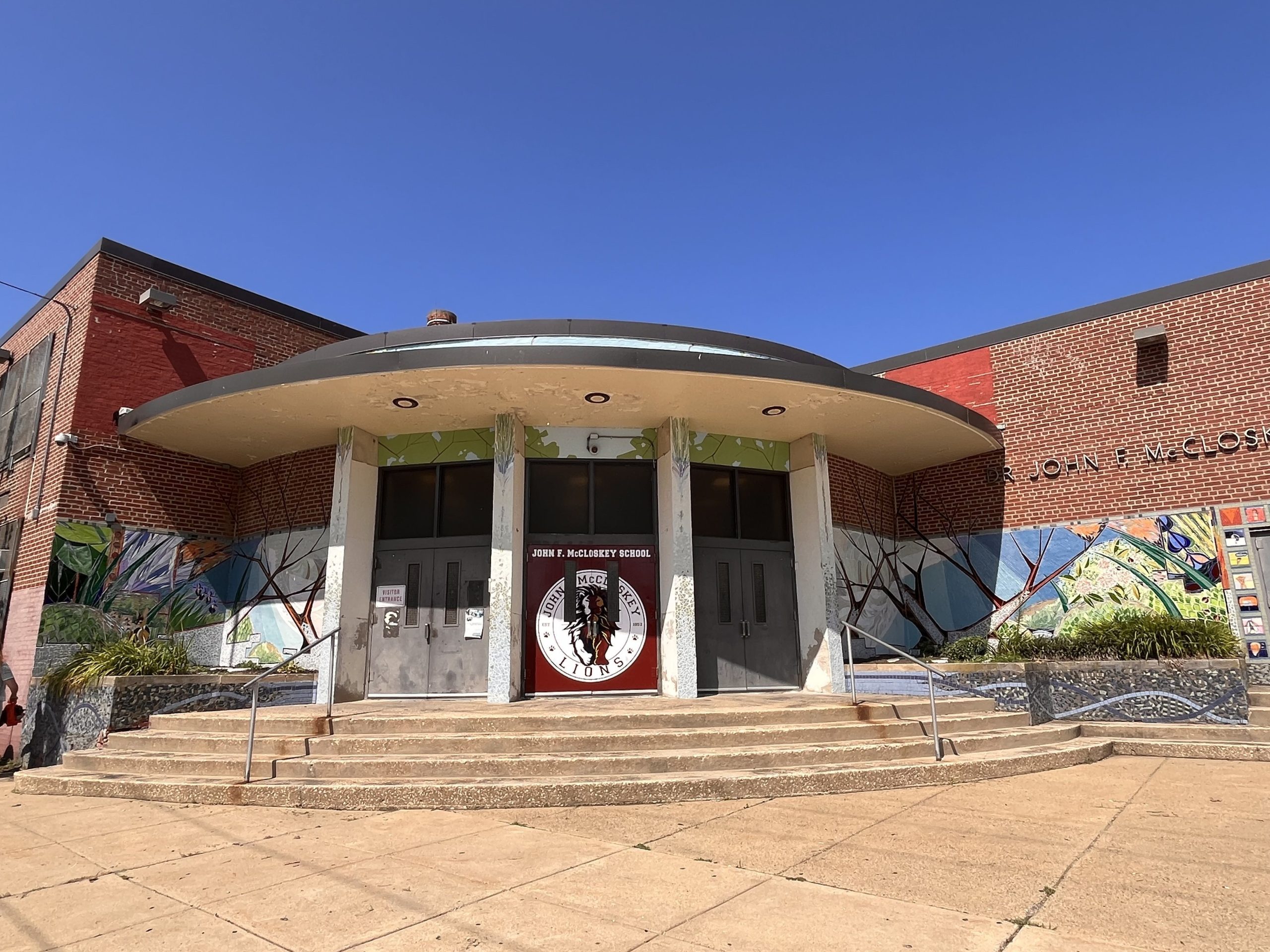
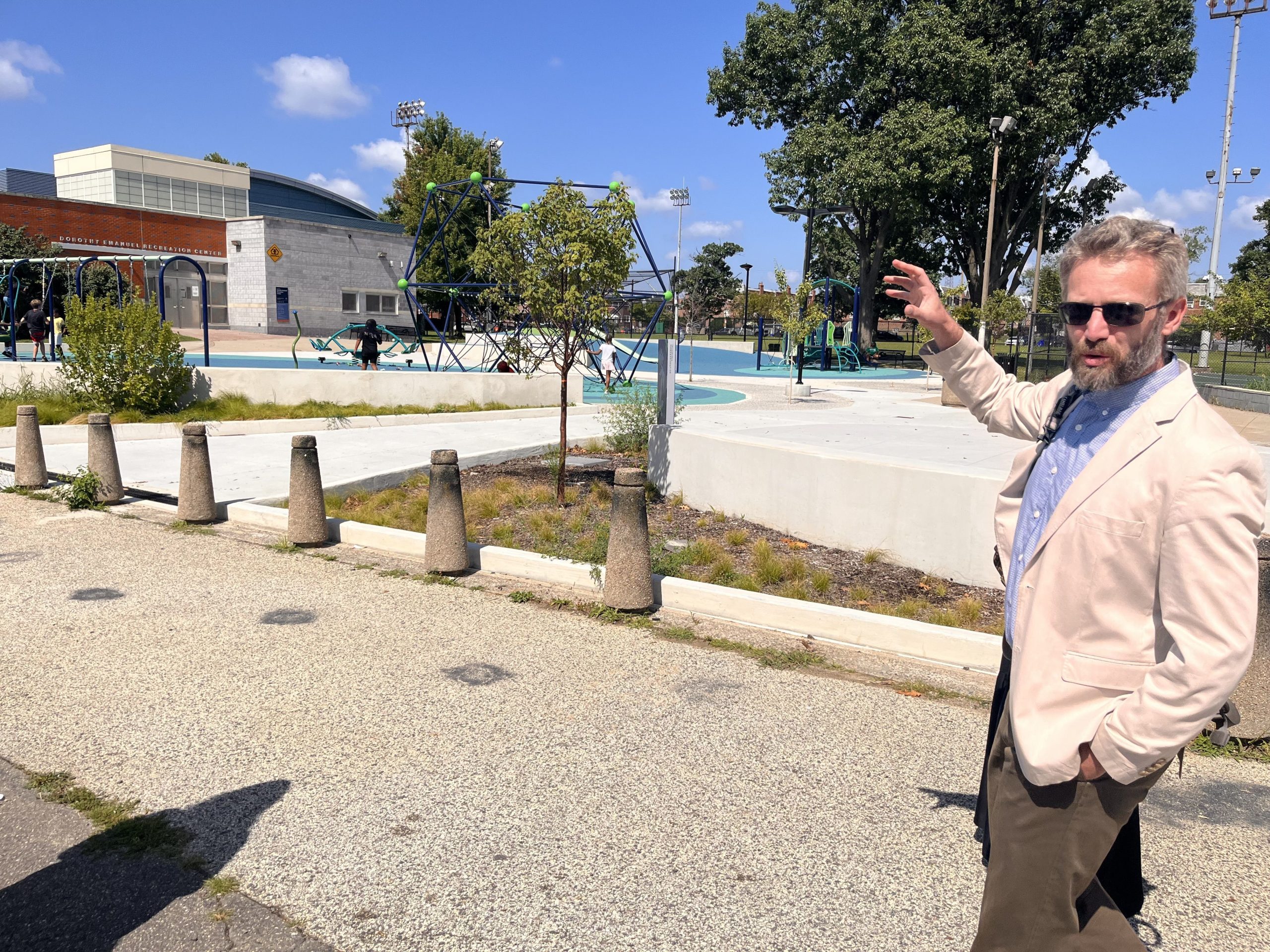
    Philadelphia Gas Works set out last year out to examine whether it was technically possible to build a geothermal HVAC system that would serve both the John F. McCloskey Elementary School and the Dorothy Emanuel Recreation Center in East Mount Airy.

    Findings were released on Wednesday.

    The study estimated that a closed-loop geothermal system for these facilities would cost about $19 million. But that could drop to $11 million with federal tax credits.

    With the tax credits, a geothermal system would be less expensive to install than a traditional HVAC system for the two properties.

    Kensington High School for the Creative and Performing Arts, built in 2010, has geothermal heating and cooling. Although PGW supplies gas to the school, it was not involved with the geothermal system.

    At McCloskey, PGW paid for the study and worked in collaboration with the school district and Philadelphia Parks and Recreation. PGW, which is owned by the city, is the largest municipally owned gas utility in the country.

    “PGW is committed to helping the City of Philadelphia lead to a clean energy future,” said Elliot Gold, vice president of corporate planning at PGW.

    The McCloskey school, which was built in the early 1950s, and Emanuel rec center are next to each other on the same roughly six-acre property with a combined 77,000 square feet of interior space. Though Philadelphia Parks and Recreation operates the rec center, it is on district property.

    A closed-loop geothermal system is essentially a big heat pump that uses the constant underground temperature through buried pipes. A mixture of water and environmentally safe antifreeze is pumped through the loop, creating a large heat exchanger that can be used to heat and cool a building. The heat exchanger is set to either absorb or eject heat.

    A new study shows that it is feasible to install a new geothermal HVAC system to serve the John F. McCloskey Elementary School and the Dorothy Emanuel Recreation Center in East Mount Airy. Frank Kummer

    An ‘ideal partnership’

    Victoria Flemming, executive director of the school district’s office of environmental management and services, said the study is a positive step that aligns with the district’s GreenFutures Plan.

    The McCloskey school currently has an aging oil-based heating system and no central air-conditioning, she said.

    “It is using heating oil, which has low energy efficiency and has a high impact to air quality,” Flemming said. “So I think those were the two things that made this kind of an ideal partnership.”

    During periods of extreme heat, the school is forced to pivot to virtual learning and cancel student activities, she said.

    The shared property between the school and rec center would give a geothermal project an even higher impact, she noted.

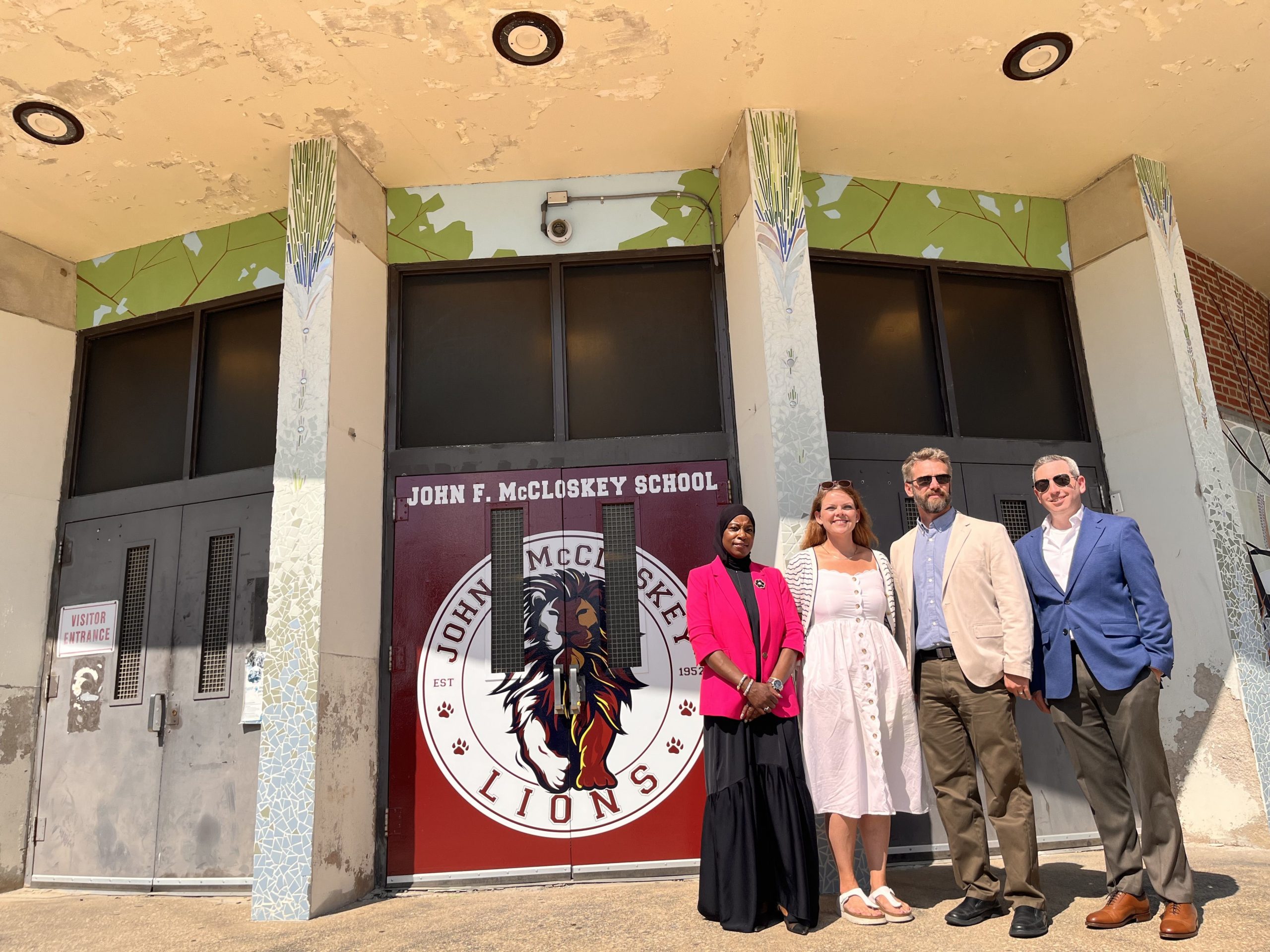
    Seen at the John F. McCloskey Elementary school are (from left) Teresa Fleming, COO of the School District of Philadelphia; Victoria Flemming, executive director of the office of environmental management and services for the district; Neal Babcock of Alderson Engineering; and, Elliott Gold vice president of corporate planning for PGW.Frank Kummer

    Less expensive than a traditional system

    Bucks County-based Alderson Engineering conducted the study.

    To install a geothermal system, conditions underground need the right combination of thermal conductivity and geology. Neal Babcock, a principal with Alderson Engineering, said the site meets those conditions.

    Geothermal systems might be more expensive up front, he said, but in the long run are less expensive to operate and maintain.

    Currently, geothermal systems are eligible for the federal Investment Tax Credit. The One Big Beautiful Bill Act of 2025 terminated credits for solar and wind projects but preserved credits for geothermal systems.

    “Geothermal systems reduce the total energy consumption to heat and cool the building,” Babcock said. “Instead of burning fossil fuels like natural gas, they use the cool temperature of the ground to be less extreme than the air temperatures or needing to burn fossil fuels.”

    Compressors for the geothermal system studied would be powered by electricity, not natural gas.

    Environmental and advocacy groups have been critical of PGW’s reliance on natural gas, saying the utility needs to diversify its energy portfolio and reduce greenhouse gases that help heat the earth.

    PGW said the study is part of its efforts to do that.

    Neal Babcock of Alderson Engineering discusses the feasibility of installing a new geothermal HVAC system to serve the John F. McCloskey Elementary School and the Dorothy Emanuel Recreation Center in East Mount Airy.Frank Kummer

    Will it ever get built?

    The study was just a first step. There is no time frame to install such a system, nor is funding in place.

    And it is unclear who would own the system. That is important because the tax credits would apply only to a single-owner system.

    Gold, the PGW vice president, said that although some of the challenges might seem steep, the utility is serious about clean energy projects.

    “We’ve completed the feasibility study, which is good news,” Gold said. “It tells us that this is favorable and that there are no definite technical showstoppers.”

    He said the next steps include addressing who would own the system, the cost, and a timeline.

    That timeline would likely include the tax credits for geothermal units, which are set to phase out in 2034 and 2035.

    (function(){function e(){window.addEventListener(`message`,function(e){if(e.data[`datawrapper-height`]!==void 0){var t=document.querySelectorAll(`iframe`);for(var n in e.data[`datawrapper-height`])for(var r=0,i;i=t[r];r++)if(i.contentWindow===e.source){var a=e.data[`datawrapper-height`][n]+`px`;i.style.height=a}}})}e()})();

    Who would pay for it?

    The school district typically finances such projects through its capital spending plan for its 300 buildings.

    If it owned the geothermal system and had to pay for it, that could mean balancing it against the needs of making fixes at other schools.

    The district has said it wants to spend $3 billion on upgrading facilities but can pay for only $1 billion now.

    For instance, conditions at Southwark Elementary in South Philly are so dire that kids are begging City Council and the district for fixes, such as working bathrooms and pest control. They are supposed to get them in 2032.

    Teresa Fleming, the district’s chief operating officer, said the district is still evaluating the study and must consider the long term.

    She said a program like geothermal has the potential to “yield energy savings and greater efficiencies throughout the district.”

    Editor’s note: This story has been updated to change the date the findings were released.