Tag: topic-link-auto

  • Northwest Philly woman who staged her husband’s death as a suicide pleads guilty to third-degree murder

    Northwest Philly woman who staged her husband’s death as a suicide pleads guilty to third-degree murder

    A Northwest Philadelphia woman who fatally shot her estranged husband and staged his death as a suicide pleaded guilty Wednesday to murder and related crimes.

    Danielle Baxter, 40, was accused of killing 38-year-old Jordan Baxter at her Andorra home in March 2025.

    Investigators said Baxter shot and killed her husband, a longtime SEPTA employee, in the bedroom of her home before dragging his body down the stairs and staging his body between two cars in a nearby driveway.

    Police found Jordan Baxter there around 7 a.m., covered in blood. He had been shot through the back of the head, they said.

    While investigators initially believed Baxter’s death was a suicide because he was found with a 9mm pistol in his hand, they soon questioned the nature of the crime after finding irregularities in statements made by Danielle Baxter.

    Assistant District Attorney Ashley Toczylowski of the homicide unit outlined those details during Baxter’s plea hearing before Common Pleas Court Judge J. Scott O’Keefe.

    It was Danielle Baxter who called police to report her husband’s death, Toczylowski said. She told investigators she came across her husband’s body while she was taking out the trash that morning at her West Bells Mill Road home.

    But investigators noted that Baxter was breathing heavily on the call and was unable to answer basic questions about her husband’s condition, she said.

    Inside the home, police found blood pooling on Baxter’s bed where a pillow would be. Baxter, Toczylowski said, lied when she told police the blood was there because she had recently had her period.

    Investigators later downloaded data from Baxter’s Apple Watch and learned she had recorded a “very steep level of activity” between 1 and 4 a.m. the morning Jordan Baxter was killed, activity they attributed to climbing multiple flights of stairs.

    And investigators eventually determined that the bullet that killed Jordan Baxter was not of the same caliber as the weapon found on his body.

    Rather, the bullet matched a gun that investigators recovered from Danielle Baxter’s closet, Toczylowski said.

    Taken together, those factors led investigators to believe the killing “was not a suicide, but rather a staged homicide,” she said.

    Baxter said little in O’Keefe’s courtroom beyond acknowledging that she was pleading guilty to third-degree murder and possessing an instrument of a crime.

    She is expected to be sentenced Nov. 18.

    Jonathan Strange, Baxter’s attorney with the Defender Association of Philadelphia, declined to comment.

  • New Hope-area estate with ‘magical’ gardens hits market for $5 million

    New Hope-area estate with ‘magical’ gardens hits market for $5 million

    The sprawling Paxson Hill Farm, with its extensive, protected gardens, goes on sale this week for $5 million in Solebury Township, Bucks County.

    Located at 6764 Paxson Rd., with a New Hope mailing address, the farm spans about 31 acres. It features a 6,700-square-foot stone farmhouse dating to the 1830s but expanded with significant upgrades.

    The estate of David R. McShane, who died in 2023 at age 82, owns the property. McShane operated McShane Enterprises, a business started by his father, according to his obituary.

    He also served as president of Paxson Hill Farm, which he bought in 1997, according to county records, and where he built professionally designed gardens on a farm field.

    The gardens were open to the public as Paxson Hill Farm Nursery and Gardens but closed in 2024 after McShane’s death.

    “The gardens are exceptional,” said Nicholas Esser, managing partner at Addison Wolfe Real Estate. Overall, he calls the property “magical” for its gardens, buildings, and location.

    A view of the koi pond and gardens at Paxson Hill Farm in Solebury Township, Bucks County, complete with extensive gardens, which is for sale for $5 million.Oscar Mikols / OM media

    The property, which sprawls across four parcels, will be sold with conservation easements that protect it and the gardens from development.

    Esser said the proceeds of the sale will go to McShane’s foundation, which will then donate the money to different charities.

    The farmhouse

    He said the estate’s residential centerpiece is the “gracious” farmhouse built in 1830. It was expanded starting in 2000, according to property records.

    It has four bedrooms, three full bathrooms, and two half baths. The gathering space features vaulted ceilings and an enclosed stone porch that overlooks ponds with panoramic views of the estate.

    The house has a geothermal heating and cooling system.

    The kitchen in the farmhouse at Paxson Hill Farm in Solebury Township.Oscar Mikols / OM media

    Unlike many historic Bucks County farmhouses characterized by low ceilings and cramped spaces, Esser noted that the main Paxson house offers expansive, airy rooms, including a dining room that can seat 20, Esser said.

    An addition features a large kitchen with a large island, and a basement reinforced by steel structural beams.

    A view of the main farmhouse at the Paxson Hill Farm in Solebury Township, Bucks County, complete with extensive gardens, which is for sale for $5 million.Oscar Mikols, OM Media

    The property includes three one-bedroom guest houses with their own kitchens and bathrooms. It also has a detached five-car garage, and a large greenhouse with heated radiant floors.

    A large barn features horse stalls and a reinforced concrete main floor designed to accommodate vehicle parking.

    The gardens

    But Esser said a defining feature of the 30.6-acre property is its botanical gardens, which feature trails that wind through ponds, across bridges, and in view of sculptures.

    The gardens were designed starting in 1997 by landscaper Bruce Gangawer, a friend of McShane.

    “It really was organic,” Gangawer said of how the gardens evolved without a central theme.

    Gangawer said the gardens, are distinct “rooms” that include a koi pond, conifer garden filled with dwarf species, and maze.

    A landscaped maze on the grounds of Paxon Hill Farm in Solebury Township, Bucks County.Oscar Mikols / OM media

    Aside from the gardens, the property also includes a private yard around the main house featuring reflection ponds and a bocce ball court with cherry trees.

    Esser said he envisions that a buyer could be someone who wants to create a family compound, an equestrian, or buyers from Philadelphia and New York seeking a quiet retreat.

    “It’s such a special property,” Esser said. “We hope that somebody will fall in love with it because it’s so beautiful and unique. To re-create these gardens to the scale with the mature trees that are there now — I’m not sure you could do it now, not without writing a big check.”

  • Wonderland developer is tearing down a $10M mansion in Avalon

    Wonderland developer is tearing down a $10M mansion in Avalon

    Wonderland developer Eustace Mita, whose proposal for a luxury seven-story hotel in Ocean City has drawn critics, is building an enormous spec house in the Avalon dunes that will be the borough’s largest home.

    Mita says the 17,694-square-foot home at 5475 Dune Drive is not for his personal use, but rather a house built by his Achristavest construction company that will be offered for sale. There is no designated buyer yet, he said.

    “This is a spec home,” he said by telephone. “Is it the biggest home in Avalon? Yes, absolutely. It’s not just one big home. It’s a home with a carriage house.”

    Construction will require additional sand trucked in to fortify the dune for the property, which will include a 14,000-square-foot main house connected to a 3,000-square-foot carriage house.

    It replaces a 7,800-square-foot home that will be torn down, said Mita, the owner of the Icona brand of Shore hotels. His company bought the property for $10.3 million in 2024.

    Mita said he will continue to personally use a home on the beach in Ocean City, at 28th and Wesley.

    Two stories in the new house will be subterranean and three will be above ground, he said. The below-ground floors will include a bowling alley, golf simulator, indoor pool, home theater, recording studio, and cold plunge.

    He said has secured state environmental proposals and emphasized that the house, because it will occupy the same footprint as the existing house, did not need a zoning variance from Avalon borough.

    Avalon’s impressively high and vast dune system has 11 homes. The largest existing house in the dunes is at 5299 Dune Drive and owned by the heirs to the Utz potato chip family business. It is 12,631 square feet.

    The Utz family had to go to court for final approval for their 40-room house, over the objections of environmental groups seeking to preserve one of the last remaining high dune systems on the East Coast.

    In Mita’s case, the Avalon planning and zoning board approved the plans June 9, with the only notes being that the sand brought in should be “clean, uncontaminated, and free of hazardous substances.”

    At the July borough council meeting, several residents expressed concern about the size of the project and its impact on the dunes.

    Mita said the additional sand was requested by state environmental officials to fortify the dunes and will be placed on the street side near the retaining wall, not “onto the dunes” as some residents feared.

    “I didn’t even need variances,” he said. “The renderings make it look overpowering.”

    The additional sand, he said, was mandated by CAFRA (Coastal Area Facility Review Act) regulations.

    “I can’t build one inch into the existing toe of the dunes,” he said. “I have to build a retaining wall as to not to encroach on the dune. It preserves the integrity.”

    Eustace Mita, arriving at the Ocean City Music Pier for a city planning board meeting on Jan. 7, 2026, about the old Wonderland Pier site he owns.Amy S. Rosenberg / staff

    Residents expressed concerns at a recent Avalon council meeting.

    “It’s just a ruin, a ruin of the dunes,” said Elaine Scattergood, who said borough officials were being misled by claims that the property would stay within the footprint and elevation of the existing house. “If the dunes were a child, I think the protective agency would have taken it away from us.”

    In Ocean City, those engaged in the back and forth over the Wonderland site also had a lot to say about Mita’s plan for Avalon’s high dunes.

    “His home looks bigger than the hotel he wants to build in O.C.,” said one Facebook commenter.

    “Barge the old home up to the Wonderland site,” said another. “Problem solved.”

    Mita said his company is currently building three beachfront spec homes at 77th in Avalon, and three beachfront homes at 116th Street in Stone Harbor.

    He said building a spec home of this size and expected sale price in the many tens of millions was “so risky.”

    Who would be a potential buyer?

    “LeBron James,” he mused. “Or Taylor Swift. She spent summers in Stone Harbor. There’s a recording studio. You can’t even buy a beach block lot in Avalon or Stone Harbor for $5 million.”


  • Woman charged in 2014 cold case killing of 69-year-old Northeast Philly man who was shot and dumped in the Schuylkill

    Woman charged in 2014 cold case killing of 69-year-old Northeast Philly man who was shot and dumped in the Schuylkill

    For nearly a dozen years, Vito Maglio’s family has agonized over who could have shot him in the head and neck, torched his SUV, then dumped his body into the Schuylkill.

    “I said to myself, maybe I’ll die before I know,” his wife of 40 years, Maria, 75, said from her Bustleton home.

    Then, this week, Philadelphia police arrested a 30-year-old woman in connection with Maglio’s death, saying she and others robbed him of his gold ring, phone, and a small amount of cash, then killed him and tossed his body into the river in December 2014.

    Melanie Morat was taken into custody at her East Frankford home Tuesday afternoon and is expected to be charged with murder, robbery, arson, and related crimes, police said. Detectives are investigating whether at least two other people were involved in the crime, law enforcement sources said.

    The arrest comes as Philadelphia homicide detectives, with more time and resources amid a striking decline in violence, continue to work through a backlog of unsolved cases — a combination of the hundreds of killings from the pandemic-era spike in shootings and higher-profile cases from years past that ran cold.

    The killing of Maglio, 69, was among the latter, a disappearance and death that shocked his family and community, and left police struggling to amass enough evidence to make an arrest.

    Maglio, a father of six, was a mechanic who owned several gas stations and ran a social club, the Napoli Association in Rhawnhurst, for many years before selling the businesses and retiring in November 2014.

    Maria and Vito Maglio had been married for 40 years.

    But on Dec. 14, 2014, he did not return to his Bustleton home, and his family reported him missing. Several days later, police found his GMC Yukon in East Germantown, charred and windowless, with a bullet casing inside and a pool of blood beneath the driver’s seat, police said.

    His remains were not recovered from the Schuylkill until late March. He was identified by his pacemaker.

    The investigation was challenging from the start, officials said, in part because homicide detectives did not take over the case until his body was recovered months after his disappearance. The assigned detective, Gregory Santamala, said in a 2016 interview that police did not know where Maglio was killed because his phone records showed that he was in various neighborhoods on the night he disappeared, and there were no surveillance cameras in the area where his car was burned.

    Detectives suspected he had been set up in a robbery that went awry, he said. An early tip led investigators to interview two women in the Northeast, and both failed polygraph tests. But the women immediately hired lawyers and stopped talking, officials said.

    Santamala retired in 2022, and the case went cold.

    Then, this summer, the case was reassigned to Detectives Joseph Cremen and Robert Daly, who began reviewing phone records and the more than a dozen interviews their colleagues held with suspects and witnesses over the years.

    Investigators told Maglio’s family it was not necessarily new evidence that allowed them to make an arrest this week — but a new style of building cases. Years ago, they said, prosecutors had less experience making cases from cell phone location data and circumstantial evidence. Now, they said, law enforcement has greater expertise in understanding those records, which, alongside the witness statements, allowed prosecutors to conclude there was sufficient evidence to charge Morat with murder.

    Deputy Police Commissioner Frank Vanore said using today’s technology to solve older cases is the crux of cold case review.

    The Philadelphia District Attorney’s Office declined to comment.

    Maglio’s family said the developments came as a welcome surprise after a decade of fleeting hope. Sitting in the green-walled living room of their parents’ home Tuesday night, Maglio’s children said they were grateful for an arrest and eager for the court process to begin.

    “I’m just glad it didn’t fall through the cracks,” said daughter-in-law Sandra Maglio, 50. “It was our biggest fear. We live in a city where people die every day, sadly. … So I’m just glad that, you know, someone took the initiative to say, ‘Hey, let’s look at this again.’”

    They were also struck by the timing. Maglio’s brother-in-law died Monday. And his son, Donato, died three years ago this month at the age of 47.

    They imagine them all together now.

    “It gives us some kind of closure,” said daughter Lucia Thrasher, 37. “But we already got the outcome we didn’t want to 12 years ago.”

    Thrasher’s eyes welled with tears as she looked at her 6-year-old twins, Charles and Thomas, who never got to meet their grandfather. Charles, bouncing in the doorway, asked why everyone was in the living room.

    “Nonno,” she told him.

    “You know, Nonno,” she said, as he looked away bashfully. “Where’s Nonno?”

    He pointed toward a gold-flecked picture frame in the corner of the room.

    Vito Maglio, 69, was a father of six.Jessica Griffin / Staff Photographer
  • Bob Harvie files defamation suit against GOP super PAC over ‘beyond the bounds’ claims of FBI investigation, inappropriate relationship

    Bob Harvie files defamation suit against GOP super PAC over ‘beyond the bounds’ claims of FBI investigation, inappropriate relationship

    Attorneys for Bucks County Democrat Bob Harvie filed a lawsuit Wednesday against a political action committee and a consultant supporting his opponent, Republican U.S. Rep. Brian Fitzpatrick, in a high-stakes congressional contest.

    The lawsuit comes after what Harvie’s campaign says are repeated and false claims about his involvement in an FBI investigation. Harvie’s legal team is also disputing a new attack from the PAC alleging that the county commissioner had an inappropriate relationship with a county employee.

    The lawsuit, filed Wednesday in the U.S. District Court for the Eastern District of Pennsylvania, claims that Defending America PAC Inc. and its president, Chris Pack, have sustained a “campaign to defame Harvie by repeatedly and recklessly publishing false and defamatory statements imputing criminal conduct that go beyond the bounds even of a highly contested political campaign.”

    Harvie’s testimony to a grand jury in an FBI probe in 2022 has sparked a firestorm in the race for the Bucks County-based 1st Congressional District, a seat that could help determine control of the U.S. House this fall. Harvie’s attorneys last month sent a cease-and-desist letter over such statements to Defending America PAC, which subsequently challenged Harvie to file a lawsuit.

    Last month, Fitzpatrick and his campaign also received a cease-and-desist letter from Harvie’s lawyers, but neither the Bucks County Republican nor his campaign is named in Wednesday’s suit.

    Website and social media posts and other materials from Defending America PAC and Pack this election cycle have stated Harvie is an “FBI corruption subject” or “under FBI investigation” related to his time as a Falls Township supervisor, according to the suit, but Harvie’s lawyers assert that the allegations are false and that he has never been under criminal investigation.

    “Contrary to the meaning that out-of-state political operatives have endeavored to convey — to convince Harvie’s community that Harvie is somehow connected to a crime — Harvie is not now and never has been the target of any criminal investigation nor has he ever been charged with a crime,” wrote Harvie’s attorneys, Timothy J. Ford and Marion Barker Taylor of Dilworth Paxson, in the legal filing.

    Harvie and his campaign are seeking an unspecified amount of damages greater than $150,000, as well as legal fees, for defamation and false light invasion of privacy.

    In a statement to The Inquirer on Wednesday, Pack once again referred to Harvie as an “FBI Corruption Subject” and said the Democrat “has predictably chosen to engage in lawfare by filing a meritless lawsuit in an attempt to stifle our political speech” instead of releasing “complete” records “related to his corruption investigation.”

    “Rest assured we will vigorously defend ourselves and seek every remedy available under Pennsylvania law, including Pennsylvania’s anti-SLAPP protections signed into law by Gov. Josh Shapiro,” Pack said, referring to a bill signed in 2024 by the Democratic governor that essentially offers extra layers of protections for defendants in defamation suits.

    The organization appears to have been ready for this next step to happen. In an email blast and website post last week, the group said “we’re willing to pay for Harvie to sue us” so that the PAC could obtain any relevant records during the suit’s discovery phase.

    In response, Harvie said in a statement Wednesday: “Put your money where your mouth is. Just tell us where to send the bills. See you in court.”

    In that same post last week, the PAC made an additional claim — rebuked by Harvie’s lawyers Wednesday — that the Democrat had a “recent divorce” that “may have had something to do with Harvie getting a little too cozy with a county employee.” It links to a screenshot of a random Facebook account that alleges Harvie cheated on his wife with an employee from Bucks County’s children and youth services department and, in turn, helped her become a supervisor.

    Harvie’s lawyers rejected the allegation, calling it “outrageous.”

    “Harvie never cheated on his wife and never had sex with a Bucks County employee. Harvie never used his position to influence a decision to promote a Bucks County employee inappropriately,” they said.

    Harvie and his wife divorced in 2023, public records show.

    ‘Not politics as usual,’ Harvie’s lawyers argue

    The string of events that culminated in Wednesday’s suit dates back to 2022, when Harvie and other officials testified as witnesses before a grand jury in connection with an investigation into political donations and union contracts related to the Pennsbury School District. In 2020, the FBI interviewed several people connected to Falls Township and Pennsbury.

    Harvie’s attorneys said in the filing Wednesday that he has not been asked to provide additional information or testimony and has not had any contact with the FBI since his 2022 testimony.

    Similar allegations were made during Harvie’s 2023 reelection campaign for county commissioner and were also disputed by the Democrat at the time.

    Three years later, they have again bubbled up to the surface as Harvie seeks federal office in one of four Pennsylvania seats being targeted by both parties.

    Harvie’s attorneys said Wednesday that since the Democrat announced his candidacy for the U.S. House in April 2025, Defending America PAC has maintained a website entitled “Fire Bob Harvie,” where the group refers to him as “the subject of an FBI corruption investigation” or an “FBI corruption subject.” The lawyers estimate that the PAC has used similar language in at least 30 social media posts and that Pack has personally done so at least 27 times.

    The commissioner’s lawyers contend that Defending America PAC’s and Pack’s actions have harmed Harvie’s reputation and qualify as “actual malice.” Since Harvie is a public official, lawyers would have to clear a high legal bar to prove that the organization and Pack either knew the information they are pushing is false or otherwise exhibited a “reckless disregard” for its accuracy.

    “Defendants’ conduct is not politics as usual. As shown by doubling down on their escalating rhetoric, Defendants’ conduct is willful, wanton, malicious, and undertaken with actual malice and reckless indifference to Harvie’s rights, thereby entitling Harvie to recover punitive damages,” Harvie’s lawyers wrote.

    What is Defending America PAC?

    Defending America PAC, a super PAC that is designed to work independently from a candidate, launched as Fitzpatrick was seeking reelection in 2024 and has scaled up its operation this year as the candidate faces his most high-profile challenge yet, according to filings with the Federal Election Commission.

    The goal, according to the PAC’s website, is to defend Fitzpatrick “from extremist challengers on the far left and far right.” In 2024, Fitzpatrick defeated a far-right challenger in the Republican primary.

    Without the same donor limits as candidates, it raised $425,000 in 2024 and spent its money to oppose Fitzpatrick’s challenger in the Republican primary. In the current two-year cycle, it has raised more than twice that amount and started spending to oppose Harvie. The PAC currently has about $712,500 in its account.

    About half the money it has pulled in this election cycle came from labor-affiliated groups that are backing Fitzpatrick, including $250,000 from LIUNA Building America, the political action committee for the Laborers’ International Union of North America. An additional $100,000 came from the PAC for the Transport Workers Union of America, and $50,000 came from the Air Line Pilots Association. In recent weeks, Fitzpatrick has continued to receive sweeping support from labor unions.

    Defending America also appears to have received funds from some of the largest Republican donors in the country.

    Billionaire Harlan Crow, a GOP mega-donor and real estate developer known for his association with Supreme Court Justice Clarence Thomas, donated $25,000. Craig Duchossois, the former chair of a Chicago-based investment firm, donated $50,000.

    A $100,000 donation from Keystone Next — a super PAC that launched in 2025 with funds from an organization aligned with U.S. Sen. Dave McCormick (R., Pa.) — arrived in April. The donation was marked just two days after Keystone Next received a $250,000 contribution from Jeffrey Yass, Pennsylvania’s richest man and largest Republican political benefactor.

    It also coincided with two other $100,000 donations that Keystone Next made to super PACs aimed at boosting Pennsylvania Republicans, including the more conservative U.S. Rep. Scott Perry in a competitive Harrisburg-based district.

    Staff writers Michelle Baruchman and Abraham Gutman contributed to this article.

  • The solution to AI’s effects on school? School.

    The solution to AI’s effects on school? School.

    You’ve heard about it. Students don’t do school because artificial intelligence does it for them. AI summarizes readings, answers questions, generates essays, and adds citations. Agents log into learning management systems and complete coursework. Bots now “write” at human — rather than algorithmic — speed to evade metadata detectors.

    Students have achieved wicked technoefficiency, saving time and engagement while generating correct answers and polished products.

    Responses? Some teachers pore over (often inaccurate) AI detector results and police students instead of interacting with them. Some assign less homework and reading and instead have students read and write in class so they can watch them. Or they convert essays to blue books — remember those? — shifting writing from an inquiry and exploration process into a content dump.

    Dutiful students suffer the surveillance, do the work, and requirements are checked off. “School” happens. Everyone’s disheartened.

    But that’s not how it has to be.

    We’re longtime Drexel writing teachers who last term taught a new course, “Writing For and About AI.” In the class, we worked with students to take on AI — machine learning — and its impact on writing and their intellectual lives.

    We worked with students as they wrote for the machine. It’s their reality: Writing into AI apps already is part of their professional, personal, and civic lives.

    We also helped them write about the machine, about AI’s consequences for writing, learning, creativity, work, and the environment.

    We aren’t futurists. We couldn’t tell students what their lives will be in five years. But we did all read challenging texts and resources about how transformers parse and mathematicize writing to generate language back at us, how AI may affect our voices and exposure to other voices, differences between writing and generating text, data centers, the future of work, and search technology.

    Our students read critiques of AI, but the course wasn’t anti-technology. They also read pro-AI perspectives, and heard from those who see ways to harness AI for school and work.

    What we found, as we often do working with our smart, curious undergrads, was not what we — or you — might think.

    Our students didn’t want to do less work, or turn over learning to machines. We’re at Drexel, known for its co-op, and so many students had used AI in business and corporate settings. They’re not naive. They took critical, nuanced stances about AI, its generated content, and the effects of integrating it into their lives.

    Students weren’t anti-AI, but they were stressed about AI paranoia, being talked at about AI, and how the “Are students using AI?” focus has damaged their classrooms.

    They expressed frustration, worry, and anger about how some students rip through schoolwork with AI. But they were also frustrated about some schoolwork, wondering why they’re not asked more often to do authentic, meaningful assignments. They want to take on problems and questions that matter, thinking deeply and connecting with classmates and teachers.

    When overwhelmed with work that feels meaningless, the whole endeavor can become a series of obstacles to the college degree finish line. We don’t — nor did they — justify cheating, but given all that, might they at least be tempted to outsource work to AI?

    More broadly, they voiced doubt and often opposition to how AI colonizes their writing, thinking, and working lives. They recognized tension between using AI to automate/eliminate tasks and a desire to preserve meaningful work.

    These talented writing students were annoyed that apps would do the powerful writing and thinking they do. As they sharpened prompting skills and experimented with AI — two of our course objectives — they saw how AI does information and language well, but writing, not so much.

    Given space to experiment, explore, and learn, our students developed sturdy questions and insights:

    • How can smart prompting reduce AI’s environmental effects?
    • When using AI in class, what are boundaries for authentic work?
    • What makes writing assignments meaningful — and why aren’t there more?
    • Who trains large language models (LLMs)?

    Things meaningful to our students matter to us. School is not just learning answers. This class reinforced how important — and enjoyable — it is to work with students asking and developing complex questions.

    We didn’t start with answers: The process of thinking, creating, and refining questions is what it was about. In fact, our students might argue that in school — especially with tools that automate so much work — this is exactly what humans should be doing.

    Dan Driscoll and Scott Warnock are writing faculty in Drexel University’s department of English and philosophy.

  • The new season of ‘Task’ will be another dad vs. dad story, this time with new cast members

    The new season of ‘Task’ will be another dad vs. dad story, this time with new cast members

    The HBO crime thriller Task has added new cast members who will join stars Mark Ruffalo and Mahershala Ali for its second season.

    The Emmy-nominated show from Mare of Easttown creator Brad Ingelsby follows Ruffalo’s Tom Brandis, a priest-turned-FBI agent who leads specialized task forces. This season, his team will investigate (probably) shady DEA agents including Eddie Barnes, played by the Oscar-winning Ali.

    Like the first season, the story centers on two opposing dads in Philadelphia and its collar counties: Two actors joining the cast will play Barnes’ children, according to Deadline.

    Jharrel Jerome — who won an Emmy in 2018 for his heartbreaking role as one of the wrongly accused teens dubbed the Central Park Five in When They See Us — will play Jordan Barnes, while And Just Like That … actor Bethlehem Million plays his sister, Lisa.

    Ali seems to be in his own dad era this year, not unlike his costar Ruffalo, as his next project sees him play a single dad-slash-assassin in Your Mother Your Mother Your Mother, out in September.

    Brandis’ children will also return to Task this season, with Silvia Dionicio and Andrew Russel reprising their roles as Emily and Ethan Brandis, respectively. Though plot details are still emerging, it appears that Ethan, who struggles with schizophrenia, will return home following his incarceration for accidentally killing his mother — a tragedy that continues to haunt Brandis.

    Other newcomers include Tim Blake Nelson (Watchmen, The Testament of Ann Lee) as Denny Coughlin, a veteran cop on Brandis’ task force; Kevin Dunn (Veep, Transformers), who plays Brandis’ boss, Vince Runyan; and Brían F. O’Byrne (Conclave) as Charlie Boylan, Barnes’ mentor.

    This slate of actors join previously announced cast members Henry Melling (Pillion), Edgar Ramirez (The Assassination of Gianni Versace), Aminah Nieves (1923), Adam Nagaitis (Star City). Martha Plimpton (The Regime), who appeared in Season 1 of Task as a crooked boss to Brandis, will return to play Kathleen McGinty.

    Mare of Easttown actor Julianne Nicholson will reprise her role as Lori Ross — the best friend to Kate Winslet’s titular Mare — in Task for a special crossover connecting Ingelsby’s two Delco-set crime shows.

    The production has been filming in and around Philadelphia this summer, from Manayunk to Wissahickon Valley Park, so locals might get a glimpse of Ruffalo, Ali, and other stars as they continue working in the area.

  • Cheltenham High’s hazing case exposes a loophole in Pennsylvania law. Harrisburg should close it. | Editorial

    Cheltenham High’s hazing case exposes a loophole in Pennsylvania law. Harrisburg should close it. | Editorial

    As they prepared a list of charges in connection with a pair of hazing incidents involving Cheltenham High School’s football team, the members of a Montgomery County grand jury closely scrutinized the figures and institutions that often place vulnerable young people in positions where they can be victimized in the first place.

    There were the players themselves — as many as 19 of them took part in one of the assaults — who, on two separate occasions last summer, the grand jury found, beat a 15-year-old teammate and attempted to insert a broomstick into his anus.

    There were the coaches, whom the jurors said allowed a hazing culture to flourish, discouraged the victim from reporting his injuries, and engaged in a cover-up that was remarkable both for its clumsy execution and brazen audacity.

    Finally, there were school administrators, who, despite conducting three separate inquiries, were so inept that they were still unclear about how many times the student was attacked, and took no steps to exclude the head football coach (who would eventually be charged with leading the cover-up) from taking part in their investigations.

    “This level of incompetence didn’t just fail one child,” the jury wrote. “It put every young man on the football team at risk.”

    Notably, though, the jury found, the victim may not have been helped by another factor: the law itself.

    In Pennsylvania and practically every other state, the so-called mandatory reporting guidelines — rules that require teachers, coaches, school administrators, and others who work with youths to inform the authorities of suspected harm — do not include hazing in their definition of what constitutes child abuse.

    As horrifically illustrated by the case in Cheltenham — and so many other high-profile hazing incidents involving adolescents — this must change.

    Montgomery County District Attorney Kevin Steele addresses reporters at a July 29 news conference to announce multiple charges in connection with a pair of hazing incidents at Cheltenham High School.Tom Gralish / Staff Photographer

    As the grand jury noted, allegations of child abuse generally must be reported when the accused are adults or “certain juveniles” — such as caregivers, family members, and those living in the same household — or when the accusation involves crimes such as rape, sexual assault, or indecent exposure.

    “Hazing should be considered a form of reportable child abuse to protect children,” the grand jury wrote. “If hazing was a reportable offense, the Cheltenham High School administration would not have had the opportunity to mishandle the juvenile victim’s disclosure and the ensuing investigation as poorly as they did.”

    The failures at Cheltenham High School come less than a decade after legislators in Harrisburg enacted a sweeping overhaul of the commonwealth’s anti-hazing laws. That change was largely prompted by the alcohol-related fraternity hazing death of Timothy J. Piazza, a 19-year-old sophomore at Penn State, in 2017.

    The measure, known as the Timothy J. Piazza Antihazing Law, was signed by Gov. Tom Wolf in 2018. It increased the range of penalties for hazing and required both secondary schools and higher education institutions to adopt anti-hazing policies and publicly report violations. (Lawmakers in Trenton — Piazza was a native of Hunterdon County, N.J. — authored their own version of the legislation in the Garden State; it took effect in 2021.)

    Despite the adoption of new laws, the cycle of hazing persists.

    Set against the painful legacy of Piazza’s death in University Park, hazing continues to be a problem at Penn State. In May, administrators suspended a chapter of the Lambda Chi Alpha fraternity; it is the ninth Greek organization currently serving a suspension for hazing violations on the university’s flagship campus.

    Earlier this month, prosecutors filed felony hazing charges against a strength coach at Bucknell University in connection with the death of a player in 2024. And in April, former Eagles player DeSean Jackson, now the head football coach at Delaware State University, was sued by a player after a hazing incident.

    While some of the most high-profile hazing cases involve colleges and universities, researchers say that the seeds of mistreatment are often planted in high school — or earlier. (A 17-year-old Cheltenham student, who witnessed last summer’s locker room attacks, told the Montgomery County grand jurors that he had seen that kind of child-on-child violence on other teams “multiple times”; he’s been playing since he was 5.)

    According to one study, 47% of college students said they experienced hazing before they ever set foot on a college campus. “There’s a bit of a normalization that happens when they’re already experiencing — and perhaps expecting — that type of behavior, if they’ve already gone through that in high school,” Meredith Stewart, of the advocacy group Stop Hazing, said in an interview with members of this board.

    To end the grim experience and bleak expectations of adolescents being harmed in sports teams, youth clubs, and other organizations, lawmakers should craft legislation to reclassify hazing as a form of reportable child abuse.

    Unless Harrisburg takes action to close this perilous gap in the state’s anti-hazing protections, the cycle of violence will keep churning — and more of Pennsylvania’s young people will continue to be placed at risk.

  • Abdul El-Sayed wins Michigan Senate primary in major victory for Democrats’ progressive wing

    Abdul El-Sayed wins Michigan Senate primary in major victory for Democrats’ progressive wing

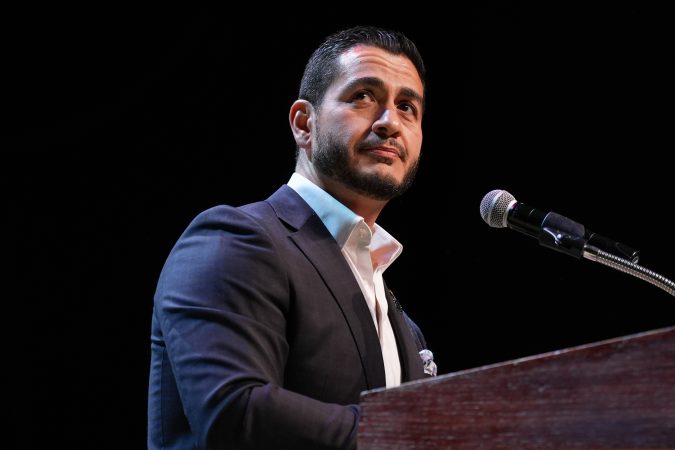
    DETROIT — Abdul El-Sayed has won Michigan’s Democratic nomination for U.S. Senate, defeating U.S. Rep. Haley Stevens in a massive victory for the party’s progressive wing in a battleground state.

    The real test of El-Sayed’s and progressives’ strength will now come in a November matchup against Republican Mike Rogers, a former congressman who ran unopposed for the GOP nomination. The seat is pivotal to Democrats’ chances of flipping the Senate and El-Sayed will face the challenge of uniting a divided Democratic base after a bruising primary.

    The race remained tight throughout Tuesday night, with a winner not declared until early Wednesday. In his final remarks at a primary night party before the race was called, El-Sayed said “tomorrow we begin to mend fences.”

    El-Sayed’s campaign said Stevens called to concede Wednesday.

    El-Sayed’s win represents a significant shift for the Democratic Party; in 2018 he lost the gubernatorial primary to now-Gov. Gretchen Whitmer by 21 percentage points.

    El-Sayed, a former health official, campaigned on “Medicare for All,” halting military aid to Israel and campaign finance reform. He had support from progressive leaders including Sen. Bernie Sanders and U.S. Rep. Alexandria Ocasio-Cortez, who framed the race as a grassroots-focused movement and a broader fight against the establishment and big-money spending.

    Stevens, a more moderate candidate, was backed by Senate Minority Leader Chuck Schumer and tens of millions in outside spending, including the American Israel Public Affairs Committee’s largest outlay ever in a single race.

    Now comes the more difficult challenge for Democrats: uniting the party to defeat Rogers, for whom Republicans have already reserved large sums of money ahead of the general election. Democrats consider the seat a must-win if they are to flip control of the Senate this year.

    El-Sayed called for unity to defeat Rogers

    Early Tuesday evening, El-Sayed’s supporters in Detroit’s Majestic Theatre cheered at the first batches of votes, before mellowing. Hours later Stevens’ previously subdued partygoers roared as she narrowed the margin.

    “Whatever happens tonight,” El-Sayed told a thinned but still energetic crowd, “we have a responsibility to ensure that we unite, unite to make sure that Mike Rogers never sees the inside of the U.S. Senate.”

    El-Sayed, a former Wayne County health director, campaigned on “Medicare for All,” campaign finance reform and ending military aid to Israel.

    Stevens, a four-term congresswoman, focused on manufacturing and the economy. She stressed her past victories in tough races, saying she would be best positioned to beat Rogers.

    Stevens benefited from tens of millions of dollars in outside spending, including the largest investment in a race ever from the American Israel Public Affairs Committee, which supports pro-Israel candidates.

    Michigan is a must-win Senate race for Democrats

    The race will help decide which party controls the chamber in the last two years of President Donald Trump’s term. Those stakes have added heat to the rivalry, with moderates arguing that El-Sayed would have a harder time than Stevens against a Republican in the general election.

    Stevens won election to Congress in 2018 after serving as chief of staff to President Barack Obama’s auto task force, which helped oversee the federal rescue of General Motors and Chrysler. Her campaign and allied groups have repeatedly highlighted that experience.

    El-Sayed cast himself as the anti-establishment candidate and argued that Democrats need to reject corporate influence and embrace a more progressive agenda.

    While the candidate has said he is not a democratic socialist, he found support from some of the group’s members. That included Melat Kiros, who recently beat a longtime incumbent in a Democratic primary for a Denver-based House seat and was at El-Sayed’s watch party. Also there was Hasan Piker, a progressive and controversial influencer online.

    The candidates’ differences were clear to some voters.

    Kenneth Woodside, 87, of West Bloomfield, said he voted for El-Sayed over Stevens because “the nation is ready for someone who wants to take some more action rather than on the road we are now, which is on the road to an oligarchy and authoritarianism.”

    Nessa Fuller, 51, of Birmingham, said she voted for Stevens because she will “fight to get the right things done, and she’ll work with other people, which is really important to me.”

    Outside influences spent millions on the Senate race

    National groups poured unprecedented sums into the race, making it one of the country’s biggest tests of outside spending.

    Groups backing Stevens spent more than $50 million, led by more than $30 million from AIPAC and its affiliates.

    The spending thrust Israel policy into the center of the race even though the ads never mentioned it. While El-Sayed called for ending military aid to Israel, Stevens maintained strong support for the relationship.

    Israel became a contentious issue within the Democratic Party amid a war in Gaza that killed more than 73,000 Palestinians in its retaliatory offensive after about 1,200 people were killed and 251 hostages were taken in attacks by the militant group Hamas.

    McKinney wins Detroit US House primary

    In a heavily Democratic district representing Detroit, the 13th, state Rep. Donavan McKinney defeated Rep. Shri Thanedar. McKinney argued that the city should once again have a Black representative in Congress.

    After Thanedar won election in 2022, Detroit had no Black representation in Congress for the first time since the early 1950s.

  • Does the LeBron James signing make the Sixers favorites to win the title? We asked our experts.

    Does the LeBron James signing make the Sixers favorites to win the title? We asked our experts.

    The 76ers had the splashiest offseason in the NBA, signing LeBron James on a two-year, $8 million deal and trading for Jaylen Brown. Those additions elevated the expectations for the Sixers, who were previously considered a playoff-bound team buoyed by the young backcourt of Tyrese Maxey and VJ Edgecombe and former MVP Joel Embiid.

    But now they have emerged in the title conversation after adding two stars with championship experience. Considered one of the greatest players of all-time, James has lived in the NBA Finals and won four titles. Brown was the NBA Finals MVP in 2024 and carried his team to the postseason last season.

    This team is also deeper prior seasons, with Anfernee Simons and Dean Wade — two players with starter talent — anchoring the reserves alongside exciting rookie Labaron Philon Jr.

    So what does that formula mean for the Sixers? Should it make them the favorite to win the title? Or should the talent in New York, San Antonio, and Oklahoma City be enough to pump the breaks on this star-studded experiment? We asked our Sixers experts.

    Gina Mizell, Sixers beat writer

    Odds say no, simply because of the field.

    The New York Knicks deserve respect as the defending champions. The Eastern Conference is the deepest it’s been in some time, making the road to the Finals a gauntlet. And in the West, the San Antonio Spurs and Oklahoma City Thunder boast (arguably) the game’s most dominant players and recent Finals experience.

    Yet this Sixers team is the franchise’s biggest title threat since at least the 2019 Kawhi Leonard shot, and possibly since the 2001 Finals squad. And it does already feel different from 2024, when many projected the Sixers as contenders after signing Paul George. Maxey is even better. Edgecombe is coming off a fantastic rookie season. Even if Embiid’s health does not hold up and James needs rest days, Brown is still in his prime and more reliable from an availability standpoint than George.

    The hype around the Sixers is deserved, given the out-of-nowhere nature of their blockbuster offseason. But it’s really hard to win a championship. If it does happen, history tells us to bet on it in LeBron’s second season and not 2026-27. Regardless, the Sixers will be the NBA’s most fascinating team this season, which is a blast for folks like us who chronicle it all.

    David Murphy, Sports columnist

    I’d love to be the contrarian, but the answer really is no. What matters is that there is a realistic scenario where they are the favorites by the time the playoffs start. There’s also a realistic scenario where the Knicks are again the heavy favorite. Right now, Vegas odds have the two teams even as the co-favorites to come out of the Eastern Conference. That alone speaks to the massive upside of this team.

    After all, there is a tremendous amount of unknown priced into those odds. No team in the NBA has a wider range of potential outcomes than the Sixers. We know who the Knicks are. We know they are going to be somewhere in the mix at the very end (barring injury, of course). The Sixers could easily find their formula is a lot more difficult in reality than in theory. That’s especially true if Embiid is closer to the player he was in his worst stretches last season vs. his best stretches.

    The Sixers’ LeBron James and Joel Embiid will be charged with chasing a title alongside a bevy of other stars. Elizabeth Robertson / Staff Photographer

    That being said, go back to the Knicks series last year. Imagine swapping Brown and James in for Kelly Oubre, Jr. and George. And imagine a bench that has Wade, Simons and Kentavious Caldwell-Pope coming off it rather than Quentin Grimes, Dominick Barlow and Justin Edwards. Imagine the Sixers aren’t coming off a seven-game first round series on the road. The potential is very real.

    Gabriela Carroll, Sports reporter

    Let’s go with no, to be safe. If this Sixers team is fully healthy, and manages to jell on offense and defense, they’ve got a shot. It’s as good a chance as they’ve had since the beginning of The Process. They currently hold the fourth-best odds to win the NBA title next season, behind the Spurs, Thunder, and the reigning champion Knicks.

    Victor Wembanyama continues to level up, and the Thunder have two-time MVP Shai Gilgeous-Alexander and multiple deep playoff runs under their belt, including a championship in 2025. Even if everything goes right, winning an NBA championship against the strong field is a challenge. Even Rich Paul, James’ agent, said he didn’t think the Sixers were favorites for the title.

    And as Sixer fans know well, a lot can go wrong. While Embiid said his knee issues are behind him, anything can happen, as indicated by last year’s late-season appendicitis.