Eagles radio broadcasts will sound a little different this year.
While longtime announcers Merrill Reese and Mike Quick will be back for their 29th season together in the booth, 94.1 WIP won’t have a dedicated sideline reporter during Eagles games for the first time in more than 15 years.
WIP is shifting to a more limited role within the broadcast, with Reese and Quick turning to another WIP personality when needed.
It’s assumed that Eliot Shorr-Parks, the station’s Eagles beat reporter since 2018, will be the broadcast’s go-to voice for updates, but others could jump in as needed. Shorr-Parks will do a pregame hit from the sideline ahead of Saturday’s preseason game against the Baltimore Ravens.
“The rest of the role is still TBD,” said David Helm, a spokesperson for WIP’s parent company, Audacy.
Devan Kaney was laid off by WIP in March and has since landed in Chicago. David Maialetti / Staff Photographer
Devan Kaney, who served as sideline reporter last season and during the Eagles’ Super Bowl LIX run, was laid off by WIP in March as part of company-wide cutbacks by Audacy. She had been with the station since 2022 and served as an on-air personality, regularly cohosting WIP’s morning show alongside Joe DeCamara and Jon Ritchie.
“I had a blast working at WIP and sincerely enjoyed my time there,” Kaney told The Inquirer in March. “But as the old saying goes, when one door closes, another opens.”
Former WIP host Howard Eskin served as a sideline reporter for more than 15 years. dnphoto
Former WIP host Howard Eskin was the station’s first Eagles sideline reporter, with his fur coats and colorful headphones becoming a sideline staple. Eskin covered the team since 1975, but said his first season as Eagles sideline reporter wasn’t until 2011.
WIP has been broadcasting Eagles games since 1969, with Reese entering his 50th season calling games, by far the longest-tenured announcer in the NFL. The station’s current deal to broadcast Eagles games runs through the 2028 season.
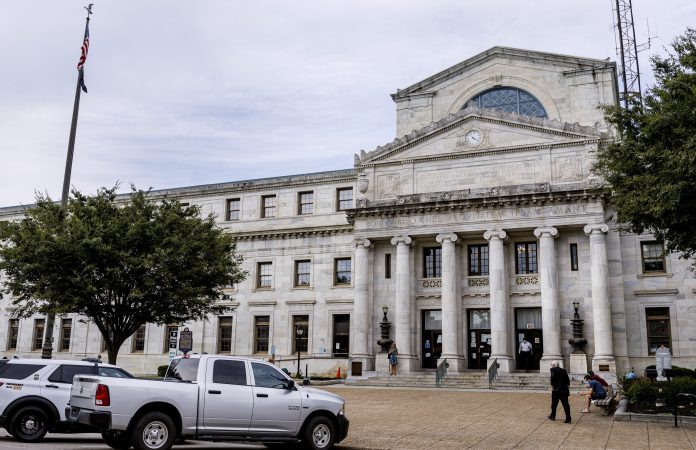
When Michael Nixon pulled the trigger on the handgun he was carrying last May, he robbed Khalief Webster Jr. of his future, Webster’s family of a loving son, and the community of any semblance of safety, Webster’s mother said Tuesday in a crowded Delaware County courtroom.
“Khalief was not just the headlines, not just the crime scene tape that haunts me through the night, not just a victim,” Talaya Shaw said of her 17-year-old son. “Khalief was a young boy growing into a young man with a heart bigger than this world could handle.”
And Nixon, she told Judge Deborah Krull, “had no God-given right to decide when and how he left this world.”
For killing Webster, Nixon, 18, of Upper Darby, was sentenced to 18 to 36 years in state prison. Nixon pleaded guilty to third-degree murder earlier this year for the fatal shooting, which unfolded in May 2025 as the two teens, classmates at Upper Darby High School, crossed paths on Long Lane near Pine Street.
Emotions and tempers flared during Nixon’s hours-long sentencing, which the judge had to pause multiple times to rein in outbursts from those who filled the standing-room-only courtroom. Webster’s friends and relatives screamed to be heard, calling Nixon a coward, among other insults, and demanding justice.
Sheriff’s deputies barred more people from entering the hearing, and had to respond to a scuffle that erupted outside the courthouse after Nixon’s sentence was handed down.
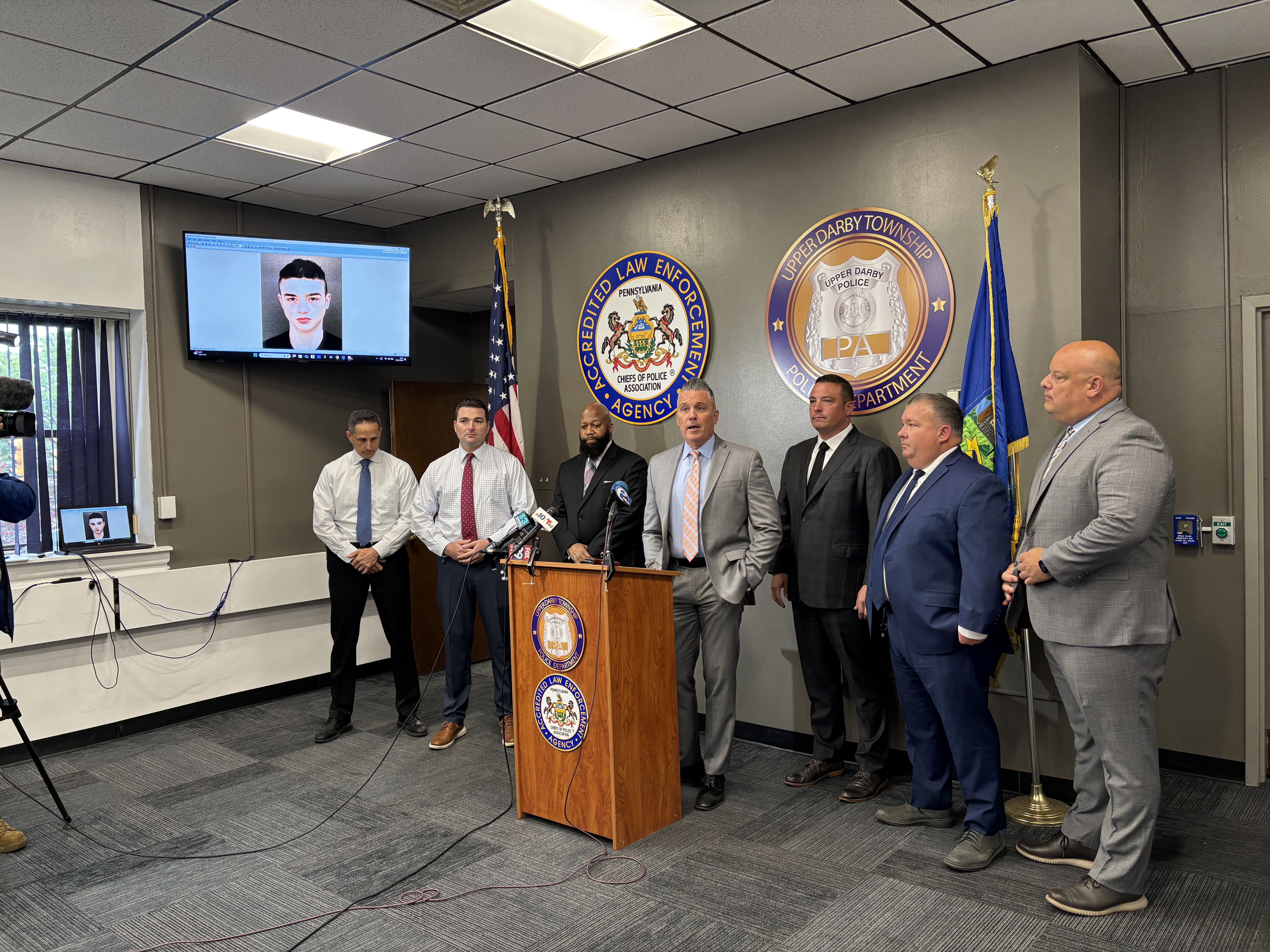
In May 2025, Upper Darby Police Superintendent Tim Bernhardt (center) announced the arrest of Michael Nixon for the murder of Khalief Webster.Vinny Vella / Staff
On the day of the shooting, Webster was riding a miniature dirt bike when he encountered Nixon, who had walked 25 minutes from his own neighborhood to the area, according to investigators.
What happened next was the subject of debate during Tuesday’s hearing.
Nixon’s attorney, Pete Manaras, said Webster asked his client if he was the “young boul” he had seen “the other day,” and got off the bike to confront him.
The two teens, he said, knew each other and had gotten into disputes before. Nixon, fearing for his safety, shot Webster in the abdomen, Manaras said.
But Senior Deputy Attorney General Christopher Phillips, who prosecuted the case, said Nixon was the aggressor. He was out looking for Webster, Phillips said, armed and lying in wait in an area where he knew he would encounter the other teen.
“The public needs to be protected from people that would do such a thing on a sunny afternoon, on a beautiful May day, to a young man who didn’t see it coming,” Phillips said.
After the shooting, Nixon fled and was recorded on a surveillance camera telling someone on a phone call that he had shot somebody in the chest, according to the affidavit of probable cause for his arrest. Nixon’s mother then picked him up and drove him away.
Nixon addressed Webster’s family Tuesday to apologize, saying he wished he could take back what had occurred.
“I didn’t want to kill him. I never wanted to hurt him,” Nixon said. “I was just scared and my body reacted before my mind.”
Nixon said he encountered Webster by chance. He was carrying the gun because of previous run-ins with him, he said, and needed it for protection as he walked to a friend’s house.
Webster grabbed at his waistband as he confronted him, Nixon said. He believed Webster was reaching for a gun and reacted.
Nixon said he had grown up in an abusive household and that made him “perceive everything as a threat” and grow anxious when people get too close to him.
“I’m not saying this as an excuse for my actions, because I know I deserve to be locked up for what I did,” he said. “But that doesn’t mean I don’t want to turn my life around, because I do.”
Webster’s relatives, including his grandmother, Charlotte Webster, said that while they have not yet forgiven Nixon, they know that will come in time through their faith.
Still, she said, the pain Nixon caused their family was devastating.
“I believe this was a deliberate, heinous crime he committed,” she said. “He didn’t care about anything or anyone.”
Following the recent death of beloved artist Dito van Reigersberg — who performed as Philly’s legendary drag queen Martha Graham Cracker — his friends, family, and fans are working on two scholarship funds for the city’s artists and students in van Reigersberg’s honor.
Victor Fiorillo, the cabaret pianist who performed with van Reigersberg for years, has launched the Martha Graham Cracker Scholarship Fund to support drag and cabaret artists through microgrants. FringeArts will administer the funding, and the first phase will award $500 in unrestricted funds to three individuals or ensembles performing in the 2026 Fringe Festival.
Fiorillo developed the idea in early August after seeing photos on social media remembering a Martha Graham Cracker Cabaret band fundraiser last year that celebrated the 40th anniversary of Philadelphia’s legendary Live Aid concert. Fiorillo and van Reigersberg raised more than $25,000 for Blood Cancer United (then called the Leukemia & Lymphoma Society) to help others struggling with the kinds of cancer that affected van Reigersberg, who died June 1.
In less than a week, Fiorillo has raised nearly $11,000 with donations from van Reigersberg’s mom, Stephanie van Reigersberg, and longtime Martha fans, like Jose Pistola’s owner Casey Parker and Johnny Brenda’s owner William Reed. He initially raised $5,000 from friends and fans before opening the fund to public donations through GoFundMe. “It was just a no-brainer for people” to say yes, Fiorillo said.
“It’s not only about Martha, of course, it’s about furthering the cabaret and drag arts in Philadelphia … I think of it as paving the way for the next Martha — not that I think that Martha could ever be replaced, but that’s certainly the idea,” said Fiorillo, a reporter at Philadelphia Magazine who lives in West Philly.
“Dito and I both sort of came from privileged backgrounds. We had the money to pay musicians. We never struggled to make Martha a thing. We never had to bet the bank on it or take out a second mortgage. But having worked with so many artists over the years, we know how much some of them struggle.”
Applications for microgrants for 2026 are now open. Fiorillo added that he plans to work with a financial planner to ideally establish the fund long-term. The next 2027 phase of microgrants will be open to drag and cabaret artists outside of the Fringe Festival as well.
Another scholarship fund memorializing van Reigersberg is in the works at Pig Iron Theatre Company, the experimental theater group and school that van Reigersberg cofounded.
Though still in early planning stages, the Dito van Reigersberg Legacy Fund would support artists and students in two ways: by establishing scholarships for Pig Iron graduate students to partially cover tuition costs and through funding Pig Iron’s program The Island, which van Reigersberg codeveloped.
The Island provides artist ensembles with studio space and production support to experiment and workshop performances without the pressure of delivering a final product. (Pig Iron artists have used The Island to eventually create full productions, like 2008’s OBIE Award-winning Chekov Lizardbrain.) The Legacy Fund would finance Pig Iron’s current Island program and invite collaborations with new artists. Additionally, the fund would establish an Island residency for artists, either individually or as a group, to receive two weeks of dedicated time and space for ideation.
“I watched Dito open so many doors for so many emerging artists [especially] in the queer community, just [by] saying, ‘You belong and what you do is valuable.’ For us to be able to carry that on just feels like a gift,” said Pig Iron coartistic director Quinn Bauriedel.
Their goal, Bauriedel said, is to create “a board-designated legacy fund that would operate like an endowment, meaning there would be a principal and the interest would be spent every year,” supporting graduate student scholarships and The Island programs.
Bauriedel hopes to raise between $1 million to $2 million in the coming years and begin offering the graduate student scholarships in fall 2027. Pig Iron will seek contributions from institutional and individual donors. He added that members of van Reigersberg’s family have agreed to serve on the selection committee for recipients.
“Running an experimental theater company and school is a precarious enterprise … I just have this strong feeling that now, Dito, in his next phase, is helping to save the whole enterprise,” said Bauriedel.
“He was always doing special things, and this is yet another one where he might help young artists … who just need to have somebody wrap their arms around them and say, ‘What you’re doing is important and meaningful, even if nobody quite understands it yet.’ Dito continuing to open that door is just beautiful.”
Wendell Smallwood Jr. will be by his daughter’s side in her final days after being granted early release from prison.
Gloucester County Superior Court Judge Renard Scott approved a motion to withdraw Smallwood’s guilty plea from last year, on August 7, in order to see his dying daughter, The News Journal reported on Monday.
Mila, Smallwood’s eight-year-old daughter, was diagnosed with diffuse anaplastic Wilms tumor, an aggressive and rare childhood kidney cancer, in 2026. After unsuccessful chemotherapy treatments, she is in palliative care and is expected to live for weeks at most, according to the report.
Smallwood, a former running back with the Eagles, Commanders and Steelers, was sentenced to 18 months in prison last September for a COVID-19-related fraud scheme. He pleaded guilty in December 2024 to charges of felony wire fraud, conspiracy and tax fraud tied to economic relief programs.
In March, he pleaded guilty to second-degree unlawful possession of an assault firearm for possessing an AR-15 rifle in New Jersey. He was sentenced to three years in state prison, concurrent to his federal sentence.
At the time, New Jersey banned the ownership of assault weapons, but a July ruling from the 3rd Circuit Court of Appeals ruled that New Jersey’s ban on assault weapons was unconstitutional. This provided Smallwood legal grounds to withdraw his guilty plea.
Smallwood’s emergency hearing on August 7 ruled that Mila’s severe illness was a notable reason for granting Smallwood’s motion, which could have seen him released as early as Monday.
Angela McDonald caught her breath on the sidewalk at the intersection of South 58th and Delancey Streets in Cobbs Creek, a few feet from where her son, Mark Ringgold, was killed last year in a hit-and-run crash by a speeding driver in a Jeep Cherokee.
She wants someone to answer for her son’s death and for the city to install speed bumps on the streets and other road-design changes to slow drivers down. And surveillance cameras.
“This is what my purpose is now,“ McDonald said Friday, a year after the crash. ”I will fight until God calls me home.“
Ringgold, 33, was crossing Delancey Street after leaving a friend’s house shortly before 3 a.m., when he was hit and left in the street. The family calls it a blessing they were able to say goodbye to him in the hospital before he died.
Last year, 28 pedestrians were killed in hit-and-run crashes in Philadelphia, according to the city’s count.
“Don’t wait for it to come to your door before you do something. Nobody knows what’s coming. Make change now,” said McDonald, 62, a retired Philadelphia police officer.
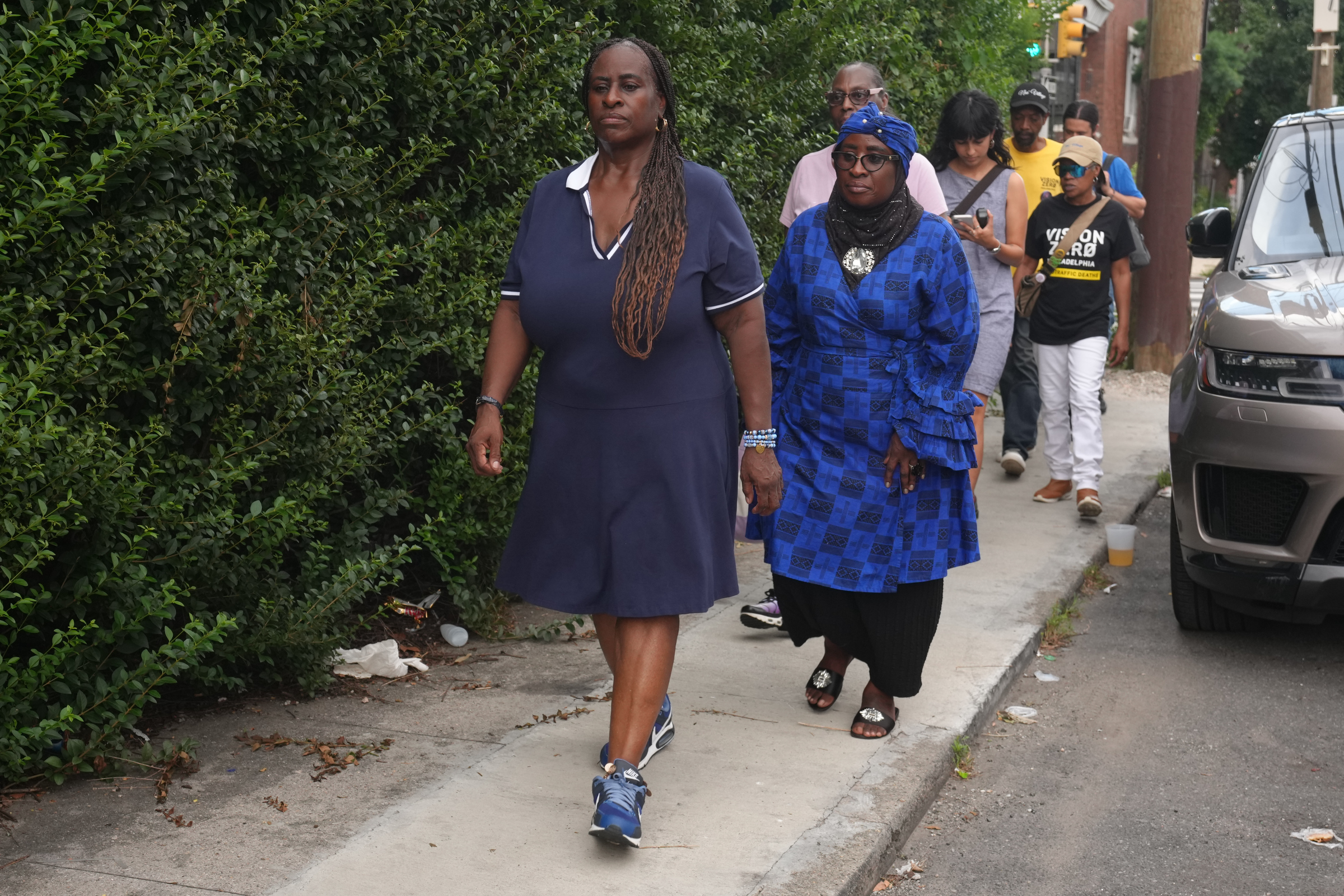
Angela McDonald and other traffic-safety advocates held a community walk in memory of her son Mark, who was killed by a hit-and-run driver. Jessica Griffin / Staff Photographer
A group of family, neighbors, and traffic safety advocates walked the streets Friday in heat brushing triple digits as thunderstorms rolled in.
Cobbs Creek Parkway, a state-designated highway not far away, is listed on the High Injury Network, one of the 12% of city roads where 80% of traffic crashes have occurred. Many of those streets are thoroughfares or state highways, like Broad Street (Route 611).
South 58th Street is not on the map, though there are speed bumps near a recreation center at South 58th and Spruce Streets.
And the city is working on a Neighborhood Slow Zone nearby, about five square blocks bounded by 52nd Street, 57th Street, Spruce Street, and Baltimore Avenue. The program imposes a 20 mph speed limit on residential streets and adds traffic-calming infrastructure such as speed cushions, narrower pedestrian crossings at intersections, and other elements.
“We have a lot of traffic violence on streets in regular Philadelphia gridded neighborhoods, not just on the High Injury Network or thoroughfares,” said Andrew Goodman, director of equitable development in the office of Councilmember Jamie Gauthier, who is working on getting some safety treatments for South 58th Street and Delancey Street.
“We get calls from people asking for speed bumps consistently,” Goodman said. “There are so many needs, so much demand. Driver behavior seems to be getting worse by the day.”
McDonald wants the neighborhood to get consideration. Speed-enforcement cameras are limited, with installations requiring specific authorization by the state legislature.
But she wonders about police surveillance cameras. If there is a hit-and-run crash, they might be able to capture the image of the driver. Police have recoveredthe car that hit her son, but there is no footage of the driver and there has been no arrest.
“As long as I have been traveling this road, since I was a young girl, 58thStreet has always been a racetrack,” McDonald said.
“Speed bumps aredefinitely going to slow people down, because if you don’t, you’re going to tear your car up,” she said. “You may flip yourself over.”
One year after a fatal hit-and-run took the life of Angela McDonald’s son, Mark, she and other traffic-safety advocates are pushing for traffic-calming improvements.Jessica Griffin / Staff Photographer
Do rich guys have to ruin everything? Apparently so. There came a time about 15 years ago when my soccer obsession got to the point where I felt I needed to pick an English Premier League team to root for, in addition to the U.S. national teams and the Union. Long story, but I went with Liverpool, in a city many consider the Philadelphia of the U.K., and it’s been a good ride, including a couple of trophies. On Monday, it was reported Amazon gazillionaire Jeff Bezos is buying 30% of the team. I’m officially out. Go, Leeds!
When did Trump’s ballroom become a national security fortress? We need answers.
Construction continues on a helipad and the White House ballroom on the South Lawn of the White House on Aug. 5.Tierney L. Cross
Donald Trump’s originally stated 2025 scheme to demolish the East Wing of the White House to make way for an oversized ballroom to hold state dinners and whatnot was bad enough: an unneeded, unwanted, gilded, and presumably tacky callback to Louis XVI, a massive monument to a modern let-them-eat-cake regime.
A year later, the project is better describedasan alleged ballroom — another bait-and-switch scam by America’s first grifter president. The fact that the public really doesn’t know how much this project actually costs — estimates have soared from the initial lowball of $300 million to now at least $600 million, but possibly more — or how much of that will be dumped on U.S. taxpayers is just the beginning of the problem.
Nearly 10 months after the president shocked Washington, D.C., and the rest of America by taking a wrecking ball to the history-packed East Wing, Trump has all but stopped talking about a black-tie party venue and instead rebranded the project as essential to national security.
When the D.C. federal appeals court on Friday ordered the White House, which never got congressional approval for either the demolition or the ballroom addition, to halt aboveground construction, Trump took to Truth Social and described the ruling as akin to treason.
“The Military and Secret Service are viewing this horrendous, politically motivated, and unlawful ruling as a National Security threat to our Nation in that the entire Complex is being built for the protection of our Country and, additionally, all future Presidents,” Trump posted, using language that’s probably never previously in human history been used to describe a “ballroom.”
Trump didn’t say in his post anything about crystal chandeliers, or great acoustics, or things you might expect in a world-class ballroom. Instead, he said the facility will have bomb shelters, a state-of-the-art hospital, top-secret military facilities, protective missile-resistant steel, columns, roofs, and beams, drone-proof ceilings and roofs, military-grade venting, and bullet-, ballistic-, and blast-proof glass.
It sounds like somebody is expecting a last tango in Washington.
Trump’s post was alarming — shocking, really — but in case anyone missed the point, or doesn’t know how to read, he also posted some AI-created renderings, which again did not depict waltzing diplomats, but instead showed a rooftop “DronePort” that was packed to thegills with ominous-looking military drones, manned by troops and also with armored vehicles that somehow drove up there. The vibe was Darth Vader’s Death Star, except with “military-grade venting” this time around.
There are two very different ways to look at all of this, and let’s start with the more benign one. Ever since the beginning of his second crack at the presidency, Trump — when he’s not pursuing his main projects of making billions of dollars, punishing his enemies, and staying out of prison — has been obsessed with placing his personalist stamp on Washington. Maybe that’s for his legacy, or maybe he just wants a Mar-a-Lago-by-the-Potomac to comfort his octogenarian mind.
Trump might not be able to crash weddings as he does at his Palm Beach, Fla., estate, but his ballroom idea would be close enough. Although he’s also sought and received donations for the project from the usual suspects of friendly billionaires and favor-seeking corporations, Trump also wants both additional dollars and — more importantly, in light of the appeals court ruling — a stamp of approval from Congress. That’s been a thwarted agenda item for GOP leaders on Capitol Hill for months.
But if Trump can’t sway Congress, he hopes to win over a U.S. Supreme Court where he has appointed three of the nine members. The White House knows that both Congress and the high court tend to fall in line whenever national security is invoked, while there is no constitutional right to foxtrot. So maybe all the military bluster is just political posturing for Trump’s latest real estate development.
But as the project enters its second year, it seems to have morphed into something a lot more disturbing than that. The pictures, descriptions, and accounts of Trump’s game here are sounding a lot more like the impregnable mountain lair of a Bond villain.
This is a man who fomented an attempted coup the first time he was asked to leave 1600 Pennsylvania Avenue, and who saw how South Korea’s corrupt right-wing president was ousted after a massive throng of protesters overwhelmed key government buildings. Wasn’t it Chekhov who said you don’t put drones up on the roof unless you intend to deploy them by the third act? The two most likely scenarios for actually using Trump’s bunker — Civil War II, or World War III — are less than optimal.
This national security bunker isn’t the only thing that’s worrisome as Trump looks to the second half of what’s supposed to be his final term. As noted in this space recently, Trump has also extended the presence of National Guard troops in Washington through Jan. 20, 2029, which coincidentally is the scheduled last day of his term.
Since their arrival last year, the Guard troops — many from units in pro-Trump red states, and costing U.S. taxpayers at least $1.4 billion and possibly more — have often been spotted hanging around, or picking up trash as a kind of busywork. But residents and some advocates like Scott Michelman, legal director of the American Civil Liberties Union of the District of Columbia, are already complaining Trump is “treating [D.C.] like a police state.”
It raises the same questions as the alleged “ballroom.” The president is entitled to state-of-the-art security, and while the public doesn’t need to know all of the operational details, American taxpayers also can’t be expected to fork over hundreds of millions of dollars for these projects without truly knowing what they are for.
Democrats on Capitol Hill need to start demanding answers. On Monday, there was an encouraging report by the New Republic’s Greg Sargent that the opposition party is working to demand communications from the Justice and Interior Departments to explain why several people were wrongly criminally charged with vandalism at the Lincoln Memorial Reflecting Pool when the actual damage was a botched repainting contract.
Congress can, and should, also flex its muscles over this ballroom fiasco — first by denying any public money for the project, and then by launching a similar investigation into the hasty demolition, the political fundraising, and the sketchy purposes for the project. Someone owes America the truth, and it’s not going to come from the current regime without a fight.
Whatever happens, the woman or man who hopefully succeeds Trump and sends those guard troops back to their own private Idaho in January 2029 is also going to have a giant mess in their backyard. But it’s better to have the ruins from a botched, halted construction project than from the Battle of Armageddon.
Yo, do this!
The California journalist Gil Durán has been paying attention to the political craziness coming out of Silicon Valley years before anyone else was, and now comes the big payoff in the form of a book that is not only incredibly timely but has the best title of the year: The Nerd Reich: Silicon Valley Fascism and the War on Democracy. Durán explores the strange beliefs of Elon Musk, Peter Thiel, Marc Andreessen, and their friends, their obsession with building their own private “networked cities,” and their unlikely alliance with Donald Trump. I’ve been waiting on this one for a while.
August is always a great month for books. While Durán drills down on the high-tech enemies of liberty, the great writer Dave Zirin has a new tome about one of democracy’s heroes, the late historian Howard Zinn, his former mentor. Public intellectuals are still arguing about the merits of Zinn’s 1980 masterwork, A People’s History of the United States, but nobody disputes his influence on the national conversation. Zinn rejected American exceptionalism, but also spotlighted everyday heroes like labor leaders or civil rights activists who expanded our freedoms over two centuries. I’m looking forward to reading The People’s Historian: The Outsized Life of Howard Zinn.
Ask me anything
Question: Data centers are the flashpoint but the root problem is the unregulated AI that is sweeping up every keystroke and every written document then repackaging it as if original thought. How do we get a federal government mired in 2020 to begin legislating on AI? — Suzi (@wanderponder.bsky.social) via Bluesky
Answer: Great question, Suzi, and I think we all know the main reason why the body politic — and I’m talking about both Democrats and Republicans — have been so painfully slow to respond to voters’ widespread anxiety not only about noisy, polluting, resource-wasting data centers, but also to artificial intelligence itself. The reason is money. Silicon Valley AI developers have raised an unbelievable $220 million to spend on November’s election, and — while there are some disagreements within Big Tech about policy — most of the cash will go to the politicians least likely to regulatean industry badly in need of it. Cognitive computing is not only stealing our intellectual property, as you noted, but also our jobs, as well as our children’s ability to learn.The good news is that public backlash against AI is so strong that even a quarter-billion dollars may not be able to stop the movement. But it’s way past time to get money out of politics.
What you’re saying about …
I should have guessed that newsletter readers don’t have much more of a clue than Donald Trump about what to do about the giant mess in the Persian Gulf. I did get one thoughtful response from an emailer with a “cbluff” handle (Reminder: Please sign your real name to these responses) who said the Trump regime needs to send skilled negotiators — and be realistic. “I believe the U.S. will have to cede the Strait of Hormuz, allow Iran and Oman to collect protection money, remove sanctions and pay them so we can declare victory and leave,” they wrote. It’s hard to disagree. Once again, the United States has lost a war.
📮 This week’s question: Since the Democratic Senate primary win by Michigan’s Abdul El-Sayed last week, the mainstream media has been obsessed with the question of whether this year’s progressive surge, including candidates (although not El-Sayed) tied to the Democratic Socialists of America, is hurting the Democrats. What do you think? Are leftists bringing needed energy to a moribund party, or are they too out there to defeat the GOP in November? Please email me your answer and put the exact phrase “Democrats and the left” in the subject line.
Backstory on the day Trump left his press corps for dead
Catering trucks are parked at Air Force One on the tarmac as the motorcade carrying President Donald Trump arrives to depart following the NATO summit, at Ankara International Airport in Ankara, Turkey, on July 8.Alex Brandon
It was appalling enough back in late July when we watched a room full of some of America’s highest-profile journalists break bread with Donald Trump at the rescheduled White House Correspondents’ Association dinner in Washington, where the president got up and hurled crude insults at several of the media members. Many of us were disgusted that some of the nation’s most respected journalists would platform a man who has repeatedly called a free press “the enemies of the people.” But the White House press corps was in the dark about an even more disturbing plot twist.
Just 16 days earlier, Trump had left some of those journalists for dead — at least potentially — as human decoys who might be blown from the skies in a feared Iranian plot.
The stunning story came out late Monday night as I was writing this newsletter, with a scoop by the Washington Post, matched shortly, with some additional details, by the New York Times. The articles revealed a modern-day Air Force One kind of thriller that essentially involved a shell game with three different aircraft. It was triggered by what officials deemed was a credible Iranian assassination threat against the president when he traveled to a NATO summit in Ankara, Turkey — just over 700 miles from the border with the U.S. enemy.
This launched a series of events, beginning with a plan to abandon Trump’s new, $400 million gift-from-Qatar iteration of Air Force One for an older version that actually has more advanced defensive capacities. Trump was filmed boarding the replacement Air Force One, followed by the White House press corps and some traveling aides for the departure from Ankara to a U.S. air base in Great Britain. What those passengers could not have imagined was that Trump had somehow been spirited out “via a catering container that had been lifted to the opposite side of the plane,” and switched to a C-32A military plane for the flight to the U.K.
Then they kept the unwitting journalists and aides on the ground for a couple of hours before it was revealed POTUS was safely in Britain and the Iranians had been thwarted and … haha, of course that’s not what really happened. No, the press corps took off as human decoys — the latest sitting ducks in an idiotic war that never should have been launched in the first place. Thankfully, no one was hurt … this time. Journalists wondered why they’d been ordered to keep the airplane’s window blinds closed, which inspired this now ironic exchange between Trump and some journalists when they reunited for the flight from Britain back to the U.S.
Trump lied that he didn’t know of any specific plot against Air Force One, and then added: “I’m No. 1on their list, before you. But if I go, you go. Right?”
Apparently not.
Even as I write this in the middle of the night just hours after the Post and Times scoops, the internet is already flooded with memes depicting Trump crammed into one of those airport serving carts, or pigging out on the adjacent airline food. It’s funny to see that your president isn’t Harrison Ford punching out the terrorists, but, in reality, slinking away in a food truck, leaving other Americans in the line of fire, right?
No, it’s not funny at all. This whole episode is a grand metaphor for a careless president who smashes up things before retreating into his money or whatever keeps him going — not thinking twice about the fate of human beings in a squalid ICE detention camp or an Iranian girls’ school. Or bantering with the gaggle of journalists whom he abandoned after drawing a big target on their backs. The first media question at the next Oval Office event ought to be, “Why did you treat me like cannon fodder?” But I wouldn’t bet on that happening.
What I wrote on this date in 2016
It’s almost funny now, in a dark-comedy kind of way, to look back on the fateful summer of 2016 and remember what it felt like to be stubbornly convinced that something, anything, was bound to happen to stop the obvious insanity of a Donald Trump presidency. It seems so incredibly naive now to read what I believed exactly one decade ago, when I actually thought the success of a diverse and incredibly talented U.S. Olympics team in Brazil would expose the Big Lie of Trump’s racism. I wrote, “The exclamation point is the remarkable women’s gymnastics team led by individual gold medalist Simone Biles — so dominant you will easily forget they also celebrate the kind of diversity that is America’s best feature, not the bug that’s described by the bitter and the disaffected back home.”
The fight for America’s future is waged on many fronts, and I’m trying to keep up. Last week, I wrote about a fascinating political development that’s been largely flying under the radar screen: a movement out west to knock off GOP incumbents by creating one-on-one contests with feisty, populist independents. That means long-shot Democrats need to drop out — which has happened in Nebraska, Idaho, and South Dakota, but not in Montana. It’s both a bold plan to end the Republican majority on Capitol Hill and a sad commentary on the failed Democratic Party brand in the American heartland. This weekend, I wrote about the Trump regime’s latest assault on higher education — denying loans for students who major in fields linked to lower-income jobs — and the increasingly bleak future of a liberal arts education. I wondered why Democrats won’t fight harder to end runaway careerism and preserve college campuses as bastions of critical thinking.
This August feels like the calm before the storm in Philadelphia sports. Some of that is the excitement over the Eagles finally beingback in training camp and looking to regain that Super Bowl mojo as 76ers fans try to process, if that’s the right term, a once-in-a-lifetime offseason rebuilding project. But much of it is angst over the Phillies, who are clinging by their fingernails to a playoff spot despite adding the National League’s batting champ to a lineup that already includes home run king Kyle Schwarber, future Hall of Famer Bryce Harper, and one of baseball’s best pitching rotations. None of that matters when the Phillies don’t have a relief pitcher who can carry a lead past the 7th or 8th inning. The Inquirer’s ace sports columnists like David Murphy and Marcus Hayes have all asked the same question: Can this team be saved? The answers are just over the paywall, and you can leap over it just like Saquon Barkley at the first-down marker; all you need to do is subscribe to The Inquirer.
By submitting your written, visual, and/or audio contributions, you agree to The Inquirer’s Terms of Use, including the grant of rights in Section 10.
The future star of The Matrix and John Wick franchises made three memorable movies — Point Break, My Own Private Idaho, and Bill & Ted’s Bogus Journey. He also met his friend Robert Mailhouse, whom he’s still playing music with 35 years later in a band that has three shows in the Philadelphia region in the next week.
Dogstar, the alternative rock band that Reeves and Mailhouse play in along with singer-guitarist Brett Domrose, will perform in support of their new album All in Nowat Union Transfer on Wednesday, at Sounds Waves at the Hard Rock Hotel and Casino in Atlantic City on Friday, and at the Hershey Theatre on Aug. 18.
Reeves, who was born in Beirut and raised in Toronto, was a standout hockey player in high school. At age 20, he moved to Los Angeles, where he introduced himself to Mailhouse in a grocery store.
“We lived in the same neighborhood, and we went to the same grocery store,” recalled Reeves, who plays bass, talking via Zoom from his home in Los Angeles. “And he was wearing a Detroit Red Wings sweatshirt. I asked him if he knew where there was a pickup game.
“From that came a fast friendship. I had a house that had a drum set and bass amp and a guitar amp, and Robert was playing drums and keyboards. So that’s the genesis of the rhythm section.”
“Keanu was a goaltender, which was really hard to find in Los Angeles,” said Mailhouse, picking up the story. An actor who has had roles in Days of Our Lives and CSI, he also joined the call from his own home in L.A.
“I remember I went back to the Thursday night skate in Burbank and told the guys, ‘I think I might have found a goaltender.’ And then when Keanu showed up, he was really good.”
Before Mailhouse, now 64, and Reeves, 61, played music, they played hockey. Dogstar was first fronted by singer Greg Miller, who led the band on a 1995 tour opening for Bon Jovi in Australia and New Zealand. But by the time the band’s debut album, Our Little Visionary, came out in 1996, Miller had left the band and Domrose — a former member of legendary punk band the Nuns — had taken over frontman duties.
That version of Dogstar released one more album, Happy Ending, in 2000, and then lost momentum, breaking up two years later.
The cover image for Dogstar’s album “All in Now.”Dillon Street Records
The split wasn’t caused by tension among the musicians, said Domrose, 57, a film composer who joined the Zoom call from his house in L.A. “We’d been going through the meat grinder with different record labels. It wears you out.”
There was also a little hiccup.
“Keanu had a movie career that was taking off to a new level” — the actor played Neo in the first Matrix movie in 1999 — “so we just felt like maybe it was time for a break.”
The trio remained friends, with Reeves briefly playing bass in another Mailhouse band called Becky. But they mainly pursued other paths, until the pandemic.
“You rethink your life,” said Mailhouse. “You get together and find you have all this time and less distractions. That put us all in a good mood to get back and try some stuff.”
Reeves says he never had rock-star ambitions, other than “playing air guitar on a tennis racket,” a la his character in the Bill & Ted movies. “But when I was 22, I went down to the Guitar Center on Sunset and bought a bass.”
He’s an anomaly among actors — unlike say, Jared Leto’s in 30 Seconds to Mars or Jamie Foxx and Kiefer Sutherland, who have recorded under their own names — in that he stays out of the spotlight, content to simply play bass and sometimes sing backup vocals.
Reeves’ rumbling bass is the first thing heard as All in Now kicks off with “Math.” But he’s essentially a supporting player in a power trio that refers to itself as “a brotherhood.” There’s a parallel there to the position Reeves favored in hockey, which also put the good of the team ahead of individual glory (and wore a mask).
“It is kind of a similar thing,” Domrose said to Reeves. “You are the last line of defense as a bass player and a goalie. If the bass player drops out, you’ve got nothing.
“He’s the melody of the team,” said Mailhouse.
“Oh my God —,” Reeves said, jokingly expressing discomfort at being analyzed by his bandmates as he sat in a bookshelf-lined room, bass by his side. “Enough about the bass player! We’re coming to Philly! We’re gonna rock! August 12!”
When Domrose, Mailhouse, and Reeves got together to play during the pandemic, Reeves says, they realized “we all missed it.”
“We plugged in, and Robert picked up his sticks and Brett put on his guitar … There it was.”
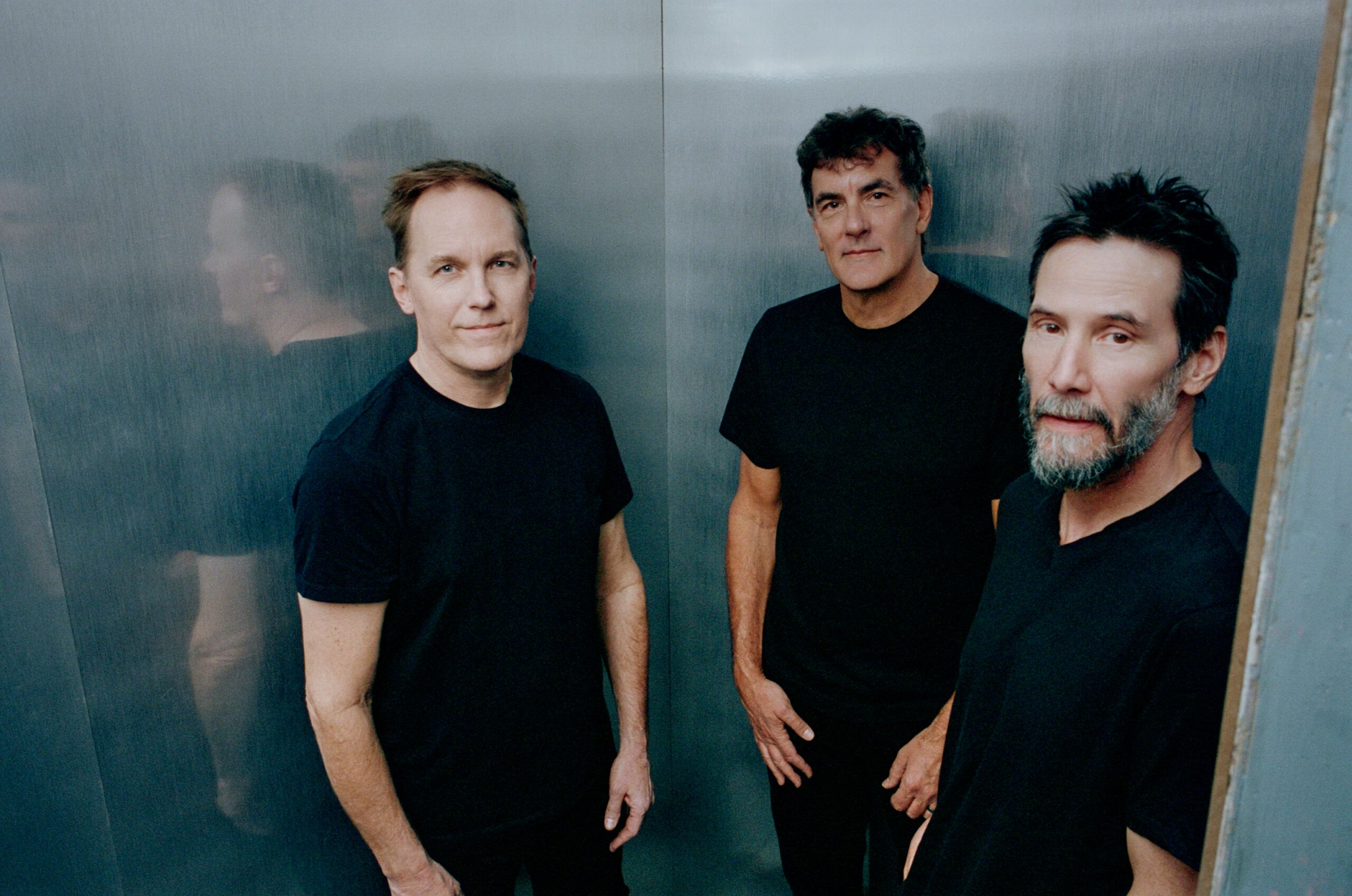
Alt-rock band Dogstar (from left): Bass player Keanu Reeves, drummer Robert Mailhouse, and singer-guitarist Brett Domrose. They play Union Transfer on Wednesday, the Hard Rock Hotel and Casino in Atlantic City on Friday, and Hershey Theatre on Aug. 18.Zachary Gray
“You slide into your old comfortable slippers,” said Domrose. “I felt it right away.”
Dogstar released its third album, Somewhere Between the Power Lines and the Palm Trees, in 2023. Since then, the band has been a steady concern, headlining shows and doing festival dates in the U.S. and Europe.
All in Now is a rugged yet melodic grunge-adjacent album that would sound right at home in the mid-1990s alongside Bush, Stone Temple Pilots, and early Radiohead.
When asked what favorite bands they have in common, Domrose cites David Bowie and Reeves names the Replacements, referring to the Paul Westerberg-fronted 1980s rock band, not the 2000 football comedy he starred in.
All in Now was recorded with veteran producer Nick Launey, who outfitted Dogstar with a hard-hitting if not terribly original sound. The band is genuinely thrilled that such an esteemed producer signed up with them.
“I mean all this work he’s done with Nick Cave & the Bad Seeds and the Yeah Yeah Yeahs and more recently, Amyl and the Sniffers,” said Mailhouse. “All these great bands, and now little old Dogstar. I think we got lucky.”
Reeves’ movie-star career continues apace: He’s due in director Tim Miller’s Shiver next year. “Sharks, time machine, Groundhog Day … Fun!” is how the actor has summed up the movie, in which he plays a Caribbean smuggler.
But the friends are also committed to keeping Dogstar going as a working band.
All in Now’s title sounds like a statement of commitment, “but it’s not really a narrative of us,” said Domrose. “But unconsciously it does reflect where the band is now.”
“It’s got an energy to it, right?,” said Reeves. “All in Now is f— awesome! I think we came off tour and we were like ‘Let’s rock!’
“Making music can be so much fun,” he said. “The creativity, being together, the three of us in a room. To be able to make a record, and then to tour and do it again. I feel really grateful. This is our second album since we got back together. It’s exciting. So let’s make a third. Keep it going!”
Dogstar at Union Transfer, 1026 Spring Garden at 8 p.m. Wednesday, utphilly.com; Hard Rock Hotel Casino, 1000 Boardwalk, Atlantic City, at 9 p.m. Friday, casino.hardrock.com; and Hershey Theatre, 15 E. Caracas Ave., Hershey, at 8 p.m. Aug. 18, hersheyentertainment.com.
An I-95 ramp in Northeast Philly is set to close for good next week.
The ramp from Bridge Street to I-95 North is slated to shut down at 8 p.m. on Friday, Aug. 21, the Pennsylvania Department of Transportation announced Monday.
The closure will make way for construction of a new I-95 entrance from Tacony Street and the Delaware Avenue extension, which the agency expects to open in late 2027.
Until then, drivers will be detoured to Tacony Street and State Road/New State Road, where they can get on I-95 North via the Milnor Street ramp.
The rerouting is part of a larger I-95 rehabilitation, which includes nearly $268 million of Northeast Philly improvements, including the reconstruction of the viaduct over Bridge and Tacony Streets.
In addition to the ramp closure, I-95 North drivers will experience a traffic shift from 8 p.m. Aug. 21 to 5 a.m. Aug 22. They will be temporarily rerouted to southbound lanes as northbound reconstruction begins at the Bridge Street Interchange. PennDot expects to complete that project in 2028.
The agency advises drivers in the area to allow for extra time, as backups and delays are expected due to the ramp closure.
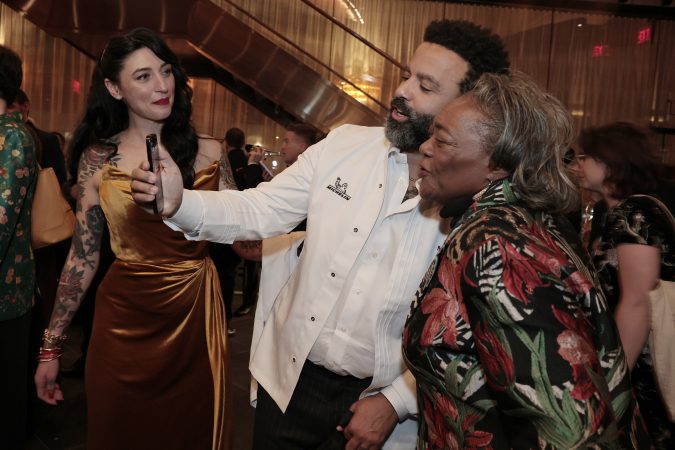
The Michelin Guide is taking its Northeast restaurant awards back to New York.
Michelin said Tuesday that its 2026 Michelin Guide Northeast Cities ceremony will be held Dec. 14 at the Glasshouse in Manhattan, where it will disclose its latest restaurant selections for Boston, Chicago, New York, Philadelphia, and Washington.
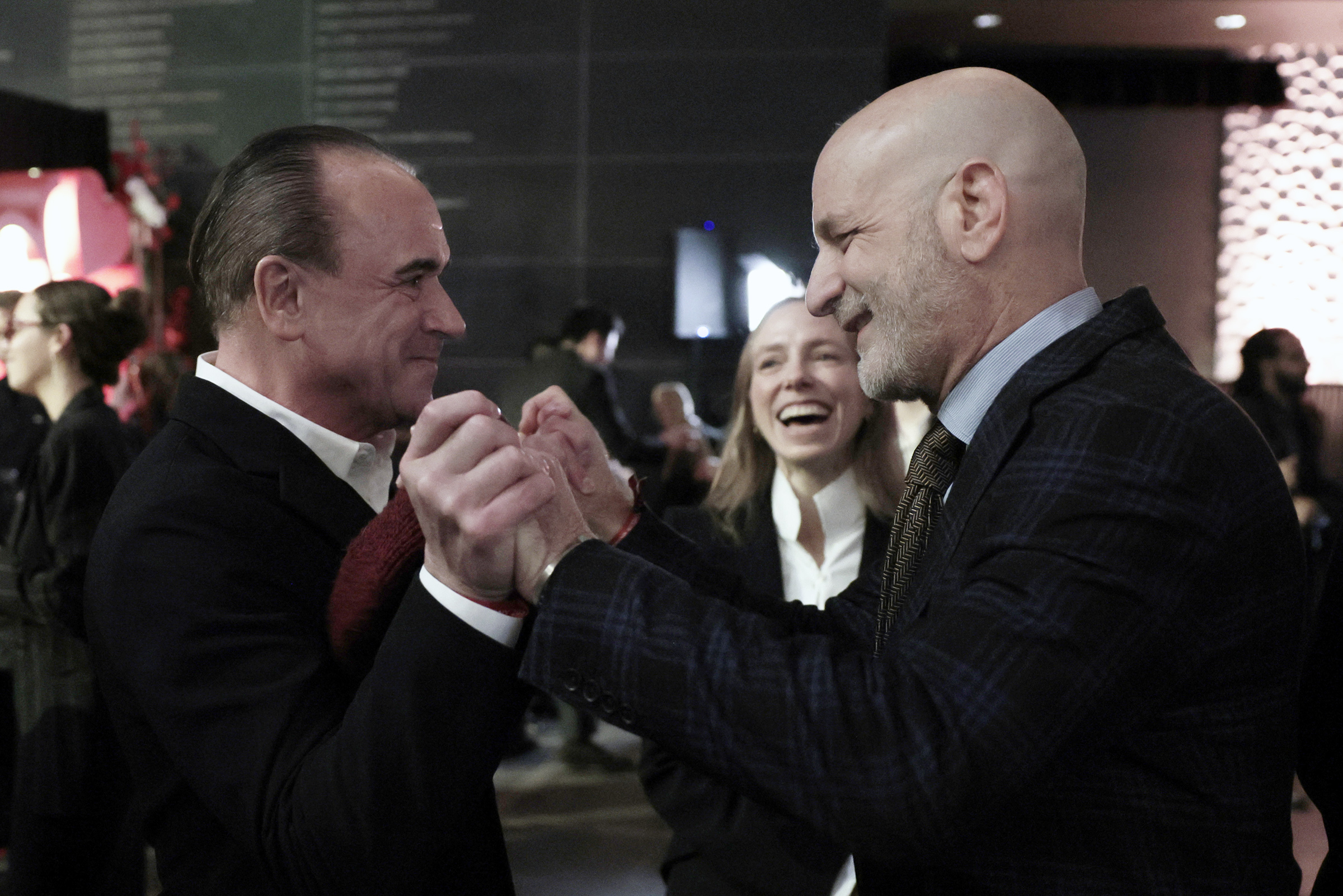
Jean-Georges Vongerichten and chef Marc Vetri greet each other as Megan Vetri looks on during the cocktail hour at the Michelin Guide announcements at the Kimmel Center on Nov. 18, 2025, in Philadelphia.Elizabeth Robertson / Staff Photographer
Restaurateurs should treat this as a reminder that Michelin’s famously anonymous inspectors are on the prowl.
The 2025 ceremony was held at the Kimmel Center in Philadelphia, as Philadelphia and Boston joined the guide for the first time. Michelin, which hosted ceremonies in New York in 2023 and 2024, said last year that it planned to hold the annual ceremony in different cities.
A representative of the Philadelphia Convention and Visitors Bureau was not immediately available Tuesday to say whether Philadelphia had sought to host the event again.
Last year’s ceremony, attended by culinary glitterati from around the world, gave Philadelphia its first Michelin stars. Friday Saturday Sunday, Her Place Supper Club, and Provenance each received one star, while 31 other Philadelphia restaurants — including three cheesesteak shops — received Michelin recognition. Ten earned Bib Gourmands, Michelin’s designation for restaurants offering good food at a good value, while 21 were Recommended. Pietramala, the vegan restaurant in Northern Liberties, also received a Green Star for its sustainability practices. (Don’t expect more Green Stars this year; the award category was retired in May.)
The Philadelphia chefs flooding the stage at the Michelin Guide announcements on Nov. 18, 2025.Elizabeth Robertson / Staff Photographer
Michelin’s stars denote increasing levels of distinction: One star signals very good cooking that is “worth a stop,” two stars indicate excellent cooking “worth a detour,” and three stars represent exceptional cuisine “worth a special journey.”
The French tire company introduced its first North American guide in New York in 2005 and has expanded rapidly since. Chicago followed in 2011 and Washington in 2017, while California, Florida, Toronto, Vancouver, Colorado, Atlanta, Mexico, Texas, and Québec were added in subsequent years.
The expansion has accelerated recently. Michelin added the American South, Boston, and Philadelphia in 2025 and the Southwest and a statewide Florida guide in 2026. An American Great Lakes guide is scheduled to debut in 2027.
Philadelphia’s inclusion is part of a partnership with the Convention and Visitors Bureau, which has not disclosed how much it is paying Michelin.
WASHINGTON — Russia has released an American military veteran who spent more than four years in prison on disputed charges under abusive conditions and was said to be gravely ill and at risk of dying, a group advocating for him said Tuesday.
Robert Gilman was on his way to a U.S. military hospital in Texas, where he will be medically and psychologically assessed and treated, said Eric Lebson, chief strategy officer of Global Reach, a group that’s been working to free him and other American detainees abroad. Gilman’s family has flown to Texas to be with him, including his mother, who was in Russia attempting to see him at a hospital.
Gilman, a 32-year-old teacher detained since 2022, was initially handed a 3½-year sentence when he was convicted of beating a police officer after being taken off a train for causing a disturbance. He later was convicted of attacking a prison inspector during a cell check, beating an investigator, and assaulting a guard, and he was sentenced in October 2024 to eight years and one month. His sentence was extended last year to 10 years after he was found guilty of assaulting prison guards.
Gilman’s sister, Lexie Hudson, credited President Donald Trump and U.S. Sen. Ed Markey of Massachusetts with bringing about the former Marine’s release.
“There is no other reason that Robert is alive today other than that President Trump heard about the case and took action,” said Hudson, who thanked Markey “for leading our advocacy efforts in Congress.”
“The Russians treated my brother so badly,” Hudson said. ”They hurt him for no reason, other than that he was both an American and a Marine. What did they get out of this? Why did they do this to such a wonderful person?”
The State Department said that Gilman, who had been determined recently to have been wrongfully detained, was released on humanitarian grounds and “was not part of an exchange, and no other concessions were provided.”
“This as a welcome step that we hope leads to the release of Americans unjustly held in Russia, such as wrongful detainee Stephen Hubbard,” it said.
Before Gilman was flown out of Russia, he had been in “a dissociative stupor” for 47 days due to the abuse he has suffered in prison, Lebson said. Gilman had been moved from a prison to a civilian hospital, where he was hooked up to a feeding tube and handcuffed to a bed.
Hospital reports conveyed Gilman’s condition “as dire and life-threatening,” pushing the U.S. government into action and leading to “a unilateral humanitarian release” by Russian officials, Lebson said.
Markey had called on Russia and the U.S. to work together to get the Massachusetts resident released. Gilman was among at least eight Americans who remained in Russian custody after a series of high-profile prisoner exchanges with the U.S. in recent years.
Markey blamed Russia for Gilman’s poor health, saying his return to the U.S. was long overdue.
“It is a tragedy that it took Robert’s near-death condition for his case to receive the attention that it required for his release to be negotiated,” Markey said. “Throughout his detention, Robert was subjected to physical torture, forced medication, and provocations by Russian authorities. There is no doubt that his treatment by Russian authorities is the reason Robert is in this precarious state today.”
The Associated Press was making efforts to get comment from Russian officials on Gilman’s release.