Tag: topic-link-auto

  • Letters to the Editor | Aug. 24, 2026

    Letters to the Editor | Aug. 24, 2026

    Real fear

    Wondering if a situation I not long ago experienced in a Walmart would change Luis F. Carrasco’s mind about both sides having extreme ways we disagree. I saw a gentleman wearing the famous red MAGA hat. I said he looked like he supported Donald Trump. He looked at me and said, “You want to make something of it,” while pulling up his shirt — to show off the gun he was carrying. The fear Mr. Carrasco is talking about isn’t just a concern about being yelled at. It’s the same fear felt by liberals like me, judges, people in Congress, and others when we hear our president tell his supporters that violence is not just OK, but recommended.

    Joe Obelcz, Hatfield

    Preventive healthcare

    Earlier this summer, a Spotlight PA article detailed how advocates and lawmakers were trying to figure out how to keep the state’s children insured as the Trump administration’s Medicaid cuts loom. As children prepare to head back to school, I remain struck by how that article highlights an important reality: The most valuable healthcare is often the illness that never occurs because it was prevented.

    A pediatric well-child visit is far more than a physical exam. It is where developmental delays, postpartum depression, food insecurity, mental health concerns, and life-threatening illnesses may first be recognized. It is also where trusting relationships are built, relationships that help families feel comfortable discussing concerns, accepting recommended vaccinations, and seeking care before small problems become crises.

    Difficult budget decisions are inevitable, but how we make them matters. Protecting children’s access to pediatric primary care through Medicaid and Children’s Health Insurance Program is an investment in healthier families, lower healthcare costs, and stronger communities. Every child deserves the opportunity to grow up healthy, and that starts with ensuring they can see their pediatrician.

    Eliza Sitter, Philadelphia

    Unsung hero

    It’s recently been reported that the U.S. Navy is thinking about removing Doris Miller’s name from its newest aircraft carrier. Miller was a cook aboard the USS West Virginia during Japan’s attack on Pearl Harbor on Dec. 7, 1941. He also happened to be Black. On that day, Miller, in the face of enemy bombing, displayed extreme heroism by saving the life of the ship’s injured captain and manning an anti-aircraft gun that brought down at least one Japanese plane, if not more. He was later awarded the Navy Cross, the first Black American to receive it. Two years later, he made the ultimate sacrifice for his country when his carrier was torpedoed by a Japanese submarine and he went down with it.

    The “shocking” part of this story is that the U.S. Navy is seriously considering replacing Miller’s name with that of … wait for it … Donald J. Trump. And what heroism did Trump exhibit to warrant such an honor? Sure, he avoided military service during the Vietnam War because of “bone spurs.” But who knows, if not for such “bone spurs,” Trump may very well have saved more than one captain and brought down thousands of enemy planes, ending that war like he claims to have ended so many other wars during his second term in office. That counts for a lot among his cabinet members. And he certainly has been courageous, playing golf despite his “bone spurs” (by one tally, he’s spent about 22% of his second term golfing).

    Of course, none of this is shocking. Trump cares only about three things, and not one of them involves bettering the lives of the average American: enriching himself and his family at every opportunity, seeking retribution against his perceived enemies, and slapping his name on anything and everything he can. None of that would be possible if not for the compliance of this Congress and this Supreme Court. It’s time to put a stop to this nonsense and elect officials who are serious about the real issues facing our country — and who have solutions that put the American people first.

    Jeffrey Meyer, Chicago, Ill.

    …

    The possible renaming of the USS Doris Miller as the USS Donald J. Trump reflects the reality of the president’s second term. During his first term, Trump made an attempt to connect with African American voters despite his own pre-presidential comments and actions. In his second term, Confederate names on Army forts are in, woke is out — as are assistance to college students of color, Project Head Start, and other government programs aimed at giving marginalized people an opportunity to advance in our society. The disrespect shown to America’s first Black hero of World War II follows in the wake of Pete Hegseth’s purging our military of qualified Black and female generals and admirals. Trump 45 was challenging to endure, Trump 47 is moving our country closer to self-centered one-person rule.

    Paul L. Newman, Merion Station

    Blame game 2.0

    In the coming years, we may witness the return of one of America’s oldest and most reliable excuses — only updated for the digital age. For generations, students fell back on the classic line, “My dog ate my homework,” a phrase that became shorthand for avoiding responsibility with a smile. Today, we’re on the verge of adopting its modern successor: “The AI messed it up.”

    Already, artificial intelligence is being quietly positioned as a cultural scapegoat. A poorly worded email? Blame the AI assistant. An awkward social media post? Must have been the algorithm. A missed deadline? The chatbot must have misunderstood. The technology is new, but the impulse is ancient: when something goes wrong, point to anything except ourselves.

    The irony is that AI doesn’t remove human responsibility — it increases it. These tools are powerful, but they are not autonomous moral agents. They don’t decide our tone, our judgment, or our priorities. Yet we seem eager to hand them not only our tasks, but our accountability.

    If we’re not careful, “The AI did it” will become the next cultural reflex, allowing us to sidestep ownership of our words and actions. It may not be long before society looks back and realizes that the dog never ate the homework — and the AI didn’t write the email. We did.

    Steve Abramovitz, Cherry Hill

    Toeing the line

    Your recent editorial on how American troops are being strained for nothing during the Iran war, referred to Trump ducking service during the Vietnam War “with the reported assistance of a sympathetic Queens podiatrist.” The doctor in question had good reason to be sympathetic: his landlord was Fred Trump, Donald’s father.

    As The New York Times reported in 2018, the podiatrist, Dr. Larry Braunstein, died in 2007. But his daughters say their father often told the story of coming to the aid of a young Mr. Trump during the Vietnam War as a favor to his father. They said his role in Mr. Trump’s military exemption had long been the subject of discussions among relatives and friends. “It was family lore,” Elysa Braunstein told The Times. “It was something we would always discuss.”

    In keeping with his lifelong passion for telling the truth, Trump later claimed that it was a high draft lottery number that kept him from being called up — but he got the bone spurs deferment in 1968: the lottery wasn’t instituted until a year later.

    Isaac Segal, Cherry Hill

    Muscular politics

    Secretary of Defense Pete Hegseth says that his mandatory screening program for testosterone deficiency for the troops is “necessary to allow them to operate at their absolute best.” This is an inaccurate, inappropriate and irresponsible action from incompetent Trump cabinet officials, including the Health and Human Services Secretary Robert F. Kennedy Jr. As a practicing physician, I was alarmed by Hegseth’s plan, which goes against current guidelines issued by the Endocrine Society, American Urological Association, American College of Physicians and the Food and Drug Administration, all uniformly recommending against population-level screening, and advocating only for symptom-driven case detection at any age, in association with other medical illnesses including type 2 diabetes, chronic kidney disease, obesity, and chronic opioid and corticosteroid use. Testosterone replacement therapy, even if clinically warranted, has well documented serious side effects including fractures, pulmonary embolism (lung blood clots), and a potential increase for atrial fibrillation, a heart rhythm abnormality that is associated with blood clots including stroke. Unfortunately, our military continues to be led astray by an unqualified, self-serving weekend television host whose ego and ill-advised decision-making place our troops at increased risk of long-term health problems.

    Jay Klazmer, Cherry Hill

    Join the conversation: Send letters to letters@inquirer.com. Limit length to 150 words and include home address and day and evening phone number. Letters run in The Inquirer six days a week on the editorial pages and online.
  • Horoscopes: Monday, Aug. 24, 2026

    ARIES (March 21-April 19). Today features the intelligence of the body that shows itself through movement. Movement is the language of the wild. It’s what the creatures understand and respond to. Through movement, we learn what kind of creature we are.

    TAURUS (April 20-May 20). You don’t like to be told what to do, and that comes up in interesting ways. For instance, the hardest part of a meditative practice can be letting someone else dictate your breathing, even if that person is you.

    GEMINI (May 21-June 21). On an average day, your eyes land on thousands of things without really seeing them. But today, an ordinary object seems to call you to study it as though it washed ashore from another planet. Your takeaway says more about you than the object.

    CANCER (June 22-July 22). You can learn from watching what makes a person lose track of time. Turn the study on yourself. Your attention already knows where it wants to live, and you’ll feel most content and congruent when you let it go there.

    LEO (July 23-Aug. 22). Laughter will interrupt your thinking. Maybe this is why you cherish your funniest friend. For a few seconds, there is simply the laugh itself. It gives the mind a brief, unexpected holiday, all-inclusive and totally free.

    VIRGO (Aug. 23-Sept. 22). Conversations are a real education today. People become far more interesting because you don’t see them as your audience. Instead of waiting for your turn to talk, you see your connection as a chance to collect clues.

    LIBRA (Sept. 23-Oct. 23). If it feels like you need to prepare for a conversation, challenge yourself to go in cold. Today, this will force you to be in the moment, seeing and understanding more about this scene than you would if you already knew what you were going to say.

    SCORPIO (Oct. 24-Nov. 21). Today, your attention behaves like a flashlight instead of a floodlight. Rather than chasing every corner of the room, you point it at one thing and let your mind wander only within the limits of this focused illumination. There is a whole universe right here.

    SAGITTARIUS (Nov. 22-Dec. 21). Music asks something unusual of the body. Even people who refuse to dance may not be able to resist tapping a finger or nodding their head. Rhythm reaches parts of us that language only visits from time to time.

    CAPRICORN (Dec. 22-Jan. 19). You have spent your whole life inside your own voice. Imagine hearing it for the first time today. Would it sound encouraging? Funny? Curious? Familiarity has hidden things that you will now experience more fully.

    AQUARIUS (Jan. 20-Feb. 18). Not only does self-consciousness feel uncool, it can actually feel painful to you. But you can avoid the whole dynamic by bringing your attention to the other person as though you’ll be tested on this later. You just might be!

    PISCES (Feb. 19-March 20). Somewhere along the way, many adults begin asking what a thing is worth before deciding whether it’s worth noticing. Not you. Today, you’re like a child picking up an interesting rock. You’ll turn it over, hold it to the light and put it in a pocket for later.

    TODAY’S BIRTHDAY (Aug. 24). Welcome to your Year of Profound Comforts in which a cozy vibe touches down on every part of your life, without you even having to ask for or earn it. It’s as though the universe just wants to pamper you. More highlights: You’ll have the help and means to choose the work you want instead of settling for what you’re given. The version of love you want comes easily. Your talent is featured. Aquarius and Taurus adore you. Your lucky numbers are: 6, 27, 24, 1 and 15.

  • Dear Abby | Dad asks a lot of low-income live-at-home son

    DEAR ABBY: My middle-aged son is on the autism spectrum and has recently come back home to live with us. He left home at 19 and has always had roommates. We didn’t realize that he had autism until about a year ago.

    We like having him here but are having a difficult time adjusting. My son has agreed to help with bills and contribute toward groceries, but my husband thinks we should split all expenses three ways equally. My son works in the food service industry and earns a low wage, even though he puts in 32 to 34 hours a week. He eats at work most of the time and at home only twice a week. I’m retired and live on a small Social Security check. My husband makes more than twice what my son and I make. I think we should contribute based on our income, and I feel that my son and I should contribute 20% each toward food and other bills. Every time I try to discuss this with my husband, he gets angry and accuses me of taking advantage of him. I’m hoping we can get this resolved and move on.

    — DESPERATE MOM

    DEAR MOM: I assume you want your son to stay with you for the long term; does your husband feel the same? Is it possible he’s being difficult about money so your son will move out again? The phrase “on the autism spectrum” covers a wide range of needs, so I’m not in a position to weigh in on what you should expect of your son. A licensed family counselor who specializes in autism may be able to help you and your husband understand how much your son is capable of contributing.

    ** ** **

    DEAR ABBY: My fiancé, “Dustin,” and I have been a couple for five years. We live together and are fairly happy. The problem is his gaming habits. At first, it wasn’t an issue because I also play the occasional video game. Since moving into our own place, I’ve noticed Dustin has started spending a tremendous amount of time on these video games. From the time he wakes up around 1 p.m. until right after he gets off work around 10 p.m., he’ll log on and play for hours. Most nights he doesn’t come to bed until 5 a.m.!

    With all his free time, he doesn’t help clean or cook, and I get none of his attention. I’m not sure where I go from here. I have spoken to him about this habit, but he doesn’t see any issue because he grew up constantly playing games. I need some guidance on this issue because it’s driving a wedge in our relationship.

    — GAME OVER IN NORTH CAROLINA

    DEAR GAME OVER: Dustin doesn’t see any issue with the status quo because it isn’t a problem — for him. He’s got a pretty good deal. You do the cooking and the cleaning and contribute to half the expenses, but you’re not even getting companionship.

    Tell your fiancé you need more from him because this isn’t what you signed up for when you moved in together. Offer him the option of couples counseling so your issues can be mediated. If he isn’t willing and this doesn’t resolve the problem, then cut your losses and move out unless you want to spend the rest of your life as a “gaming widow.”

  • Amazon plans to start drone delivery in South Jersey

    Amazon plans to start drone delivery in South Jersey

    Autonomous drones may soon be delivering Amazon packages across South Jersey.

    Amazon representatives have told local officials and emergency responders that the e-commerce giant plans to start drone-delivery service out of its West Deptford facility this fall, according to West Deptford Mayor James Mehaffey and Mantua Township Police Chief William Murphy.

    The news comes days after Amazon announced a massive expansion of its Prime Air program, which already delivers packages via drone from launch sites in 11 U.S. cities, none of which are in the Northeast.

    By the end of the year, Amazon wants to expand its drone coverage area to nearly 500 cities and towns nationwide, the company said, allowing tens of millions of customers to get products flown to their doorsteps in 30 minutes to an hour.

    The announcement is the latest effort by Amazon to decrease delivery times and hold its edge as the world’s most popular online retailer — and the most lucrative company in terms of sales. In May, Amazon rolled out 30-minute ground delivery across Philadelphia.

    Amazon’s top rival, Walmart, recently announced its plans to offer drone delivery in Philadelphia.

    “We are always exploring new ways to get customers a wider selection at faster speeds,” Amazon spokesperson Smitha Rao said in a statement, in response to The Inquirer’s questions about the South Jersey meeting, which occurred last week.

    “We are currently working with local officials and exploring opportunities to expand our fast, reliable drone delivery service to reach customers in areas across the country.”

    Amazon is hiring for several West Deptford-based Prime Air positions, including flight monitor, ground manager, and a safety and compliance officer. The job listings were posted on the company’s online portal last month.

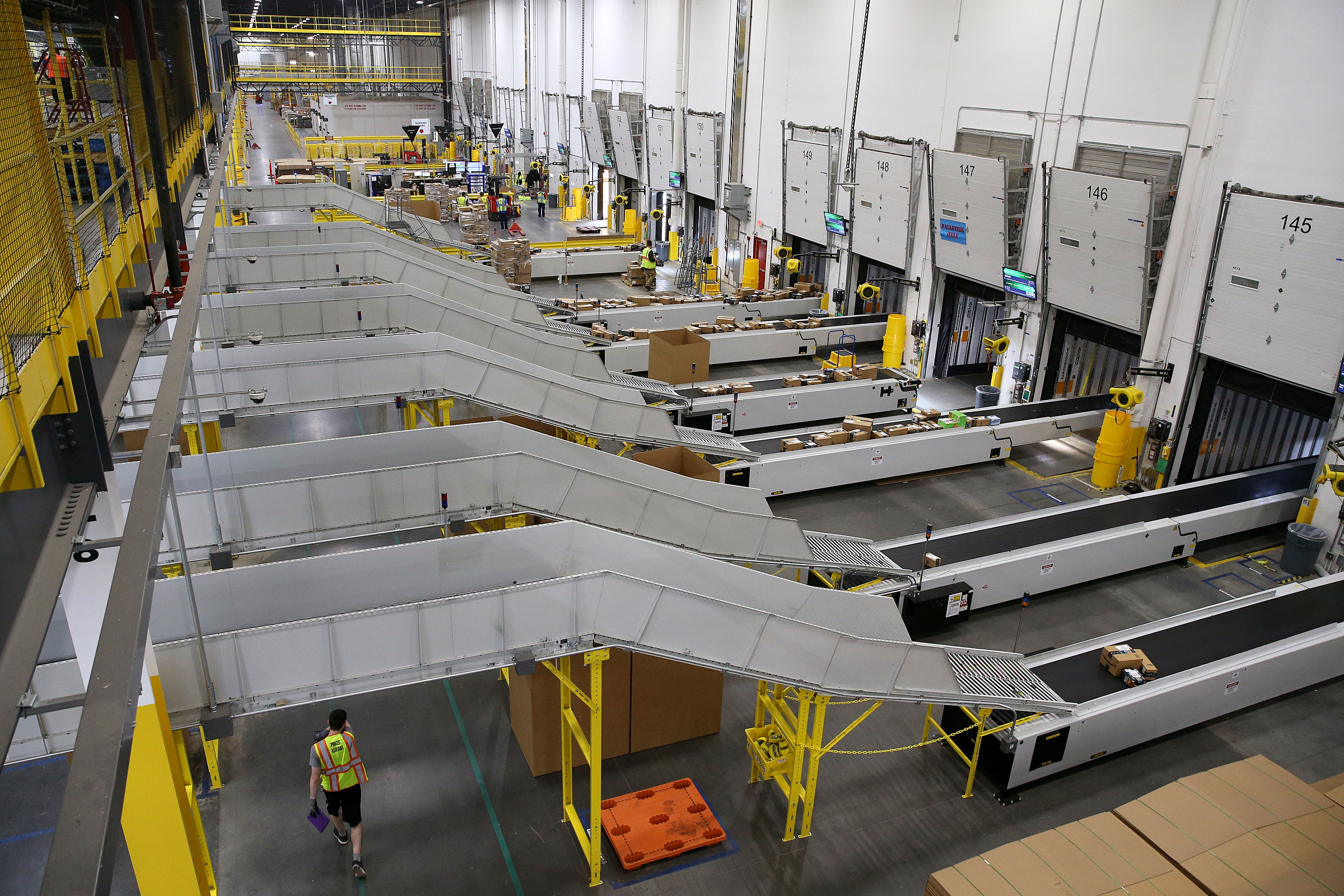
    The West Deptford warehouse opened in 2018 as the company’s fourth robotic fulfillment center, where robots and humans work together. It has also been the site of a walkout by employees who say they deserve better pay and working conditions.

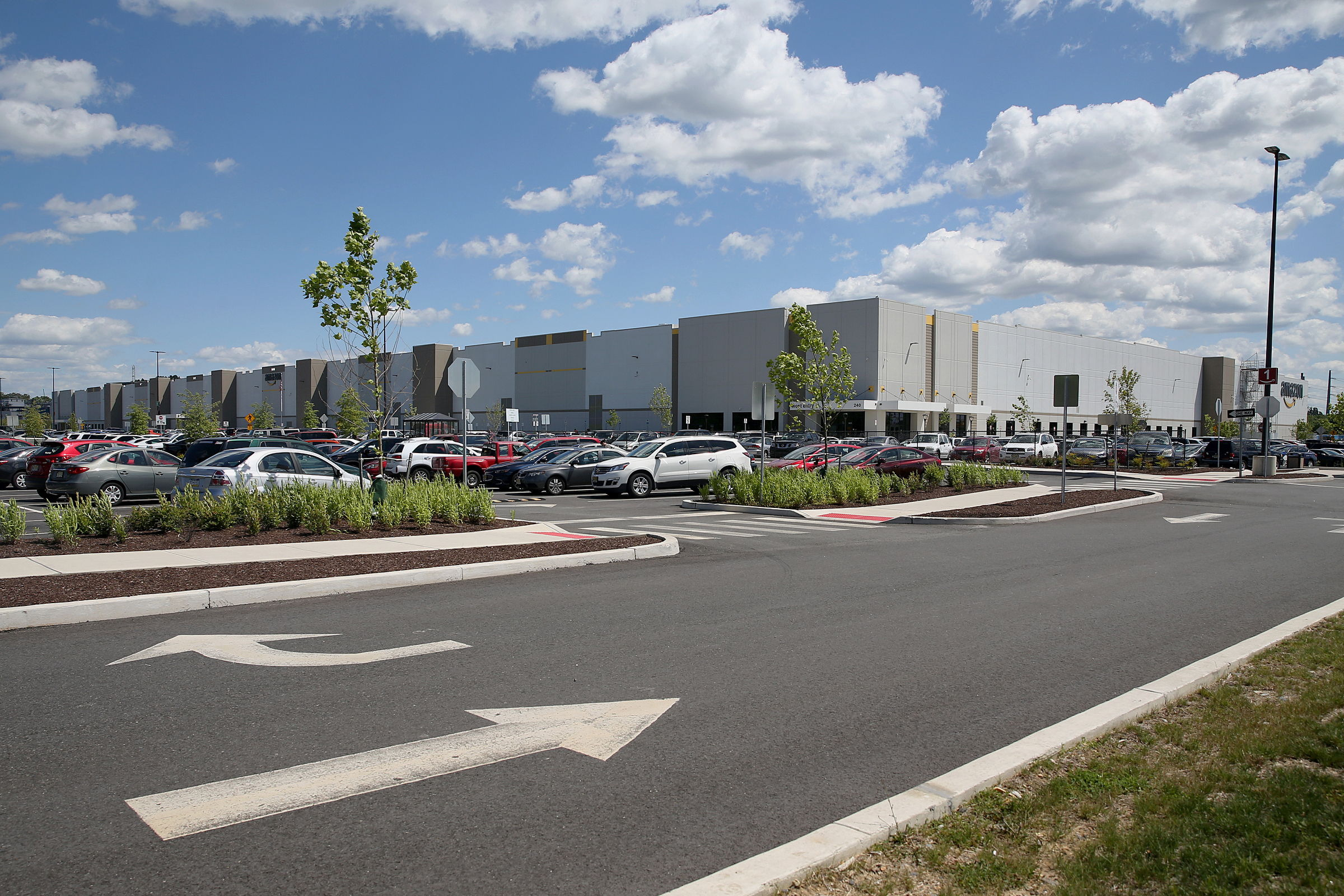
    According to local officials briefed on the Amazon plans, the company’s drones would fly out of the warehouse at 240 Mantua Grove Rd., a 650,000-square-foot facility that sits next to I-295 and is among the company’s largest in the region.

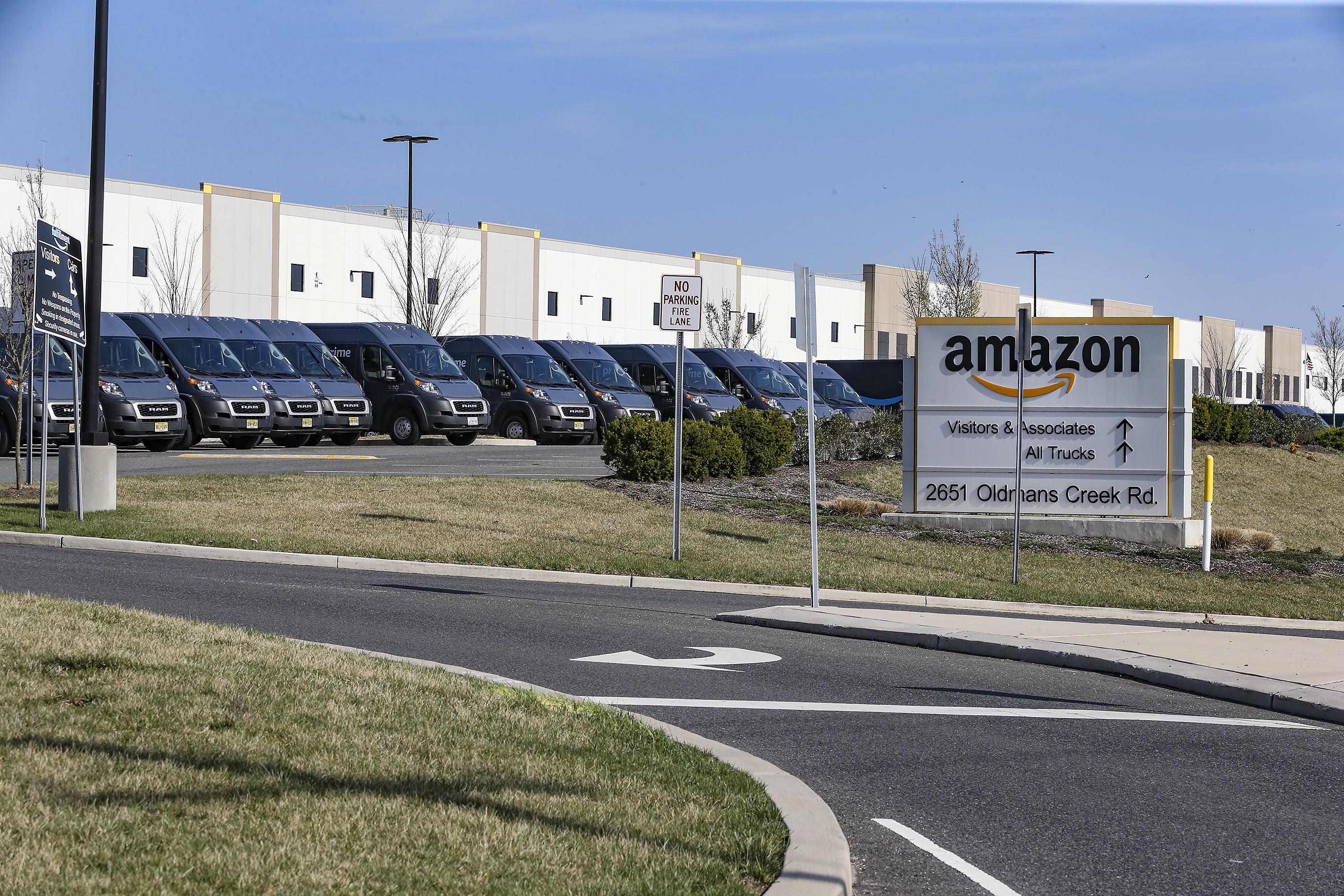
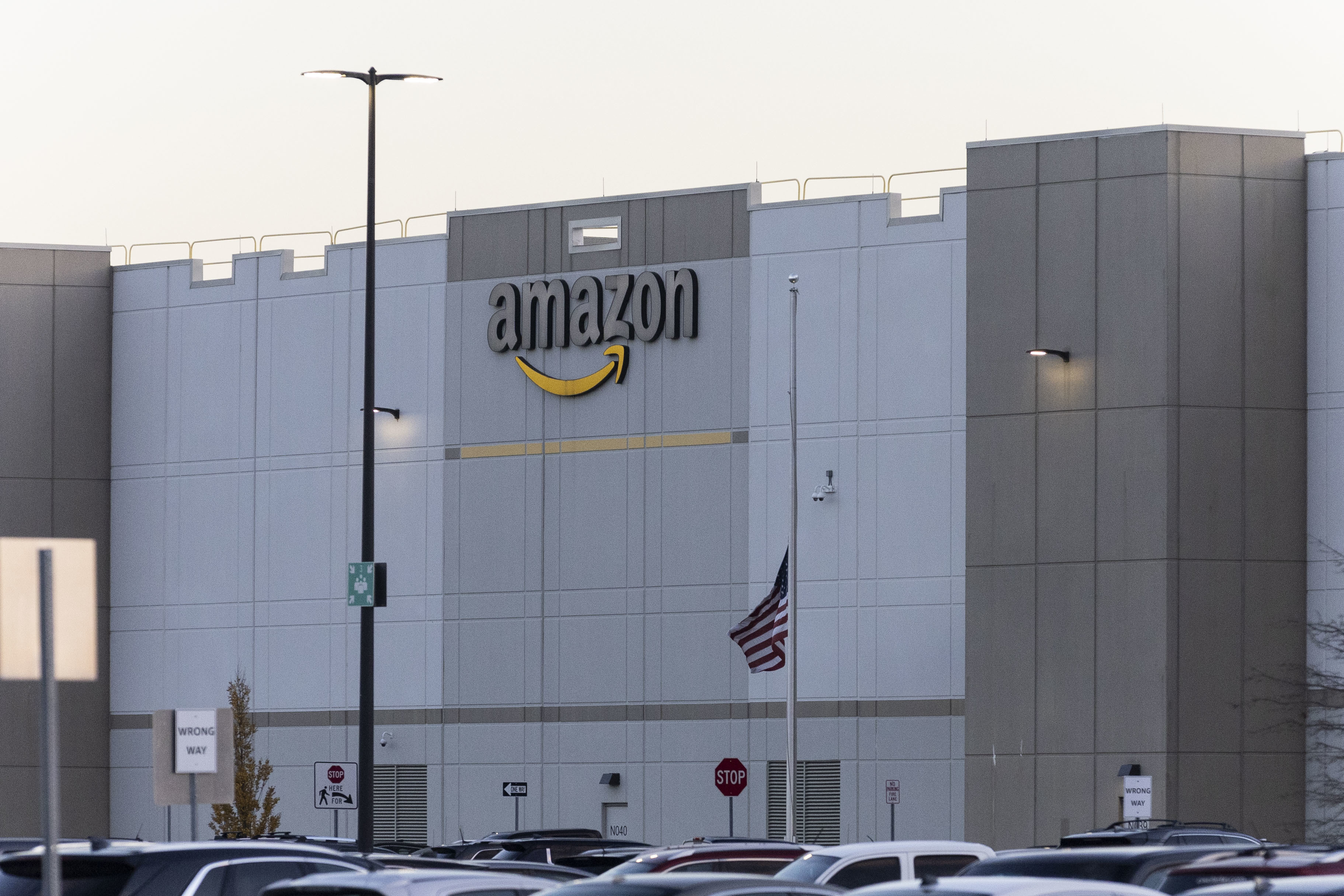
    The Amazon Fulfillment Center in West Deptford, seen in 2019, is among the region’s largest.TIM TAI / Staff Photographer

    The company’s drones can typically deliver to addresses within 175 square miles of each launch site.

    In a Facebook post from the Mantua Township Police Department account, Murphy shared a screenshot of the local drone-delivery radius that he said Amazon shared during the Zoom meeting. The photo indicated that drones from the West Deptford site would be able to reach places within about a 15-mile radius — from Bellmawr to Mullica Hill in New Jersey, as well as parts of Ridley Park, Darby, Glenolden, and South Philadelphia across the Delaware River.

    Amazon told local officials that the drones would operate from 15 minutes before sunrise to 15 minutes after sunset, according to Murphy, and be authorized to fly at altitudes below 400 feet, in accordance with Federal Aviation Administration regulations.

    The company plans to start drone delivery from West Deptford as early as October, according to Murphy and Mehaffey.

    Amazon’s drones can deliver groceries, cosmetics, medications, even iPhones — anything that weighs 5 pounds or less and fits in a large shoebox. Amazon says those characteristics apply to more than 60% of its most popular products.

    Boxed orders are sorted at the Amazon Fulfillment Center in West Deptford in 2019.TIM TAI / Staff Photographer

    Customers can browse drone-deliverable items the same way they search for any other Amazon products, according to the company, and select the best spot for a drone to leave the package.

    Amazon Prime members can get complimentary drone delivery on orders of $50 or more, or pay an extra $2.99 on orders under $50. Nonmembers can pay $4.99 for drone delivery.

    The drones are not monitored by humans in real time, according to Amazon. Instead, the devices use an autonomous system of cameras and sensors to navigate, avoid obstacles, and deliver the package safely.

    Some South Jersey residents said they have questions about those cameras, as well as the impact Amazon drones may have on their quality of life, safety, and environment. As of Sunday, more than 100 people had signed a petition asking for public hearings and written disclosures about Prime Air and its data practices before the drones start flying in the area.

    Amazon said in its expansion announcement that the drones’ cameras do not “track individuals or record movement.” The drones are electric, emit no exhaust, and make little noise, according to the company. The drones are quieter during drop-off than “an idling delivery truck,” Amazon said, and sound similar to a “window fan on low” while in flight. The company said people indoors cannot typically hear the drones outside.

    In areas where the drones are already flying, company spokesperson Rao said, “the response from customers using Prime Air has been overwhelmingly positive.”

    Mantua Township Mayor Bob Zimmerman told residents in a Facebook post that the Amazon drones were “forthcoming.”

    “Please understand that whether you are for, or against deliveries of this kind by drones, we have no say over the matter,” wrote Zimmerman, who did not return a request for additional comment.

    Amazon has not said whether it plans to fly drones from other warehouses in the Philadelphia area, and has not posted Prime Air job openings at other local sites.

    The company has dozens of facilities across the region, with larger warehouses in Carneys Point and Logan Townships in South Jersey, and near Wilmington. Officials in those areas did not return requests for comment.

    Amazon’s Logan Township warehouse is pictured in 2021.STEVEN M. FALK / Staff Photographer

    Jason Bobst, township manager of West Norriton Township in Montgomery County, said the company has not been in touch about flying drones from its facility there.

    “We have not been approached by Amazon regarding drone delivery operations from its West Norriton facility, nor have we received any indication that Amazon is currently considering that location for drone delivery service,” Bobst said in an email.

    Bobst said township officials did have a preliminary conversation about Walmart looking to expand its drone delivery service in the area, but nothing formal has been presented.

    In recent weeks, food-delivery apps Uber Eats, Grubhub, and DoorDash also have unveiled similar plans, but have not started flying to Philly-area customers.

  • Kyle Schwarber caps dramatic comeback with walk-off home run as Phillies sweep Cardinals

    Kyle Schwarber caps dramatic comeback with walk-off home run as Phillies sweep Cardinals

    Edmundo Sosa walked up to the plate in the bottom of the ninth inning on Sunday afternoon. The bases were loaded with two outs. The Phillies faced a four-run deficit against the Cardinals.

    These aren’t circumstances that normally lead to success (let alone a six-run rally, en route to a 6-4 walk-off win). But Sosa wasn’t afraid. He looked to his teammate, Bryce Harper, standing on third base, 90 feet away.

    Harper gave him a knowing glance. “Like, ‘Yes, you got this,’” Sosa recalled. Then the utility infielder turned toward the dugout. His teammates wore the same expression.

    Momentum in the ballpark was starting to build. Kyle Schwarber could feel it from the moment Harper hit his line-drive double to lead off the inning.

    Luis Arraez and Brandon Marsh recorded back-to-back flyouts, but J.T. Realmuto singled, and Justin Crawford walked to give the Phillies a chance for a victory.

    Schwarber leaned over to Trea Turner, who was beside him, and joked that Sosa would “hit a grand slam somehow.” He didn’t do that. But the infielder did something nearly as good; roping a double to left field double that just stayed fair, to drive in all three runners.

    Momentum continued to build; the infield dirt vibrated, the crowd began to rumble. Schwarber stood in the on-deck circle as Bryan De La Cruz worked a six-pitch at-bat against Cardinals closer Riley O’Brien, fouling off a two-strike pitch before taking two balls, then finding a hole up the middle for a game-tying single.

    Then, it was Schwarber’s turn. He said he went up to the plate looking to pass it on Turner; instead, on a 2-2 count, the slugger launched a 459-foot home run to center field to give the Phillies their ninth straight win.

    When Schwarber saw St. Louis’ center fielder turn around in resignation, he knew it was over. He flipped his bat, flipped his helmet, and started jogging around the bases.

    “I think it was just more just shock, disbelief,” he said. “I didn’t know what to do there. I’m not trying to be disrespectful to them. But it was just a little bit of disbelief.”

    Anyone watching in the moment wouldn’t begrudge his reaction. For eight innings, the Phillies offense looked lifeless, recording only four hits, with no runs off the Cardinals’ pitching staff. And St. Louis had brought in O’Brien, who led the National League with 33 saves, to start the ninth.

    It seemed like the eight-game winning streak would come to an unceremonious, muted end, and a strong, scoreless showing from the bullpen would be squandered.

    Instead, that streak is alive and well, as the Phillies head to the West Coast for a nine-game road trip. Since the Field of Dreams Game in Iowa, they’ve made up five games against the Cubs in the National League wild-card race, sitting in second place at 73-58, only a game-and-a-half behind Chicago.

    Over that span, they’ve also made up seven games against the NL East-leading Braves, who led the Phillies by 2½ games going into their night game at Milwaukee.

    “I feel like it’s a lot of really good baseball,” Schwarber said. “It’s a lot of complete baseball. It’s not like we’re out there just hitting homers and relying on that, I feel like there’s a lot of different things we’re doing well.

    “I feel like the defense is playing really well. Our pitching obviously is our pitching, our starters set the tone for us, they’re attacking the zone, they’re trusting the defense, getting their punch outs.

    “And our offense just from top to bottom feels like they’re doing what they need to do with their plans, and staying aggressive to their plans, and whatever individual approach they need to have.”

    One person who was not surprised was Cristopher Sánchez, who took in the six-run rally from the TV in the clubhouse. The left-handed starter said he felt good about his outing, but conceded that there were a few routine plays he could’ve made, which proved costly.

    He allowed stolen bases to Jordan Walker and JJ Wetherholt, both of whom ended up scoring for runs.

    “Usually I control the runners pretty well,” he said. “I was bothered a little bit because they took those two bases quite easily.”

    Sánchez fanned seven Cardinals across 6 2/3 innings, allowing four runs on nine hits with no walks. It wasn’t as dominant as his other showings, but on Sunday afternoon, that didn’t seem to faze him.

    “Incredible, incredible,” Sánchez said of his teammates’ come-from-behind effort. “But this is who we are. This is who we are.”

    window.addEventListener(“message”,function(a){if(void 0!==a.data[“datawrapper-height”]){var e=document.querySelectorAll(“iframe”);for(var t in a.data[“datawrapper-height”])for(var r,i=0;r=e[i];i++)if(r.contentWindow===a.source){var d=a.data[“datawrapper-height”][t]+”px”;r.style.height=d}}});

    Bryson Stott injury scare

    In the bottom of the sixth, Bryson Stott took a foul ball off his right foot in the midst of his at-bat; the trainers visited him at home plate briefly. He remained in the game but was later removed in the eighth inning, with a right foot contusion. Arraez replaced him at second base.

    Interim manager Don Mattingly said after the game that X-rays on Stott’s foot were negative and they’ll see how he feels tomorrow.

    “I kind of expect him to be in there,” Mattingly said. “Honestly, a lot of the foot things, if it’s not a fracture, they bounce back decent. Not a lot of area to get swollen up in there. So I expect him to be able to play.”

  • A twosome of naked events took over Philadelphia this weekend

    A twosome of naked events took over Philadelphia this weekend

    Philly bared it all this weekend.

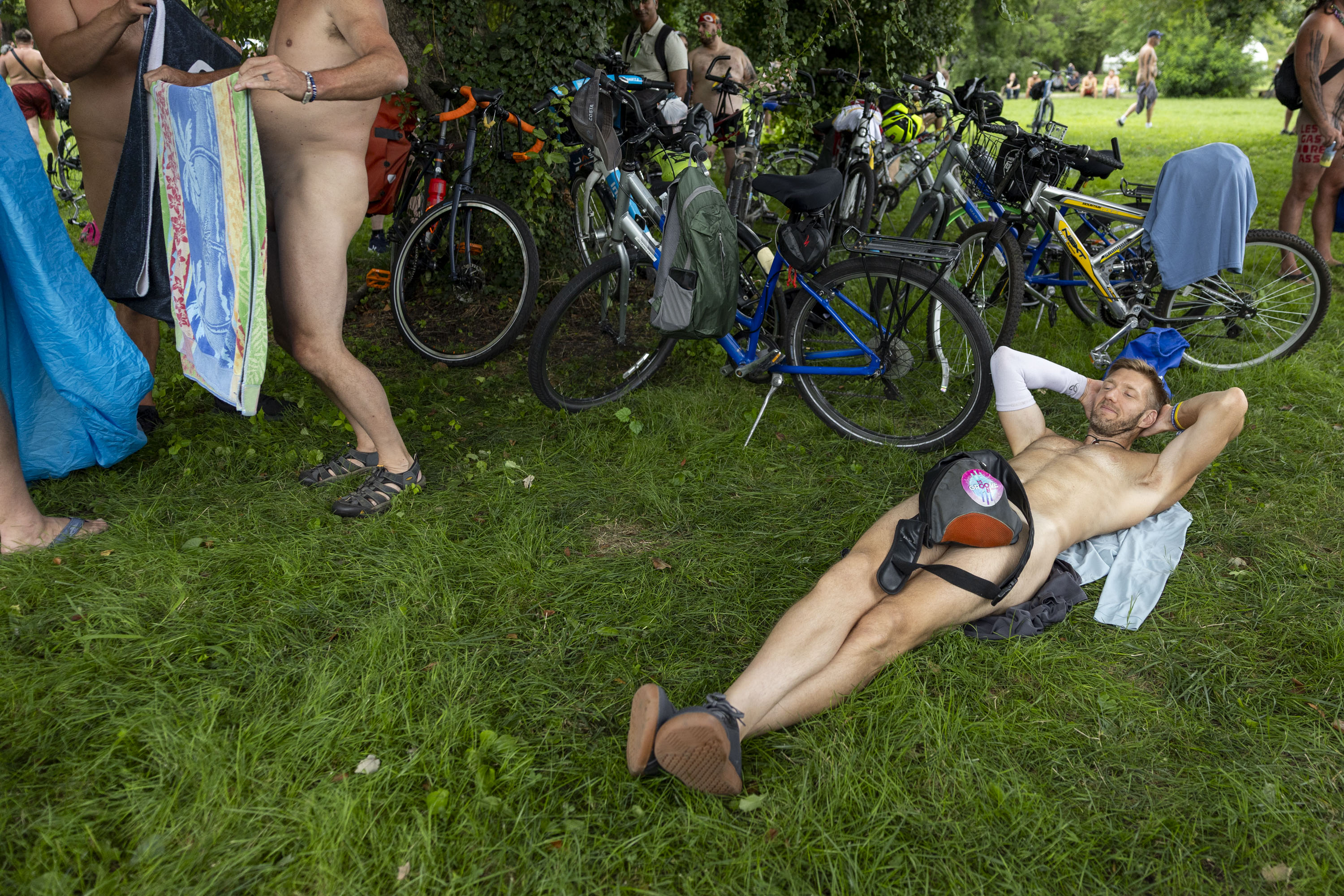
    By sheer happenstance, a twosome of naked demonstrations took place Saturday across the city — a “free the nipple”-esque protest midday at Philadelphia City Hall followed by the annual Naked Bike Ride in the late afternoon.

    Beyond the shock and awe of scantily clad or not-at-all clad people, both events were acts of resistance, defiance, and free expression, and went deeper than, well, skin deep, attendees said.

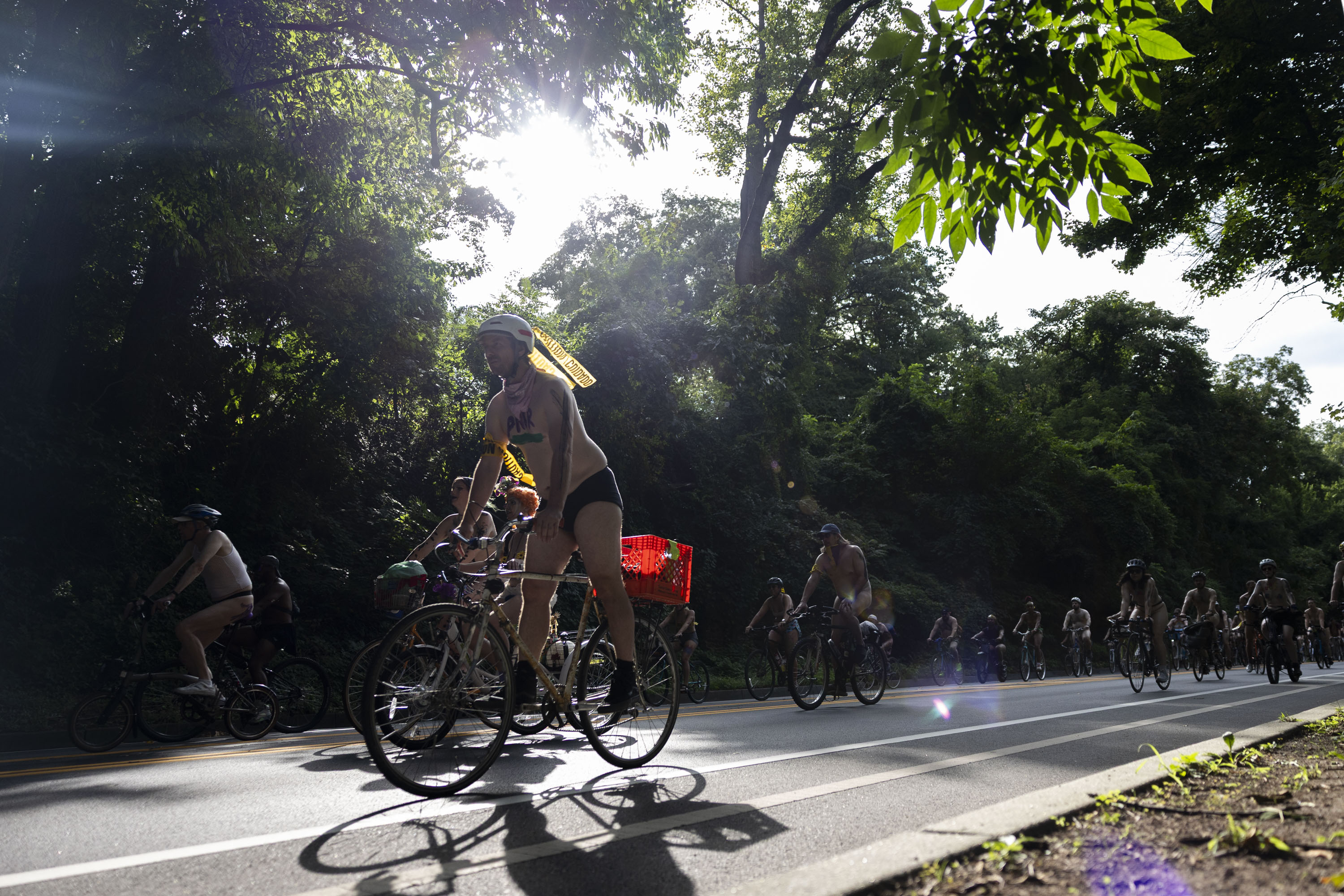
    As hundreds lined up along Martin Luther King Drive for the 17th edition of the Naked Bike Ride, their bodies — with varying degrees exposure — were like flesh-toned picket signs. People painted themselves with phrases denouncing President Donald Trump and his administration’s targeting of immigrants, calling for a freed Palestine, and demanding enhanced bicycle safety measures. Mattie L., who was visiting from Savannah, Ga., wrote “Voting is Hot,” across his back.

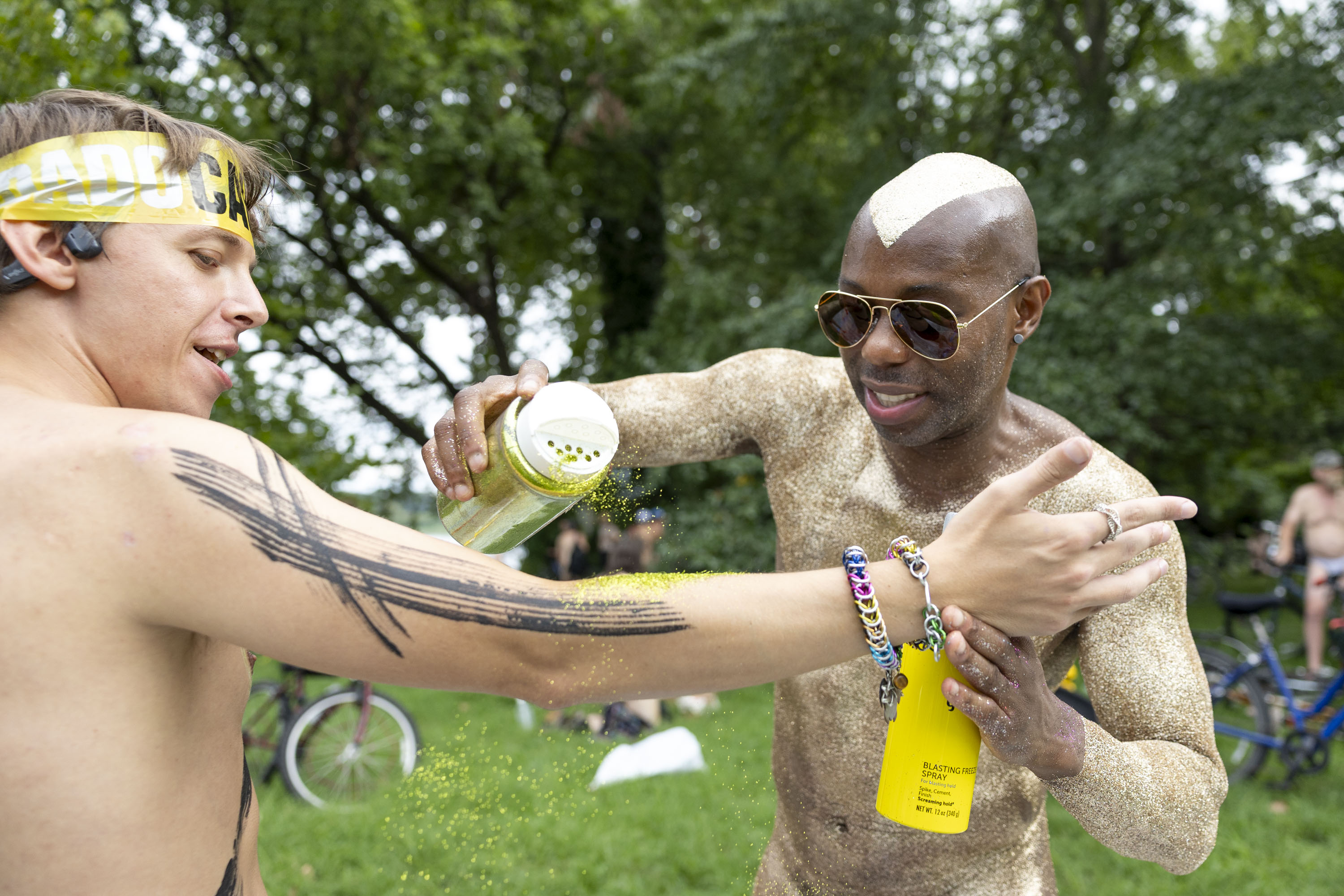
    Rocket (right) puts glitter on Ari Tm of Fairmount for the Naked Bike Ride on Saturday, Aug. 22, 2026, in Philadelphia.Tyger Williams / Staff Photographer

    “Besides the bodies, the messages themselves add another reason for people to lock in what [we’re] saying and to really take it to heart,” said 35-year-old Mattie, who declined to give his last name, citing concern for his privacy.

    To riders, the bare-as-you-dare ride, which snakes 12 miles through the city, is an annual pro-environment, pro-bicycle safety and advocacy, and pro-self-love-intended counterpunch to fuel dependency, car-first American infrastructure, and body shaming.

    Biking in a car-centric city is itself an act of rebellion, said Emma K., a 28-year-old Temple University alum who now lives in New York City. Emma also declined to give her last name because of privacy concerns.

    “I cycle as a protest all the time,” she said. “There’s a lot for Philly to do to be safer to riders.”

    Dane Jorento, 65, of Drexel Hill, was drawn to the Naked Bike Ride because of “naked,” “biking,” and “protest.” Being unabashedly naked, Jorento said, is an act of radical vulnerability and self-acceptance.

    For Morningstar Hirst, who was part of the ride’s “street team,” the Naked Bike Ride was about showing off their new body post-top surgery, while “protesting and leaning into body positivity.”

    “I am all about freedom within one’s body and then mobility with that body — I think that this ride sums that up really quickly and really easily,” Hirst, 34, of West Philadelphia, said.

    “Every body is a wonderful body,” he added.

    Ryan Genova of Glenside chills during his fifth time attending the Naked Bike Ride on Saturday, Aug. 22, 2026, in Philadelphia.Tyger Williams / Staff Photographer

    It was a pure coincidence that the Naked Bike Ride aligned with the inaugural Go Topless Day in Philly earlier that day.

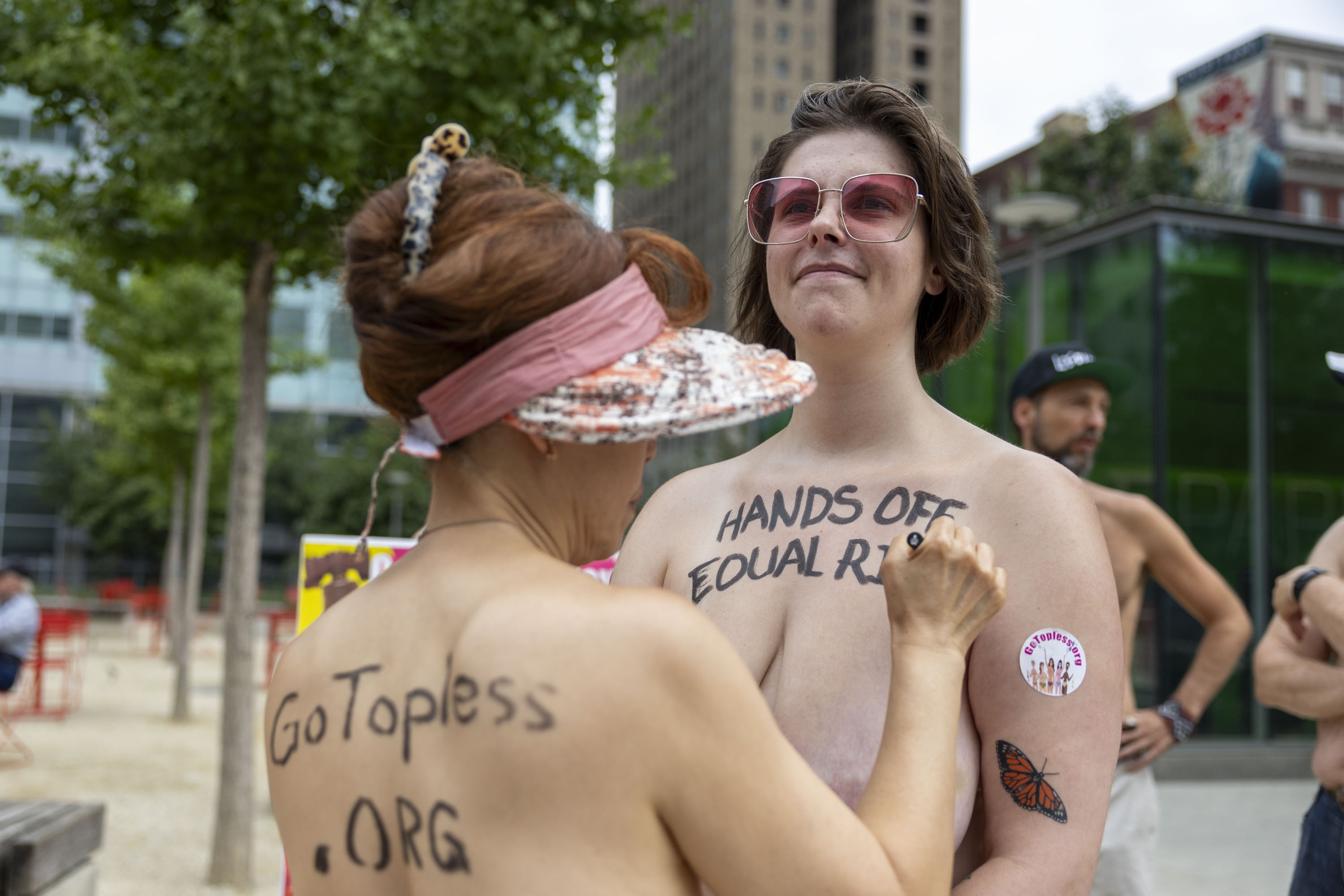
    Go Topless Day had a clear agenda: Roughly a dozen bare-chested picketers gathered in LOVE Park at noon, before marching around City Hall with a police escort, chanting, “free your breasts, free your mind,” to stir action around what protesters described as the legal hypocrisy that allows men to be shirtless in public but not women.

    “If men can go legally topless in a street, women should have the same right,” organizer Kasyo Perrier said. “Otherwise, we should force men to wear tops.”

    Chloe Theodosiou of Germantown gets a message of “Hands Off Equal Rights” written on their chest for the GoTopless Day Civil Rights March at LOVE Park on Saturday, Aug. 22, 2026, in Philadelphia.Tyger Williams / Staff Photographer

    Go Topless Day is a cause of the Raëlian Movement, a religious group that believes extraterrestrials created humanity. Core tenets of the Raëlian Movement are freedom and equality, explained Perrier, who is a Raëlian priest: “We’re created beautiful and and there’s no reason to be ashamed of our body.” (Go Topless Day, in its 19th year, is usually held around Aug. 26, Women’s Equality Day, marking women’s suffrage, according to Perrier.)

    “It is a gateway to self-love; it is a gateway to neighborly love when we stop making certain things taboo,” participant Chloe Theodosiou, 30, of Germantown, said of the cause.

    Not everyone felt so uninhibited. Tourists with cellphone cameras gawked, a woman with a stroller scoffed. A group of tweens giggled and shielded their eyes.

    One man gruffly remarked, “no one wants to see that.”

    “We’re all just shapes — just a bunch of circles and triangles,” Theodosiou remarked.

  • Police in Montgomery County fatally shot a man while responding to a reported break-in, the DA says

    Police in Montgomery County fatally shot a man early Sunday morning while responding to a reported break-in at a home, according to county officials.

    Upper Pottsgrove Township Police were called about 12:30 a.m. to a possible attempted break in at a home on Snyder Road, the Montgomery County District Attorney’s Office wrote on Facebook. Upper Pottsgrove Township is about 35 miles northwest of Philadelphia.

    When police arrived, they found a man at the back of the residence and an “encounter ensued and police fired” at the man, killing him, the post said.

    It was not immediately clear what led to the gunfire or if the man was armed. His identity, and the names of the officers involved, have not been made public.

    The Montgomery County Detective Bureau is investigating.

    No additional information was immediately available.

  • Fighting AI and Flock, today’s Luddites are the revolutionaries we need

    Fighting AI and Flock, today’s Luddites are the revolutionaries we need

    It’s a good bet that a suburban Cincinnati man named Cody Morelock probably never heard of “Ned Ludd,” the mythical English weaver of the early 1800s who became the avatar of a movement to save society from the destructive force of a new technology.

    But Morelock was absolutely channeling the spirit of history’s Luddites, who smashed up the newfangled machines of the nascent Industrial Revolution, when he was allegedly captured on video toppling a Flock automatic license plate reader near his home and obliterating the high-tech device and the solar panel powering it.

    Morelock was arrested after the June incident, and then prosecutors in Clermont County, Ohio took what looked like an open-and-shut case — with surveillance tapes, credit card receipts, and other hard evidence connecting the 35-year-old man to the alleged crime — before a grand jury of his peers.

    But Morelock’s peers apparently didn’t see a crime in the wanton destruction of a Flock camera spying on their community. The grand jury refused to indict him — another victory for the 21st-century Luddites who’ve turned U.S. politics upside down with their rage against the machines.

    Public anger over the dystopia of omnipresent cameras tracking their every movement has caused more than 50 municipalities from coast to coast to cancel or reject contracts between local law enforcement and Georgia-based Flock Safety, the leading firm.

    But that’s just the tip of a political iceberg: What’s becoming a mass movement against Big Tech’s intrusiveness in our everyday lives has also seen activists in scores of communities beat back proposed data centers that power artificial intelligence, or AI. Suddenly, politicians in both parties are tripping over each other to oppose the advanced technology they were backing just months earlier.

    This weekend, I watched an online ad from a former Democratic state representative in Massachusetts running for the Bay State’s open congressional seat. The ad channels voter anger over Flock cameras, citing two local cases of police using them to stalk unsuspecting citizens. She slams an opponent for raising money from Big Tech sources.

    With a wicked Boston accent, Jamie Belsito says, “Flock cameras feed our movements into a massive searchable network that we know can be tapped into by ICE, and now — in our own backyards — we see how that power can be abused.”

    The uprising against Flock and government mass surveillance is merging with the already explosive movement against new data centers, which now sees a whopping 75% of Americans opposed to building one in their hometown — a kind of unity that in today’s bitterly divided nation you wouldn’t even see for cuddly puppies or ice cream sundaes.

    Here in Pennsylvania, which has become an epicenter of proposed data centers, a recent analysis by Spotlight PA found at least 20 state legislative races in November in which these facilities have become a pivotal issue.

    A governor’s race that started with both candidates seen as data center advocates now has the GOP’s Stacy Garrity calling for a moratorium as Democratic Gov. Josh Shapiro — who in 2025 posed in front of earth movers to hail AI complexes as the Keystone State’s bright economic future — issued stringent new regulations while calling data centers “secretive … predators” and “bullies.”

    Did I mention that Shapiro is seriously considering running for president in 2028? Did I need to?

    Even right-wing and zealously pro-business red-state Republican governors like Texas’ Greg Abbott and Florida’s Ron DeSantis have turned sharply against data centers this year.

    It seems like the only U.S. politician with anything nice to say about these energy-sucking, polluting behemoths is Donald Trump, who told reporters last week, “If I were the mayor of a town or the governor of a state, and I had a chance to get a big plant in, an AI plant or a data center, I would absolutely want it because the jobs are enormous and the money paid, the taxes paid, are just enormous.”

    You don’t need Kalshi to bet that dozens of Democrats will feature Trump’s toxic words in their fall campaign ads.

    In the 21st century, the most exciting moments are the ones the TV pundits — who have more in common with their political drinking buddies or the cartoon villains of Silicon Valley than heartland voters — never saw coming. That list includes the progressive upheavals of 2011’s Occupy Wall Street, arguably a reaction not just to the Great Recession but Barack Obama’s tepid response, or 2017’s #MeToo movement after a man with multiple sexual misconduct allegations was elected president.

    But then Trump’s two terms, including his popular vote plurality in 2024, were also arguably the result of public fury at elites, even if a big chunk of that anger was against the ones calling out racism or sexism or homophobia. It’s worth noting, of course, that the progressive revolts, especially 2020’s Black Lives Matter marches, sparked intense backlash, yet Trump’s MAGA movement now seems in full meltdown.

    In one sense, the ability of billionaires and their endless money and their reactionary political allies to put down 21st-century unrest feels like a callback to the Luddites, whose revolution against the new machines changing the landscape of northern England in the early 19th century was also crushed, often violently, by the powers that be.

    But Fred Hampton famously said, “You can jail a revolutionary, but you can’t jail the revolution,” and the radical spirit of the Luddites continued to fuel pro-worker and pro-human rights movements for two centuries. On the whole, the Industrial Revolution won, but in 2026, revulsion over the way Silicon Valley — and especially AI — is changing our daily lives so quickly feels as if things could turn out differently.

    This moment was captured in a recent cartoon that roughly depicted George Jetson — whose world of flying cars was the future my generation of boomers was promised in the 1960s — doing the drudge work of vacuuming while Rosie the robot paints at an easel. Robots were supposed to free us to create beautiful music or write the great American novel in our leisure time, not do those things, as well.

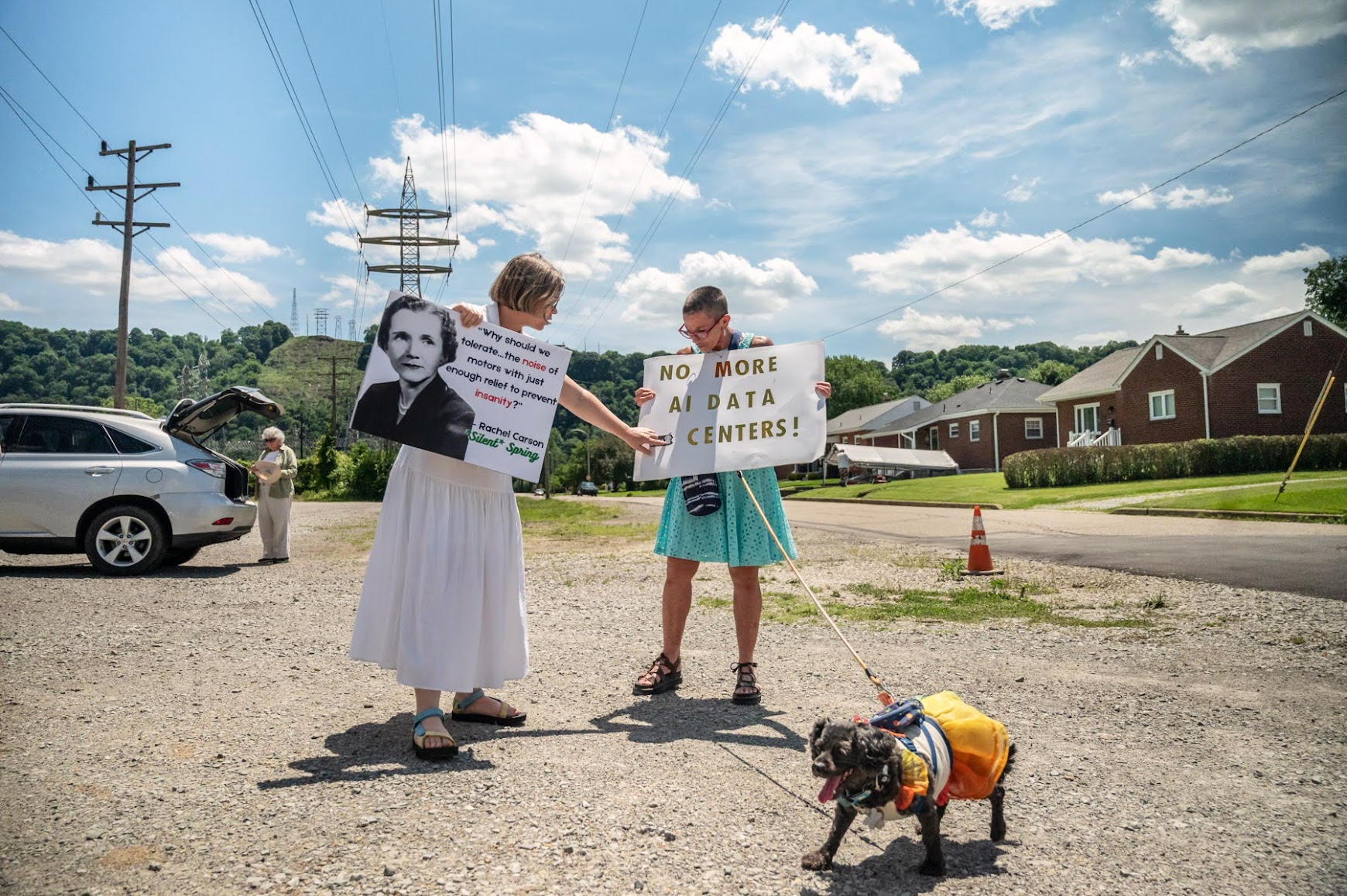
    Charolette Baierl (left), the Ohio River Valley regional organizer for Climate Reality Project, and Sally Simpson, a Ford City organizer, protest a planned data center near the Rachel Carson Riverfront Park in Cheswick, Pa., in June.Stephanie Strasburg

    To live in America in 2026 is to experience the constant anxiety of being watched by the government or big corporations — whether that’s on our phone or on the streets — and wondering when people stopped reading books, or whether that song was by a real person, or whether that video you just watched of the president (or from the president) is even real.

    This weekend came news of an actual event in China called the World Humanoid Robot Games in which one of the robots shattered Usain Bolt’s world record for the 100-meter dash. Who wants this? … other than a handful of billionaires who are also rapidly building their own remote high-tech cities to save themselves from the looming torches and pitchforks.

    They are going to need them. It was one thing when the Luddites trashed automated textile looms, when the meaning of work was up for grabs. That same threat is also posed by AI, which is starting to drag down the job market, but when robots take over track and field or pop music, people see that our fundamental humanity is under attack. That realization seems to have really kicked in this summer, and the future of our revolution is both exhilarating and somewhat scary.

    Acts of vandalism — like the Ohio attack on the Flock camera — or worse are becoming somewhat more commonplace. Acts of violence — like the gunshots fired into the home of an Indianapolis city council member who supported data centers — are reprehensible and not helpful to the larger cause. In the present moment, there is rising hope that AI can be reined in the right way: at the ballot box.

    When it comes to this issue, the ground beneath our feet may continue to keep shifting between now and Election Day. An article in Sunday’s New York Times described how the politics of data centers has scrambled a midterm election that was supposed to hinge on high gas prices and the growing threats to democracy. The piece noted that in Wisconsin and Florida — as well as Pennsylvania — the gubernatorial candidates from both major parties are now attacking the high-tech facilities.

    Yet, it’s hard to jibe the politicians’ embrace of populism with news that the AI industry and its related political action committees will spend as much as $200 million on the November elections. What will happen in 2027 and beyond if, and likely when, the American body politic doesn’t have the strength to slow down these sprinting robots? Will Morelock’s alleged destruction of one Flock camera seem like child’s play?

    The story of America in the 21st century has been a tale of widespread consensus that a grossly unequal and unfair nation is on the wrong track, yet bitter disagreement over whom to blame. Until now. The fight that no one saw coming — pitting everyday folks against billionaires and their robots, who can already outrun us — is about much more than an election for U.S. Congress. Today’s Luddites may be our best hope.

  • LeIbrahim Muhammad, LeBoul James, and the art of giving very Philly nicknames to LeBron James

    LeIbrahim Muhammad, LeBoul James, and the art of giving very Philly nicknames to LeBron James

    We know who King LeBron James is. But LeBoul James? He’s one of us.

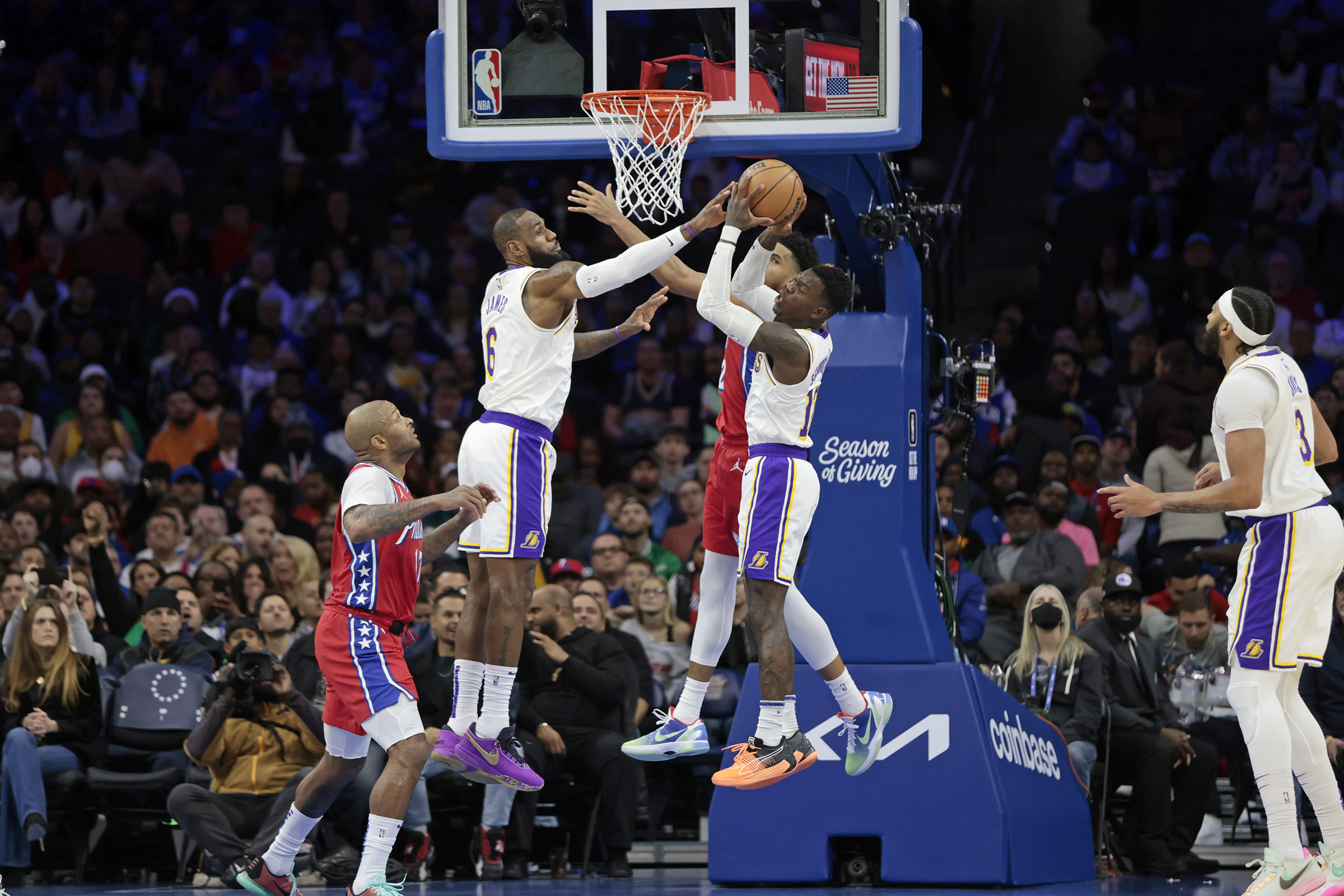
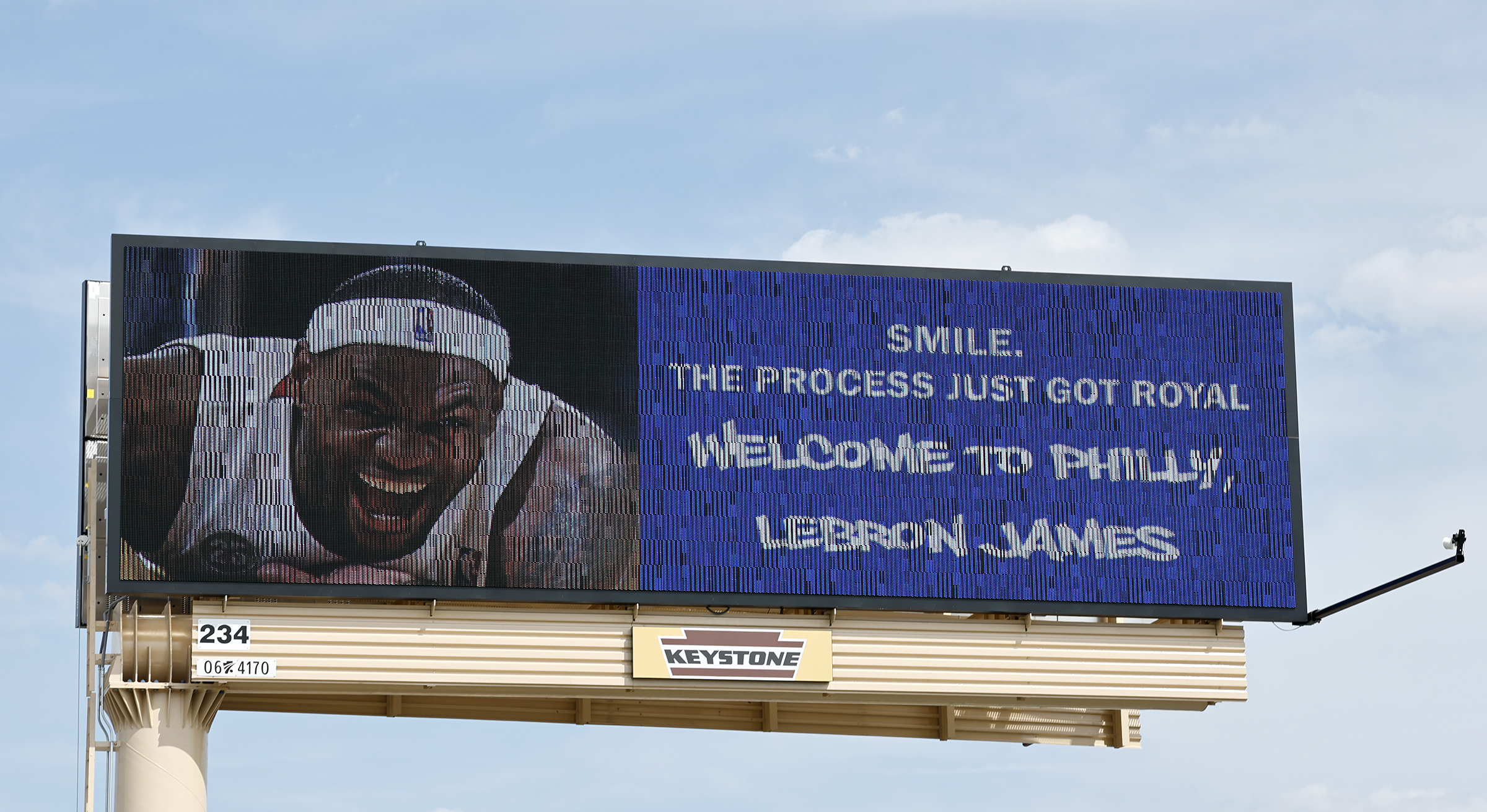
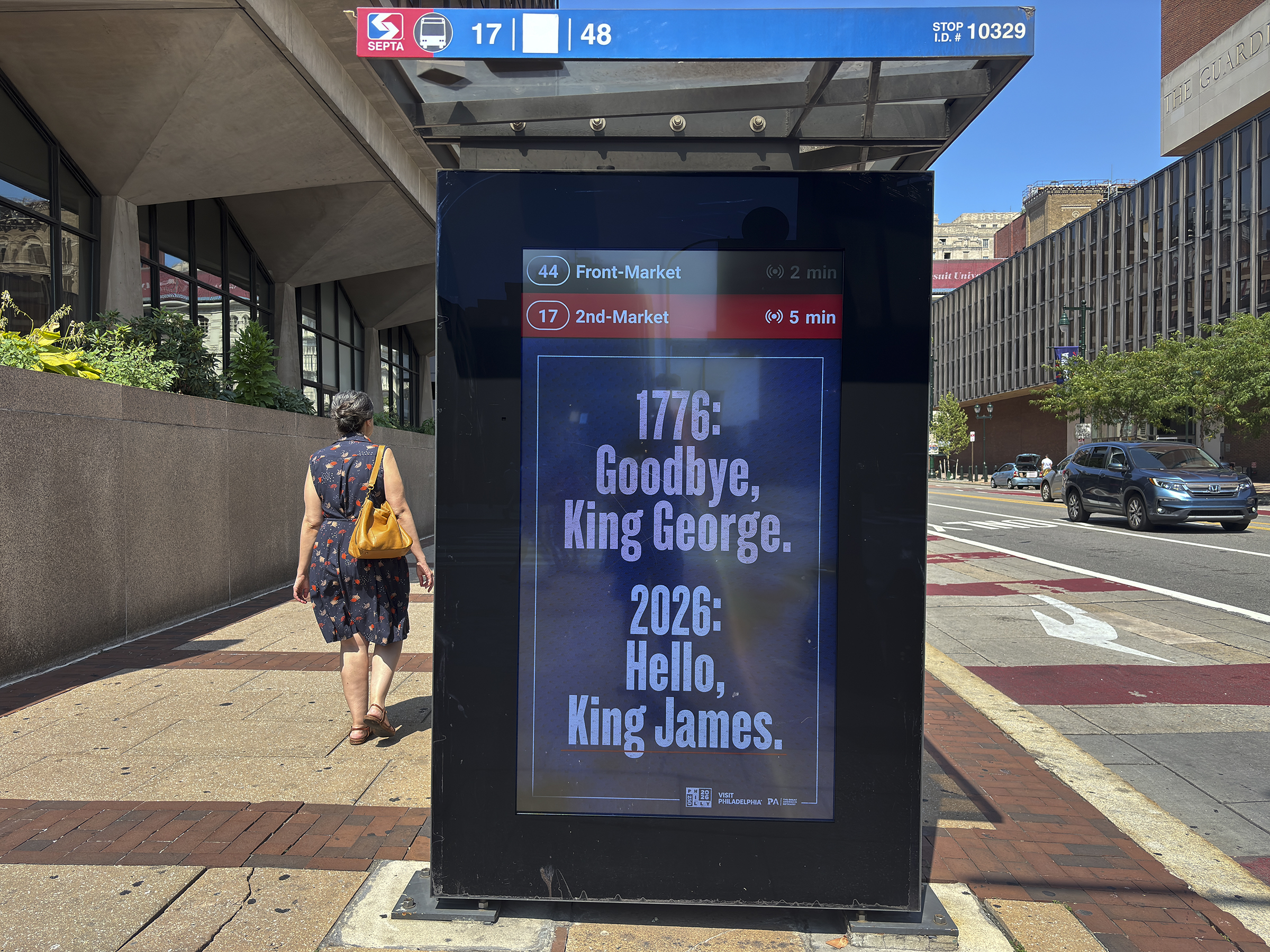
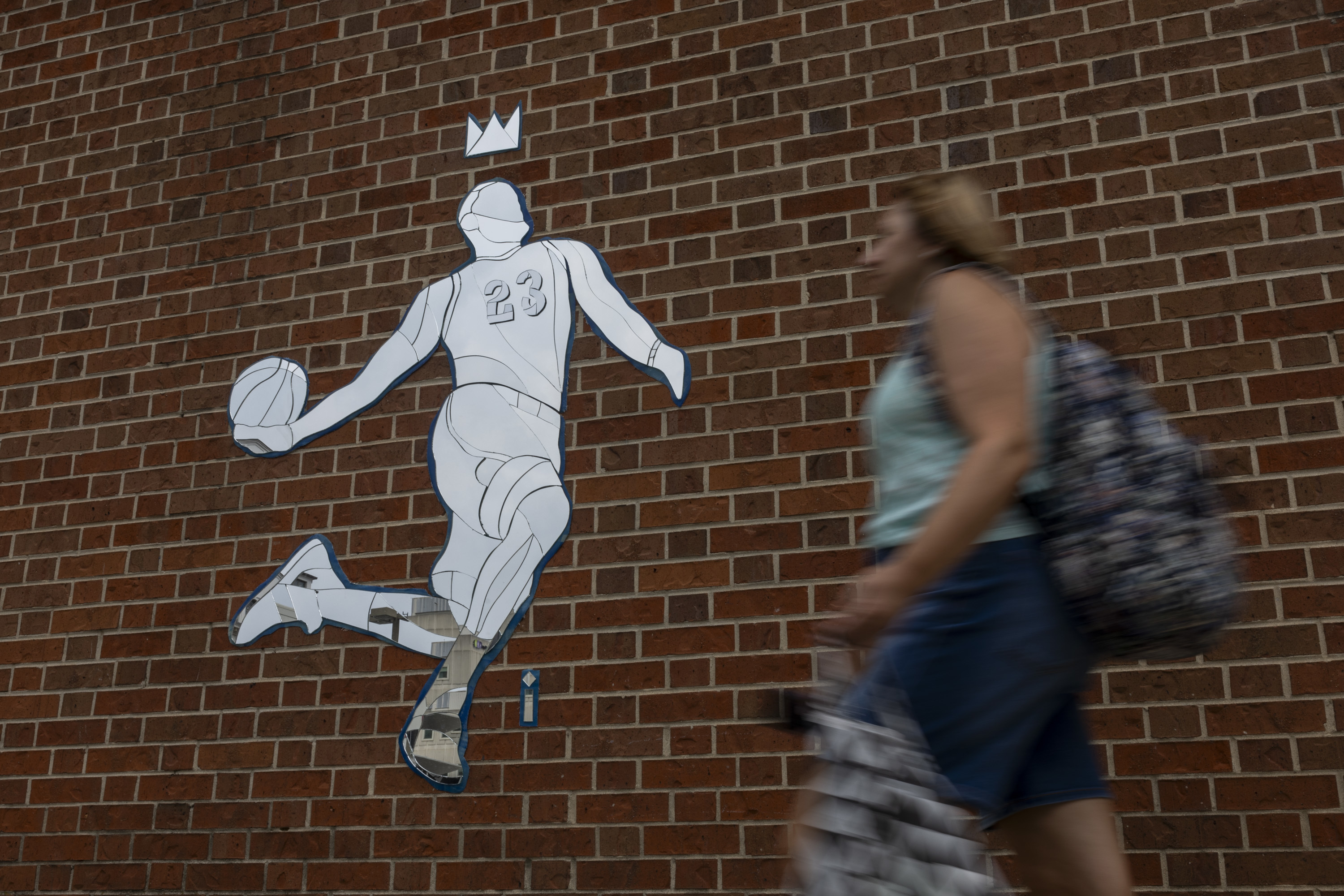
    Mere hours after James announced he was signing with the Sixers, Philadelphia fans started honoring him with public artwork, billboards, merch, sunburned backs, and his own state-designated day.

    But among fans’ biggest gestures of goodwill is trying to find James a Philly-coded nickname.

    “I like LeJawn. It’s so Philly,” said Saleem Lewis, owner of clothing label What Happened to Love and a Frankford native.

    Lewis said the rush to give James a local nickname reflects the NBA superstar’s natural kinship with Philadelphians.

    “If you’re not from here, you might not get it. But the jokes are all out of love,” he said.

    “I like the one I came up with, ‘Abdul Maalik James,’” said social media creator Jamaal Thomas, who created an AI image of James wearing a thobe and kufi.

    A billboard welcoming LeBron James along Packer Avenue, in South Philadelphia on July 24, 2026.Yong Kim / Staff Photographer

    Another moniker doing the rounds on social media is “LeIbrahim Muhammad.”

    The root of the nicknames and ensuing AI-generated memes is a fusion of hip-hop and Muslim cultures. These two elements are deeply embedded in the fabric of the city’s Black community, as evidenced by the influence of rappers like Freeway, Beanie Sigel, and PnB Rock, who “weaved the imagery, religious symbology, and practice of Islam into their lyrics,” said James Peterson, professor of literature at Delaware State University and host of Evening WURDs.

    Within this meme and nickname multiverse, Philly slang like jawn and boul — both with roots in the city’s African American Vernacular English — coexists with Black Muslim content creators throwing in names like Ibrahim and Abdul. The result is a high form of welcome extended to the King of the Hardwood from the City of Brotherly Love.

    A welcome sign for new Sixers LeBron James on a SEPTA bus shelter along Market Street in Center City on Saturday, July 25, 2026.Yong Kim / Staff Photographer

    “This is part of the reason the memes resonate with Philadelphians because whether you’re Muslim or not, the culture of Philadelphia is Islamic,” Peterson added. “You can’t go through places like Malcolm X Park or other areas of Philly without seeing the accouterments of the Islamic faith all around us. It’s not just the mosques; it’s the brothers and the sisters in the streets. It’s in the air in Philadelphia.”

    Also, as Lewis points out, “Philly embraces people who work, compete, and don’t back down. LeBron has been doing that for over 20 years.”

    A passerby is seen with a mosaic of LeBron James on Eighth and Market Streets in Philadelphia on July 28, 2026.Tyger Williams / Staff Photographer

    The ‘Philly beard,’ a thobe, and LeIbrahim Muhammad

    For West Philly native Max Johnson Dugan, a visiting professor of Islam at Trinity University, the memes highlighting Philly’s Black Muslim culture through James, who is a Christian, are a “brilliant” balance of humor and “self-seriousness.”

    “I’ve prayed next to people, packed food boxes, and volunteered at parks, or been in dialogue with folks who are dressed like those memes,” he said. “To me, it’s a beautiful thing that people can chuckle about this and live in a way that’s serious and significant to them.”

    Dugan said James’ beard may be familiar to Philly’s Black Muslims because it resembles a style many followers believe was donned and ordained by the Prophet Muhammad. It’s commonly known as a “Sunni” or “Sunnah beard” in Philly, and those outside of the city call it a “Philly beard.” Dugan said it’s possible content creators saw the similarity between James’ beard and others by practicing Muslims, and “put two and two together.”

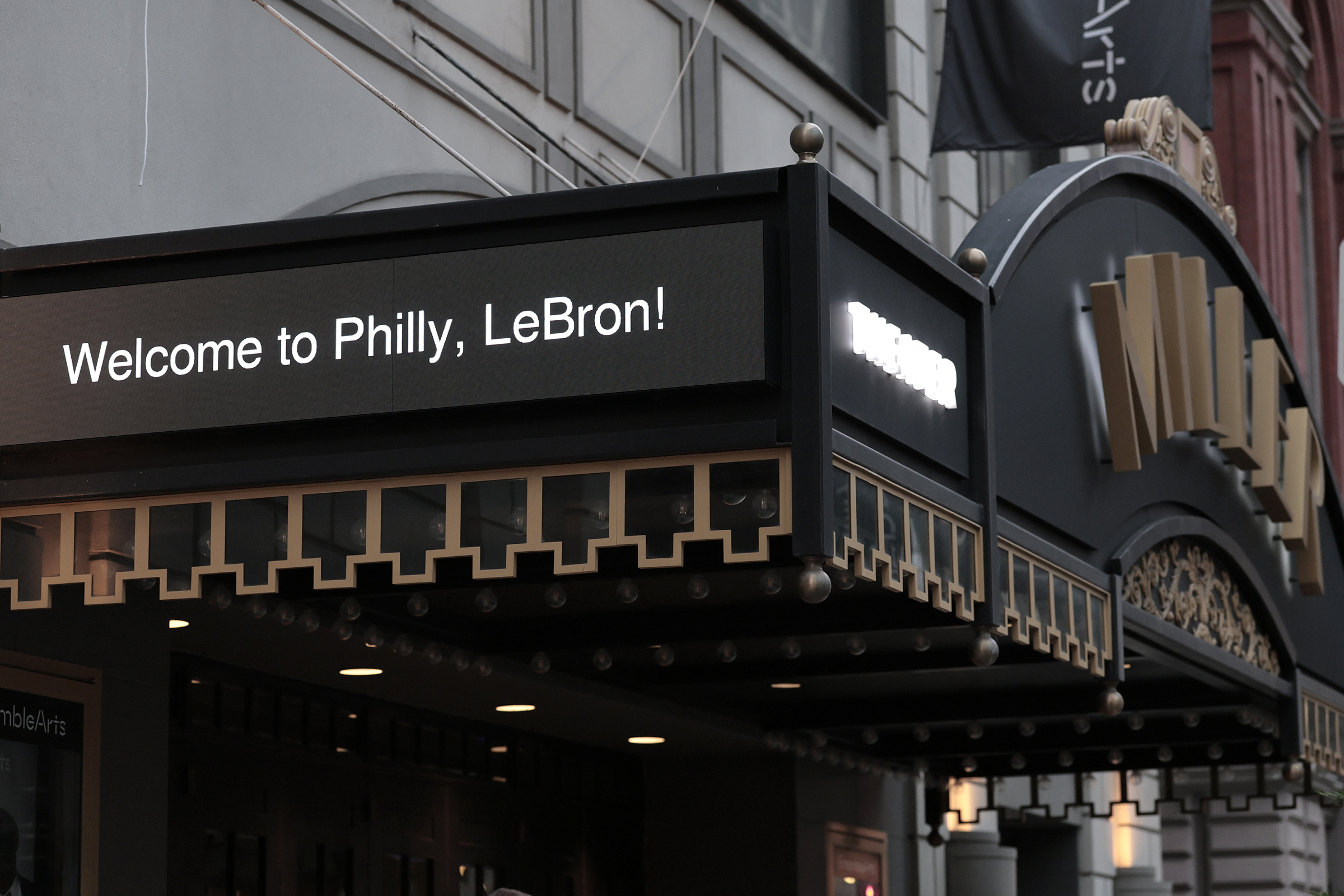
    The Miller Theater in Philadelphia welcomes LeBron James on July 29, 2026.Elizabeth Robertson / Staff Photographer

    The memes may be fabricated, Peterson said, but have a “kernel of truth,” that James is coming into a “Black Islamic world.” The doctored images of James in a kufi and thobe, shared by the likes of educator, author, and media personality Marc Lamont Hill and hip-hop artist D Sturdy, acknowledge James as a Philly guy, one of us, even before he steps foot in the city.

    “LeBron coming to Philadelphia means that all of Philadelphia embraces him. And that also means one of the largest Black Muslim populations [in the U.S.] and one of the most distinct Black Muslim cultures is embracing him, too,” said Peterson.

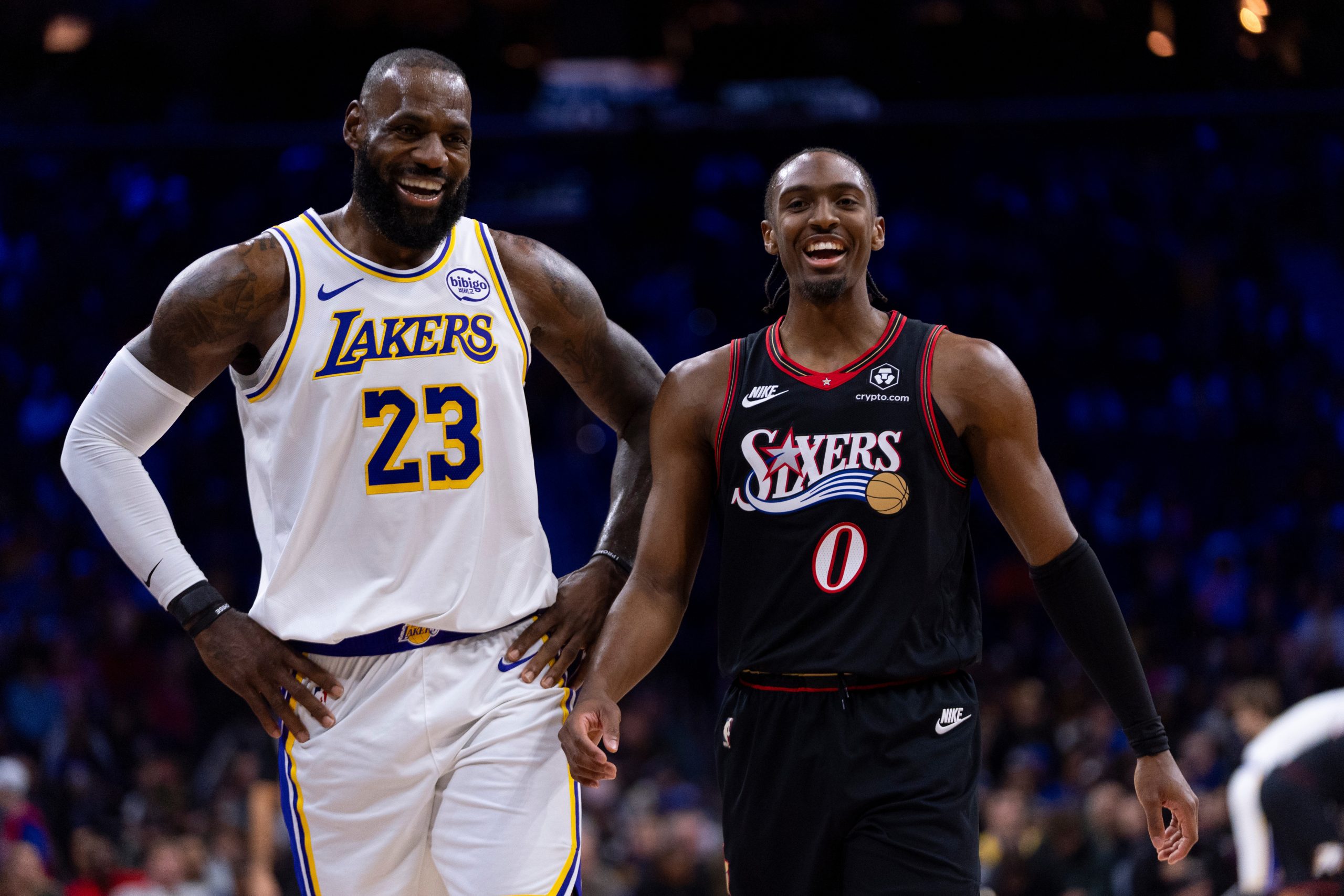
    The Los Angeles Lakers’ LeBron James shares a laugh with Philadelphia 76ers’ Tyrese Maxey during a game on Dec. 7, 2025, in Philadelphia.Chris Szagola / AP

    For Dugan, the memes are interesting in the way newly-traded star Jaylen Brown, who is Muslim and has traveled to Mecca to perform Umrah, hasn’t been welcomed with similar nicknames or memes in the same breath as James.

    “I don’t want to speculate,” Dugan said, “I would say it points to [James’] visibility and significance. It’s funnier to share a meme of [James in Muslim traditional wear] than it is to share a meme of [Brown].”

    “It has irony and tongue and cheek-ness,” he said.

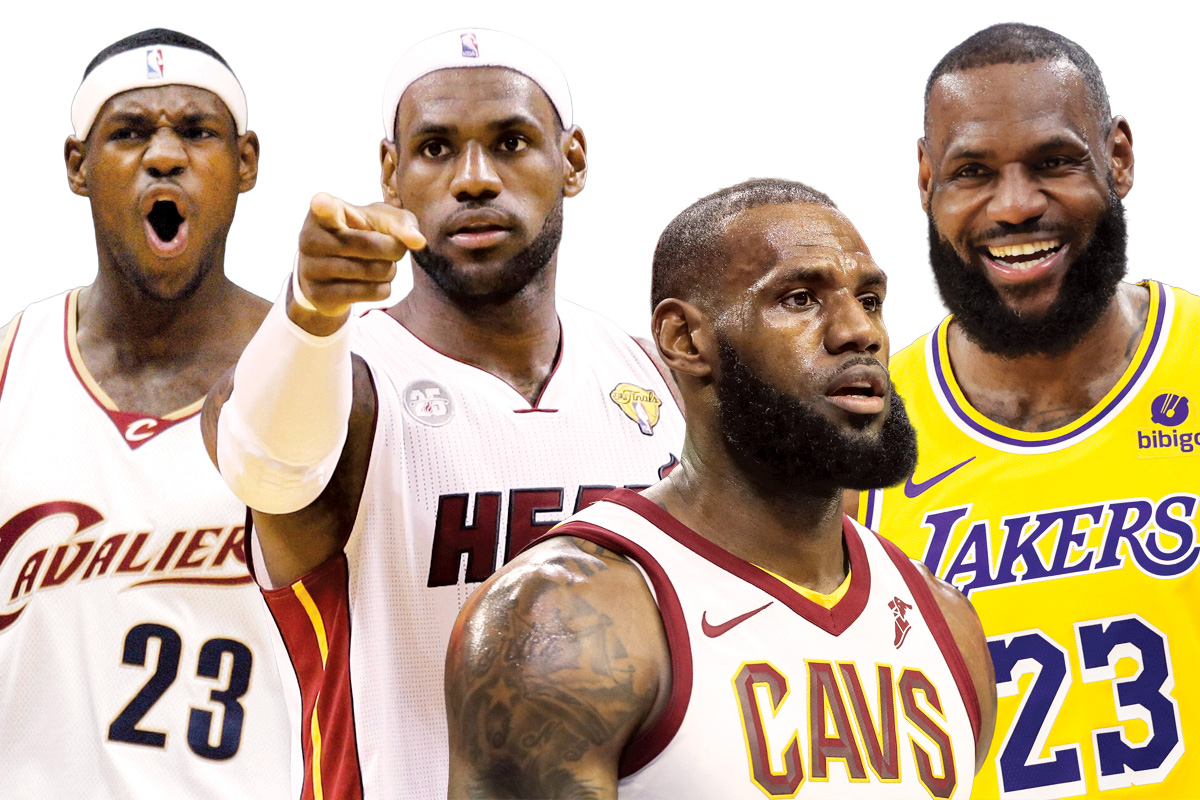
    Photo collage of LeBron James throughout his NBA career.John Duchneskie

    LeBoul James, the NBA champion

    North Philly-native Salim Weldon, co-owner of Whimsicle fruit pops, is confident James will live up to the name of “LeBoul,” another nickname that has appeared under scores of AI-generated social media posts.

    Some show James ordering at a Wawa, some have him astride dirt bikes and four-wheelers, and some show him standing outside of “papi stores” — a friendly term used by Black Philadelphians for corner stores often operated by Latin American men.

    The Philly word boul meaning boy, is a word James is already familiar with, thanks to his friend and North Philly-native Kevin Hart. The Sixer even said it in a recent Instagram post with the actor, who was giving his friend a crash course in Philly-isms while the two were golfing.

    “We’re going to help [James] with a Philly barber to make sure that he keeps his beard a certain way,” Weldon joked. “And as you can see, he and Kevin Hart are close, so he will help him get that Philly swag.”

    Quincy Harris, a Germantown-raised media personality and former host of The Q on Fox 29, said the early reactions are because of the championship dreams James helps Philadelphians imagine.

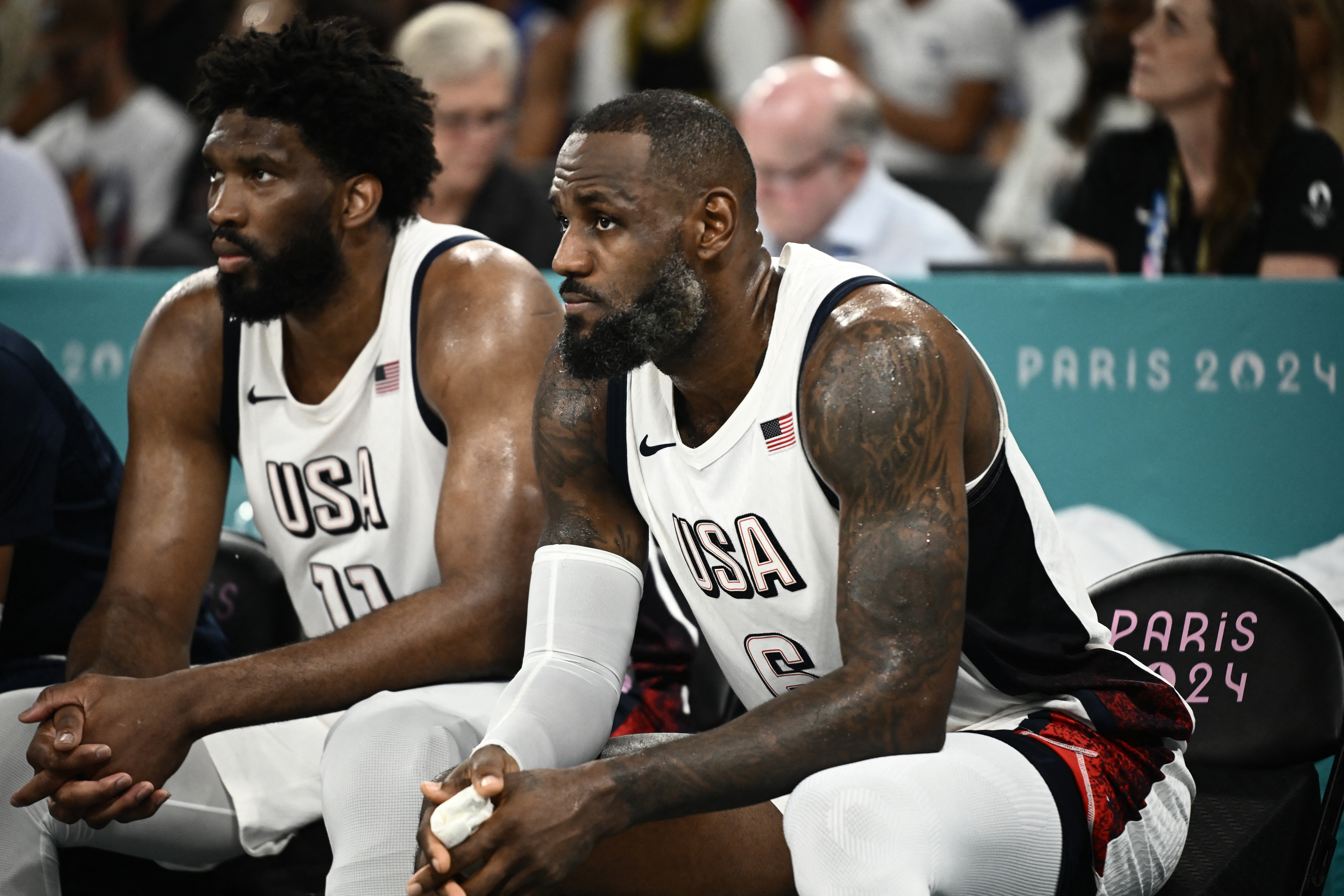
    USA’s #11 Joel Embiid (left) and #06 LeBron James react from the bench in the men’s semifinal basketball match between the USA and Serbia during the Paris 2024 Olympic Games on Aug. 8, 2024. (Photo by Aris Messinis / AFP via Getty Images)AFP via Getty Images

    “He’s a top five player to ever play the game of basketball,” he said. For him, the energy James sparked is reminiscent of the Allen Iverson era in the late 1990s and early 2000s.

    Peterson doesn’t quite agree. For him, Iverson remains the “archetype of a Philadelphia athlete.” Plus, can LeBron James truly ever be LeBoul, if he doesn’t live in the Philadelphia region?

    “Philadelphia fans want to hold you close. They want to see you walking around and moving around in the community,” he said, while acknowledging that James’ signing has brought a new level of excitement to Philadelphia.

    “I think that energy is just going to be injected back into the city. It’s going to be a great time,” Harris said, adding that he won’t “cosign” the trending nicknames.

    But there’s one he thinks will resonate with Philadelphians the most.

    “Five-time NBA champion.”

  • Philly has 100-year-old stormwater infrastructure and 72,000 easily clogged inlets

    Philly has 100-year-old stormwater infrastructure and 72,000 easily clogged inlets

    Helplessly watching stormwater fill the basement is among the most frustrating experiences for Philadelphia homeowners. It is especially bad if you are waiting for the city’s help to do something about it.

    In West Mount Airy, Arielle Wolfson, 37, said roads by her home “become a river” when it storms. She and her wife live at the bottom of a hill near the intersection of Mount Pleasant Avenue and Cresheim Road, where five stormwater inlet drains are responsible for keeping rainfall from growing into rapids as it sloshes downward. But for years, only one of the drains has been fully functioning, Wolfson said. The others have been mostly sealed shut by city repaving projects that raised the level of the street, but not the inlets built into the curb.

    When ankle-deep water slopes down into an alleyway that connects Wolfson’s home and nearly 30 others, it often floods her basement. Every rainstorm is nerve-racking, she said, and her efforts to alert the city, the water department, and City Council members had not resulted in change beyond an occasional inlet cleaning.

    Kelsey Hensley, Wolfson’s wife, said their frequent flood calculus is: “Do we go out with some friends, or do we stay home to monitor the basement?”

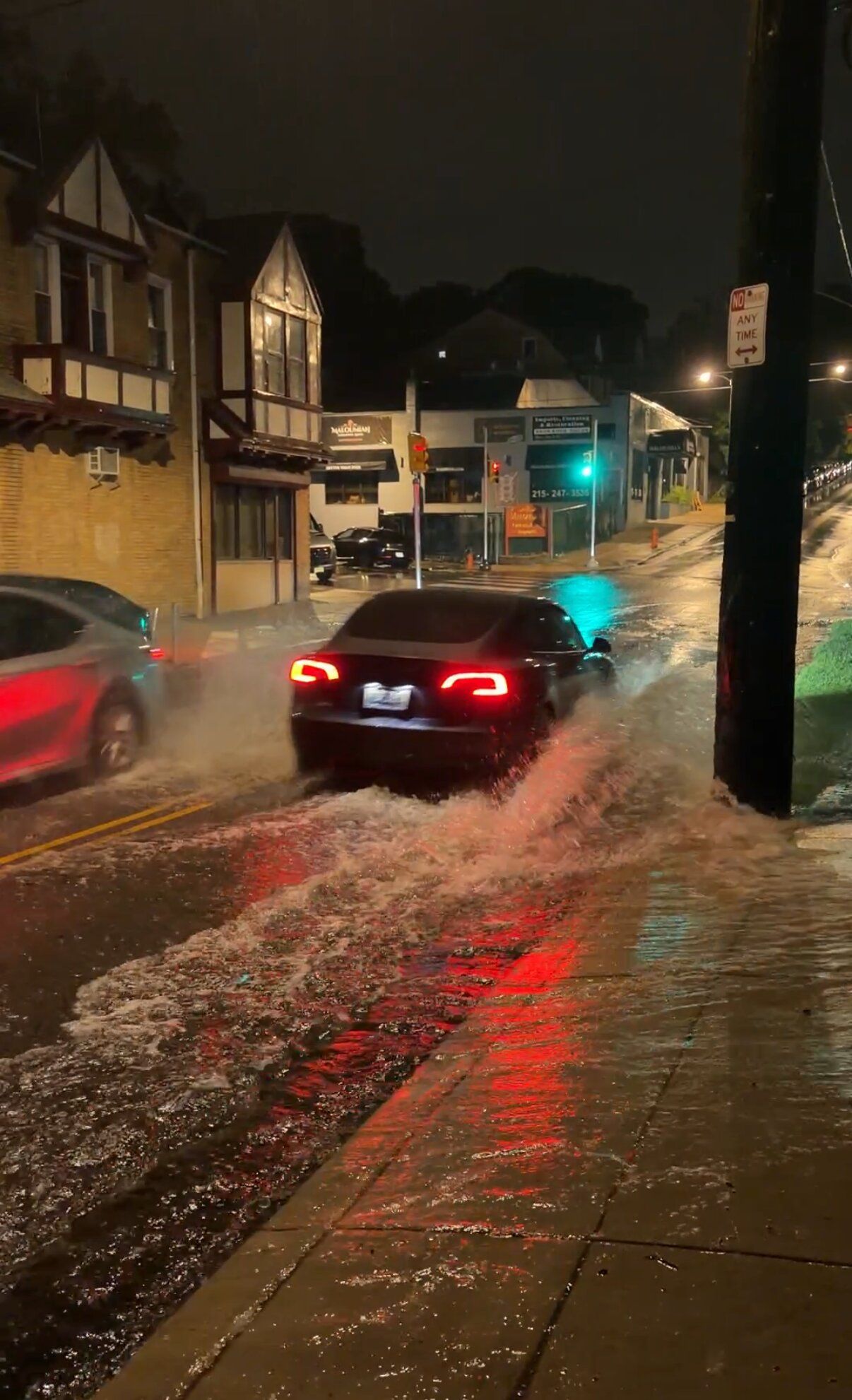
    Flooding near the intersection of Mt. Pleasant Ave and Cresheim Road in Mount Airy after an early August storm. The water often flows down the hill and into the basements of dozens of residents because the street’s stormwater inlets are not functioning properly.Kelsey Hensley

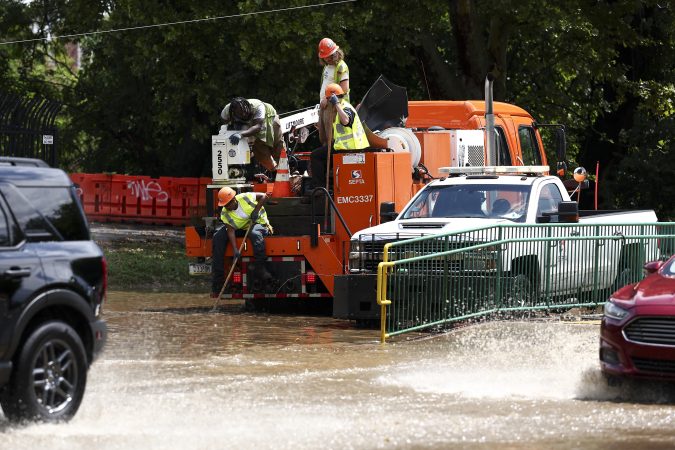
    Their anxiety is common in Philadelphia, where the city’s century-old sewer and stormwater infrastructure struggles to handle modern surfaces and roofs, increased rainfall, and a Delaware River that has risen by roughly a foot since the sewer system was built. And after 16 consecutive months of lower-than-normal precipitation, regular rainfall returned to Philadelphia in July and August, and brought flooding along with it.

    Philly has about 72,000 stormwater inlets, and it does not take much to clog them up — ordinary objects like tree leaves, dirt, trash, and other street debris can all be culprits, according to the Philadelphia Water Department. Last year, residents submitted almost 3,000 requests to the city’s 311 line for inlet cleanings, an Inquirer data review found, and the city is asking for help.

    “Across the city, The Water Department regularly checks all sewer drains and clears those that are clogged. … If they are able, we encourage residents to take part in the cleanup process before a storm comes,” city spokesperson Sharon Gallagher said in an email.

    As the planet continues to warm, the stress on Philadelphia’s flood-prone system only figures to increase, leaving more residents like Wolfson with dread when clouds gather overhead. As she spoke to The Inquirer, an afternoon rainstorm had just passed through.

    “I’m going down to the basement every hour just making sure it’s OK. So just the anxiety that’s pervasive among me, my wife, and other community members, it’s pretty unbearable,” she said.

    A frustrating wait

    Despite having roughly one stormwater inlet for every 20 Philadelphia residents, the city has generally responded to 311 requests for clogged stormwater inlets quickly. Since Mayor Cherelle L. Parker came into office in 2024, the city has closed inlet cleaning requests in under four days on average.

    But 311 data may not capture the complete scope of the issue. Some residents may report their issues directly to the water department.

    Alessia Cognata (left, of Downingtown), 5, and Sofia Lubrano, 7, of Thornton play in the rain outside of Citizens Bank Park on Tuesday, July 1, 2025. The cousins were with their families, who decided to continue their tailgate party even after the Phillies game had been postponed because of heavy rain.Elizabeth Robertson / Staff Photographer

    And clogged inlets are just one part of the Philadelphia flooding experience. Mary Catherine Doyle, 56, has been in the middle of a Sisyphean ordeal at the hands of the water department’s slow, antiquated system of hard-copy paperwork.

    She and many of her neighbors along the 2900 block of Pennsylvania Avenue in Fairmount experienced significant basement flooding following storms on July 5. Doyle’s basement was ruined, she said; rainfall, debris, and sewage had destroyed her home office, bathroom, and furniture.

    Her insurance covered the cleanup, but her policy requires she install a backwater valve to prevent future flooding. The valves let wastewater out of homes, but seal to prevent other water from coming back up through pipes.

    The water department has a basement backup protection program where residents can apply for free backwater valve installation. Doyle and over 10 of her neighbors applied after the storm, but a contractor did not show up until Aug. 12.

    Doyle said the water department explained the delays at different points by telling her it lost her physical paperwork, was understaffed, or could not sign off on one approval until a commissioner returned from vacation.

    “I don’t understand where I’m living. I can buy a house in Arizona electronically, but I have to wait … days for someone to come here,” Doyle said.

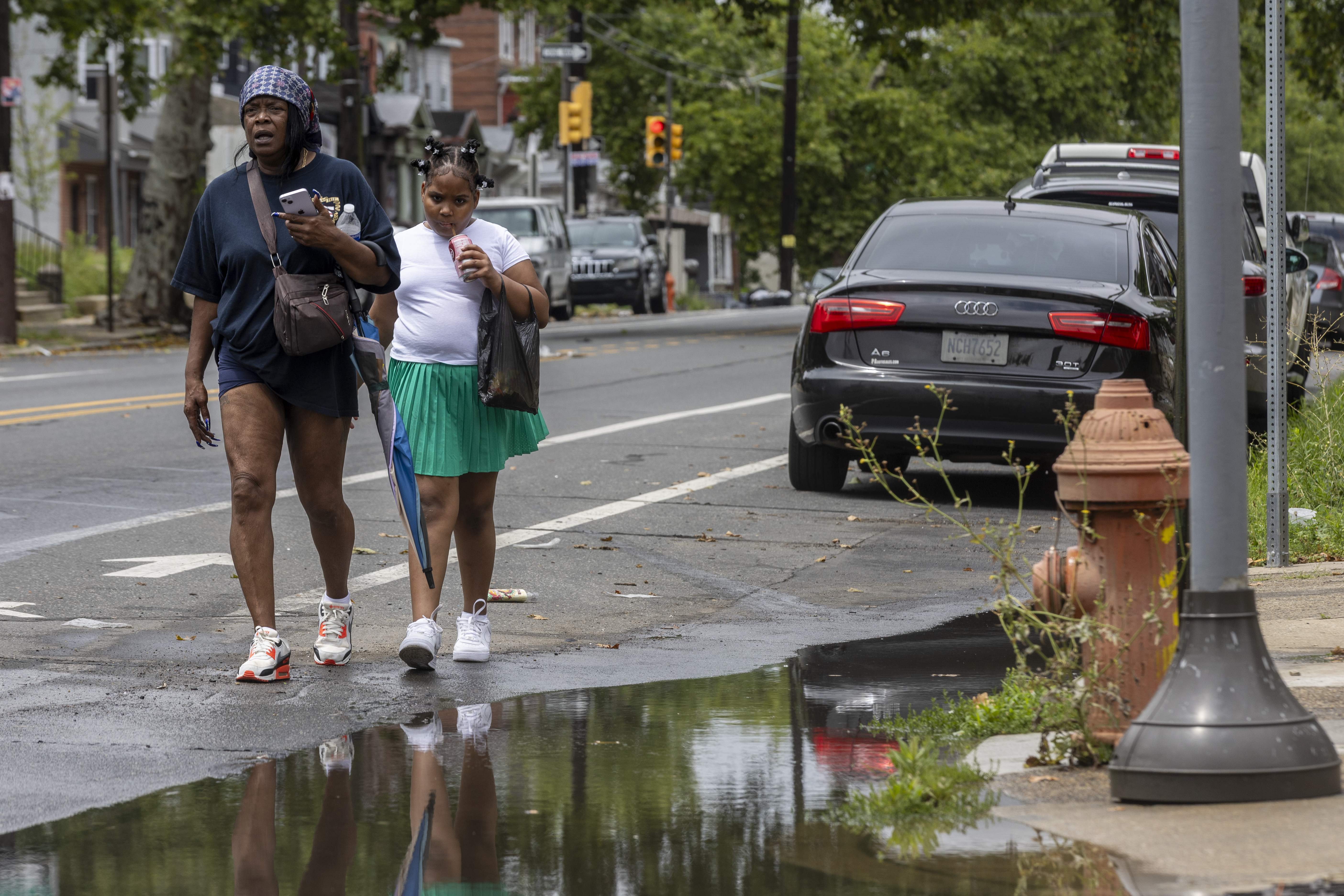
    A mother carries an umbrella while walking around a flooded sidewalk with her daughter by 15th and Erie in North Philadelphia during a flood watch on Monday, July 6, 2026.Aidan T. Gallo / Staff Photographer

    While the city’s water department is ready and willing to perform routine maintenance to prevent flooding, residents with more complex, systemic concerns often end up waiting for fixes while at the mercy of the atmosphere. Gallagher said the city is doing what it can to modernize the city’s flood infrastructure and ready itself for the demands of the future.

    “Teams are constantly working to design and construct additional projects that will increase capacity and help manage water from the increased intensity of seasonal storms,” she said.

    Luckily for Wolfson, she discovered earlier this month that the asphalt had finally been removed from the front of three of the closed inlets, plus some others further up on Cresheim Road.

    Wolfson and Hensley are happy there is finally some progress. But they wish the city would be more communicative and at least give them a timeline for the fix, they said, instead of relative silence or ambiguity.

    “You obviously want a city government to work for its citizens. … It’s extremely, extremely stressful,” Wolfson said. “It’s expensive, and it’s just frustrating because, in my mind, this is a pretty easily solvable issue.”

    Staff writer Joe Yerardi contributed to this article.