Tag: topic-link-auto

  • Phillies installed artificial turf at FDR Park field without environmental permit, record shows

    Phillies installed artificial turf at FDR Park field without environmental permit, record shows

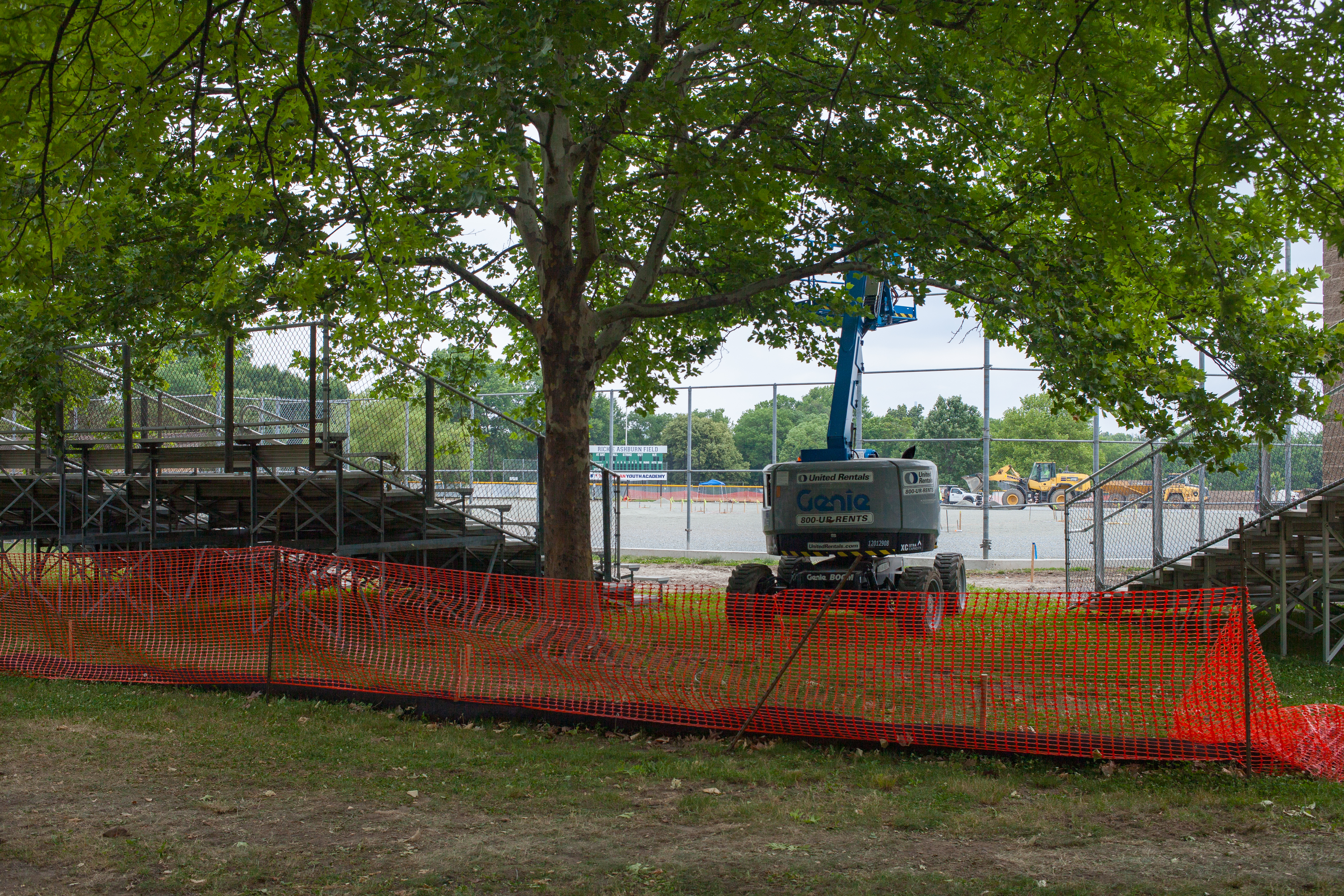
    The Philadelphia Phillies installed artificial turf at Ashburn Field in FDR Park in July but still have not obtained a required state permit, according to Pennsylvania Department of Environmental Protection records.

    Major League Baseball and Phillies Charities Inc. held a ribbon-cutting for the renovated field, named after Hall of Famer Richie Ashburn, on July 10. It was part of festivities leading up to the MLB All-Star Game.

    The renovation of the decades-old field included removing natural grass in favor of a “high-performance synthetic turf system and upgraded drainage” at the five-acre complex, according to an MLB news release.

    However, documents from the Pennsylvania Department of Environmental Protection (DEP) show that the Phillies never obtained the required permit designed to address erosion control and stormwater release at the site.

    Under Pennsylvania law, anyone disturbing more than one acre of ground is required to obtain a permit for stormwater discharges before beginning the work and explain how the work will affect drainage going forward.

    DEP spokesperson Robyn Briggs said in an e-mailed statement that the agency is “currently reviewing the Phillies’ permit application and the compliance situation at the site. Because this matter is still under review, DEP cannot comment on whether any enforcement action or penalty will be taken.”

    The permit review is listed as “paused,” the statement said, because the DEP is still waiting for the Phillies to address outstanding issues.

    “Once the necessary information is received, DEP can continue its review,” the statement said.

    City approval?

    Bonnie Clark, a spokesperson for the Phillies, said in an e-mailed statement that “the recent upgrades to Richie Ashburn Field were undertaken in coordination with the city and relevant governmental agencies.”

    Clark said the city authorized the work to proceed while permit applications were in process so the upgraded field could host All-Star Week events.

    “We expect to obtain all necessary final approvals as early as next week,” Clark said.

    Clark did not specify who at the city, or what department, the Phillies were working with. City officials did not respond to requests for comment.

    When asked if this was proper procedure, Briggs reiterated that the DEP is “reviewing the compliance situation at the site” and noted the state law that requires the stormwater permit for construction-related earth disturbance.

    Typically, state law supersedes city authority.

    What is Ashburn Field?

    Ashburn Field was part of an investment MLB made in Philadelphia’s youth baseball community for the 1996 All-Star Game. The field, owned by Philadelphia as part of its park system, is managed by the Phillies. It is the first large turf field installed at FDR Park.

    MLB said the newly renovated field will serve about 8,000 participants in the Phillies Reviving Baseball in Inner Cities and Youth Academy programs, “while providing a weather-resistant playing surface in an area where rain often forces cancellations.”

    ‘Deficient’

    The Phillies notified the DEP they were applying for a permit on May 13.

    On May 27, the DEP sent a letter to the Phillies notifying the team that it needed additional information and logged 32 items that needed to be addressed, according to documents obtained by The Inquirer. That letter noted that final plan drawings had not been submitted, other drawings failed to include the project’s boundary, and not all water discharge areas were noted.

    A local engineering firm hired by the Phillies responded in June to each point.

    On July 7, the DEP sent another letter to the Phillies again noting technical deficiencies. And it sent another letter on July 24, about two weeks after the ribbon cutting, noting an outstanding deficiency and telling the Phillies to resubmit information in coordination with the Philadelphia Water Department.

    The permit is still listed as pending on the DEP website.

    The fight against artificial turf at FDR Park

    Adding artificial turf to Ashburn Field is the latest in a yearslong debate about changes to FDR Park.

    In 2019, the city’s parks and recreation department released a master plan to overhaul FDR Park, including the installation of 12 artificial turf fields in the footprint of a former golf course. (Those fields are separate from Ashburn Field.)

    The department said average rainfall left sections of the park unusable for days because of frequent flooding. Officials predicted that flooding would only worsen because of climate change and said artificial turf fields would provide better flood control. The plan would require cutting down dozens of trees.

    But that was pre-pandemic.

    As COVID restrictions shut down the world, the golf course returned to a wild state and became a beloved space by dog owners, hikers, and birders. They nicknamed the space “the Meadows.”

    Local opposition to the city’s plan grew, with critics objecting to the use of artificial turf amid natural lands. A grassroots group of South Philadelphians formed the Coalition to Save the Meadows, which has been vocal in its efforts to stop the park overhaul.

    At the same time, the fields drew support from youth athletic clubs.

    In March 2024, 11 South Philly residents filed suit calling for a stop on all work across FDR Park.

    In May, Orphans’ Court Judge Sheila Woods-Skipper denied the critics’ request to temporarily stop work on the park as the trial played out.

    In a recent social media post, the Coalition to Save the Meadows asked why the Phillies were allowed to move forward on Ashburn Field without the permit.

    “PA DEP regulations and permitting requirements exist for a reason: to protect our waterways, watershed, and the people and wildlife that depend on them,” the post read. “So how was this project allowed to move forward without a permit — and will there be consequences?”

    A legacy of artificial turf

    Although Citizens Bank Park, the home of the Phillies, has a natural grass field, the team is no stranger to artificial turf.

    The Inquirer reported in 2023 that six former members of the Phillies who played on the artificial turf field at the former Veterans Stadium died of brain cancer.

    The article noted that the death of former Phillie David West in 2022 came at a time when there was growing scientific concern about the perils of PFAS, known as “forever chemicals” because of their resistance to breaking down.

    PFAS were used to make the AstroTurf that was used at Veterans Stadium. The Vet opened in 1971 and was demolished in 2004.

    For Ashburn Field, the Phillies also installed AstroTurf. However, AstroTurf says on its website that it now uses a PFAS-free formula. A company news release on Ashburn Field said the infill for the new turf uses an organic material made from cork and olive.

  • ‘The people are amazing’: How skill shares develop community in Philly’s niche sports scenes

    ‘The people are amazing’: How skill shares develop community in Philly’s niche sports scenes

    For many Philadelphia sports fans, finding community is as easy as yelling, “Go, Birds!” into a crowd. But for those who participate in niche sports, it isn’t always that simple.

    However, inside a South Jersey gym during one of the hottest weekends of the year, one group has found a way to flourish.

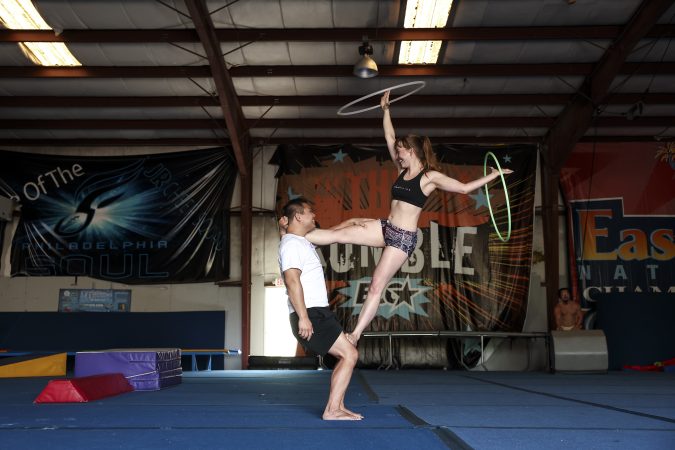
    PhillyAcro SkillShare is a collection of locals and travelers connected to teach and learn what they know about acrobatics. The group of 12 that assembled at Power Athletics in Atco for a PASS event on July 5 spent the afternoon practicing skills ranging from headstands and hula-hooping to handstands 10 feet in the air while perched on someone else’s shoulders. Newcomers and regulars alike were there not just to train, but to find and build community.

    “The best part is a combination of connecting with different people and working on different skills,” said Robert Li, the founder and organizer of PASS. “It’s so unique and special to see people come together and be supportive of each other’s goals.”

    Eric Swanson, of Raleigh, N.C., and Bri Beil, of Bath, Pa., work together during a Philly Acro Skill Share.Monica Herndon / Staff Photographer

    Different forms of skill shares have developed across communities in Philadelphia as a way to make sports more accessible in cost and experience. Li, who is based in Old City, turned to the skill-share model to grow deeper roots in Philadelphia’s acro scene.

    The PhillyAcro SkillShare charges around $20, but the club also hosts acro jams, free sessions in which members gather to swap balances and tricks in public, often at Independence Park or in Rittenhouse Square. The jams are open to all and often are the first exposure many people have to the sport. Once they get bitten by what PhillyAcro members call “the acro bug,” many go on to attend the group’s more structured skill-share events.

    “Everyone’s friendly and nice,” Li said. “Even at the jams, you just show up, and if you’re new you can say, ‘Hey, my name is so-and-so. I want to try acro.’ And then people will show you, whether you’ve never tried anything like it or you were a gymnast for years.”

    Robert Li lifts Dawn Trucksess in a skill called the “High Hangle Dangle,” during a Philly Acro Skill Share.Monica Herndon / Staff Photographer

    The trade-and-barter system isn’t new. It’s most common in the arts world; Philadelphia’s public libraries even offer crafting skill shares built on the same principle. But small local sports communities — including acro, arm wrestling, ultimate Frisbee, and even foosball — have begun following a similar method, offering an alternative to adult clubs that can be expensive or provide few opportunities to learn a new sport.

    For many of those involved in PhillyAcro, the sport is new, but the skill set is not. The group attracts many former gymnasts, dancers, and cheerleaders, who repurpose foundational abilities in their adult lives.

    “I was a college cheerleader and cheered all growing up,” said Juliana Martell, a real estate broker and longtime PhillyAcro member. “I coached for a while just to stay in the sport because it’s a lot of fun. Then I found acro and I was like, ‘Wow, this is safer, it’s easier on your body, and the people are amazing.’”

    Cam Gutgsell, of Laurel, Md. (center) watches Bri Beil and Eric Swanson work on a skill called “L-basing.”Monica Herndon / Staff Photographer

    Holding on to the sports played in youth is what has many people turning to skill shares to reconnect with their roots and teach others.

    Erike De Veyra, the founder of Design Gym, a creative studio in Olde Kensington, was once a competitive swimmer. A friend’s request for help training for a triathlon’s swimming leg inspired her to reconnect with the sport by starting her own skill swap club.

    “When we began, I realized swimming was a skill I could teach,” De Veyra said. “So we started first with a form that kind of said, ‘Hey, what skills do you have?’ and went from there.”

    At one of the recent skill-swap events, De Veyra held swimming lessons at the local public pool. Since then, people have volunteered their knowledge in rug making, folk dancing, Pilates, weightlifting, and more.

    Like other skill-sharing leaders, De Veyra says the goal was more than learning new things, but creating an accessible community.

    “Skill swap is completely free,” she said. “The only thing that I ask is to bring a snack to share. Whether we’ve had three or eight people, somehow we still talk for the whole two hours.”

    Though skill swap is open to all skills — one person teaching plumbing in exchange for lessons in powerlifting — sports come up frequently as a need in the community.

    “Beyond kids, the outlet for adults in sports diminishes even further,” De Veyra said. “There are adult rec leagues, but not often for beginners or people wanting to learn a sport or learn a skill. How daunting is it to go into something and be like, ‘Hey, I want to play pickleball, but I have no idea how to play?’ You see people say, ‘Oh, these are for beginners,’ but is it?”

    For those beginners not ready to join a rec league, some sports offer skill-share-type platforms in the form of pickup games. One of the most popular sports doing so is ultimate Frisbee. There are 18 pickup groups in the area, and one of the most popular is Penn Park Pickup, which has gathered more than 1,600 members since forming more than 20 years ago.

    “Pickup is less commitment and less money, and this pickup plays four times a week,” said Vishu Doshi, an HVAC technician who’s been playing pickup at Penn Park for 13 years. “I didn’t know anything about it before I started playing, but it’s a great, welcoming, and supportive community. I’ve met a lot of friends there that I’ve remained friends with over the last almost 15 years.”

    The exposure to the sport often leads to further investment in the sport, but also in the athlete’s community.

    That draws people to Val’s, a lesbian bar where a table is set up in the back once a month. The table is a designated arm wrestling platform, and patrons who approach shake out their wrists and prop up their elbows to find out who has the strength to pin their opponent after receiving a quick lesson from Jett Biggert.

    Biggert is the founder of Queer Arm Wrestling. After launching QAW as a live show in 2024, Biggert and other participants found themselves drawn to the informal skill-sharing and community-building that grew around it.

    QAW now hosts skill shares once a month, and the event quickly became the group’s most popular. Anyone is welcome to come learn how to properly arm wrestle and then compete after self-dividing into two groups: Noodle Arm and Popeye.

    The groups hold low-stakes competitions throughout the night to swap and learn techniques and find the best wrestler of the night. But Biggert says it’s really about meeting new people while trying new things.

    “Skill shares in particular I like a lot more because there’s no stakes in this,” Biggert said. “We’re doing this to have fun. We’re doing this to meet people.”

    As adult recreational sports leagues continue to rise in popularity, skill shares provide an easy way to learn new sports and reconnect with old ones, while supporting the community appeal of being part of a team.

    “I think there’s a new wave of Philadelphians coming in,” De Veyra said. “People looking for a place to start to get connected to physical activity and others, and when you don’t know where to begin, skill swaps are a great option.”

  • Phillies announcers nail Kyle Schwarber’s game-winning ‘Schwarbomb’

    Phillies announcers nail Kyle Schwarber’s game-winning ‘Schwarbomb’

    Were we expecting anything less?

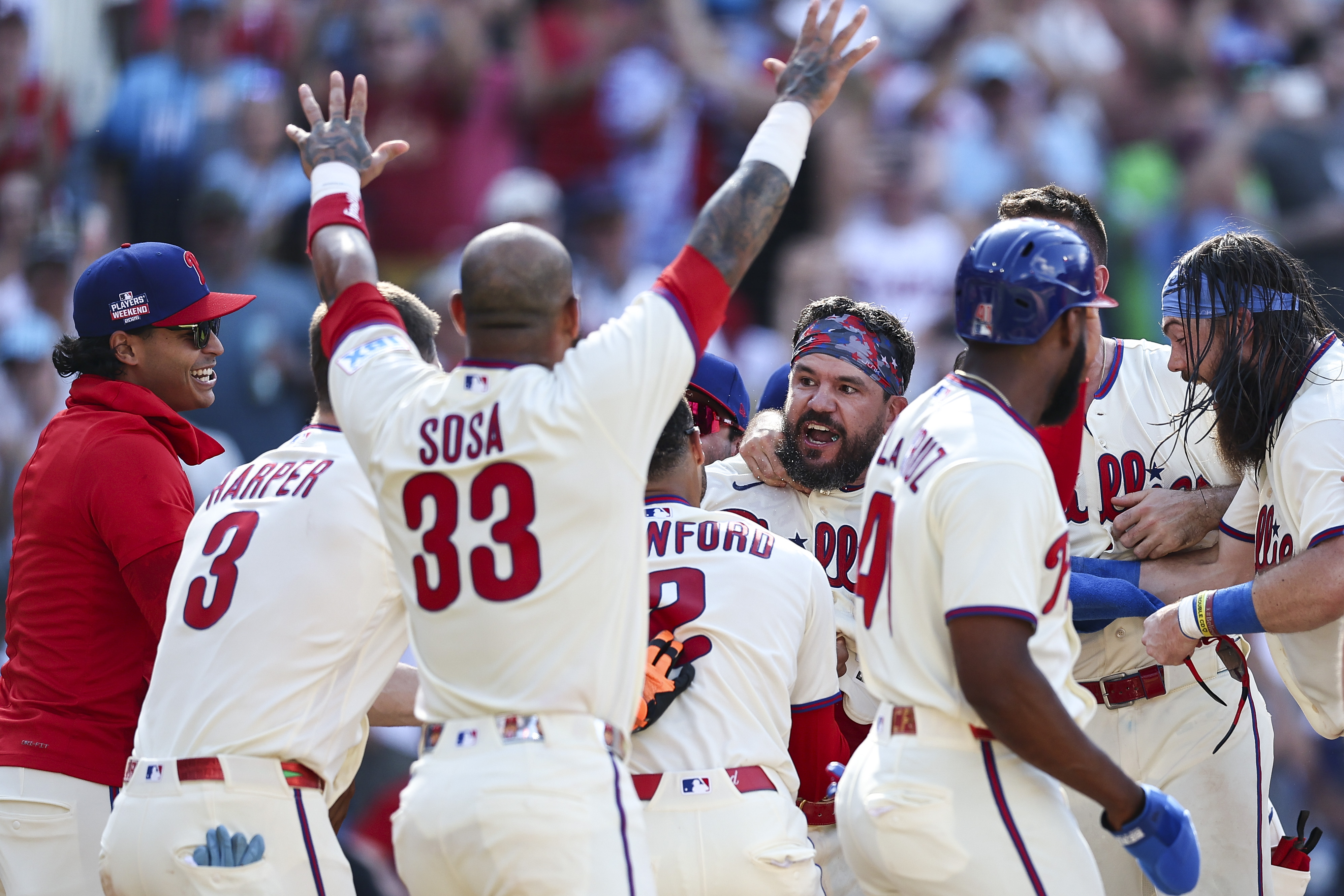
    With two outs in the bottom of the ninth inning, Kyle Schwarber sent a jolt through Citizens Bank Park with the team’s first walk-off home run in more than three years, securing a 6-4 win and a sweep against the St. Louis Cardinals.

    The game-winner capped off an unprecedented comeback in the bottom of the ninth inning, with the Phillies losing 4-0 and down to their final out. But Edmundo Sosa’s three-run double and Bryan De La Cruz’s game-tying single set the table for Schwarber’s moment to shine.

    “We have watched hundreds, if not thousands, if not tens of thousands of Phillies games together,” longtime NBC Sports Philadelphia host Michael Barkann said to open Sunday’s postgame show. “That might be the greatest regular-season finish I’ve ever seen.”

    It was October vibes on 94.1 WIP, with longtime play-by-play announcer Scott Franzke reaching “Bedlam at the Bank” levels with his call of the historic “Schwarbomb.”

    “It’s over! It’s over! Kyle Schwarber with a walk-off home run into the hedges of dead center field,” Franzke yelled during the broadcast. “And the Phillies have absolutely stunned the Cardinals!”

    His partner, former Phillies pitcher Larry Andersen, added in joyous disbelief, “Wow! It does not get any better than that.”

    Over on NBC Sports Philadelphia, John Kruk was uncharacteristically silent when Schwarber’s game-winner sailed out of the stadium. But Tom McCarthy, in his 20th season as the TV voice of the Phillies, wound things up when he realized Schawarber’s ball was gone.

    “Back toward the wall. It is … OVER!” McCarthy said as former World Series MVP turned announcer Cole Hamels cheered beside him.

    As McCarthy noted, Schwarber’s home run was hit so hard it went off the top of the batter’s eye in center field, about 460 feet from home plate. According to NBC Sports Philadelphia’s John Clark, it was the first Phillies home run to travel over the batter’s eye into Ashburn Alley since Darick Hall’s blast in 2022.

    “He’s a strong human being,” Hamels said of Schwarber.

    “Are there any words to capture this?” McCarthy asked Schwarber following the game.

    “That one’s wild,” Schwarber shot back. “That’s why you never quit.”

    Spanish radio announcers Angel Castillo and Bill Kulik had a tremendous call of their own, captured and shared on social media by Phillies clip king Nick Piccone.

    As with most their calls, you don’t have to understand Spanish to feel the energy and excitement of Schwarber’s game-winning blast.

    All the excitement is warranted. The Phillies, who lost 10 straight games in April, have quickly won nine straight and are closing in on the division-leading Atlanta Braves.

    It’s also been a minute since the Phillies have had a similar comeback. The last time they won a game trailing by four or more runs with two outs in the bottom of the ninth was more than four decades ago, when Bo Diaz hit a walk-off grand slam to win it against the New York Mets.

    “Unbelievable! beloved Phillies announcer Harry Kalas shouted during the 1983 game in audio unearthed by 97.5 The Fanatic host Ray Dunne.

    More Phillies tidbits

    Phillies players celebrate Kyle Schwarber’s game-winner Sunday. Monica Herndon / Staff Photographer
    • Schwarber’s bomb was the 209th walk-off home run hit by a Phillies player since 1900, according to Larry Shenk, the team’s former public relations guru. In total, 131 Phillies players have hit walk off homers, with Mike Schmidt leading with 10. Sunday’s was Schwarber’s second with the Phillies.
    • Schwarber is also closing in on Babe Ruth. Since having joined the Phillies in 2022, Schwarber has hit 226 homers, second-most in the first five seasons with a team in MLB history. He’s now just nine behind The Bambino’s 235 homers with 29 games remaining.
    • The Phillies have swept three straight series for the first time in 16 years. They’re also 16-5 in August so far, tops in all of MLB.

    Phillies standings

    NL East

    window.addEventListener(“message”,function(a){if(void 0!==a.data[“datawrapper-height”]){var e=document.querySelectorAll(“iframe”);for(var t in a.data[“datawrapper-height”])for(var r,i=0;r=e[i];i++)if(r.contentWindow===a.source){var d=a.data[“datawrapper-height”][t]+”px”;r.style.height=d}}});

    NL wild card

    window.addEventListener(“message”,function(a){if(void 0!==a.data[“datawrapper-height”]){var e=document.querySelectorAll(“iframe”);for(var t in a.data[“datawrapper-height”])for(var r,i=0;r=e[i];i++)if(r.contentWindow===a.source){var d=a.data[“datawrapper-height”][t]+”px”;r.style.height=d}}});

    Upcoming Phillies TV schedule

    • Phillies at Mariners
    • Phillies at Angels
    • Phillies at Diamondbacks
    • Braves at Phillies
  • This Philly artist and bike enthusiast designed the Philadelphia Cycling Classic trophies for free.

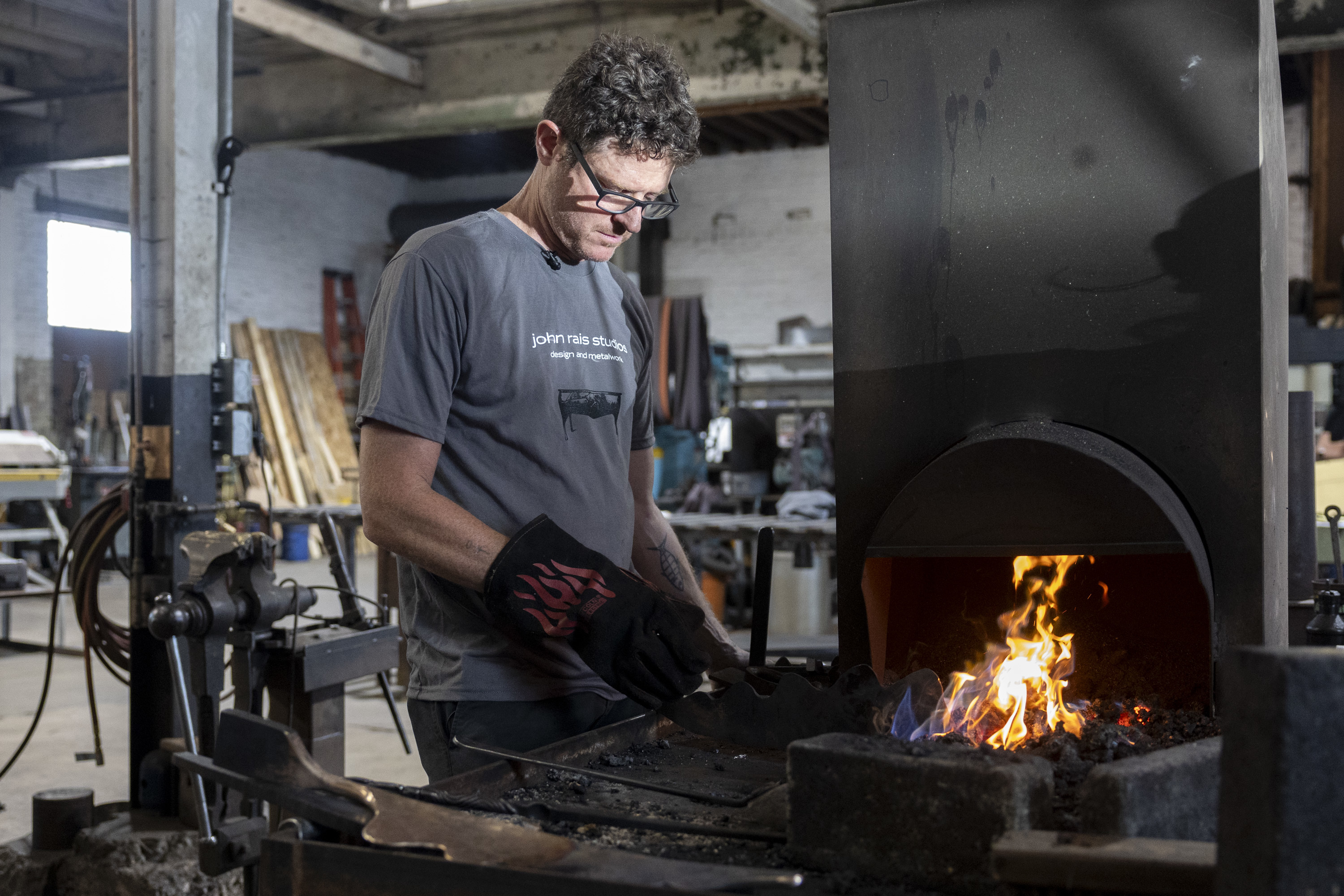
    John Rais was out for one of his weekly rides with a group of Philadelphia cyclists when he struck up a conversation with Carlos Rogers.

    Rogers, a hair salon owner and former competitive cyclist, was trying to revive the Philadelphia International Cycling Classic, which began in the mid-1980s and contested its final race in 2016.

    Rais and Rogers were discussing the costs of staging the new Philadelphia Cycling Classic when Rais realized he could take something off Rogers’ plate.

    “I was like, ‘Carlos, I’ll make the trophies for free for you,’” Rais said. “‘I’ll just do that.’”

    Carlos Rogers (from left), Brian O’Reilly, Eric Robbins, and former mayor Michael Nutter toast after tapping the ceremonial first keg of Mainstay Brewing’s Philadelphia Classic Lager.Monica Herndon / Staff Photographer

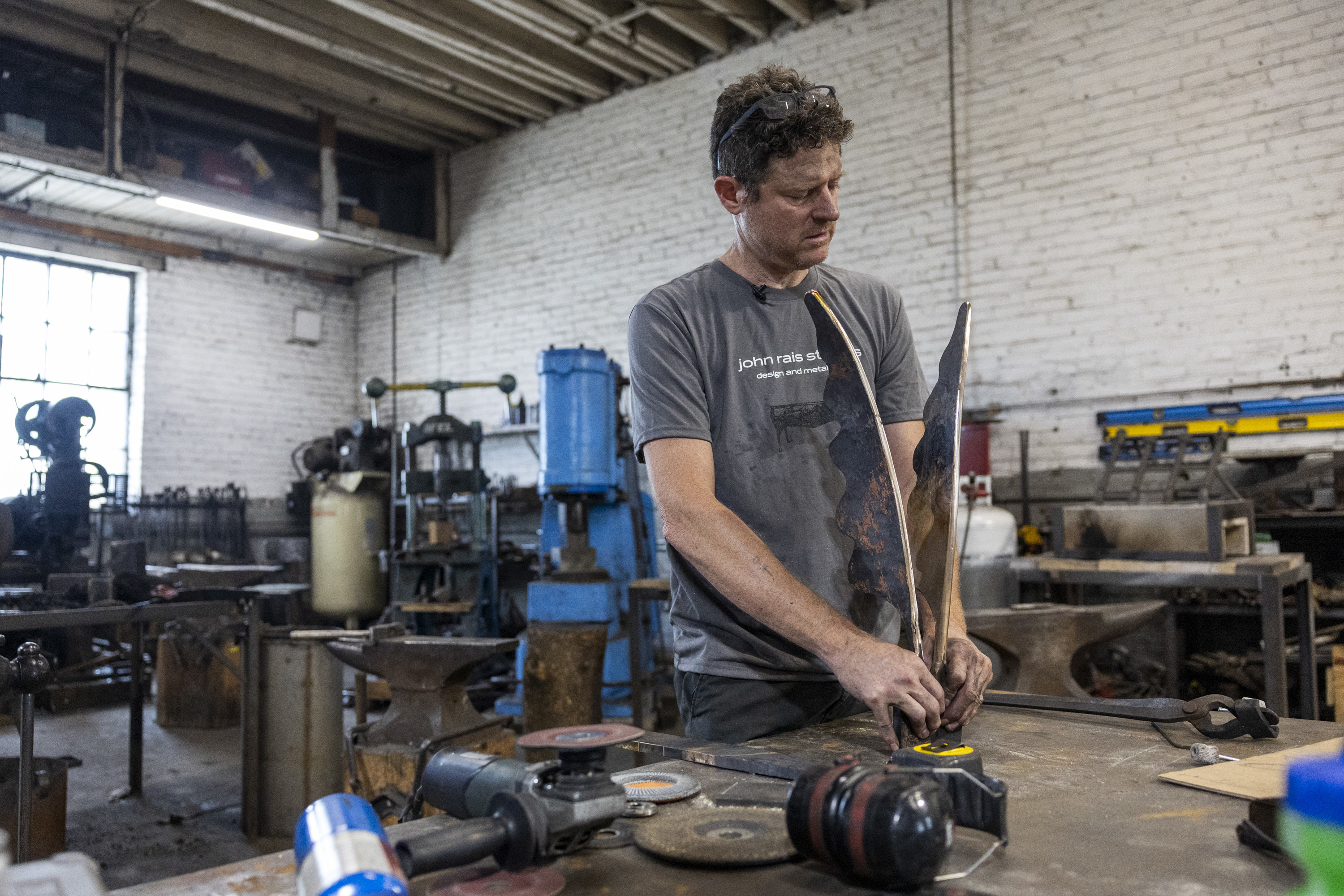
    Rais, a Massachusetts native, has worked as an artist and metalsmith in a studio in North Philadelphia since moving to the area in 2013.

    Rogers took Rais up on his offer. So when the Classic’s winning riders take the stage near the finish line on the Benjamin Franklin Parkway on Sunday, they will hoist trophies hand-hammered and forged inside Rais’ studio.

    Rais designed and produced six trophies for the tournament. The men’s and women’s winners will lift bronze trophies designed to invoke a pair of wings.

    John Rais’ trophies for the men’s and women’s winners of the Philadelphia Cycling Classic are designed to invoke wings.Tyger Williams / Staff Photographer

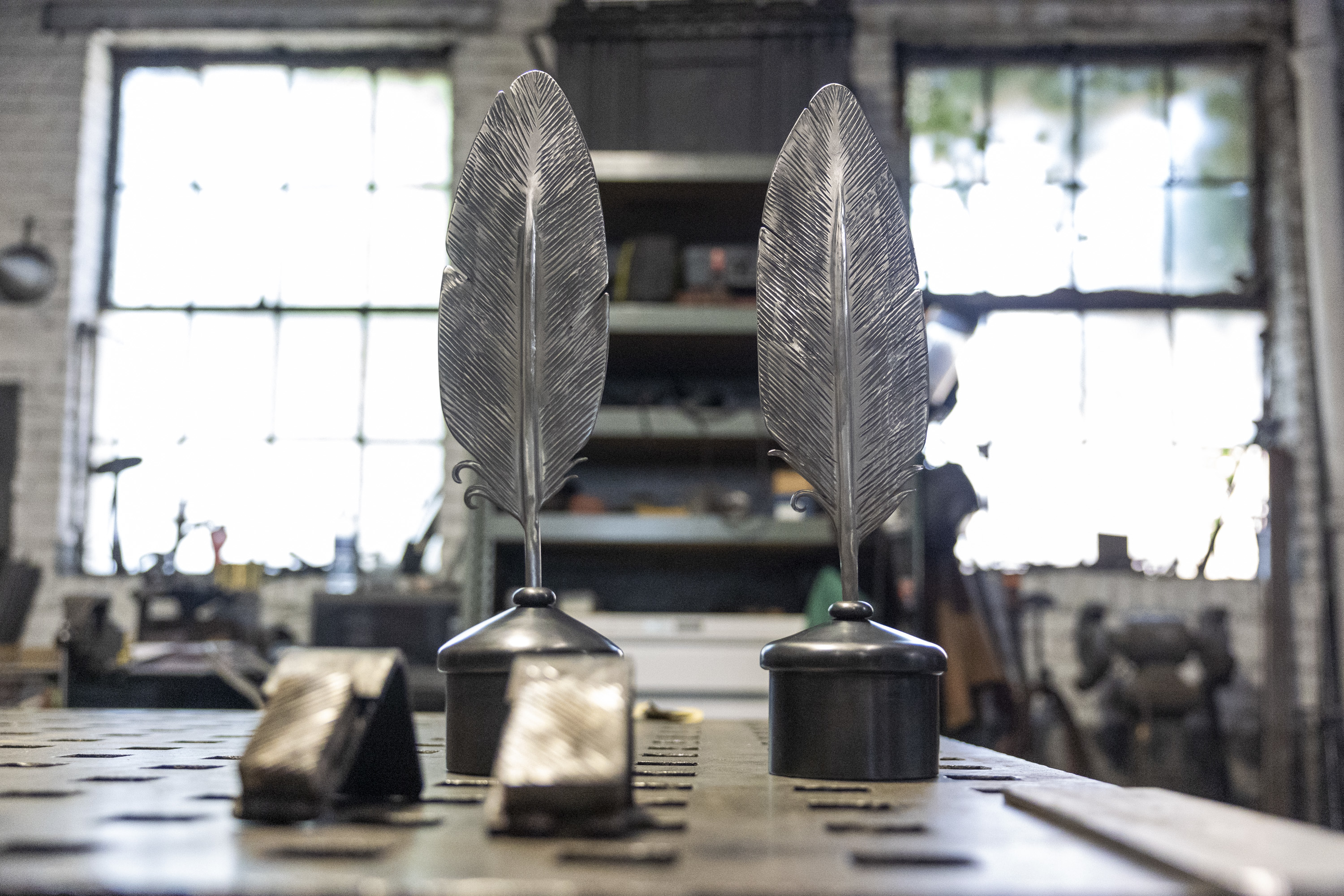
    There are two stainless-steel trophies for the sprint winners that resemble a quill in an inkwell, while the trophies for the king and queen of the mountain winners represent the steep inclines of the course’s infamous Manayunk Wall.

    Rais said he doesn’t usually make trophies, but he was excited by the opportunity to design and forge the awards for the Classic. His usual work includes metal sculptures and wrought-iron railings and doors.

    Rais’ experience as a metal artist, which began as a student at the Massachusetts College of Art and Design in the mid-1990s, informed the choices he made in forging the trophies.

    “[Trophies are] this great kind of intersection between decorative art and fine art,” Rais said. “They usually have some decorative elements on them, and historically they’ve been a little bit kitschy. That’s fine. You win whatever event you’re doing, you hold the trophy up, it symbolizes your victory. Usually it goes in someone’s trophy room, or in a closet, or in a box.

    “I felt like if I could do something that had a little more intersection with fine art and design, that it might be something that someone would at least have the option of displaying in a different place in their house. That’s the goal.”

    John Rais set out to create trophies that “had a little more intersection with fine art and design.”Tyger Williams / Staff Photographer

    The sprinter trophies are made from stainless steel and weigh between 5 and 6 pounds, including the base that each feather, loosely based on the feather of a peregrine falcon, slides in and out of.

    The overall winners’ trophies each weigh about 10 pounds, and Rais estimated the king and queen of the mountain trophies weigh somewhere between 3 and 4 pounds.

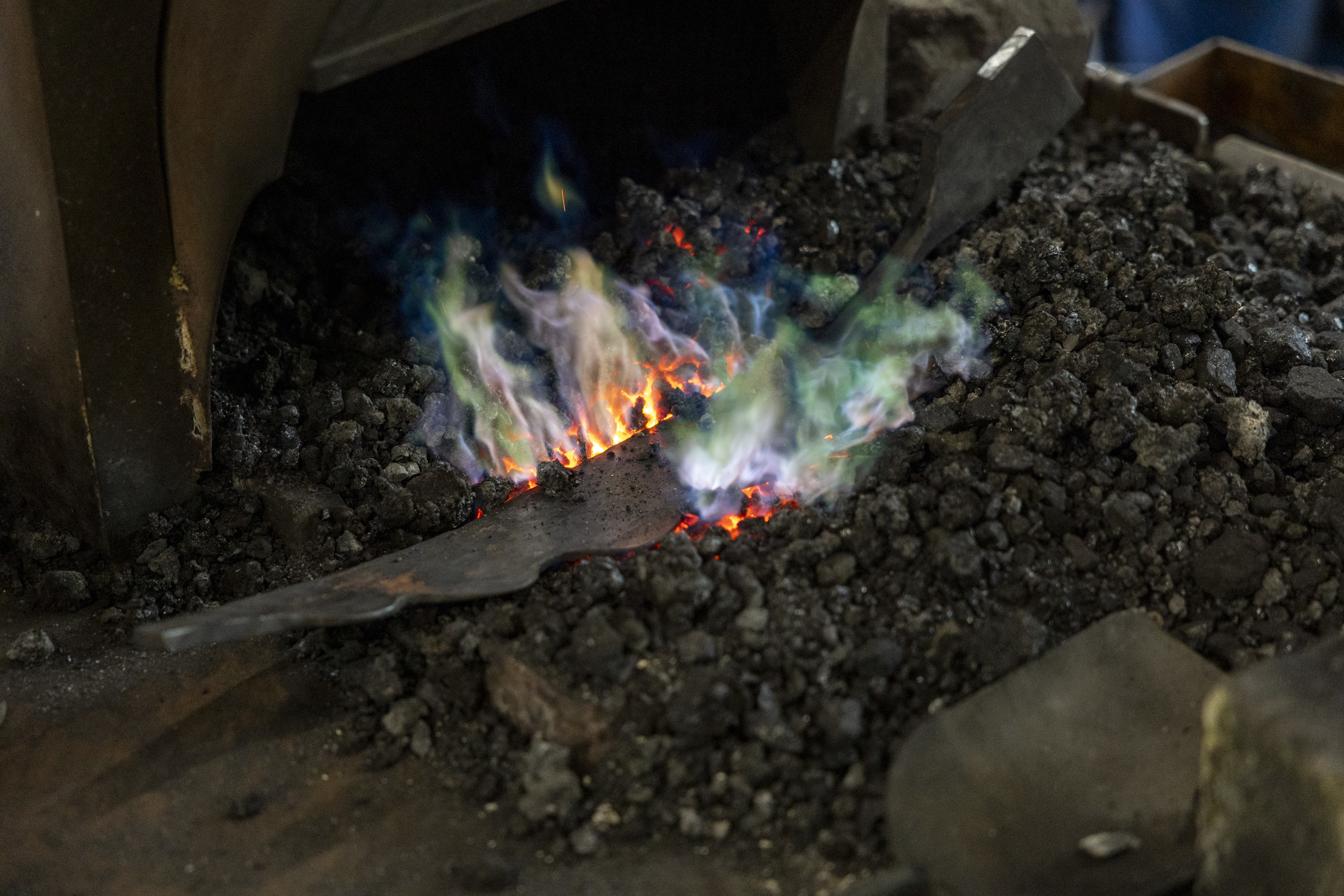
    While each trophy has a matching pair for the men’s and women’s winners, no set is exactly alike. That’s because each piece is hand-forged, hammered, filed, and polished by Rais and the employees of his studio.

    No two trophies designed by John Rais are alike.Tyger Williams / Staff Photographer

    Rais wanted some small differences and imperfections to come through as a sign that each trophy was handmade. From design to the final touches, Rais estimates that 25 to 30 hours of work went into making the trophies for the overall winners.

    Rais designed the awards with a trophy lift in mind. The artist said he is excited to see how the winners interact with the hardware after the race.

    “I want to see how people hold them up,” Rais said. “Whatever happens, it’ll be interesting. Whether they get confused by how they do it, or whether they get it right away, whether they don’t want to lift them up because they’re heavy. … They’ll just be so excited to win, they’re not going to be thinking about the trophies at the time. … My hope is that they just think about them later, once they’re in their home.”

    Playing a small part in the tournament’s return to Philadelphia is meaningful for Rais. He had some interest in cycling while living and working in western Massachusetts, but the community of cyclists he found in Philadelphia helped him develop a passion for the sport.

    “Through all my 20s and early 30s, I was just a workaholic,” Rais said. “I just worked all the time. I didn’t think I had time for hobbies. But you get to a certain point in life where you realize you need something else. You need an outlet.”

    John Rais developed a passion for cycling after moving to Philly.Tyger Williams / Staff Photographer

    Rais participated in some casual cycling races after moving to Philadelphia. He also has fond memories of watching the International Cycling Classic in its final years.

    In 2016, Rais took in the race from a spot along the Manayunk Wall, close enough to the road to overhear Philadelphia-born cyclist Robin Carpenter during the climb.

    “Someone was in front of him, and he told the person in front of him, ‘Hey, go faster,’” Rais said. “It was hilarious. That’s the kind of thing, you get to overhear that. It was just amazing.”

    One of the things Rais enjoyed most about the race was that it was open to anyone who wanted to watch.

    Viewing areas along the race course are open to the public, and the Classic’s fan fest also is free to attend.

    “There’s [cycling] or a marathon,” Rais said. “Those are the only two I can think of where you can walk up to the sidewalk and see what’s happening for free and be a part of it.”

  • Iran’s rial currency hits new record low as US prepares to announce more sanctions

    Iran’s rial currency hits new record low as US prepares to announce more sanctions

    TEHRAN, Iran — Iran’s currency hit a record low Monday as Washington prepared to announce new sanctions it said would add further pressure on an economy already battered by previous sanctions and a U.S. naval blockade.

    The rial dropped to 2.02 million to the U.S. dollar as trading opened on currency markets. Iran’s official Central Bank rate stood at around 1.5 million rial to the dollar, but the market rate is what most Iranians pay.

    The currency had already been under pressure before the U.S. and Israel attacked Iran on Feb. 28, as Iran faced double-digit inflation and negative growth, but has repeatedly hit new lows as nearly six months of war have taken an even greater toll.

    Iranians find daily staples increasingly unaffordable. Since the war began, rice is up some 60% and prices of beef are more than 150% higher. The International Monetary Fund forecasts that GDP will contract more than 5%.

    Still, economic pressure has not yet translated into political pressure. Iran retains a key strategic advantage: Its attacks and threats on ships in the Strait of Hormuz have brought traffic in the vital waterway to a near halt, damaging the world economy and heaping pressure on U.S. President Donald Trump ahead of congressional elections.

    The war, as a result, has devolved into a fight over who controls the strait, through which a fifth of the world’s traded oil transited before the conflict. Iran is now refusing to fully reopen it unless it can charge ships.

    Iran and Oman, which is on the opposite side of the strait, are reportedly in the final stages of agreeing upon a plan for joint management of the waterway. Oman’s foreign minister is set to visit Iran on Tuesday.

    In an attempt to break the impasse, Trump’s administration promised even stronger sanctions than those already in place would be announced Monday, including secondary sanctions on countries that continue to do business with Iran.

    “President Trump decimated Iran’s economy to a point where the rial has never been weaker and inflation has rarely been higher,” U.S. Treasury Secretary Scott Bessent wrote Sunday in an opinion piece in the Financial Times. “The regime’s final refuge now lies in the self-deception of fearful nations that still believe accommodating aggression can secure a durable peace.”

    Already last week, the United Arab Emirates announced that it was suspending all trade with Iran. The UAE has long been one of Iran’s largest trading partners and its biggest source of imports.

    Iranian Foreign Ministry spokesperson Esmail Baghaei told reporters in Tehran on Monday that “any escalation of this situation will undoubtedly bring about consequences.”

    “Our hands are not tied,” he added.

    Pakistan, which played a key role in brokering a 60-day ceasefire in June, sent a high-level delegation to Iran on Monday to discuss ending the war, the military said.

    In downtown Tehran, 73-year-old Sadegh Mahmoudi did not hold out hope for a resolution. He joined a line of about a dozen people to purchase U.S. dollars with his remaining savings to hedge against further declines.

    “There is no hope for a deal and peace,” he said.

  • European leaders join Zelenskyy in Kyiv for Ukraine’s Independence Day as Russian invasion pushes on

    European leaders join Zelenskyy in Kyiv for Ukraine’s Independence Day as Russian invasion pushes on

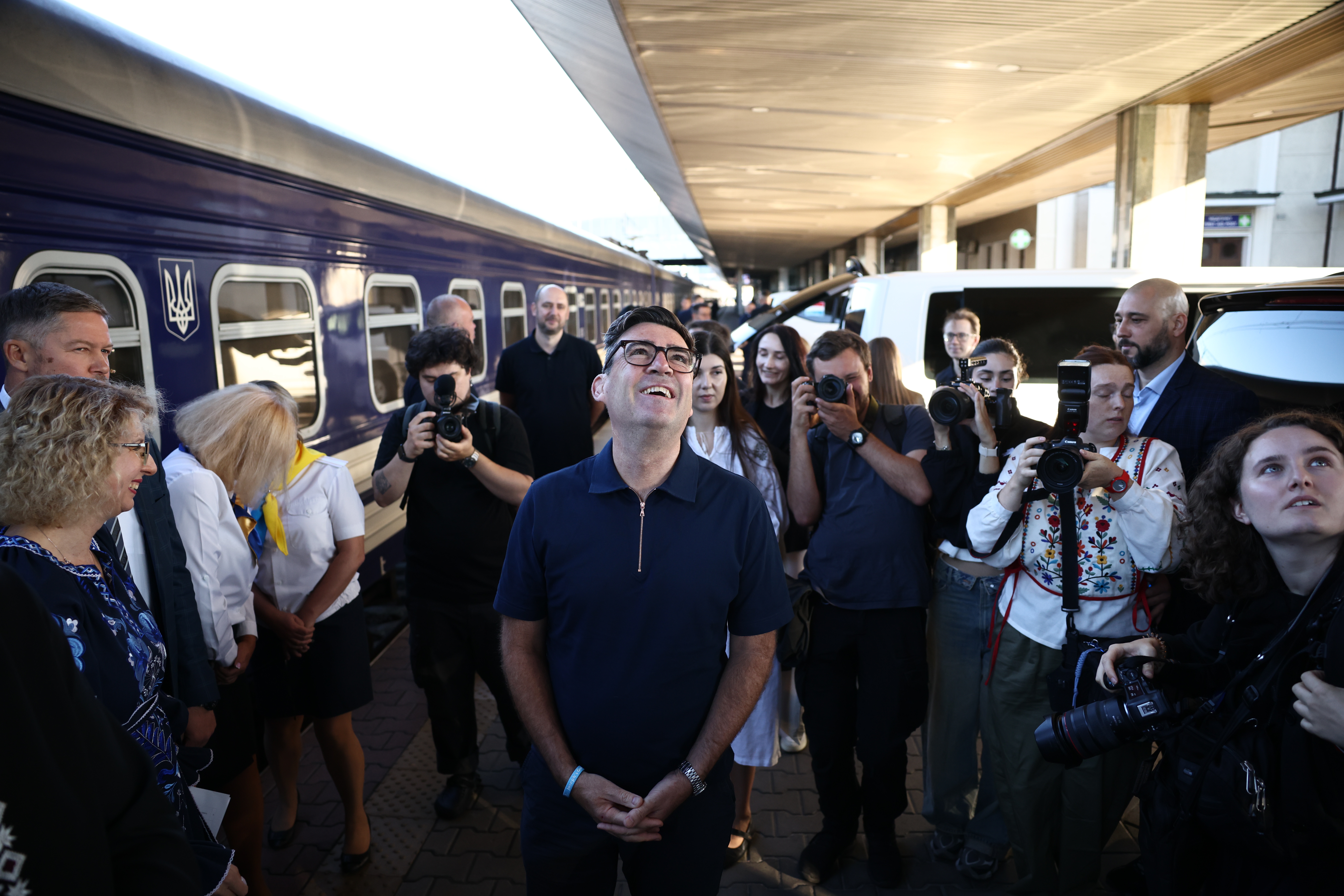
    KYIV, Ukraine — European leaders joined President Volodymyr Zelenskyy in Kyiv on Monday for official celebrations marking Ukraine’s Independence Day as Russia pushes on with its 4-year-old invasion of the country.

    One of President Vladimir Putin’s key goals in starting a war with Russia’s neighbor in February 2022 was to place Kyiv in Moscow’s orbit. Ukrainians voted overwhelmingly for independence in 1991.

    With no significant changes on the front line for months and no apparent progress after more than a year of U.S.-led peace efforts, the warring countries are locked in a spiral of escalating aerial attacks that are killing civilians and smashing infrastructure.

    EU leaders rally around Ukraine

    U.K. Prime Minister Andy Burnham, on his first overseas trip since taking office last month, on Monday joined almost a dozen other European leaders, as well as other dignitaries including European Council President Antonio Costa, in Kyiv.

    “For Ukraine, independence is not an abstract idea. We defended it against all odds,” Ukrainian Foreign Minister Andrii Sybiha said on social media. “In times like these, nations learn how important it is to have allies by your side.”

    Burnham was to co-chair a meeting of the so-called Coalition of the Willing group of countries helping Ukraine resist Russia’s onslaught, with the leaders of France and Germany expected to join online.

    The visiting leaders took to Kyiv pledges of further military and financial support. Burnham is expected to announce that the U.K. Government has agreed to allow defense company MBDA to release classified information relating to British components used in the SCALP long-range missile, according to his office. That would pave the way for France and Ukraine to advance plans for local production of the weapon in Ukraine.

    SCALP is the French version of the UK’s Storm Shadow missile, with both systems incorporating shared French and British technology.

    Ukraine has leaned heavily on NATO countries for help fighting Russia’s bigger army, although relations with the United States have been cooler under President Donald Trump.

    Russia, meanwhile, is getting help from North Korea and China.

    Both Russia and Ukraine are trying through long-range strikes to inflict economic pain, disrupt military supplies and erode public morale.

    Ukraine’s long-range drones have repeatedly hit facilities in Russia’s vital oil industry, causing fuel shortages, and have also engaged in a campaign against Russia’s largest online retailer Wildberries.

    Ukrainian strikes kill 3 teenagers

    Three teenagers were killed and six children were wounded in the southern Russian city of Krasnodar, Russia’s children’s rights ombudswoman Maria Lvova-Belova said Monday, as Ukraine attacked several warehouses of Ozon for the third straight day, according to officials and the company.

    Ozon is one of Russia’s major e-commerce retailers. The company said a large fire raged at an Ozon logistics facility in the suburbs of Krasnodar following the overnight attack.

    A drone also hit the grounds of an Ozon logistics center in the southern Russian region of Adygeya, regional governor Murat Kumpilov said, though the company said its Adygeya warehouse wasn’t damaged.

    In all, four Ozon premises appeared to have been targeted.

    Russia’s Defense Ministry said its air defenses overnight intercepted and destroyed 351 Ukrainian drones over eight Russian regions, as well as occupied Crimea and the waters of the Azov and the Black Seas.

    The ministry also said that its forces overnight continued to strike Ukrainian ports and vessels delivering cargo for the armed forces.

  • Trump’s school voucher program could become a public school cash machine

    Trump’s school voucher program could become a public school cash machine

    Forget student fun runs, PTA bake sales and Saturday morning car washes.

    The future of public-school fundraising may soon look more like a payroll deduction. Or perhaps door-to-door campaigns each tax season asking filers to earmark donations to support nearby public schools.

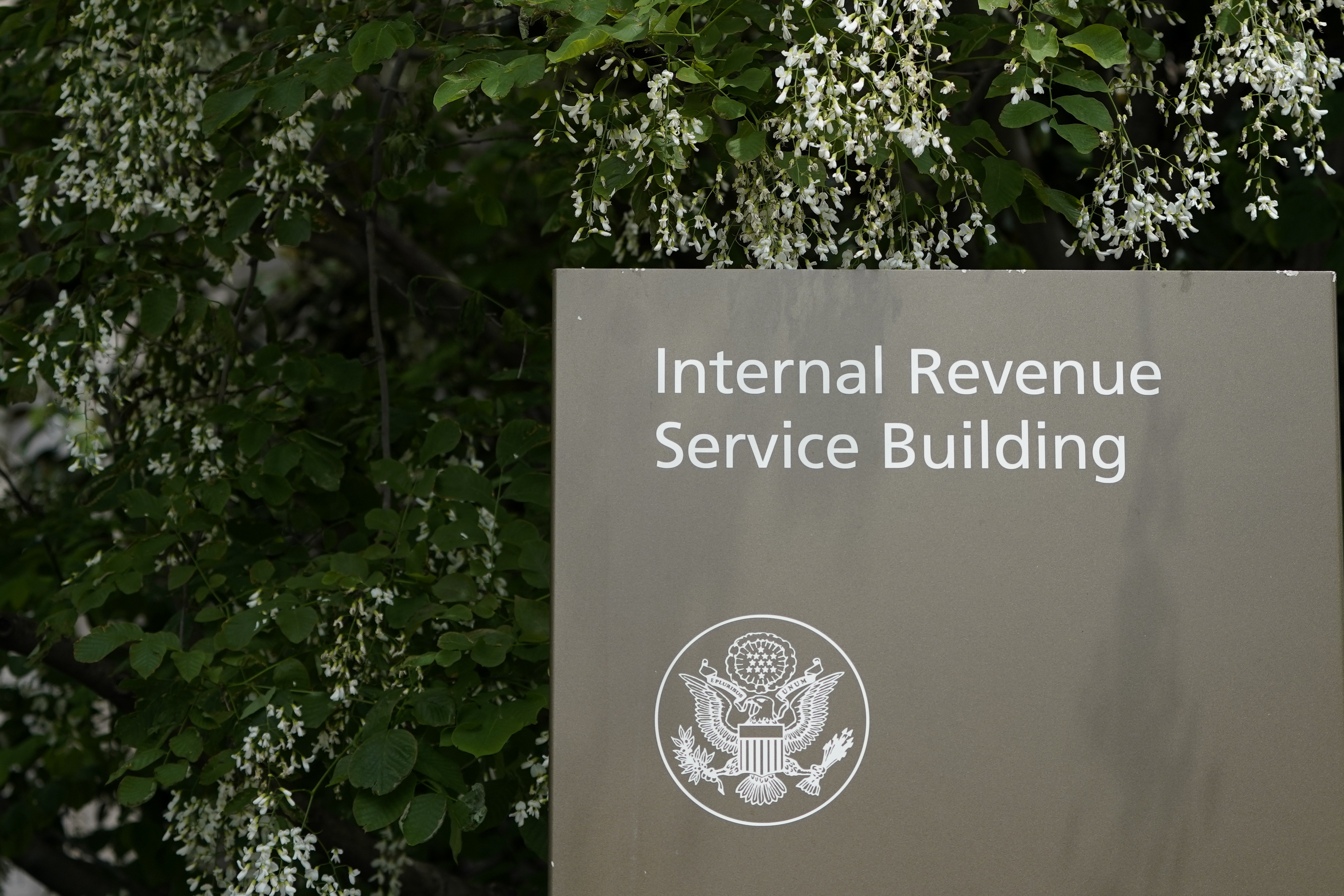
    When President Donald Trump’s tax overhaul known as the One Big Beautiful Bill last year created the first national school-voucher-style program to help families pay for private schools or home-school costs, it allowed public schools to benefit as well. According to U.S. Treasury guidelines released in June, the program allows specific nonprofits to collect donations that people direct from their federal taxes for a vast array of public school costs, such as transportation or tutoring.

    Sara Hazel, president of the Denver Public Schools Foundation, the fundraising arm for Colorado’s largest school district, is among a small but growing number of district leaders who have said they plan to take advantage of the financial opportunity. She said she plans to tell potential donors, “Do you want that money going to the IRS or going to local kids?”

    The program doesn’t officially start until the new year, but its resemblance to private-school vouchers has inspired opponents of school choice to line up against it. Still, supporters and even cautious critics say the Republican-backed initiative could mean a financial boon for public schools.

    The program works like this: Taxpayers can contribute up to $1,700 to what’s known as a scholarship-granting organization and receive a credit on their federal income taxes. It’s a dollar-for-dollar credit, meaning every pledged dollar reduces what an individual owes to the Internal Revenue Service by the same amount.

    These new intermediaries could be formed by an array of nonprofits, including public-school foundations, with approval from their state. The scholarship-granting organization would then pass on the money to private school and home-school applicants in the form of scholarships — or to school districts so they could cover certain services for student applicants.

    Marguerite Roza, a school finance expert, has advised school districts — many of which have bandaged their slashed budgets by shuttering campuses or issuing pink slips — that they can’t afford to ignore this new source of funding. “Any time there’s an available revenue source, generally we don’t see districts saying, ‘No thank you,’” said Roza, director of the Edunomics Lab at Georgetown University.

    States must opt into the program, and so far, 30 states have done so. Now it’s up to individual school district leaders in those states to decide if they want to try to tap into the money.

    School finance experts suggest the scholarships could help districts access funding comparable to 3 percent of their entire budget. But tapping into this unexpected revenue risks political backlash and logistical headaches. Governors and superintendents may face fierce resistance from teachers unions, which in many states have portrayed the new program as a Trojan horse for the expansion of vouchers in education because it also allows money to be funneled to families to pay for private school.

    Some opponents also raise concerns about creating a new funding system that could favor school districts with a ready pool of wealthy donors over those in low-income communities where few residents may owe enough in federal taxes to contribute to the scholarships.

    “In low-income areas, you’re going to find it’s not easy for school districts to raise this money,” said Thomas Toch, director of the think tank FutureEd at Georgetown University.

    He said he worried that the inclusion of public school districts in the legislation was little more than a ploy, a shrewd political strategy to further school choice in states otherwise unlikely to support it.

    “It was designed to make the case that this program can support the public sector in order to win support in blue states,” Toch said.

    The mechanics of the tax credit scholarships represent a dramatic departure from how the federal government supports schools.

    The money for the scholarships never flows through federal Department of Education coffers, entirely bypassing Congress and its spending decisions.

    Treasury regulators will soon issue formal rules to set additional guardrails for the program. But the law suggests the scholarships could be used to cover an expansive list of expenses that public schools often struggle to fund including costs such as field trips, textbooks or support services.

    The inclusion of public schools now places some governors, superintendents and school boards in a new dilemma: Do they choose to tap into a Trump-backed program that could boost their bottom line, or leave the tax-credit cash on the table for others to claim?

    “The reality is this program exists, and if there are dollars on the table that can go to our children and families, I don’t understand the purpose of not trying to do everything we possibly can,” said Justin Dayhoff, chief financial officer for Nevada’s Clark County School District, which includes Las Vegas.

    His district, like many around the country, is strapped for cash as health insurance and other costs increase and fewer students enroll in public school due to population decline. Enrollment in Clark County — the nation’s fifth-largest district — has dwindled by more than 35,000 students, or 11 percent, since before the pandemic and it laid off five dozen staff ahead of this new school year.

    How big a financial difference the voucher-style program would make for school districts remains to be seen.

    Some school finance experts expect soliciting donations could be as simple as districts partnering with employers to enroll their workers in the tax credit program, perhaps as another form in their regular HR paperwork. (Many employers already partner with nonprofits like United Way to collect pretax donations from paychecks.)

    Roza, of Georgetown, estimated a district could bring in about $200 per student by enrolling its own employees into the program. Convincing major companies to do the same — directing proceeds to nonprofits supporting students who attend local public schools — could push that figure higher. City and county governments might participate as well.

    “Local employers are an absolutely critical piece of this puzzle,” said Hazel, with the Denver Public Schools Foundation.

    Her organization hasn’t officially approached any of its corporate partners yet about enrolling their employees in the tax credit program. (Past donors to the foundation have included Chevron, the Colorado Rockies and United Airlines.) But Hazel’s already thinking about whether Denver Public Schools will have to compete with other Colorado districts attempting to woo the same business leaders.

    “We’re the largest school district in Colorado, so we already have an advantage,” Hazel said. “But how can we go to a company and say, ‘Your employees must choose between all these great school districts?’”

    But her new fundraising plans will come with steep operational hurdles.

    Under the new law, at least 90 percent of all donations to scholarship-granting organizations like Hazel’s must go directly to student scholarships, leaving relatively little to cover marketing, staff, annual independent audits and payment processing. Fees already take 4 percent of each credit card transaction, Hazel said.

    Yet even as she awaits further clarity from Treasury on how organizations can collect donations, she’s imagining what the money could mean for Denver schools.

    “My dream is I can give every second grader a tutor and we get everyone to grade-level reading and math,” Hazel said. “There are things like that that are so scalable and would support every student.”

    This story about the One Big Beautiful Bill was produced by the Hechinger Report, a nonprofit, independent news organization focused on inequality and innovation in education.

  • The midterms feel like 2006 all over again

    The midterms feel like 2006 all over again

    WASHINGTON — The war in the Middle East is increasingly unpopular. So is the president as his numbers dip perilously — a common development in the sixth year of a presidency. Congressional Republicans are embroiled in unsavory scandals. Americans are shelling out big bucks for gas while economic anxiety runs high.

    The grim backdrop for November’s midterm elections has created a steep challenge for Republicans and opportunities for Democrats that look much the same as those they encountered in 2006. Back then, congressional Republicans faced the voters at the midpoint of President George W. Bush’s second term, with the public roiled by the war in Iraq, high fuel prices and a series of ugly accusations against members of the GOP majority on Capitol Hill.

    “It is striking,” said Sen. Chuck Schumer of New York, the Democratic minority leader and chief architect of his party’s Senate campaign strategy this year and two decades ago. “The analogy is amazing.”

    The parallels are not perfect, since politics and campaigns have both changed radically over 20 years. But the comparisons are instructive, as officials in both parties stare down the final months of an election that will determine who controls Congress for the remainder of President Donald Trump’s term.

    “This is 2006 2.0,” said Rahm Emanuel, who in 2006 was an ambitious Democratic House member from Illinois and Schumer’s counterpart across the Capitol as the head of the Democratic Congressional Campaign Committee. “The similarities are eerie.”

    Emanuel and Schumer both have good reason to look back fondly on 2006, when Democrats triumphed in a blue wave.

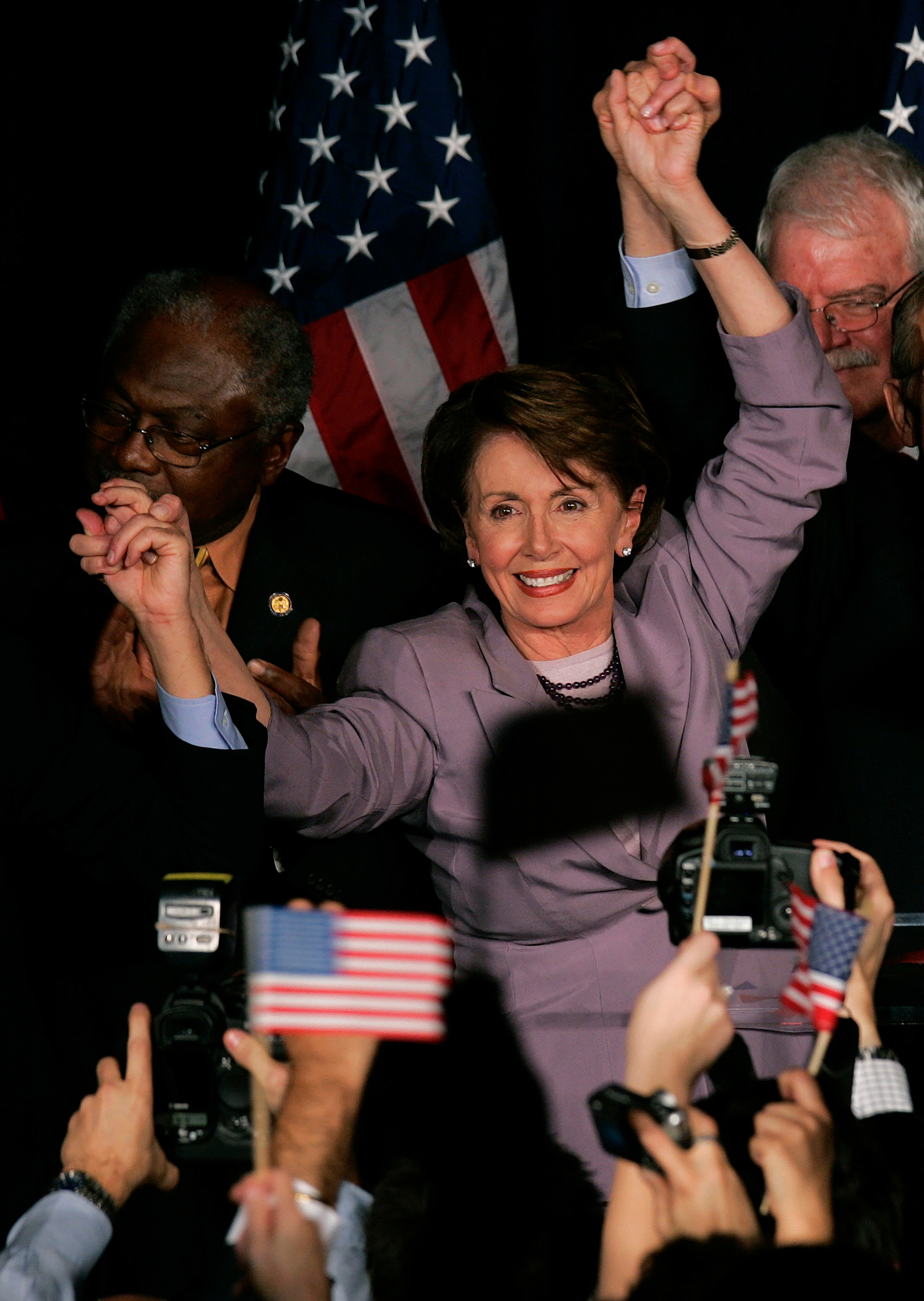
    Exceeding expectations that year, Democrats picked up six seats in the Senate, taking control of the chamber. In the House, where the Republican majority seemed to have exhausted itself after a dozen years, Democrats gained 31 seats and installed Nancy Pelosi, who is now retiring, as the first woman speaker. Bush, another victim of the six-year presidential itch, famously branded the outcome “a thumping.”

    This year, the Senate map is stacked against Democrats — they would need to win at least four Republican-held seats to take control, all but one of them in states that Trump won in 2024. And not all of the most competitive races have gone as party leaders had hoped. But Democrats have benefited from some political twists in places where they had not anticipated being competitive, such as in Texas, where Trump’s primary endorsement of the state’s attorney general, Ken Paxton, over Sen. John Cornyn, put that seat in play.

    The nonpartisan Cook Political Report on Thursday moved its ratings of the Texas and Iowa Senate races from leaning Republican to a toss up, underscoring the expanding battleground that Democrats would need in order to replicate 2006. Democrats say that they believe they are also increasingly competitive in other states carried by Trump two years ago, including Kansas.

    While clear similarities exist this year, significant differences are present as well — not the least of which is that Americans consume and process political content far differently than they did 20 years ago, with an emphasis on digital media rather than traditional television advertising.

    Other structural changes have taken place that could influence the results. The two parties this year engaged in a redistricting war that could help stem some of the House losses Republicans might have suffered in a midterm year that traditionally runs against those in power. Polarization runs deeper, making it harder to shake voters from their party identification. Trump’s hold on his base seems stronger than Bush’s was in 2006, though it is potentially weakening amid a backlash to the war with Iran.

    In the Senate and the House, the Democratic establishment did not get its preferred candidates through the primaries in some key races, including in Maine and Michigan. And the rise of far-left socialist candidates has Republicans seeing an opening to try to brand Democratic contenders across the country as part of a movement out of step with typical Americans.

    For those reasons and more, Republicans say the comparison between the two elections comes up short.

    “Democrats are running with a radically different party on a dramatically different map, and the fundamentals are stacked against them,” Mike Marinella, a spokesperson for the National Republican Congressional Committee, said in a statement. “Republicans have stronger candidates, a historic fundraising advantage and a more favorable battlefield, while Democrats are letting socialists hijack must-win races from Michigan to Colorado, Arizona, California and Maine.”

    In 2006, the war with Iraq was the central issue in the campaign as Americans soured on Bush’s handling of the conflict, particularly after his main justification for the invasion — the claim that Saddam Hussein had weapons of mass destruction — turned out to be false. Trump’s conflict with Iran has not gone on nearly as long, nor has it produced the same level of casualties. But Bush had significantly more support at the start. Public opposition helped drive approval numbers for the two presidents below 40%, a dangerous midterm level, as both wars also drove up fuel costs.

    Then as now, Democrats tried to capitalize on kitchen-table economic concerns with the potential to drive voters. In 2006, it was Bush’s proposal to privatize Social Security, which never came to pass. Now, it is the Republican-written law slashing Medicaid and other safety net programs to pay for large tax cuts, as well as the GOP’s decision to allow healthcare subsidies to expire, sending premiums soaring.

    “We found an issue early,” Schumer said, recalling 2006. “Rahm and I did Social Security. Now we found the costs issue, particularly led by healthcare.”

    Another undercurrent of the 2006 campaign has an equivalent today: the image of disturbing Republican misconduct. Twenty years ago, Democrats campaigned against a “culture of corruption,” pointing to a series of financial and sex scandals that led to resignations and jail time for a series of senior Republicans.

    Then, in September 2006, it was disclosed that Rep. Mark Foley, R-Fla., had sent sexually suggestive messages to male House pages, and that Republican leaders had failed to take action even when they had been alerted to his actions, putting a cloud over the party two months before the election.

    This year, Republicans have again had to contend with high-profile sexual misconduct accusations against multiple House members, though Democrats have had their own to deal with as well, a difference from 20 years ago.

    Top Democrats have sought to emphasize Republican conduct on Capitol Hill and in an administration in which the president, his family and his allies have faced scrutiny for profiteering. In an appearance on NBC’s “Meet the Press” this month, Rep. Hakeem Jeffries of New York, the Democratic leader, said a central element of the Democratic campaign agenda was “pushing back against the corruption that has been unleashed on the American people, and holding the crooks accountable beginning on day one in January of next year.”

    It is not clear whether it will all add up to a repeat of 2006. But Nathan Gonzales, editor of the nonpartisan Inside Elections, sees the potential for the factors working against Republicans building into a resounding voter backlash against the party in power, as they did two decades ago.

    “I remember 2006 when everything snowballed against Republicans,” Gonzales said. “Ordinarily unrelated events got lumped together under one umbrella. Everything was Bush’s fault. The war with Iraq and Mark Foley really had nothing to do with each other, but it cultivated an appetite for change. I could see that happening again.”

    This article originally appeared in The New York Times.

  • Krasner’s candor problem started with his first exoneration win

    Krasner’s candor problem started with his first exoneration win

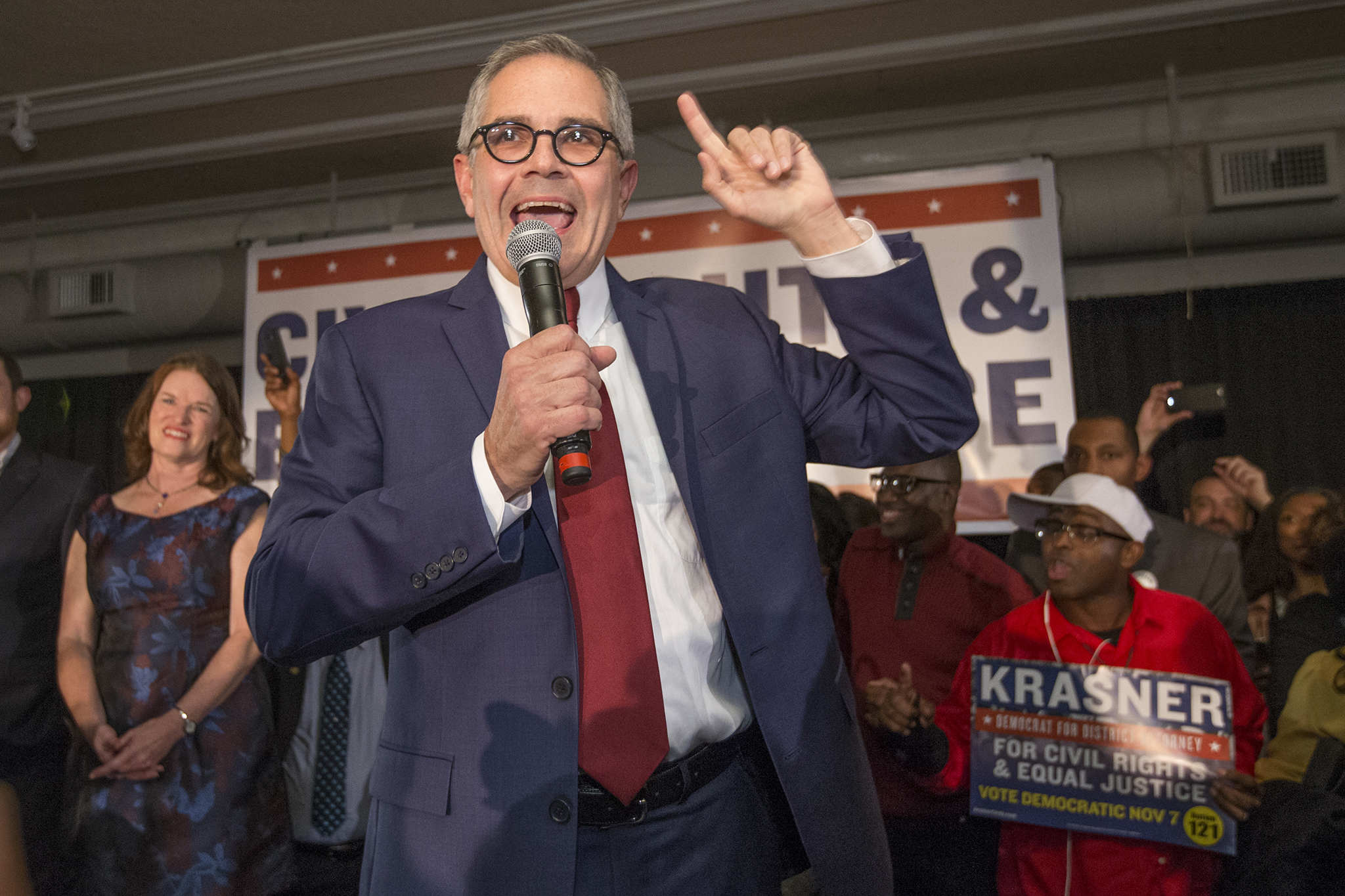
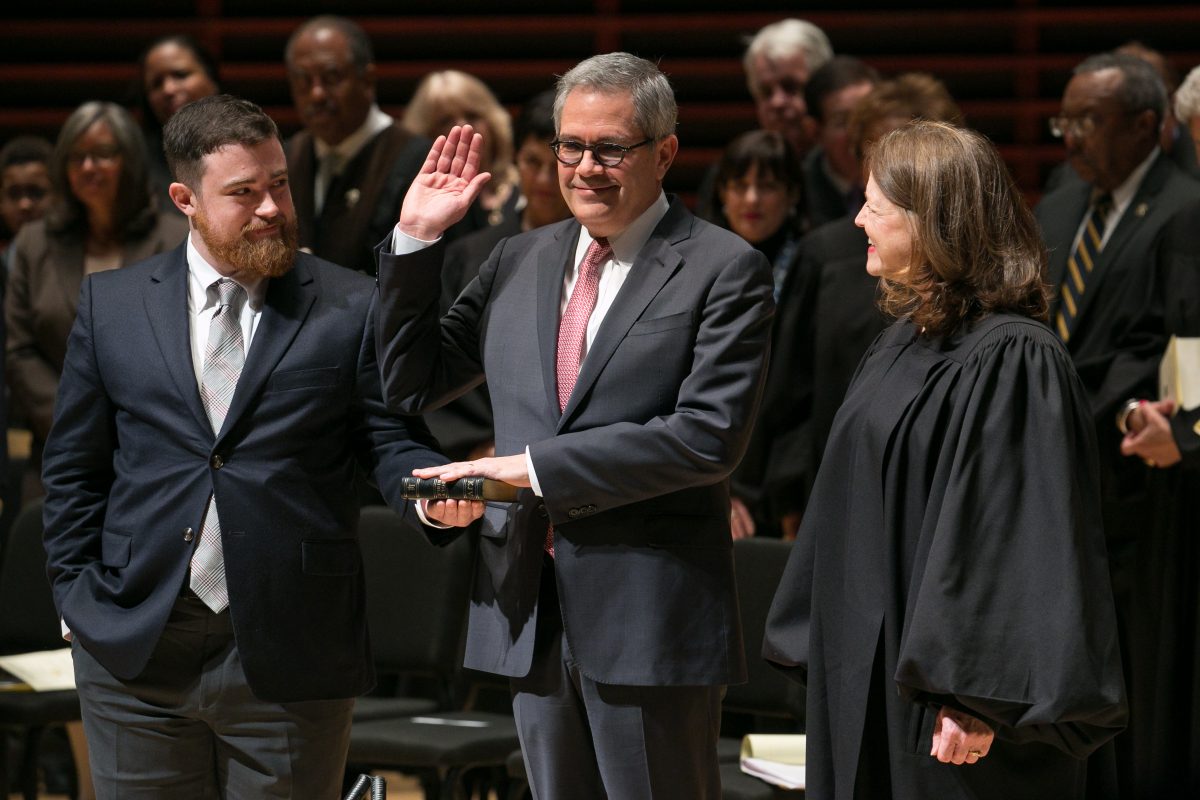
    A number of judges have called out District Attorney Larry Krasner’s office for lying and sloppy lawyering in several recent exoneration cases.

    A supervisor in Krasner’s office was disbarred last year for repeatedly lying while attempting to overturn a death penalty conviction. In June, another former supervisor was suspended from the region’s federal courts for three years for her role in attempting to mislead a judge in the same case. Last month, a former assistant district attorney said she was pressured to lie in court and instead resigned.

    But judges have raised concerns about a lack of candor dating back to the first exoneration Krasner secured after he became Philadelphia’s chief prosecutor in 2018, according to a review of judicial rulings, court transcripts, as well as internal district attorney’s office emails and other documents obtained through discovery in a lawsuit and shared with The Inquirer.

    Exoneration cases often take years to litigate. But just six weeks after Krasner was sworn in, his office vacated the first-degree murder conviction of Dontia Patterson. He was set free three months later.

    Patterson had spent 11 years in prison after being convicted in the shooting death of Antwine Jackson. Patterson’s first trial ended in a hung jury with an 11-1 vote in 2008, but he was convicted at a second trial the following year based largely on the testimony of two eyewitnesses.

    The Pennsylvania Innocence Project, along with pro bono lawyers, began working on Patterson’s post-conviction appeal well before Krasner was elected as district attorney on a promise to end mass incarceration and reexamine past cases. The focus of the group’s claim was ineffective defense counsel.

    Just weeks after he was sworn in as district attorney in January 2018, Larry Krasner secured an exoneration for Dontia Patterson, who was convicted in a 2007 murder.JESSICA GRIFFIN / Staff Photographer

    But Krasner’s office offered a bolder theory: In addition to the ineffective counsel, it claimed prosecutors working under then-District Attorney Lynne Abraham and police withheld evidence that would have bolstered Patterson’s defense.

    In May 2018, Anthony Voci, then the chief of Krasner’s homicide unit, signed a legal motion that called Patterson’s conviction “an egregious example of police and prosecutorial misconduct” and moved to drop the charges.

    Along the way, Voci began coordinating with the DA’s press officer to spread the word to the media. “I think this could be a great story for our office to tell,” Ben Waxman, then the DA’s director of communications, wrote in an email to Voci on Feb. 28, 2018.

    The district attorney’s office did not respond to requests to interview Krasner and Voci.

    Three months after Waxman’s email, in May 2018, Voci made a stirring speech in court that referenced the Declaration of Independence’s guarantees of life, liberty, and the pursuit of happiness and excoriated the former prosecutors, saying they were required to be right, sure, and fair.

    Richard Sax, the former prosecutor who oversaw Patterson’s conviction, denied any wrongdoing. He said jurors concluded Patterson was guilty beyond a reasonable doubt, and a previous appeal of the conviction was denied. He called Krasner’s exoneration of Patterson “a horrific travesty of justice.”

    Beth McCaffery, a former prosecutor who oversaw the first trial that ended in a hung jury, was offended by the attack on her character by Krasner’s office, and decided to fight to clear her name.

    Richard Sax, who oversaw the prosecution of Dontia Patterson, denied any wrongdoing in the case and called the district attorney’s office’s exoneration “a horrific travesty of justice.”David Maialetti / Staff Photographer

    McCaffery filed a Right-to-Know request in 2020 seeking access to the case file, which she believed would show she operated by the book. Krasner’s office initially denied the request, claiming the information was not public, even though it had shared the files with researchers at the New York University School of Law.

    At a hearing last year, McCaffery testified that she kept detailed notes and records of her cases that would show she acted properly.

    Voci, who signed the motion that blamed the former prosecutors, also took the stand. By then, his story had shifted.

    McCaffery’s attorney, Bryan Lentz, wanted to find out what sort of independent investigation Krasner’s office undertook before deciding to free Patterson.

    “Before signing the motion, what did you do?” Lentz asked. “What did you review personally to assure yourself of the facts in this motion?”

    Voci responded, “Virtually nothing.”

    Turns out, prosecutors didn’t interview the two eyewitnesses from the trial or the former prosecutors who tried the cases. They didn’t interview a police officer who lived near the shooting, heard the gunshots, and saw a man fleeing the scene.

    However, Voci did sit in on a PowerPoint presentation by attorneys from the Pennsylvania Innocence Project that focused on Patterson’s ineffective legal counsel, which the DA’s office largely adopted.

    In May 2018, Anthony Voci, then the chief of Krasner’s homicide unit, signed a legal motion that called Dontia Patterson’s conviction “egregious.” He later testified that he hadn’t read the document before signing it.David Maialetti / Staff Photographer

    To be sure, a case could have been made that Patterson, who was 17 at the time of the killing, should not spend his life behind bars. Or that his defense counsel was inadequate, and that eyewitness misidentifications have been found to be a major reason for many wrongful convictions.

    But Voci — who had previously criticized the prosecutors in court — testified that he didn’t believe everything he said.

    “Were you onboard with accusing Beth McCaffery of prosecutorial misconduct?” Lentz asked.

    “No,” Voci said.

    “But you signed the motion anyway, right?” Lentz asked.

    “I did,” Voci said.

    Voci revealed something even more stunning: “I didn’t draft this motion, and I didn’t review it before I signed it.”

    That would appear to violate the Pennsylvania Rule of Criminal Procedure, which makes clear that an attorney signing a motion certifies that he or she has read the document and believes the facts as stated.

    Ed Cameron spent four decades prosecuting cases for the district attorney’s office. He questioned efforts to secure an exoneration for Dontia Patterson.Laurence Kesterson / Staff Photographer

    Ed Cameron, who spent nearly 40 years in the district attorney’s office prosecuting mainly homicide cases, sent an email to Voci at 7:36 a.m. the day after Patterson was released. He said he was “up all night” and proceeded to question the exoneration.

    “A lot of mistakes and misstatements were made in the ‘investigation’ and filing by our Office,” Cameron wrote, adding that he was never consulted about the motion to exonerate Patterson and blame the former prosecutors. After Cameron died in 2020, he was praised for his honesty and experience handling high-profile cases.

    Voci’s testimony echoes a similar issue playing out in a separate exoneration case that is before U.S. District Judge Paul S. Diamond.

    In that case, one of Krasner’s former assistant district attorneys, Jaclyn Mason, testified that the DA’s office failed to do any independent investigation in another exoneration case involving a convicted murderer and instead accepted the arguments provided by the Pennsylvania Innocence Project.

    Mason testified she signed the legal document asserting the man’s conviction should be thrown out, but didn’t independently examine all the evidence. Instead, Mason testified, she followed the orders of her supervisor, Matthew Stiegler, who she said told her, “‘If it’s good enough for the Innocence Project, it’s good enough for me.’” That case is ongoing.

    Like Mason, Voci testified that he was just following orders, and that another lawyer in the office, Patricia Cummings, wrote the Patterson motion.

    Krasner hired Cummings in January 2018 — the same month he was sworn in — to oversee the city’s Conviction Integrity Unit, which was set up to review old cases for wrongful convictions. She came from Dallas, where she started a similar unit, and reported to Krasner.

    Cummings maintained a separate role while working in Krasner’s office as a research scholar at NYU School of Law — the same place that was granted access to the DA’s case files McCaffery had requested.

    Cummings helped research and draft a 180-page report released by NYU that detailed a long history of prosecutorial misconduct in Philadelphia, an apparent conflict of interest that seemingly undermines the report’s independence.

    Cummings had an opportunity to defend Patterson’s exoneration and the NYU report at McCaffery’s Right-to-Know hearing. But when called to testify, she failed to show up. (Cummings did not respond to questions I emailed her.)

    McCaffery sued Cummings and NYU for defamation. The case was dismissed and is now on appeal in the U.S. Court of Appeals for the Third Circuit.

    Separately, McCaffery’s effort to clear her name dragged on in court for four years. In March 2024, Common Pleas Court Judge Anne Marie Coyle issued a stemwinder of an opinion that stretched for 149 pages and found Krasner’s office unfairly accused McCaffery and Sax of misconduct.

    Dontia Patterson is shown at the Philadelphia Criminal Justice Center after a hearing in May 2018, at which a judge cleared him of a 2007 murder and agreed to drop the charges.Chris Palmer

    The judge said the claims by Krasner’s office that the two former prosecutors illegally withheld evidence to secure a wrongful conviction were “intentionally and maliciously created” and “had no good faith basis.”

    Coyle listed 11 scathing findings involving Patterson’s exoneration and the efforts to fight McCaffery’s Right-to-Know request, including that Krasner’s office “misplaced and/or destroyed requested records and relevant evidence.” She found the DA’s office “dishonorably publicly maligned” McCaffery and Sax.

    The judge’s opinion echoed a recent finding by the state Supreme Court in a separate exoneration case when she found “the DA’s office demonstrated a patterned lack of candor” to the courts through “misstatements” and by “omitting salient” facts related to the post-conviction review of Patterson’s case and McCaffery’s Right-to-Know appeal.

    Coyle said a culture existed within Krasner’s office “to denigrate prior prosecutors” and “prior administrations.”

    She fined Krasner’s office $120,000 and called on an appellate court to impose more penalties. The DA’s office is appealing to the Commonwealth Court of Pennsylvania.

    After Patterson’s release, he sued the city and received $1.7 million in a settlement for his time in prison. In 2023, Patterson was arrested for selling drugs in Kensington. He struck a plea deal with prosecutors in Krasner’s office and received two years probation.

    The Pennsylvania Innocence Project stands by its efforts to exonerate Patterson.

    “Before the Pennsylvania Innocence Project agrees to take a case, we conduct a thorough, often yearslong review of the facts and the record,” Nilam A. Sanghvi, the Innocence Project’s legal director, said in a statement. “In this case, the facts pointed to Dontia Patterson’s innocence, and his exoneration was the just result. We will continue to pursue justice for our wrongfully convicted clients based on the facts.”

    Krasner, a former defense attorney, has long railed against what he considered a win-at-all-cost mentality among police and prosecutors in the city. While Philadelphia has a fraught history of overreach by officers of the law and officers of the court, the remedy for any past abuses isn’t more of the same.

  • How much will LeBron boost NBC Sports Philadelphia? Here’s what the past says.

    How much will LeBron boost NBC Sports Philadelphia? Here’s what the past says.

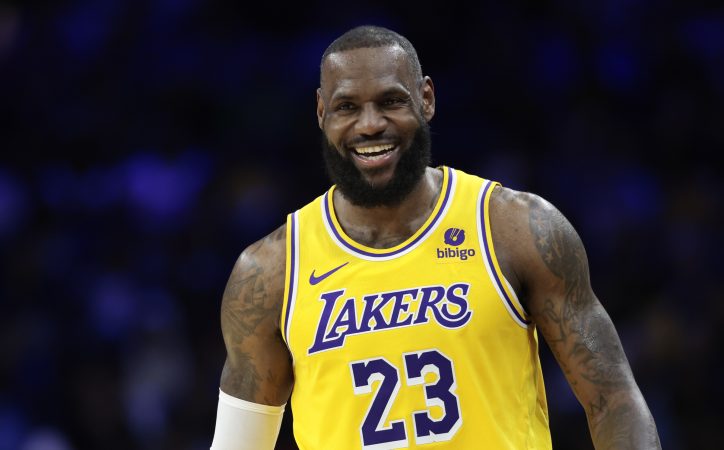
    Outside of the 76ers, one of the biggest winners of the LeBron James’ sweepstakes is NBC Sports Philadelphia.

    We won’t know how much of a boon James will be for the city or the network until the 41-year-old takes the court in a couple of months. A lot will depend on the future Hall of Famer’s health during his unprecedented 24th NBA season, but James has remained remarkably healthy, averaging over 62 starts a year over the past five season.

    If the Sixers match expectations and James can remain on the court, NBC Sports Philadelphia can expect a big boost in viewership based on what happened at his previous stops, according to an Inquirer analysis of Nielsen data previously reported by Sports Business Journal and provided by its media reporter, Austin Karp.

    Before James famously made his decision to join the Miami Heat in 2010, games on the city’s now-defunct regional sports network, FanDuel Sports Network Sun (known then as Sun Sports), averaged a 2.51 rating, roughly 40,000 households. After James joined the team, ratings nearly doubled to a 4.92. By the 2012-13 season, after James helped lead the Heat to two straight NBA championships, games were averaging a 7.14 rating on Sun Sports, nearly three times higher than before he came to town.

    In 2014, James decided to leave Miami to return to the Cleveland Cavaliers. Ratings tripled on the now-defunct regional sports network, formerly known as Fox Sports Ohio, jumping from a 2.79 rating (roughly 41,000 households) before James to a 9.31 rating (roughly 139,000 households) as he led the Cavaliers to their first and only NBA championship in 2016.

    In 2018, James took his talents to Los Angeles to join the Lakers, whose local TV ratings were already among the strongest in the NBA. Lakers ratings still increased 31% on Spectrum SportsNet, the highest since 2013.

    NBC Sports Philadelphia averaged 86,000 viewers per Sixers game last season, according to Nielsen numbers obtained by The Inquirer. If James can provide the same spark he did in both Cleveland and Miami, you can expect upward of 250,000 fans tuning in locally to watch the Sixers on NBC Sports Philadelphia.

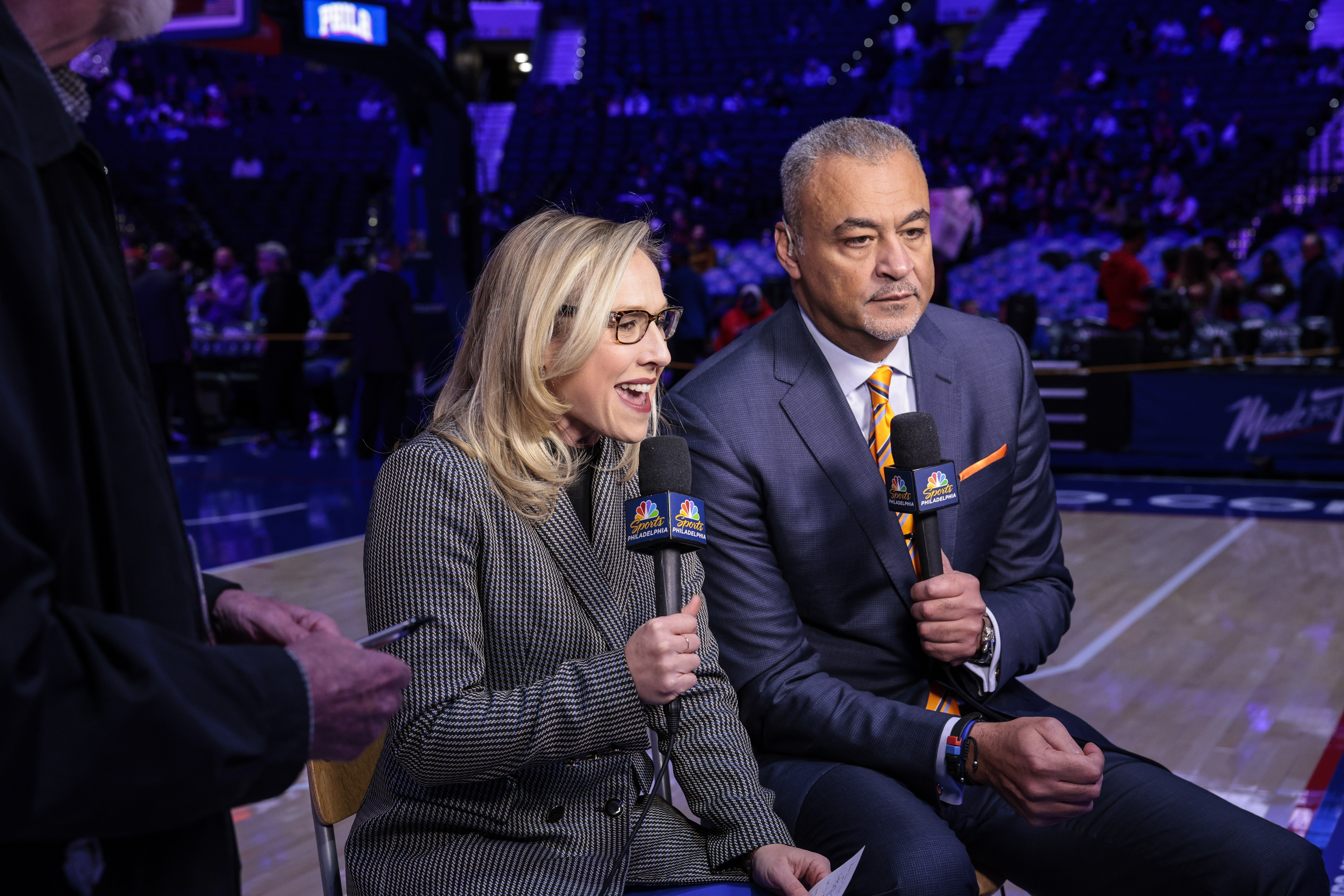
    The network is certainly counting on a boost. NBC Sports Philadelphia is working to improve its production capabilities and add staff, potentially including a third personality alongside announcers Kate Scott and Alaa Abdelnaby who can do interviews and bring the atmosphere of the stadium to fans watching at home.

    “I think you need a voice on the court where Alaa and Kate can’t be to give us insight, do pre- and postgame interviews, analysis, all of that,” Alexandra Matcham, the vice president of content for NBC Sports Philadelphia, previously told The Inquirer.

    The only bad news for NBC Sports Philadelphia is that ratings tanked for the markets James left.

    When he left the Cavaliers for the Heat, ratings in Cleveland dropped 54%. The same thing happened when he returned to Cleveland — ratings on Sun Sports in Miami dropped 28%.

    After James joined the Lakers, Cavaliers’ ratings on Fox Sports Ohio dropped 58%. It remains to be seen whether Spectrum SportsNet will suffer a similar fate this season.

    Fortunately, that’s a future problem for NBC Sports Philadelphia to deal with, as James signed a two-year deal with the Sixers.

    NBC Sports Philadelphia still finalizing its Sixers schedule

    Sixers announcers Kate Scott and Alaa Abdelnaby ahead of a 2014 game. Steven M. Falk / Staff Photographer

    The Sixers have 34 nationally televised games this season, the most in franchise history, but most of them will also air locally on NBC Sports Philadelphia.

    Just 15 of those games are exclusive to national broadcasters, including the Sixers first two games — Oct. 20 against the New York Knicks at Madison Square Garden (NBC), and the Sixers’ home opener against the Cleveland Cavaliers at Xfinity Mobile Arena on Oct. 22 (ESPN).

    That means the first Sixers regular-season game that will air on NBC Sports Philadelphia will be Oct. 24 against the Milwaukee Bucks in South Philly.

    NBC Sports Philadelphia will air at least 67 Sixers games this season, but the full schedule needs to be approved by the NBA before it’s released publicly. There’s also some juggling that needs to happen, since the network also broadcasts Flyers games.

    The network will air all four Sixers preseason games, beginning Oct. 5 against the Knicks at Xfinity Mobile Arena, which could be the first time fans see James suit up for Philly.

    Regardless of when he plays, the expectations are sky-high for the Sixers this season.

    “Championship or bust,” Hall of Famer and TNT analyst Shaquille O’Neal said during a recent interview on ESPN’s SportsCenter. “I know LeBron wants to get one last one. … If they don’t win the championship, I think all those players will be very, very disappointed.”