Fall is nearly here, and for fruit lovers, that means one thing: It’s apple-picking season.
In the Philly area, there are more than a few orchards where you can pick apples for peak autumnal fun. Whether you’re into the crisp, sweet taste of a Gala or the crunchy, tart Granny Smith, you’re sure to get your fill.
When does apple-picking season start?
The season begins at the end of August for most of Pennsylvania, with Ginger Golds and Honeycrisps available for picking, and typically lasts until mid-November, said Norman Schultz, farm manager at Linvilla Orchards.
Here are great orchards, in New Jersey and Pennsylvania, for your apple-picking adventures, complete with treats like apple cider doughnuts and apple pies to enjoy on site or take home.
Note: Due to freezing temperatures in the spring, this year’s apple availability will be limited, according to many farms on this list. Be sure to to confirm ripening dates and available varieties ahead of time.
Indian Orchards Farm
Stop by the farm stand to sign up for apple picking. This over 100-year-old farm in Media grows about 25 apple varieties, including Honeycrisp, Gala, and Smokehouse. Admission is $3.50 per person, then pay by the pound for what you pick, with buckets and bags offered. On weekends, get hayride and admission combo tickets for $12.
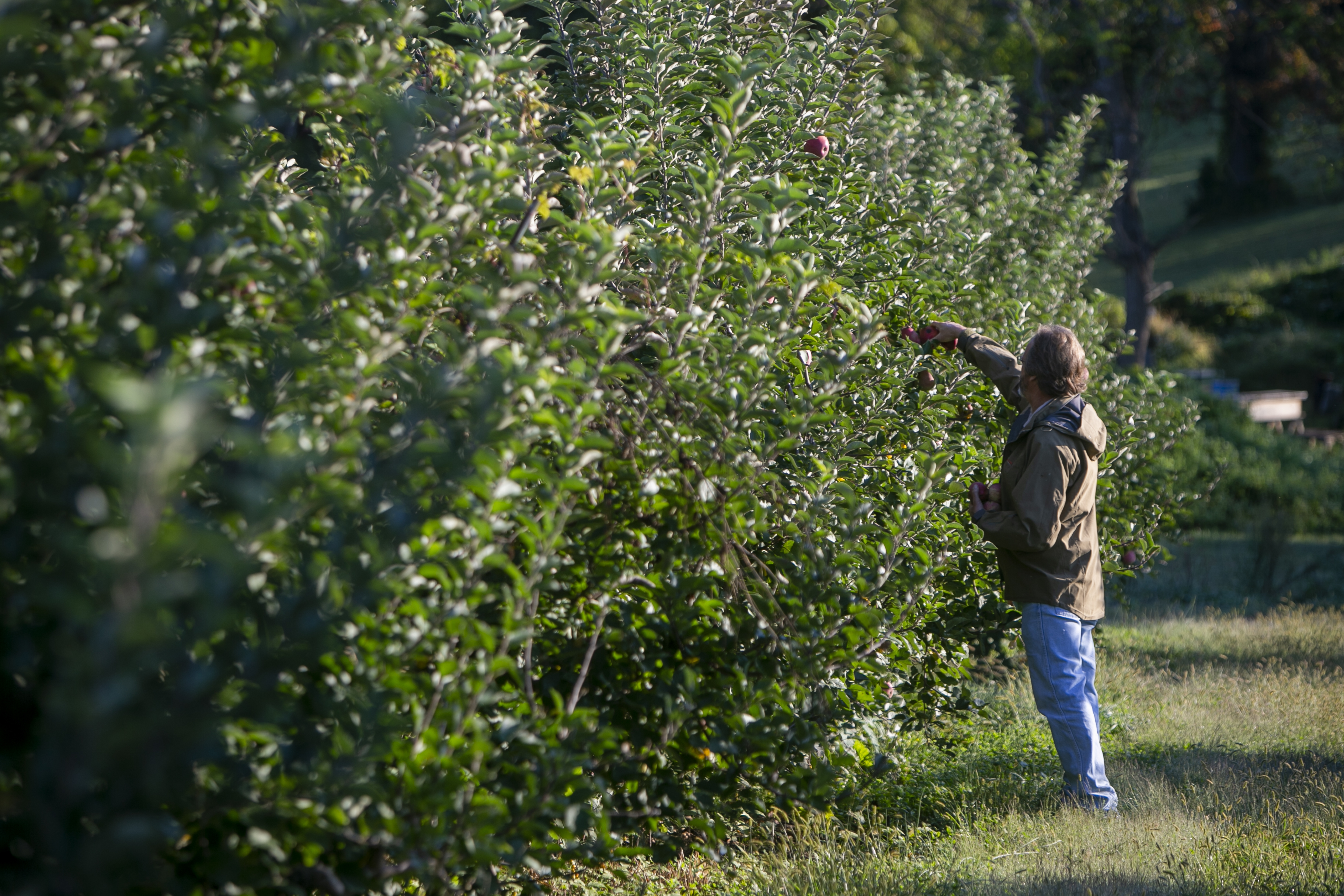
“Farmer Norm” Schultz among the Stayman apple trees at Linvilla Orchards, 137 W. Knowlton Road, Media, in 2020.ALEJANDRO A. ALVAREZ / Staff Photographer
Linvilla Orchards
This Delco orchard is a must visit, thanks to the 25 types of apples grown there throughout the season, like Crimson Crisp, McIntosh, and Jonagold. Fill a two-quart bag for $11 per person. Get tickets online. Linvilla also offers tons of baked goods, including fresh apple cider doughnuts — a seasonal favorite.
📍137 W. Knowlton Rd., Media, Pa. 19063, 🕑 PYO Monday to Sunday, 8 a.m. to 4 p.m., 📞 610-876-7116, 🌐 linvilla.com, 📷 @linvillaorchards
Styer Orchard
This Bucks County orchard will resume its pick-your-own apples this fall. Bring your own bag and purchase the fruit for $1.89 per pound.
This Chester County orchard typically offers pick-your-own apples through early November with over 40 varieties like Mutsu, Gala, and Pink Lady on hand. It’s best to call ahead or check Facebook to see what is available. Pricing for bags varies by size. It’s $3 per person (over 3 years old) to enter the field for picking. Highland Orchards’ farm market is known for its apple cider doughnuts.
📍1000 Marshallton-Thorndale Rd., West Chester, Pa. 19380, 🕑 PYO Tuesday to Friday 9 a.m. to 4 p.m., Saturday and Sunday 9 a.m. to 3 p.m., 📞 610-269-3494, 🌐 highlandorchards.net, 📷 @highlandorchardsinc
Terhune Orchards
Terhune’s pick-your-own apple orchard grows a plethora of varieties. Folks 4 years old and up must purchase bags for $10, $15, or $27 — no entrance fee required. A fall festival, filled with pony rides, live music, and other family fun, runs until the first week of November. Terhune also has an on-site winery and a bakery with apple cider doughnuts. Note: The farm store, winery, and festival events are at 330 Cold Soil Rd. Apple picking takes place at 13 Van Kirk Rd. and 330 Cold Soil Rd. Check the website to confirm location and availability.
📍 13 Van Kirk Rd., Princeton, N.J. 08540, 🕑 PYO Monday to Sunday, 9 a.m. to 5 p.m. (call the farm store during apple season) 📞 609-924-2310, 🌐 terhuneorchards.com, 📷 @terhuneorchards
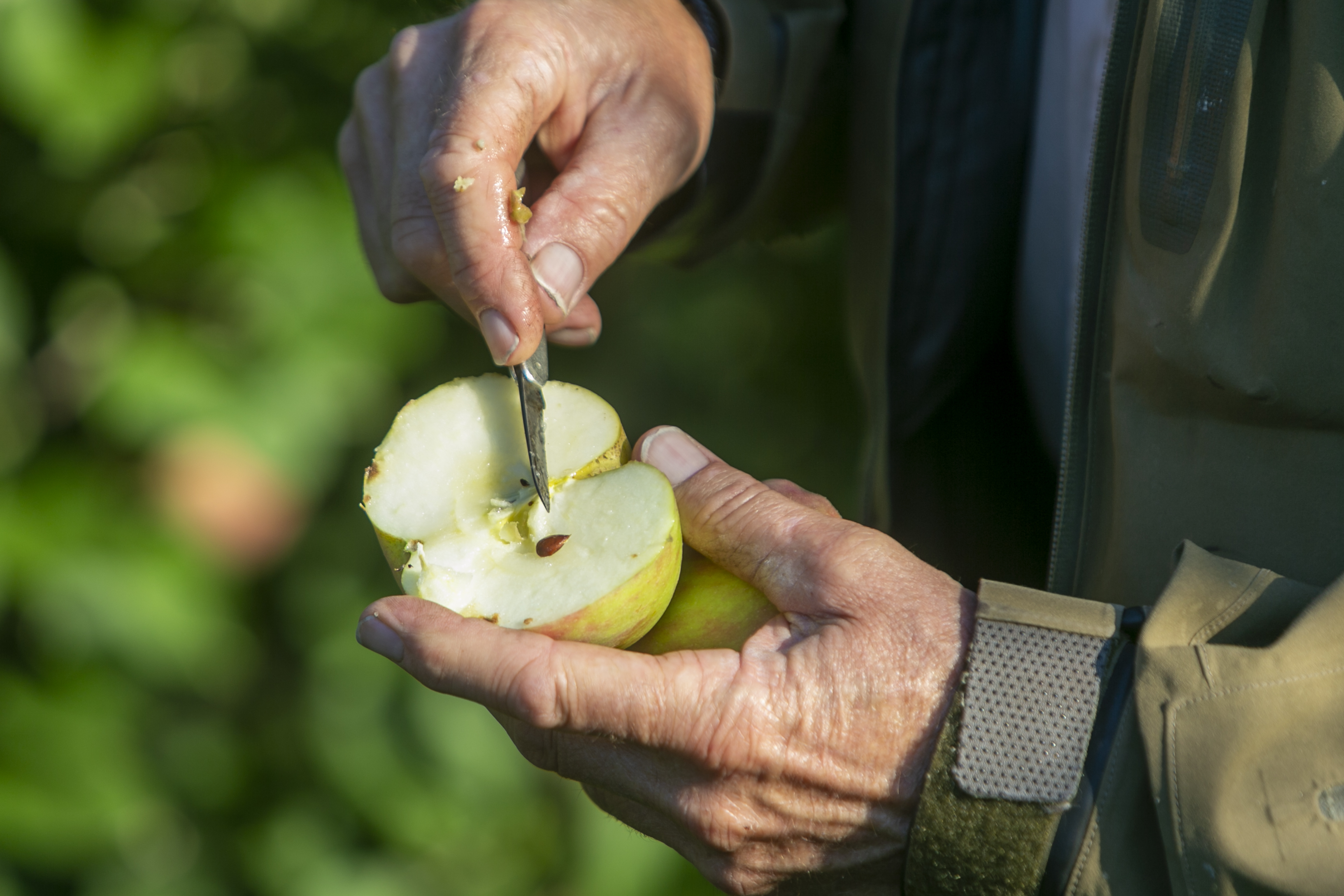
“Farmer Norm” Schultz cutting into a Stayman apple to look at the color of the seeds as a guide for when these can be picked at Linvilla Orchards, 137 W. Knowlton Road, Media, in 2020.Alejandro A. Alvarez / Staff Photographer
Solebury Orchards
Reservations are required for weekend apple picking at this Bucks County farm, where more than 30 varieties of apples are grown each season, according to its website. These include Pixie Crunch, Fuji, Jonathan, and Cortland, among others. Apples are priced by the pound for whatever you pick. Solebury’s farm market is an apple lover’s paradise thanks to its applesauce, apple butter, apple chips, fresh cider, cider doughnuts, and more, with mail order available for applesauce.
Weaver’s Orchard has some 18,000 apple trees on 35 acres of land and a wide selection of apples that include Honeycrisp, Crimson Crisp, Golden Delicious, and Jonagold. No reservations are required to pick-your-own apples, but you will need to use Weaver’s Orchard containers (starting at $29 — but prices may change) to hold your haul. Once you are done in the orchards, check out the market for everything from apple cider doughnuts to apple dumplings, as well as apple cider pressed on-site.
📍40 Fruit Lane, Morgantown, Pa., 🕑 PYO Monday to Thursday, 9 a.m. to 4:30 p.m., Friday 9 a.m. to 5:30 p.m., Saturday 8 a.m. to 3:30 p.m., 📞 610-856-7300, 🌐 weaversorchard.com, 📷 @weaversorchard
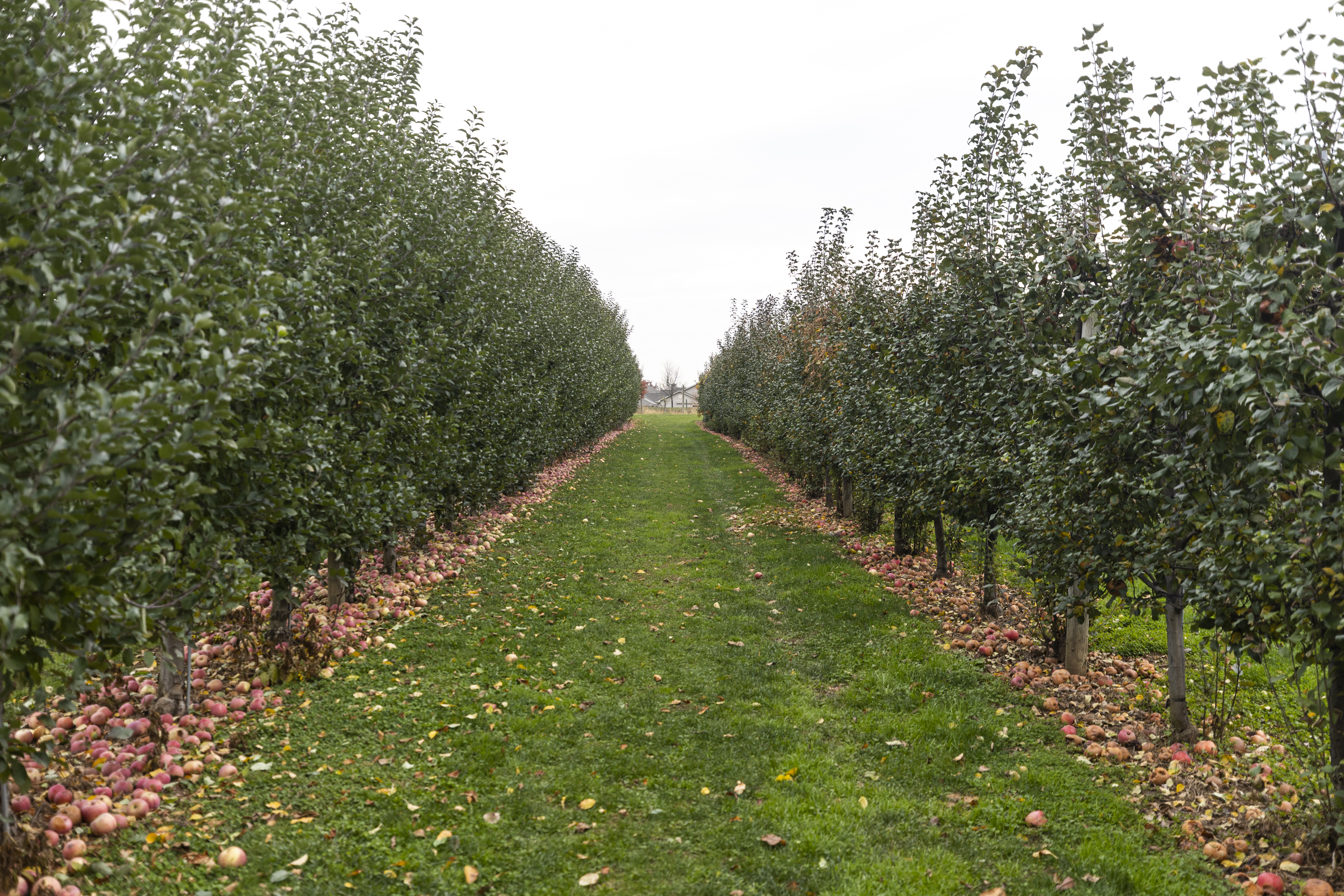
Apples lie on the ground as the pick-your-own season comes to an end and the transition to the winter season begins at Shady Brook Farms in Yardley in November 2023.Tyger Williams / Staff Photographer
Brecknock Orchard
Apple-picking season is expected to run into early November this year at Brecknock Orchard, where over 40 varieties of apples, including Gala, Golden and Red Delicious, Jonamac, and Cortland, are grown. If veggies are more your thing, you can pick your own from over 40 types of pumpkins, squash, and gourds. Brecknock’s farm market has tons of homemade items, like apple cider doughnuts, apple dumplings, and pumpkin rolls, plus apple cider and fruit slushies. The farm also has local delivery and curbside pickup. Check the website for updates on available produce for pick-your-own.
📍 390 Orchard Rd., Mohnton, Pa. 19540, 🕑 PYO Monday, Tuesday, Thursday, and Friday 8 a.m. to 7 p.m., Wednesday and Saturday 8 a.m. to 5 p.m. (through October), 📞 717-445-5704, 🌐 brecknockorchard.com, 📷 @brecknockorchard
Grim’s Orchard & Family Farms
A drive to Lehigh County takes you to this orchard, with its some 30,000 trees growing varieties like Premier Honeycrisp, Sweet Maia, Autumn Crisp, and Pixie Crunch. Each person 3 and up needs to buy at least a quarter-peck bag (about 2.5 pounds of produce) for $11 to enter the orchard. Larger sizes (up to 1/2 bushel for $52) are available, too. The Grim’s Fall Festival starts Labor Day weekend, featuring such activities as a corn maze and hayrides.
📍 9875 Schantz Rd., Breinigsville, Pa. 18031, 🕑 PYO Monday to Friday 10 a.m. to 6 p.m. (last picking bags sold at 5 p.m.), Saturday and Sunday, 10 a.m. to 7 p.m. (last picking bags sold at 5:30 p.m.), 📞 610-841-1417, 🌐 grimsorchard.com, 📷 @grimsorchard
Duffield’s Farm
Fill a bag of pick-your-own apples at this farm in Sewell, N.J. Then, take a hayride and enjoy an apple cider doughnut. A small bag (8 to 10 pounds) and a hayride combo ticket is $21; a large bag (18 to 20 pounds) and hayride is $36. Be sure to call ahead to confirm apple availability.
The recent rain rally has been a boon to the Philadelphia region’s plant life, and, unfortunately for the legions of the allergic, the beneficiaries include the homely and ubiquitous tormentor commonly known as ragweed.
It belongs to the plant family Ambrosia, from the Latin for “food of the gods.” One can only assume the gods did not have allergies.
Estimates vary, and it’s not as though it is a census category, but in all likelihood several hundred thousand people in the region annually endure the slings and arrows of ragweed pollen, notorious for setting off episodes of sneezing and attendant dopiness.
It also can induce coughing, wheezing, and chest discomforts, particularly among asthmatics, allergy experts warn.
The season — the third in the equinox-to-equinox pollen trilogy, successor to the trees and grasses — typically begins modestly in early August, then intensifies late in the month and continues well into September. And this year sufferers may pay a price for the episodic drought-easing rains that have been watering the plants in the Mid-Atlantic region since mid-June.
“Ragweed thrives on the nitrates in rainwater,” said Payel Gupta, anallergy, asthma, and immunology specialist based in New York City. The rains’ timing has coincided with “ragweed’s late-summer growth window,” sheadded, and the result likely will be “denser plants and higher pollen output.”
As for precisely when the pollen will peak: “Every year is different,” said Donald Dvorin, who for more than 30 years was the Philly region’s official National Allergy Bureau pollen counter, “but the first week of September is most common.”
In addition, with the planet’s temperatures increasing and first frosts taking their good old time, the seasons appear to be lasting a bit longer.
The prime pollen flight hours are from 5 to 10 a.m.; effects can linger, however, as pollen can stick to clothing and find its way indoors via unwitting humans and pets.
What is ragweed?
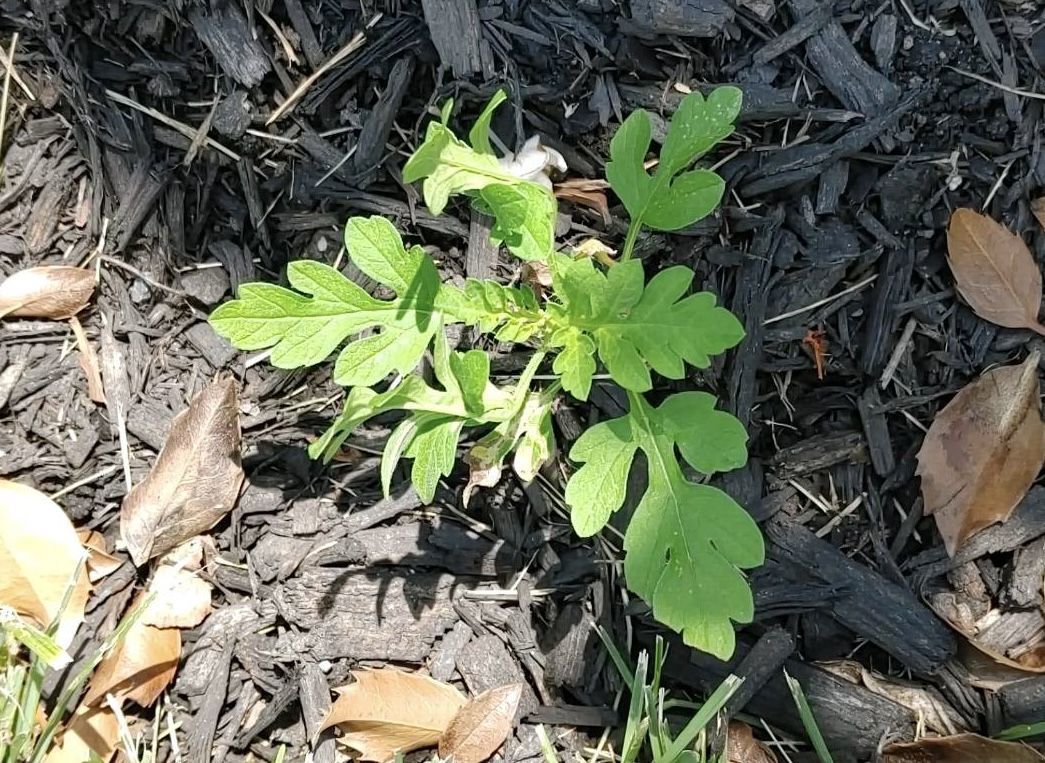
Ragweed is a tooth-leaved plant that can grow in almost any environment, native to North America but spreading worldwide.
For the allergenic, Dvorin said, the heavy hitters are the “short” ragweed (Ambrosia artemisiifolia), and the “giant” (Ambrosia trifida).
A typical pollen grain is a mere 1/25,000th of an inch in diameter, but a single plant can generate a billion of them.
While the plants live for only about a year, do they ever reproduce! Pollen has been found as far as 400 miles from the source, according to the Allergy and Asthma Network.
New York City spent millions after World War II to eradicate ragweed in the city, a war it lost resoundingly. For one thing, the warriors discovered that about half the ragweed pollen in the five boroughs was commuting from elsewhere.
The torments of ragweed
Most people inhale ragweed pollen without incident, but for the allergic, the body interprets the pollen as an invader, and sneezes and other reactions are part of the immune response.
For the sufferers, each season can be a little bit different, said Gupta, assistant clinical professor at the State University of New York and Mount Sinai Medical Center in Brooklyn.
Severity would depend on “how many consecutive high-count days there are,” Gupta said. Exacerbating factors could be “viral infections or air pollution compounding irritation,” she said.
In addition, some patients may be subject to “priming,” a particularly nasty season that might make some more susceptible to pollen discomforts the following year.
And ragweed is nothing to just sneeze at, according to the International Ragweed Society, which is based in Switzerland and aims to promote ragweed research.
In addition to a “socioeconomic burden due to rising healthcare costs” and “productivity losses,” the society states, the weed’s pervasiveness can endanger certain crops and natural habitats.
How much ragweed is in the air?
Unfortunately, that has become harder to know. Dvorin, an allergist who had practiced in Center City and Mount Laurel, stopped counting pollen last year, and that was symptomatic of a trend. The network has been shrinking.
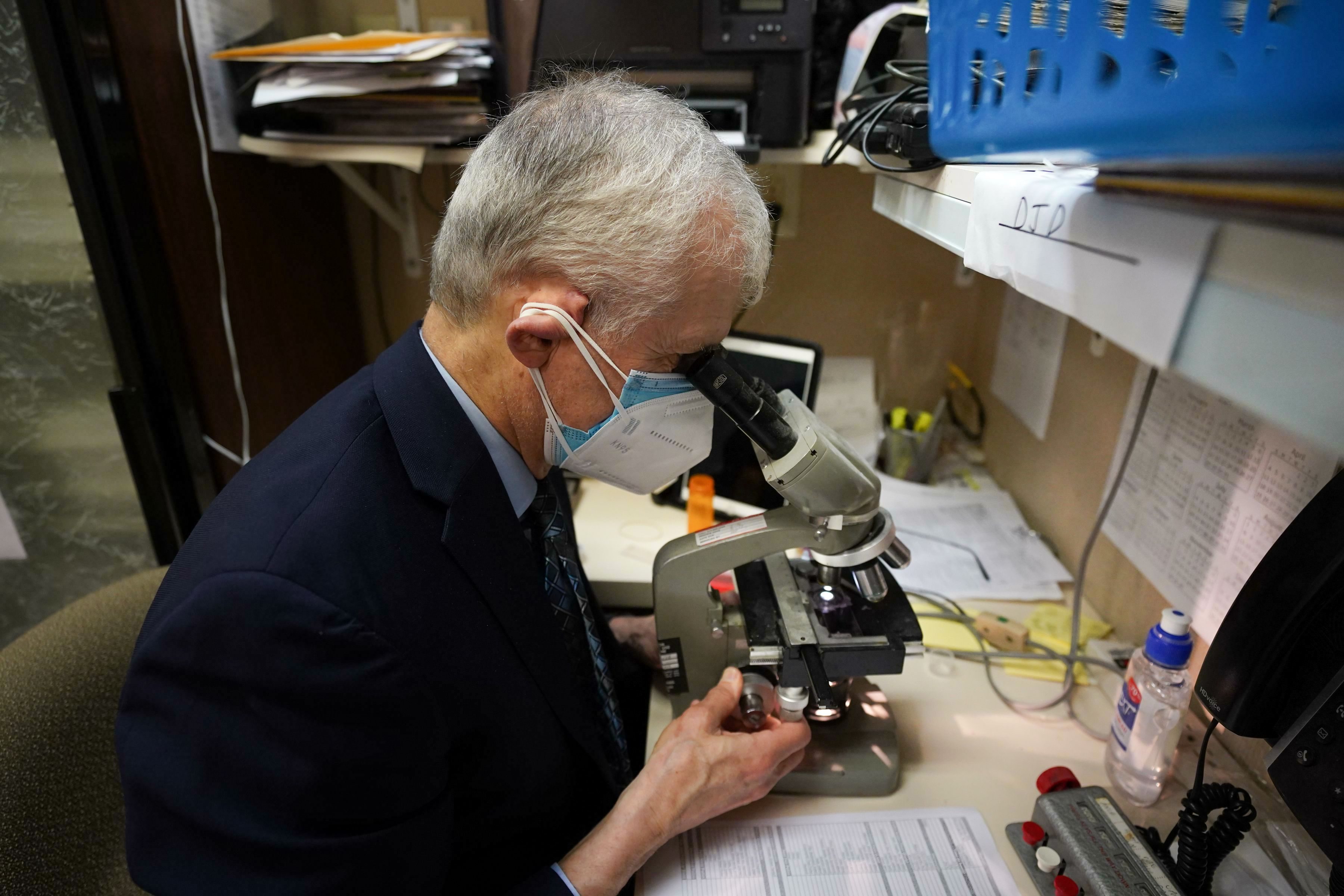
Gotcha! Donald Dvorin analyzing a pollen specimen. He stopped counting pollen last year, and the network has been shrinking.Jessica Griffin / Staff Photographer
Traditionally, allergists such as Dvorin supplied daily counts on a voluntary basis as part of the National Allergy Bureau network. However, the analyses require expertise and time that allergists could devote to revenue-paying patients.
Fewer doctors evidently have been willing to participate.
The nearest allergy bureau counter who posts frequent counts is in the Washington area.
The Asthma Center in Center City posts daily counts that are AI-generated, and while that technology shows tremendous potential, the allergy bureau has not yet approved any of the machines for official use, said Pamela E. Gabrish, the bureau’s program director.
“There has actually been more backlash against using automated devices than ever,” she said.
Advice for ragweed sufferers
Day-to-day pollen volumes are difficult to predict, but expect the peak to arrive next week.
It is a good bet that counts will be high on a warm, dry, and breezy day.
This will be evident in the online pollen forecasts, but be aware that pollen is commuting on the chaotic whims of the atmosphere.
In a study of five major cities, published in 2024, allergy experts concluded the accuracy of online pollen forecasts was “low.”
Along with medications, here are a few suggestions from allergy professionals:
Last year at this time — one year ago Wednesday, to be exact — Marcus Epps was staring a sort of career mortality in the face.
That’s life in the NFL for a 29-year-old safety who works his way back from ACL surgery and signs a one-year contract only to be cut at the end of training camp. The New England Patriots didn’t have a spot for him. They had a Super Bowl-contending roster, to be sure, but Epps was only two years removed from parlaying his starting safety job on an Eagles team that went to the Super Bowl into a two-year, $12 million deal with the Las Vegas Raiders.
Working his way back from the ACL tear that ended his 2024 season — his second year with the Raiders — in Week 3 presented Epps with “dark days” that challenged him physically and mentally. He relied on his loved ones and trained at the gym he owns in Costa Mesa, Calif., unsure what his future held.
The Eagles, who initially claimed Epps in November of 2019 after Minnesota waived Epps just months after selecting him in the sixth round, offered Epps a second chance for the second time. They signed him to their practice squad two days after the Patriots cut him, needing to add some reinforcements at a position that lacked quality depth. He later was called on to start down the stretch after rookie Andrew Mukuba suffered a season-ending injury.
The Eagles brought Epps back on a one-year deal and put him in a competition with a converted nickel corner, Michael Carter II, for the safety spot next to Mukuba whenever the Eagles are in nickel or dime packages (All-Pro nickel Cooper DeJean will play safety in the base package). Epps hasn’t yet been named the winner of that competition, but all signs point to him getting the nod come Sept. 13 when the Eagles open their season at home vs. the Washington Commanders.
“It feels good to just be back healthy, have a clear mind, kind of be out of that dark place that I was in,” Epps said Monday. “I’m just grateful. I don’t take any day for granted, and I’m truly blessed to be here, right where I want to be. I’m just trying to keep my head down and grinding every day.”
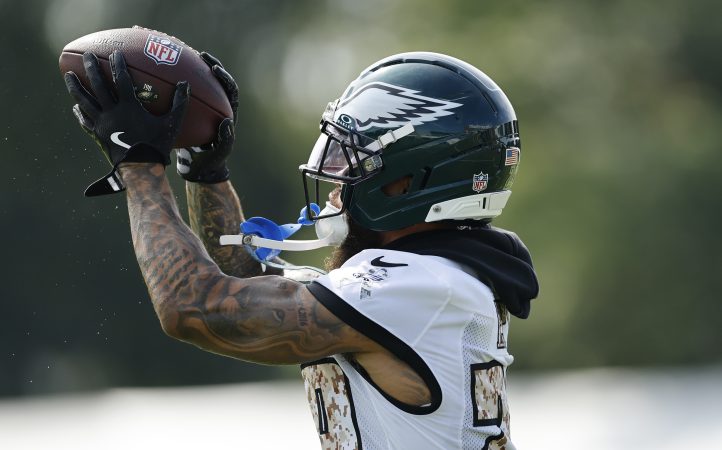
Safety Marcus Epps works out during training camp last month.Monica Herndon / Staff Photographer
Being a starter again would “mean everything” to Epps.
“I worked real hard to get back to where I’m at, man, and there were a lot of dark days,” he said. “But I still got work to do. I haven’t arrived by any means. It’s a long season, and we’re still here just in camp. That’s where my focus is, on camp, finishing out camp the right way and just continuing to get better.”
Safety remains the thinnest position on the roster as far as NFL talent and experience goes. Besides Mukuba, who has 11 games under his belt, Epps, and Carter, who hasn’t played the position, the rest of the team’s safeties have combined for three defensive snaps in the NFL, all from Andre Sam, who has been a mainstay on the practice squad the past few seasons.
It’s possible Howie Roseman makes a move to acquire a starting-caliber safety that bumps Epps down the depth chart between now and the start of the season. It’s possible, too, that the Eagles decide to only keep three safeties — Carter, Epps, and Mukuba — on the initial 53-man roster due Sunday night. With DeJean logging at least a chunk of snaps, they may decide they don’t need to roster more than three.
That stuff is out of Epps’ control. He has taken the vast majority of the first-team reps, though Carter has been sprinkled in at times throughout camp.
“I feel good both physically and mentally, just trying to stay grounded and keep my head down and keep on working,” Epps said. “I still got a lot of things I got to work on and clean up, so that’s where my focus is, to continue to get better.”
With Reed Blankenship gone, pre-snap communication from the back line to the rest of the defense will be a shared responsibility between Mukuba and DeJean in base, and Mukuba and Epps, assuming he’s the starter, in the sub packages. That comes naturally, Epps said, and he’s watched the 23-year-old Mukuba make strides, too, both in his communicating and overall play at safety this summer.
At 30, Epps is among the oldest defensive players in the locker room. Only cornerback Jonathan Jones, 32, is older. It’s a different gig than when Epps was first with the Eagles seven years ago.
“It’s cool being the older guy, being able to be somebody that the younger guys can lean on, continue to pass down knowledge and pass down game to these guys,” Epps said. “It’s an important role in every locker room and I don’t take it for granted.”
Running a Catholic League football powerhouse is day and night, says La Salle College High School coach Brett Gordon, and nowadays, it’s become even more challenging.
Gordon, who is entering his third season, values preparation and the philosophical approach that no individual is bigger than the team. Those were the lessons he learned from watching his father, Drew, a famed football coach who died on Sept. 4, 2023.
“I often find myself thinking back when I have decisions to make, saying, ‘What would either my dad have done here or what would he tell me to do in this situation?’” Gordon said.
It’s a different world than it was 20 years ago, when Brett came back to La Salle, his alma mater, as an offensive coordinator on his father’s staff.
There’s another layer to being a coach at a school that’s considered to have one of the best football programs in Pennsylvania, and coming off Catholic League and PIAA Class 6A titles in 2025. College coaches are calling to recruit, several players want to be the next stars, and the outside attention can weigh on the players.
But then Gordon is reminded of the things that haven’t changed since he starred here as quarterback in the mid-’90s. It’s those players who show up to every game, and it’s why they wear “protect the brand” on the back of their practice shirts.
“I tell our players how lucky they are to be part of not just La Salle’s football program, but the La Salle community,” Gordon said. “The La Salle environment, both on gamedays, the following and support we feel here from our alumni base, the student body, so many people that pay so much attention to the success of our school. That was on full display the last couple years since I’ve been back involved as a coach.”
Gordon is aware that this year’s Explorers aren’t going to look like last year’s 13-1 state championship squad, which featured a star-studded senior class including Joey O’Brien (Notre Dame), Gavin Sidwar (Missouri), Grayson McKeogh (Notre Dame), John-Patrick Oates (Virginia Tech), and Desmond Ortiz (Brown), among others.
With at least seven seniors starting, there’s going to be a mix of sophomores and juniors getting more opportunities on the field this season, which officially kicks off against Paramus (N.J.) Catholic on Friday at Ocean City High School.
One of the new faces in a starting role will be quarterback Luke Gordon, Brett’s son, who is entering his junior year.
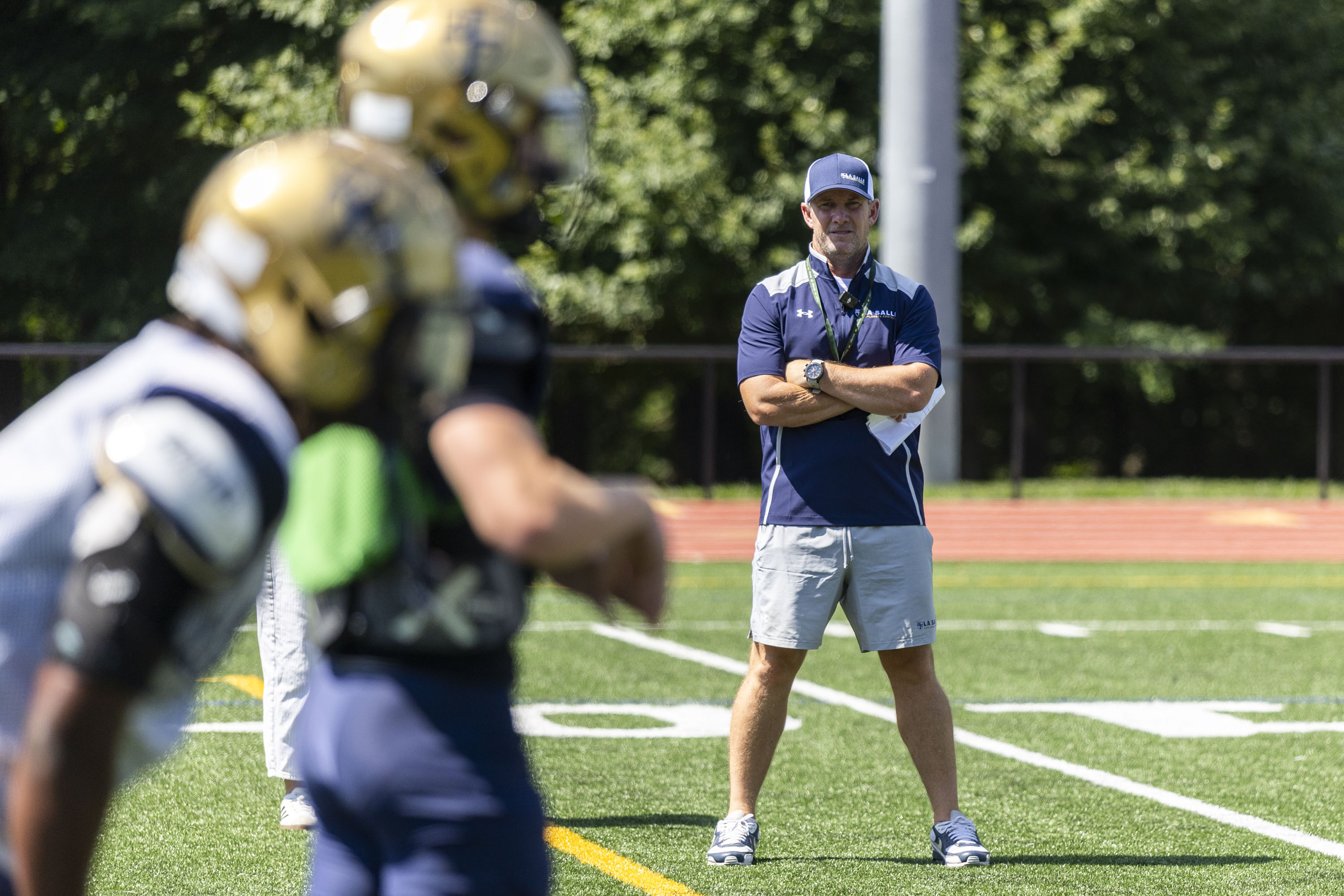
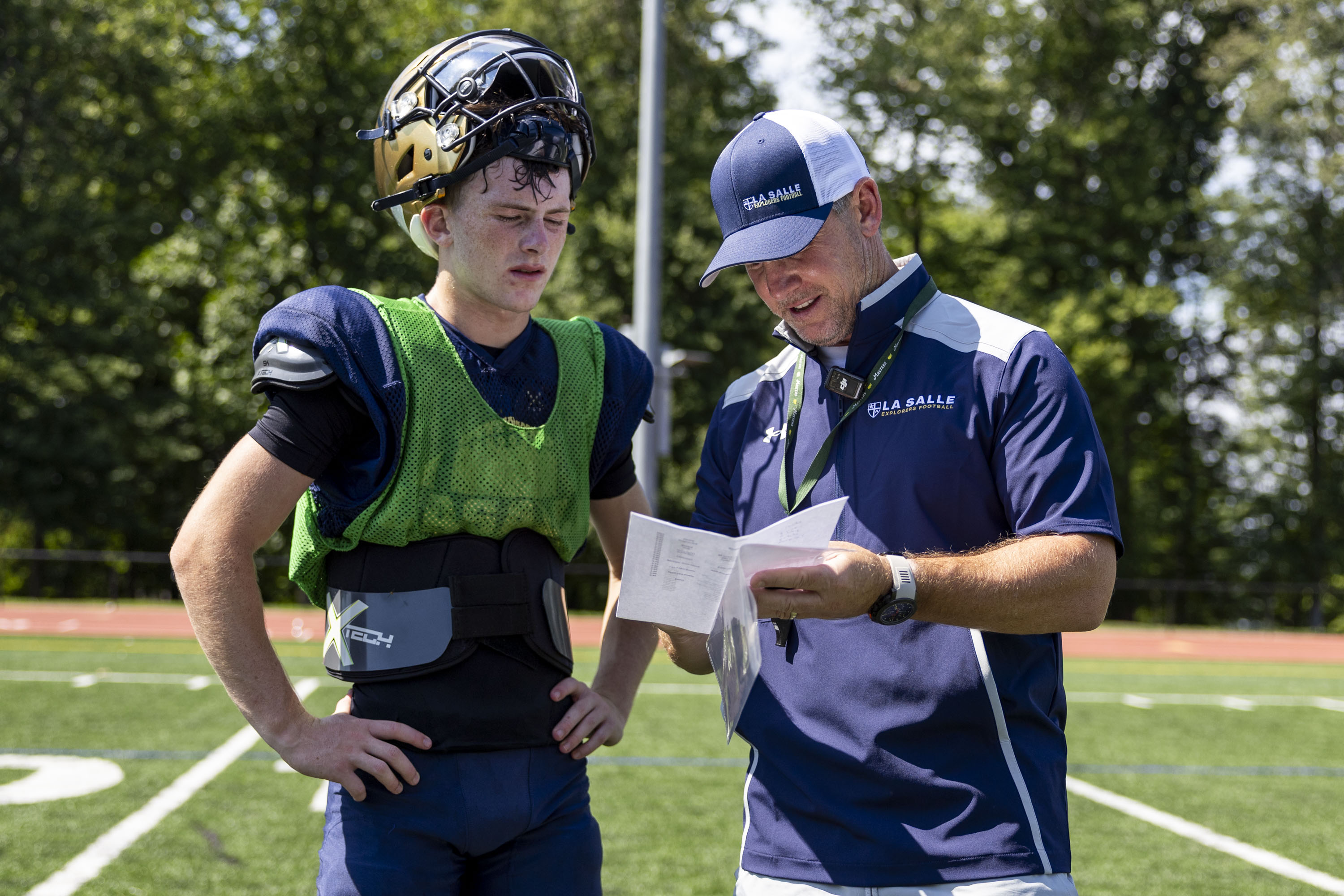
La Salle coach Brett Gordon chats with his son, Luke Gordon, the team’s quarterback, during practice on Wednesday, Aug. 19.Tyger Williams / Staff Photographer
“He’s put in the work,” Gordon said. “The way the timing and transition has taken place for him, having an opportunity to come to La Salle, get his feet under him. He works hard in the classroom. He’s waited his turn, had some opportunities to get in a little bit last year. He’s chomping at the bit to get out and prove what he can do.”
Playing with the last name Gordon carries some weight at La Salle. But if there’s anyone who understands what it’s like to have a father as a coach, it’s Brett. Drew was an offensive coordinator while his son played.
“The coach and player dynamic, it’s certainly not easy,” he said. “I’m going to make my share of mistakes. I try to be as open as I can with him and communicate and do the best I can to separate, ‘Hey, I’m talking to you right now as coach,’ and then also making sure that I’m talking to him as dad. It’s certainly easier said than done. Something that I think about often, and I’m going to do the best I can to support him.”
Football has bonded the Gordon family. It may not always be about La Salle, but there isn’t a day they don’t talk about football.
Luke appreciates his family’s legacy. Growing up around Villanova football, where both Brett and Drew had successful playing careers at quarterback, or watching college and NFL games together has connected them.
His hope is “to be maybe as good as [his dad] one day. I would love to have an opportunity to go play at some of the schools I could play at,” Luke said. “His legacy to me is something that I really cherish, and I want to keep carrying the name.”
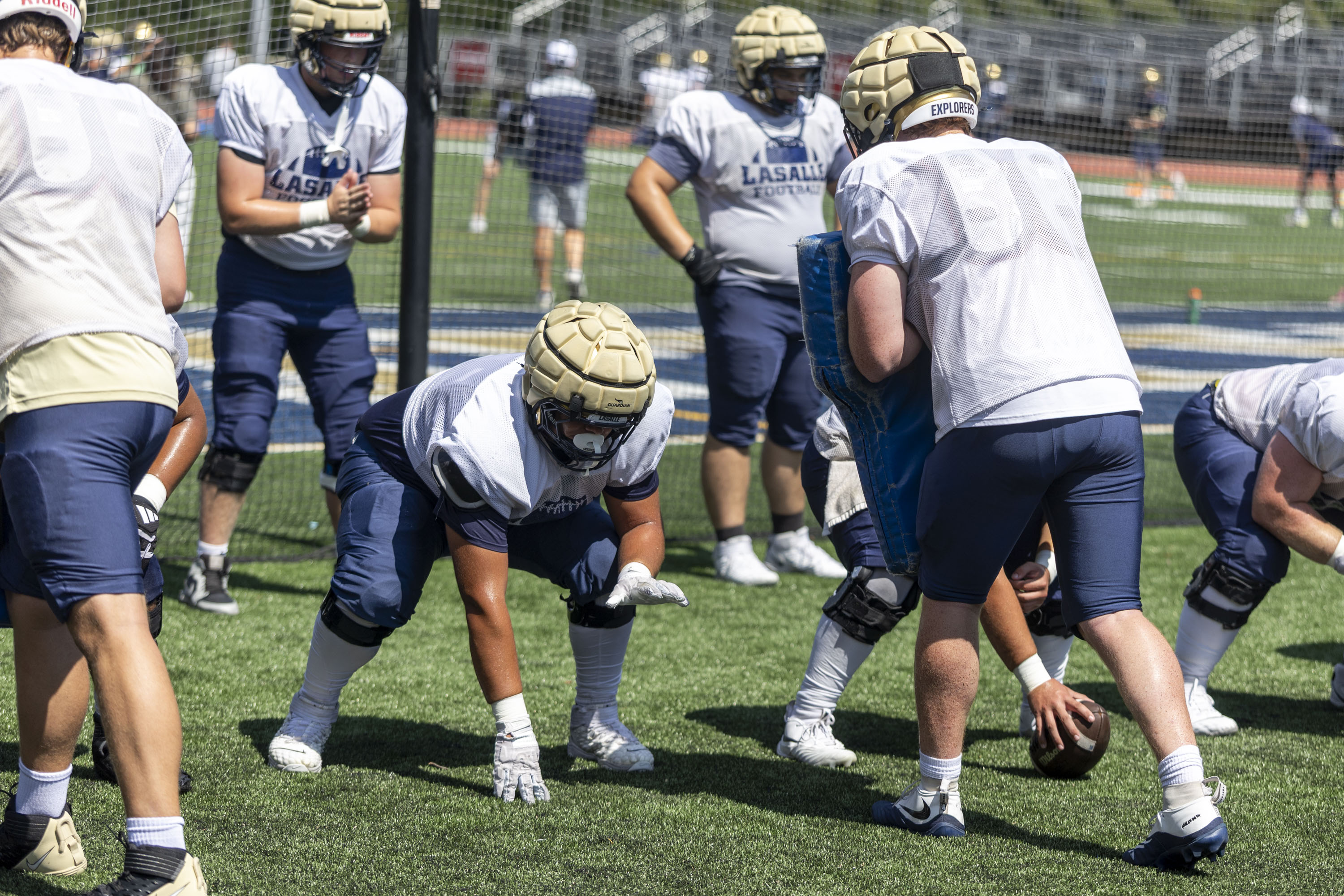
La Salle offensive guard Andrew Sorge lines up during practice as the team prepares for its season opener against Paramus Catholic on Friday, Aug. 28.Tyger Williams / Staff Photographer
First, his focus is on showcasing what he and this team can do. There are a lot of doubters out there, he said, after the Explorers graduated the bulk of their starters.
But that doesn’t mean they aren’t just as talented. Guard Andrew Sorge, one of the team’s senior leaders, says the other schools “don’t know what’s coming.”
“We have a lot of young guys that are very talented and have gotten a lot better over the offseason, including guys that have played for us last year,” said Sorge, who is committed to Lafayette. “People have taken big steps, and I’m excited to see what we can do.”
There’s a wave of newcomers looking to carry this team back to Cumberland Valley High School in Mechanicsburg to defend its 6A crown, but it’s a long road where La Salle will have to get through St. Joseph’s Prep and defending 5A champion Roman Catholic.
So what will be “this team’s rallying cry?” Gordon asks himself. He doesn’t know the answer, but for now, he tells his locker room to keep this in mind: “What is going to be the legacy of the 2026 team?
“In 30 years from now, when people think back, fans and yourselves, [who] were watching us play, and when the season ends, what are you going to be remembered for?” Gordon said. “Ultimately, the players are going to decide that, not me.”
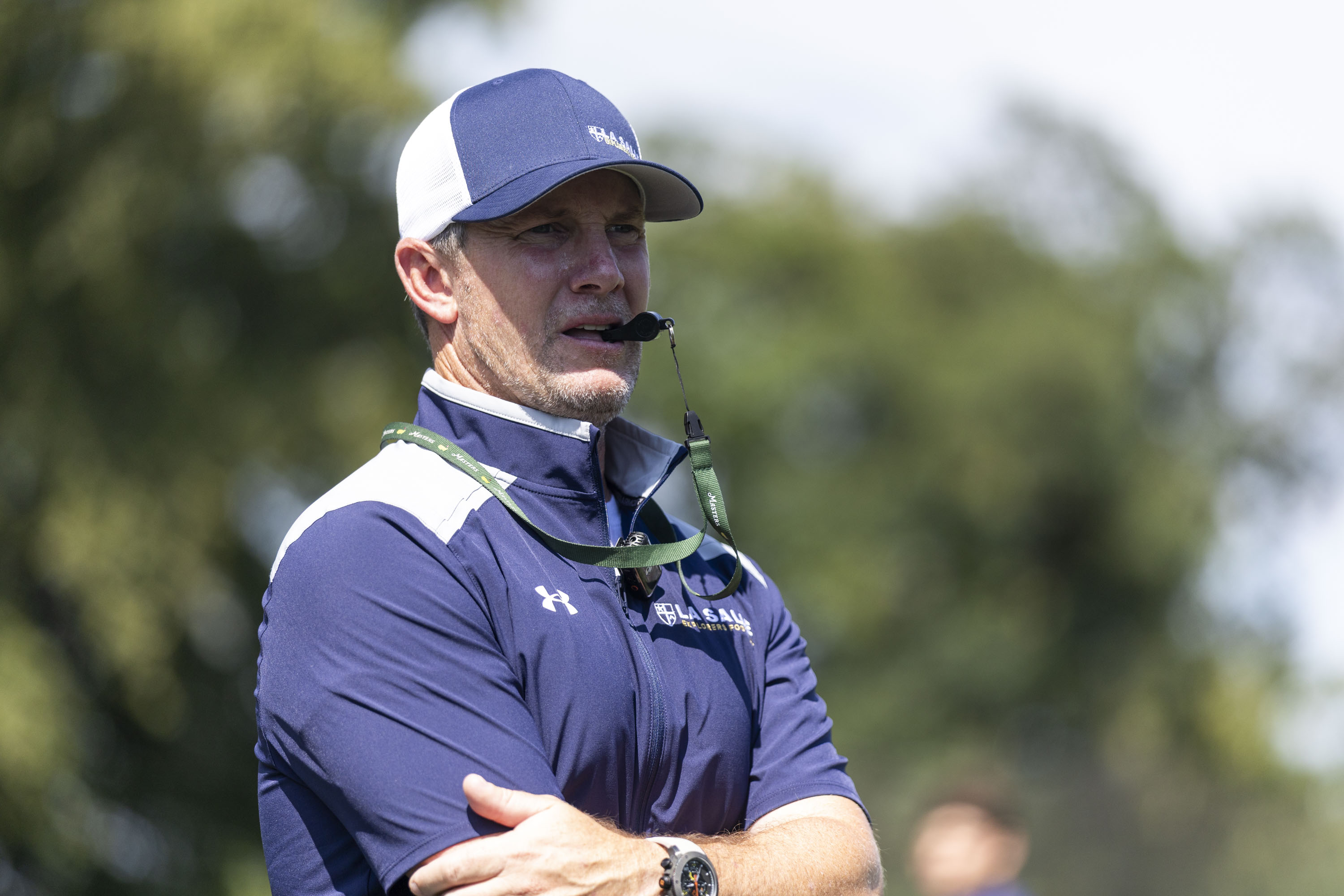
“I tell our players how lucky they are to be part of not just La Salle’s football program, but the La Salle community,” said Brett Gordon, the La Salle coach.Tyger Williams / Staff Photographer
Maybe the best thing that can happen to college sports’ integrity is everything that is happening to its integrity right now. It would be ironic, in a way. The NCAA and its member institutions are where they are because they spent decades adhering to a policy of inertia. Only now does it look like a viable strategy, after their world is already burning around them. Sometimes, in order to gain back what was lost, one must lose what little remains.
Very little remains. Let’s be clear about that. That was true even before last weekend’s news that former Eagles undrafted rookie free agent Dae’Quan Wright was planning on returning to the college ranks after being waived by the Browns. In fact, the hand-wringing that has accompanied the tight end’s reported agreement with LSU is mostly an admission of naiveté or ignorance on the part of the hand-wringers.
The NCAA is more than a decade into a series of logical premises and conclusions that was always going to lead power conferences like the SEC and Big Ten to where they are right now. The university presidents who operate behind the NCAA’s bureaucratic anonymity chose this path when they allowed the almighty dollar of television contracts and the vanity of a news cycle monopoly to become the primary goal of collegiate sports rather than sports played by, for, and among collegiates.They are living in a reductio ad absurdum of their own creation.
The best thing any of us can do for our sanity is to lean back and enjoy watching them lose theirs. It no longer makes sense to react to each development as if university athletic departments are tethered to some sort of ethical baseline that sets them apart from any other major professional sports organization. They pulled up that anchor long ago. The ship has sailed.
Frankly, the idea of an undrafted athlete moving from the bottom of an NFL training camp roster to a college football starting lineup pales in comparison to the legion of current college football starters who are making bigger bank than they would as NFL players on rookie contracts. The average Power 4 quarterback is currently signed to a name, image, and likeness deal worth $3.1 million, according to Sportico. It always made sense that there would come a day when a player would ask out of a contract from the Browns for a more competitive offer funded by Big Willy’s Jeep-Chevy of Baton Rouge. That’s the way NIL was always going to work.
Average NIL spend has nearly tripled in the past three seasons, reflecting an accelerating market. Power 4 programs spend roughly $24.8M on football alone.
Top position groups can expect annual NIL earnings of $3.1M (QB), $1.0M (WR) and $932K (RB). QB has the best ratio of… pic.twitter.com/U4HYYXcAJT
The ridiculousness is the real sport, now. We should treat it as such. For years, the NCAA chose to address the logical implications of its profit drive with a weird and counterintuitive combination of hope, avoidance, and authoritarian dictates. They fully recognized that the genie would one day escape the bottle. Now, they’re left to hope that Ja’Marr Chase and Joe Burrow already have plans for their bye week, when LSU plays Mississippi State.
Lane Kiffin’s central role in the latest lunacy is fitting. College football’s Kendall Roy has spent the early part of this week channeling the exact sort of ends-based nihilism so sublimely satirized by HBO’s Succession. He did the same last year when he left his Ole Miss team on the eve of the college playoffs in order to sign a mega contract with LSU. Nick Saban, his former boss at Alabama, leveraged the full power of the media-sports industrial complex to absolve him of responsibility.
“We need to take a better approach to the business aspect of what we do in college athletics,” Saban said on ESPN’s pregame studio show after Kiffin left Ole Miss. “In the NFL, you can’t leave your team until you are finished playing. You can’t talk to another coach in the regular season. There’s a defined time when you can talk to them if they are in the playoffs. We should match the academic calendar with the football calendar.”
Well, yeah. You should. But there are a whole lot of competing self-interests standing between ought and is. Like any system, it is first and foremost a reflection of those who agree to its framework. Major college football has become nothing more than Boar on the Floor in pads. Any television news segment on NCAA should conclude with a clip of Logan Roy smirking at all the piggies at the trough.
Dae’Quan Wright is among the NFL players trying to play another season of college football.Carolyn Kaster
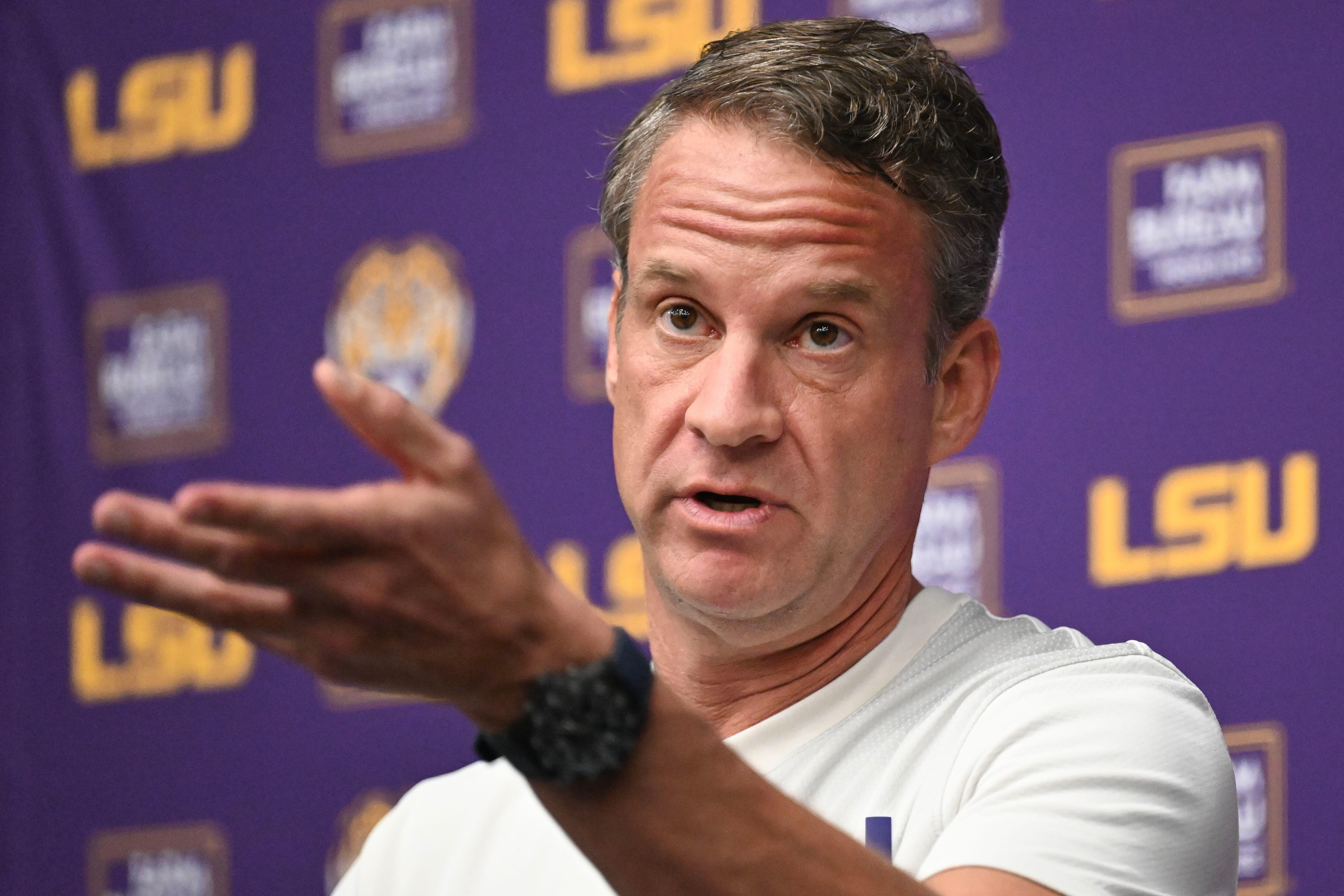
“In general, should NFL players come back to college? I believe — it doesn’t matter necessarily what I believe — that answer would be no,” Kiffin said in a Monday news conference while defending his recruiting of at least two former Ole Miss players who’d spent the summer in NFL training camps.
Focus on Kiffin’s interjection.
It doesn’t matter necessarily what I believe.
You’ll struggle to find seven words that more accurately summarize both the current state of college sports and its contributing factors. In a more principled world, they would be written off as the words of a coward. In our current world, they might as well be written in Latin beneath the flag or family crest or company logo of a disconcerting number of tech titans, politicians, and Fortune 500 firms, not to mention the hundreds of university presidents who have long embraced the plausible deniability of the concept of shareholder value. The best thing you can say about the system of higher education in the United States is that it remains steadfastly by and of the system at large.
The only hope is that it burns itself as quickly and completely as possible. The inevitable end game for the major football-playing schools won’t look much closer to the mandates of their university charters. The big schools will break away, impose a salary cap, hiring and transfer restrictions — all of the things major sports leagues long ago did as a result of similar competitive inevitabilities. They will sign their own television contract, sell their own licensing agreements, consolidate the revenues. The nonpower schools will exist mostly as a counterweight to any antitrust claims. Meanwhile, the rest of us will continue to contemplate the question: Do we really care about college sports if they are no longer about the college?
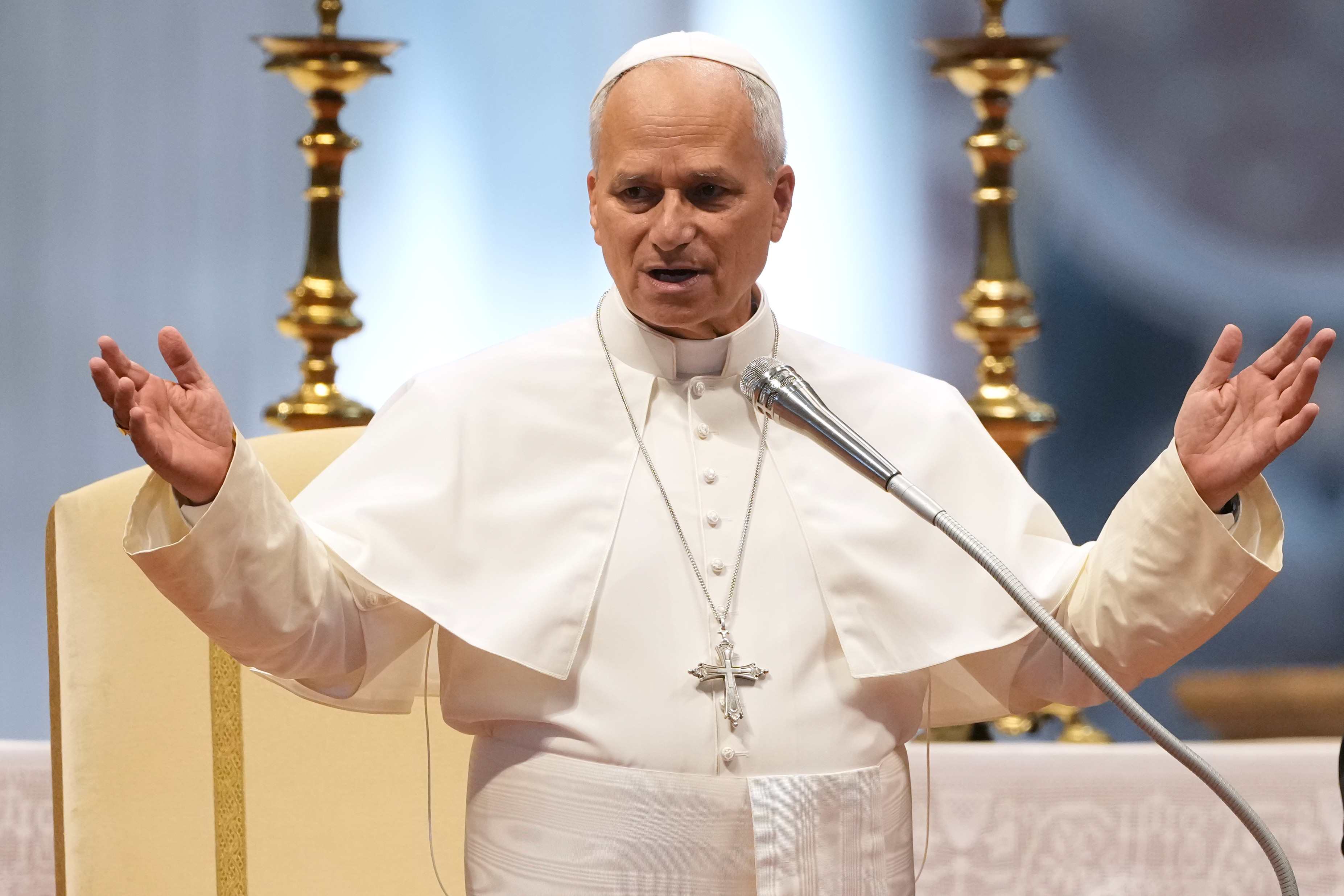
Pope Leo XIV is significantly more popular among Pennsylvania Democrats than Republicans in the state, according to an Inquirer/New York Times/Siena University poll released this week.
While 75% of Democrats expressed a favorable opinion of Leo, only 40% of Republicans did. Meanwhile, 37% of Republicans viewed the pope unfavorably, compared with just 7% of Democrats, according to the poll.
The pope’s disfavor with GOP voters likely links back to his widely publicized dispute with President Donald Trump in the spring over the Iran war, when the two engaged in contentious exchanges, said Don Levy, who supervises the Siena Research Institute’s political polls.
(function() { var l = function() { new pym.Parent( ‘nyt-pope__graphic’, ‘https://media.inquirer.com/storage/inquirer/ai2html/nyt-pope/index.html’); }; if(typeof(pym) === ‘undefined’) { var h = document.getElementsByTagName(‘head’)[0], s = document.createElement(‘script’); s.type = ‘text/javascript’; s.src = ‘https://pym.nprapps.org/pym.v1.min.js’; s.onload = l; h.appendChild(s); } else { l(); } })();
Among independent voters, 64% viewed the pope favorably and only 16% viewed him unfavorably.
Similarly, voters who cast their ballots for Vice President Kamala Harris in 2024 were more likely to hold a favorable view of the pope than were Trump voters: 79% of Harris voters held favorable views of Leo, compared with just 38% for Trump voters.
Leo has ties to Pennsylvania, having attended Villanova University as an undergraduate student and earning a bachelor of science in mathematics in 1977.
One day later, he spent his home country’s anniversary visiting migrants in the Mediterranean.
“Pope Leo has embodied a different way of being an American on the world stage. He believes in collaboration with other nations, and has concerns about immigration,” said Massimo Faggioli, a professor of theology and religious studies at Villanova University and an expert on the papacy.
“He’s relatable, and many Americans like that,” Faggioli added about Leo’s appeal.
Vince Stango, interim president and CEO of the National Constitution Center, presents Pope Leo XIV with the Liberty Medal.The Vatican and National Constitution Center
In the spring, the war with Iran brought tensions between the Vatican and the White House to the forefront of the national political conversation as the U.S.-born pope emerged as a leading international voice against Trump’s policies.
“Pope Leo never wanted to get into a fight with Trump about the war,” Faggioli said. “But certain things Trump said were not acceptable to the pope.”
The Leo-vs.-Trump fracas caught fire in April, when Trump threatened Iran by saying a “whole civilization will die tonight, never to be brought back again,” if the country’s leaders did not open up the Strait of Hormuz.
Days later, Trump posted on Truth Social that “Pope Leo is WEAK on Crime, and terrible for Foreign Policy.”
Trump also claimed that Leo had been selected as pope only because of his election as president and referred to the fact that one of the pope’s brothers is a Trump supporter.
Trump went further in a lengthy post: “I don’t want a Pope who thinks it’s OK for Iran to have a Nuclear Weapon. … And I don’t want a Pope who criticizes the President of the United States because I’m doing exactly what I was elected, IN A LANDSLIDE, to do.”
During that same period, Vice President JD Vance said the pope should “be careful” when talking about religion.
Pope Leo responded: “I have no fear of the Trump administration.”
Around the same time, Trump posted an image of himself dressed as Jesus healing the sick as an American solider and others reverently gaze upon him. Trump claimed that the now-deleted post was meant to show him as a doctor.
A majority of likely Pennsylvania voters — 58% — disapprove of Trump’s performance as president and an even greater number — 66% — disapprove of his handling of the war, including 30% of Trump voters, according to the poll.
(function(){function e(){window.addEventListener(`message`,function(e){if(e.data[`datawrapper-height`]!==void 0){var t=document.querySelectorAll(`iframe`);for(var n in e.data[`datawrapper-height`])for(var r=0,i;i=t[r];r++)if(i.contentWindow===e.source){var a=e.data[`datawrapper-height`][n]+`px`;i.style.height=a}}})}e()})();
For the poll, 592 likely Pennsylvania voters completed the full survey and responded to the question about the pope.
Among that group Catholic voters, in particular, had a more favorable view of the pope than the overall electorate, with 81% viewing him favorably, while 15% viewed the head of the church unfavorably.
Trump won a majority of Catholic voters in 2024, according to national exit polls. But Catholic voters were split on the president’s performance in the new Pennsylvania poll — 50% disapproved of Trump, while 44% approved.
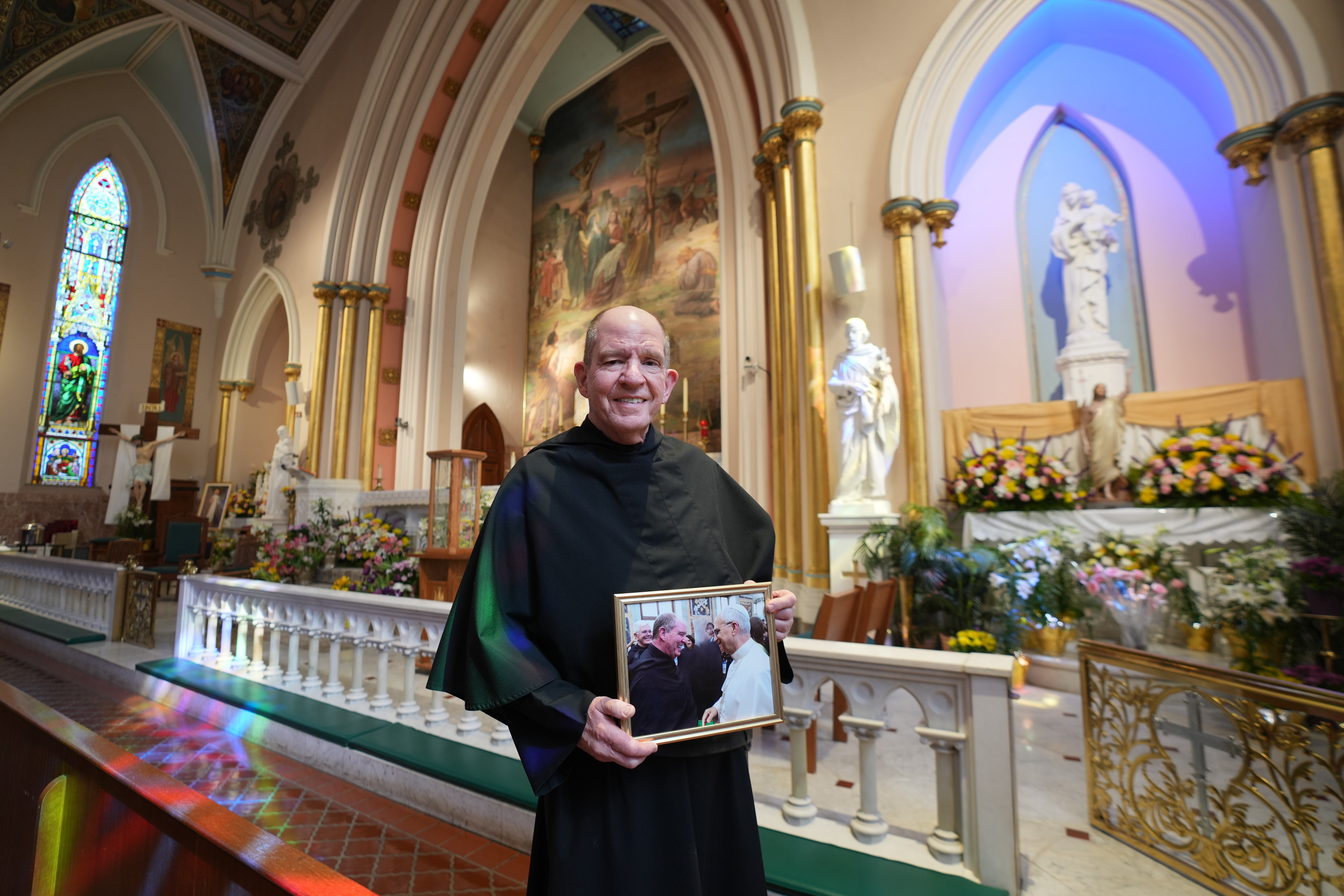
Explaining how people feel about the pope, the Rev. Paul Galetto, the pastor of St. Paul’s Church in South Philadelphia and a friend of Pope Leo’s for 51 years, said Tuesday that “everyone knows this pontiff is focused on peace in the world.”
Father Paul Galetto shown here at St. Paul’s Roman Catholic parish, in Philadelphia, Friday, April 10, 2026. Galetto studied with the pope in Rome in the 1980s. Jessica Griffin / Staff Photographer
More basically, people are drawn to his “intellect and his humbleness,” Galetto said.
“I think Pope Leo’s favorability comes about because he is seeking solutions to problems that affect all of humanity,” he added. “People will always be attracted to someone with a larger vision to help the common good.”
Staff writer Joe Yerardi contributed to this article.
Two years ago, every child in the kindergarten class at Eleanor Emlen Elementary in Mount Airy had vaccine protection against measles.
A year later, the school’s kindergarten immunization rate had dropped to just 80%, putting students and the surrounding community at risk of an outbreak of the highly contagious disease.
Emlen is among more than two dozen Philadelphia-area schools that saw double-digit declines in kindergarten immunization rates last school year — in many cases because parents are increasingly refusing vaccines.
The affected schools span a diverse range of communities, from city neighborhoods like Mount Airy to the outlying suburbs. In Chester County, for example, a small private school in Downingtown saw its vaccination rates plunge by 20%.
Even as countywide immunization levels remain relatively high, some 40% of kindergarten classrooms across the region became vulnerable to an outbreak during the 2025-26 school year, up from 33% the year prior, an Inquirer analysis of newly released state data found.
(function(){function e(){window.addEventListener(`message`,function(e){if(e.data[`datawrapper-height`]!==void 0){var t=document.querySelectorAll(`iframe`);for(var n in e.data[`datawrapper-height`])for(var r=0,i;i=t[r];r++)if(i.contentWindow===e.source){var a=e.data[`datawrapper-height`][n]+`px`;i.style.height=a}}})}e()})();
That means that at least 249 schools had vaccination rates below 95%, the level at which scientists say a population must be vaccinated to prevent the spread of measles, one of the most contagious diseases.
Of these, 98 Philadelphia-area schools reported measles vaccination rates below 90%, presenting an even greater risk to students.
A sharp increase in parents opting out of vaccination for religious or philosophical reasons continued to drive down vaccination rates; exemptions in this category rose by 15% in the latest two years for which data are available.
(function(){function e(){window.addEventListener(`message`,function(e){if(e.data[`datawrapper-height`]!==void 0){var t=document.querySelectorAll(`iframe`);for(var n in e.data[`datawrapper-height`])for(var r=0,i;i=t[r];r++)if(i.contentWindow===e.source){var a=e.data[`datawrapper-height`][n]+`px`;i.style.height=a}}})}e()})();
Pennsylvania is among a handful of states that allows parents to opt out of vaccine requirements for philosophical or religious reasons, often by simply signing a form.
The health department published more granular, school-level vaccination data this summer for the first time, after reporting by The Inquirer and the Pittsburgh Post Gazette made this information public for the prior school year, exposing pockets of vulnerability within counties with overall high vaccination.
The new data show the growing public health threat to the region from Pennsylvania’s growing measles outbreak, in which two people in Lancaster County have died, state officials reported Tuesday. They were the state’s first measles-related deaths in three decades.
(function(){function e(){window.addEventListener(`message`,function(e){if(e.data[`datawrapper-height`]!==void 0){var t=document.querySelectorAll(`iframe`);for(var n in e.data[`datawrapper-height`])for(var r=0,i;i=t[r];r++)if(i.contentWindow===e.source){var a=e.data[`datawrapper-height`][n]+`px`;i.style.height=a}}})}e()})();
So far, nearly 400 cases have been diagnosed, with nearly half in Lancaster County. The rapidly spreading outbreak is edging closer to densely populated Philadelphia. Chester County, just west of the city, has reported the second-highest number of cases in the state.
At a news conference on the measles deaths Tuesday, Gov. Josh Shapiro stressed his concern about the rise in Pennsylvania parents opting out of vaccinations over the last 10 years.
“It has dramatically reduced community immunity in different areas of our Commonwealth,” he said. “Today, we see the consequences of a lack of immunization.”
The new school-level data on vaccines, he said, allow “everyone to see their school’s vaccination coverage and make informed decisions.” Lawmakers have also said they hope that having more access to data about their children’s schools will make families more aware of risks within their communities and encourage them to vaccinate their children.
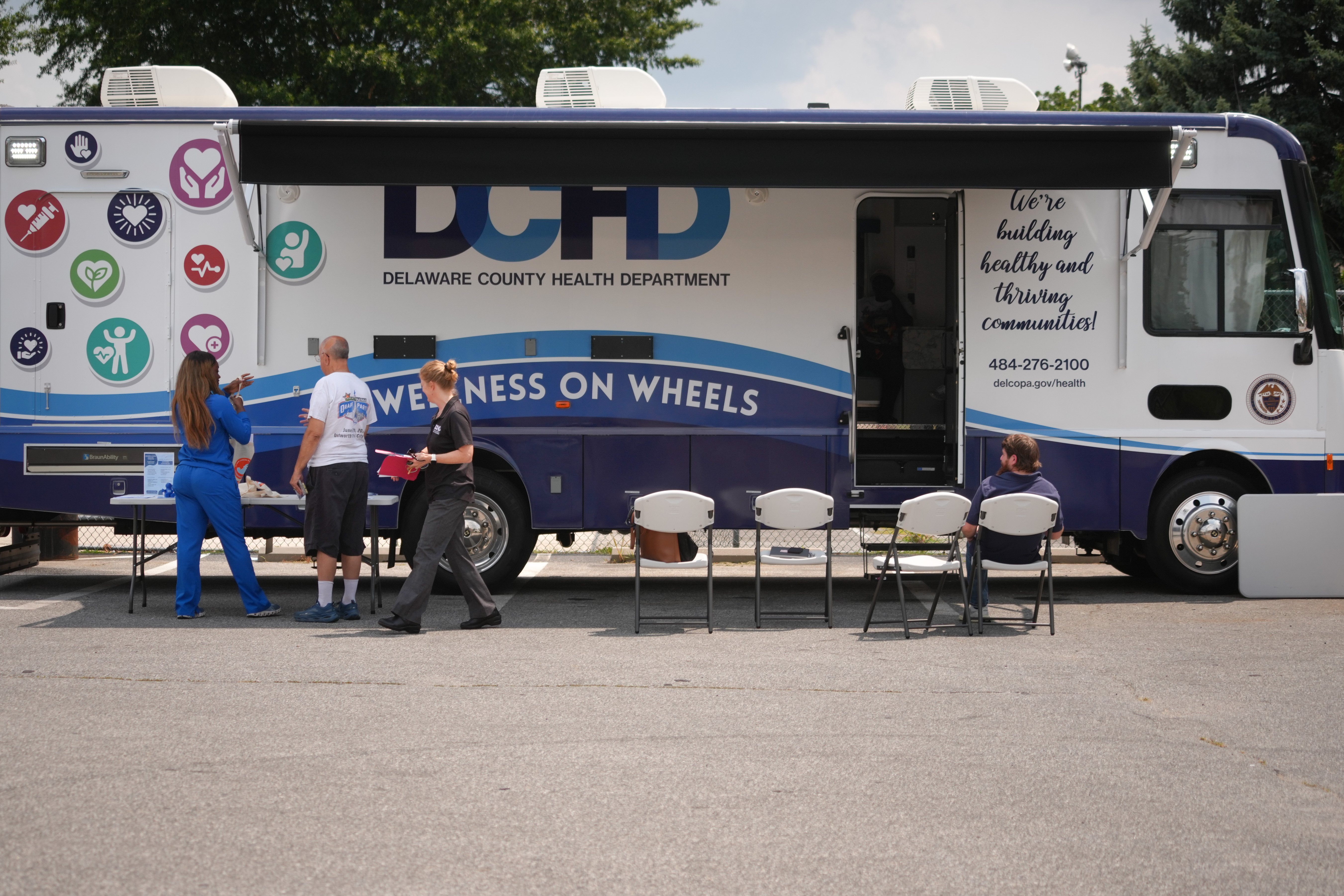
Amid rising measles case counts and declining immunization rates, Delaware County’s health department launched an immunization campaign over the summer to encourage families to vaccinate.Jessica Griffin / Staff Photographer
Emlen, which saw one of the steepest drops in protection, was one of 40 schools in the five-county region that reported 100% measles vaccination rates two years ago, only to drop below the 95% herd immunity threshold last year.
Philadelphia school officials say the changes at Emlen likely reflect increasing hesitancy among parents to immunize their children against measles, mumps, and rubella (MMR) and other diseases. State records show that most unvaccinated kindergarteners at Emlen have philosophical or religious exemptions.
Some fluctuations in kindergarten vaccination rates are typical from year to year, but the rise of anti-vaccine rhetoric in federal leadership appears to be exacerbating fears around vaccination, said Kendra McDow, a pediatrician who serves as the Philadelphia school district’s medical director.
“What we’re seeing is reflective of what I believe are local and national trends,” McDow said. “Families are confused, and they want to do right by their children.”
In the latest federal vaccine maneuver — opposed by the medical establishment, prominent Democrats, and Republican Sen. Bill Cassidy, a physician — President Donald Trump signed an executive order this month asking states to “consider updating” laws to require fewer vaccinations for schoolchildren without any medical justification. He also advocated for splitting the MMR vaccine into three separate shots — even though no separate measles, mumps, or rubella vaccines are licensed in the United States.
The order came after a chaotic year in which Health and Human Services Secretary Robert F. Kennedy fired federal vaccination advisers and pushed to upend the federal vaccine schedule. Kennedy, a longtime anti-vaccine activist, has promoted false concerns that vaccinations can lead to autism.
Families are faced with a barrage of misinformation about vaccines. Jessica Griffin / Staff Photographer
With Pennsylvania now experiencing its largest measles outbreak in three decades, Kevin Ressler, a healthcare nonprofit leader in suburban Philadelphia who was raised in Lancaster County, worries that declining vaccine rates reflect increasing political polarization.
“You don’t have to be a scientist to recognize that’s a problem,” said Ressler, the CEO of Alliance for Health Equity, a Coatesville nonprofit that works to improve access to health services. “A lot of this is rooted in whether we are able to hold trusted relationships.”
Philly-area counties all at risk
Philadelphia and its suburban counties overall remain well protected against measles, state officials say. The declines seen in the latest school year amount to less than 1% of all kindergarteners in each of the five counties in the area, an improvement from the drops that followed the COVID-19 pandemic.
But even small drops can be significant given the contagiousness of measles, which can linger in the air for hours and infect nine in 10 unvaccinated people who come into contact with it.
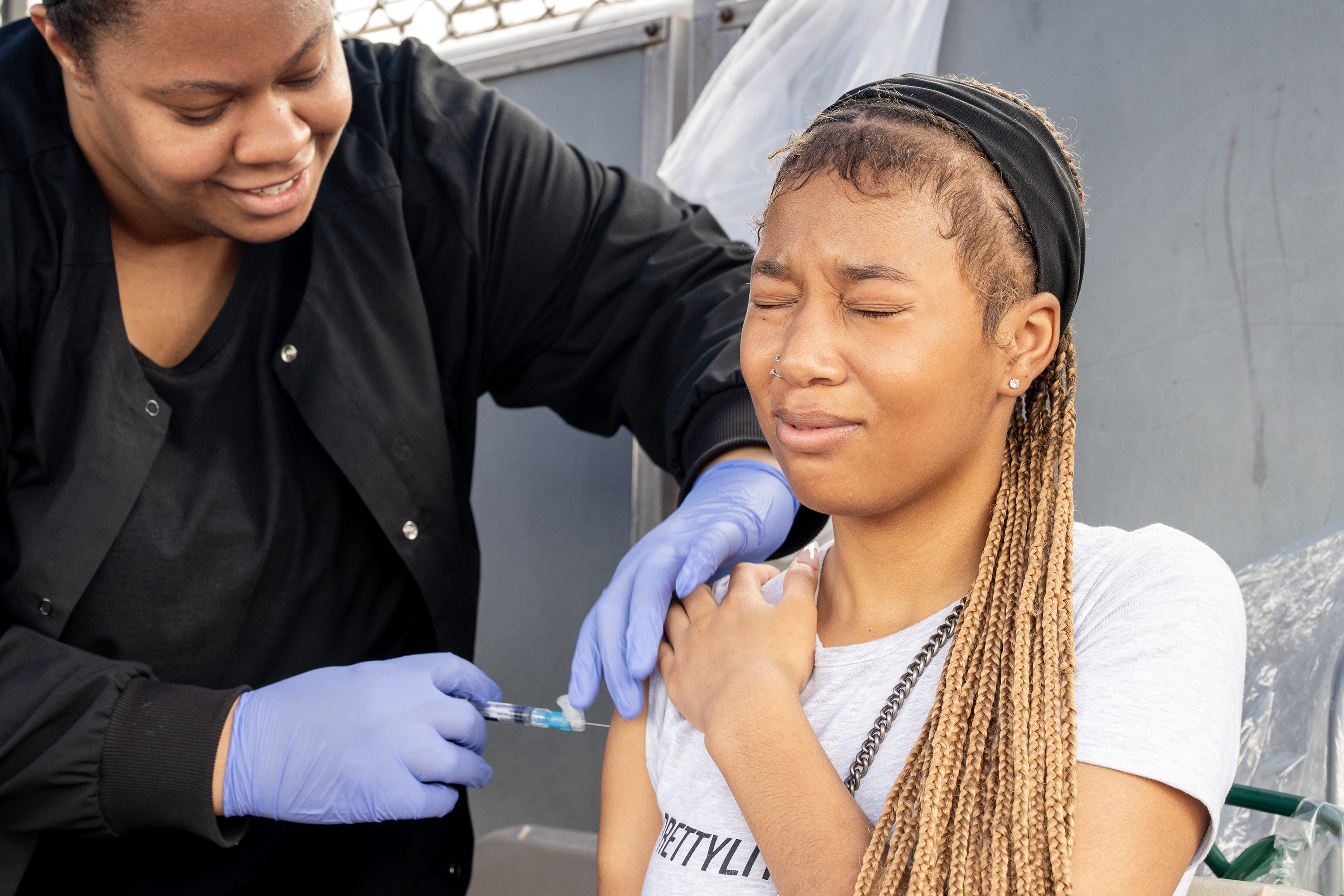
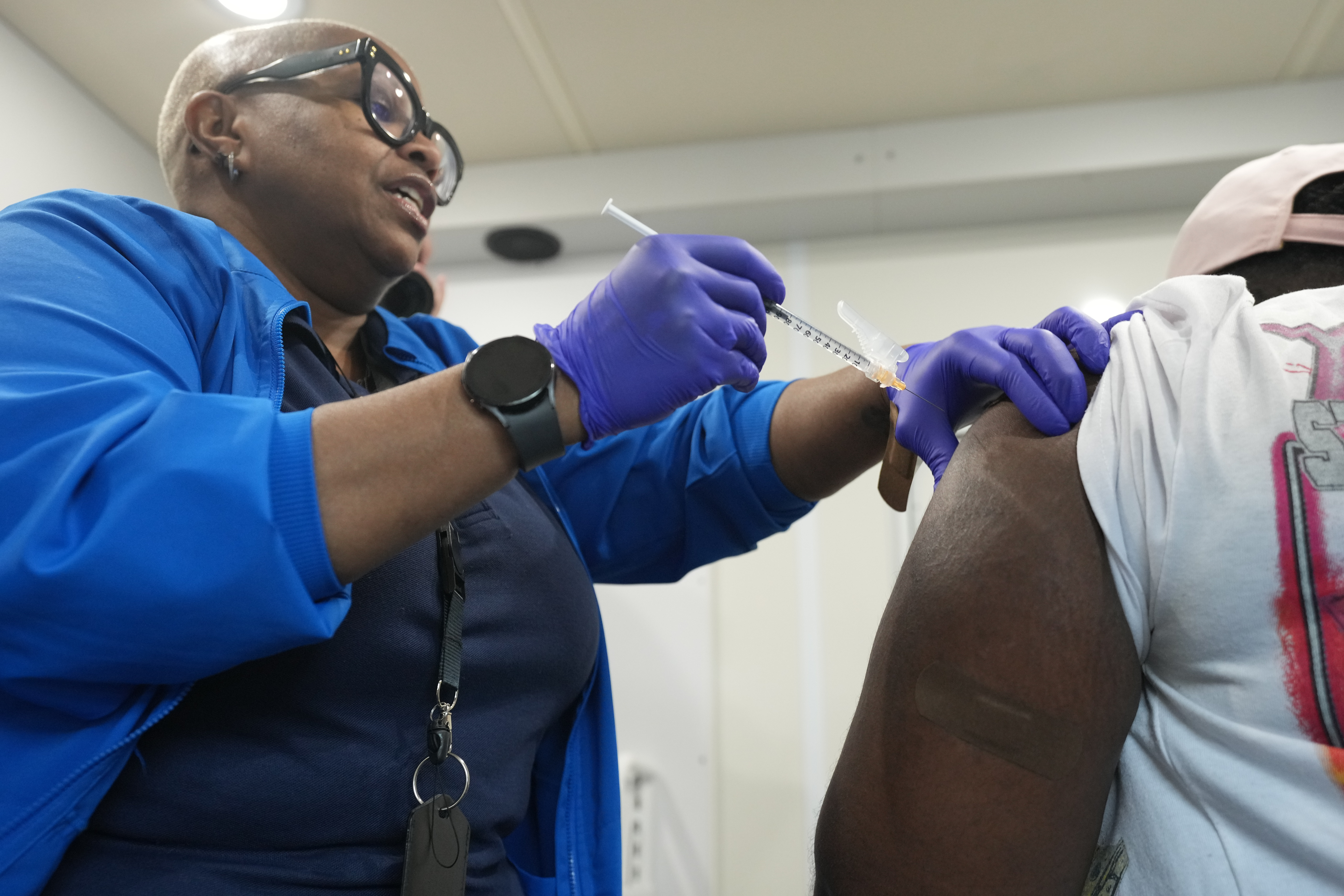
Mia Williams, a registered nurse, vaccinates a client at Delaware County’s mobile clinic in Upper Darby in July. Jessica Griffin / Staff Photographer
“The risk has definitely gone up because of lower vaccination numbers,” said Rene Najera, the director of public health at the College of Physicians of Philadelphia.
Najera says slipping vaccination rates especially endanger vulnerable students and community members beyond the schools, like pregnant women, cancer patients, or babies too young to be vaccinated. Parents of high-risk children should speak with their pediatricians about the risks of attending a school with lower vaccination rates, he said.
Last year marked the first time in more than 10 years that no Philadelphia-area county had reported measles vaccination rates above herd immunity.
Bucks County had the lowest MMR vaccination rate for kindergartners, at 93.7%, down by more than a half a percentage point from the year before.
Montgomery County, the only county in the Philadelphia region with kindergarten vaccination rates at herd immunity two years ago, slipped just below the threshold in 2025, to 94.8% vaccinated.
About 94% of Delaware County and Philadelphia kindergarteners were vaccinated last school year.
In Chester County, the only Philadelphia-area county to report cases in the current outbreak, vaccination rates for kindergartners have held steady at 94.5% for the last two school years. Some schools in the county reported steep drops in MMR coverage ahead of the current outbreak, which has seen 40 cases confirmed since June.
At Windsor Christian Academy in Downingtown, only one in four kindergarteners were vaccinated last year at a school that exceeded the herd immunity threshold the year prior. About 14% of the class had religious exemptions for vaccination. School officials did not return a request for comment.
Caln Elementary School in Thorndale saw measles vaccination rates drop from 100% to 74% in a year. Officials at the school declined to comment. (Caln closed at the end of last school year, and most of its students are transferring to the newly built Doe Run Elementary this year.)
Jeanne Franklin, Chester County’s health director, said she is “moderately” concerned about the current measles outbreak, given that many of the county’s most populous public schools still have high vaccination rates.
The school-level data improve the county’s ability to identify schools with lower vaccination rates.
Chester County health officials talk to school nurses, principals, and other administrators before the start of every school year to remind them of what to do if they identify a case of measles.
Under county policy, a single measles case in a school will mean all unvaccinated students and staff must stay home for 21 days.
This year, conversations that are usually hypothetical have taken on more urgency.
The health department has urged schools to take stock of who within their school is unvaccinated and develop a plan for how they will teach unvaccinated students who are sent home and staff classrooms of absent teachers.
“You don’t own getting them vaccinated,” Franklin said she tells administrators. “But you have to think through these things.”
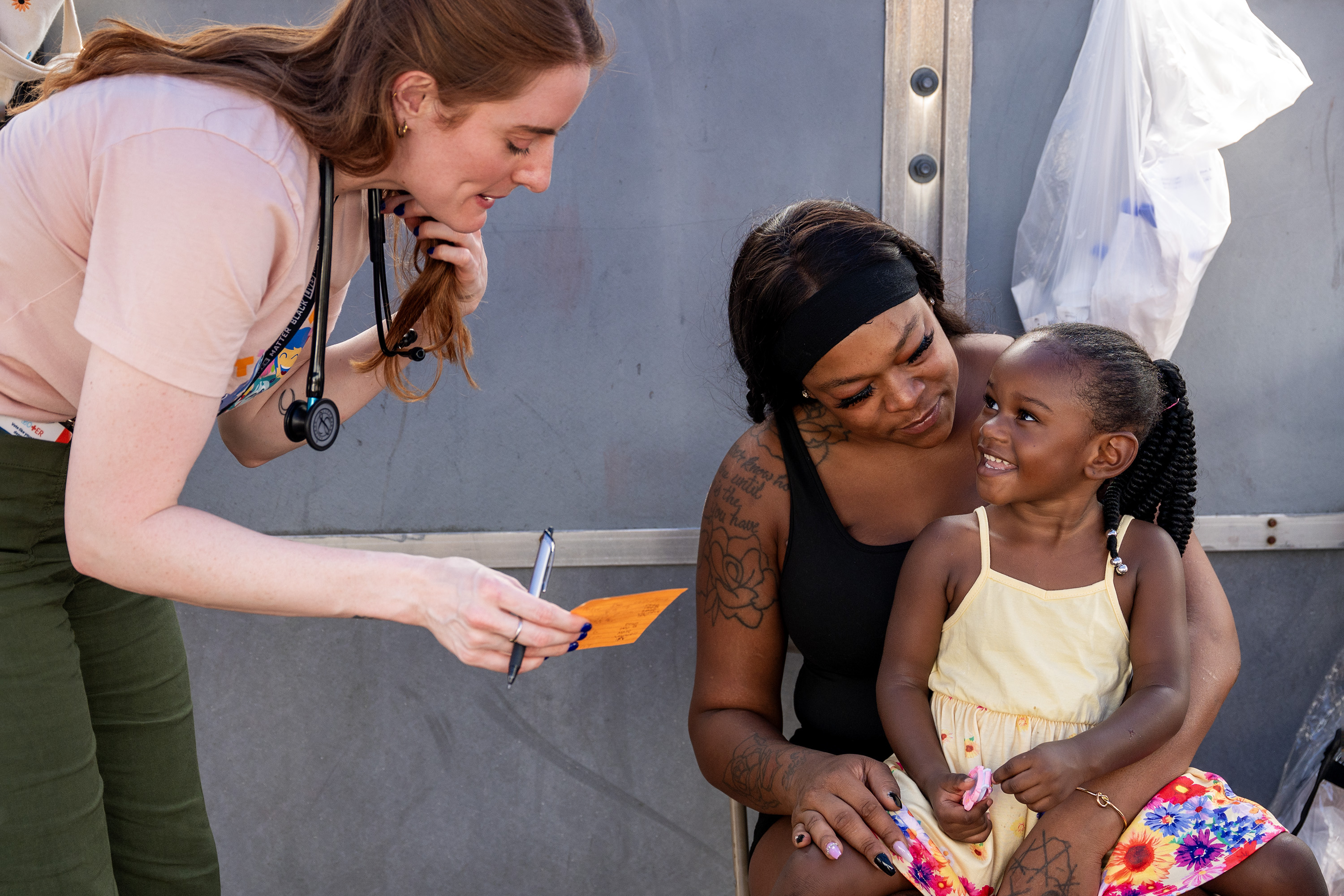
Sisters A’zuri, 3, and A’Sara, 6, wait while their mother, Shania’ Jason, checks in at a vaccination clinic during the School District of Philadelphia’s sixth annual Back-To-School Bus Tour stop this month at Marcus Foster Memorial Stadium. Tom Gralish / Staff Photographer
Philly schools on alert
As the school district’s lead health officer, McDow worries about the threat of measles so close by, but believes concerted efforts in the city have kept vaccination rates “as high as they can be in this current climate.”
She’s also monitoring Philadelphia schools where the state data show declining vaccination coverage. (The publicly available school-level data does not include classes with fewer than 20 students, for privacy reasons, or schools that did not report to the state. About 90% of schools statewide reported data in 2025.)
In some cases, what looks like a decline can be explained by delays in data reporting due to administrative issues or staff absences. School vaccination records are reported to the state during the month of December.
For example, Mantua’s Morton McMichael School reported a 50% drop in MMR vaccination coverage, initially going from nearly nine in 10 kindergarteners vaccinated to just over a third.
But by the end of the 2025-2026 school year, records show 93% of McMichael kindergarteners were fully vaccinated against measles, district officials said, though the state data does not show the improvement.
McDow worries about drops at other schools, from Mount Airy’s Emlen Elementary to North Philadelphia’s James Logan Elementary’s 18.5% decrease in vaccination rates, which are likely related to parents increasingly refusing vaccines.
Pediatrician Amanda Bernard (left) talks with Shania’ Jason and her daughter A’zuri, 3, at a vaccination clinic hosted by the Philadelphia School District this month at Marcus Foster Memorial Stadium.Tom Gralish / Staff Photographer
The school district hosts vaccination clinics over the summer and during the school year, working with the city health department to target families with unvaccinated children and schools with low vaccination rates.
The district also works to ensure vaccination clinics are accessible to working parents, organizing some on weekends or evenings.
“We need to be talking to families and answering questions in transparent ways,” McDow said. “But we also need to be providing the opportunities for vaccination.”
Some families line up for immunizations
On a recent sweltering August afternoon, families lined up at a tent pitched on the football field at Marcus Foster Memorial Stadium in Olney, part of a back-to-school fair sponsored by the Philadelphia School District.
“IMMUNIZATIONS,” read a flag waving in the breeze. Business was brisk all day.
Some families who visited the tent were recent immigrants, getting caught up on vaccinations before their children started at their new schools.
“We’re vaccinated, my husband and I, because our parents vaccinated us. And I’ll do the same for my children,” said Betty Bachene, who moved to Philadelphia from Paris this summer. Speaking in French, she said she’s never been afraid of vaccinating her children, but does fear the diseases vaccines prevent.
Anaiya Burnham, a nurse, said she’d opted against getting COVID or flu shots for her two children, one of whom is entering kindergarten this year. But vaccinating them against measles was never a question.
“I would really be curious to know why anyone would opt out of the MMR, given the research,” she said.
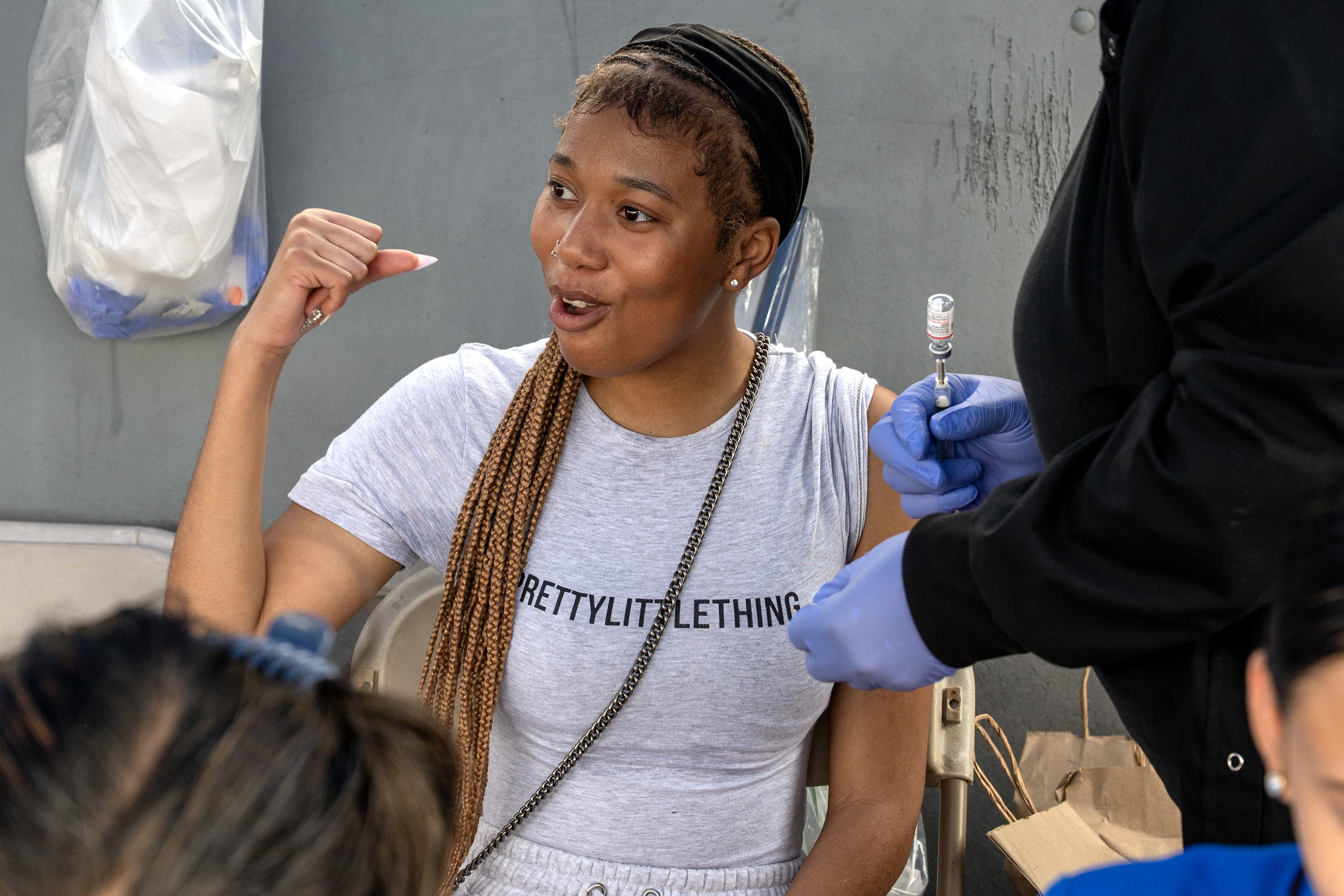
Cianey Brown, 16, reacts and turns to her family after getting an immunization at a Philadelphia school district vaccination clinic this month at Marcus Foster Memorial Stadium. Tom Gralish / Staff Photographer
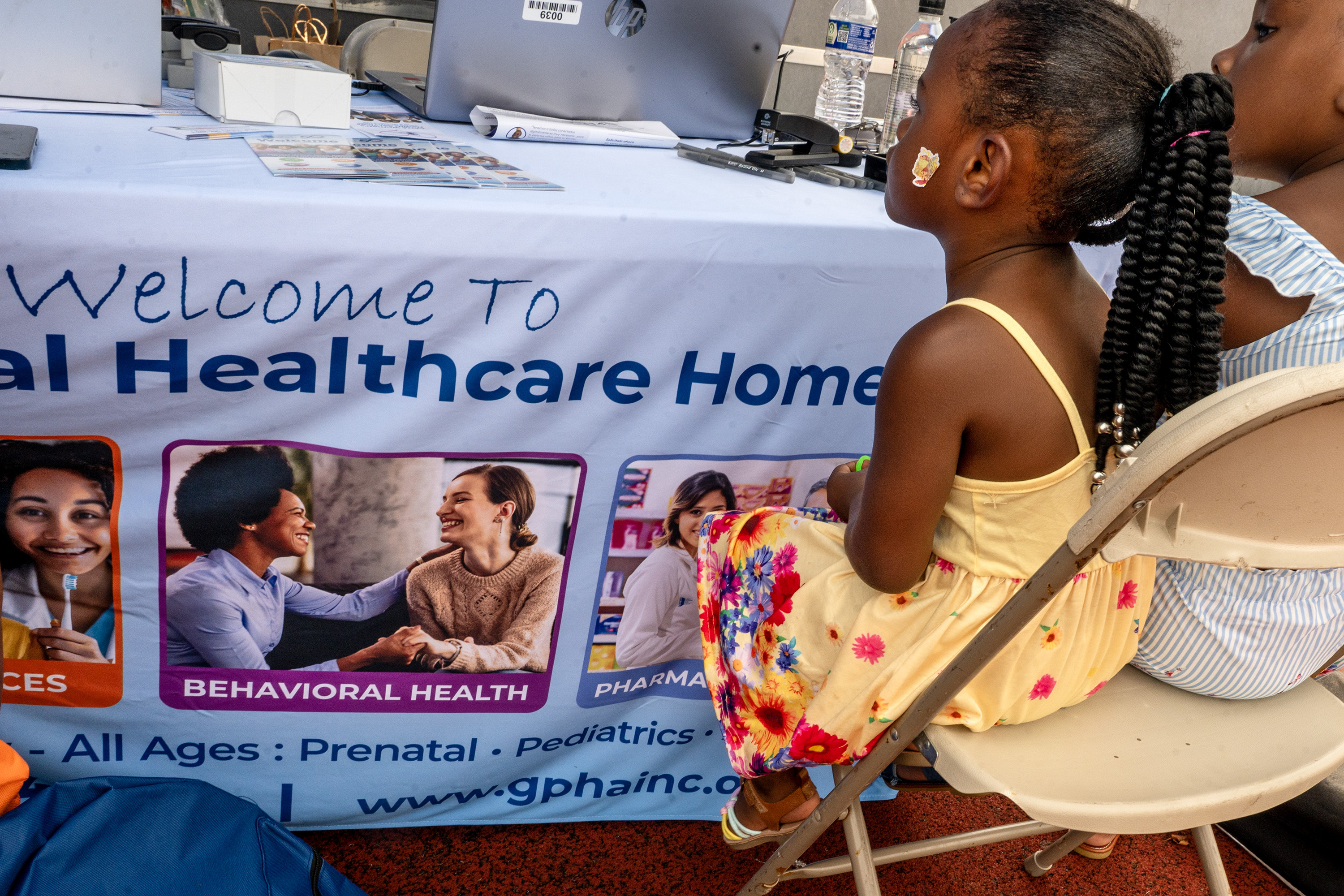
Philadelphia parents face a number of different barriers that keep them from vaccinating children — and not all of them are related to vaccine hesitancy, said Amanda Bernard, a pediatrician with Greater Philadelphia Health Action, the clinic offering vaccinations at the event.
Some lack transportation to get to a health center outside their neighborhood, or don’t speak English well enough to navigate the healthcare system, she noted.
“I think that these sorts of events are really a way that we could combat that,” said Bernard, who has heightened her advocacy around vaccination as Pennsylvania’s measles outbreak has spread.
“There’s almost a desperation in my education. I sometimes feel like I’m almost begging [families] to get it.”
Editor’s note: This story has been updated to correct the name of James Logan Elementary in Philadelphia.
(function(){function e(){window.addEventListener(`message`,function(e){if(e.data[`datawrapper-height`]!==void 0){var t=document.querySelectorAll(`iframe`);for(var n in e.data[`datawrapper-height`])for(var r=0,i;i=t[r];r++)if(i.contentWindow===e.source){var a=e.data[`datawrapper-height`][n]+`px`;i.style.height=a}}})}e()})();
When Erin Pysher dropped her son off Saturday at Frankie & Johnnie’s, the Pottstown bar where one of his friends was celebrating his 21st birthday, she told him she loved him and to be safe.
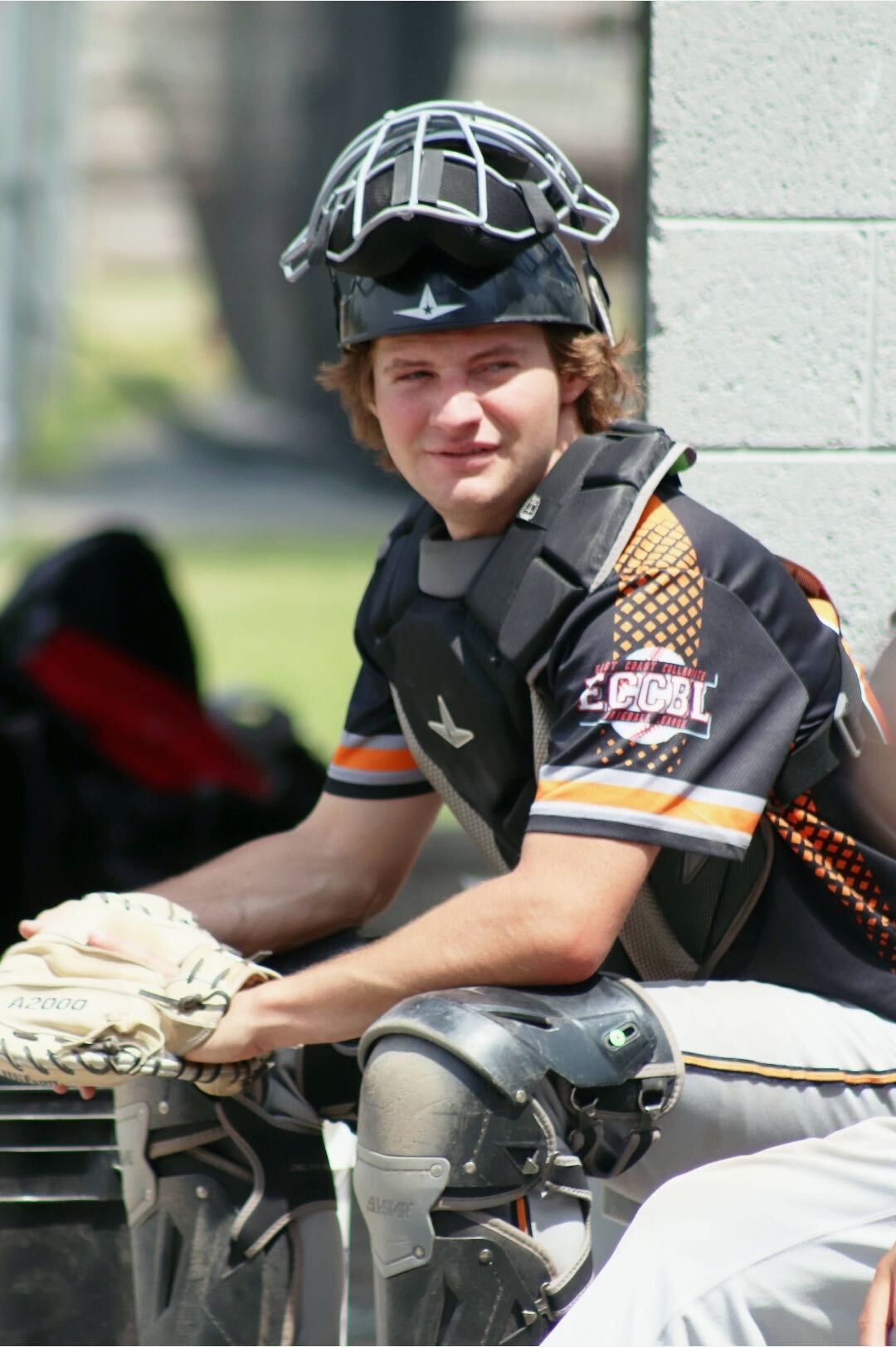
It was Glenwood Pysher IV’s last weekend of summer fun. Come Monday, he would be at St. Elizabeth University in North Jersey for his senior year and one final season as a college baseball catcher.
Pysher, affectionately called “Bubba” by those who knew the 22-year-old Lower Pottsgrove native best, had his sights set on becoming a history teacher and baseball coach after graduation.
After the bar, Pysher and his friends headed to an after-party at the birthday boy’s home, according to his mother. Later, as Pysher walked to another friend’s house to spend the night, he missed a turn and got separated from the group.
He ended up at the wrong house on Snyder Road, pounding on a door and yelling to be let into what he did not realize was a stranger’s home.
An Upper Pottsgrove police officer, responding to a 911 call for a reported break-in, shot him twice, killing him almost instantly.
The shooting is under investigation by the Montgomery County District Attorney’s Office. A spokesperson for District Attorney Kevin Steele declined to provide any additional details or to identify the officer, citing the investigation.
“It was a senseless loss, and it shouldn’t have happened,” Erin Pysher said, her voice cracking with emotion. “I don’t know what the officer was thinking or doing that his first response was to shoot an unarmed kid.
“This was all a huge mistake, and they killed him.”
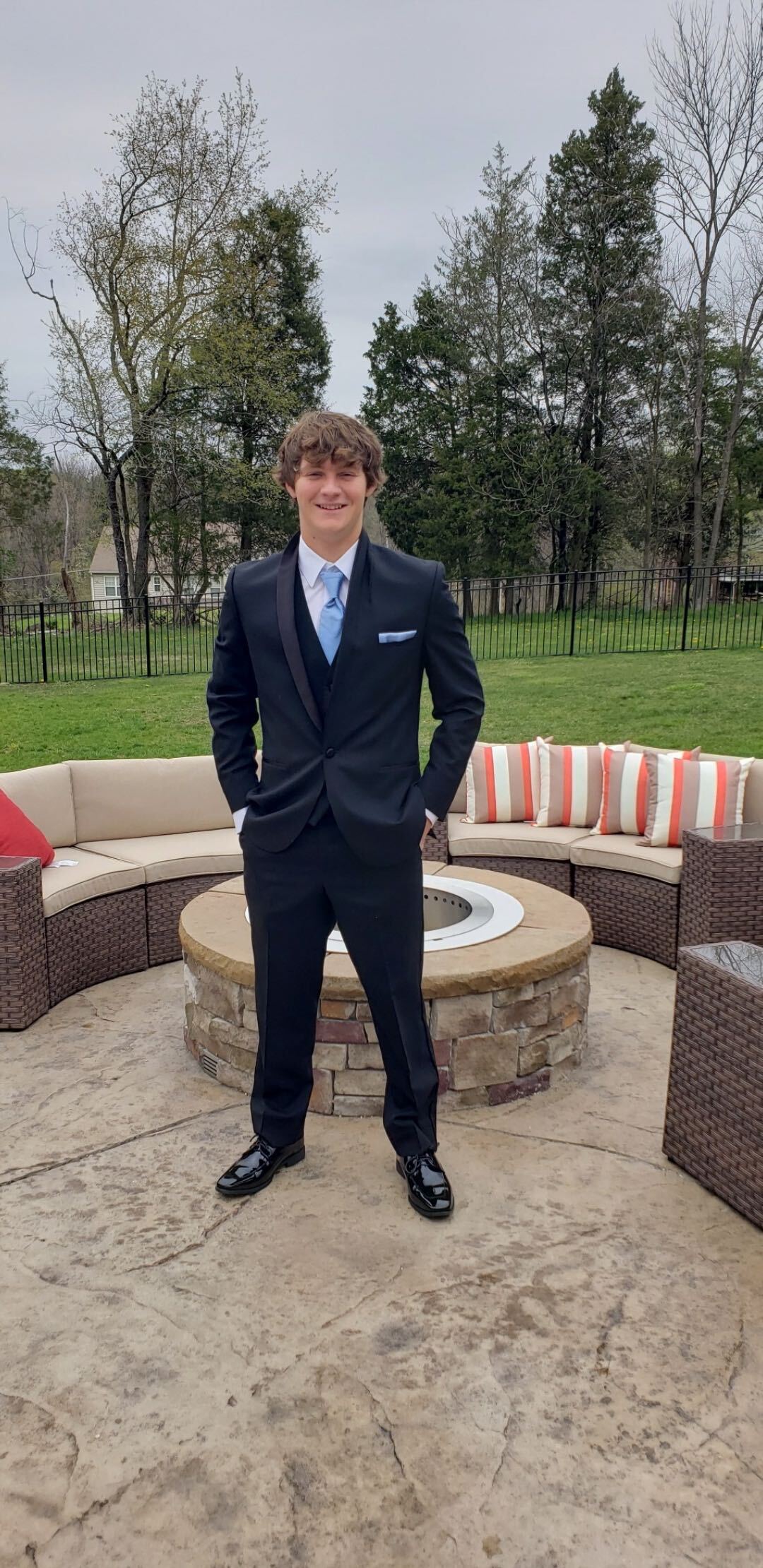
Glenwood Pysher IV was the oldest of four, his mother said. She described him as a lovable, goofy son who spent his summers in between college working.Courtesy Erin Pysher
She said she reviewed her son’s cell phone logs and saw that he had called his friends to pick him up at 12:32 a.m. Sunday after realizing his error. By 12:35, the police-radio call had come out that the officer had shot someone.
Pysher’s friends later told his parents that as they drove to get him, the officer sped past them, lights and sirens activated.
“There was no attempt to stop him another way,” his mother said. “He never got into a fight in his life, never harmed a soul. I don’t believe he had any ill intention toward the officer.”
Pysher was the oldest of four, a lovable, goofy son who, she said, spent most of his summers working at the Walmart store in Pottstown or helping a friend at his seasonal landscaping business.
She laughed while retelling one of her final days spent with him: He had a habit of texting her every day, even while away at college, asking, “What’s for dinner?”
Last week, he joined her for a grocery run for ingredients for that night’s meal. When they got home, Erin Pysher still got that usual text from her son, even as he sat a few feet away from her.
“As a mom, I couldn’t ask for a better kid,” she said.
“All these news reports keep saying, ‘A man was killed,’” she added. “But he wasn’t a man, not to me. He’ll always be my baby.”
Rates of suspension and expulsion from preschool for children with disabilities are high, and a local Head Start program may be the only place that can accommodate their needs. Head Start programs cannot expel children for their behavior, and must engage mental health and community support before considering suspension.
Developmental screening in trusted locations such as Head Start can identify delays, which, if addressed early, may resolve before a child enters kindergarten. Early intervention therapies for children ages 3 to 5 years old are delivered in preschools, including Head Start, allowing our patients to receive speech/language, occupational, or physical therapies. Head Start programs also help families coordinate care when their children need ongoing therapies.
Lastly, all children benefit from inclusion — by learning and playing alongside each other, regardless of ability or disability. Head Start provides our patients and their families with critical access to programs that help them thrive. We urge our leaders to reconsider.
Sarah Revak,Wilmington, and Kate E. Wallis,Philadelphia
No extra innings
The Phillies gave us an exciting ninth-inning, come-from-behind win Sunday — exciting because they kept getting on base and kept scoring before Kyle Schwarber’s walk-off home run. A friend of mine texted me, with a Philadelphian’s typically guarded optimism, “Phillies look to be peaking toward playoffs!” The media provided an extra-inning recap to revel in the moment. NBC Sports Philadelphia’s analysis noted the significance of getting runners on base to keep the pressure on the defense, while chalking up RBIs. The Inquirer was able to give us its great morning-after reporting, allowing those of us who watched the ending live to bask in the memory for a second or third time.
We have to stop electing officials to both state and federal offices who claim to be pro-life and then put in place legislation that opposes safety net programs, health access, and commonsense gun laws — all of which sustain and protect life. When voters go to the polls in November, I urge them to think carefully about whether their senators and representatives deserve to be reelected. It is time to put in place elected officials who are not just pro-life in name only.
Celeste D’Alonzo,Marlton
Simply ballroom
Last week, Chief Justice of the United States John Roberts once again stomped on the scales of justice by issuing a temporary order that allows construction of Donald Trump’s massive ballroom to continue. This ruling is in direct opposition to both a lower-court ruling and an appeals court ruling that directed that aboveground construction of Trump’s ballroom should be stopped, as the construction lacked congressional authorization for the massive project.
In the vast majority of dispute cases, and as directed in the prior rulings related to this case, most judges’ initial instructions would be for the parties to temporarily stop what they are doing (i.e., do no further harm). Unfortunately, Chief Justice Roberts decided to put his thumb on the scales and, with a wink, essentially said, “Hey, Donald, keep building.”
Roberts will claim that his “temporary” order does no harm and is only in place while the U.S. Supreme Court considers an emergency appeal. The problem is that he and everyone else in America knows it could take months for the case to be resolved, and meanwhile, taxpayer dollars are being spent every day on this unpopular Trump vanity project. Roberts and Trump know that by the time the court gets around to deciding the case, the ballroom will be substantially built, and it is unlikely to be torn down.
I find it interesting that in his Supreme Court confirmation hearings, Roberts famously claimed that “a judge’s job is to call balls and strikes, not to pitch or bat.” Unfortunately, it seems Roberts needs to get his eyes checked, as he has a hugely distorted strike zone whenever Trump is at the plate.
Perhaps one day we will learn the name of the American veteran who Washington enslaved, who died from battle wounds near Pennsylvania’s Fort Necessity. I can’t help but think that the research that led to the opening of the President’s House on Independence Mall in 2010 has been an inspiration to the work of Young, perhaps especially given the debate over how the government has changed it. Let’s keep learning, Philly.
“We need to deal with [healthcare] now because, No. 1, it’s the right thing to do, just morally,” Van Drew said on Nov. 7 on Fox Business’ Maria Bartiromo’s Wall Street. “No. 2, we’re going to get killed [in 2026].”
A recent editorial from the New York Times provides one of the clearest explanations I’ve seen of how Republicans, including Van Drew, have slashed healthcare: They did it passively, by allowing the Affordable Care Act subsidies to expire, and they did it actively (with Van Drew’s vote) by slashing Medicaid in the One Beautiful Bill (although they cleverly provided that the cuts do not take effect until after the midterm election).
Van Drew knows cutting healthcare is immoral — he essentially said so himself — yet he followed Donald Trump’s orders and voted for these cuts in one of the poorest districts in New Jersey. Van Drew put his “undying support” for Trump above the interests of his constituents. In his words, Republicans deserve to “get killed” in the upcoming election.
Rich Hluchan,Cherry Hill
Join the conversation: Send letters to letters@inquirer.com. Limit length to 150 words and include home address and day and evening phone number. Letters run in The Inquirer six days a week on the editorial pages and online.
DEAR ABBY: I am a 63-year-old man. My fiancée (57) and I have been dating exclusively, or so I thought, for four years. I just found out she has a male friend she has been seeing without my knowledge. They go to lunch and dinner and other activities.
She says they are just friends. He is her attorney, and he wants a romantic relationship. She lied by omission, and now my trust is damaged. I’m worried about her dishonesty and the viability of our relationship. She thinks it’s not a big deal. Your thoughts?
— SIMMERING SUSPICION IN FLORIDA
DEAR SIMMERING SUSPICION: A woman who is engaged has no business spending time alone with another man who has expressed a romantic interest in her. This is a big deal, made bigger by her attempts to hide it and downplay it. Warning: If you go through with this wedding, there’s a good chance you’ll need to start seeing a lawyer of your own.
** ** **
DEAR ABBY: My husband and I have been married for 34 years. Ten years ago, my husband had to take custody of his then 56-year-old brother, “Clay,” because back in 1987 he fried his brain on PCP. For a decade, our life has been a daily living hell.
Clay has frightened off one of our cats. He lies, steals from us, can’t and won’t clean up after himself and doesn’t wash his hands. He is the most disgusting person I have ever met. He’s spoiled rotten and lazy and expects the only woman in the home to do everything. This is an ingrained behavior that he has had for years.
I want a divorce. My husband will not put Clay into an assisted living facility or a mental institution. I love my husband, but I refuse to be disrespected by anyone. I told him I wouldn’t ever allow any member of my family to disrespect him the way I, our marriage and our home have been disrespected by his brother. Abby, would you divorce your husband for subjecting you to this daily living hell for 10 years?
— DONE IN MONTANA
DEAR DONE: I certainly wouldn’t have put up with your mess of a brother-in-law for an entire decade! Still, if you are considering divorce, you must mention that to your husband. Offer him a final opportunity to make other arrangements for his brother. Be clear that if he continues to value Clay’s comfort over yours, the marriage is over.
** ** **
DEAR ABBY: I am a boy in South Korea who likes boys. When I was in middle school, I loved girls just like everyone else, but it changed after entering high school. When I see boys in school now, I have started to feel the charm of them. These days, I’m scared that if I reveal it, I’ll be mocked by my friends and others. What should I do?
— NOT STRAIGHT IN SEOUL, S. KOREA
DEAR NOT STRAIGHT: If you don’t feel comfortable or safe coming out to your friends, it’s OK to wait. All of this gets a bit easier after you graduate, especially if you are able to attend a university. For now, focus on your studies so you can make that happen. To find gay or gay-friendly people to talk to outside your school, look up an organization called Dding Dong at ddingdong.kr.