Tag: topic-link-auto

  • A Havertown couple’s Ocean City beach cottage was decades in the making

    A Havertown couple’s Ocean City beach cottage was decades in the making

    Tucked away on an alley in the north end of Ocean City, Steve and Regina Pannepacker’s three-bedroom, one-bathroom cottage is their perfect peaceful haven.

    The cozy home is filled with a dozen or so surfboards for Steve’s passion and shelves packed with books for Regina’s passion. Then there are the bowls and bowls of sea glass, which they both love collecting.

    Shortly after the pair married in 1986, Steve contacted several Ocean City Realtors, asking them to be on the lookout for a detached garage space they could convert into a small cottage. Finally, in 2015, one of them called.

    “He said I found your name in my Rolodex,” recalled Regina, a registered nurse. “I hadn’t heard that word in a really long time.”

    They loved the home’s location, the bright light that pours in from windows in all directions and the neighbors who ultimately became friends.
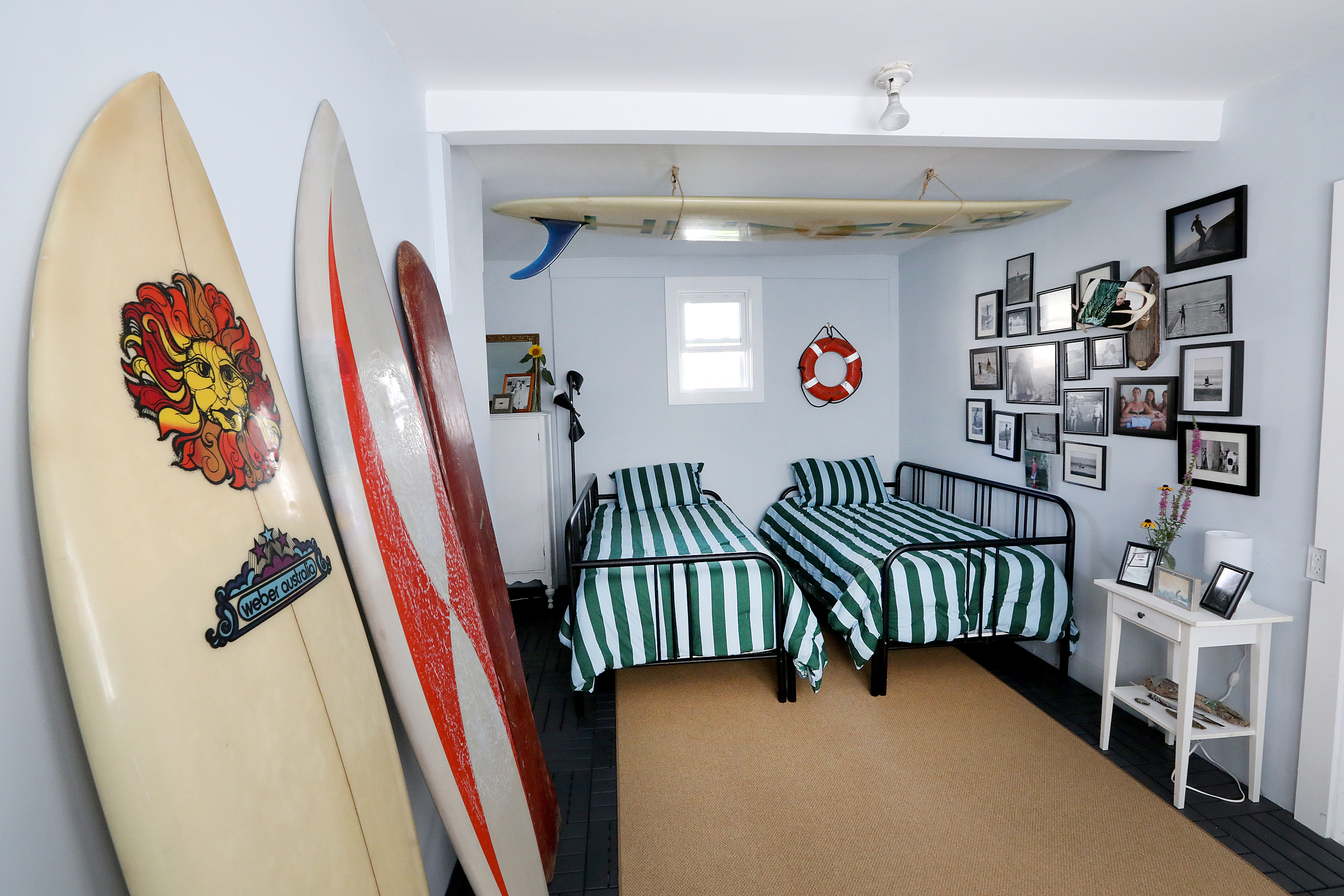
    Surfboards abound in the secondary bedroom.Vernon Ogrodnek / For The Inquirer
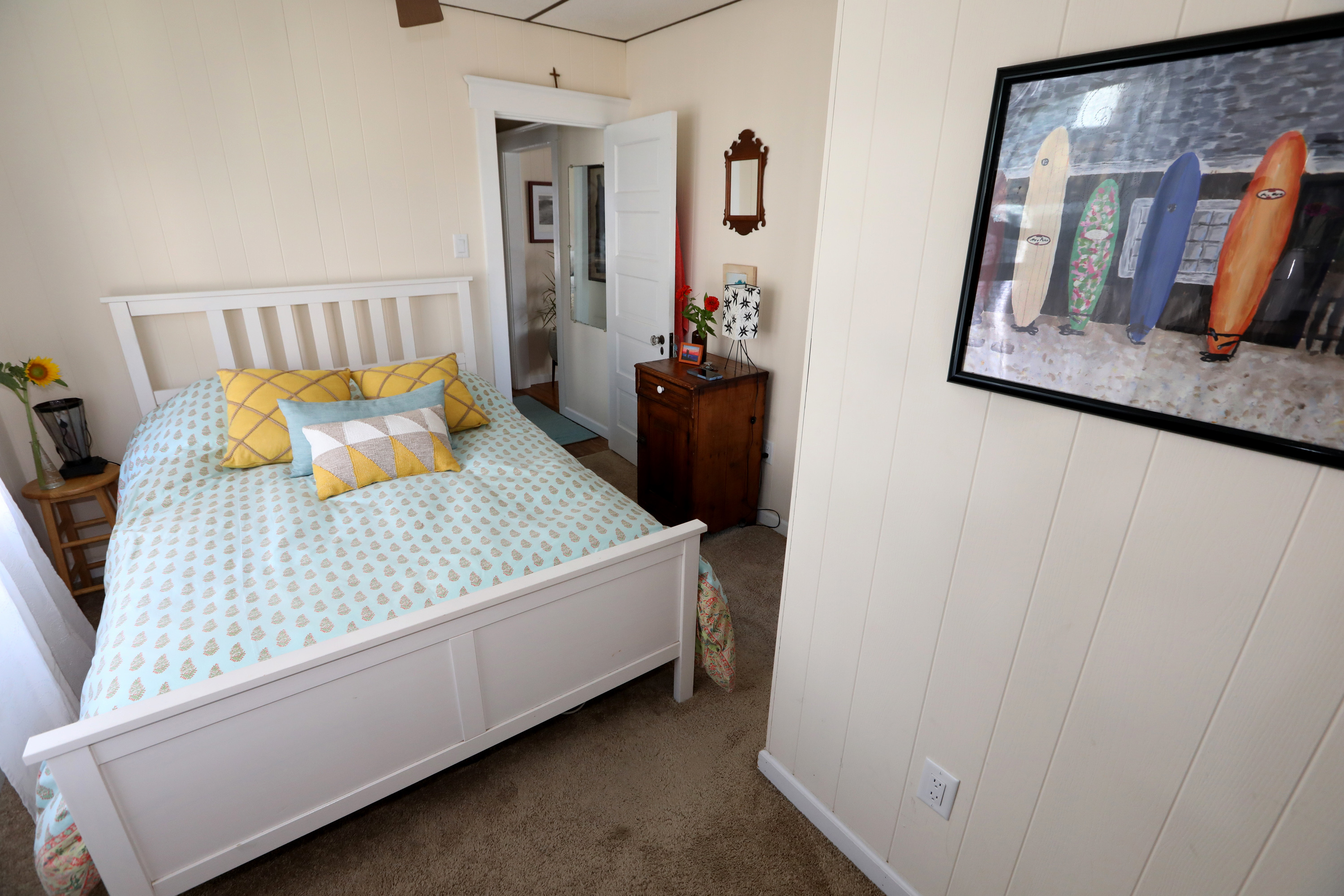
    The primary bedroom is small, decorated with light colors.Vernon Ogrodnek / For The Inquirer

    Built in the early 1900s, the home was originally a three-car garage for the main house that sits in front of it. It was later converted to include a two-bedroom property above the garage. It is believed the front property was owned and lived in by a seafaring ship’s captain, Steve said.

    Around 2013, the main house and garage were divided into separate properties.

    The Pannepackers converted the garage space into three distinct rooms — a guest bedroom, a storage area with a washer and dryer, and a space for Steve’s workbench that also houses surfboards and bicycles.
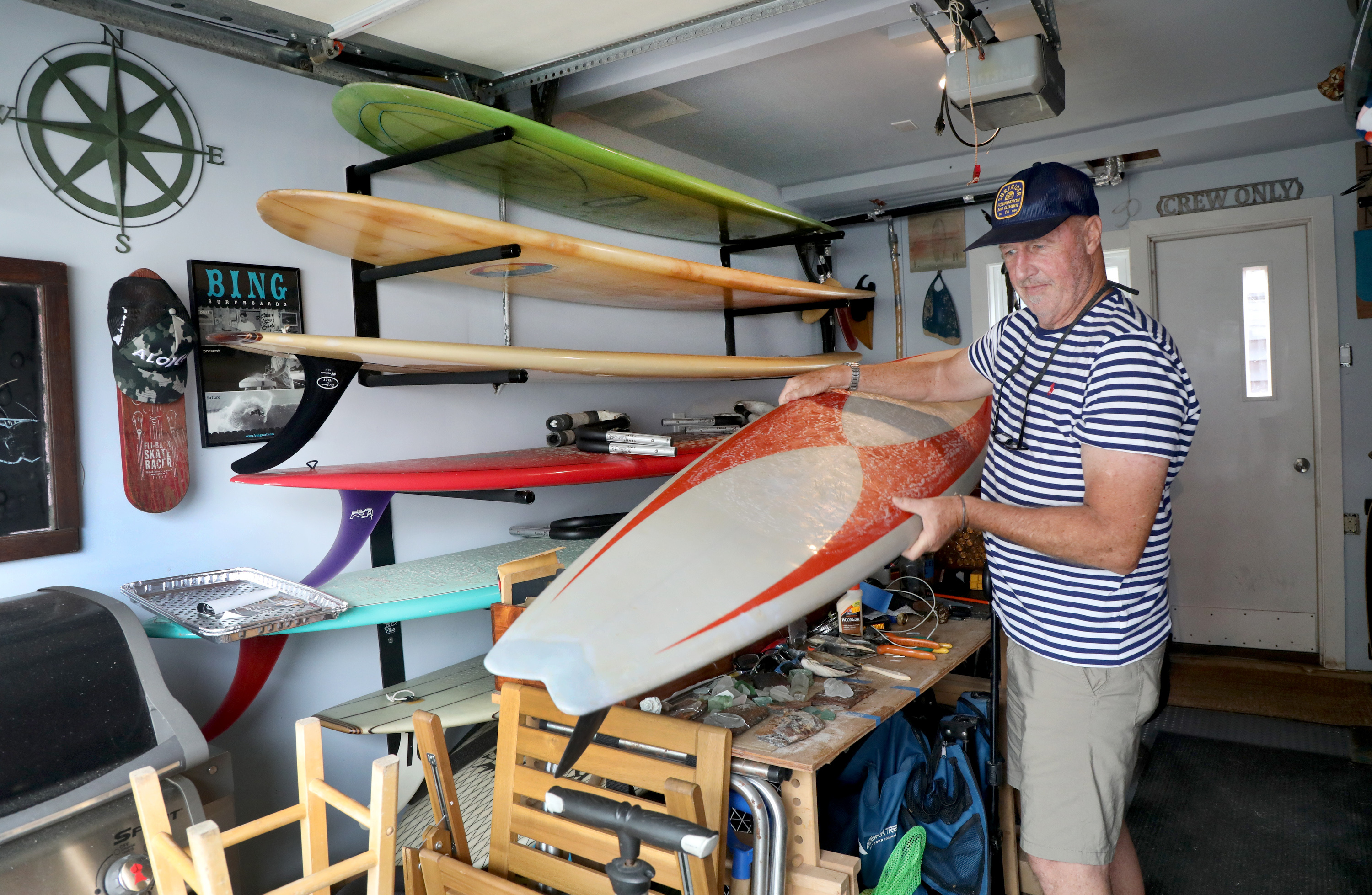
    Steve Pannepacker is an avid collector of surfboards, like this Plastic Fantastic board. He keeps them in the garage.Vernon Ogrodnek / For The Inquirer

    With their five children, three grandchildren plus two more on the way, and lots of siblings, nieces, and nephews, the home is usually bustling with activity. Regina has eight brothers and sisters, and Steve has one sibling. The couple also invite friends and family to use the cottage when their jobs keep them at home in Havertown.

    Steve, who works in television and film as an art director and prop coordinator, did most of the decorating. His deep love for Hawaii, where he and Regina made a pilgrimage in 2008, was a huge influence on the home’s decor.

    “It’s a combination of Ralph Lauren and a Hawaiian style,” Steve said. “Ralph Lauren’s look included leather, which inspired the leather chairs, and that is also an older Hawaiian look.”

    The kitchen is small but workable for the couple, who like to cook. They eat at the drop table in the living room that has an extendable leaf. Closed, it’s large enough for Steve and Regina, but it can accommodate six when open. When a larger crowd is visiting, they set up a table in the front yard or alley.

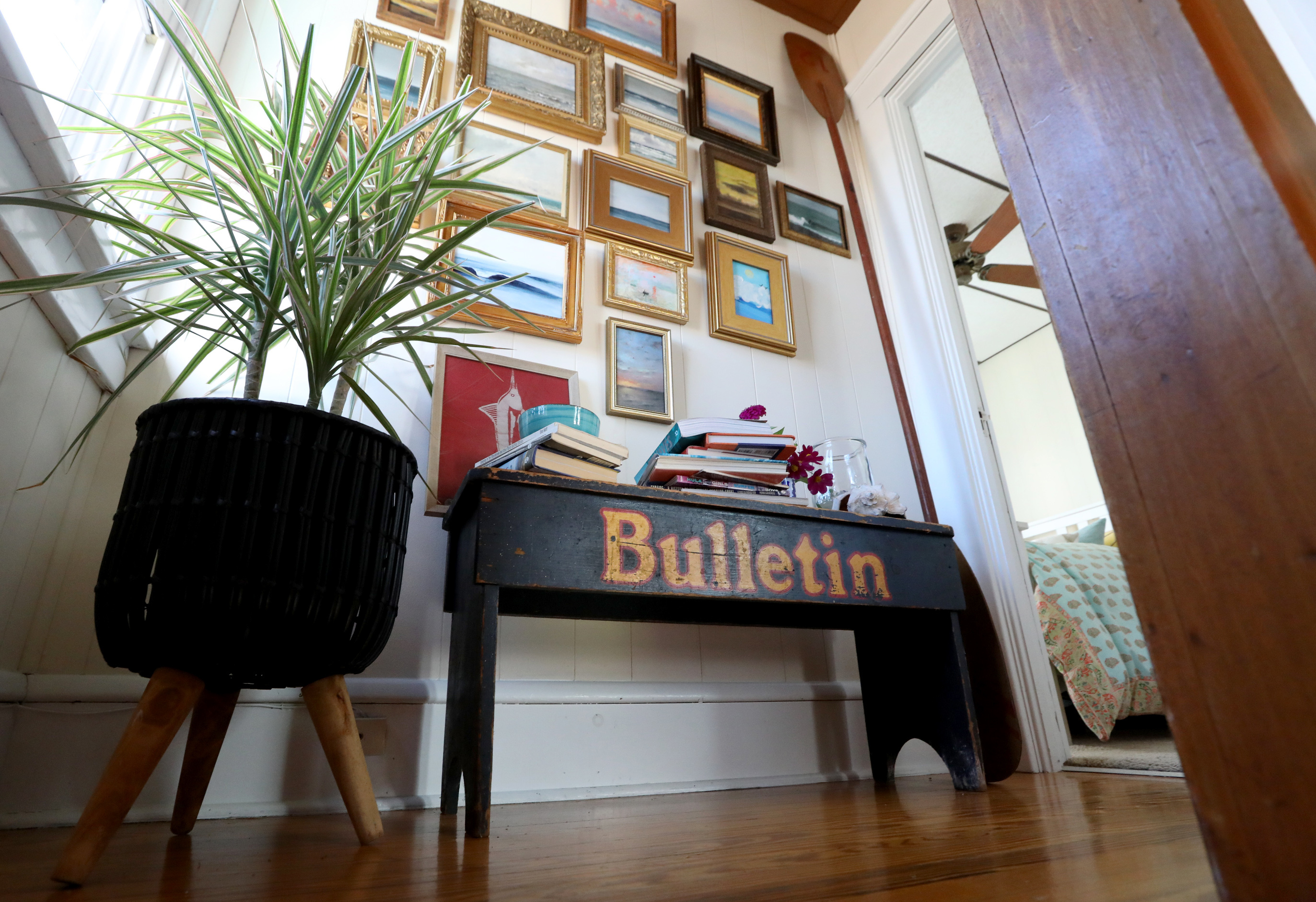
    A wall of oceanscapes, some professionally done, some reproductions, and some by family members.Vernon Ogrodnek / For The Inquirer
    Below the oceanscapes is an old Bulletin newspaper bench, a nod to Regina’s family association delivering the now defunct Philadelphia paper.Vernon Ogrodnek / For The Inquirer

    The living room is also where they relax and entertain. When it’s just the two of them, they are often reading — Steve in his comfortable brown leather chair and Regina curled up on the nearby couch. When guests visit, the room is where they talk and laugh and share each other’s company.

    “This is our everything room,” Regina said. “We don’t have a TV or Wi-Fi so there’s lots of conversation.”

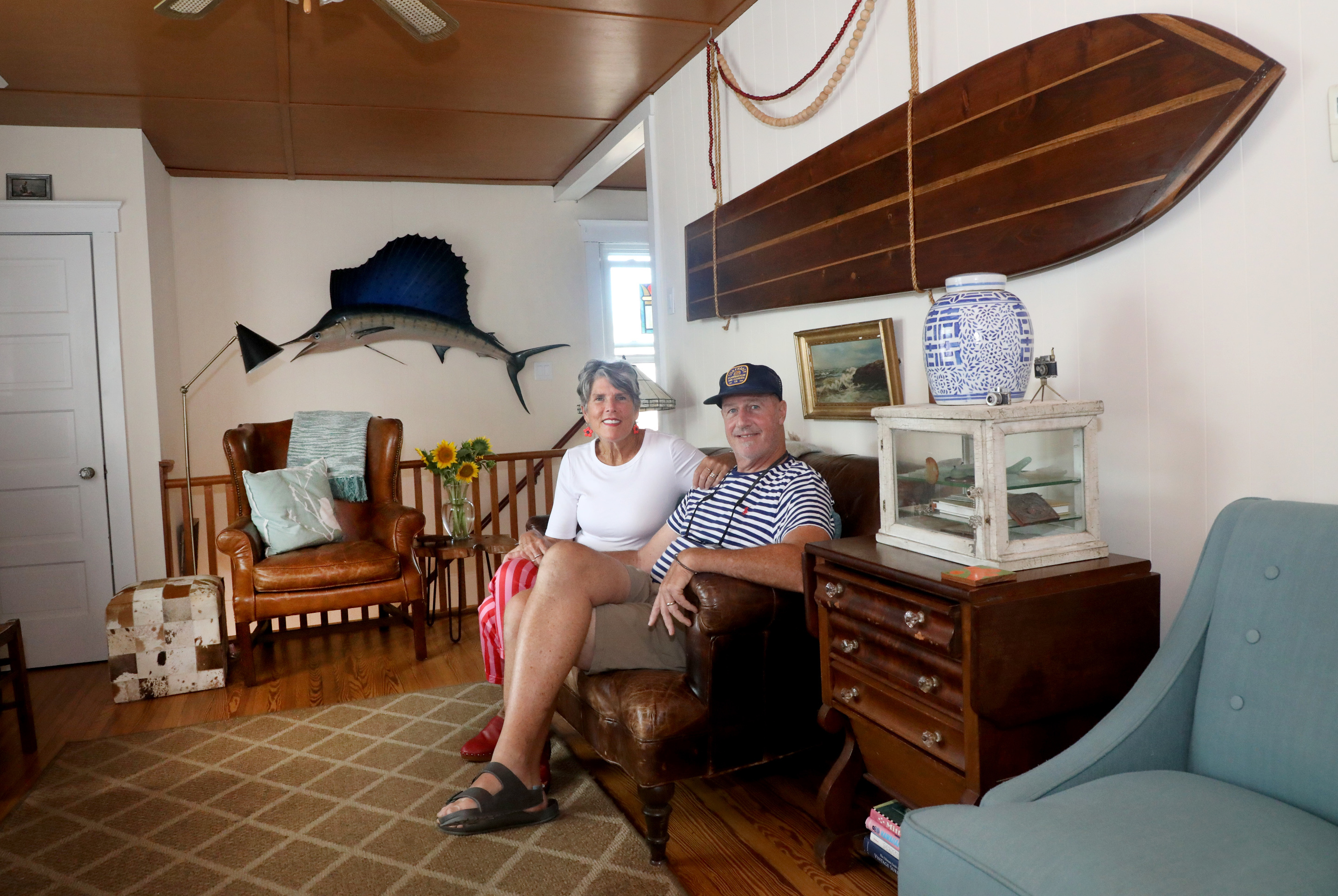
    Surfboards are a part of the decor in almost every room. The wooden board that hangs over the living room sofa was made by local surf historian Bill Simon about 30 years ago and is a reproduction of a 1930s surfboard by Pacific System Homes.
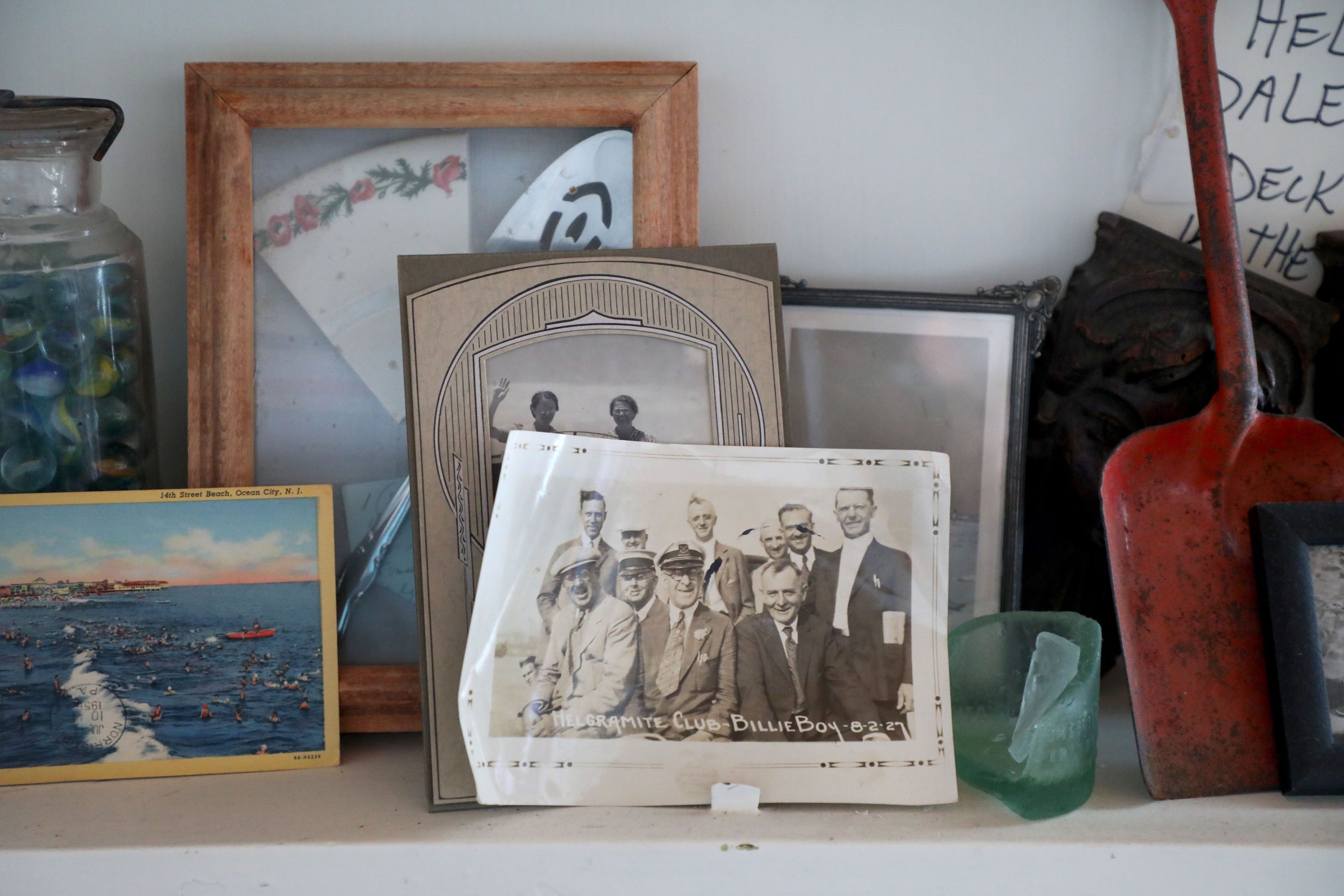

    A collection of old photos, postcards, and memorabilia in the living room.Vernon Ogrodnek / For The Inquirer
    A collection of Hawaiian memorabilia in the living room.Vernon Ogrodnek / For The Inquirer

    Hidden behind other houses off a main road, the home’s orange front and garage doors help friends and pizza delivery drivers find them.

    An avid surfer since high school, Steve spent summers working and surfing in Ocean City while Regina grew up day-tripping to the beach town with her family. It was an important part of both their childhoods.
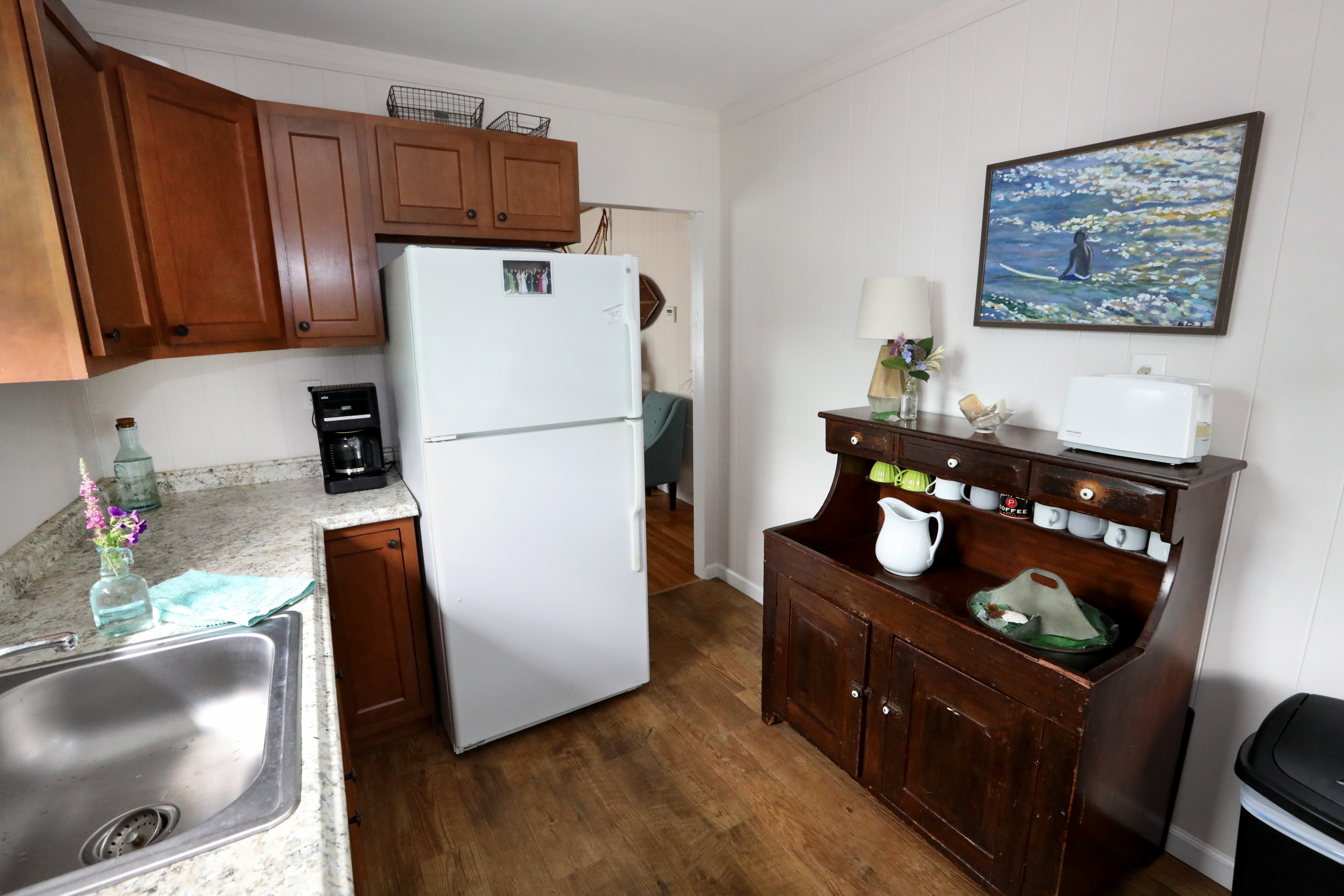
    A painting by the couple’s daughter is hung in the home’s compact kitchen.Vernon Ogrodnek / For The Inquirer

    “My parents spent two summers as the house parents for the waitresses at the Flanders,” recalled Regina. “Having had nine kids of their own, they got the job pretty easily. Our family’s love for the beach is deep-rooted.”

    Regina’s parents’ love of sea glass trickled down to Regina and Steve. Most days, the couple take walks and usually find a sea glass treasure.

    The beach town is woven into the fabric of their lives. They spend time at both the beach and the bay, and often head to the Second Street pier to take in the sunset.

    “This home is a retreat where we decompress,” Regina said. “You come over that bridge and smell the air, and something comes over you.”

    Is your house a Haven? Nominate your home by email (and send some digital photographs) at properties@inquirer.com.

  • Trea Turner has a pregame chat with Hall of Famer Ichiro Suzuki to ‘pick his brain’

    Trea Turner has a pregame chat with Hall of Famer Ichiro Suzuki to ‘pick his brain’

    SEATTLE — Two years ago, when the Phillies last played here, Trea Turner heard that Ichiro Suzuki was at the games but never got to meet him.

    Turner wasn’t going to miss another chance.

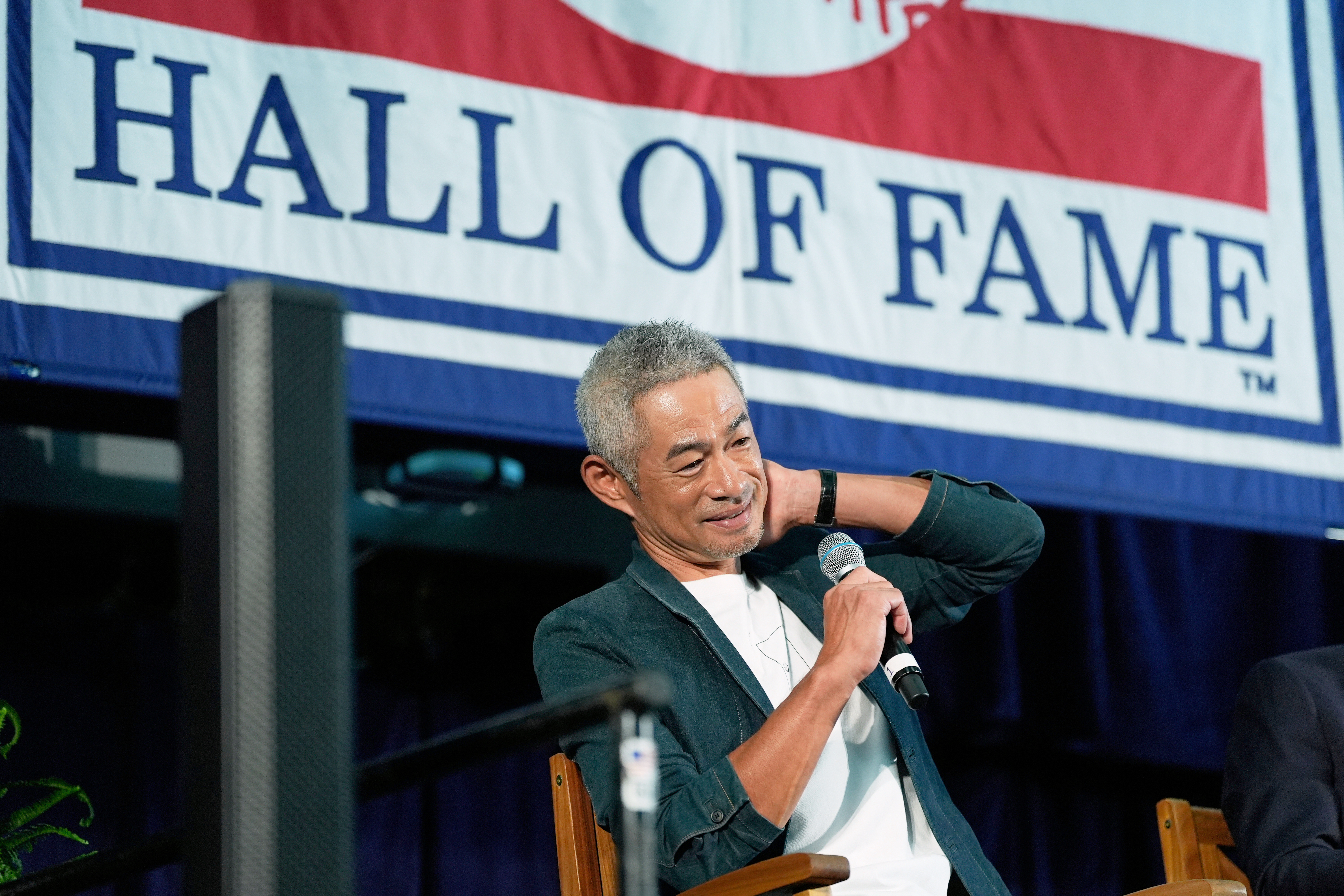
    Before Tuesday night’s game, a 4-1 Phillies loss, Turner chatted with Suzuki, the Mariners legend and Hall of Fame hitting machine with 3,089 major-league knocks after coming over from Japan and a statue outside the home-plate entrance to T-Mobile Park.

    And Turner came armed with specific questions.

    “How do you hit the ball the other way?”

    “What are your thoughts, your approaches in certain situations?”

    “If you’re doing this wrong, what would you do?”

    “Just all sorts of stuff,” Turner said. “It was just great being able to pick his brain. I really enjoyed it.”

    Coincidentally, Turner’s chat with one of the most gifted hitters on two continents came at a time when he’s hitless in 13 at-bats, part of a 4-for-25 tailspin entering Wednesday’s series finale.

    Mariners legend Ichiro Suzuki was inducted into the National Baseball Hall of Fame last year.Seth Wenig

    The root of the problem: “I’ve been trying to hit the ball the other way [to right field] and stopflying open.” After working with hitting coach Kevin Long, Turner said he made an adjustment Tuesday night that, despite going 0-for-4 again, represented “progress.”

    And no, Don Mattingly isn’t considering moving Turner down in the order. Doing so would project “panic,” the interim manager said.

    “You’ve just got to hang in with guys over the course of a season,” Mattingly said. “And if there’s a point where it’s like, OK, this has got to go, then you get there. … I think we all know that Trea’s going to come out of this. And when he does, it’ll be hot.”

    Turner went 0-for-4 Tuesday night but lined out in his final at-bat.

    “I didn’t get the results I wanted,” Turner said. “But I feel like today was good.”

    Especially considering how it started.

    Turner grew up in South Florida as a fan of Derek Jeter and Ken Griffey Jr. He didn’t watch Ichiro as often — “Maybe it’s more of like a West Coast-East Coast type deal,” he said — but noted that he’s been told there are similarities in their hitting styles.

    “In the sense that he didn’t walk a lot, he wanted to hit, he hit the ball all over the field, could hit it out of the park sometimes,” Turner said. “So, talking with him about his mindset and what he physically does, a lot of it kind of applied to me in my game. It was kind of nice just hearing him, trying to ask him as many questions as possible.

    “Growing up watching him, I maybe probably didn’t appreciate him as much as I should have as a kid. I loved Griffey and Jeter. But his career is incredible. I knew he was a really good player, but I wish I got a chance to watch him a little bit more.”

    Turner isn’t the only Phillies player to meet Ichiro this week. Rookie center fielder Justin Crawford was introduced to him Monday by his cousin, Mariners infielder J.P. Crawford.

    Bryce Harper has reached base in 28 consecutive games, a career-best streak.Matt Krohn

    Extra bases

    Bryce Harper went 2-for-4 Tuesday and extended his career-long on-base streak to 28 games, tying the Cubs’ Pete Crow-Armstrong for the fourth-longest in the majors this season. … J.P. Crawford returned to the Mariners’ lineup after missing 18 games with an inflamed left wrist. The Phillies’ first-round pick in 2013 was traded to Seattle after the 2018 season for infielder Jean Segura. … Jesús Luzardo (11-5, 3.35 ERA) is scheduled to start the matinee series finale Wednesday against Mariners righty Bryan Woo (9-8, 4.10).

  • The US and Canada could pull back from an all-out trade war. It’s not clear that they will

    The US and Canada could pull back from an all-out trade war. It’s not clear that they will

    WASHINGTON — The U.S. and Canada have ramped up their trade war, hitting each other with steep new tit-for-tat tariffs. Despite the bravado coming from both sides of the border, though, analysts suspect the longtime allies will eventually strike a deal to end a conflict neither really wants.

    The prospects for compromise looked bleak Tuesday, with Canadian Prime Minister Mark Carney reacting to new 50% U.S. tariffs on certain Canadian goods by responding in kind on about $20 billion worth of American imports, including steel, dairy products, appliances and farm equipment.

    “You’re at war when you get attacked. We got attacked,” Carney, who came to power last year on the promise that he’d stand up to U.S. President Donald Trump, said over the weekend.

    Doug Ford, Ontario’s populist premier, told The Associated Press on Monday that he was ready to escalate even further by cutting off his province’s shipments of electricity and critical minerals to the United States.

    Soon after, Trump declared his intention to hammer the Canadian auto industry with another set of import taxes if the Canadians don’t “fall in line.”

    With the breakdown threatening to harm one of the world’s largest trading relationships and clouding efforts to renew the United States-Mexico-Canada Agreement that Trump negotiated during his first term, experts cautioned that there’s still time to pull back from the brink of an even bigger trade war.

    They’ve done it before. “If there is political will, there is an off ramp,” said former U.S. trade negotiator Wendy Cutler.

    ‘It’s not real until somebody walks away’

    U.S.-Canada trade talks typically get testy, said Christopher Sands, who heads the Center for U.S.-Canada Studies at Johns Hopkins University.

    The two neighbors have a long history of sparring over things like Canada’s protected dairy market and subsidized softwood lumber exports.

    “We’ve gone through this with Canadians before,” Sands said. “It’s almost like it’s not real until somebody walks away from the table. … I’m not panicked.”

    There are reasons to think something can be salvaged from the rubble of bilateral trade talks that collapsed Friday.

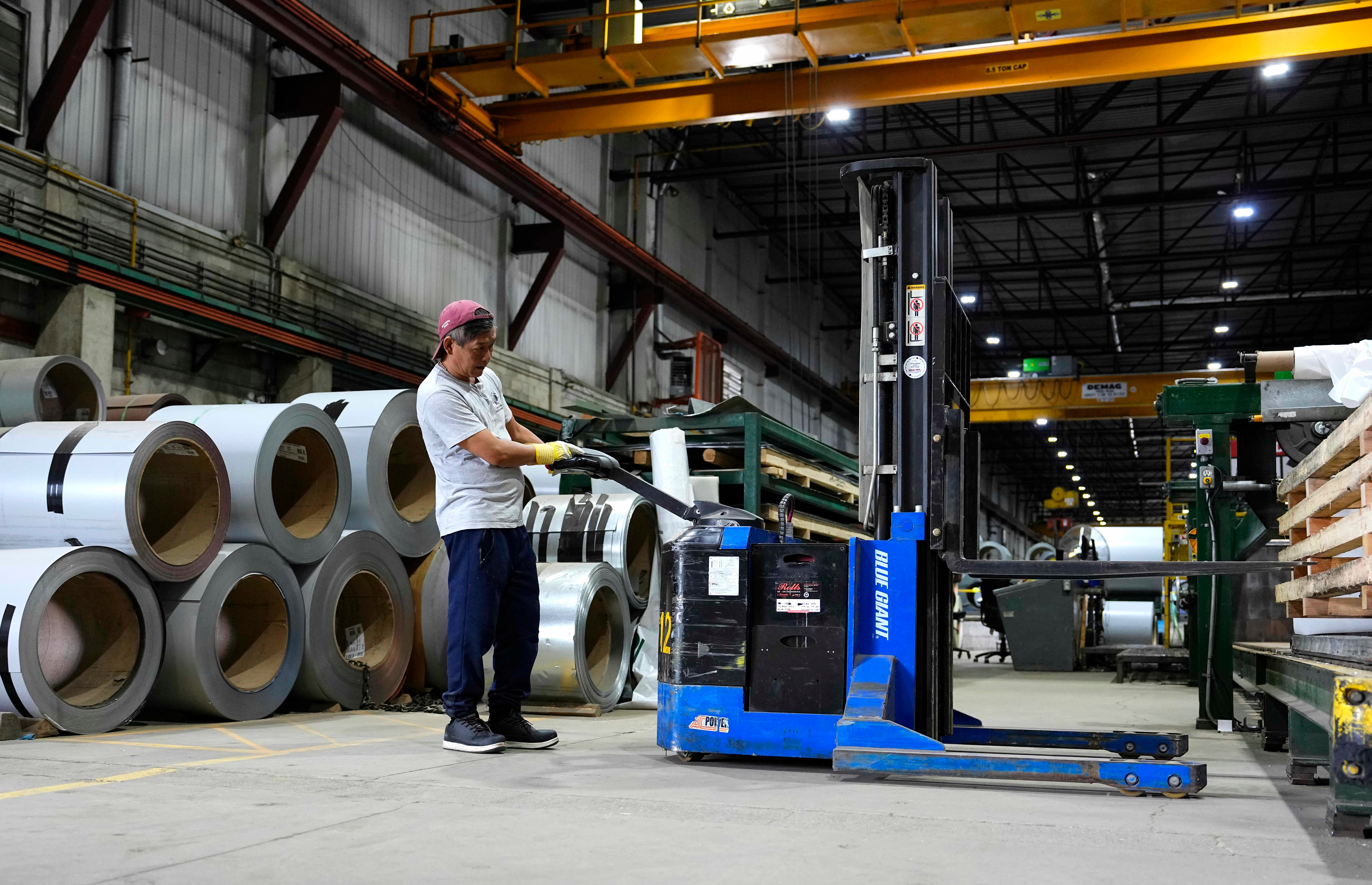
    First, the U.S. tariffs that Trump imposed Saturday cover just $20 billion worth — around 5% — of Canada’s exports to the United States and are unlikely to do much lasting economic damage. Oxford Economics reckons the trade conflict would reduce Canadian economic growth only slightly next year — from a previously forecast 1.6% to 1.4%. On Monday, U.S. Trade Representative Jamieson Greer even tried to downplay the trade rift as a “tempest in a teapot.”

    Moreover, Carney’s retaliatory tariffs wouldn’t take effect until Sept. 8. “That gives us this week. It gives us next week,” Sands said. “Time to take a breather and talk about how to avert” an all-out trade war.

    Despite Trump’s tough talk on Truth Social, his punitive auto tariffs wouldn’t kick in until Jan. 1 — well after the Nov. 3 midterm elections in which the president’s Republican Party is hoping to keep full control of Congress despite voter frustration with the high cost of living.

    So there’s at least enough time for the countries to find a stopgap solution.

    Cutler, now senior vice president at the Asia Society Policy Institute, suggested that the U.S. could tap an emissary that both countries trust to get talks back on track; she recalled that Trump’s son-in-law Jared Kushner helped negotiate the USMCA eight years ago.

    Canada would likely balk at a one-sided deal

    Cutler also noted that Trump suspended his global tariffs for months last year to allow U.S. trading partners to negotiate with him. Many did, including the European Union and Japan, and ended up agreeing to lopsided trade agreements to dodge the worst of Trump’s tariffs.

    Canadians, though, are in no mood for a Trump-friendly trade deal.

    The American president has enraged the Canadian public with inflammatory talk of making their country the 51st U.S. state. And on Tuesday, instead of trying to lower the temperature, he declared that he was considering changing the name of Lake Ontario to Lake America. He has also repeatedly hit Canada with tariffs and threats of them, including when he suggested he might punish Canada for wildfires that were blackening U.S. skies.

    “Fighting with Washington is hugely popular in Canada right now,” said Scott Lincicome of the Cato Institute, a Washington-based free-trade think tank. “Guys like Doug Ford — like him, love him or hate him — understand this is a political winner for them.”

    The latest U.S.-Canada conflagration flared up last month when Trump said he planned to hit Canada with 50% tariffs. He complained that Canada had been unfairly restricting U.S. exports of dairy, alcoholic beverages and autos. Trump set a deadline of Aug. 19 — last Wednesday — for the two countries to reach a deal and head off the tariffs.

    Because the Supreme Court struck down his biggest tariffs in February, the president turned this time to an obscure provision of a Depression-era trade law that gives him the power to impose tariffs of up to 50% on imports from countries that have discriminated against U.S. businesses. No investigation is required, nor is there any limit on how long the tariffs can last. But no president has ever imposed such tariffs before, so they are untested in court.

    ‘No choice’ but to walk away

    Last week, negotiators appeared to be close to resolving their differences. Less than two hours before levies were set to take effect, Trump announced a three-day reprieve, posting on social media that “Canada and the U.S.A., subject to the finalization of documents, have a DEAL!” Greer, the U.S. trade representative, later told CNBC that the United States had offered to cut in half existing 50% tariffs on Canadian steel and aluminum, and to sharply reduce levies on Canadian auto and softwood lumber imports.

    But it all fell apart Friday and the Canadians walked away, with Carney saying the Americans had sought “to destroy our major industries, including autos, steel and aluminum. … That was one of the main reasons we said no. It was a bad deal.” Carney also said that Washington viewed protections for French and Canadian culture — considered fundamental rights in Canada — as irritants to trade.

    Ford said he understood that late in the talks, Washington demanded veto power over trade deals Canada pursued with other countries, which would have violated Canadian sovereignty.

    Despite the differences, Cato’s Lincicome said, “both sides understand the economic consequences of some sort of a full-blown trade war.”

    The two countries last year did $880 billion worth of trade, according to the U.S. Commerce Department. Canada sends 72% of its exports to the United States. And U.S. communities along the border depend on Canadian electricity. American farmers need Canadian potash fertilizer. And U.S. refineries in the Midwest rely on imports from Alberta’s oil sands deposits.

    Then there’s U.S. politics. “Voters hate tariffs,” Lincicome said. “They associate them with higher cost of living, and (Trump has) got to be hearing from political folks that if he wants any chance of salvaging the midterms he can’t start a trade war with Canada.

    “My guess — and it’s only a guess — is that cooler heads do prevail somewhere in the next few weeks.”

  • How to avoid a Social Security cut? Lawmakers are floating ideas for what to do

    How to avoid a Social Security cut? Lawmakers are floating ideas for what to do

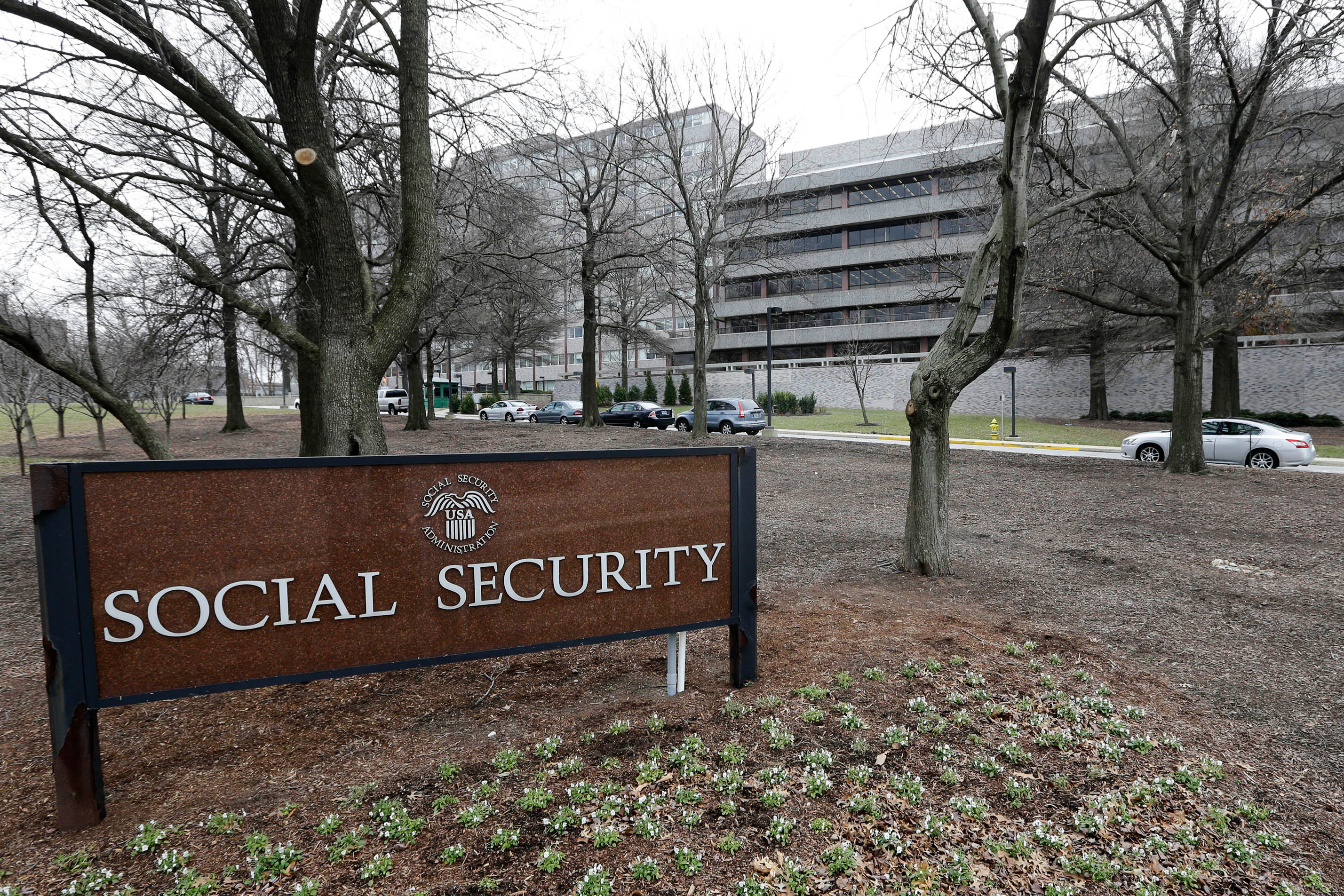
    WASHINGTON — With the few months they have left as senators, Democrat Dick Durbin and Republican Bill Cassidy have embarked on a mission to save tens of millions of Social Security beneficiaries from a projected 22% cut in their benefits, starting in just six years.

    It is one of the most perilous political efforts that a member of Congress can undertake, so it is telling that the push is being led by two lawmakers who have little to lose at this stage of their careers.

    “We’ve been at this six years, eight years. It’s incredible how long I’ve been at it,” Cassidy said. “But Durbin came up to me and he goes, ’Bill, I’m leaving the Senate soon. We need to take a ride at it.’”

    Their idea to extend Social Security’s solvency is one of a few that have been formally offered this Congress. None has gained much traction, but it is a start as more lawmakers weigh in on a problem that will likely confront the group of senators elected this fall as well as the next president. Pressure for action is sure to grow as 2032 draws closer.

    Senate bill seeks 50 years of Social Security solvency

    The measure that Durbin, D-Ill., and Cassidy, R-La., are pushing would not dictate an outcome, but instead set up a process for Congress to take action. It calls for the bipartisan Social Security Advisory Board to collect public input and submit draft legislation to Congress that would keep the program’s retirement trust fund solvent for at least 50 years.

    The resulting bill would then be introduced by the majority leaders of the Senate and House. If they do not want to go along, any member could sponsor the bill. It would then be referred to the two committees with jurisdiction over Social Security — the Senate Finance Committee and the House Ways and Means Committee.

    Both committees would have the chance to debate the bill and amend it if they wish. If not, the original bill drafted by the advisory board would be placed on the Senate and House calendars for consideration. Lawmakers could offer substitute proposals, with final votes after 100 hours of debate. Passage would require a three-fifths vote in the 100-member Senate and a simple majority in the 435-member House.

    Even though the bill does not prescribe a solution for replenishing Social Security, sponsors have struggled to win support. Cassidy voiced exasperation in a recent floor speech.

    “For some people, the time to do Social is never,” Cassidy said. “Don’t disturb Congress. They don’t want to take a tough vote. Even if that vote only sets up a process.”

    AARP has come out against the bill, saying that the effort amounts to “fast-tracking” Social Security changes through a process that limits what type of amendments are offered and sets arbitrary procedural deadlines.

    A different bill proposes an investment fund for older adults

    Separately, Cassidy has a proposal with Sen. Tim Kaine, D-Va., that calls for the creation of a $1.5 trillion fund that would be invested in stocks and other higher-risk assets over 75 years.

    The seed money would be financed by the Treasury Department through additional borrowing. At the end of the 75 years, the fund’s assets would be used to repay the Treasury for the seed money as well as the borrowing that would occur over those years to keep Social Security payments going out — now projected at about $26.6 trillion.

    Cassidy projects such an investment fund would earn enough to cover about two-thirds of that $26.6 trillion in borrowing, meaning other actions such as raising payroll taxes or cutting benefits would still be required to completely close the gap. But those tax increases or benefit cuts would be smaller than otherwise necessary without the investment fund.

    “The advantage of the ‘Save Our Seniors Fund’ is that it lessens your political battle,” Cassidy said.

    Debt watchdogs are worried.

    The Committee for a Responsible Federal Budget said “this is a dangerous, debt-funded gamble that would come with huge risks and costs.”

    Some propose lifting the payroll tax cap

    Sens. Elizabeth Warren, D-Mass., and Bernie Moreno, R-Ohio, do not agree on much, but they have joined forces in calling for lifting the cap on the Social Security payroll tax.

    Currently, the payroll tax that funds Social Security applies to a maximum of $184,500 in income. That means most people pay Social Security taxes on all of their income, but the wealthier do not.

    “Why should a middle-class nurse pay a larger share of her paycheck than a wealthy corporate lawyer?” the two senators wrote in The New York Times.

    But while the two promised forthcoming legislation on the matter, they have not filed it yet. Some conservative groups have forcefully pushed back on the idea, saying the tax increase would lead to lower wages and fewer jobs at businesses seeking to offset the additional tax burden.

    Eliminating the cap would generate more than $3.2 trillion for the trust fund over the course of a decade, according to the Peter G. Peterson Foundation, a nonpartisan debt watchdog.

    Others have called for lifting the cap, but only above a certain income threshold. For example, a bill from Sen. Sheldon Whitehouse, D-R.I., and Rep. Brendan Boyle, D-Pa., would apply the payroll tax to income above $400,000. The bill would require those making more than $400,000 to contribute more to Medicare.

    Others are calling for lifting the cap and increasing benefits

    Progressives in the House and Senate have sponsored a bill that would lift the payroll tax cap to cover all earnings above $250,000, including capital gains and dividends, and increase the tax that high earners must pay on investment gains.

    The bill would boost payments to Social Security beneficiaries by roughly $2,400 a year and increase the annual cost-of-living adjustment. The effort is being led by Sen. Bernie Sanders, a Vermont independent, and Rep. Val Hoyle, D-Ore. The House version has 39 cosponsors, all Democrats.

    In a recent letter to colleagues, Sanders said expanding benefits and requiring the wealthiest in the United States to pay the same percentage of their income into Social Security as tens of millions of working people is “how we extend Social Security’s solvency for generations to come. That is how the Democratic Party begins to regain the trust of the American people.”

  • Trump administration sends Saudi nuclear deal to Congress for review

    Trump administration sends Saudi nuclear deal to Congress for review

    WASHINGTON — The Trump administration has submitted to Congress a nuclear cooperation agreement with Saudi Arabia that could allow the kingdom to enrich its own fuel for nuclear reactors, according to two officials with firsthand knowledge of the transmission of the agreement.

    The accord, announced by the White House last month, would deepen ties between the United States and Saudi Arabia at a moment when the war with Iran has strained the relationship between the two countries. The 30-year agreement would give U.S. companies a central role in developing Saudi Arabia’s civilian nuclear infrastructure while largely shutting out foreign competitors.

    The submission formally begins a congressional review process required under Section 123 of the Atomic Energy Act, which gives such nuclear cooperation accords their shorthand name, “123 agreements.” Unlike treaties, they do not require approval by two-thirds of the Senate. Instead, the Senate Foreign Relations Committee and House Foreign Affairs Committee review the agreement during a period totaling 90 days that Congress is in continuous session. Unless Congress passes a joint resolution rejecting the agreement during that period, the accord can take effect without an affirmative vote by either chamber.

    The transmission of the agreement to Congress was reported earlier by The Wall Street Journal.

    The prospect that Saudi Arabia could enrich uranium — the technology at the center of the conflict with Iran — has drawn sharp opposition from some Democratic lawmakers and revived long-standing concerns about nuclear proliferation in the region.

    “This deal is the starting gun for a Middle East nuclear arms race,” Sens. Edward J. Markey of Massachusetts and Jeff Merkley of Oregon, along with Reps. John Garamendi of California and Donald S. Beyer Jr. of Virginia, wrote in an essay last month. The four Democrats contended that the agreement should require Saudi Arabia to forgo the production of weapons-grade uranium and accept the International Atomic Energy Agency’s most stringent inspection standards.

    “Congress must reject it,” they wrote.

    The lawmakers also said that President Donald Trump’s launching a war with Iran over the country’s nuclear ambitions while negotiating a nuclear agreement with Saudi Arabia was a fundamental contradiction to U.S. nuclear policy in the region. “That contradiction doesn’t make America stronger,” they wrote. “It makes American policy impossible to take seriously.”

    Energy Secretary Chris Wright and Prince Abdulaziz bin Salman, the Saudi energy minister, signed the agreement last month as part of a broader package of cooperation on civilian nuclear power. The two officials also signed what the administration described as a bilateral agreement on nuclear safeguards.

    This article originally appeared in The New York Times.

  • Graham, and Trump, triumph: Six takeaways from South Carolina’s Senate runoff

    Graham, and Trump, triumph: Six takeaways from South Carolina’s Senate runoff

    ROCK HILL, S.C. — Sen. Darline Graham won the Republican Senate nomination in South Carolina on Tuesday, relying on the strength of President Donald Trump’s political capital to overcome her inexperience as a first-time candidate for public office.

    Graham defeated Rep. Ralph Norman, a five-term member of Congress, in deeply red South Carolina after Trump did more to support her than he has for any other Republican candidate this year — out of apparent affection for her late brother, Lindsey Graham, who died last month.

    Her win showed the president’s continued ability to move Republican primary voters, especially when he goes all in on a race. His chosen candidates won a series of key primaries in the spring, but a few of his picks have more recently lost, putting the power of his endorsement in question. That he could lift Graham, who is poised to win a six-year Senate term after being virtually unknown six weeks ago, may have settled that question, for now.

    Trump’s pick also prevailed in Oklahoma’s Republican primary for governor, where Mike Mazzei, a former state lawmaker, defeated Gentner Drummond, the state’s attorney general. Mazzei was ahead by less than half of a percentage point when The Associated Press called the race.

    Here are six takeaways from Tuesday night’s primaries:

    Trump’s support faced a big test in South Carolina. He aced it.

    Trump won South Carolina by more than 18 percentage points in 2024. But twice in the past six months, candidates he endorsed have fallen in the state.

    Graham looked like she could become one of only a handful of Trump-backed Senate candidates to lose their primaries nationwide since 2017. She initially struggled to introduce herself to voters in the extraordinarily short campaign and flubbed a debate answer about national security.

    But on the campaign trail, she said, voters asked her about kitchen-table issues, not national security. And she wrapped her candidacy around her support for Trump and his for her. She will now face Dr. Annie Andrews, a pediatrician and the Democratic nominee, in the November general election, where Graham will be heavily favored.

    Trump-backed candidate prevailed in a tough fight in Oklahoma

    Mazzei, the president’s pick to succeed Oklahoma’s term-limited governor, Kevin Stitt, won the Republican nomination after a neck-and-neck race against Drummond, a former Air Force pilot who is in his first term as attorney general.

    Trump not only endorsed Mazzei but also went out of his way to attack Drummond during the campaign.

    “Everybody I know dislikes him,” Trump told supporters in a telephone rally for Mazzei on Monday.

    A key issue in the race was a $4 billion aluminum smelter project that has been a priority of Trump’s. Mazzei initially opposed it and then reversed his position. Drummond campaigned against it.

    Where Trump goes, his voters vote

    Trump rallied for Graham last Friday in Myrtle Beach, an area where the candidate who came in third place in the primary, Rep. Russell Fry, performed best. On Tuesday, Graham trounced Norman in Horry County, home to Myrtle Beach.

    Graham also did well across the eastern part of South Carolina, including in Charleston County, which had been a base of support for another rival, Mark Sanford, in the primary.

    When Trump’s allies send texts, his voters vote

    Trump’s super political action committee, MAGA Inc., spent more than $800,000 on the special primary runoff, nearly a third of the organization’s total spending in this election cycle. And South Carolina Republicans had the evidence on their cellphones: They said they received repeated text messages, including Tuesday, urging them to cast ballots for Graham.

    Republicans nationwide have fretted about MAGA Inc. not spending as quickly as some in the party would like to help vulnerable Republicans. The organization’s investment in South Carolina may not stop the grumbling, given the ongoing battle for control of Congress and the fact that the Senate seat was expected to stay in Republican hands regardless of who won the nomination. But it will allow MAGA Inc. to say that when it does enter a race, it does so decisively.

    Winning South Carolina’s most conservative region was not enough for Ralph Norman

    Norman performed best in the Upstate region of northwest South Carolina, which includes Greenville and Spartanburg and surrounds his congressional district. The area is rich in Republican voters who lifted him into second place in the crowded primary two weeks ago.

    But the rest of South Carolina went for Graham, leaving Norman without the broader support needed to win a two-way runoff. His supporters pinned much of their hopes Tuesday on Greenville County. But they were not enough.

    Norman told supporters in Rock Hill on Tuesday night that he “couldn’t have done anything different,” but he did lament that Trump took sides in the race.

    “He has that right,” he said, as his supporters booed. “He has that prerogative.”

    Lindsey Graham’s legacy didn’t sink his sister

    Graham, who was running for reelection when he died, won his Republican Senate primary in June with 56% of the vote. That was a low ceiling for a four-term incumbent, and one he reached only after he and his allies spent more than $18 million on the race. He had long struggled with some Republican voters who were skeptical of his past support for immigration reform and for Trump’s rivals in the 2016 presidential primary.

    When Darline Graham entered the race to succeed him, her ceiling was even lower: She was a first-time candidate known to voters only as the sister of a senator they had complicated feelings about. And many Republican voters said they disliked the perception of nepotism.

    Graham said she knew she had to earn voters’ support. She tried to break with her brother, saying she was more focused on domestic policy and would take a harder line on immigration.

    “I continue to miss Lindsey every day, and there is still a big hole in my heart,” she told supporters in Columbia, South Carolina, on Tuesday night. “But I know he’s looking down right now very proud of everyone in this room.”

    Time to brush up on foreign policy.

    This article originally appeared in The New York Times.

  • The hot dog days of summer | Let’s Eat

    The hot dog days of summer | Let’s Eat

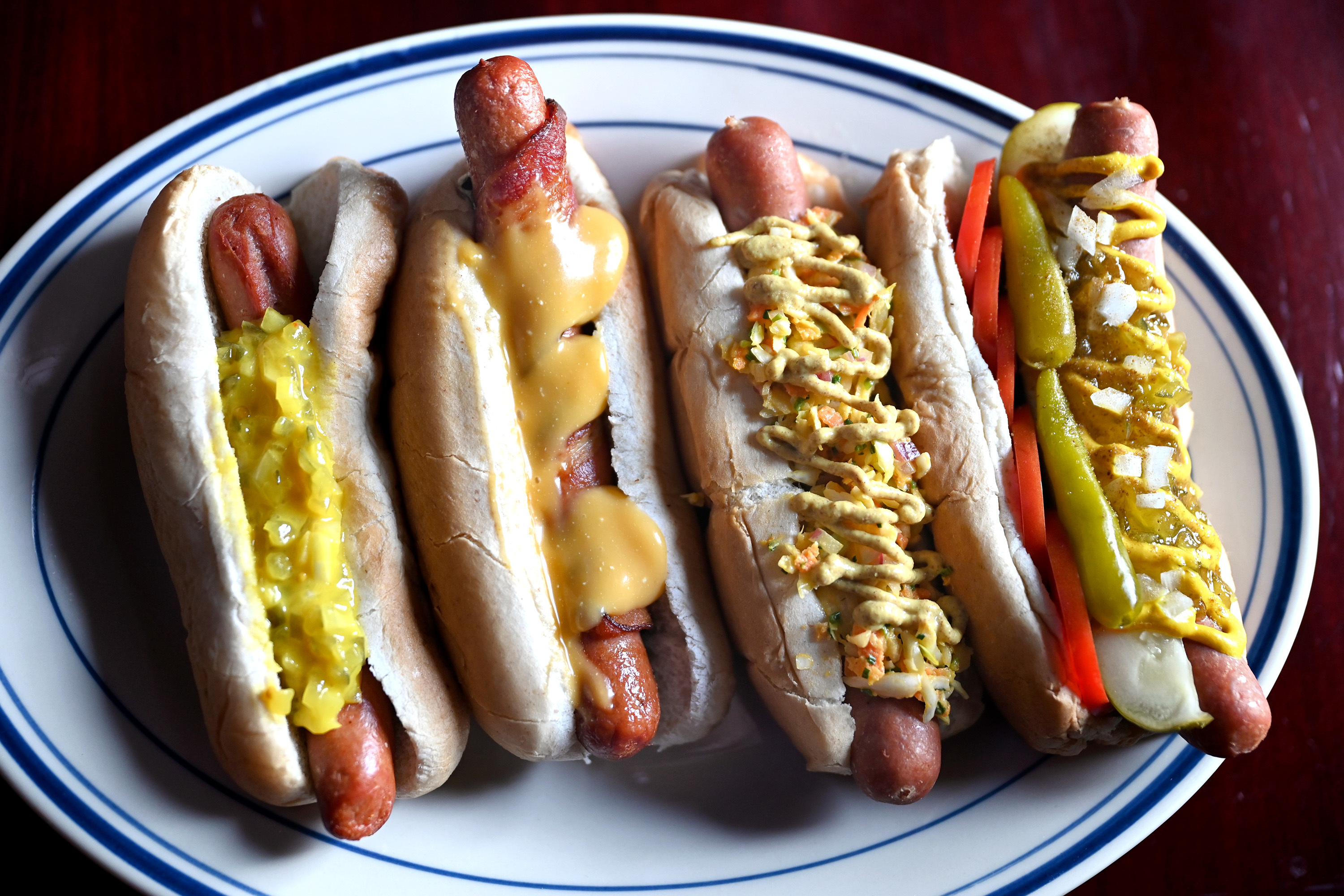
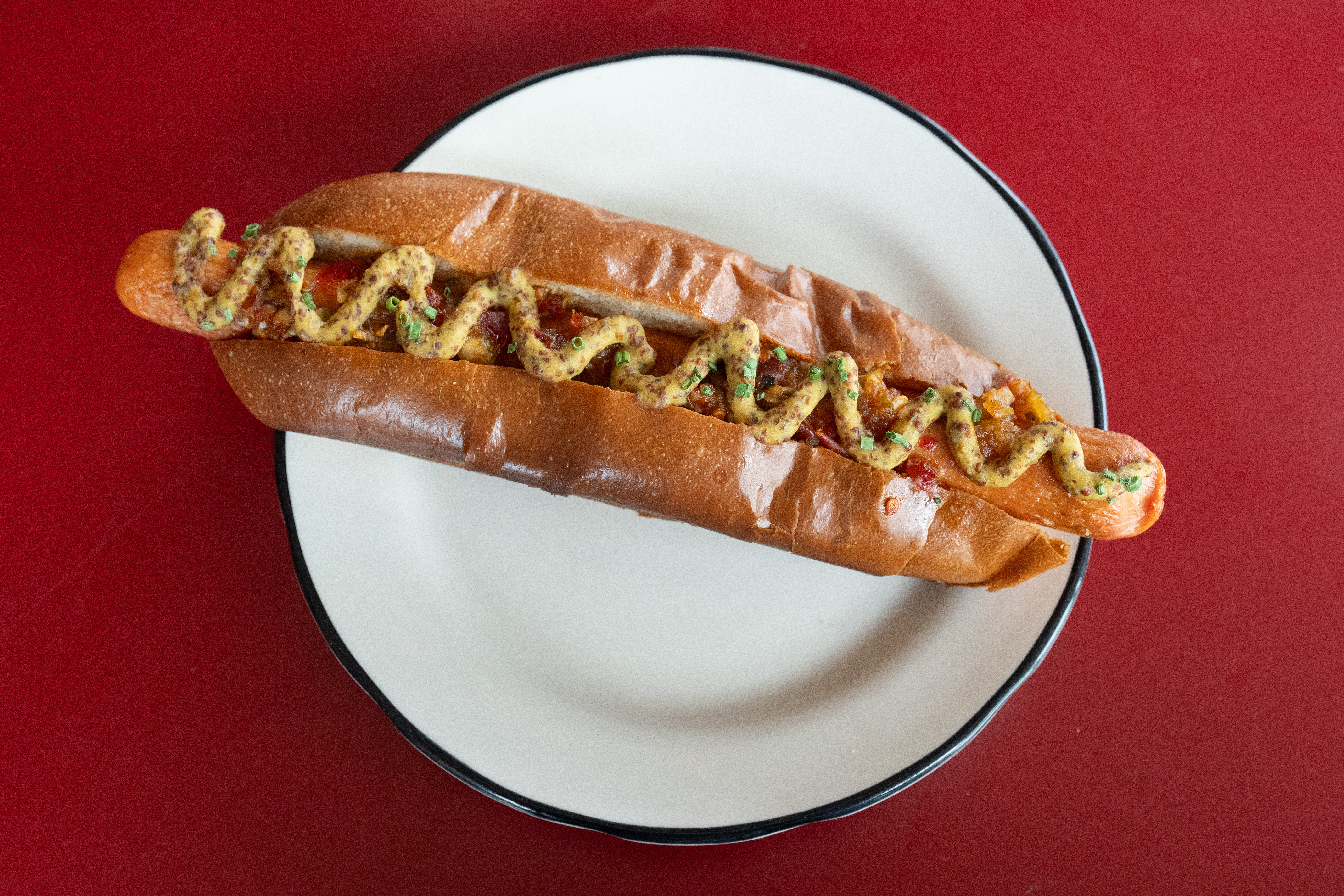
    Let us be frank: We ate a lot of hot dogs for this guide.

    Also in this edition:

    • The hot dog is the sandwich of the summer … right? Jenn Ladd meditates on the hot dog’s classification.
    • Dîner en Home: The first-ever cancellation of Philadelphia’s Dîner en Blanc last week made participants get creative indoors.
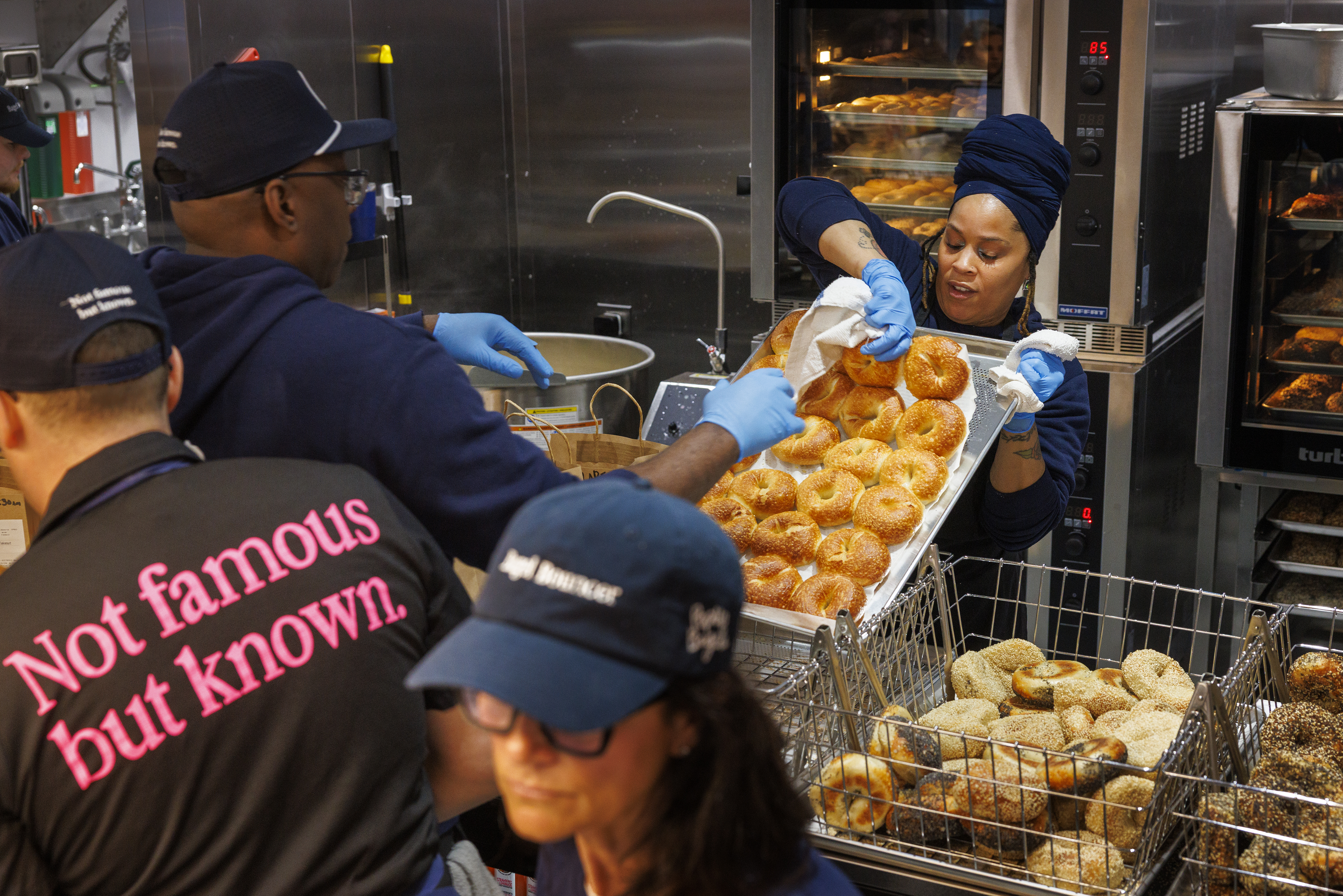
    • Bagel boom or bubble? Since the beginning of 2025, nearly a dozen bagel shops have opened or announced plans to open in the Philly area. Who’s hungry?

    — Mike Klein and Kiki Aranita

    If someone forwarded you this email, sign up for free here.

    Follow our hot dog trail

    Expand your horizons beyond beef franks with mustard: We scoured the city for the best dogs, whether served on a traditional buns or topped with bonito flakes and carrot salad. Check out our map of Philly’s tastiest hot dogs.

    Is a hot dog a sandwich?

    The enduring question poses a fun, philosophical exercise. Jenn surveys Philly’s leading glizzy authorities on the great hot dog-sandwich debate.

    Bagel boom, or bubble?

    As a bevy of bagel shops — some locally launched, others private equity-backed — makes plan in the region, Mike talked to the experts about an obvious question: How many bagels can Philadelphia eat?

    Dîner en home

    Thousands of would-be Dîner en Blanc participants did not get to haul their tables, chairs, and picnics to a secret location this year as it literally rained on their parade. They made the most of things, dining en blanc at homes, restaurants, and even a cigar bar.

    Grad Hospital’s treat boom was a long time coming

    For years, Graduate Hospital residents had to dip into Rittenhouse or head south for treats, but a new wave of neighborhood businesses are selling everything from loaded baked potatoes and ice cream to matcha lattes and mousse cakes.

    👩‍🍳 Graduate Hospital’s first restaurant week runs through Sunday, with participating restaurants offering three-course prix-fixe menus for $30 or $45 while continuing to serve regular menus. The lineup includes Banshee, L’Anima, Say She Ate, Chick’s, Château Rouge, La Sera Italiana, Old Towne & Sanna’s, Saigon Grace Cafe, and Sidecar Bar & Grille. Details/menus are here.

    The best thing Beatrice ate last week

    Beatrice Forman, a breakfast sandwich connoisseur, gets the warm and fuzzies from Chibanos’ Chino, which uses a Dodo Bakery bo lo bao as its bun. “It’s funny how a single sandwich can take me to so many places,” she wrote of its fluffy eggs, Swiss cheese, and char siu-style sausage patty.

    Sandwiches out, tacos in

    Cantina La Martina is set to return to Kensington and debut in Brewerytown next month as it doubles down on its relationship with Human Robot Brewery, which is parting ways with sandwich maker N.A. Poe. The vendor shakeup, Beatrice reports, was precipitated in part by some untoward social media posts.

    Scoops

    Ms. Tootsie’s former building at 1312 South St., shuttered since the 2021 death of restaurateur KeVen Parker, will become the home of Nippy’s on South. Nikia Peterson, a nurse who frequented the swank soul-food destination, has bought the building and is installing what she said will be a polished spot offering an eclectic menu, with seafood towers, steaks, Asian and Caribbean dishes, and a full bar emphasizing happy hour and weekend brunch. “Nippy” was her late grandmother; a late-September opening is planned.

    Mezzanine 1909 and the Slider Co. are moving toward spring openings at 2043 Frankford Ave., now that longstanding zoning issues have been settled. Will Johnson, partnered with Anesha Garrett, tells me that they envision a quick-service burger shop on the first floor, and — accessible through a “secret” door — a speakeasy-style, 40-seat cocktail bar upstairs serving nine small plates and nine cocktails with “intentional” service. It also will be a hub for their catering. Slider & Co. had two popups nearby last summer.

    Briefly noted

    Testa Rossa, the casual Italian-American concept from Fearless Restaurants, closed Sunday after 20 months in the Shoppes at Brinton Lake on Baltimore Pike in Glen Mills. “It never really resonated with the neighborhood,” said Fearless owner Marty Grims, adding that the company has offered Testa Rossa employees jobs at its other restaurants, including the White Dog Cafes and Rosalie. Fearless’ next project, a Southern Italian restaurant called Martini & Roz, is due to open in late fall at 523 W. Lancaster Ave. in Wayne.

    ❓Pop quiz

    Which two restaurants made it onto Bon Appétit’s best new restaurants list?

    A) Honeysuckle and Sao

    B) Mr. Edison and Tesiny

    C) Emilia and Manong

    D) Wine Dive and Lucky Duck

    Find out if you know the answer.

    📮 Have a question about food in Philly? Email your questions to Mike at mklein@inquirer.com for a chance to be featured in my newsletter.

    By submitting your written, visual, and/or audio contributions, you agree to The Inquirer’s Terms of Use, including the grant of rights in Section 10.

  • Mr. Edison is flashy and ambitious. Too bad the cooking and service are dim.

    Mr. Edison is flashy and ambitious. Too bad the cooking and service are dim.

    There are ghosts rumbling through the rafters at Mr. Edison. And I’m not sure they’re happy.

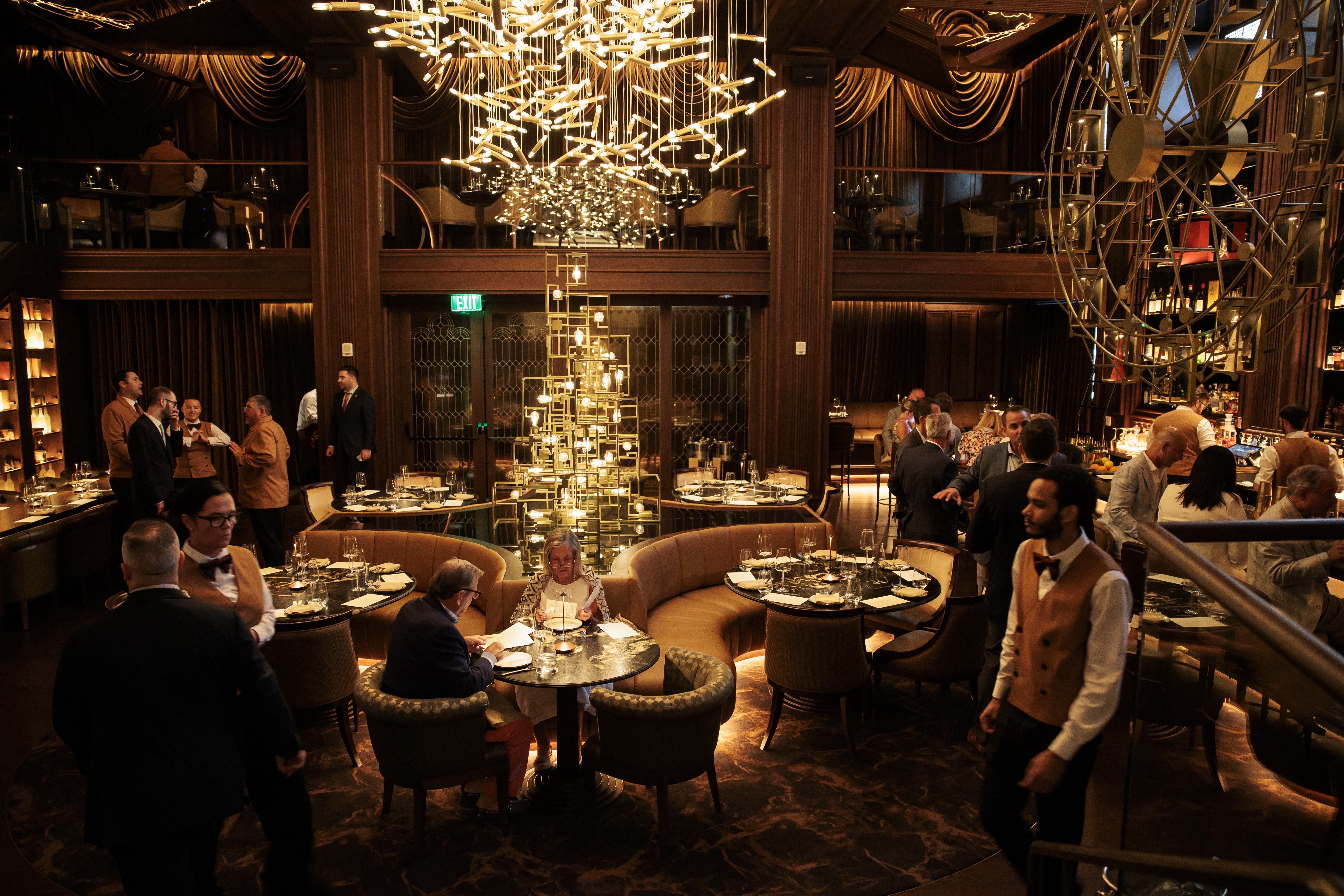
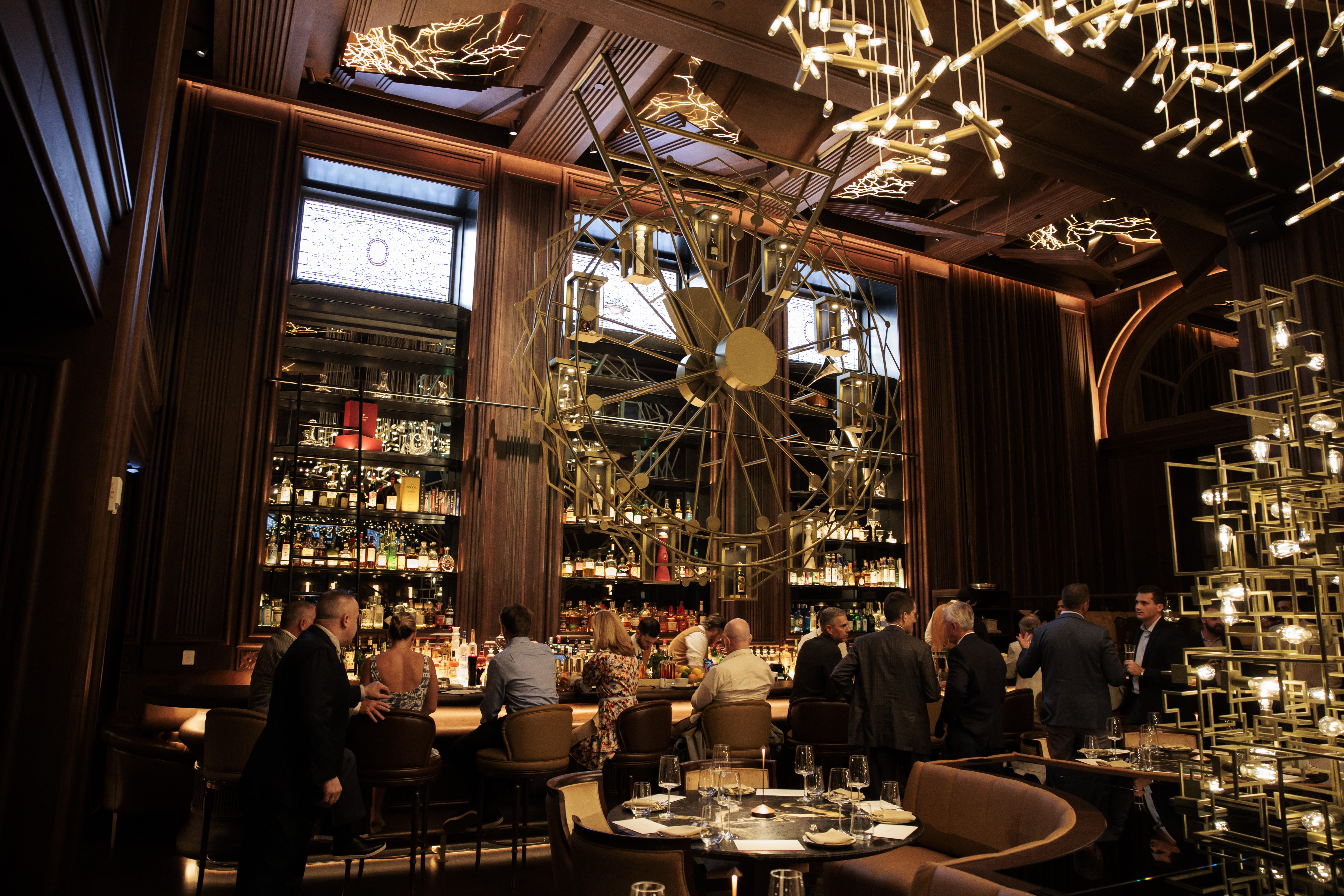
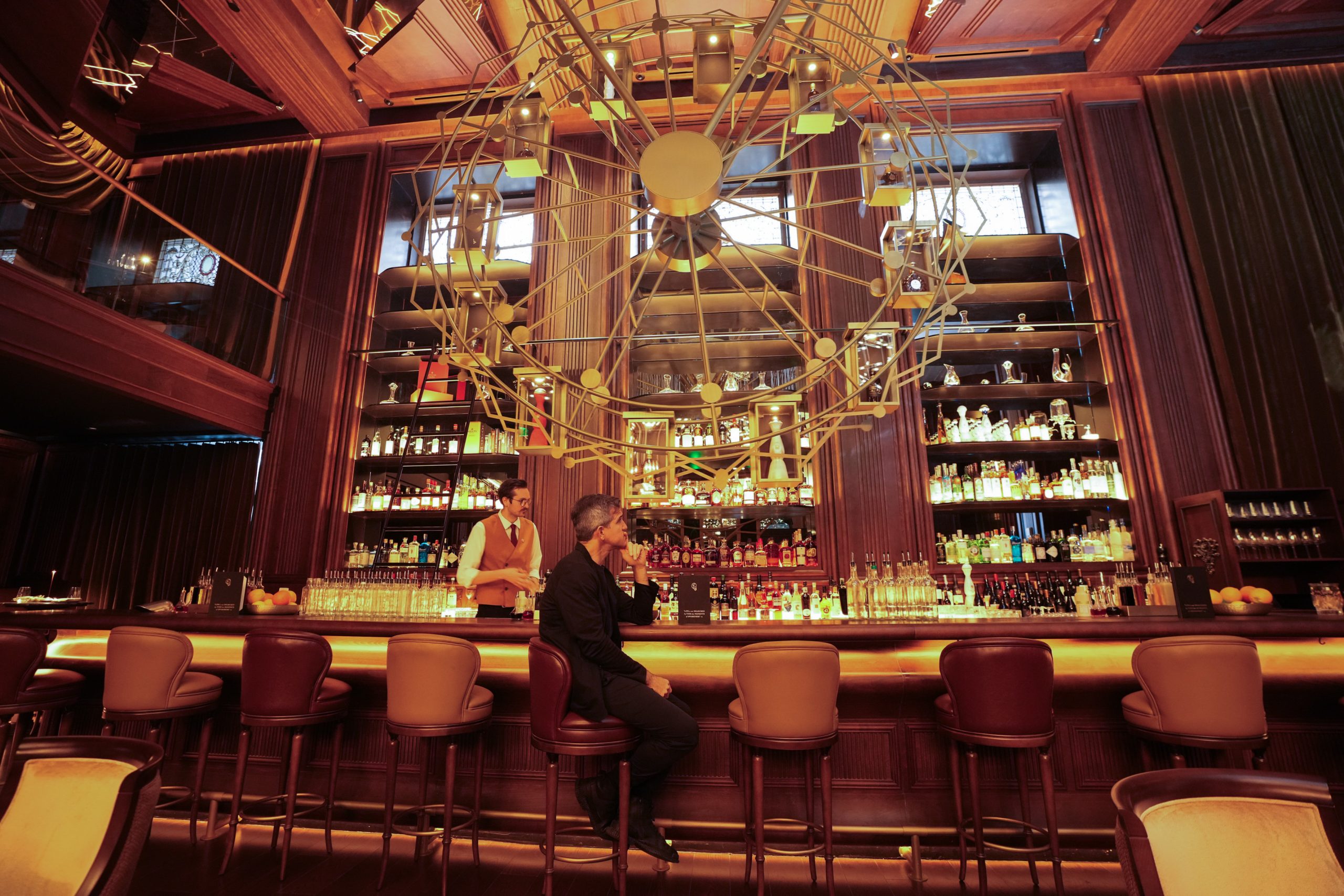
    So much energy — both living and remembered — pulses through this dramatic two-story restaurant inside the landmark Bellevue hotel that, as we follow a hostess in what looks like silk pajamas up the long staircase to our table on the mezzanine, the ceiling panels appear to explode with a mirrored tableau of reflected lightning bolts. A chandelier of suspended Edison bulbs showers the plush booths below in a cascade of frozen sparks while a 12-foot brass Ferris wheel nearby cycles slowly over the bar, dangling some of the world’s most extravagant bottles of booze in its hydraulic glass cages.

    Am I the target audience for a $350 pour of the Louis XIII “on rotation”? Definitely not. But Mr. Edison has obviously found them, given its guests supposedly go through a bottle a week of the famed cognac (which retails in Pennsylvania for $5,300).

    The bar at Mr. Edison in the Bellevue Hotel on Tuesday, Aug. 18, 2026 in Philadelphia.Monica Herndon / Staff Photographer

    This carnival of pomp and perpetual motion is overwhelming to take in all at once, along with a live jazz band playing to a crowd tightly cinched into formalwear and glittering jewels. The spirit of Thomas Edison, who in 1904 helped electrify this grand old hotel, would no doubt be moved by this namesake tribute from owner Jeffrey Chodorow, the pioneering restaurateur with a hand in more 60 restaurants, including China Grill and Asia de Cuba.

    While those two stars of late 20th-century dining in New York (and Miami) were trendsetters for the eater-tainment fusion movement, Mr. Edison is a decidedly nostalgic throwback to a 1940s-style supper club. It’s built around updates to classic Philly foods, from fried oysters and chicken salad zapped with kimchi to more dutiful re-creations of cakes from Old Original Bookbinder’s and Frog.

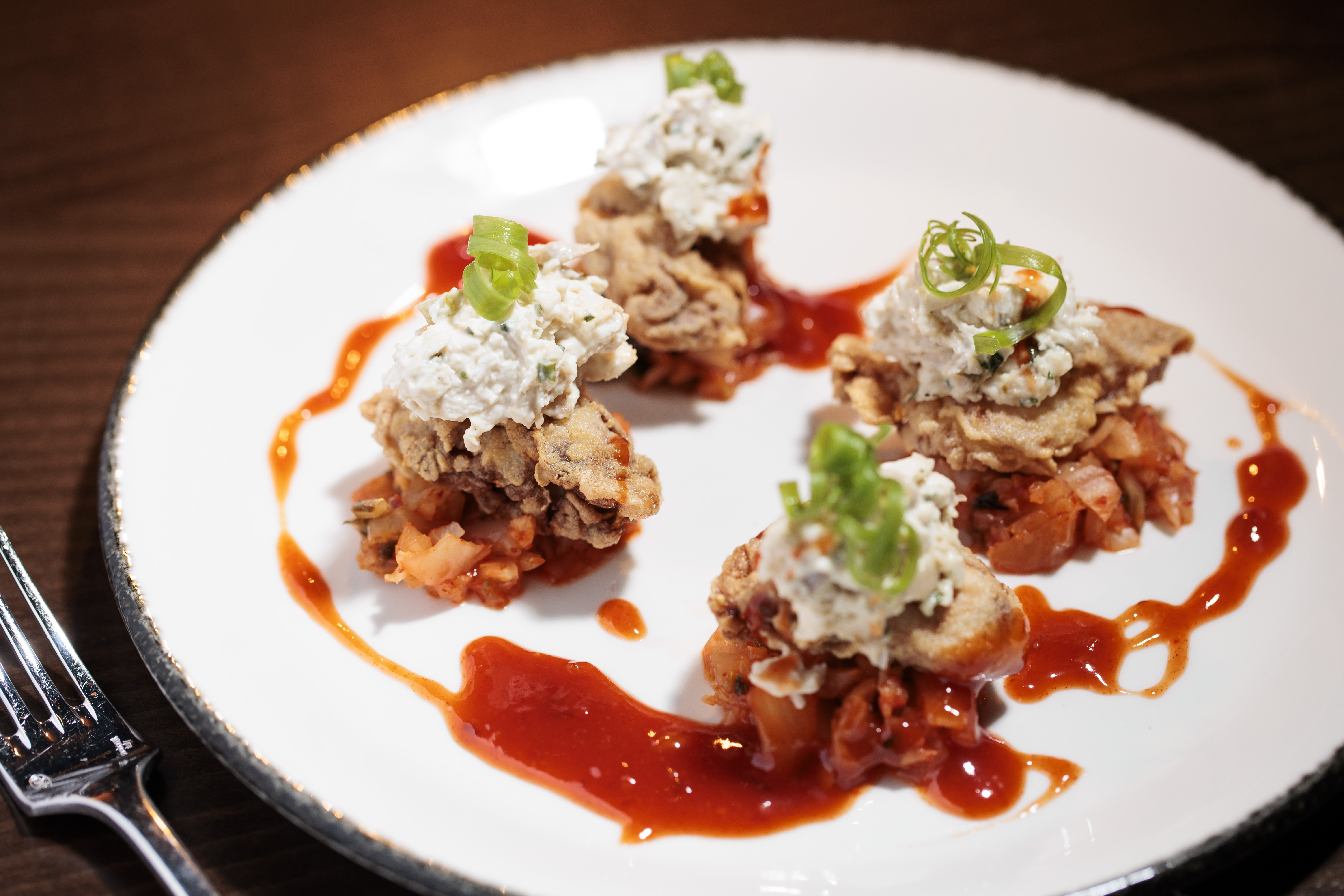
    The Korean fried oysters at Mr. Edison in the Bellevue Hotel on Tuesday, Aug. 18, 2026 in Philadelphia.Monica Herndon / Staff Photographer

    For Chodorow, 76, who studied at Wharton, Mr. Edison’s food is a love letter to legends of the 1970s restaurant renaissance, which he enjoyed while practicing law here in the early 1980s. Names like Le Bec-Fin, Le Panetière, and Jimmy’s Milan are invoked like wishful spells across the menus, which arrive tucked inside a souvenir envelope like wedding invitations. (Chodorow, not coincidentally, threw an elaborate engagement party for his wife at the Bellevue in 1982.)

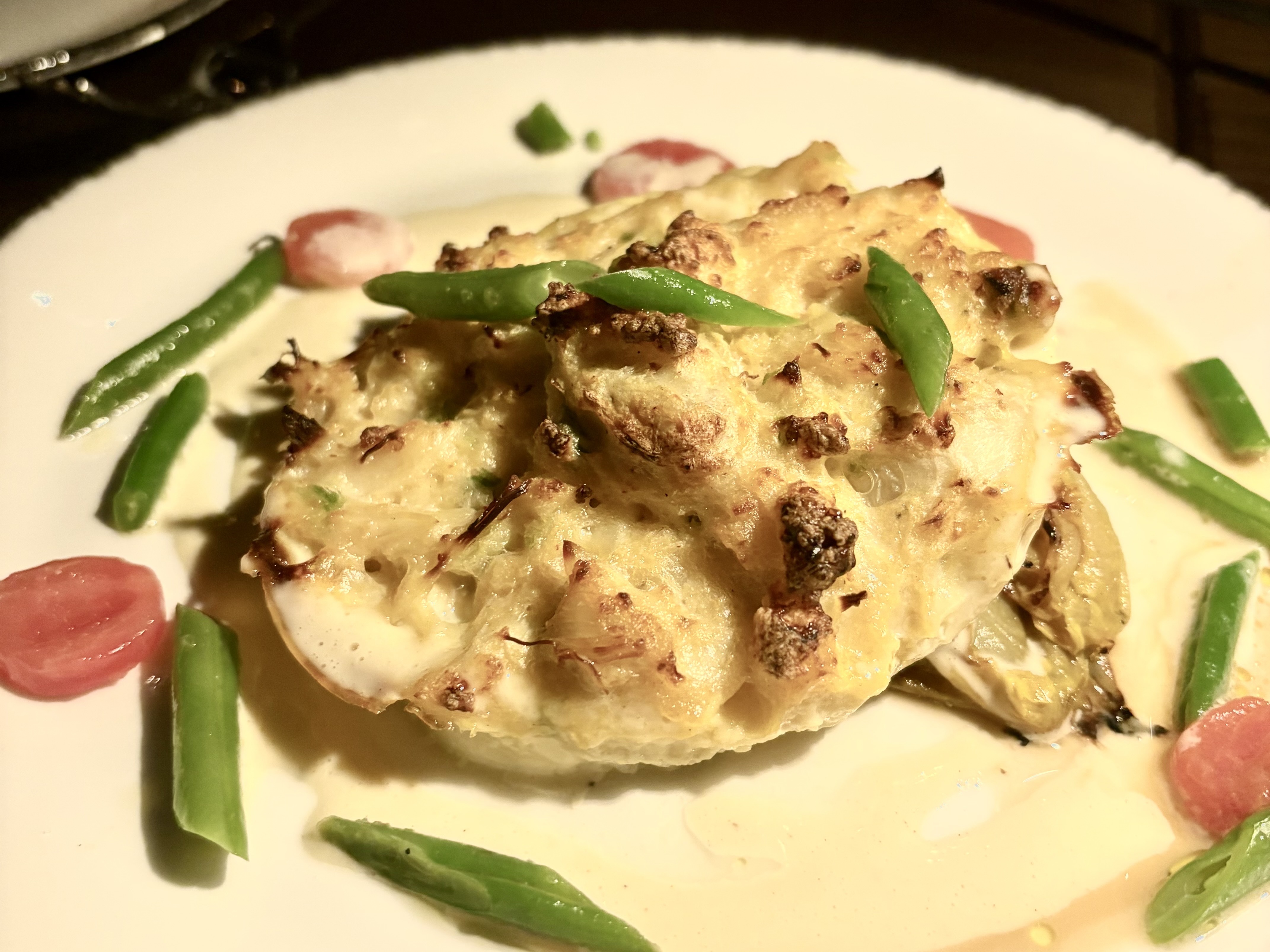
    If the Ghosts of Philly Restaurants Past have indeed answered their summons, they might be frowning down on these plates with dismay. The galette de crabe “Le Bec-Fin,” known for its use of seafood mousse to produce a delicately puffy soufflé jeweled with sweet crab, arrived here so deflated and overcooked it tasted like a fishy frittata.

    “Chef [Georges Perrier] would probably lock the doors and burn the place down,” replied one of Le Bec’s longtime former chefs after I texted him a picture of my gruesome galette.

    Mr. Edison’s rendition of Le Bec-Fin’s crab galette is a far cry from the original.Craig LaBan / Staff

    In fact, Mr. Edison’s culinary director, Matt Levin, 53, also cooked at Le Bec-Fin early in his career, which subsequently saw him burst onto the scene in the early 2000s at New Hope’s Moonlight and Lacroix at the Rittenhouse before going solo with Adsum and Square Peg, then eventually landing in the catering world. Most recently, he cooked at the Pineville Tavern in central Bucks County. While his recipe might be the same, Levin’s decision to jettison Perrier’s ring mold for a shallow pan was a fateful miscue. The galette evolved by my second meal into a soggy sponge, still not ideal for $45.

    Fewer diners today recall Le Panetière, where Chodorow remembers first tasting Perrier’s food in the late 1960s. But anyone would realize upon one bite of this duck à l’orange tribute that the meaty breast, although still medium-rare, was inexplicably dry and as tough as a chew toy.

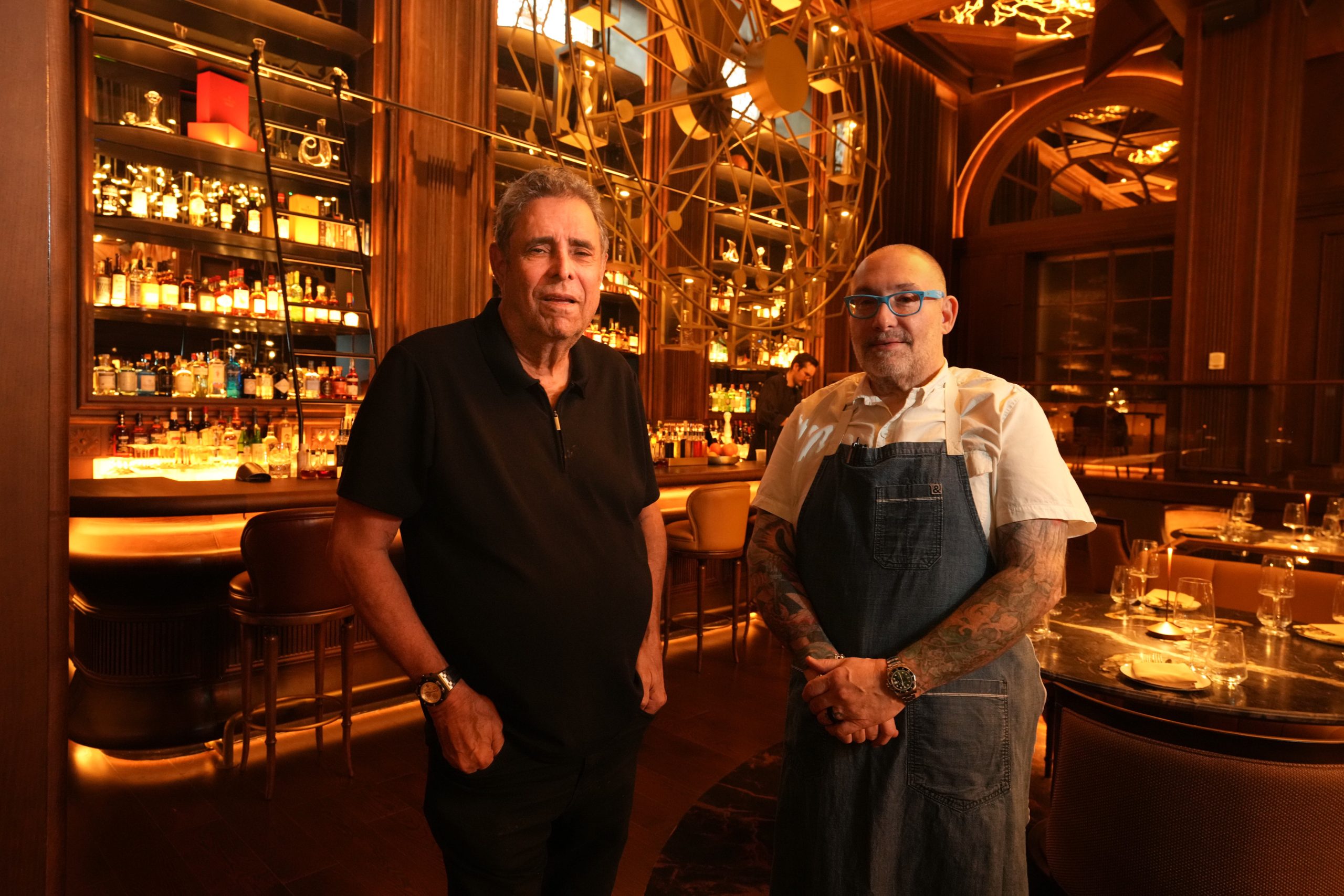
    Jeffrey Chodorow (left) and chef Matt Levin, at Mr. Edison, the new restaurant at the Bellevue, in Philadelphia, on June 23, 2026.Jessica Griffin / Staff Photographer

    If only I could have found the frequently absent captain overseeing our table on the mezzanine before the two-hour-plus mark of our glacially slow meal, when he finally asked us, too late and far too smugly, “Did that hit the spot?”

    “Not very well,” I replied honestly with a detailed report, noting we’d hardly eaten this $90 sharing splurge as a result. He shrugged a faint reply, then handed us our bill with not even the slightest gesture of apology, though I was not surprised. He’d also forgotten so much as a candle for our dessert after we told him upon arrival (after he asked) that we were celebrating a birthday.

    An envelope at each seat holds the menus at Mr. Edison in the Bellevue Hotel on Tuesday, Aug. 18, 2026 in Philadelphia.Monica Herndon / Staff Photographer
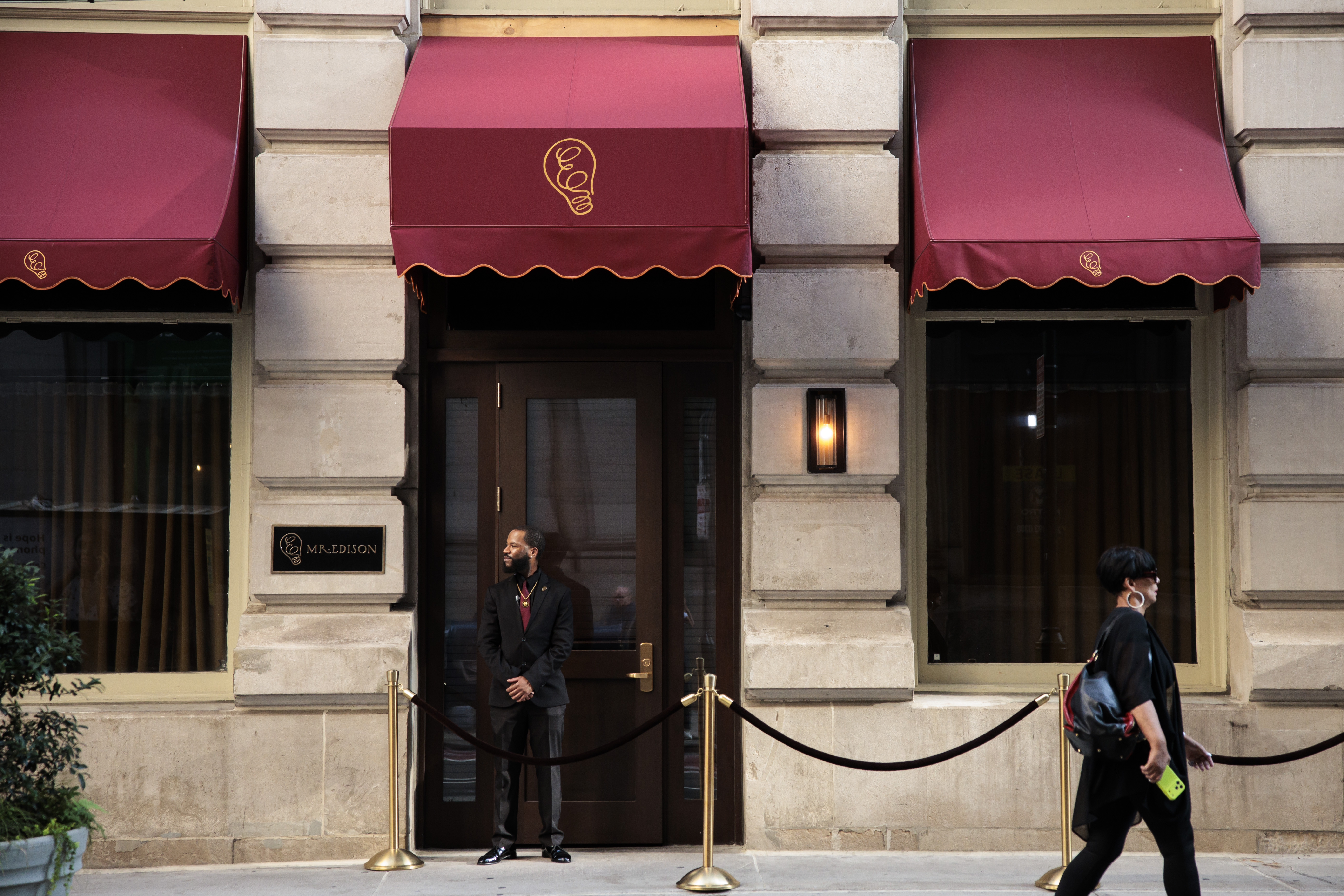
    The exterior of Mr. Edison in the Bellevue Hotel on Tuesday, Aug. 18, 2026 in Philadelphia.Monica Herndon / Staff Photographer

    As a restaurant romantic, I value grand ambitions such as those that shaped Mr. Edison, a $10 million makeover of the former Polo store that recalls the showplace splendor of Walnut Street’s Restaurant Row in the late 1990s (Striped Bass, Susanna Foo, Brasserie Perrier) more than the DIY quirkiness of the restaurant renaissance that preceded it. It’s far preferable to the cookie-cutter chains that otherwise populate South Broad Street. But executing that ideal in a 133-seat room in 2026 — when, as chef Levin noted, people can make more working for food-delivery apps than actually cooking the food — is a challenge. With check averages of $120 (before tip and tax), no customer wants to hear excuses.

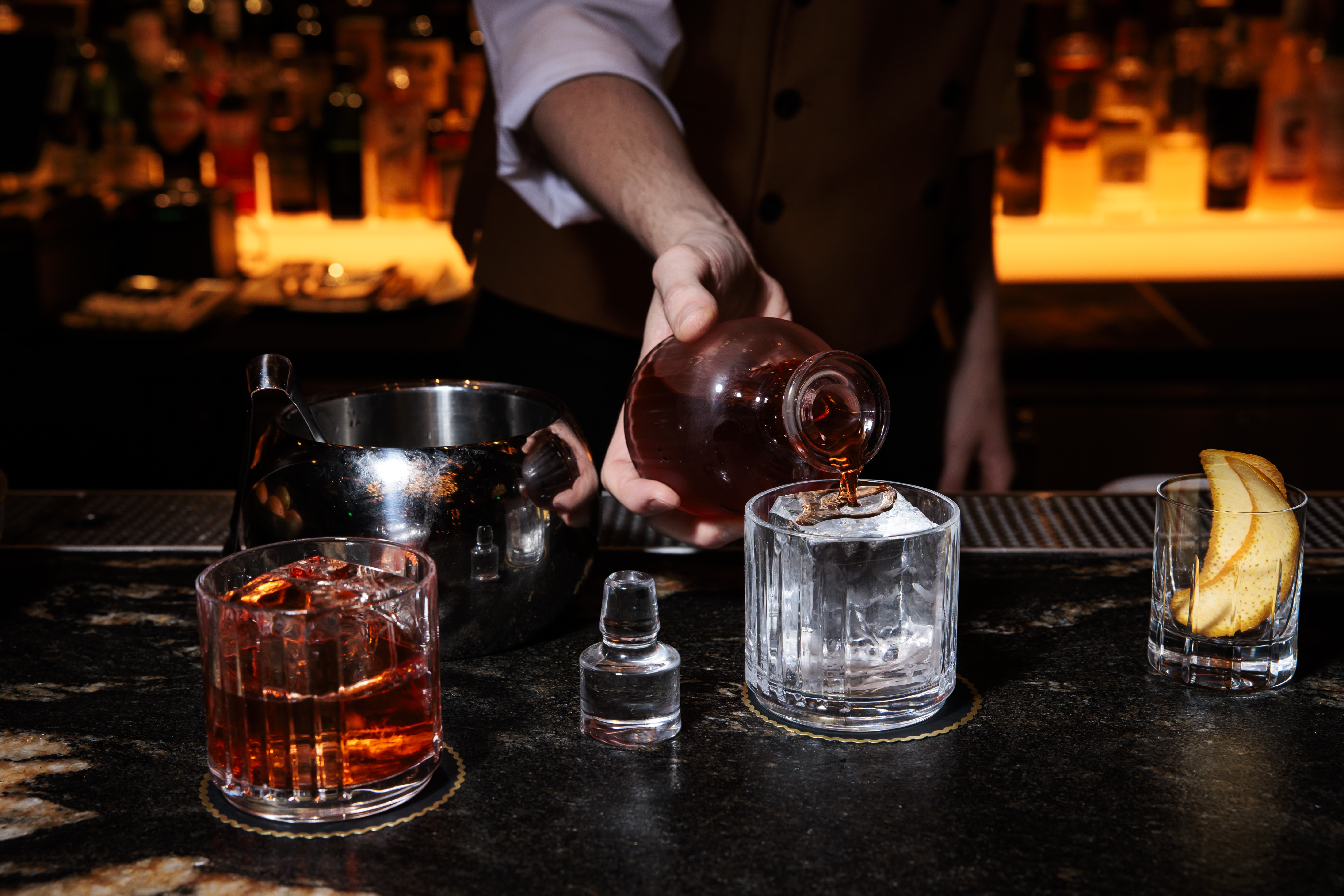
    Improvement is within reach. We were seated at my following visit on the daisy wheel banquette that anchors the downstairs dining room, and the service there was much sharper. We had a perfect vantage to hear Drew Nugent & the Midnight Society swing onstage and to drink this bar’s outstanding cocktails, including the large carafe of a superb Negroni (this variation blending Cocchi di Torino and Punt e Mes) poured tableside over giant ice cubes. At $57 for the equivalent of three-plus cocktails, it’s one of Mr. Edison’s best values.

    Bartender Michael Chukinas pours the tableside house Negroni at Mr. Edison in the Bellevue Hotel on Tuesday, Aug. 18, 2026 in Philadelphia.Monica Herndon / Staff Photographer

    I’d definitely return for a seat at the titanium granite bar to enjoy the well-curated lineup of live music, sip other cocktail hits (the white coffee-infused Wizard or tropical 30 Minute Nap), and graze on some of the small plates.

    The Korean fried oysters with kimchi and chicken salad was an intriguing riff on one of my favorite historical Philly food oddities, the spice and fermented funk of the cabbage cutting through the clubby richness. Waffle chips to scoop paddlefish caviar from fancy French onion dip was an accessible alternative to the far pricier sturgeon caviar service. The quail yolk-dotted beef tartare ringed by fried beef tendon puffs was irresistible, while a petite portion of seared filet mignon fanned over a creamy au poivre sauce with morels tapped another red-meat craving without the steakhouse clichés.

    The Jimmy’s Milan salad — essentially crunchy lettuce tossed with bacon, big shrimp, hard-boiled eggs, and a zesty Russian-Italian hybrid dressing — is proof that some vintage pleasures don’t need to be reinvented to be appreciated. The restaurant’s $48 baked potato, stuffed with nearly half a pound of sweet lump crab au gratin, was the most memorable thing I ate at Mr. Edison, a super spud splurge that could hit yet another level with a $40 “blackout” addition of caviar.

    A couple of the small plates fell short. A meaty flap of tuna carpaccio was not pounded thin enough. The corn-encrusted soft-shell crabs over mole verde were not soft enough, leaving me with a mouthful of shells.

    Updating classics is a tricky prospect, and often Levin’s contemporary reworking drifted too far afield for its own good. The baked “Edison meets Rockefeller” oysters were so underdressed, with splashes of Mornay and fines herbes butter replacing the typically lush green puree, it lacked the indulgence to suit its name, even with a crispy nugget of guanciale. A $110 rendition of lobster Thermidor was not simply unrecognizable; without the full shell, into which it is typically stuffed and gratinéed, it was one-dimensional and boring.

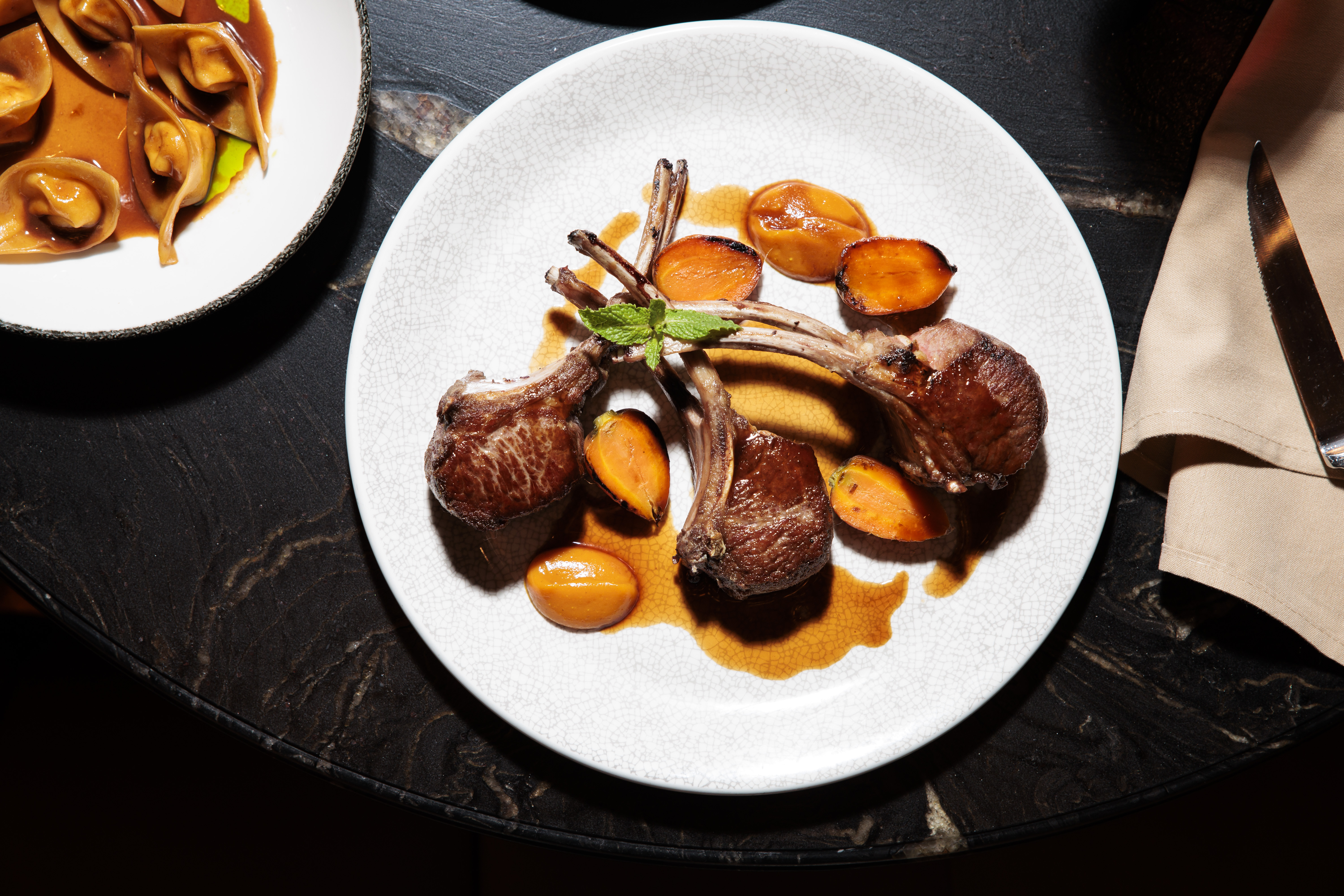
    The grilled lamb chops spiced with vadouvan curry with Thumbelina carrots were the most satisfying of the “Grand Plates” for two, while the butterflied whole dorade over chimichurri and the buffalo milk ricotta ravioli were safe bets for the unadventurous.

    The lamb chops at Mr. Edison in the Bellevue Hotel on Tuesday, Aug. 18, 2026 in Philadelphia.Monica Herndon / Staff Photographer

    Too many other big dishes stumbled over the basics of seasoning — like a veal chop Milanese that cradled a handful of flaky salt atop its breaded crust. The brick chicken was so salty that my gums ached until the end of the meal.

    Tucked into the stuffiest far corner of the mezzanine behind the bar for this final visit, I’d hoped an old-fashioned dessert would offer enough sweetness to counter that salty bird. I considered one of the winners I’d already enjoyed at previous visits: a re-creation of the coconut cake from Old Original Bookbinder’s, a tasty nod to Frog’s legendary carrot cake with butter pecan ice cream, or the dense chocolate-and-peanut-butter tart.

    I opted for the crème brûlée to keep it easy, only to find its caramel crust — ideally torched to order and still warm — was cold by the time it ascended to our second-floor perch beneath the lightning-bolt rafters. I looked down toward the bar’s Ferris wheel as it cycled up toward us and couldn’t help but imagine the Ghosts of Philly Restaurants Past riding along with those glass cages, so hopeful for their comeback moment. Rising then falling, again and again, they sent shrugs of disappointment in my direction as they rolled away.

    The carrot cake at Mr. Edison at the Bellevue Hotel on Tuesday, Aug. 18, 2026 in Philadelphia.Monica Herndon / Staff Photographer

    Mr. Edison

    Dinner Sunday through Thursday, 5 to 11 p.m.; Friday and Saturday, until midnight.

    Small plates, $19-$45; Sharing plates for two, $58-$115.

    Fully wheelchair accessible to all parts of the restaurant, including two wheelchair accessible seats at the bar.

    Gluten-free: At least half the menu is either gluten-free or can be modified, including items cooked in a gluten-free fryer.

    Menu highlights: Caviar dip; Jimmy’s Milan salad; Korean fried oysters; filet au poivre; baked potato with crab gratin; buffalo ricotta ravioli; lamb chops; carrot cake.

    Beverage program: Don’t let the ostentatious bling bottles on the Ferris wheel fool you. The bar is Mr. Edison’s strong suit, with well-crafted and thoughtful updates to classic ideas using modern techniques and quality ingredients. The tableside Negroni towers are worth it, along with other cocktail highlights. The wine list is more predictable.

    Mr. Edison, the new restaurant at the Bellevue from Jeffrey Chodorow, in Philadelphia, June 23, 2026.Jessica Griffin / Staff Photographer
  • Shapiro deserves kudos for data center regulation efforts. But he can’t do it alone. | Editorial

    Shapiro deserves kudos for data center regulation efforts. But he can’t do it alone. | Editorial

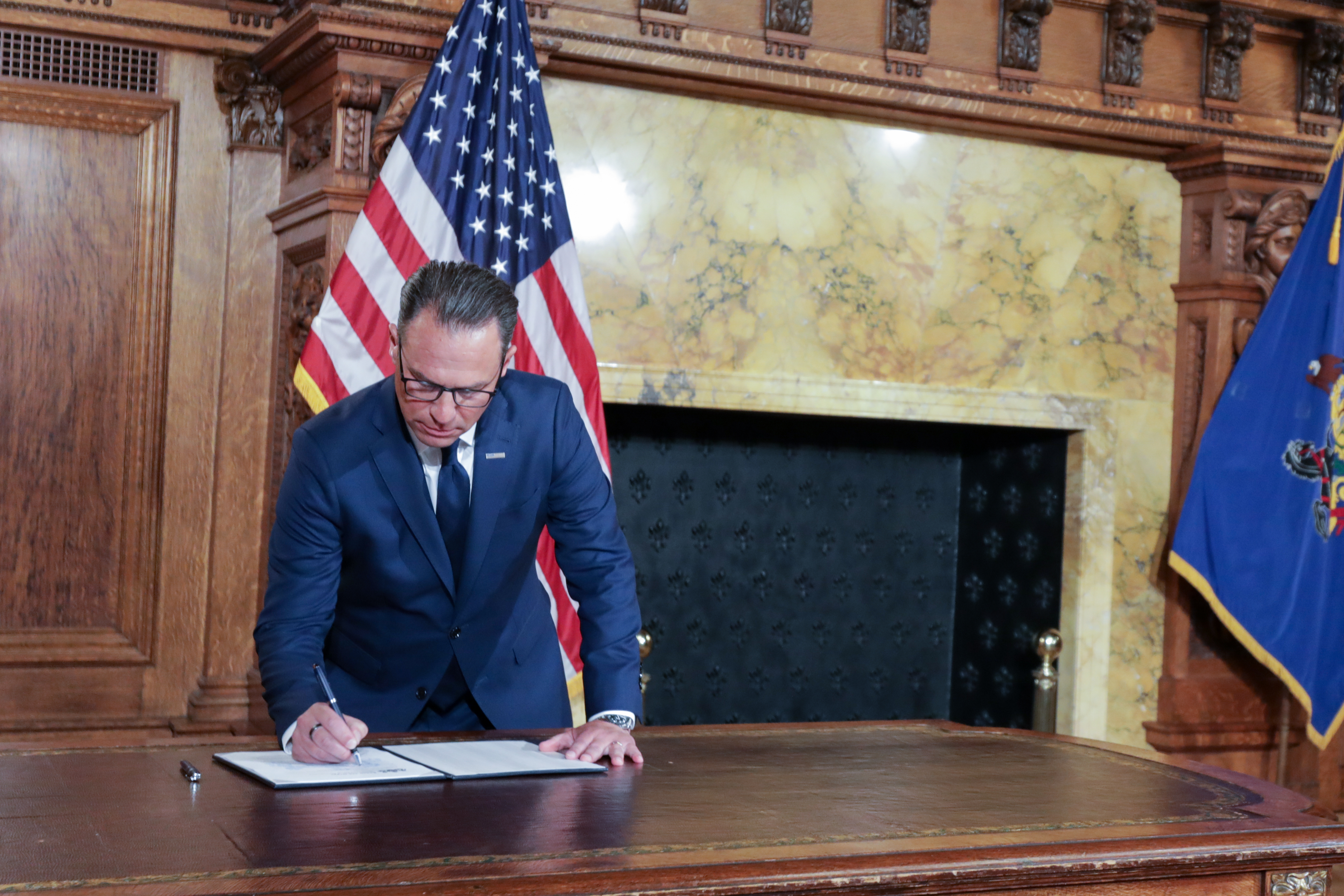
    Gov. Josh Shapiro’s sweeping executive order to slow the burgeoning data center development boom in Pennsylvania is a good first step, but it does not go far enough in curbing looming challenges to the state’s energy and water supply.

    Shapiro’s directive is a sharp reversal from just a year ago, when he embraced high-tech investment in the commonwealth. Since then, bipartisan public sentiment has turned against data centers as reports about the downsides have come to light.

    Even if Shapiro is following the polls instead of his gut, he deserves credit for listening to his constituents. Too many elected officials these days ignore voters once they get into office. (We’re looking at you, Sen. John Fetterman.)

    Shapiro’s executive order certifies standards that he initially pitched as voluntary. Under the measure, all data center projects will be required to follow environmental, economic, and transparency requirements that are outlined in Shapiro’s so-called Governor’s Responsible Infrastructure Development benchmarks.

    The governor’s mandate includes several other requirements for data centers regarding water conservation and the need to provide their own electricity generation or pay the costs associated with increased usage. The order also demands data centers provide community benefit agreements that include promises to hire and train local employees along with investments in schools or infrastructure.

    Those are major improvements over the state’s initial efforts to essentially bend over backward for Big Tech. Yet, more must be done to protect Pennsylvanians and the environment.

    For starters, it makes no sense to offer lucrative tax breaks to data centers, which are largely being built by deep-pocketed companies controlled by mega-billionaires, including Sam Altman (OpenAI), Elon Musk (xAI), and Mark Zuckerberg (Meta).

    The state House voted to repeal the tax breaks in June, but the measure stalled in the Republican-controlled Senate.

    While Shapiro’s order gives local governments more control over data centers, it also creates the potential for a patchwork system in which one town opposes a center while a neighboring town approves its construction — with everyone in the region left to deal with the consequences. It may also leave poorer towns at the mercy of data center developers dangling economic development.

    To be sure, data centers are not all bad. They offer billions of dollars in construction investment, tax revenue, and job creation.

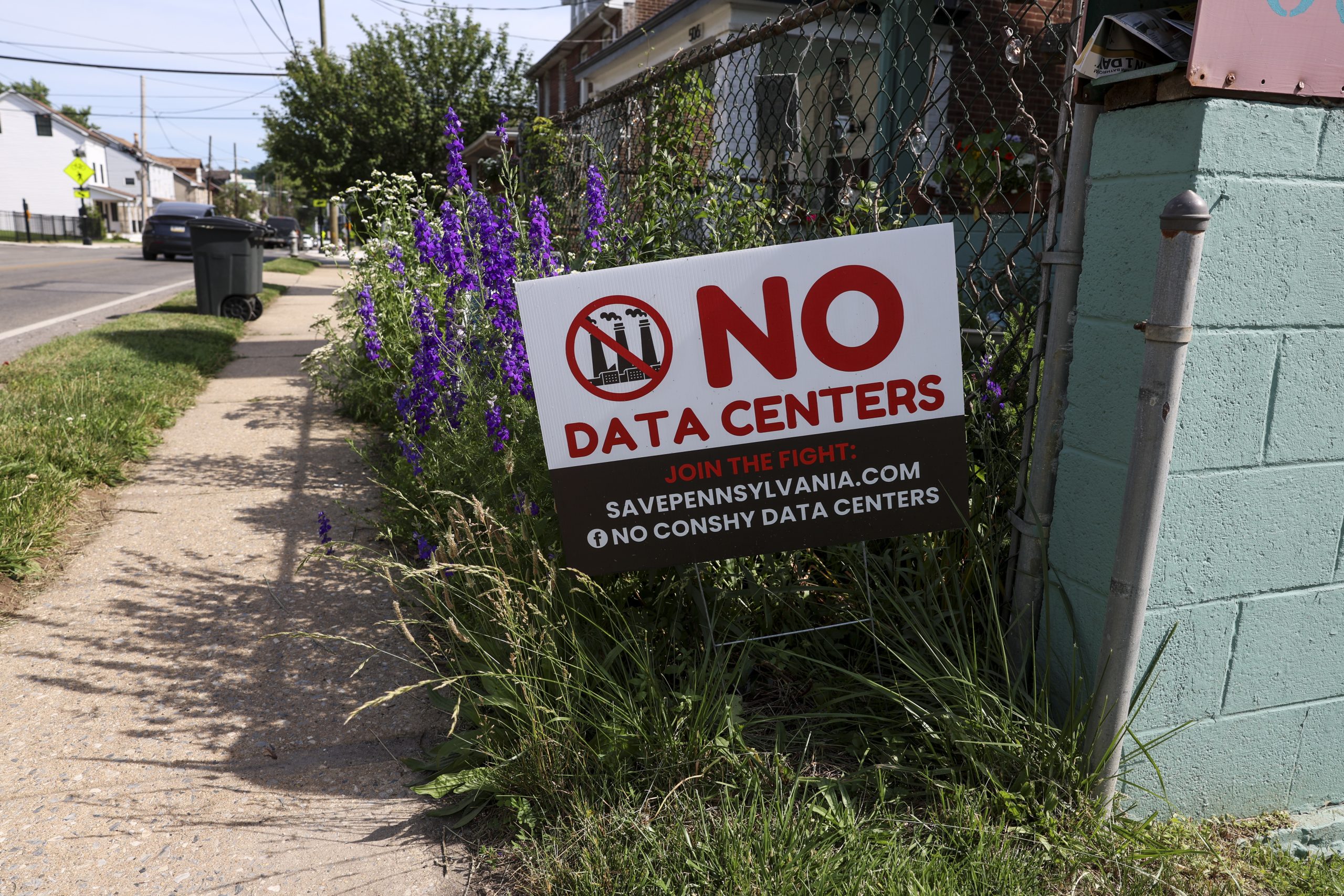
    A yard sign protests the proposed data center on New Elm Street near the closed Cleveland-Cliffs steel mill in Conshohocken.Monica Herndon / Staff Photographer

    But there are real concerns about the impact they will have — and are having — on the power grid and water supply. Residents have experienced sharp increases in electric bills, including a 20% increase in Pennsylvania since 2024.

    Some said data centers caused their water wells to run dry, while others have complained about noise pollution at the facilities, including one in Vineland, N.J.

    Electric executives across the country have warned of blackouts because of the surging demand for power from data centers.

    Then there are the real safety and environmental concerns about plans to restart the nuclear reactor at Three Mile Island in order to provide power exclusively for Microsoft’s artificial intelligence data centers. The nuclear plant near Harrisburg was the site of a partial meltdown in 1979.

    Pennsylvania lawmakers need to develop a comprehensive plan to address those concerns before the data centers get built and not after, when the bills literally come due to homeowners who will be left to shoulder higher utility costs.

    Data centers present both a major opportunity and a challenge not just for Pennsylvania, but for the country and the rest of the world. So it should not just be on Shapiro to try to find a fair balance.

    The most logical plan should include an all-out effort to expand the growth in clean energy to offset the power demands of data centers. Unfortunately, the political divide undercuts the viability of any such proposals.

    Donald Trump is a climate change denier who has worked relentlessly to undermine clean energy initiatives, while cozying up to oil executives. Meanwhile, Trump and recalcitrant Republican lawmakers in Harrisburg and Washington remain largely in the pocket of the billionaires behind data centers.

    One of the biggest data center cheerleaders is Pennsylvania’s billionaire Sen. Dave McCormick, whose wife landed a big job earlier this year at Meta to help lead their global business and artificial intelligence expansion. Meta is a major developer of data centers.

    Trump continues to champion policies that boost data centers and AI, which directly benefit his family’s lucrative cryptocurrency ventures that led to a windfall of more than $1 billion last year.

    Pennsylvania’s constitution guarantees residents the right to clean air, pure water, and environmental preservation. Shapiro and other state lawmakers should focus on how to ensure that constitutional guarantee before moving ahead with more data centers.

    Until a plan is in place, pausing data center development makes the most sense.

  • Great places to go apple picking near Philadelphia this fall

    Fall is nearly here, and for fruit lovers, that means one thing: It’s apple-picking season.

    In the Philly area, there are more than a few orchards where you can pick apples for peak autumnal fun. Whether you’re into the crisp, sweet taste of a Gala or the crunchy, tart Granny Smith, you’re sure to get your fill.

    When does apple-picking season start?

    The season begins at the end of August for most of Pennsylvania, with Ginger Golds and Honeycrisps available for picking, and typically lasts until mid-November, said Norman Schultz, farm manager at Linvilla Orchards.

    Here are great orchards, in New Jersey and Pennsylvania, for your apple-picking adventures, complete with treats like apple cider doughnuts and apple pies to enjoy on site or take home.

    Note: Due to freezing temperatures in the spring, this year’s apple availability will be limited, according to many farms on this list. Be sure to to confirm ripening dates and available varieties ahead of time.

    Indian Orchards Farm

    Stop by the farm stand to sign up for apple picking. This over 100-year-old farm in Media grows about 25 apple varieties, including Honeycrisp, Gala, and Smokehouse. Admission is $3.50 per person, then pay by the pound for what you pick, with buckets and bags offered. On weekends, get hayride and admission combo tickets for $12.

    📍29 Copes Lane, Media, Pa. 19063, 🕑 PYO Monday to Sunday 10 a.m. to 6 p.m., 📞 610-564-0794, 🌐 indianorchardsfarm.com, 📷 facebook.com/IndianOrchards

    “Farmer Norm” Schultz among the Stayman apple trees at Linvilla Orchards, 137 W. Knowlton Road, Media, in 2020.ALEJANDRO A. ALVAREZ / Staff Photographer

    Linvilla Orchards

    This Delco orchard is a must visit, thanks to the 25 types of apples grown there throughout the season, like Crimson Crisp, McIntosh, and Jonagold. Fill a two-quart bag for $11 per person. Get tickets online. Linvilla also offers tons of baked goods, including fresh apple cider doughnuts — a seasonal favorite.

    📍137 W. Knowlton Rd., Media, Pa. 19063, 🕑 PYO Monday to Sunday, 8 a.m. to 4 p.m., 📞 610-876-7116, 🌐 linvilla.com, 📷 @linvillaorchards

    Styer Orchard

    This Bucks County orchard will resume its pick-your-own apples this fall. Bring your own bag and purchase the fruit for $1.89 per pound.

    📍97 Styers Lane, Langhorne, Pa. 19047, 🕑 PYO Wednesday to Sunday, 9 a.m. to 6 p.m., 📞 215-702-9633, 🌐 styerorchard.com, 📷 @styer_orchard

    Highland Orchards

    This Chester County orchard typically offers pick-your-own apples through early November with over 40 varieties like Mutsu, Gala, and Pink Lady on hand. It’s best to call ahead or check Facebook to see what is available. Pricing for bags varies by size. It’s $3 per person (over 3 years old) to enter the field for picking. Highland Orchards’ farm market is known for its apple cider doughnuts.

    📍1000 Marshallton-Thorndale Rd., West Chester, Pa. 19380, 🕑 PYO Tuesday to Friday 9 a.m. to 4 p.m., Saturday and Sunday 9 a.m. to 3 p.m., 📞 610-269-3494, 🌐 highlandorchards.net, 📷 @highlandorchardsinc

    Terhune Orchards

    Terhune’s pick-your-own apple orchard grows a plethora of varieties. Folks 4 years old and up must purchase bags for $10, $15, or $27 — no entrance fee required. A fall festival, filled with pony rides, live music, and other family fun, runs until the first week of November. Terhune also has an on-site winery and a bakery with apple cider doughnuts. Note: The farm store, winery, and festival events are at 330 Cold Soil Rd. Apple picking takes place at 13 Van Kirk Rd. and 330 Cold Soil Rd. Check the website to confirm location and availability.

    📍 13 Van Kirk Rd., Princeton, N.J. 08540, 🕑 PYO Monday to Sunday, 9 a.m. to 5 p.m. (call the farm store during apple season) 📞 609-924-2310, 🌐 terhuneorchards.com, 📷 @terhuneorchards

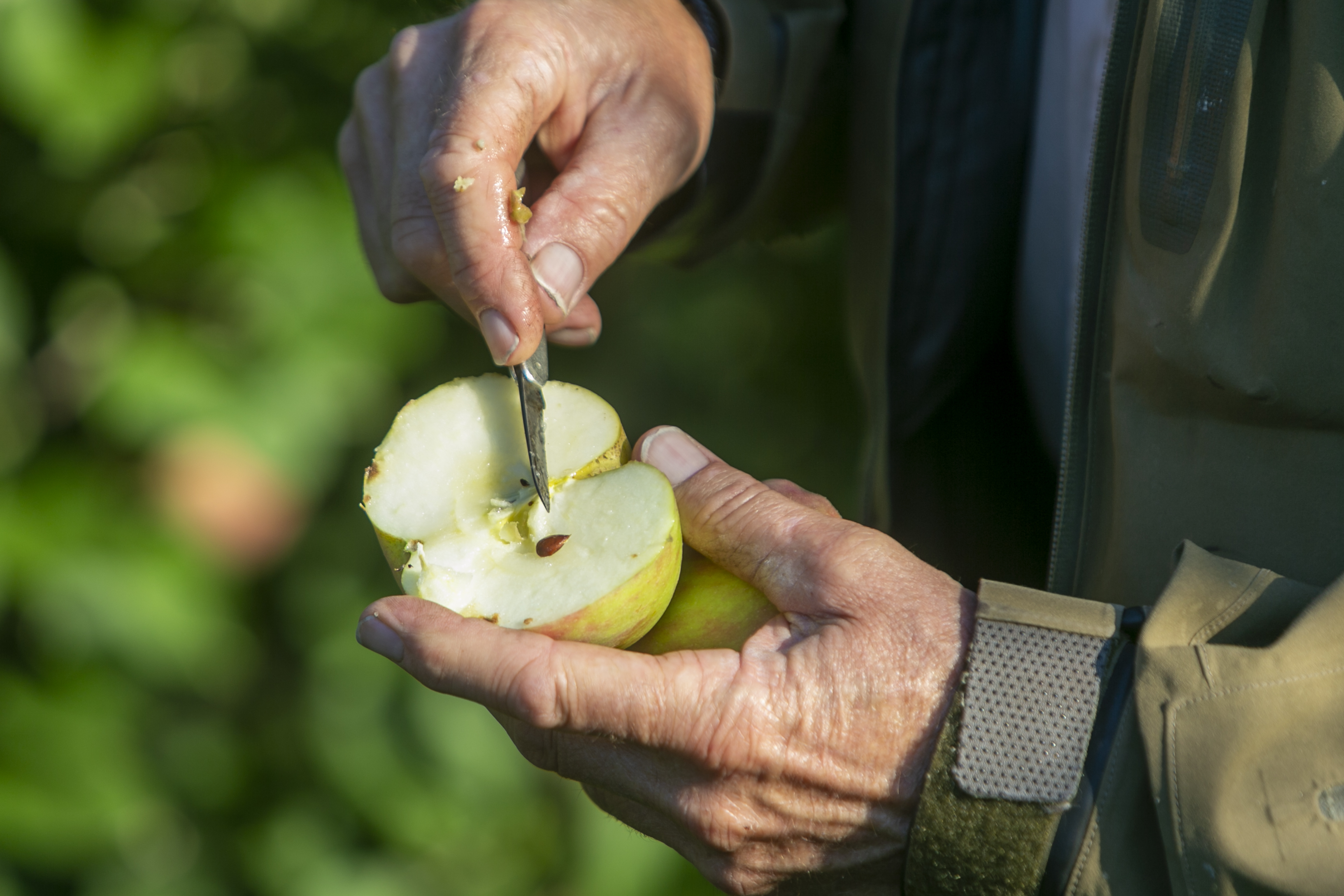
    “Farmer Norm” Schultz cutting into a Stayman apple to look at the color of the seeds as a guide for when these can be picked at Linvilla Orchards, 137 W. Knowlton Road, Media, in 2020.Alejandro A. Alvarez / Staff Photographer

    Solebury Orchards

    Reservations are required for weekend apple picking at this Bucks County farm, where more than 30 varieties of apples are grown each season, according to its website. These include Pixie Crunch, Fuji, Jonathan, and Cortland, among others. Apples are priced by the pound for whatever you pick. Solebury’s farm market is an apple lover’s paradise thanks to its applesauce, apple butter, apple chips, fresh cider, cider doughnuts, and more, with mail order available for applesauce.

    📍 3325 Creamery Rd., New Hope, Pa. 18938, 🕑 PYO Thursday to Sunday 9 a.m. to 5:30 p.m., 📞 215-297-8079, 🌐 soleburyorchards.com, 📷 @soleburyorchards

    Weaver’s Orchard

    Weaver’s Orchard has some 18,000 apple trees on 35 acres of land and a wide selection of apples that include Honeycrisp, Crimson Crisp, Golden Delicious, and Jonagold. No reservations are required to pick-your-own apples, but you will need to use Weaver’s Orchard containers (starting at $29 — but prices may change) to hold your haul. Once you are done in the orchards, check out the market for everything from apple cider doughnuts to apple dumplings, as well as apple cider pressed on-site.

    📍40 Fruit Lane, Morgantown, Pa., 🕑 PYO Monday to Thursday, 9 a.m. to 4:30 p.m., Friday 9 a.m. to 5:30 p.m., Saturday 8 a.m. to 3:30 p.m., 📞 610-856-7300, 🌐 weaversorchard.com, 📷 @weaversorchard

    Apples lie on the ground as the pick-your-own season comes to an end and the transition to the winter season begins at Shady Brook Farms in Yardley in November 2023.Tyger Williams / Staff Photographer

    Brecknock Orchard

    Apple-picking season is expected to run into early November this year at Brecknock Orchard, where over 40 varieties of apples, including Gala, Golden and Red Delicious, Jonamac, and Cortland, are grown. If veggies are more your thing, you can pick your own from over 40 types of pumpkins, squash, and gourds. Brecknock’s farm market has tons of homemade items, like apple cider doughnuts, apple dumplings, and pumpkin rolls, plus apple cider and fruit slushies. The farm also has local delivery and curbside pickup. Check the website for updates on available produce for pick-your-own.

    📍 390 Orchard Rd., Mohnton, Pa. 19540, 🕑 PYO Monday, Tuesday, Thursday, and Friday 8 a.m. to 7 p.m., Wednesday and Saturday 8 a.m. to 5 p.m. (through October), 📞 717-445-5704, 🌐 brecknockorchard.com, 📷 @brecknockorchard

    Grim’s Orchard & Family Farms

    A drive to Lehigh County takes you to this orchard, with its some 30,000 trees growing varieties like Premier Honeycrisp, Sweet Maia, Autumn Crisp, and Pixie Crunch. Each person 3 and up needs to buy at least a quarter-peck bag (about 2.5 pounds of produce) for $11 to enter the orchard. Larger sizes (up to 1/2 bushel for $52) are available, too. The Grim’s Fall Festival starts Labor Day weekend, featuring such activities as a corn maze and hayrides.

    📍 9875 Schantz Rd., Breinigsville, Pa. 18031, 🕑 PYO Monday to Friday 10 a.m. to 6 p.m. (last picking bags sold at 5 p.m.), Saturday and Sunday, 10 a.m. to 7 p.m. (last picking bags sold at 5:30 p.m.), 📞 610-841-1417, 🌐 grimsorchard.com, 📷 @grimsorchard

    Duffield’s Farm

    Fill a bag of pick-your-own apples at this farm in Sewell, N.J. Then, take a hayride and enjoy an apple cider doughnut. A small bag (8 to 10 pounds) and a hayride combo ticket is $21; a large bag (18 to 20 pounds) and hayride is $36. Be sure to call ahead to confirm apple availability.

    📍280 Chapel Heights Rd., Sewell, N.J. 08080, 🕑 PYO noon to 5 p.m. weekdays, 10 a.m. to 5:30 p.m. weekends, 📞 856-589-7090, 🌐 duffieldsfarm.com, 📷 @duffieldsfarm