Tag: topic-link-auto

  • Camden County could decide whether to take responsibility of the Scottish Rite Theater by the year’s end

    Camden County could decide whether to take responsibility of the Scottish Rite Theater by the year’s end

    Camden County leaders say talks have slowly progressed, after months of public scrutiny, on what to do with a historic theater that has left Collingswood Borough footing its bills.

    The Scottish Rite Theater, which hosts everything from rock bands to school district events to weddings, is one of the largest in South Jersey, seating up to 1,050 people.

    Now, the county could decide by the end of the year whether to take responsibility of the theater to relieve Collingswood of the financial toll, Louis Cappelli Jr., director of the Camden County Board of Commissioners, told The Inquirer in a recent interview. It is a goal that has been years in the making, Collingswood Commissioner Jim Maley has said at recent meetings.

    That takeover would likely result in the dissolution of the current nonprofit running the theater, Cappelli said, but he is not sure yet who would run the Scottish Rite and what would happen to its current employees.

    “We’re still performing our due diligence on the Scottish Rite,” Cappelli told The Inquirer. “We’re having the building inspected to make sure there’s no land mines in there that would surprise us.”

    The county is also completing an internal financial evaluation to determine whether an agreement with the borough would be feasible, Cappelli said.

    Collingswood Borough has rented the property housing the theater for $1 annually from the Scottish Rite Freemasons for more than two decades. Borough officials and lawyers created a nonprofit, the Collingswood Foundation for the Arts, in 1999 to run the property.
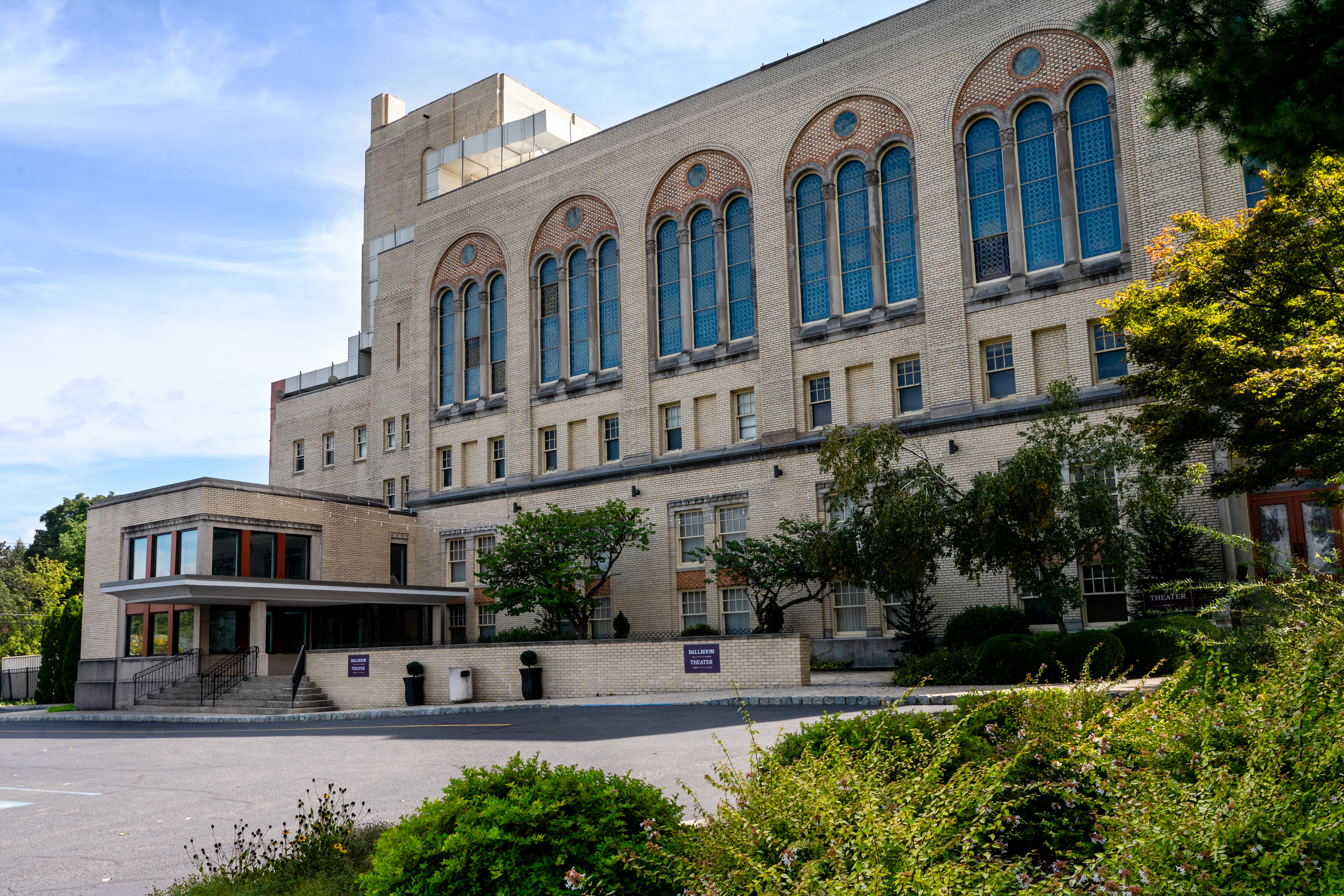
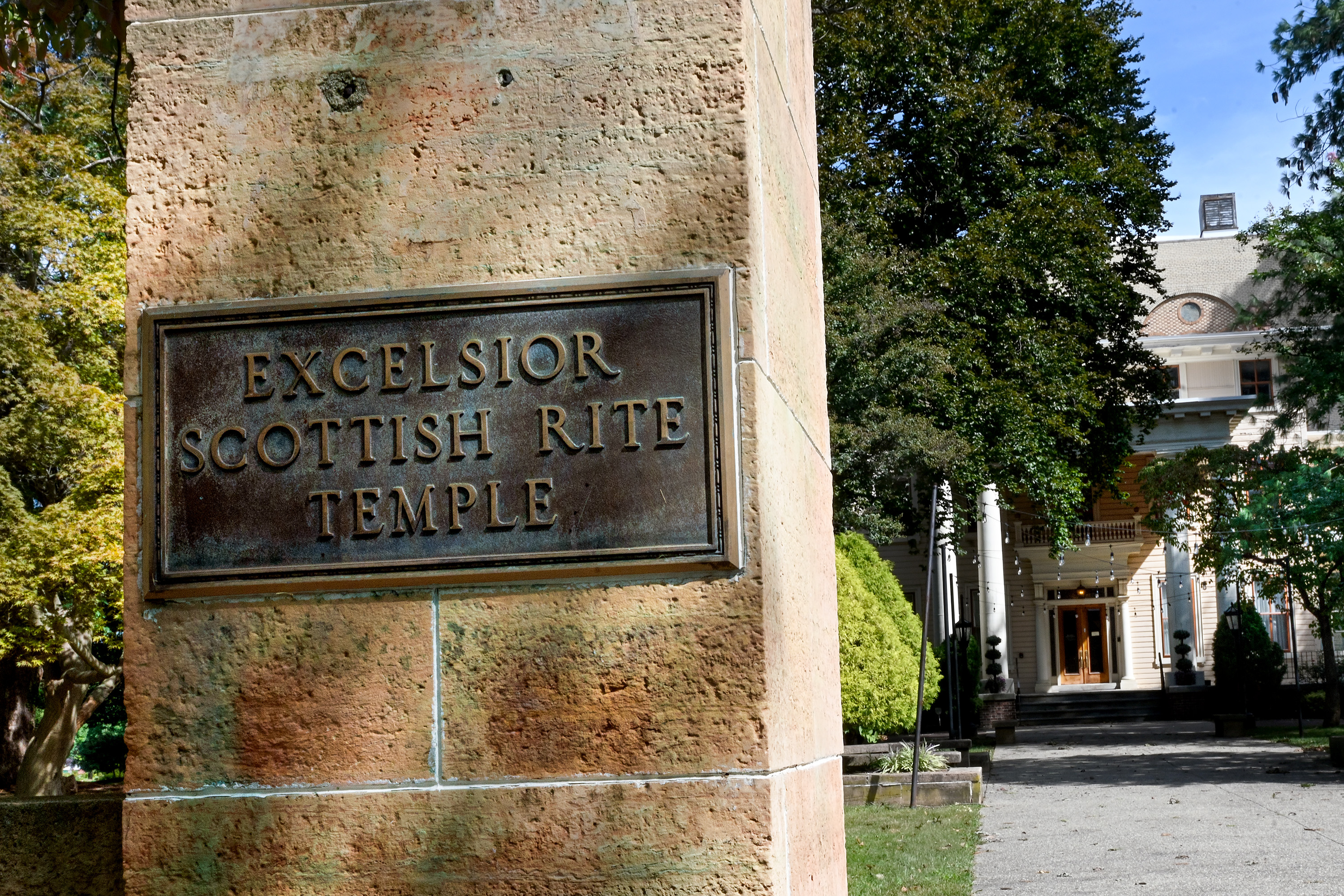
    The Scottish Rite property in Collingswood. The historic theater inside is currently managed by the Collingswood Foundation for the Arts, a nonprofit created by borough officials decades ago, but that could change under a potential new agreement with Camden County.Tom Gralish / Staff Photographer

    The borough has kept the theater running by lending hundreds of thousands in annual operating expenses to the Collingswood Foundation for the Arts. At the end of each year, the foundation typically repays the borough with money made through ticket sales and weddings, Maley, who helped create the nonprofit two decades ago when he was Collingswood’s mayor, said in August.

    But Collingswood officials say a post-pandemic slump, declining sales, and shifting wedding trends have left the nonprofit with no means of repaying the borough.

    Many residents have expressed anger that they are paying to keep the Scottish Rite afloat.

    “I can understand why they don’t want to bail out a building they don’t feel truly belongs to them,” Collingswood Mayor Daniela Solano-Ward said. “It’s not available in the way that the Senior Community Center is, like other public buildings, which is why stepping away … is really attractive to me.”

    A new arrangement

    It is unclear exactly what a new agreement to keep the Scottish Rite going would look like. Officials say a draft does not exist yet, but Cappelli said the borough would have to assign Camden County its lease with the Scottish Rite Freemasons, which currently extends through 2092.

    Camden County’s commissioners sponsor concerts at the theater frequently, and Cappelli said those events would continue to be “a no-brainer for us.” Solano-Ward said she would agree to the transition only if Collingswood residents can still use the space for community events or fundraisers.

    Amy Henderson Riley, who serves on Collingswood’s board of commissioners with Solano-Ward and Maley, said she is not against working with the county, but she wants to ensure that Collingswood gets something in return, especially when the borough’s school district has suffered from budget cuts in recent years.

    “Can the borough have a dollar per ticket or 50 cents per ticket? We’re looking for money everywhere,” Henderson Riley said. “How do we create an arrangement that benefits the town?”
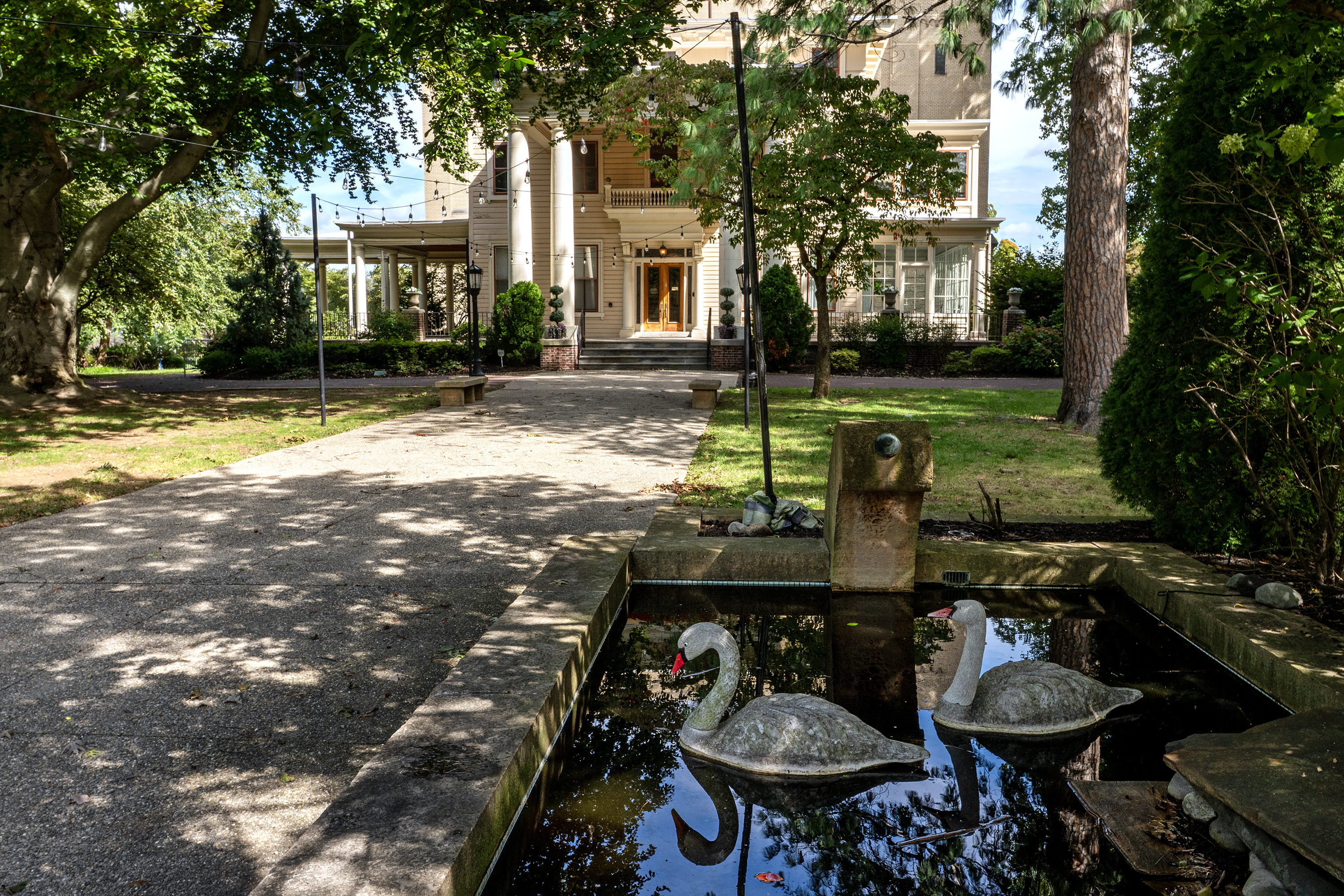
    The theater and its adjoining ballroom have left the borough paying its bills in recent years, which prompted Collingswood officials to find a way to get the financial burden out of their hands.Tom Gralish / Staff Photographer

    If the county is assigned the current lease, Cappelli said, the Collingswood Foundation for the Arts would no longer run the Scottish Rite Theater or its adjoining ballroom. Instead, a new nonprofit, about which he offered no details, would take its place.

    The Collingswood Foundation for the Arts has at least one full-time employee, executive director Paula Lara, along with part-time bartenders, caterers, sales personnel, sound and lighting crews, and more. Cappelli said that the county has made no decision on whether Lara and her staff would stay at the Scottish Rite under a new agreement but that staffing changes are “part of what we are currently exploring.”

    Lara did not return requests for comment.

    The foundation, a longtime fixture in Collingswood, has been the subject of controversy in recent months over its nonprofit status. For the last five years, the foundation has not filed its tax documents, and it has lost its federal tax-exempt status. Maley has said that the pause on filing was a mistake, and that officials had since filed those documents. The IRS had not reinstated the foundation’s exemption as of Wednesday.

    The nonprofit holds the Scottish Rite’s special concessionaire permit, a $2,000 annual license allowing the venue to serve alcohol in a historically dry town (though that status could change in November when Collingswood voters decide whether to lift the borough’s liquor license ban). Maley said at a borough meeting in October that the money made from alcohol sales helps keep the Scottish Rite running.

    “The foundation of the arts could go away tomorrow. Happy to make it go away, happy to not have you all here yelling about it,” Maley said at the meeting. “But the reason why it can’t go away is because it’s what holds the concessionaires.”

    The Scottish Rite property is currently used for Collingswood concerts, school district events, and fundraisers, and borough officials want to keep it that way.Tom Gralish / Staff Photographer

    ‘It’s complicated’

    At the borough’s recent meetings, residents have called into question whether the Scottish Rite should have received taxpayer dollars at all, because the Collingswood Foundation for the Arts is a private corporation with independent employees.

    Henderson Riley said she has been trying all summer to understand the decades-long relationship between the foundation and the borough by working with special counsel. On Oct. 5, after 10 weeks without answers, Henderson Riley proposed a resolution to appoint new lawyers to speed up the process. Her fellow commissioners did not vote to pass it.

    Without a clear understanding of the foundation, Henderson Riley said, she does not feel comfortable making votes or decisions on the Scottish Rite, especially ones that give the nonprofit money. The commissioner said she previously voted to transfer money to the foundation without being told the money could not be paid back.

    “These are actions I took. If I had understood they wouldn’t be paid back, I wouldn’t have voted that way,” Henderson Riley said. “Taxes are going up. Everybody is worried about affordability, and Collingswood is just giving away money.”
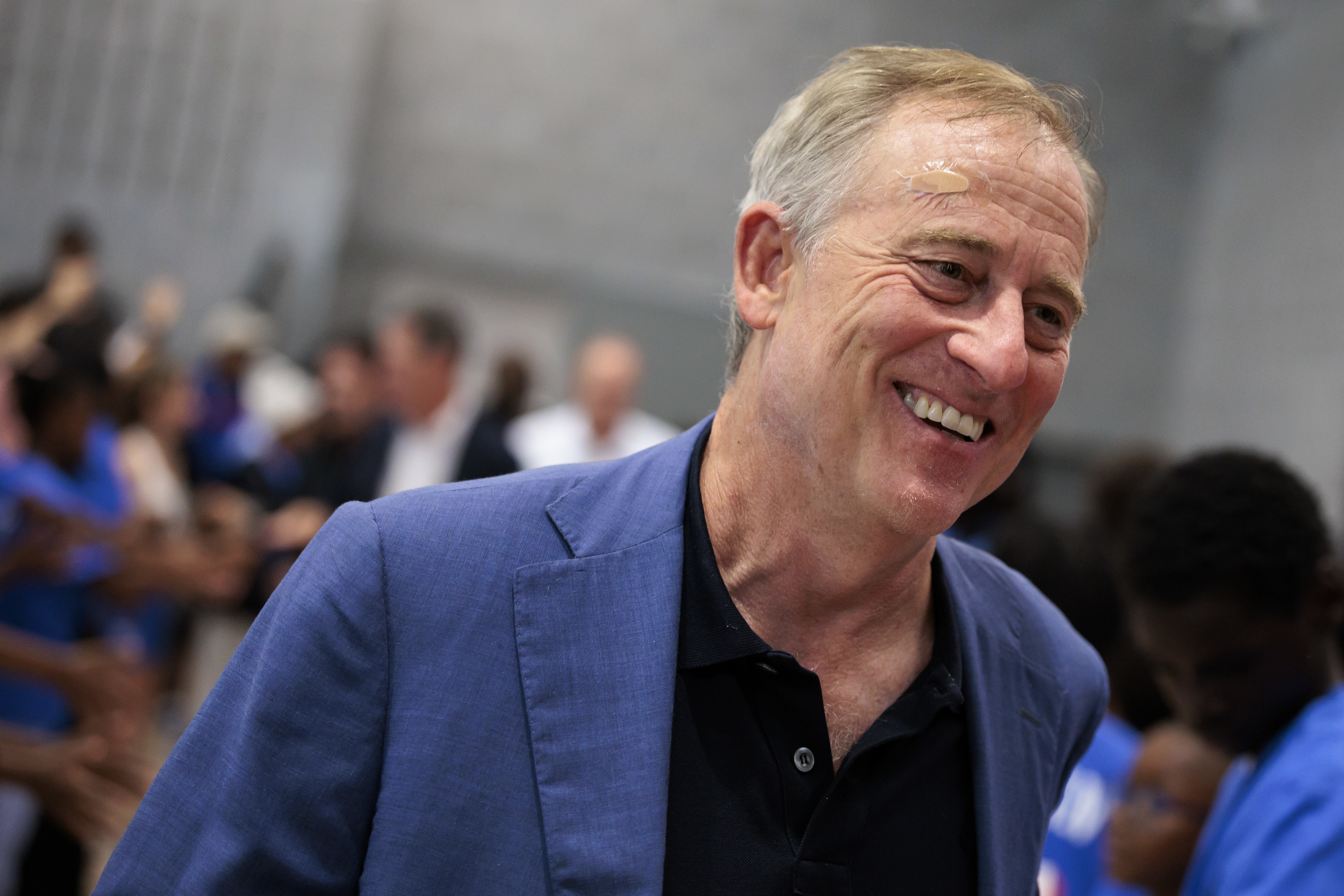

  • Sixers owner Josh Harris says he embraces the ‘full contact’ of sports ownership: ‘You’re a steward for fans’

    Sixers owner Josh Harris says he embraces the ‘full contact’ of sports ownership: ‘You’re a steward for fans’

    Josh Harris knew what he signed up for when he acquired the 76ers and the other the professional sports franchises under the Harris Blitzer Sports & Entertainment umbrella — scrutiny.

    “My mom used to tell me, ‘Live your life as if everything you did was written about on the front page of the paper,’” Harris said on Thursday while speaking on a panel of team owners at the Economic Club of Washington, D.C. “Then that’ll guide you in terms of what you do and how you act.”

    He added: “People are going to really perceive you and what is good behavior, what is bad behavior, what is righteous behavior. So you’re basically living in a fishbowl. But having said that, I mean I wouldn’t trade it for anything.”

    Through the years, Harris has dealt with his fair share of pushback from Sixers fans. On Thursday, he touched on these challenges and more.

    The event coincided with the release of Baltimore Orioles owner David Rubenstein’s new book Inside the Owner’s Box: Conversations on Power and Leadership in Sports. Harris, who will also operate Philadelphia’s WNBA team — which is set for a 2030 launch — was interviewed for the book. Along with Harris and Rubenstein, Kynisca Sports International founder Michele Kang and Monumental Sports & Entertainment chairman Ted Leonsis were featured in Thursday’s panel.

    Each panelist explained what drew them to acquire sports franchises. Harris, who founded private equity firm Apollo Global Management, explained that investing in sports gave him a greater purpose.

    “It’s full contact,” Harris said about sports ownership. “Like you’re in it. You’re a steward for cities. You’re a steward for fans. Like no one in private equity, I’m also from that business. … What you do really matters to people’s lives in terms of these big companies that you’re buying and financing and their strategies, but no one really cares about, and I’m going to use a chemical company, Lyondell. No one cares about the price of polypropylene. Everyone cares about the starting lineup of the teams.”

    Josh Harris purchased the Sixers in 2011.Yong Kim / Staff Photographer

    The conversation then shifted into ownership strategy. Harris spoke extensively about the push-and-pull between winning in the short-term and setting up a franchise for long-term success. Harris knows about this more than anyone, having presided over “The Process.” From 2013 to 2017, the Sixers went a combined 75-243 in an effort to tank for draft position. The strategy angered Sixers fans and the NBA alike.

    “Every once in a while there’s a good trade that comes on, you should be opportunistic,” Harris said. “Free agency, you generally overpay by about 30%, so the real way you build a team over longer is the draft. And that just takes a long time, right? And there’s definitely, I would say that most fans, I think their time frames are shorter.”

    Harris also touched on the importance of player retention and keeping his stars happy, joking, “I didn’t realize that I was going to be working for Joel Embiid but I do.”

    The owners on the panel were asked how they navigate voicing their values and opinions publicly. Harris, who also owns the Washington Commanders, previously faced criticism for presenting President Trump with a custom Commanders jersey during an event last year at the White House after Washington was awarded the location of the 2027 NFL draft.

    On Thursday, he asserted that that politics and sports “don’t mix,” but emphasized the importance of speaking out on global issues

    “Every once in a while, if you see hate in whatever form, you speak out against it, right,” Harris said. “… Because you have fans, you have blue fans, you have red fans. I think that, generally, sports is about inclusivity, it’s about bringing people together. But you see something really bad … you have to speak out against it.”

  • Once a bucolic Pennsylvania river, the Tioga is now all but dead

    Once a bucolic Pennsylvania river, the Tioga is now all but dead

    This article was produced by Capital & Main. It is published here with permission.

    When the lingering sun of late May inches along to peer down on the Tioga River — its water glistening — it does so as birds chirp overhead, as a chipmunk darts through rustling riverbed brush, and as yellow butterflies dance into the gorge.

    This river doesn’t roar; it trudges along steadily. Water laps over rocks and flushes back to create a current that freshwater kayakers might consider a Class 2. As it does, it leaves behind deposits of minerals dredged up from mines that coal barons dug nearby more than two centuries ago.

    Standing above the river on a bridge in Blossburg, a North Central Pennsylvania town of 1,500 that straddles the Tioga, it’s not immediately apparent that there’s anything wrong with the red-rocked river. Except, while life teems along its banks, there is virtually nothing beneath the water’s surface.

    In this stretch of the Tioga, there are no fish. There are no bugs — save for a small number of macroinvertebrates. And there haven’t been for decades. Five coal mines that line its tributaries, left unsealed at the end of their productive lives, have long leaked highly acidic water rich in metals like iron and aluminum that chokes out aquatic life. It’s a process known as acid mine drainage; as of 2020, abandoned coal mines left more than 850,000 acres still damaged across the country — 84% of them in Appalachia.

    Drainage from abandoned coal mines has caused the water of the Tioga River to turn orange.Matt Gunther / For Capital & Main

    “It’s dead,” said Andrew King, the mine drainage program coordinator at the Susquehanna River Basin Commission, a multistate task force devoted to protecting the river. The Susquehanna receives flows from the 58-mile Tioga after it snakes north for 58 miles into south-central New York and meets with another to form the Chemung River. At over 440 miles, the Susquehanna is the longest river on the East Coast. It eventually spills into the Chesapeake Bay.

    For several years, King has been working with a team of engineers, residents and stakeholders on the construction of a treatment facility designed to clean up the Tioga, bring back cold water fish species and create an outdoor recreation economy that comes with a river alive with native brook trout, wild brown trout, dace, sculpin, and other aquatic life.

    “The Tioga is going to go from dead to being a trout river, and not a little trout river,” he said. “The Tioga River is going to turn into a destination fishery.”

    The facility’s construction has been more than two decades in the making, as local conservationists, led by 40-year residents Charlie and Joyce Andrews, of the Tioga County Concerned Citizens Committee, have worked to build political will for the project. After all, Pennsylvania is home to more than 5,500 miles of waterways polluted by acid mine drainage left behind by legacy coal mining. Fighting for their stretch of freshwater to be cleaned ahead of others required a steady drumbeat of grant applications, studies, and meetings.

    A polishing pond helps remove harmful materials and sediment at a water treatment facility in Fall Brook.Matt Gunther / For Capital & Main

    In 2015, they took a first step in building two passive treatment systems that drain pollutive minerals over limestone beds to lower the water’s overall acidity. The systems were successful, but small in scale — only impacting a five-mile stretch of the Tioga watershed. But in 2024, the Susquehanna River Basin Commission received a $68 million grant from the Biden-era Infrastructure Investment and Jobs Act for a system designed to clean the entire river by functioning more like a sewage treatment plant. Wildlife should reappear within a matter of years once the system is operational.

    “It happens way faster than anybody expects,” King said.

    The Tioga active treatment system was the largest grant recipient that year, and organizers say it is still on track even after Congress, in January, reallocated more than $500 million for abandoned mine reclamation to other causes, siphoning $169 million away from Pennsylvania. Advocates argued the jobs act cash injection, though historic, was well below what was needed to clean up all the mining pollution in the U.S. How successfully the Keystone State can clean up its coal pollution on a leaner budget is an open question.

    Nonetheless, the Tioga project is slated to come online by 2029.

    Tioga County Commissioner Shane Nickerson says that, growing up in Blossburg in the early ’80s, he didn’t know anything other than life along an orange-stained freshwater artery.

    “You don’t realize that the damage there from acid mine drainage is really a thing,” he said. “It’s orange — your mother always tells you, ‘If you’re going to go in the river, wear your old sneakers,’ … and that’s just kind of how it was.”

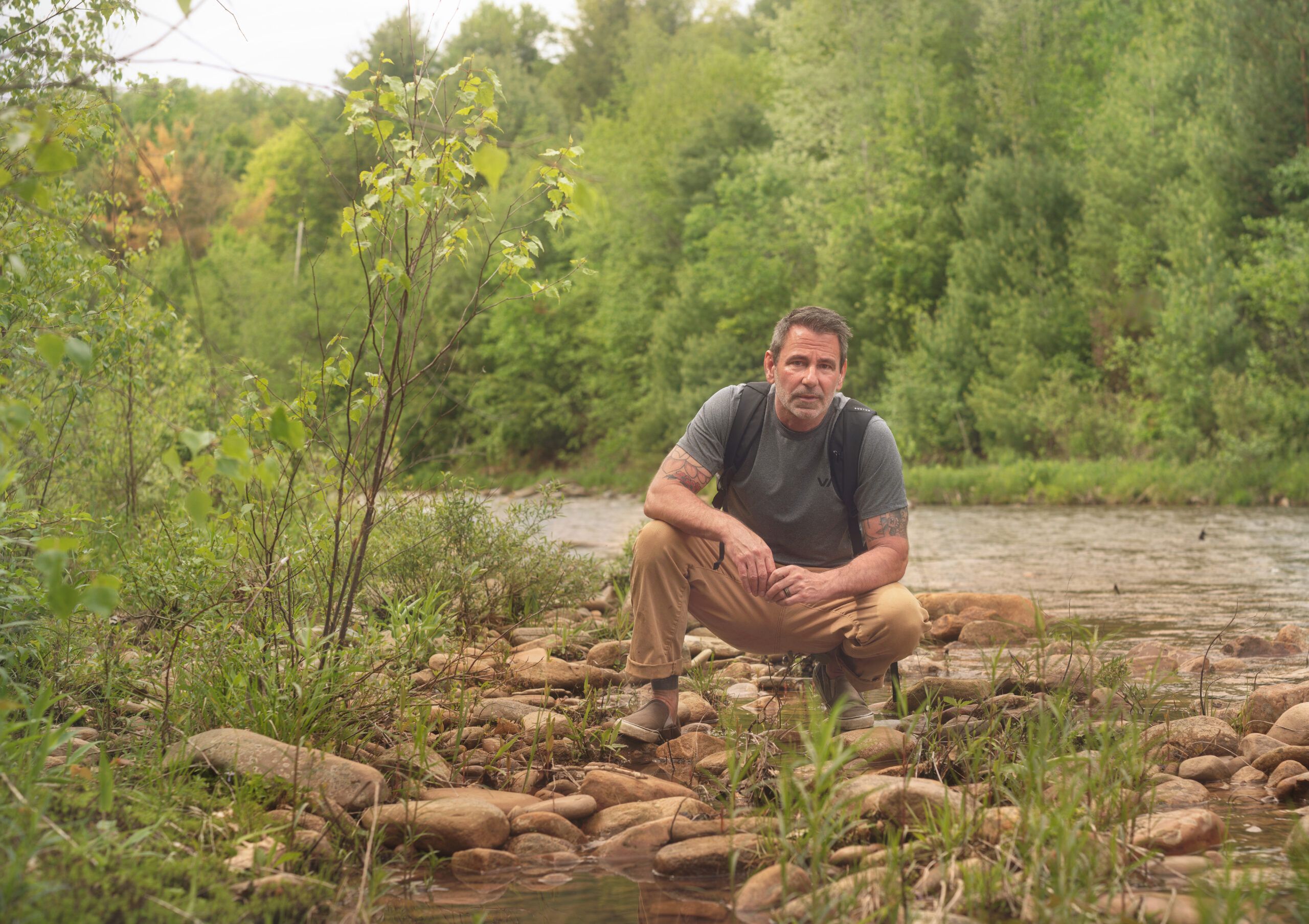
    Shane Nickerson stands on the banks of the Tioga River in Blossburg.Matt Gunther / For Capital & Main

    Nickerson has fond memories of the Saturday mornings of his childhood when he would wander into old abandoned coal mines with his friends, flashlight in hand. “You’d say, ‘OK, you guys go this way, we’re gonna go this way,’” he recalled. It was not obvious to him, as a youth, that nothing lived in the Tioga. Until one day, when he caught a wild fish and tried to make it a pet. When it was clear it was beginning to die, he attempted to release it into the Tioga a few blocks from his house.

    “That’s when I figured out that oh, there’s something wrong with this river,” he recalled.

    There’d been something wrong with the Tioga long before Nickerson was born. “At Blossburg,” reads a 1925 article in the New York-based Star-Gazette, the Tioga “is polluted with mine drainage, the sulfurous content of which has coated the stones in its bed with a thick yellow-brown deposit.”

    Standing by the riverbed in Blossburg, Nickerson reflects on the complicated legacy big industry leaves behind in blue-collar towns. Scars of pollution are coupled with a tight-knit sense of community forged on worker solidarity. Blossburg was home to William B. Wilson, the country’s first secretary of labor, who cut his teeth organizing mineworkers in town. In the mid-20th century, Pennsylvania’s mines employed close to 200,000 people. Today there are fewer than 5,000. In Blossburg, the industry is shuttered, but still celebrated. The town hosted its 34th annual coal festival at the end of May.

    Nickerson poses for a portrait on the edge of the Tioga River.Matt Gunther / For Capital & Main

    “We wouldn’t have been in existence without it,” Nickerson told Capital & Main. But, as new industries have come to town, like fracking and manufacturing, he considers the cost of cleanup that coal left behind. It is a cruel irony that many of the areas grappling with such damage are uniquely ill equipped to handle it. Towns with abandoned mine land face higher poverty rates than those without, according to the Ohio River Valley Institute, a nonprofit think tank that also asserts that these scars deter future economic development.

    “I just think that using things up and then leaving it alone and just moving on just is unacceptable,” said Nickerson, who served as Blossburg’s mayor for 10 years.

    The first Democrat elected to the Tioga County Board of Commissioners in 12 years, Nickerson has made it a priority to breathe economic life into an area facing population declines, school closures and job losses. Before taking office, Nickerson, alongside his wife, worked to repair empty Main Street storefronts and push for the creation of a skate park in town. Now, as commissioner, he is focused on tackling the region’s opioid crisis. The county ranked seventh in the state for drug overdoses in 2022.

    But it wasn’t until Charlie and Joyce Andrews came around, he said, that the community felt they had any power to fix longstanding issues with the Tioga.

    The Andrewses, who moved to Tioga County in the 1980s, reflect on decades of work with an acute sense of humility — though many call them local heroes. Like Nickerson, they’ve never known a clean Tioga River. They also never saw a dirty one as an inevitability. Together they helped fend off a proposed landfill in the 1980s — once successful, they shifted focus to the river.

    “We put in for some grants. … A couple times, we got turned down, and then we’d go and would apply again, and eventually we would get a grant,” Charlie Andrews recalled. They would fundraise, but never imagined getting nearly enough to find a full-scale solution for the river.

    “Once the river gets polluted, it takes a lot more to clean it up,” Joyce Andrews said. “It was basically unintended consequences of an industry that had helped build the area.”

    The last mine in Tioga County shuttered in 1990. Nearly 200 years before that, German immigrants were navigating through what would become Blossburg when they came upon a lump of black, porous material they realized was capable of generating energy when burned. The first mine sprouted up around 1815, and with it, a railroad to carry that coal to New York. Towns began to spring up around it, some that have nothing to show for their existence today. The town of Fall Brook, six miles east of Blossburg, was, in 1862, home to hundreds of houses, a company store, carpenters and blacksmiths, and a school. Today, there is no trace of it, save for a grown-over cemetery, where headstones are faded and mossy, if visible at all.

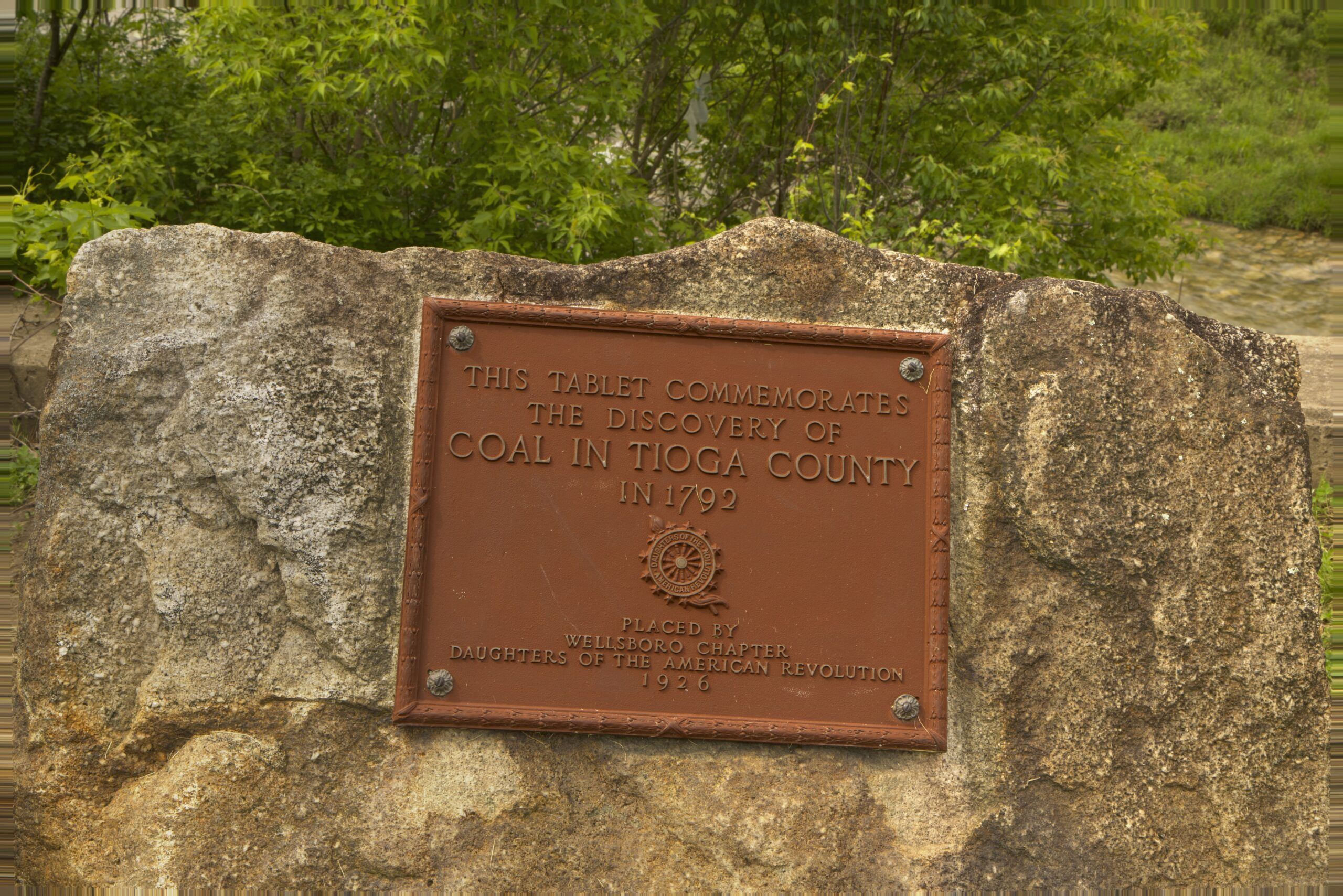
    A historic plaque in Blossburg commemorates the discovery of coal in Tioga County in 1792.Matt Gunther / For Capital & Main

    Damage from deep mining — when coal is removed through shafts tunneling hundreds of feet underground — in the late 1800s, and eventually, surface mining, in which coal is removed at the Earth’s surface, in the mid-20th century, has left scars not just in the water but on the land. Tree-planting nonprofit Green Forests Work recently teamed up with students at local Commonwealth University-Mansfield to rebuild 300 acres’ worth of forest around the Tioga River. Their work builds on that of a group of longtime fishing enthusiasts who, over nine years and many weekends, said they have planted 22,500 trees.

    Longtime Tioga County resident and former county planner Jim Weaver is one of those weekend workers. His organization, a local chapter of Trout Unlimited, has also worked on streambed restoration in anticipation of trout populations returning to the Tioga.

    Another thorn in the state’s side: In the last 60 years, a non-native insect called the Hemlock woolly adelgid has proliferated in Pennsylvania, threatening to endanger Hemlock trees which, from the riverbed, provide crucial shade for trout that can survive only in cold water. Weaver helped create a tree-planting strategy to offset this species loss.

    For the years of anticipation of a clean Tioga to precede the launch of an active treatment plant, maintaining a healthy river ecosystem will require more than just metal-free water, said Jennifer Demchak, professor of environmental, geographical and geological sciences at Commonwealth University-Mansfield. When enough macroinvertebrates are able to survive in the Tioga, fish will begin to navigate in that direction, “but you can’t predict what’s going to happen in nature,” she added.

    The climate crisis introduces a slew of unknowns — rising air temperatures warm the water, for instance, which is exacerbated by a lack of tree cover, and the death of trees causes erosion, which may bring silt back into the river that suffocates wildlife, as it has before. The river is a fragile ecosystem made up of many interconnected elements that, if altered by changing climate, could hamper the project’s success.

    Yet, residents still daydream about the clean fresh water they hope is to come.

    “It’s going to change everything,” Nickerson said.

    Weaver remembers that during one of the first community meetings he attended to rustle up support for the river cleanup project in the early aughts, attendees were each asked to share their vision of the river 50 years on.

    “People spilled their guts,” he said. “One of them said, ‘We need to let the people in Mansfield know that the Blossburg kids are coming, because when there’s trout in the Tioga River, they’re going to be fishing the whole way.’”

    Copyright 2026 Capital & Main.

  • Gov. Josh Shapiro launches a federal PAC — the strongest signal yet he’s eyeing a 2028 run

    Gov. Josh Shapiro launches a federal PAC — the strongest signal yet he’s eyeing a 2028 run

    Pennsylvania Gov. Josh Shapiro is officially getting into national politics.

    Shapiro, a Democrat running for reelection in the critical battleground state and a widely rumored 2028 presidential candidate, took his first official step into the national political arena this week by creating a federal political action committee, New Path PAC.

    The new federal PAC is the strongest signal yet that Shapiro is eyeing a 2028 presidential run in the Democratic primary — speculation the formidable fundraiser has routinely rejected while he’s focused on his reelection campaign.

    Since he took office in 2023, Shapiro has amassed a whopping $60 million war chest in his state-level PAC. And this year, he’s shelled it out, too, having spent nearly $38 million on TV and streaming ads, according to media tracker AdImpact, in support of his reelection campaign where he holds a commanding double-digit lead over his GOP challenger.

    However, campaign finance law limits Shapiro’s state PAC spending to his own race or others on the state level, creating a challenge for him to financially support federal candidates, including the four Pennsylvania congressional districts national Democrats are looking to flip in the midterm election.

    The money Shapiro has raised in his state-level PAC cannot be transferred to his federal PAC. Up to this point, Shapiro has largely spent his fundraising on his own reelection campaign as well as contributing more than $5.6 million to the Pennsylvania Democratic Party, which has been rebuilt under his hand-picked chair and former top aide.

    Shapiro’s New Path PAC will allow him to fundraise and contribute directly to the four Democratic candidates he’s supporting — Bob Harvie in Pennsylvania’s 1st, Bob Brooks in Pennsylvania’s 7th, Paige Cognetti in Pennsylvania’s 8th, and Janelle Stelson in Pennsylvania’s 10th Congressional Districts — as part of his bet that his name at the top of the state’s midterm election ballot could help flip the U.S. House to Democratic control. He’s rallied alongside the candidates and with U.S. House Minority Leader Hakeem Jeffries to expand Democrats’ U.S. House majority. And his reelection campaign has drawn support from former President Barack Obama, former President Joe Biden, Michigan Gov. Gretchen Whitmer and U.S. Sen. Elizabeth Warren.

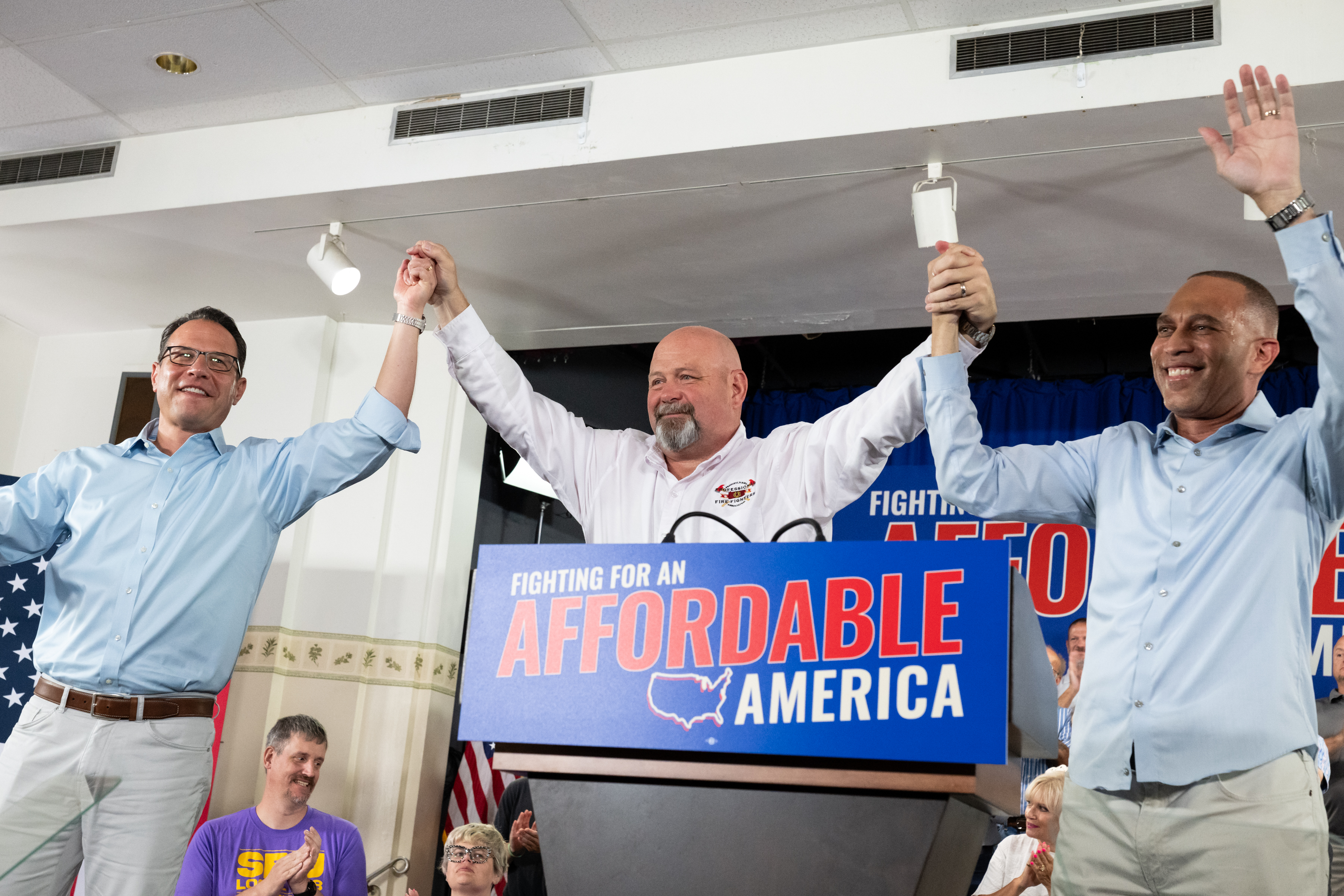
    Pennsylvania Gov. Josh Shapiro, left, Democratic congressional candidate Bob Brooks, center, and U.S. House Democratic Leader Hakeem Jeffries raise their hands during a campaign event for Brooks ahead of the midterm elections at a Steelworkers Union Hall in Bethlehem, Pa., Sunday, July 26, 2026. (AP Photo/Erin Blewett)Erin Blewett

    In a statement, Shapiro’s campaign emphasized that the governor remains focused on those four Pennsylvania congressional races in the remaining days before the Nov. 3 election. He’s also expressed interest in flipping the 9th Congressional District, currently represented by U.S. Rep. Dan Meuser (R., Pa.) as a fifth winnable district with candidate Rachel Wallace as the Democratic nominee. The statement does not mention other races outside of Pennsylvania where Shapiro may plan to lend his support.

    Marshall Cohen, the PAC’s executive director who previously worked as the political director at the Democratic Governors Association, said in a statement that Pennsylvania voters have a chance to “place a check on Donald Trump and put this country on a new path.”

    “That path runs right through Pennsylvania, and Gov. Shapiro is fighting to win up and down the ballot this November to elect leaders and deliver a Congressional majority that will actually fight for working families and move our country forward,” Cohen added.

    Manuel Bonder, a campaign spokesperson, said the federal PAC is a new tool for Shapiro to more directly support Pennsylvania’s congressional candidates. He emphasized that backing the candidates in efforts to flip the House is Shapiro’s lone focus for now — a response echoing Shapiro’s standard line when asked whether he’s running for president in 2028.

    In a debate last week between Shapiro and his Republican challenger, state Treasurer Stacy Garrity, Shapiro declined to pledge to serve another full four-year term as governor.

    “The only thing I am focused on is running for reelection as governor,” Shapiro told the moderators before pivoting to his oft-used attack on Trump’s “chaos, cruelty, and corruption.”

    But Shapiro’s creation of the federal PAC also ticks another box on the presidential hopeful checklist, adding to his frequent national TV appearances, campaigns with candidates across the country, and publishing a memoir.

    Other prospective 2028 Democratic candidates have also created federal PACS and supported federal candidates. Kentucky Gov. Andy Beshear launched his federal PAC in 2024, while Illinois Gov. JB Pritzker started his federal PAC with a $20 million investment last month. California Gov. Gavin Newsom has expanded his federal fundraising to support Democrats in state-level races in early primary states, including South Carolina.

  • To Dave Dombrowski, the Phillies’ problems begin an arm’s length away

    To Dave Dombrowski, the Phillies’ problems begin an arm’s length away

    Dave Dombrowski had a lot to say about the ways everybody else on the Phillies can improve.

    Trea Turner?

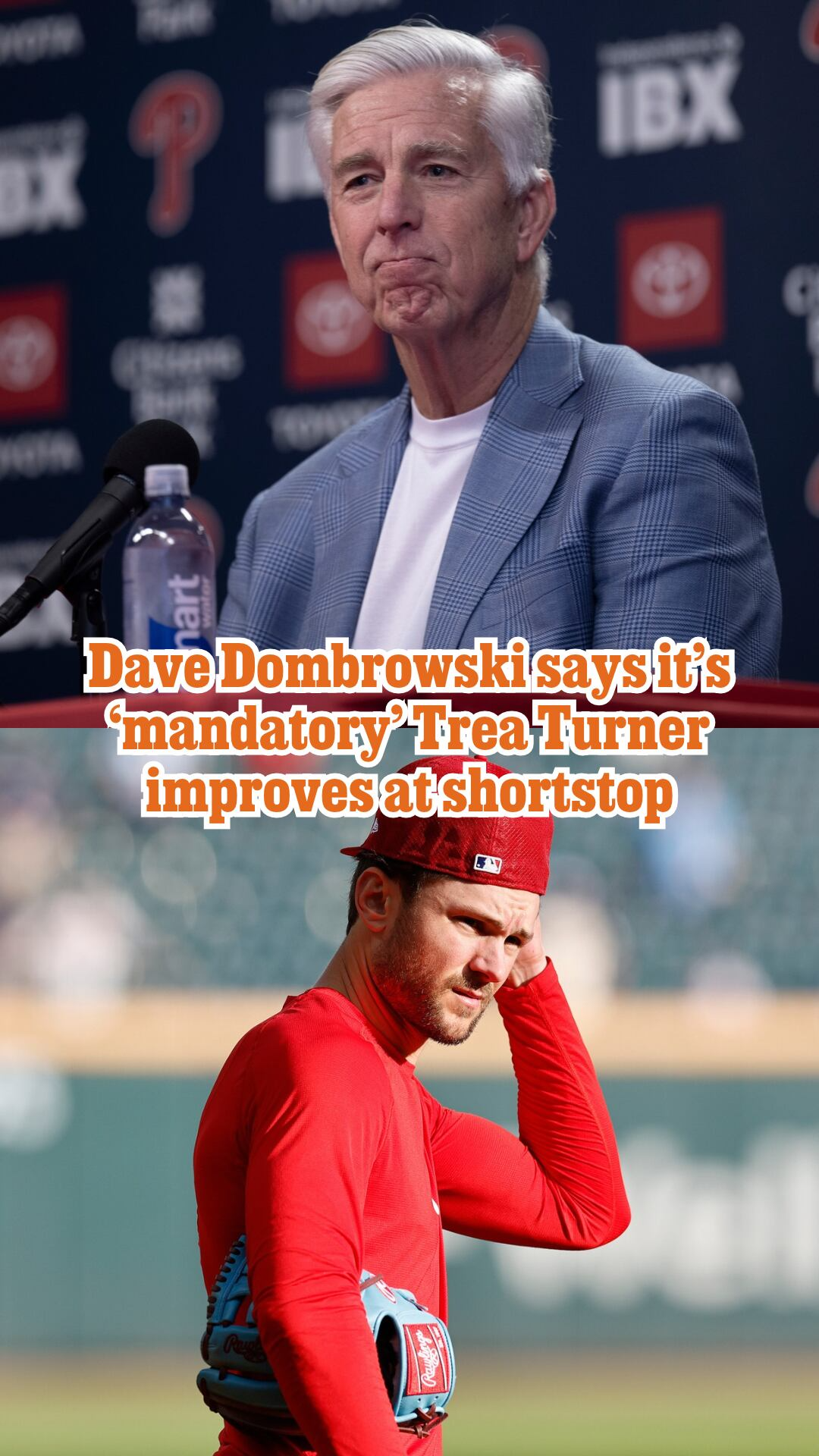
    “We were very clear,” the Phillies president of baseball operations said during his nearly hourlong year-end media availability on Thursday. “He knows he has to be better at shortstop. I told him that’s really mandatory … if he plays shortstop like he did in 2025, he can play shortstop. But if he plays it like he did in 2026, he can’t.”

    Bryson Stott?

    “We like Stott,” Dombrowski said. “I think he can be better than what he is. He had a good June, July, August. I don’t know why he can’t be that player all the time.”

    Justin Crawford?

    “We need to get Crawford better,” Dombrowski said. “There’s no question on that. He needs to improve. He did like we thought he would have thought this year, but there’s got to be another level where he hits better, he gets on base more, he steals more bases.”

    Brandon Marsh?

    “I don’t know what happened to Marshy the second half of the year,” Dombrowski said. “He was not good. He was an All-Star the first half of the year. We need to get him back to playing better.”

    But when the conversation turned to the things that are listed in Dombrowski’s job description, the detailed checklists disappeared.

    He was asked about his three trade deadline acquisitions, none of whom wound up playing in the Phillies’ wild-card loss to the Braves.

    Dave Dombrowski says it's 'mandatory' Trea Turner improves at shortstop
    Video: Dave Dombrowski says it’s ‘mandatory’ Trea Turner improves at shortstop

    ‘I don’t think anything went wrong,“ Dombrowski said. ”We felt very good about those moves, that they would give us the strength that we needed to … We’re comfortable with where we were at the time. Unfortunately, a couple of them didn’t work out.”

    He was asked about his comfort level with the Phillies’ organizational depth, given that they carried a couple of light-hitting backup catchers for much of the season and throughout the wild-card series.

    “Organizational depth, yes, I’m very comfortable,” Dombrowski said. “We did have a lot of injuries at the end of the year at triple A that were very unfortunate for us. We probably would have had a different looking roster for those three games. We had a lot of guys we were talking about bringing up and maybe having be the 26th guy on the roster. It’s just the way it went at that time. We had a bunch of unfortunate injuries.”

    He was asked about a farm system that national experts rank among the most barren in the majors.

    “I know that our system gets hit hard from a critical perspective,” Dombrowski said. “But the reality is, this year, [Andrew] Painter took awhile to get over the hump, but I don’t know another club in baseball that wouldn’t want him in their rotation going into 2027. Crawford did a solid job. He needs to get better. But, sometimes you have to take growing pains at the big-league level.

    “[Alex] McFarlane, I think is going to be outstanding in the bullpen … I think we have to be careful of this now because of where we are. We’ve traded for [Jesús] Luzardo, we’ve traded for [Jhoan] Duran, so a lot of them have been used in these types of deals that have helped us in other factors when you’re trying to win.”

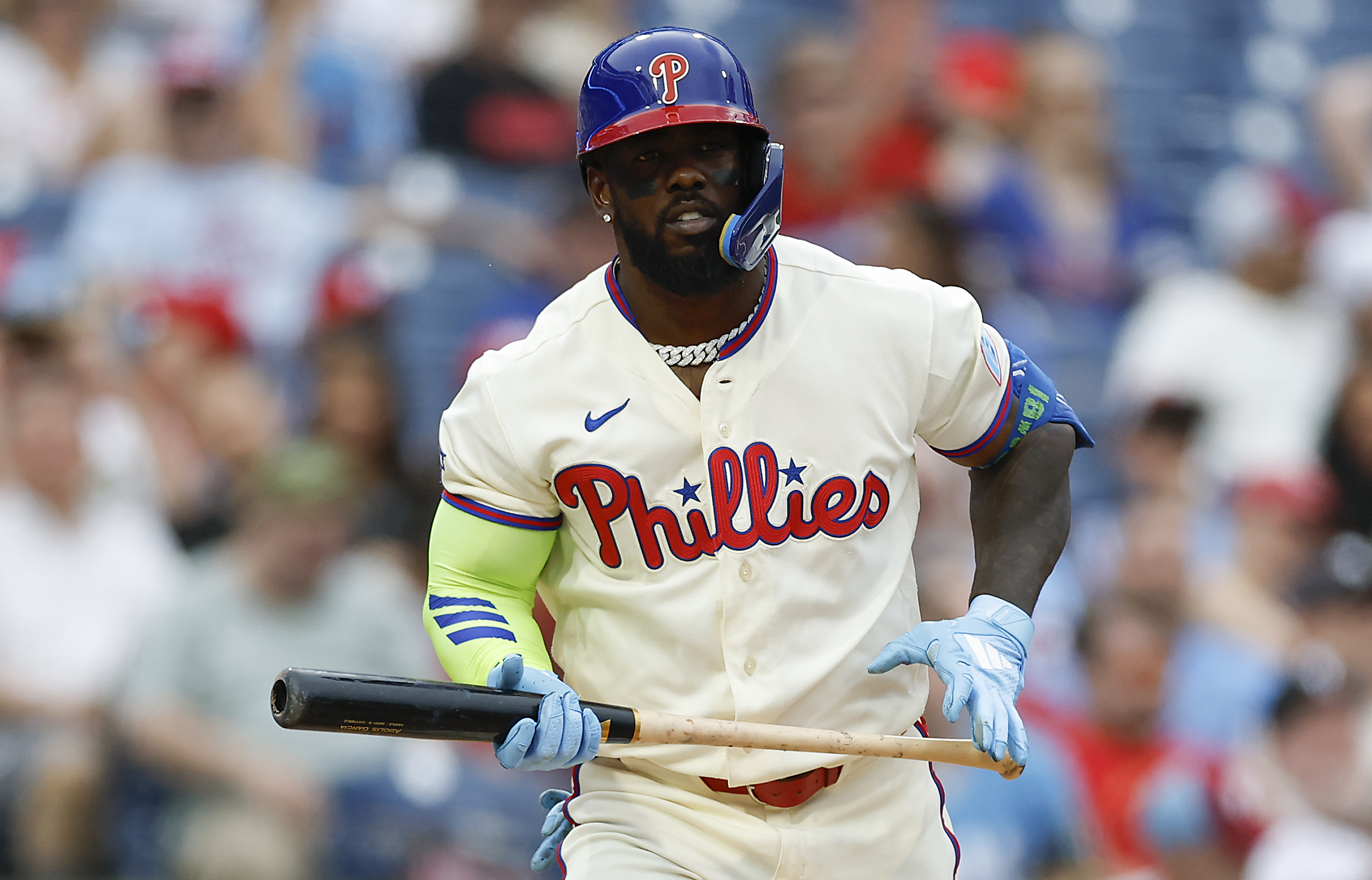
    Right fielder Adolis García struggled through 259 plate appearances before an injury kept him out for the rest of the season.

    Dombrowski not only defended the Phillies’ signing of veteran right fielder Adolís Garcia, who suffered a season-ending injury after posting a .599 OPS in 259 plate appearances, but pointed to it as the type of signing the team could need to make again.

    “I know that the Garcia move didn’t per se work out real well last year, but the reality is there weren’t a lot of right-handed hitting outfielders that did have a great year,” Dombrowski said. “If Adolís had stayed healthy, he was starting to make some adjustments with his swing, he was an outstanding defensive outfielder and I think he had seven home runs already at that time, so maybe he hits 25 to 30 home runs and plays outstanding defense.

    “Maybe at some point he ends up being a platoon basis with Marsh. So I think he could have been helpful to us. But I think you have to look at all different ways — not necessarily a big contract with dollars is going to make a difference in that regard, because we have a lot of those.”

    All of which leads to a natural question … Is there anything the Phillies front office can do better?

    Dombrowski was asked that specific question on Thursday. He could have responded a lot of different ways. He could have pointed to the acquisitions of Luzardo, and setup man Jonathan Bowlan, and, years ago, José Alvarado as examples of the offseason trade market bearing more fruit than the midseason trade deadline scramble.

    Dombrowski could have said that the Phillies need to take a fresh look at all of the pieces on their roster and ask themselves if there is a deal that would make them a more sensible whole, the way they did when they traded Matt Strahm for Bowlan. Does it really make sense to try to get Marshy back to his All-Star form? Or does it make more sense to find another team who believes he can do it? Maybe there is a right-handed Marshy the Phillies can trade for? Same goes for Crawford. Even Stott.

    Dombrowski obviously can’t mention these players by name. Chances are, it won’t make sense to trade any of them. But he can certainly say that he and his front office need to take harder and more creative looks at potential structural remedies for an offense that ranked dead last in the majors in OPS+.

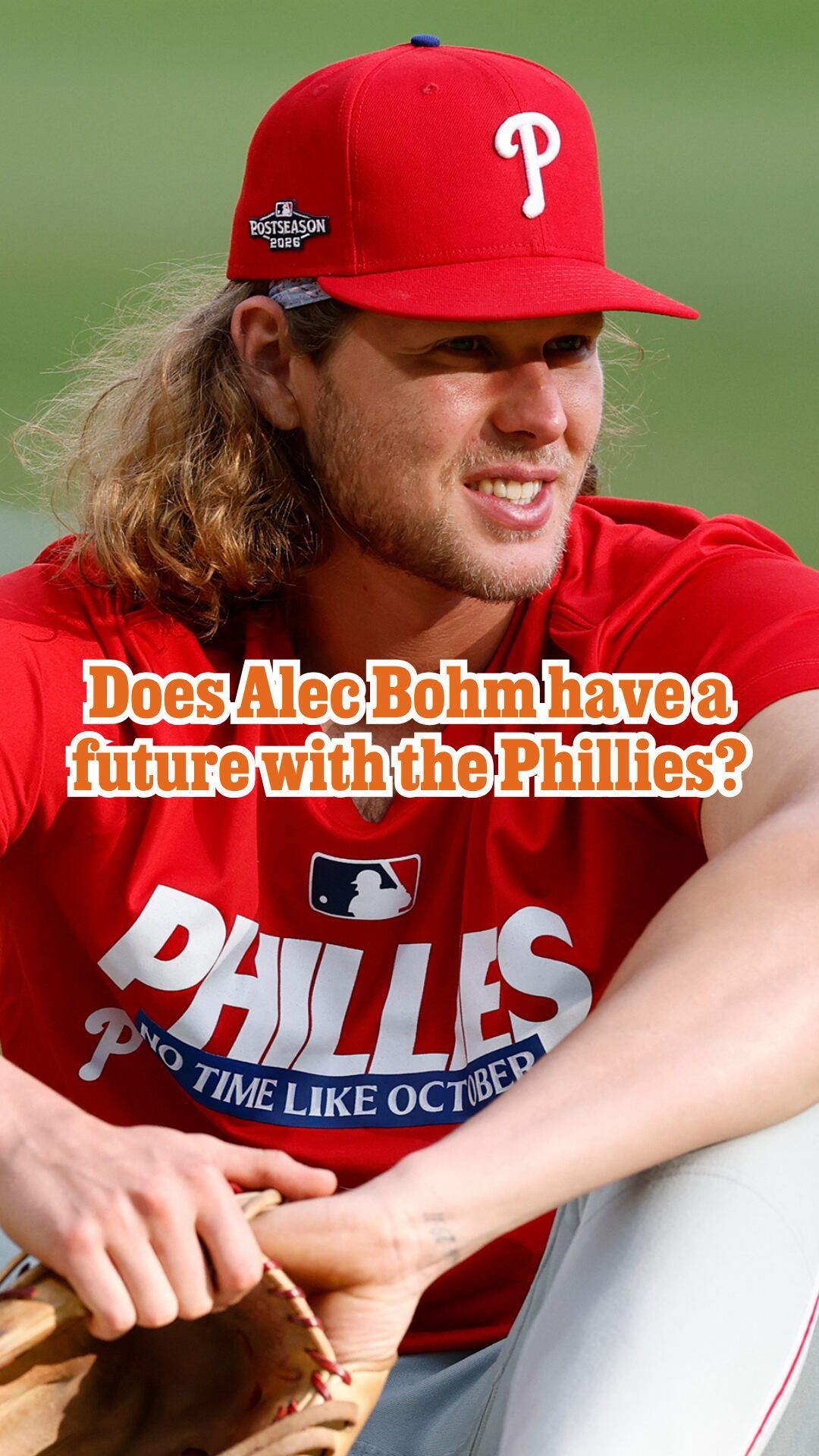
    Phillies Extra: Does Alec Bohm have a future with the Phillies?
    Video: Phillies Extra: Does Alec Bohm have a future with the Phillies?

    Dombrowski could have said that he will spend part of his offseason double-checking his prior math on bullpen arms like Jordan Romano, and Brad Keller, and trade deadline acquisitions Caleb Killian and Brooks Raley. Maybe it is sheer coincidence that the Phillies keep adding guys who keep breaking down shortly thereafter, while watching a guy like Jeff Hoffman keep on ticking. Maybe there really isn’t a more viable offseason strategy for the corner outfield than to keep fishing from the pool that produced Whit Merrifield, Max Kepler, and Garcia.

    Dombrowski could have said they need to look at the emergence of McFarlane not as evidence of their developmental brilliance but as an example of how to build a bullpen. He could have said that the immediacy of McFarlane’s success might encourage them to be even more assertive with pitching prospects Gage Wood and Mavis Graves, both of whom he cited as potentially helping the team next season. Did the Phillies call up the 25-year-old McFarlane at the exact moment he was ready to help him? Did they transition him from starter to reliever at the exact right time? Could he have helped them sooner?

    Dombrowski didn’t say any of this. Instead, he responded as if he were being entrapped.

    “That’s a tricky question,” Dombrowski said. “That’s why you asked it like that. I understand it. Because the reality is, you’re always looking at ways to improve yourself. I’ve been doing this a long time. Every year we sit down and have a meeting internally and with our staff members on how we can get better and how we can improve our methods.”

    This isn’t about a lack of public accountability. Public accountability is overrated. It was far more illuminating to hear Dombrowski explain his view on the Phillies’ season than it would have been to watch him self-flagellate for an hour. But explanations without solutions are excuses disguised as answers. Dombrowski had a lot of answers. He didn’t offer many solutions.

    Telling Turner that he needs to be better is not a solution. Dombrowski has been around baseball long enough to know that a career-worst OPS at the age of 33 is unlikely to be a blip. Since 2013, there have been exactly two instances of a shortstop older than 33 finishing a season with an OPS+ of league average or above (minimum 400 PAs). Brandon Crawford had a 141 OPS+ in 2021 at the age of 34. Jimmy Rollins had a 100 OPS+ in 2014 at the age of 35.

    Dave Dombrowski is counting on 33-year-old shortstop Trea Turner to bounce back from a down season.Yong Kim / Staff Photographer

    Getting J.T. Realmuto more days off isn’t a solution. Sure, it’s a worthy goal. But only seven teams in the majors had a backup catcher who logged at least 200 plate appearances with an OPS+ of at least 90. There aren’t a lot of catchers out there. It’s why the Phillies gave Realmuto a three-year, $45 million deal.

    As far as Dombrowski is concerned, the solution is to trust him.

    “Well, the reality is that, ‘Hey, it’s up to me,’” Dombrowski said. “I’ve created this situation, right?”

    That’s clearly good enough for his boss. The Phillies have yet to publicly acknowledge an agreement with Dombrowski to remain with the club beyond the 2027 expiration of his most recently disclosed (and presumably current) deal. But the team president sure talks like a man with political capital.

    “I plan on being here for a while,” Dombrowski said. “It’s not my liberty to announce contracts, but it’s a situation I plan on being here for a while.”

    Time could very well prove Dombrowski correct in his belief that the Phillies’ decline and fall is being greatly exaggerated. If Aidan Miller ends up being Kevin McGonigle or Chase DeLauter or even Carson Benge, and if Painter ends up being the guy he was down the stretch, and if Graves and/or Wood can team with McFarlane and Bowlan in front of Duran, the Phillies will be a lot closer to where they need to be. The ultimate judge of Dombrowski’s tenure will be the team’s scouting and development system, where the time horizon is long.

    The question is whether Dombrowski is nimble enough to keep pace with front offices like those in Tampa Bay, Milwaukee, Cleveland and Los Angeles, all of which are led by executives with expert-level training in the art of doing more with less. The story of the Dodgers’ run of dominance isn’t their payroll but marrying it with Andrew Friedman’s experience building Rays rosters without money.

    Dombrowski isn’t wrong to hope for more production out of players like Turner. But hope is not a strategy. At a certain level of necessity, it becomes a false belief.

  • Eagles vs. Panthers predictions: Our writers pick a winner for Week 6

    Eagles vs. Panthers predictions: Our writers pick a winner for Week 6

    The announcement Thursday afternoon from the Eagles that Jalen Hurts would miss Sunday’s game vs. Carolina while receiving treatment for a “superficial blood clot” in his leg certainly changed how this game will be viewed.

    It also drastically changed the odds. The Eagles were slight favorites at most sportsbooks on Thursday morning. But after the news broke the Panthers were favored by a field goal in some spots.

    Can the Eagles end their three-game slide without Hurts on Sunday?

    Here’s how our Eagles writers see Sunday playing out:

    Jeff Neiburg

    It has been a weird five games to start this Eagles season. They’re a few plays away from being 4-1, and they’re also a few plays away from being 0-5.

    Which team are they closer to being? It’s hard to argue they’re not closer to the 0-5 team than they are the 4-1 team. Their offense ranks at or near the bottom of the league in many areas — advanced analytics and normal metrics. They have been decimated by injuries. Their Hall of Fame right tackle abruptly retired.

    And now they’ll play at least Sunday’s game without their starting quarterback.

    The big picture stuff around this team right now is not confidence inspiring, and with a Panthers team coming to town with a high-powered offense fresh off of a bye week to play a team a week after an emotional defeat across the Atlantic Ocean, I’m not very confident the Eagles have it in the tank to win this game with Tanner McKee at quarterback. (To be clear, I wasn’t confident they did with Hurts playing, either.)

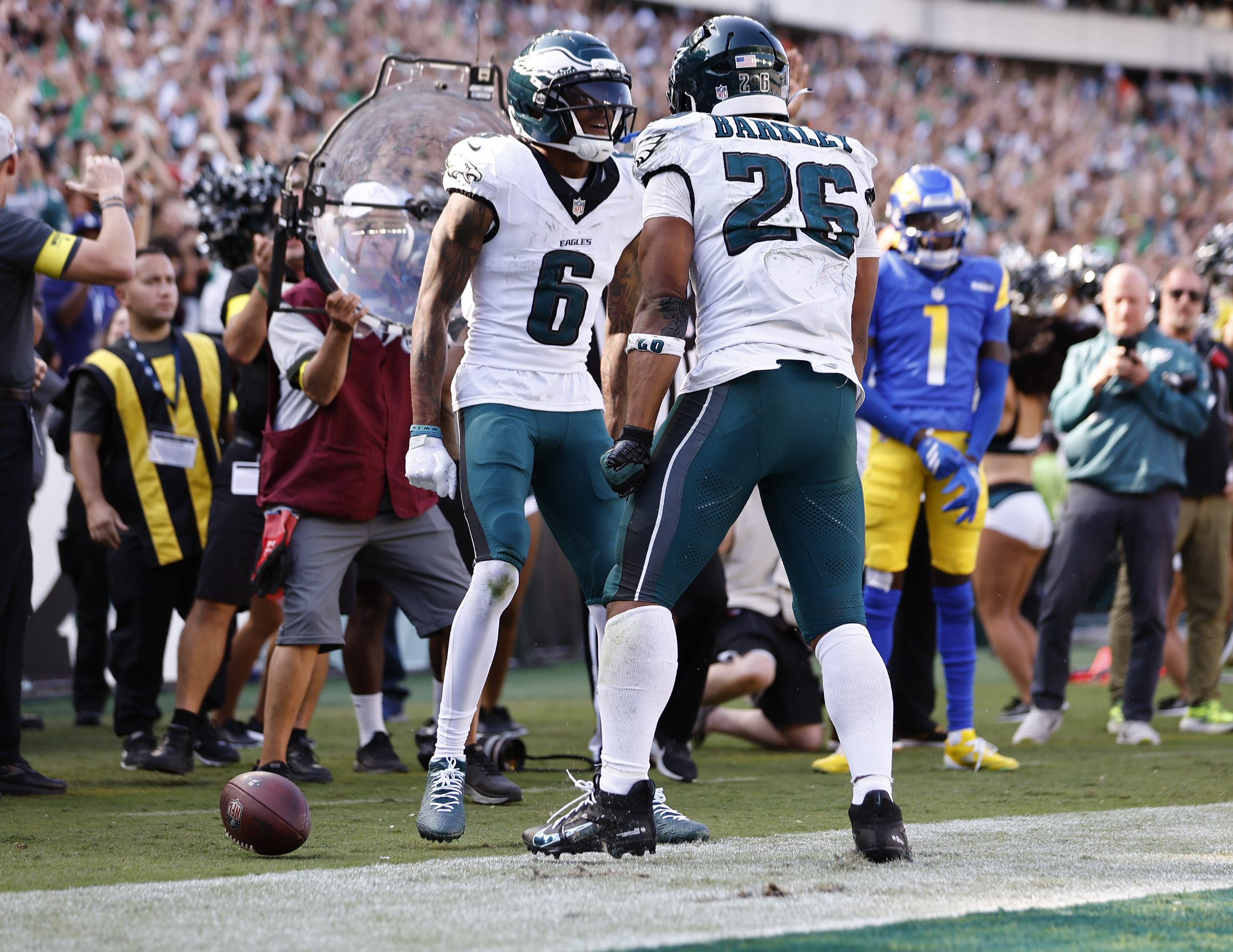
    A return by either DeVonta Smith (6) or Saquon Barkley (26) would be huge for the Eagles in Week 6. Monica Herndon / Staff Photographer

    While Saquon Barkley remains out, DeVonta Smith’s return is a big boost to an offense that needs to find itself and gives McKee a little more firepower to work with.

    But even with Smith set to play, I’m going to need to see the Eagles win a game right now before I predict them to actually do it.

    Bryce Young is ascending. The Eagles aren’t. Add Hurts’ ailment into the mix and it’s easy to not overthink this one.

    Prediction: Panthers 24, Eagles 16

    Ryan Novozinsky

    The 2026 Eagles are a mess, but they’re going to hit another new low this week.

    The defense has been fine, but they’re one of the worst tackling units in the league. Their special teams cost them in last week’s stunner vs. the Jags in London. And their offense, under new offensive coordinator Sean Mannion, looks stale (to put it mildly).

    Oh, yeah, and they’re going to be without Jalen Hurts for at least one game.

    I’m not even sure getting Smith back fixes this mess.

    Breaking down what Jalen Hurts’ injury means for the Eagles moving forward
    Video: Breaking down what Jalen Hurts’ injury means for the Eagles moving forward

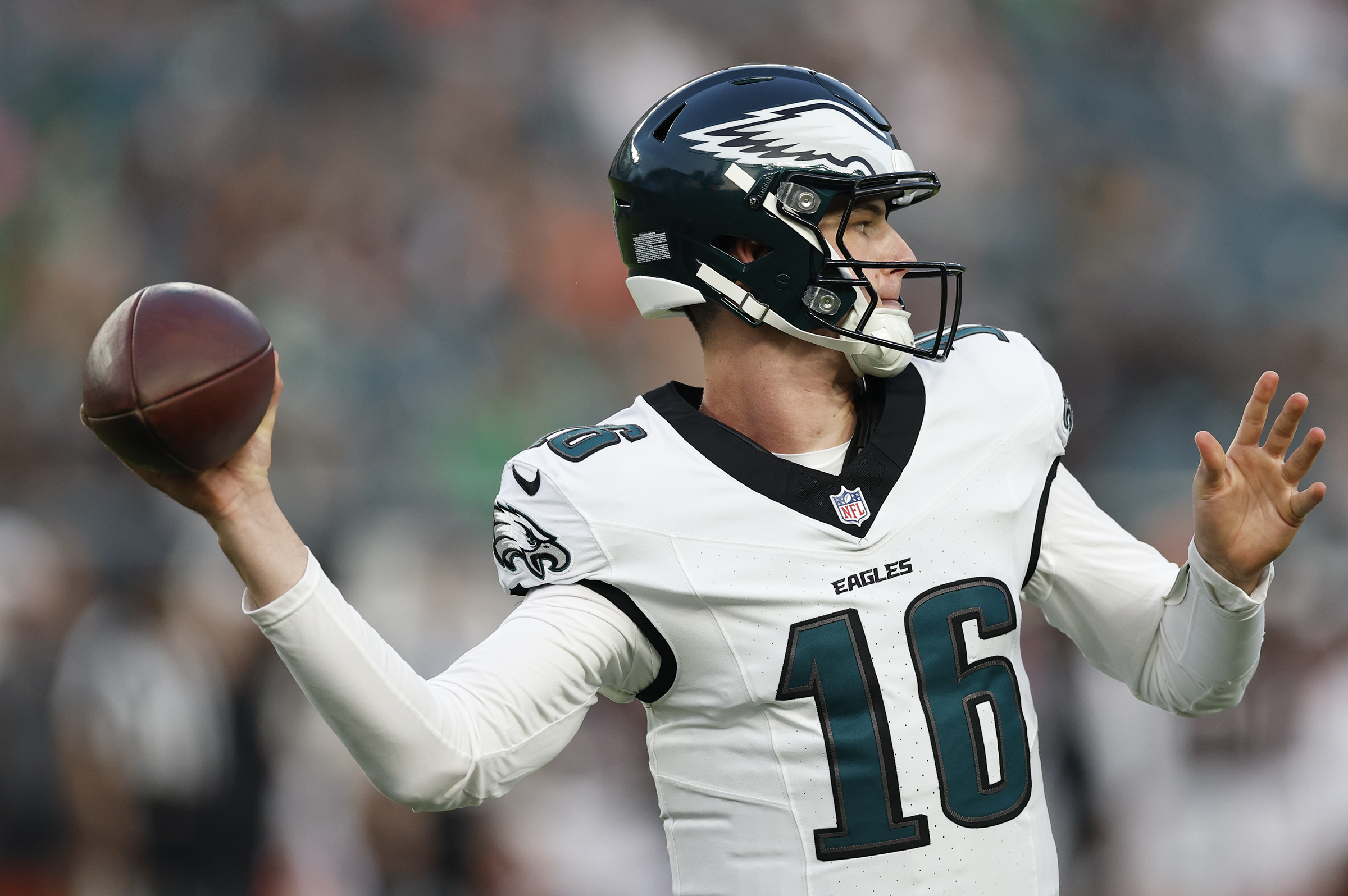
    The Birds will turn to McKee, a once-promising prospect who had to fight for a job this summer. The 26-year-old McKee threw for 263 yards, one touchdown, and one interception in three preseason games and was outdueled by the elder Andy Dalton.

    So you’ve got a battered Eagles team (without their QB, most of their O-line, and a starting-caliber running back) going up against a Panthers team that just had a bye week.

    It’s not going to end well. The Panthers should easily take care of the Birds, which will make an already bad season even worse.

    Thank goodness the Sixers start next week.

    Prediction: Panthers 35, Eagles 14

    Olivia Reiner

    Amid a three-game losing streak, the Eagles were already facing an uphill battle against the red-hot Young and the Panthers. Then the news came out Thursday that Hurts would be out indefinitely with a superficial blood clot in his calf.

    Now, barring a trade or a free-agent signing, McKee is poised to step into the starting role. He has started two regular-season games in his NFL career, and both were Week 18 contests in which the starters did not play. His preseason performance was inconsistent, but he was still the best Eagles quarterback during the exhibition slate.

    But McKee wasn’t even the Eagles’ top backup until Week 4, following Dalton’s fateful interception in the Eagles’ Week 3 loss to the Chicago Bears. McKee initially started the season in the QB3 role after splitting reps with Dalton during the offseason program and training camp.

    Combine McKee with a relatively green offensive line, not to mention the absence of Barkley, and the odds aren’t exactly in the Eagles’ favor on offense.

    The Eagles defense is in a far different place. They’re banged up, too, with Jalyx Hunt (knee/ankle) set to miss time and Jonathan Greenard (ankle) still practicing in a limited capacity after sitting out last week’s game against the Jaguars. But the group has done enough to give their offense opportunities to win the last couple of weeks.

    They’ll face a significant test against Young. He’s had a stellar start to his fourth season, as he is tied for eighth in the league in expected points added per drop back (+.17). He has capable receivers in Tetairoa McMillan and Jalen Coker, who is poised to return this week after missing the last two games with a quadriceps injury.

    This Panthers defense isn’t the most formidable, but neither is this iteration of the Eagles offense. It would take a heroic effort from McKee to prevent the Eagles from extending their losing streak to four games.

    Prediction: Panthers 24, Eagles 13

  • How two Philadelphia brothers became the perfect people to make a documentary about the Phanatic

    How two Philadelphia brothers became the perfect people to make a documentary about the Phanatic

    Dave Raymond always opened himself to the conversation but he often knew how it would end. Someone wanted to do a project about the Phillie Phanatic and they wanted Raymond on board. Raymond, the first person to wear the costume in 1978, was usually interested. And then that was it.

    Sometimes the people never called back. Some projects stalled at the finish line. Others got caught in Hollywood purgatory.

    But Raymond knew there was something different about the brothers who reached out in August 2024. Hoag Kepner and his older brother Tyler grew up Phillies-obsessed in Montgomery County where they loved the mascot as much as they did Mike Schmidt.

    They sat in Section 234 of Veterans Stadium, roared at the Phanatic’s bits, and shrieked when their grandmother plucked a feather from the mascot’s tail.

    Hoag couldn’t believe there had never been a documentary about the Phanatic and he told Raymond he wanted to be the filmmaker who finally did it. He sent him a pitch, explaining why this project would not sputter like the rest.

    Big Phan — which premieres Saturday at the Philadelphia Film Festival — took two years to finish as the brothers tapped into their childhood and told a story that only they could. First, Hoag and Tyler Kepner needed to convince Raymond that they were the right people to do it.

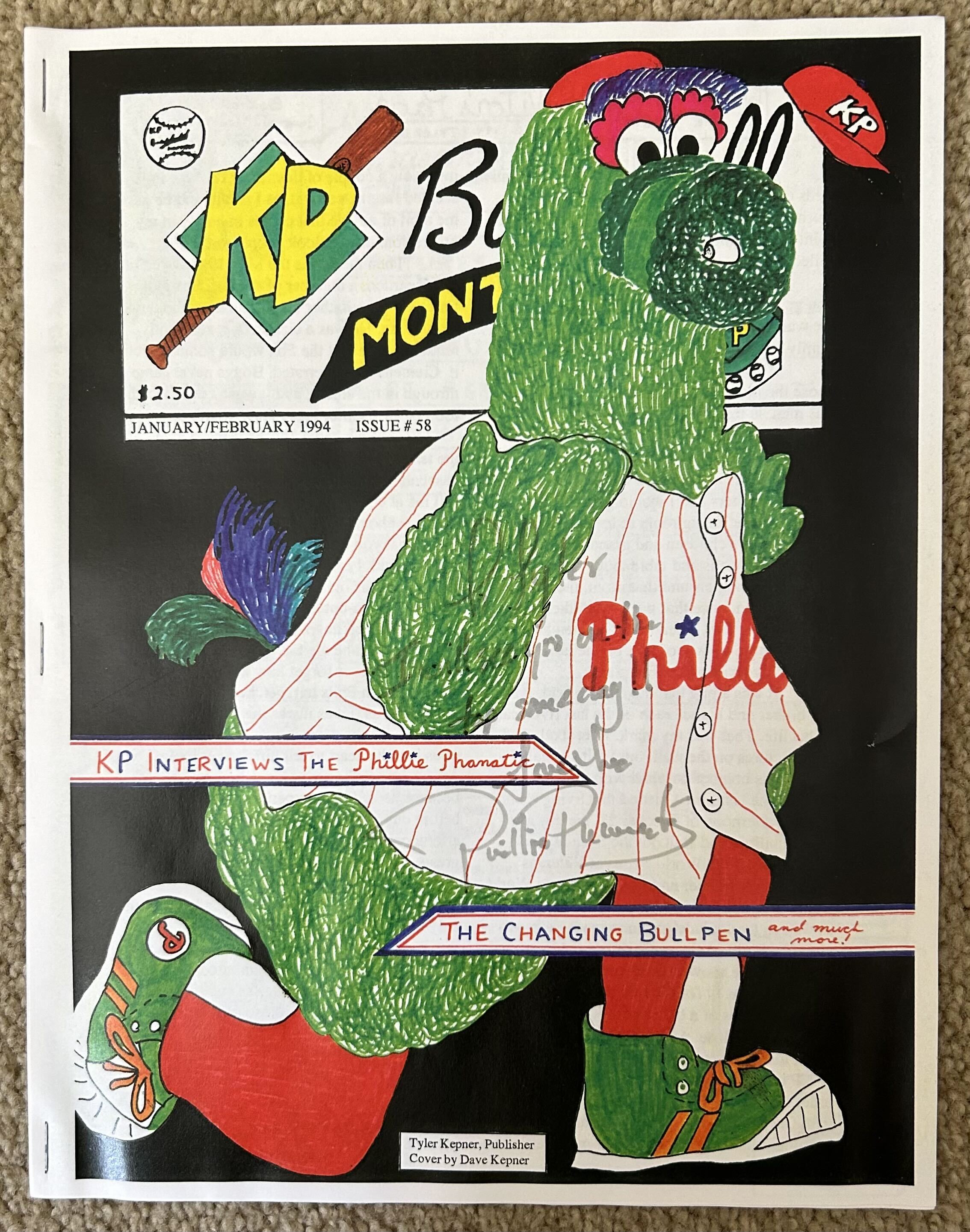
    The January/February 1994 issue of KP Baseball Monthly featuring the Phillie Phanatic.Hoag Kepner

    The last page of their pitch included an illustration of the Phanatic from 1994 that Hoag made for the baseball newsletter his brother produced from their Montgomery County home. Tyler, now a national baseball writer with The Athletic, wrote the words for KP Baseball Monthly and Hoag drew the covers.

    The January/February 1994 issue included a feature on Raymond — “KP Interviews The Phillie Phanatic,” it said — shortly after Raymond retired from the Phils. The brothers told Raymond that they wanted to tell the mascot’s story again. Yes, there was something different about this conversation.

    “That’s what really sold me: two Philadelphia brothers who have all this backstory,” Raymond said. “At the very least, I have to say yes just because of that.”

    He was magic

    The Kepners had season tickets at The Vet and their plan came with perks.

    “We had the Dave Montgomery plan,” Tyler, 51, said.

    Their father, John, served in Army Reserves with Montgomery, the longtime team executive who later became part owner. Montgomery let the Kepner boys pick out 16 games every offseason as the brothers built their own partial season-ticket package without any filler games. They only paid for the games they wanted to go to.

    “How great is that?” Tyler said.

    Montgomery placed the Kepners in Section 234, which was usually filled with notable faces. Arlen Specter sat behind them once and kept score. Charles Barkley signed their baseball. And the Phanatic always seemed to barrel through.

    “He was magic, man,” said the 46-year-old Hoag, who is the film’s director, while his brother is an executive producer. “It’s the same with Santa Claus. I still wonder about that. When you’re little, you have one foot in knowing that something isn’t real, but you want to believe so you do. He just came alive. This seemed real. He seemed animated.”

    “He was enormous. I think that’s something that as you get taller, you lose sight of. But as a kid, he’s like 7-feet tall. I think there’s an initial fear, but you know he’s friendly.”

    The Phillies introduced the Phanatic in 1978 as another way to drum up interest at The Vet. Bill Giles already tried Kite Man, Benny The Human Bomb, and the Great Wallenda. He was up for anything, but the documentary details how Giles needed to be convinced before greenlighting the Phanatic.

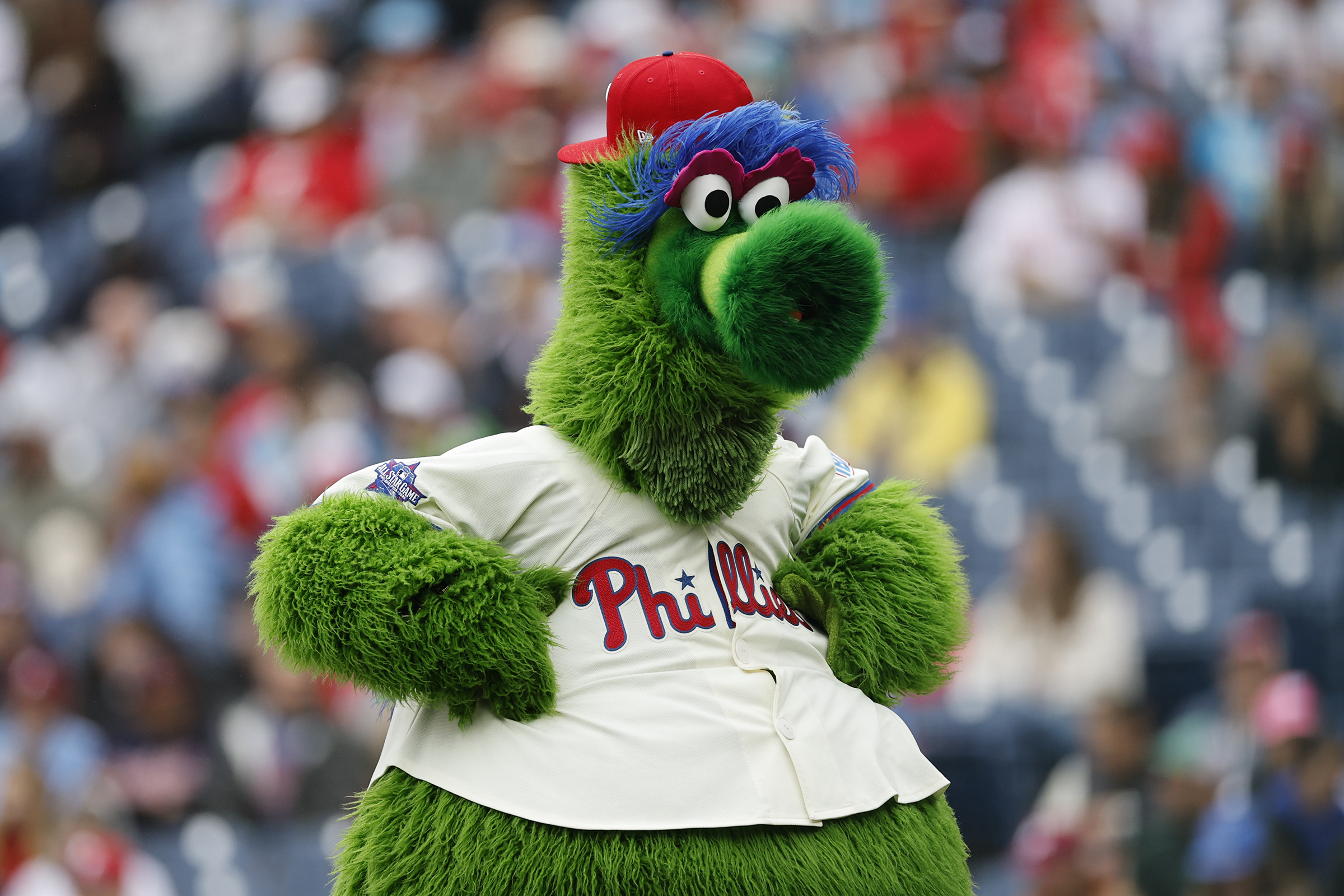
    The Phillie Phanatic has been entertaining fans since 1978.Elizabeth Robertson / Staff Photographer

    The costume was designed by the same people who created Miss Piggy and the Phanatic was introduced on a random weeknight in case the mascot was a bust. Giles tapped Raymond, then an intern from the University of Delaware, to step into the costume. Big Phan explains why that choice was perfect: Raymond had a big personality and had communicated non-verbally at home because his mother lost her hearing from Meniere’s disease.

    The Phanatic became a sensation that quickly outgrew South Philly. The mascot has appeared everywhere from late night TV to The Simpsons to rock concerts. In Philly, he’s the Phanatic. But elsewhere, he’s more than just a Major League Baseball team’s biggest fan. The Phanatic grew into a piece of pop culture. So who better to tell the story than people who lived it?

    “I’m not under the illusion that I’m the only one who could make it, by any means,” Hoag said. “But I do feel like you have to be from Philly. I think it helps if you were around the Phanatic as a kid and had those experiences that I did and had a personal connection to it.”

    ‘A very selfish idea’

    Hoag had recently finished his latest film and was wondering what he could do next while he was watching a Phillies game on TV. There was his next project: The Phanatic.

    “Who wouldn’t want to make a documentary about the Phanatic?” said Hoag, who lives in Austin, Texas. “In many ways, it was a very selfish idea. I wanted there to be one so I tried to get people to let me make one.”

    The film was funded by local donors, worked on by a Philly illustrator, and aided by a local puppeteering company. Morgan Betz, the grandson of a former Phillies owner, is a producer. The brothers were not the only local connection to a film about a local icon. Hoag said they hope to secure a distribution deal with a streaming service after the Philadelphia Film Festival.

    The 95-minute film encapsulates how a green flightless bird from the Galápagos Islands became a piece of Philadelphia. It helped that everyone working on it already knew why.

    “I didn’t have to explain to them how powerful the Phanatic is to young kids because they lived it,” Raymond said.

    The brothers from Section 234 traveled the country as they conducted interviews with people like Bryce Harper, Chase Utley, and Schmidt along with Lil’ Dickey, Jason Kelce, and Simpsons producer Christine Nangle, who grew up in Northeast Philly. Tyler peppered the questions while Hoag rolled the camera, working together just like they did in their home in Gwynedd Valley.

    “We really became kids again,” Hoag said. “We would always be texting about mascots. I don’t want to talk smack on other mascots, but we have opinions on the other ones we see. He goes to a lot of games and he would snap a photo and be like ‘Look at this clown’ or ‘This one’s pretty good.’ It was fun to relive our Phillies days.”

    The documentary traces the mascot’s history before it tackles the depression Raymond battled, the stress of being the Phanatic, and the death of his mother. Raymond left the Phillies after the 1994 season and handed the Phanatic to Tom Burgoyne, his understudy who has done the job ever since.

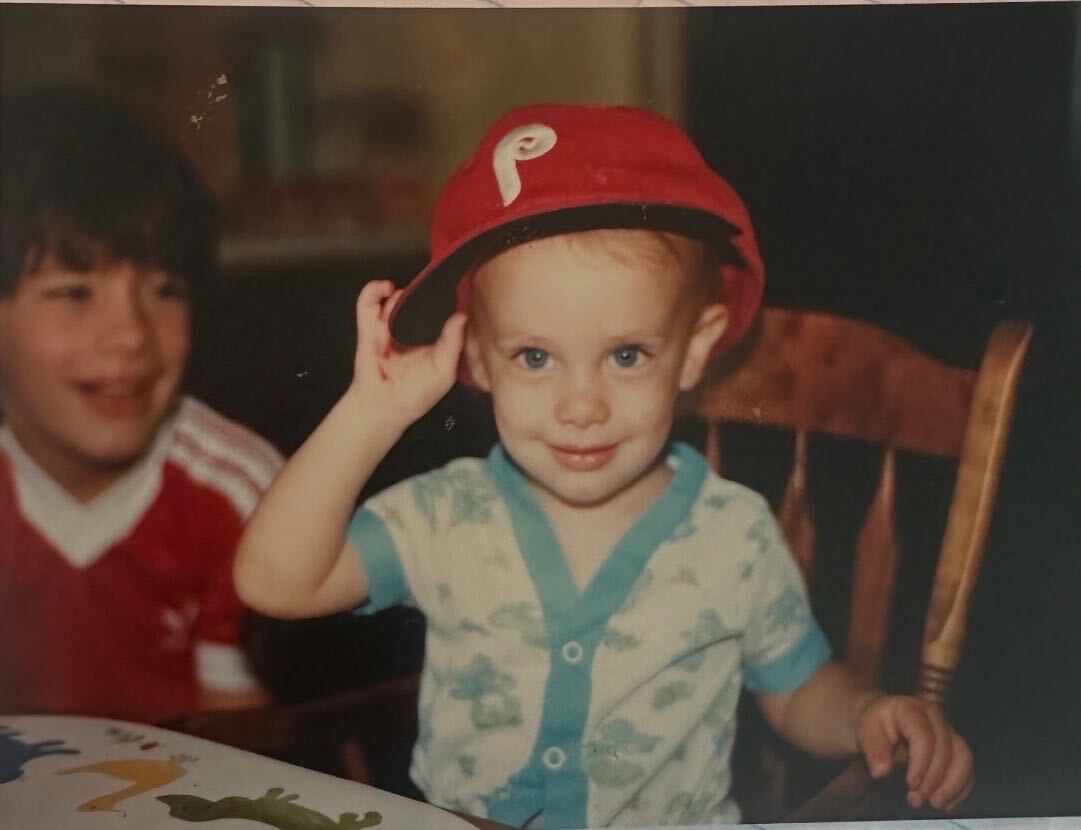
    Tyler Kepner (left) and brother Hoag as children in Montgomery County.Hoag Kepner

    Raymond has spent years as a motivational speaker, training himself to not become emotional when he talks. But that didn’t help him when he sat with the Kepners and talked about his mom.

    “As a speaker, the worst thing you can do is to disengage your audience,” Raymond said. “So what they teach you is if you’re going to go through something emotional, you don’t want to lose your audience. It’s a human feeling but as soon as you lose composure, the audience is worried about you and you’ve disengaged them. I’ve told this story so many times on stage and it requires practice and focus.

    “When I told it in front of the cameras, I just broke down. So what I felt good about is that it was finally coming out in a way for me. It was cathartic because I wasn’t worried about telling it to an audience. It just happened.”

    The brothers interviewed Giles, who died earlier this month, and spoke to the person inside the Gritty costume but didn’t reveal their identity. The doc tells how Burgoyne found the job by searching The Inquirer’s classified ads after feeling burned out by his entry-level sales gig. And it follows Burgoyne around the ballpark as the 61-year-old still makes the mascot come alive all these years later.

    “It’s about the Phanatic, but don’t think it’s about this furry mascot,” Hoag said. “It’s about these two guys and their journey and purpose. Talk about two people whose purpose was so clearly defined. That’s all we want in life: What’s my purpose? I want to feel like I was made for something and I really do something. These guys were perfectly suited for it and they fulfilled their purpose in a way that’s like, ‘Ahh, Wouldn’t it be great if we all had that?’ Hopefully this inspires people to find that.”

    The 95-minute film “Big Phan” encapsulates how a green flightless bird from the Galápagos Islands became a piece of Philadelphia.Yong Kim / Staff Photographer

    The coup de gras

    The Phanatic came into Section 234 with the same chaotic energy he did years earlier when he visited the Plymouth Meeting Mall.

    “You’re that little and you can’t believe he’s at your mall,” Tyler said. “Like ‘Oh my god, he’s here.’ He’s not at the stadium. He’s where I hang out. It was like seeing Bob Dernier at the Magarity Chevrolet. I was like, ‘I can’t believe Bob Dernier is at the Magarity Chevrolet.’ It blew my mind. It was the same thing with the Phanatic.”

    The mascot spotted Barkley in Section 234, started bowing to him, and then brought him gifts. First, he stole someone’s popcorn and brought it to Barkley. Next, a hot dog.

    “Then he grabs a woman’s purse and gives it to Charles,” Tyler said. “And then in a bit that you could never do anymore, he grabs a lovely young lady, sweeps her off her feet, and brings her to Charles as the ultimate gift he could give Charles Barkley. Charles was dying. He was literally knee slapping. That was the Phanatic. He could go right up to the edge sometimes. That’s the stuff you would see in 234.”

    Phillies PR director Larry Shenk gave Tyler a press credential when he was still a kid, allowing him to go into dugouts and interview players for his newsletter. Tyler typed them at home, had friends armed with magic markers help color the covers, and mailed it to subscribers like Bob Costas, Harry Kalas, and Tug McGraw.

    One of Tyler’s final issues was the cover story with Raymond. He mailed Raymond a copy and the Phanatic returned it with a signature.

    “To Tyler, I will see you at the top someday” Raymond wrote. “Love, The Phillie Phanatic.”

    The newsletter was the launching pad for Tyler’s sports writing career as he is now one of baseball’s esteemed chroniclers. And the brothers dug up that old issue two years ago, hoping it would convince an old friend that they were the guys for the job.

    “I think that was the coup de grâce for Dave,” Hoag said. “He said he was looking at it with his wife and she said, ‘These are the guys.’ I think he enjoyed that there was a real connection. I said, ‘We met when I was 8 and you high-fived me in Section 234. He said, ‘Oh yeah, I remember.’ All of a sudden I have this responsibility that I wanted. But I’m like, ‘Wait, I’m telling the Phanatic story? Whoa. This is important.’”

  • On a night celebrating women’s sports history, hoops legends shared hope for the future, too

    On a night celebrating women’s sports history, hoops legends shared hope for the future, too

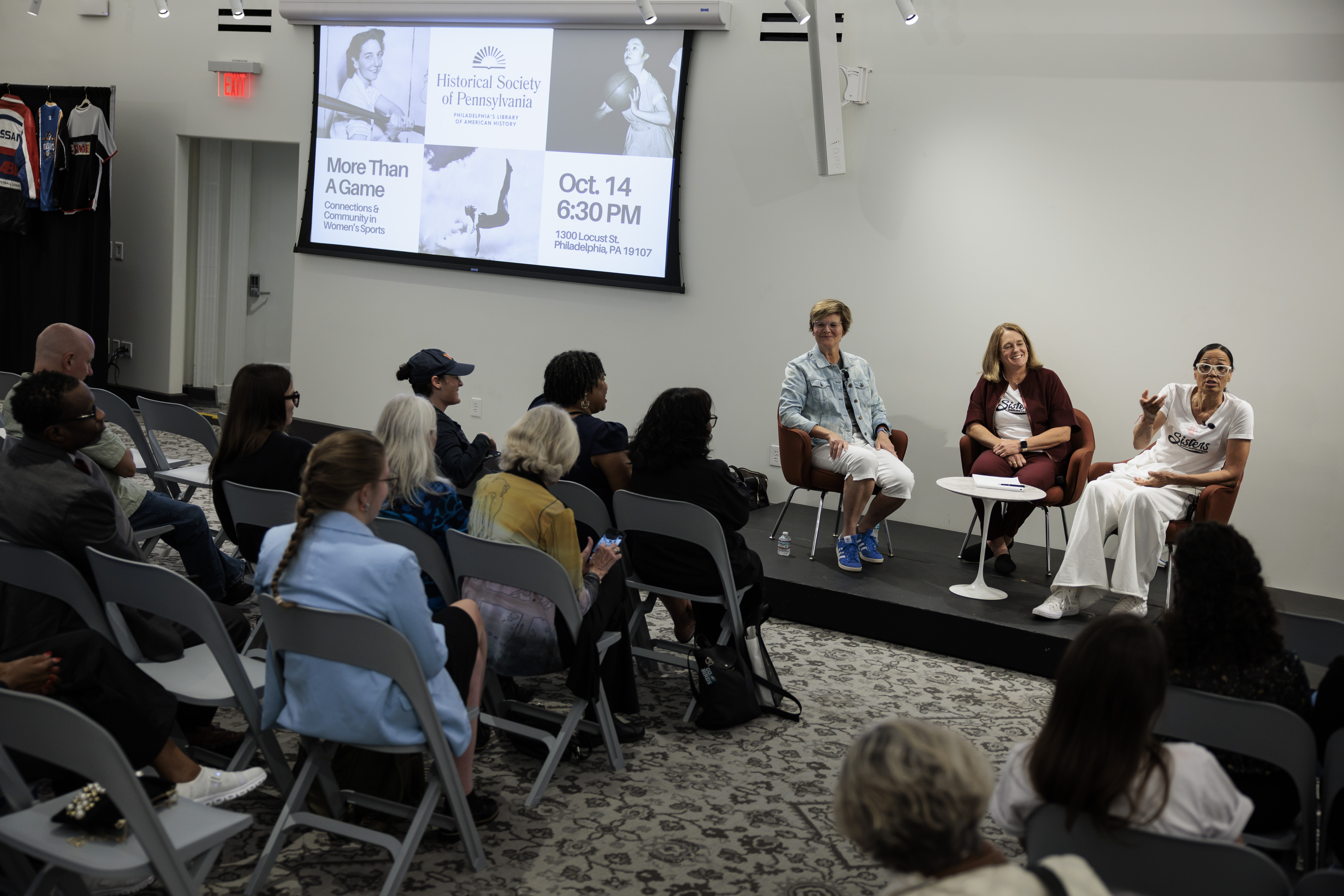
    At a panel Wednesday night at the Historical Society of Pennsylvania, the introductions alone lasted more than eight minutes and covered Olympic medals, Emmys, and more.

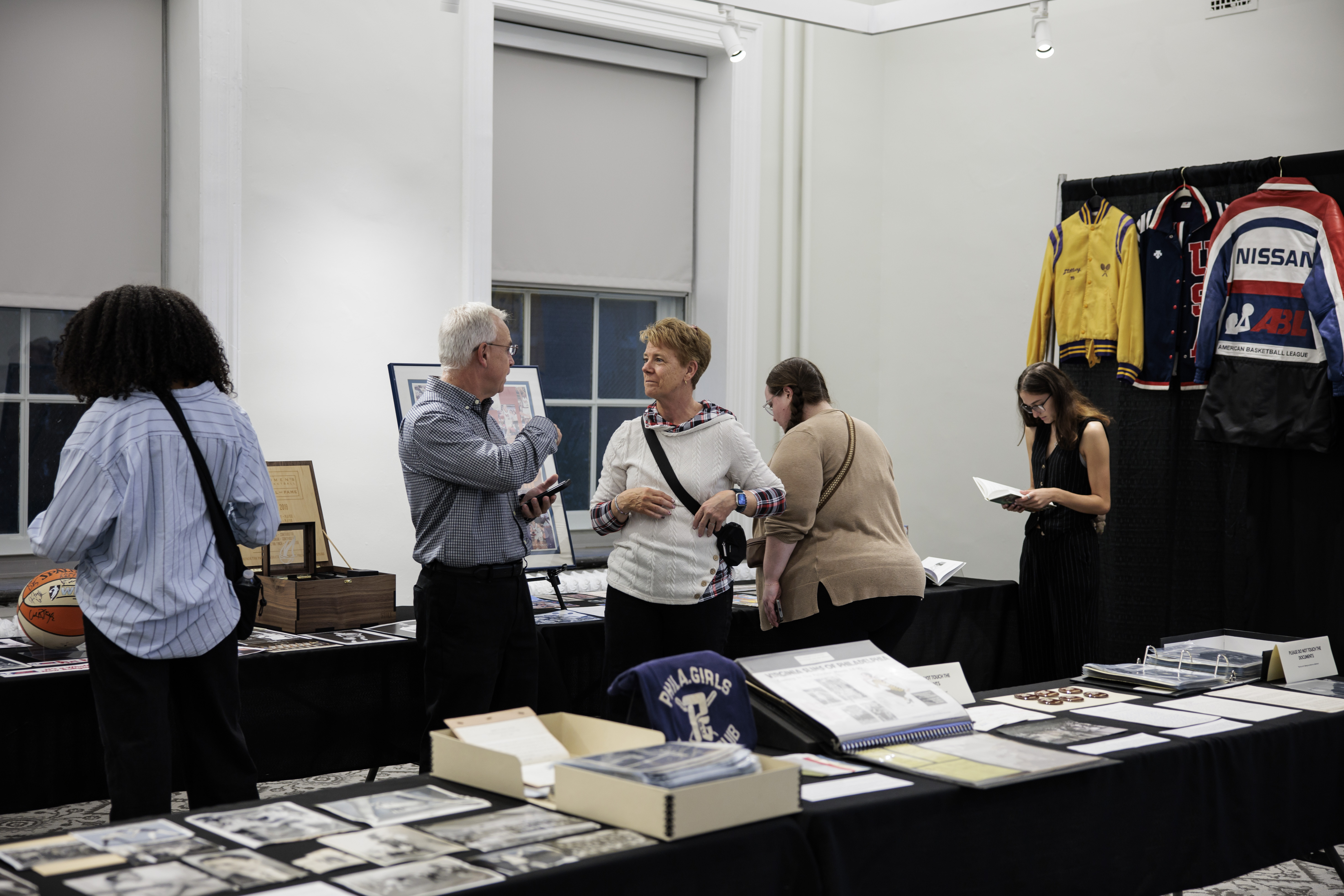
    Women’s Basketball Hall of Famer Valerie Still and award-winning broadcaster Brenda VanLengen discussed the history of women’s sports and their hopes for the future in a conversation moderated by Philadelphia Sisters cofounder Ashley Lunkenheimer. Alongside the discussion, a one-night-only exhibit showcased an array of historical artifacts, from field hockey, tennis, and baseball memorabilia to items from Still’s personal collection.

    And as women’s sports continues to grow in popularity, Still says the history can be remembered, too.

    “It doesn’t happen by chance that women’s history gets lost,” Still said. “Women’s sports, for me, is a social movement. We don’t want to be better than the men; we want to be better than perfection.”

    A one-night-only exhibit showcased an array of historical artifacts surrounding women’s sports.

    Still, VanLengen, and HSP are all working to ensure that women’s sports history remains intact.

    Still, who grew up in Camden and calls the city “East Philly,” began researching her own history first. After retiring from basketball in 1999 following the dissolution of the American Basketball League, she began looking into her family tree and discovered that abolitionist William Still, known as the “father of the Underground Railroad,” was part of her lineage. She is is his great-great-grandniece.

    “It was extremely emotional,” Still said. “Here I am with all my accomplishments when really not that long ago my ancestors were enslaved, they were in somebody’s will.”

    Still was one of the first women to earn a basketball scholarship to Kentucky and remains the Wildcats’ career points leader 43 years after playing there. She urged people in the audience to research their family histories and record them.

    After finding family photos of her grandmother playing basketball in the 1920s, VanLengen began asking, “Why could my grandmother play then, but my mother couldn’t in the ’50s and ’60s?”

    Her research led her to produce a docuseries titled If Not for Them, which captured the stories of women who played and loved basketball at the turn of the 20th century and who have since fought for equality in women’s sports. VanLengen is still fundraising for the series but said the project is about 75% of the way there.

    One of the women interviewed for the series attended the panel. At 83, Lurline Jones is a local legend not only for her decades of coaching, but also for her work as a civil rights leader. In 1979, she filed a lawsuit under Title IX after the Philadelphia refused to hold a city girls’ basketball championship.

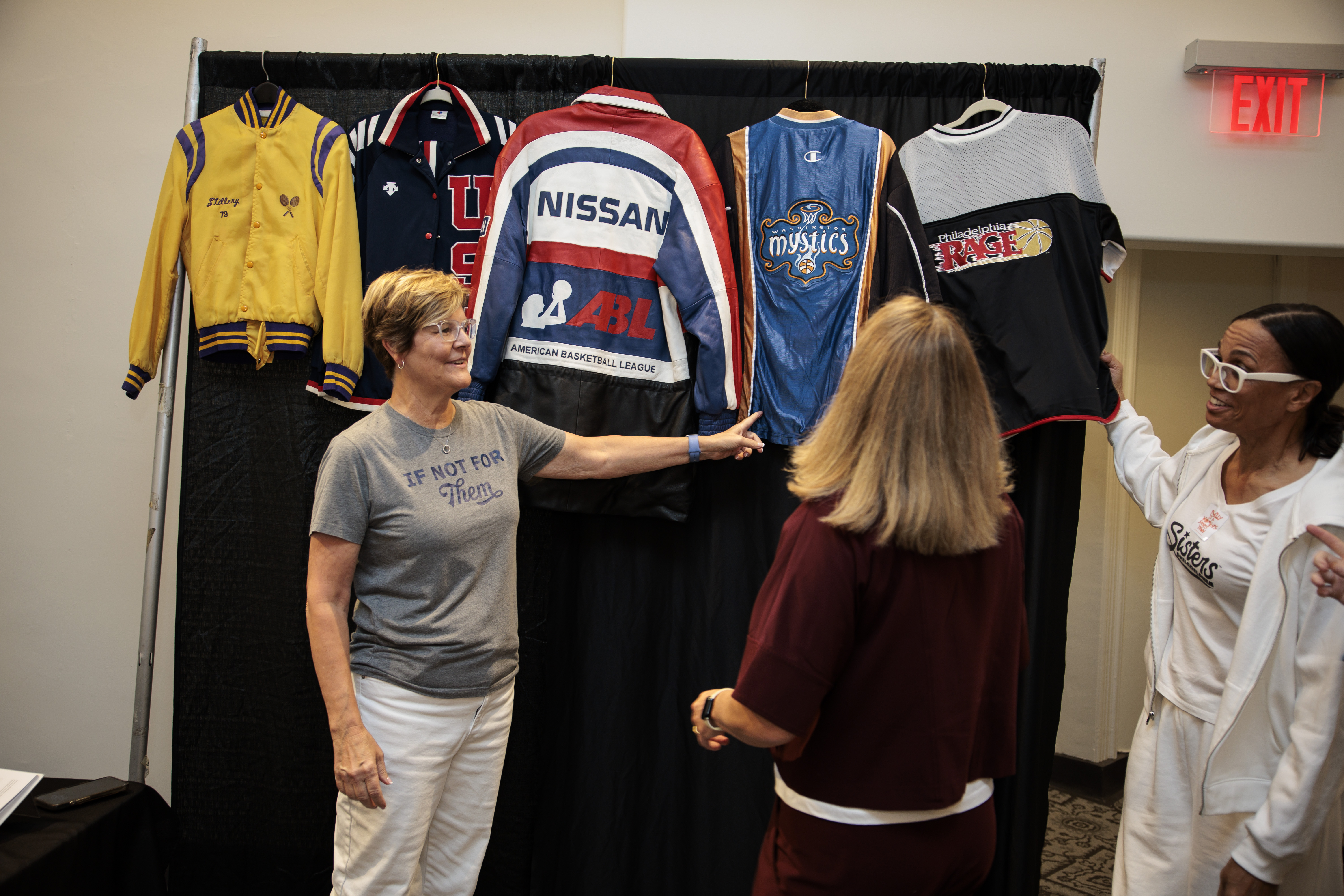
    Brenda VanLengen (left) and Valerie Still (right) inspect vintage jackers on Thursday at the Historical Society of Pennsylvania.

    For Jones the fight now is to keep kids invested in sports as schools continue to roll back opportunities, programs, and access to equipment.

    “It’s tough right now because the school district doesn’t provide them with the opportunity,” Jones said. “Sports do so much for young people, it changes them and builds leadership and gets them in school … there’s a lot left to do.”

    Still recalled during the panel how the progress that has been made brings her to tears.

    “I had a come-to-Jesus moment last night because my dream was to play with Dr. J and the 76ers,” Still said. “The Philadelphia Sisters are bringing that day to Philadelphia in 2030. I’m that little girl again. It really is one of those moments where sports are more than what we just see. It’s more than points, it’s more than rebounds, more than how fast you’ve been running. It’s about being the best that you have been, and dreams do come true.”

    VanLengen acknowledged during the panel the struggles women in sports still face, referencing the viral moment surrounding an AI-generated video depicting ESPN reporter Holly Rowe being slapped by Texas coach Steve Sarkisian.

    “It does bother me that young girls are observing this to see how women are being treated, and to hear the negativity,” VanLengen said. “But I also hope that they see the resilience and the strength of these women athletes, and want to make things better in their community, and that they’re inspired to be stronger.”

    The panel ended with a call to action from Lunkenheimer.

    “Show up for women’s sports, urge your friends to show up, your companies and keep supporting at every level,” she said. “We’ve got to continue to create the market, and we want Philly to be the head of that market.”

  • How did UCLA’s defense get its Philly flavor? Meet defensive coordinator Colin Hitschler

    How did UCLA’s defense get its Philly flavor? Meet defensive coordinator Colin Hitschler

    Colin Hitschler can still envision his earliest memories of wrestling and football, the sports that directly tie him to his father, Charles. He’d sit on his father’s lap in the corner of a wrestling mat, and roam the sidelines as his father coached football, often serving as the ball boy.

    He says “coaching was probably in my blood,” but it wasn’t until he spent time away from football that he actually developed the itch to do it.

    “I spent more time being around coaches than probably players as a little guy,” Hitschler told The Inquirer by phone recently. “The opportunity to chase it — being a wrestler in college probably made me hungrier for losing football, and that obstacle led me to coaching.

    “Wrestling is a mentality, and that, I think, is what I bring from wrestling to the football field and to coaching, and something I try to instill within our guys … the challenges that wrestling presents are very similar to the course of a long season of football.”

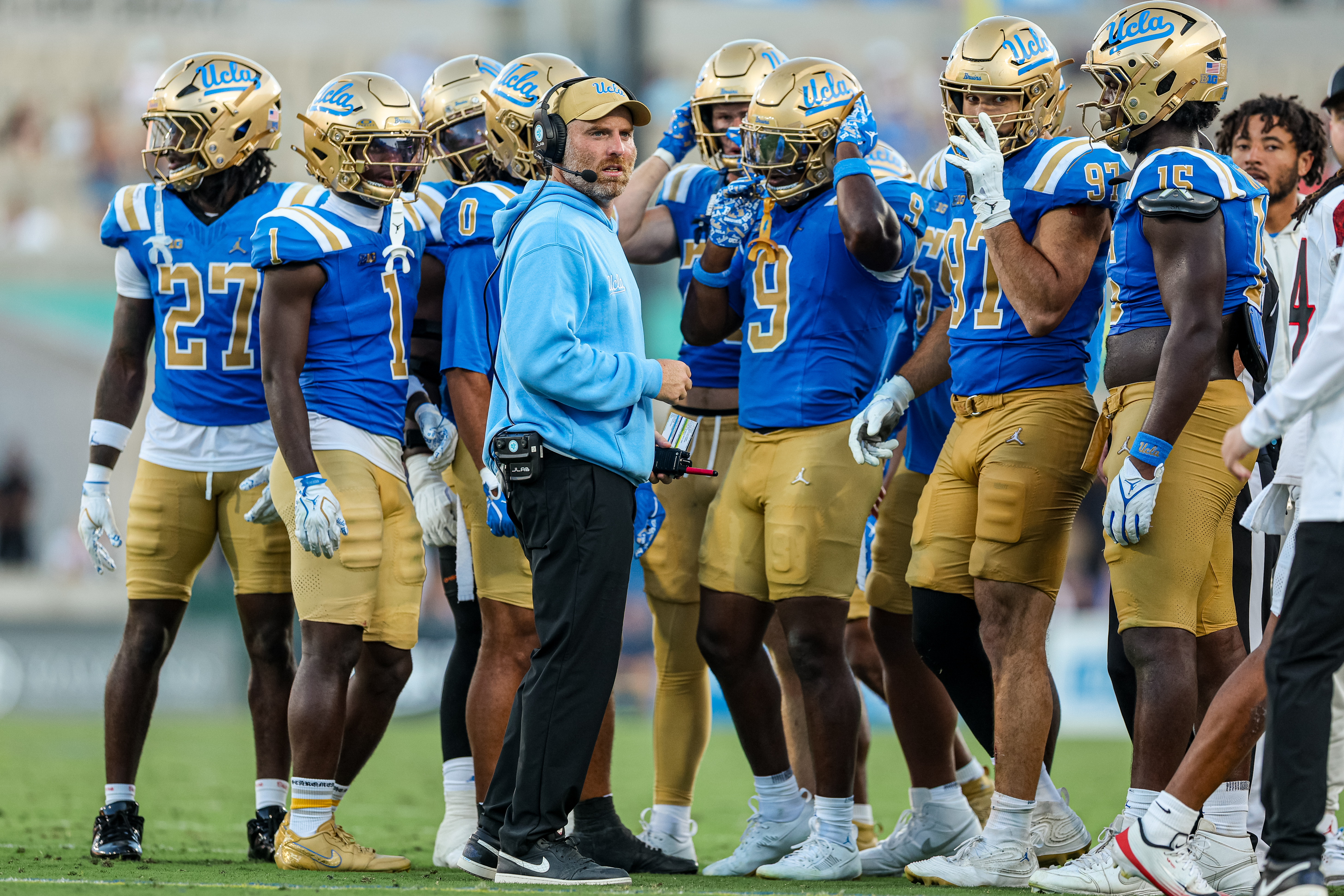
    Hitschler, who played football and wrestled at Penn Charter, then wrestled for four years at Penn, has dedicated his career to coaching. Now at UCLA as the football team’s defensive coordinator in his 16th year of coaching, Hitschler is quickly helping turn around the undefeated Bruins in the program’s first year with Kulpmont, Pa., native Bob Chesney as head coach.

    Hitschler’s first taste of working in football, though, came with the Eagles in 2009. Sean McDermott — the La Salle College High graduate, former Eagles defensive coordinator, and fellow wrestler — invited Hitschler to be an Eagles training camp assistant in 2009.

    “He kind of took me under his wing and gave me my first opportunity to be around it,” Hitschler recalled. “And then I was lucky enough to get to the Chiefs and work in the personnel department. And then I realized that my true passion was coaching.”

    ‘Aggressive mantra’

    Hitschler, 40, didn’t land his first coaching opportunity until two years later, at Division III school Salve Regina in Newport, R.I. It was there that he first worked for Chesney, who took over the program in 2010 after five seasons at Johns Hopkins in Baltimore.

    The pair spent just one season together, with Hitschler serving as the co-special teams coordinator and defensive line coach. There was a 14-year gap between coaching stops together, reuniting at James Madison in 2025, but Chesney’s “energy” and “how much he loved ball” were traits that stuck with Hitschler.

    Bob Chesney (center) and Colin Hitschler (right) first coached together at Division III Salve Regina in 2011.Lydia Ely

    “Some of the late nights, just figuring out little obstacles, and just the way he made his players love the game,” Hitschler said of Chesney, who has one losing season in 16 years as a head coach across three levels of college football. “I was obviously lucky enough to coach a number of other places … but the ability to reunite with him and his energy and the way he makes people feel about the team and the game — that was an opportunity that presented itself that was special.”

    Hitschler himself made a quick ascent up the coaching ranks. He coached at Widener, then spent time as a graduate assistant at Arkansas State and South Alabama, and by the time he left the latter in 2017, he had become a safeties coach.

    From there, he spent five years on Luke Fickell’s staff at Cincinnati, starting as a defensive quality control coach in 2018 and later becoming co-defensive coordinator by 2022. He followed Fickell, whom he considers “a mentor” to Wisconsin in 2023, then spent 2024 at Alabama as co-defensive coordinator on Kalen DeBoer’s staff, before rejoining Chesney at James Madison.

    Every stop he’s been, Hitschler has brought his Philly roots along, even down to his defensive philosophy. He watched Jim Johnson’s Eagles defenses that featured Brian Dawkins and Jeremiah Trotter Sr. and tried to emulate it as a defensive playcaller.

    “I was a diehard Eagles fan watching Dawkins and Trotter and those guys create havoc and stay aggressive, and a lot of the front multiplicity that [Johnson] did back in the day,” Hitschler said, who also noted that Johnson’s grandson, Brandon Rose, is on UCLA’s staff as the director of player personnel. “His aggressive mantra is deep within me. … When you grew up in Philly in that era, you loved the Eagles’ defense.”

    ‘A version of the Bruin Bullies’

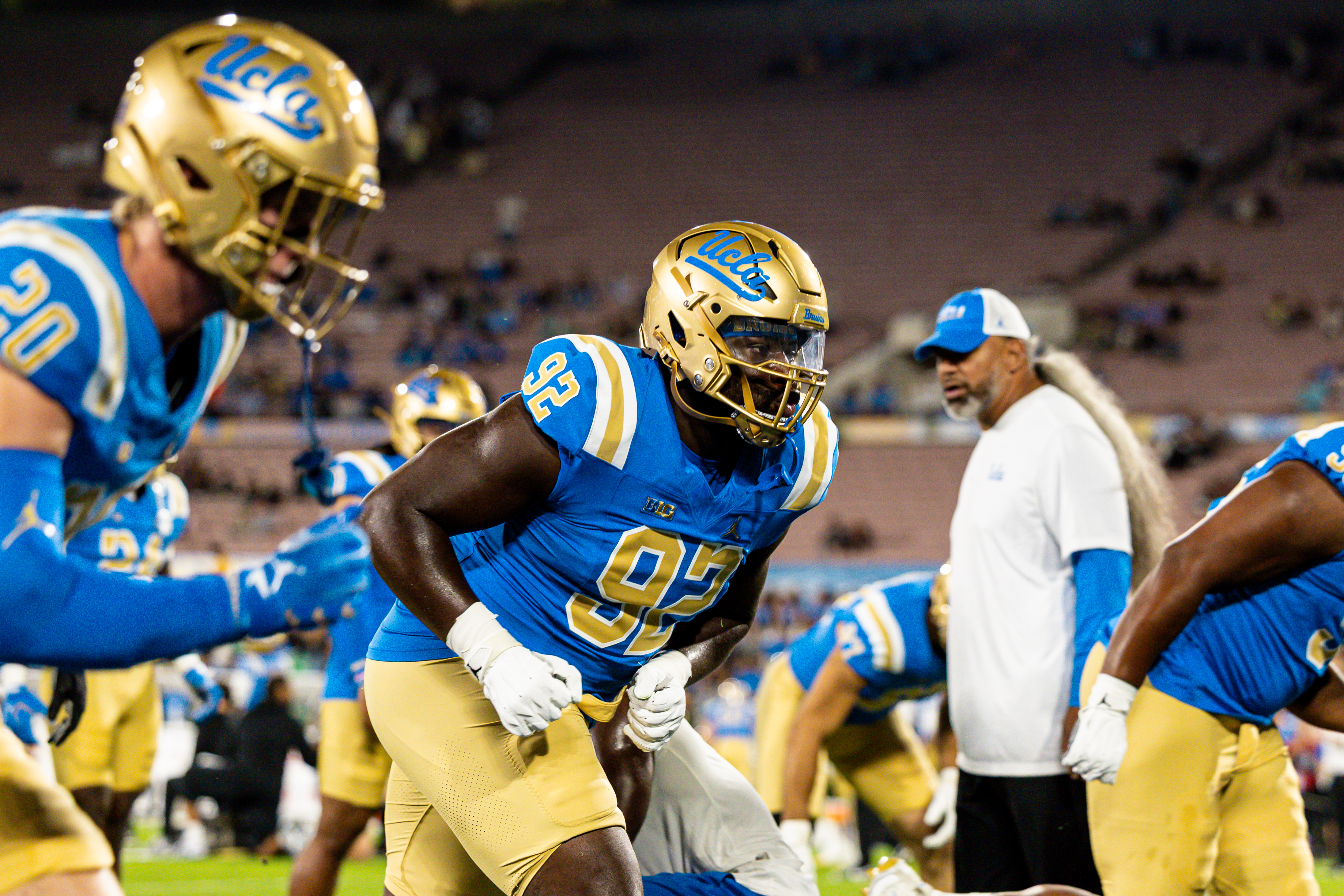
    Building connections on the recruiting trail is an essential part of Hitschler’s duties, and his deep connections to Philly are prevalent on UCLA’s roster. Three locals are playing out west: St. Joseph’s Prep graduates Anthony Sacca and Maxwell Roy, and La Salle College High grad Darold DeNgohe.

    The 6-foot-2, 312-pound DeNgohe had previous ties to Chesney. He was a freshman on the JMU team when Curt Cignetti led it in 2023, then remained with the program in 2024 when Chesney took over. After he spent last season at Rutgers, a relationship that dated back to high school finally came to fruition at UCLA.

    Darold DeNgohe has nine tackles (two for loss) in five games this season.Courtesy of UCLA Athletics

    “Coach Hitsch gave me my first offer in high school when he was at Cincinnati,” said DeNgohe, who emigrated to the United States from Cameroon at age 9. “That was my first offer. He was one of the first college coaches to really believe in me. So it was really cool. I’ve always wanted to play for him. So when we got this opportunity, we were both really excited to like finally accomplish it and just finally play with each other.”

    The combination of Hitschler, Sacca, DeNgohe, and the hodgepodge of other transfers and holdovers from the previous staff has helped UCLA’s defense emerge as a formidable unit.

    It held an Oregon offense that entered last week’s game ranked fifth in points and passing yards, and 11th in total offense, to just 15 points and 272 yards of total offense. The Bruins entered the game ranked second nationally in turnovers per game (3) and forced an outstanding seven more against the Ducks.

    Hitschler says the defense calls themselves “a version of the Bruin Bullies, or what we aspire to be,” as an homage to the Flyers’ Broad Street Bullies era, and the results are showing. UCLA picked up their first win at Oregon since 2004, and face Hitschler’s mentor, Fickell, and his Wisconsin team on Saturday (7:30 p.m., NBC10). UCLA is seeking a 6-0 start for the second time in the last 20 years.

    “I think that combo of brotherly love and ‘Broad Street Bully’ mentality, I think that’s unique about Philadelphia,” said Hitschler, “as somebody that’s kind of lived in a number of different places. I think it’s important that the players feel who I am, and a large part of who I am is the city that I grew up in, and the people that I were around. So bringing that mentality and that personality to our players is really important to me.”

    Added DeNgohe: “We try to bring the physicality and the toughness from the city into the defense, and that’s how we play. We try to have that mindset as the ‘Broad Street Bullies.’”

  • Bryce Young lived in Havertown, and still has family in Mt. Airy. To the Panthers QB, Philly is a ‘second home’

    Bryce Young lived in Havertown, and still has family in Mt. Airy. To the Panthers QB, Philly is a ‘second home’

    For most of Bryce Young’s life, his family had a tradition. Whenever they’d visit Philadelphia, during the summer or the holidays, they’d slowly drive past their old house on Hillcrest Avenue in Havertown.

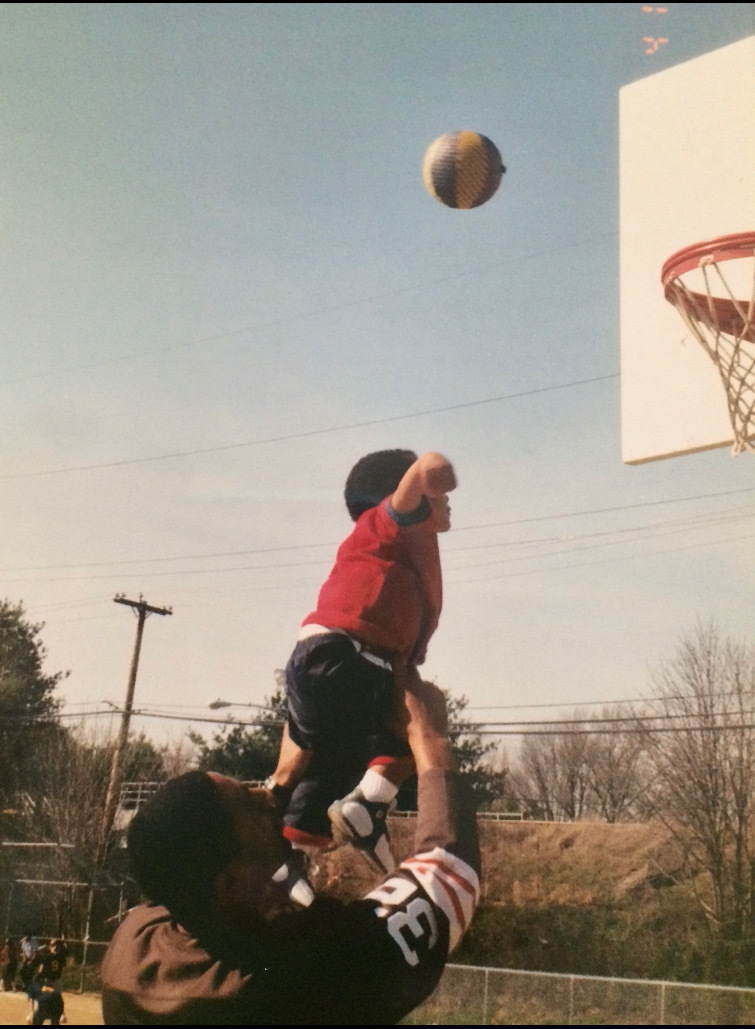
    His mother, Julie, would scan the neighborhood to see if anything had changed. She’d point out his favorite childhood spots, like Paddock Park. They’d go to the court where her husband, Craig, once lifted Bryce as a toddler high up in the air, as he flung a small basketball toward a hoop.

    A young Bryce Young with his father, Craig, in Havertown.Courtesy of Young family

    The Panthers quarterback doesn’t remember these moments, and it’s hard to blame him. He was born at Lankenau Medical Center in Wynnewood in July 2001, but spent only six months in Havertown before he and his parents moved to Pasadena, Calif., in early 2002.

    But Philadelphia and its surrounding suburbs were more than just a short stop on his NFL-bound journey. Craig was born in Harrisburg, and grew up in Mount Airy (eventually relocating to Harbor City, Calif., after his parents split).

    Craig’s late father, Harold Frye, lived in Glenside, where his son would visit him. Craig still has family in the northwest corner of the city: his sister, cousins, aunts, uncles.

    Until middle school, Bryce traveled to Philadelphia with his parents every year. More traditions were formed, like a Christmas Eve caroling party at Frye’s home, followed by a stop to the quarterback’s favorite cheesesteak (and pizza steak) place — Dalessandro’s.

    He wouldn’t leave the city without stuffing his suitcase to the brim with Tastykake Butterscotch Krimpets.

    “Even when family members came out to California, it was like, ‘Hey, bring us some Tastykakes,’” Julie recalled. “And they do, to this day.”

    Young didn’t live in Delaware County long enough to earn any sort of hometown greeting (á la Mike Trout). When he made his Lincoln Financial Field debut, in a 22-16 Carolina loss on Dec. 8, 2024, he was met with typical hostility.

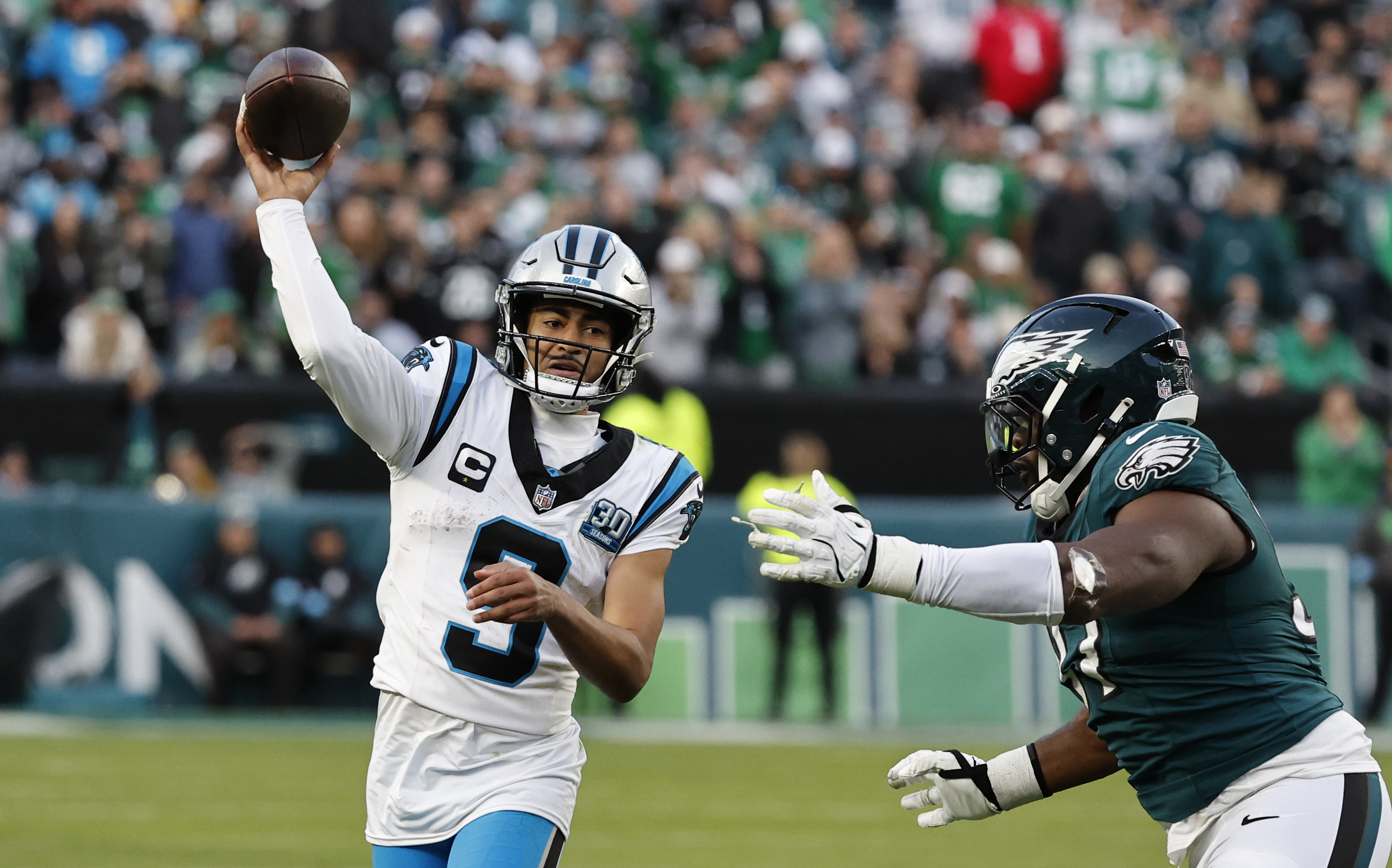
    Bryce Young will get a second shot to beat the Eagles at Lincoln Financial Field on Sunday. Yong Kim / Staff Photographer

    Despite that, Young led his team to a near-comeback over the eventual Super Bowl champions, in the midst of a subpar season. The quarterback had been benched after dropping his first two games. He eventually got his starting job back, but finished the year at 5-12.

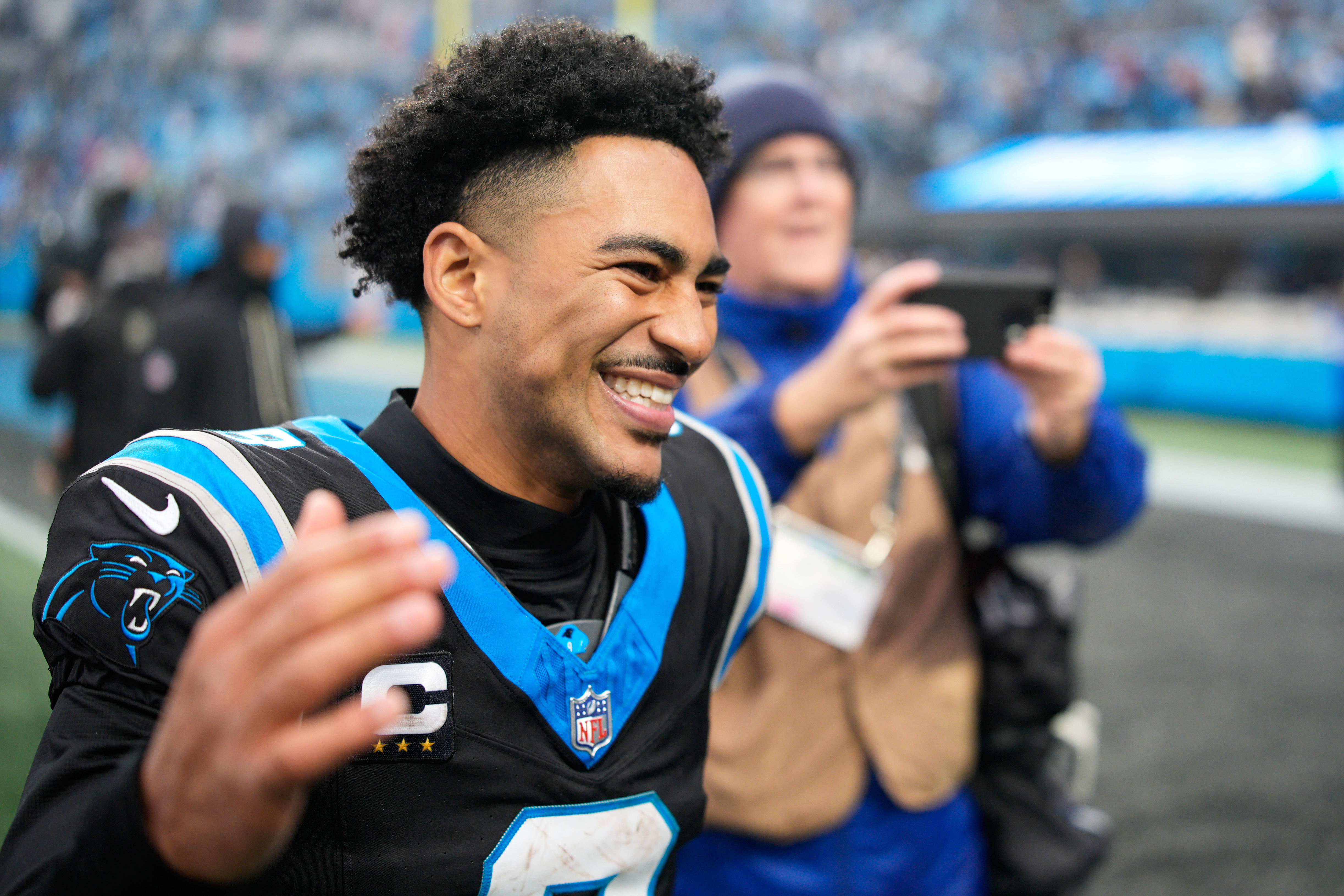
    On Sunday, he will return to Philadelphia amid the strongest season of his NFL career. The Panthers are 2-2, and Young leads the league in yards per game (317), with nine touchdowns and two interceptions.

    To be able to play in front of friends and family, mere miles from where he was born, makes it all the more sweet — even with the boobirds.

    “He has fond memories of the city,” Craig said. “This is a city that’s kind of like a second home to him.”

    Hearing boos ‘in the womb’

    Like most Philadelphians in the 1970s, Craig Young was a big Sixers fan. He loved Dr. J, and then Charles Barkley, and when he moved to California, he became enamored of the Showtime Lakers.

    His affinity for basketball only strengthened after the couple moved to Havertown in 2001. Craig had been hired at an ad agency, Red Tettemer O’Connell + Partners. One of his clients was Comcast SportsNet, which gave him easy access to tickets.

    Bryce Young’s parents, Craig and Julie, exposed him to Philly sports even before he was born.courtesy of Young family

    When Julie was eight months pregnant with the future Panthers quarterback, the couple decided to go to Game 3 of the Lakers-Sixers NBA Finals. As the elder Young detailed to The Inquirer in January 2022, the night did not end well.

    This was somewhat ironic given how the night started. The game was held at what was then called the First Union Center, which Julie said had offered parking for expectant mothers close to the entrance.

    “It was very nice,” she recalled. “I thought, ‘That’s a nice thing for Philly. Oh, how sweet!’”

    Perhaps deceptively sweet. Dressed in bright yellow Kobe Bryant jerseys, Julie and Craig walked through the doors to their mid-level seats. They were immediately greeted with a barrage of boos. One man spilled beer down Craig’s neck while he was riding up the escalator.

    His wife was not spared, either. The crowd at the First Union Center focused not on her bump, but on her fandom, and tried to make the experience as uncomfortable as possible.

    “Before we could even [get] to our seats, they were yelling, ‘Don’t let them sit down! Don’t let them sit down!’” Julie said with a laugh. “And luckily, the gentleman at the end was like, ‘She’s pregnant! Like, I gotta let them in!’”

    Despite a 35-point performance from Allen Iverson, the Lakers won, 96-91, thanks in part to a late-game scoring spree from Robert Horry.

    Carolina Panthers quarterback Bryce Young (right), with his father, Craig, at a Sixers game.courtesy of Young Family

    As disgruntled fans started to filter out, Craig and Julie stayed glued to their seats. After the crowd dispersed, they took their jerseys off, and walked back to the car in their undershirts.

    “We always joked that Bryce was able to endure fan harassment early on,” Craig said. “Even in the womb.”

    It was a precursor of high-pressure environments to come. Following his graduation from Mater Dei High School in 2020, Young enrolled at Alabama (which he later said he chose because of the culture set by one Jalen Hurts).

    By 2021, he was the starter, and made good on his opportunity, becoming the first quarterback in school history to throw for 3,000 plus-yards in two seasons. He was selected by the Panthers No. 1 overall in the 2023 NFL draft, but immediately encountered adversity.

    Head coach Frank Reich was fired in late November, after a league-worst 1-10 start. The team’s offensive line saw a lot of turnover, and allowed 65 total sacks. Over a 16-game season, Young had nearly as many interceptions (10) as he did touchdowns (11), and ranked 29th of 30 qualified quarterbacks in QBR.

    His 2024 season began with his aforementioned benching after two blowout losses. Young reclaimed his role in October, but only after backup quarterback Andy Dalton sprained his thumb.

    Again, the Wynnewood native made the most of his opportunity. Over the Panthers’ remaining 10 games, Young passed for 2,104 yards with 20 combined touchdowns. He led the team to near-wins against the Chiefs and Buccaneers entering their Dec. 8 game against the Eagles.

    More than a dozen of Young’s aunts, uncles, and cousins were in attendance that day, most of them in Kelly green. This was less of an issue during the game, but more noticeable afterward, when they all met in the Panthers’ friends and family section.

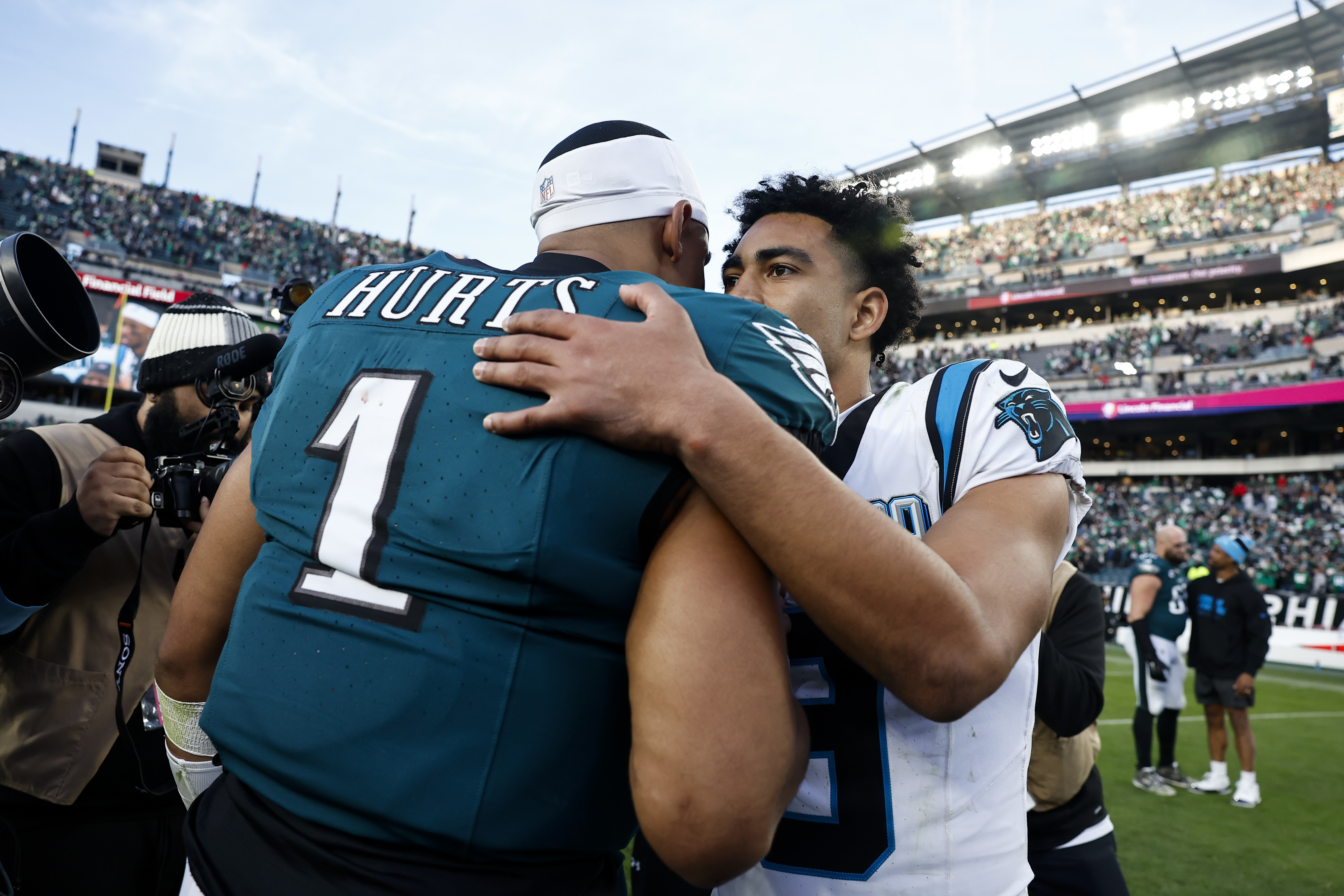
    Eagles quarterback Jalen Hurts greets Panthers quarterback Bryce Young after their matchup in 2024.Monica Herndon / Staff Photographer

    In a sea of Carolina blue, the Youngs stood out.

    “One family member had customized socks with Bryce’s picture on it,” Craig recalled. “So they were like, ‘Oh, but look at my socks,’ and that was the compromise.”

    They made sure the quarterback knew where their allegiance lay.

    “The game had ended maybe 50 minutes before,” Young told the media. “I come out, hug my parents, and everyone else was like, ‘You guys almost beat us. Don’t ever do that again. We got y’all. We killed y’all.’ And I’m like, ‘Dude, I just got done playing like 50 minutes ago … please don’t do this.’”

    Despite his extended family’s wishes, Young will be an even more formidable opponent on Sunday than he was two years ago. And regardless of how the game goes, the quarterback is excited to be back in a city he’s always felt love for.

    But this time, there will be some ground rules for his Philadelphia family.

    “We’ve had a discussion this time around,” Craig said. “Today, you’re going to have to make a decision. You can still come to the game and root for the Eagles. But then you’re not going into the family section with us after.”