Tag: topic-link-auto

  • A strip club scene was cut from ‘National Treasure’ and other insights from Philly’s celebration of the film

    A strip club scene was cut from ‘National Treasure’ and other insights from Philly’s celebration of the film

    I’ve watched National Treasure more times than I can count and if I could count how many times I’ve seen it, I wouldn’t admit it to you.

    It’s a confluence of things that keep me coming back — the scenes filmed in Philly, Nic Cage taking an absurd plot line very seriously, and the fact that this movie always seems to be on TV. Plus, there’s a quick cameo of my favorite stand in Reading Terminal Market, which closed in 2016, that always makes me nostalgic (RIP Salumeria).

    On Friday, I got to geek out with other fans of the film and its sequel, National Treasure: Book of Secrets, during a ticketed talk with the director of the franchise, Jon Turteltaub, at the Independence Visitor Center. Turteltaub’s other films include Cool Runnings, While You Were Sleeping, and The Meg, which tracks.

    In the audience were a self-proclaimed “real-life treasure hunter,” several Freemasons, and Philly tour guide Stephen Pierce of Havertown. Pierce came dressed in his finest colonial garb and told me the movie, which came out when he was 9, was “definitely a huge inspiration for me growing up.”
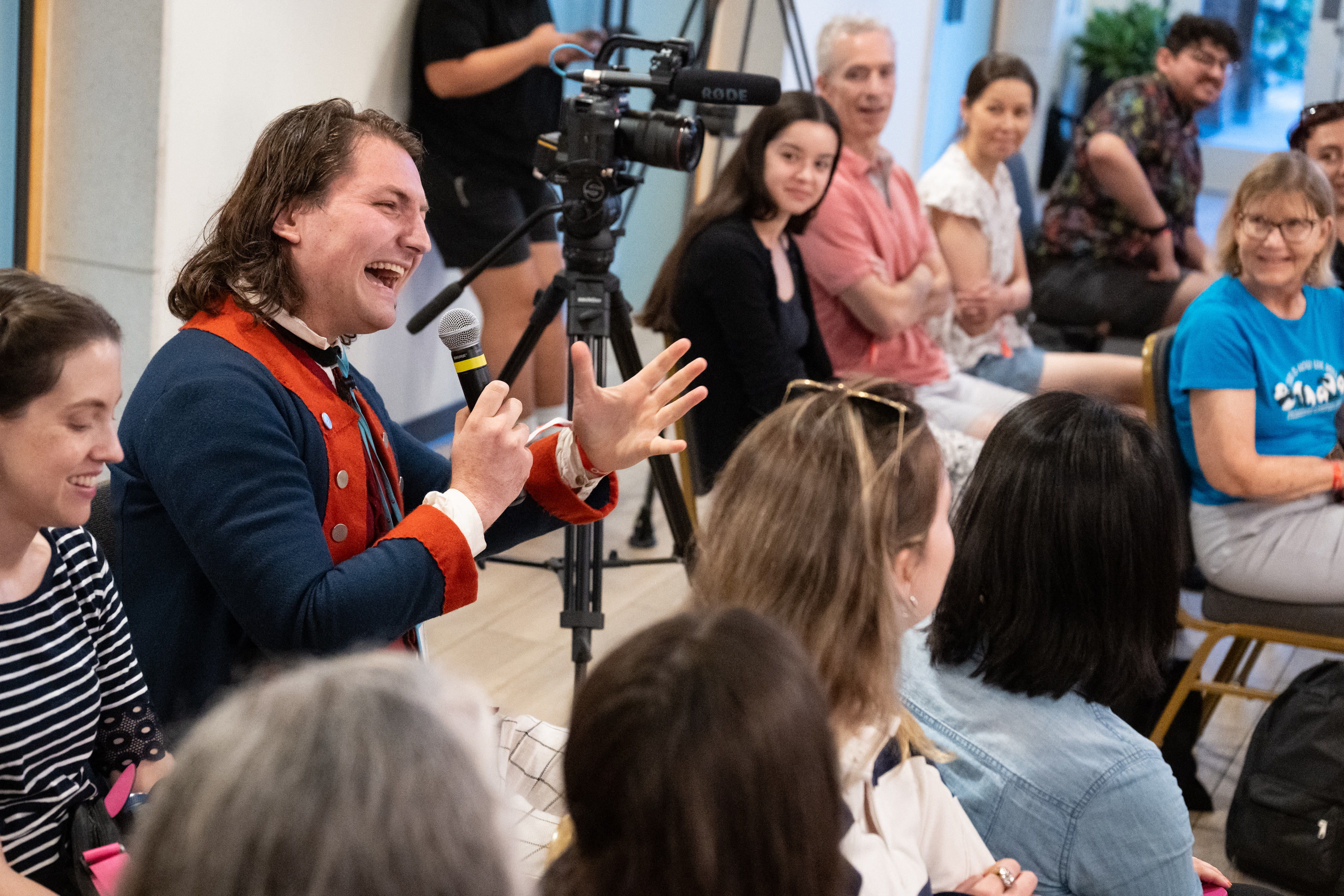
    Stephen Pierce, a local tour guide with America’s Rising Son Tours, asks a question while wearing colonial-era clothing during a live recording of the “National Treasure Hunt” podcast at the Independence Visitor Center in Philadelphia on Friday, Aug. 21, 2026.Erin Blewett / For The Inquirer

    But there were no bigger fans in attendance than the cohosts and moderators for the evening, Aubrey Paris and Emily Black, creators of the National Treasure Hunt podcast, who helped curate Philly’s first National Treasure Weekend of events in conjunction with the Philadelphia Visitor Center.
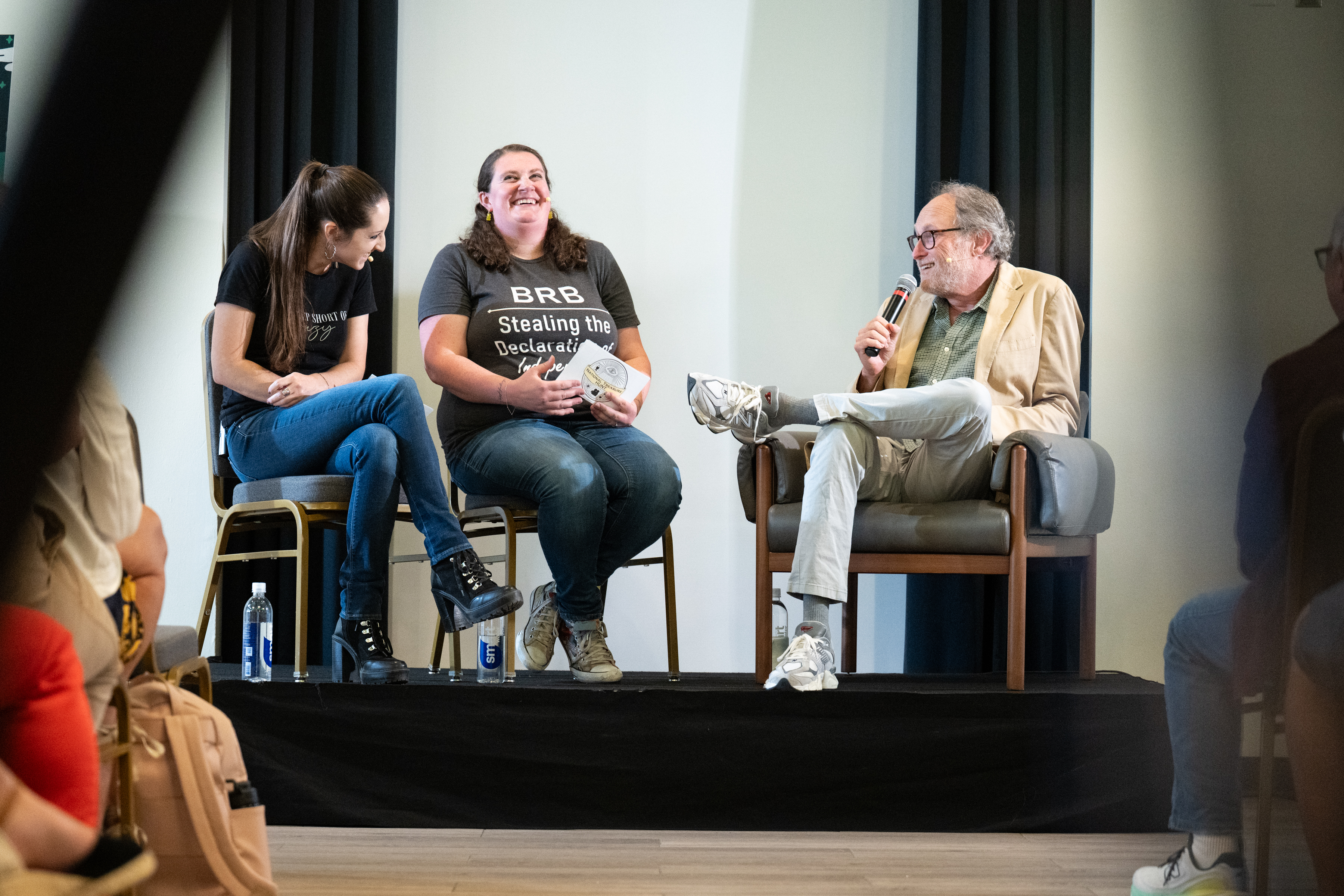
    Aubrey Paris (left) and Emily Black (center), creators and hosts of the “National Treasure Hunt” podcast, speak with “National Treasure” director Jon Turteltaub during a live recording at the Independence Visitor Center in Philadelphia on Friday, Aug. 21, 2026.Erin Blewett / For The Inquirer

    Their palpable joy while interviewing Turteltaub for their podcast was only exceeded by the shock and excitement that washed over their faces when the director gave them the scoop that National Treasure 3 is “finally real.”

    That wasn’t the only gem Turteltaub dropped during their talk, though. Here are five other nuggets and behind-the-scenes stories the director shared about one of the best and most ridiculous films ever partially filmed in Philly.

    All up in Independence Hall

    Turteltaub said he was surprised that the National Park Service let the cast and crew climb up Independence Hall’s bell tower to film.

    “That was special. Being next to the Centennial Bell — amazing. More interesting was being behind the clock, coming up those stairs and seeing how that works was like ‘Wow, this is why I want to be in the movie business,’” he said. “It’s not art. You just get treated better than other people.”
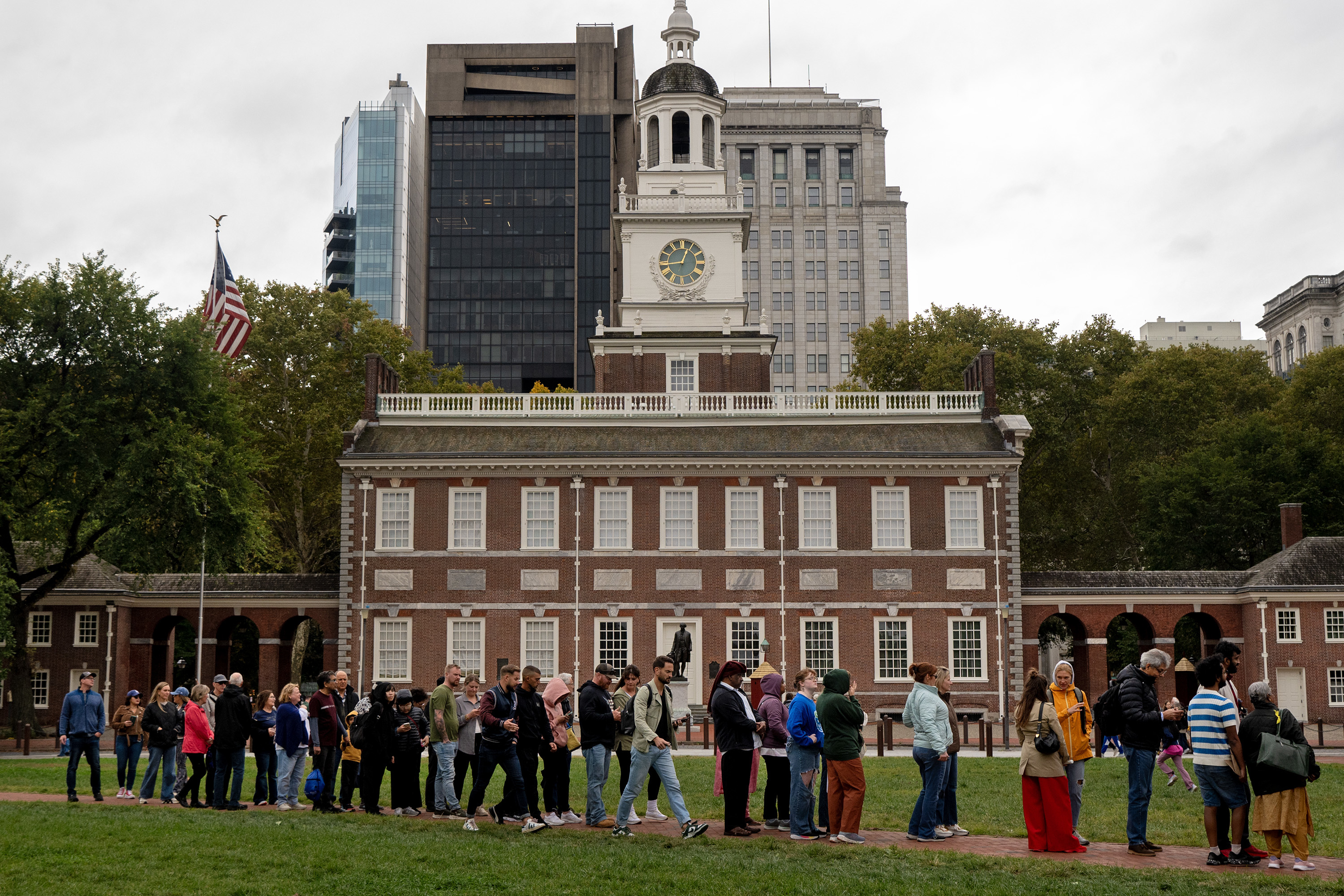
    Visitors stand in a long line on Oct. 12, 2025, in front of Independence Hall waiting to view the nearby Liberty Bell.Tom Gralish / Staff Photographer

    But the NPS didn’t allow filming at the doors or inside the building because it would have impeded visitors’ experience, Turteltaub said. And it was at this point in the conversation I learned there’s a replica of Independence Hall at Knott’s Berry Farm in Buena Park, Calif., which is where the interior scenes of the film were shot.

    So I either need to make a movie or go to California to live out my dream of climbing the bell tower. Duly noted.

    A meaty role

    During the chase scene that winds through Reading Terminal Market, Abigail (played by Diane Kruger) ducks into a butcher stand while clutching the Declaration of Independence. The woman running the counter initially says in the most unenthusiastic, Philly way possible: “If you’re not a steak, you don’t belong here.”

    But when Abigail tells the woman she’s running from her “ex-husband” (who’s actually a bad guy), the woman says: “Honey, stay as long as you like.”
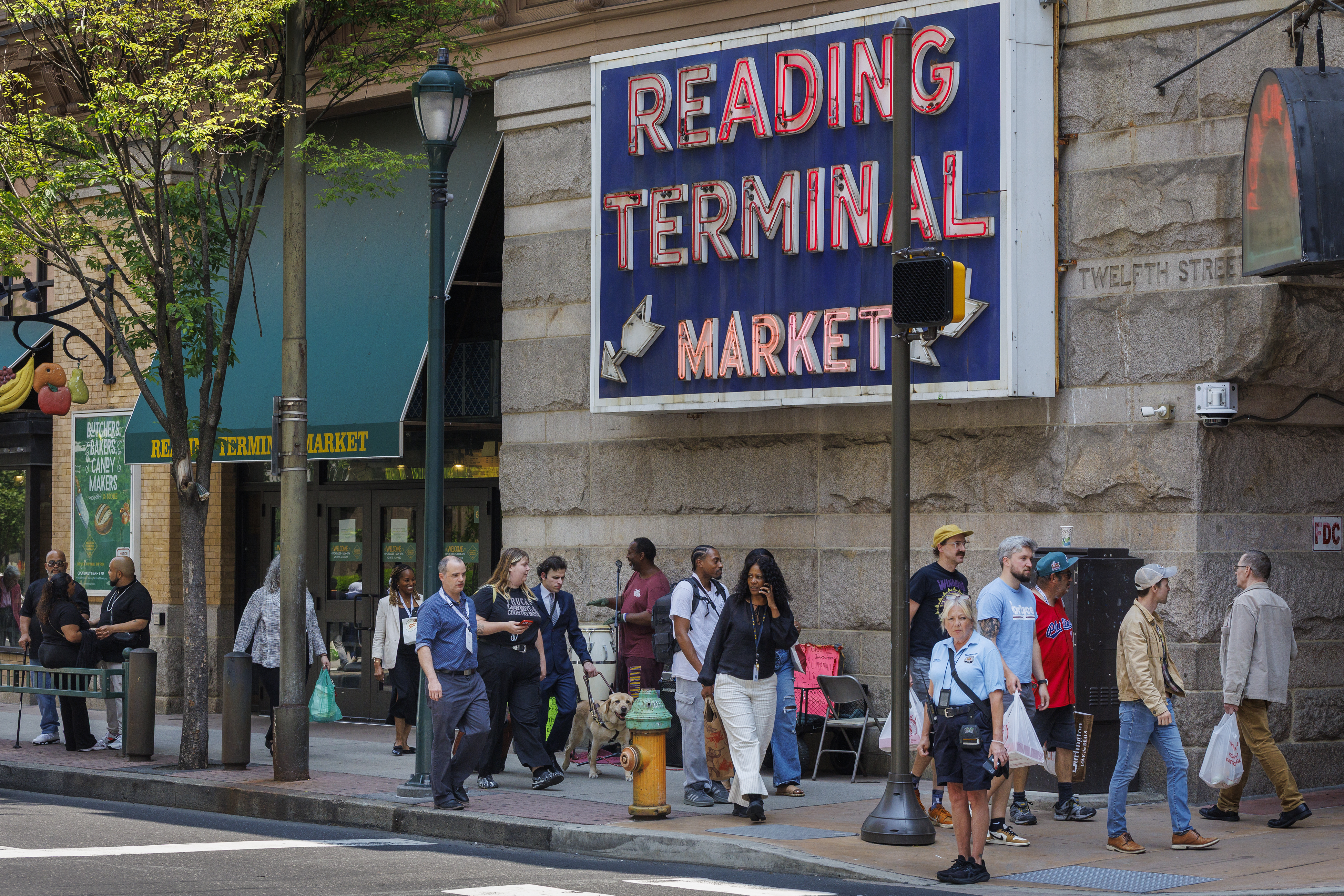
    Pedestrians fill the sidewalk outside Reading Terminal Market in Center City on June 3, 2025.Alejandro A. Alvarez / Staff Photographer

    Paris said that the butcher has become “a favorite non-named character.” Some have even called her “the real national treasure.”

    “It’s a huge cult thing,” Paris said.

    Mark another win for Philly’s notoriously kind-but-not-nice attitude.

    Stripped down

    Turteltaub revealed that the first version of the original film was four hours long, so many scenes had to be left on the cutting room floor, including the original ending.

    “The original ending scene, they were back at the National Archives looking at the Declaration back where it belonged. We thought the world needed to know that,” Turteltaub said. “Everyone’s feeling good and then they get started talking about a different treasure and they go off like, ‘Oh no, I’m not doing that!’ It’s like the end of a Gilligan’s Island episode.”
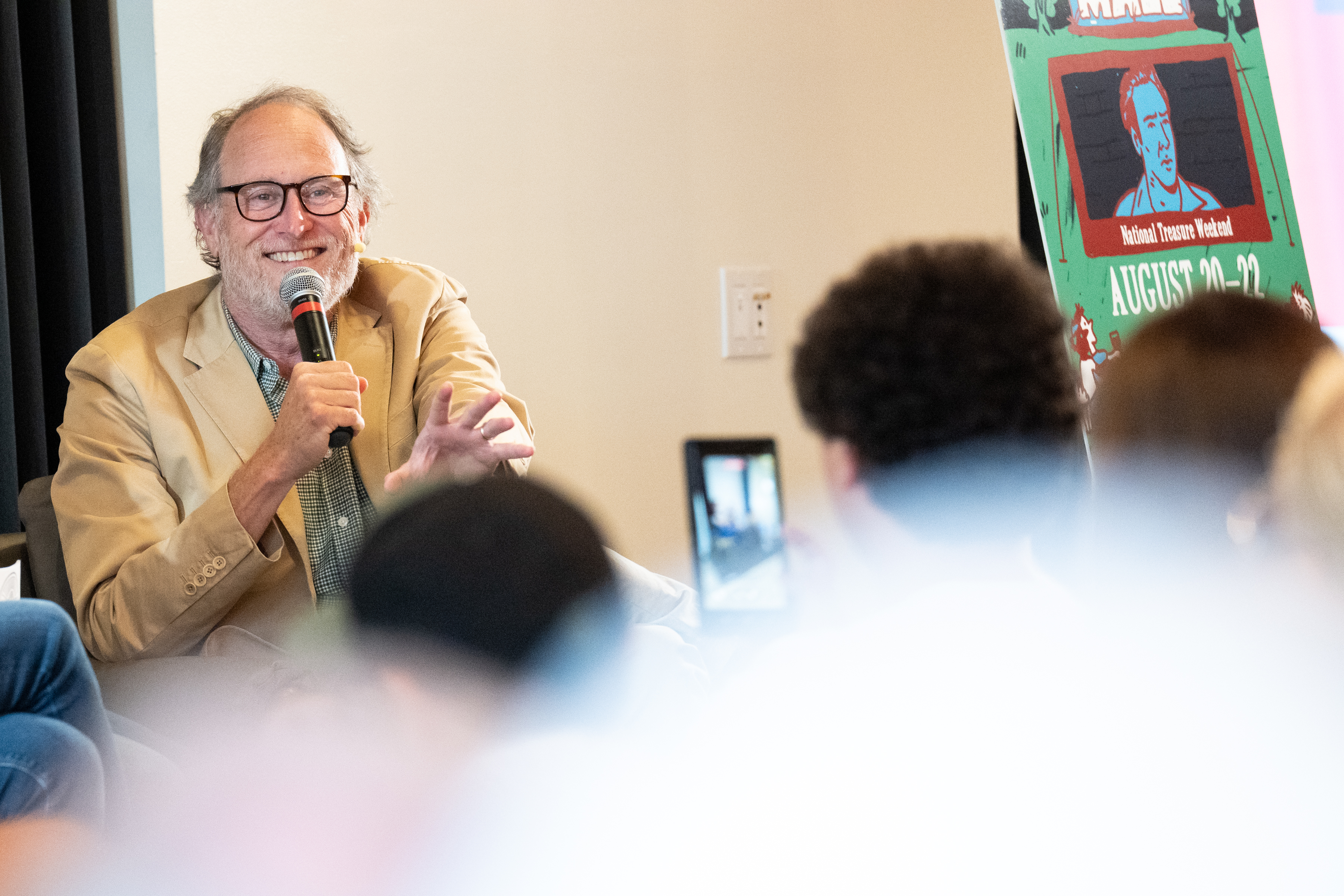
    Jon Turteltaub, director of the 2004 film “National Treasure,” speaks during a live recording of the “National Treasure Hunt” podcast at the Independence Visitor Center in Philadelphia on Friday, Aug. 21, 2026.Erin Blewett / For The Inquirer

    Another scene that was stripped from the film took place when Abigail and Riley (played by Justin Bartha) are chased through Center City.

    “As Riley’s being chased, he cuts into a strip club and he runs through the strip club to get away,” Turteltaub said. “So my idea was he runs in and no one’s in there and it’s just some guy vacuuming and [Riley] says, ‘Well, that was disappointing,’ and keeps going.”

    I’m disappointed the cleanest scene ever filmed in a strip club didn’t make the cut.

    High school reunion

    Turteltaub and Cage attended Beverly Hills High School together and the director said the two were friends.

    “He’s kind of a great, nonconforming, march-to-his-own drum guy, which in high school is not easy,” Turteltaub said. “I was desperate to fit in and be liked by every single person ever. He didn’t care.”
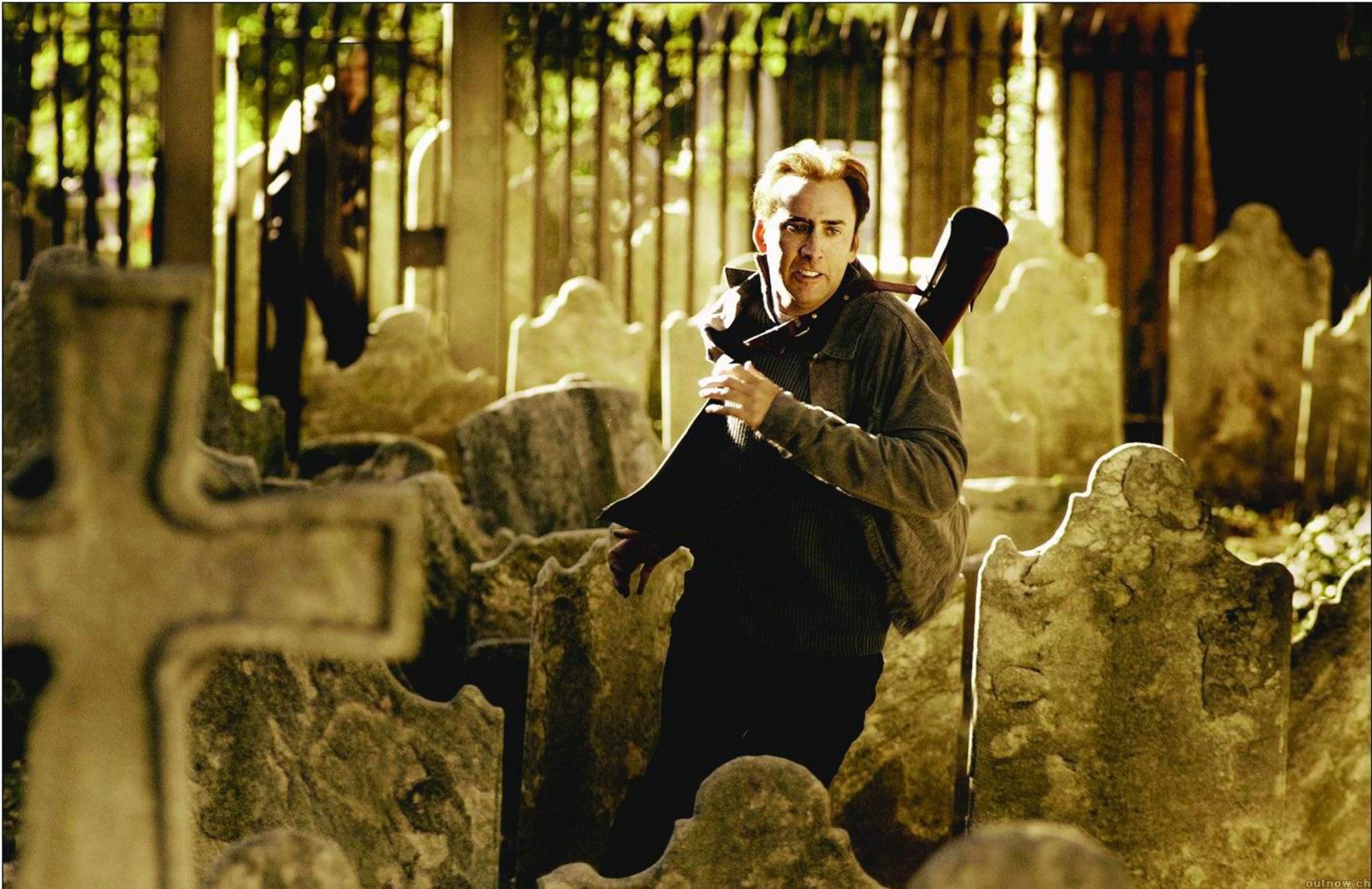
    Nicolas Cage runs through the Old Pine Street Presbyterian Church cemetery in a scene from “National Treasure.”Alamy Stock Photo

    The director said he sold the actor on taking the part of Benjamin Franklin Gates in National Treasure when he described the character to Cage with one word: audacity.

    “Nic is audacious and that was that connection. Nic never has a superficial connection to a character. He goes and finds the person,” Turteltaub said. “Sometimes that’s insane stuff and craziness and awesomeness and unpredictability and sometimes it just makes somebody very, very real.”

    Page turner

    During audience questions at the end of the talk, a child of no more than 6 asked Turteltaub: “What’s on page 47?” to thunderous applause from the crowd.

    The question referred to the end of the sequel film, when the President of the United States asks Gates what he thinks of what’s on page 47 of the book of secrets handed down from president to president. Gates calls what’s contained on the page “life-altering,” but its contents are never revealed to the audience.

    It may not be a secret for much longer, though.

    “The worst thing, to make it interesting, was we added the line at the last second — ‘life-changing, life-altering’ so now we have to come up with something that’s ‘life-altering,’” Turteltaub said. “If I said ‘I don’t know,’ everyone will hate me. If I said ‘I do know,’ you’ll hate me for not telling you, but I don’t think we can make the third movie without at least helping people out.”
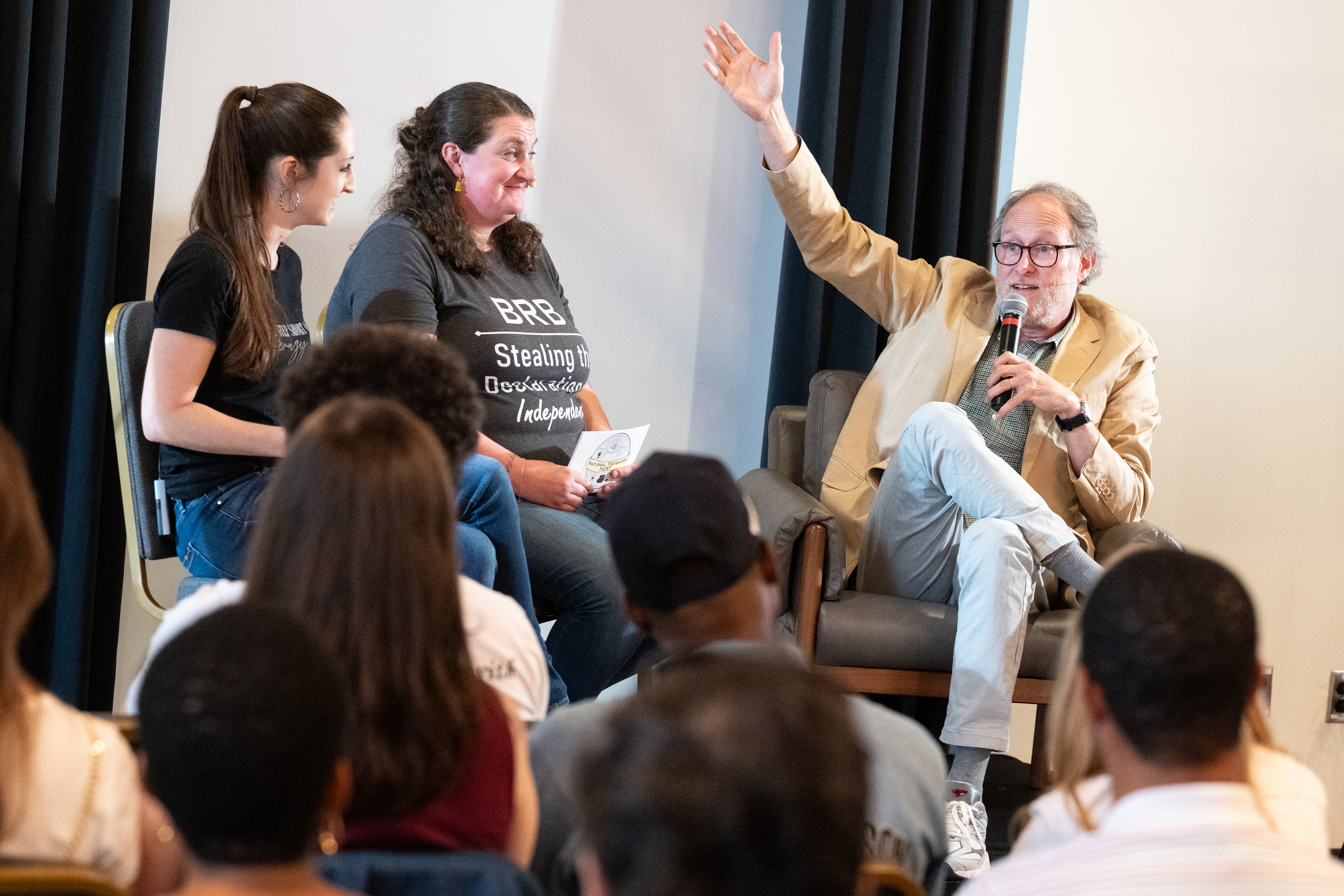

    Aubrey Paris (left) and Emily Black (center), creators and hosts of the “National Treasure Hunt” podcast, speak with “National Treasure” director Jon Turteltaub during a live recording at the Independence Visitor Center in Philadelphia on Friday, Aug. 21, 2026. The event was part of Philadelphia’s first National Treasure Weekend.Erin Blewett / For The Inquirer
  • Don’t panic over Eagles rookie tight end Eli Stowers. Here’s where he can improve and who he might become

    Don’t panic over Eagles rookie tight end Eli Stowers. Here’s where he can improve and who he might become

    Optimism is generally high this time of year, especially for an Eagles offense that struggled throughout the 2025 season with consistency and continuity. New offensive coordinator Sean Mannion’s offense has shown flashes of encouraging play along with concerning stretches during training camp, but most fans are excited to watch the offense in full when the season kicks off in a few weeks.

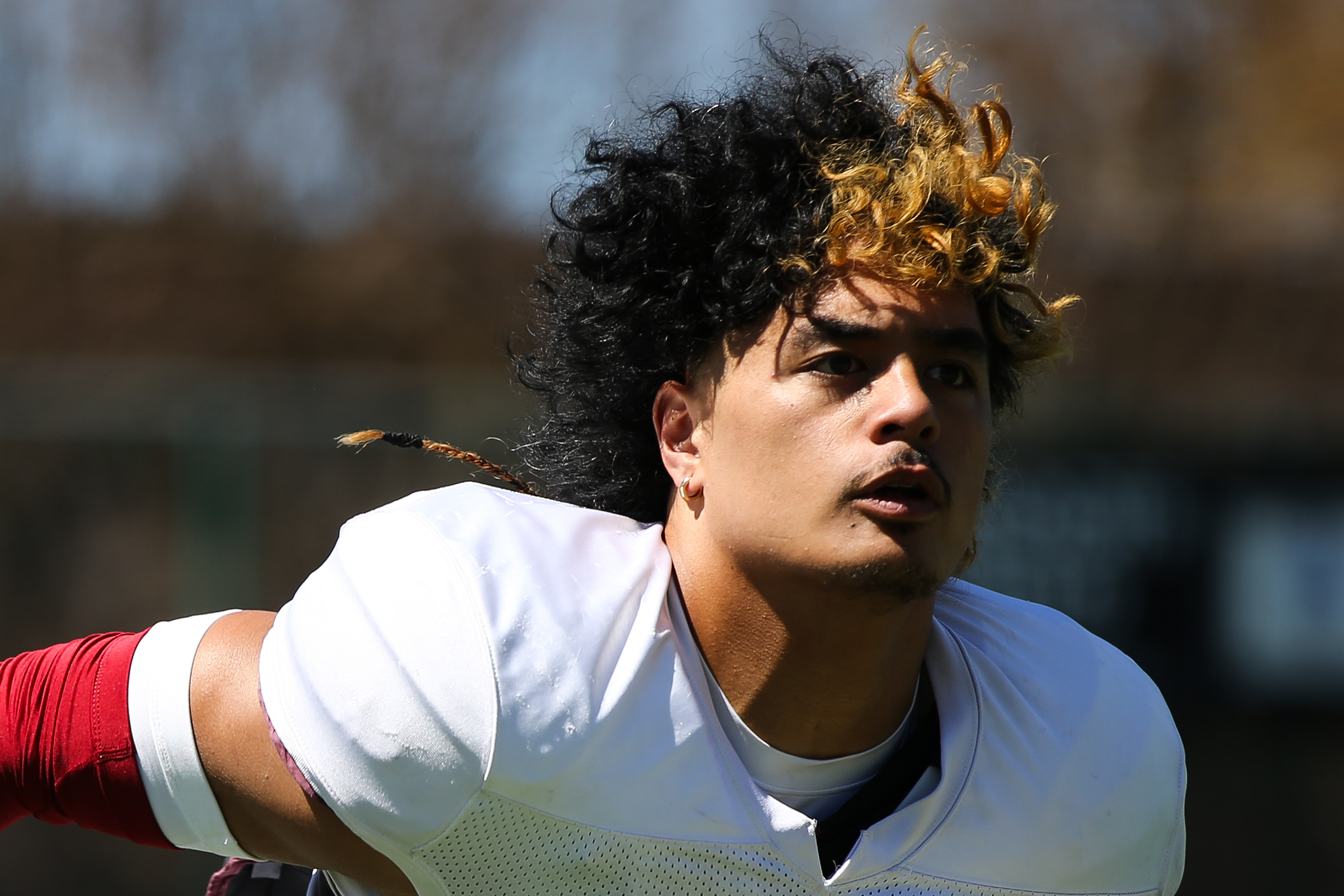
    For second-round rookie tight end Eli Stowers, the confidence in his potential role this season seems to be far less positive. He hasn’t been a standout player much this preseason, which has caused some angst among fans.

    As history has shown with mid-round tight end prospects, the range of outcomes is wide, and most have the same thing in common: They required patience and time to adjust to the NFL game. Very rarely over the last five drafts has a tight end taken after the first round made an immediate impact. Those who have, like the Lions’ Sam LaPorta, Cardinals’ Trey McBride, and Packers’ Tucker Kraft, quickly ascended to become major receiving weapons with in-line blocking ability.

    To provide some perspective on what Stowers can ultimately become, here are three buckets the Eagles tight end could fall under at a position that typically requires patience to see the player’s finished product.

    Improved in a key area

    Dawson Knox, Buffalo Bills

    Though Knox and Stowers are different styles of players — Knox was a more rugged run blocker and not quite as explosive of an athlete — they share a similar background. Both were high school quarterbacks who had to learn a new position in college.

    Knox walked on at Ole Miss after missing most of his senior high school season, and didn’t get true tight end reps until his junior season. Stowers switched to tight end just three years ago and is still relatively new to the position.

    What helped Knox see the field early on in Buffalo was the blocking ability he displayed in college, but his key area of improvement has been his reliability in a passing game where he’s averaged 50 targets across his seven-year career.

    Knox’s two highest receiving success rates have come in the last two years, even though his numbers aren’t eye-popping. In Knox, Stowers can see a player that has adapted to the NFL game, and by the Buffalo tight end’s third year — his best statistical season — he became a much more prevalent receiving threat.

    Sam LaPorta, Detroit Lions

    We added LaPorta here because since his rookie season, when he exploded for 889 yards on 86 catches and 10 touchdowns, he has continued to add more to his game — including becoming a more reliable in-line blocker, which was a weakness in college. It even showed up early on in his NFL career, especially with one-on-one blocks against defensive ends.

    LaPorta was limited to nine games last season because of injury — he missed the last eight games with a herniated disk in his back — but showed some progression as a blocker for the Lions.

    Though Brock Wright handled more of the blocking duties, LaPorta, when healthy, has been a dynamic field stretcher and creator after the catch. What Stowers can learn from LaPorta — who also entered the league at sub-250 pounds — is that blocking can be improved, even in the NFL. Stowers likely will not reach the same level of involvement in the Eagles offense as LaPorta had in Detroit as a rookie, though.

    Struggled to block, contributed as part of a rotation

    Mike Gesicki, Cincinnati Bengals

    Among current players, there may not be a closer comparable to Stowers than Gesicki. Both were dynamic receiving tight ends who did their damage in college when split out wide, in the slot, or as off-the-ball tight ends.

    They share another commonality too: struggling to block in one-on-one scenarios against defensive linemen and generating displacement at the line of scrimmage. Gesicki’s best years of production — from 2019-21 — are likely behind him. Since leaving the Miami Dolphins in 2022, Gesicki has averaged about 45% of snaps across his time with the New England Patriots and Cincinnati Bengals.

    The former 2018 second-rounder has been relatively healthy throughout his career, but never improved even marginally as a blocker, which limits how much he can be on the field in the modern NFL.

    Jonnu Smith

    The Philadelphia native, currently a free agent, was best known for his ability to create explosive plays with the ball in his hands, though he has surpassed 600 receiving yards in a season just once. His usage in Arthur Smith’s offenses, first in Tennessee and then in Atlanta, made him a threat to turn a routine play into a big gain after the catch.

    But across his five NFL stops, the one inconsistency of his game has been his blocking. He showed much more promise than Gesicki as a blocker, but Smith has never consistently been able to block as an in-line player, and it’s a big reason he likely has not drawn a ton of interest entering Year 10.

    His last stop, in Pittsburgh last season, produced career-worst numbers in a loaded tight end room: 38 catches, 222 yards for a 5.8 yards per catch average.

    Smith, a former third-round pick, never assumed the top tight end role at any of his stops but has played nearly a decade in the league. He has carved out a niche role as an undersized tight end that is a run-after-catch threat , but he isn’t a fit for every offense as he ages.

    Receiving skills kept them on the field regardless of blocking struggles

    Jared Cook

    When you look up Stowers on Mockdraftable, which draws comparisons to previous players at a position, Cook’s name is his third-highest match at 73.9%, and for good reason. Cook was a nonfactor as a blocker and just not valuable when asked to handle defensive ends and linebackers in those blocking situations.

    When you look back at the receiving numbers, though, he was a matchup problem for linebackers, safeties, and even some cornerbacks. But his success took a while as he struggled early with the Tennessee Titans, but by his third year, he was consistently contributing as a receiver. In the last 10 years of his 13-season NFL career, Cook averaged just over 600 receiving yards and four touchdowns, including a career-best 896 receiving yards in Year 10 with Oakland.

    If Stowers never truly develops as a reliable blocker, a career similar to Cook’s, who was a second-round pick in 2009, would be an ideal outcome.

    Isaiah Likely, New York Giants

    Like Stowers, former fourth-rounder Likely walked into a veteran-laden tight end room as a rookie, and though there was excitement around the Baltimore Ravens tight end early on, his development took time, as did the production. Likely didn’t truly get going until the back half of his rookie season, with 26 of his 36 total catches and 279 of his 373 total receiving yards coming from Week 8 through the rest of the season.

    Blocking in space was a strength for Likely at Coastal Carolina, but translating it to the NFL game as a full-time in-line player has never materialized. It didn’t in Baltimore, with Mark Andrews and later Charlie Kolar taking more of those responsibilities.

    Likely, who signed with the New York Giants in the offseason (three years, $40 million), is best known for his receiving ability, specifically stretching the field vertically. Despite a down season last year, Likely’s greatest abilities are finding soft spots in zone coverage and winning his one-on-one matchups downfield.

    If Stowers can be serviceable as a blocker, similar to how Likely was in Baltimore, that can help the Eagles rookie earn more snaps early in his career.

    Patience, patience, patience

    It’s too early to write off Stowers, even if he isn’t productive in Year 1 in Philly. As we wrote on the night the Vanderbilt tight end was drafted, his true impact could come three or four years down the line. And leaning on previous examples, those breakouts for non-first-round tight ends often happened in Year 3 or 4.

    With Dallas Goedert and Johnny Mundt likely filling the top two roles for the Eagles tight end room, there should be no rush to force Stowers onto the field. The season is long, and should he make an impact in 2026, it’ll likely come deep into the season.

  • Temple’s linebackers built a tight-knit bond off the field. They’re hoping it helps them on the field too.

    Temple’s linebackers built a tight-knit bond off the field. They’re hoping it helps them on the field too.

    Coming from the roof of Temple linebacker Jordan Montgomery’s North Philadelphia home, sounds of music and general jeering fill the streets. The Owls linebacker room has gotten together for another function.

    It’s become somewhat of a tradition. Every few weeks, the Owls linebackers, headed by captain Eric Stuart, come together to eat, laugh and strengthen the bonds that have extended beyond the football field. And it’s a tradition that reflects the broader culture shift in the program, brought on by coach K.C. Keeler, and one the Owls hope sparks a resurgence on the field.

    “I think the first time we did it was last year for the Super Bowl, at my old crib,” said Stuart, a fifth-year senior. “We just cooked some food and had everybody come over and come eat and just hang out together. That’s how it all started.”

    Said senior Curly Ordonez: “For us, it is just like showing up for your brother, right? You don’t have to come for the whole time. I was one of those, especially last year. I was laid back, pretty quiet, and kept to myself. And it was about bringing people out of their shells. We have a lot of guys that are far away from home, and we can get them some home-cooked meals, which is something we like to do.”

    Continuity is key for the Owls linebackers with 10 returners from last season. Stuart, one of Temple’s most experienced defensive players, anchors a group that also returns 2025’s leading tackler, Ordonez, Tyree Alualu, Jayvant Brown, Wesley Brown, Montgomery, and others. They are joined by newcomers such as Jaylon Joseph and JaMair Diaz.

    “I think it’s just really important for us to be able to coach each other up,” Stuart said. “On the football field, stuff happens; emotions are high. … Every message might not come off in a regular tone, especially to the newer guys. But I feel like especially the guys in our room, we all understand that nobody is coming at you as a person.

    “We’re trying to be better out here, so knowing each other just helps with communication. You don’t get that bickering and fighting, and that is probably the biggest thing we’ve gotten from being so close.”

    Junior Tyree Alualu is one of Temple’s returning linebackers.Isaiah Vazquez / For The Inquirer

    And the cohesion among the Owls linebackers has been noticed from across the field.

    “I’ve never seen a room so close like the linebackers,” said quarterback Ajani Sheppard. “They are always hanging out with each other, always talking to each other. I think it’s such a great thing.”

    The relationships among the linebackers started just over a year ago with the hiring of Keeler and a new staff. Keeler inherited a program coming off four consecutive 3-9 seasons under Stan Drayton and Rod Carey but quickly made a culture shift a priority. Keeler said he met with every player on the roster individually following his hiring. Many players were encouraged to stay, and the coaching staff emphasized that continuity.

    “I would say, just having new coaches,” Ordonez said of the difference. “We had a lot of guys who were new to the team, and last year was one of those years that took us where it went, and I feel like this year, we understood the type of team we had and the guys we have coming and who we are. We obviously got better, and we’ve seen that throughout the spring. So understanding that by getting together we could really be something as a defense. But to be one of the best groups you got to get to know each other, got to hang out, you’ve got to do stuff outside of the city, gain that trust and gain that love.”

    Stuart said, unlike previous years, he wants to be in the facility every day.

    “I would say it’s more of a whole team energy that kick-started it for [the linebackers],” said Stuart. “Me personally, in 2024, [I] just honestly hated being in the facility every day. I didn’t want to be here. I didn’t want to hang out after or spend time with anybody. Then Coach Keeler and the new staff got here, and the energy changed. Like, I feel like everyone wants to be here, everyone comes in, and nobody is getting their stuff just to run out of the locker room and go home. We sit, and we hang out in the locker room. There’s no one in a rush to get out of here. I would say I thought that’s probably the biggest change.”

    The real test of their chemistry awaits on Sept. 5 with their season opener against Rhode Island.

  • Andy Dalton? Tanner McKee? Please. The Eagles lack a real backup quarterback. Unusual. Unsettling.

    Andy Dalton? Tanner McKee? Please. The Eagles lack a real backup quarterback. Unusual. Unsettling.

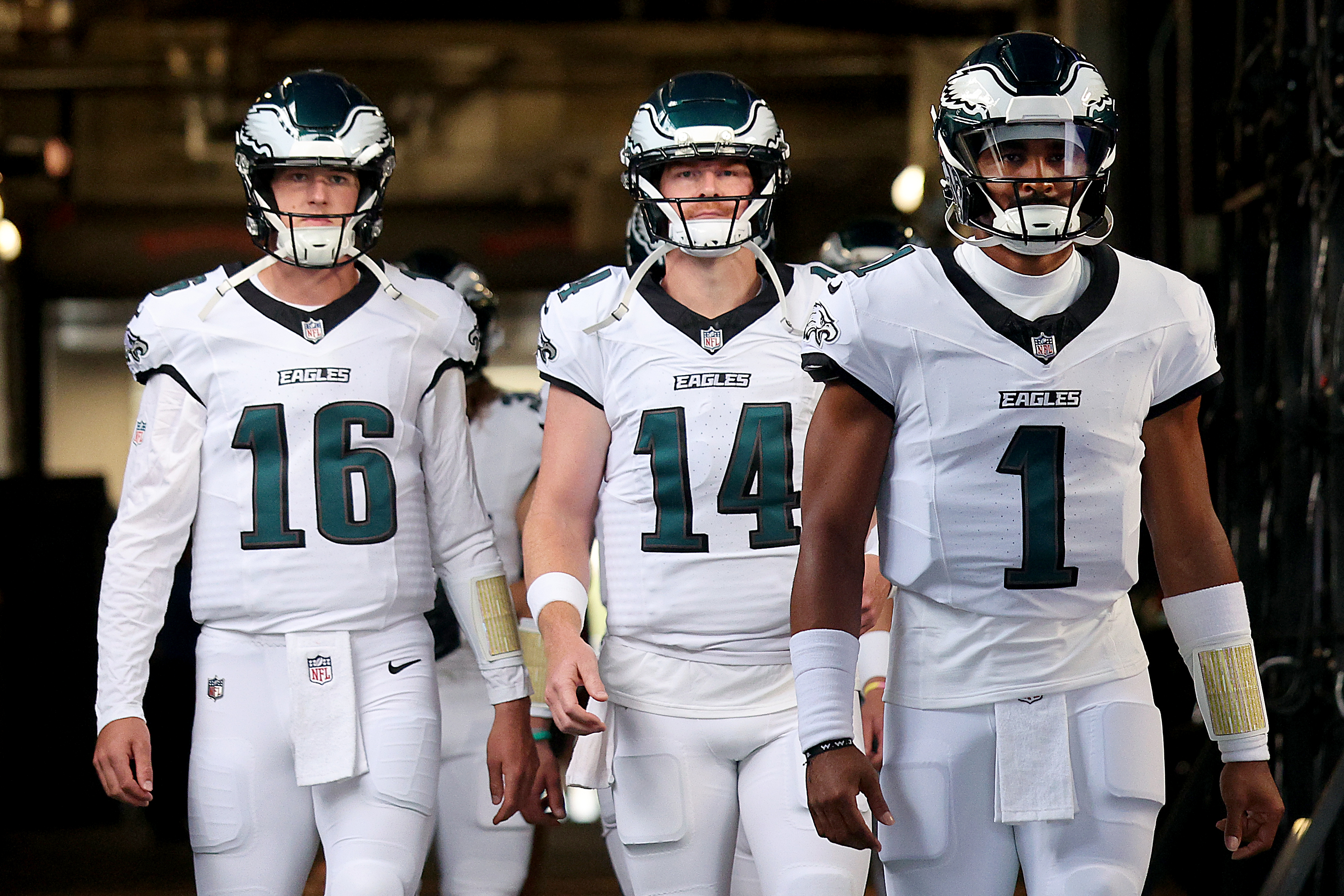
    The Eagles used to value the backup quarterback position, perhaps more than any other team in the NFL. Looking at their rosters in 2025 and 2026, it’s hard to believe they still do.

    This might not matter at all, except Eagles starter Jalen Hurts gets hurt a lot, and quarterbacks are the most important players in all of team sports.

    Still, it seems like a lot of energy to spend on a guy who won’t play much. Backup quarterback angst: The sort of nattering matter that makes the NFL preseason interminable; the sort of infuriating football geek-talk that fantasy nerds Snapchat about.

    You know. Guys like Lurie and Roseman.

    In 2017, the Eagles committed $11 million to their backup quarterback spot. So important was the position to owner Jeffrey Lurie that he told GM Howie Roseman to sign Nick Foles, whom Andy Reid had just cut from the Chiefs. It meant eating $7 million of the contract of Chase Daniel, whom the Eagles promptly released.

    Despite missing the playoffs in 2016 with rookie Carson Wentz at quarterback, Lurie saw 2017 as a real chance to win the franchise’s first Super Bowl, and he considered Foles, who’d had a strong run as an Eagle, to be a better option than Daniel, who’d never had a strong run anywhere.

    The rest, as they say, is history: Wentz got injured, Foles replaced him, played well down the stretch, and won the MVP award inSuper Bowl LII where he outplayed Patriots legend Tom Brady and outfoxed coach Bill Belichick.

    Nick Foles became an unassailable Eagles legend, but that doesn’t mean all backup quarterbacks are created equal. Michael Bryant / Staff Photographer

    “Our priority, as you’ve seen, is to make sure we have the very best possible other starting quarterback,” Lurie said during Super Bowl week.

    That’s generally been true, and it’s generally made sense for the Birds, since Lurie prefers mobile quarterbacks, who, of course, are more likely to get hurt.

    Lurie signed Michael Vick out of prison in 2009, and Vick supplanted Donovan McNabb the next season and went to the Pro Bowl in his second of four years as an Eagle. Lurie drafted Hurts in the second round in 2020 with plans that Hurts would be the long-term backup to Wentz, but that’s before Ginger Jesus lost his job, and maybe his mind. Lurie sanctioned the recent, sensible acquisitions of Gardner Minshew, Marcus Mariota, and Kenny Pickett.

    But in 2019, Lurie also approved the signing of Josh McCown, a 40-year-old with a 79.7 passer rating with eight other teams. McCown replaced Wentz early in the Eagles’ home wild-card playoff game, played atrociously (predictably), and cost the Birds their postseason.

    Last season, Lurie allowed the Birds to enter the season with third-year sixth-round pick Tanner McKee as the backup of a team defending its second Super Bowl title. It didn’t matter, since Hurts stayed healthy. But McKee got to start game 17 against the Commanders, and he was poor: 21-for-40, 241 yards, one touchdown, one interception, with a forgettable fourth quarter that cost the Eagles their chance to win the game and capture a better seed. It looked OK in the moment, but upon further review, the Eagles (and I) decided that McKee is not the answer.

    The Eagles (not I) determined that Andy Dalton is the answer.

    They were wrong.

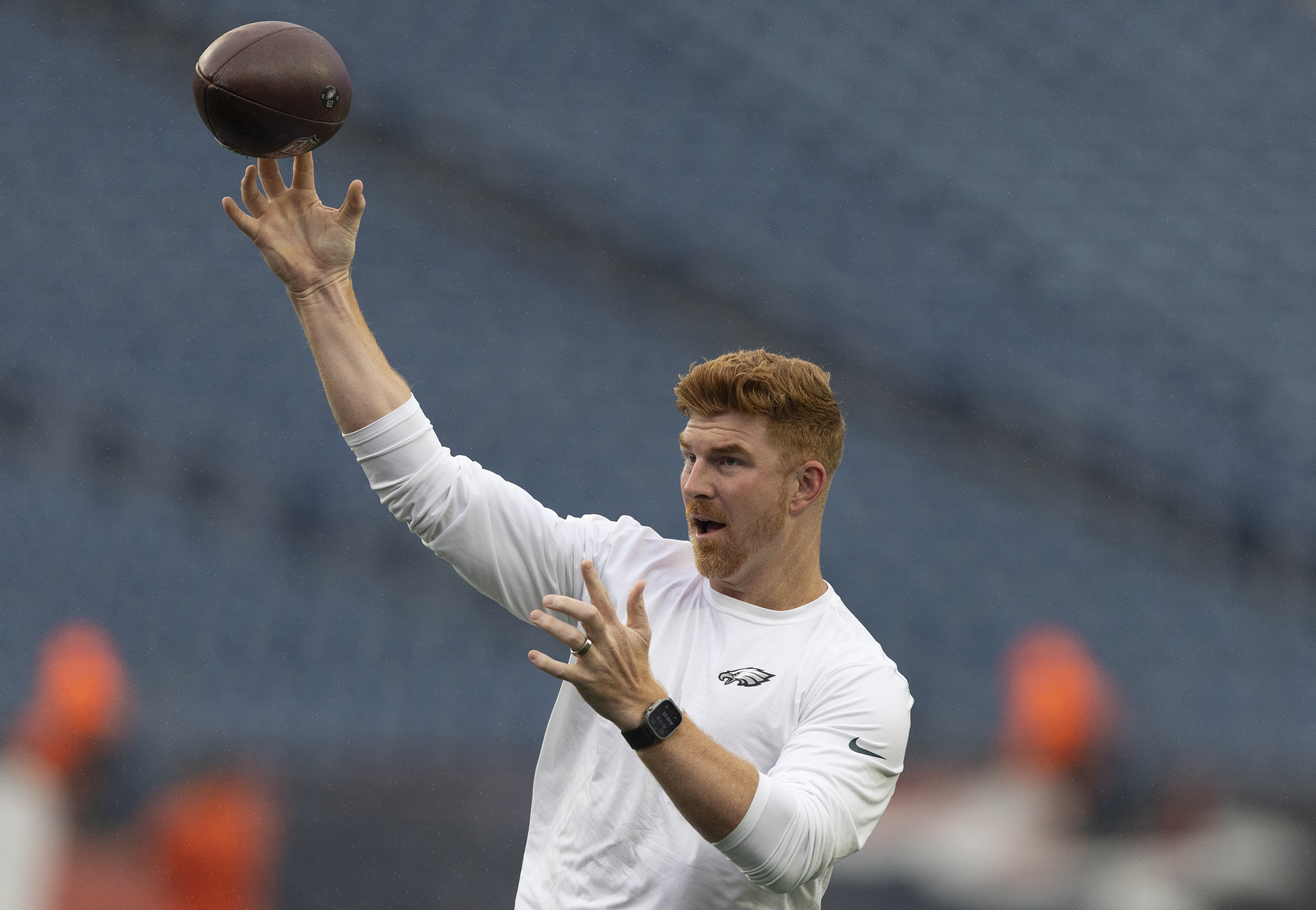
    The Eagles’ bet on Andy Dalton does not appear to be going according to plan. Yong Kim / Staff Photographer

    The Birds in March traded a seventh-round pick to the Panthers for Dalton.

    No player at Eagles preseason work or in training camp has been a bigger disappointment than Dalton.

    That isn’t really fair. There should have been minimal expectations of Dalton.

    He’ll be 39 in October. He’s 1-6 in his last seven starts over the past three years, during which time his passer rating is 84.5. Aberration? No. In the five seasons before that, his rating was 85.5 in 57 games. He’s been the backup in Carolina the past three seasons, essentially a big brother for Bryce Young, the underperforming No. 1 overall pick from 2023, and an assistant coach of sorts.

    That’s the role he was expected to serve in Philadelphia, where new offensive coordinator Sean Mannion has installed a new scheme. Dalton can help with the adjustment for Hurts, and you’d think Dalton would have a significant advantage over McKee in executing the offense.

    Tanner McKee again appears to be the best backup option for the Eagles. Yong Kim / Staff Photographer

    But no. Dalton has looked appreciably worse than McKee — so much worse that McKee’s unremarkable performance looks good by comparison.

    Entering the third and final preseason game Friday, the competition, such as it is, for the backup job clearly tilts in McKee’s favor. Which delivers this uncomfortable truth:

    The Eagles, who have made the playoffs five years in a row, don’t really have a viable backup quarterback. That’s the fault of the front office.

    Roseman.

    Lurie.

    What should they have done?

    Maybe they should have signed Mitch Trubisky, who got two years and $10.5 million to back up Cam Ward in Tennessee. Maybe another dance with Minshew, who got $8.25 million to back up Jacoby Brissett in Arizona. Both would have cost a lot more than Dalton’s $1.5 million, but that’s also just about what Tua Tagovailoa got from the Falcons to be the emergency plan if Michael Penix Jr. wasn’t back in time from his knee injury.

    All three of those QBs are in spots where they will have a likelier chance to resurrect their careers. Maybe that’s why the Eagles weren’t able to land one of them, and why they had to trade a pick for Dalton.

    To be fair to Roseman and Lurie, the Birds also drafted a quarterback in April: Cole Payton, in the fifth round, out of North Dakota State, who currently is not close to being an option.

    To be fair to Payton, he might be as good an option as the other two.

  • How ChatGPT helped persuade one couple to move to Ardmore from Mexico

    How ChatGPT helped persuade one couple to move to Ardmore from Mexico

    From her home in Mexico, JoAnne Kim started searching for a Philadelphia-area apartment by opening ChatGPT.

    Kim, a regular user of the generative artificial-intelligence tool, told OpenAI’s chatbot what she and her husband wanted: a quiet place in Pennsylvania that was walkable and dog friendly with good transit access, a strong sense of community, cafes and restaurants, and a lot of things to do.

    ChatGPT suggested Ardmore, Bryn Mawr, and Chestnut Hill. The couple chose Ardmore, and Kim asked the chatbot for a list of apartment communities that fit their criteria and included outdoor space.

    ChatGPT “helped me become a better apartment hunter, because I was able to use all the data to help me make a decision,” said Kim, a 64-year-old career mentor for university students.

    This month, the Kims moved into Montgomery Plaza near Suburban Square.

    Generative AI tools are becoming increasingly popular as more people use them to write emails, summarize documents, and recreate pictures of pets. And, like Kim, renters are also using AI chatbots to find apartments.

    In Philadelphia and beyond, the growth of AI is changing the way people search for homes — and it’s prompting some in the industry to change how they do business.

    JoAnne Kim used ChatGPT to find the apartment she moved into this month.Tyger Williams / Staff Photographer

    In April, Philadelphia became one of 15 cities where RentCafe, a national apartment search website, rolled out its AI assistant, Ren. The platform is preparing to make the tool available nationwide. Apartments.com launched its latest AI tool — Apartments.com Ai — in June and started an advertising campaign in August to get more renters to use it.

    Property managers, too, are trying to find ways to reach people who use AI.

    Charlie Marshall, a leasing associate at the Ardmore-based property management company Harrison Richards, which manages Montgomery Plaza, has been tweaking the company’s website to try to get its seven properties more prominent placement in generative AI search results.

    Marshall said the handful of people who said they found a building using AI tools seemed more informed and committed than other prospective tenants.

    “It was immediately clear they had a good idea of the places they wanted to lease at,” he said. “It was not like some people you see that are touring seven or eight properties. They had narrowed it down to like three.”

    Stuart Richens, vice president of product at Apartments.com, said because the company’s AI tool “is immersive and kind of keeps guiding you and helping you, renters are getting much deeper into the search more quickly.”

    “And that’s helping them get to that short list more quickly,” he said.

    Kim and her husband, a senior data analyst who uses AI, worked with ChatGPT to focus their search. But to find a place that felt like home, Kim also watched local real estate agents’ YouTube videos, read reviews, watched local news coverage, and talked to property managers.

    Kim said that because she started with virtual conversations on ChatGPT, “I spent more time thinking about the kind of life we wanted to have. It wasn’t just about finding the apartment. It was the neighborhood, the vibe.”

    JoAnne Kim shows the ChatGPT online tool she used to find her apartment.Tyger Williams / Staff Photographer

    ‘A more advanced Google search’

    AI tools can only do so much.

    Vee Gordon, a rental agent with Philly Home Girls, said she worked this year with a New York City couple in their 20s who wanted a two-bedroom home in Philadelphia. They insisted on seeing places that were hundreds of dollars over their $6,000 monthly budget. During a meeting with Gordon, they pulled up ChatGPT.

    “They were asking it how to negotiate a rental price down,” she said. “I feel I have more insight on that than what ChatGPT was saying.”

    Gordon has worked exclusively with renters — many in their 20s and 30s — for four years in the city and its suburbs. She estimates she has helped sign almost 500 leases.

    “This is my expertise,” she said.

    The couple didn’t end up finding a place through her.

    Jack Olmanson, 27, doesn’t regularly use generative AI tools. But this year, when he and his girlfriend needed to move from Washington, D.C., to the Philadelphia area for her work in the equestrian industry, he turned to Anthropic’s Claude for help.

    The couple used it “as a more advanced Google search,” said Olmanson, who works in business management.

    “You can be very customized in your asks,” he said. Claude “was good at giving us everything that’s out there that meets our initial criteria.”

    The couple wanted a two-bedroom apartment in a walkable area and a building that welcomed Mya, their yellow Labrador retriever.

    Olmanson and his girlfriend are originally from Minnesota and didn’t know the Philadelphia area, so they asked Claude to compare suburban towns here to those they knew in the Minneapolis area. They also asked it to make a map of locations with reasonable commute times.

    Once they got suggestions from Claude, they did their own research, exploring websites, looking at photos, reading reviews, and taking tours. And they still reviewed Zillow listings they got through email alerts.

    They moved into an Ardmore apartment building managed by Harrison Richards in May.

    Olmanson recommends renters verify everything an AI chatbot tells them to make sure it’s not making things up. And remember, he said, it’s just a tool.

    “You’re still in charge of making sure [a home] is the right fit for you,” he said.

    How AI has changed apartment listing websites

    When Philadelphia renters begin searching RentCafe’s website of home listings, a button prompts them to “Ask Ren.” Apartments.com encourages them to “Meet your Ai rental adviser.”

    Renters using AI tools tend to start broadly with a location and budget and refine searches through a virtual back-and-forth to get to a smaller number of the most relevant listings. Renters can type or talk. Apartments.com’s chatbot supports about 50 languages.

    RentCafe found that people who use its tool are twice as likely to click into a listing and 50% more likely to contact property managers than people who use traditional search tools. Users of Apartments.com’s chatbot request 144% more tours.

    “Conversational search, we’ve seen, has been very helpful for renters,” said Samantha Skrobot, renter advocate at RentCafe.

    This image provided by RentCafe, a national apartment search website, demonstrates how a renter could use its AI assistant, Ren.RentCafe

    Renters can use it to figure out realistic budgets and determine locations accessible by public transit. They can search for requirements that aren’t included in traditional filters on apartment search websites, such as proximity to a laundromat or library. Users can ask AI tools to compare properties’ amenities and tell them about nearby schools.

    Through the chatbots, renters can prioritize certain property characteristics (say, gets a lot of natural light) and indicate where they’re flexible, which they can’t do with traditional search filters. AI chatbots can suggest locations a renter may not have considered that meet their requirements.

    On newer 3D tours on Apartments.com, renters can tell the AI chatbot to remove furniture from a room and give dimensions of a space.

    Apartments.com’s homepage encourages renters to use its generative AI chatbot, Apartments.com Ai.Screenshot

    Adjusting for AI

    Because of the growth of generative AI tools, Richens at Apartments.com said that for property managers, “having a very complete listing with every piece of data about the property … is very important because that’s what renters are asking for.”

    “And if you don’t have it, how is the AI going to answer?” he said.

    Apartments.com is working with property managers to beef up listings.

    At Harrison Richards, Marshall has worked to improve how the company’s properties show up in generative AI searches. He asked questions that a renter would ask and noted when the company’s properties did and did not appear.

    A Redditor posted a couple years ago looking for Ardmore-area apartments, and someone said they’d lived at the company’s Montgomery Plaza property and liked it.

    “That was apparently gold for ChatGPT,” Marshall said.

    The property management company has changed heading sizes and where information shows up on its website, so AI tools can more easily pull out answers for renters. Marshall has noticed a difference.

    After the changes, he said, the AI tools “would draw out the things we think are important and the things people might have questions about.”

    Harrison Richards, an Ardmore-based property management company, has adjusted its website to better position its properties, such as Montgomery Plaza, in generative AI search results.Tyger Williams / Staff Photographer
  • New trail connector lets bikers ride 70 miles from Philly to Reading. It’s ‘a really, really big deal.’

    New trail connector lets bikers ride 70 miles from Philly to Reading. It’s ‘a really, really big deal.’

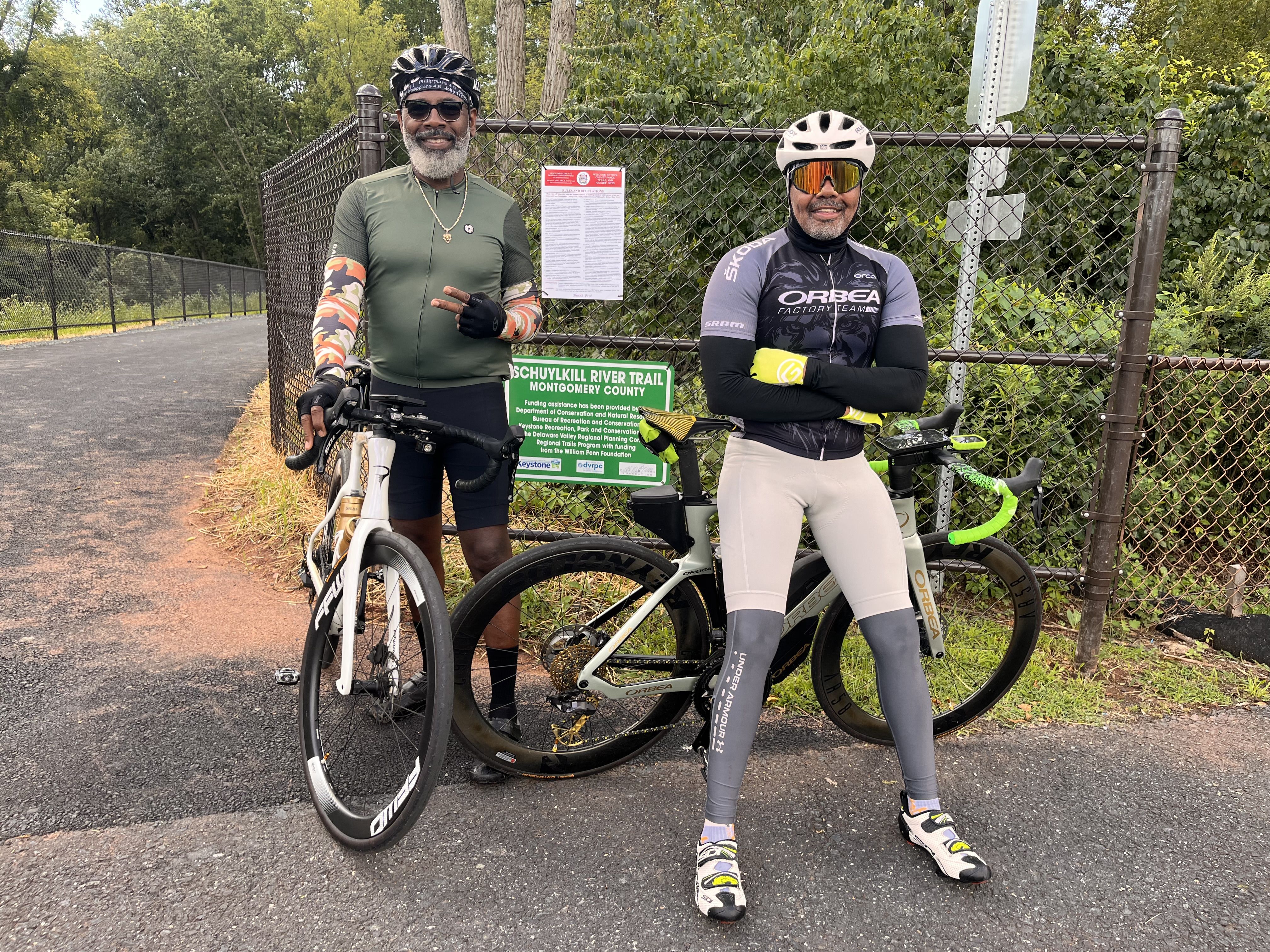
    Cyclists Alvin Morris and Rick Young departed Philadelphia via Shawmont Avenue on the Schuylkill River Trail on Tuesday morning for a heart-pumping, 75-mile round trip ride.

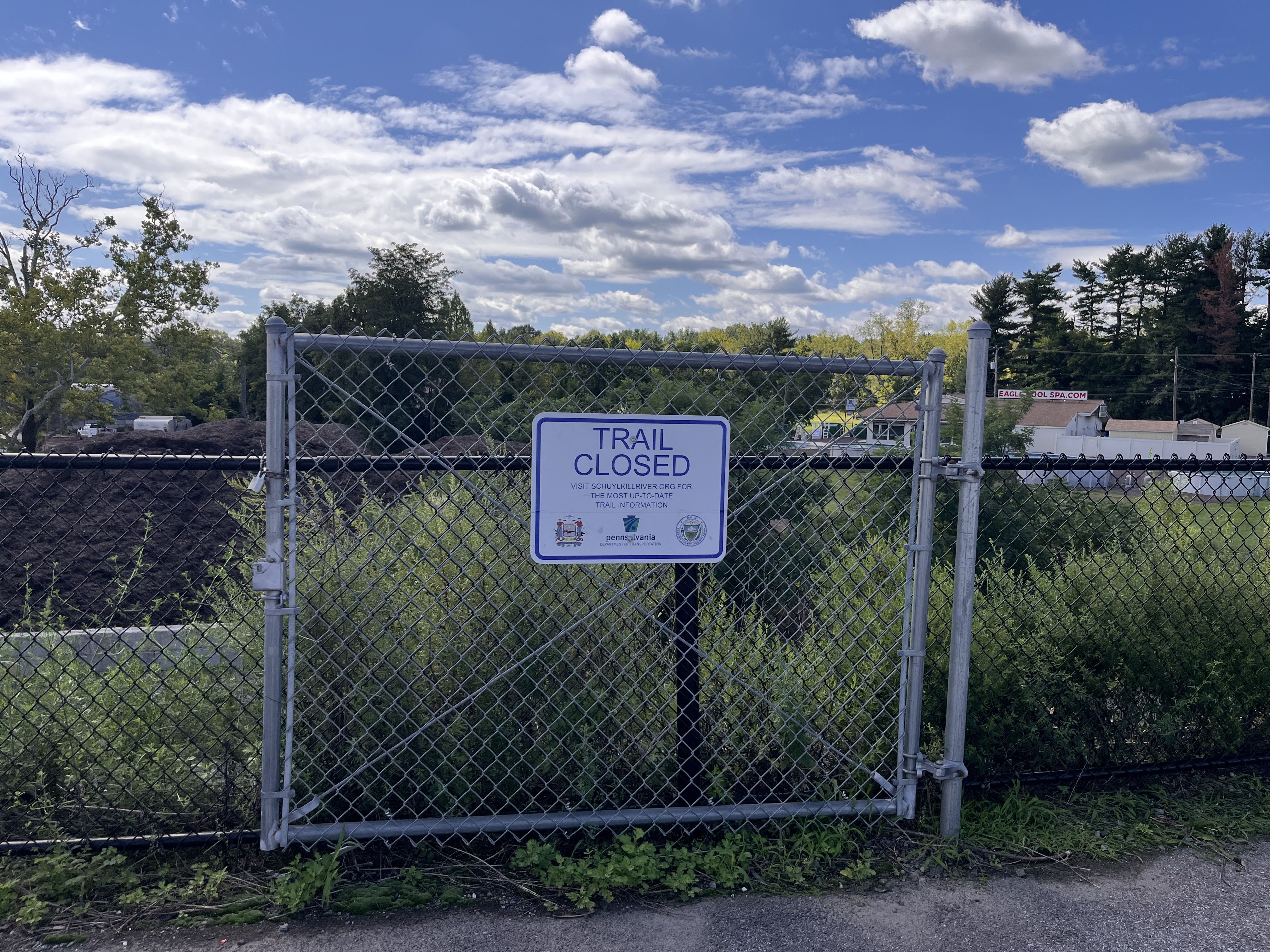
    On previous trips, they, like thousands of other riders, had to stop at a gate where the trail abruptly ended near Pottstown and decide whether to risk traveling a busy alternate route.

    No more.

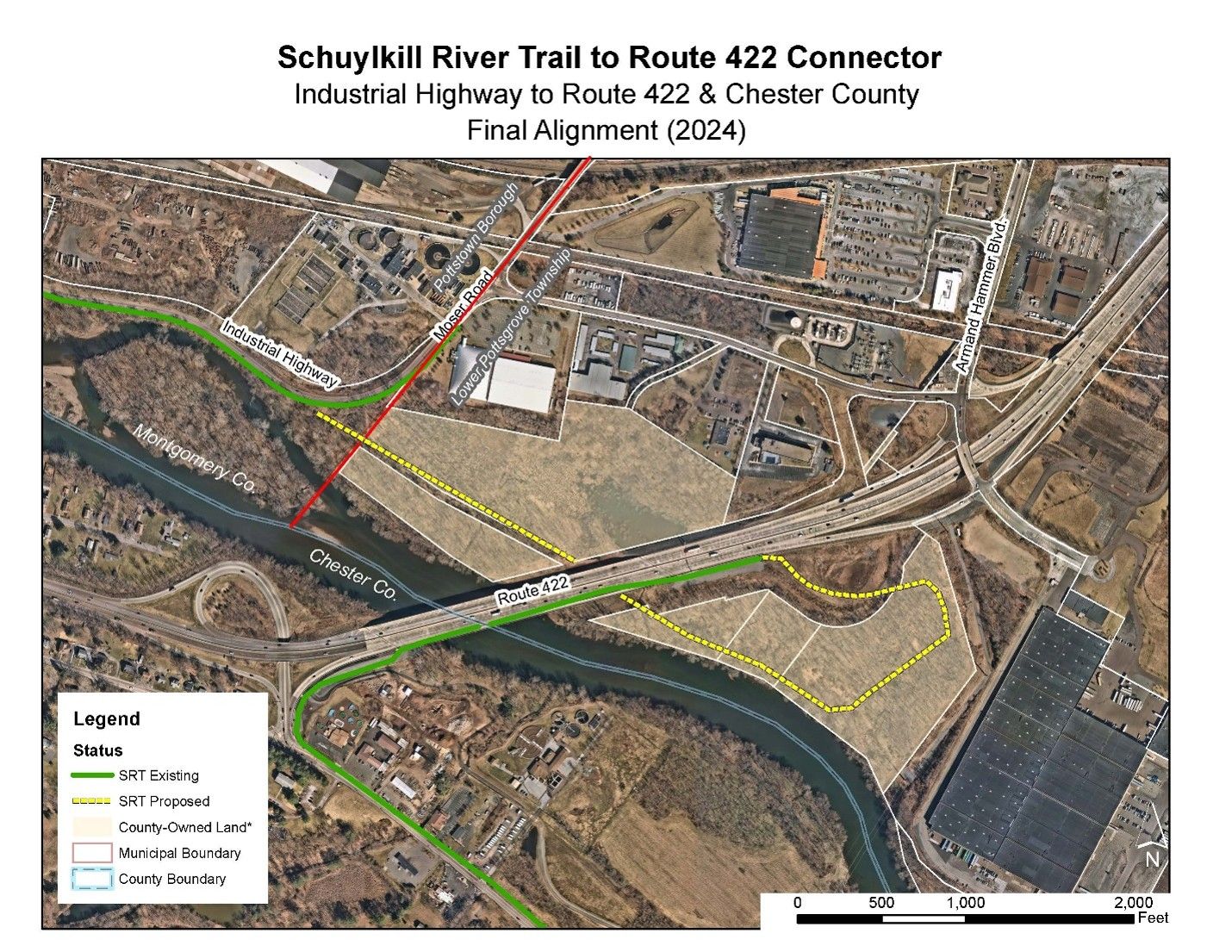
    Schuylkill River Trail organizers are celebrating the completion of a nearly one-mile connector in Montgomery County that gives cyclists a clear 70-mile path from Philly to Reading. The connector took about 10 years from planning to its Aug. 19 opening.

    “I just found out about the connector Sunday,” Young said. “I love it. I told Al about it. We’re preparing for the [city-to-Shore] MS ride, so we need to get in some distance.”

    The duo planned to continue on the Schuylkill River Trail for a few more miles past the connector before returning to Philly.

    A Montgomery County Planning Commission map of the new Schuylkill River Trail connection between Industrial Highway and the Route 422 bridge near Pottstown. The 0.9-mile section of paved asphalt trail is now open, providing an unbroken path from South Philadelphia to Reading.Frank Kummer

    ‘A really, really big deal’

    Elaine Paul Schaefer, executive director of the nonprofit Schuylkill River Greenways, says the connector is more than just a new trail segment.

    “It’s a really, really big deal,” Schaefer said. “On many, many levels.”

    Schaefer and others believe the unbroken 70-mile stretch could be a tipping point for cycling tourism because it is long enough for cyclists to plan trips that allow them to linger in towns for brews and food, or overnight stays, she said.

    “At that point, the economic impact to towns along the way really exponentially increases,” she said.

    Her group manages the Schuylkill River Greenways National Heritage Area, connecting people to the river and trail. Schuylkill River Greenways has its office in Pottstown, but manages 40 miles of the trail in Berks and Schuylkill Counties, raising money to help maintain it.

    The new connector allows riders pedaling south from Chester County to ride parallel to Route 422 in Pottsgrove Township, Montgomery County, then loop under the busy highway and continue into Pottstown Borough.

    “The trail now connects the population centers of Philadelphia to Montgomery County and Reading,” Schaefer said. “Soon, it will connect beyond that.”

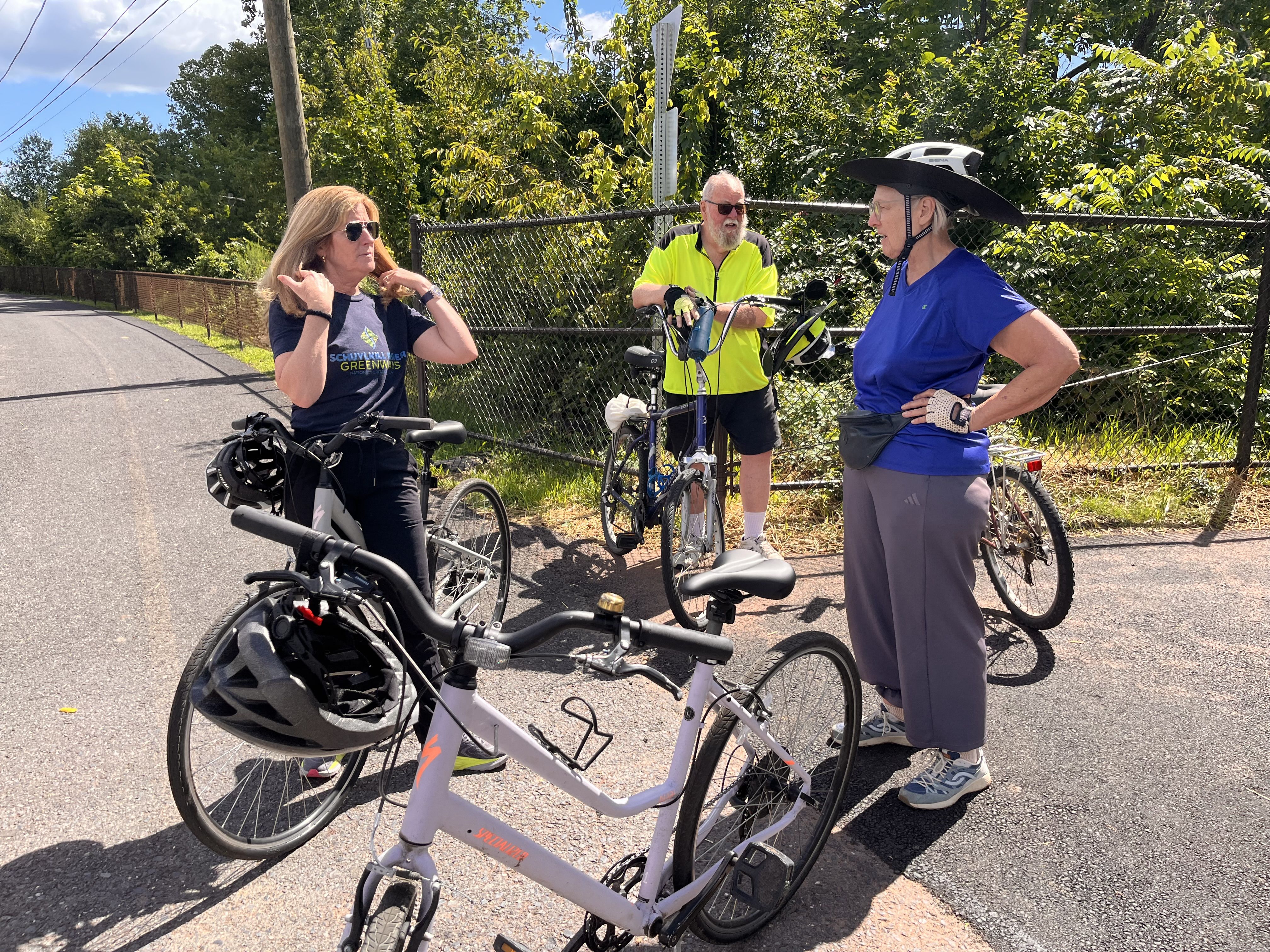
    Elaine Paul Schaefer, executive director of the nonprofit Schuylkill River Greenways, speaks with Sue Shellman, foreground, and her husband, Bill Shellman, in yellow, both of Skippack, at the new connector.Frank Kummer

    A boost for Pottstown?

    Schaefer believes the new connector will lure cyclists willing to stop and spend money in Pottstown, a former steel town whose sizable downtown contains restaurants, inns, and breweries. Pottstown’s Riverfront Park along the trail is already widely used.

    Peggy Lee-Clark, executive director of the nonprofit Pottstown Area Economic Development Inc., said it is too early to judge the impact of the connector, but there is “excitement.”

    “I think that always any connection for the trail is an economic boost,” she said.

    Commuting workers also use the trail, Lee-Clark noted.

    “The river is an important asset to us, as is the trail,” Lee-Clark said. “The connector is just one more thing that brings people to the area and exposes them to all of the other opportunities here in Pottstown.”

    When complete, the Schuylkill River Trail will run about 120 miles from Fort Mifflin near Philadelphia International Airport to Frackville, Schuylkill County. About 80 miles of paved and crushed stone trail are currently open. A swing bridge connecting Grays Ferry to Bartram’s Garden is nearing completion.

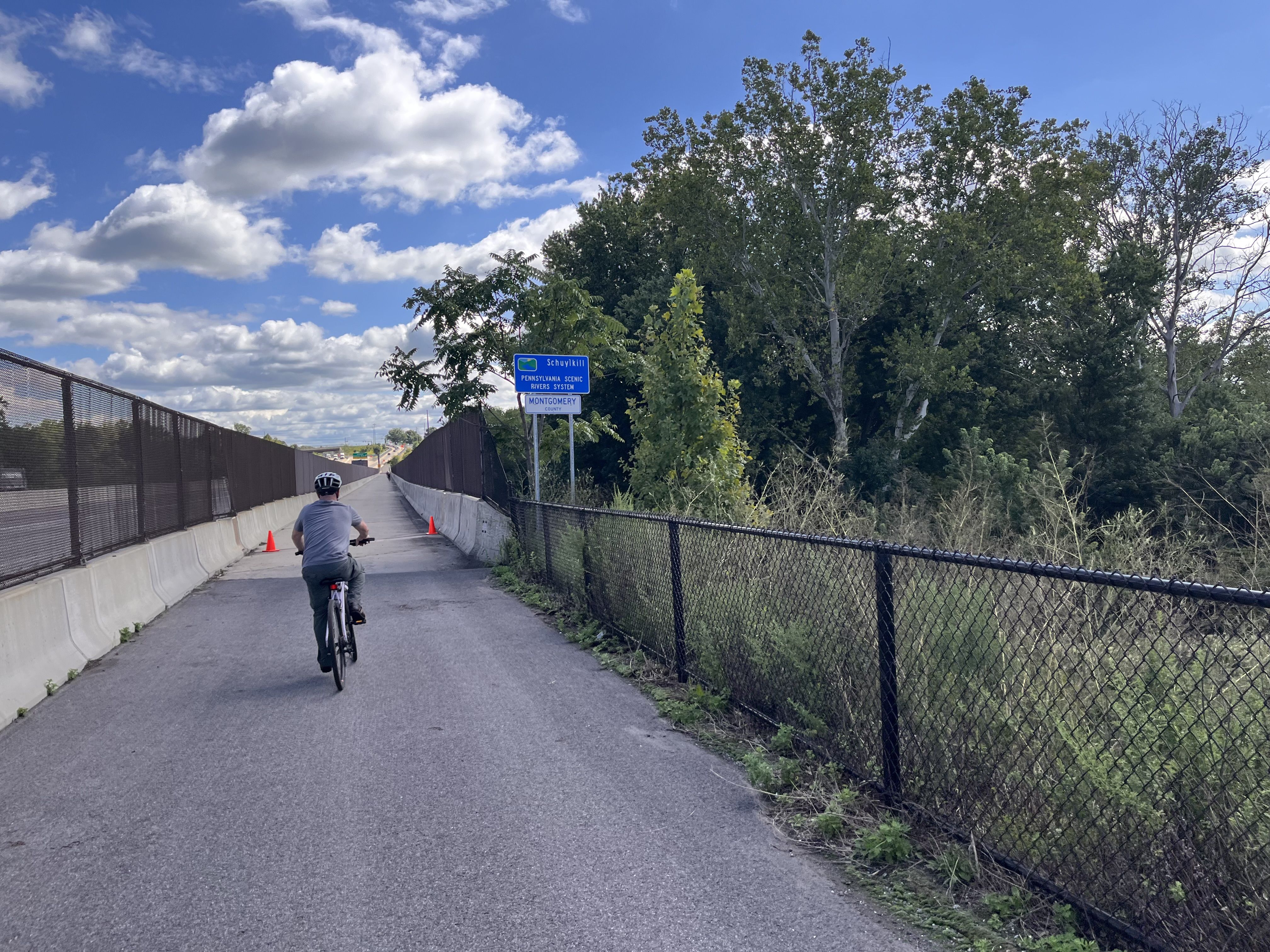
    Jason Brudereck, of the nonprofit Schuylkill River Greenways, rides new the Schuylkill River Trail connector as it crosses from Chester County into Montgomery County.Frank Kummer

    How the connector got built

    Montgomery County is planning a formal ribbon-cutting on Sept. 29 for the connector, which is already popular. On Tuesday, dozens of cyclists were riding at midday.

    Scott France, executive director of the Montgomery County Planning Commission, said the county started trying to acquire rights-of-way to the land a decade ago.

    “We are super excited this is open,” France said. “It’s been a long time in the works. This has had its share of challenges, but the fact is that we got there.”

    The connector cost $1.28 million, France said. Most of it was paid for from a $550,000 grant from the Pennsylvania Department of Conservation and Natural Resources, and a $542,000 grant from the William Penn Foundation. The county funded the balance.

    Although the connector is less than a mile, it was a challenge, France said.

    This is the sign cyclists and pedestrians once had to stop at before the connector was finished.Frank Kummer

    The county had to build around a state-owned bridge, work with Peco and Verizon to move utilities, and obtain permits to build in a flood zone. Additionally, crews had to stop work during the breeding season of the northern red-bellied turtle, a threatened species common in the area.

    Bill Hartman, trails and open space planning manager for the commission, said the connector serves another key role.

    “It provides full access to a number of other trails,” Hartman said, including the Cross County and Perkiomen Trails.

    Further, Montgomery County Commissioner Neil Makhija noted that the connector and Schuylkill River Trail are also part of the much wider Circuit Trails network, a planned 850 miles of interconnected trails in the Philadelphia region, including South Jersey.

    Makhija said he plans to celebrate his 40th birthday on Sept. 13 by riding the inaugural Tour de Montco, a 40-mile ride from Pottstown to Bala Cynwyd.

    The new trail segment, Makhija said is, “not just a trail in the woods — it’s a connection, bringing us closer to Philly and Reading and connecting the two.”

    Sue Shellman, foreground, and her husband, Bill Shellman, in yellow, both of Skippack, ride from Chester County onto the new Schuylkill River Trail connector into Montgomery County.Frank Kummer
  • Robin Carpenter will be thinking of his former Masterman teacher as he conquers the Manayunk Wall

    Robin Carpenter will be thinking of his former Masterman teacher as he conquers the Manayunk Wall

    Robin Carpenter was riding his bike home from Julia R. Masterman School, pedaling along the Schuylkill when a teacher stopped him.

    He wasn’t in Kevin Saint Clair’s class, but he knew him. Everyone did. Saint Clair rode his bike to Masterman every day, hung his spandex in his classroom to dry, plucked food off students’ trays in the cafeteria, and once used a flat tire as a science lesson.

    He was a legend in those halls.

    Saint Clair asked Carpenter how his freshman year was going and what he thought about the soccer team. School was good, Carpenter said, but soccer was a flop. The teenager from Manayunk spent more time on the team’s bus to away games than he did on the field, subbing for just a few minutes once the outcome was decided.

    Saint Clair coached the school’s cross-country team, a group of kids like Carpenter looking for their place. He never cut a runner, ended the season with a pasta dinner at his home in Chestnut Hill, and regularly won Public League titles. Saint Clair told Carpenter to give running a try.

    “He said it’s not too late,” Carpenter said.

    So there was Carpenter in the pack of runners moving through the hills in Fairmount Park while Saint Clair rode his bike next to them. Legs heavy? Breath short? Don’t slow down, Saint Clair shouted as they neared the top of Lemon Hill. Speed up, the coach said as he reminded them they still had more to give even when the tank seemed empty.

    Carpenter ran four seasons for Saint Clair, who died at 65 in November 2023 when he was hit by a car while riding his bike. The coach’s invite gave Carpenter a spot on the team while also providing the teenager the chance to begin a more than 15-year cycling career that will take another climb Sunday up the Manayunk Wall when the Philadelphia Cycling Classic returns.

    Carpenter grew up attending the race every summer and sold lemonade — people used to tell him he could make more if he added liquor — to fans as a kid. He rode his bike to school and won $15 after coming in third out of three riders as an 11-year-old. But Carpenter had no clue how to become a pro. And then he met Saint Clair, who invited him to ride with his team on the Main Line.

    Kevin Saint Clair, a fixture in the Masterman community, was an avid cyclist, math teacher and coach. He died in a bike accident in 2023.Handout image

    The teacher who urged him to run in Fairmount Park was soon teaching him the basics of cycling, a sport that would take Carpenter all over the world. It all started with a teacher giving him a chance.

    “He forever lives on in my memory as the guy who pushed me forward into the sport,” the 34-year-old Carpenter said.

    The Wall

    There were multiple ways for Carpenter to get home to Manayunk from Center City but the Wall — the uphill slog that feels like a roller-coaster climb — was the path to avoid. Finally, he gave it a try. The 11-year-old Carpenter, with his dad riding next to him, dug into the pedals of his Huffy that a neighbor gave him.

    “We successfully made it up without stopping,” Carpenter said. “Huge accomplishment.”

    The Carpenters dropped themselves into Fairview Park where a neighbor asked why they were so exhausted. The Wall, they said. She told them about the amateur bike race happening in just a few hours. Carpenter was in.

    “That was the beginning of it, sort of discovering that you could do something like this,” Carpenter said.

    Carpenter latched on a few years later with Saint Clair, who was a member of the U.S. rowing team before turning to cycling when his back started to bother him. Saint Clair grew up in Logan and went to Cardinal Dougherty before earning degrees from Temple and St. Joseph’s. He taught at the Gesu School before moving to Masterman. He identified people by what parish they grew up in and asked people where they went to high school.

    “Kevin was so Philadelphia,” his wife, Ellen, said.

    Saint Clair loved his students, his wife said. He showed up at their doorsteps if their grades were struggling and once made parents cry at a conference by simply telling them that their boy who was getting in trouble was a good kid.

    “No one had ever said that about their child,” Ellen Saint Clair said. “Kevin saw the good in him.”

    The teacher didn’t know Carpenter would become a professional cyclist when he invited him to join the cross-country team. But he knew he would have a better time running in Fairmount Park than he would sitting on the bench at soccer games. That’s what Kevin Saint Clair was all about.

    “He wanted to encourage everyone, those in the back of the pack and those in the front of the pack,” Ellen Saint Clair said. “He really valued a work ethic. You can be born with great talent but you can squander it. It was the kids who just had an indomitable spirit and gold standard of work ethic like Robin that he loved.”

    More to give

    Kevin Saint Clair once missed being on the national team by one rower. The guy who bumped him off was someone he helped coach. The team won the world championship and Saint Clair was left out. It would have been easy to be bitter. But that wasn’t Saint Clair.

    “He was proud of them,” Ellen Saint Clair said.

    He loved seeing the success of the people he taught or coached. Maybe he played a part in it. He rooted for his runners to beat his old times and cheered on that boat he could have been in. So his wife knows how proud Saint Clair would be this weekend to see Carpenter pedaling his bike up the Manayunk Wall.

    “It’s so heartbreaking for me that the Classic is back and Robin’s in it and Kev’s not there,” Ellen Saint Clair said. “But I know Robin will be thinking of Kevin.”

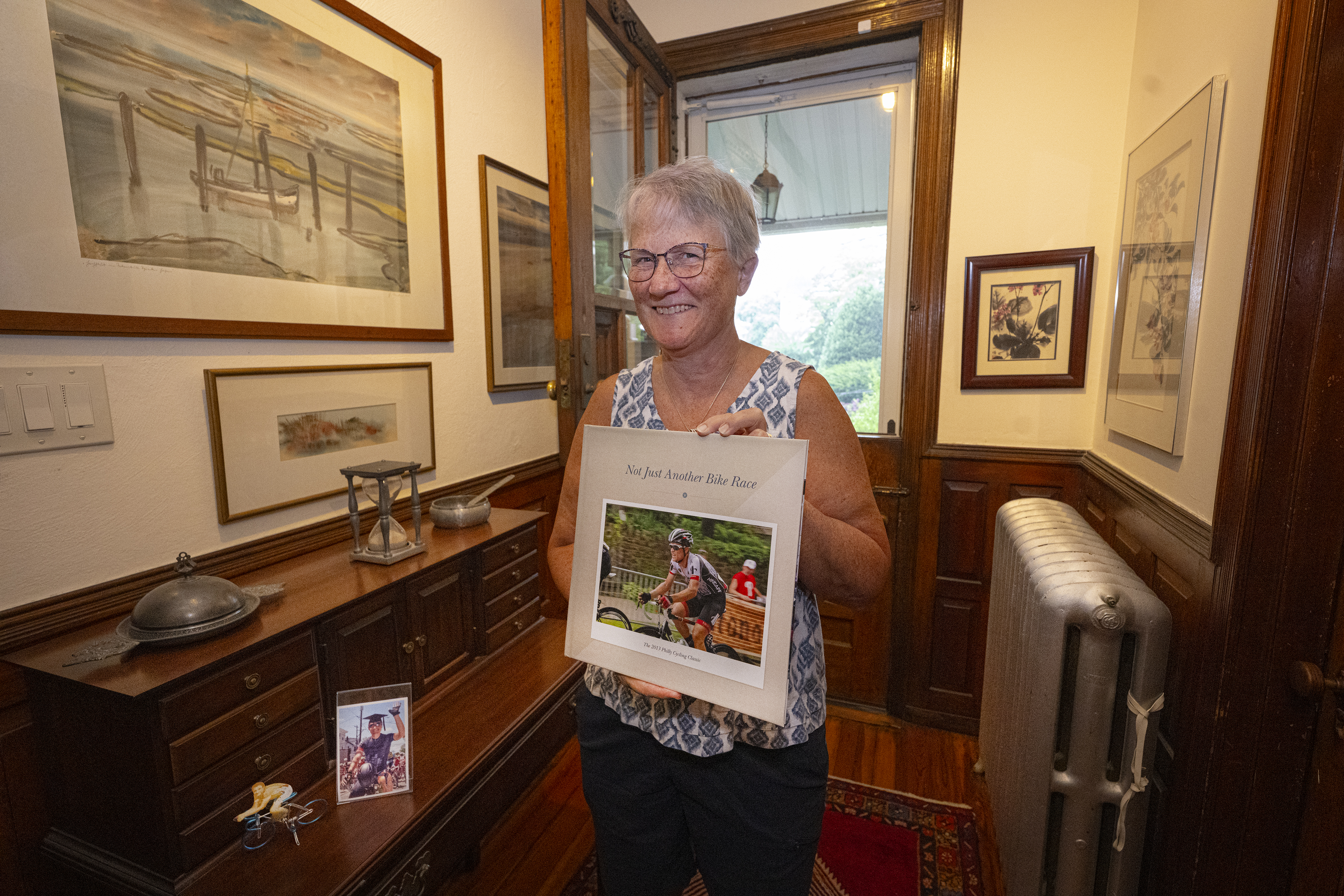
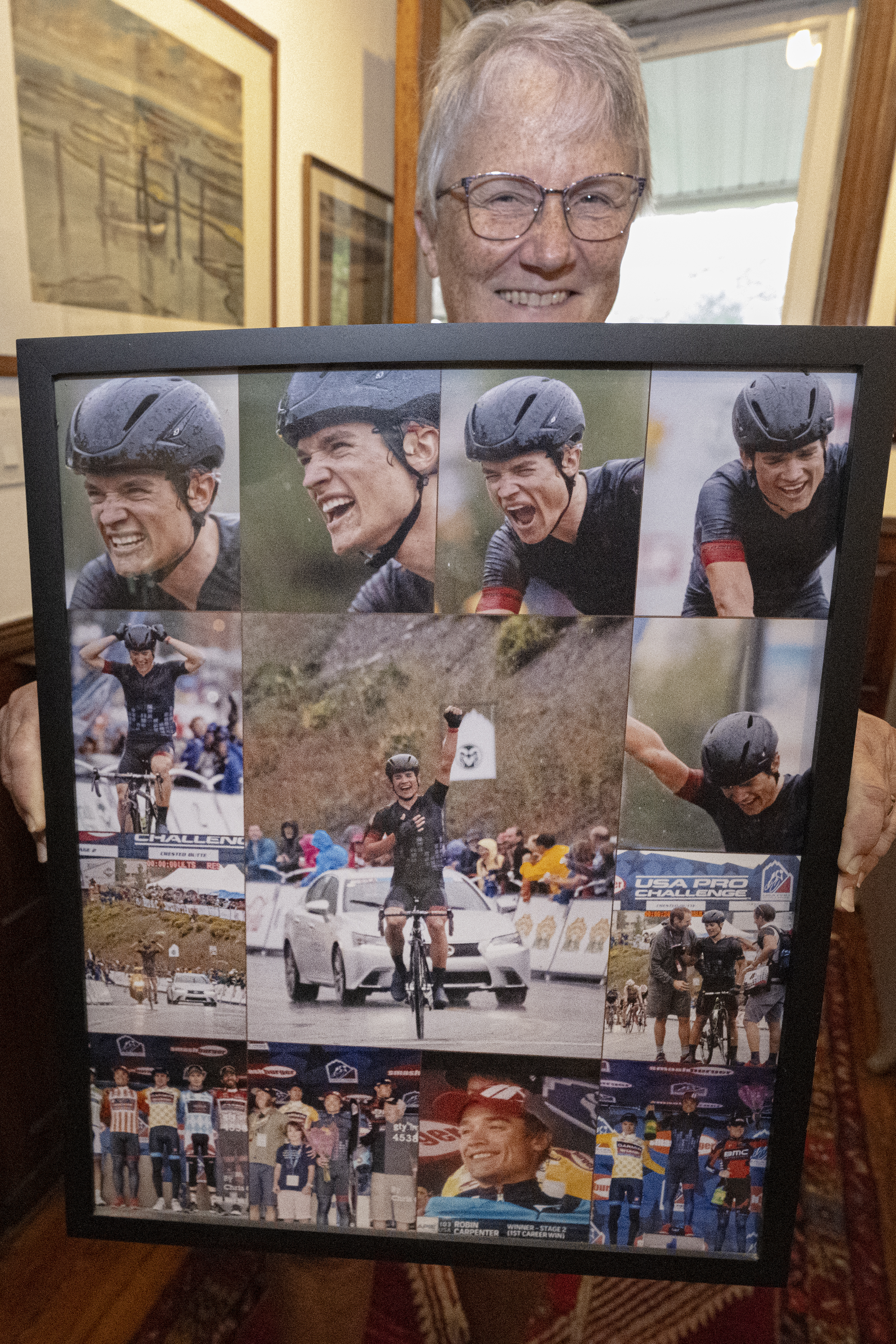
    Julia Heberle holds a collage of photographs of her son, cyclist Robin Carpenter, who will compete in the upcoming Philadelphia Cycling Classic.Jose F. Moreno / Staff Photographer

    Ellen Saint Clair isn’t sure yet where she’ll be Sunday when the race returns to Philadelphia. Maybe she’ll be rowing on the Schuylkill when the cyclists pass as she met her husband there when they were both training at the Vesper Boat Club. Or maybe she’ll find a spot near Lemon Hill. But she knows where the old coach would be. He’d be standing at the top of the Wall, reminding Carpenter that he had more to give. That was how Saint Clair coached his runners but also how he lived his life. There was always more to give.

    “He wanted these kids to feel like they were a part of something bigger than themselves and to challenge themselves. Kev knew the value of athletics beyond what your body can do. Just how it builds confidence and how it develops the individual. He had so many first-time athletes on his team and he loved it,” Ellen Saint Clair said. “I hope if Robin’s legs are like lead and his back is hurting, he just taps into Kev. ‘You have more. Go now.’ He would be so proud of him.”

  • The Slinky became a toy craze in 1945 and has sold millions of pieces. It all started in Philadelphia.

    The Slinky became a toy craze in 1945 and has sold millions of pieces. It all started in Philadelphia.

    Philadelphia Navy Yard mechanical engineer Richard James was experimenting with a torsion spring in 1943 when the coil tumbled from his desk and landed on a stack of books.

    The spring didn’t just sit there. The top coil flipped over onto the next book. Then the back coil flipped over to the next book. Before he knew it, this newfangled thing was taking the hardcovers like stairs.

    Fascinated, James went home and showed the new toy to his wife, Betty.

    She was enthralled and named the metal thingamajig a Slinky because of its wavy, stealthy movement.

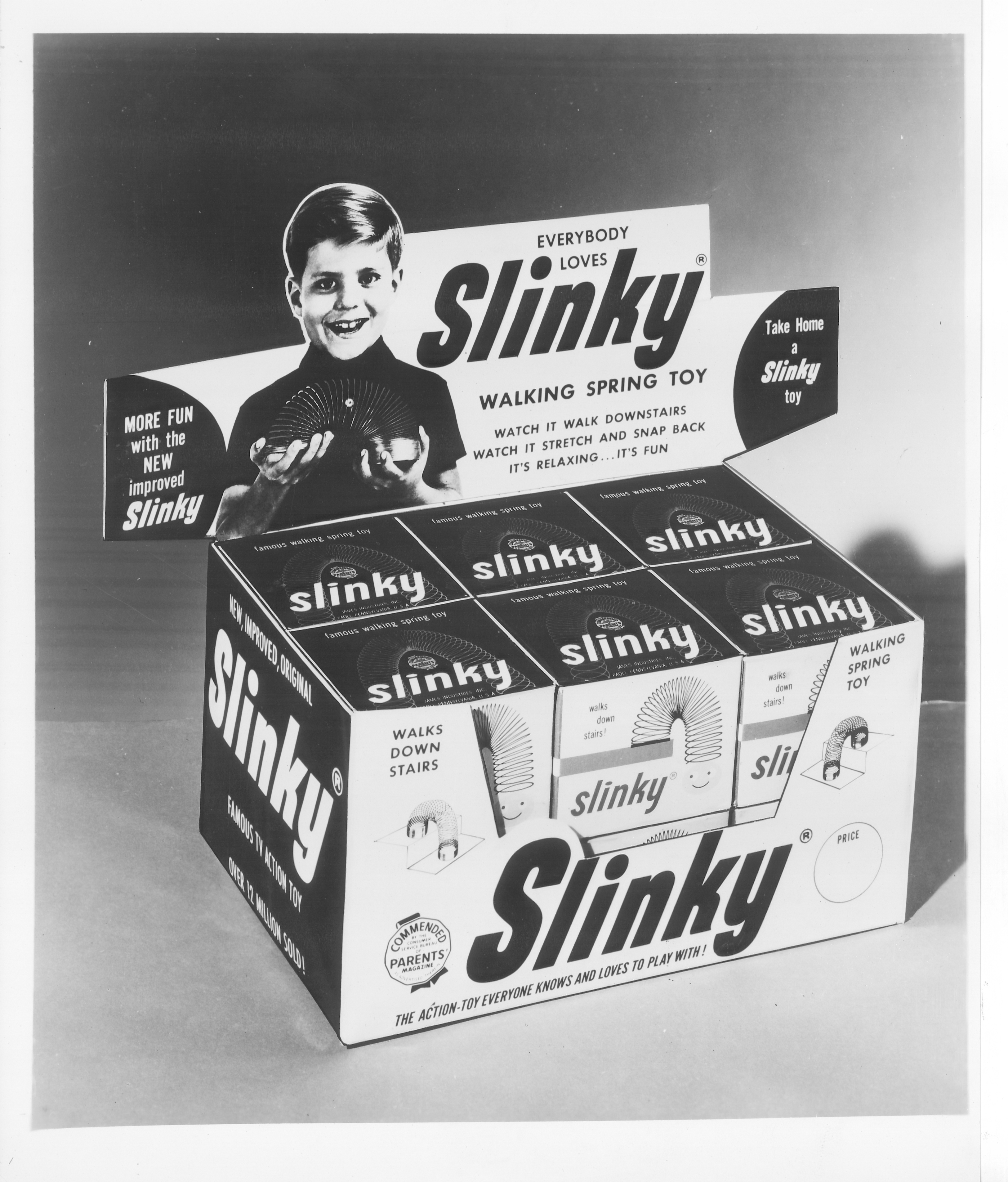
    A vintage Slinky display.

    James finagled with the metal spring for about two years, perfecting its flip-flop down-the-stack movement. Finally, on Nov. 27, 1945, the Jameses brought 400 Slinkies to Gimbels at Eighth and Market Streets, debuting them to shoppers. The whole lot sold out in 90 minutes for $1 a piece.

    A toy craze was born.

    This Saturday, the Philadelphia Historic District will host a “Firstival” to fete the Slinky at the American Philosophical Society from 11 a.m. to 1 p.m. The society’s archives house the 1953 study “On Slinky: The Dynamics of a Loose, Heavy Spring” by British mathematician and oceanographer Michael Longuest-Higgens.

    Firstivals are weekly day parties celebrating America’s 250th birthday. This week’s Firstival is the 35th.

    After the roaring success at Gimbels, Richard James quit his $50-a-week gig at the Navy Yard and founded James Industries, manufacturing Slinkies from a Germantown warehouse. Each Slinky was made from 80 feet of steel on a machine that James invented. It took 10 seconds to make each Slinky.

    Jen Procacci’s No. 1 features the original blueprints of the Slinky design, commemorating one of America’s most-beloved toys.Jenn Procacci for Colibrí Workshop

    Slinkies, considered the first toy craze, predating Cabbage Patch Kids, Tickle Me Elmo, and Beanie Babies, were so popular in the 1940s that Macy’s stopped selling them for a bit because the swarming crowds created a fire hazard.

    In the early 1950s, published reports said the Jameses were making more than $1 million a year. James denied those reports in a 1950 Inquirer article but admitted to making “solid profits.” By the end of the decade, the Jameses’ Slinky operation had moved to manufacturing facilities in Clifton Heights and Paoli.

    The couple divorced in 1961.

    Richard James became a missionary in Bolivia, leaving his wife to manage the business and their six children. Betty James moved her children closer to family in Hollidaysburg, Pa., and commuted to the Philadelphia area for three years before moving the company closer to home in 1964.

    In 1962, Betty James launched an aggressive television campaign to build awareness and increase Slinky sales. Songwriters Homer Fesperman and Charles Weagley wrote the unforgettable, now-iconic Slinky jingle.

    “It’s Slinky, it’s Slinky. For fun it’s a wonderful toy.

    It’s Slinky, it’s Slinky. It’s fun for a girl or a boy.

    It’s fun for a girl or boy!”

    The Slinky dog became a party trick. People wore Slinky glasses. Plastic Slinkies were introduced to the market.

    The Slinky was everywhere.

    “During the Vietnam War, soldiers used Slinkies as portable radio antennas,” said Zach Delphais, the public relations manager for Just Play Products, the Bucks County-based brand that owns Slinky today.

    Betty James sold Slinky to Michigan-based Poof Industries in 1999.

    In this Jan. 18, 2001, photo, Betty James, retired president of James Industries, plays with a Slinky. She died in 2008.AP

    In 2001, Betty James, then 84, was inducted into the Toy Industry Hall of Fame. At that time, more than 250 million Slinkies had been manufactured from hundreds of thousands of tons of steel.

    Betty James died in 2008 at age 90.

    In 2020, Just Play acquired Slinky at auction.

    Today, Just Play makes about 3 million metal Slinkies a year. They sell between $3 and $4 a piece.

    “Slinky has lasted because it’s simple, it’s iconic, and every generation has connected with it,” Delphais said. “It started right here in Philadelphia. That makes it all the more meaningful.”

    This week’s Firstival is Saturday, Aug. 29, from 11 a.m.-1 p.m., at the American Philosophical Society, 104 S. Fifth St.

    Each week, The Inquirer is highlighting a “first” from the Philadelphia Historic District’s 52 Weeks of Firsts. A “52 Weeks of Firsts” podcast, produced by All That’s Good Productions, drops every Tuesday.

  • Main Line to get a buzzy new restaurant led by a Fork and Vernick alum

    Main Line to get a buzzy new restaurant led by a Fork and Vernick alum

    One of the year’s more closely watched Main Line restaurant projects now has a name, a chef, and a clearer identity.

    Old Friend, a contemporary American grill built around live-fire cooking, is targeting a late-fall opening in downtown Wayne with former Fork executive chef Sam Henzy leading the kitchen.

    The 86-seat restaurant — 78 in the dining room and eight at the bar — will be at 166 E. Lancaster Ave., in a newly constructed ground-floor retail space at Lancaster and Louella Avenues that is part of the Apartments at Wayne Station. It is amid Wayne’s restaurant row, across from Maison Lotus and Rosalie, and just a few blocks from At the Table, White Dog Cafe, and the North Wayne Avenue dining strip.

    Rendering of Old Friend, 166 E. Lancaster Ave., Wayne.Stokes Architecture & Design
    Architectural rendering of the facade of Old Friend, 166 E. Lancaster Ave., Wayne.Stokes Architecture & Design

    Old Friend is the creation of Larry Kagan and Chas McFeely, who met in 1984 at Welsh Valley Middle School and later attended Harriton High. McFeely, an advertising copywriter who lives in Alameda, Calif., has family ties to the Main Line and returns frequently.

    Kagan, who works in financial services and is a partner in the Campus sports complex in Downingtown, offered the first public outline of the project at a March Radnor Township Board of Commissioners hearing for its liquor-license transfer, describing an unnamed grill restaurant “that’s going to have the soul of a steakhouse.”

    Kagan told The Inquirer this week that the name “old friend” describes his relationship with McFeely: “It’s someone between friend and family — someone you can pick up at any time, you can be yourself.” The name, he said, also reflects the sort of relationship they hope to develop with customers.

    Kagan acknowledges that neither he nor McFeely is a restaurateur. They brought in Stove & Co. chef-owner Joe Monnich as a consultant to develop the concept and assemble the operating team. Monnich will remain in a leadership role while continuing at Stove & Co., whose holdings include Stove & Tap and Joey Chops.

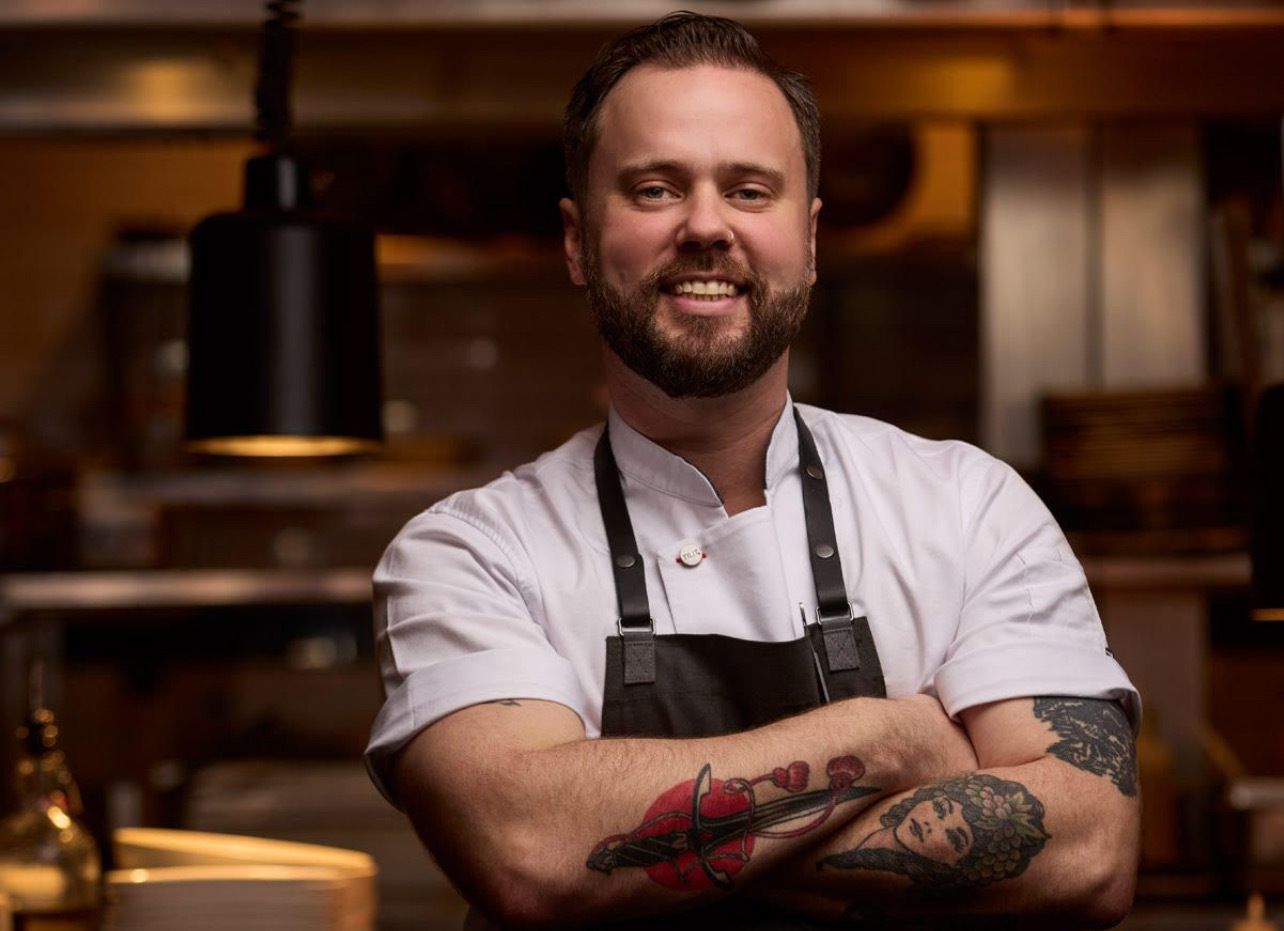
    Sam Henzy in 2025, when he joined Fork as executive chef.Courtesy of Fork

    The connection to Henzy came through Monnich. The two met at Morimoto when Henzy was about 20 and, as he puts it, “green as grass.”

    “Joe was the first chef who pushed me really hard, but he did that great older-brother thing of pushing somebody while being there to answer questions,” Henzy said. “He really took me under his wing.”

    They remained friends as Henzy built his career. He did not know the name of the Wayne restaurant until he recently visited the space with Monnich and the owners.

    “When they told me it was going to be called Old Friend, it just made me smile,” Henzy said, “because that’s how I think of Joe.”

    Henzy, who grew up in Delaware, is best known locally for his two years as executive chef at Fork in Old City. His resumé also includes Middle Child Clubhouse, Vernick Food & Drink, Noma in Copenhagen, and Quince and Angler in San Francisco.

    Henzy’s experience with live-fire cooking began during a six-month internship at Noma. He remembers touring the cutting-edge restaurant and encountering a Josper charcoal grill set up in a makeshift shack out back.

    “In that moment, I was like, ‘Oh, I’m taking that station,’” Henzy said.

    He eventually did, spending the final three months of his internship on the Josper. Later, he sought out Vernick Food & Drink in part for its wood-burning oven. His most intensive live-fire experience came at Angler, where he was executive sous chef and the cooking line had no conventional stoves.

    “It’s just fires,” Henzy said. “It’s fires everywhere you look.”

    Old Friend will bring him back to that style of cooking. Its open kitchen will center on a charcoal-fired Josper combination grill and oven, which Kagan calls the restaurant’s “engine.”

    Designed by Stokes Architecture & Design, the restaurant will feature reclaimed mushroom wood, an oak bar, and an open, firebrick-lined hearth that will put the Josper in view of the dining room.

    Kagan calls Old Friend a contemporary American grill. The developing à la carte menu will move from small and medium plates to larger-format proteins intended for sharing. The wine list will be compact and closely matched to the food.

    Fish — including some dry-aged fish — as well as poultry and other proteins will be cooked on the Josper. Henzy gained experience dry-aging fish at Angler and wants to explore the technique further at Old Friend.

    “I think dry-aging fish is both an underused and a misunderstood technique,” he said.

    Old Friend also represents a move away from what became Henzy’s signature at Fork. Pasta may appear on the menu, but it will not be a focus. At Fork, he said, its popularity “took on a life of its own,” sometimes overshadowing the rest of the menu.

    “I’m really big on never resting on my laurels and taking on new challenges,” Henzy said.

    After years away froma live fire-fueled kitchen, Henzy said, “I’ve really been itching to get back into the flames.”

  • Letters to the Editor | Aug. 27, 2026

    Letters to the Editor | Aug. 27, 2026

    Oh, Canada

    For many years, Canada has been our closest and certainly among our best allies. It is deeply saddening to see the foolish disrespect shown to that country through the outrageous tariffs that have been imposed by our current administration.

    If there is a solution to this issue, I do not know what it is. However, I will happily purchase Canadian maple syrup and other products as a show of support.

    These tariff wars are not helping our country or anyone else’s.

    Hoping and praying for a return to common sense, economically and otherwise. And I’m looking forward to voting in November, too.

    Margaret Zanoni, Edgewater Park

    Lifesaving

    A recent U.S. Supreme Court decision allows private insurers to push new dialysis patients — those who take frequent treatments for kidney failure to survive — off their plans they’ve worked hard to keep. It’s a direct assault on the lives of dialysis patients across America. Forcing patients off their private insurance immediately after diagnosis — often within months — is unjust.

    I’ve lived on dialysis for over four years, endured the pain of needles tearing through my skin twice daily, and fought to keep my dignity in a system that often prioritizes profits over people. I’ve been lucky: I served this country and have good healthcare coverage with Veterans Affairs. But many are losing private insurance coverage, and they’re left to pay the 20% Medicare doesn’t cover. It’s a crushing financial burden that jeopardizes their access to lifesaving treatments and, crucially, their standing on transplant lists.

    We are not statistics or profit centers. We are mothers, fathers, veterans, neighbors — human beings demanding the right to life, which means the right to healthcare. U.S. Rep. Herb Conaway should cosponsor and help pass the Restore Protections for Dialysis Patients Act. This bipartisan bill would stop insurers from pushing vulnerable patients into chaos and ensure fewer dialysis patients are forced to bear the heavy burden of unnecessary financial distress.

    C. Andre Daniels, Westampton

    Name shame

    Donald Trump seems to want his name all over everything and everywhere. At the Kennedy Center for the Performing Arts, a judge told him no, but Trump found a way around the judge by listing himself as a renovator — tacky. Now, Trump wants a previously named aircraft carrier to be named for him. That the USS Doris Miller was to be named for a Black World War II hero but might instead be changed to honor a president who avoided serving in the Vietnam War reeks of the racism that permeates everything touched by Trump. I can imagine the president offering a trade with Miller’s family — the name of the ship in exchange for the Medal of Honor. What’s in a name? Plenty — duty, honor, respect. Doris Miller earned our respect.

    Sheryl Kalick, Philadelphia

    Join the conversation: Send letters to letters@inquirer.com. Limit length to 150 words and include home address and day and evening phone number. Letters run in The Inquirer six days a week on the editorial pages and online.