Tag: topic-link-auto

  • Phillies’ Kyle Schwarber is the first in the majors to 40 homers this season

    Phillies’ Kyle Schwarber is the first in the majors to 40 homers this season

    SEATTLE — Kyle Schwarber is the charter member of the 40-Homer Club this season.

    What, you expected someone else?

    Schwarber, only the most prolific slugger in the National League since 2022, became the majors’ first player to get to 40 home runs with a three-run 425-footer to right-center field in the second inning of the Phillies’ 6-0 victory over the Mariners here Wednesday.

    It’s the second season in a row that Schwarber reached the 40-homer mark. He led the NL last season with a career-high 56 homers. He hit 46 and 47, respectively, in his first two seasons with the Phillies.

    “Obviously it’s a good thing because that means you’re hopefully producing runs for your team,” said Schwarber, tied with the Yankees’ Aaron Judge for the most homers (227) since the beginning of the 2022 season. “But it’s not about going out there and trying to achieve and or attain a certain number. I think it’s just more trying to stack as many at-bats as you can to keep trying to help the team win.”

    Kyle Schwarber (12) was the first player to reach 30 and 40 home runs this season.Lindsey Wasson

    Schwarber, who has 380 career homers, was also the first player to 30 homers this season. But his pace cooled considerably through the summer as he dealt with a sore lower back.

    After snapping a drought of 78 plate appearances without a homer on Aug. 9, Schwarber has seven homers in 75 plate appearances over his last 16 games.

  • American Airlines is adding new direct flights to these European cities

    American Airlines is adding new direct flights to these European cities

    American Airlines will officially add three new international routes out of Philadelphia International Airport next year.

    The airline announced on Thursday that flights to the European cities of Porto, Portugal, and Vienna, Austria, will depart from Philadelphia in 2027.

    The airline is also adding trips to Reykjavik, Iceland, a route that was previously announced in 2019 but never came to fruition because of pandemic travel restrictions.

    The flight to Porto was announced earlier this year, but required government approval.

    Flights will begin operating to Porto on March 28, to Vienna on May 6, and to Reykjavik on May 27. The routes to Porto and Vienna will be operated on an Airbus A321XLR aircraft, and the route to Reykjavik will be served on an Airbus A321neo.

    Travelers can purchase tickets on the new routes beginning on Aug. 31. When the new routes are operational, American will have 21 transatlantic routes operating out of PHL.

    The new destinations are American’s latest service expansion at PHL. American is the largest carrier out of PHL by passenger volume, carrying more than 20 million travelers through the airport last year — nearly 70% of PHL’s total passengers. The second largest carrier, Frontier Airlines, carried roughly 3 million passengers through the airport in 2025.

    American increased the number of flights traveling through Philadelphia by 10% this summer compared to the same time last year, according to the airline.

    John F. Kennedy International Airport in New York, one of America’s other transatlantic gateways, sees business and leisure travel, but Philadelphia “has a much bigger footprint when it comes to leisure summer travel,” said Cesar Marchese, vice president of operations for the airline in Philadelphia.

    In recent years, American has added new flights out of Philadelphia to Copenhagen, Denmark; Nice, France; and Naples, Italy. The airline has also recently brought back routes to Budapest, Hungary, and Prague, Czech Republic.

  • Democrats want to draw more safe House seats. It could cost Black lawmakers.

    Democrats want to draw more safe House seats. It could cost Black lawmakers.

    A clash over Black representation in a recent South Florida congressional primary brought national attention to an increasingly urgent debate within the Democratic Party, as it searches for ways to counter the off-cycle nationwide redistricting campaign that President Donald Trump launched last year.

    Republicans have added more than a dozen conservative-leaning House districts across the country, giving them an outside shot at holding on to their threadbare majority in November — and leaving Democrats, who have limited options to offset those gains, desperate to catch up.

    Searching for places to create new blue seats, Democrats are considering breaking up urban districts drawn to elect Black members in liberal states such as Illinois, New York and Maryland, then moving some of those voters to Whiter, more conservative suburban districts. Some within the party vehemently oppose this idea because they fear it could further reduce the number of Black Americans in Congress, which is already set to take a hit from Republican redistricting.

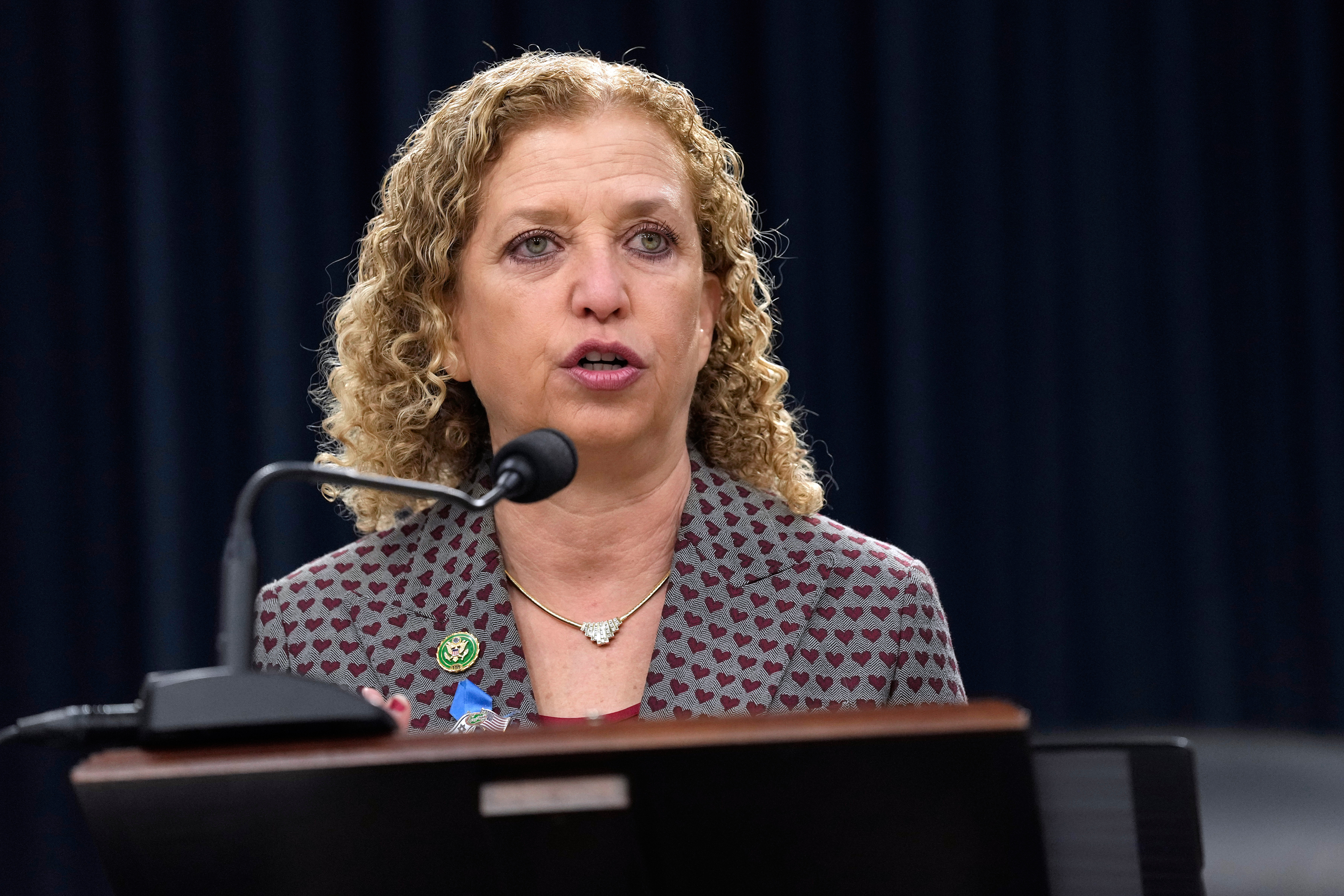
    In Florida, Black politicians criticized Democratic Rep. Debbie Wasserman Schultz, who is White, for decamping from a more competitive seat to a safely Democratic but heavily Black district nearby after state Republicans redrew congressional lines this year to benefit the GOP.

    Whether the seat — one of only about three dozen nationwide with a Black majority or plurality — should continue to have a Black representative, as it did for decades, became a major point of contention in the competitive primary, which Wasserman Schultz ultimately won.

    Democrats are now facing a conundrum as they chart a path forward: When control of the House is on the line, how much can they afford to prioritize diversity in their ranks?

    It’s a political headache for a party that prides itself on being powered by Black voters. About three-quarters of Black people lean Democratic, according to the Pew Research Center, nearly double the rate of White people. All but a handful of the five dozen Black members of Congress are Democrats.

    “If we’re going to be in this together, then let’s truly be in this together. Let’s not do the pick and choose,” said Florida Rep. Felicia Robinson (D), chair of the state’s Legislative Black Caucus, who once called Wasserman Schultz’s decision to move districts “a slap in the face” to the Black community.

    While she agreed that Democrats should prioritize maximizing House seats, Robinson said that, if the party silences Black voters in the process, “you make it kind of easy or more appealing for people” to become independents or Republicans instead.

    House Minority Leader Hakeem Jeffries (D-New York), who declined an interview request, and his allies argue that Democrats may need to sacrifice some predominantly Black districts in order preserve Black political power on the whole.

    They contend that winning back Congress is more important than protecting individual seats, because congressional control would allow Democrats to stop Republicans from further dismantling civil rights protections, including the extreme gerrymandering that has decimated Black representation across the South.

    Chris Taylor, a spokesperson for the Congressional Black Caucus, acknowledged that redistricting could shift some of their members’ seats. But the interests of the Black community, he said, are not served if Republicans subservient to Trump remain in control of Congress.

    “The shared goal of the caucus is to ensure that we’re able to fight for the American people,” Taylor said.

    The matter is especially sensitive in the wake of an April Supreme Court decision that cleared the way for Republican states such as Tennessee, Louisiana and Alabama to eliminate Black-majority districts once protected by law. Without those seats, membership of the Congressional Black Caucus, which reached a historic peak this session, is poised to decrease next year. Some Democrats worry their party’s redistricting efforts could accelerate that decline.

    “There could be backlash to the Democratic Party if they started trying to dilute Black voting power,” said Christian Grose, a professor of political science at the University of Southern California and director of its Democracy and Fair Elections Lab, who published a book on race and representation in Congress. “They are core members of the party.”

    A new intraparty debate is stirring

    One early effort to expand the number of safe Democratic seats already snagged over concerns about diversity.

    In Illinois, the push for another Democratic-leaning district — perhaps by shifting voters from a safe, historically Black seat on Chicago’s South Side to a Republican-leaning district in the outer suburbs — faded last fall partly because of opposition from Black state lawmakers, who objected to a new map that might diminish Black representation.

    “How much more juice can you get out of that squeeze? I mean, there’s nothing left here,” said Rep. Jonathan Jackson (D-Illinois), who has held the South Side seat for two terms and opposes redrawing it. “The people don’t have an interest in that. The answer is no.”

    Jackson said it’s important to preserve the distinct character and legacy of districts like his, which has had Black representation for nearly a century. Democrats should instead consider other strategies to flip Republican seats, he said, including reengaging with rural Americans and holding year-round voter registration drives to boost turnout.

    “Let’s go play the rest of the map,” Jackson said. “This represents urban America.”

    But Democrats are also under tremendous pressure from their increasingly restive liberal base to match Republican gains. While the GOP has already drawn itself more favorable lines in 16 districts since last year, Democrats have only picked up an advantage in six more.

    In May, after the Supreme Court ruling that kicked off renewed Republican redistricting, a Politico poll found 45 percent of Democratic voters favored maximizing new seats over preserving majority-minority districts, compared to 32 percent who said it was more important to protect the voting power of Blacks and other minorities.

    Jeffries and other Democratic leaders have waved off concerns about what redistricting will do to Black representation by noting that dozens of Black members, including Reps. Lauren Underwood of Illinois and Janelle Bynum of Oregon, were elected from districts with small Black populations, some of which are majority White. Unpacking predominantly Black seats, they say, does not necessarily mean wiping out Black members.

    Political scientists like Grose agree that Democrats could reduce the number of Black voters in some districts while maintaining their decisive role in elections, because the Democratic primary electorate is more Black than the general voting population.

    The proportion of Black voters needed to elect their preferred candidate to a House district in northern states is significantly lower than in the South, where voting trends are more racially polarized, said Andra Gillespie, a political science professor who directs the James Weldon Johnson Institute for the Study of Race and Difference at Emory University. That could allow Democrats to unpack heavily Black seats without losing their incumbents.

    “You can put a multiracial Democratic coalition together,” Gillespie said.

    Debate about Black districts isn’t going away

    Whatever the outcome of Democrats’ redistricting campaign, the consequences for Black voters could be significant.

    Grose, the USC professor, said that while race does not appear to be a significant factor in congressional voting records, it does make a difference for constituent services. His research found that Black Democrats tend to allocate more resources, including federal funding, to Black communities than White Democrats in similar districts. He attributed that to “electoral coalitions” — Black members are more dependent on Black voters to win and consequently prioritize them more.

    “What you end up doing as a member of Congress is you support your base,” he said.

    More serious conflicts over representation likely loom after the 2030 Census. Populous and diverse Democratic states, such as California and New York, are projected to lose seats through reapportionment, potentially forcing them to combine majority-White and majority-minority districts and pitting incumbents against each other.

    “What does that mean when you’ve got to figure out who loses a congressional seat?” Gillespie said. “That’s where I expect to see the fight happen.”

    But this trade-off may ultimately matter more to politicians, whose careers are on the line, than the voters they represent.

    Despite the furor in South Florida, Wasserman Schultz won her primary handily. Meanwhile, Black voters in Memphis returned Rep. Steve Cohen (D-Tennessee), who is White, to Congress for two decades.

    Cohen, who is retiring this year after Republican state legislators cracked apart his majority-Black district, called it a “splendid example of people voting based on your work ethic, what you produce and the content of your character” rather than race. He said he earned the trust of his Black constituents with a long track record of supporting issues that mattered to them.

    When Willie Herenton, the first Black mayor of Memphis, launched a primary challenge to Cohen in 2010, arguing that at least one member of Tennessee’s congressional delegation should be Black, Cohen still beat him by nearly 60 percentage points.

    “Maybe the Black politicians want it, because it’s going to give them more clout,” Cohen said. “The proof is in the voters and they elected me over and over again.”


  • Here’s what is changing for teens on Instagram and Facebook

    Here’s what is changing for teens on Instagram and Facebook

    SAN FRANCISCO — Meta said Wednesday that it would change how teenagers use Instagram and Facebook as part of a landmark settlement with 47 states, the District of Columbia and U.S. territories over social media addiction claims.

    Instagram and Facebook currently allow anyone 13 or older to open accounts. Users younger than 18 are automatically directed into Teen Accounts, which are set to private by default and limit certain types of harmful content.

    The settlement is expected to alter the apps further. Meta said new features will be introduced in the next six months, while other changes, like how the company verifies user ages, could take up to a year. In the past year, Meta had already started to introduce some changes mentioned in the settlement.

    Here’s a guide to what to expect.

    Time limits

    Teenagers will be limited to just two hours a day on Instagram and Facebook, unless a parent goes into their settings to give permission for more time. Young users will also be automatically restricted from using the apps overnight, between midnight and 6 a.m.

    In addition, Instagram and Facebook notifications will be silenced during school hours of 8 a.m. to 3 p.m.

    Turning features off

    For the first time, young users will be able to turn off “autoplay,” a feature that automatically plays content while a user watches. They can instead elect to tap or swipe to see the next photo or video on the app. Until now, users were not able to turn that feature off.

    Teenagers will also gain the ability to switch off a setting that gives them an algorithmic, personalized feed. Instead, they can choose to be shown content that is not personally catered to them. This is another option that did not previously exist.

    And every time a user younger than 18 is on Instagram or Facebook for 15 consecutive minutes, that person will receive a prompt on the screen, though Meta did not detail what it would say. The prompts will also appear after 60 minutes and 90 minutes of use, the company said.

    Meta said it would also disable “like” counts, which some people have said can cause anxiety, and block teenagers from using “extreme makeup filters” and filters that mimic cosmetic surgery.

    Extra protections

    Meta said it would roll out stronger protections against “unwanted contact from strangers,” including restricting adults from messaging teenagers or viewing their content. The company did not explain how the protections and restrictions would work.

    Meta also promised to give teenagers a new way to report harmful content and pledged to respond to 90% of those reports within six hours.

    Meta agreed to maintain and improve the tools it offered parents to see how much time their children spent on the apps, what content they were searching and the kinds of contact they made with adults. Parents will be alerted when their children create new accounts or have interactions with accounts the company deems suspicious.

    Age verification

    Social media apps have long struggled to figure out how old their users are, and Meta and others have been developing tools to confirm the ages of new users. Last week, OpenAI announced “ChatGPT for Teens,” a new mode for the chatbot with more protections for young users, and said it tracked more than 2,000 signals to detect whether a user was younger than 18.

    As part of Wednesday’s settlement, Meta said it will invest more in age verification technology to identify which users are teenagers and remove those who it believes are younger than 13.

    This article originally appeared in The New York Times.

  • Hearing to review Bill Cosby’s assets as he faces $59 million judgment

    Hearing to review Bill Cosby’s assets as he faces $59 million judgment

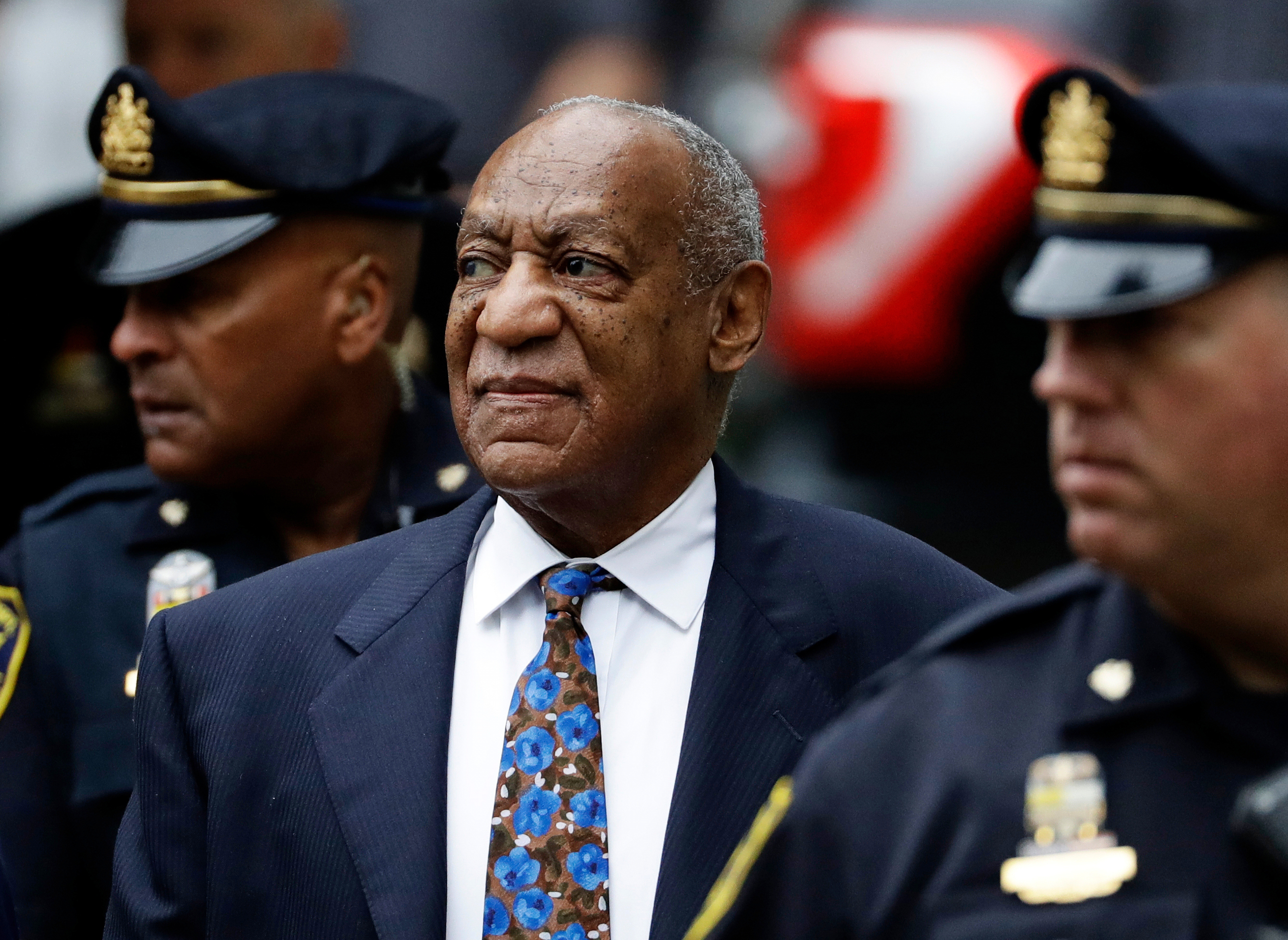
    A judge in California has ordered Bill Cosby or his lawyers into court next month to address questions about his assets as a woman who sued him for sexually assaulting her seeks to enforce payment of a $59 million judgment she was awarded earlier this year.

    In March, a civil jury made the award after finding that Cosby had drugged and sexually assaulted the woman, Donna Motsinger, a former server at a Sausalito restaurant, after escorting her to one of his comedy shows in 1972.

    In court papers, lawyers for Motsinger said Cosby, 89, hasn’t paid anything toward the judgment and, citing bank records, raised concern that in the past he and his family had moved assets around in a way that could hinder their ability to collect the judgment.

    “Cosby has paid none of the judgment, while showing a clear record of liquidating assets and then immediately dissipating the proceeds,” Motsinger’s lawyers wrote in court papers.

    Lawyers for Cosby did not respond to a request for comment.

    A hearing in the effort to enforce the judgment had originally been scheduled for January in Los Angeles Superior Court. But Motsinger’s lawyers, citing the financial transactions outlined in the court papers, asked the judge in the case, Bradley S. Phillips, to move up the date. In an order issued Tuesday, the hearing was set for September.

    Cosby has consistently maintained that any sexual contact he had with women was consensual. He has lodged an appeal of the trial finding.

    Judgments become due at the time they are awarded, though enforcement of them is left to the party who won to arrange. The lawyers for Motsinger wrote in the complaint that Cosby had failed to respond to post-judgment questions meant to identify his assets.

    One of the lawyers, Jesse Creed, detailed financial transactions in court papers that, while they occurred before the award of the judgment, were indicative, he argued, of an effort to transfer assets in ways that could prevent them from being subject to an enforcement action. For example, he cited bank records obtained by subpoena that showed that proceeds from the sale of a New York town house were wired into a Cosby account last November and within 48 hours, $1.29 million was transferred to other accounts, including those belonging to friends.

    Though dozens of women have come forward to accuse Cosby of sexual abuse, he was only criminally charged in one case. He was convicted, but in 2021 that conviction was overturned for procedural reasons after Cosby had served three years of a three- to 10-year sentence at a prison outside Philadelphia.

    In that case, he was convicted of drugging and sexually assaulting Andrea Constand, a former Temple University employee to whom Cosby had become a mentor. He was freed after the Pennsylvania Supreme Court ruled that a “non-prosecution agreement” with a previous prosecutor meant he should not have been charged.

    Cosby promoted the Pennsylvania Supreme Court decision as a full exoneration, and over the years, Cosby’s lawyers have depicted him as someone who unfairly became a target of the emotions stirred by the #MeToo movement.

    But the Motsinger case is one of two recent civil court findings that reinforce an image of him as a person who wielded his celebrity to take advantage of women.

    After his release from prison, Cosby was the subject of a civil trial in 2022 brought by another accuser, Judy Huth. In that case, the jury found that Cosby had sexually assaulted Huth in 1975, when as a 16-year-old girl she accepted his invitation to join him at the Playboy Mansion in Los Angeles.

    In Motsinger’s lawsuit, she described how Cosby had attacked her when they were both in their 30s, after giving her wine and a pill that had left her incapacitated. Cosby did not testify at the trial.

    Years ago, Motsinger’s case would have been time-barred because she did not make the accusation until after the expiration of the statute of limitations for such suits. But her case became possible because California is among the states that have amended the statutes in sexual assault cases so accusers can come forward even after a lengthy passage of time.

    Cosby says he has recently run into financial difficulties. During a deposition in the Motsinger case, he described being unable to get the high-profile work he once enjoyed as a comedy star whose television series “The Cosby Show” became a major success.

    But an expert witness Motsinger’s lawyers called to the stand before the jury’s final decision this year estimated that Cosby was worth roughly $128 million.

    This article originally appeared in The New York Times.

  • I don’t care what anyone says: Being ‘woke’ isn’t a bad thing

    I don’t care what anyone says: Being ‘woke’ isn’t a bad thing

    I was chatting with a friend recently whom I’ve known for a long time when she used the term woke as if it meant something disgusting.

    I was so stunned that I didn’t bother trying to correct her. But I hung up the phone thinking about how the concept has become a political football, with even some Dems kicking it around.

    African Americans created this vernacular. It preexisted MAGA’s hijacking of it by decades, dating back to the days of civil rights activist Marcus Garvey, founder of the Universal Negro Improvement Association. It has long been a part of pop culture, showing up in musical performances by everyone from Depression-era blues singer Lead Belly to Erykah Badu in her 2008 song, “Master Teacher.”

    I first heard it during the early 1990s. Back then, if someone said, “You’re not woke,” it was considered the ultimate insult, right up there with being an Uncle Tom — or worse. Being woke refers to being alert to racial transgressions. The opposite of woke is to be asleep, and therefore oblivious to systemic racism and injustice.

    No matter how President Donald Trump and Secretary of Defense Pete Hegseth attempt to vilify the term, I stand by the notion that being woke is a good thing. As in the exhortation, “Stay woke, brother.”

    It’s galling to watch politicians bastardize it. U.S. Rep. Alexandria Ocasio-Cortez recently brought it up during an ABC News interview when she said, “I have a local city councilman that has this saying: ‘Woke 1 was crazy.’”

    She was talking about Francesca Hong, a progressive candidate running for governor of Wisconsin with a history of making radical statements, and was also quoting New York City council member Chi Ossé, who used the “woke 1” term on social media. I get that Ocasio-Cortez was referring to far-left calls to defund the police — which most Black people never fully supported — among other extremist ideas. But her words still stung.

    I found myself wondering: Since when did the concept of being woke become a bad thing for Democrats?

    I have an awful lot of respect for Ocasio-Cortez. I recognize she may be weighing a run for the presidency in 2028 and trying to center herself politically. But this kind of virtue signaling won’t be as beneficial as she hopes if it also alienates African Americans.

    M.K. Asante said that “the idea of staying woke became associated with consciousness,” but that the meaning of the term has changed after being co-opted by the mainstream.

    For insight, I reached out to M.K. Asante, a professor at Morgan State University whose father is Molefi Kete Asante, a renowned professor of Africology at Temple University. “The idea of staying woke became associated with consciousness,” Asante told me, but added that the term was co-opted around 2020 following the widespread uprisings after the murder of George Floyd by a police officer.

    Asante pointed out, “Now it does not have the same meaning in the mainstream.”

    That’s mainly because of Trump, who, after his return to the White House, immediately began vilifying woke and other things associated with diversity.

    He declared an all-out war on diversity, equity, and inclusion efforts in both federal and private sectors, and has also taken aim at museums he says are “essentially, the last remaining segment of ‘WOKE.’” Trump also has cut funding from key government programs that support DEI.

    Even the military hasn’t been immune. Trump summarily dismissed Air Force Gen. Charles Q. Brown Jr., who was the second Black person to serve as chairman of the Joint Chiefs of Staff, and set about renaming military bases after Confederate generals.

    Earlier this year, Pentagon spokesperson Sean Parnell announced on X that officials were targeting Stars and Stripes, an independent newspaper that covers the military, in part to “refocus its content away from woke distractions that syphon morale.” Since then, the paper’s publisher, editor-in-chief, and a reporter have all been terminated, ending 155 years of editorial freedom, as my colleague Will Bunch reported.

    Meanwhile, the United States is at war with Iran, Canada, our closest ally, has announced retaliatory tariffs on U.S. products, and American consumers are wondering if the influx of tariff-free foreign beef imports Trump is pushing will be safe to consume.

    Yet, Trump says woke is the enemy.

    Despite the president’s best efforts, he can’t stamp the term or its real meaning out.

    As Asante pointed out, “You can co-opt a word, but the spirit of what ‘stay woke’ means is alive and well.”

  • Summer’s not over yet! Bruno Mars, Chris Stapleton, and Wu-Tang Clan headline a busy Philly music week

    Summer’s not over yet! Bruno Mars, Chris Stapleton, and Wu-Tang Clan headline a busy Philly music week

    Summer’s not over yet, at least when it comes to music schedules in and around Philadelphia. This is one of the busiest music weeks of the season, with big Bruno Mars and Chris Stapleton tours coming through, and Rufus Del Soul, Wu-Tang Clan, Squeeze, and Demi Lovato down the Shore.

    Thursday Aug. 27

    Swervedriver

    Indie bands with a fuzzy guitar sound that embrace the shoegaze label have proliferated this decade. Swervedriver is among the 1990s originators of the style, and the members of the British band are celebrating the 35th anniversary of their debut album, Raise. 8 p.m., Underground Arts, 1200 Callowhill St., undergroundarts.org

    Pinkshift

    Pinkshift, the hard-hitting Baltimore punk band fronted by Ashrita Kumar, is celebrating an expanded version of their 2021 debut EP Saccharine. Two Philly bands will join them: Kulfi Girls, the foursome fronted by Abi Natesh that mixes hard rock with Indian classical influences, and Nicolle Maroulis’ emo outfit Hit Like a Girl. 8 p.m., Ukie Club, 847 N. Franklin St., 4333Collective.net

    Kulfi Girls play the Ukie Club on Thursday, Aug. 27.Philly Music Fest

    Good Flying Birds

    Three winsome indie pop bands are on this free Live & Local show. Good Flying Birds, whose charming Talulah’s Tape came out in 2025, is a band of Midwesterners, who will be joined by two promising Philly quartets in Smarthearts and Heatloaf. Free. 6 p.m., Spruce Street Harbor Park, 301 S. Christopher Columbus Blvd., 4333Collective.net

    Friday Aug. 28

    Jerry Garcia Symphonic Celebration

    The Grateful Dead guitarist would have turned 84 this month, and his family organized this tour in his honor. Together with the Philly Pops, the lineup includes Jerry Garcia Band veterans Melvin Seals on organ and Jacklyn Branch on vocals, Philly guitarist Tom Hamilton, Phil Lesh’s son Grahame Lesh on bass, drummer John Morgan Kimock, and singer Kanika Moore. 8 p.m., TD Pavilion at Highmark Mann, 5201 Parkside Ave, highmarkmann.org

    Wu-Tang Clan’s Method Man performs at the Wells Fargo Center in Philadelphia on July 18, 2025. The Staten Island hip-hop crew is in Atlantic City on Friday.Kaiden J. Yu / Staff Photographer

    Wu-Tang Clan

    Remember the “Wu-Tang Forever” tour, which had its grand finale in South Philly last summer? Shockingly, that farewell didn’t last very long. Just over a year later, the RZA, Method Man, Ghostface Killah, and their brethren are playing Atlantic City. 8 p.m., Hard Rock Live at Etess Arena, 1000 Boardwalk, casino.hardrock.com/atlantic-city

    Squeeze

    Before the band went on a run with albums like Argybargy in 1980 and Sweets From a Stranger in 1982, Squeeze songsmiths Chris Difford and Glenn Tilbrook wrote Trixies, a song cycle about a nightclub that was never recorded. Now 50 years on, they have released it as a full-length album produced by the band’s bass player, Owen Biddle, who is a former member of The Roots. Adam Ant and Haircut 100 are also on the bill. 8 p.m., Borgata Event Center, One Borgata Way, Atlantic City, borgata.mgmresorts.com

    Demi Lovato

    Former Disney child actress and pop singer Demi Lovato has pivoted from the punk-pop of the 2022 album Holy F— to return to a more dance pop sound on the new It’s Not That Deep. 8 p.m., Ovation Hall, the Ocean resort, 500 Boardwalk, Atlantic City, theoceanac.com

    Chris Stapleton brings his All-American Road Show to the Freedom Mortgage Pavilion in Camden for two nights this weekend.Becky Fluke

    Friday and Saturday Aug. 28-29

    Chris Stapleton

    Eleven-time Grammy winner Chris Stapleton has built himself a huge audience with his brand of beardy, rugged country-soul that’s rarely as slick as the manicured Nashville acts he rubs elbows with on the country charts. For this year’s two-night Camden stop on his “All-American Road Show,” he’s supported by North Carolina-born “Sex, Drugs and Country Music” singer Carter Faith. 8 p.m. Freedom Mortgage Pavilion, 1 Harbour Bvld., Camden, freedommortgagepavilion.com

    Jesse Malin will headline the Queen Jeans Ball in Wilmington on Saturday, Aug. 29. with Craig Finn and Tommy Stinson opening.Vivian Wang

    Saturday Aug. 29

    Queen Jeans Ball with Jesse Malin

    New York songwriter Jesse Malin has always been a rock and roll true believer, dating back to his hardcore band Heart Attack (which he founded when he was 12). Then came D Generation and nine solo albums, including 2019’s Sunset Kids, which was produced by Lucinda Williams.

    In 2023, Malin suffered a rare spinal stroke that left him paralyzed from the waist down. The next year, he was the subject of a tribute that featured Bruce Springsteen and Billie Joe Armstrong, among others. Now, he’s returned to the stage with his Silver Manhattan musical and is back to touring with his band.

    Malin is headlining the annual Queen Jeans Ball in Wilmington, which benefits the nonprofit Donate Delaware. Craig Finn of the Hold Steady and Tommy Stinson will also perform and undoubtedly join Malin on stage. 8 p.m., the Queen, 500 N. Market St., Wilmington, thequeenwilmington.com

    Australian electronic dance music act Rüfüs Du Sol will perform on the Atlantic City beach on Saturday, Aug. 29.Boaz Kroon

    Rüfüs Du Sol

    Dance music arrives on the Atlantic City beach with Rüfüs Du Soul, the Australian alt-pop band who mix live instrumentation and electronic beats. The band fronted by singer Tyrone Lindqvist is touring stadiums for its 2024 album Inhale / Exhale. The show marks a return to Live Nation booking toes-in-the-sand shows in tandem with Visit Atlantic City for the first time since 2023. Ben Bohmer opens. visitatlanticcity.com

    Zac Brown Band

    The official name of this tour is “Love & Fear Tour presented by Margaritaville at Sea.” So it’s safe to say the Georgia country-rock singer who sang the national anthem at the UFC Freedom 250 cage fight at the White House in June, will be giving Jimmy Buffett vibes. His album Love & Fear features Snoop Dogg, Marcus King, and the late great Dolly Parton. Grace Potter, who also plays Free at Noon on Friday, opens. 7 p.m., TD Pavilion at Highmark Mann, 5201 Parkside Ave, highmarkmann.org

    Sam Sodomsky is The Bird Calls. He plays Young American Cider in Germantown on Sunday.Jake Fromm

    Sunday Aug. 30

    Cloud Nothings / Knifeplay

    Cleveland-born indie band Cloud Nothings, fronted by now Philly-based guitarist-songwriter Dylan Baldi, released its eighth album, Final Summer, in 2024. Sharp-edged Philly band Knifeplay open. 7 p.m., Ruba Club, 416 Green St., 4333Collective.net

    The Bird Calls

    The Bird Calls is Sam Sodomsky, a Brooklyn songwriter raised in Philly whose new album, Take Leave, is due Friday. Sodomsky, also a contributing editor at Pitchfork, makes homespun, open-hearted folk rock about trying to find a place in the world with songs like “Clockwork” and “Ethan Frome” that linger in the imagination. He’s playing a hard cider tasting room in Germantown. Kristin Daelynn and Adeline Hotel open. 7 p.m., Young American, 6350 Germantown Ave., youngamericancider.com

    Monday Aug. 31

    Arlo Parks

    The British singer and poet born Anaïs Oluwatoyin Estelle Marinho vaulted into stardom in the UK with her Collapsed Into Sunbeams debut, which won the prestigious Mercury Prize. Her third album, Ambiguous Desire, is a pleasant soul-searching work shaped by club culture, though it’s more likely to be heard by coffee shop latte sippers than dance floor denizens. 8 p.m., Union Transfer, 1026 Spring Garden St., utphilly.com

    Raye performs at the BET Awards on June 28, 2026, at the Peacock Theater in Los Angeles. She opens for Bruno Mars on Tuesday and Wednesday, Sept. 1 and 2, at the Linc. (AP Photo/John Locher)John Locher

    Tuesday and Wednesday Sept. 1-2

    Bruno Mars & Raye

    Bruno Mars has been making hits nonstop since his 2010 Doo-Wops & Hooligans debut. His 2024 chart toppers “Die With a Smile” and “APT.” — with Lady Gaga and Rosé, respectively — and this year’s “I Just Might,” from his new album Romantic are the most recent examples. Raye, the British singer who has a knockout stage show, opens. Things get going with DJ Pee. Wee, who is Mars’ Silk Sonic bandmate Anderson .Paak in disguise. Shopper alert: There will be a Bruno Mars x Hello Kitty pop-up at the Fashion District from Aug. 31-Sept. 2. 7 p.m., Lincoln Financial Field, One Lincoln Financial Way, lincolnfinancialfield.com

  • That ‘curious’ lane switch in the middle of the Manayunk Bridge? Planners say it’s on purpose.

    That ‘curious’ lane switch in the middle of the Manayunk Bridge? Planners say it’s on purpose.

    Towering 80 feet above the Schuylkill and shaped by its colossal concrete arches, the Manayunk Bridge is a key connector in the region’s trail system and a link between Philadelphia and its suburban neighbor, Lower Merion Township.

    While the trail is beloved by city dwellers and suburbanites alike, a mid-trail traffic pattern switch for bikers and pedestrians has confused some users and prompted one reader to write in, asking The Inquirer to investigate. According to city and township officials, the traffic flow switch-up midway across the bridge is no accident.

    The Manayunk Bridge connects Manayunk to Bala Cynwyd. Monica Herndon / Staff Photographer

    The Manayunk Bridge connects the 80-plus mile Schuylkill River Trail with the Cynwyd Heritage Trail, a 2-mile multiuse path that runs along an unused segment of SEPTA tracks in Lower Merion. Much of the trail was once SEPTA’s Ivy Ridge line, which connected Philadelphia with Manayunk via Bala Cynwyd, but was truncated in the 1980s due to poor track conditions. The trail’s completion in 2011, and extension in recent years, has marked a major transformation for the previously underutilized corridor of Bala Cynwyd.

    Penn Valley resident J.J. Cutuli enjoys running and biking with his kids on the Cynwyd Trail.

    “We really love the pedestrian bridge. We really love the trail,” Cutuli said.

    But halfway across the Manayunk Bridge, “there’s this curious little thing that happens,” Cutuli said. The trail’s traffic pattern switches. The bicyclist side becomes the pedestrian side, and vice versa.

    “I’m kind of a rule-follower. One of my kids is a rule-follower, and he asked me that question. He was like, ‘What side should I be on? Should I be on this side? Should I be on that side? What are the rules of the road?’” Cutuli said.

    Unable to summon an answer himself, Cutuli wrote into Curious Lower Merion, The Inquirer’s forum for answering questions about the Lower Merion community.

    » ASK US: Have something you’re wondering about in Lower Merion? Submit your Curious Lower Merion question here.

    Chris Leswing, Lower Merion’s director of building and planning, said the traffic pattern switch was a deliberate choice to slow bikers traversing the downward slope from Lower Merion to Manayunk.

    It’s “easy to speed through areas where people may linger and watch the river” and the “idea was that bikers would need to be aware of the pavement markings to check their speeds,” Leswing said in an email.

    The city concurred.

    The switching of the bike and pedestrian zones was designed to slow bikes down and allow users to “experience both sides of the bridge and the amazing views,” Ra’Chelle Rogers, spokesperson for Philadelphia’s parks and recreation department, said in an email.

    The traffic pattern switch was in response to “what was heard from the public and stakeholders,” according to Rogers.

    Are trail users following the rules? Not completely.

    On one Reddit post, cyclists said the traffic pattern change and accompanying signage “makes zero sense” and “could not be more Looney Toons.” Most cyclists and pedestrians just stay to the right, commenters said.

    This suburban content is produced with support from the Leslie Miller and Richard Worley Foundation and The Lenfest Institute for Journalism. Editorial content is created independently of the project donors. Gifts to support The Inquirer’s high-impact journalism can be made at inquirer.com/donate. A list of Lenfest Institute donors can be found at lenfestinstitute.org/supporters.

  • The Flyers are banking on internal improvements being enough in 2026-27. Here are five players they need to step up

    The Flyers are banking on internal improvements being enough in 2026-27. Here are five players they need to step up

    The Flyers’ offseason was highlighted by the massive acquisition they almost made rather than any of the moves team completed.

    After catching lightning in a bottle last spring and riding that wave all the way to the second round of the playoffs, the Flyers went for broke this offseason — almost literally — by tendering a $90 million offer sheet to budding star Leo Carlsson. While the bold act firmly announced the Flyers’ ambitions and eagerness to become a contender again, it ultimately fell flat as the Anaheim Ducks matched the offer and retained their prized youngster.

    Not landing Carlsson means the Flyers’ offseason, at least to this point, has amounted to upgrading the backup goalie spot with Joseph Woll, adding a bottom-pair bruiser in Simon Benoit, and bolstering the fourth line with 34-year-old Noel Acciari. Nice depth adds, sure, but hardly the needle-movers you’d expect for an up-and-coming team looking to build on the momentum from its first non-COVID playoff run in eight years.

    Instead, general manager Danny Brière and the Flyers are banking on internal improvements from young players being enough for the Flyers to repeat — or better — last year’s success in what should be an improved Metropolitan Division that already includes the Stanley Cup-winning Carolina Hurricanes. Will that gamble pay off? Here are five players the Flyers will need more from if they are to avoid taking a step back.

    1. Matvei Michkov, RW

    No surprise here. Michkov will be looking to rebound from a sophomore season that saw him start slow, face public criticism for his conditioning, and clash with coach Rick Tocchet. Michkov’s play was markedly better post-Olympic break — 22 points in 26 games — but he struggled mightily in the playoffs, culminating with him being benched for the Flyers’ playoff finale.

    Michkov expressed in May that he wasn’t happy with his season overall and acknowledged that he needed to work harder this summer. To his credit, it appears he’s followed through. He was spotted on the ice in Voorhees the day after exit interviews and participated in a renowned summer training group in Russia with NHL players like Artemi Panarin. He looks considerably leaner based on pictures that have surfaced on social media in recent months.

    When you consider the 21-year-old finished with 20 goals and 51 points in a down year, with a better offseason of training and added motivation, the sky really seems to be the limit for the Russian winger. Brière, Tocchet, and Co. are expecting a “vengeance tour” from Michkov in 2026-27 as they seek a second consecutive playoff berth.

    2. Jamie Drysdale, RHD

    After a couple of underwhelming years split between Anaheim and Philadelphia, Drysdale took a major step forward last season and flashed glimpses of the skill set that made him the No. 6 overall pick in the 2020 draft. But is there even more meat on the bone?

    Drysdale’s biggest progression last season came defensively, as he cleaned up some of his poor habits and became a more reliable defender. He improved his plus-minus from minus-32 to minus-3 and set career highs in average ice time (21:33) and goals (eight), while also equaling his career best of 32 points.

    With a sturdier defensive foundation and a new four-year, $26 million contract to boot, the Flyers will hope a more confident Drysdale can take another step offensively and channel his effortless skating and puck-moving ability into increased production. While many expected the Flyers to add a proven power-play quarterback this summer to address the last-ranked unit, the team did not, meaning Drysdale likely will get the first crack at the point. The Flyers will need to click at a much higher rate than 15.7% with the man-advantage if they are to remain a playoff contender, and Drysdale grabbing the PP1 job with both hands would go a long way toward that aim.

    3. Porter Martone, RW

    After a banner collegiate season at Michigan State, the 2025 first-round pick didn’t miss a beat once he signed with the Flyers on March 29. Martone racked up six goals and 15 points in 19 games (including playoffs) down the stretch and, at 19 years old, was consistently among the Flyers’ most noticeable skaters during the postseason.

    While the burgeoning power forward is still just scratching the surface of his immense potential, he showcased the skill set and moxie of a player who looks destined for stardom. The question now will be how quickly Martone can make that leap to become a top-of-the-lineup player and whether that can be as soon as this season.

    Rookie Porter Martone, 19, has bona fide star potential and doesn’t seem like someone who gets daunted by the moment.Yong Kim / Staff Photographer

    The Flyers will be wary of heaping too much pressure too soon on the teenager, but Martone looks to have the broad shoulders and mental makeup to handle it. Given Martone’s pedigree as one of the top prospects in all of hockey — The Athletic ranked him No. 3 — the Flyers see having him for a full 84 games as one of their most obvious avenues toward improvement.

    4. Tyson Foerster, LW

    Amid Dan Vladař’s breakout season, Trevor Zegras’ resurgence, all the drama surrounding Michkov, and the late-season Martone hype train, it was easy to forget that the Flyers played most of last season without one of their top players in Foerster. To make matters worse, the 24-year-old’s arm injury came right as he looked to be breaking out.

    Flyers winger Tyson Foerster missed 39 games last year after injuring his arm on a one-timer in early November.Yong Kim / Staff Photographer

    With 11 goals in 21 games before his injury, on the heels of nine in nine to conclude 2024-25, Foerster was quietly playing at a 40-goal pace for the first quarter of the 2025-26 season. The Flyers rewarded him handsomely this summer with an eight-year, $56.8 million extension that will keep him in Philly until 2035. Now Foerster, who is also one of the top defensive wingers in the league, will need to prove he can live up to his contract and stay healthy, the latter being something he has struggled with to this point of his career.

    Foerster has the shooting release to become a consistent 30-goal scorer in this league and should provide a major boost for an offense that ranked 21st in goals last season. If all breaks right, could he even become the Flyers’ first 40-goal scorer since Jeff Carter in 2009?

    5. David Jiříček, RHD

    The Flyers are going to need a young blueliner to take a major step forward in 2026-27, and the likeliest candidates are Jiříček and Oliver Bonk. Jiříček, who turns 23 in November, will probably get the first chance, given he is almost two years older and, more importantly, no longer waiver-exempt.

    Acquired from Minnesota at last year’s trade deadline for Bobby Brink, the 2022 sixth-overall pick is on his third team and is looking to revive his once-promising career. Blessed with great size at 6-foot-4, puck-handling ability, and a booming shot, Jiříček is a worthy gamble for a Flyers team that lacks a true high-end offensive defenseman in its pipeline. The team can also point to its strong recent track record with reclamation projects like Zegras, Drysdale, and Vladař as a reason for optimism.

    The Flyers were patient with Jiříček last season as they sent him to the minors to have him rebuild his defensive game and learn the team’s style of play. Now, he will get a chance in training camp to show he’s made the necessary improvements and is finally ready for a full-time NHL role. Jiříček projected as a power-play quarterback when he entered the league, and given the Flyers’ persistent struggles in that area, he should be another option there given his big shot from the point.

    “The potential is high … 21-, 22-year-old, 6-foot-4 defensemen of his caliber are tough to find,” Brière said after acquiring Jiříček in March. “We know we have to work with him. … But that’s why I go back to the Jamie Drysdale learning curve. That gives us hope that he can get on the same track and eventually become a difference-maker for us.”

    Long fans of David Jiříček going back to his draft year, the Flyers believe they can get the best out of the toolsy defenseman.Elizabeth Robertson / Staff Photographer
  • Olivia Li is one of the Curtis Institute’s most promising new students. She’s 7 years old.

    Olivia Li is one of the Curtis Institute’s most promising new students. She’s 7 years old.

    In the lobby of the Curtis Institute of Music’s Lenfest Hall, Olivia Li, in a frilly-sparkly red dress, is running back and forth through a turnstile. A few minutes later, she is at the piano transformed — playing Chopin eyes closed, a countenance most serious, and seemingly a decade more mature.

    If her legs aren’t long enough for her feet to reach the piano’s pedals without an extender, give her time. She is 7 years old.

    Olivia is one of nearly four dozen new students now arriving at Curtis for the fall term. The school on Rittenhouse Square, one of the world’s top music conservatories, has always had its share of young talent. This year it will have 13 musicians entering school under the age of 18.

    But even at a place known for prodigies, Olivia is unusual. She is believed to be the youngest student to study at Curtis since 1950, when 6-year-old violinist Diana Halprin matriculated.

    Olivia Li, 7, plays the piano in a rehearsal room at Lenfest Hall at the Curtis Institute of Music.Tom Gralish / Staff Photographer

    “I was actually preparing for Juilliard,” Olivia said, “but my teacher said I could try for Curtis, and I just did. I didn’t expect I would get in.”

    She got in. Juilliard, too.

    Asked why she chose Curtis, she said, simply, “I just like Curtis better than Juilliard.”

    Michelle Cann, one of two professors with whom Olivia will study at Curtis (the other is Ignat Solzhenitsyn), says that the young pianist has “phenomenal fingers.” Then again, so did others who tried out for the school and did not get in.

    (function(){function e(){window.addEventListener(`message`,function(e){if(e.data[`datawrapper-height`]!==void 0){var t=document.querySelectorAll(`iframe`);for(var n in e.data[`datawrapper-height`])for(var r=0,i;i=t[r];r++)if(i.contentWindow===e.source){var a=e.data[`datawrapper-height`][n]+`px`;i.style.height=a}}})}e()})();

    For the current school year, Curtis received 154 applications to the piano department, a spokesperson said. Sixty-three of those auditioned live in the first round and 15 advanced to the finals. Four were eventually accepted.

    What set Olivia apart in her audition, Cann said, was “how musical she was and how much personality and character about the music-making she had that you don’t expect to see in a 7-year-old. It just stood out so much.”

    Seven-year-old pianist Olivia Li rushes down the stairs of Lenfest Hall at the Curtis Institute of Music on Monday, Aug. 17, 2026. She began studying the piano at age 4 and will receive a full-tuition scholarship to the prestigious institution.Tom Gralish / Staff Photographer

    The sole criterion for admission at Curtis is artistic promise, said provost and dean Nick DiBerardino. “It’s rare for someone as young as Olivia to have won a place at Curtis,” he said, “but it does happen, and when it does, it’s because there was something really special happening at the piano.”

    Curtis has had students younger than Olivia. The school is still in the process of reviewing its records, but to the best of its knowledge the youngest was pianist Ruth Slenczynska, who was 5 years and 2 months old when she arrived in April 1930. She stayed just a few weeks.

    The youngest to come and stay was Sol Kaplan, who was 5 years, 7 months when he began studies in 1924, the year Curtis was founded; he went on to compose music for episodes of the original Star Trek TV series and a slew of movie scores.

    Olivia Li is one of the youngest students to study at the Curtis Institute of Music.Tom Gralish / Staff Photographer

    Olivia is in exceedingly rare company. More than 4,000 composers, conductors, vocalists, pianists, and other instrumentalists have graduated from Curtis in its century-plus existence. Only 13 other students were under the age of 10.

    She comes to Curtis from East Williston, Long Island, N.Y. No one in her family is particularly musically inclined, said her mother, Yanan Zhang, who did study piano as a child and continued to play a bit on a digital piano the family had at home.

    “She just naturally started,” said Zhang of Olivia’s attraction to piano. “She saw me playing, and we hired a teacher to come to home once a week to teach her. So initially it was just for fun.”

    Olivia started studying with a teacher — a Yale and Juilliard graduate — who gave her “very systematic training. So from that time, we took the learning seriously,” Zhang said.

    The teacher told Zhang that Olivia learned fast and had strong fingers.

    Seven-year-old pianist Olivia Li in the lobby of the historic 1726 Locust St. mansion at the Curtis Institute of Music on Monday, Aug. 17, 2026. She began studying the piano at age 4 and will receive a full-tuition scholarship to the prestigious institution.Tom Gralish / Staff Photographer

    “I think he told me several times that she is outstanding, but I didn’t really take it seriously. I thought it’s just encouragement from teachers — that’s how they encourage kids, encourage parents.”

    Olivia was 4 when she started piano, and despite her quick progress, it did not occur to Zhang for a while that there was anything unusual about her daughter.

    “I just thought maybe that’s how all kids do.”

    Olivia, of course, is not like other children, and she won’t be like her fellow students at Curtis, either.

    While students are taking coursework during the day covering music theory and history, Olivia will be attending third grade at Germantown Friends School. After her normal elementary school day, she will go to Curtis for two hours of piano lessons per week and receive individualized instruction in other areas like ear-training, music history, and repertoire studies.

    Olivia Li walks toward the entrance to 1726 Locust St., the one-time mansion that is home to the Curtis Institute of Music.Tom Gralish / Staff Photographer

    Curtis requires students under the age of 18 to live with a parent or guardian, and so Zhang, who works remotely for a bank in risk management, has moved to Philadelphia and set up house locally. Olivia has a younger brother, who loves music but has not yet taken up an instrument.

    How does a 7-year-old integrate socially at a school where some students will be three times her age?

    “We haven’t had a 7-year-old [recently],” DiBerardino said, “but our undergraduate students are very accustomed to playing music with younger people and making a deliberate effort to make them feel welcome.”

    Olivia LiTom Gralish / Staff Photographer

    Some socializing will happen organically, DiBerardino said, but “we do have some structures in place to try to help with that process. We have a dedicated work study program for our undergraduate students who are trained by our student services team to be mentors or big brothers or big sisters. And we regularly check in on students like Olivia. So Olivia definitely would have that support.”

    Outside of practicing, Olivia likes drawing, writing, math, and swimming.

    “When she’s not practicing, she reads a lot,” Zhang said. “She holds a book when she is brushing her teeth.”

    “I like to read fiction,” Olivia said.

    With a Norman Rockwell portrait of Curtis founder Mary Louise Curtis Bok Zimbalist nearby, 7-year-old pianist Olivia Li sits with her stuffed panda.Tom Gralish / Staff Photographer

    Curtis does not have a separate precollege program the way some other music conservatoires do. Olivia won’t be enrolled in a bachelor’s program, but, rather, a diploma program.

    Several forks in the road lie ahead. She could end up continuing at Curtis post-high school, enrolling in the bachelor’s degree program. That means she could end up being at Curtis well over a decade, a prospect that has some Curtis professors joking that they will be retired by the time she graduates.

    Olivia could also decide at some point that she has gotten what she needed from Curtis and move on to another conservatory or music school.

    Asked whether she would like to be a professional pianist, Olivia said she doesn’t know yet. She is also interested in conducting, “because you get to, like, conduct a whole orchestra.”

    Olivia could also decide that music isn’t where she wants to end up. “We don’t know if at some point she’ll say, ‘I don’t want to do this with my life.’ Who is supposed to know that at 7?” Cann said.

    Zhang said she doesn’t have any thoughts on the matter.

    For now, the artist herself seems content to let the endgame play out. She has plenty to do in the meantime. Of what she wants from a Curtis education, she said:

    “I hope that I can play piano really good and learn a lot of pieces and share my music with the world.”