Tag: topic-link-auto

  • What’s it like living in the shadow of an AI data center? These Vineland residents know.

    What’s it like living in the shadow of an AI data center? These Vineland residents know.

    When Amber Ayrer bought her Vineland home 25 years ago, she envisioned growing old there, enjoying lazy afternoons with the windows open and a view of farmland from her front door.

    After her adult daughter, Ally, suffered a traumatic brain injury, Amber made the rancher accessible, installing a ramp that aides use to push Ally’s wheelchair outside for her daily walks.

    The place had all the makings of a forever home, Amber Ayrer said — until a massive AI data center moved in across the street.

    Now, the 71-year-old looks out her front windows at the hulking DataOne facility, a windowless compound surrounded by walls and metal fences.

    In recent months, Ayrer said, the 2.4-million-square-foot complex has emitted a near-constant hum. She struggles to sleep, she said, and has suffered from headaches. She turns the TV on to mask the sound.

    Residents who live farther away have also complained about the noise, including in a recent lawsuit that was thrown out due to procedural issues. In the suit, residents said the Cumberland County Department of Health measured the hum as higher than 50 decibels a mile away in the middle of the night. A sound higher than 50 decibels is equal to a running refrigerator and is 10 times louder than a typical suburban area at night.

    Ayrer, who was not involved in the lawsuit, said she doesn’t want to move, even as she sees neighbors sell their homes to the data center developers.

    “In order to get another home, I’d have to get one built” to be accessible, Ayrer said, standing in her entryway. She shrugged, adding, “I need to be here for my daughter.”

    The noise had quieted, she noted, since around Sept. 22. That’s when the New Jersey DEP ordered the data center to pay a $1 million fine for running 62 gas generators without the required permits. She isn’t sure why the hum stopped, or whether it was related to the fine.

    By late Wednesday, the sound had returned, she said, and she worried it would be even louder when the center is fully operational.

    The Ayrers are some of the first Philly-area residents to live in the shadow of a massive AI data center. Only a handful of homeowners live within eyesight of DataOne’s South Lincoln Avenue complex in Vineland.

    They used to have more neighbors. But since 2025, DataOne Vineland and LJR Real Estate — which is registered to the address of Northeast Precast, a local company that has partnered with DataOne — have purchased at least five surrounding homes for a combined $3 million, according to online property records.

    DataOne and Northeast Precast did not respond to requests for comment about the acquisitions. Several former Vineland residents who sold their homes to these companies could not be reached or declined to comment.

    Asked about residents’ concerns, DataOne spokesperson Naomi Rice shared a previous statement, which said in part that the facility was “transitioning to low-emission, quiet fuel cells.” These generate energy through an electrochemical reaction rather than combustion, pistons, or rotating machinery.

    Nebius Group, which is operating the center’s internal AI infrastructure, says the fuel cells from Bloom Energy — a company expanding locally — and enhanced sound mitigation will make for a quieter environment than what residents experienced during construction, according to spokesperson Ava Iuliucci.

    Charles-Antoine Beyney, DataOne’s founder and chief executive officer, previously said the Vineland center would use “breakthrough” technology to reduce its environmental impact. He said the complex would be a good neighbor, promising a vertical farm — which uses technology to grow crops indoors — to help feed Vineland residents in need.

    “Most of the data centers that are being built today suck, big time,” Beyney said in January.

    “No freaking way am I going to do what the entire industry is doing … just killing our communities and killing our lungs to make money.”

    What it looks like near a South Jersey data center

    The Vineland DataOne center, as seen in June, could be finished by the end of the year, developers have said. Tom Gralish / Staff Photographer

    The dark exterior of DataOne abuts busy South Lincoln Avenue, towering above homes and farms on the outskirts of Vineland City. In spots, rows of crops extend to the data center’s walls.

    On a recent day, the data center appeared abuzz with activity, although residents said it was relatively quiet, as cars and yellow school buses drove in and out of its gated-off parking lot. Giant “no trespassing” signs are prominently displayed.

    While the front portion of the data center appeared complete, cranes farther back reached into the sky.

    Meanwhile, several large homes across from the entrance — purchased by the data center developers and associates — appeared abandoned, with recycling cans askew in the driveways, indoor and outdoor lights on in the middle of the day, and swing sets sitting empty in the backyards. No one answered the doors.

    At another home, a woman shook her head, saying she’d lived there forever and would never speak publicly about the development across the street.

    Who is behind the Vineland data center?

    Data centers like this one handle the cloud-storage and computing needs of increasingly sophisticated AI tools.

    DataOne, a French company that manages advanced data centers, is the owner, operator, and builder of the Vineland data center. Its client, Nebius Group, an Amsterdam-based AI-infrastructure company, operates the center’s internal technology, which fuels Microsoft’s AI tools.

    As demand for these facilities has surged, so has the controversy surrounding them. Across the country, proposed complexes have received fierce pushback from nearby residents concerned about environmental, noise, quality-of-life, and property-value impacts.

    The debate has intensified in recent weeks as some top AI executives urge a slowdown of the technology amid fears that it may eventually wipe out humanity.

    Several of these facilities have been proposed in the Philadelphia region, from King of Prussia to Limerick. But few plans have been approved.

    DataOne Vineland could become the region’s first hyperscale AI data center. The developers have said the complex is partially operational, and they expect it to be complete by the end of the year.
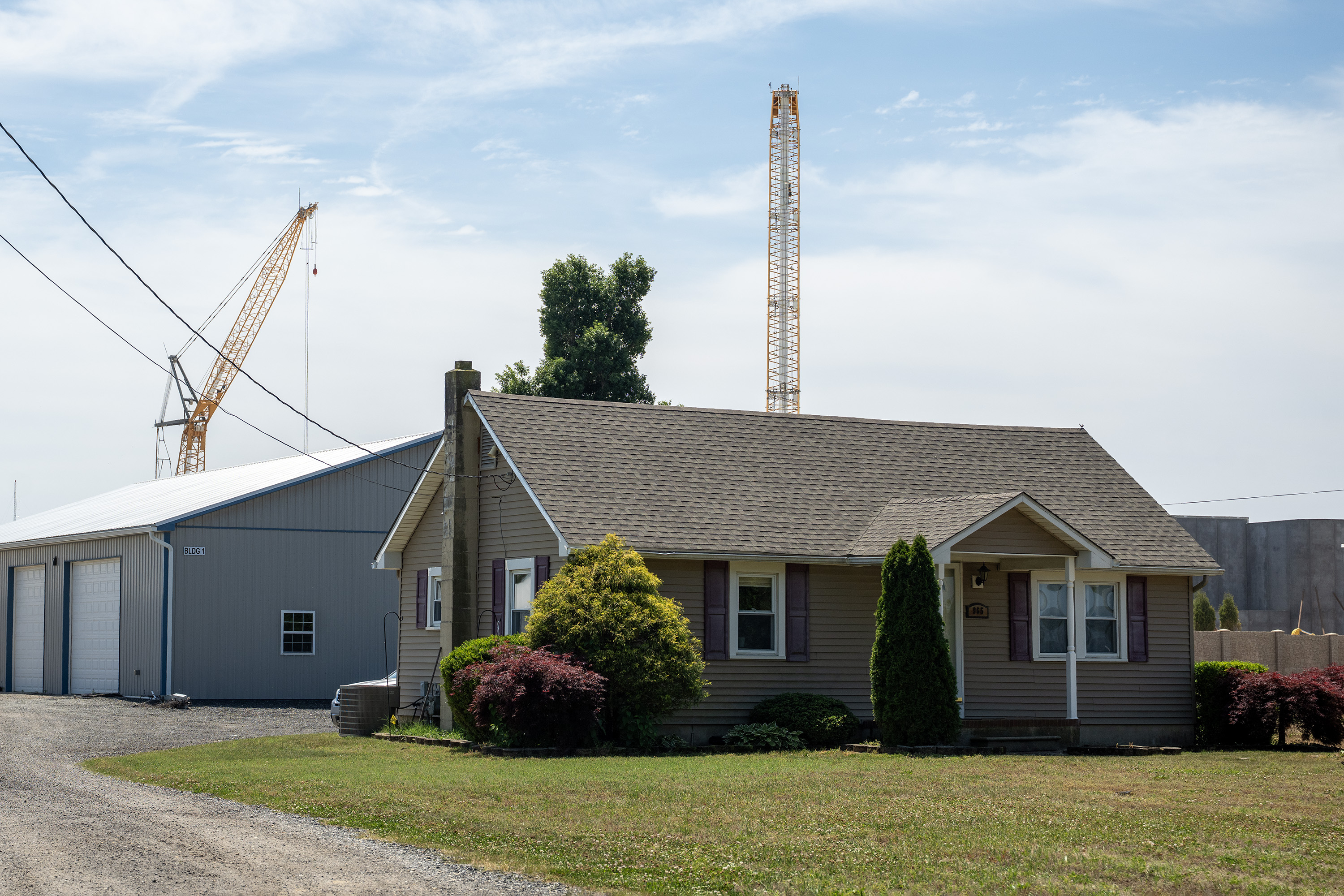
    Construction continued on the DataOne center as seen from a nearby home in June.Tom Gralish / Staff Photographer

    Theresa Lewis, who has owned her home for 47 years, said living by the data center has gotten worse in recent months.

    Stepping outside and seeing the building, “I think of a prison, and I’m the prisoner with the noise,” said Lewis, 74, who compares the sound to a tractor trailer idling outside her home all day and night.

    “You get up in the morning and you’re in a foul mood,” Lewis said.

    Both she and Ayrer said they have called the Cumberland County Department of Health to report excessive noise in the middle of the night, but doing so comes at a cost. They said they then have to get up, get dressed, turn the lights on, and wait for an official to come take a decibel reading, making for another sleepless night.

    Data centers are being built in different communities

    The view outside the Keystone Trade Center in Falls Township. Amazon is building a data center inside the private complex.Erin McCarthy/Staff

    The scene in Vineland is vastly different from the one outside Amazon’s 2-million-square-foot data center campus in Falls Township, Bucks County, the Philadelphia region’s other facility nearing completion.

    That data center sits deep inside the Keystone Trade Center, an industrial hub surrounded by water, with no homes in sight. On a recent day, tractor trailers whizzed by Keystone’s main entrance. Only the transmission wires overhead hinted at what may be inside the private property.

    Still, neighbors have pushed back against the complex, with more than 5,000 people signing a petition in favor of a data center moratorium in Falls Township.

    Elsewhere, data center plans proposed by developer Brian O’Neill have faced fierce opposition in King of Prussia and on the outskirts of Conshohocken. So have projects in East Whiteland, where data center construction recently began, and in East Vincent, where a center was proposed for the site of the former Pennhurst State School and Hospital.

    In Vineland, Lewis said she wishes she and her neighbors had a chance to push back against the data center before it was built. Residents were first asked to provide input about the project at a contentious town hall in January, more than a year after the project was approved by city council and months after construction started.

    “I don’t want to move — and who is going to pay what the house is worth with that right there?” Lewis said, motioning to the data center across the street. “But I wake up angry.”

    She added: “I can’t imagine living next to this for the rest of my life.”

    Editor’s Note: This story has been updated to reflect that the noise from the data center returned Wednesday, according to Ayrer.

  • How do you travel? Your regional planning commission wants to know

    How do you travel? Your regional planning commission wants to know

    The Delaware Valley Regional Planning Commission is collecting granular information about daily travel: Where did people go? Why? Did they drive, take transit, walk, bike, or use an electric mobility device?

    Planners working on the project aren’t nosy or trying to surveil anybody.

    They need real-time data to update DVRPC’s travel demand model for the nine-county Philadelphia area that will guide funding decisions about infrastructure projects and transportation plans for the next decade.

    “Compared to any other 10-year period that I can recall, there has just been so much transformation in how people travel,” said Mike Boyer, the agency’s director of regional planning.

    Information from a new household travel survey will show a clear picture of exactly how it changed and provide clues about where regional transportation might be headed. The last household survey was conducted in 2012 and 2013 and a final version was published in 2015.

    Typically, DVRPC conducts a travel survey every decade, but officials waited 13 years this time to allow transportation patterns to settle into a “new normal” after the massive disruptions of the pandemic.

    How do they find households to take the travel survey?

    Beginning in January, DVRPC has been recruiting participants by mailing postcard invitations to randomly selected households in South Jersey and Southeastern Pennsylvania. It has also used some social media posts.

    People cannot reach out to nominate themselves.

    Random invitations help ensure that respondents reflect the population of the region. Participants need to represent each of DVRPC’s nine counties, as well as a mix of households by income, size, number of workers, and other demographics.

    It is expected to take the rest of the year to get the 9,000 to 10,000 completed household surveys required for a good picture of the region’s habits, said Matt Gates, associate director of travel trends and forecasts for DVRPC.

    Based on typical response rates, it may take as many as 300,000 postcards to recruit enough participants, he said.

    Recruitment paused for the summer and started up again after Labor Day.

    DVRPC serves Burlington, Camden, Gloucester, and Mercer Counties in New Jersey as well as Bucks, Chester, Delaware, Montgomery, and Philadelphia Counties in Pennsylvania.

    Survey data will be held confidential and anonymized, used in the research but not attached to any specific household or phone number, Boyer said.

    “Data won’t be sold or used by any third party,” he said. “We want to be forthright about that.”

    What do participants do?

    Most will report household trips for one 24-hour period, starting around 2 a.m. or 3 a.m., using a smartphone app that runs in the background, tracking each trip via GPS.

    When it detects what might be a trip, it prompts the participant to confirm it and provide details such as the trip’s purpose and what type of transportation is used.

    “If you leave your house in the morning and go to work, and then you leave work and go somewhere for lunch, and then you go back to the office, and then, on the way home, you stop at the dry cleaner — all of those pieces of your daily travel are joined together,” said Gates, the chief travel modeler.

    That would be counted as a “tour,” broken into separate trips, each attached to a specific activity.

    The survey also asks for basic household information — size, ages, jobs, school attendance, income, and vehicles. E-bikes, e-scooters, personal mobility devices for people with disabilities, traditional pedal-powered bicycles, and walking will be counted as separate modes of travel.

    In the 2012-13 survey, walking and biking were separate options, but the travel model combined them in one category called “nonmotorized.” A catchall “other” category covered everything else.

    Participants who do not want to use the app can keep a paper travel diary and then either enter their trip information on a website or reach a call center, where a person will walk them through the questions and record the data.

    How will the information be used?

    After it is fed into the travel model, DVRPC will use it to help draft a Transportation Improvement Program (TIP). That is the federally mandated priority list for allocating federal and state funding of transportation, transit, and highway projects across the region.

    But that’s not all.

    Planners use it to decide on traffic safety projects, to chart where new recreational trails should go, and to test scenarios in response to events.

    Combining the data with information about the transportation network can provide insight into how people make decisions about, say, using a SEPTA train vs. driving between two points, Gates said. “Is it time? Is it cost? The number of vehicles available in a household?”

    A good travel demand model with those insights can help answer “what if” questions such as what effect a new train line or highway would have, or rising gas prices, transit fare increases, and service cuts, Gates said.

    It can help planners think about how the transportation network could accommodate a spurt of growth in Quakertown, Bucks County, for example, or Woolwich Township, Gloucester County.

    Last year DVRPC used existing data to project added motor vehicle traffic amid SEPTA service cuts, which began but were quickly rolled back.

    What trends are the experts looking for?

    • The extent to which hybrid work and e-commerce may be reducing trips per person or household. For example: How many shopping trips have been replaced by deliveries?
    • Transit changes: They want to understand SEPTA’s ridership recovery from COVID-19 and how often people are using transit for a mix of nonwork trips at different times, rather than just traditional commutes.
    • How are people using ride-hailing services like Uber and Lyft, which have mushroomed over the last decade?
    • How are micromobility options like e-scooters and e-bikes affecting traffic flow?
  • Inside an educator’s ethnic deception | Morning Newsletter

    Inside an educator’s ethnic deception | Morning Newsletter

    Good morning, Philly. We squeaked into Red October, and we’re in for some beautiful weather with highs near 80 as our reward.

    Today, we start with how a Philly educator’s hoax about her ethnicity has shattered two advocacy groups she worked with, and we hear from a fellow organizer whom she conned.

    Then, we have new exclusive reporting on FanDuel’s practice of sending personalized celebrity videos to users.

    Plus, Pennsylvania marks a fifth measles death, and more news of the day.

    — Laura Benshoff (morningnewsletter@inquirer.com)

    If someone forwarded you this email, sign up for free here.

    Two groups shattered

    For years, Philadelphia School District teacher Hannah Gann advocated for social justice in classrooms, claiming her work with the Racial Justice Organizing Committee and Philly Educators for Palestine was rooted in her identity as a Black and Palestinian woman.

    Last week, she admitted to lying about her ethnicity. Her deception is now roiling the groups and communities she fought for.

    “After much reflection, Philly Educators for Palestine has made the decision to dissolve,” a statement from the group read. Meanwhile, the Racial Justice Organizing Committee announced it would take a two-month hiatus “to rest, process, and decompress.”

    One fellow organizer, furious at the damage done by Gann, shared details around Gann’s con with The Inquirer. The organizer said Gann would wear African print clothing and selectively speak in African American Vernacular English, but was also “a little ambiguous” about her background.

    Inquirer education reporter Kristen Graham has all the details.

    FanDuel cops to more videos

    Earlier this year, The Inquirer broke the story that FanDuel sent a personalized video of Phillies slugger Bryce Harper to a Philly-area user who was suffering from a gambling addiction.

    Now, The Inquirer has exclusively learned that the company sent around 30 such videos from athletes and celebrities over the last two years, according to a letter from a FanDuel executive to members of Congress.

    Following our initial reporting, several U.S. lawmakers demanded that FanDuel end its VIP services, the unit sending the videos.

    In response to that pressure, Cory Fox, FanDuel’s senior vice president for public policy and sustainability, said that the videos are not used to “induce customers to continue gambling.”

    Read investigative reporter David Gambacorta’s full exclusive here.

    What you should know today

    • Pennsylvania’s Department of Health has confirmed a fifth death, of an unvaccinated person in Lancaster County, amid the ongoing measles outbreak.
    • Philly DA Larry Krasner said the federal judge who accused him of crimes, Judge Paul S. Diamond, should be removed from the case and called Diamond’s allegations “fever-dream conspiracy theories.”
    • Members of a Black Panther-style group were arrested in Chester after doing an armed patrol in that city earlier this year.
    • Pennsylvania Democrats’ hope to take control of the state Senate runs through three swing districts in Bucks and Montgomery Counties.
    • Camden is weighing whether to raise taxes to keep sewage outflows from disrupting recreation on the Cooper River.
    • As of 12:01 a.m. today, WHYY’s acquisition of Pennsylvania State University’s public radio and television station, WPSU, is complete.

    Quote of the day

    Water, water, everywhere, and all of it has little bits of plastic in it.

    Microplastics were detected in 22 stream and river segments across the Delaware River watershed, reports Inquirer environment reporter Frank Kummer.

    🧠 Trivia time

    Which one of the following celebrities was not among those allegedly defrauded by a Main Line businessman running a marijuana payment processing business?

    A) Chrissy Teigen

    B) John Legend

    C) Andy Roddick

    D) Brooklyn Decker

    Think you know? Check your answer.

    What we’re …

    📺 Watching. The Netflix reboot of the 1980s comedy A Different World has tons of Philly connections and is a good show to boot, writes Inquirer columnist Elizabeth Wellington.

    🍽️ Reviewing. The historic Morris House Hotel in Society Hill has a promising new Moroccan-French restaurant. Too bad, writes restaurant critic Craig LaBan writes, that it suffers from uneven execution.

    🦅 Cheering to. Wielding an accordion, a foot drum, and a kazoo, one Doylestown woman plays the Eagles fight song all by herself. Oh, there’s also a foot tambourine. And yes, there is video.

    ⚡️Reading. Vineland residents living in the shadow of a data center shared their experiences with Inquirer consumer reporter Erin McCarthy.

    🧩 Unscramble the anagram

    Hint: A defunct waterpark in South Jersey.

    CLONK PETERMAN

    Email us if you know the answer. We’ll select a reader at random to shout out here.

    Congratulations to Lataya Rothmiller, who correctly guessed Wednesday’s answer: Alex McFarlane. This Phillies rookie was a teenager when Hurricane Irma struck his home island of St. Thomas. What followed would put him on the path to the big leagues.

    Video of the day

    For today’s visual, something a little different. Inquirer video host Ariane Datil has cooked up something really fun — part-matchmaking show, part-food challenge — called Love at First Bite. Watch along as some of Philly’s top chefs pair off and make a new dish for The Inquirer’s Food Fest.

    👋 Thank you for reading.

    By submitting your written, visual, and/or audio contributions, you agree to The Inquirer’s Terms of Use, including the grant of rights in Section 10.

  • New Jersey Gov. Mikie Sherrill has set an ethical example for a corrupt era | Editorial

    New Jersey Gov. Mikie Sherrill has set an ethical example for a corrupt era | Editorial

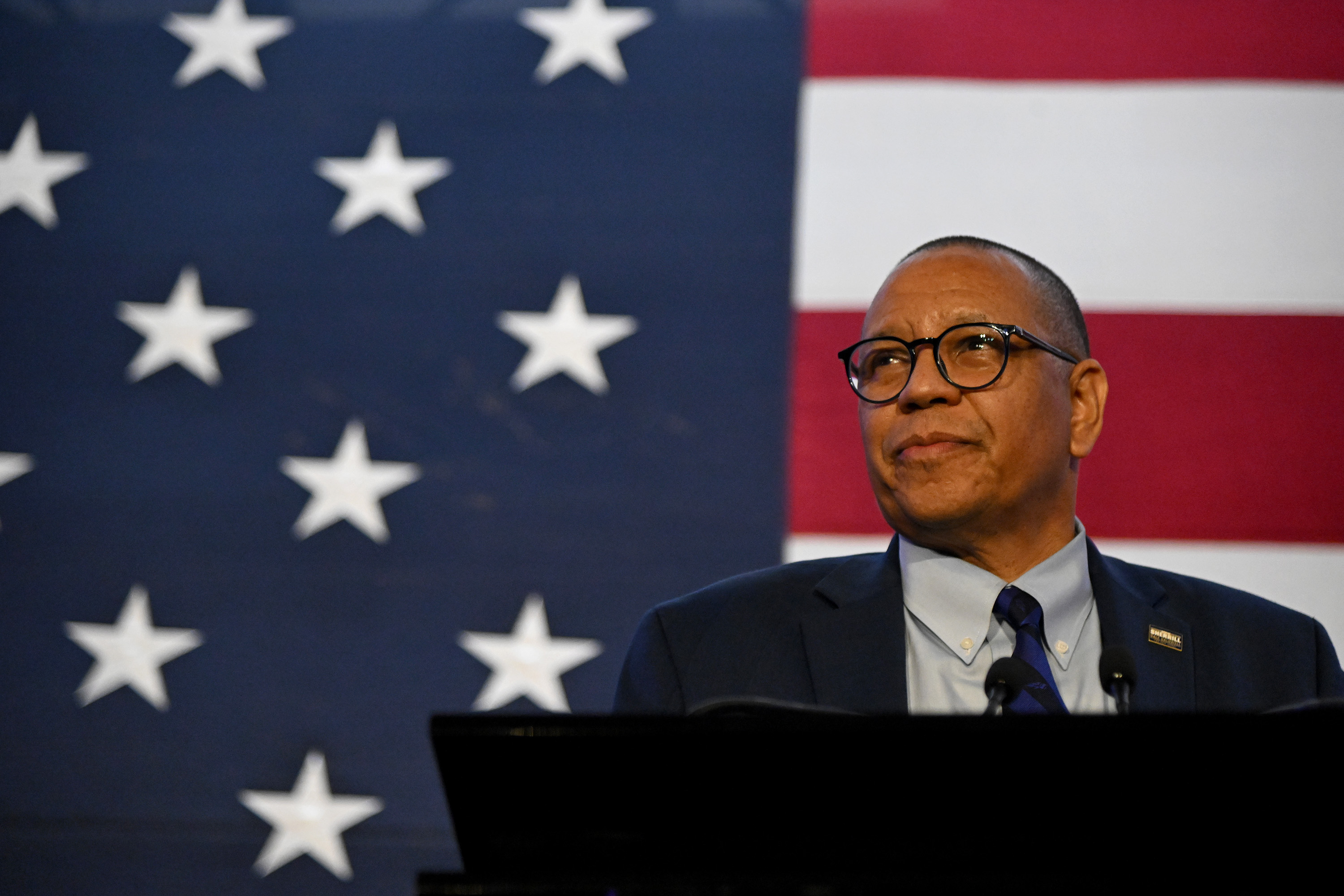
    In announcing the resignation of New Jersey Lt. Gov. Dale Caldwell last week amid allegations of harassment and ethics violations, Gov. Mikie Sherrill said an independent investigation had found “a pattern of behavior that does not meet the standards of this administration.”

    In a state where official misconduct has often been not just tolerated but embraced — and at a time when our national government is making workaday New Jersey corruption look quaint — Sherrill responded swiftly, fairly, and decisively to the accusations against the lieutenant governor, who doubled as the state’s chief elections official.

    The governor’s decision was particularly principled given that Caldwell is not only a fellow Democrat, but also the running mate she chose just last year. Demanding his exit after just eight months of service effectively required Sherrill to acknowledge she had made a poor choice.

    Accepting mistakes, embracing accountability, and moving forward are qualities voters should expect from all elected officials.

    An investigation led by former state Attorney General Christopher Porrino, who was hired by the administration’s chief ethics officer to look into anonymous complaints about the lieutenant governor, found several of the accusations credible.

    Among the most troubling was that after Caldwell unsuccessfully propositioned a friend of an employee, he complained to the employee that young women like her and her friend were “looking for young sperm.” The investigation also substantiated that Caldwell pushed for the promotion of a sometime romantic partner in another state department without disclosing their relationship. And it found he had a habit of taking nonpaying personal guests to ticketed functions he attended in his official capacity.

    Dale Caldwell speaks before Mikie Sherrill as they celebrate their victory at an election night party in East Brunswick, N.J., Nov. 4, 2025.Tom Gralish / Staff Photographer

    Porrino’s report noted that all this conduct was in violation of state policies Caldwell had been informed of in training sessions to no apparent avail.

    Granted, this wasn’t a question of throttling interstate travel for political reasons or inventing a state job for a paramour, to name a couple of the Garden State’s more infamous gubernatorial scandals — let alone anything approaching the brazen, unprecedented corruption that has characterized President Donald Trump’s second term. But Caldwell’s alleged behavior would and should constitute a firing offense in any number of more obscure private-sector jobs. The standard for public officials should be higher, not lower.

    Caldwell, who continues to deny the allegations, deserves credit for stepping down and allowing the administration to move on nevertheless. His resignation allowed the governor to immediately appoint a new secretary of state whose full attention can be devoted to the role, which is especially crucial considering the approaching midterm election and the Trump administration’s efforts to interfere with it. Sherrill said she would select a new lieutenant governor within 45 days.

    The governor’s handling of the matter has certainly not been flawless. Especially given published reports of the allegations and Caldwell’s service as acting governor during Sherrill’s out-of-state travels, she should have been quicker to disclose the existence and general nature of the investigation. She could have done so while reserving judgment and without discussing unsubstantiated allegations in detail.

    That being said, the outcome is more important and encouraging. As Sherrill noted, “There has been a culture in Trenton, probably since the birth of our nation, to sweep this under the rug.”

    The governor is to be commended for a stark departure from that history.

  • DeVonta Smith’s target share, intermediate issues, and other numbers to know ahead of Eagles-Rams

    DeVonta Smith’s target share, intermediate issues, and other numbers to know ahead of Eagles-Rams

    The Eagles fell to 2-1 Monday night after a disappointing 27-7 loss in Chicago, one that raised many questions about the state of the team through three games.

    Here are a few of the big picture issues to consider: Is Vic Fangio’s defense much worse than we originally thought? Is Sean Mannion comfortable calling and sequencing games yet? Does the offense have an identity?

    The answers need clarity fast, and maybe they’ll come as soon as Sunday, when the Los Angeles Rams come to town for a 1 p.m. game at Lincoln Financial Field. The Eagles are entering the meat of their schedule. Next is a Rams team that has Super Bowl aspirations, and after them is a trip to London to face a Jaguars team that just beat the defending AFC champions by almost 30 points.

    Here’s a look at some numbers to know ahead of a highly anticipated Eagles-Rams game:

    32.9%

    Brandon Graham, now away from football and in the podcasting world, got some traction last week after the Eagles’ Week 2 win when he said he thought Jalen Hurts was playing freely and not having to force the ball to certain players.

    Maybe he meant the way the offense is designed gives Hurts more answers, or maybe he was referring to Hurts not having to force the ball to A.J. Brown.

    Either way, the numbers tell a different story. Because DeVonta Smith is seeing a lot … a lot … of action.

    Through three games, 32.9% of Eagles pass attempts have gone toward Smith, the second-highest rate in the NFL behind Jaxon Smith-Njigba (37.9%).

    If Smith’s target share number holds up, he would have the highest single-season target share of any Eagles player since at least 2000, according to Next Gen Stats.

    There’s some context and curiosity to unpack here. The new Eagles offense asks Hurts to go through pure progression reads rather than the previous iteration that had him diagnose coverages before the snap.

    Is Hurts not getting to his second read often enough? Dontayvion Wicks has better separation metrics than Smith through three games, but his 14 targets lag way behind Smith’s 27. Makai Lemon, meanwhile, has nine targets. Dallas Goedert’s injury also eliminated a trusted pass catcher from the equation.

    Hurts’ pass protection has been shaky, but he’s also not yet been able to spread the ball around effectively.

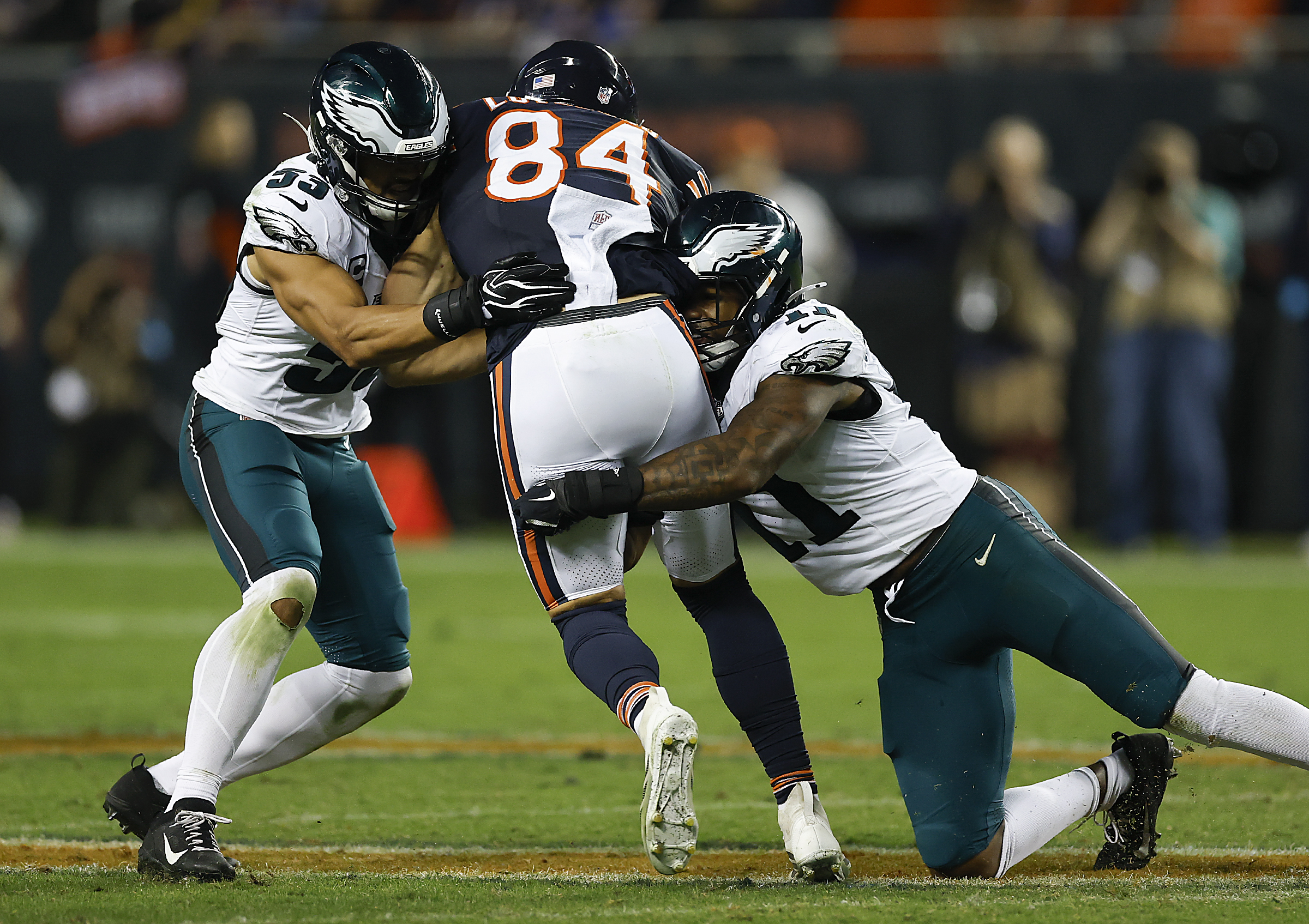
    Eagles linebackers Zack Baun (left) and Jihaad Campbell tackle Bears tight end Colston Loveland on Monday night.Yong Kim / Staff Photographer

    15

    That’s how many intermediate level throws the Eagles have allowed through three games, according to Next Gen, which classifies an intermediate throw as one that travels 10-to-19 air yards. Five per game doesn’t sound like a lot, but they’re already almost a third of the way to the 49 intermediate throws they allowed in all of 2025.

    Then there’s this from Next Gen: their completion percentage allowed in that area is at 65.2%, seventh-highest in the NFL and nearly 20 percentage points higher than their league-low rate of 42.6% in 2025.

    What’s going on?

    Cooper DeJean hasn’t looked like the All-Pro he was last season, Jihaad Campbell has had some struggles, and the safeties aren’t playing well enough. DeJean and Zack Baun have already been charged with allowing four intermediate catches this year, according to Next Gen, after allowing eight and three, respectively, all of last season.

    It’s not going to get much easier. Here comes Puka Nacua (potentially), who has topped 100 receiving yards in each of his last two regular season matchups vs. the Eagles.

    Eagles cornerback Quinyon Mitchell could be charged again with slowing Puka Nacua on Sunday, if Nacua returns from injury. Yong Kim / Staff Photographer

    6.1

    Rams coach Sean McVay sounded optimistic Nacua would return this week from his groin injury.

    It would be a big boost to a 1-2 Rams team that is much better with him on the field than off it.

    According to Next Gen, entering Week 3 and dating back to 2023 when Nacua was drafted, the Rams have averaged a full yard per play more with him on the field (6.1) than with him on the sideline (5.1).

    Will better success on first down lead to more play action for the Eagles?Monica Herndon / Staff Photographer

    4

    What if we told you three weeks ago, before the season started, that the Eagles would be averaging four under center play action plays per game?

    After all the talk about the new dynamic offense Mannion was going to bring to the Eagles, one that would put Hurts under center and marry the run and pass games, you’d think we were crazy, right?

    That’s where they are right now. Their 15 total play action passes are the fewest in the NFL, and they’re not very good when they’re running play action, ranking in the bottom six in the NFL in expected points added (EPA) per play.

    What gives? It’s hard to threaten to run the ball when you’re so often behind the sticks. It’s hard to get into favorable play action situations when you’re struggling to run the ball.

    The Eagles need to stop taking penalties and getting negative plays, and they need to build on the first-half running performance from Monday in Chicago.

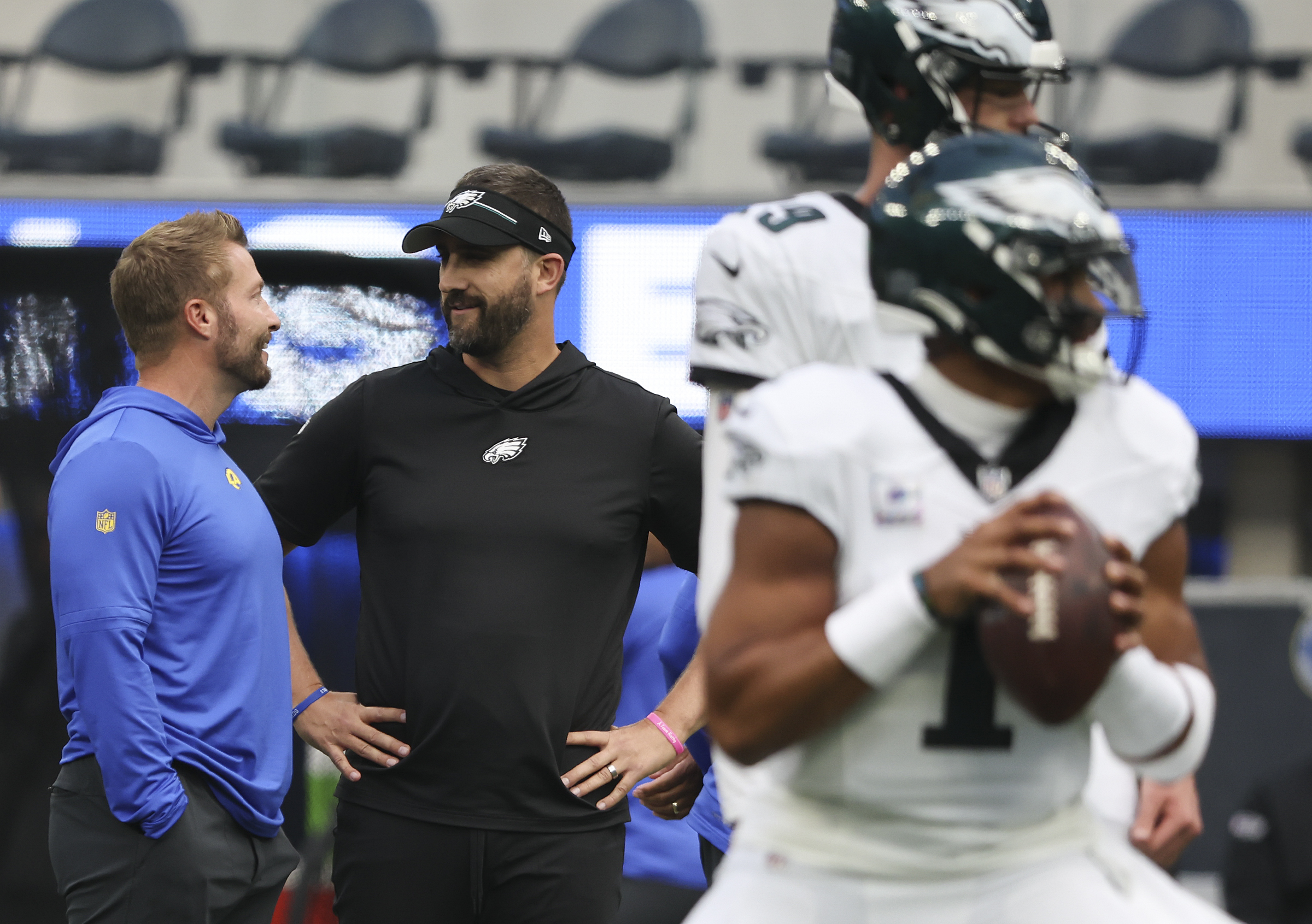
    Nick Sirianni (center) and Sean McVay (left) have both won Super Bowls, but McVay has yet to beat Sirianni. David Maialetti / Staff Photographer

    4-0

    Nick Sirianni has never lost to McVay. He’s 4-0 against the Rams coach, including a postseason victory.

    Reason to be hopeful for Eagles fans?

    Maybe. But maybe McVay is due, too.

  • Bucks and Montgomery Counties could determine which party gets control of the Pa. state Senate

    Bucks and Montgomery Counties could determine which party gets control of the Pa. state Senate

    Gov. Josh Shapiro’s hope for a Democratic state Senate likely hinges on the Philadelphia suburbs, where three swing districts could give his party the majority in the chamber for the first time in 33 years.

    And that includes two seats in purple Bucks County — forever the focal point of Pennsylvania’s political landscape — where Shapiro will be campaigning for downballot candidates in key races on Saturday at a canvass launch organized by Planned Parenthood’s state PAC.

    Democrats in the Keystone State have zeroed in on the GOP-held seats in the 6th District in Bucks County, the 16th in Bucks and Lehigh, and the 24th in Montgomery and Berks Counties as three of the districts they’re hoping to flip to create a Democratic trifecta in Harrisburg with a possible blue wave in November.

    The competitive races in Bucks and Montgomery Counties are unfolding ahead of this November’s midterm elections when Pennsylvania will also be in the spotlight for Shapiro’s reelection bid and four congressional contests that could determine party control of the U.S. House.

    Like most Democrats across the country, Eileen Hartnett Albillar in the 6th District, Mark Pinsley in the 16th District, and Chris Thomas in the 24th are centering their pitch to voters around affordability as Pennsylvanians’ signal their overwhelming disapproval of President Donald Trump’s handling of economic issues and gas prices.

    “Individual candidates matter, campaigns matter … but I do think it’s pretty clear that all these elections, to one extent or another, wind up being a referendum on President Donald Trump, and I think that puts Democrats in a very strong position,” said State Sen. Santarsiero, the chair of Bucks County’s Democratic Party. Santarsiero is also running for reelection this year.

    Republicans currently hold 27 seats in the 50-member state Senate. Democrats would need to flip at least two seats and hold the governor’s office to take control with the lieutenant governor’s tie-breaking vote.

    A Democratic trifecta in Harrisburg — if the party maintains its House majority and flips the Senate — would allow Shapiro in a second term to usher through a minimum wage increase and more transportation funding among other priorities that have been blocked by the GOP Senate.

    But Democratic candidates will have to win over independent and even some Republican voters to prevail in the swing districts against GOP incumbent State Sens. Frank Farry in the 6th, Jarrett Coleman in the 16th, and Tracy Pennycuick in the 24th. The GOP has a registration advantage in all three districts, according to state data.

    Farry, Coleman, and Pennycuick did not respond to requests for an interview, but the state party projected confidence about their ability to hold their seats.

    “Maintaining the majority in the Senate is a top priority for Republicans in Pennsylvania,” said James Markley, executive director of the PA GOP.

    He also praised Farry, Pennycuick, and Coleman for their work to lower costs and improve the state’s education system.

    “When it comes to majorities in the State House or the State Senate, every seat matters,” he said.

    Here’s what to watch.

    Gov. Josh Shapiro addresses supporters at a primary night part in Warminster on Tuesday, May 19, 2026Steven M. Falk / For The Inquirer

    ‘You don’t take for granted anything in Bucks County’

    Bucks County’s importance ahead of November has been clear for months.

    In Warminster last May, Shapiro held a primary night party at a former space centrifuge where he promoted his reelection campaign and a slew of downballot candidates. There, Hartnett Albillar, who is also the county’s clerk of courts and a social worker by trade, declared: “The path to flipping the Senate runs right through Bucks County.”

    As she continues knocking on doors and courting voters in the 6th District, which includes most of the middle of the county, that reality could not be more obvious. But, Hartnett Albillar said, despite Shapiro’s support (he has endorsed all three candidates) and a blue wave in the forecast, she’s not thinking of her election as a shoo-in.

    “We know that you don’t take for granted anything in Bucks County,” she said in an interview last month.

    That’s because the suburb is notorious for split-ticket voting, she said.

    “Democrats have won here in other races, but I believe you have to make your case to voters individually,” Hartnett Albillar said, adding that voters in her district don’t look at party labels.

    It’s a dynamic that has, for example, allowed GOP U.S. Rep. Brian Fitzpatrick to maintain his congressional seat even in years Democrats do well — like in 2022 when Shapiro won the county by nearly 20 points.

    Pinsley is trying to make that argument in the Upper Bucks County portion of the 16th where voters are less familiar with the Lehigh County controller and where Republicans have a roughly 22,000 voter registration advantage — the largest gap of the three districts.

    Eileen Hartnett Albillar (center) is challenging State Sen. Frank Farry in Bucks County’s 6th District.Hartnett Albillar Campaign

    This race is also a rematch for Pinsley after he lost by 8 points against Coleman in 2022.

    But the Democrat was given another chance by voters this year after he succeeded in a heated primary without the Bucks County Democratic Committee’s backing.

    Now that he has the party’s support, he says it’s helped him reach a whole new circle of people for his events, including “Pastries with Pinsley,” a regular meet-and-greet at various coffeehouses in the district, but especially in Bucks. This weekend, he’s headed to the So Fresh So Green Cafe in Perkasie.

    “60% of the vote is in Lehigh County, and 40% of the vote is from Bucks County,” Pinsley said in an interview last month. “We need Bucks. We need Bucks to win. You’re not going to win in just Lehigh.”

    Across county lines into Montgomery County — Shapiro’s home county, which has a reputation for being deep blue — also lies another swing district that Democrats are investing in as Thomas, a volunteer firefighter and community organizer, hopes to bring Pennycuick’s tenure in the state Senate to a close.

    Until now, the 24th District, a hodge-podge of suburban and rural communities in Montco and Berks County that Thomas calls “all-encompassing of Pennsylvania” has “always been just out of reach in terms of how the district was drawn.”

    But this year, with a combination of voters’ frustrations and Shapiro on the ballot, Thomas believes “a lot of the stars are aligning.”

    “There’s a slim path to the majority without this district,” he said.

    But Republicans won’t be giving up these suburban swing districts so easily.

    Michael Straw, a spokesperson for the Pennsylvania Senate Republican Campaign Committee, said the GOP is “ready to compete for every vote in Bucks County.”

    Straw said in a statement that candidates will highlight the bipartisan bills that lawmakers have introduced and have since been signed into law, including Farry’s legislation to reduce cost barriers for breast cancer screenings and Coleman’s bill to address school safety and increase parental transparency.

    “We are making these legislative accomplishments known to voters across the political spectrum,” Straw said.

    Both parties are betting on affordability

    Heading into November, both Democrats and Republicans are trying to make the case to voters in these key swing districts that they are the party of affordability.

    Straw said that Republicans view these elections as an opportunity to emphasize affordability and fiscal responsibility to put “an important check on the Democrats overspending.”

    “Senate Republicans have helped to prevent wasteful spending, stop the Democrats’ electricity tax that would have cost Pennsylvanians more, and have supported reducing taxes on working families,” Straw said. “PA Senate Republicans have made affordability the priority while Democrats have repeatedly stood in the way.”

    Bucks County GOP State Sen. Frank Farry (center) during a ceremonial meeting of the Pennsylvania Senate at the National Constitution Center May 5, 2026.Tom Gralish / Staff Photographer

    And for Democrats, that means addressing voter frustrations that have trickled down from federal policies.

    Trump — who has urged voters to think of him as being on ballot — is getting worsening marks on the economy from Pennsylvania voters. The president’s own voters in 2024 are also dissatisfied with his handling of gas prices, polling shows.

    “They’re not happy about the Iran war. They’re not happy about the cost of gas. There are other costs that are going up, and many of them do blame the president, and all of these races have been federalized in many ways,” Pinsley said.

    In response to the rising costs of living, affordability has taken up most of the oxygen in Democrats’ messaging as the party shifts away from issues that have been prevalent in previous campaigns, such as abortion.

    With a focus on prices, the three swing district candidates have not had to switch up their stump speech even when chatting with Republican or independent voters that they’ll need to win over to be successful in November.

    Hartnett Albillar said that all voters are simply looking for a “functional” and competent government.

    Other key issues popping up in these races include funding for SEPTA and data centers; the latter of which has sparked contentious ads, including one by Hartnett Albillar’s campaign in the 6th District that provoked Farry’s campaign to file a cease-and-desist.

    “I’ve heard many times that folks are not looking at whether there’s a ‘D’ or an ‘R’ next to the name,” she said. “They’re looking at the person who will be able to bring change and bring fresh ideas because the current system is not working for us. Costs are way too high, and they want someone who’s going to do the work.”

  • Temple hosting Big East field hockey tournament adds ‘a little fire’ to Michelle Vittese’s team

    Temple hosting Big East field hockey tournament adds ‘a little fire’ to Michelle Vittese’s team

    The Big East field hockey tournament will come to Temple Sports Complex in November, but whether Temple will be playing in it remains up to the Owls.

    After narrowly missing the four-team field last season, Temple entered this fall knowing exactly where it wanted to be by November. Entering Friday’s matchup against Delaware, the Owls are 5-4 and 1-1 in conference play.

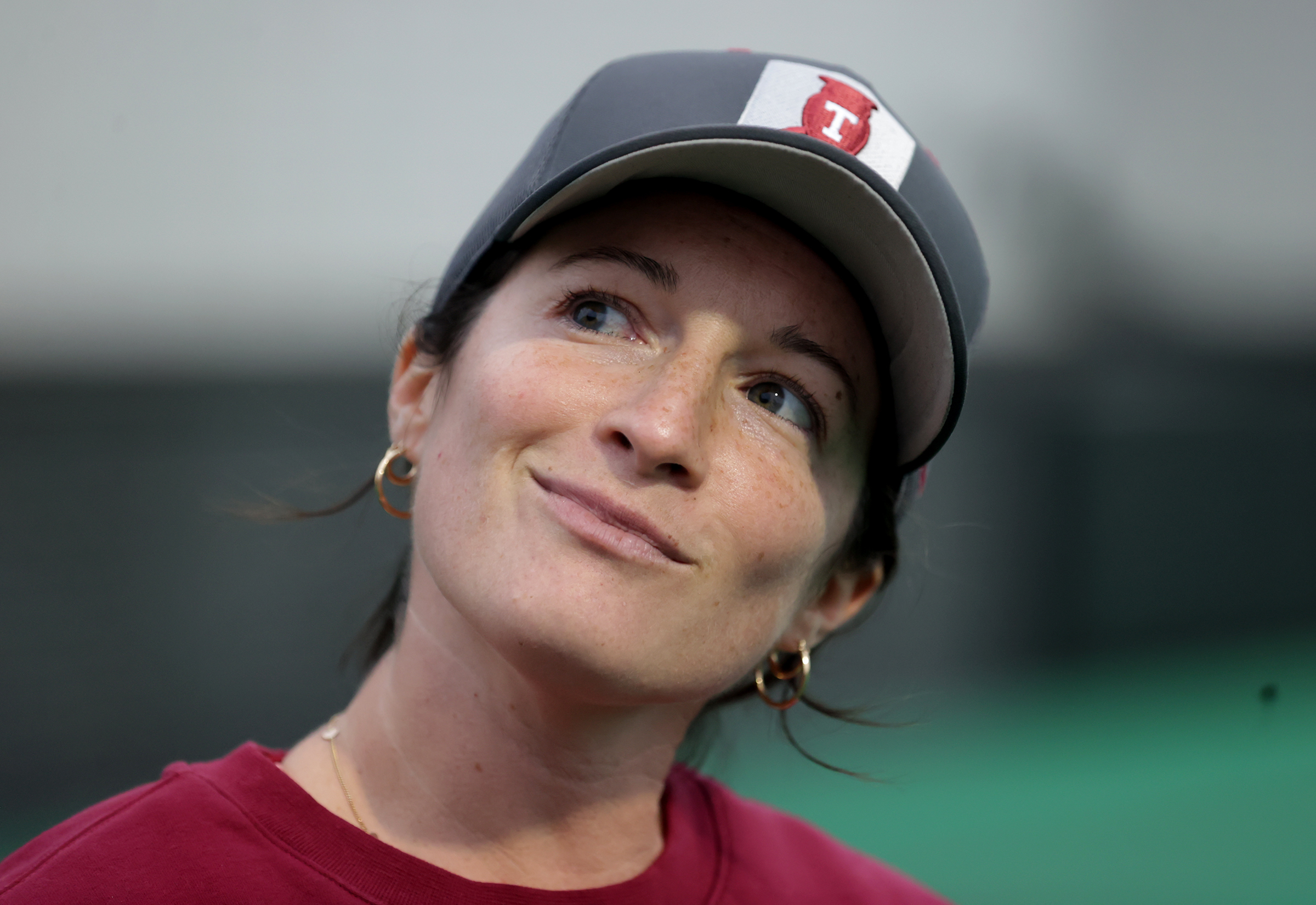
    For coach Michelle Vittese, having the conference tournament on Temple’s home field has made the pursuit of reaching the postseason difficult to ignore.

    “Definitely a little fire, definitely a little bit of anxiety,” Vittese said. “There’s a pressure element to that.”

    Vittese has tried to keep that pressure from becoming the Owls’ focus. Rather than measuring each result against whether Temple will qualify in November, she wants her team focused on improving enough to prove it belongs there.

    “It’s about, can we provide an experience?” Vittese said. “Can we get to a place at which we hopefully prove that we deserve to be in?”

    Temple recently won three straight games, which included a victory over Georgetown in its Big East opener, before Villanova ended the Owls’ streak on Sept. 25. The Owls sit fourth in the Big East standings.

    Vittese said her team is still searching for consistency, which has led her staff to tinker with the Owls’ approach. Temple has shifted players between the forward and midfield line, altered its defensive penalty-corner setup, and emphasized increasing its work rate.

    Michelle Vittese wants her team to “focus on ourselves” rather than standings or results in the Big East.Charles Fox / Staff Photographer

    Some of those changes came after Temple allowed Lafayette to score on three of its five penalty corners in a 4-3 loss on Sept. 4.

    “We were constantly making adjustments every day,” Vittese said. “Every practice, every day, depending on the opposition, we [were] also make in-game adjustments based on what we’re seeing.”

    Temple has also changed how it measures effort. The Owls previously reviewed data from their GPS tracking system after games, but the coaching staff has begun using the system during training to receive immediate feedback on players’ work rates.

    “It’s a real-time information feedback system,” Vittese said. “It’s a lie detector. Like, are you working hard or are you not? And so you can say you are, but the numbers really tell a story.”

    Goalkeeper Alex Lepore sees another area that needs improvement: how the Owls start games.

    Lepore said Temple has often played its best field hockey after halftime.

    “We’re very much a third-quarter, second-half team, which is great,” Lepore said. “We get back for the game, but we really need just to come out a little stronger, set the tone, and set the pace of the game early on.”

    Vittese has emphasized the importance of connection and trust in practice, including how players react when a teammate makes a mistake. After noticing an instance when a struggling player received little encouragement during a game, Vittese challenged the Owls to become more deliberate about picking each other up.

    “How relentlessly positive and empowering of our own teammates can we be?” Vittese said. “That’s actually been a practice point.”

    Temple finished 3-4 in Big East play last season, the same conference record as Villanova, but the Wildcats claimed the fourth and final tournament spot.

    Last year’s results have only motivated the Owls in 2026, says sophomore midfielder Lucia Magro.

    “We always can do better,” Magrobut. “But we’re [feeling] really confident.”

    Temple still has five Big East games remaining, including matchups against UConn, which is first in the conference’s standings, Old Dominion, and defending conference champion Liberty, before the tournament arrives at its home field.

    And Vittese does not want her players consumed with where they could be in November.

    “Thinking about anything other than what we can do excellently to be successful is a waste of time,” Vittese said. “We need to focus on ourselves.”

  • How a Philly father-daughter duo is working to build an inclusive community through their MMA gym

    How a Philly father-daughter duo is working to build an inclusive community through their MMA gym

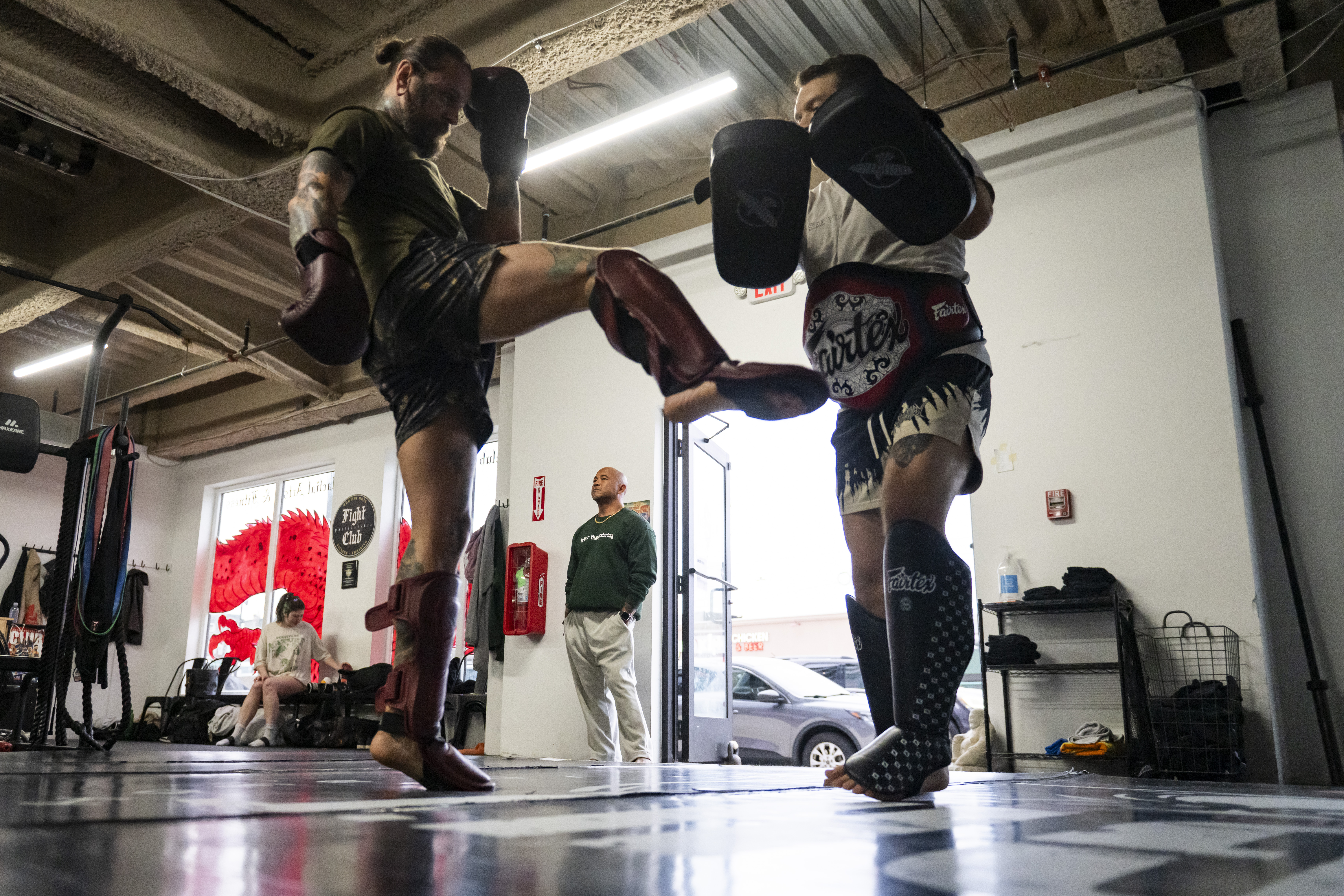
    Black and red mats stretched out underneath dozens of students pivoting across the floor on the balls of their feet as they found the rhythm to strike the bag in front of them. On one side of the room, several flags hung on the wall, representing each nationality of students. Across from that, 33-year-old Christina Massie trained beside 69-year-old Don Spector.

    Every Monday, students walk into Fight Club Philadelphia on Girard Avenue, take off their sneakers, and prepare to participate in the gym’s fight fitness classes — hitting a bag for 20 minutes, followed by weightlifting for another 20 minutes with a five-minute cooldown.

    “We truly transcend sports,” said 57-year-old Michael Sulit. “I’ve had Croatian fighters train next to Russian fighters. As sick as the world is, there’s no barriers, no borders. We have 69-year-old men training with 24-year-old women. There’s no boundaries.”

    The father-daughter duo is steering away from a 'traditional' martial arts gym
    Video: The father-daughter duo is steering away from a ‘traditional’ martial arts gym

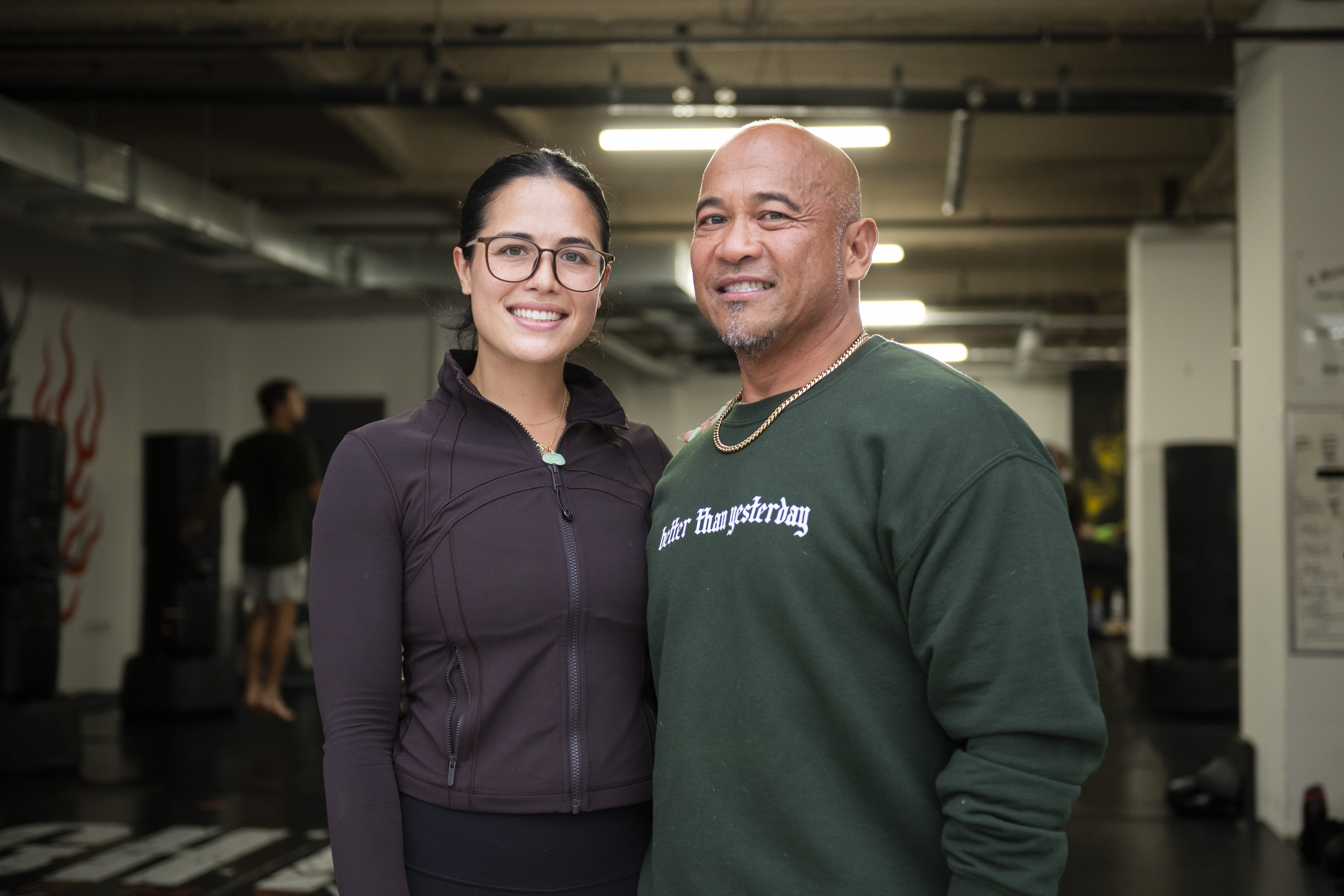
    The martial arts gym with a focus on striking has made it its mission to create a more inclusive community in combat sports and welcomes students of all levels. And father-daughter duo Michael and Shea Sulit are leading the charge.

    “It’s such a tight-knit community, and that’s something me and my dad really take pride in because the gym is somewhere that can be intimidating for a lot of people, and that’s the last thing we want our space to feel like,” said Shea, 31. “Fighting is something that’s intimidating, and some gyms can really put a lot of pressure on you to fit into the mold. But we like to take the everyday person and give them somewhere where they feel strong and empowered.”

    ‘It’s a blessing’

    Fighting has been in Michael’s blood since his childhood in the Philippines. Martial arts was part of students’ daily schedules at Central Philippine University, an American-based school.

    “We didn’t have football or basketball or baseball,” Michael said. “We had martial arts. So, when I was a kid in school, gym for us wasn’t like dodgeball or duck, duck, goose. It’s martial arts. And if you’re good at it, your gym teacher calls your dad and goes, ‘Yeah, this kid’s going to need fight camp.’”

    Michael went to a fight academy at age 7. Six months later, he was taking fights that adults would gamble on. At 10 years old, he moved to Philadelphia, where his love for combat sports grew with the rise of the UFC.

    Michael was working in corporate sales for a food distributor for 20 years — but it wasn’t enough. That’s when he came up with the idea for Fight Club Philadelphia.

    “It was a passion project,” Michael said. “It was crazy; it was full-on insanity. Everyone in my whole family said, ‘You’re freaking insane; you’re nuts.’”

    The gym opened in March 2018 on Market Street. Nearly two years later, Shea joined the business, coaching a number of classes at the gym.

    ”Some days are good. Some days are bad,” Michael said. “But at the end of the day, it’s a blessing. She tells me when I’m wrong; she tells me when I’m out of line. And I’m blessed. I see her every day. Who can say that, you know?”

    Michael Sulit (right) and his daughter, Shea, run Fight Club Philadelphia together.

    ‘Everybody should be able to protect themselves’

    Michael followed the violence in the city closely as he raised two daughters, Shea and Arden, who attended Temple. A year before he opened his gym, a Temple student, Jenna Burleigh, was murdered after meeting a man at a bar.

    Seeing something like this happen so close to home made Michael realize he wanted to find a way to help the community.

    “Being a girl dad played a big part in this,” Michael said. “I think that everybody should be able to protect themselves and be empowered, especially women.”

    Unlike most MMA gyms, Fight Club Philadelphia has a majority female members, and several compete regionally.

    “Learning self-defense as a woman in general was extremely important for me, and then also living in an urban setting furthered that,” Shea said. “So it’s something I really wanted to take seriously, but then I just fell in love with it and turned it more into a passion.

    “It’s an incredibly male-dominated field — most sports are. Men are supposed to be masculine, women are not. We’re not supposed to be seen in that light, and I really just wanted to change that. I wanted to give women the opportunity to step into that space and be ‘masculine’ if they want to.”

    Fight Club Philadelphia has a majority female clientele.

    ‘It’s not a traditional gym’

    Fight Club Philadelphia offers a range of classes for beginners and experts, including Thai Pads, Next Level Team, and its most popular class, Fight Fitness.

    “People come here to get fit and learn how to fight and lift and get in shape,” Michael said. “It’s not a gym; it’s a family. It’s a third space, and you can really make some good relationships.”

    Diana Mousetis, a 36-year-old Philadelphia native, has been a member of the gym since 2018. After watching a fight on TV at the bar, she decided to give it a shot and has never left.

    “It’s a wonderful community here. It’s what keeps me coming back,” Mousetis said. “Knowing how to defend yourself is really important, especially as a woman. It’s definitely come in handy for me, unfortunately. … When you have nothing else on hand, you’ve got your two fists, and you’ve got feet, knees, and elbows, too. So learn how to use them.”

  • Here are the runners to look out for at this year’s Delco 10 Miler

    Here are the runners to look out for at this year’s Delco 10 Miler

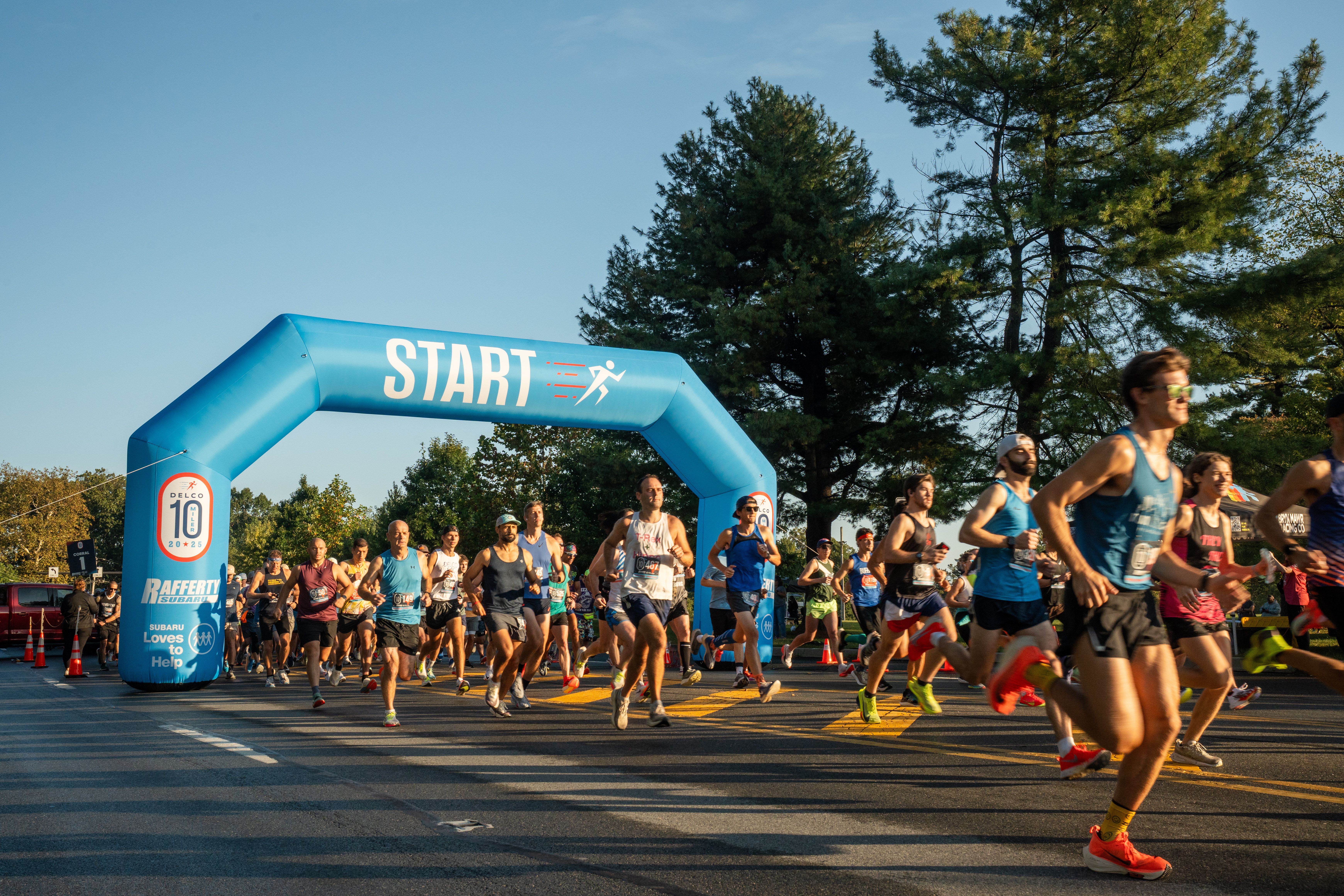
    The Delco 10 Miler hits the road for the second time Sunday. This year’s race will have a new course and a new pace, and is open to twice as many runners.

    Here are a few of the runners to look out for:

    Dad and son run for a personal cause

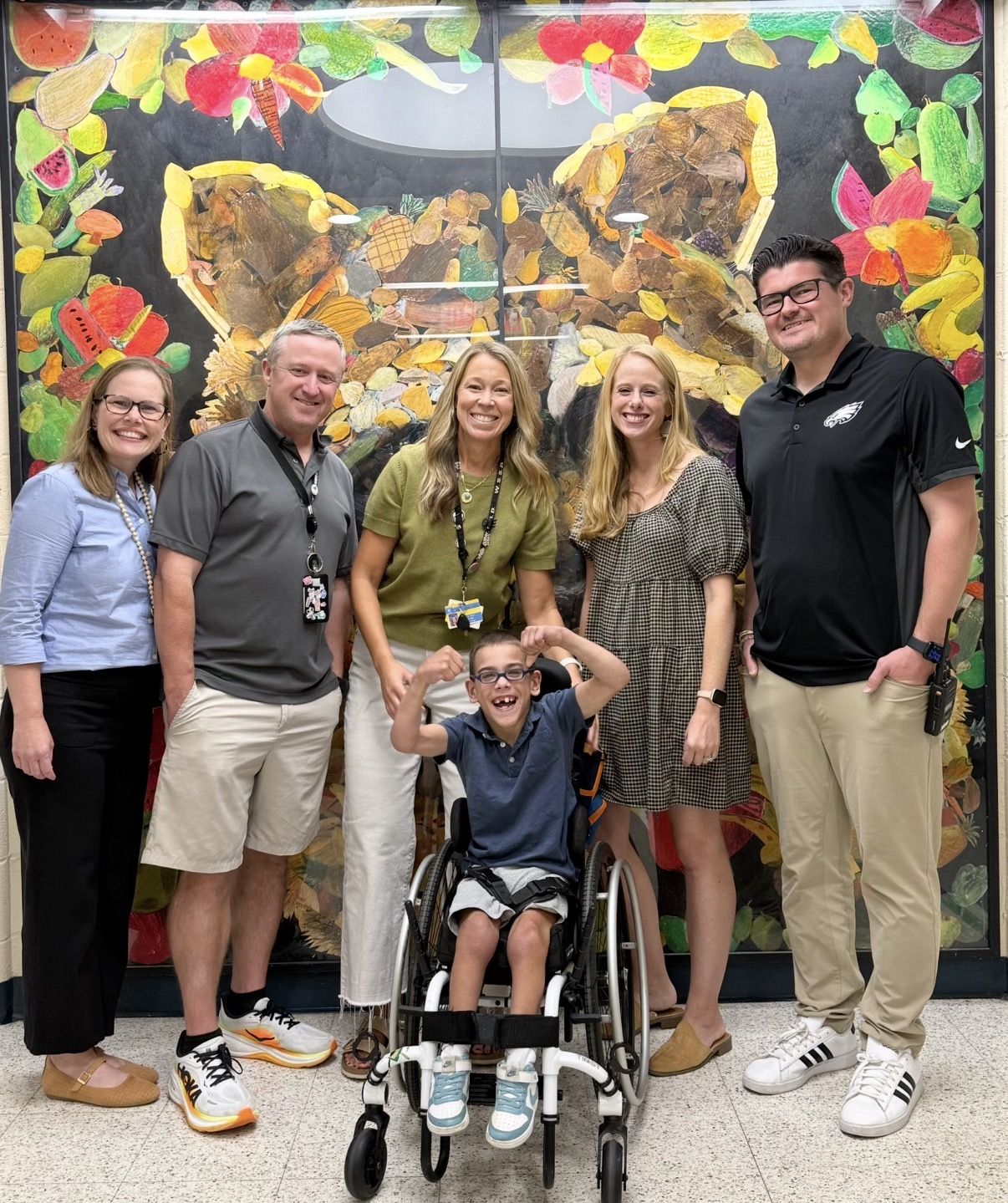
    Will Getty, 8, is pumped to run the Delco 10 Miler, said his mom, Jessica, and dad, Mark, who will push him in an adaptive jogging stroller on Sunday. But it’s more than just a fun run for Will, who has cerebral palsy, and his family.

    It is also part of an effort to raise money for an accessible playground at Wallingford Elementary School with help from the Kyle Pease Foundation.

    Pease, 41, who also has cerebral palsy, visited the school in 2025 to meet students and share his foundation’s purpose: creating inclusive opportunities in sports and endurance races for people with disabilities.

    After his visit, teachers began brainstorming. What if Will and Pease participated in the Delco 10 Miler together? And could they support fundraising for the playground at the same time?

    “It was a perfect opportunity to cheer them both on and to hold an event where we could raise the money and awareness of what we’re trying to do here,” special education teacher Lauren Bannon said.

    The school, which is on the race course on Providence Road, will hold a festival with food, games, and a station to create signs for Will from 8 to 10 a.m. on the morning of the race. School officials recommended getting there early before Providence Road closes and using the school’s rear entrance on Kershaw Road.

    The Kyle Pease Foundation donated Will’s jogging stroller and is managing fundraising for the playground. Donations can be made at https://givebutter.com/wes-loves-pease.

    Will’s dad said a group of Wallingford teachers will take turns pushing Will to the finish line. Training has become a new way to bond for Will and his dad, and a playlist of Will’s favorite band, Coldplay, has been essential listening during practice runs.

    “He sees people, waves to them, and if I put the music down for a second, he’s telling me to turn it back up,” Mark Getty said.

    Allie Wilson won a heat in the women’s 800-meter run during the U.S. Track and Field Olympic Team Trials on June 21, 2024, in Eugene, Ore.Charlie Neibergall

    Just a normal Sunday for Olympian Allie Wilson

    Running 10 miles on a Sunday is part of the normal training routine for Strath Haven grad and Olympian Allie Wilson. This weekend, there will be a little more fanfare to it.

    Wilson’s older sister, Val, is running the Delco 10 Miler and asked Allie to join her.

    “I might as well have fun and get to be around other people for once, since I’m usually just running by myself,” Allie Wilson said.

    Is a gold medal in the bag? It’s a little bit longer than her usual race, Wilson said, by 9½ miles.

    “My race is 800 meters,” Wilson said. “It’s less than two minutes long. Like, I’m borderline a sprinter.”

    But you don’t get to the Olympics without a competitive edge. Wilson originally planned to stick with Val in the race, but she said her sister told her not to.

    “I know I’m going to get excited and I’m going to feel left out if I want to be trying to go with the people up front,” Wilson said. “We decided my competitiveness might come out too much.”

    Next up for Wilson after the Delco 10 Miler: She will continue training with her sights set on a return to the Olympics in Los Angeles in 2028.

    Zach Miller crossed the finish line first at the Delco 10 Miler on Sept. 28, 2025.PEL Productions for Visit Delco

    A run down memory lane for last year’s winner

    The Delco 10 Miler charts a course through some of the most important parts of Zach Miller’s life.

    The starting line is near Rose Tree Park, where Miller ran cross-country races in high school and later proposed to his wife, Heather. It goes through Media, where he grew up, and passes through Widener University, which is Miller’s alma mater and the place he met Heather.

    “It’s these little nuggets that make the race kind of special to me,” said Miller, 43, of West Chester.

    One more nugget to make it special: Miller won the inaugural 10 Miler last year.

    He has been waking up at 5:15 a.m. on Wednesdays to train with longtime Downingtown West High School cross-country coach Scott Burns and a group of fellow runners.

    “I really wouldn’t be training or, you know, competing at the level I am without the support and kind of accountability of that group,” Miller said.

    Miller said he is excited for this year’s race but considers Steve Jordan, another member of his group who is also training for the Olympics, to be the front-runner.

    This suburban content is produced with support from the Leslie Miller and Richard Worley Foundation and The Lenfest Institute for Journalism. Editorial content is created independently of the project donors. Gifts to support The Inquirer’s high-impact journalism can be made at inquirer.com/donate. A list of Lenfest Institute donors can be found at lenfestinstitute.org/supporters.

  • The second Delco 10 Miler is bigger than last year and will close some county roads. Here’s what to know.

    The second Delco 10 Miler is bigger than last year and will close some county roads. Here’s what to know.

    The Delco 10 Miler will take off again Sunday, cutting a partially different path across the county that organizers hope is safer, more driver-friendly, and more fun for participants.

    In addition to a new course, the race will host up to 2,500 runners, up from 1,200 last year, and benefit some new groups in the community.

    Here’s what to know about the second Delco 10 Miler.

    The Delco 10 Miler’s new course

    Last year’s race followed a mostly straight line down Providence Road from Rose Tree Park before taking a few turns on Widener University’s campus, crossing I-95, and then carrying on through Chester toward Subaru Park.

    The start and end are the same this year, but organizers made a few improvements. Runners will turn off Providence Road at West Rose Valley Road and take a few turns through neighborhoods in Nether Providence. There, the route will meet up with its original course on Widener’s campus.

    This change will free up more of Providence Road to drivers and will make it easier for parishioners to attend church services along the route. It is also more runner-friendly, said Diana Shacklock, director of special projects at Visit Delco, the race’s organizer.

    Last year’s course brought runners to a spot where they could see the finish line, but made them run several blocks past it before looping back, Shacklock said. Some runners commented on it after the race, so the loop was eliminated.

    “It is no longer an ugly finish,” race director Kevin Nolan said.

    (function() {
    var l2 = function() {
    new pym.Parent(‘delco_10_miler_2026’,
    ‘https://media.inquirer.com/storage/inquirer/projects/innovation/arcgis_iframe/delco_10_miler_2026.html’);
    };
    if (typeof(pym) === ‘undefined’) {
    var h = document.getElementsByTagName(‘head’)[0],
    s = document.createElement(‘script’);
    s.type = ‘text/javascript’;
    s.src = ‘https://pym.nprapps.org/pym.v1.min.js’;
    s.onload = l2;
    h.appendChild(s);
    } else {
    l2();
    }
    })();

    Road closures for the race

    Roads along the route will be closed between 7:30 and 10 a.m. Police will have rolling openings and closings, meaning some roads will be open before runners reach that part of the course and after they pass.

    The ramps from the Route 1 Media Bypass to Providence Road/Route 252 will be closed at 7:30 a.m.

    Organizers asked for patience and recommended planning ahead if you need to travel along the route.

    What runners need to know

    Organizers recommend parking at Subaru Park lot G before the race and taking the shuttle from Subaru Park to the starting line. Shuttles run between 5:30 and 6:30 a.m. Runners can also be dropped off at Springton Lake Middle School near the starting line, but any cars left there will be ticketed and towed, Shacklock said.

    Runners can stow their items in mobile lockers, which will be delivered to the finish line. Unwanted clothing can be donated.

    The first group of runners will take off at 8 a.m. and the rest will be staggered over three- to five-minute intervals. Runners pushing wheelchairs will be able to leave a few minutes before the first corral.

    Runners will be treated to refreshments from Delco Steaks and 2SP Brewing at the finish line.

    What groups are partnering with the Delco 10 Miler this year?

    The race will benefit the HEADstrong Foundation, the Riddle HealthCare Foundation, Mercy Fitzgerald Hospital, the Greenhouse Project, and Delco Volunteers.

    Delco Volunteers was created as an effort to give back during America’s 250th, and funding from the race is intended to help the group continue beyond 2026, organizers said.

    There will be a simultaneous festival at Wallingford Elementary School, with food, games, and a station where attendees can make signs for runners, who will pass directly in front of the school. The school is working with the Kyle Pease Foundation and accepting donations at givebutter.com/wes-loves-pease. Proceeds will go toward making the school’s playground inclusive for children with disabilities.

    This suburban content is produced with support from the Leslie Miller and Richard Worley Foundation and The Lenfest Institute for Journalism. Editorial content is created independently of the project donors. Gifts to support The Inquirer’s high-impact journalism can be made at inquirer.com/donate. A list of Lenfest Institute donors can be found at lenfestinstitute.org/supporters.