ATLANTA — Alec Bohm sat behind a microphone for what could have been the last time as a Phillie on Wednesday morning, and he reflected on his 6½ seasons in the majors as a Phillie, supporting rosters dotted with future Hall of Famers. He will be a free agent this winter, and his inconsistent play combined with his occasional truculence have led to assumptions that he will be moving on.
Then, five hours later, Bohm, hitting in the No. 4 spot, rocked the winning home run in the 10th inning of Game 2 of the wild-card series against the Braves. The Phillies took a 4-3 lead, which held up in the bottom of the inning as rookie Andrew Painter dealt the third of his three scoreless innings, and the season was saved.
With it, Bohm might have saved his future in Philadelphia and erased some of the less jubilant moments of his past.
The Phillies have tried to platoon him, they’ve benched him in the playoffs, they’ve shoved him from the cleanup spot to the bottom of the order, and they’ve put him on the trading block so often he might as well have been a bale of beaver pelts in the Old West. He never much cared, it seemed, until now.
Once a Philly hater, he now desperately wants to be a Phillie for life.
“I would love nothing more than to stay,” he said afterward. “I mean, if you think about it, like, not that often does a guy get to play his whole career in one place.”
“Yeah. You got to show up when it matters,” he said. “I think that’s a big part of it.”
The hit was Bohm’s second of the game, his third of the playoffs, and, with an earlier walk, it marked the fourth time he’d reached base in his nine plate appearances. He also drove in a run in Game 1.
That’s what he does. He doesn’t hit many home runs, but, hitting behind Bryce Harper, Kyle Schwarber, and Trea Turner, he has averaged just over 82 RBIs the past five seasons.
Alec Bohm celebrates with teammate Bryson Stott after Bohm hit a go-ahead 10th-inning homer.Yong Kim / Staff Photographer
“Seems like with Alec, everybody is always looking for more, for more,” interim manager Don Mattingly said before the game. “And he always ends up driving in around 90 runs, gets key hits.”
He has played among veterans his whole career, and he’s played like a veteran lately, to be sure. He’s a rare right-handed bat who plays first and third base and produces runs.
The question: If Bohm moves on, can the Phillies adequately replace him?
And, if so, how much will it cost … and how much will he cost?
Bohm is a homegrown first-round pick, drafted third overall in 2018. He turned 30 in August. He’s a productive everyday player.
He started slowly this season, but there were mitigating circumstances. He was in a contract year. He was suing his parents for mismanaging his money (that has been settled).
Harper stressed that the situation with his family clearly affected Bohm more than anyone let on.
“Man, I’m proud of him,” Harper said. “He’s been through the wringer this year, you know, on and off the field. No person, or player, or anybody should have to go through those situations.”
Philadelphia Phillies Trea Turner doubles against the Atlanta Braves in the first inning.Yong Kim / Staff PhotographerPhiladelphia Phillies Trea Turner celebrates in the dugout after scoring in the first inning.Yong Kim / Staff PhotographerPhiladelphia Phillies Bryce Harper hits a RBI single in the first inning.Yong Kim / Staff PhotographerPhiladelphia Phillies starting pitcher Cristopher Sanchez throws in the first inning.Yong Kim / Staff PhotographerPhiladelphia Phillies starting pitcher Cristopher Sanchez throws in the first inning.Yong Kim / Staff PhotographerAtlanta Braves pitcher Tyler Mahle throws against the Philadelphia Phillies in game 2.Yong Kim / Staff PhotographerPhiladelphia Phillies center fielder Justin Crawford singles in the fourth inning.Yong Kim / Staff PhotographerPhiladelphia Phillies pitching coach Caleb Cotham (right) talks with Cristopher Sanchez with the bases loaded for the Atlanta Braves in the sixth inning.Yong Kim / Staff PhotographerPhiladelphia Phillies starting pitcher Cristopher Sanchez reacts after getting out of a bases loaded jam in the sixth inning.Yong Kim / Staff PhotographerPhiladelphia Phillies shortstop Trea Turner (right) looks on as Atlanta Braves Sean Murphy was safe at second in the seventh inning.Yong Kim / Staff PhotographerPhiladelphia Phillies Bryce Harper couldn’t catch a ball off the bat of Atlanta Braves catcher Drake Baldwin in the seventh inning of game 2 of the National League Wild Card series in Atlanta, Ga. on Wednesday, Sept. 30, 2026.Yong Kim / Staff PhotographerPhiladelphia Phillies starting pitcher Cristopher Sanchez (right) prepares to exit the game after the Atlanta Braves scored two runs in the seventh inning.Yong Kim / Staff PhotographerPhiladelphia Phillies Bryce Harper pauses in right field during a pitching change in the seventh inning.Yong Kim / Staff PhotographerPhiladelphia Phillies designated hitter Kyle Schwarber hits a solo homer in the eighth inning.Yong Kim / Staff PhotographerPhiladelphia Phillies Bryce Harper hits a solo homer in the eighth inning.Yong Kim / Staff PhotographerPhiladelphia Phillies Edmundo Sosa leaves the game in the ninth inning.Yong Kim / Staff PhotographerPhiladelphia Phillies shortstop Trea Turner drops his bat and helmet after popping up for the third out in the ninth inning.Yong Kim / Staff PhotographerPhiladelphia Phillies third baseman Alec Bohm celebrates his solo homer in the tenth inning.Yong Kim / Staff PhotographerPhiladelphia Phillies Andrew Painter pitches against the Atlanta Braves in the tenth inning.Yong Kim / Staff PhotographerPhiladelphia Phillies catcher J.T. Realmuto celebrates their win.Yong Kim / Staff PhotographerPhiladelphia Phillies third baseman Alec Bohm celebrates his solo homer in the tenth inning against the Atlanta Braves in game 2 of the National League Wild Card series in Atlanta, Ga. on Wednesday, Sept. 30, 2026. Phillies win 4-3.Yong Kim / Staff Photographer
It all has worn on Bohm, both over the years and over the past few months.
“It’s just been a long road, with a lot of ups and downs,” he said. “I’ve learned a lot. I’ve made a lot of really close friends along the way. I’ve had a lot of people to lean on.”
He was an All-Star two years ago, but, really, he’s never been a better player than he is today.
From Aug. 2 to the end of the regular season, Bohm hit .308 with an .818 OPS, destroying lefties in particular.
“I don’t think there was a specific adjustment that I made,” Bohm said before the game. “I kind of just started seeing the ball a little better and got more comfortable.”
Bohm sure is comfortable. He has been as big a part of the Phillies’ late-season surge as anyone. He is entering his prime. There is no reason to end this relationship, now that it’s just heating up.
In 2022, the Phillies planned to either replace Bohm at third base or platoon him with Bryson Stott, but injuries squelched those plans. Still, as Bohm struggled early that season, he was caught on camera on the home field saying, “I [bleeping] hate this place.”
Phillies fans gave Alec Bohm an ovation after making a routine play at third 😅
Bohm apologized for that moment. He’s a kid from Nebraska who played college ball in Kansas, so he had to learn how to survive in a big city. He got better at third base. He moved to first base this year at the trade deadline when the Phillies acquired second baseman Luis Arraez, and there he has shined: He made two fine plays Wednesday.
Certainly, it wasn’t all Bohm on Wednesday.
Cristopher Sánchez delivered 6⅔ innings, allowed three runs, and threw a career-high 116 pitches, helping Mattingly avoid a beleaguered bullpen.
Painter, the fifth starter, made his playoff debut with three scoreless innings of relief — the eighth, ninth, and 10th — the first time he’s ever pitched in relief in those innings.
And, of course, there was Lightning and Thunder.
Bryce Harper’s eighth-inning homer tied the game at 3.Yong Kim / Staff Photographer
With their season in peril, Schwarber and Harper hit back-to-back home runs in the eighth inning and tied the game at 3. That took Sánchez off the hook.
They also absolved Harper and Bohm of defensive miscues in the seventh that gave the Braves two runs and a 3-1 lead.
More than anything, they forced extra innings in a must-win game whose loss not only would have given the Braves a 2-0 series sweep but, considering how disappointing the Phillies have been the past three postseasons, might have ended this era. It almost certainly would have ended Mattingly’s tenure.
Instead, they play Game 3 on Thursday. Bohm will be in the four-hole.
It’s hard to overstate, fairly or not, the low regard the organization has shown Bohm.
The Phillies spent $100 million on Nick Castellanos to serve as their right-handed cleanup hitter from 2022-26, but they released him this offseason after he’d failed in the role. They spent $10 million on his replacement, Adolis García, but he hit just .195 before injury ended his season in June. They traded for Arraez at the deadline and let him hit fourth until he sprained his ankle last week. Stott batted cleanup in the season finale Sunday.
But it’s been Bohm’s spot the past two games, and he has shown up, to the delight of the fans who have ridden him harder than any Phillie in the past six years.
Alec Bohm battled cleanup on Wednesday and will do so again for Thursday’s decisive Game 3.Yong Kim / Staff Photographer
He’s a hero tonight, even in Harper’s eyes. Harp is a good and nurturing teammate, but, as a future Hall of Fame No. 3 hitter, in spring training he was disappointed that the Phillies failed to better fortify the No. 4 spot in the offseason.
“I think the numbers in the four-spot weren’t very good last year for our whole team,” Harper said. “Whoever is in that four-spot is going to have a big job to do.”
Bohm got the job done Wednesday, and Harper acknowledged it.
“Today, he’s one of the best players, and probably one of the favorites, in Philadelphia right now,” Harper said.
A new bipartisan effort could create a national ban on cellphones during the school day, the most sweeping attempt yet to keep screens out of classrooms.
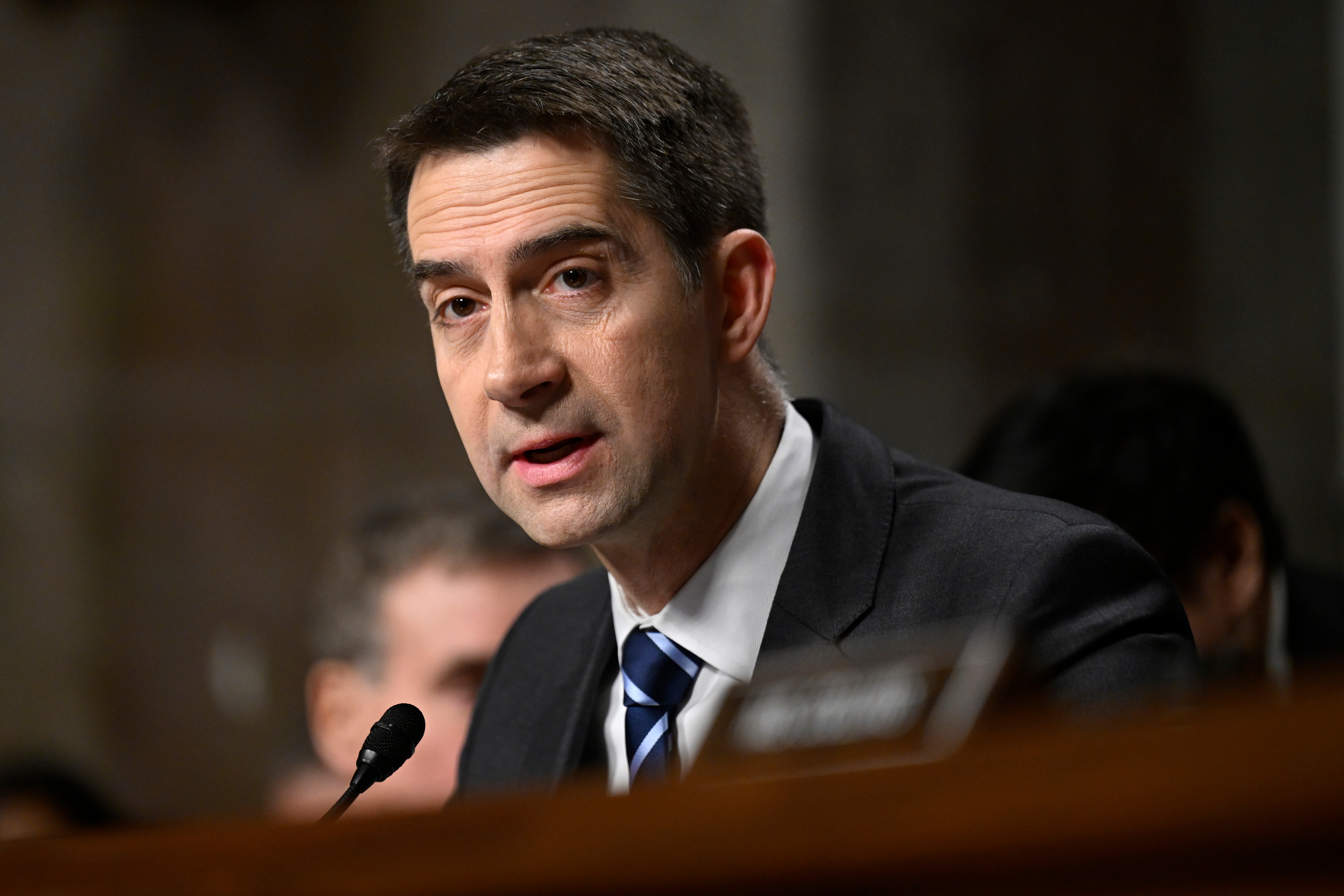
The bill, filed Wednesday by Sen. Mark Kelly (D-Arizona) and Sen. Tom Cotton (R-Arkansas), would send money to states that adopt policies barring students from using personal devices – including cellphones, smartwatches, tablets and similar technology – during the school day.
If the legislation is approved by lawmakers, states would be able to use the funding to enforce device bans, including paying for lockers, lockboxes or pouches for students to store their devices. The legislation makes exceptions for children who need devices for special education or medical needs.
“Arkansas kids deserve classrooms free of distractions,” Cotton said in a statement. “This bill would support Arkansas public schools that choose to tailor their classroom cellphone guidance to ensure students have the most productive school days possible.”
Cellphone bans have become popular in recent years, with most states enacting policies designed to restrict cellphone use in schools. Students are often required to stow their devices in lockers or locked pouches during the school day.
Supporters of these rules hoped keeping phones out of the classroom would help students focus, boost test scores and improve mental health. But the results have been mixed.
While cellphone bans have reduced unauthorized usage in schools, there has been little academic benefit, according to research by the National Bureau of Economic Research.
“There is clearly justifiable enthusiasm for school phone bans, but it’s important to recognize that building effective, phone-free learning environments does not appear to be a simple or quick fix,” according to Thomas Dee, a Stanford University professor and one of the authors of the report.
“The very early experience schools have with phone bans is sobering, but there are also indicators that as schools adjust to phone-free policies, the benefits of these bans may be realized,” he said in an interview posted on a Stanford website.
And, in some cases, teens reported using their phones more often at school, particularly at schools with lax enforcement, according to a Brookings Institution survey. Students in that survey also said cellphone bans had no impact on their happiness, stress or relationships with teachers.
A spokesperson for Kelly said the measure is intended to give schools the resources to make phone bans work and enforce them consistently. While no single policy will solve every challenge in the classroom, reducing distractions can help, the spokesperson said.
“Phones in schools have been a disaster for learning,” the senator said in a statement emailed to The Post. “Getting phones out of classrooms will mean fewer distractions and more time for kids to focus on their teachers and lessons. We’re giving schools the tools to make that happen.”
Some advocates continue to link cellphone use with grades. Amid declining math and reading scores among teenagers, more than half of public school leaders say cellphone usage hurts a student’s academic performance, federal survey results show.
The U.S. Surgeon General’s office has also warned that excessive screen use can lead to anxiety, depression, lower grades and weakened interpersonal relationships.
WASHINGTON — Americans are deeply frustrated with President Donald Trump’s handling of the economy and rising prices, with most panning his performance and blaming his policies as higher costs threaten his party’s chances in November.
A new poll from The Associated Press-NORC Center for Public Affairs Research finds that only 17% of U.S. adults approve of the Republican president’s handling of the cost of living. Just 26% approve of his handling of the economy overall, marking a new low.
A majority, 65%, of U.S. adults now blame Trump’s policies for persistently high costs more than factors outside of his control, signaling growing weariness over his aggressive use of tariffs and continued unhappiness with the war with Iran.
The dismal numbers come just weeks before midterm elections that will determine whether Republicans maintain control of Congress and while Trump is hitting the campaign trail with an aggressive schedule of rallies. But Trump — who has asked voters to pretend that he is on the ballot as he tries to bolster turnout — remains deeply unpopular, with even many Republicans faulting him for failing to deliver on promised relief.
“I was hoping it would be better or different, but it’s not really good,” said Robert Gault, 66, a retired factory worker from Bradford, Pennsylvania, who describes himself as a Republican.
“Our president, I thought, was going to help the country, and so far he has not really seemed to have done that with the economy or in general. He’s not really done what I was hoping he would,” said Gault. ”He said, ‘Make America Great Again.’ And I have not seen him do that.”
Costs drag on Trump as the economic pain keeps coming
Over the last few months, Americans have grown more worried about being able to afford basics like groceries and gas. About half of U.S. adults now say they are “extremely” or “very” concerned about being able to fill their tanks, up from 39% in July. About half are also highly concerned about being able to afford food.
Prices are “extremely exorbitant. Just the cost of everything is going up as a result of fuel,” said Pedro Sanchez, 52, of Perris, California, who voted for Trump and works in law enforcement. “I used to have a lot more disposable income. I don’t have that any more. It’s gotten eaten up because of all these increases in the cost of everything.”
Trump’s current approval on the economy is a 14 percentage point drop from March 2025, just after he took office for the second time. His struggles on the issue mark a significant departure from his first term, when the economy was often a point of strength.
Trump spent much of the 2024 campaign hammering President Joe Biden and Vice President Kamala Harris, Democrats, on inflation and promising to lower prices. Now, there’s widespread disappointment with his performance. About 7 in 10 Americans say Trump’s handling of the cost of living has been “worse than expected.” That includes roughly half of Republicans, who are also broadly concerned about being able to afford groceries and gas.
“Groceries are just like kind of out of control. It seems like everything is going up,” said Bethany Lnenicka, 41, who operates a small farm in Fairfax, Iowa. “It’s just one thing and the next week it’s another thing. It’s just insane. And of course your income doesn’t go up.”
A political independent who typically votes Republican and has voted for Trump three times, Lnenicka said she had hoped his second term would be more like his first.
“I just do not feel like it has gotten a lot better,” she said.
About 6 in 10 Republicans disapprove of Trump’s handling of the cost of living, according to the new poll, up from about half in April.
“It definitely doesn’t feel like we have trended in the right direction,” agreed Kristen Slaven, 41, a mental health therapist who lives in Gluckstadt, Mississippi, and typically votes Republican. She said Trump is focused on the wrong things.
“Obviously wars don’t help. When they’re necessary, I understand. But our focus on renaming bodies of water and pieces of land, that’s just stupid to me when people can’t feed their family,” she said.
“I had hoped that it would be better,” Slaven added.
Some Republicans are still willing to cut Trump some slack
Despite their frustration, most Republicans, 67%, say factors outside of Trump’s control are more to blame for high prices.
“I think inflation is a very difficult thing to tackle,” said Fred Naumann, 51, a Republican and longtime Trump supporter who lives in Green Bay, Wisconsin.
Though he would like to see interest rates come down, Naumann, who works in the automotive industry, supports tariffs and the war with Iran, believing it was necessary.
Overall, however, most Americans, 69%, continue to say the war has not been worth fighting, up slightly from 64% in July. Only 28% approve of how Trump is handling Iran.
Americans are also unhappy with Trump’s trade wars. Only about 3 in 10 U.S. adults approve of how he is handling trade negotiations with other countries, down from about 4 in 10 in March. And 64% say he has “gone too far” on imposing new tariffs on other countries, up from 58% in January.
Overall, the picture is not better. Only about 3 in 10 Americans approve of how Trump is handling his job as president. And about 6 in 10 say the country as a whole is “much” or “somewhat” worse off than when he began his second term.
The issue on which Trump maintains relative strength is border security, with about half of Americans saying they approve of his performance.
Trump faces more blame than Biden did
Trump’s low grade on the economy rivals Biden’s 28% approval rating in June 2022, when there was record-high inflation during the COVID-19 pandemic.
But Americans were less likely to blame Biden in the lead-up to that year’s midterm elections, a sharp contrast with the solid majority who hold Trump responsible now. In October 2022, 44% of Americans said Biden’s policies were responsible for high prices, while 55% blamed factors outside of his control.
Sanchez, a Republican who voted for Trump, blames him, at least in part.
“I think he has a lot to do with it. This war in Iran, the tariffs that he’s placing on other countries, obviously are affecting us. Those two things are things he’s been directly involved in that directly affect the economy,” he said. “I think with Biden, a lot of the stuff was outside of his control. It was all the COVID and how that affected everything else. I don’t think that there was much that he could have done.”
He had high hopes for Trump’s return. Now, things seem worse than under Biden.
MUMBAI, India — An Indian airline captain who was at the controls of a FlyDubai flight when his copilot stabbed him in an apparent attempt to crash the plane has been hailed as a hero, with his actions to thwart the disaster drawing praise from world leaders and those who knew him.
Capt. Smit Machchhar, who is from India’s financial hub of Mumbai, was seriously injured in Wednesday’s attack. Passengers described how the pilot still managed to open the cockpit door, allowing them to enter and restrain the attacker as the Boeing 737 descended sharply, according to witnesses and Israeli authorities.
The attack forced the flight carrying 182 people from Dubai, United Arab Emirates, to Tel Aviv, Israel, to make an emergency landing in Tabuk in northwestern Saudi Arabia. FlyDubai said the aircraft was secured by on-duty crew “who diverted and landed the aircraft safely.”
Machchhar was taken to a hospital in stable condition, the Indian Embassy in Riyadh, the Saudi capital, said late Wednesday. Embassy officials said Thursday that his family had been briefed on his recovery.
India’s Modi lauds the pilot’s courage
Indian Prime Minister Narendra Modi on Thursday called Machchhar a hero.
“In the face of the gravest danger and despite being seriously injured, he showed immense courage and an unwavering resolve to protect the lives of others. His valor helped save hundreds of lives and avert a great tragedy,” Modi wrote on X.
Modi also praised the captain for demonstrating ”patience, presence of mind and courage,” saying his “actions prevented another 9/11-like attack from happening.” He said he had spoken with Machchhar’s parents and wife and that the pilot was undergoing treatment.
“Smit’s bravery fills every Indian with pride,” Modi said.
The captain trained as a pilot in New Zealand
According to Machchhar’s LinkedIn profile, he has worked for FlyDubai for about four years. Before joining the airline, he spent 11 years with SpiceJet, an Indian low-cost carrier, where he served as a senior commander and line training captain. He logged more than 9,750 flying hours with SpiceJet, according to the profile.
SpiceJet, in a post on X, praised Machchhar’s “heroic courage” and “selfless actions.” “You are a hero to us all, Captain,” the airline wrote.
Machchhar, who is married and has two children, trained as a pilot at Mainland Air in the New Zealand city of Dunedin for 18 months, beginning in 2008, the school’s head Philip Kean told 1News, a New Zealand television news channel.
Kean said Machchhar “did very well” as a student and later returned to India, where he worked as a recruiter for the school.
“We’re all very proud of him here and wish him a speedy recovery,” Kean said.
The school, which opened in 1991, offers a range of certifications, from private pilots’ licenses to a diploma in aviation, and is popular with international students.
A report published last year by the New Zealand Qualifications Authority found that 39 international students, all from India, were enrolled at the school at the time of its review, accounting for half of its total enrollment.
The pilot had previously spoken about handling emergencies
In a podcast interview last year, Machchhar recalled how nervous he was and how he made mistakes during his first commercial flight in India, and the lessons he learned from the experience.
“At that stage, relaxing would have been the best option,” he told interviewer Zalak Mehta of the “Bona-Fide Banter” podcast.
“Stressing is not going to help, at least … in this industry,” he added.
Machchhar also described an onboard emergency when a pregnant woman went into premature labor, forcing the crew to divert the plane. He said he followed procedures carefully and ensured a safe landing on the first attempt.
“It was methodical. It was quick. It was as quick as it should have been,” he said.
Israel’s Netanyahu praises the pilot as do his neighbors in Mumbai
Wednesday’s attack triggered a major security response in Israel, with authorities scrambling fighter jets in case of a possible hijacking.
Israeli Prime Minister Benjamin Netanyahu said the attacker, an Omani national, was arrested in Saudi Arabia and was undergoing interrogation there.
Netanyahu also praised Machchhar’s “extraordinary bravery” in a post on X, saying the wounded captain fought back after being stabbed, opened the cockpit door and helped passengers and crew overpower the attacker, preventing what Netanyahu described as a “catastrophic midair disaster.”
Shota Musayev, a dentist and eyewitness, told The Associated Press how the wounded Machchhar managed to open the cockpit door to let them in before they grappled with the copilot.
Musayev then treated Machchhar.
“Poor pilot, he was just praying the whole time and was in contact with me, and I was afraid we would really lose him,” Musayev said.
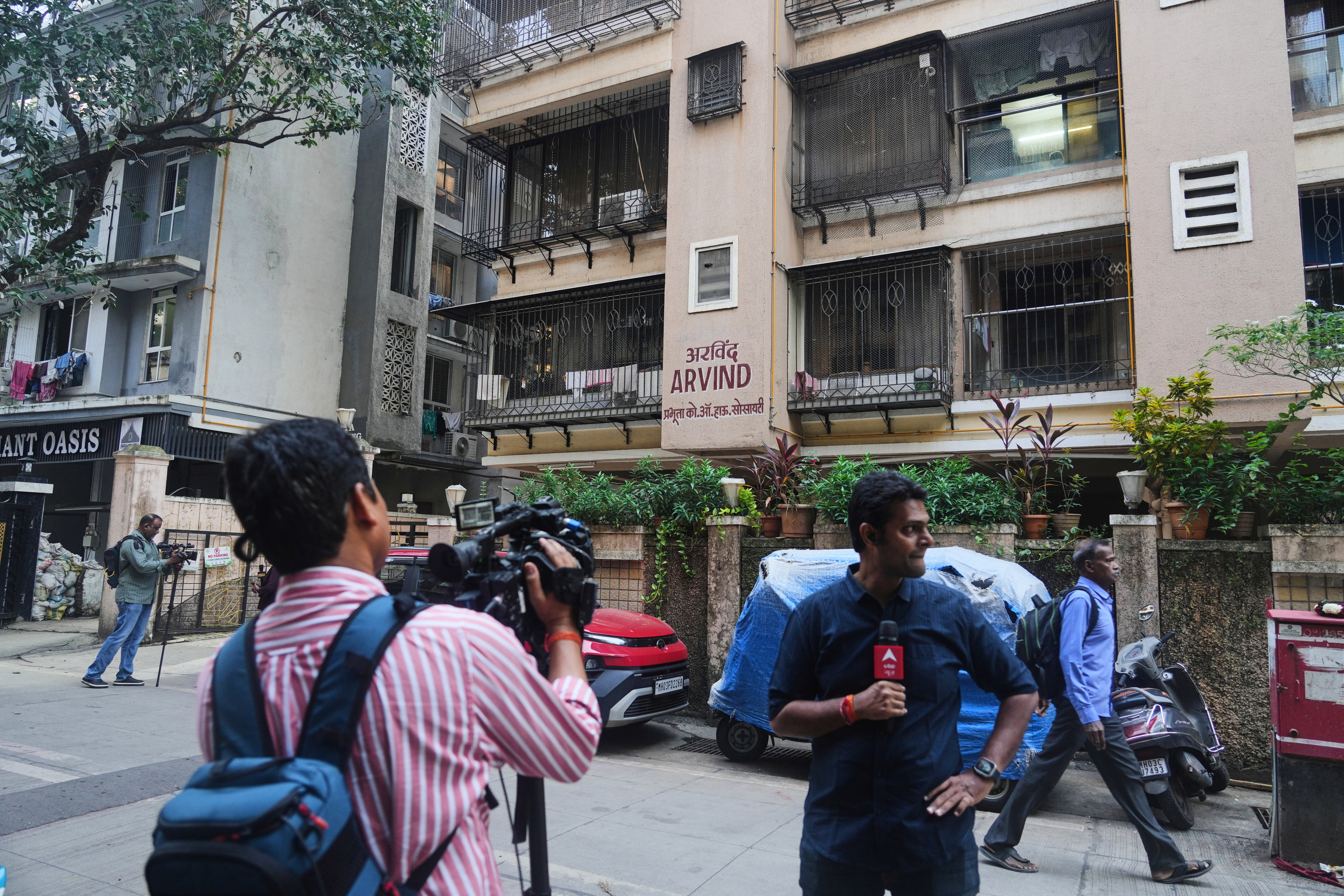
In Ghatkopar East, the Mumbai suburb where Machchhar’s family lives, neighbors spoke of how easy-going he is and also lauded his courage.
“He has a lot of bravery in him,” said Ami Sapani, a neighbor who knows the family. “God is with him.”
WASHINGTON — Defense Secretary Pete Hegseth has survived in office by projecting an image of strength.
His combative style has won praise from President Donald Trump and support from the Republican base. “He loves war,” Trump said earlier this year, slapping Hegseth on the biceps.
By many measures, though, Hegseth has never been weaker. He is leading the military through an unpopular war. Republicans in Congress complain privately — and increasingly in public — that he and his staff are dismissive of their questions and frequently unprepared for briefings.
If Democrats win a majority in the House, Hegseth will likely face new calls for his impeachment.
Hegseth’s firing and sidelining of senior military officers, often with no explanation, has fed mistrust and led many in the top ranks to question his leadership.
How Hegseth manages the contradiction between his tough guy image and his growing vulnerabilities in Washington and around the world could determine whether Trump — the person Hegseth must ultimately please — keeps him in the job.
Hegseth’s most immediate problems are in Iran, where the U.S. war shows no signs of ending, and on Capitol Hill. In the aftermath of the midterm elections, Hegseth will have to persuade a skeptical Congress to pass a $1.5 trillion defense budget and confirm nominees for key Pentagon posts. Several of his choices are being blocked by Republicans in the Senate.
He will also have to persuade Congress to keep paying for the war, which the American people broadly oppose.
On Wednesday, Hegseth focused on the part of the job that plays to his strengths. Onstage at a military base outside Washington, with a giant American flag behind him, he attacked the media and promoted his victories in the culture wars.
“The complainers, the ideologues, and the poor performers are no longer in the driver’s seat. No more silly PowerPoint trainings or drag queen shows,” Hegseth said. “No more gender pronouns. No more identity months. Only the warrior ethos.”
He also laid out an ambitious agenda that included building a massive military base and establishing a major new command focused on preparing the military for wars dominated by robots and artificial intelligence.
Most of those initiatives will require support from lawmakers who view him with unease, if not disdain.
A year ago, Hegseth stood on the same stage outside Washington and delivered a similar speech to a room full of more than 800 generals. He blamed them for acceding to overly restrictive rules of engagement intended to protect civilian lives. He bashed them for allowing liberal ideas, which he called “toxic ideological garbage,” to infect the force. And he accused them, without evidence, of lowering standards to accommodate women in the ranks.
The senior officers sat stone-faced. Many said privately that they found Hegseth’s speech insulting.
This time Hegseth’s audience included about 600 junior officers and enlisted leaders.
Since taking office last year, Hegseth has overseen a purge of generals and admirals unlike anything the military has experienced in decades. He has fired or blocked the promotions of more than 80 generals and admirals.
On Wednesday, Hegseth made clear that his work was not done.
“The number-crunchers say we fired 10% of the generals and admirals across the force, and that number sounds about right,” said Hegseth, citing figures first tabulated by The New York Times. Almost half of those fired or removed were women or minority officers.
Hegseth’s day began outside the Pentagon, where he led the 600 junior troops in pushups, stretching, and a morning run, just as he would have when he was an Army captain two decades earlier.
To drive home Hegseth’s message of toughness and lethality, the service members traded in their military-issued workout gear for “This is War” T-shirts of the sort that Hegseth has recently modeled during his workouts, which his staff members regularly post on social media.
But Hegseth is no longer a junior officer, and the biggest challenges he faces are not among the frontline formations.
The war in Iran, which Trump started and Hegseth now leads, has drained the military’s stockpile of critical munitions that it needs to defend U.S. troops and allies in the Middle East, and to deter an even larger conflict with China or Russia. Replenishing those magazines could take two to three years, according to defense experts.
The war is also creating economic problems at home. The average American could tune out the wars in Iraq and Afghanistan. “We’re at war; America’s at the mall,” U.S. troops fighting overseas often bitterly complained.
By contrast, the war against Iran and the battle over the Strait of Hormuz have caused fuel and food prices to surge. Republican congressional candidates in Iowa, Nebraska, Ohio, and Michigan have increasingly questioned the rationale for continuing the conflict.
“The war in Iran needs to end, and end quickly,” said Mike Rogers, the Republican Senate nominee in Michigan and an early supporter of the war.
Hegseth’s stewardship of the military, particularly his firing of generals and admirals, has alienated Republican national security hawks in Washington.
“It’s not the right way to treat people,” Rep. Don Bacon (R, Neb.) an Air Force veteran, said in a recent interview. “It’s not decent.”
Hegseth’s clashes with lawmakers extend beyond the firings. Republicans in Congress have complained that he and his staff have misled or lied to them about recent decisions to pull Army brigades out of Poland and Romania.
“We didn’t think we were treated honestly,” Bacon said.
And lawmakers from both parties have said that they cannot get answers to basic questions about the conduct of the war in Iran, or about the Pentagon’s budget requests.
“You want to sell people on your needs,” said Sen. Thom Tillis (R, N.C.), who cast a key vote in confirming Hegseth as defense secretary. “You want to sell people on your priorities. Then you have to engage.”
He added: “I don’t think Hegseth has developed any productive relationships, even with Republican members.”
The Pentagon’s recent $67 billion request to pay for operations in Iran was only seven pages, compared to the Iraq and Afghanistan spending bills, which typically ran more than 100 pages and included detailed accounting of the department’s needs.
In his speech to the troops Wednesday, Hegseth answered some of his critics by suggesting, as he had previously, that the war against Iran had already been won.
“Allow me to lay it out simply for the anti-American losers in our media,” he said. “These Americans, right here, and their peers, these have destroyed Iran’s navy, destroyed Iran’s air force, destroyed their air-defense systems, their leadership and their military industrial capacity, their entire defense base.”
His analysis did not account for Iran’s large stockpile of missiles, which it continues to fire at its neighbors and oil tankers transiting the Strait of Hormuz. Nor is it likely to satisfy skeptics in Congress.
“He’s not working with Democratic senators,” said Sen. Joni Ernst (R, Iowa). “He works very little with Republican senators.”
Ernst added: “We need more transparency for the good of the Defense Department and the good of the nation.”
The result is that many of Hegseth’s top priorities in Congress are going nowhere. Earlier this year, Hegseth fired or forced out the Army chief of staff, the Army secretary and the Navy secretary. Senators are refusing to confirm the leaders Hegseth has chosen as replacements.
The defense secretary also has struggled to persuade lawmakers in the House and Senate to pay for any of the Pentagon’s spending bills. In the near term, the Pentagon will have to make do with last year’s budget of about $890 billion, or about 40% less than it is currently budgeting.
The difference will force the Pentagon to reallocate money set aside to repair barracks, train troops and buy weapons to pay for more pressing needs, such as sustaining 50,000 troops in the Middle East. In the coming months, some of Trump’s top priorities, such as his proposed Golden Dome missile shield for the United States, will likely come to a halt.
None of those setbacks seemed to dissuade Hegseth from sketching out an even more ambitious and costly agenda. He spoke of standing up a new autonomous weapons command led by a four-star general.
He laid out a plan to make all U.S. military bases energy independent. “If an adversary takes down the grid by cyberattack, by sabotage, or by any means, our bases stay lit,” Hegseth said.
He promised to launch a competition among all 50 states and governors for the new military base, which would house as many as 25,000 troops.
“We’re talking hundreds of thousands of acres with organic power generation, modern air defenses and cutting-edge technology,” Hegseth said. “Think a fortress.”
Hegseth barely spoke of the $1.5 trillion defense budget that the Trump administration sent to Congress earlier this year. It is a budget that even Republicans concede has little chance, in its current form, of passing.
At some point Trump may have to make a choice.
“Trump really likes Hegseth, and I think that’s based on style,” said Todd Harrison, a senior fellow focusing on defense at the American Enterprise Institute.
Trump chose Hegseth in part for his bravado, which was on full display Wednesday. The question now is whether pressure from Republican lawmakers will force the president to find a leader for the Pentagon who is less politically combative and more eager to make peace with a frustrated Congress.
In October 2024, about a week after a Chi Phi fraternity party at Cornell University, the sophomore who would come to be known as Jane Doe was milling around an online forum about Greek life when she encountered a post that stopped her cold.
“Are Chi Phi brothers Crips or Bloods because I hear they have been doing hell Gang Banging?” someone had written.
“They do drugs and gang r*ped a sophomore,” another user said. “Report them.”
Since the evening that began Oct. 19, 2024, Jane Doe had recounted the night’s events to her roommates without identifying herself as a rape victim. She had exchanged friendly text messages with men she would later accuse of assault. She had heard uncharitable appraisals of herself from undergraduate gossips.
Then she read the words.
“That’s the first time I had ever heard the narrative change that I wasn’t a whore and that I was assaulted,” Jane Doe told investigators, according to documents from a university review of the accusations obtained by The New York Times.
Those records, which have not been previously reported, help illuminate a case that has horrified the nation and plunged one of its elite institutions into crisis. They shed light on the crucial three-week period between the fraternity party and Jane Doe’s decision to take her story to the campus police, accusing multiple fraternity brothers of sexual assault and alleging that she was coerced into taking ketamine.
The bare facts of what happened after she made her accusations are by now well known: The Tompkins County, New York, district attorney, Matthew Van Houten, reviewed her complaint and declined to bring criminal charges, saying there was not sufficient evidence to do so. Jane Doe filed a complaint that prompted at least a dozen hearings by the school’s Title IX committee, which is supposed to ensure compliance with federal civil rights laws.
On Sept. 16, Jane Doe also filed a lawsuit against seven men, accusing them of sexual assault. Lawyers for at least three of the accused men have broadly denied criminal wrongdoing; others have not yet made public statements.
What had not been known publicly, until now, were the detailed filings collected during the private Title IX proceedings — hundreds of pages of emails, text messages, photographs and interviews with Jane Doe, her friends and those she accused.
Taken together, the raw materials sketch Jane Doe’s journey from an unknown sophomore to the embodiment of another searing national dialogue about sexual assault and consent. (Although Jane Doe is identified in the documents, the Times is withholding her name.)
Some women around her, the documents show, were quick to say they viewed the events of the evening of Oct. 19 as sexual assault. But Jane Doe, the interviews and text messages reveal, first appeared to grapple with shame, humiliation and concerns about her reputation before she began to consider herself an assault victim.
“I don’t really remember her ever kind of citing that she had said yes to anything that occurred,” one of her roommates had said of the first hours after Jane Doe returned home the morning of Oct. 20, according to the Title IX files, which were compiled as part of the school’s formal process for investigating allegations of sexual harassment and assault.
On page upon page, the documents make for difficult reading, vacillating between the merry shorthand of college students — asides about the gym, Snapchat, Greek life — and the blunt-force details of an alleged gang assault that the victim appeared to be processing in real time.
From the beginning, the case has seemed to double as a referendum on so many vexing questions about what it means to be a young woman on a college campus, even a campus as nominally esteemed as Cornell’s: Who is believed, and who is coddled? How much good can Title IX do? Has anything changed, really?
For Jane Doe, the records suggest, the first task was to make sense of what had happened to her.
‘A traumatic way’
At 3:05 a.m. on Oct. 20, 2024, one of Jane Doe’s roommates sent her a text.
“Are you coming home tonight?” she asked.
Four minutes later, Jane Doe texted back that she didn’t know.
The roommate went to sleep, she would tell investigators. When she woke up at 11 a.m., she uploaded a photo of her empty room to Snapchat. “Only I made it back home,” she wrote on the post.
Around 11:15 a.m., she said, Jane Doe arrived home, still in her “big boots and small dress” from the night before, according to the roommate. She had consumed ketamine and had sex with multiple men, she told her two roommates. One roommate told investigators that Jane Doe did not use the word “rape” or “assault” yet.
It seemed like she was “in shock,” her other roommate later told investigators, “not really understanding the gravity of what she was saying.”
The next day, on Oct. 21, Jane Doe went to her “big sister” — a woman designated as a mentor — at Cornell’s Tri Delta sorority and told her there were rumors circulating that she was a “slut.” The big sister, a junior at Cornell, told investigators that Jane Doe added with a laugh that “unfortunately they are true.”
“I could tell that — just from personal experiences — that what she was going through is that she had not yet processed what had happened,” the big sister told investigators.
That same day, Jane Doe received a text message from Jonathan Newell, one of the men she would go on to accuse of sexual assault.
“I just wanted to apologize for how things went down the other night,” Newell wrote. He then said that he and Matthew Ingalls, another of the men she would later accuse of assault, both felt terrible for being too under the influence of drugs and alcohol to “shut it down and kick people out before it got way out of hand.”
Jane Doe replied and reassured him.
“At the end of the day non of the sexual stuff was illegal and honestly i really liked being w u and matt,” she wrote.
A lawyer for Newell did not respond to requests for comment. A lawyer for Ingalls declined to comment.
The next day, on Oct. 22, Jane Doe made an appointment at Cornell Health to see a doctor because she had contracted a urinary tract infection and wanted to be tested for sexually transmitted diseases. She told the doctor she contracted the UTI “in a traumatic way,” according to a transcript of her conversation with investigators.
“She didn’t really follow up on that,” Jane Doe said of the doctor. “She just suggested I go to therapy.”
‘Say it didn’t happen’
On Oct. 23, Jane Doe texted Ingalls.
“Bro,” she wrote, “everyone knows.”
She said the episode was “RUINING my life temporarily” and that her reputation had been destroyed. She said all she could do was “sleep and cry all day.”
According to the documents, Ingalls assured her that it would all blow over soon, noting “how fast nonsense spreads at this school,” and said she did not have “anything to be ashamed of.”
“You’re right,” Jane Doe wrote. “It’ll get better.”
Jane Doe’s sorority big sister received a text that week: “Have you heard the rumor about your little?”
In the meantime, Jane Doe had delivered strict instructions to one of her roommates: “If anyone asks about this,” she said, according to the roommate’s testimony, “say it didn’t happen.”
The roommate was plainly concerned. Initially, she said, Jane Doe was “kind of recounting it as this sort of crazy thing that she had done.”
“As the days went on,” the roommate continued, “I think she kind of came to realize that it was something bad. And that she didn’t really enjoy her time there.”
On Oct. 25, Ingalls texted Jane Doe: “U good?”
Jane Doe replied that Newell had “def told people.”
Days later, she sent Ingalls an image of the forum post accusing Chi Phi of gang rape.
As Halloween approached, Jane Doe’s roommates told investigators, her understanding of what had happened to her appeared to have shifted.
Around Oct. 28, Ingalls was on the phone with Jane Doe and, according to one of her roommates who said she overheard the conversation, he apologized to her. But rather than assure him everything was OK, Jane Doe took a different tone.
“How could you let this happen?” the roommate recalled her saying.
“I think she wanted it to be consensual,” the roommate told investigators, looking back on how Jane Doe had processed the alleged assault. The roommate told investigators that Jane Doe had been sexually assaulted before, which made it particularly hard for her to talk openly about what had happened.
“I’d have conversations and she would describe a part of what happened and I would tell her that that is what could be classified as rape,” the roommate said.
At Chi Phi, the fraternity was preparing for a Halloween party, and Jane Doe was eager to attend. Text messages included in the investigation show Ingalls assuring Jane Doe that he and other fraternity members wanted her to be there.
“chi phi is your house and you are welcome here,” he wrote, relaying the views of the fraternity’s president, who was not among those accused of sexual assault.
“thank u i really appreciate that,” Jane Doe responded. “<3 i’ll bring my cigs tomorrow”
But then Jane Doe received a phone call from the fraternity’s president, according to the text messages.
She was disinvited from the party. It was for her own good, he said.
Jane Doe sent a biting text to Ingalls.
“I knew this was going to happen,” she wrote. “The woman will always get the short end of the stick. Yall aren’t my friends. Yall are covering your asses.”
By Nov. 3, Jane Doe appears to have concluded that she was assaulted at the October party. She sent a text to Newell.
“let’s be clear that 90% of what happened that night was not consensual. i was given more key than i can remember,” she said, using a shorthand for ketamine, “and i know that i told u i felt uncomfortable and i didn’t know anyone in the room.”
The text continued with her telling him that one of her only memories was doing ketamine off of his penis “in front of everyone like a sex doll/worker.”
Four days later, on Nov. 7, according to the documents, Jane Doe went to an emergency room in Ithaca and requested a rape kit.
While the pandemic didn’t fully close Chinatown mainstay David’s Mai Lai Wah, it did shutter its dining room. First opened in 1982 by Hong Kong native David Chan, it became legendary over the years both for its food — in particular, its salt and pepper chicken wings, their spicy, crowd-pleasing adaptation of the classic Cantonese dish made with squid — and for catering to a sometimes rowdy late-night crowd, which started in 1992.
Since 2020, David’s Mai Lai Wah has only operated as a takeout restaurant (with no delivery), despite its now-vintage neon sign proclaiming “Eat In Take Out” remaining lit up through the partial closure.
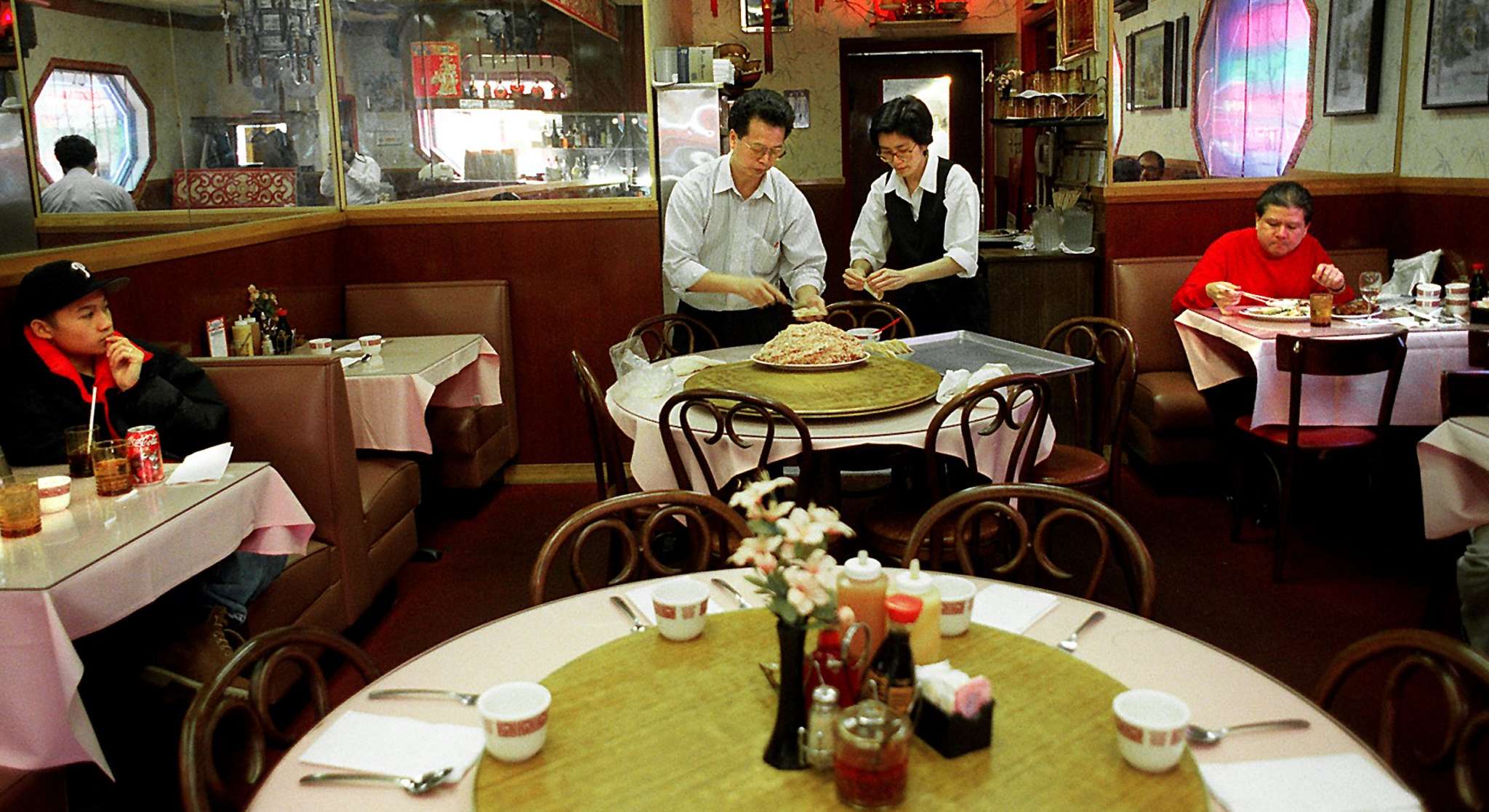
In 1992, David’s Mai Lai Wah was among a small number of dining spots to stay open and serve late-night food. Here, David Chan, restaurant owner, and Ling Luong make dumplings in the dining room.ERIC MENCHER / File Photograph
But on Monday, David’s Mai Lah Wah quietly opened up its dining room again, and the renovations were significant. The uneven floor was leveled and completely replaced. Gone are the rickety dining tables covered in pink tablecloths and tamped down with glass table tops. They’ve been exchanged for rectangular tables (with no linens) that flank either side of the room. A new bar glows under a new green neon sign of the Chinese characters “Mai Lai Wah” — a phrase that means “beautiful magnificence.”
Now, the interior lives up to the name.
The renovated dining room at David’s Mai Lai Wah, which reopened Sept. 28.Kiki Aranita / staff /
The mirrored wall on one side of the dining room remains, but the other walls are papered over with vibrant photographs depicting many of Hong Kong’s famous neon signs. Walking in the door now feels like walking into a diorama of Hong Kong’s Wan Chai district, famous for its concentrations of classic neon.
Another image shows Philadelphia’s Chinatown Friendship Arch. The real one is just a few steps outside of the restaurant’s door.
“We had the photos made into wallpaper to create a mix of where [my father] was and where he is now,” said Priscilla Chan, 33. “When he came to Philly he was only 13 years old. His mom sent him here to stay with his uncle, who worked in restaurants and he’s been working in restaurants ever since.”
And restaurant work took a toll. “During COVID, we closed for two weeks and then remained closed because we were still able to do business and at that point my dad was tired,”said Chan. The boisterous late-night crowds also took their toll. He was“sick of all the fighting that would happen at nighttime,” said Chan.
Renovations on the restaurant didn’t start until this past February. Everything was done slowly as David’s Mai Lai Wah remained open for takeout.
The renovated dining room marks a changing of the guard. “My dad is still the owner but he wanted me to start taking things on for him,” said Chan, who was working as a nurse until she and her engineer husband (who had also worked in restaurants), Barry Li, both left their jobs to run David’s.
“We bought a house in July, got married in August, and now it’s September and we’ve reopened dine-in,” she said.
Chan is now the restaurant’s general manager. She and Li overhauled their point-of-sale system as she familiarized herself with the operation. When she started, “They wrote everything down by hand and brought it to the kitchen. We slowly introduced new things.” She cast a critical eye on what items were selling and what items were not, and what cost too much in labor.
“I know a lot of people really love the roast duck but it’s incredibly difficult and really expensive,” she said. “One day we might try to bring it back, but right now, we’re concentrating on opening, finding our flow, and focusing on the big staples, like the salt and pepper series.” (In addition to the famous chicken wings, David’s Mai Lai Wah serves salt and pepper shrimp and scallops.)
Li designed a trendy cocktail menu with a yuzu margarita, a gingery take on an Old Fashioned, and an espresso martini made with Vietnamese coffee.
“We’re excited to welcome in old regulars,” said Chan. “But please don’t fight in here.”
David’s Mai Lai Wah is open for dine-in and takeout (no delivery) from 4 p.m. to 2:15 a.m. Last call for drinks is at 2 a.m.
David’s Mai Lah Wah, 1001 Race St., 215-627-2610, mailaiwah.com
When the FDA was deciding whether to approve the drug Tavneos several years ago to treat a set of rare autoimmune diseases, agency experts argued that would be a mistake, according to FDA records.
As it often does, the FDA in 2021 approved the drug with a proviso: It required the manufacturer to conduct an additional yearslong safety study once the drug was on the market.
Today, like many similar “postmarket” studies mandated by the FDA, that additional study is delayed, according to a federal database. As of last fall, only 21 of the planned 300 patients had been enrolled, the FDA said in an April letter and regulatory posting.
Meanwhile, the FDA has identified dozens of cases of liver damage “possibly” or “probably causally associated” with the drug. That was one of the potential side effects the postmarket study was meant to evaluate.
Tavneos illustrates the perils of the FDA’s approach to many drugs and medical devices — and the frequent lapses in follow-through.
A KFF Health News analysis of Food and Drug Administration data found hundreds of postmarket studies listed as delayed. In some cases, the work was delayed by more than a decade or the manufacturer was still developing a plan for the study.
As a result of delays, patients, doctors, and others could be left in a fog about the risks and benefits of the drugs or devices, even as they stake their money, their health, or their lives on the products.
Postmarket study requirements “have often proven toothless,” said cardiologist Sanket Dhruva, an associate professor of medicine at the University of California-San Francisco who has published related research.
The FDA’s reliance on postmarket studies reflects a balancing act.
Making new treatments available faster can save or improve lives, especially when patients with grim prognoses and no good options have little to lose. The full risks and benefits may be revealed only over the long term, and when therapies are used by far more people than even large clinical trials enroll.
But relying on post-approval studies to resolve questions risks exposing patients to products that do more harm than good. Whoever is paying the bills — patients, insurance companies, employers, or government health programs such as Medicare and Medicaid — can end up wasting money and rewarding manufacturers for useless or risky products.
“Doctors rely on this evidence, patients rely on this evidence, and if that evidence is not there, it’s going to lead to a lot of uncertainty,” Dhruva said.
Trump administration policy changes designed to hasten drugs through FDA review could leave more riding on postmarket studies, medical researchers say.
For example, in February, FDA leaders announced that “the default requirement” for agency approvals will be one clinical trial instead of two.
Reducing pre-approval testing “will inevitably put a lot of pressure on the post-approval system,” said Aaron Kesselheim, a professor at Harvard Medical School who has analyzed postmarket studies.
FDA officials said the new policy would “substantially reduce costs” for manufacturers and “speed drugs to market.” Writing in The New England Journal of Medicine, they denied the change would compromise safety or efficacy, saying that “erroneous conclusions may be reached even with two, three, or four studies.”
In response to questions for this article, a spokesperson for the Department of Health and Human Services, which includes the FDA, said postmarket studies can experience delays for legitimate reasons. “Assessing the significance of any delay requires a case-specific review,” said the spokesperson, Emily Hilliard.
The fact that a study is delayed “should not be treated as evidence that a product has an unresolved safety or effectiveness issue,” Hilliard said.
Amgen, the company that makes Tavneos, is still working on the postmarket research the FDA mandated, company spokesperson Alison Chartan said, adding, “We remain committed to completing this important study.”
Amgen headquarters in Thousand Oaks, Calif. The company’s subsidiary’s drug Tavneos can cost more than $220,000 per year. Its approval has been pulled by the EU. MUST CREDIT: Eric Thayer/BloombergEric Thayer
Behind schedule
An FDA database downloaded by KFF Health News in August tracks the progress of postmarket studies that makers of drugs or biologics — such as vaccines and gene therapies — were required to perform or promised to perform.
The database showed almost 600 were running behind schedule.
Of those, more than 250 originally had final reports due before July 31, 2026 — the date that, according to an FDA webpage, the database last had been updated.
About a third of ongoing studies were listed as delayed.
In some cases, the FDA has granted extensions. In others, it has denied them. And in rare instances, the products were discontinued before the studies ran their course.
Postmarket studies can involve clinical trials or other analyses of patient data. They can look at safety or efficacy. A product can be the subject of more than one postmarket study.
The nearly 600 delayed studies involved almost 350 products, KFF Health News found.
As of August, other FDA databases tracking medicaldevices listed dozens of postmarket studies as behind schedule.
Products included:
The CustomFlex Artificial Iris, a prosthesis implanted in the eye in place of damaged, defective, or congenitally missing irises. The protocol for a study in children was accepted in 2019, the database said. The study was meant to follow patients for five years. According to an FDA page downloaded in August, zero patients were enrolled.
Barbara Fant of Clinical Research Consultants, to whom the FDA’s 2018 letter approving the product was addressed, said the rarity of an eye disease called aniridia poses challenges for post-approval studies. The German manufacturer, the U.S. distributor, and Clinical Research Consultants are working with the FDA to identify alternative ways to fulfill the postmarket requirements, Fant said.
“Confirming the long-term safety of the device remains a top priority for both the study team and FDA,” Fant said.
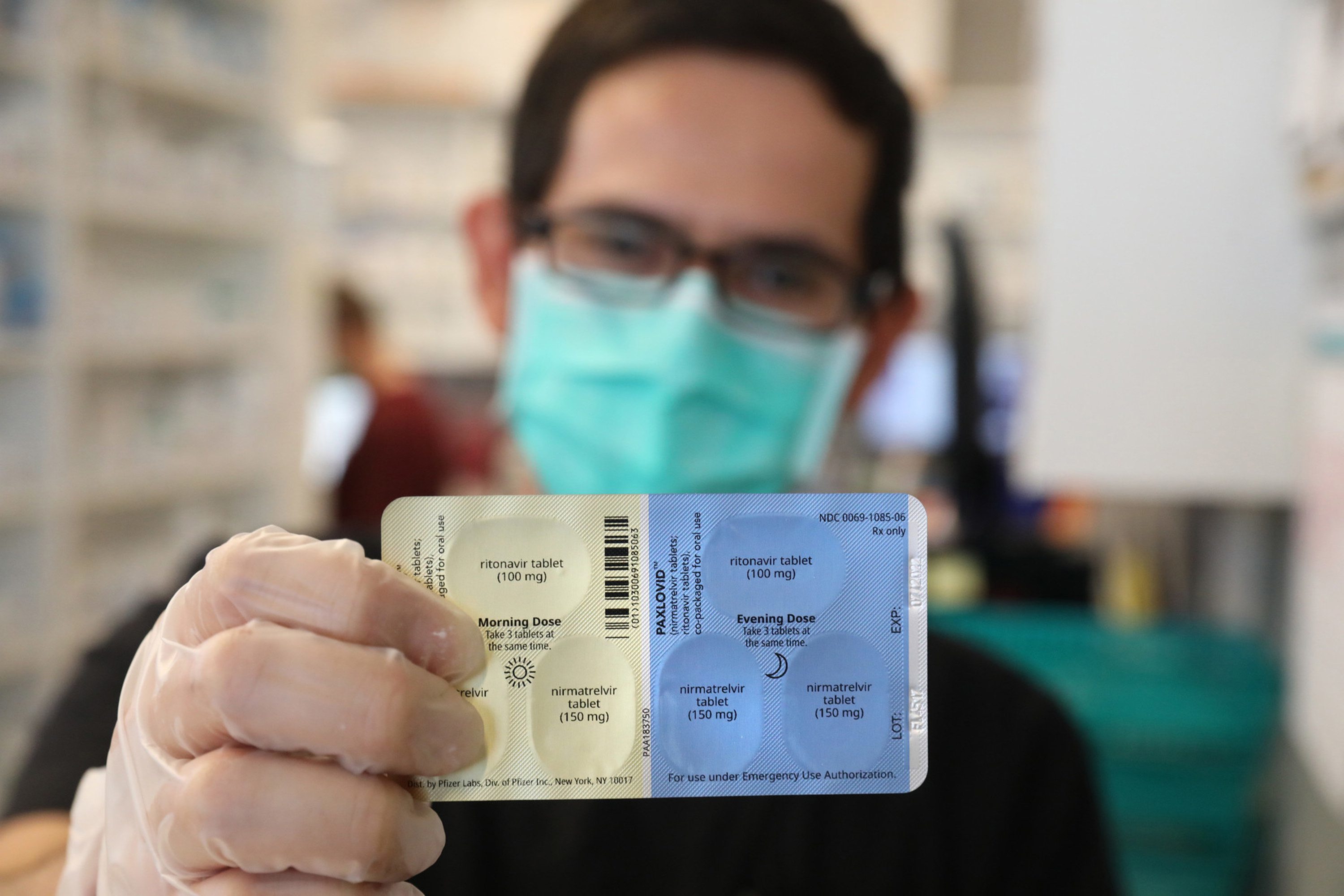
Paxlovid, a treatment for COVID. A study to assess its safety in pregnant women was originally to be completed by the end of 2024, the FDA database said. “The trial completion and final report milestones were missed,” the database said.
Pfizer, the manufacturer, is working with the FDA and remains committed to “submitting results as soon as practicable,” Pfizer spokesperson Jerica Pitts said.
The Scandinavian Total Ankle Replacement system. The device and the original protocol for the clinical trial were approved in 2009. The study was meant to include a minimum of 500 subjects, the database said, but the actual number enrolled was 142. Almost half those patients had one or more adverse events, with dozens of “reoperations,” “revisions,” or “removals,” the database said.
Rachel Colloff and Cristina Pasquino — spokespeople for Enovis, which markets STAR Ankle — did not respond to multiple inquiries. Jenny Braga, a spokesperson for Stryker, which previously sold the product, did not answer questions about the postmarket study.
Oxaydo (originally named Oxecta), a form of the potentially addictive opioid painkiller oxycodone touted as designed to deter abuse. When the FDA approved it in 2011, it required the manufacturer, part of Pfizer, to conduct a postmarket study to assess whether it reduces “misuse and abuse, and their consequences: overdose, death, and addiction.” The final report was originally scheduled to be submitted in 2016.
Control of the product passed from company to company over the years until 2023, when Acura Pharmaceuticals said in a Securities and Exchange Commission filing that patents on Oxaydo would begin expiring that year and it didn’t intend to continue marketing the drug.
The FDA has enforcement powers and uses them “where appropriate,” HHS’ Hilliard said. She did not provide requested details, and she did not answer questions about the studies listed above.
Delay can pay
For manufacturers, delay can pay, Harvard’s Kesselheim said. While postmarket studies are ongoing, companies can continue to sell the products.
“Medicare and Medicaid spent more than $18 billion from 2018 to 2021 for accelerated approval drugs with incomplete confirmatory trials past their original planned completion dates,” the HHS Office of Inspector General estimated in 2022.
The FDA can demand postmarket studies for a variety of reasons, including to address concerns that arise after a product has been approved. Some look at uses not covered by the original approval, and some are meant to shed light on serious risks that are already known.
In April, when it approved Foundayo, a weight loss drug made by Eli Lilly, the FDA required the company to conduct additional research to assess a variety of concerns, including “retained gastric contents,” “major adverse cardiovascular events,” and “drug-induced liver injury,” as well as effects of exposure during pregnancy, such as “major congenital malformations,” “spontaneous abortions,” and “stillbirths.”
The FDA said it approved the drug under the new Commissioner’s National Priority Voucher program, intended for products that “address critical national health priorities.” The program strives for an “ultrafast” review, the FDA has said — one to two months, instead of six months or more with other expedited pathways.
“Postmarketing requirements and enhanced safety monitoring are a routine part of the FDA’s approach to evaluating newly approved medicines,” Eli Lilly spokesperson Kristiane Silva Bello said, “including ongoing monitoring in areas identified during clinical development.”
‘False Hope’
The FDA waded into a world of uncertainty in 2016 when it granted accelerated approval to a drug for Duchenne muscular dystrophy, a degenerative disease that primarily affects boys, disabling them at a young age and ultimately killing them.
Agency scientists had found that the drug, Exondys 51, was unproven and argued against greenlighting it.
Ellis Unger, then a senior drug evaluation official at the FDA, wrote in an internal memo that “thousands of patients and their families would be given false hope in exchange for hardship and risk.”
The manufacturer, Sarepta Therapeutics, conceded the uncertainty. “A clinical benefit of EXONDYS 51 has not been established,” it said when the drug, also known by the generic name eteplirsen, was approved.
The drug, the first FDA-approved treatment for Duchenne muscular dystrophy, targeted a subset of patients with the disease.
The FDA required Sarepta to conduct further studies and warned that it could withdraw approval if postmarket trials failed to verify a clinical benefit or were “not conducted with due diligence.”
Sarepta Therapeutics, headquartered in Cambridge, Mass., reported to investors that its drug Exondys 51 brought in $538 million in revenue in 2025. An FDA-ordered study on the drug, ranked as the second most expensive on the market, missed a 2021 deadline. (AP Photo/Charles Krupa)Charles Krupa
Unger issued a warning of his own: “FDA has not succeeded in withdrawing the marketing of a single drug for lack of verification of clinical benefit following accelerated approval. The reality is that if eteplirsen is given accelerated approval, it is highly likely to remain on the market indefinitely, irrespective of whether or not efficacy is verified.”
Sarepta was originally required to submit a final report on a postmarket study by a May 2021 deadline, according to an FDA database and a 2016 FDA letter to the company.
Almost a decade after the drug was approved, and more than five years after that deadline, the study was listed in an FDA database as delayed.
“The final report milestone was missed, because the sponsor requested milestone extensions due to study delays,” the database said.
Meanwhile, in 2022 the website Pharmaceutical Technology ranked Exondys 51 as the second-most expensive drug in the U.S., at an annual cost of $750,000 to $1.5 million.
Last year, the drug generated $538 million in sales for Sarepta, according to a company presentation to investors.
Sarepta found it difficult to recruit patients for the postmarket clinical trial, company spokesperson Tracy Sorrentino said. The target population is small, patients were hesitant to enroll, and Sarepta was competing with other clinical trials for participants, Sorrentino said.
The study has been fully enrolled since 2023, Sorrentino said, and the company plans to provide an initial look at the data late this year.
‘Manipulated’
Amgen has cited similar challenges, even as Tavneos generated $459 million in global sales last year.
When an approved treatment is available, patients may be reluctant to enroll in a study in which they could be given a placebo, Amgen’s Chartan said.
The clinical trial was originally supposed to be done by the end of 2030. As of July 24, just 49 patients had been enrolled, Chartan said.
The FDA has said the study was to include 300 patients, and each patient enrolled must be followed for five years, said Hilliard, the HHS spokesperson.
Tavneos was approved to treat severe cases of a group of diseases — known by the shorthand ANCA-associated vasculitis — in which, as the Cleveland Clinic explains, the immune system inflicts potentially fatal damage on blood vessels and organs.
“As of January 2026, estimated real-world exposure” to Tavneos “exceeds 25,000 patient-years globally, consisting of over 6,500 in the United States and 19,000 abroad,” Amgen has said. (For context, one patient taking a drug for five years would amount to five “patient-years.”)
A clinical trial sponsored by ChemoCentryx to secure approval of Tavneos failed to prove it was effective, the FDA now alleges. Instead of disclosing that outcome to the FDA, company personnel “manipulated” the results, the FDA alleged in an April letter to Amgen.
Amgen, the parent company of ChemoCentryx, has denied the results were manipulated and has said the data “remain valid.”
The company has a lot riding on the outcome. Tavneos can cost more than $220,000 per year, according to the drug discount website GoodRx, and when Amgen acquired ChemoCentryx in 2022 for $3.7 billion, Tavneos was the only drug ChemoCentryx had brought to market.
In a June letter to the FDA, Amgen said the benefits of Tavneos outweigh the risks.
The FDA disagrees.
The FDA “can no longer conclude that there is, or has ever been, a valid demonstration of substantial evidence of effectiveness for TAVNEOS,” the agency wrote.
Citing 76 cases of DILI — drug-induced liver injury — the agency said it was “increasingly concerned about the safety profile of TAVNEOS.” Without proof of effectiveness, at least for its approved use, “the drug’s benefits cannot outweigh its known risks,” the FDA wrote.
Data reporter Maia Rosenfeld contributed to this report.
KFF Health News is a national newsroom that produces in-depth journalism about health issues and is one of the core operating programs at KFF — the independent source for health policy research, polling, and journalism.
Vineland residents who are some of the first in the Philly area to know what it’s like to live next to a massive AI data center share their experiences.
And the Delaware Valley Regional Planning Commission wants to know where you’re headed every day — and how you get there.
But a handful of local homeowners have the unique experience of seeing one from their houses — the DataOne facility in Vineland.
They used to have more neighbors before the data center developers and associates bought several homes that now appear to be abandoned.
Multiple residents commented on the excessive sound.
“I think of a prison, and I’m the prisoner with the noise,” said a homeowner of more than 47 years. “You get up in the morning and you’re in a foul mood.”
The DVRPC wants to know just about everything about people’s daily travel habits.
No, this is not about surveillance. After 13 years, the commission needs an updated survey to help guide funding decisions for infrastructure projects and transportation plans for the nine counties it serves, which include Burlington, Camden, and Gloucester.
Since January, it has been recruiting participants by mail to randomly selected households. Sorry, you can’t nominate yourself.
Those who opt in will have to track their household trips for 24 hours using a phone app. It’ll also ask the household basics: size, age, income, etc.
But how exactly will the experts use this information?
Five years after Clementon Park & Splash World was purchased at a bankruptcy auction, the recently shuttered 119-year-old amusement and water park is going back to auction this month.
Researchers have found microplastic pollution in every one of the 22 stream and river segments along the Delaware River tested in New Jersey, Pennsylvania, Delaware, and New York. This includes Cooper River in Camden County.
Residents in Camden and Cherry Hill should be aware of possible detours and prepare to take alternative routes because of roadway projects scheduled for this week.
The Inquirer’s editorial board, which is separate from the newsroom, wrote that Gov. Mikie Sherrill’s call for now-former Lt. Gov. Dale Caldwell to resign set “an ethical example for a corrupt era.”
🗓️ The best things to do this week
🔮 Boos & Brews Witches Market: Check out this witch-themed market full of themed vendors and activities. Stick around for food trucks, a costume contest, performances, and a beer garden. ⏰ Friday, Oct. 2, 5-9 p.m. 💵 Pay as you go 📍 Rancocas Woods Events and Shops, Mount Laurel
📚 Collingswood Book Festival: The 24th annual festival is back spanning six blocks of Haddon Avenue. Come to meet booksellers and stay for author and poetry readings, performances, and workshops. ⏰ Saturday, Oct. 3, 10 a.m.-4 p.m. 💵 Free 📍 Haddon Avenue, Collingswood
🎨 Cranberry Fest: The 36th annual cranberry fest returns with live music, a food court, a beer garden, and more than 100 artisans. 💵 Pay as you go 📍 Farnsworth Avenue, Bordentown
You probablyknow Abigail Covington, my colleague who regularly helms the How I Bought This House column. In the year since she joined the team, she’s become one of The Inquirer’s home-buying experts.
So I couldn’t believe it when she told me that she’d opted for an information-only inspection when she bought her first home a few weeks ago.
I wanted to shake her by the shoulders and say: Haven’t you learned anything from all the real estate stories you’ve written?!
But in a new essay, Abigail explains why. Keep scrolling for that story and more in this week’s edition:
Buying a home is a huge financial decision — and an emotional one. Balancing the two can be tricky when your head knows what to do but your heart is pulling you in the opposite direction.
After a year writing about real estate, my colleague Abigail Covington felt prepared to stand up to sellers and get a great deal. But when her dream house came along, she ditched her careful plans to make sure she got it.
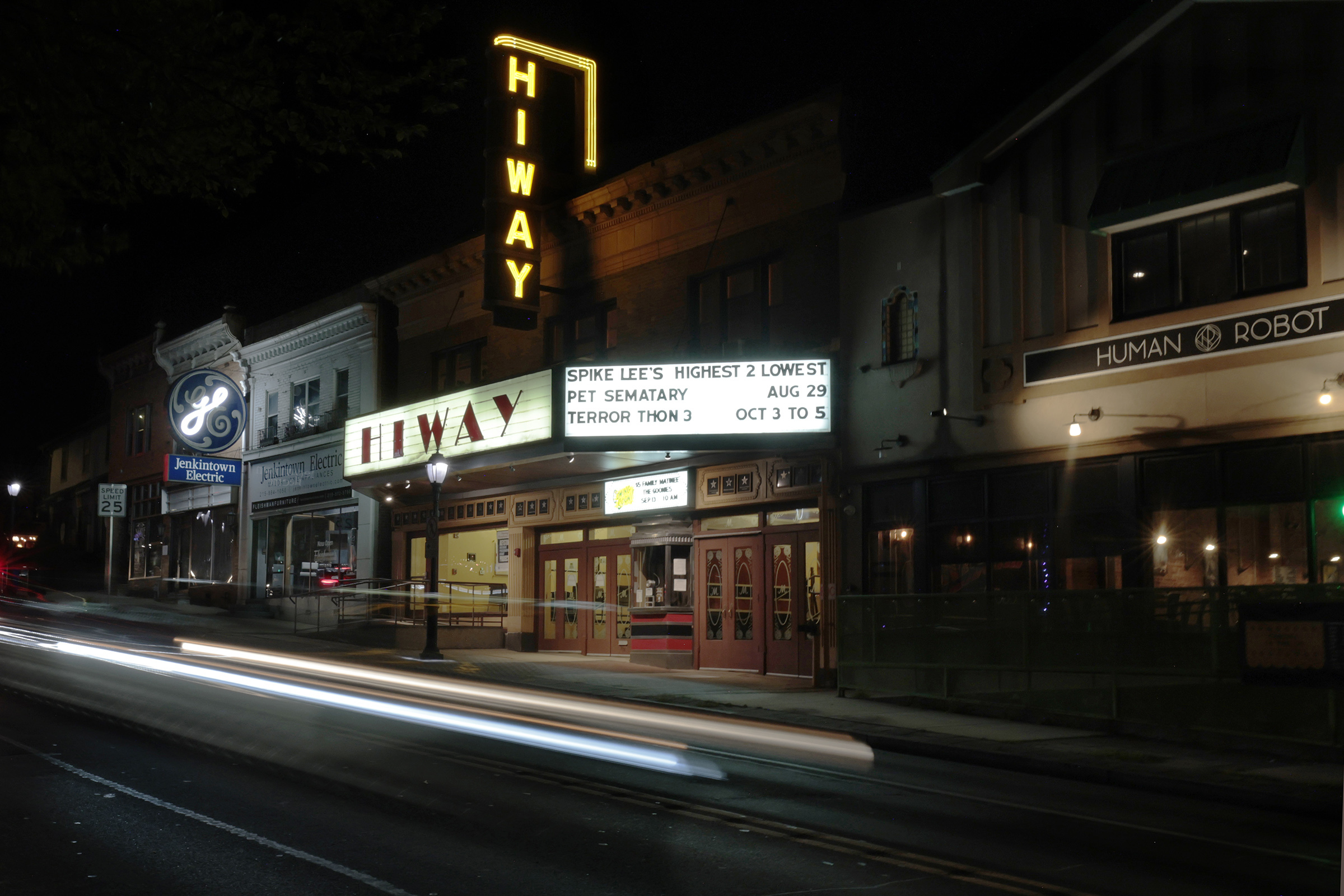
In Jenkintown, neighbors are disagreeing over Airbnbs. The town’s zoning board denied its first short-term rental request last week after residents complained about noise and unexpected visitors.
It made me wonder how I’d feel if my next-door neighbor was a rotating cast of visitors. On the one hand, I’ve stayed in dozens of Airbnbs and had memorable, comfortable travel experiences. On the other, I understand being worried about safety.
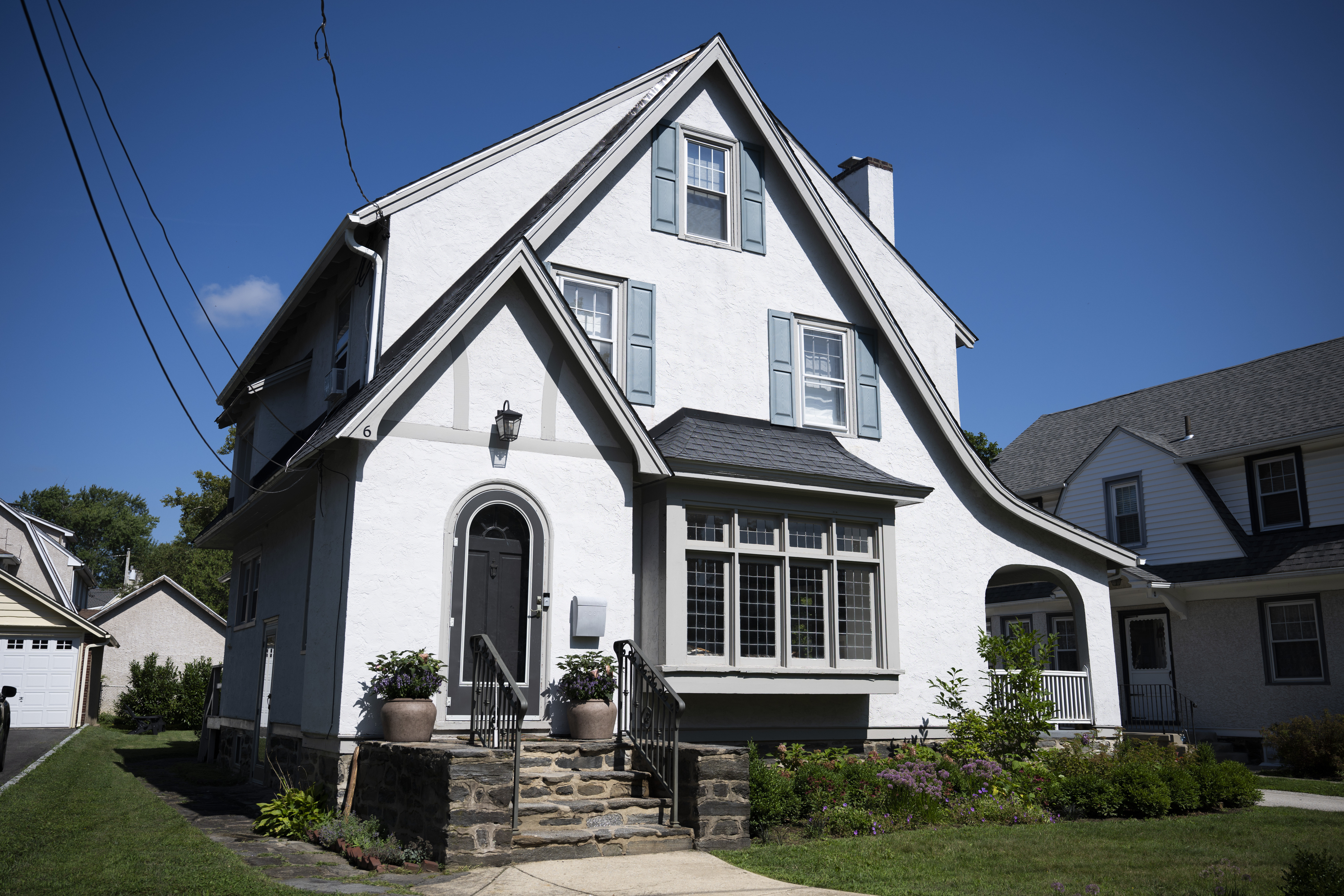
There is just something about a Tudor-style home that feels so cozy — the steeply pitched roofs, the storybook arches, the tall windows. Talk about curb appeal.
The interior of this Havertown home is just as warm and comfy with unexpected color combinations, a grandfather clock, and a lot of floral wall paper.
The Finnegan family moved in five years ago and have spent that time redesigning their home to be a haven. Take a peek inside.
📷 Photo quiz
Do you know the location this photo shows?
📮 If you do, email me back. You and your memories of visiting this spot might be featured next week.
Shout out toDon L. who correctly guessed that last week’s image depicted workers cleaning the glass pavilions over the subway stairs at Dilworth Park.
++
Have a great week. Michaelle will be back next Thursday.
By submitting your written, visual, and/or audio contributions, you agree to The Inquirer’s Terms of Use, including the grant of rights in Section 10.