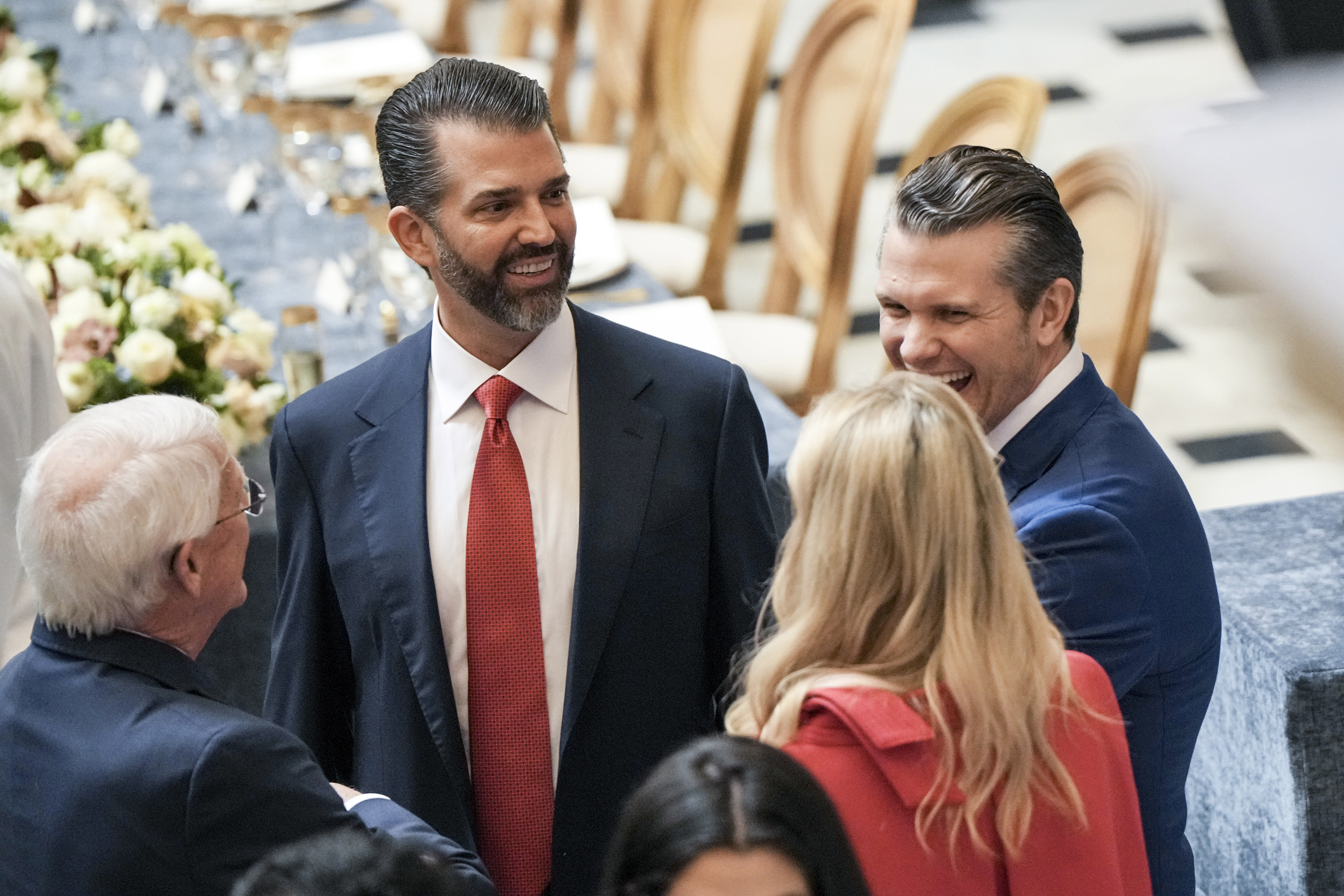
Donald Trump Jr.’s venture capital firm, 1789 Capital, is leading a new funding round in Polymarket that values the prediction market at $21 billion, a spokesperson for 1789 Capital said Monday.
Polymarket plans to raise $1 billion, including around $300 million from 1789 Capital, the spokesperson, Alexa Henning, said. The investment firm previously invested about $200 million in the prediction market, which is currently valued at about $15 billion.
Prediction markets such as Polymarket and Kalshi have exploded in popularity over the past year. The platforms allow users to place wagers on the outcome of a wide variety of events, such as what the president will say in a speech or who will get married on “Love Is Blind.”
The Trump family has built up a financial stake in the industry since last year. Donald Trump Jr. joined Kalshi as an adviser last year and received shares in the company worth more than $300,000. He also began advising Polymarket and invested in it via 1789 Capital.
At the same time, his father, President Donald Trump, has taken steps to boost the industry. Michael S. Selig, whom the president appointed to lead the Commodity Futures Trading Commission, which oversees prediction markets, has spoken enthusiastically about the companies and sued states that tried to regulate them. The president declared on Truth Social that prediction markets would “thrive” under his leadership and said Selig was “respected by all.”
Bloomberg earlier reported that 1789 Capital was leading Polymarket’s funding round.
Many of the companies that 1789 Capital has invested in have large government contracts, while others, like Polymarket, have benefited directly from new Trump policies or rollbacks of existing laws, The New York Times has reported. The investment firm also bought shares in some of the most coveted private companies before many went public, including SpaceX, Anduril, Cerebras and Reflection AI.
Two years ago, 1789 Capital managed a few hundred million dollars. It now oversees more than $3 billion.
Donald Trump Jr. told the Times this year that he invested as a private citizen and held “no policy position and no role within the administration whatsoever.”
WASHINGTON — As the U.S. government faced shortcomings in the country’s weapons manufacturing, the Pentagon set up a new office that would make investments to help boost defense industrial production.
That effort, which began in 2022 during the Biden administration, is now taking a sharp turn with the Pentagon’s involvement in an oil production deal between the United States and Venezuela that President Donald Trump announced on Friday.
The Pentagon’s little-known Office of Strategic Capital, which reports to the deputy defense secretary, is the leading U.S. government entity in forming a partnership with a private oil producer whose founder, Alejandro Betancourt López, is a powerful and polarizing figure in international commerce.
Trump said Pete Hegseth, the defense secretary, and Marco Rubio, the secretary of state and White House national security adviser, reached the agreement with the Venezuelan government on securing billions of barrels of oil reserves “through a partnership with private business.”
The deal would give the U.S. government the option to take up to a 35% stake in the parent company of Betancourt’s firm, North American Blue Energy Partners. This would come in the form of a financial instrument known as a warrant, plus preferential access to much of the oil that the company produces.
Warrants would give the government the right to buy shares in the oil company at a predetermined price. The value of warrants, which can be bought and sold, fluctuates based on the value of the company that issued them.
In this case, the warrants would be what are known as penny warrants, according to two people familiar with the deal, meaning they could be converted into shares for very little money, often just 1 cent.
Typically, companies issue warrants in exchange for something of value. During the coronavirus pandemic, for example, the federal government bailed out U.S. airlines with more than $50 billion in grants and loans to help the companies pay employees and cover other costs. In return, the Treasury Department received warrants from roughly a dozen airlines, most of which it later sold to private investors.
In this case, the deal would come “all at zero cost to the United States,” the White House said in a statement Monday night. The federal government’s partnership and seal of approval could make it easier for the company to raise money from private investors and also shield it from legal scrutiny or political upheaval in Venezuela.
In a statement, Betancourt said the deal would unleash Venezuela’s potential “to the great benefit of both Venezuelans and Americans.”
During the Biden administration, the Office of Strategic Capital made loans to private companies to bolster strategic industrial production in the United States, and asked for repayment of the loans with interest at below-market federal rates. In the Trump administration, the office has typically asked companies to give it warrants as well as repay the loans.
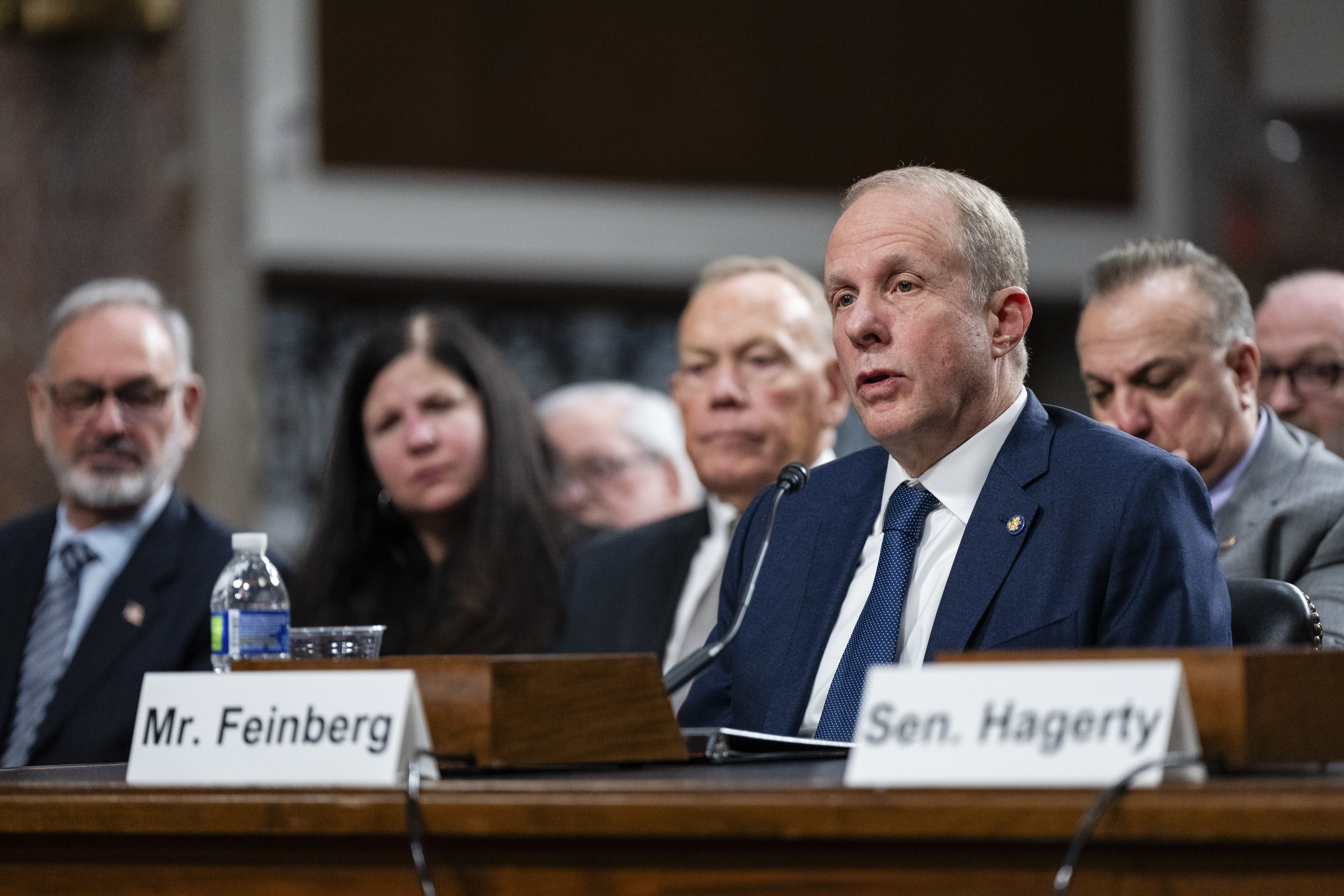
The office falls under Stephen A. Feinberg, the deputy secretary of defense. Feinberg, a billionaire businessperson and political appointee under Trump, has been tasked with trying to help rejuvenate the U.S. defense industrial base. Feinberg approves the office’s deals.
The office was founded under the previous defense secretary, Lloyd Austin. At that time, in 2022, U.S. officials were concerned about the fact that critical items for certain weapons systems were made in China. They were also grappling with weaknesses in arms production exposed by Russia’s war against Ukraine and global supply chain problems exposed by the pandemic.
Those issues have become even more acute, given the drawdown of U.S. weapons stockpiles during the war against Iran that Trump and Israel started six months ago.
The office’s initial $1 billion loan authority has ballooned to $100 billion, largely because of a boost from Trump’s major domestic policy legislation that Congress passed in July 2025.
The director of the office is now David Lorch, who worked at Cerberus Capital Management, the private equity firm cofounded by Feinberg. In November, the month Lorch started his job, the office announced a loan of $620 million to Vulcan Elements and one of $80 million to ReElement Technologies to increase domestic magnet production and “significantly bolster U.S. critical minerals supply chains.” The office said it would get warrants from those companies.
That kind of financing would help the United States decrease its dependency on Chinese manufacturing. But Vulcan Elements has financial ties to the president’s oldest son, Donald Trump Jr., which prompted Democratic senators to criticize the arrangement. Peter Navarro, a White House aide and friend of the younger Trump, requested the financing, ProPublica reported.
By July, the other company, ReElement Technologies, a rare earths firm, had withdrawn from the loan process because it was struggling to meet federal due diligence standards, Reuters reported.
On Saturday, the chief Pentagon spokesperson, Sean Parnell, said in a statement that the office “does not take equity stakes in private companies.” The White House’s statement on Monday about the deal contradicts Parnell’s assertion.
In addition to receiving warrants, the federal government would be guaranteed 20% of the oil that Betancourt’s company produces “at production cost,” according to the White House, meaning at a favorable price. The State Department would also have right of first refusal to buy the remaining 80% of the company’s output.
That would put the State Department in an unusual role since it is oil companies and other traders who typically buy and sell oil. Any decision to buy oil to refill U.S. government stockpiles would require authorization, including from Congress, and typically be handled by the Energy Department.
In any case, it would most likely take years for new projects in Venezuela to generate meaningful amounts of oil.
Betancourt, the U.S. government’s partner, received no-bid oil contracts in Venezuela many years ago. He has been under investigation in Spain and Switzerland on accusations of money laundering and tax fraud. He usually lives in Britain and was barred from foreign travel by the British government while he was in that country because of an extradition agreement with Switzerland, where prosecutors had issued an arrest warrant.
However, Rubio wanted to get Betancourt to Venezuela to work on oil deals and production, and the State Department in recent months pressed the Swiss and British governments to ease up on him, said a person with knowledge of that effort.
“Mr. Betancourt has never been charged with a crime in any jurisdiction,” Sara Chouraqui, general counsel for North American Blue Energy Partners, said in a statement Saturday.
KATHMANDU, Nepal — Rescue teams with search dogs combed through mud, rocks and debris Tuesday in Nepal and China looking for thousands of people still missing after catastrophic flooding tore through communities across the Himalayas, leaving more than 1,000 dead.
Nepal’s disaster agency said Tuesday that 987 deaths had been counted there, with 3,916 people missing, including 583 foreigners. Chinese authorities, in their latest update on Sunday, reported 16 deaths and 546 people still missing, including 261 foreigners.
The scale of last week’s disaster was hampering rescue efforts in both regions, with landslides, destroyed roads and widespread damage cutting off remote areas. Crews faced challenging conditions as they searched unstable terrain and piles of debris, raising fears the death toll could rise as rescuers reach isolated communities.
Rescuers race to reach missing hydropower workers
In Nepal, rescuers were racing to reach hundreds of workers believed to be trapped inside tunnels at hydropower projects damaged by the floods. About 900 workers are missing from 12 projects, with roughly 500 believed to be trapped in tunnels, according to Nepalese authorities.
Brig. Gen. Raja Ram Basnet, Nepal’s army spokesperson, said teams assisted by foreign experts were working at several hydropower projects. Visuals released by the army showed rescue teams entering dark, debris-filled tunnels, wading through mud and water and climbing over rocks as they searched for signs of life.
On the Chinese side, rescue crews scoured areas hit by mudslides, particularly around the Gyirong Port border crossing, which was destroyed.
Some rescuers, aided by search dogs, searched gaps among rocks and debris for signs of life. Other teams used heavy machinery to clear a major highway leading to Gyirong Port, hoping to clear the way for equipment, personnel and supplies to reach the disaster zone, according to China’s state-run Global Times newspaper.
Relief operations expand to reach stranded communities
At least 11,814 people have been rescued so far, according to Nepalese authorities. Emergency crews were using helicopters and other aircraft to reach stranded communities in areas where roads and bridges have been destroyed by the flooding and landslides.
Authorities on Tuesday also stepped up efforts to provide assistance to survivors in areas where roads and other transportation routes had been damaged or cut off.
Chinese Foreign Ministry spokesperson Guo Jiakun said China’s second batch of relief supplies for Nepal was expected to ship Tuesday, including drones, DNA testing and water purification equipment. Chinese DNA testing experts will also help Nepal identity bodies, he said.
Bimal Sharma, a helicopter pilot who has been flying rescue and relief missions since the disaster began, said he was shocked to see the devastation in Timure, a border town close to Tibet that he has known for years.
“It felt like I was flying over an entirely different landscape,” he said.
Sharma said he has had little opportunity to speak with the people he rescued, but their expressions told him how deeply the disaster had affected them.
“I can see the pain in their eyes. It’s heartbreaking,” he said.
The disaster began with a glacial collapse high in the Himalayas
The Aug. 26 disaster began with a chain of events high in the Himalayas. A glacial collapse sent large amounts of rock, ice and meltwater into valleys below, triggering powerful floods downstream.
Scientists studying satellite imagery said the collapse appears to have involved the failure of bedrock beneath a glacier in the Himalayan region. The rockfall was powerful enough to register as a magnitude 5.2 seismic event.
The resulting surge of water and debris entered rivers that flow through valleys in Tibet and Nepal, causing them to rise rapidly. Floodwaters swept away homes, buildings, roads and bridges and carried mud and rocks downstream.
Nepal’s Prime Minister Balendra Shah said that the disaster highlighted the need for action to combat climate change.
“This incident has indicated that the risks we face in the Himalayan region are increasing with climate change,” Shah said in a social media post Monday night. “Therefore, this region must be alert, and at the same time, it is time for us to strongly raise the issue of disasters caused by climate change before the international community.”
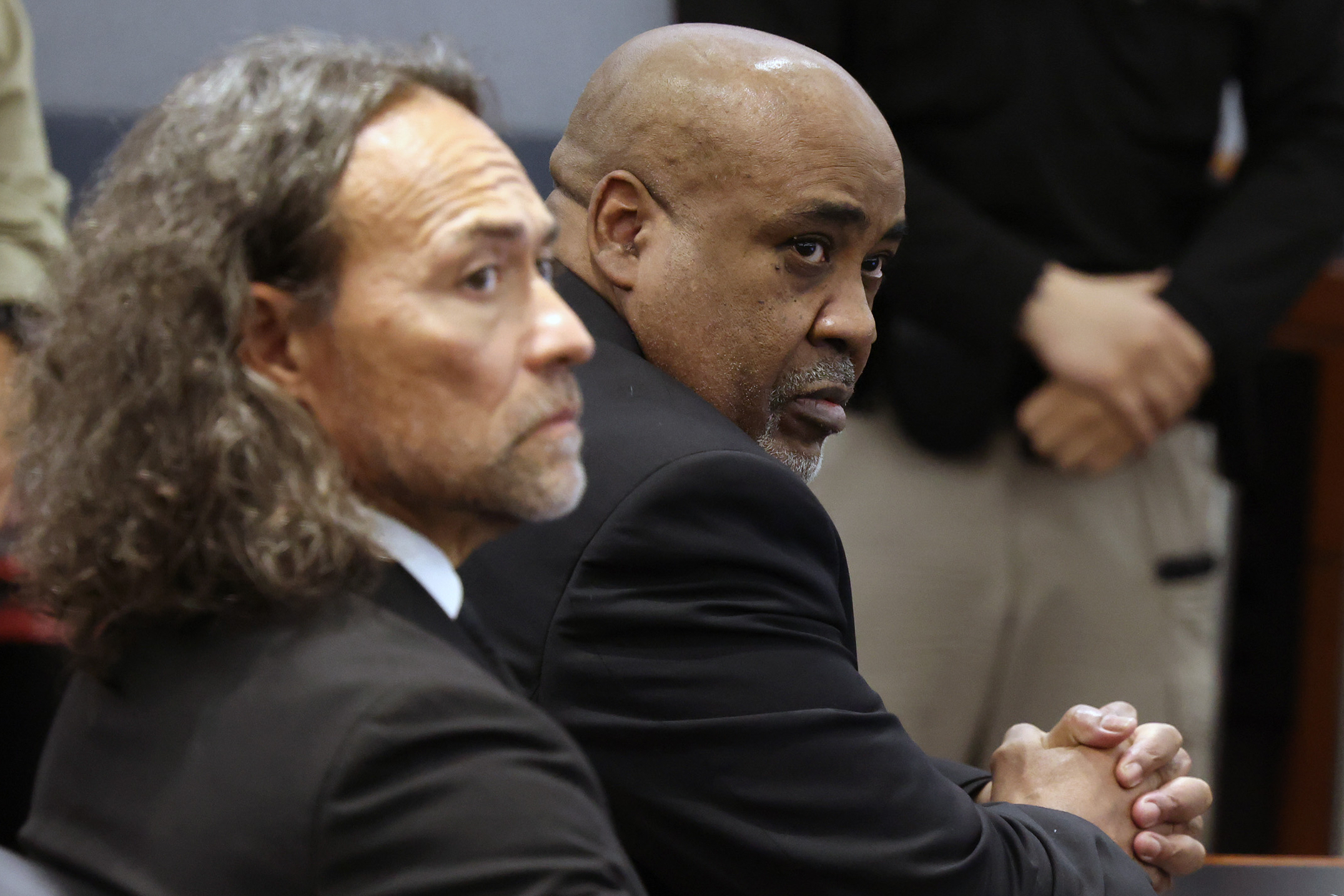
A jury in Las Vegas on Monday found a man guilty of orchestrating the 1996 murder of Tupac Shakur, delivering a conviction nearly 30 years after one of hip-hop’s most notorious killings.
Duane Keith Davis, 63, was accused of obtaining the gun used in the shooting and pursuing Shakur during a gang war that had become entangled with a feud between East Coast and West Coast hip-hop labels.
After about three hours of deliberations, the 12 jurors announced they had found Davis guilty of first-degree murder. Members of Shakur’s family who were seated in the courtroom embraced and passed around tissues to wipe away tears.
Straight-faced but agitated after the verdict, Davis addressed the judge to promise he would appeal. He is scheduled to receive his sentence — up to life in prison — on Oct. 13.
In a three-week trial, prosecutors depicted Davis as a shot caller for a group of Crips from Compton, California, who were out for revenge on the night of Sept. 7, 1996, when they happened to encounter Shakur in a black BMW stopped at a traffic light. Shakur, who was 25 and in the prime of his career, was shot four times and died at a hospital days later.
A socially conscious poet who was on his way to becoming a cultural icon, Shakur became only more popular as he was increasingly associated with violence and gang culture. His death turned him into a hip-hop martyr, joined only six months later by Christopher Wallace, the rapper known as the Notorious B.I.G., a onetime friend who turned into a bitter rival.
After Wallace was gunned down in Los Angeles in March 1997, the shootings became twin tragedies that had never led to a conviction, until now.
For years, the Shakur case had languished as important evidence, including the murder weapon, remained missing and key witnesses — including Shakur’s label boss, Marion Knight, known as Suge — refused to cooperate. The standstill turned the case into fodder for true-crime enthusiasts and conspiracy theorists.
Then, in 2008, Davis began speaking to the police in an effort to avoid drug charges that could have put him in prison for life. Law enforcement considered him untouchable because he had shared the information under an agreement that he could not be charged based on it.
But prosecutors changed their calculation once Davis began repeatedly addressing the shooting publicly — in podcasts, a documentary and a 2019 memoir.
“I’m one of the only living eyewitnesses to Tupac’s killing,” read the introduction to the memoir, “Compton Street Legend.”
Under the mistaken belief that he was fully immune from prosecution, Davis effectively handed prosecutors the evidence they needed to bring a case.
After he was indicted on a charge of murder in 2023, Davis, who is known by the nickname Keffe D, asserted that the statements in his memoir and in interviews were fictional stories invented to turn a profit on the hip-hop media circuit.
“Mr. Davis is attempting to escape responsibility for a crime everybody knows he committed — even him,” Marc DiGiacomo, a prosecutor in the case, said in court Monday, “and he admits to it seven or eight times over the course of 30 years.”
Throughout the trial, Michael Sanft, Davis’ lawyer, argued that the prosecution’s case was based on presumptions rather than hard facts, and that it was absurd to rely on Davis’ own statements, which were riddled with inaccuracies and inconsistencies.
“What facts do they have to even put Keffe D in a car in Las Vegas on Sept. 7, 1996? What facts?” he said at the trial.
The two weeks of testimony at Clark County District Court chronicled a story that had long been told in books, podcasts and true-crime specials, but never at a murder trial.
Prosecutors painted a picture of simmering gang tensions in Compton between local sets of Bloods and Crips, the temperature increasing by their entanglement with the bicoastal rap beef of the 1990s.
The Bloods were aligned with Shakur and Knight’s Los Angeles-based Death Row Records, prosecutors said, while the Crips were hired to provide security when New York’s Bad Boy Records, run by Sean Combs, traveled out West.
In 1996, two gang skirmishes sent hostilities boiling over.
There was a brawl over a Death Row chain between young Crips and Bloods at a Southern California mall. Then, in September, both sides converged in Las Vegas for a Mike Tyson prizefight. After the fight, Orlando Anderson, a member of the Crips who had been present at the mall, received a beating by a group of men that sent him to a hospital.
Among the assailants, identified to jurors on hotel security footage at the MGM Grand, were Shakur and Knight.
According to Davis’ account to the police and in interviews, he obtained a .40-caliber Glock from an associate and set out with a group of Crips to find Shakur and his boss. “Them jumping on my nephew gave us the ultimate green light,” his memoir read.
Driving around Las Vegas in a white Cadillac, the group spotted Shakur on the road, visible in the passenger’s seat of a black BMW driven by Knight.
In an interview with law enforcement in 2009, Davis described how his associate behind the wheel made a U-turn to pull up alongside Shakur and Knight’s vehicle.
A woman in a car nearby, Ingrid Stokes, testified that a hail of gunfire erupted. “All hell broke loose,” she told jurors.
The BMW was riddled with bullet holes, the tarmac glinting with spent cartridge cases. Knight had been grazed in the head; Shakur, in far worse condition, was loaded into an ambulance.
Garry Dale, a former police officer who rode with Shakur on the way to the hospital, testified that he had asked him to divulge the names of the assailants but that Shakur had brushed him off.
“We’ll take care of it,” Shakur replied, according to Dale.
Word soon spread in Compton that Anderson had been the person to open fire in retaliation for the beating at the MGM Grand, but other accounts suggest it was Deandrae Smith, who had been sitting next to him in the back seat. Davis is the only person still alive who was said to have been in the white Cadillac.
Although Davis did not testify, the prosecution centered its case on his own words, played for the jury through audio of interviews with police officers, documentary filmmakers and YouTube personalities.
Prosecutors acknowledged that his statements could be inconsistent, and they did not embrace everything as true. His repeated allegation that Combs had offered him $1 million to kill Shakur and Knight, which the music mogul has vehemently denied, was left on the far periphery of the case.
In total, the jury heard more than eight hours of Davis’ voice, according to prosecutors.
“I didn’t tell nobody, nothing, that we killed Tupac,” Davis said in 2009, when he was speaking to the police.
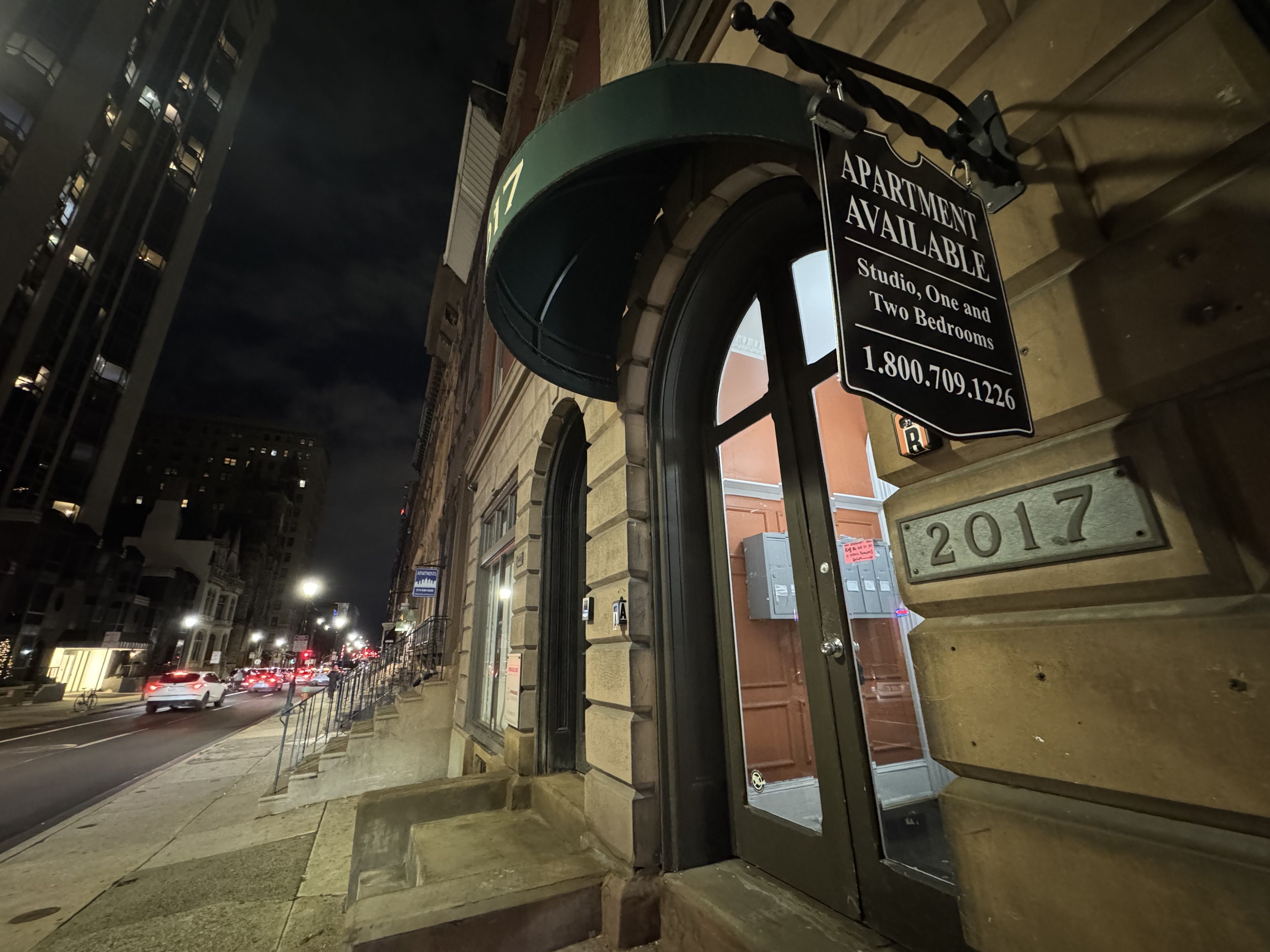
If you’re looking for a place to rent a spacious new apartment, Philly ain’t it.
Apartments across the country got slightly bigger last year, but in Philadelphia, they’reshrinking.
Apartments inPhilly are already relatively small. Of the country’s top 100 cities with the largest apartment supply, Philadelphia ranked 88th in apartment size, according to an analysis by the nationwide apartment search website RentCafe. The report was based on apartments in buildings with 50 or more units.
New Philly apartments, which RentCafedefined as those built between 2016 and 2025, spanan average of 747 square feet — 163 fewer square feet than the national average.
But in Philadelphia, the average new apartmentshrank by 104 square feet compared toapartments built during the previous decade — basicallythe loss of a home office, according to RentCafe.
Philadelphia’s position as a desirable rental market and demographic trends help explain the shrinking, according to Veronica Grecu, research analyst at RentCafe.
“In high-demand markets, developers often prioritize studios and one-bedrooms because they can deliver more apartments per building and meet the needs of a growing number of single-person and smaller households,” Grecu said in a statement. “… the upside is more availability in markets where inventory has historically been tight.”
Apartments currently under construction in Philadelphia average 627 square feet, according to RentCafe.
The platform found that Philadelphia’s new three-bedroom apartments actually grew in size — by 93 square feet — as studios and one- and two-bedroom apartments shrank. But not many developers are building three-bedroom units. They made up 3% of the city’s supply of new apartments, according to RentCafe.
(function(){function e(){window.addEventListener(`message`,function(e){if(e.data[`datawrapper-height`]!==void 0){var t=document.querySelectorAll(`iframe`);for(var n in e.data[`datawrapper-height`])for(var r=0,i;i=t[r];r++)if(i.contentWindow===e.source){var a=e.data[`datawrapper-height`][n]+`px`;i.style.height=a}}})}e()})();
How Philly compares to other cities
Cities in the Northeast and West dominate RentCafe’s list of places with the smallest new apartments.
Pittsburgh was one of the top 10 cities where new apartments shrank the most in the last decade. The average size decreased by 142 square feet. But the average new apartment was 804 square feet, still larger than the average in Philadelphia.
Seattle has the smallest new apartments. Those built in the last decade average 645 square feet, asmore studios and one-bedroom apartments have been built.
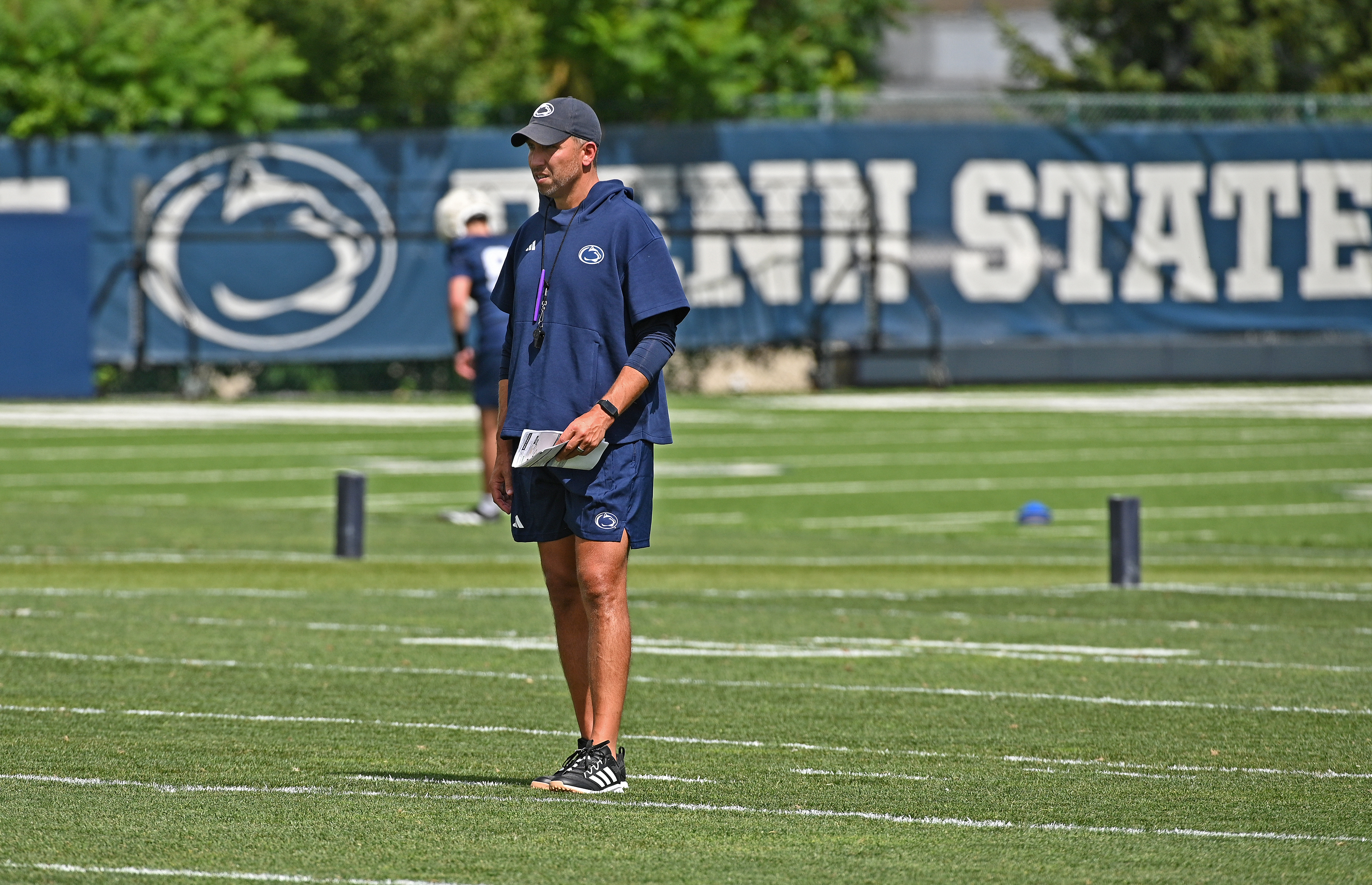
One of the biggest unknowns of the 2026 college football season is whether No. 18 Penn State will fare better or worse without James Franklin leading the program.
While many felt it was Franklin’s time to go, it will still be an adjustment that for the first time in over a decade, a new face at the head-coaching position will run out of the gates at Beaver Stadium when the Nittany Lions open their season against Marshall on Saturday (3:30 p.m., FS1).
So how might Matt Campbell’s success at Iowa State translate to Penn State, since comparing the Big 12 to the Big Ten is like devouring an apple and claiming it was the juiciest orange you’ve ever tasted?
A good place to start is the College Football Playoff.
In the history of the tournament, only four teams from the Big 12 have qualified, and none were named Iowa State, the program Campbell led for the last 10 years. Conversely, six Big Ten teams, including Penn State, have qualified for the CFP, with a program in the conference taking home the title the last three years, the latest when Curt Cignetti and Indiana shocked the college football world.
Let’s not forget one of those title teams was nearly the Nittany Lions, who were a mere field goal away from a trip to the championship game in 2024 before it all unraveled for Franklin last season and cost him his job.
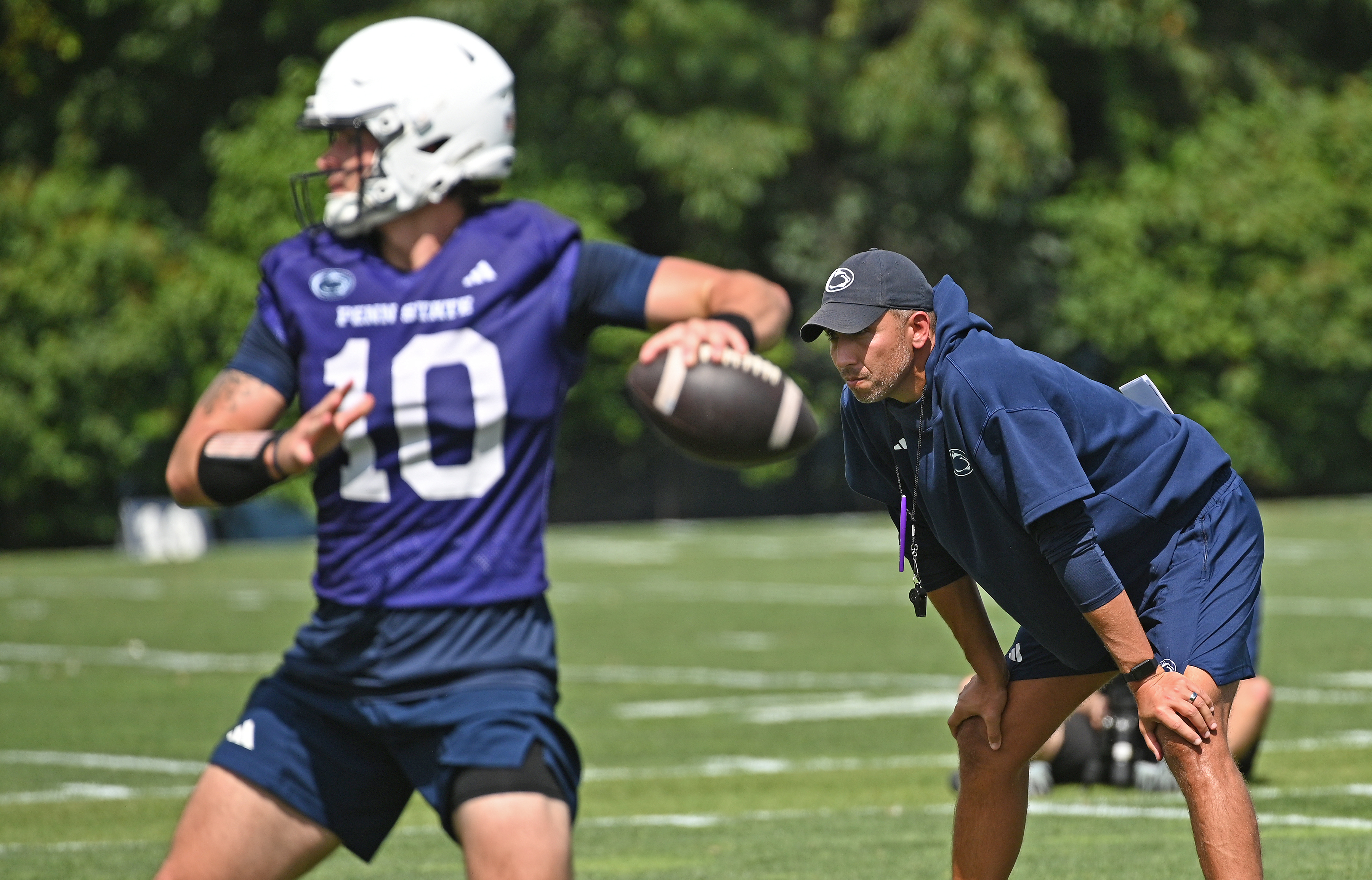
Matt Campbell, previously head coach at Iowa State, watches quarterback Connor Barry (10), a transfer from Christopher Newport University, on Aug. 5.Craig Houtz / For The Inquirer
Here’s what we know about Campbell that bodes well for Penn State.
In his 10 seasons at Iowa State, he left as the winningest coach in program history with 72 victories. He has an offensive mind, and he convinced quarterback Rocco Becht, the former Iowa State QB and son of former NFL tight end Anthony Becht, to transfer in the offseason and join him in Happy Valley.
Becht is a whole other beast. The fifth-year player from Wesley Chapel, Fla., is so invested in helping Campbell restore Penn State’s glory that he’s committed to taking just one class this upcoming semester.
That wasn’t a misprint. One class. Three credits. And it’s an online course, which has legislators questioning how Becht’s situation accurately defines the term “student-athlete.”
Taking one online class is far from being a full-time student.
My amendment to the Protect College Sports Act would address this. The “student” in student-athlete should still matter so they are set up for success, wherever they go next. https://t.co/6Y7ce0TbBg
— U.S. Senator Bill Cassidy, M.D. (@SenBillCassidy) August 21, 2026
So the program has a new coach eager to prove he can bring the success he had in the Big 12 to the elite level of the Big Ten, a quarterback who’s dialed in to simply being all about football, and an athletics department that’s betting a bit of the farm on Campbell to the tune of an eight-year deal in Happy Valley that will see him collect nearly $80 million over the life of the contract.
The Nittany Lions also have one of the most favorable schedules. They face just three teams in the Associated Press Top 25 preseason poll in No. 16 Michigan (Oct. 17), No. 17 Washington (Nov. 7), and will host No. 14 Southern Cal in their annual “White Out” game on Oct. 10 (7:30 p.m., NBC).
The way the Big Ten configuration landed, Campbell will chase a spot in the College Football Playoff not needing to face Ohio State (current AP No. 1), defending champion Indiana, Oregon, or Iowa, all teams in the AP rankings. It’s the perfect schedule for a team not looking to waste time and millions on rebuilding its program.
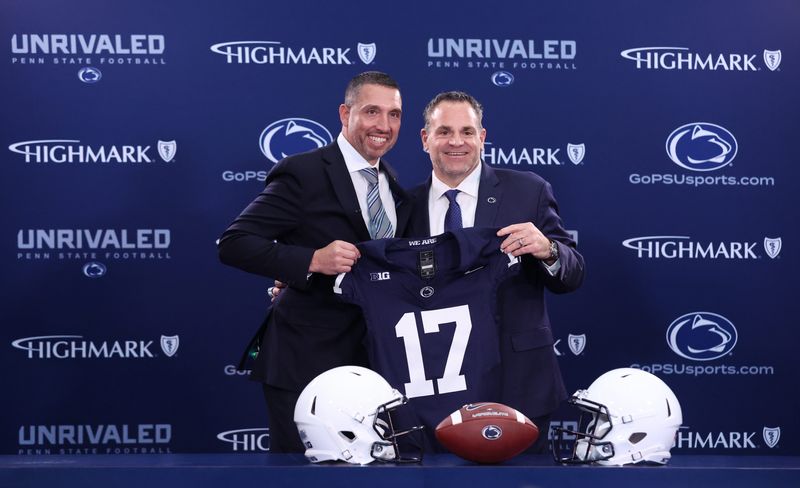
Penn State athletic director Pat Kraft poses for a photo with Matt Campbell, after Campbell was announced as the school’s new head football coach in December. Matthew O'Haren, Imagn Images
In fact, there is no rebuild. If you listen to Nittany Lions athletic director Pat Kraft, Campbell’s upside is believed to be the perfect option to seamlessly right the wrongs that closed out Franklin’s tenure.
This was Kraft’s statement in the press release upon hiring Campbell last December:
“Coach Campbell is, without a doubt, the right leader at the right time for Penn State football. He is a stellar coach with a proven track record of success and his values, character and approach to leading student-athletes to success on and off the field align perfectly with the traditions and values of Penn State.”
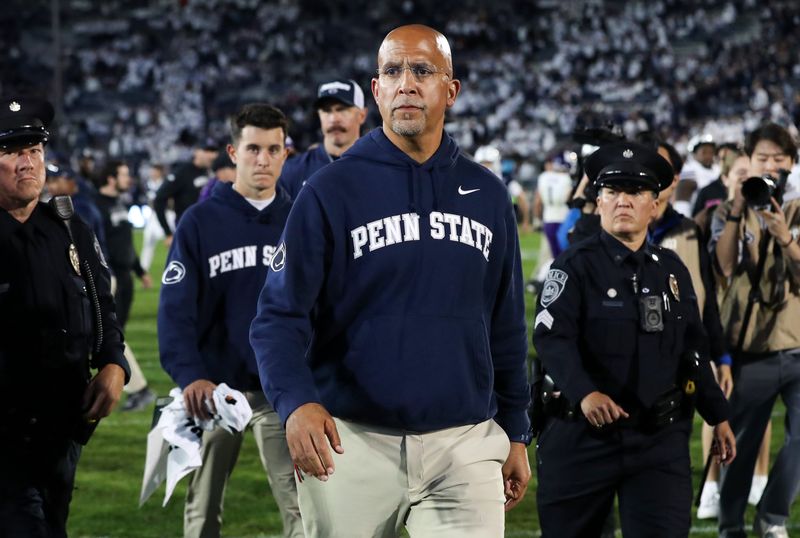
Penn State fired James Franklin on Oct. 12, 2025, after a third straight loss. The Nittany Lions were 104-45 in 11-plus seasons under Franklin.Matthew O'Haren-Imagn Images
Now, it just needs some fine tuning to be driven again. Campbell is squarely in that driver’s seat with the keys in his hands. He’s got the tools when it comes to Penn State’s pedigree, the coins courtesy of a reported 10-year, $300 million apparel deal with Adidas, and the NCAA’s transfer portal, which will continue to provide the resources, especially after the exodus of starters following last season.
Can Campbell take this new-look team and right the wrongs of Franklin’s past? It’s tough to say, especially attempting to judge anything by the first three games of the season, starting with the Thundering Herd this Saturday, followed by Temple on Sept. 12 at Lincoln Financial Field (noon, ESPN2), and Buffalo on Sept. 19 (noon, Big Ten Network).
But the notion certainly does seem worth tuning in for.
After eight years, several production spaces, and many tons of cucumbers, Fishtown Pickle Project is putting down permanent roots.
But it’s still not in Fishtown.
Last month, Niki Toscani and Mike Sicinski, the husband-and-wife team behind the pickle company, bought a 6,200-square-foot building at 1911-13 N. Second St., just north of Berks Street near Norris Square in Kensington. There, they plan to triple production and, for the first time, invite customers into their briny world.
The move from Globe Dye Works in Frankford will allow them to combine production with a storefront.
The Richmond Shops IGA grocery store at Fishtown Crossing was an early customer of Fishtown Pickle Project.Heather Khalifa / Staff Photographer
The centerpiece will be a 500-square-foot pickle tasting room, where customers can sample varieties, buy pickles by the pound or jar, shop for pickle-themed merchandise, and eventually take classes and production tours. They are aiming for a summer 2027 opening.
A pickle tasting room? Think brewery, only with cucumbers. Toscani said customers will be able to sample the goods while watching production. She calls the concept a “brinery.”
Most of the building will be devoted to manufacturing, storage, offices, and events. Fishtown Pickle Project now processes about 3,500 pounds of cucumbers a week, a figure Toscani expects to triple by the end of 2028.
The couple said they remained at Globe Dye Works because of its affordable rent and highway access, but eventually ran out of room. Their search for a larger property with manufacturing and retail space, plus a driveway and loading area, led them to Norris Square. Finding that combination in Fishtown was difficult, Toscani said, “especially for a bootstrapped small business.”
A 2025 collaboration between Fishtown Pickle Project and Miller’s Twist in Reading Terminal Market resulted in Philly Dilly spears wrapped in a soft, sweet pretzel dough.Craig LaBan / Staff
The Second Street property should also make deliveries easier. “When we’re getting trailers delivered with glass jars, it helps to have a garage and a street for them to deliver at without tons of traffic,” Sicinski said.
Wholesale growth is driving much of the expansion. Toscani said revenue from buckets of pickles sold to restaurants, delis, and retailers increased 200% from 2024 to 2025. Some customers use them to stock pickle bars.
The company sells through about 30 ShopRite stores, 11 Wegmans locations, and the Kimberton Whole Foods and McCaffrey’s Market chains. Toscani and Sicinski make their products and handle distribution themselves.
“It allows us to grow responsibly without taking on more business than we can handle,” Toscani said.
The company has the equivalent of about six full-time employees, which Toscani expects to double to about 12 by the end of 2028.
As for the Fishtown in the name, that goes back to the company’s beginnings in 2018. Toscani and Sicinski lived in the neighborhood, and some of their first customers were Fishtown retailers, including Bottle Bar East (now closed), IGA, and Riverwards.
The pickles themselves have always been made elsewhere. Sicinski, a chef who was then a food-service director for a New Jersey school district, first made them in his work kitchen. The couple — Toscani is a dietitian — also made pickles as wedding favors, helping turn the hobby into a business. Production later moved to Bridesburg Commissary (now Culinary Collective) and then to Globe Dye Works, where the company eventually moved into a larger space within the complex.
The passion project became a livelihood after Sicinski was furloughed at the start of the pandemic. The lineup now includes the flagship Philly Dilly Deli, Sweet Onion, and Habanero varieties, and limited releases such as Bloody Mary and Ginger Lemonade pickle chips.
The Norris Square project is their largest investment yet. They paid $550,000 for the building Aug. 6 and said they expect to spend about $700,000 on construction and outfitting. A $1.6 million Small Business Administration loan is helping finance the project, and they are seeking about $250,000 in grants for equipment and hiring. Toscani puts the overall investment at close to $2 million.
The couple have no outside equity investors.
Toscani sees no contradiction in taking the Fishtown name with them to Norris Square.
“We still consider the neighboring neighborhoods our neighbors,” she said. “Despite the fact that we’re not in Fishtown proper, we feel like the opportunity to have roots in Norris Square actually fits our mission quite a bit.”
Eleven years ago, Carlton Williams was, to some, a symbol of government dysfunction.
He was leading the troubled Philadelphia Department of Licenses and Inspections, an agency engulfed in controversy over safety lapses and staffing issues following the deadly 2013 Market Street building collapse. The city controller called on Williams to resign, and Jim Kenney, then a candidate for mayor, promised that he’d get rid of him.
And yet Williams remained.
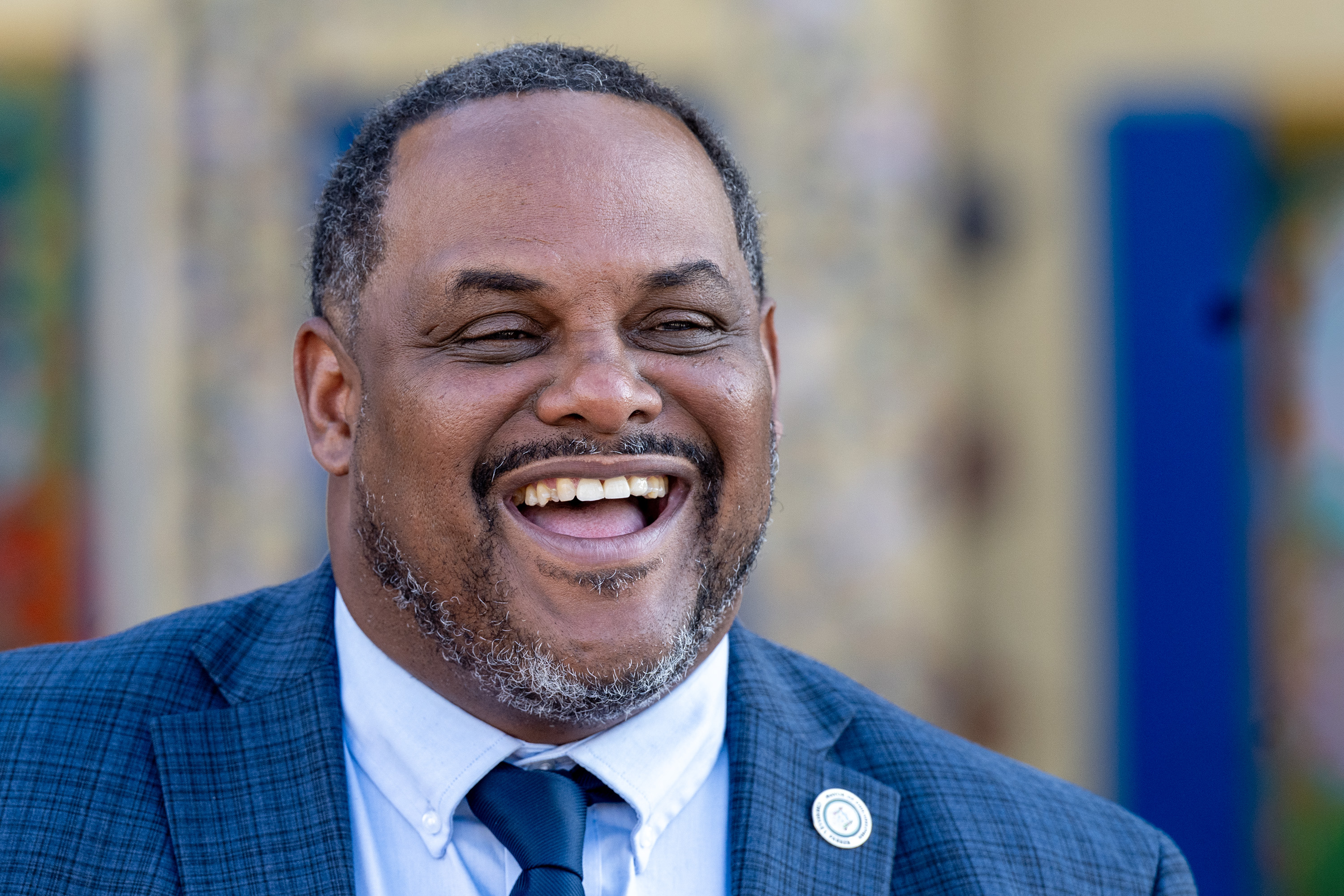
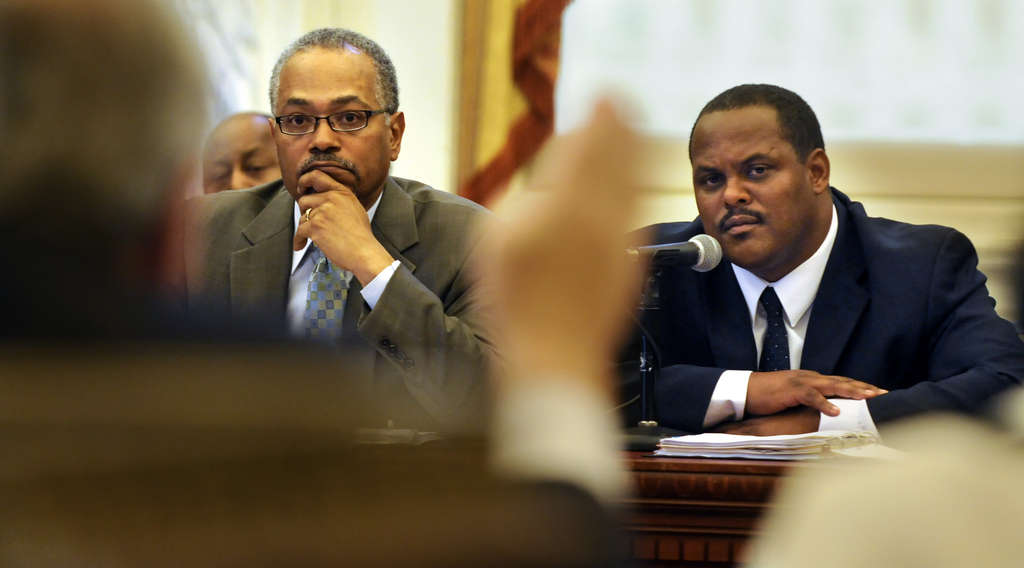
In July, he was named Philadelphia’s managing director, one of the most powerful positions in city government, second only to the mayor. He is assuming responsibility for L&I again, plus dozens of other agencies and thousands of employees who carry out the day-to-day operations that make the city run.
It is perhaps an improbable outcome for a longtime city employee who absorbed a level of scrutiny that could have easily ended his career.
But Williams proved durable, cycling through leadership positions across several departments while establishing himself as a City Hall insider. He has politically powerful allies and a reputation among City Council members as someone who will quickly act on their needs. That goes a long way with 17 politicians who value responsiveness and omnipresence, traits that they did not see in Williams’ predecessor, Adam K. Thiel.
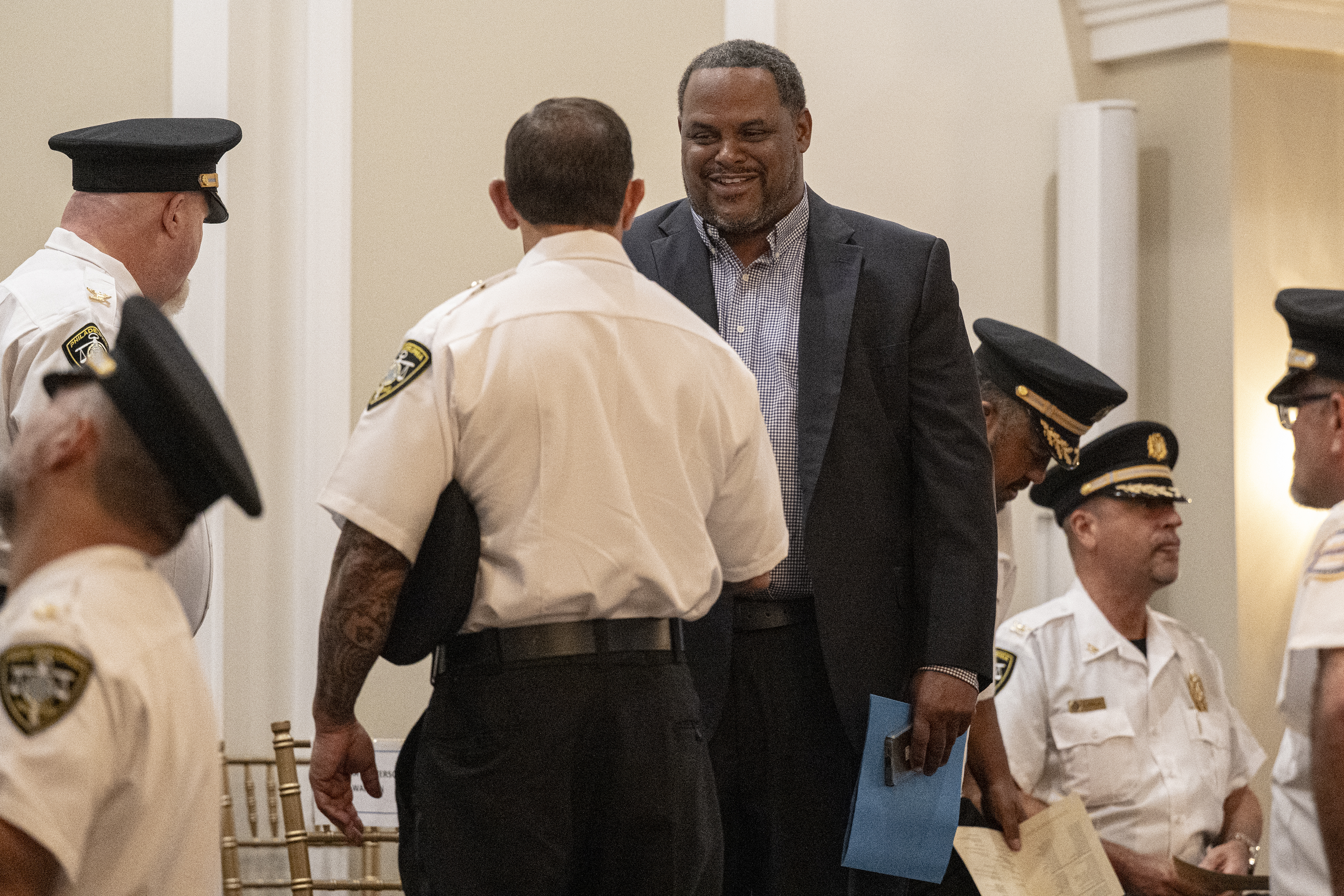
Newly appointed Managing Director Carlton Williams interacts with city officials during a correctional officer graduation ceremony at FOP Lodge 5 in Philadelphia on Friday.Jose F. Moreno / Staff Photographer
Perhaps most importantly for Williams’ ascent: he is all-in on Mayor Cherelle L. Parker.
The ties between Parker, 53, and Williams, 57, stretch back to their childhoods in Northwest Philly — he played football for the Oak Lane Wildcats, and she was a cheerleader. The team remains a part of both of their identities: Williams has led the Oak Lane Youth Association for 20 years, and the mayor often says proudly that she is a “Wildcat for life.”
Later in life, both found allies in the storied Northwest Coalition, a powerful political family. Williams said that he has known for 20 years that Parker would one day sit atop City Hall. And he most recently led Parker’s Office of Clean and Green Initiatives, overseeing the implementation of some of her key campaign promises.
“I’m bringing the ‘One Philly’ brand to the managing director’s office,” Williams said in an interview, echoing the mayor’s oft-used slogan. “Not to say it wasn’t being done under my predecessor. But I want to make sure it’s completely aligned with the mayor’s goals, because I believe in that vision.”
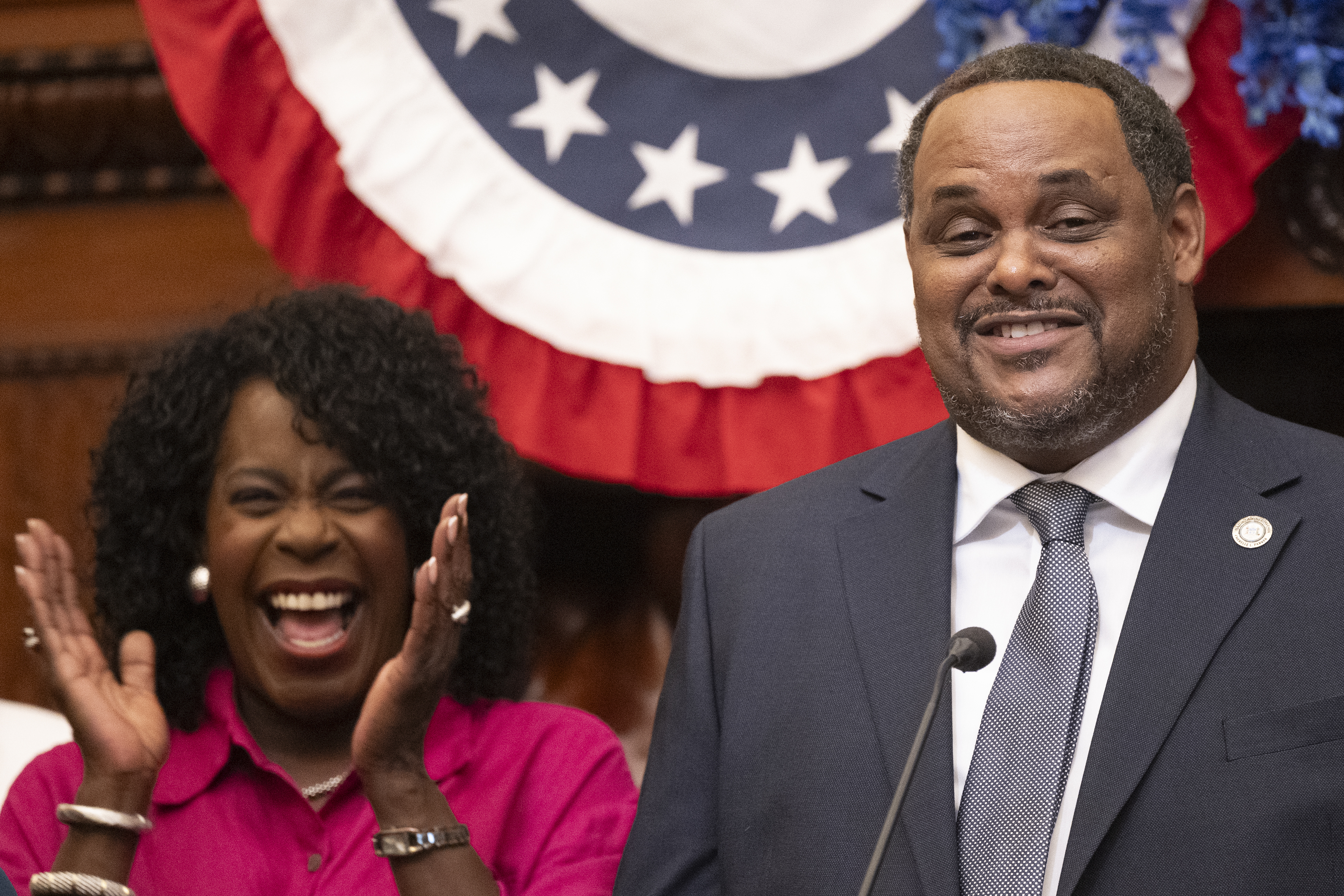
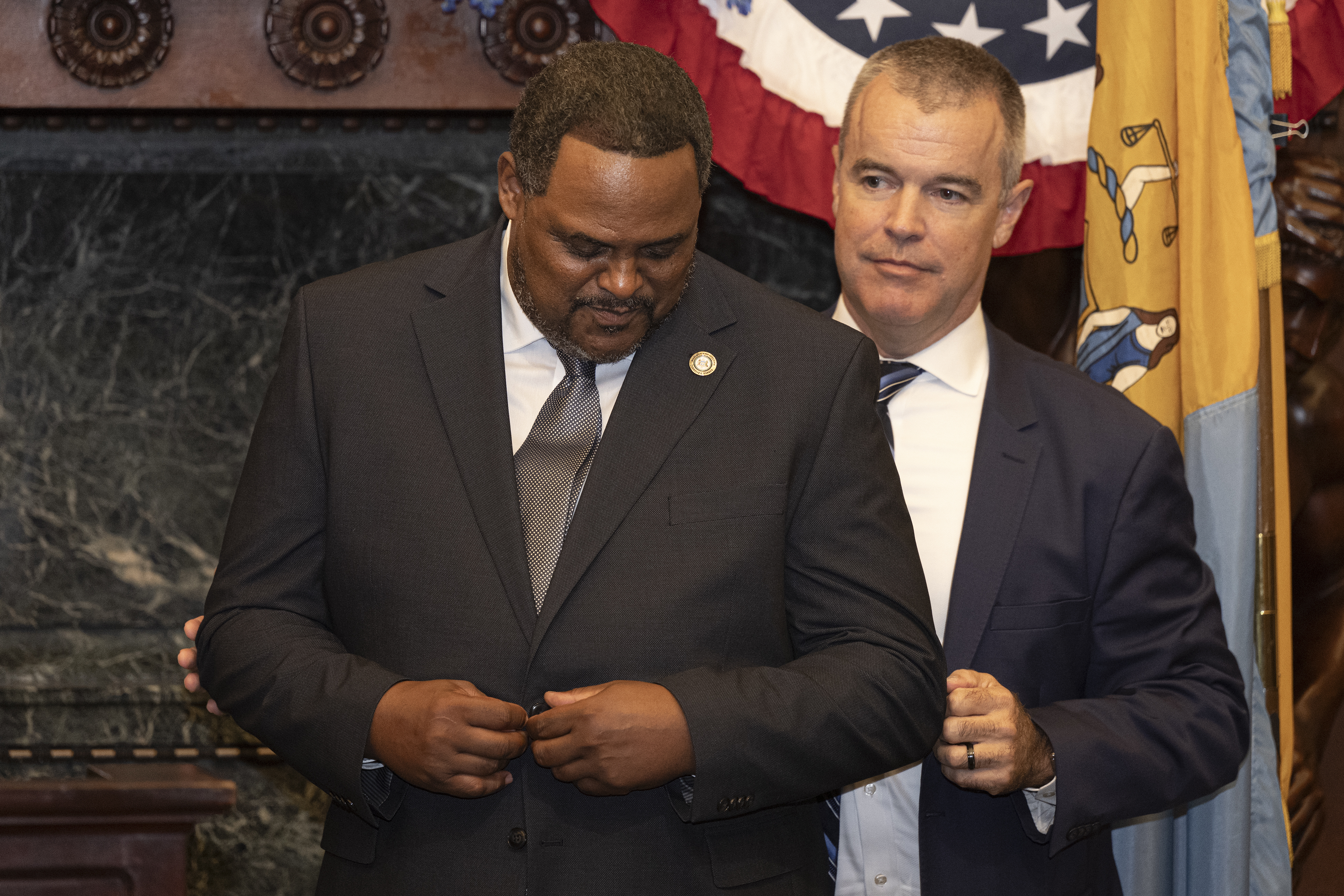
New Philadelphia Managing Director Carlton Williams speaks at the podium after being announced by Philadelphia Mayor Cherelle L. Parker during a July 28 news conference at City Hall.Jose F. Moreno / Staff Photographer
His appointment as managing director marks a new stage for the Parker administration that has seen significant turnover at its highest levels. And it is indicative of what Parker values in her inner circle: vast institutional knowledge and loyalty.
For the mayor, trust in Williams’ ability to operate within the bureaucracy and advance her priorities may outweigh his mixed record of management.
“Whenever we had a crisis of any kind in this city, he has been on my speed dial,” Parker said when she announced Williams’ appointment last month. “No matter who’s been leading, I’ve always called him for his counsel.”
Overseeing ‘a very broken’ L&I
Parker’s bet on Williams would have seemed almost unimaginable a decade ago.
A year after Williams was appointed to lead L&I, an excavator demolishing a wall on Market Street in Center City toppled the building onto an adjacent Salvation Army store, killing six people and injuring a dozen more. The inspector responsible for the demolition project died by suicide a week later.
Calls for reform abounded and questions swirled about whether the city’s agencies were responsible. There were multiple investigations launched and commissions convened to probe the disaster, and within days, Council members were pressing Williams to institute reforms that would bolster safety on private construction sites.
In response, Williams sought to hire more inspectors, increase their training, raise demolition standards, and create new specialized units within L&I.
Today, he says the collapse on Market Street was “one of the saddest moments” of his time in government.
“You have to lead through some tough challenges when you’re a leader,” he said. “You don’t get to pick and choose when you lead.”
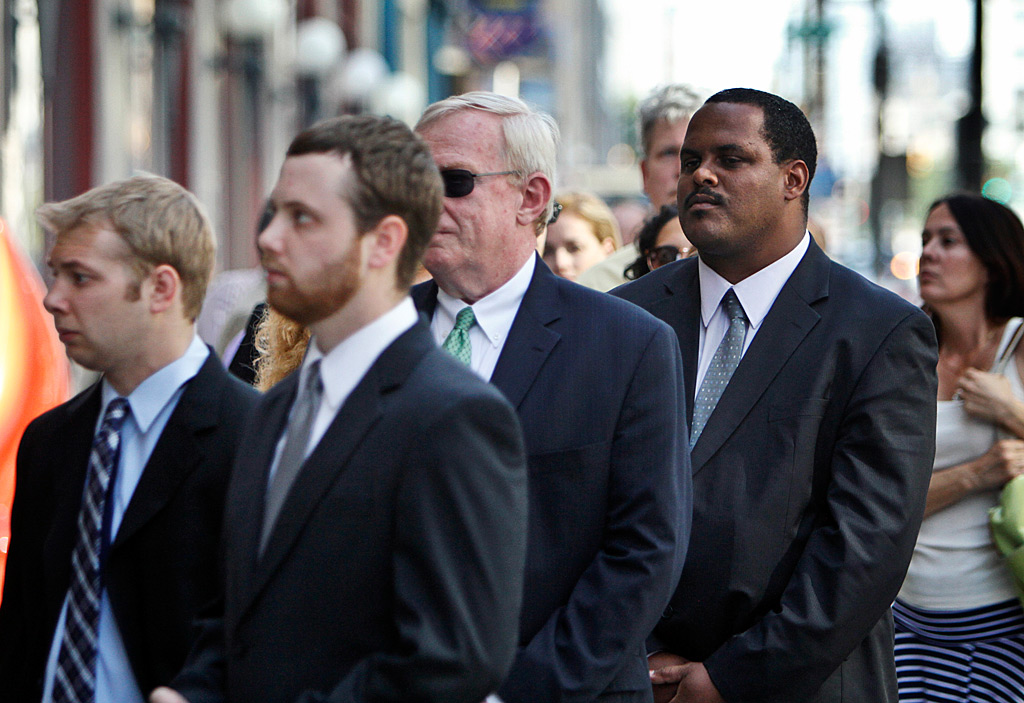
In this June 2013 file photo, then-Philadelphia Commissioner of the Department of Licenses and Inspections Carlton Williams (second from right) waits in line to attend a memorial service for Anne Bryan, who was among the victims of the Market Street building collapse.JOSEPH KACZMAREK / Associated Press
By fall 2015, then-City Controller Alan Butkovitz was calling on Williams to be fired. He said at the time that L&I had long been troubled, but that his office’s audit of the agency found that Williams had not made enough improvements.
In this 2013 photo, then-Deputy Mayor Everett Gillison (left) and then-Commissioner of Licenses and Inspections Carlton Williams listen to members of City Council during a hearing.TOM GRALISH / Staff Photographer
Butkovitz now says that he blames former Mayor Michael Nutter instead, and that Williams was “caught between the mayor and me.” He said Williams had promised to provide the controller’s office with documents to assist in an audit, and then did not.
“I took it out on Carlton Williams at the time,” Butkovitz said.“His inclination was to cooperate with me, but at the time, it looked to me like duplicity. And I don’t think it was. I think he was overridden by higher authority.”
Nutter did not respond to a request for comment.
Estelle Richman, a former Philadelphia managing director who has held a variety of roles in local, state and federal government, said L&I is “one of the most difficult city departments.” She noted that past agency leaders have been pushed out, fired, indicted, and jailed.
“We can go back and say ‘maybe [Williams] should have done this or that,’ but the reality is it was a very broken department,” she said. “I think he did more to try to get it restabilized and back on track than any other commissioner at that time could have done.”
‘You have to be accessible’
Before taking the helm at L&I, Williams was a career bureaucrat.
Born in North Philly and raised in West Oak Lane, Williams started with the city at age 19, working in Fairmount Park as one of the first-ever members of the Philadelphia Ranger Corps. The program paid for part of his tuition to attend Temple University and marked his foray into public service.
Jeffrey Montague, who led the Philadelphia Ranger Corp. and has been a mentor to Williams for decades, said that at a young age, Williams showed potential.
“He didn’t try to fit in. He always stood out on his own independence,” Montague said. “He wasn’t trying to fit into a crowd.”
After working as a ranger, Williams spent three years running a Harrisburg youth program for AmeriCorps — the first and last time Williams lived outside the city.
He returned to Philadelphia to work for the Parks and Recreation Department, rising to become a deputy commissioner in both the recreation and streets departments.
Then came the four-year stint leading L&I, and when Kenney took office in 2016, he moved Williams back to his old job as a deputy in the streets and sanitation department.
But it didn’t last. Five months after Kenney took office, the streets commissioner was arrested for assault. Williams ascended to the role, and suddenly, the person who Kenney said he wouldn’t retain to lead L&I was in charge of one of Philadelphia’s most visible departments, overseeing transportation and sanitation operations citywide.
Carlton Williams, then the director of the Office of Clean and Green Initiatives, speaks during a news conference at Bigler and South 15th Streets on July 7, 2025.Monica Herndon / Staff Photographer
It was there where Williams solidified himself as a City Hall fixture. He said that as an administration staffer,he has “one primary that I listen to” — the mayor — but he has always tried to be attentive to Council.
That may be a key difference between Williams and Thiel, his predecessor. Thiel was the former fire commissioner and a nationally recognized expert in emergency management who was seen as a skilled behind-the-scenes operator.
But Council members said thatThiel did not foster close relationships with members of the city’s legislative body who are often conduits between residents and the mayor’s administration.
In addition, Thiel was often absent during major events in the city and he was frequently on leave — he joined the Army Reserve eight months into his tenure, and held several jobs outside city government, including as a consultant and professor.
That was a departure from prior administrations, when the managing director was often the public face of city operations.
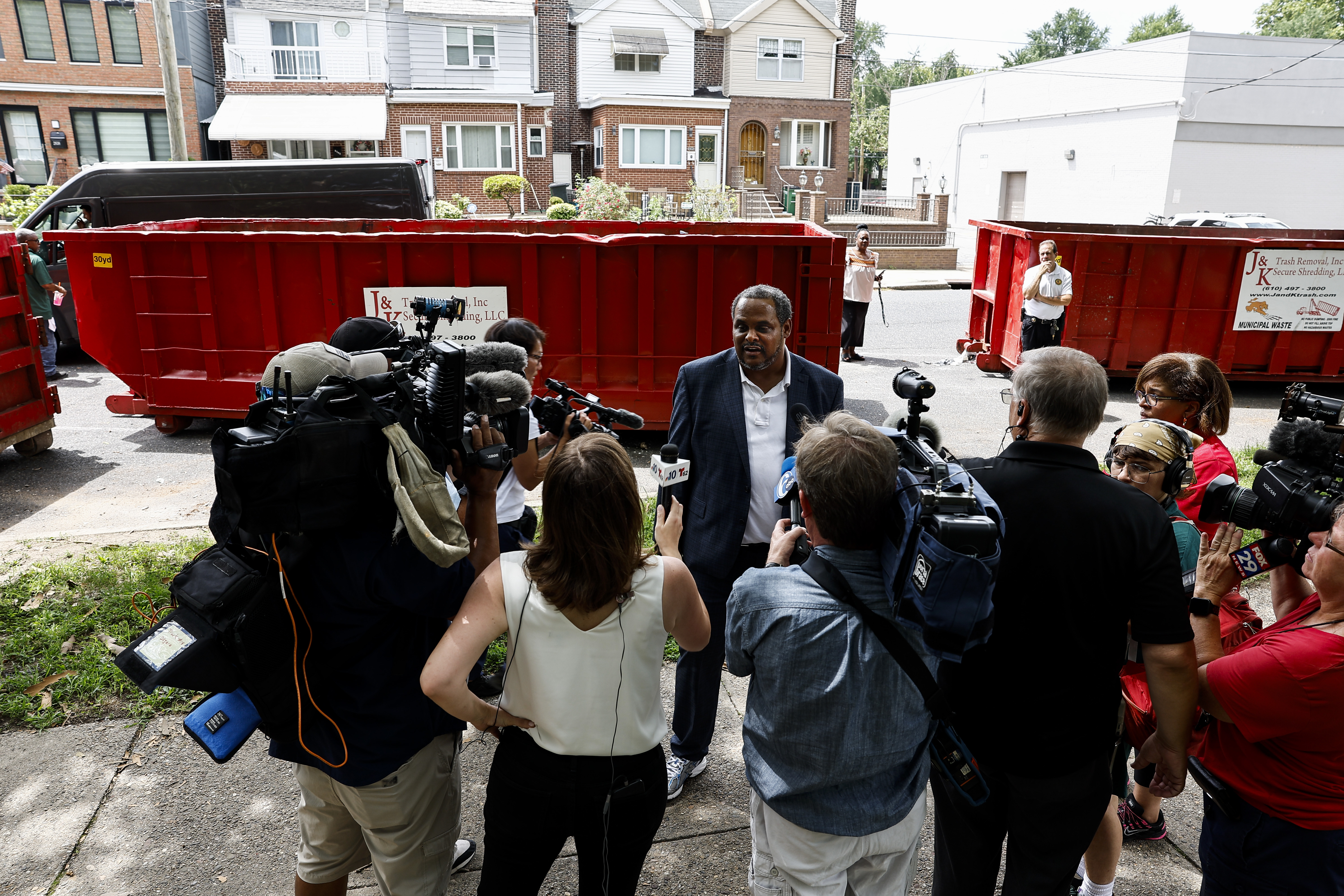
On several occasions during the Parker administration, it was Williams who was in the spotlight. As director of the Office of Clean and Green Initiatives, he played a key coordinating role during the eight-day municipal worker strike that halted city services — most visibly, trash pickup.
And he oversaw the city’s response to a severe winter storm earlier this year that left much of the city encased in ice, despite weather emergencies typically falling under the managing director’s purview.
New Philadelphia Managing Director Carlton Williams (left) stands near the former director, Adam Thiel, before an introduction by Philadelphia Mayor Cherelle L. Parker during a July 28 news conference at City Hall.Jose F. Moreno / Staff Photographer
City Councilmember Anthony Phillips, whose district includes Northwest Philadelphia, said that prior to Thiel’s resignation, members of Council were “gravely concerned” about his frequent leave.Some members said that, in Thiel’s absence, Williams was their primary contact among Parker’s top staff.
“You can’t get certain things done and you can’t expect an efficient and effective city when you’re not present,” Phillips said. “Carlton is going to be the complete opposite of that.”
Williams said that his role as managing director is his only job aside from volunteering.
“It’s a full-time, 24-hour, seven-day-a-week job,” he said. “You have to be accessible.”
Williams’ coziness with elected officials has also drawn criticism.
A former city employee who previously worked for Williams said his relationships with Council amount to a “favor machine.” The staffer spoke on the condition of anonymity in order to preserve relationships.
“There is this cycle of Council getting calls from constituents, like ‘there’s a pothole,’ and then they get it fixed, and that’s the main work,” the former staffer said. “It’s not actually setting up systems that are solving the problems. It’s reacting to them.”
But Williams said some of his proudest achievements have resulted in systemic change: he led the installation of some of the first spraygrounds in the city, overhauled the recycling program, had BigBelly trash cans placed throughout Philadelphia, and started the annual Philly Spring Cleanup.
“He is probably one of the most well-prepared managing directors that the city has had,” Richman said. “He knows not only how operations work within the city departments, he knows the political structure of the city. And I believe a managing director has to know both.”
John Dougherty, the former leader of the politically powerful Local 98 of the International Brotherhood of Electrical Workers, and his ally, ex-Councilmember Bobby Henon, were on trial for bribery and other corruption charges. Prosecutors accused Henon of taking official actions as a Council member at Dougherty’s behest in exchange for a salaried, no-show job with the union.
One of the schemes prosecutors presented during the trial focused on efforts by union officials in 2015 to halt the installation of an MRI machine at the Children’s Hospital of Philadelphia, a project that was being completed with nonunion labor. Williams, at the time, was at the helm of L&I.
Department of Streets Commissioner Carlton Williams exits federal court on Oct. 12, 2021, after testifying in the John Dougherty and Bobby Henon bribery trial.Thomas Hengge / Staff Photographer
During the 2021 trial, Williams was called to testify. He told the jury that Henon called him in August 2015 to report that an unlicensed contractor was working at CHOP, and that he dispatched an inspector to investigate.
The inspector, Williams testified, issued a stop-work order on the construction of the MRI machine. But he insisted that he did not direct the inspector to do so, and told the jury that responding to complaints from Council members was a routine part of his job.
Ultimately, L&I reversed the stop-work order, and the MRI machine was built.
Prosecutors said Dougherty paid Henon to be his “man on the inside” in City Hall and used the episode at CHOP to establish evidence of a corrupt agreement between the two.
“You heard what happened,” Assistant U.S. Attorney Frank Costello told the jury during closing arguments. “Henon contacted Carlton Williams, Carlton Williams sent inspectors out and they issued orders — they issued orders to shut the job down.”
But defense attorneys said one public official asking another to take action doesn’t constitute a crime.
“Carlton Williams was the recipient of information just passed on to him about the MRI and the unlicensed contractor,” said defense attorney Brian McMonagle. “That ain’t a crime.”
During the 2023 mayoral campaign, when a half-dozen Democrats could have plausibly won the party’s nomination, Williams nearly left the city.
He said he got a job as the public works director in San Francisco, but before he accepted, Parker won the primary election. Williams decided to stay.
“I wanted to work for Cherelle Parker,” he said. “I believed in her vision.”
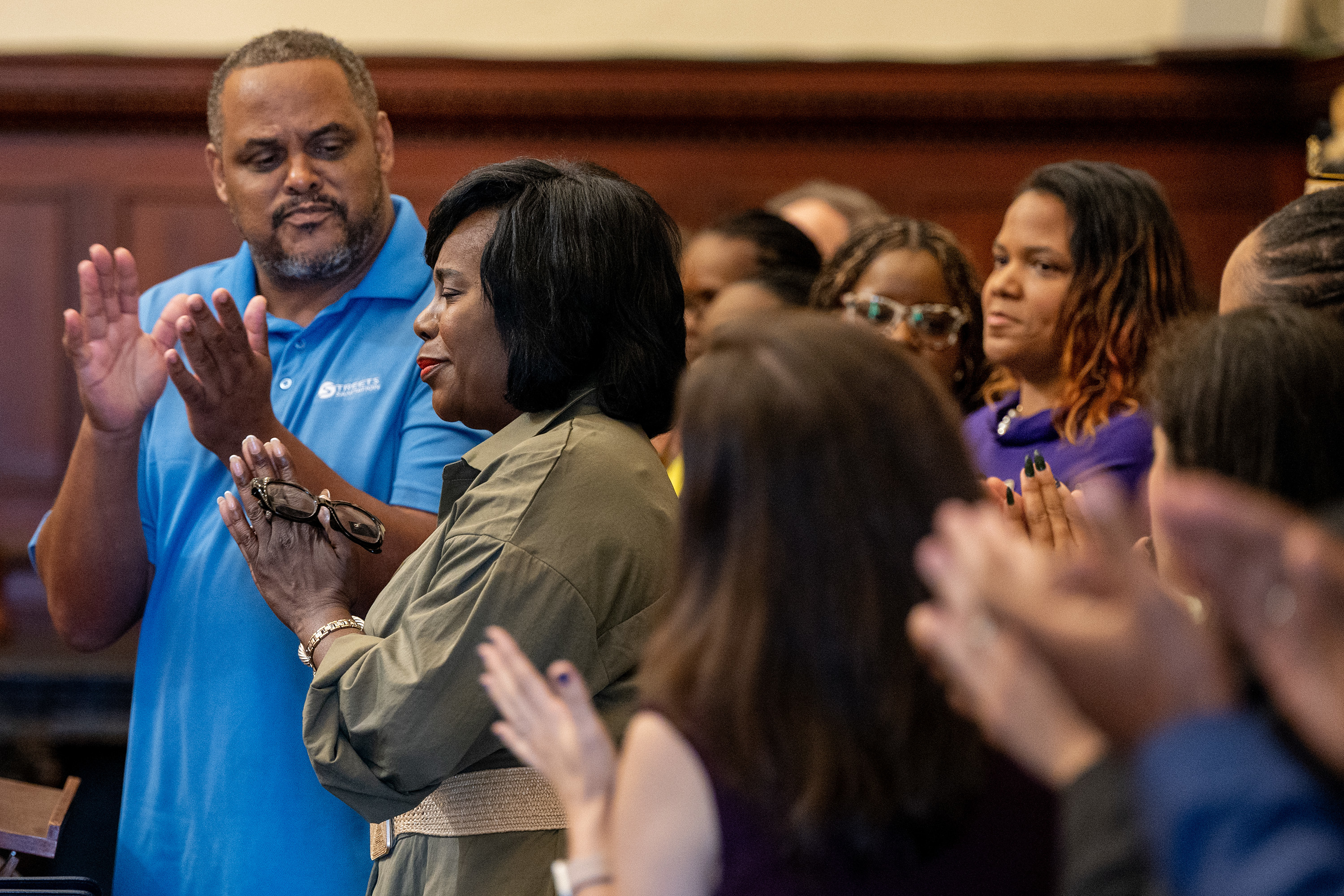
Mayor Cherelle L. Parker is applauded by members of her administration at City Hall on July 9, 2025, hours after reaching a tentative contract agreement with District Council 33 leaders overnight, ending the workers’ strike. At left is Carlton Williams, director of the Office of Clean and Green Initiatives. Chief Deputy Mayor Sinceré Harris is behind the mayor at right.Tom Gralish / Staff Photographer
Parker took office in 2024 and created a new role: director of the Office of Clean and Green Initiatives. Williams would carry out her campaign promise to rid the city of its “Filthadelphia” moniker by implementing twice-weekly trash collection, an expansion of illegal dumping enforcement, and a biannual citywide program to clean every block.
As managing director, Williams’ portfolio will grow substantially. He will be responsible for the city’s response to public health and homelessness, as well as overseeing large agencies like the fire department and the prisons.
He will also coordinate the city’s strategies in Kensington, the beleaguered neighborhood and the site of an open-air drug market that the Parker administration has spent more than two years working to shut down. Williams said there is inherent pressure that comes with being responsible for addressing such long-entrenched issues.
“But I work best under pressure, and so I take that as a badge of honor,” he said.
Williams said he intends to prioritize communication with residents because they “understand that everything can’t get fixed at one time.”
“But at least we can say what needs to be done, when it’s going to [be] fixed, what’s the timeline,” he said. “I manage through the eyes of everyday citizens. I want what they want.”
Imagine this: A college football player lauded as one of the best in the country gets roped into a collective of other top college players just as good for an All-Star team.
Except these players won’t prove their mettle against other college athletes; they’ll prepare to face the reigning Super Bowl champions.
The annual All-Star game, also formerly known as the Chicago Tribune All-Star Charity Game, featured not just the full preseason roster of an NFL team that won the league championship but also played many of its starters. The Eagles played in the event in 1949, 1950, and 1961, and actually lost the 1950 game.
It was an event that offered an honest proving ground for college players to see if they could handle the rigors of playing in the NFL against the league’s top team.
Imagine being a college player and trying to stop Hall of Fame receiver Tommy McDonald, who scored three touchdowns for the Eagles in the 1961 game.
What about the Steel Curtain of the Pittsburgh Steelers, against the likes of guys like Ernie Holmes and “Mean” Joe Greene? It happened in 1975 and again in 1976, the last year of the event.
But as NFL players got bigger, faster, and stronger, the annual preseason spectacle lost its allure. Once considered an even playing field with college’s best lining up against the cream of the NFL crop, the game began turning into a contest of men against boys.
Fast-forward to today’s college game and NFL, you’ll see that the parity in size, strength, and speed between top college products and NFL players is debatable.
Thanks to advances in sports science, training methodologies, and more recently, players simply being allowed to play longer college seasons, the idea reviving an annual game between college’s best and Super Bowl champions is at least a conversation starter, right?
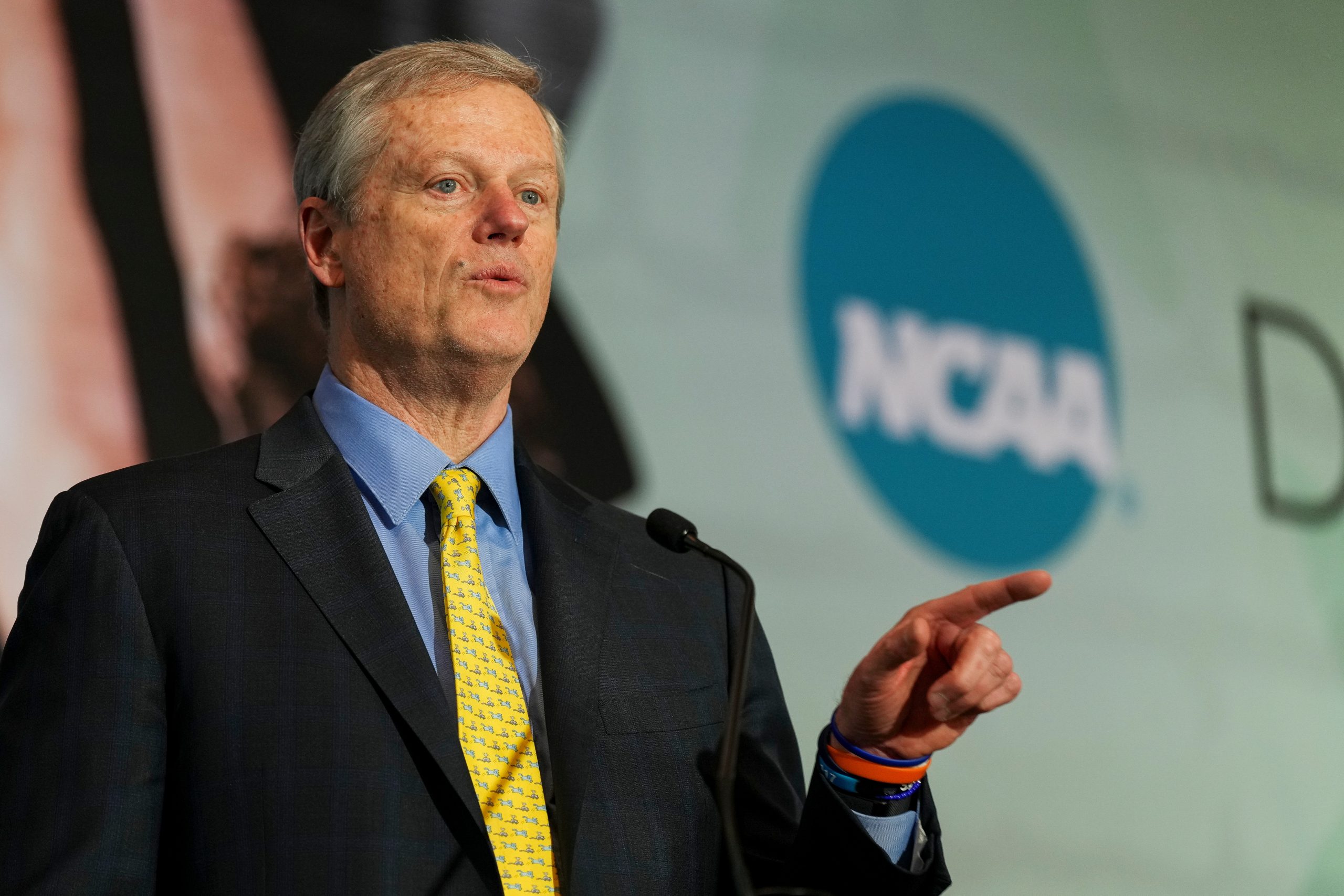
One argument for the water cooler talk would be the NCAA’s recent “5 in 5 rule,” which will allow Division I athletes up to five years of eligibility as long as their first academic year begins no later than their 19th birthday.
NCAA President Charlie Baker granted athletes five years of eligibility if they enroll in college no later than the academic year after their 19th birthday.George Walker IV
This rule would guarantee that top college athletes could play through their 24th birthday, which already felt like the norm due to the extra COVID-19 year. Earlier this month, a trickle effect began to occur within many college conferences as NFL players who recently signed pro contracts weighed the option to return and play a fifth season of college ball.
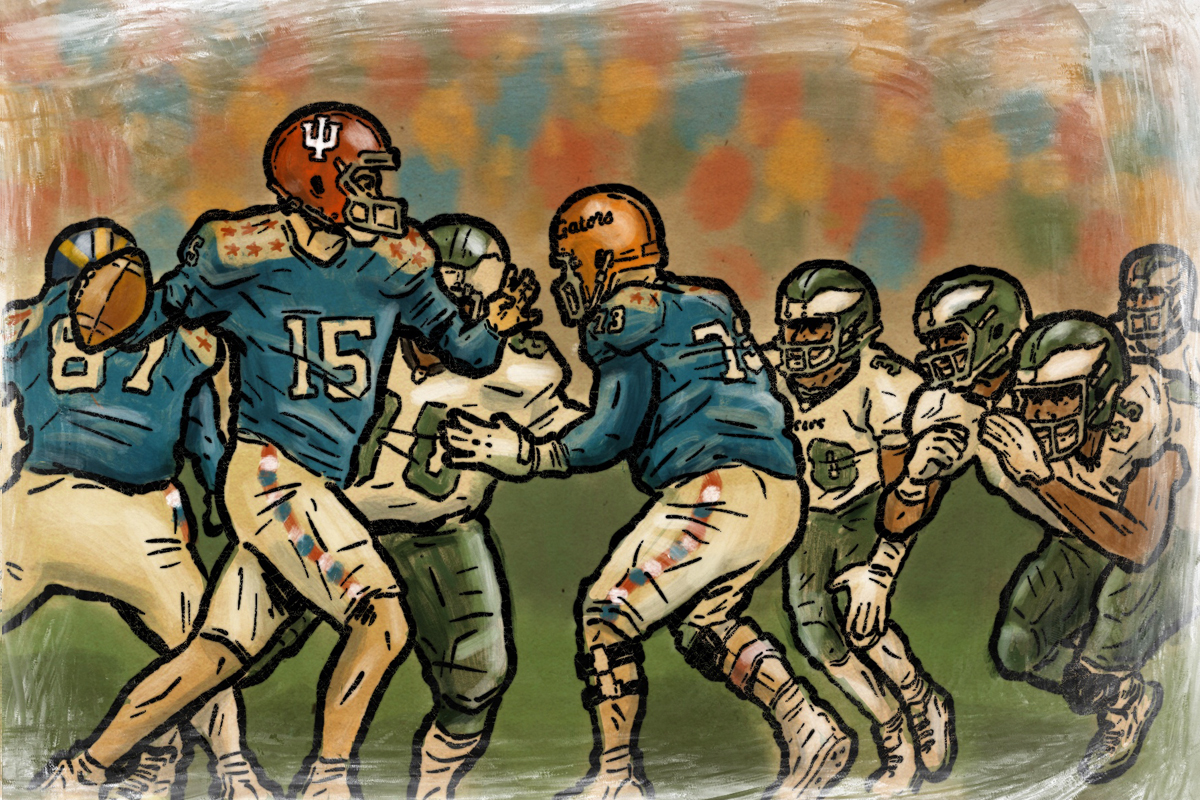
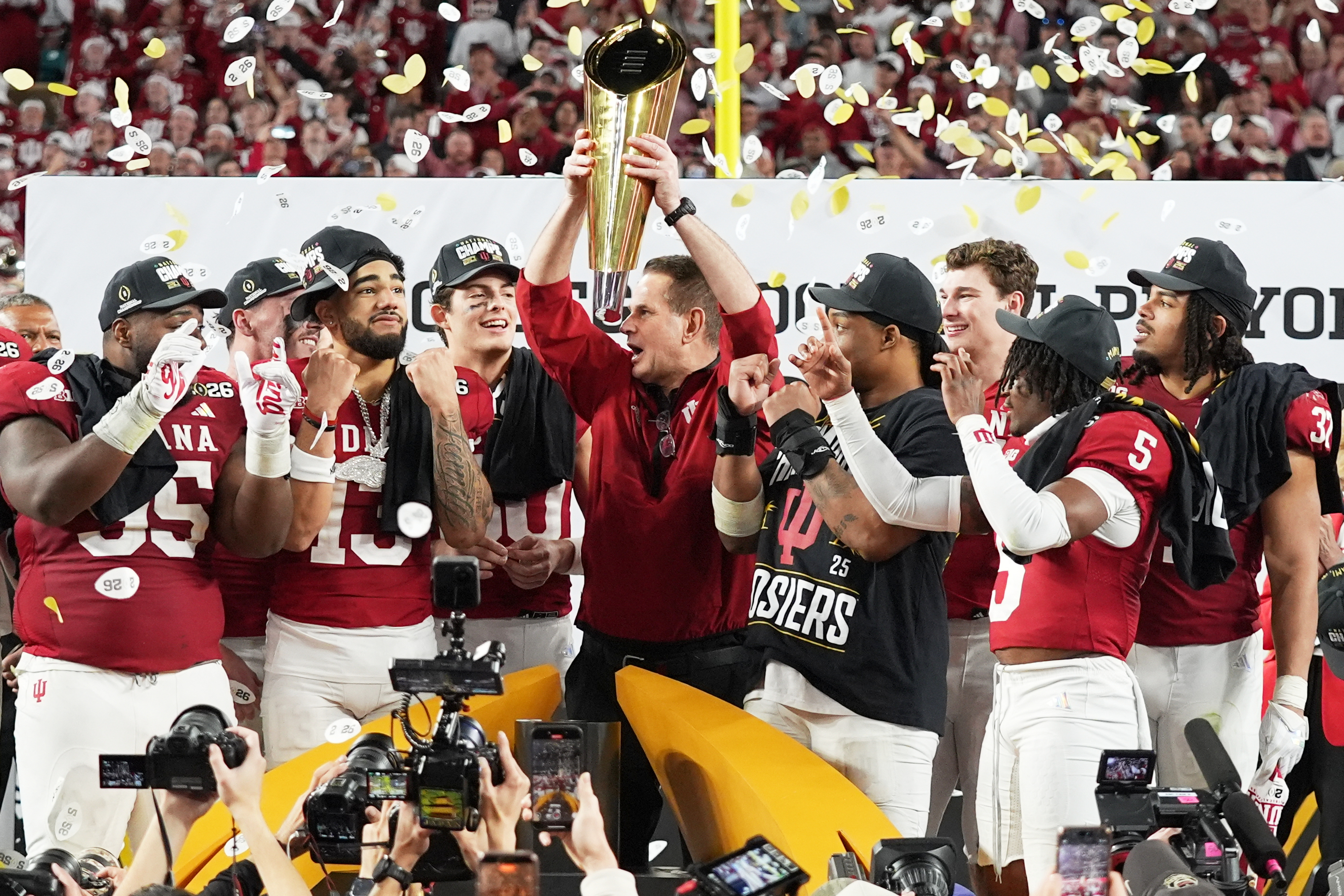
Also, the age gap between a college team and today’s NFL franchise isn’t too wide. Take just last season and look at the Indiana team that ran the table en route to a national championship. Average age? It was 23.1, and 18 of those players cracked the 53-man rosters of NFL teams this season, according to 247 Sports.
The average age of the Seattle Seahawks roster that won Super Bowl LX? Just 26.1.
While there’s precedent for a pro-am like the Chicago Charities College Game to make a return or even have a similar offshoot sprout up, a number of college coaches believe it will never happen — and it has nothing to do with a more level playing field when it comes to athletic abilities.
Indiana won the national championship with a team that had an average age of 23 when it defeated Miami in last season’s game. Lynne Sladky
“I think the college kids would be very enthusiastic. I think the NFL guys would be like, ‘Why are we doing this?’” said Temple coach K.C. Keeler, who remembers the old Chicago Charities College All-Star Game well, but contends it has no place in today’s football. “Nowadays, [NFL teams] aren’t even playing their starters in the first preseason game, right? And now you’re talking about a whole game against a bunch of [college] guys who want to prove themselves.
“But this isn’t about athleticism, it’s about money. One injury can change the trajectory of a player’s career in both pro and college ball. I think just looking at the logistics of pro football, you’d be hard-pressed to find anyone that would be willing to match up these days and risk it all against college kids who have that ‘I’ll show you’ mentality.”
Temple head coach K.C. Keeler says there’s too much at risk for players in college and the NFL to consider reintroducing a spectacle like the old Chicago Charities College All-Star Game. Isaiah Vazquez / For The Inquirer
A similar thought process came from Villanova coach Mark Ferrante, who also took a larger look at the state of both college football and the country during the heyday of the annual exhibition.
“My gut tells me that it would be much harder for a college all-star team to beat an NFL Super Bowl champion,” said Ferrante. “And the reason I say that is, even though the college teams are keeping older guys and all the extra years of eligibility that really came through [because of the pandemic], that’s kind of going to get erased [as those eligibility years phase out].
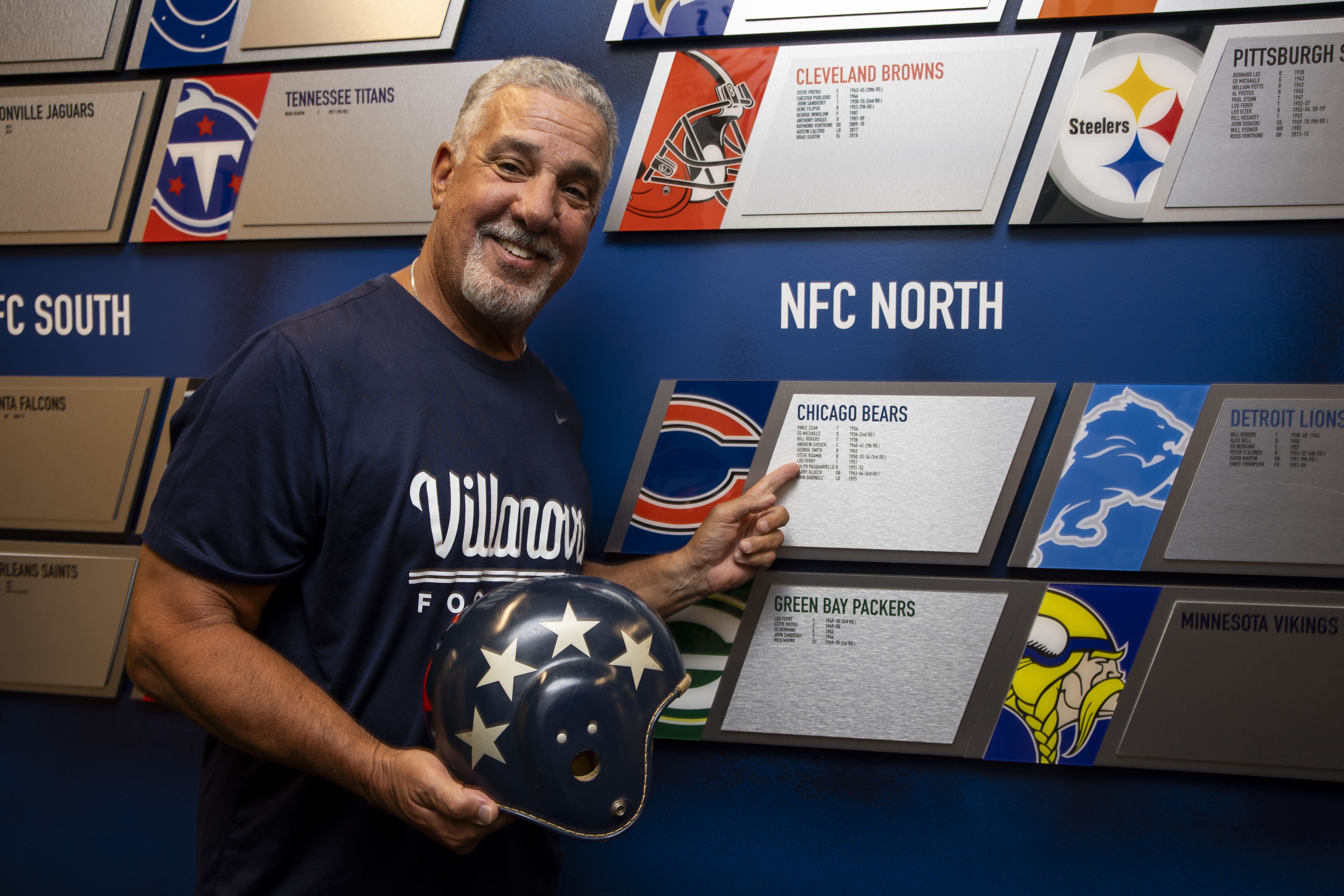
Villanova head football coach Mark Ferrante posed for a portrait with an all-star helmet worn by former fullback Ralph Pasquariello, who played in the 1950 Chicago Charities game, with the team that defeated the Eagles.Monica Herndon / Staff Photographer
“Also, I’d like to see the age rosters of those 1940s and 1950s teams. Because, I bet you a lot of those college guys might’ve actually been the same age or even a bit older than the pro guys they were playing against back then because of [World War II].”
To Ferrante’s point, it’s also harder for a college kid today to crack an NFL roster. There are a little more than 18,500 Division I players competing for 250-plus spots in the NFL draft.
“It’s still under 2% of college guys that make it to that level,” Ferrante said. “And we’re talking about the best of the best, not that it wasn’t the best back then, but it’s just different and dare I say harder to get to the NFL now than it was then.”
But the proving ground for college players in the Chicago Charities All-Star Game was apparent back then, with the Eagles feeling the brunt of it. In 1950, the Eagles lost to a collective of college players, one that featured former Villanova standout Ralph Pasquariello.
A star fullback for the Wildcats, Pasquariello was coming off an MVP performance a year earlier in the 1949 North-South Shrine Game where he scored the game-winning touchdown.
Pasquariello was drafted later that year in the first round (ninth overall) by the Los Angeles Rams. The Eagles’ loss was one of just nine times a college team defeated an NFL champion.
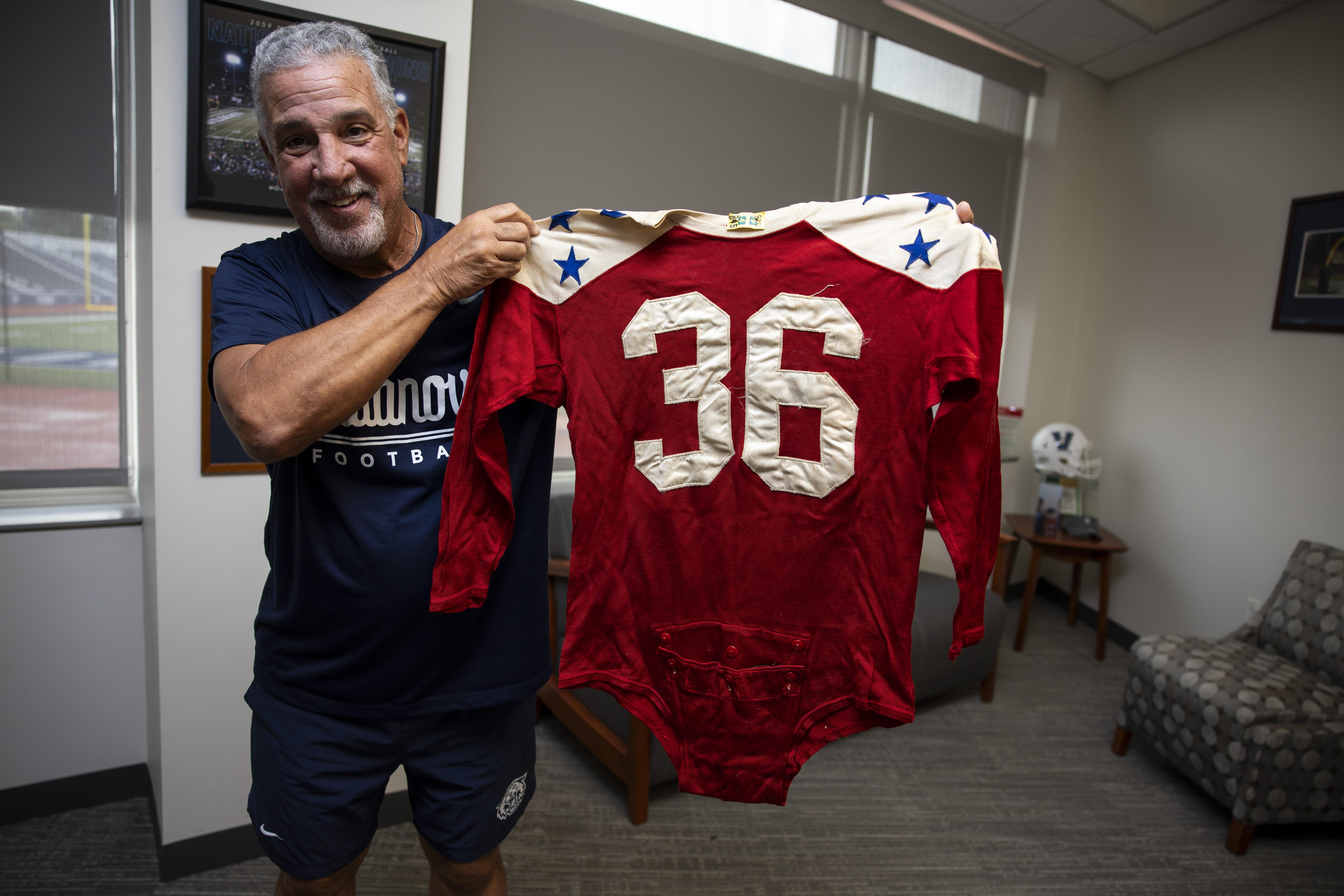
Mark Ferrante holds up an all-star jersey worn by former Villanova fullback Ralph Pasquariello, who played on the 1950 college team that defeated the Eagles in the Chicago Charities College All-Star Game. Monica Herndon / Staff Photographer
But the notion that a college group would beat an NFL champion today — even with a closer-to-equal playing field than we’ve seen between college and professional football in recent years — would be tough to imagine. Between lucrative name, image, and likeness deals in college and blockbuster sponsorship deals in the NFL, both coaches say there’s too much money to be made.
“Listen, it would be something really cool to see all these young players who are going to be 22- or 23-year-old seniors go up against NFL stars, but I just don’t think it’s viable,” Keeler said. “Everyone has a time frame now to make as much money as they can. Also, they’re getting rid of more and more [contests like these].
“I mean, look, they just got rid of the Pro Bowl. Why? The impossibility of suggesting that you can play at three-quarters speed and not get hurt when you’re tackling guys to the ground. That’s just not how this game works anymore.”
There once was a time when players in the NFL and college faced off in a preseason game.
From 1934 to 1976, the annual Chicago Charities College All-Star game featured an NFL team that won the league championship and had many of its starters play against college football’s best athletes.
In this day and age, that’s a crazy concept to consider. Although the playing field and athletic abilities are likely to be evenly matched, most NFL starters don’t even play in preseason games. It’s too much of a risk.
But the Eagles once played in the event in 1949, 1950, and 1961, and actually came up short in the 1950 game, which included a former Villanova standout.
Kerith Gabriel turns back the clock to look back on an event known for proving ground for college players to see if they could handle the rigors of playing in the NFL.
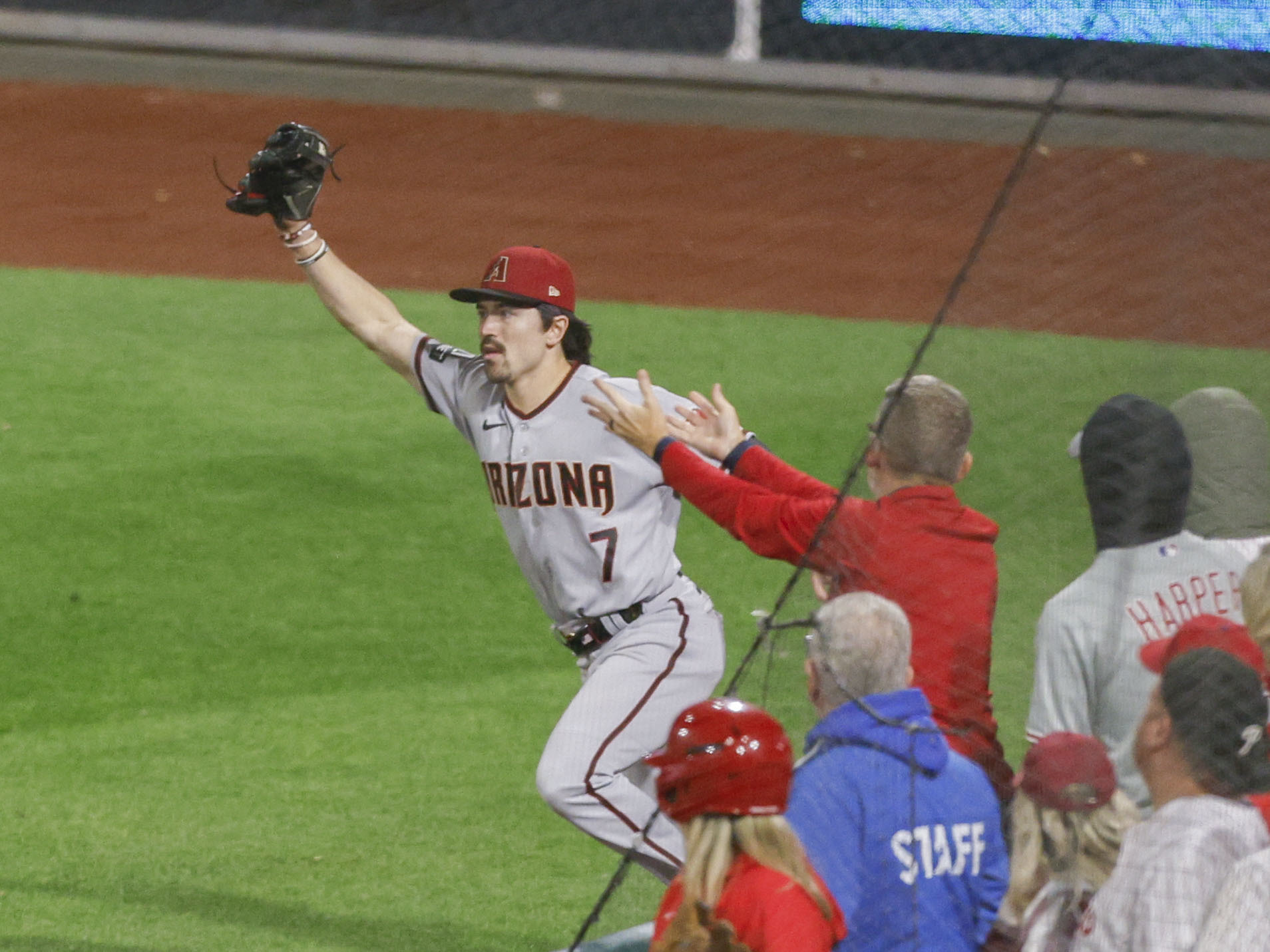
Diamondbacks outfielder Corbin Carroll catches the final out to win Game 7 of the National League Championship Series over the Phillies on Oct. 24, 2023 at Citizens Bank Park.Steven M. Falk / Staff Photographer
A pivotal week for the Phillies began in the desert with three games against the Diamondbacks that will have implications in the National League wild-card race. It was a good time, then, to check in with Arizona general manager Mike Hazen. He joined Scott Lauber on Phillies Extra to discuss his absent star player, the playoff race, and that memorable (or forgettable, depending on your perspective) NLCS in 2023.
And here’s a fun fact: Last Saturday,Cristopher Sánchez joined Jesús Luzardo with 200 strikeouts this season. The pair also surpassed 200 strikeouts in 2025. Their milestone made it the first time the Phillies have had multiple lefties with more than 200 strikeouts in consecutive seasons since Cole Hamels and Cliff Lee in 2012 and 2013.
Next: The Phillies continue their series in Arizona at 9:40 tonight (NBCSP). Jesús Luzardo (12-5, 3.09 ERA) will start against Diamondbacks left-hander Eduardo Rodriguez (14-4, 2.50).
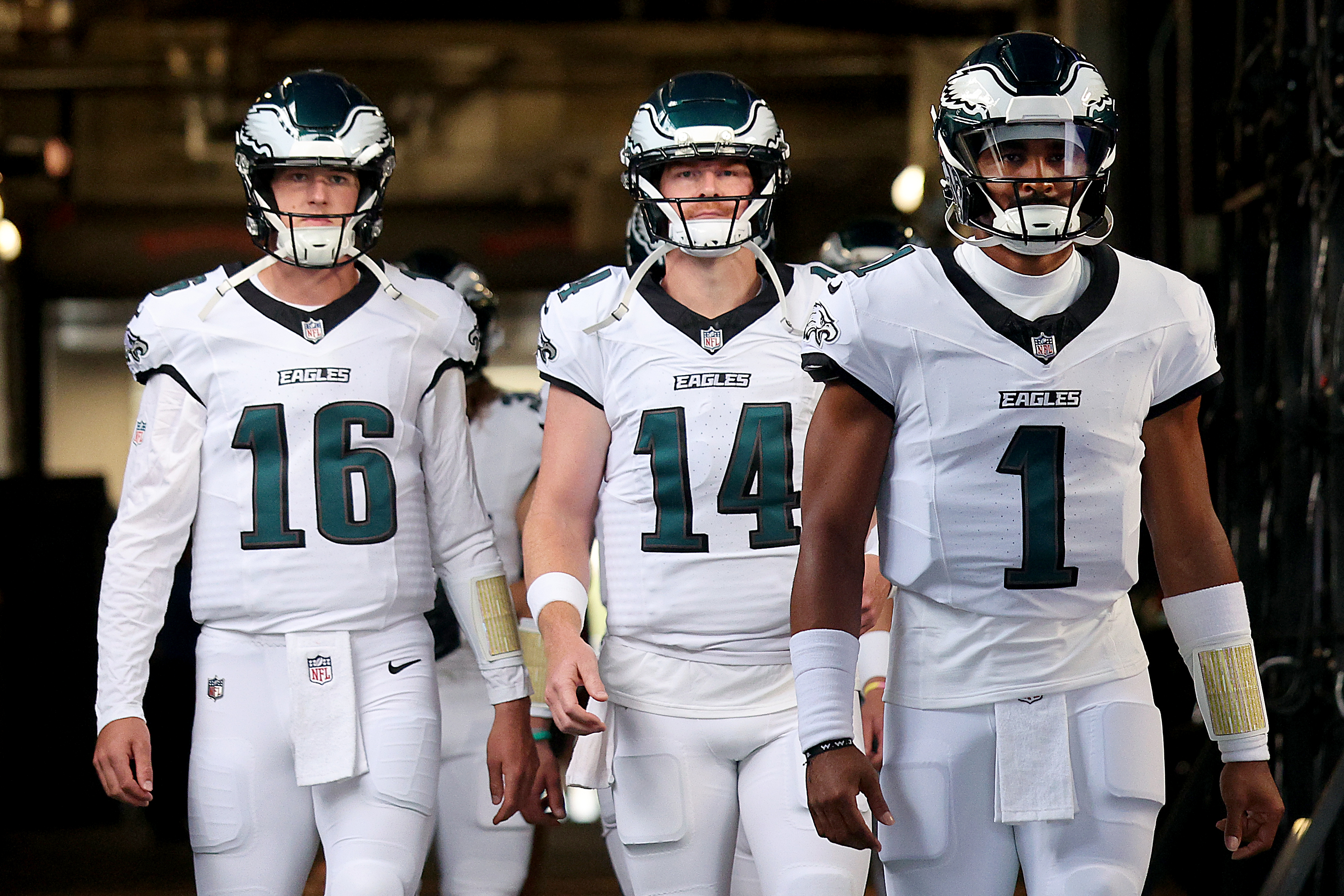
Philadelphia Eagles quarterback Jalen Hurts (right) walks to the field with quarterback Tanner McKee (left) and quarterback Andy Dalton (center) before the preseason game against the Baltimore Ravens on Aug. 15.David Maialetti / Staff Photographer
Even after announcing the initial 53-man roster, the Eagles didn’t reveal who will back up Jalen Hurts against the Washington Commanders next Sunday in the season opener.
The real question here seems to be: Why did the Eagles go the unconventional route of keeping all four (Hurts, Andy Dalton, Tanner McKee, and rookie Cole Payton) quarterbacks?
“I feel like all those guys have value for our team — some is short-term value, some is long-term value,” says general manager Howie Roseman.
And Uar Bernard and Joshua Weru, both from the International Player Pathway, cleared waivers on Monday and later signed with the Eagles’ practice squad.
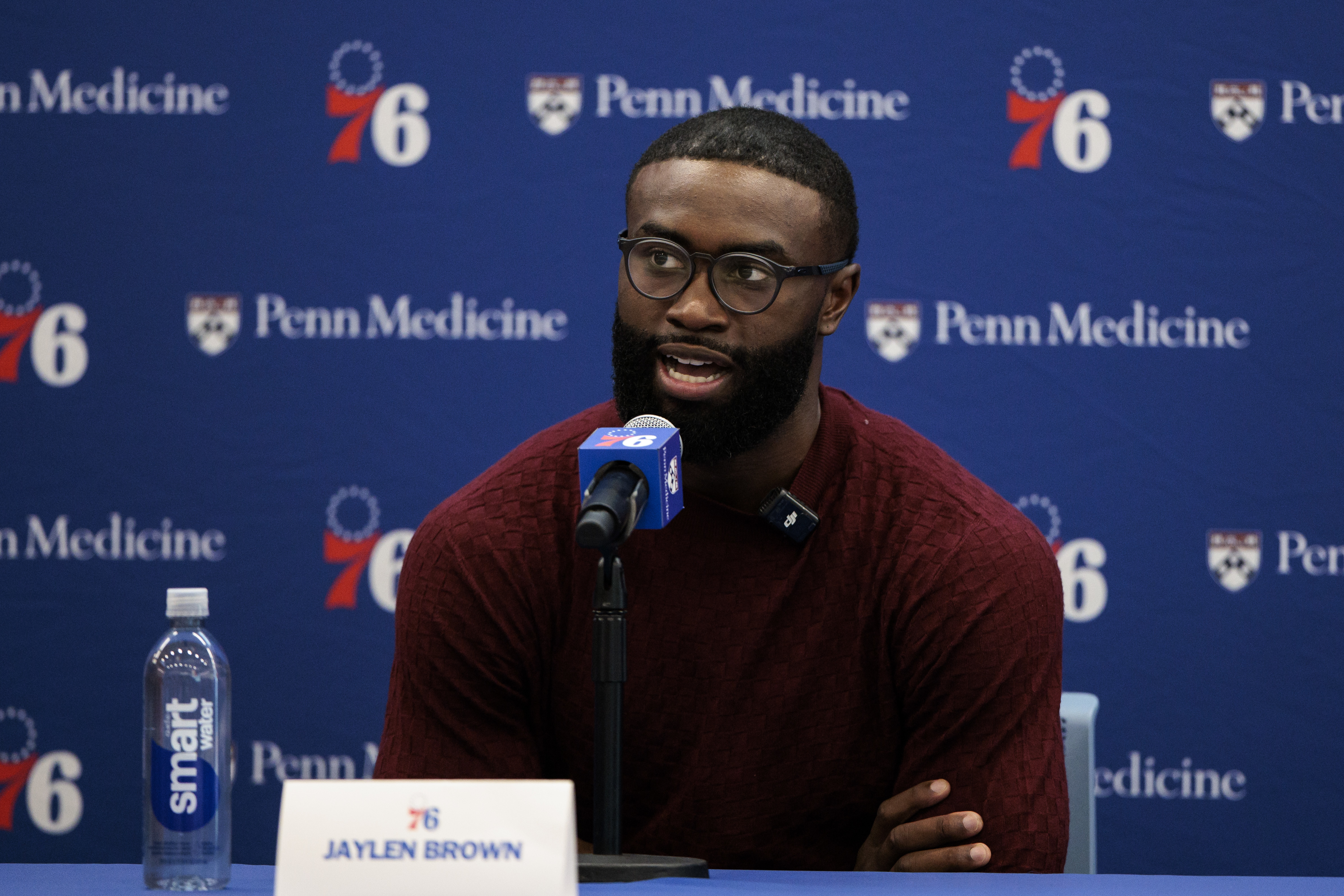
Jaylen Brown averaged 28.7 points per game during his final season in Boston.Monica Herndon / Staff Photographer
Jaylen Brown has had a long offseason. It started with trade rumors positioning him in Milwaukee as part of a trade to lure Giannis Antetokounmpo to Boston. It continued with personal criticisms and deep examinations of his game. Then, finally, it culminated with a trade to the 76ers as part of a deal that brought back Paul George and picks to Boston.
Brown has had to reckon with the Celtics’ decision to part ways, his icy relationship with former running mate Jayson Tatum and a divorce with the only city he has known in his adult life. The final step came this weekend in Boston, where he held a block part at Boston Common and celebrated the city before officially taking off for Philly. They celebrated him too, as Chris Hine documented from the scene.
The Phillies have had a lot to celebrate lately.Laurence Kesterson
The Diamondbacks series will serve as a benchmark as to whether these Phillies even have a chance of achieving what the 2023 Phillies came so close to achieving.
They could leave Arizona on Wednesday with the wild-card lead if they take care of business and if the Brewers batter the Cubs. But the Diamondbacks have lately been poison for the Phillies, writes columnist Marcus Hayes.
🧠 Trivia time
How many NFL teams kept four quarterbacks on the initial 53-man rosters this year?
A) Six
B) Four
C) One
D) Three
What you’re saying about favorite outdoor activity
We asked: What is your favorite outdoor activity and why?
Golf is my favorite outdoor. Even a so-so round can’t mess up a beautiful day outside with friends. — Tom G.
Walking up the gang plank of a cruise ship. Any ship going any where. My “safe place.” Sailing aboard the Queen Mary 2 for 11 nights in November. — Ronald R.
I used to bike often back in Orange County, but crashed and broke my collarbone right before moving here to Prescott AZ. Now at 88 my favorite outdoor activity is hiking while taking bird and wildlife photography. And we have enough Bald Eagles here to remind me of my favorite team. — Everett S.
We compiled today’s newsletter using reporting from Marcus Hayes, Kerith Gabriel, Lochlahn March, Scott Lauber, Jeff Neiburg, Chris Hines, and Jeff McLane.
By submitting your written, visual, and/or audio contributions, you agree to The Inquirer’s Terms of Use, including the grant of rights in Section 10.
As always, thanks for reading! That’s it from me this week, Maria will be in your inbox tomorrow. — Bella