2026 Nissan Frontier Crew Cab Pro-X V-6 vs. 2026 Hyundai Santa Cruz XRT AWD vs. 2026 Chevrolet Colorado Trail Boss Stars and Steel: Smallish truck smackdown.
This week: 2026 Chevrolet Colorado Trail Boss Crew Cab
Price: $57,240 as tested. Almost $10,000 more than the Frontier, and almost $15,000 more than the Santa Cruz.
What others are saying: “Pros: Powerful turbo I-4 engine, great off-road capability, light bar useful on trails. Cons: Somewhat sluggish transmission, slowish steering response, minor wheel hop during hard braking,” notes Motor Trend.
What Chevrolet is saying: “Take the American landscape by storm.”
Reality: Yes, a very bouncy storm.
What’s new: The model has very little updates since the 2023 redesign. This year adds the Stars and Steel Edition tested, which presents $13,555 worth of options. Granted, that includes heated seats and steering wheel, adaptive cruise, technology package, and power adjustable seat, but that still seems like about $7,000 for cool graphics and stuff.
Up to speed: The Colorado as tested is powered by a 2.7-liter Turbomax four-cylinder engine. It creates 310 horsepower and gets to 60 mph in 7 seconds, according to Motor Trend. Despite all those horses it’s still the middle of the pack among our three test vehicles. The Santa Cruz wins this segment.
Shifty: The eight-speed automatic transmission is controlled by a vintage shift lever with just PRNDL options.
On the road: The Colorado Trail Boss followed the usual template of small off-roady trucks — hard to get used to and then suddenly quite fun. Once I found my position on the road, I was able to roll around country lanes with a lot of momentum, probably worrying passing motorists along the way.
The large balloony tires transmit a good bit of bounce, though, and the Trail Boss really loses its cool over rutted roads. I think Motor Trend was a little too subtle in its comment about “minor wheel hop” on hard braking; it’s a lot. The Santa Cruz wins here, too. Although the Frontier and the Colorado were quite fun, I noted the Frontier’s bouncy ride and the Colorado’s hoppiness make both also-rans.
In and out: The Colorado featured rocker protectors, and these resemble running boards sitting there teasing me. I thought they’d lower to ease my climb into this very tall truck, but they were not interested. Gonna have to stretch those IT bands. Obviously the Santa Cruz is the easiest here.
The interior of the 2026 Chevrolet Colorado Trail Boss is spare and attractive, and missing one important “frill.”Chevrolet
Driver’s Seat: After you pass that little entry test, the seats have nice ergonomics, and the fabric is nicer than trucks have a right to. I set dirty gloves down on them and the dust did not just brush off.
The steering wheel does not telescope, at least not in the test version. (The internet contends some trim levels have it. I’m not going to argue with the internet, but I’m also going to scrunch one eyebrow a bit.) But does Chevrolet really gain by two setups for the steering wheel? Can it be worth the extra manufacturing needs? It’s just another in a long line of cheapskate moves.
I’m surprised that I wasn’t more annoyed, especially since “annoyed” is my default setting, but I seemed to match up with the steering wheel nicely. Still, I cannot see myself ever dropping close to $60k on a truck missing such a basic feature as a telescopic wheel. I like the Nissan for its no-frills approach but still including that “frill.” Finally, the Frontier is king.
Friends and stuff: The rear seat offers scant room for feet and tight quarters for legs. Only headroom is roomy. It sits upright squeezed in between the first row and the bed, with no adjustments at all.
The seat bottom folds up for cargo space but a tool box under the seat remains and makes the cargo space less than ideal.
The Trail Boss pulls up to 7,700 pounds, the highest among the contenders, but passengers win in the Frontier.
A word of caution — if you get the fun Trail Boss roll bar coupled with the roll-up bed cover, watch your head when rolling up the cover. That left a mark.
Play some tunes: After some adjustment — some very deeply nested, multiscreen trips to the equalizer — the sound from the nameless audio system was just about phenomenal, an A leaning to an A+.
The 11.3-inch touchscreen does most of the work, but dials for volume and tuning are there to help out. Finally, a category for the Chevrolet.
Keeping warm and cool: Buttons underneath the infotainment system and dials for temperature make adjustments fairly simple.
The infotainment system pushes the middle vents way down, so having a fan blow right on your sweaty, overworked face from both sides is not really an option, and also kind of a deal-breaker. Another one for Nissan.
Fuel economy: The Trail Boss averaged just under 18 mpg, so it beat the Nissan but fell short of the Santa Cruz. None of them really sips fuel, although I guess each is different by about 10 percentage points, and that will add up.
Where it’s built: Wentzville, Mo., with 44% of parts from the U.S. and Canada and 28% from Mexico.
In the end: If you can make the Santa Cruz work for you, it’s the cheapest, easiest to drive, and most efficient, and it won the most categories (five). If that’s not going to work, I’d send you to the Frontier (four categories).
WASHINGTON — Regardless of the outcome in the coming election, a new AP-NORC poll shows voters from both major political parties want the next Congress to focus on making life more affordable and ending the war in Iran, while fewer are looking for an emphasis on President Donald Trump — whether it’s investigating him or supporting his agenda.
The results suggest that voters are ready for Congress to tackle core issues, despite Trump’s centrality in the midterm campaign.
About 8 in 10 registered voters, including a large majority of Republicans and Democrats, say lowering the cost of living should be one of the highest priorities for the session coming up, the survey from The Associated Press-NORC Center for Public Affairs Research finds.
Justin Campbell, a 31-year-old Democrat from Brookhaven, Mississippi, said he wants the government to focus on helping people like him rather than wealthy people.
“I’m not a millionaire and probably won’t ever be,” he said. ”I prefer policy that helps me instead of someone I’ll never be.”
Most voters also want Congress to prioritize ending the war with Iran, with roughly 7 in 10 saying this should be a top focus. Substantially fewer voters, about 4 in 10, want Congress to make investigating the Trump administration a high priority, and only about 2 in 10 want Congress to prioritize supporting the Republican president’s agenda.
But the poll also indicates that there are deep divisions within the parties on what to focus on, with moderate Democrats and Republicans differing sharply from voters on the left and right wings of their parties.
Most Democratic voters who identify as supporters of democratic socialism are hoping for a Congress that will investigate the Trump administration, and many want to end military aid to Israel, while MAGA Republicans are interested in Congress supporting Trump’s agenda.
Moderates in both parties, meanwhile, are much likelier to want Democrats and Republicans to find common ground.
Most voters want Congress to focus on reducing costs and ending the war
Lowering the cost of living and ending the Iran war overshadow a wide range of other issues as voters consider priorities for the next Congress.
While most registered voters say reducing costs and ending the war should be among the highest priorities for Congress, only about half say reducing the budget deficit and finding common ground between the two parties should be high priorities. About 4 in 10 want investigating the Trump administration and passing new laws regulating artificial intelligence to be high priorities.
Fewer, about 3 in 10, prioritize ending military aid to Israel, and only about 2 in 10 want a focus on supporting Trump’s agenda.
Though most registered Democrats want Congress to investigate the Trump administration, that falls behind the larger priorities of lowering costs and ending the conflict with Iran. About 6 in 10 registered voters who identify as Democrats call investigations into the Trump administration “one of the highest priorities.”
Arthur Brown, a 71-year-old Democrat in Magee, Mississippi, wants to see the next Congress work on making the economy stronger and prices lower. He feels less urgently about holding Trump accountable, mostly because there’ll be only two years left in Trump’s term. He thinks it’s more important to try to turn the economy around.
“They should just focus on, you know, trying to tackle these problems,” he said. “Eventually down the road, justice will come.”
For Republican voters, bolstering Trump’s goals also falls behind lowering the cost of living, ending the war in Iran and reducing the budget deficit.
In a strikingly tepid show of support for the president, only about 4 in 10 Republican voters say the next Congress should make supporting the Trump administration’s agenda one of its highest priorities.
Most democratic socialists want Congress to investigate Trump
House Democrats have begun planning an ambitious 100-day agenda for what they would do if they win control of Congress in November. House Minority Leader Hakeem Jeffries of New York has said the Democratic Party’s top priorities include making life more affordable and conducting vast oversight of the Trump administration.
But there are potential schisms in the party awaiting Democrats if they win a governing majority. The Democratic Party has reckoned in primary campaigns with a growing wing of democratic socialists. Their progressive stances on some issues have divided the party — including on whether to continue military aid to Israel, whether to compromise with Republicans and how strongly to investigate the Trump administration.
About three-quarters of Democratic voters who identify as supporters of democratic socialism say one of the top priorities should be investigating the Trump administration, compared with slightly less than half of Democrats who say they’re not democratic socialists.
Democratic socialists are also more likely to want Congress to end military aid to Israel and less likely to say it’s a top priority to find common ground between the two parties.
Campbell, the Democrat in Mississippi, identifies as a democratic socialist and wants Congress to hold the Trump administration accountable.
“It feels a little cliche to just say roll back the past two years, but honestly, mostly just roll back the stuff he’s done the past two years,” Campbell said.
Most MAGA Republicans want Congress to support Trump
Republicans are broadly aligned on what they want the next Congress to do, regardless of whether they identify with the Make America Great Again movement — except when it comes to Trump.
At least half of MAGA and non-MAGA Republicans want leaders to lower costs, end the Iran war and reduce the federal budget deficit.
Richard Longo, a 74-year-old Republican in Lake Forest, California, wants to see the president’s agenda pursued in the next Congress but is especially worried about balancing the budget.
“You’re not going to balance the budget in one year, but you have to have a plan,” Longo said.
But while about 6 in 10 MAGA Republicans want Congress to prioritize supporting the Trump administration’s agenda, only about 2 in 10 Republicans who are not supporters of MAGA say the same.
Lisa Ostlund, a 46-year-old from Wayland, Massachusetts, who identifies as a MAGA supporter, wants to see the next Congress prioritize Trump’s agenda. She doesn’t support everything Trump does, but she credits his policies with her recent ability to find housing after struggling with homelessness for several years.
“You got to care about your American people,” Ostlund said. ”He definitely doesn’t say it right, but you do have to put them first.”
The rising cost of everyday goods, along with high interest rates, has made it harder for many Americans to stick to a monthly budget — especially retirees on a fixed income.
Many of these seniors may qualify for federal assistance. But the process of actually claiming it can be confusing, if not downright frustrating.
Approximately 9.1 million Americans age 65 and older are eligible for aid through three government programs, the National Council on Aging reported in May. Collectively, they’re missing out on an estimated $58 billion in relief.
But many older Americans don’t know they qualify or have trouble navigating the application process.
“The larger problem is that the assistance system is fragmented,” said Tiara Green, president of Accessia Health, a nonprofit that helps people afford medical care.
Green said paperwork and health care expenses already overwhelm many in need of assistance. Navigating another set of applications, eligibility requirements and government agencies can seem like more trouble than it’s worth.
Thousands in potential savings
Federal and state programs can help offset costs for health care, food, energy and more. Medicare Savings Programs, for example, can help eligible beneficiaries cover their Medicare Part B premiums.
The standard Part B premium in 2026 costs $202.90 per month, so assistance that would cover this expense could result in savings of up to $2,435 annually for qualifying beneficiaries. People receiving this aid through a Medicare Savings Program also automatically qualify for Extra Help, which reduces Medicare prescription drug costs.
The Supplemental Nutrition Assistance Program, or SNAP, provides low-income households with monthly food benefits, while the Low Income Home Energy Assistance Program, or LIHEAP, helps qualifying households with heating and cooling costs.
However, changes to SNAP eligibility rules have already caused millions of Americans to lose food assistance. The Trump administration also moved to eliminate LIHEAP and laid off its federal staff, although Congress ultimately preserved funding for 2026.
A confusing system
Courtney Bragg, co-founder and CEO of Fabric Health, described the American social safety net as an “alphabet soup” of programs and agencies. And with each program having a bewildering array of eligibility requirements, those in need are susceptible to scams, especially during open enrollment periods.
Bragg recalled in an interview how Henry, whose last name she withheld to protect his privacy, had been paying $65 a month to someone who promised to help get him insulin. The scammer informed Henry there was a different deadline to apply but never delivered the insulin pump.
By working with a local nonprofit, Bragg said, she was able to help Henry secure emergency diabetes supplies and enroll him in SNAP and Medicaid. He was also able to switch to a Medicare plan that fully covered the cost of his insulin.
To help navigate what Bragg referred to as “the predatory environment for seniors,” she recommended starting with trusted organizations and official government resources rather than accepting unsolicited calls or offers.
Where to find help
You can use the National Council on Aging’s free screening tool at BenefitsCheckUp.org to help determine eligibility and locate assistance programs at the federal, state and local levels.
State Health Insurance Assistance Programs provide free, personalized counseling for Medicare-related questions, while the local Area Agencies on Aging can also connect older adults with community resources through the Eldercare Locator at 800-677-1116.
Finding help may take some persistence. But when hundreds or thousands of dollars a year could be at stake, it’s worth discovering what’s available before deciding whether to apply.
WASHINGTON — A federal judge in California on Wednesday blocked the Homeland Security Department from carrying out most field operations focused on uncovering voter fraud in nine states as part of a broader push to identify noncitizen voters.
The ruling came less than two weeks before the midterm elections. The Trump administration has launched a blitz of operations focused on finding evidence of noncitizen voting or tying up election processes in states where it has dubiously claimed that large numbers of noncitizens are registered to vote.
The ruling covered stops and field interviews being carried out by hundreds of Department of Homeland Security agents assigned to fan out across the country in search of instances of voter fraud, under what the administration has referred to as the “Unlawful Voter Initiative.”
In a concise 19-page ruling, Judge Araceli Martínez-Olguin wrote that the stops appeared likely to hamper voter engagement and registration by a coalition of local governments and nonprofit groups. As with other initiatives in which the Trump administration has used federal immigration data to infer the citizenship status of people on state voter rolls, she wrote there were already signs that the “target lists” the government had generated contained errors and included naturalized citizens.
The Department of Homeland Security has defended its methods, saying federal officials had used multiple data sources in addition to the public voter data they pulled to further verify the identity of registrants and eliminate false positives.
Martínez-Olguin stopped short of halting field operations. But she barred agents from carrying out interviews that “involve or are likely to involve persons” who agents “know, suspect, or should reasonably know or suspect are U.S. citizens.” Given the unreliability of federal citizenship data at issue in the case, it was unclear how significantly that would hamper the department’s activities.
The interests of the entities suing, “and the public’s interest in safe elections, free from interference or intimidation,” she wrote, “far exceed defendants’ purported interest in combating unlawful voting by non-U.S. citizens.”
Internal documents introduced in the case indicated that agents were directed to focus on California, Connecticut, Georgia, Missouri, Nevada, New York, Pennsylvania, Washington, and Wisconsin.
Martínez-Olguin, who was appointed by President Joe Biden, wrote that the scope of the operations also raised concerns about voter intimidation. She noted that according to agency memos, the Department of Homeland Security “surveils, covertly infiltrates and interrogates the staff of nonprofits and churches conducting voter engagement” and had targeted nearly 150 such nonprofit groups as of July.
The government had indicated it could target naturalized citizens in instances where data suggested an individual had voted before they were naturalized.
The case arose as the Trump administration has mounted a series of legal fights with election officials across the country, aiming to show a pattern of large-scale illegal voting in U.S. elections. The efforts have been largely unsuccessful, in part because many of the state and local authorities that administer and supervise elections have refused to comply with demands for access to sensitive voter rolls.
As a result, the federal authorities have compiled their own databases, underpinned by public, commercially available information that they have compared with federal records. The process has led to mistakes in some states, in part because public voter rolls do not include unique identifiers like Social Security numbers. Federal immigration records also sometimes fail to capture changes in citizenship status.
Election authorities in Los Angeles said the Justice Department’s lists of suspected noncitizen voters were so sloppily compiled that they seemed almost “performative” in nature, with thousands of names lacking Social Security numbers and other crucial identifying information. Many of the names, they said, were paired with addresses over which Los Angeles had no jurisdiction.
A spokesperson for the Los Angeles County registrar’s office said the list was initially sent on a thumb drive that was unusable because it posed a risk to sensitive voter information, and called the federal demand “a data dump.”
Martínez-Olguin paused her order from taking effect until Friday evening, allowing the government time to appeal. She wrote that order would lift at the end of Election Day, on Nov. 3, “or as otherwise directed by the court.”
It is illegal for noncitizens to vote in federal elections, and decades of evidence show that instances of noncitizen voting are exceptionally rare in the United States, far beneath levels that the administration alleges. Scrutiny of claims by the administration that large numbers of noncitizens voted in states like Nevada, for example, have caused the allegations to collapse.
Homeland Security’s operations aimed at finding verified cases of voter fraud comes as the Trump administration has mounted a series of escalating — and largely unsuccessful — legal fights with election officials across the country, aiming to show a pattern of large-scale illegal voting in U.S. elections.
The administration has particularly singled out states led by Democrats like California, where officials have refused to comply with demands for access to voter rolls. Last week, federal prosecutors in Los Angeles gave local election officials 48 hours to verify the citizenship or segregate the ballots of 20,000 people on a list of potential noncitizens they said had been compiled by Homeland Security.
When California officials said that timeline was impossible to comply with, the Justice Department filed suit to prevent any ballots sent to those people from being counted.
On Monday, the federal authorities announced they had released from custody 28 immigrants throughout the state who they said were suspected of registering to vote or voting in California elections before becoming naturalized citizens. All had green cards and many denied ever knowingly registering or voting. The group represented a tiny fraction — roughly one in a million — of the roughly 23 million registered voters in the state.
Since he returned to the White House, Donald Trump’s policies have worsened inflation, pushed up energy costs, cut healthcare for millions, and pushed the deficit to its highest levels since the pandemic — $2 trillion and counting.
The president is not on the ballot in November, but two of his Republican enablers — Jeff Van Drew and Thomas Kean Jr. — are up for reelection and New Jersey voters should hold them accountable.
Fortunately, the incumbents face challengers who are ready to meet the moment and help restore Congress’ role in the nation’s system of checks and balances.
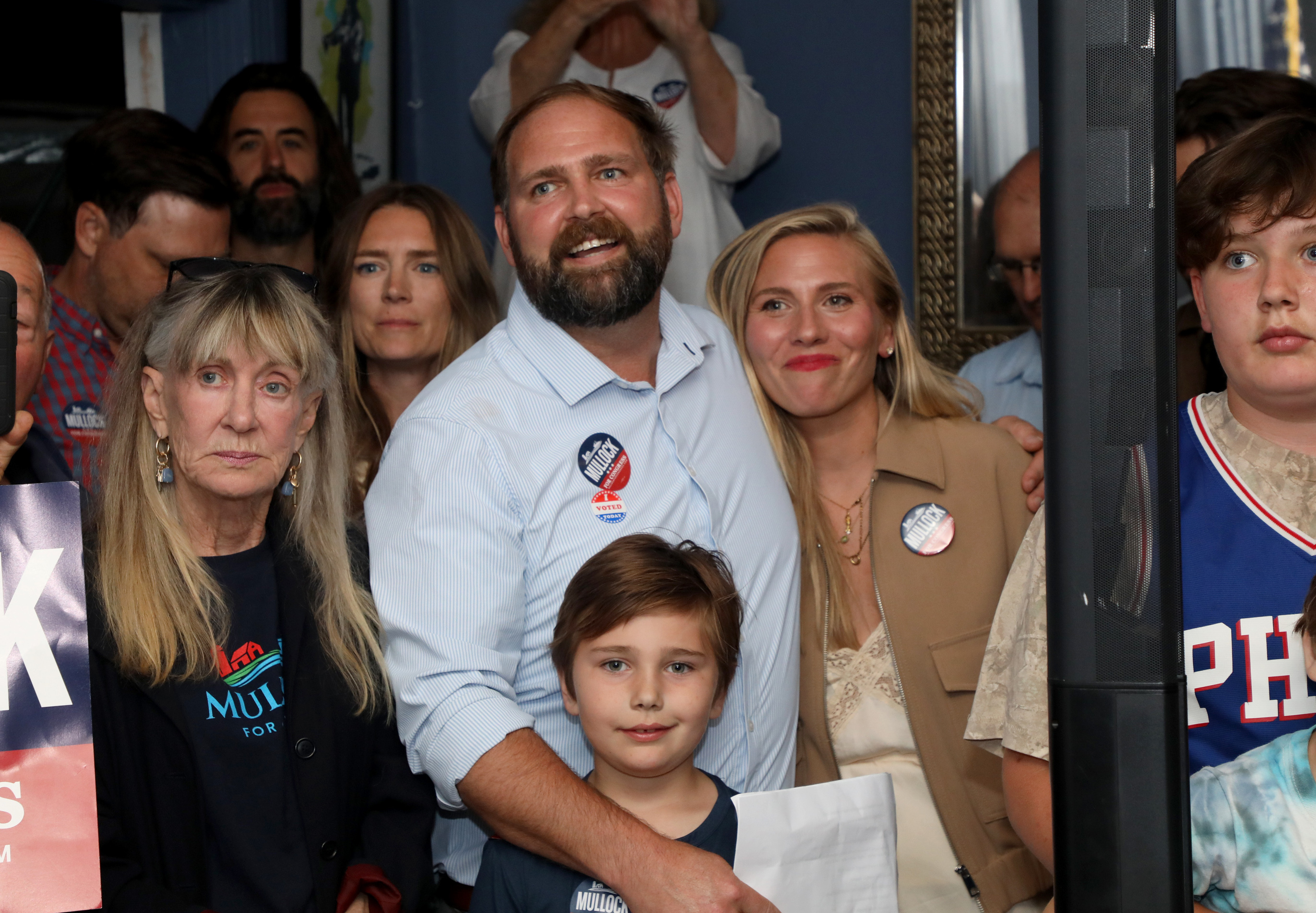
In New Jersey’s 2nd Congressional District, The Inquirer endorses Democrat Zack Mullock.
Zack Mullock, with his wife, Justine, and their family, prepares to speak at the Chalfonte Hotel in Cape May after winning the 2nd Congressional District Democratic primary in June.Vernon Ogrodnek / For The Inquirer
The Cape May mayor is a pragmatist who is willing to work across ideological differences for the benefit of his constituents in the mostly working-class South Jersey district that includes Vineland, Atlantic City, and Cape May.
Mullock told the Editorial Board he has seen people’s economic struggles and his opponent’s hand in making things worse by voting for the Big Beautiful Bill Act. The district includes three of the state’s four poorest counties and a middle class that increasingly finds it harder to make ends meet as the cost of living continues to rise.
As Van Drew’s “undying support” for Trump has left his constituents with moribund pocketbooks, Mullock said he will fight for good-paying jobs, lowering energy costs, and building affordable homes.
Mullock believes there must be major changes to the healthcare system to improve affordability. He said he supports U.S. Sen. Andy Kim’s MediKids legislation, which would guarantee health coverage for children and young adults as an intermediate step toward Medicare for All.
The Democrat said data centers, and Big Tech in general, should face federal oversight and regulation. On immigration, he told the Editorial Board that having a strong border is important but so is comprehensive immigration reform. As is stopping the administration’s assault on the immigrant community.
“The fact that we have people being terrorized in our streets here in South Jersey is outrageous and frankly disgusting,” he said. “We need to become, again, that country of dignity and respect.”
Incumbent Van Drew declined to meet with the Editorial Board.
Also running is Ramon Mora Jr., who in his interview with this board laid out a series of progressive policy answers for the issues facing the district. Mora’s compelling life story, public service ethos, and firsthand experience with the challenges many Americans face — including homelessness and rising healthcare costs — make the underdog independent a candidate to watch.
However, in this race, Zack Mullock is the best choice for voters and has earned the Editorial Board’s endorsement.
In New Jersey’s 7th Congressional District, The Inquirer endorses Democrat Rebecca Bennett.
Rebecca Bennett, Democratic candidate for New Jersey’s 7th Congressional District, hugs an attendee during a primary election night watch party after winning the Democratic nomination in JuneRyan Murphy
The former Navy helicopter pilot and health technology executive told the Editorial Board she felt called to run for office for the same reason she joined the military, which is her love for America and the opportunity it stands for.
“I really consider my life the story of the American Dream because I was able to go to college on an ROTC scholarship. I used the GI Bill for an MBA, and my husband and I bought our house with a VA loan,” she said. “I am where I am today because of programs like that. And that American Dream just feels so far out of reach for so many people right now.”
To put that opportunity back in people’s grasp, Bennett wants to rollback Trump’s tax cuts to the wealthiest Americans and help make healthcare, housing, energy, and childcare more affordable — including capping families’ childcare costs at 7% of household income. She believes there should be federal guardrails for artificial intelligence development and strong community input on data center development.
Bennett’s district — which sits north of Trenton and includes Hunterdon and Warren Counties and parts of Morris, Somerset, Sussex, and Union — has been represented since 2023 by Thomas Kean Jr.
The incumbent — the son and namesake of the former New Jersey governor and the scion of a family that traces its political lineage to the Revolution — was a traditional conservative stalwart during his almost two decades in the General Assembly. Under Trump, he has abandoned some of those values, including backing the president’s tariffs, which have raised prices at home and hurt America’s standing abroad. Kean also supports the president’s war of choice in Iran, which continues to roil world energy prices and has led to increasing pain at the pump.
Earlier this year, Kean disappeared without explanation for nearly four months. When he reemerged, he said he had been in treatment for depression. As this board has expressed, Kean deserves praise for going public with his diagnosis, but he is still an elected official with duties to his constituents. His monthslong lack of transparency remains troubling.
Kean did not respond to multiple invitations to meet with the Editorial Board.
As for Bennett, she described herself as a commonsense candidate who is interested in solving problems. She said that sheis ready to work across the aisle — and with partnership-minded people across the country — to move the Garden State forward.
“That’s how it was in the military. We were just there as Americans to get the job done. And that’s the mindset that I’m going to bring to office,” she said.
Washington could use some of that can-do spirit. That is why The Inquirer endorses Rebecca Bennett.
The heart’s anatomy and immunereactionsmake it a challenging target for emerging gene therapies, which have transformedtreatment options for somehealth conditions.
A new Penn Medicine center, supported by a $25 million gift from the Delaware-based Smilow Foundation, aims to overcome those barriers to develop precision therapies for cardiovascular disease, officials announced this month. In addition to gene therapy, researchers will explore targeted approaches involving small molecules and messenger RNA, or mRNA.
Rather than just managing symptoms, the Smilow Center for Precision Therapeutics aims to treat the underlying causes of disease, and eventually work toward cures. A core team of five physician-scientists will lead the center, each overseeing a large research program contributing to these goals.
“Cardiac disease is the number one killer of people in this country,” said William Smilow, who lives in Chestnut Hill and serves as president of the Smilow Foundation.
The family philanthropic organization, seeded by his father, Joel Smilow, a former CEO of Playtex Products, has donated significantly to Penn and other major medical centers. Before taking the helm, Smilow worked as president and founder of Great Oak Holdings, Inc., a real estate development company.
A cardiology patient at Penn himself, he started talking with Penn cardiologist Thomas Cappola two years ago about ways they could push the field forward.
Smilow rejected Cappola’s initial ideas for being too small scale.
“We went back and forth quite a bit because I wanted to take a big swing on something,” Smilow said.
Before taking the helm of his family’s philanthropic organization, William Smilow worked as president and founder of Great Oak Holdings, Inc., a real estate development company.Courtesy of Penn Medicine
They landed on this precision therapeutics center, which Cappola now directs.
The center will draw on the expertise of several Penn physician-scientists, including Kiran Musunuru and Drew Weissman.
Musunuru co-led the team behind last year’s first-of-its-kind personalized gene-editing treatment for Philadelphia-area infant “Baby KJ,” and will help lead the center. He also helped develop a gene therapy for high cholesterol, which showed promise in early clinical trial results thispast spring.
Weissman shared the 2023 Nobel Prize with Katalin Karikó for developing the mRNA platform used for the COVID-19 vaccines.
“Those two technologies in combination are very powerful,” Cappola said.
Those approaches could also help researchers tackle their major challenge: delivering precision therapies to the heart.
Precision therapies
Penn cardiologist Thomas Cappola will direct the center.Courtesy of Penn Medicine
Precision medicine customizes treatment to the individual, setting it apart from the traditional medical approach of prescribing the same pills or procedures to everyone with a given diagnosis.
“We find the root cause of the disease in you, and we treat that root cause,” Cappola said.
The center’s initial effort focuses on genetic forms of heart muscle disease, where an obvious change in the DNA of a patient leads to the problem.
One area where that could help is heart failure.
When someone has a weak heart, they have poor blood flow to tissues. This can lead to heart failure, where the heart is unable to pump enough blood to meet the body’s needs.
“The majority of innovations to treat heart failure are really ways to help your body live with a weak heart,” Cappola said.
He envisions fixing the root cause rather than helping the body adapt to an imperfect organ. For example, if someone has a specific mutation that leads to their weak heart, doctors could focus on fixing it or finding a way to block its effects. They could even act before someone starts having symptoms.
Targeting the heart
Several clinical trials have tested precision therapies for cardiomyopathies, diseases of the heart muscle.
But questions remain around the immune responses and side effects that can result when these therapies are delivered into heart muscle cells.
“Many of the current approaches we use to try to deliver these therapies have problems,” Cappola said.
The center will prioritizedeveloping ways to package and deliver therapies.
Kiran Musunuru, a professor of cardiovascular medicine and genetics at Penn’s Perelman School of Medicine, cofounded a biotech company that seeks to treat high cholesterol with gene-editing. Eli Lilly and Company acquired Verve Therapeutics in 2025.Penn Medicine
Gene therapies tested in recent years have mainly targeted the liver, which is a much easier target.
The gene-editing approach that Musunuru helped develop to treat high cholesterol, for example, works by introducing a specific mutation into a gene in the liver called PCSK9. That inactivates the gene, leading to substantial drops in levels of bad cholesterol.
Although the treatment could ultimately help prevent heart disease, it targets the liver rather than the heart.
“We want to target the heart itself. That’s a very aspirational goal,” Cappola said.
Chemist and mechanical engineer Henry R. Heyl moved to Philadelphia from Columbus, OH. in 1863. Shortly after setting up shop near the Curtis Building at 6th and Market Streets, he developed a knack for inventing things.
Among Heyl’s first inventions was a gadget that set photographs in motion, which he named the phasmatrope.
Heyl printed 16 photos — each slightly different from the ones before and after it — onto glass. Using a bright lamp, he projected the images through a shutter and onto a blank wall. A handheld crank controlled the device and synced the images with live sound. The result was the first moving image.
Ava Haitz’ No. 1 commemorates the first public screening of a motion picture, celebrating the birth of cinema and the power of storytelling through moving images.Ava Haitz and Colibri Workshop
On the evening of Feb. 5, 1870, Heyl took his phasmatrope, or magic lantern projector, and demonstrated it to an audience of 1,500 people at the Academy of Music.
That presentation is considered America’s first motion picture screening and it will be celebrated Saturday at the Philadelphia Film Society Center from 11 a.m. to 1 p.m.
The day party, or firstival, is part of the Philadelphia Historic District’s yearlong celebration of America’s 250th birthday honoring events and happenings with Philly roots.
Heyl showed three films on that evening in 1870, each one a few seconds in length, said J. Andrew Greenblatt, CEO and executive director of the Philadelphia Film Society.
Henry C. Heyl’s phasmatrope. Heyl was a director of the Franklin Institute in the late 1800s and the phasmatrope was a part of the Institute’s collection for decades.The Franklin Institute
Allright, was a compilation of moves of the Japanese acrobat Little Allright. Brother Johnathan, debuted a character Heyl created and voiced behind the screen. The most famous film in the group is referred to as A Waltzing Couple and it featured Heyl dancing with a cousin. The 40-piece Philadelphia Orchestra provided the accompanying live music and Heyl’s performance effectively made him the first American actor in a motion picture, too.
According to a 1914 story in the Evening Public Ledger, Heyl demonstrated the phasmatrope at the Franklin Institute on March 16, 1870.
But that was its final public showing.
“He put it away and literally never demonstrated the phasmatrope again,” Greenblatt said. “He solved what he wanted to solve and went on to invent other things.”
American Academy of Music, Philadelphia. Early 1900s where a few years ago Heyl demonstrated his phasmatrope.Library of Congress
And invent other things, Heyl did.
In late 1870, he invented the indoor croquet table as part of an ongoing effort to find ways to play outdoor games inside.
In 1877, Heyl filed for a patent for a machine that inserted and clinched staples in one step, or the modern day stapler.
He created the foldable box, the precursor to the takeout container most popular in Chinese restaurants. In 1911, at age 69, Heyl invented the paper drinking cup.
In 1885, Heyl became a director at the Franklin Institute and remained a member of its board of managers for close to 30 years.
In 1919, when he was 77 years old, Heyl fainted and fell from a street car at the intersection of Broad and Walnut Streets, according to a report in the Evening Ledger. He was taken to Jefferson Hospital where he died.
He never filed a patent for his phasmatrope, yet the public showing of his motion picture helped establish the motion picture industry, fueling it with possibility, Greenblatt said. Heyl’s phasmatrope joined and other inventions like the zoetrope, the phenakistoscope, and the zoopraxiscope, laying the film industry’s early foundations.
French magician George Méliès’ silent science fiction film A Trip to the Moon was released in 1902 and is hailed as not just the first science fiction film, but the first to tell a cohesive story — with sound effects.
“Méliès A Trip to the Moon was a stunning 14-minute short in cinema history that everyone remembers,” Greenblatt said. “And when most people talk about the American film industry they just assume it started with Thomas Edison. But that germ was planted right here in Philadelphia.”
This week’s Firstival is Saturday, Oct. 24, from 11 a.m.-1 p.m., at the Philadelphia Film Society Center, 1412 Chestnut Street.
PETA has a suggestion for Mayor Cherelle L. Parker: Put the city’s rats on birth control.
The animal rights organization sent Parker a letter on Oct. 14 urging Philadelphia to consider contraception instead of poison to control its rodents. It also promised to send Parker a “Rats Have Rights” mug.
The appeal arrived six days after City Council adopted a resolution calling on various city departments to develop a coordinated response to persistent rat infestations in Philadelphia’s Lower Northeast section. Residents in Oxford Circle, Castor Gardens, and surrounding neighborhoods have reported infestations around their homes and businesses. In some cases, they claim, rats have chewed through car wiring, leaving residents with costly repair bills.
PETA argues that killing rats brings only temporary relief because rodents from nearby areas quickly move into the newly open territory. And, they say, poison can also harm pets and other wildlife. As a solution, the organization wants Philadelphia to pair better trash storage with contraception instead.
So, does rat contraception work?
Severalstudies have shown that using birth control to control rodent populations is a valid approach, at least in theory. That’s because it addresses the most fundamental challenge of rodent population control: Rats reproduce faster than city authorities can kill them.
“Rodents are the fastest breeding animals on earth,” said Loretta Mayer, a biologist and former CEO of Senestech, a biotech company specializing in rodent control. “We’ve been killing these animals for centuries, and we have more than we ever have before. The strategy of killing doesn’t work.”
However, whether rat contraception is a theoretical valid concept or an actually effective strategy remains unclear.
Several cities, including Baltimore, Chicago, and Washington, have recently tested various rat contraception products, and initial results seem promising. For instance, in D.C., researchers found that rat activity declined substantially in two neighborhoods after introducing the rat contraceptive ContraPest.
Meanwhile, a pilot program in Boston reported a 60% drop in rat activity after using a different form of birth control called GoodBites.
Now, New York City is testing ContraPest, GoodBites, and Evolve, another contraceptive bait, alongside a noncontraceptive control, to see how effective birth control really is. The city will use the results to decide whether to include birth control in its broader, multipronged approach to rodent control.
Philadelphia’s health department is not ready to take that step.
“We do not use unproven techniques,” said Jason Brooks, news media coordinator for the department of public health, “like other agents that may affect their reproductive systems.”
Mayer agreed that more research is needed but disputed the department’s characterization of the method’s efficacy being unproven. “It is early in the technology,” she said. “We need more data.”
If Philadelphia did decide to test contraception, Mayer said, it would need a carefully designed study and a reliable way to measure the results.
“The most accurate method is using cameras and counting the number of animals that go [to the feeding station] over a long period of time,” she said. “You have to measure the consumption of the pellet, too.”
Together, those measurements would show whether rat activity actually declined and whether birth control was, in fact, responsible for the decrease. Still, for Mayer, success would mean bringing the rodent population under control, not making Philadelphia rat-free.
Whichever direction the Eagles take for the rest of the season, they will likely do so without Jalen Hurts.
The Eagles franchise quarterback could miss the season after the team and Hurts’ agent, Nicole Lynn, announced on Monday that he had been diagnosed with deep vein thrombosis and blood clots in both of his lungs. He will be prevented from participating in contact sports, football included, while undergoing treatment including blood thinners.
Everything, football included, is secondary to Hurts’ long-term health. The Eagles and Lynn said in the statement that Hurts is expected to make a full recovery and that he shouldn’t have any long-term effects.
In the absence of Hurts, the Eagles are expected to turn to Tanner McKee as their starting quarterback going forward. Behind an inexperienced offensive line, he had a shaky showing in the 25-14 loss to the Carolina Panthers last Sunday, going 26-for-45 (57.8% completion) for 215 yards and a touchdown (77.5 quarterback rating).
McKee, the 2023 sixth-rounder out of Stanford, will likely have another opportunity to start against the 2-4 Dallas Cowboys on Monday Night Football. Could he fare better in his second go-round, especially if Saquon Barkley (hamstring) returns?
Here’s what we know (and what we don’t) about the Eagles going into their Week 7 matchup:
Eagles offensive coordinator Sean Mannion is still seeking a consistent effort from his battered group. Yong Kim / Staff Photographer
Revisiting the library
In the lead-up to the season opener against the Washington Commanders, offensive coordinator Sean Mannion likened the process of constructing the Eagles’ new offensive system to building a library.
He said the new scheme contained a library of formations, motions, protections, run schemes, etc., including plays of Eagles offenses past. With the season just beginning, Mannion said he found himself pulling different books off the shelf when crafting the game plan for the week.
Is it time for Mannion to grab a different book?
Regardless of the quarterback lining up under center, the Eagles have not been able to execute the elements of the offense that were supposed to be at the foundation of Mannion’s West Coast-inspired scheme.
The offense couldn’t execute the passing game from under center last Sunday. On five under-center snaps, McKee took two sacks (including the first play of the game) and threw three incomplete passes. Both of those sacks came on unblocked pressures.
His experience is part of a larger trend for the Eagles this season. According to Penn professor and Eagles stats guru Deniz Selman, the Eagles have a 15.2% success rate on under-center drop backs this season, the lowest rate in the league. The next closest team is the Denver Broncos at 30.3%. The NFL average is 49.5%.
When the Eagles are lining up under center, they’re typically either running the ball or executing a play-action pass. Without a run game — the Eagles have 57 rushing yards over their last two games, their lowest total in a two-game span since the 2005 season (43 yards), per Stathead — it’s hard to build a convincing play-action passing game.
And it’s especially hard to do anything with those unblocked pressures. Former Eagles analyst Ryan Paganetti shared that the Eagles lead the league in percentage of pass plays allowing an unblocked pressure at 20.7% (next closest team is the Miami Dolphins at 13.8%). That shortcoming is magnified with a less-mobile quarterback in McKee, who can’t evade pressure as well as Hurts.
Nick Sirianni said after the loss to the Panthers that “everything’s on the table” as they seek a spark on offense. Do those answers include abandoning aspects of the scheme they hired Mannion to install? Or does he remain confident in the scheme, especially if Barkley, center Drew Kendall (knee), and left guard Landon Dickerson (knee; injured reserve) return to action?
Former Eagles staffer Christian Parker has not had great success in his first year as Cowboys defensive coordinator. Tony Gutierrez
Weakness on weakness
Even with the offense in a state of disarray, the Eagles are still in NFC East contention. Well, every team in the division is still very much in contention for the crown.
Over the last two weeks, not a single NFC East team has won a game. The four teams have a combined 0-6-2 record in that span. According to ESPN, the NFC East is the first division in league history to be winless in consecutive weeks in which all teams played a game. The 3-2-1 New York Giants are the only team with a winning record.
The Eagles begin a three-game divisional stretch this week, starting with their Monday night game against the Cowboys. The anti-marquee matchup in the game will be the Eagles offense (28th in scoring) against the Cowboys defense (25th in scoring).
Christian Parker hasn’t been off to a strong start in his first season as Cowboys defensive coordinator. Last week, the team brought Doylestown native Mike Pettine out of retirement to serve as a senior defensive assistant, providing Parker with a mentor that has ample defensive play-calling experience.
The Cowboys’ result with Pettine involved wasn’t any different, as they lost their Sunday night game to the Green Bay Packers, 23-13. But on paper, the defense fared better. They gave up a season-low 4.5 yards per play. The Cowboys defense was fairly aggressive, blitzing on 29.5% of drop backs (their second-highest rate of the season, per Next Gen Stats) and generating pressure on 45.5% of drop backs (their highest rate of the season).
The Cowboys defense has some stars. Defensive tackle Quinnen Williams, who had been off to a slow start this season, was one of the best players on the field (one sack, two tackles for a loss, one pass breakup). Recently acquired cornerback Joey Porter Jr. lacked discipline at times, incurring a pair of penalties, but he also made plays against the Packers’ top receiving tandem in Matthew Golden and Christian Watson.
The unit is still a work-in-progress, but the Eagles of all offenses shouldn’t underestimate them.
Cooper DeJean (right) and the Eagles will try to keep up the misery for Dak Prescott and the Cowboys offense.David Maialetti / Staff Photographer
Cowboys offense slips
The Cowboys defense is taking steps in the right direction, the offense seems to be doing the opposite.
Through the first four games, in which the Cowboys went 2-2, quarterback Dak Prescott combined for eight passing touchdowns and one interception. Over his last two games, in which the Cowboys went 0-2, Prescott has thrown two touchdowns and four picks. Two of those interceptions came in the first half against the Packers.
The Cowboys were shut out in the first half, and their pair of touchdowns in the second were too little, too late.
Packers defensive coordinator Jonathan Gannon, who once held the same title with the Eagles, seemed to flummox Prescott all night with disguises and blitzes (on 37.5% of drop backs, per Next Gen Stats). The latter isn’t typically Vic Fangio’s M.O., although he dialed up the blitz at a season-high rate last week (35.7%) in the absence of Jalyx Hunt and with Nolan Smith Jr. (concussion) going down in the first half. Could he take a page from Gannon’s book on Monday?
Theadults who arrive at Penn State Lancaster Medical Center with measles have symptoms far more severe than the virus’ hallmark cough, fever, and rash.
They are weak and disoriented with meningitis, sepsis, or pneumonia. Some have bacterial infections in their blood, kidney failure, or hepatitis.
“To see that in otherwise young healthy patients is very unusual,” said Fahmida McGann, an infectious disease physician at the hospital.
Pennsylvania’s measles outbreak is defying epidemiologists’ expectations and historical trends: Adults account for about two-thirds of the 1,300 cases reported by the state in the largest outbreak the country has seen in decades.
Until now, measles was rarely seen among adults. The virus is so contagious that virtually no one made it out of childhood without getting sick prior to the advent of a vaccine in the 1960s. Recent major outbreaks in Texas and South Carolina primarily affected children, with adults accounting for about a third of cases.
Pennsylvania’s outbreak is also sending people to the hospital at almost twice the rate seen in other recent outbreaks. Six people diagnosed with measles — four of them adults — have died, according to state health officials and local coroners. An infant, born with the disease after his mother was sick during pregnancy, was among the deaths.
The toll showcases how adults over age 20 are among the groups at greatest risk for serious complications, given that they are more likely than children to have underlying medical conditions that make it harder to recover.
Pennsylvania is seeing the highest hospitalization rate among children under 4 years old. They represent one in three of those admitted to the hospital, according to the state health department.
Doctors say adults who waited to seek medical attention until they were too sick to carry out their home and work responsibilities could also be contributing to the high hospitalization rate.
And just this week, health providers received a state-issued alert about congenital measles, which occurs when a pregnant woman passes on measles to her newborn infant. Cases are so rare that standard tracking is non-existent, and little is known about its long-term implications.
Pennsylvania’s measles outbreak is a phenomenon decades in the making, experts say. The virus appears to be spreading widely in communities, such as Amish enclaves across the state, where some have skipped vaccines for a generation or more.
“You have to have individuals who aren’t getting vaccinated, but who also aren’t being exposed to measles for decades,” said William Moss, a professor of epidemiology and international health at the Johns Hopkins Bloomberg School of Public Health.
A yearslong decline in vaccination rates amid rising politicization and misinformation has left any unvaccinated individual — infant, child, or adult — vulnerable to the disease now ripping through the state.
Children under 5 and people with compromised immune systems are also at high risk for severe illness.
Adults between ages 25 and 49 have been hardest hit by Pennsylvania’s measles outbreak, state data shows, followed by adults between the ages of 18 and 24. Combined, they represent about 60% of cases.
About 20% of all measles patients in Pennsylvania require hospital treatment. Adults older than 50 are the second most likely to be hospitalized, representing more than one-fourth of hospitalizations.
Both trends are unusual, medical experts say.
The outbreak’s path in Pennsylvania is nearly a mirror opposite of how measles has typically spread:
Last year in west Texas, adults accounted for about a third of cases in an outbreak that originated in a Mennonite community. Roughly 13% of all patients were hospitalized, and two people, both children, died.
In South Carolina, school-age children were at the center of an outbreak that sickened 997 this year and last. There were no deaths.
Between 1990 and 1991, more than 1,500 measles cases were reported in Philadelphia, amid a national resurgence of the disease. Here and nationally, children under 5 were more likely to get sick.
So far this year in Pennsylvania, about 870 adults and 440 children have contracted measles. The state’s tally is likely an undercount, since not all measles patients get tested or visit doctors. Adults with more serious cases may be more likely to get reported than mild cases among school-age children, experts say.
(function() { var l = function() { new pym.Parent( ‘measles-age__graphic’, ‘https://media.inquirer.com/storage/inquirer/ai2html/measles-age/index.html’); }; if(typeof(pym) === ‘undefined’) { var h = document.getElementsByTagName(‘head’)[0], s = document.createElement(‘script’); s.type = ‘text/javascript’; s.src = ‘https://pym.nprapps.org/pym.v1.min.js’; s.onload = l; h.appendChild(s); } else { l(); } })();
Glen Wheeler, a primary care doctor working at the center of the statewide outbreak in Lancaster County, had never seen a measles case in his 56-year career until this year.
At his clinic in Smoketown, he sees a lot of lacerations, eye injuries, burns, and other problems that arise from the hard work of farm life. He knows his patients — mostly Amish and Mennonite families — typically seek care only when they are too sick to work.
In recent weeks, between six and 10 adults are showing up daily, sleep deprived and dehydrated from trying to push through measles.
“They’re having diarrhea or vomiting, they can’t keep liquids down, and they’re coughing so hard they can’t sleep or can’t breathe,” said Wheeler.
Wheeler takes many to a private room cordoned off from the rest of the clinic and hooks them up to an IV with electrolytes, to help them hydrate. Some go through multiple IV bags before leaving.
Treatments focus on minimizing symptoms, because there is no cure or specific therapy for measles. Some patients are so sick Wheeler refers them to the hospital.
Many measles patients who arrive at Lancaster Medical Center can be treated in the emergency department and sent home to recover. But some must be admitted for more advanced care, said McGann, who treats adults at the hospital.
Patients are generally “not coming in super early,” but rather days after developing a rash, which typically appears three to five days after the first symptoms, McGann said.
The vast majority of measles cases involve mild-to-moderate flulike symptoms that improve within two weeks, and don’t require hospital care. McGann suspects that some of the patients arriving with advanced illness assumed they, too, would be able to recover at home.
“It’s not a benign disease,” McGann said.
Congenital measles emerges
In an outbreak spreading among adults, unvaccinated pregnant women are particularly vulnerable, because they cannot receive the measles, mumps, and rubella vaccine, which contains a live, weakened version of the virus.
The state has reported 64 measles cases among pregnant people. A measles infection raises the risk of premature delivery and complications for the infant after birth.
“When there’s a widespread outbreak in a community, it’s next to impossible for an [unvaccinated pregnant woman] to not be exposed,” said John Goldman, an infectious disease specialist at the University of Pittsburgh Medical Center.
The measles, mumps, and rubella (MMR) vaccine is 93% effective after one dose and 97% effective after two doses. Kriston Jae Bethel / For the Inquirer
The state is working with the Centers for Disease Control and Prevention to develop tools to track cases of infants with congenital measles. In the past, there was little need: Most women had already acquired measles or were immunized by childbearing age and were unlikely to pass it to their newborn.
The death of an infant in Lancaster County drew wide attention to the risks of measles during pregnancy.
The mother contracted measles shortly before she gave birth prematurely to a baby who also tested positive for measles. After his death, Lancaster County’s coroner told reporters that he did not believe the child died from measles, but of a lacerated spleen. Other physicians have questioned this conclusion, noting that measles can weaken the spleen, making it more likely to rupture.
State officials have maintained the infant’s death was associated with measles.
Earlier this week, state health officials issued a health alert for physicians with advice on how to treat measles during pregnancy and after birth.
Women who have measles around the time they give birth can pass on the virus to their newborn, putting them at risk for potentially fatal complications, such as brain swelling and a rare complication called subacute sclerosing panencephalitis, a brain disorder that develops years after a child recovers from the disease.
Goldman said he’s aware of “a couple” cases of congenital measles treated in his health system, mostly at UPMC Lititz in Lancaster County, but could not provide an exact number.
As in adults, treating congenital measles involves working to ease symptoms. Exposed pregnant women and babies can receive immune globulin, an antibody treatment that can offersome protection against measles and other illnesses, or at least prevent severe disease, Goldman said.
“We can do our best to predict what these babies may struggle with, but we just don’t have a whole lot of experience to pull from,” said Alexandra Medoro, the medical director of CHOP’s congenital and perinatal infections program.
Shifting public health response
In smaller measles outbreaks in recent years in Pennsylvania and nationally, tried-and-true messaging targeted parents with vulnerable children.
The mantra of public health leaders: Get your children vaccinated. Pediatric offices, urgent care centers, and hospitals were advised that flulike symptoms could be the early signs of measles that appear before the telltale red rash. They also were given photos of the rash on the arms, backs, and faces of children.
But as Pennsylvania’s outbreak logs more adult patients, public health leaders and hospitals are revising the playbook.
Another local hospital at the outbreak’s epicenter, Penn Medicine Lancaster General Hospital, has updated its electronic medical record to prompt intake staff to ask all patients if they have had flulike symptoms and if they are vaccinated against measles, said Nitin Patel, an infectious disease doctor at the hospital.
Vaccines are available at state and county health centers, as well as pop-up clinics scheduled in outbreak areas. Kriston Jae Bethel / For the Inquirer
Pennsylvania’s Department of Health has scheduled dozens of pop-up clinics in rural communities, where some entire families come to get vaccinated. The measles vaccine is 93% effective after the first of two recommended doses.
Nurses employed by Chester County, which has the third-highest number of cases in Pennsylvania, make house calls to Amish and Mennonite families who don’t use cars.
Messaging has emphasized that anyone can get measles, said Jeanne Franklin, Chester County’s health director.
“The disease doesn’t know how old you are,” Franklin said. “This is not a childhood disease — you can get it at any point in your life if you’re unvaccinated.”