Tag: topic-link-auto

  • Saquon Barkley hopes for Monday night return to Eagles lineup: ‘I would love to be out there’

    Saquon Barkley hopes for Monday night return to Eagles lineup: ‘I would love to be out there’

    The last couple of weeks of this Eagles season have reminded Saquon Barkley of his early career with the New York Giants.

    The 29-year-old running back, who was drafted by the Giants in 2018 out of Penn State, experienced his fair share of injuries while playing for the Eagles’ division rival. He sprained his ankle in 2019, sidelining him for three games early in the year. Barkley tore his ACL just two weeks into the following season.

    Since arriving in Philadelphia in 2024, Barkley has been mostly healthy. But over the past two weeks, he has been sidelined with a hamstring injury, which he sustained early in the Week 4 loss to the Los Angeles Rams. He dropped out of the Week 2 win over the Tennessee Titans with a stinger, too.

    The injuries are painful, and so are the absences, Barkley said Thursday.

    “It [stinks],” Barkley said. “You feel like you want to be out there and try to help your team. There’s really nothing you could do being on the sideline, but keeping that in mind, just try to be the best leader I can during that time, and also most importantly, try to get as healthy as fast as I can, and really do whatever it takes to get healthy as fast as I can.”

    Barkley is trying to get healthy in time for the Eagles’ Monday night matchup against the Dallas Cowboys as they try to snap their four-game losing skid. While he said that he would “love” to play against the Cowboys, he wouldn’t definitively say that he will play.

    “I would be doing myself a disservice to sit here and say that Monday night, I’m guaranteeing myself to play,” Barkley said. “I do know that I have all trust in the trainers and all trust in [head athletic trainer] Tom [Hunkele] and [senior athletic trainer Jerome Reid].

    Saquon Barkley was injured early in the Week 4 meeting with the Rams. Monica Herndon / Staff Photographer

    “To be honest, I was trying to go last week. It sounded great in my head, and then you sit and you’re like, ‘Maybe they were right.’ But I’m happy to have the opportunity to go out there and test it, and God willing, just continue to trend in the right direction throughout the week, and to be able to go and play Monday night, I would love to be out there.”

    A prospective Barkley return could help the Eagles’ lifeless run game get going again. Over the last two weeks in his absence, the Eagles have combined for 57 rushing yards on 31 attempts, which is their lowest total yardage in a two-game span since the 2005 season (43 yards), according to Stathead.

    But Barkley still has belief in the offense, especially on the ground. He expressed confidence in the outside-zone run game that is at the foundation of Sean Mannion’s offense, even though the team’s execution of the scheme has been inconsistent.

    Barkley noted that after the Eagles’ latest loss to the Carolina Panthers, he was impressed with how Mannion conducted the next offensive meeting with a dose of honesty.

    “It’s easy when things ain’t going right to be like, ‘It ain’t my fault,’ and that’s so far from the truth,” Barkley said. “And when you’re open and honest with each other, and that film doesn’t lie. Film never lies, and when we’re doing it as a group and as a whole, and seeing that like, OK, everyone will say this and say that, like, yes, and Sean’s going to own it, and Coach [Nick Sirianni] is going to own it. There’s times where they could put us in better positions, but there’s times where we’ve got to make plays, too.”

    The Eagles need players to step up and make those plays, even in the absence of key starters. Barkley isn’t the only one who has missed time this season. Jalen Hurts is likely out for the year, DeVonta Smith has missed time this season with a hamstring injury, and both backups to Barkley, Tank Bigsby and Will Shipley, are on injured reserve. That’s just a sampling of players who have been listed on the injury report this season.

    unCovering the Birds: Would keeping Jeff Stoutland have made a difference?
    Video: unCovering the Birds: Would keeping Jeff Stoutland have made a difference?

    Plus, the Eagles lost All-Pro right tackle Lane Johnson to retirement and Cam Jurgens to the Baltimore Ravens in a trade, signaling a shake-up to the offensive line.

    Again, Barkley can draw on his experience with the Giants, which included some injury-riddled seasons, as he navigates this year with the Eagles. He hasn’t lost his sense of positivity.

    “The beautiful thing in this situation, everything that we want is still there,” Barkley said. “Sometimes it doesn’t look the way you want it to look, but right now, you’re not looking too far ahead, but the NFC East is struggling, and the NFC East is really asking for someone to take it over. And it’s going to be a team that figures it out and starts playing at a high level.”

    Easier said than done, of course. But Barkley is prepared to embrace the underdog mentality the city knows well.

    “It’s so easy to come in this building and put on a smile and come to work when the world’s patting you on the back and you’re 13-4 and you’re the hottest thing and everyone’s scared of the Eagles,” Barkley said. “It’s a little challenging when it’s the opposite way, and to be completely honest … that’s what Philly’s about. We kind of have to take that underdog mentality.

    “No one kind of believes in us anymore, but there’s a reason why there’s a statue of a fictional boxer, and his name is Rocky, and that’s what this town’s about. And I feel like they’re going to back us up, but also it takes us to take that mindset, and the leadership’s going to have to step up, and positivity is going to have to be at an all-time high.”
  • Eagles edge rusher Jalyx Hunt eyes return, says injury could have been a lot worse

    Eagles edge rusher Jalyx Hunt eyes return, says injury could have been a lot worse

    Jalyx Hunt is inching closer to a return.

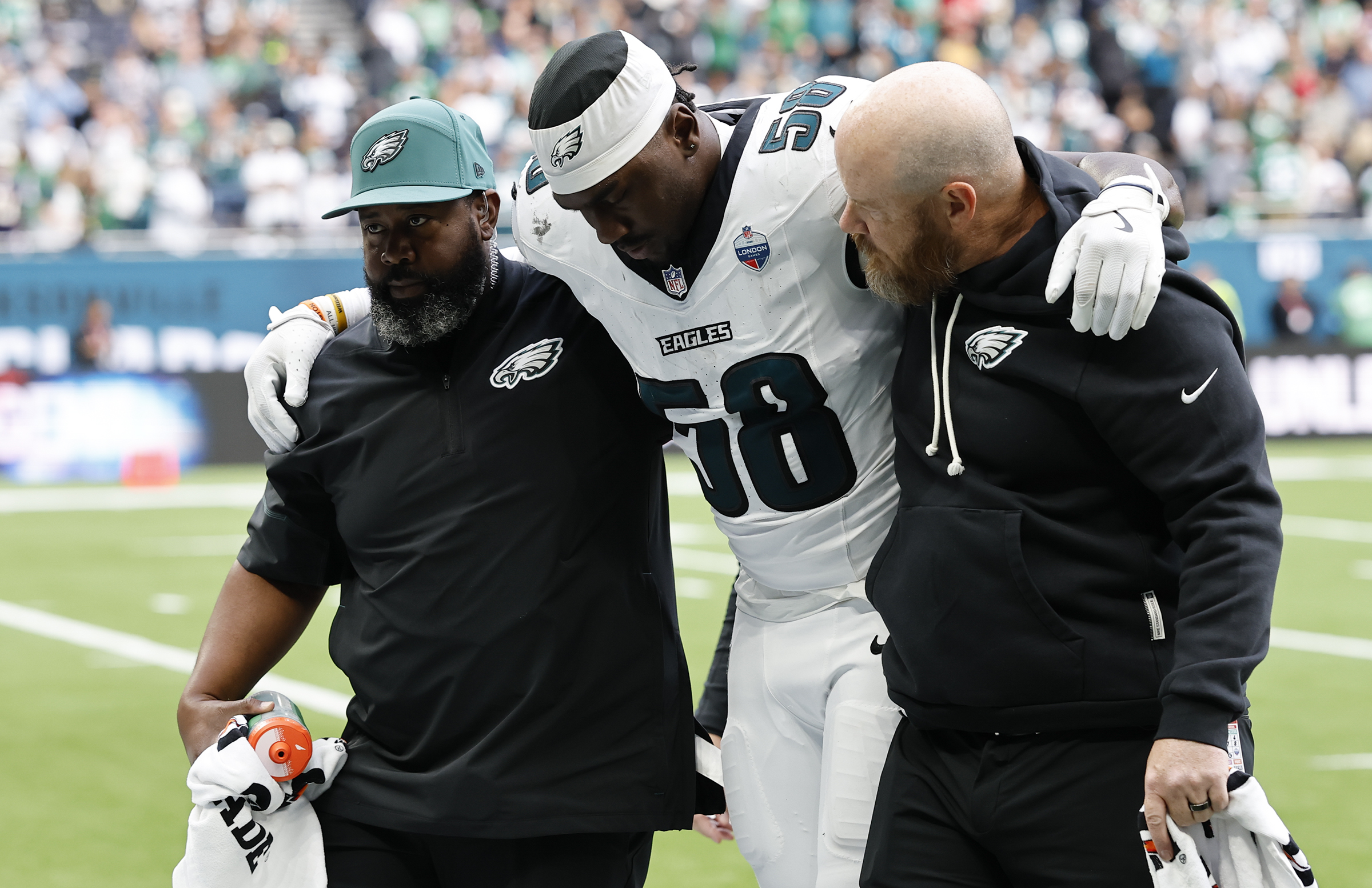
    The standout Eagles edge rusher practiced Thursday for the first time since he suffered knee and ankle injuries on the final play of the first half against the Jaguars in London in Week 5.

    Hunt seemed relieved when speaking from his locker room stall after Thursday’s practice. He revealed how terrifying the initial injury diagnosis was.

    “Shoot, when I got the MRI back and they said, ‘Well, given the fact that it looked like you tore your knee up …’ So shout out God,” Hunt said. “Shout out the fact that I do yoga and Pilates in the offseason.”

    Hunt, 25, wouldn’t say if he expected to play against the Cowboys on Monday night, but defensive coordinator Vic Fangio said Tuesday it’s a possibility.

    “We’ll see how he does in practice,” Fangio said.

    Hunt hopes to rejoin a battered Eagles edge rusher group. A.J. Epenesa is nursing a back injury, Jonathan Greenard is on a pitch count and Nolan Smith Jr. suffered a concussion last week. The Eagles are currently featuring backups including seventh-round rookie Keyshawn James-Newby and Arnold Ebiketie as part of their rotation.

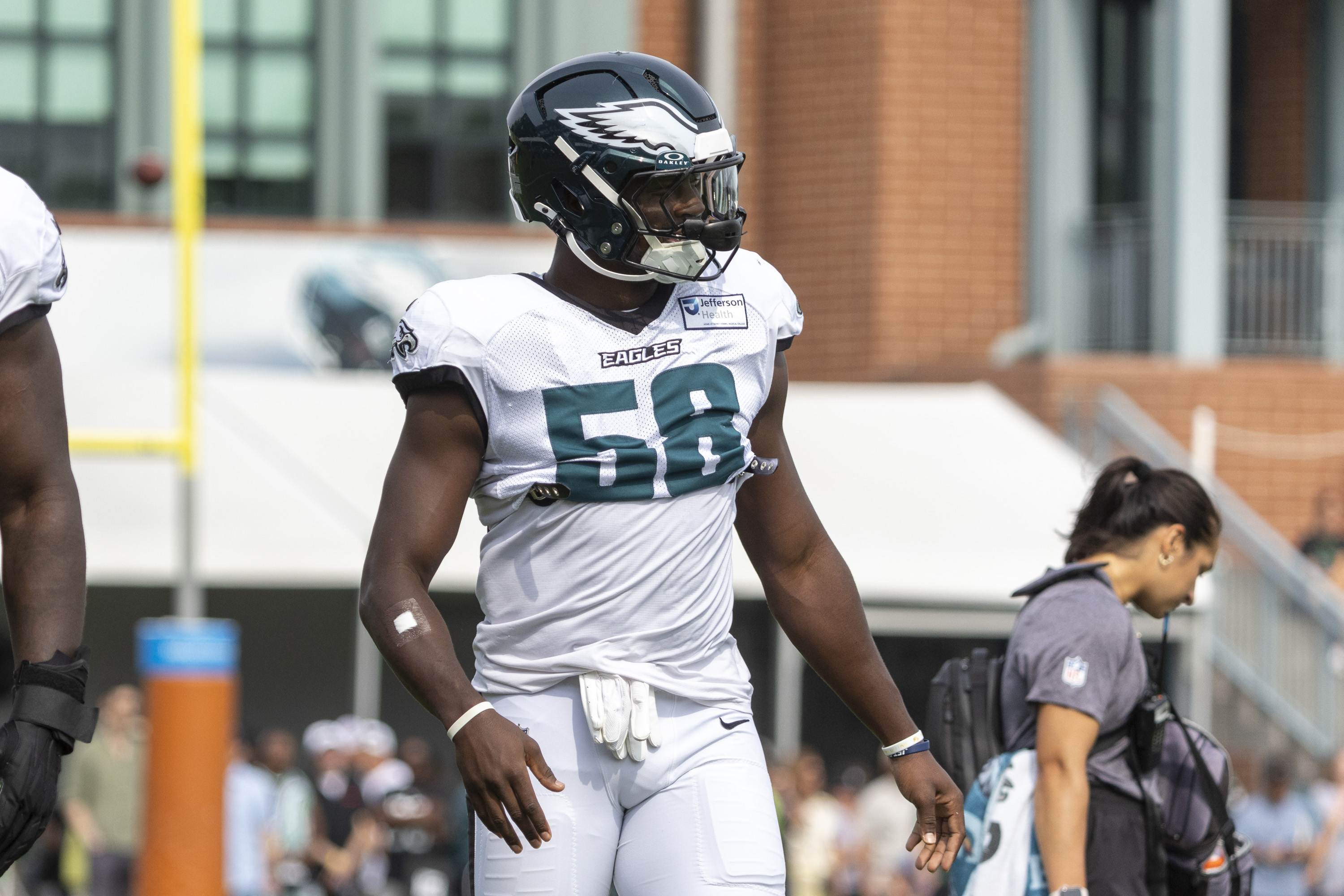
    Hopes were high for Jalyx Hunt in 2026 after a standout training camp. Tyger Williams / Staff Photographer

    Does this add any extra motivation for Hunt to play Monday?

    “I definitely want to,” he said. “Like I said, it sucked not being able to contribute. But at the same time, I would hate to come back and not be ready and then be a detriment to the team when we have more than capable people in the room.

    “It is an added motivation, but I wouldn’t make that the main focus. Just because I wouldn’t want to put my team behind simply from a selfish act with wanting to play football again. There’s people who are healthy and willing and more able than I am.”

    Hunt has 15 tackles and four quarterback hits in five games this season. He finished with 52 tackles, 6.5 sacks and nine tackles for loss last season and was arguably the Eagles’ best player in training camp.

    According to Fangio, Hunt likes to “push the limits” on getting back as early as possible.

    “Yeah, my mom won’t like that too much, but yeah,” Hunt said. “It’s part of the game, especially when you get to this level. There’s bumps and bruises that everybody plays through. So knowing if it’s [the kind of] hurt that’s gonna sit you down, or hurt that you can work through, it’s something I’m real good at … ”

    “I do think I push my body, especially with something like this, so I can know where I’m at. And every day I was in here, I was just trying to take it as far as I can before they stop me.”

    Former top-10 pick Evan Neal is now a member of the Eagles practice squad. Noah K. Murray / AP

    More roster moves for Birds

    The roster shuffling continued for the Eagles on Thursday, as the team announced several additions and one subtraction.

    The team re-signed running back Jaydon Blue to the practice squad, while also adding former Giants guard Evan Neal and linebacker Anfernee Orji to that group.

    Blue, who played in five games with the Cowboys last season, was active against the Panthers last week but did not play. He was waived Tuesday along with fellow running back Carson Steele (waived/injured), while the team signed Elijah Mitchell to the practice squad.

    Neal, the No. 7 overall pick by the Giants in the 2022 draft, spent time on the Raiders practice squad this season but was released Oct. 19. The University of Alabama product started 27 games with the Giants from 2022-24 but his tenure in New York was beset by injury issues.

    Orji makes his second appearance on the Eagles practice squad after initially being released on Oct. 6. The Vanderbilt product played 16 games with the Saints during the 2024 season as a backup linebacker and special-teamer.

    The Eagles also waived tight end E.J. Jenkins., who had appeared in each of the team’s first six games, with two starts. Jenkins being excised from the roster is perhaps a signal that second-round rookie tight end Eli Stowers is nearing a return. Stowers started the season on injured reserve with hamstring and quad injuries, but the team opened his 21-day window to return on Oct. 14.

  • Former and current Big 5 coaches express disappointment in Villanova’s exit from men’s format

    Former and current Big 5 coaches express disappointment in Villanova’s exit from men’s format

    Big 5 men’s basketball will look different next season.

    On Thursday, it was announced that Villanova would no longer be a full participant in the Big 5. The current three-year agreement, which saw six teams split into two pods to determine a seeding for the Big 5 Classic, will end following the 2026-27 season. Sources told The Inquirer that Villanova was no longer interested in keeping the current format.

    Next season, the remaining five men’s programs will play a round-robin format. All six schools are working toward bringing back a one-day Big 5 Classic tripleheader.

    At Thursday’s annual Coaches vs. Cancer luncheon, several active and former Big 5 coaches shared their reactions to the announcement. Villanova coach Kevin Willard was not at the luncheon due to the Wildcats’ preseason game against No. 9 Virginia. In his place, Villanova general manager of basketball Baker Dunleavy attended.

    “Being connected to Philadelphia basketball has always been a big part of who we are at Villanova, and always will be,” Dunleavy said. “With the landscape shifting here in college basketball, there’s a lot to be said for that. But I think I’ll allow coach Willard and our athletics director Eric Roedl to speak about it. … Our connections to Philly will continue. It’s just what games look like, what competition looks like in the future will probably shift a little bit.”

    Fran Dunphy, the winningest coach in Big 5 history, expressed disappointment with the announcement. Dunphy coached at Penn, Temple, and La Salle. He retired following the 2024-25 season.

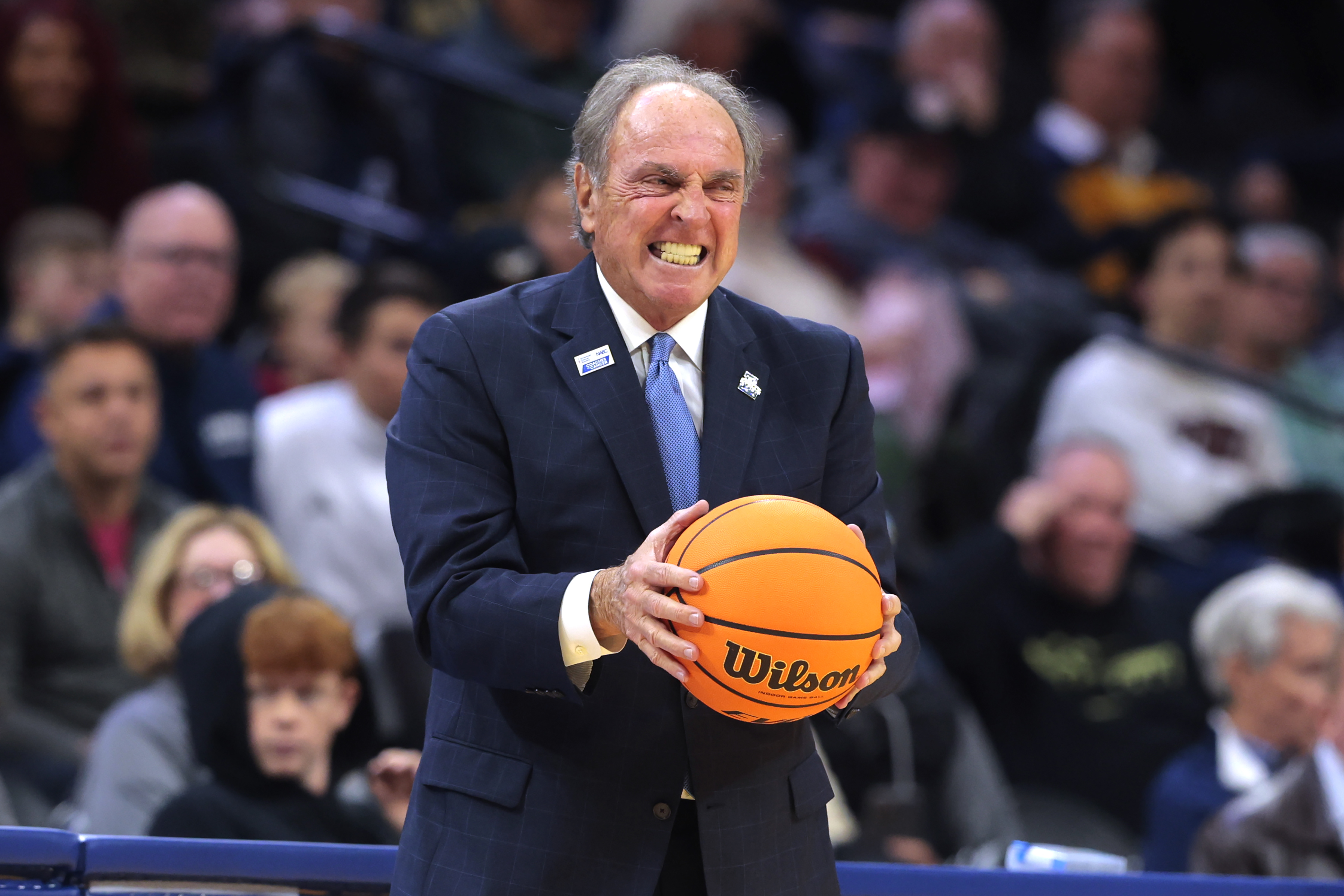
    Former Big 5 coach Fran Dunphy is disappointed about the Big 5 Classic changes going into effect next season.Charles Fox / Staff Photographer

    “I’m disappointed, but change happens,” Dunphy said. “We’ve got to be ready for change. And hopefully, we can continue to talk and keep the spirit of the Big 5 alive. That would be my greatest wish.”

    Under the current format, Villanova loses two potential home games. The first is a road game the Wildcats play in pod-play and the other is the Big 5 Classic. The tripleheader, played at Xfinity Mobile Arena, distributes revenue evenly between the six schools and the venue. Lost revenue from losing home games is a leading reason why the Wildcats are leaving the current format.

    “We all heard the rumors,” Dunphy said. “So again, change is inevitable. It all depends on how we look at things. As a Big 5 purist, I wanted to see all of the six schools stay together and make what we have done over all of these years still meaningful. And Villanova has been a huge part of the Big 5 for so many years. I value what they bring to the table.”

    St. Joseph’s coach Steve Donahue was on Dunphy’s staff at Penn from 1990 to 2000 before returning to the Quakers as head coach in 2015. He was dismissed by Penn following the 2024-25 season and is now entering his second season at the helm for the Hawks. On Thursday, Donahue said it is “amazing” that the round-robin was continuing, but he was saddened to hear the Wildcats would not be part of it.

    “I’m disappointed that Villanova is not going to be a part of it,” Donahue said. “It’s been a part of history, and I’m looking around [the event]. I see guys who played at Villanova, the Big 5 was a big part of that. The Fran O’Hanlons, the Tom Ingelsbys, the Howard Porters, the Ed Pinckneys, and all those guys. That shouldn’t be forgotten. And in some ways, I’m sad. But I’m excited that we can still play that round-robin and hopefully a tripleheader at some point.”

    Darris Nichols, who is entering his second year as La Salle’s coach, is relatively new to the Big 5. He is hopeful about its future without the Wildcats.

    “I’ve been hearing rumblings about it over the last year or whatever,” Nichols said. “ … I think the biggest thing is like, you can focus on change, but the college landscape is changing every day at a fast pace. So, you know, I’m more excited about the teams that still want to be a part of this.”

  • ‘It feels like a weight has been lifted’: Cherry Hill students share their experience with the state’s new phone ban

    ‘It feels like a weight has been lifted’: Cherry Hill students share their experience with the state’s new phone ban

    They play board games at lunch. They greet each other in the hallways between periods. They pay more attention in class.

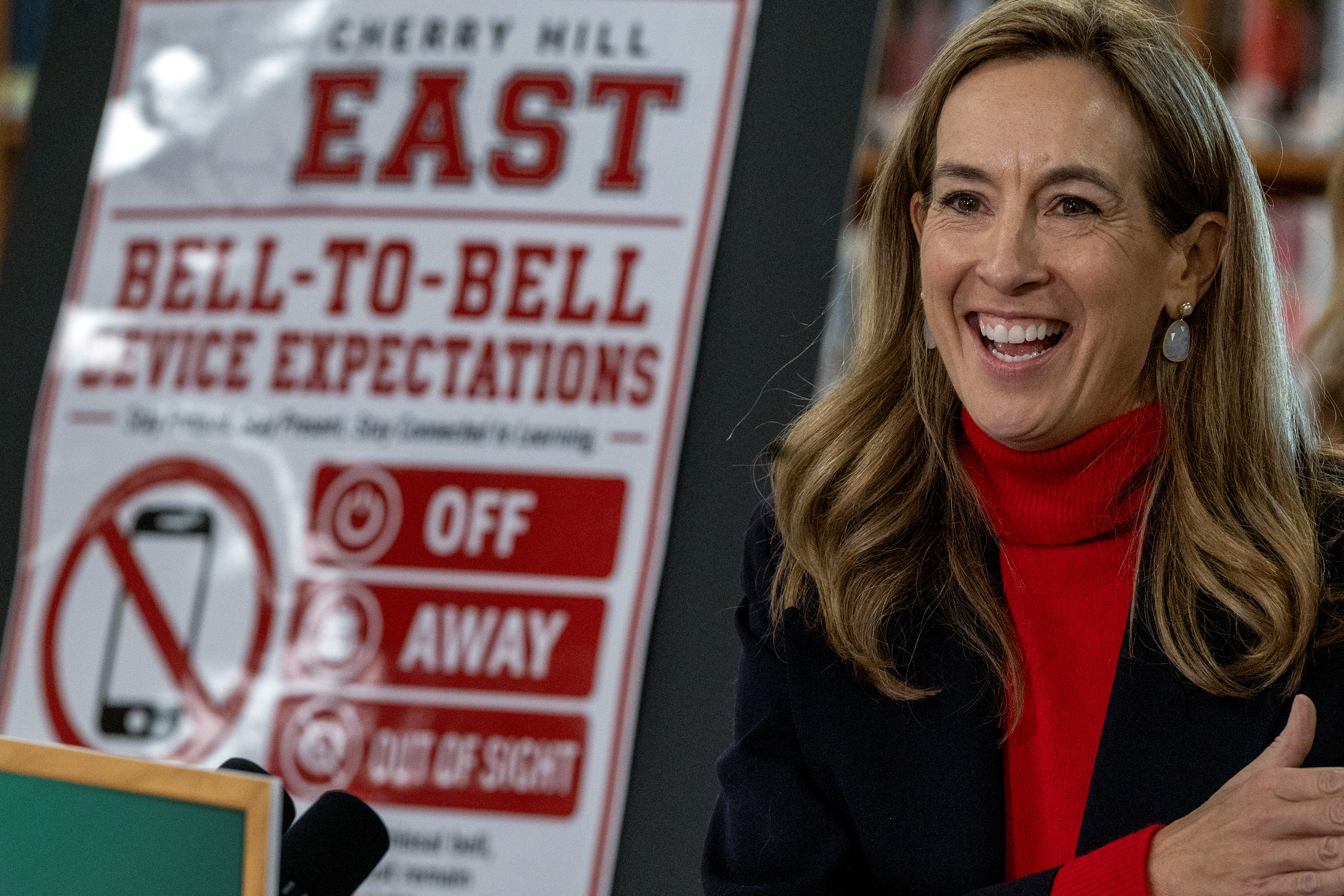
    Gov. Mikie Sherrill got an earful Thursday when she visited Cherry Hill High School East to learn more about how a state law that bans the use of cell phones and devices in schools has affected learning.

    Junior Giovannina Viglietta, 16, said her stress level and anxiety have been reduced because she no longer checks her phone constantly and can focus on classwork.

    “Without the pressure to constantly check messages or keep up with social media, it feels like a weight has been lifted off my shoulders and I can be more focused in classes,” Viglietta said.

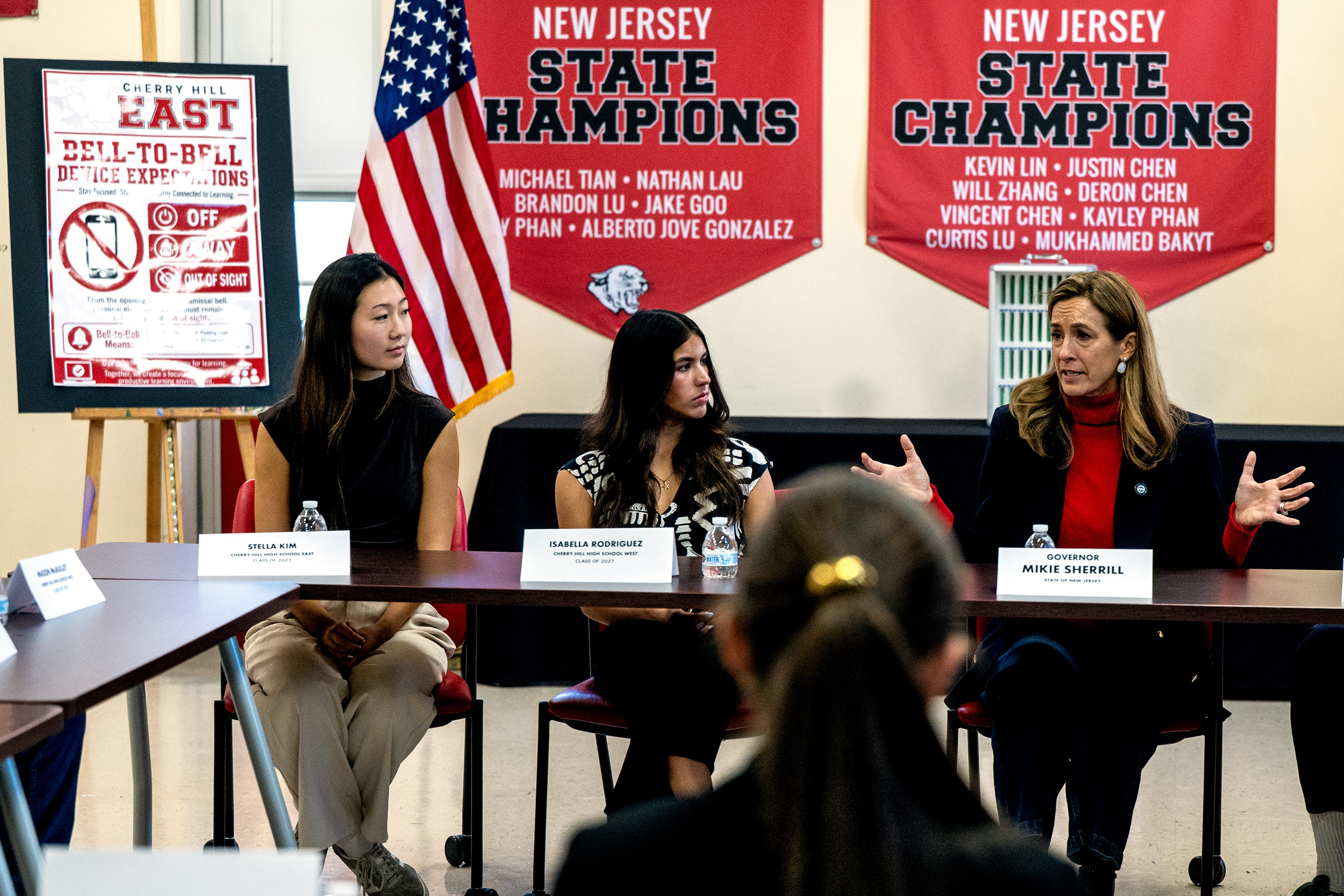
    Seniors Stella Kim (left, from East) and Isabella Rodriguez from West, join other students in a roundtable discussion with Gov. Mikie Sherrill at Cherry High High School East.Tom Gralish / Staff Photographer

    Effective since the academic year began in September, the law has changed the school environment with fewer distractions, after some initial pushback, students and school officials say.

    “Our teachers no longer have to compete with a device for their students’ attention, and they can create more engaging classrooms,” Cherry Hill School Superintendent Kwame Morton said.

    Sherrill implemented the law, which was signed in January 2026 by former Gov. Phil Murphy. It required New Jersey’s nearly 600 public school districts to adopt bell-to-bell restrictions on cell phones and internet-enabled devices.

    The governor said she was impressed with the insight shared with her by a handful of students during a closed-session roundtable prior to her media briefing.

    “Giving students a school day free from constant digital distractions creates more room to learn, build friendships, and connect with their teachers,” Sherrill said. “We know that when kids put down the screens, their mental health and academic performance improve.”

    The bell-to-bell restrictions cover the entire school day, from the moment students arrive, and include lunch, study hall, and between classes.

    Cherry Hill East Student Government president Stella Kim, a senior, said the school culture was different when students were allowed to use their cell phones. She had been skeptical the ban would work but says it has become “the new norm.”

    “Everyone was really in their own world. They didn’t talk to each other,” said Kim, 17.

    Kara Rogalcheck, 17, a senior at Cherry Hill High School West, admitted she “wasn’t the happiest” when the cell phone ban was implemented. She said she is enjoying her final year, living in the moment.

    Said Vasisth Medavarapu, 16, a junior at East: “We’re definitely talking more.”

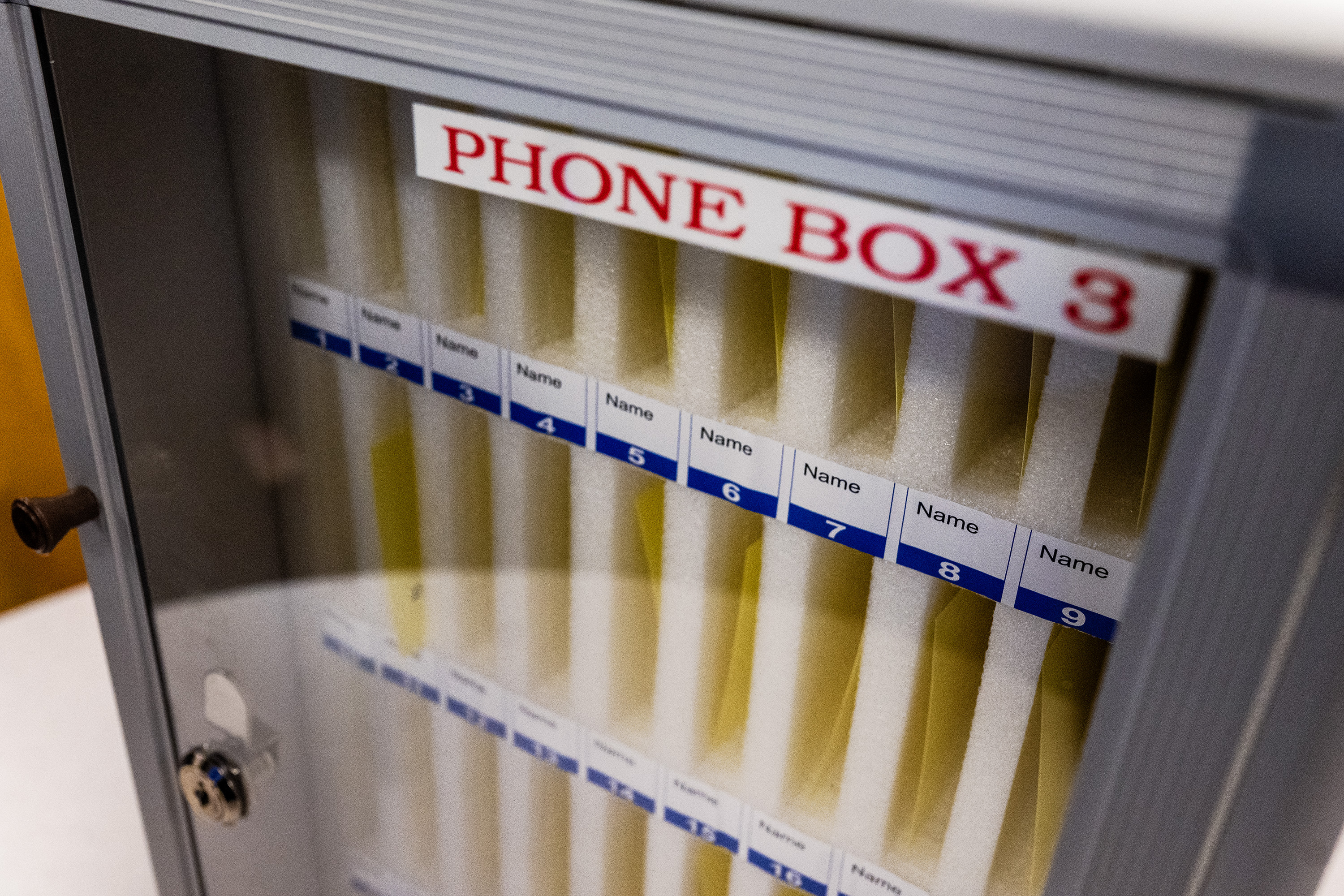
    The law allowed districts to decide how the devices are stored. Some districts have locked pouches, let students keep their devices turned off in their belongings, or store them in lockers or classrooms.

    Cherry Hill East students said they were pleased that the district allows them to keep their phones with them, and that makes them feel trusted. The schools have locked phone boxes used to store phones for repeat violations. The phones are returned at the end of the day in most cases.

    The phone lock box safe used in the Cherry Hill School District was on display on Thursday.Tom Gralish / Staff Photographer

    State Education Commissioner Lily Laux said districts across the state are reporting positive results. It may take years to see the full impact of the ban, she said.

    Educators say the problems with cell phones had become untenable. Teachers were frustrated trying to enforce the rules in class, while students watched movies or constantly scrolled social media.

    Cherry Hill and several other South Jersey districts, including Woodbury and Deptford, voluntarily began enforcing cell phone restrictions before the law was passed. The Cherry Hill school board also banned cell phones for its members during meetings.

    Morton said there have been few violations since the ban became mandatory. Cherry Hill has a tiered progressive discipline approach for violations.

    Gov. Mikie Sherrill visits Cherry Hill High School East on Thursday. The district began enforcing cell phone restrictions before the new law was passed.Tom Gralish / Staff Photographer
  • Collingswood residents have questions about a historic theater. Answers are slowly coming.

    Collingswood residents have questions about a historic theater. Answers are slowly coming.

    Debate over the past and future management of a historic Camden County theater took the stage once again Wednesday, this time during a tense Fall Town Hall in Collingswood featuring both applause and groans.

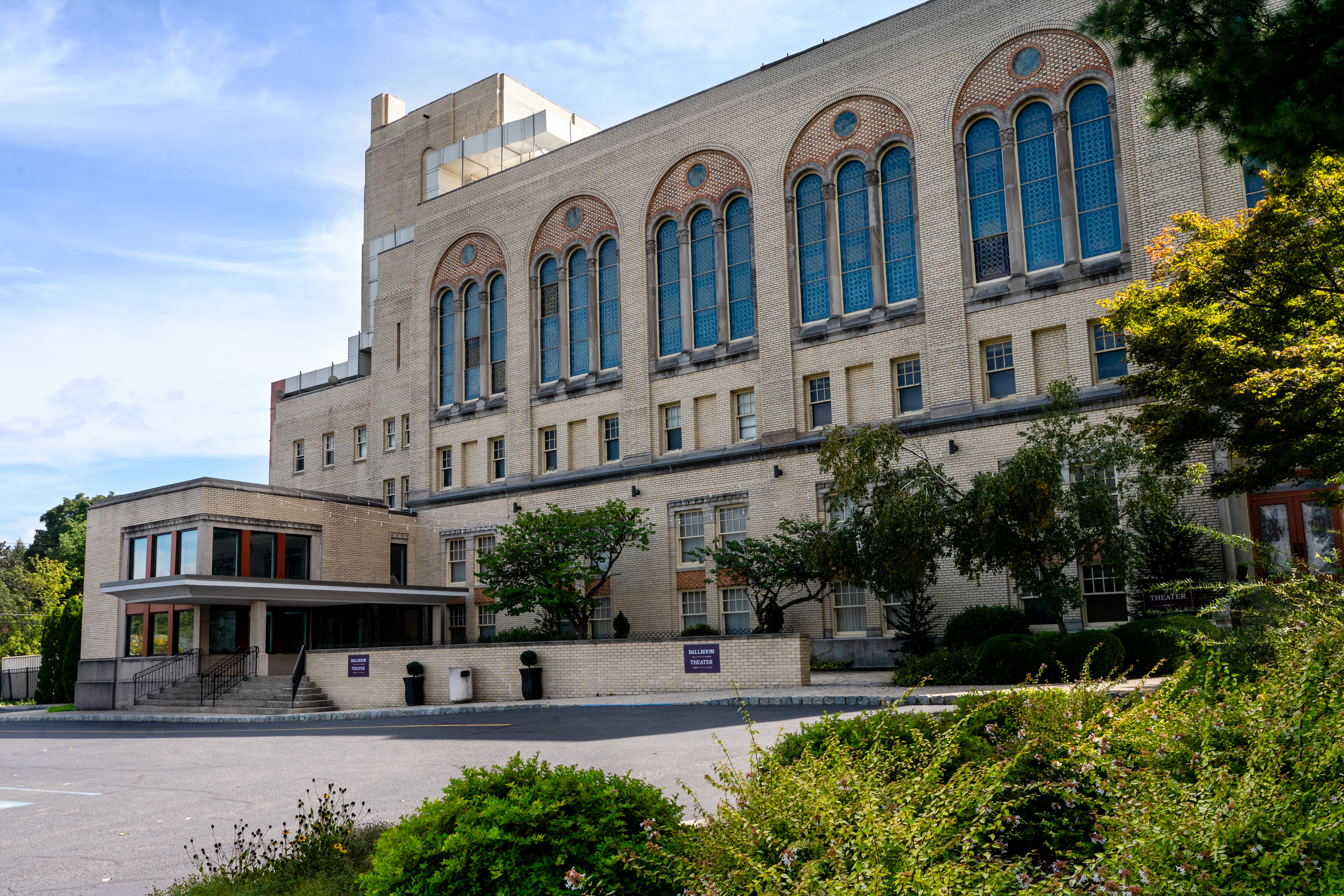
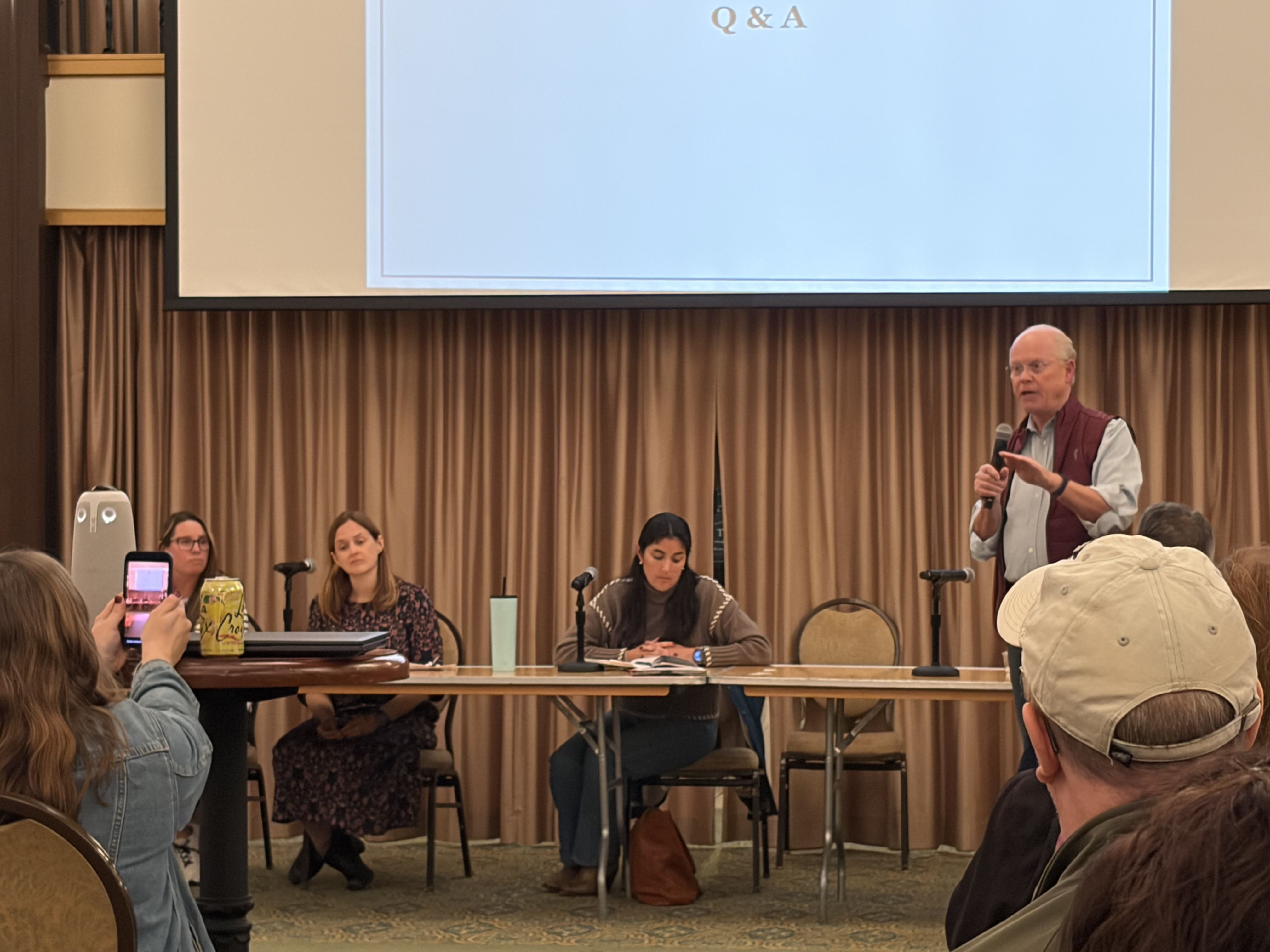
    Collingswood’s three commissioners answered questions for two hours inside the Collingswood Grand Ballroom, a wedding and event venue inside the Scottish Rite property on White Horse Pike.

    The Scottish Rite Theater, which hosts everything from rock bands to school district events, has been the subject of public scrutiny for months as residents question why the borough has spent millions of dollars since 2003 on theater renovations, operations, and utilities, even though the property is run by the Collingswood Foundation for the Arts, a private corporation that had its nonprofit status revoked by the IRS two years ago.

    Collingswood officials are currently working on an agreement to transfer responsibility of the theater to Camden County to ease its financial burden. If approved, the Collingswood Foundation for the Arts would likely cease to exist after more than two decades at the Scottish Rite.

    Commissioner Jim Maley (right) answers questions at Collingswood’s Fall Town Hall on Wednesday, Oct. 21, 2026. From left to right, more Collingswood officials sit, including Board of Education President Kelly Maia, Deputy Mayor Amy Henderson Riley, and Mayor Daniela Solano-Ward.Sarah Nicell

    Paula Lara, executive director of the foundation, has previously declined to comment on the Scottish Rite.

    Lara, who said she’s worked at the Scottish Rite for 17 years, had prepared a speech Wednesday to address the controversy.

    But the piece of paper stayed folded up in her pocket.

    “It felt like it wasn’t the right time,” said Lara, who said she isn’t sure what the future holds for the Scottish Rite, or her job. “I mean, I hope I’m still here to see it.”

    ‘County taxpayers are taking on the risk’

    Mayor Daniela Solano-Ward, who is also a commissioner, said Wednesday that the borough’s special counsel will have more answers on the Scottish Rite by Nov. 2, Collingswood’s next commissioners meeting.

    Commissioner Amy Henderson Riley had previously asked counsel to determine the legality of the Scottish Rite’s management structure. At the moment, Collingswood holds a lease agreement for the Scottish Rite property through 2092, and has an additional agreement with the Collingswood Foundation for the Arts, a private corporation, to manage the theater.

    That corporation was created decades ago by lawyers and borough officials, including Jim Maley, a current commissioner and former mayor of Collingswood. He still sits on the board of the foundation.

    Solano-Ward said she’s still working to put together a list of asks for a shared services agreement with the county. The agreement would mean the county, not the borough, would pay for future repairs and expensive renovations at the Scottish Rite. Some attendees said that just means Collingswood residents would fund the theater with their county taxes rather than their borough ones.

    “As I’ve expressed before, that really just means county taxpayers are taking on the risk,” said Kate Delany, president of South Jersey Progressive Democrats and a Collingswood resident since 2007 who has spoken out for months on the Scottish Rite.

    In response, Maley said Camden County could soon benefit from a Cultural Arts Facilities Expansion grant from the state, the same multimillion grant that is funding improvements to Battleship New Jersey. The state is reviewing the borough and county’s application for funding in the CAFE program’s second round, Maley said. It’s unclear when and if that money will come.

    “I’m sure the county will be working to get other state funding, other federal funding, other funding, to help reduce what kind of impact it has on taxpayers,” Maley said.

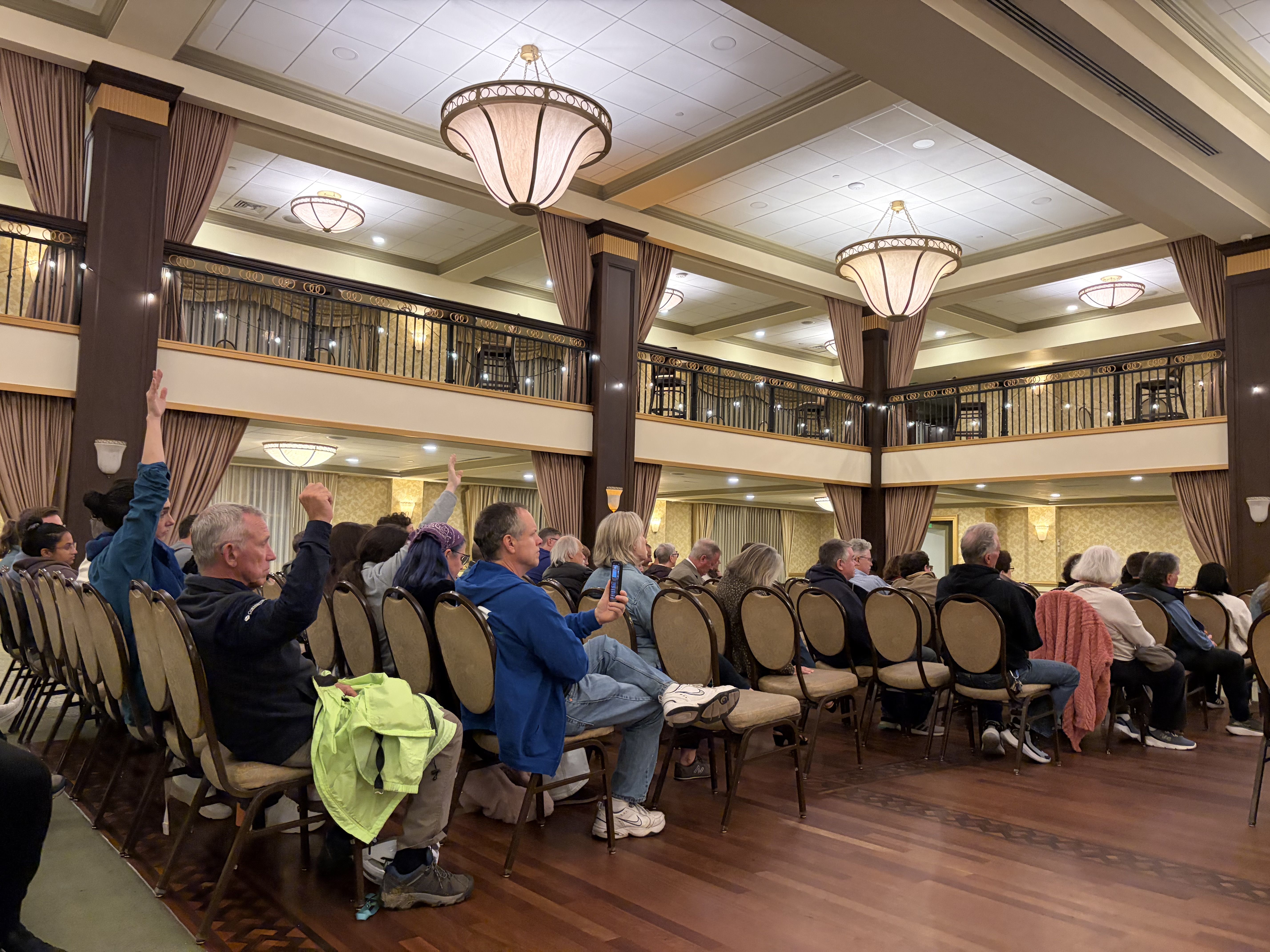
    Collingswood residents and visitors raise their hands to ask questions at the Fall Town Hall at the Collingswood Grand Ballroom on Wednesday, Oct. 22, 2026. The ballroom is part of the Scottish Rite Theater property, which has been the subject of debate in Collingswood for months.Sarah Nicell

    Collingswood officials recently posted drafts of the Collingswood Foundation for the Art’s four missing 990 filings since 2021 on its website. The foundation’s nonprofit status has yet to be reinstated by the IRS.

    The most recent draft report lists Maley as the foundation’s president and Camden County Commissioner Louis Cappelli Jr. as vice president. Cappelli told The Inquirer last month that he hasn’t had anything to do with the foundation in decades.

    Attendees also demanded answers about the late reports. Lara said the foundation’s accountants were the problem. The CPAs employed by the foundation didn’t complete the reports, and when she replaced them, Lara said they took more than two years to finish them.

    Lucille Diyoung, 70, spoke in support of Collingswood’s management of the theater as someone who has lived in the borough for decades. She said she saw the state of the 95-year-old theater before the major repairs funded by Collingswood 20 years ago.

    “It was a hellhole. It was just unbelievable,” Diyoung said. “Just look at the lights. This really did need a lot of work, and they did [it]. It’s been gorgeous, and I’ve enjoyed it many, many, many times. … I don’t understand the issues. I really don’t. It’s here. We love it.”

    ‘A breaking point’

    The town hall didn’t just focus on the Scottish Rite.

    Cassandra Duffey, the borough administrator, discussed plans to make walking routes to Collingswood schools safer, since the district, only two miles, doesn’t use buses.

    Duffey said the borough, in conjunction with the New Jersey Department of Transportation and the school district, is working to apply for a Safe Routes to School grant, a federally funded program by NJDOT, along with planning improvements to borough intersections, sidewalks, bump-outs, road signage, and adding more crossing guards.

    The commissioners also explained three referendums that will appear on voters’ ballots in Collingswood in November.

    If the majority of voters say yes, one of those referendums would allow four Collingswood restaurants or bars to get liquor licenses.

    While the borough could handpick who gets the licenses, Solano-Ward said the borough is staying away from that option to avoid lawsuits from parties who don’t win out. Instead, the borough would distribute the licenses through closed bids.

    Another countywide referendum would increase the open space tax by one cent per $100 of assessed property value to support the county’s clean water plan, which would cost the average Collingswood resident $45 more per year, Solano-Ward said.

    The third ballot measure would support a $4.56 million annual boost to the school district’s operating budget, fueled by taxpayers, after funding struggles forced Collingswood Public Schools to close Garfield Elementary School this year.

    “We’ve done state incentive programs, the one-time tax levy, we’ve closed a school down. We’ve been doing our best to save as much as we can and to cut costs,” said Kelly Maia, Collingswood’s Board of Education president. “But we’re at a breaking point, to be honest with you.”

  • Pemberton Township meeting ends in near-physical altercation with mayor

    Pemberton Township meeting ends in near-physical altercation with mayor

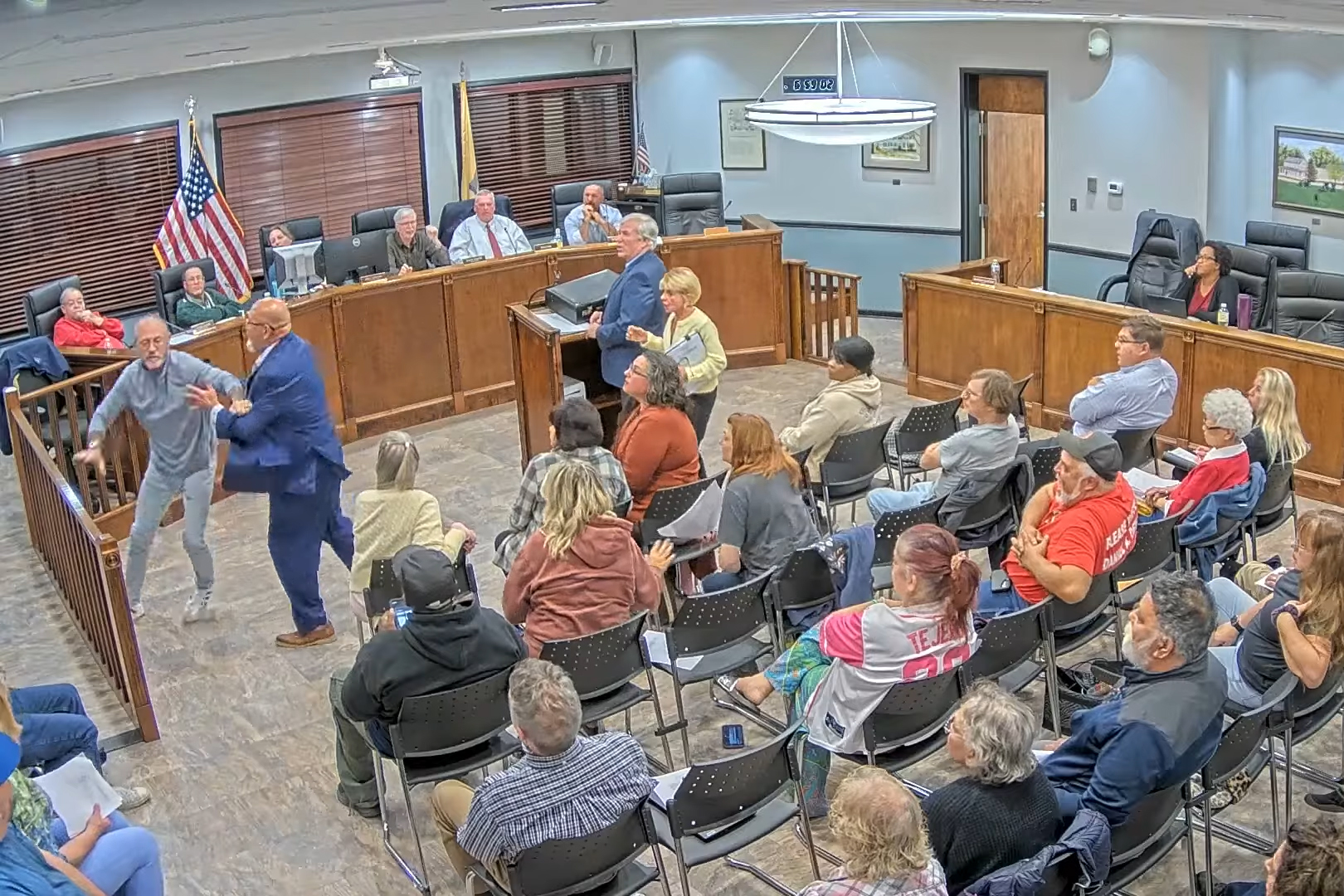
    A seemingly routine Pemberton Township Council meeting Wednesday night came to a dramatic close after Mayor Matthew Bianchini charged at someone in the audience.

    The incident, captured on video by the township’s meeting livestream, came almost exactly an hour into the monthly gathering that was attended by dozens of people.

    As Kenneth Gerber, a recently fired township official, and his attorney were at the podium during public comment, the video captures Bianchini, sitting behind the dais, turn his focus from the lectern to the audience.

    There is some back-and-forth between Bianchini and the audience that was not clearly picked up on the video, before one attendee can be seen raising his middle finger toward the mayor.

    Bianchini then leapt from his chair and approached the attendee as Gerber and a few other people held him back and council members called for him to stop. He was physically removed from the room as he yelled, “I’m going to get you,” at the attendee, who in turn called for the mayor to be arrested.

    “He just threatened me,” the attendee yelled. “I want the police here to arrest him for that threat.”

    “I’m charging him with assault,” he said.

    Pemberton Township police confirmed that they are aware of the incident but could not comment further.

    No official charges had been filed against Bianchini as of Thursday afternoon, according to online court records.

    Bianchini did not respond Thursday to requests for comment. In a Facebook comment on a post by the Pine Barrens Tribune, Bianchini’s wife, Nicole, who was sitting in the audience, explained her husband’s actions during the meeting.

    “Let’s rewind and start at the beginning. An employee who was terminated was up at the podium with his attorney disputing why he was fired. It was a lengthy presentation and some of us in the back were getting confused as to why it was taking so long and what was going on. Another resident … began making comments to the Mayor while the employee and his attorney were talking. (Which is not allowed during any meeting while someone is speaking, regardless of who they are),” Nicole Bianchini wrote.

    She continued: “My daughter asked him to please stop talking so that this could continue. A female stood up and began telling my daughter to ‘shut up’. My daughter told her this doesn’t involve you to which she responded ‘want to take this outside’. [The attendee who held up his finger], who had been making comments all night that were mumbled, while he was looking at myself and daughter then proceeded to ‘flail his hand’ while flipping my husband off. This was observed by my husband and you can see what happened from there.”

    “I am not condoning my husbands actions but I will say as a parent and a spouse, I get his protection mode,” she wrote.

  • Port Richmond’s 48-foot-tall pile of industrial waste is finally getting cleaned up

    Port Richmond’s 48-foot-tall pile of industrial waste is finally getting cleaned up

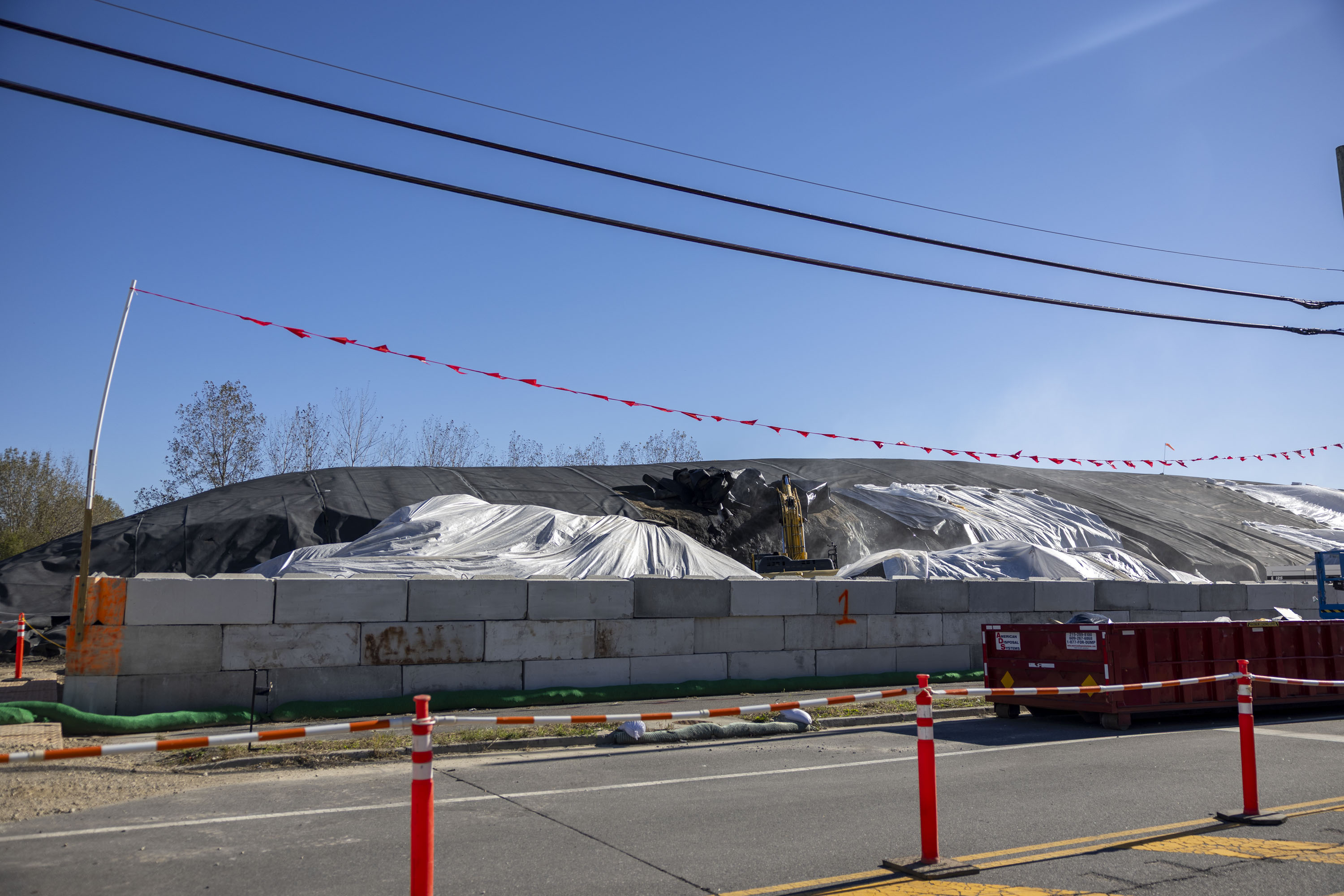
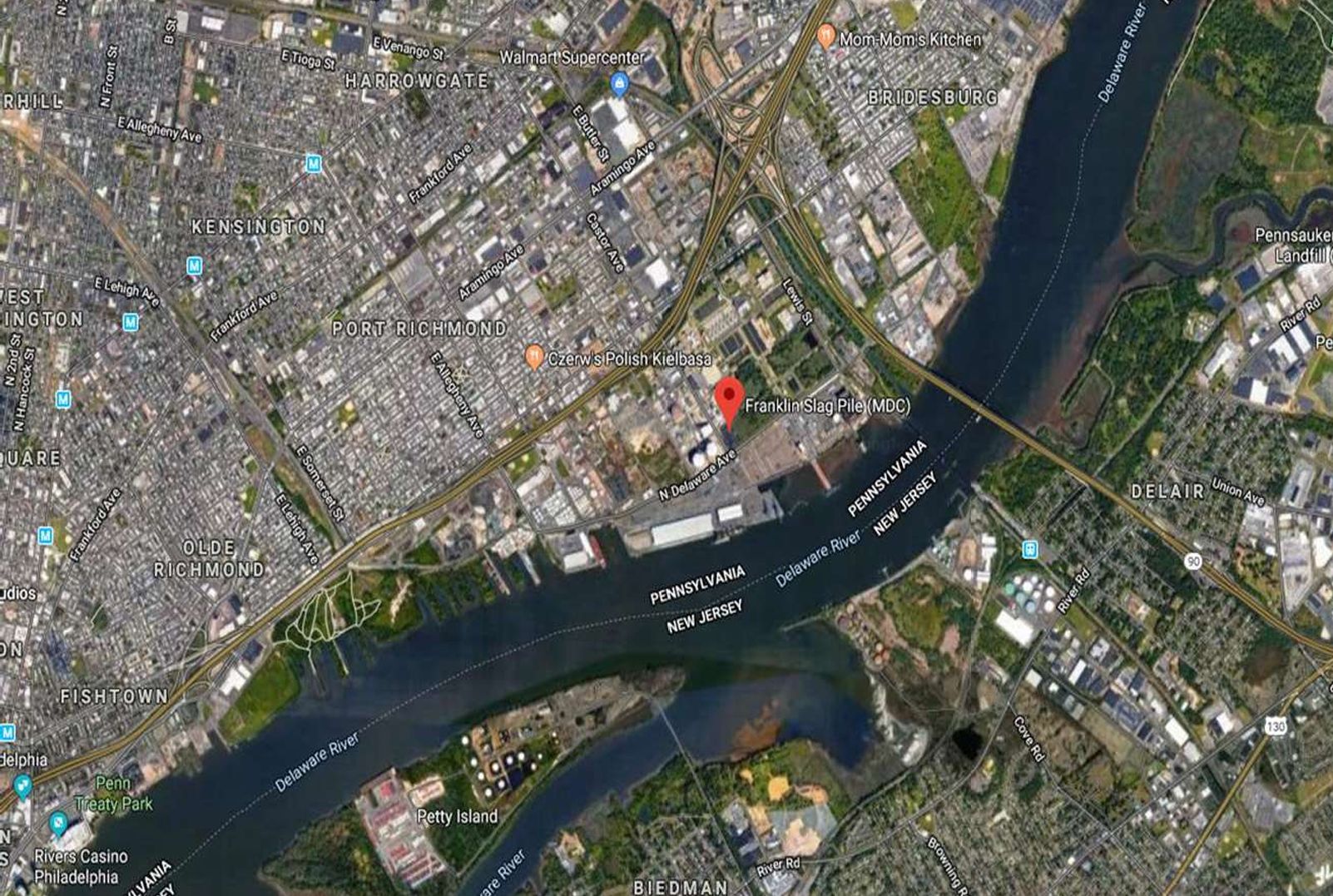
    The 48-foot-high, 350-foot-long Franklin Slag pile has dominated the corner of Castor and Delaware Avenues in Port Richmond.

    Now, crews have begun a painstaking $26 million process of removing the equivalent of 20 Olympic-size swimming pools full of contaminated industrial byproduct from a defunct copper smelting operation just off the Delaware River.

    “This is a 68,000-cubic-yard pile of hazardous waste that’s been in people’s backyards,” Andrew Haneiko, project manager for the U.S. Environmental Protection Agency’s Region 3, said during a tour of the site on Thursday. “It’s part of the EPA mission to get the stuff treated and get it out of here and turn the site back into productive use.”

    The EPA, along with the U.S. Army Corps of Engineers, began remediation and associated construction in August. But crews from New York-based contractor Sevenson Environmental Services have just begun digging up the pile.

    Though the contract is through May 2031, Haneiko believes most of the pile could be gone by next fall. Castor Avenue, parallel to the site, is closed. Cars and bikes are being detoured through Balfour and Venango Streets.

    Cleaned slag will be transported north on I-95 to WM’s Fairless Landfill in Bucks County.

    “No trucks will be going through the community,” Haneiko said. “That’s a really important part of this project.”

    Though the area is mostly industrial, State Rep. Joe Hohenstein, a Democrat who represents the area, noted that over 20,000 people live within a mile of the site and people work nearby.

    He said he is sure the cleanup is safe for residents and workers at the nearby Port of Philadelphia, and at industrial facilities who could be exposed to any drifting pollution.

    “We need to make sure that we’re taking care of our environmental quality for our neighborhoods,” Hohenstein said.

    The cap on the Franklin Slag Pile Superfund site in Port Richmond.Tyger Williams / Staff Photographer

    A history of contamination

    Franklin Smelting & Refining Corp. began smelting copper at the site in the 1930s, producing slag as a byproduct.

    MDC, the operator of the site from the 1950s to 1999, sold the slag as sandblasting grit. But the slag migrated off site. It once covered the nearby rail line and area sidewalks. It caked the inside of storm drains, and could be seen blowing away.

    The EPA, the City of Philadelphia, and the Pennsylvania Department of Environmental Protection (DEP) sampled the site in the 1980s and 1990s and determined the slag contained leachable concentrations of lead. Additional sampling revealed high concentrations of beryllium, copper, and lead in the air near the pile. In high quantities, all can be harmful to humans.

    The four-acre site was added to the EPA’s National Priorities List of contaminated sites and entered into the Superfund program, making it eligible for cleanup funding.

    In 2000, the EPA piled the slag and capped it with a membrane so it could be controlled. Slag that had spilled off-site was removed, along with slag and contaminated soil at a nearby wetland.

    Officials began studying how to approach the site’s full cleanup in 2007. In 2020, the EPA issued a formal plan.

    Sevenson, the contractor, was hired in March.

    Franklin Slag is one of two Superfund sites in Philadelphia. The other is Metal Bank in the Northeast.

    Haneiko, the EPA project manager, said insurance carriers from the site’s previous owners are paying $18 million toward cleanup costs.

    The Franklin Slag site is currently owned by Franco’s Realty Inc. The EPA said there are no immediate plans for the property’s use.

    The land is zoned for heavy industry. It is bordered by a Conrail rail line, closed lagoons owned by Philadelphia Water Department’s Northeast Water Pollution Control Plant, and a Philadelphia Gas Works plant.

    The Delaware River is less than one-quarter mile southeast. The closest residents are about one-half mile away.

    A map by the U.S. Environmental Protection Agency shows the location of the Franklin Slag Superfund site in Phiadelphia’s Port Richmond neighborhood.U.S. EPA

    How the cleanup works

    Army Corps Lt. Col. Ryan Baum said his organization served as an overall project manager for the Franklin Slag site. The Army Corps provided engineering, construction oversight, and contract management, including hiring Sevenson.

    Each day, crews from Sevenson peel back part of the slag’s cap. They wet the slag to keep it from blowing away. Dust suppression equipment known as a DustBoss emits a fine mist that collides with dust particles to bring them to the ground.

    As the slag is excavated, a proprietary liquid chemical reagent called Make-Tight is applied at a pace of roughly 50 cubic yards every 30 minutes. The solution permanently binds the lead so it cannot leach into groundwater while at the landfill.

    Each batch is tested to ensure it is nonhazardous. The slag is then loaded into haulers equipped with liners, known as “burrito bags,” to prevent dust from escaping into the neighborhood.

    The trucks travel Castor Avenue to I-95, bypassing residential areas.

    Slag being removed from the Franklin Slag Pile Superfund site.Tyger Williams / Staff Photographer

    Solar-power stations encircle the perimeter and monitor the air continuously. If dust reaches 150 parts per million, real-time mobile alerts will prompt workers to halt.

    Additional air monitors are installed at neighboring industrial sites and nearby homes based on community input.

    Angela Unoarumhi, a spokesperson for the EPA, said the agency began meeting with neighborhood groups in March to listen to concerns.

    It met with Port of Philadelphia officials, union stevedores, and port workers concerned about dust.

    As a result, air monitors were installed at the port as well as in a lot adjacent to I-95, near where a 30-year resident of the neighborhood lives. The EPA also learned of a nearby bike path that was not on initial project maps.

    “It allowed us to be better positioned to address community concerns,” Unoarumhi said of the meetings.

  • SEPTA ridership hits record high since pre-pandemic. But overall ridership still has not fully recovered.

    SEPTA ridership hits record high since pre-pandemic. But overall ridership still has not fully recovered.

    While SEPTA ridership has still not fully bounced back to its pre-pandemic levels, in September, the transit agency recorded the most riders since February 2020.

    SEPTA’s average daily ridership in September passed 822,000 across all modes of transportation, according to new data the agency released Thursday. September also marked the seventh consecutive month of year-over-year ridership — up 8% compared with September 2025.

    “Our focus on the fundamentals has raised our standards, and riders are noticing the difference,” SEPTA general manager Scott A. Sauer said. “They are seeing cleaner stations and vehicles, the system feels safer, and it is becoming easier to use and more accessible.”

    Transit systems across the country are trying to bounce back ridership after years of decline due to rising costs of travel, hybrid work keeping more commuters at home, and the pace of post-pandemic economic recovery. SEPTA worked to address antisocial behavior, like smoking on the Market-Frankford Line, and is working to establish reliability on Regional Rail after fires on Silverliner IV trains took more than 200 railcars out of service.

    More than 800,000 people rode SEPTA on 18 out of 21 weekdays in September. Tuesday, Wednesday, and Thursday are the most popular days to take transit. In late 2019 through early 2020, ridership was about 900,000 on an average weekday, according to SEPTA spokesperson Andrew Busch.

    The agency credits the weekday ridership boom in part to the New Bus Network, according to a new performance report covering the first five weeks of service.

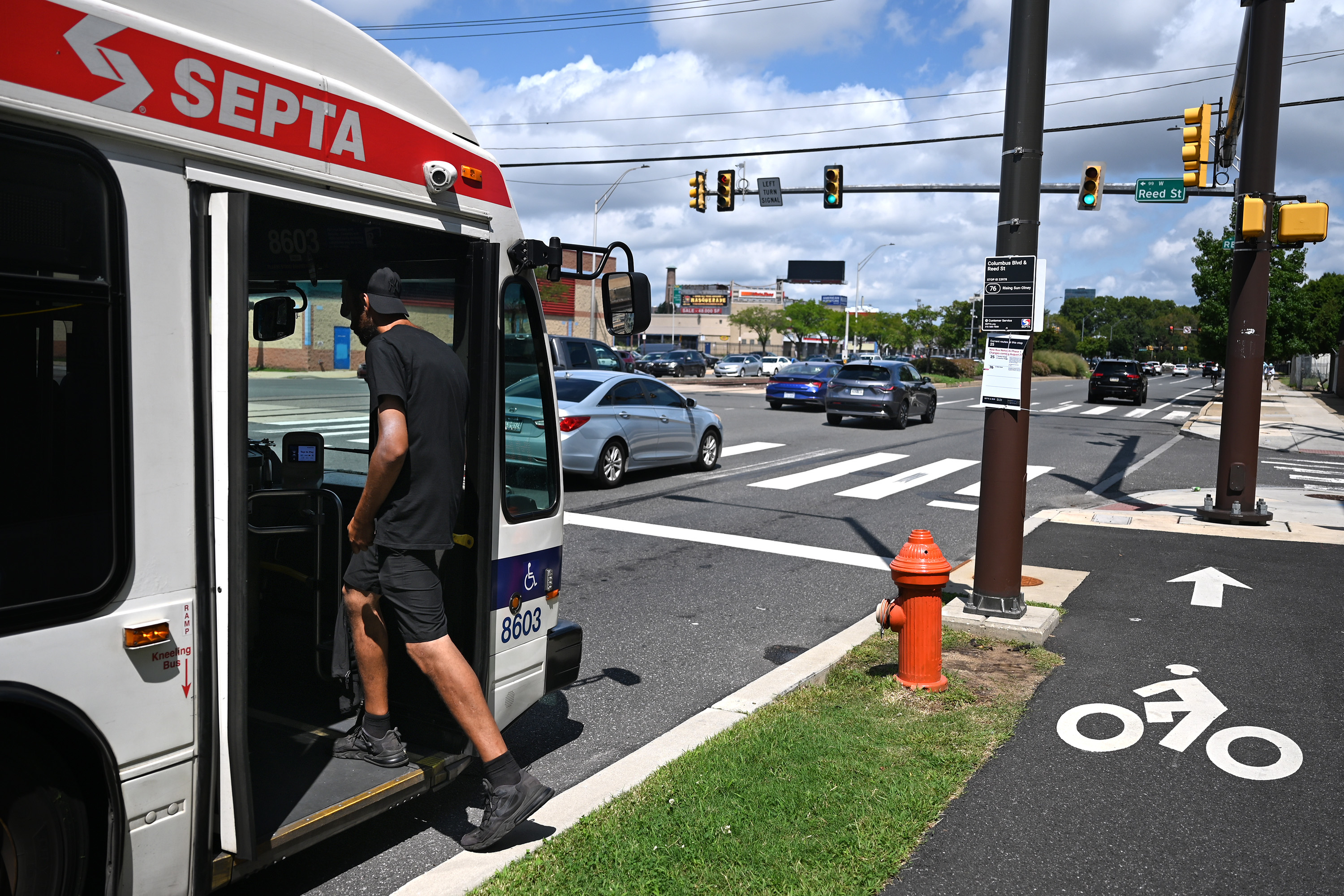
    Passenger board the brand new #76 bus at Reed St. and Columbus Blvd. Sunday, Aug. 23, 2026 on the day the line is introduced as part of SEPTA’s “New Bus Network.” Tom Gralish / Staff Photographer

    The network, SEPTA’s long-delayed streamlining of its bus system, brought changes to 30 routes, including more frequent service on routes with high ridership and buses coming less often on lower-performing routes. Impacted routes experienced a 7% increase in average weekday ridership, with weekend travel growing by 12% on Saturdays and 18% on Sundays.

    “We’ve thought for some time that there’s pent-up demand, and I think we’re seeing that play out,” Busch said of the boom in weekend bus ridership. “The new bus network is aimed at making the trip more reliable by making it more frequent and making better, more convenient connections to other services.”

    Bus riders, who account for more than half of SEPTA’s ridership, were up 14% overall compared with the same time last year.

    SEPTA Regional rail train passes riders waiting for their train at Jefferson Station, Philadelphia, Tuesday, October 7, 2025.Alejandro A. Alvarez / Staff Photographer

    While buses, trolleys, and the Broad Street Line (now dubbed the B) have experienced stronger weekday ridership, Regional Rail is still trailing behind last year’s totals.

    Busch attributed the lag to capacity and frequency issues, which the transit agency hopes to help address with the purchase of 24 used railcars from the Montreal Transit Agency and the leasing of 10 others from Maryland Area Regional Commuter Rail (MARC) in December 2025.

    Railcar procurement can take five years to complete, Busch said. The 34 used railcars will be put into service in early 2027.

    An earlier version of this article incorrectly stated SEPTA ridership returned to pre-pandemic levels, when the ridership hit its highest level since February 2020.

  • A long fight to desegregate New Jersey schools reaches an appeals court

    A long fight to desegregate New Jersey schools reaches an appeals court

    A sweeping New Jersey school segregation lawsuit reached a state appeals court on Thursday, when a coalition of civil rights groups, students, and parents urged judges to hold the state responsible for racial divisions in its public schools and order a plan to address them.

    For more than eight years, the coalition has argued that New Jersey has allowed racial segregation to persist in its districts, leaving hundreds of thousands of Black and Latino students in predominantly nonwhite schools, depriving kids of equal educational opportunities.

    But the state has failed to fix the longstanding disparities, according to the coalition, which includes the Latino Action Network and the NAACP New Jersey State Conference.

    The arguments Thursday at the Appellate Division of the state Superior Court in Trenton marked a milestone in the case. They followed a 2023 ruling in which a trial judge declined to decide whether New Jersey had violated the state constitution, and more than a year of mediation that ended without a settlement.

    After a lengthy hearing, it was not clear which way the judges were leaning. They repeatedly questioned whether the coalition could prove its case with the enrollment data it presented, and pressed both the coalition and the state on whether the case could be decided without a trial.

    The judges did not rule Thursday, but said they hoped to decide soon. When they do, they could side with the plaintiffs, moving the case closer to a court-ordered fix; side with the state, which could end the case; or send it back to a lower court, possibly for a trial.

    How the case got here

    The case began on May 17, 2018 — the 64th anniversary of the U.S. Supreme Court’s landmark Brown v. Board of Education decision, which outlawed racial segregation in public schools — when the coalition filed its lawsuit in the state Superior Court in Mercer County.

    The plaintiffs argued that a state law requiring most children to attend school in the community where they live has helped entrench racial divisions between school districts. The state, represented by the attorney general’s office, countered that the imbalances in enrollment did not by themselves prove unconstitutional segregation.

    The lawsuit was the idea of Gary Stein, a retired state Supreme Court justice whose group, the New Jersey Coalition for Diverse and Inclusive Schools, organized the plaintiffs.

    Five years later, in 2023, a judge declined to rule for either side on the main question in the case. He found “marked and persistent racial imbalance in numerous school districts across the State” that state officials had failed to address. But, he wrote, the plaintiffs had not proved “that the State’s entire educational system is unconstitutionally segregated.”

    On Thursday, the appeal centered largely on that same question: what the state’s enrollment data can prove and how segregation should be measured.

    By the plaintiffs’ count, nearly half of the state’s Black and Latino students attended schools that were more than 90% nonwhite in the five school years ending in 2020. The state’s experts, counting only schools where a single racial or ethnic group made up at least 90% of students, found that about 6% of all students attended such public schools in 2019-20.

    Judge Hany A. Mawla asked whether the panel could fault the trial judge for not siding with the plaintiffs when experts in the case “have different definitions of what segregation is.”

    Lawrence S. Lustberg, a lawyer for the plaintiffs, told the judges that the plaintiffs had never claimed that every district in the state is segregated. “Nor could we,” he said, “because that just isn’t true.”

    But the problem, he said, is widespread: One in four Black students in New Jersey attended a school that was at least 99% nonwhite in recent years.

    Francesco Ferrantelli Jr., a deputy attorney general representing the state, acknowledged that racial imbalances exist in some districts. But he said enrollment numbers alone cannot tell the whole story.

    New Brunswick’s schools, for example, are predominantly Hispanic, he said, but the evidence in the case does not establish whether that reflects unlawful segregation or broader demographic changes in the area.

    A fight over local control

    Under New Jersey’s long tradition of local control, most towns in the state run their own school districts, and children are assigned schools based on where they live.

    The plaintiffs want the state to stop assigning students to schools based only on home address, and to draw up a statewide desegregation plan. But on Thursday, Ferrantelli contended that the state’s residency requirement is fundamental to its public school system.

    The law predates the state’s constitutional ban on school segregation, he said, and reflects a system in which schools are funded in part by local property taxes.

    Dismantling the law, the state has also argued in written filings, would be enormously difficult and require a new way of assigning students to schools, a new school funding formula, a system for busing students across county lines, and new rules for electing school board members.

    Ferrantelli also rejected the idea that the state has done nothing to correct racial imbalances. He pointed to a decades-old program that lets students enroll in other districts, state reviews that block district changes that would worsen divisions, and efforts to expand affordable housing.

    The judges also questioned whether the court could settle any of this without a trial, including in the state’s favor.

  • Philly DA Larry Krasner said the federal investigation into his office ‘does not concern me at all’

    Philly DA Larry Krasner said the federal investigation into his office ‘does not concern me at all’

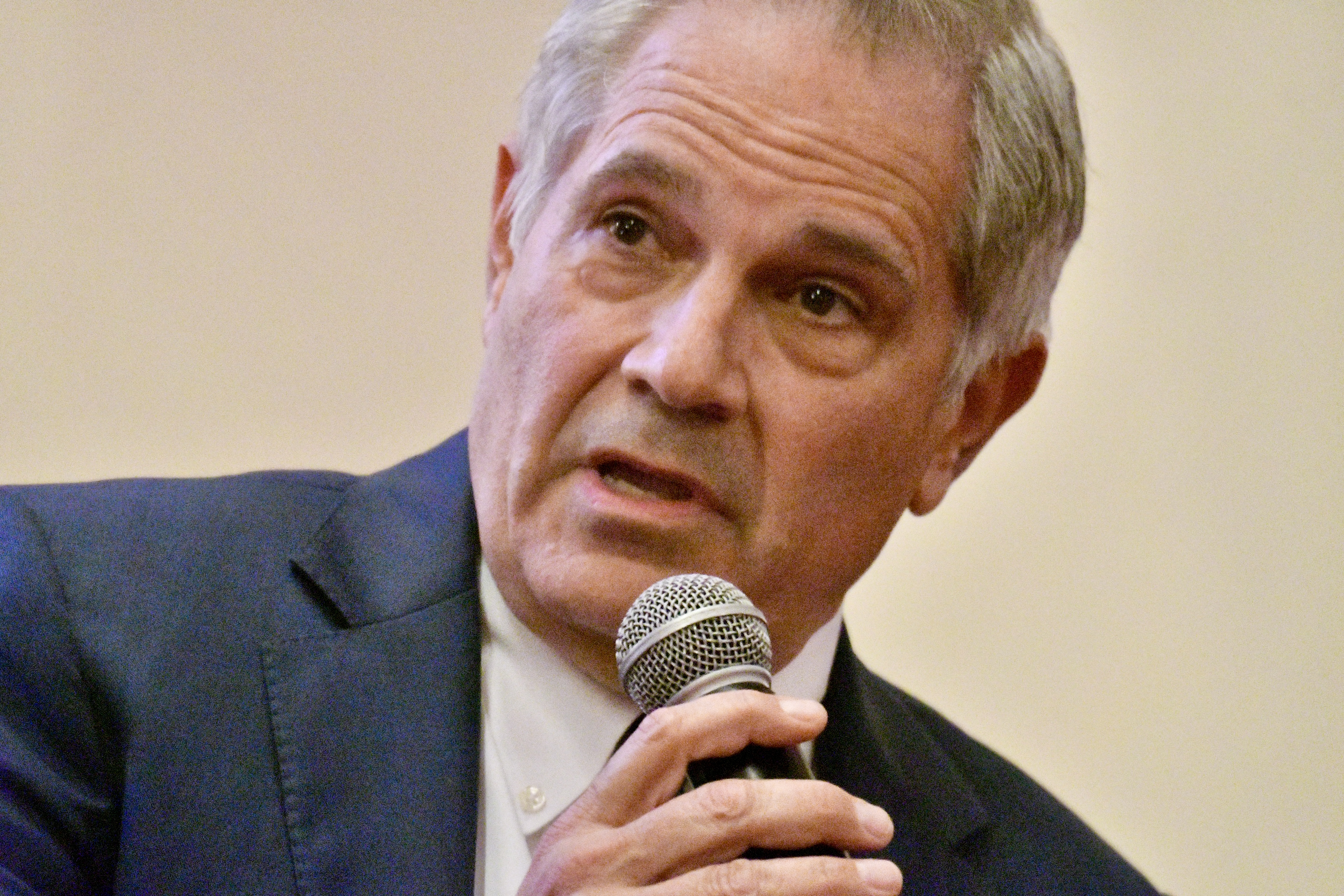
    Philadelphia District Attorney Larry Krasner — whose office is now the subject of a federal grand jury investigation over potential obstruction of justice— said Thursday that he is not worried about the prospect of facing criminal charges, saying: “There is not a jury in the world that is going to find me guilty of anything.”

    Speaking just days after sources said his office received subpoenas from federal prosecutors seeking documents and emails connected to a controversial post-conviction case, Krasner said in a defiant radio interview with WHYY’s Studio 2 that his office had acted appropriately in the matter.

    “Not only did we do nothing criminal, we did nothing that was deliberately wrong,” he said. “That does not concern me at all.”

    He also sought to cast the probe as part of President Donald Trump’s penchant for targeting political opponents, saying: “We are living in an era of revenge prosecution. We are living in a time when we have a compromised attorney general, who [was] the personal attorney for the President of the United States, and there is an enemies list … and they are doing what they can do to come after these people.”

    Still, there has been no indication to date that either Trump or Attorney General Todd Blanche has directed an investigation of Krasner. And the probe was primarily spurred by a Philadelphia-based federal judge, who said he believed the U.S. Attorney’s Office should look into whether Krasner or one of his supervisors committed conspiracy, obstruction, or perjury.

    Krasner’s remarks served as some of his most extensive public comments on a matter that has roiled his office for months. The saga has also put him in the unusual position of serving as the city’s chief law enforcement officer while his office is under investigation for potential criminal misconduct.

    Krasner has previously denied wrongdoing in court filings. And he has said the decision by U.S. District Court Judge Paul S. Diamond to refer the matter to federal prosecutors was improper, unfair, and legally unsupported.

    The controversy stemmed from a post-conviction matter before Diamond in which a man named Dennis Johnson sought to overturn his 2009 murder conviction.

    This spring, Krasner’s office discovered one of its prosecutors made critical mistakes in key documents filed in the case. After that discovery, Krasner and some of the prosecutors who work for him met for a series of contentious internal deliberations. And Diamond said testimony from the staffers showed Krasner was seeking to do damage control and took actions that could have amounted to conspiracy or obstruction of justice.

    During Thursday’s interview, Krasner, a Democrat, denied that, and even said he believed Diamond might have defamed him.

    He also went on to say that many of his critics — in this matter and others — have been motivated by either political or personal animosity. As support, he brought up an at-times scattershot list of clashes he’s been a part of over the years, including a lawsuit he filed against Republican megadonor Elon Musk, heated criticism he’s directed toward Trump, and even disputes he had with former Philadelphia power broker John Dougherty, who recently became a registered Republican after Trump commuted his prison sentence for corruption.

    Krasner said his critics have “certain characteristics — they are either Republicans or very close to.” He then added: “Let’s get real about what’s going on here. And this is not just a local pattern, this is a national pattern of a certain president doing the kinds of things he wants to do.”

    Federal prosecutors have declined to comment on their probe against Krasner. Such investigations can often take months or longer.

    Krasner also declined to comment on the specifics of the investigation, except to say: “I know what I did, and I know there’s not a jury in the world that’s going to think I did something wrong here.”