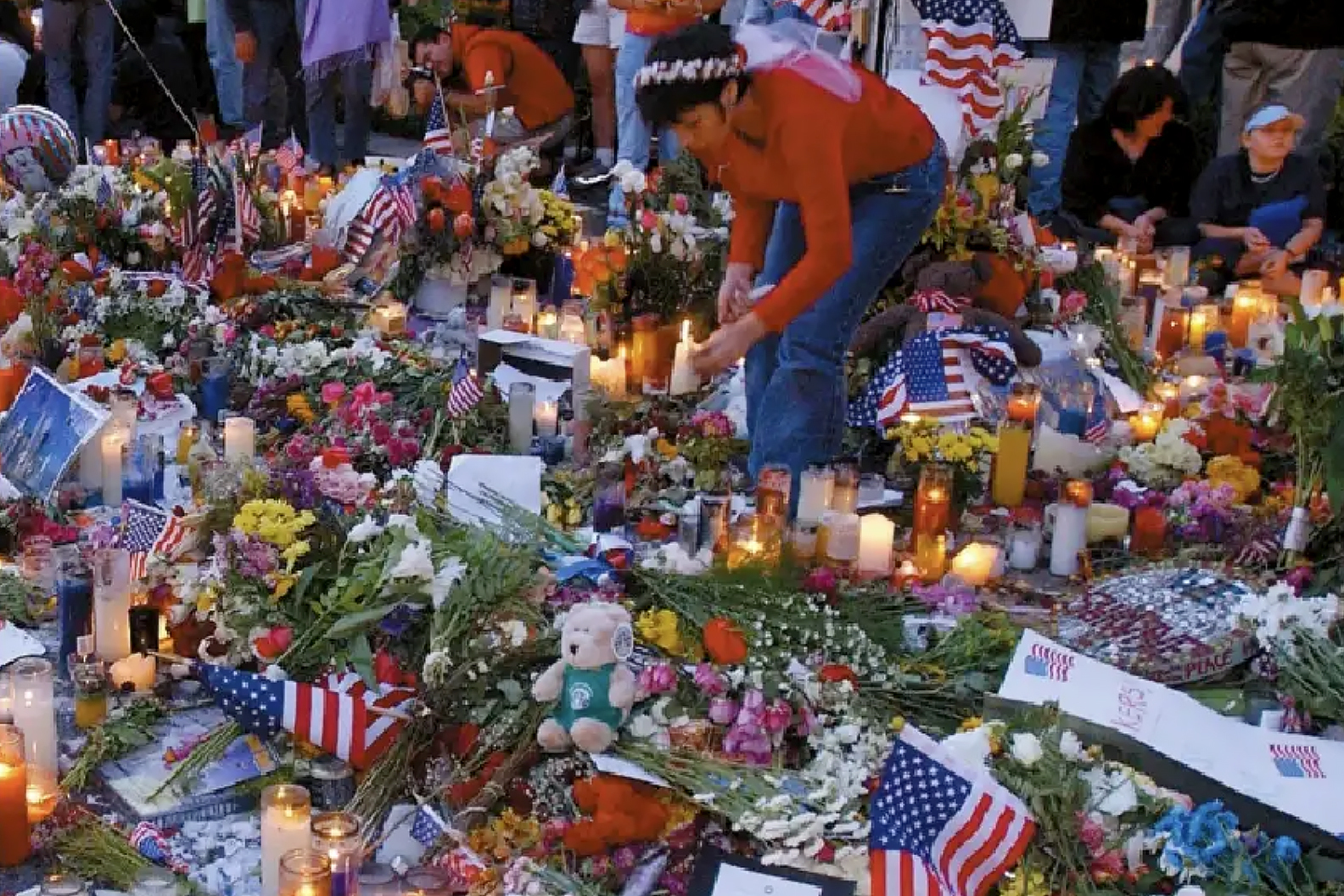
It is as important to remember what happened after the Sept. 11, 2001, terrorist attacks as it is to recall the nearly 3,000 lives lost, dozens of buildings mangled or destroyed, and the millions of prayers said in response to what many believed could never happen to the most powerful nation in the world.
In the immediate aftermath 25 years ago, this country became unified across income, religious, and racial lines in a manner it had not shown since imperial Japan’s despicable aerial attack on Pearl Harbor in 1941. But in both instances, there was shameful xenophobic backlash. The Japanese suffered internment. The anti-Muslim rhetoric and actions continue to this day.
Just as undeniable was that unity after the attacks — including President George W. Bush’s words that “Islam is peace” — helped blunt prejudice.
Black people, white people, Christians, Jews, Muslims, Republicans, Democrats, the rich, the poor, citizens and new arrivals — they all saw themselves as Americans on 9/11. We found common ground in using the nightmare that had just occurred as the impetus toward a greater sense of community.
That spirit of togetherness was a reminder of just how important the word united is in calling our country the United States of America. The 9/11 attacks made it easier to see why we as a nation must not let our differences be exploited by calculating entities looking for ways to weaken our resolve.
A quarter century later, the U.S. is much different in that respect.
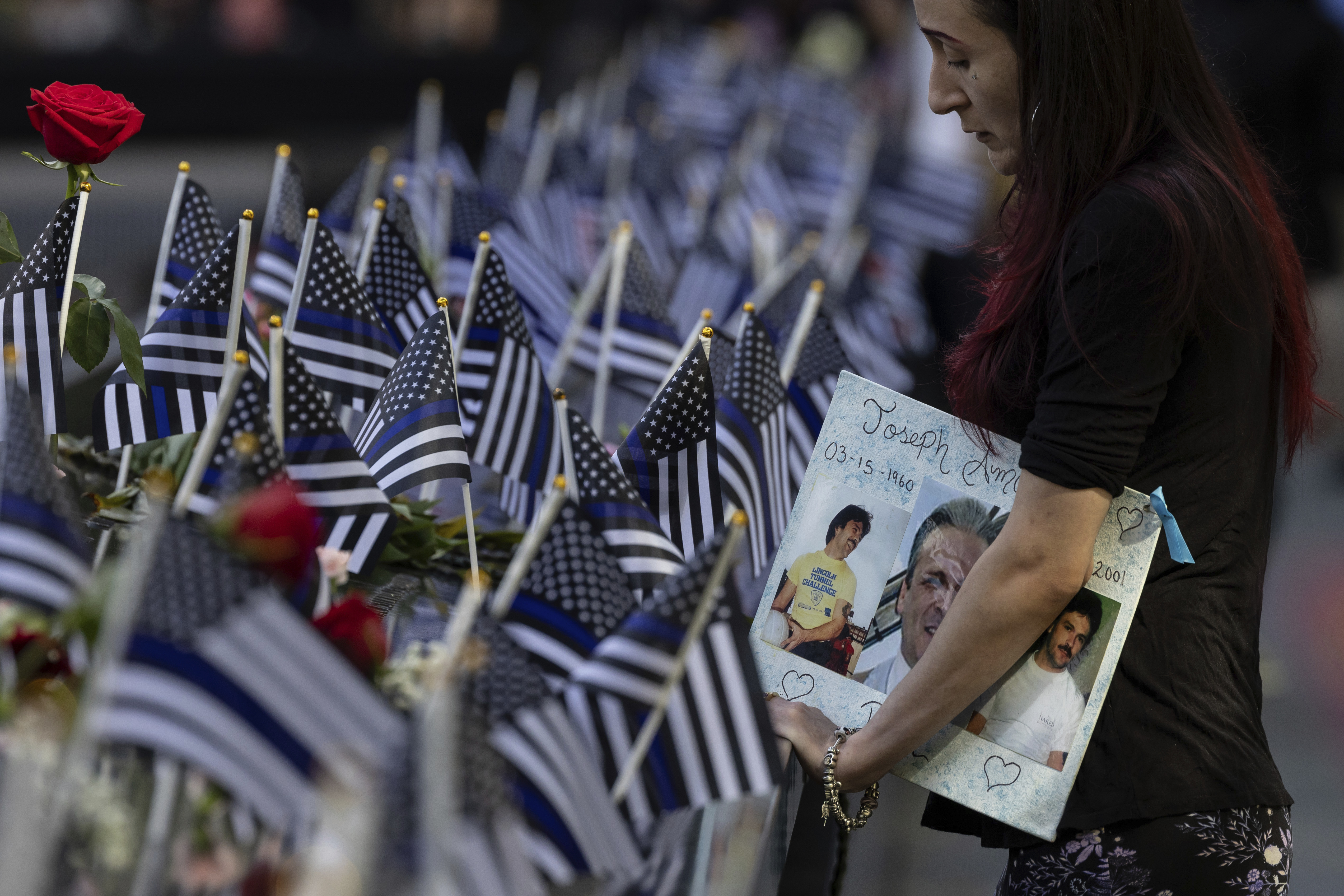
Mercedes Arias stands by the name of her father, Joseph Amatuccio, on the south pool during the 9/11 memorial ceremony on Sept. 11, 2024.Yuki Iwamura
Our current leadership prefers sowing seeds of division instead of reaching past political, economic, religious, social, and ethnic distinctions to help Americans of every station and persuasion work together for our common good.
Instead of trying to unify, this nation’s current leaders decided it was more important to wage war with Iran and argue with our allies. Iran may one day develop a nuclear weapon, they said. Dismissing that Russia and China already have that capability and, unlike militarily feeble Iran, have delivery systems to reach our shores.
Washington also decided to overthrow Venezuela’s despotic president to seemingly gain control of its oil reserves, and has made threats against Cuba and Greenland. It’s hard to believe the same Donald Trump who is now so eager to use military force once promised that if reelected, “we will have no more wars, no more disruptions, and we will have prosperity and peace for all.”
Are we supposed to forget the president said that? Is he playing games with the American public? Is he distracting our attention by waging wars that lack clear goals, abruptly destroying historic settings like the White House Rose Garden, and putting unqualified people in charge of public health, public safety, and national security?
So much is going on that too little attention has been paid to all the money changing hands amid the clamor.
President Donald Trump attends a cabinet meeting at the White House in May.Jacquelyn Martin
Trump’s personal wealth has increased by a staggering $2 billion since he took office, much of it in cryptocurrency holdings. Investors in these schemes have lost about $3 billion as the currencies’ value continues to decrease, but many see their losses as the price to get the president’s ear.
As Trump continues to be Trump — more engaged with building monuments to himself and posting aggrandizing AI slop on social media — everyday Americans struggle to make ends meet because of his policies. Although the cost of his mindless tariffs and needless war goes beyond the high prices people are paying at the pump and the checkout line, it is emblematic of the president’s complete abandonment of the American people.
While Trump counts bitcoins, our healthcare system continues to undergo dramatic changes that have allowed insurance companies to acquire hospitals, doctors’ offices, pharmacies, and otherwise take control of this nation’s medical institutions.
The president’s draconian immigration policies haven’t really solved the problem. There will always be people seeking a better life who will do anything, legal or illegal, to cross the border or stay past their visas’ expiration. That’s because despite its faults — and Trump’s best efforts — the United States remains the land of opportunity, even if dwindling.
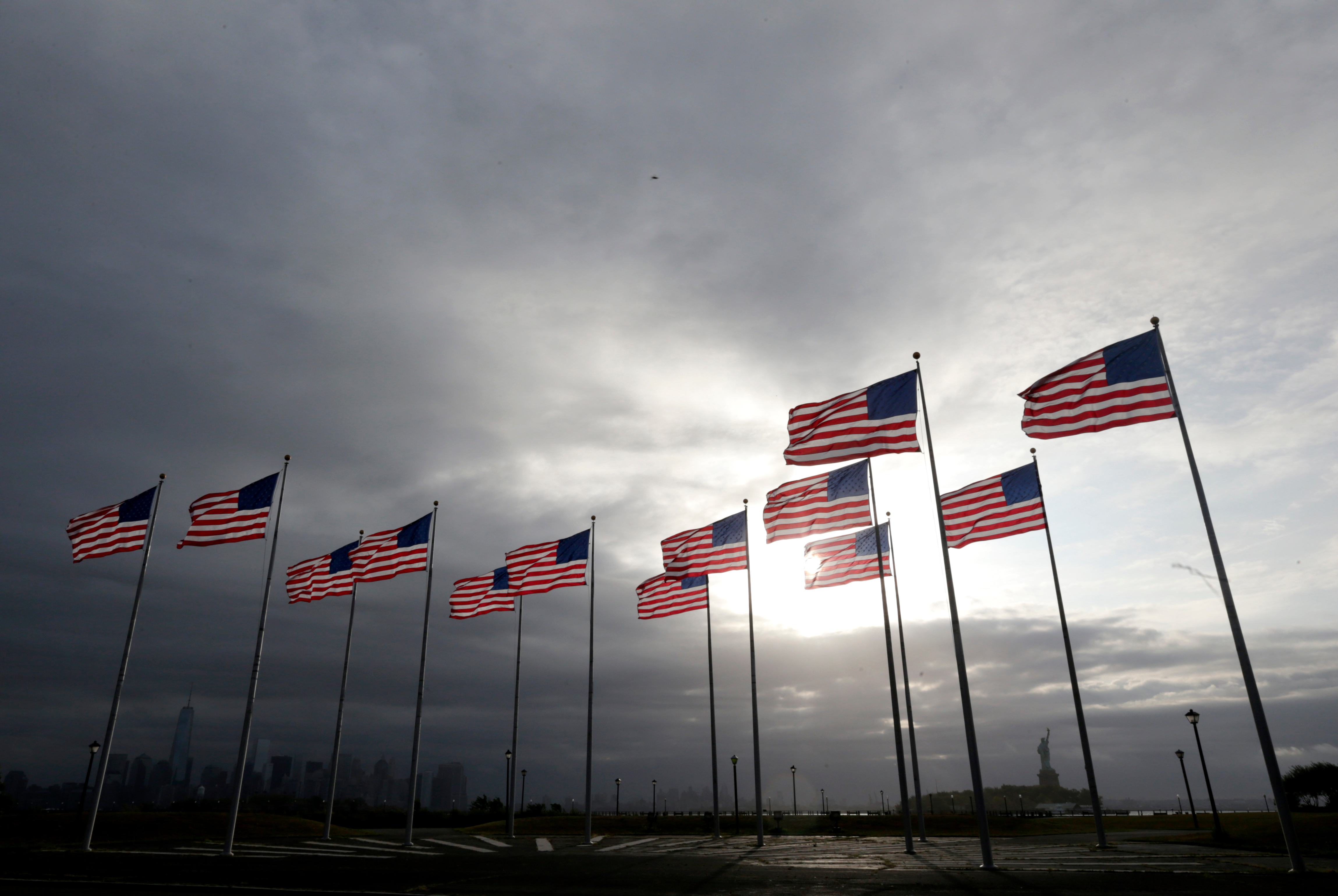
Thirteen United States flags representing the 13 original colonies are seen at Liberty State Park with 1 World Trade Center (bottom left) and the Statue of Liberty (bottom right) in the background, in Jersey City, N.J.Julio Cortez
America’s problem isn’t immigrants, most of whom have no criminal intent; it’s the lack of an effective system to better manage border crossings and adjudicate the cases of people who may have lived here illegally for years but otherwise committed no crimes.
Effective immigration reform almost occurred 20 years ago, when the so-called Gang of Eight senators, including now-Secretary of State Marco Rubio, supported a bipartisan bill written primarily by Republican John McCain and Democrat Edward Kennedy that would create a 10-year registered provisional immigrant status for eligible illegal residents who paid fines and back taxes to eventually obtain permanent legal residency.
This country also needs innovative equal opportunity ideas to replace the diversity, equity, and inclusion programs now considered reverse discrimination by federal judges. But instead of addressing that issue, the president and his enablers choose to demonize trans people, crack down on speech they disagree with, and abandon civil rights enforcement — all while embracing economic and tax policies that favor the rich.
None of these issues will be resolved with leaders who seem to thrive with our nation as divided as it is now.
It shouldn’t take another 9/11 to bring us closer as Americans. But as we seek a greater sense of community, let’s remember that day and what Todd Beamer was heard saying after he and fellow passengers aboard thehijacked United Airlines Flight 93 realized they had no alternative but to forget their differences and act: “Are you ready? OK, let’s roll.”
It’s time for us to fight together for each other, too.
A six-bedroom West Chester home with a two-story wine cellar and tasting room in a converted ice house has hit the market for $3.3 million.
Known as Fernbank Farm, the nearly 5,400-square-foot homeat 1001 Country Club Rd. was built of green serpentine stone from the nearby defunct Brinton’s Quarry, said Stephen Gross, who shares the listing with Stewart Gross and Holly Gross, all of the Holly Gross Group.
“It’s a beautiful stone that’s just unique to the area,” he said.
An aerial view of the property, which sits on six acres.Virtual Vista | Courtesy of Holly Gross Group
A small portion of the home is believed to date back to the 1790s, said Stephen Gross. It was then expanded around 1846 by James Cheston Morris, a University of Pennsylvania alum and surgeon who invented “a number of surgical appliances,” according to a 1923 Inquirer obituary.
Morris used the property as a summer country estate retreat and also to reportedly experiment with architectural insulation techniques, including in an attached ice house, the Gross brothers said.
A former ice house has been converted into a two-story wine cellar and tasting room.Jeffrey Totaro
That space was converted about five years ago by its current owners into a two-story wine cellar and tasting room.
Situated off the breakfast room, the roughly 1,500-bottle wine cellar is accessed via a staircase that opens onto a room with vaulted ceilings and stone walls. The upper level has seating, a bar, and wine refrigeration, while the lower level is predominantly for wine storage.
“There’s no other space like that I’ve been to in Chester County,” said Stephen Gross, adding that it “would be a really neat space to entertain.” He estimates it can hold eight to 10 people seated or 10 to 15 for a standing cocktail party.
The space has a bar and incorporated millstones.Jeffrey Totaro
Old millstones have been incorporated into the space, which also has a dumbwaiter and an exterior door where blocks of ice would have once been delivered.
Elsewhere, the home has a number of original architectural details, including hardwood floors with distinctive patterns like a two-tone herringbone in the foyer and an octagonal shape in the library.
Other original details include woodwork and fireplace mantels, including the living room’s Campan rubané breccia mantel from 19th-century France.
The home’s six bedrooms are spread across two upper floors, with the primary suite on the second level. It has a fireplace, built-in storage, a sitting area, and an en suite with a soaking tub.
The home has a kidney-shaped heated saltwater pool and a nearby spa.Virtual Vista | Courtesy of Holly Gross Group
Situated on six acres and partly surrounded by conserved land, Fernbank Farm has several seating areas outdoors, including a wraparound veranda that overlooks old and specimen trees. It also has a spa and an in-ground heated saltwater pool, which was restored in 2018.
Elsewhere on the property is a detached three-car garage in a converted 1910 carriage house.
This suburban content is produced with support from the Leslie Miller and Richard Worley Foundation and The Lenfest Institute for Journalism. Editorial content is created independently of the project donors. Gifts to support The Inquirer’s high-impact journalism can be made at inquirer.com/donate. A list of Lenfest Institute donors can be found at lenfestinstitute.org/supporters.
The disturbing story of the assaults in the Cheltenham High School football locker room is sadly not unique. Incidents of hazing and locker-room violence have made headlines for decades.
The allegations in Cheltenham have many familiar features: a younger or more vulnerable student was targeted, other students knew what was happening, and adults appear to be protecting the team rather than a victimized child.
But within this terrible story, I see two heroes — and both offer lessons for parents.
The first is the person who reported the violence through Pennsylvania’s Safe2Say system. That report helped move information about the abuse outside the closed world of the football program and into the hands of authorities.
That matters. According to prosecutors, coaches exchanged messages saying the incident had to be “kept quiet,” with one writing that if it became public, “They will cancel the whole season.”
Closed systems are dangerous. Information cannot get out, outside help cannot get in, and problems can fester — especially when the people responsible for setting the rules are also the people with something to lose.
The second hero is the victim’s mother.
She knew her son well enough to recognize that something was wrong. Their relationship was strong enough that he eventually told her he had been attacked. And when he did, she acted.
Experts will undoubtedly recommend changes in supervision, reporting, hazing prevention, and school culture. But there are also things parents can do, starting at home.
Lesson 1: Make it clear: We never blame the victim.
One of the most heartbreaking details in this story is that the young man eventually switched to virtual school after being harassed by other students following the attacks.
Being victimized should never become a source of shame for the person who was harmed.
Parents can make one family value unmistakably clear: In our family, we never blame or humiliate someone for being victimized.
We do not mock someone for being smaller, frightened, or embarrassed. We do not treat reporting abuse as weakness or betrayal. We think about how it feels to be in their shoes.
Schools can adopt programs and conduct training, but culture begins long before a child walks through the schoolhouse door. When parents send kids to school already believing that cruelty is unacceptable and victims deserve support, schools have a much better chance of creating and maintaining a healthy culture.
This is particularly important in adolescence. Teenagers can reason remarkably well, but the brain systems involved in empathy, impulse control, and weighing consequences are still developing. At the same time, adolescents are especially sensitive to the opinions of peers, social pressure, and belonging.
That is not an excuse for cruelty. It is precisely why adults should create environments in which empathy, respect, and intervention are explicitly expected.
Lesson 2: Don’t wait for a crisis to talk about sex and sexual violence.
Too many families wait until there is a sense of immediacy; puberty is about to arrive, a child sees something explicit online, a dating relationship begins, or a frightening story about sexual assault like Cheltenham appears in the news.
In that moment both parent and child may feel distressed and unprepared.
Research consistently finds that parents remain an important influence on their adolescents’ sexual decision-making, even though parents often underestimate how much influence they have. Parent-child communication about sexuality is also associated with healthier and safer sexual behavior.
Too many kids are now learning about sex from peers, pornography, and predators, and what they learn is often inaccurate and rarely matches the values parents have for their children.
In The Sex-Wise Parent, I encourage parents to share sexuality information and values not as “the talk,” but as an ordinary part of parenting that begins early and develops as children grow. Parents need not know every answer in the moment. Rather, they should communicate that questions are welcome, and children can bring uncomfortable experiences to them without fear of being blamed.
The Cheltenham victim eventually told his mother because something in their relationship allowed him to. Every parent can build that kind of relationship before a child ever needs it.
And a relationship where a child can ask questions about sexuality is important for more than just crisis intervention; ultimately, we want our kids to grow up and be sexually safe and healthy in every aspect of their life. Parents who can discuss sexuality with their kids of every age are a gift; they send sexually safe and healthy people out into communities where they are safe peers, partners, and members of the public.
Janet Rosenzweig, Ph.D., is a longtime child welfare and sexuality-education professional and author of “The Sex-Wise Parent,” a practical guide for parents to support healthy sexual development. The updated third edition was released in July.
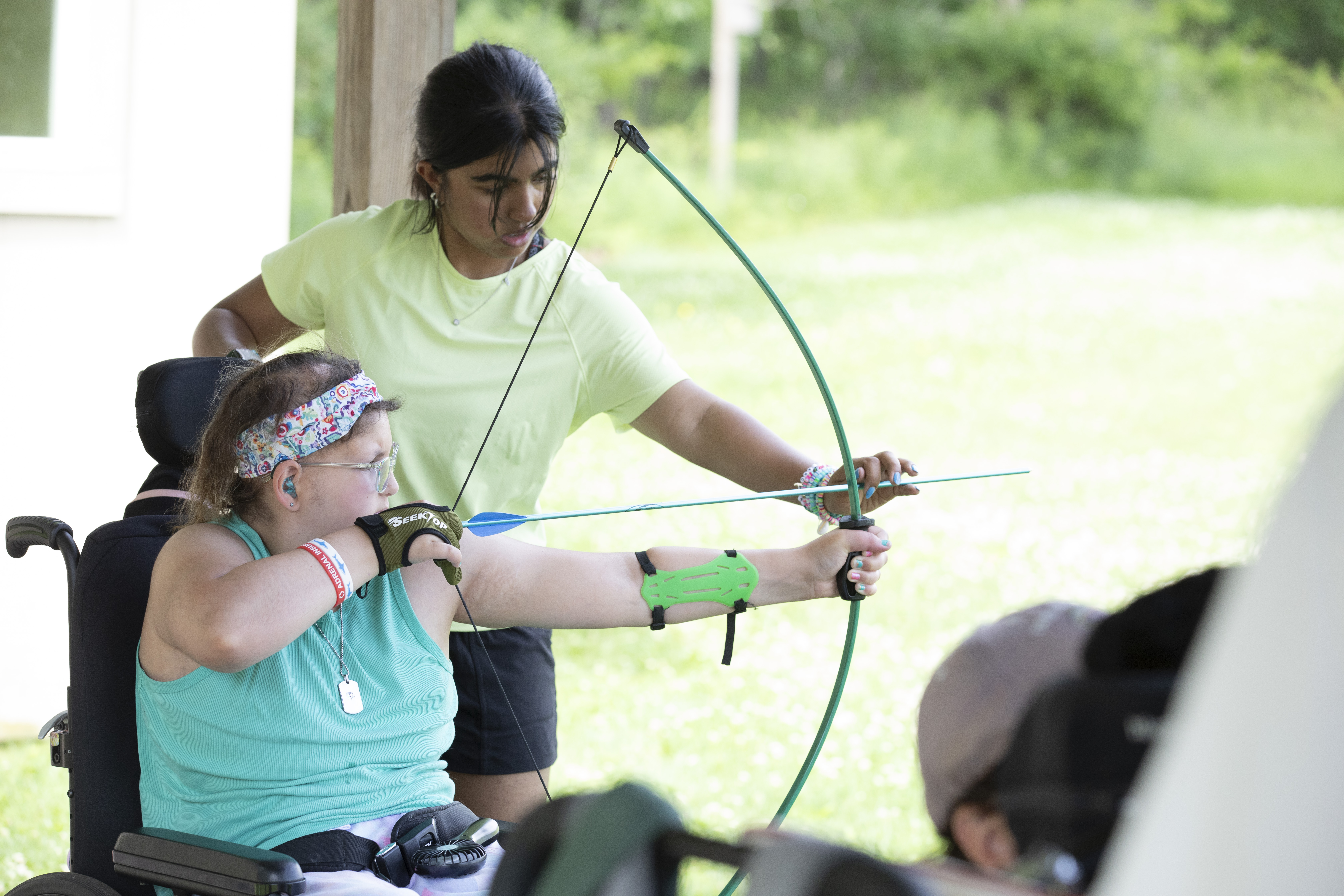
MILLVILLE, Pa. — In an open field, arrows whizzed through the humid June air and struck their targets. Campers and counselors cheered.
It was archery hour at Camp Cranium. Operations director Drew Meyer watched, a few tears escaping from behind his dark sunglasses.
“They will surprise you, like, flat out,” he said of the campers, who have all survived brain injuries. “They’ll come out here, and they’ll shoot for three hours and start hitting the target.”
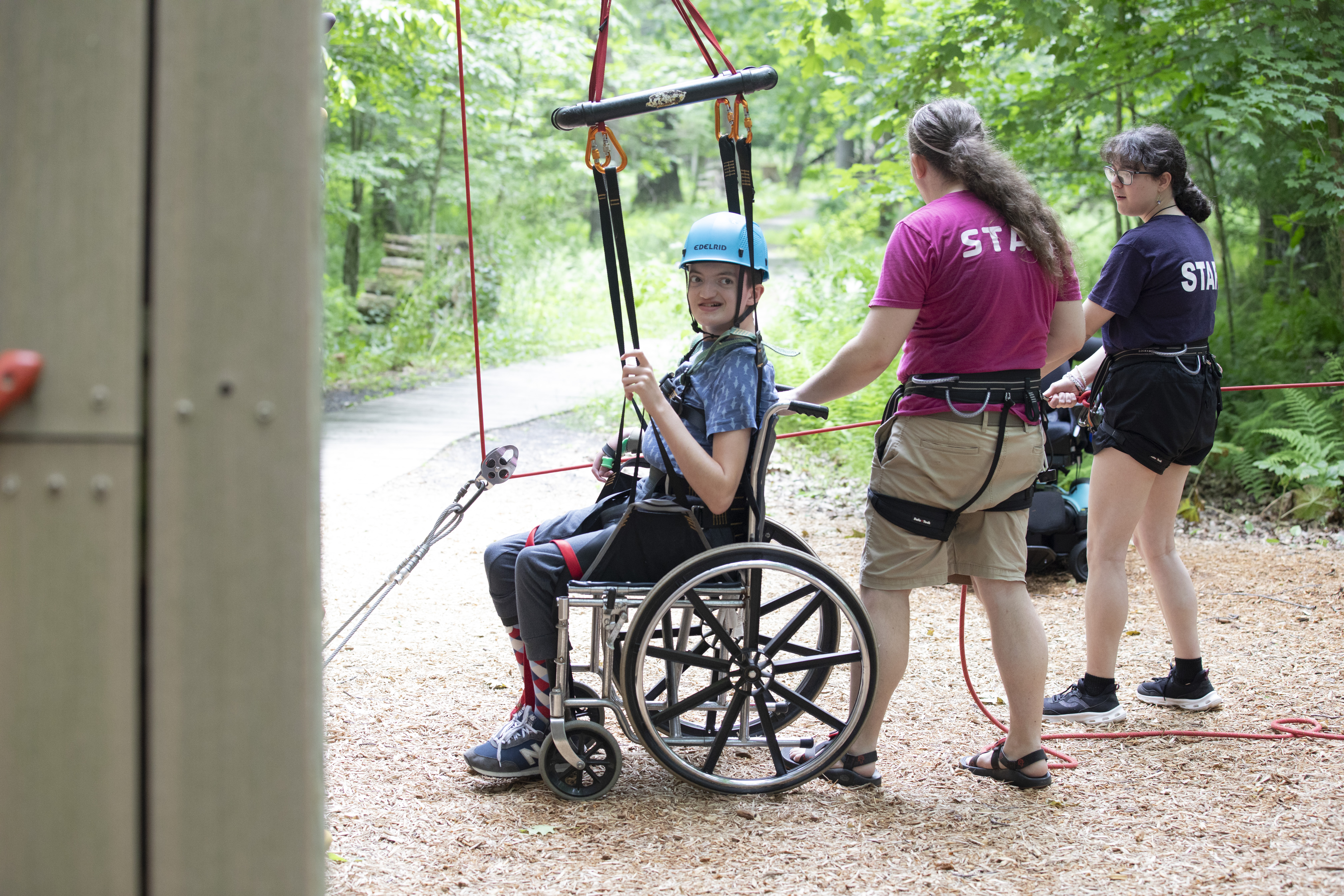
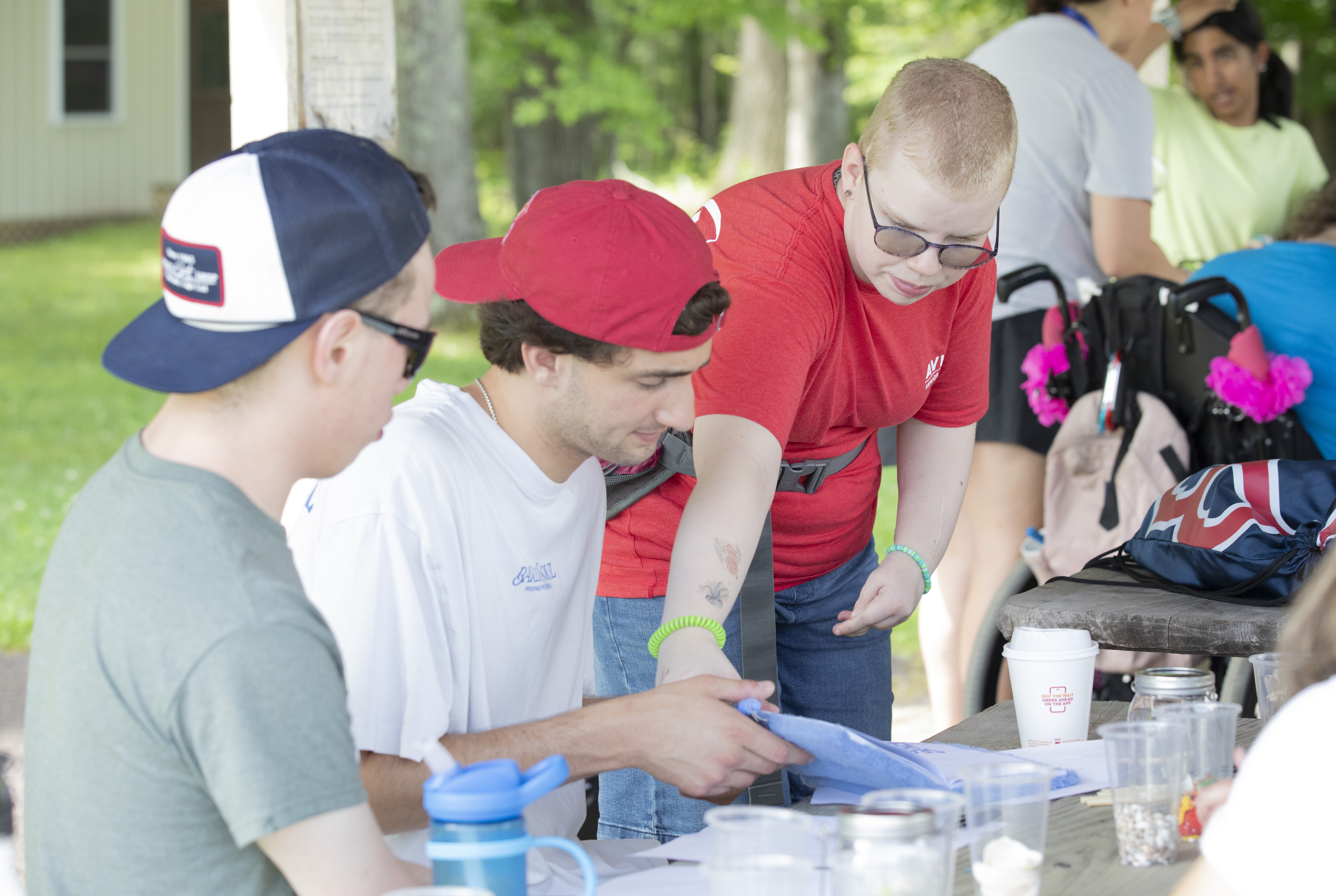
Campers, ranging in age from 10 to 21, have been coming to Camp Cranium in Pennsylvania’s rural Columbia County since 2008. Some of their brain injuries are so severe that they have to relearn basics, from talking to tying their shoelaces. Some use wheelchairs or crutches. But during a week at camp, they climb rock walls, swim, and whiz down a zip line through the lush forest.
The existence of Camp Cranium, and a handful of others like it, is a response to a decades-long national trend: More people, including children, now survive crises resulting in brain injury than did in the 1980s. The improvements in survival are largely due to seat belt laws and federal investments in research and trauma centers that can treat injuries quickly.
But recently, efforts to track and prevent one type of brain injury, traumatic ones, are in flux after Congress didn’t renew a law to further research and prevention of traumatic brain injuries, and the Trump administration fired hundreds of employees at the Centers for Disease Control and Prevention, including the team tracking traumatic brain injuries, or TBIs.
Lucas Hardy uses a hoist to climb the rock wall at Camp Cranium, a weeklong event in Pennsylvania’s Columbia County that helps children with brain injuries gain confidence. (Sarah Hofius Hall/WVIA News) Sarah Hofius Hall / WVIA News
Tracking brain injuries
Lucas Hardy, 14, smiled at the encouraging crowd below. In a shady clearing in the woods, he climbed the 30-foot rock wall, aided by a hoist that pulled him out of his wheelchair and helped support his moves. Hardy suffered a traumatic brain injury at age 3, when a tree branch fell on him at a birthday party.
Annually, an estimated 2.8 million Americans experience a TBI — including about 475,000 children, according to the Brain Injury Association of America.
Recent data suggests those are undercounts. In 2018, a CDC team piloted a household survey asking about TBIs in a sample of U.S. children and adults. The results informed a study concluding that such injuries, which are often considered “hidden” because the damage is internal and unseen, are more widespread than hospitalization numbers suggest.
The mass firings at the CDC in early 2025 gutted the team studying TBI, right before they were expected to launch a nationwide concussion surveillance system. A spokesperson for the Department of Health and Human Services, Emily Hilliard, did not respond to questions about the number of employees terminated, or if they were reinstated or replaced.
In a statement, she said: “The Trump Administration remains committed to supporting efforts to prevent traumatic brain injuries, improve surveillance, and ensure Americans have access to practical, evidence-based information that can help protect their health and safety.”
She said the agency’s TBI work is now handled by other staff members at the National Center for Injury Prevention and Control.
Hilliard said the CDC is deciding how to establish a cost-effective national concussion surveillance system within the bounds of current funding, and said the agency in 2026 dedicated funds to support, among other things, an educational campaign about concussions, an injury prevention program, and concussion surveillance.
But Wolfkiel still worries about how the CDC firings and the impasse over federal funding will affect brain injury research and prevention efforts in the long term.
“The lack of resources and programs and information that’s out there is really just sort of appalling,” Wolfkiel said.
Tony Sadowski (right) serves as executive director of Camp Cranium. He first learned about the camp when a speech therapist recommended it to his son, Bryan, who had suffered a brain bleed that caused a hemorrhagic stroke at age 6. Now 18, Bryan (left) is preparing to study occupational therapy at Elizabethtown College. (Sarah Hofius Hall/WVIA News) Sarah Hofius Hall / WVIA News
Federal funding uncertainty
Tony Sadowski, the camp’s executive director, remembers when his son, Bryan, suffered a brain bleed that caused a hemorrhagic stroke at age 6. “You’re in the emergency room,” he recalled, “not knowing what version of your son’s going to wake up.”
Now 18, Bryan Sadowski has attended the camp for years.
“We’re very lucky to be able to be here,” the elder Sadowski said.
In 1996, before Bryan was born, Congress passed the Traumatic Brain Injury Act, which has provided many states with grants for TBI research, advocacy, and services. Since then, Congress reauthorized the act four times, largely with bipartisan support, until 2024.
It has remained lapsed since then. Trump’s secretary of the Department of Homeland Security, Markwayne Mullin, supported reauthorizing funding when he was a senator. Congress is still considering whether to reauthorize funding through 2030.
Despite the lapse in funding, money is still flowing to TBI programs at the CDC and in states, according to Rick Willis, president and CEO of the Brain Injury Association of America.
Congress did appropriate $8.25 million for TBI program activities through the Consolidated Appropriations Act of 2026. That’s far less than the $23 million Congress provided for each fiscal year, from 2020 through 2024, the last time it reauthorized the act.
“The TBI Act is the only piece of federal funding for traumatic brain injury at the federal level,” Willis said. “We’re aiming to preserve what we have.”
The funding uncertainty has not affected the handful of brain injury camps, including Camp Cranium and Bright Ideas TBI Camp in Alabama, because they are nonprofits that mostly rely on private donations.
Brianna Engleman (right) collects song requests for a dance scheduled that night at Camp Cranium. Engleman has been a camper since 2018 and says she plans to come back as a counselor to support other campers like herself. (Sarah Hofius Hall/WVIA News) Sarah Hofius Hall / WVIA News
Back at Camp Cranium, bursts of laughter, whoops of delight, and distant chatter punctuated the humid summer air.
While her fellow campers did archery or art, Brianna Engleman moved between groups, collecting song requests for a dance that evening. When she was 5, doctors performed a hemispherectomy to relieve her of debilitating seizures. But the surgery itself can injure other parts of the brain.
She lives in Northern Virginia and first attended Camp Cranium as a teen in 2018. It was her first time being around so many people like her, said Engleman, now 21.
“I’ve gotten more confident,” Engleman said. “It made me think, well, there’s actually good people out there.”
Next time she returns to camp, she said, she plans to do so as a counselor.
This article is from a partnership that includes WVIA, NPR, and KFF Health News.
KFF Health News is a national newsroom that produces in-depth journalism about health issues and is one of the core operating programs at KFF — the independent source for health policy research, polling, and journalism.
When he was told of the bomb threat, Brian Maguire was where he was supposed to be and doing what he was supposed to do: on the grounds of the USTA Billie Jean King National Tennis Center in Queens, just 100 feet from the complex’s security command center, watching, noting, sizing up.
It was Monday, Sept. 2, 2024, the U.S. Open in full swing, clouds dimming the early afternoon sun. Inside Louis Armstrong Stadium, a surprise was brewing. Jasmine Paolini, the No. 5 seed in the women’s singles tournament, was losing her quarterfinal match to an unseeded opponent, Karolina Muchova. Maguire, the USTA’s director of security, wouldn’t learn the full significance of the match’s outcome until later.
Brian Maguire was the U.S. Open’s security director the day of the bomb threat.Courtesy of Brian Maguire
He answered a call from one of his staff members. At 12:12 p.m. — less than seven minutes before Muchova polished off Paolini, 6-3, 6-3 — someone had sent a direct message to the USTA’s Twitter/X account:
“I’m inside Louis Armstrong with a bomb that will go off at 1 pm est”
Louis Armstrong Stadium has a seating capacity of 14,000, and Maguire estimated that, among spectators, staff, and athletes, there were at least an additional 4,000 people on the 46.5-acre campus. All of them had been screened or searched — metal detectors, explosive-detection K-9 teams — so he was confident that the threat was empty. Still, for a man in his position, there was no such thing as being too careful, and if, somehow, there actually was a bomb out there somewhere …
He called his bosses at the USTA to inform them of the threat, then walked back to the command center. Once he arrived, he glanced at a computer screen to see the message for himself, and he conferred with his staff and with on-hand representatives from both the New York Police Department and the Federal Bureau of Investigation.
Built like a solid barrel, Maguire had been an NYPD detective for 27 years, 15 of them on the department’s joint-terrorism task force. Madison Square Garden, Yankee Stadium, Citi Field, the Barclays Center, the United Nations General Assembly, countless Midtown parades, even several previous U.S. Opens: Before the USTA hired him in June 2024, he had worked every major event at every major venue in New York. This kind of situation was not new to him, and he brought an investigator’s calm and logic to bear in evaluating and handling it.
“The Open is a great event,” he said. “Not a lot of bad things happen here, so this was like a one-off when we had this threat. I also knew that bomb threats, since online gambling has become a thing, have just skyrocketed.”
Maguire requested that the FBI open a guardian — that is, begin gathering evidence for a federal case — against the person who had made the threat. The NYPD’s bomb squad and the FBI’s special-agent technicians, accompanied by bomb-sniffing dogs, canvassed the campus. Within 20 minutes, the officers and agents were radioing back from their search to tell Maguire, We’re clear. Louis Armstrong Stadium was never evacuated.
“The likelihood of a device getting on our campus is pretty slim,” Maguire said. “But I’m still taking resources away from other places. We have to take every threat as if it’s real. I know in my mind, ‘Is there going to be a device? Probably not.’ But I still have to go through the motions.
“He’s not thinking that far ahead, this poor sap.”
Arthur Ashe Stadium, the main court at the Billie Jean King National Tennis Center, home to the U.S. Open. Charly Triballeau / AFP via Getty Images
A young man’s future on the line
Aidan Getchius trudged into a courtroom with his lawyer and his mother. Twenty-one years old, with small features and a few dark whiskers drooping around his pursed mouth, wearing a black plaid shirt, he gave the impression of a student who always took a seat near the back of the classroom, to try to go unnoticed. If he was anxious, he did not show it. His nerves already had done their work. Flecks of his dark hair had gone gray.
He was there, inside the Edward N. Cahn Federal Building in Allentown on a rainy morning in May, because he had admitted to doing a stupid and reckless thing. He had used a gambling app to place a $100 wager on the Muchova-Paolini match, betting on Paolini to win. But as Muchova won point after point on her first serve and it became clear that Paolini would lose, Getchius panicked. He wanted to keep his money, and the only way to do it, he thought, was to disrupt or stop the match. From 160 miles away, from the Lancaster County house where he lived with his mother, Trisha Sullivan, he had thumb-typed and sent the bomb threat.
Authorities had an easy time tracing the message back to Getchius and his Twitter/X account. He was charged with conveying false information and hoaxes, a count to which he had pleaded guilty in November 2025. Now he was in court for his sentencing hearing, facing up to five years in prison and a $250,000 fine.
He took a seat at the defendant’s table, its mahogany top gleaming. Sullivan, in a black blazer and a librarian’s glasses, slid into a row just behind him. The lawyers whispered and fiddled with their folders and papers. There was no other sound in the courtroom.
In less than an hour, U.S. District Judge John M. Gallagher would determine Getchius’ punishment and, in turn, his future, but that revelation was just one angle in a story with several worth accenting and examining. The case of Aidan Getchius had come in contact with so many disturbing trends and developments in the relationship between sports and American society that Gallagher’s decision would be the least compelling aspect of it.
The Billie Jean King National Tennis Center hosts the U.S. Open ever year, with tens of thousands attending every day of the event.Angela Weiss / AFP via Getty Images
‘He doesn’t talk at all’
Getchius had a factor — one rare set of circumstances for someone charged with a federal crime — working in his favor. Neither the attorney defending him nor the attorney prosecuting him believed or argued that he deserved jail time.
He was 19 when he sent the direct message to the USTA, and Jeremy Isard, the federal public defender representing him, framed Getchius as a good kid from a decent home who, while not a dangerous loner or incel, had temporarily lost any sense of social norms and boundaries.
“This is the only time that Mr. Getchius has done such a thing,” Isard said in court. “We live in a world where even the momentary frustration of a teenager can have real-world consequences. That is the reality that all of us are living in for the first time.”
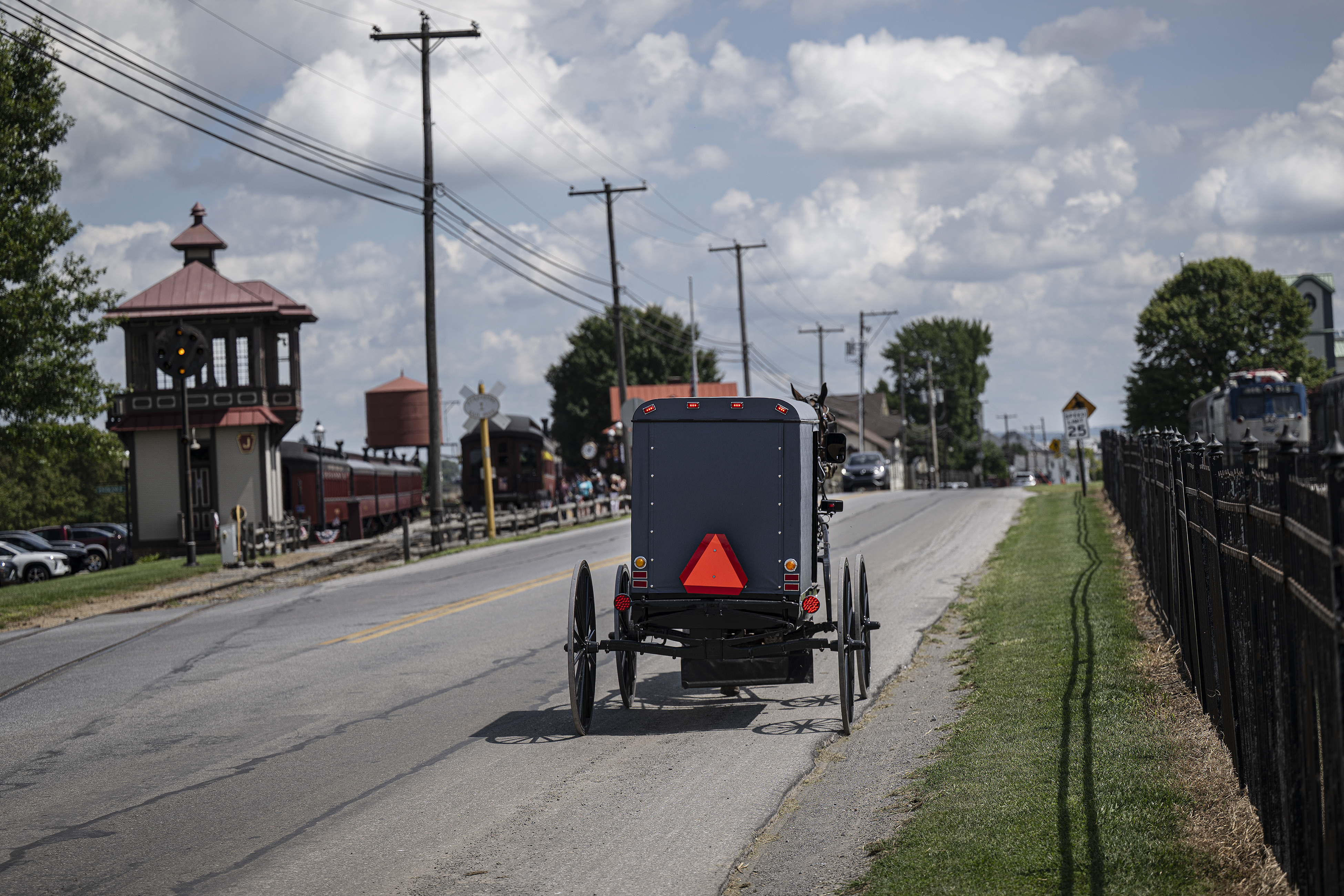
Someone with Getchius’ background and upbringing, though, might feel more removed from those consequences than the average teen who stares at a screen all day. From the east, a car ride out to Strasburg, a town of fewer than 3,200 residents, will likely take someone past the Railroad Museum of Pennsylvania. There isn’t a big-brand supermarket or retailer to be found. And as drivers zoom past eggshell white barns and endless acres of verdant cornfields, they have to mind the shoulder of the road for any Amish and Mennonite farmers and children, dressed plainly, who might be walking, riding modest bicycles, or coaxing horses to keep on clip-clopping as the animals tug them along in wooden buggies.
Throughout middle school, Getchius was bullied “on a near-daily basis,” Isard wrote in a sentencing memorandum. So Sullivan, who raised him by herself and works full time at an insurance company, enrolled him in Pennsylvania Leadership Charter School, an online high school headquartered in West Chester. His four years there “overlapped almost perfectly with the COVID-19 pandemic,” Isard wrote, and allowed him to “focus on academics while saving him what had developed into not insignificant social anxiety.” Multiple messages to the school’s communications office, seeking a comment on or insight into Getchius’ tenure there, went unreturned.
A farmhouse in Strasburg, Pa., and silo stand in front of a cornfield, a few miles from the home of a Lancaster County man who pleaded guilty to a bomb hoax targeting the 2024 U.S. Open tennis tournament.Jose F. Moreno / Staff PhotographerAn Amish buggy travels in Strasburg, Pa., a few miles away from the home of a Lancaster County man who pleaded guilty to a bomb hoax targeting the 2024 U.S. Open tennis tournament.Jose F. Moreno / Staff Photographer
“There are reasons related to Mr. Getchius and his own vulnerabilities,” Isard said in court, “that the sting of losing a bet hits harder for this gentleman than it would for many of the rest of us. … This was someone who [was] living an isolated and digital life.”
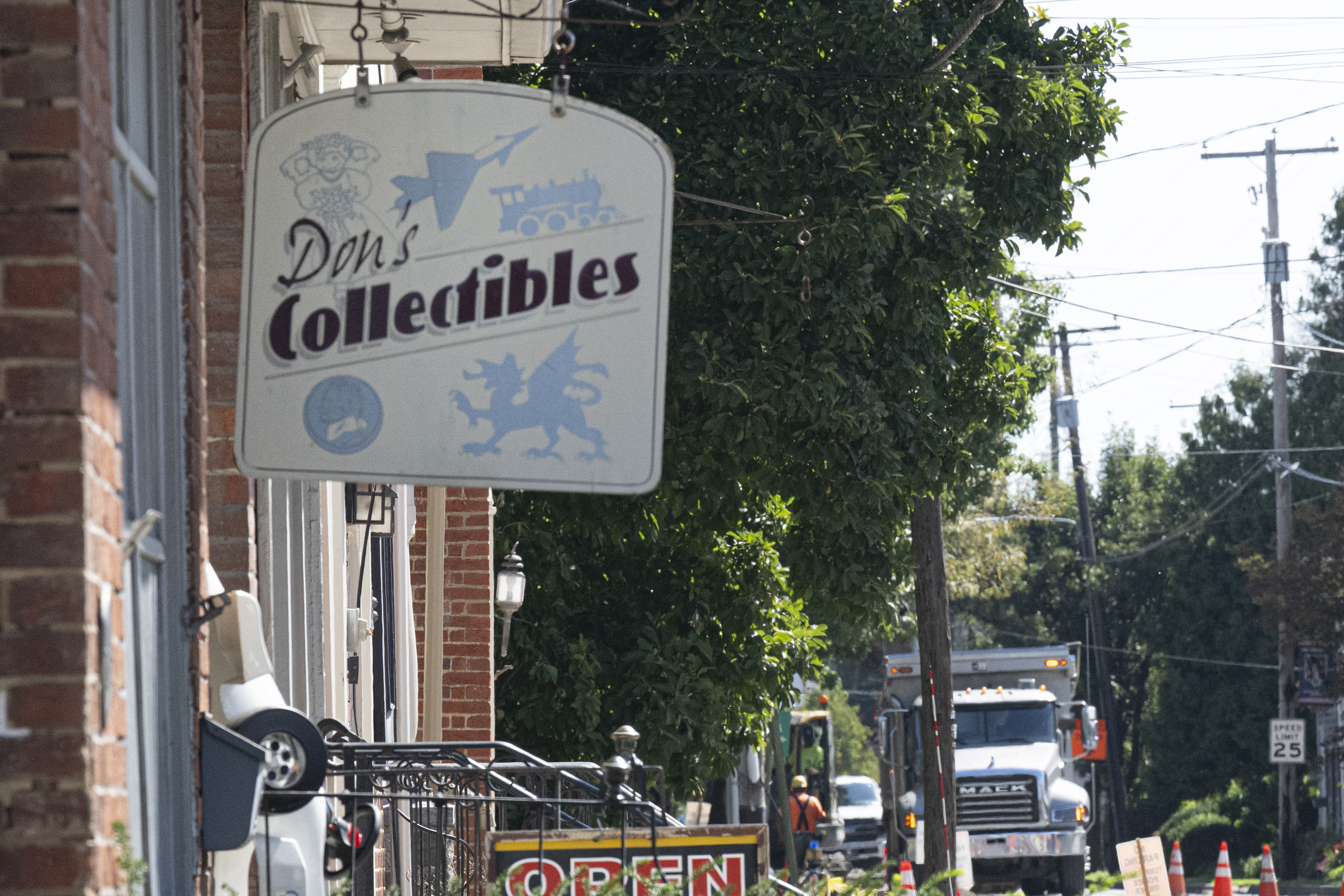
After graduating, Getchius took a job at Don’s Collectibles, a sports and pop-culture memorabilia store owned by his grandfather, Don Dorwart. The store is a fixture in Strasburg, open at its location on Main Street since 1984. For the two years he worked there, Getchius waited on customers and wrote and designed listings for items that Dorwart sold on eBay.
“He’s very quiet,” Dorwart said one morning at the store last month. “He doesn’t talk at all.”
Among the sports cards and trinkets and classic toys that he sells, Dorwart had recently ordered 300 pounds of foreign coins to offer to his customers. Several bags of them were stacked near his cash register, as if the store were a bank vault. Hundreds of coins from Brazil, Canada, and Italy rested in a wide, shallow cardboard box on the front counter. Dorwart was asked about sports gambling, and he was quiet as he considered how and why his grandson had come to place bets and to write and send that threatening message.
“It’s all this,” he said as he ran his left hand through the coins in the box. “He’s not that kind of kid.”
The match at the center of the bomb threat: Karolina Muchova (left) and Jasmine Paolini in a fourth-round singles match in the 2024 U.S. Open at Louis Armstrong Stadium.Sarah Stier / Getty Images
The hold on him
The implication of Dorwart’s gesture — that Getchius and others like him had given in to the addictive allure of legalized sports betting, the rush it delivered, and especially the winnings it promised — would have resonated with Josh Davison, the assistant U.S. Attorney prosecuting the case.
Davison agreed that Getchius didn’t need to be sentenced to federal prison for the bomb threat. Getchius knew he had screwed up, had owned up to his awful mistake, and hadn’t denied it or dodged it or fought the charges; he had pleaded guilty as fast as he could. But there were two aspects of the crime, Davison asserted at the hearing, that Gallagher ought to consider when imposing the sentence. Distilled, they were danger and fear.
Getchius began betting in 2022, when he was 18, after getting back in touch with a few friends from middle school. They formed a group text chain, and Getchius, according to court documents, found comfort in the rekindled friendships and the daily, sometimes minute-by-minute routine of betting. His user name on his Twitter/X account was “GetchiSoto” — a combination of his last name and that of one of his favorite baseball players, star outfielder Juan Soto — and he used that name or a derivative of it on several other accounts, some of which were vessels for his betting: Instagram, Facebook, Reddit, Kik, PlayStation, Xbox, and TikTok.
His mother didn’t know he was gambling. And even after his arrest and plea, even after attending at least 10 sessions of counseling, Getchius continued to bet small sums of money on sports.
Located in Strasburg, Pa., Don’s Collectibles, owned by the grandfather of a Lancaster County man who pleaded guilty to a bomb hoax targeting the 2024 U.S. Open tennis tournament.Jose F. Moreno / Staff Photographer
“It’s certainly legal to place those bets,” Davison said during the hearing. “It’s just disappointing that someone with a pending sentence, who is still facing the threat of incarceration, is placing those bets. That tells the government, ‘Wow, that’s a strong hold.’ That confirms to the government that bringing this case was entirely the right thing.”
The group chat became a forum for banter among the boys and for hyperbolic reactions to lost bets. “As Mr. Getchius understands it,” Isard wrote, “this is how the rough script for his threat to the U.S. Open entered his mind.” He did not pause to consider what might happen if he shared that script.
A train car on the Strasburg Rail Road.Jose F. Moreno / Staff Photographer
The scope of the problem
When it comes to the potential damage of his actions, Getchius was no different from others who have tried to intimidate or menace athletes or have engaged in “swatting” — falsely reporting an emergency with the intent of victimizing an individual or institution. The goal is the same. The chaos and upheaval are the point.
In August 2025, for example, a report of an active shooter at Villanova University caused “panic and terror,” the Rev. Peter M. Donohue, the school’s president, said in a statement. The report was false, and in April federal prosecutors charged a juvenile suspect who was allegedly part of an online group claiming responsibility for similar calls to several colleges and universities.
“This hearing would look a lot different,” Davison said, “if we had Villanova students here.”
Two months before the Villanova hoax, during a Grand Slam Track meet at Penn’s Franklin Field, a bettor who identified himself on Twitter/X as “@mr100kaday” screamed at sprinter Gabby Thomas as she stood at the starting line for one of her races, calling her “Trash Spice.” After Thomas — a three-time Olympic gold medalist — lost her events, the man followed her around the track, insulting her, before posting screenshots of betting slips that showed he had won money by wagering against her.
“I made Gabby lose by heckling her,” he wrote on Twitter/X. “And it made my parlay win.”
This grown man followed me around the track as I took pictures and signed autographs for fans (mostly children) shouting personal insults- anybody who enables him online is gross https://t.co/f9a6vPkX0v
The accumulation of such incidents can create a boy-who-cried-wolf effect that numbs people to a harsh truth: It takes just one of these threats to be genuine, just one bona fide villain who follows through, for an atrocity to occur. And the ubiquity and casual acceptance of betting don’t help.
Matthew Wein, an expert in cybersecurity and a former policy adviser at the Department of Homeland Security, keeps a database of incidents in which athletes have been harassed or threatened. A quarter of those incidents, he said in a phone interview, have been connected to gambling, and his database doesn’t paint a full picture of the problem, given how many threats go unreported.
Wein recommended that sports leagues and franchises start sharing information on problematic or malevolent bettors. The Phillies, for instance, were playing at Citizens Bank Park, less than six miles south of Franklin Field, on the same day that the anonymous gambler hounded Thomas.
“If you’re the Phillies’ owners, wouldn’t you like to know if this man had a ticket to your game?” Wein said. “I’ve described it as a pre-9/11 mindset. In the aftermath of the 9/11 commission hearings, we said that one of the big problems was that people weren’t working well enough together to make the puzzle pieces fit.
“A lot of it comes back to, are teams and leagues and sportsbooks and players unions and social-media platforms and other stakeholders willing to invest in sports-integrity measures? When sports gambling is marketed to young men, some who have mental-health issues, it’s a potent mixture that can really create an on ramp to criminal activity and violence.”
Neither Getchius nor Sullivan responded to requests for an interview, so certain questions about why he did what he did remain unanswered. How much money had he lost? How far in the hole was he? Why did a modest hundred-dollar bet inspire such a dumb and desperate reaction? And why was he betting on tennis?
In today’s gambling culture, there’s no sport or competition too obscure, no over/under or opening tap or coin toss too insignificant, that a wager can’t and won’t be placed on it. Yet even by that standard, the women’s singles bracket of the U.S. Open seemed a strange and random event for a bet from a young man from Amish country. Getchius was not a fan of the sport. He didn’t follow it. Why the Paolini-Muchova match? Why that tournament?
A clue might come from one of his favorite and most familiar places. Near the front window of his grandfather’s collectibles shop, atop a large glass case displaying stacks of baseball cards and a Richie Ashburn figurine, rested the largest item in the store. There was no telling how long it had been there. It was a jumbo lime green Wilson tennis ball. Across the ball, in red lettering, were the words “US OPEN.”
The home, near Strasburg, Pa., of a Lancaster County man who pleaded guilty to a bomb hoax targeting the 2024 U.S. Open tennis tournament.Jose F. Moreno / Staff Photographer
The life and threats to come
As Gallagher prepared to hand down Getchius’ sentence, he told him, “You have the right to be heard, to say anything you want to me or nothing at all.”
Getchius remained seated at the defendant’s table and spoke in a low monotone.
“I apologize for my actions,” he said. “I understand the severity, and I take full responsibility. I’ve learned a lot over the past two years, and I can promise that nothing like this will ever happen again.”
He showed no reaction when Gallagher imposed the sentence: three years’ probation; a $1,000 fine; and the imposition of certain conditions — that Getchius had to attend Gamblers Anonymous or another treatment program and that he was forbidden from engaging in any gambling activity of any kind. Getchius nodded to Isard, consenting to the terms. His mother kept her hands folded on her lap.
“Instead of losing a bet, you lost a lot more,” Gallagher said. “None of this is to excuse what you did, Mr. Getchius, but I do have to consider who you are. … You have a full and lawful and productive life ahead of you. You have people who care about you. You have everything you need. We all want you to put this bad decision behind you and go on living that happy and productive life.”
The 2026 U.S. Open is underway. It has been less than two weeks since the first day of Aidan Getchius’ sophomore year at Millersville University. He carried a 3.24 GPA in his first semester there, makes deliveries for DoorDash to earn some money, and is for now a useful cautionary tale. What he said in court is probably true: He won’t do anything like this again. But if we aren’t careful, someone else will. Someone else will do something worse. And someone will die.
The draft was set to begin last week when Jeff Killian reminded the members of his fantasy football league that he could fax them a rule book if they needed a copy. A hand went up.
“Umm,” Jack DeStefano, 32, said. “I don’t have a fax machine.”
Of course. Killian, 63, meant he would email the seven-page document. That’s what happens when you’re the commissioner of a fantasy league that started in 1986.
The league began after someone went to California on business and returned to the AT&T office near the King of Prussia Mall with a stack of papers detailing something called “Fantasy Football.”
They found eight guys, rented a room at a hall in Chester County, and launched the Vince Lombardi Memorial Football League. The league members faxed their lineups on Friday night to the commissioner and then waited until Tuesday to see how their team performed.
It seems harder every year to find someone who doesn’t play fantasy football as it is estimated that 40 million people will play this season. But it’s hard to find a fantasy league that’s been around as long as the VLMFL where players once scoured newspaper box scores to tabulate their stats long before smartphones relay that information in real time.
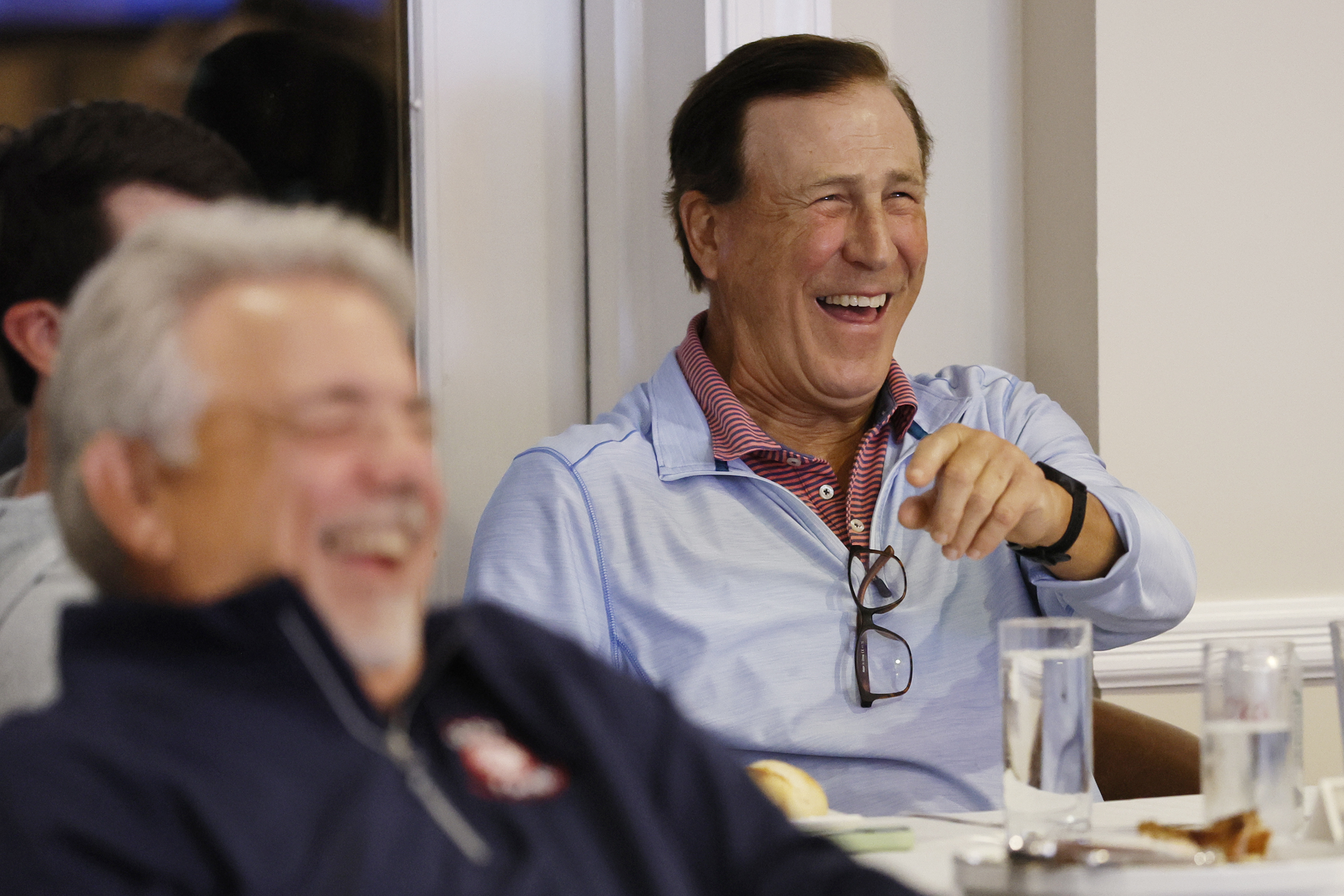
Jeffrey Jaskol (left, foreground) and Ken Leidheiser laugh at a story being told by Leidheiser during their fantasy football draft at the Chester Valley Golf Club in Malvern on Aug. 28.Elizabeth Robertson / Staff Photographer
The game was a mystery then — “People said ‘Fantasy what?’,” original leaguemate Ken Leidheiser, 69, said — but the VLMFL figured it out. They created their own rules and have stayed true to them for 40 seasons.
Two original members are still in the league while the majority of the players have been involved since the late 1980s or early 1990s. They drafted Bo Jackson, Dan Marino, and Randall Cunningham and won championships with the Bears defense.
“I can still remember watching a game years ago on Monday Night Football where Jerry Rice caught a touchdown so I could beat my big rival,” said 77-year-old Lee Bye, who retired from the VLMFL after 30 seasons and seven championships for the Bye Boys. “That still sticks with me after all these years. Here it is after midnight and I’m jumping around in my basement.”
Some teams are now managed by second-generation fantasy footballers as the 60-something OGs have infused the league with their number-crunching sons.
And everyone is within six degrees of AT&T, where inaugural champ Paul DeStefano, 68, still works.
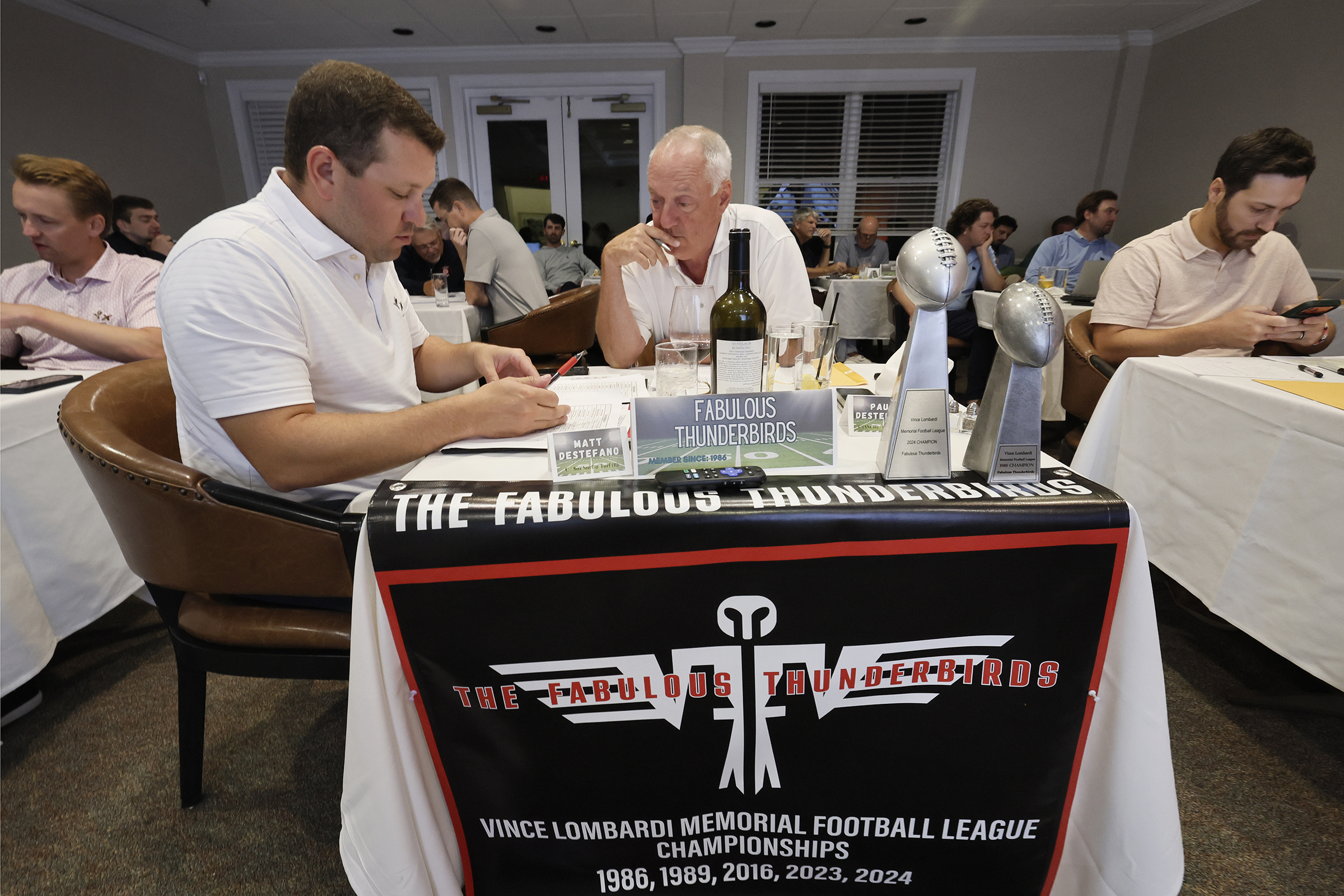
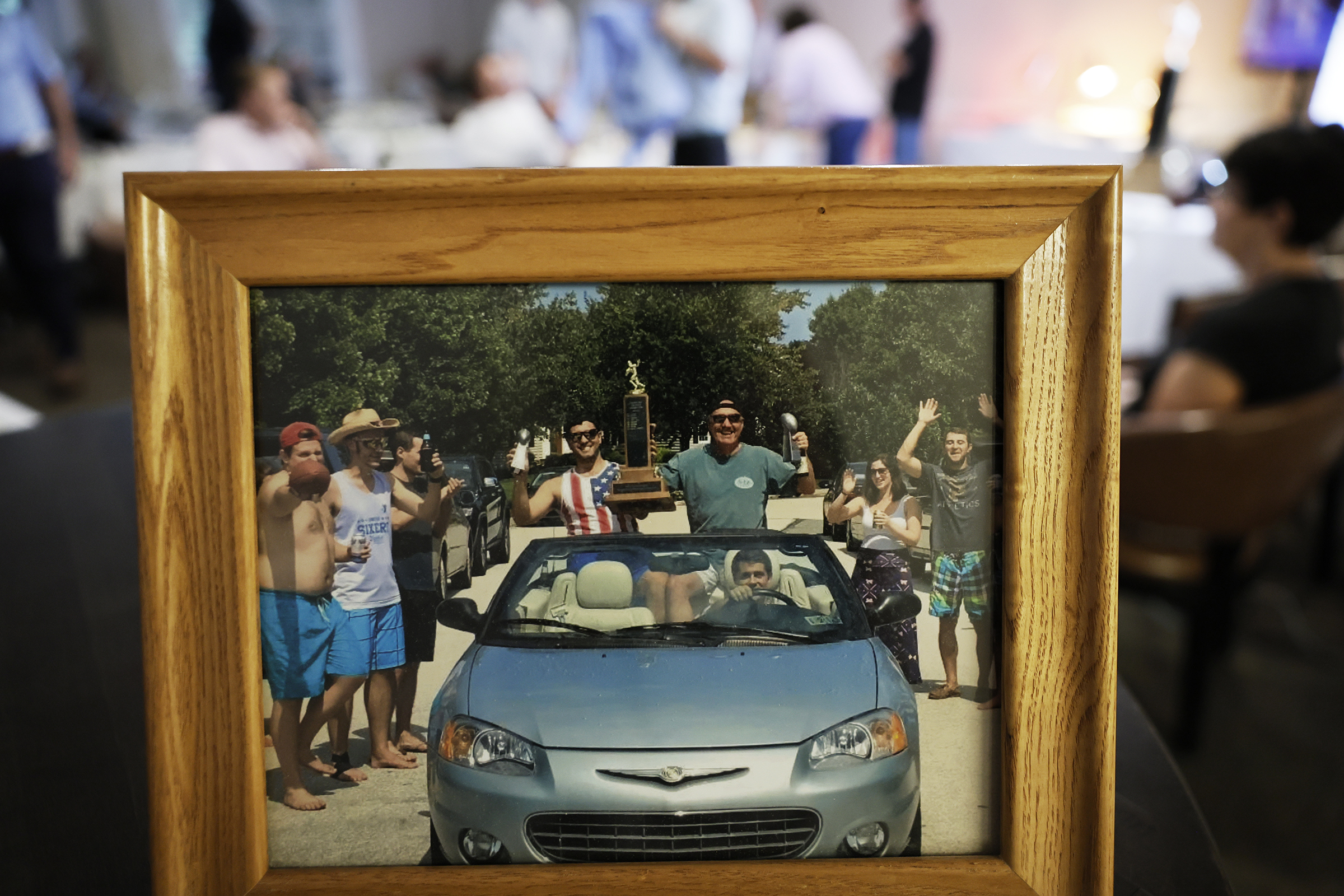
“I’m not in it for the money,” said DeStefano, who manages the five-time champion Fabulous Thunderbirds with his son Matt and once staged a parade down his street after winning it all. “It’s the camaraderie. It’s sitting up at night for Sunday Night Football and my wife says, ‘Why are you still up?’ I go, ‘Because I need 5 more yards from my running back and I have to watch the game until the end.’ You think you can control it. The next morning, I’ll be exhausted at work going, ‘Why the hell did I stay up for the game?’”
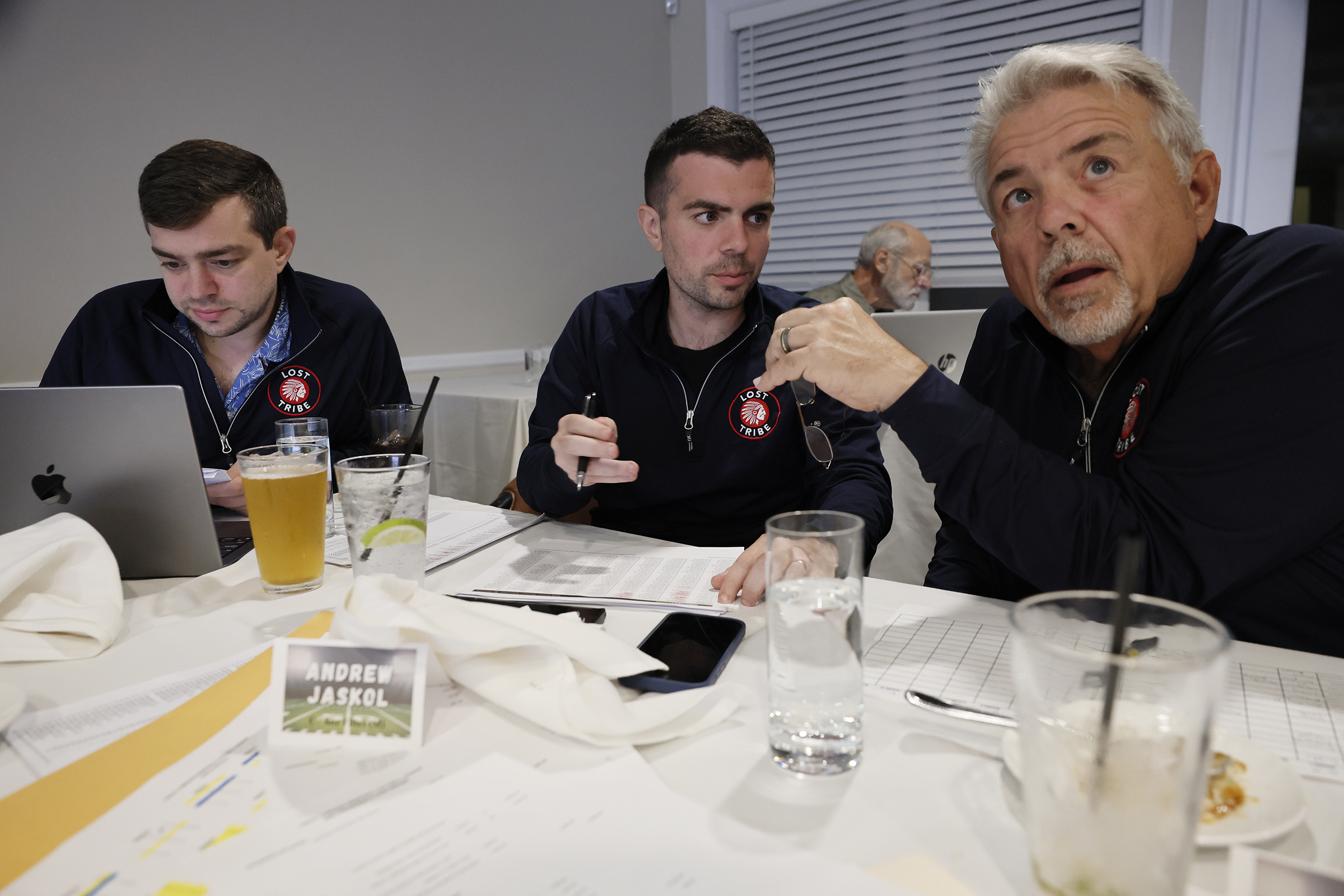
Jeffrey Jaskol (right), and his sons Adam (left), and Andrew (middle) work to make a selection in their fantasy draft.Elizabeth Robertson / Staff Photographer
The old days
It’s easy now to stay informed as there are websites, podcasts, TV shows, and social media accounts dedicated to fantasy football. The game is impossible to ignore. But in the early days, information was the great separator between the VLMFL’s Have and Have Nots.
They read NFL previews in Sports Illustrated, studied newspaper articles, and looked anywhere for information that is now seemingly everywhere. Fantasy magazines, which started printing in the late 1980s, were gold. It was survival.
One leaguemate once used his first-round pick on Bills running back Robb Riddick, only to be told that he suffered a serious knee injury days earlier. Better luck next year.
“We were scrambling,” DeStefano said. “We were literally going through pages trying to figure out who’s a guy we need. Some guys were football savvy and some guys wanted to be in because they wanted to be a part of what we were doing. Fourth-round came, they didn’t know anybody and they’d be asking us for a running back. Of course, we didn’t help.”
To add a player during the season, a leaguemate had to call Greg Swerdlow’s apartment in Bedminster, N.J., where the commissioner changed the greeting of his answering machine to say it was the “VLMFL Transaction Hotline.” They left their waiver claims after the beep as the moves had to be recorded by Friday at 5 p.m.
The commissioner listened to his voicemails, wrote down everyone’s adds, and then determined who had priority if two teams left messages claiming the same guy. They rang Swerdlow’s apartment a second time as he changed his voicemail greeting to a list of transactions while his roommate’s yellow lab barked in the background.
“So the tradition was you would get your transactions through a dog barking,” said Swerdlow, 61.
The opposing players faxed their starters to Swerdlow by 8 p.m. on Friday and then sent them to their opponent as if they were baseball managers exchanging lineup cards. They spent Sunday looking for glimpses of their players long before Sunday Ticket and RedZone allowed them to see it all. They’d see a highlight on the 6 p.m. news or a touchdown catch on a postgame show.
But there was no way to know for sure if you won until you opened the newspaper on Monday morning. They agreed that USA Today would be their paper of record as it used the Elias Sports Bureau for statistics while The Inquirer — which many had delivered to their home — did not.
So they counted their own scores and then waited for Swerdlow, who created a computer program to input scores, to fax over the official tallies.
“You had to be careful at the office not to leave stuff on the fax machine in case your boss saw it,” Leidheiser said.
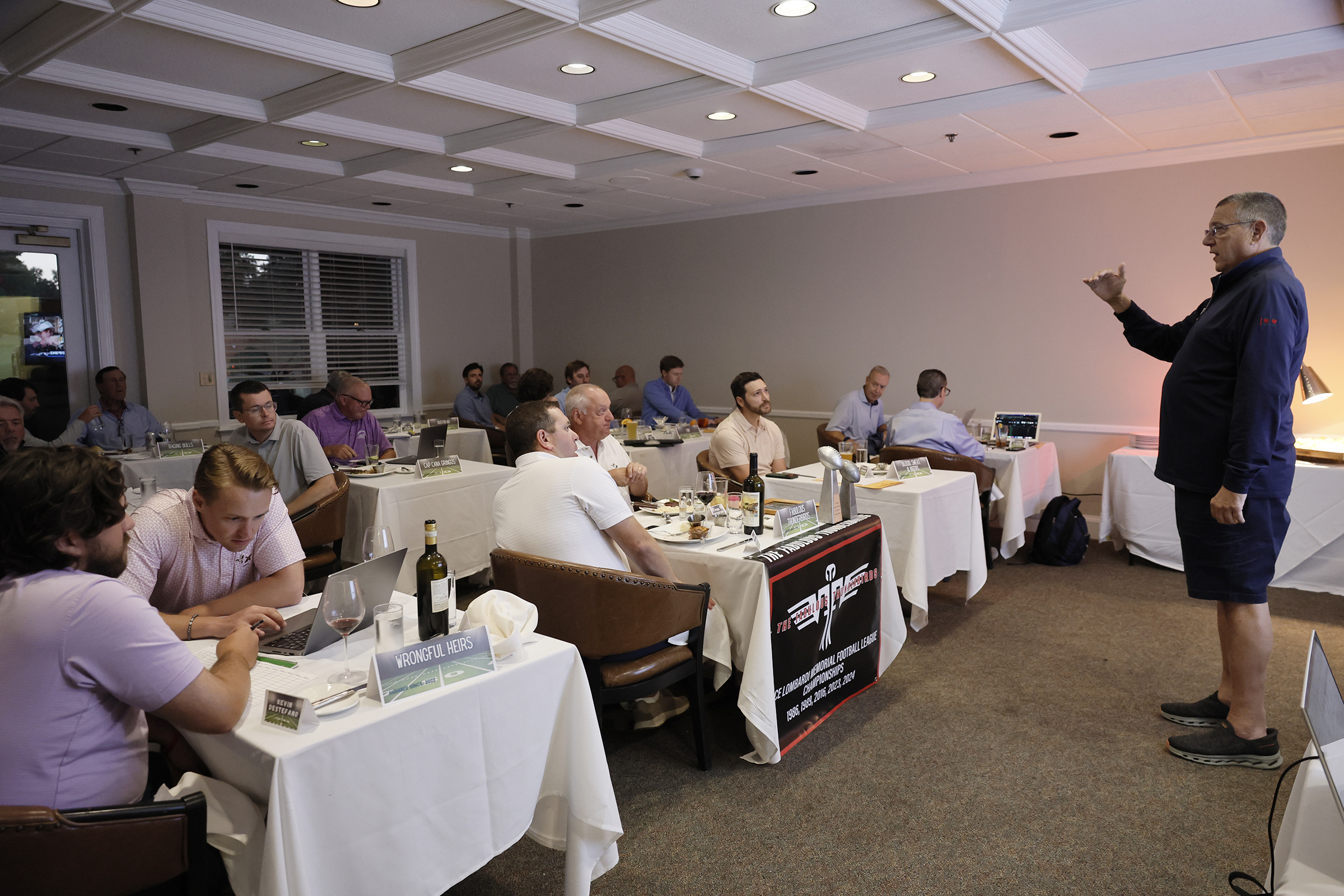
Jeff Killian (right) talks with the group before the 41st Annual VLMFL draft party at Chester Valley Golf Club in Malvern on Friday, August 28, 2026.Elizabeth Robertson / Staff Photographer
Their own rules
Killian, the current commissioner, joined the league in 1989 after hearing about it at DeStefano’s Christmas party. Killian played fantasy baseball and already spent his Sundays watching football. He was in.
And then he watched as the first eight selections in the VLMFL draft were quarterbacks. Killian panicked.
“So we drafted a good NFL quarterback, not a fantasy QB,” Killian said. “We drafted a great NFL quarterback, but he sucked in fantasy. We drafted Phil Simms. I still own the worst record in the history of the league: 1-15. I didn’t win until Week 10.”
But Killian was undeterred. He dug in and learned the league’s scoring system, which has been fine-tuned over the years but remains true to the original idea: big plays are king. A 60-yard interception return for a TD is worth 26 points. A 50-yard rushing TD is worth 14 while a goal-line plunge is worth just three.
Each team starts a quarterback, two running backs and two receivers along with a defense and kicker. Tight ends count as receivers and there is no “flex” spot.
It’s not a dynasty league and the 12-team draft is not an auction. VLMFL keeps it old school, so much that you wonder if they’ll add fullbacks next year. Kickers and defenses are more valuable in the VLMFL than most other leagues, which is why big-footed Brandon Aubrey of the Cowboys went in the fourth round.
“It’s different from every other league,” Swerdlow said. “People will say, ‘You’ve been in a league since when?’ Then you tell them about the rules. ‘Those rules are crazy.’ Yeah, we didn’t have all of society’s model to build our league off.”
The league season runs the entire NFL regular season with the champion being the first-place team after Week 17. The VLMFL, unlike most leagues, does not do a playoff to crown a champ.
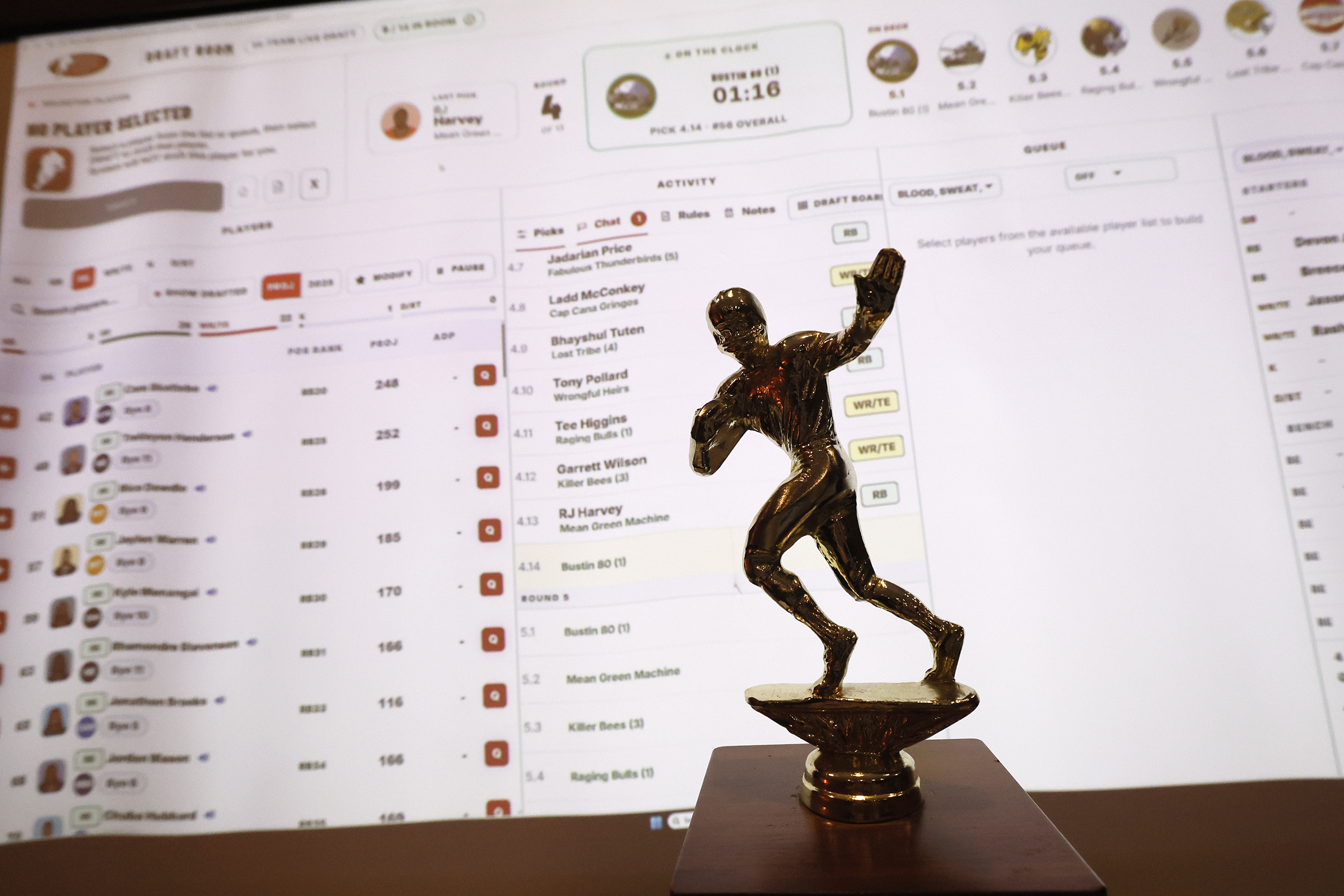
The trophy — a 30-inch wood base topped with a gold football player — arrived in the early 1990s and a new winner is inscribed each year. It had to be repaired twice and there’s still some magic marker marks on the base left years ago by someone’s kid. Like the league, the trophy keeps going.
“I think it was Matt, Paul’s son,” Killian said. “But we’re not sure.”
A photo provided by Paul DeStefano of his team’s “parade” after they won the fantasy league trophy.Elizabeth Robertson / Staff Photographer
Draft night
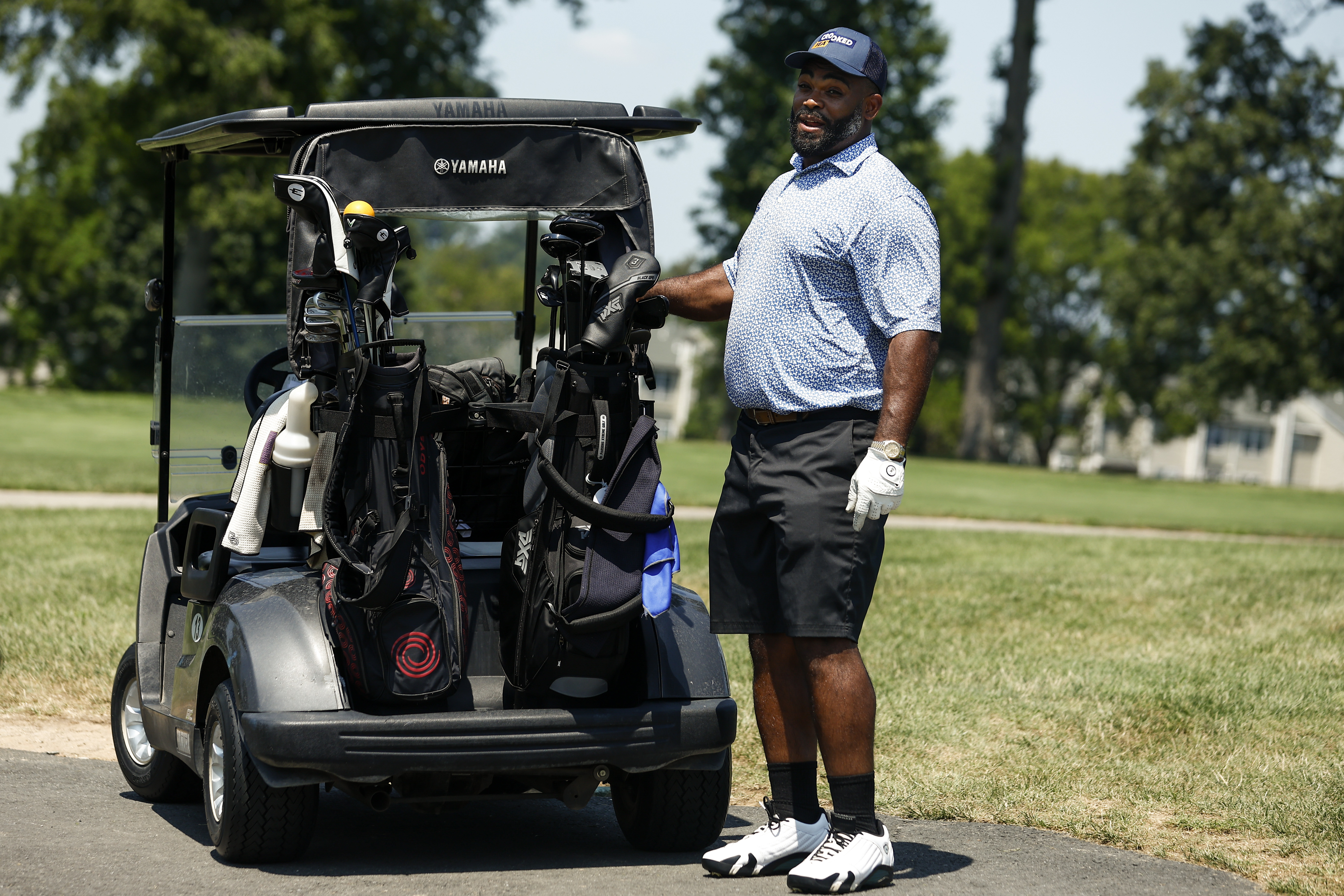
The league that held its first draft 40 years ago at the old Mile Post Inn gathered last Friday at the Chester Valley Golf Club in Malvern. They golfed in the afternoon and then had dinner in a private room before drafting. Each team had their own table with laptops open and papers spread as if they were NFL GMs.
“This is the best day of the year,” said 67-year-old Jeffrey Jaskol, who drafted for his team, The Lost Tribe, with his sons Andrew and Adam.
Leaguemates were heckled for drafting Cowboys and someone cursed when Chargers QB Justin Herbert was snagged. Titans running back Tony Pollard — “I have to go way down on my list,” someone shouted — and Commanders QB Jayden Daniels — “Are you kidding me,” another yelled — were met with jeers.
“We only see each other one night a year. Some of these guys I see once or twice a year,” Leidheiser said. “It’s a once-a-year meeting. I do it just for the competitive fun of it. Plus it’s like a fraternity of guys. We’ve known each other for more than 30 years.”
Lee said he used to worry every year that someone in his family would die and force him to miss draft night. That’s how much he loved the barbs they traded. He kept the yapping going one season when he learned other VLMFLers were attending the same Eagles game. He got in early, tracked down their seats and left them notes reminding them that he was the champ.
“They’d get a hot dog and come back to that,” Lee said. “The camaraderie was the thing that was so much fun. It built more and more every year.”
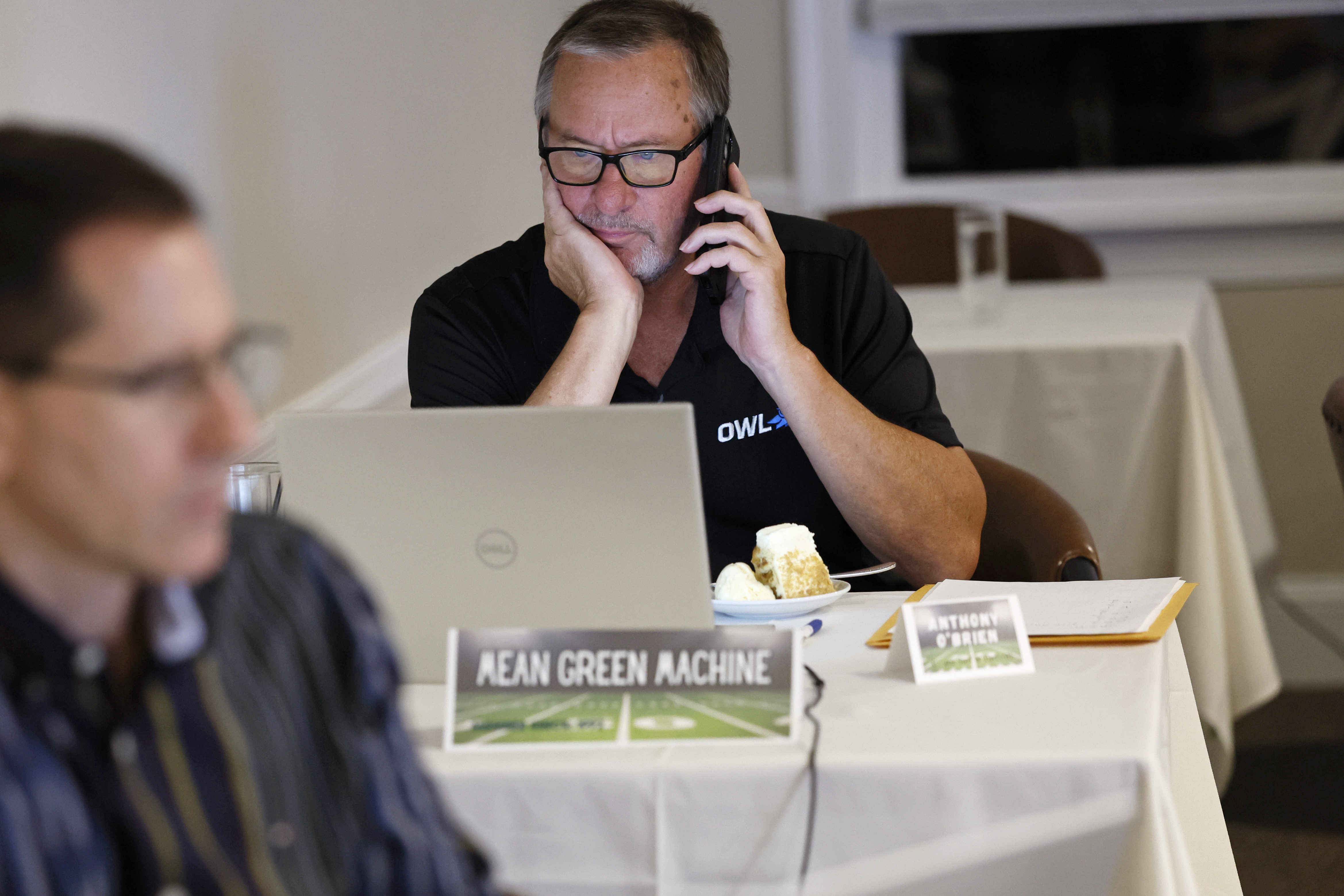
Anthony O’Brien works the phone during their fantasy football draft party.Elizabeth Robertson / Staff Photographer
Fantasy football, which is thought to have been created in 1962 by an Oakland Raiders owner, was still a foreign concept in 1986, but Leidheiser was sold because it reminded him of the rosters he built in beer-league softball in Wayne. He enjoyed playing GM and was soon hooked.
But now he says he sits back at the draft and follows the lead of his son Korey, a 30-year-old who works in data analytics. The results have never been better, the dad said.
“We were in college and we realized most of these guys were doing it by hand and my brother and I could look up stats online,” said Korey, whose brother Kyle is now running his own squad. “It’s all numbers, right? It just depends on what you’re adding up.”
The best part about the league, Jaskol said, was how it evolved over the years to include so many kids of the old-timers. Then his two sons started teasing him for having a fancy for past-their-prime running backs and overdrafting Eagles.
“And I said I loved this,” Jaskol said.
The league donated money one year to a leaguemate whose house burned down and toasted a longtime member after he died in 2019. The league stays connected through an email chain — “Sage Advice,” Killian wrote in a subject line last week — and meets after the season for another night of smack talk. It’s what keeps the league going after 40 seasons.
The league’s championship trophy on display during the fantasy draft.Elizabeth Robertson / Staff Photographer
The VLMFL started before fantasy football became mainstream and the game that everyone now plays once seemed to belong to the guys who traced their league back to an AT&T office.
People got married, had kids, switched jobs, and moved away. So much has changed in their lives since 1986, but the VLMFL feels mostly the same when the guys gather to draft at the end of every summer. That’s what keeps them coming back. The old fantasy league became more than just a league. But you no longer need a fax machine to play.
“It’s really cool how 70% goes back over 30 years. That’s what makes it fun. You’re seeing the same people and you’re telling the same jokes,” Killian said. “I play about 100 rounds of golf a year. But I won’t play on a Sunday again until the Super Bowl is over.
“I don’t care if someone invites me to Merion this fall. I won’t go on a Sunday. My buddies laugh at me all the time and say, ‘I can’t believe you’re going to sit at home and watch football all day and it’s going to be 80 degrees and sunny.’ Have fun.”
This summer, the Philadelphia area wa big for golf events, between the PGA Championship in May at Aronimink Golf Club and the U.S. Amateur Championship in August at Merion Golf Club.
And it’s carrying into the fall with the inaugural Jefferson Lehigh Valley Classic, a PGA Tour Champions event. Unlike the other two, however, this won’t be a one-time thing.
“It’s really cool that now over the next five years, PGA Tour Champions, which is part of the PGA Tour, is going to be at Lehigh Country Club,” said Nick Ragone,Jefferson’s chief marketing and communications officer. “I think fans are going to be really excited.”
It also marks the first time since the mid-1970s that the PGA Tour will have a regular presence in the area, Ragone said. The LPGA also holds an annual tournament in the region, the ShopRite LPGA at Seaview Hotel & Golf Club in Galloway, N.J.
Here’s everything you need to know about the new tournament in town …
What is the Jefferson Lehigh Valley Classic?
The Jefferson Lehigh Valley Classic is a three-day, 54-hole stroke play competition.
The tournament, which features a 78-player field, is an official event of the PGA Tour Champions, an offshoot of the PGA Tour specifically for golfers 50 or older.
Along with the competition on the course, the event’s main goal is to benefit charities in the region, extending from the Greater Philadelphia area, to the Lehigh Valley, and through Northeast Pennsylvania. Some of the beneficiaries include the Eagles Autism Foundation and Valley Youth House.
When and where is the Jefferson Lehigh Valley Classic?
The event will be held at the Lehigh Country Club in Allentown from Monday, Sept. 28 through Sunday, Oct. 4, featuring three days of competition and three days of pro-am events.
The week will begin with the Eagles & Friends Celebrity Pro-Am on Monday. A two-day official pro-am will be held on Wednesday and Thursday, and will feature the tournament’s official golfers.
Competition officially starts on Friday, Oct. 2, and runs through that Sunday, with tee times from 9 a.m. to 11:30 a.m. on both Friday and Saturday. Sunday’s tee times will go from 8 a.m. to 10:30 a.m.
The trophy ceremony will immediately follow after the 18th green on Sunday.
Former Philadelphia Eagle Brandon Graham played in the Jefferson Health APGA Classic Pro-Am at the 1912 Club in Plymouth Meeting last summer.Monica Herndon / Staff Photographer
What is the Eagles & Friends Celebrity Pro-Am?
The Eagles & Friends Celebrity Pro-Am kicks off the week’s festivities by allowing fans to play side-by-side with athletes across different sports.
Former Eagles Brandon Graham, John Spagnola, Mike Quick, Scott Fitzkee, and Rodney McLeod are scheduled to compete. Golfer Braden Shattuck, a Delco native who competed in the PGA Championship, former Phillies second baseman and coach Mickey Morandini, and former Sixer and Temple coach Aaron McKie are also set to be in attendance, with more names still to be announced.
“Eagles Autism Foundation is one of our charitable partners. So one of the reasons why we created this event was, in part, to — as we merged with Lehigh Valley — to put a stake in the ground in the Lehigh Valley like, ‘Hey, this is a long-term commitment on our part,’” Ragone said. “We started thinking about it, and really the Eagles team suggested … ‘Why don’t we think about doing something cool like a special pro-am with the Eagles legends, and it’s a way for us to raise additional money for our charities?’”
Who is competing in the Jefferson Lehigh Valley Classic?
Among the PGA Tour Champions golfers headlining the event will be Stewart Cink, the 2009 Open Championship winner and defending Tour Champions player of the year. He will be joined by Justin Leonard, who has 12 career PGA Tour wins, including one major, the 1997 Open Championship.
Two-time Ryder Cup winner Miguel Angel Jiménez, who has 21 European Tour wins, and two-time U.S. Open champ (2001, ’04) Retief Goosen will also compete. Former PGA Tour players Glen Day and Dicky Pride are in the field, along with Steven Alker, Darren Clarke, and fan favorite Michael Block. Players like Ernie Els, Padraig Harrington, Bernhard Langer are also expected to join.
Stewart Cink, who also competed earlier this year in the PGA Championship at Aronimink Golf Club, will be back for the Jefferson Lehigh Valley Classic.Frank Franklin II
How can I watch the Jefferson Lehigh Valley Classic?
All three rounds of the tournament (Friday-Sunday) will be televised by the Golf Channel. But if you’re looking to attend rather than watch on TV, it’s quite affordable, especially compared to the PGA Championship …
How do I get tickets?
Tickets to the tournament are available now, with prices ranging by day.
Weekly general admission tickets provide access to the tournament from Thursday through Sunday for $75. One-day general admission tickets for Friday to Sunday are $35, while tickets to Thursday’s pro-am are $15.
Children under 17 years old receive free admission when attending with a ticketed adult. Veterans also receive complimentary admission.
There’s no word yet if the newest Sixers arrival will become a fan of the local team in his new home city. But Cavan Sullivan, the Union’s Bridesburg-bred teen phenom, is not shy about hoping it happens. So when he scored a goal in the Union’s 2-0 win over CF Montréal on Saturday at Subaru Park, he uncorked a celebration he’d been planning ever since James signed in Philadelphia.
Team photographer Kim Ahrens was keeping a bottle of chalk powder on the nearby sideline. Sullivan ran over to her, got the bottle, poured a handful of powder into his hands, and blew it up into the air — a tribute to James’ famed routine that he does before tipoff of all of his games.
Unfortunately for Sullivan, the breeze blowing in off the Delaware River meant there wasn’t as much of a cloud as James often creates in arenas. But the message was sent, and Sullivan talked about it after the game.
“I was waiting to do that for a while,” he said. “I just kept missing out on it, or I was away. Tonight, great crowd, I figured it was the perfect time.”
Indeed, while this was Sullivan’s third straight game with a goal — and seventh goal in all competitions this year — the last two were in road games, at Austin and Red Bull New York. This one was his first at Subaru Park since James picked Philadelphia as his final professional home.
“Got to get him to strike the drum, maybe follow me back on Instagram,” Sullivan quipped, his priorities clearly in order. But then again, James knew where to find Folarin Balogun on social media right away when he scored for the U.S. in the World Cup against Bosnia & Herzegovina, then did James’ “Silencer” celebration.
“We saw him shout out Balogun in the World Cup, so that sort of made me think of it,” Sullivan said.
LFG!!!!!! THE 🤫 HAS 🛬 at the World Cup! Helluva goal there Young 🤴🏾! 🫡. GO 🇺🇸 https://t.co/8wb2t2F6oq
Thankfully, Sullivan did not follow the rest of Balogun’s footsteps on Saturday by committing a red card-worthy foul against Montréal. But perhaps they’ll be able to swap LeBron stories if they’re both called up to the U.S. squad at the end of this month.
And perhaps, once James arrives in town later in the fall, he’ll decide to accept the invitation.
“This place is dope — environment like you’ve never seen before. No arena is like Subaru Park,” Sullivan said, laughing. “So yeah, pull up if you want to watch good soccer with Philly kids. It’s a nice culture around here.”
Ben Hummer would like to own a house one day in Pittsburgh. He dreams of a two-bedroom, one-bathroom town house where he can live near his job.
But for now, Hummer, 29, rents his 500-square-foot, one-bedroom apartment, and his monthly rate since he moved in has continued to increase by $50 each year, making the goal seem further out of reach.
“Anything that could increase the supply and affordability of housing in the Pittsburgh area would be massive,” said Hummer, who works in human resources.
Like most voters in Pennsylvania, according to a recent poll from The Philadelphia Inquirer, the New York Times, and Siena University, the economy and cost-of-living concerns are the most important issues deciding Hummer’s vote in the 2026 governor’s race between incumbent Democratic Gov. Josh Shapiro and his Republican challenger, state Treasurer Stacy Garrity.
And as Election Day draws nearer, both campaigns are focusing their messaging on these kitchen table issues.
(function() { var l = function() { new pym.Parent( ‘nyt-afford__graphic’, ‘https://media.inquirer.com/storage/inquirer/ai2html/nyt-afford/index.html’); }; if(typeof(pym) === ‘undefined’) { var h = document.getElementsByTagName(‘head’)[0], s = document.createElement(‘script’); s.type = ‘text/javascript’; s.src = ‘https://pym.nprapps.org/pym.v1.min.js’; s.onload = l; h.appendChild(s); } else { l(); } })();
Two years ago, it was the cost of eggs, gas, and groceries that were top priorities among the electorate in Pennsylvania and elsewhere. Voters’ trust in President Donald Trump’s ability to bring down high prices propelled him back to the White House, sending Democrats scrambling to hone an affordability pitch that could land in time for the high-stakes 2026 midterm elections. But in that same time, prices have continued to climb; gas prices have topped $4 per gallon; and tariffs instituted by Trump — who called affordability “a hoax” at a Pennsylvania rally last year — have driven up the cost of every day life. Now both parties are latching on to a focus on affordability.
As he mounts a reelection campaign, Shapiro — who holds a commanding lead in polls — is highlighting his accomplishments during his first term that his campaign says has given Pennsylvanians more money back through tax cuts and wage increases for childcare workers.
Meanwhile, Garrity has recently shared her own plan, called “Turnaround PA,” to make living more affordable with an outline of how she’d lower prescription drug costs, reduce property taxes, and aim to cut energy bills to get there. But she’s also closely aligned with Trump, who has endorsed her in the race and has dismal markings from voters on two of their top priorities: the economy and cost of living.
(function(){function e(){window.addEventListener(`message`,function(e){if(e.data[`datawrapper-height`]!==void 0){var t=document.querySelectorAll(`iframe`);for(var n in e.data[`datawrapper-height`])for(var r=0,i;i=t[r];r++)if(i.contentWindow===e.source){var a=e.data[`datawrapper-height`][n]+`px`;i.style.height=a}}})}e()})();
That puts her in a difficult spot to challenge Shapiro, said Mark Zandi, the chief economist at Moody’s Analytics.
There’s no easy answer for Republicans to win on economic issues in the midterms, but Zandi said his best advice is to focus on what is in the governor’s control and draft ideas that mitigate the fallout from Trump’s policies.
Hummer, a Democrat who plans to vote for Shapiro this fall, said he trusts the governor to handle the economy and cost of living issues better. More than half of likely Pennsylvania voters in the Inquirer/New York Times/Siena poll agree.
Fifty-five percent said Shapiro would do a better job of handling the state’s economy, and 56% said they think Josh Shapiro would do a better job of handling cost-of-living issues.
“I’m well aware he’s limited in his options to do things, but I would say he’s kept a steady hand on the wheel of the Pennsylvania economy — to the extent that he can,” he said.
Garrity pitches affordability as Republicans seek to overcome Trump’s ratings
Among other proposals, Garrity has pitched a “first-time homebuyer assistance initiative,” which could help house seekers like Hummer and would provide qualified buyers 3% mortgage interest rate support from the state.
She also has proposed cutting taxes by seeking a constitutional amendment that exempts Pennsylvania seniors from paying school property taxes and gives voters the final say over whether to increase property taxes. Her plan would also “reprioritize state spending for property tax relief.”
State Treasurer and Republican candidate for governor Stacy Garrity holds a rally in Bucks County on Sept. 25, 2025, at the Newtown Sports & Events Center.Tom Gralish / Staff Photographer
But there’s no free money, Zandi said. “If you’re giving tax cuts over here,” he said, “you’ve got to figure out how to pay for it … and that means you’re cutting spending.”
Garrity’s plan also would address rural healthcare, and she would “aggressively pursue available federal funding to strengthen rural healthcare.”
But there’s little money left in the pot after Trump cut government spending in last year’s federal budget. His One Big, Beautiful Bill Act directed a reduction in Medicaid spending by $1 trillion over 10 years, starting after the midterm elections, and rural hospitals and nursing homes are more dependent on federal funds. Additional dollars would likely need to come from Harrisburg.
For Pennsylvanians like Caitlyn Needham, 28, the consequences of an unexpected medical bill on top of a limited income meant she went without substantial meals for weeks.
“I have a rabbit, and she had a medical emergency [in November],” she said. “So for two months, the only thing I could afford to eat while paying off those bills was peanut butter and jelly sandwiches for breakfast, lunch, and dinner.”
Needham, a cake decorator in Pittsburgh, said she’s always been frugal and saved a little bit of money from each paycheck, but increasing expenses are pushing her budget to the limit. She said she plans to vote for Shapiro this November.
“Pennsylvanians need a relief valve before things get worse,” she said. “So many people are one bad week away from not being able to keep their housing, or losing their medical coverage, or losing their job because their car broke down and they can’t afford to get service. It’s like everyone is just one accident away from not being able to live.”
(function(){function e(){window.addEventListener(`message`,function(e){if(e.data[`datawrapper-height`]!==void 0){var t=document.querySelectorAll(`iframe`);for(var n in e.data[`datawrapper-height`])for(var r=0,i;i=t[r];r++)if(i.contentWindow===e.source){var a=e.data[`datawrapper-height`][n]+`px`;i.style.height=a}}})}e()})();
“If you’re trying to infer I’m out of line with the president, I don’t think I am,” she said last month during a news conference she held on data centers.
In a statement, she blasted Shapiro’s handling of the economy, saying he has put a tax burden on families and tied businesses up with unnecessary regulations.
“Josh Shapiro’s Pennsylvania is simply unaffordable for the commonwealth’s hardworking families,” Garrity said. “He allowed utility and energy costs to skyrocket due to his unwillingness to expand generation capacity and instituting policies that benefit our neighboring states instead of us.”
Shapiro emphasizes his record is separate from national picture
Shapiro, the incumbent, is leaning on his record on economic policy.
According to his campaign, his administration created more than 25,000 jobs during his first term and brought in $41 billion in private-sector investment.
“Governor Shapiro is fighting for all Pennsylvanians — and he has a track record of creating jobs and economic opportunity, putting money back in Pennsylvanians’ pockets, and standing up to Washington’s reckless, cost-raising policies,” said Samantha Reposa, a spokesperson for the campaign. Garrity, she said, “fully supports the failed economic policies that are raising costs and hurting working families across the commonwealth.”
Gov. Josh Shapiro addresses the audience during a July 26 rally for congressional candidate Bob Brooks at the United Steelworkers Union Hall in Bethlehem.David Maialetti / Staff Photographer
His campaign released a Spanish-language digital ad focused on benefits of the Working Pennsylvanians Tax Credit and the Property Tax/Rent Rebate Program, which is targeted toward seniors and people with disabilities.
“If you’re working, you get to keep more of your money. Up to $800 more, more money in your pocket. And right now, every little bit helps,” a woman in the commercial said in Spanish.
Ultimately, Zandi said, “it’s very difficult for lawmakers at any level of government to change the picture on affordability, at least any time quickly,” because those issues are due to broader national and international forces.
There’s also no one-size-fits-all approach for a governor to tackle the costs of education, housing, energy, childcare, elder care, healthcare, and groceries.
“Each issue that makes up the affordability crisis requires its own set of solutions and efforts, so it feels like a laundry list of policy steps, and it is,” he said. “But that actually is probably the only way to make a difference.”
For many Pennsylvanians, paychecks feel like simply treading water: By the time all expenses are covered, there’s little money left to save and build toward the future.
“It just seems that money doesn’t go as far as it used to,” said Thomas Schank, 49, of Scranton. “I’ve gotten raises at work over the last two years, but everything else went up also, so really, no net gain.”