Tag: topic-link-auto

  • How St. Joe’s baseball is helping players get drafted: ‘It was just a great team culture’

    How St. Joe’s baseball is helping players get drafted: ‘It was just a great team culture’

    When Brett Callahan was called up by the Detroit Tigers on Aug. 16 to make his major league debut, he became the fifth player in St. Joseph’s baseball history to reach his sport’s peak.

    Callahan, who was drafted in the 13th round in 2023, then hit a two-run triple to left on the first major league pitch he saw in a 7-5 Tigers loss to the Chicago White Sox.

    “Whenever a guy that you coached gets to the pinnacle of the game, it’s a thrill,” Hawks coach Fritz Hamburg said. “It’s a thrill for us as coaches. It’s a thrill for his teammates. It’s a thrill for, obviously, his family. And I mean, it’s just so cool to see. There’s no other way to say it.”

    Callahan follows in the footsteps of Fritz Henrich, Jamie Moyer, Jimmy Yacabonis, and Brian O’Keefe, representing a long line of St. Joe’s baseball players who have chased, or are chasing, that dream. (A sixth MLB player, Allan Travers, was a student at St. Joe’s but not on the team when he played one game for the Tigers in 1912 under strange circumstances.)

    Thirty-seven St. Joe’s players have been MLB draft picks, and another 25 have signed with MLB or independent clubs in free agency. Seventeen of those draft picks have come under Hamburg, who’s entering his 19th season with the Hawks.

    Earlier this summer, three Hawks pitchers were picked on the second day of the MLB draft — Andrew Gaines, in the 10th round by the Brewers, Christian Coppola two rounds later by the Phillies, and Duke McCarron in the 17th round by the Marlins. A few weeks later, left-handed pitcher Cole Fehrman signed a minor league contract with the Rangers on July 24.

    While there is an excitement to hearing his players’ names called each summer, Hamburg also said it’s “a viable and an important part to any program.”

    “First and foremost, it’s most important for the players, them having the confidence in our program, our coaching staff, and the development process,” Hamburg said. “That we’ve been able to have the number of players that have worked to have the opportunity to be drafted and to play professionally is, for me personally, really important. That’s always been a big driving force for what we do, and it speaks to, I think, the overall experience that the guys have in our program.”

    Transferring in

    Gaines, Coppola, McCarron, and Fehrman transferred into St. Joe’s ahead of the 2026 season, in which the program won a school-record 36 games, won its second Atlantic 10 regular-season title, and won the most conference games in A-10 history before falling in the consolation bracket of the conference championship.

    Despite their short time with the program, Hamburg said their four pitchers’ careers “took off this year.” He credited that to both the pitching coach, Scott Boches, and to the players themselves, who put in the work with the Hawks.

    When the group first committed to St. Joe’s, there was no pitching coach on staff. Boches’ hiring wasn’t announced until Aug. 18, 2025. But the group trusted Hamburg and the program. When Boches was hired, Coppola said it was clear Hamburg was blending metrics with “old-school baseball,” and the recipe worked for the Hawks.

    “I think [Hamburg] has an understanding of what gets players drafted and what kind of pitching coach he needs to bring in to accomplish that,” Coppola said. “The fact that he’s still able to manage to recruit three draft picks and one free-agent signing in one portal transfer class, that’s amazing.”

    In their final season with their previous programs, the quartet had ERAs in double figures. During the 2026 season with the Hawks, all four pitchers saw their ERAs drop and their appearances increase. Gaines also tied the school’s single-season saves record (10).

    Gaines said the respect and trust from Boches helped. Boches offered open and honest feedback on how to improve the pitchers’ existing routines but didn’t try to change much. In return, this allowed them to pitch more free and loose.

    “Obviously, you’re going to mess up, and they expect you not to be your best every single time. They expect you to go out there and do your job, but it’s baseball,” Gaines said. “At Pitt, I was super stressed about doing well because I wasn’t throwing well and worrying about what was going to be said, but [at St. Joe’s], it was so easy to go out there and do my job.”

    For McCarron, the teammates surrounding him also made a difference.

    “We were all pushing for each other,” he said. “Everyone around you is pushing for the same thing. It breeds a good environment. … Everyone really wanted the best for each other, and it was just a great team culture.”

    Developing a reputation

    The trio of pitchers were the second-most picks to come out of St. Joe’s in one draft. Four Hawks were selected in the 2024: pitchers Matt McShane and Luke Gabrysh, and outfielders Ryan Picollo and Ryan Cesarini.

    Gabrysh and Cesarini are playing for the double-A affiliates of the Mets and Guardians, respectively. McShane is with the Red Sox’ high-A affiliate, the Greenville Drive. Picollo was released from the Mariners single-A affiliate in early August.

    St. Joe’s has two other players playing in double A, one in triple A, and one in the rookie league. Yacabonis plays for the Diablos Rojos del México in the Mexican League. Of the dozen Hawks still playing, 10 are pitchers.

    The most notable player to come from St. Joe’s, Jamie Moyer, who pitched in the majors for 25 seasons, said this is partially because all teams need good pitching, no matter the level.

    “It’s always, ‘We need more pitching,’” said Moyer, a three-sport athlete at Souderton Area High School before his Hawks and major league career that included 2006-10 with the Phillies. “The game doesn’t happen without pitchers.”

    Despite being months away, Coppola expects St. Joe’s to continue to get players drafted. Coppola projected that catcher Blake Primrose would be part of the 2027 MLB draft class. He set the single-season program records in home runs (24), runs scored (75), and RBIs (72), and was named the Atlantic 10 Player of the Year and a Buster Posey Award semifinalist as a sophomore in 2026.

    No matter what happens in 2027, St. Joe’s has a track record as a local school with draft success over the years, which Hamburg said is a “fun part” of the program that he’s proud of.

    But what he remains most proud of is the players he watches every night on MiLB Network, talks to regularly, and learns from every time they come around.

    “To have that and those guys remain part of our program, and to know that this is how people see our program, that we’re winning on the field and beyond, has always been a goal for me as a coach in my career, and something I’m very proud of,” Hamburg said. “Happy that those guys are getting to live out their dreams.”


  • In the wake of Ronald Acuña’s blast, Phillies rookie Alex McFarlane remains the bullpen’s best hope

    In the wake of Ronald Acuña’s blast, Phillies rookie Alex McFarlane remains the bullpen’s best hope

    The worst thing the Phillies can possibly do is allow Sunday’s misfortune to impact their handling of Alex McFarlane.

    They have 22 days until the NL wild-card round begins. They will play 19 games before then. They don’t have any other options.

    In a perfect world, McFarlane would not have been the guy standing on the mound in the eighth inning on Sunday afternoon. He would not have been the one watching his 100 mph, 1-2 fastball disappear over the outfield wall. He would not have suffered the indignity of seeing, feeling Ronald Acuña Jr. circle the bases, arms out like an airplane, dive bombing the Phillies’ division title hopes with a three-run home run that lifted the Braves to a 5-4 win.

    It is not a perfect world. McFarlane was there for two reasons. One, he has the stuff to warrant it. Two, he is their best hope.

    Nothing else matters at this point. With less than a month to go before the playoffs begin, the back of the Phillies bullpen consists of Jhoan Duran, Jonathan Bowlan, two guys who have shown that they can’t be trusted, and one guy who needs to show he can.

    Interim manager Don Mattingly has no choice but to err on the side of the third guy. He needs to find out if McFarlane can handle the role.

    There is a fun bit of trivia about McFarlane that is more quirky than significant but nevertheless provides an entry point to state the obvious: that the Phillies owe it to themselves, their clubhouse and their fans to spend the next month preparing McFarlane for a major postseason role.

    Twelve games into his career, the 25-year-old reliever has already picked up four big-league wins. He ranks sixth on the team in that department — two behind Aaron Nola, one ahead of Andrew Painter — despite having yet to celebrate his first full month of major league service. McFarlane also has a page in the history books. Before him, no Phillies reliever had ever won four games in his first 11 appearances. In fact, over the last 60 years, only three had won two.

    While McFarlane’s accomplishment is first and foremost a testament to the fluky nature of pitcher wins and their inadequacy as a measure of individual performance, deeper under the hood lies something real. It isn’t just his fastball that sits at 100 mph and has touched 102. By practically every measure of stuff and performance, McFarlane has been the second or third best arm in the Phillies bullpen since his promotion on Aug. 11. More importantly, those measures rank him among the upper tier of all big-league relievers, the realm in which legitimate postseason bullpens are constructed.

    To get a sense of who a pitcher really is, you have to look at three different levels: the stuff itself, the hitters’ reaction to that stuff, and the end result. McFarlane has looked solid on all three levels.

    Opposing hitters have swung and missed at 22% of Alex McFarlane’s pitches in the strike zone. Elizabeth Robertson / Staff Photographer

    1. The stuff

    You don’t need numbers to see true sizzle. But, good golly, McFarlane’s numbers are impressive. Only two relievers in the majors have bettered his 100.2 average fastball velocity since his promotion. One of those relievers is the Dodgers’ Edgardo Henriquez. The other is Jhoan Duran.

    The spin rate on McFarlane’s fastball and slider both rank among the top 10 in the majors among relievers.

    2. Hitters’ reactions

    Herein lies the biggest reason to be excited about McFarlane. That paradox of pitching is that you have to avoid hard contact while also avoiding walks. Plenty of guys throw hard. The real question is whether a pitcher’s stuff is putting hitters at a disadvantage. Are they getting good swings? Are those swings producing good contact?

    The pitchers who have the advantage are the ones who can throw their pitches in the strike zone and still miss a bat. McFarlane has done it better than almost everyone in the majors over the last month. Opposing hitters have swung and missed at 22% of his pitches in the strike zone. That ranks 12th among relievers, just ahead of the Astros’ Josh Hader.

    Contact in the zone is an important metric for McFarlane, in particular. One legitimate question about his eventual bullpen ceiling is his lack of a pitch that hitters will consistently chase outside the zone. Take Duran, for example. This season, hitters have swung at 35% of his pitches outside the strike zone. Hader is at 41%. McFarlane’s chase rate is about 29%, which is middle of the pack among relievers. His slider has played quite well overall, generating a 50% whiff rate on swings. But hitters have been laying off roughly two of every three pitchers outside the zone. All of this is per Fangraphs’ pitch split data.

    3. The results

    You can get results without having stuff, and you can have stuff without getting results. But the most sustainable bullpen arms generally do both. That’s what McFarlane has done in his limited sample of big league innings. His strikeout rate is rather ordinary at 11 of 34 batters, considering his fastball. But he has yet to allow an extra-base hit, thanks in large part to his ability to keep the ball on the ground. His 56% ground ball percentage ranks 19th among 96 big league relievers who have thrown at least 10 innings over the last four weeks. Two of the six hits he’s allowed have been infield hits. In general, the quality of contact has been a big positive.

    Likewise with his situational performance.

    Before Alex McFarlane, no Phillies reliever had ever won four games in his first 11 appearances.Elizabeth Robertson / Staff Photographer

    Toward the end of the Phillies’ recent West Coast trip, Mattingly and pitching coach Caleb Cotham decided to begin the McFarlane experiment in earnest. One night after they called on him to protect a one-run lead in the seventh inning against the Angels, the Phillies gave McFarlane his most significant opportunity yet. Leading the Diamondbacks 2-1 in the sixth inning, Aaron Nola allowed the first two batters he faced to reach base. That prompted a call to the bullpen. McFarlane was the choice.

    Three batters later, the Phillies were onto the eighth. McFarlane gave up a long fly ball to Lars Nootbaar before striking out Nolan Arenado and getting Tim Tawa to ground out weakly to third base.

    These are exactly the sorts of situations that Mattingly and Cotham should be seeking for McFarlane between now and the end of the regular season. They are the exact sort of situation they thrust him into on Sunday. Three-run lead. Must-win game.

    It didn’t work out this time. McFarlane came on to face the 8-9-1 hitters. Austin Riley lined out, and then Mike Yastrzemski singled to center to bring the top of the order to the plate. Drake Baldwin doubled. Acuña did what he did. It happens. The key is finding out how McFarlane responds.

    For most of the year, the biggest reason to doubt the Phillies has been their lack of a solution for Jose Alvarado’s regression and Orion Kerkering’s implosion. Kerkering may have rendered himself unplayable after a two-run eighth inning against the Braves in Friday’s 5-2 loss. In his last six appearances before Sunday, he’d allowed 12 of 30 batters to reach base with seven runs allowed and just four strikeouts.

    At this point, Mattingly has little choice but to operate as if McFarlane will be the man who will fill the vacuum in the postseason. A lot will depend on his ability to continue to throw strikes. But for a team that has no other options, McFarlane is one that could break right in a big way.

  • Who is the federal judge overseeing the case roiling Philly DA Larry Krasner’s office? And what will he do next?

    Who is the federal judge overseeing the case roiling Philly DA Larry Krasner’s office? And what will he do next?

    Nearly a decade ago, when U.S. District Judge Paul S. Diamond was asked to determine the fate of a prosecutor who admitted breaking the law, he did not hold back.

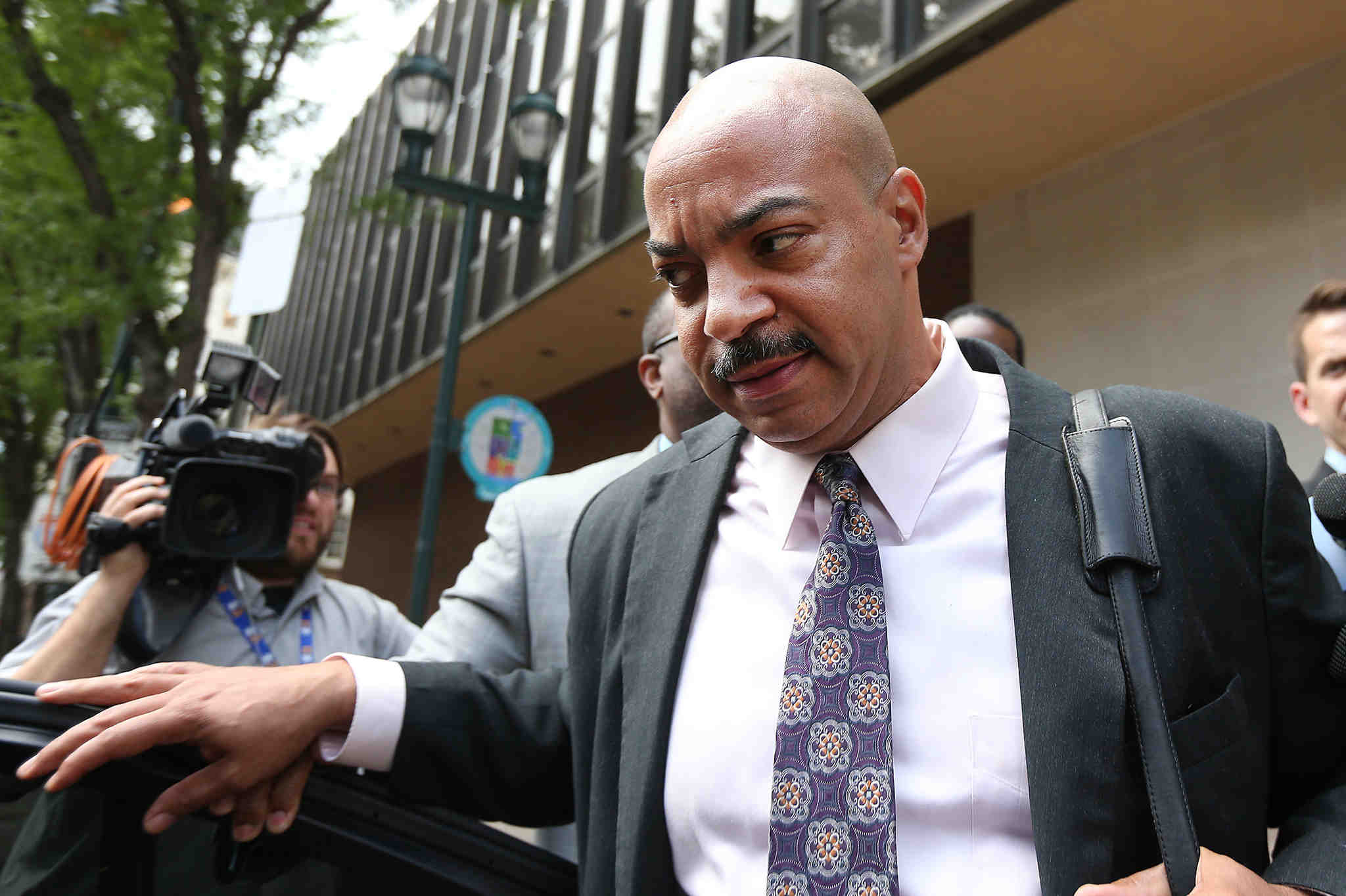
    Just moments after then-Philadelphia District Attorney Seth Williams pleaded guilty in a public corruption case, Diamond had Williams handcuffed and hauled off to jail to await sentencing.

    Then, a few months later, Diamond imposed the maximum prison term allowed by law — five years. And he upbraided Williams as a “criminal” who surrounded himself with “parasites” and “fed his face at the trough” of public money.

    Then-District Attorney Seth Williams leaves the federal courthouse in 2017.DAVID MAIALETTI / Staff Photographer

    Now, Diamond is overseeing a new case with a new set of accusations against a different district attorney.

    The allegations against top prosecutor Larry Krasner have come as part of a dispute with staffers over how to handle a case, and Diamond has already made clear that he views the assertions as serious — suggesting in a hearing last month that he believed some could amount to federal crimes.

    “If what they say is true, potential wrongdoing abounds,” Diamond said, listing off offenses including perjury, conspiracy, and obstruction of justice.

    To some area legal observers, the pointed remarks were reflective of Diamond’s reputation as a stern, no-nonsense jurist — particularly when it comes to assessing the conduct of fellow lawyers.

    In the last year, Diamond had a hand in federally disbarring one of Krasner’s staffers and suspending another for three years.

    Then-Assistant District Attorney Paul George (back left) was disbarred in federal court in 2025.JESSICA GRIFFIN / Staff Photographer

    In 2017, while the case against Williams was still pending, he ordered it to proceed to trial just months after the indictment was unsealed — a highly unusual timetable for a federal case, but one the judge said was necessary because of its “obvious and possibly calamitous effect on the city’s criminal justice system as well as the city itself.”

    And even in a comparably trivial legal dispute in 2014, Diamond was unabashedly critical of a lawyer who sued over the rights to a song by the R&B artist Usher, writing: “It is difficult to convey the poisonous atmosphere created by [the lawyer’s] continual belligerence.” The lawyer was ultimately suspended from practicing in the region’s federal courts for three months.

    Samuel Stretton, a veteran defense lawyer who often handles legal ethics cases, said Diamond “has high standards. And if someone violates, in his mind, those high standards, he takes a very tough position on them and voices that opinion quickly.”

    Still, Stretton said he thinks Diamond’s principled views are sometimes expressed in overly harsh ways.

    “He has a strong belief in ethics, and lawyers having those especially, and he feels he must enforce them,” Stretton said. “But sometimes his manner of enforcing them is overstated, and he’s abrupt and a little bit of a bully.”

    The question now facing Krasner is what actions Diamond might take in the post-conviction case pending in his courtroom — and whether any could lead to consequences for the city’s DA.

    District Attorney Larry Krasner in a file photo from 2023.Allie Ippolito / Staff Photographer

    Who is Paul Diamond?

    Diamond, 73, was appointed to the region’s federal bench in 2004 by then-President George W. Bush. He was unanimously confirmed by the U.S. Senate.

    Before his judicial nomination, he spent nearly two decades in private practice. He began his career as an assistant district attorney in Philadelphia in the late 1970s, and graduated from the University of Pennsylvania law school and Columbia University.

    While he worked in private practice, Diamond focused on civil litigation, white-collar criminal cases, and disciplinary matters, according to an online biography. And his clients were sometimes unique.

    In 1994, he represented a South Philadelphia candy making company that pleaded guilty to safety violations after an unguarded taffy-pulling machine killed one of its workers.

    A few years later, he represented Lower Merion Township when the Barnes Foundation sued and accused township officials of using racism and discrimination to try to hurt the foundation. The suit was dismissed, and a defiant Diamond was later quoted in The Inquirer saying he planned to bill the Barnes around $1 million to cover the township’s legal fees.

    “This is a claim that should never have been filed; it’s outrageous that it was ever filed, and now the Barnes is going to see the mother of all fee petitions,’’ he said.

    A consistently exacting judge

    Like all federal court judges, Diamond oversees a mix of criminal and civil cases. And even though not all receive significant public scrutiny, Diamond is viewed by some as a consistently exacting judge.

    In 2012, for example, he ordered a 60-year-old grandmother jailed for using her dead mother’s Social Security checks to support her grandchildren.

    “Did it ever occur to you to go out and get a job?” Diamond asked the woman. “Did it ever occur to you that the way to help your grandchildren is not to commit a series of endless federal frauds?”

    The federal courthouse in Philadelphia.TYGER WILLIAMS / Staff Photographer

    Last year, he was subtly critical of the Trump administration in court documents, writing that it was using competing interpretations of the law to try to justify its policy to detain nearly all undocumented immigrants.

    It is “difficult to credit the Government’s squarely contradictory position here,” Diamond wrote.

    The Krasner matter that ended up in his courtroom arrived as a routine post-conviction case: Dennis Johnson, who was found guilty of second-degree murder in state court in 2009, filed a petition in federal court seeking to have his conviction overturned.

    The petition was filed more than 10 years ago, but it wasn’t until 2022 that the origins of the current controversy would begin to take shape.

    A frenzy within the DA’s office

    That year, after the district attorney’s office had spent years opposing Johnson’s bid for relief, prosecutors changed course.

    Then-Assistant District Attorney Jaclyn Mason filed a brief agreeing with Johnson’s lawyers that his trial counsel had been ineffective. And she said her office had discovered problems or inconsistencies with testimony from key witnesses, leading her to recommend that the conviction be overturned.

    The case was first sent to a federal magistrate to review, and Judge Lynne A. Sitarski — relying on Mason’s brief — agreed with her position.

    But Sitarski’s recommendation was not binding — the final call would fall to Diamond. And this spring, Diamond signaled he was not inclined to accept the assertions in Mason’s brief. He scheduled an evidentiary hearing to hear testimony that could corroborate — or undercut — the office’s conclusion.

    That triggered a frenzied sequence of events inside the DA’s office, prosecutors have since testified.

    District Attorney Larry Krasner speaks at a news conference while flanked by two prosecutors who have since testified about actions he took in a controversial post-conviction case: David Napiorski (left) and Peter Andrews.Tom Gralish / Staff Photographer

    To prepare for the hearing, Mason’s supervisors in the law division reviewed her brief and found a series of what they called “material misstatements.” They decided they needed to try to withdraw Mason’s filing and apologize to Diamond for the mistakes. And they asked that Mason sign on to the new filing with them.

    But Mason declined and resigned. She’s since said she only filed her brief at the urging of her then-boss, Matthew Stiegler, who she said had done nothing to review the case himself but instead was “colluding” with Johnson’s defense attorneys to secure his release from prison.

    Mason said she didn’t want to become a scapegoat for Stiegler or the office. And she accused her colleagues of attempting to force her to lie to protect the institution.

    Her former supervisors have denied that, saying that once they noticed the errors in her brief, they were ethically obligated to correct the record in front of Diamond.

    But as they strategized their approach, they said, they encountered consistent resistance from an unusual source: Krasner.

    In their telling, Krasner was ardently opposed to asking the state attorney general’s office to take over the case — something the supervisors generally agreed was appropriate because of the drama surrounding the matter within their office.

    Assistant District Attorney David Napiorski, head of the office’s law division.Alejandro A. Alvarez / Staff Photographer

    And according to the supervisors — Katherine Ernst, Steven Wildberger, David Napiorski, and Peter Andrews — Krasner made a series of notable statements during their discussions, including that he wanted to handle the case in a way that would “protect the office,” that those who didn’t follow his orders would face “consequences,” and that he wanted to keep the matter from the attorney general’s office because he viewed its staffers as “Nazis.”

    Several potential paths forward

    All of those assertions were aired in Diamond’s courtroom in recent weeks, after the judge decided the evidentiary hearing in Johnson’s case would, for now, focus on the conduct of the prosecutors involved, rather than the merits of his petition. The judge said he’ll evaluate that aspect of the case later.

    The attorney conduct portion of the hearing concluded last month, leaving Diamond with several choices about what to do with their startling testimony, legal observers said.

    The most immediate issue is whether he’ll allow the DA’s office to continue handling Johnson’s case. Given the dysfunction prosecutors testified to, he could ask the attorney general’s office to take over instead.

    But Krasner — who was not called to testify and who has said he can’t comment on the case while it’s pending — will likely have the opportunity to propose his own solution in court documents. In earlier filings, he said he engaged an outside lawyer to handle the matter on the office’s behalf — which, in his view, would insulate the case from the issues roiling his office, and preclude the need to involve state prosecutors.

    Beyond that question, however, the testimony about conduct by the DA’s office could, in theory, lead to other consequences.

    District Attorney Larry Kranser was not called to testify in front of U.S. District Judge Paul S. Diamond in the post-conviction case that Diamond is overseeing.Heather Khalifa / Staff Photographer

    Stretton, the defense lawyer and ethics expert, said Diamond could refer the matter to the federal court’s disciplinary committee. There, a panel of judges could seek to determine if any of the prosecutors involved — including Krasner — behaved in a way that might warrant disciplinary action, such as a suspension or disbarment from practicing in federal court.

    That process, which is largely confidential, would also likely be lengthy: In an earlier federal case that led to sanctions for two supervisors in Krasner’s office, a federal judge said he was seeking to initiate the disciplinary process in 2022, and punishments were not decided for another three years.

    After that, Stretton said, if discipline is imposed in federal court, the matter would likely be forwarded to the state’s disciplinary board, which would make its own determination of possible penalties. That could also be an extended process.

    And in what would likely be the most serious scenario, Stretton said, Diamond could refer the matter to federal or state prosecutors — or prosecutors could decide to pursue it themselves — to determine if crimes were committed. That, too, would almost certainly not be resolved quickly.

    Stretton said any of those processes — and any potential outcomes — could also be further delayed or complicated because of inevitable disputes or competing interpretations over what lawyers did. In his view, for example, ethical rules generally allow a supervisor such as Krasner to pursue a legal strategy opposed by his subordinates as long as he had a “reasonable” argument for doing so.

    And the testimony that unfolded before Diamond has already demonstrated that different lawyers had different recollections of what occurred: Mason accused her bosses of encouraging her to participate in a cover-up, but the supervisors said that wasn’t true.

    The supervisors, meanwhile, accused Krasner of trying to get them to violate their ethical obligations, a contention he has similarly denied.

    For now, the case remains on hold as Diamond weighs how to move forward. He has asked lawyers in the case to file additional briefings by Tuesday about how they believe the case should proceed.

    Beyond that, Diamond has not indicated how quickly he might rule on the matter.

  • Can the Eagles’ Riq Woolen be Howie Roseman’s next one-year success story?

    Can the Eagles’ Riq Woolen be Howie Roseman’s next one-year success story?

    Riq Woolen had made up his mind. In early December 2019, the 6-foot-4 athlete — who had spent the final few games of that season at cornerback, despite playing wide receiver his whole life — walked through the door of the UTSA coaches’ room, ready to tell the new staff that he wanted to revert to his old position.

    His decision made sense. NFL defensive backs are approximately 5-foot-11 on average, according to Stathead data, and wide receivers typically are taller, so Woolen figured his best shot of making the league was on offense.

    Then a former Eagle changed his life.

    “He walks in the door, and I’m like, ‘What the frick? This dude looks like a basketball player,’” said Nick Graham, UTSA’s cornerbacks coach who played defensive back for the Eagles in 2007. “So then I watched his film with him, and I was like, ‘Oh hell yeah, you don’t need to move back to receiver. If you stay at corner, you’ll be a league guy, no doubt.’”

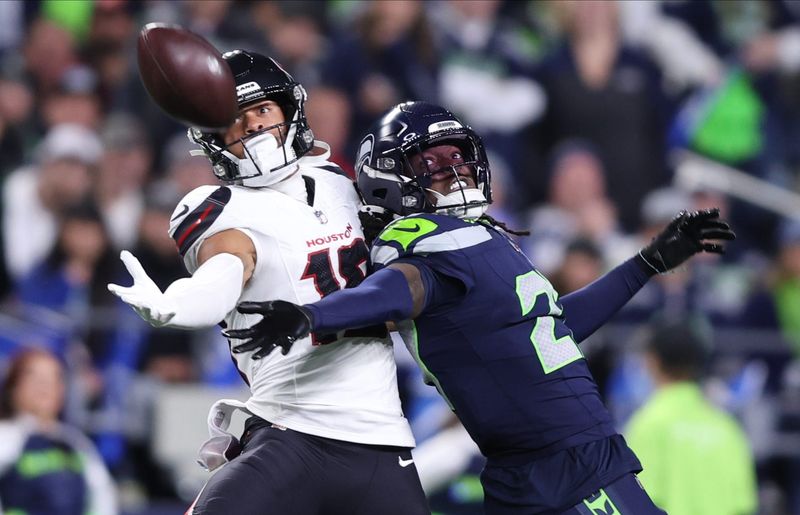
    Graham’s gambit paid off. Two seasons and one successful combine performance later, Woolen was selected by the Seahawks in the fifth round (153rd overall) of the 2022 NFL Draft. The decision continued to pay off in Seattle, where Woolen became a Pro Bowler and All-Pro in 2022 and a key member of their Super Bowl team last season.

    And yet, when Woolen finally hit free agency this spring, league-wide interest was low because of his inconsistent play in 2025.

    Riq Woolen burst on the scene as a rookie in Seattle but was allowed to leave in free agency four years later. Lindsey Wasson

    That’s when Eagles general manager Howie Roseman stepped in. In signing Woolen to a one-year deal worth up to $15 million, Roseman utilized a strategy that has worked well for him: Sign an underappreciated, perhaps disgruntled, player to a one-year deal and hope it pays off.

    Linebacker Zack Baun — who signed a one-year deal with the Eagles in 2024 — went from an afterthought with the New Orleans Saints to a two-time Pro-Bowler under defensive coordinator Vic Fangio. Wide receiver Alshon Jeffery, running back LeGarrette Blount, and cornerback Patrick Robinson, all of whom signed one-year deals in 2017, helped the team to its first Super Bowl win that season.

    Can Woolen, 27, be Howie’s next one-year wonder in Philadelphia?

    “I’d bet on Howie for sure, and I’d bet on Tariq for damn sure,” UTSA coach Jeff Traylor said.

    Before examining Woolen’s likelihood of living up to that, we must first dive into how he got here. Critical mental errors over the last two seasons were his downfall. Woolen experienced a nadir in Seattle’s 2025 season opener, when he gave up a 45-yard completion near the sidelines and a touchdown in the end zone on the San Francisco 49ers’ game-winning drive. In the first six weeks, Woolen ranked near the bottom of the league in passer rating against (116.3). He corrected this in the final 12 weeks, climbing up to the sixth-best number among cornerbacks (57.2).

    The damage had been done, though. The fluctuating nature of Woolen’s play was the final straw for the Seahawks. Those closest to Woolen believe coach Mike Macdonald’s regime didn’t trust him as much as Pete Carroll’s — which is the driving force behind the “big chip on his shoulder” this season.

    “The thing that I’m excited for him is the clean slate,” Graham said. “He’s going to a place where he’s wanted. I know the first regime in Seattle wanted him … I don’t know that it was like that with the second one.”

    Riq Woolen (27) won a Super Bowl in Seattle, but some trust might have eroded with Mike Macdonald’s coaching staff. Kevin Ng, Kevin Ng-Imagn Images

    On paper, Fangio’s scheme should reignite his Pro Bowl form. Woolen had one of the best seasons in recent years in man coverage — according to Next Gen Stats, his 27.6% completion rate allowed in man coverage was the lowest by any defender to face 20-plus targets in man since at least 2018. The Seahawks deployed man coverages on just 15.2% of their defensive snaps, which was the sixth-fewest in the NFL, according to Sharp Analytics. The Eagles, meanwhile, used man coverage on 24.5% of their snaps last season.

    If this trend continues (and Woolen stays consistent), Fangio could have one of the best cornerback trios in the league in Woolen, along with Quinyon Mitchell and Cooper DeJean, who are Pro Bowlers in their own right.

    How has the chemistry been with that group so far?

    “It’s pretty cool because it’s just learning how to fit in with these guys,” Woolen said. “I know my personality. I get along well with everybody. So just being able to become close with these guys, that’s all I really care about.

    “I’ve got to be the best version of myself, and for me to do that, I’ve got to be comfortable with them, and they’ve got to be comfortable with me, and they’ve got to get to know me, and I’ve got to know them.”

    Unlocking the “best version” of Woolen is no simple task. This offseason was a microcosm of his career — with peaks during OTAs, when he looked like the team’s best defender, and the valleys on Day 1 of the Eagles’ joint practice in New England, when A.J. Brown and the Patriots wide receiving corps torched him (before Woolen redeemed himself with a pair of interceptions on Day 2).

    Riq Woolen spent training camp getting adjusted to Vic Fangio’s scheme. Monica Herndon / Staff Photographer

    Fangio perhaps put it best when asked about Woolen in early August.

    “At times he can get a little lazy or sloppy with his technique and have a bad down or two, but he’s still showing everything that I think he can do,” Fangio said. “He’s just got to get in such great shape and calloused to football that those don’t happen.”

    Graham has a different interpretation of Woolen’s work ethic — and believes that, under Fangio’s defense and direct coaching style, he’ll earn an even bigger contract next season.

    “I think that Riq makes stuff look so easy sometimes that you almost think it’s lazy — but it’s really not,” Graham said. “I know Vic coaches hard … but he’s probably Santa Claus compared to me. Because [Fangio’s] still talking to pros. I coached extremely hard. So I don’t think that type of stuff bothers him. But I think there is a next level … I think he’s a $15 to $20 million per year corner, long-term.

    “I think other people believe that, too, but you know how the league is — it’s very small. Somebody says something [about a player], and then that’s gospel.
He’s excited to go prove all these people wrong.”

    It’s unlikely Woolen will be an Eagle for long. The team handed out a massive extension to defensive tackle Jalen Carter this offseason and still needs to extend Mitchell and Cooper. Nevertheless, it’s clear his teammates are ecstatic to have him — even if he’s just a one-year wonder.

    “A lot of people [across the NFL] talk bad about him, and I’m like ‘What are you talking about?’” said Jordan Mailata. “He’s a f—ing tree. He’s built like a tree, son. We watch the film of practices, you can see the impact that he has on that defense, just being able to be on the island. All day every day, the ground he can cover, he’s f—ing big.”

  • How a Michelin-starred Philly restaurant secured a $1.5 million state grant to take over the rowhouse next door

    How a Michelin-starred Philly restaurant secured a $1.5 million state grant to take over the rowhouse next door

    One of Philly’s most prominent fine-dining restaurants received a state grant to create an even higher-end establishment. The project promises to create 100 jobs and help cement Philly’s place as a culinary hot spot. It drew criticism over the use of tax dollars.

    The Weekend Restaurant Group, which owns the acclaimed Rittenhouse Square restaurant Friday Saturday Sunday, was awarded $1.5 million from the state’s Redevelopment Assistance Capital Program in July to help finance the expansion of the Michelin-starred restaurant. The grant will cover only a fraction of the project’s multimillion-dollar budget.

    The endeavor will be the “first minority-owned restaurant of its kind” in the United States, wrote Friday Saturday Sunday chef-owner Chad Williams, who is Black, in the restaurant group’s application.

    The undertaking involves connecting Friday Saturday Sunday with a neighboring rowhouse that will eventually be transformed into a three-story dining destination with an 18-seat chef’s counter, private dining rooms, and a post-dinner sweets lounge.

    Williams runs Friday Saturday Sunday with his wife, Hanna. Together, they announced plans to grow their award-winning restaurant at 261 S. 21st St. last summer, after entering an agreement to buy the adjoining property at 2048 Rittenhouse Square. Neighbors enthusiastically endorsed their ambitious plan, which came five months before the restaurant earned a Michelin star.

    The interior of Friday Saturday Sunday’s upstairs dining room, which offers a $205-per-person tasting menu.Monica Herndon / Staff Photographer

    In the state grant application, Williams wrote “the project will generate significant cultural impact [by] retaining and creating high-quality jobs, attracting visitors from the region and beyond, and raising Philadelphia’s profile.” Renovating the storied Philadelphia restaurant “demonstrates a long-term to commitment to the city, with the scale and ambition to be a generational anchor in its neighborhood.”

    Yet when news of the grant spread on social media last month, it was met with critics who were angry that taxpayer dollars were funding a fine-dining restaurant.

    “Luxe restaurant getting a grant to become more luxe? … WTF?” one person wrote under an Instagram post about the grant with over 100 comments, many of which were critical.

    “Give it to the schools” instead, wrote another.

    The grilled quail with coco bread at Friday Saturday Sunday, photographed in 2022.MONICA HERNDON / Staff Photographer

    Williams says the grant money — which is from a fund for construction projects that would benefit the state culturally and economically — is a win for the city, not just Friday Saturday Sunday.

    “I was born here. I left, learned all that I could, and came back. What we want to do is push the culture forward and, with that, hopefully [bring] economic benefits for everyone in the city,” Williams said.

    “There’s going to be tax revenue and jobs that come back in a very real way.”

    A much-debated grant program

    Better known as RACP, the Redevelopment Assistance Capital Program defrays the cost of construction-ready projects across Pennsylvania that stand to generate substantial economic growth. The fund has stirred controversy in the past.

    The program was launched in 1986 to support construction and real estate projects that intend to create jobs, boost tax revenue, or have significant cultural and civic impact. Eligible projects must cost at least $1 million and secure at least half of their funding from other sources.

    Chef Chad Williams and Hanna Williams at their restaurant Friday Saturday Sunday.Monica Herndon / Staff Photographer

    Because grants are decided at the governor’s discretion, the program has previously been criticized for a lack of transparency and glad-handing.

    RACP was overhauled in 2012 after an audit found that the Gov. Tom Corbett administration did not adequately disclose or document why projects were awarded grants. Similar accusations cropped up again in 2020, when critics alleged Gov. Tom Wolf and state legislators were misusing the program for political favors.

    This July, Gov. Josh Shapiro’s administration allocated $445 million in RACP grants to 356 projects across the state. Recipients range from private real estate developments and public parks to affordable housing and renovations of schools, hospitals, and community centers. The program was particularly competitive in Philadelphia: 170 projects applied. More than half were rejected.

    (function(){function e(){window.addEventListener(`message`,function(e){if(e.data[`datawrapper-height`]!==void 0){var t=document.querySelectorAll(`iframe`);for(var n in e.data[`datawrapper-height`])for(var r=0,i;i=t[r];r++)if(i.contentWindow===e.source){var a=e.data[`datawrapper-height`][n]+`px`;i.style.height=a}}})}e()})();

    Friday Saturday Sunday’s expansion is projected to cost $7.5 million overall, according to the grant application. Once complete, Williams told The Inquirer, it will add 100 front- and back-of-house jobs to the Weekend Restaurant Group’s payroll. (The group currently has 40 employees, according to the application.)

    Not all RACP hopefuls are awarded the full amount of funding they applied for. Friday Saturday Sunday’s expansion was one of 12 Philly projects awarded the full amount requested.

    Other fully funded recipients include Rhoads Industries, a defense contractor awarded $4 million to build a new shipbuilding facility in the Navy Yard, and Comcast Spectacor, which received $1.4 million to build a traffic operations center at the sports complex, as well as Philadelphia Youth Basketball, the Community College of Philadelphia, and the Steamfitters Union. (The Philadelphia Eagles also received $4 million grant to renovate their training complex; the team applied for $7.725 million.)

    (function(){function e(){window.addEventListener(`message`,function(e){if(e.data[`datawrapper-height`]!==void 0){var t=document.querySelectorAll(`iframe`);for(var n in e.data[`datawrapper-height`])for(var r=0,i;i=t[r];r++)if(i.contentWindow===e.source){var a=e.data[`datawrapper-height`][n]+`px`;i.style.height=a}}})}e()})();

    A spokesperson for the Shapiro administration told The Inquirer over email that the Weekend Restaurant Group’s proposal “is fully consistent with the purpose and authorized uses of the RACP program and represents an appropriate use of RACP funds.”

    Building on a legacy

    Chad and Hanna Williams bought Friday Saturday Sunday — already a Philadelphia dining institution — in 2015, transforming the space into a cozy, first-floor bar and an elegant upstairs dining room. They reopened the restaurant in 2017, serving a tasting menu rich with Caribbean, Asian, and soul-food influences. Local and national praise has been steady ever since. Friday Saturday Sunday routinely earns a spot in Craig LaBan’s annual Top 10 and The Inquirer’s annual 76. It won the James Beard Award for Outstanding Restaurant in 2023 and was named on the World’s 50 Best in North America two years in a row. The first-floor Lovers Bar has also been twice-nominated by the James Beard Awards’ Outstanding Bar.

    The downstairs Lovers Bar at Friday Saturday Sunday is a two-time James Beard Award nominee.Monica Herndon / Staff Photographer

    Receiving the RACP grant was a relief, said Williams, who said he is funding more than half of the $7.5 million project with loans.

    Taking on the financial liability is “not a rosy story necessarily,” Williams said, “but it’s a risk we’re willing to take.”

    Williams envisions the 3,500-square-foot rowhouse at 2048 Rittenhouse Square as a chance to create an old-school fine-dining experience inspired by the likes of Le Bec-Fin and Vetri Cucina. Guests will start with welcome drinks on the ground floor before moving upstairs for an intimate meal at a chef’s counter helmed by Williams. Diners will finish the meal on the third floor in a designated dessert space, Williams said.

    The octopus and beans from the bar menu at Friday Saturday Sunday, photographed in 2023.Monica Herndon / Staff Photographer

    The concept will extend the Friday Saturday Sunday brand and render the original tasting menu into a “less formal” affair that is more in line with “what neighbors and regulars want,” Williams said. The connected properties will also enable Friday Saturday Sunday to serve large parties and potentially open seven days a week. The expanded hours will allow for more staff, Williams said

    Williams said the project could break ground in October. He’s optimistic about a September 2027 opening.

    He framed Friday Saturday Sunday’s expansion as a moonshot. “To be frank, for a Black chef to have this opportunity and do it is a big deal,” Williams said.

    “Having a chance to practice our craft at this level is extremely rare.”

    ‘We need all the help we can get’

    Williams decided to apply for RACP funds after exhausting more traditional financing routes.

    “Without state support, the project would face a significant financing gap,” he wrote in the application, “as private funds alone cannot absorb both the acquisition and essential structural work.”

    Despite his restaurant’s extremely successful track record, the chef found the process similar to the original financing of Friday Saturday Sunday — which required the Williamses to sell their home and submit paperwork to “14 different banks” before finding one that would take a chance on them.

    Friday Saturday Sunday, run by chef Chad Williams and his wife, Hanna, earns a Michelin star at the Kimmel Center on Nov. 18, 2025.Elizabeth Robertson / Staff Photographer

    It’s a struggle many Black entrepreneurs know well: Several studies have found that Black-owned businesses are discouraged to apply, denied, and offered inferior loans at higher rates than white counterparts, even when appearing more creditworthy.

    “We’ve put in our work here, had some success and won some things, but it did not make [financing] any easier,” said Williams. He was attracted to RACP because it was described to him as a “colorblind grant” by other BIPOC entrepreneurs who encouraged him to apply.

    Friday Saturday Sunday is not the first Philly restaurant to receive state funding through RACP. North Philly’s Caribbean Feast was awarded $750,000 in 2022 for construction costs associated with renovating their kitchen facilities to support other Caribbean-owned food businesses through a commissary model. The program also awarded $500,000 to FringeArts in 2014 for creating a Delaware River waterfront restaurant and $1.5 million to Yards Brewing Co. in 2019 for its Spring Garden brewery and taproom build-out.

    Chef and co-owner Chad Williams (right) in the kitchen at Friday Saturday Sunday on Aug. 14, 2022.Monica Herndon / Staff Photographer

    Williams is hopeful that other restaurants will consider applying for RACP after seeing his success.

    “If I wouldn’t have done the research, I would’ve never known this was possible,” he said. “We need all the help we can get.”

  • A stray bullet paralyzed a Philly woman from the waist down. Now she surfs, teaches, and advocates for accessibility.

    A stray bullet paralyzed a Philly woman from the waist down. Now she surfs, teaches, and advocates for accessibility.

    Amanda Parezo, a self-professed “beach bum,” can no longer get onto the sand or lay out a beach blanket on her own.

    The loose grains are “just impossible to navigate through” in a wheelchair, she said.

    Still, she seizes every opportunity to return to the Shore — an activity that has brought her healing since her childhood in New Jersey.

    Parezo loved spending time at the beach while growing up in New Jersey.Courtesy of Amanda Parezo

    Five years after a random shooting in Olde Kensington left her paralyzed from the waist down, she participated in “They Will Surf Again,” an adaptive surfing event in August in Wildwood, N.J. Designed for people with physical disabilities, the event was hosted by California-based nonprofit Life Rolls On and sponsored by Jefferson Health.

    Volunteers and friends helped her onto an adaptive surfboard that was wider and thicker for greater stability.

    The first time she participated in 2022, she was afraid of how her legs might shift while riding. But whenever she fell off the board, volunteers scooped her back up immediately.

    Parezo loved the feeling and energy of going fast in the wave. That sensory experience brought her relief as someone living with constant nerve pain.

    “You can’t even describe it. It just felt so good,” she said of the summer surf event.

    In the years since her life-altering injury, Parezo has had to take similar leaps of faith as she’s worked to rebuild her life.

    She now had to worry about how she would shower, use the bathroom, drive, and simply enter public spaces while in a wheelchair. An assistant professor of occupational therapy at Jefferson, Parezo was used to helping patients, not being one herself.

    “It was a lot of just mourning who I was before,” she said.

    In the process, she has become an accessibility advocate, competed in a pageant for women who use wheelchairs, and taken on adaptive sports from surfing to chair yoga.

    She says her former patients are her biggest motivators.

    “I think about them every day,” said Parezo, now 40. “I haven’t forgotten a single one of them that I’ve treated in outpatient.”

    Amanda Parezo was paralyzed after a stray bullet hit her spine. She is now in a wheelchair.Alejandro A. Alvarez / Staff Photographer

    The injury

    On the evening of the shooting in 2021, Parezo, then 36, had just finished playing a game of kickball at Hancock Playground in Olde Kensington with her friends. They were sitting near the benches, chatting and packing up, when gunshots from a nearby shooting suddenly rang out.

    As her teammates ducked for cover, she felt a stinging sensation enter the right side of her body, just below her ribs. Parezo immediately fell backward as a wave of numbness swept from her hips down into her toes.

    In that split second, a series of images flashed through her mind.

    She saw patients she had treated as an occupational therapist. She saw herself sitting in a classroom, studying a PowerPoint slide about spinal cord injuries. And she imagined herself in a wheelchair.

    “There was no doubt in my mind that I had a spinal cord injury, and I knew it was bad,” she said.

    She screamed in pain as everything the stray bullet touched started to dysfunction. Authorities have not identified the shooter.

    At Temple University Hospital, she would be diagnosed with a complete spinal cord injury, leaving her paralyzed from the waist down.

    “You don’t think you’re going to have to spend the rest of your life in a wheelchair the next day,” Parezo said.

    Although she knew a yoga studio near her Old City home offered chair yoga, she was intimidated by the idea of going. She worried she would feel upset seeing women whose bodies looked like hers before her injury, wearing the outfits she once wore and attending 6 a.m. yoga classes, as she once had.

    Then she attended an open house for the studio.

    “They were just phenomenal women,” she said.

    Now, she goes every Monday and is good friends with the instructor.

    Parezo said she is grateful for the people in her life who encouraged her to get out of bed and do things.

    She thought about a patient who had been shot in the head but continued coming to her clinic every other day for occupational therapy. If the patient could remain motivated after such a traumatic experience, Parezo thought, she needed to be motivated, too.

    “I am just so grateful for my background, and just the irony of being on the other side of things,” Parezo said.

    Advocating for accessibility

    Parezo frequently encounters accessibility challenges in her daily life.

    But she has turned those stressful moments into opportunities for advocacy, through posting to social media and reporting issues around the city to 311, the non-emergency contact center.

    When Parezo arrived at a SEPTA subway station in 2024, she discovered the elevator down to the street level was broken.

    The station had three flights of stairs, but no signage indicating that the elevator was out of service. SEPTA’s app also hadn’t marked the elevator as inoperable.

    She posted a video to Instagram of her stuck in the station, in tears, frustrated by the lack of accessibility. That post went semi-viral on Instagram and caught the attention of SEPTA, who reached out for a conversation about her concerns.

    “As we continue work to improve accessibility across the system, SEPTA is committed to working closely with riders to help them navigate outages and other challenges,” a spokesperson said in a Friday statement.

    SEPTA recently began its latest accessibility improvement project at 11th Street Station on the L, and will invest more than $700 million to make Metro and Regional Rail stations accessible.

    Her friend Katie Adams recalls seeing Parezo bump off curbs and nearly fall into traffic because of obstacles on the sidewalk.

    “Never in my wildest dreams [did I think] anyone in this situation would turn this around and make this not a life-defining moment, but a lifelong work and advocacy,” Adams said about Parezo.

    In July, Parezo represented the state of Pennsylvania in the Ms. Wheelchair USA pageant.

    In July, Parezo represented the state of Pennsylvania in the Ms. Wheelchair USA pageant.Courtesy of Amanda Parezo

    She was named first runner-up and received awards for education and inspiration. She also serves on the Pennsylvania Governor’s Advisory Commission for Women and draws on her experience as a wheelchair user to teach her occupational therapy students at Jefferson.

    “Having to live the life of a patient that they might treat [gives] me a perspective I can share with my students that a lot of people probably couldn’t,” Parezo said.

    Amanda Parezo serves on the Pennsylvania Governor’s Advisory Commission for Women.Courtesy of Katie Adams

    Finding relief in surfing

    Life Rolls On founder Jesse Billauer started the “They Will Surf Again” event 25 years ago after a surfing injury left him quadriplegic.

    The first time his friends took him surfing after the accident, he experienced “that freedom, that independence, and just joy being on the water.”

    The event became his way of sharing that sense of freedom with other people with spinal cord injuries and physical disabilities.

    “It just gets people out of their wheelchair, doing things that they never thought was possible,” he said.

    Amanda Parezo participated in the They Will Surf Again event in Wildwood in August.Courtesy of Jefferson Health

    A little boy born with a spinal cord injury was among the 150 participants at this year’s event in Wildwood.

    Parezo, who knows the boy’s mother, hopes seeing older participants with disabilities surfing will inspire him as he grows up.

    “There are no limits to what we’re able to do,” she said.

  • Here’s how Pa. and the Secret Service are fighting EBT skimming

    Here’s how Pa. and the Secret Service are fighting EBT skimming

    By the time state and local law enforcement in Northumberland County, Pa., connected a device stealing people’s food assistance benefits from a 7-Eleven to Patricia Bogdan and George Lazar, the pair had already fled to New Jersey.

    Authorities allege Bogdan and Lazar placed the contraption on a point-of-sale terminal in February, which went undiscovered for days. Bogdan and Lazar then allegedly retrieved the stolen electronic benefit transfer card data in a process known as skimming and spent people’s benefits at BJ’s and Sam’s Club locations in Pennsylvania and New Jersey.

    Authorities would later learn Bogdan had multiple aliases and fake passports, while Lazar had a warrant out for an attempted murder charge in Belgium.

    “It illustrates how quickly they’re moving, the type of individuals that are involved in this, and just their ability to get in and out, that makes these really complex cases,” said State Inspector General Michelle Henry, whose office investigates EBT thefts in Pennsylvania.

    With the help of authorities in New Jersey and North Carolina, Henry’s office was able to find Bogdan and Lazar in March and later bring them back to Pennsylvania, where the cases are ongoing. A small win in what victim advocates argue has risen to a nationwide crisis because the federal government has failed to invest in more secure card technology. The magnetic strips on the cards are too easy to exploit.

    Still, a seismic disruption to these scam operations is slated to come to Pennsylvania before Jan. 1, 2028.

    The latest state budget appropriated $7 million in funds that would pay for chip-enabled EBT cards, giving the outdated magnetic stripe technology, which the federal government required states to use until 2024, a sorely needed upgrade.

    The chip cards are not invulnerable to scammers but exploiting them requires more sophisticated technology, according to the Secret Service. Early adopters of the chip technology, such as California and Alabama, have reported significant drops in thefts already.

    To the victims of this sort of fraud, scarred by the memories of an unexpected zero balance while trying to pay for groceries, the change is long overdue. There are countless stories of families learning about how the scam works and having to scrape meals together with the aid of food pantries. Benefits were reimbursed between October 2022 and December 2024, but that ended when Congress did not extend funding.

    For now, law enforcement in Pennsylvania continues to confiscate skimming devices and prosecute perpetrators, even when it can feel like a high-stakes game of whack-a-mole, while preparing for the next iteration of scammers.

    An ever-evolving scheme that knows no borders

    Much of the skimming scam — from recruiting to reselling the goods purchased with EBT data— happens online through the dark web and social media platforms such as Facebook and Instagram.

    Transnational criminals, more recently from Eastern European countries, will send already assembled skimmers to partners stateside or provide instructions on how they can piece together the devices themselves. The local partners stick the contraptions onto a point-of-sale machine, steal data, and use the stolen benefits to purchase high-ticket items such as baby formula, which is then offloaded by word of mouth or on social media networks like Facebook and Instagram.

    Michael Ross, special agent in charge of the Philadelphia field office for the United States Secret Service, said the advent of Bluetooth technology has made it much harder to catch people in the act since they can digitally collect the stolen data, instead of taking back the physical machine where police might be waiting for them.

    Combating these crimes requires a multipronged approach, from the use of digital forensics to old-school public awareness efforts.

    “We will send out a small group, not necessarily a formal task force, with state and local law enforcement representatives, and we will go to businesses,” Ross said. “We will go in, we’ll educate, we’ll show what some of these devices look like, things that can be done to make sure that the EBT fraud is mitigated.”

    Various states have responded in a similar fashion, educating businesses and placing the onus of protecting food assistance benefits on recipients, who are encouraged to download apps on their phones that allow them to lock their cards until they’re ready to pay for groceries.

    Still, Pennsylvania has aimed to be more aggressive in its fight against skimming.

    The Office of State Inspector General piloted “Skimmer Response Teams” last year. Since its inception, the six- to eight-person group that works with the broader office on cases, seized more than 55 of these devices before scammers could come back and drain more than $20.5 million in benefits from more than 40,000 accounts.

    Despite these strides in prevention, the state reported more than 5,100 skimming incidents that accounted for more than $2.5 million in stolen food assistance benefits in the first five months of the year.

    It’s one of the reasons the task force pilot is now permanent and is expected to stay even as the EBT cards switch to chips.

    “In my experience as a longtime prosecutor, anything that makes it more difficult to complete the crime is a deterrent,” said Henry. “If it’s super easy, you’re going to have more of it.”

    And Pennsylvania wants to make stealing people’s food assistance benefits as difficult as possible.

  • Letters to the Editor | Sept. 7, 2026

    War on voting

    The Inquirer’s Aug. 30 editorial and column by Solomon Jones do an excellent job of detailing the ways the U.S. Supreme Court is attempting to undermine our elections. The conservative justices have already gutted the Voting Rights Act, so it should be evident at this point that they know exactly what they are doing and whom they are trying to aid. The Constitution clearly gives control over elections to the states and to Congress, not to the president and the U.S. Postal Service. Yet, instead of definitively striking down as unconstitutional Donald Trump’s executive order that would prevent voters from receiving their mail ballots, the Supreme Court lifted a stay put in place by a lower court.

    If the president can unilaterally change how we vote within months of an election, then our right to vote is not secure. Without that right, those in power have no reason to listen to the people — placing their other rights, their assets, and ultimately their freedom at risk. In the Jim Crow South, African Americans were deprived of their right to vote and thus could be persecuted. Now, this mentality is being extended to the entire country and to everyone who is not on board with the Republican agenda.

    As someone who hasn’t missed an election in 38 years, I encourage everybody to do whatever is necessary to vote, as there are powers working feverishly to take that vote away.

    Bill Fanshel, Bryn Mawr

    . . .

    The far-right president of the United States is actively interfering with our nation’s electoral process. He is illegally demanding that all states send him their voter rolls, lists containing personal sensitive data, so he can compile a list of “eligible” voters. And he instructs the U.S. Postal Service not to deliver mail ballots to voters living in states (run by Democrats) refusing to turn over voter rolls. Our Constitution specifically grants control of elections to the states, with congressional oversight. It does not grant such power to the president.

    The U.S. Supreme Court did not rule on the constitutionality of Donald Trump’s executive order, but in essence said the plan can go forward while the court thinks about it. Meanwhile, in 10 weeks, we will have perhaps the most important election in our lives, with mail ballots being sent out soon. The aim of Trump and his party is to suppress as many Democratic-leaning voters as possible, and to cause massive confusion and chaos. The fight is not over, as voting rights lawyers will be in court doing everything possible to allow every eligible voter to cast their ballot.

    Dave Posmontier, Elkins Park

    . . .

    None of my professional accomplishments prior to retiring can compare to how personally rewarding I find supporting free and fair elections. My experience includes processing mail ballot applications, helping with the verification of voting equipment and software, confirming returned ballots against state and department mailing records, and opening and counting mail ballots on Election Day. I passionately believe that the falsehoods and misinformation about fraud and noncitizens voting propagated by the president and other individuals are inherently false. I am proud to support my county’s elections staff, whom I’ve seen to be dedicated to their responsibility to support representative democracy, although they are often underappreciated by the voters they serve.

    On July 16, the president and the U.S. Department of Homeland Security claimed there were nearly 16,000 noncitizens on the Nevada voting rolls. When DHS was pressed on this number by state officials, it could only find 185. Similarly, Pennsylvania was reported to have more than 14,000 noncitizens on the rolls. Why should we believe the narrative this administration puts forth? The U.S. Supreme Court recently had an opportunity to prevent an executive order from being implemented that would make mail voting cumbersome. Instead of addressing this issue in advance (as multiple lower courts had), the conservative majority decided their best course of action was to wait until after a disaster had occurred, reasoning that no state had been harmed yet by the order. Using this logic, I suppose the most proper course of action I should take upon seeing a small, unsupervised child crossing a busy street would be to take no action until a vehicle strikes the child. The court missed an opportunity to defend democracy.

    William L. Hutt Jr., Brookhaven

    Broken system

    The overall need for mental health care has surged significantly post-pandemic, yet according to a 2024 survey, about 34% of psychologists and 45% of psychiatrists do not accept health insurance. For a private-pay psychiatrist, evaluations typically cost $300 to $500, and standard sessions range from $100 to $300. Enter Lindsay Clancy, a married mother of three and a former labor and delivery nurse. Described by her coworkers as compassionate, kind, and an advocate for her patients.

    Months following the birth of her third child, Clancy recognized a change in her mental health. She had the courage to share those terrifying thoughts with her husband and parents. She called a crisis hotline, went to an emergency room, voluntarily checked herself into a psychiatric hospital, and took the medications prescribed. Clancy, advocating for herself, did all of this because she did not want to harm herself or her children. She desperately wanted to get well and was unknowingly caught in a mental health care system strained by provider shortages and understaffed clinics. Compassion for Lindsay, not conviction.

    Kathy Carroll, Wayne

    Job skills

    I just realized in trying to explain to someone why Donald Trump acts as though the laws and the Constitution don’t apply to him. He thinks he was elected to be owner of USA Inc., instead of president of the United States. As an owner, his goals are to make as much money as he can for himself and his family. Making deals with heads of state that allow him to build hotels, resorts, golf courses, and other ventures to enrich himself is the goal. Preserving peace through alliances, developing fair trade, protecting our citizens’ welfare, following international laws and treaties, and upholding the Constitution is the job of the president. Will someone please read Trump his job description?

    Susan R. MacBride, Philadelphia

    Ride on

    On behalf of Virginia’s Blue Ridge TWENTY28, I would like to extend our sincere thanks to Philadelphia for an extraordinary weekend of professional cycling. As a team director — and someone fortunate enough to have experienced this iconic race in years past — it was incredibly meaningful to return and see world-class women’s racing back on these historic roads. The caliber of competition, the challenging course, and the history behind this event make a Philly result something every rider is proud to put on her résumé.

    An event of this magnitude does not happen without tremendous community support. We are grateful to the city’s law enforcement and public safety personnel for keeping the course and athletes safe, and to the organizers, staff, and volunteers whose countless hours produced such an exceptional event. We would also like to extend our sincere appreciation to AmeriGas for its support in making the return of this iconic race possible.

    Most importantly, thank you to the people of Philadelphia. We recognize the inconvenience that comes with closed streets and greatly appreciate your patience — but even more, we thank you for coming out in droves to cheer. Philadelphia has always held a special place in American cycling. We were honored to be part of its history, thrilled to be part of its future, and we cannot wait to return in 2027.

    Giana Chilcott, director, Virginia’s Blue Ridge TWENTY28

    Join the conversation: Send letters to letters@inquirer.com. Limit length to 150 words and include home address and day and evening phone number. Letters run in The Inquirer six days a week on the editorial pages and online.

  • Horoscopes: Monday, Sept. 7, 2026

    Horoscopes: Monday, Sept. 7, 2026

    ARIES (March 21-April 19). Much of what makes life comfortable comes from the generosity of people who do the work without needing the glory. You’ll be inspired to once again become the kind of quiet benefactor whose thoughtfulness makes other people’s day easier.

    TAURUS (April 20-May 20). You’re reminded that improvements can be planned on paper, but unless the final product is a work of writing, things must be executed in real life to have the desired effect. It’s not brainpower that will make the difference — it’s elbow grease.

    GEMINI (May 21-June 21). Whatever you think will happen turns out to be what actually does happen. It’s not a sign that you’ve reached a new level of psychic — rather that life has gotten dreadfully repetitive. Time to engineer some excitement.

    CANCER (June 22-July 22). Other people’s definitions help them make sense of the world, and that’s for them. You don’t have to agree. “It ain’t what they call you, it’s what you answer to.” — W.C. Fields

    LEO (July 23-Aug. 22). Everything we see — the roads and bridges, the schools and towns — was built by thousands of people whose names we don’t know. You have contributed such invisible efforts, too. Today, you deeply appreciate work that makes everyday life possible.

    VIRGO (Aug. 23-Sept. 22). Someone will become wonderfully fluent in the language of you. They remember what you forget, notice what you overlook and celebrates what you dismiss. It feels good to be witnessed so carefully.

    LIBRA (Sept. 23-Oct. 23). Every skill has a hidden side effect: The better you get at something, the more people expect you to do it. It’s a good time to consider, once again, your compensation. Does it still make sense? Remember that competence gives you options, including the option to stop.

    SCORPIO (Oct. 24-Nov. 21). Some efforts pay at the finish line. Others pay every step of the way. A hike, a conversation, mastering a dish to share — these are the kinds of things you’re enjoying more of these days.

    SAGITTARIUS (Nov. 22-Dec. 21). Talent gets the attention while steady effort builds the life. You’ll find unusual satisfaction in simply keeping your word to yourself, knowing that every worthwhile accomplishment depends on someone showing up day after day.

    CAPRICORN (Dec. 22-Jan. 19). Courage can be practiced in small ways, but you learn what you’re capable of when a choice becomes real. You may hesitate or feel unsure. What matters is caring enough about the outcome to take your next step anyway today.

    AQUARIUS (Jan. 20-Feb. 18). Games are no fun if they are too easy. Think of today’s challenge as though it was a game — just the right amount of challenge to keep it interesting. The problems along the way are opportunities for bonding.

    PISCES (Feb. 19-March 20). It’s deflating to share your ambitions with people who don’t have any of their own. Better to connect with them on more relatable topics or go where there are others who are on a similar journey to yours.

    TODAY’S BIRTHDAY (Sept. 7). In ancient Greece, the first portion of all offerings went to the goddess Hestia because every gathering, feast, temple and home began at the hearth. In your Year of Hestia, people drawn to your warmth will orbit and gift you. More highlights: Your strong foundation allows you to take bigger risks and enjoy huge payoffs. Hospitality opens doors to love, money and success beyond your wishes. Libra and Cancer adore you. Your lucky numbers are: 6, 33, 29, 1 and 17.

  • Dear Abby | Boyfriend hopes to exclude woman’s son from living arrangement

    Dear Abby | Boyfriend hopes to exclude woman’s son from living arrangement

    DEAR ABBY: I’m a single mother of an 18-year-old son with autism. I have known “Cliff” for more than 20 years. We live on opposite coasts. I want to be with him and he with me, though he doesn’t want my son to live with us at this time. He wants it to be just the two of us for a while. Abby, my son is not able to live on his own. Do you have any advice as to what to do?

    — CLUELESS IN THE WEST

    DEAR CLUELESS: It troubles me that Cliff is already trying to exclude your son from the equation. What exactly does he expect you to do with your son during this “honeymoon” period, and how long does he think it should last? It is important that you find out before this romance goes any further. What alternative living arrangements does Cliff have in mind for your son, what will they cost and who will be expected to pay for them? You didn’t mention how functional your son is, or how he interacts with others. Because he is 18, it’s time to start thinking ahead regardless of Cliff. What will become of your son if something should happen to you? Would he be cared for by other relatives? Would a group living arrangement work for him?

    Some developmentally disabled individuals thrive when they have social interaction and some kind of work to do. Before you start planning your love life, you need to address these issues. The Autism Society of America (autismsociety.org) may be able to help you navigate them.

    ** ** **

    DEAR ABBY: My wife passed away unexpectedly while we were in Europe. I phoned several people in the U.S. to let them know and asked that they let others know. Someone in my wife’s hometown posted the news to Facebook barely six hours after I had found her. My grief at the time was so great that I could not respond, as I was dealing with getting her remains back home. This has bothered me ever since that horrible day.

    I sent the person a message, telling him I felt he had been disrespectful to me and my children. He replied that he had been so sad to learn that my wife had died that he felt compelled to post it to Facebook. (He did admit that his timing was bad.) I know I need to move on, and this person will definitely be left behind.

    Is posting to social media acceptable before the family has had a chance to write an obituary and publish it? These platforms are public forums and should follow the normal rules of etiquette regarding respecting the family’s privacy.

    — MOURNING WIDOWER

    DEAR MOURNING WIDOWER: Please accept my sincere condolences on your wife’s passing. The acquaintance who posted to Facebook committed a serious social media faux pas. It is never acceptable to make any public announcement of a person’s death before the immediate family has done so. Still worse is the fact that he didn’t wait for 24 hours before rushing to his keyboard. It appears you were never close with this self-appointed town crier, and I don’t blame you for deciding you never will be.

    ** ** **

    DEAR READERS: Have a safe and happy Labor Day!

    — LOVE, ABBY