Tag: topic-link-auto

  • ‘I was so tired of that question’: Brandon Graham turns his attention from the Eagles to his new media career

    ‘I was so tired of that question’: Brandon Graham turns his attention from the Eagles to his new media career

    Brandon Graham had a choice — announce on his Unblocked podcast he’s officially done with the Eagles, or blurt it out at an event at a Jefferson Health.

    He chose the latter, a decision he initially regretted before leaning on the media savviness he picked up during his 16-year career with the Birds.

    “I actually wanted to wait, but man, I was so tired of that question being asked all the time, so that just got me,” Graham said. But he landed on the announcement helping him, because it got fans interested to “tune in” and hear him explain why.

    So begins Graham’s transition from Eagles legend and two-time Super Bowl champ to a budding media career talking about football.

    After being injured during the 2024 season, Graham, 38, still felt like he had a little gas in the tank. So when the Eagles called him up last season, he was ready to unretire and get back on the field to “finish the season clean.”

    Graham went into this offseason hopeful he might jump back into football. He stayed in contact with Eagles general manager Howie Roseman and was even prepared to participate in training camp to be properly prepared if the Birds needed him. But the stars didn’t align.

    “It didn’t work out like that because [Roseman] got the team he needed,” Graham said. “So in my mind, I was like, ‘Yeah, I think I’m going to be done.’”

    In hindsight, it’s been something of a relief. Now Graham can focus his efforts on a budding media career that will start off with the second season of his Unblocked podcast and joining PHLY for postgame coverage of Eagles games.

    “Last year, I was one foot in, one foot out, because I thought there was an opportunity for me to go back and play,” Graham said. “This year I didn’t want that feeling so I can work in the media space how I worked in football. Otherwise I’m doing myself a disservice.”

    Learning on WIP and late-night 6abc hits
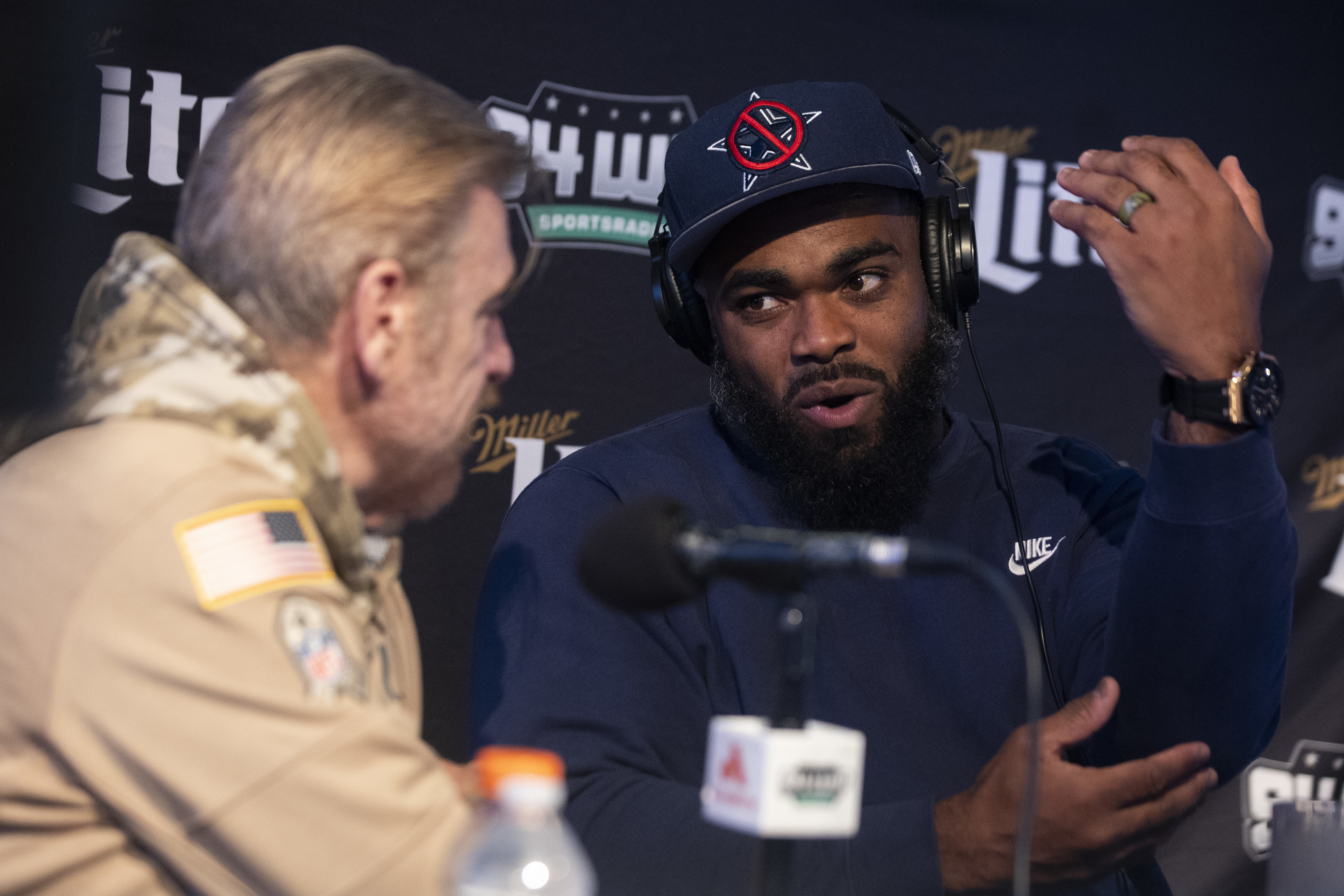
    Brandon Graham hosted a weekly show on 94.1 WIP for nine seasons alongside former host Howard Eskin. Monica Herndon / Staff Photographer

    Graham’s interest in the media began during his playing days, where he’d listen back and critique interviews he gave with reporters. It didn’t take long for his engaging personality to win over the press, who began offering him more opportunities to jump on the air.

    An early break was with 94.1 WIP, a gig that transformed from him calling in on Tuesdays to hosting his own weekly show during the season at Chickie’s & Pete’s alongside former host Howard Eskin.

    Learning on the job also meant sometimes wading in controversy. He was forced to walk back comments he made about then-teammates Jalen Hurts and A.J. Brown in 2024. Graham was injured at the time and based his remarks on a video of Brown speaking, something he’s since learned to approach with caution.

    “It was an emotional time and I should have been patient,” Graham said. “But I felt like it helped us a little bit, too, because we ended up winning the Super Bowl that year.”

    Graham also got some early reps on 6abc during the 2015 season. After Sunday Eagles games, Graham would drive to the station’s studios on City Avenue to join the 11 p.m. edition of Action News and talk Birds with Ducis Rodgers.

    “Boy, that was a grind,” Graham said.

    In 2024, Graham participated in the NFL’s broadcast boot camp, which allows players to experience what it’s like working on a studio show or calling games. Graham said the experience was enlightening, and helped him land appearances on ESPN and the NFL Network.

    “At ESPN, I went through what they call the car wash, when you appear on all the different shows,” Graham said. “They ended up liking me, and I got put on Good Morning Football before I went back to play … I expect I’ll do more of that.”

    Joining PHLY and learning to criticize his former teammates
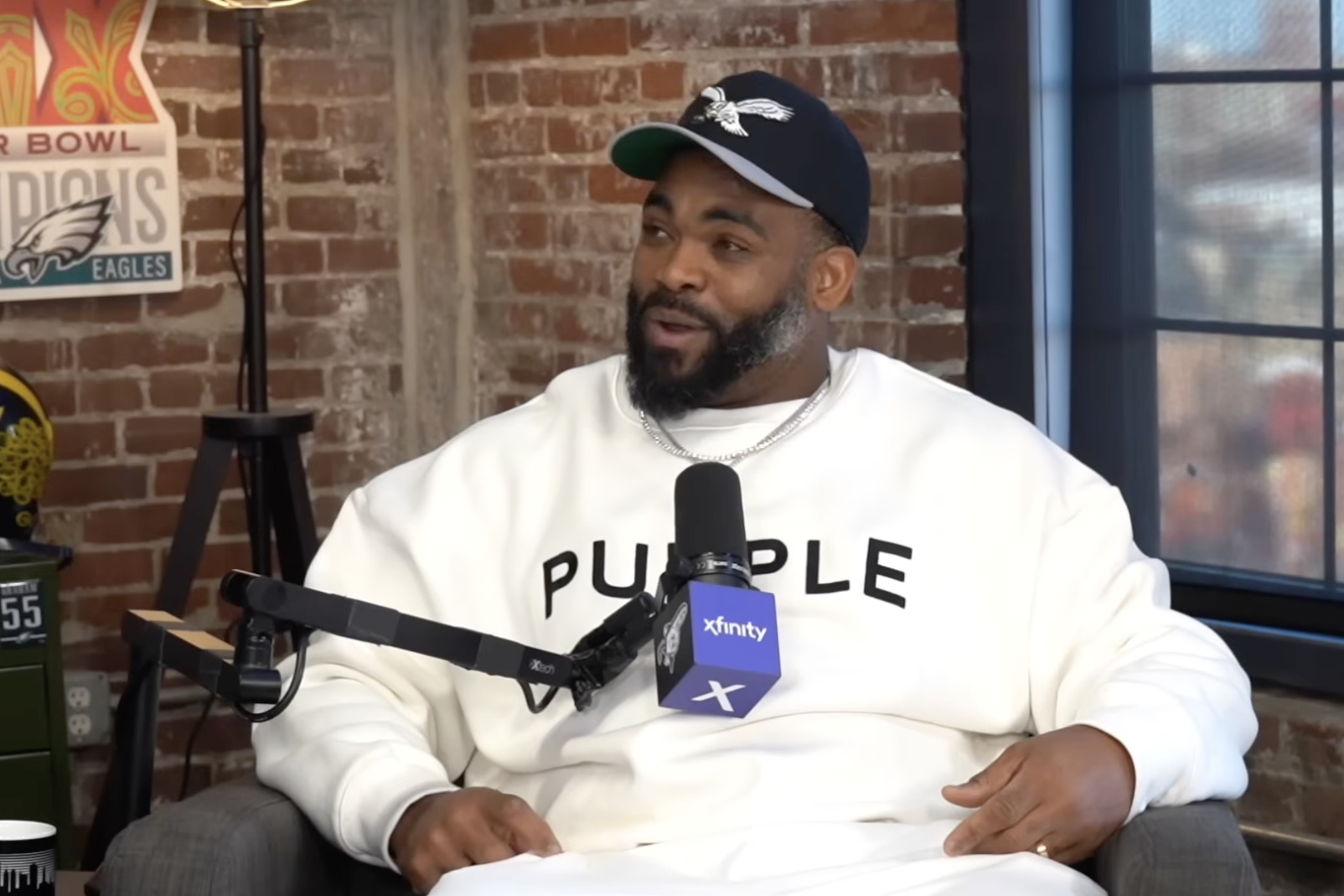
    Brandon Graham is entering his second season hosting the “Unblocked” podcast for PHLY.PHLY

    Graham is entering his second NFL season with PHLY, the digital start up that began in Denver in 2015 and expanded to Philly in 2023 as part of the ALLCITY Network.

    The network took notice of Graham’s abilities during a July 2025 interview on the Exciting Mics podcast, hosted by Eagles cornerback Cooper DeJean and former Birds safety Reed Blankenship (who signed with the Houston Texans in March). Graham said parent company ALLCITY made him a strong proposal, and within a few weeks he launched his Unblocked podcast, co-hosted by Bo Wulf.

    “BG brings an incredible depth of knowledge and an understanding of the game, but what truly sets him apart is his authenticity and infectious energy,” said Todd Berman, PHLY’s general manager.

    This year Graham is expanding his duties beyond Unblocked to include co-hosting PHLY’s crowded postgame coverage alongside Wulf, Fran Duffy, Brandon Lee Gowton, and former Inquirer reporter EJ Smith.

    Graham won’t appear after every Eagles game — he’ll rotate with former Eagles defender and Super Bowl champ Vinny Curry. But his appearances will place Graham in the potentially awkward position of having to criticize his former teammates.

    But Graham isn’t too concerned. As a player, he understood the media had their own job to do, even during his first few seasons with the Eagles when “Philly people were really bashing me.”

    “Everybody’s takes are different. Some people do it for clickbait just to get people to click on your show,” Graham said. “I’m going to be honest and tell viewers the truth … It will be challenging, because sometimes there’s certain stuff you can’t just beat around.”

    While he’s entering the season hopeful about a future in the sports media machine, he’s open to different paths, including public speaking. For now, Graham’s happy to have a manageable schedule where he works a few days a week, spends time with his family, and has the freedom to explore different interests.

    “Who knows what the media stuff will do,” Graham said, “But I’m trying to get this golf game right, too.”
  • Vaccines hurt. Skipping them hurts more. | Expert Opinion

    Vaccines hurt. Skipping them hurts more. | Expert Opinion

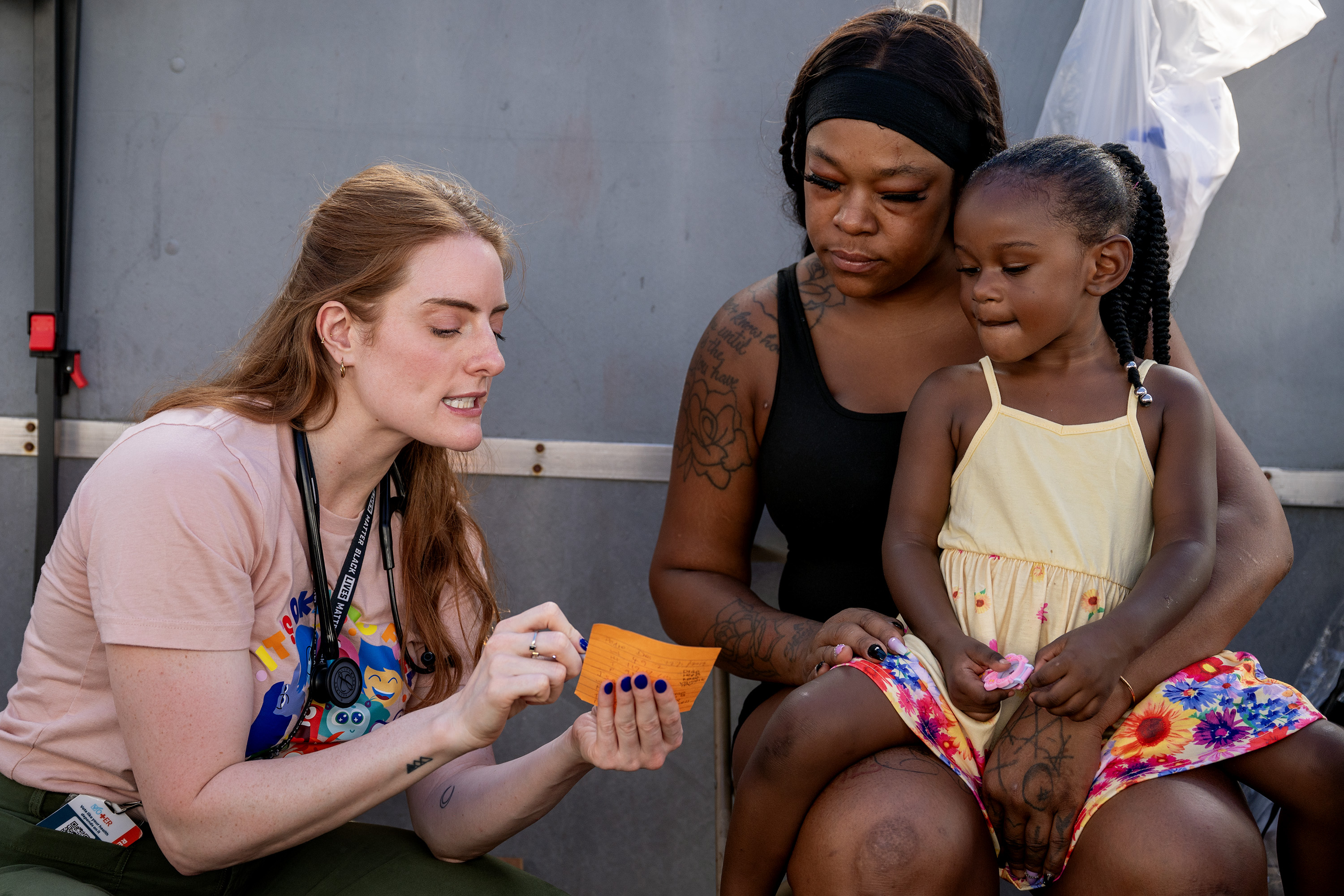
    As a pediatrician, I recommend children get approximately 30 injections between birth and 18 years of age, following the American Academy of Pediatrics vaccination schedule — and that’s not including their annual influenza vaccine.

    While these vaccines keep children healthy from vaccine-preventable illnesses, I recognize that pain related to these shots can worry children and their parents. Unfortunately, myths surrounding vaccine pain — including that pain is something that needs to be endured without help, or that the pain is too much for a small child to handle — can lead families to delay vaccination.

    This is risky at a time of rising vaccine hesitancy. Pennsylvania is currently experiencing the nation’s third-largest outbreak of measles, a vaccine-preventable disease, with more than 500 cases reported statewide so far this year.

    Most parents want to do everything they can to protect their children. That can feel hard when protection comes with a painful experience. Many parents tell me and my colleagues they “can’t look” when their child receives a shot. Some may be drawing on their own fear of needles; others simply find it difficult to watch their child cry or experience pain.

    As children grow older and begin to voice their own concerns about shots, these fears can become even more difficult to navigate. “I hate shots,” kids say to me all the time. And while I often quip that “no one likes getting shots,” that’s not entirely true.

    The experience of vaccine pain varies by child — age, developmental stage, prior experiences with pain, and temperament can all impact their pain perception. It takes time to assess how best to address a patient’s pain, because there is no one-size-fits-all approach.

    Historically, healthcare providers viewed vaccine pain as a normal part of a pediatric medical visit. We expected patients to bear it without any support. In a survey of nurses and medical assistants at Children’s Hospital of Philadelphia in 2022 regarding vaccine pain, one nurse said, “better to get it done and move on.” While well-intentioned, that mindset overlooks what we know about children’s experiences with pain.

    Pain is complex and deeply personal. Children’s memories of past procedures and their fears can shape how they respond to future vaccinations and medical visits. Anticipation and anxiety can become as important as the procedure itself.

    For some children, fear of pain can become a barrier to healthcare, affecting not only a single visit but their willingness to return for future care. By addressing pain proactively, pediatric practices can reduce distress, strengthen trust, and help children feel safer engaging with healthcare throughout their lives.

    That’s why CHOP created the Guided by Comfort program, enabling patients in our primary care locations to choose from a menu of comfort measures to address needle-related pain.

    Using evidence-based guidelines on the best way to manage needle pain, patients can be positioned for comfort and offered distractions. We also offer additional options for the appropriate ages, such as breastfeeding, sweetened water, vibration with ice, a plastic disc, and cooling spray. The comfort menu includes photos and descriptions of each item, much like the menu at a restaurant.

    In the 16 months since we introduced the Guided by Comfort program in all primary care offices, we have reached nearly 200,000 patients, with 82.5% electing to use a menu offering. One parent reported that her child “felt understood and in control of her own health.” These comfort menu options are helping parents and children to build trust and partnership with their healthcare team.

    This program offers a solution to a common concern identified through Pediatric Health Chat, a CHOP initiative tracking common myths and rumors in pediatric healthcare. CHOP teams have also created informational videos that empower parents and their children with practical strategies to make vaccinations more comfortable and help prevent pain from becoming a barrier to vaccination.

    We have proven that offering comfort measures to patients and families can make getting vaccines on schedule less stressful. Comfort isn’t an extra; we are treating it as part of the vaccination experience.

    The views expressed in this article are those of the authors and not necessarily those of CHOP. This information is not intended to provide medical advice, diagnosis, or treatment. Always consult a qualified healthcare professional regarding any health or medical concerns.

    Katie Lockwood is a primary care pediatrician at Children’s Hospital of Philadelphia and cofounder of Pediatric Health Chat, an online initiative providing resources for families looking for good information on the latest myths and misconceptions about children’s health.

  • Philly band The War on Drugs is back with new music

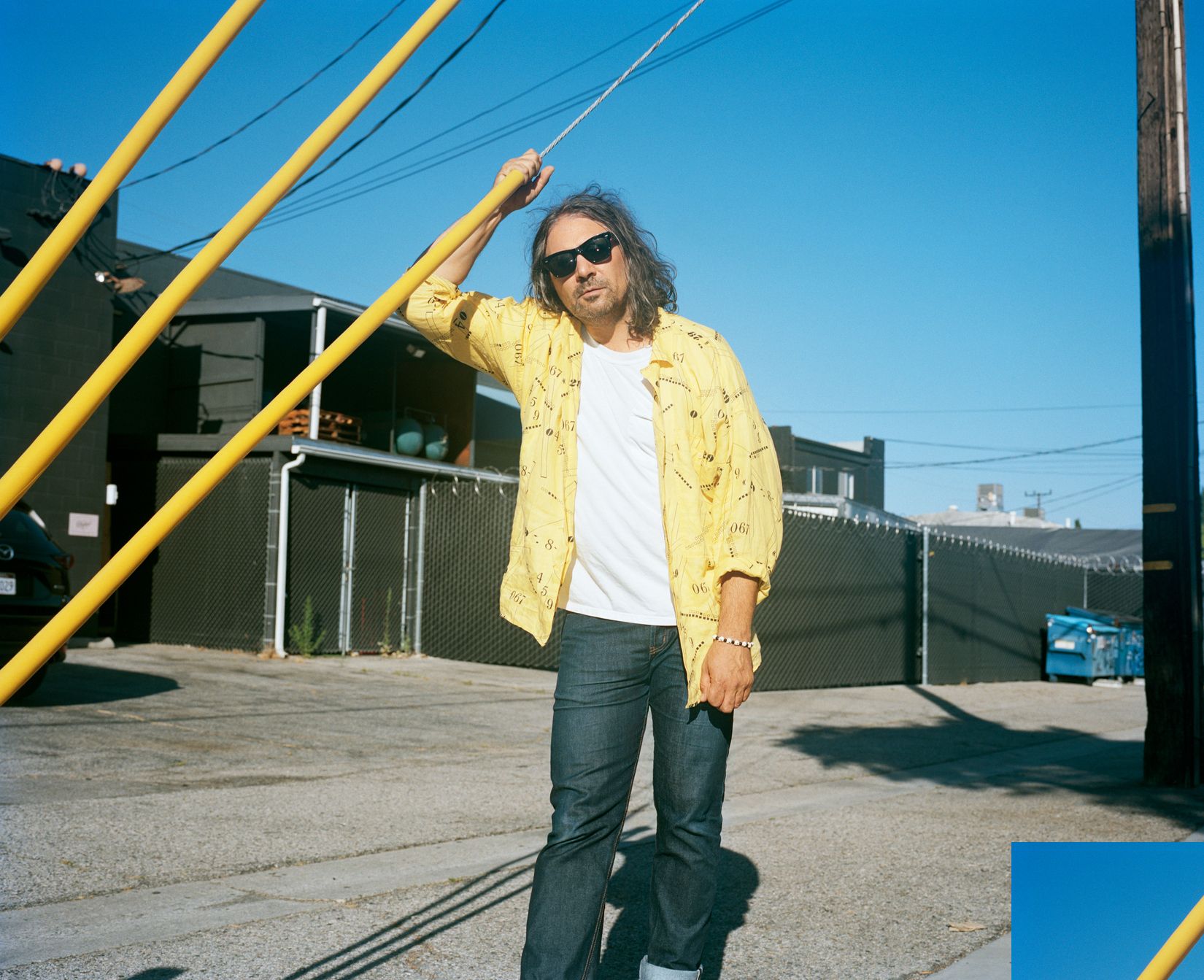
    Philly band The War on Drugs is back with new music

    The War on Drugs have returned.

    The Philadelphia band fronted by songwriter Adam Granduciel has released its first new music in five years.

    The band’s new single, “Who’s That,” is a synth-heavy slow-building rock song that starts off big and only gets bigger as it builds to a powerful crescendo, War on Drugs-style.

    Recorded at Granduciel’s studio in a warehouse in Burbank, Calif., the song features the Drugs leader playing nine instruments in a typically layered, meticulous arrangement.

    The “Who’s That” recording includes band members Dave Hartley, Eliza Hardy Jones, Jon Natchez, and Anthony LaMarca, with the latter playing drums rather than the band’s usual drummer, Charlie Hall or sometime studio contributor Patrick Berkery.

    The song arrives with a video directed by Max Flick that features Granduciel walking the streets of Burbank on a dark night of the soul. At one point, a newspaper blows into his face. At another, he picks up a guitar out of a trash bin and plays a solo.

    “‘Who’s That’ was written in 10 minutes somewhere between first coffee and school drop-off,” Granduciel said in a statement.

    “Itʼs a song about trying to love yourself despite things we canʼt always control, like the anxiety, depression, and self-doubt that may stand in the way of living the life we truly desire.”

    “There’s a lion hangin on my neck, I can tame it, but he might break free,” Granduciel sings. “Who’s that? It’s only my depression, baby.”

    Is “Who’s That” the first song from a forthcoming War On Drugs album, which would be the band’s first since 2021’s I Don’t Live Here Anymore?

    No word on that yet. The group is going out on a fall tour, though, which begins with two semi-local dates.

    On Sept. 18, the Drugs are playing the Queen in Wilmington. That is followed by a gig the next night on the Asbury Park beach at the Sea.Hear.Now festival on a bill that headlined by Mumford & Sons and also includes the Offspring, Chaka Khan, and Shaggy, among others.

    The artwork for The War On Drugs’ new song “Who’s That.”Courtesy of the Artist

    Since I Don’t Live Here Anymore, The War On Drugs put out a live album, Live Drugs Again, in 2024. Granduciel also produced two standout releases: British singer Sam Fender’s People Watching, which won the prestigious Mercury Prize last year, and Always Been, the Delaware- and Philly-connected solo album by Craig Finn of the Hold Steady.

    Last holiday season, The War on Drugs, who were founded in Fishtown in the mid-2000s and won a best rock album Grammy in 2018 for A Deeper Understanding, played a three-night A Drugcember to Remember stand at Johnny Brenda’s. The shows benefited Philly public schools and included guests such as Finn, Joe Walsh, and Kurt Vile.

  • Call Your Mother has opened its first Philly location in Fishtown. Can these private equity-backed bagels compete?

    Call Your Mother has opened its first Philly location in Fishtown. Can these private equity-backed bagels compete?

    Bagel shops come in all stripes. There are sandwich shops and schmear shops, shops that will gladly toast your bagel, shops that will refuse to scoop it, and shops with service so curmudgeonly it comes across as endearing.

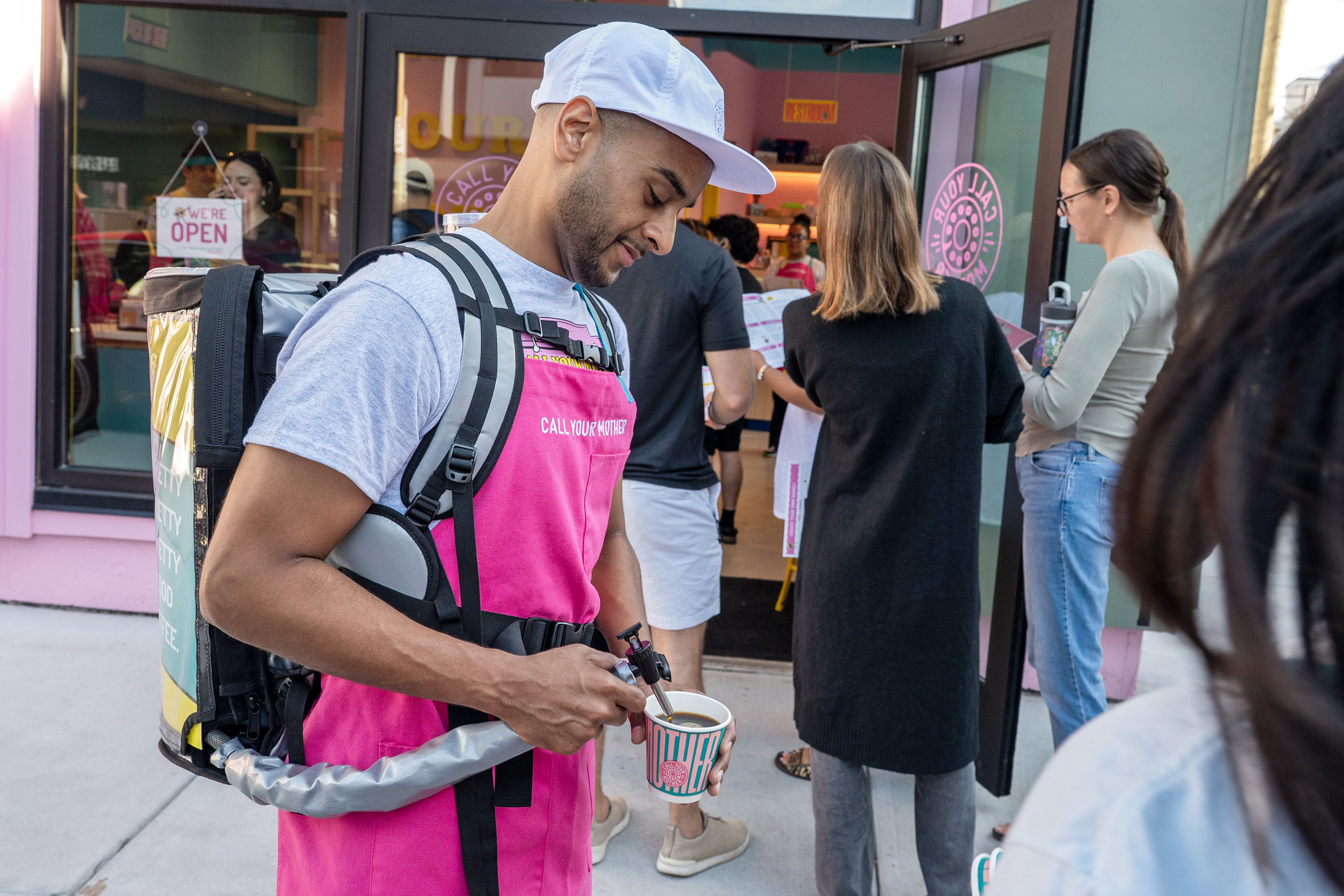
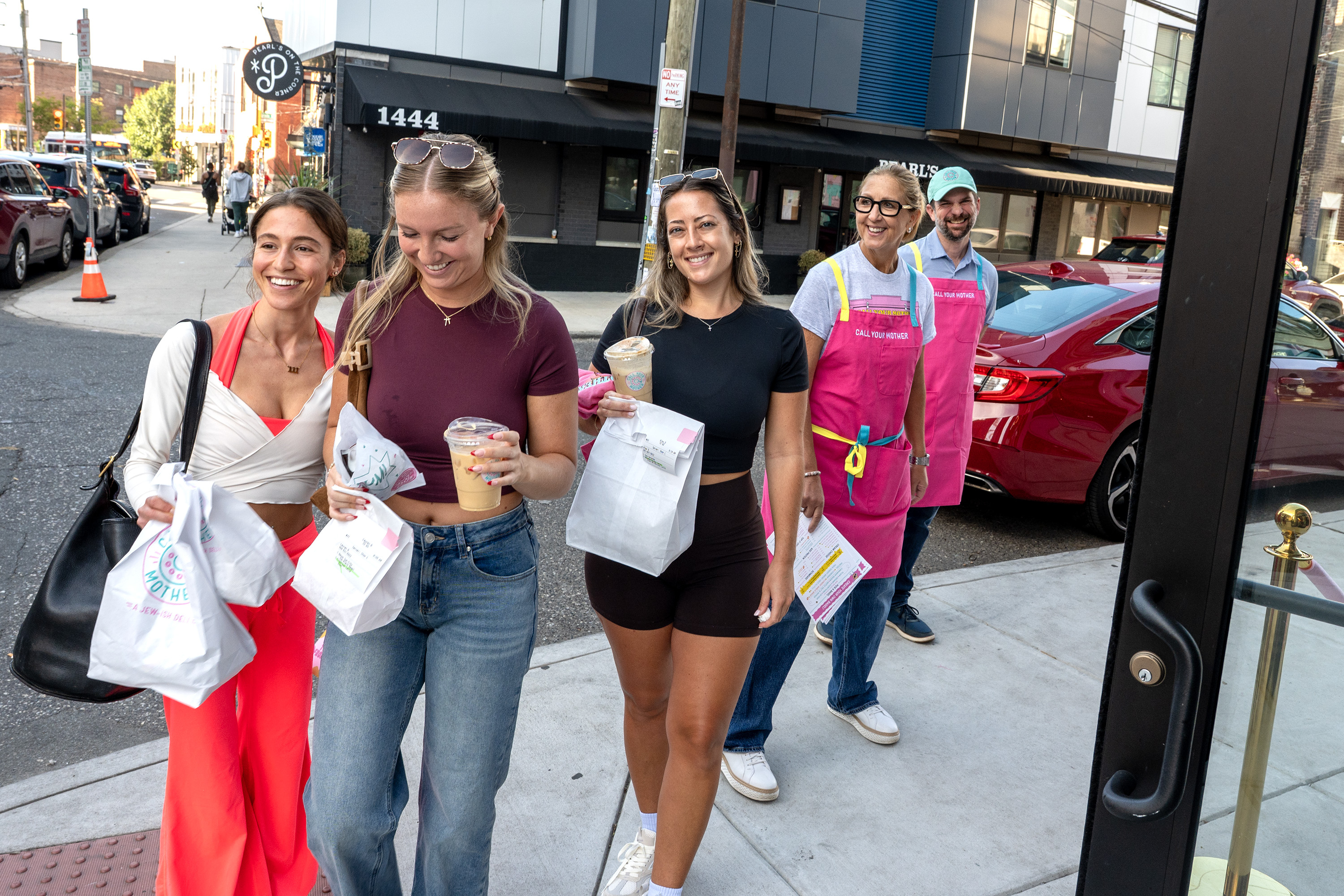
    Call Your Mother, the latest bagel chain to hit Philly, isn’t trying to be any of those. Instead, it is America’s preppiest bagel shop, closer to a viral tween clothing store than a neighborhood deli.

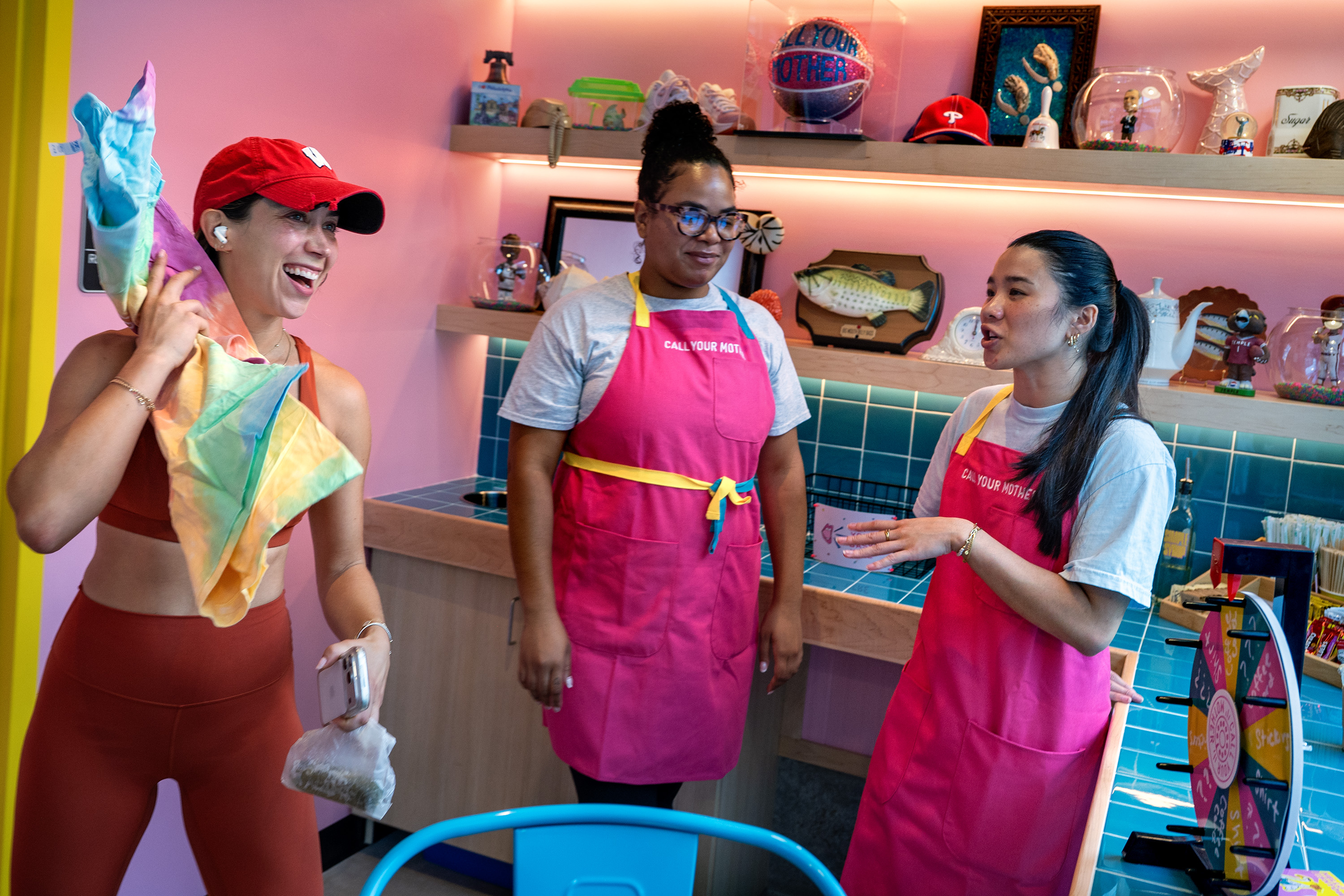
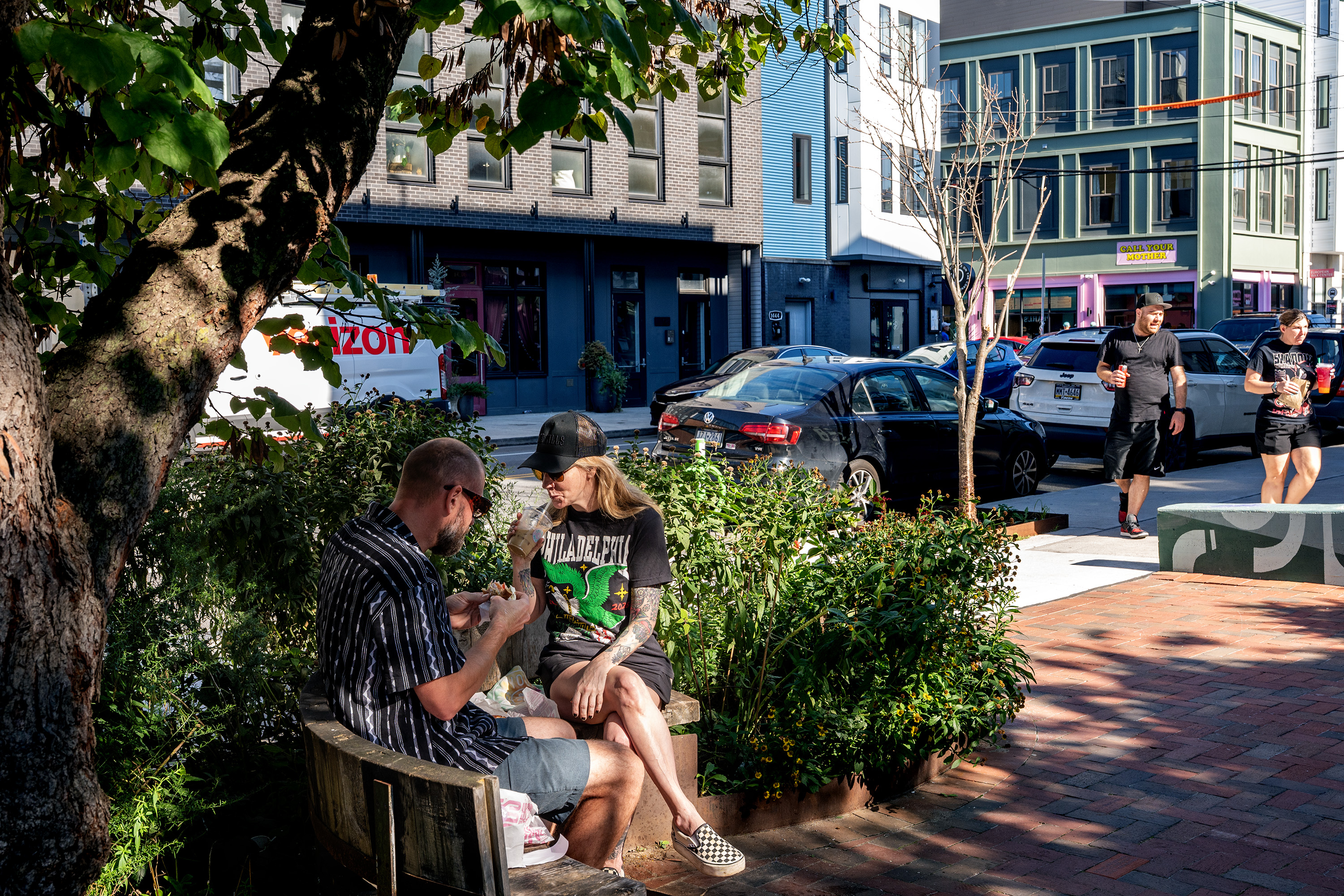
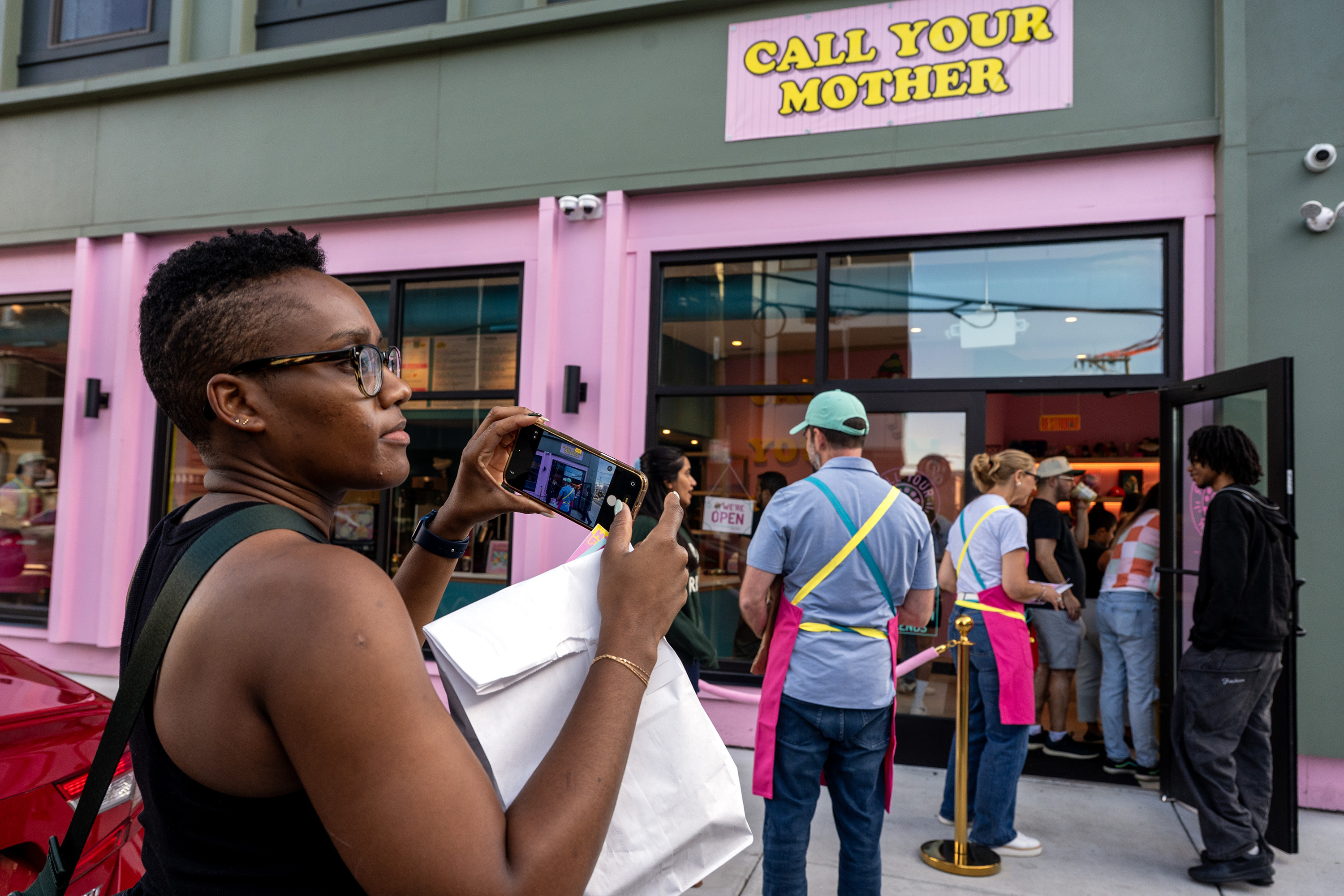
    The shop’s newly opened Fishtown location looks like a boutique that just so happens to serve bagels, its bubblegum pink storefront sporting a mural of a cream cheese-and-lox bagel and a latte alongside a school of cartoon fish.

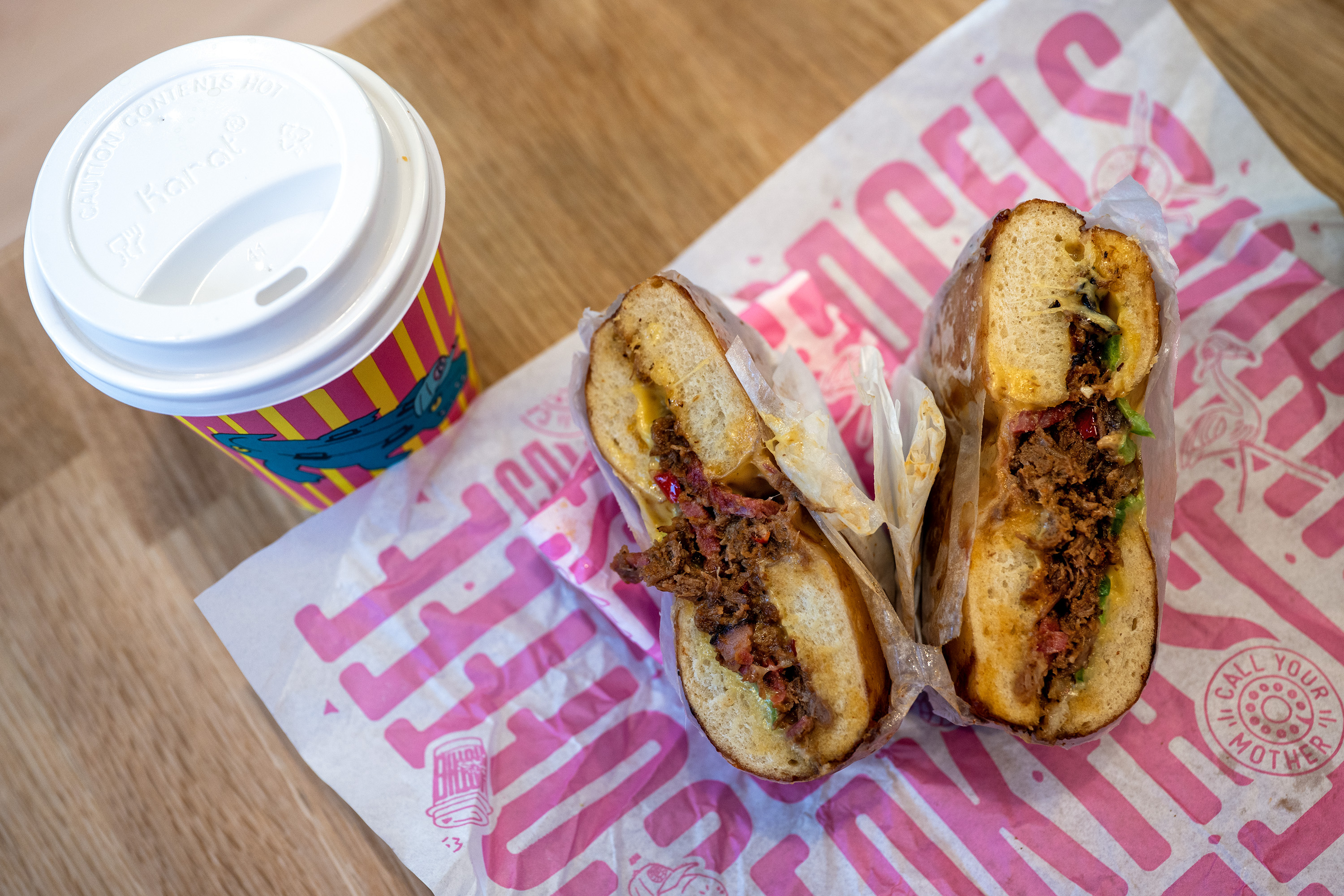
    The meatball sub bagel and banana bread-matcha latte at Call Your Mother during its Fishtown soft opening on Tuesday, Sept. 8, 2026.Tom Gralish / Staff Photographer

    Founded in D.C. by husband-wife duo Andrew Dana and chef Daniela Moreira, Call Your Mother has two more Philly locations on the way in Rittenhouse Square and Washington Square West. The shop first opened in 2018 in the D.C.’s Park View neighborhood as a self-proclaimed “Jew-ish” deli with pink and teal walls, loaded sandwiches, and a chewy-soft bagel recipe so good even Joe Biden was a fan.

    Shortlisted as a candidate for Bon Appetit’s best new restaurants list in 2019, Call Your Mother is now synonymous with the private-equity bagel boom: The shop went from a handful of locations in D.C. to 28 across Maryland, Virginia, Colorado, Illinois, and Pennsylvania after the investment firm Invus, an early Cava investor, purchased a stake in the company at the start of 2025.

    To be fair, Call Your Mother is making an effort to blend into Fishtown. The inside of its 1500 Frankford Ave. space doubles down on the whimsy with kitschy wares — Phillies bobbleheads, a tiny Liberty Bell, and a bedazzled basketball — procured from local thrift stores such as Thunderbird Salvage. A tasteful merch wall abuts the cash register, where customers can purchase pastel-colored dad hats and tees alongside jars of Fishtown Pickle Project and One Trick Pony, the peanut butter brand that Dana and Moreira also co-founded. (The bathroom, however, sticks out: it’s wrapped in a Lilly Pulitzer-style tropical wallpaper.) .

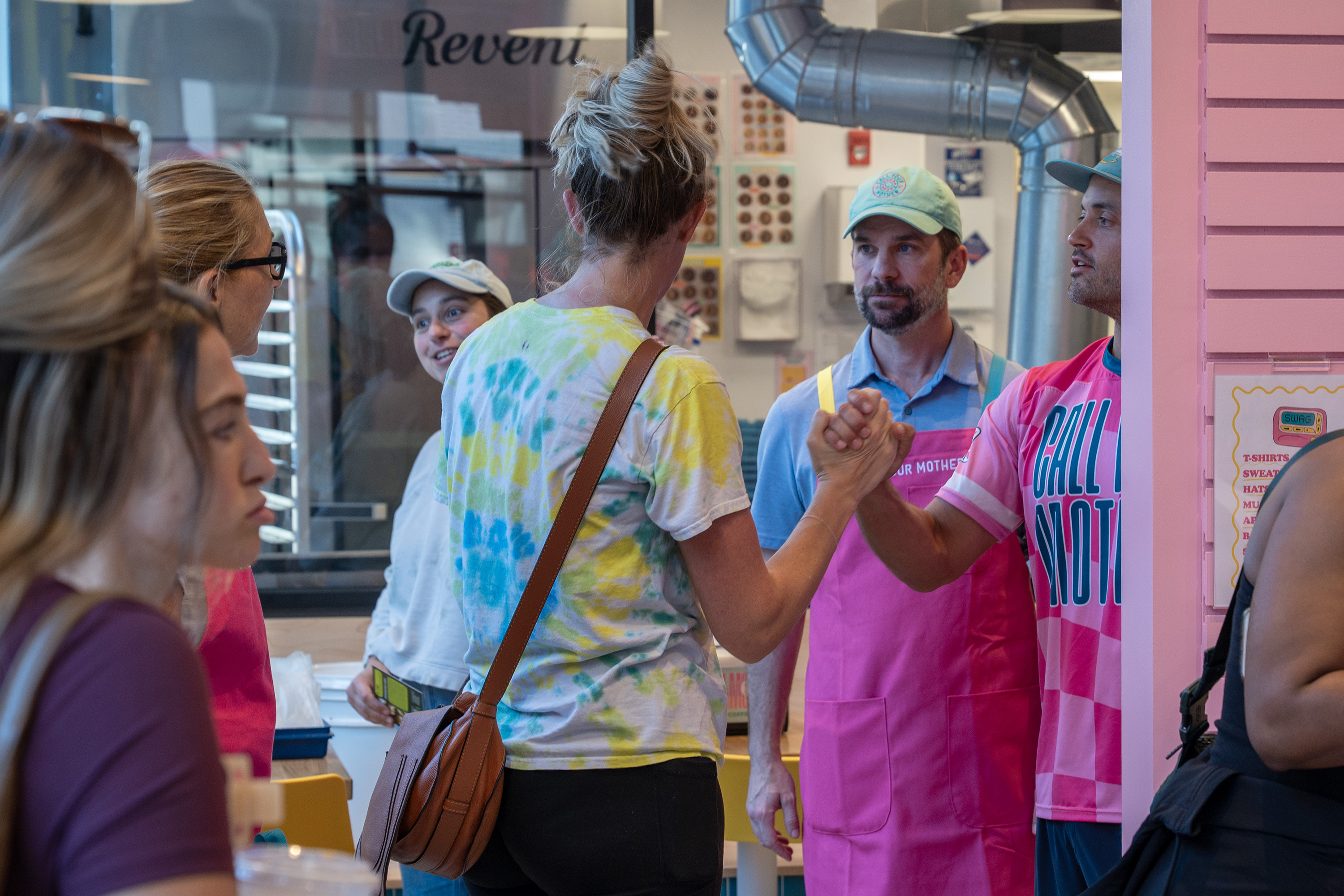
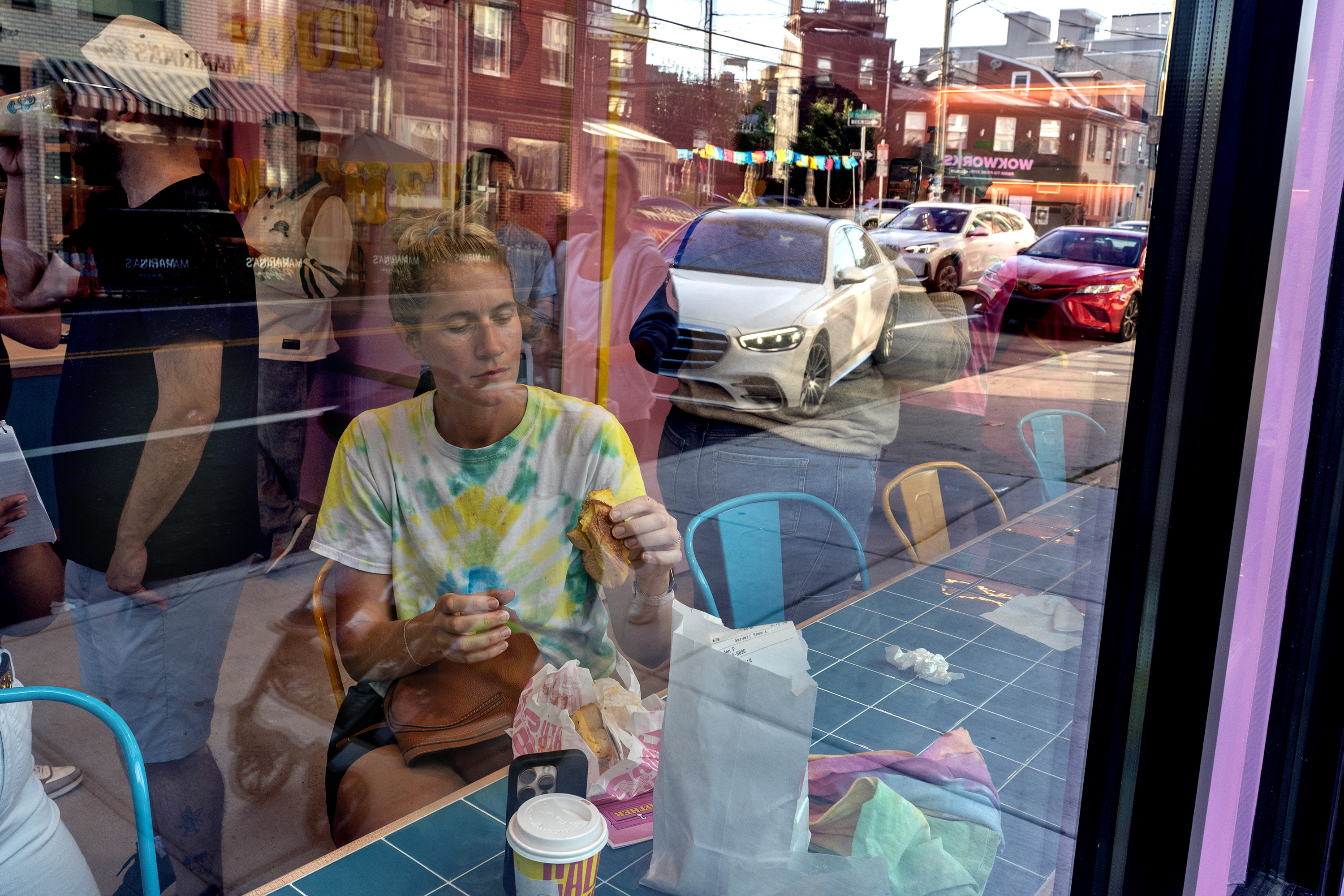
    Indoor seating is limited, split between a few two-tops and counter seating. That didn’t stop influencers from flooding the space during a soft opening. They were after the money shot: carefully pulling apart a steaming breakfast sandwich to create a dramatic cheese pull.

    Neighbors were more skeptical.

    “How many bagel and coffee places do we need in Fishtown?” said Gabriela Rivera, a decades-long resident who wandered in Tuesday morning during her morning walk.

    It’s a fair question.

    Call Your Mother’s first Philly location is smack in the middle of the city’s bagel renaissance. The shop is surrounded by outposts of Philly Style Bagels, Bagels & Co., and Kismet, three local chains. It’s also on a strip of Frankford Avenue that has seen an influx of corporate chains, from the controversial Starbucks across the street to New York City’s venture capital-backed 7th Street Burger, which opened four blocks south last month.

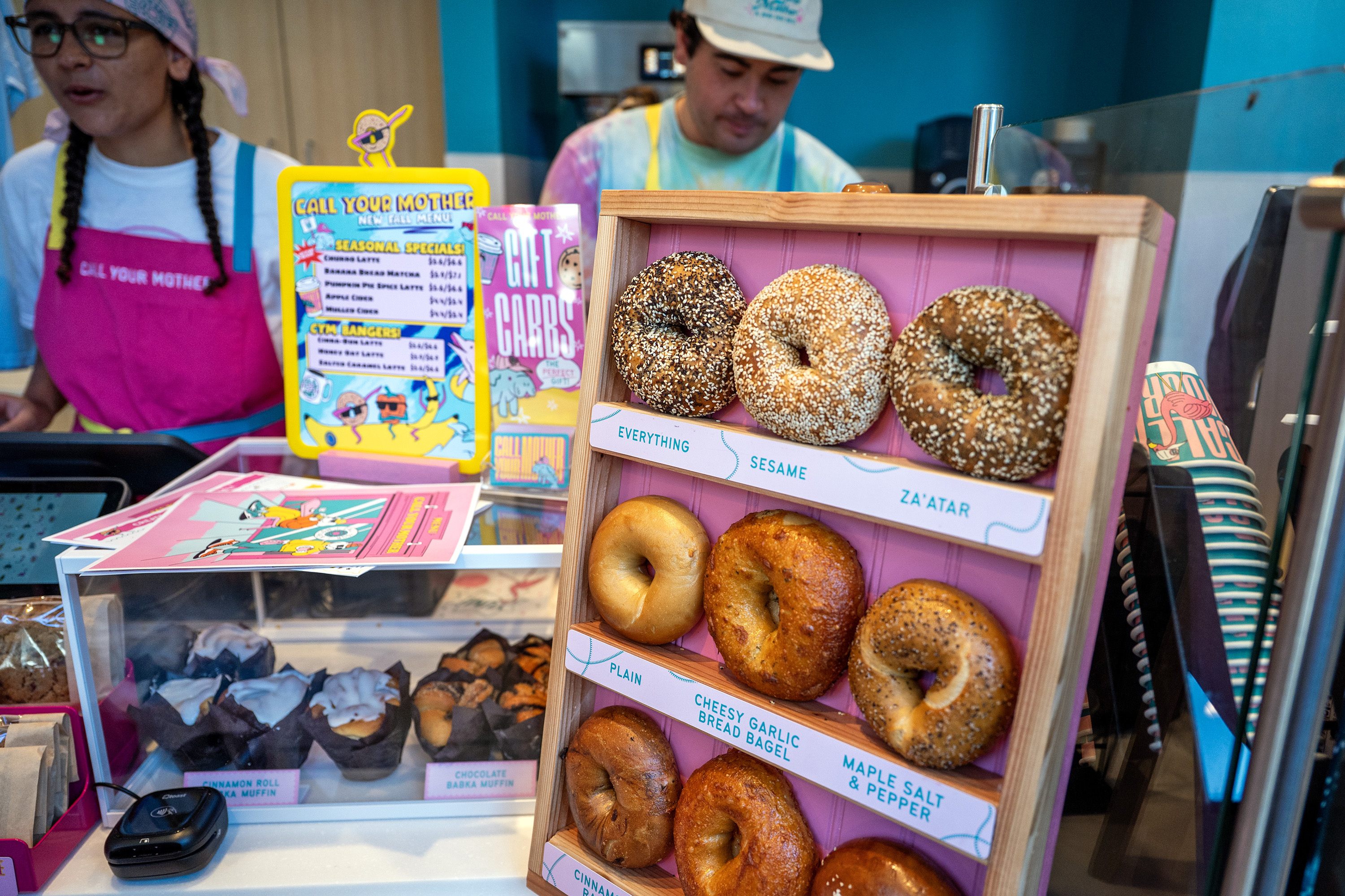
    Call Your Mother offers nine bagel varieties, which can be ordered plain, with schmears, or as part of sandwiches.Tom Gralish / Staff Photographer

    “For a long time, [Fishtown] was small businesses … the more big stuff that comes in, I worry the neighborhood is going to become less community-centered,” said Justin Berger, Rivera’s fiancé, who also lives in the area.

    Both of them still ordered breakfast sandwiches. They were free, after all.

    New York-style with a hint of Montreal

    Call Your Mother’s bagels split the difference between New York-style — the classic fluffy-yet-crusty kind — and Montreal-style, which are smaller, sweeter, and denser.

    Bagels are made on-site using a recipe developed by Moreira, an Argentinian-born chef who never ate a bagel until building Call Your Mother with her husband. The chain’s are still hand-rolled and kettle-boiled with a simple honey-sweetened dough.

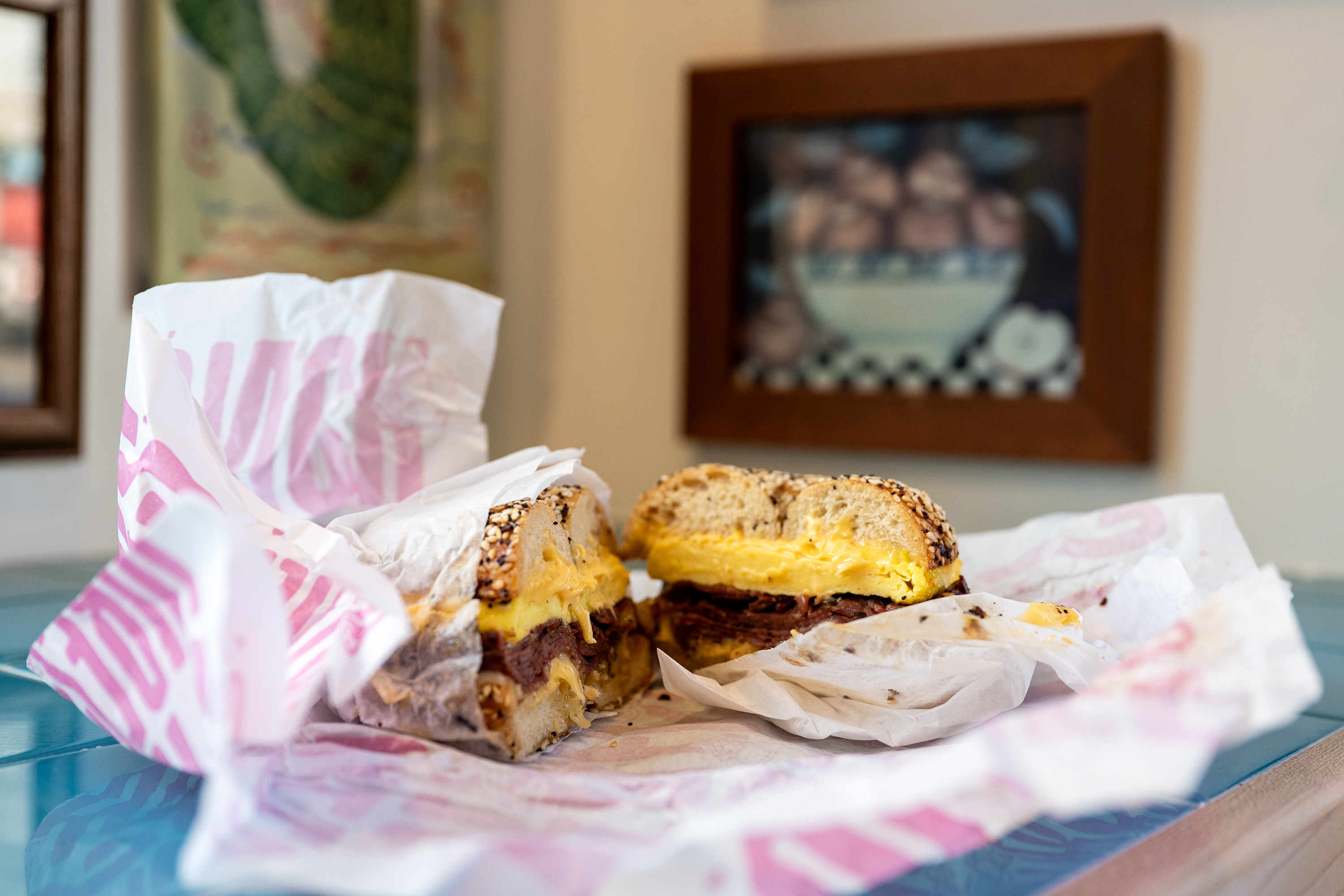
    The Sun City bagel at Call Your Mother during its Fishtown soft opening Tuesday, Sept. 8, 2026.Tom Gralish / Staff Photographer

    Their bagels come in nine flavors, ranging from classic plain and everything and to cheesy garlic bread, maple sea salt and pepper, and salt-crusted pretzel. You can order them with a schmear, though most customers go for the sandwiches, which range from $9 to $15 in Philly.

    The chain’s menu includes 19 sandwiches, categorized indiscriminately as those with “breakfast-y vibes” and “lunch-y vibes.” (You can order both all day.) Some fuse Dana’s half-Jewish upbringing with Moreira’s Argentinean palate, like the Jetski, which features sofrito-seasoned brisket and pastrami. Others, like the Don Cesar — literally a grilled chicken Caesar salad on a bagel — are somewhat light, while some are downright decadent. Case in point, the fall special: meatballs, marinara, and mozzarella on a bagel.

    Customer Shannelle Palmer takes a photo outside Call Your Mother as she leaves with her bagel order during its Fishtown soft opening Tuesday, Sept. 8, 2026.Tom Gralish / Staff Photographer

    The Thunderbird (chicken sausage, eggs, American cheese, cheddar cheese, and spicy honey, recommended on a maple sea salt bagel) tastes “like a happy accident,” said Jordan Price, a local content creator who lives in Fishtown. “It reminds me of when all the stuff on a breakfast platter mixes together and gets syrupy.”

    Berger, on the other hand, was sure he could taste a bit of the private equity.

    “It tasted like it was made somewhere else and shipped here,” he said after biting into his lox and cream cheese on yuca bread, Call Your Mother’s gluten-free bagel alternative.

    The Chai Latte and Jetski bagel at Call Your Mother during its Fishtown soft opening Tuesday, Sept. 8, 2026.Tom Gralish / Staff Photographer

    Price doesn’t mind. The chains are already here, she said. At least this one has bagels she thinks her kids will like.

    “There’s literally a Sweetgreen down the street. We are surrounded by so much private equity,” Price said. “If it was the first of that sort of thing in the neighborhood, I’d be more upset.”

    Call Your Mother, 1500 Frankford Ave., 215-703-3254, callyourmotherdeli.com. Hours: 6:30 a.m. to 2 p.m. Monday through Friday; 6:30 a.m. to 3 p.m. Saturday to Sunday.

  • ICE arrested nearly 50 immigrant workers in two central Pennsylvania operations, advocates say

    ICE arrested nearly 50 immigrant workers in two central Pennsylvania operations, advocates say

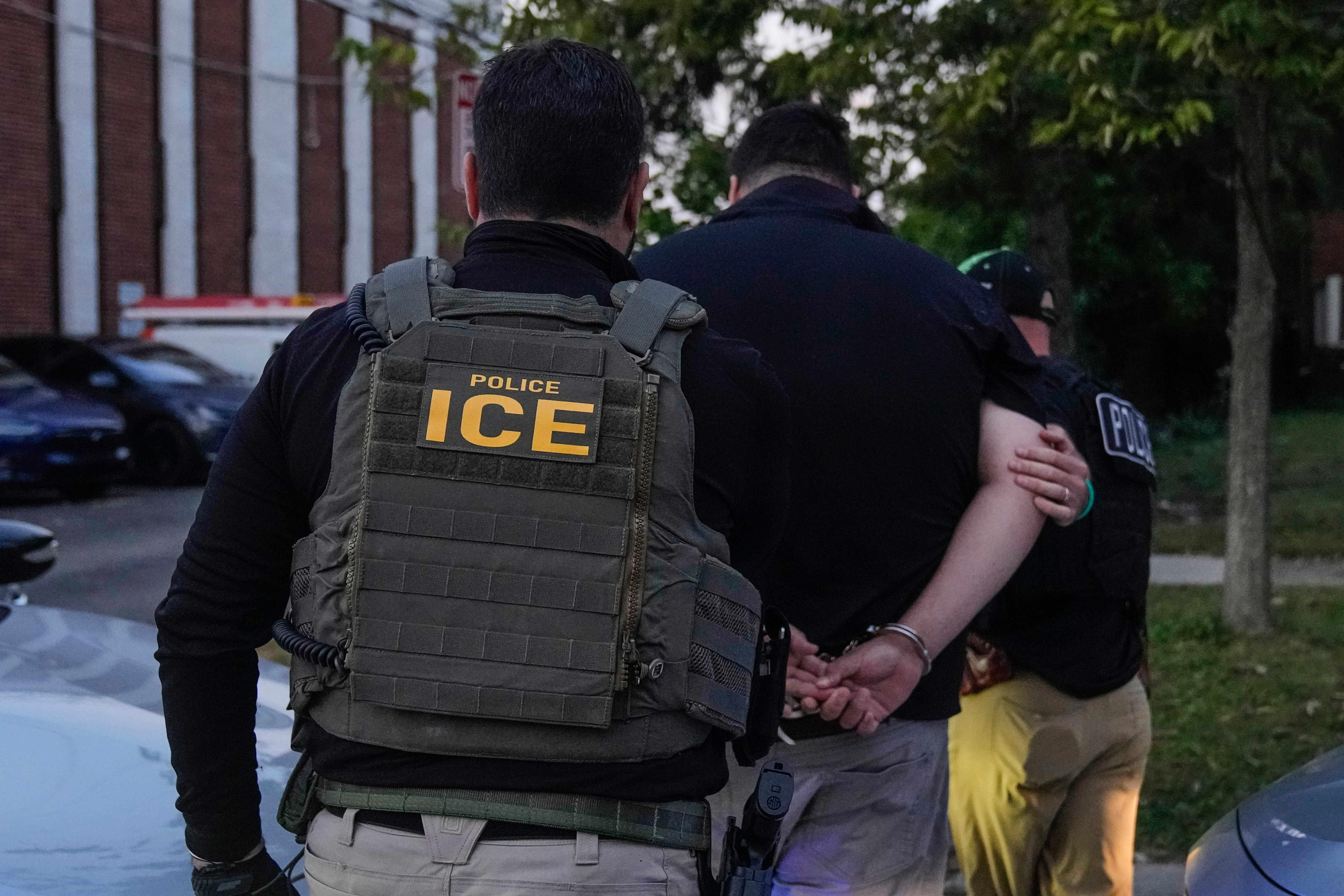
    ICE agents arrested at least 49 immigrant construction workers in two separate operations carried out in the last week in the central Pennsylvania community of Danville, according to immigration advocates.

    All remain in detention, they said.

    The arrests targeted workers who were leaving the construction site at the Geisinger Medical Center, where a patient tower is being built.

    At least 41 people were arrested on Sept. 2 as they left the property around 5 p.m., and eight more were arrested on Tuesday, beginning about 6 a.m., according to Centre County Rapid Response Network, an immigrant-assistance group, and the Pennsylvania Immigration Coalition. The men are nationals from Nicaragua, El Salvador, Honduras, and other countries.

    U.S. Immigration and Customs Enforcement officials could not immediately be reached for comment, nor could those with the Department of Homeland Security.

    The Pennsylvania Immigration Coalition said the arrests represent the largest workplace raid in the state to date.

    In a statement, the Geisinger Medical Center said it was aware of law enforcement activity on Sept. 2 that involved workers from its tower construction project. The activity did not occur on Geisinger property, it said.

    “As with any large construction project, we hire a construction manager to oversee the project,” the statement said. “It is their responsibility to make sure all workers on the project meet all federal and state work eligibility requirements.”

    Immigration advocates said that ICE agents made the arrests with the assistance of Danville police, that workers driving cars were stopped as they left, and that police followed other workers from the edges of Geisinger property to their homes.

    Workers leaving Danville for other parts of the state encountered checkpoints near highway entrances, the coalition said.

    The involvement of local authorities in ICE arrests has been a controversial issue in Pennsylvania, as more police agencies sign on to help enforce federal immigration law.

    The immigration coalition said eyewitnesses to the Sept. 2 operation reported that ICE was using drones, which increased an atmosphere of militarization.

    “We don’t need our local police enforcing federal law. It is not their job and has proven time and again to harm public safety,” said Jasmine Rivera, executive director of the Pennsylvania Immigration Coalition. “ICE and billionaires profiting off federal contracts are making billions of dollars from kidnapping our people. They are terrorizing families and attacking our neighbors who are literally building our communities. We don’t need $240 billion of our tax dollars to go to ICE and [U.S. Customs and Border Protection]; we need that money to make education, healthcare, and housing affordable.”

    Correction: An earlier version identified the construction site by the name of the project designer, which has been deleted from the story. EwingCole does not manage the site and is not responsible for its operations nor the employment of workers there.

  • Head Start offers a model for ending preschool pushout. Don’t weaken it.

    Head Start offers a model for ending preschool pushout. Don’t weaken it.

    On Aug. 6, Philadelphia City Councilmember Isaiah Thomas held an Education Committee hearing on the crisis of preschool suspensions and expulsions, examining their devastating impact on families and possible policy solutions to this discriminatory practice, which research has shown is rife with racism and ableism.

    Ironically, on that same day, Health and Human Services Secretary Robert F. Kennedy Jr. announced plans for sweeping deregulation of Head Start, including rescinding its current regulations that prohibit expulsion and severely limit suspensions in all Head Start programs.

    At the advocacy organization where I serve as policy director, Education Law Center-PA, we help hundreds of families every year who are navigating preschool pushout. That includes families whose children — yes, even toddlers as young as 18 months old — have been suspended or expelled from preschool.

    This shocking practice is common: Preschools suspend children at a rate three times higher than K-12 schools.

    Suspensions and expulsions of our youngest learners, which are harmful to a child’s development and can profoundly impact their future, disproportionately harm Black and brown children, children with disabilities or developmental delays, and children sharing those identities.

    Myriad preschool programs exist in Philadelphia and across the commonwealth, which can make it difficult to untangle how each program is regulated and which agency oversees it. This patchwork can also make it difficult for families to understand which protections apply to their children. The clearest safeguards exist when protections, in conjunction with legal requirements, are explicitly codified in preschool program regulations.

    Head Start programs offer the strongest protections for our youngest learners, but in Philadelphia, those regulations only apply to 170 Head Start locations, a fraction of the city’s total early childcare settings.

    Current Head Start policy, which Kennedy now seeks to rescind, prohibits the expulsion of students in its programs and severely restricts suspensions to extraordinary circumstances, with a host of steps that must be taken before any temporary exclusion.

    During the recent City Council hearing, one of the most important policy suggestions offered by ELC-PA’s attorney, Rose Wehrman, included implementing the existing Head Start policy for all of the city’s preschool programs. It’s a policy that, if implemented with fidelity, could have afforded important protections for many families featured in our April report on preschool pushout.

    Jennifer Garrison’s 4-year-old son, Terrell, is a constant source of joy for everyone around him. Garrison described him to members of City Council as “loving, gentle, and full of energy.” But Terrell, who is Black and has autism, was denied the most basic needs in his preschool and was effectively excluded from his program under conditions that would not have been permissible under Head Start’s regulations.

    To hear Garrison talk about the juxtaposition of who Terrell is compared with how he was treated is gutting — and unfortunately too common.

    Had Terrell been in a program with the protections explicitly outlined by Head Start’s now-in-jeopardy regulation prohibiting such exclusion, perhaps he and his family would not have endured such a traumatic experience. We don’t know that for sure, but we do know that Head Start’s policy is one that should be expanded to more programs.

    The benefits of Head Start are comprehensive: The National Head Start Association outlines academic, social-emotional, and physical health benefits, and notes that the impacts are “particularly strong” among underserved students. This is, in part, due to strong policies around developmentally inappropriate practices like suspension and expulsion.

    But Secretary Kennedy, in the name of “parental empowerment” and even “freedom,” wants to upend the foundations of a decades-long program with lifelong benefits, ranging from increased educational success through K-12 and beyond, as well as physical, emotional, and financial health.

    Changes to Head Start proposed by Health and Human Services Secretary Robert F. Kennedy Jr. include deregulating nearly every facet of of the program, from appropriate staffing ratios to developmental screenings, writes Hillary Linardopoulos.Amanda Cuda

    In addition to the rescission of the suspension and expulsion policy, Kennedy’s proposed rule changes would deregulate nearly every other facet of Head Start. This includes appropriate staffing ratios, developmental screenings, and a host of regulations that are central to the program.

    Fortunately, these proposals are not final, and people can submit public comments (of any length or format) to the Department of Health and Human Services by Oct. 6 to oppose the deregulation of Head Start.

    The existing federal regulations are the ones we should emulate right here in Philadelphia and across the commonwealth. We urge our fellow community members to join us by submitting comments opposing the gutting of Head Start regulations, which would destabilize this foundational program.

    Meanwhile, our organization will continue to work to support families and expand the existing Head Start policies to include all programs educating our youngest learners across Philadelphia and the entire commonwealth.

    Hillary Linardopoulos is the policy director for the Education Law Center-PA, a nonprofit organization dedicated to ensuring equal access to a quality public education for all children in Pennsylvania.

  • The WNBA underwent big changes during commissioner Cathy Engelbert’s tenure. Here are the highlights.

    The WNBA underwent big changes during commissioner Cathy Engelbert’s tenure. Here are the highlights.

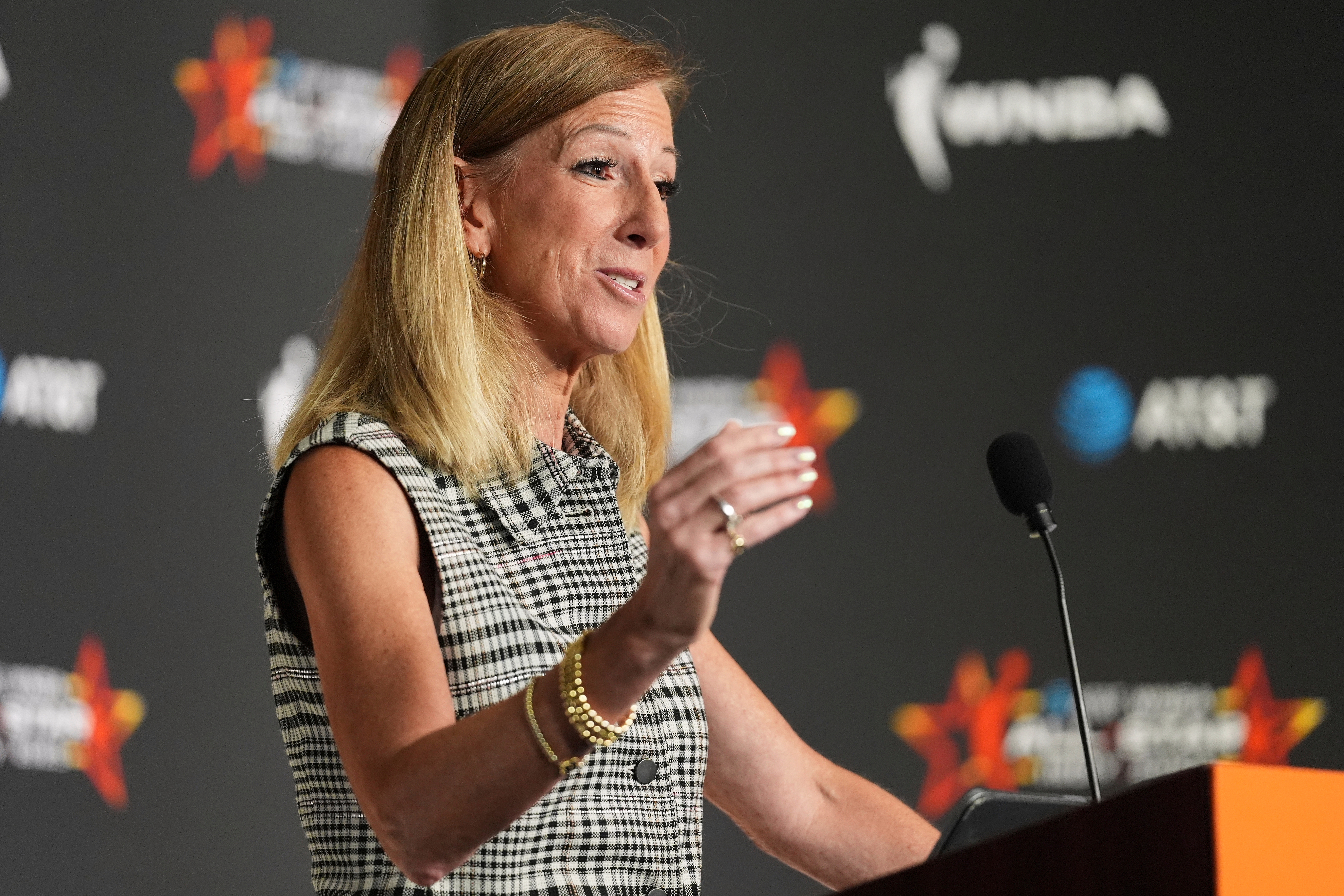
    Cathy Engelbert was hired as WNBA commissioner in 2019, and upon her retirement in December, Engelbert will have overseen the most critical years in league history, shepherding the WNBA through a period of uncertainty into a period of exponential growth.

    The WNBA is one of the fastest-growing leagues in sports, and under Engelbert’s watch, six expansion franchises have tipped off or been announced — including here in Philadelphia — while a new media rights deal and CBA have been signed.

    “Over the years, it has been amazing to watch WNBA players thrive and lead the massive cultural surge around women’s sports,” Engelbert said in a statement. “I retire knowing we have built something bigger, stronger and more enduring than we could have imagined. I am grateful to the WNBA and NBA team owners and staff, players, investors, fans and the powerhouse league office staff, who believed in what this league could become. I retire with immense gratitude and tremendous optimism for the future of the WNBA, with the best yet to come.”

    Here’s a look at her most consequential moves, and where the league goes next:

    2022: Funding round

    Engelbert sold a 16% stake in the WNBA to a group of outside investors for $75 million in cash flow, to be used to fund marketing and infrastructure. Instead of the 50/50 ownership split between NBA and WNBA owners, the split is now 42/42/16.

    At the time, the deal was the largest funding round ever for women’s sports, and Engelbert valued the league at approximately $450 million. The average franchise is now worth approximately $460 million just four years later.

    Sixers managing partner Josh Harris (left), Detroit Pistons vice chairman Arn Tellem, WNBA commissioner Cathy Engelbert, and Cleveland Cavaliers CEO Nic Barlage at a news conference announcing expansion teams for Philly, Detroit, and Cleveland.Jonathan Tannenwald

    September 2023: Expansion

    Starting in 2023 with the Golden State Valkyries, Engelbert began the process of expanding the WNBA for the first time since 2008. It was the first of six successful expansion bids under Engelbert’s tenure, and Golden State now is the league’s most valuable franchise, with an $850 million valuation, according to Sportico. In 2024, two additional expansion teams, in Toronto and Portland, were announced.

    In June 2025, the WNBA announced the addition of three more franchises, to bring the total up to 18: Cleveland to begin play in 2028, Detroit in 2029, and Philly in 2030. All teams were purchased by the corresponding city’s NBA team owner. Cleveland and Detroit were both home to previous, now defunct, WNBA franchises, while Philadelphia will be a WNBA city for the first time.

    “The demand for women’s basketball has never been higher,” Engelbert said in a statement.

    Coming to Philly was personal for Engelbert. She hails from Collingswood, and her parents were Northeast Philly natives. Her dad, Kurt, was a men’s basketball star at St. Joseph’s and is in the school’s hall of fame.

    The WNBA last year also announced the sale and relocation of the Connecticut Sun to Houston. The franchise was purchased by Rockets owner Tilman Fertitta, despite competing bids from Hartford, Conn., and Boston to buy and keep the franchise in New England.

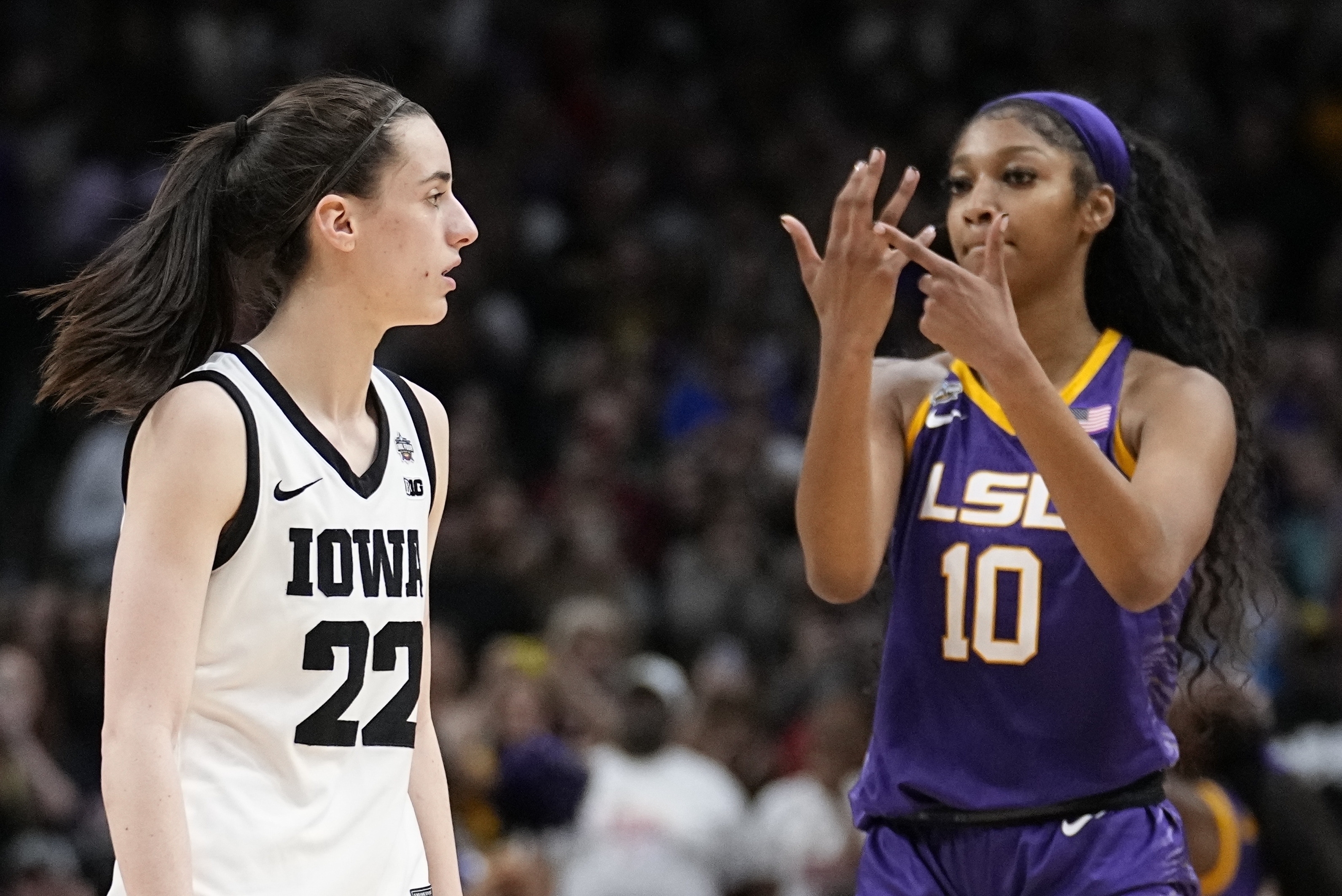
    Caitlin Clark (left) and Angel Reese ushered in a new wave of WNBA fans.Tony Gutierrez

    2024: The Caitlin Clark Effect

    The exponential growth of the WNBA began in earnest with the 2024 WNBA draft, which brought college stars like Caitlin Clark and Angel Reese into the league. Other young stars like Paige Bueckers soon followed.

    Clark, now a standout for the Indiana Fever, raised the bar for college basketball ratings, setting viewership records in 2023 with 9.9 million viewers for the national championship game, in which her Iowa squad lost to Reese and LSU, and the 2024 national title game, with 18.9 million viewers, was the first women’s national title game to outperform the men’s.

    (function(){function e(){window.addEventListener(`message`,function(e){if(e.data[`datawrapper-height`]!==void 0){var t=document.querySelectorAll(`iframe`);for(var n in e.data[`datawrapper-height`])for(var r=0,i;i=t[r];r++)if(i.contentWindow===e.source){var a=e.data[`datawrapper-height`][n]+`px`;i.style.height=a}}})}e()})();

    July 24, 2024: Media rights deal

    Engelbert took advantage of spiking ratings with the expiration of the WNBA’s media rights deal in 2024, signing a new contract worth $3.1 billion, expanding partnerships with ESPN, Prime Video, and NBC.

    “Partnering with Disney, Amazon and NBCU marks a monumental chapter in WNBA history and clearly demonstrates the significant rise in value and the historic level of interest in women’s basketball,” Engelbert said at the time. “These agreements allow the league to continue to build a long-term and sustainable growth model for the future of women’s basketball and sports which will benefit WNBA players, teams and fans.”

    The WNBA set viewership records in 2024, with a record 22 regular-season games attracting at least 1 million viewers. Fever games were the most-watched on ABC, ESPN2, CBS, and NBATV.

    March 24, 2026: CBA

    After a tense negotiation, the new collective bargaining agreement was ratified by players and by the league, increasing player salaries, providing player housing, and adding an expanded benefits package.

    Amid the negotiations, Napheesa Collier described Engelbert as “negligent” and said the WNBA has “the worst leadership in the world” in her exit interviews last season after officiating controversies.

    “This past February, I sat across from [Engelbert] and asked how she planned to address the officiating issues in our league,” Collier said. “Her response was, ‘Well, only the losers complain about the refs.’ I also asked how she planned to fix the fact that players like [Clark, Reese, and Bueckers], who are clearly driving massive revenue for the league and are making so little for their first four years.

    “Her response was, ‘[Clark] should be grateful. She makes $16 million off the court because without the platform that the WNBA gives her, she wouldn’t make anything.’ And in that same conversation, she told me, ‘Players should be on their knees, thanking their lucky stars for the media rights deal that I got them.’”

    Engelbert has also faced player backlash for a perceived lack of attention to threats from toxic fans and sports bettors.

    “I think as one of the main faces of our league, too, it creates a dialogue that needs to be had. It puts pressure on Cathy, who we’ve been begging to step up for us in these spaces,” said Natasha Cloud, a Broomall native and former St. Joe’s star.

    The league recently has run into conflict with former NBA players like Enes Kanter Freedom and figures like Riley Gaines for lacking a policy restricting trans athletes from competing in the league. There are no active trans women in the WNBA, nor are there any serious prospects to be drafted in the near future.

    But that hasn’t stopped figures like Freedom from coming to games and getting into altercations with players on the court, including Cloud. Engelbert said the league is being used as a “political football” by media members who do not watch or cover the league normally, in order to “sow divisiveness.”

  • Trump disses 25th anniversary memorial for 9/11 while opening the door to more terrorism at home

    Trump disses 25th anniversary memorial for 9/11 while opening the door to more terrorism at home

    Who could have imagined, as we sat glued to the screen watching ash-covered victims frantically flee the falling World Trade Center towers, that the type of terrorism threatening us 25 years later would turn 9/11 on its head.

    On that terrible day, Americans stood united against the assault, political rhetoric cast aside in the horrific moment. New York Mayor Rudy Giuliani, later to become a MAGA mouthpiece, became “America’s mayor” as he projected a message of calm resolve in news conferences held amid the ruins.

    Nearly the entire world joined the United States in opposition to al-Qaeda, a multinational terrorist organization that murdered 3,000 men and women of many different nationalities in the twin towers attack. President George W. Bush, in perhaps his finest hour, reassured a shocked nation and built a multinational coalition to fight al-Qaeda.

    Our NATO allies immediately volunteered for a war in which many of their brave soldiers died — including Canadians and Danes, whose armies President Donald Trump so frequently now insults.

    That sense of unity, which impelled Americans to comfort strangers and inspired solidarity from allies and adversaries alike, has long since dissipated in the wake of forever wars and populist discontent. A divisive, America First president seems to delight in fomenting hatred between people of differing beliefs and ethnicities – and treating long-time allies like enemies.

    What the Trump administration is doing is opening the door to a new breed of lone wolf terrorists, inspired by the internet. Such radicalized individual acts have primarily been carried out by right-wing and jihadist attackers over the past years, according to detailed studies, although the low level of violent left-wing incidents has risen in 2025, in reaction to Trump policies.

    But the president and his team have worked hard to dismantle the very agencies and have fired the FBI agents and U.S. Department of Justice prosecutors that handle terrorism cases. Elite counterterrorism and counterintelligence units have been gutted by hundreds of firings and resignations. At the U.S. Department of Homeland Security alone, more than 1,300 counterterrorism specialists have been axed or reassigned to work on border enforcement and deportations, or to search for nonexistent voter fraud.

    What’s so stunning is that, just before the start of the current endless Iran war, with the White House still claiming Tehran is the leading sponsor of international terrorism, FBI Director Kash Patel specifically sacked about a dozen members of an elite Washington-based unit specializing in stemming threats from Iran within our country. Why? Because the agents had been involved in investigating Trump’s retention of classified documents at Mar-a-Lago after he ended his first term.

    When asked in March by the New York Times whether Americans needed to worry about possible terrorist reprisals by Iran inside the U.S., Trump retorted: “I guess. Some people will die.”

    Trump’s blindness is worse than the noncooperation between the FBI and the CIA in 2001 that led them to ignore clues to the monthslong presence of the 9/11 terrorists on U.S. soil. This is the willful blindness of our government to potential terror attacks by an Iranian regime that has every reason to strike in the near term.

    Add to that the president’s constant incitement of his followers against so-called leftist networks, declaring “antifa” to be a dangerous terror organization. Only problem: There is no such organization; antifa is a catch-all term for loose groups across the country who declare themselves to be anti-fascist.

    Compare that to the white supremacist massacre of 11 Jewish worshipers at the Tree of Life Synagogue in Pittsburgh during Trump’s first term, or the deadly truck attack by an Islamist on New Year’s Day 2025 in New Orleans. Yet Trump consistently, and determinedly defying statistics, declares domestic terrorism to be the work of the so-called left.

    Such incitement is a cover story for attacking political criticism from any front, and inspires potential right-wing terrorist attacks against Trump’s political opponents. Never forget that it was right-wing terrorists who called for the murder of Vice President Mike Pence when they attacked the U.S. Capitol, who murdered two Minnesota lawmakers, and who nearly killed Paul Pelosi, then-House Speaker Nancy Pelosi’s husband.

    Meantime, the president dispatches federal agents who could be thwarting real terrorism to instead threaten election officials and potentially midterm voters. Ditto for menacing noncriminal immigrants with violence and sometimes death.

    As for state-run terrorism, Trump’s self-declared friend, Vladimir Putin, has embarked on a campaign against NATO allies, including dropping drones near airports such as the one in Leipzig, Germany, recently.

    “We are the daily target of hybrid warfare,” said the German interior minister last month. The International Institute for Strategic Studies this summer tallied 144 drone incidents across 13 countries in less than two years, with Russia as the main culprit. And that doesn’t include the assassinations Moscow has conducted against former dissidents living in England and Germany and many arson and sabotage attacks across Europe.

    And while you may think you have read much about the deliberate Russian destruction of civilian markets, malls, schools, universities, and cathedrals in Ukraine, you are probably unaware of the worst.

    Just one example: In the city of Kherson, just across the river from Russian positions, Russian drone pilots play a game they call “human safari” and brag about it on their Telegram channels. It means getting a hapless vegetable seller in their sights, chasing him as he tries desperately to escape, and then finally killing him.

    This is not warfare. It is deliberate terror, Nazi-style, to try to demoralize Ukrainians into surrendering their sovereignty.

    And so, as we remember 9/11, as we repudiate the terrorist attackers, and recall the human error by U.S. officials that led to the deaths of 3,000 innocent souls, we should give serious thought to the Trump administration’s choices and rhetoric that open the door to more terrorist assaults.

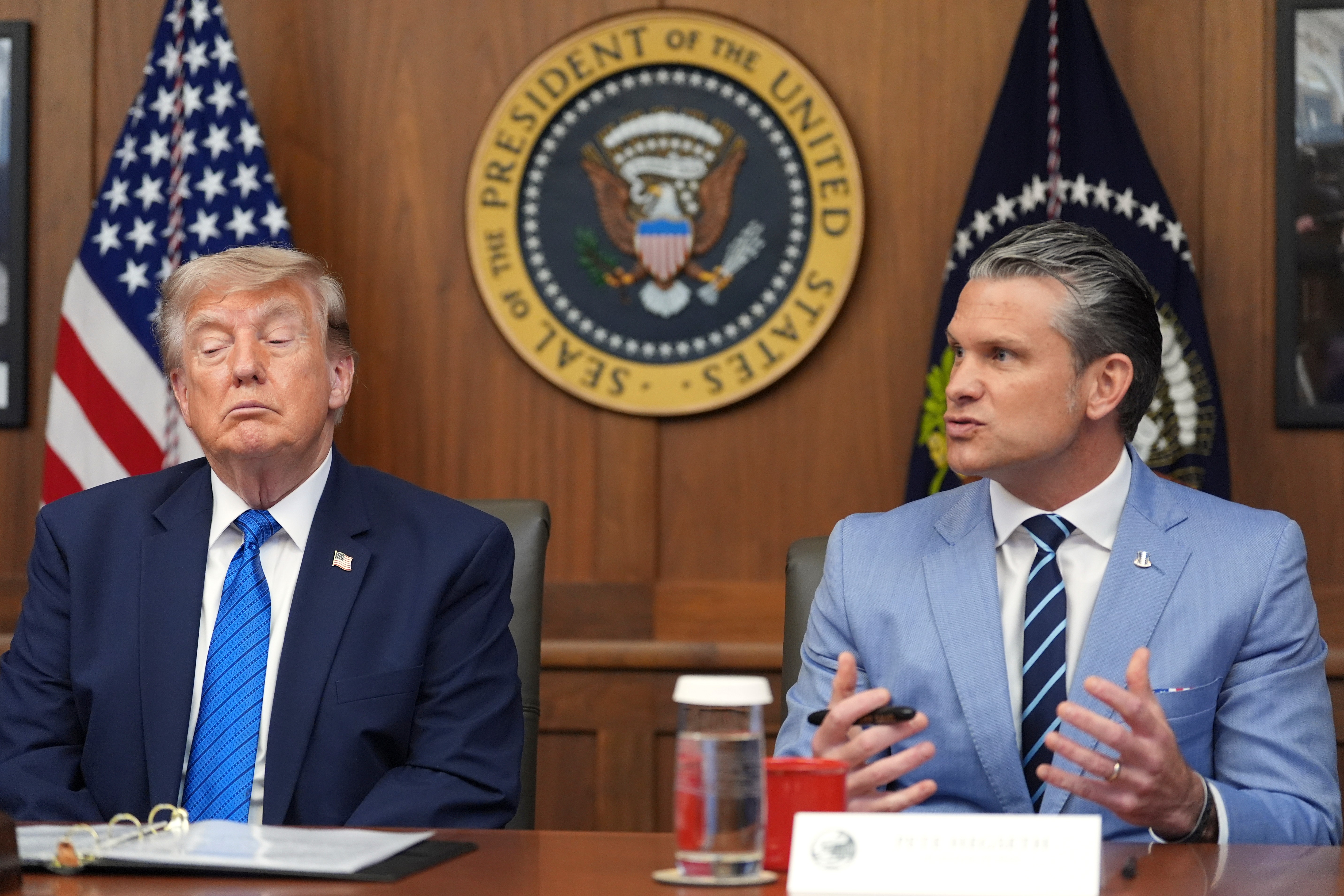
    Trump has refused to attend the 9/11 ceremonies in New York City, reportedly because he wouldn’t be allowed to make a speech. Instead, he will bloviate at the Pentagon alongside his “Secretary of War” Pete Hegseth, who is contributing to the president’s security blindness that exposes Americans to potential harm.

    Shame on them for endangering the country by refusing to learn the lessons of that terrible day.

  • Philly maker of hand-held device tracking software for retailers plans expansion after big investment

    Philly maker of hand-held device tracking software for retailers plans expansion after big investment

    Asset Recharge Center (ARC), a Philadelphia firm whose software and sensor systems track and recharge hand-held devices used by workers at Walmart, Lululemon, and other big retail store and warehouse companies, has raised $60 million from a New York tech investor.

    The investment, from Acadia Investment Partners, will help the company boost sales to grocers, airlines, governments, and other new customers.

    It’s the first big outside investment for ARC, which started in 2011 as the Chargeitspot cellphone-charging service for customers of stores such as Bloomingdale’s and Target. It switched focus to workers’ electronics when customers were barred from stores during the COVID-19 pandemic.

    Earlier it was backed by smaller investors from locally based Robin Hood Ventures, Soundboard Angel Fund, and start-up millionaires.

    ARC, which says it has been used by workers to check out and return electronic tools 130 million times since 2021, is poised to grow fast “as frontline operations become increasingly technology dependent,” Acadia founder Harsh Agarwal said in a statement. He and Acadia “operating advisor” Peter Schmitt joined ARC’s board under terms of their investment deal.

    “We started the business to solve a consumer-facing problem — the [panic] when batteries run out,” said ARC CEO Douglas Baldasare, a Villanova native and Wharton School graduate. British health officials identified the condition in the early smartphone era as nomophobia.

    Stores found customers spent more time shopping and bought more items when their phones were stationed at Chargeitspots. The COVID shutdowns forced founder Baldasare to find new applications for what his team had learned about securing, tracking, and charging devices.

    He studied the losses retailers and warehouses were suffering when they issued electronic devices to track inventory and workflow that ended up lost, left home, or piled in bins of non-working appliances companies shipped back to manufacturers like Zebra and Honeywell.

    Those makers too often found that after a device was offline for weeks or month, the only problem was a bad cable or battery that could have been resolved quickly if the problem were diagnosed, marked, and recorded in a useful way — the problem ARC addresses.

    “We realized managing these devices at scale was very difficult,” Baldasare said. “Companies were still using manual check-ins and check-outs on clipboards. Workers were standing in queues every shift; it was inefficient.”

    “You’re working in a chaotic field environment where people tend not to follow rules,” Baldasare said. “Things break. You need an effective, efficient way to secure and maintain your hardware. We had unintentionally built a system” for retail customers’ phones that could be applied to worker devices.

    By adding automatic employee sign-in, check-back, tracking, and data reporting systems, ARC cut losses, according to customers.

    ARC ensures employees have access to the ”next best available device, fully charged and in optimal working condition” every day, Lani Lindsay, vice president of central operations for Walmart Canada, said in a statement. Walmart’s Sam’s Club stores in the U.S. also use ARC.

    “ARC’s ‘smart locker’ system has made a material difference for our business,” said Divey Gulati, cofounder of Chicago-based ShipBob, a contract shipper that competes with Amazon. “We’ve dramatically reduced time spent managing devices.”

    About 100 people work for ARC, a headcount that founder Baldasare said will grow as ARC uses Acadia funds to add staff.

    Philadelphia has a reputation as a low-turnover labor market for tech employers, said Baldasare, who recruits Drexel co-ops, along with students from other area schools. “It’s a really smart, roll-up-your-sleeves population, who, when they find a happy place, reward you by sticking around to grow with the company.”

  • On a tree-lined Fairmount row, a newer resident became an instant gardening prizewinner

    On a tree-lined Fairmount row, a newer resident became an instant gardening prizewinner

    Toward the end of April, Noah Johnson’s street in Fairmount fills with pink cherry blossoms. The cherry trees may have been planted, he believes, when rowhouses were built in 1876.

    Longtime Fairmounters call the block Centennial Boulevard. The homes were designed to showcase the latest trend in residential architecture as part of the celebration of the 100th anniversary of the signing of the Declaration of Independence.

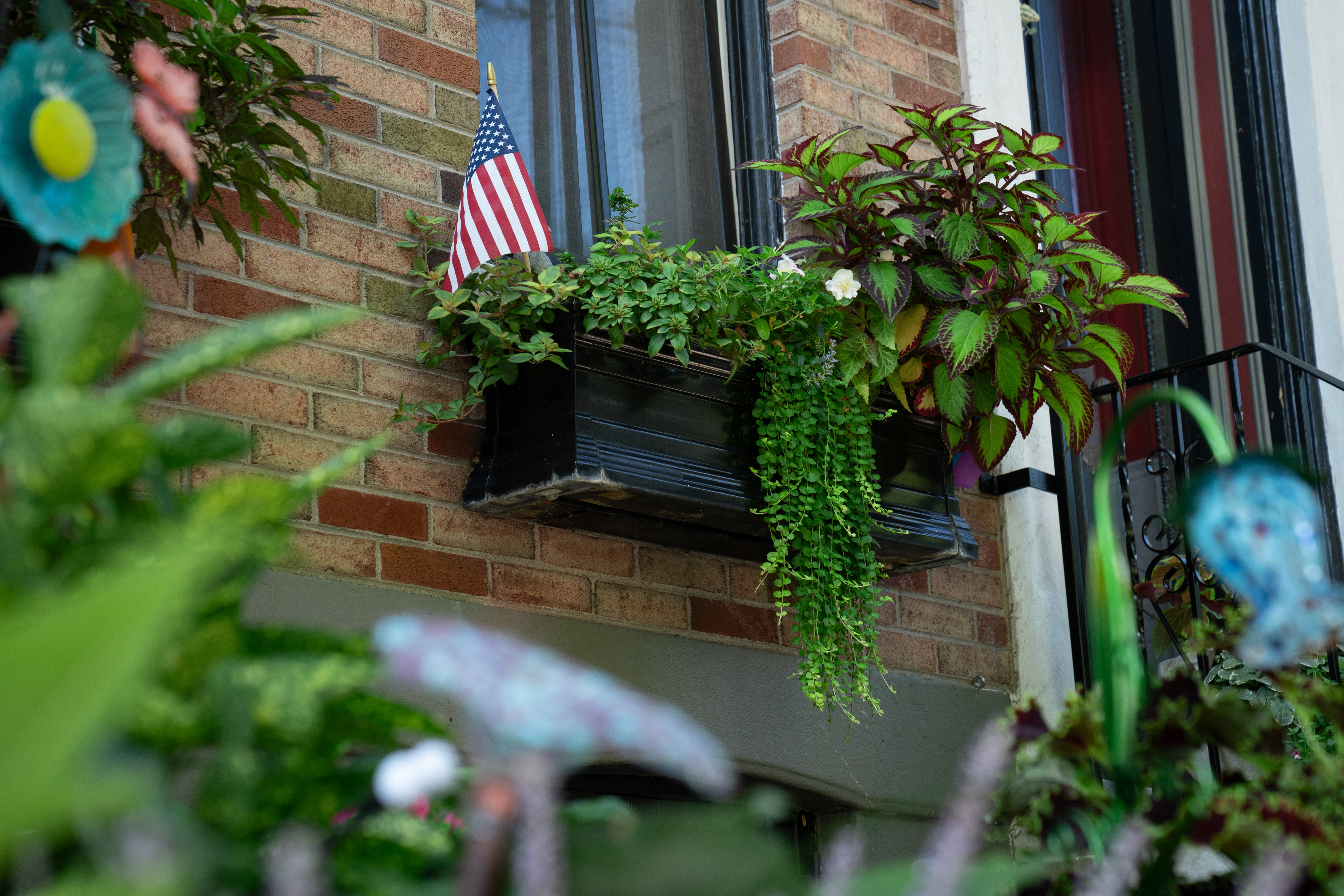
    The three-story homes were faced with stucco modeled to resemble stone and had tiled mansard roofs and enviable front gardens. Most houses in Fairmount, then and now, have small backyards but no front yards. Owners compensate with window boxes and planters.

    A window box at Burns and Johnson’s Fairmount home.Sarah Silbiger / For The Inquirer
    Impatiens and verdant potted plants line the front steps of the home.Sarah Silbiger / For The Inquirer

    Over the last 150 years, the “Centennial” homes have been altered. Some have been re-stuccoed or faced with brick. But they all still have their front gardens.

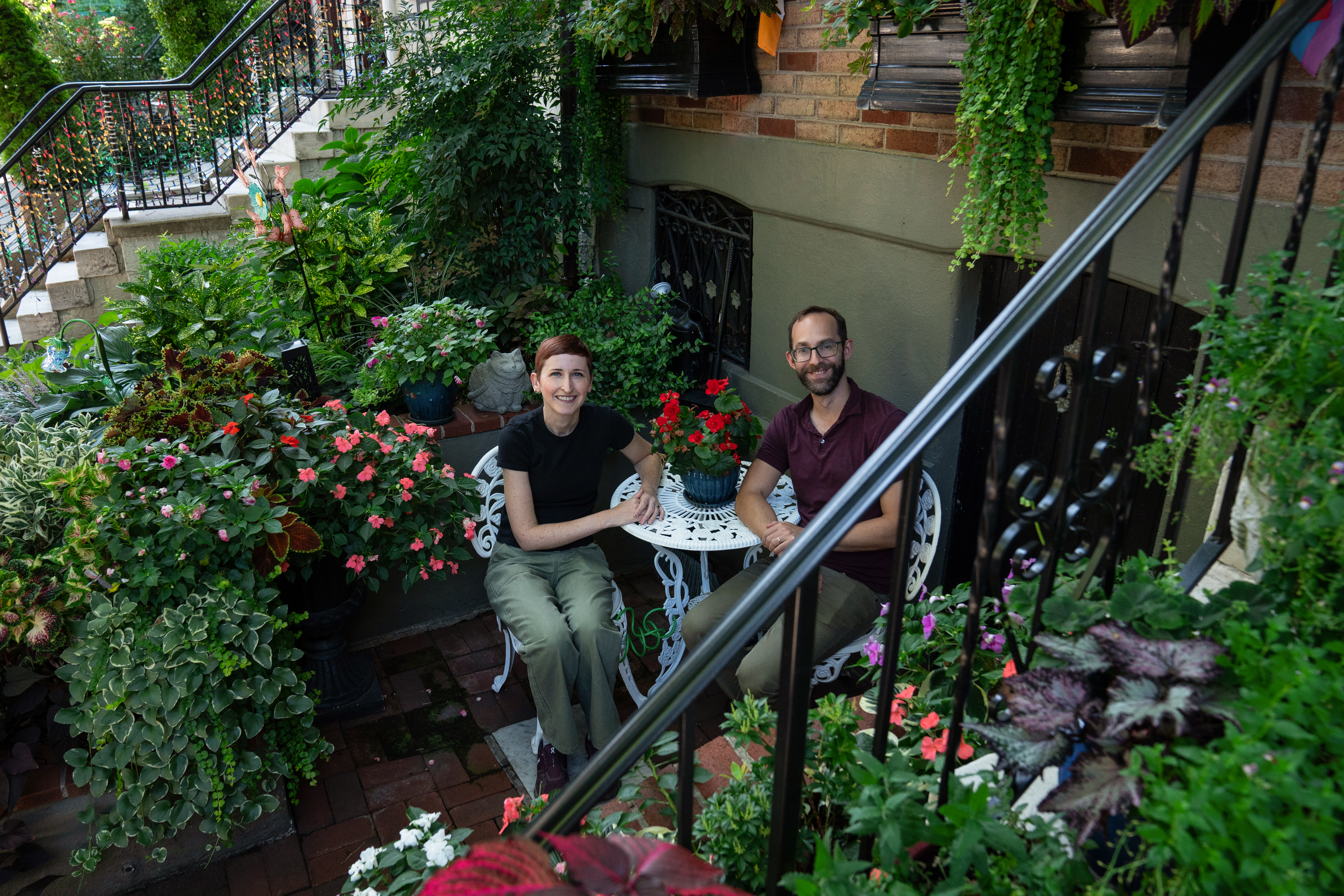
    Johnson and his wife, Charlotte Burns, like their neighbors, have planted their precious plot with flowers and greenery.

    The floral motif begins at the east end of the block, where Brian Augustine has painted a mural on the garage wall adjacent to his house. Augustine, a contractor and amateur artist, copied a Claude Monet painting of the garden at Giverny, the famous impressionist’s home in France. Augustine planted white rocktrumpet vines in his garden to complement the white water lilies in the mural.

    A mural by Brian Augustine, imitating a Monet painting, is seen in the neighborhood, known as Centennial Boulevard.Sarah Silbiger / For The Inquirer

    Farther down the block Sam Cifelli has wound Christmas lights around the handrail going up his front steps next to shrubbery. He adds more lights during the holidays to the delight of Johnson and Burns, who live next door.

    The couple purchased their four-bedroom, 2½-bath home in February 2025. Johnson said he let Charlotte do all the gardening.

    By summer, Burns’ plantings were so lush a neighbor gave her a flier about the Flowering Fronts of Fairmount Competition sponsored by the Fairmount Civic Association. Burns entered the contest and won a prize. This summer she was a finalist in the Pennsylvania Horticultural Society’s Citywide Gardening Challenge.

    A plaque from the Pennsylvania Horticultural Society 2026 Gardening Challenge sits in front of some purple liriope.Sarah Silbiger / For The Inquirer
    Coleus and Silver King Euonymus, with flowers behind.Sarah Silbiger / For The Inquirer

    Burns’ success wasn’t just beginner’s luck. She grew up watching her landscape designer father, Brian Burns, at work. Before moving to Philadelphia she gardened at a house she and her husband rented in Georgia.

    Burns kept the English ivy and the heavenly bamboo she found in the garden and purchased annuals including begonias, impatiens, vincas, and multihued coleus at the local Ace Hardware store.

    Her father helped Burns choose and plant perennials such as spikes of purple liriope, Silver King Euonymus — which has green, leathery leaves edged in white and speckled with gold dust — red-tinged pieris japonica and glossy abelia.

    Gardening is challenging. While Burns’ creeping Jenny, an annual, “grew back this year,” she said, the hydrangea did not bloom, and she had to use a pesticide “for the first time” to remedy a lace bug infestation on the Japanese hosta.

    Charlotte Burns waters her prize-winning garden.Sarah Silbiger / For The Inquirer

    Besides planting in the ground, Burns has filled window boxes and ceramic pots with colorful plants that line her front steps.

    On the brick patio in the middle of the garden red begonias in a blue pot are centered on the white wrought iron table. She found the table and matching chairs at a Bucks County estate sale.

    Burns embellished the garden with glass birds from the Pennsylvania Renaissance Faire and glass flowers from the Philadelphia Flower Show. A ceramic frog was purchased at the annual Fairmount Flea Market. The cat banner and front door wreath were gifts from her mother, Cheryl Cunningham.

    Johnson helps his wife with the heavy lifting, spreading bags of mulch, and moving the pots to the basement for storage in the winter.

    Burns, a veterinary anesthesiologist, and Johnson, a battery scientist, met as students at Drexel University and married in 2021.

    A frog figurine peeks out from behind caladiums and other greenery.Sarah Silbiger / For The Inquirer
    A rose in bloom among the coleus.Sarah Silbiger / For The Inquirer

    The couple had permission to string lights around Mario and Anna Crociata’s oak tree next door.

    Burns planted periwinkle and hosta in the tree well and created a miniature village with gnomes and tiny houses. If an enchanted child takes one of the gnomes, Burns will purchase more at the nearby dollar store.

    They hope Fairmounters will enjoy the flowering fronts on Centennial Boulevard for another 150 years.

    Is your house a Haven? Nominate your home by email (and send some digital photographs) at properties@inquirer.com.