Thieves stole pallets of frozen beef from the back of a tractor-trailer in Wissinoming early Thursday morning, following a similar cargo heist of frozen crab two days prior in Southwest Philadelphia.
While a driver was asleep in the cab of his truck on the 5200 block of Devereaux Avenue around 4 a.m., a group of unidentified thieves cut off the rear padlock of his trailer and removed five pallets of beef valued at $10,000.
The driver awoke after hearing movement in the back of the vehicle and recorded the beef thieves on his cell phone. He reported the theft at 4:12 a.m. The thieves soon fled like a beef in the night.
A black Ford SUV used in Thursday’s cargo theft in Tacony on Oct. 29, 2026.(Courtesy of Philadelphia Police Department)
Police identified a dark gray Nissan sedan and two dark-colored SUVs as the vehicles the suspects used. No description of the suspects was available, and no arrests have been made.
A gray Nissan sedan used in Thursday’s cargo theft in Tacony on Oct. 29, 2026.(Courtesy of Philadelphia Police Department)
A Philadelphia man was recently sentenced to nearly eight years in prison in connection with cargo thefts in 2023 that had an estimated value of more than $1.5 million, including frozen crab.
Police have released three photographs of the vehicles believed to have been used by the thieves to flee after the cargo theft.
A tan SUV used in Thursday’s cargo theft in Tacony on Oct. 29, 2026.(Courtesy of Philadelphia Police Department)
Anyone with information regarding these vehicles or the incident is encouraged to contact Northeast Detectives at 215-686-3153 or call 911.
Ernie Johnson, his longtime colleague, announced Wednesday night after 37 years this would be his final season hosting Inside the NBA.
While Johnson, 70, isn’t retiring — he will continue to host TNT’s coverage of March Madness and other events — he’s “cutting back” after some issues with his heart and a desire to spend more time with his family, including the five grandchildren that know him as “Poppy.”
“I just want to slow down a bit and spend more time enjoying that,” Johnson said Wednesday night on ESPN leading into the Sixers game.
Take a listen to Ernie Johnson speaking on stepping away from Inside the NBA after 37 years ❤️ pic.twitter.com/JTKIBHNRkm
Johnson’s announcement led to a wave of reactions across the NBA media world, including ESPN announcer and former La Salle standout Tim Legler, who entered the league the same season Johnson joined Inside the NBA.
“As I got to spent time with Ernie Johnson, let me tell you, everything about you is genuine,” Legler said. “You hear people say all the time, ‘One of the nicest guys in the business.’ It actually really applies to the way you conduct yourself on a daily basis.”
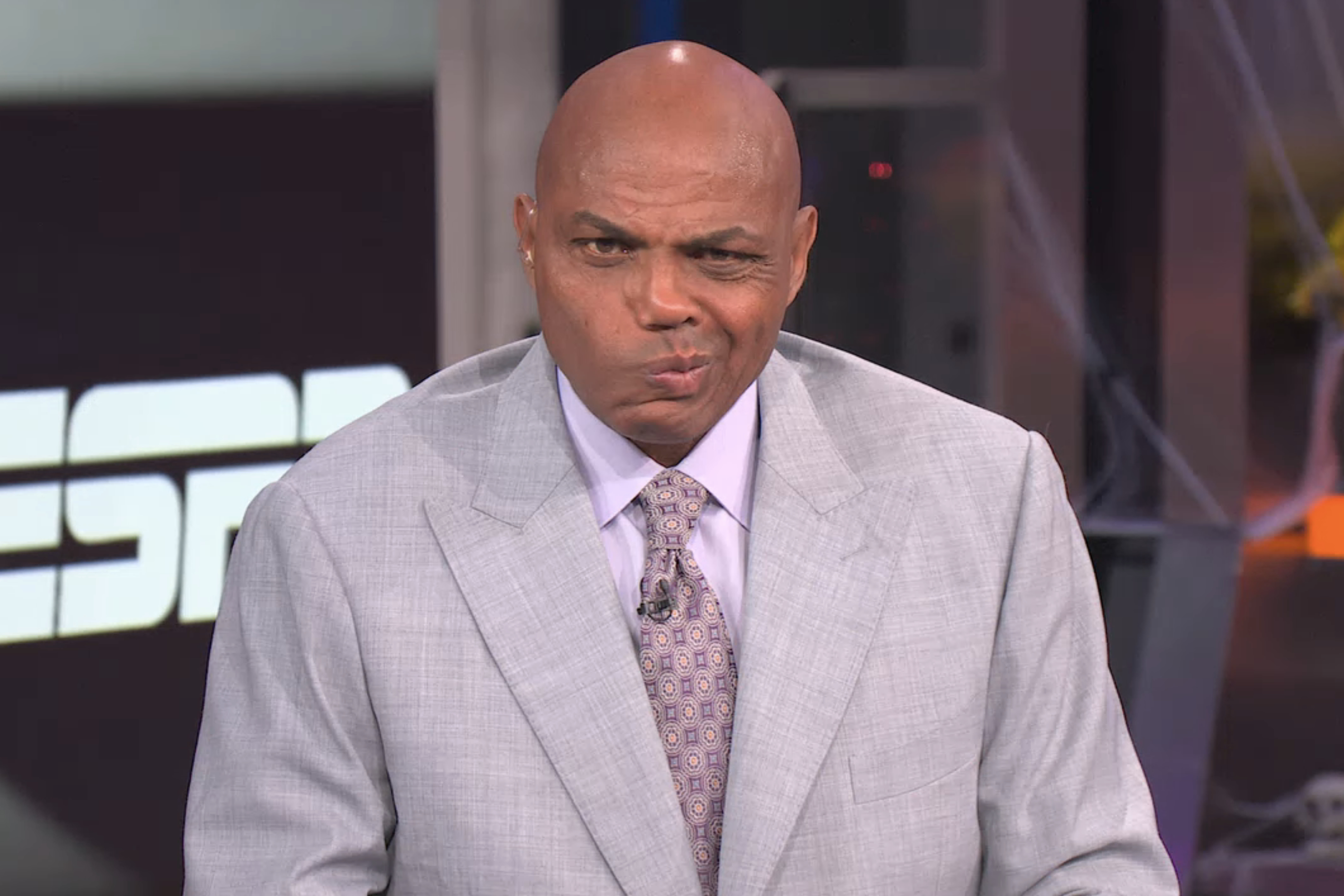
Enter Barkley: The former Sixers great has long said Johnson is the main reason he’s remained with TNT, and has repeatedly said the two are a package deal. Last year, NBC offered him a job that would’ve paid him more than TNT, but Barkley turned it down to remain with Johnson and keep Inside the NBA going on ESPN, which also kept 200 longtime behind-the-scenes colleagues employed.
Barkley didn’t mention anything about his own future Wednesday night, but did choke up while delivering a tribute to his broadcasting mentor and longtime friend.
“We knew the day was coming. It’s still tough,” Barkley said.
Barkley described Johnson as the “unquestionable leader” of a broadcasting team that includes Shaquille O’Neal and Kenny Smith and has won 21 Sports Emmy Awards during its multidecade run. While Barkley might be the biggest draw, Johnson has been the engine that keeps it running.
“The question I’m probably asked the most is, is Ernie just as good a person as he seems? And I say, ‘Man, he’s better than that.’” Barkley said. “I just want to say thank you.”
Johnson’s departure leaves the future of Inside the NBA in doubt, especially if Barkley sticks to what he told The Ringer’s Bill Simmons in September, saying this is “100%” his last season on the show.
Since losing NBA TV rights in 2024, TNT has a multiyear deal to produce the show for ESPN, according to network sources not authorized to speak publicly. That would suggest the show will continue, even if the personalities behind the desk change.
Among those in line to succeed Johnson is Philly native Adam Lefkoe, who re-signed with TNT in 2025 and currently anchors the network’s college football and basketball coverage. He also worked with Shaq on a now-defunct Tuesday night edition of Inside the NBA on TNT that also featured Dwyane Wade.
While no one can replace Barkley, two names floating around in media circles are current Golden State Warriors star Draymond Green and Jalen Rose, who was laid off by ESPN in 2023 but brought back last season to fill in for Shaq on Inside the NBA.
“I think Draymond would do a good job,” Barkley said on BetMGM Gameday Liveearlier this month. “I like Draymond, but Jalen Rose is fantastic.”
The good news is regardless of who replaces Johnson and Barkley, Smith and Shaq are likely to be back in whatever future version Inside the NBA takes.
Smith signed a separate multiyear deal with ESPN last year that includes the “The Jet” appearing on shows like First Take and NBA Countdown.
“We’re not too worried about what’s going to happen next,” O’Neal said Wednesday night. “What’s happening now is we’re still here, and we’re gonna have a great year.”
DoorDash is gobbling up Instacart in a $17 billion acquisition that will supercharge its grocery delivery business.
DoorDash said the Instacart brand name and app will remain, and Instacart shoppers can continue fulfilling orders for Instacart. Grocers can also choose to work with Instacart or DoorDash. Instacart customers will now have access to 50,000 additional stores covered by DoorDash, the company said.
Instacart, founded in 2012, specializes in grocery and convenience store delivery in the U.S. and Canada. Its 600,000 “shoppers” — who are independent contractors — completed 338 million orders last year, according to company filings. Instacart has a market value of $14 billion.
DoorDash, founded in San Francisco in 2013, began as a restaurant delivery business but has expanded to pet food and electronics. Operating in 40 countries, it completed more than 3 billion orders last year using a network of 9 million independent delivery workers. It has a market value of $73 billion.
DoorDash began delivering groceries in 2020 amid a surge in pandemic-era demand. Grocers were initially cautious. Kroger partnered with the San Francisco company in 2022 but initially allowed the company to deliver only flowers, sushi and prepared meals from a limited number of stores.
The partnership with one of the nation’s largest grocery chains expanded last fall, and DoorDash now lists the full inventory of all 2,700 U.S. Kroger stores in its online marketplace. DoorDash scored another coup last month when it added delivery from Costco.
Tony Xu, co-founder and CEO of DoorDash, said the acquisition will combine Instacart’s expertise in grocery with DoorDash’s expertise in logistics and delivery.
“Grocery is one of the hardest things to get right online. Someone has to pick a ripe avocado, find a substitute you’d choose yourself, and get the ice cream to you before it melts,” Xu said in a statement. “Together, we could give stores of every size more of those tools and unlock the potential of grocery delivery.”
DoorDash’s aggressive market-share gains by have hurt Instacart. Five years ago, Instacart commanded 26% of spending on U.S. delivery platforms; that share has fallen to 18%, according to Consumer Edge, a market research company. DoorDash’s share grew from 44% to 59% in that same period. Uber Eats’ share held steady at just under 20%.
It’s not yet clear what the deal will mean for some partnerships. Instacart offers delivery from Walmart, for example, but DoorDash stopped providing Walmart delivery in 2022.
A North Jersey developer has proposed a 338-townhouse development on heavily wooded land in Monroe near the Scotland Run Golf Club, about one mile east of Glassboro.
The development, which is called Traditions at Scotland Run, would include a 3,920-square-foot clubhouse and recreation areas. It’s not yet clear if the homes would be age-restricted.
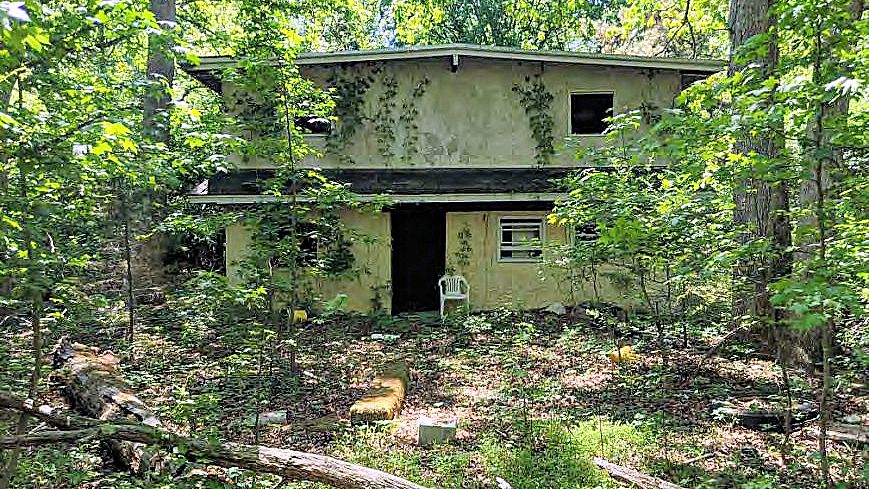
The developer, Scotland Run LLC of Tenafly, Bergen County, wants to divide seven lots on the 77-acre property near Glassboro and Fries Mill Roads into 349 lots, with about 30 acres reserved as open space and recreation. The property has a few abandoned structures but is mostly wooded.
Like several other Gloucester County municipalities, Monroe is among the fastest growing communities in New Jersey. Between 2000 and 2024, Monroe added 3,781 housing units, growth of 34%, according to Census Bureau estimates.
The plan was set to go before the township planning board this month, but Scotland Run requested a postponement likely until December to address board questions.
Board planner Christopher Dochney raised several questions in his review letter for the board, including whether the townhouses would be restricted to residents 55 and older as required by the mixed-used and age-restricted zoning for the property.
He also said details of affordable housing components should be included with the developer’s application.
If affordable housing were included in the development, 61 of the 338 units would need to be affordable, Dochney said. If Traditions at Scotland Run townhouses are all market rate, the developer needs to provide 75 units of affordable housing elsewhere in town, he added.
Dochney also wanted to know more about vehicle access for the development.
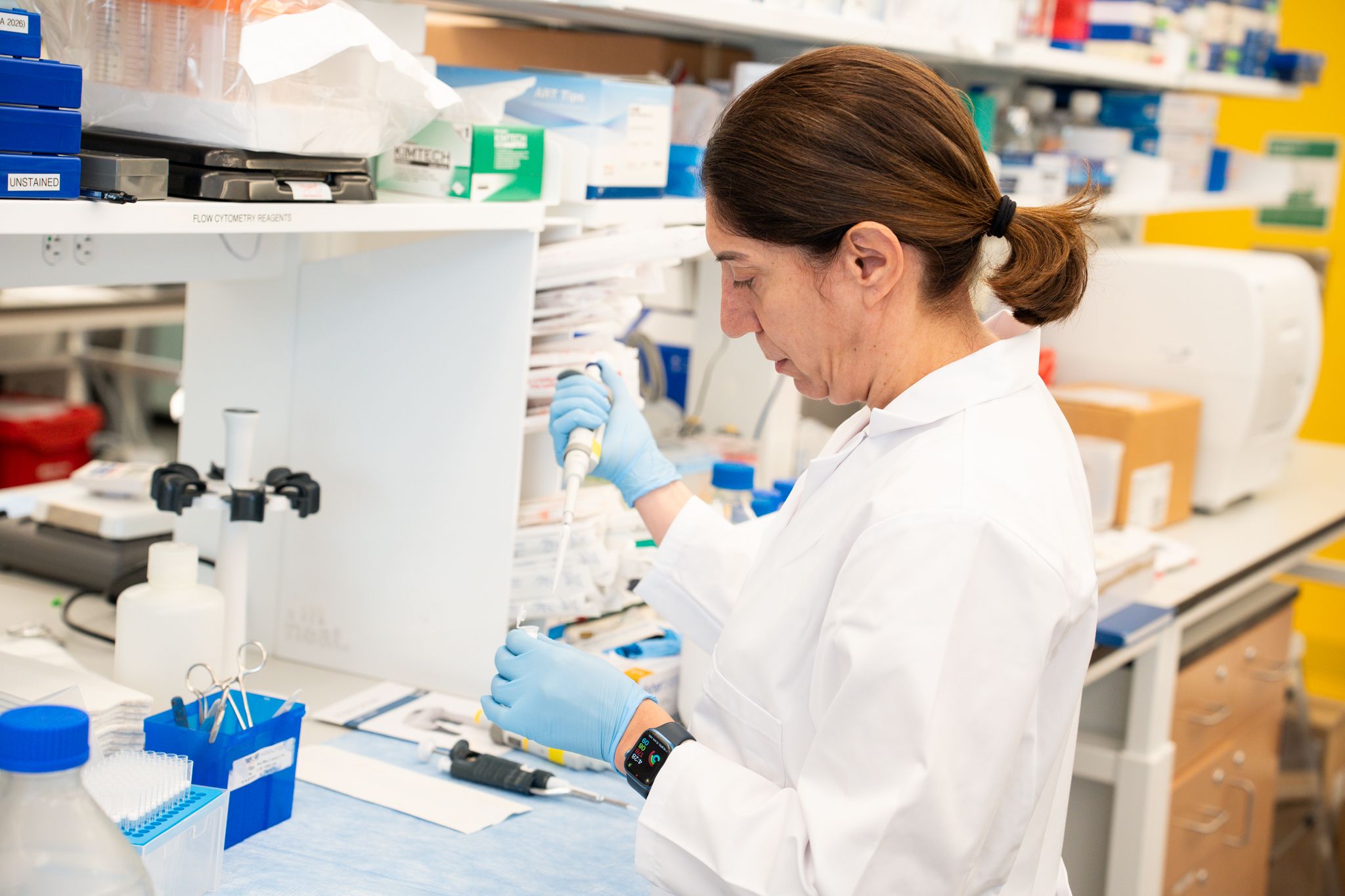
Penn Medicine neurosurgeon Nduka Amankulor believes that harnessing the immune system will be key to treating brain cancer.
He will lead a new $35 million research center at Penn to develop treatments, including so-called immunotherapies such as CAR-T therapy for glioblastoma and RNA therapies designed to reactivate the immune system, officials announced Thursday.
“What we need are 10 to 20 approaches that are like that in order to treat all of brain cancer,” said Amankulor, who will serve as executive director of the new Troiano Brain Tumor Center.
Set to officially launch in mid-November, the center will comprise nearly 100 individuals, including physicians, scientists, and support staff across disciplines.
Brain cancer is notoriously difficult to treat, in part because it can evade the immune system and vary widely in its biology and response to treatment. While novel CAR-T immunotherapies developed at Penn have revolutionized treatment for blood cancers, they haven’t been successful in solid tumors.
And the need remains great for brain tumors thatoften have poorer prognoses and greater quality-of-life challenges relative to other cancers.
Consider glioblastoma, the most aggressive form of brain cancer. Patients typically die 14 to 18 months after diagnosis, Amankulor said.
He lost his own father to brain cancer when he was 16. That experience, along with the patients he seesas a doctor, inspires him to work harder toward cures.
“This is one of humanity’s greatest unsolved problems,” he said. “There can be no quit in this game.”
New approaches
Dolores Hambardzumyan is the scientific director of the new center.Courtesy of Penn Medicine
Translating scientific advances into clinical treatments has proven difficult for brain cancers.
One problem: Brain tumors are what scientists call “heterogeneous.” That means their genetic makeup and composition varies widely, making a one-size-fits-all approach impossible.
Alongside a multidisciplinary team, pathologists will focus on identifying the genetic mutations driving each tumor. That will guide research into targeted therapies.
Brain tumors are also exceptionally good at hiding from and shutting down the immune system.
As the most important organ in the body, the brain has ways of protecting itself from foreign invaders like viruses and bacteria, Amankulor said. Brain cancers can exploit those same mechanisms, allowing tumors to evade the immune system.
The center’s research will focus on therapies that can rewire the immune system, such as CAR-T, or chimeric antigen receptor T-cell therapy, to better target and destroy cancer cells.
Amankulor pointed to an experimental form of CAR-T for glioblastoma now being studied in a clinical trial at Penn. The technology came out of Penn scientist Donald O’Rourke’s lab, and lead trial investigator Stephen Bagley will serve as clinical director at the center.
Amankulor is also interested in developing RNA-based therapies to reactivate the immune system. The treatments could target cells surrounding the tumor, such as certain so-called myeloid cells that tumors have hijacked to suppress an immune response.
Think of it like taking away the tumor’s shield.
Other strategies include immune adjuvants, which are drugs that can boost the body’s immune response.
Amankulor developed an approach using retinoic acid for a type of brain cancer called IDH-mutant diffuse gliomas. Currently in a clinical trial, the therapy activates an immune “alarm signal,” he said, helping immune cells target the tumor.
$35 million launch
Amankulor said the investment in the center will help attract people from outside the brain cancer field, whose expertise could enable new therapies when paired with knowledge of brain tumors.
He believes multiple approaches areneeded.
“[You have to] have a tool kit that you can reach into to build the exact solution that’s matched for a specific patient,” Amankulor said.
The center’s $35 million funding comes from a mix of philanthropy and institutional investment. Penn declined to specify the size of the foundational donation from Penn alum John Gabriele Troiano and his wife, Rosanna Troiano, who live in Manhattan.
The center is named after John Gabriele Troiano and his wife Rosanna Troiano, who donated an undisclosed amount toward its creation.Courtesy of Penn Medicine
John Troiano lost both his parents to brain tumors and previously supported research at Penn on immunotherapy for terminal brain cancers.
“No one should lose a loved one to this disease, and we know the devastation of that kind of loss all too well,” Troiano, who founded the private equity firm The Beekman Group, said in a Thursday news release. “Rosanna and I have made it our mission to ensure that others don’t experience the same.”
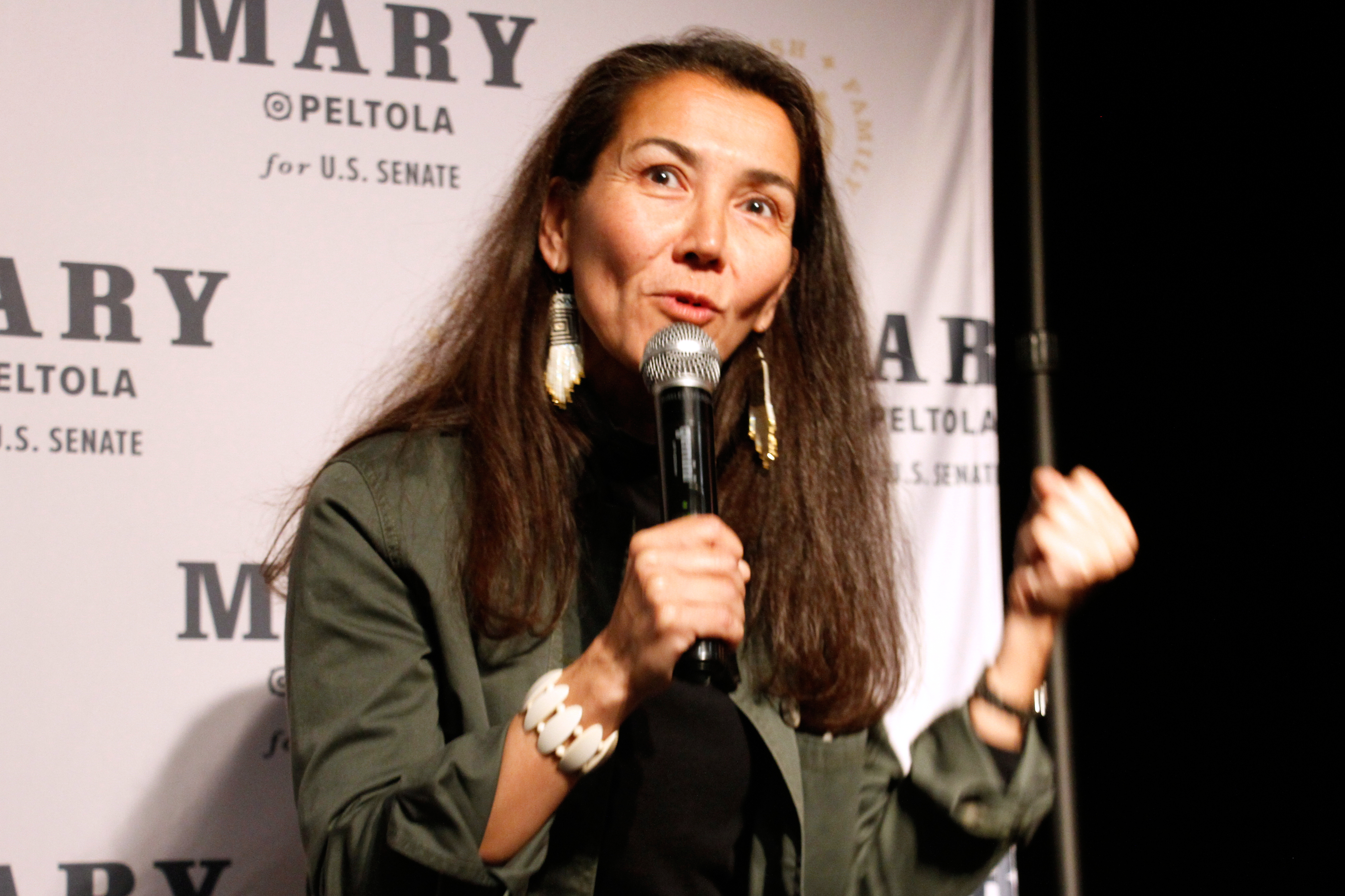
In the summer of 2025, a staff member for Mary Peltola, the Alaska Democrat who was eyeing a run for Senate, received unusual instructions from top campaign aides: Find as many people named Dan Sullivan in Alaska as you can.
The staff member complied, combing through voter records to produce a list of Dan Sullivans from across the state.
This was no random request. Dan S. Sullivan is the name of the state’s Republican senator. And if the Peltola campaign or its allies could track down and persuade another Dan Sullivan to run for Senate, the confusion could cost the senator crucial votes on the state’s unusual, four-person ballot.
The plan worked. This spring, a retired teacher from a tiny fishing village along the Alaska Panhandle, reachable only by air and sea, announced his candidacy for Senate. His name was Dan J. Sullivan.
The Peltola campaign has repeatedly denied any involvement in his candidacy. But The New York Times has found, based on interviews and text messages, along with documents prepared for a potential lawsuit against the campaign, that not only did Peltola’s team work with people trying to recruit Dan J. Sullivan to run for Senate, but also the effort was much broader. The group worked to coax other would-be spoilers into the race, to dilute the incumbent’s support and help catapult the Democrat to victory.
Mary Peltola’s campaign has repeatedly denied any involvement in Dan J. Sullivan’s candidacy.Mark Thiessen
The endeavor, which was internally called the ballot composition project, involved secret trips to far-flung Alaskan communities and the appearance of a mysterious Midwestern operative, who traversed the state using a fake name and made his pitch to would-be candidates over beers at brew pubs.
It also involved the Peltola campaign’s lawyers, as well as senior aides at the Democratic Senatorial Campaign Committee, which directs the party’s campaign strategy in Senate races across the country. From Washington to Anchorage, Alaska, those advisers participated in regular conversations about the effort and even considered forming a new political party to draw conservatives onto the ballot.
Ballot-stacking tactics are common in politics and generally considered legal — and have been employed by both parties in Alaska. But this operation, which has not been reported before, reveals the lengths to which Democrats went to seek advantage in a Senate race that could determine control of the chamber.
“Alaskan voters need to know,” said Elisa Rios, Peltola’s former campaign manager and longtime aide, who was fired amid a staff shake-up in August and agreed to a series of interviews with the Times since then. “There was a lot of speculation, and voters should get the full picture when making their decisions.”
Peltola was not directly involved in the project, Rios said, but she was “definitely aware.”
The operation had impact. On Tuesday, Peltola will be the only Democrat on the ballot, facing off against the two Sullivans and a long-shot candidate named Gerald Heikes who was also recruited into the race, according to the Times’ reporting. Polls give Peltola a strong chance of winning.
The Justice Department, meanwhile, filed a lawsuit in federal court at President Donald Trump’s behest last week seeking to block certification of the election results if votes for the other Sullivan cost Sen. Sullivan the win.
Both the Peltola campaign and the DSCC denied participating in efforts to recruit spoilers to the ballot in Alaska. Neither group addressed a detailed list of questions provided by the Times.
“The Alaskans for Mary campaign has no involvement with either Sullivan campaign and did not recruit any candidates into the race,” the campaign wrote in a statement.
The DSCC sent a similar response, saying it had “no involvement” in recruiting Sullivan “or any other Republican candidate.”
This article is based on interviews over the past two months with 12 people who participated in or were told of the plan, or were would-be candidates that the team tried to recruit. The Times also obtained dozens of text messages that provided updates on the progress of the effort. The reporting included the extensive interviews with Rios, during which she shared details of the operation.
Last week, as the Times prepared to publish this article, Rios, who had been planning to file a wrongful termination lawsuit against the Peltola campaign, contacted the Times and said she wanted to take back her previous statements.
“As discussed on our call earlier today, I am confirming that I have retracted all statements made regarding the 2026 Alaska Senate Race in connection with any article you may or may not be writing,” Rios wrote. “I am not willing to be a source for any story in any capacity.”
It is rare for a source to seek to retract comments made in previous interviews, and the Times’ standards do not obligate reporters to comply with such requests. The Times had never agreed that those previous interviews could not be published and informed Rios last week that they would be a part of this story.
In addition, Rios’ interviews were consistent with the Times’ other reporting. She has not filed a lawsuit against the campaign.
‘Our friend’ Jerid
The operation began in the summer of 2025 to lure potential spoiler candidates onto the state’s unusual four-person ballot, Rios said. In one early meeting, she said, aides with the DSCC introduced a veteran Democratic operative named Jerid Kurtz to Rios and Anton McParland, who at the time was Peltola’s chief of staff. Kurtz, a native of Ohio, was introduced as a specialist in secret ballot maneuvers, Rios said.
Months later, in early 2026, Kurtz participated in a video call with members of the ballot composition team, Rios said. He told the group he had made contact with one of the Dan Sullivans. This Sullivan lived in the tiny village of Petersburg, and Kurtz described him as amenable to running if it would help Peltola, Rios said.
Kurtz “told us when he found him,” she said. He said Sullivan “said he hated Trump, and if it was going to help Mary, he liked Mary. He didn’t have any interest in being a politician, but if this could help.”
Sullivan, who has maintained that he entered the race of his own volition, did not respond to repeated requests for comment over the past week.
According to Federal Election Commission records, a pro-Peltola super political action committee called 49th State PAC paid Wingspan Strategies, a firm co-owned by Kurtz, about $87,000 this fall. The PAC said in a statement this week it had “never hired or paid Jerid Kurtz for performing any services.”
Kurtz did not respond to repeated requests for comment. In recent days, he removed his LinkedIn profile from public view and made his X account private.
Text messages viewed by the Times show officials with the DSCC and the Peltola campaign communicating for months about the project. McParland asked for updates from “Jarid,” “Jared” or “our friend,” and DSCC officials quickly scheduled calls, the messages showed. (McParland, who was demoted to a consulting role in August, did not respond to multiple requests for comment.)
Rios regularly participated in the calls. She said the members sometimes chatted casually, and Kurtz occasionally grew animated when describing his tactics, saying he used pseudonyms and cover stories to keep his activities under wraps.
In late May, just before Sullivan filed his papers to run, Kurtz spoke by phone to a Peltola campaign aide, saying he had just gotten off a plane in Petersburg, according to Rios and another person familiar with the conversation.
The Peltola aides worried at times that Kurtz’s efforts would be discovered, such as when he posted an image of the Anchorage airport on his Instagram account.
“I am hearing that our friend in the state is being noticed,” McParland wrote in a text message in January reviewed by the Times. Andrew Piatt, the DSCC’s director of campaigns, replied: “We will check in.”
Alaska’s voting system makes it especially easy to add spoilers to the ballot. The state holds nonpartisan primaries, so candidates can claim any party affiliation on the ballot without being vetted by parties themselves. That allowed Sullivan, a longtime supporter of Peltola and other Democrats, to land a spot on next week’s ballot.
Republicans have also taken advantage of this system. When Peltola ran for reelection to the House two years ago, the state Republican Party backed an effort to help a Democrat — an inmate who ran his campaign from a New York prison — stay on the ballot.
This year, as soon as Sullivan entered the race, Republicans denounced him as a Democratic plant, but they haven’t been able to prove it. They attempted to remove him from the ballot, arguing that he was not a “good faith” candidate and citing his registration switch from unaffiliated to Republican just before the deadline to run.
In June, the Alaska Supreme Court brushed aside that argument, ruling there was no basis for removing Sullivan in either state law or the U.S. Constitution.
The lawsuit from the Justice Department, meanwhile, is still making its way through the court. Election law experts say the case is dubious, given that states control the administration of elections under the Constitution, and the suit seeks to challenge an election that hasn’t happened yet.
Dan J. Sullivan Sullivan described himself as a moderate Republican in an interview with the Times in August, and has repeatedly maintained that he entered the race of his own volition.Christopher Miller
While the Justice Department is focused on the two Dan Sullivans, the Times found other Alaskans the team sought to recruit as spoilers. Not all of them, of course, shared a name with the Republican senator. Some would simply add more options to the ballot and potentially siphon support from the incumbent.
Matthew Salisbury of Anchorage said he got a call out of the blue in December from an unfamiliar Google Voice number with an Ohio area code.
A one-time candidate for the U.S. House, Salisbury said in an interview that the caller identified himself as Zane — no last name — and asked him if he would consider running in the upcoming Senate race. Zane also wanted to meet him in person.
Over beers at an Irish pub in Anchorage, and over more meetings and calls in subsequent months, Zane continued to press Salisbury to run for Senate. He said that he was looking for independent-minded candidates and that his backers would support Salisbury with outside spending. He seemed friendly and intelligent, Salisbury recalled, but never provided more details about his background or political party, and he wouldn’t say who was paying for the effort.
“I’m not naive,” said Salisbury, who didn’t end up running for Senate. “I had to have that general idea that they’re not in it for me.”
When the Times sent Salisbury a photograph of Kurtz, Salisbury identified him as the man who called himself Zane. Efforts to reach the Google Voice number were unsuccessful, as were attempts to reach Kurtz at the email address he used with Salisbury, which includes the word “buckeye.” Public records show that Kurtz is from Ohio, known as the Buckeye State.
In late May, Kurtz, still posing as Zane, texted Salisbury that he had also tried to recruit several “upper level candidates, including a few of the folks currently in the gov race,” to no avail.
And he wanted Salisbury’s opinion on a recent news story, writing: “You see this craziness with another Dan Sullivan? What’s your read on that?”
A multipronged strategy
Throughout the spring, the campaign swapped leads with the DSCC on potential candidates and continued to participate in efforts to shape the ballot.
In one exchange of text messages obtained by the Times, Peltola advisers seemed to make fun of voters while watching a focus group, surmising the participants would be susceptible to being tricked into voting for a ballot spoiler.
“Do we have a scheme for you,” wrote a consultant for the Peltola campaign. A pollster on the chat wrote that one voter seemed like the perfect audience “for our ballot strategy plan :)”
The team’s spirits rose with the results of the Aug. 18 primary, as both Dan Sullivans advanced to the four-way general election. But there was one problem: The fourth spot on the ballot had gone to a Democrat who could siphon some votes away from Peltola that fall.
That Democrat, a progressive named David Leslie, quickly faced calls from his party to withdraw. One of those callers, Leslie said in an interview, was Kurtz. Kurtz met with Leslie in person, at a cafe in Fairbanks, according to a person familiar with the exchange.
Leslie soon agreed to drop out.
“I’m really proud of the action you took today,” Kurtz wrote to Leslie on Aug. 31, the day he dropped out, in a text message viewed by the Times.
Leslie’s exit cleared the way for another Republican to take his spot on the ballot, potentially dividing the GOP vote even further: Gerald Heikes.
Heikes, a drywall contractor, said in an interview that he was recruited to run for Senate this spring “by a guy from the Midwest.” The man, whose name Heikes did not remember, first reached him on the phone, then met with him at a deli in his hometown of Palmer, Alaska. Heikes did not think he resembled the photo of Kurtz.
“He said, ‘Hey, if you go and file to run for Senate, we’ll back you — we can’t give you money or anything, but we’ll make things happen for you,’” Heikes said.
Heikes, who has said before that he believed God was telling him to run for office, decided after the meeting to run for the Senate.
Funding the new recruits
There were also efforts to support the new candidates financially. Back in March, Peltola campaign employees had dinner with a local political consultant named Jim Lottsfeldt. Lottsfeldt, who works with super PACs aligned with Peltola, agreed to lead an effort to boost the long-shot Senate candidates with outside spending, said Rios, who was among the attendees.
“We were talking about how we would balance the different distinct universes and create basically a Republican war in the primary,” Rios said.
Federal filings from Alaska Values, a new super PAC supporting Heikes, show that Lottsfeldt had requested advertising time from Alaska radio stations this month.
In an interview, Lottsfeldt denied any knowledge of or involvement in the effort, and said no such topic was discussed at the dinner. He argued that Rios was a source of “disgruntled, anti-Mary Peltola stuff that I think is often not true.”
He also denied an association with the Alaska Values PAC but could not explain how his name ended up on the filings, suggesting it must have been an error.
“These forms have auto-whatever. It’s quite possible that my name was on it from a blank form, and then it got moved over,” Lottsfeldt said. “Even if I had requested some time, OK, so what? There’s nothing illegal about that; there’s nothing suspicious about that.”
A new MAGA party
Even as the Peltola campaign and DSCC officials denied participation in the operation, the texts and documents reviewed by the Times show it involved the party’s Senate committee and its top law firm. At one point, when Peltola campaign aides toyed with an audacious idea to establish a right-wing state party that could challenge the incumbent senator, they contacted DSCC officials.
“Imagine if there was a MAGA party!” McParland, of the Peltola campaign, wrote in January.
“Smart,” replied Piatt, the DSCC’s director of campaigns. “Let’s see.”
Jacquelyn Lopez, an attorney with the Elias Law Group, the firm that represents both the committee and the Peltola campaign, was part of this effort, according to Rios. In a text message from April viewed by the Times, a campaign consultant asked Rios: “Do we need to follow up with Jackie about maga party stuff?”
In another message from that month that misspelled Kurtz’s first name, McParland wrote: “Jackie is calling Jarid.” Lopez did not respond to a request for comment.
The MAGA party plan fizzled out in May.
But in June, the DSCC celebrated alongside the campaign when an Alaska court cleared the way for the other Dan Sullivan to stay on the ballot.
“Other Dan won, will be on ballot,” Shelbi Dantic, a DSCC employee, wrote in an internal group chat.
Three people — two Peltola aides and a member of the DSCC staff — reacted with heart emoji.
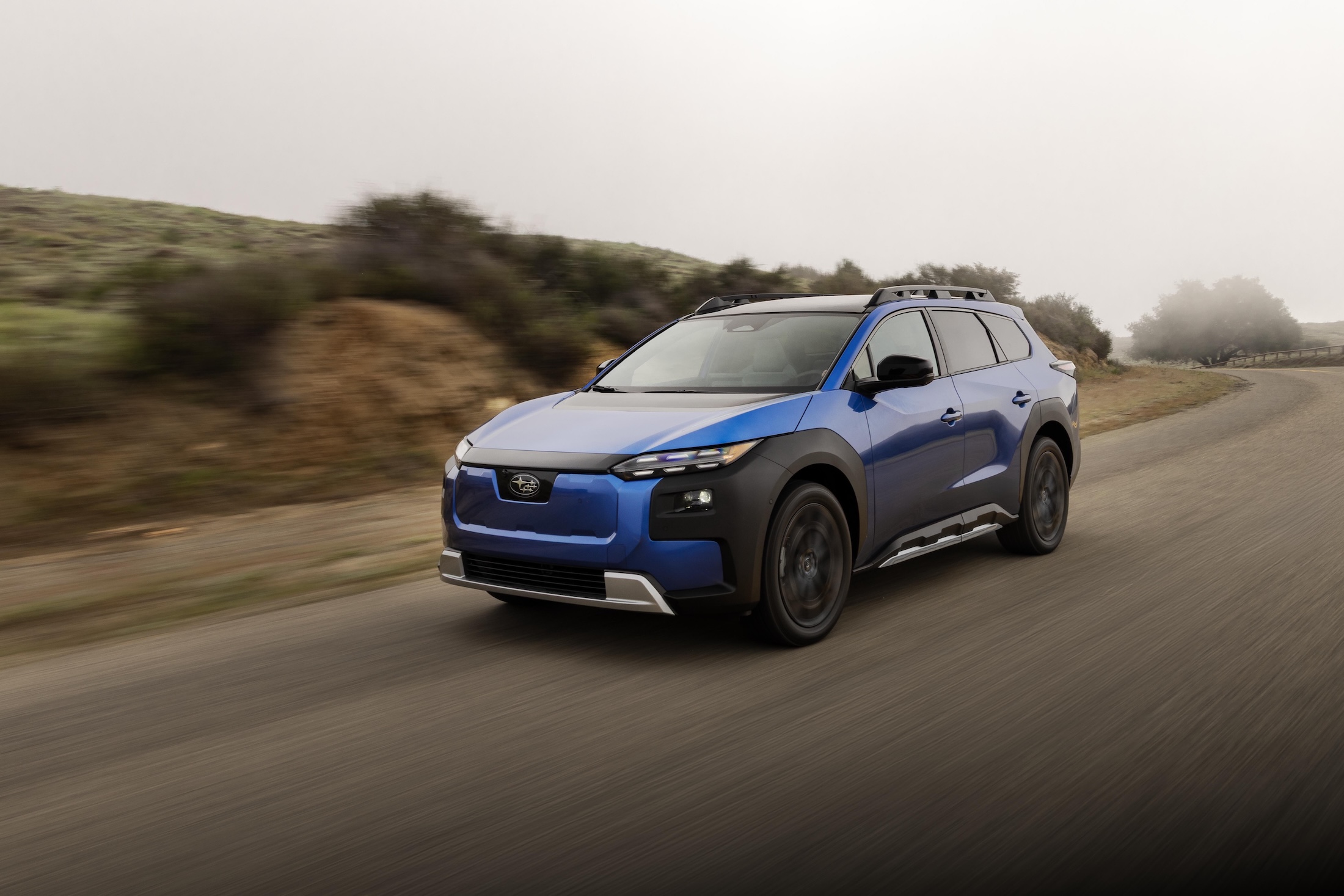
2026 Subaru Trailseeker Touring: Two heads are better than one?
Price: $48,400 as tested. Just $395 for the pretty blue paint. The panoramic roof is free for the Touring trim level.
What others are saying: “Highs: Way quick, roomy, relaxed ride. Lows: Driving range is mid-pack, bland road manners, base model lacks camera-based off-road assistance feature,” says Car and Driver.
What Subaru is saying: “Our most adventurous EV, the Trailseeker features 375 horsepower and 8.5 inches of ground clearance.”
Reality: Subaru (and Toyota) have put together a speedy, gasoline-free version of the Outback. What could be better?
What’s new: The new EV from Subaru is really the product of a joint venture between the maker of all-wheel-drive vehicles and another little Japanese automaker you might have also heard of, Toyota.
It’s one of four models the companies are producing as matched sets; the Trailseeker is a twin of the Toyota bZ Woodland. The front end looks quite like a Toyota while everything from the windshield on back resembles an Outback.
Competition: Despite reports of their demise, there are still a lot of EVs out there for sale. Competitors include Chevrolet Equinox EV, Ford Mustang Mach-E, Mini Countryman EV, Nissan Ariya, Tesla Model Y, Toyota BZ Woodland, and Volkswagen ID.4.
The Trailseeker has made a splash, though not quite a tidal wave. The model is 1.2% of EV sales for the third quarter, landing just outside the top 10, according to Cox Automotive. Tesla’s Model Y (37.2%) and Model 3 (15.1%) are tops in the segment, with the smaller Hyundai Ioniq 5 at 3.9% and three-row Kia EV9 at 2%.
Up to speed: The first thing you may notice about this outback clone is that it’s an absolute rocket. Mr. Driver’s Seat once thought the turbocharged versions of the Outback were fun, but let’s look at the numbers.
The 375 horsepower brought to you by the dual electric motors rockets the small SUV to 60 mph in 3.9 seconds, according to Car and Driver. That compares to the 6.2 seconds for the gasoline-powered Outback turbo.
There is a button to offer Power or Eco modes, but both of these seemed superfluous.
Shiftless: Twist the console knob counterclockwise for Reverse and clockwise for Drive; press a button for Park, and pull up the little parking brake lever right nearby.
On the road: The Trailseeker wears the crown of the Outback nicely, moving smoothly through curves and narrow roads without any surprises or wandering. It’s not quite fun but it’s nice enough.
Highway manners are also delightful, and bumps don’t upset the Trailseeker’s composure. I confess we did not go seeking any trails; I figured the vehicle would be doing that for me, as advertised, but alas I was left pavement-bound. Still, a vehicle that stays on course well shows promise for any off-roading you may attempt.
The interior of the 2026 Subaru Trailseeker is neither fish nor fowl, neither Subaru nor Toyota. The gauges plopped onto the steering column are a mark of the brands’ EVs.Subaru
Driver’s Seat: The leather upholstery courtesy of the Touring trim looked and felt quite nice. The seats kept occupants in place while offering nice comfort as well, plus heating and ventilation.
The gauges are the Toyo-baru standard for EVs, with a faraway gauge pod letting you know what’s going on much like the smaller Subaru Solterra and cousin Toyota bZ. It reads clearly. I’ve gotten over missing the more upright windshield of older Subarus and their close-up gauges.
Friends and stuff: The rear seat offers nice legroom, headroom, and foot room. The center seat sits up kinda high off the corner cushions, and occupants will have the console and floor hump to deal with. Corners are heated in back as well, so those kids get EVERYthing.
The rear seat felt surprisingly slippery to the touch. I realized the front seats do as well, but the contours hide it well. This may not be the right vehicle for squabbling children.
Cargo space is 74 cubic feet with the rear seat folded. Towing capacity is 3,500 pounds.
In and out: The Trailseeker sits at a nice height so entry and exit are easy for almost anyone.
Play some tunes: The 14-inch Subaru Multimedia System provides a clear picture of your map and other functions as well. Dialing in the sound settings could be a little fussy, with sliders and arrows in the screen.
Sound from the system was pretty good, about an A-.
Keeping warm and cool: The sales sheet advertises radiant leg heaters for the front row, but tests in humid August didn’t allow for sampling. These are likely a range-saving idea.
The HVAC blowers are pushed quite low by the large touchscreen, a problem that’s becoming more common among vehicles, but maybe the defrost setting will help out here.
The controls are inside the touchscreen but along the bottom, with inconvenient pixel-based arrows for the blower speed and icons for the blower location. Temperature dials are a little shallow and can cause Mr. Driver’s Seat-sized fingers to interfere with the multimedia system if you’re not careful.
Fuel economy: The listed range on the spec sheet was 274 miles, but the most I ever saw was 250 miles. It did seem to stretch the first few miles on most trips, but I don’t think it added up to 24 extra.
The Tesla-compatible NACS plug can recharge the vehicle from 10% to 80% in as fast as 28 minutes.
Where it’s built: Gunma, Japan
How it’s built: Consumer Reports hasn’t rated this Subaru yet. The Solterra gets a 3 out of 5.
In the end: As consumers tired of the volatility of oil prices, the Seat family is finally shopping for an EV. After a short test drive, the Lovely Mrs. Passenger Seat has zeroed in on this one for herself.
And to answer my question in the intro, what could be better? A little more range, and a little less screen time.
Vice President JD Vance has contacted a top Iranian political and military official to propose a renewal of comprehensive peace negotiations, according to a senior U.S. official and an Iranian official with knowledge of the communication.
Vance made the outreach in a letter sent last week via Qatari meditators and delivered Sunday to Gen. Mohsen Rezaei, the secretary of the Supreme National Security Council and former commander in chief of the Revolutionary Guard, the officials said. In the letter, Vance suggested that American and Iranian officials meet soon, adding that he would lead the talks for the United States.
The proposal was received well by Iran’s leaders, many of whom view Vance as an influential figure who could help bring an end to hostilities, the Iranian official said. Rezaei was expected to formally reply by Thursday.
President Donald Trump read the vice president’s letter and approved it before it was sent to Tehran, the U.S. official said. The White House referred comment to Vance’s office. A spokesperson for Vance declined to comment.
The outreach by the vice president comes at a tense moment. Trump has been weighing a possible renewal of active strikes against Iran, potentially after next Tuesday’s midterm elections. The U.S. military has drawn up an expanded list of targets to strike, including energy infrastructure and other sites vital to the Iranian economy.
Iran has warned that it would retaliate fiercely, targeting infrastructure and underwater cables in the region. And U.S. officials said last week that Iran was in advanced stages of planning attacks against Americans in the Middle East and other regions.
Vance’s missive made clear that a resolution to the nuclear question was necessary and Iran’s nuclear program must be on the negotiating table from the start, both officials said.
Vance stressed in the letter the necessity of Iran and the United States’ resolving the conflict through direct negotiations, the officials said.
The Wall Street Journal reported earlier on Vance’s outreach to Iran.
The letter did not specify a time or place for talks to be held, but both officials said direct negotiations could potentially start as early as next week in Qatar or Turkey.
If Iran accepts Vance’s offer, the negotiations would technically begin without a precondition, Iranian and U.S. officials said.
“While our Brave Armed Forces are fully prepared to defend the Homeland, Iran continues to give diplomacy a chance to succeed,” Iran’s foreign minister, Abbas Araghchi, said Wednesday in a post on social media. “We remain in close and ongoing contact with intermediaries to review ideas that can ensure implementation of our 7-Day Plan in even less than a week.”
The letter marks Vance’s latest effort to try to end a conflict that has upended the global economy, divided the Republican Party and may contribute to Democratic victories next week. A recent poll from The New York Times and Siena University found that 65% of voters disapprove of Trump’s handling of the war in Iran.
The American official said Vance wrote to Rezaei because it became clear to U.S. officials that they needed to directly speak with someone in Iran’s leadership who had influence over the hard-liner faction, who are opposed to a deal, and the Revolutionary Guard.
Trump tasked Vance, who privately expressed opposition to going to war with Iran, with leading negotiations this year. He traveled to Pakistan in April and met with Iranian leaders in a marathon session that ended without any resolution.
In recent weeks, there has been a frenzy of diplomatic efforts between senior officials from Qatar, Pakistan, Turkey and Saudi Arabia who traveled to Iran to discuss de-escalation. Two Iranian officials said these meetings were centered around mediators voicing concerns about the region falling into mayhem and destruction if another round of fighting resumes. Regional leaders have encouraged Iran to be flexible and give concessions on its nuclear program to avoid a war.
Rezaei was appointed to his role in August by Iran’s new supreme leader, Ayatollah Mojtaba Khamenei. His office has said that he met with the supreme leader recently and was instructed to get the country out of this current limbo status of “no war, no peace,” by following a seven-day plan that Iran has proposed to Washington, according to Iran’s state media.
Iran’s seven-day plan, which the United States has rejected, calls for a series of steps Washington must take, including lifting a naval blockade of the Strait of Hormuz and releasing some of Iran’s frozen assets. Iranian officials said Iran would then open the strait and immediately begin negotiations.
For a consecutive year, HBCU football is coming to South Philadelphia.
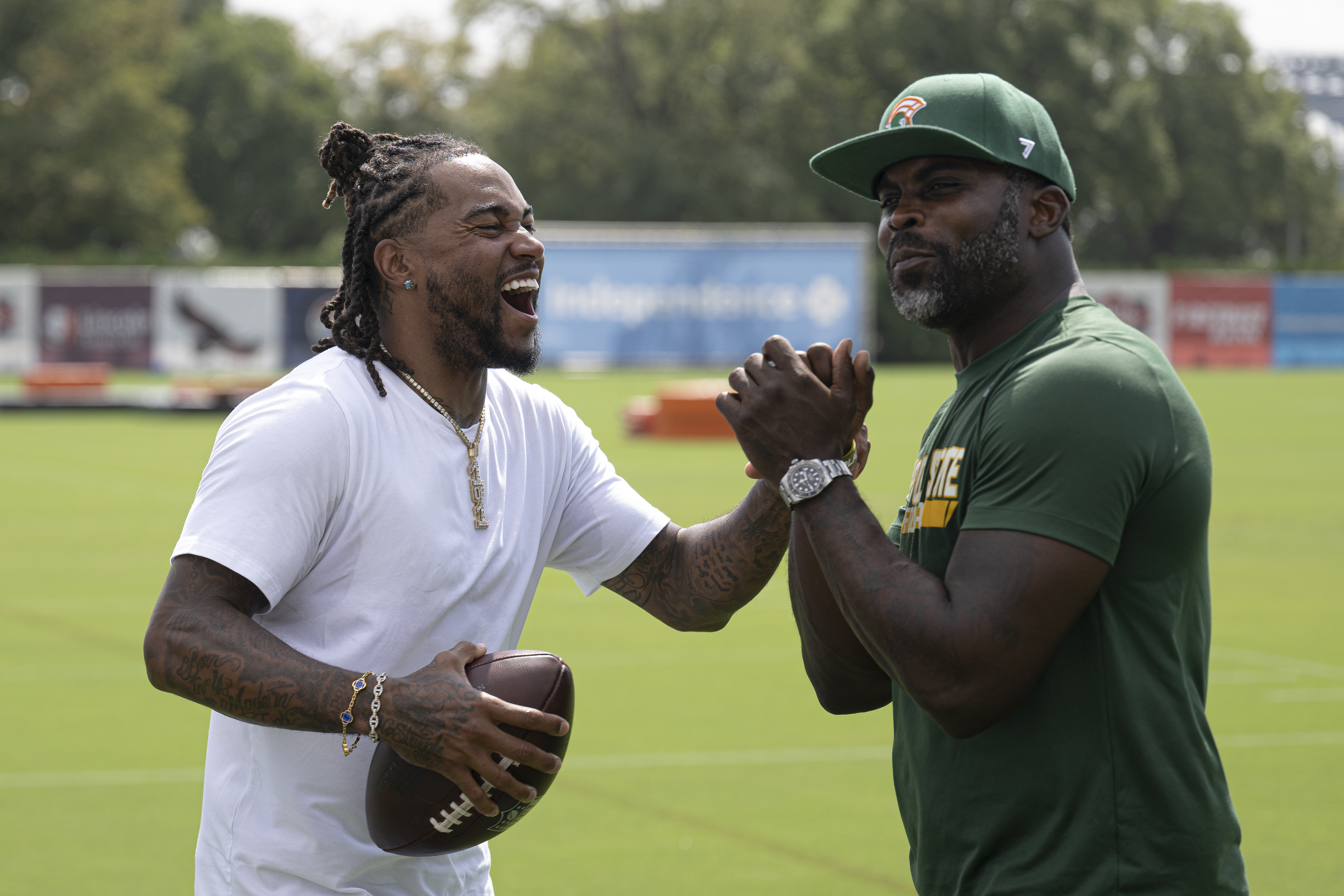
Last year, a crowd of 47,266 packed Lincoln Financial Field to watch DeSean Jackson’s Delaware State defeat Michael Vick’s Norfolk State, 27-20, in the HBCU Battle of the Legends game. Those historically Black college and university football programs are slated to match up again on Saturday (3 p.m., ESPN+).
On Friday, Division II Lincoln University will play Virginia Union at Lincoln Financial Field (7 p.m., ESPN+). Both games are part of this year’s One Philly HBCU Week, hosted by the City of Philadelphia and the Eagles. The events kicked off on Tuesday with a Battle of the Bands competition at West Philadelphia High School. Before Friday’s game, there will be a college and job fair, as well as a college and alumni step show. Saturday will include another Battle of the Bands showcase.
To get ready for this weekend, here are the players to know on each team:
Lincoln’s offense has been powered by one player: Tyson. Through eight games, the senior wide receiver has caught 65 passes for 899 yards and six touchdowns. Tyson also leads the school’s conference, the Central Intercollegiate Athletic Association, in total receiving yards.
Tyson briefly entered the transfer portal in the offseason before ultimately deciding to return to the Lions.
Thank you Lincoln for all the memories and the opportunity 🧡, with that being said Im entering the transfer portal with 2 years of eligibility and a redshirt year. pic.twitter.com/qQoKThDBCu
Thompson, a senior linebacker, has been Lincoln’s anchor on defense. The Chester native has compiled a team-high 67 tackles — good for second in the CIAA. Thompson attended STEM Academy at Showalter and played football at Chester High.
Virginia Union (7-1)
RJ Rosales
Virginia Union boasts the second-best offense in the CIAA, and it is run by fifth-year quarterback Rosales. This season, Rosales has thrown for 1,225 yards and 12 touchdowns. He also has found the end zone twice on the ground. This is Rosales’ second season starting for the Panthers.
South Jersey’s Aiken is a name to watch on Virginia Union’s conference-best defense. The redshirt senior linebacker has accounted for a conference-high 8.5 sacks and 56 tackles. Aiken, a Paulsboro native, played high school football at Kingsway Regional, Paulsboro, and St. Thomas More. He transferred to Virginia Union following his freshman season at Pace.
Norfolk State runs the ball a lot, accounting for the second-highest rushing total in the Mid-Eastern Athletic Conference. Redshirt senior running back Daniels has led the charge, with 686 rushing yards and five total touchdowns. Daniels is averaging 6 yards per rush.
Josiah Davis
Davis originally committed to Florida but saw little game action during his first two seasons with the Gators. The safety, who was granted two redshirt seasons, is finally making plays at Norfolk State. He leads the Spartans in interceptions (three) and has logged 19 tackles. Norfolk State’s defense leads the MEAC in interceptions.
Delaware State (4-4)
Jaylin Terzado
Redshirt senior wideout Terzado has been the most consistent player on the Hornets’ offense. In seven games, Terzado has caught 23 passes for 375 yards and two touchdowns. Jackson has employed a multi-quarterback system this season. Last week, three quarterbacks went under center for the Hornets in a 31-12 loss to North Carolina Central.
Senior outside linebacker Nesmith has been a game-wrecker for the Hornets. The Utah State transfer leads the team in sacks with five and has recorded 32 tackles. Fittingly, Nesmith’s bio on X includes the statement: “I Hate Quarterbacks.”
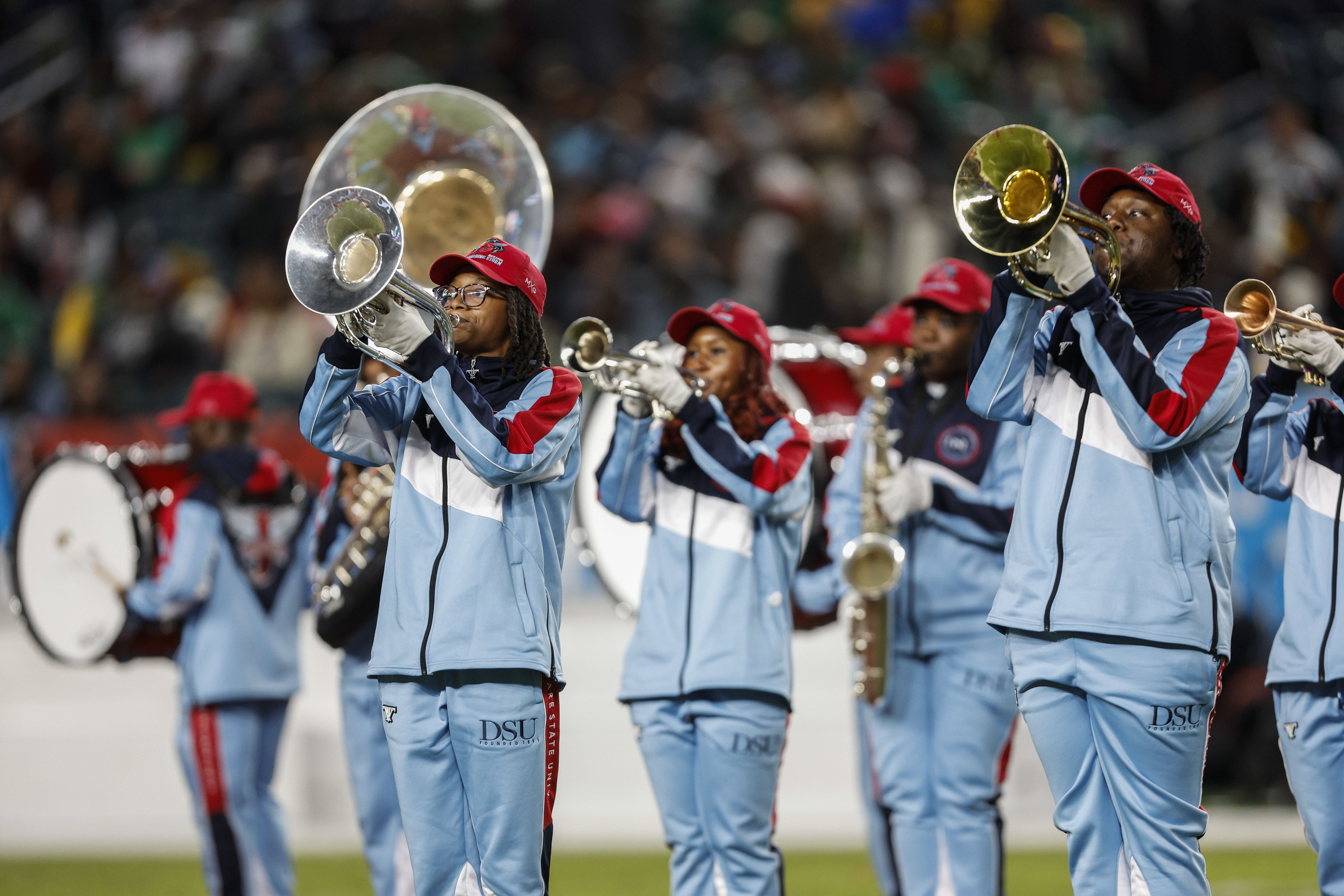
Delaware State band plays during halftime at Lincoln Financial Field Oct. 30, 2025.Steven M. Falk / For The Inquirer
When the Phillies included three catchers on their 2026 wild-card roster, it was because they had no other options.
A slew of injuries impacting their infield and outfield depth at triple A left them with little other choice than to include both Garrett Stubbs and Rafael Marchán on the roster for the three games against the Braves. Even though both were hitting well below the Mendoza line and were not going to see the field against the Braves barring a catastrophe.
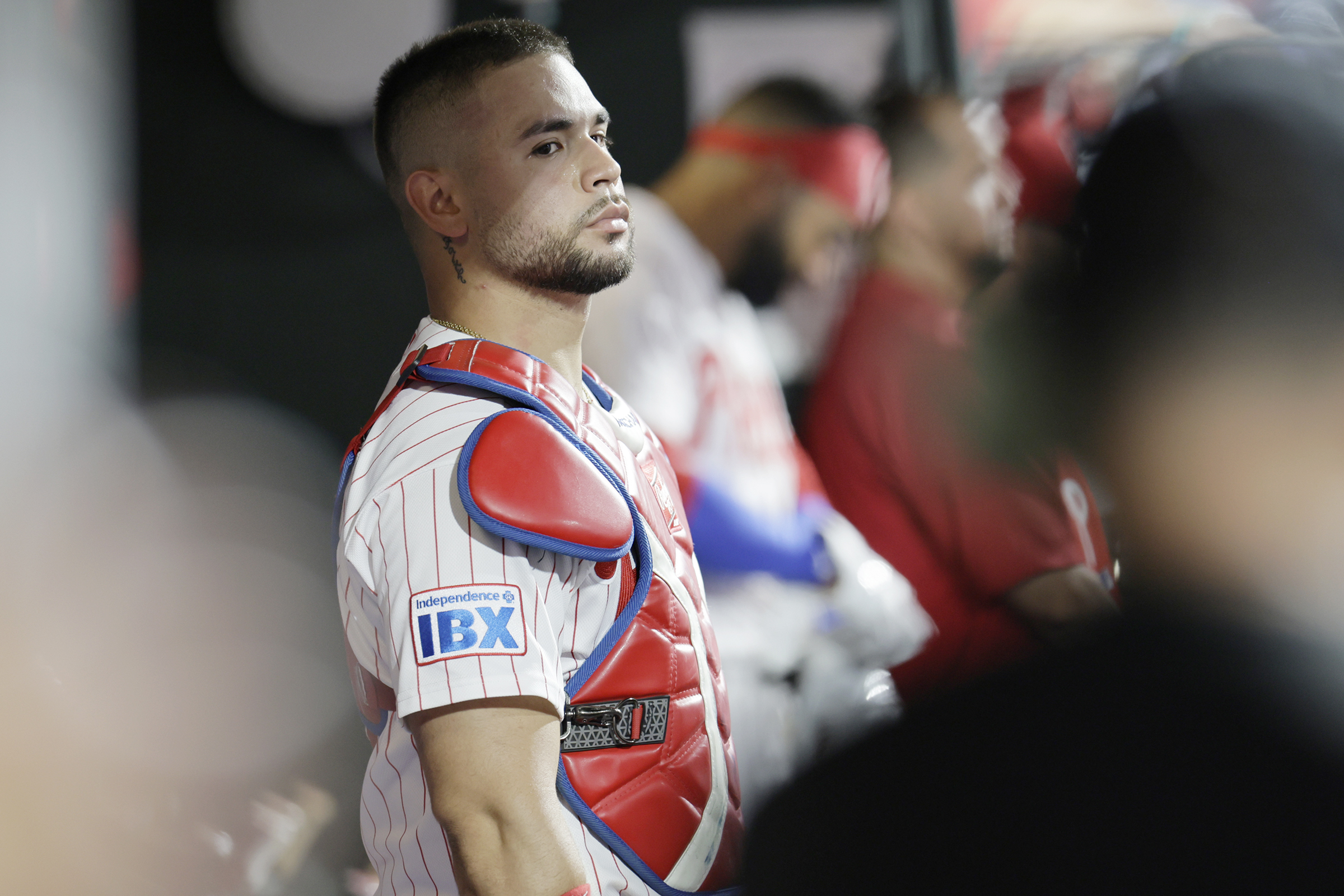
But the lack of offensive production at catcher this year was not constrained to the Phillies’ backups. Starter J.T. Realmuto, who is under contract through 2028, had the worst offensive season of his career.
The Phillies need more production from the catching position, which will require internal improvements and external additions.
Here’s a breakdown of the Phillies’ outlook at catcher in 2027:
J.T. Realmuto slashed .205/.283/.331 in 123 games this season. Yong Kim / Staff Photographer
Realmuto’s workload
One of the first things Phillies president of baseball operations Dave Dombrowski did this offseason was have a conversation with Realmuto.
“My goal is to try to reduce the number of games you catch,” Dombrowski told him.
The Phillies have thrown around the idea of cutting back on Realmuto’s workload for the past several winters. But it hasn’t translated to real changes. The only other catcher to log more innings than Realmuto’s 1,058⅔ behind the plate this year was 28-year-old William Contreras (1,085⅔).
But this time, the Phillies are regarding this as a priority as Realmuto enters his age-36 season. Dombrowski said Realmuto acknowledged that he had offensive improvements to make and was receptive to the plan.
Realmuto, who signed a three-year, $45 million contract last winter, slashed .205/.283/.331 in 123 games this season.
“I don’t feel any older. I feel like this year I just mechanically wasn’t right,” he said after the Phillies’ playoff exit. “But as far as my body feels, I feel as healthy and as good as I ever have.”
Most of Realmuto’s value comes from how he handles the Phillies’ pitching staff. The rotation, which is the cornerstone of the team, consistently speaks highly of his impact on them and his play-calling. Defensively, he had a 24.4% caught-stealing rate behind the plate in 2026, which was above the league average of 23.3%.
Video: Phillies Extra: How much change is needed for the Phillies entering 2027?
The new automated ball-strike system added another responsibility to his plate this season. Realmuto was effective in his challenges with an 81% success rate, but he did not initiate them as frequently as other catchers.
Realmuto had just 86 challenges behind the plate, well below the 141.3 expected challenges for a catcher receiving the same pitches, according to StatCast data.
During their conversation earlier this month, Realmuto told Dombrowski that one of his goals is to improve offensively to the point where he can also see time at first base, if needed.
But to allow that to be possible, the Phillies need a reliable backup.
Phillies catcher Rafael Marchán was solid defensively, but hit .099 with a .302 OPS in 95 plate appearances. Elizabeth Robertson / Staff Photographer
The 2026 backups
Stubbs learned Thursday that he will be designated for assignment, and it’s not a guarantee that Marchán will be back on the Phillies in 2027. Marchán is arbitration eligible this offseason, but could be non-tendered. If that is the case, he could also potentially return on a minor league deal.
Stubbs and Marchán were ineffective offensively in limited at-bats. Stubbs, 33, hit .153 with a .368 OPS in 65 plate appearances, while Marchán, 27, hit .099 with a .302 OPS in 95 plate appearances.
“Both those guys did fine jobs, as far as the receiving defensive perspective of it. Have no problem,” Dombrowski said. “Marchán grades out as being one of the best in baseball. We didn’t get enough offensive contribution from that spot, and that’s something I need to look at.”
Both missed time with injuries, but the Phillies continued to carry three catchers after rosters expanded on Sept. 1 through the postseason. Still, Marchán only had three plate appearances total in September.
In the second half, the Phillies were more reliant on Stubbs, who occasionally served as a pinch runner late in games and has the defensive flexibility to play third base or outfield in a pinch. He also worked well with Aaron Nola, who had a 2.82 ERA when Stubbs was behind the plate compared to 4.67 overall.
Stubbs and Marchán are solid defensive catchers. Stubbs caught 8 of 22 total runners attempting to steal on him (36.4%), while Marchán caught 8 of 19 (42.1%).
Phillies backup catcher Garrett Stubbs, 33, will be designated for assignment.Jose F. Moreno / Staff Photographer
Stubbs also has the best pop time in baseball at 1.84 seconds, a stat that measures the time elapsed between the catcher receiving the ball and throwing it to the target in the middle of the base. Realmuto is close behind at 1.85 seconds, while Marchán’s 1.88 seconds is still in the 86th percentile of catchers.
But to be able to cut back on Realmuto’s workload, the Phillies must have a backup who is reliable offensively, too.
“For us, we do emphasize defense more in our catching position than we do offense,” Dombrowski said. “A lot of times, if you’re talking about having somebody who can hit and be a good defensive person, they’re probably an everyday catcher somewhere, because they’re not that easy to find.”
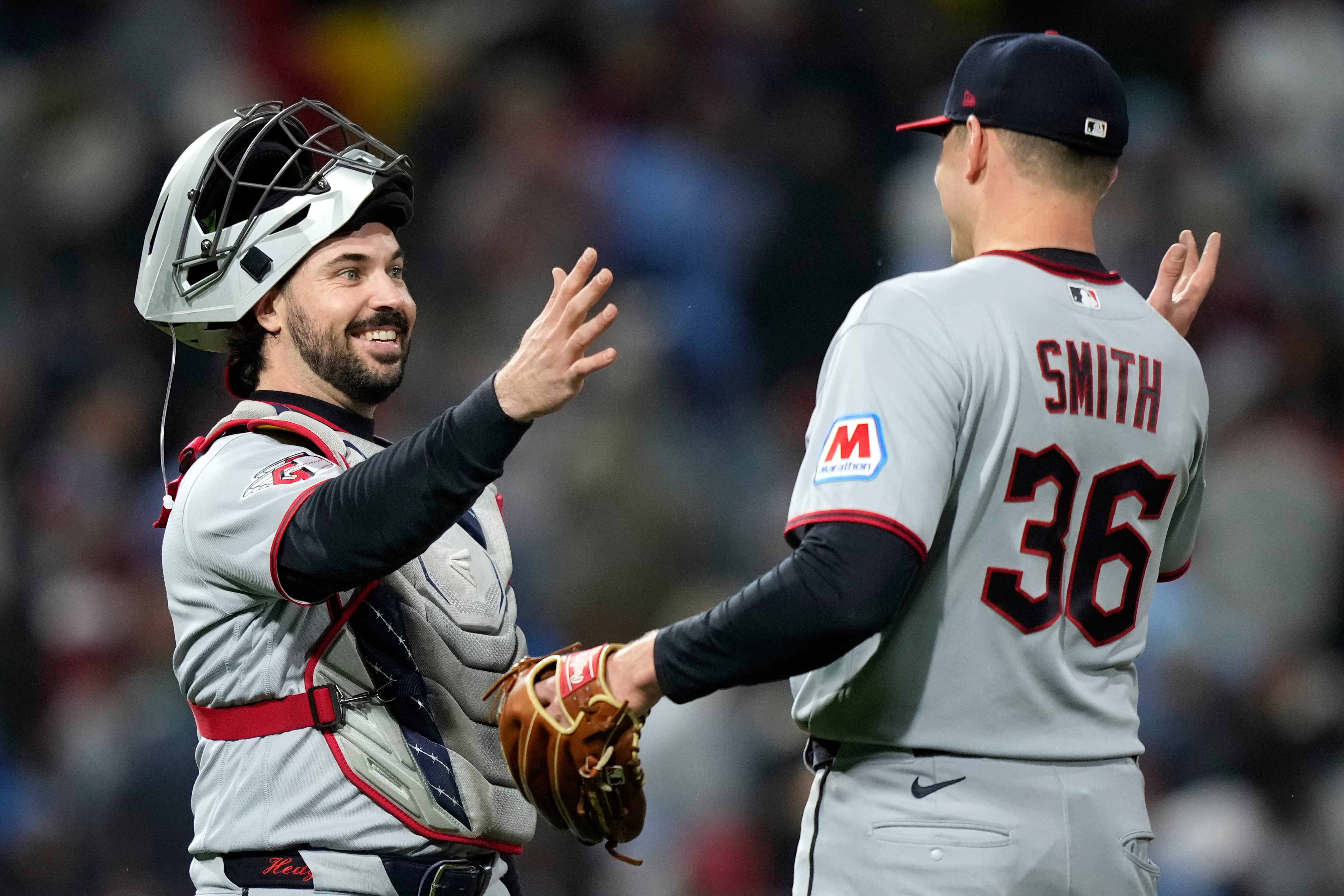
Veteran catcher Austin Hedges (left) could be an option for the Phillies as a backup to J.T. Realmuto.Matt Slocum
Free agent and trade options
Ryan Jeffers is the best available catcher on a thin free-agent market this winter, but the 29-year-old Twins backstop would likely be looking for a starting job. He had a .256 average and .814 OPS in 92 games this season, missing some time with a fractured left hamate bone.
Austin Hedges might be more reasonable for the Phillies’ purposes. He hit .247 with a .702 OPS for the Guardians in 78 games in 2026, serving as Patrick Bailey’s backup in the second half. The right-handed hitting veteran has historically been considered a solid defensive catcher, but was inconsistent in 2026. He caught just 6.7% of base stealers this season, after throwing out 33.3% in 2025.
But signing Hedges, 34, might also leave the Phillies with a similar shopping list for the final year of Realmuto’s contract in 2028.
To bring in youth, the Phillies might need to search the trade market. A team like the Cardinals, who have a wealth of catching depth, could be a fit. St. Louis has a tandem of Pedro Pagés and Iván Herrera (who also appears at designated hitter), and 22-year-old Leo Bernal is in contention to make the team in 2027.
The organization’s top overall prospect, Rainiel Rodriguez, also happens to be a catcher and hit .328 at double A this season.
With so much depth, the Cardinals might be willing to deal a catcher like 25-year-old Jimmy Crooks. The left-handed hitter batted .300 with a 1.006 OPS in triple A this season, but struggled in 52 major league games. He batted .179 and had a .591 OPS with the big-league club.
If the Phillies could meet the Cardinals’ price, a young player like Crooks could benefit from having more regular major league playing time, and from learning from a veteran like Realmuto.
Phillies catching prospect Paul McIntosh makes solid contact, but had challenges defensively with stopping the running game.Jose F. Moreno / Staff Photographer
Minor league depth
The Phillies’ internal options are limited. Paul McIntosh arrived to the Phillies organization as a secondary piece in their 2025 trade with the Marlins for Jesús Luzardo, and since then has been a depth piece.
McIntosh, 28, has yet to make his major league debut, but has been a non-roster invitee to the last two spring trainings. In triple A in 2026, the righty hit .244 with a .753 OPS.
He makes solid contact, with a 43.5% hard-hit rate. But McIntosh had challenges defensively with stopping the running game, and had just a 15% caught-stealing rate.
Caleb Ricketts split time with McIntosh at triple A until he was reassigned to double-A Reading in June after some early struggles at the plate.
Ricketts, 26, saw his numbers improve with the Fightin’ Phils. The left-handed hitter batted .252 with 11 home runs in 54 double-A games. He also contributed to Reading’s Eastern League championship victory, hitting a go-ahead grand slam in the clinching game.
Kehden Hettiger is another double-A catcher, but the 22-year-old switch-hitter needs some more time to develop. He hit just .191 with a .665 OPS in 61 games for Reading, but is seeing better results in his current stint in the Arizona Fall League. With the Surprise Suguanos, Hettiger is batting .231 with a .710 OPS.
Hettiger has solid arm strength and caught 24% of potential base stealers in 2026.
Video: Phillies Extra: Have the Phillies done enough to add talent to their farm system?
Also on the farm
Catchers are underrepresented in the Phillies’ top 30 prospects, and their highest-ranked catching prospect, Alirio Ferrebus (No. 9), also sees time at first base.
Ferrebus has difficulty staying healthy, and various injuries have prevented him from playing more than 77 games in a season across his four-year professional career. Ferrebus, 21, finished 2026 on the 60-day injured list with an undisclosed injury, which he suffered shortly after a promotion to high-A Jersey Shore.
When he is healthy, though, Ferrebus is a bat-first catching prospect, who had a .310 batting average and .856 OPS across single A and high A in 2026. In 328 total plate appearances this year, the right-handed hitter had just a 13% strikeout rate.
Anderson Araujo is ranked No. 29 in the Phillies system by MLBPipeline, the only other catcher to make the list. The 18-year-old right-handed hitter also had an abbreviated season due to injury, playing only 34 games for the rookie-level Florida Complex League Phillies.
Only four of those games were at catcher, with the rest of Araujo’s appearances coming at designated hitter. Still, he led the team with a .280 batting average, though he didn’t exhibit much power, with no home runs and five doubles.
Another catching prospect in the system is Will Vierling, who the Phillies selected out of Murray State in the 11th round of the 2025 draft. A left-handed hitter, Vierling is a cousin of former Phillie Matt Vierling, and in his first full professional season hit .248 with a .741 OPS.
Vierling, 23, played 72 games for Clearwater in 2026, making 54 appearances behind the plate and also appearing at first base and designated hitter.