Tag: topic-link-auto

  • Lincoln embraces homecoming as HBCU game brings the school back to Philly after 16 years

    Lincoln embraces homecoming as HBCU game brings the school back to Philly after 16 years

    Charles Thompson and his fraternal twin brother, Noble, lived less than 20 minutes away from Lincoln Financial Field growing up in Chester. Charles is an hour and 22 minutes older than Noble, and they played every sport together growing up.

    “Every day was about competition,” Noble Thompson said.

    They once held a flag inside the stadium before an Eagles game with their youth football program nine years ago. For the first time in their football lives, the Lincoln University senior football captains will be playing at the Linc when the Division II football program faces Virginia Union on Friday (7 p.m., ESPN+). Lincoln, based in Oxford Township, Chester County, is the nation’s oldest degree-granting historically Black college. The football team will return to Philadelphia for the first time in 16 years.

    “It’s a huge honor,” said Noble Thompson, a utility player on Lincoln’s offense who plays tight end, fullback, and slot receiver. “[We] got a lot of [our] family members coming up. … Just to have [our] family out here to come see me play [our] second to last game, just a [great] honor.”

    Added Charles Thompson, who plays linebacker: “Playing at the Linc is like a dream come true. … [Our] family get to see me play in the NFL stadium. It’s awesome.”

    That sentiment was shared similarly throughout the Lincoln football team, with a large portion of the roster hailing from Philadelphia and its surrounding areas. For many, the game will represent a homecoming and an opportunity to play in front of family, friends, former teammates, and Lincoln graduates who last saw their university play at Northeast High School in 2010 as part of the Lincoln-Cheyney HBCU football rivalry.
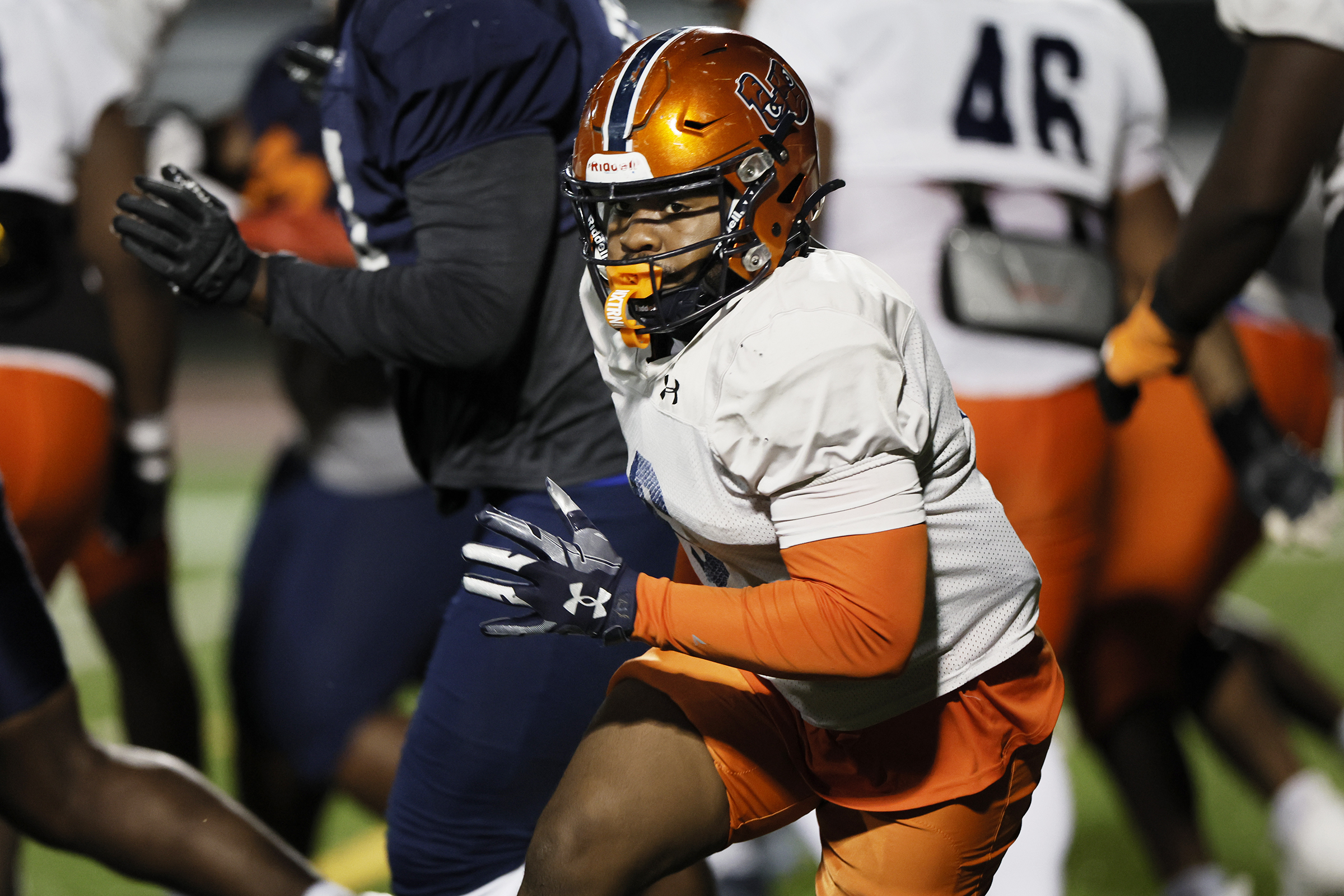
    Noble Thompson, who grew up in Chester, plays multiple positions on offense for Lincoln University.Elizabeth Robertson / Staff Photographer

    That also extends to its coaches. Khalil Steward, who played his high school ball at Imhotep, went on to play at Delaware Valley University, then started his coaching career at Martin Luther King Jr. High School in Germantown under fellow Lincoln assistant Malik Jones, who coaches receivers on Frank Turner’s staff. Steward’s mom went to Virginia State, whom Lincoln played earlier this season, and his family had long wanted him to play and attend an HBCU.

    Now, he’s getting an opportunity to coach on the sideline of the Linc Friday night as “a diehard Eagles fan.”

    “It’s going to feel like a great moment. A lot of us always dreamed about this,” said Steward, who also remembers attending the Lincoln-Cheyney games in Philadelphia growing up. “It’s a special moment, especially for the guys to get that experience, be where the professional guys be. … We get to be home and play at the Linc and what’s more special than that? We got a lot of South Jersey kids, some Philly kids that are Eagles fans, so they all [are] hype and excited about it as well.”

    Take two for Davis

    Mikal Davis Jr. had no idea when he decided to transfer to Lincoln last offseason that he would get another chance to play at the Linc.

    The quarterback, who began his college career at Delaware State in 2024, was on the Hornets’ team last year when they faced Norfolk State in the HBCU Battle of the Legends game between old Eagles teammates DeSean Jackson and Michael Vick. Davis was buried on Delaware State’s depth chart, but the junior quarterback said the experience last year “was surreal.”

    “Just being able to have that experience that I always dreamed about as a kid. Getting drafted, going to the NFL, and [that game] just happened to be in my hometown with the Philadelphia Eagles,” said Davis, an Imhotep graduate. “I had a Hall of Famer as my coach [DeSean Jackson]. He [had] us in the Linc … I was just taking it all in.”

    This time around, though, will be different. Davis began the season as the backup quarterback to Jayden Triplett, the team’s starter. Triplett suffered an injury during Lincoln’s loss to Elizabeth City State on Oct. 10, which forced Davis into action.

    Quarterback Mikal Davis Jr. during a Lincoln University football practice on Wednesday.Elizabeth Robertson / Staff Photographer

    The left-handed quarterback, who took the majority of the starting reps during Wednesday’s practice as Triplett works his way back into the lineup, is ready to seize the moment, should he have to take the field Friday night.

    “Having an opportunity to play in [the Linc], so [my mentality] is like, ‘Why not? Why not win?’” Davis said. “I feel like it’s just different knowing when you’re going to get in, or having that opportunity to play at the Linc. So, with that being said, you just have to be ready, ready, ready, have that mindset that it’s just another game, but it’s still a big atmosphere, a big stage. A lot of eyes are going to be there.”

    Friday’s game will be the second opportunity for Lincoln to play at an NFL stadium. Earlier this season, the program traveled to Chicago to play at Soldier Field in the Chicago Football Classic against Mississippi Valley State, a Football Championship Subdivision HBCU school. Turner and his staff are taking the lessons learned from that 35-21 loss into Friday’s game.

    Lincoln planned to have a walk-through at the Linc on Thursday, then stay in Philadelphia overnight leading into Friday night’s game.

    Linebacker Charles Thompson during a Lincoln University football practice on Wednesday.Elizabeth Robertson / Staff Photographer

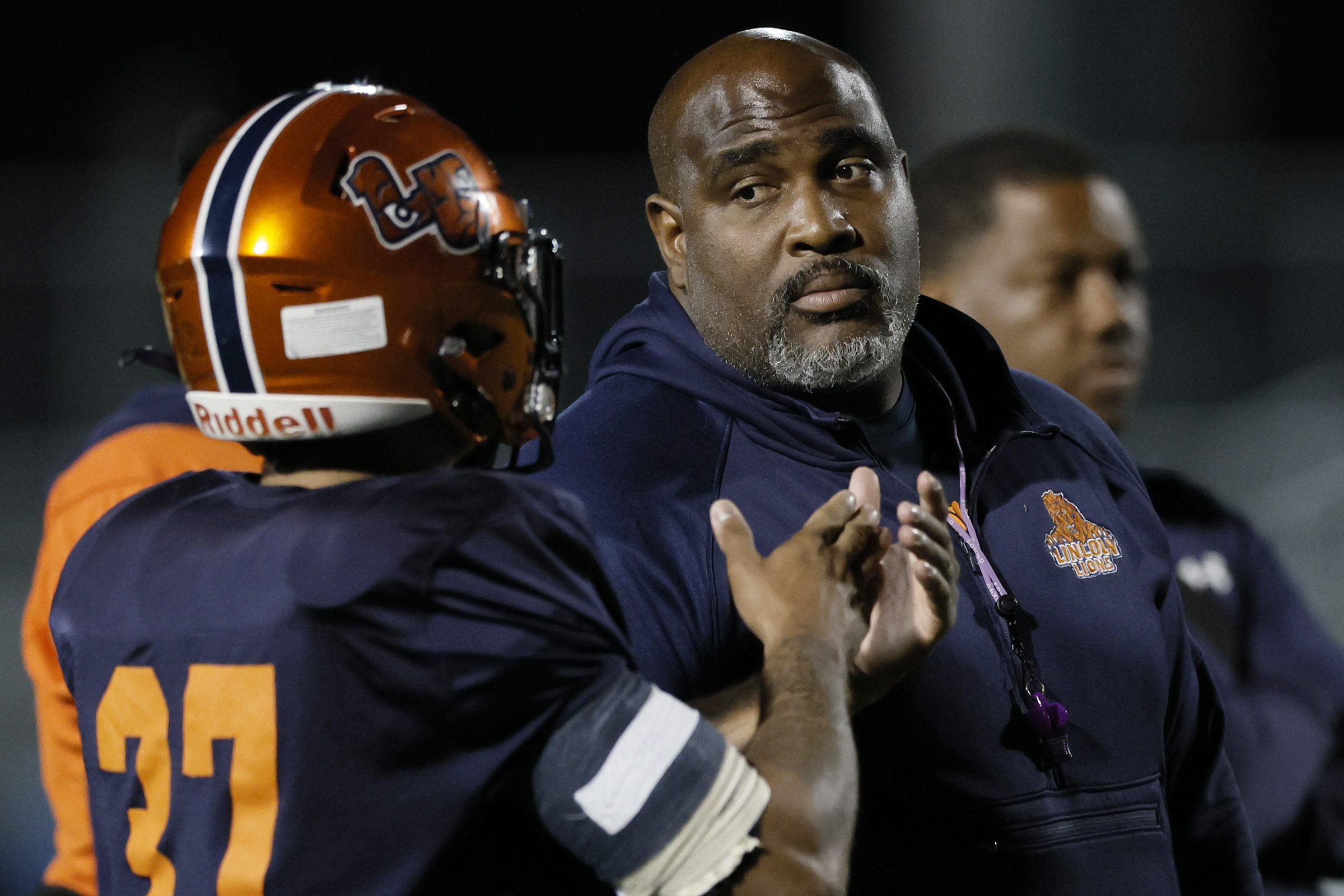
    Turner, in his fourth season as the program’s head coach, has been trying to keep his team focused on the game with the buzz palpable for many players’ families planning to attend. He is looking forward to the “great exposure” the program will gain from the opportunity.

    “It’s one of those things where the stage shouldn’t be too big for us. It’s just more so keeping these guys focused,” Turner said. “The distractions is a little bit more on this end now, so it’s just keeping them grounded.”
  • The Sixers’ season started a week ago. Here’s what we’ve learned so far.

    The Sixers’ season started a week ago. Here’s what we’ve learned so far.

    We’re still early in the NBA season, but the 76ers’ season has started to take form over the past month, starting with media day in late September. We’ve now watched several games and gotten to watch the team’s big five meld together in real time. We’ve also gotten to watch the team without a few of their stars — namely LeBron James and Joel Embiid — which will be a common occurrence throughout their 82-game slate.

    That said, The Inquirer decided to ask beat writers Chris Hine and Gina Mizell about their early impressions of this team, keying in on LeBron James, Joel Embiid, and a few other core issues that will need to be solved during the Sixers’ quest for a title.

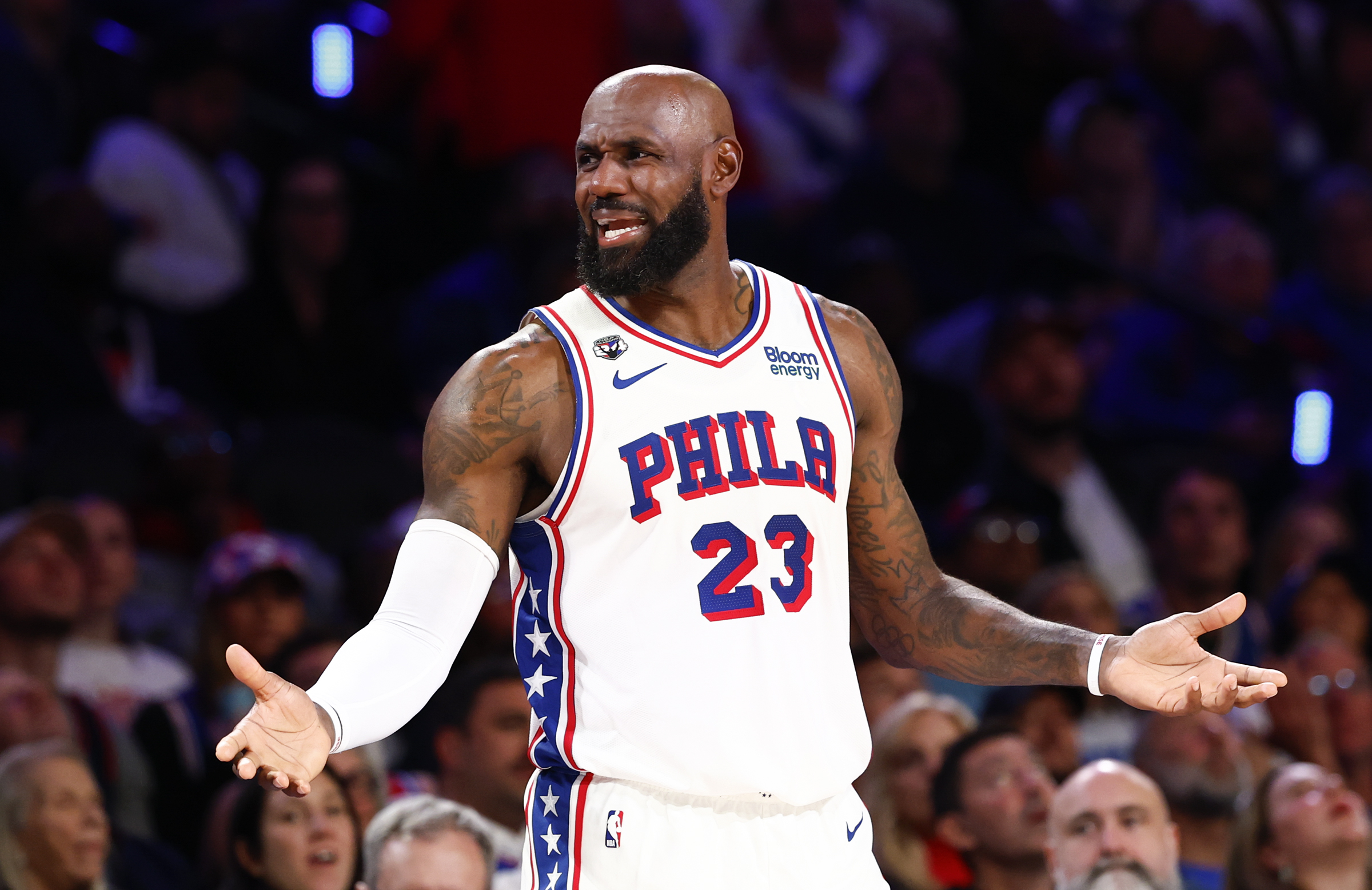
    Question: LeBron has officially been in Philly for a month. What’s one surprising thing you’ve learned about the Hall of Famer since his arrival at media day?

    Chris Hine: The willingness to adapt and set up the talent around him. He clearly recognizes what the Sixers have when it comes to their ability to play in transition, and he’s willing to push and condition his body at age 41 to play an up-tempo style of basketball.

    He’s often the one making the hit-ahead passes, looking for ways to ignite a fast-break opportunity when one might not be there. At 39, I’m tired when I have to play more than a few softball games in one day. I can’t imagine running and sprinting miles in an NBA game. But it’s what this team needs, and he’s willing to do it.

    Gina Mizell: I don’t know if this is surprising, per se, but it is impressive watching his playmaking in person more than a couple times per season. That’s on kick-ahead passes and in halfcourt offense. We also have gotten glimpses of his meticulous pregame routine to maintain this level of production at age 41, such as his stretch routine in the locker room period that is open to the media.

    And from our perspective, I respect the way he handles himself and explains the game even in chaotic media scrums. You can tell he’s been dealing with the global celebrity limelight for a quarter century.

    Q: Tyrese Maxey recently won Eastern Conference player of the week and has served as the Sixers’ scoring linchpin. Do you expect him to stay in that role? And is it best for the Sixers?

    Hine: It is best for the Sixers, but I don’t know if I expect him to always be in that role, given that someone else may be cooking, as the kids say, on any night. Maxey getting catch-and-shoot three-point looks, along with getting him going in transition, are the two main ways he can maximize his efficiency.

    If the Sixers are operating fluidly on offense, and they’re getting out on the break, then Maxey is going to benefit in the stat column. If the offense bogs down into isolation-heavy looks, then it’s anybody’s guess who is best for that role, given the talent in the rest of the starting lineup.

    Mizell: Yes to both of those questions, at least until it’s proven that the Sixers’ offense consistently functions better with a different scoring pecking order. Maxey does not seem to be forcing things — or, at least, does not appear to be working as hard to score as he needed to for portions of the last three seasons while Embiid and/or Paul George were injured.

    He cares most this season about being efficient, which should include more catch-and-shoot looks, more opportunities to come off screens and with speed and get immediately downhill, and more transition buckets. Embiid said recently that Maxey should challenge for a 50/40/90 shooting-percentage season. He does not need to average more than 28 points again to be the Sixers’ top scorer — and potentially an MVP candidate. There will be a handful of nights when Embiid, Jaylen Brown, or even James or VJ Edgecombe goes off for 35 points.

    Q: The Sixers are playing their best with Joel Embiid on the court. Is this a good or bad sign for the Sixers?

    Hine: It is good, because the ceiling of this team depends on Joel Embiid being healthy and playing good basketball. It’d be alarming if Embiid was healthy and the Sixers weren’t playing their best basketball with him out there.

    Of course, the Sixers need to find a solution to the backup center rotation behind him, and they should get a better picture of what that looks like when they get some injured players back. But ultimately, if the Sixers want to win a title, Embiid looking like he does now is essential.

    Mizell: Mostly good, if he stays healthy. Even with the small sample size, this is the best Embiid has looked on both ends of the court since Jonathan Kuminga fell on his knee and began his yearslong health issues. Though viewed as a ball-dominant (and highly skilled) big man, Embiid reiterated after amassing a triple-double in Saturday’s win over the Bucks that he prefers to get others involved with side-to-side ball movement.

    With all the talent now surrounding him, this is his chance to prove it. And while the backup center conundrum is a tad overblown, given how many other frontcourt players were out for Sunday against Detroit, it has been regarded as the Sixers’ biggest positional weakness since the summer. When the trade market opens up more after Dec. 15, that could be an upgrade area.

    Q: This Sixers have shown flashes on defense and in transition. In what area do you think they’ve shown the most potential?

    Hine: It’s all tied together, but I think this team can be a good to very good defensive team when it is locked in on that end. Jaylen Brown and VJ Edgecombe can be point-of-attack weapons. Tyrese Maxey continues to get better. Perhaps the emphasis on transition, and the way it leads to easy points with this kind of personnel, will make it easier to focus defensively since good defense leads to good offense. That’s especially true early in the season as they are figuring things out in the halfcourt.

    Mizell: Their really terrific stretches of defense in the second halves against the New York Knicks and Cleveland Cavaliers have been their most impressive basketball in the early season. But the transition game should be a weapon they can consistently utilize as they figure out their halfcourt offensive flow. James, Maxey, Brown, and Edgecombe are all among the league’s best fast-break players.

    Q: The Sixers added a lot of new faces over the summer. Who do you think has made the best first impression?

    Hine: Assuming we’re not just talking about the starters, I’ll also say Kentavious Caldwell-Pope. His two-way ability can be crucial for them, especially as they navigate nights during the season when James or Embiid may be out. He’s always been a sound defender, and he looks like he has plenty left in the tank when it comes to his quickness and athleticism. If he can shoot anywhere near his days with the Denver Nuggets, when he shot above 40%, that’d be a huge boost for the Sixers.

    Mizell: I’ll mostly put this in the “still too early” category. But I’ll go a bit off the beaten path and say that Caldwell-Pope has been a sneaky surprise. It was reasonable to question how much he had left in the tank after rough stints with the Memphis Grizzlies and Orlando Magic. But he has been impactful along the perimeter on both ends of the floor. And when asked about teammates with championship experience, Maxey made sure to shout out KCP. That illustrates the respect he has already earned in the locker room.

  • Maida Odom, trailblazing Black Inquirer reporter and retired assistant professor of journalism at Temple, has died at 73

    Maida Odom, trailblazing Black Inquirer reporter and retired assistant professor of journalism at Temple, has died at 73

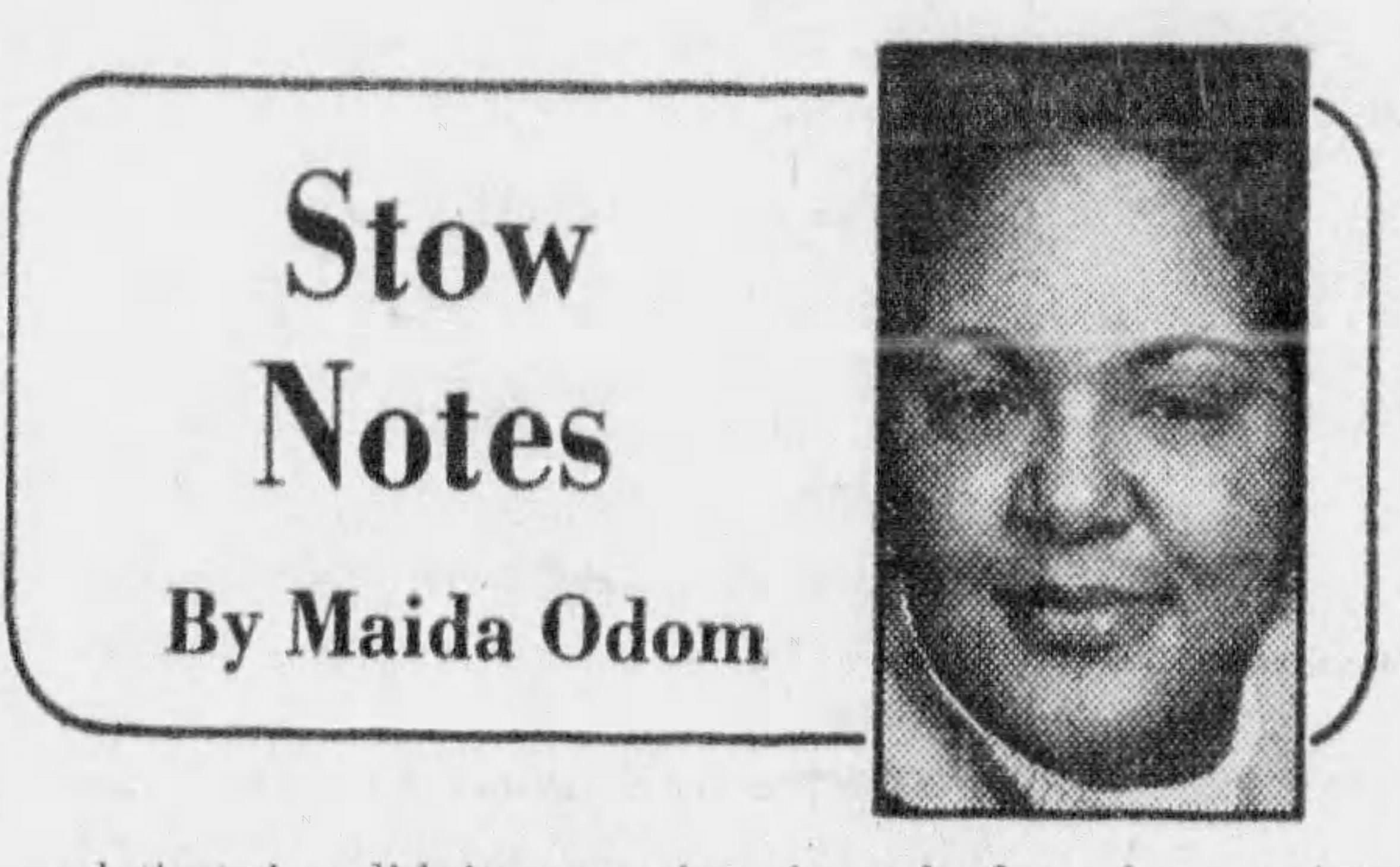
    Maida Odom is believed to be the second Black woman to work as a reporter for The Inquirer. She joined the staff in 1978 and, by all accounts, was a trailblazing firecracker of a journalist.

    Former Inquirer colleagues called her “tough” and “intimidating,” and she covered all sorts of stories until she left the paper in 2000 to pursue other opportunities. She reported on school desegregation in Wilmington in 1978, on a spectacular armored truck heist in Philadelphia in 1981, and on a visit from South African politician and social activist Winnie Mandela in 1997.

    She also wrote stories about AIDS, the NAACP, the Nation of Islam, the death of former U.S. Rep. Barbara Jordan, how local businesses employed ex-offenders, and dozens of other topics.

    Most notably, in May 1985, Professor Odom spent 20 hours secretly reporting from a nearby house during the two-day confrontation between police and members of the MOVE group on Osage Avenue in West Philadelphia. She and a colleague were eventually discovered by police and escorted from the area shortly before police dropped a bomb on the MOVE house, and 61 homes in West Philadelphia were destroyed.

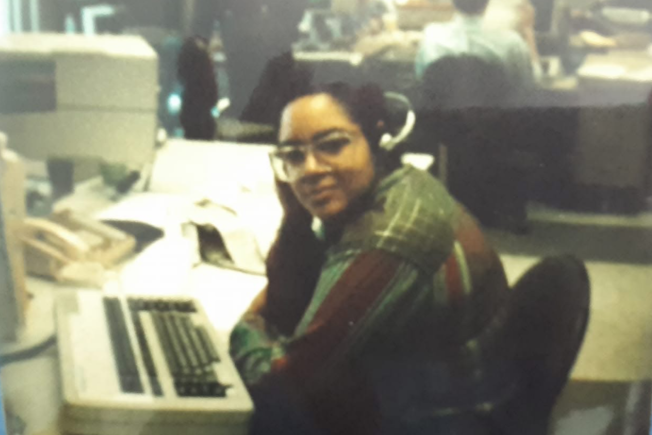
    Professor Odom was one of the few Black reporters in The Inquirer newsroom the 1970s.Maida Odom

    For the next year, Professor Odom was a key member of The Inquirer’s reporting team on MOVE that was a finalist for the 1986 Pulitzer Prize for general news coverage. “She was an exacting journalist,” former Inquirer colleague Annette John-Hall said. “She knew how to get past the first layer of a story and get under the second layer.”

    In The Inquirer on Dec. 6, 1985, Professor Odom wrote: “There were no flowers, no hymns, no sorrowful tears. MOVE co-founder John Africa and his nephew, Frank James Africa, were laid to rest in Whitemarsh Memorial Park in eastern Montgomery County yesterday with bitter tears and angry words.”

    On Saturday, Oct. 24, Professor Odom died of complications from metastatic breast cancer at Pennsylvania Hospital. She was 73.

    “She was a genuine person,” Sandra Long Weaver, former vice president of newsroom operations for The Inquirer and Daily News, said. “She was interested in promoting people of color and seeing people succeed.”

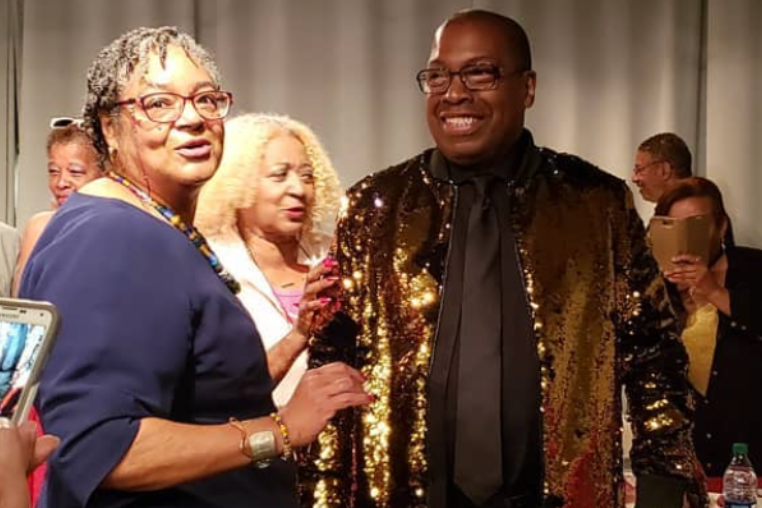
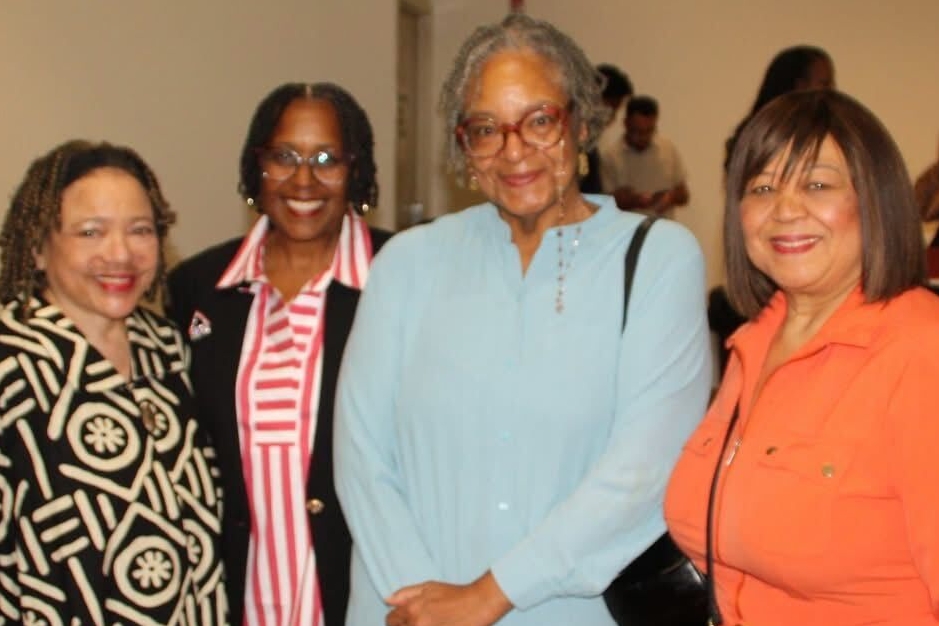
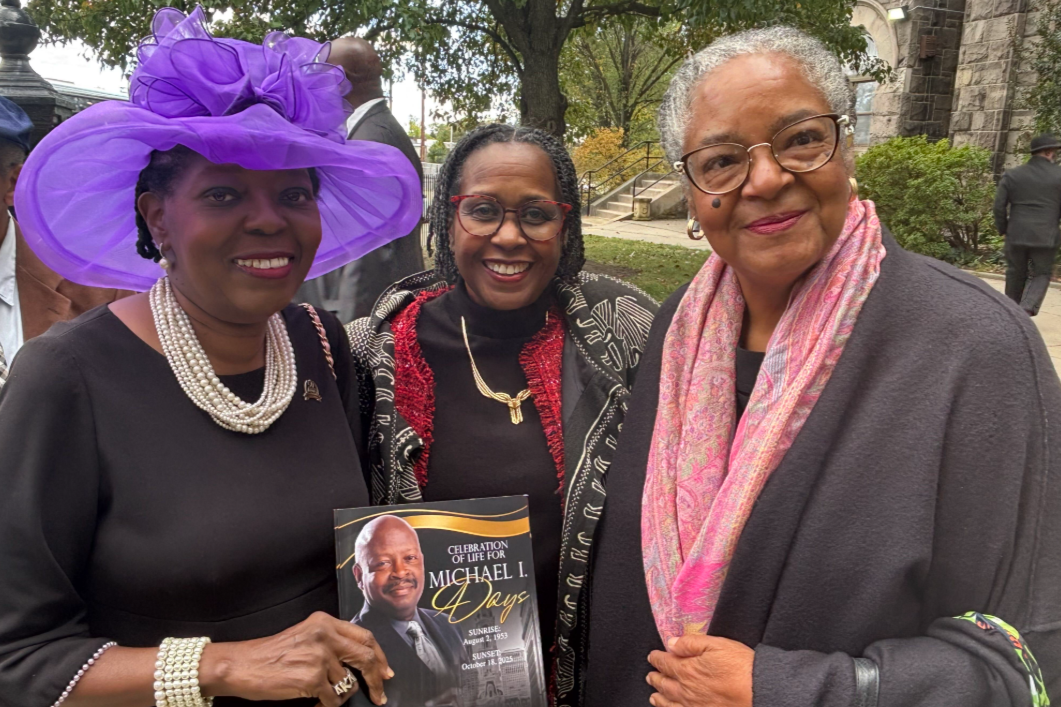
    Above, Professor Odom celebrates her retirement from Temple in 2019. Below, she (second from right) attends an event with colleagues for the National Association of Black Journalists.Germaine Edwards

    Arlene Notoro Morgan, former assistant managing editor at The Inquirer, said: “She certainly was fearless in covering the streets.”

    After leaving The Inquirer, Professor Odom spent 13 years, from 2005 to her retirement in 2019, as an assistant professor in the Department of Journalism at Temple University. She was also a playwright, a documentary filmmaker, and, according to David Boardman, dean of Temple’s Klein College of Media and Communication, “a champion of diversity and opportunity.”

    “Maida … was a passionate advocate for the integrity of journalism,” Boardman said in a tribute, “in both the newsroom and the classroom.”

    At Temple, Professor Odom connected with students and forged relationships between the university and local high schools and other organizations. She taught public affairs reporting and elements of writing, was director of internships, and created Temple’s high school journalism workshops.

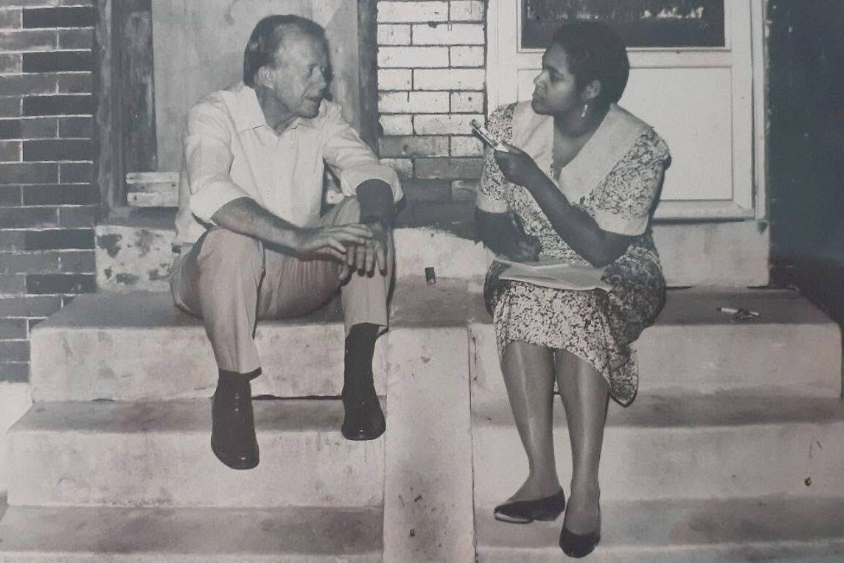
    Above, Professor Odom interviews Jimmy Carter in the 1970s. Below, she wrote a local column for the Akron Beacon Journal in 1976.Maida Odom

    “It’s part of an overarching notion of community-based education where a lot of your learning doesn’t take place in the classroom,” she told the Temple News in 2014 about the high school workshops. “And I think that’s very important, particularly for journalists.”

    In 2025, Professor Odom was featured in a six-part podcast called MOVE: Untangling the Tragedy that was produced by Temple and The Inquirer. She also wrote a play, MOVE Mocks Us All, about the bombing and told The Inquirer in 2025: “What I learned most from all of this is when you sow seeds of hatred, you can’t control how they grow.”

    She coproduced 1199 at 25: The Power of Collective Action, a 2002 documentary about the labor struggles of the National Union of Hospital and Health Care Employees in Philadelphia. She mentored young people wherever she worked and was active with the Philadelphia chapter of the National Association of Black Journalists.

    Before The Inquirer, Professor Odom covered Jimmy Carter and the 1976 presidential election for the Dayton Daily News in Ohio. Before that, she wrote about community news for the Akron Beacon Journal. She followed Charyn Sutton, the first Black woman reporter at The Inquirer, and also worked in public relations and as a newsletter editor, and was on the board at Scribe Video Center.

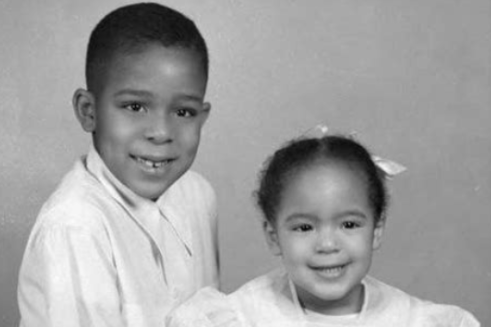
    Professor Odom was close with her brother, Vernon.Courtesy of the family

    Friends and colleagues called her an “extraordinary woman,” “a delightful person,” a “great journalist,” and “an exceptional teacher” in Facebook tributes. One colleague said on Instagram: “She was a no nonsense truth teller, a brave, fearless journalist who refused to look away.”

    Her brother, Vernon, said: “She was intense.” Longtime Inquirer colleague Roy H. Campbell said: “She had a low tolerance for BS.”

    Maida Cassandra Odom was born Dec. 12, 1952, in Louisville, Ky. She grew up in Akron, Ohio, and was a talented writer and straight-A high school student.

    She was inspired to engage in social activism and academia by her parents, and she earned a bachelor’s degree in journalism at Northwestern University in Illinois. Later, she did extensive graduate work in Africana studies and other topics at the University of Pennsylvania.

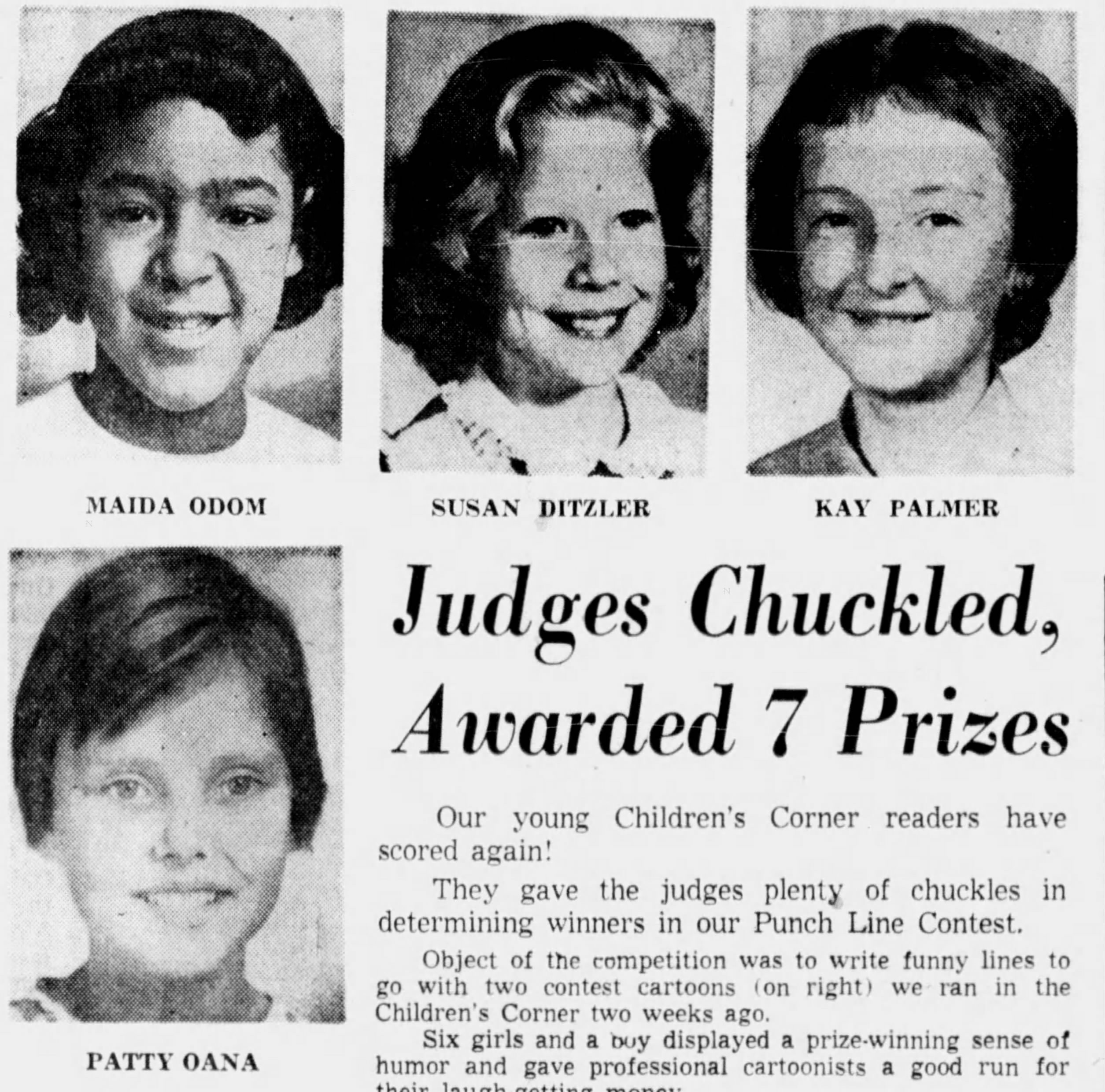
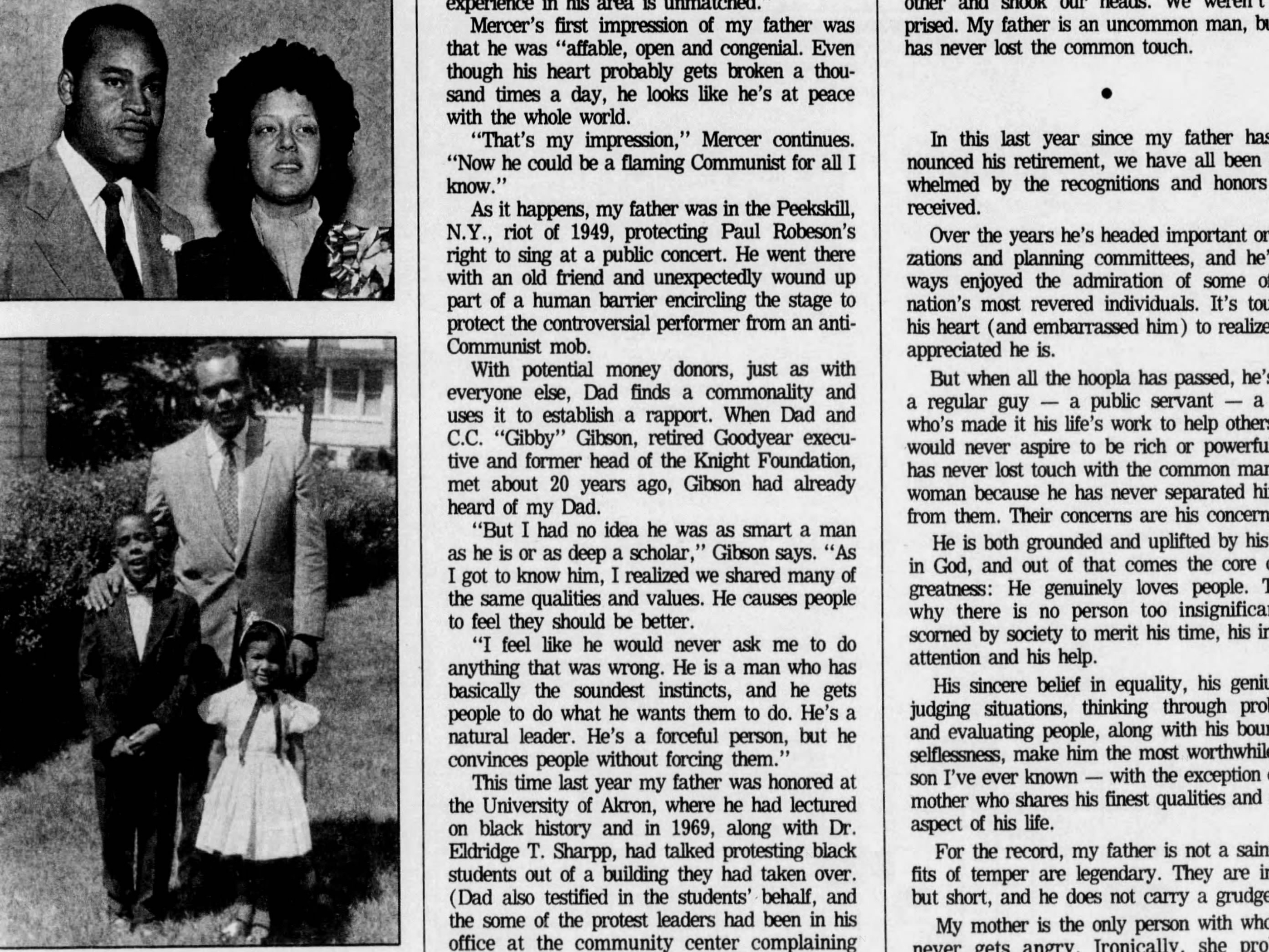
    Professor Odom (top left) appeared in the Akron Beacon Journal in 1963 as a 10-year-old for winning a caption-writing contest. Below, she stands with her father and brother in a photo that appeared with her 1992 story in the Beacon Journal about her family. The top photo below is of her father and mother. Newspapers.com

    Professor Odom enjoyed reading and traveling, especially to the beach in Jamaica. She was a member of Alpha Kappa Alpha Sorority Inc. and taught Sunday School and was on the board of trustees at St. Matthew AME Church.

    “Maida’s reach was far,” her brother said. “Maida’s reach was wide.”

    In addition to her brother, Professor Odom is survived by other relatives.

    Services are to be at 11 a.m. Wednesday, Nov. 11, at St. Matthew AME Church, 215 N. 57th St., Philadelphia, Pa. 19139.

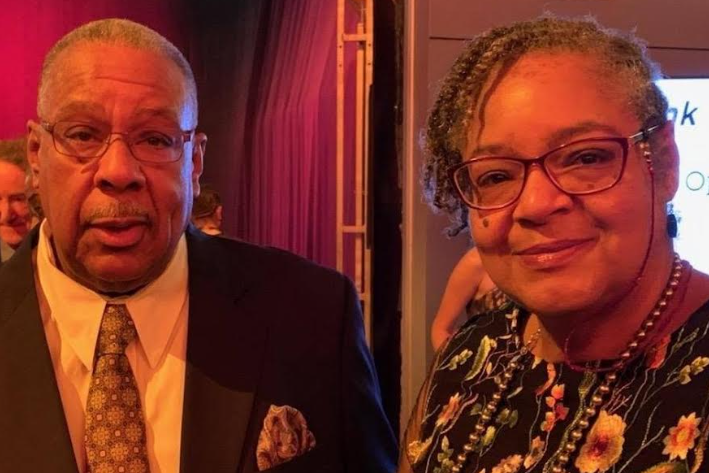
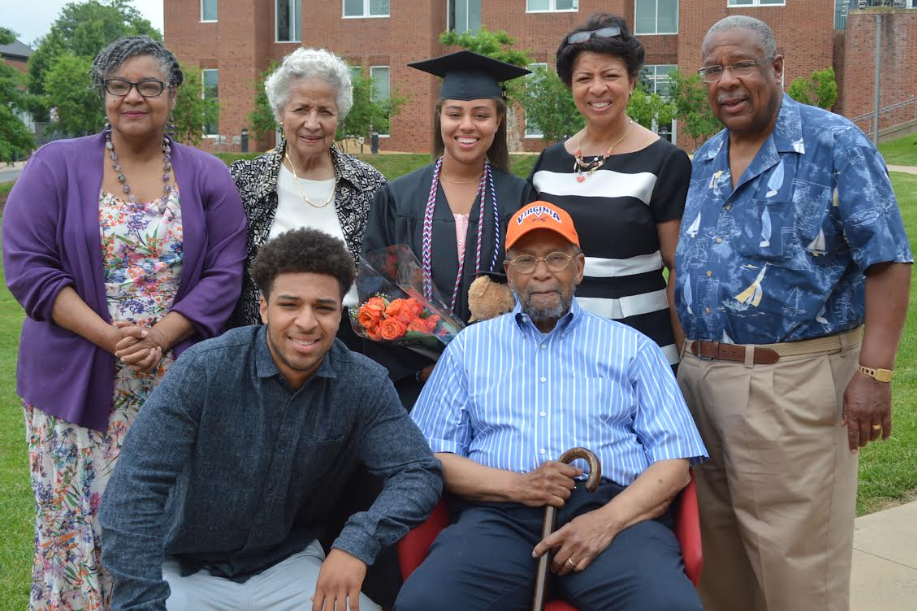
    Professor Odom, right above and rear left below, enjoyed time with her friends and family. Melanie Burney
  • East Market’s long-vacant Melting Pot space finally has a new tenant

    East Market’s long-vacant Melting Pot space finally has a new tenant

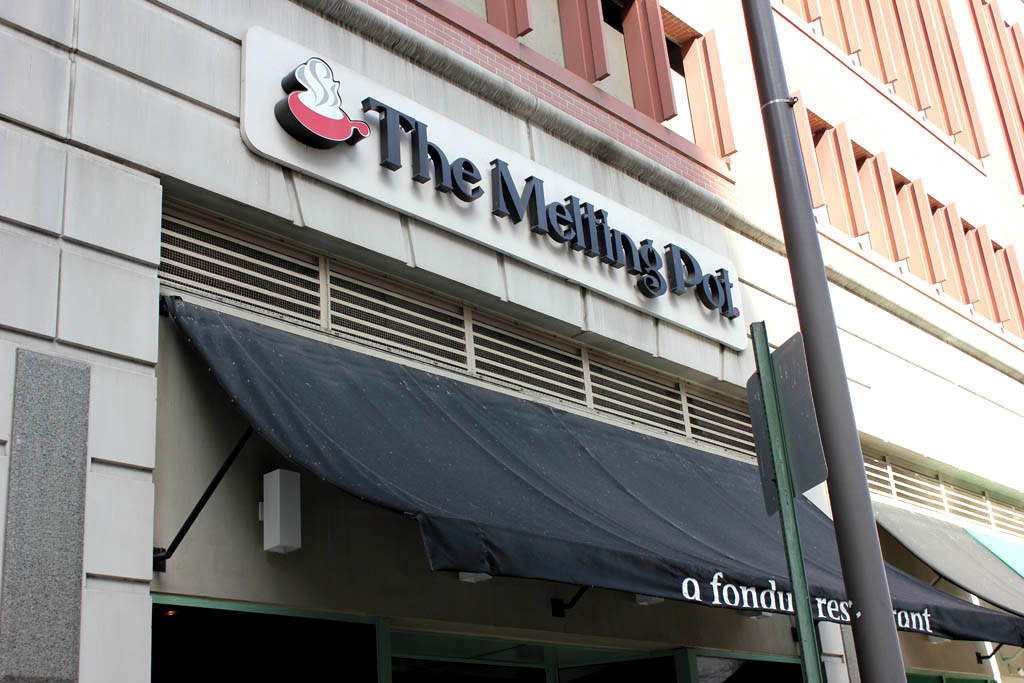
    The Pennsylvania Liquor Control Board will move the Fine Wine & Good Spirits store near Reading Terminal Market around the corner into the long-vacant storefront that once housed the Melting Pot restaurant.

    The new location at 1219 Filbert St., between a Chili’s Grill & Bar and a 7-Eleven store across from the Marriott Hotel, will be about 4,300 square feet, roughly the same size as the current windowless store at 5 N. 12th St.

    That store, which opened in 1998, was part of a late-1990s revitalization of the Reading Terminal train shed and headhouse, which included the Hard Rock Cafe at 12th and Market Streets and the short-lived Red Bell Brewpub across from the market on the 1100 block of Filbert Street.

    The Melting Pot’s 10-year run ended in 2015. The property sits underneath a parking garage owned by Parkway Corp. among other ground-floor commercial spaces, including Maggiano’s Little Italy.

    “I couldn’t remember Parkway ever having an empty storefront, and then the Melting Pot closed,” said Robert Zuritsky, president and chief executive of Parkway. Zuritsky said a few restaurant deals for the space came and went over the years before the pandemic put a longtime crimp in leasing.

    “We’ve just been struggling there” to find a tenant, he said. “We were open to all sorts of ideas. The PLCB came in, and they wanted to do it.”

    Paige Jaffe of Square Retail Consultants represented Parkway in the deal.

    A PLCB spokesperson said the new store — a standard store and not part of the agency’s Premium Collection — would open in the first half of 2027.

  • The National Constitution Center has named a new president

    The National Constitution Center has named a new president

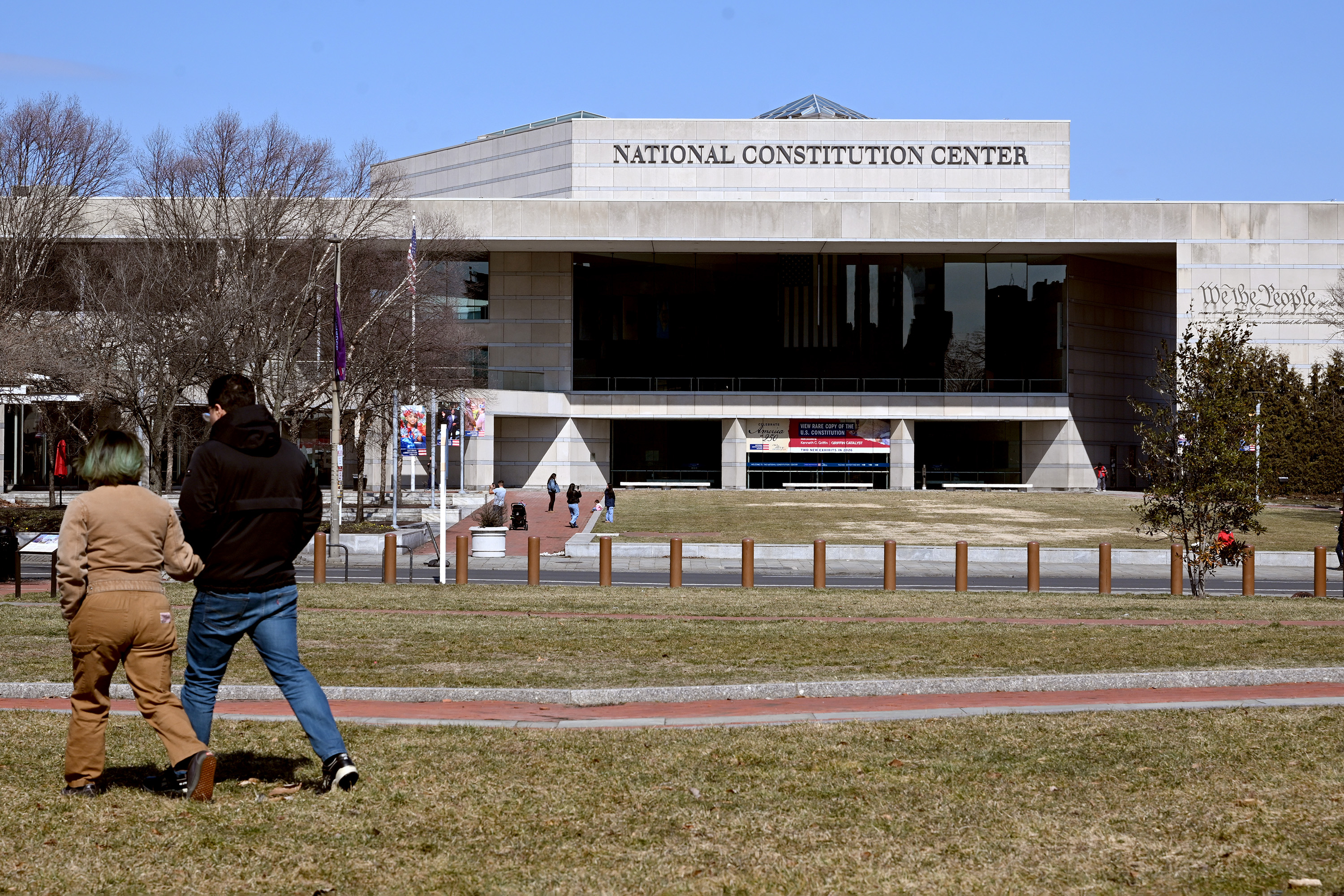
    The National Constitution Center has named Hiram E. Chodosh as its new president and chief executive officer.

    Vince Stango, the interim president and CEO who led the center’s ambitious initiatives commemorating America’s 250th birthday in 2026 — from major exhibitions to presenting Pope Leo XIV with a historic Liberty Medal — will transition into a new role as deputy chief executive officer and copresident.

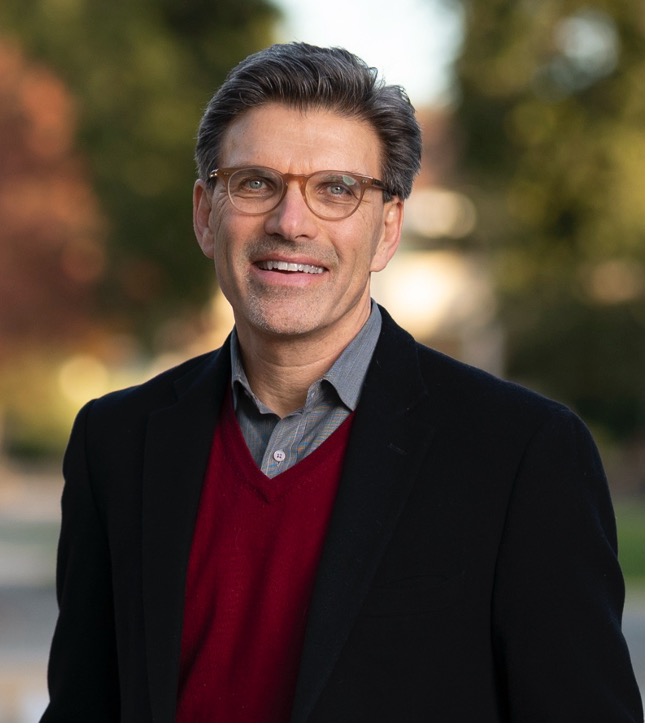
    Chodosh, 64, a legal scholar, judicial reform expert, and president emeritus of Claremont McKenna College, brings a formidable reputation as an institution-builder, a fundraiser, an educational innovator, and a committed defender of free speech.

    He has a personal story that lends those accomplishments a deeper resonance: that of a disengaged public school student from Elizabeth, N.J., who eventually became a Yale-trained lawyer and one of the most respected college presidents of his generation.

    Hiram Chodosh is currently president emeritus of Claremont McKenna College.Courtesy of Anibal Ortiz (Custom Credit)

    Mike George, chair of the National Constitution Center’s board of trustees, said in an interview that the leadership change comes at a critical time for the center as it seeks to vastly expand its national influence, reach, and impact.

    “Hiram is a transformational leader with a rare combination of intellectual distinction, entrepreneurial vision, and an extraordinary record of institutional achievement,” George said.

    During a phone interview from California on Wednesday, Chodosh praised the center as “a world-class museum in Philadelphia.”

    Now it falls to him, he said, to transform the center’s programmatic reach and impact amid the country’s roiling political landscape.

    “We’re focused on what the country needs from us,” he said. “It’s a big moment of challenge and opportunity — so transformation and nothing less.”

    A sudden departure and a national search

    The announcement follows a nearly 10-month national search stemming from the sudden departure of Jeffrey Rosen, who stepped down as the center’s chief in January after 12 years.

    Rosen, 61, a legal scholar, journalist, and author — and regular fixture on C-Span — is credited with resuscitating a once-struggling museum that for years was sliding toward financial uncertainty and institutional drift. His unexpected exit on the cusp of the national milestone — and amid accounts of an escalating management dispute and a chaotic board meeting — raised questions of a “constitutional crisis” at Philadelphia’s cathedral to the nation’s founding ideals and its lasting arguments.

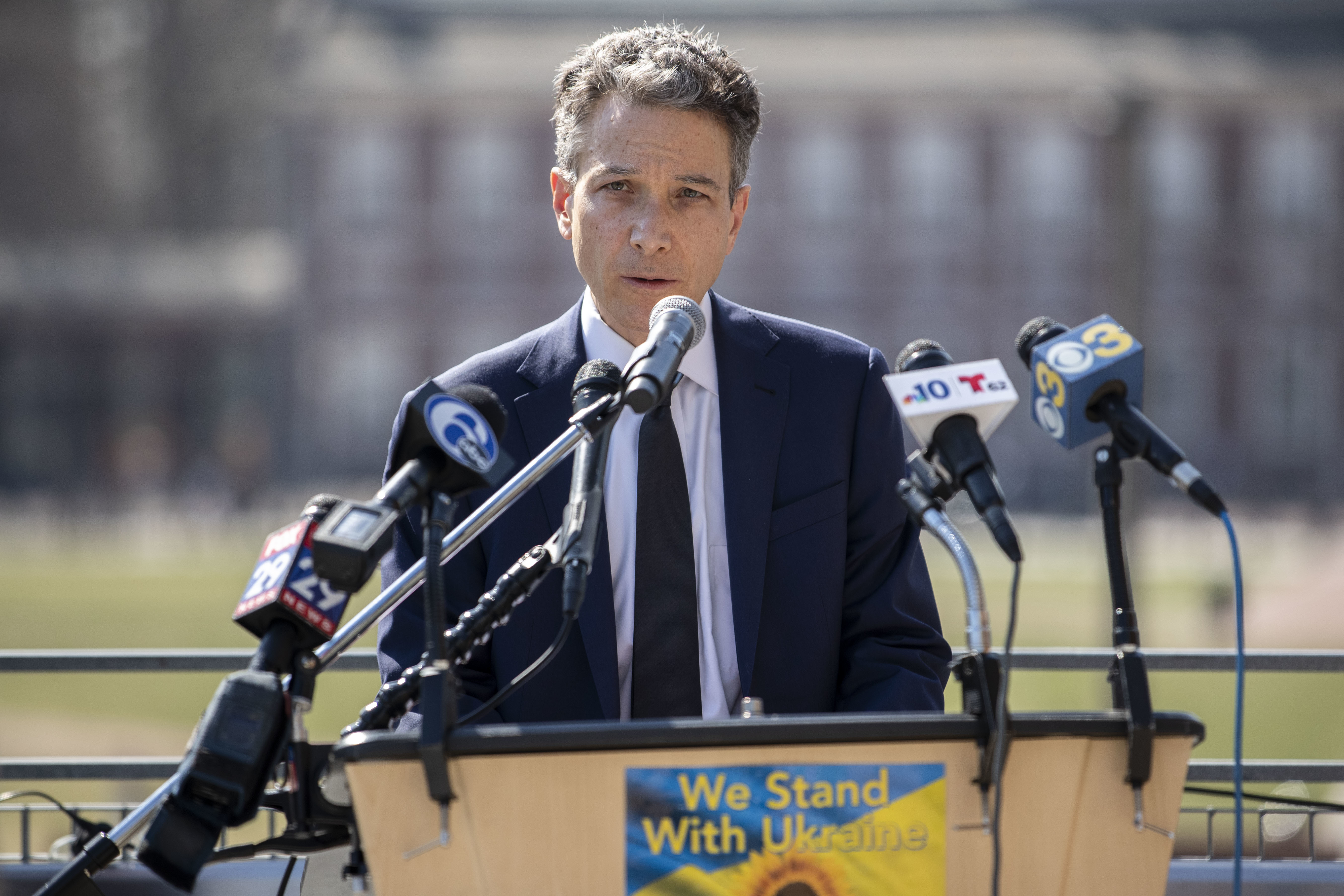
    Jeffrey Rosen, former president and CEO of the National Constitution Center, departed the center earlier this year.MONICA HERNDON / Staff Photographer

    At the time, the nonprofit, nonpartisan museum and event forum, which opened on Independence Mall in 2003, framed Rosen’s shift as a desire to devote himself to “scholarship and public dialogue.” He remains the center’s CEO emeritus.

    The New York Times reported that friction had developed over how Rosen’s responsibilities intersected with Stango’s role managing day-to-day operations. The Guardian reported that Rosen’s ouster was internally viewed by at least one board member as a move to curry favor with President Donald Trump.

    George, who is also board chair of the QVC Group social shopping company, denied reports of a crisis.

    “By any objective metric, this was the most successful year in the NCC’s history in terms of reach, impact, engagement, donor network, and growth of philanthropic support,” he said, noting that the center surpassed its 2026 fundraising goal of $13.4 million by more than $5 million.

    Vince Stango, interim president and CEO of the National Constitution Center, presents Pope Leo XIV with the Liberty Medal.The Vatican and National Constitution Center

    George added, “The one thing we are resolute about and will never waver on is that politics will never enter into any conversation we ever have in the boardroom of the NCC.”

    Chodosh and Stango, who joined the Constitution Center in 2000, before the museum opened, will not be pigeonholed into rigid leadership roles, George said. Both will be expected to help lead the center’s operations and philanthropy, as well as its more public-facing educational and scholarly initiatives.

    Ed Rendell, the former Pennsylvania governor and Philadelphia mayor who played a foundational role in establishing the Constitution Center and serves as chair emeriti, praised the selection of the experienced Stango as the second in charge.

    “He has done some excellent work as the interim president and has proved himself a great leader,” Rendell said. “I think they are going to be a very good team.”

    A free-speech advocate

    For Chodosh, a public school graduate raised in working-class and diverse Hillside, N.J., his humble origins stand in contrast to the prestigious institutions he would later lead. He credits his grandmother, Rose Goldberg, who fled the persecution of the Jews in a village near Odesa, in present-day Ukraine, for instilling the values of perseverance, responsibility, and freedom that have guided his career. The family dinner table — and the robust world debates he found there — was his first real classroom, he said.

    “She was the oldest of her generation in my extended family, and I was the youngest of mine,” he said of his grandmother in a 2013 interview. “We spent a lot of time together, playing cards at the table in her kitchenette. She told me lots of stories in order to make me understand how fortunate I was, stories about what little she had, stories about the violence she fled in the early 20th century, stories about the importance of family.”

    After graduating from Yale Law School in 1990, he practiced law in New York before working on major legal reform projects in more than a dozen countries. He has served in advisory roles with the World Bank, International Monetary Fund, and U.S. State Department. He received the Gandhi Peace Award in 2011.

    He has made free speech and intellectual diversity a linchpin of his 13-year tenure at the helm of Claremont McKenna College, a highly selective liberal arts school outside Los Angeles, recognized for his commitment to preparing students for public service.

    “The last 12 years have seen extraordinary threats to free speech on campus, along with a sharp decline in public trust in higher education,” said Jonathan Haidt, social psychologist and author of The Anxious Generation and coauthor of The Coddling of the American Mind. “One of the few leaders who navigated through the turbulence and gave their institutions a better speech climate and greater national respect was Hiram Chodosh.”

    It was also at Claremont McKenna that Chodosh honed his skills as a fundraising powerhouse. Under his leadership, the college completed a record-breaking $1.076 billion fundraising campaign and championed a $400 million sciences center.

    “He is, in my view, far and away the best college president of his generation,” said Guido Calabresi, a senior circuit judge of the United States Court of Appeals and former dean of Yale Law.

    In 2017, his administration suspended five students who blocked access to a campus lecture by Heather Mac Donald, an advocate of “zero-tolerance” policing.

    “We kept everybody safe, and I was committed to hold the students accountable,” Chodosh said in the interview this week.

    What does this mean for the Constitution Center?

    Chodosh and Stango’s vision for the future of the Constitution Center is ambitious.

    “We have in this country lost a good sense of ourselves,” Chodosh said, “We’ve lost a large amount of focus on civic life in our approach to education, and I think that we’ve created tremendous vacuums and a sense of division.”

    The goal is for the Constitution Center to fill those voids. That means building partnerships and collaborations at every civic level — and across partisan divides.

    “It’s about making sure that whatever we’re doing is reaching all communities,” he said. “We have to make sure, whether rural America or whether it’s the confines of our major cities, we have to look far and wide to make sure that we’re reaching people.”

    It does not mean being a sparring partner with Trump, he said.

    “The role of the center is not to adjudicate major controversies,” he said. “The NCC is not the Supreme Court. It’s not Congress.”

    Neil M. Gorsuch, associate justice of the U.S. Supreme Court and honorary cochair of the Constitution Center, said he is optimistic about Chodosh’s ability to lead.

    “Hiram Chodosh brings an unparalleled record of educational leadership, a deep commitment to lifelong learning, and a demonstrated ability to bring people together around serious questions and constructive dialogue.”

    More than ever, Chodosh said, he wants the Constitution Center to be the national forum where everyday citizens from all over can find common ground on the issues dividing them.

    “We need to bring back that set of mutual commitments that are so central to the values that are expressed in our Constitution,” he said.

  • Top-tier wine is expensive for good reason. Here’s one that’s shockingly affordable.

    Top-tier wine is expensive for good reason. Here’s one that’s shockingly affordable.

    In most wine categories, trading up to a luxury brand means a significant jump in cost, with entry-level bottlings from top wineries often approaching $40 to $50 these days. A consistent exception to that rule? Unoaked white wines, and this top-notch New Zealand sauvignon blanc is a perfect example.

    Most goods increase in price incrementally from the bargain brands to the top of the line, but wine pricing increases much more steeply. It costs a lot to make better wine at every level, from the purchase price of carefully managed grapes to the tremendous expense of fermenting and aging wines for months or years at a time in pricey barrels. (Unoaked white wines enjoy a natural price advantage by avoiding that last step entirely.)

    Exacerbating all of those costs, though, is an inherently short supply of any top-tier wine. To make the best wines, vintners deliberately restrict how many pounds of grapes are produced per plant by trimming many grape clusters off the vines well before harvest — a method known as “green harvesting” that concentrates the flavors of the remaining fruit. This dramatically improves wine quality, but also means that there are fewer bottles to sell to cover their higher production costs.

    Dog Point was founded by the head winemaker and the lead viticulturalist of Cloudy Bay, one of New Zealand’s top wineries, which already claims some of the Marlborough region’s best vineyard sites. Dog Point’s grapes are organically farmed, and the winery also practices green harvesting (which is rarely applied to white wines). The results are apparent in this bottle, whose flavors are both less green and more complex than those of competing bargain brands, and last much longer on the palate with interwoven tastes of lemon curd, white peach, honeydew melon, and honeycrisp apple. All in all, it’s a wine that tastes a lot fancier than its price tag would suggest.

    Dog Point Sauvignon BlancDog Point

    Dog Point Sauvignon Blanc, Marlborough, New Zealand

    12.5% alcohol

    PLCB Item #100030776

    On sale for $22.99 through Nov. 1 (regularly $24.99)

    Also available at: WineWorks in Marlton ($17.98; wineworksonline.com), Total Wine & More in Wilmington and Claymont, Del. ($22.99; totalwine.com), and the Original Canal’s Discount Liquor Outlet in Glassboro ($23.99; canalsofglassboro.com).

  • West Philly’s favorite pizza shop is back

    West Philly’s favorite pizza shop is back

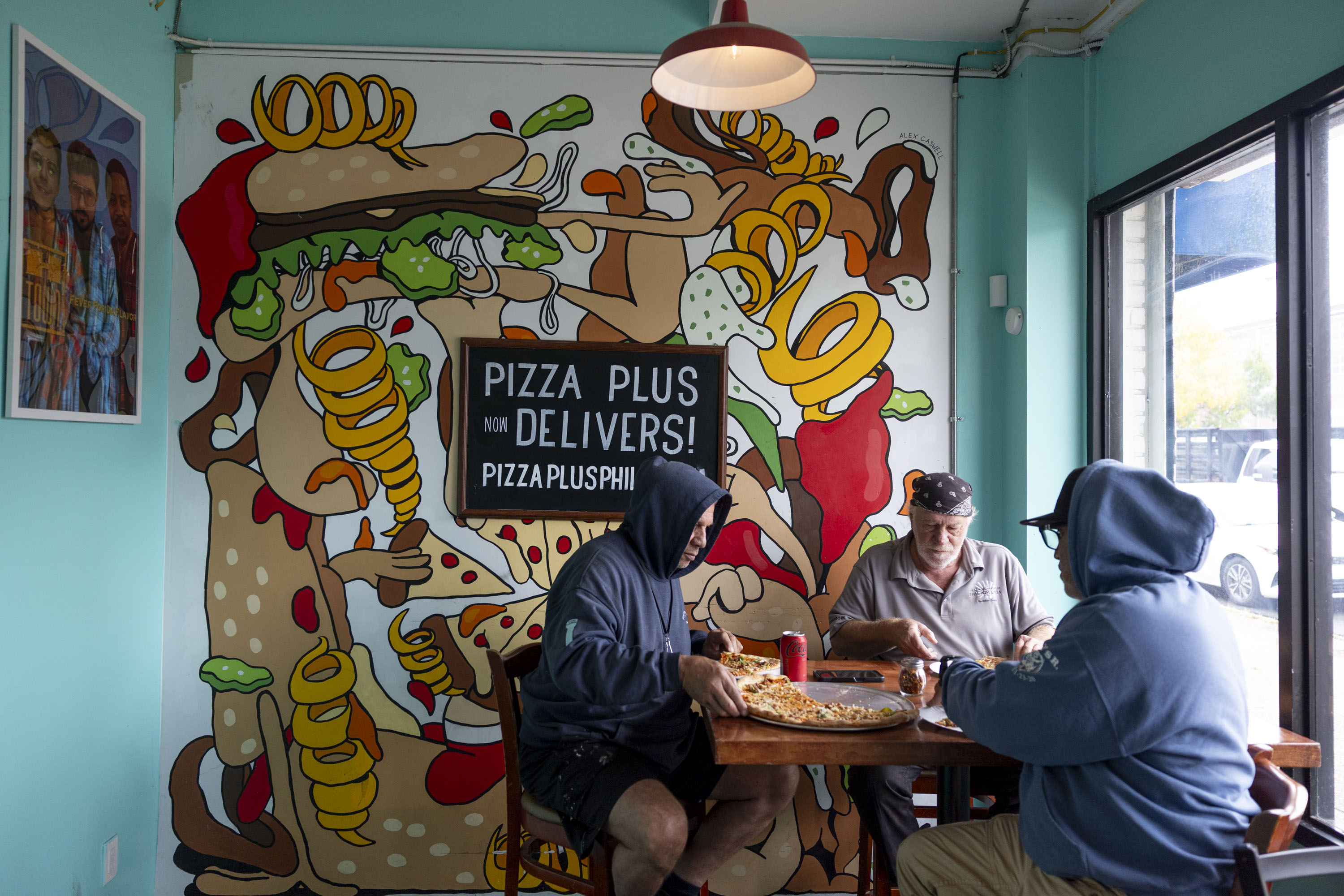
    After a botched sale and a three-month pause, the pizza oven is fired up again at 4814 Spruce St. in West Philadelphia.

    Pizza Plus West reopened earlier this month — in the same location and under its original owners — bringing pizzaiolo Daniel Gutter’s experimental pies back to a neighborhood that some say lacks good delivery pizza.

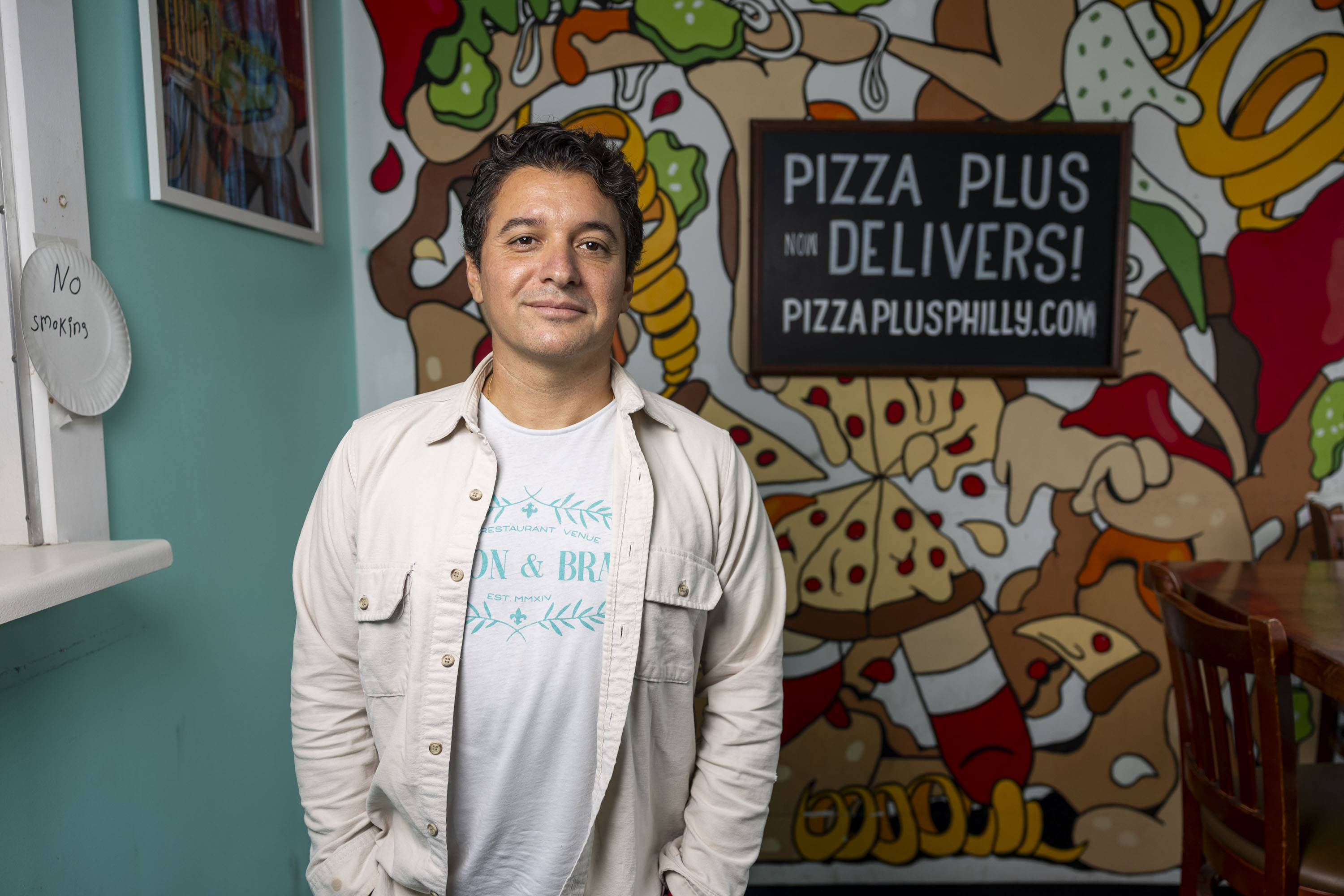
    Gutter, known as @pizza_gutt on Instagram, and business partner Alex Carbonell opened Pizza Plus West in 2021 as the fourth shop in their growing restaurant empire, which includes Circles and Squares in Kensington, the Northern Liberties gastropub Bourbon & Branch, and the original Pizza Plus at 1846 S. 12th St. in South Philly.

    Pizza Plus started as a way for Gutter to branch out from his signature Detroit-style squares into other realms: 16-inch New York-style pies and pan pizzas, plus delivery staples like wings and cheesesteaks.

    The partners sold Pizza Plus West in April 2026 to focus on other projects that demanded their full attention, Carbonell said. He and Gutter are working on transforming the long-closed Mount Airy dive bar the Mermaid into a three-story restaurant set to open next spring. They also recently rebranded Bourbon & Branch as a Southern restaurant, now helmed by former Middle Child Clubhouse sous chef Brooke Alan.

    “We were at the top of our game at Pizza Plus West, doing better than ever,” Carbonell said. “But we also felt like we were being torn in too many different directions.”

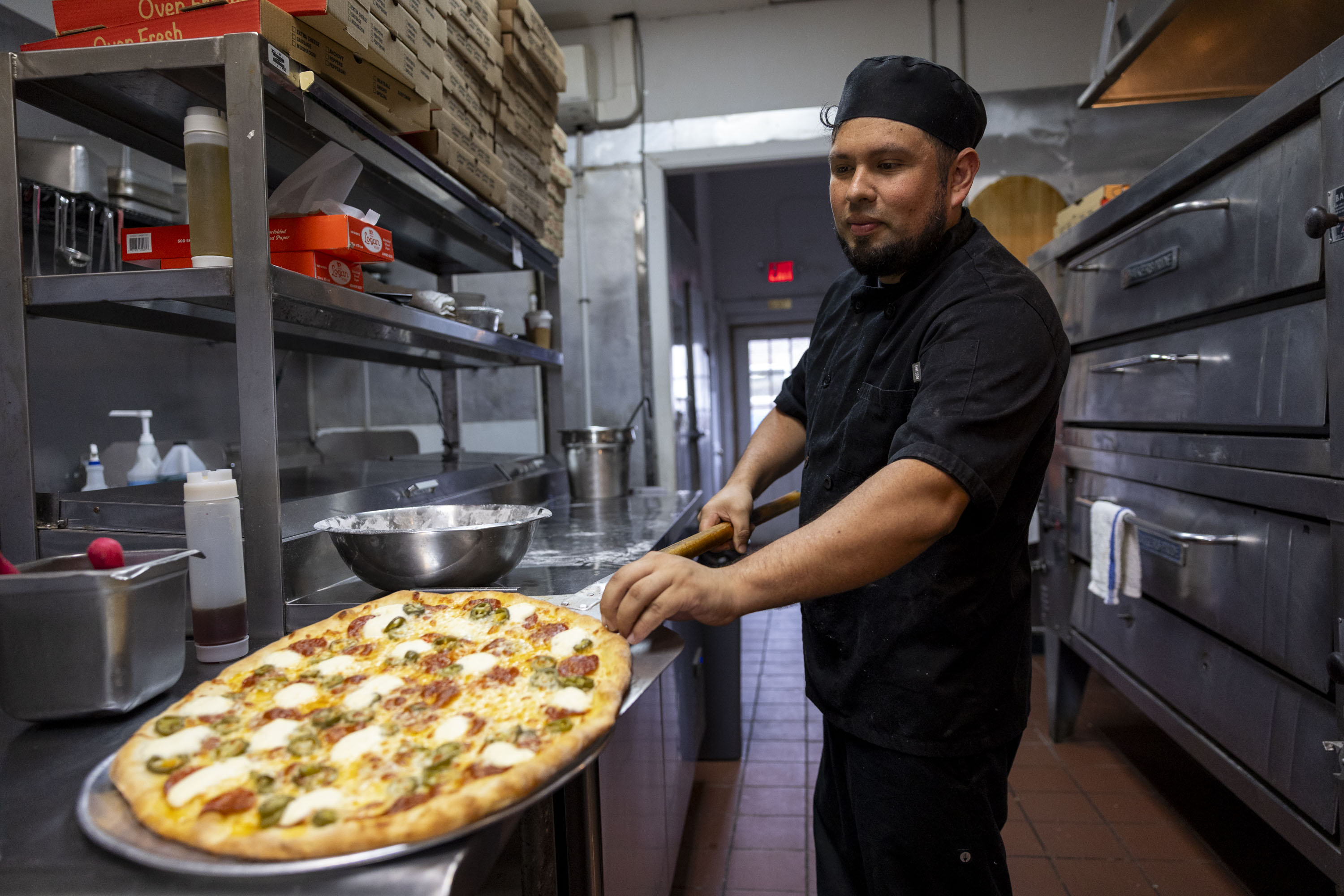
    The Honey Roni Pizza at Pizza Plus West is topped with mozzarella, ricotta, pepperoni, hot honey, and pickled jalapenos.Tyger Williams / Staff Photographer

    To take something off their plate, Carbonell and Gutter made arrangements to sell Pizza Plus West to a new owner who hoped to gradually turn the shop into a Guyanese fried chicken joint that also sells pizza. They started a handoff in April, but by July, the shop was doing less than half its usual sales, Carbonell said.

    Soon after, he said, the new owner ghosted Carbonell and Gutter and defaulted on a two-year bridge loan from them negotiated as part of the sale. The shop closed that same month.

    “It was very depressing,” said Carbonell, declining to name the other owner. “Neither of us really wanted to sell [Pizza Plus West]. We just felt like we didn’t have any other choice at moment.”

    Chef and partner Pedro Vasquez pulls a fresh Honey Roni Pizza out of the oven at Pizza Plus West.Tyger Williams / Staff Photographer

    (The Inquirer was unable to identify Pizza Plus West’s previous owner via public records to reach out for comment.)

    After a month of deliberation, Gutter and Carbonell reclaimed the business, announcing via Instagram that Pizza Plus West was reopening in early October. Their first day back was Oct. 12.

    “It was so great to have old faces coming back in,” Carbonell said. “That first day, people were just walking by with their dogs and fist-bumping, just so excited to have us back.”

    Goodbye pan pizzas, hello fried chicken

    The new, old Pizza Plus West is not without changes.

    Carbonell and Gutter brought on Saul Pineda and Pedro Vasquez as new working partners to the Spruce Street shop in September, where they will be in charge of manning the pizza ovens. Both of them have worked with Carbonell for more than a decade at It’s Nutts, the beloved roadside family restaurant in Titusville, N.J., that Carbonell has owned since 2005.

    With the new partners comes one addition: It’s Nutts’ famous fried chicken, sold by the piece. The chicken soaks in a top-secret brine for 24 hours before getting dredged and fried.

    Pizza Plus West now serves fried chicken by the piece, a holdover from co-owner Alex Carbonell’s roadside restaurant, It’s Nutts, in Titusville, N.J.Tyger Williams / Staff Photographer

    Carbonell estimates It’s Nutts goes through 1,000 pounds of chicken a week. Pizza Plus West will be a success if it does a fraction of that, he said.

    The shop is also doing away with pan pizzas, which Carbonell said are “too labor-intensive” to maintain since they require a dedicated baker just to work on the focaccia crust. They have been swapped out for 12-inch personal-size New York pizzas, which Carbonell said are already selling well.

    Otherwise, the menu is the same. Pizza Plus West’s calling card remains its 16-inch pizzas. They range from classic red, white, and vodka-sauced pies to less conventional offerings such as the General Tso’s chicken and broccoli to the chicken Caesar — literally a Caesar salad with fried chicken spread on top of a white pie.

    Alex Carbonell, a co-owner of Pizza Plus West, inside the West Philadelphia shop.Tyger Williams / Staff Photographer

    Cheesesteaks and burgers (and their vegan counterparts) are also available, as are Pizza Plus’ gut-busting “snack boxes” — a single pizza box stuffed with a personal pie, two cheeseburgers, wings, fries, and onion rings.

    Pizza Plus West, 4814 Spruce St., 215-207-0391, pizzaplusphilly.com. Hours: 11:30 a.m. to 9 p.m. Sunday through Thursday. 11:30 a.m. to 10 p.m. Friday to Saturday. Closed Tuesday.

  • In addition to the No. 1 MLS comeback story, the Union are another thing: Completely unpredictable.

    In addition to the No. 1 MLS comeback story, the Union are another thing: Completely unpredictable.

    Indiana Vassilev’s body language coming off the field could have served as a metaphor for the Union’s entire performance.

    As he exited the pitch at Nashville SC’s Geodis Park, Vassilev needed a second to collect his breath and give his legs a heat check after 86 minutes of scratching and clawing against a club that has found a way to rattle off 21 wins and just three losses (8 draws) en route to already locking up a top seed in the upcoming MLS Cup Eastern Conference playoffs. Nashville SC earned the Supporters’ Shield, given to the team with the best points total (now 71 points) in the league.

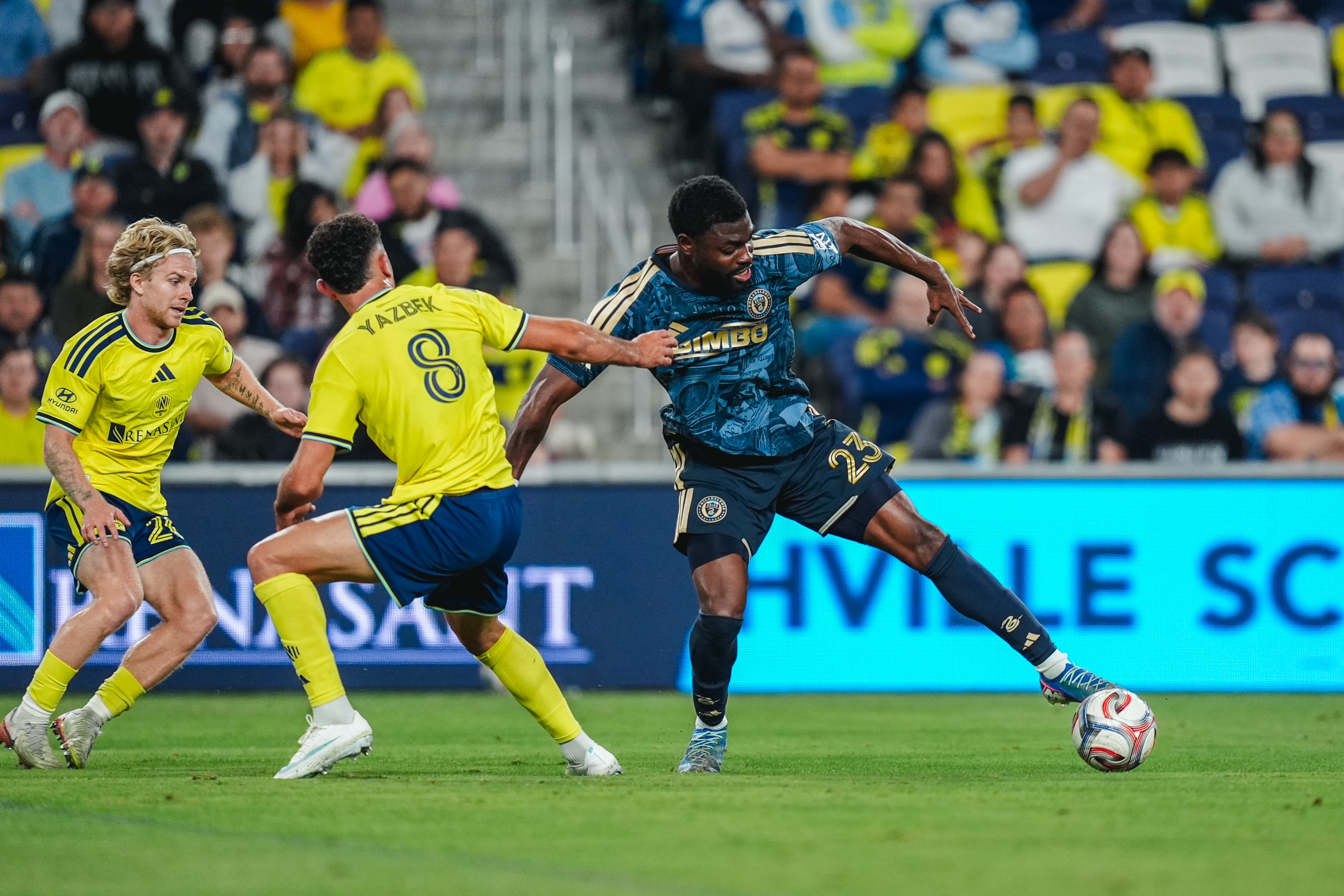
    It was always going to be an uphill climb, and it was. Nashville held the edge in possession 65-35, and rattled off more shots (eight to the Union’s six). They did so for a good chunk of the match without their two biggest goal-scoring threats, Hany Mukhtar and Sam Surridge, the latter of whom leads Nashville with 18 goals this season.

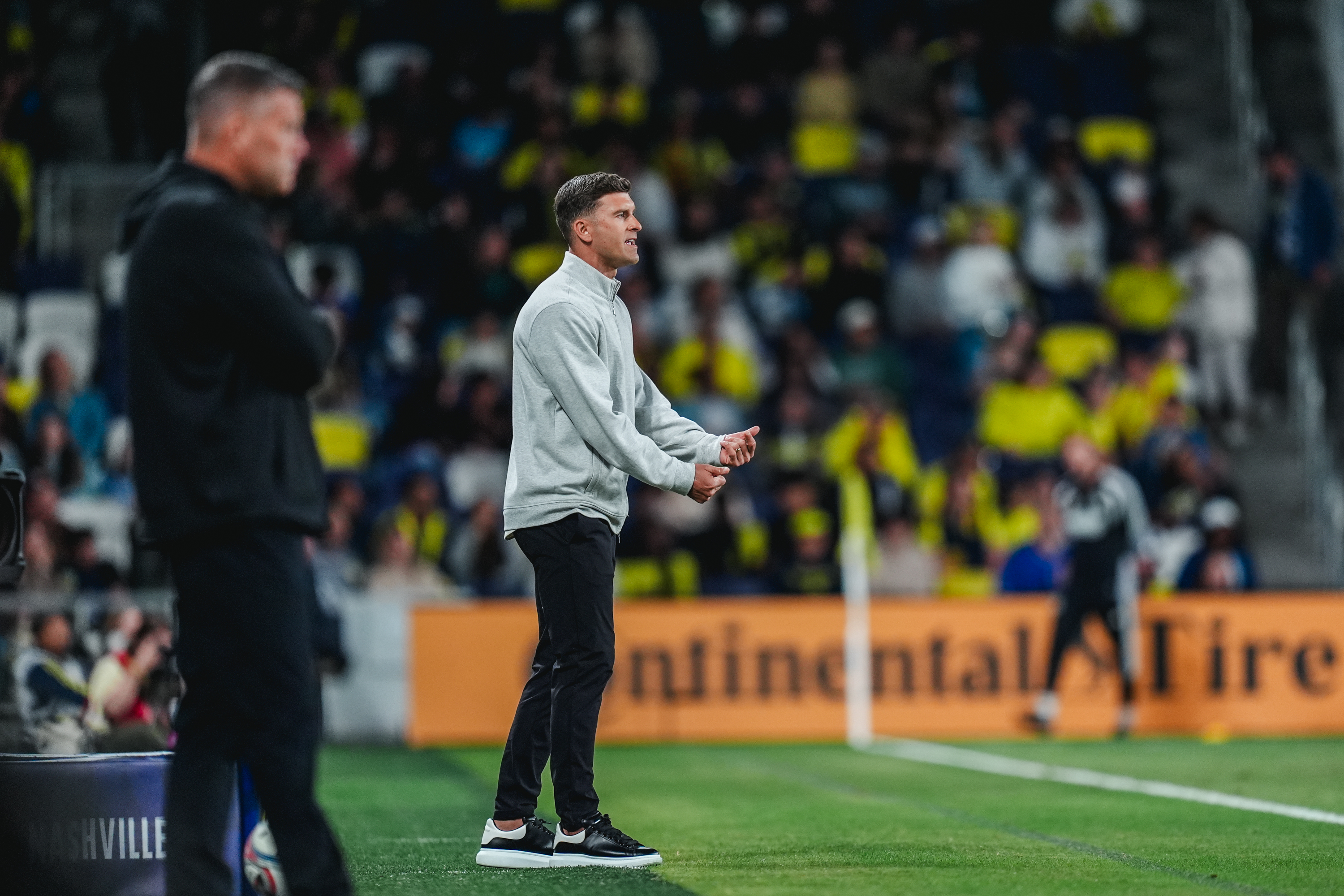
    Even when Nashville coach and former Union assistant B.J. Callaghan put in both players in the 58th minute, the Union were able to defend against the flurry of chances they helped create in their short time on the pitch.

    Bottom line: This Union team is completely unpredictable.

    This was a game they weren’t supposed to pull any points from, at least according to national soccer pundits and Vegas oddsmakers. The team was without three players who accounted for 38 of their 59 goals in MLS action this season, including their leading goal scorer in Milan Iloski (19 goals), who was out Wednesday with a hamstring injury.

    They also were without the electrifying playmaking ability of their youngest player in superstar Cavan Sullivan, who is still trying to return from an ankle injury sustained in a draw two weeks ago against Charlotte FC. Instead, head coach Ryan Richter trotted out a ragtag collective, particularly on attack, electing to give youngster Malik Jakupović his first start against the best team in MLS, statistically speaking.

    Go get ‘em, kid.

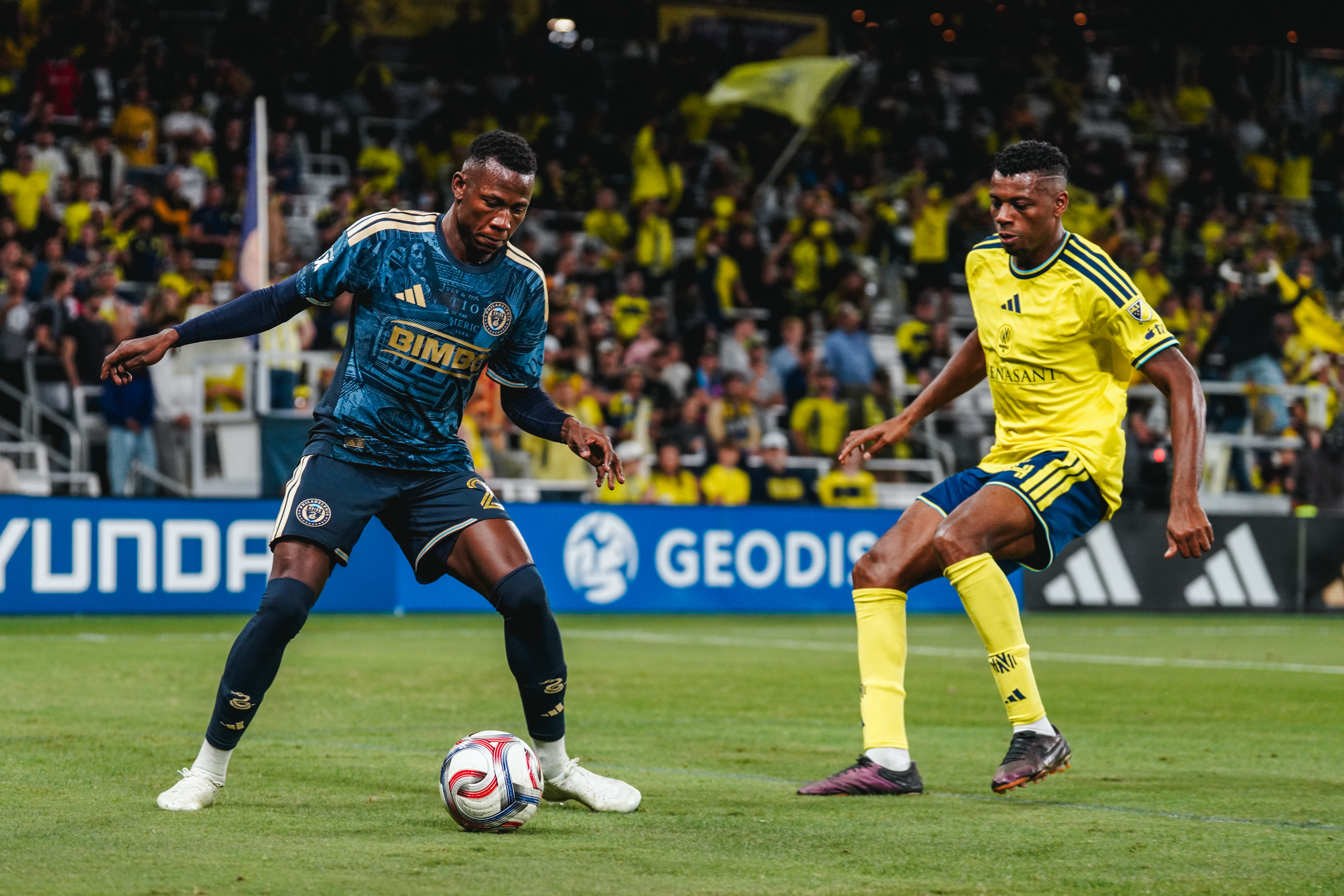
    Malik Jakupović (center) takes the ball upfield during the Union’s match against Nashville on Wednesday night. Philadelphia Union

    He played the big body of Ezekiel Alladoh, who received just his seventh MLS start, but was unable to do much with it in his 69-plus minutes on the pitch.

    “I’m proud of the effort, really from everybody, [especially] for the guys who have been called upon to get more minutes than they have been getting in the past few weeks,” Richter said in his postgame conference. “[They] really stepped up and did the job that the team asked [for], so I’m just proud of the guys and happy overall with the effort that was put in tonight.”

    Defensively, the back line was a shuffle with Frankie Westfield given the night off. Nathan Harriel was arguably the team’s man of the match in the back, flying over Nashville attackers to head attempts on the Union’s goal back up field, and repeatedly denying would-be strikes at goalkeeper Andre Blake.

    “Tonight was a team performance that led to that,” said Richter, referencing the fact that from the outset, the Union were trying collectively to do their part to not give up what he described as “preventable goals.”

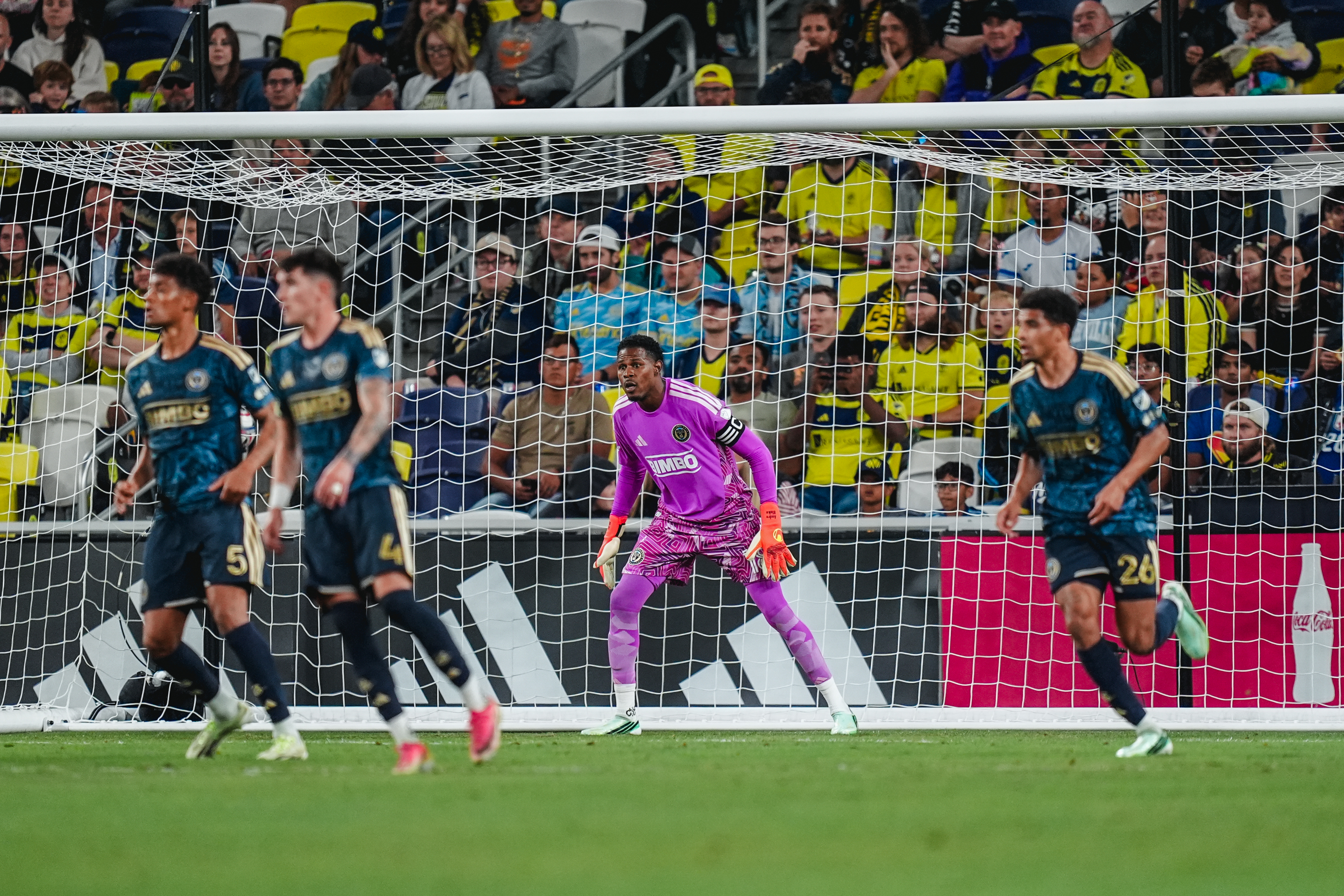
    Andre Blake (center) directs the Union’s back line during Wednesday’s game against Nashville SC. Blake accounted for one save off eight Nashville attempts. Philadelphia Union

    Added Richter: “From the front line all the way to Andre , it’s not just a great performance from the defenders, but it was the work against the ball and what the guys [collectively] were committed to.”

    The efforts of players like Harriel and others did not go unnoticed on a night in which the Union not only had an opportunity to have another statement game, much like it did last month in a win against Orlando City, but for an opportunity to secure a trip to the upcoming MLS playoffs.

    At halftime, they knew the results of one of three possible scenarios that had to go their way, in that if they could hold onto a draw, they’d book their trip to the postseason courtesy of a 3-2 New England defeat of Red Bull New York earlier that night. It’s not lost that the player who scored the goal to give the Union a leg up, was former playmaker, and still the team’s all-time leading goal scorer in Daniel Gazdag.

    Wonder if the thank you card is already in the mail. Assuming not, considering just three days prior, Gazdag frustrated his former team and fans inside Subaru Park for what was perceived as embellishing fouls to earn calls in the Revolution’s favor.

    Ezekiel Alladoh (right) battles for the ball during the Union’s match against Nashville SC on Wednesday.Philadelphia Union

    They say that soccer is 80% athletics, and 20% theatrics. If that’s true then Gazdag was just playing the part on Saturday. On Wednesday night, he played the role of motivator from 1,100 miles away in Foxborough, Mass., for a Union team that if not for some serious changes in late May would not be locked into a postseason spot or even anywhere near it.

    But it speaks to the undeniable work rate they’ve exuded over the last three months, rattling off a franchise-record 15-game unbeaten streak with 12 wins nestled within. On Wednesday, it was topped off with a draw that took a Herculean effort from the Union that saw them keep a league giant at bay for 90-plus minutes inside their own ballpark.

    Not an easy task. Just ask Vassilev’s knees.

    Danley Jean Jacques (left) controls the ball against Nashville SC in the team’s draw on the road on Wednesday night. Philadelphia Union

    Odds and endlines

    While the statuses of Sullivan and Iloski are still unknown, Richter did divulge that he felt strongly that midfielder Jesus Bueno could be available for action against FC Cincinnati. Bueno has missed three matches due to a hamstring injury. … A few numbers that stand out from the Union’s draw indicating just how much they were outmatched statistically. In addition to Nashville holding a dominant edge in possession, it also conceded fewer fouls (eight to the Union’s 15), and dominated the passing lanes (499-274). But the one stat that arguably burned their chances and aided the Union’s? Nashville attackers were called offsides six times.

  • Black boys, even the youngest and most vulnerable ones, continue to be endangered in this nation

    Black boys, even the youngest and most vulnerable ones, continue to be endangered in this nation

    I keep thinking about a video on social media showing a nighttime encounter between a Black boy and members of the Philadelphia Police Department in Center City. The child couldn’t have been much older than 10 or 11. It’s cold, and instead of a coat, he’s wearing just a T-shirt. He was walking through Dilworth Plaza on the west side of City Hall all by himself. When an officer approaches, his hands go up immediately.

    It’s hard to make out exactly what all was being said on the video, but at one point the cop tells him to “get on the train and go home.” The boy disappears into the darkness, leaving behind all kinds of questions.

    Why was he out by himself at night? Why didn’t the cops see to it that the boy made it home safely? Why would they assume he had train fare? Or that he even had a safe home to go to?

    The officers standing around that night could have made a positive difference in a child’s life. Instead, they failed that kid.

    In another part of the country and on a far more drastic scale, law enforcement also failed 1-year-old Kohen Wiley, who was killed in a police-involved shooting in June. That incident began when an employee at a Walmart in Senatobia, Miss., notified police officers who were at the store on another matter about two women who were seen running from the entrance.

    This undated photo provided by Veronica Roberson in June 2026 shows her grandson, Kohen Wiley, of Senatobia, Miss. Veronica Roberson

    According to a recently released video, the cops gave chase and approached the women’s car with their weapons drawn. The vehicle reversed, hit a car, and then drove forward, appearing to move toward one of the officers. An officer fired into the passenger side of the car.

    Baby Kohen was sitting on his mother’s lap in the front passenger seat when the bullet ripped into his torso and exited the other side of his body.

    He died because someone said his mother and her friend might have stolen baby items. A life lost because of some damn diapers.

    Mississippi being Mississippi, officials called the officer’s use of force justified.

    The cops failed that kid.

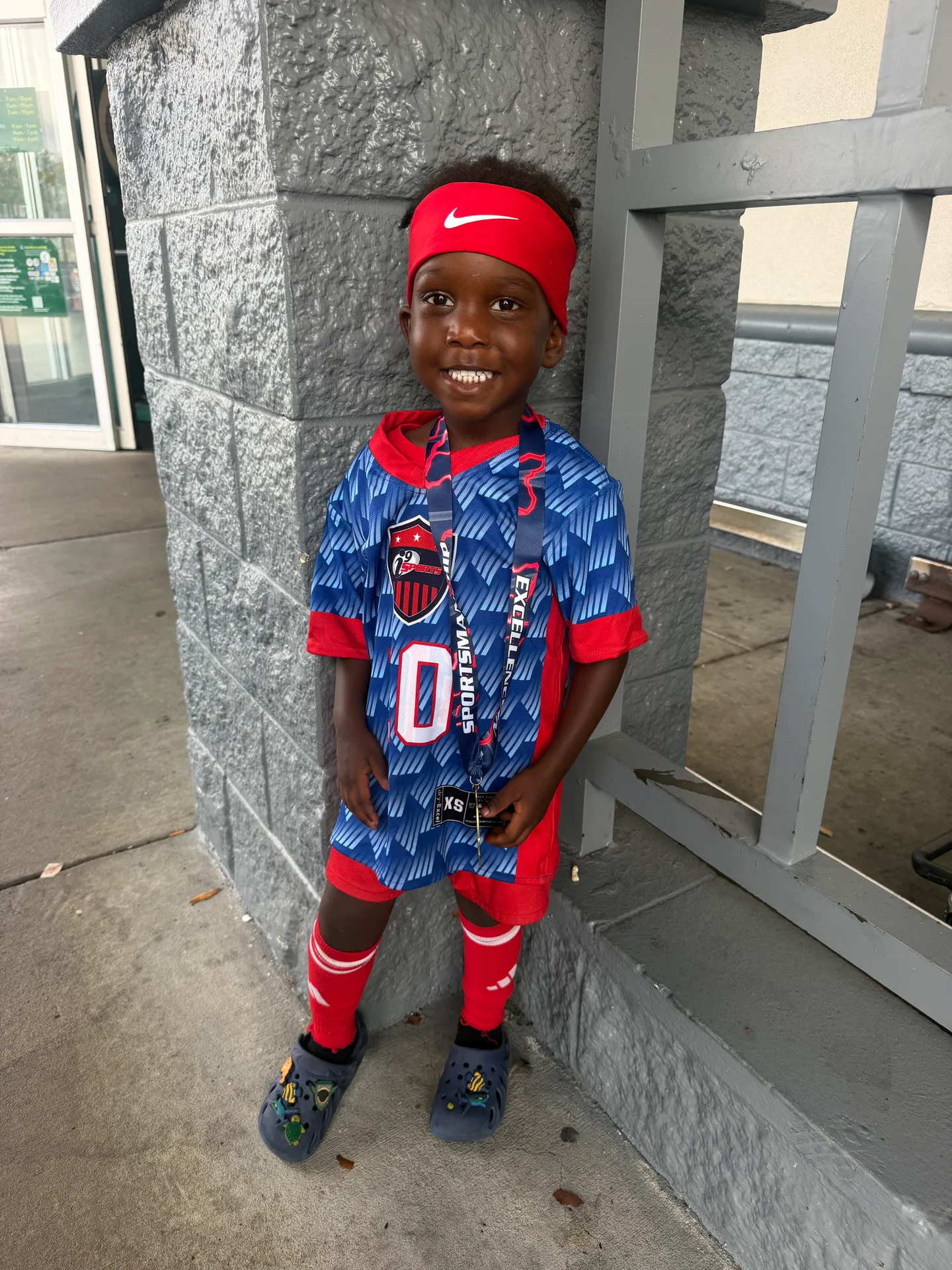
    Same thing with the 3-year-old soccer whiz who was caught on video dribbling the ball and playing as skillfully as a much older child in a match that took place in Winter Park, Fla., on Saturday.

    Some onlookers couldn’t handle it, accusing the 3-year-old of attention-seeking and calling for the league to remove him from the game. There was some back-and-forth, and authorities were eventually summoned. According to a police report, “the parents were upset that their child was being scorned for playing to [sic] well and was being taken out of the game.”

    Pictures of Nevada’s confused little face afterward break my heart.

    “At just 3 years old, Nevada could not understand why he was being taken away from a game he loved,” his mother, Martasia Griffin, wrote on a GoFundMe she created to help fund her son’s soccer journey.

    An undated photo of Nevada Pierre in his soccer uniform.Courtesy of Martasia / GoFundMe

    Luckily, the situation didn’t escalate.

    But the fact that the police even showed up on the scene of something as minor as a soccer match disrupted by one tiny Black boy’s skill at a sport is disturbing.

    We know from history that justice isn’t always served when it comes to Black children. Black boys, even the youngest and most vulnerable ones, are endangered in this nation.

    This kind of thing goes way back.

    It’s well-documented how police routinely engage in the adultification of Black children — habitually assuming Black boys and girls are older than they are, and failing to see them as adolescents — which is what may have happened with the youngster walking around Center City at night on his own. That could be why instead of helping the boy get home, they allowed him to go off by himself.

    Tamir Rice was only 12 and playing with a toy gun in a park in Cleveland when a police officer shot and killed him. That officer in 2014, like the one who killed the 1-year-old in the car outside Walmart in Mississippi, was never criminally charged.

    Kohen’s 2nd birthday would have been Nov. 1. He would be here if that cop hadn’t opened fire.

    He and all of our Black boys deserve to be protected; they deserve a chance at a full childhood, and they deserve something resembling justice. Instead, they’re too often treated like a threat and forced to grow up far too soon — if they have a chance to do so at all.

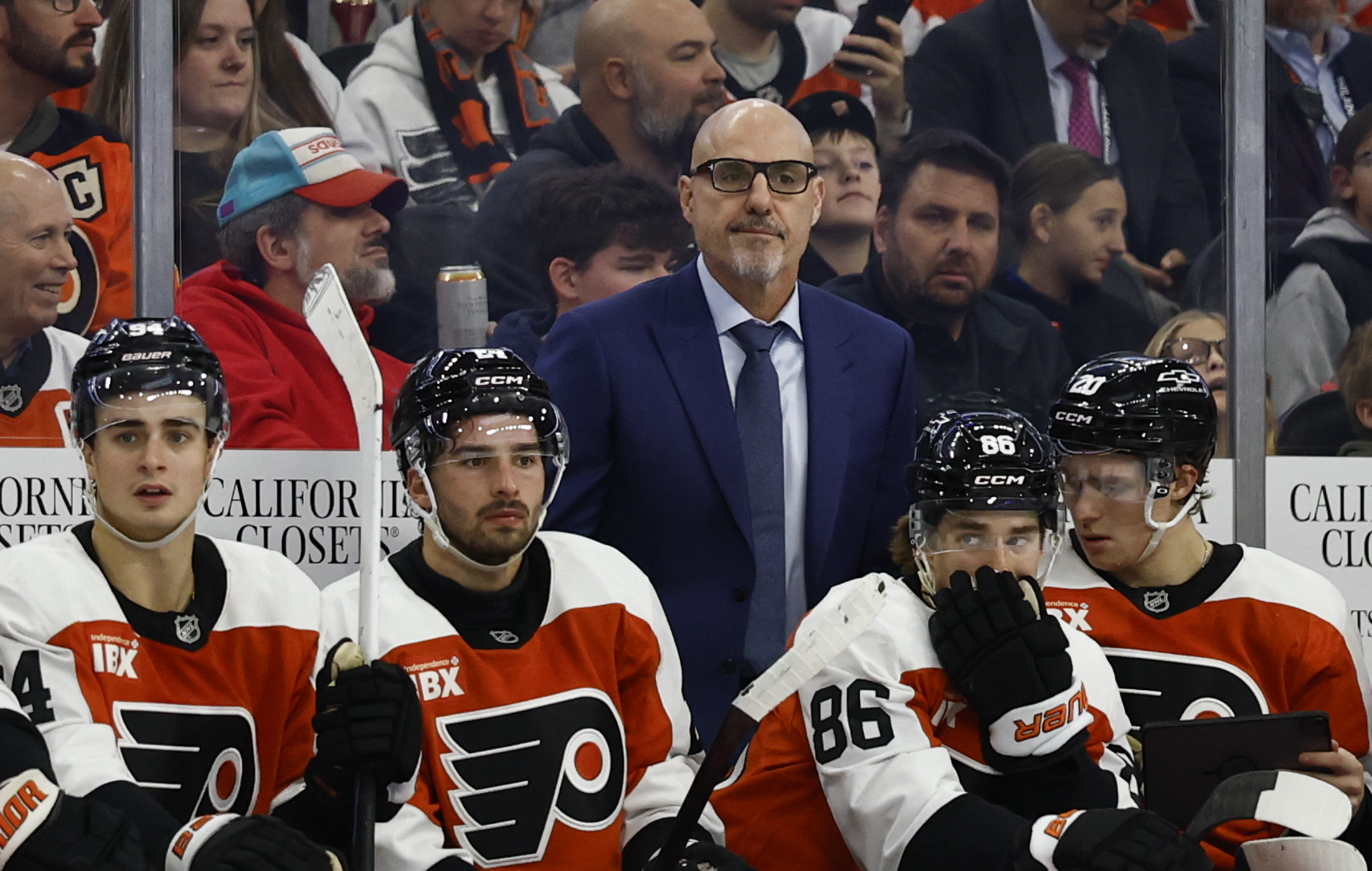
  • ‘We’re soft’: Sean Couturier calls out Flyers after another ugly loss, and Rick Tocchet agrees

    ‘We’re soft’: Sean Couturier calls out Flyers after another ugly loss, and Rick Tocchet agrees

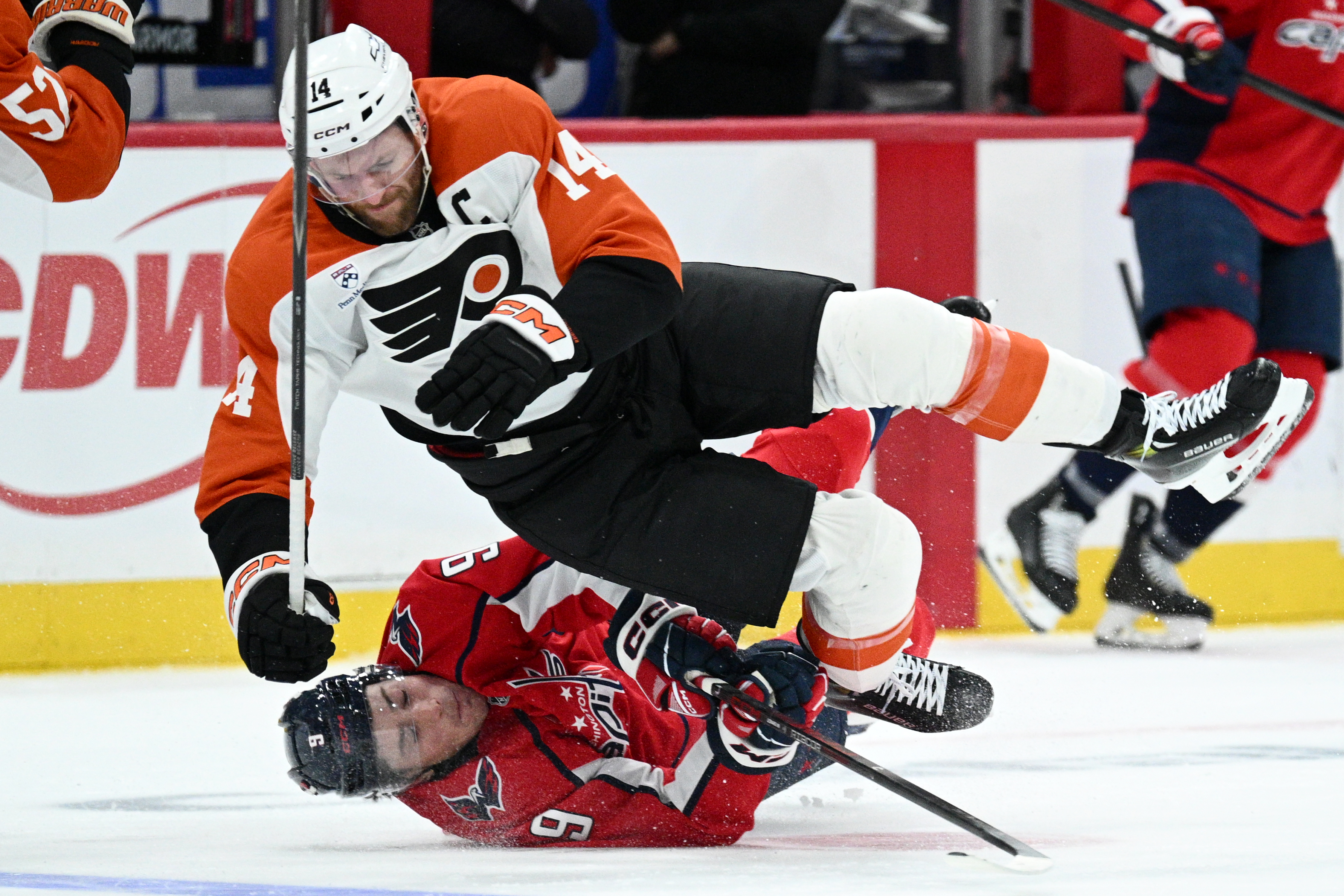
    WASHINGTON ― The Flyers lost 5-2 to the Washington Capitals on Wednesday night in what was their third straight loss. They now have just three wins in their first 15 games.

    Frustration is mounting, as evidenced by two interesting things said by veterans postgame:

    ‘We’re soft’

    “At times this year, we’re soft, I would say,” captain Sean Couturier said. “Not hard on battles, and lose battles easily. It’s one thing to make mistakes and not win a battle, but if you’re in there trying hard and stuff, that’s different. But we definitely need to pick up our physicality. It goes into competing as well, I think.”

    The press box at Capital One Arena was packed with scouts from different teams. Most are assigned to watch specific teams throughout the season and build reports on players for future use when discussing trade options.

    One scout who was asked about the Flyers’ current state said that the team is not tough to play against, is missing grit and that Broad Street Bullies flair. It was part of the lunch-pail identity the Flyers embraced last season on the way to a first playoff appearance in five years.

    The Flyers have the fourth most hits in the NHL; however, only the Flyers and Toronto Maple Leafs have hit the 15-game mark. They drop down to 13th overall in hits per 60 (22.85).

    “It’s like Hockey 101. It’s a tough physical sport. You’re going to get hit. You have to take a hit to make a play,” defenseman Nick Seeler said. “You can’t go poking for pucks and hoping something good happens. You have to go make it happen.

    “And it’s not always going to be perfect. You’re going to make mistakes, of course, but as long as that effort is there, you’re usually going to come out on the right side of things, and that’s what I’m talking about.”

    Added Couturier: “You’ve got to be ready each night. It’s a man’s game and a lot of battles; that’s kind of the basics of the game is battling, winning one-on-one battles, and creating chances off of that.”

    Flyers coach Rick Tocchet echoed the critique of two team leaders after Monday’s loss.Yong Kim / Staff Photographer

    Physicality isn’t just hits. It’s using the body to create havoc, turnovers, intimidate, or gain/maintain puck control — i.e., Hunter McDonald chasing down his blocked shot attempt and leveling Jacob Christiansen to keep the Flyers in control against the Columbus Blue Jackets.

    But hit stats do provide a glimpse into whether a team is playing hard. Last season the Flyers finished fourth in hits per 60 at 22.46 and hung their hat on being a team that outhustled and outworked opponents. This season, the Florida Panthers are setting the pace with 31.93 hits per game — led by a familiar face in Garnet Hathaway.

    This reporter said on the Snow the Goalie: A Flyers Podcast on Oct. 13 that losing Hathaway was the biggest offseason mistake by the Flyers. I stand by it for a couple of reasons.

    Sure, Hathaway did not have the best season on the ice, but his ability to grind and get under opponents’ skin often set the tone that the Flyers were a difficult team to face. Off the ice, although he didn’t wear an “A,” he was an unquestioned vocal leader who did not hold back in keeping guys accountable.

    And he wasn’t afraid to initiate contact. Hathaway, who enters Thursday tied for the third-most hits in the league, finished last season with the ninth-most hits and the 16th-best hits per 60 mark (22.02). Nic Deslauriers was fifth (26.60) up until he was traded on March 6 to the eventual Stanley Cup champion Carolina Hurricanes.

    Among all NHL players to play at least six games, 35-year-old Noel Acciari, 69th, is the only Flyer who ranks in the top 90 in hits per 60 this season. While Hathaway and Deslauriers would hardly cure all the team’s current ills, the Flyers could sure use a few more guys with their hunger and presence on and off the ice.

    “It’s not wrong,” coach Rick Tocchet said of Couturier’s “soft” assessment. “There’s certain parts of the game where we need a little bit more dig. I know we’re a little smaller team (the NHL Media site lists the Flyers with an average height of 6-foot-2 and weight of 199 pounds, both of which are pretty close to league average), but it still doesn’t make you an excuse for not getting a loose puck.

    “We always talk about body position, especially in pressure situations, and you’ve got to take the body. Don’t have to kill a guy, but I think that’s really what it comes down to if you want to go far, that you have to; you have to be somewhat physical.”

    Nick Seeler called out a selfish attitude that is not working for the Flyers. Yong Kim / Staff Photographer

    ‘It’s not about me, me, me’

    Seeler, who has made a career of being a gritty heart-and-soul player, specifically noted that the grit is “just not there” from this team. When asked why, he said he wasn’t sure. He was then asked if there have been conversations in the room.

    “Well, we certainly had some discussions in the room, especially with our starts and after the first. It’s just focus levels and compete levels and playing for the crest. That’s what it’s all about,” he said.

    “And it’s not about getting points. It’s not about ‘me, me, me.’ It’s about the team and playing for each other and sacrificing for each other. And it’s really not that difficult to understand. You play for the guy next to you; that’s what Flyers hockey is all about, and when we can start figuring that out at the start … we will be a better hockey team.”

    It would not be fair to speculate on the target of the comments. The team has disastrous plus-minuses from top to bottom, as even top point-getters like Matvei Michkov (minus-9) and Trevor Zegras (minus-5), and top defenseman Travis Sanheim (minus-10), have struggled to keep the puck out of their net at five-on five. According to Natural Stat Trick, only four players ― Hunter McDonald, Oliver Bonk, Jacob Gaucher, and Denver Barkey ― have a Corsi for percentage above 50% at five-on-five, while those same four, plus Cole Knuble, are the only Flyers with positive expected goals for share. All five of those players are essentially rookies.

    “You should never have a me attitude,” Tocchet said. “You’ve got to be careful what your agenda is. There’s times when you should change, get your buddy on the ice when he’s fresh, instead of trying for one more last rush, and then change on the way back.

    “Things like that, I think that’s what Nick’s talking about [the] ‘me, me.’ You can’t do that sort of stuff. Accountability starts [with] me. I’ll start to have to take some ice time from that. Leadership is going to have to do a little bit of that too. So I think it’s important that doesn’t creep in your room, 100%. The ‘me, me, I, I’ attitude.”