Tag: topic-link-auto

  • New Phillies hitting coach Peter Fatse brings experience with stars and analytics, but he’s already short on time

    New Phillies hitting coach Peter Fatse brings experience with stars and analytics, but he’s already short on time

    The Phillies had the second-oldest lineup in baseball in 2026.

    With an average age of 30.2 years, their hitters were only behind the Dodgers’ 30.9 years. And it’s been a while since the veteran-laden team has had a new voice at hitting coach.

    That’s what Peter Fatse is expected to provide, as he steps into a role formerly held by Kevin Long since 2022. Fatse was hired to manager Don Mattingly’s staff earlier this week, with Joe Cronin and Edwar Gonzalez named as his assistant hitting coaches.

    “I think hitting is always a collaboration with the player,” Fatse said at his introductory news conference on Friday. “I think obviously with players with 10-plus years in the big leagues, it’s even more the case. They have more runway in their careers. So I think it’s just understanding those things.”

    Fatse joins Carlos Mendoza, the Phillies’ new infield and third base coach, as the two notable additions to the coaching staff after the club’s wild-card exit in October.

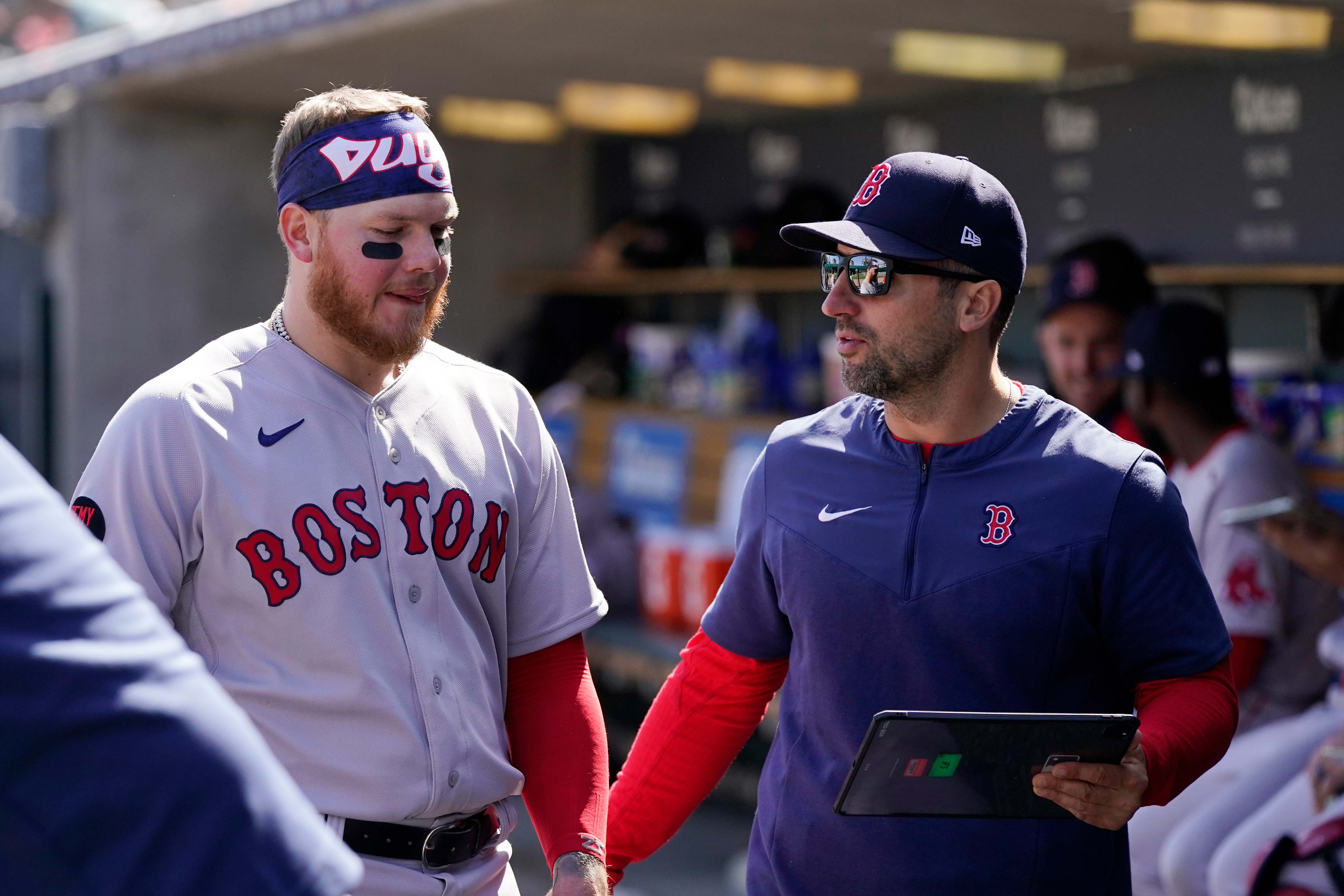
    And Fatse has plenty of experience dealing with veteran stars in his previous stop. He joined the Red Sox as assistant hitting coach in 2019, was promoted to hitting coach in 2021, and served in that role until he and the remainder of Alex Cora’s staff were fired in April.
    Fatse was most recently with the Boston Red Sox.Steve Helber

    Fatse pointed to players like J.D. Martinez, Christian Vázquez, Mitch Moreland, and Kevin Pillar as veterans he worked with early on in Boston that helped him refine his approach for coaching experienced players.

    “The ‘why’ is the most important part to me as a coach,” Fatse said. “You have to understand why somebody does something or what has helped them throughout their career get to this point. Because my mentality is you have to understand, appreciate those things, before you just jump in and make an assumption.”

    Fatse views relationship building as one of the most important parts of his job. But this offseason, the timeline will be compressed with the collective bargaining agreement ending on Dec. 1. During the lockout that is expected to follow, teams will be unable to communicate with players until a new CBA is reached.

    That means Fatse has a month to start connecting with the Phillies hitters. He has already been exchanging text messages with them, and expects to start traveling to meet players at their offseason homes in person soon.

    “Earning that trust is really important,” Fatse said. “So we’ve already started the communication process, starting to work through what those trips are going to look like, kind of prioritize those things, but that is all in the works within the next couple weeks.”

    Fatse has spent his coaching career until now in the American League, which meant watching most of the Phillies from afar during interleague play. But he did briefly coincide with Kyle Schwarber in Boston in 2021. The slugger was traded to the Red Sox at the trade deadline that year, and after returning from injury, helped the club advance to the American League Championship Series.

    Kyle Schwarber tied for the Major League lead with 45 home runs last season.Jose F. Moreno / Staff Photographer

    “Honestly, one of the best teammates I think I’ve been around too,” Fatse said. “It was a very short time, and obviously we were in a chase, and the way he kind of galvanized that group.”

    While the Phillies were searching for Long’s replacement, one of president of baseball operations Dave Dombrowski’s top priorities was finding a candidate who is able to understand and use analytical information and tools at their disposal.

    “I do think it’s imperative that a lot of the contemporary methods that are available to us are being used,” Dombrowski said.

    Fatse fits that bill. After he was let go from the Red Sox, he joined the Tampa Bay Rays as a hitting consultant for the remainder of the 2026 season. While there, Fatse worked closely with their research and development department.

    He worked primarily with Rays analysts on KinaTrax, a motion-capture technology that provides teams with biomechanical data on their hitters and pitchers. Fatse was already familiar with the system from his time in Boston.

    “How can we use this information to get more granular, deeper within the swing?” Fatse said. “And basically get a better understanding of the individual aspects within a swing that we can use for whatever: modeling, coaching, development. So I spent a lot of time in that space.”

    Now the Phillies hope Fatse can use those skills to help revitalize an offense that finished 21st in baseball in batting average (.240), 23rd in on-base percentage (.312), and 24th in slugging (.395).
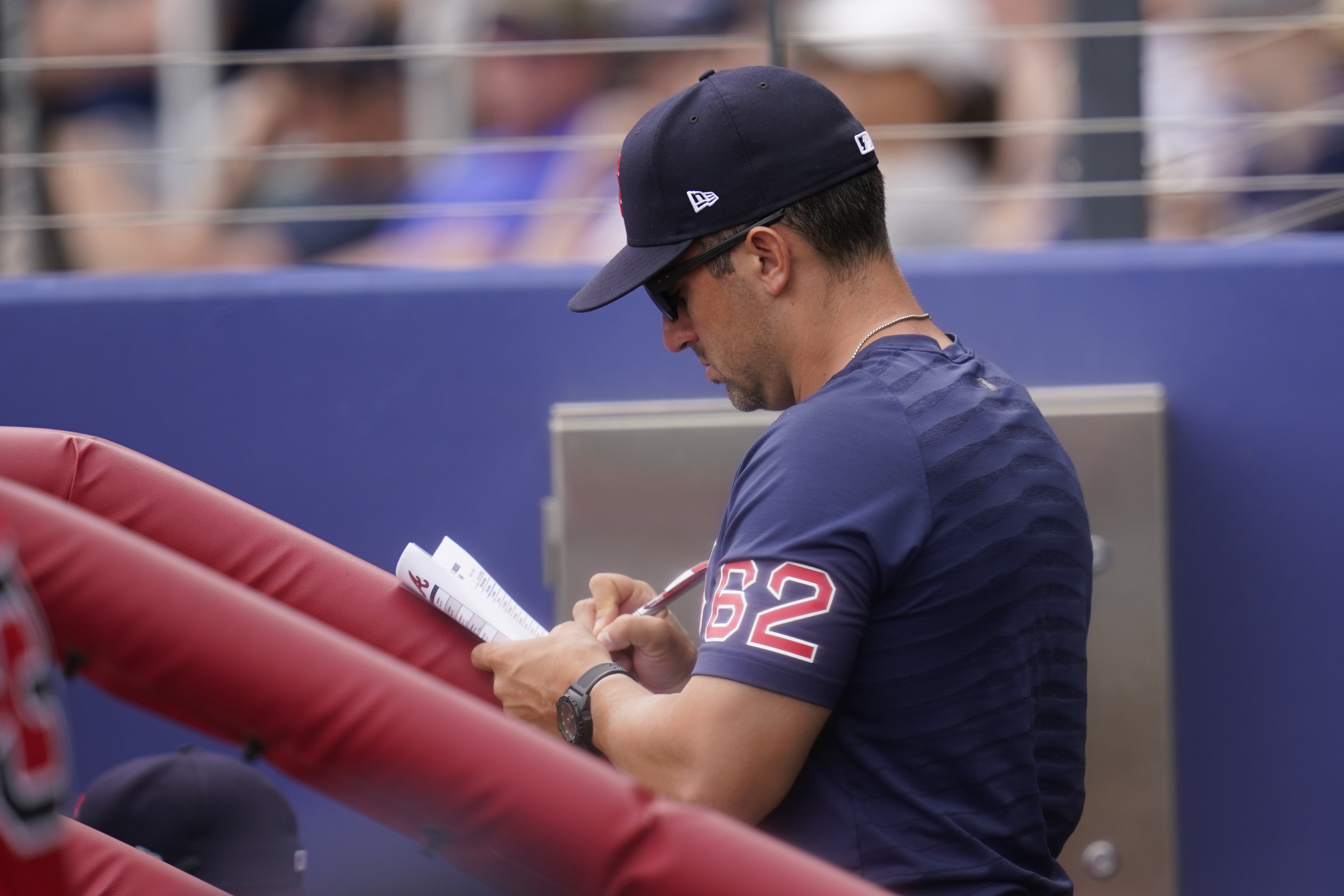
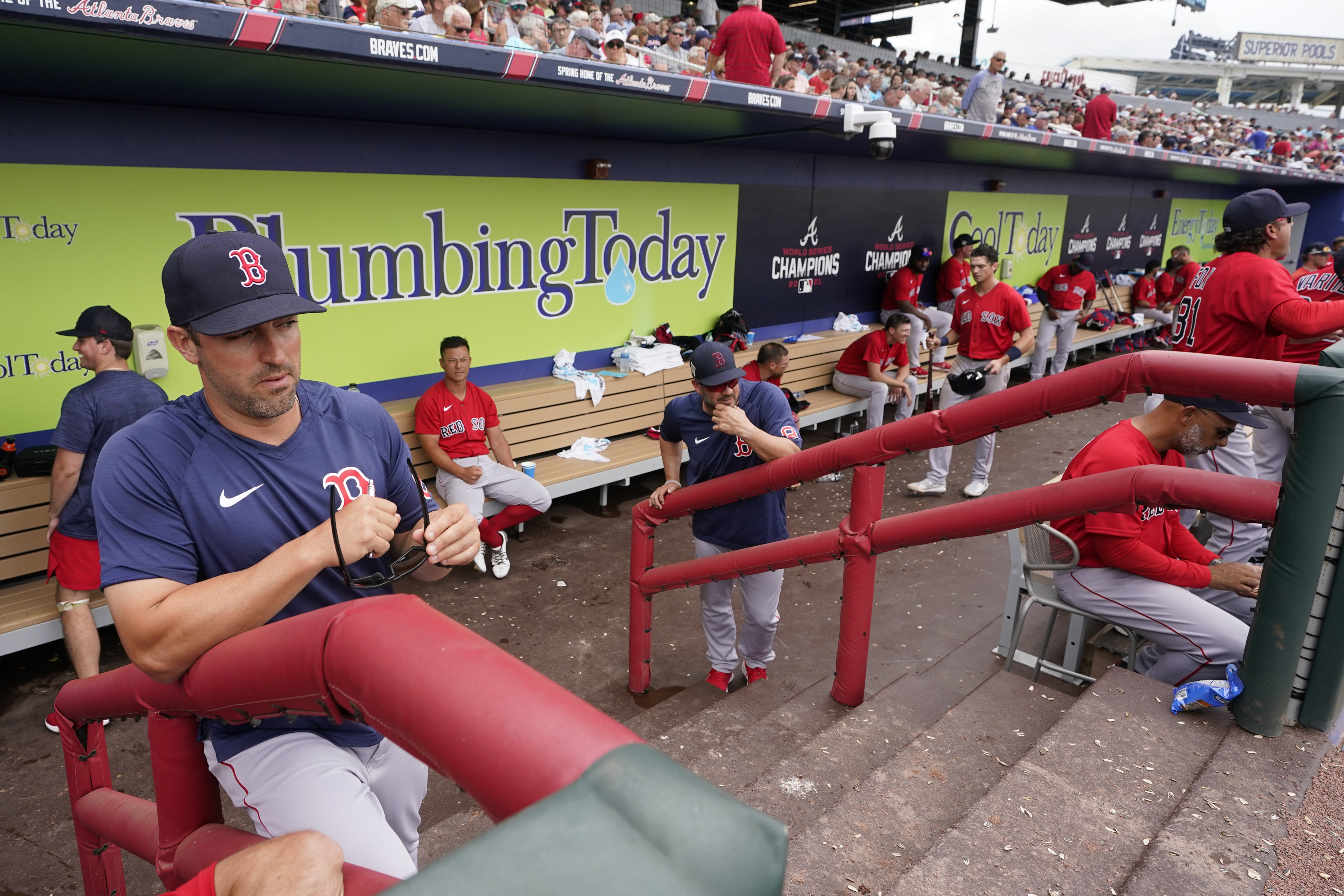
    New Phillies hitting coahc Peter Fatse takes notes during a 2022 spring training game when he was with the Red Sox.

    One of the simpler stats Fatse likes to keep a close eye on as a barometer for where his team is at collectively is OPS. The Phillies had a .707 marker as a team in 2026, ranking 22nd in MLB.

    “The teams that are putting themselves in a position to score more runs are going to be on base more,” Fatse said. “And [slugging], obviously, is one of those things that kind of ebbs and flows with the season. And I generally, just basic baseline, will look at that.

    “Obviously, you can look at your expected statistics that are more reflective of the quality of contact you make, and things like that. But generally, just at its simplest level, OPS is a is a pretty strong indicator of run scoring.”

    The Phillies lineup also infamously has a tendency to expand the strike zone, and their 32.6% chase rate in 2026 ranked 27th in baseball.

    According to Fatse, the approach to reducing that typically has to be individualized for each player.

    “I think it’s an opportunity for this group,” Fatse said.
  • As squash’s U.S. Open approaches, Philly’s own pros make themselves at home at the Specter Center

    As squash’s U.S. Open approaches, Philly’s own pros make themselves at home at the Specter Center

    Squash usually is a one-on-one game. But for the Philadelphia Freedom, it’s all about teamwork, strategy, and racing against the clock.

    Now in their third season, the Freedom compete in the National Squash League, which puts a twist on the traditional game for men and women (Philadelphia also has a men’s team, the Lightning).

    “Personally, one of the reasons I decided to get involved was because I thought it was a good opportunity,” Sunil Desai, the Freedom’s owner, said Thursday as his team lost, 45-34, Seattle Freeze. “I think there’s something to this, and I, as well as all the players out there, would really like to see squash grow.”

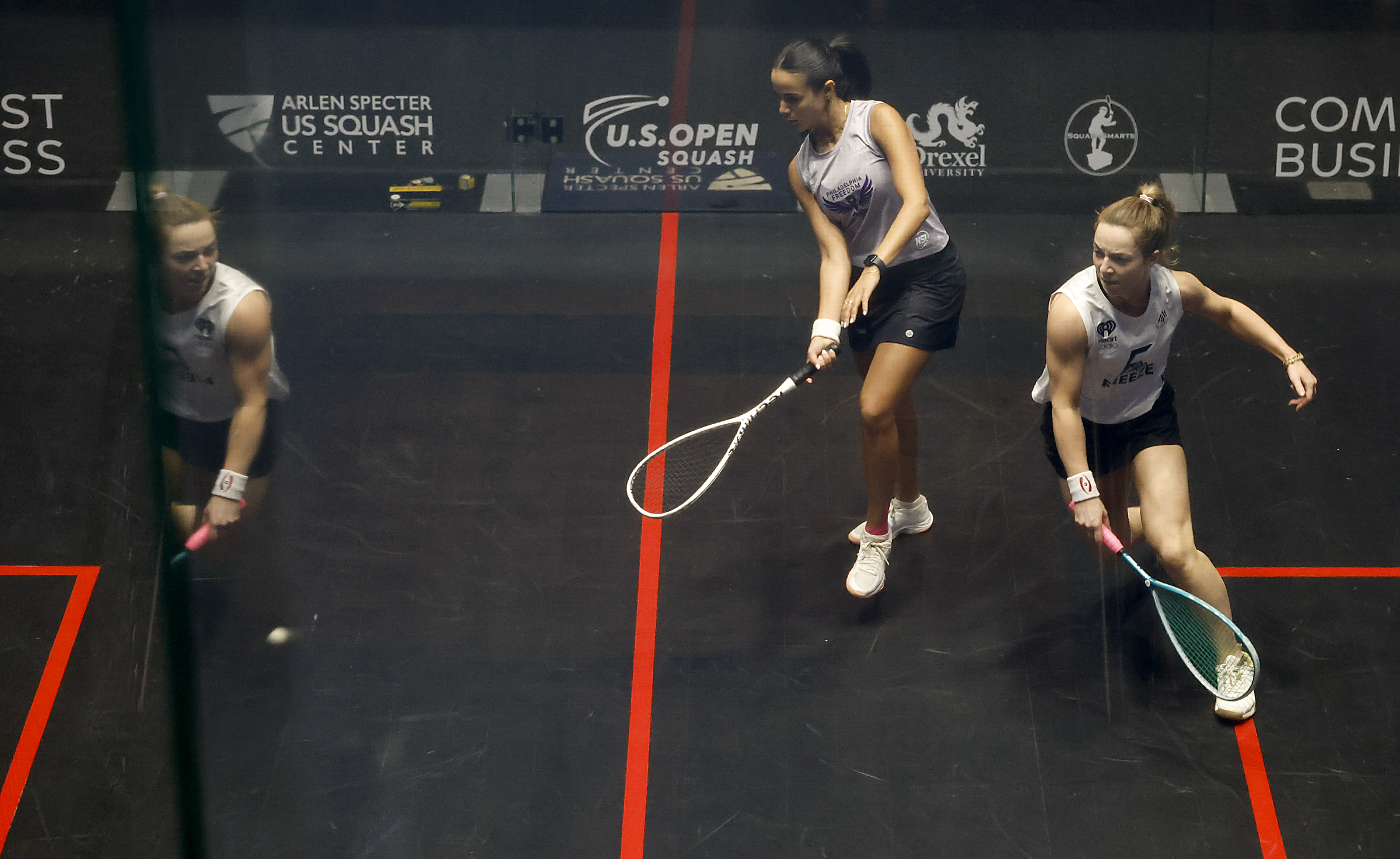
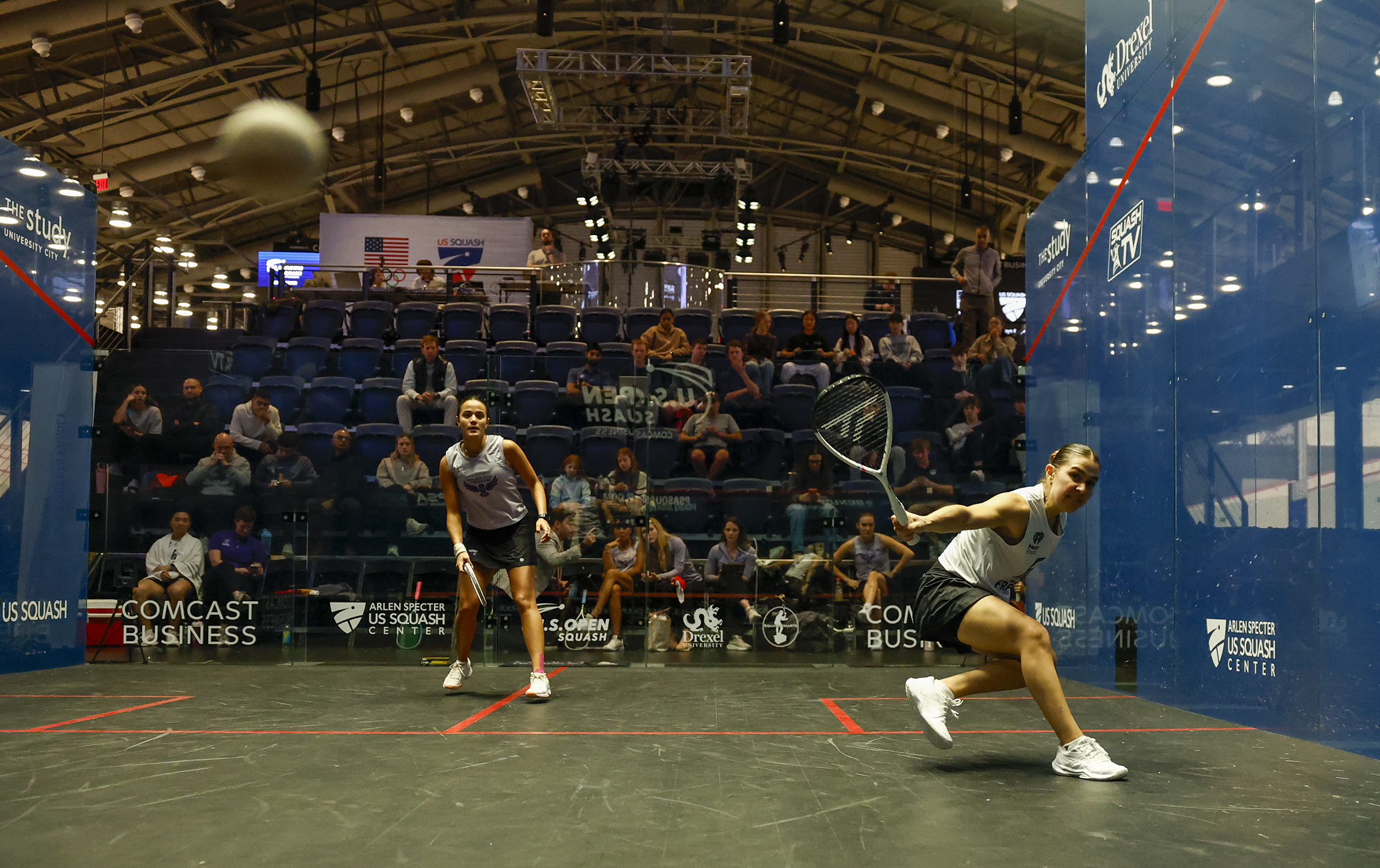
    Hannah Craig of the Seattle Freeze (right) goes after the ball against Nour Aboelmakarim of the Philadelphia Freedom in the first period on Thursday.Yong Kim / Staff Photographer

    In the NSL, the clock is just as important as the scoreboard. Matches are divided into three timed periods, forcing players to rethink how they approach every rally.

    Each team gets three starters and three substitutes. The first two periods are 20 minutes long and have one PowerPlay (where only the attacking team serves and scores), while the third period has two PowerPlays and four subs for 30 minutes of action. The team with the most match points after three periods wins.

    “If it’s your PowerPlay, you want to try and win points as fast as possible,” Desai said. “If it’s not your PowerPlay, you want to make points last as long as you can to just waste time.”

    It’s a learning curve, even for experienced players.

    “You can tell them all you want beforehand, and until they get out there, it doesn’t always register,” Desai said. “So the more they play the format, that’s the progression. They learn to adjust.”

    Though the Freedom’s star, current world No. 5 Olivia Weaver, is from Chestnut Hill, others hail from Egypt, France, and Norway. The sport itself originated in England.

    “We travel so much for this sport, it has become normal,” said world No. 35 Mariam Metwally as she stretched after the match. “We have families that take us in in America, which is unlike many other places. They are so nice here.”

    Added Norway native Madeleine Hylland: “It’s a very small community, which can be helpful in feeling comfortable with the travel.”

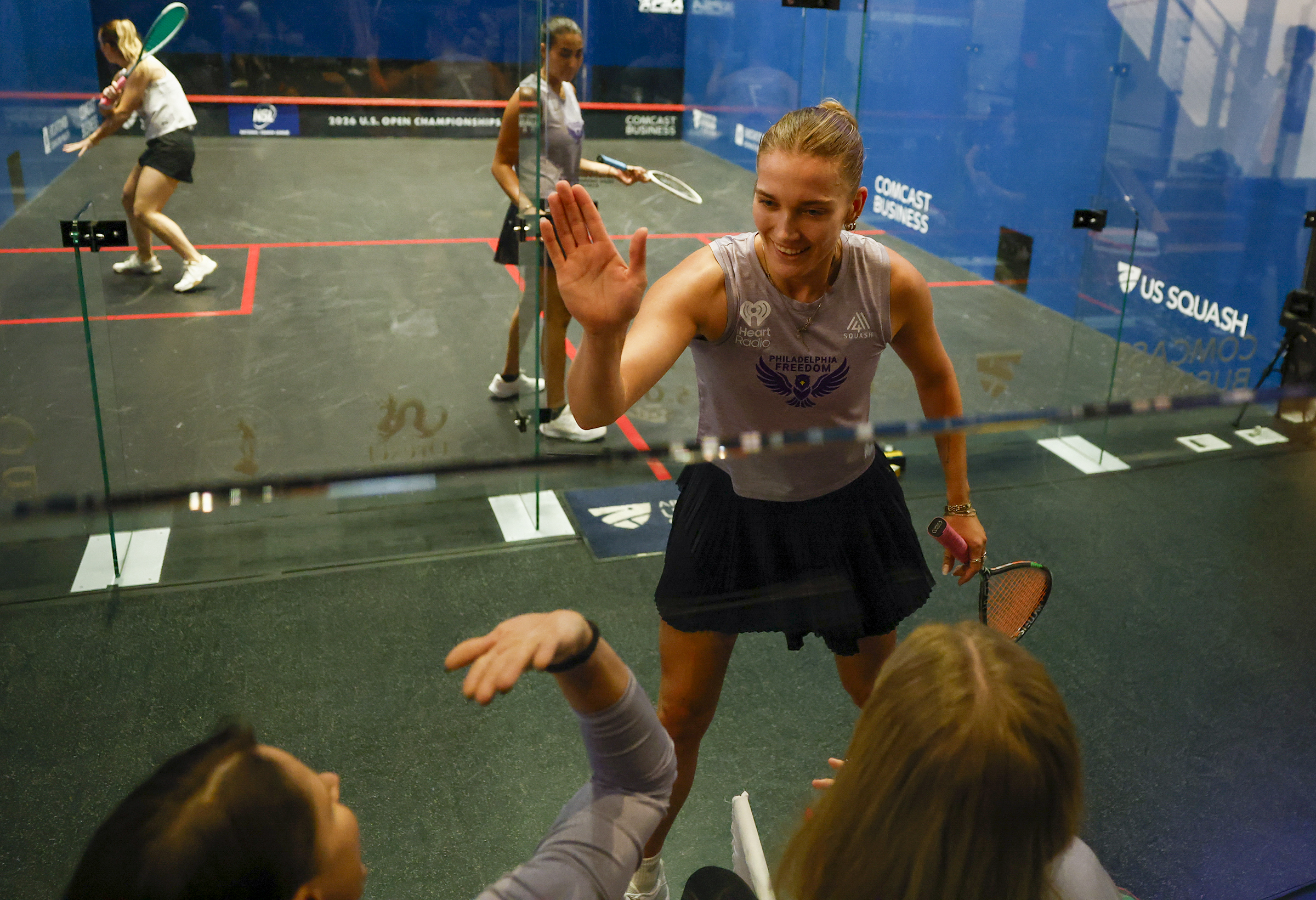
    Madeleine Hylland of the Philadelphia Freedom high-fives her coaches in the second period. Hylland hails from Norway.Yong Kim / Staff Photographer

    Unlike tennis, which can be played on a variety of surfaces, squash requires specialized indoor courts, presenting a challenge when introducing the sport to youth and school programs.

    Desai coaches girls’ squash at Conestoga High School, where the goal is to get as many girls on the court as possible and continue to grow interest in the game. Several members of the high school girls squash team attended Thursday night’s Freedom match.

    “It’s really cool to get to watch the pros play,” said Lizzie Brooks, a senior squash player at Conestoga. “I feel like we all learn a lot when we get to come and watch. It’s just really fun.”

    Brooks said she was especially excited to watch the upcoming U.S. Open, which starts Sunday at the Arlen Specter US Squash Center on Drexel’s campus. Several Freedom players plan to compete.

    “The Open is crazy,” Brooks said. “We’re going on one of the days, but it will be way more packed than it is today. But still, it feels like everyone kind of knows everyone here, even during the Open.”

    Said Desai: “As you can see, it’s a very friendly community. You can have competition that brings out the best in everyone. And you can have rivalries and at the end of the day still actually be friends.”

  • ‘Getting close’: Help is on the way as Travis Konecny and Owen Tippett return to practice for reeling Flyers

    ‘Getting close’: Help is on the way as Travis Konecny and Owen Tippett return to practice for reeling Flyers

    Owen Tippett and Travis Konecny returned to practice on Friday for the first time since each was placed on injured reserve. Both are “possibilities” for Sunday’s home game vs. Utah, coach Rick Tocchet said.

    “They’re now day-to-day more than ever, it’s getting close,” Tocchet said. “Hopefully they get a few good days of practice and then, whether they come to me or whether the doctors say they’re ready to go, that’s the next process.”

    Konecny, who was placed on injured reserve on Oct. 11 with a lower-body injury, wore a yellow non-contact jersey, while Tippett, who has been on IR since Oct. 19 with an upper-body ailment, wore a regular black jersey. Both took part in the entire practice, with Konecny clearly testing out his right leg in early skating work after he got on the ice. He was not visibly limited in the full-team drills and took hits and played physically.

    “When a player like — originally you put him in a non-contact, but then as practice goes on, he feels like ‘Hey, I need contact,’” Tocchet said. “You’ve got to have the player have a feel too. He is [so] safely, he could have taken some contact, but I think as the practice went on, he was like, ‘Hey, I want more [contact].’ I think he actually had a good practice today.”

    Konecny, who has led the Flyers in scoring in six of the past seven seasons, has not played since hitting Ottawa’s Tim Stützle on Oct. 8. Tippett last played on Oct. 15 against Detroit.

    Center Jacob Gaucher was returned to Lehigh Valley on Thursday, which is another indicator that one of the two might be ready to play on Sunday against Utah. Tippett has one goal and one assist in nine games this year, while Konecny has three assists in five games.

    The Flyers have missed Owen Tippett’s speed and physicality over the past few weeks.Monica Herndon / Staff Photographer

    Fourth-line winger Noel Acciari missed practice after an injury scare in Washington; the Flyers rotated Konecny and Cole Knuble alongside Trevor Zegras and Christian Dvorak, and slotted Tippett in with Denver Barkey and Michael Bunting in Acciari’s usual spot. That could also be an indicator that despite the jersey colors, Konecny is closer to a return than Tippett. Knuble has made a strong early impression in his first stint with the Flyers, but if Konecny and Tippett draw back in, he might be sent back down to Lehigh Valley.

    The Flyers, mired in a three-game skid after winning three in a row, could use both of the veteran wingers’ scoring touch, but they especially miss Konecny’s vocal and emotional leadership. After the game in Washington, multiple veterans on the team, including captain Sean Couturier, criticized the team’s competitive level and togetherness on the ice. Tocchet said it’s “huge” to have Konecny back in the room skating with the group.

    “There’s adversity, expectations that hit the team, we’re trying to handle it, and we’re learning every day,” Tocchet said. “Having a veteran in there does help it. We’re missing three or four guys that help calm situations down. We’re asking a lot of young guys to do big roles for our team early in their career, like 19-, 20-year-olds, and I think we have to take it easy on them sometimes.”

    Breakaways

    The Court of Arbitration for Sport ruled that security issues are not sufficient reason for the Russian hockey federation to be banned from international competition, paving the way for Russia to compete again as early as the World Juniors in December. Multiple European federations have already spoken out against the decision, including 2027 World Championship host Germany. Russia has not been allowed to compete in International Ice Hockey Federation (IIHF) tournaments since 2022 due to the country’s invasion of Ukraine. Flyers winger Matvei Michkov would be eligible to represent Russia in that 2027 tournament if the decision is upheld.

  • Collingswood voters will decide on a $4.56 million operating bond to keep schools running

    Collingswood voters will decide on a $4.56 million operating bond to keep schools running

    The Collingswood school district needs more money to stay afloat and hopes voters will approve a $4.56 million operating bond, the first of its type in the district, during this year’s general election.

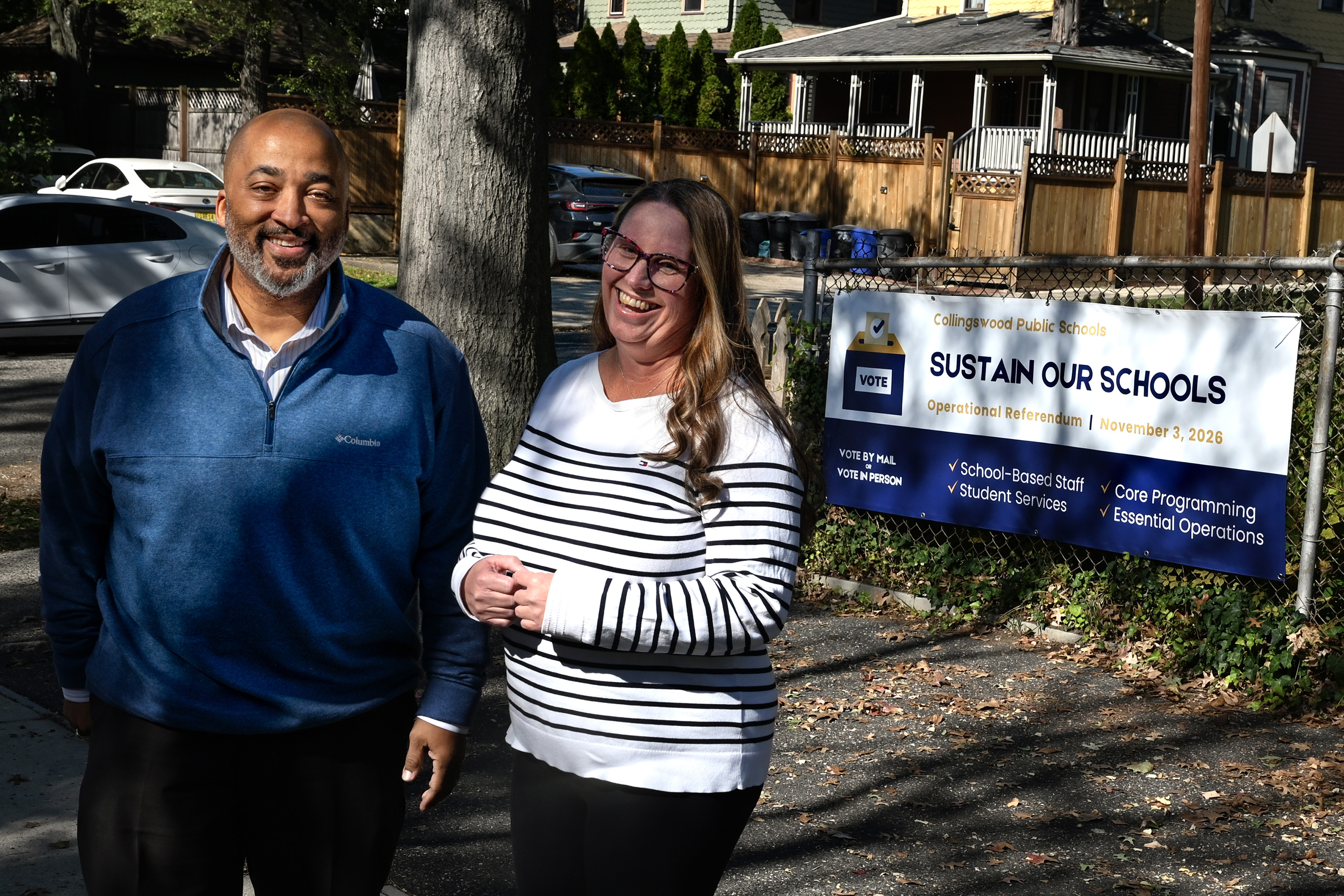
    Superintendent Fred McDowell said the bond question, if approved by voters Tuesday, would fund day-to-day operations, reduce class sizes, and retain teachers and programs for the 2027-28 school year.

    “We’ve done everything at the local level that we can do in order to address this systemic problem,” McDowell said. “The funding is no longer there that allows us to do that without devastating additional reductions.”

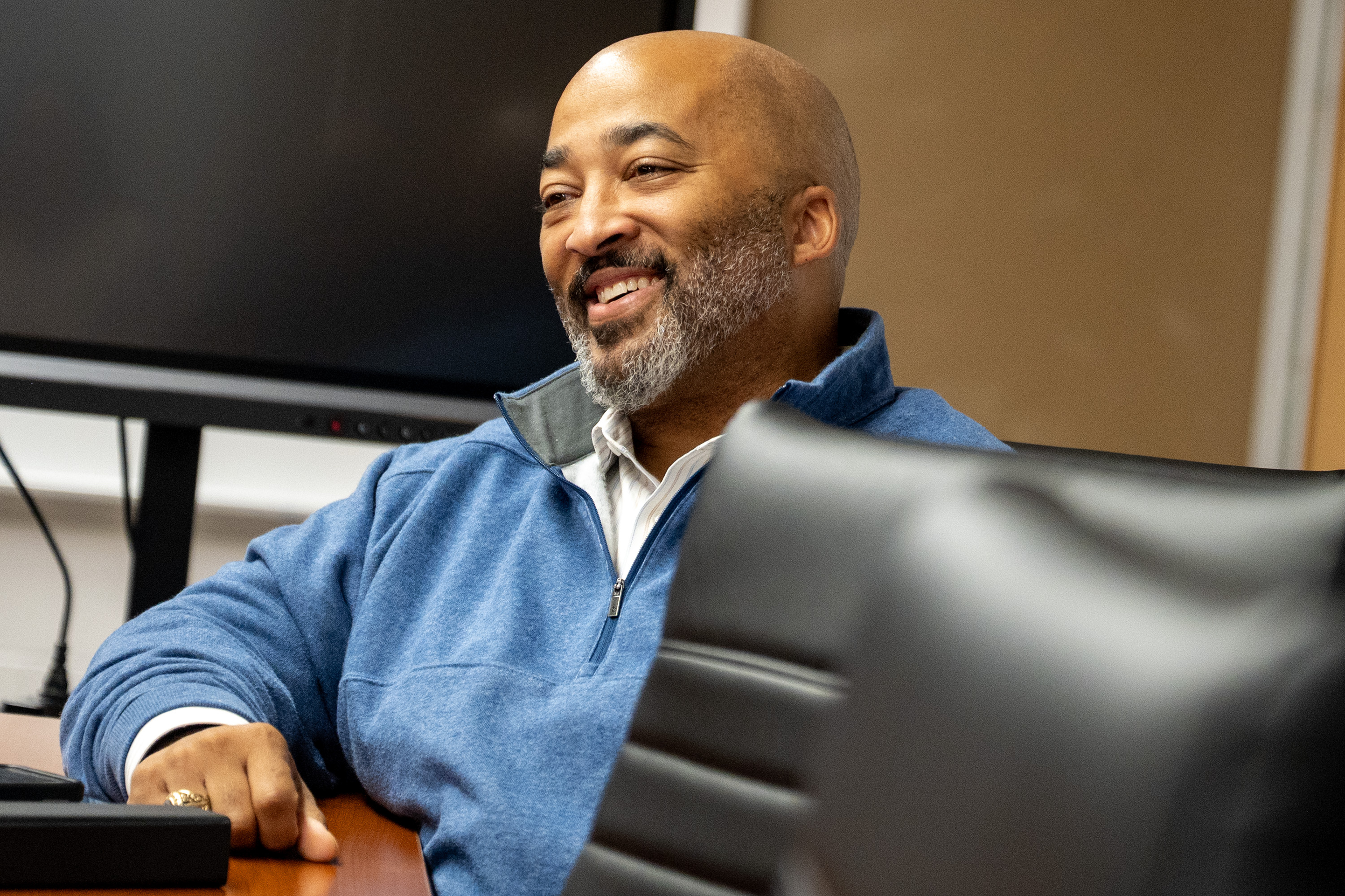
    Superintendent of Collingswood Public Schools Fred McDowell at the district offices on Oct. 27. He is promoting a $4.56 million operations referendum on the Nov. 3 general election ballot. In 2024, voters rejected a $44 million bond referendum.Tom Gralish / Staff Photographer

    Like many districts across the state, Collingswood has had a structural deficit for years. Faced with declining state aid, districts have raised property taxes and cut programs to plug gaping budget holes.

    The question on Tuesday’s ballot could be a tough sell in Collingswood, which cut staff and programs and closed an elementary school in June to close a budget gap for the current school year. If approved, it would add $1,324 annually to a tax bill for a home assessed at the borough average of $448,000.

    “We understand this is a huge ask,” said board president Kelly Maia, who has two children in the district. “If we had another option, we would take it.”

    In 2024, Collingswood voters overwhelmingly rejected a controversial $44.5 million bond referendum that would have decommissioned two schools, reconfigured grades, and made changes to address racial disparities.

    Prior to the pandemic in 2020, Collingswood generated between $500,000 and $1.2 million from surplus funds to boost its budget, McDowell said. Those funds have been depleted, he said.

    Collingswood’s tax levy yields about $480,000 a year, McDowell said. The rollover costs for salaries, benefits, and state mandates total more than $4 million, leaving a budget gap, he said.

    For the current school year, the district had a $3.3 million deficit. It raised property taxes 6.4%, cut 33 positions, consolidated campuses, and shuttered James Garfield Elementary, its second-oldest school. Collingswood enrolls about 2,500 students.

    McDowell expects another tough budget year after the state releases aid figures in February. He anticipates a possible deficit between $2 million and $4 million.

    Three other districts in the state — Burlington Township and two others in Bergen and Hunterdon Counties in North Jersey — are also asking voters to approve operating bonds Tuesday. One district, Bordentown Regional, is asking voters to approve a capital bond.

    More New Jersey districts are turning to operating bond questions like Collingswood to generate additional funds to add to their budgets. It enables districts to exceed the 2% property tax levy cap.

    The increases are needed because of rising health insurance costs and shrinking state aid that has left districts with budget shortfalls, officials say. There have been calls for Gov. Mikie Sherrill to revamp the state’s school funding formula.

    The Burlington Township school district is asking voters to approve a $567,000 operating bond referendum to raise additional funds for the 2027-28 school year.

    If adopted, the funds would be used to hire two additional elementary school teachers, add a music teacher and expand the music program, reduce class sizes, and expand middle school athletic programs.

    It would mean a permanent increase in the district’s tax levy. It would add $50 to the annual tax bill for a home assessed at the township average of $234,975, said district spokeswoman Liz Scott.

    Burlington Township voters approved two bond questions in 2024 totaling $38 million to pay for renovation projects, roofs, HVAC systems, lockers, and classrooms. The district said at the time that the tax impact would be minimal because a debt service was expiring.

    Also in Burlington County, the Bordentown Regional school district is asking voters in Fieldsboro, Bordentown City, and Bordentown Township to approve an $86.1 million bond referendum.

    Superintendent James Altobello said the bond, one of the largest in the district’s history, would be used for renovations at all five district schools.

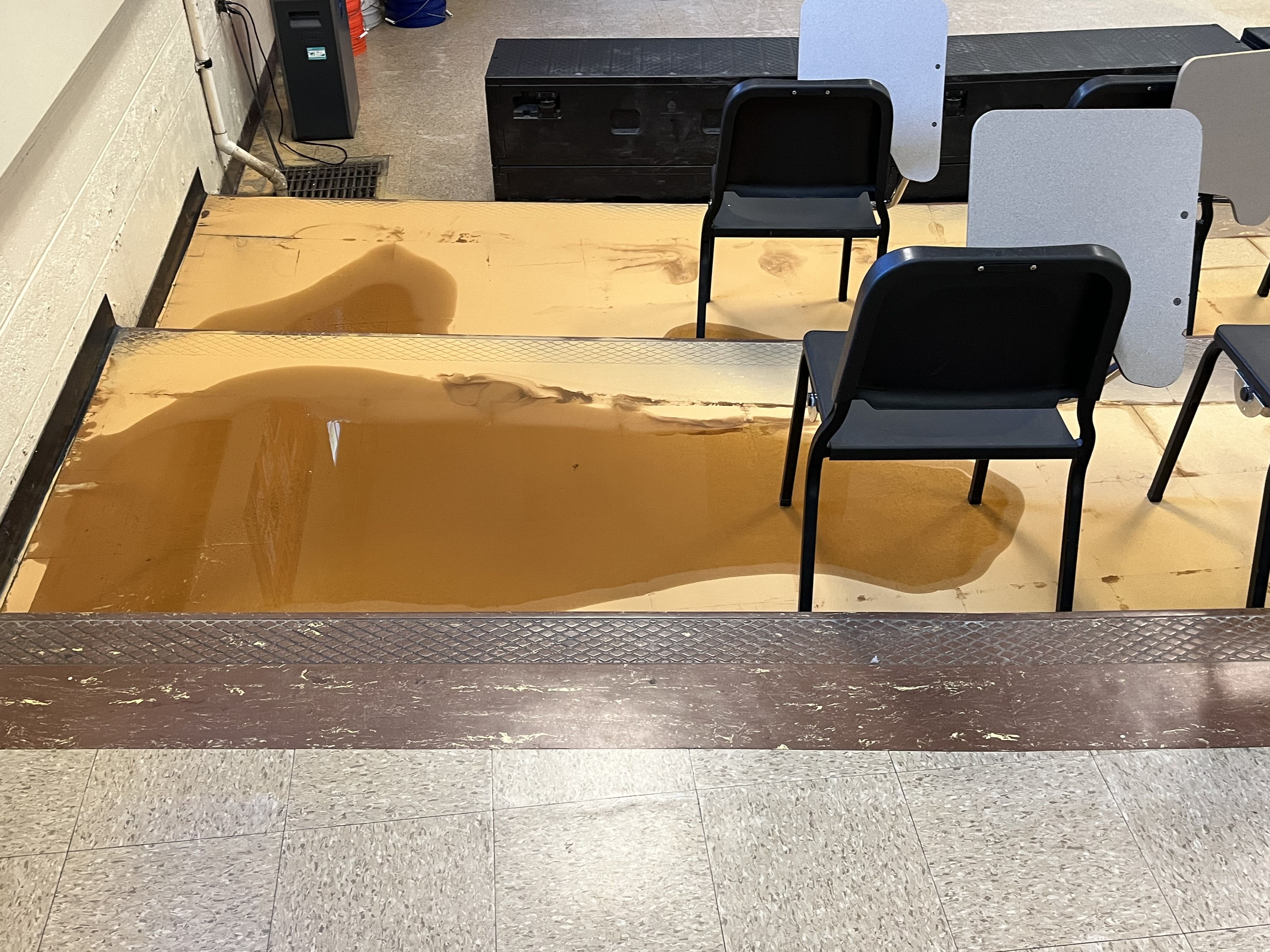
    Water pools on the floor of the music room in Bordentown Regional Middle School.Bordentown Regional school district

    The proposed projects include replacing leaking roofs, upgrading heating and air conditioning systems, replacing windows and interior doors, and upgrading the fire alarms, public address system and security systems, Altobello said.

    “We have some serious needs that we have to address,” Altobello said. “All of the things that we’re talking about are critical areas of need.”

    If approved, the bond would add $588 to the average annual tax bill in Bordentown Township, $456 in Bordentown City, and $420 in Fieldsboro. The state would pay $34.4 million of the costs.

    Altobello said the district would pay for the projects from its operating budget if voters reject the referendum. That would take years and the district would not have the state’s contribution, he said.

    “The work doesn’t go away,” he said.

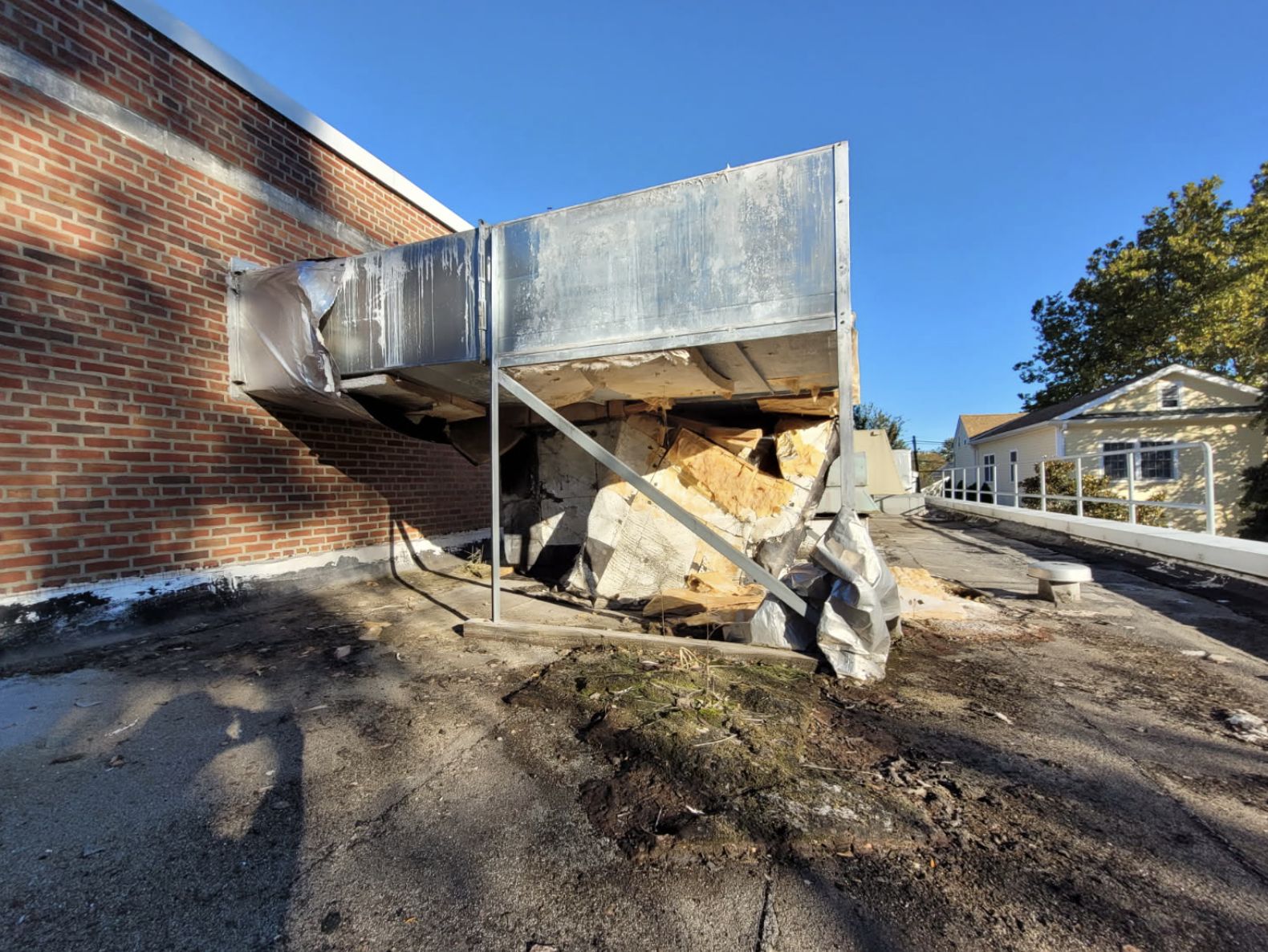
    Bordentown officials say the bond referendum would help repair outdated, inefficient and deteriorating heating and air conditioning units, like this shown one at Clara Barton Elementary School.Bordentown Regional School district

    Statewide, voters in 13 school districts on Tuesday will consider bond questions totaling more than $244 million and fill 1,483 school board seats, according to the New Jersey School Boards Association. The state would contribute $97.6 million. The special election is one of five times during the year that school boards may ask voters to approve a capital or operating bond issue or special question.

    The referendum questions can struggle to win voter support because they typically seek a property tax increase. They allow districts to pay for projects that cannot readily be funded through their annual operating budgets.

    Elsewhere in the region, voters in Washington Township in Burlington County are deciding whether the school board should be reduced from five members to three.

  • An Atco man has been arrested for fatal Voorhees hit-and-run

    An Atco man has been arrested for fatal Voorhees hit-and-run

    Less than a week after a fatal hit-and-run along Route 73 in Voorhees, police have arrested a 24-year-old Atco resident in connection with the crash.

    Aaron Tart Jr. was arrested Friday and charged with second-degree leaving the scene of a motor vehicle accident resulting in death, third-degree endangering an injured victim, and fourth-degree tampering with evidence. Tart was taken to the Camden County Correctional Facility as he awaits a detention hearing in Superior Court.

    Investigators allege that Tart was driving a Ford Fusion around 1:17 a.m. Oct. 25 when he struck and killed Md Maksudur Rahman, 71, while he rode his bicycle home from work at the 24-hour Harmony Diner. The cycling route along Route 73 was one that Rahman had taken regularly for years, his son, Mahmudur Rahman, said.

    The Berlin resident was pronounced dead at the scene.

    After the crash, Tart covered the vehicle and had the windshield replaced, according to police.

    Police are still looking for a dark-colored midsize SUV, possibly a Honda Pilot, that they believe also struck Rahman that night and fled the scene.

    Originally from Bangladesh, Rahman immigrated to the United States more than a decade ago, his son said, stopping briefly in New York before settling with his wife in Berlin in 2014.

    In addition to his son, Rahman is survived by his wife, a daughter, and six grandchildren, Mahmudur Rahman said.

    The Rahman family and local investigators are asking that any witnesses or anyone with information about the incident contact the police.

  • Philly Council subpoenas Parker administration official and Drexel president over Academy of Natural Sciences closure

    Philly Council subpoenas Parker administration official and Drexel president over Academy of Natural Sciences closure

    Philadelphia City Council on Thursday took the exceedingly rare step of issuing subpoenas for testimony, compelling a member of Mayor Cherelle L. Parker’s administration and the president of Drexel University to appear at an upcoming hearing about the closure of the Academy of Natural Sciences.

    Vincent Thompson, a spokesperson for Council President Kenyatta Johnson, said Friday that Council’s Committee on Legislative Oversight issued subpoenas to Deputy Mayor Patricia “Trish” Wellenbach, who is serving as a senior adviser to the Academy that is operated by Drexel University, as well as Drexel President Antonio Merlo.

    Both officials did not appear for a hearing on the Academy’s closure on Monday, angering the Council members probing the matter.

    A Drexel representative told Council that Merlo had to be on campus for a site visit by the Middle States Commission on Higher Education, and Wellenbach submitted written testimony that said she was not the “appropriate” person to testify, given she could not speak on behalf of Drexel or the Academy.

    Drexel President Antonio Merlo on Drexel Campus in Philadelphia, April 16, 2026.Jessica Griffin / Staff Photographer

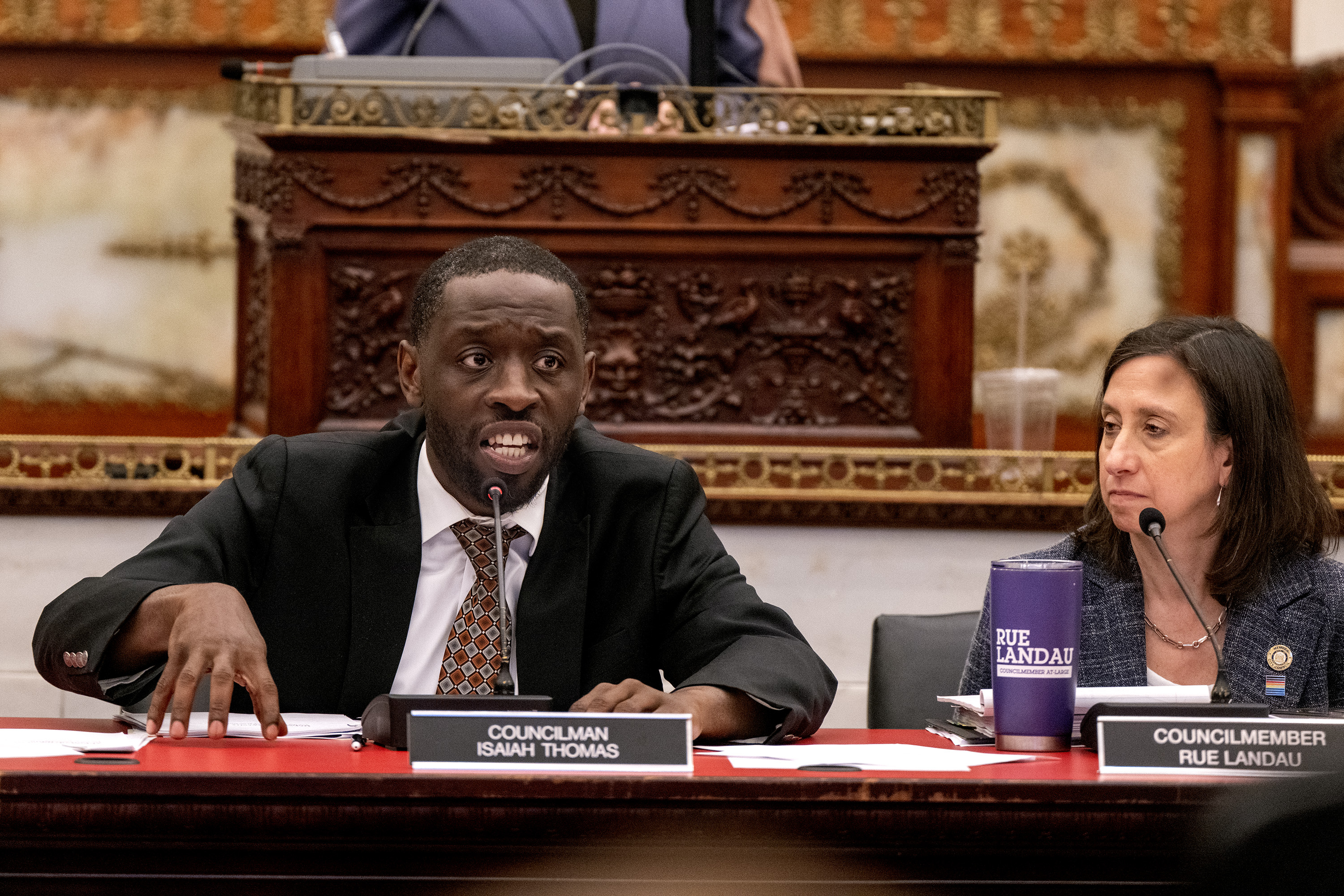
    Councilmember Isaiah Thomas, who chairs the committee, recessed the hearing and scheduled another meeting for Nov. 16, when Wellenbach and Merlo will now be compelled to testify. He signed the subpoenas Thursday on behalf of Councilmembers Jeffery Young Jr. and Nina Ahmad, who have led the charge to investigate the museum closure.

    Thompson said Friday that a representative for Drexel had confirmed to Council that Merlo will appear. Joe Grace, a spokesperson for the Parker administration, said Friday that Wellenbach will also testify.

    Drexel University did not respond to a request for comment.

    The former president and CEO of the city’s Please Touch Museum, Wellenbach has long been a prominent figure in the city’s cultural circles. She joined the Parker administration last year as its chief strategy and partnership officer, and she was promoted this summer to the role of deputy mayor for strategic and philanthropic initiatives.

    In September, Drexel and the Academy appointed Wellenbach to temporarily lead the Academy as a senior adviser. She is not being paid by Drexel or the Academy and has been effectively on loan from the city.

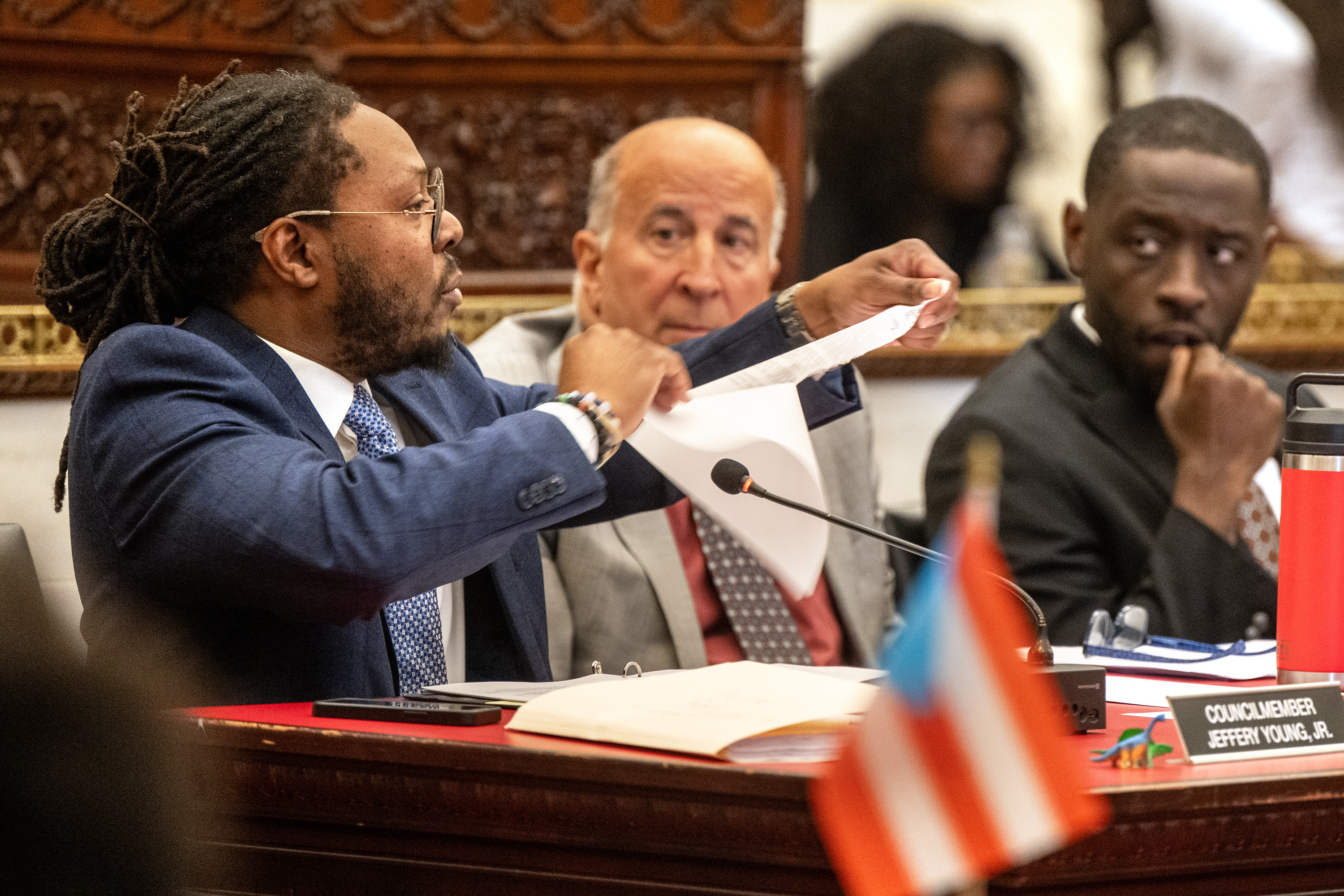
    City Councilmember Jeffery Young, Jr. (left) rips up the printed testimony from Deputy Mayor Patricia Wellenbach as City Council holds a hearing Monday, Oct. 26, 2026 on the closure of the museum at the Academy of Natural Sciences’ and the Academy’s ongoing negotiations with Drexel. Wellenbach is Deputy Mayor for Strategic and Philanthropic Initiatives for the city as well as a senior adviser to the Academy. She declined to attend the hearing in person.Tom Gralish / Staff Photographer

    At the hearing Monday — which was attended by dozens of advocates who have formed a coalition to “Save The Academy” — Young, who represents the district where the museum is located on Benjamin Franklin Parkway, ripped Wellenbach’s statement in half. He said her failure to show was “a disrespect to the Philadelphians as someone who is paid by the taxpayers.”

    He said Council would issue subpoenas ahead of a second hearing.

    While Council committees have the power to use the force of law to compel witnesses to testify or provide documents, they rarely use the power and usually rely on voluntary testimony.

    Council has not issued a subpoena since before Johnson took over the chamber in 2024. In 2022, then-Councilmember Helen Gym compelled testimony and records from the acting executive director of the Philadelphia Parking Authority, which Council was investigating over its finances and accounting practices.

    It is especially notable for Council to subpoena a member of the mayor’s administration. Council is controlled by a supermajority of Democrats, and Philadelphia has for decades had a Democratic mayor. Parker’s administration routinely sends staff to testify before Council.

    Young in 2024 floated the idea of compelling Parker and members of her administration to testify about how the city was developing a North Philadelphia facility to house people in addiction, but subpoenas were never issued, and members of the administration testified voluntarily.

    Councilmember Isaiah Thomas questions Drexel officials Monday, Oct. 26, 2026 as City Council holds a hearing on the closure of the museum at the Academy of Natural Sciences of Drexel University and the Academy’s ongoing negotiations with Drexel. Councilmember Rue Landau is at right.Tom Gralish / Staff Photographer

    Council’s move comes at a time of heightened tension between the legislative body and Parker’s administration.

    In the spring, Council rejected several tax proposals that the mayor advanced, and on Thursday, lawmakers passed legislation to probe whether the administration has delayed spending money that Council authorized to fund the Housing Opportunities Made Easy, or H.O.M.E., program.

    Members have also tangled all year with the mayor’s appointees who lead the school board. On Thursday, Thomas held a rally over the School District of Philadelphia’s controversial facilities plan, and demanded that Parker “take a clear and public stance” on the school closures that are a part of the yearslong plan.

    The issuance of subpoenas is also indicative of how prominent the closure of the Academy of Natural Sciences has become. Since Drexel and the Academy in September announced its intention to close the 200-year-old museum to the public, the decision has drawn international attention and outrage from advocates who say the city stands to lose a core cultural institution.

    Council members this week seemed open to throwing the Academy a lifeline. Drexel’s executive director of operations Melissa Richman said Monday that the school can’t afford the $5 million to $6 million a year in support to the Academy as it faces its own massive deficit.

    The William Penn Foundation has offered to pay for the museum to remain open for a year, but Drexel has not accepted that offer. The school is in the midst of renegotiating its existing affiliation agreement with the Academy, and those discussions are ongoing.

    Staff writers Susan Snyder and Peter Dobrin contributed to this article.

  • Vape stores might not close under a new ban, but retail districts are ready for new business

    Vape stores might not close under a new ban, but retail districts are ready for new business

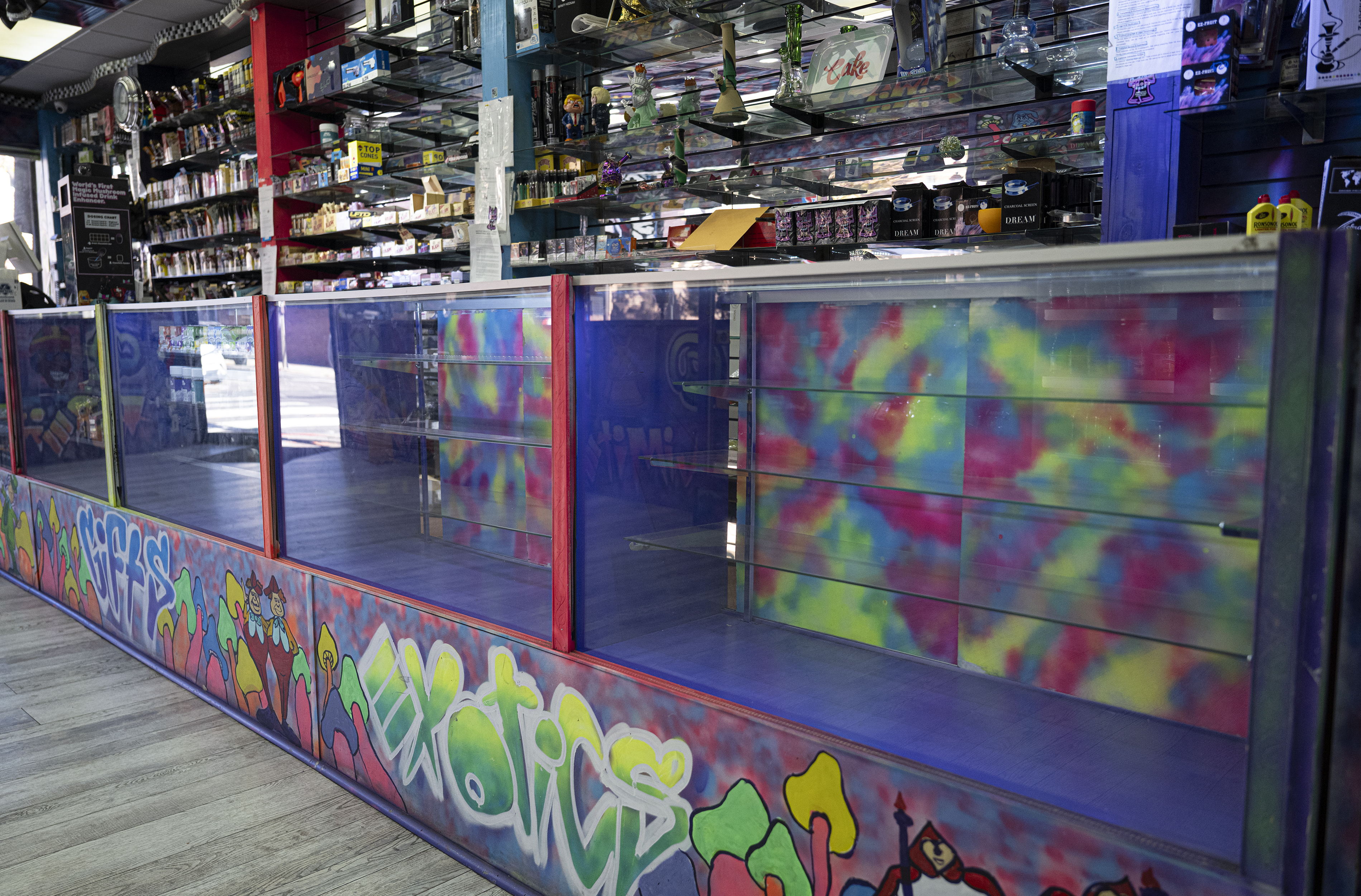
    Entire walls of retail shelves in Philadelphia vape shops, once marketing colorful, fruit-flavored nicotine products, sat empty the first week of Pennsylvania’s new vape ban.

    Pointing to the swaths of bare countertops — many of which were the central marketing displays at stores — shop owners and managers on South Street, many of whom were not authorized to speak on behalf of the store or feared scrutiny from inspectors, said they are facing the possibility of closure.

    One manager of a South Street convenience store that used to sell a wide variety of vapes said nicotine products make up 30% of their business. For stores that can’t fall back on convenience and grocery items to sell, many will likely close, he said.

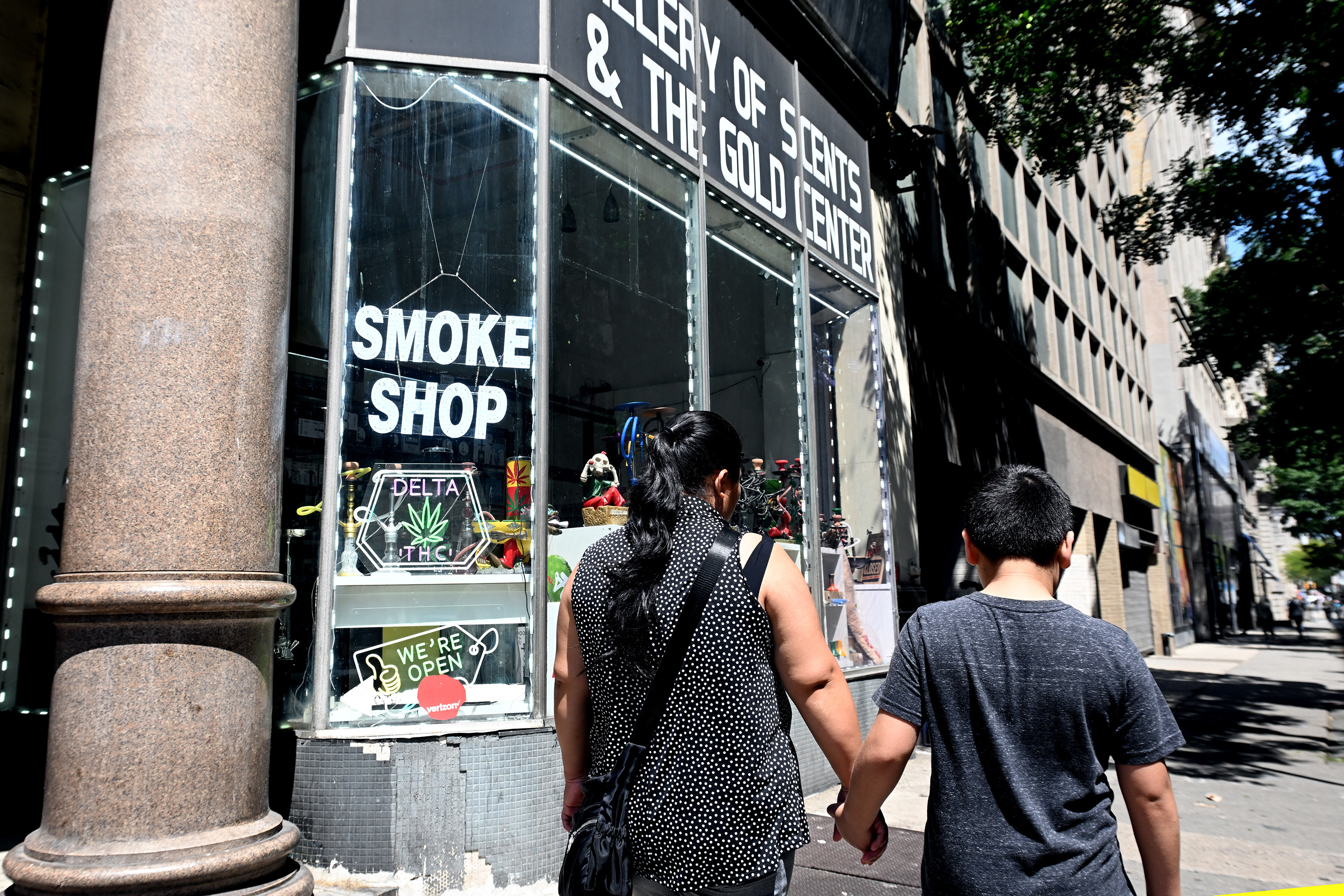
    The South Street Smoke Shop is shown on Thursday, Oct. 22, 2026, in Philadelphia. Electronic disposable vaporizers are largely banned in Pennsylvania, with a few exceptions, prompting vape shop owners to warn that the restrictions could devastate their businesses or force them to close.Jose F. Moreno / Staff Photographer

    The manager at South Street Smoke Shop on Eighth Street said that he spent half his shift the day before Oct. 19 — when vape ban enforcement began — removing thousands of dollars worth of product from retail shelves. Another store manager said disposable vapes and their associated products are “the majority of our business,” she said. “This is unprecedented.”

    Under a new law, signed by Gov. Josh Shapiro last year, six companies are approved to manufacture, distribute, and sell electronic nicotine products in Pennsylvania. Any product not approved in the electronic nicotine delivery system directory is now banned from sale, including popular brands like Cali, Geek Bar, and Puff Bar.

    Philadelphia has also taken steps to heavily restrict where vape stores can open. City Councilmember Katherine Gilmore Richardson introduced legislation earlier this month that would adjust the city’s zoning code to prohibit any businesses selling tobacco and nicotine products from opening within 750 feet of a school, daycare, park, or an existing store that sells nicotine products. Richardson said this would effectively ban new stores from opening in most of Philadelphia.

    The vape store boom

    The vape industry and retail vape stores have seen exponential growth in the last decade, expanding from a $3.5 billion industry in 2015 to a more than $40 billion a decade later. Market analysts have projected the industry to grow by double digits into the 2030s.

    This growing market also serves a customer base in which 60% to 80% of consumers prefer to buy products in stores.

    The low entry barrier and higher-margin appeal of opening a vape store in a bustling retail district moves some entrepreneurs to make the jump, said Steven Gartner, executive vice president of CBRE’s global retail platform.

    “Most of these stores are start-up businesses. The ability to get merchandise is relatively easy, and you don’t need to be part of a brand conglomerate. They’re small; someone can open one with 1,000 feet of retail space,” Gartner said.

    Another factor at play is that storefront landlords aren’t always discerning about the mix of businesses in a retail district in the way business leaders might. “Landlords may own one or two buildings on a block, and they don’t really care about the mix of businesses — they care about renting their vacant store and getting rent,” Gartner said.

    Especially so during the COVID-19 pandemic and in its wake, as property owners looked for tenants to fill vacant storefronts. This is often why in places like South Street, there can be a vape store each block for several streets in a row.

    Retail strips with an abundance of vape stores such as South Street are open to new businesses, said Eleanor Ingersoll, executive director of South Street Headhouse District, the nonprofit that manages the neighborhood business district.

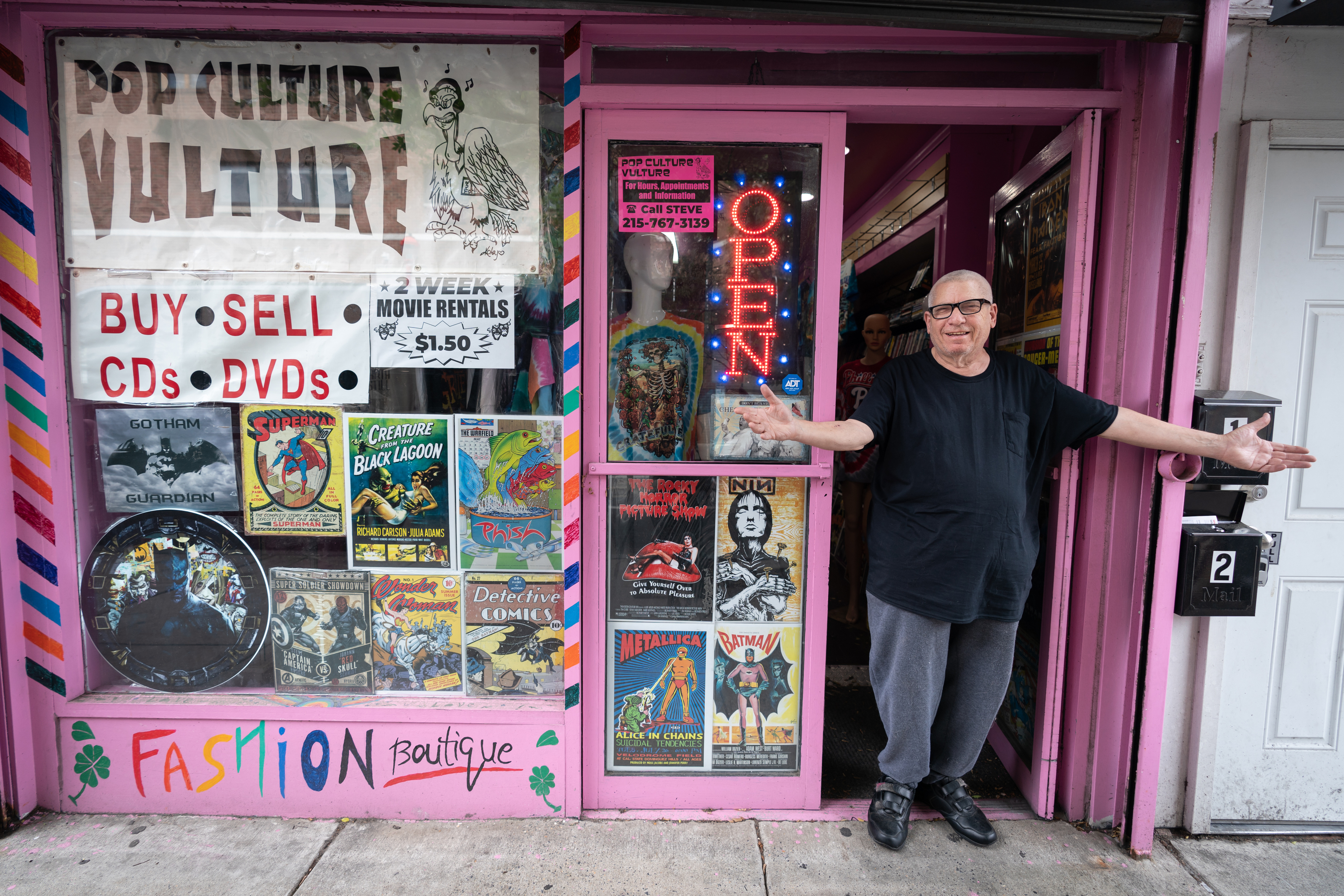
    Steve Brasovankin, owner of Pop Culture Vulture, at his then newly opened store on the 200 block of South Street in Philadelphia, June 6, 2024. As vape and smoke shops navigate financial turmoil amid a new 2026 vape ban, business improvement districts hope to see bars, restaurants, and niche retail experiences take their place.Jessica Griffin / Staff Photographer

    “The only thing constant about South Street is change. The role that smoke shops and vape stores play in the district is a matter of great proliferation in a very short amount of time,” Ingersoll said. “There is the argument that they occupy space that could go to more diverse business concepts. We would love to see more bars, restaurants, art galleries, and niche experience entrepreneurship.”

    South Street has attracted more of these unique retail experiences with the rebuild of Jim’s Steaks in 2024, including new boutiques, shops, and eateries, including video rental store Pop Culture Vulture. In May, South Street welcomed the return of Gargoyles gallery owner Hadassah Zuberi, 80, a proprietor of antique art and rare memorabilia — 22 years after shuttering her showroom.

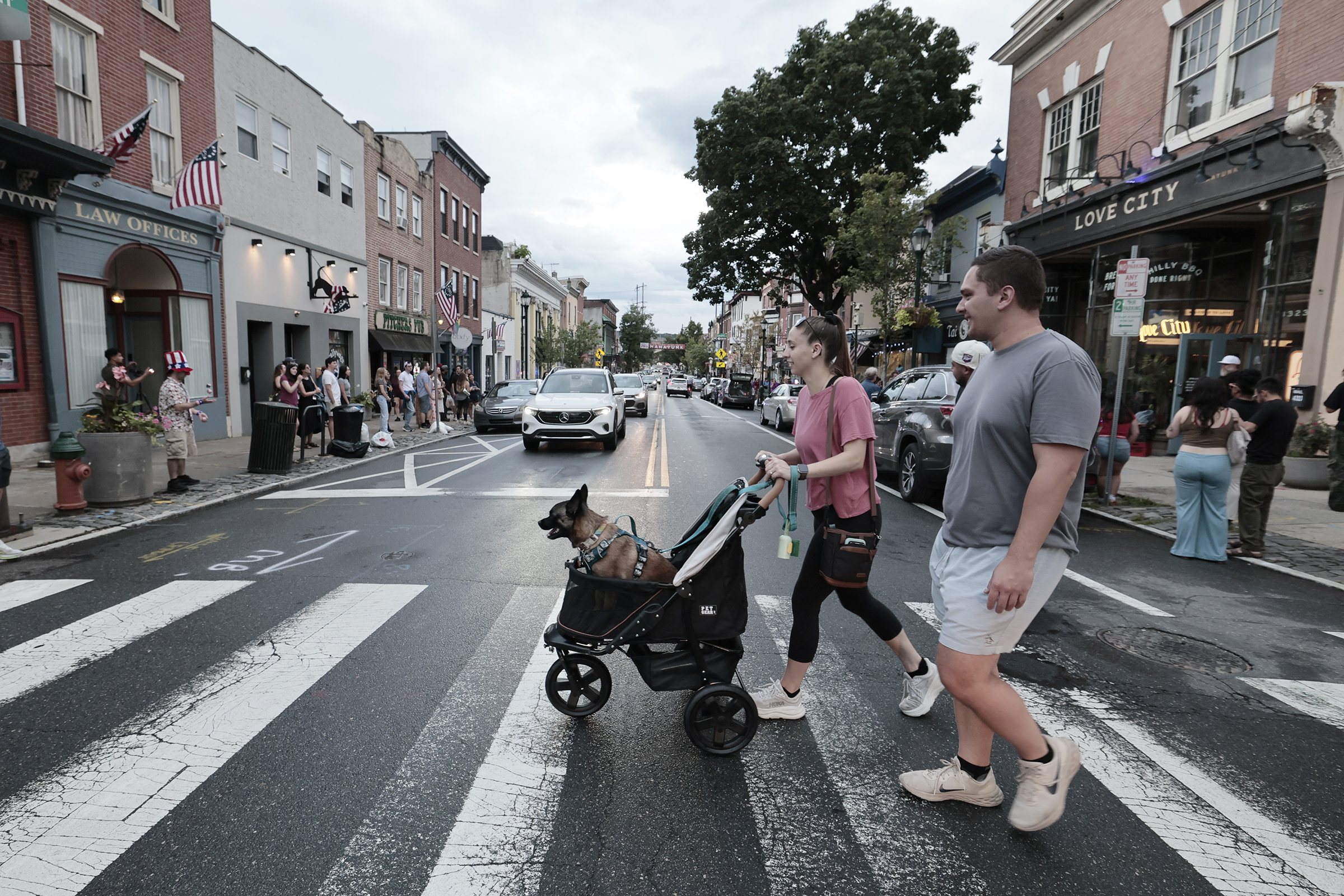
    Kim Albanowski pushes her dog “Koda” across Main street in “his chariot” as Jason Pepin looks on, during the Stroll After Hours event in Manayunk in July.Elizabeth Robertson / Staff Photographer

    Gwen McCauley, director of Manayunk’s business improvement district, which includes at least three vape stores along Main Street, echoed South Street’s desire to see “neighborhood-serving businesses that contribute to the vibrancy” of a neighborhood.

    “Over the last 10 years, Manayunk is seeing a growing number of young families moving here,” McCauley said. “We want our businesses to reflect and support that demographic.”

    A crowd gathers at Riptide Tavern in Manayunk back in July.Elizabeth Robertson / Staff Photographer

    Manayunk’s Main Street is ushering in its next era of neighborhood retail, catering to a flock of new families, with a dozen new businesses in the last two years, including the opening of Riptide Tavern in June from Taqueria Amor owner Tim Spinner, and Eleanor’s Consignment in October.

    What comes next for vape stores

    City smoke shop on the 1000 block of Chestnut Street in July 2025. All 10 samples of “legal” weed The Inquirer purchased from stores in the city and suburbs tested over the federal limit for the ingredient that gets users high. Tom Gralish / Staff Photographer

    But vape stores likely won’t be an extinction-level event.

    In other states that passed similar restrictions, like Massachusetts in 2019, vape stores didn’t close en masse. Instead, dramatically fewer vape stores entered the market after the state banned flavored tobacco products, with a 50% drop in the number of licenses issued for new tobacco stores, according to a 2023 UC San Diego study.

    More telling is a study published in September that looks into the effect e-cigarette directory laws, like Pennsylvania’s, have on the sales of nicotine products. Researchers found that across three states, Alabama, Oklahoma, and Louisiana, there were no lasting declines in sales of vape products. In Louisiana, where sales initially declined, they rebounded within eight months.

    Like other states, Pennsylvania will likely not see an exodus of vape stores, but these small businesses will navigate a monthslong transition to stay afloat — and new entrepreneurs will certainly be wary of entering the retail space.

    Gartner believes this is where the market will decide whether customers flock to other states, online stores, or continue to patronize local retail.

    “There could be an inevitable shakeout, or there is enough business to sustain them all,” Gartner said.

  • Bruce Curless, visionary leader of  South Jersey theater, has died at 78

    Bruce Curless, visionary leader of South Jersey theater, has died at 78

    The South Jersey theater community has lost one of its most influential figures following the death of legendary showman Bruce Curless.

    Mr. Curless, the founder and longtime producing artistic director of the Ritz Theatre Company in Haddon Township, died Oct. 28 after a lengthy battle with pancreatic cancer, the organization announced this week. He was 78.

    Widely considered the godfather of South Jersey theater, Mr. Curless founded the Ritz in 1985, transforming a former vaudeville showroom on the White Horse Pike into a training ground for generations of artists.

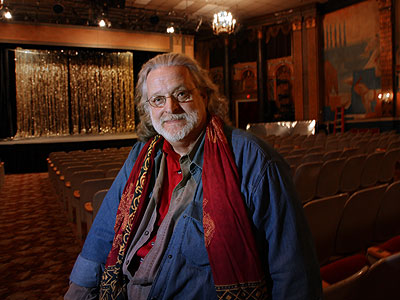
    Bruce Curless founded the Ritz Theatre Company in Haddon Township in 1985. Over the next four decades, the space became a launching pad for generations of young artists.Courtesy of the Ritz Theatre Company

    “He was more myth than man, sometimes,” said Matthew Weil, associate artistic director and production manager at the Ritz. “He was just so larger than life — just an artist through and through.”

    The newly founded company embarked on its first season in 1986, during which Mr. Curless debuted his beloved children’s character “Ritzy the Wolf,” a role he reprised many times over the years and for which he won two Mid-Atlantic Emmy Awards, according to the company’s website.

    The Ritz was also where he met his wife, Kim, an opera singer, Weil said.

    The couple’s daughter, Roberta, “has been on our stage since before she could walk” and is now a talented choreographer and director in her own right, he said.

    Mr. Curless’ impact in the region cannot be overstated, former colleagues say.

    Walk into nearly any theater across South Jersey and you’ll find someone with connections to Bruce or the Ritz, Weil said.

    Bruce Curless on stage as “Ritzy the Wolf,” the beloved children’s character he debuted during the company’s inaugural season in 1986.Courtesy of the Ritz Theatre Company

    Whether it’s Pitman’s Broadway Theatre, the South Camden Theatre Company, or the Burlington County Footlighters, “he really served to pollinate the region with theater artists,” Weil said.

    “He really sort of was the backbone of the South Jersey arts scene,” he said. “And we’re going to miss him.”

    But beyond Mr. Curless’ prowess as an artist and visionary, he was first and foremost an incredibly kind human being, Weil said.

    Originally from Indiana, Mr. Curless maintained a notably Midwestern cadence during his time on the East Coast, he said, exuding an undeniable warmth each time he entered a room.

    “Central to his legacy is just how he sort of moved through the world,” he said. “Theatre can be cold sometimes. There’s a lot of rejection, there’s a lot of hard deadlines and hurt feelings and it’s a results-driven kind of business. But he had a knack for leading with love.”

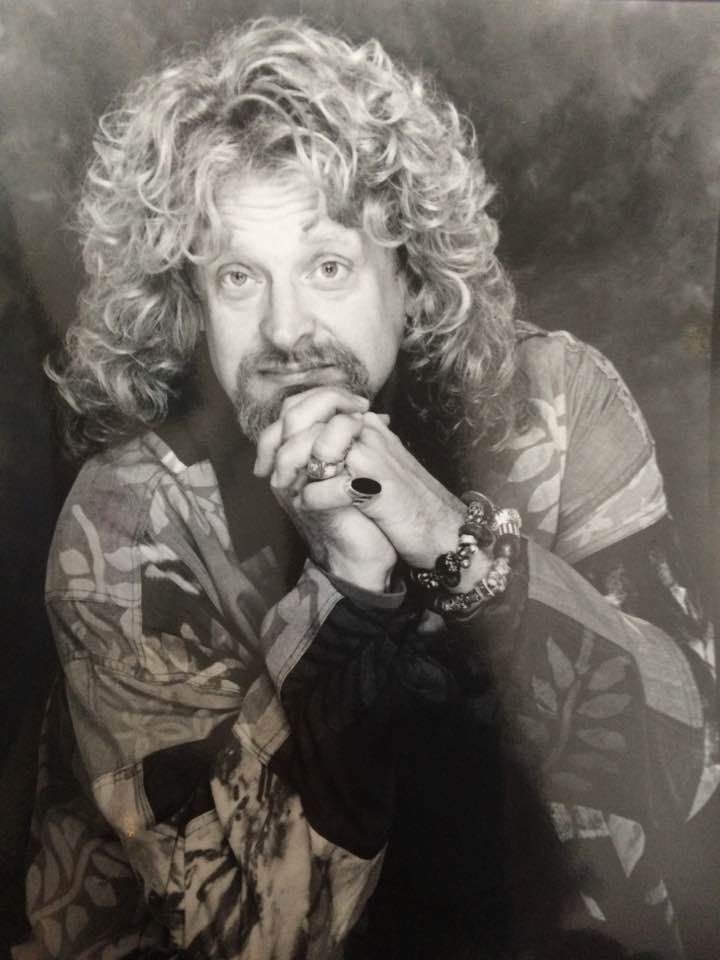
    An early headshot depicts Bruce Curless with his trademark collection of rings, bracelets, and more, which helped to define his unique style.Courtesy of the Ritz Theatre Company

    Mr. Curless’ kind nature was evident on Sara Viniar’s first day of work at the Ritz in 2015.

    It was one of her first jobs out of college, and Viniar was surprised to find not only a close-knit arts community but also a boss who genuinely cared about her.

    “When I worked there, I felt like Bruce cared about me as a whole human, not as an employee. If I was having a bad day or hard time with anything in my life, Bruce would just sit down and talk to me about it,” Viniar said.

    “And I really feel like, to so many people in South Jersey, he became such a father figure and just someone who would guide you through things,” she said.

    Weil was one of those people who considered Mr. Curless a mentor.

    “Bruce sort of took me under his wing and saw something in me that I wasn’t ready to see myself,” he said.

    Together, he and Mr. Curless have worked side-by-side for the past 10 years, guiding the theater through last year’s 40th anniversary while also planning for the future — inevitably, one without the man who has always led the way.

    As Weil prepares to take the reigns as producing artistic director at the Ritz, he says he’s not trying to fill Mr. Curless’ shoes.

    “I think that that’s something that, if I tried to do that, I could only fail,” Weil said. “I’m going to try and place my focus on making my own pair of shoes that will sit beside his.”

    A memorial service for Mr. Curless will be held at the Ritz Theatre, 915 White Horse Pike, Haddon Township, on Saturday, Nov. 7, from 10 a.m. to 1 p.m.

  • Ex-Sharon Hill cop sentenced to probation for feeding information to drug dealer in exchange for cocaine

    Ex-Sharon Hill cop sentenced to probation for feeding information to drug dealer in exchange for cocaine

    A former Sharon Hill police detective who befriended a prolific cocaine dealer and helped him evade arrest to fuel his own drug habit was sentenced Friday to two years of restrictive probation.

    Vincent Procopio, 34, explained to a Delaware County judge how he built, and ultimately lost, his law enforcement career.

    He said his reputation as a thorough detective who handled murder and high-level drug investigations was irrevocably destroyed by substance abuse, which he said he used to self-medicate PTSD.

    He told Judge Deborah A. Krull that his shame for what he had done motivated him to plead guilty in August to drug possession, unlawful use of a computer, criminal use of a communication facility, hindering apprehension, and related crimes.

    “I betrayed my fellow officers, my friends in the district attorney’s office and the entire law enforcement community, and, most of all, the public,” Procopio wrote in a statement read in court by his attorney, Meaghan Wagner.

    “This was something I should never have engaged in as a police officer,” he said. “I disgraced the badge and the oath I took.”

    Procopio made specific references to the fatal shooting of 8-year-old Fanta Bility by three of his fellow Sharon Hill officers in 2021. He said he was present at Academy Park High School when the shooting took place, helped transport Fanta to Mercy Fitzgerald Medical Center, and performed CPR on her there before she was pronounced dead.

    That experience permanently damaged his mental health, he said. He didn’t seek help, and begun a pattern of self-destructive behavior that led him to befriend the dealer at the center of his criminal prosecution.

    Krull, in handing down her sentence, credited Procopio for taking accountability for his actions, and for his prior years of public service. And she said she understood that Fanta’s death had a profound impact on everyone in the county.

    “I say that not to excuse your behavior, but to say I certainly understand the path you chose,” she said.

    Procopio and the dealer, whom investigators did not identify, met through mutual friends in 2025, according to court filings. The dealer told police Procopio approached him, saying he “wanted in” on his drug-smuggling operation.

    Over the course of the next year, the dealer would give Procopio $100 baggies of cocaine in exchange for information from police databases, including whether undercover officers planned to make drug busts in the area where he was operating and whether there were any warrants for his arrest.

    The narcotics, prosecutors said, were for Procopio’s personal use and “wholly unrelated to his law enforcement duties.”

    The scheme unraveled when the dealer was pulled over in Chester in December with 63 grams of cocaine in his car. He called Procopio for help, and Procopio made calls on his behalf, telling officers in Chester the man was a friend and was in the process of signing up to become a confidential informant.

    Procopio later told investigators he knew the man had sold drugs, but said he had recently stopped. He said he never saw the dealer sell cocaine and had never bought cocaine from him.

    Prosecutors said that Procopio’s statement was a lie, and that Procopio had deleted text messages between him and the dealer that made that clear.

    Procopio and the dealer had developed a jocular relationship, they said. On the day they met, the detective snorted a line of cocaine with the dealer inside his truck. He later went to the man’s home, where they “stayed up all night doing cocaine,” according to the affidavit of probable cause for Procopio’s arrest.

    Assistant Attorney General John Hamme, who prosecuted the case, acknowledged Friday that Procopio had been cooperative with the investigation, and credited the former officer for his ongoing treatment — Procopio will be nine months sober in November.

    But Hamme said his actions still required punishment.

    “Cases such as this one make it difficult in the future for Delaware County law enforcement to handle and manage the population, as trust has essentially been broken,” Hamme said.

    Wagner, Procopio’s attorney, said after the hearing she was pleased that the sentence “took into account all of the tremendously positive steps [Procopio] has taken to move forward and build what is now his new life.”

  • Five Philly men who committed 60 carjackings and 2 murders were sentenced to decades in prison

    Five Philly men who committed 60 carjackings and 2 murders were sentenced to decades in prison

    Five men who were part of one of the most violent and prolific carjacking crews in recent Philadelphia history were sentenced this week to at least several decades in federal prison, capping a criminal rampage that victimized dozens of people.

    Over the course of about four months beginning in 2021, prosecutors said, the men — along with several other coconspirators — committed about 60 carjackings and two murders across the region. The crimes were relentless and random, with members of the conspiracy ambushing unsuspecting drivers at gunpoint nearly every day, then stealing their keys, wallets, phones, and cars, often forcing them to send money over digital payment apps, and, in some cases, shooting at them.

    One victim was attacked after leaving a birthday party. Another, an immigrant, said that after his car and wallet were stolen, he had fraudulent bank accounts opened in his name — and couldn’t get a passport for two years because his green card was also stolen, making it impossible for him to fly home to visit his children.

    The crime spree also led to killings: In early 2022, several crew members looking to steal a Toyota attacked 60-year-old George Briscella in Northeast Philadelphia, then fatally shot him. Briscella, a Marine Corps veteran, had been driving the SUV to visit his mother.

    Days later, the crew killed Aiah Gbessay — a locksmith who helped create a key for Briscella’s car after it had been stolen. Crew members were worried Gbessay might talk to the police.

    U.S. District Judge John F. Murphy said the group’s actions — which were laid out in remarkable detail during a two-month trial earlier this year — were “outlandish” and “completely intolerable.”

    “It was a multimonth, appalling reign of terror that destroyed people’s lives, and ended two people’s lives, and had the worst consequences on their families,” Murphy said.

    Relatives of Briscella and Gbessay spoke at sentencing hearings this week for the defendants: Mikal McCracken, Amin Muse, Aleem Abdul-Hakim, Kavon Coleman, and Dean Fosque.

    Briscella’s wife and one of his sons said he was a devoted husband, son, father, and grandfather — someone who worked every day to take care of his relatives and was kind to a large group of friends and even strangers.

    “He was an everyday guy: ordinary in every way, but special in so many ways,” said his oldest son, Tony.

    Gbessay, meanwhile, was an immigrant from Sierra Leone who his relatives said was doing honest work in West Philadelphia. They said his death has significantly affected his son and wife, who had only emigrated to the city a few months before he was killed.

    “He was a great brother, a great dad,” said his brother, Komba, later adding: “He was a hard-working man. He will be missed.”

    The defendants had a range of reactions to their fates.

    Fosque apologized to the victims, saying he wished he could take away their pain.

    “I can take responsibility for the choices I’ve made to move forward and work every day to become a better person,” he said in court Friday.

    McCracken, however, denied being involved in the killings of Briscella or Gbessay, and said the evidence against him — including cell phone records, surveillance videos, and testimony from a key coconspirator — was unreliable or even false.

    “I promise to God: I did not murder your family member,” he said. “The worst feeling in this world is knowing the type of person you are, but people not seeing that when they look at you.”

    Murphy sentenced McCracken, Muse, and Abdul-Hakim to life in prison plus additional terms of several decades. All were convicted of participating in the attack on Briscella, and McCracken was found guilty of ordering Gbessay’s killing.

    Coleman and Fosque — who were convicted of participating in some of the carjackings but not the murders — received prison sentences of 35 and 86 years, respectively.

    Three other defendants have cases that have not yet reached the sentencing phase, including a man who served as a star witness at trial, Jonathan Akubu.

    Akubu was the first member of the crew to get arrested: In 2022, police used ballistics evidence and cell phone records to tie him to the murders of Briscella and Gbessay.

    Shortly after being taken into custody, authorities said, he started talking — telling investigators about the dozens of crimes he and other crew members committed, often in striking detail.

    He recalled episodes with unusual precision, authorities said, outlining who was involved in each incident and how the crimes unfolded. Beyond linking dozens of incidents to the same group of participants, he also gave investigators something of a motive, saying his crew would sell the stolen cars to other men who would ship them to unspecified countries in Africa to be resold.

    Much of what Akubu said was later corroborated by additional evidence, including cell phone records connected to his coconspirators. Authorities also recovered one of the cars Akubu mentioned in a shipping container headed overseas, further bolstering the notion that his group was fueling a trans-Atlantic market for stolen vehicles.

    Earlier this year, Akubu became a central figure at the trial for his five co-defendants, spending more than a day on the stand recalling his role in the violent conspiracy — including by describing how he’d lured Gbessay into West Philadelphia, then repeatedly shot him to death.

    Akubu pleaded guilty but has not yet been sentenced. Prosecutors said as part of his plea deal and cooperation agreement, he will receive a sentence of at least 35 years in prison, though it could be much more.

    Murphy, the judge, said the scale of the group’s actions was difficult to fathom. In addition to killing Briscella and Gbessay, he said, the men committed crimes so often that they actually carjacked one man twice — and shot him in the same leg both times.

    The group’s wrongdoing will affect victims for years to come, Murphy said, which is why, he said, the penalties needed to be significant.

    “The whole scheme together speaks to a real disregard for our fellow man,” he said, “and trying to live together in a civilized way.”