Tag: topic-link-auto

  • Parents accused of driving teen charged in Penn State student’s killing to Colorado ordered to stand trial

    Parents accused of driving teen charged in Penn State student’s killing to Colorado ordered to stand trial

    The parents of one of two teenagers charged with killing a Pennsylvania State University student in June drove him from Philadelphia to Colorado Springs, Colo., within hours of local television stations airing surveillance footage of the suspects police were seeking in the case, prosecutors said Thursday.

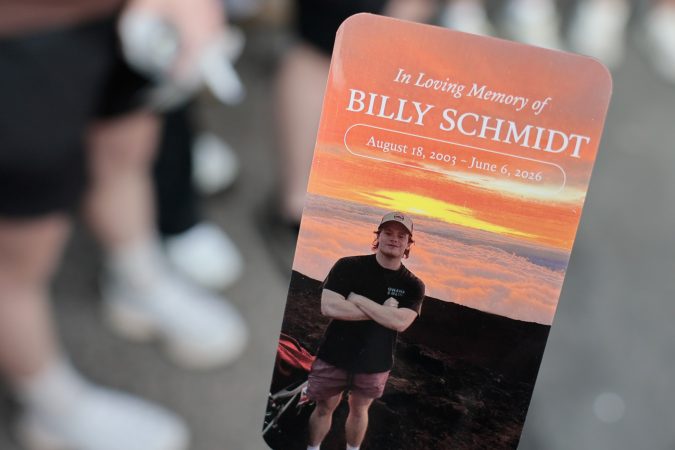
    Kaiseem Smith, 16, and Azzubair Outen-Fleming, 16, are charged with murder, conspiracy, and related offenses in the shooting death of William “Billy” Schmidt, 22, who was killed June 6 after a robbery on a South Philadelphia sidewalk turned deadly.

    Philadelphia police and the U.S. Marshals Service searched for Smith and Outen-Fleming for weeks before taking them into custody. Marshals found Outen-Fleming on July 1 in Colorado Springs. Smith surrendered to Philadelphia police the following day.

    At a preliminary hearing Thursday, prosecutors detailed how Outen-Fleming’s stepfather, Donte Abdulmalik, 35, and mother, Milika Abdulmalik, 45, allegedly drove him more than 1,700 miles to Colorado Springs — a roughly 45-hour trip spanning several states — and how police detectives traced the journey through cell phone records and license plate reader data.

    Donte Abdulmalik was arrested June 30 and Milika Abdulmalik on July 3. Both are charged with hindering apprehension, obstruction of justice, and related offenses.

    After hearing the evidence Thursday, Common Pleas Court Judge Gregory Yorgey-Girdy ordered the parents to stand trial.

    Detective Thorsten Lucke testified that the couple’s cell phone records showed they began the drive around 10:30 p.m. June 10, after surveillance videos and images of the suspects aired during local 10 p.m. newscasts.

    That night, a phone registered to Milika Abdulmalik called and texted a Colorado Springs number, Lucke said, before beginning to travel west in tandem with a phone registered to Donte Abdulmalik.

    The phones arrived in Colorado Springs on the evening of June 12, Lucke testified, and began heading east again June 14 before returning to Philadelphia.

    Detective Frank Mullen, who also testified Thursday, said police arrested Donte Abdulmalik near a black Mercedes-Benz that investigators believe was used to drive Outen-Fleming to Colorado Springs. License plate readers captured the vehicle near the home where Outen-Fleming was later found, Lucke said.

    Defense attorneys for the parents argued, however, that the evidence was thin and failed to connect their clients to the alleged crimes.

    Donte Abdulmalik’s attorney, Carmen C. Nasuti III, made plain what he thought of the case during a cross-examination of Lucke: “So, essentially, what you showed us was two phones took a trip to Colorado Springs?” Nasuti asked.

    “Yes, that’s correct,” Lucke replied.

    Smith, Outen-Fleming, and Fleming also appeared in court Thursday but waived their preliminary hearings.

    Schmidt, a Penn State senior, was walking home from a neighborhood bar where he had watched the NBA Finals when the two teenagers approached him near 20th and Wolf Streets around 1:30 a.m., according to prosecutors and surveillance footage described in court records.

    Prosecutors have said Outen-Fleming grabbed Schmidt’s cell phone, punched him, and rifled through his pockets before the pair knocked him to the ground. As the teens walked away, Outen-Fleming threw the phone down the block.

    A neighbor’s surveillance camera recorded Schmidt running after them, police have said. Smith then turned and fired a single shot into Schmidt’s chest, prosecutors said.

    Authorities also connected Donte Abdulmalik to the case through a woman who was inside a South Philadelphia home searched by police while they were looking for Outen-Fleming’s brother, Kadafi Fleming, according to an affidavit of probable cause for Donte Abdulmalik’s arrest.

    Fleming, 19, is accused of stealing the SUV the teens took to and from the area before and after the killing.

    The woman, identified in the affidavit only by her initials, told detectives she recognized Outen-Fleming from news coverage of the case and identified the second suspect — whom she said was the shooter — as his cousin. She also told investigators that Outen-Fleming’s stepfather had driven him to Colorado, according to the affidavit, and showed officers a speeding ticket that had arrived in the mail: a citation for a June 14 infraction in Simla, Colo., issued to a Mercedes-Benz registered to a deceased family member.

    Hours later, detectives interviewed the woman again while Donte Abdulmalik waited outside on the porch, according to the affidavit. She stood by her identification of the two teenagers but retreated from the rest of her account, telling them she did not know who had driven Outen-Fleming to Colorado.

    Prosecutors did not call the woman as a witness Thursday or introduce evidence from those interviews.

    In his closing argument, Nasuti said records showing a phone in Colorado did not necessarily place his client there. Donte Abdulmalik, he argued, could have handed the phone to his stepson.

    “No one who can place my client in the car,” he said. “No one who can place that phone number in his hand. They need to do that, even at this level.”

    Yorgey-Girdy, the judge, said he found the evidence persuasive, however. He also denied requests from Nasuti and Scott Gessner, Milika Abdulmalik’s attorney, to reduce the couple’s bail after Assistant District Attorney Lauren Crump argued they posed a “severe flight risk.”

    “This whole case,” Crump said, “is about flight.”

    The parents are each being held on $250,000 bail, court records show.

    Smith and Outen-Fleming are scheduled to return to court in October, along with Donte Abdulmalik, Milika Abdulmalik, and Fleming.
  • Philly City Council returns with dueling plans for the city’s trash | Council roundup

    Philly City Council returns with dueling plans for the city’s trash | Council roundup

    Philadelphia City Council members are considering dueling proposals over how the city eliminates its garbage, with one lawmaker leading an effort to immediately block the city from shipping its garbage to a trash incinerator and another taking a longer-term approach.

    Councilmember Mark Squilla on Thursday introduced legislation authorizing Mayor Cherelle L. Parker’s administration to, within three years, develop a plan to dramatically reduce the city’s reliance on both trash incineration and landfills over the next 20 years.

    Squilla’s proposal, which he drafted with input from Parker’s administration, is something of an alternative for lawmakers to consider as Councilmember Jamie Gauthier has for months pushed for a more aggressive approach to stop the city from incinerating trash this year.

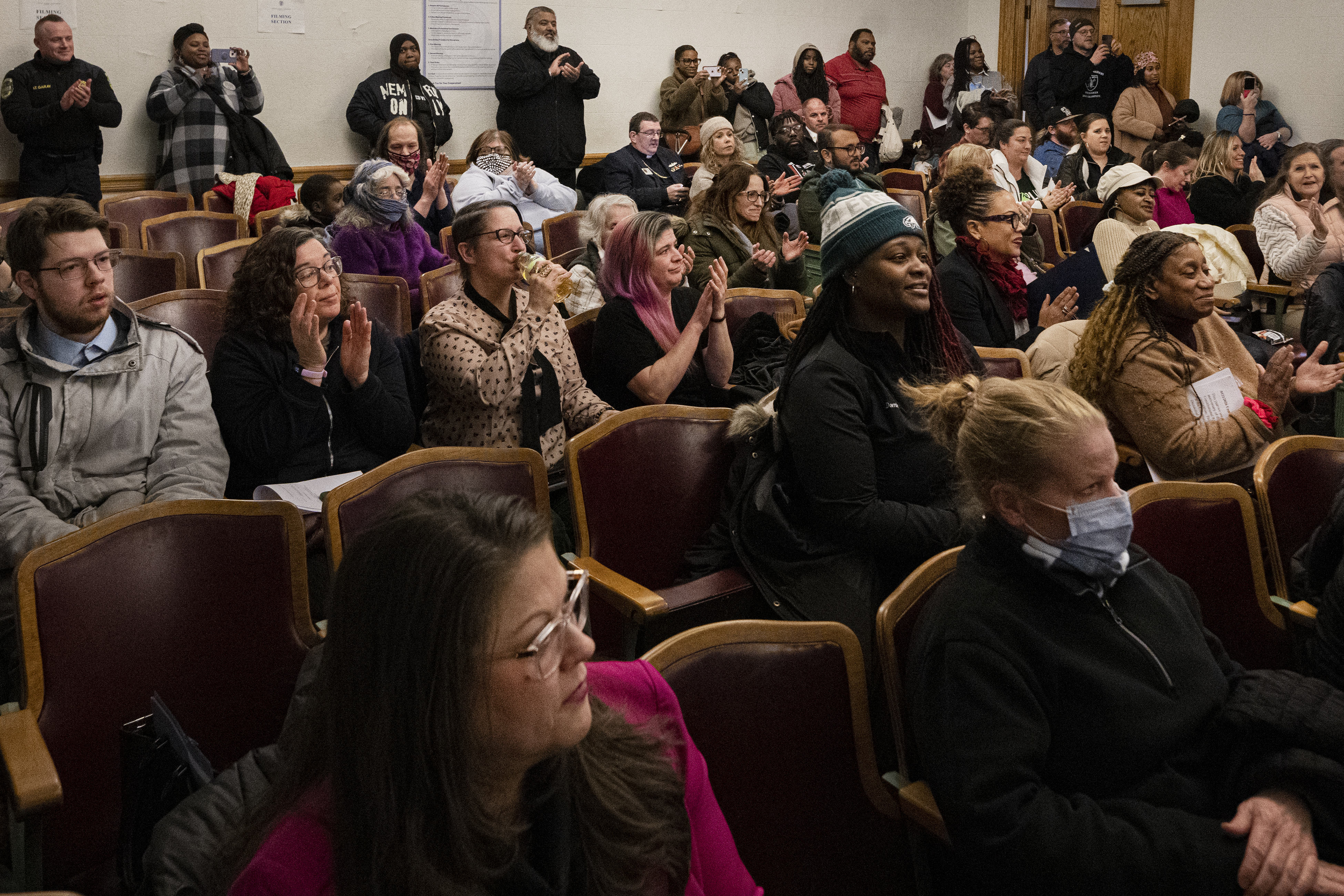
    Both lawmakers hosted news conferences this week alongside their allies to rally support for their cause, part of a long list of events Council members hosted as the legislative body returned Thursday for its first meeting of the fall session.

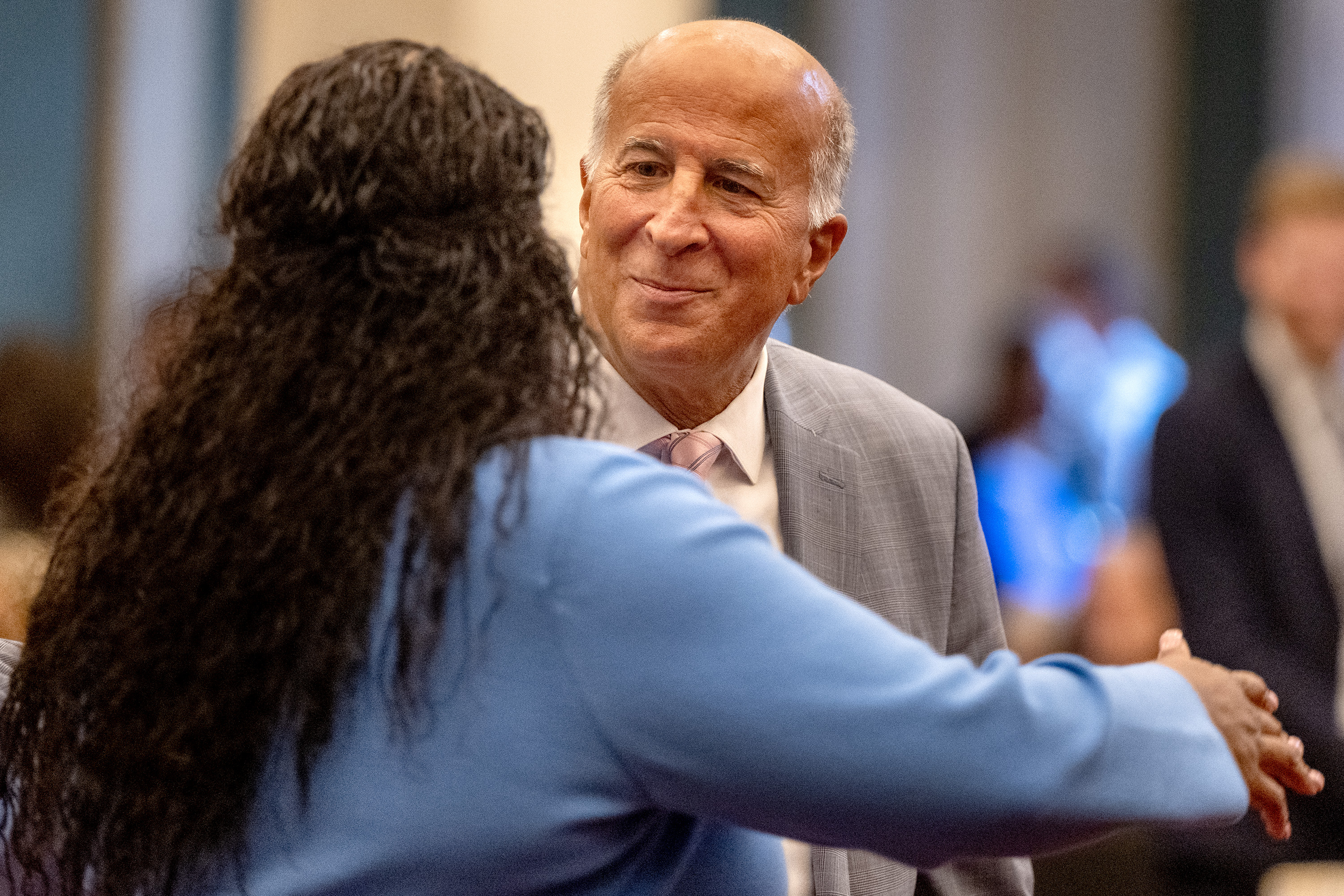
    Councilmembers Mark Squilla and Katherine Gilmore Richardson (back to camera) greet each other as City Council convenes for its fall session Thursday, Sept. 17, 2026.Tom Gralish / Staff Photographer

    The first meeting after the summer break typically has a jovial, first-day-of-school feel. But the mood briefly shifted Thursday when City Hall was evacuated and Council abruptly adjourned after a suspicious package was found on the floor where Council was meeting.

    Police cleared the package, and Council resumed its business Thursday afternoon.

    Here’s what else happened this week:

    What was this week’s highlight?

    Incinerator issue heats up: Gauthier has for months sought to pass legislation that would ban the city from continuing its long-term practice of sending about a third of its garbage to a trash incinerator in Chester, about 15 miles south of the city. She argues that incineration is bad for the environment and harms Chester residents’ health.

    Parker’s administration opposed the legislation, called the Stop Trashing Our Air Act, and Gauthier in the spring failed to gain enough support for it in Council.

    Now, Gauthier is trying to block the Parker administration from renewing its contract with Reworld, the incineration facility. The administration needs Council approval to enter into a new four-year contract with the firm.

    Gauthier has several members on her side, including three fellow progressive lawmakers, as well as Councilmember Isaiah Thomas, who is the Democratic majority whip.

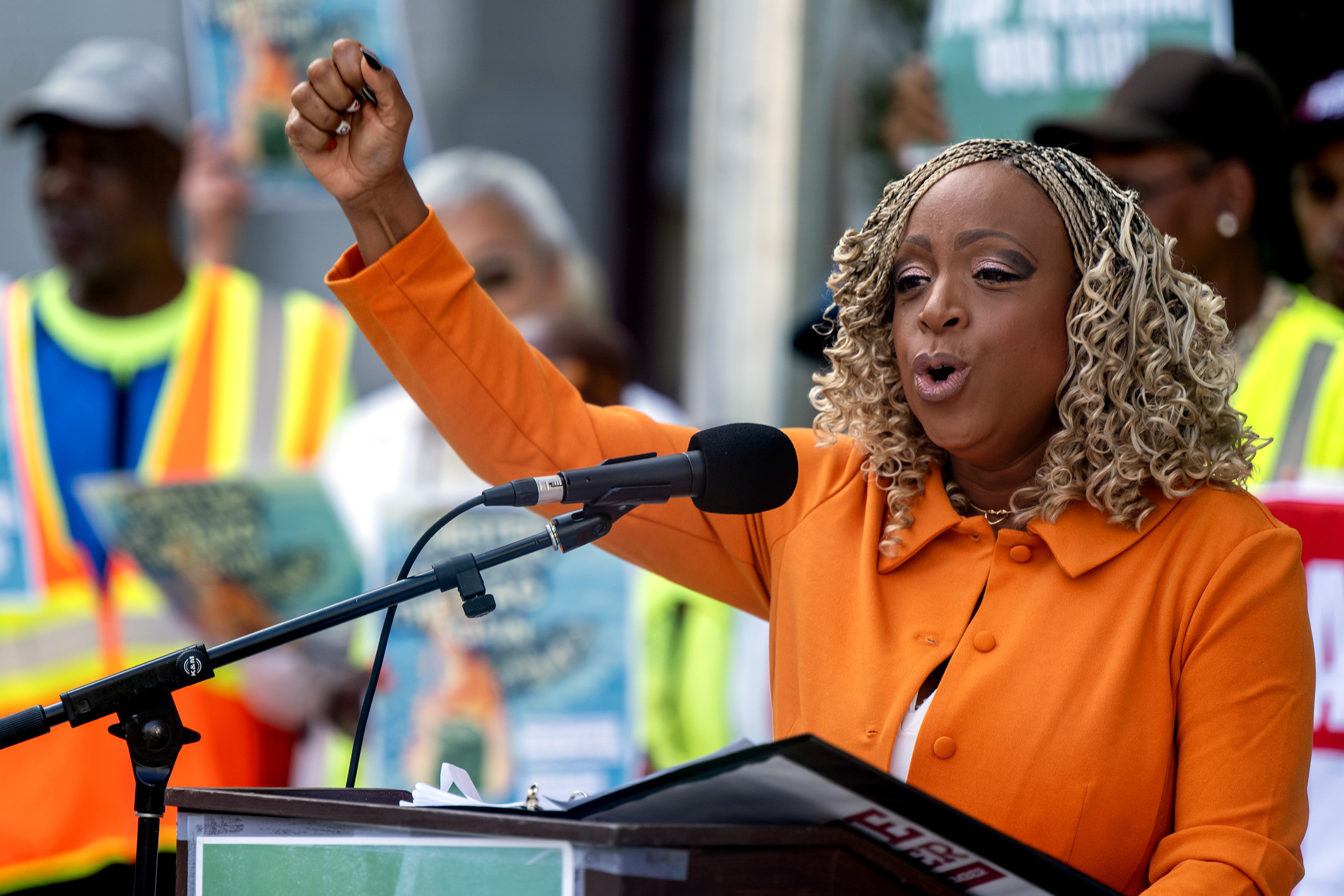
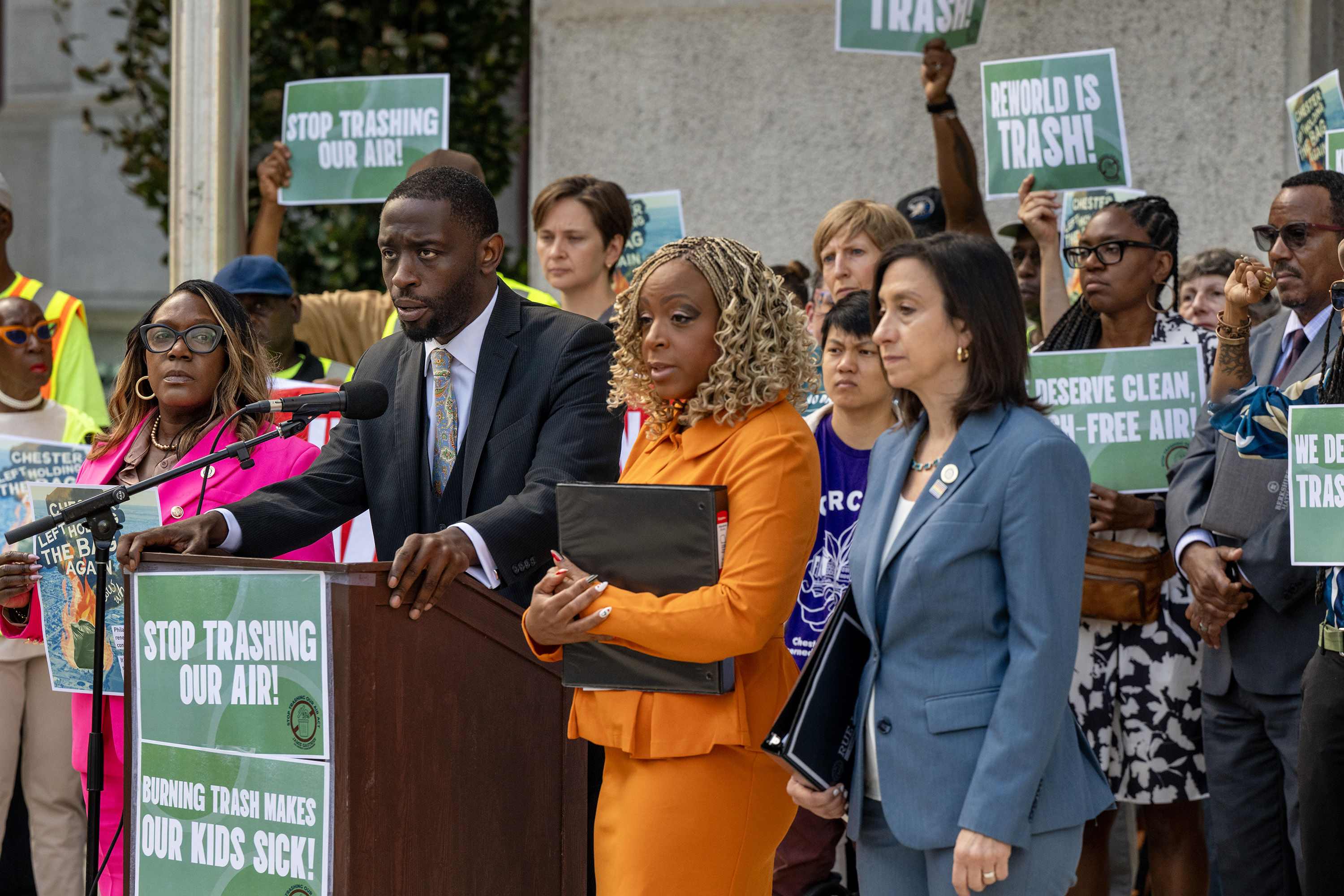
    City Councilmember Jamie Gauthier speaks at a rally outside City Hall early Thursday morning Sept. 17, 2026 where protesters called on Council to reject Mayor Cherelle L. Parker’s waste disposal contracts. A coalition of elected officials, health and climate experts, and advocates from Philadelphia and Chester gathered to oppose the city’s sending its trash to an incinerator in Chester.Tom Gralish / Staff Photographer

    Squilla’s proposal in some ways offers members an off-ramp. His bill calls for a “circular waste” system that includes new techniques for waste disposal, such as composting and “anaerobic digestion,” a process that breaks down organic waste.

    Managing Director Carlton Williams said Wednesday during a news conference with Squilla that the city is looking to build out an anaerobic digestion system within four years.

    Squilla said that while the administration is already working toward a more modern waste disposal system, passing a law would “codify what we had as plans and resolutions before.”

    Gauthier said that she supports Squilla’s goal of moving toward a more sustainable system, but that his legislation “is a plan to create a longer-range plan.”

    “It in no way changes the decision in front of Council,” she said. “We can move away from this practice right now.”

    What else happened this week?

    Severing the law department: The city law department serves as legal counsel for both the mayor’s administration and Council, a dynamic that can sometimes cause friction when the city’s elected officials disagree.

    Council on Thursday approved a resolution by Thomas to hold a hearing “to consider the separation of the [law] department’s functions between the administration and City Council.”

    The department is led by City Solicitor Monique Galloway, whom Parker appointed to the role in July.

    Thomas has clashed with Parker’s administration, and he said he became interested in looking at the department’s structure due to concerns that Council was not receiving independent legal advice on some issues.

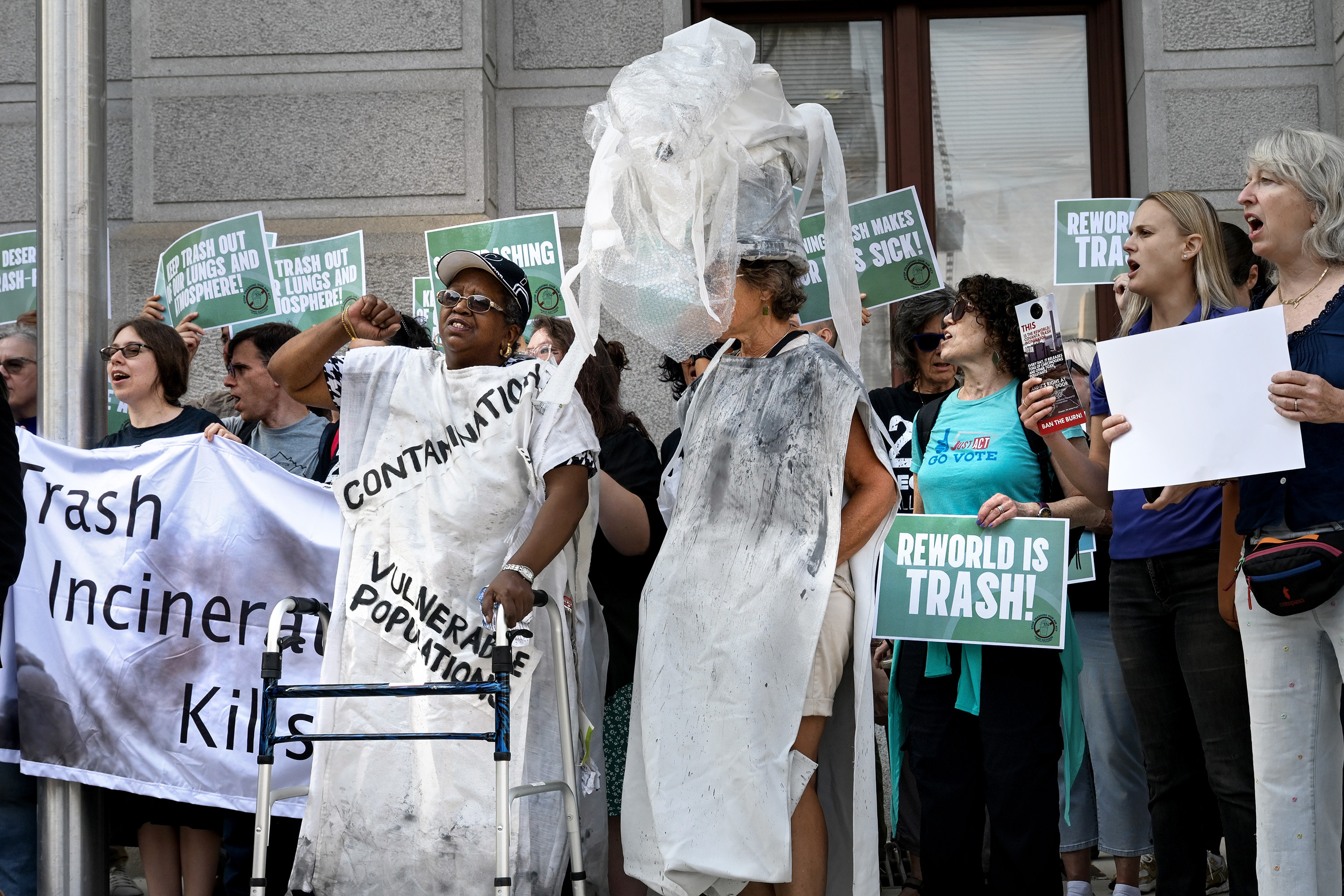
    Lois Williams (left), dressed as a “sick person,” and Shari Hersh (right) in costume as a “smokestack,” join a rally outside City Hall early Thursday to call on City Council to reject Mayor Cherelle L. Parker’s waste disposal contracts.Tom Gralish / Staff Photographer

    He pointed to the Philadelphia School District’s controversial facilities plan, which involves the closure of 17 school buildings and was adopted by the school board in April over the objections of many Council members.

    And he said recent legal proceedings around the city’s business income and receipts tax were “part of the motivation” to hold a hearing on the law department.

    In 2025, after a Massachusetts company sued the city seeking to overturn a popular tax break program that primarily helped small businesses, the law department said it had determined the lawsuit was likely to succeed. The Parker administration eventually settled the case and persuaded Council to eliminate the tax break. Some Council members at the time complained that the city did not defend the tax break more vigorously.

    The department already silos off some of the work it does on behalf of Council from the rest of the administration, such as when it drafts bills proposed by lawmakers. Council also may hire outside legal counsel, but must pay for those services out of its own budget.

    A law department spokesperson did not immediately respond to a request for comment.

    Storage wars: Councilmember Mike Driscoll introduced legislation on Thursday that would ban new self-storage facilities from his district in lower Northeast Philadelphia.

    The storage industry boomed during the COVID-19 pandemic, as consumer spending shifted from services to goods, many families struggled to afford larger homes, and low interest rates juiced development.

    Northeast Philadelphia saw a particularly large boom in self-storage buildings because of its rich supply of properties zoned for industrial development. Driscoll said that advocates in the Tacony neighborhood felt their community had become oversaturated.

    “They want more affordable housing and [self-storage units] are taking valuable sites for that,” Driscoll said.

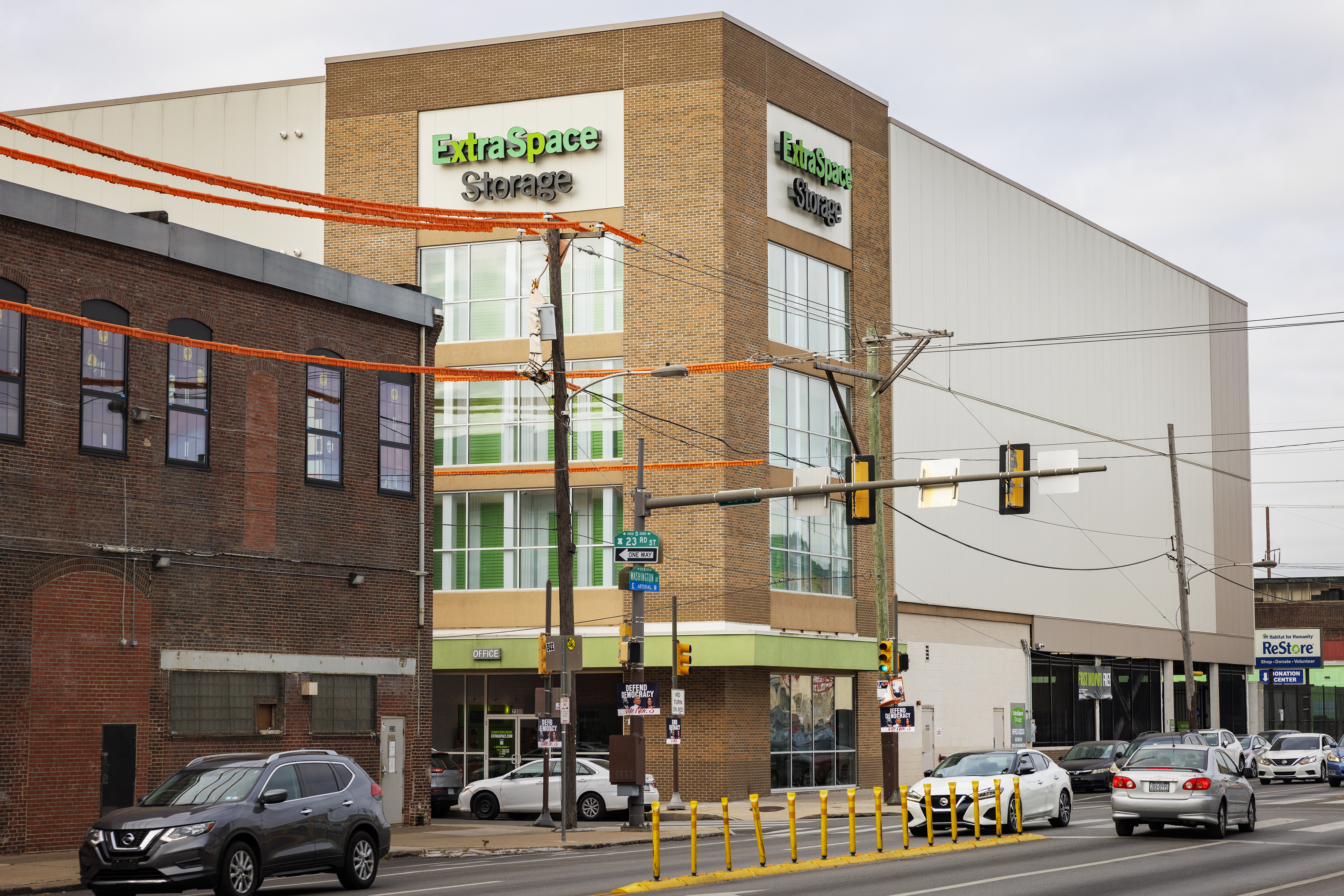
    ExtraSpace self-storage at Washington Avenue and S. 23rd Street, Philadelphia, Monday, November 4, 2024.Alejandro A. Alvarez / Staff Photographer

    Self-storage facilities are gold mines for developers. They suffer little wear and tear, they have few utility costs, and labor costs are low after construction.

    According to online industry search portal StorageCafe, Philadelphia has 89 self-storage sites containing more than seven million square feet of space. About a third of that has been built since 2019.

    Other municipalities have moved to limit the spread of self-storage facilities in recent years. New York City banned them from industrial areas to preserve jobs, and Denver blocked them from properties close to light rail lines. Providence, R.I., in 2023 banned new facilities from the city altogether.

    Driscoll said that he may further limit his legislation to the Tacony neighborhood.

    “I don’t want to hurt another part of my district that maybe wants these things,” he said.

    Embracing affordability: Multiple members of City Council said this week that tackling affordability is their primary objective this fall, including Councilmember Nicolas O’Rourke, whose office published a lengthy report outlining dozens of proposals aimed at reducing costs.

    Some may be more realistic short-term goals than others.

    The report, which was drafted by a Cost of Living Task Force made up of community advocates and industry leaders, recommended the city explore everything from opening municipal grocery stores to creating a local Medicaid supplement program.

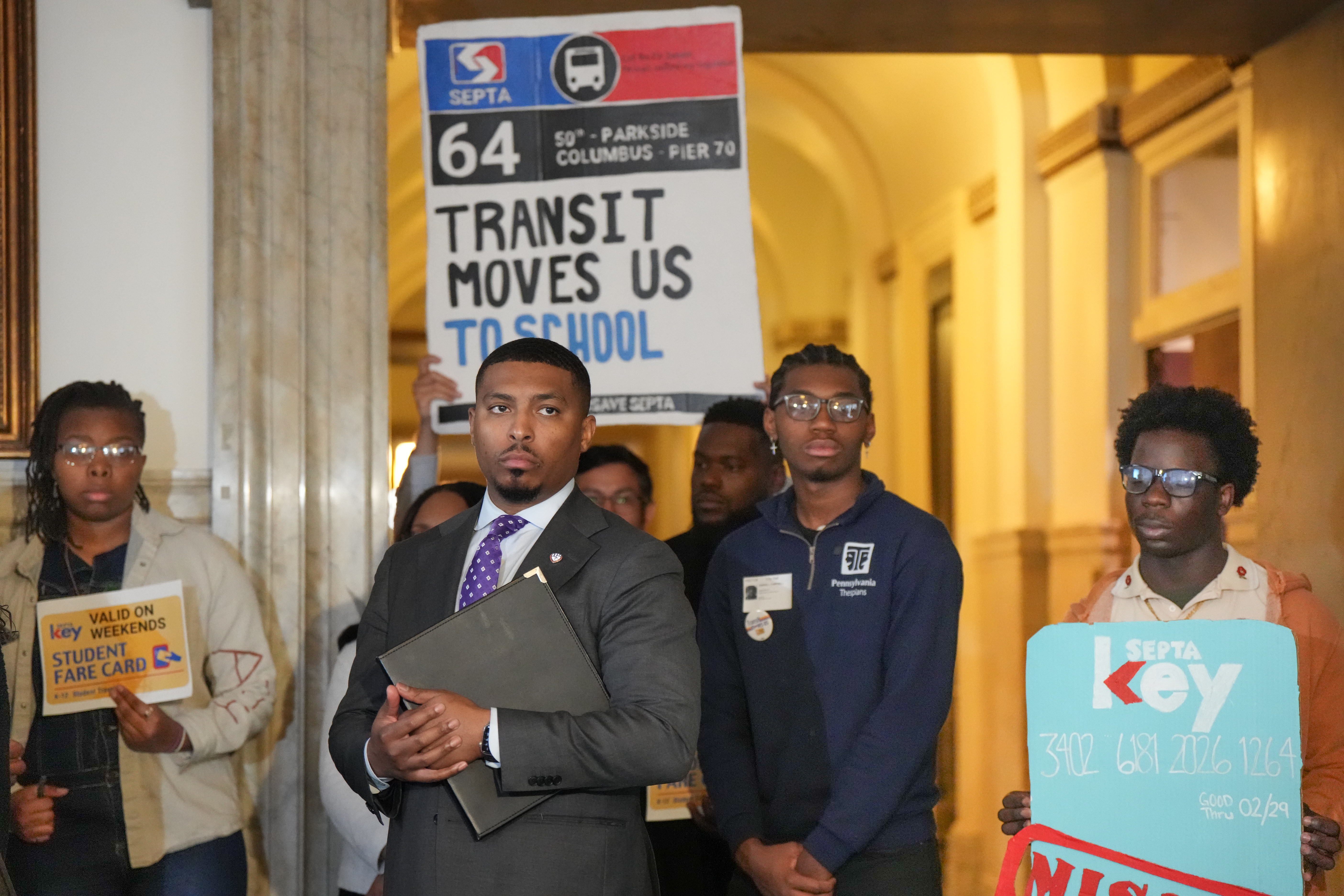
    Councilmember Nicholas O’Rourke with students and activists during a press conference about SEPTA in April.Jessica Griffin / Staff Photographer

    It also recommends restructuring existing housing programs to more aggressively target the poorest residents, and establishing a Transit Access Fund that would fund free or reduced-fare transit passes for low-income households.

    O’Rourke, a member of the progressive Working Families Party, plans to hold a committee hearing on the task force report this fall.

    Council President Kenyatta Johnson will also introduce an affordability measure this fall. He plans to bring forward legislation that would establish a permanent Food and Nutrition Security Coordination Office, he said in a statement.

    Quote of the week

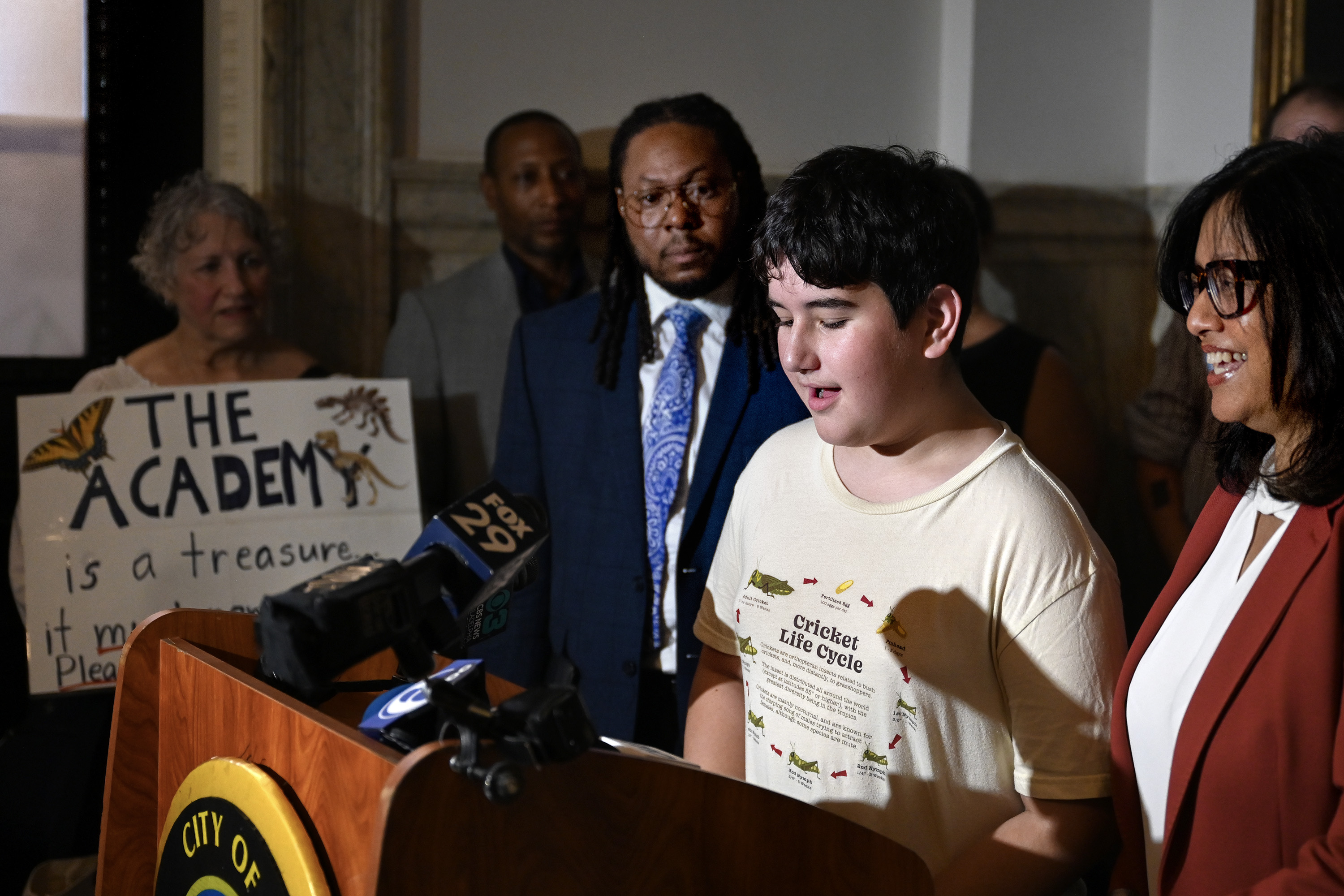
    Jeffery Young, Jr. (left) with twelve year-old Jack Erfer of Wynnewood and councilmembers and Nina Ahmad (right) in supporting the Academy of Natural Sciences of Drexel University before City Council resumes for its fall session Thursday.Tom Gralish / Staff Photographer

    No bones about it: That was Councilmember Jeffery Young Jr., who called for hearings on the planned closure of the Academy of Natural Sciences.

  • Upper Darby passed an ordinance aiming to limit cooperation and data sharing with ICE

    Upper Darby passed an ordinance aiming to limit cooperation and data sharing with ICE

    Upper Darby passed an ordinance on Wednesday aiming to restrict the township’s cooperation with federal immigration agents.

    Township council unanimously approved legislation banning local police from assisting ICE and other federal agencies with immigration enforcement activities. The legislation bars federal agents from using township property to stage immigration raids, prohibits township staff from providing resident information to federal agents for civil immigration enforcement, and bans township personnel from recording or maintaining data about residents’ immigration statuses, unless it is required by law.

    It also prohibits township police officers from wearing masks or obscuring their identities in most cases and “formally requests” that federal agents clearly identify themselves and do not wear masks.

    The ordinance includes exemptions, including cases in which immigration agents possess a judicial warrant or there is a criminal law enforcement matter requiring Upper Darby officials’ cooperation.

    The legislation codified many of the tenets of a resolution passed by Upper Darby’s council in February. It largely mirrors a sweeping legislative package passed by Philadelphia City Council earlier this year.

    At the more than three-hour meeting on Wednesday, residents decried the actions of federal immigration agents and President Donald Trump and described a rich patchwork of races, religions, and backgrounds that defines Upper Darby, where nearly a quarter of the population is foreign-born.

    Some described immigrant neighbors currently living in fear, unable to answer the door or go to religious services due to the anxiety of potentially being apprehended by ICE. Many said they moved to Upper Darby specifically for its diversity.

    “Our history reminds us that legality and morality are not the same thing. Upper Darby Township cannot determine federal immigration policy, but it can determine how our own lawful authority and resources are used,” said State Rep. Heather Boyd, who spoke during public comment and represents parts of Upper Darby in the Pennsylvania House.

    A smaller contingent of residents, however, pushed back against the proposal, warning that the ordinance makes few tangible changes to the police department’s policies while potentially putting a target on Upper Darby’s back for the federal government to strip away funding.

    When asked if he believes the legislation is in the best interest of the police department, police superintendent Timothy Bernhardt said the ordinance “isn’t going to change what the Upper Darby Police Department does.”

    The department has never been an immigration enforcement body, worn masks, worked with ICE under a 287(g) agreement, or stopped individuals simply to ask about their immigration status, Bernhardt said.

    “I have no objection to it. It’s not going to change what we do every day, day in and day out,” the police superintendent added.

    Township council members described the ordinance as a set of responsible guardrails for local officials in a municipality defined by its immigrant population.

    “It’s an issue of establishing trust and making sure that people know that in Upper Darby, if you need help, you can call because this community serves you,” said council member Kyle McIntyre, who helped to draft the legislation.

    “We will follow the law, but we will do everything in our power to protect our community and keep everyone safe,” Mayor Ed Brown said.

    This suburban content is produced with support from the Leslie Miller and Richard Worley Foundation and The Lenfest Institute for Journalism. Editorial content is created independently of the project donors. Gifts to support The Inquirer’s high-impact journalism can be made at inquirer.com/donate. A list of Lenfest Institute donors can be found at lenfestinstitute.org/supporters.

  • Mayor Parker has ordered a task force to study data centers in Philly and report back by June

    Mayor Parker has ordered a task force to study data centers in Philly and report back by June

    Philadelphia Mayor Cherelle L. Parker on Wednesday ordered a task force largely composed of members of her administration to explore whether the city should place new regulations on the construction of data centers — and to present her with its findings in about nine months.

    The mayor, a Democrat who has not staked a position on whether Philadelphia should host the controversial “hyperscale” data centers that power artificial intelligence, signed an executive order establishing the task force on Wednesday.

    In a video message posted to social media, the mayor said the issue is of “grave importance.” She said she has heard from residents who are concerned that a large data center in the city could hike utility bills and drive pollution.

    “This does not mean that a hyperscale data center is being built now; however, if a firm was to apply to the City of Philadelphia to build one of these hyperscale data centers, we want to make sure that we are fully prepared to know what the impact on Philadelphians would be,” Parker said. “We want the appropriate guardrails in place so that we do everything possible to protect our city.”

    The task force will be made up of members of Parker’s administration, as well as a representative from City Council President Kenyatta Johnson’s office. The group is charged with gathering information from neighborhood groups, unions that represent construction workers, environmental advocates, public health experts, and others.

    According to the executive order, the task force must present a final report to the mayor by June 30.

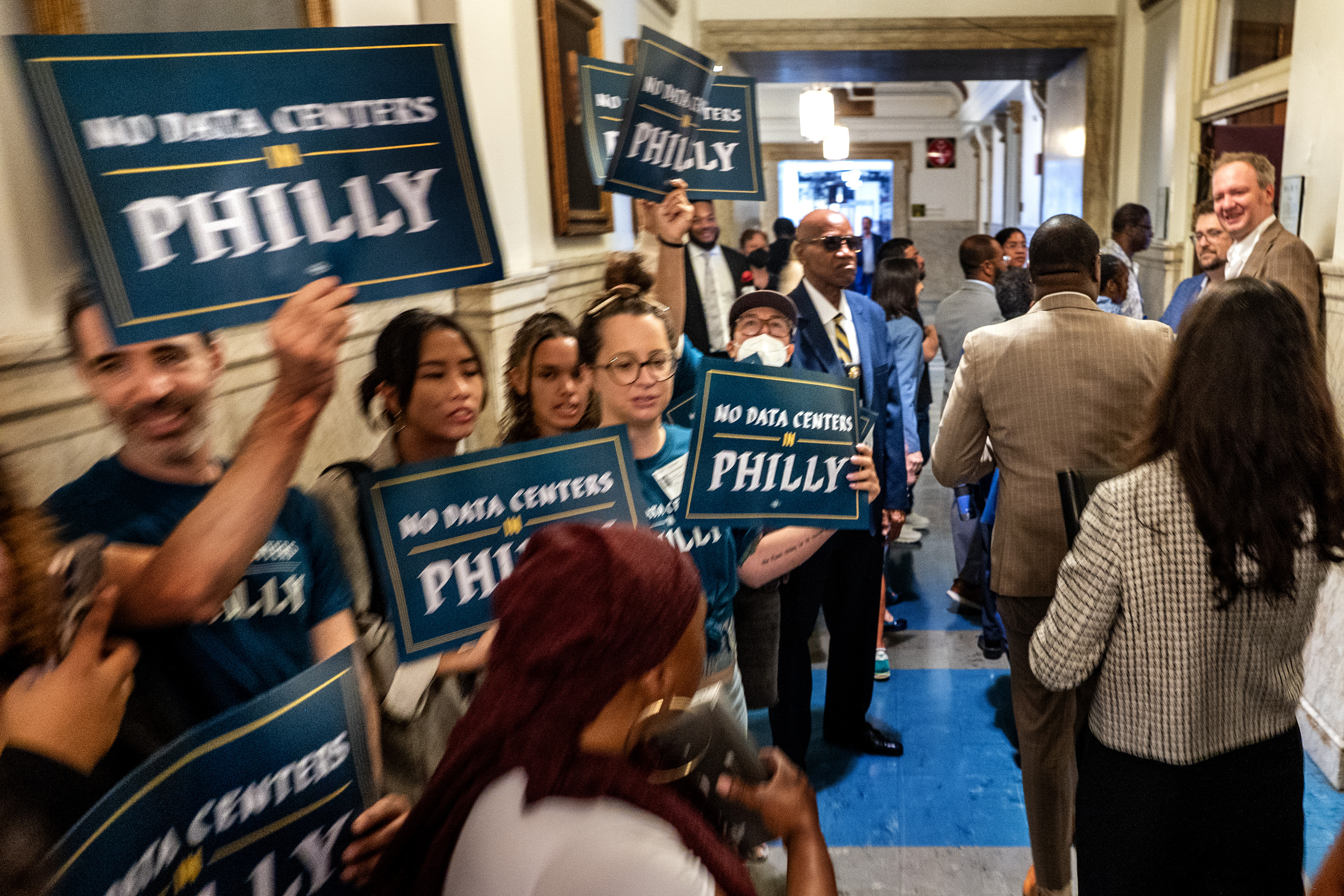
    The mayor’s move came just two days after dozens of activists held a rally outside City Hall calling on Parker and members of Council to pass a multiyear moratorium on the construction of data centers in Philadelphia. They vowed to make data centers an electoral issue ahead of the May primary election, when the mayor and every Council member will be on the ballot.

    The group, called No Data Centers in Philly, said in a statement Wednesday that Parker giving the task force until June to make its recommendations is too little, too late, and that “a task force does nothing to protect us now and takes time that we don’t have.”

    “Across the country, data centers have relied on dirty deals to get built, with NDAs, backroom negotiations, and massive tax handouts,” the statement read. “We can’t let that happen here. The communities who will see their health, homes, and wallets hurt by a data center need to be at the table.”

    President Kenyatta Johnson (right) is greeted by data center protesters in the hall while he heads toward City Council chambers Thursday, Sept. 17, 2026, as the body returns for start of its fall session.Tom Gralish / Staff Photographer

    Parker’s order also comes as talks of regulating artificial intelligence have gripped Washington after a handful of tech executives called for a global slowdown on the advancing technology. There has been bipartisan backlash across the country to the data centers that power AI; however, President Donald Trump has said the industry does not need new regulations.

    Last month, Gov. Josh Shapiro signed an executive order that effectively placed limits on data center construction in the state and required that the projects receive local backing before obtaining a state permit. It would also ban state agencies from using nondisclosure agreements.

    In Philadelphia, no member of City Council has said publicly that they would introduce legislation to place a moratorium on data center construction. Lawmakers are not currently considering any specific proposal to construct a data center.

    This summer, the city’s planning commission issued a report indicating that there are just two plots of land in Philadelphia that could accommodate a hyperscale data center: the former South Philly refinery site known as the Bellwether District and 2600 Grant Ave., a city-owned plot adjacent to Northeast Philadelphia Airport.

    However, building a data center in either of those locations would face hurdles.

    District Council members wield enormous power over land-use decisions in their districts, and the Council members who represent the two potential locations said they oppose a hyperscale data center in their jurisdictions.

    City Councilmember Mike Driscoll, a Democrat who represents the district where the Grant Avenue site is located, said in an interview Thursday that he “is a no, until we really figure this whole thing out.” He said he is concerned that a data center could drive higher utility bills for his constituents.

    “I think we have to participate to be competitive in the global economy,” he said. “But it’s ripe for some problems, and I think we have to sort that out at the federal level.”

    And Council President Kenyatta Johnson, who represents the area where the Bellwether district is located, said Thursday: “We don’t support any type of hyperscale data centers.” He cited concerns about environmental impacts and noise.

    “I haven’t gotten to the point that it should be a moratorium,” Johnson said. “But we are looking at regulations.”

    Bellwether district leaders have said no data center is currently in the works there.

    Mia Fioravanti, senior vice president of corporate affairs for the HRP Group/The Bellwether District, said earlier this week at the Economy League of Greater Philadelphia PAGE Real Estate and Construction Summit that there are no “data center users in our current project pipeline.”

  • Temple’s matchup with Toledo offers a measuring stick for K.C. Keeler’s team

    Temple’s matchup with Toledo offers a measuring stick for K.C. Keeler’s team

    Two weeks into the college football season, Temple has learned little about itself.

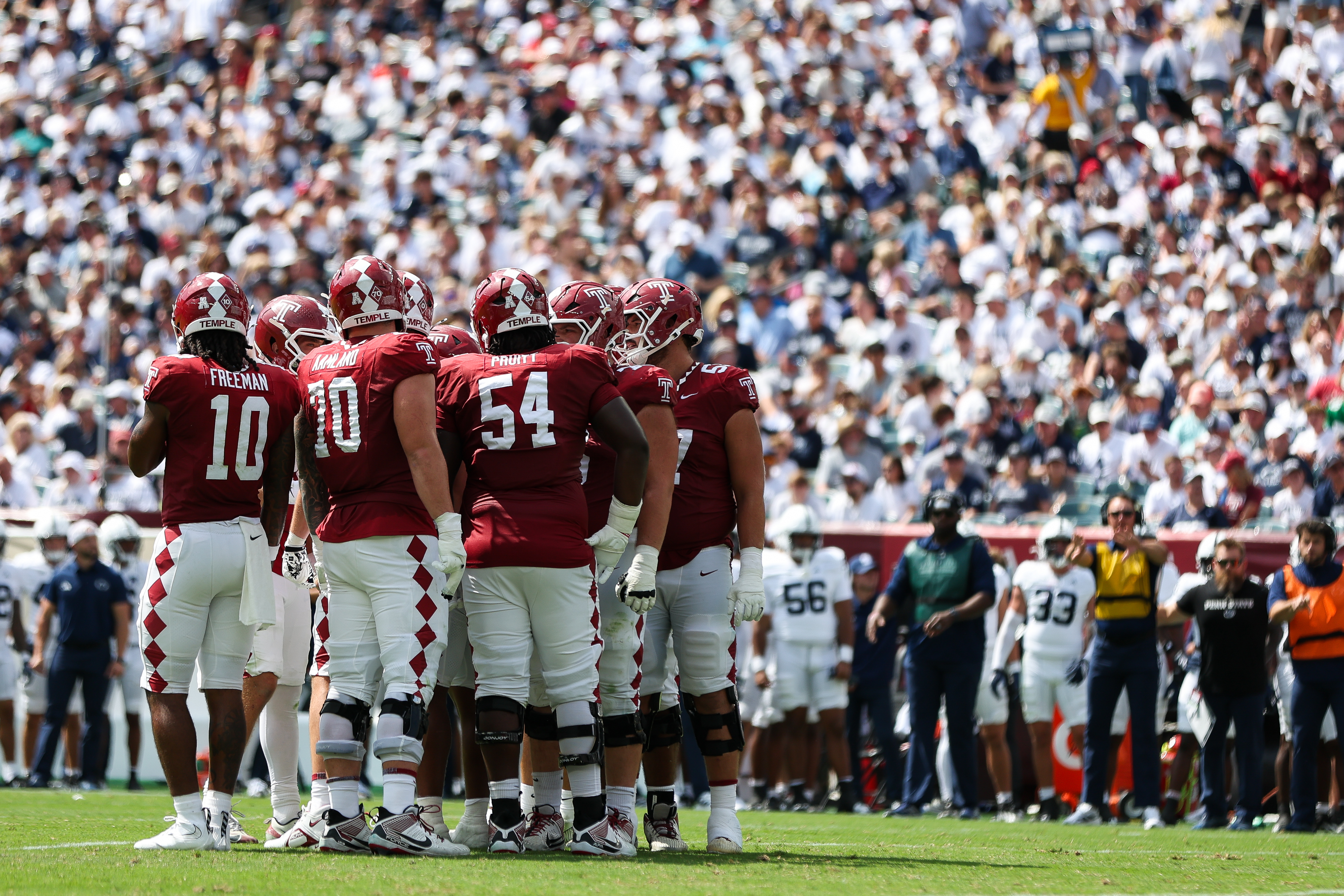
    But Saturday’s matchup (3 p.m., CBS Sports Network) at Toledo serves as an opportunity to build off what worked in Temple’s season-opening win against Rhode Island and what didn’t in its Week 2 loss to No. 14 Penn State.

    Here’s what this game could reveal for the Owls.

    Temperature check

    The Owls (1-1) split their first two games in expected fashion.

    Temple dismantled an established FCS program, 38-14, before falling to a Big Ten powerhouse, 27-9. Given the competition, neither result revealed much new information about the Owls.

    But this weekend, Temple will finally receive a temperature check.

    Toledo stands where Temple is building toward. The Rockets made a bowl game for the last five years and haven’t won less than eight games in a season during that stretch.

    The Owls will face a big challenge against a well-rounded Rockets roster, but it should be the season’s first competitive game.

    “[Toledo’s quarterback is] athletic, he has a strong arm,” said head coach K.C. Keeler after practice Monday. “Their wideouts are really talented. … Their defense is really impressive and I think their quarterback is getting more confidence as time goes on.”

    Toledo did most of its damage through the air in its first two games. In a 30-20 loss to Michigan State, Toledo gained 196 of its 273 total yards in the passing game. Wide receiver Adjatay Dabbs finished with 101 yards and was a key factor in the Rockets’ near-upset over the Spartans (Toledo led 20-19 in the fourth quarter).

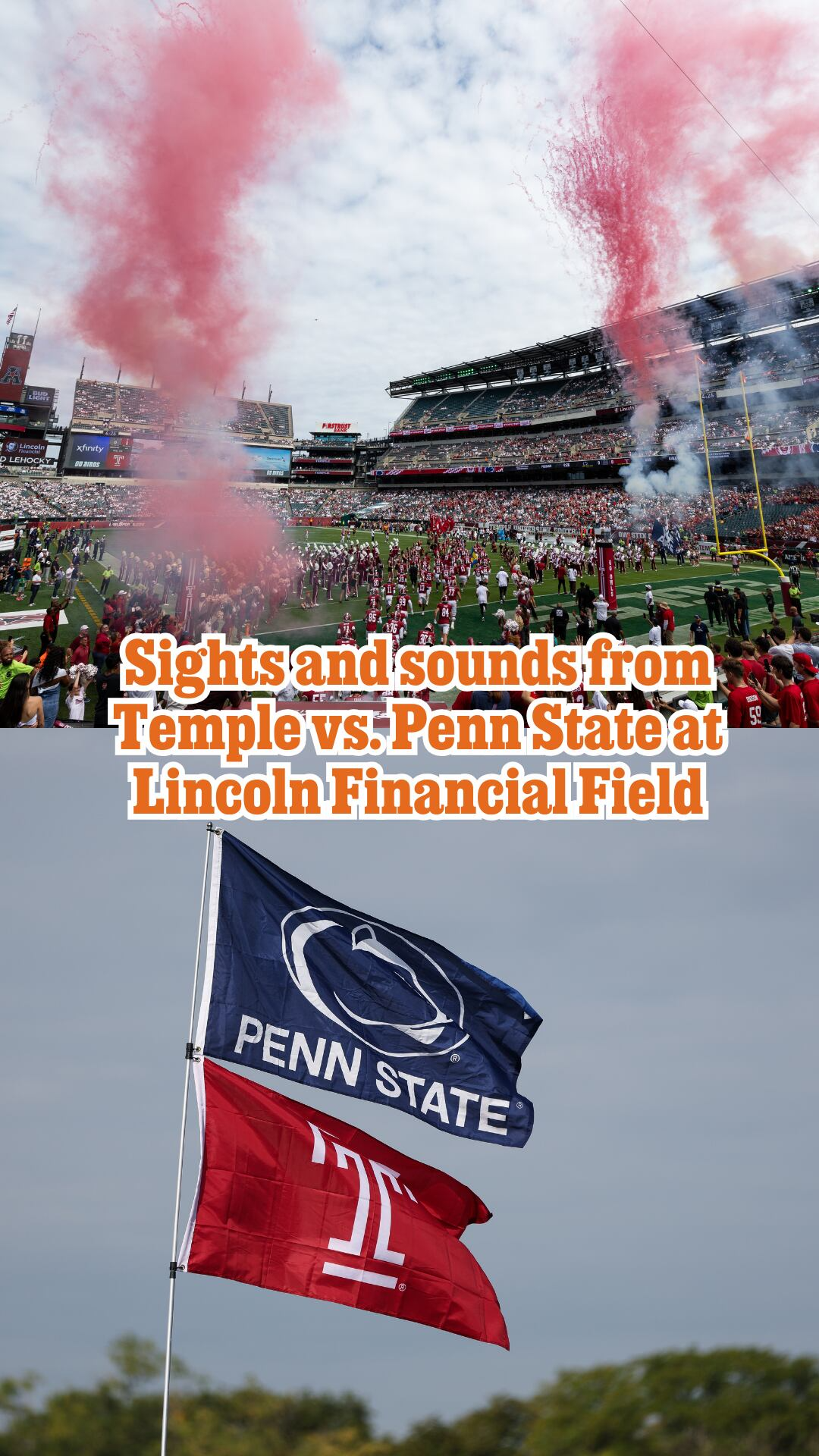
    Sights and sounds from Temple vs. Penn State at the Linc
    Video: Sights and sounds from Temple vs. Penn State at the Linc

    In Toledo’s 63-10 win over Central Connecticut State, John Alan Richter tallied 252 passing yards and three touchdowns. One of several highlights included wide receiver Rico Bond’s 85-yard touchdown.

    Temple guard Eric King and tackle Kevin Terry are expected to return, as well as running back Sam Brown for his season debut.

    Quarterbacks working together

    The seemingly never-ending question regarding who is Temple’s starting quarterback is getting closer to an answer. Though, it’s still not clear.

    Jaxon Smolik was the starter against the Nittany Lions, but Ajani Sheppard scored Temple’s only touchdown.

    Keeler still expects to mix playing time between the signal callers in Week 3. CBS Sports analyst and former Rice University quarterback Taylor McHargue, who will be commentating the game on Saturday, says both Smolik and Sheppard have shown promise.

    Temple assistant coach Tyler Walker talks to quarterback Ajani Sheppard during Saturday’s game against Penn State.Isaiah Vazquez / For The Inquirer

    “You probably have a role for both of them all season,” McHargue said. “For Sheppard especially, you’re seeing his ability in the red zone where he comes in and he’s very comfortable. … Against Toledo, I’d be very surprised if we just saw one or the other.”

    Keeler made it clear that Penn State would be an outlier for Temple. When Smolik threw an interception in the first quarter, the Nittany Lions excelled in crowding his receivers and picked off a good pass.

    Smolik will still be handling the majority of the snaps, but the second-year coach envisions specific packages where Sheppard will be under center on Saturday.

    “It’ll be very similar to what you saw this week,” Keeler said. “It depends on where we are on the field. Then maybe we’ll lend it more to getting Ajani on the field more. . … It’s going to be more situational than anything else.”

  • ‘Brothers’ Cavan Sullivan, Frankie Westfield, and Neil Pierre getting called up to the USMNT together is ‘another level’

    ‘Brothers’ Cavan Sullivan, Frankie Westfield, and Neil Pierre getting called up to the USMNT together is ‘another level’

    It was only a matter of time.

    On Thursday, Union forward Cavan Sullivan earned his first call-up to the senior U.S. men’s national team. If the 16-year-old phenom makes his debut in one of the team’s four autumn friendlies, he will become the second-youngest player ever to play for the USMNT, behind just Freddy Adu.

    Sullivan is widely regarded as one of the next faces of U.S. soccer. The Philadelphia native signed a contract with the Union at just 14 and is set to transfer to the Premier League’s Manchester City at the end of 2027. While his call-up seemed inevitable to most onlookers, Sullivan did not feel it was.

    “I don’t think it was necessarily expected, in all honesty,” Sullivan said after practice Thursday. “I never really like to think about what may come. Obviously, it’s something every kid works toward and dreams of. But to finally get it, it made my year.”

    Added Sullivan: “This is a really exciting next step. It’s your first; I feel like I’ll always remember this one.”

    Sullivan has been on a tear since the MLS resumed its season following the World Cup break. In 12 appearances, he has logged six goals and five assists, second only to Lionel Messi over that same span. His contributions have helped the Union to an 11-game unbeaten streak in league play. The team is currently in playoff position at seventh place in the Eastern Conference after a 1-10-4 start and the dismissal of manager Bradley Carnell.

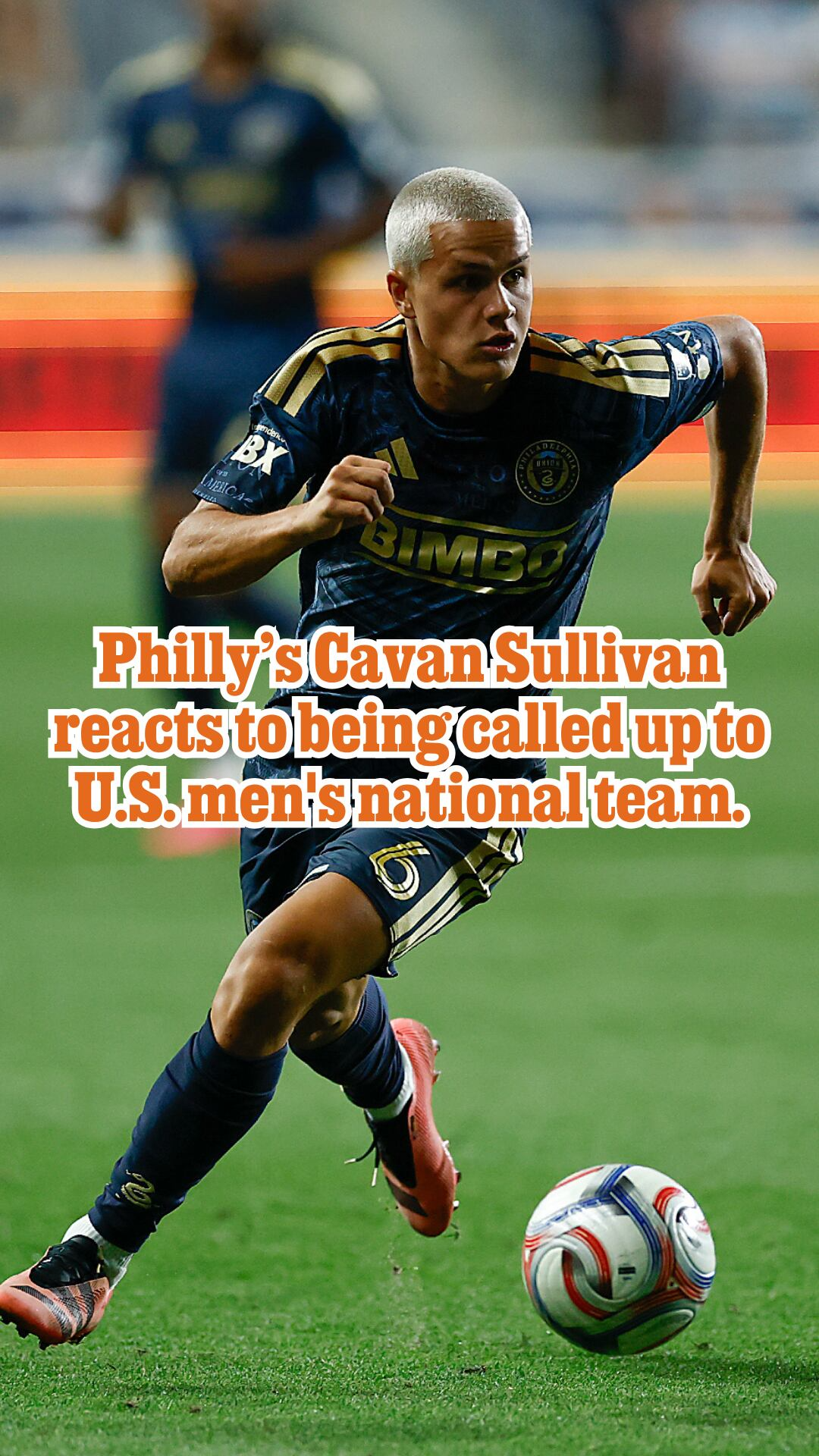
    Philly's Cavan Sullivan reacts to being called up to U.S. men's national team.
    Video: Philly’s Cavan Sullivan reacts to being called up to U.S. men’s national team.

    Playing against older and more developed players is nothing new for Sullivan. However, the opportunity to play alongside some of the best players the United States has to offer is not lost on him. Head coach Mauricio Pochettino, who declined to reveal in past media engagements if he would call up Sullivan, selected 14 MLS players to star on his 28-man roster. The team also features players from the Premier League, the German Bundesliga, Italy’s Serie A, and Spain’s LaLiga.

    “[Playing up] sort of teaches you, you’re not always going to be like the fastest, strongest, biggest. [It’s] sort of cliche, but you got to learn how to manipulate defenders and pass and move and learn to combine with your teammates,” Sullivan said. “Just develop a relationship with the ball that’s more close to [your] feet. You won’t always be able to just touch it by a guy and sprint faster than him.”

    Sullivan, whose older brother and Union teammate Quinn previously played for the USMNT under Pochettino, will have some familiar faces with him at camp. Union teammates Neil Pierre and Frankie Westfield also made Thursday’s roster. Like Sullivan, both players are products of the Union Academy and will be making their senior national team debuts.

    On Thursday, Pierre noted that he was texting Sullivan and Westfield “nonstop” while they awaited the decision.

    Neil Pierre (left) will join Union teammates Cavan Sullivan (right) and Frankie Westfield (not pictured) on the USMNT.Philadelphia Union

    “[I] can’t even lie, me and the boys, like Cav and Frankie, were checking our emails 24/7,” Pierre said.

    “We’ve been talking about this since we were 14-15, starting to go into national team camps,” he later added. “Like, how would it feel for all of us to go at the same time and individually going to like the men’s, that’s what you kind of dream for and try to get to. To do it is a great accomplishment and then also to do it with your brothers is just another level.”

    Pierre, an 18-year-old centerback, towers over most of his MLS competition at 6-foot-7. Through nine appearances this season, he has scored four goals. However, he is being called up to the national team for his defense.

    Next to Pierre on the Union’s back line has been Westfield, the team’s starting right back and, like Sullivan, a Northeast Philly native. His brother, Rocco, starred for Father Judge in basketball. Westfield has eight assists in 21 starts this season. He noted it was “nothing but happiness” for him and his teammates when they received the news, but he is not looking to slow down.

    Frankie Westfield (center) and Cavan Sullivan (right) are both Northeast Philly natives.Isaiah Vazquez / For The Inquirer

    “I also don’t want to stop here. Always, the final goal is to make the roster for your national team, but I know I don’t want to stop,” Westfield said. “I want to keep going, keep trying for more, and stay there and produce.”

    The three selections are just the latest for the Union Academy. The club saw four homegrown stars play for the U.S. men’s national team in the World Cup this summer: Brenden Aaronson, Matt Freese, Mark McKenzie, and Auston Trusty.

    “We think it’s very well-deserved,” Union sporting director John Scheer said. “So happy for the players and their families who worked so hard over the years. I’d say it’s a proud moment for not only our first team, where they’re having really big roles and they’re high performers for our group, but for our entire club.”

  • PFAS exposure near Pa. military bases linked to high blood pressure, cholesterol. Researchers find cancer cluster.

    PFAS exposure near Pa. military bases linked to high blood pressure, cholesterol. Researchers find cancer cluster.

    A major study of PFAS-contaminated drinking water among people living near military bases in Bucks and Montgomery Counties shows associations with elevated cholesterol, increased blood pressure, and lower childhood development, according to preliminary findings.

    PFAS, or per- and polyfluoroalkyl substances, are a family of compounds known as forever chemicals because they resist breaking down in the environment and in the human body.

    A separate analysis showed cancer clusters in those communities, but more research is needed to determine whether there is a correlation between cancer rates and the water, the study’s investigators say.

    Lead researchers from RTI International and Temple University presented the findings Wednesday at Hatboro-Horsham High School during an event hosted by the Buxmont Coalition for Safer Water.

    The ongoing study, part of an effort by the federal Agency for Toxic Substances and Disease Registry and Centers for Disease Control and Prevention, examined PFAS exposure in Pennsylvania and seven other states: California, Colorado, Massachusetts, Michigan, New Hampshire, New Jersey, and New York. It included 5,826 adults and 710 children ages 4 to 17.

    Wednesday’s presentation focused on Pennsylvania, where researchers collected blood from residents in 11 townships in Bucks and Montgomery Counties who lived near military bases where firefighting foam contaminated local drinking water supplies for decades. About 180 people attended the meeting.

    “We have waited a long time for these study results to be released,” said Joanne Stanton, of the Buxmont Coalition for Safer Water, a grassroots organization formed after the PFAS contamination was first identified. “For the past 12 years, our community has carried an unimaginable heavy burden.”

    According to baseline testing, local participants had elevated concentrations of per- and polyfluoroalkyl substances (PFAS) in their blood. Levels of PFAS and associated compounds — PFOS, PFOA, PFHxS, and PFNA — exceeded national averages. Pennsylvania ranked second highest nationally among all study sites for PFOS and PFHxS.

    “These higher levels [of PFAS] are consistent with decades of exposure to firefighting foam used at the military bases,” said Linda Brown, the Pennsylvania study’s director from RTI International, an independent research institute.

    Impacts on blood pressure, immunity, cholesterol, IQ

    Brown said 1,251 adults and 89 children from Pennsylvania gave blood for the study.

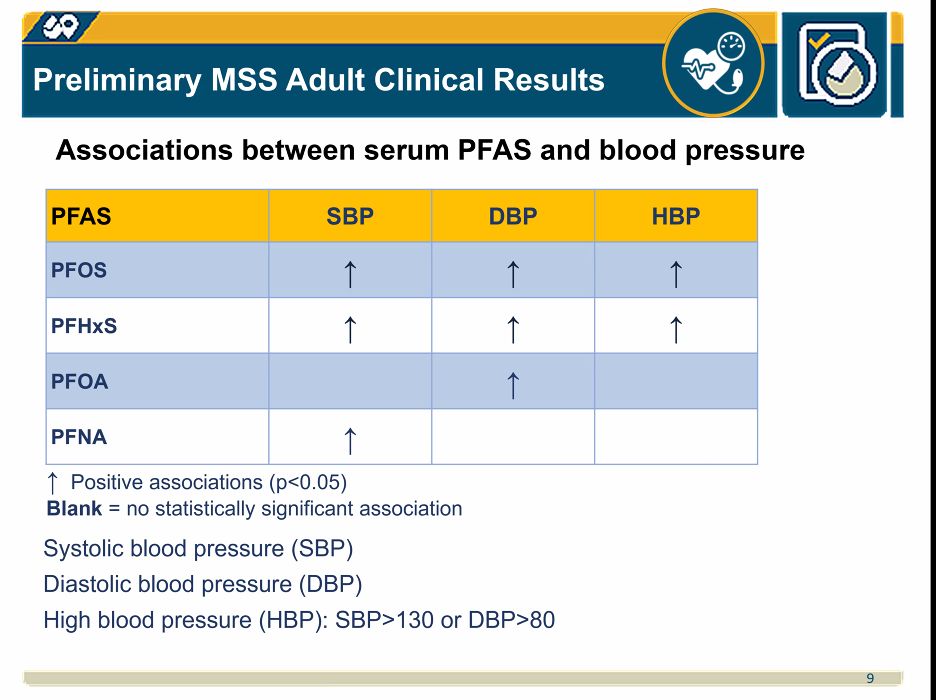
    “Adults with higher PFAS levels in their blood tended to have higher blood pressure,” she said.

    High blood pressure is a major risk factor for cardiovascular disease, she said.

    Graphic shows an increase in blood pressure and various PFAS compounds.Preliminary results federal multi-site study of exposure to PFAS

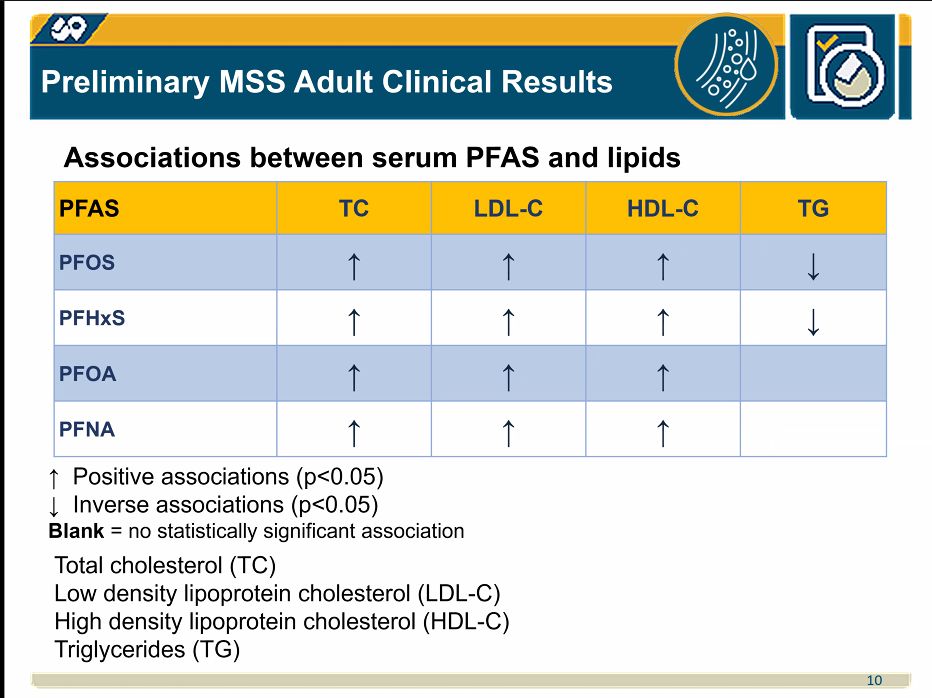
    Brown also said elevated PFAS levels were associated with higher cholesterol, including LDL, the so-called bad cholesterol. All four PFAS compounds were associated with higher cholesterol in both adults and children.

    She said, however, that preliminary results did not find a clear pattern linking PFOS levels with heart disease, diabetes, thyroid disease, or obesity.

    Graphic shows an increase in cholesterol among adults and various PFAS compounds. Cholesterol in children also showed a rise.Preliminary results federal multi-site study of exposure to PFAS

    Overall, children with higher PFAS levels had lower levels of certain antibodies that help the body fight infection, she said. The findings suggest PFAS may affect the immune responses, including the response to vaccines. But the findings do not tell researchers whether any individual child’s vaccines were less effective.

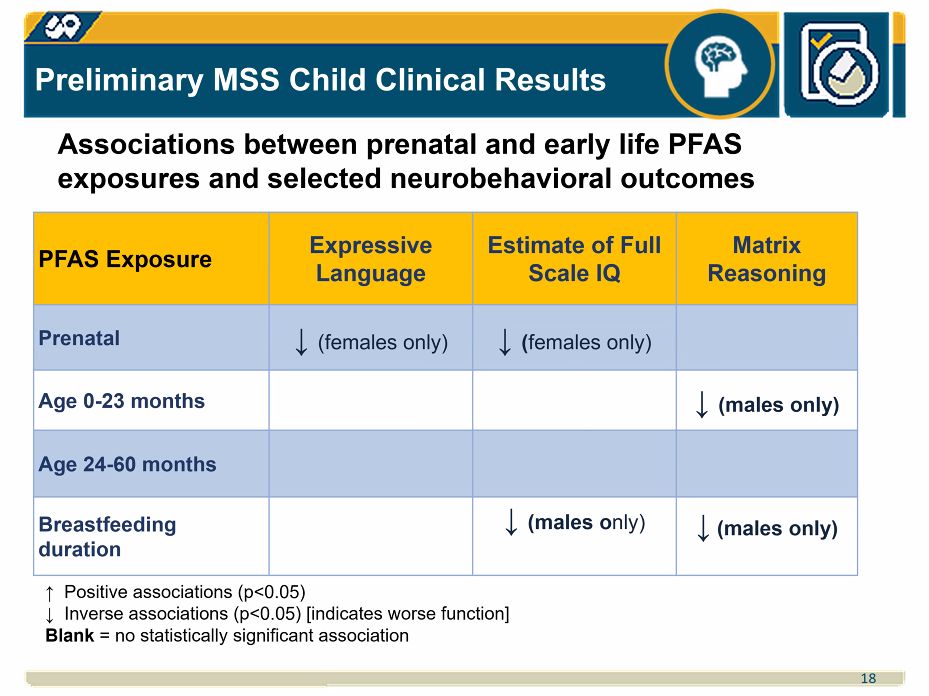
    Higher levels of exposure to PFAS during pregnancy and early childhood also showed patterns of lower abilities of language, reasoning, and cognition. But she cautioned that the patterns cannot tell parents how PFAS may have affected their own child.

    Chart shows an association between a decrease in language, IQ, and reasoning and PFAS exposure.Preliminary results federal multi-site study of exposure to PFAS

    Cancer clusters

    The study had too few cases of individual cancer types to complete a statistical analysis from the blood samples given. Cancer is not part of the original study.

    To fill the gap, Temple researcher Resa Jones said, the group used a grant from Pennsylvania to separately look at overall cancer cases in 12 counties.

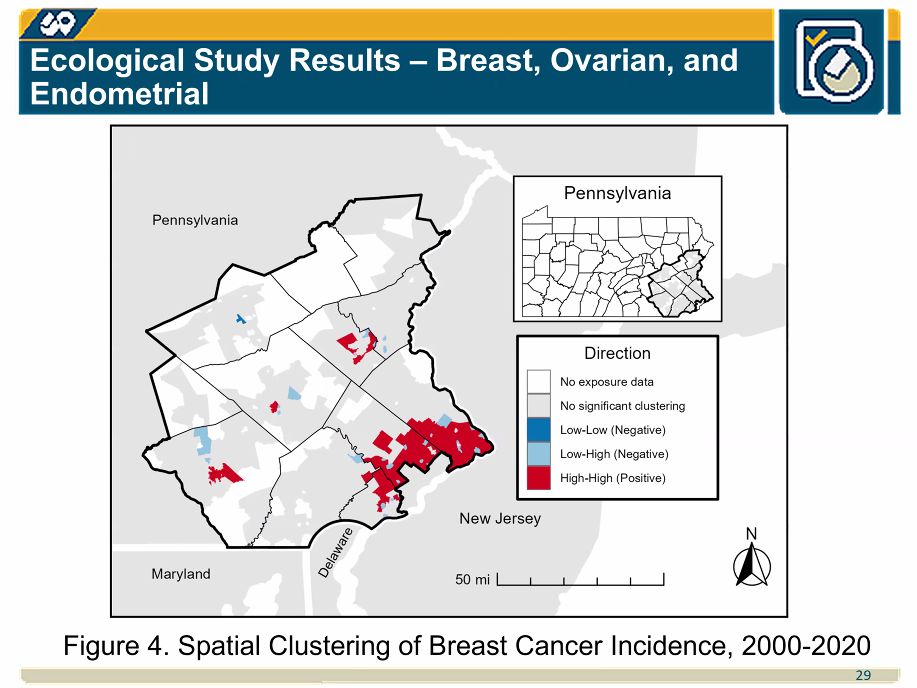
    Chart shows clusters of breast, ovarian, and endometrial cancers in Montgomery and Bucks counties in Southeastern Pennsylvania.Preliminary results federal multi-site study of exposure to PFAS

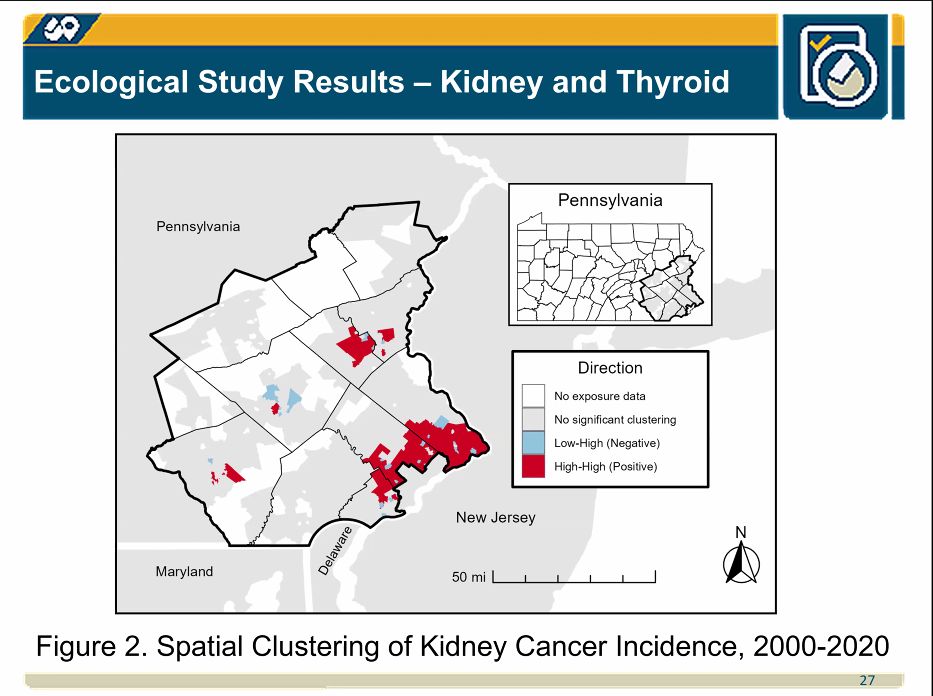
    Jones said researchers pulled data from the state’s cancer registry to find the rate per 100,000 people. Mapping showed geographical clusters of elevated kidney, thyroid, breast, endometrial, and ovarian cancer incidence in Bucks and Montgomery Counties.

    “We definitely have spatial clustering of the cancers,” Jones said of the two counties.

    In municipalities with the highest totals of breast cancer, half had PFAS levels above minimum reporting levels for drinking water, Jones said.

    But Jones stressed that more research is needed and that the results are preliminary.

    Chart shows kidney cancer clusters in Montgomery and Bucks counties in Southeastern Pa.Preliminary results federal multi-site study of exposure to PFAS

    Kidney function

    In addition, Robin Taylor Wilson, another investigator from Temple, said longer exposure to PFAS was also associated with lower kidney filtration rates and chronic kidney disease.

    The study highlighted heightened renal vulnerability among specific subpopulations, reporting that older residents, individuals with a history of blood transfusions or thyroid disorders, and cancer survivors faced significantly higher risks of chronic kidney disease.

    Hope Grosse, of the Buxmont Coalition for Safer Water, said the release of preliminary results of the study gives future researchers a solid foundation for further study into PFAS.

    “While these study results cannot undo the damage or bring back what we have lost, we hope that they are the beginning of the answers that we deserve,” Grosse said.

  • A 43-unit apartment building that preserves historic features is proposed in Old City

    A 43-unit apartment building that preserves historic features is proposed in Old City

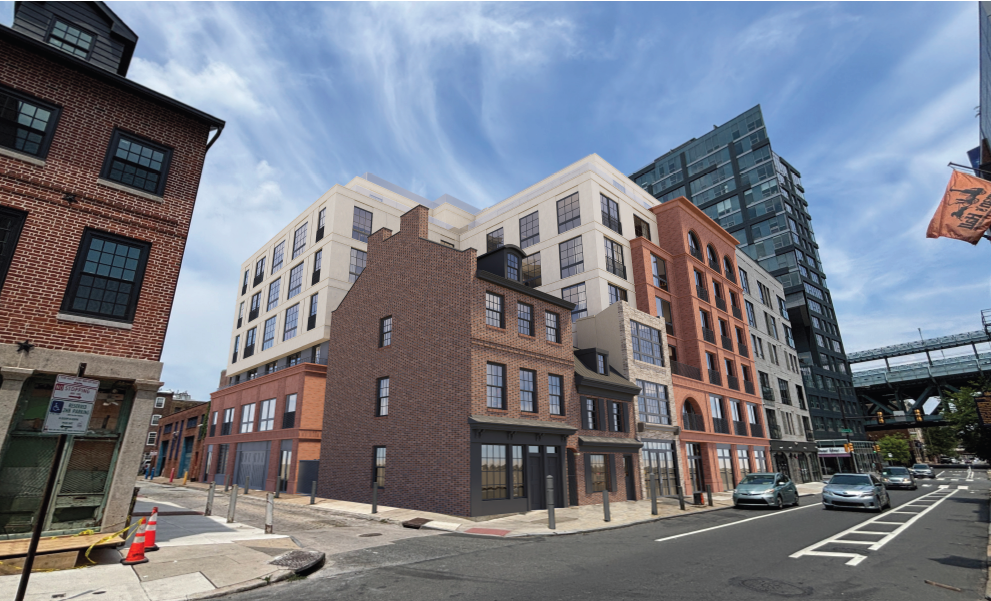
    A corner of Old City long considered for apartment development is now slated for a new 43-unit, seven-story building — an update from a smaller plan approved by the Philadelphia Historical Commission.

    The property at 148 N. Second St. contains several buildings that are regulated by local historic regulations.

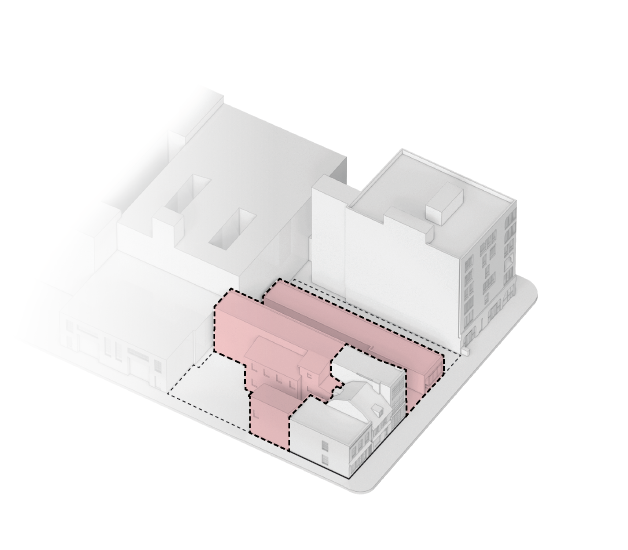
    Two of the buildings have been approved for demolition — at 152 and 156 N. Second St. — while two are being preserved and incorporated into the project at 148 and 150 N. Second St.

    The tallest points of the proposed structure are pushed back from the street to avoid overshadowing the older buildings and to keep in line with historic regulations.

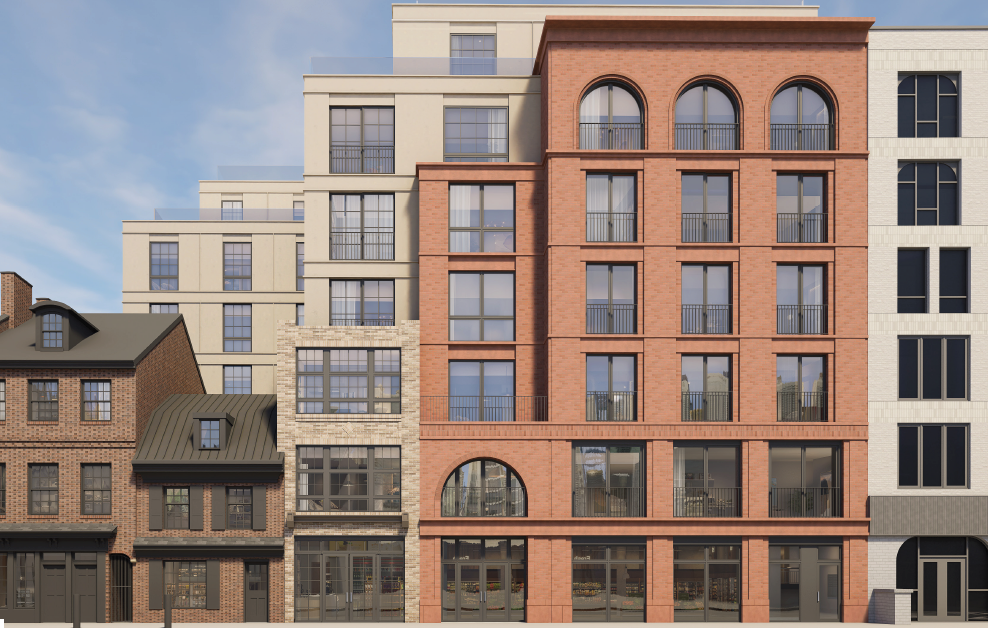
    “We … really made sure that those historic buildings at the corner were the star of the show, and our building wraps around those and gently steps down to them,” Derek Spencer, technical director with Gnome Architects, said at a Wednesday meeting of the Old City District.

    This drawing shows in red which buildings will be demolished to make way for the new project. The buildings in gray will be incorporated.Gnome Architects

    The project, from Philadelphia-based developer Virgis Anusauskas, is seeking permission from the Zoning Board of Adjustment to build a taller and denser building than the underlying zoning allows.

    It will include about 1,400 square feet of commercial space and parking for 15 vehicles. The project is replacing a number of buildings that were previously used as restaurant supply stores.

    Anusauskas hopes to find a tenant that will not be open late at night — as his office will also be in the building.

    The proposed project would contain a majority of two-bedroom apartments of about 900 square feet, with three three-bedroom units on the top levels between 1,100 and 1,500 square feet.

    Anusauskas said a huge number of studio and one-bedroom apartments have been built in Philadelphia’s central neighborhoods in recent years, and he is seeing more market demand for larger apartments.

    He is also keeping his options open when it comes to renting or selling the units.

    The condo market in Philadelphia has been weak since the pandemic, but he thinks the sheer quantity of rental units available right now means there may be an opening to make this a condominium building.

    “I’m not looking at studios at all, and one-bedrooms for the condos is not good,” Anusauskas said. “We want to have the people who live there to have some peace of mind, so we don’t want too many people.”

    The plan approved by the Historical Commission had six stories, but Anusauskas says the new, taller version has received verbal affirmation. He is seeking the support of the Old City District ahead of an Oct. 28 Zoning Board of Adjustment hearing.

    Attendees at Wednesday night’s community meeting asked why the project couldn’t remain within the rules that the existing zoning allows. For example, the height limit is 65 feet, where the proposed structure at its highest point is about 77 feet.

    The development team argued that historic regulations made it more difficult to stick with their earlier plan, preventing them from maximizing the possible square footage on the site without going taller.

    “Because we had to keep these two corner buildings, we can’t overbuild on top of them,” said Spencer of Gnome Architects. “We have to completely leave those pieces of those buildings untouched, so that really prevented us from maximizing the use of the site.”

    Anusauskas says his team has a lot of experience with rehabilitating historic buildings, and he doesn’t foresee too many challenges, after he clears this last set of regulatory requirements.

    A rendering of the proposed project, as seen from across the street.Gnome Architects

    He hopes to begin construction as soon as he gets zoning board approval.

    If the zoning board doesn’t approve the project, he said, he will go back to the drawing board and find a way to make it work.

    He says the cap over I-95 at Penn’s Landing and the new park that will be created there makes the neighborhood even more exciting.

    “I love Old City. I love the history. The community is great,” Anusauskas said. The park ”will pick the whole neighborhood up, and we want to be part of it.”

  • Society Hill neighbors are spending $54,000 on a traffic study to examine bike lanes

    Society Hill neighbors are spending $54,000 on a traffic study to examine bike lanes

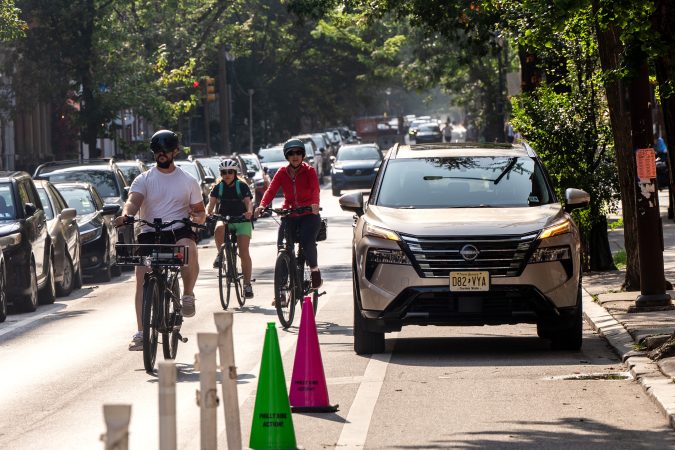
    The Society Hill Civic Association will spend about $54,000 for an engineering firm to conduct a new traffic study of neighborhood roads, including evaluation of the city’s proposal to enhance protections for users of bike lanes on Pine and Spruce Streets.

    Board members of the community organization approved hiring Dewberry Engineers Inc. for “fact-based recommendations” earlier this month in a special Zoom meeting, according to a Sept. 10 SHCA newsletter.

    Last year the Society Hill association contributed $25,000 to help fund a lawsuit against the city by Friends of Pine and Spruce (FOPS), a group of residents challenging the legality of a plan that includes curb-style concrete barriers to separate bike lanes from motor-vehicle traffic.

    The new traffic analysis is intended to update a 2018 “complete streets” study done for the civic association by the Howard Stein Hudson engineering firm, said Jay Borowsky, chair of the group’s streets committee.

    “Since that time, the city has implemented significant traffic and street changes beyond Spruce and Pine, and is now considering additional changes that could negatively affect the community without any updated objective data,” Borowsky said in an interview.

    The new study will also look at traffic counts and crash data on Third Street, where the city installed bike lanes in June, as well as Fifth Street and Lombard Street.

    “The streets don’t work in isolation,” Borowsky said. The 2018 study included information only from Pine and Spruce Streets in the civic association’s territory, he said.

    The Third Street bike lanes have drawn many of the same complaints and concerns that have arisen elsewhere. Some residents say that designated space set aside for bikes has clogged traffic and caused more difficulty getting deliveries and contractor services.

    But others are happy with the change.

    Questions of bias

    “In my experience, traffic moves at a more reasonable speed and the street is quieter,” Nawaf Bou-Rabee, a mathematics professor at Rutgers University-Camden and a member of SHCA, wrote in an email to board members. “Every neighbor I have spoken with about it has expressed support.” He also said he has had no difficulties with deliveries or contractors loading or unloading to work on his home.

    “The study should establish where arrangements are working and where specific improvements are needed,” Bou-Rabee wrote. He asked pointed questions about how data will be measured and evaluated and the impartiality of recommendations ensured.

    Members of FOPS sit on the civic association board. Society Hill residents who support the bike lane changes say that opponents are using the nonprofit to pursue their own agenda despite a diversity of opinion on cycling protections.

    A ban on stopping in bike lanes was enacted in 2024 after a physician, Barbara Friedes, was killed by a drunk driver while cycling on Spruce Street.

    The crash helped galvanize support for physical barriers on Pine and Spruce Streets, which the Philadelphia Office of Transportation and Infrastructure Systems has proposed.

    A Philadelphia Common Pleas Court judge in July blocked the city from resuming work to upgrade protections for the bike lanes along Pine and Spruce Streets, the latest ruling in the FOPS lawsuit.

    The city had asked the court to lift an August 2025 injunction freezing the OTIS project.

    Al Meinster, a member of SHCA and a cyclist who said he was on the board’s Zoom call, worries that opponents have the “deep pockets” to stretch out the litigation and delay safety changes.

    In the meantime “people are exposed to danger, and somebody could be hurt, or somebody could die as a result of this impediment,” Meinster said.

    Debate over cyclist safety

    The lawsuit is part of a growing backlash against bike lanes. Boston has canceled some planned projects. Nationally, the Trump administration has cut federal grants for building the lanes; Transportation Secretary Sean Duffy recently denounced “DEI bike lanes” and said they contribute to traffic congestion.

    Borowsky, of the SHCA, said the study would collect information that will help city officials, bike advocates, and anyone involved in the debate.

    “We’re looking at finding solutions that improve safety and access for everyone,” he said.

    Neighbors fighting the city’s plans are mostly “caring, responsible people” who simply “don’t know how dangerous it is to be on a bicycle on Spruce and Pine and Third Street,” Meinster said.

    FOPS has argued in court and elsewhere that serious crashes involving cyclists are rare in the neighborhood. As of last November, Spruce Street was listed among the 12% of roadways where 80% of traffic crashes with serious injuries or deaths occur.

    The metric, which measures injuries to all road users, is used in the city’s Vision Zero safety program.

    The Pine and Spruce bike lanes were built in 2009 under former Mayor Michael Nutter, whose administration made an agreement that residents would be able to park in front of their homes for up to 20 minutes for loading and unloading.

    Enforcement was spotty, and conflicts arose when vehicles, including delivery and contractor vans, parked inside the bike lanes for longer periods, forcing riders to veer into traffic.

    Members of FOPS contend that concrete barriers would block emergency vehicle access and violate the Americans with Disabilities Act by limiting access to transportation or those with mobility issues.

    Meinster said those arguments are exaggerated or have solutions that do not require opening up the bike lanes to motor vehicles.

    If the legal theory that protected bike lanes violate the ADA catches on, building could be frozen or blocked citywide, he said.

    “What’s happening here in Society Hill has great importance to the safer bicycling movement in the rest of the city because some precedents could be made here,” Meinster said.

    The article has been updated to reflect that only Spruce Street has been added to the city’s list of most dangerous roads for crashes.

  • Atlantic City’s iconic Steel Pier is up for sale for $85 million

    Atlantic City’s iconic Steel Pier is up for sale for $85 million

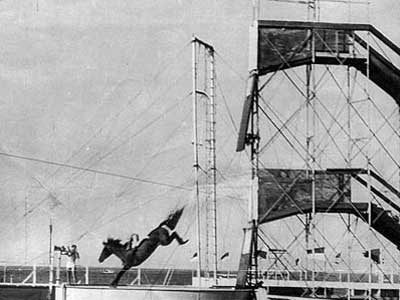
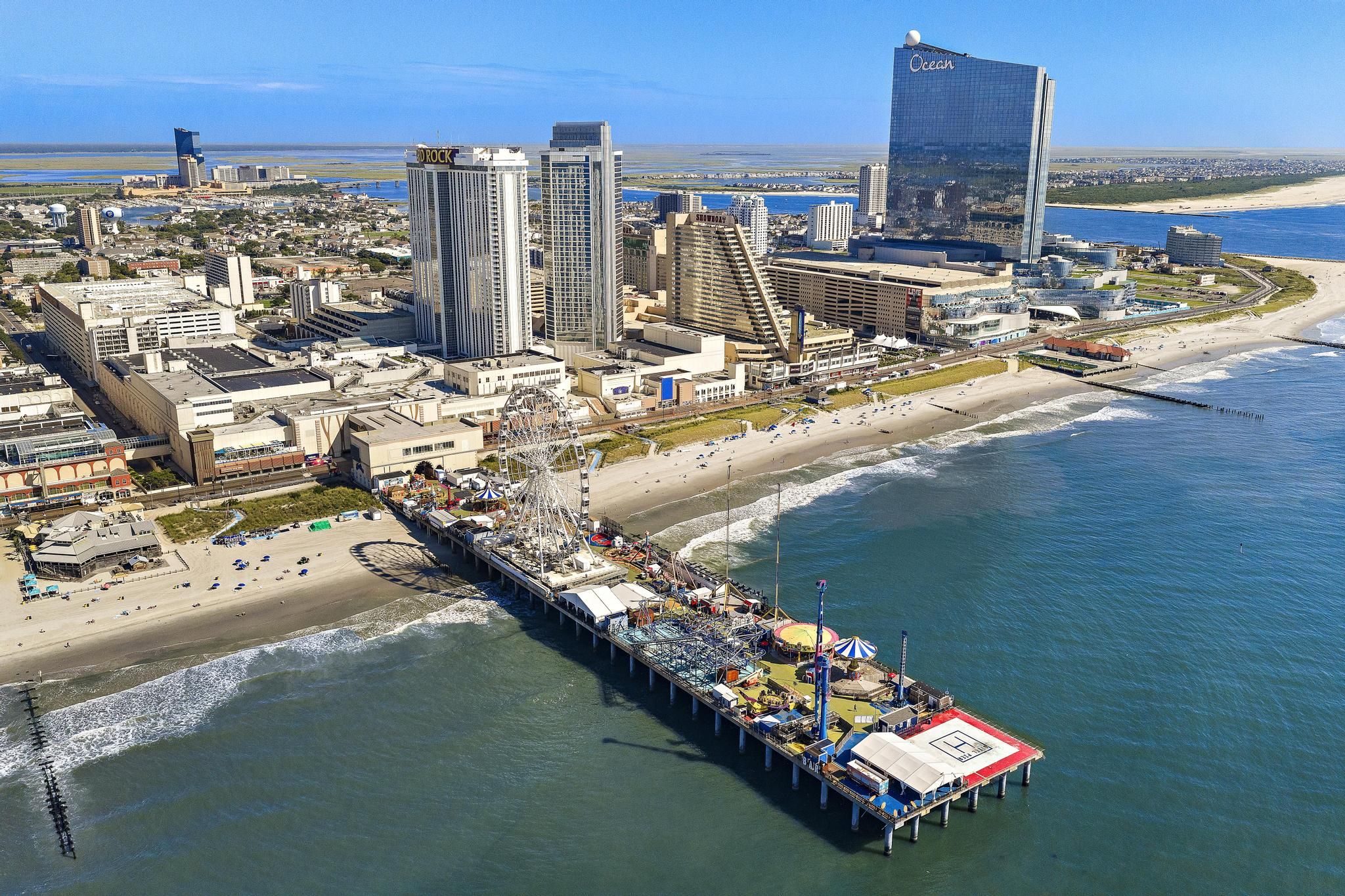
    ATLANTIC CITY — The Steel Pier, home to some of Atlantic City’s most iconic spectacles, including diving horses and Miss America pageants, and lately an amusement pier, is up for sale.

    Priced at $85 million, the pier, which was built in 1897, has been listed by the luxury New York City Serhant agency, whose owner, Ryan Serhant, is the star of Netflix’s Owning Manhattan.

    On his Instagram story Thursday, Serhant called the listing “maybe our coolest listing ever??”

    The pier has been owned by the Catanoso brothers since 2011, but the family says the next generation is not interested in taking over. “It’s kind of a succession thing,” Anthony Catanoso said in an interview with The Inquirer.

    The agency is targeting a buyer that envisions expanding the pier into a commercial hospitality venue, like a boutique hotel, a wedding venue, or an expanded amusement park, listing agent Michele Zyska said. She said luxury residential properties built over the ocean could also be a draw.

    Mayor Marty Small Sr. said the prospect of the pier lacking amusements and entertainment would be “devastation.”

    “The Steel Pier has always been the legendary part of the Atlantic City Boardwalk,” he said.

    The pier structure measures 150 feet wide and 965 feet long and is anchored 90 feet into bedrock. A perpetual riparian grant permits it to extend up to 2,850 feet into the Atlantic.

    “It’s like nothing else in the world,” Zyska said. “I keep saying that. It’s an iconic piece of American history. We’re thinking probably more hospitality, music, and maybe even residential. We do have interest in someone keeping it as an amusement park.”

    Atlantic City’s historic Steel Pier is up for sale for $85 million.Real Estate Cinema

    The Catanoso brothers originally leased the pier from Trump Entertainment after winning the lottery in 1993, and bought the pier for $4.25 million in 2011.

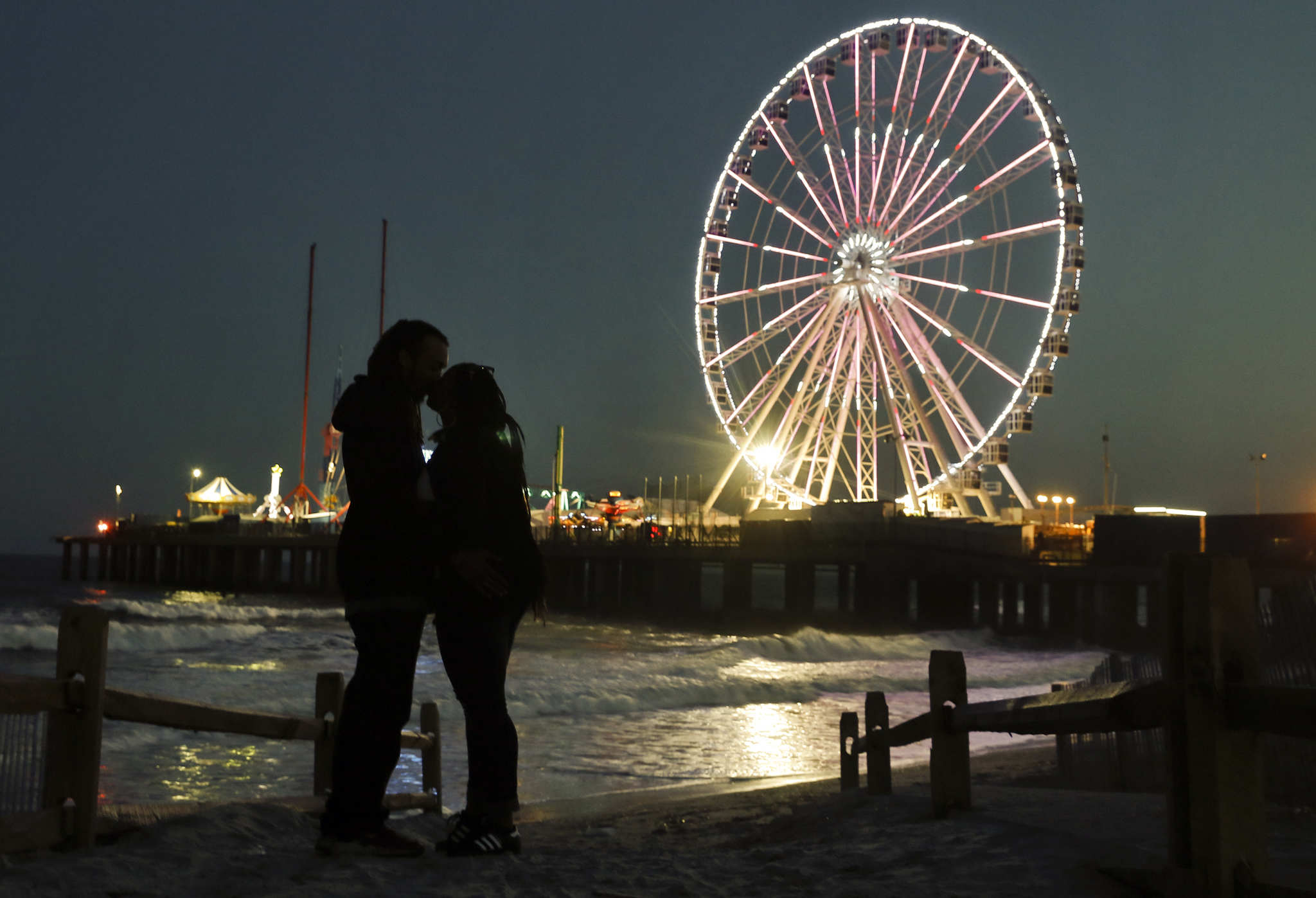
    They built its Observation Wheel, now a distinctive feature of the city’s casino skyline, teetered on bankruptcy, and found some stability in recent years running the pier with various amusements, bars, and restaurants.

    Catanoso said business has been good, although challenged by wage costs.

    “We’re getting older, me and my brothers,” Catanoso said. “The kids aren’t taking it over. It’s time for the next chapter. It’s a big development opportunity for somebody.”

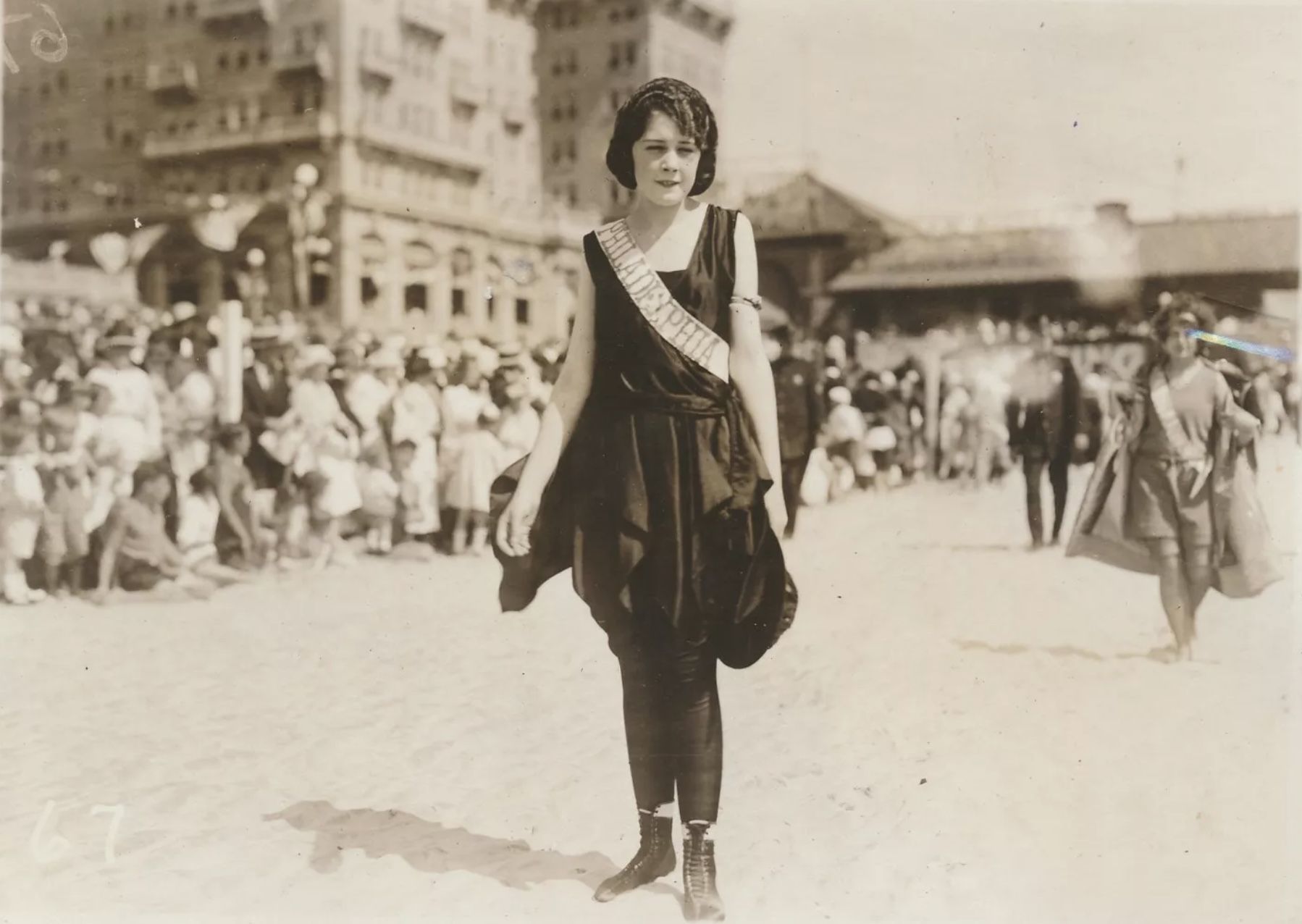
    Miss Philadelphia Nellie Orr competes in the 1921 Inter-City Beauty Pageant held on Atlantic City’s Steel Pier. The Miss America Organization will mark the 100th anniversary, but not in Atlantic City. Orr finished second.Collection of Daryl Schabinger

    Serhant calls the Steel Pier “one of the most recognizable landmarks on the East Coast.” The listing was first reported by the New York Post.

    The agency notes the pier’s built-in helipad and previously obtained condo-hotel approvals.

    “The Steel Pier is that rarest of offerings: a piece of developable American history extending straight into the Atlantic Ocean,” the company said in a release.

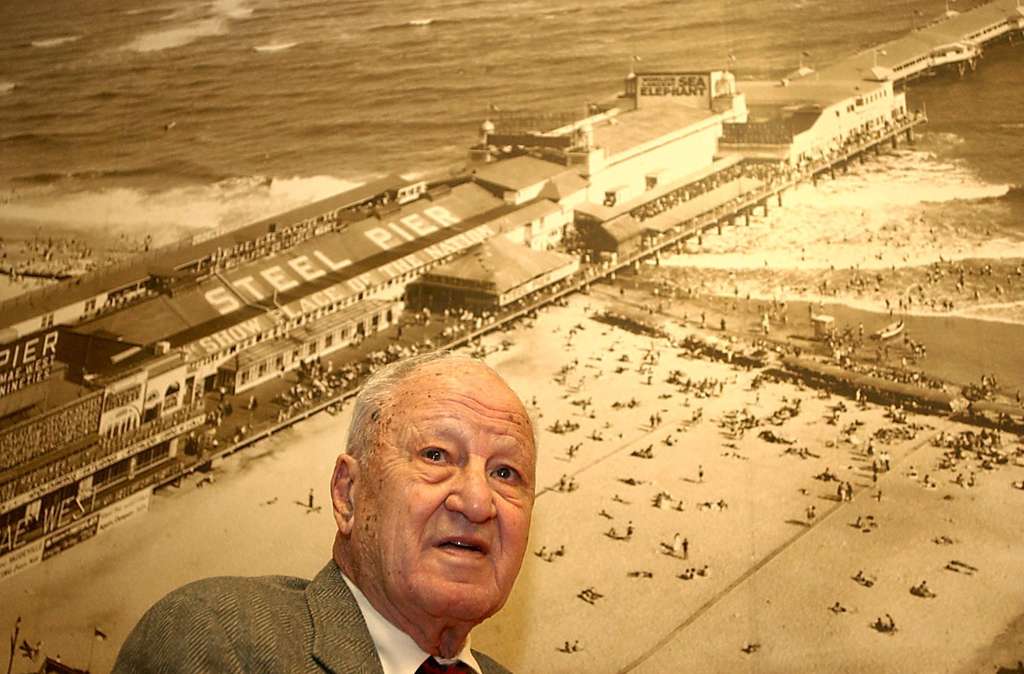
    George A. Hamid Jr. built up his family’s Steel Pier in Atlantic City by finding hot new acts.SHARON GEKOSKI-KIMMEL / File Photograph

    In addition to the amusement park, there is a 40,000-square-foot building, including a sky bridge and roof.

    “How often does someone get to own a piece of the ocean?” Ryan Serhant said in a statement. “The Steel Pier isn’t just five acres on the most famous boardwalk in the world, it actually offers the chance to own the Atlantic itself and build something unforgettable on top of it.”

    The company also noted new residential projects that are in the works in that end of Atlantic City, including Kushner Cos.’ Caspian Point, K. Hovnanian Homes’ South Inlet townhomes, Colosseo Atlantic City’s Chelsea townhomes, and Zoubek Properties’ Residences at the Orange Loop.

    Anthony Catanoso, owner of Atlantic City’s Steel Pier, takes in the view from the Observation Wheel Tuesday, December 26, 2017.Jose Moreno / staff photographer