Tag: Temple University

  • IBX and Highmark want to cut costs by moving more outpatient care to surgery centers

    IBX and Highmark want to cut costs by moving more outpatient care to surgery centers

    Independence Blue Cross, the Philadelphia region’s largest health insurer, launched this month a policy designed to move care into lower-cost surgery centers and away from hospitals and clinics that can generate payments twice as high for the same treatment.

    The policy started June 1 echoes Medicare’s efforts to slow federal healthcare spending by paying the same price for outpatient procedures such as colonoscopies and knee surgery in hospitals as in surgery centers.

    Pressure from employers to control costs has similarly motivated IBX and a newer regional competitor, Pittsburgh-based Highmark, which implemented a similar policy on Jan. 1. Both companies’ policies affect people with low risk of complications who are covered by commercial insurance or Medicare Advantage.

    When doctors seek insurance authorization for certain procedures, IBX reviewers will ask whether doctors can treat low-risk patients in a surgery center, according to the company’s chief operating officer Richard Snyder.

    “This is a gentle move,” Snyder said. “We’re not willing to force you to change doctors to have your colonoscopy or your service, but we want docs to get privileges in ambulatory surgery centers.”

    The region doesn’t have enough low-cost surgery center capacity for a large-scale move to that setting, Snyder said. That means the policy might not hit hospital finances right away.

    But the implication is that the policy could take a harder edge in the future. IBX’s goal is to spur the development of more surgery centers — either by the incumbent health systems or by new competitors, Snyder said.

    Even now, the potential for delayed care and denied coverage has several regional health systems worried. Temple University Health System, for example, does not own ambulatory surgery centers, so the time could come when it has to coordinate care with outside providers.

    The money at stake

    Surgery to remove torn cartilage on the knee can cost $7,190 when performed on an outpatient basis in a hospital, nearly three times the $2,477 cost in ambulatory surgery centers, according to Philadelphia-area commercial insurance averages from heath prices data firm Turquoise Health.

    Smaller gaps exist for hernia repairs and colonoscopies with a biopsy, Turquoise reported. Another data firm, Medscout, showed that a majority of those colonoscopies had already shifted to ambulatory surgery centers by 2024. The shift was far less advanced for hernia repairs — a procedure IBX is targeting.

    (function(){function e(){window.addEventListener(`message`,function(e){if(e.data[`datawrapper-height`]!==void 0){var t=document.querySelectorAll(`iframe`);for(var n in e.data[`datawrapper-height`])for(var r=0,i;i=t[r];r++)if(i.contentWindow===e.source){var a=e.data[`datawrapper-height`][n]+`px`;i.style.height=a}}})}e()})();

    Some physicians’ groups already are seeing opportunity in commercial and government insurers’ increased emphasis on surgery centers as a way to reduce spending — as well as regulatory changes that allow more procedures to be done in free-standing surgery centers.

    Southeastern Pennsylvania now has four relatively new cardiovascular surgery centers.

    Restore Orthopaedic Surgical Institute in Chadds Ford, founded by a group of Delaware doctors, has been quickly become a high-volume joint-replacement center.

    In the coming year, Rothman Institute plans to open three surgery centers in the Philadelphia region, the private practice’s CEO Christian Ellison said.
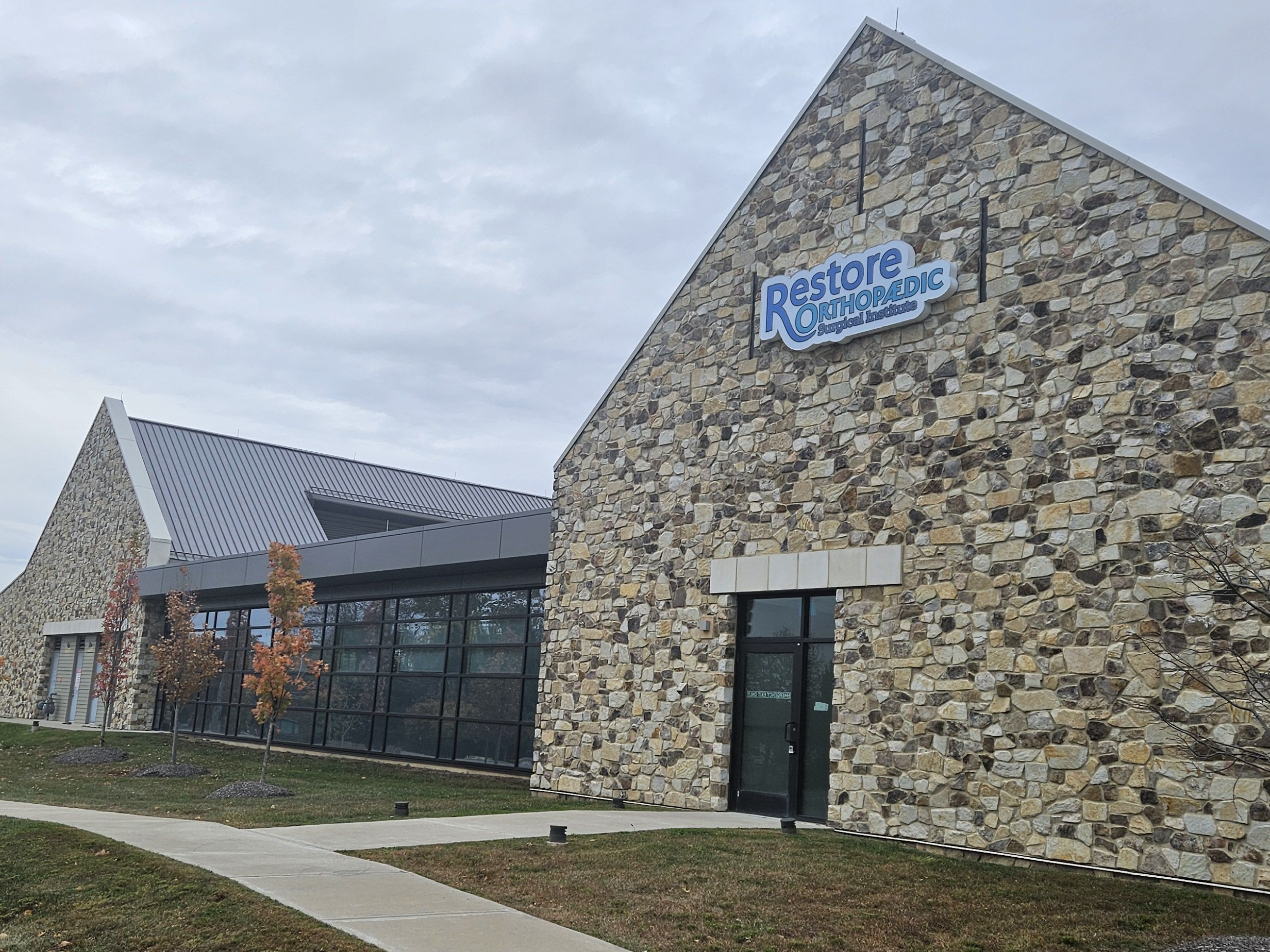
    Restore Orthopaedic Surgical Institute in Chadds Ford has grown quickly to become one of the top joint replacement destinations in Southeastern Pennsylvania after opening in March 2023. The center is positioned to take advantage of an effort by Highmark and IBX to move outpatient procedures from high-cost hospitals to lower-cost surgery centers.Restore Orthopaedic Surgical Institute

    Potential consumer impact

    Several major health systems said the new site-of-care review policies raise questions about the potential impact on patients, without commenting on the implications for their finances.

    Because Temple University Health System does not have any ambulatory surgery centers, “the policy will require certain studies and procedures to be referred outside the health system. This could create additional coordination requirements and may contribute to delays in testing, crucial diagnosis, and/or treatment,” Temple said in an email.

    Main Line Health also said it anticipates the policy “could disrupt established care pathways, including in circumstances where surgeons lack privileges at available free-standing surgery centers,” the nonprofit said in a statement. Main Line has ownership interest in three surgery centers in Philadelphia’s western suburbs.

    The University of Pennsylvania Health System said it will “advocate for our patients’ best interest and appeal any service denials based on the clinical and nonclinical exceptions outlined in the policy.”

    Additional concerns for consumers include complexity, confusion, and possibly more risk of having care denied to what can already be a burdensome prior authorization process, said Christine Monahan, assistant research professor at Georgetown University’s Center on Health Insurance Reforms.

    Monahan said she understands insurers’ impulse to steer people to lower-cost settings, but called policies like IBX’s “maybe not the most efficient way to handle the inefficient pricing in the system.”

    The economic and political backdrop

    The biggest increases in healthcare costs in 15 years are hitting employers this year, according to Mercer’s National Survey of Employer-Sponsored Health Plans.

    The average increase was 6.7%, according to the February survey of 161 chief financial officers, who were not identified.

    The increases are substantially higher than broader inflation. “It becomes more of a tax on employers,” Snyder said. “Next to salaries, many will tell you, that’s the biggest line item” in their expenses.

    IBX has taken other steps to reduce healthcare spending, such as in 2015 introducing a benefit design that includes a preventive colonoscopy with no out-of-pocket costs for the patient at what are called Preventive Plus facilities. Elsewhere, they have a $750 co-pay.

    Highmark and IBX have new policies designed to move more outpatient procedures and treatments out of high-cost hospitals and into lower-cost surgery centers.Pablo Martinez Monsivais

    Medicare has pushed for the last decade to pay the same for services in hospital outpatient departments as in doctors’ offices and surgery centers.

    Medicare prohibited most new off-campus hospital clinics from billing at hospital rates in 2017. So-called site-neutral payments expanded in 2019 to include clinic visits. This year, the government applied the standard to payments for drug administration, such as chemotherapy.

    Highmark Health Plans’ approach

    In the first five months of under new policy, Highmark Health Plans has found some health systems are willing to accept lower surgery center rates for procedures performed within hospitals.

    “What we’ve found is that a number have been willing to do that,” said Kate Musler, chief financial officer for Highmark’s insurance arm. “It may be advantageous for them to have that volume flow through the hospital and keep some volume there, it’s just not necessary in terms of the expense level.”

    Musler cited bariatric surgery as an example of how technology and surgical practices have advanced to the point where a hospital is no longer needed.

    It’s too early to say how much savings the new policy has generated, including in Southeastern Pennsylvania, Musler said. Highmark has seen its policy accepted at different levels across the five states where it took effect.

    Some hospital systems are proactively shifting care to surgery centers to reduce costs, said Musler, who oversees Highmark underwriters helping employers understand their health expenses.

    “We hear directly from employers who are making very difficult decisions,” she said. “It is now more than ever a question of whether they can afford employee health.”
  • A 100-unit apartment building with a rooftop pool is the latest new development slated for North Broad

    A 100-unit apartment building with a rooftop pool is the latest new development slated for North Broad

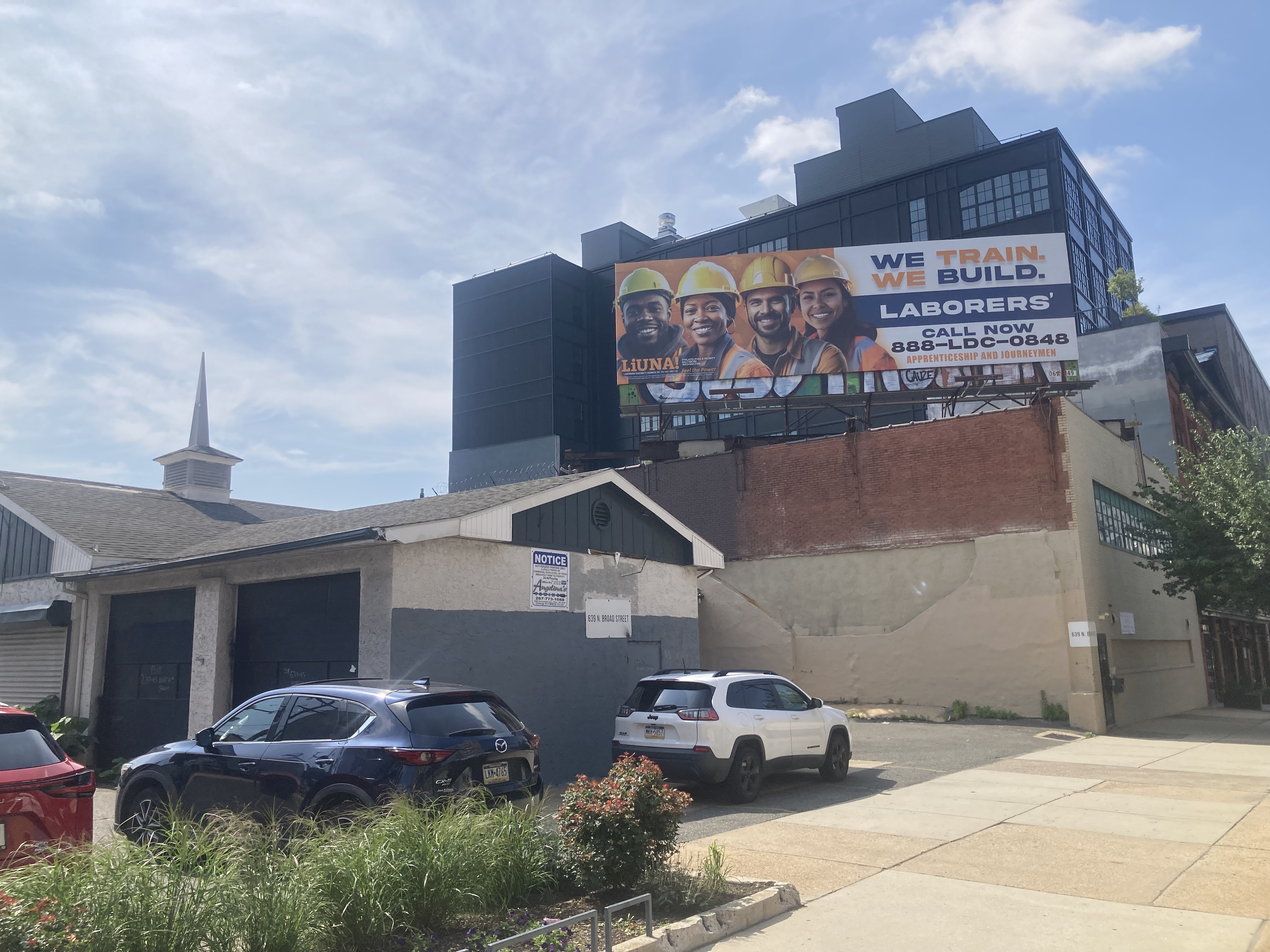
    A Long Island-based developer is planning a six-story, 100-unit apartment building — with a rooftop pool — at 639-53 N. Broad St.

    The property is owned by the Bill Wolf Petroleum Corp., which has expanded into retail and residential properties from its original focus on gas stations and other fuel-related real estate.

    The company has already redeveloped smaller buildings in Philadelphia at Fifth and South Streets and 12th and Walnut.

    The company acquired the Broad Street property in late 2021 for $6.9 million, according to city records. This week, Bill Wolf Petroleum obtained demolition permits for the existing auto-oriented and light industrial structures on the lot.

    The architect for the project is Stuart Rosenberg of SgRA Architects, who has worked with Bill Wolf Petroleum on its other Center City buildings.

    “They are looking for dense, urban, Center City development opportunities. They did not want to be on the outskirts like Northern Liberties or Port Richmond,” Rosenberg said. “They like Philadelphia. At the end of the day, you can build stuff here, so that’s why they’re investing in Philadelphia.”

    Documents posted on the Department of Licenses and Inspections website show a 72-foot-tall project, which includes the potential for over 4,500 square feet of bi-level commercial space fronting on North Broad Street.

    A parking garage is planned in the rear of the property with space for 33 vehicles as well as bike parking. It also sits directly above SEPTA’s Broad Street Line Fairmount Station.

    The property has some of the most flexible zoning in Philadelphia, allowing Bill Wolf Petroleum to move forward easily.

    The unit mixture will mostly be one- and two-bedrooms, with a few studio apartments. On the top floor will be between eight and 12 bi-level apartments.

    For the exterior, Rosenberg is planning designs in keeping with the surroundings on North Broad Street.

    “It’s going to be a classic, industrial type of vibe,” Rosenberg said. “It’s the aesthetic you’d see in a lot of New York or Philadelphia.”

    The acclaimed interior design firm Stokes Architecture & Design, which has worked on properties such as Parc and La Colombe’s Fishtown flagship, is being retained as well.

    The entrance to both the front lobby and garage will be on Wallace Street on the north side of the site. Retail will front on North Broad Street. In addition to the roof deck with a pool, there will be private balconies for the bi-level units on the top floor and a U-shaped courtyard on the second floor featuring additional outdoor space.

    Bill Wolf Petroleum’s project is just the latest in a burst of apartment developments proposed on North Broad Street.

    In the last eight months, 1,221 units have been permitted between City Hall and the southern border of Temple University’s campus. Much of the activity is clustered around the former Hahnemann University Hospital.

    “This part of the city [North Broad Street] is just really dynamic right now,” Rosenberg said.

    Some of the projects, however, are unlikely to break ground any time soon. Property owners like Brandywine Realty Trust obtained zoning permits after Councilmember Jeffery Young proposed a housing ban around the former Hahnemann campus.

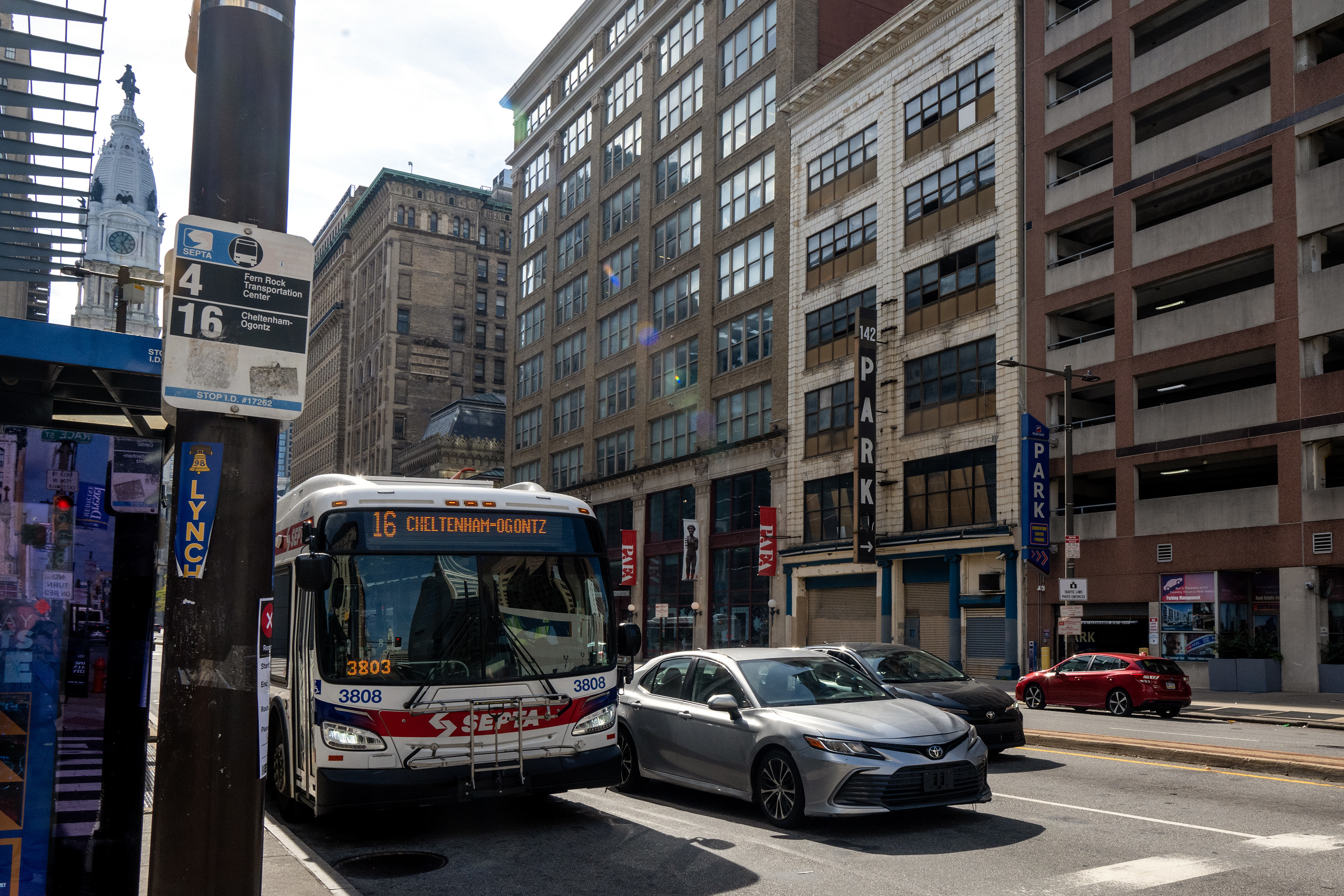
    142-44 N. Broad St. is another property slated for apartment development. Tom Gralish / Staff Photographer

    Although that bill was put on hold in the face of opposition from most stakeholders in the area — no one outside Young’s office ever publicly spoke in favor of it — the legislation prompted a rush to secure 824 apartment permits before it was shelved.

    Bill Wolf Petroleum’s project, which is outside Young’s proposed ban area, stands out because it is one of the only efforts that would not involve redeveloping an existing medical, industrial, or office building for residential use.

    The current interest in the North Broad Street corridor comes after an earlier boom, which saw developers like Alterra Property Group, Eric Blumenfeld, and Bart Blatstein scooping up struggling properties and vacant lots after the Great Recession.

    Some of those projects came to fruition, such as Alterra’s 410-unit Tower Place at Broad and Spring Garden Streets. Others had a more circuitous fate.

    North Broad organizations are watching the new developments with wary optimism.

    “I’ve learned to not get excited until there are shovels in the ground,” said Shalimar Thomas, executive director at North Broad Renaissance.

    But “it’s the main thoroughfare; it’s a great transportation hub, easy walkable,” Thomas said. “The potential and the bones and the structure are there. Maybe now more developers are starting to see that.”

  • How Philadelphia is preparing for measles and other disease outbreaks during FIFA World Cup events

    How Philadelphia is preparing for measles and other disease outbreaks during FIFA World Cup events

    On a muggy Friday days before the World Cup began, a small team of medical emergency planners inspected the cavernous, air-conditioned tent erected for patients at Lemon Hill in Fairmount Park, not far from the enormous screen where thousands can watch matches through July 19.

    Near a FIFA tent already full of merchandise, and branded “fan pavilions” in various stages of construction, Philadelphia’s host city medical lead, Patrick J. Brennan, paced what is now the medical home base for dozens of doctors, nurses, and EMTs over the next several weeks.

    Brennan, who is also the chief medical officer of University of Pennsylvania Health System, pointed out where the dunk tanks for heatstroke victims would go. He walked through tents with massive fans and misters and visited a smaller first-aid tent for minor medical issues.

    Philadelphia is no stranger to large events, from a papal visit to the NFL Draft to the annual Roots Picnic. But the World Cup fan festival at Lemon Hill will be open for more than a month — and is taking place in a summer of high-profile events expected to bring more than 1.5 million visitors to the city.

    Just as the international soccer clubs are packing up, visitors will arrive to mark the country’s 250th anniversary, followed closely by Major League Baseball’s All-Star Game and Home Run Derby in mid-July.

    “That’s the difference — the duration of the event,” Brennan said.

    Preparing for the full range of medical emergencies got underway nearly two years ago for Philadelphia’s public health leaders and largest health systems. They have prepared for heat-related illnesses, injuries, mass casualties, and terrorism.

    Infectious disease is a leading public health concern among host cities and national health agencies.

    Measles, a disease once considered eradicated through widespread vaccination and now on the rise across the country, is at the top of their list. An Inquirer analysis found that the Philadelphia region is pockmarked with vulnerable communities, where vaccination rates have fallen below the rate scientists say is necessary to prevent widespread illness.

    Not far from the World Cup action, an outbreak in Lancaster, Berks, Dauphin, and Lebanon Counties has sickened 52, as public health officials struggle to contain its spread.

    Now thousands of people from all over the world will turn Philadelphia into a petri dish prime for the spread of infectious diseases. Yet another concern is an Ebola outbreak in parts of Africa, including the Democratic Republic of Congo, which has a team participating in the World Cup games in Houston.

    Public health leaders say their best strategy for preventing widespread illness, especially should a case of highly infectious measles arise, is to respond as quickly and efficiently as possible.

    Hospitals have added questions about measles vaccination to their routine emergency department screening, with weekend and evening contacts on call at the city lab that would test potential measles samples. Newly posted flyers in local medical buildings explain how to recognize the early signs of measles — which many doctors have never encountered.

    “My main concern with measles are the pockets where people are under-vaccinated, too few people are vaccinated to really stymie an outbreak,” Brennan said. “It’s going to be hard to prevent it from coming into the country.”

    Preparing for public health risks

    Public health preparations for the World Cup began almost two years ago with meetings to identify health risks and develop a plan for protecting against them.

    The city’s health department, public safety units, and leaders from top health systems, including Temple Health, Penn Medicine, and Jefferson Health, all had seats at the table.

    They hashed out responses for potential public health emergencies ranging from bioterrorism, a mass casualty, and violence to routine heat-related health issues. Experts anticipate that the ongoing heat wave, paired with high levels of alcohol consumption, will lead many to experience heat exhaustion, dehydration, and potentially heatstroke.

    The prep work built on efforts for past major events, such as Pope Francis’ visit in 2015 or the 2016 Democratic National Convention. New this time around, Philadelphia and World Cup host cities across the country are paying much more attention to infectious-disease concerns.

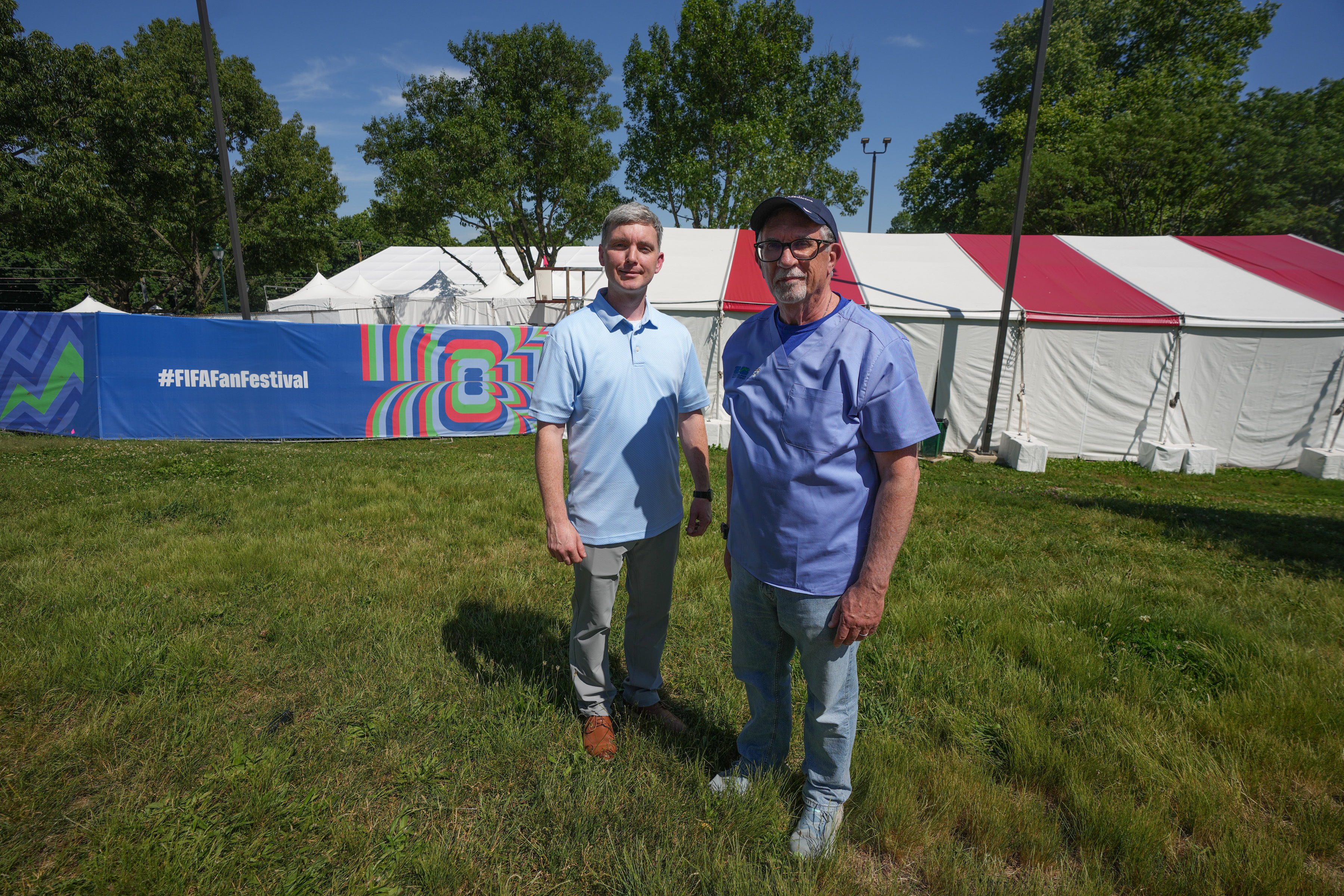
    P.J. Brennan (right), Penn Medicine’s chief medical officer and the medical team lead for FIFA’s Philadelphia events, stands with Jack Welsh, an emergency preparedness specialist and clinical nurse at Penn Medicine, outside the main medical tent at the FIFA Fan Fest in Lemon Hill Park.Jessica Griffin / Staff Photographer

    Until recent years, measles was not “immediately on the radar” for public health planning, said Jessica Caum, director of disease control for the Philadelphia Department of Public Health.

    “We’re in a different place now with measles,” she said. “More cases, increases in vaccine hesitancy, decreases in vaccination rates — all of these things are important to keep in mind.”

    The planners looked at staffing levels at medical tents and hospitals, including where surge staffing could come from. They developed a plan for where to quarantine a large number of people, in the event of an outbreak of measles or other infectious disease, but declined to provide details.

    “We want to be as prepared as possible,” Caum said.

    Game-day strategy for infectious disease

    All that preparation still may not provide a firewall against weeks of sustained sports chaos.

    The city’s game-day strategy, should a suspected measles case crop up, is to react as quickly as possible.

    Temple trained its emergency department staff to ask new screening questions about measles symptoms and vaccination status in an effort to quickly identify anyone who is at risk, said Daniel Feinberg, chief medical officer for Temple University Hospital Inc.

    Temple has been distributing measles information in Spanish and English to providers at its hospitals. Joe Lamberti / For The Inquirer

    People whose vaccination status is unclear, or who say they are unvaccinated, will immediately be whisked to an isolation room if they show symptoms associated with measles, such as fever, cough, runny nose, and red eyes.

    The telltale blotchy red rash does not typically appear for up to four days, though hospital administrators distributed photos of it to help medical staff recognize it.

    Once isolated, people with suspicious symptoms will be tested, with the sample rushed to a city lab on call for such emergencies.

    Administrators lined up contact information to reach the lab in the evenings or weekends, when it is typically closed, and discussed the fastest way to get a sample to the lab — potentially to have someone with good sneakers run.

    “We don’t want any time wasted,” said Carlene Muto, vice president of infection prevention and occupational health services at Temple Health.

    The MMR vaccine can protect against the virus if given to someone within 72 hours of being exposed. Measles immunoglobulin, which contains concentrated antibodies, can provide temporary protection against the virus if given within a few days of exposure. But it is often reserved for infants and other high-risk patients.

    The faster health providers identify a measles case, the faster they can work to trace who else may have been exposed.

    Medical tents are prepared to handle medical emergencies during the World Cup.Jessica Griffin / Staff Photographer

    The risk of exposure is high when someone with measles attends a busy outdoor event, and the challenge of locating all the people who could have come in contact with the disease is immense.

    Nine out of 10 unvaccinated people who come into contact with measles will get sick, making it among the most highly contagious diseases.

    Anyone who does not get treated in time and has not been vaccinated will need to quarantine for 21 days.

    At Jefferson, health system screening protocols are routinely updated to address the latest health threats, said Eric Sachinwalla, Jefferson’s medical director of infection prevention. Its hospitals recently added Ebola screening questions for patients who are being admitted and have traveled to at-risk countries.

    Jefferson and other health systems are more likely to see “low-impact” but predictable threats: COVID-19 and other respiratory illnesses, sexually transmitted infections, and gastrointestinal diseases. These illnesses “can spread between people pretty quickly,” he said, but health systems are generally equipped to handle them.

    A case of Ebola or measles, however, requires significant resources devoted to treatment and preventing further cases — so hospitals also have to carefully prepare for that possibility, he said.

    “It’s balancing those two things. We plan for the high-occurrence things but also [diseases with] high potential impact,” Sachinwalla said.

  • FIFA World Cup players who hit their heads too hard will see this Temple neurologist

    FIFA World Cup players who hit their heads too hard will see this Temple neurologist

    Daniel Feinberg can’t recall ever holding a soccer ball, but he’s ready to aid the pros playing this month at the FIFA World Cup games in Philadelphia — should one take a hard hit to the head.

    Feinberg, a neurologist and concussion specialist at Temple University Hospital, is part of a team of doctors on call to help injured players, coaches, and others in town for the games.

    The Inquirer spoke to Feinberg, who also serves as chief medical officer for Temple University Hospital Inc., in an interview lightly edited for length and clarity about his upcoming role, and what people should know about concussions.

    How did you get involved with FIFA?

    When the World Cup [medical team] was being put together, it was done under the guidance of Dr. PJ Brennan, the chief medical officer of University of Pennsylvania Health System. I was the chief medical officer of Pennsylvania Hospital until mid-March, and then I transitioned to Temple on April 1. PJ, who is my mentor and friend, said we’d still like you to be part of the medical consultative group for the World Cup coverage.

    What is your background in neurology for athletes?

    When I came to Philadelphia, I practiced at Pennsylvania Hospital for many years, and they had a large sports medicine presence. I was on the medical staff of the Flyers and the Eagles for many years. I was never on the sidelines watching all the games, but I was the one seeing them the day after. In very rare situations, I would have to meet them in an emergency room setting. I also took care of players’ families and friends, if someone had another neurological problem.

    What will your role be during the World Cup?

    I will be available to consult with trainers on the field, team physicians who are accompanying the groups, and I will see patients as necessary. Dr. Brennan will call me and say, “Dan, I need you to see player X for this problem.“ It will likely be a concussion or concussion-type symptoms, but it could be other neurological symptoms. I would see them at Temple University Hospital.

    What happens when you get a concussion?

    The brain is inside of the skull, and it’s floating in the skull — it’s not actually packed into the skull. Around the brain is fluid that communicates from around the brain all the way down the spine to the tailbone. It serves as a buffer for the brain and the spinal cord to make sure that they don’t literally push up against the bone.

    What happens when someone has a concussion is the brain actually shifts — whether it’s a neck movement, like whiplash, or a direct head hit — and the brain literally will push up against the bone or smack up against the bone.

    The severity of that impact will dictate how severe the concussion is. If there’s not much movement of the brain in the skull, it’ll produce mild symptoms, headaches, nausea, light sensitivity, sound sensitivity, maybe some balance trouble.

    If it smacks up against the skull harder, that’s when people have word-finding difficulty, memory trouble, concentration trouble, along with those other things that happen with the milder concussions.

    What do you want people to know about concussion treatment?

    People are very nervous — the parents of the high school athletes, particularly, and maybe even the college athletes — when they come in with their kids to these visits.

    They ask questions like, is my kid going to get Alzheimer’s disease earlier? Is my kid going to get a neurodegenerative disease earlier? And there’s no real proof that’s the case. A lot of what I do in these visits, especially when I’m seeing someone for the first time, is alleviating anxiety and putting to rest some of the myths.

    The vast majority of concussions only have symptoms for a few hours to a few weeks with proper guidance — which is usually rest, avoiding screen time, and staying really well hydrated. When kids or adult athletes are less symptomatic or asymptomatic, they can resume physical activity slowly.

    Is it bad to fall asleep after a concussion, or is that a myth?

    That concern comes from the idea that if someone falls asleep, they could be unconscious. And that could be a sign that a bad thing is happening, that there is bleeding in the brain, or pressure in the brain — and you wouldn’t want to miss something like that.

    The other danger signs that would go along [with risk of unconsciousness] are things you would go to an emergency room for — a bad headache, sick to their stomach, a lot of light or sound sensitivity. Those things would make me say get evaluated at an emergency room.

    When bad things happen, they’re going to happen in the first few hours. When I talk about getting a good night’s sleep, I’m talking about after they’ve been cleared.

  • 23-year-old man dies in Kensington double shooting, police say

    23-year-old man dies in Kensington double shooting, police say

    A man was killed in a double shooting in Kensington over the weekend, authorities said.

    Rymir Ibn-Allah Shaw, 23, was shot on the 3500 block of F Street, police said Monday.

    Officers responded to the scene Saturday around 11:50 p.m. to find Shaw in the street with multiple gunshot wounds.

    He was taken to Temple University Hospital, where he was pronounced dead at midnight.

    Another man, whom police did not identify, was also shot, they said. He was struck once in the back.

    Officers found the man injured near G Street and Erie Avenue and took him to Temple University Hospital, where he was listed in stable condition, the department said.

    Investigators believe the shooting was related to an argument. They have not named any suspects or announced an arrest.

    Anyone with information on the incident is urged to contact the Philadelphia Police Department’s Homicide Unit at 215-686-3334 or submit an anonymous tip.

  • The first Black woman to win a Barrymore for directing a musical is now going to lead Theatre Horizon

    The first Black woman to win a Barrymore for directing a musical is now going to lead Theatre Horizon

    Popular Philadelphia director, actor, and teacher Amina Robinson will take the helm at Theatre Horizon as artistic director, the Norristown organization announced Monday.

    The 21-year-old nonprofit theater, cofounded by Erin Reilly and Matthew Decker, had been searching for a permanent leader since the 2024 departure of Nell Bang-Jensen, who now heads FringeArts.

    Decker has served as interim artistic director and will continue to do so until Robinson’s tenure begins in November.

    For Robinson, who grew up in South Philly and studied theater at Temple University, Theatre Horizon has been a creative home and launching pad for her work as a director. In 2018, she received wide acclaim for her direction of the musical The Color Purple, based on the classic Alice Walker novel and 1985 film. The Theatre Horizon production earned six Barrymore Awards and Robinson made Philly theater history, becoming the first Black woman to win the Barrymore for outstanding direction of a musical.

    “I like to say [The Color Purple] put me on the map in Philly because it won a whole bunch of awards, and people responded really well to it,” said Robinson, who lives in Cherry Hill with her husband and teenage son. “I got the opportunity to work with people who have become family to me …[that’s] the culture of the theater. It’s built into their mission [to be] a place of gathering. I like to think of them as human-powered, people-centered, and that really coincides with who I’ve always been.”

    Theater fans in the region will recognize Robinson’s name from some of the buzziest local productions in recent years, from directing James Ijames’ Pulitzer Prize-winning Fat Ham in 2023 at the Wilma Theater, to the Arden Theatre’s 2024 run of the musical Once on This Island, which Robinson set in Haiti as a comment on the Caribbean country’s turmoil.

    “Amina is a visionary artist, a thoughtful collaborator, and someone who understands both the power of theater and the importance of community,” Decker said in a statement.

    Robinson is an associate professor of acting and musical theater at Temple University and has appeared on screen in shows like Nurse Jackie, Law & Order, and Smash, and in the 2009 film Precious.

    She is no stranger to Norristown, either, as she was formerly an artistic director at the Centre Theater.

    Director Amina Robinson with the cast and crew of “Ain’t Misbehavin’” at Theatre Horizon in spring 2026.Courtesy of Theatre Horizon

    Robinson just wrapped work on Theatre Horizon’s production of the Fats Waller musical revue Ain’t Misbehavin’ and is now working on the forthcoming Arden Theatre production of Suzan-Lori Parks’ TOPDOG/UNDERDOG, opening this fall.

    “As Theatre Horizon continues expanding how we serve artists and audiences in Norristown and throughout the region, I’m excited to partner with someone who believes deeply in theater as both an artistic home and a gathering place,” said Theatre Horizon executive director Mydera Taliah Robinson in a statement.

    The two will work to expand community programming and reach new audiences; their plans so far include a permanent choir and potential events for Black History Month and Juneteenth in 2027, as well as a “season sampler” series of comedy nights, open mics, and staged readings under the title HorizoNEXT. In October, the theater will host an event celebrating Robinson’s start, showcasing performances from Ain’t Misbehavin’ and The Color Purple.

    “I have a really burning desire to make theatergoing feel essential,” said Robinson. “When I’m talking about the history of theater, it finds its grounding in ancient African storytelling traditions, and that wasn’t only used for entertainment, it was used to share cultural values and strengthen community.”

    She said sees an opportunity to create a community-driven theater, to produce shows that prompt people to think critically about social and political issues, or help process collective trauma together — all working toward the goal of building a sustainable, supportive community for artists and patrons alike.

    “I want an essential theater, and that includes growing the audience and getting more people in the space to experience the power of creation and storytelling through the theater,” she said. “I’m invigorated by the power that theater has to impact people’s lives, and how miraculous the creation is.”

  • Lorina Marshall-Blake wears retirement with the verve and flair of one of her signature hats

    Lorina Marshall-Blake wears retirement with the verve and flair of one of her signature hats

    During the early 1990s, back when I was a business reporter for the Daily News and brand-new to Philly, one of my first challenges was to figure out who the local players in corporate and political circles were. It didn’t take long before I came across Lorina Marshall-Blake.

    She stood out partly because of her penchant for wearing exquisite hats. But it was also because Marshall-Blake was the newly installed vice president of government relations at Independence Blue Cross. I would see her at meetings and events across the city. She seemingly knew everybody in business and at City Hall — and could work a room like no other. Not only was Marshall-Blake a mover and shaker, but it was clear she was well-liked and respected, as well.

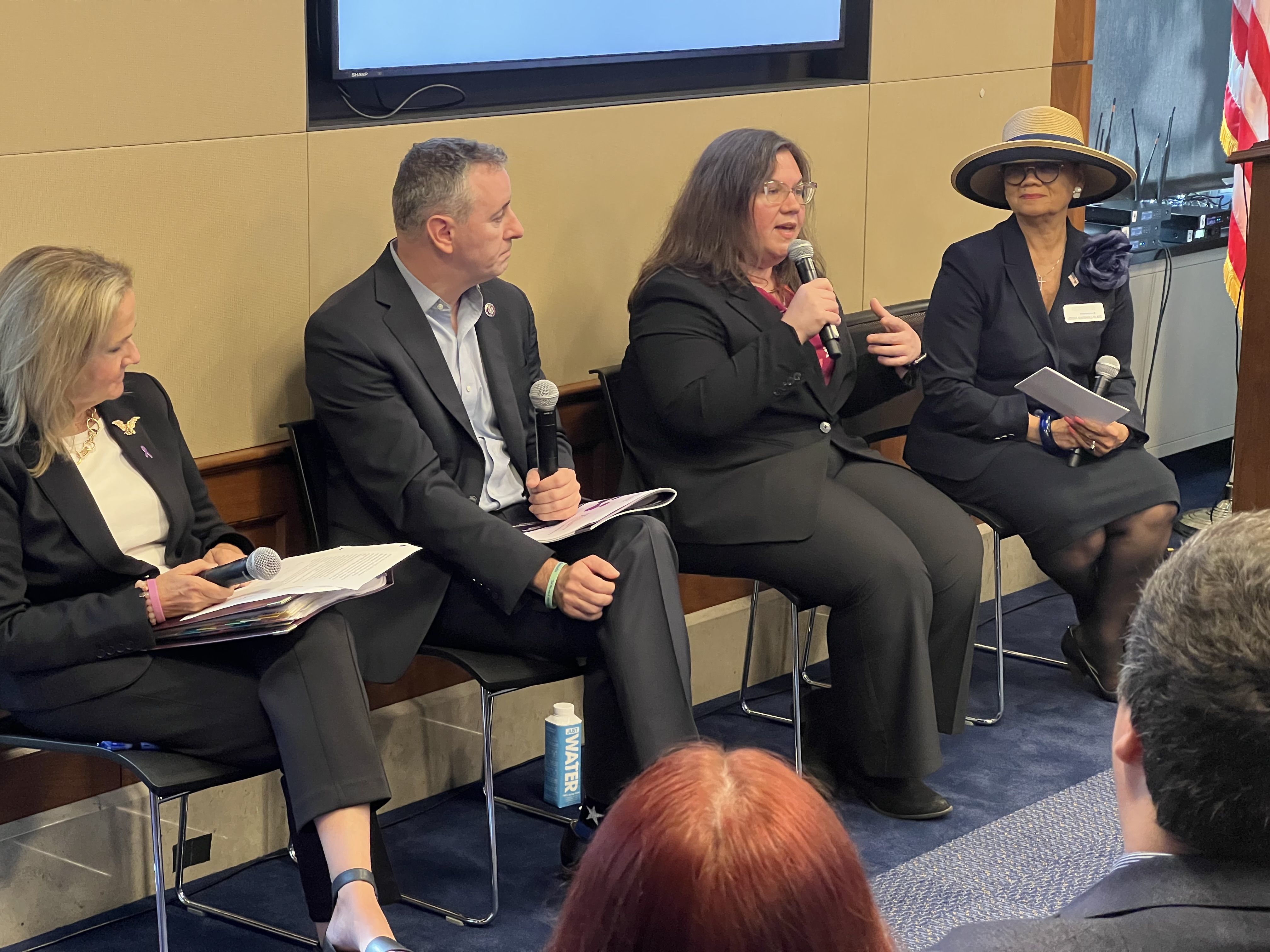
    Lorina Marshall-Blake at a meeting in Washington, D.C., with U.S. Reps. Madeleine Dean and Brian Fitzpatrick, and Kristina Canfield of the Association of Recovery in Higher Education.Courtesy of Independence Blue Cross

    “Lorina Marshall-Blake has a way of making people feel seen and supported the minute she walks into a room,” Kelly Munson, president and CEO of Independence Blue Cross, said. Marshall-Blake, she added, is an example of “how you lead matters just as much as what you lead.”

    Watching Marshall-Blake’s career trajectory from afar, I was in awe. There aren’t many women — much less Black female executives — who have experienced the kind of success she has, especially during the early 1990s. The proverbial glass ceiling that blocks qualified women and people of color from advancing in the workplace is stubbornly thick, but Marshall-Blake was somehow able to break through it.

    In 2011, she was named president of the Independence Blue Cross Foundation, the company’s philanthropic arm, which has distributed more than $90 million in grants to various local causes — including a program that provides scholarships for Philly-area high school students to attend nursing school.

    When I learned earlier this year that Marshall-Blake intended to hang up her fancy hats after 35 years at Independence Blue Cross, I felt a little sad, because it marked the end of an era.

    “She’s an iconic person given what she achieved during that period of time,” said A. Bruce Crawley, the public relations guru who met Marshall-Blake when they were both students at the now-defunct Charles Morris Price School of Advertising and Journalism.

    Crawley, who founded the African American Chamber of Commerce, watched her career over the years, and “was amazed at the progress she was able to make because she was always just a nice person.”

    Back then, he believed that to succeed in corporate America, “it required a certain toughness.” Crawley added, “I thought that she maybe would be challenged by having to be tough, but she was able to do that in a way that didn’t grate on people, and she was a very productive executive.”

    When I reached out to Marshall-Blake earlier this year about doing an exit interview, she informed me she will continue working with IBX — just not in a full-time capacity.

    Lorina Marshall-Blake chats with Jenice Armstrong at the Pyramid Club in March.Erin Blewett / For The Inquirer

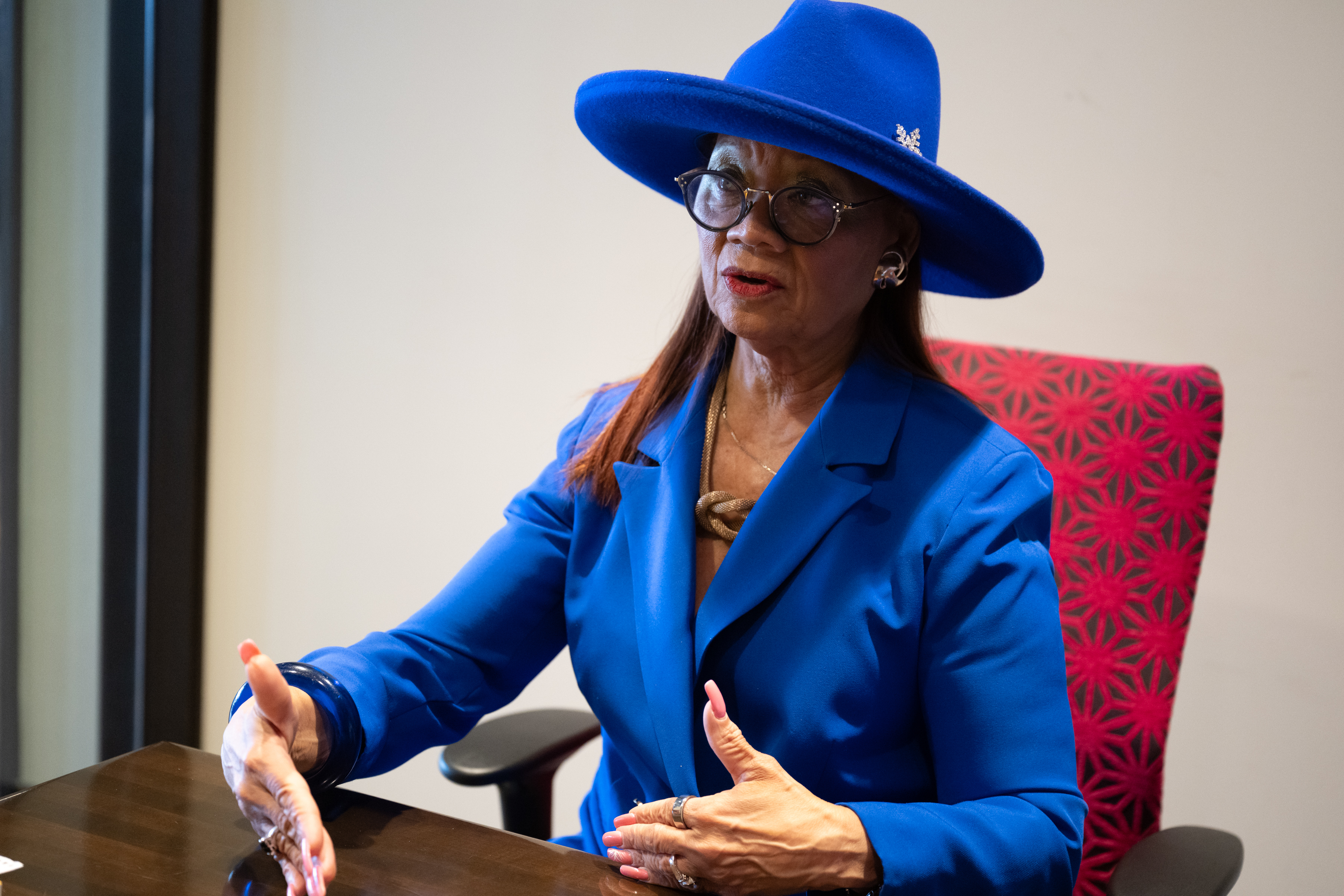
    But I still wanted to meet with her to talk about her next chapter, as well as to glean some wisdom about succeeding in corporate America. We agreed to meet at the Pyramid Club on a chilly, overcast day. When she walked in, Marshall-Blake lit up the room in an electric blue pantsuit with, of course, a crisp matching chapeau.

    She told me she has an entire room in her home filled with hats, many of which were given to her as gifts over the years.

    Listening to Marshall-Blake talk about growing up as a middle child in a family of five children in a modest, four-room house on the 600 block of North Yewdall Street in West Philadelphia, I thought about the considerable challenges she faced along the way. Her mother was a homemaker; her father was a welder until he was injured on the job.

    “I didn’t know I was poor until somebody told me I was poor,” she said.

    After graduating from Overbrook High School in 1968, where she was a cheerleader and class treasurer, Marshall-Blake won a scholarship to attend Temple University. But her college dreams were put on hold because she couldn’t afford books.

    She went on to hold a series of low-level jobs at Philadelphia Gas Works, Cigna, and a local law firm, and took undergraduate classes before finally graduating from Antioch University in 1983.

    Marshall-Blake got her first big career break in 1980, when PGW named her vice president of government relations and urban affairs — a role she fully embraced. She said she worked to learn everything she could about the organization from the ground up — literally.

    “I donned my meter reader outfit and read meters,” she told authors of the 2020 book, They Carried Us: the Social Impact of Philadelphia’s Black Women Leaders. “I climbed underneath buildings and got in ditches with the guys. I got on the phones. I wanted to know the people that really carried PGW. If there was a gas explosion, I was there. It was more than just showing up. I was present.”

    Lorina Marshall-Blake dons a full fascinator from her collection …Bastiaan Slabbers / For The Inquirer
    … and an Independence Blue Cross cap.Bastiaan Slabbers / For The Inquirer

    In 1990, she completed her master’s degree in government relations at the University of Pennsylvania. The following year, she moved to Independence Blue Cross, where she had been named vice president of government relations.

    “I’ll always remember the first day I walked into Independence Blue Cross on June 1, 1991,” Marshall-Blake said during a retirement reception in her honor at the company’s headquarters earlier this spring. “This work for me was more than a job. For me, it was ministry.”

    March 31 marked her last official day as a full-time employee at Blue Cross, but her consulting agreement with the insurance giant began immediately. She said she welcomes the slower pace of her new role. She’s 75. It’s time. She’s ready.

    Still, stepping into her next act will be a major adjustment. Marshall-Blake is working on letting go of her usual “got-to-do-this” mindset. The 20 unpacked boxes in the middle of her living room can stay where they are. She’ll get to them when she gets to them.

    Lorina Marshall-Blake wears a classic coffin-top Stetson …Bastiaan Slabbers / For The Inquirer
    … and then a mushroom crown hat with a downturned brim.Bastiaan Slabbers / For The Inquirer

    Marshall-Blake, who is also an associate minister at Vine Memorial Baptist Church in West Philly, said she recently offered up a simple prayer: “Lord, let me accept retirement with grace.”

    She accomplished so much during her time in corporate America; I’m sure she will do the same during this season in her life, too.

    My hats off to her.

  • Philly sends a third of its trash to a Chester incinerator. Council members took a ‘Toxic Tour’ to get a closer look.

    Philly sends a third of its trash to a Chester incinerator. Council members took a ‘Toxic Tour’ to get a closer look.

    CHESTER — Like a Ben Franklin impersonator waving at Independence Hall and the Liberty Bell, tour guide B. Preston Lyles directed the tour group’s attention to various landmarks as they passed by.

    But instead of highlighting monuments that made locals swell with pride, Lyles was pointing to sites he said made the people of Chester get sick and die younger: power plants, an oil refinery, a sewage sludge-burning facility, and — most relevantly for Friday’s group — the Reworld trash incinerator, the destination for about a third of the rubbish collected by Philadelphia’s city government.

    “Chester City is known as one of the nation’s worst cases of environmental racism,” Lyles, an organizer for Delco Environmental Justice, told the group, referring to the concentration of polluting industries in Black and brown communities. “It is not just because the city holds the nation’s largest waste incinerator, but due to an extreme concentration of toxic industries in and adjacent to such a small city.”

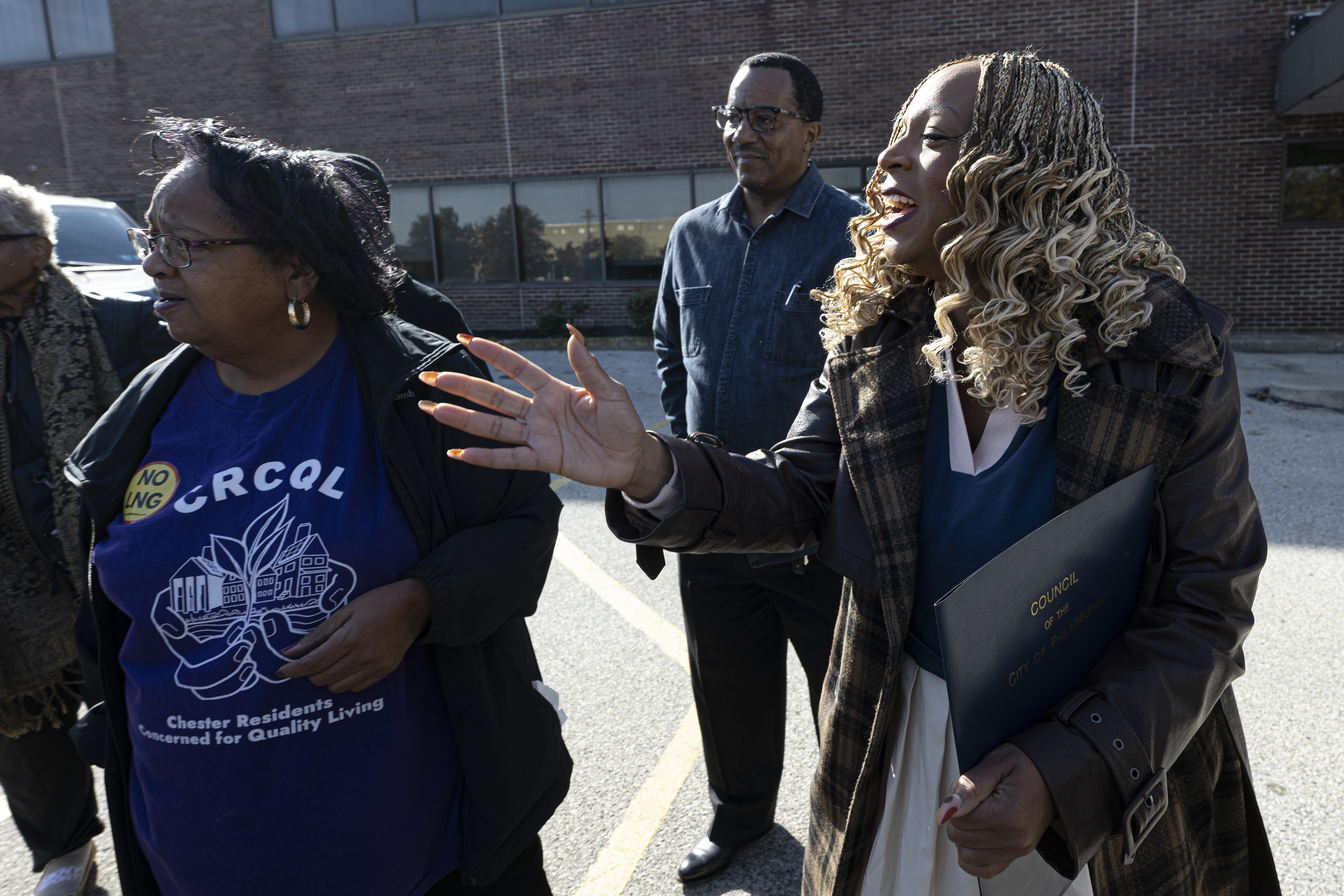
    Philadelphia City Councilmember Jamie Gauthier, who is hoping to end the city’s relationship with the Reworld incinerator, on Friday attended the Energy Justice Network’s “Toxic Tour” in and around Chester to highlight the facility’s impact on Philly’s southern neighbors.

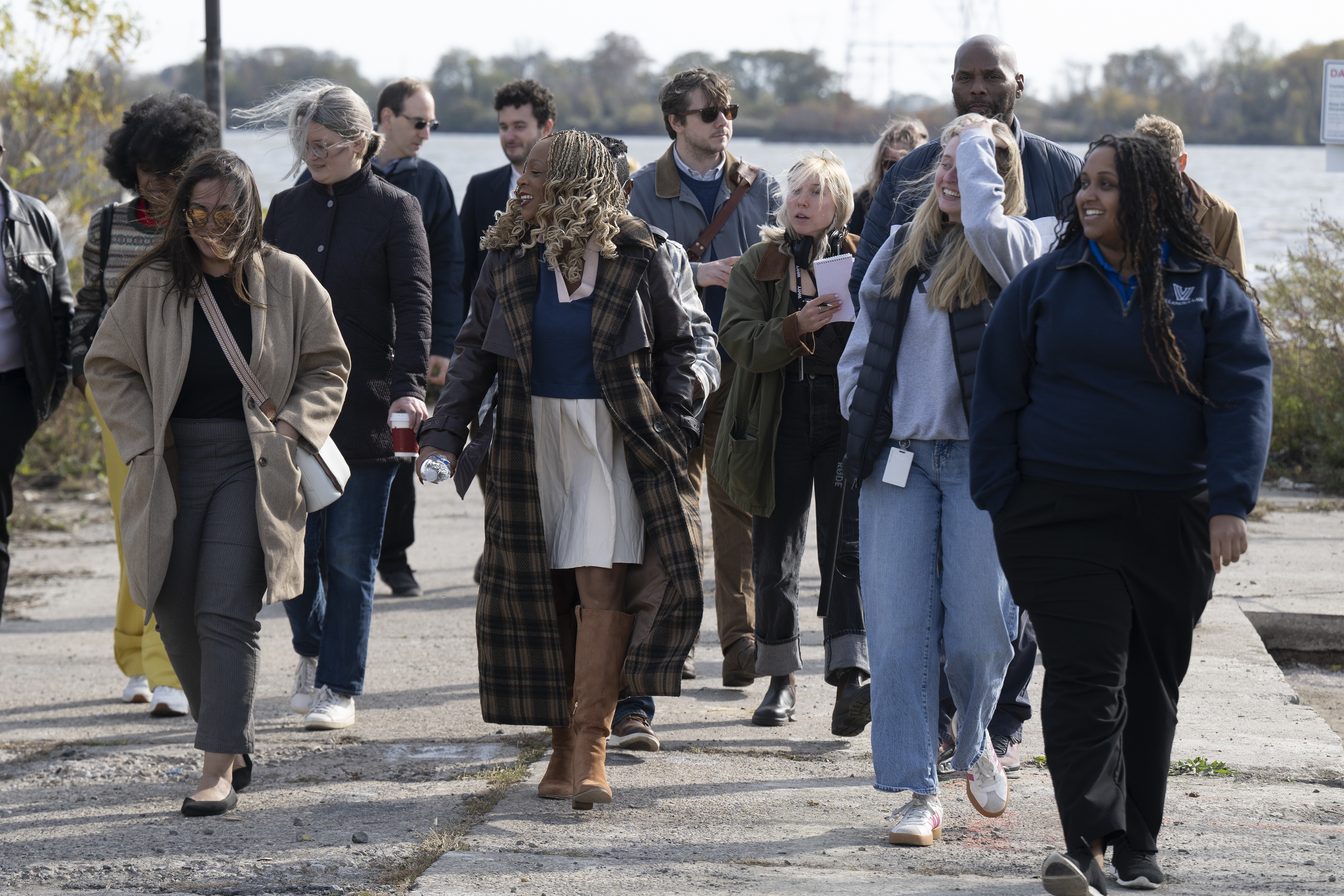
    Philadelphia Councilmember Jamie Gauthier tours Chester to discuss her “Stop Trashing Our Air Act,” which would ban the city from incinerating waste, during a visit with lawmakers and staff in Chester, Pa., on Friday, Nov. 7, 2025.Jose F. Moreno / Staff Photographer

    “From a justice and fairness perspective, it just seems so wrong to me and so obvious,” said Gauthier, who was joined on the tour by Councilmember Kendra Brooks and staffers for other lawmakers. “Seeing the incinerator on the waterfront and all of these other dirty uses and the abandoned homes, that made me want to do this more, because it’s wrong. It’s wrong that people should be loaded down with all these toxic uses.”

    Reworld in 2024 burned more than 355,000 tons of trash collected by the city. Its contract with Philadelphia ends in June 2026.

    Gauthier has introduced a bill, the Stop Trashing Our Air Act, that would prohibit the city from incinerating trash, and Council’s Committee on the Environment, which she chairs, will likely hold a hearing on it this fall.

    Reworld spokesperson Linda Ribakusky said the company is a “leading sustainable waste solutions provider.” The Chester facility, she said, offers “a more sustainable alternative to landfilling by converting waste into renewable energy and recovering valuable metals that would otherwise be lost.”

    “The Reworld Delaware Valley facility helps reduce greenhouse gases by avoiding landfill methane and generates enough clean electricity to power more than 50,000 local homes each year,” Ribakusky said in a statement. “We are proud to be an active part of the Chester community. Working alongside local schools, nonprofits, neighbors, and community organizations, we support initiatives that create real impact.”

    ‘Now is the time’

    The Philadelphia Sanitation Department collects and disposes of about half of the city’s waste, said Michael Ewall, founder of the Philly-based Energy Justice Network. The other half is handled by private haulers hired by businesses and owners of larger residential properties.

    Under its contract, Reworld takes one-third of the municipally collected trash to the Chester incinerator, which the company says produces about 87 megawatts of electricity, enough to power 52,000 homes, while burning the waste. WM, which operates a major landfill in Bucks County’s Falls Township, takes the other two-thirds.

    When the most recent contracts were signed in 2019, the city agreed to pay roughly $65 per ton of trash to both Reworld, which was then known as Covanta, and WM, formerly Waste Management.

    Gauthier said she has had constructive conversations with Mayor Cherelle L. Parker’s administration about eliminating incineration from the city’s waste management operations, and is hopeful the city will include environmental justice concerns in its request for proposals for the new contracts.

    Parker’s office did not respond to a request for comment.

    The Chester incinerator provided a flashpoint in the 2023 mayoral election, which Parker won. During a debate, a moderator asked candidate Jeff Brown about the incinerator, prompting Brown to say, in part, “The trash has to go somewhere.”

    In a debate performance that was key to her rise and Brown’s downfall in the race, Parker was among the candidates who pounced on the soon-to-be-infamous comment.

    “That response is the same way you treat the Black and brown community,” said Parker, who ran on a campaign to turn Philly into America’s “safest, cleanest, greenest” big city.

    Top candidates for the Philadelphia mayor seat former City Council Member Cherelle Parker, left, Former City Council Member Derek Green, and businessman Jeff Brown, during a televised debate at the Temple performing arts center in Philadelphia, Pa. Tuesday, April 11, 2023.Jose F. Moreno / Staff Photographer

    During the debate, however, Parker was not asked directly if she would commit to ending the city’s contract with Reworld.

    “I was enthused to hear our mayor speak about this on the campaign trail,” Gauthier said. “I hope we all want to do the right thing. Now is the time to show that.”

    Environmental advocates contend that neither landfills nor incinerators are good for the environment and urge municipalities to focus on reducing waste in the first place. For instance, Ewall, who developed a policy platform called the Zero Waste Hierarchy, pointed out that thousands of communities now charge residents for each bag of trash just as utilities charge for each gallon of water or kilowatt of electricity.

    But for the “residuals” that do need to be collected, advocates have generally coalesced around the conclusion that incineration is more harmful than landfilling, Ewall said.

    Delaware County, which adopted a Zero Waste Plan in September, commissioned a 2021 study that found incineration was the costliest of its waste-disposal options, from both a health perspective and a financial one.

    The county determined that each ton of trash burned at the incinerator produced $234 to $337 in health and environmental costs. The impact from landfilling, meanwhile, was $144 per ton.

    ‘Reverse the environmental tragedy’

    Founded by William Penn, Chester is the oldest city in Pennsylvania. But over the last century, it has become a hub for some of the region’s least-wanted uses, including polluting manufacturers, fossil fuel facilities, a state prison, and, since the early 1990s, the incinerator. About 69% of Chester’s 33,000 residents are Black, and 31% live below the federal poverty line.

    “We hope that Philadelphia is listening in a strong way … as we attempt to reverse the environmental tragedy that has occurred here in the last 3½ decades due to the incineration of trash,” Chester Mayor Stefan Roots said Friday. “It’s an old technology, and it’s time for it to go. Especially in a community like Chester that’s looking to develop, it’s one of our biggest impediments.”

    Chester resident Zulene Mayfield, left, Philadelphia Councilmember Jamie Gauthier, right, and Chester Mayor Stefan Roots meet to discuss Gauthier’s “Stop Trashing Our Air Act,” which would ban the city from incinerating waste, during a visit with lawmakers and staff in Chester, Pa., on Friday, Nov. 7, 2025.Jose F. Moreno / Staff Photographer

    About 31% of the trash the incinerator burned in 2024 comes from Philly, with Delaware County accounting for 28% and New York City 26%.

    During the tour, Lyles explained how environmental racism can occur even if decision-makers are not consciously prejudiced against certain communities, because wealthier areas often organize to prevent polluting industries in their backyards.

    “In the late 1990s, there were about 60 proposals for new gas-fired power plants in PA. Only 16 of them were built,” he said. “Most of them faced a stiff opposition from community groups in suburban and rural areas, but those on either side of Chester went in with no organized opposition.”

    The final stop on the tour was a row of boarded-up and dilapidated homes along a railroad used for industrial purposes near the edge of the incinerator property. The homes started emptying out in the early 2000s, Ewall said, and the last was abandoned a few years ago.

    He recalled meeting one of the last residents to leave.

    “She had six grandchildren. She lived with her granddaughter, around 14, and one of the times I met her, had an oxygen tank that she would carry around with her just to be able to breathe,” Ewall said. “They just kind of disappeared one day, and I saw a boarded house.”