Tag: Stacy Garrity

  • Does Pennsylvania now have ‘the strictest guardrails in the nation’ for data centers?

    Does Pennsylvania now have ‘the strictest guardrails in the nation’ for data centers?

    HARRISBURG — As part of his new, hard-line stance on regulating data centers in Pennsylvania, Democratic Gov. Josh Shapiro said during a news conference last week that his sweeping executive order has the “strictest guardrails in the nation” on data center development.

    Fact check: That is technically true, if you exclude moratoriums, or the full-stop pauses on development that have been implemented in two other states.

    States around the country have taken different approaches to data centers in the race for AI supremacy — and, subsequently, how to rein in the increasingly unpopular massive developments that some fear will disrupt their communities, drain resources, and increase energy costs.

    Governors, including Shapiro, initially welcomed companies who had come knocking on their states’ doors offering billion-dollar investments to build there. And as the political tide has transformed data centers into widely unwelcome developments among most Americans, leaders have had to adapt — or even change their positions.
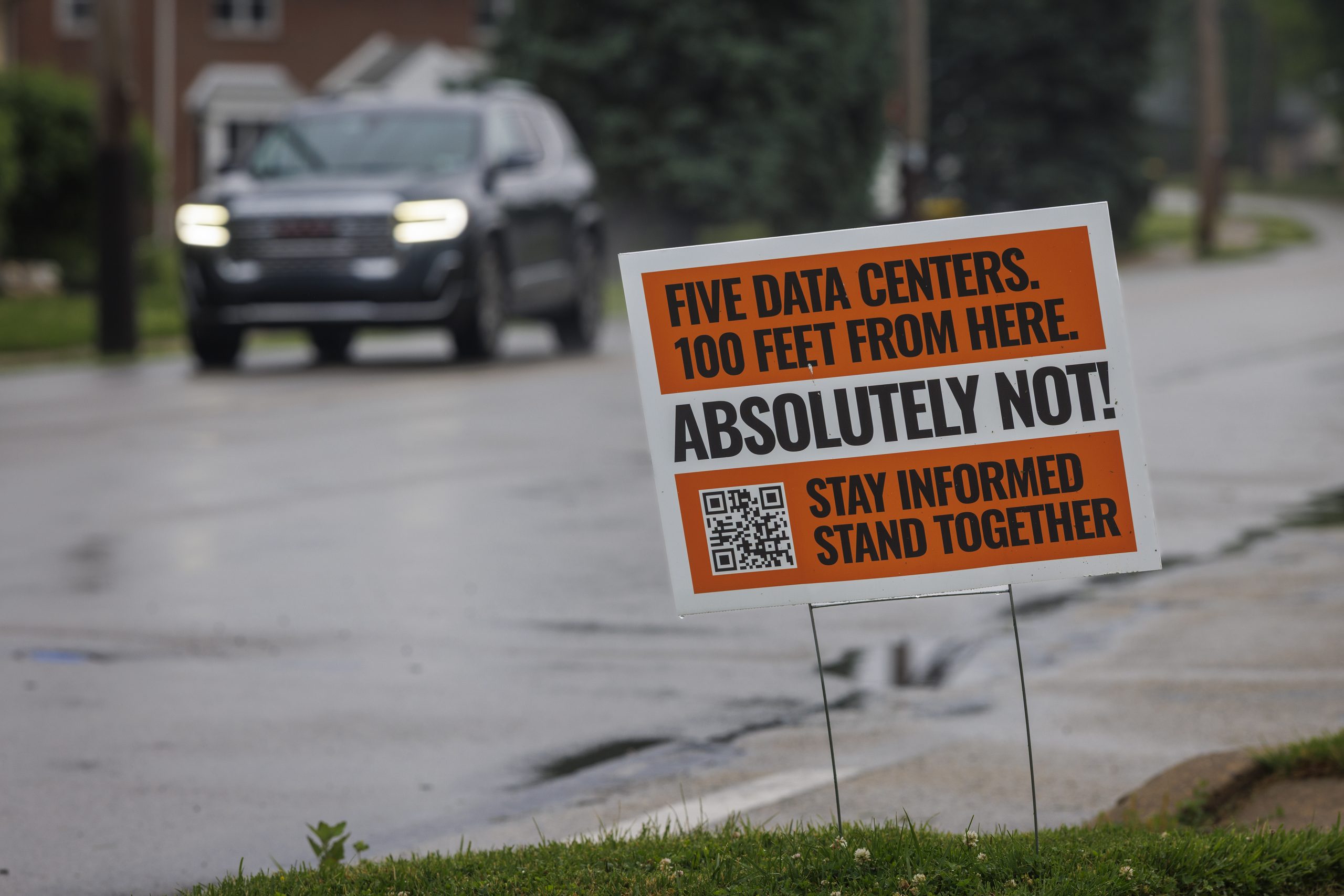
    Lawn sign along Crooked Lane in King of Prussia, Wednesday, May 27, 2026. Some residents are standing in opposition to building a data center in their community.

    To build a data center in Pennsylvania — where Shapiro just 14 months ago trumpeted a $20 billion commitment from Amazon to build at least two data center campuses in Bucks and Luzerne Counties — developers will now be required to sign a consent agreement detailing how it will follow new guidelines in four key areas: transparency, energy affordability, workforce development, and environmental protection.

    Many top Pennsylvania Democratic leaders and environmental groups lauded Shapiro’s order, while some Republicans called it a disingenuous flip-flop in an election year. And some of the loudest data center opponents said it did not go far enough — and they still want a moratorium.

    Thirty-eight states, including Pennsylvania, offer tax breaks for data centers. Many of these tax incentives were approved years ago, as the emerging artificial-intelligence industry began to come online. Pennsylvania’s legislature first approved its benefit in 2021.

    Some states, like New York, have halted all data center development for periods of time, while others, like New Jersey, have singled out specific areas, such as consumer protections, in which lawmakers want to curb data centers’ impact.

    Shapiro’s administration argues it is unfair to compare its multipronged requirements for developers to build in Pennsylvania to states with moratoriums. In other words, officials say, Pennsylvania has the toughest enforceable barriers for data center development, while moratoriums are a total stop.

    Most state legislatures are weighing proposals to restrict data center development through moratoriums or energy generation requirements. Pennsylvania has near-unanimous support among lawmakers to end tax breaks for data center developers, but legislators in the politically split General Assembly failed to do so before leaving Harrisburg for the summer.

    In absence of new state laws, a handful of governors, including Shapiro, have taken executive action to restrict data center development in their states. Here is a look at how several states, including Pennsylvania and its neighbors, are approaching data centers.

    Pennsylvania

    Moratorium: No

    Tax credit available: Yes

    Restrictions: After previously embracing data center development as a potential economic driver for Pennsylvania, Shapiro changed his position and signed a wide-ranging executive order last week requiring data centers to get local approval, bring their own power, hire and train local workers, and more. The order does not include a moratorium on data center development. However, its requirements for local approval may, in effect, block many from moving forward.
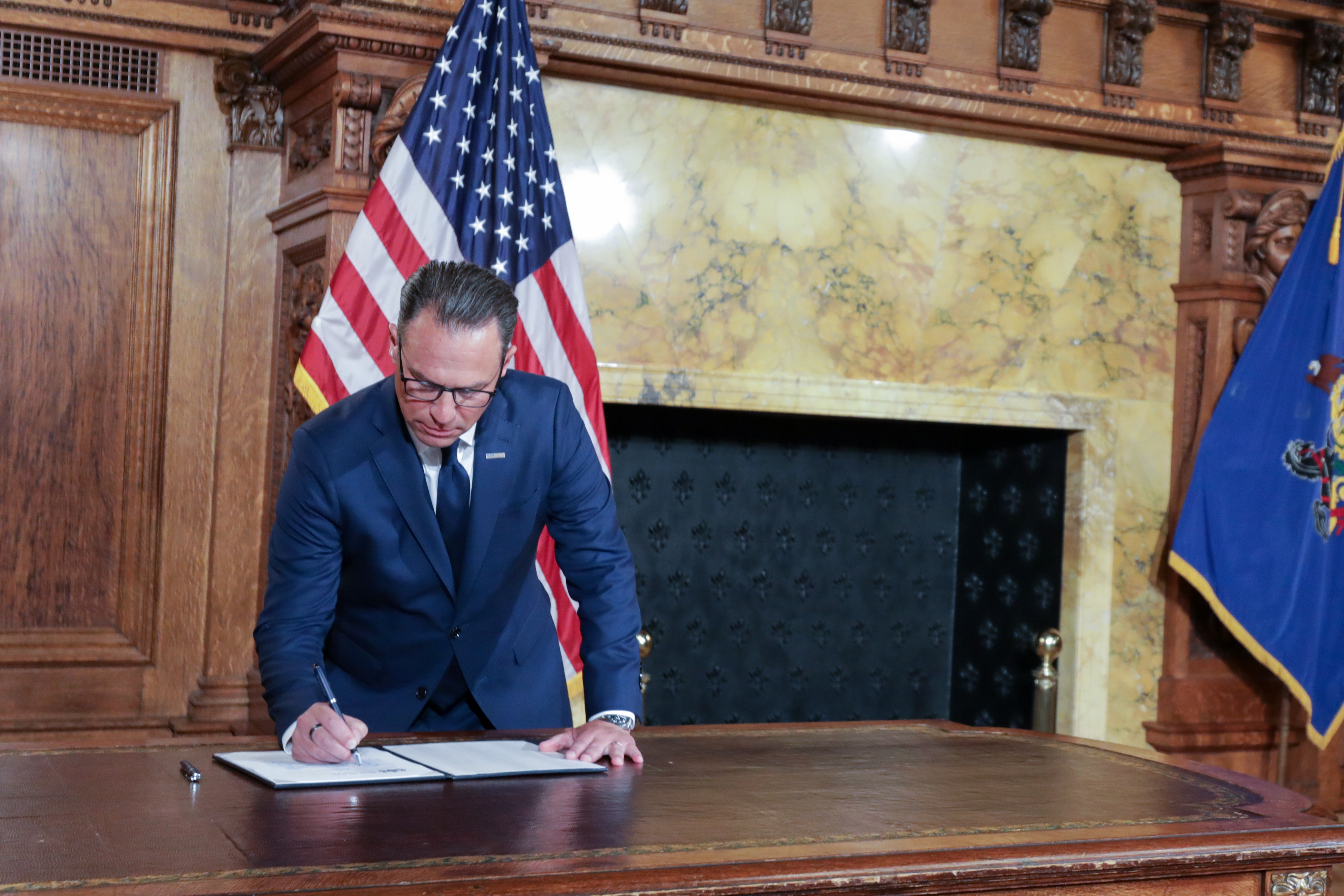
    Gov. Josh Shapiro signs an executive order restricting data centers in Pennsylvania during a ceremony in the Capitol in Harrisburg, Pa., Tuesday August 18, 2026.Kalim A. Bhatti / For The Inquirer

    Any developer looking to build a data center in Pennsylvania must sign a 33-page, legally binding consent agreement that follows Shapiro’s multifaceted and detailed requirements about the facility’s projected energy generation and water usage and a community benefits agreement in order to receive state-level permit approvals. If the developer does not agree to Shapiro’s rules, its project will be held up by the state indefinitely.

    Current projects that have received state permits will be allowed to proceed, but developers will need to sign the agreements for any future approvals.

    New Jersey

    Moratorium: No

    Tax credit available: Yes

    Restrictions: In July, Gov. Mikie Sherrill signed several bills into law to protect consumers from increased costs associated with data center development, including the creation of a new tax and rate structure specific to data centers so that the projects pay for their own energy usage and grid updates.
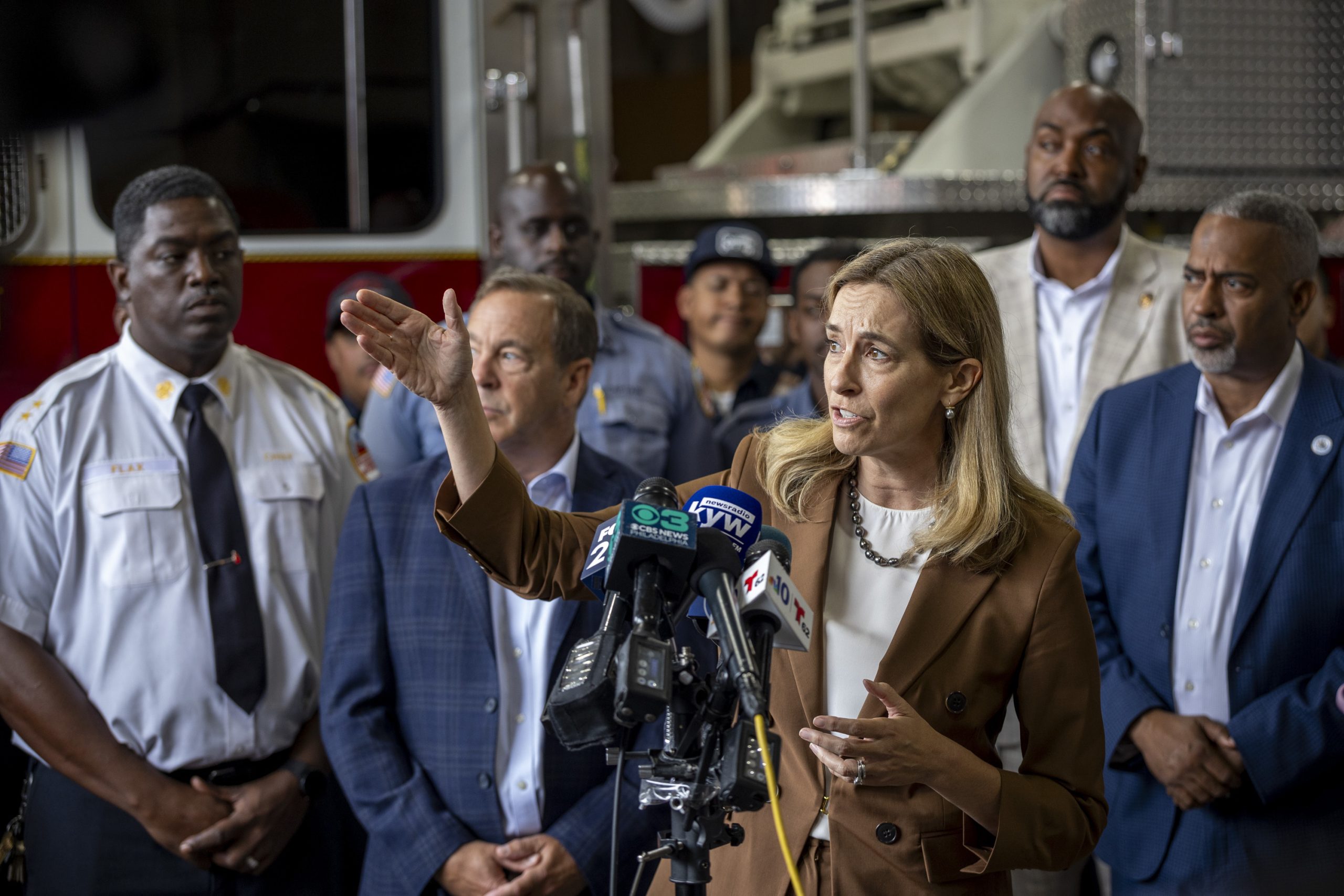
    Gov. Mikie Sherrill answers questions from press about the recent rainfall and flooding in Camden at the Fire Administration Building in Camden, N.J., on Tuesday, July 7, 2026.

    Sherrill has released a plan with a framework similar to the regulations outlined in Shapiro’s executive order — including requirements for energy generation, community input, workforce development, and environmental protection — but unlike an executive order or legislation, it does not appear to be enforceable.

    Sherrill, a Democrat, began her first term earlier this year after running on a campaign promise to bring down utility costs.

    New York

    Moratorium: Yes

    Tax credit available: Yes

    Restrictions: Gov. Kathy Hochul in July signed the first statewide data center ban in the nation, blocking new construction for any project using 50 megawatts or more of electricity for up to one year. Fewer projects were proposed in New York, one of the nation’s most populous states that relies heavily on surrounding regions to generate its energy consumption, than in its neighbors. Hochul said she will lift the order once her administration develops guardrails for future projects.

    Hochul, a Democrat, took specific aim at hyperscale data center proposals, the main projects intended to power emerging AI technologies.

    Maryland

    Moratorium: No

    Tax credit available: Yes

    Restrictions: There has been no statewide action on data centers yet, as Maryland is limited on how much energy it can produce due to its size and dense population. Unlike in Pennsylvania, county and local governments in Maryland are allowed to pass their own moratoriums on data center development, which Baltimore and other densely populated counties near Washington have done.
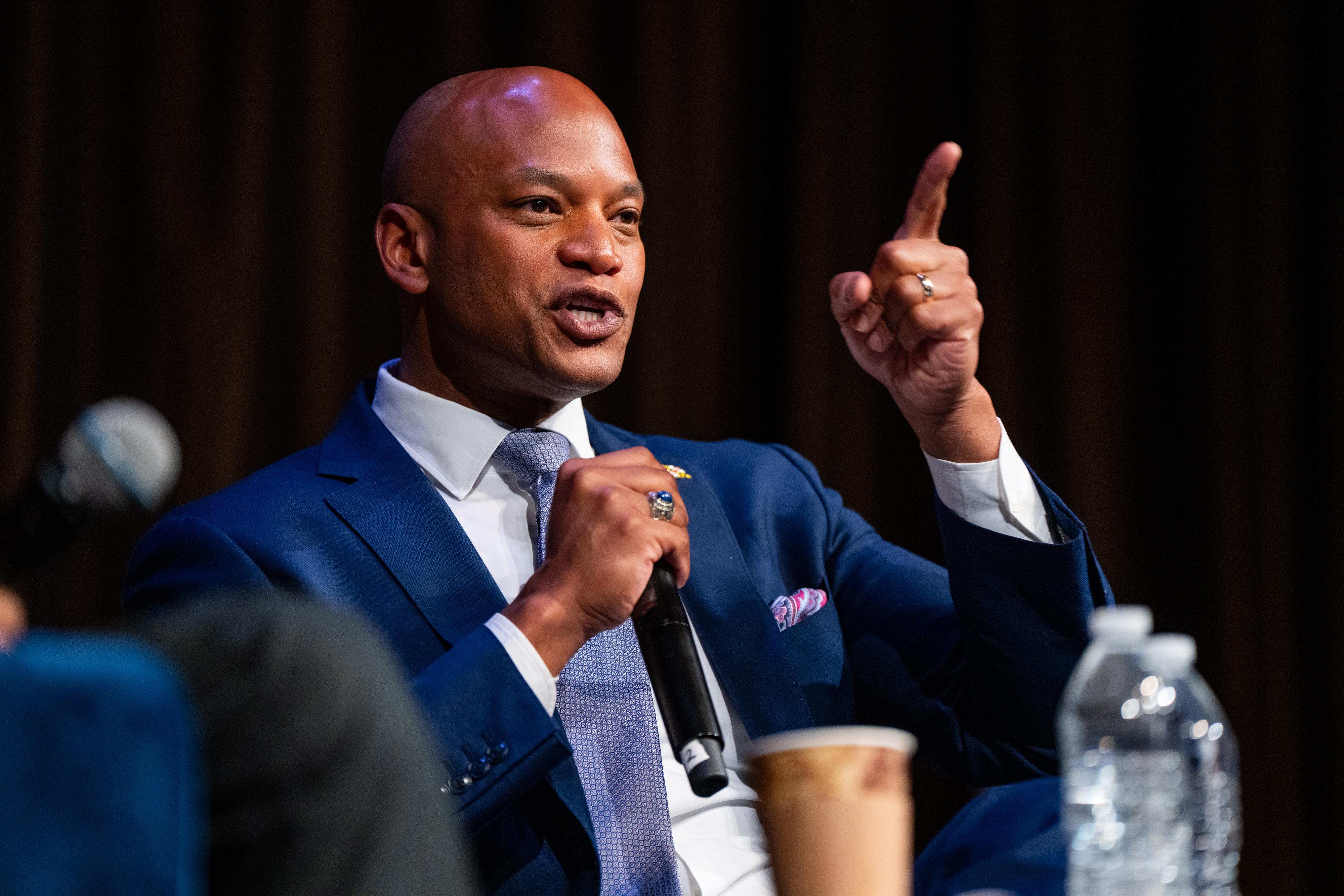
    Wes Moore, Governor of Maryland, speaks during the National Action Network (NAN) Convention in New York, Thursday, April 9, 2026. (AP Photo/Angelina Katsanis)Angelina Katsanis

    Gov. Wes Moore, a Democrat running for reelection, backs a number of legislative proposals in the Maryland statehouse that would require the centers to bring their own power and hire local union workers. But he has mostly demurred on a statewide moratorium, saying it is up to local governments to decide, online news outlet Maryland Matters reported.

    Similar to Shapiro’s Republican opponent, Stacy Garrity, Moore’s GOP challenger, Dan Cox, has called for a statewide moratorium on the projects.

    Virginia

    Moratorium: No

    Tax credit available: Yes

    Restrictions: Virginia is among the hottest spots for data center development in the country, with more than 340 data centers in operation and hundreds more proposed. In July, the Virginia General Assembly imposed a new electricity-use tax set to run out in two years.

    Virginia is also seeing massive tax revenues from its burgeoning data center industry. One wealthy county just south of Washington is home to 250 data centers. The local government there is expected to bring in $1.3 billion in additional tax revenue from data centers, allowing the county to reduce property taxes by 30%, the New York Post reported.

    Like Moore, Gov. Abigail Spanberger, a Democrat for whom Shapiro campaigned last year, has bucked calls for a statewide moratorium and urged local governments to decide.

    Ohio

    Moratorium: No

    Tax credit available: Yes

    Restrictions: Ohio has the fifth-most data centers in the country, with more than 200 already operating, according to the state’s consumer protection office.

    The GOP-controlled state broadly still welcomes data center development. But its utilities commission approved a tariff for large data centers, requiring them to pay for at least 85% of their electricity capacity.

    It is also a top issue on the campaign trail in the state’s hotly contested U.S. Senate race that could decide control of the chamber: Top Republicans warned AI developers that they need to fix their public image or lose supportive candidates, Axios reported.

    Texas

    Moratorium: Yes, for future development

    Tax credit available: Yes

    Restrictions: In what was once the most welcoming state in the country for data center development, new developments in Texas are now indefinitely on hold.
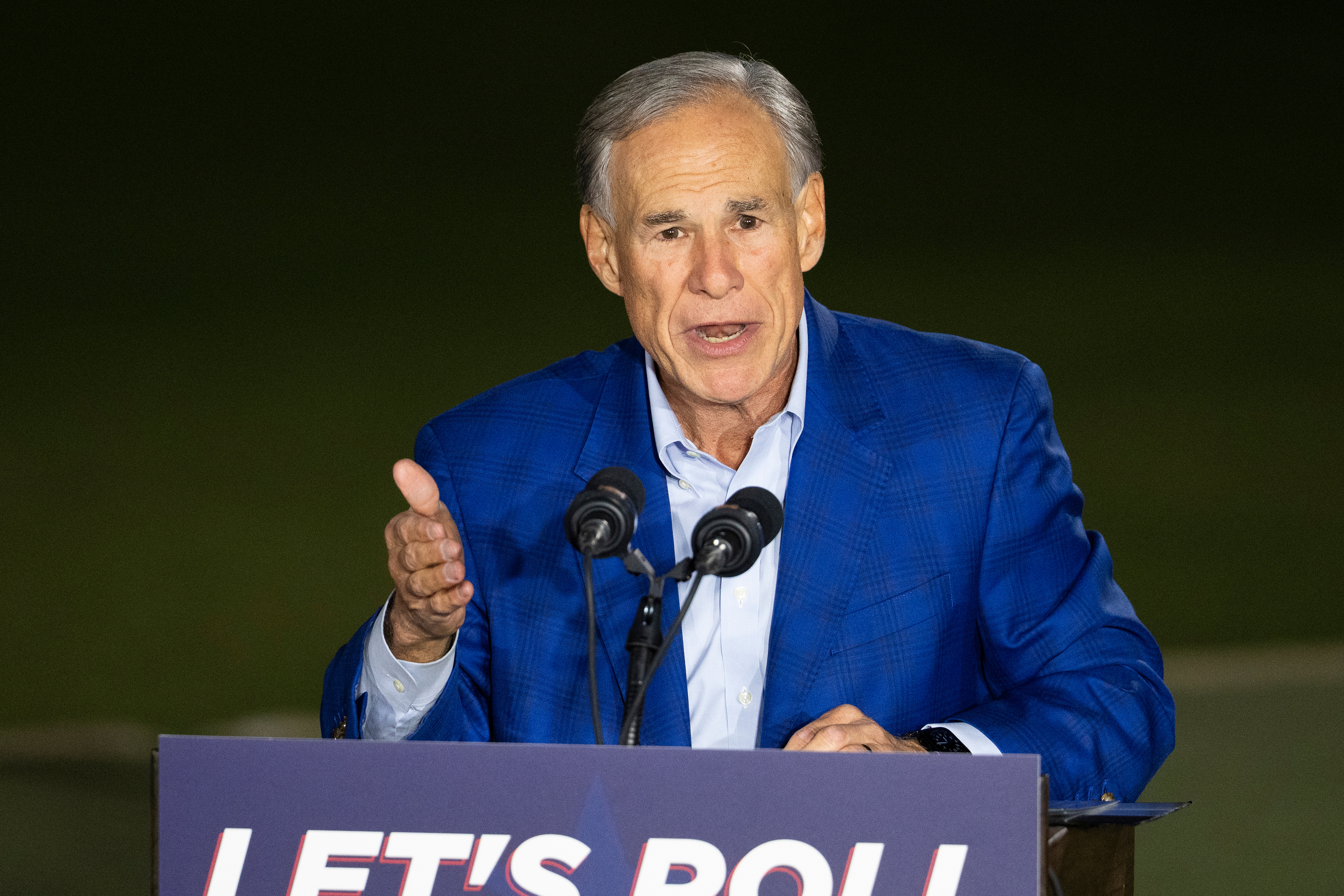
    Gov. Greg Abbott announces his re-election campaign for Texas governor in Houston, Sunday, Nov. 9, 2025. (Jason Fochtman/Houston Chronicle via AP)Jason Fochtman

    This month, Gov. Greg Abbott, a Republican, announced a moratorium on future data center projects while the state’s utility commission and electricity council audit the current projects’ power and water use, and more.

    Kentucky

    Moratorium: No

    Tax credits available: Yes

    Restrictions: Gov. Andy Beshear, like Shapiro an ambitious Democrat and a potential 2028 presidential contender, also signed an executive order earlier this month that requires data center developers to submit an energy plan that outlines that the project will not raise prices for ratepayers. He also directed the state’s utility commission to deny any rate increases to cover increased costs from data centers.

    Beshear’s order was met with criticism from some experts who claim his order was not enforceable, particularly for its inclusion of a directive to an independent agency not under the governor’s discretion, the Kentucky Lantern reported.

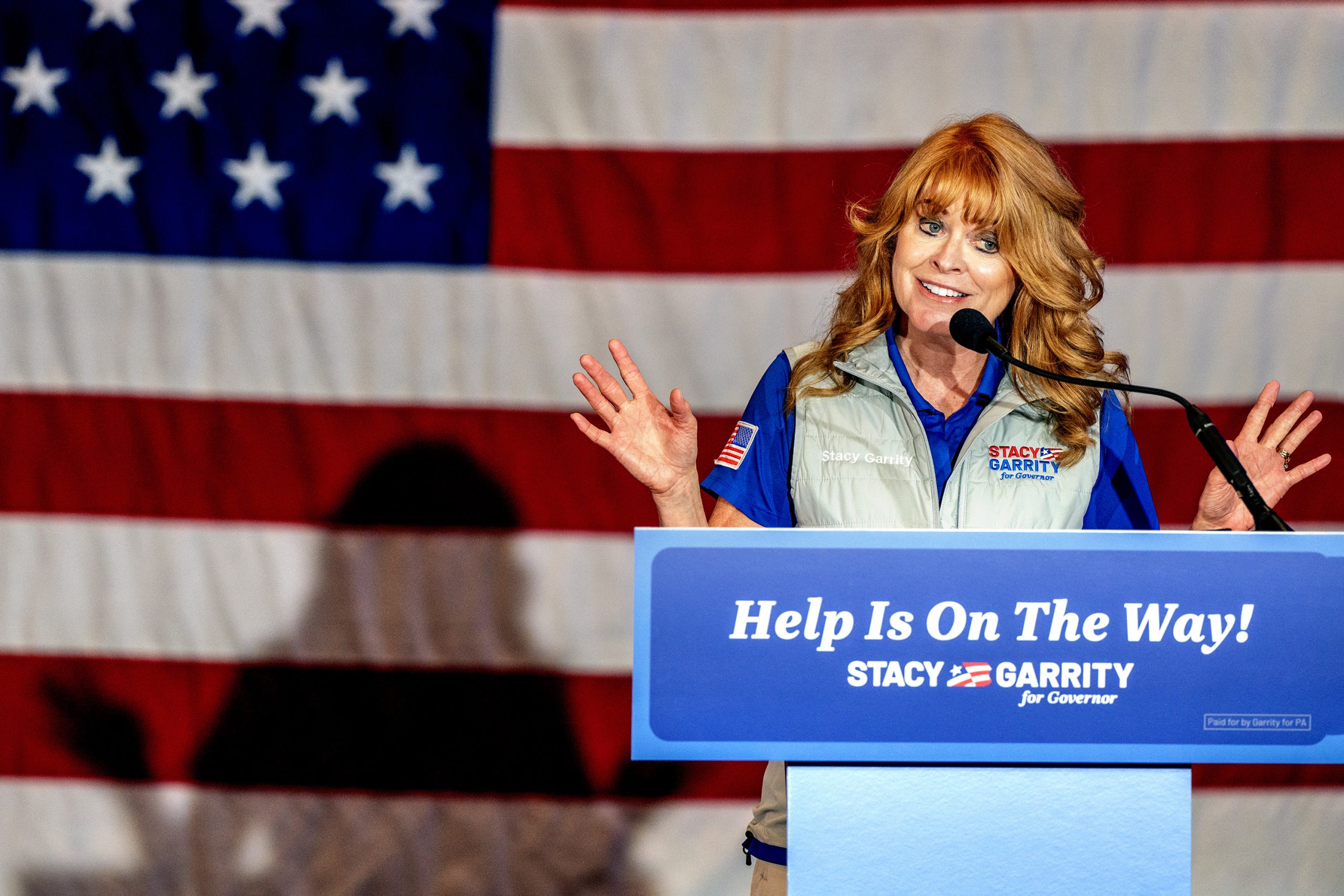
  • Will Donald Trump and national Republicans help Stacy Garrity’s campaign from falling flat against Josh Shapiro?

    Will Donald Trump and national Republicans help Stacy Garrity’s campaign from falling flat against Josh Shapiro?

    Seated behind his desk in the Oval Office earlier this month, President Donald Trump spoke directly to the camera in front of him. He turned to his right and looked up at the Pennsylvania Republican who, as he had indicated just a few weeks earlier, might very well lose her race for governor this fall.

    “I think you can win,” he said this time, extending his hand to Stacy Garrity. It was a change in tune for Trump, who last month at an event in Pennsylvania said Garrity’s opponent, Democratic Gov. Josh Shapiro, was “expected to” and might win.

    The president’s confidence in Garrity — and whether his support will extend beyond a handshake and a 17-second video with her at the White House — has become a critical question in the final stretch of the Pennsylvania governor’s race.

    Down in the polls and lagging behind Shapiro’s unprecedented fundraising, Garrity has cultivated the president’s support and the potential boost, both financially and in Republican enthusiasm, that could come with it.

    It is a risky strategy for a swing-state candidate whose party holds the White House, and particularly as polls show Trump becoming increasingly unpopular. Shapiro and his allies have enthusiastically promoted instances when Garrity, the twice-elected state treasurer, has leaned into Trump’s agenda and brand of politics.

    But with less than three months before Election Day, it is not clear to what extent Trump or other key national Republicans will pitch in on her campaign.

    State Treasurer and Republican candidate for governor Stacy Garrity holds a rally in Bucks County at the Newtown Sports & Events Center in this 2025 photo. Tom Gralish / Staff Photographer

    Trump has not yet stumped in any significant way for Garrity in Pennsylvania, a swing state where he was a near-constant presence during his winning 2024 campaign. And he has not lent his vast political resources — including a Trump-aligned super PAC flush with $400 million — to Garrity or other Republican candidates as his party faces tough campaigns across the country in the midterm elections that will determine control of Congress.

    Several gubernatorial races around the country are considered competitive, a reality that also pits Garrity against GOP nominees who polling suggests have better shots of success. The same circumstances have doomed the most recent other Trump-endorsed Pennsylvania Republican nominees for governor — former State Sen. Scott Wagner in 2018 and State Sen. Doug Mastriano in 2022 — who never ended up with national support and lost by double digits.

    Campaigns typically heat up after Labor Day, and there is still time for Garrity’s national allies to converge to boost her. But observers say the political reality is also evident.

    “The president kind of looks toward two things,” said Samuel Chen, an Allentown-based Republican strategist who is not affiliated with Garrity and who previously worked for Tom Corbett, Pennsylvania’s most recent GOP governor.

    “One is loyalty to him. Garrity has been loyal, but has not necessarily been as vocal as some others have. The other side of it is he likes winners. He wants to endorse people who win,” Chen said. “Everyone in Trump’s orbit knows that Garrity has a very uphill climb.”

    Not supporting ‘lost causes’?

    The level of involvement from groups like the Republican Governors Association has been a key indicator of whether the party believes its nominee has a chance at winning recent gubernatorial elections in Pennsylvania.

    The RGA is made up of GOP governors who collectively support one another’s agendas and campaigns. Democratic governors have a similar alliance.

    In 2010 — the last time a Republican won the governor’s mansion in Harrisburg — the group was the largest donor to then-Attorney General Corbett’s gubernatorial campaign, giving him $6 million starting in August of that year. Four years later and helmed by then-New Jersey Gov. Chris Christie, the RGA was once again Corbett’s biggest donor. It donated more than $5.8 million as Corbett became the first sitting Pennsylvania governor in decades to lose a reelection bid. Christie, preparing to run for president in 2016, stumped with Corbett multiple times.

    The picture was starkly different in 2018 and 2022, when Republican voters nominated two candidates closely associated with Trump. Neither Wagner’s campaign against Democratic Gov. Tom Wolf nor Mastriano’s campaign against Shapiro ever became highly competitive — and the RGA and other national groups decided to sit out.

    “We’re watching Pennsylvania very closely,” Arizona Gov. Doug Ducey, then the chair of the RGA, said in September 2022. He added that the group would not support “lost causes” or “landslides.”

    The RGA would spend nothing in the state that year, even with Mastriano and former Trump lawyer Jenna Ellis pleading for assistance. Shapiro went on to trounce Mastriano by nearly 15 percentage points.

    This year, RGA chair and Montana Gov. Greg Gianforte has not publicly weighed in on Garrity’s chances since issuing a brief, generic statement congratulating her after her unchallenged primary in May.

    And the competitive landscape Republicans are facing across the country may mean Pennsylvania’s GOP nominee once again gets the short end of the stick. The RGA did not respond to requests for comment.

    Even with Pennsylvania’s status as a preeminent swing state that went for Trump two years ago, there are nearly a dozen more competitive gubernatorial races across the country this fall, according to the Cook Political Report, a nonpartisan group that provides election analysis.

    Georgia, Iowa, Nevada, Ohio, and Wisconsin — some of which voted overwhelmingly for Trump just two years ago — are all considered toss-ups. Four other states with Democratic governors — Oregon, Arizona, Michigan, and Kansas — are also considered more competitive than Pennsylvania, which is ranked as “solid Democratic,” according to Cook, despite Republicans like Garrity and Trump having won statewide two years ago.

    The RGA, according to its most recent filing with the Federal Election Commission, had less than $1.7 million in its RGA Right Direction super PAC after spending about $16 million so far in the current election cycle.

    Its recent spending has focused on Iowa, where Democrats are attempting to capture the governor’s office for the first time in two decades, and Kansas, where the RGA launched an ad this month.

    “There’s always competition for limited resources,” Charlie Gerow, a longtime Harrisburg-based Republican strategist who also ran for governor in 2022, said of the intraparty competition for donors. “There’s only so much campaign funding to go around as everybody’s trying to get a piece of it.”

    Trump hosted a fundraiser for Garrity in March at his Mar-a-Lago estate in Florida. He has also visited Pennsylvania twice this summer, though not for events specifically with Garrity — and in one in case he did not mention her among a list of candidates he was supporting.

    In July, Shapiro’s campaign announced he had raised $50 million since January 2025. The next financial filing deadline for statewide candidates is in September, but as of the last reporting cycle, he had outraised Garrity 10-1.

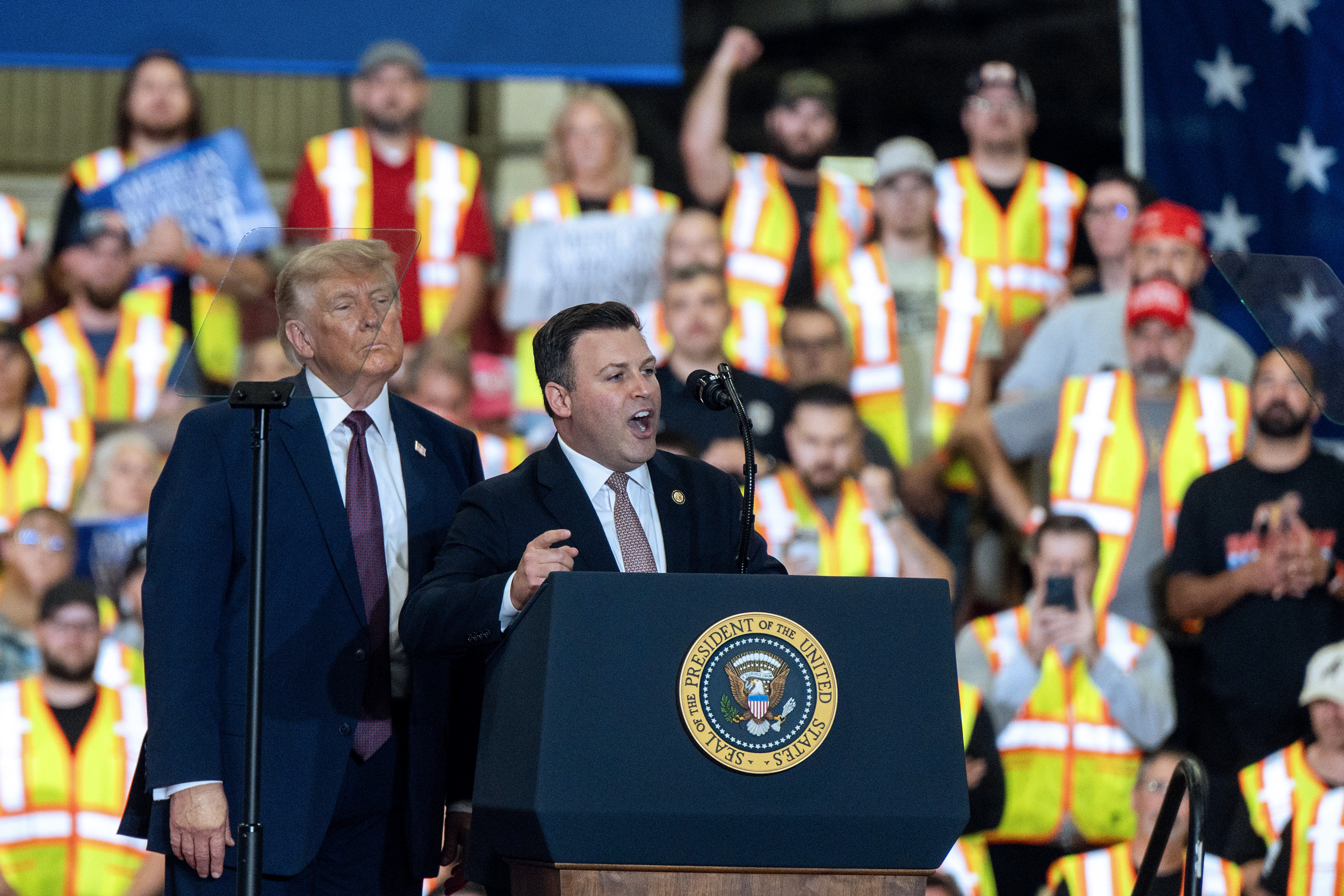
    President Donald Trump brings U.S. Rep. Ryan Mackenzie (right) to the stage as he holds an event in Mackenzie’s Lehigh Valley district at Mack Trucks in Macungie Tuesday, June 23, 2026.Tom Gralish / Staff Photographer

    But Matthew Beynon, a spokesperson for Garrity’s campaign, said she “does not expect, nor does she need, to go dollar-for-dollar with Josh Shapiro.” Instead, he said, she “just needs the resources to prosecute her case against Josh Shapiro … and she is on pace to be able to do so.”

    Garrity looks forward to “continued support” from the RGA, he said.

    Other national attention on Pennsylvania

    After Mastriano’s disastrous performance in 2022, Republicans coalesced around Garrity — whose 3.5 million votes in 2024 were the most ever for a statewide candidate in Pennsylvania — as their best shot at defeating Shapiro.

    But in the year since she received the party’s endorsement, Garrity has barely moved the needle. A Quinnipiac University poll in July found Shapiro leading Garrity 53% to 40% among registered Pennsylvania voters. Trump saw even lower scores: Just 39% of those polled approved of the president’s job performance.

    A poll from a Republican-leaning firm promoted by Garrity showed her down, 50% to 43%.

    Across Pennsylvania, she has also competed for attention and resources as her party prioritizes other major election battles this fall.

    Four Republican-held congressional districts — based in Bucks County, the Lehigh Valley, Scranton, and Harrisburg — are seeing a rush of national attention and money as their outcomes could decide control of the narrowly divided U.S. House.

    Shapiro has also invested heavily in trying to flip the state Senate to Democratic control for the first time in three decades, putting Republicans further on their heels. The $3.3 million that Shapiro committed to the effort is more than Garrity has raised in her entire campaign.

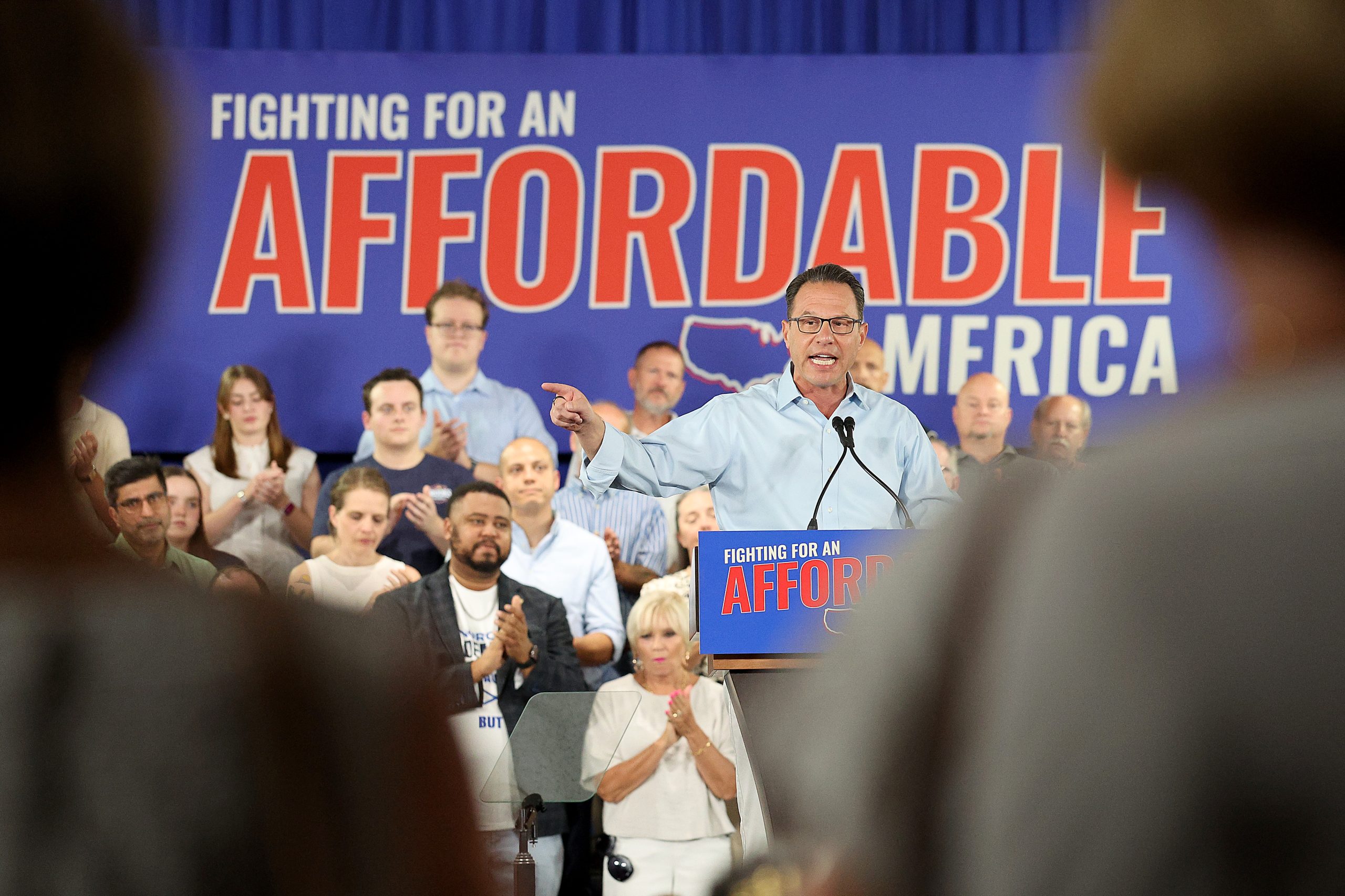
    Pennsylvania Gov. Josh Shapiro addresses the audience during a rally for Democratic congressional candidate Bob Brooks at the United Steelworkers Union Hall in Bethlehem, Pa. on Sunday, July 26, 2026.David Maialetti / Staff Photographer

    On the other side of the aisle, Pennsylvania’s top elected Republican — U.S. Sen. Dave McCormick — has endorsed Garrity but has not appeared to join in her public campaign efforts so far. A Trump ally and former hedge fund leader, McCormick has raised millions since his election in 2024, and political action committees associated with him have donated to other PACs working to elect Pennsylvania Republicans in Congress.

    McCormick has hosted events and campaigned for Garrity, and he “will keep doing everything he can to help her win,” said Mike DeVanney, a spokesperson for the senator.

    “He believes she demonstrates the kind of leadership we need and the kind that President Trump and many others have recognized as one that can move our commonwealth forward,” DeVanney said.

    Gerow said McCormick undoubtedly could help Garrity down the stretch.

    “He’s a prolific fundraiser. He has the connections, and he has the personality to raise large amounts of money. And he can be very, very helpful with the Garrity campaign if he weighs in with full weight,” Gerow said.

    Garrity’s campaign said McCormick has been an “incredible supporter,” including with his early endorsement and connections to supporters.

    Shapiro has also cultivated across-the-aisle relationships with some Pennsylvania Republicans who would be expected to promote Garrity.

    In an April interview with Punchbowl News, U.S. Rep. Brian Fitzpatrick, a Bucks County Republican running for reelection in the nationally watched 1st Congressional District, said he thought Shapiro would win his reelection contest and should run for president, adding: “I think Josh is very, very smart.”

    And during his 2022 run, Shapiro collected endorsements from other prominent Republicans, including Jim Schultz, a former Trump White House lawyer, and former Republican U.S. Rep. Charlie Dent.

    The final stretch

    Though the November election is less than three months away, that is still plenty of time in politics. Most ad spending does not start until September, and ground game efforts — door knocking, phone banking, and get-out-the-vote campaigns — get underway in the fall.

    Winning Pennsylvania is a priority for Trump in the midterms, and Garrity’s campaign said she is “grateful” for his continued support.

    On the state level, James Markley, a spokesperson for the Pennsylvania GOP, said the party is “fully invested” in helping Garrity beat Shapiro. Those efforts include training “thousands” of volunteers and working on education programs around early voting and casting mail-in ballots.

    “The more Pennsylvania voters learn about Stacy Garrity, the more they love her,” he said in a statement. “The more Pennsylvania voters learn about Josh Shapiro, they realize he has no record to stand on.”

    Gerow said Garrity’s challenge, with limited funds compared with Shapiro, is whether she has enough money to get her message out.

    “The major concern for her immediately is to be able to tell her story,” Gerow said. “She doesn’t have the resources to tell that story effectively right now, and she has a great story.”

    Buttons for State Treasurer Stacy Garrity and President Trump are left on a table following a VIP reception before a Garrity rally in Bucks County Thursday, Sept. 25, 2025. Tom Gralish / Staff Photographer

    Throughout her campaign, Garrity has hammered Shapiro on several issues she said reveal his lack of transparency as a public official. She has held roundtable discussions blasting Shapiro for his early embrace of data centers, a position he has since distanced himself from after calling for new guidelines for their development. Her campaign released a video series online that questions his handling of criminal investigations. And she has repeatedly insisted that Shapiro, who is widely rumored to be running for president in 2028, is “more interested in Pennsylvania Avenue than helping Pennsylvania families.”

    Samantha Reposa, a spokesperson for Shapiro’s campaign, disputed Garrity’s framing and emphasized that she has stood in lockstep with Trump on most of his positions.

    “Garrity is now running to be nothing more than a rubber stamp for Trump and his agenda that’s hurting Pennsylvania families — and we will continue to hold her accountable,” Reposa said.

    A new ad from Shapiro’s campaign paints her as “100% MAGA,” highlighting her support for Trump’s tariffs.

    Given Garrity’s fundraising deficit, Chen said, he would advise her to focus on meeting individual people in the community, if he were running her campaign.

    “Forget the GOP dinners. Start going to fairs. Start going to places that Republicans don’t show up. Start retail politics, and start introducing yourself to the state outside of Donald Trump, outside of modern Republicanism,” he said. “Tell the state what you’ve done for them and what you would do differently [as governor].”

    Staff writer Joe Yerardi contributed to this article.

  • Data centers are good business but bad politics. Josh Shapiro tries to thread the needle. | Shackamaxon

    In this week’s Shackamaxon, the race for City Council kicks off, SEPTA police officers step in front of the cameras, and a Big Tech reckoning comes for the Ambitious Abingtonian.

    Councilmember Jeffery “Jay” Young Jr. during the Barber’s Hall community legacy celebration on Aug. 1.Yong Kim / Staff Photographer

    Contrarian challenge

    In political circles, the legislative lineage of Philadelphia’s 5th Council District is one of the city’s most esteemed and iconic. The first person to represent the residents of the 5th in City Council was Raymond Pace Alexander, the civil rights leader who was later appointed as the first African American judge on the Court of Common Pleas. The seat has also been held by Cecil B. Moore, Ethel Allen, and John Street. Few other districts can boast such an impressive list of luminaries.

    Today, its occupant is someone very different, Council’s quarrelsome contrarian, Jeffery “Jay” Young Jr.

    Of course, there’s nothing wrong with “good trouble” or sticking out from the crowd. Moore himself was famously pugnacious, with the former Marine once quoted as saying that “The imported Gandhi philosophy of nonviolence that still exists in the South will not be accepted in Philadelphia, where we believe in self-help and self-defense.” Allen was also a maverick, styling herself as a “B.F.R. — a Black, female Republican, an entity as rare as a Black elephant and just as smart.”

    Moore and Allen, however, were quarrelsome on behalf of the people they represented, and contrarians at a time when Black Philadelphians were mostly excluded from the halls of power.

    Moore successfully desegregated Girard College, paving the way for Young himself to attend decades later.

    Allen broke barriers, too, becoming the first Black woman to hold a seat on City Council, and served the community directly as a physician.

    Young, however, starts fights that help nobody. Worse, no one seems to understand why he’s fighting in the first place.

    From delaying repairs at the Cecil B. Moore Library to blocking popular housing proposals, Young’s actions frequently bring him in conflict, rather than concert, with the community he was elected to represent.

    It is unsurprising, then, to see that he’s already attracted a declared challenger for his seat, months before election season kicks off in earnest.

    Jalon Alexander has a big advantage over the opponents Young (almost) faced in the past: He’s managed to successfully get onto the ballot before, during the 2023 City Council at-large election.

    While he brings his own ideas to the table, Alexander is also clearly running in opposition to Young’s choices. The cybersecurity attorney grew up in Strawberry Mansion, and still lives there, but is running a campaign built to find support across the district’s geographic and political spectrum.

    Kellan White, at this point a potential candidate, presents another strong alternative. White managed Rebecca Rhynhart’s 2023 mayoral campaign, which was successful across much of the 5th District. He has a deep knowledge of city politics and policy, and a Rolodex of contacts that any political journalist would be jealous of. Unlike Young, both Alexander and White are willing to answer the phone to talk to reporters, community leaders, and their constituents.

    At this point, even if a dozen candidates run against him and split the opposition vote, Young may still face an uphill battle.

    When I’ve criticized other Council members, I always get calls or emails from constituents who defend their choices. In nearly three years writing about Young, not a single person has offered a defense.

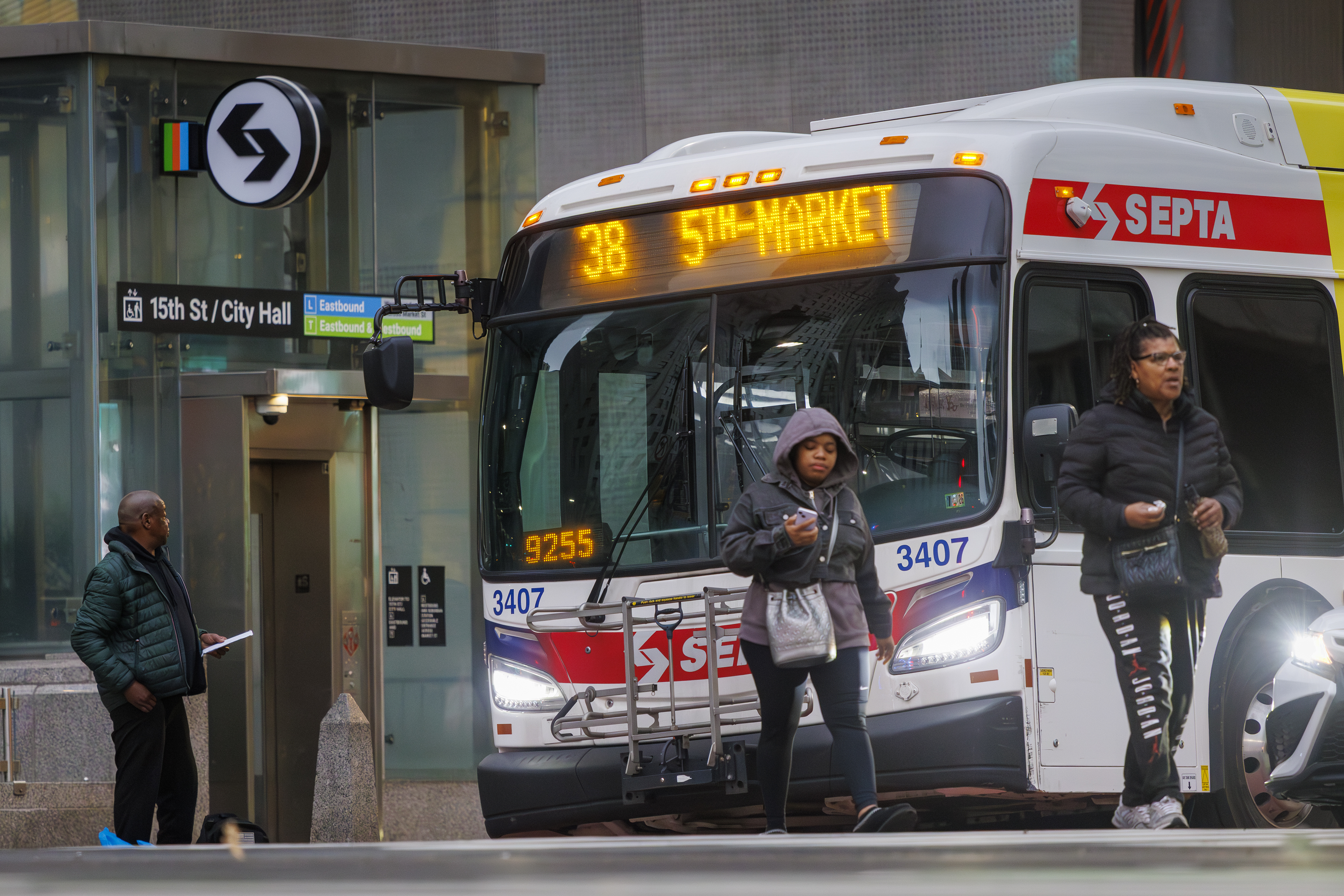
    A SEPTA Route 38 bus at 15th and Market Streets in May.Alejandro A. Alvarez / Staff Photographer

    Spotlight on SEPTA

    A few readers have asked me about film crews they’ve seen following SEPTA police around stations and transit vehicles recently. Media Relations Director Andrew Busch confirmed that the A&E Network is filming a docuseries, which will be broadcast next year.

    Personally, I’m looking forward to watching it. SEPTA’s roughly 250-strong police force is charged with patrolling more than 285 train and trolley stations, and nearly 3,000 vehicles. They are also in the midst of substantial declines in serious crime, which occurred alongside a crackdown on fare evasion and a surge in enforcement for quality-of-life issues. That’s a story worth showing.

    Less worthwhile would be a series focused on Kensington and the city’s drug epidemic. That’s a real part of SEPTA’s policing duties, but is often exploitative when told by outsiders.

    Gov. Josh Shapiro announces a $20 billion investment by Amazon in Pennsylvania data centers in Salem and Falls Townships in 2025.

    Data-driven

    Ever since the creation of the first computer, there have been concerns about its role in the future. It doesn’t help matters that many tech CEOs, like OpenAI’s Sam Altman, regularly express a kind of contemptuous attitude toward humanity and human needs. At one point, Altman said that artificial intelligence would “lead to the end of the world.” How inspiring!

    This has put public officials in a tough position over their support of data centers.

    For generations, states and cities have competed to attract investment. But these days, cash is flowing into an industry opposed by 74% of voters. Seeing an opportunity, challengers from across the political spectrum are using data centers in their political attack ads, while incumbents are scrambling to explain themselves.

    This isn’t run-of-the-mill NIMBYism, either. According to one report, only 8% of data center opponents live near one.

    Gov. Josh Shapiro, the Ambitious Abingtonian, exemplifies this conundrum. He was an early advocate for embracing data centers, but with polls tightening for his reelection efforts, he’s been forced to adapt.

    Of course, there’s a certain opportunism to state Treasurer Stacy Garrity’s embrace of the techlash.

    Her own party has been quite supportive of data centers. President Donald Trump has called them “tremendous.” Pennsylvania state Senate Majority Leader Joe Pittman has long advocated for the centers, which represent a particular opportunity for his own community, which has, in his words, “a long and storied history when it comes to the production of electricity.” U.S. Sen. Dave McCormick, the highest-ranking Republican in Pennsylvania, is married to Meta executive Dina Powell McCormick. Meta is one of the four companies investing a total of $1.5 trillion in new data centers.

    Pennsylvania Senate Republicans declined to pursue Shapiro’s proposed “GRID” initiative, which would have required the centers to produce their own electricity, conform to environmental standards, and make community benefits agreements in exchange for permitting assistance.

    Many of the current pitchfork-wielding politicos may themselves be forced to pivot when in office. Voters may hate data centers, but they also hate tax increases and service cuts.

    Loudoun County, Va., which is known as data center alley, has averted both. Local authorities have cut property tax rates by nearly 30% over the last decade, and the centers pay roughly half of the county’s property tax revenue. Given the increasing share of Pennsylvania’s budget that is paid through the extractive gambling industry, the need to invest more in schools and transportation, and the continuing structural deficit, it is no surprise politicians initially saw the AI boom as an opportunity.

    Now, state leaders will have to pick their poison.

    If they pursue data centers, they’ll face voter backlash. If they continue to embrace gambling, they’ll contribute to the impoverishment of their own constituents. If they stop investing in education or allow transit agencies to fail, they’ll weaken the commonwealth’s economy going forward. If they raise taxes, they’ll take the blame for that, too.

    While the data center surge may seem sudden to many, it is also a response to demand. Both businesses and individuals are increasingly using AI in daily life.

    Ironically, many social media posts about data centers include AI-generated text and images. It is a bit like if the Women’s Christian Temperance Union had fundraised with a booze cruise.

  • How Josh Shapiro’s early embrace of data centers is testing his high popularity in Pennsylvania

    How Josh Shapiro’s early embrace of data centers is testing his high popularity in Pennsylvania

    Gov. Josh Shapiro made a declaration in the early days of his administration: Pennsylvania is open for business.

    The move would ultimately include promises to slash bureaucratic red tape, cut permit wait times, and offer a new direct line to Shapiro’s office for major corporations hoping to set up shop in Pennsylvania.

    Pennsylvania would “move at the speed of business” and “get stuff done,” the new mottos used by his administration, he said. He’s campaigning for reelection in November on the same catchphrases, and boasting major successes like the 12-day repair of I-95 in 2023 that traditionally would have taken months to reopen as an example of how he can think outside the box to solve problems.

    What’s more: He sees delivering for residents — showing them government can actually solve problems — as the future of the national Democratic Party, while it searches for an effective message and messenger heading into the 2028 presidential primary, which he is widely expected to enter.

    It was with this same spirit last summer that Shapiro announced the largest single private sector investment in Pennsylvania history: Amazon committed $20 billion in Pennsylvania that included two data center campuses in Luzerne and Bucks Counties. Pennsylvania scored the project because of its promise to fast-track permitting and use tax breaks for the massive developments.

    “Pennsylvania’s gonna be better off. I think America’s gonna be better off, because we’re going to win the battle of AI supremacy and it’s going to be done right here in the commonwealth of Pennsylvania,” Shapiro said in an interview on CNBC’s Squawk Box on the day he announced the deal.

    Gov. Josh Shapiro announces a $20 billion investment by Amazon in Pennsylvania data centers in Salem Township and Falls Township on June 9, 2025.

    But in a year’s time, the politics — and public opinion on both sides of the aisle — have dramatically shifted on data center development. Shapiro’s early welcome of data centers has created an opening for criticism from his gubernatorial opponent and members of his own party.

    Yet efforts to cut red tape have proven to be slow and overblown: Only six data centers are actually under construction in Pennsylvania since the announcement, and 10 have received at least one state-level permit approval, according to Shapiro’s office. Still, Shapiro’s popularity is being evaluated by some voters and anti-data center activists on a perception that he moved too quickly and sacrificed the state’s safety in favor of Big Tech.

    “I am all about legislators and decision makers getting s— done. This version of it is reckless and it’s irresponsible and it’s not actually serving our people,” said Carrie Santoro, the executive director of progressive advocacy group Pennsylvania Stands Up who has been holding town hall meetings in communities around the state on data centers.

    As public opposition to data center development has grown over the last year, Shapiro has begun to soften his position, citing his personal evolution on the projects. He’s gone from consulting Amazon and the data center industry earlier this year to draft data center incentives, to vowing his own executive actions to curb the projects in communities that oppose them.

    “Governor Shapiro intends to use all the tools available to him to stop the dozens of speculative data center projects that do not meet community needs and Pennsylvania should expect to hear more from him on that in the coming weeks,” said Shapiro’s press secretary, Rosie Lapowsky.

    Now Shapiro, who otherwise maintains vast popularity ratings in the state, faces a vulnerability on one of voters’ top priorities as he heads into November, and a particularly sensitive concern among Democrats as he potentially vies for the party’s nomination in two years.

    A liability among some voters

    Data centers were not broadly known or understood by many until this year, as public outcry continues to grow.

    Many states, including Pennsylvania, had already begun welcoming the major projects, and some hyperscale developers plan to spend billions of dollars to build them. Pennsylvania’s General Assembly first approved a sales tax exemption for data center developments in 2021, when Shapiro’s predecessor, Democratic Gov. Tom Wolf, was still in office.

    Shapiro, for his part, initially embraced data centers as an economic opportunity for Pennsylvania, bringing union jobs for construction workers to build out the physical infrastructure for the computers running AI software. He also wanted to position Pennsylvania to inherit the most benefit from providing space for AI to operate, leading not only other states but also other countries in the race to advance new technology. He and U.S. Sen. Dave McCormick (R., Pa.) appeared together as early embracers of the technology and the massive buildings needed to power it, speaking together during McCormick’s first AI summit in Pittsburgh last summer.

    Sen. Dave McCormick shakes hands with Gov. Josh Shapiro at a panel discussing state investment and infrastructure at the Pennsylvania Energy and Innovation Summit at Carnegie Mellon University in Pittsburgh on July 15, 2025.Kaiden J. Yu / Staff Photographer

    But as communities began to push back against the rapid proliferation of data center proposals, in part to protect their water and energy resources, Shapiro adjusted.

    Shapiro, like many elected officials, has changed his positions and rhetoric on the unpopular developments. He announced his Governor’s Responsible Infrastructure Standards (GRID) as a way to incentivize developers to follow transparency and environmental requirements in order to receive tax breaks. And when the General Assembly failed to approve his GRID standards or any substantial data center restrictions, Shapiro said he’d act on his own, though it’s still unclear what that will entail.

    “You want to build a data center there? You’ve got to bring your own power; you’ve got to pay for your own power. You’ve got to be transparent with the local community — tell them who the hyperscaler is, tell them what’s going to go on there. You’ve got to have a local benefits agreement to help that community. You’ve got to protect the water sources that are used to cool off those facilities,” he said in a June interview with GZERO.

    The Democratic governor has been lauded nationally for challenging PJM Interconnection, which is the electric grid operator for Pennsylvania and 12 other states over its efforts to raise prices on ratepayers. He capped the price Pennsylvania consumers could pay through 2029, as residents fear rate hikes due to the data center boom.

    But Shapiro’s plan on data centers is too little, too late, Santoro said.

    “I saw the GRID proposal as him moving on this issue, and the thing that I am concerned about is he didn’t move enough to keep up with how much voters have moved on this issue,” she said.

    Some of those voters would agree. A Quinnipiac University poll of Pennsylvania voters, conducted in early June, found just 24% of those surveyed — and 40% of Democrats — approved of “the way Gov. Josh Shapiro is handling data centers in Pennsylvania.” It’s a stark contrast to Shapiro’s overall approval numbers, in which he’s maintained above 50% approvals — record-high favorability ratings for a first-term Pennsylvania governor.

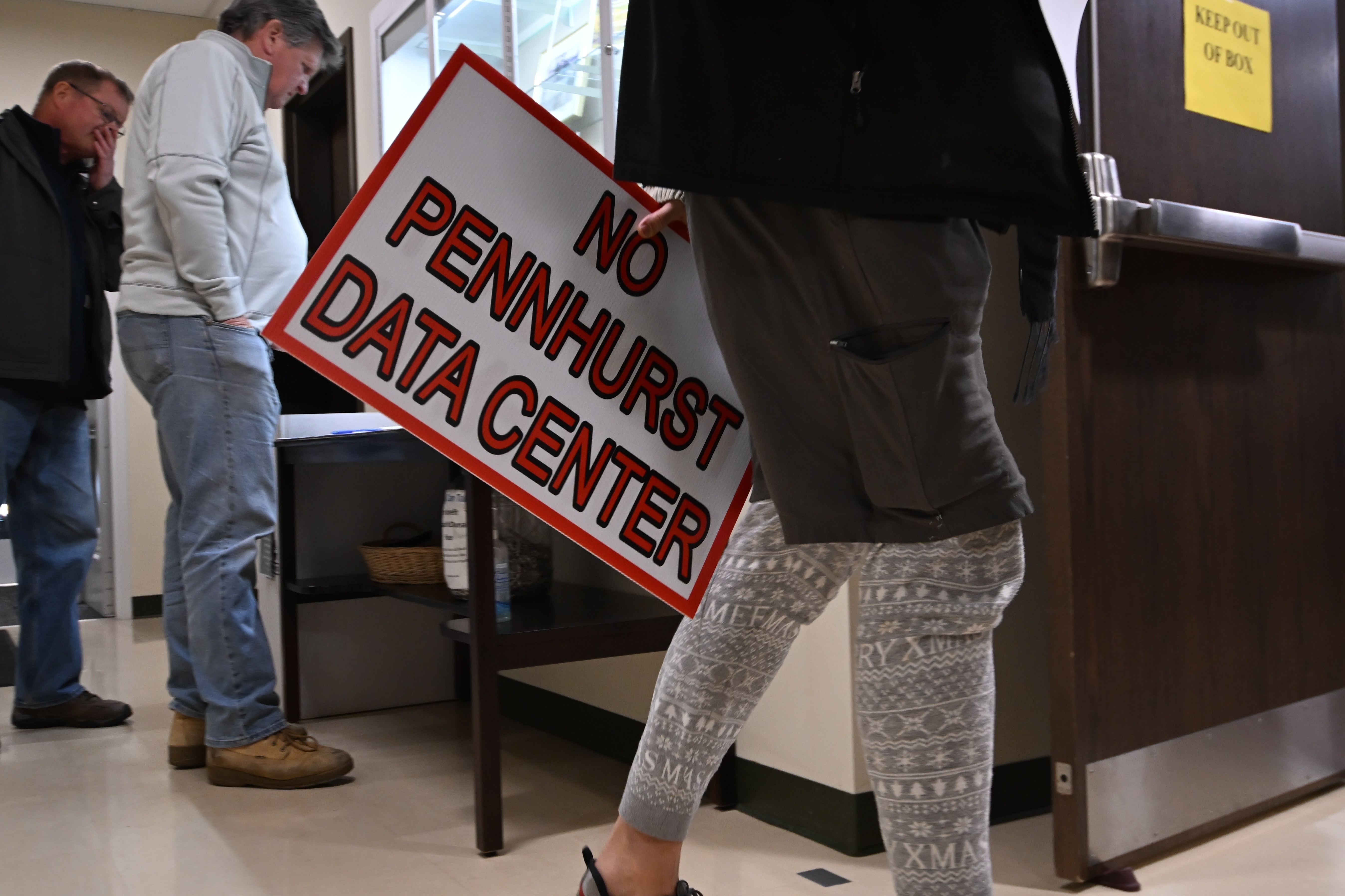
    People sign in and head into an East Vincent Township supervisors meeting where an agenda item involved a data center proposal at the former Pennhurst state hospital grounds on Dec. 17, 2025, in Spring City, Pa. Marc Levy

    Joanna Tenney, 36, of East Vincent in Chester County, held a sign at a June rally in the state Capitol that read: “Shapiro: Amazon’s bootlicker.” A registered Democrat, she voted for him in 2022, and believes he should be held accountable for supporting data center development in Pennsylvania that led to the fast-tracking of a now-stalled 125-acre data center project near where she lives.

    She’s so fed up with Shapiro’s approach to data centers that she said will be writing in the name of her state senator, Sen. Katie Muth (D., Chester), who has been on the front lines of advocating for many state environmental issues, for governor on her November ballot. Tenney said she and a few other anti-data center advocates plan to run a write-in campaign for Muth.

    “We’ve elected somebody that we thought was going to make the right choices by us, and we don’t really see that happening,” Tenney said.

    Muth, who took office in 2018, said she would not be supporting Shapiro or “any elected official who puts the interests of Big Tech ahead of the health, safety, and future of Pennsylvania communities.”

    If Shapiro changes his stance on data centers, she would support him, Muth said. She is the prime sponsor of a bipartisan bill to place a three-year moratorium on hyperscale data center development.

    “Get right on the issue, Right your wrongs. If you can’t be on the side of science and people, my support is MIA,” she added.

    Emily VanFleet, 26, lives in Archbald in Northeastern Pennsylvania, where six data center projects are underway comprising more than 50 buildings that, when completed, will cover 14% of the town. VanFleet, who is an unaffiliated voter, said she also supported Shapiro in 2022. But because of his public support for speeding up data center development in Pennsylvania, she is “certainly not going to vote for him this upcoming election,” she said. She isn’t sure she’s going to vote at all.

    “I want Shapiro to stop being a coward,” VanFleet said in June. “I have emailed him, I have called him, I have reached out to him so many times. I have not heard back, not once. I see his videos all over social media that he has an open-door policy, but I have yet to see it.”

    (In May, Shapiro’s administration announced that one of the unpopular Archbald developments, Project Gravity, was removed from a fast-track permitting program for failing to properly engage with the community.)

    But negative attitudes toward Shapiro’s position on data centers may be limited statewide and his position is unlikely to dramatically knock down his high popularity or reelection odds: The June Quinnipiac poll found 56% of those surveyed approve of the way he is handling his job as governor overall, and recent polling shows Shapiro ahead 53% to 40% against his Republican challenger, state Treasurer Stacy Garrity.

    The data center pitfall

    Shapiro’s political opponents — both immediate and prospective — are also seizing on the issue.

    Garrity, the GOP nominee endorsed by President Donald Trump, made her first TV ad an attack on Shapiro’s support for the Amazon project and other data center developments — even as Trump himself has remained open and excited about AI and data centers.

    Garrity, of Athens in Northeastern Pennsylvania, has also led a statewide listening tour on the topic. In June, she convened one of those sessions in Hatfield with a group of commissioners, zoning planners and emergency responders to talk about how they have been impacted by data centers. She blasted Shapiro for his role in attracting Amazon and said his proposed new requirements amount to a “flip flop.”

    “Josh Shapiro has failed on this topic. He was the biggest cheerleader for data center development in Pennsylvania, until he wasn’t,” Garrity said at the June 24 meeting.

    Pennsylvania Treasurer Stacy Garrity participates in the podcast “Ruthless” during an event hosted by Americans for Prosperity, Concerned Veterans for America, and the Libre Initiative at the National Constitution Center in Philadelphia on Jan. 29. Elizabeth Robertson / Staff Photographer

    Garrity has her own mixed record on data centers.

    At the time of the Amazon announcement, Garrity called the investment “great news” that would bring “historic investment” and “create thousands of jobs.” And her current position remains unclear. She has said she opposes a statewide moratorium but wants “a pause” on development instead.

    Like Republicans running in districts that supported Trump in 2024 but oppose data centers, she appears to be attempting to find a pro-business and pro-regulation path.

    “We want to make sure data centers are an addition to the grid, not a contraction. If there’s infrastructure that needs to be added to the grid, rate payers shouldn’t be paying for it,” she said. “I’m not opposed to data centers, but we have to do them the right way, and we haven’t done it. It’s because of a lack of leadership from the government.”

    Garrity’s “long record of supporting completely unregulated data center development makes it clear that she just can’t be trusted,” said Manuel Bonder, a spokesperson for Shapiro’s campaign.

    More recently, Garrity has said she would prevent data centers construction on prime agricultural fields.

    Local government leaders said at Garrity’s campaign roundtable in June that there has been lack of guidance around issues, especially around power demand, water use, infrastructure, environmental impacts, and community compatibility.

    Kathie Doyle, a Republican on the Richland Township Board of Supervisors, said confusion around data centers have “set off a firestorm” in her community. Earlier this year, warnings of a supposed proposal for a data center in the Bucks County township circulated on social media, but turned out to be a “business park” with two buildings.

    “Our residents don’t understand that we just cannot say no,” she said. Municipalities in Pennsylvania cannot outright ban data center development.

    Santoro said Shapiro’s inconsistency is a liability that could sway some voters away from casting their ballot for him.

    “Certainly he is giving her an ‘in’ by staying on the wrong side of this,” she said.

    And it’s not just Republicans seizing on Shapiro’s position. The early reputation Shapiro earned as a champion of data centers may become a point of attack among other Democratic contenders for the presidency in 2028, too. In a veiled jab at Shapiro in June, Illinois Gov. JB Pritzker, knocked Pennsylvania on a business podcast for allowing Constellation Energy to restart Three Mile Island nuclear plant just to power Microsoft’s data centers.

    “My guess is that’s going to be a reasonably unpopular thing to have done,” Pritzker said, without noting Shapiro by name on the Prof G Markets podcast.

    Vulnerability for down-ballot Democrats

    With a $50 million campaign war chest and high approval ratings, Shapiro is widely favored to win reelection this year. But his record on data centers could prove a liability for those he’s hoping to pull along, some advocates, like Santoro, say.

    Shapiro has been staking much of his national political clout on his ability to flip four House districts in Pennsylvania for Democratic control of the U.S. House, drawing voters to the polls with his name at the top of the ticket. He’s also aiming to flip Pennsylvania’s Senate into Democratic control for the first time since 1993, giving him a Democratic trifecta in Harrisburg, as the state’s split legislature has blocked many of Democrats’ priorities from becoming law.

    Santoro predicted that could be in jeopardy “if he does not change course.”

    “Shapiro’s leadership on data centers will be the thing that costs us the first Democratic trifecta in 31 years, and I think that while he will likely win reelection with this wildly unpopular position on data centers, other elected officials and candidates will not,” she said.

    Other Democratic candidates aware of data centers’ deep unpopularity are differentiating themselves on the issue, despite remaining otherwise aligned with Shapiro. Scranton Mayor Paige Cognetti, who is running in Pennsylvania’s 8th Congressional District, released a new ad last month putting data center developers on notice.

    “Big Tech needs to pay their own way, not hide behind [nondisclosure agreements]. No tax breaks. Don’t raise our electric bills. Don’t poison our water. And hire local union labor,” she said, in the ad spot. “You can’t meet that? Then get out.”

    Cognetti’s stance isn’t vastly different from Shapiro’s — both want to end blanket tax breaks — but her rhetoric is much stronger, and she’s putting the issue at the forefront of her campaign.

    Democrats insist Republicans, including those running at the state level, don’t have the moral high ground on data centers after failing to pass through several measures that would have enacted stricter controls for their approval.

    Sam Silverman, a former congressional aide and founder of Silverman Strategy Group, a strategic communications firm focused on technology and politics, said Shapiro’s approach to data centers — proposing a plan rather than enacting a moratorium — presents a risk that could either pay off and become the model for other states, or fail to fully address all future concerns and is unpopular.

    “Shapiro is going out in front by proposing a bargain now. If the standards protect ratepayers, produce visible benefits, and hold bad actors accountable, Pennsylvania could have a model others can follow,” he said. “But because he is putting forward the deal now, he will be judged on whether it delivers.”

    Taking a risk involves trust, though. Shapiro can afford to make a big swing at one of the hottest issues in politics because voters put so much faith in him, Silverman said.

    “Most politicians do not have the amount of trust and political capital to take a risk, either,” Silverman said.

    Whether the governor is triumphant will come down to what standards go into effect and whether bad actors are held accountable, he said, “and whether Pennsylvanians believe those standards are working.”

  • A new federal ‘Data Center Bill of Rights’ took lessons from Philly suburbs and Western Pa. fracking country

    WASHINGTON — A new federal proposal to enact protections for communities opposed to the proliferation of data centers has drawn inspiration from both the Philadelphia suburbs and Western Pennsylvania fracking country.

    The Data Center Bill of Rights is one of several national efforts to address a growing dissatisfaction with data centers, which have so far faced few restrictions at either the federal or state level in Pennsylvania.

    U.S. Rep. Ro Khanna, a California Democrat and Bucks County native considering running for president in 2028, said his home state should be doing more.

    He introduced the federal legislation after a recent tour across Pennsylvania that he said was designed to hear from communities that have lost manufacturing jobs and other economic opportunities.

    Data center concerns came up more than any other issue, he said — leading him to incorporate new ideas into the bill he already had in the works, and to call for a pause on data center development in Pennsylvania until further protections and local controls are enacted.

    A statewide pause would be more than what Gov. Josh Shapiro — another potential 2028 Democratic contender — has proposed as he seeks to enact data center guidelines. It would also be less than other Democrats, both in Pennsylvania and nationally, who have called for more robust moratoriums. Shapiro’s Republican challenger this year, Treasurer Stacy Garrity, has also called for a pause but not for an extended moratorium.

    “I was surprised by the anger about it in Pennsylvania,” Khanna said in an interview after his 15-county tour. “In other states, people are sometimes opposed in local communities, local pockets. But not this widespread anger.”

    Khanna, a Council Rock High School graduate who has represented Silicon Valley in Congress since 2017, spoke about the Data Center Bill of Rights during his tour but said afterward that it was “partly inspired” by the concerns he heard in the communities similar to the ones where he grew up.

    He said he was alarmed by the complaints he heard outside Philadelphia, where five data centers have been proposed in close proximity to each other in King of Prussia and another 2-million-square-foot data center is proposed in Conshohocken.

    “As a kid, I used to go to Conshohocken and the King of Prussia Mall. I’m familiar with that area,” Khanna said. “You can’t ride roughshod over what Delaware County wants or when Montgomery County wants.”

    The legislation would declare that communities have the right to reject data centers through a “transparent community process” or allow them with specific protections. That includes demanding that data centers don’t lead to higher electricity rates, that they use renewable energy sources and disclose their water consumption, and “pay their fair share of state and local taxes.”

    State Rep. Chris Rabb (right) joins U.S. Rep. Ro Khanna (left) Tuesday, July 28, 2026, as he stops on his “Made in PA: New Economic Patriotism Tour” at the City Institute Library on Rittenhouse Square.Tom Gralish / Staff Photographer

    One specific provision, Khanna said, was informed by his visit in Washington County with individuals who are paid to host natural gas wells on their properties. It was there that he said he learned of community demands for oil and gas well sites to be at least 2,500 feet from residences. That buffer was a recommendation from a 2020 grand jury report released by Shapiro when he was serving as attorney general and that outlined health and safety issues caused by fracking in the Marcellus Shale region.

    The recommendation was not followed, and advocates are continuing to push for extending the buffer from the current distance of 500 feet, according to Inside Climate News.

    Khanna’s bill of rights would call for data centers to be built no closer than 2,500 feet from residences, schools, childcare facilities, hospitals or nursing homes. He said the environmental and health hazards for data centers aren’t the same as fracking but they should be kept at a distance from communities that don’t want to live directly next to them.

    “At least they were offering royalty checks in the cases of fracking,” Khanna said. “[Data center developers are] not even giving the communities checks. It’s just kind of like, ‘OK, we’re going to build.’ What does the community get out of it? I literally don’t understand it.”

    Data center advocates have argued their development is critical in winning an artificial intelligence war with China, and that they will bring construction and some skilled jobs to communities that need them.

    Even the staunchest advocates, though, have acknowledged the public blowback.

    “I do think that data centers in Pennsylvania have raised legitimate concerns,” U.S. Sen. Dave McCormick (R., Pa.) said during a recent telephone town hall as he continued to promote them in the competition with China and their creation of “thousands of jobs.”

    When developers are making their pitch, McCormick said they should come with commitments to protect energy costs and overuse of water, use local labor, invest in the community and pay taxes.

    “That should be part of the deal up front,” McCormick said during the telephone town hall in late July. “With all those facts, then the local community can decide whether they want the data center or not. And if they choose not to, that’s their choice.”

    Khanna said he’s hoping for bipartisan support as he introduces the bill of rights idea. He’ll also be competing with other proposals — like one from fellow progressives U.S. Rep. Alexandria Ocasio-Cortez (D., N.Y.) and U.S. Sen. Bernie Sanders (I., Vt.) called the AI Data Center Moratorium Act. The bill would enact an immediate federal moratorium on data center construction until other safeguards are passed into law, including some of the ideas Khanna and McCormick have proposed, like around utility costs.

    Several Pennsylvania state-level laws have been proposed, though the legislature did not address them during its busy budget season earlier this spring and summer. Lawmakers also left Harrisburg without ending tax breaks aimed at incentivizing data center construction even though the idea had garnered widespread support.

    “They shouldn’t be getting these tax breaks to build,” Khanna said. “That’s absurd when you’ve got hyperscalers that are making trillions of dollars.”

    The fact that many of those ultra-wealthy corporations are based in his district made the issue a politically dicey situation for him, but also one that the possible presidential hopeful said he was willing to take on.

    “We’ve got to pause it in states like Pennsylvania,” Khanna said. “Some of my own constituents aren’t going to like that.”

  • After a high-profile snub in Pa., President Donald Trump meets with Stacy Garrity at the White House

    After a high-profile snub in Pa., President Donald Trump meets with Stacy Garrity at the White House

    Clad in a royal blue, two-piece suit, Pennsylvania Treasurer Stacy Garrity stood next to a seated President Donald Trump in the Oval Office on Tuesday, in a video message posted to his social media platform, Truth Social.

    “Pennsylvania is very lucky because you have somebody running for governor who’s going to do a fantastic job,” Trump said to the camera, while shaking Garrity’s hand. “She really is a spectacular person. And I just want to wish you luck. I think you’re going to win.”

    The White House appearance signaled a closer public alliance between Trump and Garrity, and the latest chapter in her campaign challenging Gov. Josh Shapiro as she seeks to draw Trump’s loyal fan base to the polls in November.

    Trump, who endorsed Garrity in January, followed the video message by posting a photo with Garrity, writing: “Stacy is running to be the next Governor of the GREAT Commonwealth of Pennsylvania. She has my Complete and Total Endorsement. She will do a fantastic job!”

    Garrity’s campaign said in a statement that she was visiting the White House alongside the Penn State wrestling team, which was being honored for its 2026 national championship.

    The Oval Office meeting represented a repair of sorts between Garrity and Trump after he has displayed little enthusiasm toward her campaign in recent months.

    Garrity entered the race against Shapiro, the Democratic incumbent, last summer as Republicans — disappointed with their 2022 performance — sought to consolidate support early around one strong candidate. When Trump endorsed Garrity, he called a “true America First Patriot” who “WILL NOT LET YOU DOWN!”

    In March, Garrity hosted a fundraising dinner at Trump’s Mar-a-Lago Club in Florida, where, beneath a wrought-iron doorway at his private golf club, the president said “she should win.”

    But when Trump visited Pennsylvania in June and Garrity introduced him onstage, he seemed to forget her altogether.

    During a speech meant to focus on manufacturing in Macungie, Trump spent over an hour talking about weight-loss drugs, immigration, firearms, the role of transgender athletes in women’s sports, and the UFC fight recently held on the White House lawn. But Garrity never received a mention, and Trump instead celebrated U.S. Rep. Dan Meuser, a Pennsylvania Republican who considered a run for governor before ultimately opting against it. Trump even name-checked Shapiro.

    Three months out from Election Day, Garrity has struggled to gain traction among voters. A Quinnipiac University survey of 895 registered Pennsylvania voters in July found 53% would vote for Shapiro, while 40% said they would vote for Garrity.

    At right is Pennsylvania Governor Josh Shapiro listening to Stacy Garrity, 78th State Treasurer, Forum Auditorium in Harrisburg, Pa., Tuesday, Jan. 21, 2025.Alejandro A. Alvarez / Staff Photographer

    Garrity has stuck with Trump, supporting his political decisions like efforts to nationalize elections and his signature tax cut law, under which 300,000 Pennsylvanians are expected to lose Medicaid, according to state estimates.

    Trump’s latest show of support for Garrity comes as Shapiro — who is rumored to be eyeing a run for the White House in 2028 — has set his sights beyond the governor’s office, lending his time and spending his money to support Democrats up and down the ballot, in an attempt to flip the Pennsylvania state Senate and four swing districts in Congress.

    Last month, in another stop in Pennsylvania, Trump attempted to lend more support to Garrity during Republican U.S. Sen. Dave McCormick’s Defense and Innovation Summit.

    “I hear things about Stacy, and I’m hearing some poll numbers that are very good,” he said.

    Regarding her opponent, however, Trump had stronger words.

    “This guy Shapiro is totally overrated. … He doesn’t have what it takes,” Trump said.

    President Donald Trump visits Mack Trucks in Macungie in the Lehigh Valley Tuesday, June 23, 2026.Tom Gralish / Staff Photographer

    In Pennsylvania, Trump remains deeply underwater in popularity. The Quinnipiac survey found only 39% of Pennsylvania voters would give him a positive job approval. Elsewhere in the country, Trump has remained Republicans’ most effective energizer to the polls — though some are concerned about GOP success without his name on the ballot in November.

    Pennsylvania Democrats on Tuesday seized on Garrity’s appearance with the president.

    “Stacy Garrity always sprints to any chance she gets to pledge her 100% loyalty to Donald Trump and his disastrous agenda,” Ava Pitruzzello, a spokesperson for the Pennsylvania Democratic Party, said in a statement.

    Last week, Shapiro’s campaign launched a new ad calling Garrity “100% MAGA.” Garrity’s campaign, in a statement, called the ad “a dishonest, lying attack.”

  • Democrats accuse Green Party candidate in Lehigh Valley district of Republican meddling

    Democrats accuse Green Party candidate in Lehigh Valley district of Republican meddling

    WASHINGTON — In a Pennsylvania election where a few thousand votes could make all the difference, the last-minute entrance of a Green Party candidate with a background in Republican politics has sparked the second allegation of election meddling in three months and complicated one of the nation’s most competitive U.S. House races this fall.

    The Lehigh Valley-based 7th Congressional District matchup features U.S. Rep. Ryan Mackenzie, a Republican who won the seat by 1 percentage point in 2024, and Bob Brooks, a Democratic union leader and retired firefighter.

    Both parties are prioritizing the race as control of the U.S. House could come down to a few seats nationwide.

    But the emergence of a third-party candidate has alarmed both Democrats — who have long claimed that Green Party candidates pull votes from their nominees — and the Green Party of Pennsylvania, which said it does not know the person now representing its platform in one of the state’s highest-profile races.

    “It sounds a lot like somebody’s just fooling around and trying to use the Green Party name, which is a well-known thing that happens in many states,” said Tim Runkle, cochair of the state party.

    Andrew Tupone, 37, of Northampton County, filed his nomination papers with the state last week ahead of a Monday deadline for third-party candidates. He was the only candidate to file to represent the Green Party in a Pennsylvania race for Congress.

    Unlike the Green Party’s endorsed candidate for governor — Tony Dastra of Lancaster County — Tupone does not have a long association with the party or its left-leaning policies. In 2021, he was the Republican nominee for a Northampton County magisterial court seat. Voter registration records show he changed his party affiliation from Republican to Democrat in February, and then from Democrat to Green in April.

    In an interview, Tupone rejected accusations that he remained affiliated with the Republican Party or that he was asked to run in a way that would draw votes away from the Democratic nominee. He described a leftward shift in his political views after voting for President Donald Trump in 2020, though he said he could not recall whom he voted for in the 2024 presidential race between Trump and Democratic Vice President Kamala Harris.

    “A lot of people are disillusioned with both parties,” Tupone said. “They’re sick of all the stuff that’s going on.”

    Tupone also said he did not pay anyone to help gather signatures for his nominating papers, which he turned in with upward of 9,000 signatures — more than twice as many as required. Runkle said Green Party members encountered paid canvassers for Tupone who declined to say who was funding the effort.

    According to a copy of the nominating papers obtained by The Inquirer, only one of the 22 individuals who gathered signatures is from Pennsylvania. The rest are from all over the country. Multiple have worked for Republican campaigns, according to public records.

    Colin McEvers, who gathered signatures for Tupone in Lehigh County, is a Republican candidate for the Maryland General Assembly who is also listed as the contact for the Maryland White Republican Council. Others — including individuals from Illinois and Michigan — have been paid to canvas for GOP campaigns, according to Federal Election Commission records.

    Tupone said he had no knowledge of anyone paying his canvassers.

    “I went around and I gave a lot of my nominating papers to friends to give to other people, and I sent it to them as well,” Tupone said. “And as I went around, I recruited people and asked them.”

    While the signatures appear to be based in the district — which stretches from the cities of Allentown, Bethlehem, and Easton into the more Republican-leaning Poconos — the other candidates have until Aug. 10 to challenge their legitimacy.

    Such challenges are common, and the Brooks campaign is reviewing its options to decide whether to bring a challenge, according to a source familiar with the campaign’s thinking.

    ‘No one’s paying me to run’

    Jenna Kauffman, Brooks’ campaign manager, in a statement described the situation as a GOP-initiated and “desperate scheme to meddle in this race.”

    She connected it to a last-minute $1.7 million advertising campaign against Brooks in the May primary that appeared to be run by Democrats but was actually funded by a Republican political organization.

    The spending, by a political action committee called Lead Left, was aimed at boosting another Democrat who observers considered to have a worse shot at beating Mackenzie in the November election. But the effort was anonymous, and records that became public only after Brooks won show that it was funded by the Conservative Americans PAC.

    The effort to prevent Brooks from emerging from the Democratic primary came as he coalesced support from across the ideological spectrum with high-profile endorsements ranging from moderate Democratic Gov. Josh Shapiro to U.S. Sen. Bernie Sanders (Ind., Vt.), a democratic socialist.

    “Voters deserve to know who is paying for this effort and whether Ryan Mackenzie and his Republican backers are involved,” Kauffman said, painting Tupone’s candidacy as a continuation of the move in the primary.

    Mackenzie’s campaign did not address that comment when asked about it Monday.

    Tupone said that the inference was “just false,” and that he instead likes the values of the Green Party, which he said included supporting the environment, social justice, and “stopping the corruption and also the genocide in Gaza.”

    “No one’s paying me to run. No one’s asked me to run for this office. I’m running on my own, hopefully with a lot of hope from everyone who wants to volunteer,” Tupone said. “I’m not associated with the Republican Party anymore. I’m not a candidate for them.”

    For years, Democrats have voiced concerns about the Green Party and other third-party candidates “spoiling” elections, from Jill Stein in the 2016 presidential race that first put Trump in power to the 2024 U.S. Senate race in Pennsylvania, when Democratic U.S. Sen. Bob Casey lost to Republican Dave McCormick by about 15,000 votes. In that 2024 election, a Green Party candidate won about 66,000 votes, a Libertarian candidate won almost 90,000, and a Constitution Party candidate won more than 23,000.

    In the 7th District in 2024, Mackenzie defeated incumbent Democrat Susan Wild by 4,062 votes out of more than 403,000 cast. That was the narrowest margin out of any of the state’s 17 districts, making it a key tossup district this year.

    That margin is also significantly different from the one Shapiro potentially faces during his reelection campaign this year as he maintains a sizable lead over Republican Stacy Garrity, and as a Green candidate officially filed to run on Monday. Shapiro defeated Republican Doug Mastriano in 2022 by almost 793,000 votes; the Green Party candidate won just over 24,000 votes.

    Runkle said that nobody solicited the Green Party’s endorsement in a Pennsylvania congressional race this year, and that a conversation he had with Tupone left “a lot of questions.”

    He said the party is concerned about its reputation and about being targeted in ways that do not lift up its platform, which focuses on environmental protections and liberal positions on healthcare. But he also pushed back on concerns that the party should be considered a spoiler.

    “I do solidly believe that the Green Party policies and the values we represent has a solid bloc of voters,” Runkle said. “If people think that’s spoiling the race, then they should try harder to speak to the issues that we speak to.”

  • ‘People are sacrificing necessities.’ Ahead of Pa. governor’s race, the economy weighs heavily for Latino voters

    ‘People are sacrificing necessities.’ Ahead of Pa. governor’s race, the economy weighs heavily for Latino voters

    Jorge Luis Burgos of North Philadelphia, a registered Democrat, was one of many Latino voters who shifted to the right and voted for President Donald Trump in the 2024 presidential election.

    Now he’s planning to shift back and vote for Democratic Gov. Josh Shapiro as he runs for reelection in the key swing state.

    “Shapiro 100%. I love the way he manages everything,” Burgos said while attending Arte en las Calles, an event last weekend celebrating Latino culture held by the Esperanza Art Center in North Philadelphia.

    Burgos, 57, who moved to Philadelphia from Puerto Rico in 1980, said he voted for Trump in 2024 because he was worried about inflation and felt betrayed by the last-minute switch that swapped then-President Joe Biden for Vice President Kamala Harris as the Democratic nominee. But he said Trump has failed to fulfill his promises, and he has found himself turning back to the Democratic Party.

    “I was disappointed, and that’s why I switched. But you ask me now, I’m disappointed, too. Big time,” Burgos said. “Trump didn’t accomplish his promise: ‘On Day One,’ inflation is gonna go down. It didn’t happen.”

    In the past decade, support of Republican candidates, specifically Trump, has grown in the majority Latino precincts of Philadelphia — with Trump’s share of the vote increasing from 6.1% in 2016 to 21.8% in 2024.

    While Harris still won these wards — and a slight majority of Latino voters nationally, according to exit polls — Trump’s improved performance with this voter group helped him win both Pennsylvania and the presidency.

    Burgos, like many other supporters who shifted to the right, said Trump’s promises to bring the cost of living down to its pre-COVID rate ultimately won over their vote.

    Ninety-three percent of Trump’s Latino supporters cited the economy as the main issue driving their vote in the 2024 election, according to a September 2024 Pew Research Center poll.

    Jorge Luis Burgos with his grandchildren Luis Burgos Jr. and Athena Burgos, in Philadelphia. His wife Carmen is standing in the doorway in this photo.Jessica Griffin / Staff Photographer

    But now many Latino voters have not seen the outcomes they were hoping for, with a May poll from Pew finding that Trump’s support has fallen more sharply with Latino voters than other voters. Only 66% of Hispanic Trump voters approved of his job performance in the poll, falling 27 percentage points from the start of his presidency.

    According to a May poll from UnidosUS, a national Latino civil rights organization, 66% of Latino voters say Trump and congressional Republicans are not focused on fixing the economy.

    Pennsylvania Democrats and Republicans will be seeking to sway these voters in November when Shapiro faces off against Republican nominee Stacy Garrity, the state’s treasurer, in the race for governor.

    What are the issues on the minds of Latino voters?

    Latino voters, who make up more than 600,000 of eligible voters in Pennsylvania and are the fastest-growing demographic group in Philadelphia, said in interviews that the economy, immigration, and support for small businesses are the issues that will determine who they vote for.

    “They’re focused on cutting costs,” Shapiro said of the region’s Latino voters at a rally with congressional candidate Bob Brooks and House Minority Leader Hakeem Jeffries in the 7th Congressional District, one of four GOP-held seats in the state Democrats are hoping to flip after the area accounted for some of Trump’s biggest Pennsylvania gains in 2024.

    “They’re focused on their small businesses getting help,” Shapiro said. “They’re focused on more cops on the street for safer communities and schools that are stronger.”

    Gov. Josh Shapiro addresses the audience during a rally for congressional candidate Bob Brooks at the United Steelworkers Union Hall in Bethlehem, Pa. on Sunday, July 26, 2026.David Maialetti / Staff Photographer

    Jaime Negrone, 67, from North Philadelphia, has lived in Pennsylvania his whole life but has roots in Puerto Rico. He said the cost of living is the major issue he is hoping to see tackled.

    “Everything has become so expensive,” Negrone said. “People are sacrificing necessities on one end to cover for the other end: food, gas, housing.”

    Negrone said he will vote for Shapiro over Garrity because the governor seems to be more connected to the people of Pennsylvania.

    “Shapiro has a pulse on the issues in Pennsylvania,” Negrone said. “He’s been in the office, he knows the politics, and he seems to be a politician for the people.”

    Seth Ortiz, 30, a second-generation Puerto Rican from Northeast Philadelphia, said he’s going to vote for Democratic candidates in November because he feels that’s the only way to protect people’s rights amid increased immigration enforcement.

    “I don’t like the fact that ICE is pretty much doing what they want in U.S. cities. At some point, even killing American citizens and getting away with it, it’s horrible,” Ortiz said. “So anyone who is going to stand up for immigrant rights is probably the most important thing for me. And it’s probably always going to be the Democrat.”

    Gladis Avila, 55, a Venezuelan business owner from South Philadelphia, said she is not sure who she is going to cast her vote for yet. She wants a candidate who is going to stand up for her community and small businesses but has not heard much outreach from either campaign.

    “The Latino community needs people who work more for our community,” Avila said. “…When we vote, we want to feel like we are voting for someone who is going to help our community. Because that’s our voice, and our voice has an impact.”

    Gladis Avila stands in a park near her house in South Philadelphia.Andrea Padilla

    Echoing this, Jennifer Rodriguez, president of the Greater Philadelphia Hispanic Chamber of Commerce, a nonprofit focused on the economic growth of the Hispanic community, said she’s heard worries from businesses about being able to keep up with their expenses.

    “Small businesses are very, very concerned about the viability of their businesses,” she said. “And in the really escalating cost environments. Particularly, the labor force has become very costly.”

    How are campaigns reaching the Latino community?

    Matt Beynon, a representative for the Garrity campaign, said that helping small businesses is the main concern the campaign has heard from Latino voters.

    “And a lot of concerns she’s hearing are about the overregulation and red tape that is preventing them from either starting a business, growing their business, expanding their business,” he said.

    Outreach to the Latino community has so far included attending community events in Philadelphia and other communities with large Latino populations, like Allentown, Beynon said.

    State Treasurer and Republican candidate for governor Stacy Garrity holds a rally in Bucks County Sept. 25, 2025 at the Newtown Sports & Events Center.Tom Gralish / Staff Photographer

    Shapiro has also spent time in majority Latino areas. In May, he attended and co-hosted “Fiesta on Hamilton,” in Allentown, a street festival that celebrates Latino culture in the Lehigh Valley.

    “During Fiesta on Hamilton, Gov. Shapiro met with local small business owners, entrepreneurs, creators, cultural leaders, and local officials as part of Shapiro for Pennsylvania’s ongoing commitment to engaging, uplifting, and investing in Latino communities across the Commonwealth,” the Shapiro campaign wrote in a statement.

    Samantha Reposa, a representative for the Shapiro campaign, said the campaign is also running Spanish-language radio ads to further engage voters.

    ‘I feel left behind’

    Despite this, many Latino voters in Philly said they haven’t felt reached by either campaign.

    Rodriguez expects messaging to ramp up closer to the election. Because of the Latino community’s lower voter turnout in relation to other groups, Rodriguez said they are often the last to be reached, a strategy she is hoping to see change

    “One thing that typically happens is that the Latino community oftentimes is the last community to be approached by politicians and their systems,” Rodriguez said. “The Latin community’s voter engagement is relatively low. And a lot needs to be improved, but a lot of it has to do with candidates really seeking the relationship with our community much earlier on.”

    Carolina Hansell, 61, immigrated from Venezuela 33 years ago and is planning to vote for Shapiro, but said she has seen and felt the conservative shift in her community and that it’s in part due to a lack of outreach.

    “They need to work and talk to real people and the neighbors over here,” Hansell said. “It’s the only way to convince people and have a good plan. There’s not a plan right now, not in that Democratic Party.”

    Anjoli Santiago, 41, said it’s not just the Democrats that are lacking but feels like both political parties have lost touch with the Latino community and sees that trend continuing.

    “I think it will continue if we don’t have more conversations about how diverse our people are and the different needs that our people have,” Santiago said. “I feel left behind by both parties definitely. It feels like we are voting and those who we vote for no longer represent us.”

    Staff writer Michelle Baruchman contributed to this article.