Tag: SEPTA

  • ‘They fought, we won’: Ivory Coast’s World Cup win against Ecuador kicks off FIFA in Philly

    ‘They fought, we won’: Ivory Coast’s World Cup win against Ecuador kicks off FIFA in Philly

    Speckles of orange-clad fans leapt up from seas of yellow, wringing rally towels, whooping, and crashing into one another.

    This was the scene across Philadelphia Sunday night, as Ivory Coast defeated Ecuador with a single goal in the 90th minute of the first World Cup matchup at “Philadelphia Stadium” (better known as Lincoln Financial Field).

    After years of anticipation, ticketing woes, and infrastructure blunders, the world’s most beautiful game has landed in the City of Brotherly Love.

    And soccer fans are feeling it.

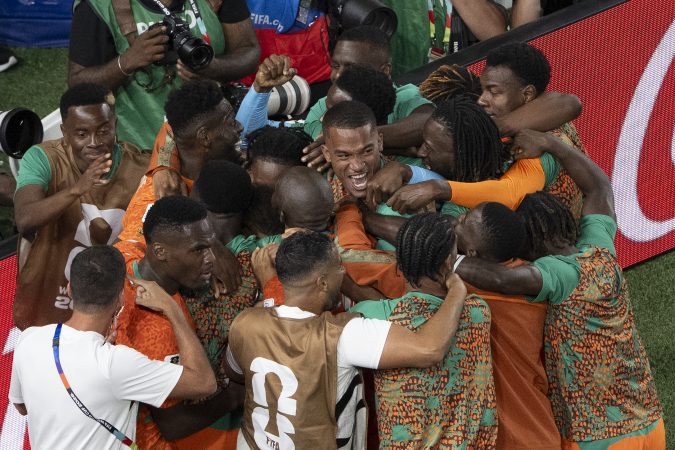
    The 68,274 attendees erupted when the West African nation broke the deadlocked game in the last seconds of regulation, leaving Ecuadorians stunned and distraught. Some covered their faces in disbelief.

    “They fought, but we won,” Ivory Coast supporter Glenn Feidanga said.

    Feidanga was the only person dancing in his section after spending the two halves surrounded by Ecuadorian fans. The momentary rivalry eventually gave way to high-fives and kudos.

    “Everything is good,” he said.

    While the Ecuadorian and Ivorian communities in the Philly-area are small — less than 15,500 residents claim Ecuadorian ancestry, and the number of Ivorians is difficult to estimate because the Census Bureau doesn’t tabulate them — their fans had no dearth of fervor or conviction.

    Anything for your team

    In the days and hours leading up to kickoff, celebrations have spilled into streets and SEPTA stations across the city — and supporters have been undeterred by oppressive heat and threats of severe weather. On Saturday, a wave of yellow, red, and blue flooded the steps of the Philadelphia Museum of Art, as thousands of Ecuadorian fans rallied and basked in their pride.

    The Broad Street Line Sunday afternoon was inundated with Ecuador fans. Teeming train cars were full of yellow jerseys standing shoulder to shoulder, men and women alike. As the train pulled in, a song arose; full throat and deafening in the hot, cramped subway car.

    “Let’s go, let’s go Ecuadorians, tonight we have to win!“

    As the throng made its way out of the NRG Station, the fans’ hearts and voices swelled again.
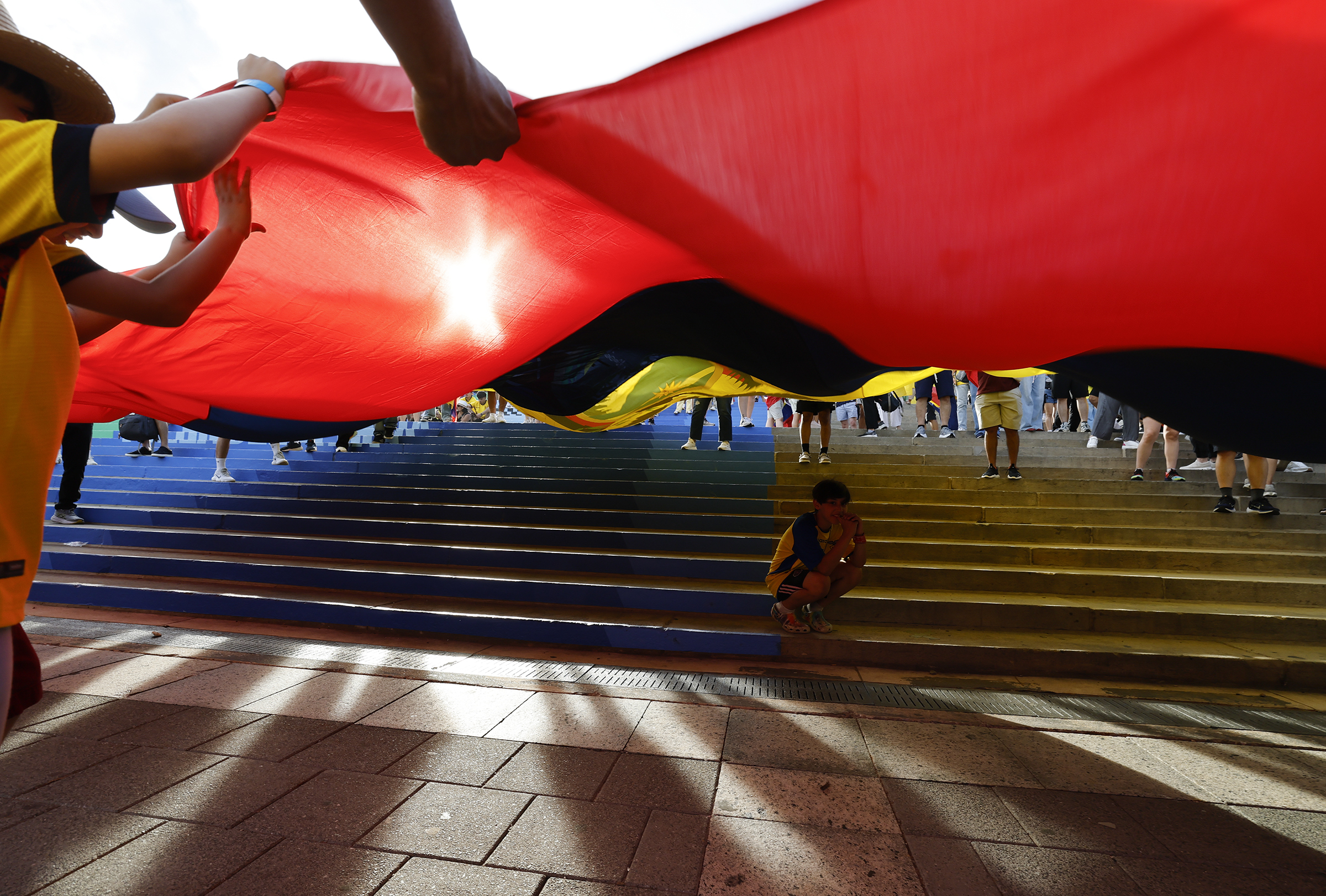
    A young Ecuadorian soccer fan sits under the Ecuadorian flag during a flag waving event at the Philadelphia Museum of Art steps along the Benjamin Franklin Parkway, ahead of Ecuador’s first round World Cup match against the Ivory Coast on Saturday, June 13, 2026.Yong Kim / Staff Photographer

    Pacho Flores would go to any length for “La tri,” the nickname for the Ecuadorian national team. He had traveled from New York City and had paid $650 a ticket for his family of eight to see his team play in Philadelphia.

    “It’s the most beautiful thing in the world,” Flores, a 62-year-old Ecuadorian native, said. “We have to follow the team to every game. It’s a blessing to have them play so close.”
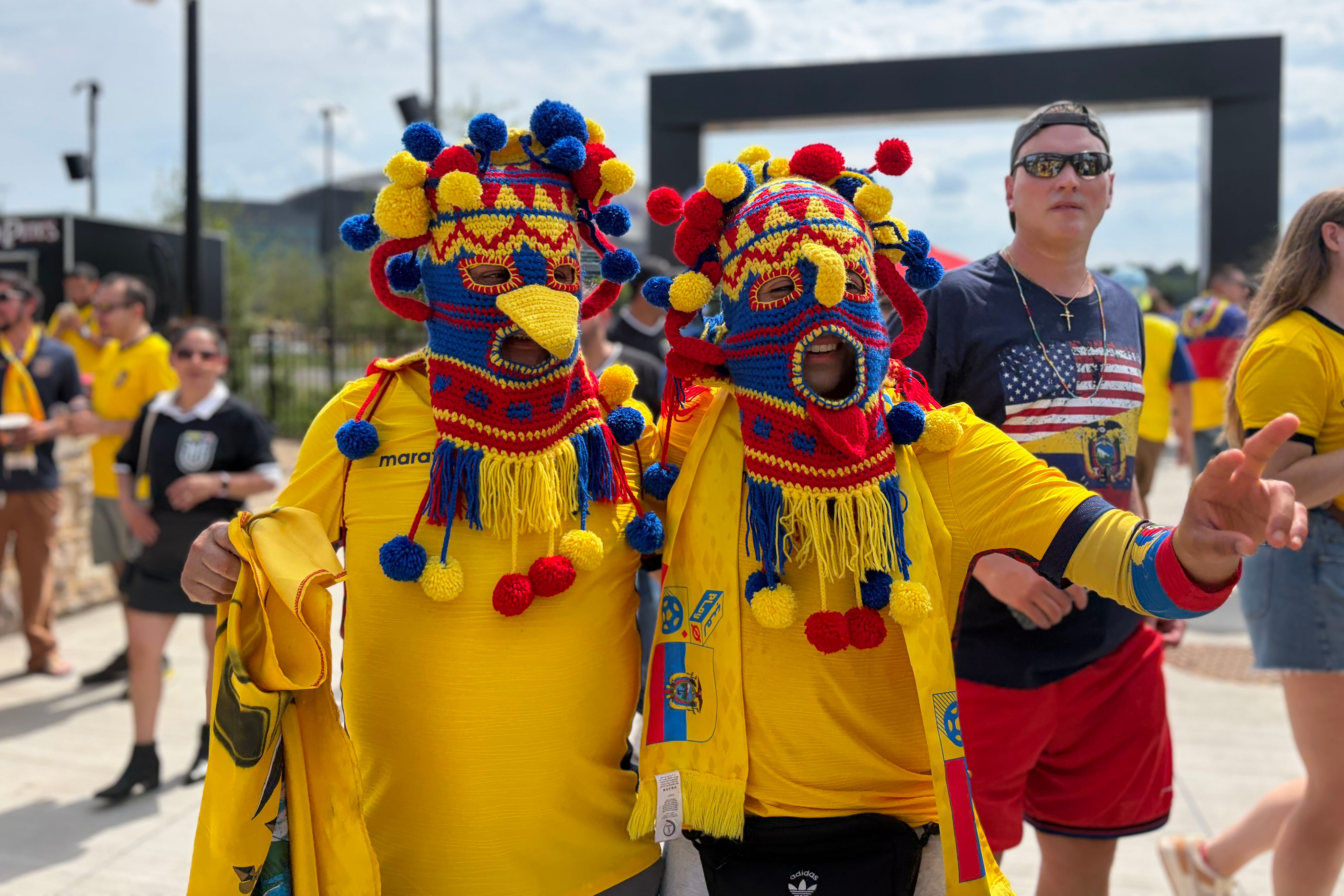
    Pacho Flores (left) and his son, Alex, dance wearing thickly knit Diablo Uma masks ahead of Ecuador’s World Cup match against Ivory Coast in Philadelphia Sunday, June 14, 2026.Michelle Myers /

    Despite the 90-degree day, Flores and his son, Alex, wore thickly knit masks of Diablo Huma — an Indigenous protective sacred figure from the highlands of Ecuador — to represent his native town of Cañar.

    “It’s not that hot inside the mask,” Alex said, wiping sweat from his brow, “and it’s worth it because we have to win.”

    “Either way, we will still love the team,” his father added.
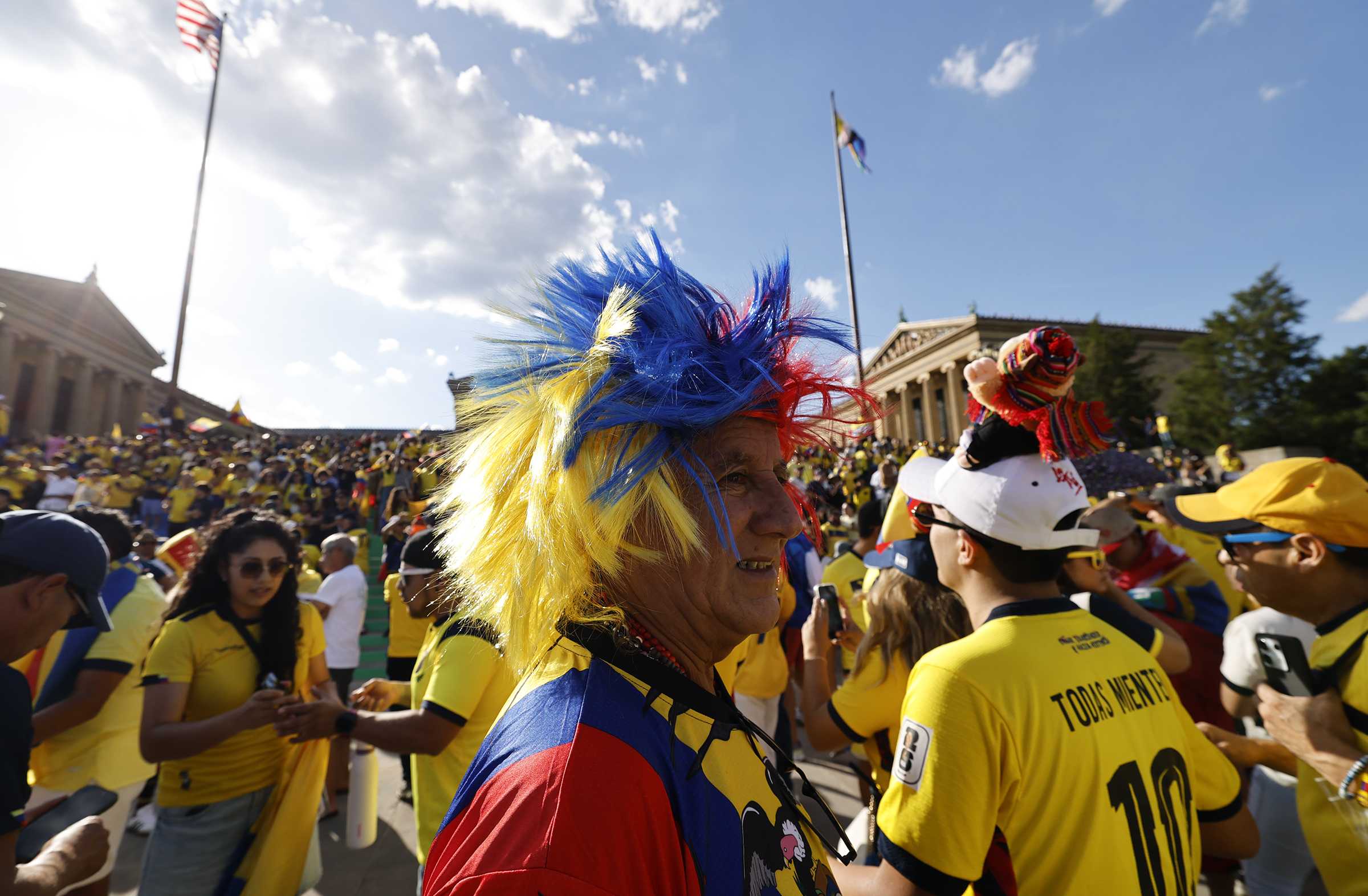
    Ecuadorian soccer fan Demetrio Govrea watches fans during a flag waving event at the Philadelphia Museum of Art steps along the Benjamin Franklin Parkway, ahead of their first round World Cup match against the Ivory Coast on Saturday, June 13, 2026.Yong Kim / Staff Photographer

    The family won’t have too much time to idle: They head back to New York City on Monday morning to pack for La tri’s match in Kansas City on Saturday against Curaçao.

    Ivory Coast fans Justin Bambara, Samska Lejah, and Couby Ouedraogo flew from Niger to New Jersey, then drove two hours to Philadelphia, and were confident in their team’s chances.
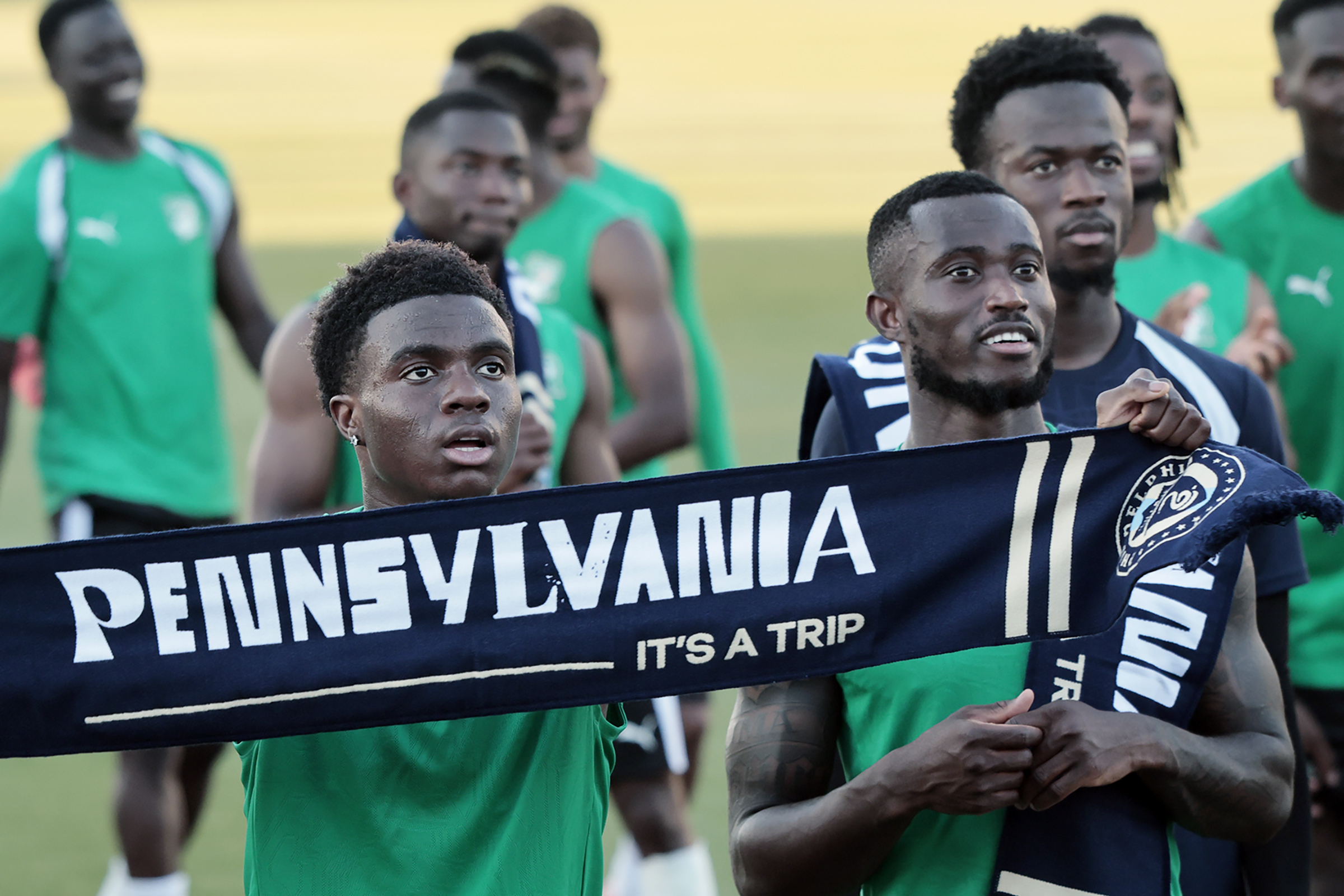
    Members of the Ivory Coast national football team react while watching the Sixers Stixers drum line perform following their practice at Subaru Park in Chester on Friday, June 12, 2026
    Elizabeth Robertson / Staff Photographer

    “The yellows,” Bambara, 49, said, referring to the Ecuadorian fans’ jerseys, “need their support; we don’t need that, we are going to win.”

    “We will invite them to beers once they lose,” Lejah, 55, said.

    In the middle of it all, there seemed to be a marriage being put to test. Aurora Brown of Jacksonville, Fla., was attending FIFA Fan Festival with her family Saturday and said she is cheering for her home country, Ecuador. Her husband, Jamaal Brown, who had to stay back in Jacksonville, recently found out through a DNA test that he has Ivorian connections and is rooting for Ivory Coast.
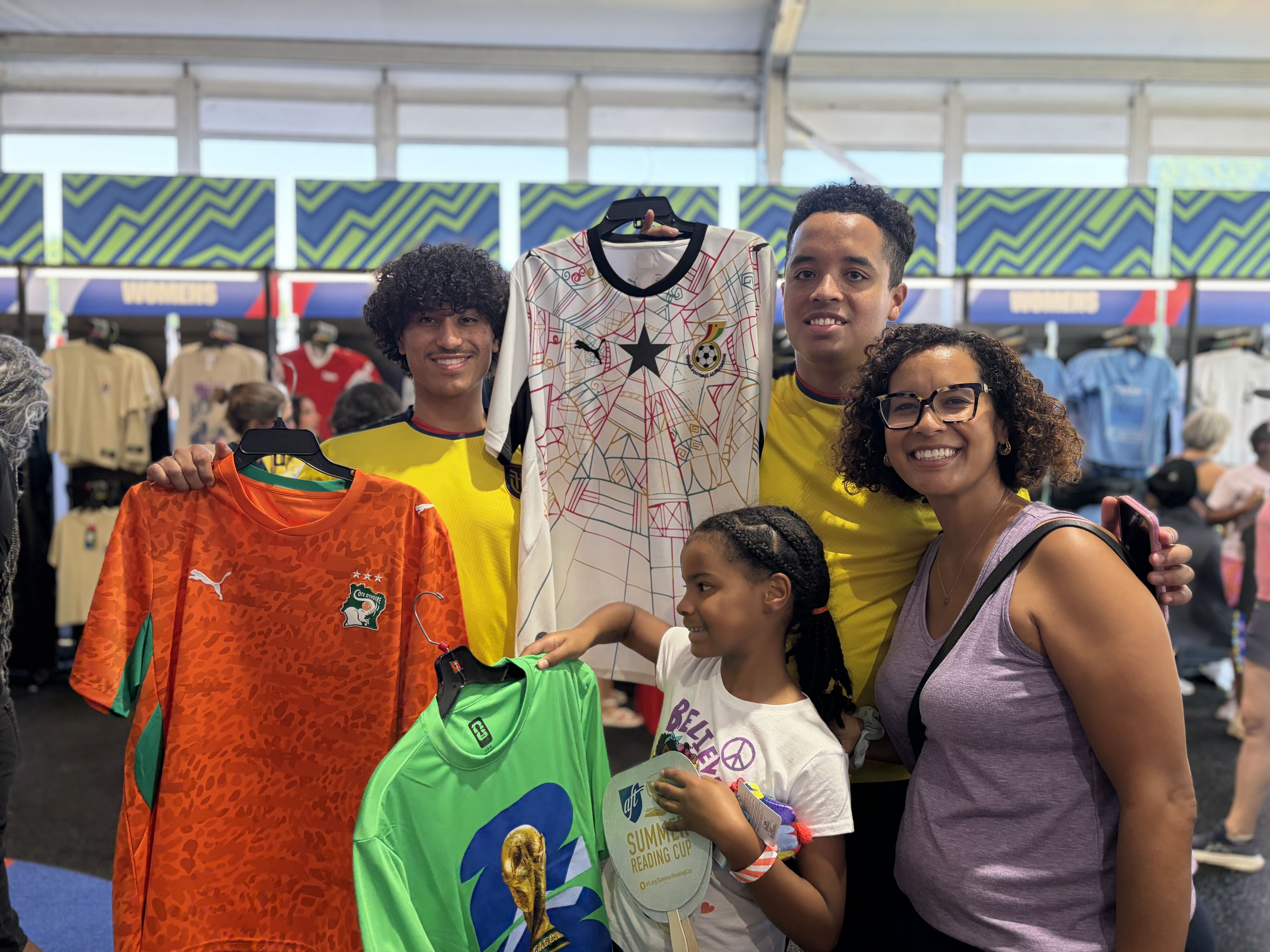
    Aurora Brown and the family pick out a soccer jersey for dad at FIFA Fan Fest in Philly. Dad Jamaal had to stay back home in Jacksonville, where he will be rooting for the Ivory Coast. But Aurora is sticking with Ecuador.Michelle Myers

    “If they weren’t playing against Ecuador, the whole family would be Ivory Coast fans,” Aurora said.

    “Ivory Coast is going to win and I will celebrate with some drinks,” Jamaal said over the phone.

    “We are winners.”

    Ticketing woes continue

    This is the most expensive World Cup ever, and astronomical ticket costs and “dynamic pricing” have been a big gripe for many soccer fans.

    Day-of, there were no tickets available for Ecuador v. Ivory Coast on FIFA’s last-minute marketplace, Ticketmaster, StubHub, Vivid Seats, and SeatGeek. Tickets for Friday’s match between Brazil and Haiti were selling for at least $1,600 on StubHub.

    Jayden Quezada, 17, and his parents spent $4,350 on Saturday to get three tickets to the next-day game through TickPick, a resale website. The trio traveled from Bensalem to Philadelphia hoping for an Ecuadorian victory. By the time they arrived at the stadium Sunday, the tickets were yet to be transferred to their FIFA app.

    They were turned away at the door.

    “They have been the biggest fans since before I was born and they don’t get to go back often because of work,” Quezada said of his parents who were trying to reach TickPick representatives on the phone. “We are probably going to try to get a refund but missing the game would be really sad because we were looking forward to feeling the Ecuadorian pride.”

    Like the Quezadas, more than 50 people waited for help with their failed tickets, including Monica Rojas and Jose Avil who bought a pair of tickets and parking on StubHub for $2,000, only to learn their purchase had been refunded.

    “I don’t know what we are going to do,” Avil said. “It feels defeating — now all we have is the tickets and the desire to watch them.”
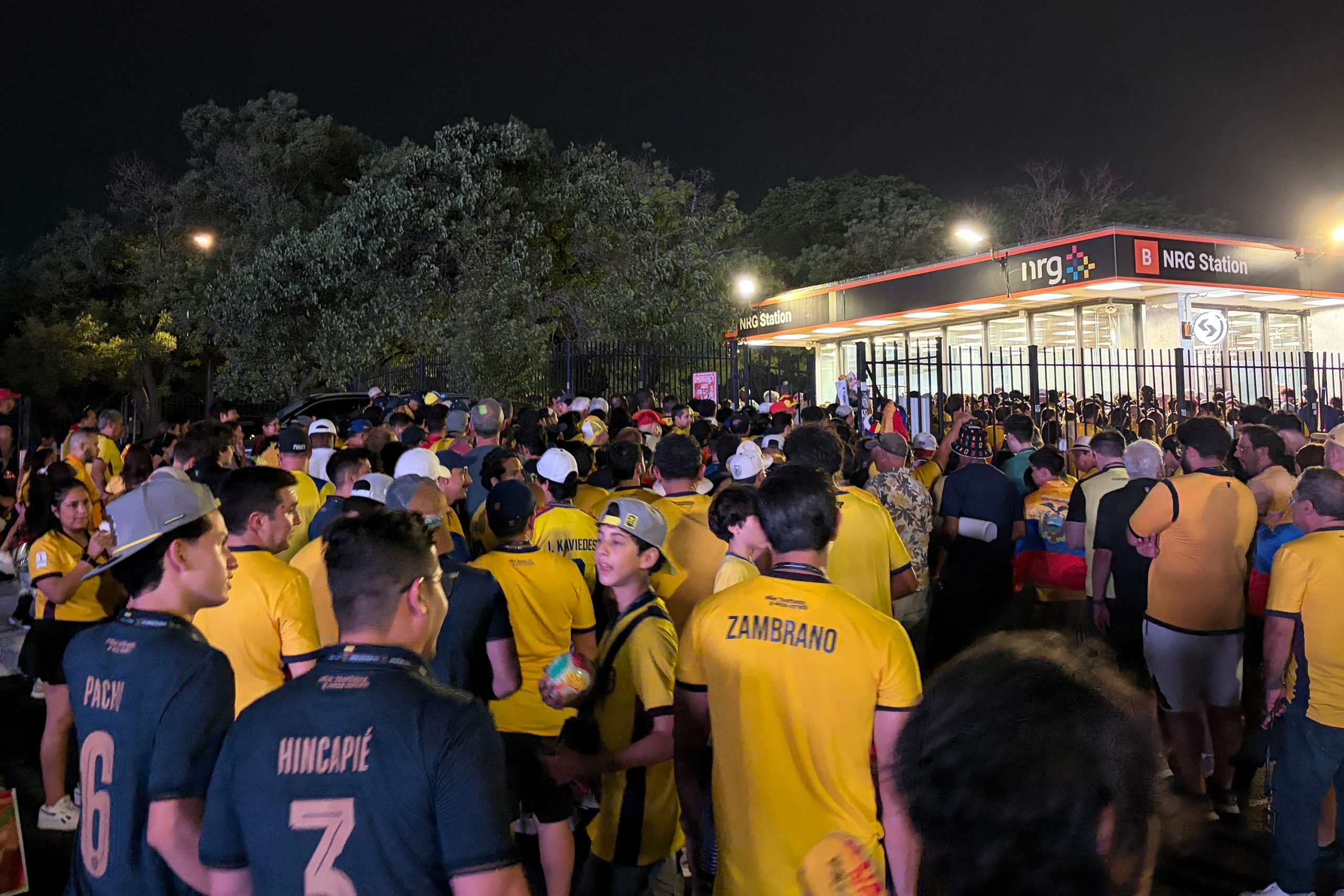
    Fans wait outside SEPTA’s NRG Station near the stadium following Ivory Coast’s victory over Ecuador Sunday night.Michelle Myers

    Fan festivities

    Meanwhile, watch parties were underway from Spring Garden to South Streets.

    Ecuadorian singer Johann Vera commanded center stage at FIFA Fan Festival, roaring “¿Listos?”— “Ready?” — to a sea of yellow jerseys dotted by Ivory Coast orange.

    “I thought there were more Ivorians in Philadelphia but I guess not,” said Swann Nemin, a Temple University student from Ivory Coast, visiting Fan Festival with her two Ivorian friends, Ornella Kouame and Naïke M. Their friend, Phoebe Mattes, who they joke is “Ivorian by preference,” joined too.
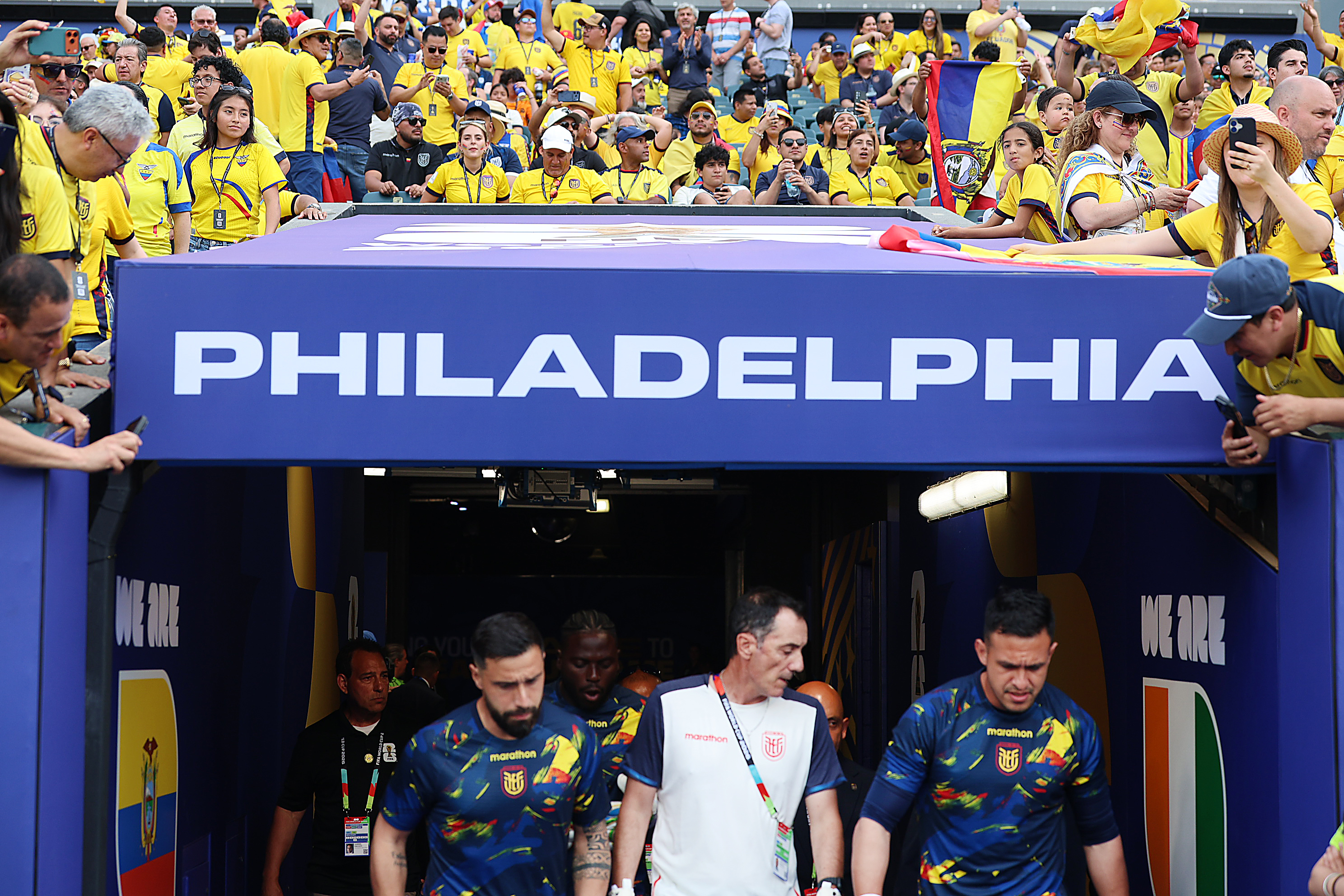
    Ecuador takes the field for warm-ups before facing Ivory Coast in the World Cup Group E soccer match in Philadelphia on Sunday, June 14, 2026.David Maialetti / Staff Photographer

    The World Cup brought the friends together who were looking forward to dancing and celebrating with people from all over the world.

    “I feel like it’s not only people from Ecuador but also people from South America that are cheering for Ecuador, in the same way that people from all over Africa are repping Côte d’Ivoire,” Nemin said.

    Aleyda Alvarado, a Fishtown resident originally from Mexico, admitted that she isn’t the biggest soccer fan, but the World Cup always gets her and her friends to come out and celebrate.

    “Everyone is here from different countries, but during the World Cup, we’re all just fans,” Alvarado said before kick-off. “That’s how soccer bring people together, and what makes me love it.”

    At the dozens of tables across Brauhaus Schmitz, the German beer hall in South Philly, beer steins were dangerously close to empty. The Caddick family eagerly watched TV screens around the bar and rang cowbells as their team, Ecuador, closed in on the net.
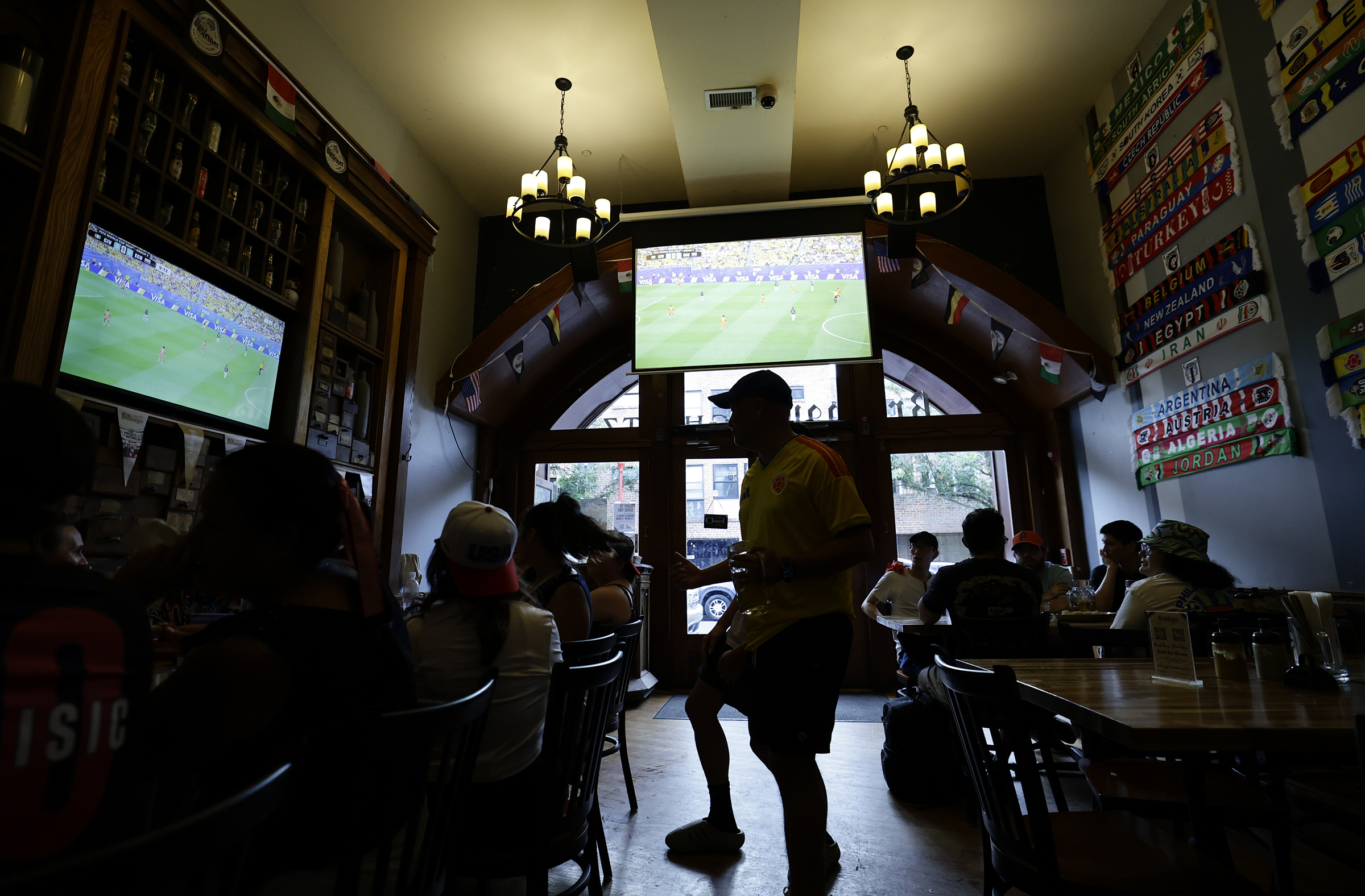
    Soccer fans watch Ecuador take on the Ivory Coast during a World Cup soccer watch party at Brauhaus Schmitz on Sunday, June 14, 2026.Yong Kim / Staff Photographer

    Karina Caddick, 56, of Horsham, was born in Ecuador, just outside Guayaquil, a port city and the country’s largest metropolis. She moved as a baby, but her family made sure to instill in her the importance of and love for soccer.

    To watch her native country’s team compete on her home country’s soil is quite special, she said.

    “It’s unbelievable that we’re able to watch [the game] here,” Caddick said. “To be in Philadelphia and see all the yellow shirts, it’s incredible.”

    But not everyone gets the hype. Outside Brauhaus, a man was overheard asking, “Why does everyone like soccer so much?” For those with connections to one of the participating countries, the answer is obvious.

    “Soccer is everything to Ecuador,” Caddick said. “It is the main sport. It’s their spirit. It’s what calls them.”
  • FIFA Fan Festival will be a once-in-a-lifetime moment, at the expense of neighbors, local groups say

    FIFA Fan Festival will be a once-in-a-lifetime moment, at the expense of neighbors, local groups say

    Only a few days into the World Cup, residents of Brewerytown and Fairmount, trapped inside the blast zone of the fan festival in their backyards, are seeing their fears realized.

    Drivers are clogging up roads, rerouting, and sometimes speeding through neighborhood side streets due to road closures. Uber and Lyft services are offline for residents directly next to the festival during operating hours. Many residents are forced to navigate parking nightmares, turning everyday life into an exhausting headache.

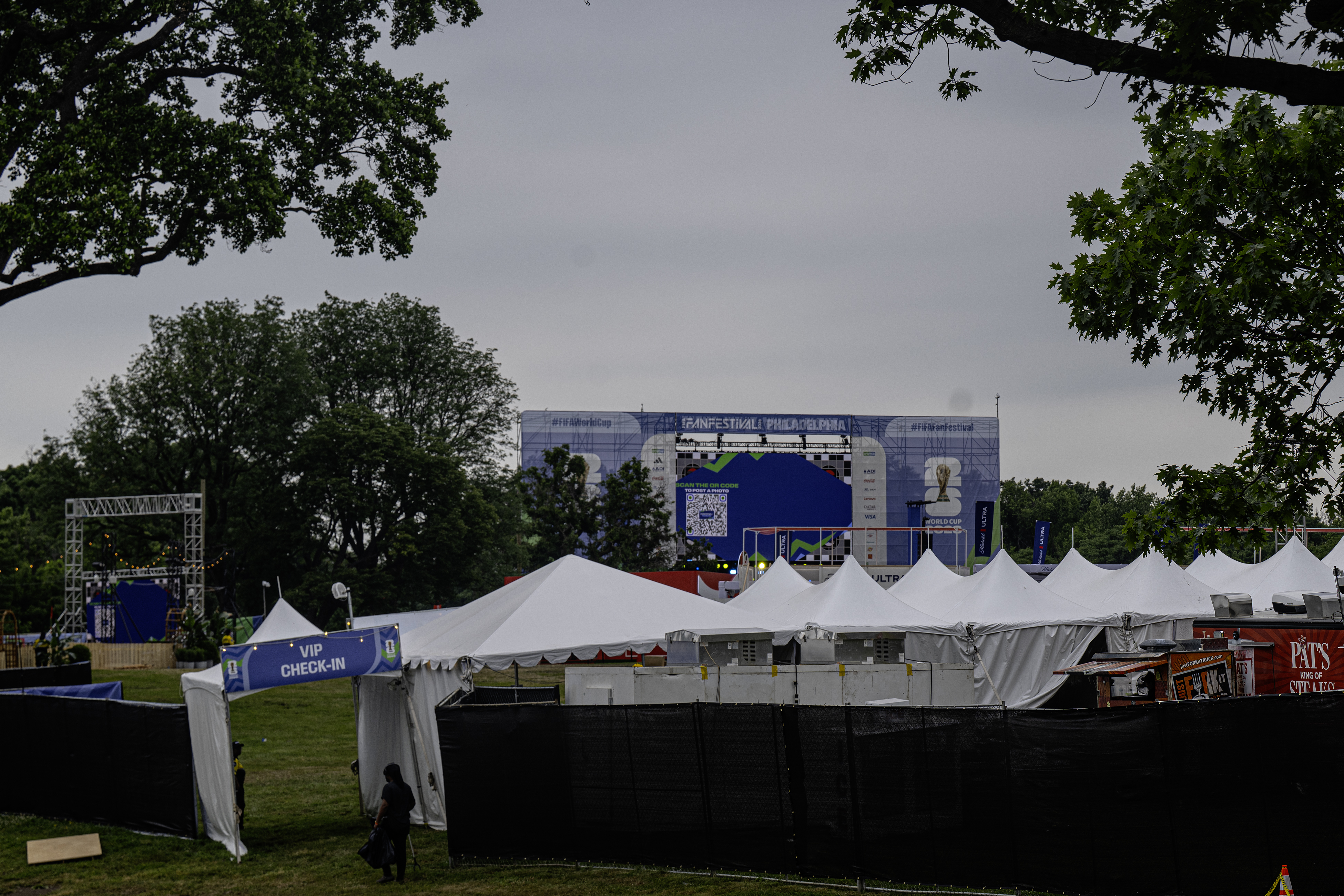
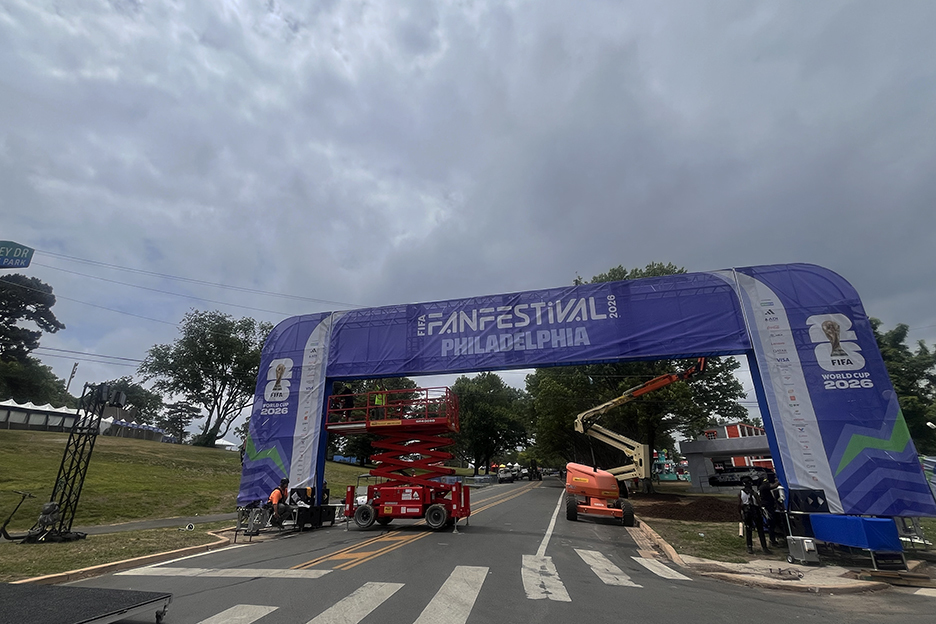
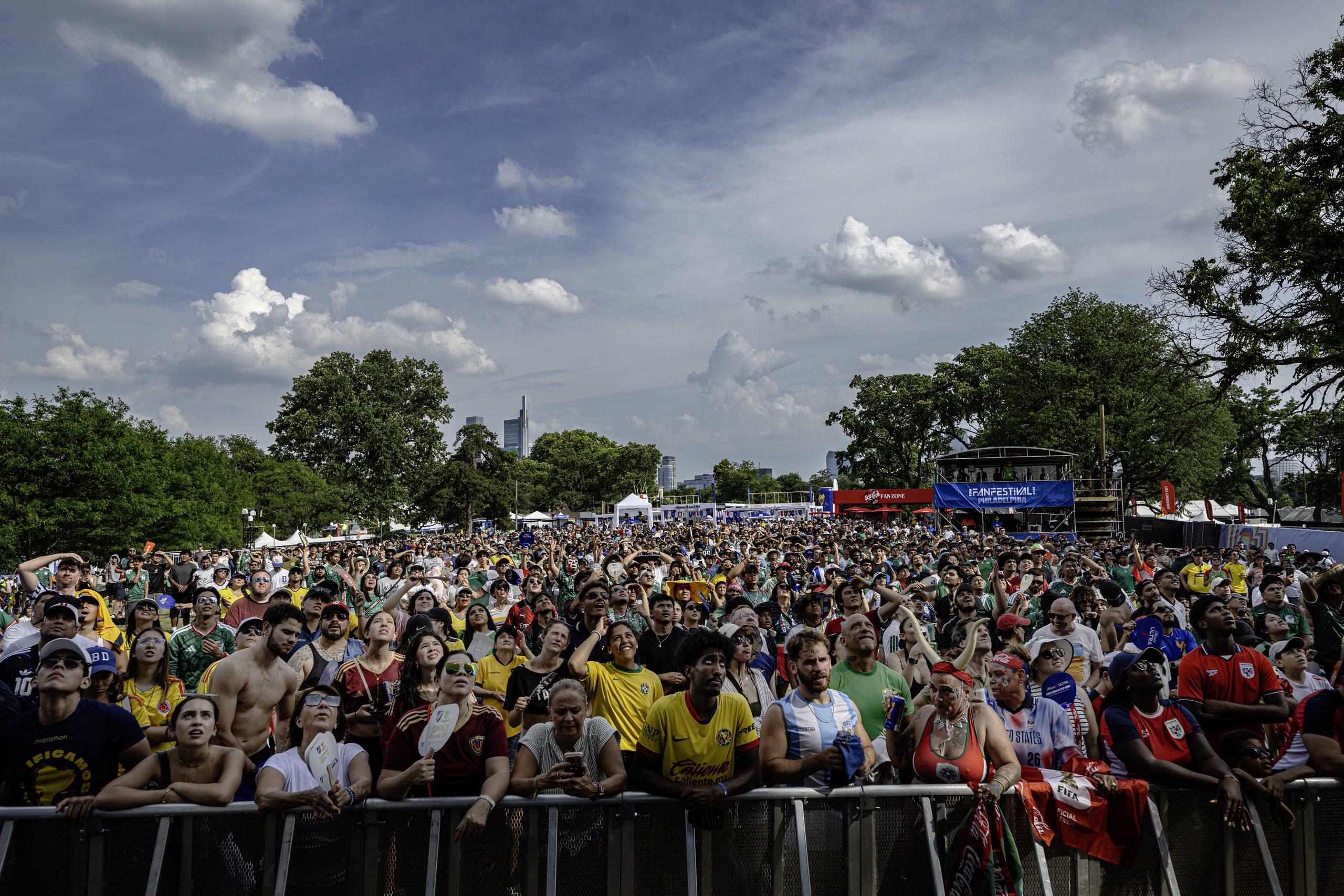
    It’s all for the sake of the FIFA Fan Festival, a 39-day, million-square-foot party taking over Lemon Hill and inviting 15,000 daily visitors to its picturesque fields. While city officials and event organizers roll out the red carpet and spend millions on World Cup fans, residents who for years have been pleading for Lemon Hill improvements say the festival will use their neighborhood and park at their expense.

    “The sentiment right now is just the complete disrespect for the residents and that this is all being done for tourists,” said Nissa Eisenberg, Fairmount resident and co-organizer of the Lemon Hill Neighbors Association, the organization disseminating festival information and communicating with the city. “Everybody’s feeling pretty resentful, maybe cautiously optimistic, but also just not feeling respected as residents.”

    Soccer fans gather to watch Mexico play South Africa on a giant screen during the opening day of the FIFA Fan Festival at Lemon Hill on Thursday, June 11, 2026, in Philadelphia.Jose F. Moreno / Staff Photographer

    The FIFA Fan Festival opened its gates to thousands of fans Thursday as not only the cheapest way to experience the revelry of a World Cup game (admission is free, though it requires registration), but also the melting pot of Philly’s best food and shopping. It is also the only fan festival across the 11 U.S. host cities that is open daily for the entire 39-day tournament, culminating on July 19.

    If these changes weren’t tough to navigate already, city officials gave residents a little more than three weeks to prepare.

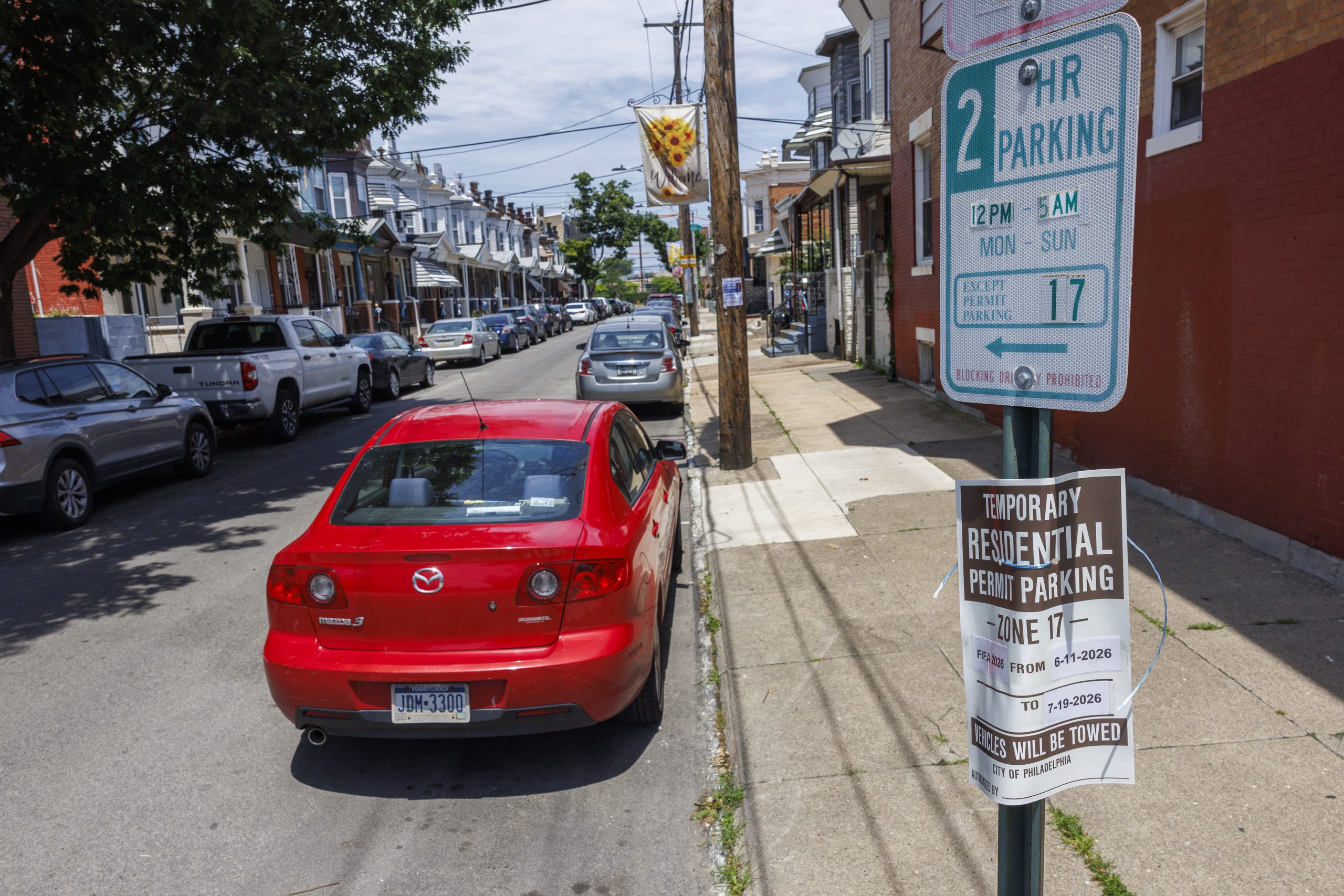
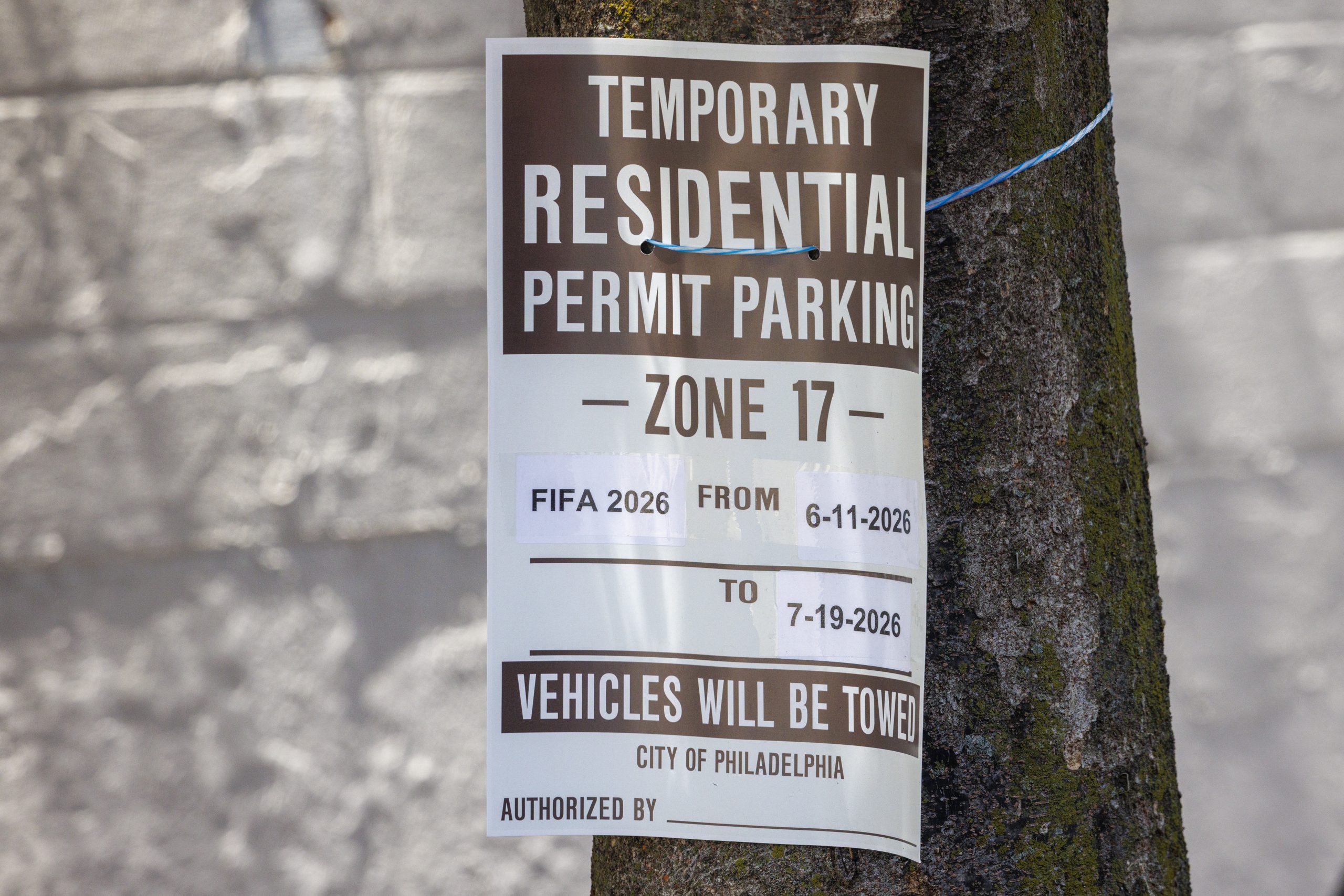
    Temporary Residential Permit Parking sign on pole along N. 30th Street and Oxford Street, Thursday, June 11, 2026. Philadelphia Parking Authority is in the area ticketing and enforcing during FIFA Fan Festival at Lemon Hill.Alejandro A. Alvarez / Staff Photographer

    “We’ve been talking with them for two years to engage neighbors with a plan, and they waited to communicate their plan until after people made their summer plans, after parents made driving schedules for their kids’ summer camps every week, and after people planned daily commutes,” Eisenberg said.

    Charlotte Burns, a Fairmount resident and veterinarian, fears for other residents who work in hospitals and are often on call for medical emergencies. “For months we’ve known this was going to happen, but there has been nothing from the city,” Burns said, referring to the fact that door-knocking, flyers, and posters did not begin in earnest until weeks before the tournament.

    (function() { var l = function() { new pym.Parent( ‘fifaroads2__graphic’, ‘https://media.inquirer.com/storage/inquirer/ai2html/fifaroads2/index.html’); }; if(typeof(pym) === ‘undefined’) { var h = document.getElementsByTagName(‘head’)[0], s = document.createElement(‘script’); s.type = ‘text/javascript’; s.src = ‘https://pym.nprapps.org/pym.v1.min.js’; s.onload = l; h.appendChild(s); } else { l(); } })();

    On May 18, the city unveiled its plan for how it would manage the festival for residents. Officials informed neighbors that thousands of them would need to swiftly apply for parking permits to allow them to park near their homes for two months, something many residents are still unclear on, said Shaun Cerborino of Lemon Hill Neighbors.

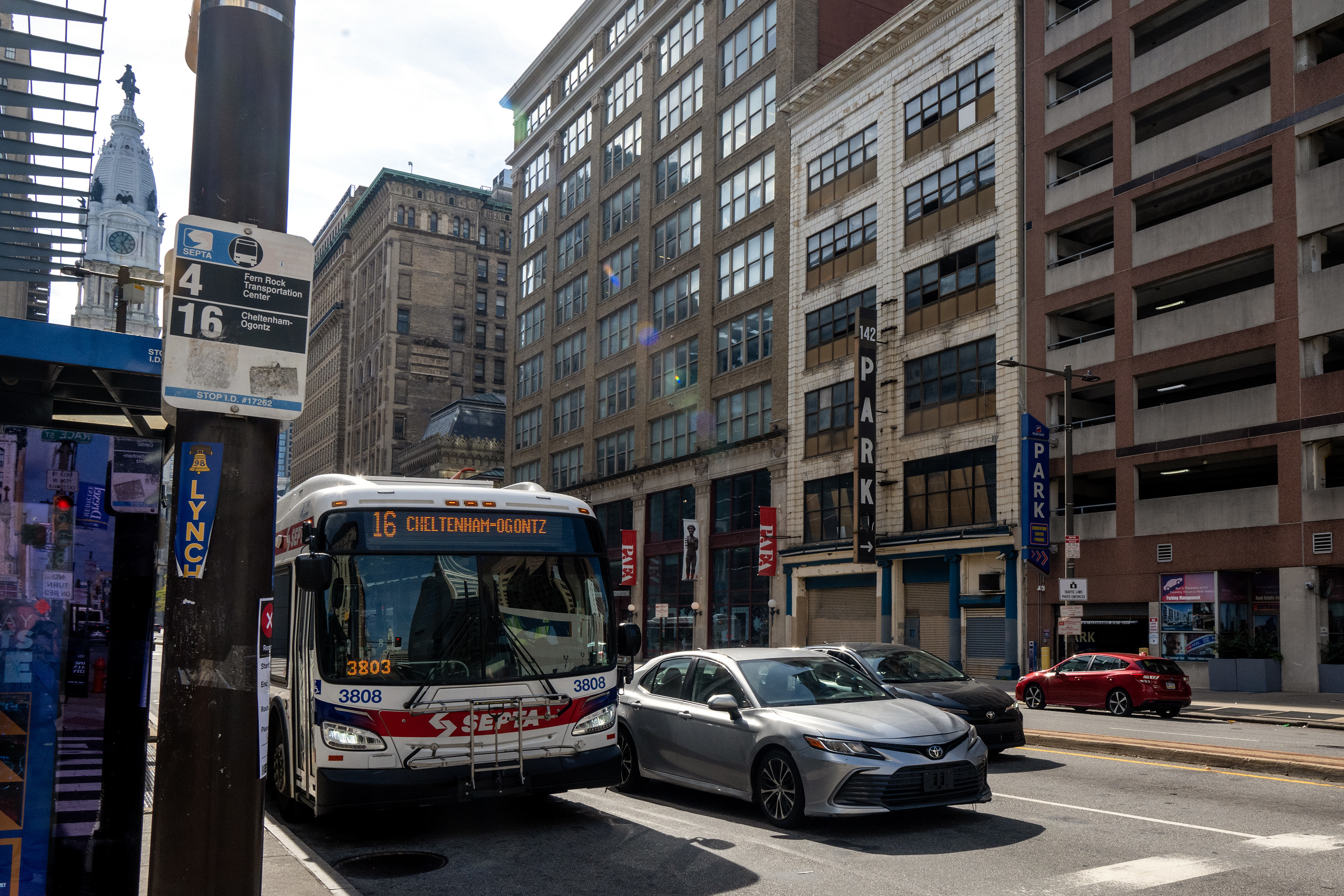
    Additionally, no rideshare services like Lyft and Uber will work at Lemon Hill and around six blocks of the surrounding residential areas during festival operating hours, sometimes spanning all day, in a practice called geofencing. Those without cars will have to walk blocks from their home to hail a ride, or use SEPTA, which is still operating in the neighborhood.

    City officials told residents last month that rideshare services will not be disabled for riders who require a wheelchair-accessible vehicle (WAV). However, after The Inquirer asked for clarification on how this exemption works in practice, the Philadelphia Office of Transportation and Infrastructure Systems (OTIS) found that a miscommunication between rideshare services occurred.

    The city was supposed to designate where WAVs can operate within the geofence, while the city was under the impression that rideshare services handled it.

    Philadelphia Parking Authority, Zone 17, a temporary no park zone except for residents with special permit during FIFA Fan Festival at Lemon Hill, Thursday, June 11, 2026.Alejandro A. Alvarez / Staff Photographer

    “Now that we have that clarity, we’re going to evaluate some changes to the perimeter that is enclosed in the geofence area. We’ll try to act as quickly as we can to adjust the geofence,” said OTIS Deputy Managing Director Mike Carroll.

    City officials said they could not specify what these geofence adjustments will look like until they have finished talks with Uber and Lyft. But what was initially promised, that WAVs will pick up and drop off disabled riders at their homes, might not be possible. Instead, there is a chance WAV-only drop-off zones will be created in that geofenced area.

    “That challenge is too difficult for us to work through for any resident who needs it,” Carroll said. “It’s too bad that there’s not a more general way to have these vehicles come in, but we can’t really haggle with [rideshare services] at this point. We’ll just try to make it work as best we can.”

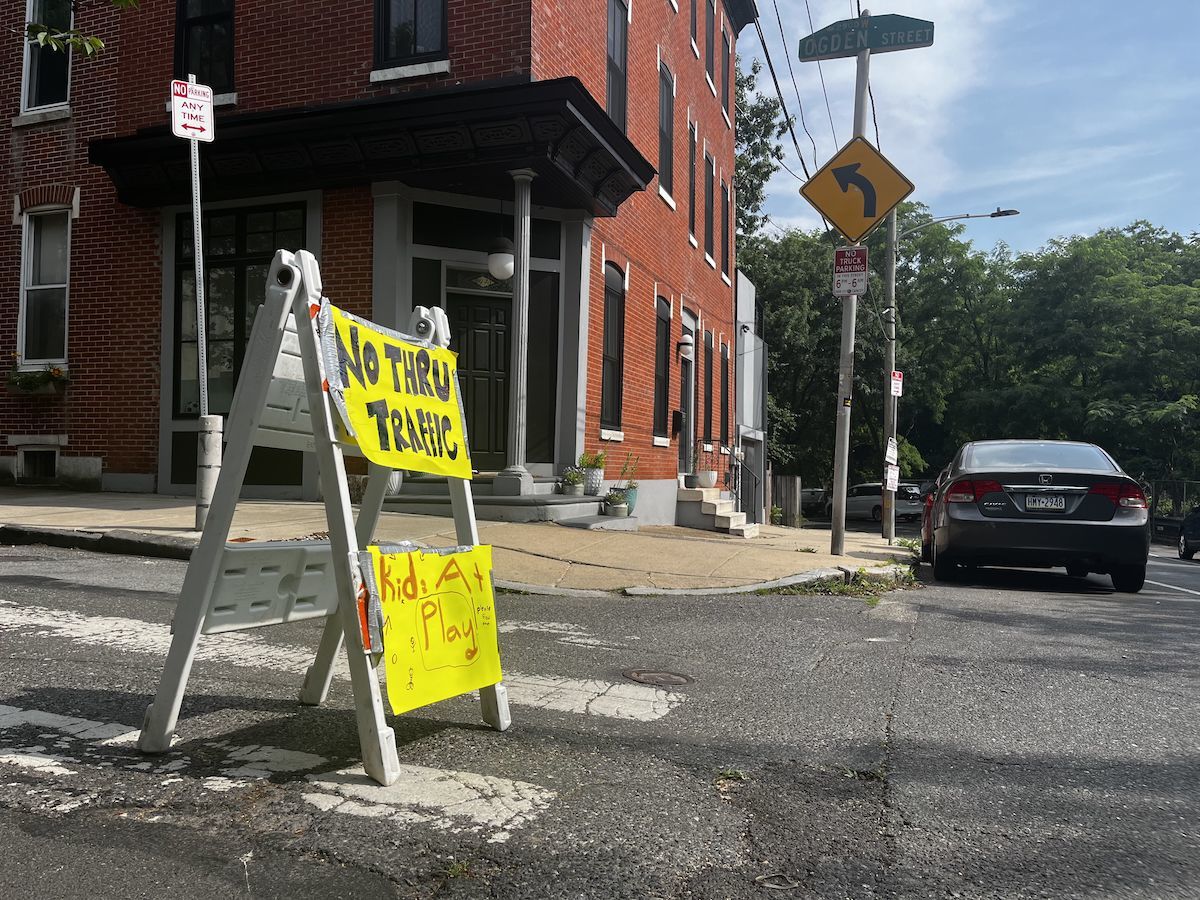
    A makeshift sign created by local neighbors, pictured on Wednesday, June 10, 2026, advises drivers not to use side streets for through traffic on Ogden Street, a narrow residential side street one block from the festival, which drivers have been racing down to avoid road closures and traffic.Henry Savage / Staff

    The work to calm neighborhood traffic

    Dustin Dove, president of the Fairmount Civic Association, points to the 2900 block of Ogden Street, a mere block from the festival, as a microcosm of the neighborhood’s concerns.

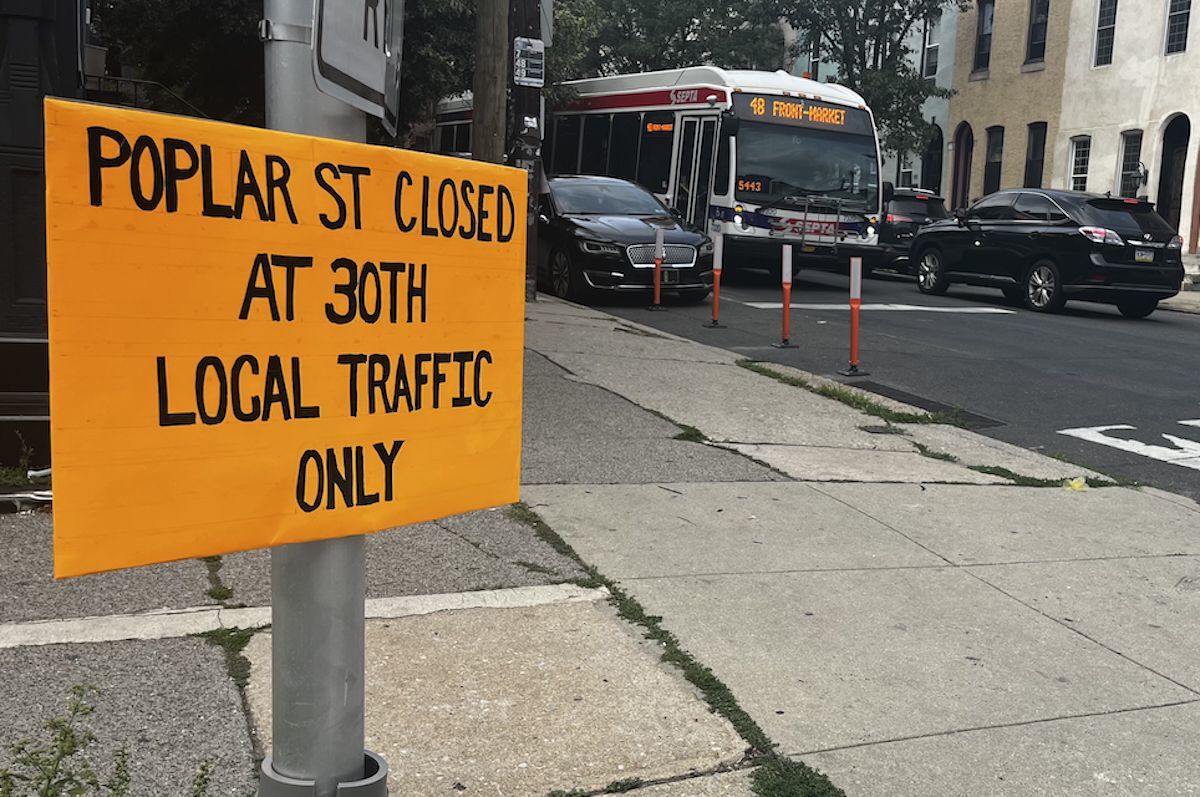
    Due to road closures on 30th and Poplar Streets, agitated drivers, stuck in traffic, are choosing to speed down narrow one-way Ogden Street to get around lines of cars, residents said. Neighbors have seen at least two incidents where a car rocketed down the street while young children were playing.

    Dove said residents have called every relevant city department and elected official who represents the area, including Councilmember Jeffery Young, requesting additional signage and traffic-control measures at 29th Street to dissuade drivers from using side streets.

    “We’re going to be welcoming a lot more people than usual, and we need Council members to come and look at this situation,” Dove said. “There are issues that need some sort of leadership at the top to get them fixed.”

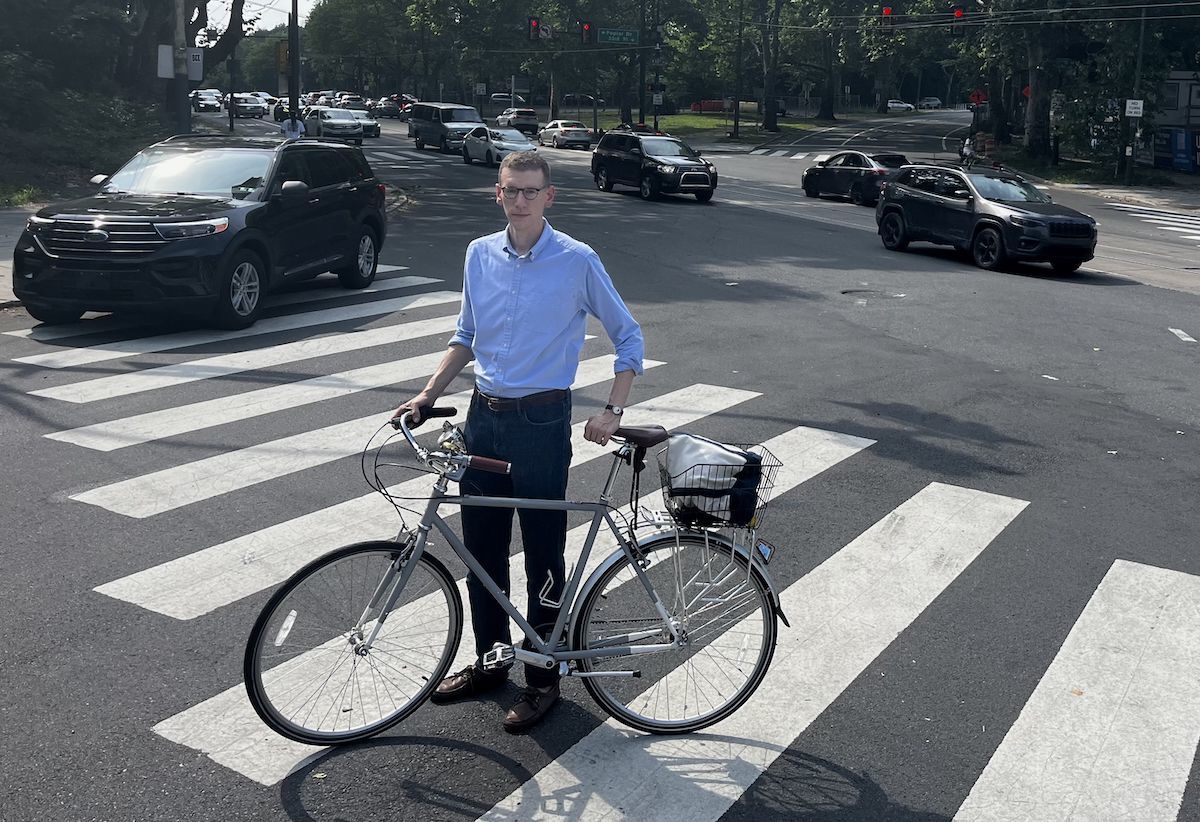
    Dustin Dove, a Fairmount resident and president of the Fairmount Civic Association, poses for a photo near one of the busiest intersections near the FIFA Fan Festival in Lemon Hill, at Girard Avenue and Poplar Drive, on Wednesday, June 10, 2026. The FIFA Fan Festival is forcing the local neighborhood to navigate parking restrictions, road closures, and the sacrifice of their summer green space in exchange for the once-in-a-generation World Cup in their backyards.Henry Savage / Staff

    Young said he and his office have heard from residents who are “understandably frustrated” by traffic being redirected onto neighborhood streets and confusing or insufficient signage.

    “When these concerns were brought to our attention, we immediately notified the appropriate city departments and event organizers and have already seen some additional signage and traffic-control measures put in place. However, more work remains to be done,” Young said.

    A city spokesperson said police officers will be stationed at 30th and Poplar Streets throughout the duration of the festival and will make adjustments as needed. The city also committed to installing additional signage where appropriate, the spokesperson said.

    Still, as the first day of the World Cup rolled around, neighbors near Ogden Street reported heavy traffic on side streets, Fairmount resident Nicole Ross said, with many residents saying they received parking tickets despite having registered temporary permits. Ross said the Philadelphia Parking Authority later told residents who were ticketed that it was a system error and would be resolved.

    Crew members make final preparations, including work on a 60-foot-wide screen, for a FIFA Fan Fest at Lemon Hill in Philadelphia on Tuesday, June 10, 2026.Jose F. Moreno / Staff Photographer

    The legacy of Lemon Hill Park

    Besides the short-term, everyday nuisances of the FIFA Fan Festival, there are deeper-rooted issues about care and longevity of the park. Park stewards, like Cerborino and Eisenberg, are volunteer workers who care for and maintain much of Lemon Hill.

    Across the city’s parks, stewards understand that Philadelphia Parks and Recreation is unable to perform some needed upgrades due to staffing and budgetary constraints. That’s where stewards spend their free time and money to try to keep the city’s nationally ranked parks in an idyllic state. But that often comes with yearslong discussions about proper park funding and upgrades, as recently reported by The Inquirer, where stewards are again pleading with City Council for more funding as they are tired of operating off “love and duct tape.”

    When pitching the festival to the city and residents, Philadelphia Soccer 2026 said it would be leaving lasting legacy improvements to the park in exchange for residents giving up their summer green space.

    “We will see this through during organizational wind-down following the tournament,” a festival spokesperson said.

    Crew members make final preparations, including work on a 60-foot-wide screen, for a FIFA Fan Fest at Lemon Hill in Philadelphia on Tuesday, June 10, 2026.Jose F. Moreno / Staff Photographer

    Philadelphia Soccer 2026 is committing $4 million to install a new ADA-accessible sidewalk path, a new playground, and new lighting, as well as to rebuild the picnic pavilion, organizers said. Residents have begged the city for some of these improvements for years, Cerborino and Eisenberg said.

    “Residents deserve a clear understanding of what lasting benefits will remain after the crowds leave. I will continue advocating for transparency, accountability, and a concrete plan for legacy investments that benefit the Lemon Hill area and the city as a whole,” Young said.

    The city said it will work alongside Philadelphia Soccer 2026 to see these legacy commitments come to fruition, as well as have Philadelphia Parks and Recreation staff monitor the grasslands and trees to address any issues that appear during the festival, a spokesperson said.

    While stewards understand that park upkeep is not at the forefront of city budgetary concerns, it does hurt when it seems improvements to Lemon Hill Park will come only after an international or major sponsored event takes place there, Cerborino said.

    “Especially when the parks are primarily supported by public dollars, it doesn’t feel right for FIFA or Live Nation, or whatever company, to come in, have their way with our parks, make all the money on it — and the taxpayers foot part of that bill and get very little out of it,” Cerborino said. “The tradeoff is FIFA makes a few billion dollars, and we got a sidewalk.”

  • A 100-unit apartment building with a rooftop pool is the latest new development slated for North Broad

    A 100-unit apartment building with a rooftop pool is the latest new development slated for North Broad

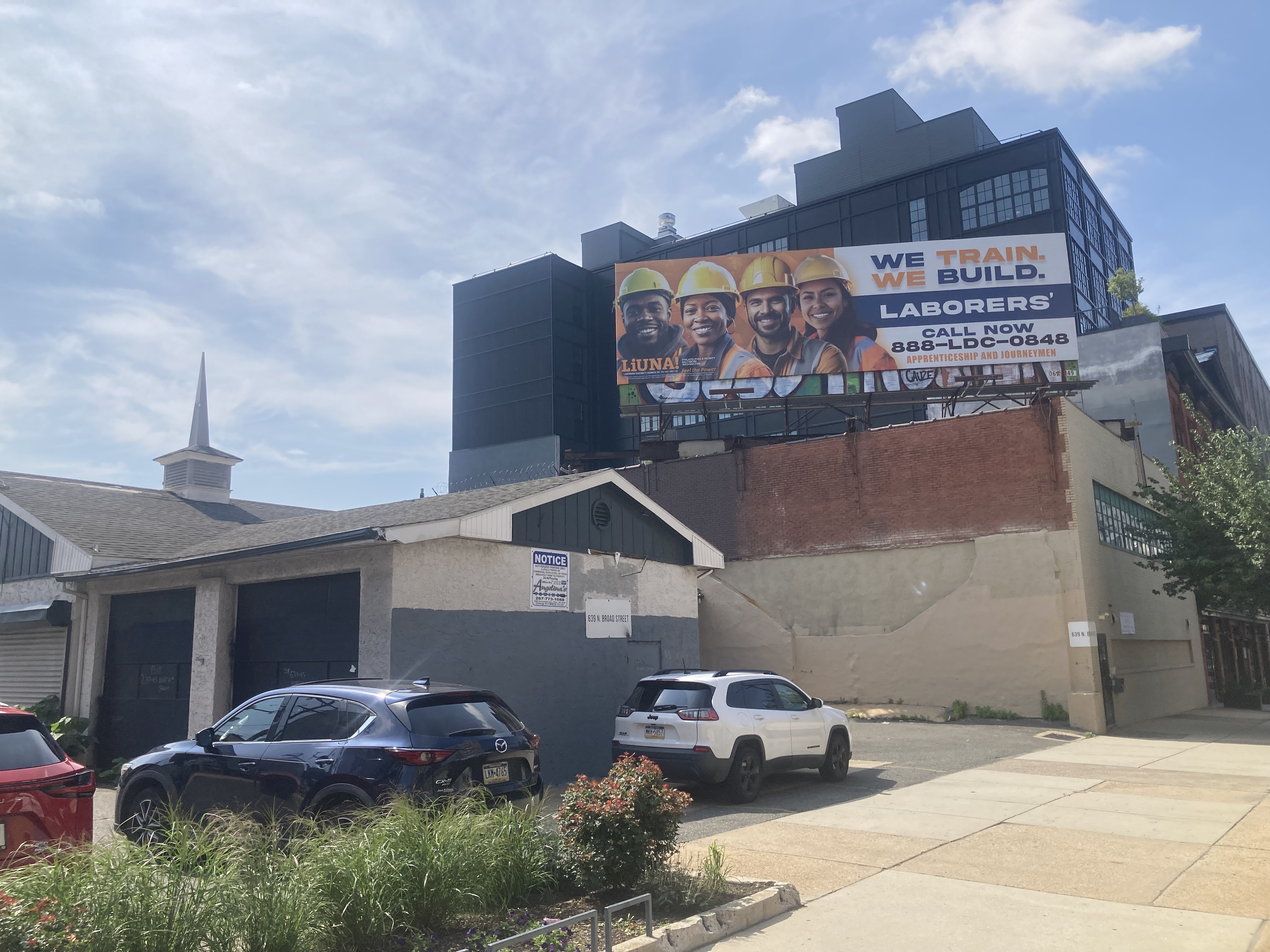
    A Long Island-based developer is planning a six-story, 100-unit apartment building — with a rooftop pool — at 639-53 N. Broad St.

    The property is owned by the Bill Wolf Petroleum Corp., which has expanded into retail and residential properties from its original focus on gas stations and other fuel-related real estate.

    The company has already redeveloped smaller buildings in Philadelphia at Fifth and South Streets and 12th and Walnut.

    The company acquired the Broad Street property in late 2021 for $6.9 million, according to city records. This week, Bill Wolf Petroleum obtained demolition permits for the existing auto-oriented and light industrial structures on the lot.

    The architect for the project is Stuart Rosenberg of SgRA Architects, who has worked with Bill Wolf Petroleum on its other Center City buildings.

    “They are looking for dense, urban, Center City development opportunities. They did not want to be on the outskirts like Northern Liberties or Port Richmond,” Rosenberg said. “They like Philadelphia. At the end of the day, you can build stuff here, so that’s why they’re investing in Philadelphia.”

    Documents posted on the Department of Licenses and Inspections website show a 72-foot-tall project, which includes the potential for over 4,500 square feet of bi-level commercial space fronting on North Broad Street.

    A parking garage is planned in the rear of the property with space for 33 vehicles as well as bike parking. It also sits directly above SEPTA’s Broad Street Line Fairmount Station.

    The property has some of the most flexible zoning in Philadelphia, allowing Bill Wolf Petroleum to move forward easily.

    The unit mixture will mostly be one- and two-bedrooms, with a few studio apartments. On the top floor will be between eight and 12 bi-level apartments.

    For the exterior, Rosenberg is planning designs in keeping with the surroundings on North Broad Street.

    “It’s going to be a classic, industrial type of vibe,” Rosenberg said. “It’s the aesthetic you’d see in a lot of New York or Philadelphia.”

    The acclaimed interior design firm Stokes Architecture & Design, which has worked on properties such as Parc and La Colombe’s Fishtown flagship, is being retained as well.

    The entrance to both the front lobby and garage will be on Wallace Street on the north side of the site. Retail will front on North Broad Street. In addition to the roof deck with a pool, there will be private balconies for the bi-level units on the top floor and a U-shaped courtyard on the second floor featuring additional outdoor space.

    Bill Wolf Petroleum’s project is just the latest in a burst of apartment developments proposed on North Broad Street.

    In the last eight months, 1,221 units have been permitted between City Hall and the southern border of Temple University’s campus. Much of the activity is clustered around the former Hahnemann University Hospital.

    “This part of the city [North Broad Street] is just really dynamic right now,” Rosenberg said.

    Some of the projects, however, are unlikely to break ground any time soon. Property owners like Brandywine Realty Trust obtained zoning permits after Councilmember Jeffery Young proposed a housing ban around the former Hahnemann campus.

    142-44 N. Broad St. is another property slated for apartment development. Tom Gralish / Staff Photographer

    Although that bill was put on hold in the face of opposition from most stakeholders in the area — no one outside Young’s office ever publicly spoke in favor of it — the legislation prompted a rush to secure 824 apartment permits before it was shelved.

    Bill Wolf Petroleum’s project, which is outside Young’s proposed ban area, stands out because it is one of the only efforts that would not involve redeveloping an existing medical, industrial, or office building for residential use.

    The current interest in the North Broad Street corridor comes after an earlier boom, which saw developers like Alterra Property Group, Eric Blumenfeld, and Bart Blatstein scooping up struggling properties and vacant lots after the Great Recession.

    Some of those projects came to fruition, such as Alterra’s 410-unit Tower Place at Broad and Spring Garden Streets. Others had a more circuitous fate.

    North Broad organizations are watching the new developments with wary optimism.

    “I’ve learned to not get excited until there are shovels in the ground,” said Shalimar Thomas, executive director at North Broad Renaissance.

    But “it’s the main thoroughfare; it’s a great transportation hub, easy walkable,” Thomas said. “The potential and the bones and the structure are there. Maybe now more developers are starting to see that.”

  • Parlez-vous ‘L’? Hablas Filadelfia? SEPTA transit ambassadors have your back.

    Parlez-vous ‘L’? Hablas Filadelfia? SEPTA transit ambassadors have your back.

    OK, this scenario looked easy. Maybe I have what it takes.

    A passenger approaches you during your shift asking for directions to get to Northern Liberties from NRG station.

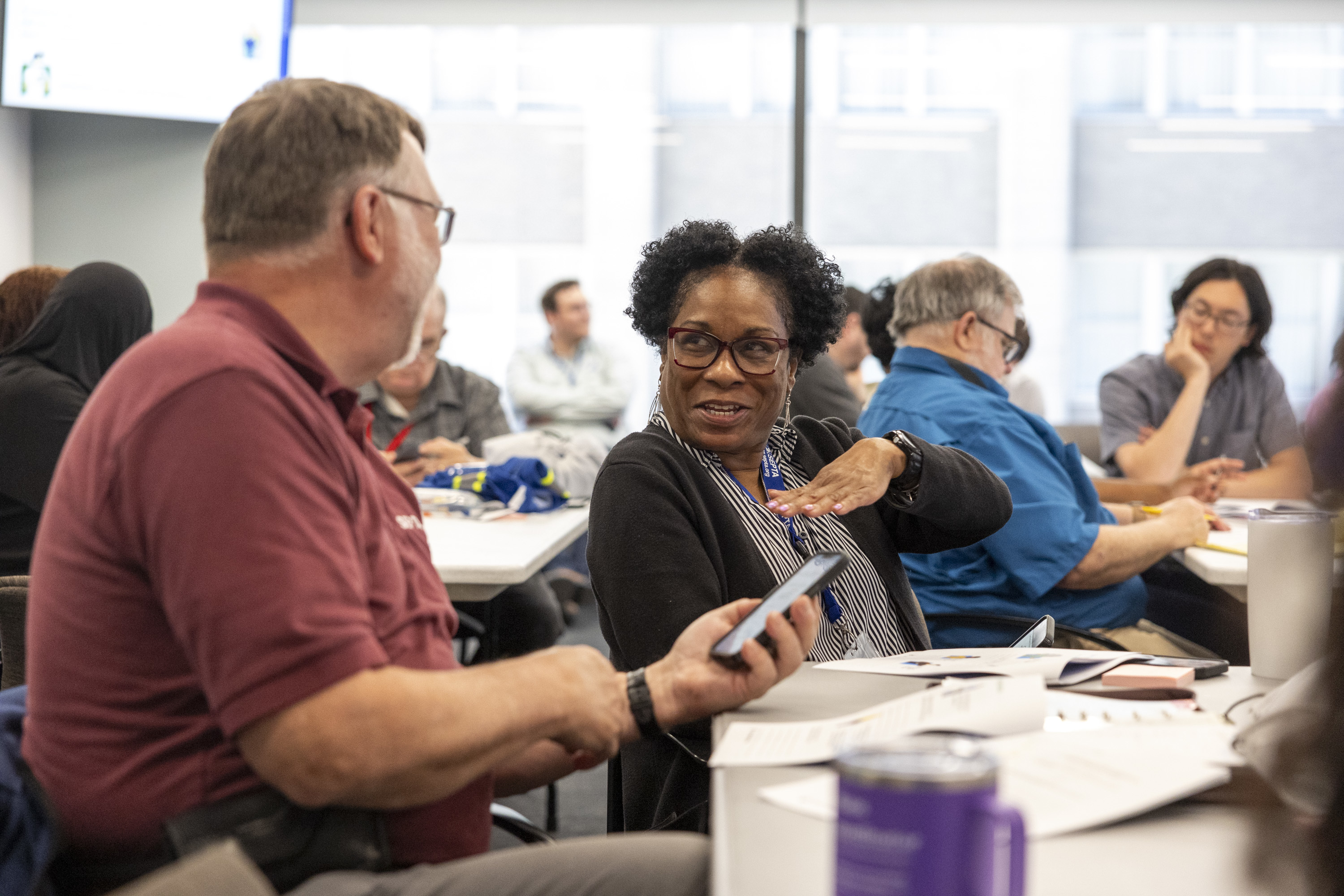
    I took the training class last week for SEPTA ambassadors alongside about 35 transit agency employees who had volunteered to help travelers find their way in a strange city during the World Cup.

    My tablemates asked what I would tell the person.

    Take the B (Broad Street) Line to 15th Street/City Hall, transfer to the eastbound L, and disembark at Spring Garden Station, on the southern edge of the neighborhood.

    Correct, to a point.

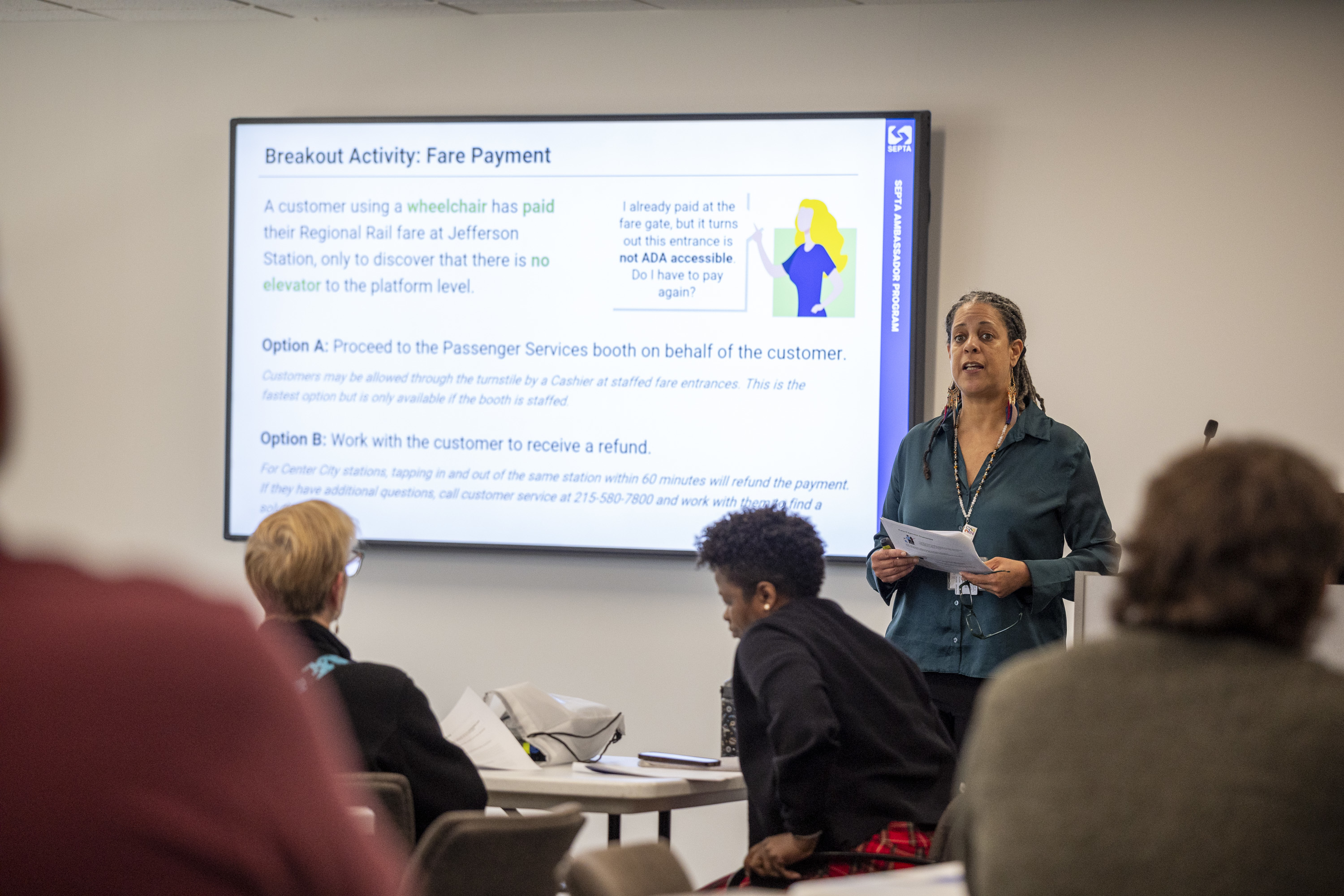
    “I didn’t say where I need to get to in Northern Liberties, right?” said Jena Burley, the SEPTA training facilitator teaching the class.

    Ack! Maybe the passenger would be better off taking the L for one more stop to Front-Girard, depending on the precise destination.

    “Ask for as much specific information as possible,” Burley said.

    SEPTA supervisors, administrators, and managers have been assigned 1,300 shifts as ambassadors in critical transit and Regional Rail stations from June 13 through July 19.

    Jena Burley leads the SEPTA ambassador class.Tyger Williams / Staff Photographer

    During that stretch Philadelphia will host six World Cup matches, the FIFA Fan Festival, the height of the nation’s 250th birthday bash, and Major League Baseball’s All-Star Week.

    Four to 12 ambassadors will provide information, directions, and, ideally, a friendly welcome in each designated station — along with crowd control, and de-escalation techniques for conflict.

    It’s a lot, which is why up to 1,000 employees have spent half a day in training with a detailed curriculum that feels like cramming for finals.

    I worked with them through scenarios of escalating severity to simulate situations they will encounter: sweaty, frustrated crowds on platforms; medical emergencies; confusion over SEPTA’s fares and methods of payment; and how to troubleshoot travel glitches. And scarier stuff.

    “This summer is an opportunity for SEPTA to shine, and you are such a big part of that,” said Lex Powers, chief officer for customer experience.

    The Disney approach

    This summer SEPTA is also debuting a new customer-service philosophy that subordinates other priorities to creating a safe and positive experience for people using the system.

    The approach is inspired by Disney’s iconic “four keys” of customer service, admired by general manager Scott A. Sauer, a Disney fan.

    The transit agency has used ambassadors since 2000 to help customers during special events like the Eagles Super Bowl parade last year, service changes, and the like. Officials rebooted the training program.

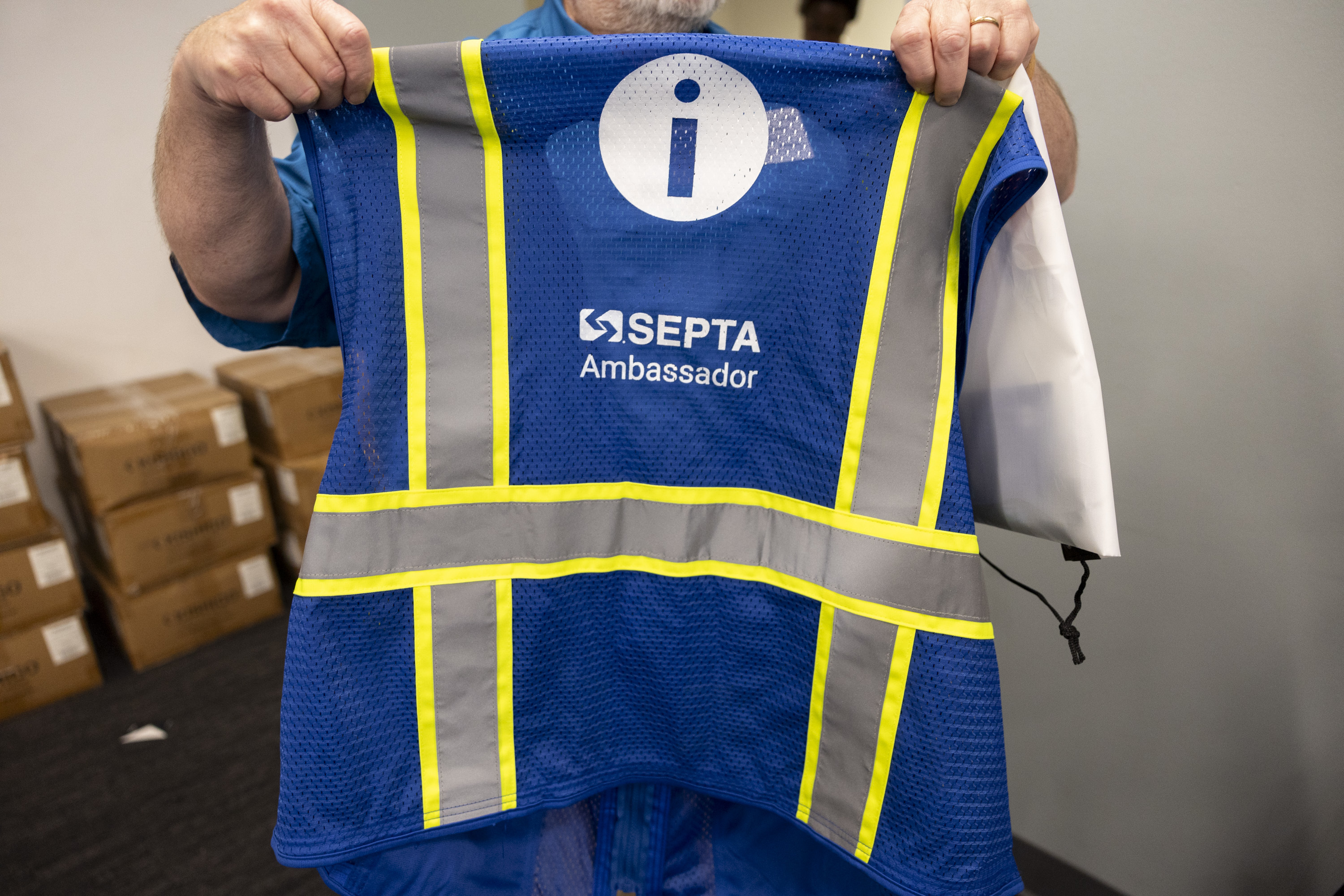
    This summer, ambassadors will carry “cheat sheet” cards and wear blue vests to differentiate them from other workers in typical yellow safety vests.

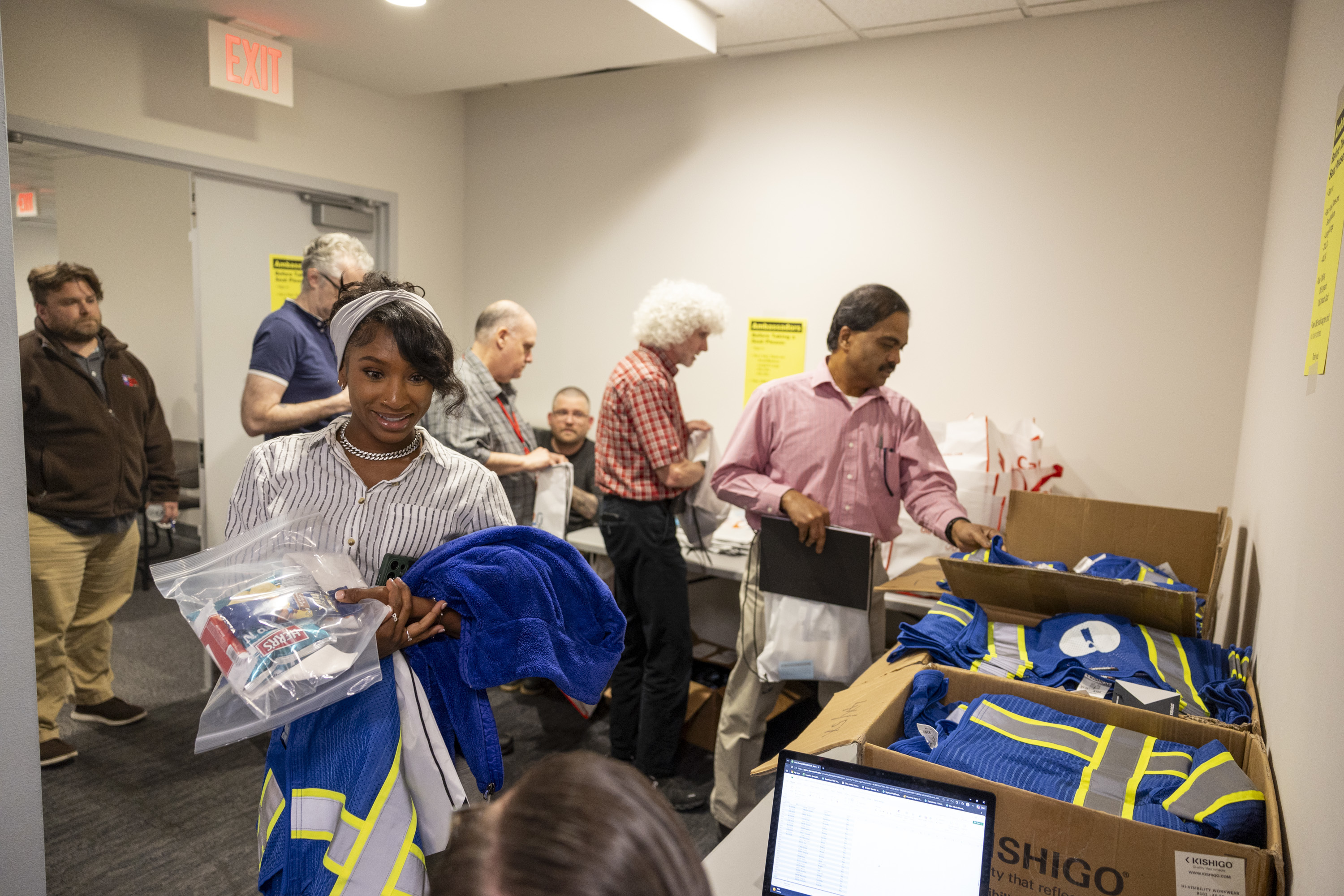
    I got my own blue vest at the start of the class — pretty snazzy — and tried to earn it.

    Brittany Davis, of Northeast Philadelphia, a service planner at SEPTA, gets her vest.Tyger Williams / Staff Photographer

    Cultural correctness

    The recent training included “cultural diplomacy” briefing sheets with guidance on customs and backgrounds of the countries with national teams playing here, prepared by the World Affairs Council of Philadelphia and protocol experts.

    For instance, I learned:

    • Never flash the “OK” hand gesture to a Brazilian. It’s offensive, like flipping the bird.
    • When greeting or handing things to a person from Ivory Coast, use your right hand. It is a social slight to use the left, which is reserved for personal hygiene.
    • In some cultures, such as Ghana, it is customary to exchange pleasantries before getting down to business. People from Curaçao, influenced by Dutch culture, can be more direct and, while friendly, value personal space.

    ‘Bring the temperature down’

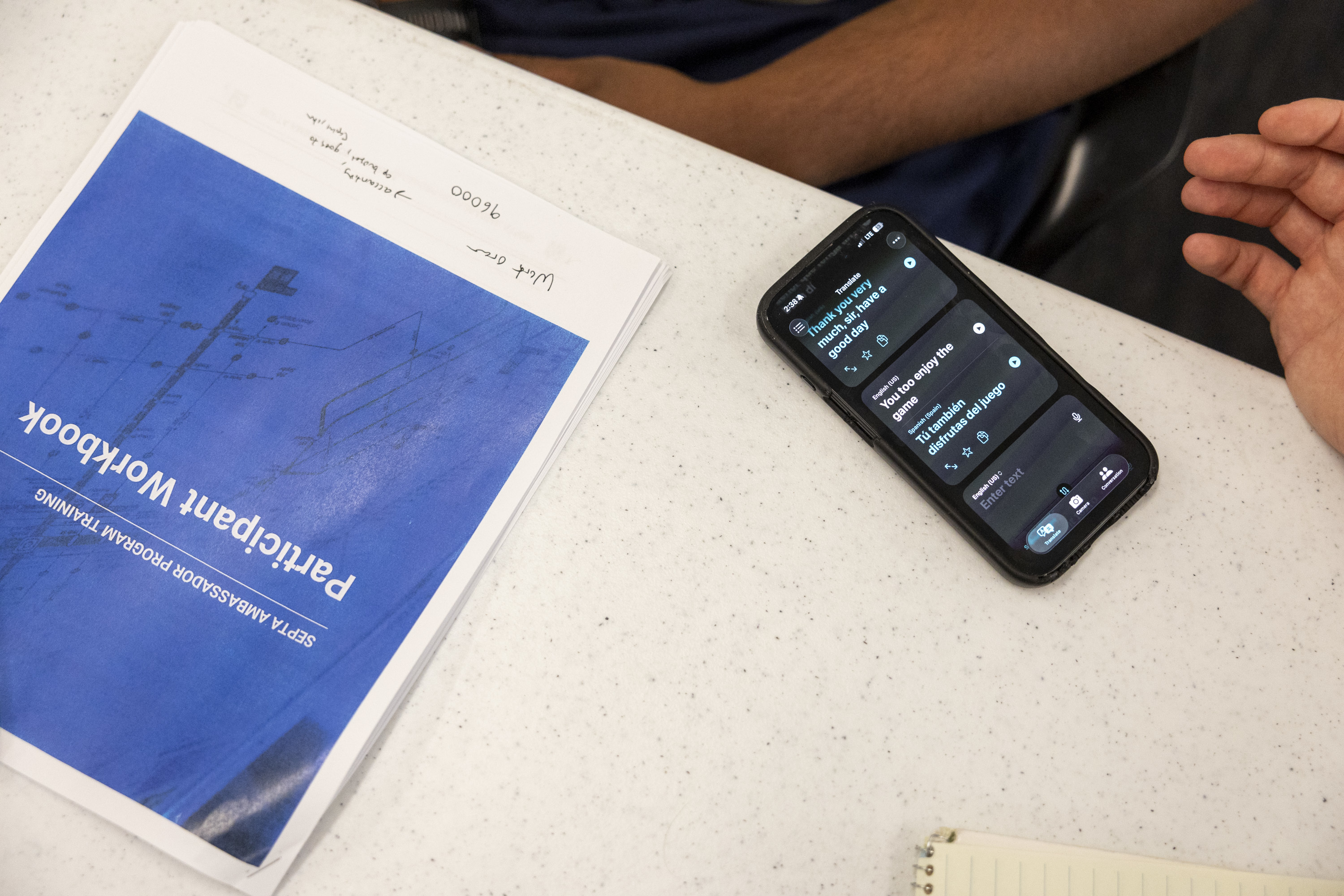
    My fellow trainees and I shared tables in a conference room and huddled to work through often complex scenarios in a 24-page workbook.

    You notice a particularly long line forming at one fare gate and go to investigate. …

    A customer is tapping a credit card over and over, but it doesn’t work. Another customer tries to squeeze past them, increasing tension, and voices in the line start to rise.

    “You want to bring the temperature down,“ said Noah Lee, manager of service-information development, with whom I shared a table. ”Take the person whose card doesn’t work off to the side to figure it out, and let other people go through.“

    Nithin Vejendla, an operation planner, speaks Spanish in the Google Translator app.Tyger Williams / Staff Photographer

    Nithin Vejendla said the bottleneck could be a two-person job and suggested bringing in another ambassador to wave people through the gate.

    “Try empathizing with them,” said Vejendla, a SEPTA operations planner who was at my table. “Like, ‘I know it’s frustrating. I’ve had times where [tapping] doesn’t work. … We’ll get you on the next train.’”

    Meanwhile, fix it. Is the person tapping incorrectly? Maybe the card reader’s bad, so try another turnstile. Consult a cashier.

    The situation worsens.

    A customer that has been held up in the line starts pushing and shoving the people in front of them. They are clearly agitated … [and] verbally threatening people.

    “If they keep escalating, at that point your responsibility shifts to keeping the other passengers safe,” Vejendla said. “Maybe you stay between them and the fare gates, a physical barrier.“

    Lee worked an ambassador shift during the 2025 Super Bowl parade and said he didn’t see anything like that.

    “The atmosphere was joyful, and it was in the morning,” Lee said.

    Vejendla, an operations planner who has worked at SEPTA for almost three years, was an ambassador for the Eagles parade and the Flower Show, and when SEPTA briefly cut and changed bus routes last year.

    Later, trainees downloaded Google Translate to practice.

    Vejendla speaks fluent Spanish and rough French. Powers, his boss, was teasing him about it.

    “Lex was like, and I quote, ‘I can’t believe the system understood you. That French accent was terrible.’”

    When emergencies arise

    Sometimes, the scenarios are more serious. People wind up in the track area, trying to retrieve an item or having fallen off a platform. What do you do?

    “Stop the train. Think about everything else later,” Burley said.

    Heather Jordan, employee relations manager, (right), and Kim Smith, senior project engineer and track engineering with SEPTA, (left), are looking at the SEPTA app to answer questions for an exercise during the SEPTA’s Ambassador class.Tyger Williams / Staff Photographer

    Go to the cashier and get them to push the Emergency Train Stop button, which activates a “stop” signal light. There are red flags in the booth to wave at incoming trains.

    Moving your arm back and forth at chest level is a traditional railroad stop signal. “Or go berserk,” Burley said, waving your arms over your head or flashing a phone flashlight.

    Do not enter the track area, and don’t try to pull a person up. The third rail carries 600 to 750 volts of electricity.

    “You’re there to keep customers safe, but if you’re not safe, you can’t help,” Burley said.

    As class ended and everyone left, I carried a deeper respect for the job of ambassador. I wished my fellow students good luck.

  • SEPTA is expanding daily bus service to the Navy Yard by extending Route 45

    SEPTA is expanding daily bus service to the Navy Yard by extending Route 45

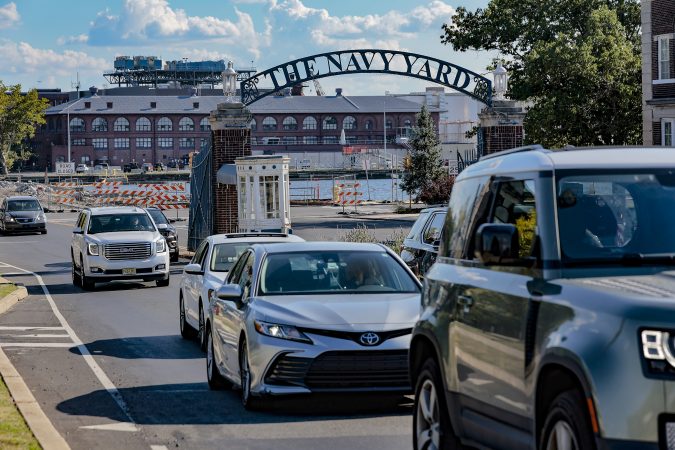
    SEPTA is extending Route 45 to provide direct daily bus service to the Navy Yard for the first time in more than a decade, a move aimed at helping to grow both the development and transit ridership.

    The new service is scheduled to begin in August, with buses operating at about 20-minute intervals, starting at 12th and Noble Streets in North Philadelphia, through Center City, and to stops inside the Navy Yard itself.

    More than 150 employers have facilities in the Navy Yard, with more than 16,000 people working on the campus. There are 614 units of housing and plans for more residential and commercial development.

    “Our goal is to provide as many safe, reliable, efficient ways to get to the Navy Yard as possible,” said Alex M. Smith, vice president of Navy Yard strategic initiatives at the Philadelphia Industrial Development Corp. It has built a path alongside South Broad Street to accommodate bike commuters and pedestrians.

    “The 45 just provides another level of service for folks that may think otherwise than to take an Uber or their own car,” Smith said.

    (function() {
    var l2 = function() {
    new pym.Parent(‘route45’,
    ‘https://media.inquirer.com/storage/inquirer/projects/innovation/arcgis_iframe/route45.html’);
    };
    if (typeof(pym) === ‘undefined’) {
    var h = document.getElementsByTagName(‘head’)[0],
    s = document.createElement(‘script’);
    s.type = ‘text/javascript’;
    s.src = ‘https://pym.nprapps.org/pym.v1.min.js’;
    s.onload = l2;
    h.appendChild(s);
    } else {
    l2();
    }
    })();

    The Navy Yard’s master plan projects about 3,000 people will be living there within 15 to 20 years. About 450 jobs are expected to be added at Rhoads Industries, a maritime company in the western part of the former military base.

    Colin Foley, the chief of service planning and schedules at SEPTA, said a 2023 survey of the Navy Yard workforce found that 86% did not use transit, and 60% of those said they would use SEPTA if more options were offered.

    SEPTA has been working for years to overhaul its bus network and recently adopted a plan that extends the 45 bus. The plan also beefs up service to University City.

    Currently, the Route 17 bus serves the Navy Yard, but only on weekends and from the west side of Broad Street, where development is less dense.

    An analysis of commutes by census tract showed that the largest share of people headed to the Navy Yard travel from east of Broad Street, Foley said.

    “This makes Route 45 an ideal route to extend to the site,” he said.

    NRG Station, the southernmost stop on the Broad Street Line, is about a mile north of the Navy Yard.

    For years, people have wanted to extend the subway to the Navy Yard, but there are no plans to do so. Even if it were feasible to build, it would be hugely expensive and take a long time, Smith said.

    Navy Yard Transit shuttle buses run two routes that this year are recording an average of about 17,200 rides monthly, PIDC said.

    In April, the Center City Express shuttle saw around 13,000 rides, and there were 6,500 for the shuttle connecting NRG Station to the campus.

    “It’s been a multiyear conversation with SEPTA to make this happen,” Smith said. PIDC, the city’s public-private economic development agency, is the master developer of the Navy Yard.

  • Philadelphia built a mass transit system. Now let people live next to it.

    Philadelphia built a mass transit system. Now let people live next to it.

    I grew up in the South Bronx, a short walk from the subway. I did not think of that as a privilege at the time, but it was. That train carried me to a good school, to my first job, and to internships across the city. The access I took for granted is exactly what hundreds of thousands of Philadelphians never get, not because the trains are not running, but because we have spent decades making it nearly impossible to build homes next to them.

    Bill 260517, now before City Council, begins to undo that. It would rename and expand the city’s public transit zoning restriction from 500 feet to a quarter mile around the entrances to subway stops, allow a modest number of homes near the train, trim parking requirements, and require new buildings to put shops and offices on the ground floor instead of garage doors.

    It is a sensible, overdue reform, and Council should pass it before the summer recess.

    But we should be honest about how small a step it is.

    The bill covers just 13 stations, all on the Market-Frankford Line. Most Philadelphians do not live near the El. I think about the family in the Northeast that cannot reach a steady job without a second car. I think about the retiree near Broad Street who cannot easily get to one of our region’s best hospitals. If the zoning change stops there, we will have passed a good policy and confined it to a footprint too small to reach them.

    We do not have to guess how that story ends. The Parking Reform Network, which tracks parking rules nationwide, has found that most cities that reform parking limit it to a handful of downtown blocks, blunting nearly all of the benefits, while housing reform lags behind commercial reform. The lesson is not that reform fails. It is that timid reform fails. The cities that get results match the scale of the policy to the scale of the city.

    Other states have figured this out. Last October, California enacted SB 79, State Sen. Scott Wiener’s Abundant and Affordable Homes Near Transit Act, which legalizes mid-rise housing within a half mile of major transit stops across the state’s largest urban counties.

    New Jersey’s Transit Village Initiative now includes 37 designated municipalities, with concrete results: Since 2020, Newark alone has approved nearly 6,800 housing units, far more than in the entire stretch from 2007 to 2019.

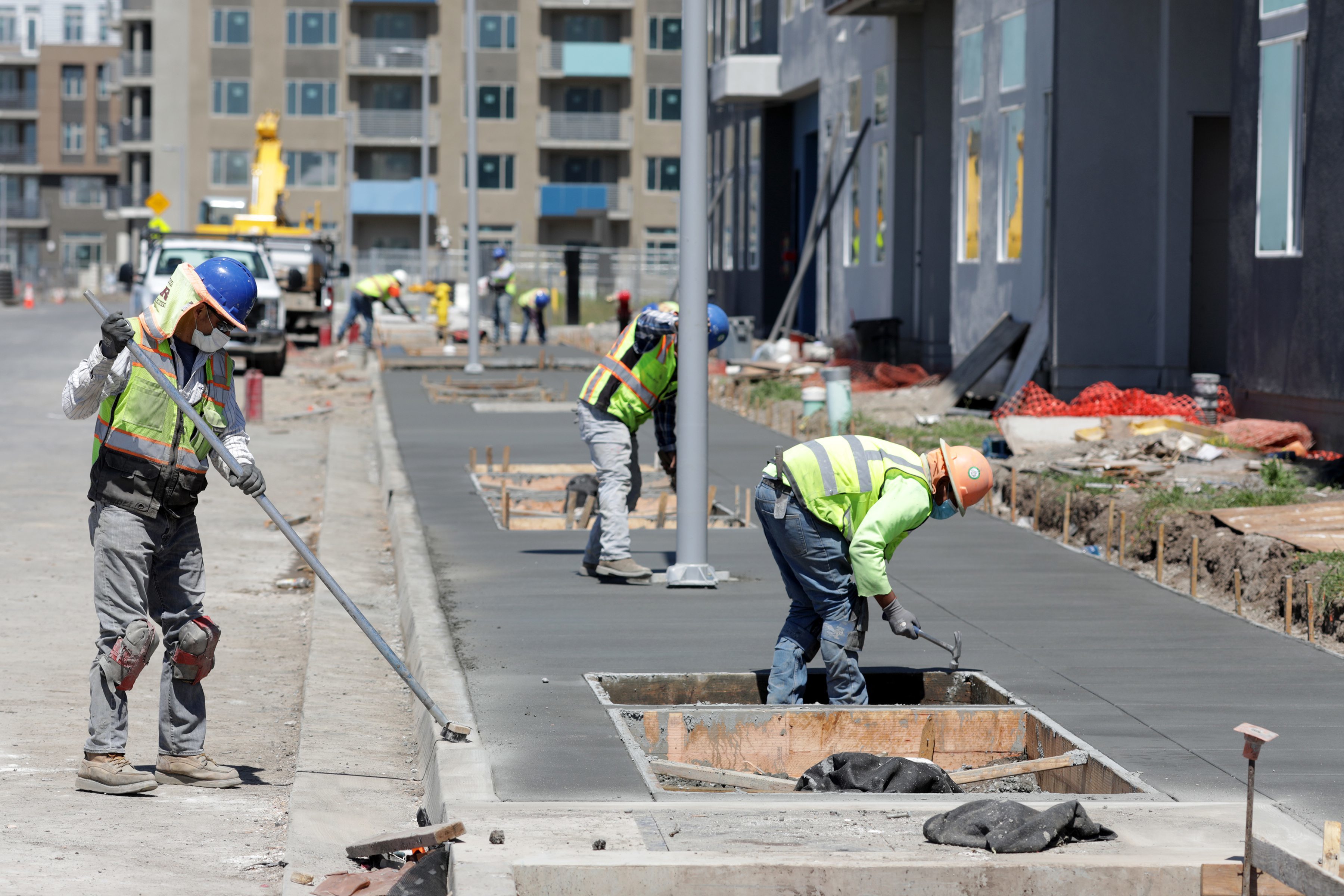
    In this photo from 2020, a construction crew works on a 290-unit transit-oriented, mixed-use affordable housing community with 7,200 square feet of nonresidential leasing space, seen to the right, in Fremont, Calif.Anda Chu / MCT

    States like Massachusetts, Colorado, and New York have done versions of the same thing. Transit-oriented housing is one of the most consequential planning movements in the country right now, and the Northeast is leading it.

    Philadelphia cannot afford to watch from the sidelines, and the stakes here run deeper than zoning. SEPTA is fighting for its financial life as state funding wavers, and every home built near a station adds riders and fare revenue at no cost to taxpayers. Every family that can live near mass transit and skip the cost of a second car keeps more of its paycheck. Building more homes doesn’t only help newcomers; it relieves pressure on the renters already here.

    This is, finally, a question of fairness. For generations, the neighborhoods cut off from fast, reliable transit have been the same ones cut off from opportunity. I know what that access made possible in my own life. Withholding it from whole sections of this city should anger us.

    Timid reform fails. The cities that get results match the scale of the policy to the scale of the city, writes the author.Alejandro A. Alvarez / Staff Photographer

    So pass Bill 260517, and pass it now.

    But do not treat 13 stations as the finish line. Council should follow this bill this fall with station-designation legislation extending the zoning change to the Broad Street Line, Regional Rail, the trolleys, and our busiest bus corridors.

    On North Broad, six fast-food drive-throughs sit directly atop subway stops on the Broad Street Line — businesses built for drivers, on land that belongs to riders. That is exactly the land transit-oriented communities are meant to put back to work.

    Philadelphia spent a century building a public transit system. The least we owe the next generation is the right to live next to it.

    Jay Arzu holds a doctorate in city and regional planning from the University of Pennsylvania. He is a housing organizer with 5th Square Advocacy and the founder of the Roosevelt Boulevard Subway Movement.

  • After 18 months and traffic snarls, Market Street improvements in Old City are complete

    After 18 months and traffic snarls, Market Street improvements in Old City are complete

    Brothers Allen Joseph and Anser Bhatti own Liberty Scoops ice cream and Coffee Tea & Co., both in Old City.

    They concede that the past 18 months of construction for improvements to Market Street were often tough on business, especially the coffee shop, because of fencing that had to be erected.

    Now, with the $16 million renovation of Market Street complete, and the fencing gone, Joseph said it was worth it.

    “It looks much better now,” Joseph said.

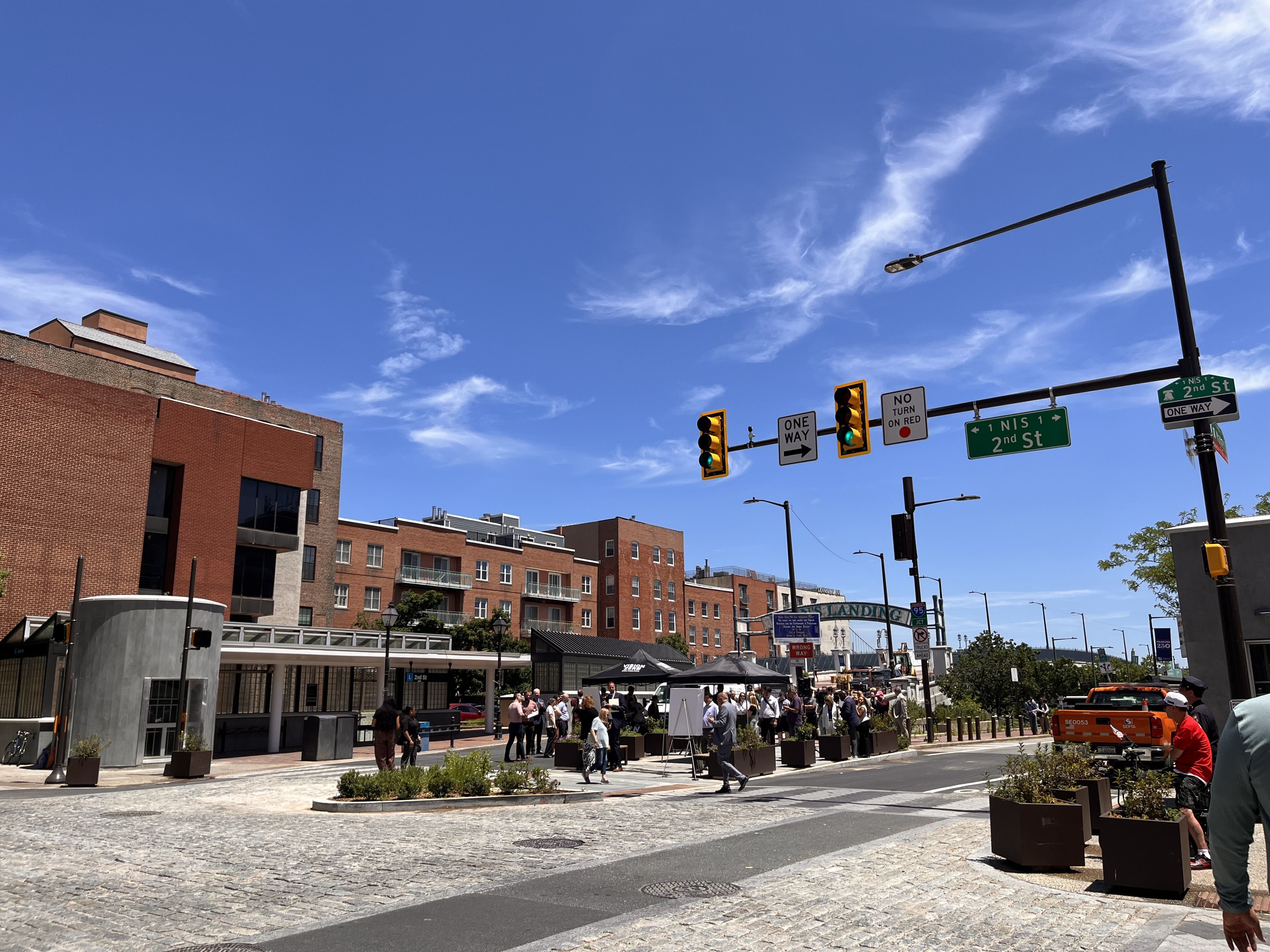
    Philadelphia officials unveiled the new look Tuesday in time for the nation’s 250th anniversary. The transformation permanently narrowed vehicular traffic, added bike lanes, and built a new public plaza.

    “As you can see, walking around the neighborhood is greatly improved,” said Job Itzkowitz, executive director of the Old City District, a business improvement organization.

    Itzkowitz noted more open space for pedestrians, shorter distances to cross the street, and new street trees and planters, among other improvements.

    “Residents, visitors, and business owners alike have already felt the impact as the fences started to come down over the last few months,” he said.

    Officials launched the overhaul in December 2024 to rebuild the corridor from Second to Sixth Streets and transform the historic stretch into a more inviting place to walk, bike, and dine.

    The work was to timed for the Semiquincentennial, which marks the 250th anniversary of the signing of the Declaration of Independence. Several other nearby landmarks have also been spruced up, such as Elfreth’s Alley, which recently unveiled a new pocket park, and the long-shuttered First Bank of the United States, set to reopen to the public on July 1 after a $27 million renovation.

    Philadelphia city officials celebrated the completion of a $16 million renovation of Market Street, from Sixth to Second Streets. Improvements include wider sidewalks, protected bike lanes, Belgian block streetscape, and new plantings.Frank Kummer

    What’s new?

    As part of Market Street’s “road diet,” vehicles have been reduced to one lane in each direction, clearing way for protected bike lanes and adding dedicated left turn lanes at key intersections.

    Among other improvements:

    • A new curbless plaza at Second and Market Streets at the base of the ramp to Penn’s Landing, allowing easier access for pedestrians.
    • Concrete bump outs at bus stops were lengthened to make boarding easier. The raised bike lanes were installed between parking lanes and sidewalks.
    • Wider sidewalks.
    • Belgian block streetscaping.
    • 44 new street trees and 68 shrubs.
    • 55 bike racks.
    • SEPTA also improved the look of the headhouses for the Market-Frankford Line subway at Second Street.

    Officials say the transformation will reduce traffic-related injuries and deaths and better serve tourists, walkers, cyclists, transit users, and motorists.

    ‘New plaza rocks’

    The project was initiated a decade ago by Itzkowitz and the Old City District. It was managed by the city’s Department of Streets and Office of Transportation and Infrastructure Systems. The work was done by Deptford-based C. Abbonizio Contractors.

    Also taking a lead was the nonprofit Independence Historical Trust, as part of a larger plan to create better ways for tourists to navigate on foot through Independence National Historical Park, Old City, and other historic or local neighborhoods.

    “The new plaza rocks,” said Mayor Cherelle L. Parker.

    Parker said the just-completed project fits in with broader efforts to extend improvements on Market Street from City Hall to the Delaware River.

    Bill Marrazzo, chair of the nonprofit Independence Historical Trust, called completion of the Market Street project key, given its location in Old City and near Independence National Historical Park.

    “No other American city has as many cultural assets per capita as we do here in the city of Philadelphia,” Marrazzo said, “and a very high percentage of those are organized here within this one square mile of history.”

    “These improvements are truly transformational,” noted Mike Carroll, the city’s deputy managing director for transportation and infrastructure.

  • City Hall failed the school district. Now Philly’s kids will pay for it. | Editorial

    City Hall failed the school district. Now Philly’s kids will pay for it. | Editorial

    Mayor Cherelle L. Parker and members of City Council could not agree on how to bridge the Philadelphia School District’s structural budget deficit. Now, students and staff will bear the brunt of a political failure.

    In some ways, the scope of the deficit seemed to catch policymakers off guard. The mayor’s initial budget proposal included a 20-cent per-trip tax on rideshare services, which then ballooned to $1 per ride. Neither figure came close to filling the $300 million hole in the district’s financial plan.

    While both the mayor and City Council have strong oversight powers when it comes to school spending, neither seemed to anticipate the size of that gap — even though Superintendent Tony B. Watlington Sr. had warned of a looming fiscal crisis during the last budget season.

    The ripple effects of the deficit are already clear. Principals and teachers have described this hiring season as chaotic. Some district employees whose positions are slated for elimination have begun looking for jobs in suburban school systems, many of which are facing their own budget issues.

    The cuts to Philadelphia’s schools come at a time when students are making progress, although pandemic-era declines have yet to be fully reversed. According to the Education Scorecard, the school district’s “learning rate” outpaces other big cities. That could be undermined by shedding hundreds of staff positions and shuffling teachers around to fill the gaps.

    Magnifying the impact of the staffing cuts is the scheduled closure of 17 schools across the city. The closure plan — which was finalized in April after a long and contentious process marked by City Council’s opposition — eroded support for the district with both residents and lawmakers. Council members did little to hide their fury over the inclusion of Paul Robeson and Lankenau High Schools on the district’s closure list, despite their efforts to preserve them.

    It did not help matters that some of the mayor’s plans seemed somewhat haphazard. Closing the gap between internet retailers and their brick-and-mortar competitors through online taxes makes a lot of sense, as does taxing delivery services in order to fix potholes. But many of Parker’s other proposals were unconventional.

    For example, most cities that tax rideshare services use the funds to support public transportation. That use of the revenue may feel more intuitive to taxpayers: If improved transit access allows current rideshare users to take more trips on SEPTA, they’ll save money overall. Instead, the proposal was to send money from the rideshare tax to the school district, and at a level that was still significantly below its needs.

    Whatever the details, the proposed tax did not pass. In a news conference last week, Parker said there were just three votes for the plan from the 17-member council. Instead, Council members approved a one-time payment of $50 million in an attempt to forestall the district’s job cuts.

    Despite the windfall, Watlington announced that the planned cuts would go through. He has spent weeks citing the need for a recurring source of revenue for the district, and the school system found itself facing the reality that a one-time payment of $50 million simply isn’t enough to stem a $300 million annual shortfall.

    This episode has lessons for everyone involved.

    For Parker, it is a sign that she must find a more effective way to work with Council. Mayors in Philadelphia tend to lose momentum over time, but she is still in her first term. If she’s already failing to “get to yes” with City Council over such relatively straightforward proposals, it may not bode well for the balance of her tenure.

    For Council, there must be a recognition that there is more to governing than just saying no. At some point, inaction is itself a choice. Philadelphia’s students cannot afford another year of this.