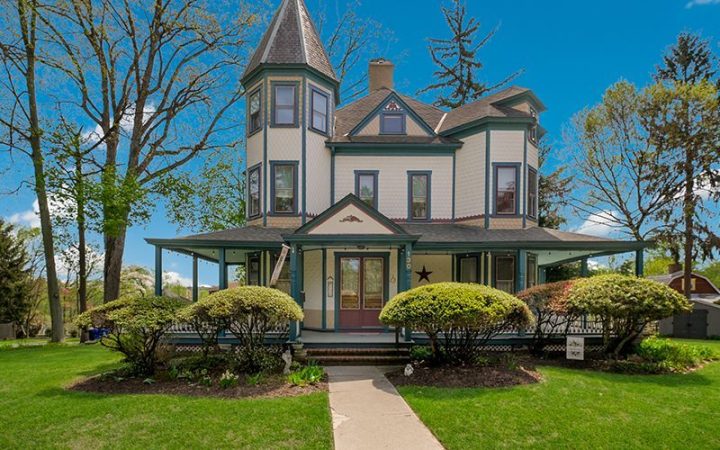
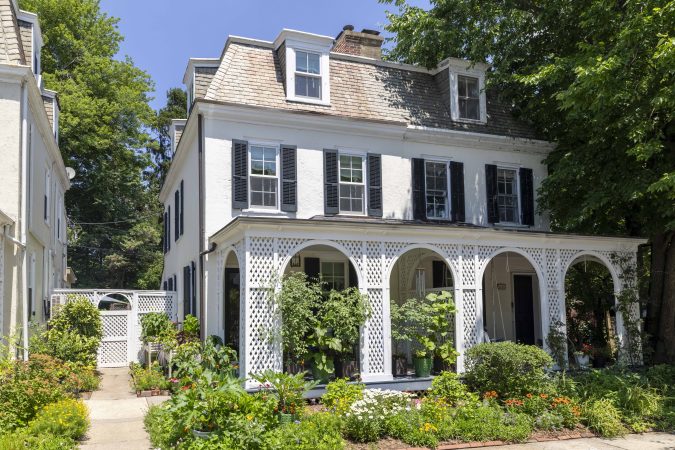
As mason William Clark was driving around Wyncote in 1988, he spotted a six-bedroom Queen Anne Victorian house that had great potential but needed a lot of work.
He spent much of the next 30-plus years working on the 19th-century house, which is in the Wyncote Historic District, until he died in 2024.
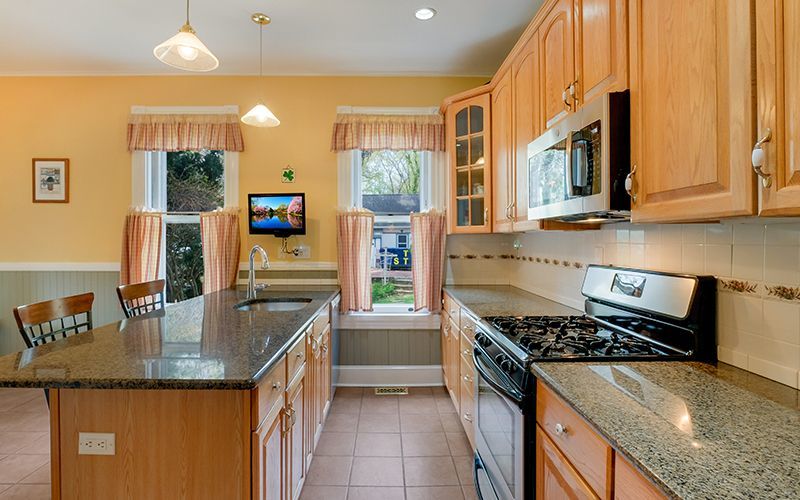
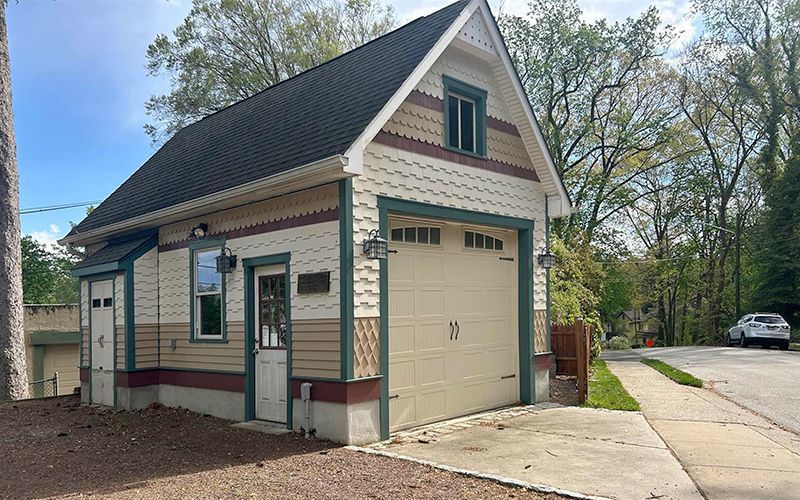
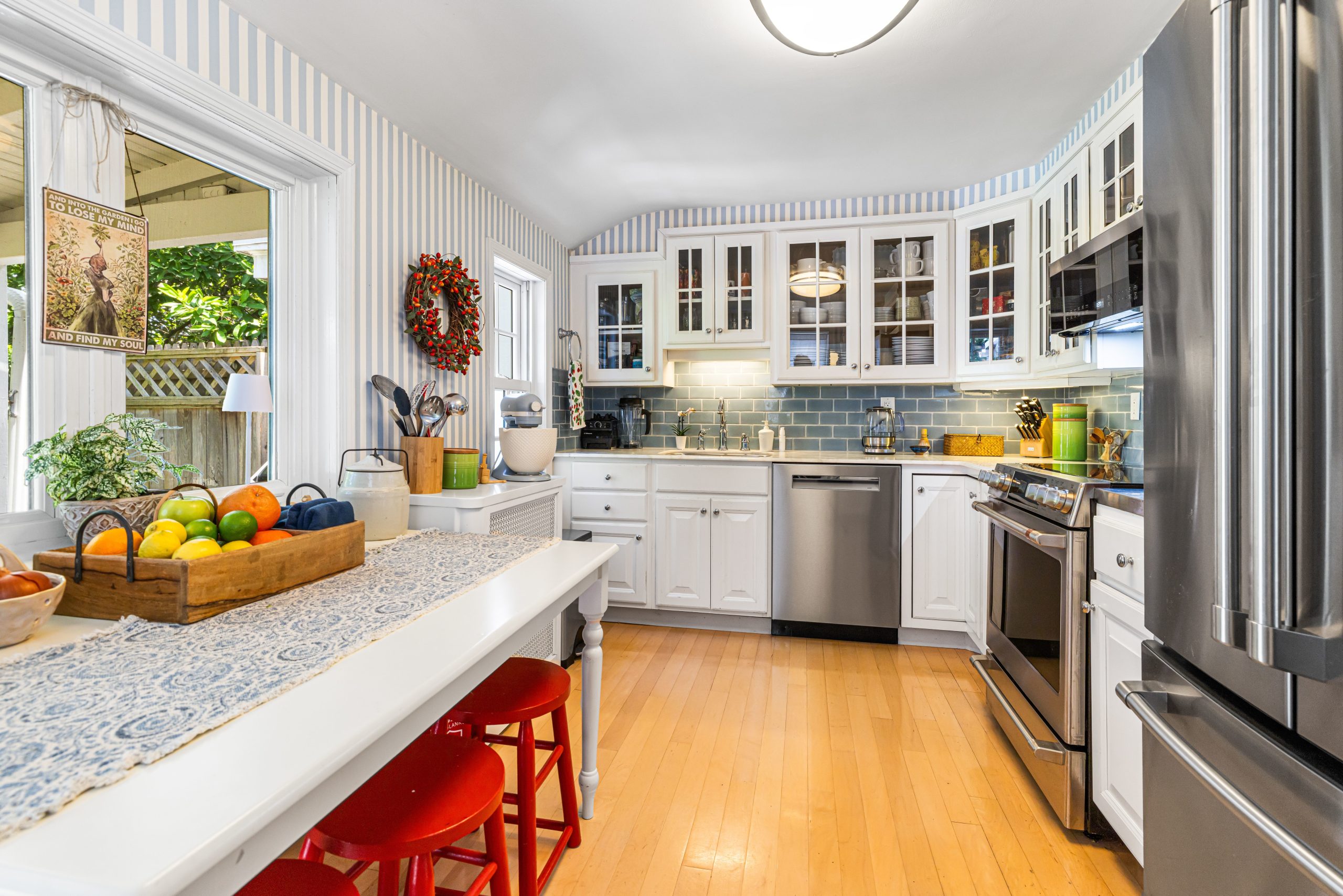
Clark redid the kitchen, put in a four-car driveway, and added a garage in 2017 to match the style of the original house.
KitchenBright House Photo
“It was a labor of love for him,” said his wife, Patti, a programmer for an investment planning firm. But at 3,679 square feet, “it’s a great big house for one person.”
So with the couple’s three children all moved out and married, she is moving to a much smaller home in Blue Bell.
GarageBright House Photo
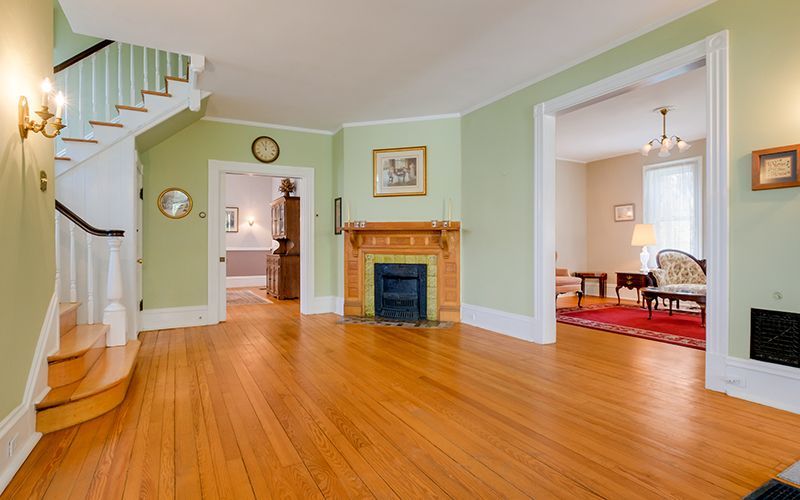
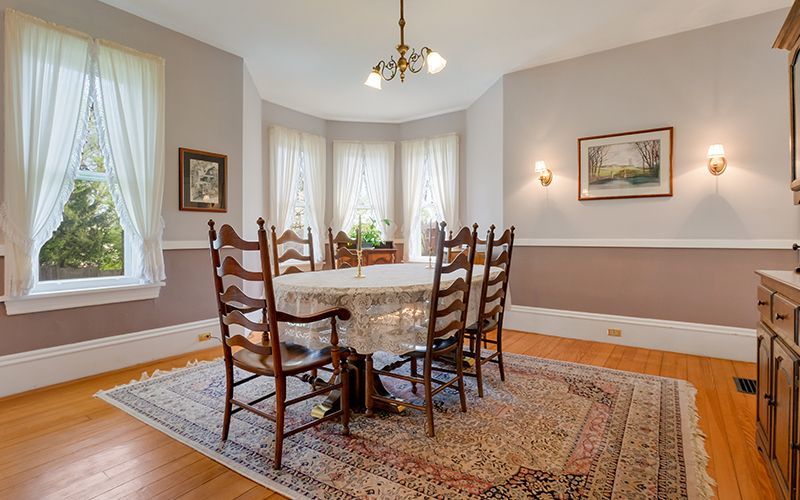
The Wyncote home features original hardwood floors, stained glass windows, pocket doors, two ornamental fireplaces, and front and rear staircases.
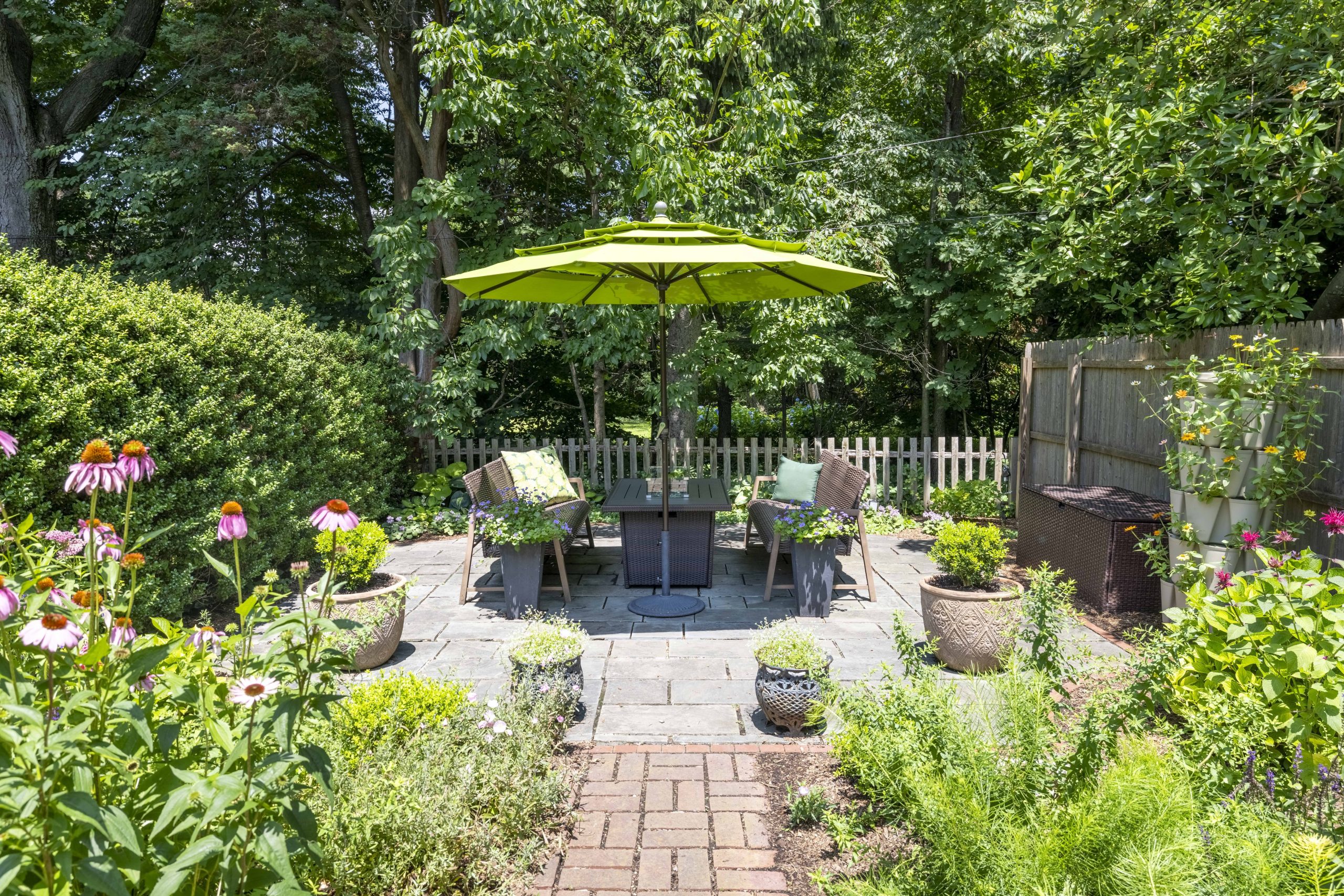
It has a side yard and a wraparound porch. The basement contains William’s workroom.
Living roomBright House Photo
The first floor has the kitchen with a built-in range and microwave, self-cleaning oven, granite countertops, and stainless-steel appliances.
The second floor has four bedrooms, including the primary. The third floor has two bedrooms and an office.
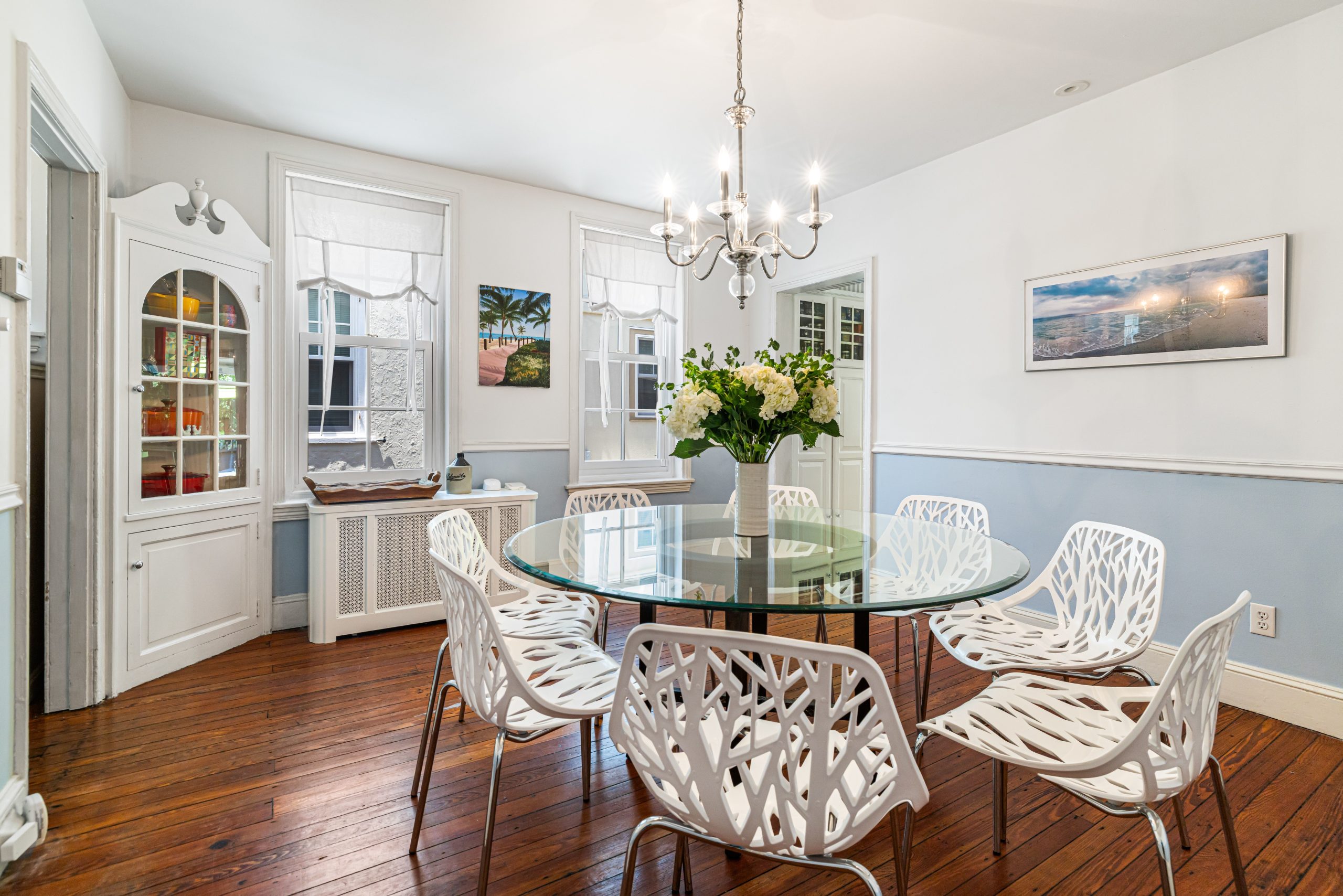
Dining roomBright House Photo
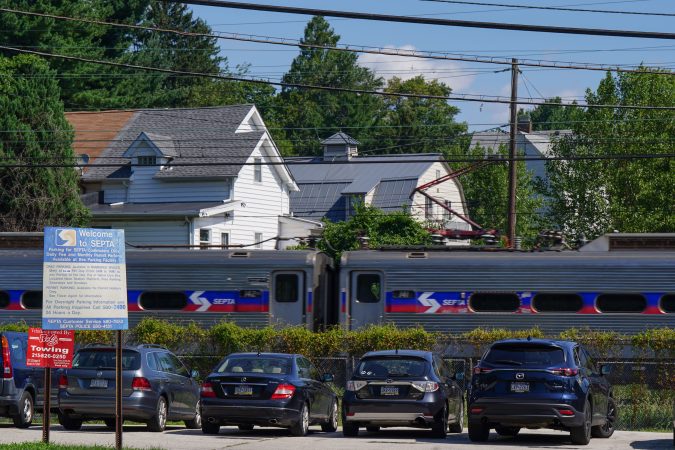
The home is close to SEPTA’s Jenkintown-Wyncote Regional Rail station. Thomas Williams Park and Robinson Park are also nearby.
The house is in the Cheltenham School District.
It is listed by Pat and Mike Jula of Long & Foster Real Estate for $675,000.
A well-known activist and founder of a Kensington anti-violence nonprofit was charged with aggravated assault and related crimes for attacking a woman with a box cutter during an argument on a SEPTA train last week, authorities said Thursday.
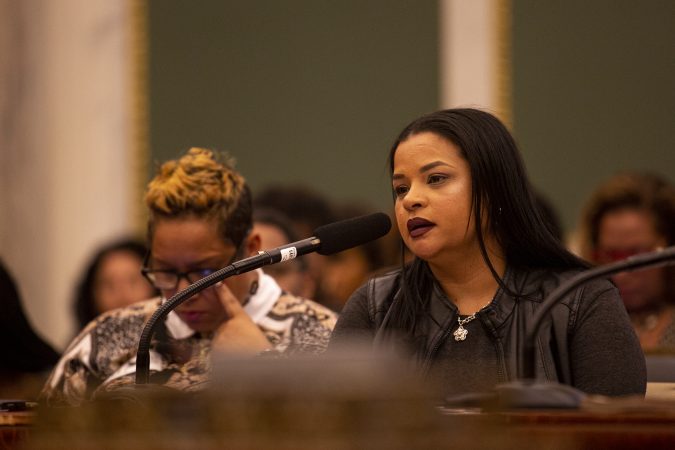
Rosalind “Roz” Pichardo, 48, was taken into custody days after the July 17 assault, which left the victim in critical condition with deep lacerations to her face and chestthat required more than 70 stitches to close, according to the Pennsylvania Attorney General’s Office, which is prosecuting the case.
Pichardo is the founder of Operation Save Our City, a nonprofit that offers social services to people who have experienced grief, addiction, or trauma from exposure to violence, according to the group’s website. She also runs “Sunshine House,” a storefront on Kensington Avenue where people in addiction can drop in for meals, clothes, and other forms of support.
She has been involved with other anti-violence and victim services organizations throughout the city and has received at least two city grants for her work.
Last week, one day before the assault, Pichardo touted a $20,000 grant that Operation Save Our City received from the Philadelphia Office of Public Safety.
And in 2024 and this year, the Philadelphia District Attorney’s Office awarded Pichardo’s organization $25,000 and $10,000, respectively, through its violence prevention microgrant program.
Pichardo declined to comment Thursday. No attorney for her was listed in court documents.
Around 9 p.m. Friday on an eastbound SEPTA train near Eighth and Market Streets, prosecutors say, Pichardo assaulted a woman with a box cutter. They said the conflict began when the two women argued on a platform at the transit agency’s 15th Street Station.
The victim told investigators Pichardo “got smart with her” after she asked a man who was blocking a platform bench to move so she could sit down, according to an affidavit of probable cause for Pichardo’s arrest. She said she, in turn, “got smart” with Pichardo.
During the spat, the victim said, Pichardo complained about “how rude young people are” and called her entitled for asking the man to move.
The women then boarded the train, where the argument continued, and they “both got in each other’s face and started fighting each other,” the woman told investigators, according to the affidavit.
At some point during the scuffle, the woman said, Pichardo pulled out a box cutter and assaulted her. She told investigators she felt warmness on her face and felt “a lot of blood.”
The attack left the woman with severe lacerations on her cheeks and her chest that,in addition to needing stitches, required surgery to help her regain muscle movement, the documents said.
Pichardo was taken into custody by SEPTA transit police but released the same evening.
Investigators said technical issues initially prevented them from viewing surveillance footage captured within the train car, but they later recovered footage from an adjoining car that showed portions of the incident.
On Wednesday, Pichardo was charged with two counts of aggravated assault, simple assault, possessing an instrument of a crime, reckless endangerment, harassment, and disorderly conduct.
She was released from custody after posting 10% of $25,000 bail, court records show.
The case will be handled by the attorney general’s special prosecutor for mass transit, a position created by the state legislature to address what Republican lawmakers said was the failure of District Attorney Larry Krasner to prosecute violent crimes on or near SEPTA properties.
A spokesperson for Krasner’s office declined to commenton the case and referred questions to the attorney general.
Pichardo appeared to address the matter in cryptic posts on Facebook, where she frequently promotes her activist work to her 23,000 followers.
On July 18, one day after the assault, she posted a photo of a SEPTA train car with the caption: “Lord please give me strength to get through this pain.”
And on Wednesday evening around 9 p.m., she updated followers: “I’m Good .. I’m Home and trusting the process . My head is up..”
In addition to founding Operation Save Our City in 2012 and later Sunshine House, Pichardo has worked as a lead educator with the harm reduction nonprofit Prevention Point and as a trauma victims advocate in Temple University Hospital’s emergency department.
Staff writers Ellie Rushing, Aubrey Whelan, and Jillian Kramer contributed to this article.
Until last year, Philadelphia police detectives wrote search warrants on typewriters. Officers still take incident reports with pen and paper, and hand deliver them to detective bureaus. And when someone reports a minor crime, it can take hours for police to respond — if they do at all.
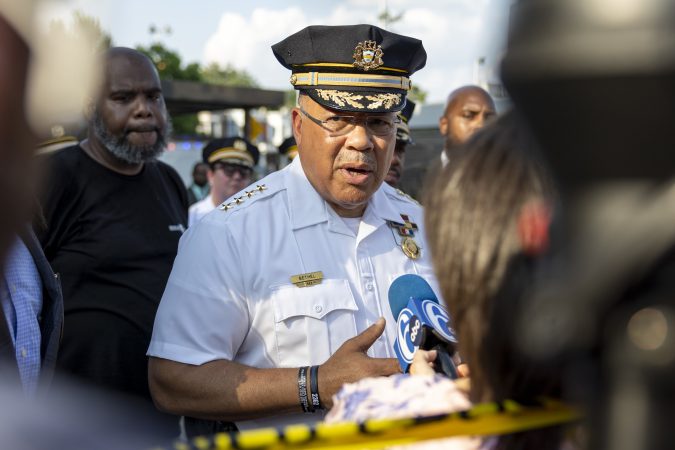
To Police Commissioner Kevin Bethel, those details capture something bigger: a department in need of a systems upgrade.
In a new five-year strategic plan released Thursday, Bethel broke from the tradition of his predecessors by treating the police department and its nearly $900 million budget as a business in need of modernizing — with an eye toward better “customer service” for residents — rather than centering on crime-fighting tactics like commanders of the past.
“If we’re going to be a modern police department,” he said in an interview this week, “we have to take on some of the structures of a modern business.”
To him, that involves tackling many of the less glamorous parts of police work: upgrading internal records systems, streamlining police report forms, and expanding training for officers.
But there are also some flashy — if not eyebrow-raising — initiatives within the 73-page plan: integrating artificial intelligence into 911 calls, allowing residents to report nonemergency crimes via video chat, and creating an internal diversion program for officers who violate low-level department policies.
Some parts of the plan — built on conversations with more than 200 people in the department, city leadership, and community — would be funded through grants, the department said, while others would need to be approved and funded by City Council, which has been largely amenable to Bethel’s budget requests in recent years.
The department said the long-term view “allows future needs to be considered through the normal budget process well before they arise.”
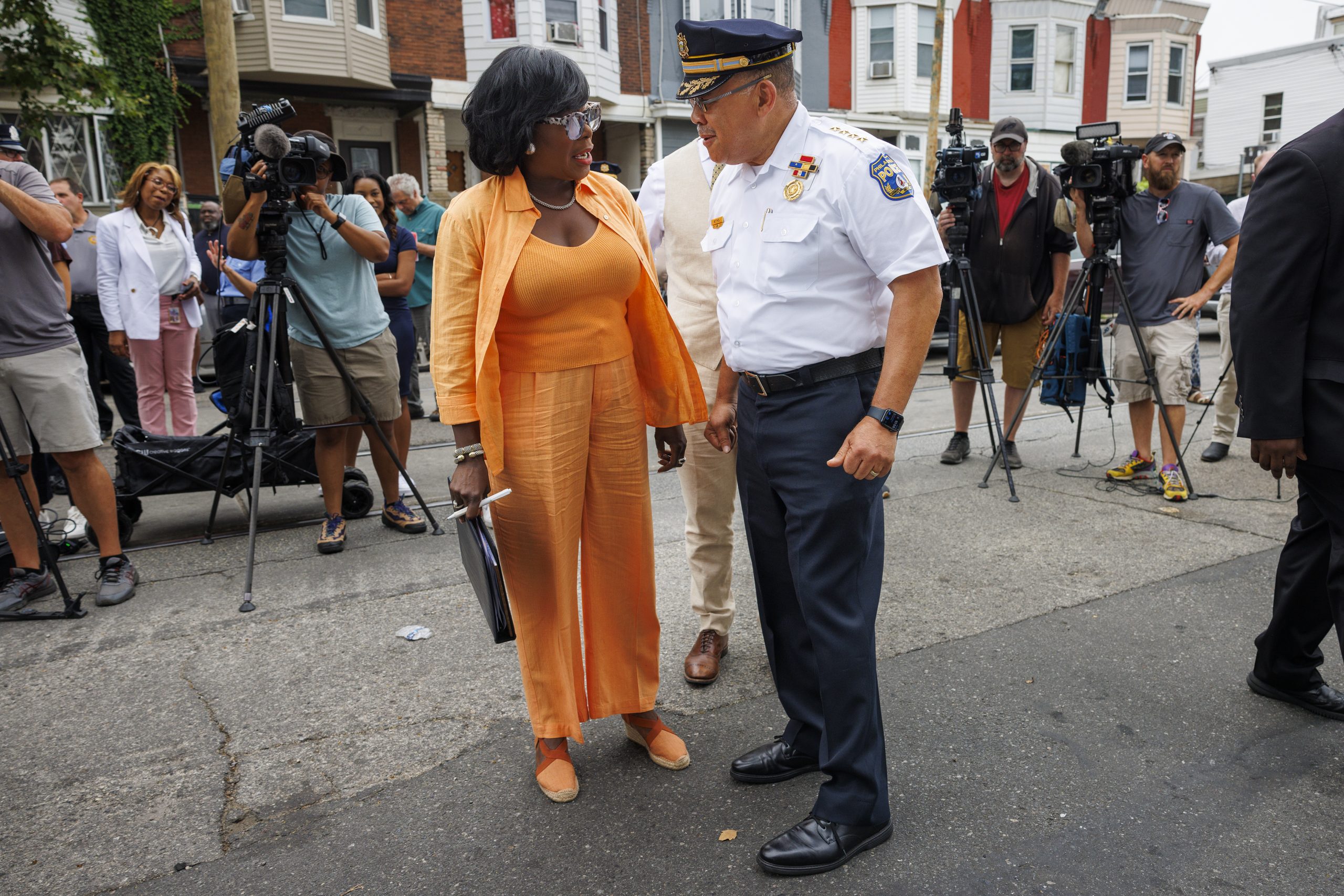
Philadelphia Mayor Cherelle Parker and Police Commissioner Kevin Bethel speak at a press conference in 2024.Alejandro A. Alvarez / Staff Photographer
It has been one of Bethel’s signature undertakings since Mayor Cherelle L. Parker appointed him as Philly’s top cop in January 2024, part of a long history of police commissioners and mayors working together to craft long-term public safety plans to guide their administrative goals.
In 2012, then-Mayor Michael Nutter said the department would focus on confiscating illegal guns, and ramp up overtime to put more cops on the street. And in 2020, amid an unprecedented spike in gun violence, then-Police Commissioner Danielle Outlaw outlined goals to increase the clearance rate for homicides and shootings.
Bethel’s plan, by contrast, is light on specifics for traditional crime fighting. While it broadly describes strategies like increasing foot patrols on SEPTA and expanding the use of digital forensic evidence in investigations, it does not set targeted reductions in homicides, shootings, or traffic deaths.
That, he said, was intentional.
“This plan is really not a crime plan. We have a crime plan. We’ve been covering it for a long time. We know that space of it,” he said. “But we’ve never done anything as an organization with, how do we move into being a modern and forward-thinking, always-evolving organization?”
That has likely given Bethel the rare breathing room to look past the crime stats that have defined past administrations and focus instead on the machinery behind them.
Here are some standout parts of the plan:
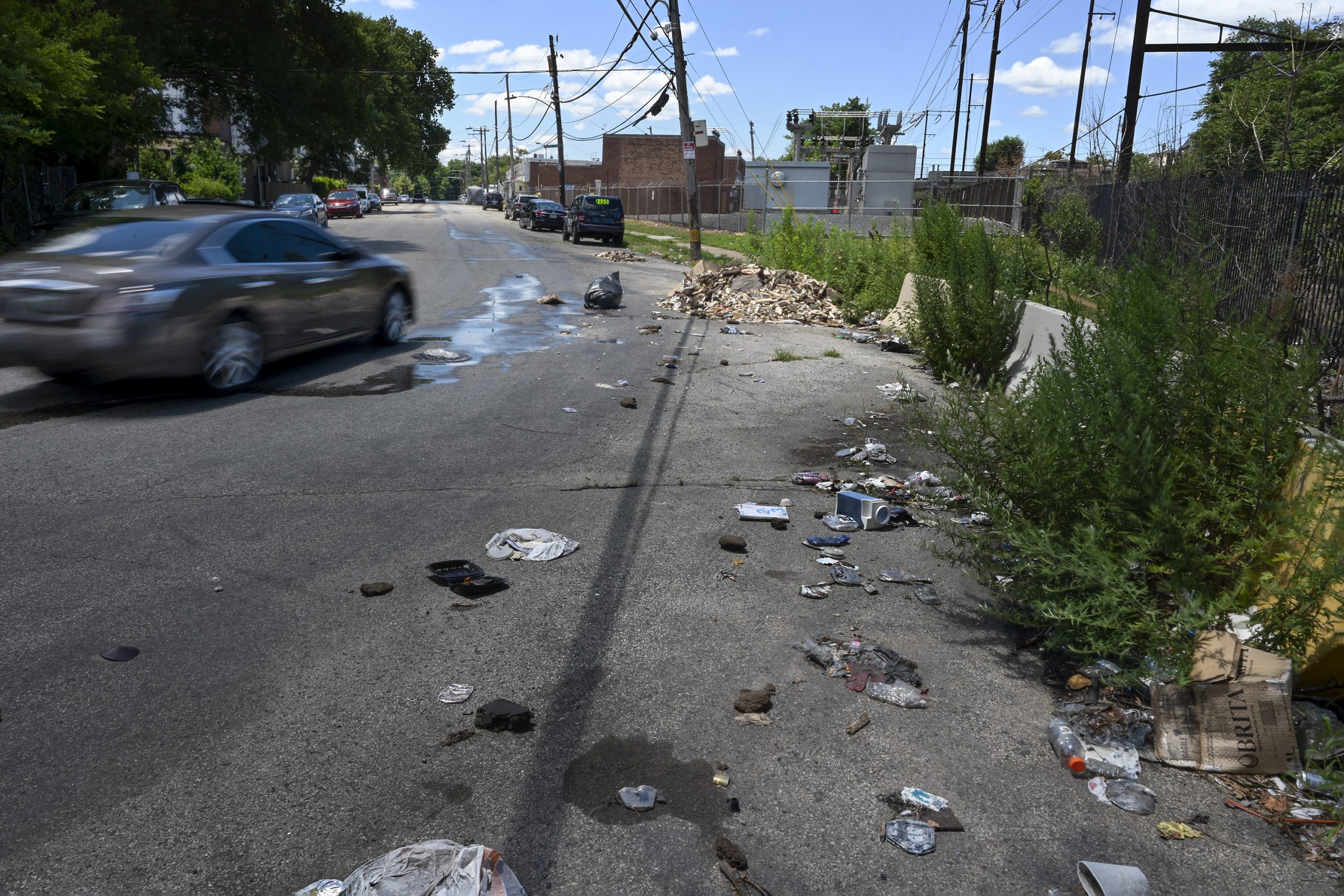
Illegally dumped trash piles up at South 56th and Hoffman Streets in Kingsessing in this 2024 photo. Residents would now have officers in their police district to specifically help address quality-of-life issues. Tom Gralish / Staff Photographer
New quality-of-life officers
Quality-of-life concerns have long dominated community police meetings, Bethel said. So within the next two years, the department plans to install “quality-of-life officers” in every police district to be the point of contact for residents on issues like abandoned cars, illegal dumping, and nuisance businesses.
Those officers, Bethel said, would be responsible for coordinating calls with other city departments to more quickly resolve problems.
Report low-level crimes via video call
One of the biggest issues for the department, Bethel said, is poor “customer service.”
Officers typically juggle high-priority calls — like shootings and assaults — alongside reports of nonviolent crimes like petty theft, vandalism, or minor car crashes. Because the lower-level offenses are considered less urgent, officer response can sometimes take several hours, leaving residents frustrated.
Under the new system, he said, people would be able to report low-level crimes online and be provided with a link to a video chat with officers, who could take the report and send a copy to the caller digitally, with no in-person visit needed.
Filing a report over the phone will still be possible, he said, but for people who want to avoid an emergency call for minor issues, this is a new option.
The new system could start to roll out within the next year.
AI-assisted 911 calls
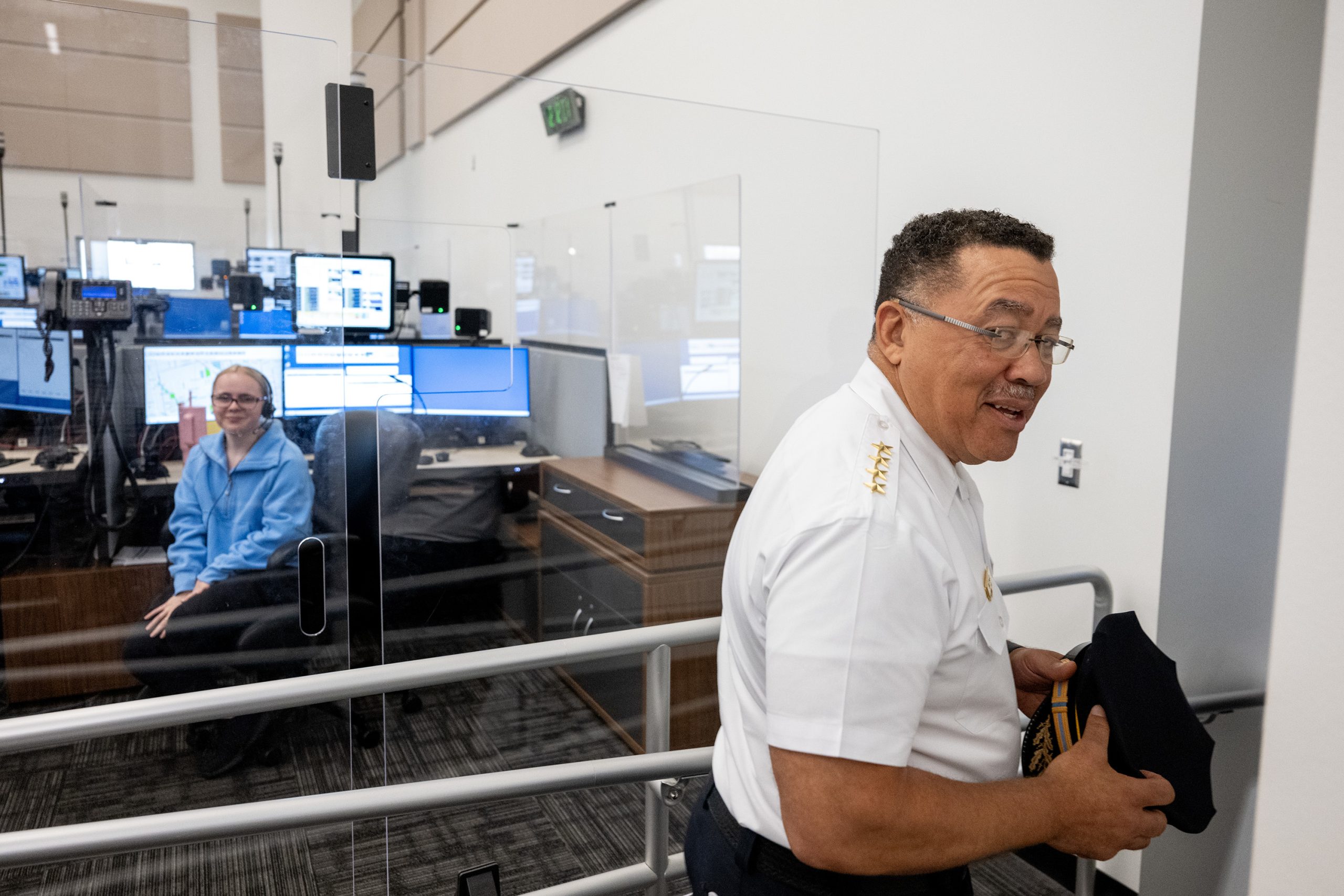
The department also plans to test 911 call systems that use artificial intelligence to screen calls.
When people call for help, they will be connected to an emergency dispatcher, with AI listening in the background. Callers who report lower-level crimes, like vandalism or theft, will be transferred to an AI-assisted line and have the option to report the matter online or via video call.
There will also be a separate, nonemergency phone number that will be answered by an artificial voice. The system will screen for keywords or issues linked to high-priority crimes, like a robbery or shooting, and immediately transfer those calls to a human dispatcher, the department said.
Bethel said the department is still evaluating potential pitfalls, and acknowledged the nuances: “A theft can turn into a robbery, and a robbery can turn into a shooting, a shooting can turn into a murder,” he said.
Police Commissioner Kevin Bethel inside the radio room at PPD headquarters in 2024.Tom Gralish / Staff Photographer
An internal diversion program
When city police officers violate department policy, their disciplinary cases are sent to the Police Board of Inquiry, and reprimands can remain on their record and affect future promotions unless appealed and overturned through union arbitration.
Under a new initiative, officers accused of lower-level violations could go through an internal diversion program that requires them to undergo training and avoids a mark on their record. Among those offenses are sleeping on duty, dismissive behavior, using derogatory or offensive language, or failing to activate body-worn cameras. In the latter case, Bethel said, the diversionary program would not be available for officers with repeated failures to turn cameras on.
Officers would not be eligible for diversion if they are found to have committed the same offense within the previous six months, or if the offense happened alongside more serious violations ineligible for the program.
Bethel said the diversion option was developed in coordination with the Citizens Police Oversight Commission with a goal of giving officers “a second chance, but also train them.”
Expand communication with the public
The department intends to develop transition plans when captains or commanders leave neighborhood police districts — something community leaders had requested, Bethel said.
It will also host quarterly community meetings to review data, and develop publicly available dashboards with additional crime, quality-of-life, and other types of data to measure performance.
By expanding points of contact with the community, Bethel said, “they’re going to hold us accountable.”
Philly may be among the James Beard Awards’ most valuable players, but it won’t be their next host.
The Philadelphia Convention & Visitors Bureau — the organization that brought the Michelin Guide to Philly last year — doesn’t plan to pursue a bid to host the James Beard Foundation’s annual awards ceremony, a spokesperson told reporters Monday.
Considered to be the restaurant industry’s Oscars, the Beard Awards have celebrated the best in food service and media across the United States every spring since 1991.
“Recognition through the awards can be transformative — driving visibility, strengthening businesses, and creating new opportunities for recipients both immediately and over time,” the Beard Foundation said last week in a statement announcing a request for information from potential host cities. “These benefits extend to the host destination as well: The multiday event showcases the local culinary community while generating national media attention and meaningful economic impact.”
Hosting the awards also comes with significant price tag: The Beard Foundation is asking interested cities to commit to spending a minimum of $4 million for the first year, with annual increases of up to 5% after. Cities can source the money through a mix of cash investment, sponsorships, and public sector funds.
Cities can send in preliminary information — including an estimate of hotel stock, prospective venues, and responses to short-answer questions — to the Beard Foundation through Aug. 7. Selected applicants will then be invited to submit official proposals. The next host will be announced in early 2027.
Philly has likely ruled itself out.
“Our mission is to attract citywide conventions, meetings, and major events that generate significant overnight visitation and hotel demand,” Convention & Visitors Bureau spokesperson Jaime Martorana wrote over email. “After reviewing the James Beard Awards’ event hosting requirements, we’ve determined they aren’t fully aligned with the PHLCVB’s mission and mandate.”
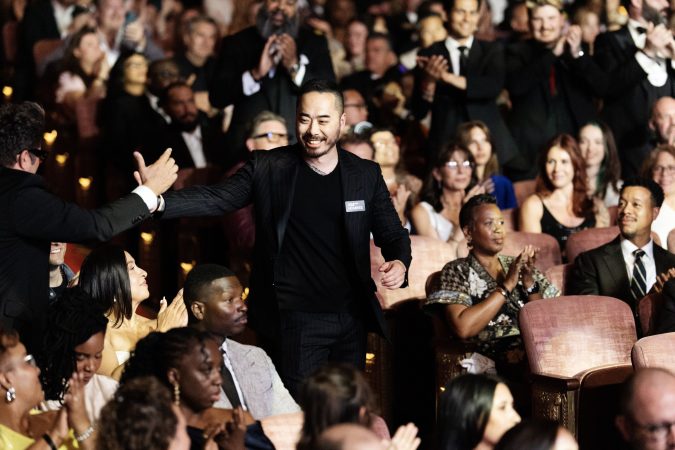
People arrive at the 2024 James Beard Awards in Chicago. The Oscars of the restaurant industry is looking for a new city to host the awards from 2029 to 2033.Erin Hooley
Philly’s untouched resumé
It’s unclear which hosting requirements don’t match up with the Convention & Visitors Bureau’s mandate of bringing major events to Philly.
Reviewed by The Inquirer, the seven-part application asks cities to detail the high-profile events it has hosted in the last three years, outline its transit options, and explain how their restaurant scene upholds values of “culinary excellence, sustainability, inclusion, [and] accessibility.”
Philadelphia spent the past two months juggling nonstop major events, from six World Cup matches, the MLB All-Star Game, and, perhaps biggest of all, the nation’s 250th birthday. All the while, the city’s estimated 19,000 hotel rooms reached a record-high 90% occupancy as hundreds of thousands visited Philly. Even the delay-plagued, chronically-underfunded SEPTA rose to the occasion, with expanded service, free fare, and dance parties.
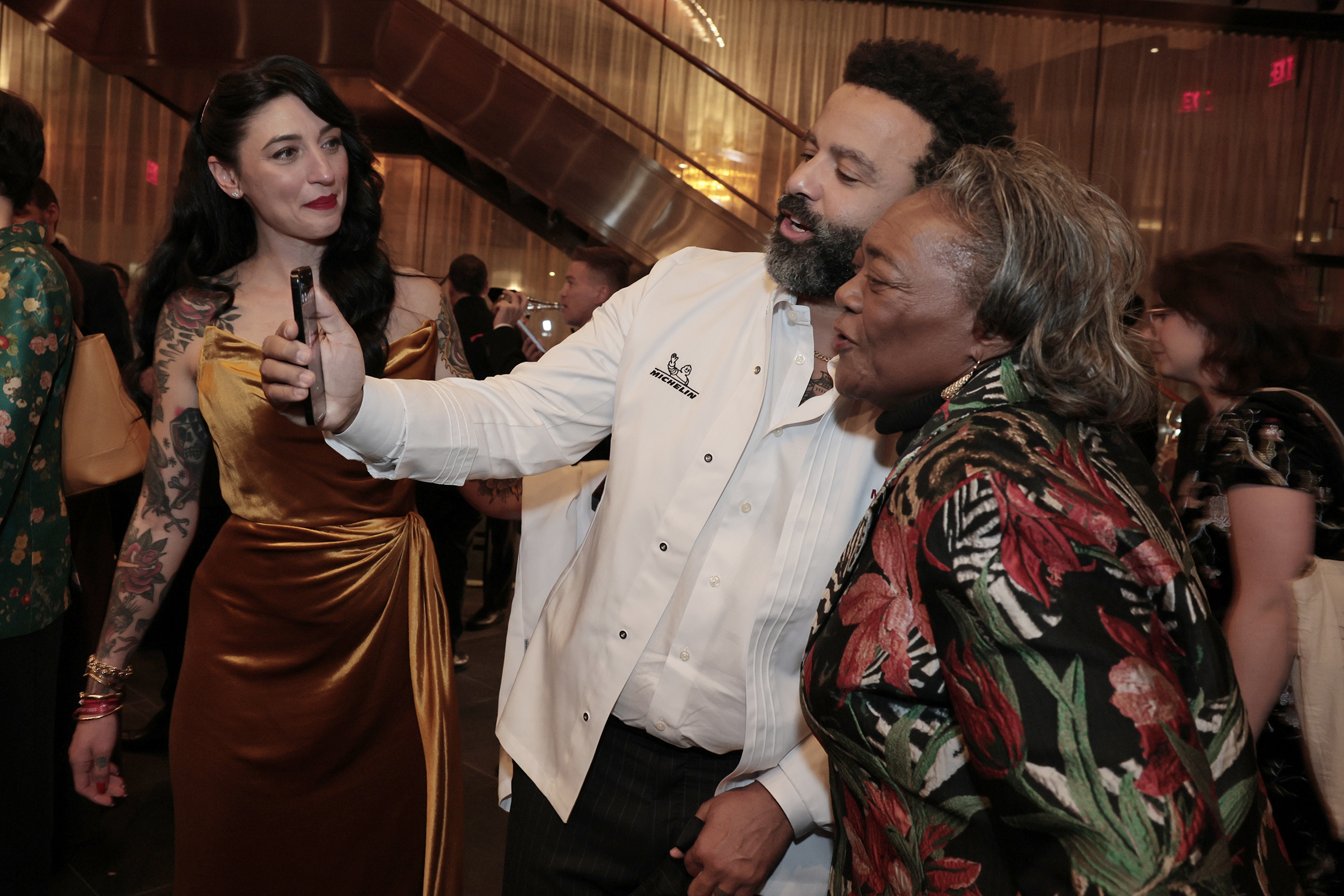
Hanna Williams (left) and husband, Chad, at the 2025 Michelin Guide Northeast Cities awards at the Kimmel Center in Philadelphia. Their restaurant, Friday Saturday Sunday, is the only local restaurant to have a James Beard Award and a Michelin Star.Elizabeth Robertson / Staff Photographer
Philly is also a James Beard Awards darling, fielding finalists nine out of the past 10 years. In June, chef Chutatip “Nok” Suntaranon’s Thai restaurant, Kalaya, won outstanding restaurant, while Royal Sushi & Izakaya’s Jesse Ito was named Best Chef, Mid-Atlantic, a region that spans New Jersey, Delaware, Maryland, Virginia, and Washington.
Visit Philadelphia, the city’s official tourism nonprofit, has worked with the James Beard Foundation since 2016, including hosting the 2020 nominee announcement and several dinner and marketing events in the years since.
“It seems to me like we should at least be having a conversation about what the relative merits of hosting are, especially since the Beards have been very good to us,” said Jonathan Deutsch, the director of Drexel University’s Food Lab and a previous judge for the Beard Awards’ media and leadership categories.
Deutsch and others in the local food scene say it’s a mistake for Philly not to try, forgoing at least a little bit of the momentum Philly has built as a destination for world-class dining and tourism. Freelance journalist and Inquirer contributorAdam Erace — who chaired the Beard Awards Mid-Atlantic subcommittee from 2010 to 2020 — highlighted that Philly’s status as a Northeast corridor city with a reliable airport makes it easy for nominees to commute.
Mawn’s Phila Lorn (left) and Rachel Lorn at the 2025 James Beard Awards in Chicago. Lorn won emerging chef that year.Courtesy of Rachel Lorn
“We’ve spent the past 10 years pushing as a city to grow. If anybody’s ready, we’re ready,” said chef Chad Williams, whose Rittenhouse Square restaurant Friday Saturday Sunday won the James Beard award for Outstanding Restaurant in 2023 and was a finalist for Outstanding Bar in June.
What could Philly miss out on?
In a few words: millions of dollars in economic impact.
The 2026 James Beard Awards in Chicago generated $8.3 million in direct spending from the operational costs associated with putting on the ceremony, plus offsite spending by attendees, according to a report the foundation commissioned from the Oxford Economics Co. That direct spending turned into $17 million in overall economic impact on the greater Chicago area, including $1.2 million in local and state tax revenue.
Philadelphia chefs are acknowledged at the Michelin Guide announcements at the Kimmel Center Tuesday, Nov. 18, 2025, in Philadelphia.Elizabeth Robertson / Staff Photographer
Erace and Deutsch, who both have attended the Beard Awards, describe it as a weekend of dinners, pre-parties, after-parties, and pop-ups that encourage attendees to eat and drink in the host city. This year’s awards included roughly 41 events in the days leading up to the ceremony, Illinois Restaurant Association president Sam Toia told the Chicago Sun-Times.
The restaurant awards’ voting body — composed of anonymous judges with industry experience selected via committee — is only allowed to vote for restaurants they’ve eaten at in the past year, explained Erace. This gives Chicago a small leg up. Hosting the awards enables more judges to eat in the city and speak to its restaurants’ quality.
“It seems like a missed opportunity,” said Deutsch. “You have top chefs, journalists, cookbook authors, passionate foodies … who are paying a couple of thousand dollars over the weekend for airfare, dining, and a hotel just to experience the awards.”
What about the Michelin Guide?
Last year, the Convention and Visitor’s Bureau successfully bid to bring the Michelin Northeast Cities Guide — and its award ceremony — to Philly for the first time.
“Now that the busiest period of our 2026 event calendar has concluded, we’ll be reconnecting with the restaurants and chefs recognized in the Guide to better understand how the first half of the year performed and how Michelin recognition has supported their businesses,” Martorana said.
The Michelin Man, whose name is Bibendum, arrives at the Michelin Guide announcements at the Kimmel Center, on Tuesday, Nov. 18, 2025, in Philadelphia.Elizabeth Robertson / Staff Photographer
It’s still unclear how much it cost to court the guide, or how much it boosted Philadelphia overall. The Philadelphia Convention & Visitors Bureau declined to share how much it paid Michelin and has yet to make data available about the spending generated by Michelin’s newfound Philadelphia presence.
Cities pay to be included in the Michelin Guide, often cobbling together funding from a mix of tourism organizations, public investment, and sponsorships. The price of admission is steep: Boston and Atlanta both paid upward of $1 million to bring the Michelin Guide to their cities, while Texas raised $2.7 million from Dallas, Austin, San Antonio, Fort Worth, and Houston to get a dedicated Texas guide. Some locals, like Virginia and Buffalo, rebuffed Michelin entirely, calling the fees unsustainable.
In Philly, the Michelin Guide and the James Beard Awards can appear to be an echo chamber, with the same set of restaurants receiving praise from both. Williams — whose restaurant Friday Saturday Sunday is the city’s only restaurant to receive a Michelin Star and a Beard Award — said each accolade generated “equal” bumps in reservations.
From left: Joe Beddia, Greg Root, Nick Kennedy (rear), Chutatip “Nok” Suntaranon, and Roland Kassis, with the Michelin Man at the Michelin Guide announcement event at the Kimmel Center Tuesday, Nov. 18, 2025, in Philadelphia.Elizabeth Robertson / Staff Photographer
The sameness begs the question: Does Philly need both?
Deutsch wondered if the city’s decision to not go for the Beard Awards has to do with “fine-dining fatigue,” or if the powers that be feel like “they spent a lot of money to check that box for the next few years,” he said.
The Michelin Guide is technically the better bet — at least numbers-wise, Erace acknowledged.
“Thirty-something restaurants get some kind of recognition, and they can take that to the bank forever,” he said. “With the Beards, there’s only so many winners every year.”
The special prosecutor for crimes on or near SEPTA property will be funded through the end of the year as part of the newly approved state budget, Pennsylvania lawmakers said this week.
After that, the office’s fate is uncertain.
The controversial position is set to expire in December. It was championed by GOP lawmakers in Harrisburg, who for years have tried to limit Philadelphia District Attorney Larry Krasner’s powers and contended that the position was necessary because Krasner failed to prosecute crimes on the state’s largest transit system.
Senate Majority Leader Joe Pittman (R., Indiana), thetop Republican leader in Pennsylvania’s split legislature, where Democrats narrowly control the state House and Republicans lead the state Senate, said Democratic leaders repeatedly rejected GOP efforts to extend the position as part of the closed-door budget talks.
Krasner’s office has strongly opposed the law that created the special prosecutor position, calling it a “shocking usurpation of power” that unconstitutionally singled out Philadelphia and stripped an elected officials’ authority.
He could not be reached for comment Thursday.
The post has also faced opposition from Philadelphia-area lawmakers who say the effort is an affront to city voters who have reelected Krasner, a progressive prosecutor, three times.
“This is nothing more than voter suppression and an attempt to circumvent some of the extremely popular criminal justice reforms under this DA,” said Sen. Nikil Saval (D., Philadelphia), who chairs the city’s Senate delegation to Harrisburg.
Pittman, by contrast, said extending the special prosecutor is a critical component for Senate Republicans to agree to a new long-term funding source for SEPTA, which is approaching another fiscal cliff that could cause service disruptions when the state’s current short-term fix runs outnext year.
Asked about the future of the special prosecutor’s office, House Majority Leader Matt Bradford (D., Montgomery) said at Shapiro’s budget signing earlier this week that he hadn’t “given it much thought.”
Pennsylvania Attorney General Dave Sunday, a Republican who is tasked with overseeing the office, has lauded the special prosecutor’s work so far.
He said his office supports extending the position, calling it a “force multiplier” that has been effective in combating violent crimes against both SEPTA employees and riders.
“Our caseload reflects a range of very serious conduct — including murder and aggravated assaults — and we have secured results through convictions,” he said.
In one example of that effort, the special prosecutor will oversee the case of a 22-year-old woman charged with simple assault after authorities said she pepper-sprayed and punched a conservative social media influencer during a viral confrontation on a SEPTA bus.
Some House Democrats supported creating the role in 2023, as part of a state budget deal with the Senate GOP and Democratic Gov. Josh Shapiro, who was critical of Krasner when he served as attorney general.
Saval said Democrats shouldn’t use the position as a bargaining chip again.
“House Democrats who voted to suppress the will of Philadelphians should be ashamed of themselves, and should not support other attempts to do so,” Saval added. “This has nothing to do with the essential task at hand, which is to secure funding for mass transit.”
A spokesperson for Bradford said the House needs to “take a critical look” at whether the SEPTA special prosecutor is necessary. She noted SEPTA’s success in reducing crime and the size of its police force, but said the money used to fund the position may be better spent to reduce fare evasion by replacing gates to full-length ones that cost $40,000 each.
The funding was approved in the 2026-27 fiscal year budget “in the case of reauthorization,” and would be used to wind down the office, said Beth Rementer, Bradford’s spokesperson. Any unused funds would be returned to the general fund, she said.
A spokesperson for Shapiro declined to comment on the prosecutor role, but said Senate Republicans “need to do their jobs” to find a long-term funding solution for mass transit.
The office
The office is overseen by Special Prosecutor Michael Untermeyer, a former deputy attorney general and real estate investor who ran against Krasner in the 2017 primary.
Untermeyer did not respond to a request for comment.
The single lawyer employed by his office is investigating about 15 cases, including charges of homicide, aggravated assault, and robbery, according to a spokesperson for the attorney general’s office. That figure does not include cases the special prosecutor is considering taking on or are still under investigation, the spokesperson said.
Lawmakers could still choose to extend the position as part of their fall legislative session. It is among the several time-sensitive issues before the General Assembly ahead of the November election, in which Democrats hope to flip control of the state Senate for the first time in decades.
Krasner’s office has challenged the special prosecutor role from the beginning. His office filed a lawsuit in 2024 in an attempt to nullify the law, but was rebuffed by a 4-3 Commonwealth Court ruling that said legislators had not violated the state constitution in creating the post.
The office then appealed to the state Supreme Court, which has yet to decide the matter. As the high court heard oral arguments in the case last year, justices cited the Pennsylvania Constitution when suggesting that the legislature had been free to pass such a law, even if it interfered with the duties of an elected county official.
And lawyers for the attorney general’s office argued that the special prosecutor role did not strip Krasner’s power, but rather offered additional powers to a prosecutor appointed by the attorney general to handle cases involving crimes in and around SEPTA property.
Kurt Vile’s love of Philly — and Philadelphia’s affection for Kurt Vile — has never been in question.
For the cover of Constant Hitmaker, the 2008 album that announced his arrival, Vile posed in front of a blown out wall “that looks like a Rauschenberg painting” at the corner of Frankford and Norris, he recalls. “That stuff’s beautiful, you know?”
Since 2012, a Steve “ESPO” Powers mural that doubles as the cover for Vile’s 2013 album Wakin On A Pretty Daze has adorned a wall at Front and Master Streets in Northern Liberties, visible to travelers headed north on the Market-Frankford El.
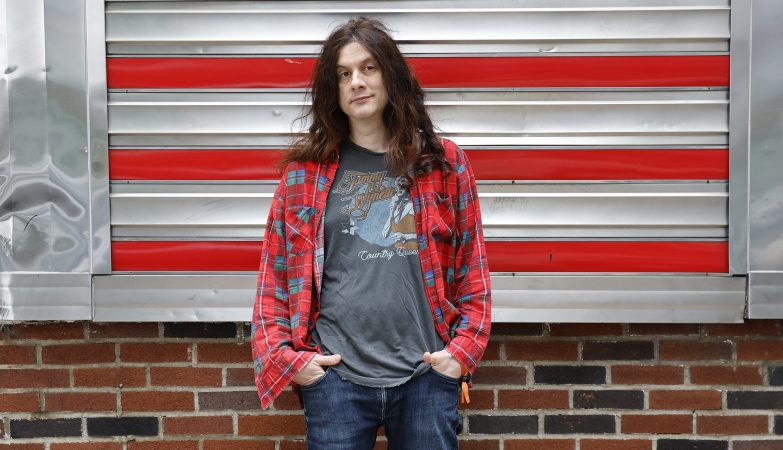
With his signature mane and quizzical expression, Vile, who grew up in Lansdowne in Delaware County, has been the face of Philly’s reign as the capital city of 21st century indie rock.
Kurt Vile stands in front of a mural by Steve “ESPO” Powers on March 27, 2013. Michael S. Wirtz / Staff Photographer
The city is embedded in Vile’s music at every turn, from the “I park for free!” boast on the 2018 song “Loading Zones” to the cover of 2022’s Watch My Moves, which pictures the Dad rock king wearing a crocodile mask in Wissahickon Valley Park, flanked by daughters Awilda and Delphine.
But Vile has never repped his hometown so hard as on his new album, Philadelphia’s Been Good To Me, released in May. It includes shout-outs to Lincoln Drive, the Schuylkill, and Sun Ra, and an infectious single “Chance to Bleed” that features Philadelphia gangsta rap pioneer Schoolly D in a video shot at Kung Fu Necktie.
Philadelphia’s Been Good To Me even includes a playful taunt at two of Vile’s classic rock favorites who dared to record songs with the word Philadelphia in the title.
“A couple of my heroes wrote a song,” Vile talk-sings in “You Don’t Know Cuz It’s My Life.” “But that ain’t where they’re from, so hey you don’t know / But I still love you, Neil and the Boss.”
Working in the wee hours in his basement OKV studio — which stands for “Overnight Kurt Vile” — in his fieldstone house in Mount Airy, Vile recalls, “I was singing along to this keyboard track I had laid down, and that thought came to me.”
Kurt Vile in his basement studio at his home in Mount Airy June 13, 2022, with his daughter Delphine.Tom Gralish / Staff Photographer
Vile, who had (legally) parked his Prius in a nearby loading zone, was talking at the Silk City Diner on the Sunday night of Memorial Day weekend where he would realize a long-held ambition: sitting in with centenarian saxophonist Marshall Allen and members of the Sun Ra Arkestra.
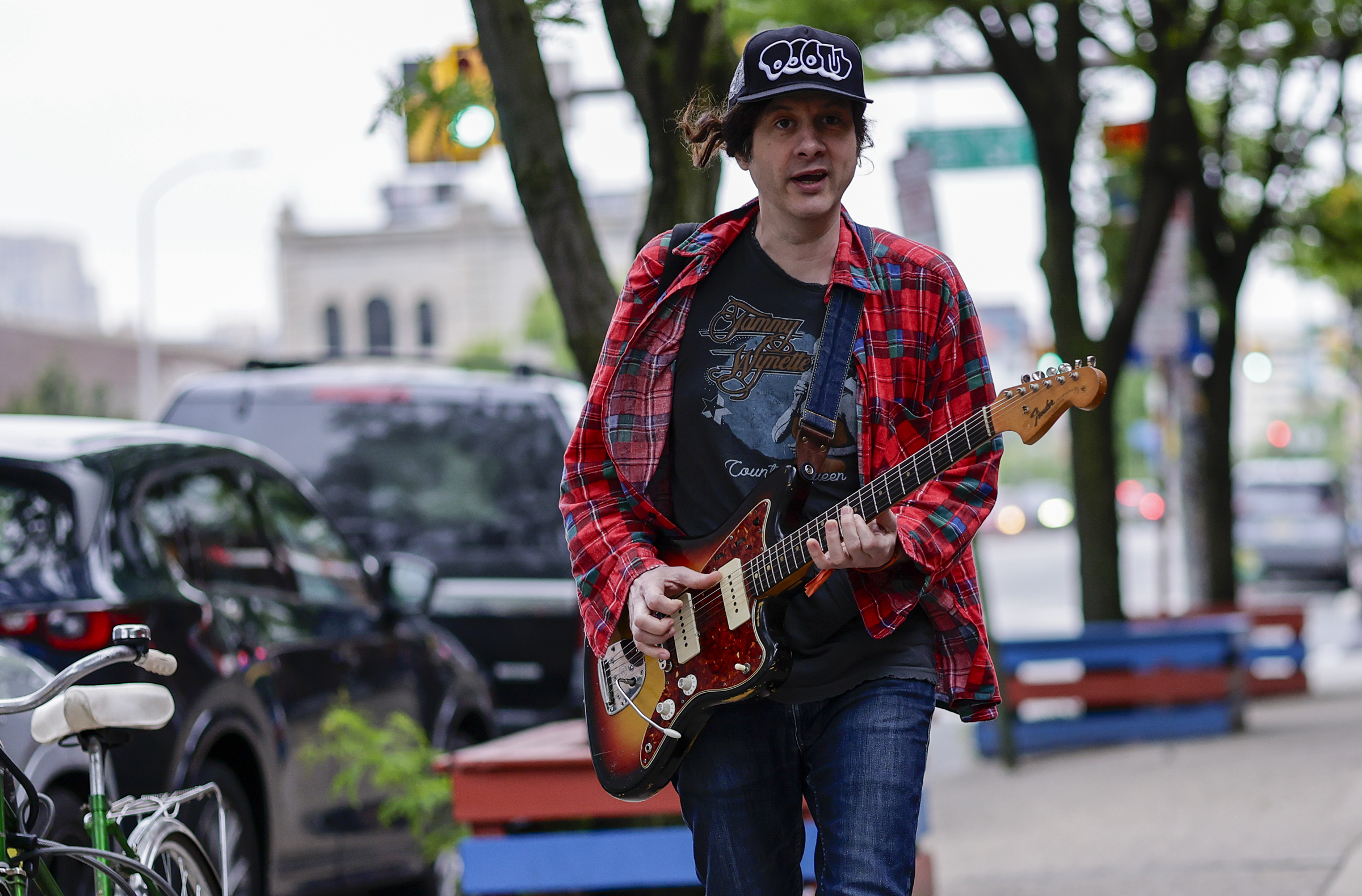
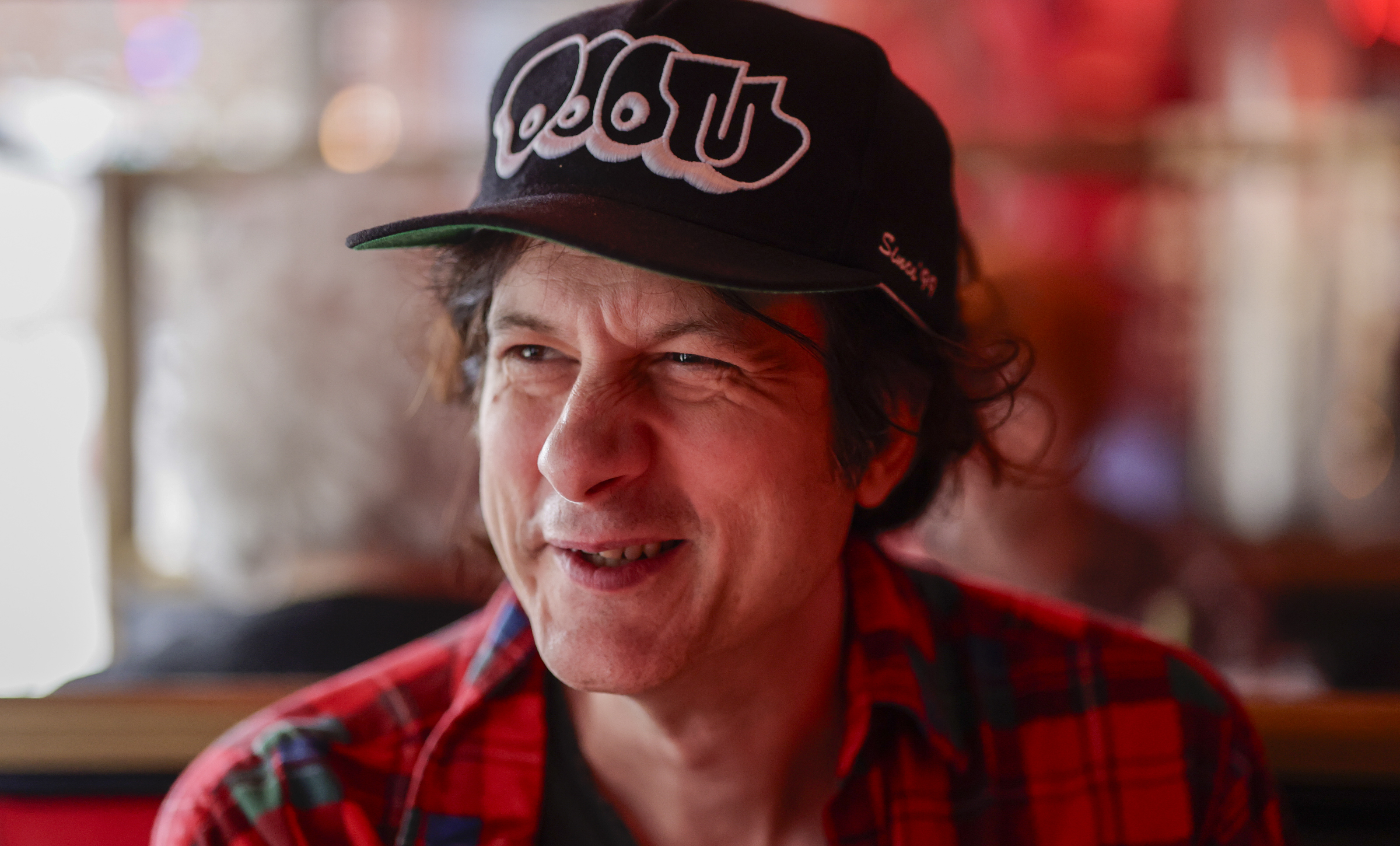
Vile — who was wearing a Tammy Wynette T-shirt and MF Doom trucker’s hat, with his 1965 Fender Jazzmaster Sunburst in the booth beside him (without a case) — explainedhis unique position in Philadelphia music history while dining on an Impossible Burger and Korean fried cauliflower.
“Springsteen wrote the song ‘Streets of Philadelphia’ and Neil wrote ‘Philadelphia,’ and they’re both on the soundtrack to Philadelphia, right?” he says, referring to Jonathan Demme’s 1993 AIDS drama.
“I get where they’re coming from, but it’s still an assignment. They’re singing about a city they don’t know that well. I’m proud of the city that I’m from, and I’m also lucky that I’m from here.
“It’s like my friend Mary Lattimore, who plays the harp.” (And has given lessons to Vile’s daughters, who also both play guitar.) “She’s not from Philly, but she lived here forever, so it feels like home to her, even though she’s in LA now.”
The album cover of Kurt Vile’s ‘Philadelphia’s Been Good To Me,’ which features a photo by Memphis photographer William Eggleston.Verve
Adam Granduciel of the War on Drugs, with whom Vile frequently teamed up when both were aspiring artists in the 2000s, also grew up elsewhere and now lives in Los Angeles.
“They’re two of my oldest friends that were in the Philly scene forever, but they don’t have the extended history that I do.”
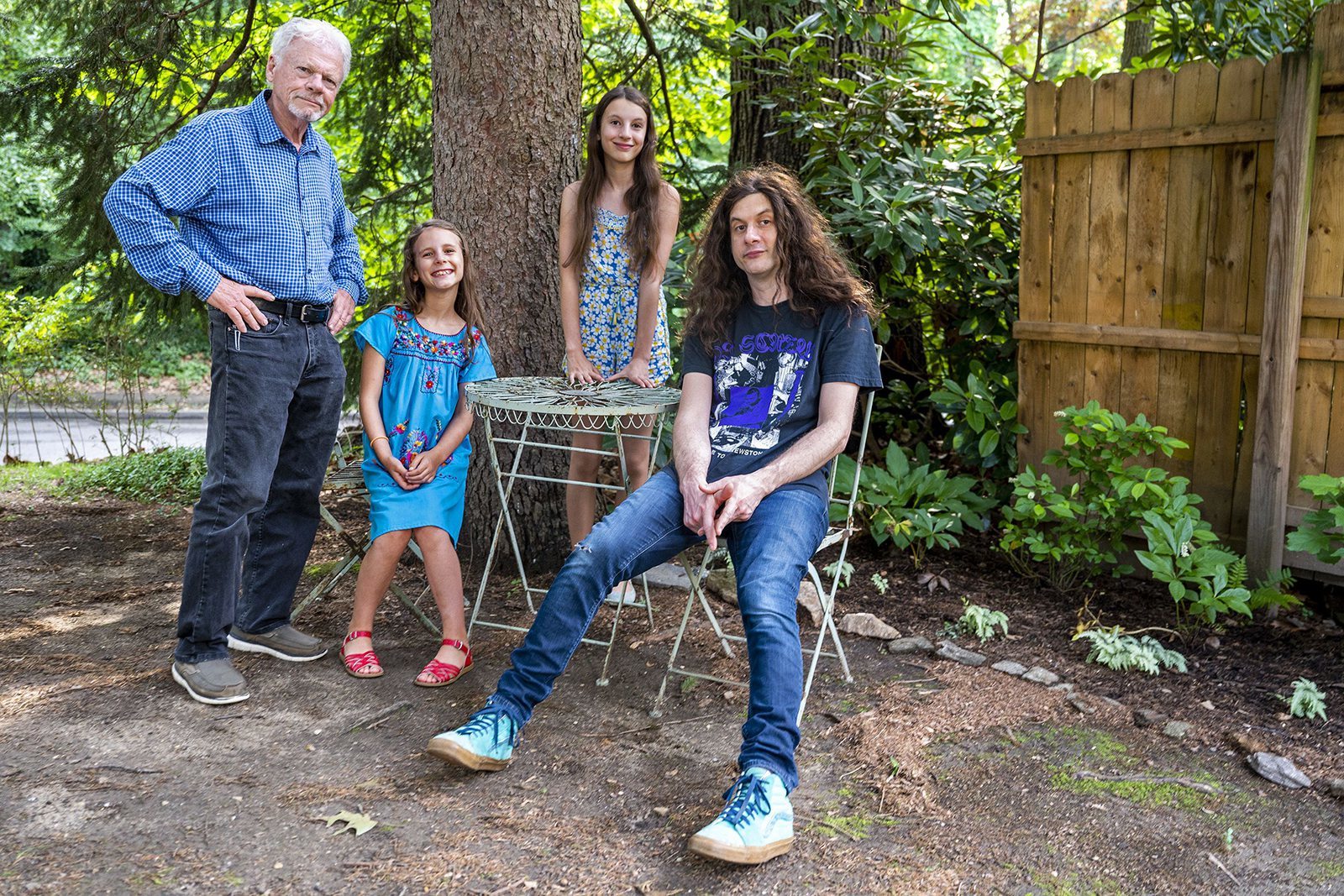
Kurt Vile with his father, Charlie, and his daughters Delphine (left) and Awilda, who posed with him on the cover of his latest album, at his home in Mount Airy on June 13, 2022.Tom Gralish / Staff Photographer
The Philly fixture
Vile — who is the oldest boy among the 10 children of his SEPTA train operator father Charlie and stay-at-home mother Donna — is Philly-area born and bred.
“I’m the OG,” he says. “That’s what I’m proud about. It’s like Questlove, or something,” though for all the Philly repping the Roots drummer does, he doesn’t live here either.
Vile, by contrast, is a Philadelphia fixture. When artists like country rebel Margo Price, Australian rocker Courtney Barnett, and North African desert blues band Tinariwen have come to town, there was one way to know for sure they were in Philadelphia: Kurt Vile was standing next to them onstage.
Vile plays the Dell Music Center with his band the Violators on July 25 as part of Connor Barwin’s Make The World Better Concert Weekend. He played Barwin’s first MTWB Foundation benefit in 2014, which raised money to build playgrounds and rec centers throughout the city.
“I don’t follow football and I didn’t know who he was,” Vile says, recalling meeting Barwin at a show. “He walked in and he looked amazing. He was so tall, like a [expletive] Eagle. He was just a genuine fan. I love reconnecting with Connor and watching him do his thing.”
Vile’s July 25 show is the second of two MTWB nights at the Dell. The first-night headliners are 1990s alt-rock heroes Pavement.
“Pavement was my gateway drug to indie rock,” Vile says. “Stephen Malkmus was my hero. I got my first job as a busboy at the Blue Comet on Baltimore Pike and I would spend all my money on Pavement CDs.”
Now, Vile is friends with Malkmus, and was stoked when he found out they were both playing the MTWB weekend — until he realized that he has a gig in Boston the night Pavement is playing. “I’m missing Pavement by a day,” he says. “Which I’m not happy about.”
Vile, 46, has spent his entire life living in the Philly area, save for 2002-03 when he followed his wife Suzanne Lang to Boston while she got a master’s degree at Emerson College.
Philly alt-rock star Kurt Vile outside the Silk City Diner on Sunday, May 24, 2026 in Philadelphia.Yong Kim / Staff Photographer
He worked as a forklift operator for an air freight company. “The most ball bustin’ blue-collar job there is,” he says. Before he mastered the machinery, “I got made fun of a lot my first year. But then I got really good at it.”
Returning to Philly and moving to Northern Liberties, he went to work for Philadelphia Brewing Company, where he was hired by future pizza sensei Joe Beddia who was roommates with Granduciel. “They were all blown away by my forklift skills,” recalls Vile. “And that’s how I met Adam.”
At PBC, Vile met Jack Rose, the late Philadelphia guitarist who, like Vile, was a fan of influential American Primitive guitarist John Fahey.
Asked to name his top five Philadelphia artists, Vile starts with Rose. He then adds Purling Hiss guitarist Mike Polizze, and psychedelic folk singer Meg Baird, Petty Bunco label head and singer Richie Charles, along with Schoolly D.
“Is that five?” It is, but Vile has a couple more: Marshall Allen-slash-Sun Ra, and rockin’ country band Florry. “They’re so fun and excitable and young,” Vile says.
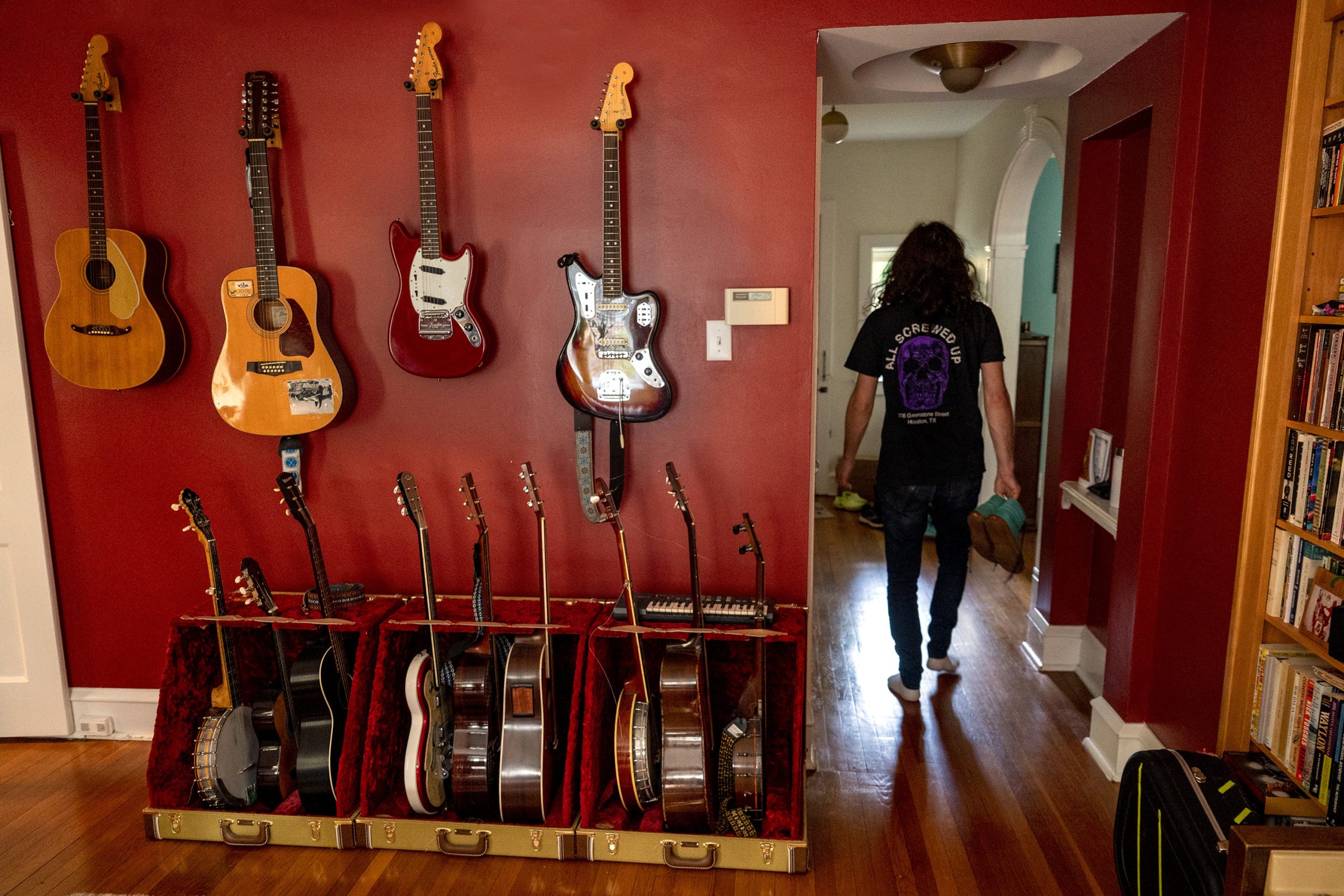
Kurt Vile in the music room in his home in Mt. Airy June 13, 2022 (this is not the basement studio)TOM GRALISH / Staff Photographer
“I love Mount Airy and Germantown,” he says. “There’s still so much old-school Philly in Germantown. And Mount Airy really saved my life. I love that there’s forest, and I have room to think.
Kurt Vile at his home in Mount Airy June 13, 2022, with his daughters Awilda (left) and Delphine, who posed with him on the cover of his latest album.Tom Gralish / Staff Photographer
“But I can still go to the city any time, and it’s so quick,” driving his Prius down Lincoln and Kelly Drives. “You go in through the Art Museum, and it’s a classy way to go in, you know?”
Over 10 albums, Vile has continued to develop a raw, unhurried signature sound. He often seems to be talking to himself in a bemused drawl over patient jams that turn out to be transfixing.
What country star Keith Urban once said of Vile’s 2015 hit “Pretty Pimpin’” in naming it as one of five songs he wished he’d written applies to Vile’s songwriting in general: “I don’t know how he wrote it, but it sounds like pure stream of consciousness.”
Philly alt-rock star Kurt Vile walking outside the Silk City Diner on Sunday, May 24, 2026 in Philadelphia.Yong Kim / Staff Photographer
‘Philadelphia’s Been Good To Me’
On Philadelphia’s Been Good To Me — whose cover features a photo by Memphis photographer William Eggleston — that deft, uncanny approach is evident on tracks like “99th Song,” an ode to a loop pedal that turns out to be a paean to domestic bliss.
“Stoned on music, well, the best kind of high,” he sings. “Got love in my life, and three girls by my side.” Later, the album includes a more straightforward love song: “Every Time I Look At You,” which begins: “Every time I look at you, sparks fly from my eyes.”
At Allen’s birthday party, Vile took a seat next to guitarist DM Hotep at the rear of the stage. “I was playing spacey, bendy Sonic Youth-hybrid leads,” he said afterward. “I felt really calm up there.”
A few days after that party, Vile celebrated the release of Philadelphia’s Been Good To Me at the Triangle Tavern in South Philly, where 200-plus fans lined up to purchase the album and receive a free vegan cheesesteak as a bonus.
Vile headed out with the Violators in June, and checked inbefore a sold-out show at San Francisco’s Castro Theatre this month.
“I’m a little discombobulated today,” he says, ordering a late afternoon large coffee and glazed doughnut. “It was a late night.”
The night before, Vile enjoyed a day off at Festa, a beloved San Fran karaoke bar closing this year he wanted to visit one last time. “I’m shy at first, but then everybody sings and I get up, too.” His go-to is “Stand Back” by Stevie Nicks.
The tour, Vile says, “is going good, man.” This trek has made him rethink the streaming era. He’s a fan of physical media, and feels “the past was more simple and honest.”
Philly alt-rock star Kurt Vile at the Silk City Diner on Sunday, May 24, 2026 in Philadelphia. Yong Kim / Staff Photographer
“But now the way people can consume your catalog from streaming, the younger people can binge my catalog like Netflix, and I can tell that they know all of my music. I just feel that people are connected.
“This is my 10th record, and I’ve accumulated all these songs that have emotional qualities combined with a dreamy, pretty, hypnotic thing, and then it rocks live with my electric guitar. It just keeps evolving. The songs are simple enough, but the possibilities are endless.”
On the bus, Vile has been keeping Philly — and Delco — close to his heart.
Kurt Vile in concert at the Union Transfer, Friday, June 3, 2022Steven M. Falk / Staff Photographer
“I’m watching Mare of Easttown,” he says. “I never saw it, and now I’m obsessed, just watching all the Delaware County locations and hearing Kate Winslet say a sentence half-Delco, half-British.” He slips into a Winslet impression: “I’m hoping for an an-swer,” and chuckles to himself.
“But it’s my favorite show in a long time,” says Vile, who has Task cued up next. “And it’s got Mannequin Pussy in it. Does the director not know who I am?” he wonders. “I guess I’ve got to get in touch.”
“The timing is interesting, ‘cause I’ve been spending a lot of time in Delco lately,” says Vile, who’s been hanging with his parents and recently dropped in at his old haunt Paul Revere Pizza in Lansdowne. “Now I’m traveling, and I’m touring my Philly record, and I’m loving it. I’m loving being somewhere else and not in Philly every night. But I’m watching Mare of Easttown. And I know I’m gonna love it when I come home.”
Kurt Vile & the Violators with They Are Gutting A Body of Water and Twisted Teens at the Dell Music Center, 2400 Strawberry Mansion Dr. at 7:30 p.m. July 25th, dellmusiccenter.com.
The Philadelphia region is under an extreme heat warning Wednesday, leading transit agencies to slow down trains to ensure safe travel amid a high of 98 degrees.
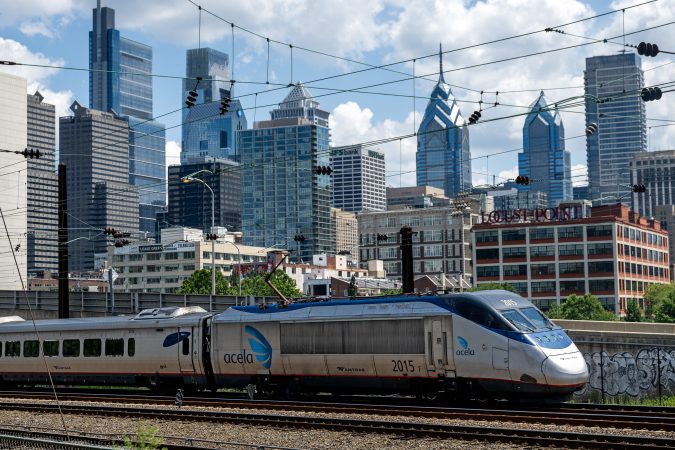
Amtrak and SEPTA were slowing trains down by 5 to 10 mph, and Amtrak was canceling some Acela and Northeast Regional train trips due to the heat, officials said.
Amtrak plans to reduce train speeds through Friday, in addition to canceling at least a dozen trains each day Wednesday and Thursday.
“While these measures are intended to maintain safe and reliable operations, customers traveling during these hours should continue to monitor their train status for the latest updates,” an Amtrak spokesperson said.
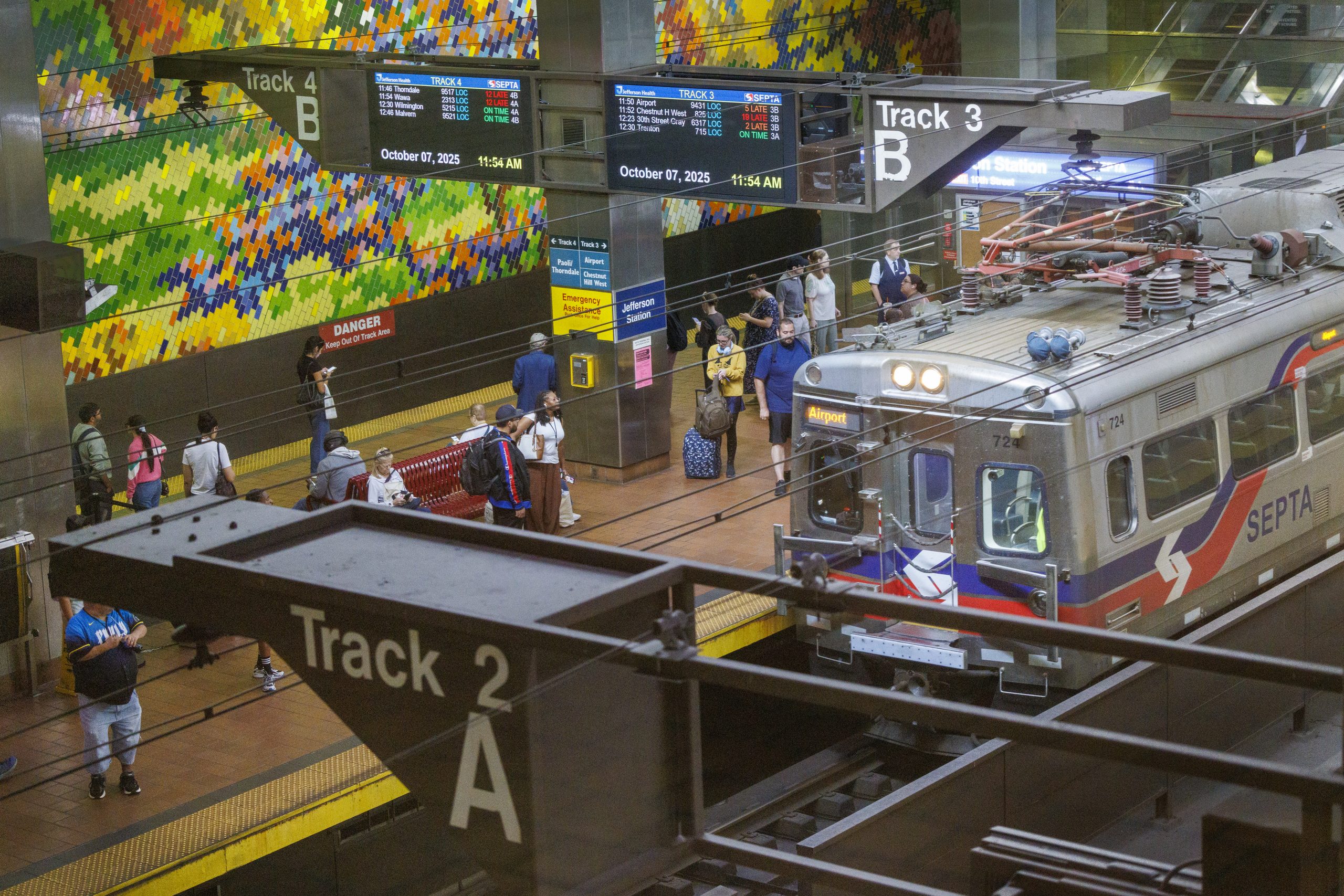
Regional rail train heading to Philadelphia Airport stopping at Jefferson Station. SEPTA Regional rail riders at Jefferson Station, Philadelphia, Tuesday, October 7, 2025.Alejandro A. Alvarez / Staff Photographer
SEPTA has not canceled trips, but it was operating trains at a slower speed, which could lead to delays of up to 15 minutes on Regional Rail and trolleys, SEPTA spokesperson Andrew Busch said. Subway lines were also running slower but were less affected since they are not exposed to direct sunlight as often as other services.
“Bringing speeds 5 to 10 mph slower from their top speed is not always very noticeable to customers, but it can cause some minor delays,” Busch said. “Extreme heat like this makes the tracks more susceptible to damage, and by slowing down the speeds you can help prevent that.”
In extreme heat, rails can begin to warp and eventually crack, creating dangerous circumstances. The wires that hang overhead to power the trains also begin to “sag” in extreme heat, Busch said. The heat also affects electrical equipment like signals and switches, similar to how many across the region can experience power outages in extreme heat.
When temperatures reach 88 degrees, all of these potential safety hazards intensify, Busch said. That is the threshold for when transit agencies begin monitoring their rail systems to see if adjustments are needed.
These safety measures are expected into Thursday and Friday as temperatures are expected to reach 96 and 92 degrees, respectively, according to the National Weather Service. Philadelphia has hit the 100-degree mark three times in 2026, just two shy of the record number for most 100-degree days, according to the weather service.
While the city has not declared a heat emergency, the Philadelphia Office of Homeless Services declared a “code red,” meaning additional outreach was being done to connect those in need to services.
When Gretchen Ellis saw photos of the four-bedroom, two-bathroom twin on a cul-de-sac in Chestnut Hill, she said, “I knew it was ‘the house.’ I felt a deep sense of calm.”
With her two sons in college, she moved from Maple Glen in 2017. Now, her sons are in Pittsburgh and Ellis is joining them.
“I wish I could pick up my house and my neighbors and move them there,” Ellis joked.
The kitchen has marble countertops, stainless steel appliances, and a breakfast bar. Gary Schempp
The 1,520-square-foot home was built in 1887, designed by architect Robert R. McGoodwin.
Hardwood flooring covers most of the home; the living room has a gas fireplace; and the kitchen has marble countertops, stainless steel appliances, and a breakfast bar with scenic views of the grounds.
The living room has a gas fireplace.Gary Schempp
The second floor has two bedrooms, including the primary, which has a built-in closet system, and share a full bathroom. The second bedroom can also serve as a home office.
The two bedrooms on the third floor share a full bathroom with a claw-foot tub.
The dining room.Gary Schempp
Recent improvements include roof flashing reinforcement, metal roof coating, replacement of a cedar shed, and a new sump pump.
There is a full basement with a French drain system, laundry facilities, and an exterior exit with a full set of stairs and a brick patio.
The back patio.Gary Schempp
The house is a short walk from SEPTA’s Chestnut Hill East and Chestnut Hill West Regional Rail lines, and the shopping corridor of Germantown Avenue.
It is listed by Diane Reddington of Coldwell Banker Realty for $699,900.
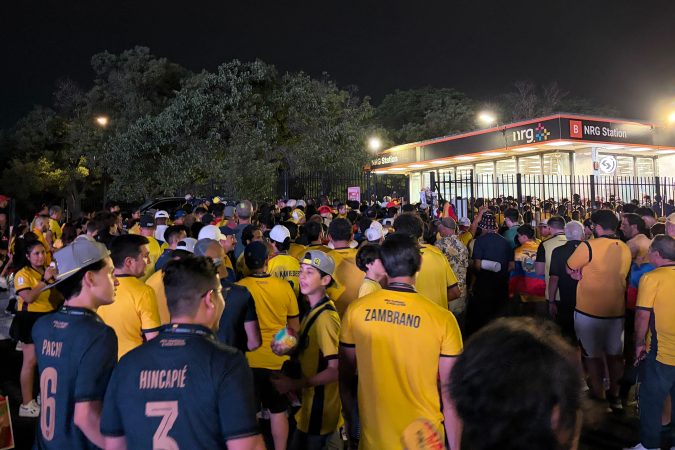
After Brazil beat Haiti in a World Cup match last month, 29,162 fans swarmed NRG Station to catch the subway.It was SEPTA’s second-highest reported crowd for a single stadium-complex event.
And the largest? The 31,087 people rode the B line after the Eagles won the NFC Championship in January 2025.
For three summer weeks, Philadelphia visitors leaned on transit — 155,333 passengers rode the subway also known as the Broad Street Line alone, SEPTA said.
From June 14 through July 4, the city hosted six World Cup matches, FIFA’s Fan Fest, and celebrations of the 250th anniversary of Independence Day.
“This was a unique opportunity for SEPTA — possibly one we will not get again for many years,“ spokesperson Andrew Busch said. ”We think there is a lot we can learn that will help improve special event service and everyday operations.”
Regional Rail also saw bumps in ridership, as did transit, primarily bus routes, serving the Fan Fest at Lemon Hill in Fairmount Park, SEPTA said. Bus routes 32 and 48 provided direct service, while Routes 7 and 49 had stops within walking distance of the festival entrance.
It helped that Brazil and Haiti’s June 19 game fell on the federal holiday of Juneteenth … and that sponsor Airbnb paid SEPTA to provide free rides home for people using the Broad Street Line on match days between halftime and the final whistle.
On July 4, when Paraguay and France met in an elimination round game and people were coming to Independence Day events, ridership on the overall system was up 15% compared to the previous year. Broad Street Line ridership was 62%; Regional Rail was up 48% and the lines serving FanFest were up 21%.
Transit agency analysts focused on post-match boardings on northbound trains at NRG Station because it was the most straightforward way to identify fans who attended the game and traveled on SEPTA, officials said.
Some riders headed to the stadium area were going to Stateside Live or checking out pregame festivities.
Customer service lessons learned, according to SEPTA:
Using megaphones to communicate with riders in crowded stations broke through the noise, helping people unfamiliar with SEPTA navigate.
Bringing a DJ to NRG Station soothed post-match crowds waiting for outbound trains. “More than a couple of dance parties broke out, and we think it helped keep the atmosphere festive,” Busch said.
SEPTA moved its start and end point for the B Line for the Sports Express trips from Fern Rock to Girard, easing crowds in Center City and shortening turnaround time.
Ridership on the Airport Regional Rail line typically increased 20% or more on the day before and day after a match.
Regional Rail’s Trenton line on the Northeast Corridor also carried more passengers than usual, as people took NJ Transit from New York City and northern New Jersey and connected to SEPTA.
While there were complaints about crowding, few major incidents were reported.
SEPTA gets another test next week with the MLB All-Star Game July 14 and related events, though they are expected to have a smaller impact.
SEPTA is trading Glenside Regional Rail riders three daytime trains for new off-peak options, more train cars, and new schedules aimed at reducing congestion between Glenside and Wayne Junction.
The Warminster Line, which runs through southeastern Montgomery County, is the only Regional Rail line losing multiple trains under systemwide changes that began on July 5 to make trains more consistent and prevent delays.
The new schedule cuts two weekday trains that left Glenside at 8:40 a.m. and 2:47 p.m. for Center City, and one weekday train that left Suburban Station at 4:53 p.m. toward Warminster.
The morning train cut leaves a 27-minute gap in service to Center City from Glenside, while the afternoon cuts each add five minutes or less to the wait for the next train.
SEPTA also added a train to the Warminster Line that leaves Suburban Station at 11:35 p.m. on weekdays, and a train on the West Trenton Line that leaves Suburban Station at 5:28 a.m.
The late-night train will serve airport workers, and the dawn departure is convenient for people who commute into the suburbs, SEPTA spokesperson Kelly Greene said.
The changes SEPTA made across the commuter rail system this week are aimed at improving consistency and reliability, the agency said.
“As SEPTA continues to increase the number of train cars available for service, trains will be longer and provide more space for riders,” officials wrote in a statement.
Between Wayne Junction and Glenside, SEPTA said, it hopes the new schedule will help “prevent trains from bunching together, which can cause delays.”
The 8:40 a.m. train from Glenside was cut to reduce congestion, Greene said, and had the lowest ridership of the trains running around that time.
Other changes affecting the Abington area include new departure times for some trains on the Lansdale/Doylestown, Warminster, and West Trenton Lines.
SEPTA put out a full list last month of what is changing on each line, along with updated train schedules.
This suburban content is produced with support from the Leslie Miller and Richard Worley Foundation and The Lenfest Institute for Journalism. Editorial content is created independently of the project donors. Gifts to support The Inquirer’s high-impact journalism can be made at inquirer.com/donate. A list of Lenfest Institute donors can be found at lenfestinstitute.org/supporters.