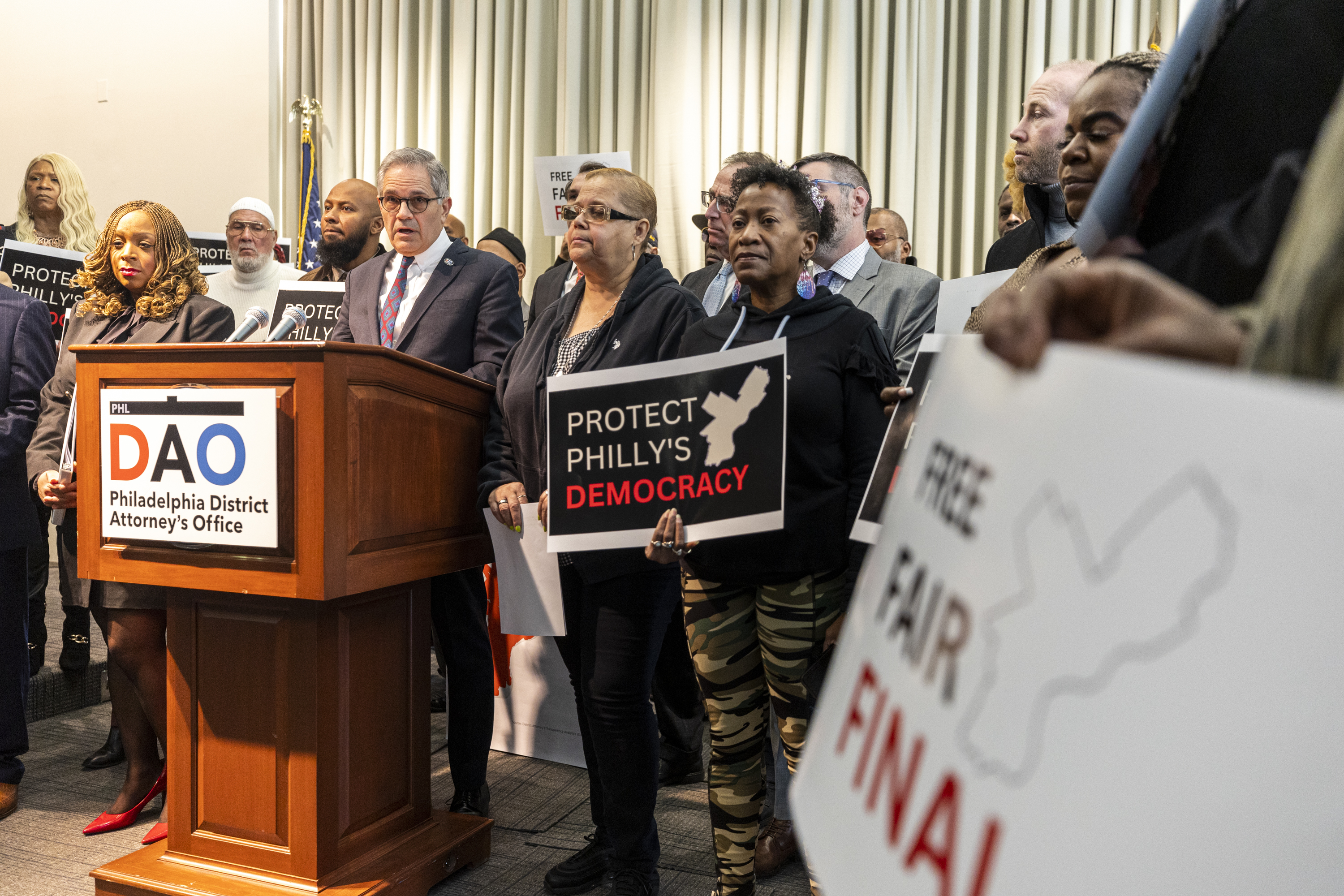
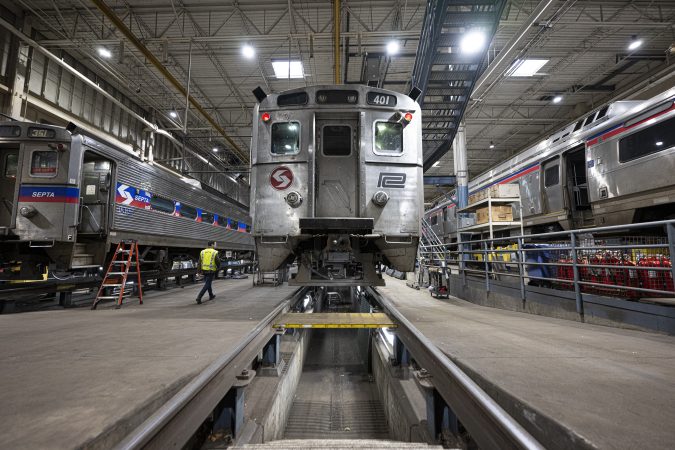
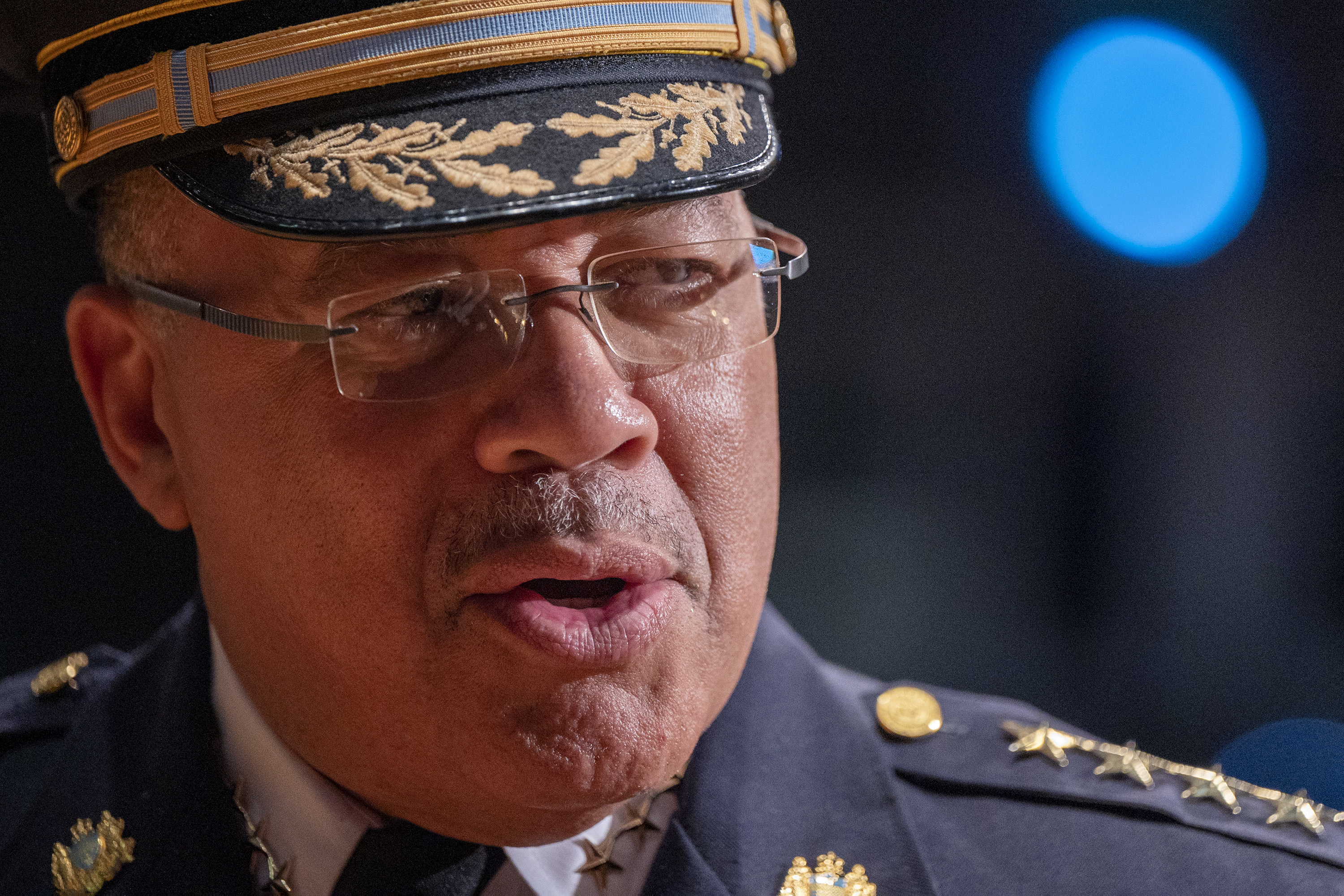
All seven justices rejected District Attorney Larry Krasner’s argument that the law unconstitutionally strips the authority of an elected district attorney by granting jurisdictions to crime “within” SEPTA to a special prosecutor appointed by the Pennsylvania attorney general. But they did not unanimously agree on the reason.
The special prosecutor can investigate crimes in all counties in which SEPTA operates, but can take over cases unilaterally only in Philadelphia.
Chief Justice Debra Todd wrote in the majority opinion that the part of the special prosecutor law specific to Philadelphia serves a “legitimate state interest: promoting public safety through the protection of SEPTA employees and riders by supporting the prosecution of crimes within SEPTA, and specifically, SEPTA-related crimes in Philadelphia.”
The law responds to “public safety concerns regarding increased SEPTA-related crime in Philadelphia, and the belief that such crimes were not being sufficiently prosecuted,” Todd wrote.
State Attorney General Dave Sunday, who is authorized to appoint the special prosecutor, said the law “has paid great dividends in holding violent offenders accountable” for crimes on SEPTA.
“Our mass transit prosecutor will continue to prosecute criminals who have killed and assaulted other individuals, perpetrated acts of gun violence, and stolen SEPTA property,” Sunday said in a statement.
A spokesperson for the district attorney’s office did not return a request for comment.
The special prosecutor’s office has become more active in the last year after a slow start. The office initially hired a sole attorney and did not prosecute a case until 2025, two years after its creation. The office has since taken on a portfolio of around two dozen cases, a spokesperson for the attorney general said. Serious crime on SEPTA has trended downward, according to the agency, falling around 20% in mid-2026 compared with the same period the previous year.
Earlier this year, the special prosecutor,Michael Untermeyer, took on an assault case involving a woman accused of pepper-spraying and punching a conservative influencer during a viral confrontation on a SEPTA bus. And a representative for Sunday’soffice said the prosecutor was preparing for a homicide trial in November, and the office was recently referred a case involving an assault on a SEPTA bus driver.
The ruling is the latest in which the Supreme Court has shown willingness to take away from Krasner functions that county prosecutors traditionally havehad sole discretion over. The justices in June found that Philadelphia prosecutors had engaged in a pattern of misleading judges when seeking to overturn murder convictions, and instructed judges to notify the state attorney general’s office so it can review cases when Krasner’s office makes such requests going forward.
But the ruling on the SEPTA special prosecutor might be short-lived.
Krasner’s lawsuit called the law an “unconstitutional, radical, and unprecedented measure” amounting to a “shocking usurpation of power.”
In June, Commonwealth Court issued a 4-3 decision against Krasner, finding the law constitutional. In the majority opinion, Judge Anne E. Covey said the act “does not clearly, palpably, and plainly violate the Pennsylvania Constitution.”
In a Thursday concurring opinion, Justice David Wecht emphasized the ways the special prosecutor law was tailored to Krasner specifically.
The law disqualifies anyone who worked at the Philadelphia district attorney’s office as of roughly the beginning of Krasner’s tenure from serving as special prosecutor, the justice noted. And the measure was set to expire a year after Krasner’s second term ended (he has since won a third, which began in January).
The special prosecutor law is “tailored to hamstring Philadelphia’s thrice-elected and sitting District Attorney’s customary prerogatives relative to crime within the jurisdiction that office serves,” Wecht wrote.
“But none of that matters,” he said, because since 1951 the Pennsylvania Constitution has allowed for laws ”regulating the affairs of the City of Philadelphia.”
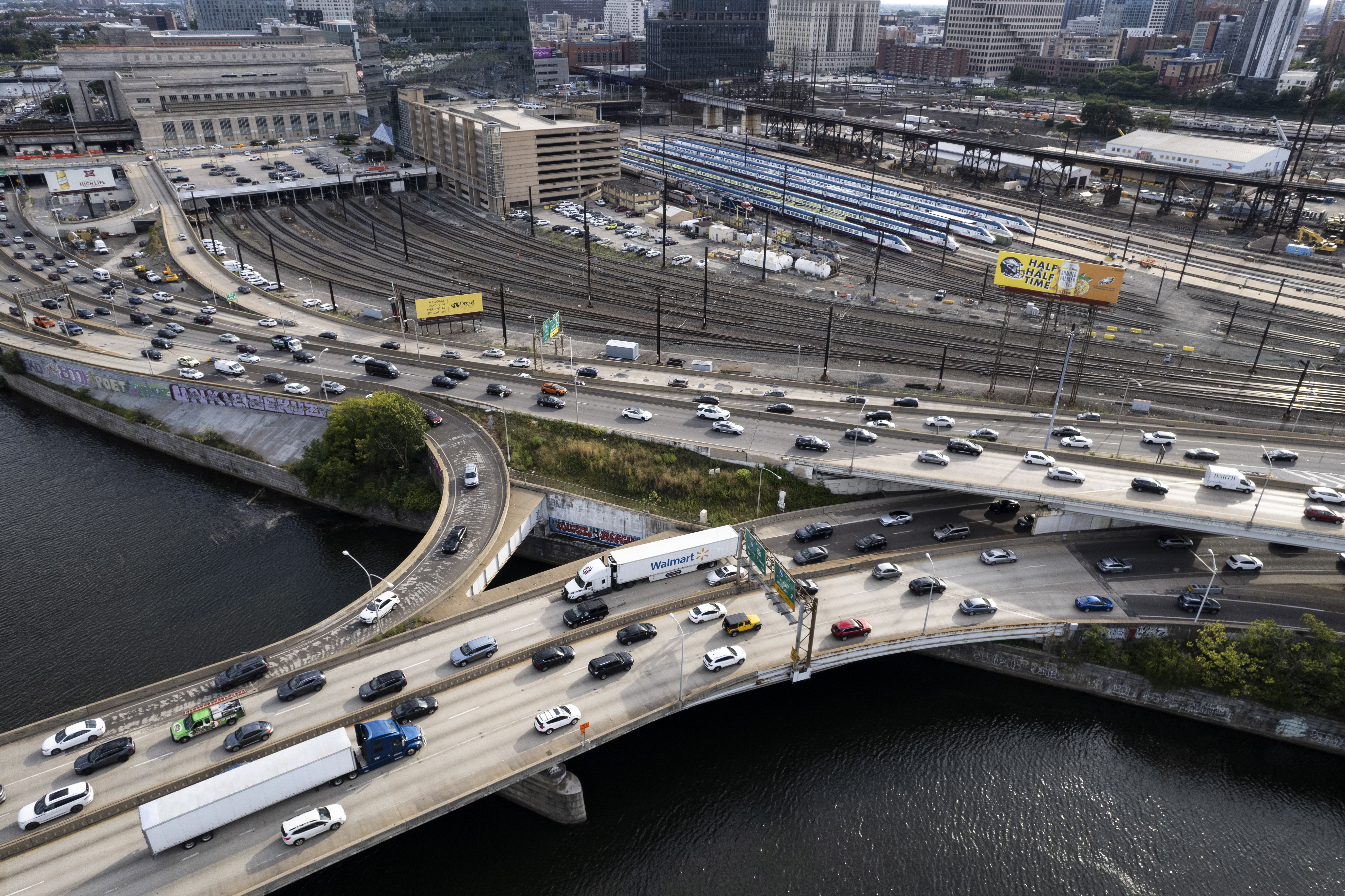
The Delaware Valley Regional Planning Commission is collecting granular information about daily travel: Where did people go? Why? Did they drive, take transit, walk, bike, or use an electric mobility device?
Planners working on the project aren’t nosy or trying to surveil anybody.
They need real-time data to update DVRPC’s travel demand model for the nine-county Philadelphia area that will guide funding decisions about infrastructure projects and transportation plans for the next decade.
“Compared to any other 10-year period that I can recall, there has just been so much transformation in how people travel,” said Mike Boyer, the agency’s director of regional planning.
Information from a new household travel survey will show a clear picture of exactly how it changed and provide clues about where regional transportation might be headed. The last household survey was conducted in 2012 and 2013 and a final version was published in 2015.
Typically, DVRPC conducts a travel survey every decade, but officials waited 13 years this time to allow transportation patterns to settle into a “new normal” after the massive disruptions of the pandemic.
How do they find households to take the travel survey?
Beginning in January, DVRPC has been recruiting participants by mailing postcard invitations to randomly selected households in South Jersey and Southeastern Pennsylvania. It has also used some social media posts.
People cannot reach out to nominate themselves.
Random invitations help ensure that respondents reflect the population of the region. Participants need to represent each of DVRPC’s nine counties, as well as a mix of households by income, size, number of workers, and other demographics.
It is expected to take the rest of the year to get the 9,000 to 10,000 completed household surveys required for a good picture of the region’s habits, said Matt Gates, associate director of travel trends and forecasts for DVRPC.
Based on typical response rates, it may take as many as 300,000 postcards to recruit enough participants, he said.
Recruitment paused for the summer and started up again after Labor Day.
DVRPC serves Burlington, Camden, Gloucester, and Mercer Counties in New Jersey as well as Bucks, Chester, Delaware, Montgomery, and Philadelphia Counties in Pennsylvania.
Survey data will be held confidential and anonymized, used in the research but not attached to any specific household or phone number, Boyer said.
“Data won’t be sold or used by any third party,” he said. “We want to be forthright about that.”
What do participants do?
Most will report household trips for one 24-hour period, starting around 2 a.m. or 3 a.m., using a smartphone app that runs in the background, tracking each trip via GPS.
When it detects what might be a trip, it prompts the participant to confirm it and provide details such as the trip’s purpose and what type of transportation is used.
“If you leave your house in the morning and go to work, and then you leave work and go somewhere for lunch, and then you go back to the office, and then, on the way home, you stop at the dry cleaner — all of those pieces of your daily travel are joined together,” said Gates, the chief travel modeler.
That would be counted as a “tour,” broken into separate trips, each attached to a specific activity.
The survey also asks for basic household information — size, ages, jobs, school attendance, income, and vehicles. E-bikes, e-scooters, personal mobility devices for people with disabilities, traditional pedal-powered bicycles, and walking will be counted as separate modes of travel.
In the 2012-13 survey, walking and biking were separate options, but the travel model combined them in one category called “nonmotorized.” A catchall “other” category covered everything else.
Participants who do not want to use the app can keep a paper travel diary and then either enter their trip information on a website or reach a call center, where a person will walk them through the questions and record the data.
How will the information be used?
After it is fed into the travel model, DVRPC will use it to help draft a Transportation Improvement Program (TIP). That is the federally mandated priority list for allocating federal and state funding of transportation, transit, and highway projects across the region.
But that’s not all.
Planners use it to decide on traffic safety projects, to chart where new recreational trails should go, and to test scenarios in response to events.
Combining the data with information about the transportation network can provide insight into how people make decisions about, say, using a SEPTA train vs. driving between two points, Gates said. “Is it time? Is it cost? The number of vehicles available in a household?”
A good travel demand model with those insights can help answer “what if” questions such as what effect a new train line or highway would have, or rising gas prices, transit fare increases, and service cuts, Gates said.
It can help planners think about how the transportation network could accommodate a spurt of growth in Quakertown, Bucks County, for example, or Woolwich Township, Gloucester County.
Last year DVRPC used existing data to project added motor vehicle traffic amid SEPTA service cuts, which began but were quickly rolled back.
The extent to which hybrid work and e-commerce may be reducing trips per person or household. For example: How many shopping trips have been replaced by deliveries?
Transit changes: They want to understand SEPTA’s ridership recovery from COVID-19 and how often people are using transit for a mix of nonwork trips at different times, rather than just traditional commutes.
How are people using ride-hailing services like Uber and Lyft, which have mushroomedover the last decade?
Gov. Josh Shapiro’s hope for a Democratic state Senate likely hinges on the Philadelphia suburbs, where three swing districts could give his party the majority in the chamber for the first time in 33 years.
Democrats in the Keystone State have zeroed in on the GOP-held seats in the 6th District in Bucks County, the 16th in Bucks and Lehigh, and the 24th in Montgomery and Berks Counties as three of the districts they’re hoping to flip to create a Democratic trifecta in Harrisburg with a possible blue wave in November.
The competitive races in Bucks and Montgomery Countiesare unfolding ahead of this November’s midterm elections when Pennsylvania will also be in the spotlight for Shapiro’s reelection bid and four congressional contests that could determine party control of the U.S. House.
Like most Democrats across the country, Eileen Hartnett Albillar in the 6th District, Mark Pinsley in the 16th District, and Chris Thomas in the 24th are centering their pitch to voters around affordability as Pennsylvanians’ signal their overwhelming disapproval of President Donald Trump’s handling of economic issues and gas prices.
“Individual candidates matter, campaigns matter … but I do think it’s pretty clear that all these elections, to one extent or another, wind up being a referendum on President Donald Trump, and I think that puts Democrats in a very strong position,” said State Sen. Santarsiero, the chair of Bucks County’s Democratic Party. Santarsiero is also running for reelection this year.
Republicans currently hold 27 seats in the 50-member state Senate.Democrats would need to flip at least two seats and hold the governor’s office to take control with the lieutenant governor’s tie-breaking vote.
A Democratic trifecta in Harrisburg — if the party maintains its House majority and flips the Senate — would allow Shapiro in a second term to usher through a minimum wage increase and more transportation funding among other priorities that have been blocked by the GOP Senate.
But Democratic candidates will have to win over independent and even some Republican voters to prevail in the swing districts against GOP incumbent State Sens. Frank Farry in the 6th, Jarrett Coleman in the 16th, and Tracy Pennycuick in the 24th. The GOP has a registration advantage in all three districts, according to state data.
Farry, Coleman, and Pennycuick did not respond to requests for an interview, but the state party projected confidence about their ability to hold their seats.
“Maintaining the majority in the Senate is a top priority for Republicans in Pennsylvania,” said James Markley, executive director of the PA GOP.
He also praised Farry, Pennycuick, and Coleman for their work to lower costs and improve the state’s education system.
“When it comes to majorities in the State House or the State Senate, every seat matters,” he said.
Here’s what to watch.
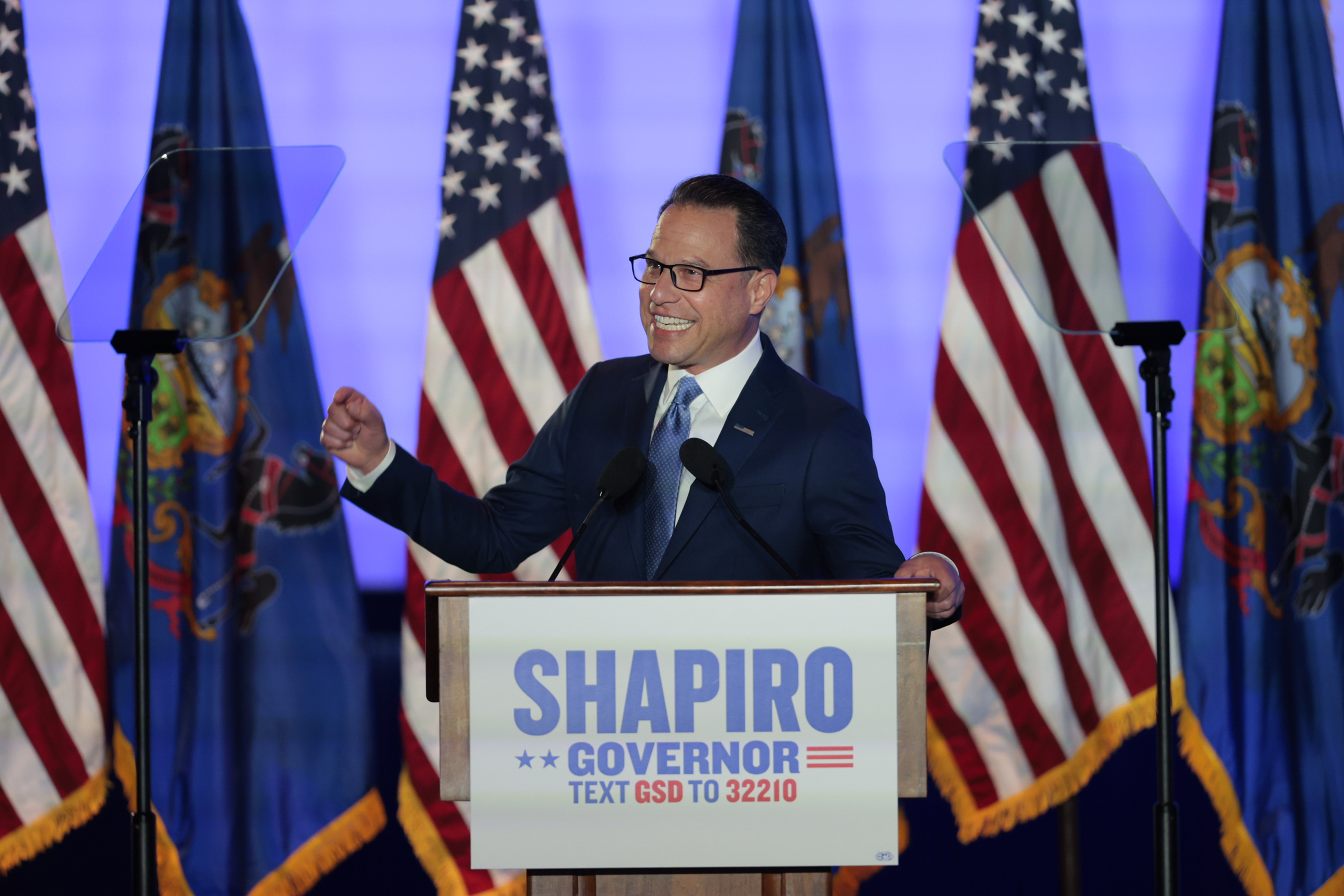
Gov. Josh Shapiro addresses supporters at a primary night part in Warminster on Tuesday, May 19, 2026Steven M. Falk / For The Inquirer
‘You don’t take for granted anything in Bucks County’
Bucks County’s importance ahead of November has been clear for months.
In Warminster last May, Shapiro held a primary night party at a former space centrifuge where he promotedhis reelection campaign and a slew of downballot candidates. There, Hartnett Albillar, who is also the county’s clerk of courts and a social worker by trade, declared: “The path to flipping the Senate runs right through Bucks County.”
As she continues knocking on doors and courting voters in the 6th District, which includes most of the middle of the county, that reality could not be more obvious. But, Hartnett Albillar said, despite Shapiro’s support (he has endorsed all three candidates) and a blue wave in the forecast, she’s not thinking of her election as a shoo-in.
“We know that you don’t take for granted anything in Bucks County,” she said in an interview last month.
That’s because the suburb is notorious for split-ticket voting, she said.
“Democrats have won here in other races, but I believe you have to make your case to voters individually,” Hartnett Albillar said, adding that voters in her district don’t look at party labels.
It’s a dynamic that has, for example, allowed GOP U.S. Rep. Brian Fitzpatrick to maintain his congressional seat even in years Democrats do well — like in 2022 when Shapiro won the county by nearly 20 points.
Pinsley is trying to make that argument in the Upper Bucks County portion of the 16th where voters are less familiar with the Lehigh County controller and where Republicans have a roughly 22,000 voter registration advantage — the largest gap of the three districts.
Eileen Hartnett Albillar (center) is challenging State Sen. Frank Farry in Bucks County’s 6th District.Hartnett Albillar Campaign
This race is also a rematch for Pinsley after he lost by 8 points against Coleman in 2022.
But the Democrat was given another chanceby votersthis year after he succeeded in a heated primary without the Bucks County Democratic Committee’s backing.
Now that he has the party’s support, he says it’s helped him reach a whole new circle of people for his events, including “Pastries with Pinsley,” a regularmeet-and-greet at various coffeehouses in the district, but especially in Bucks. This weekend, he’s headed to the So Fresh So Green Cafe in Perkasie.
“60% of the vote is in Lehigh County, and 40% of the vote is from Bucks County,” Pinsley said in an interview last month. “We need Bucks. We need Bucks to win. You’re not going to win in just Lehigh.”
Across county lines into Montgomery County — Shapiro’s home county, which has a reputation for being deep blue — also lies another swing district that Democrats are investing in as Thomas, a volunteer firefighter and community organizer, hopes to bring Pennycuick’s tenure in the state Senate to a close.
Until now, the 24th District, a hodge-podge of suburban and rural communities in Montco and Berks County that Thomas calls “all-encompassing of Pennsylvania” has “always been just out of reach in terms of how the district was drawn.”
But this year, with a combination of voters’ frustrations and Shapiro on the ballot, Thomas believes “a lot of the stars are aligning.”
“There’s a slim path to the majority without this district,” he said.
But Republicans won’t be giving up these suburban swing districts so easily.
Michael Straw, a spokesperson for the Pennsylvania Senate Republican Campaign Committee, said the GOP is “ready to compete for every vote in Bucks County.”
Straw said in a statement that candidates will highlight the bipartisan bills that lawmakers have introduced and have since been signed into law, including Farry’s legislation to reduce cost barriers for breast cancer screenings and Coleman’s bill to address school safety and increase parental transparency.
“We are making these legislative accomplishments known to voters across the political spectrum,” Straw said.
Both parties are betting on affordability
Heading into November, both Democrats and Republicans are trying to make the case to voters in these key swing districts that they are the party of affordability.
Straw said that Republicans view these elections as an opportunity to emphasize affordability and fiscal responsibility to put “an important check on the Democrats overspending.”
“Senate Republicans have helped to prevent wasteful spending, stop the Democrats’ electricity tax that would have cost Pennsylvanians more, and have supported reducing taxes on working families,” Straw said. “PA Senate Republicans have made affordability the priority while Democrats have repeatedly stood in the way.”
Bucks County GOP State Sen. Frank Farry (center) during a ceremonial meeting of the Pennsylvania Senate at the National Constitution Center May 5, 2026.Tom Gralish / Staff Photographer
And for Democrats, that means addressing voter frustrations that have trickled down from federal policies.
Trump — who has urged voters to think of him as being on ballot — is getting worsening marks on the economy from Pennsylvania voters. The president’s own voters in 2024 are also dissatisfied with his handling of gas prices, polling shows.
“They’re not happy about the Iran war. They’re not happy about the cost of gas. There are other costs that are going up, and many of them do blame the president, and all of these races have been federalized in many ways,” Pinsley said.
In response to the rising costs of living, affordability has taken up most of the oxygen in Democrats’ messaging as the party shifts away from issues that have been prevalent in previous campaigns, such as abortion.
With a focus on prices, the three swing district candidates have not had to switch up their stump speech even when chatting with Republican or independent voters that they’ll need to win over to be successful in November.
Hartnett Albillar said that all voters are simply looking for a “functional” and competent government.
Other key issues popping up in these races include funding for SEPTA and data centers; the latter of which has sparked contentious ads, including one by Hartnett Albillar’s campaign in the 6th District that provoked Farry’s campaign to file a cease-and-desist.
“I’ve heard many times that folks are not looking at whether there’s a ‘D’ or an ‘R’ next to the name,” she said. “They’re looking at the person who will be able to bring change and bring fresh ideas because the current system is not working for us. Costs are way too high, and they want someone who’s going to do the work.”
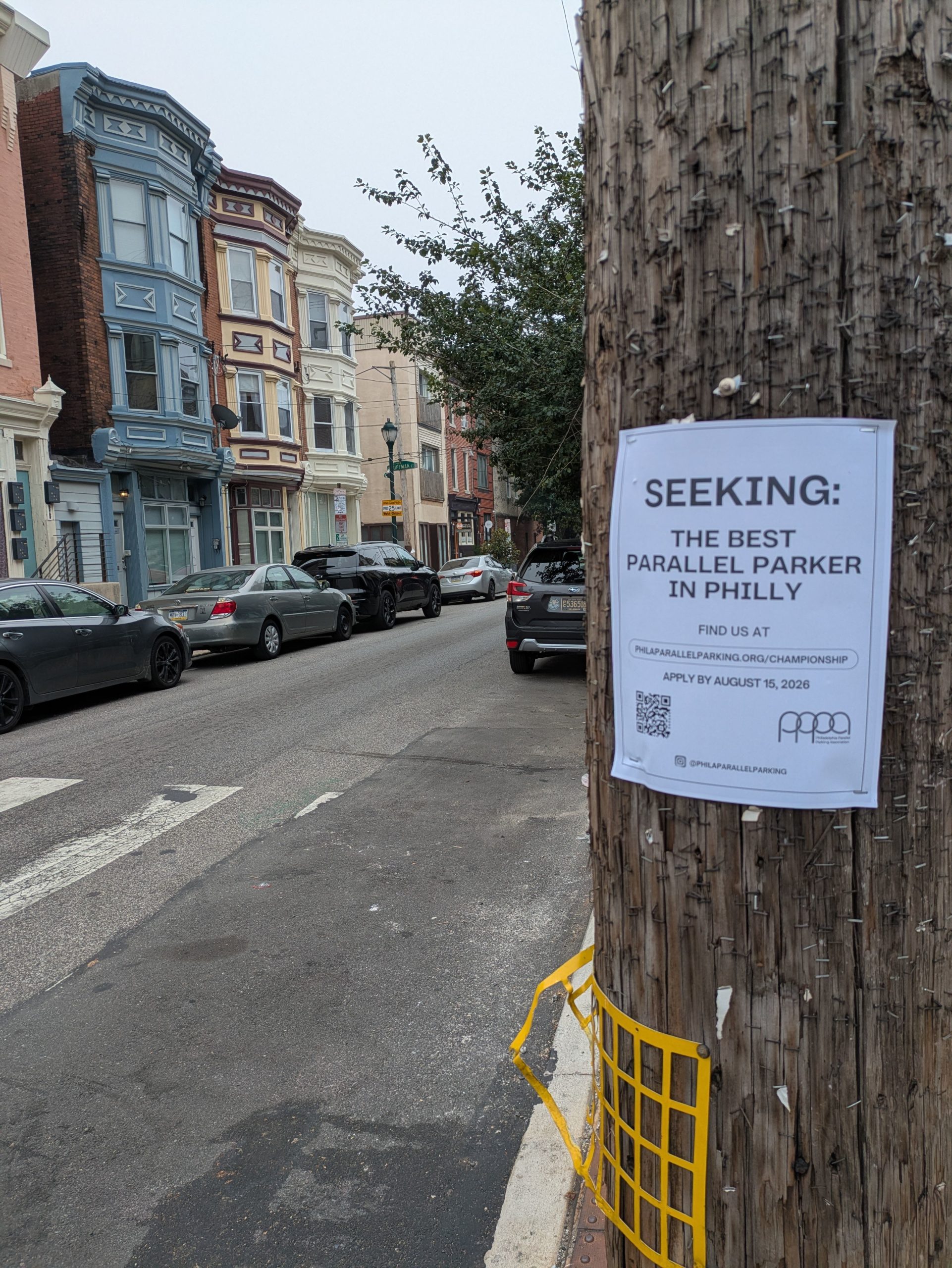
Things are starting to line up like a perfectly positioned side-view mirror for the first Philadelphia Parallel Parking Association (PPPA) Championship Saturday, with final details about the event being released this week.
Fifteen drivers, each of whom claims to be the best parallel parker in the city, will go bumper-to-bumper in a series of challenges from 1 to 4 p.m. at Headhouse Plaza in Society Hill to determine who’s telling the truth and who’s full of hot air.
The competition is being held by the PPPA with the South Street Headhouse District serving as co-presenter. Formed this year, the PPPA is a semi-silly group created by self-proclaimed Commissioner Adam Wodka of South Philly that takes the art of parallel parking very seriously. Its executive board is made up of seven of Wodka’s friends.
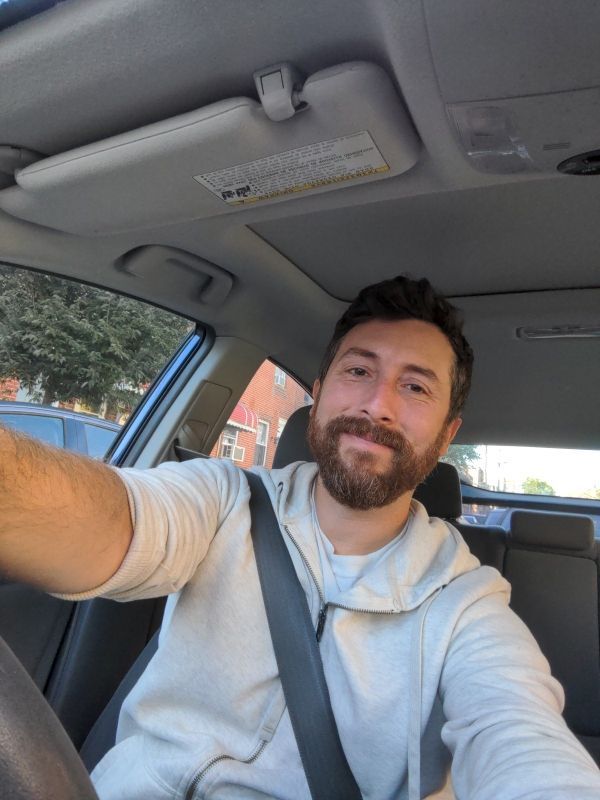
Philadelphia Parallel Parking Association Commissioner Adam Wodka behind the wheel.Courtesy of Adam Wodka
Earlier this month, Marisa Magnatta from WMMR’s Preston and Steve Show was announced as the event’s emcee and on Tuesday, the PPPA revealed its three local celebrity judges.
Among them is Fergus Carey, the longtime owner of Fergie’s Pub and several other drinking establishments across the city, who’s generally known in Philly by just one name, Fergie, because around here he only needs one, like Cher.
Someone fairly new to the Philly limelight who came onto our screens and into hearts this spring is also serving as a judge — crossing guard Jamele Ransom. In May, Ransom gave an animated interview to NBC10 about witnessing a carjacked truck crash into a playground and he gave that interview while actively eating a soft-serve vanilla ice cream cone the entire time. The clip quickly went viral, with people hailing Ransom as a Philly “legend” and “hero.”
Rounding out the trio of judges is comedian and social media influencer Betsy Kenney, whose ASMR videos, which are spoken with a strong Philly accent and feature sounds like the soft crushing of wooder ice, have been wildly popular online.
Just shy of 900 people entered the competition in the month applications were open, according to Wodka, with many submitting videos in which they illustrated their skills or told tales of their parallel parking prowess. Ten contestants were chosen by the PPPA and the remaining five were voted on by the public.
Many of the drivers are going by nicknames like “Pirate One Shot” and “Missy Parks Good.” One competitor, Mary Zheng, was a contestant on Survivor, and another, who’s going by the name “Dark Transit,” is a SEPTA bus driver. Some filmed their video applications on the street or in their car, and at least one guy, “Joe Cocomo” of South Philly, appears to have filmed his lying in bed.
“I’ve been parallel parking since I was 8 years old,” Cocomo said in his application video, which is posted to the PPPA’s Instagram page along with those of the other finalists.
The contenders hail from neighborhoods across Philadelphia, from Uptown to South Philly and from Eastwick to West Mount Airy, and they range in age from folks in their 20s to people in their 70s. (There was a 90-year-old finalist but she recently backed out.)
Contestants are required to use their own vehicles and will compete in three categories:
One shot: Get closest to the curb in one attempt.
Tight squeeze: With 18 inches of clearance, park closest to the curb using the least amount of moves.
Under duress: Park as fast as you can while faced with distractions.
The judges will score each contestant on a 10-point scale based on speed, competency, proximity to the curb, and flair. The three drivers with the highest scores will move on to the final round, a “pure show me what you got,” where one will be crowned best parallel parker in Philadelphia 2026, according to Wodka.
Initially, the PPPA was going to allow backup cameras in the competition, but it has since reversed that decision.
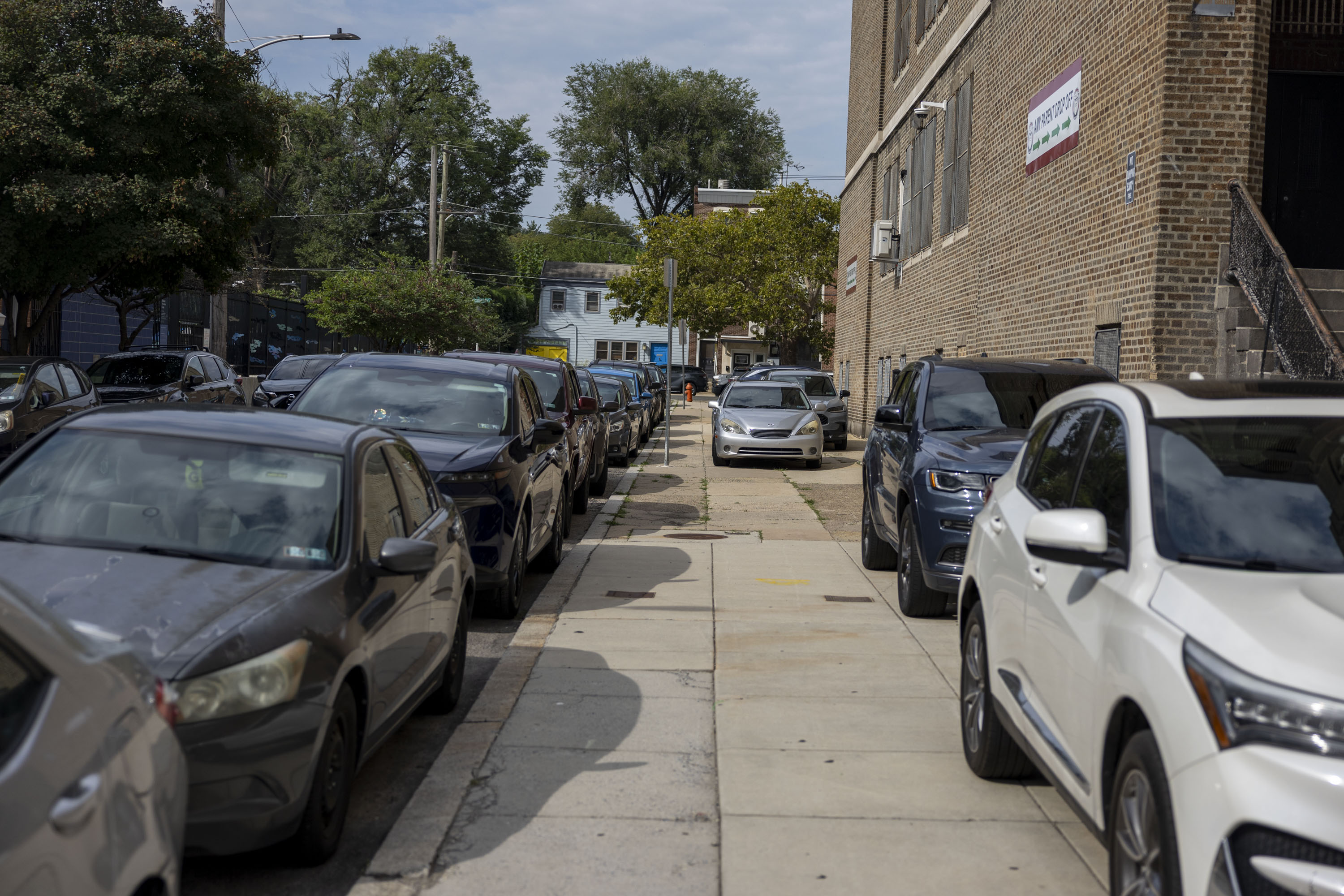
A sign advertising the 2026 Philadelphia Parallel Parking Association Championship is affixed to a pole across from some fine examples of parallel parking in the city.Courtesy of Adam Wodka
“While going through the contestant applications, so many people took pride in calling out that they don’t need it or use it that we decided for someone to be the Best Parallel Parker in Philadelphia it should be earned through the grit of doing it old-school,” Wodka said via email.
Saturday’s competition will also feature a parallel parking practice for kids, merchandise, and the debut of the PPPA’s mascot, Parallel Pete, who is an orange traffic cone.
The winner of the PPPA Championship will receive best parallel parker in Philadelphia bragging rights for a year, a trophy that will include a piece of a curb, and $76 to cover their next parking ticket.
The Philadelphia School District is thousands of students under its enrollment projections this school year — and with an important funding deadline looming, Superintendent Tony B. Watlington Sr. is sending officials knocking on doors to drum up business.
Central office staff and school workers have been asked to fast-track “Enrollment Acceleration,” a new, district-specific programdirectly engaging families that have left the Philadelphia school system, The Inquirer has learned.
District staff — up to and including chiefs and assistant superintendents — are fanning out across the city, pounding the pavement to try to connect with reluctant families face-to-face. The door knocking began in the last two weeks.
The effort is driven by a shrinking student body in district schools and an Oct. 1 deadline to report enrollment — which drives district funding — to the Pennsylvania Department of Education.
District schools were 4,236 students under their projected enrollment as of Sept. 17, according to internal documents obtained by The Inquirer. District-run alternative programs had 1,051 fewer students than planned.
The school system had projected 116,898 in district schools by Sept. 17, and 2,757 in alternative schools. Instead, its enrollment was 112,662 in district schools and 1,706 in alternative schools.
Asked to comment on the enrollment decline, a district spokesperson said it was too early to estimate annual enrollment because the state’s verification process does not conclude until Oct. 30. But, Monique Braxton said, it’s part of a nationwide trend of dwindling public school enrollment.
“The district’s goal is to get district operated schools as close as possible to that of last year’s number of approximately 116,898 students, such that we can grow our enrollment next school year,” Braxton said in a statement.
Enrollment is down virtually everywhere in the city.
Just two of 15 networks did not lose students, according to the Sept. 17 figures — Learning Network 9, a geographic network of elementary and middle schools in Kensington, Bridesburg, Port Richmond, and Frankford, and Learning Network 15, a network of magnet schools across the city.
Voting with their feet
Once the 2026-27 school year began Aug. 24, it became quickly clear that there were fewer district students in seats than expected.
Many factors likely play into the enrollment decline.
Though academics have generally been improving in the school system — Philadelphia was tops in the nation in its learning rate post-pandemic, according to research out of Harvard and Stanford — the district still struggles, with most students unable to read (33%) or do math (25%) at grade level.
(Philadelphia charter schools’ performance is slightly worse in reading, 31%, and slightly worse in math, 20%.)
Also a likely factor is the effect of the school board voting recently to close 17 schools in the next several years. Officials have said they are doing so to improve academic outcomes for all students, amid 70,000 empty seats citywide, a stock of aging buildings and decades of underfunding, and emphasized that in addition to the closings, they plan to spend billions on renovating 169 of the buildings they’re keeping open — though most of that plan is unfunded.
There are other reasons, too: Some staff say the current political climate has fears of ICE keeping some students out of school. And cyber charter enrollment is growing, with some Philadelphia families choosing the virtual option because of safety fears for their children as the city grapples with a gun violence epidemic.
“The district is a hard sell for some families,” said one central-office employee who was not authorized to speak about the enrollment decline. “You have a lot of families who have just unfortunately lost faith in a lot of the offerings that we have, and they’re voting with their feet.”
A full-court press
Since the surprise decline became apparent when school started, “we’ve been working hard to close the gap,” the employee said.
At first, schools were directed to reach out themselves via calls and emails to students they expected to enroll but who never showed up. Soon, almost-daily briefings on closing the enrollment gap began, and have continued.
Next, the administration moved to canvassing events, asking central office employees and school staff to volunteer to go out in pairs into neighborhoods to reach families. Canvassing also includes trips to neighborhood barbershops, laundromats, and corner stores “trying to convince students to return back to the district, rather than remain in whatever other option they decided on.”
About 75 employees volunteered for the effort, the employee said. It is still ongoing.
Some schools and departments pushed back against the call to directly appeal to students, with officials they didn’t feel comfortable sending staff into neighborhoods. Others are going out, the employee said.
The campaign is an extraordinary step, said the employee.
“I’ve never known an assistant superintendent or anyone going so far as this, being part of canvassing,” said the employee source.
Much is at stake.
“Our funding is based on numbers,” the employee said. (Both state and federal funding are tied to enrollment.)
And the district has generally been shrinking for decades.
In 1999, just after the first charter schools opened in Pennsylvania, the district enrolled 205,199 students in its schools. By 2025, that number was 113,735. (An additional 64,469 students were enrolled in charters.)
The district’s enrollment rose once in the last decade: in 2024-25, jumping by 1,841 students to 117,956. Watlington said he believed the next year’s drop happened because of large-scale SEPTA bus route changes at the start of the school year.
‘Warm conversations’
A second employee involved in the recent recruitment efforts said the call to canvass came with surprising urgency.
“They said, ‘It needs to be done in the next two weeks, because our numbers have to go to the state Oct. 1,’” said the employee, who also asked to not be identified because they were not authorized to speak about the enrollment push.
The second employee was paired with another volunteer. They received a several-page handout with instructions about how to conduct the visits, and a suggested script.
“We’re reaching out because we want to make sure your child has a clear plan for school and see how we can support you,”the second employee said.
Canvassers were told to ask if the family planned to return their children to the district, to begin a “warm conversation” and to help families with information about how to register for district schools. They were told to help address any barriers to registration.
Teams were told their safety is paramount, asked to not enter homes, and reminded to end a visit if either team member feels unsafe.
“Remember,” one handout said, “you are there to understand, inform, support and connect — not to convince.”
The second employee wasn’t especially enthusiastic about canvassing, but felt pressure to do so.
“What can I say on somebody’s doorstep to get them registered in the school district? Nothing,” the employee said.
The first employee said they were not having success with families.
“The houses I’ve been to haven’t been very responsive,” the employee said. “But I’ve been having very cool conversations with neighbors.”
Many families aren’t home or don’t answer the door, and the employee doesn’t blame them. They could be mistrustful of authorities or people they don’t know or worry about their safety.
Four people involved in the “come-back-to-the-district” effort said they were skeptical it would help the school system reach its projections.
“It’s going to yield something, but it’s not going to yield enough to cover up the fact that we’re several thousand away from meeting our projection of 116,000,” the employee said.
Transit fans who asked what in the El was happening with SEPTA’s old stuff inspired a sale of vintage items from its vault this month, marking the first time in the agency’s six decades of existence that Philly’s biggest fleet has held anything close to a garage sale.
Dubbed “RETROmania,” the sale began online Sept. 14 and is already proving to be a gravy train for SEPTA, with decommissioned transit signs selling out for up to $350 a pop.
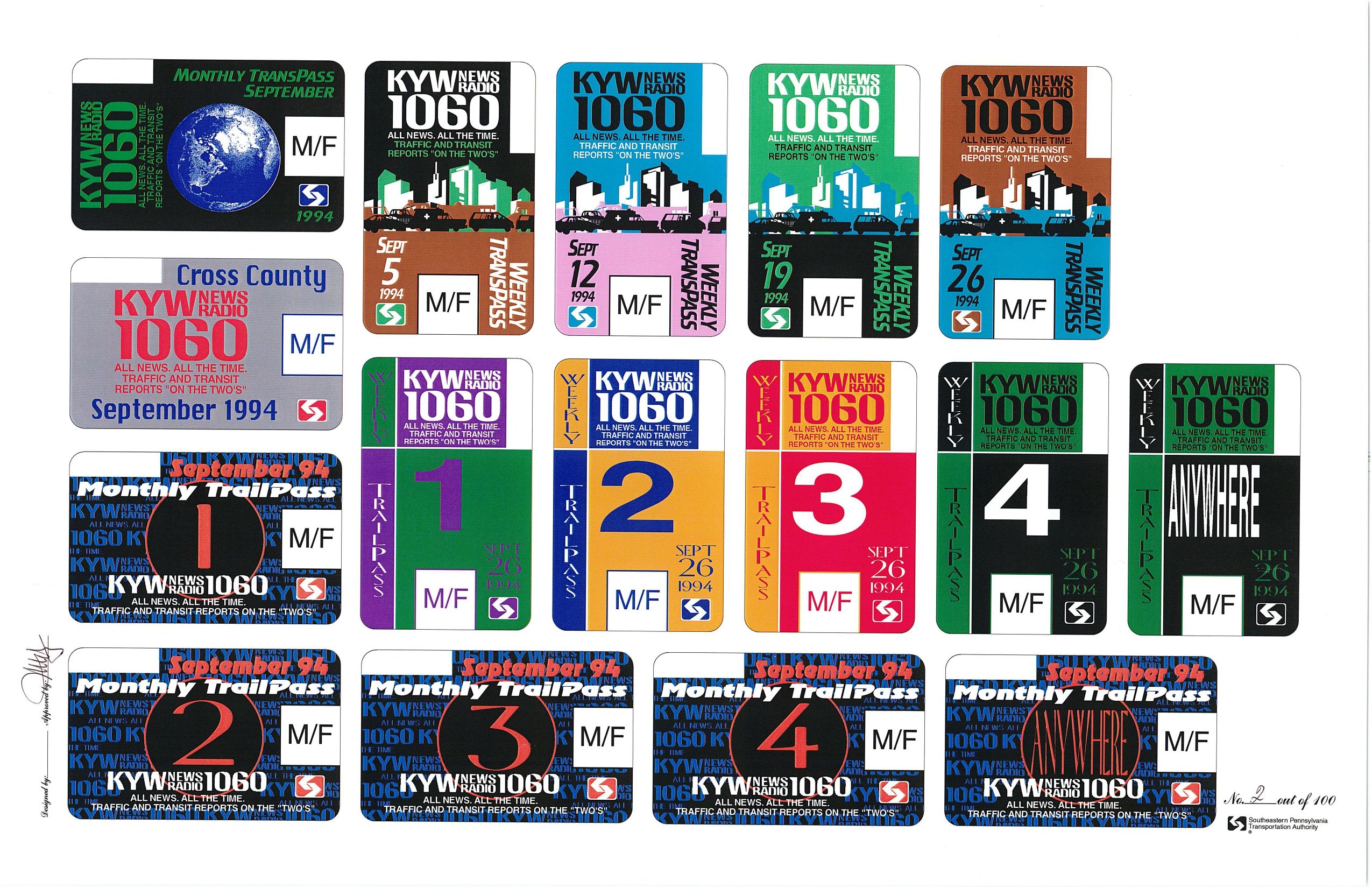
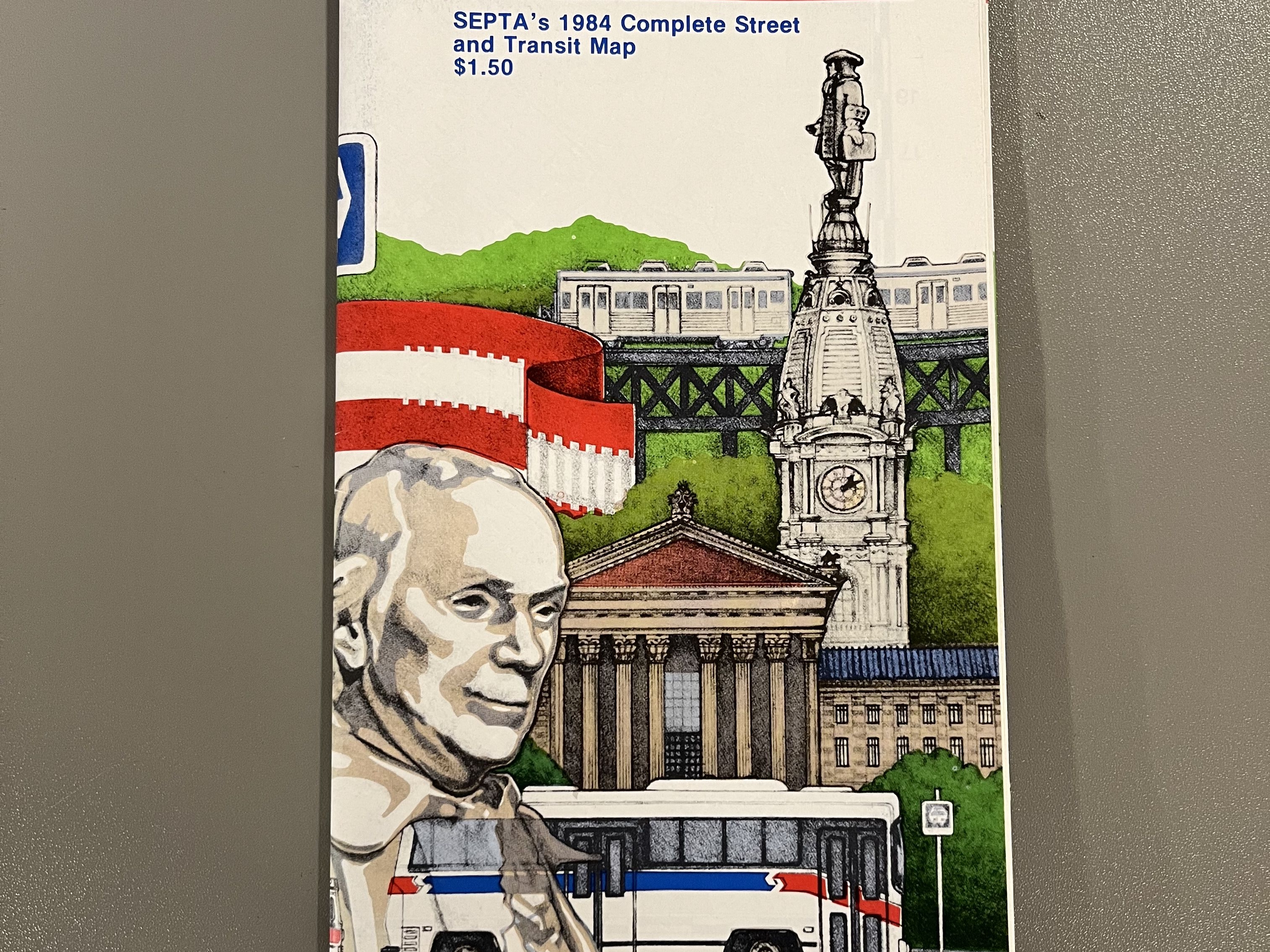
It’s no surprise that signs for the Broad Street Line, which has shuttled Philly sports fans to and from the stadium complex for decades, have been among the hottest-ticket items. Other available products include old street and transit maps and vintage TransPass design sheets.
A TransPass sheet from 1994 is selling for $50 during SEPTA’s RETROmania sale.Courtesy of SEPTA
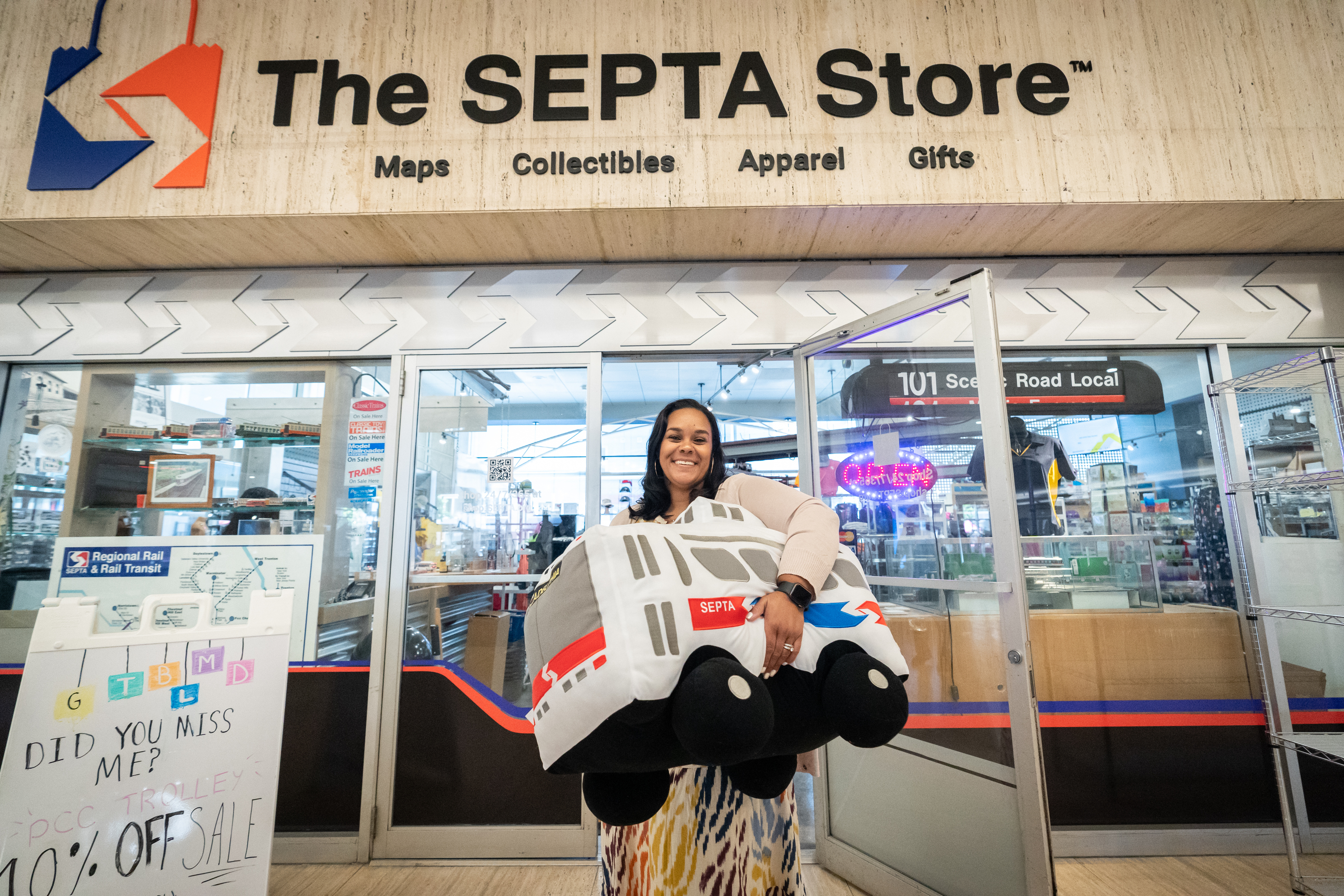
The early success of the online sale has SEPTA Store manager Al’Lee Floyd and store supervisor Melissa “Meli” Smalls excited for the in-person sales at the store on Oct. 2 and 3.
“It was a big surprise … we did not anticipate some of the signs would sell out in one day,” Floyd said.
Since taking over the SEPTA Store at the agency’s headquarters on Market Street near 12th in Center City in 2021, Floyd has reinvigorated the agency’s merchandise and fan base with wildly popular items like viral pint glasses and must-have ugly Christmas sweaters.
Al’Lee Floyd, manager of the SEPTA Store, outside of the store at the SEPTA headquarters in Center City in 2024. Jessica Griffin / Staff Photographer
But SEPTA’s vintage sale — the first of its kind anyone can recall — was inspired squarely by its customers. Over the last two years, as SEPTA rebranded the names of its lines and signage, like switching the Broad Street Line to the B (a change many Philadelphians have neither accepted nor acknowledged), SEPTA fans have inquired about what’s happening to the signs with the old names on them.
“When people started noticing the stations were switching over, a lot of people were coming into the store and asking what we were doing with the signs coming down,” Smalls said. “We got with our wayfinding team and asked what the plans were and they said they could get them to us if we wanted them.”
Smalls and Floyd took their customers’ curiosity as a sign and went full steam ahead with a vintage sale, digging up other items from SEPTA’s warehouse.
This 1984 street and transit map from SEPTA sold for $25 in its RETROmania sale.Courtesy of SEPTA
Street and transit maps from 1966 to 1999, which were priced at $25 each, have already sold out, but a Delco Public Transit Map and Guide from the 2010s is still available. There are also plenty of vintage TransPass sheets from 1993 and 1994 still for sale at $50 each.
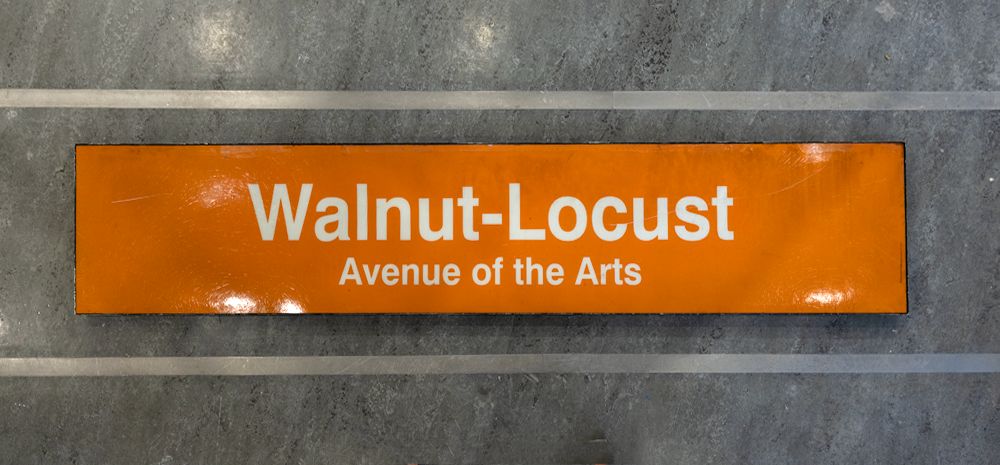
This Walnut-Locust sign was still available, as of publishing time, for $350 in SEPTA’s RETROmania sale.Courtesy of SEPTA
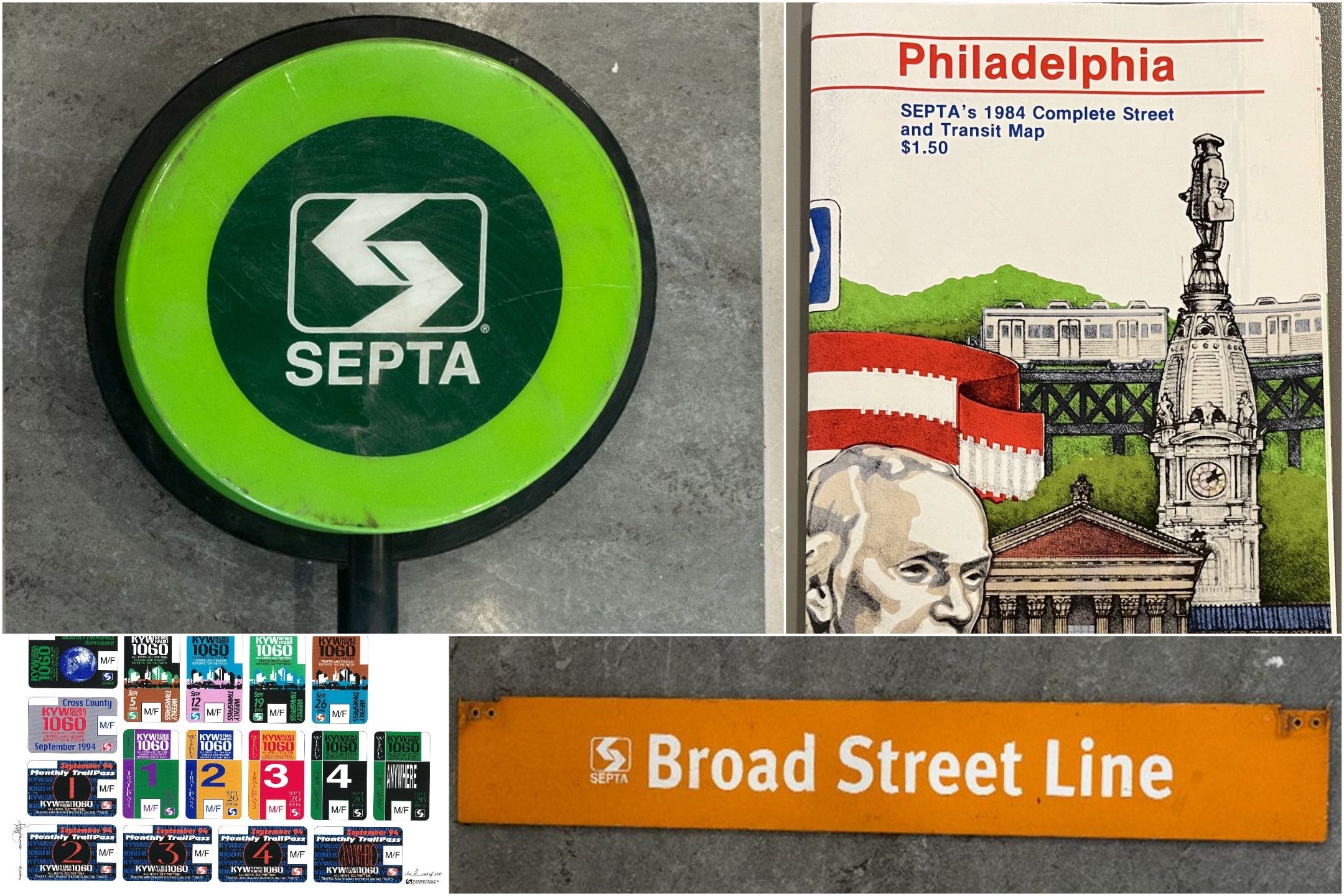
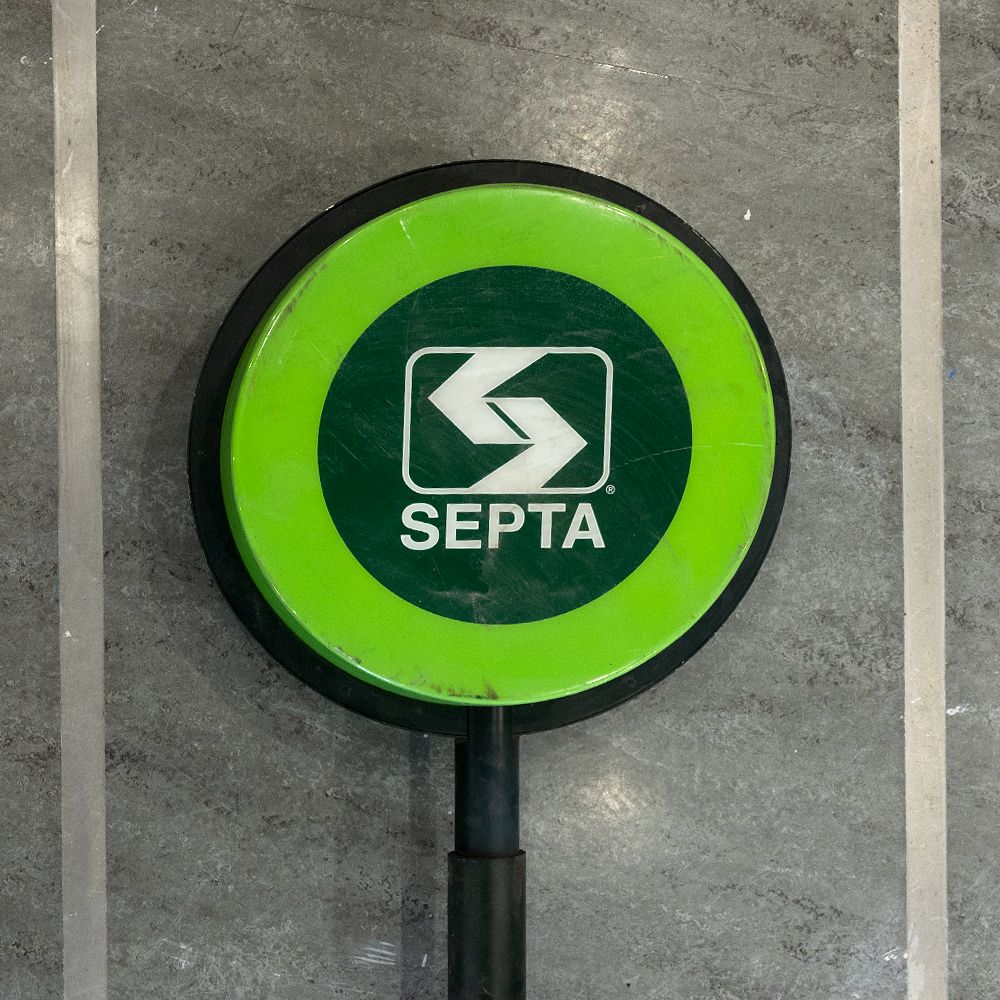
Among the most popular items were what SEPTA calls its “lollipop” signs, circular plastic signs ringed in green with the SEPTA logo in the center, that sold for $350, and, of course, the Broad Street Line signs, which ranged from $125 to $350.
“If a sign identified anything to do with NRG [Station] or any sports complex stuff, it was a little more of a higher ticket item,” Floyd said.
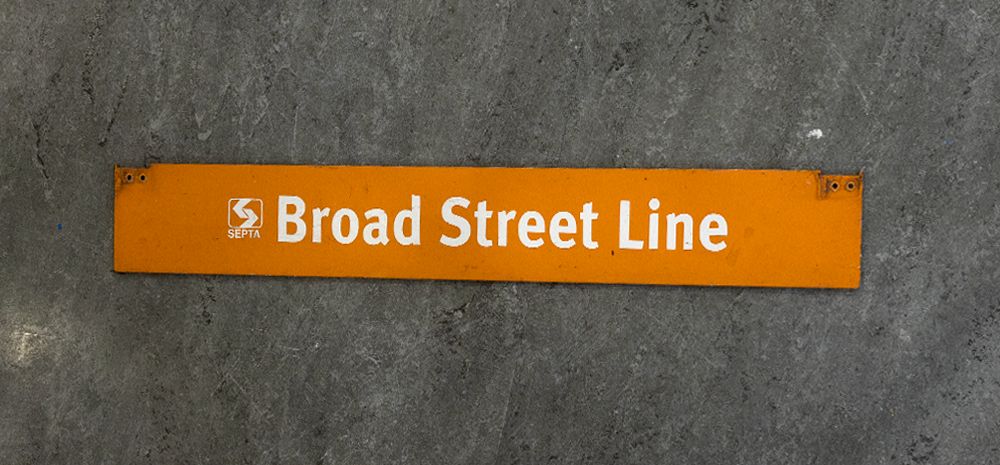
Broad Street Line signs, like the one pictured above, quickly sold out in SEPTA’s RETROmania sale.Courtesy of SEPTA
SEPTA had already sold more than 100 signs as of Sept. 18, when it dropped a new batch of signs into the mix — prototypes with the current names of the lines on them for $50 each.
Unsurprisingly, those haven’t been as popular as the old signs that are drenched in nostalgia (and probably other things) and aged with a fine Philadelphia subway patina.
Anyone who buys a decommissioned SEPTA sign is required to sign an agreement that they will not use it for commercial purposes, Floyd said.
Affectionately referred to by staff as “lollipop” signs, these circular signs already sold out at $350 a pop during SEPTA’s RETROmania sale.Courtesy of SEPTA
The in-person sale at the SEPTA store will include merchandise similar to that in the online sale, along with vintage apparel. A preview sale will be held from 10 a.m. to 4 p.m. Oct. 2 at the store, with the main sale taking place from 10 a.m. to 4 p.m. Oct. 3.
Floyd recommends getting in line early.
“It’s first come, first served, once it’s gone, it’s gone,” she said.
For Blake Fleischer, an early morning jog in Center City last month began like any other.
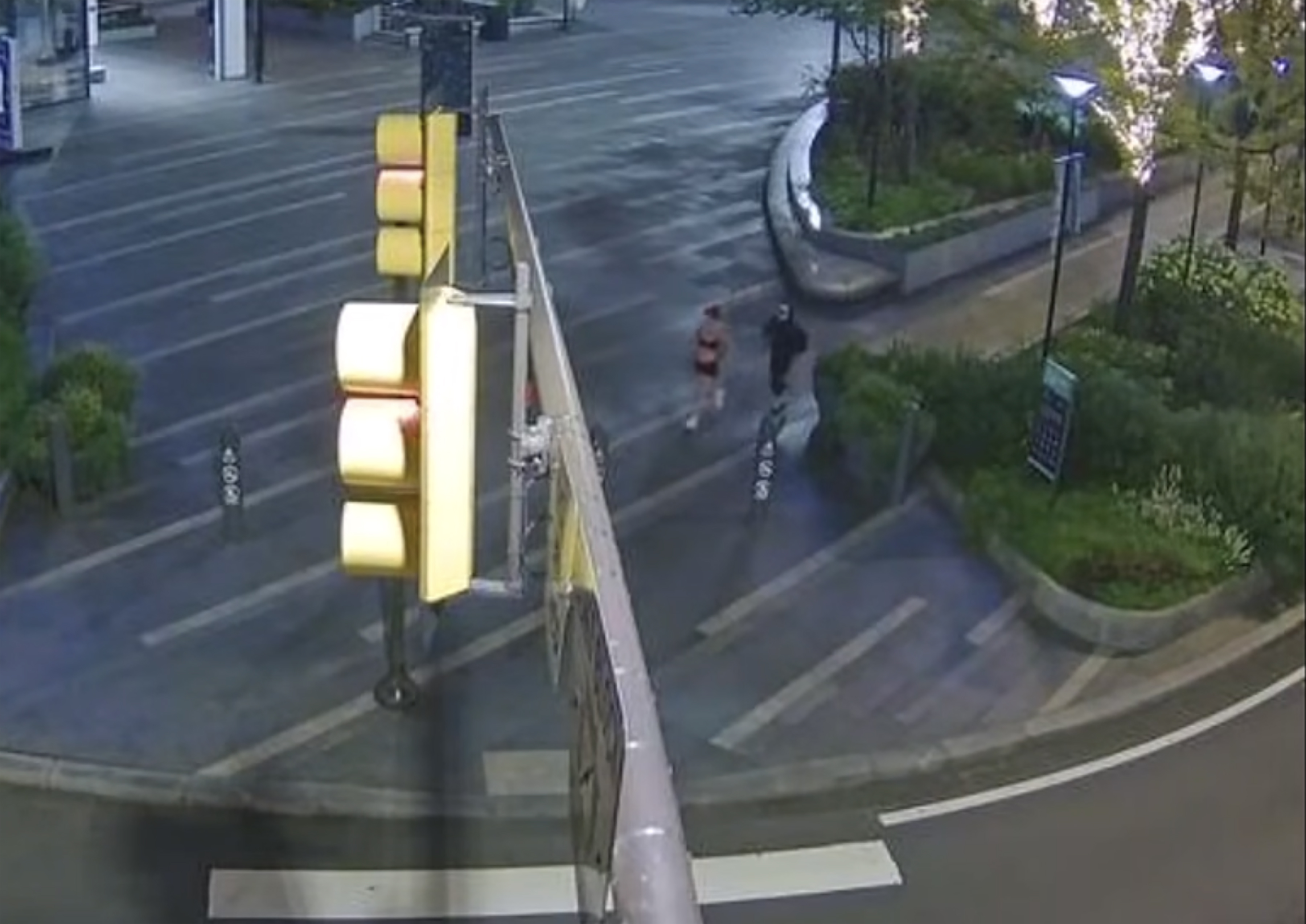
But it ended in terror, she said as she recalled running into traffic near City Hall, seeking help as a man wearing a Chucky-style horror mask followed close behind.
“I was extremely terrified,” Fleischer, 40, testified Wednesday in Philadelphia Municipal Court.
Fleischer, who entered the courtroom limping and using a crutch, tearfully recounted the pain of tearing her hamstring as she fled the man in the mask, who she feared was armed when he asked if she was “ready to die.”
“I thought he was going to attack me,” Fleischer said.
Hughes, 22, was arrested by U.S. marshals in Las Vegas two weeks after the incident. He sat across the courtroom wearing a blue prison jumpsuit and did not speak during the hearing, in which his defense attorney disagreed with many of the prosecution’s findings.
Municipal Court Judge Karen Simmons held Hughes for trial on charges of aggravated assault, possessing an instrument of a crime, terroristic threats, simple assault, reckless endangerment, and harassment. Simmons dismissed charges of disorderly conduct by engaging in fighting, as well as flight to avoid apprehension.
The hearing marked the first time that details about Hughes were heard in court after videos of the masked man’s antics went viral across local and national media outlets and social media feeds.
Prosecutors said Tuesday that surveillance footage recovered from cameras throughout the city had tracked Hughes’ travels, capturing him taking a SEPTA bus from his apartment building near North 23rd and West Venango Streets to Center City after 2 a.m. Aug. 12.
They said Hughes donned the horror mask and began harassing pedestrians in the Suburban Station concourse. He ignored a SEPTA transit officer’s request to remove the mask, they said, briefly flashing his face before putting it back on and leaving the area.
He encountered Fleischer around 5:30 a.m. as she jogged near the north side of City Hall, she testified to prosecutors.
The masked man began to chase her, she said, eventually cutting her off as the two got within several feet of each other.
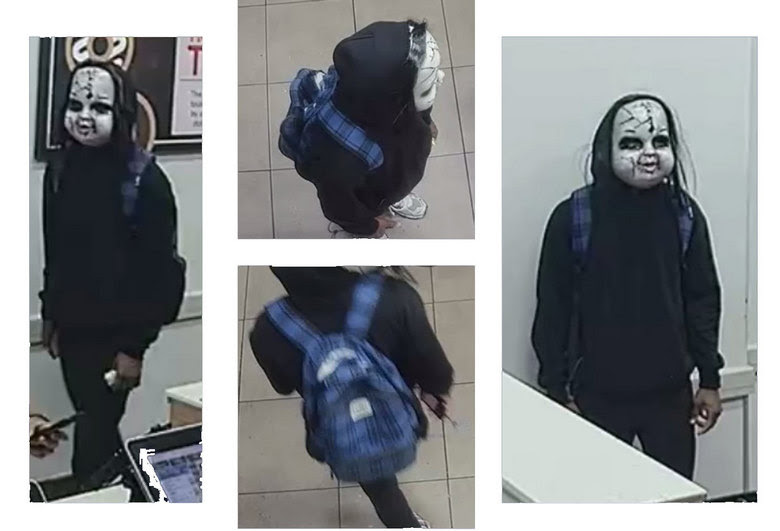
In an image provided by the Philadelphia Police Department, a man dressed in dark clothing and wearing a mask styled after the character Chucky in “Child’s Play,” the 1988 horror film, chases a jogger in Philadelphia on Aug. 12, 2026. On Thursday, Aug. 20, the police identified a suspect, Zymire Hughes, 22, and said there was an arrest warrant for him. (Philadelphia Police Department via The New York Times) — NO SALES; FOR EDITORIAL USE ONLY. —PHILADELPHIA POLICE DEPARTMENT
Fleischer said she found herself caught between the facade of City Hall and the man, who held a phone in his left hand while his right hand was concealed behind his back, and she fled.
It was not until the next day — when she awoke in “extreme pain” and had trouble walking — that she went to the hospital for her hamstring injury, she said.
Prosecutors also called on detectives from the Central Police Division to verify surveillance footage of Hughes’ activity. That included a clip in which it appears Hughes is filming himself and gesturing toward his phone before leaving his apartment to head to Center City.
A SEPTA transit officer later testified that he was able to help detectives identify Hughes because he had interacted with him in 2023 and 2024 while on duty. Detectives added that widely circulated images of Hughes yielded a phone tip that aided their investigation.
Lauren Zitsch, Hughes’ public defender, told Simmons she took issue with many of the prosecutors’ assertions, particularly the aggravated assault charge.
“You have to show some form of malice” for that crime to stand, she said, noting that the confrontation between Fleischer and Hughes was not captured on video.
But Simmons agreed with prosecutors, who argued that by frightening the woman enough for her to flee, Hughes would have understood the “legal and likely consequence” of his actions.
Hughes is expected to appear in court for a formal arraignment in early October.
He had not posted the required 10% of his $100,000 bail and remained in custody at the Philadelphia Detention Center.
The CEO of Jefferson Health and Thomas Jefferson University will be the local chamber of commerce’s next chair, and he’s focused on a feeling of safety in the city.
Joseph G. Cacchione, Jefferson’s CEO since 2022, will chair the Chamber of Commerce for Greater Philadelphia’s board of directors beginning Oct. 15, the chamber announced Tuesday.
The new role comes just a year after Cacchione said Jefferson could move its headquarters out of the city. But now he says that’s no longer on the table, crediting Mayor Cherelle L. Parker and the city’s police chief for making “great strides in improving safety.”
“We’re here. We’re Jefferson. We’ve been in Center City for 200 years. We’re not moving,” he said in an interview Tuesday.
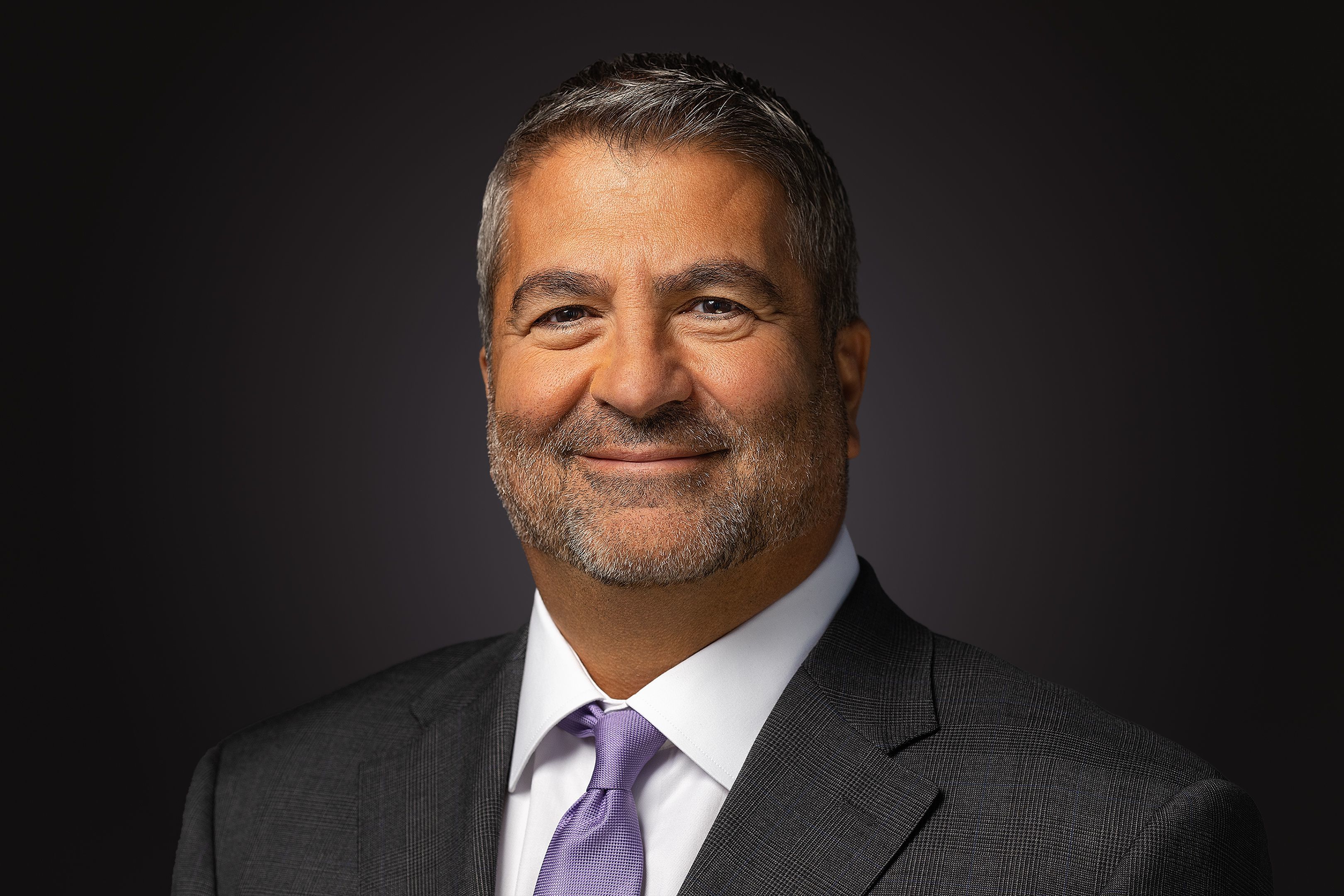
Joseph G. Cacchione will begin his role as board chair at the chamber on Oct. 15.Thomas Jefferson University
Cacchione says some of the region’s remaining challenges can be tackled through partnerships between business and government.
“For me it’s about never standing back and watching but to actually roll your sleeves up and get in there and mix it up,” he said.
Jefferson teamed up with the city police department and SEPTA transit police in one such partnership in June, launching a public safety hub in partnership in Market East.
“East Market Street particularly has had challenges over the years,” he said Tuesday. “We saw an opportunity to have more visible police presence.”
But recently, he said, the area has felt safer and more vibrant. He pointed to the pop-up businesses that opened along that corridor this year, as well as the pop-up plaza outside Reading Terminal Market.
“We continue to need to work on that quality of life,” he said. “It’s not just East Market Street. It’s the entire city that we want to be safer.”
More good jobs for the region
Cacchione’s priorities also include supporting small and medium-sized businesses, continuing regional job growth, and improving access to healthcare.
The chamber’s board of directors includes CEOs, presidents, and other leaders of area institutions such as CHOP, Aramark, Temple University, Comcast, Girl Scouts of Eastern Pennsylvania, and the Philadelphia Eagles.
Its recent efforts include a new regional partnership to create good jobs in business software, biomedical engineering, and production, and specialized manufacturing, where business leaders see potential to grow. Jefferson Health and Thomas Jefferson University are early partners in the group.
“We are at an inflection point for our region, and we have to make decisions to lean in so that we can continue to grow,” Chamber CEO Chellie Cameron said Tuesday. “I’m talking about attracting new businesses and growing existing businesses, creating jobs — not just any job, but opportunity jobs and pathways to those jobs.”
Cacchione, as the leader of a very large employer in Center City, “gets it,” Cameron said, adding that he’s not just invested in the city, but the region as a whole.
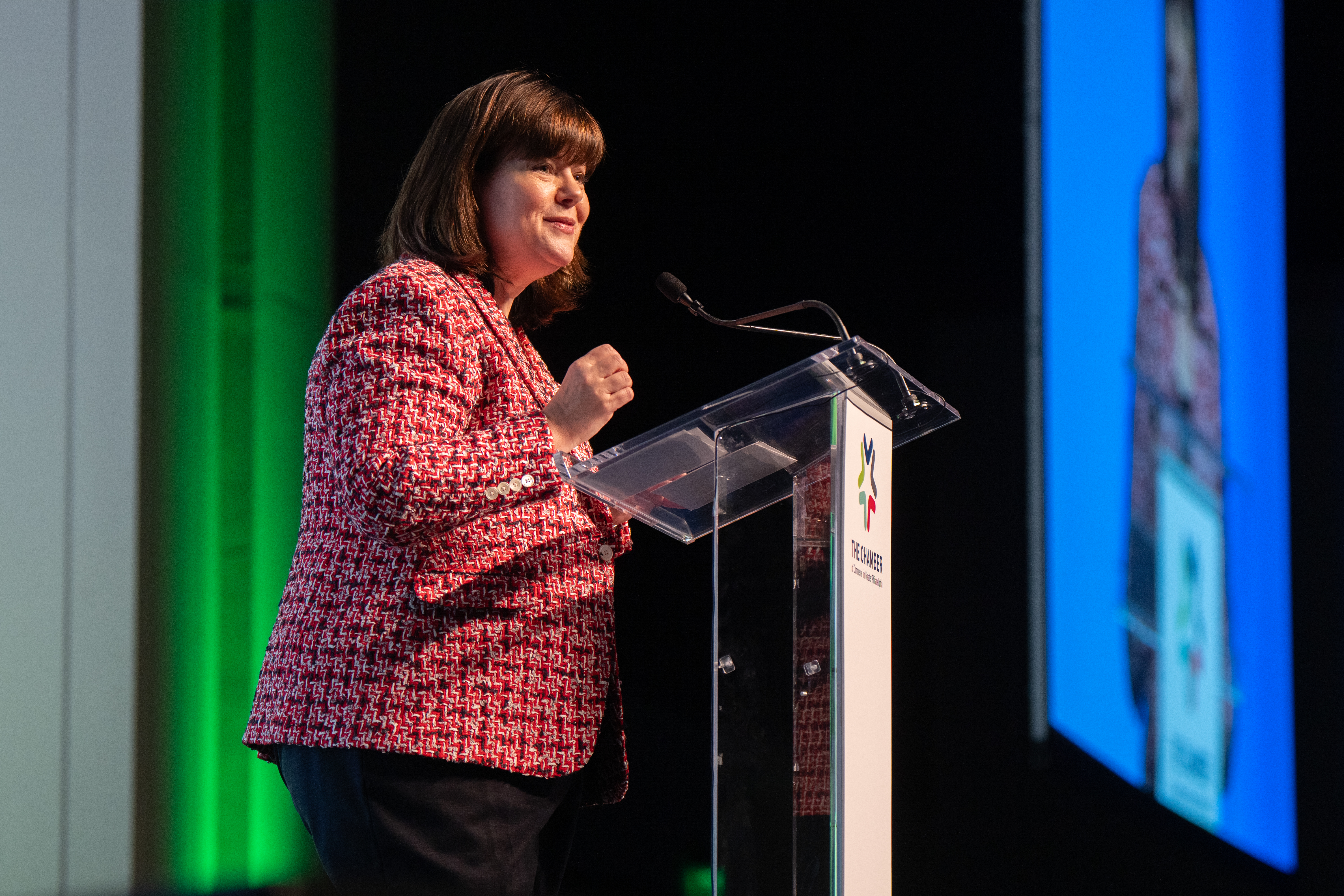
Chellie Cameron, CEO of the Chamber of Commerce for Greater Philadelphia, at a chamber event in 2025.Jessica Griffin / Staff Photographer
Cacchione added that AI will “change how we do business,” calling it an “enabler of business.” The chamber could help train workforces that don’t have experience with AI, he said.
Jefferson employees have been adopting AI tools to improve efficiency. Nurses use it for note-taking, he said. By 2028, Jefferson aims to save over 10 million hours of clinician’s time by using AI — creating more time for “face-to-face” interaction with patients, Cacchione said.
The hoped-for result, he said: “Our doctors are spending more time with patients and less time in front of a computer.”
After another high-wire financial rescue from the state, SEPTA leaders are determined to flip their script in the transit funding debate from warning of calamity to showing what the system could be with more investment.
“I wanted to get away from the doom and gloom message,” SEPTA general manager Scott A. Sauer told The Inquirer.
The transit system has been chronically underfunded, but “we never pivoted to ‘Imagine what we could be if we got more than just enough,’” Sauer said.
And so on Tuesday, SEPTA is putting out “Accelerate,” its strategic vision for the next decade with investments in a new trolley fleet with stations instead of corner stops, new subway cars for the El, and a reimagined Regional Rail service with more frequent service on critical lines, many in the city.
When those and other, smaller changes are in place, SEPTA says two million people in the region will be within a quarter mile of frequent transit service — up from 900,000 today — and 100% of all trips will go through an accessible station. Today only about 60% of rail and subway stations are accessible.
It’s an ambitious goal, and that’s deliberate, Sauer said.
“You can inspire people to action when you show them what they could get for their investment,” he said.
The idea for a message shift developed as SEPTA representatives and supporters advocated for more state funding last year and lawmakers said that they didn’t have a concrete picture of what SEPTA wants to be and what that would take.
Instead of a demand, the report is framed as a menu of choices for legislators, local officials, business leaders, and the public.
SEPTA projects a structural operating deficit of $192 million in the coming fiscal year. If the state meets that, current levels of service would be preserved along with some improvements.
Beyond that — including a plan to reorganize Regional Rail so trains run every 15 minutes on lines in the city and some suburbs — would require more funding. As would making 50 old stations ADA accessible.
“If you ask me how much do you need, I would say I need enough to do what the people want us to do,” Sauer said.
Last year, Harrisburg lawmakers and the Shapiro administration failed for the third straight year to agree on a steady source of new state funding for SEPTA and other transit agencies.
The transit agency also says it has found about $30 million in annual savings, as well as increased income from advertising, parking, and real estate, and a spike in ridership during a busy summer of big events.
Sauer said SEPTA needs to chip away at changes right away, using what’s at hand, rather than waiting to accomplish a big project in a decade.
“We can’t have everything all at once, so we are trying to move methodically,” he said. “We have to show people continual improvement.”
This week’s edition of Shackamaxon looks at a crackdown on “smoke shops,” the Philadelphia police’s handling of traffic citations, how Harrisburg deadlines can be leveraged to fund transit, and what City Council forgot to talk about in its first session after returning from summer break.
Up in smoke?
An increasingly common frustration has been expressed across Philadelphia over the rise of what are known as “smoke shops,” which have proliferated in the city’s commercial corridors. Ostensibly operating as grocery stores, they are often locations where illegal drugs and drug paraphernalia are sold. They tend to operate late into the night and attract the ire of both residents and other business owners.
That’s why it was refreshing to see someone make a substantive move to shut them down. State Rep. Amen Brown, whose district includes parts of West Philadelphia and Logan Square, has put together an initiative he’s called Operation Breezy. Working with both city and state law enforcement, and relying on the support of members of the community, Brown’s efforts have already shuttered 13 of the establishments.
Brown’s approach uses confidential informants, many of whom come from the community itself. He told me that one of the now-closed shops had roughly 40 pounds of marijuana on thepremises, the outlets routinely sell out-of-state cigarettes, and that firearms have been seized as part of the efforts. Residents who would like to help can send an email to OperationBreezy@gmail.com or a message to the effort’s Instagram page, @operationbreezy.
Brown said he’d like to do more to stop the smoke shops, but that the best option requires action at the local level. Rather than enacting a broad-based curfew for all businesses, he’d prefer to target just the smoke shops. He says that might be possible by imposing restrictions on the operating hours of grocery stores that are smaller than 300 square feet. That’s a size below which, officials say, legitimate uses for a storefront become impractical.
Still, I couldn’t help wondering whether this incident is a natural outgrowth of the department’s policies. The Philadelphia police simply do not seem to take enforcing traffic laws seriously enough. Traffic citations have plunged over the last few decades. In the 1990s, officers regularly issued roughly half a million tickets per year. In 2023, about 45,000 tickets were handed out. These days, we celebrate an increase of a few thousand citations, even as overall stops remain at a fraction of the total pedestrian safety experts say is needed. Commissioner Bethel has said that enforcing traffic violations is a lesser priority.
While many officers blame the city’s Driving Equality Law for this decline, that measure does not prevent officers from enforcing moving violations, which are the most dangerous offenses. Failing to do so is a choice the department has made on itsown. The result of this lack of enforcement, traffic safety experts say, has been an increase in reckless and aggressive driving.
Given thata city controller report called Philadelphia’s streets the most dangerous of any major U.S. city, this lack of prioritization must change. While speed cameras and other forms of automated enforcement have made a difference along high-traffic corridors like Roosevelt Boulevard and Broad Street, they can only enforce certain offenses in certain locations. Reckless driving is an issue almost everywhere.
It is impossible to know what went through the mind of the officer who left Eugene Beauford in the street. The department has declined to publish his name, let alone make him available for an interview. But perhaps this horrific incident will prompt police brass to rethink the department’s strategy for enforcing traffic laws.
Skill game shutdown
Next month, Pennsylvania’s so-called games of skill will need to be unplugged. Oct. 13 marks the last day of the grace period the state Supreme Court gave the General Assembly to devise a taxation and regulatory scheme for the machines, devices that resemble slot machines and which are currently banned under state law. For years, legislators have debated where the machines can operate, and whether they should pay the same tax rate as existing slot machines.
By pure coincidence, there’s another big deadline approaching: the authorization period for the state-appointed SEPTA prosecutor. I’d like to propose a potential compromise for both issues. Harrisburg should extend the SEPTA prosecutor’s authority by three years, agree to Gov. Josh Shapiro’s proposed shift in sales tax revenue to support public transit, and pay for it by legalizing skill games and taxing them at the same rate as slot machines. They should also pass regulations limiting the placement of the machines and creating penalties for owners who allow children to use them.
Given District Attorney Larry Krasner’s recent struggles, extending the SEPTA prosecutor should be less politically contentious now than it was in years past. Lawmakers can also point to the significant decline in fare evasion and violent crime on the transit system over the last few years as justification.
For Philadelphia lawmakers who may be reluctant to place limits on the authority of Krasner, who has been overwhelmingly elected by their constituents three times, that kind of middle ground can provide fiscal peace of mind for SEPTA, which has been subject to financial uncertainty for three years. While Democrats seem to be pinning their hopes for approving more state funding for SEPTA on winning control of the state Senate during this fall’s elections, that is hardly guaranteed. If a deal can be reached ahead of time, it reduces the risk of a collapse. It also does not preclude additional action next year.
Finally, the need to act on skill games is clear. As it stands, it will be difficult for the commonwealth to shut down every location that houses the machines. We don’t even know how many exist. I am not a fan of these devices, which have a negative impact on the communities that host them. Regulation will make it easier to mitigate that damage and ensure Pennsylvanians see some benefit from the funds that flow through them.
Council comeback
After its three-month summer hiatus, City Council is back in session. All eyes on the second floor of City Hall will be trained on how Mayor Cherelle L. Parker will respond to a series of potentially contentious legislative proposals — from Councilmember Jamie Gauthier’s bill to stop burning trash to Councilmember Isaiah Thomas’efforts to stop at least part of the school closure plan.
City Council should hold investigatory hearings into both officials. Residents deserve better from their leaders than what both Krasner and Bilal have shown.