Tag: Republicans

  • From Philly to Texas, Democrats have moved on from Fetterman

    From Philly to Texas, Democrats have moved on from Fetterman

    AUSTIN, Texas — It would be unfair to compare the vibrant reception U.S. Senate candidate James Talarico received at the recent Texas Tribune Festival to the muted response U.S. Sen. John Fetterman drew here two days later.

    But allow me to do so anyway.

    It was a hometown crowd for the rising Talarico, who, if the polls are to be believed, may become the first Texas Democrat elected to statewide office since 1994. When the doors closed to a capacity crowd at First Baptist Church — with more than 100 people left outside to grumble in the humid 95-degree weather — the vibe as groups of young people rushed to find seats was more pop star than politician.

    Even with media access, I barely made it inside. A standing ovation greeted Talarico, and it seemed like every other sentence uttered by the charismatic 37-year-old was met with applause. I had no such trouble finding a seat for Fetterman.

    Yet, it wasn’t long ago that the Pennsylvania Democrat elicited similar swooning during his own Senate run in 2022, or that the imposing Fetterman — who leaned progressive and ditched the suit and tie for gym attire — seemed like the future of the party.

    Cut to TribFest 2026 and the biggest reaction the Keystone State senator produced from the largely polite, mostly liberal audience was gales of laughter and some jeers from the balcony as he misspoke and identified himself as a “lifelong Republican.”

    While some called it a Freudian slip, perhaps Fetterman had seen the Inquirer/New York Times/Siena University poll published earlier that week that showed a majority of Pennsylvania voters saw him more as a Republican than a Democrat.

    I couldn’t help but feel for the senator, who expressed genuine exasperation over being questioned about his ideological loyalty. He was speaking my language, after all, when he said he respected Republicans and that to tackle the important kinds of problems facing the nation, “we’re going to need bipartisanship.”

    Fetterman is also right when he says he votes with Democrats around 90% of the time. Unfortunately, when he splits, it’s been a doozy.

    The senator has unquestionably backed the Israeli government’s response to the brutal Oct. 7, 2023, attacks by Hamas in which terrorists killed about 1,200 people and kidnapped more than 200 others. Israel’s subsequent invasion of Gaza has resulted in the deaths of more than 74,000 Palestinians, in what is labeled by some (including many Democrats) as a genocide.

    Support by the government led by Prime Minister Benjamin Netanyahu has increasingly emboldened illegal settlements and violence in the occupied West Bank, as well.
    Texas Tribune editor-in-chief Matthew Watkins (right) speaks with Texas Democratic Senate nominee James Talarico during a one-on-one conversation at the Texas Tribune Festival 2026.Eli Hartman for The Texas Tribune

    On Tuesday, Fetterman was the lone Democrat to vote against a measure that would have required the U.S. Department of State to report on any investigations into the killings of nine U.S. citizens by Israeli security forces or settlers since 2022.

    Fetterman has also blindly supported President Donald Trump’s war of choice in Iran, telling his Texas audience that “the Iranians are really no different than the Nazis.” The senator has been the only Democrat to consistently reject efforts to enact a war powers resolution to rein in the White House, most recently on Sept. 24.

    What comes through listening to Fetterman defend his positions is his earnest belief in what he’s doing. He tried to frame his actions as those of someone led by common sense and a plain understanding of right and wrong.

    “We’re the good guys,” he said. “The problem is Iran and Hamas.”

    When questioned by an audience member about his apparent black-and-white worldview and whether there was room for nuanced positions in U.S. geopolitics, Fetterman said he was nothing but.

    “My argument is nuance,” he noted. “That’s why it’s not a genocide [in Gaza], and that’s why is Iran allowed to build a nuclear bomb? That there is nuance.”

    Maybe later I’ll coin the term for the sound of a mass skeptical smirk, but here I’ll just call it the audience response to Fetterman’s answer.

    The senator’s problem — and why he’s losing Democrats across the country — is that regardless of his earnest belief in what he’s doing, he’s wrong.

    He can’t see that you can understand that what happened on Oct. 7 was an atrocity and that the Israeli government’s reaction has gone beyond any reasonable response; that while Iran was a rogue nation that punished its people and sought to undermine Western allies, Trump’s ill-planned war has done nothing but destabilize the region, raise energy prices, and make America weaker.

    Still, there seems to be a method to Fetterman’s foolhardiness, and his time on the Texas stage was a mix of defensiveness and defiance.

    Pennsylvania’s senior senator seems to be betting on the fact that even if someone like the beloved Talarico wins his race, the electoral reality may leave the Senate almost evenly split between Democrats and Republicans.

    “What if that happens …? Who’s 51 …? Oh, yeah,” he mugged. “Wait until the midterms and let’s see what happens.”

    Sure, let’s.

    Based on his misguided stubbornness, if Fetterman is going to receive any standing ovations from a Texas crowd, it will be down the road in Houston at the 2028 Republican National Convention.

  • SEC plans to end limits on campaign donor practice that fed pension corruption

    SEC plans to end limits on campaign donor practice that fed pension corruption

    The Securities and Exchange Commission board plans to rescind a rule that said Wall Street money managers who gave money to state and local campaigns were barred from collecting fees for managing state and local-government dollars, for two years after they donated.

    The board, currently reduced to two members and three vacant seats, is giving Americans until Nov. 9 to comment on the proposal.

    The SEC rule, created in 2010, had special resonance in Pennsylvania, which is home to nearly one-third of the nation’s 5,000 public pension funds. Before then, private money managers had donated relentlessly to the politicians whose pension investment boards hired them.

    The proposal would end the limit on political contributions and stop requiring investment advisers to keep detailed political-contribution records.

    “The SEC is not the nation’s elections regulator,” SEC chairman Paul S. Atkins, wrote in a public letter accompanying his September proposal to ease the rule. Acknowledging the rule he wants to gut “was intended to deter fraud” by barring donors from getting paid to manage public money, Atkins wrote that the rule instead “resulted in the suppression of free speech,” pushing extra-careful firms to ban all political donations, and reducing Wall Street funding for political candidates.

    Fraud is already illegal; leave policing money managers’ influence-buying to state and local law and federal election rules, Atkins urged.

    But some money managers, including Pennsylvania fund managers, expressed concern about the scale of the federal rollback.

    The 2010 SEC rule was “an objective, preventive restraint,” to prevent corruption, Christopher Tobe, a former Kentucky state pension trustee, said in a summary of his comments to the SEC.

    By contrast, state and local antifraud laws are typically applied only “after misconduct and harm have occurred,” added Tobe, a critic of private investments in public funds, who features in the public-pension documentary Pension Fight Club.

    The first civil case brought under the SEC rule, in 2011, resulted in then-Pennsylvania Gov. Tom Corbett and Philadelphia Mayor Michael Nutter returning campaign contributions to TL Ventures. The state and city pension boards had hired this money-losing Chester County firm in a failed attempt to cash in on the dot-com boom. TL agreed to return nearly $300,000 in fees and interest, which the SEC said the firm had wrongly collected after donating to the campaigns of top state city and state officeholders.

    The Pennsylvania State Capitol in Harrisburg. A rolled-back SEC rule could loosen restrictions on state-elected officials taking campaign donations from money managers who work for the government.

    Politicians were convicted over investment-firm donations

    The SEC rule limiting pay-to-play was enacted amid a string of pay-to-play scandals.

    In the late 2000s, a string of mostly Democratic state and city politicians went to prison for receiving or demanding bribes in exchange for hiring professional investors to manage public pension money. In 2010, California pension chief Fred Buenrostro and New York State Comptroller Alan Hevesi were each convicted of corruption charges for taking campaign cash from investment contractors, and sentenced to prison.

    The political contributors cited in Buenrostro’s case, portrayed by prosecutors as victims of public officials’ extortion, included Apollo Global Management. Apollo was then headed by Leon Black, who later lost the job over his relationship with disgraced financier and sex offender Jeffrey Epstein. Apollo is now the largest private-equity fund and its clients include Pennsylvania’s state pension funds.

    In Pennsylvania, elected state treasurers Rob McCord in 2015 and Barbara Hafer in 2017 pleaded guilty to criminal violations related to their handling of campaign contributions from money managers.

    McCord, who had been a tireless political fundraiser for governors and his own campaigns, was sentenced to federal prison; he was released early. He didn’t return calls seeking comment.

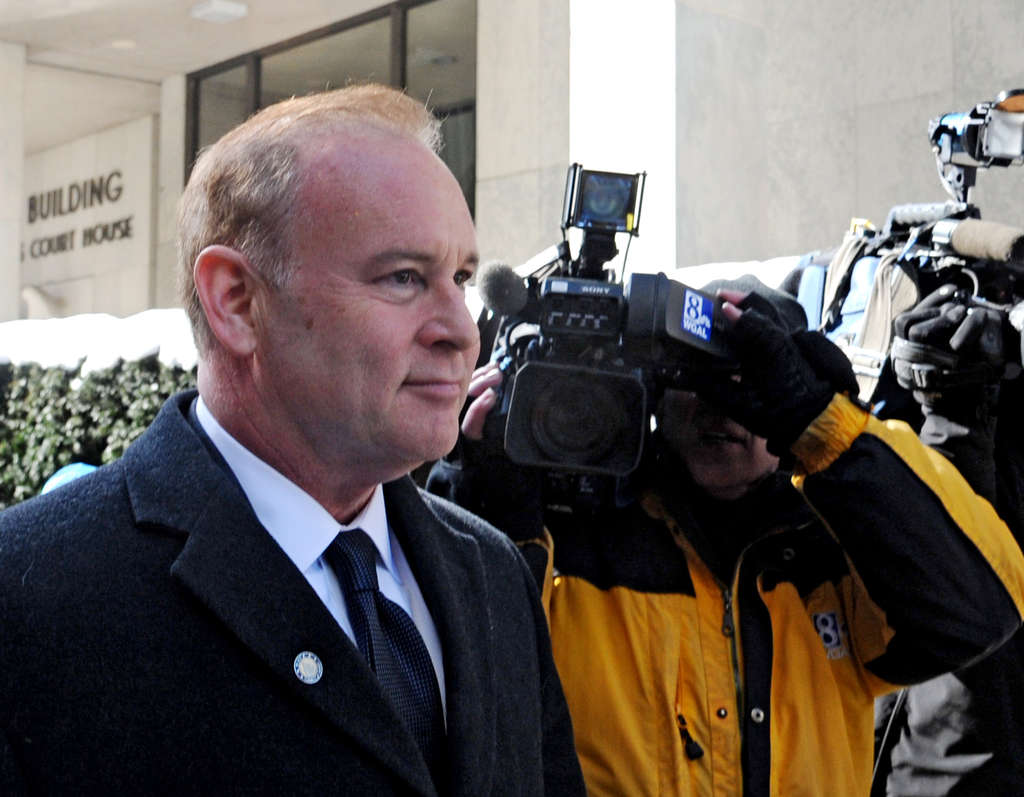
    Rob McCord, former state treasurer, leaves Federal Court in Harrisburg after pleading guilty to two counts of attempted extortion of an investor seeking contracts to manage state funds, in 2015. CLEM MURRAY / File Photograph

    Hafer, who got probation and a fine, died last year.

    Prior to the SEC rule, it was a common practice for money managers to fund Pennsylvania campaigns for governor, treasurer, and legislators. “Not only do they give me money, I hope they vote for me,” Hafer told The Inquirer in 2002.

    Political contributions continued

    Still, the rule didn’t stop political contributions altogether.

    On Sept. 14, 2020, the state officials, teachers’ union local officers, and school board reps who formed the state school pension (PSERS) board met in secret to approve a $100 million investment. The target, code-named Project Newton, was a proposal by Pittsburgh tycoon and Steelers co-owner Thomas Tull.

    Two days later, The Inquirer reported, Tull gave $711,000 to campaign funds backing Joe Biden, who was running for president, and $750,000 to a national super PAC for U.S. Senate Republicans. “There is no connection,” Tull said of the timing, so soon after the state’s secret investment. That investment, in hospital-wear maker Figs, later proved profitable.

    Indeed, the SEC rule didn’t stop investment managers from donating to national politicians or even out-of-state races.

    Still, Tull and national Democrats promised to recover $10,000 of Tull’s money after The Inquirer noted that those funds had been passed to Pennsylvania Democrats, whose leaders included pension board members. The SEC filed no complaint.

    What money managers say

    “I thought the rule had it right,” said Michael DiPiano, founder of NewSpring Capital, a $3.5 billion private investment fund group in Radnor, whose clients have included the Pennsylvania state and New York City pension funds.

    “Limiting or eliminating pay-to-play took donor pressure off of [private-investment fund managers] and leveled the playing field,” so larger firms that could afford the biggest donations wouldn’t crowd out smaller firms, DiPiano said.

    “Tighter pay-to-play restrictions should lead to a more objective-based approach” for picking money managers, he added.

    Richard Vague, the former banker and Pennsylvania Secretary of Banking who chairs the PSERS pension board, says SEC limits might fairly be eased in some details but “an outright rescinding goes far beyond.”

    The rule came after Wall Street “corruption” was exposed in the late 2000s, with the pension fraud cases, he noted. “Protective regulations, laws, and other safeguards get put in place in the aftermath of a major crisis,” Vague added.

    It’s not surprising that money managers and their Washington allies chip away at those rules, but with too much trimming, “those safeguards largely disappear,” Vague concluded.

    “That makes a subsequent crisis all the more likely.”

  • Why Texas U.S. Senate race ads aired during the Eagles-Rams game

    Why Texas U.S. Senate race ads aired during the Eagles-Rams game

    Philadelphia Eagles fans were left befuddled on Sunday — and not just because of the Birds’ loss to the Los Angeles Rams.

    “Why am I getting Ken Paxton ads during the Eagles Rams game???” wrote one user on X. Many others posted similar questions, some with decidedly more profanity.

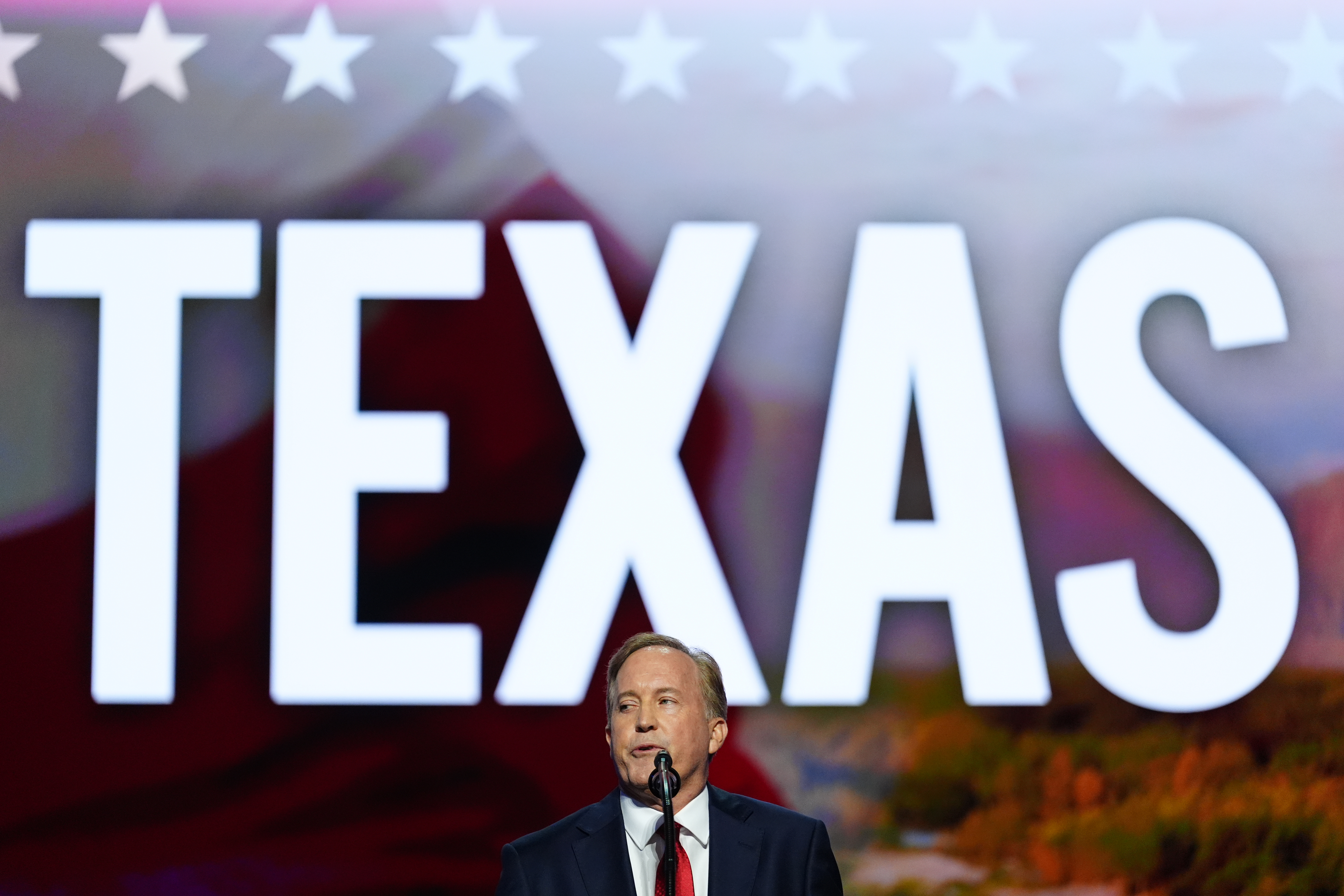
    At least three ads supporting Paxton, the Republican candidate in the contentious U.S. Senate race in Texas, aired during the home matchup, which was broadcast locally on Fox29.

    Much of the Eagles-Rams audience can’t vote in Texas. So why all the airtime?

    “It’s probably aimed at reaching into the pocketbooks rather than the voting hearts of the people who are going to be watching,” said Michael Hagen, an associate professor in the political science department at Temple University.

    Hagen said the motive for putting ads in front of people who may not be able to vote in a particular election is typically to solicit donations and raise funds.

    With a month until the midterm elections, the Texas Senate has become a “much more competitive question mark” than expected, he said; polls show Paxton is trailing his Democratic opponent, James Talarico. While Democrats have not won a statewide election in Texas in decades, the hotly contested race, and others in battleground states, could also swing control of the U.S. Senate.

    According to social media posts, at least one of the slots — of Paxton’s estranged wife urging voters to back the entire Republican ticket — appeared to run nationwide.

    “Dawg I am in ROSSLYN, VIRGINIA,” one user said, posting a photo of the commercial on TV. (Also, on Sunday, the Dallas Cowboys played the Houston Texans.)

    That ad was funded by a political action committee, which has invested more than $125 million into the race, according to the New York Times. Paxton’s campaign did not immediately respond to an email seeking comment Sunday evening.

    Rest assured; Hagen said people shouldn’t expect many more ads from Texas.

    “It really is unusual, but it’s an indication of just how much money is being put into the Senate race in Texas, in particular, and Senate races all over the country,” he said. “We’ll definitely see much more money being raised and spent — just not maybe in this particular way.”

  • Bob Harvie is the best choice for Pennsylvania’s 1st Congressional District | Endorsement

    Bob Harvie is the best choice for Pennsylvania’s 1st Congressional District | Endorsement

    U.S. Rep. Brian Fitzpatrick (R., Pa.) has been a member of Congress for nearly a decade, and it is difficult to determine what exactly he has accomplished.

    Fitzpatrick, 52, claims to be a problem solver, but he is really part of the problem. Fitzpatrick entered Congress with the MAGA wave that first swept into Washington with Donald Trump in November 2016.

    He is a member of a Republican House majority that has been one of the least effective and most dysfunctional in modern times. The GOP controls the House, Senate, and the White House — and still can’t do much to help the American people.

    Because Fitzpatrick represents a swing district that covers Bucks County and portions of Montgomery County, he doesn’t always vote lockstep with his Republican colleagues. But when Fitzpatrick’s vote is needed, he backs Trump’s incoherent agenda, which has made life more expensive for everyone.

    That agenda speaks for itself: costly tariffs, cruel deportations, unprovoked war, tax breaks for the superrich, massive debt, healthcare cuts, brazen corruption, abuses of power, self-enrichment schemes, and constant chaos.

    For Fitzpatrick’s constituents, Republican control in Washington has resulted in higher interest rates, sluggish job growth, and increased prices on everything from gasoline to food, cars, housing, and utility bills. Not to mention a host of constitutional, ethical, and legal abuses with no oversight or pushback.

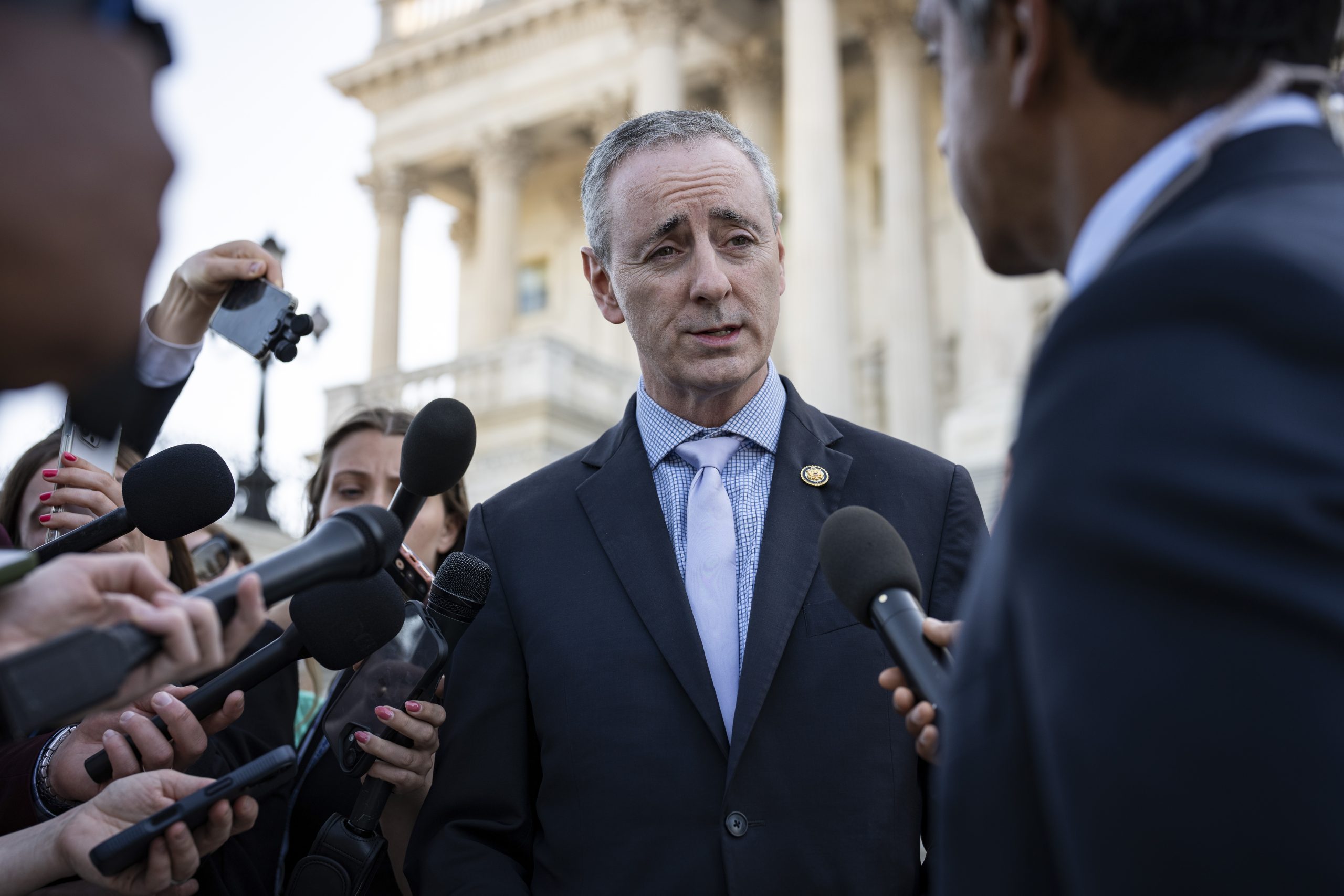
    U.S. Rep. Brian Fitzpatrick (R., Pa.) doesn’t always vote with his Republican colleagues. But when his vote is needed, he backs Donald Trump’s incoherent agenda, the Editorial Board writes.

    He did vote against Trump’s signature legislative accomplishment: the so-called Big Beautiful Bill, which added trillions to the ballooning deficit, extended tax cuts for the wealthy, slashed Medicaid and other support for the most vulnerable citizens, and added billions to support Trump’s deportation roundups.

    But Fitzpatrick’s no vote came only after final passage of the measure was assured. Weeks before the measure’s final passage, he was the deciding vote to advance the bill that ultimately became law.

    He often performs this type of calculated two-step to appear not so extreme to his more moderate constituents. But the results spell pure MAGA.

    Fitzpatrick, who recently married a Fox News correspondent, pulled a similar switcheroo on Trump’s costly war in Iran. Initially, he voted against limiting Trump’s power to wage war in Iran before voting to block further military action. He even issued a muddled statement about the war that said nothing.

    So he was for the war before he was against it. The result of Trump’s strategic blunder that GOP congressional members enabled has been higher gas prices, billions wasted on bombs, and needless death and destruction with no way out.

    Fitzpatrick has harmed his constituents in other ways. He repeatedly supported Trump’s tariffs, which have upended trade relations with allies, roiled financial markets, and increased prices for small businesses and consumers.

    He is increasingly out of step with his own constituents. He supports data center development, which most voters oppose. He also opposes codifying abortion rights, which a majority of the public supports.

    Fitzpatrick has also been largely missing in action in his own district. He has not held a town-hall meeting with voters since 2017, calling them a waste of time.

    He has refused to debate his opponent, Bob Harvie, a Bucks County commissioner. Fitzpatrick declined to meet with this Editorial Board to make his case for reelection — even though The Inquirer endorsed him in the past.

    If 80% of success is just showing up, Fitzpatrick has failed his constituents.

    The problem may rest with who Fitzpatrick really represents. His campaign is largely funded by billionaires and out-of-state corporate PACs backed by Wall Street banks, Big Pharma, and Koch Industries.

    More broadly, the GOP-controlled Congress has failed to uphold its sworn oath to support the Constitution and serve as a check on the executive branch of government.

    Fitzpatrick’s true character is shining through in the onslaught of attack ads aimed at his opponent. An ally with a checkered past was recently exposed for planting negative articles about Harvie. That’s a Tammany Hall move.

    Fortunately, voters in Pennsylvania’s 1st Congressional District have a more upstanding alternative in Commissioner Harvie.

    Harvie, 54, is a Bucks County native who grew up in a blue-collar family (Bristol Borough) and was the first member in his family to go to college. He taught social studies in the public schools there for many years. He is humble, hardworking, and understands the affordability challenges facing Pennsylvanians.

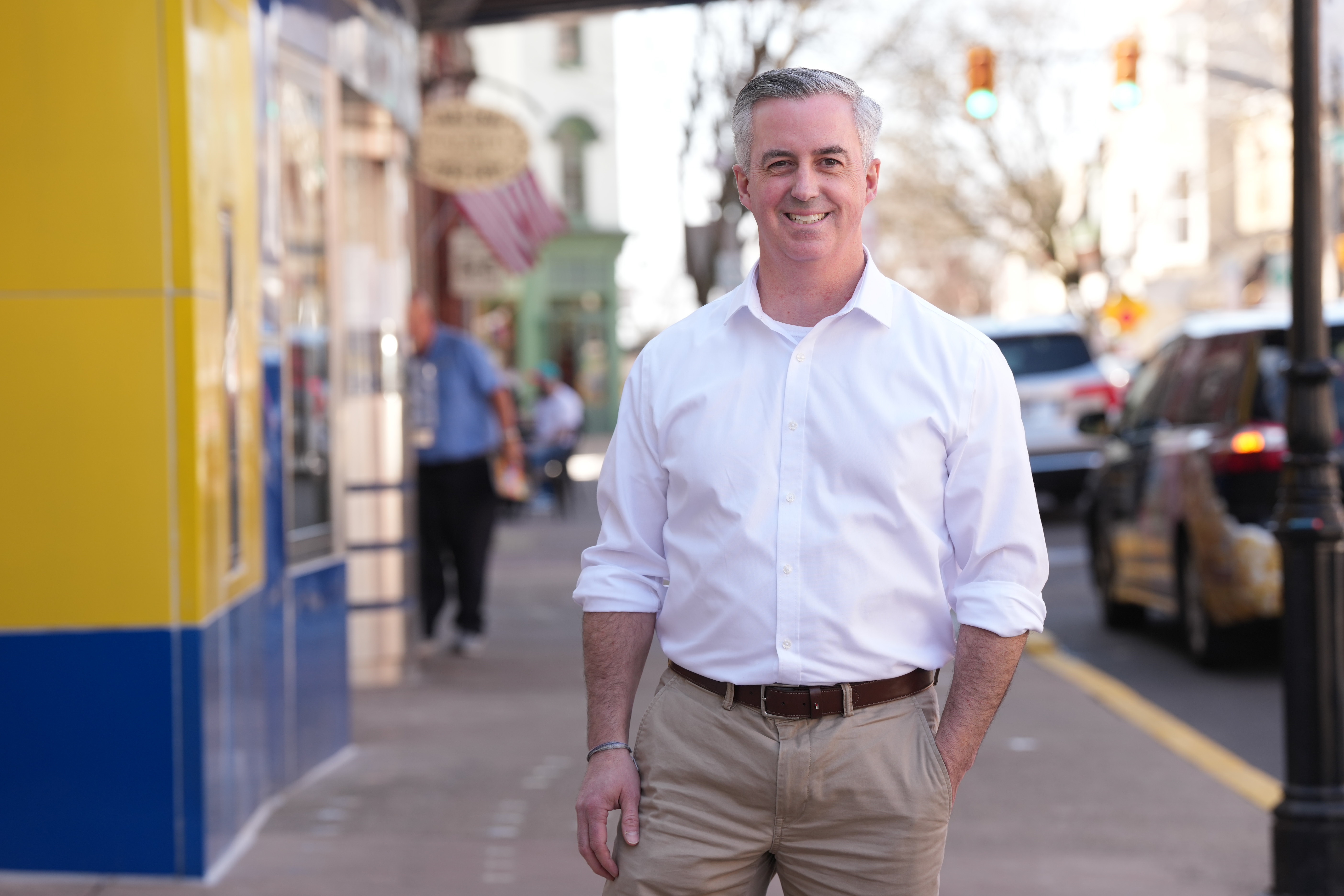
    Democratic Bucks County Commissioner Bob Harvie understands the affordability challenges facing Pennsylvanians, the Editorial Board writes.Monica Herndon / Staff Photographer

    He would bring some much-needed compassion and decency to a Congress that is turning into TikTok performance artists more interested in viral posts than making government work for the people they represent. Even better, Harvie will answer to the people, not Trump.

    Unlike Fitzpatrick, who has not held an in-person town hall in nearly a decade, Harvie has held five town halls since April and has four more scheduled this month.

    Harvie was elected commissioner twice. He knows how to work with Republicans and Democrats. The three-member commission includes one Republican, yet more than 90% of the votes have been unanimous.

    The commissioners have opened mental health care facilities, launched sustainability programs, and passed a bipartisan resolution opposing the use of warehouses as U.S. Immigration and Customs Enforcement detention facilities.

    If elected, Harvie said his top priority would be to address affordability issues facing residents. He also wants to restore trust in government, starting with a ban on stock trading by members of Congress and a clampdown on corporate control of politics by passing a constitutional amendment to overturn Citizens United.

    “I was raised to love this country,” Harvie told the Editorial Board. “I cannot stand what’s happening to it.”

    Many Americans agree. That’s why The Inquirer endorses Bob Harvie for Congress in Pennsylvania’s 1st District.

  • 🗳️ It’s Bucks season | PA 2026 Newsletter

    🗳️ It’s Bucks season | PA 2026 Newsletter

    📅 There are 32 days until Election Day.

    It wouldn’t be a Pennsylvania election without Bucks County becoming the star of the show.

    And that’s exactly what’s happening this weekend, when Gov. Josh Shapiro travels to the swingiest of the swing counties to stump for Democrats up and down the ballot in key races.

    🎤 I’m Fallon Roth, the suburban politics reporter at The Inquirer, coming to you live from Bucks (my home county) as we dig into how the suburb will be the make-or-break place for Democrats’ wishlist next month, including a win for Bob Harvie in the 1st Congressional District and shift in party control in the state Senate, which could only happen with help from the Philly suburbs.

    We’ll also explore whether Pennsylvania voters would support Shapiro turning his attention to a bid for the White House in 2028.

    In this edition:

    🗳️All hands on deck: Shapiro will be in Bucks County Saturday to launch a day-of-action for Democrats, organized by Planned Parenthood’s state-level PAC.

    🗳️ The Bucks stops here: Two Bucks County swing districts and another in Montco could determine which party controls the state Senate.

    🗳️Homefield (dis)advantage?: Pennsylvania voters are split on whether Shapiro should run for president in 2028.

    -Fallon Roth, Michelle Baruchman, Sam Janesch, Gillian McGoldrick (pa2026@inquirer.com)

    The latest

    • The price of gas, groceries and, well, living is on the rise and Pennsylvania’s swing district voters will have affordability on their minds as they head to the ballot box next month.
    • As democratic socialist candidates become more mainstream — including in Philly — most Pennsylvania Democrats said in a recent Inquirer/New York Times/Siena University poll that they have a positive view of socialism.
    • Shapiro and Michigan Democratic Gov. Gretchen Whitmer (possible 2028 rivals) went to Sam’s Morning Glory Diner in Philly to energize voters ahead of the midterms.
    • Robert F. Kennedy Jr., President Donald Trump’s health and human services secretary, is even less popular than the president with Pennsylvania voters.

    Data dive

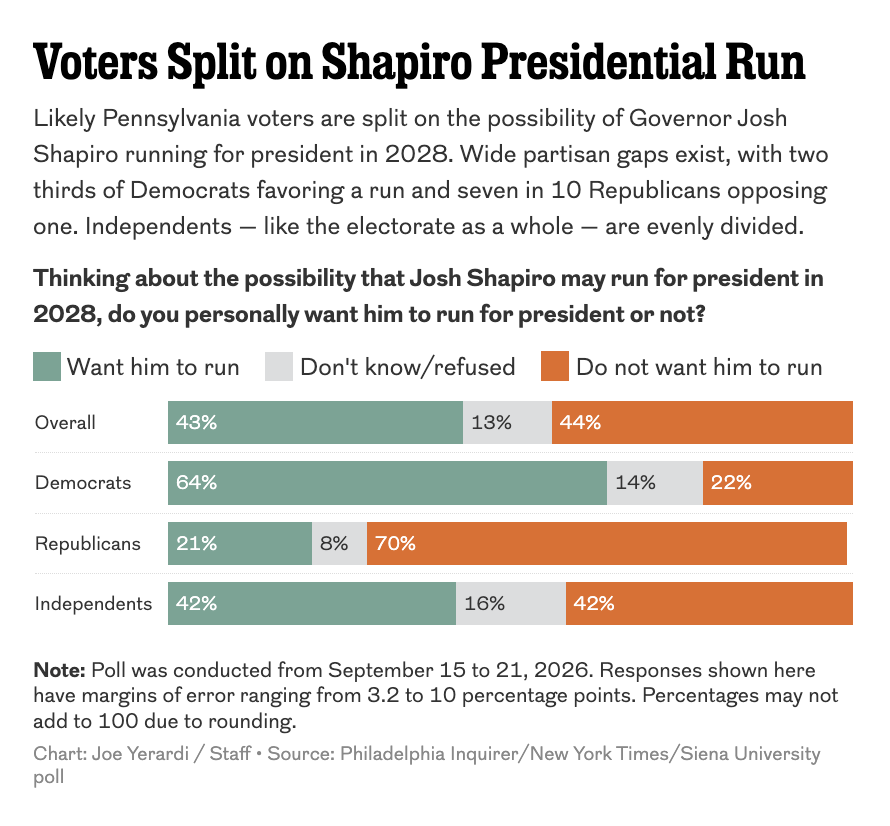
    📊 Without a doubt, Shapiro is a popular governor. He’s viewed favorably by Democrats, independents and even some Republicans — no small feat in a swing state that voted for President Donald Trump in 2024. But whether these likely Pennsylvania voters want Shapiro to run for president in 2028 is an entirely different question.

    Voters, in a poll conducted by Siena University on behalf of The Inquirer and the New York Times, were split on whether Shapiro, who is expected to pursue a White House bid, should run: 43% of respondents want him to run, and 44% don’t.

    Of those supporting a potential presidential campaign, 41% ranked his character and competence as their reasons, and nearly one in five said they were satisfied with Shapiro’s performance as governor. But for those who oppose a run, it’s not necessarily because they don’t like him (although that is the case for 21% of respondents).

    About one in 10 said they would prefer Shapiro, who is up for reelection this November with a commanding lead against his competitor, to remain in Pennsylvania. Campaigning and presidential debates would likely begin soon into his second term.

    Others, however, said they are worried that the U.S. is not ready for a Jewish president. Shapiro has spoken openly about his faith and experiences with antisemitism.

    “I like his views. I like his policies. I like everything. I just think his religious affiliation will stop him from winning because I think the rest of the country, especially the middle of the country, will rally against him,” said Michael Biello, a 68-year-old Democrat in Philadelphia.

    Campaign scrapple

    🏥 Is the U.S. ready for Medicare for All?

    Democrat Bob Harvie thinks there needs to be more trust in the federal government first before it starts running the healthcare system, he told The Inquirer on Tuesday evening.

    Harvie, a Bucks County commissioner challenging GOP U.S. Rep. Brian Fitzpatrick in the swingy 1st Congressional District, has focused his campaign on addressing rising costs and increasing access to healthcare, such as advocating for 55-year-olds to be able to buy into Medicare.

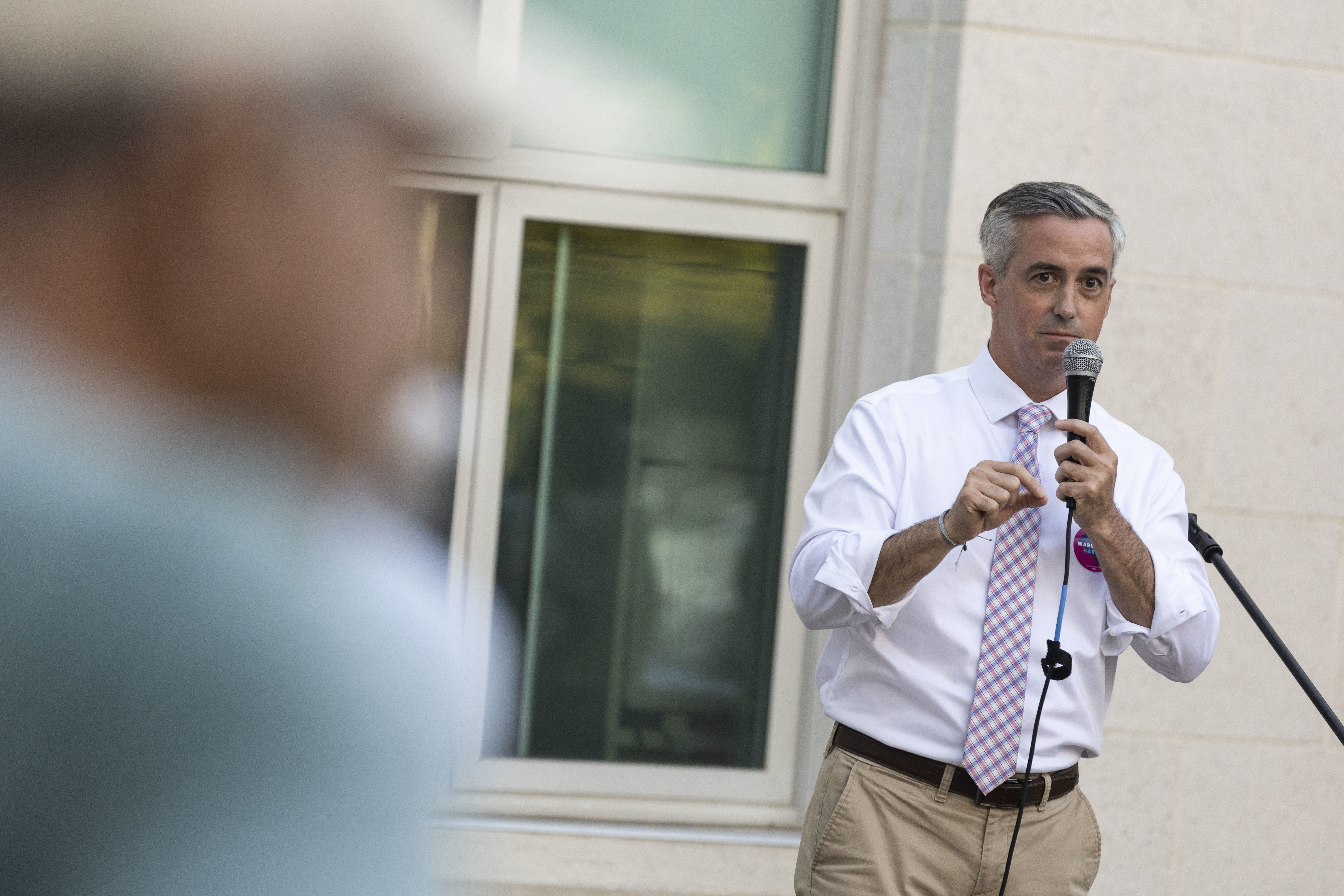
    Congressional candidate Bob Harvie (D, Pa.) speaks on Friday, September 11, 2026 at the Garden of Reflection in Yardley, Pennsylvania.William Thomas Cain / For The Inquirer

    “My worry is you start talking to people about well, ‘We’re going to take away the healthcare system you have, and we’re going to give you another one, and the government’s going to run it,’” Harvie said of Medicare for All. “We’ve got a lot of work to do to rebuild trust in the government, just like we have a lot of work to do to rebuild how this healthcare system works.”

    Harvie was joined Tuesday by Democrats Eileen Hartnett Albillar, running in the key 6th state Senate district, and U.S. Rep. Lauren Underwood, of Illinois.

    📸 Behind the scenes snapshot

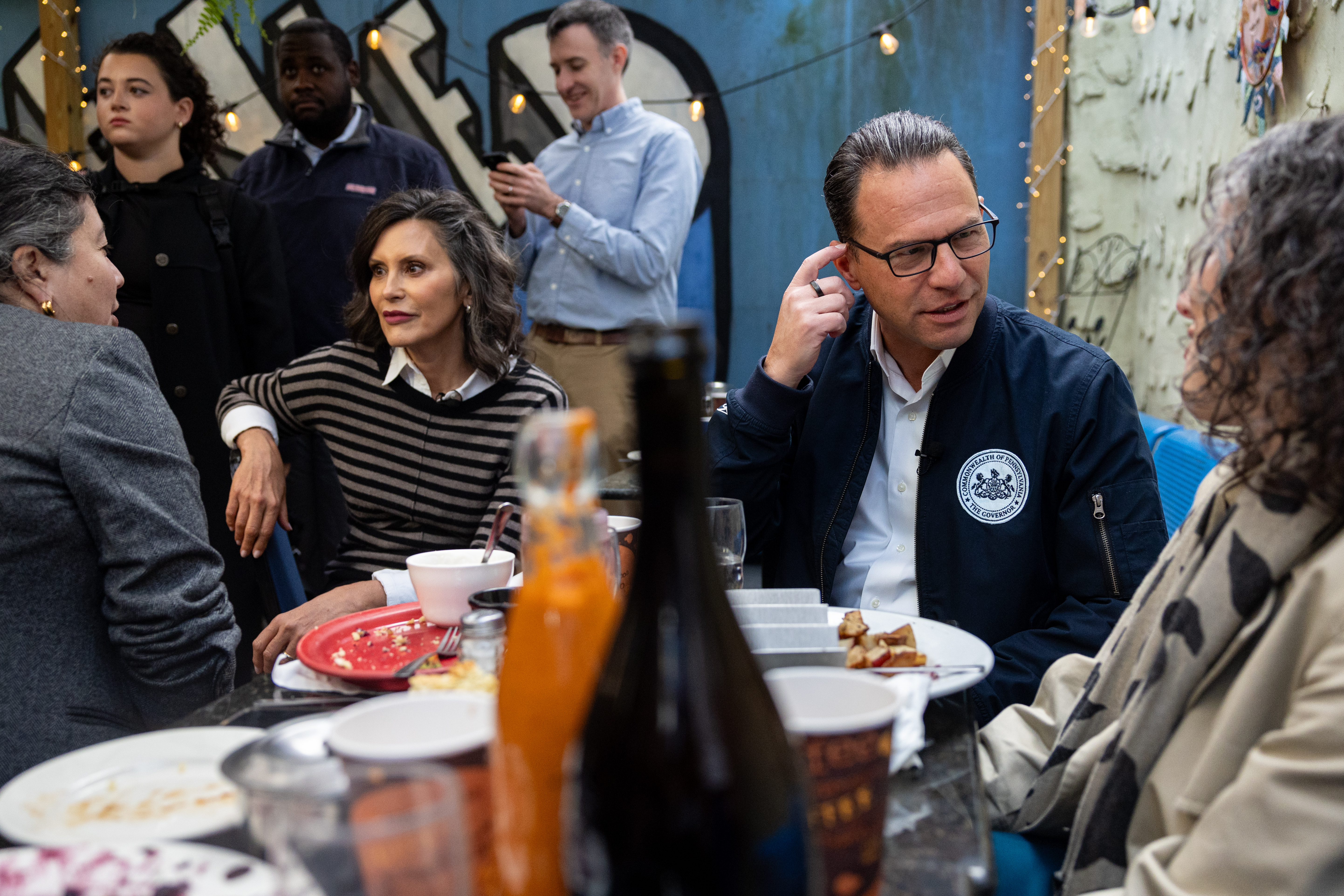
    Michigan Gov. Gretchen Whitmer (second from the left) and Pennsylvania Gov. Josh Shapiro chat with diners at the Morning Glory. The two Democrats have grown close in recent years, but they could become rivals in 2028 if they both pursue the presidency. Aidan T. Gallo / Staff Photographer

    👀 What we’re watching

    Shapiro and Garrity will face off in a live, televised debate this coming Wednesday, Oct. 7. The Harrisburg-based TV station ABC27 is hosting the debate, which will air on several stations owned by Nexstar across Pennsylvania, including WPHL-TV in Philadelphia. Politics reporters Gillian McGoldrick and Michelle Baruchman will break the major moments down at inquirer.com/politics.

    Quote of the week

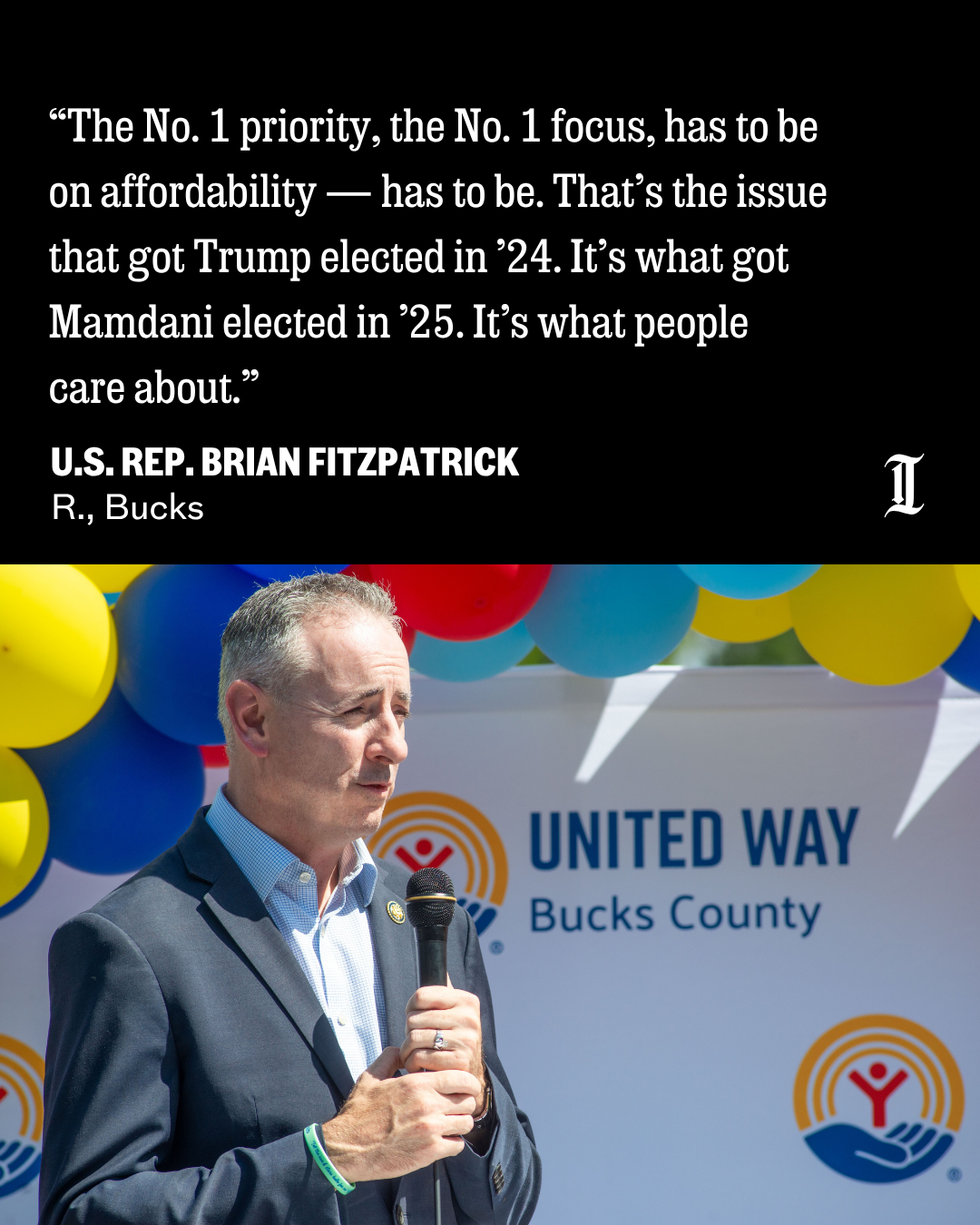
    U.S. Rep. Brian Fitzpatrick weighs in on the No. 1 issue this election. William Thomas Cain / For The Inquirer

    Fitzpatrick agrees with his opponent, Harvie, on one thing: this election will hinge on which party voters think will do a better job lowering the cost of living.

    Voters in the four key congressional swing districts have repeatedly expressed frustration that their dollar doesn’t go as far as it used to and that could be trouble for incumbents this fall.

    👋 Thanks for reading, and don’t forget to check back as we enter a final campaign month packed with debates, candidate events and maybe even a few October surprises. You can follow The Inquirer politics team’s coverage here, and we’ll see you in your inbox next Friday.

  • Affordability is on voters’ minds in Pa. swing districts as the cost of gas and groceries skyrockets

    Affordability is on voters’ minds in Pa. swing districts as the cost of gas and groceries skyrockets

    SCRANTON — Four of Mike Parry’s tenants can no longer afford to pay their rent. Suddenly, their financial pain is his.

    “It’s the affordability of everything that’s the problem,” said Parry, 60, of Clarks Summit, Lackawanna County. “We’re all feeling it now.”

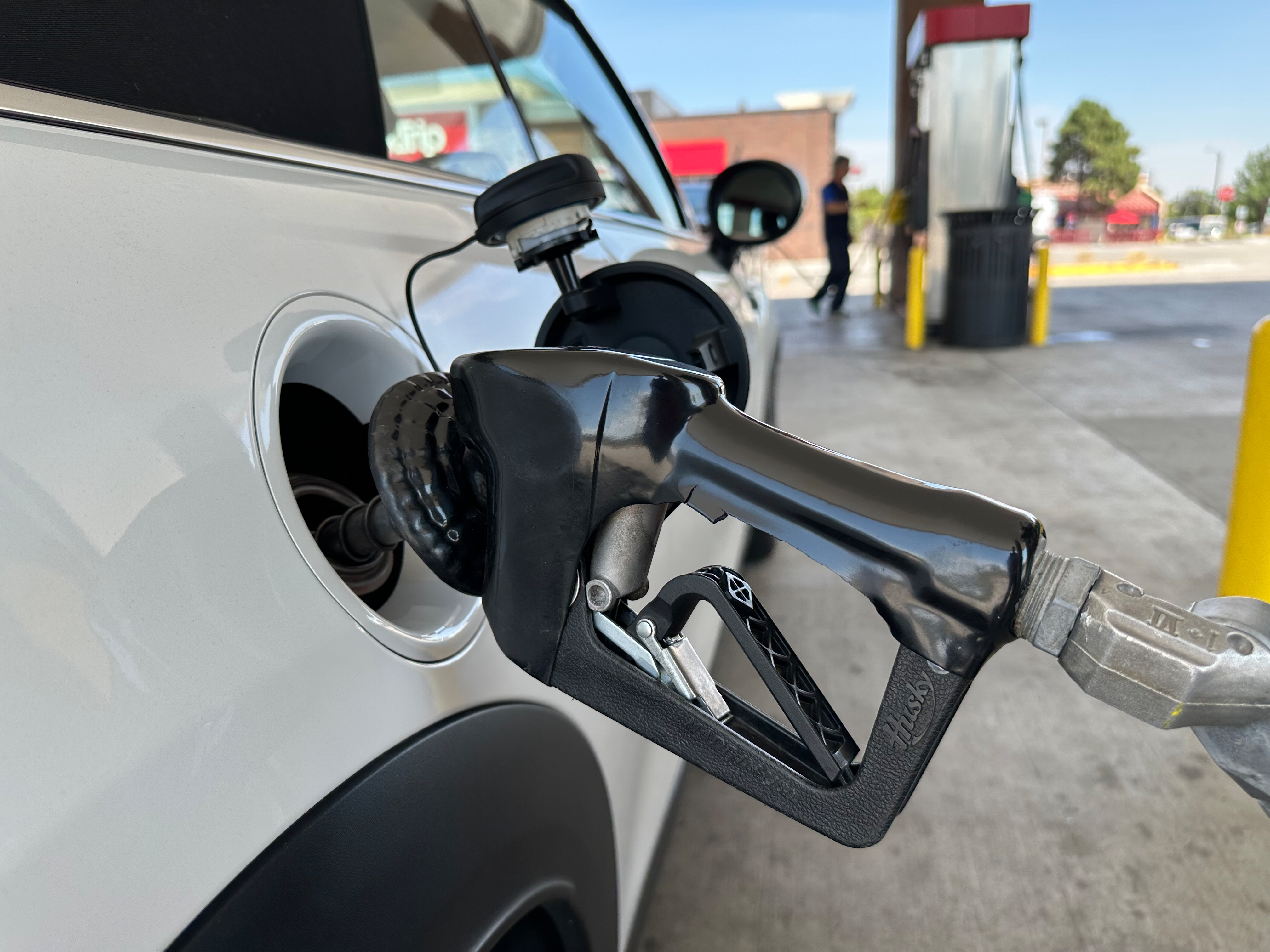
    With the war in Iran rocketing gas to almost $5 a gallon, inflation surging to 3.4% from 2.6% in 2025, and food prices up nearly 3% over last year, the high cost of living is weighing on the minds of many voters — and candidates — as the midterm elections draw near.

    Nowhere is that more critical than in four tightly contested Pennsylvania congressional districts that could decide the control of the U.S. House — in Bucks County, the Lehigh Valley, the Harrisburg area, and Northeast Pennsylvania.

    Mike Parry of Clark Summit, Lackawanna County.Courtesy of Mike Parry

    Parry, a Republican and supporter of President Donald Trump, said he is aware that many Americans hold the president and his party accountable for the affordability crisis, including in the 8th Congressional District, where Parry plans to back GOP U.S. Rep. Rob Bresnahan over Scranton Mayor Paige Cognetti, the Democratic nominee.

    But other voters might not be so kind to Trump-aligned incumbents this fall.

    Among likely voters in Pennsylvania, 75% disapprove of how Trump is handling the cost of living, compared with just 25% who approve, according to a recent poll from The Inquirer, the New York Times, and Siena University. And 73% disapprove of how he has handled gas prices, vs. 24% who approve. About 65% disapprove of his handling of the economy, vs. 34% who approve.

    “It doesn’t matter what party you’re in,” Parry said. “We’re all getting hammered the same.”

    ‘Spend less’

    At his local Wawa gas station in Allentown, P.J. Santos, 32, removed his finger from the pump trigger before his tank filled.

    “Now I tell myself to spend less,” said Santos, a Democrat who is supporting former firefighter Bob Brooks over Republican U.S. Rep. Ryan Mackenzie in the Lehigh Valley’s 7th Congressional District.

    P.J. Santos of Allentown.Courtesy of P.J. Santos

    “So I buy less than I need,” he added, tightening his gas cap. “Same goes for date nights with my wife: Spend less.”

    That is harder when you’re buying food, said Tammy McCoy, 52, of Easton, in the same district. “Walk into any grocery store,” said McCoy, a Democrat and professional cook. “It’s like you have to hand them $50 at the door.”

    (function(){function e(){window.addEventListener(`message`,function(e){if(e.data[`datawrapper-height`]!==void 0){var t=document.querySelectorAll(`iframe`);for(var n in e.data[`datawrapper-height`])for(var r=0,i;i=t[r];r++)if(i.contentWindow===e.source){var a=e.data[`datawrapper-height`][n]+`px`;i.style.height=a}}})}e()})();

    Trump, she remembered, promised to lower prices on Day 1 of his presidency. Not only did that not happen, she added, he raised tariffs, making imported staples like coffee, nuts, and olive oil more expensive. “Because of that,” McCoy added, “I’m against him and Republicans.”

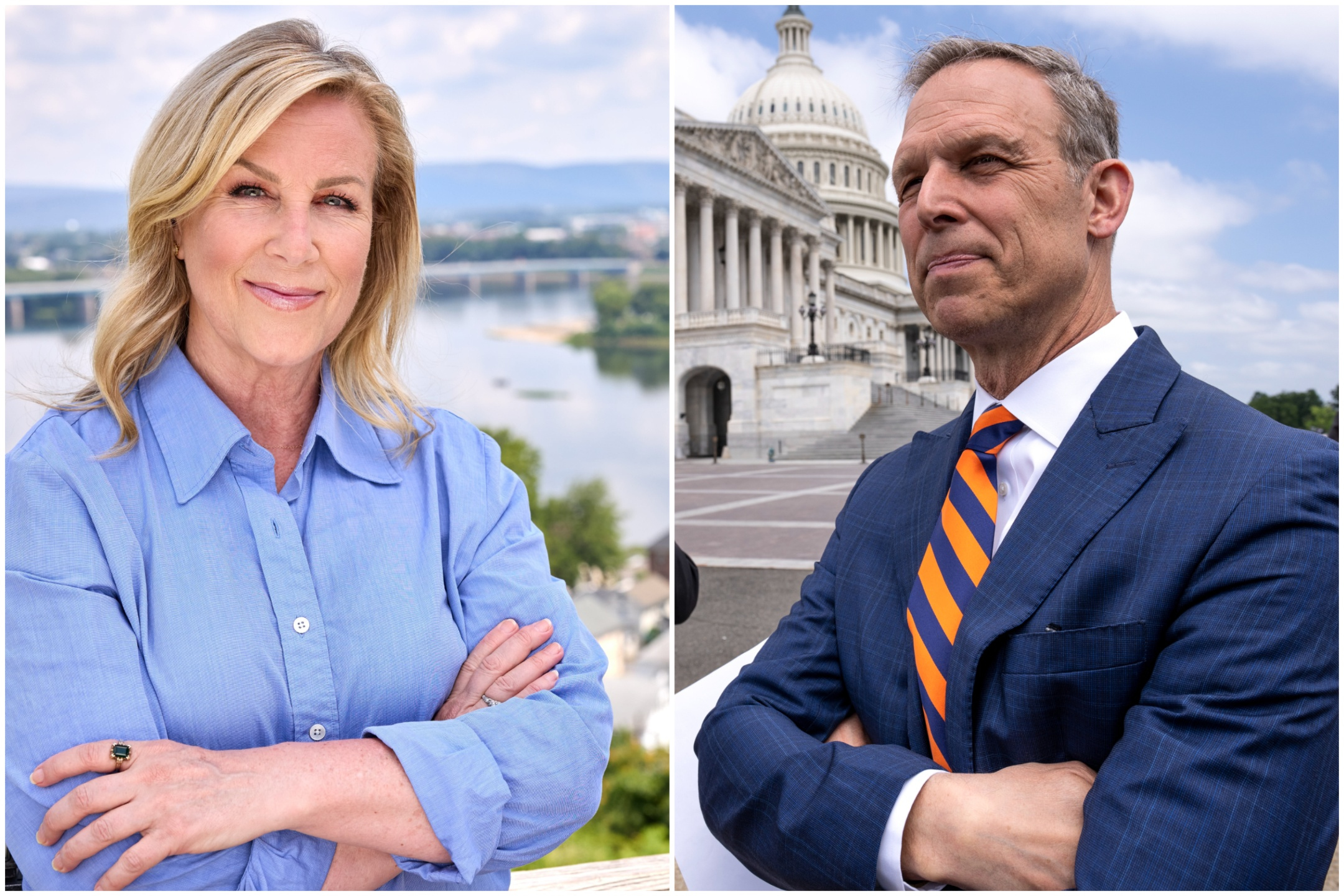
    Tapping into the frustration over food prices, Democrat Janelle Stelson’s campaign is pointing to the cost of hamburgers as she seeks to oust Republican U.S. Rep. Scott Perry in the 10th Congressional District.

    Janelle Stelson (left) and Rep. Scott Perry, R-Pa.(right) from a Stelson campaign photo in 2024, the last time the two squared off against each other in a bid to represent the 10th Congressional District. Stelson Campaign, AP

    Stelson eats a burger in a TV ad that says Americans now pay $7.29 for a pound of ground beef — a result of tariffs Trump imposed and Perry supported.

    But criticism of Trump’s tariffs will not sway Tammy Green, 60, a Republican voter in the 8th Congressional District who supports Bresnahan over Democrat Cognetti.

    “Because he’s a businessman, President Trump understands the economy. … He’s negotiating fair prices with tariffs,” said Green, a former travel agent who lives in West Wyoming, Luzerne County.

    More households need help

    On a hot September day in Levittown, people gathered to celebrate the grand opening of the new headquarters of the United Way of Bucks County. Focused on helping anyone experiencing financial hardship, the building features an expanded HELP Center, where diapers, fresh produce, and clothing are available at no charge.

    As need skyrockets, the nonprofit expects a 40% to 50% increase in demand this year, Marissa Christie, president and CEO, said in an interview.

    “Folks are telling us that in the grocery store, their budget is not going as far as it used to,” Christie said. “When they go to fill up their gas tank, their money is not going as far as they expected.”

    Attending the event alongside other local lawmakers was U.S. Rep. Brian Fitzpatrick (R., Bucks), who secured $4.15 million in federal funds for the building and said the agency will “always be in that top-10 list” of key nonprofits helping those in need.

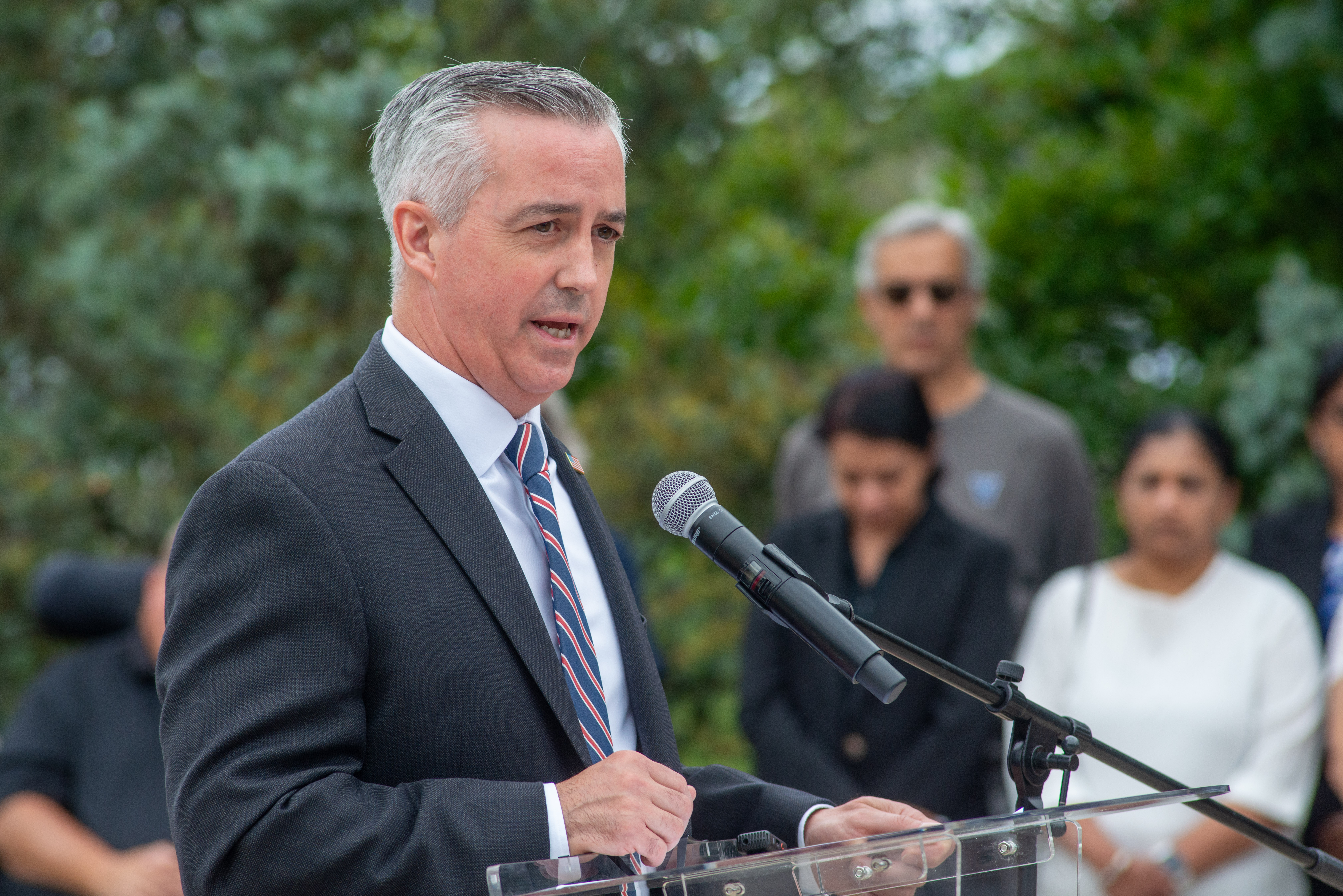
    U.S. Rep. Brian Fitzpatrick (R., Bucks) speaks outside the U.S. Capitol about legislation to put national restrictions on gerrymandering on Sep. 16, 2026.Sam Janesch / Staff

    The cost of living has become a focal point in the 1st Congressional District race as Fitzpatrick fends off a challenge from Democratic County Commissioner Bob Harvie in the Bucks County-based swing district.

    Pennsylvania Democrats, including Harvie, have centered their campaign messaging on affordability in hopes of appealing to voters across the political spectrum.

    “Costs are what affect people every single day … whether it’s at the pump, whether it’s in the grocery store,” Harvie said in an interview with The Inquirer’s Editorial Board. “Housing costs obviously are huge. It’s a major issue here in this district, especially in the county.”

    (The Editorial Board, which runs The Inquirer’s opinion pages and decides endorsements, operates independently from the newsroom. Newsroom editors and reporters have no role in endorsements, and opinion staffers have no role in news coverage.)

    Fitzpatrick, too, acknowledged in an interview at the U.S. Capitol last month that affordability is the top issue not just in this election, but in every election.

    “The No. 1 priority, the No. 1 focus, has to be on affordability — has to be,” he said. “That’s the issue that got Trump elected in ’24. It’s what got [New York Mayor Zohran] Mamdani elected in ’25. It’s what people care about.”

    ‘Affordability front and center’

    Demonstrating their awareness of voter focus on the high cost of living, Trump administration officials and local Republicans repeatedly emphasized “affordability” as they touted their work to combat rising electricity prices at a PPL Electric Utilities facility in Allentown last week.

    “This is a quick way to lower electricity prices and increase reliability,” U.S. Energy Secretary Chris Wright said as he announced up to $71.5 million in federal funding for PPL, which was among $2 billion in new spending aimed at improving the electric grid.

    Upgrades to existing transmission lines will include new technology like sensors to detect weather conditions, improving efficiency and ultimately lowering electricity costs, according to the Energy Department.

    Asked how quickly consumers might see those improvements, Wright did not specify a timeline but noted that new, large-scale energy users — like data centers — are negotiating with utilities about how much of the increased demand they will cover.

    Mackenzie, a freshman lawmaker whose district includes the Lehigh Valley and Poconos, also emphasized a bill he supports that would set federal standards for data centers to pay for their electricity use, and another to promote transparency around retail electric costs.

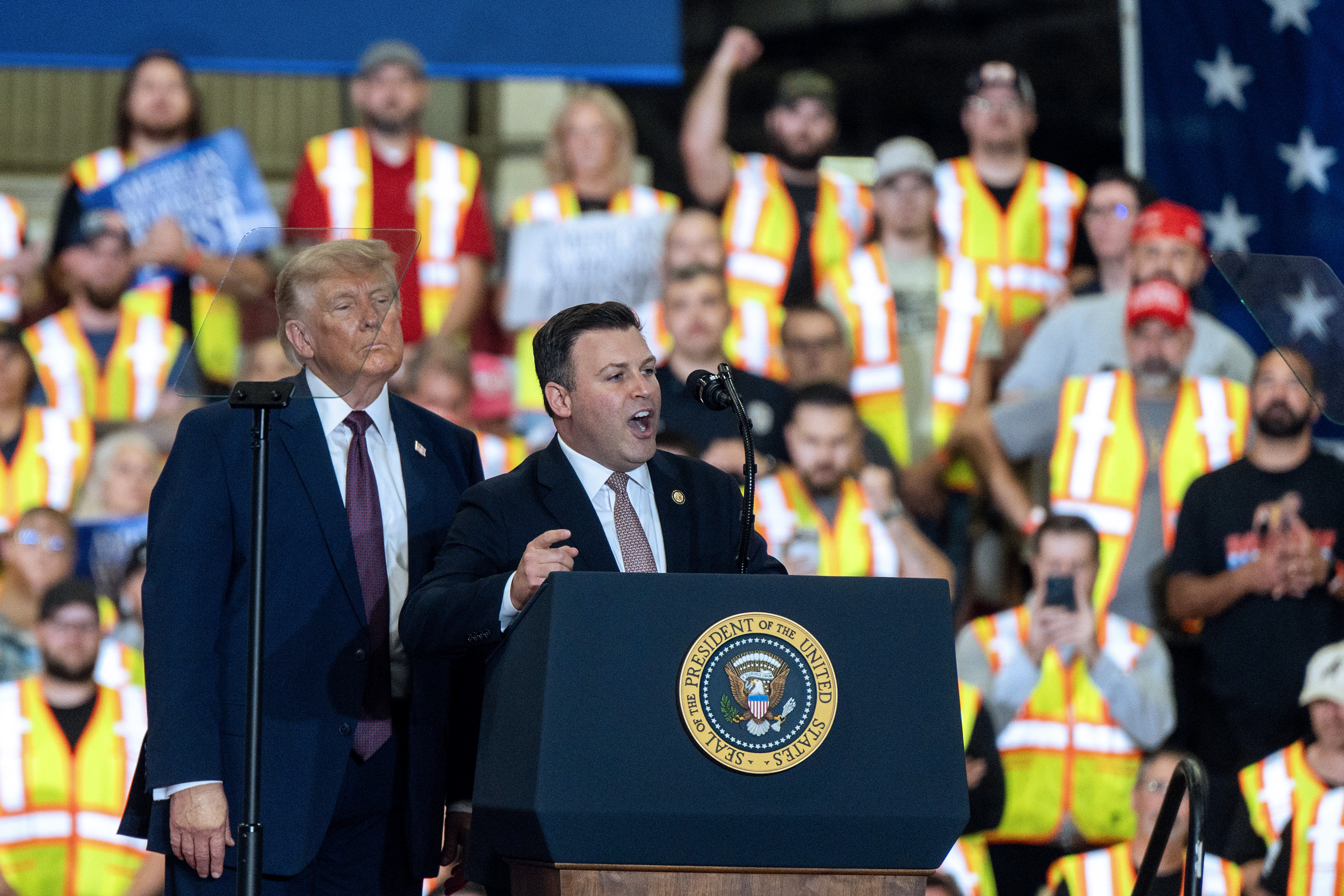
    President Donald Trump invites 7th District U.S. Rep. Ryan Mackenzie (right) to the stage to visit Mack Trucks in Macungie, outside Allentown in the Lehigh Valley, in June.Tom Gralish / Staff Photographer

    Mackenzie said energy policy needs to keep “affordability front and center.”

    The war’s economic consequences

    Some Trump voters say they are willing to pay more for gas and other essentials as the president pursues his policy goals at home and in Iran.

    “We incur a cost that stinks now to avoid another Sept. 11 later,” said T.J. Fitzgerald, 60, a Republican bail bondsman from Nanticoke, Luzerne County, in the 8th Congressional District. “Fighting Iran, a terrorist organization, is worth inflation at the pump.”

    Ryan Kavulich, a 37-year-old project manager from Dunmore in nearby Lackawanna County, disagreed with that logic.

    “The war’s a nightmare with what it’s costing for diesel,” said Kavulich, a Democrat who plans to back Cognetti in November.

    (function(){function e(){window.addEventListener(`message`,function(e){if(e.data[`datawrapper-height`]!==void 0){var t=document.querySelectorAll(`iframe`);for(var n in e.data[`datawrapper-height`])for(var r=0,i;i=t[r];r++)if(i.contentWindow===e.source){var a=e.data[`datawrapper-height`][n]+`px`;i.style.height=a}}})}e()})();

    People in the 8th District know that Bresnahan voted against ending the war with Iran in September, Kavulich said.

    “And that makes voting for Paige [Cognetti] in November the easiest choice ever,” he said. “So many people around Scranton have a blue-collar, kitchen-table, commonsense vibe. They know going into Iran isn’t what you do. They know it’s time to be over Bresnahan and Trump.”

    As the cost of fuel continues to climb, even some longtime Republicans in the district are expressing their doubts about the economic consequences of Trump’s war.

    “I voted for Trump three times,” said Greg Kerrick, 58, a Republican voter from Scranton.

    “But I don’t like him pushing up gas prices,” added Kerrick, who is unemployed. “And I feel for anyone paying over $4 a gallon.”

  • Democrats are calling for the resignation of a GOP lawmaker who reportedly hurled a homophobic slur at Philly’s Malcolm Kenyatta

    Democrats are calling for the resignation of a GOP lawmaker who reportedly hurled a homophobic slur at Philly’s Malcolm Kenyatta

    The Pennsylvania House Republican Caucus chastised a GOP state legislator Thursday after he reportedly hurled a homophobic slur earlier in the week at Democratic State Rep. Malcolm Kenyatta of Philadelphia, who is gay.

    State Rep. Aaron Bernstine, a Republican who represents portions of Butler and Lawrence Counties in Western Pennsylvania, also allegedly said in a Harrisburg bar that Kenyatta had lost weight, which Bernstine allegedly attributed to AIDS, according to reporting by PennLive. Kenyatta was not present when the alleged remarks were made.

    “The alleged conduct is troubling and does not comport with the values and professionalism Pennsylvanians expect of their state lawmakers,” Republican Caucus spokesperson Jason Gottesman said in a statement.

    “All elected officials, regardless of party or position, must act in a manner consistent with the expectations of their constituents. When they fall short of that standard, it is upon them to take personal and individual responsibility for their actions quickly and appropriately.”

    Kenyatta didn’t respond to several requests for comment, but other Democrats expressed their outrage on his behalf, including the Democratic National Committee, for which Kenyatta serves as vice chair.

    “Hateful, homophobic, and racist attacks like this have absolutely no place in our politics, our communities, or our country,” DNC chair Ken Martin said in a statement.

    The Democratic leaders of Pennsylvania’s Legislative LGBTQ Equality Caucus, as well as the Black Caucus, demanded Berstine’s immediate resignation in a joint statement Thursday, saying that Bernstine’s “unacceptable” conduct has rendered him “unfit to serve.”

    “We are calling on all House members, but especially Republican leaders, to denounce his behavior, to join us in demanding his resignation, and for Republican leaders to identify the steps they will take to guard against this kind of pathetic behavior within their caucus,” said the statement from Black Caucus Chair Napoleon Nelson (Montgomery County), and LGBTQ Equality co-Chairs Ismail Smith-Wade-El (portions of Lancaster County), and Jessica Benham (portions of Lancaster County).

    Bernstine denied that he made the comments.

    “The allegations attributed to me are false. This is a political attack,” he said in a statement Thursday.

    He also referenced an altercation he had at the bar that same night with individuals he identified as being with the Pennsylvania Building Trades Council. Saying he was the subject of threats, he added that he alerted local police.

    Berstine went on to criticize reporters who initially broke the story. “Reporters should scrutinize elected officials, including me,” he said. “But scrutiny is not a license to publish falsehoods or omit critical context. We are exploring all available legal remedies.”

    The Philadelphia House Delegation posted a statement on X Thursday afternoon, calling for Bernstine’s resignation in response to his “alleged disgusting, hate-filled tirade.”

    House Democratic leadership said it was “exploring potential next steps” and that majority party looks forward to “hearing what repercussions Republican House leadership will impose for his abhorrent behavior.”

    Expulsion requires two-thirds majority in the House, which could happen if some Republicans crossed the aisle in the narrowly divided chamber.

    In 2020, House Republican leaders called for Bernstine’s resignation after videos of him encouraging his young son to smoke and curse surfaced. Soon after, Bernstine was reelected, and the demands quieted.

    Three years earlier, in the midst of Black Lives Matter demonstrations in which motorists were blocked, Bernstine posted on X, “If anyone EVER tries to stop my car on a highway with negative intentions… I will not stop under any conditions.”

    Staff writers Gill McGoldrick and Michelle Baruchman contributed reporting.

  • A former Philly woman who voted twice in the 2024 election was sentenced to three years of probation

    A former Philly woman who voted twice in the 2024 election was sentenced to three years of probation

    A former Philadelphia woman who voted twice in the 2024 presidential election was sentenced Thursday to three years of probation.

    Miya Pack, 40, who now lives in Georgia, pleaded guilty earlier this year to voting more than once in a federal election after prosecutors said she cast ballots in 2024 in Bergen County, N.J. — where she grew up — and in Philadelphia.

    Pack was not affiliated with any political party at the time, according to Pennsylvania voter records. And prosecutors did not specify which candidate she voted for.

    Pack also did not name her preferred candidate Thursday while addressing U.S. District Judge Joshua D. Wolson. Instead, she simply said she was “nervous” about the election’s outcome, but recognizes now that that was no excuse for voting twice.

    “I was wrong,” she said. “I’m very, very sorry.”

    Pack voted in-person in North Jersey on Oct. 26, 2024, court documents said, and then cast another ballot in-person in Philadelphia 10 days later, on Election Day.

    Assistant U.S. Attorney Nancy Potts said Pack’s crime “violates the trust that we have in one another to abide by the basic rules of society.”

    And Wolson, the judge, said Pack’s offense “strikes at the heart of democracy in many respects.”

    “There’s a degree of honor code in voting, and breaches of that undermine the public confidence in elections,” he said. “And our elections function in no small part because they rely on a public perception of confidence.”

    Pack said she understood. And both she and her attorney said Pack has been left “mortified” and “embarrassed” by the case, which has been covered by a variety of news outlets, making her name and background easy to find online.

    President Donald Trump has repeatedly made questionable or false statements about the prevalence of voter fraud, particularly in places like Philadelphia, where Democrats heavily outnumber Republicans.

    Election officials and other experts generally agree that voter fraud has not historically occurred on a large scale, or at rates that might undermine electoral results — particularly in national elections, such as presidential contests.

    Pack’s indictment was announced last year alongside the indictment of another man, Matthew Laiss, who voted twice for Trump in 2020. Laiss was sentenced earlier this year to six months of house arrest and three years of probation.

  • Bucks and Montgomery Counties could determine which party gets control of the Pa. state Senate

    Bucks and Montgomery Counties could determine which party gets control of the Pa. state Senate

    Gov. Josh Shapiro’s hope for a Democratic state Senate likely hinges on the Philadelphia suburbs, where three swing districts could give his party the majority in the chamber for the first time in 33 years.

    And that includes two seats in purple Bucks County — forever the focal point of Pennsylvania’s political landscape — where Shapiro will be campaigning for downballot candidates in key races on Saturday at a canvass launch organized by Planned Parenthood’s state PAC.

    Democrats in the Keystone State have zeroed in on the GOP-held seats in the 6th District in Bucks County, the 16th in Bucks and Lehigh, and the 24th in Montgomery and Berks Counties as three of the districts they’re hoping to flip to create a Democratic trifecta in Harrisburg with a possible blue wave in November.

    The competitive races in Bucks and Montgomery Counties are unfolding ahead of this November’s midterm elections when Pennsylvania will also be in the spotlight for Shapiro’s reelection bid and four congressional contests that could determine party control of the U.S. House.

    Like most Democrats across the country, Eileen Hartnett Albillar in the 6th District, Mark Pinsley in the 16th District, and Chris Thomas in the 24th are centering their pitch to voters around affordability as Pennsylvanians’ signal their overwhelming disapproval of President Donald Trump’s handling of economic issues and gas prices.

    “Individual candidates matter, campaigns matter … but I do think it’s pretty clear that all these elections, to one extent or another, wind up being a referendum on President Donald Trump, and I think that puts Democrats in a very strong position,” said State Sen. Santarsiero, the chair of Bucks County’s Democratic Party. Santarsiero is also running for reelection this year.

    Republicans currently hold 27 seats in the 50-member state Senate. Democrats would need to flip at least two seats and hold the governor’s office to take control with the lieutenant governor’s tie-breaking vote.

    A Democratic trifecta in Harrisburg — if the party maintains its House majority and flips the Senate — would allow Shapiro in a second term to usher through a minimum wage increase and more transportation funding among other priorities that have been blocked by the GOP Senate.

    But Democratic candidates will have to win over independent and even some Republican voters to prevail in the swing districts against GOP incumbent State Sens. Frank Farry in the 6th, Jarrett Coleman in the 16th, and Tracy Pennycuick in the 24th. The GOP has a registration advantage in all three districts, according to state data.

    Farry, Coleman, and Pennycuick did not respond to requests for an interview, but the state party projected confidence about their ability to hold their seats.

    “Maintaining the majority in the Senate is a top priority for Republicans in Pennsylvania,” said James Markley, executive director of the PA GOP.

    He also praised Farry, Pennycuick, and Coleman for their work to lower costs and improve the state’s education system.

    “When it comes to majorities in the State House or the State Senate, every seat matters,” he said.

    Here’s what to watch.

    Gov. Josh Shapiro addresses supporters at a primary night part in Warminster on Tuesday, May 19, 2026Steven M. Falk / For The Inquirer

    ‘You don’t take for granted anything in Bucks County’

    Bucks County’s importance ahead of November has been clear for months.

    In Warminster last May, Shapiro held a primary night party at a former space centrifuge where he promoted his reelection campaign and a slew of downballot candidates. There, Hartnett Albillar, who is also the county’s clerk of courts and a social worker by trade, declared: “The path to flipping the Senate runs right through Bucks County.”

    As she continues knocking on doors and courting voters in the 6th District, which includes most of the middle of the county, that reality could not be more obvious. But, Hartnett Albillar said, despite Shapiro’s support (he has endorsed all three candidates) and a blue wave in the forecast, she’s not thinking of her election as a shoo-in.

    “We know that you don’t take for granted anything in Bucks County,” she said in an interview last month.

    That’s because the suburb is notorious for split-ticket voting, she said.

    “Democrats have won here in other races, but I believe you have to make your case to voters individually,” Hartnett Albillar said, adding that voters in her district don’t look at party labels.

    It’s a dynamic that has, for example, allowed GOP U.S. Rep. Brian Fitzpatrick to maintain his congressional seat even in years Democrats do well — like in 2022 when Shapiro won the county by nearly 20 points.

    Pinsley is trying to make that argument in the Upper Bucks County portion of the 16th where voters are less familiar with the Lehigh County controller and where Republicans have a roughly 22,000 voter registration advantage — the largest gap of the three districts.

    Eileen Hartnett Albillar (center) is challenging State Sen. Frank Farry in Bucks County’s 6th District.Hartnett Albillar Campaign

    This race is also a rematch for Pinsley after he lost by 8 points against Coleman in 2022.

    But the Democrat was given another chance by voters this year after he succeeded in a heated primary without the Bucks County Democratic Committee’s backing.

    Now that he has the party’s support, he says it’s helped him reach a whole new circle of people for his events, including “Pastries with Pinsley,” a regular meet-and-greet at various coffeehouses in the district, but especially in Bucks. This weekend, he’s headed to the So Fresh So Green Cafe in Perkasie.

    “60% of the vote is in Lehigh County, and 40% of the vote is from Bucks County,” Pinsley said in an interview last month. “We need Bucks. We need Bucks to win. You’re not going to win in just Lehigh.”

    Across county lines into Montgomery County — Shapiro’s home county, which has a reputation for being deep blue — also lies another swing district that Democrats are investing in as Thomas, a volunteer firefighter and community organizer, hopes to bring Pennycuick’s tenure in the state Senate to a close.

    Until now, the 24th District, a hodge-podge of suburban and rural communities in Montco and Berks County that Thomas calls “all-encompassing of Pennsylvania” has “always been just out of reach in terms of how the district was drawn.”

    But this year, with a combination of voters’ frustrations and Shapiro on the ballot, Thomas believes “a lot of the stars are aligning.”

    “There’s a slim path to the majority without this district,” he said.

    But Republicans won’t be giving up these suburban swing districts so easily.

    Michael Straw, a spokesperson for the Pennsylvania Senate Republican Campaign Committee, said the GOP is “ready to compete for every vote in Bucks County.”

    Straw said in a statement that candidates will highlight the bipartisan bills that lawmakers have introduced and have since been signed into law, including Farry’s legislation to reduce cost barriers for breast cancer screenings and Coleman’s bill to address school safety and increase parental transparency.

    “We are making these legislative accomplishments known to voters across the political spectrum,” Straw said.

    Both parties are betting on affordability

    Heading into November, both Democrats and Republicans are trying to make the case to voters in these key swing districts that they are the party of affordability.

    Straw said that Republicans view these elections as an opportunity to emphasize affordability and fiscal responsibility to put “an important check on the Democrats overspending.”

    “Senate Republicans have helped to prevent wasteful spending, stop the Democrats’ electricity tax that would have cost Pennsylvanians more, and have supported reducing taxes on working families,” Straw said. “PA Senate Republicans have made affordability the priority while Democrats have repeatedly stood in the way.”

    Bucks County GOP State Sen. Frank Farry (center) during a ceremonial meeting of the Pennsylvania Senate at the National Constitution Center May 5, 2026.Tom Gralish / Staff Photographer

    And for Democrats, that means addressing voter frustrations that have trickled down from federal policies.

    Trump — who has urged voters to think of him as being on ballot — is getting worsening marks on the economy from Pennsylvania voters. The president’s own voters in 2024 are also dissatisfied with his handling of gas prices, polling shows.

    “They’re not happy about the Iran war. They’re not happy about the cost of gas. There are other costs that are going up, and many of them do blame the president, and all of these races have been federalized in many ways,” Pinsley said.

    In response to the rising costs of living, affordability has taken up most of the oxygen in Democrats’ messaging as the party shifts away from issues that have been prevalent in previous campaigns, such as abortion.

    With a focus on prices, the three swing district candidates have not had to switch up their stump speech even when chatting with Republican or independent voters that they’ll need to win over to be successful in November.

    Hartnett Albillar said that all voters are simply looking for a “functional” and competent government.

    Other key issues popping up in these races include funding for SEPTA and data centers; the latter of which has sparked contentious ads, including one by Hartnett Albillar’s campaign in the 6th District that provoked Farry’s campaign to file a cease-and-desist.

    “I’ve heard many times that folks are not looking at whether there’s a ‘D’ or an ‘R’ next to the name,” she said. “They’re looking at the person who will be able to bring change and bring fresh ideas because the current system is not working for us. Costs are way too high, and they want someone who’s going to do the work.”

  • Pa. Democrats have mostly positive view of socialism as progressive candidates secure wins

    Pa. Democrats have mostly positive view of socialism as progressive candidates secure wins

    With recent victories by democratic socialists nationwide prompting a fierce debate about the future of the Democratic Party, most Democrats in Pennsylvania have a positive view of socialism — and nearly 40% consider themselves to be a democratic socialist, a new poll found.

    Still, socialism remains broadly unpopular among all voters in the key swing state, according to the poll, conducted by Siena University on behalf of The Inquirer and the New York Times.

    About one-third of likely voters in the midterm elections this fall have a favorable view of socialism and 56% have an unfavorable view. That result closely mirrors a recent national poll from the New York Times and Siena University, raising questions about the appeal of socialism to a wider swath of voters.

    But as Philadelphians prepare to send a democratic socialist to Congress for the first time — and also as talk builds of a larger wave of progressivism across the state — 57% of Democratic likely voters in Pennsylvania have a favorable view of socialism and 24% have an unfavorable view, the poll found.

    “We’re more popular than ever,” said Dan Parker, cochair of Philadelphia’s chapter of the Democratic Socialists of America (DSA). “But we still have a long way to go.”

    (function(){function e(){window.addEventListener(`message`,function(e){if(e.data[`datawrapper-height`]!==void 0){var t=document.querySelectorAll(`iframe`);for(var n in e.data[`datawrapper-height`])for(var r=0,i;i=t[r];r++)if(i.contentWindow===e.source){var a=e.data[`datawrapper-height`][n]+`px`;i.style.height=a}}})}e()})();

    The survey of 615 likely Pennsylvania voters conducted from Sept. 15 through 21 comes amid a surge of leftist victories both locally and across the country.

    State Rep. Chris Rabb defeated a pair of more moderate candidates in Philadelphia’s highly competitive congressional primary in May. A democratic socialist, Rabb is highly favored to win in the general election and has spent the months since his primary campaigning for other like-minded candidates.

    Nearly all of those candidates — from Abdul El-Sayed in the high-stakes Michigan U.S. Senate race to a pair of New York candidates boosted by Mayor Zohran Mamdani — have also won their primaries as Rabb and his allies look to grow the ranks of progressives starting on Capitol Hill in January.

    Beyond the next Congress, the leftist wing of the party is hoping for momentum heading into the 2028 races for president and Pennsylvania’s U.S. Senate seat held by Democratic Sen. John Fetterman, who has antagonized socialists and made appeals to Republicans.

    “The mainstream Democratic establishment candidates are telling us time and time again to settle for less, to expect nothing other than the status quo,” Parker said. “People are looking for a different set of politics that speaks to their material needs and to the values of freedom that many are striving for.”

    Parker said Philadelphia DSA has been “exploding” since Rabb’s victory. The group mobilized hundreds of volunteers to knock between 75,000 and 100,000 doors during his campaign, and more than 750 new members have joined since May to put the chapter’s total ranks at about 3,000, he said.

    Councilmember Kendra Brooks speaks with colleague Nicolas O’Rourke during a March 12 caucus session. Alejandro A. Alvarez / Staff Photographer

    Rabb’s success follow that of Pittsburgh’s U.S. Rep. Summer Lee, who was first elected to Congress with DSA support in 2022. Other DSA-backed elected officials include Philadelphia City Councilmembers Kendra Brooks and Nicolas O’Rourke, as well as State Sen. Nikil Saval, while new primary victories this year include Mark Pinsley and Ce-Ce Gerlach in Lehigh Valley-based legislative races.

    Further growth, Parker said, will come with DSA-backed candidates working in office to “prove that government can exist to serve ordinary people.”

    On that agenda: Advocating for universal healthcare, affordable housing, progressive tax policies, defunding and ultimately abolishing ICE, and ending the wars in Iran and Gaza.

    “What makes DSA distinct — and democratic socialism as a political movement distinct — is that it’s not really just about who has the right ideas,” Parker said. “It’s about a theory of change that puts the vast majority of society in the driver’s seat.”

    (function(){function e(){window.addEventListener(`message`,function(e){if(e.data[`datawrapper-height`]!==void 0){var t=document.querySelectorAll(`iframe`);for(var n in e.data[`datawrapper-height`])for(var r=0,i;i=t[r];r++)if(i.contentWindow===e.source){var a=e.data[`datawrapper-height`][n]+`px`;i.style.height=a}}})}e()})();

    As Democrats look to retake control of Congress and the White House, how much influence that movement will yield remains an open question.

    Moderates like Gov. Josh Shapiro, a potential 2028 Democratic presidential candidate, have acknowledged the energy on the left while advocating for a more centrist approach. Shapiro said this summer that the progressive candidates were practicing “performative politics” and would need to deliver if elected. He has also said he expects the party to have the most significant “battle over what we believe in” in more than three decades as the next presidential race gets underway.

    The latest poll shows the party’s base remains divided in Pennsylvania.

    While Democrats in the state remain split in their views of socialism, 38% consider themselves to be a democratic socialist while 57% do not, the poll found. Just over half of Democrats see their party as divided and 45% believe it’s united.

    ‘A tiny, tiny fraction’

    Some observers also cautioned that the number of self-identifying democratic socialists across all of Pennsylvania — a swing state that has largely elected moderates to statewide office — may appear larger than reality. The poll did not define democratic socialism, for one. And progressives have been overrepresented in other polling this year, including in Wisconsin and Michigan, said Lew Irwin, a political science professor at Duquesne University in Pittsburgh.

    “A lot of people will claim an affiliation when they actually have an affinity,” Irwin said, adding that it’s still become “increasingly mainstream and acceptable inside the Democratic Party” to identify as socialist.

    J.J. Balaban, a Philadelphia-based ad maker for more moderate Democrats like U.S. Rep. Brendan Boyle, pointed to the fact that even with the additional energy on the left, the vast majority of Democrats in Washington next year will not be socialist.

    “We’re talking about a tiny, tiny fraction of the Democratic caucus,” he said.

    Balaban said that is one of the reasons why Republicans’ campaign messaging may also not be effective as they try to defend their majorities in the November midterm elections. Republicans have branded all kinds of Democrats as socialists — repeatedly denouncing the entire party as far left and “communist” in its agenda.

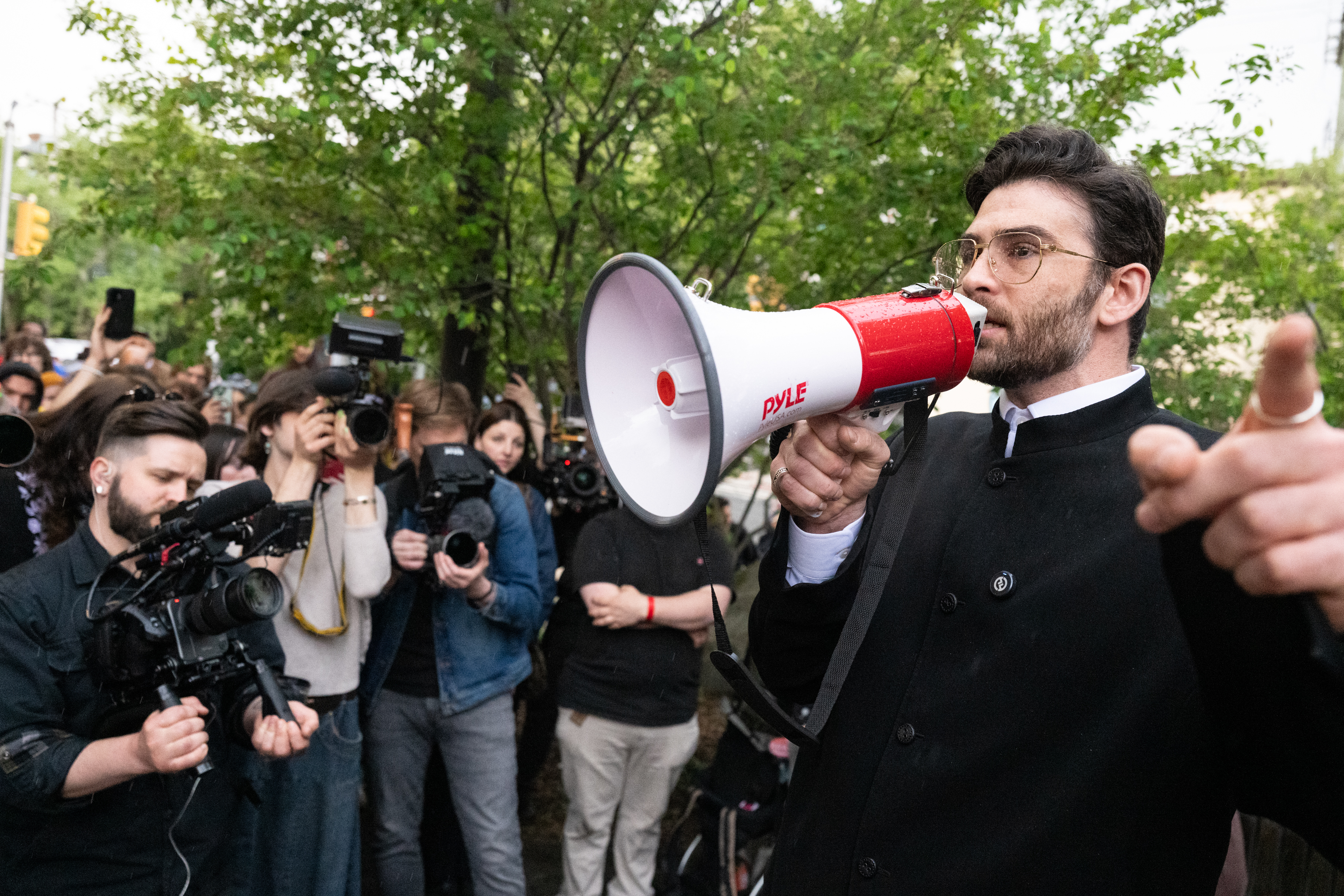
    One of the main characters featured in those attacks has been Hasan Piker, the controversial leftist streamer who campaigned with Rabb and other candidates this year. His visit to Philadelphia in April drew hundreds of young progressives but was condemned by Rabb’s opponents and Jewish groups who consider his views antisemitic.

    Online influencer Hasan Piker speaks to attendees at an April 30 fundraiser for State Rep. Chris Rabb’s 2026 congressional campaign at Renata’s Kitchen in West Philadelphia.Erin Blewett / For The Inquirer

    Piker’s support of El-Sayed has become a dominant issue in the Michigan race, but the poll of Pennsylvania voters shows he is mostly unknown in the Keystone State.

    Among Pennsylvania likely voters, 23% had an unfavorable view of Piker and 6% had a favorable view. Two-thirds said they had not heard of him — and a higher share of Republicans knew him compared to Democrats.

    “He is a much greater part of the discourse in the Fox cinematic universe than he is in actual Democratic discourse,” Balaban said.

    With polls increasingly showing Democratic momentum this fall, even some conservatives appear to be pushing for Republicans to shift their messaging away from socialism.

    Former U.S. Rep. George Santos, a Republican who has reportedly lived at least partially in the Poconos since President Donald Trump commuted his sentence last year, posted a video Thursday in which he criticized a mailer for U.S. Rep. Rob Bresnahan, a freshman Republican in a tight reelection campaign. The mailer claims Bresnahan will “stop the socialists” and lists his Democratic challenger, Paige Cognetti, alongside the “socialist dream team” of progressives Mamdani, U.S. Sen. Bernie Sanders (Ind., Vt.), and U.S. Rep. Alexandria Ocasio-Cortez (D., N.Y.).

    “Please stop sending me this. It’s silly,” Santos said in the video, adding colorful language to say Pennsylvania Republicans should be focusing on the cost of living.

    “No more rhetoric!” he added.

    Staff writer Joe Yerardi contributed to this article.