Tag: Republicans

  • Trump to visit Pa. on Tuesday as the battle for control of Congress heats up in the Lehigh Valley

    Trump to visit Pa. on Tuesday as the battle for control of Congress heats up in the Lehigh Valley

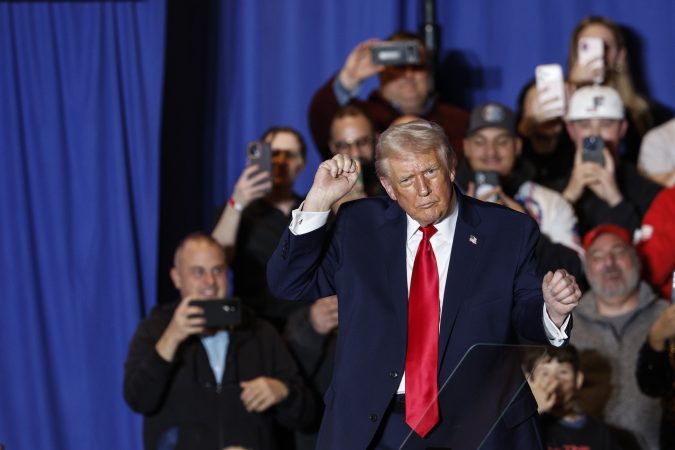
    President Donald Trump is scheduled to speak Tuesday at a truck manufacturing facility in the Lehigh Valley, where a competitive race for Congress this year could determine which party controls the U.S. House for the second half of his term.

    Trump will deliver remarks at Mack Trucks in Macungie in Lehigh County, according to the White House and two local members of Congress.

    The visit will mark Trump’s fourth Pennsylvania appearance in his second term and his first this year ahead of November’s high-stakes midterm elections.

    Pennsylvania has four competitive U.S. House districts — the most of any state — and the Lehigh Valley-based 7th District is widely considered one of the most likely in the nation to flip from Republican to Democrat.

    GOP U.S. Rep. Ryan Mackenzie won that seat by 1 percentage point in 2024 as Trump defeated Democrat Kamala Harris statewide. Bob Brooks, a union leader and retired firefighter whom many prominent Democrats rallied behind before last month’s competitive primary, is facing Mackenzie in November.

    The event Tuesday is scheduled as an official White House event, not a campaign event, and it could be the first of several trips by the president to the region and across Pennsylvania in the coming months.

    “We’re looking forward to joining President Trump at Mack Trucks — one of our nation’s most iconic manufacturers,” Mackenzie wrote on social media.

    “By investing in American workers and supporting domestic manufacturing, President Trump and Republicans in Congress have helped to put the Lehigh Valley and the Poconos at the forefront of our nation’s industrial revitalization. We appreciate President Trump coming to the region to help us highlight the work we’ve done together to support American workers, families, and industries.”

    Mackenzie spoke Friday at a different Mack facility outside of Allentown to highlight part of a contract the company won from the U.S. Army last year to produce heavy dump trucks. The deal is worth up to $221.8 million, and Mack Defense said it received $47 million in the latest Department of Defense appropriations act.

    A White House spokesperson said Trump will “stand with the American workers he has fought for” during his visit.

    “Under the President’s leadership, key domestic industries are being revitalized, historic investments are pouring back into communities like Macungie, and families across the country are securing new, high-paying jobs,” Liz Huston said. “Pennsylvanians placed their trust in President Trump, and he has delivered for them.”

    Former President Joe Biden visited the same Mack facility in 2021 for a speech focused on supporting American manufacturing.

    Trump last appeared in Pennsylvania in December for a rally at the Mount Airy Casino Resort in Mount Pocono, which is in the neighboring 8th Congressional District where another freshman Republican is looking to fend off a Democratic challenger. Pitched as a speech to address voters’ concerns about affordability, the president repeatedly veered off script and called affordability concerns a “hoax.”

    Some of the president’s former supporters in the region have since said they regretted voting for him, and national Democrats have made the area a priority as they look to win back a seat that Mackenzie flipped two years ago. Brooks, the Democratic nominee, has leaned into his working-class background while saying he understands voters’ financial concerns.

    U.S. Rep. Dan Meuser, a Republican who represents a different neighboring district, said Trump’s visit signals the president’s support for workers.

    “Mack Trucks are a symbol of America’s manufacturing strength,” Meuser said on social media. “Their Lehigh Valley operations are a pillar of the local economy, employing Pennsylvania workers and driving the nation’s trucking industry. Thank you, President Trump, for supporting American workers.”

  • Stacy Garrity on potentially being the first female governor of Pennsylvania: ‘It’s my least favorite thing to talk about’

    Stacy Garrity on potentially being the first female governor of Pennsylvania: ‘It’s my least favorite thing to talk about’

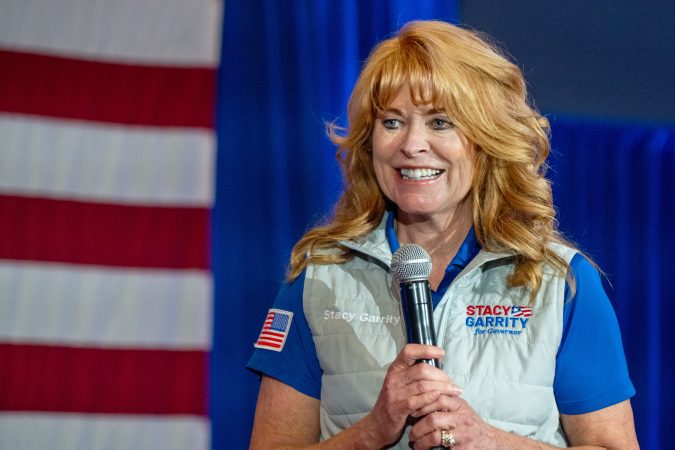
    If elected in November, Stacy Garrity would become Pennsylvania’s first female governor in the state’s 238-year history.

    Even now, she is one of only two women in history to receive the Republican Party’s nomination for the job.

    The state has never had a woman as its governor; no woman has been elected as U.S. senator; and both times a woman ran for president, she lost the state. Over the last two centuries, Pennsylvania’s political glass ceiling has proven stubbornly resistant to cracks.

    But on the campaign trail against Democratic Gov. Josh Shapiro, Garrity, 62, said she doesn’t give that too much thought.

    “It’s my least favorite thing to talk about,” she said. “I was the oldest of four daughters, and we were just told that we were expected to work hard.”

    Navigating gender dynamics in politics can prove to be a particularly fine balance. Republicans, in particular, often emphasize that candidates should rise on their skills and talent, not personal identity.

    Garrity emphasized her attention is on issues like the power grid, education, and reining in spending, though she recognizes the historic significance of a potential win.

    “Republicans, for the most part, are based on merit, and that’s how I was raised,” said Garrity, who spent decades serving in the Army Reserve and as an executive in the manufacturing industry before becoming state treasurer. When she was reelected in 2024, she broke the record in Pennsylvania for the most number of votes cast in her favor for a statewide office, a distinction formerly held by Shapiro.

    In addition to taking on centuries of male-dominated leadership, Garrity will face other challenges in November.

    She is a Republican who has aligned herself closely with President Donald Trump — including campaigning at his Mar-A-Lago Club in Florida — at a time when Trump has been experiencing historic dissatisfaction among voters and the national political environment favors Democrats.

    And she is running against Shapiro, a Democratic incumbent with a rising national star who is popular even among independents. He has $38 million banked as of May, vastly outpacing Garrity’s $2.8 million. Shapiro is also counting on a strong showing in the midterms to help Democrats win the majority in the U.S. House.

    “I think [voters] are excited to have a first female governor, but I don’t think that is the reason anybody would vote for me,” she said.

    In Pennsylvania and 16 other states

    It is hard to be what you can’t see. And for voters who have never experienced a woman at the top of the hierarchy, it is difficult to imagine what that could look like, experts said.

    It has been 300 years since a woman led Pennsylvania — before it was a state.

    Hannah Callowhill Penn led the colony of Pennsylvania, governing first while her husband, William Penn, suffered several strokes, and then alongside a group of trustees after he died. Over 14 years, she settled boundary disputes, appointed and replaced government officials, and navigated relations with the monarchy in England.

    Other Pennsylvania women made attempts to break gender barriers but came up short. Barbara Hafer ran as a Republican against Democratic incumbent Bob Casey Sr. in the 1990 governor’s race, but lost with just 32% of the vote.

    Former U.S. Rep. Allyson Schwartz lost to Tom Wolf during the Democratic primary for governor in 2014, and Laura Ellsworth was defeated by Scott Wagner in the 2018 Republican gubernatorial primary.

    “It could just be a coincidence, but also it’s very hard to break political traditions, and one of those traditions in Pennsylvania, unfortunately, is male leadership,” said Nichola Gutgold, a professor at Pennsylvania State University’s Lehigh Valley campus, who has researched women in politics.

    Pennsylvania, however, is not alone. There are 17 states that have never had a female senator, and 17 states have never had a female governor, according to the Pew Research Center. That distinction spans geographic ranges and party control.

    Still, Pennsylvania is one of just four states that has never had either, along with Idaho, Indiana, and Colorado. Among them, only Colorado went for Democrats Hillary Clinton and Kamala Harris for president.

    “We have certain variables at play in the Commonwealth of Pennsylvania that make it more challenging for women to run for elected office,” said Dana Brown, executive director of the Pennsylvania Center for Women and Politics.

    The role of the parties on the state and county levels means they have a strong influence on recruiting candidates and pushing them up through the pipeline. Historically, recruiting tended to come from more masculine bases — such as fire stations or township supervisor positions.

    Now, though, “both sides of the aisle recognize that women can win here in Pennsylvania, and so Republicans and Democrats have been purposely recruiting more women,” she said.

    Women have made strides in other Pennsylvania elected offices.

    In Harrisburg, State Rep. Joanna McClinton (D., Philadelphia) is the first woman and second Black person to serve as speaker of the Pennsylvania House. Republican State Sen. Kim Ward of Westmoreland County is the first woman in Pennsylvania history to serve as Senate president pro tempore and Senate majority leader.

    When former Democratic U.S. Rep. Susan Wild, the first woman to represent the Lehigh Valley in Congress, was elected in 2018, “it took a real concentrated effort from [political action committees] and from groups that really wanted to see a woman win to make that happen,” Gutgold said.

    In other cases, as in neighboring New Jersey or Virginia, women have ascended with a combination of fortunate timing, skill, experience, and deft campaigning.

    When Gov. Mikie Sherrill last year became the second woman elected to lead New Jersey, Brown said, “it was a change election for New Jersey, and it was a sign of pushing back against what the federal government is doing with ICE and immigration and also with the economy.”

    Even though Sherrill, a Democrat, shares the same party as her predecessor, Phil Murphy, New Jersey’s vote for a woman represents change, Brown said. “She also worked really, really hard for it, as most women do,” she added.

    Sometimes, female candidates succeed by pushing against expected norms for women by emphasizing military experience or work in male-dominated trades, Gutgold said. Garrity has emphasized her military and business experience on the campaign trail, holding a Veterans for Garrity rally last week.

    “I think that, rhetorically speaking, it would be easier to elect a woman who appears to hold more conservative views, because of the way we, the electorate, still views women’s role in society,” Gutgold said.

    Republican women have scored victories in the Deep South by upholding conservative values such as opposition to abortion and support of gun rights. Kay Ivey holds the governor’s mansion in Alabama, and Nikki Haley previously led South Carolina for two terms. In Tennessee, U.S. Sen. Marsha Blackburn has represented the state since 2018 and publicly repudiated gender-specific titles, such as congresswoman vs. congressman.

    Garrity, on the campaign trail, has also vowed to clean up the “boys will be boys” culture in Harrisburg and has criticized Shapiro’s handling of a sexual harassment case involving a longtime aide.

    The aide, Mike Vereb, abruptly stepped down in 2023, while the administration quietly agreed to pay $295,000 to settle claims from an employee in the governor’s office that Vereb had made repeated sexual advances toward her, and made lewd claims about her and other women.

    “We don’t need to settle for a governor who will sweep sexual harassment and abuse charges under the rug. We don’t need to accept that our state government is a cesspool where intimidation is the norm and public employees fear retribution,” Garrity said during a news conference this year.

    Manuel Bonder, a spokesperson for Shapiro, rejected those accusations.

    “Governor Shapiro has a track record of taking on powerful institutions, exposing sexual abuse, and putting predators behind bars — and he continues to fight to deliver real accountability and justice for survivors here in Pennsylvania,” he said.

    Could Pa. women give Garrity a boost?

    Nationally, women voters tend to lean more toward the Democratic Party, Pew Research Center data show, so it’s unlikely that the Republican Party will attract a huge turnover — even with a female candidate on the top of the ticket.

    Sometimes, however, the gender divide can become even more entrenched. In 2024, for example, when the candidates were broadly polling neck-and-neck, Harris saw a 17-point advantage with Pennsylvania women, while Trump led with men in the state by 11 points, according to a Philadelphia Inquirer/New York Times/Siena College poll.

    Garrity said she is putting together agendas that speak to various coalitions of voters, such as veterans, Latinos, and small-business owners.

    “I don’t think we’ve done specifically females, but that might be a good idea,” she said. A campaign spokesperson added that Garrity would be rolling out women-focused events in the coming weeks.

    Campaigns can target women by speaking directly to certain issues. Democrats have often focused their message on support for reproductive access and abortion rights, especially since the 2022 Supreme Court decision overturning Roe v. Wade.

    According to a Pew Research Center report in March, 64% of women and 55% of men say abortion should be legal in all or most cases. But Garrity has been inconsistent on the issue. She said “Roe was wrong from the beginning” on the day the ruling came out and sold T-shirts on her campaign website that opposed abortion. But in an interview last September, Garrity said she would “respect” Pennsylvania’s current abortion law and would not support a state ban.

    Republicans, meanwhile, often promote public safety and have sought to make women’s sports a wedge issue in recent elections by pushing restrictions on the participation of transgender athletes.

    It is a tactic Garrity will use against Shapiro, who has called attempts to silo transgender athletes discriminatory.

    “A lot of people think that he’s moderate because he likes to be all things to all people, and they don’t understand, he is really for boys competing against girls in sports,” Garrity said.

    There are other issues women candidates are often seen as more trusted on, such as education, healthcare, and children’s needs, Gutgold said.

    Amy Widestrom, executive director of the League of Women Voters of Pennsylvania, said top of mind for members of her organization right now is the right to vote. She said some women have expressed concern that requiring documentary proof of citizenship, which Republicans say is meant to ensure immigrants in the country illegally do not vote, could affect those who change their legal name and do not have matching identification records.

    Appealing to women on these issues can pay off, as they represent a significant voting bloc. Among registered voters in Pennsylvania, 52% are female. Of registered Democrats, 59% are female, and 47% of registered Republicans are female. Roughly 40% of unaffiliated voters are female, according to Widestrom, via voter data.

    But Macy Charles of Concerned Women for America, a socially conservative political nonprofit focused on women, said candidates should speak more expansively when courting women voters.

    “It’s pretty offensive to assume that when we’re talking about issues women care about, it’s only women’s specific issues, like abortion,” said Charles, a legislative strategist. “Women care about the economy, women care about the U.S. borders. Because they have maternal instincts, they care about their families, they care about the well-being of America’s future.”

    Rather than leaning into identity, Charles said, Garrity is reinforcing her reputation of competence.

    “More than just her identity as a woman, she is willing to stand up for common sense and truth and really put families first,” she said.

    Still, Garrity recognizes the achievement her potential victory could bring.

    To be Pennsylvania’s first female governor, “I think it would be great,” she said, “but I think it will be because I am absolutely the best candidate.”
  • New Pa. poll shows Shapiro leading handily against Garrity, trouncing Trump in popularity

    New Pa. poll shows Shapiro leading handily against Garrity, trouncing Trump in popularity

    Democratic Gov. Josh Shapiro has a commanding lead against his Republican rival Stacy Garrity in a head-to-head matchup, and he maintains steady job approval ratings five months ahead of the November election, according to a new poll of Pennsylvania voters from Franklin and Marshall College.

    Shapiro leads Garrity 50% to 28% in the 2026 governor’s race, a crushing advantage well outside of the survey’s margin of error of 5.1 percentage points. It is the first major poll released since both candidates officially secured their parties’ nominations in uncontested primaries last month.

    The survey, conducted June 8-14 by the Center for Opinion Research on behalf of Franklin and Marshall, involved 546 registered Pennsylvania voters. Roughly 42% were Democrats, about the same percentage were Republicans, and about 16% were independents.

    Shapiro won almost half of independents and just over a quarter of Republicans, who rated his performance as excellent or good.

    (function(){function e(){window.addEventListener(`message`,function(e){if(e.data[`datawrapper-height`]!==void 0){var t=document.querySelectorAll(`iframe`);for(var n in e.data[`datawrapper-height`])for(var r=0,i;i=t[r];r++)if(i.contentWindow===e.source){var a=e.data[`datawrapper-height`][n]+`px`;i.style.height=a}}})}e()})();

    About an equal proportion of all voters — 48% — said Shapiro is doing an excellent or good job as governor as those who said he is doing a fair or poor job.

    Shapiro’s approval comes as he continues building a national profile, likely with ambitions for higher office.

    He also boasts relative popularity despite voters’ deep concern with their personal finances and the state of the economy, the top issue among every partisan group.

    “The big concern that people face is economic, and even though that’s the problem that we see facing us, the blame goes outside of Pennsylvania,” said Berwood Yost, the director of the Center for Opinion Research. “People don’t see [Shapiro] as being responsible for the economic concerns that they have.”

    But people do blame President Donald Trump.

    Just 29% of voters said Trump is doing an excellent or good job, while 71% said he is doing a fair or poor job. It marked a 10-percentage-point drop from March, when his positive approval rating was 39%.

    While 63% of Republican voters gave Trump positive reviews in the new poll, that number was almost 80% in March.

    Just under half of respondents said they are “worse off” financially than one year ago, and 35% of voters said the economy, including unemployment, housing and real estate costs, and higher gas and utility prices, is the most important problem facing the state.

    “Pennsylvania should be doing so much better,” Garrity said in a previous interview with The Inquirer. “[Voters] know we’re falling behind. They know that we have a governor who’s more interested in Pennsylvania Avenue than helping Pennsylvania families. They’re very worried about utility prices because their electric bills are going up, up, up. Groceries are expensive.”

    But among those who mention economic problems, voters in the poll trust Democrats over Republicans, 42% to 24%, as the party that can best handle the issue.

    Shapiro’s campaign released a new TV and digital ad Tuesday focusing on his expansion of workforce opportunities, such as apprenticeships in trades like welding.

    “Governor Shapiro bet on workers like me. I’m proof that bet’s paying off,” said Ryan, a worker in Western Pennsylvania, in the ad.

    (function(){function e(){window.addEventListener(`message`,function(e){if(e.data[`datawrapper-height`]!==void 0){var t=document.querySelectorAll(`iframe`);for(var n in e.data[`datawrapper-height`])for(var r=0,i;i=t[r];r++)if(i.contentWindow===e.source){var a=e.data[`datawrapper-height`][n]+`px`;i.style.height=a}}})}e()})();

    Yost said Garrity is a “high-quality candidate” with a great resume that may keep down-ballot Republicans afloat, but she is competing against a popular incumbent in a year where Democrats are poised to win seats.

    “It’s rough to be a Republican at the moment,” he said. “You’re facing those headwinds, no matter what office you’re running.”

    On the economy, the issue voters care most about, a mere 17% of voters approve of how Trump’s administration is handling inflation.

    “The concerns about personal financial circumstances, the economy, and the cost of living — they’re paramount in people’s minds, and they’ve become more pronounced since March,“ Yost said. “That’s had an effect on the president’s job approval ratings in the state, which have declined pretty substantially.”

    In the last four gubernatorial races, the average margin of victory has been about 13 percentage points, Yost said, while presidential races tend to be much tighter — about 2.2 points.

    “What’s essential to understand is that these races happen in a different context than the presidential races. There are a lot of things different about them, and typically incumbent governors have a real advantage,” he said.

    State issues show more consensus

    Many of Shapiro’s budget priorities, such as restricting cell phones in schools and taxing skill games, have widespread public support.

    Almost nine out of 10 people support limiting access to cell phones in classrooms, which follows Shapiro’s urge for legislation to “get distractions out of the classroom and create a healthier environment in our schools.”

    And 71% of registered voters favor regulating and taxing so-called skill games, the slot machine look-alikes around Pennsylvania — an 11-percentage-point increase compared with previous F&M polling in 2024.

    The Pennsylvania Supreme Court ruled Monday the skill games are, in fact, slot machines and should be regulated as such, clearing the way for the state to place new rules on the devices. The decision was celebrated by Democrats who view the machines as “predatory.”

    Most voters, 70%, also support having an independent redistricting commission to draw state legislative districts, and 59% oppose mid-decade redistricting.

    Texas redrew its congressional maps last August at Trump’s urging, shifting five seats to lean more heavily Republican. California voters approved a constitutional amendment in November to permit the adoption of replacement maps that would favor Democrats. Other states have also voluntarily redrawn or created new maps following litigation.

    Shapiro said he also opposes mid-decade redistricting, telling reporters last August: “It’s not on the table here in Pennsylvania.”

    As parties compete for control of the U.S. House of Representatives this midterm election season, the poll found that voters prefer Democrats over Republicans by 12 points, 47% to 35%. Shapiro has personally backed several candidates and is hoping to use his influence to help Democrats win the majority this November.

  • Pennsylvania parents will soon have easy access to school-level vaccination data to see measles risk

    Pennsylvania families will gain access to detailed information about vaccination rates in their schools before the new academic year, when the state health department launches a new online database to better inform the public.

    More than 200 Philadelphia-area schools with kindergarten classrooms — roughly one in three — have measles vaccination rates insufficient to protect against an outbreak, The Inquirer found earlier this year in an analysis that identified pockets of vulnerability hiding in plain sight at schools across the Philadelphia region.

    The Pennsylvania Department of Health routinely releases county-level data about childhood immunizations, which for the Philadelphia region shows only overall higher rates of measles protection.

    The highly contagious disease, which can linger in the air for two hours and infect nine in 10 unvaccinated people exposed to it, was once considered nearly eradicated after years of vaccination.

    But as more families opt out of vaccines required for school attendance through religious and philosophical exemptions, cases are on the rise. Pennsylvania has reported a total of 66 measles cases so far this year — the highest number in three decades and more than four times the total cases in 2025.

    The new data initiative follows a drumbeat of reporting by The Inquirer and the Pittsburgh Post-Gazette revealing the declining vaccination rates within communities across the state. Families are often in the dark about the risk because local data are not readily available.

    The joint effort between the state’s health and education departments stems from Gov. Josh Shapiro’s executive order last fall to improve access to vaccines, and from intense media scrutiny of vaccination efforts locally and nationally, said Debra Bogen, Pennsylvania’s health secretary.

    “We’re following the same instincts that you all were following,” Bogen said. “There is a huge interest among the public in this information.”

    The new initiative will offer a closer look at childhood vaccination rates, similar to an interactive school lookup tool published by The Inquirer with the latest available data from last school year.

    With the new online tool, the state wants to make people more aware of risks within their community and encourage schools to do more to improve access to vaccines.

    (function () {window.addEventListener(‘message’, function (e) { var message = e.data; var els = document.querySelectorAll(‘iframe[src*=”‘ + message.id + ‘”]’); els.forEach(function(el) { el.style.height = message.height + ‘px’; }); }, false); })();

    Better access to local vaccine data

    Pennsylvania law requires schools to report vaccination data for students in kindergarten, seventh grade, and 12th grade. Kindergarten rates, in particular, are seen as a bellwether for a community’s attitudes toward vaccination, as parents are deciding whether to get the shots required to attend school.

    Families will be able to use the database to find vaccine information by school, county, and grade. It will allow people to search by vaccine and exemption type, and determine what portion of students in a school are attending unvaccinated without an approved exemption.

    The database will not include schools with fewer than 20 students in kindergarten, a privacy protection.

    In a joint letter to school administrators and nurses last week, state officials said the move was aimed at increasing transparency around vaccination rates. “We want to help ensure that parents, guardians, students, and community members have accurate, science-backed information to make immunization decisions for their family,” the letter read.

    As of Tuesday, the department had not received feedback from schools. Bogen hopes that schools will become more aware of potential vaccination challenges and work closely with local health providers to coordinate clinics.

    “We don’t want lack of access to be the barrier,” Bogen said. “That’s what public health does best — bring access to the resources.”

    Joshua Good, the head of a Lancaster County school where two students developed measles earlier this year, said he has no issues with the state’s new initiative, but does not expect it will negatively affect enrollment at schools like his.

    Fewer than half of the 27 students in the kindergarten class at Good’s Ephrata Mennonite School are vaccinated against the measles, and many people in his community have opted against vaccination in the last decade.

    He thinks parents at Ephrata Mennonite and other private Anabaptist (part of a Christian denomination that includes Amish and Mennonite churches) schools are already aware of vaccination rates there.

    “Information is always good, so that folks can make their best decisions,” he wrote in an email.

    More informed vaccine decisions

    In Delaware County, which has some of the Philadelphia region’s lowest kindergarten measles vaccination rates, public health leaders see an opportunity to help families make decisions about vaccinating their children.

    “Making this transparent at the school level helps parents, helps schools, helps all of us,” said Lora Siegmann Werner, director of Delaware County’s health department.

    At Chester Community Charter School, for instance, 66% of kindergartners were vaccinated against measles in 2024 — well below the 95% vaccination rate scientists say is necessary to prevent the disease from spreading.

    A majority of those students did not have a signed exemption form or a plan for getting vaccinated, according to The Inquirer’s analysis.

    Public health experts say that high rates of so-called noncompliant but attending students can indicate that the community struggles with access to healthcare.

    The county health department launched a mobile health clinic earlier this month to improve healthcare access and provide vaccine education in a region where the leading hospital, Crozer-Chester Medical Center, closed last year.

    Dr. Gifty Key, administrator for the Delaware County Health Department, gives a tour this month of the new mobile health clinic, meant to help with public health education, vaccinations, and health services.Allie Ippolito / For The Inquirer

    Werner said she hopes the new state database will help her staff show families why it is important to get vaccinated, and encourage more schools to host vaccine clinics.

    Pennsylvania’s lax rules

    Pennsylvania’s vaccine exemption rules are among the loosest in the country, with the state among 15 that allow families to opt out for medical, religious, or philosophical reasons.

    With the resurgence of measles, some states, including New York and California, have updated their rules to allow only medical exemptions. Many more states allow medical or religious exemptions.

    Any future legislation proposing to tighten Pennsylvania’s rules would likely meet resistance in its split legislature, where Democrats narrowly control the House and Republicans control the Senate.

    Many GOP members broadly believe that parents should be free to decide whether their children are vaccinated.

    “Parents know what’s best for their kids,” State Rep. Robert Leadbeter (R., Columbia), chair of the House Freedom Caucus, told The Inquirer earlier this month. He did not respond to a request for comment for this story.

    Nearly a decade ago, State Rep. Michael Schlossberg (D., Lehigh), the majority whip, introduced unsuccessful legislation to tighten Pennsylvania’s rules.

    Now the state’s greater data transparency will “allow the public to hold school leaders accountable for enforcing Pennsylvania’s important vaccination requirements,” Schlossberg said in a statement.

    Improving access to information could help families make more informed decisions, he said.

    “Parents, students, and teachers deserve to know whether public health is at risk in our classrooms,” Schlossberg said.

  • As a Black voter, Graham Platner’s ethics don’t bother me — my people can’t afford to wait for a perfect candidate

    As a Black voter, Graham Platner’s ethics don’t bother me — my people can’t afford to wait for a perfect candidate

    As a lifelong Democrat, I’m often exhausted by my party’s hand-wringing when it comes to the question of ethics.

    I certainly believe moral clarity is important. We should all seek to embrace a firm set of values. However, when it comes to politics, morality is often a mirage, and Democrats spend far too much time pretending it’s not.

    Perhaps that’s why I was encouraged by Graham Platner’s win in the Maine Democratic Senate primary. Platner presented himself as a rugged everyman who happened to be a progressive. However, a series of disclosures exposed Platner’s dark side.

    He wore a tattoo that resembled a Nazi death’s head symbol, but claimed he didn’t know what it represented.

    He sent sexually charged text messages to women, a fact his campaign confirmed.

    Several ex-girlfriends accused him of disturbing behavior, including one who said he forcefully grabbed her more than once. In response, Platner described himself as a “bad boyfriend,” but denied physically abusing women.

    These allegations, along with old Reddit posts that some described as racist and sexist, were not enough to cost him the election, and in my view, that’s a good thing.

    As a Black man in Trump’s America, I can’t afford to wait for the perfect candidate. Nor can I expect politicians to live on a higher moral plane. My people are being targeted by an administration that seems hell-bent on returning us to the age of Jim Crow, and at a time like this, we cannot waste a second playing holier than thou.

    We are literally watching a president with 34 criminal convictions treat the U.S. Constitution as a suggestion, so we don’t need choirboys. We need U.S. senators and representatives who will stand up to Donald Trump.

    For that reason, Platner’s background is less important to me than his ability to fight against racist policies. Could he turn out to be a John Fetterman — pretending to support Democrats while voting with Trump on important issues? Yes, he could, but while Platner might target Black people, Republicans are already doing so.

    With Trump in the White House and GOP majorities in the House, the Senate, and the U.S. Supreme Court, anti-diversity efforts are raging. Black congressional districts are being eliminated, and the Trump administration is using antidiscrimination laws against the very people they were meant to protect.

    In my view, MAGA was never solely about stopping undocumented immigrants from entering the country, because, contrary to right-wing conspiracy theories, undocumented people cannot vote.

    African Americans, however, are among the Democratic Party’s most loyal demographics. We have the power to sway national elections, and we tend to use that power against Trump.

    In 2016, 94% of Black voters cast ballots against Trump, according to the Pew Research Center. In 2020, 92% voted against him. In 2024, 83% voted against him.

    Some pundits say the shift means Trump is making inroads with Black voters. I believe the opposite is true. Democrats are losing us.

    When Black people come face-to-face with bread-and-butter issues like food insecurity and unaffordable healthcare, we don’t want to hear about studies by Ivy League scholars. We don’t want a doctoral thesis on poverty. We want solutions, and Democrats spend far too much time explaining problems rather than solving them.

    Even worse, my party is frequently consumed with constructing ethical obstacle courses that few candidates can navigate. Maybe that was cute back in the day, when you could lose the election and still count on guardrails to restrain the other side. Those guardrails are gone now, and while my party’s white elites can afford to theorize about the link between government and racism, I can’t.

    Racism is not a theory for Black people. It is a daily reality, and it plays out through systems that flourish when conservatives take power.

    Therefore, we must not bind ourselves by seeking perfect candidates. Instead, we must seek to free ourselves by uniting and fighting to win.

  • Trump is losing in courts, Congress, and the polls. Be more worried, not less. | Editorial

    Donald Trump continues to inflict historic damage on the United States through his corruption, incompetence, and cruelty. But amid the daily chaos and nightly fury, Trump has suffered significant losses that should give citizens who support the Constitution and democracy a glimmer of hope.

    He’s lost in Congress, the court of public opinion, and courtrooms across the country. Even the Iran war has turned into a no-win situation. Adding to the indignity, Trump was roundly booed in his hometown by Knicks fans when he made an appearance at an NBA Finals game at New York’s Madison Square Garden on Monday.

    But here’s the thing about Trump: He’s never more dangerous than when he’s losing.

    He continues to dismantle democracy even as the country prepares to celebrate 250 years since the adoption of the Declaration of Independence. And he still wields immense power over his MAGA base.

    But fissures abound.

    Just look at Congress. After largely serving as lapdogs, (some) Republicans who control the House and Senate have begun to push back.

    The Senate shelved Trump’s brazen scheme to create a $1.8 billion fund to reward loyal lackeys prosecuted and convicted of crimes, including the Jan. 6, 2021, insurrection — but passed on reining in his tax audit chicanery.

    Senate Republicans also dropped $1 billion in security funding for Trump’s ballroom — an obscene waste of tax dollars that keeps growing in price and size as many Americans struggle to make ends meet.

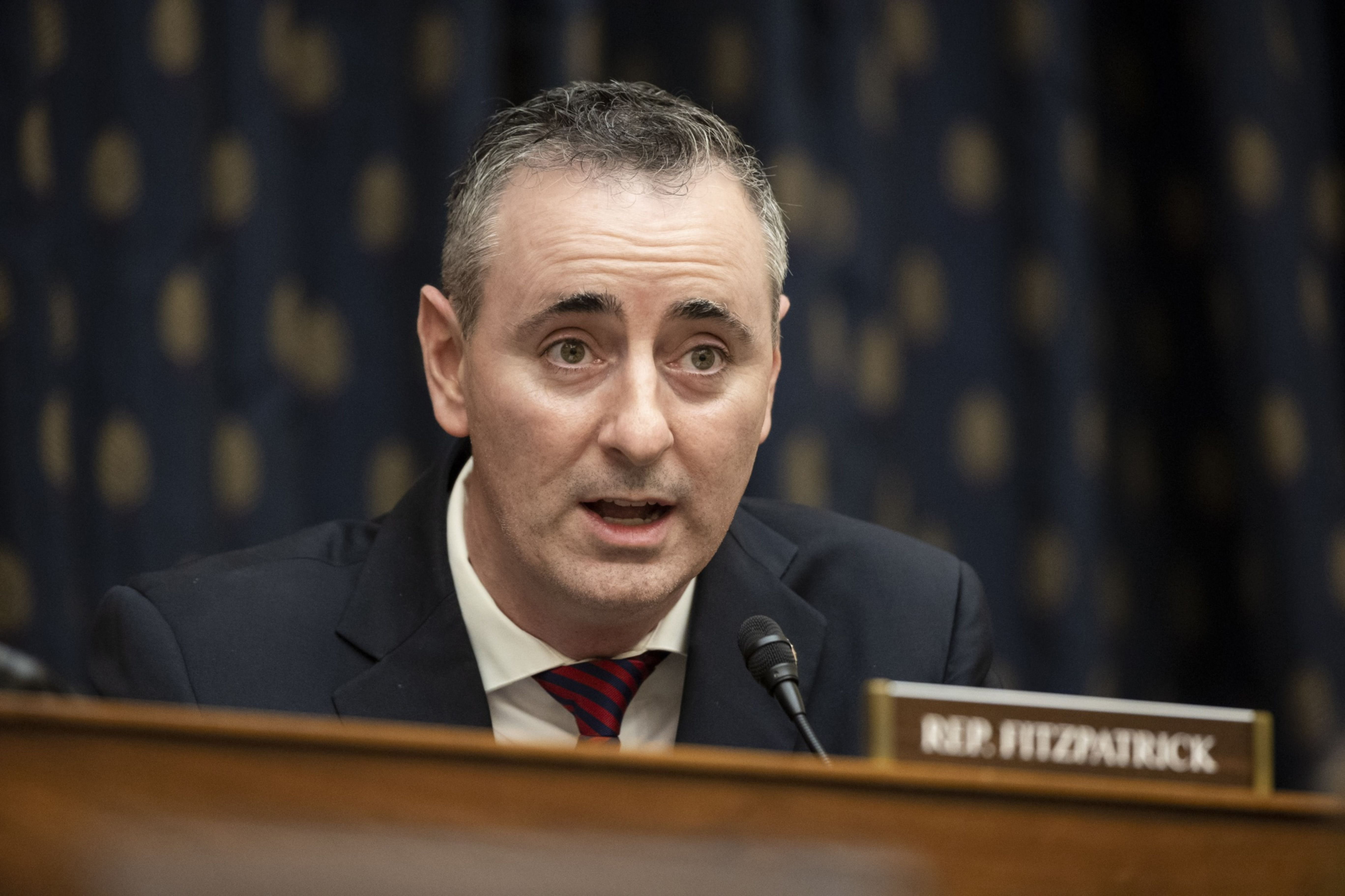
    In a rare rebuke, four GOP House members — including U.S. Rep. Brian Fitzpatrick (R., Pa.) — joined with Democratic lawmakers to pass a war powers resolution that called for ending the conflict in Iran that is costing taxpayers $2 billion a day and sent oil prices soaring.

    U.S. Rep. Brian Fitzpatrick (R., Pa.) was one of four GOP House members who joined with Democratic lawmakers to pass a war powers resolution.Eric Lee

    In defiance of Trump’s refusal to help Ukraine, 18 House Republicans joined Democrats to pass a measure to provide more than $1 billion in aid and impose new sanctions on Russia. (Recall how Trump repeatedly said he would end that war within 24 hours after returning to office.)

    U.S. Rep. Don Bacon (R., Neb.) called Trump’s continued deference to Russian leader Vladimir Putin a “moral blindness” that “communicates weakness.”

    The sudden turn against Trump by some GOP lawmakers is likely driven more by the looming midterm elections than any allegiance to their constitutional oath.

    Trump’s poll numbers are sinking. There are even cracks among white working-class voters without a college degree who now disapprove of the president’s handling of the economy. They could tolerate Trump’s lies, corruption, and incompetence, but not $5-a-gallon gasoline.

    At the same time, Trump — who has spent a lifetime litigating thousands of grievances — is losing in many courtrooms on issues big and small.

    On Monday, a judge voided “in its entirety” Trump’s scheme to impose $100,000 fees on employers seeking visas for skilled foreign workers — one in a series of misguided moves by the administration to target immigrants, which hurts all Americans.

    Earlier this year, the U.S. Supreme Court struck down Trump’s cockamamie plan to impose tariffs on countries in a way best described as willy-nilly. Beyond being fiscally stupid, the court found Trump’s signature economic policy was unconstitutional.

    The Supreme Court will soon rule on Trump’s signature immigration policy to end birthright citizenship for babies born in the U.S. to undocumented immigrants or those on temporary visas.

    Most legal experts believe Trump will lose this case because birthright citizenship is guaranteed under the 14th Amendment. Even Trump predicted the court would “probably rule against me.” As it should, since the law is not on his side.

    A federal judge ruled that Trump’s name must come off the John F. Kennedy Center for the Performing Arts. The judge said the law is “crystal clear,” and that only Congress can change the name.

    After beating four criminal indictments, Trump is still subject to the law.

    In fact, the Trump administration has lost 70% of the more than 600 lawsuits it has faced over the past year or so. The record of futility underscores Trump’s overreach, since the federal government traditionally prevails in court.

    Judges and grand juries have rejected many of the slapdash legal arguments from the Trump administration. The U.S. Department of Justice has parted ways with thousands of career prosecutors and is forfeiting its credibility with the bench.

    The losses are real. And they matter. But democracy doesn’t survive on court rulings and poll numbers alone — it survives because people keep showing up.

    Trump’s losing streak obscures the harder truth that he continues to trample the rule of law, attack countries, install lackeys, line his pockets, and upend the economy — moves that systematically weaken the U.S. at home and abroad.

    It is, after all, a reminder that the arc of the moral universe can bend toward justice — even in these “dark, disturbing, and dangerous times.” The bending, though, is up to us: follow the Constitution, hold wrongdoers accountable, and vote.

  • Pennsylvania is working to fill a spot in Trump’s ‘Great American State Fair’ as other Democratic-led states boycott

    Pennsylvania is set to have a presence at an upcoming two-week “Great American State Fair” on the National Mall, one of the signature 250th anniversary events hosted by President Donald Trump celebrating America’s founding.

    What that presence will look like for Pennsylvania — the state where the nation’s independence was declared — is still up in the air.

    All 50 states and six U.S. territories are expected to be represented with booths showcasing aspects of their culture and history. Some blue states, however, are opting out of sending their own staff to participate, citing a partisan tilt to the event and the cost to participate.

    Pennsylvania, a quintessential swing state led by Democratic Gov. Josh Shapiro, is still preparing to participate in an exhibit, according to a person familiar with the planning. But state officials have struggled to find a Pennsylvania business that wants to associate with the Trump-affiliated event.

    The Great American State Fair has hit numerous roadblocks in its planning in recent weeks. More than half of the acts announced to perform at a Semiquincentennial concert series withdrew shortly after its announcement over concerns the nation’s birthday planners were politically motivated. Trump then replaced the concert series with a political rally, which he will headline on June 24 and he billed as “A Rally to end all Rallies!” in a Truth Social post.

    Freedom 250, the nonprofit organization behind the 16-day event kicking off June 24, has deemed it a “first-of-its-kind world’s fair” while some Democratic officials have railed against it as a waste of taxpayer money.

    Unlike other states, Pennsylvania’s state government did not commit to sponsoring a booth. But Shapiro’s office has been trying to connect Freedom 250 with organizations and companies that could represent the state, according to federal and state sources familiar with the planning.

    It was not clear what type of Keystone State company or group would fill the gap.

    Freedom 250 was still finalizing plans with several states’ tourism boards, cultural and heritage groups, and other organizations as of Friday — less than two weeks before Trump was scheduled to headline the fair’s “kick-off celebration.”

    The event is set to include remarks by Trump and members of his cabinet, fighter jet flyovers, and a performance of “God Bless the USA” by Lee Greenwood, a staple of Trump’s major campaign events over the years. Each day of the fair from June 25 through July 10 will have a theme — including “land & prosperity,” “military & veterans appreciation day,” “faith, values and inspiration” and “MAHA Monday.”

    At least a half-dozen states have opted not to participate, according to NOTUS and other news outlets.

    “He invited all the states to participate and wants to charge us. Charge us to go down and put something on his exhibit, whatever he’s creating for Freedom 250. It’s just ridiculous,” Democratic Gov. Maura Healey, of Massachusetts, said in a Boston Public Radio interview earlier this month.

    Shapiro — a Democrat who’s also frequently challenged Trump and is widely considered a potential contender in the 2028 race to succeed him — has not similarly criticized the fair. The governor has been involved in other 250-focused events in Pennsylvania, such as the Commonwealth Concert Series that includes concerts in five cities across the state.

    Pennsylvania Gov. Josh Shapiro speaks during a Visit PA pep rally Tuesday, March 31, 2026, ahead of the nation’s 250th anniversary and other major events in the state. Jose F. Moreno / Staff Photographer

    Freedom 250 has pushed back against the idea that the fair and other anniversary celebrations are partisan.

    “The idea that a president’s presence at America’s 250th birthday is somehow a political act is not a serious argument — and frankly, it is not serious journalism to treat it as one,” Freedom 250 spokesperson Rachel Reisner said. “No one suggested the Biden-Harris administration would have kept the president away from this moment, nor should they have. We proudly welcome President Trump, who has shown genuine enthusiasm for celebrating America and its patriotic traditions, just as we would have welcomed any sitting president. Freedom 250 looks forward to celebrating America together and hosting once-in-a-generation events.”

    The organization has announced several pieces of the program, including “classic state fair” elements like livestock competitions and interactive experiences with companies such as John Deere and Northrop Grumman, the aerospace and defense company.

    It has not detailed the focus of each state’s designated section on the mall.

    An instructional pamphlet directed to state officials explains that every state and territory can “tell its own story” by “presenting a pavilion that reflects their history, culture, and contributions to the nation.” It does not include pricing, though a source familiar with the planning said states or organizations are only responsible for covering the cost to fill the space.

    Some states are sponsoring their exhibits directly through their state agriculture or tourism departments. For example, Arizona and Colorado are planning interactive experiences that highlight their states’ scenic outdoors, and New York’s “I Love NY” tourism campaign will showcase the state’s vacation areas, according to USA Today.

    The Freedom 250 pamphlet suggests other ways states can celebrate the Semiquincentennial — through flags and signage, or “projection experiences” to light up buildings like a state Capitol. It recommends governors issue official proclamations to recognize the moment, as well as foster civic and educational opportunities like student art contests and field trips.

    “The true power of this anniversary will not come from Washington alone,” Freedom 250 CEO Keith Krach wrote to state and local officials in the document. “It will come from you.”

  • Brian Fitzpatrick steps up criticism of House Republican leaders while he starts to lean on their campaign cash

    Brian Fitzpatrick steps up criticism of House Republican leaders while he starts to lean on their campaign cash

    WASHINGTON — As U.S. Rep. Brian Fitzpatrick’s fiercest reelection battle in years got underway in the last two months, the moderate Bucks County Republican has called to restrict President Donald Trump’s war in Iran and prohibit a so-called “anti-weaponization fund” that could reward the president’s allies.

    He’s talked up Democratic Gov. Josh Shapiro’s potential run for president, and he’s said he would “100%” become an independent if Pennsylvania didn’t have closed primaries.

    He went even further this week — deriding House Republican leadership for opposing a process that allows lawmakers like him to force a vote on issues like the weaponization fund.

    “Leadership of both parties have been guilty of this for years… just further evidence of the brokenness of the two-party system — and the rise of Independent voters is a direct manifestation of this,” Fitzpatrick wrote on social media.

    Behind the scenes, though, Fitzpatrick has started to lean on his party’s vast resources to help win his reelection and, Republicans hope, keep the narrowly divided 435-member House in GOP control.

    In a newly scheduled television ad campaign that will begin later this month, Fitzpatrick is teaming up with the National Republican Congressional Committee — the official campaign arm of House Republican leaders — to launch ads aimed at boosting his campaign in the 1st Congressional District against Democratic nominee Bob Harvie, a Bucks County commissioner who won last month’s primary with support from Shapiro and national Democrats.

    The $120,000 worth of cable TV ads represent the first foray by the NRCC in any Pennsylvania district so far this year, according to the tracking firm AdImpact.

    Both parties are competing heavily over four Republican-held seats in Pennsylvania, making the state one of the centerpieces in the fight to win the House majority during this year’s high-stakes midterms.

    The NRCC and other Republican groups have promised to help reelect all four incumbents. And with the new ads benefiting Fitzpatrick, the NRCC is spending first on the candidate who’s been the most publicly critical of their leadership and even gotten some blowback from Trump as a result.

    “Trump can say whatever Trump wants,” Robin Kolodny, a Temple University political science professor, said of the president’s accusations that Fitzpatrick is insufficiently loyal. “But you get to 218 by adding one race at a time. And if you have an incumbent who’s been successful, the party has every incentive to support them until they find that the polling says it’s the lost cause.”

    Fitzpatrick has won five terms in a nearly evenly divided Bucks County-based district with what observers have called a specific brand of politics. He votes with his party and supports Trump’s priorities the vast majority of the time, though he’s broken with them in instances like the final passage of the One Big Beautiful Bill and the expiration of COVID-era Affordable Care Act tax credits that kept costs lower for individuals using the public marketplace.

    His recent opposition to the anti-weaponization fund has echoes of that healthcare debate in December, when Fitzpatrick joined with Democrats in trying to use a process called a discharge petition to force a vote that Republican House Speaker Mike Johnson declined to set up.

    Fitzpatrick’s office and campaign did not respond to requests for comment for this story.

    But earlier this week, the Pennsylvania lawmaker and U.S. Rep. Tom Suozzi (D., N.Y.) said they would launch a discharge petition to prevent Trump from creating a fund to compensate people who claim to be victims of a weaponized federal government, Punchbowl News reported. The idea for the $1.8 billion fund emerged from a settlement between Trump and the Department of Justice in a case about the leak of Trump’s tax returns.

    Republican lawmakers who have often acquiesced to the president’s demands voiced deep concerns. Acting Attorney General Todd Blanche responded by saying the administration was walking away from the idea. Still, Trump officials have quietly worked to keep it alive and have not ruled out payments going to individuals previously charged with attacking the Capitol on Jan. 6, The Atlantic reported Thursday.

    “The statement’s not satisfactory,” Fitzpatrick said on CNN earlier this month while discussing Blanche’s comments. “We need both a legal avenue here and a statutory legislative avenue. That’s what Tom and I have introduced, and that’s what we’re going to force to the floor.”

    He called the fund an “abuse” of the law. In a post on X this week, he also disparaged Republicans leaders’ “poorly managed House Floor” for preventing a discharge petition to squash it.

    Johnson, the Louisiana Republican who leads the chamber, headlined a fundraiser earlier this year for Fitzpatrick, who generally does vote for GOP priorities — including this week’s successful effort to provide additional funding for immigration enforcement within the Department of Homeland Security.

    Fitzpatrick and Suozzi had not yet launched the discharge petition as of Thursday evening, after Punchbowl reported that Republican leadership was frustrated with the idea. Some even proposed pulling back campaign contributions from NRCC “patriots” who signed on to a discharge petition, according to Punchbowl.

    Fitzpatrick is one of 15 Republicans in the NRCC’s “patriots” program that prioritizes sending resources to competitive districts.

    Also on the list are U.S. Reps. Scott Perry, in a Harrisburg-based district; Ryan Mackenzie, in the Lehigh Valley; and Rob Bresnahan, in a Scranton-based district. Each of those races are considered more of a “tossup” than Fitzpatrick’s, and Kolodny said it’s likely the NRCC will invest in advertising and campaign operations to help them as well, possibly a little later in the summer.

    She said the earlier spending on behalf of Fitzpatrick is likely a sign they found him to be “newly vulnerable” after the May 19 primary, when Harvie was nominated.

    Widely considered the most formidable challenger to Fitzpatrick so far, Harvie has already been elected by voters twice in a majority of the district and both national and state Democrats have coalesced around him.

    Kolodny called the size of the NRCC’s ad-buy “modest” but said that “they’ve done anything at all means that their polling has shown them they’ve got a problem.”

    “They have a new level of concern that they didn’t have before,” Kolodny said.

    Harvie, who is expected to benefit from outside spending by the NRCC’s counterpart, the Democratic Congressional Campaign Committee, said in a statement that the ads are proof Republican leaders “can count on [Fitzpatrick’s] vote when they need it most.”

    “We are tired of politicians like Fitzpatrick talking out of both sides of their mouth,” Harvie said. “He claims to be ‘independent,’ but he’s seeking a bailout from Trump’s Republican Party because he is one of their own.”

    Charlie Gerow, a Republican strategist with a Harrisburg-based public affairs firm, said he didn’t view Fitzpatrick’s latest moves as much different from any other instance in which he’s successfully walked a “political tightrope” in his district, which is one of only nine GOP-held districts in the country that went for Kamala Harris in 2024.

    He said the assist from the NRCC also makes sense because of how large Fitzpatrick’s district looms in a House that’s currently split 218 Republicans to 212 Democrats, with one independent and four vacancies.

    “Leadership has an absolute interest in making sure that Brian Fitzpatrick gets reelected, despite their displeasure from time to time with what he says and does,” Gerow said.

  • Members of Congress will gather at Independence Hall for a ceremonial event during the 250th anniversary week

    Members of Congress will gather at Independence Hall for a ceremonial event during the 250th anniversary week

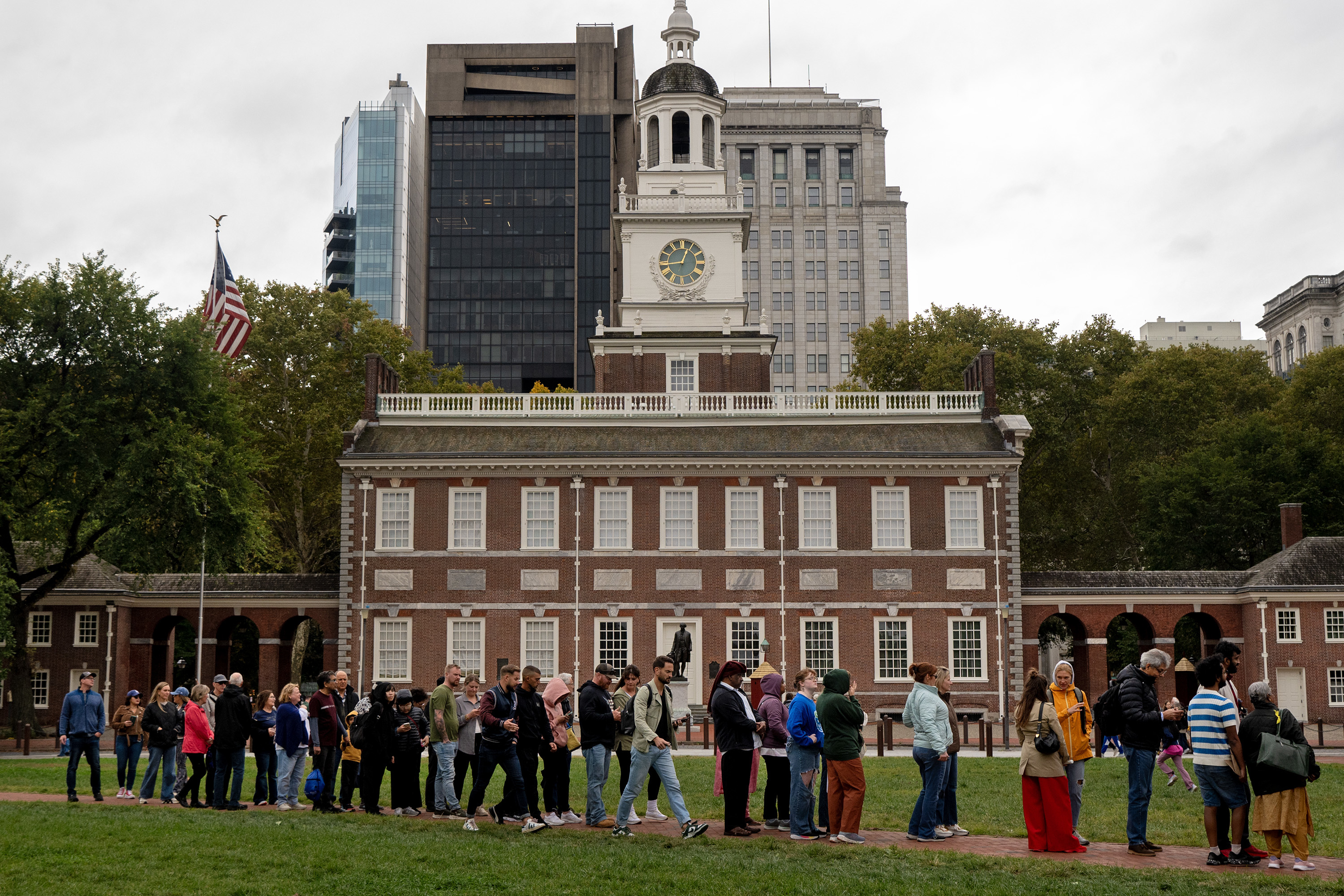
    A ceremonial event with members of Congress will convene at Independence Hall during the upcoming celebration of America’s 250th anniversary, the first such gathering in Philadelphia since a ceremonial joint session in 1987 to mark the bicentennial.

    The event, set for July 2, will feature visits from members of Congress but is not expected to include all 535 members in a building that, when it was in use in 1776, held only 56 delegates.

    It will fall on the anniversary of the day that the Second Continental Congress voted to adopt a resolution for independence. The Declaration of Independence was drafted and formally approved on July 4.

    The gathering is years in the making. U.S. Rep. Brendan Boyle, a Democrat whose district includes the national historic site, introduced legislation starting in 2024 that called for a joint session at the site on July 2.

    Congress has convened for a ceremonial session outside of Washington, D.C. on only two other occasions — a 1987 event in Philadelphia with 55 lawmakers, and in September 2002, when more than 300 met in New York City for the one-year anniversary of 9/11.

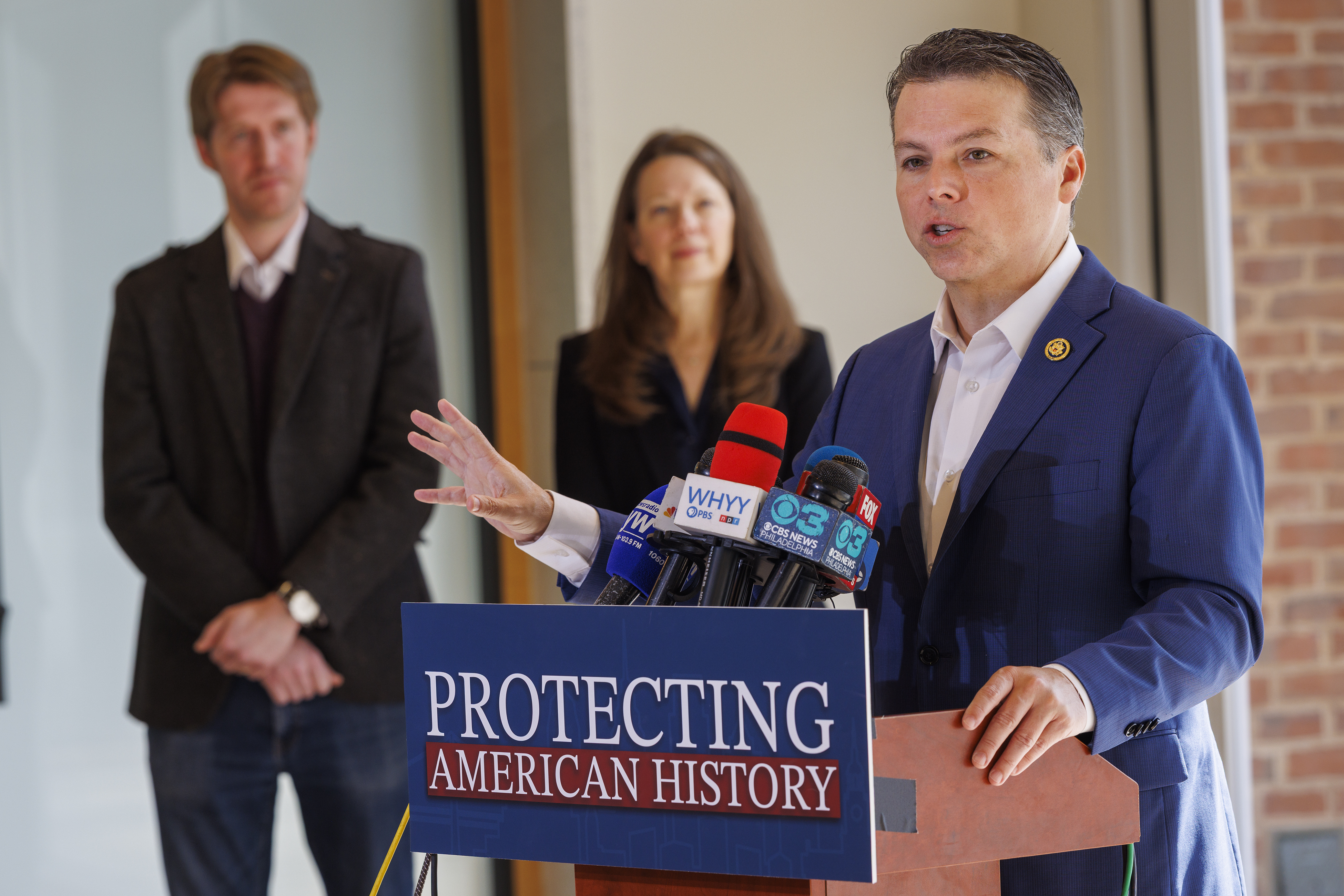
    The congressional event comes as the City of Philadelphia and the Trump administration are engaged in an ongoing legal battle over the federal government’s efforts to remove slavery exhibits from the President’s House, an adjacent site which memorializes the nine people George Washington enslaved in Philadelphia during the nation’s founding.

    U.S. Rep. Brendan Boyle holds a news conference about legislation intended to protect the President’s House in Philadelphia. Alejandro A. Alvarez / Staff Photographer

    Boyle, whose legislation did not pass, announced this year’s event in a statement that did not describe it as a ceremonial joint session but as a “ceremonial event.” Details about participants and programming would come later, his office said Thursday.

    “Exactly two years ago I launched this effort to bring Members of Congress, both Democrats and Republicans, back to the place where it all began 250 years ago: Independence Hall,” Boyle said in a statement. “I am very proud and excited this historic and special event is happening. It will be a unifying moment for the Congress and our country, at a time when we need it most.”

  • Trump’s judicial nominee from Philly got slammed by a Senate panel for hesitating ‘to tell the truth’

    Trump’s judicial nominee from Philly got slammed by a Senate panel for hesitating ‘to tell the truth’

    WASHINGTON — Antonio Pozos, a Philadelphia lawyer nominated by President Donald Trump to become a federal judge in the Eastern District of Pennsylvania, told a Senate panel on Wednesday that former President Joe Biden won the most Electoral College votes in 2020 — though he declined to say whether Biden won the popular vote or if the Capitol was “attacked” two months later.

    In a confirmation hearing alongside three other judicial nominees, Pozos said Biden was certified as the president in 2020 and that he’d seen videos from Jan. 6, 2021 in which it “appeared that there was violence and trespass.”

    “It’s profoundly troubling and I abhor violence,” said Pozos, a partner at Faegre Drinker Biddle & Reath and a lecturer at the University of Pennsylvania’s Carey Law School.

    But in the back-and-forth with U.S. Sen. Richard Blumenthal (D., Conn.), Pozos said he would “hesitate to characterize what occurred at the Capitol” when the senator asked directly if the building was “attacked” during the certification of votes.

    “You hesitate to tell the truth here,” Blumenthal responded before shifting to the next nominee.

    The line of questioning has become many Democrats’ main litmus test for those nominated by Trump for lifetime judicial appointments.

    For years, the president has insisted without evidence that widespread voter fraud led to his defeat in 2020, despite Biden winning the popular vote by more than 7 million votes that year on top of his Electoral College win.

    Trump’s history of spreading misinformation about elections has fueled fears that he’ll do it again during November’s midterm elections — as he did after the California primary just last week — and that his judicial appointees will undermine a system of checks and balances.

    When all of the nominees facing the Senate Judiciary Committee on Wednesday echoed each other in only saying Biden won the Electoral College, Blumenthal accused them of having “a new script, a new pre-negotiated effort to thread the needle [and] avoid the question.”

    “You are protecting the lie by failing to acknowledge the truth,” Blumenthal said. “If you’re unwilling to show us you’re independent of the president at this early stage of your service, you disqualify yourself as judicial nominees.”

    At least one Democrat who has signaled he doesn’t believe Pozos should be disqualified is U.S. Sen. John Fetterman.

    The Pennsylvania Democrat decided against blocking his nomination during a traditional process that gives senators the opportunity to approve or reject a federal judicial nominee in their state.

    It was the first time any Democrat declined to use that courtesy — in a process known as a “blue slip” — since Trump’s second term began in January 2025.

    Two other Democratic senators, Elissa Slotkin and Gary Peters, of Michigan, however, followed Fetterman in returning a blue slip for a separate nominee in their state before Wednesday’s hearing. They said their decision was in part because of the nominee’s assurances to them that Biden won in 2020, that there was an attack on the Capitol, and that Trump cannot run for a third term.

    Pozos also acknowledged during the hearing that Trump could not constitutionally win another term, which is something the president himself has declined to say.

    Fetterman, from the 2020 election through Trump’s second election in 2024, frequently and forcefully rejected Trump’s claims of election fraud in Pennsylvania. His office did not provide a comment in response to questions from The Inquirer about why he allowed Pozos’ nomination to advance. The senator has also not said whether he will vote to confirm Pozos when the Republican-controlled Senate decides on the appointment.

    But Fetterman’s move so far in the process was the latest in a series of high-profile moments in which he sided with Trump and the Republican Party while infuriating parts of his own base.

    Demand Justice, a Washington, D.C.-based organization that is critical of Trump’s nominees because of their statements on the 2020 election, joined in the criticism of Fetterman and promised to launch a six-figure ad campaign against him because of the blue slip.

    “John Fetterman just cleared the path for a Trump lifetime judicial nominee,” one of the digital ads states alongside an image of Trump and Fetterman with hearts around them.

    “Our message to Senate Democrats is clear: greenlight Trump’s puppet judges, and we will call you out. No exceptions,” it continued.

    That threat elicited bipartisan criticism at the beginning of the hearing Wednesday.

    U.S. Sen. Katie Britt, an Alabama Republican speaking on behalf of committee chair U.S. Sen. Chuck Grassley, called Demand Justice a “progressive dark money group” that “sought to undermine the blue slip practice and sew further division in our country.”

    U.S. Sen. Dick Durbin of Illinois, the top Democrat on the committee, also said the group was wrong to target senators who work toward agreement across party lines.

    “If we can get bipartisan cooperation for the appointment of lifetime judges, we should do it,” said Durbin, who has voted for Trump’s judicial nominees more than any other Democrat, according to Demand Justice.

    Each of the committee leaders commended Fetterman, Slotkin, and Peters for their decision — with Durbin praising them for “working in good faith with the White House.”

    U.S. Sen. Dave McCormick (R., Pa.) also thanked Fetterman and said Pozos was nominated because of a recommendation from a commission that the pair of Pennsylvania senators put together to vet judicial nominees.

    “Tony’s a successful attorney, a strong Pennsylvanian, a decorated public servant, and he’s eminently qualified for this role,” McCormick said during the hearing.

    Pozos, 44, is a graduate of Harvard College and the University of Michigan Law School who worked as federal prosecutor before becoming a partner at Faegre Drinker in 2018.

    As a trial attorney in the Criminal Fraud Section of the Department of Justice, he focused on corporate and individual healthcare fraud cases. McCormick said he had a “formidable track record of rooting out fraud, prosecuting those who abuse taxpayer dollars, and protecting Americans from predatory healthcare systems.”

    In a questionnaire published by the Senate Judiciary Committee, Pozos also listed active memberships in the Federalist Society — the legal organization that has sought to appoint conservative judges across the country — as well as the Union League of Philadelphia and the Merion Cricket Club.

    In addition to the election-focused inquiries, Pozos also faced questions about applying the False Claims Act — which penalizes individuals and companies from defrauding the government — and the controversial Section 230 of the Communications Decency Act that protects online platforms from liability for what their users post.

    U.S. Sen. John Kennedy (R. La.) grew frustrated when he believed Pozos was not fully answering his question about whether, under Section 230, Facebook should be protected and if it should have the ability to decide what users see. Pozos, like other judicial nominees who say they cannot weigh in specifically on the types of cases they may have to rule on, began answering when Kennedy said he had “no idea what you’re talking about.”

    “You’re better off just answering the question, you really are,” Kennedy said.

    Asked by the Democratic chair about the importance of diversity — which Trump has widely sought to diminish — Pozos said he has mentored young lawyers “from a wide range of backgrounds” and that it was important to “get all pockets of talent wherever they may be in our country and welcome them into the legal profession.”

    Pressed by Durbin if diversity is important in filling positions in the legal system, Pozos said, “If we are true to seeking out excellence wherever it may be, that question will be moot.”

    “I doubt it,” Durbin responded.