The 56-year-old was arrested in 2022 and accused of using his position for years to lure girls, often targeting victims who had run away, been arrested, or struggled with addiction.
The women’s lawsuit accused the city of “reckless disregard for the safety of the public” by allowing a “morally corrupt sexual predator” to remain on the force and victimize at least 48 women and girls,despite years of sustained complaints of misconduct against him starting shortly after he joined the department in 1995.
The department even began the process to terminate Heron in 2008, the complaint says, following sustained allegations that included “associating with known criminals,” “little to no regard for his position as a police officer,” and having been detained by police officers for soliciting a sex worker in Kensington.
But Heron maintained his badge and went on to assault the two girls, among other victims.
“Instead of just firing him, they were moving him around different districts,” said Joshua Van Naarden of VSCP Law, the firm representing the two plaintiffs.
Heron eventually resigned in 2019 following an internal affairs investigation into an allegation that a uniformed Heron was caught by a CVS surveillance camera attempting to steal a phone charger.
Heron assaulted one of the two women in 2016 when she was 9 years old. He held her captive in his bedroom, took 22 illicit photographs while she was unconscious, and sexually assaulted her, according to the complaint.
The former officer sent her a Facebook message in 2021, when the victim was 15, and solicited photos from her as well as sex for money, the suit says.
And when the teen accused him of acting inappropriately, Heron threatened to have her arrested.
Heron assaulted the second women in 2016 while on duty. He picked her up from Temple University Hospital’s emergency department when she was 11 years old,after responding to a report that she had run away from home.
After she was discharged from the hospital to Heron while he was on duty, with instructions to take her home, Heron gave her a laced drink and took photos of the unconscious child.
Two days later, Heron picked up the 11-year-old from her house and again took illicit photographs of her.
Both women were involved in Heron’s prosecution, the complaint says, and he pleaded guilty to counts resulting from his crimes against them.
The woman who was victimized as an 11-year-old did not know about the abuse, which took place while she was unconscious, until law enforcement found photos of her on Heron’s devices, Van Naarden said.
“There are tons of other victims out there that may not even be aware that they were victimized by him,” Van Naarden said.
The city deserves credit for settling the lawsuit, which was filed in December 2024, relatively quickly to prevent the women from having to relive their trauma through depositions, testimony, and court hearings, the attorney said.
The lawsuit was settled in April and the city paid $1.3 million on July 31 to the woman Heron assaulted when she was 9 and $1 million to the woman assaulted when she was 11, a spokesperson for the city’s law department said. There were no other conditions as part of the agreement.
The city declined to comment further on the settlement or on the ongoing lawsuit.
A second lawsuit from an alleged victim of Heron was filed in April in the Philadelphia court and tells of similarly harrowing abuse.
The victim was a 16-year-old mother of a newborn when she met Heron in a courthouse in 2014, the suit says.
“She was, by every measure, among the most vulnerable individuals Defendant Heron could have encountered in his capacity as a uniformed Philadelphia Police Officer,” the complaint says.
Heron groomed her, the suit says, and starting in 2015 assaulted at least once a month for a period of four years, often drugging her “to prevent her from accurately recounting or reporting what had been done to her.” The assault included rape, according to the complaint.
The lawsuit says Heron threatened the girl to secure her silence.
“He repeatedly reminded her of his status as a police officer and his ability to weaponize that status against her, her child, and her incarcerated family member,” the lawsuit says.
Ashley Garland, an Anapol Weiss attorney representing the unnamed victim, said her client deserves the same accountability as the two victims who received payment.
“We are continuing to pursue justice on her behalf,” Garland said in a statement, “and we hope the city changes how it handles officers with sustained misconduct records, preventing them from harming the residents they are supposed to protect and serve.”
A 61-year-old woman was shot and killed in North Philadelphia after a shooting Sunday night.
Philadelphia Police Department officers responded to the 2800 block of N. 24th Street around 11:49 p.m. for a report of a person with a gun. Officers found Michelle Wilson, 61, on a porch suffering from gunshot wounds to the neck and back. Wilson was transported to Temple University Hospital, where she was pronounced dead at 12:04 a.m. on Monday.
A second person, a 67-year-old man, was found on the same porch suffering from gunshot wounds to his backside. Police transported the man to Temple University Hospital and was placed in stable condition.
Anyone with information is urged to contact the Homicide Unit at 215-686-3334 or call the PPD tip line at 215-686-8477. As with all homicides in the city of Philadelphia, there is a $20,000 reward for information that leads to an arrest and conviction.
This section of North Philadelphia has already experienced two fatal shootings this summer in June, according to the most recent data supplied by the City Controller, and in that same month, a 16-year-old was shot and injured one block from where Sunday night’s shooting occurred.
According to police, at least seven shootings occurred this past weekend, including the fatal shooting of 70-year-old Felix Serrano, who was found shot in the chest while sitting in his car near Hunting Park.
The father of a Philadelphia man who was killed in an ATV crash this spring said police officers pursued his son moments before he drove the wrong way down a one-way street, ran a red light, and collided with a sedan.
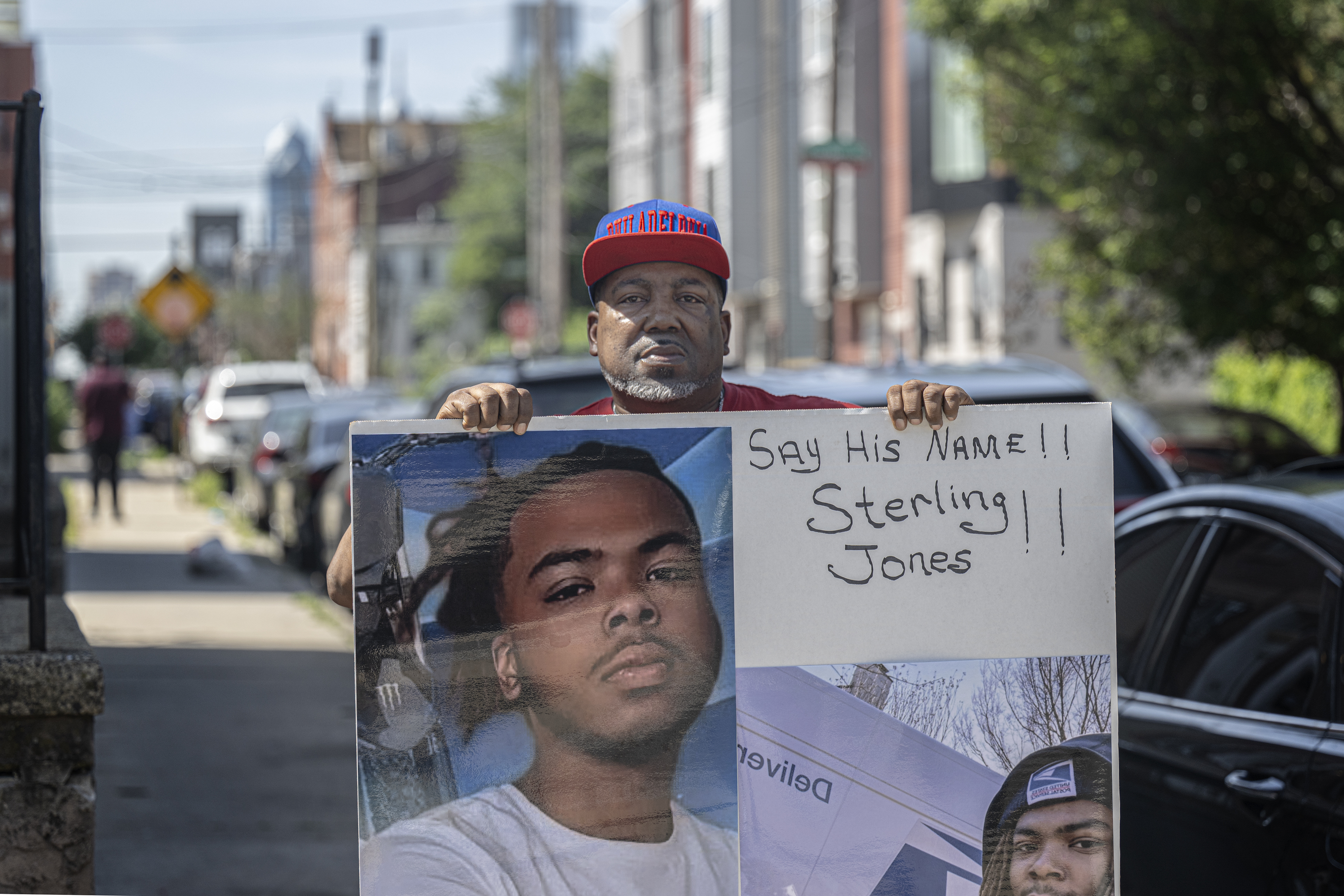
Sterling Jones, 22, was killed on May 9 after the crash in North Philadelphia, according to police.
Lawyers for Jones’ father, Sterling Lamont Jones Sr., said his son and a group of friends had been riding off-road vehicles near Broad Street and Fairmount Avenue when officers from the police ATV and dirt bike detail spotted the young men popping wheelies and began a pursuit.
They followed Jones up Broad Street to West Thompson Street, the attorneys said. There he briefly sped in the wrong direction down the one-way street and ran a red light before striking an Uber driver’s Toyota sedan at the intersection as it turned onto 15th Street.
He was taken to Temple University Hospital and pronounced dead shortly after his arrival.
Sterling Jones Sr., 57, has since hired a team of attorneys to investigate the incident. Late last month, they filed a notice of intent to sue the city, alleging that the officers and the department violated Jones’ constitutional rights when they chased him and caused his fatal injuries.
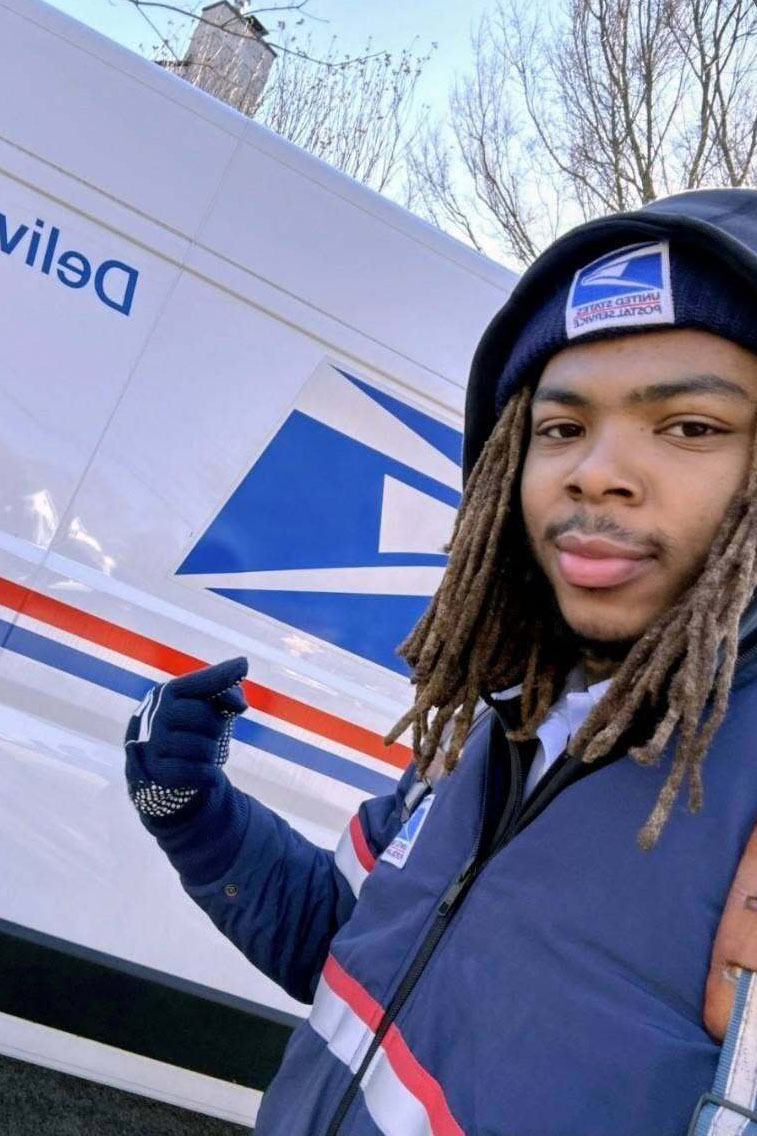
Sterling Jones, a 22-year-old who lawyers say was killed in an ATV crash after being chased by police officers.Courtesy of Sterling Lamont Jones Sr.
Riding ATVs and dirt bikes on public streets in Philadelphia is against the law, and police have increased efforts to crack down on that behavior in recent years.
But the incident raises questions about whether the officers followed a department directive barring vehicular pursuits for all but the most serious offenses — a policy enacted because of the public safety risks posed by such chases, particularly in densely populated areas.
The initial police account of the incident did not mention that officers had been pursuing Jones before the crash. It could not be learned whether the department had since concluded that officers were engaged in a pursuit and whether it was conducted a high rate of speed, as the lawyers contend.
Sgt. Eric Gripp, a police spokesperson, said the incident is under investigation by the department’s internal affairs bureau. He declined to comment further, referring questions to the city’s law department.
A spokesperson for the law department said the city does not comment on pending litigation.
Surveillance footage gathered by lawyers for Jones’ father and viewed by The Inquirer showed at least eight police officers on dirt bikes, a squad car, and a tow vehicle tailing Jones that evening.
Around 9:23 p.m., Jones was seen cutting through a Sunoco gas station and speeding down West Thompson Street with dirt bike officers close behind. Within seconds, his ATV careened into the driver’s side of the sedan.
Under police department policy, vehicular chases are allowed only in situations in which officers believe they can prevent imminent danger to others, or if a suspect is either fleeing after committing a violent felony or in possession of a deadly weapon used in a crime.
And while riding off-road vehicles violates city code, attorneys for Sterling Jones Sr. say that type of infraction still should not trigger a police chase.
“The police department’s policy is, in our view, clearly violated,” said Thomas Kline of Kline & Specter, which is handling the case alongside the firm Hill & Associates.
A 2025 Inquirer investigation found police in Philadelphia and across Pennsylvania were conducting hazardous and unnecessary chases, disproportionately endangering young people. Roughly half of all reported pursuits conducted by city police were not justified under department policy, the investigation found.
A police department spokesperson attributed the increase in chases to the COVID-era surge in violent crime, and said the department investigates every crash for policy violations.
Between 2020 and last year, records show, the city had paid out $20 million in crash- or chase-related settlements as a result of such chases.
In 2017, a 6-year-old girl and her great-aunt were seriously injured when they were struck by a dirt bike rider who was being chased by Philadelphia police into Upper Darby Township. The city settled a lawsuit with their attorneys for nearly $3 million last year.
Sterling Jones Sr. said that while he was planning to sue, no amount of money could make up for the loss of his son.
The young man was a graduate of Hunting Park Christian Academy and had been working for two years as a delivery driver for the U.S. Postal Service before his death. He had bought the ATV with money from that job, his father said.
“He wasn’t a criminal. He had a license,” he said.
Jones Sr. learned of the crash in the early morning of Mother’s Day, when his son’s mother came to his house to tell him Jones was dead.
He said he hired lawyers with the aim of ensuring that the officers who pursued his son would be reprimanded and removed from the beat.
“They killed my only son,” he said. “I just want justice.”
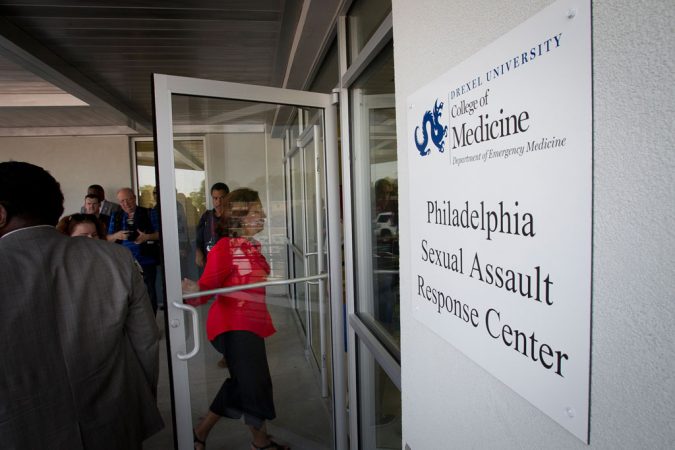
Philadelphia’s only free sexual assault exam center was so strapped for funding last spring that Drexel University, its former operator, started drafting a closure announcement.
The school was facing financial strain of its own, and state funding to rape crisis nonprofits was tied up amid a prolonged budget impasse in Harrisburg. Emergency funding from the city was tangled in City Hall’s lengthy contracting process.
At the time, there was no plan for who would run the Philadelphia Sexual Assault Response Center (PSARC), where roughly 300 rape survivors a year go for the sexual assault exams used to collect forensic evidence that are commonly known as “rape kits,” which often play a key role in prosecuting assaults.
Fast-forward to this month, when Mayor Cherelle L. Parker’s administration announced the city’s public health department will assume all control of PSARC. Officials presented the news as the culmination of a careful, collaborative handoff, and one city staffer framed the transition in a news release as “seamless.”
But hundreds of emails obtained by The Inquirer through a right-to-know request and a review of public records tell a far messier story. The emails show that for more than a year the fate of PSARC lurched from one near-miss to the next and that a failed bid process forced the city to take over the center’s operations when no one else would.
Taken together, the records offer a granular view of how a critical piece of the city’s safety net for sexual assault survivors nearly broke. And they portray a chaotic process in which the city for months sought to transfer control of the center from Drexel to the nonprofit WOAR Philadelphia Center Against Sexual Violence, even as WOAR faced its own budgetary implosion.
Over the course of the last year, the exam center never shut its doors to patients. But it came close on several occasions, a collapse that would have had ripple effects in hospital emergency rooms across the region that typically route sexual assault patients to the center.
If PSARC suspended operations, hospitals would have to find specially trained staff — of which there are few — to perform the exams.
“Philadelphia emergency rooms were not ready for that,” said Lila Slovak, director of the Philadelphia office of the Women’s Law Project, who spent months warning city officials that PSARC was in danger. “They did not know that [the center] was at risk of closing. It was not on anybody’s radar.”
Crystal Yates-Gale, the city’s deputy managing director for health and human services, said in a statement that the final outcome — the city running the center — is ultimately what is best for sexual assault survivors.
“We are proud to have secured the continuity of vital services for victims of crime in a dignified, victim-centered, culturally-competent atmosphere in Philadelphia,” she said.
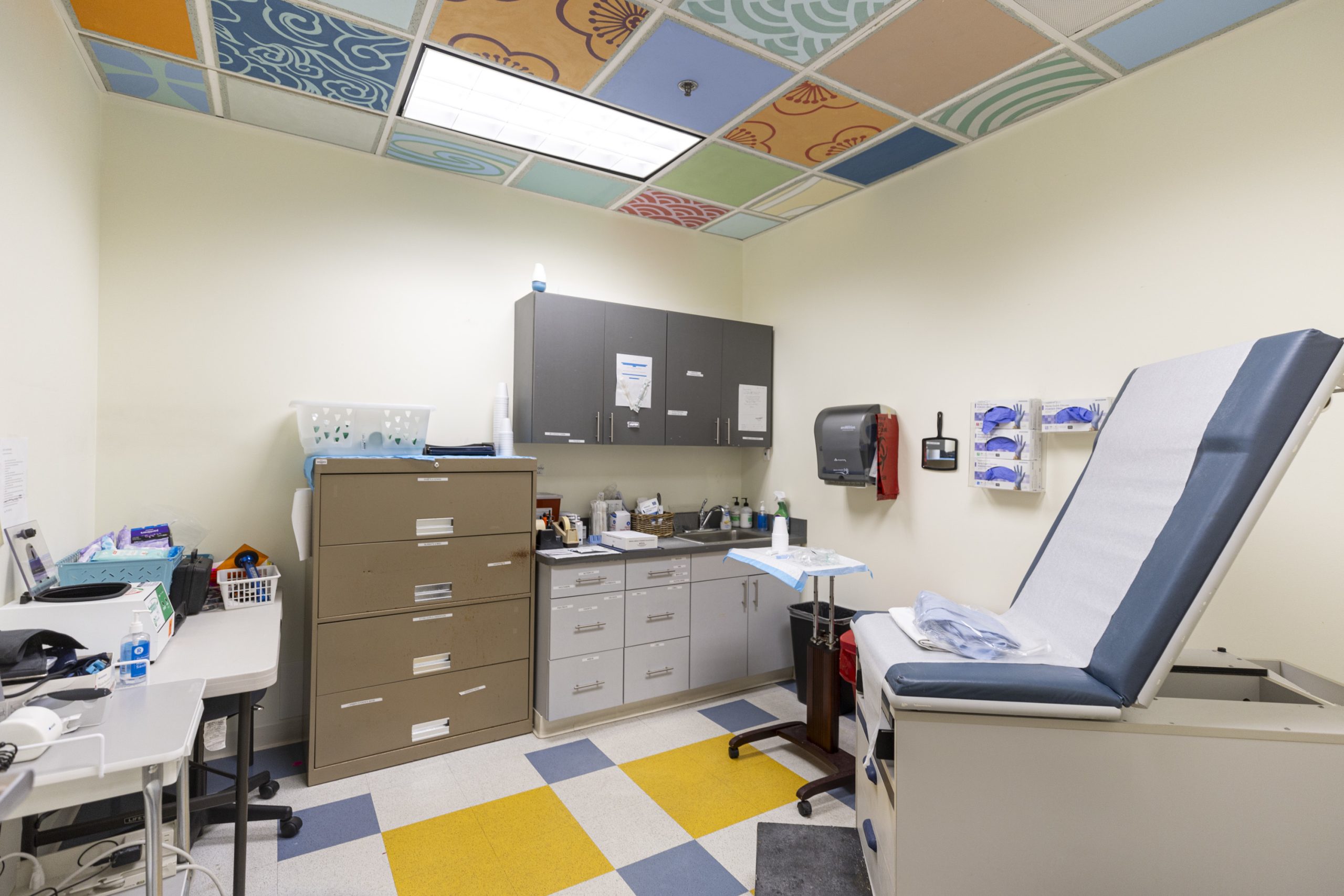
The exam room at the Philadelphia Sexual Assault Response Center, in Philadelphia, Pa., on Friday Dec. 6, 2024.
She said WOAR was transparent with the city about its financial position.
“Like most Commonwealth-funded providers, we planned on the assumption that funding would resume,” Anthony said. “The impasse instead ran 135 days. By the time it ended, we had drawn down our reserves.”
A lifeline center on a shoestring budget
PSARC, located at 300 E. Hunting Park Ave. in North Philadelphia, has two full-time staff members and a network of about 15 contracted nurses trained to perform sexual assault forensic exams, provided free under Pennsylvania law. The procedures are intended to gather physical evidence, such as DNA left behind by an assailant, and to document injuries that may aid investigators in a future criminal investigation.
Many hospitals lack the specialized staff required to perform sexual assault forensic exams, so they refer patients to PSARC or work with PSARC to have a trained nurse dispatched to the hospital.
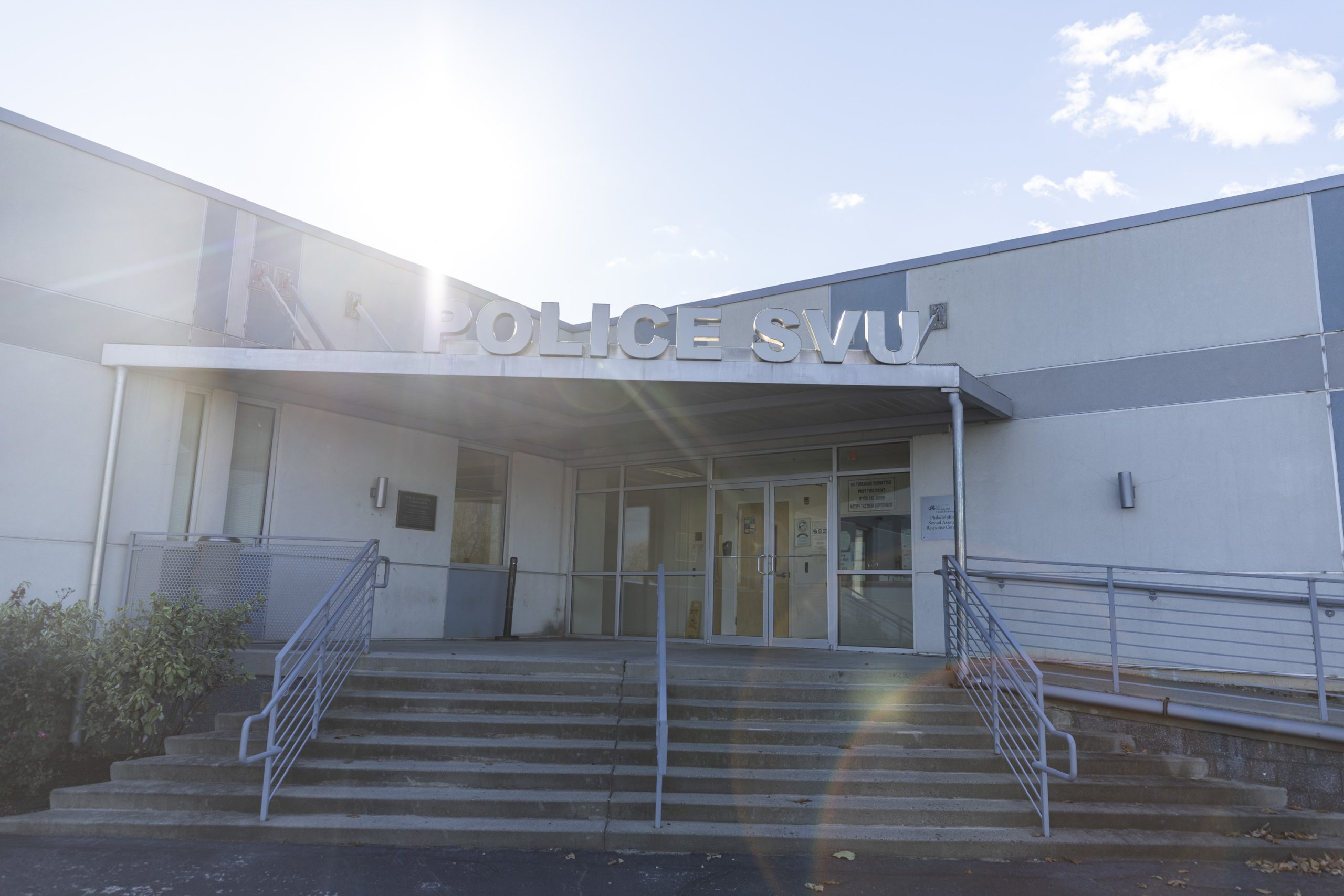
The center is located next to the Philadelphia Police Special Victims Unit, but patients are not required to report the assault to law enforcement in order to have the free exam performed.
The Police SVU where the Philadelphia Sexual Assault Response Center, in Philadelphia, Pa., on Friday Dec. 6, 2024.Tyger Williams / Staff Photographer
Founded in 2011 and initially operated by the now-shuttered Hahnemann University Hospital, PSARC has been run since 2019 by Drexel University’s College of Nursing and Health Professions. For most of that time, the operation ran on a shoestring budget.
Until last year, PSARC received no dedicated city funding. The state reimbursed Drexel about $1,000 for each patient treated, with Drexel absorbing substantial losses, according to records. The exam reimbursements can take months to flow from the state.
Brian Keech, then Drexel’s senior vice president for government relations, shared a financial analysis with city officials last year that laid out an annual shortfall averaging more than $175,000.
As Drexel cut staff and benefits across the university last year amid declining enrollment and a $63 million annual operating loss, its leaders told the Parker administration that the school could no longer manage PSARC on its own.
In a series of emails last spring, Keech pressed the city for a funding commitment for the center and warned that, without one, the university would have to tell hospitals to stop referring patients for sexual assault exams.
“We’ve begun to prepare the closure announcement,” Keech wrote in a May 20, 2025, email to Adam Geer, the city’s chief public safety director. “Obviously we’re hopeful we can avoid this scenario, but we do have to adequately prepare area hospitals that they will have to begin providing sexual assault services come July 1 if PSARC closes.”
By early June, the city had found the money.
The scramble to save PSARC
Yates-Gale, the city’s deputy managing director, said in a June 2025 email to Drexel officials that the administration had identified $250,000 in emergency funding to keep the center running.
The plan was for WOAR — the nonprofit formerly known as Women Organized Against Rape — to operate PSARC. The city would support its efforts by routing those funds to WOAR through an existing health department contract.
Meanwhile, WOAR was itself under severe financial strain amid the state budget impasse that left community organizations across Pennsylvania unfunded. WOAR’s leaders told city officials that they could not make payroll without the check from the city.
PSARC was left in limbo. The handoff deadline from Drexel to WOAR was moved from Aug. 1 to Sept. 1, with Drexel agreeing to cover an extra month of payroll to bridge the gap. Then, on Aug. 28 — three days before the already delayed transfer — WOAR’s board chair, Joanne Strauss, wrote in an email to city officials that the organization “will not be acquiring” PSARC.
She provided no reason other than saying the organization was “further evaluating the proposed transaction.”
City officials were alarmed. Within an hour, the city’s victim advocate, Adara Combs, emailed Drexel officials to say she was “deeply troubled” by the sudden shift.
Two weeks later, WOAR appeared ready to operate the center again. The group’s board of directors voted unanimously to approve the acquisition, and money from the city began flowing to WOAR to operate the rape exam center — more than $80,000 in total.
Anthony, of WOAR, said in a statement the board’s approval of the acquisition of the sexual assault center came as the nonprofit thought the state budget impasse would come to an end and was “contingent on conditions related to funding and our ability to responsibly take control of PSARC.”
“It became clear that those conditions were not resolved,” she said.
Drexel continued to pay to operate the rape crisis center, and WOAR wired the university the city funding it had received. Drexel operated PSARC, with an additional $167,000 in help from the city, until June 30.
The 15th Street entrance to Drexel University College of Nursing and Health Professions Feb. 19, 2020. The college has the largest bachelor program in the three-state region.TOM GRALISH / Staff Photographer
The back-and-forth saga highlighted a central question: Why did the city seek to transfer a critical service to WOAR despite the nonprofit’s existing financial problems?
Slovak, of the Women’s Law Project, said it made sense that WOAR stepped up to take over the center’s operations, given its mission to treat and prevent sexual violence. It is common in other cities for rape crisis centers to manage forensic exam facilities.
But overseeing hundreds of sexual assault exams each year, she said, would have been a major expansion of WOAR’s scope because it “is about more than just providing emotional support or accompaniment for survivors.”
Yates-Gale said WOAR was a natural choice to assume operations of the center. The group had an existing contract with the city and its mission aligned with that of PSARC.
“Drexel agreed to continue operations until another suitable alternative organization could be identified,” she said, “and the entirety of the funds for the program were transferred back to them.”
Britt Faulstick, a Drexel University spokesperson, said the school “worked closely with city leadership to ensure a smooth transition.”
Another failed effort to find an operator
The city’s $250,000 in emergency funding bought PSARC time. But the same question remained: Who would run it long-term, and where would they find the money?
This spring, Parker’s budget proposal, which was approved by City Council in June, included $300,000 for the center. The city put the operation out for bid, seeking an outside organization like another hospital or nonprofit to run it.
City officials met on April 13 with potential operators, including representatives from area hospitals that depend on the center, such as Temple University, the University of Pennsylvania, and Jefferson Einstein Philadelphia. Several expressed concerns about PSARC’s finances.
According to a public recording of the meeting, multiple attendees suggested that $300,000 a year in city funding would not be enough to cover PSARC’s operations and salaries for medical staff who must be available 24-7.
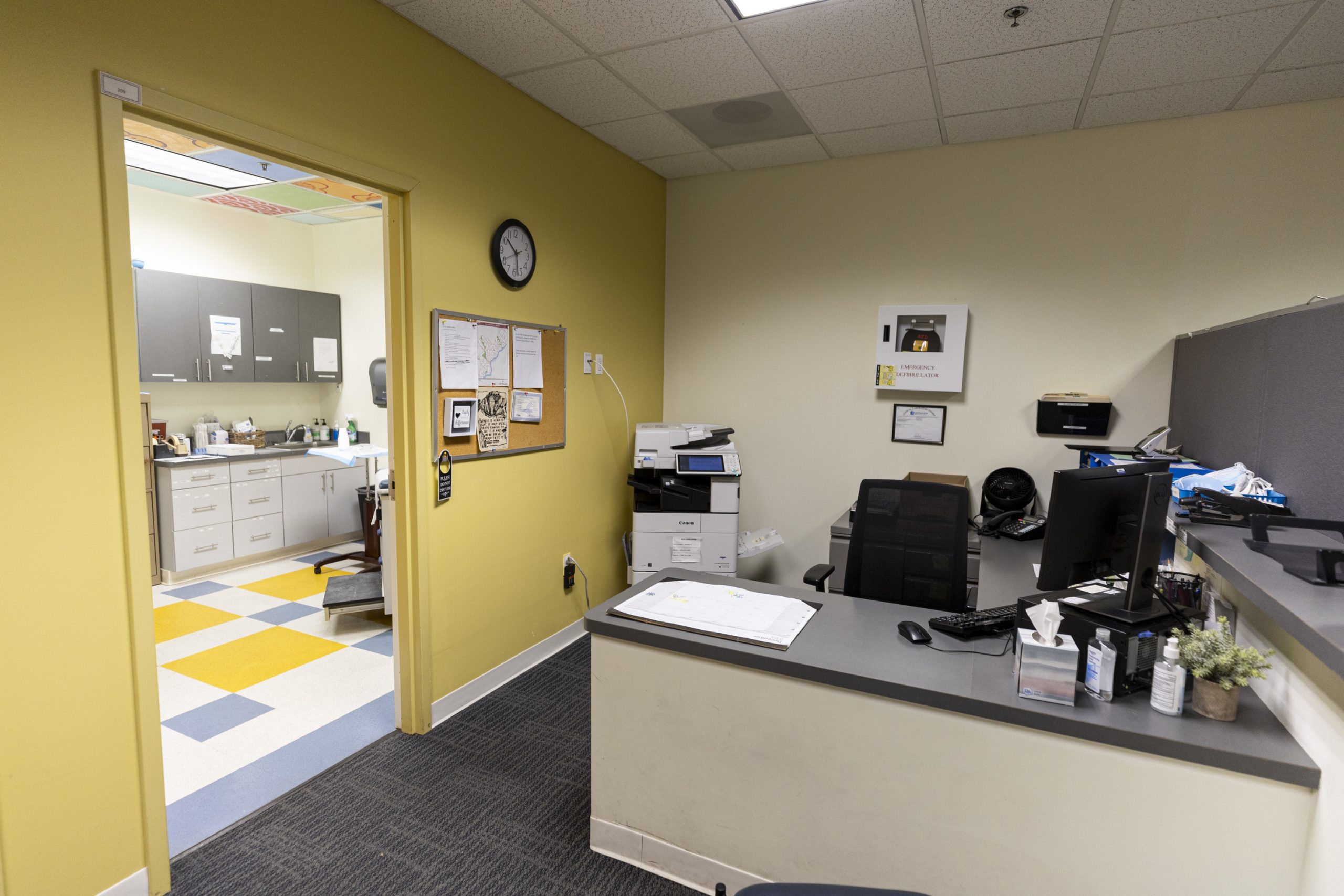
The exam room and desk space when patients are in at the Philadelphia Sexual Assault Response Center, in Philadelphia, Pa., on Friday Dec. 6, 2024.Tyger Williams / Staff Photographer
“This has never been something that’s been profitable, so it’s always needed another source of funds to keep it stable,” one hospital representative said. “It’s the money, right, to keep it open and to be able to run this as a service for the city and keep it maintained so you’re not back in this ‘we don’t have it’ in six months.”
Combs, the city’s victim advocate, told potential bidders that they were welcome to “reimagine” how PSARC operates and propose new funding streams.
But hospital representatives remained skeptical and pressed the city to find a different solution, citing a moral urgency.
“It would be a tremendous tragedy if we lost the resources of PSARC in the city,” said a representative from Jefferson Einstein Philadelphia Hospital.
“I think we all agree,” said Azucena Ugarte, director of the Philadelphia Office of Domestic Violence Strategies. “That’s why we’re doing this.”
But following the meeting, no one bid.
The city takes over
With no outside bid to operate Philadelphia’s only free rape exam center, the options in front of city officials were either to let it close or to take control themselves.
The city chose the latter. Parker administration officials framed it as a lasting solution.
Faulstick, of Drexel, said the school will continue to train nurses in sexual assault examination to help ensure the care is available. He said PSARC is “positioned for continued growth and long-term sustainability.”
Others have questions about the stabilization plan.
City Councilmember Nina Ahmad, who represents the city at-large and held a hearing earlier this year about PSARC funding, said that the $300,000 annual allocation to the center is likely inadequate and that she will push for more dollars in future city budgets.
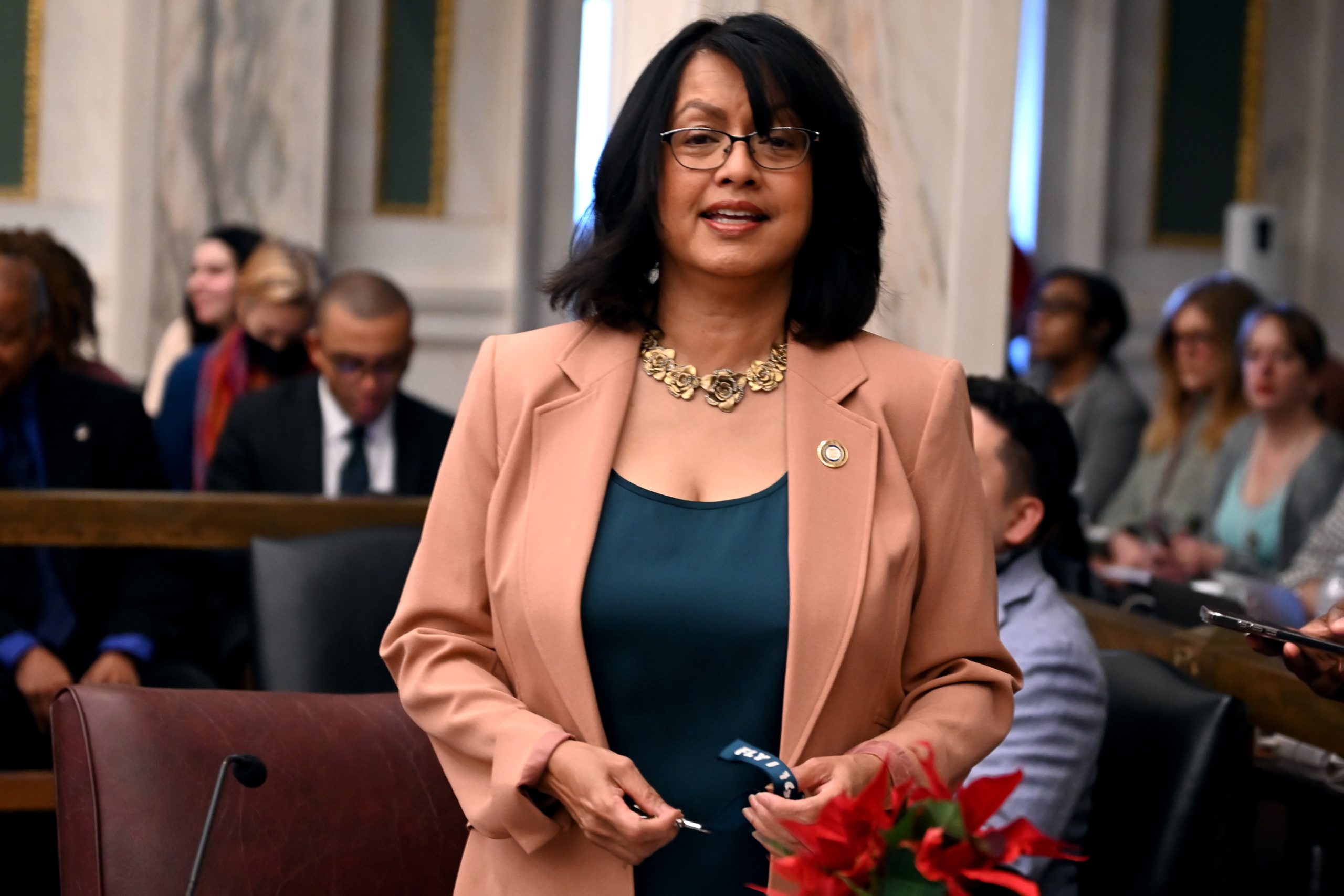
Councilmember Nina Ahmad in chambers as City Council meets Dec. 11, 2025.Tom Gralish / Staff Photographer
Ahmad also said she expected more buy-in from hospitals, noting they would have been saddled with the responsibility of providing sexual assault exams if PSARC had shuttered.
“I am not surprised,” she said in an interview, “but I’m still disgusted that we have not come together on this. … This is evidence being collected, [and] this is how we prevent future rapes.”
Slovak said ensuring PSARC’s financial survival will take more than a change in management. It will require cooperation, including from hospitals, the city, and the state, to work together “so that survivors aren’t sacrificed in the budget gamesmanship.”
Still, she said, the city “can really be this positive, central, coordinating force.”
“And I do feel confident at this point,” Slovak added, that the center “is going to move in a good direction from here.”
Police found a man engulfed in flames along Kensington Avenue Friday morning in what fire department officials called a “non-suspicious” fire.
Police responded to the 3400 block of Kensington Avenue Friday morning for a report of a screaming person. Upon arrival, a person passing by said a 34-year-old man was found on the ground engulfed in flames.
Philadelphia Fire Department medics responded to the scene and transported the man to Temple University Hospital, where he was placed in critical but stable condition.
The circumstances surrounding the incident remain under investigation by the East Detective Division, but the Fire Marshal’s Office ruled the fire to be “non-suspicious.”
Anyone with information regarding this incident is encouraged to contact the East Detective Division or submit an anonymous tip through the Philadelphia Police Department’s tip line at 215-686-TIPS (8477).
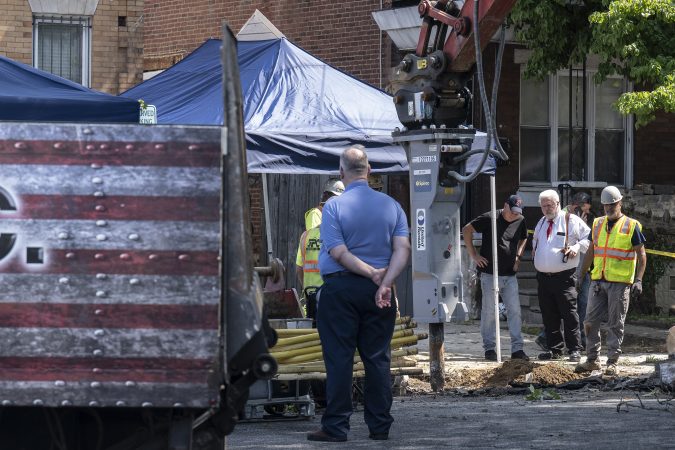
Breaking concrete, beeping trucks, and the hum of heavy machinery signaled movement Wednesday in the monthlong investigation into two missing persons last seen at a house on the 400 block of West Chew Avenue in Olney.
With that cacophony of construction sounds, the Philadelphia Police Department and the FBI began a planned excavation at the home of Eugene Albert Horsch, 44, who faces charges of carrying illegal firearms and fake federal law enforcement credentials following a June arrest. Horsch’s dilapidated twin home on West Chew Avenue has since been connected to the disappearances of at least two women in the last 10 years.
Authorities said they would excavate a portion of Horsch’s property with assistance from the Philadelphia Water Department. Investigators, officials said, were intent on unearthing and examining a pipe under the house as part of a widening probe.
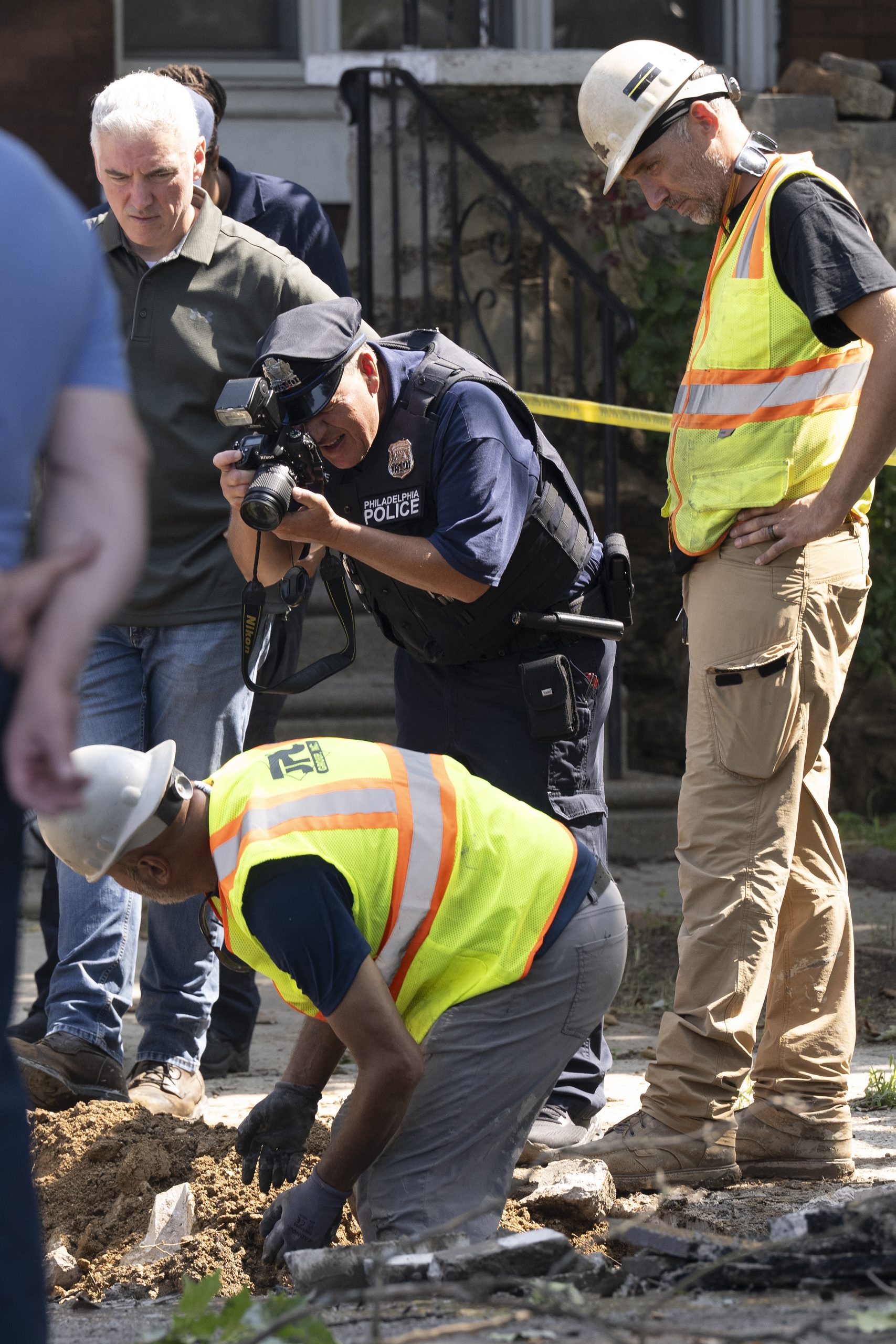
Workers and police investigators dig and inspect a hole while removing pipes and debris at the entrance to the home of Eugene Albert Horsch on West Chew Avenue.Jose F. Moreno / Staff Photographer
“The general scope of the dig is to excavate and remove a pipe that will be subsequently examined by FBI and PPD forensics for any evidence that may be present,” Sgt. Eric Gripp, a police department spokesperson, said Monday.
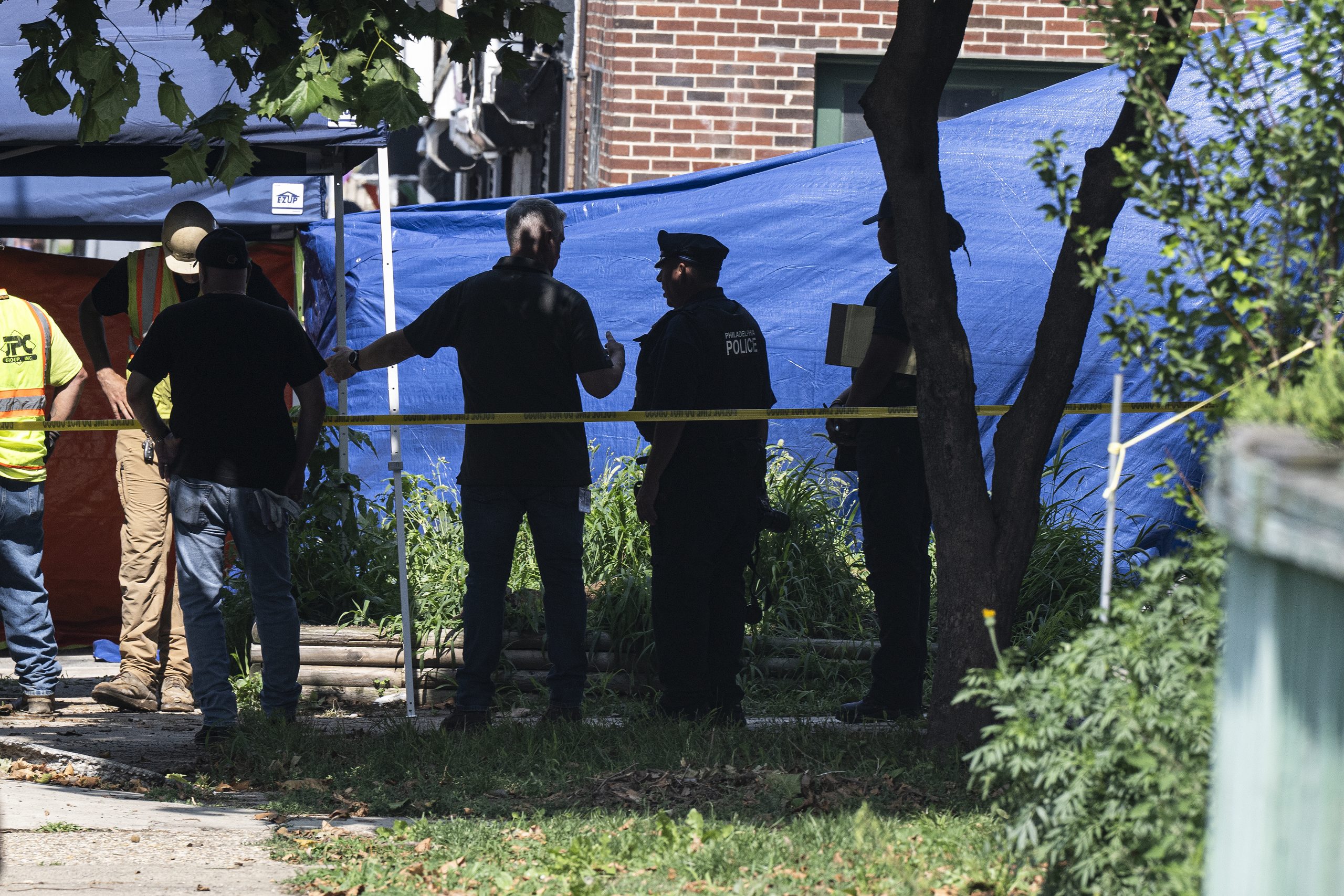
That effort began in earnest before 9 a.m. Wednesday morning, with crews digging up what was once a small, overgrown garden in front of Horsch’s home, as well as the sidewalk and street in front of the property. Trucks and tents cropped up throughout the morning as investigators walked the block. Periodically, investigators inserted a white pole into the earth, measuring the depth of a hole.
Later in the morning, workers pulled a piece of pipe from the ground and took it inside the home.
Wednesday’s excavation was the latest development the case that began June 19, when Horsch was arrested near Independence Mall with drugs, guns, and other weapons, as well as a counterfeit U.S. Drug Enforcement Administration badge. A woman was with him at the time, and she was carrying a fake ID in the name of Blair Tonzelli, who was last seen at Horsch’s home in 2022.
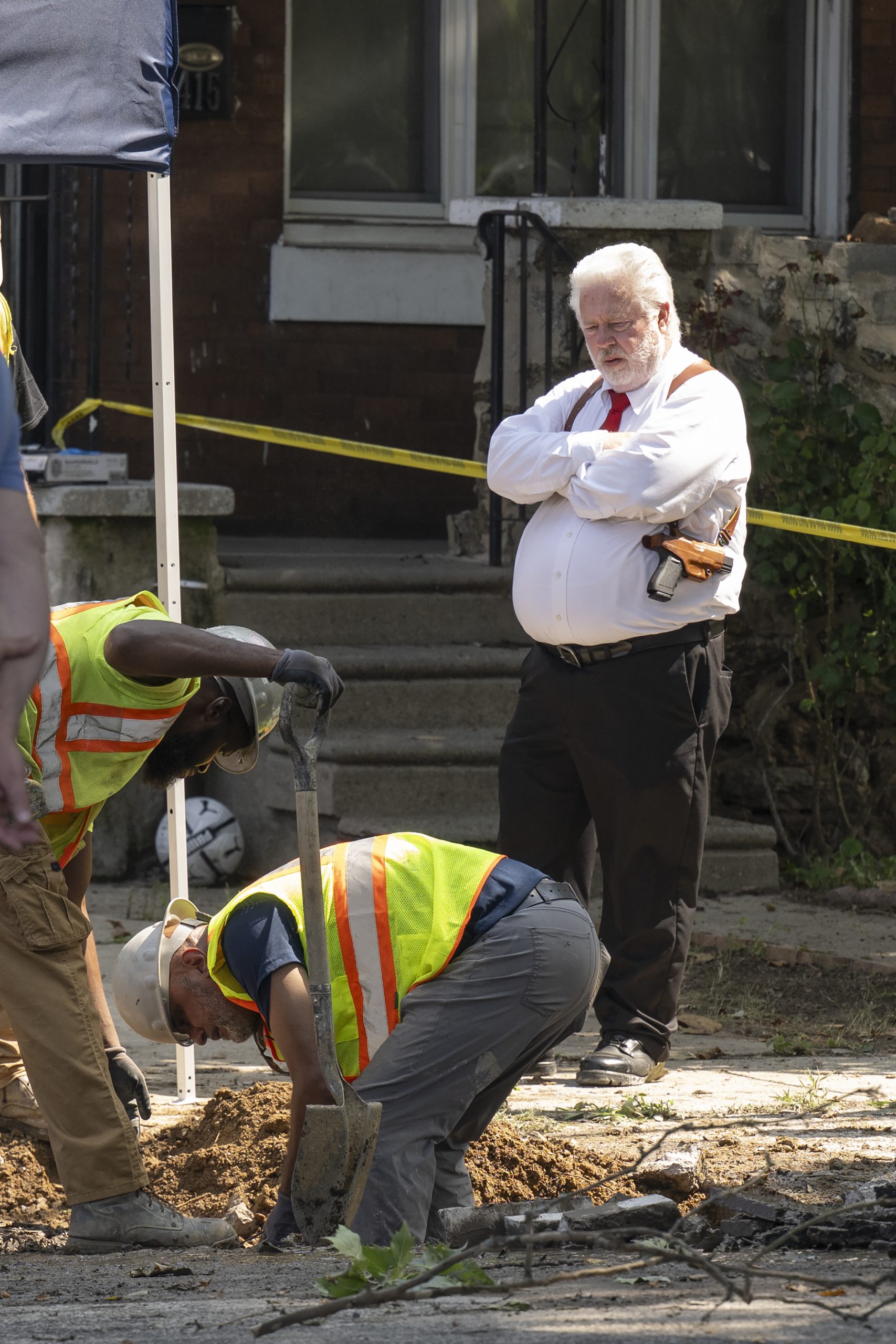
Workers and police investigators dig and inspect a hole while removing pipes and debris at the entrance to the home of Eugene Albert Horsch.Jose F. Moreno / Staff Photographer
Since then, investigators have discovered a swath of evidence, authorities have said. Among the items found at the West Chew Avenue home were vats of chemicals, a 55-gallon drum with connections to water lines in the house’s basement, and what police sources called “a significant amount” of blood.
Forensic testing is continuing, and it has not yet been announced whether the blood is human. Horsch does not currently face charges involving violent crimes.
Additionally, authorities have found other fake IDs in Tonzelli’s name, as well as the missing woman’s bank card. Investigators have also said that Amy McHale, the ex-wife of Horsch’s late father, Raymond Horsch, was last seen at the Olney home in 2016, according to the woman’s family.
It was unclear Wednesday if investigators had linked any evidence to the disappearances of Tonzelli or McHale.
Workers and police investigators dig and inspect a hole while removing pipes and debris at the entrance to the home of Eugene Albert Horsch on Wednesday.Jose F. Moreno / Staff Photographer
The midweek excavation surprised some neighborhood residents. Cheri Smith lives two blocks from the site of the investigation, but still felt its effects. Smith, who has lived nearby for two decades, said she has felt unsettled since news of the investigation broke last month, and has seen little communication among police, the city, and neighbors.
“It’s a shame what happened,” Smith said. “It would be nice if they notified us that this work is going to be happening, but the city is going to do what they are going to do.”
Laurenza Moise said that when she arrived Wednesday to open her braiding business, the corner of Fifth Street and Chew Avenue had already been blocked off. Since the investigation began, she said, she has seen a reduction in business.
“When they close the street, my business goes down, and there’s no parking for customers,” Moise said. “What can I do other than mind my business?”
About a year before police raided a crumbling Olney twin in connection to a missing woman last month, Philadelphia narcotics officers scoured Eugene Horsch’s basement and found telltale signs of a drug dealer.
Firefighters had responded to a small blaze on the second floor of the property on May 18, 2025, alerting police to what they said was a sprawling marijuana grow operation. And when narcotics cops searched the home later that morning, court records show they recovered a modified fully automatic assault rifle with an obliterated serial number, a sawed-off shotgun, a pistol, and ammunition.
The top floor was filled with cannabis plants, tents, and UV lights, with exposed wires running between the floors and into the basement, where vats of chemicals were stored, apparently to “cultivate marijuana,” the records said.
The police report detailing the drug bust at the Olney house made no mention of missing women, despite the fact that concerned relatives and friends had told police years earlier that at least two women who stayed at the house had vanished.
Now, the disappearance of one of those women, Blair Tonzelli, is central to an ongoing search at the property, where police found fake IDs and bank cards in her name, among other disturbing evidence.
That law enforcement did not appear to connect the missing women to the search for drugs at the same address raises questions about whether the officers who searched the property last summer were aware of the two missing persons cases. The Philadelphia Police Department declined to comment, citing the ongoing investigation.
Police began reexamining Tonzelli’s disappearance on June 19 after arresting Horsch, whose companion had a fake ID in her name. Investigators reinterviewed witnesses and viewed footage of a statement given in February 2023 by Tonzelli’s friend, who told officers Tonzelli was last seen at 417 W. Chew Ave. Police have also revisited the 2016 disappearance of Amy McHale — the ex-wife of Horsch’s father, erotic filmmaker Raymond C. Horsch — whose mother said she vanished from the Olney home.
Gloria McHale, Amy’s mother, said she was surprised to learn that police had searched the property for drugs in 2025.
“I wish they would have looked deeper,” she said.
Police have not charged Horsch with any crimes linked to missing women. He has been jailed since his arrest last month on $500,000 bail for gun and drug charges, as federal and local police prepare to excavate the property in search of more evidence.
His attorney, Jerome Brown, declined comment. Brown has previously said police had interviewed Raymond Horsch several times over the years about McHale’s disappearance.
When local and federal law enforcement officers searched Horsch’s home last month in connection to the missing women, police said they again found guns, ammo, and drugs. More troubling, according to police records, is that they also found a “significant amount” of blood, a handwritten letter referencing serial killer Ted Bundy, and fake IDs and bank cards in Tonzelli’s name.
The latest search began after police arrested Horsch in his black BMW with an array of weapons, drugs, and a woman donning a fake ID in Tonzelli’s name. A sworn affidavit to initiate the search includes witness testimony that suggested Horsch was a “sociopath” who knew how to dispose of human remains.
But it was a fire that brought police to Horsch’s property one morning in May 2025.
Eugene had been living in the twin with two other women, including his father’s longtime companion, Krista M. Killen. City firefighters said the small blaze was started by “careless smoking” on the second floor, according to Horsch’s arrest report. While extinguishing the fire, a fire marshal and police patrolman on the scene discovered a “marijuana grow operation” on the home’s third floor and basement.
Officers with the PPD Narcotics Strike Force later searched the home and seized 26 pounds of marijuana, 131 grams of dried mushrooms, $1,200 worth of methamphetamine, $800 cash, and “numerous gold colored and silver” coins in a safe, records show.
Police also recovered a BCI Defense AR-15 style rifle modified to be fully automatic, a 12-gauge Stevens Model 67 pump-action shotgun with a sawed-off barrel, a 9mm Girsan MC28 pistol and more than a hundred rounds of ammunition. The serial numbers had been destroyed on all three firearms, according to records.
Horsch had previous felony convictions for drug manufacturing charges and was not legally allowed to own firearms. He was arrested and held on $750,000 bail for manufacturing drugs, illegal gun possession, and related crimes.
Brown, the family attorney, told a judge that the weapons belonged to Horsch’s father, who had died just three days before the drug raid. Brown said Eugene Horsch was planning to properly dispose of the firearms, according to a spokesperson for District Attorney Larry Krasner.
His health became a factor in determining an appropriate resolution to the case. Sources familiar with the case, who were granted anonymity because they are not authorized to discuss the details publicly, said Horsch appeared frail at the time of his 2025 arrest and could barely walk into court.
Horsch pled guilty to manufacturing drugs, and prosecutors withdrew the additional gun charges. He received three years probation.
Within months of his release from jail, Horsch would be locked up again.
In March, police arrested Horsch and charged him with stabbing a man at Eighth and Market Streets. Prosecutors dropped the charges after a witness failed to appear in court, records show, and he was released from lockup in May.
Three weeks later, U.S. Park Police stopped him in his car near Independence Mall, where they recovered a fake ID in Tonzelli’s name.
The search of the Olney property continued Wednesday.