Tag: Philadelphia Police Department

  • Three Philadelphia police officers were wounded in a shooting late Saturday. The gunman was a retired firefighter.

    Three Philadelphia police officers were wounded in a shooting late Saturday. The gunman was a retired firefighter.

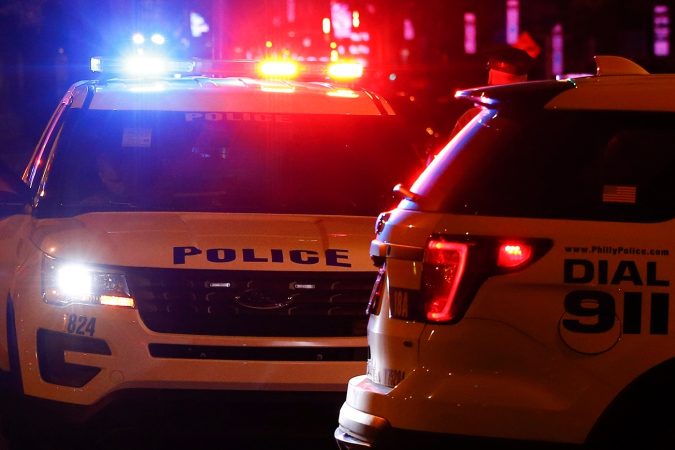
    Three Philadelphia police officers were wounded in a shooting late Saturday after an argument with a retired city firefighter escalated, and the man opened fire on them in the street, law enforcement sources and city officials said.

    The gunman was killed by officers in response, officials said.

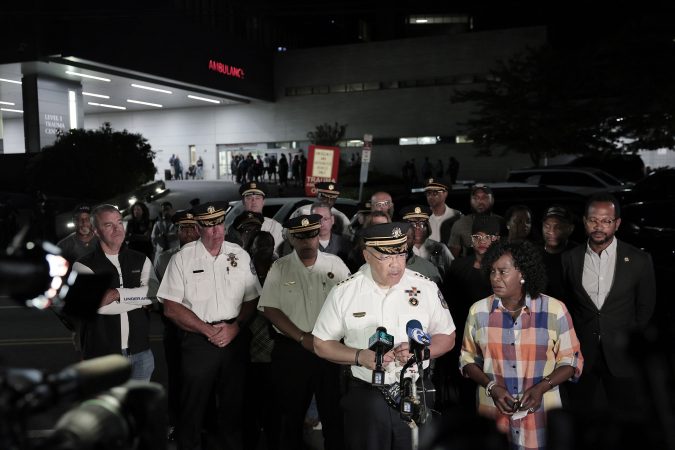
    Police responded to reports of gunfire at a car near North 54th and Arlington Streets in the Wynnefield section of West Philadelphia around 10:30 p.m., Commissioner Kevin Bethel said at a news conference early Sunday.

    A 57-year-old man — identified by police late Sunday as Eric Franks — then confronted four officers on the block and began arguing with them, according to video of the encounter obtained by The Inquirer.

    Officials said police were trying to explain to Franks that they needed to establish a crime scene, according to a news release Sunday evening.

    The video appeared to show an animated Franks yelling at officers while another man attempted to hold him back. Franks, according to the video, then pushed a sergeant.
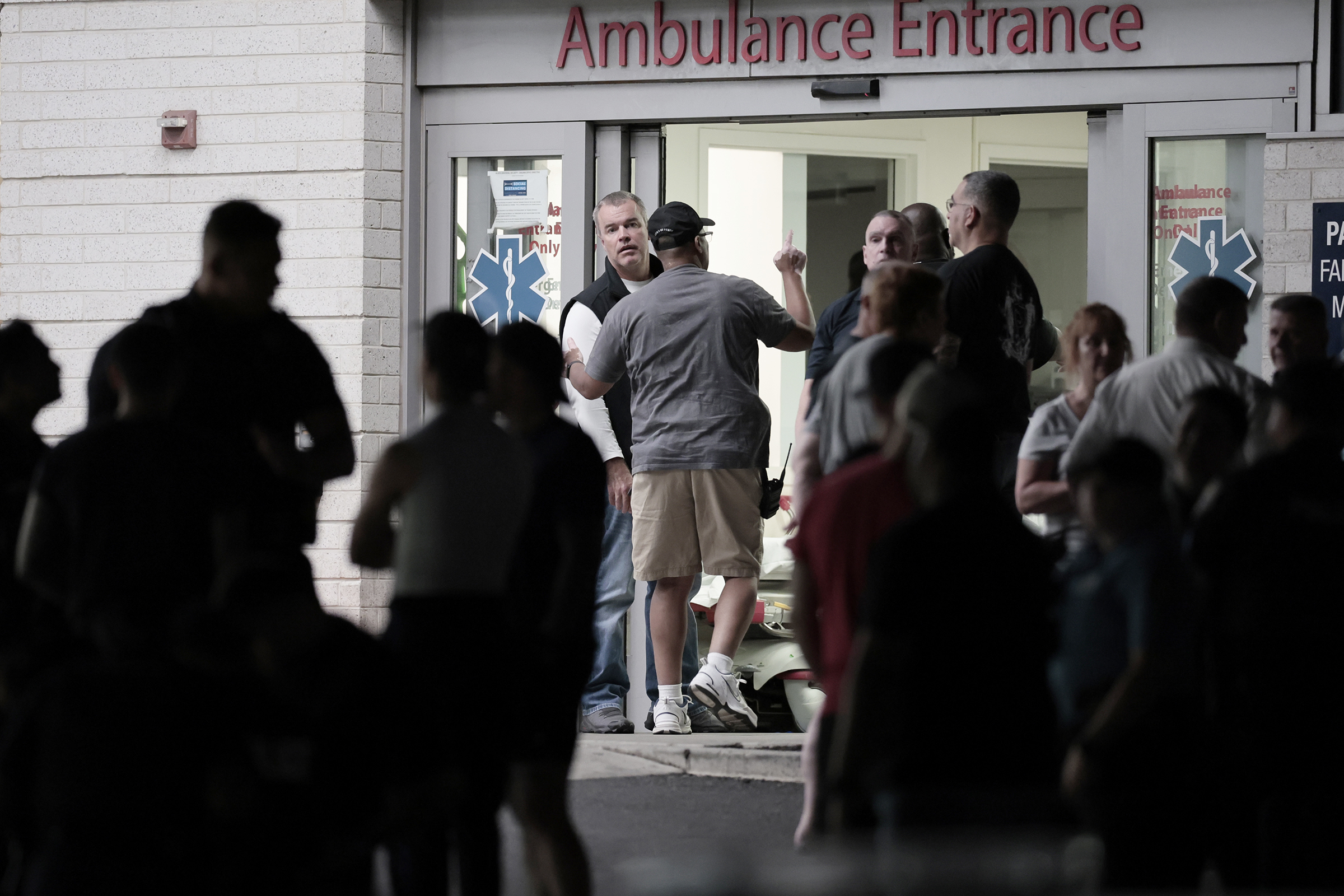
    City Managing Director Adam K. Thiel (center, facing forward) at the emergency entrance of Penn Presbyterian Medical Center, where three Philadelphia police officers were taken after being shot.Elizabeth Robertson / Staff Photographer

    Bethel said the officers repeatedly told him to “stand down” before attempting to arrest him about 10:45 p.m.

    As the officers tried to detain Franks, the video showed him break free, then pull a gun from his waistband, and begin shooting at the officers in the street. In the statement released Sunday, police said Franks had a license to carry a firearm. It stated that the officers repeatedly told him not to draw the weapon.

    In the video, officers and several civilians could be seen diving behind cars and scattering for their lives.

    Four officers shot back at Franks, Bethel said. Three, including a sergeant, were struck by gunfire and taken to Penn Presbyterian Medical Center. One officer was shot in the face, one in the hip, and another in the leg, according to Mayor Cherelle L. Parker. The officers’ names have not been released by officials.

    All were reportedly stable Sunday and expected to recover.

    The video shows Franks stumbling down the sidewalk before collapsing. He was shot in the chest and leg. He died at Thomas Jefferson University Hospital at 11 p.m., Bethel said.

    Bethel said Franks was not involved in the initial incident for which police were called.

    “Why he elected to come into that scene and engage the officers — whether this was premeditated — we will walk through that process to see,” Bethel said. “But you don’t come to a situation like that … to engage the officer. We all can start to think of what potentially his intended purpose was.”
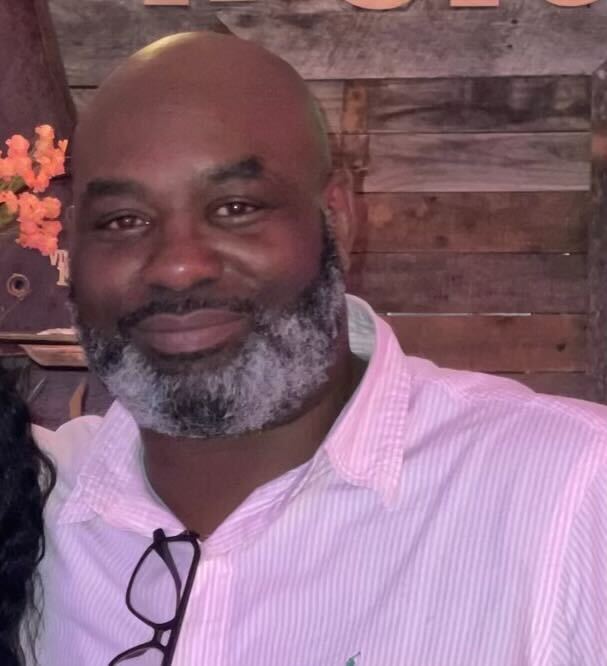
    Eric Franks, 57, a retired firefighter, was shot by Philadelphia police officers on Saturday night.Courtesy of the Frank family attorney

    Franks’ family attorney James Funt said Bethel should not have “insinuated” that Franks may have planned the shooting.

    “That’s just not true,” Funt said. “I don’t know where he got that information.”

    Funt said Franks was a community activist who had met with Philadelphia City Councilmember Curtis Jones Jr. and police to address an increase in drug crimes in the neighborhood.

    On Saturday night, Franks was managing a 16-year-old’s birthday party at his event space business at the other end of the block when his son called him to tell him that someone had shot a car, Funt said. Franks ran to the corner to see if he could help, he said.

    “He is not someone who would try to be an initial aggressor,” Funt said.

    Funt said he doesn’t know what led up to the confrontation captured on video, but it warrants a full investigation and the review of any additional video recordings to get the full picture.

    An investigation by the police department’s officer-involved shooting investigation unit and internal affairs bureau, and the Philadelphia District Attorney’s Office, is ongoing.

    “All we want is for the facts to come out,” Funt said.

    City payroll records show Franks retired from the Philadelphia Fire Department in September 2025 after nearly 20 years on the job.

    Mike Bresnan, president of the International Association of Firefighters Local 22, declined to comment Sunday. A city spokesperson for the fire department referred questions to the police.
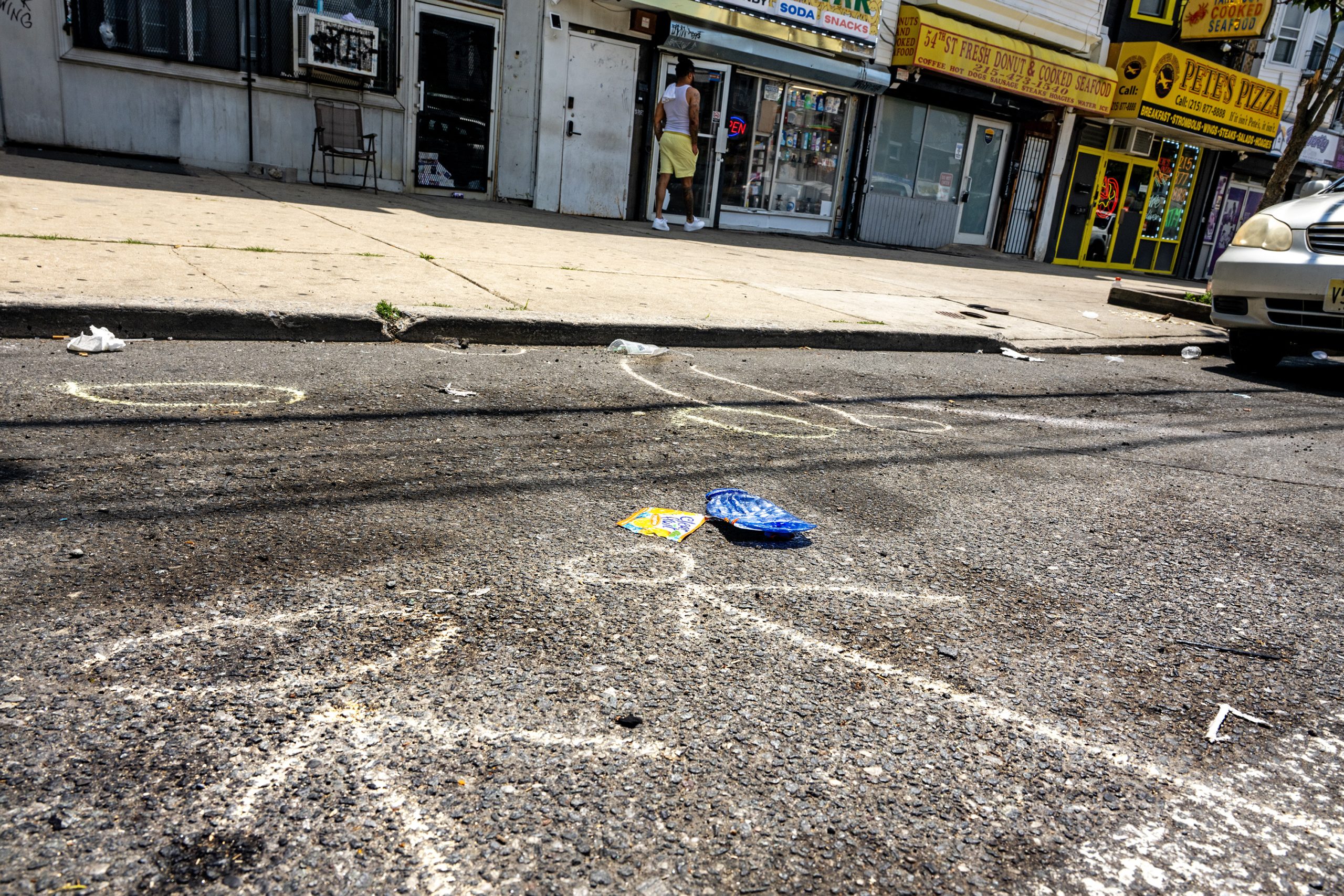
    Police evidence marks are along 54th Street in the Wynnefield section of West Philadelphia Sunday June 14, 2026, the morning after three Philadelphia police officers were wounded in a shooting late Saturday after a verbal altercation with a retired city firefighter.Tom Gralish / Staff Photographer

    The officers, ages 43 and 30, have worked as Philadelphia police for two and seven years, respectively. The sergeant, 39, has been with Philadelphia police for eight years.

    “These men and women give their lives for this work,” Bethel said. The mayor also commended the officers’ resiliency and resolve. “We’re just grateful that tonight, they will survive their injuries,” Bethel added.

    On Sunday, officers with the police department’s crime scene unit continued to comb the block — a street of porch-lined rowhouses and small businesses — for evidence and witnesses. Police pulled several fired shell casings, caked in mud, from a sewer drain.

    Across the street, a group of people who identified themselves as Franks’ relatives gathered outside the event space called Mingle, that the family owns.

    Franks’ wife, Michele, referred questions about the shooting to Funt.

    But in a brief phone interview, she tearfully described how they’d been together ever since they went to their senior prom at Overbrook High School in 1986.

    “He’s a husband, father, a man of the community,” she said.

    Editor Joe Berkery contributed to this article. The article has been updated to include PPD’s statement on the shooting, released Sunday evening.
  • Banning ‘convenience’ fees, buying the police headquarters, and approving the city budget | City Council roundup

    Banning ‘convenience’ fees, buying the police headquarters, and approving the city budget | City Council roundup

    Sick of being charged with “processing” or “transaction” fees when shopping online?

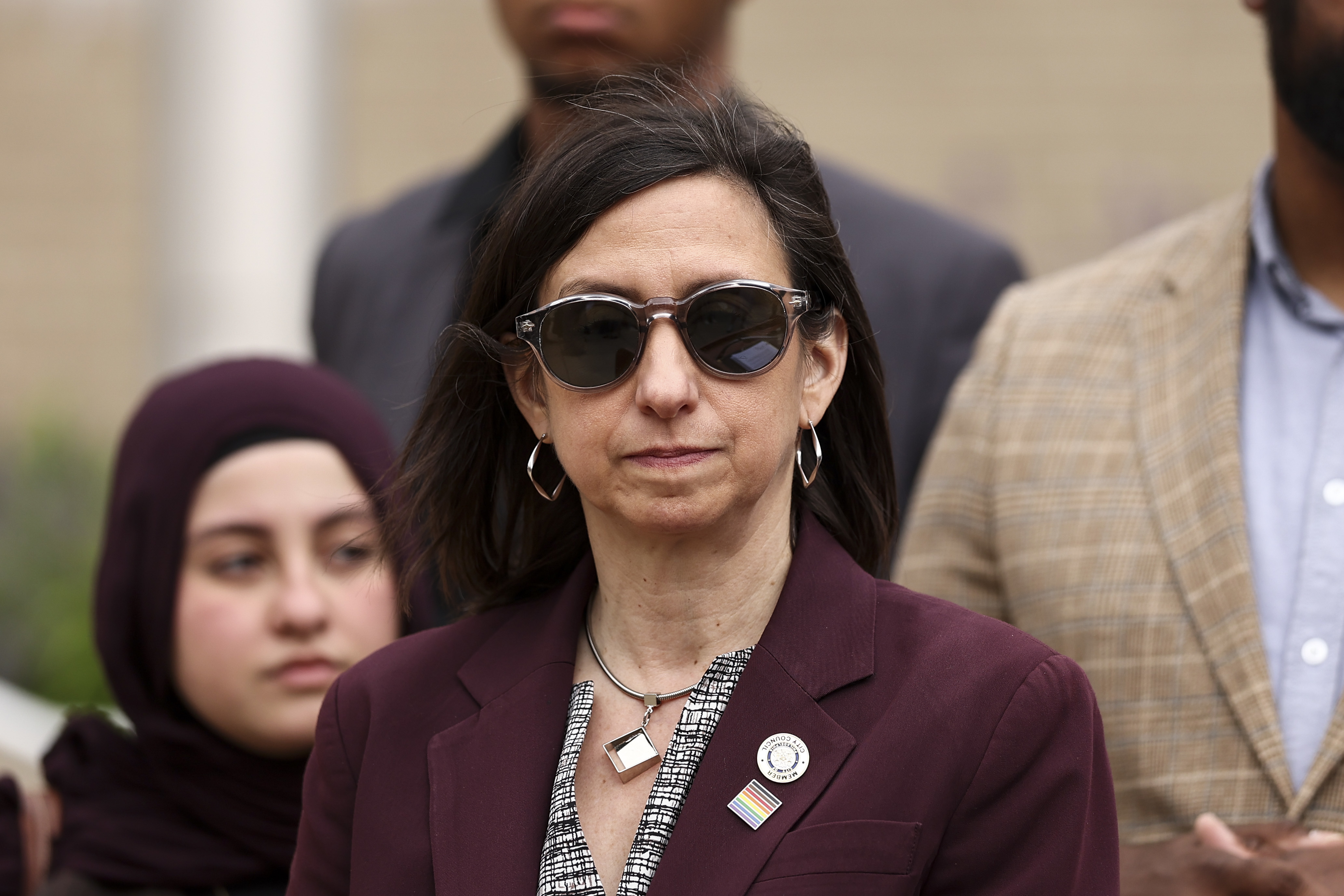
    So is City Councilmember Rue Landau, and she introduced a bill Thursday to help Philadelphians avoid so-called pay-to-pay fees for online transactions.

    “This will keep money in people’s pockets,” Landau said in an interview. “Oftentimes, people are paying these fees every single month to simply pay their bills to an entity that only allows you to pay it in a certain way. They are unnecessary. We are making them unlawful.”

    The legislation aims to ban fees that are not related to actual costs to the seller. That means standard credit card processing fees, which retailers must pay to credit card companies, would not be banned under the bill. Instead, the bill aims to tackle additional fees beyond those processing charges by:

    • Mandating online payment portals have at least one option that involves no additional fees.
    • Requiring “cost justification” for fees, which Landau’s office said would essentially ban convenience fees by necessitating proof they are related to real costs borne by the seller.
    • Compelling online retailers to disclose all fees up front in “total-price advertising” before a transaction begins.

    To enforce the bill’s provisions, the city’s law department would be authorized to sue businesses charging illegal pay-to-pay fees. The bill would also allow private individuals to sue for damages from companies charging the fees, including as part of a class-action lawsuit.

    Next, Council President Kenyatta Johnson will refer the bill to a committee, where it could get a hearing as soon as this fall.

    Philadelphia City Council members inside the caucus inside City Hall in Philadelphia, Pa. on Thursday, June 11, 2026.Aidan T. Gallo / Staff Photographer

    What was the meeting’s highlight?

    All’s well that ends well?: Thursday was the last session before lawmakers adjourn for summer recess, and Council members pushed through a raft of legislation, including the $7.1 billion city budget for the fiscal year that begins July 1.

    City budget negotiations wrapped up last week, and Thursday’s votes were largely procedural.

    But the fallout continued Thursday from Council’s decision last week not to adopt Mayor Cherelle L. Parker’s proposal to plug the Philadelphia School District’s budget deficit with a new $1-per-ride tax on rideshare services like Uber and Lyft.

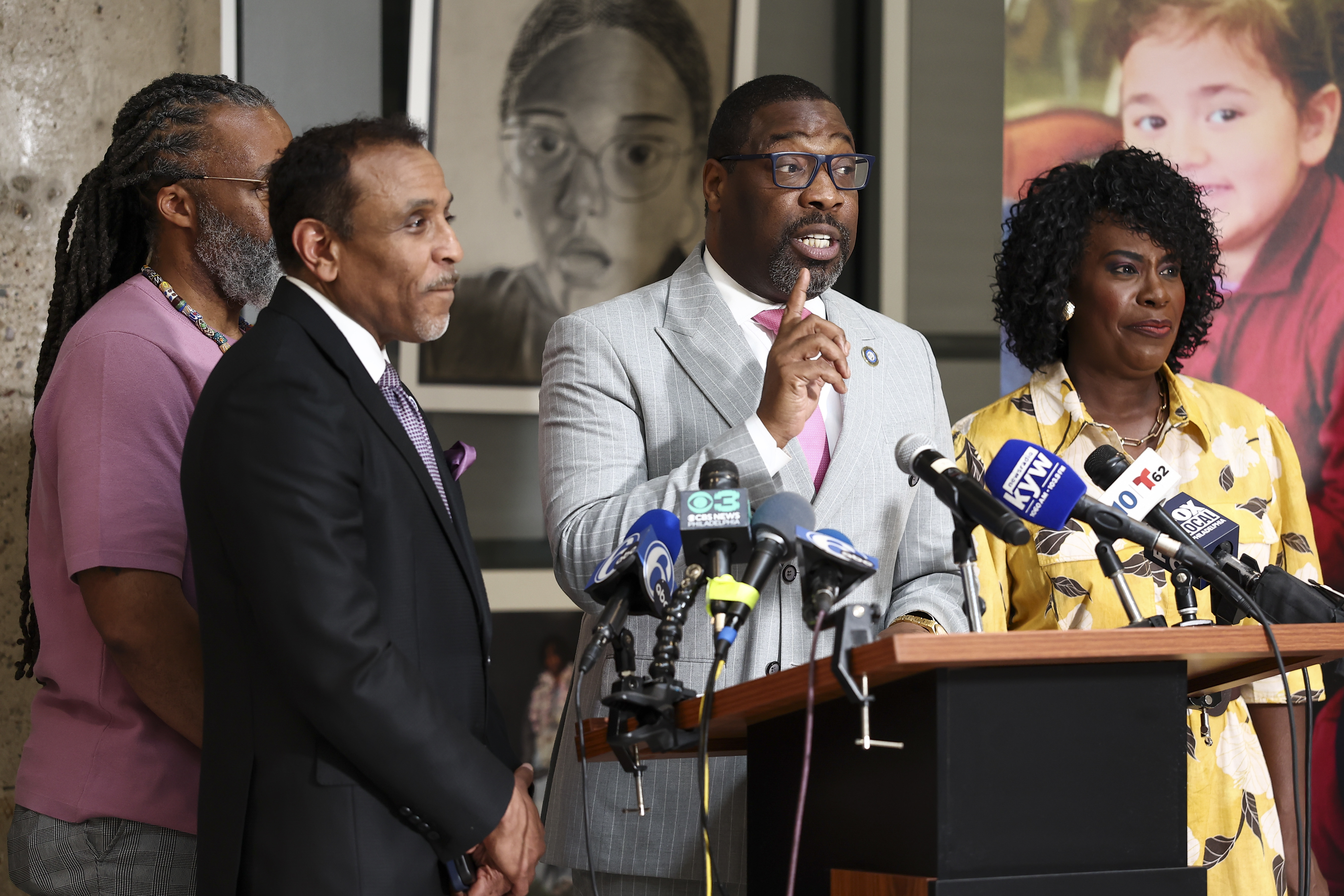
    Council President Kenyatta Johnson speaks during an announcement at the School District of Philadelphia Headquarters on Wednesday, June 10, 2026 in Philadelphia. Philadelphia School District officials will move to restore 340 classroom-based jobs that were slated to be cut, despite top district leaders saying last week that they did not have the recurring funding needed to keep the positions.Monica Herndon / Staff Photographer

    Council instead pulled roughly $50 million, the amount the tax would have generated next year, from the existing city budget to help fund the schools. District officials, however, said after that vote that they would have to move forward with cuts to 340 classroom positions because Council did not provide recurring revenue.

    Parker, Johnson, and school officials on Wednesday announced they had reached an agreement to provide recurring funding that will allow those jobs to be saved. But they offered few details on where the money would come from.

    What else happened?

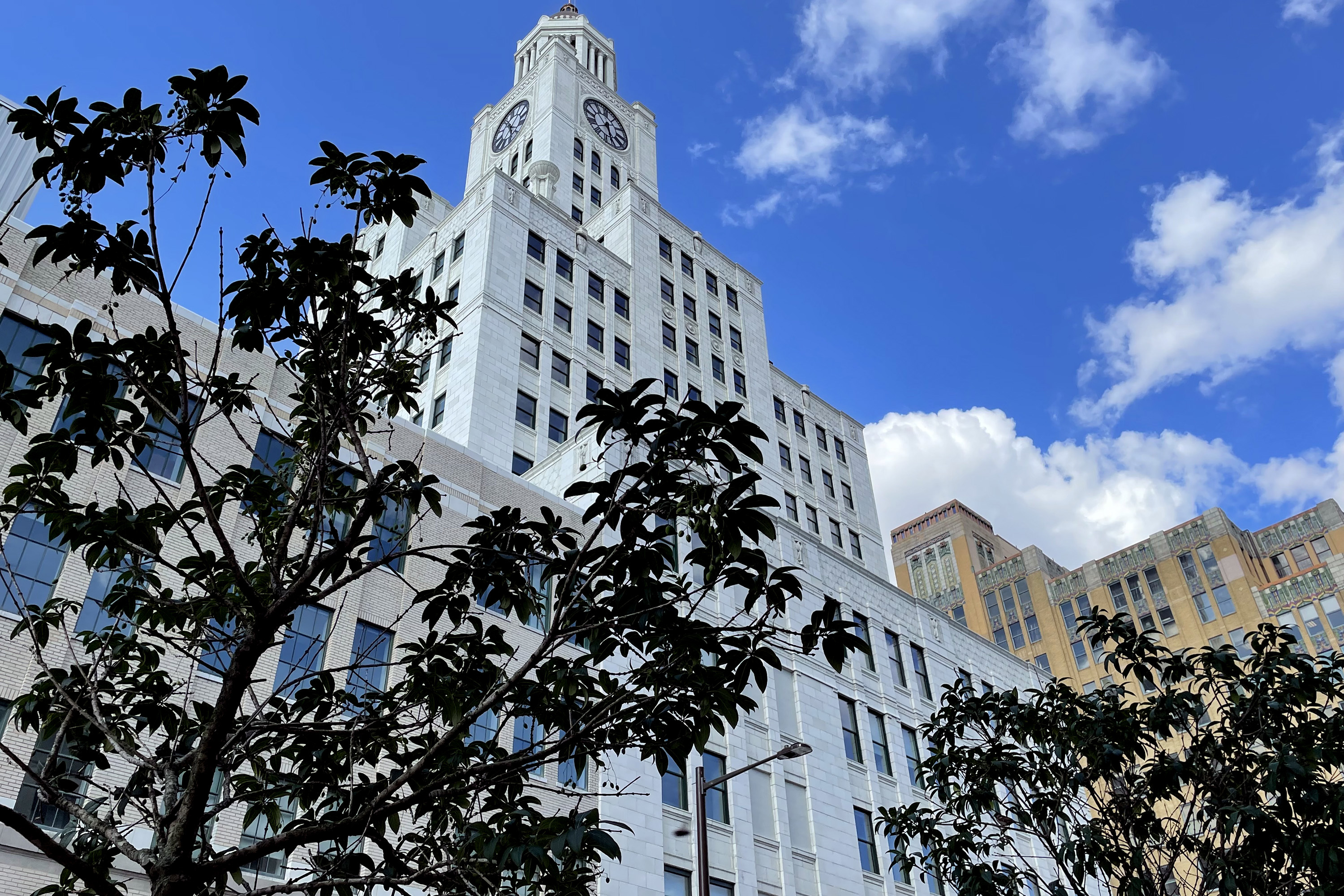
    The Tower of Taxpayers: The city will soon own the 18-story tower at 400 N. Broad St., the beaux arts landmark that is the Philadelphia Police Department’s headquarters and was dubbed the “Tower of Truth” when it was the home of The Inquirer.

    Council on Thursday voted 17-0 to approve legislation authorizing the city to borrow $200 million so it can own the building, part of a complex and controversial deal in which the city is buying outstanding debt on the property that is currently held by developer Bart Blatstein.

    The Philadelphia Public Services Building (PPSB) at 400 North Broad Street is the historic former Inquirer and Daily News building. It will soon be owned by the city of Philadelphia.TOM GRALISH / Staff Photographer

    The purchase stems from an agreement inked in 2017 during former Mayor Jim Kenney’s administration. Under the terms of the deal, the city’s current $15 million annual rent on the building was set to nearly double if the city did not exercise a one-time option to buy the property.

    Parker administration officials testified to a Council committee last week that, while the building is appraised to be worth $21.5 million, in order to purchase the structure, the city was required to assume the debt that Blatstein incurred to renovate the property.

    Council members on the Finance Committee balked at the $200 million price tag and initially held up the proposal, but eventually approved the measure.

    The city will issue bonds to buy the debt and will pay roughly $15 million a year in debt service.

    Expanding the definition of ‘the line of duty’: The city appears poised to offer death benefits to the families of first responders who die by suicide, a change that amounts to an expansion of how the government defines a death that occurred “in the line of duty.”

    Council approved legislation to offer pension payments, healthcare coverage, and other forms of compensation to the families of city workers who either had a diagnosed psychiatric disorder due in “significant part to exposure to one or more traumatic events in the line of duty” or died by suicide within 45 days of exposure to a traumatic event at work.

    That was despite the city’s risk manager testifying last week to a Council committee that the Parker administration opposes the change. Sharolyn Murphy told Council members that the administration is focused on suicide prevention, and that expanding who is eligible for death benefits would result in higher costs to the pension fund.

    Several members were deeply critical of the administration’s testimony, calling it “cruel” and “outrageous.”

    On Thursday, Council approved the bill in a 17-0 vote, sending it to Parker’s desk with a veto-proof majority.

    Quote of the week

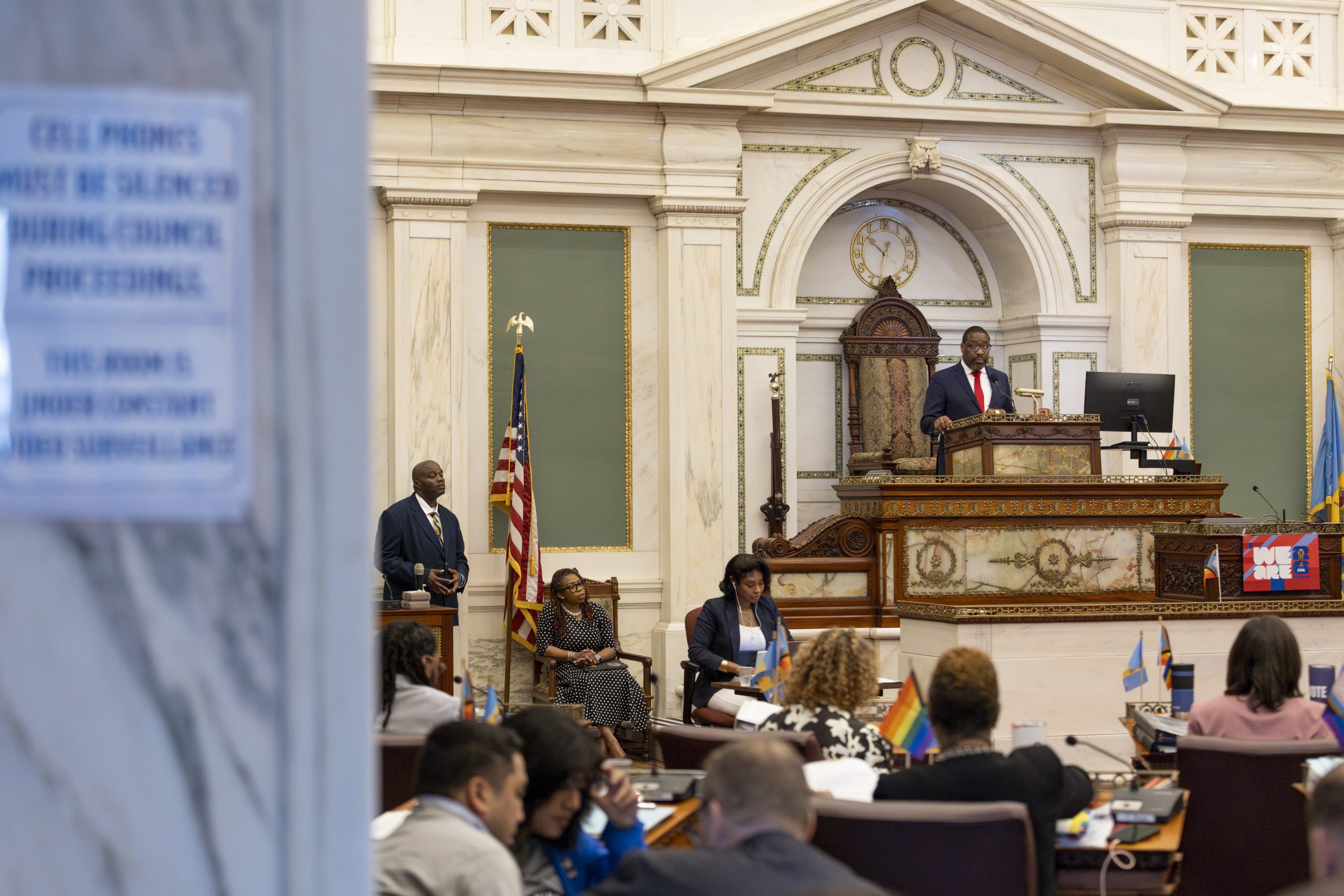
    Philadelphia City Council members inside the begin the session inside the chamber at City Hall in Philadelphia, Pa. on Thursday, June 11, 2026.Aidan T. Gallo / Staff Photographer

    A bittersweet Pride: That was Mark Segal, the publisher of the Philadelphia Gay News and one of the most recognized leaders of the city’s LGBTQ+ community. He spoke Thursday during a Pride celebration in Council, and he called for accountability following the police response to Pride festivities on Sunday that many have called heavy-handed.

    Landau introduced legislation to hold hearings examining the police force’s tactics. It passed unanimously.

  • A St. Joe’s Prep grad is recovering from a traumatic brain injury after violent high school ‘tiki party’ in Wissahickon park

    A St. Joe’s Prep grad is recovering from a traumatic brain injury after violent high school ‘tiki party’ in Wissahickon park

    As graduating seniors at St. Joseph’s Preparatory School prepared for college, summer jobs, and other hallmarks of young adulthood this spring, 17-year-old Shawn Rinnier was focused on a simpler goal.

    He hoped to muster the physical strength to walk across the graduation stage to collect his diploma.

    That’s because the Bryn Mawr teenager is recovering from a traumatic brain injury that his parents say he suffered during an assault at a late-night party in Wissahickon Valley Park last month.

    The attack knocked him unconscious, they said, and he has since experienced poor memory, fatigue, delayed vision, balance issues, and numbness in the right side of his body.

    Now, in addition to caring for their son during what they expect to be a lengthy recovery, the Rinniers are seeking accountability for the people who assaulted their son.

    “Nobody will talk at this point, and it just seems like people are trying to protect themselves, protect their friends,” said his mother, Susan Rinnier. “There’s some young adults that have a lot on the line here.”

    Alongside investigators with the Philadelphia Police Department, Rinnier’s parents are working to piece together the events of the May 10 “tiki party” in the woods near Chestnut Hill, where they say about 250 teenagers had gathered before the evening turned physical.

    Rinnier’s brain injury has left him with little recollection of what happened, said his father, Shawn Rinnier Sr., leaving his parents to look for clues after being sent photos and videos of the assault that partygoers took on their cell phones.

    That night, students from a nearby Philadelphia private school as well as those from schools in the suburbs gathered for the party, which had been promoted on social media, Shawn Rinnier Sr. said.

    He did not name the schools, deferring comment on those details to investigators.

    The videos, Susan Rinnier said, show young people growing increasingly aggressive and eventually fighting.

    “A couple fights broke out where the video evidence is showing that the other students were the aggressors” in the assault of her son, Susan Rinnier said.

    “Some kids are on the sidelines yelling and chanting ‘punch on him’ and riling things up,” she said. “Our son, kind of scared, turns around and starts walking out of the event. The group follows him for about a second or so. That’s all we can see.”

    A woman driving home in Chestnut Hill that night discovered Rinnier lying in the street around midnight and called 911, his father said. Shawn Rinnier Sr. later spoke to the woman, who told him “hundreds” of people had been fleeing through the woods with flashlights.

    The parents did not recognize the young people involved in the assault, and they continue to communicate with detectives who told them they are interviewing people who may be involved.

    A spokesperson for the police department did not return requests for comment on the investigation.

    Rinnier was rushed to Jefferson Einstein Philadelphia Hospital and put on a ventilator, his parents said, and doctors later determined that his traumatic brain injury was moderate to severe.

    “When he finally awoke, he was suffering from poor memory, couldn’t follow instructions, was confused, acting impulsive,” his mother said. The teen then moved to a rehabilitation unit at Bryn Mawr Hospital, where he continues to recover, she said.

    The violent events of that spring night were life-altering, Rinnier’s parents said.

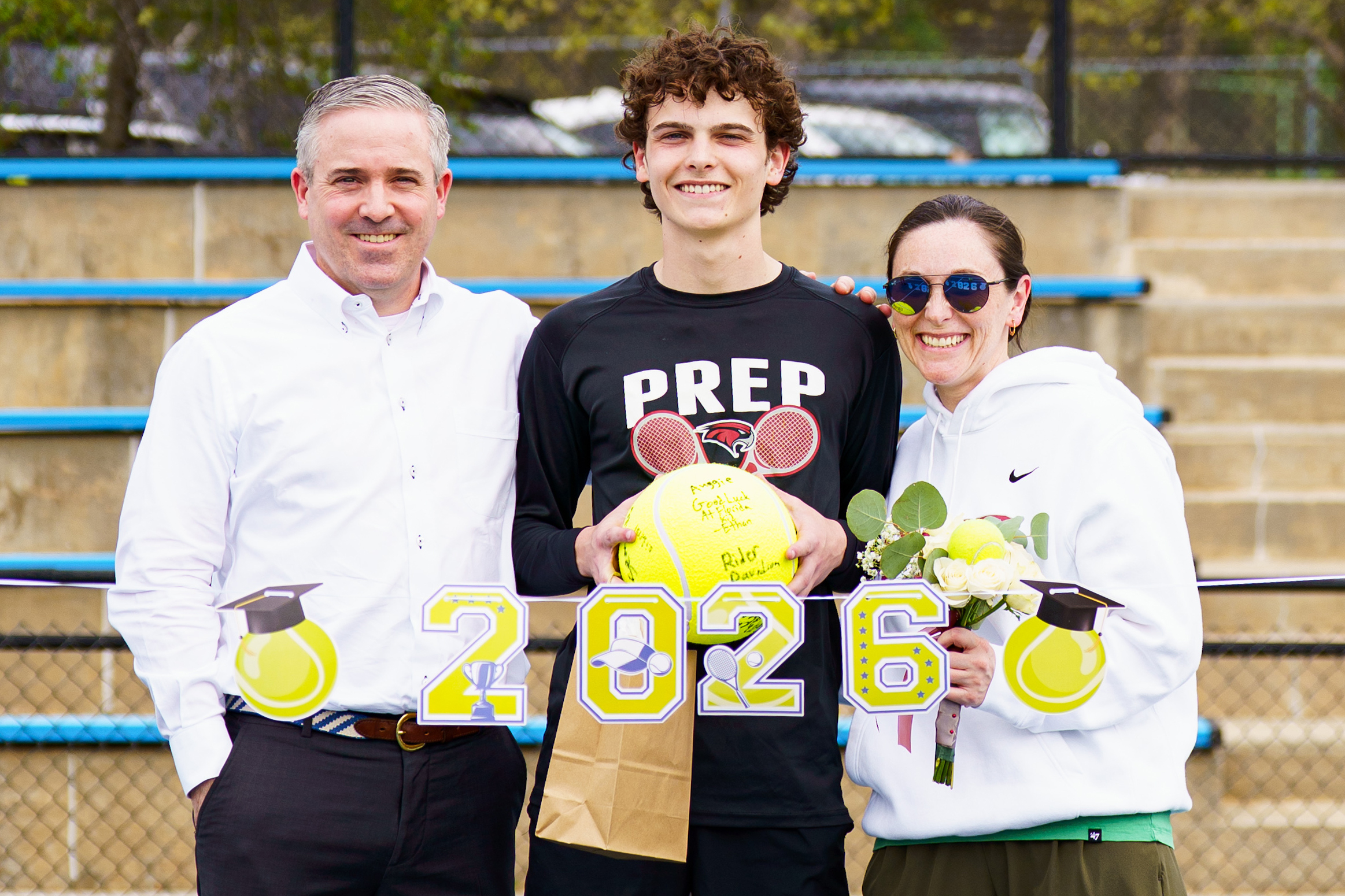
    Their son, a tennis player, was preparing to attend the University of Florida on a scholarship this fall, they said. Those plans are now on hold.

    Instead, the teen is taking part in an extensive outpatient rehab program, and his parents are working to have his enrollment deferred to 2027, when they hope he will be well enough to attend school.

    Making sure that Rinnier took part in graduation at St. Joe’s last month was a more readily attainable goal, his parents said, and they were determined that he would achieve it.

    Susan Rinnier was pleased to see that he was able to walk across the stage on May 31, even if he soon grew fatigued and experienced numbness in his legs after the ceremony, she said.

    The Rinniers’ next hope is that police will find and charge their son’s attackers. Meanwhile, they continue to scan social media for additional photos and videos that may offer a better view of the incident.

    “We owe it to Shawn to continue to move this forward any possible way we can, to get to the bottom of this,” his father said. “That’s our job as parents, and we’re not gonna stop.”

  • Two Philadelphia police officers stopped hundreds of Black men on the street. Lawyers say the stops were illegal and racially biased.

    Two Philadelphia police officers stopped hundreds of Black men on the street. Lawyers say the stops were illegal and racially biased.

    Prosecutors have dismissed at least 24 firearms cases after defense lawyers challenged the legality of stops conducted by two Philadelphia police officers who they say systematically targeted Black men for unlawful searches.

    Lawyers with the Defender Association of Philadelphia say former partners August Gershwin and John Lee initiated hundreds of pedestrian investigations in Northwest Philadelphia without sufficient legal justification — ordering Black men to submit to searches during interactions that were supposed to be voluntary, delaying activation of body-worn cameras until after stops were underway, and rarely documenting investigations unless they yielded illegal guns or contraband.

    The allegations come more than a decade after Philadelphia entered into a federal consent decree aimed at curbing unconstitutional stop-and-frisk practices. The agreement requires officers to document investigative stops for review by independent monitors and encourages police to handle low-level violations through so-called mere encounters — voluntary interactions with officers in which people are free to ignore questions and walk away.

    The lawyers contend that Gershwin and Lee exploited that distinction, routinely detaining people without the legal justification required for a stop while avoiding the scrutiny those interactions would otherwise receive.

    Their review, detailed in recent court filings, has prompted prosecutors to abandon dozens of cases tied to the officers, while the fate of dozens more remains uncertain.

    The dismissals began with the case of Namir Mack, charged with firearms offenses and evading arrest after a March 2025 stop by Gershwin and Lee led to the recovery of an illegal handgun.

    According to court filings, the officers stopped Mack as he walked along West Erie Avenue. Body-worn camera footage showed Mack lifting the back of his sweatshirt after the officers ordered him to expose his waist.

    Mack then ran. During a brief chase, he was struck by an SUV on Hunting Park Avenue, and officers recovered a handgun. A supervisor’s body-worn camera footage captured the aftermath.

    “What is this?” Sgt. Christopher Bloom asked. “A mere encounter turned into a foot pursuit?”

    Defender Association lawyers characterized the pattern of conduct discovered in their review as deeply concerning.

    The officers’ actions were “flying in the face of everything that’s supposed to be happening with this march toward more equitable policing in Philadelphia,” said Michael Mellon, who, along with Paula Sen, leads the association’s police accountability unit and conducted the review.

    Efforts to reach Lee, who left the department last November, were unsuccessful. Gershwin directed inquiries to his supervisor, who declined to comment.

    The police department declined to comment on the dismissed cases and the Defender Association’s findings.

    Police Commissioner Kevin J. Bethel declined an interview request, and police union leaders did not respond to requests for comment.

    The district attorney’s office, too, declined to comment.

    Police spokesperson Sgt. Eric Gripp said that pedestrian stops must be based on something more than a “hunch,” and that “the mere presence of a firearm” or “a person being in a particular area does not, standing alone, automatically justify a detention or frisk.”

    Department policy also requires officers to activate body-worn cameras at the outset of investigative stops. But the lawyers found that in every reviewed stop for which footage was available, the officers activated their cameras only after the interaction had begun, obscuring the moments most critical to determining whether the stop was lawful and whether citizens had voluntarily complied with police requests.

    Paula Sen and Mike Mellon, who lead the police accountability unit of the Defender Association of Philadelphia, at their offices.Alejandro A. Alvarez / Staff Photographer

    According to the lawyers’ legal filings, the department sustained at least three investigations for body-worn camera violations against both Gershwin and Lee during the two-year period reviewed by attorneys.

    Of the nearly 500 pedestrian interactions reviewed by Mellon and Sen, only 130 were documented as investigative stops. The officers recorded an additional 320 as mere encounters.

    After reviewing body-worn camera footage, police paperwork, and other materials, the lawyers concluded that 277 of the interactions described as mere encounters should have been classified as investigative stops and subjected to consent-decree review. Of those, 218 involved weapons license investigations. None resulted in the recovery of an illegal firearm.

    The lawyers also found that all but one of the nearly 500 people the officers stopped during the review period were Black. All but two were men.

    <div data-analytics-viewport="autotune" data-analytics-label="stops-06-11-26" id="stops-06-11-26__graphic" data-iframe-fallback="https://media.inquirer.com/storage/inquirer/ai2html/stops-06-11-26/fallback-mobile.jpg" data-iframe-fallback-width="350" data-iframe-fallback-height="1062" data-iframe="https://media.inquirer.com/storage/inquirer/ai2html/stops-06-11-26/index.html" data-iframe-height="1038" data-iframe-resizable></div> <script type="text/javascript">(function() { var l = function() { new pym.Parent( 'stops-06-11-26__graphic', 'https://media.inquirer.com/storage/inquirer/ai2html/stops-06-11-26/index.html'); }; if(typeof(pym) === 'undefined') { var h = document.getElementsByTagName('head')[0], s = document.createElement('script'); s.type = 'text/javascript'; s.src = 'https://pym.nprapps.org/pym.v1.min.js'; s.onload = l; h.appendChild(s); } else { l(); } })(); </script>

    In one encounter classified as voluntary, body-worn camera footage showed Gershwin asking to search a man’s bag outside a beer deli. When a woman in the group objected, Gershwin searched the bag anyway before walking away, having found nothing.

    In another supposedly voluntary encounter, Gershwin warned two teenage boys that if they did not lift their shirts, “we’re gonna cuff you.” Neither teen was found to have a weapon.

    “They know they don’t have reasonable suspicion,” Sen said, “so they’re simply not documenting them.”

    Gripp said the department’s internal affairs bureau conducted six investigations involving Gershwin and four involving Lee related to pedestrian stops and searches. Two allegations against Gershwin were sustained, he said, and none of the cases against Lee was sustained.

    David Rudovsky, a civil rights lawyer who helped secure the consent decree, said he is “concerned that at least some officers in the department are doing an end run around the consent decree.”

    Rudovsky said he plans to press the department to investigate Gershwin, Lee, and other officers who appear in body-worn camera footage reviewed by defense attorneys.

    “If we’re not satisfied,” he said, “ultimately we can seek relief from the court.”

    The Citizens Police Oversight Commission also said it plans to analyze department data on mere encounters and conduct audits as a result of the Defender Association’s findings and complaints from residents.

    While most active cases handled by the Defender Association have been dismissed, Mellon and Sen estimate that an additional 30 to 40 cases involve private defense attorneys. They said they next plan to press the district attorney’s office to review closed cases tied to the officers’ arrests and broaden their analysis to other officers.

  • The Justice Department is investigating whether Philly police are improperly revoking gun permits

    The Justice Department has opened an investigation into whether the Philadelphia Police Department has been improperly revoking people’s gun permits, officials announced Tuesday — a remarkable development that puts one of the nation’s largest police forces under the scrutiny of federal law enforcement.

    In a letter addressed to Mayor Cherelle L. Parker — which the Justice Department published online — Assistant Attorney General Harmeet K. Dhillon said the investigation “will evaluate the PPD’s policies and practices regarding issuance and revocation of licenses to carry firearms.”

    If prosecutors determine those policies violate the Constitution, Dhillon said, the Justice Department could take the city to court.

    Dhillon emphasized that federal officials “have not reached any conclusions” in their inquiry. And she said prosecutors would seek to speak with city and police officials throughout the course of their probe.

    City spokespeople did not reply to requests for comment Tuesday.

    The announcement came weeks after news reports detailed that police had revoked the gun permits of five members of a Philadelphia-based Black armed citizens group.

    Members of the group, the Panthers, received letters from the city police department’s permitting unit in February, alerting them that their gun permits had been terminated and offering little explanation beyond saying the decision was based on “good cause” as well as “character and reputation.”

    The notifications came shortly after some members got into a verbal altercation with police officers in North Philadelphia. Panthers members were patrolling the neighborhood carrying high-powered firearms at the time, and police said the confrontation “created an unreasonable danger to public safety.”

    Panthers members, including the group’s leader, Paul Birdsong, have appealed the department’s decision and are awaiting hearings on the possibility of restoring their permits later this year.

    Two members have had their permits restored since challenging the decision, according to Birdsong’s attorney, Lyandra Retacco.

    Philadelphia has unique laws surrounding gun permits. In the city, unlike the rest of the state, gun owners are required to have a license to carry a firearm openly, and the police department has broad authority to revoke licenses.

    The Justice Department said it planned to investigate whether the Philadelphia Police Department had become overly reliant on “a vague ‘good cause’ standard” in deciding whether to cancel permits.

    “It is a violation of the Second Amendment for government officials to use vague, personal discretion when determining whether to issue or revoke permits to carry firearms,” the department said.

    Jonathan Goldstein, a nationally recognized Second Amendment lawyer and University of Pennsylvania lecturer, said he considered the DOJ’s aims justified, given what he viewed as the Philadelphia Police Department’s “subjective” and “arbitrary” authority to revoke gun permits and infringe on firearms owners’ rights.

    The government’s enforcement, Goldstein said, was “long since overdue.”

    “It is refreshing to see that the DOJ has finally taken a focus on the Second Amendment seriously,” he said.

    Goldstein, who also serves on the board of the National Rifle Association, said he was not aware of any specific instance in Philadelphia that may have resulted in the DOJ’s scrutiny of the police department. He said there had been numerous cases over the years in which he believed the city’s policies around permitting had violated gun owners’ rights.

    Although the Justice Department’s inquiry is new, the city has faced other challenges in seeking to tighten regulations around firearms.

    Mayors and City Council members for decades have sought to ban assault-style weapons, limit handgun purchases, or prohibit guns at recreation centers, but courts have consistently found such restrictions were unlawful.

    The Pennsylvania Supreme Court in 2024 also ruled unanimously against the city’s attempt to overturn a state provision that prevents the city from enacting its own gun laws.

    That has not stopped city officials from pursuing litigation. Earlier this spring, Parker’s administration sued the firearms manufacturer Glock Inc., accusing the company of using deceptive marketing practices to target young people.

  • 23-year-old man dies in Kensington double shooting, police say

    23-year-old man dies in Kensington double shooting, police say

    A man was killed in a double shooting in Kensington over the weekend, authorities said.

    Rymir Ibn-Allah Shaw, 23, was shot on the 3500 block of F Street, police said Monday.

    Officers responded to the scene Saturday around 11:50 p.m. to find Shaw in the street with multiple gunshot wounds.

    He was taken to Temple University Hospital, where he was pronounced dead at midnight.

    Another man, whom police did not identify, was also shot, they said. He was struck once in the back.

    Officers found the man injured near G Street and Erie Avenue and took him to Temple University Hospital, where he was listed in stable condition, the department said.

    Investigators believe the shooting was related to an argument. They have not named any suspects or announced an arrest.

    Anyone with information on the incident is urged to contact the Philadelphia Police Department’s Homicide Unit at 215-686-3334 or submit an anonymous tip.