Pennsylvania State University’s board of trustees agreed Friday to sell two of its closing Commonwealth campuses to developers for more than $6 million.
Plans call for the Wilkes-Barre campus in Northeastern Pennsylvania to be developed into event and conference space for a nearby golf course and space for educational programming, while the Shenango campus in Northwestern Pennsylvania will be used for educational, cultural and workforce training purposes. The Shenango campus enrolled 309 students in 2024 and the Wilkes-Barre campus 329 students, according to a Penn State report on the closures.
Sara Thorndike, Penn State’s senior vice president for finance and business and chief financial officer, told trustees at a committee meeting Thursday that discussions continue on the future use of the other five campuses: Dubois, Fayette, Mont Alto, New Kensington and York. The seven closing campuses are spread from Northeastern Pennsylvania to Western Pennsylvania. The campuses in the Philadelphia region — Abington, Brandywine, and the graduate education-focused campus at Great Valley — are not impacted.
“Every campus is on its own path and own time line,” Thorndike said of the closing campuses. “Our goal is to find a positive path forward.”
Penn State in May 2025 voted to close the seven campuses at the end of the 2026-27 academic year due to precipitous enrollment declines, marking the largest remake of the Pennsylvania flagship university’s Commonwealth campus system in its history.
Since then, Penn State has been conducting meetings at each of the campuses with elected officials and others in the community to hear concerns about future uses, Thorndike said.
The board approved the sale of the 13-acre, 12-building Shenango campus in Mercer County to JCL Development LLC for $1 million. It will be used for education, workforce training, economic development and cultural enrichment, Thorndike said.
Penn State Wilkes-Barre’s 57-acre, 17-building campus in Luzerne County will be sold to HGC Development LLC for $5.25 million. HGC is a subsidiary of the Huntsville Golf Club, which is next to the campus. The property will be used for event space “complementary to the golf club,” the university said, and educational purposes, including a planned partnership with the nearby Misericordia University.
Thorndike said the university considered community benefits, appraised values, deferred maintenance and the costs Penn State would have to pay if it held on to the campuses. Though both offers were below the value of the properties, she said the university determined they were the best overall offers.
“Both proposals outline a vision for preserving the community-facing qualities of these properties while building on the educational impact the campuses have had for decades, and that’s an outcome we’re pleased to see reflected in each plan,” Renata Engel, vice president for Commonwealth Campuses and executive chancellor, said in a statement.
The parents of one of two teenagers charged with killing a Pennsylvania State University student in June drove him from Philadelphia to Colorado Springs, Colo., within hours of local television stations airing surveillance footage of the suspects police were seeking in the case, prosecutors said Thursday.
Kaiseem Smith, 16, and Azzubair Outen-Fleming, 16, are charged with murder, conspiracy, and related offenses in the shooting death of William “Billy” Schmidt, 22, who was killed June 6 after a robbery on a South Philadelphia sidewalk turned deadly.
Philadelphia police and the U.S. Marshals Service searched for Smith and Outen-Fleming for weeks before taking them into custody. Marshals found Outen-Fleming on July 1 in Colorado Springs. Smith surrendered to Philadelphia police the following day.
At a preliminary hearing Thursday, prosecutors detailed how Outen-Fleming’s stepfather, Donte Abdulmalik, 35, and mother, Milika Abdulmalik, 45, allegedly drove him more than 1,700 miles to Colorado Springs — a roughly 45-hour trip spanning several states — and how police detectives traced the journey through cell phone records and license plate reader data.
Donte Abdulmalik was arrested June 30 and Milika Abdulmalik on July 3. Both are charged with hindering apprehension, obstruction of justice, and related offenses.
After hearing the evidence Thursday, Common Pleas Court Judge Gregory Yorgey-Girdy ordered the parents to stand trial.
Detective Thorsten Lucke testified that the couple’s cell phone records showed they began the drive around 10:30 p.m. June 10, after surveillance videos and images of the suspects aired during local 10 p.m. newscasts.
That night, a phone registered to Milika Abdulmalik called and texted a Colorado Springs number, Lucke said, before beginning to travel west in tandem with a phone registered to Donte Abdulmalik.
The phones arrived in Colorado Springs on the evening of June 12, Lucke testified, and began heading east again June 14 before returning to Philadelphia.
Detective Frank Mullen, who also testified Thursday, said police arrested Donte Abdulmalik near a black Mercedes-Benz that investigators believe was used to drive Outen-Fleming to Colorado Springs. License plate readers captured the vehicle near the home where Outen-Fleming was later found, Lucke said.
Defense attorneys for the parents argued, however, that the evidence was thin and failed to connect their clients to the alleged crimes.
Donte Abdulmalik’s attorney, Carmen C. Nasuti III, made plain what he thought of the case during a cross-examination of Lucke: “So, essentially, what you showed us was two phones took a trip to Colorado Springs?” Nasuti asked.
“Yes, that’s correct,” Lucke replied.
Smith, Outen-Fleming, and Fleming also appeared in court Thursday but waived their preliminary hearings.
Schmidt, a Penn State senior, was walking home from a neighborhood bar where he had watched the NBA Finals when the two teenagers approached him near 20th and Wolf Streets around 1:30 a.m., according to prosecutors and surveillance footage described in court records.
Prosecutors have said Outen-Fleming grabbed Schmidt’s cell phone, punched him, and rifled through his pockets before the pair knocked him to the ground. As the teens walked away, Outen-Fleming threw the phone down the block.
A neighbor’s surveillance camera recorded Schmidt running after them, police have said. Smith then turned and fired a single shot into Schmidt’s chest, prosecutors said.
Authorities also connected Donte Abdulmalik to the case through a woman who was inside a South Philadelphia home searched by police while they were looking for Outen-Fleming’s brother, Kadafi Fleming, according to an affidavit of probable cause for Donte Abdulmalik’s arrest.
Fleming, 19, is accused of stealing the SUV the teens took to and from the area before and after the killing.
The woman, identified in the affidavit only by her initials, told detectives she recognized Outen-Fleming from news coverage of the case and identified the second suspect — whom she said was the shooter — as his cousin. She also told investigators that Outen-Fleming’s stepfather had driven him to Colorado, according to the affidavit, and showed officers a speeding ticket that had arrived in the mail: a citation for a June 14 infraction in Simla, Colo., issued to a Mercedes-Benz registered to a deceased family member.
Hours later, detectives interviewed the woman again while Donte Abdulmalik waited outside on the porch, according to the affidavit. She stood by her identification of the two teenagers but retreated from the rest of her account, telling them she did not know who had driven Outen-Fleming to Colorado.
Prosecutors did not call the woman as a witness Thursday or introduce evidence from those interviews.
In his closing argument, Nasuti said records showing a phone in Colorado did not necessarily place his client there. Donte Abdulmalik, he argued, could have handed the phone to his stepson.
“No one who can place my client in the car,” he said. “No one who can place that phone number in his hand. They need to do that, even at this level.”
Yorgey-Girdy, the judge, said he found the evidence persuasive, however. He also denied requests from Nasuti and Scott Gessner, Milika Abdulmalik’s attorney, to reduce the couple’s bail after Assistant District Attorney Lauren Crump argued they posed a “severe flight risk.”
“This whole case,” Crump said, “is about flight.”
The parents are each being held on $250,000 bail, court records show.
Smith and Outen-Fleming are scheduled to return to court in October, along with Donte Abdulmalik, Milika Abdulmalik, and Fleming.
To Denise Burgher, co-organizer of this weekend’s 2026 Colored Convention Conference, the attack on civil rights and Black history under President Donald Trump’s administration is chilling.
Among the most egregious, she said, were his attempts to repeal the 14th Amendment, the Reconstruction-era addition to the Constitution guaranteeing citizenship to anyone born in the United States. In June, the Supreme Court upheld birthright citizenship.
“The 14th Amendment overturned the Dred Scott Decision of 1857 ruling Black people — freed or enslaved — do not have the same rights as [their] white counterparts,” Burgher said. “Without that protection, Black Americans’ citizenship would be in question. Don’t think that could happen? We thought a woman’s right to chose was set in stone, too.”
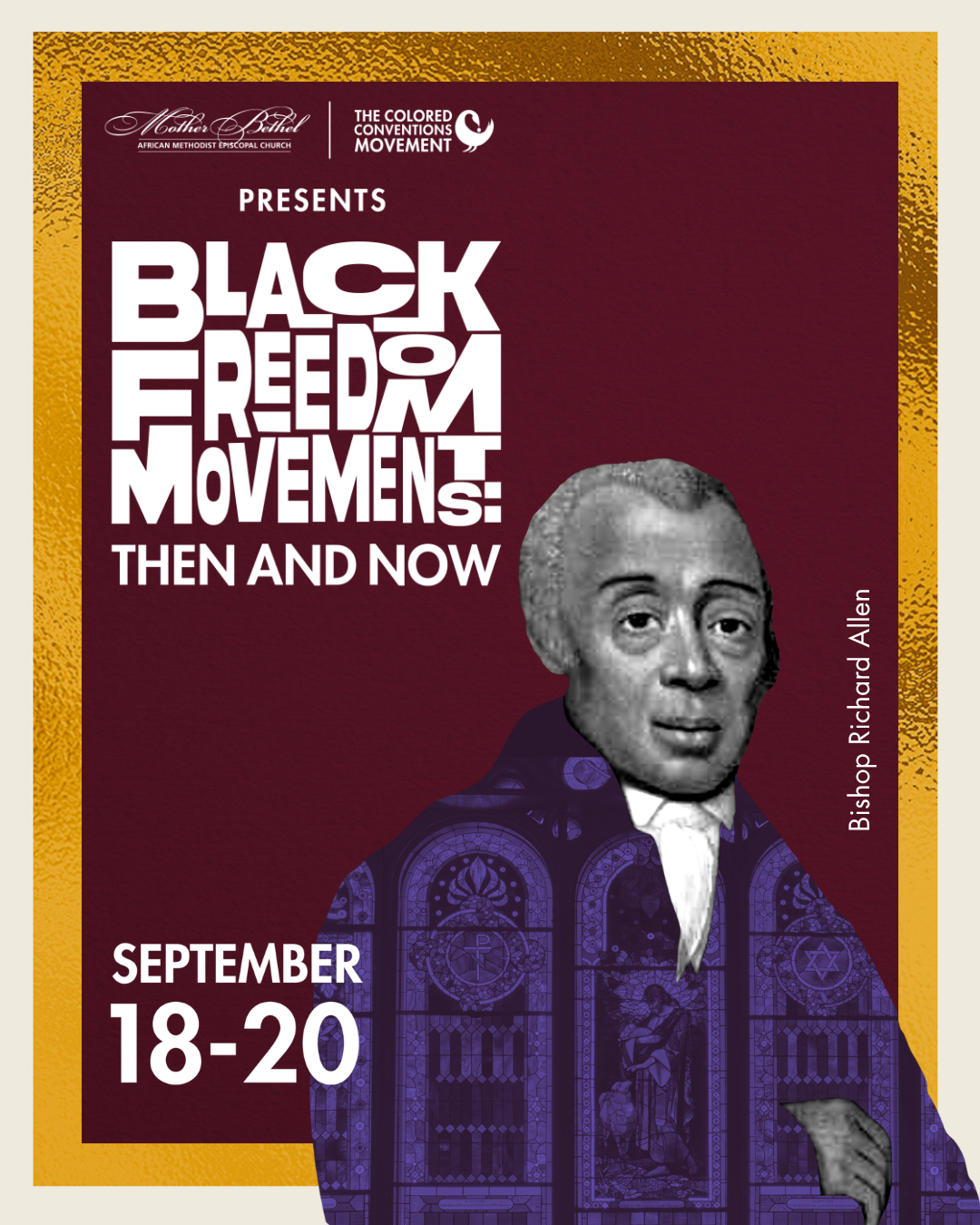
A flyer advertising the 2026 Colored Convention: Black Freedom Movements Then and Now.2026 Colored Convention Committtee
Burgher went on: Last week Trump threatened to snatch the tax exempt status from private schools that give minority students access to scholarships and educational programs, including at historically Black colleges and universities like Howard and Hampton.
It’s clear Black equality in this political climate is not guaranteed.
“We haven’t seen a threat like this on Black livelihood in this country since the post-Reconstruction era,” said Burgher, who is also the director of community engagement and curriculum development at Penn State’s Center for Black Digital Research. “This part of American history was a part of our past, now, it is not so suddenly aggressively and nakedly a part of our present.”
A 19th-century America, she said, calls for 19th-century tactics.
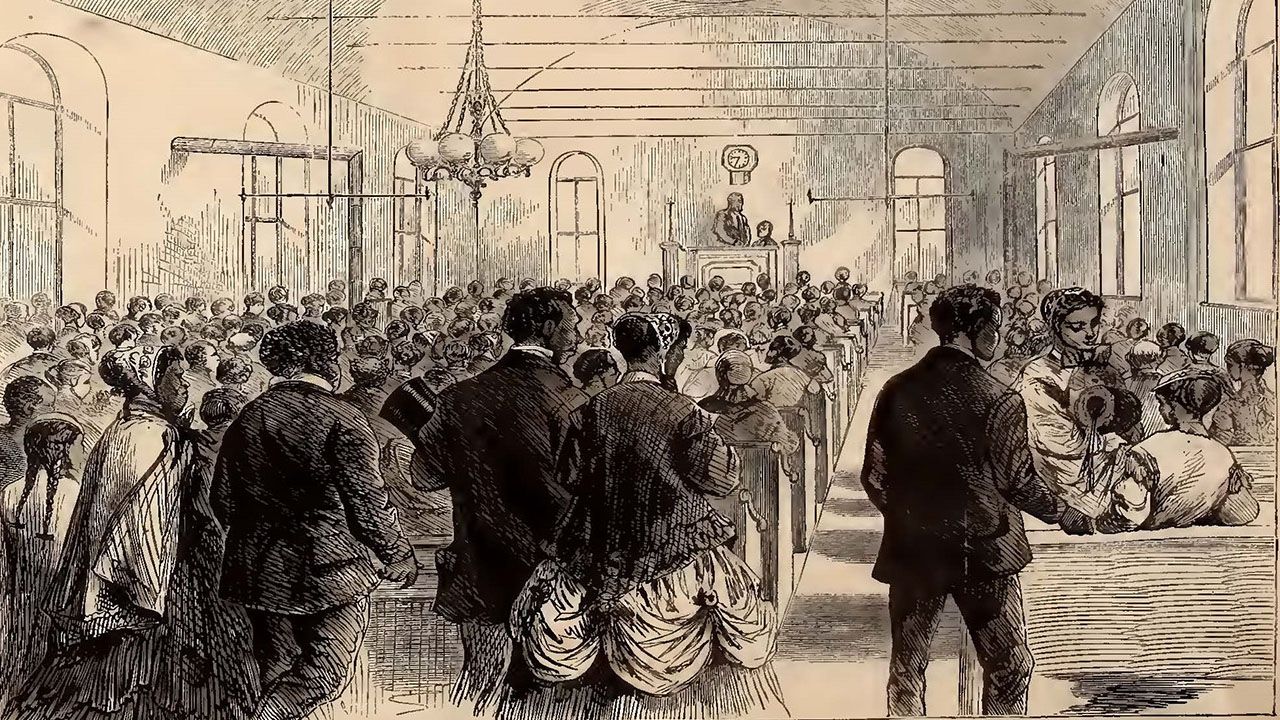
This weekend, Mother Bethel AME will host the “2026 Colored Convention: Black Freedom Movements Here and Now,” a celebration of the first Colored Convention held almost 200 years ago at the church. Dozens of influential free Black clergymen, statesmen, and activists convened at the 1830 Colored Convention and laid the foundation for civil rights groups like the Niagara Movement and the NAACP.
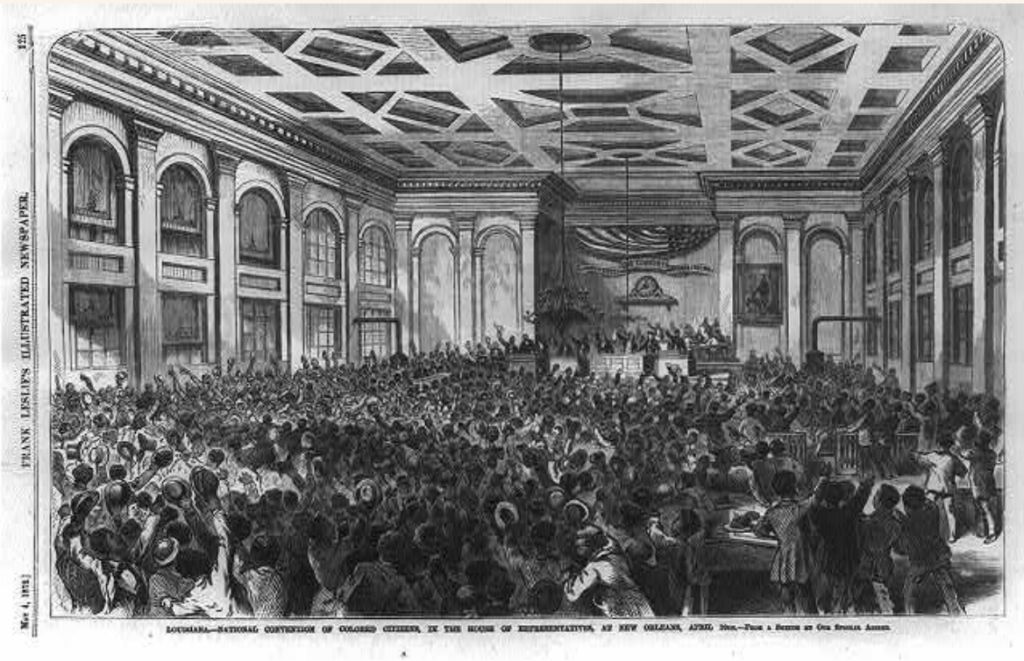
This print from Frank Leslie’s Illustrated Newspaper depicts the National Convention of Colored Citizens’ meeting in the House of Representatives in New Orleans, in April 1872.The Library of Congress
These organizations agitated for civil rights through the Civil War, Reconstruction, Jim Crow and into the 1960s, said Carolyn C. Cavaness, Mother Bethel’s pastor who tapped Burgher and Derrick Spires, historian and associate professor of English at the University of Delaware, to reignite the Colored Convention’s legacy.
“To reclaim and be challenged by such a movement … is of much worth and esteem,” Cavaness said. “We are literally in a struggle now for equality and fairness of all people.”
This weekend’s Colored Convention will feature workshops on genealogy, activism, and the 18th- and 19th-century Black press. Philadelphia school children will attend Thursday for arts and crafts projects that will teach them about the history of the Colored Convention.
Andre E. Johnson, codirector of the Colored Conventions Project and professor at the University of Memphis, will deliver the keynote on the history of the Colored Convention and share how activists can apply 19th-century action plans to 21st-century technology to create a strategy to combat the present crisis.
“In this year of the Semiquincentennial, this is yet another opportunity for Philadelphians to pay attention to history,” Burgher said, “and look at strategies our ancestors used more than 100 years ago. I’m not going to say the same thing is happening, but the events sure do rhyme.”
The event will include a voter-registration drive, emphasizing the importance of voting in the midterms.
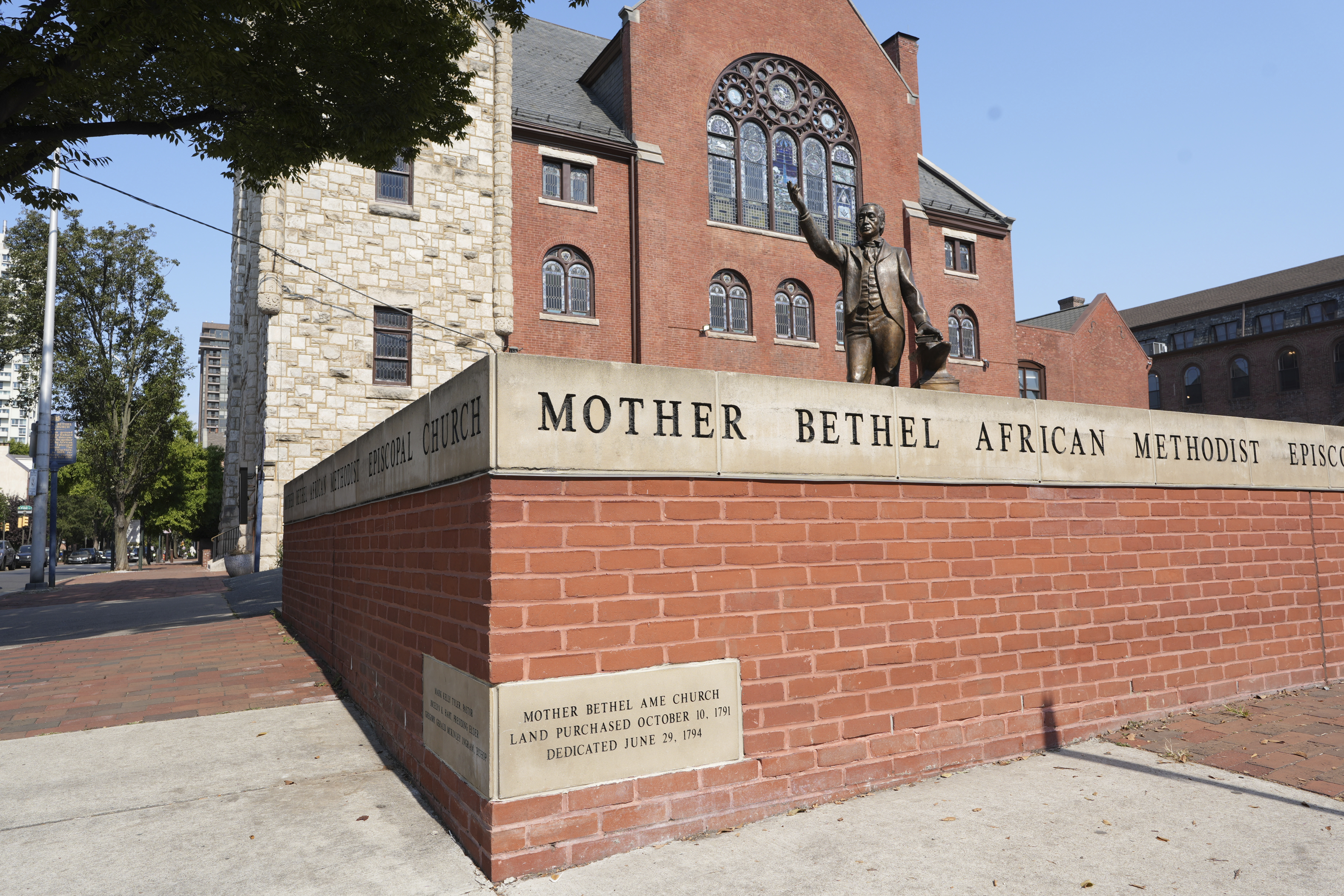
Richard Allen founded Mother Bethel in 1794, and by 1830, the church was the cornerstone of the largest free community of African Americans in the country.
In August of 1829, white mobs burned Black businesses and neighborhoods during the Cincinnati Race Riots. In response to the brutal loss of life and business, free man Hezekiah Grice wrote to Allen, asking the influential pastor to gather free Black intellectuals to strategize. His reasoning was, if white mobs could do this in Cincinnati, what’s to stop them from attacking Black communities everywhere else.
More than 2,000 Black people from Cincinnati moved to Canada. The first Colored Convention was held from Sept. 20 to Sept. 24 in 1830 at Mother Bethel, resulting in emissaries from Philadelphia asking the Canadian government to allow Black people to establish communities there.
The Colored Convention held annual meetings at Mother Bethel from 1831-85. By the turn of the 20th century, there were Colored Conventions regularly in nearly every major American city along the Northeast Corridor, in the Midwest, and along the West Coast.
A statue of Mother Bethel AME Church founder Richard Allen stands on the oldest parcel of land continuously owned by Black Americans in Philadelphia on Oct 13, 2024. (AP Photo/Luis Andres Henao)Luis Andres Henao
Black leaders from every walk of life attended, among them Frederick Douglass — known as the Lion of the Convention because of his deep oratory voice and big, distinctive hair — poet Frances Ellen Watkins Harper, newspaperman T. Thomas Fortune, and Philadelphia educators Jacob C. White and Charles L. Reason.
Colored Conventions, Burgher said, became forums for Black leaders to discuss abolition, fugitive slave laws, voting rights, and education. Many Black institutions were born from these conventions, including the charters for Talladega University and Howard University Law School, established in 1865 and 1869, respectively.
The last Colored Convention on record was in 1972 in Newark, N.J., Burgher said.
“I hope this 2026 celebration will not only bring this history home,” Burgher said. “And I also hope it inspires Philly residents to respond to the current moment like history has taught us.”
When Temple and Penn State kick off at Lincoln Financial Field on Saturday, the programs will renew a 95-year-old rivalry for the first time in a decade.
Penn State holds a 40-4-1 all-time record and has won 32 of the last 33 meetings. However, the history of this series extends beyond wins and losses.
Before the Nittany Lions return to Philadelphia for the first time since 2015, here are some of the top moments from their rivalry.
Temple strikes first
Temple and Penn State matched up for the first time on Oct. 10, 1931, when the Owls shut out the Nittany Lions, 12-0, in front of a capacity crowd of 20,000 at Temple Stadium.
Head coach Heine Miller led Temple an 8-1-1 season, which stood as a program record for 42 years until Wayne Hardin’s 1973 team eclipsed it with nine.
The Owls went on to claim three of the first four matchups in the all-time series.
The victory that lasted 74 years
Temple’s third win in four meetings with Penn State, on Oct. 18, 1941,became a frequently cited date.
On a wet, muddy, and slippery day, Temple claimed what would be its final victory against the Nittany Lions for the next 74 years in a 14-0 win at Temple Stadium.
Temple picked off star Penn State quarterback Johnny “Pepper” Petrella four times. Also, four players, two from each team, were taken off the field on stretchers in a game former Inquirer reporter Stan Baumgartner characterized as “bruising and bitterly contested” and both teams “appeared to have their boxing and wrestling squads competing.”
It took another 39 games for the Owls to beat the Nittany Lions.
Within inches
Following Temple’s 1941 victory, an era of struggle ensued.
In 1950 at New Beaver Field, Temple came close to beating Penn State when the two teams tied 7 apiece. Fun fact: Temple running back Gene Caterina scored the Owls’ first touchdown in University Park.
The series entered a 22-year hiatus after 1952, and it wasn’t until 1975 when Temple made things interesting again. In front of a crowd of 57,112 at Franklin Field, Penn State snuck past the Owls, 26-25.
Just a year later, in 1976, it was an even more painful finish, this time at Veterans Stadium. Temple trailed by two touchdowns before mounting a late comeback. The Owls drove downfield during the final two minutes but appeared in danger of running out of time near Penn State’s goal line.
Then an unusual interruption occurred: a spectator ran onto the field and officials stopped the clock. Temple scored a touchdown on the next play, making it 31-30. The NCAA did not introduce overtime until 1996, so Hardin faced a straightforward decision: Kick the extra point and accept a tie or attempt a two-point conversion to win. Hardin went for two. The pass went just beyond the intended receiver, preserving Penn State’s one-point victory.
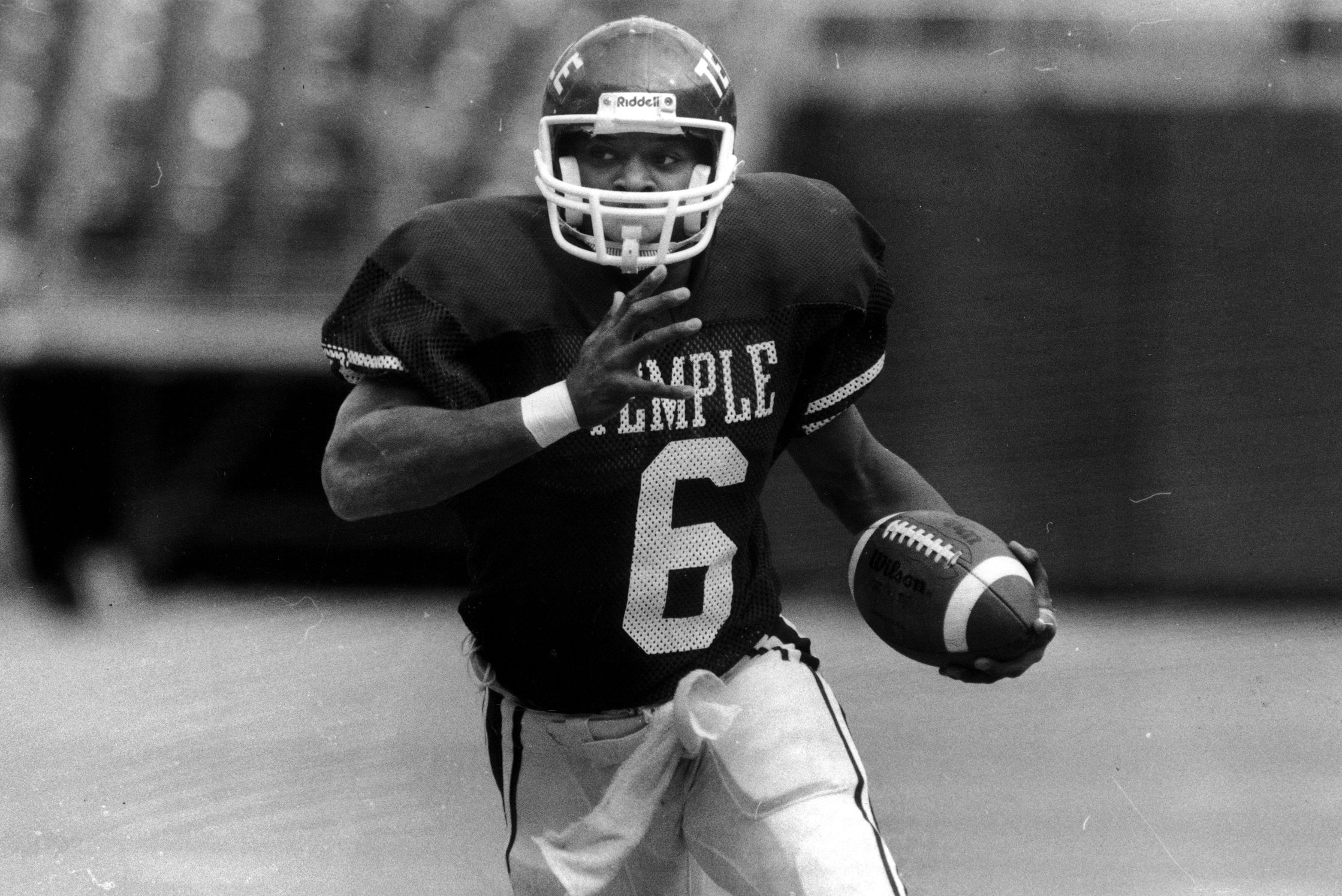
Other notable games were in 1978 when No. 3-ranked Penn State survived Temple on a last-second Matt Bahr field goal to claim a 10-7 win. Then in 1985, a 206-yard, two-touchdown day from Temple running back Paul Palmer wasn’t enough in a 27-25 loss. Palmer was inducted into the College Football Hall of Fame in 2018.
Paul Palmer finished with 206 yards and two touchdowns against Penn State in 1985.Inquirer Archives
Penn State’s 31-game winning streak
Between 1952 to 2014, the Nittany Lions won 31 consecutive matchups against the Owls, with former Penn State coach Joe Paterno leading them to 28 of those wins between 1975 to 2011.
During that time, Penn State outscored Temple 1,068-331 and held an average game score of 34.5-10.7, a 23.8-point average margin.
The Nittany Lions shut out the Owls four times. The most lopsided matchup came in 1995 in Penn State’s 66-14 victory. Its streak survived nine Temple head coaches, and was played at five different venues.
From Penn State to Temple
Despite the quarrels between the programs, two Penn State products became the most important figures in the revival and progression of Temple football.
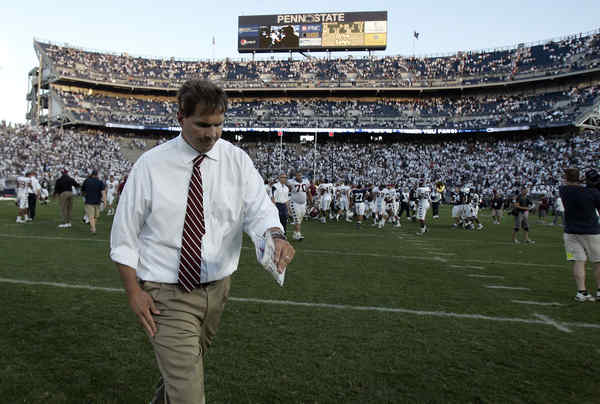
Former Temple head coach Al Golden lettered with the Nittany Lions from 1989-1991 and started at tight end for two seasons. He guided Temple to a 20-12 conference record between 2006 and 2010, a tenure that started a golden era of Owls football.
Before becoming Temple’s head coach, Al Golden started at tight end for two seasons at Penn State.DAVID SWANSON / Staff Photographer
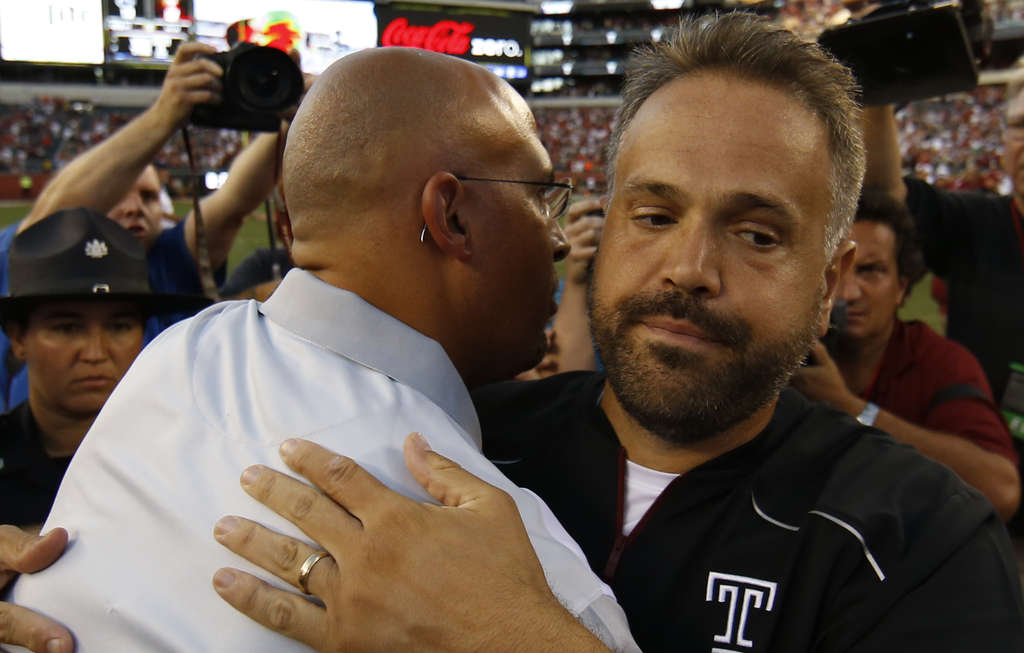
Matt Rhule was also a walk-on linebacker at Penn State from 1994-1997 and got his start as a graduate assistant under Paterno. He eventually found his way onto Golden’s staff at Temple and was named defensive line coach in 2006, before moving to offensive coordinator.
Rhule remained at Temple following Golden’s departure and worked under Steve Addazio before being hired as head coach in 2012. Rhule coached the Owls for four years, taking them to two consecutive bowl games and an American Conference championship in 2016.
The Owls broke through
In 2015, Temple took down Penn State, 27-10, in its season opener at Lincoln Financial Field in front of a then record-breaking crowd of 69,176.
Coming off a 6-6 season under Rhule, Temple entered as a seven-point underdog.
Penn State jumped out to a 10-0 lead before a 12-play, 93-yard drive ended with a Temple touchdown. The Owls tied the game with a 40-yard field goal before PJ Walker ran in a touchdown to give the Owls a 17-10.
They added another score, but the real exclamation came from Temple’s defense, which sacked Penn State quarterback Christian Hackenberg 10 times, three coming from All-American linebacker Tyler Matakevich.
In 2016, Temple visited Beaver Stadium and suffered a 34-27 loss. It was the last matchup between these two programs.
Shania Bennett was the director of youth engagement in Mayor Cherelle L. Parker’s administration until she resigned in May. The mayor, she said, once treated her as a protégé.
Now, Bennett, 26, says she plans to run against Parker next year — the first candidate to publicly announce an intention to challenge the mayor’s reelection bid in next May’s Democratic primary.
“Sometimes, you have to be willing to hold people you love accountable,” Bennett said in an interview Tuesday. “To be honest, I’m the change that I want to see. I think a lot of Philadelphians [are] waiting on it.”
She released a video on social media Tuesday announcing her campaign with the slogan, “Leadership you can trust.”
A Parker campaign spokesperson declined to comment.
Bennett, who lives in her native South Philadelphia and graduated from Pennsylvania State University in 2020, said she resigned from Parker’s cabinet in May after realizing the administration would not give her office the budget or authority it needed to accomplish its mission.
“My hands were tied. I couldn’t do anything on behalf of young people,” she said. “It was an opportunity for me to put all of my passion into something I really believed in, just to end up disappointed.”
In July, she posted on social media that working for the administration was “the worst experience of [her] life” and that she had quit after “unprofessional harassment.”
No Philadelphia mayor has lost reelection since the city’s Home Rule Charter was adopted in 1951, and Bennett has her work cut out for her if she wants to break that streak in her first run for office.
Parker, 54, has spent 21 years in elected office, and her campaign had more than $1.4 million in the bank as of May 4, according to her most recent campaign finance report.
Bennett said she has not yet put together a campaign team and is still ironing out her policy platform. She said she plans to conduct listening sessions so she can craft proposals that address Philadelphians’ needs.
“Let me see the things you want me to talk about as a candidate,” she said. “I haven’t seen a candidate that really reflects the people’s choice in Philadelphia.”
Bennett said she was alarmed by last weekend’s “teen takeovers,” when police officers arrested three people after confrontations erupted between large groups of teenagers who congregated near City Hall on consecutive nights.
“It’s just young people acting out, and we have to get to the root cause,” Bennett said. “Is what we’re funding effective, and is it giving us the outcome that we want?”
Parker, a moderate Democrat with strong support among the local party establishment, is seen by some as potentially vulnerable to a challenge from a progressive politician such as District Attorney Larry Krasner.
Bennett said her platform will reflect the problems facing the city, not ideology.
“Some of it might be progressive, but some of it might be: You have to put your foot down,” said Bennett, who founded the anti-violence nonprofit Reach4Peace as a teenager. “Philly has some unique challenges. It is not one party or one ideology that can fix them.”
Mayor Cherelle L. Parker, speaks at the ribbon cutting for the newly renovated skate plaza at the Municipal Services Building in Philadelphia, Pa., on Friday, April. 17, 2026.
Bennett said she understands that many powerful politicians and deep-pocketed groups like labor unions are unlikely to endorse her challenge to Parker. But she is holding a launch event on Sept. 26 and hopes to gain momentum from there.
“It’s still extremely early, but I’m hoping to announce early to do the hard work of fundraising and listening sessions,” she said.
Parker took Bennett under her wing during the 2023 mayor’s race.
Bennett had previously worked for State Rep. Jordan Harris and State Sen. Nikil Saval, both Philadelphia Democrats, but had no previous ties to Parker before showing up at a campaign office offering to help, she said.
Bennett stood out as a hardworking volunteer as she knocked on doors and organized neighborhood canvasses, and she caught Parker’s eye.
“Every time I saw her, she was hard at work,” Parker said when she appointed Bennett to lead the Mayor’s Office of Youth Engagement in early 2024.
After leaving the administration, Bennett briefly worked for the Pennsylvania Democratic Party as a regional organizing director before resigning to launch her mayoral bid.
“When you leave somewhere with your integrity intact, it’s like, ‘OK, you can do something about it,’” Bennett said. “I was just like, ‘Know what? I’mma press play.’”
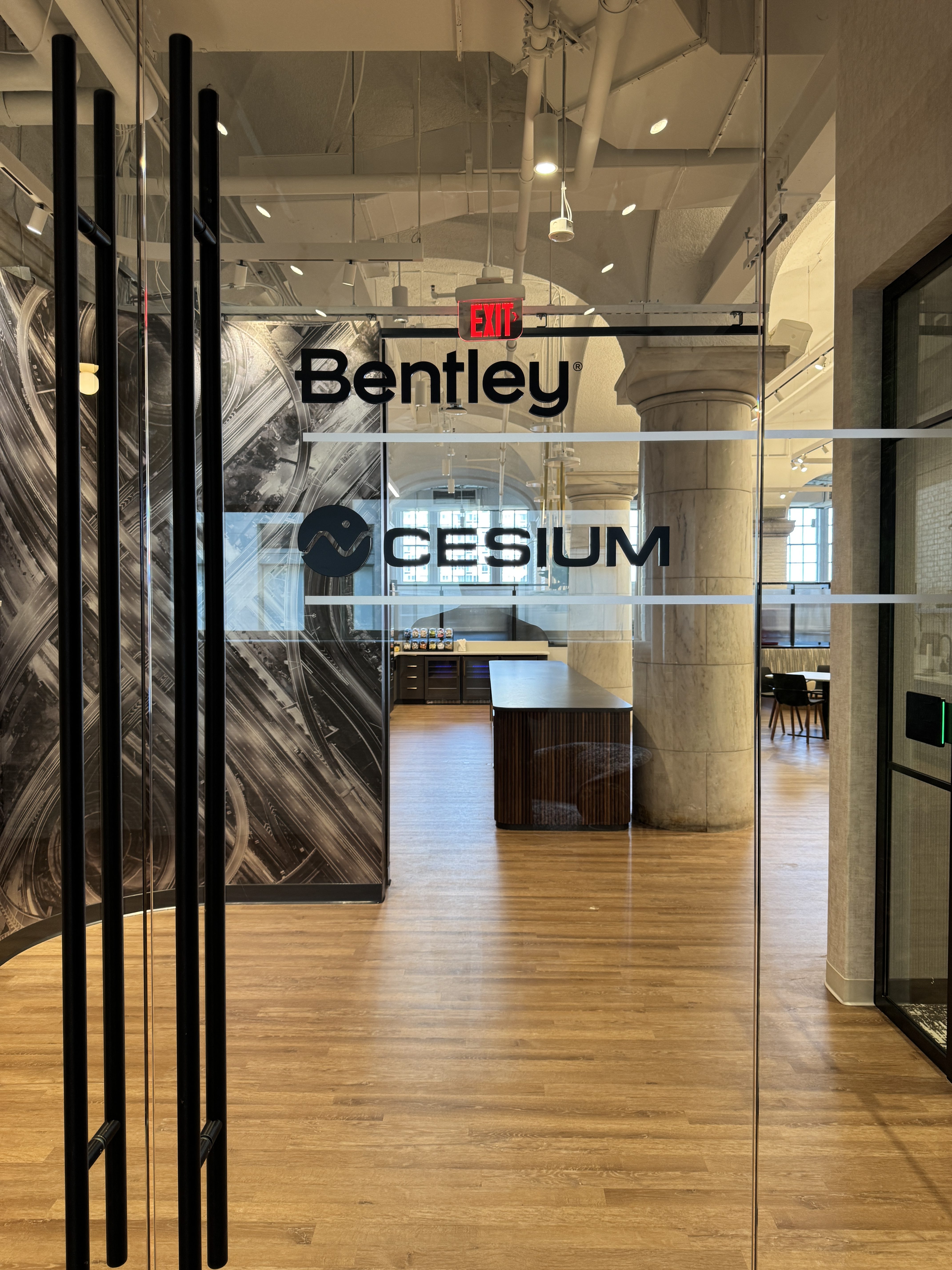
Exton-based Bentley Systems International, the software company with the highest market capitalization in the Philadelphia area, has opened a Center City office as its new base for 150 engineers and other tech and business staff, replacing two smaller outposts in the city.
Bentley customers use what’s now its Cesium Ion mapping platform to show sites and buildings in complex detail on office computers and hand-held devices.
A Penn State grad, who also earned a master’s and taught programming and architecture at the University of Pennsylvania, Cozzi says he sees Philadelphia as a “magical place” for tech companies.
“When I was CEO raising capital on the West Coast, some of the investors told me the best tech entrepreneurs want to move to the [San Francisco] Bay area. I said no, we can build a great tech company in Philadelphia,” he said.
Philadelphia was an early computing industry center. ENIAC, the pioneering system built at Penn to help plan World War II artillery attacks, and other early Philly-built computing systems relied on the vacuum tubes mass-produced for radio manufacturers in Philadelphia and Camden.
But by the 1970s, the industry committed to far more efficient silicon-based microprocessors developed in California’s “Silicon Valley.” Investor-rich cities such as Boston, Seattle, and Austin also became important computer hardware and software centers. Few large tech companies are now based in the Philadelphia region.
Cozzi says Philadelphia’s affordability is now an asset.
“We have reasonable cost of living and fantastic schools, graduates who want to stay here, great restaurants and quality of life, it’s an awesome place for the tech community,” he said, as he prepared to welcome Mayor Cherelle L. Parker, State Rep. Jordan Harris (D., Phila.), and 200 other guests to the new space for a grand opening celebration Thursday evening.
Cozzi said neither the city or state provided incentives for the new office.
Invited guests at Thursday’s event include Bentley clients from Center City-based Pennoni Engineering; Ansys, the Pittsburgh-based owner of AGI, and Earthbrain, a Japanese construction equipment and computing joint venture, which uses Philadelphia as a U.S. base.
Bentley went public in its 2020 IPO at $22 a share. The stock peaked in the low $60s the next year and ran almost as high last summer. It has lately tradedaround $35 a share.
It employs more than 5,000 at offices in 42 countries. The company is worth nearly $11 billion on the Nasdaq stock exchange. That compares to around $6 billion for Newtown, Bucks County-based software-outsourcing provider EPAM, $2 billion for King of Prussia tax-accounting software maker Vertex Inc., and $200 million for Blue Bell legacy hardware and software provider Unisys.
Bentley’s 10th-floor space in the Curtis Center includes a public-meeting area to host events.
The building was built in 1910 for Curtis Publishing and its mass market magazines, led by the Saturday Evening Post and Ladies’ Home Journal. Curtis moved its press operations to Delaware County in 1949 and shut both Philadelphia offices and Delco operations by the time of its 1969 bankruptcy.
The Curtis building’s owner, Keystone Development + Investment, has in recent years added apartments, biotech labs, and other specialized units to help fill the block-long complex.
On Christmas mornings while growing up in Northeast Ohio, Matt and Scott Campbell were excited to fulfill what became a yearly tradition. Most kids raced toward the Christmas tree to open presents and celebrate the holiday, but not the two brothers, who were born four years apart. They raced out the door to get a football game in, even when snow covered the ground.
Those games were one-on-one, mano a mano. Matt “had quite an impressive [size] advantage on me,” Scott said. The memory proved instructive of his older brother’s competitiveness, as Matt steps into his third college football head coaching job.
“It was not uncommon to get your favorite football jersey for a Christmas present. And then Riddell was giving out all those football uniforms that came with shoulder pads, leg pants, and helmets,” Scott Campbell told The Inquirer of his earliest football memories with Matt. “Then you go outside [to play against Matt].
“I never won these games.”
Football runs deep for the Campbells. Rick Campbell, Matt and Scott’s father, was a high school coach at Jackson High School in Massillon, Ohio, and later went into administration.
The sport quickly became the center of Matt’s life, too.
He would attend two-a-days with his dad before his school day started.
“My greatest childhood memories are being in the locker room and being on the football field with my dad, watching him lead and coach a football team,” Matt Campbell told The Inquirer in July. “I wanted to help give back and make a difference [as a coach] because so many people had done that for me.”
(function() {
var l2 = function() {
new pym.Parent(‘campbell2’,
‘https://media.inquirer.com/storage/inquirer/projects/innovation/arcgis_iframe/campbell2.html’);
};
if (typeof(pym) === ‘undefined’) {
var h = document.getElementsByTagName(‘head’)[0],
s = document.createElement(‘script’);
s.type = ‘text/javascript’;
s.src = ‘https://pym.nprapps.org/pym.v1.min.js’;
s.onload = l2;
h.appendChild(s);
} else {
l2();
}
})();
From those early days in their backyard, to stops at Pittsburgh and Mount Union as a player, then coach, and several other stops before landing his highest-profile opportunity yet at Penn State, Campbell has remained the same, his former teammates, players, and coaches across his 24-year coaching career say.
“Anybody that knew younger Matt or played with him or crossed paths with him, I don’t think anybody is surprised [by] the success he’s had,” Indianapolis Colts tight end coach Tom Manning said by phone shortly after Campbell was hired at Penn State. “Obviously, he’s a very good football guy in terms of X’s and O’s, but I think the thing that makes Matt dynamic is his ability to inspire others, certainly a great teacher, but he has this ability to have a relationship with everybody that is authentic and real.
“He creates this culture of unification, of toughness, of having a chip on your shoulder. And I think that every person that’s ever played [in] his football program or coached for him, they just feel like they’re part of something a little bit bigger than themselves.”
Matt Campbell (center) makes a tackle during a game for Mount Union during his playing days.Courtesy of Cockrill’s Studio
Embracing the ‘abnormal’
Campbell, now 46, developed into a standout defensive end at Perry High School in the 1990s. Matt was coached there by Keith Wakefield, who is “as inspirational as anybody in his life,” Scott said.
Out of high school, he accepted a scholarship from Pitt, but after the team went 2-9 his freshman season in 1998, he transferred to Division III Mount Union — a move that not only defined his playing and coaching career, but moved him closer to home.
Campbell won three D-III titles from 1999 to 2002 at Mount Union, was named an All-American twice, and was the Ohio Athletic Conference defensive lineman of the year in back-to-back years in 2001 and 2002. But it was during his playing days there, under legendary coach Larry Kehres and alongside lifelong friends and coaching contemporaries, where Campbell first showed an inkling toward his future career.
Matt Campbell played defensive line at Division III school Mount Union after spending his freshman season at Pitt.Courtesy of Cockrill’s Studio
“The connection of understanding the value of ‘People don’t care how much you know until they know how much you care,’ and you go back and you say, ‘Man, why? What made the great coaches that you had impactful in your life?’” Campbell said. “It was a transformational experience rather than a transactional journey. And you’re talking about two of the winningest coaches in the history of Ohio high school football, and certainly in all of college football [in Wakefield and Kehres].
“I think their greatest gift was their gift to connect … and find a way to help make their players better, because their belief [of], ‘Man, they cared about them and they wanted to have a real relationship with them.’ So I think that foundation has been huge.”
Often understated about Campbell’s background is how impactful he was on the field for the perennial title contender. His 182 assisted tackles and 55 tackles for loss rank fourth in school history, his 26 career sacks are seventh, and he is 19th in total tackles (256).
Matt Campbell played and coached at Division III Mount Union.Courtesy of Cockrill’s Studio
His on-field success, though, was anchored by film study. Campbell would know “the play that was coming by whether it was the formation or certain motions that they do into the boundaries, and he was calling the plays out,” said Scott, who joined his older brother on Mount Union’s football team in 2002. Campbell’s teammates also took notice.
“All of them knew the way that Matt prepared for football games was abnormal,” Scott said.
But what made what Matt was doing abnormal?
“I don’t think it’s uncommon for a player to be obsessed at watching film,” Scott said. “Some people get really good at honing their skills and they want to do it. It’s abnormal when they bring people along with them. So when you might get a kid, like a very talented defensive tackle … and some of these guys that he played with, they’re meeting on a Sunday night and doing hard core [film study] because they want to be ready for the next week.
“When you have gravitational pull to bring the people that either you’re leading, which we are seeing it with him as a coach, or the ones that you’re going to war with as a football player … for them to match your intensity, they were buying into that and they saw, ‘Well, Campbell’s doing that. We have to do it.’”
Added Manning, Matt’s teammate for two years at Mount Union: “He was always in the film room. He was always trying to find an edge, in terms of being a player, and he was a guy that was probably more talented than most of the people that he played, and he still had the work ethic and the attention to detail as a player that I think helped him separate himself even further.”
Matt Campbell was twice named to the College Football All-America team and named Ohio Athletic Conference’s defensive lineman of the year at Mount Union.Courtesy of Cockrill’s Studio
‘Just as authentic’
When Campbell finished his playing career at Mount Union in 2002, he went to Bowling Green to work as a graduate assistant, but returned to Mount Union in 2005 and was its offensive coordinator and offensive line coach for the next two seasons.
The program won back-to-back titles, with a staff that included Eagles coach Nick Sirianni (2004 to 2005), Campbell’s college teammate and former roommate, as defensive backs coach in that first year. Connecticut coach Jason Candle (2003 to 2008), another former teammate, and Syracuse defensive coordinator Vince Kehres (2000 to 2019), Larry Kehres’ son, were on the staff both seasons.
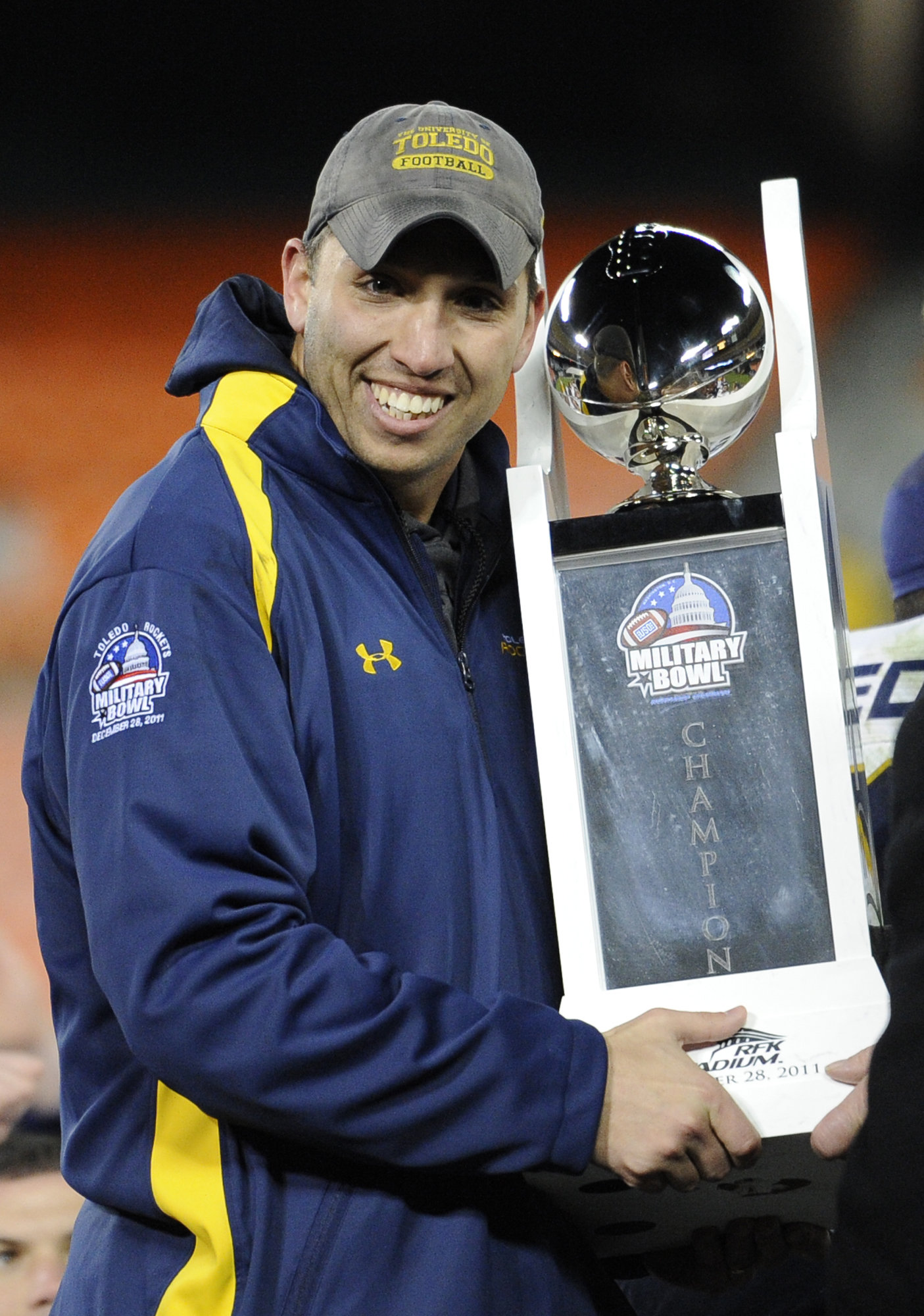
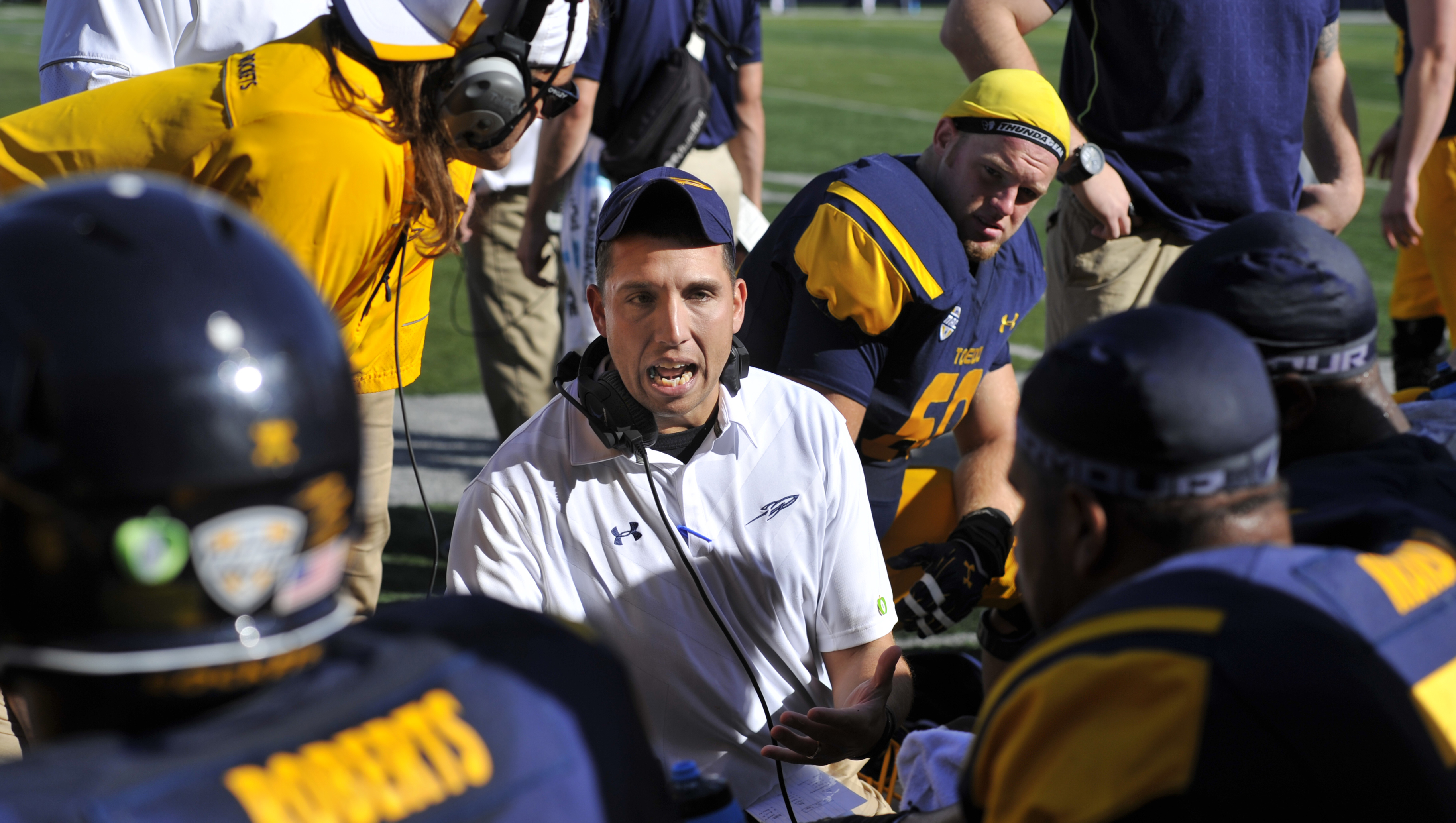
Campbell returned to Bowling Green for two more seasons before landing at Toledo in 2009, first as an offensive line coach and run game coordinator. By 2012, he was the program’s head coach at 32 years old, making him the FBS’s youngest coach at the time.
Colts tight ends coach Tom Manning was teammates with Matt Campbell for two years at Mount Union.Phelan M. Ebenhack
What impressed Manning, who also worked at Toledo as a graduate assistant (2009) and later as its director of football operations and offensive line coach, was how quickly Campbell connected with players and recruits.
“What I really recognized the most was that he was different in recruiting, [he had a] dynamic personality, but I was always impressed, and probably what stuck out the most was that when he had recruits, whether up on campus or visiting him, he had a real relationship with a ton of kids,” Manning said. “I was like, ‘Man, I don’t understand how this guy after just a couple brief contacts, has the ability to know so much about him, have real conversations with him.’ … I knew Matt as a younger guy, and now I knew him in the professional world. I was like, ‘Man, the biggest thing about Matt is he’s just as authentic as he was the day that I met him.’”
And that started with his own teammates. Mount Union was “a player-led program,” and Campbell — along with other leaders like Sirianni, Candle, and Kehres — would open their house and “nurture the young kids because that’s the next generation of leaders in that program.”
Jason Candle followed Matt Campbell to Toledo in 2009 as slot receivers/tight ends coach.Carlos Osorio
“That’s what that whole program was,” Scott said. “It was a program that was giving way before we even knew it was giving to us.”
Matt Campbell worked closely with Candle, who followed him to Toledo in 2009 as slot receivers/tight ends coach, especially when the former assumed play-calling duties under Tim Beckman.
Candle, who considers Campbell a “true friend” and a “great mentor,” recalled the early “camaraderie of the young assistant coaches that we had at the time.”
“Lots of times you don’t get to work with or alongside with or for your college teammates,” Candle said. “And we’ve been through a lot of battles together as players and certainly as young assistant coaches. [Matt’s] been a guy that I’ve learned a lot of football from and a guy that has certainly earned the right to lead one of the top programs in the country.”
Campbell went 9-4 in his first season leading Toledo, and he compiled a 35-15 overall record before moving on to Iowa State at 36 years old.
Matt Campbell compiled a 35-15 overall record while at Toledo.Nick Wass
Campbell “surrounded himself with young and hungry people,” Manning said, particularly on his offensive staffs at Toledo — which featured future Cincinnati coach Scott Satterfield, future Auburn coach Alex Golesh, and Candle. But it was Campbell “doing things the right way” and never being “anybody that he’s not” that stood out.
“Working for him is was one of the greatest experiences of my life,” said Manning, who worked with Campbell for a total of 12 years between Toledo and Iowa State. “You felt like you were doing something. … You were coaching the whole player. It was about character. It was about teaching kids attitude and effort, the ability to be consistent, and to give a little bit more themselves and to play in a unified front — that’s what he does so well.”
Matt Campbell was the head coach at Toledo from 2012 to 2015.David Richard
‘Dog mentality’
In the 10 years before Campbell took over Iowa State, the program had just one winning season and had finished with more than seven wins once since 2000.
He accomplished those milestones by Year 2. In 2017, the Cyclones went 8-5, their best record in 16 years, and upset No. 3 Oklahoma, 38-31, a memory that is forever etched in the mind of Manning, who was the team’s offensive coordinator and offensive line coach.
“That week, we kind of put in a whole new defense,” Manning said. “We had our middle linebacker who [also] was a quarterback. He played about 40% of the snaps at quarterback. He’s playing both ways. We got a walk-on quarterback who essentially ends up winning us the game, and [Matt’s] belief the whole week, his belief during the game, never wavered. A lot of guys tell themselves like, ‘Hey, we’re going to win this game.’ My man thought we’re going to win the game the entire week, and then we end up winning the game.
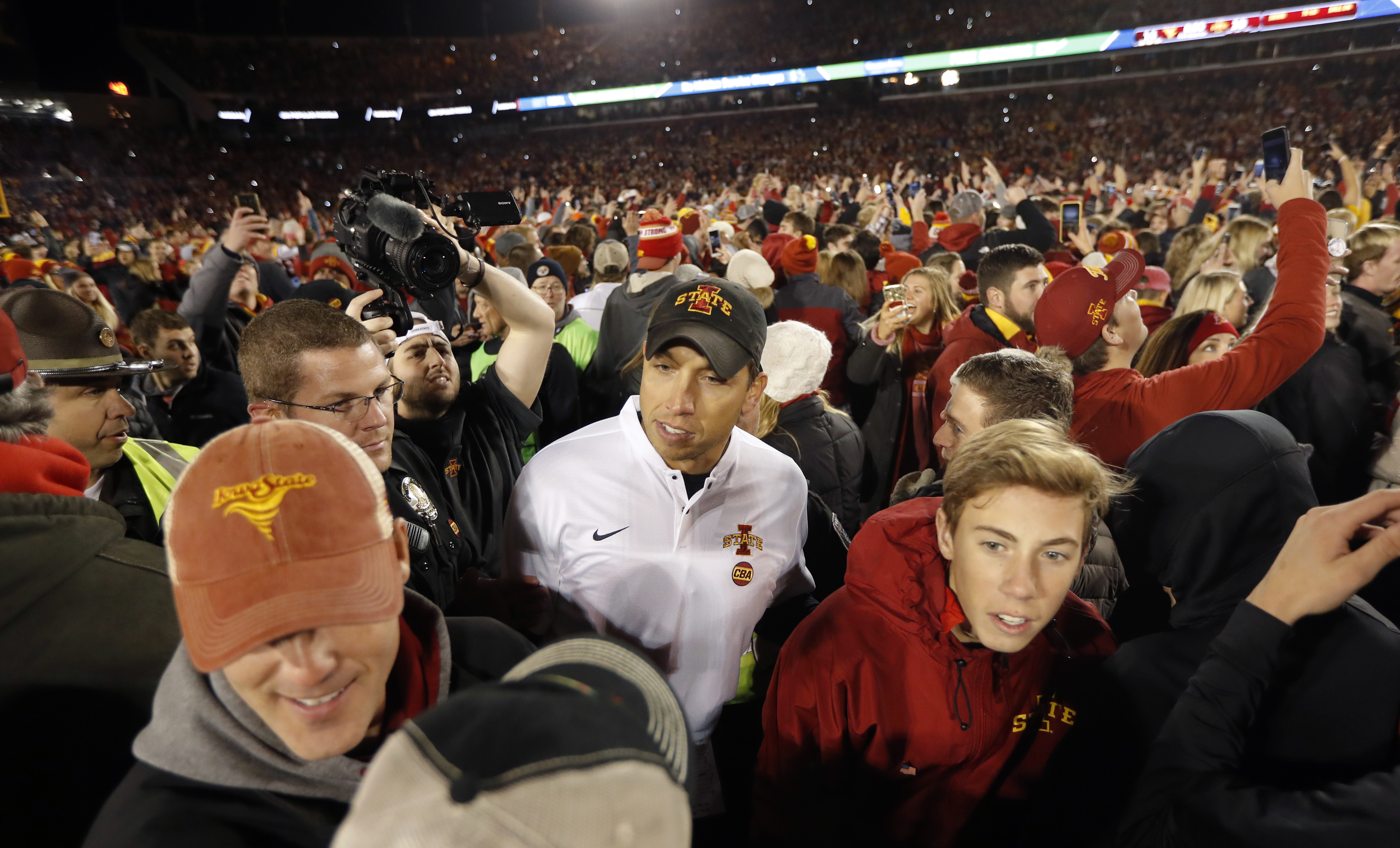
Matt Campbell became the Iowa State’s all-time winningest coach.Matthew Putney
“… And to me, it was culture over scheme. Maybe our players collectively weren’t as talented and as good, but, ‘Hey, if we’re united, we have this culture of winning, we do things the right way.’”
That unwavering belief was reflected by his players, too. Among them was former Iowa State quarterback Brock Purdy, a four-year starter who could sense Campbell’s “loyalty” and praised his former coach “who had a vision for [him in] place.”
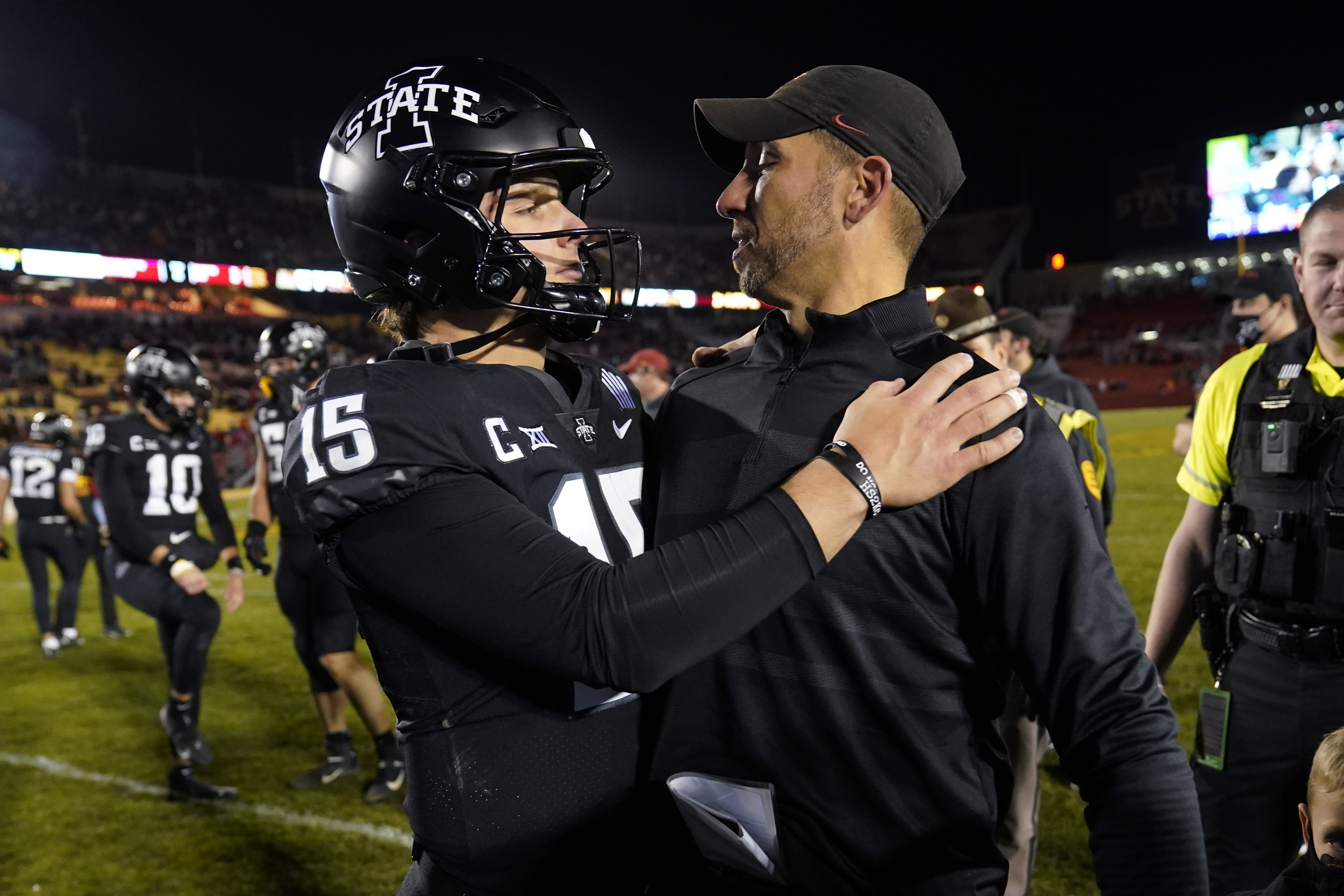
“Coach Campbell’s coaching style is huge on culture. It’s important because he sets up an organization that is able to withstand adversity, the good, the bad,” said Purdy, who’s now the San Francisco 49ers starting quarterback. “And it’s all about being a real team that trusts in each other, goes through things with each other. And then at the end of the day, he is going to prepare us better than anybody in the country in terms of scheme and making sure our bodies are right for a long season.”
Former Iowa State quarterback Brock Purdy gets a hug from Matt Campbell against TCU on Nov. 26, 2021.Charlie Neibergall
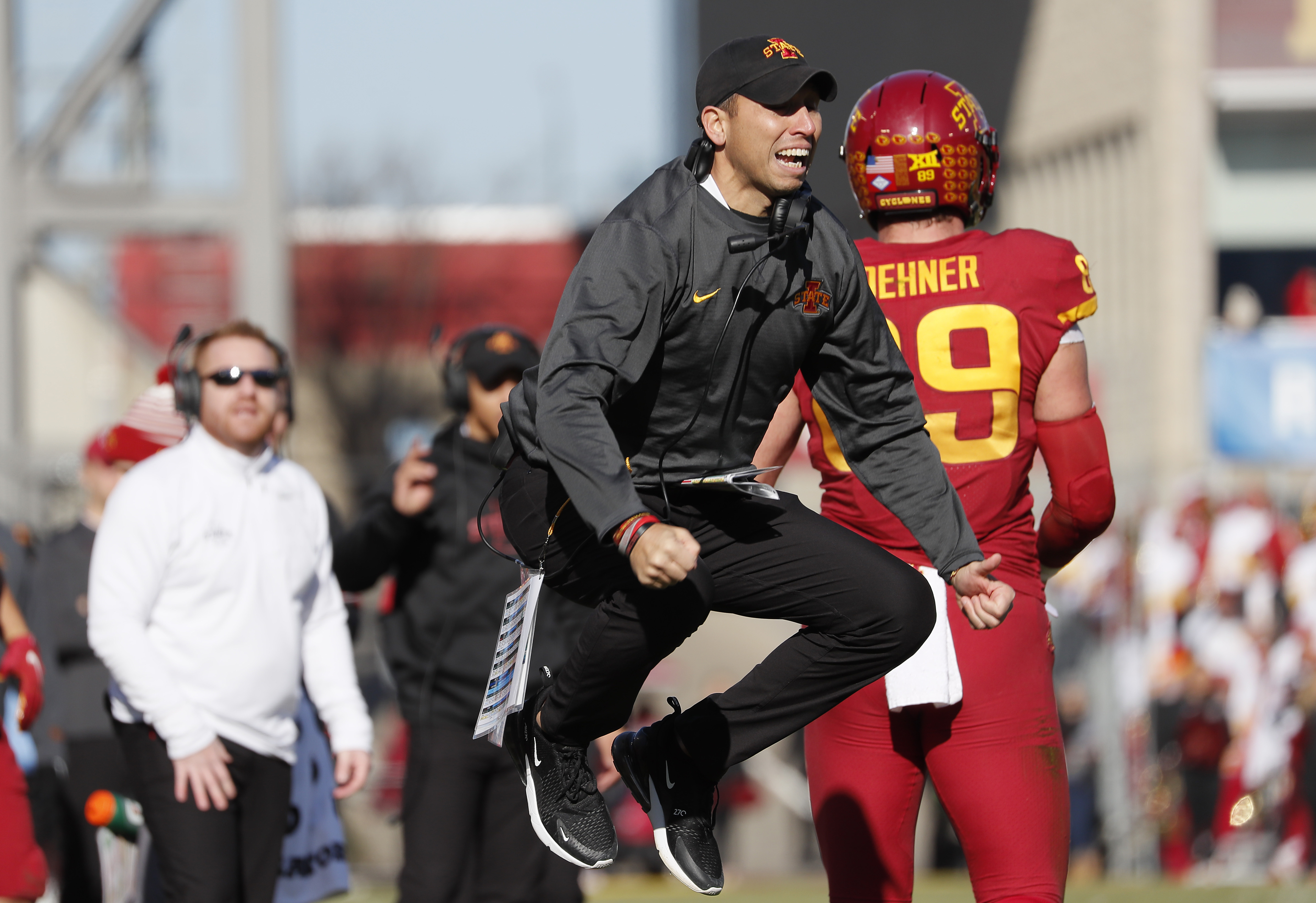
Those Iowa State teams often punched above their weight. Campbell’s highest-ranked recruiting class with the Cyclones was the Class of 2026, which was 48th before he departed for Penn State, taking much of that class with him.
Wide receiver Xavier Hutchinson, who played three seasons at Iowa State from 2020 to 22, said Campbell recruited players that were “like-minded.”
“Everybody went to Iowa State either because you were underlooked, you weren’t valued, or just people thought [other players] were better,” said Hutchinson, who’s now on the Houston Texans with four other former Cyclones who played for Campbell. “We all had like a dog mentality — and I felt like that’s Coach Campbell’s mentality. It’s like the rough side of the mountain. … He wanted guys who have something to prove and had a chip on their shoulder.”
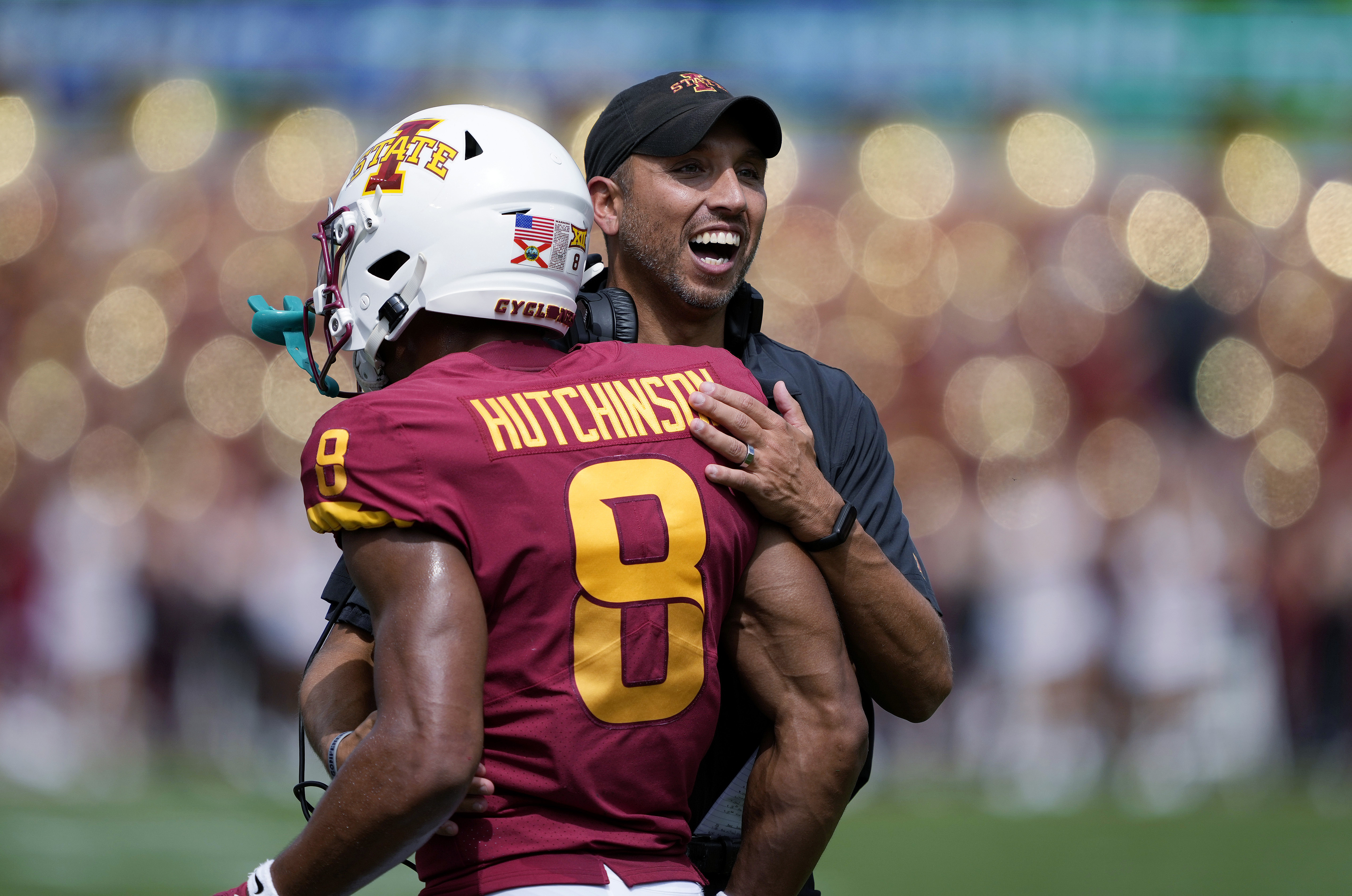
Matt Campbell congratulates former Iowa State wide receiver Xavier Hutchinson on his touchdown against Southeast Missouri State on Sept. 3, 2022.Matthew Putney
There were plenty of highs in his 10-year run at Iowa State: Two Big 12 championship appearances (2020, 2024), the most wins in a two-year stretch (19 wins across 2024 and 2025) and double-digit wins for the first time in program history. Twelve of his 17 Associated Press Top 25 wins came in that time frame, and he became the program’s winningest coach.
Even in the down years — Campbell and Iowa State missed bowl games just twice in 10 years, once in his debut season (2016) and another in 2022 — Hutchinson says his former coach “never let the success or the failures define him as a coach.”
“He’s taken them all on the chin,” Hutchinson said. “When we’ve had the greatest success, he was there. He still had the same motto even when we started [struggling] a little bit. He was still the same guy every day. And I think when your head coach is the same guy, and he doesn’t get frazzled by the success or the failures — it’s going to bleed into the into the team.”
Matt Campbell led Iowa State to two Big 12 championship appearances.Charlie Neibergall
‘The best version of me’
Campbell will emerge from the Beaver Stadium tunnel for the first time this weekend, marking the next chapter for him and the program. His team has 24 former Iowa State players who followed him to Happy Valley.
At the root of his confidence in leading Toledo, Iowa State, and now Penn State is what he learned from his father, Wakefield, and Kehres, his coaching mentors: “Not trying to be somebody else.”
“I love learning. I love being humble and growing, but I’m just trying to be me, the best version of me,” Campbell said. “What I found is we’ve been able to build trust, loyalty, togetherness in our football program, whether it was at Toledo, whether it’s at Iowa State, and obviously that’ll be a great challenge as we build this Penn State program.
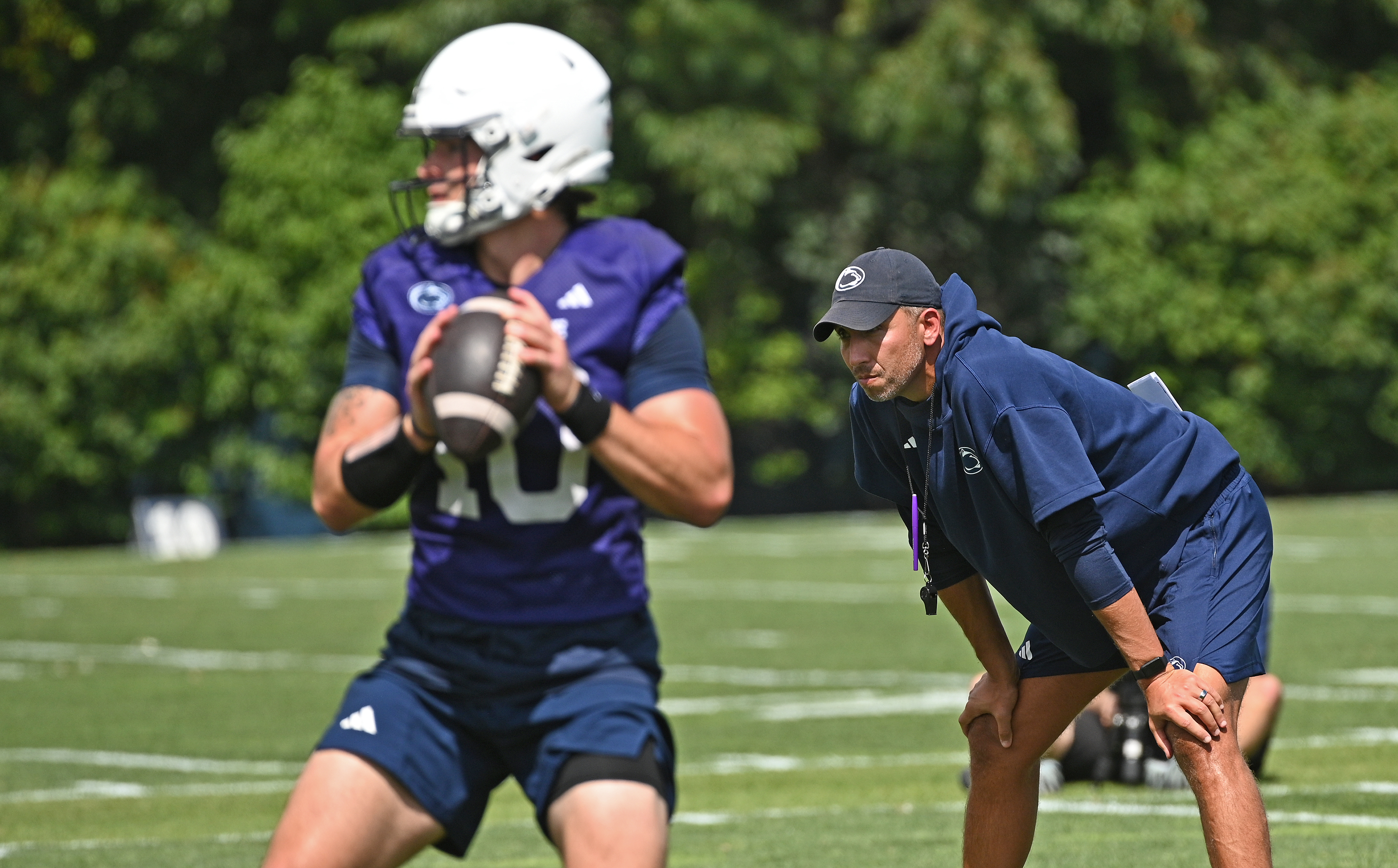
Matt Campbell during Penn State’s first practice of training camp on Aug. 5.Craig Houtz / For The Inquirer
“The attitude and the effort and the consistency to show up every day, and be able to be the same person every day, and allowing your staff and the players on the team to know exactly what they’re going to get … I think those are what I learned and took as a player and a coach from [Kehres and Wakefield], and it’s what I’ve tried to emulate everywhere I’ve been as a football coach.”
His former players, Purdy, Hutchinson, and offensive lineman James Neal III, have no doubts Campbell is ”going to give [Penn State] everything he has” to help it reach new heights. It begins with Marshall on Saturday (3:30 p.m., FS1).
Scott, who joined Wakefield at a Penn State practice on Aug. 13, says his older brother is doing “what he loves.” And it’s why he believes Campbell has sustained success throughout his career.
“If somehow you’re able to get, say, the 400, 500 people that at some point came across Matt Campbell at Mount Union College that played with him or whatever, I would probably say in the high 95 percentile range, every one of them would have told you he was going to be a head coach and a successful head coach at some point,” Scott said. “Matt’s elite trait that he has is that he is beyond competitive.
“He just doesn’t say, ‘We’re going to do this’ because why else would you do it? No. Matt envisions this and believes it. He’s not going to tell you if he doesn’t [believe it.].”
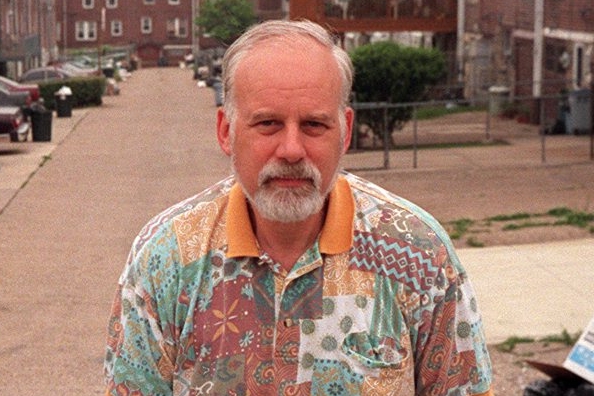
Ron Avery, 85, of Philadelphia, retired eclectic reporter and columnist for the Daily News, Philadelphia historian, volunteer city tour guide, author, high school history teacher, veteran, and canoe enthusiast, died Sunday, Aug. 2, of complications from amyotrophic lateral sclerosis at his home in East Falls.
Reared in Fairmount, Mr. Avery graduated from Thomas Edison High School and earned a bachelor’s degree in history at Pennsylvania State University. He was assigned to the ship newspaper in the Navy after college, found a creative niche in journalism, and went on to work for more than 30 years at the Associated Press, the Bucks County Courier Times, the Courier-Post in South Jersey, and the Daily News.
He wrote for the Daily News as a correspondent in 1981, joined the staff in 1982, and, until his retirement in 2000, wrote thousands of stories about crime, casinos, war orphans, historic houses, the MOVE bombing, local notables, and other subjects. His columns, “Poor Ronald’s Almanac” and “One of Us,” hammered away at local issues and featured everyday people doing exceptional things.
“He covered every nook and cranny of the city,” said his son Serge. “That burning curiosity sustained him till his last days.”
He wrote three books about Philadelphia, including A Concise History of Philadelphia in 1999. He produced a series of video guides he called the Urban Explorer for local TV in 2004 and posted blogs about the city from 2017 to 2019 on a website called Philadelphia Cracks Me Up.
“Like all cities,” he said in a 1995 Daily News column, “Philadelphia is honeycombed with hidden spaces and forgotten places.” In a 1997 review of his book, City of Brotherly Mayhem: Philadelphia Crimes and Criminals, The Inquirer’s Thomas Brady said: “The book … is decidedly a fun read.”
Alex Strang, his director on the Urban Explorer videos, called Mr. Avery an “unforgettable legend” and “a walking encyclopedia of the city’s history and eccentricities” in a Facebook tribute. Other former colleagues said he was “a clever journalist” and “a true Philadelphian.”
Longtime Daily News colleague Robin Palley said on Facebook: “He had an amazing knack of finding quirky people with fascinating skills or habits and making them come to life on our pages.”
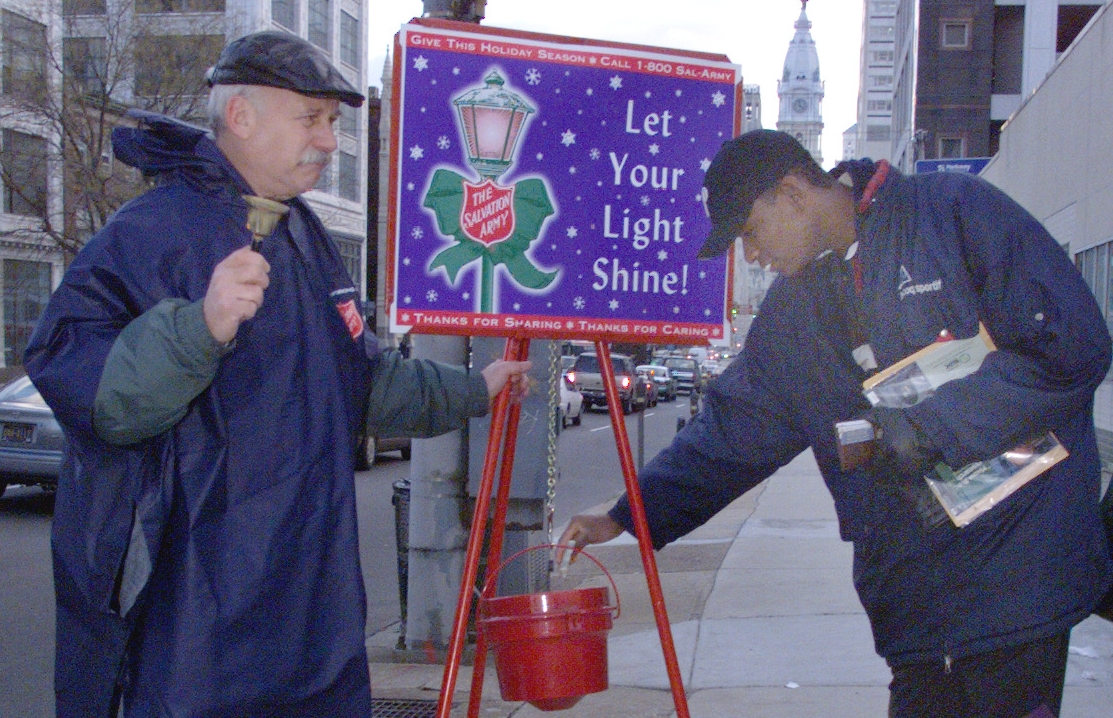
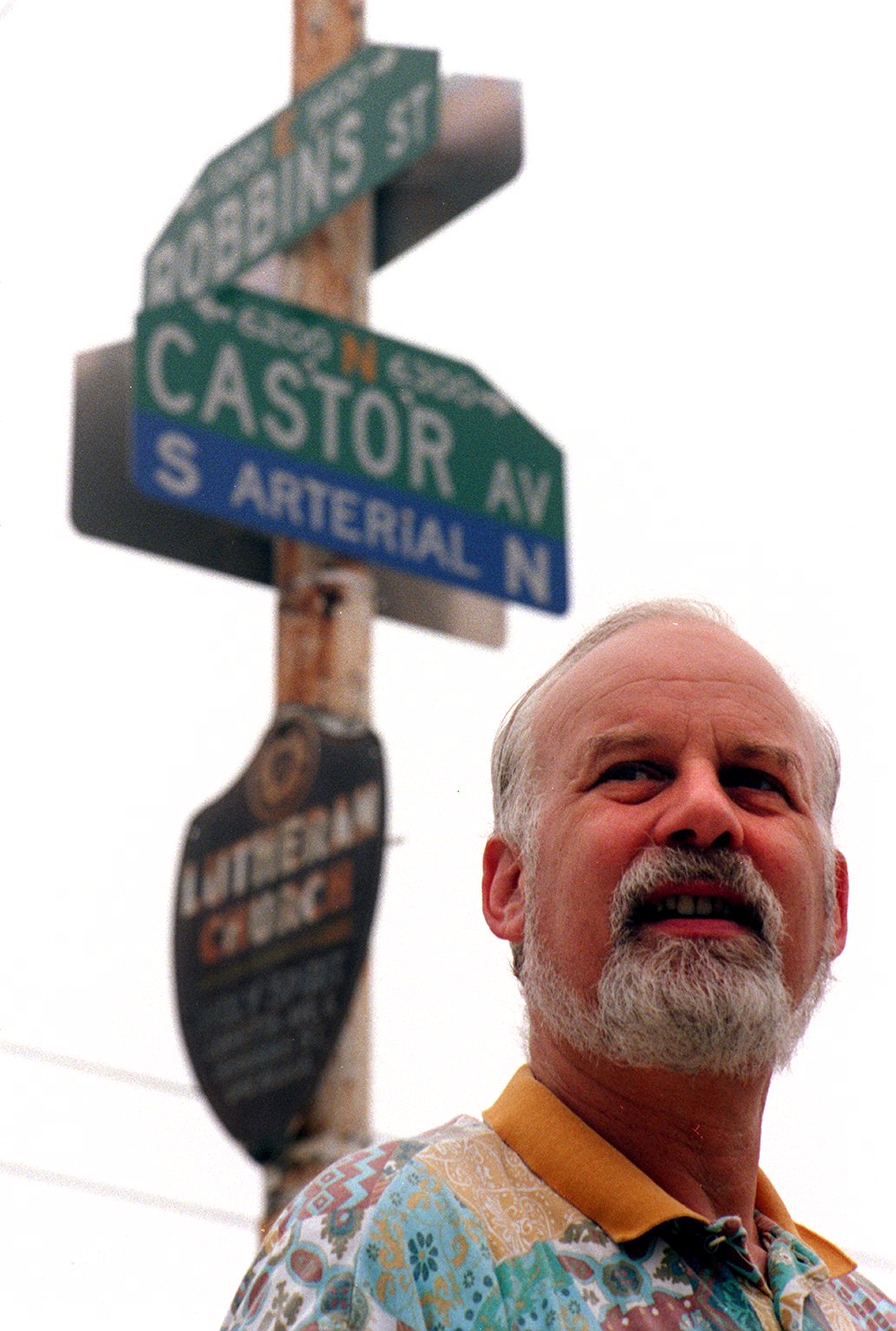
Mr. Avery (left) mans a Salvation Army donation kettle in 1999.Steven M. Falk / Staff Photographer
Before the Daily News, Mr. Avery wrote news and feature stories for the Courier-Post in the 1970s, and the Courier Times and the AP in the 1960s. He moved to Israel for six months in 1972 but returned to work for the Courier-Post in 1973.
He also wrote freelance pieces for the Hidden City Daily, PhillyHistory.org, UShistory.org, and op-eds later for The Inquirer and Daily News. He served in the Navy from 1964 to 1966, joined the Philadelphia Canoe Club later, and led water trips in the New Jersey Pine Barrens and elsewhere.
Knowledgeable, energetic, and naturally affable, he was a tireless promoter and volunteer guide in Philadelphia. He led walking tours throughout the city for students, civic groups, and other organizations, and his explanatory video tours featured cobblestone alleys, urban gardens, museums, statues, and other features of city life.
He was a stickler for details and historical accuracy, and he helped spur City Council to pass an ordinance in 2008 to educate and certify paid Center City tour guides. “They score high as Philadelphia ambassadors of good will,” he said in a 1995 column about uneducated guides, “but as historians they often flunk out.”
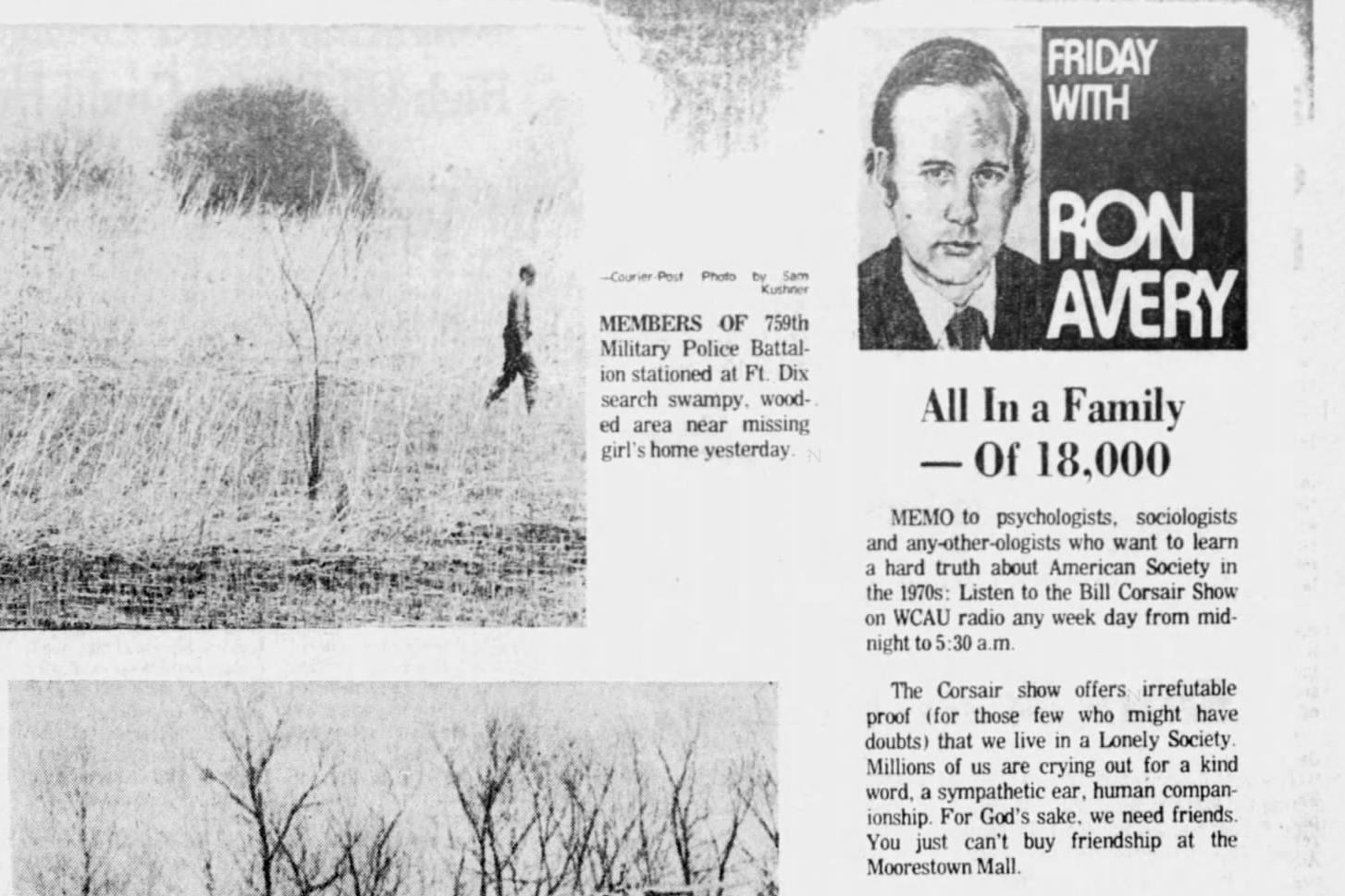
Mr. Avery wrote a column for the Courier-Post in 1974.Newspapers.com
Ronald Avery was born June 10, 1941, in Strawberry Mansion. He joined the Boy Scouts, earned his bachelor’s degree at Penn State in 1963, and taught history at Bensalem High School for a year.
He was a boxer in college and, mesmerized by the sport, later worked as a referee for amateur matches.
He met Suzet Habif in Israel in 1967, and they married in 1968. They had sons Serge and Ben, and lived for years in a rowhouse in Oxford Circle.
Mr. Avery cared for his wife during her long illness in the 1980s and ’90s. She died in 1993.
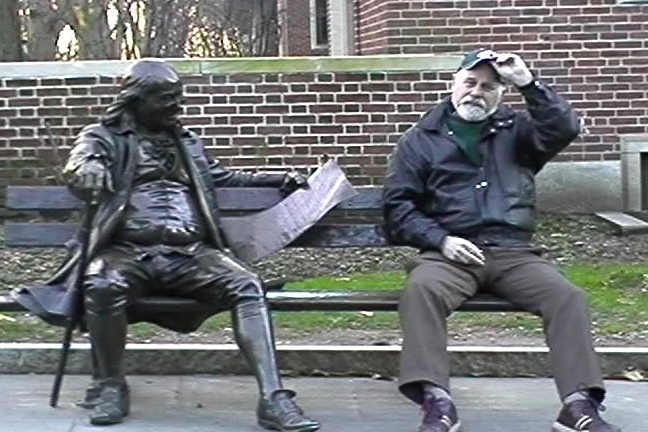
Mr. Avery liked to hang out with Benjamin Franklin and other historic figures. Alex Strang
He lived later in Pennsport and East Falls, was diagnosed with ALS in 2015, and proudly outlived its average life expectancy of 18 months by nearly a decade. “He defied that diagnosis and did not let it define him,” his son Serge said. “He always said he had a lot to live for.”
Mr. Avery was an avid reader and street photographer. He liked poetry, wrote limericks on birthday cards, and posted hundreds of his photos on flickr.com. One of his photos won a contest and was displayed at the airport.
He enjoyed jazz and jokes, led the prayers at family gatherings, and gave Yiddish quizzes to his two grandsons. He shared favorite recipes with Daily News colleagues and whipped up memorable homemade soups, especially white bean.
“I’ll greatly miss his endless anecdotes about all things Philadelphia,” said his daughter-in-law, Rebecca Houlding, “the stories about the local criminals, and his love of his family and friends.”
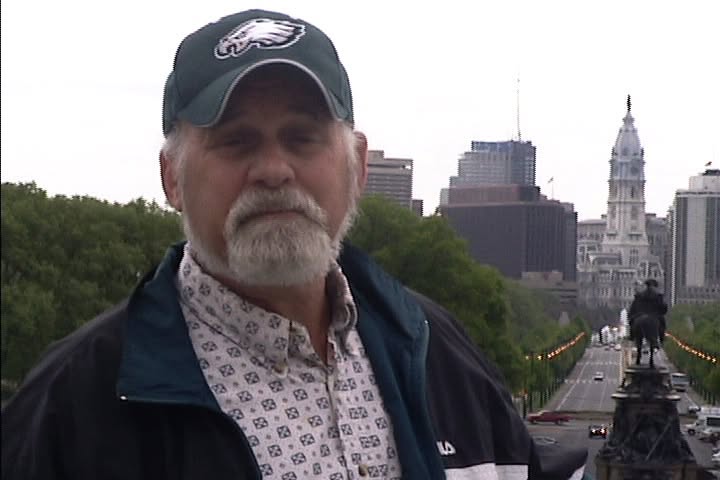
Mr. Avery wrote about his life in Northeast Philadelphia for the Daily News in 1997.Alejandro A. Alvarez / Staff Photographer
His son Serge said: “He loved chasing the stories from the back alleys and driveways, highlighting the working people of our town.”
In addition to his sons, daughter-in-law, and grandsons, Mr. Avery is survived by other relatives. A sister died earlier.
A teen sought in connection with the killing of a Pennsylvania State University student in South Philadelphia surrendered to police on Tuesday, the U.S. Marshals Service said.
Kadafi Fleming, 19, is also a suspect in the theft of a Philadelphia police officer’s car during a Monday morning robbery that ended in a shootout, according to the U.S. Marshals Service.
Fleming surrendered around 6 p.m. Tuesday at the Philadelphia Police Department’s headquarters at 400 N. Broad St., the U.S. Marshals Service said.
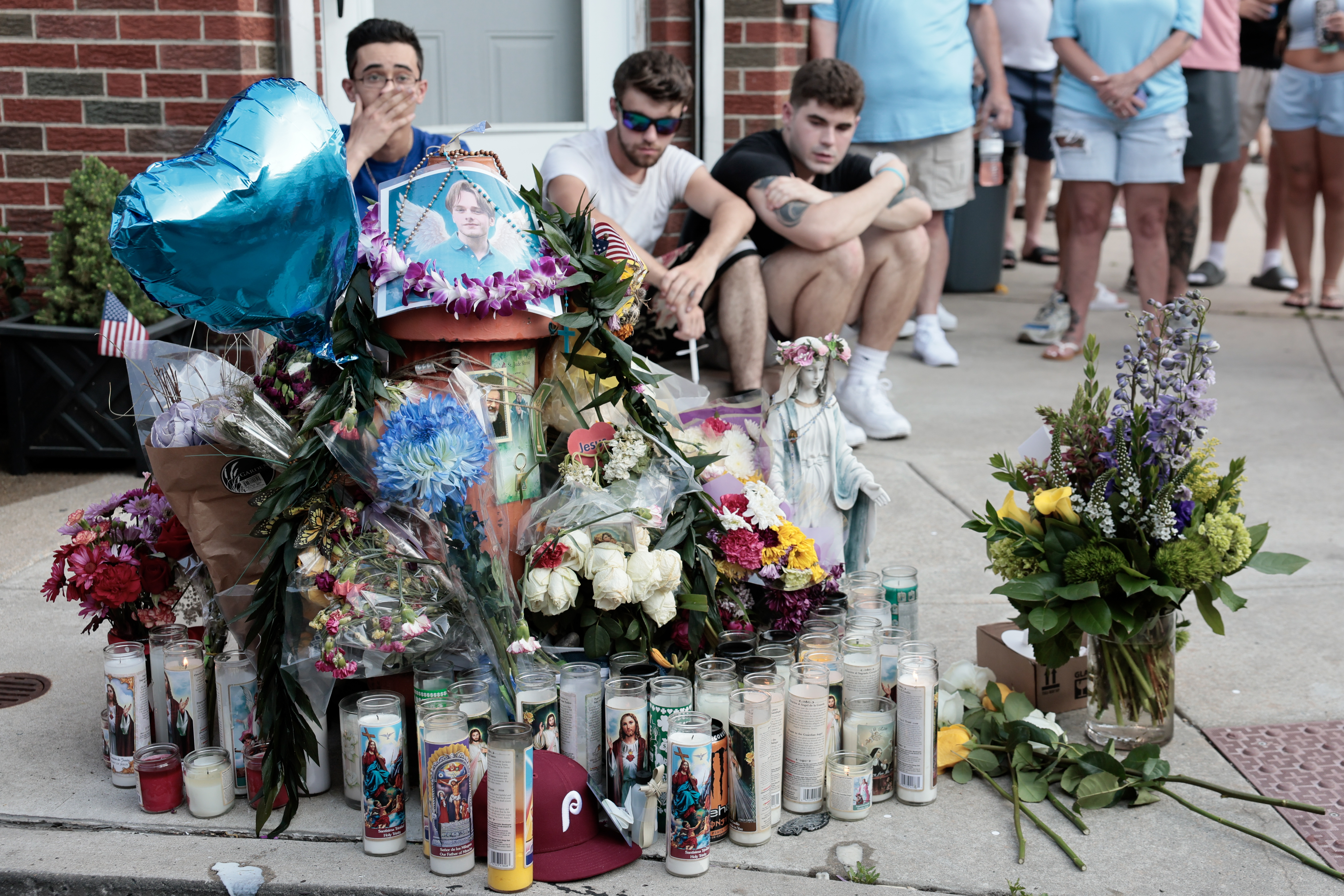
Authorities previously charged Azzubair Outen-Fleming, 16, and Kaiseem Smith, 16, with murder, robbery, and related crimes in the killing of 22-year-old William “Billy” Schmidt, who was robbed of his cell phone and shot on June 6 on the 1900 block of Durfor Street. This week, the marshals announced that they were seeking Fleming on a robbery charge in connection with the killing.
Fleming is Outen-Fleming’s older brother, authorities said.
The announcement of the marshals’ manhunt for Fleming came after another crime in South Philadelphia: About 3:15 a.m. Monday on the 6900 block of Grosbeak Place, authorities said, thieves stole a green Dodge Charger belonging to an off-duty police officer.
Supervisory Deputy U.S. Marshal Robert Clark said the officer found the thieves a few blocks from where his car had been stolen and exchanged gunfire with them before they fled.
Fleming has been named a person of interest in that theft, Clark said.
It was unclear Tuesday whether anyone had been injured in the shootout. Philadelphia police did not respond to requests for information about the incident.
.
Clark added that he did not expect the search to last long, noting that marshals had captured Fleming’s brother in June more than 1,700 miles away at a home in Colorado Springs, Colo.
Smith, who is accused of being the triggerman in Schmidt’s killing, turned himself in to authorities shortly after Outen-Fleming’s arrest. Outen-Fleming’s stepfather, Donte Abdulmalik, 35, has also been arrested and charged with helping his stepson evade the authorities.