Tag: Penn State

  • The screening of a Bucks County-set documentary series was canceled last month. It’s now available to stream on PBS.

    The screening of a Bucks County-set documentary series was canceled last month. It’s now available to stream on PBS.

    In Bucks, the suburban collar county, a series of high-profile culture wars in the post-COVID-19 years has included efforts to remove queer-themed books from school curriculum, a push to ban the display of the Pride flag in classrooms, contentious school board elections, and an even more tense run-up to the 2024 presidential race.

    Starting in 2022, for more than three years, a group of filmmakers chronicled much of it, mostly in Doylestown and the Central Bucks School District, and some in the Pennridge School District. At the heart of the story are two teenage girls who maintain their close friendship, even as their parents took opposite political sides.

    The result is a five-part documentary called Bucks County, USA. Its first two parts debuted at the Sundance Film Festival in January 2025, when the series was far from complete; even those first two episodes have been revised.
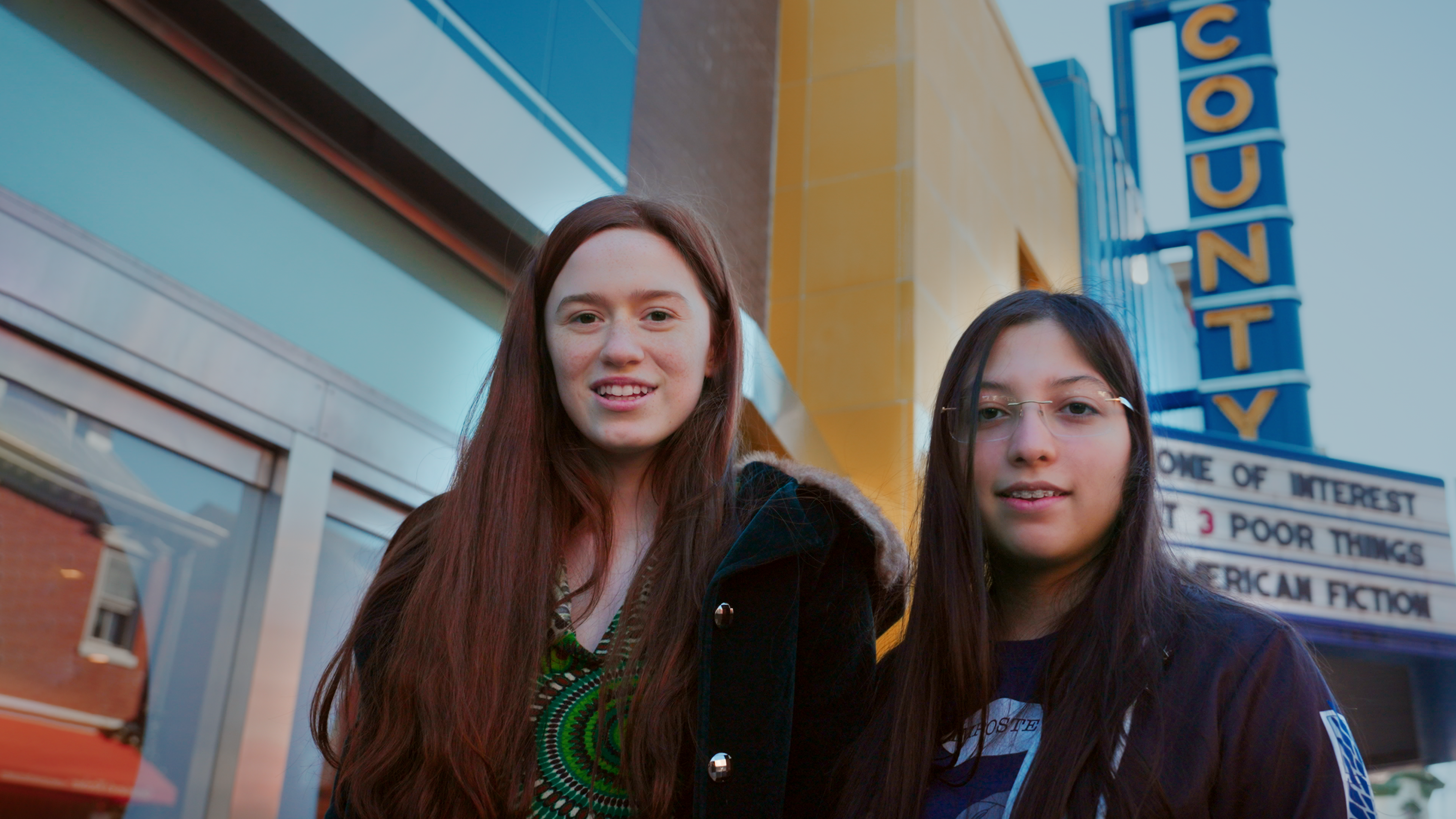
    A still from the docuseries “Bucks County, USA” that premiered at the Sundance Film Festival in 2025 and is now streaming on PBS. Using Bucks County as a focal point, the series examines political polarization and culture wars in America.Courtesy of SenArt Films & Baltimore Pictures

    The series includes footage from contentious public meetings and talking-head interviews with a range of participants — from school board members to families with queer children, who all feel they have been adversely affected by the district’s policy decisions. It also includes scenes in which residents on opposite political sides discuss their differences.

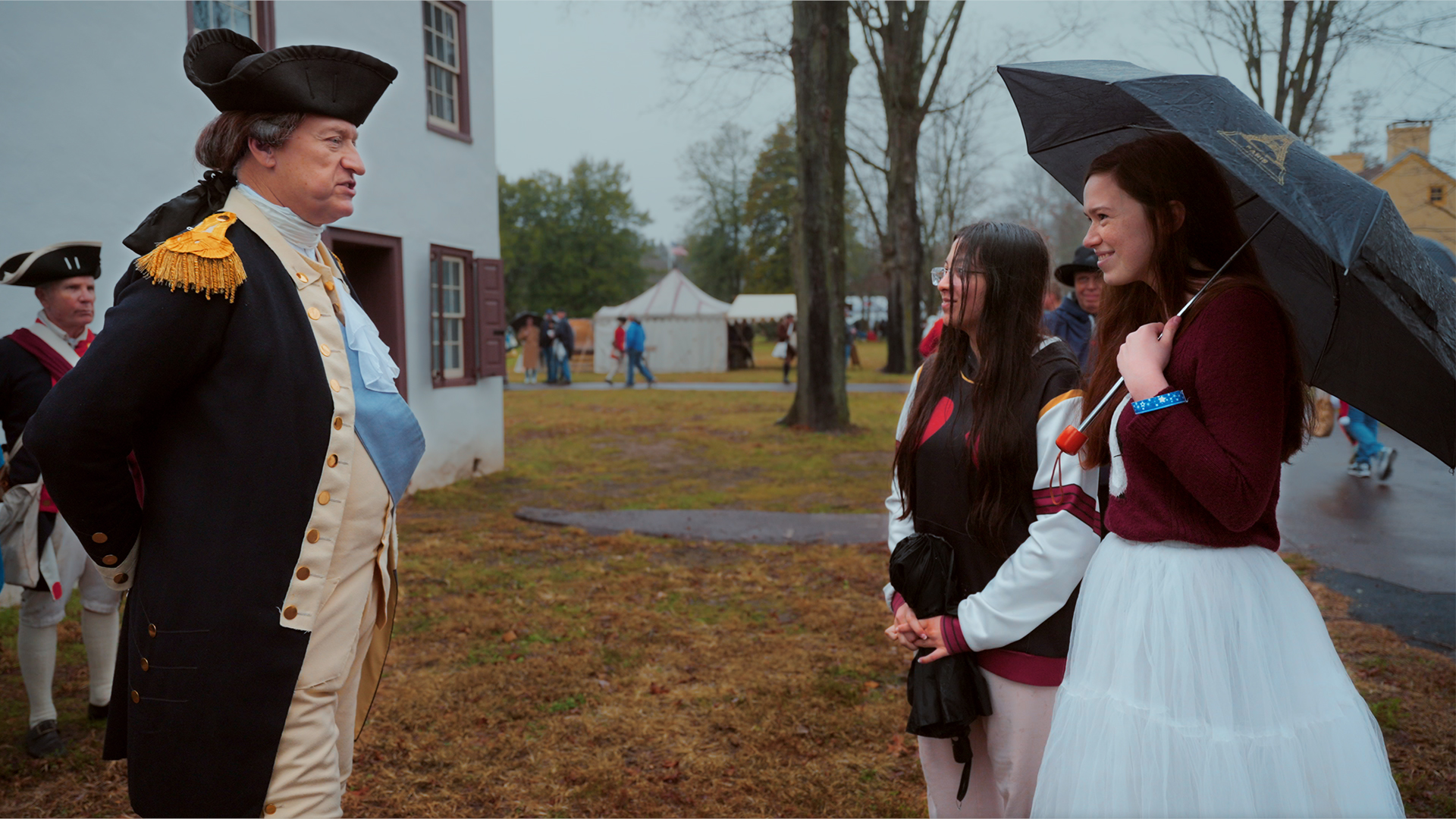
    Bucks County, USA, features plenty of Bucks County color, from a visit to an annual re-enactment of Washington’s crossing of the Delaware to Doylestown’s Oscar Hammerstein Museum, which, during the period of filming, was the subject of a fundraising campaign. We hear “You’ve Got to Be Carefully Taught,” a Hammerstein composition from the musical South Pacific, about the scourge of racial prejudice.

    Filmmaker Robert May, who codirected the first episode and directed the other four, is a Pennsylvania native who now lives in the Poconos. The other codirector of the first episode is filmmaker Barry Levinson, whose work includes best picture Oscar winner Rain Man.

    Both May and Levinson have previously made films about Pennsylvania scandals: May directed Kids for Cash, the 2014 documentary about a Pennsylvania judicial corruption scandal of the same name. Levinson directed Paterno, the 2018 HBO drama about the Penn State abuse scandal.

    Jason Sosnoff, who has long worked with Levinson, is Bucks County, USA’s producer.
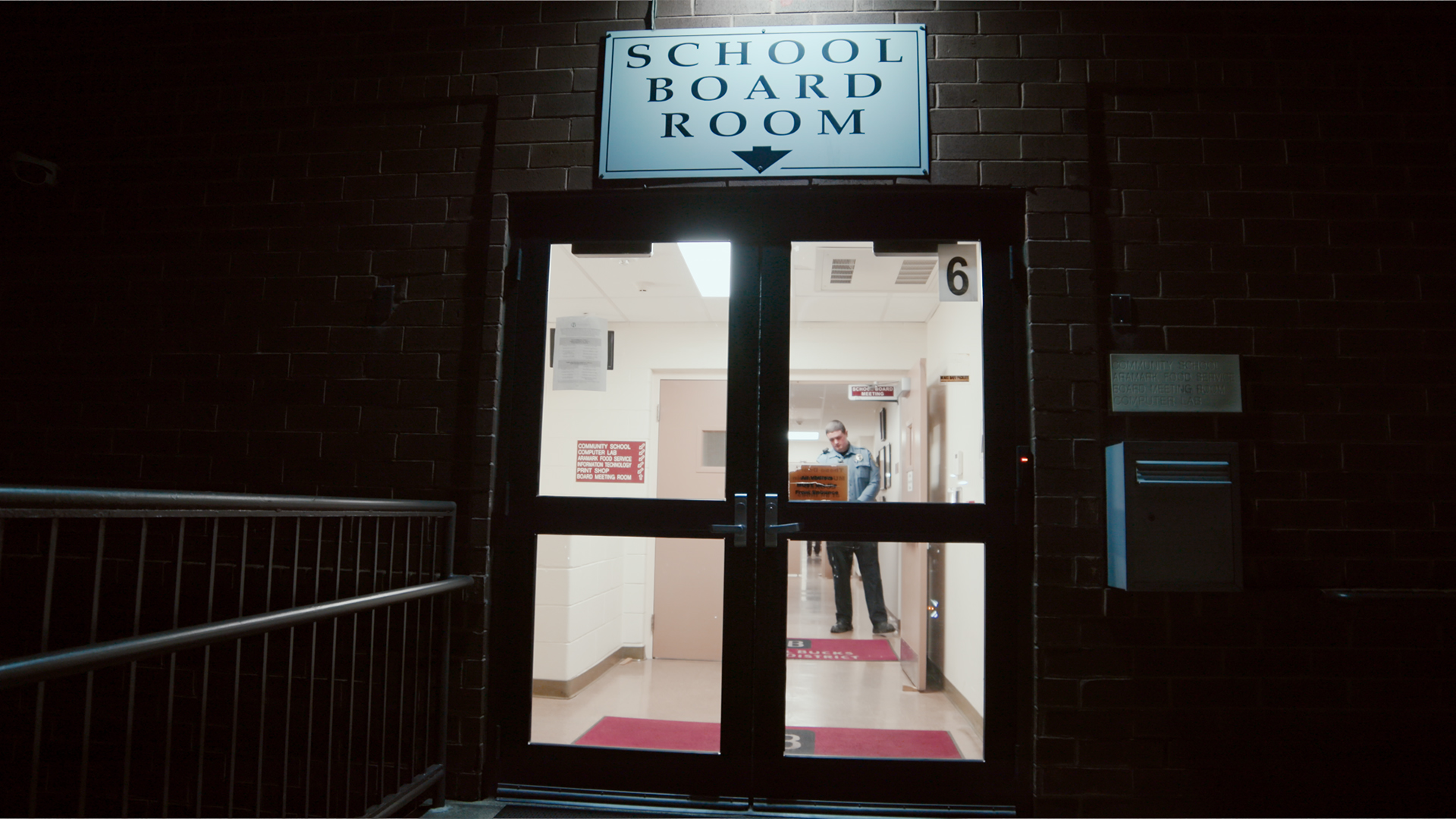
    A still from the docuseries “Bucks County, USA” that premiered at the 2025 Sundance Film Festival and is now streaming on PBS. Using Bucks County as a focal point, the series examines political polarization and culture wars in America.Courtesy of SenArt Films & Baltimore Pictures

    Sosnoff said the seeds of the docuseries were planted when he was invited to a focus group with Trump supporters on Jan. 7, 2021, the day after the Capitol riot. The focus group was led by pollster and Penn alum Frank Luntz.

    The producer came to the focus group with skepticism, but, he said, “I would say, about an hour into it, I started really hearing the people … I began to actually just hear and listen to them and see them as humans who have a point of view, rather than names and labels we give to them.”

    He went to Levinson, his business partner, proposing that they start a project that would “humanize the right to the left and the left to the right.”

    The next step was to find a community that could serve as a microcosm of that story and to ask, “Why is there such opposition now between the left and the right, Democrat or Republican, whatever you want to call it? Why is there such animosity in the air?” Levinson said.

    The answer lay in “The School Board Wars,” a 2021 two-part episode of the New York Times podcast The Daily.The podcast examined the bitter political fights that had come to school boards nationwide, with the Central Bucks School District featured as an example.

    “In that podcast, you hear people from the town screaming at each other, yelling at each other, death threats,” said Sosnoff, who thought, “Wow, this is a community that’s in trauma. And I think there’s a story there.”
    A still from the docu-series “Bucks County, USA” that premiered at the 2025 Sundance Film Festival and is now streaming on PBS. Using Bucks County as a focal point, the series examines political polarization and culture wars in America.Courtesy of SenArt Films & Baltimore Pictures

    He met May around that time, and they went to Bucks County, a crucial swing country in Pennsylvania where in 2024 President Donald Trump won by just 291 votes.

    “What we saw in Bucks County was the possibility of using the school board wars and the school board campaign … as a narrative drive for the series,” May said. “These parents are all going to school board meetings, and they’re firing shots at both sides for the sake of their children.”

    They started filming in April 2022 and continued through the end of 2025. Over that time, the filmmakers documented many school board meetings in which community members yelled at each other, wrote hundreds of angry social media posts, and battled over a 2023 school board election in which control of the Central Bucks School Board hung in the balance.

    “They’re all protecting their kids, but they’re all fighting in front of their kids, too,” said May.

    Two of those kids are Evi and Vanessa, who were 14 when the series started filming and remained best friends, even as their parents battled over political considerations. Vanessa’s father, Paul Martino, is a businessman who funded the conservative Back to School political action committee. His wife, Aarati, ran for the school board. Evi’s mother, Lela Casey, is a contributing writer to the local, progressive-leaning publication, the Bucks County Beacon.

    The film team shifted its focus, in part, to Evi and Vanessa. The two teenagers were initially reluctant to speak on camera for fear of jeopardizing their friendship, but they ultimately did and remained friends.

    It’s part of a repeating theme, May said. “The kids were a lot more civil with each other, and had a great deal of respect for each other, much more than a lot of the adults did.”

    The filmmakers wanted to apply fairness to all sides and give everyone a say on camera. Winning the trust of some participants was hard.
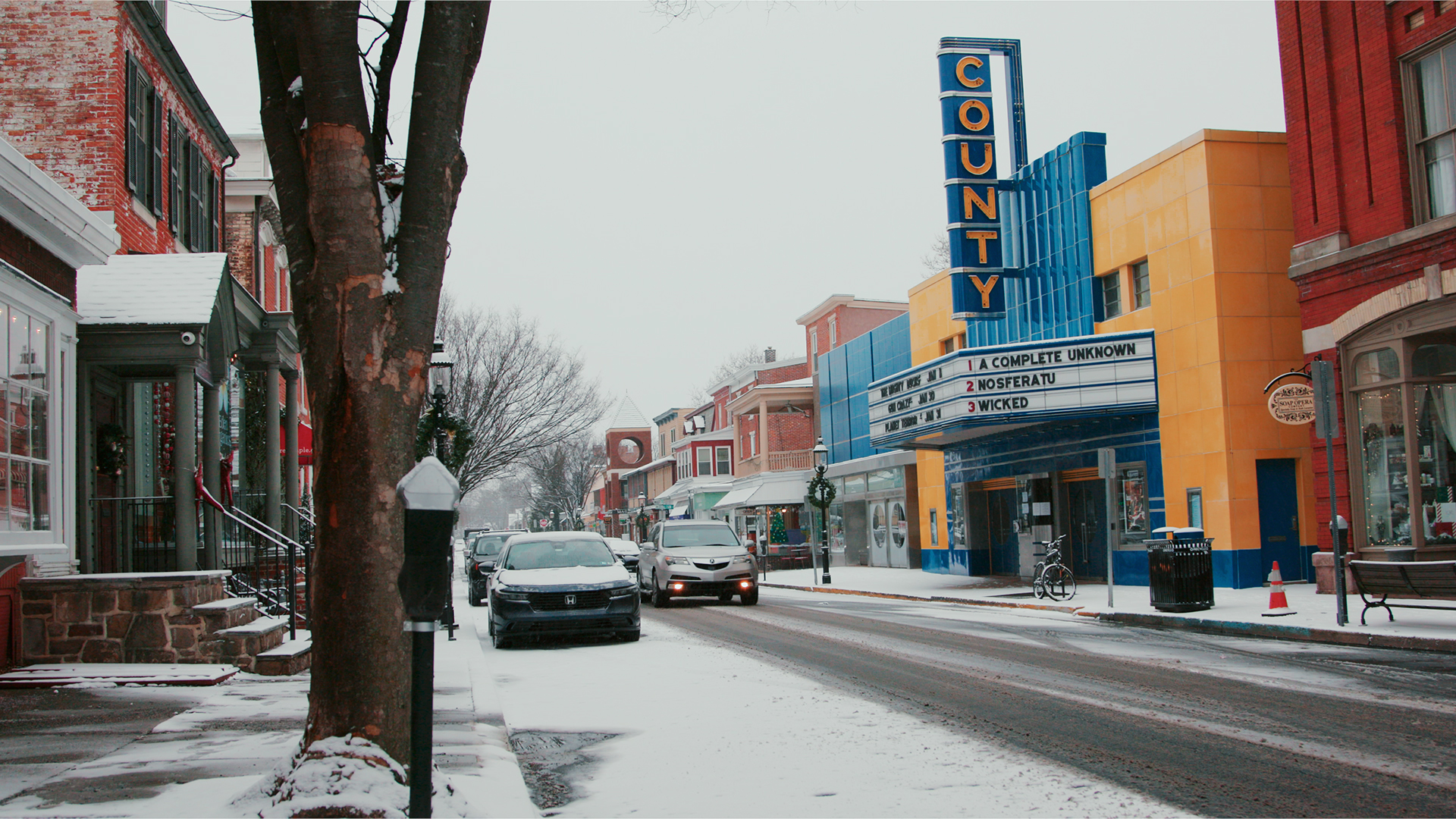
    A still from the docuseries “Bucks County, USA,” now streaming on PBS. Using Bucks County as a focal point, the series examines political polarization and culture wars in America.Courtesy of SenArt Films & Baltimore Pictures

    “The conservative folks that we talked with viewed us as the media. ‘You’re making a movie, so you’re gonna bash us. We don’t want to be part of that.’ So it took a while to really convince them,” said May, who believes the team has been able to create a “nonbiased portrayal.”

    The rancor has continued, nonetheless.

    Bucks County Community College was set to host a local premiere screening of the documentary Sept. 15 but canceled it two days earlier. The screening instead took place that same night at a different venue: the Hiway Theater in Montgomery County’s Jenkintown, a Democratic stronghold.

    In a statement provided to the media, the BCCC said the screening was canceled after “after we received information that raised concerns about our ability to provide a safe environment for campus visitors.”

    “With the docuseries premiering locally on WHYY in less than one week,” the statement read, “and erring on the side of caution, the decision was made to cancel the event.”

    “It is obviously unfortunate,” May and Sosnoff said in an email. “We had taken months to plan a great event at this location.” The entire point of the special screening was, they said, “to thank the community for their hospitality over the past four years, and in particular, thank all those who participated in our project.”

    ”Unfortunately, we live in fearful times, and while the school was not acting with ill intentions, they took something away from the community they are supposed to serve. Our series is all about community — how it can be built and how it can be destroyed,” they said. “Our goal is to foster more trust going forward.”

    “Bucks County, USA” is available to stream via the PBS app, as well as The World Channel.

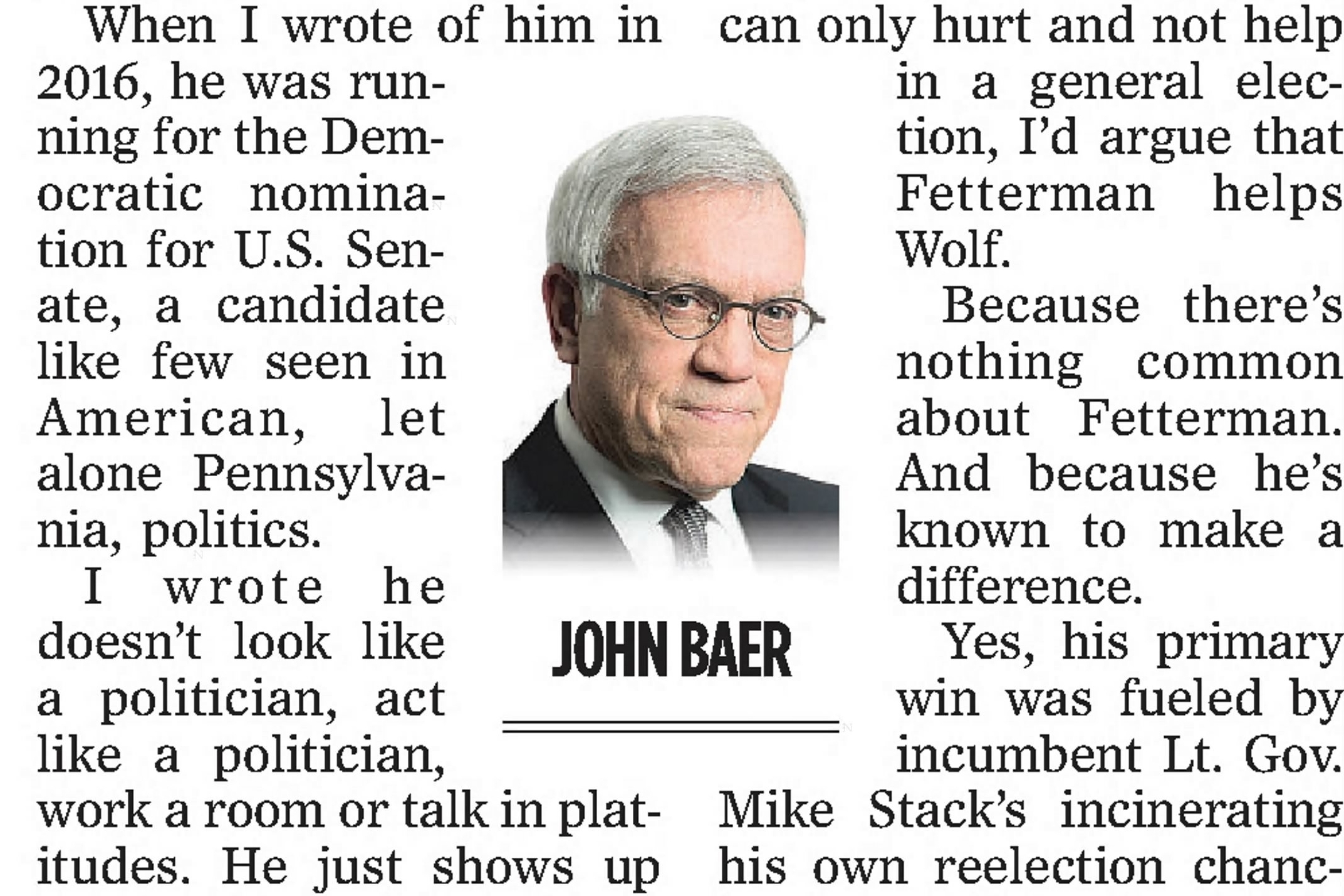
  • John Baer, award-winning longtime Inquirer and Daily News political reporter and columnist, has died at 79

    John Baer, award-winning longtime Inquirer and Daily News political reporter and columnist, has died at 79

    John Baer was the son of a Harrisburg newspaperman. He literally grew up in the Pennsylvania state Capitol. And he never left.

    His father, John H. Baer, was a political reporter for what is now the Patriot-News in Harrisburg, and Mr. Baer spent many Sunday afternoons hanging around the old Capitol press room while his father worked on stories. Decades later, in 1972, Mr. Baer joined the Evening News in Harrisburg as a reporter and went on to work for nearly 50 years in that same press room.

    “I’m probably unique in Pennsylvania politics and journalism,” Mr. Baer said in a 2020 oral history interview for Pennsylvania State University. “I dare say there probably aren’t any who can say they worked in the same state capitol newsroom that their father did.”

    In 1987, the Daily News hired Mr. Baer to cover state politics in Harrisburg. He became a political columnist for the newspaper in 2000, and his plainspoken, no-holds-barred stories later appeared in The Inquirer as well. Before he left the papers in 2019, he covered hundreds of political campaigns, conventions, and elections, and wrote about thousands of local, state, and national politicians.

    Mr. Baer’s column on politics appeared in The Inquirer and Daily News from 2000 to 2019. Newspapers.com

    “He was the most feared reporter in my eight years in Harrisburg,” former Gov. Ed Rendell said. “He did his work. He did his digging. He really cared about the issues.”

    On Thursday, Sept. 24, Mr. Baer died of cancer at his home in New Cumberland, Pa. He was 79.

    For 32 years, Mr. Baer was a hard-hitting, award-winning political reporter and columnist for The Inquirer and Daily News. He was also a columnist for PennLive and the Patriot-News, onetime public TV producer and show host, former press secretary, author, teacher, and mentor.

    Many of those Mr. Baer covered in Harrisburg, Philadelphia, and Washington praised his “deep integrity” and “fierce independence,” and called him a “keen observer of Pennsylvania politics” and “a heavyweight in Pennsylvania political reporting” in online tributes. State Rep. Ben Waxman called Mr. Baer a “legendary Capitol journalist.” U.S. Rep. Dwight Evans said he was “authentic and a one-of-a-kind journalist.”

    Mr. Baer told Penn State he wanted to “let people see the inside of the game in Harrisburg.” His Inquirer.com online profile reads: “John Baer has written about politics and government since 1987. Neither subject ever fails to provide him with stories of policies and politicians walking on or skirting by paths to perdition.”

    In addition to covering nine Pennsylvania governors, the impeachment trial of President Bill Clinton, and the ascensions of Presidents Barack Obama and Donald Trump, Mr. Baer wrote about the execution of serial killer Gary Heidnik, the pleas for more research funding by a cancer victim, and the battle of a state policeman’s widow to receive her husband’s pension benefits.

    He said some of his favorite columns were the mea culpa pieces he wrote at the end of each year that highlighted things he got wrong. “I truly just had a ball at the Daily News,” he told Penn State. “I just loved it. … I’ve always said I had no adult supervision, and it was wonderful.”

    Mr. Baer joined PennLive in 2019, and his last column was published in July. “The depth and breadth of his knowledge was beyond compare,” said Amy Worden, his editor at PennLive.

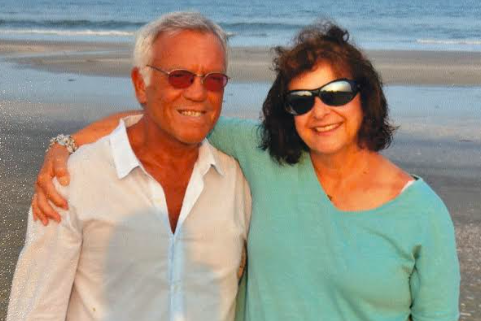
    Mr. Baer and his wife, Rosemary, married in 1969.Courtesy of the family

    Before the Daily News, Mr. Baer spent 14 years in total as a reporter for the Patriot-News, an award-winning public TV producer and show host for WITF in Harrisburg, and a press secretary during Lt. Gov. Bill Scranton’s unsuccessful run for governor in 1986.

    He wrote freelance stories for Philadelphia Magazine and national publications. He was a frequent guest on political TV and radio shows and moderated several statewide candidate debates.

    A lifelong foodie, he also reviewed Harrisburg-area restaurants for a magazine under the pseudonym “the Phantom Diner.” His book, On the Front Lines of Pennsylvania Politics, was published in 2012.

    “He was so good at writing strong opinions with depth,” Paul Vigna, a retired Daily News editor, said.

    Mr. Baer earned awards for his journalism and was inducted into the Pennsylvania News Media Hall of Fame in 2024. He was cofounder of the Pennsylvania Press Club and onetime president of the Pennsylvania Legislative Correspondents Association.

    In tributes, colleagues praised his “sharp wit” and called him a “journalism giant,” “terrific writer,” and “mentor to many of us.” The internship program at the Pennsylvania Legislative Correspondents Association is named in his honor.

    “He was an All-Star, a Hall of Famer,” Vigna said. Rendell said: “He didn’t take any BS.”

    John Baer was born June 25, 1947, in Harrisburg. He graduated from Bishop McDevitt High School in 1965 and earned a bachelor’s degree in English at Mount St. Mary’s University in Maryland and a master’s degree in education later from Temple University.

    He coached basketball and football teams while teaching English for three years at Trinity High School in Harrisburg after college. He married Rosemary Ruggieri in 1969, and they had sons Johnny and James.

    Mr. Baer and his wife hosted many memorable Christmas parties and enjoyed road trips to Georgetown University basketball games, New York Mets baseball games, and their sons’ many sporting events. He played racquetball and tennis, and ran a marathon at 50.

    He was a longtime member of St. Theresa Catholic Church in New Cumberland. “He liked interesting people and had lifelong friendships,” his family said in a tribute. “He loved his friends.”

    On Facebook, colleague Diana Robinson said: “Here’s to you, John Baer. You’ll always be The Most Interesting Man in Harrisburg.”

    In addition to his wife and sons, Mr. Baer is survived by three grandchildren and other relatives.

    Services were held earlier.

    Donations in his name may be made to Vickie’s Angel Foundation, 511 Bridge St., Box 174, New Cumberland, Pa. 17070.

  • Penn State held players-only meeting to get ‘on the same page’ after its loss to Wisconsin

    Penn State held players-only meeting to get ‘on the same page’ after its loss to Wisconsin

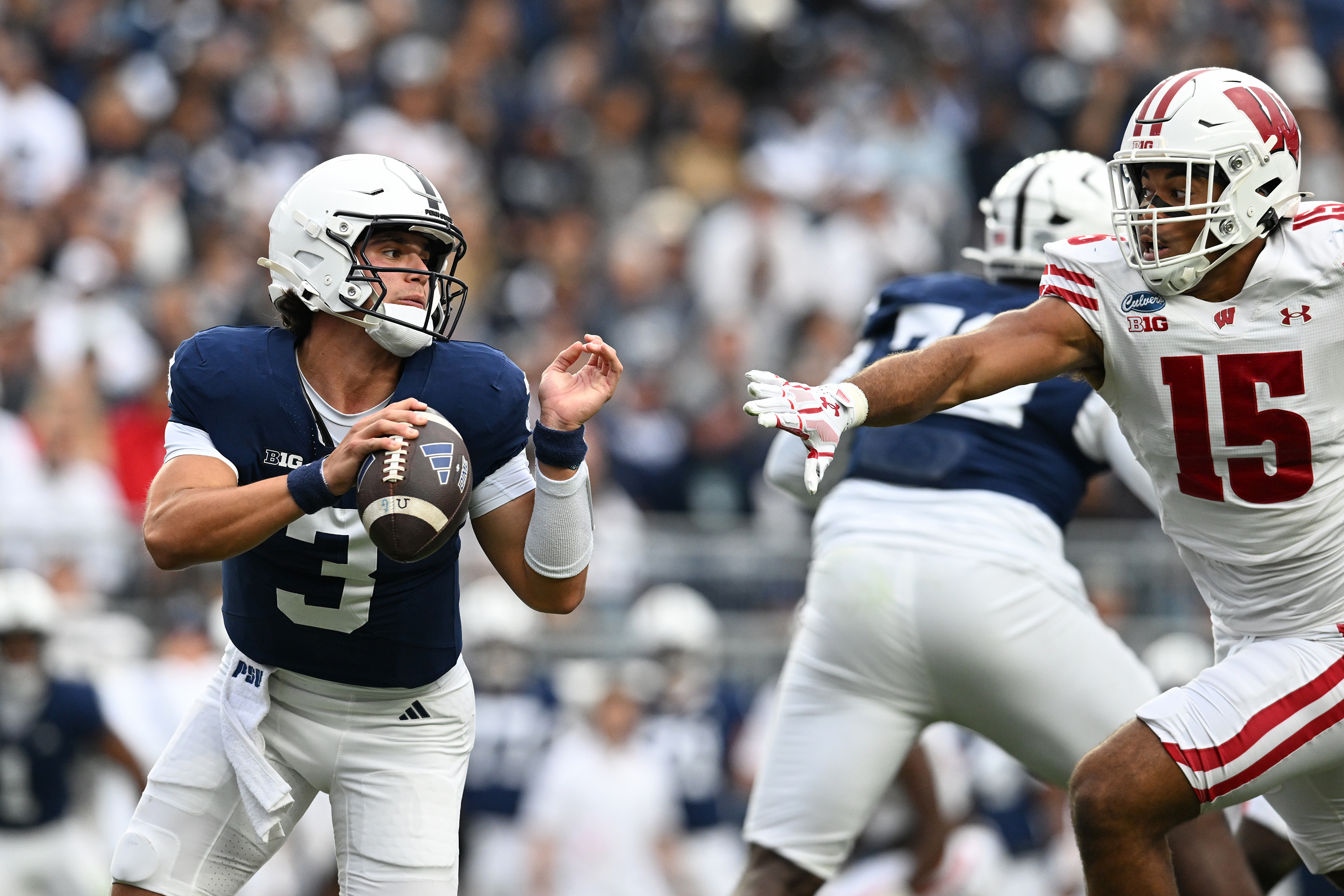
    Penn State coach Matt Campbell and his senior leaders knew they needed to do something after losing to Wisconsin to get the team on the same page.

    The solution? A players-only meeting on Monday. No coaches — just teammates hearing each other out and bonding in the face of adversity.

    “Having those player meetings is huge for us because it does bring us closer together,” quarterback Rocco Becht said on Tuesday. “It does [help us] find out about one another, and we just got to continue the grind and move on.”

    Becht is one of the key leaders for Penn State, as the redshirt senior has been named a captain for each game this season. He rallied the team together at Temple, and took accountability in the locker room after the loss to Wisconsin.

    So it’s no surprise Becht was one of the players to speak during the meeting.

    “He played a big role,” offensive lineman Trevor Buhr said. “I think overall, we were just kind of making sure we were all on the same page, kind of going over what we had to do, what our goals are getting ready for this week, just making sure everyone’s on the same page.”

    Becht said they don’t have regularly scheduled player meetings, but it’s also not the first time the team has met separately. These gatherings come around when the Nittany Lions “feel like it needs to happen,” according to Becht.

    But being on the same page means something different to everyone. For defensive tackle Keanu Williams, it means understanding how everyone is feeling, not necessarily having the whole team agreeing on one idea.

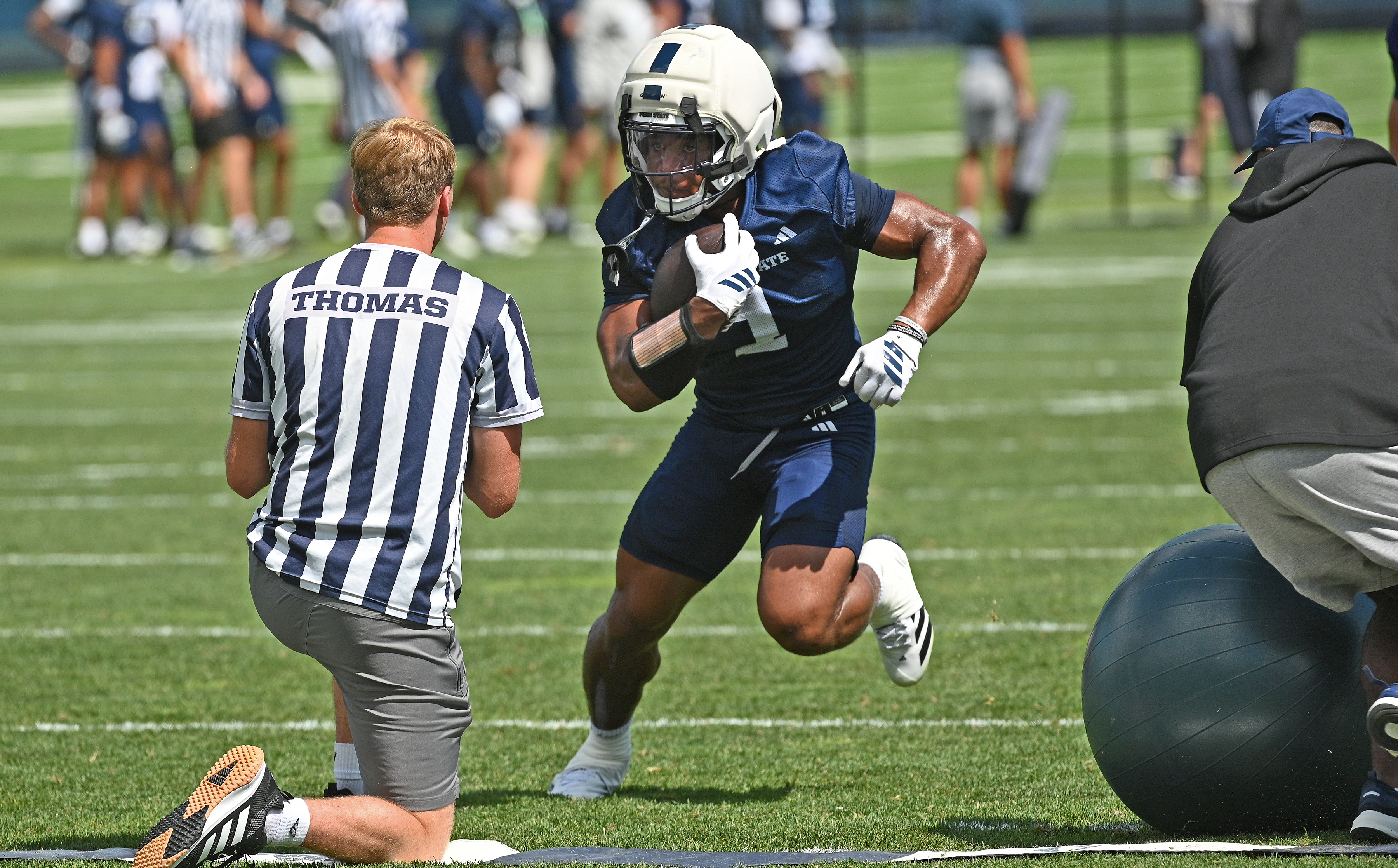
    Penn State running back James Peoples said the team “can’t get stuck in the past.”Craig Houtz / For The Inquirer

    “It comes into play in the sense of whatever the problems we’re having, lay it on the table, and we all kind of got to sit here and just talk it out,” Williams said. “Whatever it is we need to talk out, whatever problems we’re having, we need to sit there and be on the same page with that. That’s what I really mean by getting on the same page.”

    The players meeting is one example of how Penn State has made an effort as a team to move past the unexpected loss. Running back James Peoples said in the immediate aftermath of Saturday’s collapse, everyone handled it differently.

    “You don’t want that, what happened last Saturday,” Peoples said. “You don’t want that outcome, but we understand there’s still a lot more ahead of us. So you got to be looking down the line and seeing what you got in front of you to understand, ‘OK, we can’t get stuck in the past.’”

    Starting right tackle Anthony Donkoh, a Penn State returnee, knows what it feels like to have a loss that snowballs into more after last year’s collapse. He doesn’t want that happening this year, but he feels confident moving forward because of how the players have rebounded emotionally.

    “I feel like a lot of the guys handled it well this time around,” Donkoh said. “I feel like there’s a lot more emotions last year, and you just felt like a big negative shift, like after a game sometimes.

    “But then like after this loss, everybody is still in good spirits. Like we know that we still have a lot of the season ahead of us. We know that if we just keep our head down and keep working every day, then we’re able to get ourselves out of the situation that we’re in.”

  • Here are the runners to look out for at this year’s Delco 10 Miler

    Here are the runners to look out for at this year’s Delco 10 Miler

    The Delco 10 Miler hits the road for the second time Sunday. This year’s race will have a new course and a new pace, and is open to twice as many runners.

    Here are a few of the runners to look out for:

    Dad and son run for a personal cause

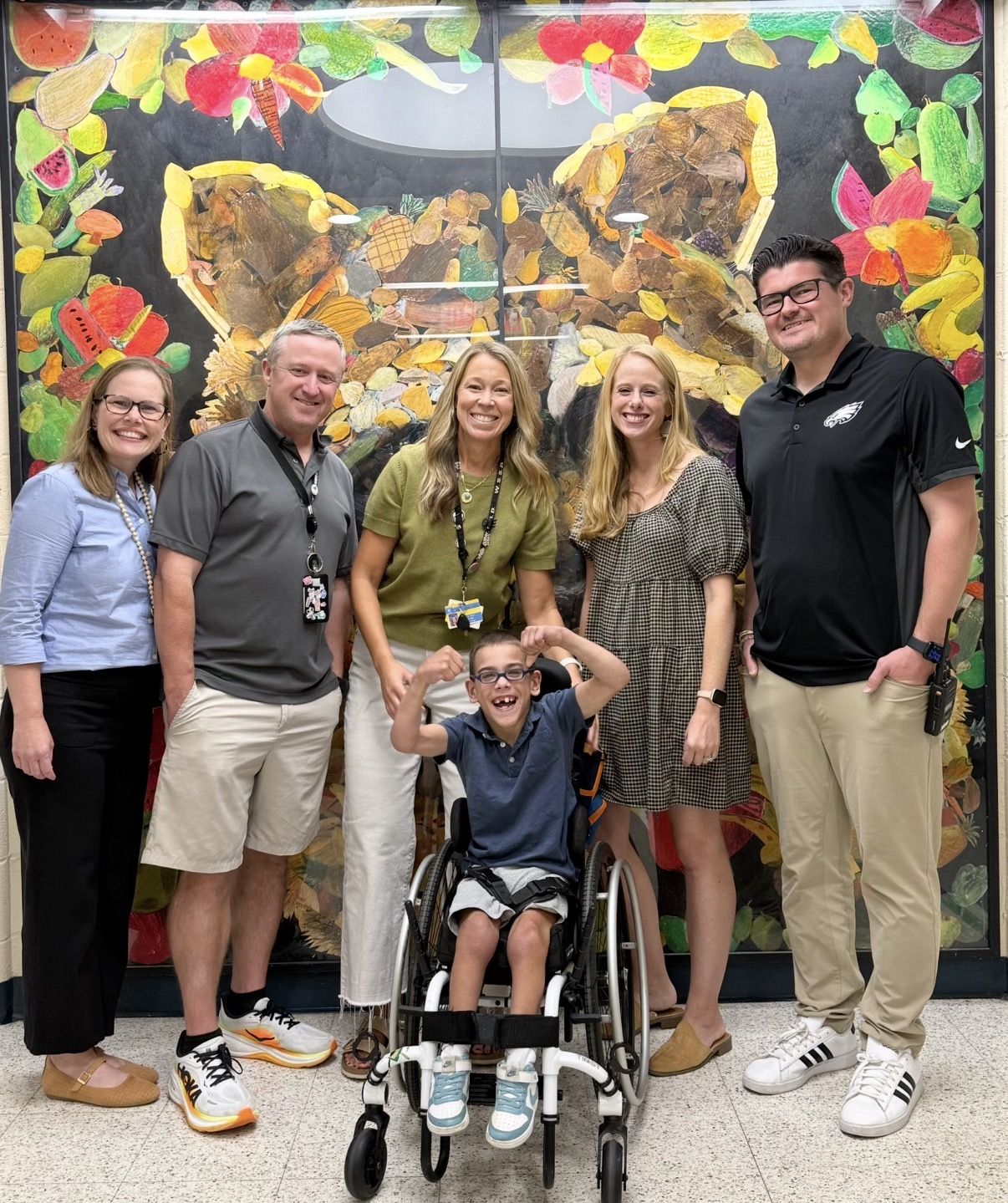
    Will Getty, 8, is pumped to run the Delco 10 Miler, said his mom, Jessica, and dad, Mark, who will push him in an adaptive jogging stroller on Sunday. But it’s more than just a fun run for Will, who has cerebral palsy, and his family.

    It is also part of an effort to raise money for an accessible playground at Wallingford Elementary School with help from the Kyle Pease Foundation.

    Pease, 41, who also has cerebral palsy, visited the school in 2025 to meet students and share his foundation’s purpose: creating inclusive opportunities in sports and endurance races for people with disabilities.

    After his visit, teachers began brainstorming. What if Will and Pease participated in the Delco 10 Miler together? And could they support fundraising for the playground at the same time?

    “It was a perfect opportunity to cheer them both on and to hold an event where we could raise the money and awareness of what we’re trying to do here,” special education teacher Lauren Bannon said.

    The school, which is on the race course on Providence Road, will hold a festival with food, games, and a station to create signs for Will from 8 to 10 a.m. on the morning of the race. School officials recommended getting there early before Providence Road closes and using the school’s rear entrance on Kershaw Road.

    The Kyle Pease Foundation donated Will’s jogging stroller and is managing fundraising for the playground. Donations can be made at https://givebutter.com/wes-loves-pease.

    Will’s dad said a group of Wallingford teachers will take turns pushing Will to the finish line. Training has become a new way to bond for Will and his dad, and a playlist of Will’s favorite band, Coldplay, has been essential listening during practice runs.

    “He sees people, waves to them, and if I put the music down for a second, he’s telling me to turn it back up,” Mark Getty said.

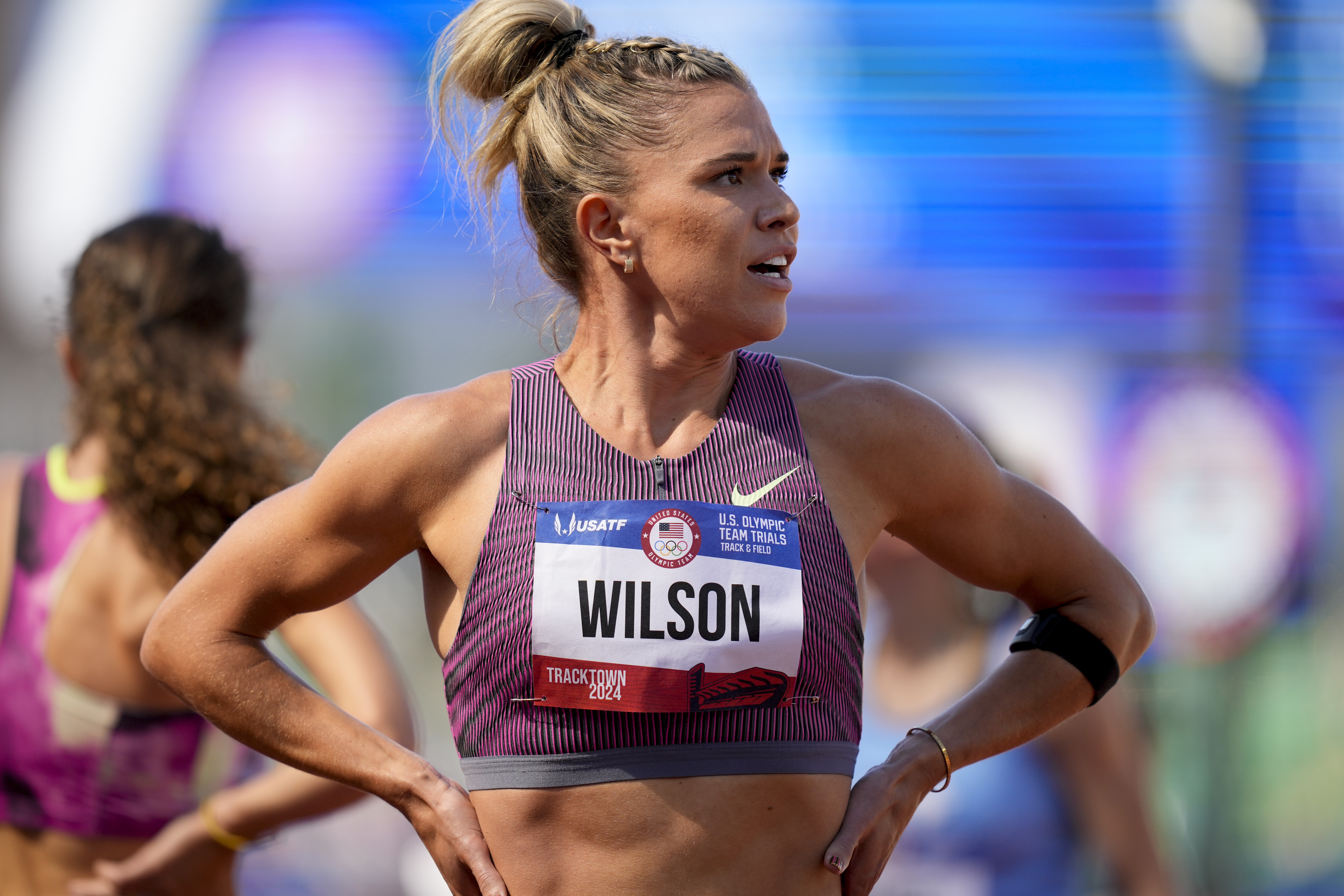
    Allie Wilson won a heat in the women’s 800-meter run during the U.S. Track and Field Olympic Team Trials on June 21, 2024, in Eugene, Ore.Charlie Neibergall

    Just a normal Sunday for Olympian Allie Wilson

    Running 10 miles on a Sunday is part of the normal training routine for Strath Haven grad and Olympian Allie Wilson. This weekend, there will be a little more fanfare to it.

    Wilson’s older sister, Val, is running the Delco 10 Miler and asked Allie to join her.

    “I might as well have fun and get to be around other people for once, since I’m usually just running by myself,” Allie Wilson said.

    Is a gold medal in the bag? It’s a little bit longer than her usual race, Wilson said, by 9½ miles.

    “My race is 800 meters,” Wilson said. “It’s less than two minutes long. Like, I’m borderline a sprinter.”

    But you don’t get to the Olympics without a competitive edge. Wilson originally planned to stick with Val in the race, but she said her sister told her not to.

    “I know I’m going to get excited and I’m going to feel left out if I want to be trying to go with the people up front,” Wilson said. “We decided my competitiveness might come out too much.”

    Next up for Wilson after the Delco 10 Miler: She will continue training with her sights set on a return to the Olympics in Los Angeles in 2028.

    Zach Miller crossed the finish line first at the Delco 10 Miler on Sept. 28, 2025.PEL Productions for Visit Delco

    A run down memory lane for last year’s winner

    The Delco 10 Miler charts a course through some of the most important parts of Zach Miller’s life.

    The starting line is near Rose Tree Park, where Miller ran cross-country races in high school and later proposed to his wife, Heather. It goes through Media, where he grew up, and passes through Widener University, which is Miller’s alma mater and the place he met Heather.

    “It’s these little nuggets that make the race kind of special to me,” said Miller, 43, of West Chester.

    One more nugget to make it special: Miller won the inaugural 10 Miler last year.

    He has been waking up at 5:15 a.m. on Wednesdays to train with longtime Downingtown West High School cross-country coach Scott Burns and a group of fellow runners.

    “I really wouldn’t be training or, you know, competing at the level I am without the support and kind of accountability of that group,” Miller said.

    Miller said he is excited for this year’s race but considers Steve Jordan, another member of his group who is also training for the Olympics, to be the front-runner.

    This suburban content is produced with support from the Leslie Miller and Richard Worley Foundation and The Lenfest Institute for Journalism. Editorial content is created independently of the project donors. Gifts to support The Inquirer’s high-impact journalism can be made at inquirer.com/donate. A list of Lenfest Institute donors can be found at lenfestinstitute.org/supporters.

  • Ruth Weisberg, longtime radio and TV show host, and voice-over actor, has died at 70

    Ruth Weisberg, longtime radio and TV show host, and voice-over actor, has died at 70

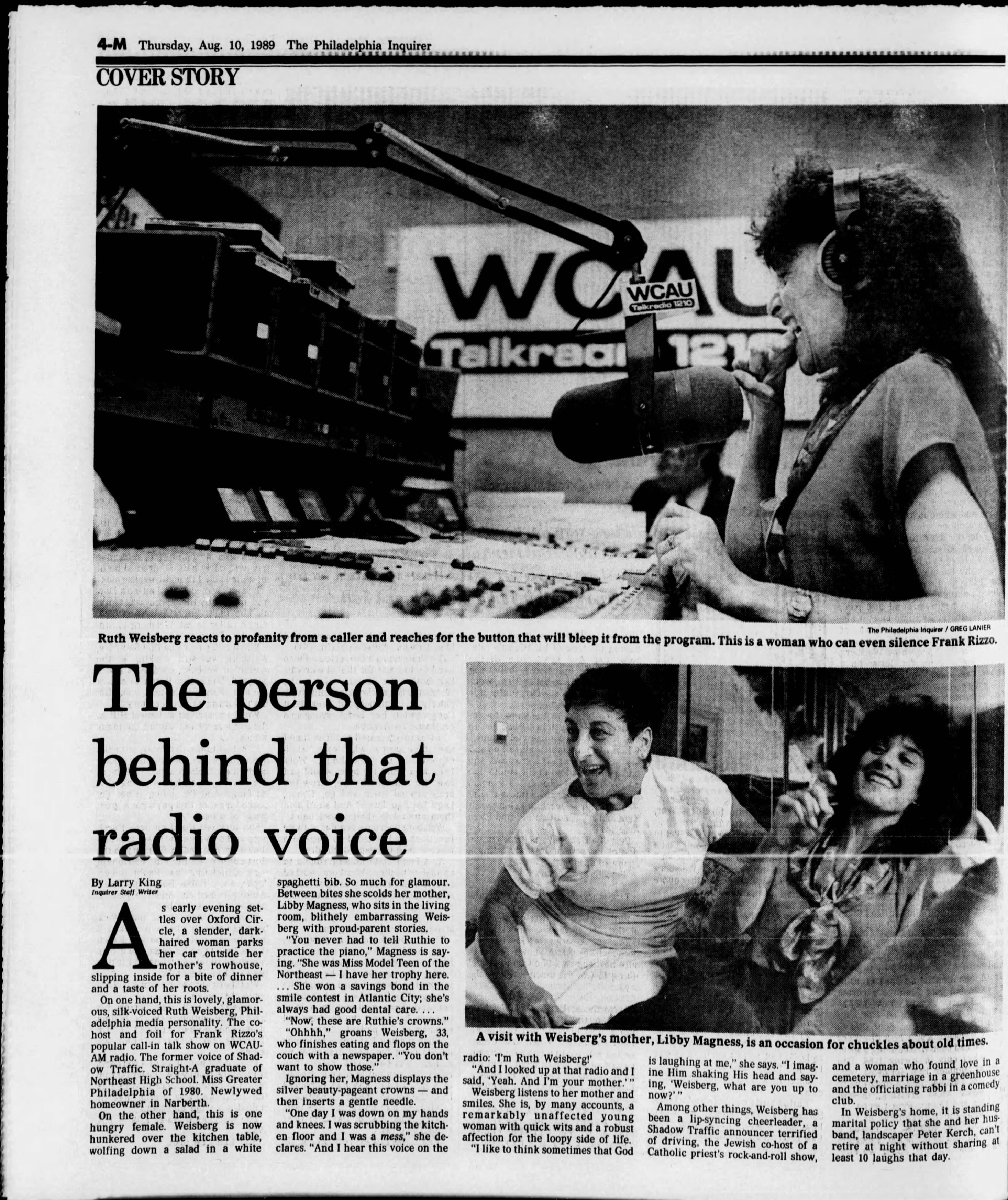
    Ruth Weisberg, 70, formerly of Philadelphia, longtime award-winning radio, TV, and online news anchor, features reporter, and show host; onetime voice of Shadow Traffic, Bell Telephone, and other voice-over clients; voice-over instructor, writer, speaker, pianist, art model, actor, Miss Greater Philadelphia 1980, volunteer, and stand-up comedian, died Wednesday, Sept. 2, of ovarian cancer in an assisted living center in Sarasota, Fla.

    Reared in Oxford Circle and a graduate of Northeast High School and Pennsylvania State University, Ms. Weisberg was a prolific media personality for nearly 50 years in Philadelphia and Florida. She was the radio voice of Shadow Traffic in the late 1970s and early 1980s, a news anchor and features reporter at WXTU, WCAU, WIFI, WPEN, and WSNI radio in the mid-1980s, and a radio, TV, and online talk show host from the late 1980s until recently.

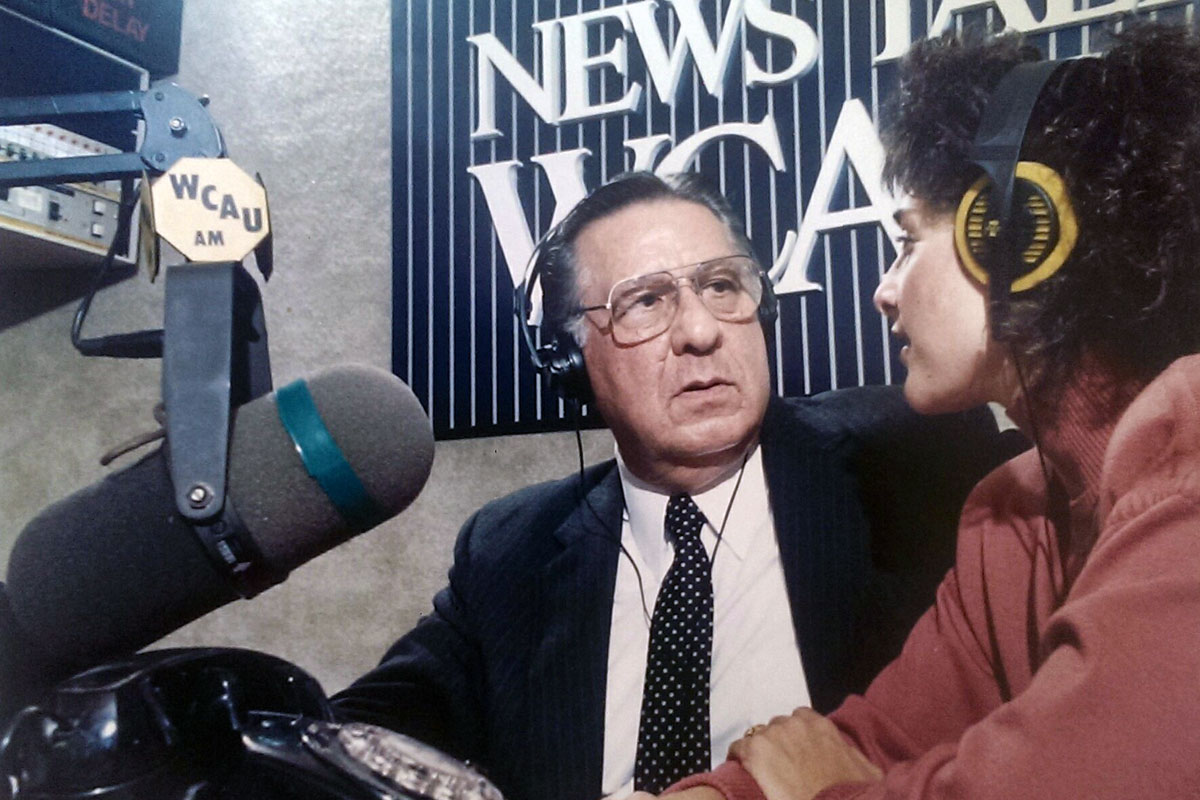
    She hosted Frank Talk With Frank Rizzo on WCAU radio in 1988 and ’89, and told The Inquirer in 1989 that working with the former mayor was like flying a “careening aircraft for three hours.” She also hosted Storytime and Show ’n Tell with Miss Ruth on local cable TV and online in 2015, and Funny You Should Ask, a radio show and podcast about comedy, in Florida in 2023.

    Always drawn to the theater and drama, she started producing TV and radio shows while studying special education at Penn State in the 1970s, and wound up cohosting a local rock and roll radio show as a senior exchange student in England. “All of the sudden,” she told The Inquirer in 1989, “I had this new-found love of radio. I never pursued it. It just came calling.”

    Ms. Weisberg reported on all kinds of lifestyle issues and earned radio awards from the Associated Press, the Philadelphia Press Association, and other groups. In 1994, she was named member of the year by the Philadelphia chapter of the International Television Association.

    She called herself Miss Ruth and Ruth Weisberg Philly on Facebook and reveled in her constant innovation and free spirit. She told The Inquirer: “I like to think sometimes that God is laughing at me. I imagine Him shaking His head and saying: ‘Weisberg, what are you up to?’”

    As a voice-over narrator and actor, she recorded corporate training videos, audiobooks, and radio and TV commercials. Bell Telephone hired her to record “We’re sorry. Your call cannot be completed as dialed” and other phone messages in 1985 because, a top official told her in a letter, her voice was “congenial yet persuasive.” She also taught voice-over classes for organizations and individuals, and mentored others on whatever she was doing wherever she worked.

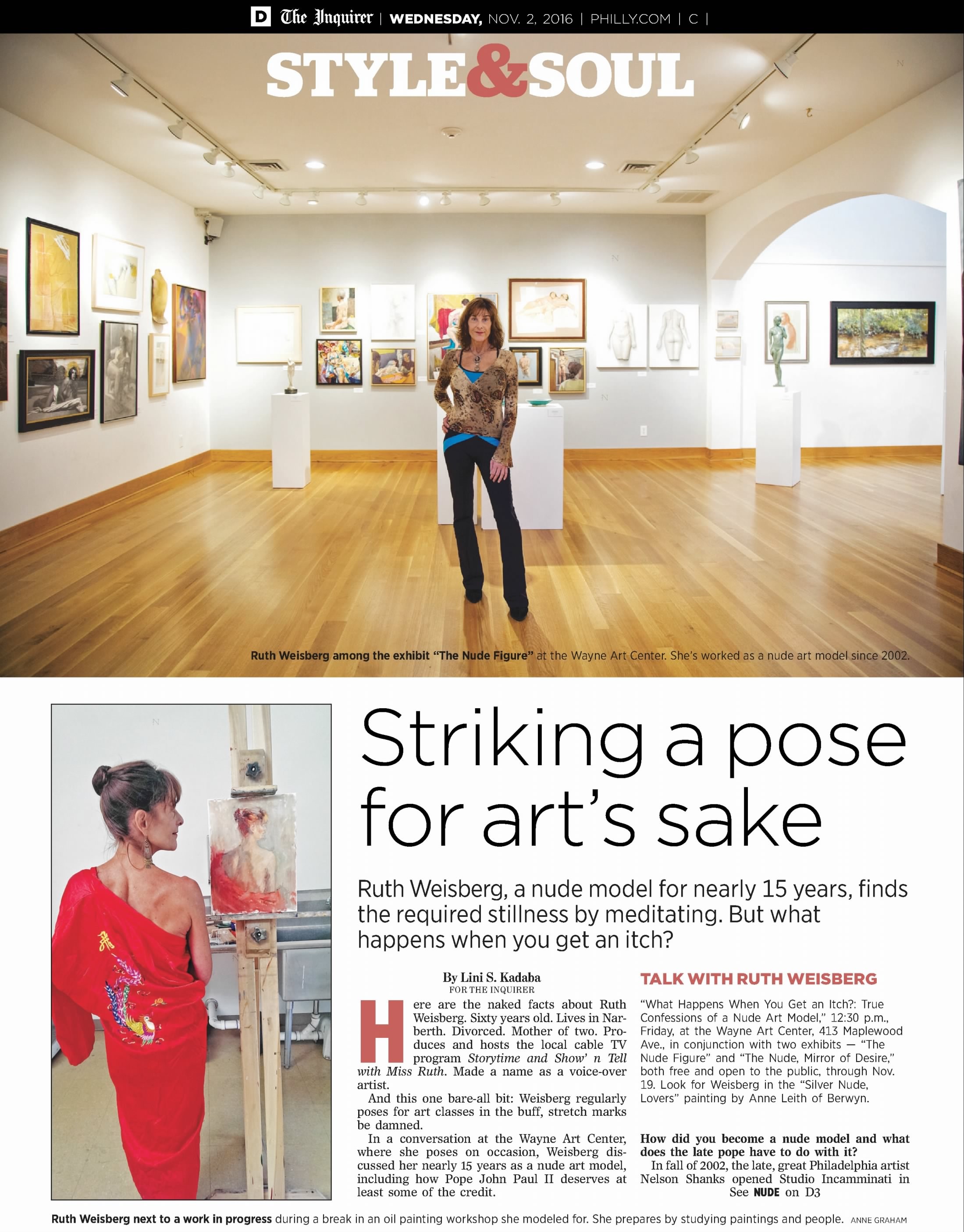
    She modeled for artists — some called her their “muse” — at art centers and colleges, and starred in a short video called The Accidental Art Model. “I love being part of a creative, imaginary, intrinsically artistic world,” she said in the video. “I would like to think of myself as the inspiration and the template for the work that happens.”

    Ms. Weisberg co-hosted a talk with onetime Mayor Frank Rizzo in 1988 and 1989.WCAU Radio

    Ms. Weisberg was drawn to beauty pageants, she said on Facebook, by the glitz and glamour. She was named Miss Central Pennsylvania as a Penn State freshman in 1975 and Miss Greater Philadelphia in 1980.

    “I never once felt objectified, exploited,” she said in a 2018 radio interview about the contests. “If anything, I felt celebrated for my talents and hard work.”

    She held seminars on career networking, spoke to groups often about radio and voice-over work, and read stories to children in bookstores. She wrote op-eds for The Inquirer and articles for the Main Line Welcomat and other publications.

    She posted videos on YouTube. She cohosted the 2001 Miss Greater Philadelphia Pageant. Former Daily News columnist Stu Bykofsky called her “both an eyeful and earful.”

    Ms. Weisberg was featured in The Inquirer in 2016 (above) and 1989 (below).Newspapers.com

    She also acted in local stage productions and performed stand-up comedy routines in brewpubs and restaurants and at gatherings. She was featured several times in The Inquirer and Daily News, and moved to Sarasota in 2016.

    “My work motto is that I will accept any job position that does not require wearing a hair net,” she said in a 2016 online interview. Her family said in a tribute: “Her life and influence were an inspiration and a sparkle of joy to so many people.”

    Ruth Maxine Weisberg was born May 31, 1956, in Philadelphia. She was a cheerleader, was active in theater class, and got straight A’s at Northeast High School.

    She and her mother, Libby, volunteered to entertain people in hospitals and nursing homes when she was young, and she knocked on neighborhood doors for Democratic presidential nominee George McGovern when she was 16.

    Her family spent memorable summers in Atlantic City, and she earned a bachelor’s degree in special education at Penn State.

    She married Peter Kerch in 1988, and they had a daughter, Talia. After a divorce, she married James Herbert, and they had a son, Elliott. They divorced later.

    Ms. Weisberg liked crossword puzzles, collected classic telephones, and attended concerts and beach drum circles. She was a certified scuba diver and wore a hat emblazoned with “The Queen of Everything.”

    Friends and colleagues called her “witty and supportive” and praised her “charm, humor, and kindness” in online tributes. One said she “always brought warmth and sunshine to wherever she was.”

    Her daughter said: “She was effervescent, exuberant, and whimsical.”

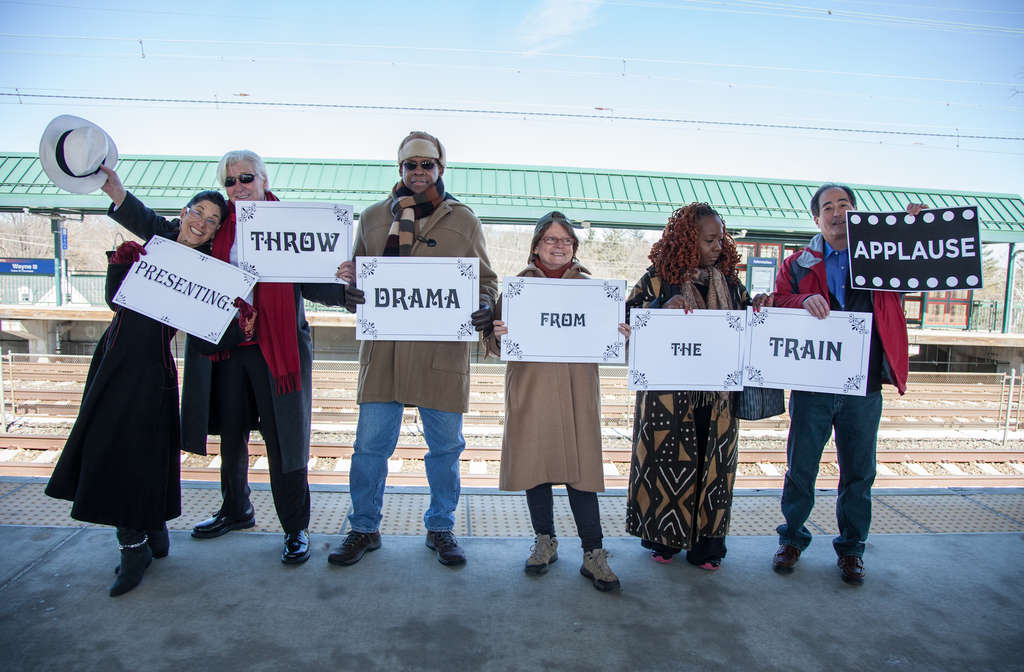
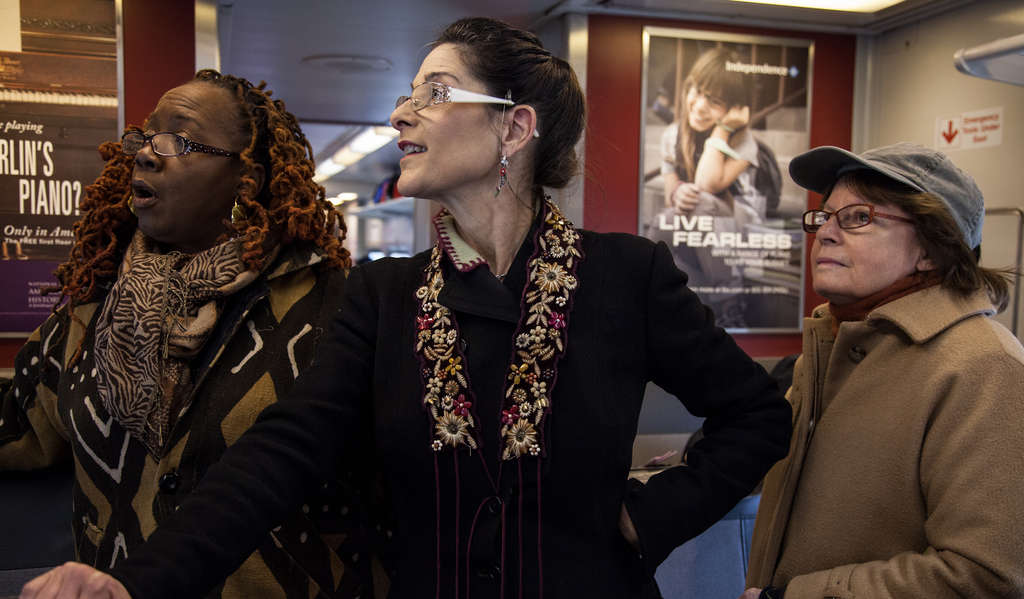
    Ms. Weisberg (left above and center below) took her voice-over students on a field trip in 2015. Emily Cohen / Staff Photographer

    In addition to her daughter, son, and former husbands, Ms. Weisberg is survived by two brothers and other relatives.

    A private celebration of her life is to be held later.

  • Penn State made head-scratching decisions in its first loss. It also exposed glaring weaknesses.

    Penn State made head-scratching decisions in its first loss. It also exposed glaring weaknesses.

    While leading by 10 points, Penn State decided to run on third-and-12 midway through the fourth quarter. Running back James Peoples didn’t pick up the first down as boos echoed through Beaver Stadium.

    It was the fourth time that offensive coordinator Taylor Mouser called a run in a third-and-long situation in a 24-20 loss to Wisconsin on Saturday.

    “It’s always situational for me,” Mouser said Tuesday. “The defense had been playing so good up to that point, didn’t want to put them in a bad spot, have something bad happen. Didn’t have a ton of rhythm going in the pass game up to that point either. So it was take the less of two evils and play the field position game, as dumb as that sounds and as much as I hate to say that.”

    Those third-and-long decisions were just some of the head-scratchers from the Nittany Lions first loss of the season (3-1, 0-1 Big Ten) and showed where the offense needs to grow ahead of their road matchup against Northwestern (2-1, 0-1) on Friday night (8 o’clock).

    “You got to stay focused on what the goal is,” Mouser said. “And the goal for us on a short week has to be the work. We just don’t have the time to be able to dwell on it and feel sorry for yourself. No one else does. And this Northwestern team is going to try to murder us.”

    Red zone struggles

    Penn State has made 20 red-zone trips this year, but only 10 have ended in a touchdown. Against Wisconsin, the Nittany Lions reached the 1-yard line on their second possession, but settled for a field goal.

    “I’m frustrated with that,” Mouser said. “And it’s an ongoing message. … Are we playing the right people? Are we handing it to the right people? Are we throwing to the right people? Are the right people in the right spots to be able to block and execute the plays? We haven’t been able to do that, and it’s our job as coaches to figure that out.”

    Penn State went 1 of 3 on red-zone trips, with the lone touchdown coming off sophomore cornerback Daryus Dixson’s interception that set up the Nittany Lions at the Badgers’ 11-yard line.

    These red-zone struggles first popped up against Temple, with Penn State’s first three opportunities only resulting in three points. The issues haven’t gone away.

    Lack of tight end usage

    Senior Benjamin Brahmer was the only tight end with a catch in Saturday’s loss, finishing with four receptions. Redshirt senior Gabe Burkle was targeted twice, while redshirt junior Andrew Rappleyea was thrown to once.

    “I still walk out of the game frustrated with my inability to get those guys the ball as much as we should,” Mouser said. “Rapp’s one of our best pass catchers and didn’t find a way to get the ball more. Same with Ben and even with Gabe.”

    Mouser took accountability for the lack of targets his tight ends received, and knows he needs to rely on Brahmer and his fellow tight ends in the passing game with top wide receiver Koby Howard out for the foreseeable future.

    “Those three are some of our best pass catchers and we’re going to have to find ways to get them the ball in easier ways that we can make those throws,” Mouser said. “I still don’t think we’ve sniffed just how good that room can be and the standard I think those guys can play with.”

    Becht’s poor showing

    Rocco Becht said Tuesday he plays better on the road, so it’s a good thing Penn State is headed to Northwestern this weekend after the quarterback’s performance against the Badgers.

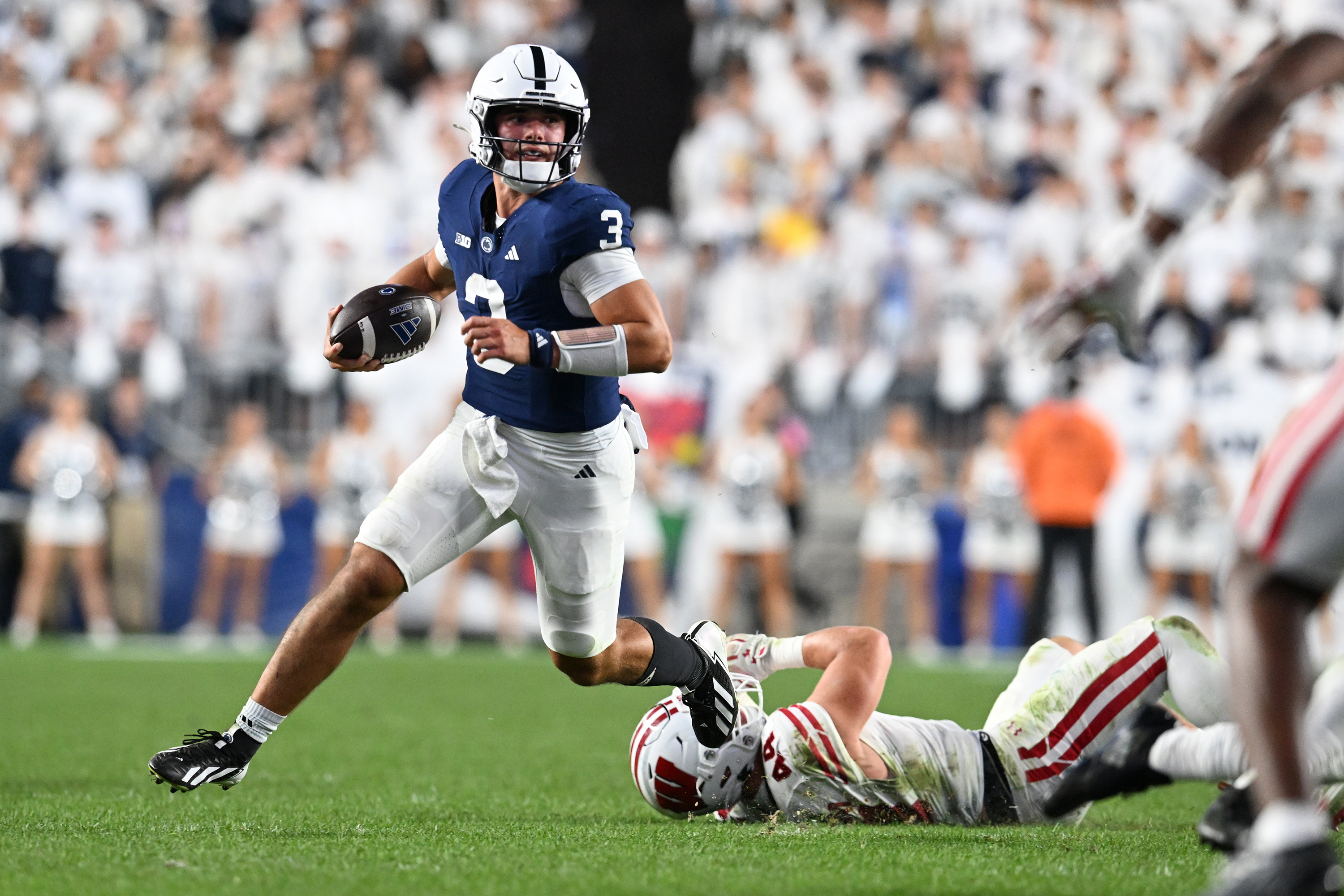
    Becht went 12-for-29 with 129 yards, zero touchdowns, and his first interception of the year, though the pass was tipped. He put blame on himself postgame, saying he needs to be better for his team.

    On Tuesday, Mouser took accountability for Becht’s struggles.

    Rocco Becht went 12-for-29 with 129 yards and zero touchdowns against Wisconsin.Barry Reeger

    “I know what Rocco Becht is,” said Mouser, who also was his offensive coordinator at Iowa State. “He’s a 10,000-yard passer, and I’ve known him for three years, and I know how good he is. So when it’s not working, I’m going to always put it on myself because I know how talented he is and the way that he prepares.”

    The Wildcats’ defense sits at the bottom half of the Big Ten in passing yards allowed this season with 218 per game, potentially giving Becht an opportunity to get himself and his wide receivers going after a tough showing against Wisconsin.

    “We didn’t really show ourselves last Saturday who we were, and we didn’t put enough out there to bring that win home for us,” Becht said Tuesday. “I think for us, it’s just continuing to go out there on Friday and continuing to just do our job and have fun and go out there and play ball.”

  • Penn State is selling its Wilkes-Barre and Shenango campuses

    Penn State is selling its Wilkes-Barre and Shenango campuses

    Pennsylvania State University’s board of trustees agreed Friday to sell two of its closing Commonwealth campuses to developers for more than $6 million.

    Plans call for the Wilkes-Barre campus in Northeastern Pennsylvania to be developed into event and conference space for a nearby golf course and space for educational programming, while the Shenango campus in Northwestern Pennsylvania will be used for educational, cultural and workforce training purposes. The Shenango campus enrolled 309 students in 2024 and the Wilkes-Barre campus 329 students, according to a Penn State report on the closures.

    Sara Thorndike, Penn State’s senior vice president for finance and business and chief financial officer, told trustees at a committee meeting Thursday that discussions continue on the future use of the other five campuses: Dubois, Fayette, Mont Alto, New Kensington and York. The seven closing campuses are spread from Northeastern Pennsylvania to Western Pennsylvania. The campuses in the Philadelphia region — Abington, Brandywine, and the graduate education-focused campus at Great Valley — are not impacted.

    “Every campus is on its own path and own time line,” Thorndike said of the closing campuses. “Our goal is to find a positive path forward.”

    Penn State in May 2025 voted to close the seven campuses at the end of the 2026-27 academic year due to precipitous enrollment declines, marking the largest remake of the Pennsylvania flagship university’s Commonwealth campus system in its history.

    Since then, Penn State has been conducting meetings at each of the campuses with elected officials and others in the community to hear concerns about future uses, Thorndike said.

    The board approved the sale of the 13-acre, 12-building Shenango campus in Mercer County to JCL Development LLC for $1 million. It will be used for education, workforce training, economic development and cultural enrichment, Thorndike said.

    Penn State Wilkes-Barre’s 57-acre, 17-building campus in Luzerne County will be sold to HGC Development LLC for $5.25 million. HGC is a subsidiary of the Huntsville Golf Club, which is next to the campus. The property will be used for event space “complementary to the golf club,” the university said, and educational purposes, including a planned partnership with the nearby Misericordia University.

    Thorndike said the university considered community benefits, appraised values, deferred maintenance and the costs Penn State would have to pay if it held on to the campuses. Though both offers were below the value of the properties, she said the university determined they were the best overall offers.

    “Both proposals outline a vision for preserving the community-facing qualities of these properties while building on the educational impact the campuses have had for decades, and that’s an outcome we’re pleased to see reflected in each plan,” Renata Engel, vice president for Commonwealth Campuses and executive chancellor, said in a statement.

  • Parents accused of driving teen charged in Penn State student’s killing to Colorado ordered to stand trial

    Parents accused of driving teen charged in Penn State student’s killing to Colorado ordered to stand trial

    The parents of one of two teenagers charged with killing a Pennsylvania State University student in June drove him from Philadelphia to Colorado Springs, Colo., within hours of local television stations airing surveillance footage of the suspects police were seeking in the case, prosecutors said Thursday.

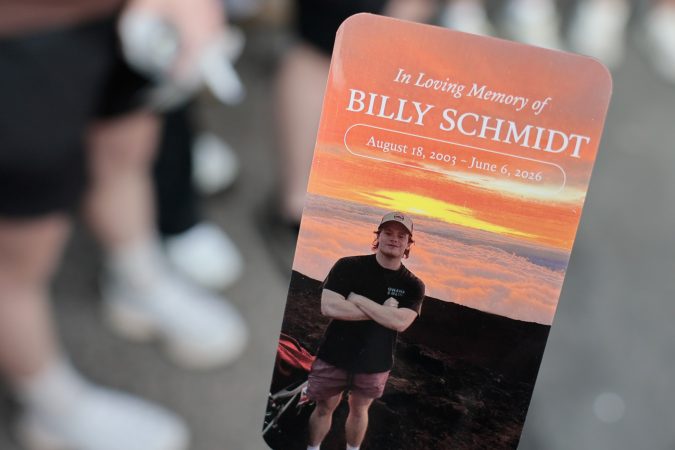
    Kaiseem Smith, 16, and Azzubair Outen-Fleming, 16, are charged with murder, conspiracy, and related offenses in the shooting death of William “Billy” Schmidt, 22, who was killed June 6 after a robbery on a South Philadelphia sidewalk turned deadly.

    Philadelphia police and the U.S. Marshals Service searched for Smith and Outen-Fleming for weeks before taking them into custody. Marshals found Outen-Fleming on July 1 in Colorado Springs. Smith surrendered to Philadelphia police the following day.

    At a preliminary hearing Thursday, prosecutors detailed how Outen-Fleming’s stepfather, Donte Abdulmalik, 35, and mother, Milika Abdulmalik, 45, allegedly drove him more than 1,700 miles to Colorado Springs — a roughly 45-hour trip spanning several states — and how police detectives traced the journey through cell phone records and license plate reader data.

    Donte Abdulmalik was arrested June 30 and Milika Abdulmalik on July 3. Both are charged with hindering apprehension, obstruction of justice, and related offenses.

    After hearing the evidence Thursday, Common Pleas Court Judge Gregory Yorgey-Girdy ordered the parents to stand trial.

    Detective Thorsten Lucke testified that the couple’s cell phone records showed they began the drive around 10:30 p.m. June 10, after surveillance videos and images of the suspects aired during local 10 p.m. newscasts.

    That night, a phone registered to Milika Abdulmalik called and texted a Colorado Springs number, Lucke said, before beginning to travel west in tandem with a phone registered to Donte Abdulmalik.

    The phones arrived in Colorado Springs on the evening of June 12, Lucke testified, and began heading east again June 14 before returning to Philadelphia.

    Detective Frank Mullen, who also testified Thursday, said police arrested Donte Abdulmalik near a black Mercedes-Benz that investigators believe was used to drive Outen-Fleming to Colorado Springs. License plate readers captured the vehicle near the home where Outen-Fleming was later found, Lucke said.

    Defense attorneys for the parents argued, however, that the evidence was thin and failed to connect their clients to the alleged crimes.

    Donte Abdulmalik’s attorney, Carmen C. Nasuti III, made plain what he thought of the case during a cross-examination of Lucke: “So, essentially, what you showed us was two phones took a trip to Colorado Springs?” Nasuti asked.

    “Yes, that’s correct,” Lucke replied.

    Smith, Outen-Fleming, and Fleming also appeared in court Thursday but waived their preliminary hearings.

    Schmidt, a Penn State senior, was walking home from a neighborhood bar where he had watched the NBA Finals when the two teenagers approached him near 20th and Wolf Streets around 1:30 a.m., according to prosecutors and surveillance footage described in court records.

    Prosecutors have said Outen-Fleming grabbed Schmidt’s cell phone, punched him, and rifled through his pockets before the pair knocked him to the ground. As the teens walked away, Outen-Fleming threw the phone down the block.

    A neighbor’s surveillance camera recorded Schmidt running after them, police have said. Smith then turned and fired a single shot into Schmidt’s chest, prosecutors said.

    Authorities also connected Donte Abdulmalik to the case through a woman who was inside a South Philadelphia home searched by police while they were looking for Outen-Fleming’s brother, Kadafi Fleming, according to an affidavit of probable cause for Donte Abdulmalik’s arrest.

    Fleming, 19, is accused of stealing the SUV the teens took to and from the area before and after the killing.

    The woman, identified in the affidavit only by her initials, told detectives she recognized Outen-Fleming from news coverage of the case and identified the second suspect — whom she said was the shooter — as his cousin. She also told investigators that Outen-Fleming’s stepfather had driven him to Colorado, according to the affidavit, and showed officers a speeding ticket that had arrived in the mail: a citation for a June 14 infraction in Simla, Colo., issued to a Mercedes-Benz registered to a deceased family member.

    Hours later, detectives interviewed the woman again while Donte Abdulmalik waited outside on the porch, according to the affidavit. She stood by her identification of the two teenagers but retreated from the rest of her account, telling them she did not know who had driven Outen-Fleming to Colorado.

    Prosecutors did not call the woman as a witness Thursday or introduce evidence from those interviews.

    In his closing argument, Nasuti said records showing a phone in Colorado did not necessarily place his client there. Donte Abdulmalik, he argued, could have handed the phone to his stepson.

    “No one who can place my client in the car,” he said. “No one who can place that phone number in his hand. They need to do that, even at this level.”

    Yorgey-Girdy, the judge, said he found the evidence persuasive, however. He also denied requests from Nasuti and Scott Gessner, Milika Abdulmalik’s attorney, to reduce the couple’s bail after Assistant District Attorney Lauren Crump argued they posed a “severe flight risk.”

    “This whole case,” Crump said, “is about flight.”

    The parents are each being held on $250,000 bail, court records show.

    Smith and Outen-Fleming are scheduled to return to court in October, along with Donte Abdulmalik, Milika Abdulmalik, and Fleming.

  • The first Colored Convention was held in Philadelphia in 1830. Mother Bethel AME Church will revive it this weekend.

    The first Colored Convention was held in Philadelphia in 1830. Mother Bethel AME Church will revive it this weekend.

    To Denise Burgher, co-organizer of this weekend’s 2026 Colored Convention Conference, the attack on civil rights and Black history under President Donald Trump’s administration is chilling.

    Among the most egregious, she said, were his attempts to repeal the 14th Amendment, the Reconstruction-era addition to the Constitution guaranteeing citizenship to anyone born in the United States. In June, the Supreme Court upheld birthright citizenship.

    “The 14th Amendment overturned the Dred Scott Decision of 1857 ruling Black people — freed or enslaved — do not have the same rights as [their] white counterparts,” Burgher said. “Without that protection, Black Americans’ citizenship would be in question. Don’t think that could happen? We thought a woman’s right to chose was set in stone, too.”

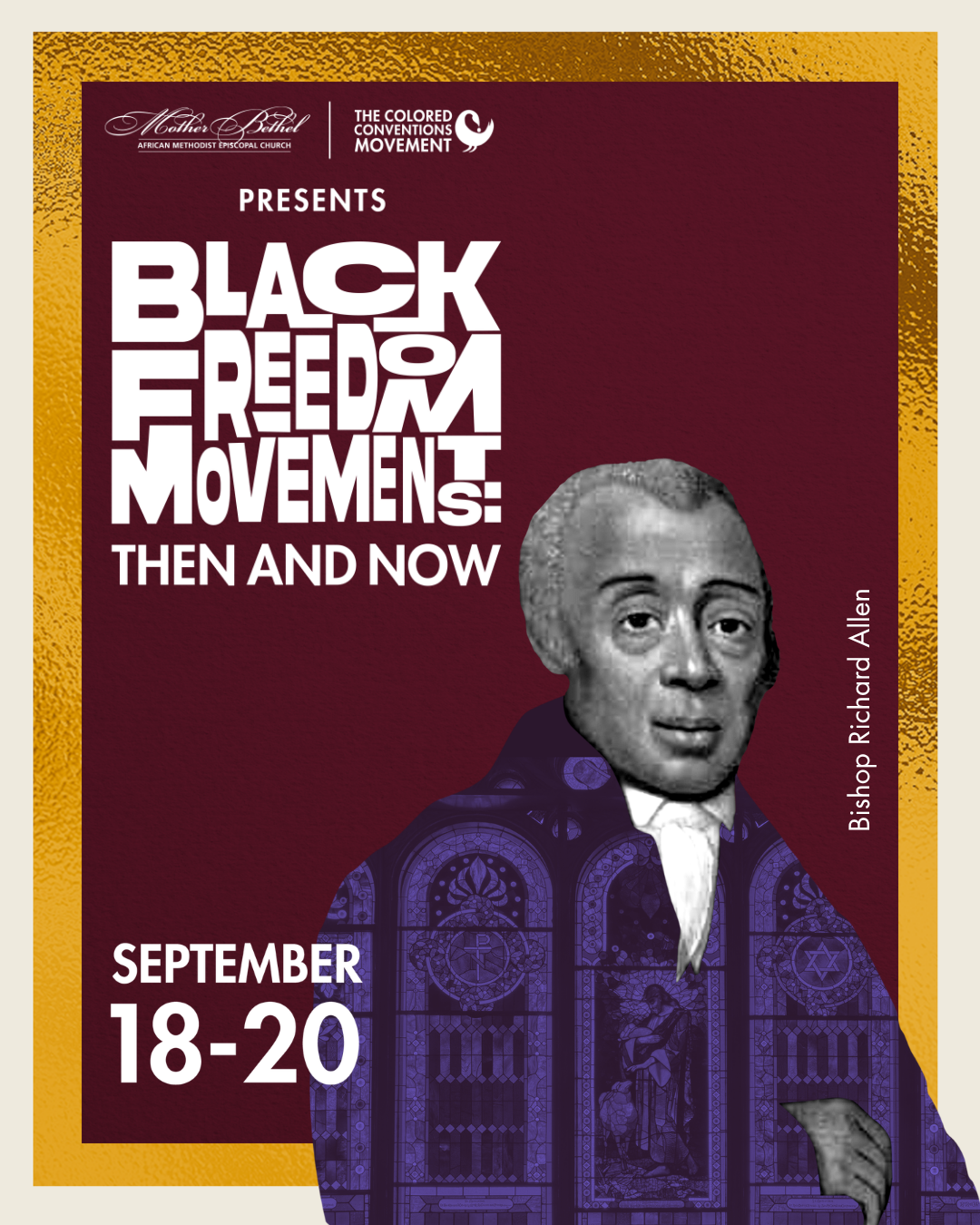
    A flyer advertising the 2026 Colored Convention: Black Freedom Movements Then and Now.2026 Colored Convention Committtee

    Burgher went on: Last week Trump threatened to snatch the tax exempt status from private schools that give minority students access to scholarships and educational programs, including at historically Black colleges and universities like Howard and Hampton.

    Add to that the dismal unemployment rate of college-educated Black women, who, according to D.C. think tank Economic Policy Institute, have lost more jobs in the public sector than Black men and white women in the last two years. Plus, the assault on Black history, including last week’s forced retirement of the Smithsonian secretary, Lonnie Bunch III, and the abrupt removal of memorials to enslaved souls at the President’s House site in Philadelphia.

    It’s clear Black equality in this political climate is not guaranteed.

    “We haven’t seen a threat like this on Black livelihood in this country since the post-Reconstruction era,” said Burgher, who is also the director of community engagement and curriculum development at Penn State’s Center for Black Digital Research. “This part of American history was a part of our past, now, it is not so suddenly aggressively and nakedly a part of our present.”

    A 19th-century America, she said, calls for 19th-century tactics.

    This weekend, Mother Bethel AME will host the “2026 Colored Convention: Black Freedom Movements Here and Now,” a celebration of the first Colored Convention held almost 200 years ago at the church. Dozens of influential free Black clergymen, statesmen, and activists convened at the 1830 Colored Convention and laid the foundation for civil rights groups like the Niagara Movement and the NAACP.

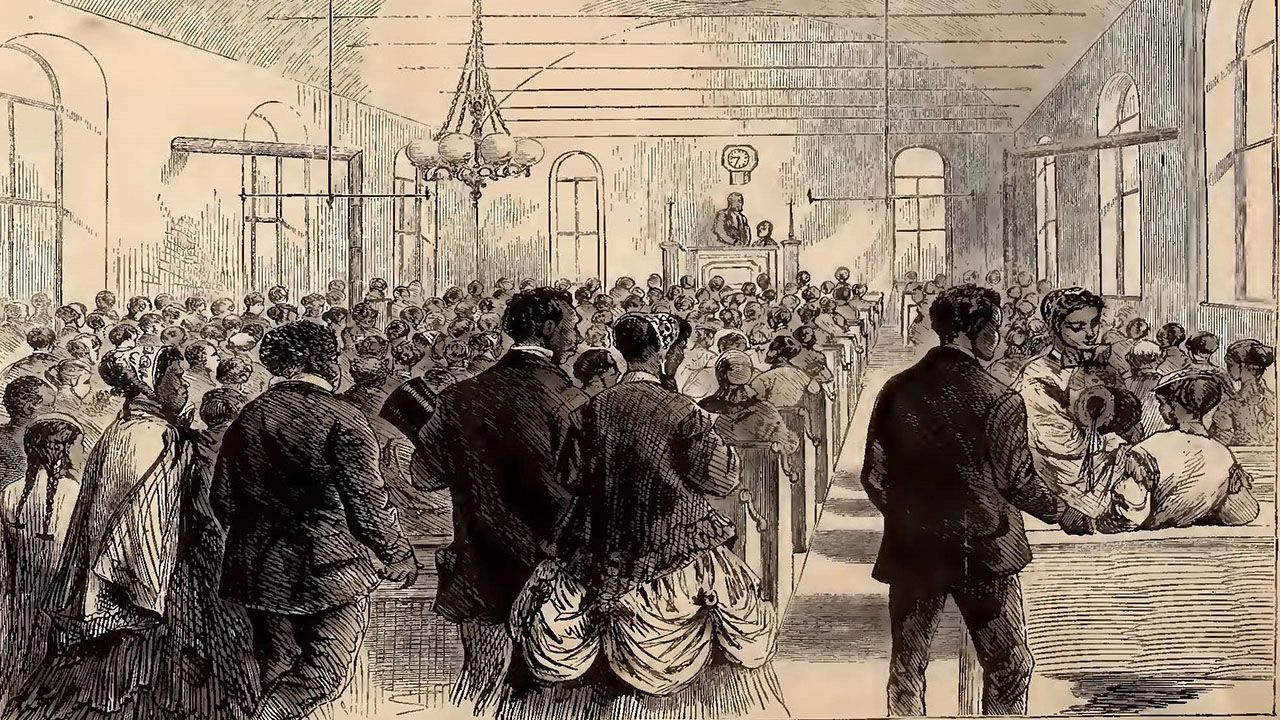
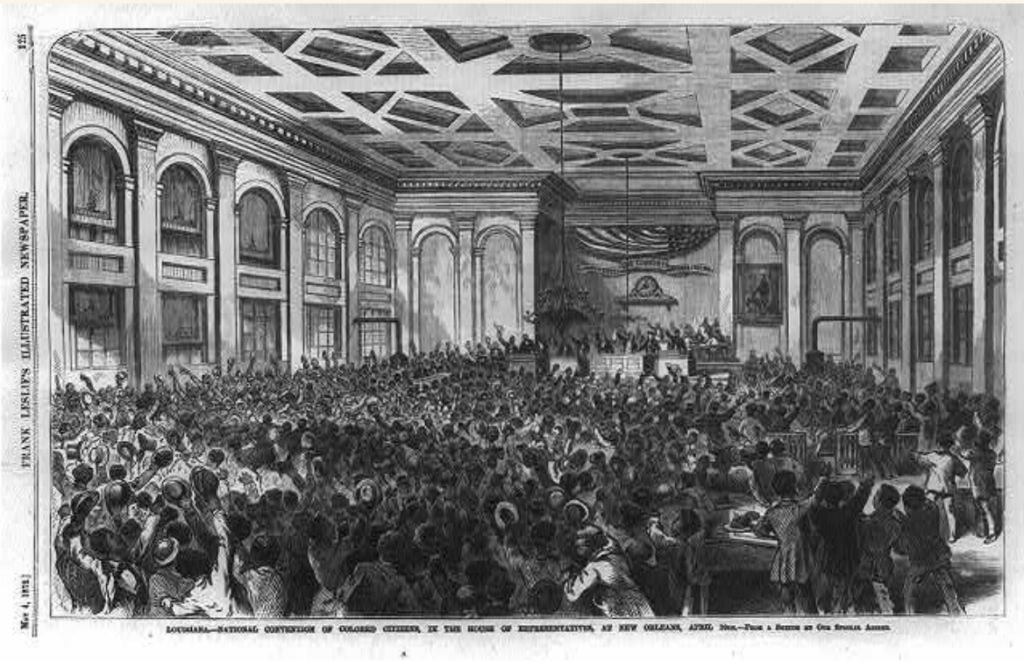
    This print from Frank Leslie’s Illustrated Newspaper depicts the National Convention of Colored Citizens’ meeting in the House of Representatives in New Orleans, in April 1872.The Library of Congress

    These organizations agitated for civil rights through the Civil War, Reconstruction, Jim Crow and into the 1960s, said Carolyn C. Cavaness, Mother Bethel’s pastor who tapped Burgher and Derrick Spires, historian and associate professor of English at the University of Delaware, to reignite the Colored Convention’s legacy.

    “To reclaim and be challenged by such a movement … is of much worth and esteem,” Cavaness said. “We are literally in a struggle now for equality and fairness of all people.”

    This weekend’s Colored Convention will feature workshops on genealogy, activism, and the 18th- and 19th-century Black press. Philadelphia school children will attend Thursday for arts and crafts projects that will teach them about the history of the Colored Convention.

    Andre E. Johnson, codirector of the Colored Conventions Project and professor at the University of Memphis, will deliver the keynote on the history of the Colored Convention and share how activists can apply 19th-century action plans to 21st-century technology to create a strategy to combat the present crisis.

    “In this year of the Semiquincentennial, this is yet another opportunity for Philadelphians to pay attention to history,” Burgher said, “and look at strategies our ancestors used more than 100 years ago. I’m not going to say the same thing is happening, but the events sure do rhyme.”

    The event will include a voter-registration drive, emphasizing the importance of voting in the midterms.

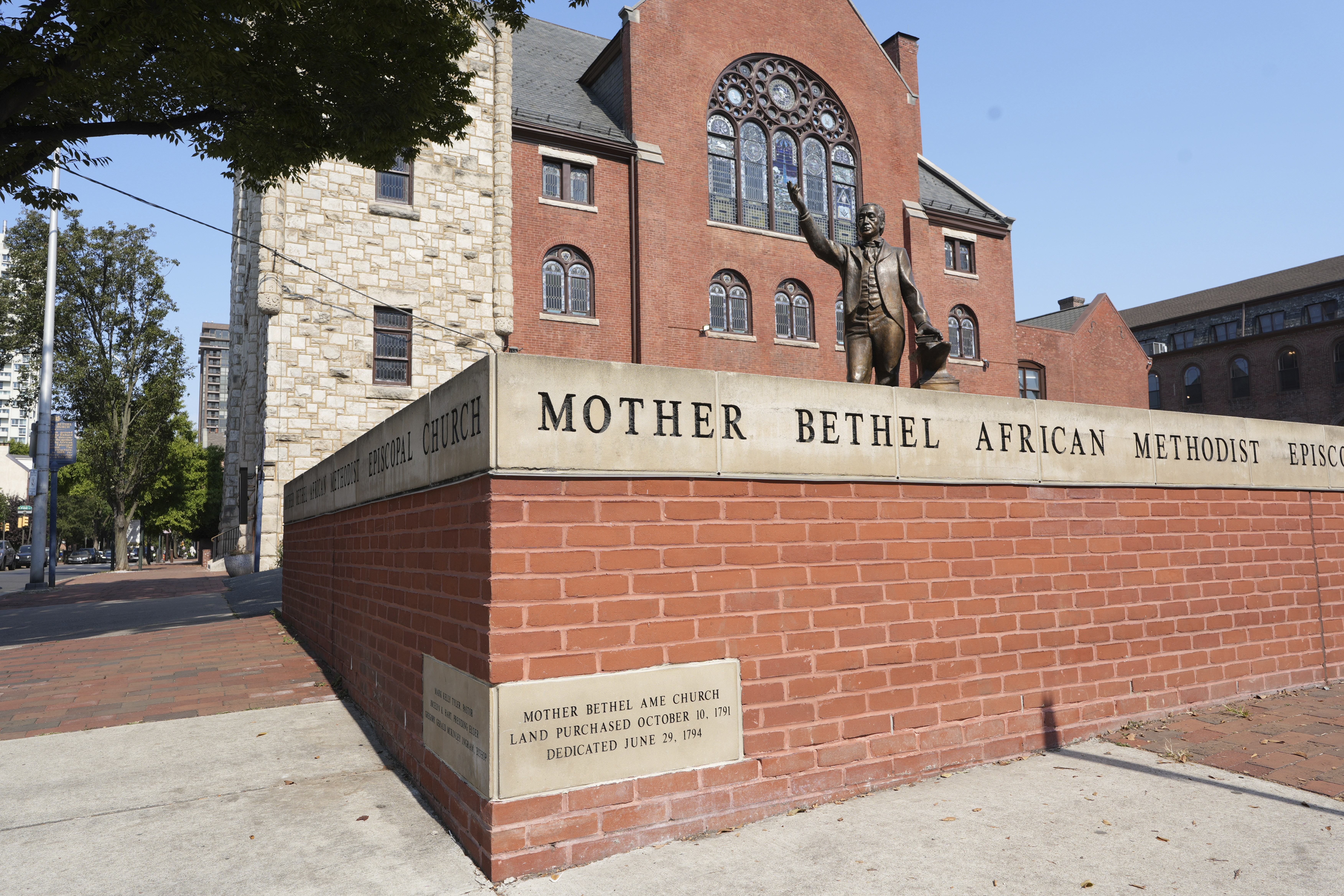
    Richard Allen founded Mother Bethel in 1794, and by 1830, the church was the cornerstone of the largest free community of African Americans in the country.

    In August of 1829, white mobs burned Black businesses and neighborhoods during the Cincinnati Race Riots. In response to the brutal loss of life and business, free man Hezekiah Grice wrote to Allen, asking the influential pastor to gather free Black intellectuals to strategize. His reasoning was, if white mobs could do this in Cincinnati, what’s to stop them from attacking Black communities everywhere else.

    More than 2,000 Black people from Cincinnati moved to Canada. The first Colored Convention was held from Sept. 20 to Sept. 24 in 1830 at Mother Bethel, resulting in emissaries from Philadelphia asking the Canadian government to allow Black people to establish communities there.

    The Colored Convention held annual meetings at Mother Bethel from 1831-85. By the turn of the 20th century, there were Colored Conventions regularly in nearly every major American city along the Northeast Corridor, in the Midwest, and along the West Coast.

    A statue of Mother Bethel AME Church founder Richard Allen stands on the oldest parcel of land continuously owned by Black Americans in Philadelphia on Oct 13, 2024. (AP Photo/Luis Andres Henao)Luis Andres Henao

    Black leaders from every walk of life attended, among them Frederick Douglass — known as the Lion of the Convention because of his deep oratory voice and big, distinctive hair — poet Frances Ellen Watkins Harper, newspaperman T. Thomas Fortune, and Philadelphia educators Jacob C. White and Charles L. Reason.

    Colored Conventions, Burgher said, became forums for Black leaders to discuss abolition, fugitive slave laws, voting rights, and education. Many Black institutions were born from these conventions, including the charters for Talladega University and Howard University Law School, established in 1865 and 1869, respectively.

    The last Colored Convention on record was in 1972 in Newark, N.J., Burgher said.

    “I hope this 2026 celebration will not only bring this history home,” Burgher said. “And I also hope it inspires Philly residents to respond to the current moment like history has taught us.”

    2026 Colored Convention: Black Freedom Movements Here and Now will take place Thursday, Sept. 17 — Sunday, Sept. 20. Mother Bethel is located at 419 S. Sixth St. Admission is by donation.

  • It’s been a decade since Temple and Penn State met. Their lopsided rivalry has had its moments.

    It’s been a decade since Temple and Penn State met. Their lopsided rivalry has had its moments.

    When Temple and Penn State kick off at Lincoln Financial Field on Saturday, the programs will renew a 95-year-old rivalry for the first time in a decade.

    Penn State holds a 40-4-1 all-time record and has won 32 of the last 33 meetings. However, the history of this series extends beyond wins and losses.

    Before the Nittany Lions return to Philadelphia for the first time since 2015, here are some of the top moments from their rivalry.

    Temple strikes first

    Temple and Penn State matched up for the first time on Oct. 10, 1931, when the Owls shut out the Nittany Lions, 12-0, in front of a capacity crowd of 20,000 at Temple Stadium.

    Head coach Heine Miller led Temple an 8-1-1 season, which stood as a program record for 42 years until Wayne Hardin’s 1973 team eclipsed it with nine.

    The Owls went on to claim three of the first four matchups in the all-time series.

    The victory that lasted 74 years

    Temple’s third win in four meetings with Penn State, on Oct. 18, 1941,became a frequently cited date.

    On a wet, muddy, and slippery day, Temple claimed what would be its final victory against the Nittany Lions for the next 74 years in a 14-0 win at Temple Stadium.

    Temple picked off star Penn State quarterback Johnny “Pepper” Petrella four times. Also, four players, two from each team, were taken off the field on stretchers in a game former Inquirer reporter Stan Baumgartner characterized as “bruising and bitterly contested” and both teams “appeared to have their boxing and wrestling squads competing.”

    It took another 39 games for the Owls to beat the Nittany Lions.

    Within inches

    Following Temple’s 1941 victory, an era of struggle ensued.

    In 1950 at New Beaver Field, Temple came close to beating Penn State when the two teams tied 7 apiece. Fun fact: Temple running back Gene Caterina scored the Owls’ first touchdown in University Park.

    The series entered a 22-year hiatus after 1952, and it wasn’t until 1975 when Temple made things interesting again. In front of a crowd of 57,112 at Franklin Field, Penn State snuck past the Owls, 26-25.

    Just a year later, in 1976, it was an even more painful finish, this time at Veterans Stadium. Temple trailed by two touchdowns before mounting a late comeback. The Owls drove downfield during the final two minutes but appeared in danger of running out of time near Penn State’s goal line.

    Then an unusual interruption occurred: a spectator ran onto the field and officials stopped the clock. Temple scored a touchdown on the next play, making it 31-30. The NCAA did not introduce overtime until 1996, so Hardin faced a straightforward decision: Kick the extra point and accept a tie or attempt a two-point conversion to win. Hardin went for two. The pass went just beyond the intended receiver, preserving Penn State’s one-point victory.

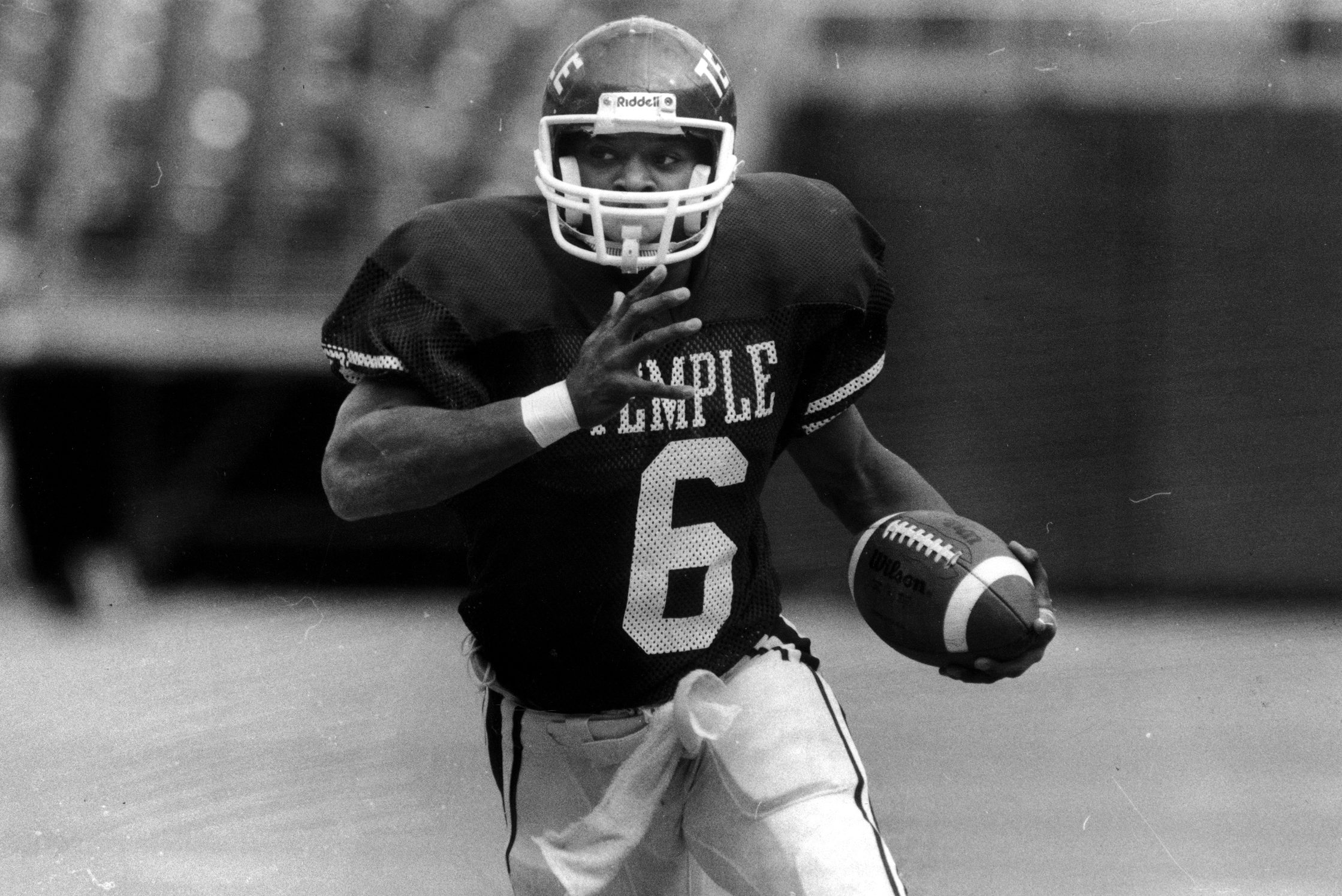
    Other notable games were in 1978 when No. 3-ranked Penn State survived Temple on a last-second Matt Bahr field goal to claim a 10-7 win. Then in 1985, a 206-yard, two-touchdown day from Temple running back Paul Palmer wasn’t enough in a 27-25 loss. Palmer was inducted into the College Football Hall of Fame in 2018.

    Paul Palmer finished with 206 yards and two touchdowns against Penn State in 1985.Inquirer Archives

    Penn State’s 31-game winning streak

    Between 1952 to 2014, the Nittany Lions won 31 consecutive matchups against the Owls, with former Penn State coach Joe Paterno leading them to 28 of those wins between 1975 to 2011.

    During that time, Penn State outscored Temple 1,068-331 and held an average game score of 34.5-10.7, a 23.8-point average margin.

    The Nittany Lions shut out the Owls four times. The most lopsided matchup came in 1995 in Penn State’s 66-14 victory. Its streak survived nine Temple head coaches, and was played at five different venues.

    From Penn State to Temple

    Despite the quarrels between the programs, two Penn State products became the most important figures in the revival and progression of Temple football.

    Former Temple head coach Al Golden lettered with the Nittany Lions from 1989-1991 and started at tight end for two seasons. He guided Temple to a 20-12 conference record between 2006 and 2010, a tenure that started a golden era of Owls football.

    Before becoming Temple’s head coach, Al Golden started at tight end for two seasons at Penn State.DAVID SWANSON / Staff Photographer

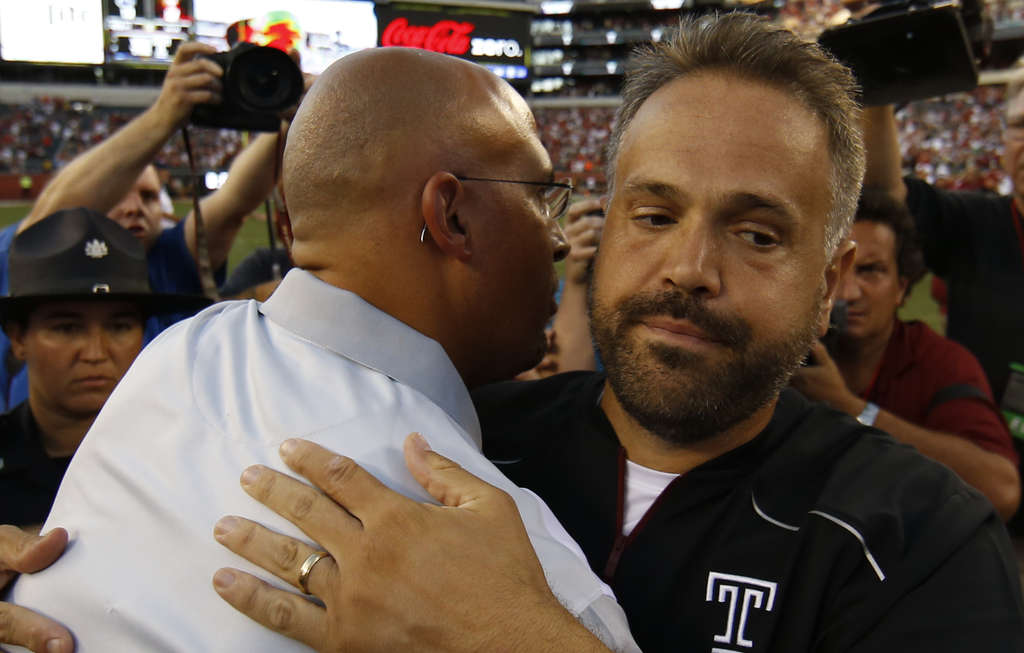
    Matt Rhule was also a walk-on linebacker at Penn State from 1994-1997 and got his start as a graduate assistant under Paterno. He eventually found his way onto Golden’s staff at Temple and was named defensive line coach in 2006, before moving to offensive coordinator.

    Rhule remained at Temple following Golden’s departure and worked under Steve Addazio before being hired as head coach in 2012. Rhule coached the Owls for four years, taking them to two consecutive bowl games and an American Conference championship in 2016.

    The Owls broke through

    In 2015, Temple took down Penn State, 27-10, in its season opener at Lincoln Financial Field in front of a then record-breaking crowd of 69,176.

    Coming off a 6-6 season under Rhule, Temple entered as a seven-point underdog.

    Penn State jumped out to a 10-0 lead before a 12-play, 93-yard drive ended with a Temple touchdown. The Owls tied the game with a 40-yard field goal before PJ Walker ran in a touchdown to give the Owls a 17-10.

    They added another score, but the real exclamation came from Temple’s defense, which sacked Penn State quarterback Christian Hackenberg 10 times, three coming from All-American linebacker Tyler Matakevich.

    In 2016, Temple visited Beaver Stadium and suffered a 34-27 loss. It was the last matchup between these two programs.