Tag: Old City

  • Albert Gury, popular painter and award-winning professor of art education, has died at 74

    Albert Gury, popular painter and award-winning professor of art education, has died at 74

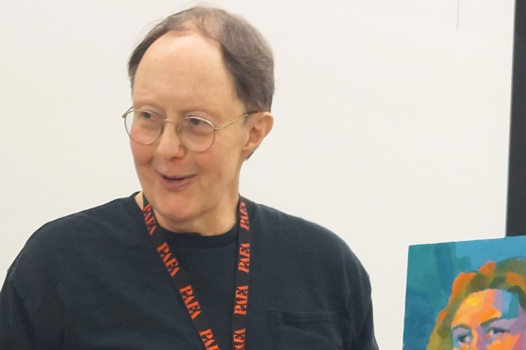
    Albert Gury, 74, of Philadelphia, lifelong painter, former chair of the painting department at the Pennsylvania Academy of the Fine Arts, award-winning lecturer at the old University of the Arts and other institutions, author, mentor, community advocate, and cat rescuer, died Thursday, June 25, after a long illness at the Hospital of the University of Pennsylvania.

    Born in Peoria, Ill., Professor Gury came to Philadelphia in the early 1970s after a professor at St. Louis University advised him to enroll at the Pennsylvania Academy of the Fine Arts. He did, and he never left.

    He earned a four-year certificate in painting at PAFA in 1976 and, starting in 1980, taught painting, drawing, figure drawing, anatomy, art history, and art education at PAFA. He was chair of the painting department from 2000 to 2022 and creator of several innovative art education programs.

    He painted portraits of young gun violence victims for PAFA’s Lost Dreams on Canvas exhibit and founded and directed the academy’s popular after-school free art program for high school students in 1994. In 2026, he earned a community recognition award from the Philadelphia School District.

    “This is a way for us to reach out to the community and really try to do something beneficial,” Professor Gury told The Inquirer in 2005. “We train them as if they are college freshmen, not high school kids. It raises the bar on the quality of their work.”

    Professor Gury also lectured for decades at University of the Arts, the Fleisher Art Memorial, the Barnes Foundation, and elsewhere. He instructed students at Jefferson Medical College on anatomy, consulted for the city’s mural arts program, and ran art seminars and painting workshops regionally and in Scotland and Croatia.

    He earned a master teacher’s award from University of the Arts and a master’s degree in fine arts at the University of Delaware in 1992. Former students called him “unfailingly caring, and supportive, and smart,” and “very generous in sharing his wealth of knowledge” in online tributes. One said: “What a great example to us all.”

    In a tribute, PAFA officials said: “We remember Al not only for what he taught but for how he taught: with patience, conviction, humor, discipline, and an open heart.”
    Professor Gury (center) draws and explains the nature of the human form to students at Jefferson Medical College in 2007.

    In the studio, Professor Gury painted colorful figures, landscapes, still life, and portraits. His portrait Alice of Dunk’s Ferry hangs in historic Christ Church in Old City, and he showed at the Philadelphia Museum of Art, the F.A.N. Gallery on Arch Street, the National Academy of Design in New York, the U.S. Capitol in Washington, and elsewhere.

    He especially enjoyed painting abstract landscapes, he said in a 2014 video, because “they are pure.” He told the Daily News in 2000: “I like to paint the things I love. I like the intimacy of small paintings. I move the paint around and put together elements in nature even if they don’t exist that way. I like to imagine things rather than just paint what is in front of me. Sometimes it becomes a little surreal.”

    In 2000, critic Anne R. Fabbri said in the Daily News that many of Professor Gury’s paintings are “united by his layered brushwork, tonal depths, and the creative act that transforms color, line, and composition into a life-enhancing work of art.” He was honored by the Philadelphia Sketch Club in 2017.

    Professor Gury wrote three textbooks: Alla Prima: A Contemporary Guide to Traditional Direct Painting in 2009, Color for Painters: A Guide to Traditions and Practice in 2010, and Foundations of Drawing: A Practical Guide to Art History, Tools, Techniques, and Styles in 2017. He also contributed articles about painting and art to magazines and museum publications around the world, and was a contributing editor for the international journal Per Contra.

    In his neighborhood, Professor Gury advocated for better housing and fostered rescue cats in his home. He volunteered at the Philadelphia Animal Welfare Society and was named its 2015 volunteer of the year. The group renamed its kitten maternity ward after him.

    “We are searching for words to express just how extraordinary Al was, what a profound difference he made, and how much we loved and appreciated him,” colleagues at PAWS said in a tribute. “We hope he knew what an immense impact he made, and how much better and more beautiful the world is because of him.”

    Albert Francis Gury was born Oct. 23, 1951. A family friend introduced him to painting when he was young, and he spent many days roaming the galleries at the Art Institute of Chicago while his father worked downtown.

    He earned a bachelor’s degree in fine arts at St. Louis University in 1973 and won scholarships, grants, and honors as both a student and a professor at PAFA. He collected quilts and rare books on art.
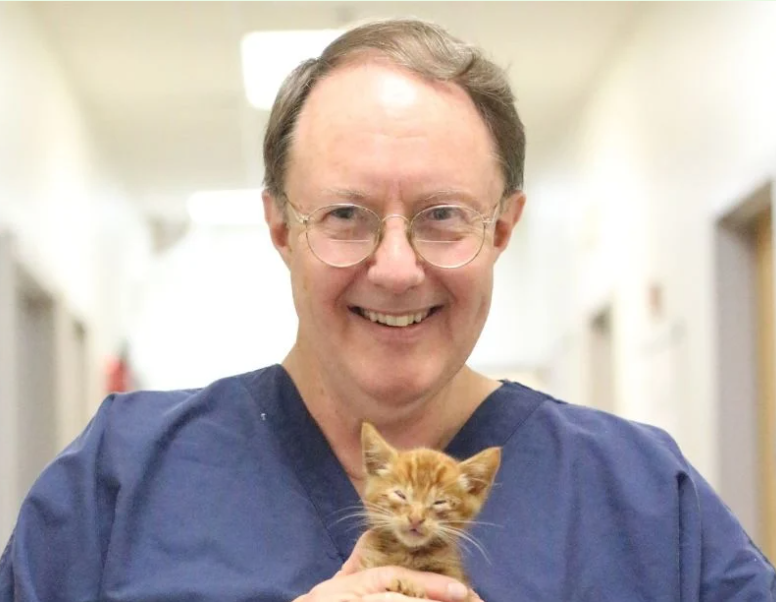
    Professor Gury loved animals, especially cats.Philadelphia Animal Welfare Society

    In 2018, his apartment building on Chestnut Street burned down in an early-morning fire. Several of his cats and parakeets perished, and much of his artwork was lost. “The whole thing is just tragic,” he told The Inquirer then.

    Friends called him “a classic caregiver” and a “protector of the underdog.” Longtime friend and colleague Reza Ghanad said: “If you were feeling down, he would pick you up.”

    Friend and colleague Morgan Hobbs said: “He noticed students who could have gone unnoticed without him. He had a special gift for that.”

    Professor Gury is survived by several relatives.

    His ashes are interred at Christ Church Burial Ground. A celebration of his life is to be held later.

    Donations in his name may be made to the Philadelphia Animal Welfare Society, 100 N. Second St., Philadelphia, Pa. 19106.
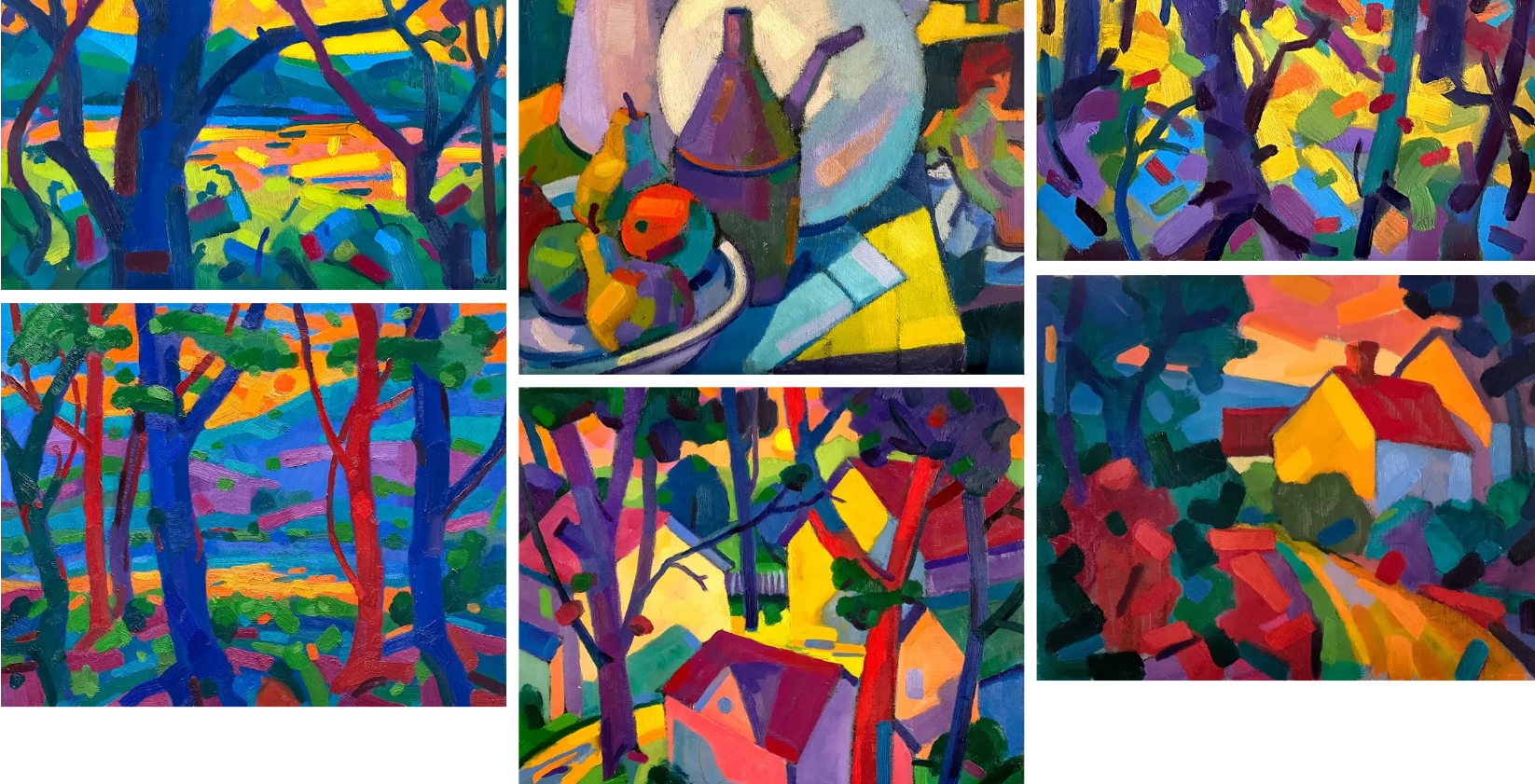
    Much of Professor Gury’s work features color and shape. Al Gury
  • Your first look at Ellen Yin’s Italian hangout | Let’s Eat

    Your first look at Ellen Yin’s Italian hangout | Let’s Eat

    Ellen Yin is about to open a chichi all-day bar in Rittenhouse, and we take you inside.

    Also in this edition:

    — Mike Klein

    If someone forwarded you this email, sign up for free here.

    Your first look at Ellen Yin’s Italian hangout

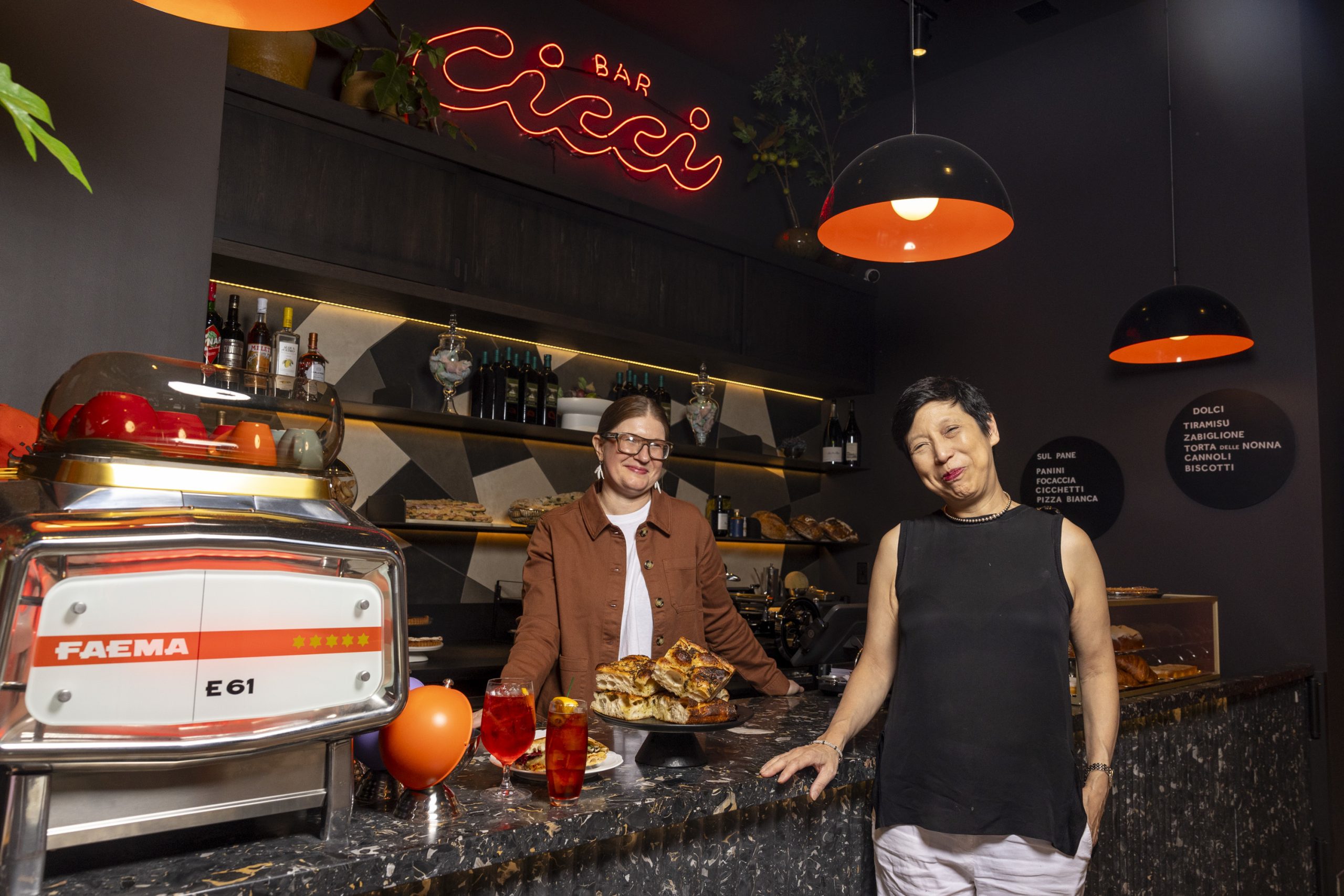
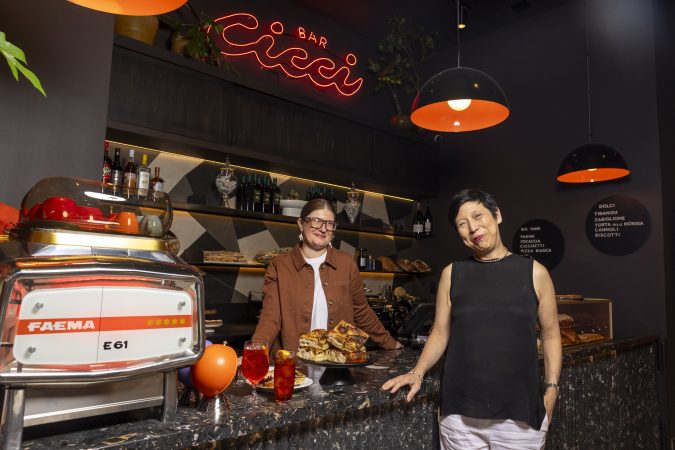
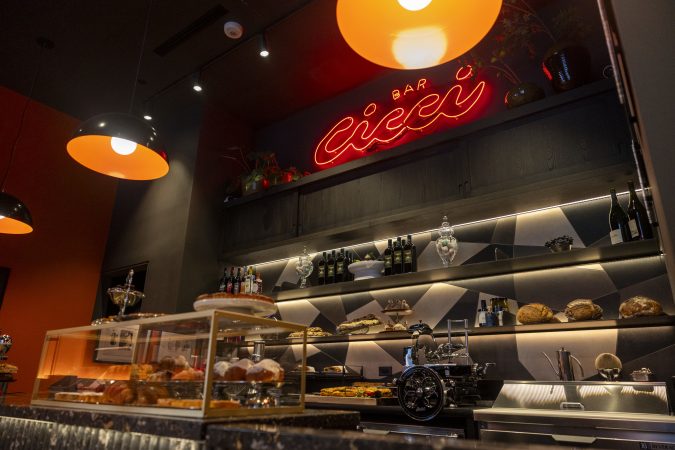
    High Street Hospitality founder and James Beard Award winner Ellen Yin is just about ready to hit Rittenhouse with Bar Cicci, an all-day drop-in for espresso and pastries by morning, sandwiches by day, and spritzes, cicchetti, and small plates by night. Join Beatrice Forman on Sansom Street for your first look.

    The crop of Shore farmers markets

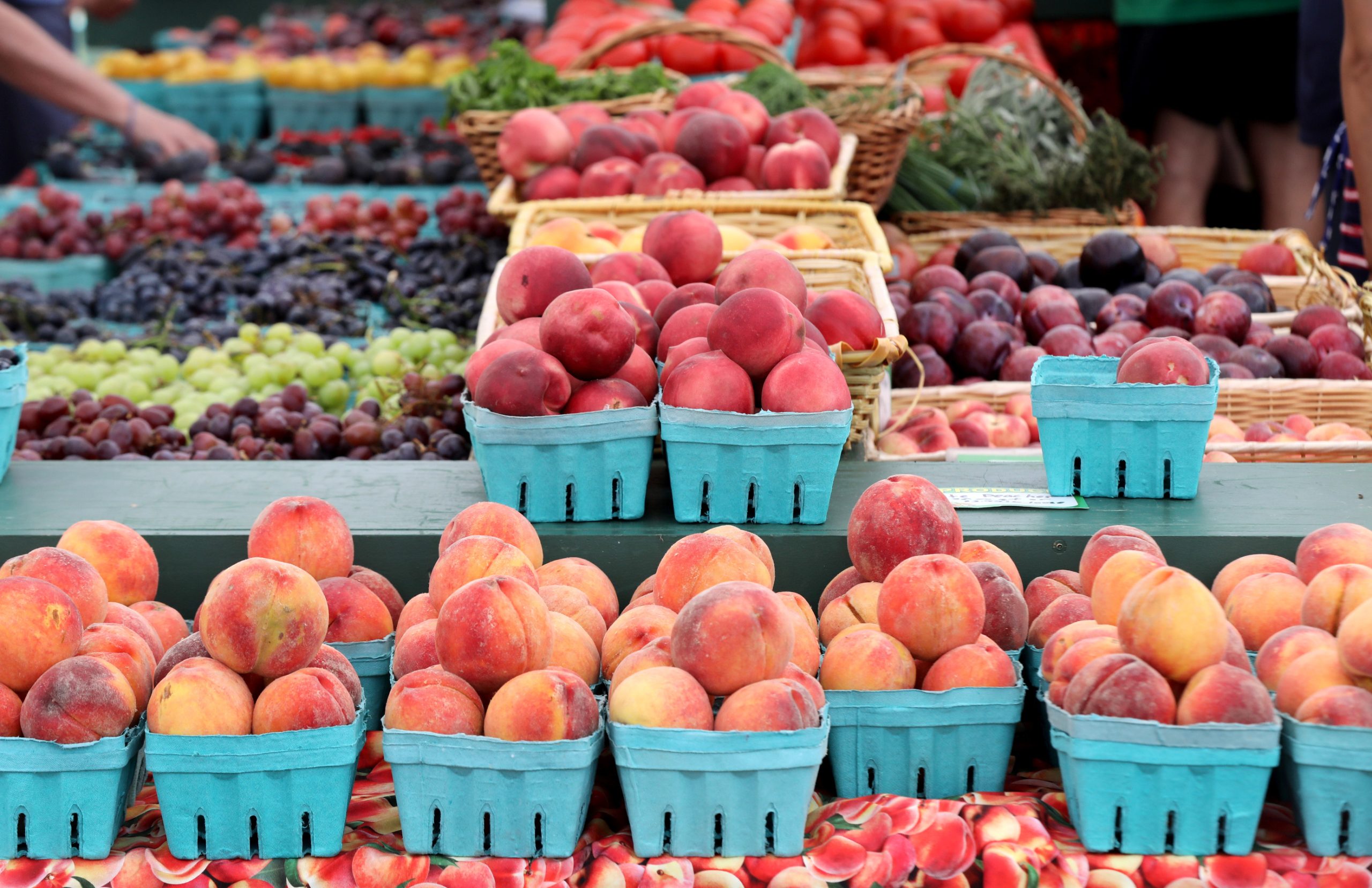
    Shore season isn’t done yet, and neither are farmers markets, which have seen an uptick in business locally in the midst of a cyclospora outbreak. Hira Qureshi maps out where you can buy local produce, baked goods, and more at markets down the Shore.

    New restaurants for August

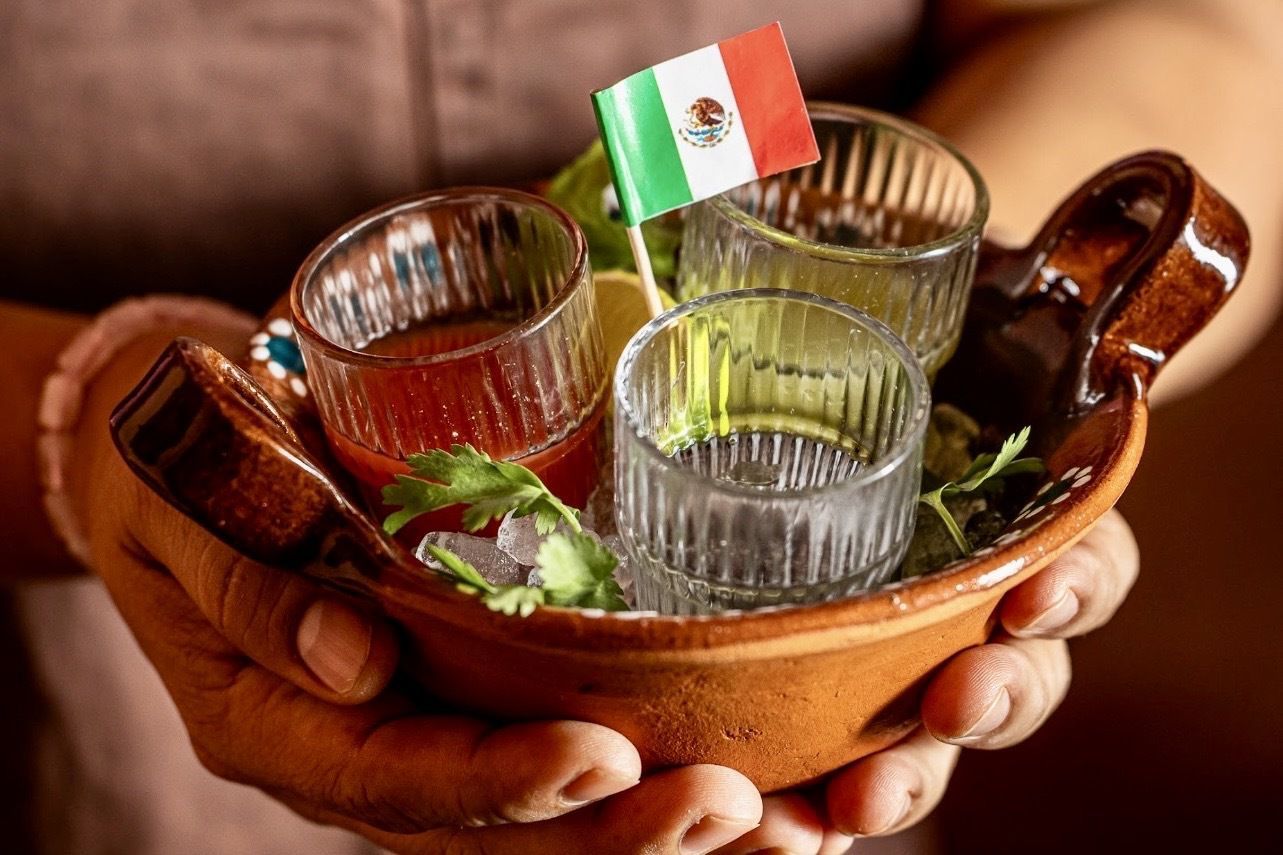
    Besides Bar Cicci, a half-dozen new restaurants are on tap this month, including Recipe Philly in Center City, Cecilia in Bridgeport, and Mixteca in East Kensington, where the red, white, and green of la bandera figures into the signature cocktail.

    One town has cornered the market on ‘little treats’

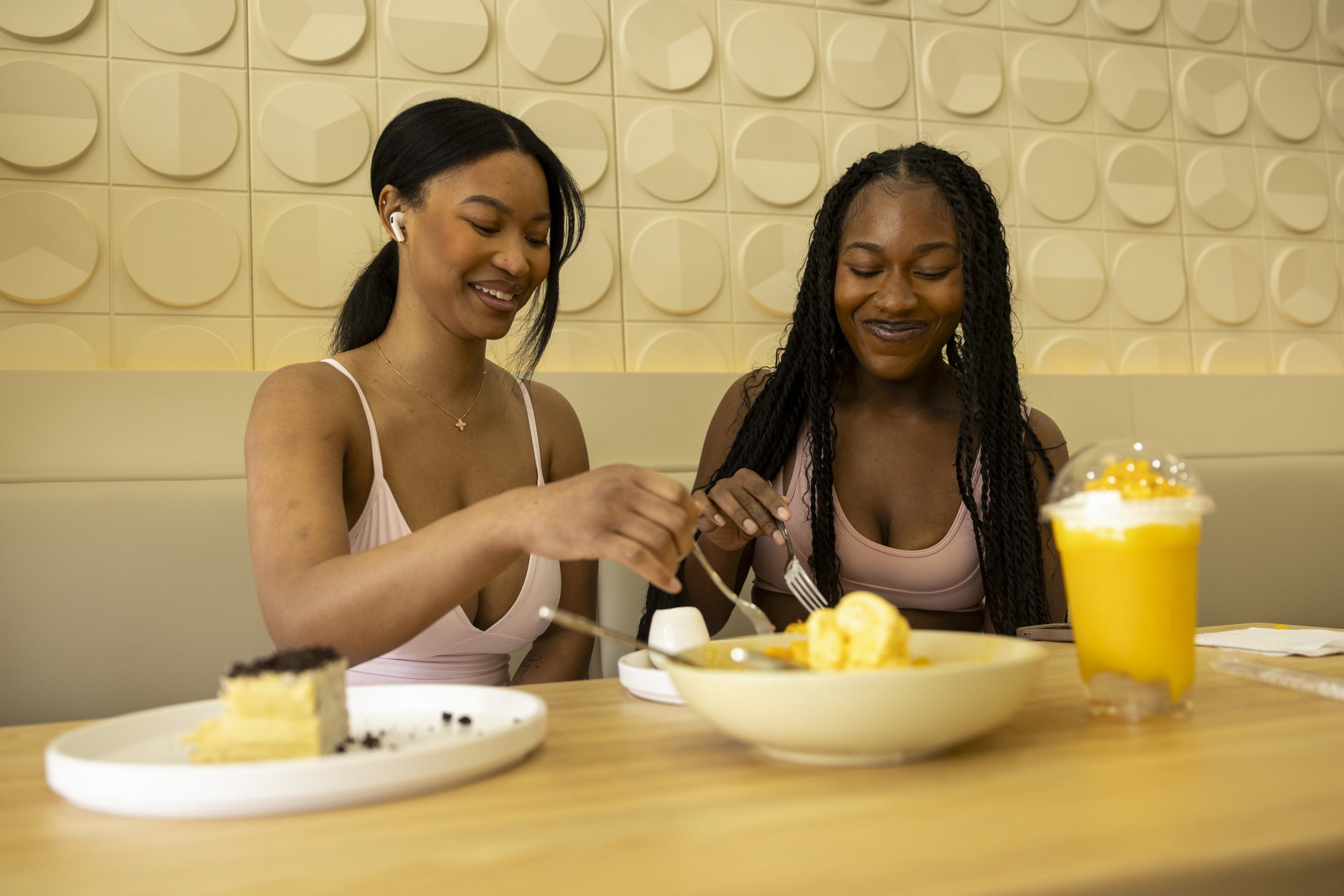
    Lancaster Avenue in Ardmore, one of the Main Line’s busiest commercial strips, is now home to two new dessert shops. Denali Sagner explains that one specializes in tea, cakes, and buns, while the other celebrates the mango.

    A teeny-tiny bar is coming to Fishtown

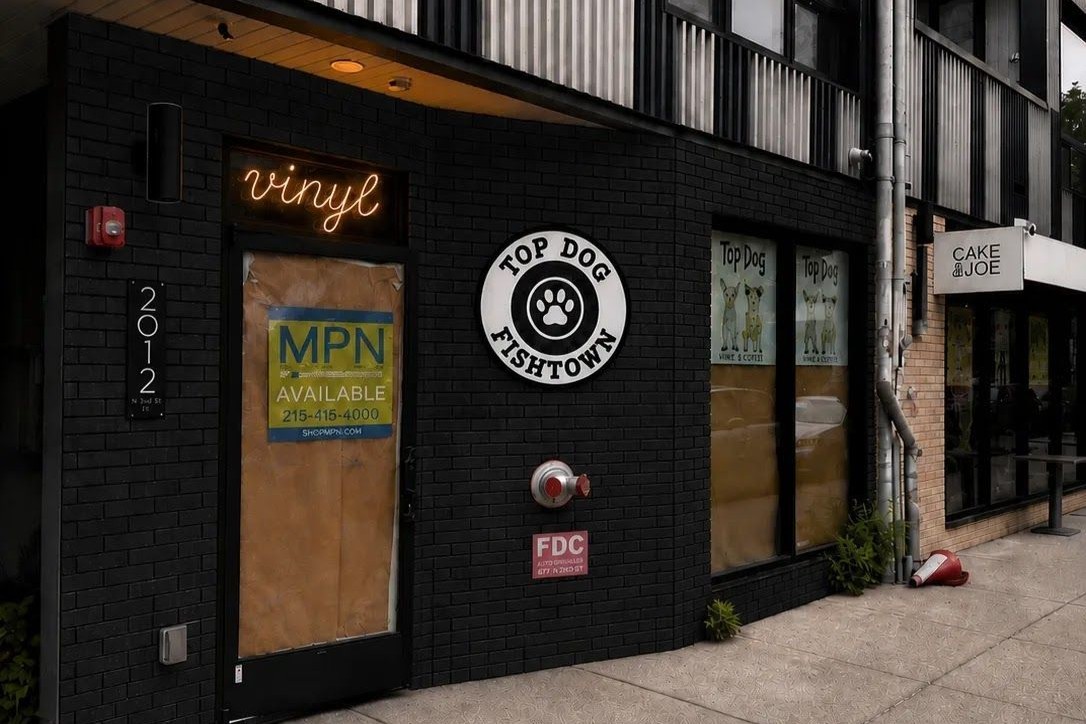
    Canned-cocktail brand Top Dog is setting up listening rooms in Kennett Square and Fishtown, embracing the Japanese jazz kissa model — a music cafe or bar that’s focused on listening to vinyl records. Brooke Schultz chatted up Top Dog’s Ken Smukler, who aims to deliver an “analog feel in a digital world.” The Fishtown location is tiny. It used to be an ATM.

    The best thing Kiki Aranita ate last week

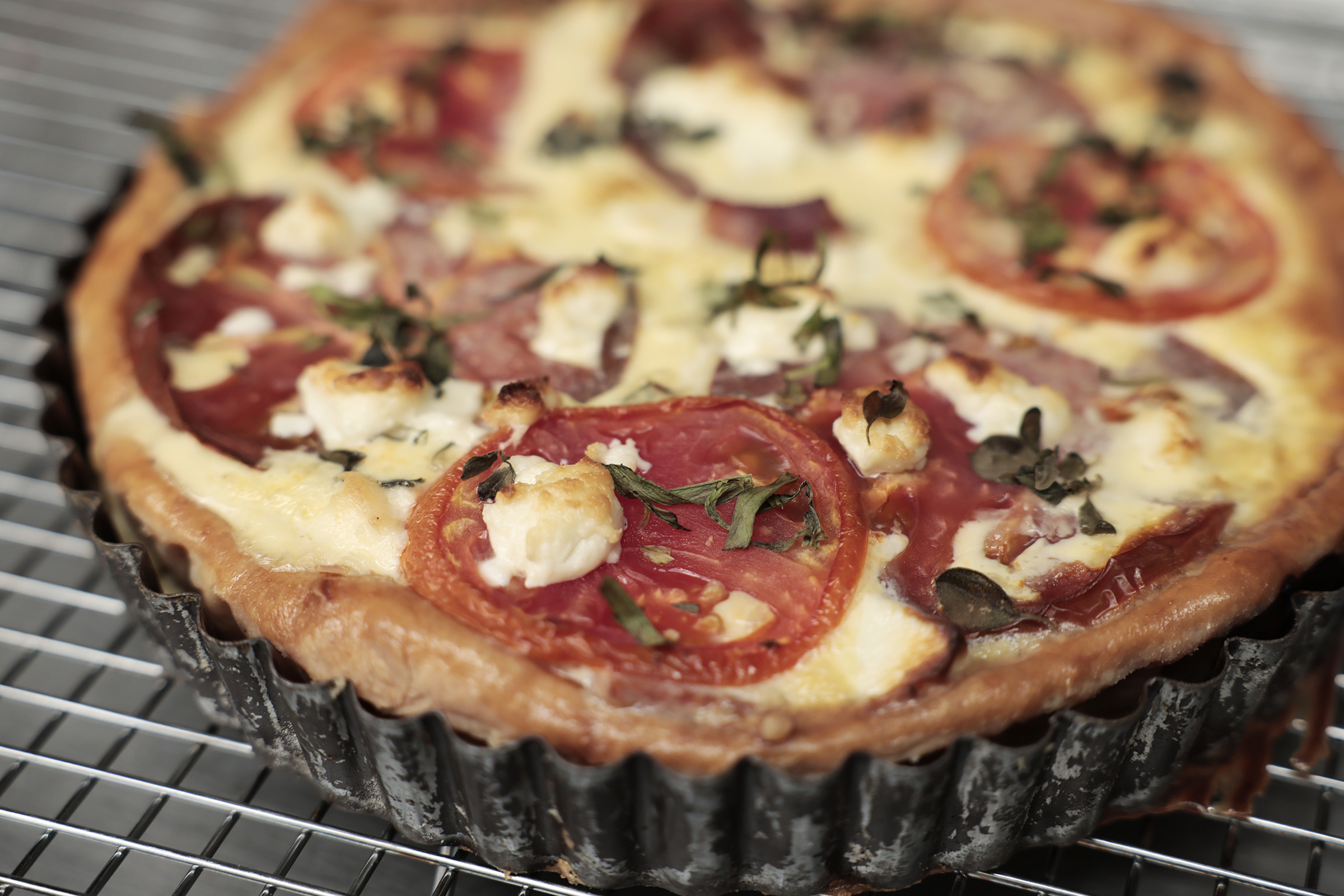
    The handmade tarts from Market Day Canelé layer summer tomatoes over a corn custard with cremini and button mushrooms, herb-roasted cotto ham, eggs, and Gruyère in a flaky crust. Kiki Aranita says you have to act fast to snap one up.

    Scoops

    Two chefs have made big professional strides from their roots in Roxborough, and now they’re coming home to Manayunk to take over the Winnie’s space with a “punk French” eatery.

    Aldar Bistro in Bala Cynwyd is giving way after 34 years to a white-tablecloth Southern Italian restaurant called Bruzi.

    Does a spate of restaurant-closing announcements — such as Hiroki, Federal Donuts & Chicken, and the Lodge by Two Robbers — portend industry doom? No, and I’ll explain why not.

    Restaurant report

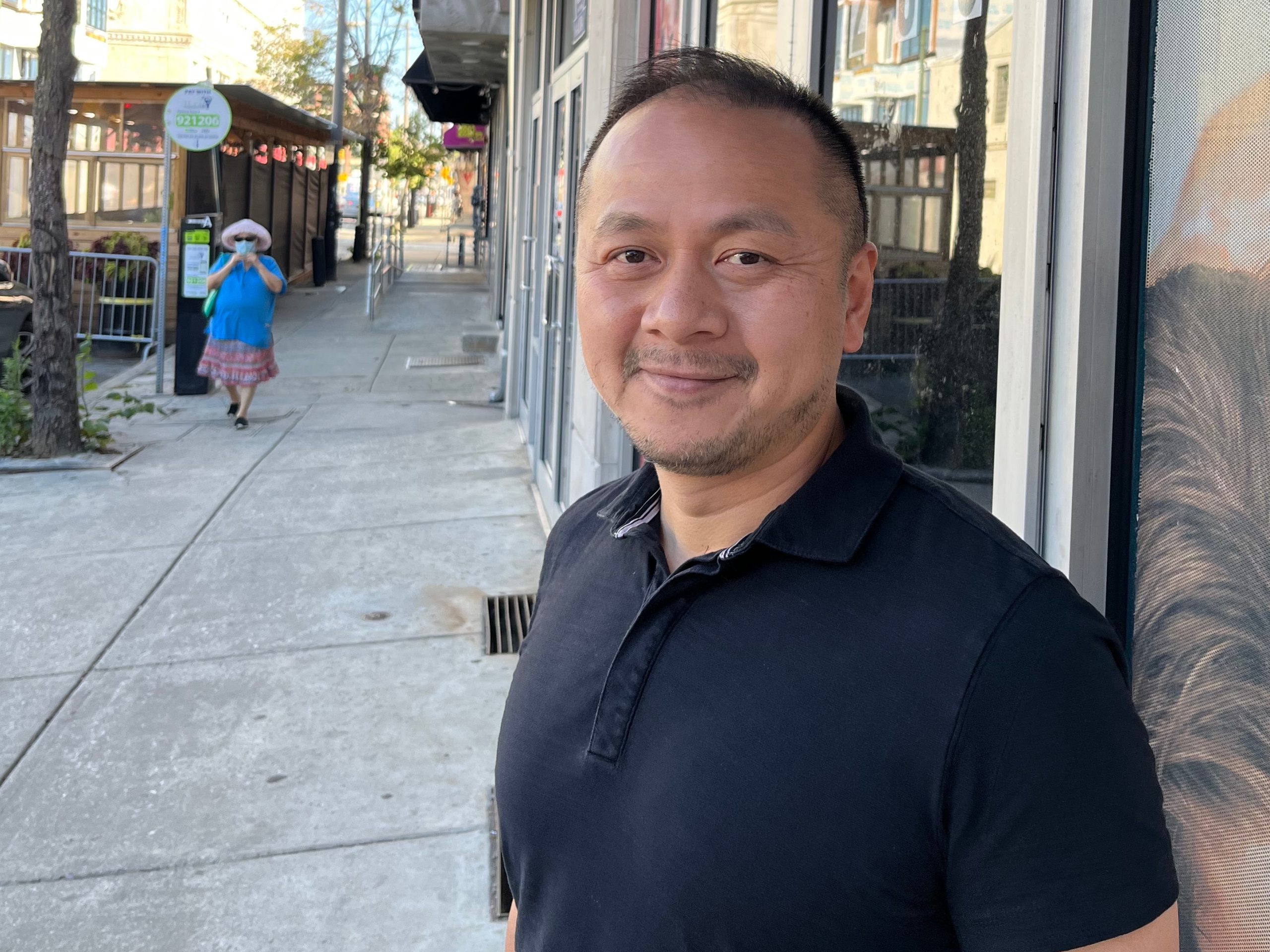
    Gabriella’s Vietnam in South Philadelphia is counting down to closing in mid-December as the new owner of her building is planning a restaurant of their own. Chef-owner Thanh Nguyen told Kiki Aranita that she is looking for a new spot.

    Side Eye, the Queen Village bistro, gets a bit of side eye from critic Craig LaBan, who likes the vibe and pricing but thinks the execution could be sharper.

    New drive-thru coffee option: The syndicated 7 Brew has opened at 4000 Woodhaven Rd. in Northeast Philadelphia’s Knights Road Shopping Center.

    More bagels are coming round: Central Florida-based Jeff’s Bagel Run — schmeared with private-equity investment — has cinched a franchisee for 10 stores from the Harrisburg area east through Reading and the Lehigh Valley to suburban Philadelphia. No leases have been signed, the company announced in a press release.

    Briefly noted

    Cantina la Martina’s fourth annual Cemita Festival returns from 11 a.m.-4 p.m. Sunday at the Garden Center across from Mural City Cellars (1825 Frankford Ave). Six restaurants will each serve interpretations of Puebla’s iconic cemita sandwich for $16: Cantina la Martina, Gilda, Bolo, Vientiane Bistro, Cinteotl Tamalli, and Los Cuatro Soles Restaurant. Also: beverages from Mural City Cellars, DJ Cali Rumba, dance performances by Danza Tonantzin Cultura, face painting, and artisan vendors. It’s pay-as-you-go. Some cemita vendors are cash only.

    Post Haste in East Kensington will become Philadelphia’s only participant in the inaugural Global Pay What You Can Day on Aug. 26, joining restaurants from Mexico City to Mumbai in a one-day effort to make dining more accessible. Guests can order whatever they’d like and pay what they can (excluding alcohol), building on chef Ari Miller’s weekly pay-what-you-can program launched earlier this year. (Miller is married to Inquirer staff writer Kiki Aranita.)

    The Fishtown Pickle Project is taking its annual pickle-themed dinner outside of Fishtown for the first time. The Aug. 27 edition will have founders Niki Toscani and Mike Sicinski in Rittenhouse to collaborate with Uchi on a nine-course, pickle-centric tasting menu (e.g. oysters with giardiniera, yellowtail with pickled peach, salmon with pickled enoki, and a dessert featuring pickle jam). Seatings: 6 and 8:30 p.m. Tickets: $125 per person, plus tax and gratuity.

    Chef Chaz Brown, in partnership with Forman Arts Initiative, will present the third annual Oxtail Collective from 1-5 p.m. Aug. 30 at the Substation in Kensington. Titled “The Hercules Posey Celebration” — after George Washington’s enslaved chef — the event will bring together Black chefs, historians, artists, and entrepreneurs to explore the intersections of food, culture, business, and history while serving as an early public introduction to Forman’s future 100,000-square-foot arts campus. Participating chefs include Chad Williams of Friday Saturday Sunday, Omar Tate and Cybille St. Aude-Tate of Honeysuckle, and Shola Olunloyo of Studiokitchen. PBS NewsHour’s Geoff Bennett will moderate panels, and the program also includes tastings from 15 chefs, cooking demos, and a marketplace featuring Black-owned businesses. Tickets ($92.55, including fees) are on sale.

    Delicious City Philly Podcast’s second annual Hoagie Throwdown has a date: Sept. 27, from noon-4 p.m., at Other Half Brewing in Fishtown, drawing 20 chefs, restaurants, delis, and sandwich makers to compete. There will be unlimited hoagie samples, beer/soft drinks, and pro wrestlers grappling. (Last year’s outing was a scene: The Inquirer’s Craig LaBan, in a Zorro mask and big hat, went through hoagie-making boot camp.) The podcast has made 500 tickets available and early pricing starts at $55.

    ❓Pop quiz

    Which Pennsylvania farm crop is in the crosshairs of the U.S. Department of Commerce?

    A) mushrooms

    B) hay/alfalfa

    C) corn

    D) apples

    Find out if you know the answer.

    Ask Mike anything

    What is going on at 117 Chestnut St.? The restaurant 117 is closed already and it just opened. — Chris D.

    Old City restaurant 117, which opened only last November, posted a note on Instragram last week that it had closed “due to circumstances beyond our control.” According to Philadelphia court records, the restaurant was evicted over back rent.

    The space’s previous occupant, the Avery, also had a very short run last year. Previous occupants had better luck: 2nd Story Brewing Co. closed in 2024 after a decade and was the last to use the brewing equipment installed by Triumph Brewing Co. for its own run from 2007 to 2014.

    Adding intrigue now is the liquor license application that was filed at 117 Chestnut St. last week in the name “Finish Your Champagne LLC.” Finish Your Champagne is the name of the long-in-the-works Columbus Boulevard cocktail bar project from Kevin Dolce, owner of Center City’s Taste Cheesesteak Bar and Savù. Dolce declined comment.

    📮 Have a question about food in Philly? Email your questions to me at mklein@inquirer.com for a chance to be featured in my newsletter.

    By submitting your written, visual, and/or audio contributions, you agree to The Inquirer’s Terms of Use, including the grant of rights in Section 10.

  • Ellen Yin’s newest Philly restaurant is an all-day aperitivo bar built for snacking and sipping

    Ellen Yin’s newest Philly restaurant is an all-day aperitivo bar built for snacking and sipping

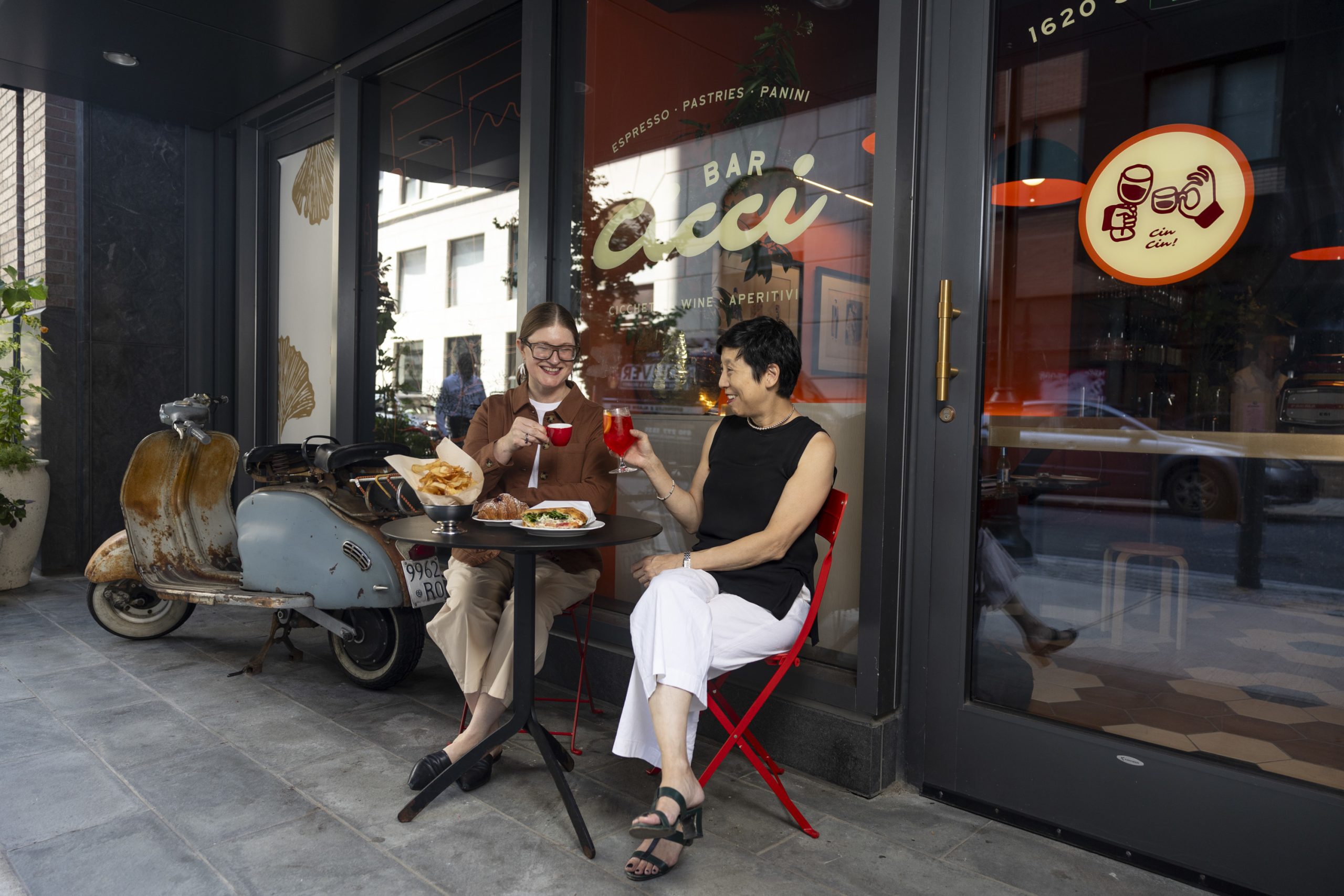
    Ellen Yin’s newest Philly restaurant doesn’t have a grand opening date yet, but it does have a vintage-looking light blue Lambretta scooter parked out front.

    Why? To set the mood.

    The acclaimed restaurateur’s latest project is Bar Cicci, an all-day aperitivo bar soft-opening Aug. 18 at 1620 Sansom St., just next door to Uchi. Inspired by Yin’s longstanding, almost obsessive love of northern Italy, the bar is an ode to the country’s casual drinking culture, with classic pastries in the morning followed by sandwiches in the afternoon and snacks and spritzes in the evening.

    Yin has traveled to Italy more than any other country. There, “a bar is a place where you go in the morning to have an espresso and meet up with your neighbors, chit-chatting away,” she said. “And that morning ritual turns into sandwiches and gelato at lunch time, and then [drinks] at dinner.”

    Pronounced “Bar CHEE-CHEE,” the name is a play on the Italian word ciccio, a term of endearment for something small and plump. The menu — curated by Yin and Christina McKeough, the culinary director for High Street and the Bread Room — will be a smorgasbord of little things. The dayside, counter service-only lineup will feature traditional Italian pastries and sandwiches. Starting at 4 p.m., the menu will switch to showcase 20 small plates and a rotating array of cicchetti (or snacks), with prices falling between $5 and $20 each.

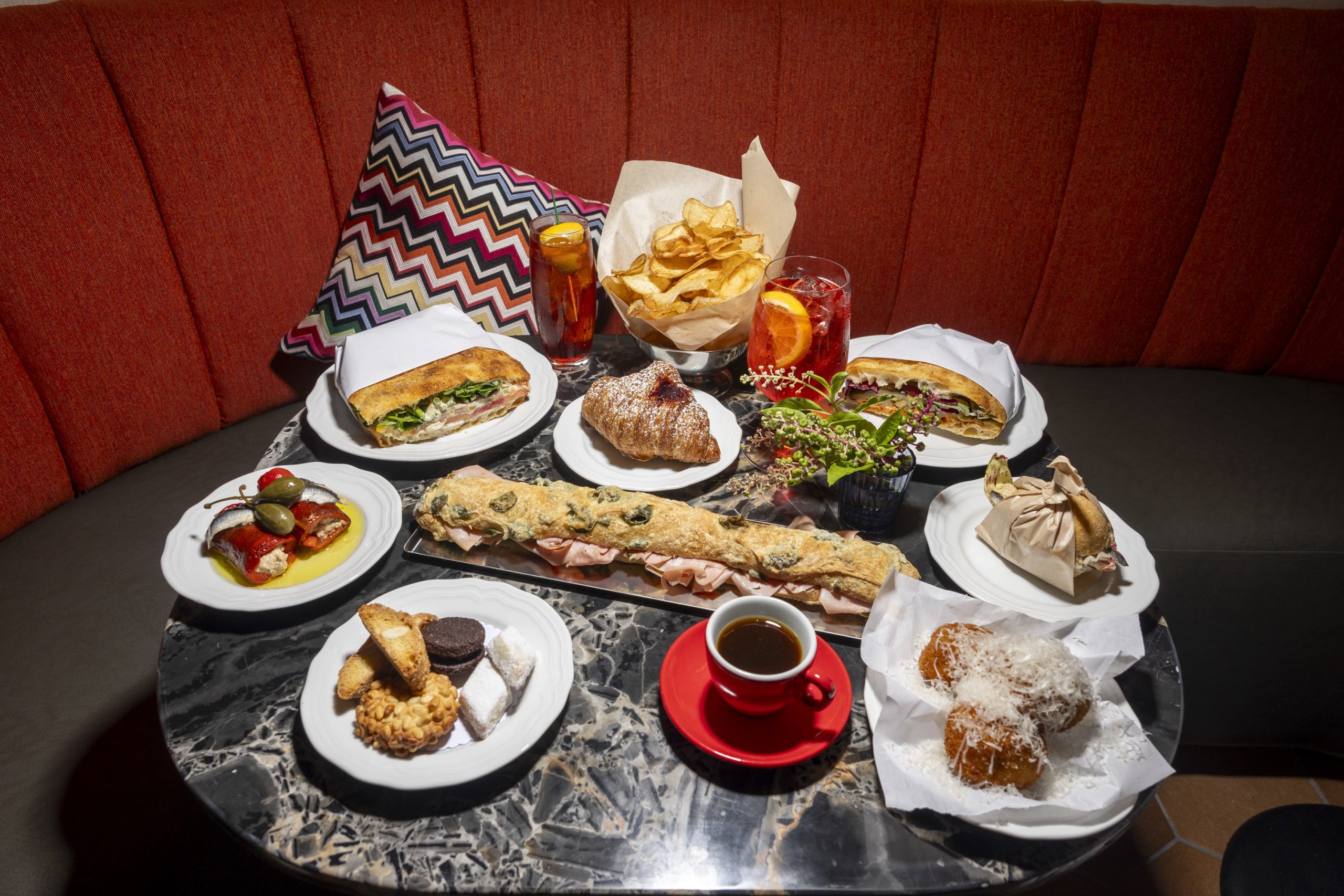
    An assortment of sandwiches, small plates, pastries, and drinks that will be available at Bar Cicci, Ellen Yin’s new restaurant set to open in mid-August. Tyger Williams / Staff Photographer

    Yin envisions Bar Cicci as a catchall space for those who live and work around Rittenhouse Square. In theory, a customer could stop in three times in one day: first for coffee and a pastry on the way to work, then again for a business lunch, and once more for pre-dinner drinks.

    Cicci will be Yin’s sixth Philly restaurant as part of High Street Hospitality, the restaurant group Yin cofounded with chef Eli Kulp. Fork, her first, opened in 1997 and went on to become one of Old City’s most enduring fine dining restaurants. She would follow it up with High Street — one of the city’s first all-day cafes, now located in Center City’s Franklin Residences — and a.kitchen, the Rittenhouse Square hotel restaurant. The Bread Room, known for its grown-up pop-tarts and morning buns, is the group’s bakery.

    Yin and McKeough had been working on Bar Cicci since April 2025. It’s their first themed project. “We don’t just get to do what we want here,” Yin said. Everything in the space has some tie to northern Italy, down to its groovy accent pillows.

    High Street/The Bread Room culinary director Christina McKeough (left) and restaurateur Ellen Yin outside Bar Cicci, their new restaurant inspired by northern Italy. The light blue Lambretta scooter helps set the mood.Tyger Williams / Staff Photographer

    Bar Cicci’s 30-seat dining room channels 1970s Milan. Plush burnt-orange banquettes decorated with Missoni-style striped pillows wrap around black marble tables that interior designer Marguerite Rodgers repurposed from the lobby bar inside the Franklin Residences.

    The counter is outfitted with a modernized Faema E-61, at one point Italy’s best-selling and only semiautomatic espresso machine. Even the dome-shaped mid-century modern light fixtures — a holdover from when Sandler’s on 9th occupied High Street’s space at 101 S. Ninth St. — cast a slightly hazy glow, as if you’re sitting in a scene from a film.

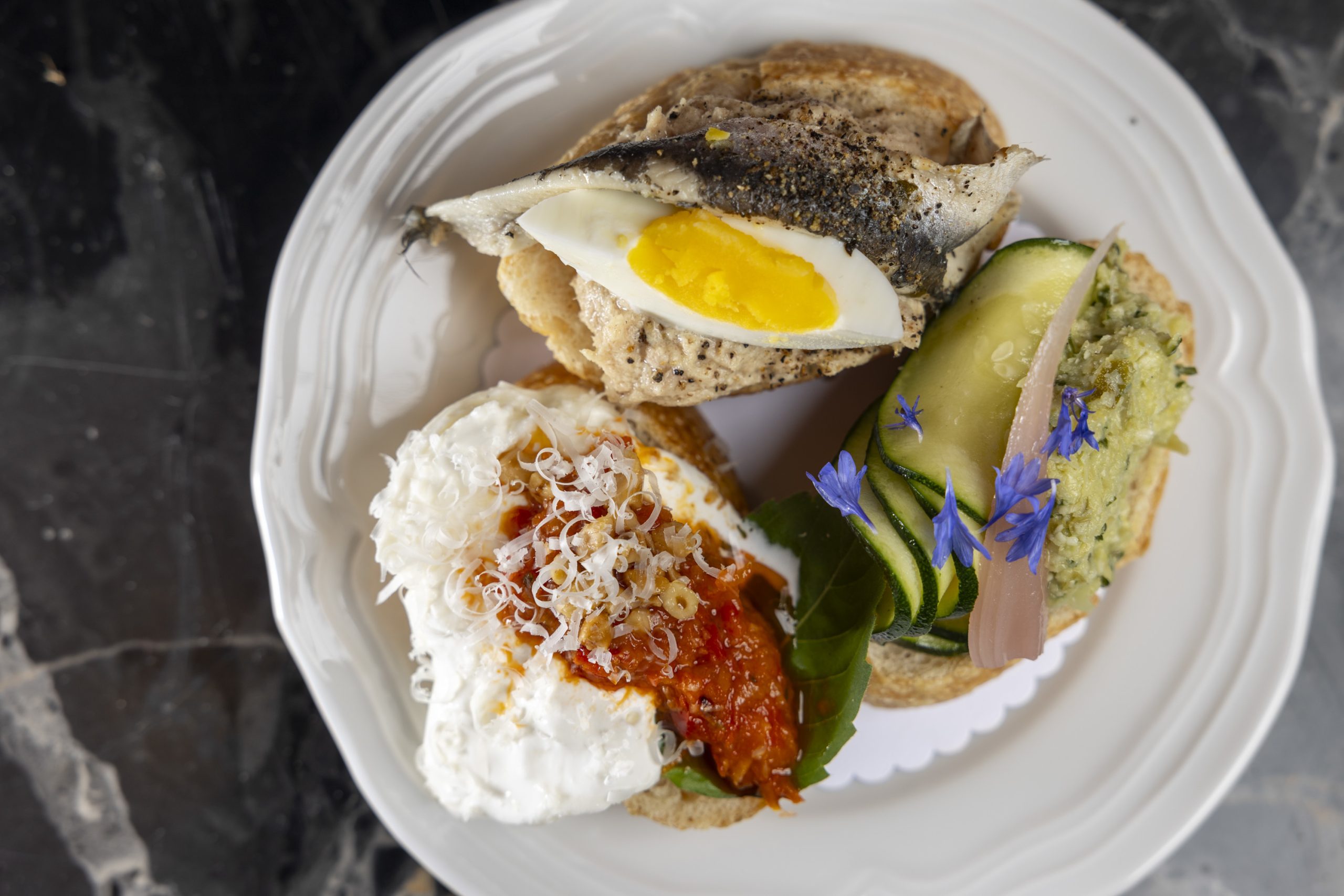
    An assortment of cicchetti at Bar Cicci. The crostini-like snacks are a Venetian speciality meant to be served with wine.Tyger Williams / Staff Photographer

    The vibe is inspired by Yin and McKeough’s favorite bars from research trips to Venice and Milan, such as Milan’s Bar Basso, where Yin recalled being offered seemingly endless pours of Campari. The duo intend for Bar Cicci to be an introduction to Italy’s slower-paced aperitivo hour, a time in the early evening when lower-ABV cocktails are paired with bite-sized snacks designed to get people socializing without pretense.

    Aperitivo is “supersocial,” McKeough said. “A lot of bars in Italy, people aren’t even sitting down. They’re standing up.”

    Sandwiches, spritzes, and snacks

    The centerpiece of Bar Cicci’s evening menu will be a rotating array of cicchetti, crostini-esque bites that you typically eat with a glass of wine while standing. The restaurant will offer about a dozen at a time, in sets of three or five, all prepared on McKeough’s version of an Italian baguette, which is chewier than its French counterpart.

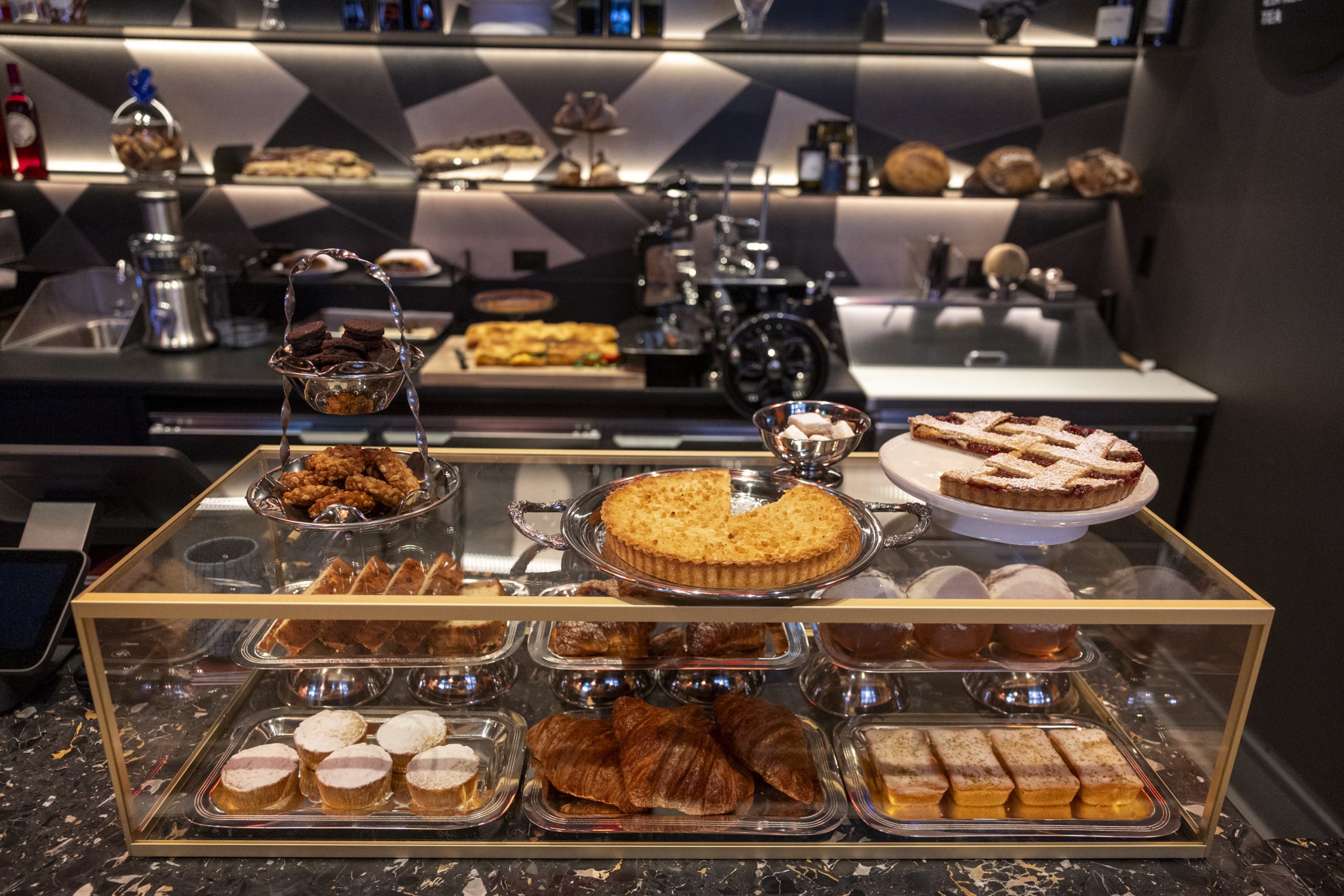
    The pastry case at Bar Cicci is full of classic Italian pastries such as maritozzi and cornetti. Tyger Williams / Staff Photographer

    The bread was the hardest to perfect, according to McKeough, and the most crucial to get right: “No matter where we went, [the cicchetti] were always so easy to eat … you could take a bite without it falling apart.” She anticipates Bar Cicci’s opening lineup will include Venetian standards such as salted cod and tuna with eggs.

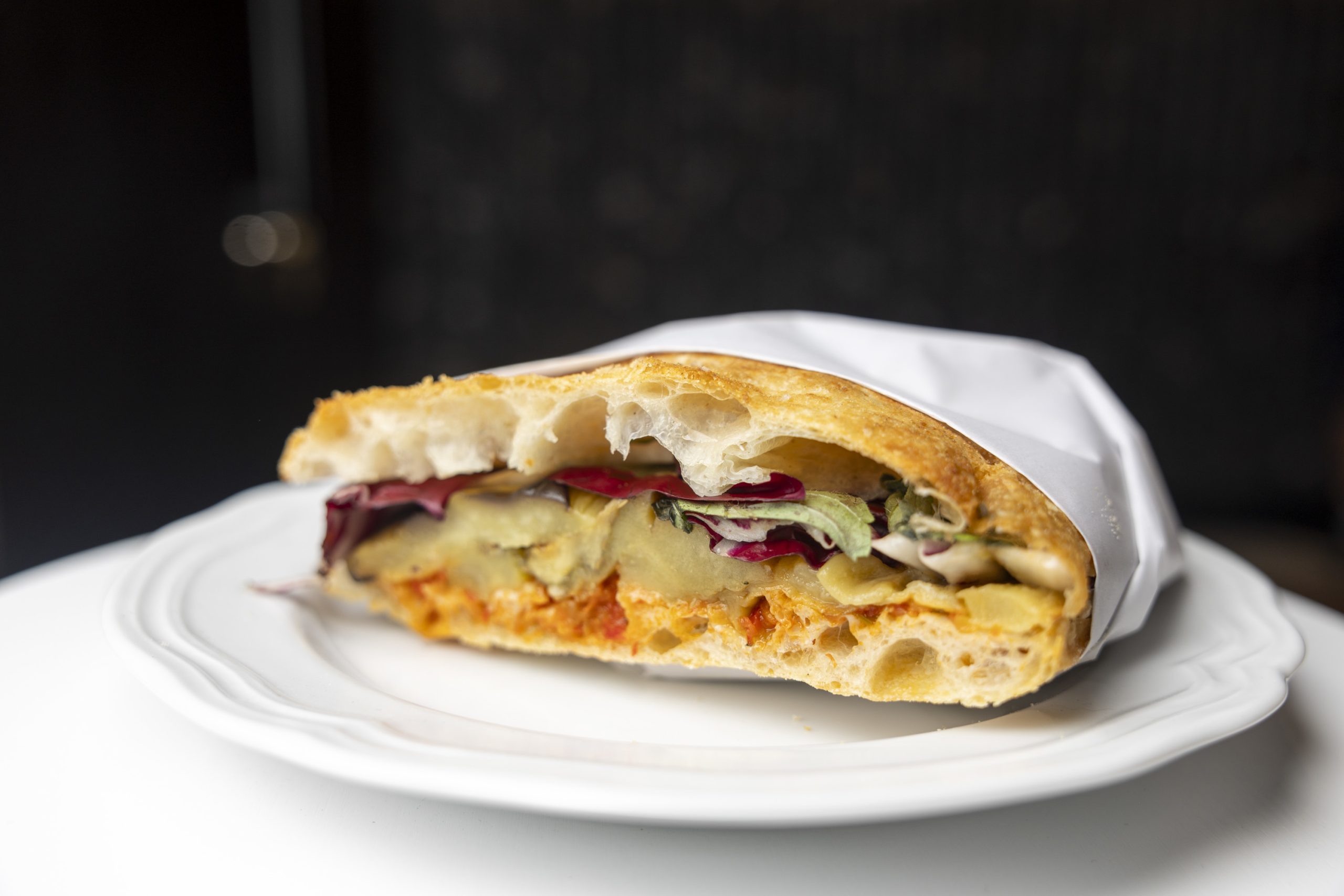
    The Bread Room will bake all the bread for Bar Cicci’s lunchtime sandwiches, will which include a long olive oil sfilatino loaf filled with mortadella; tuna and jammy egg on slider-sized rolls; and Roman-style pizza biancas layered with eggplant, bomba, and radicchio or anchovies, watercress, and tomato tonnato.

    A pizza bianca sandwich from Bar Cicci, which will be baking all of its breads in house.Tyger Williams / Staff Photographer

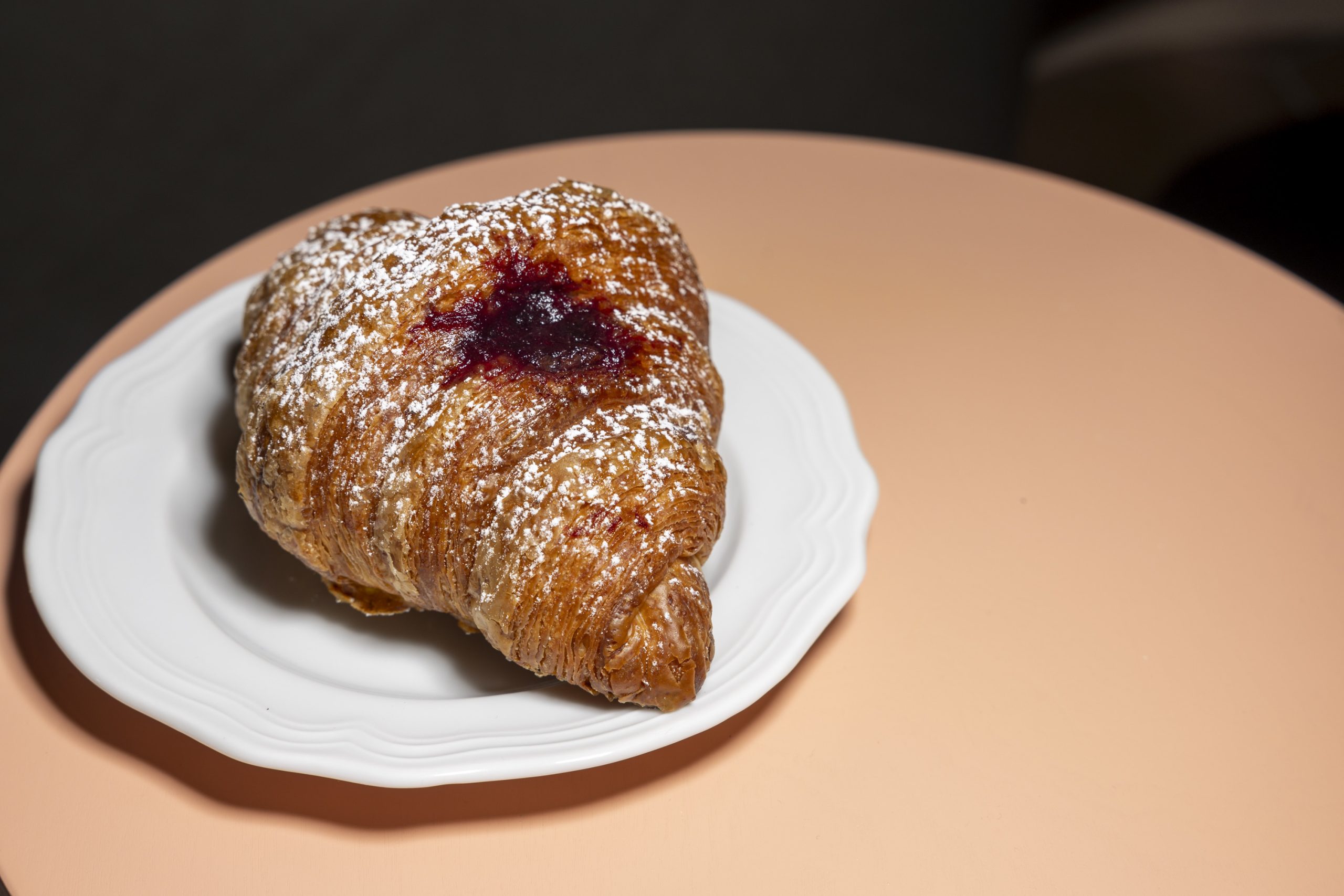
    As for the grab-and-go case, it will contain tried-and-true pastries that range from trendy cream-stuffed maritozzi to Italian-style chocolate chip pound cake and five versions of cornetti, which McKeough likened to a “reverse-engineered croissant.”

    Bar Cicci will serve dark-roast espresso and coffee from Arkansas-based roaster Onyx and Italian-style wines from Mural City Cellars, the popular Fishtown winery. The restaurant is going all in on aperitivi with its cocktail lineup, which will include a spaghett-style Aperol spritz, foamy espresso martinis al freddo, and the Garibaldi, a Campari cocktail made with the juice of a whole orange.

    For McKeough and Yin, the hope is that the food, if not cocktails, will make people linger.

    “There’s just something about a little bite that makes you want to have another drink,” McKeough said.

    A cornetto filled with seasonal jam at Bar Cicci.Tyger Williams / Staff Photographer

    Bar Cicci, 1620 Sansom St. Suite C3, 215-515-3793, barcicciphl.com. Hours: 8 a.m. to 9 p.m. Tuesday through Friday; 9 a.m. to 10 p.m. Saturday (to start). Soft-opening Aug. 18.

  • Philly is beta testing its own version of Boston’s Freedom Trail. I tried it and you should too.

    Philly is beta testing its own version of Boston’s Freedom Trail. I tried it and you should too.

    Following my first visit to Boston two years ago, I penned a column (against my better judgment) bemoaning what a surprisingly good time I had there (against my will).

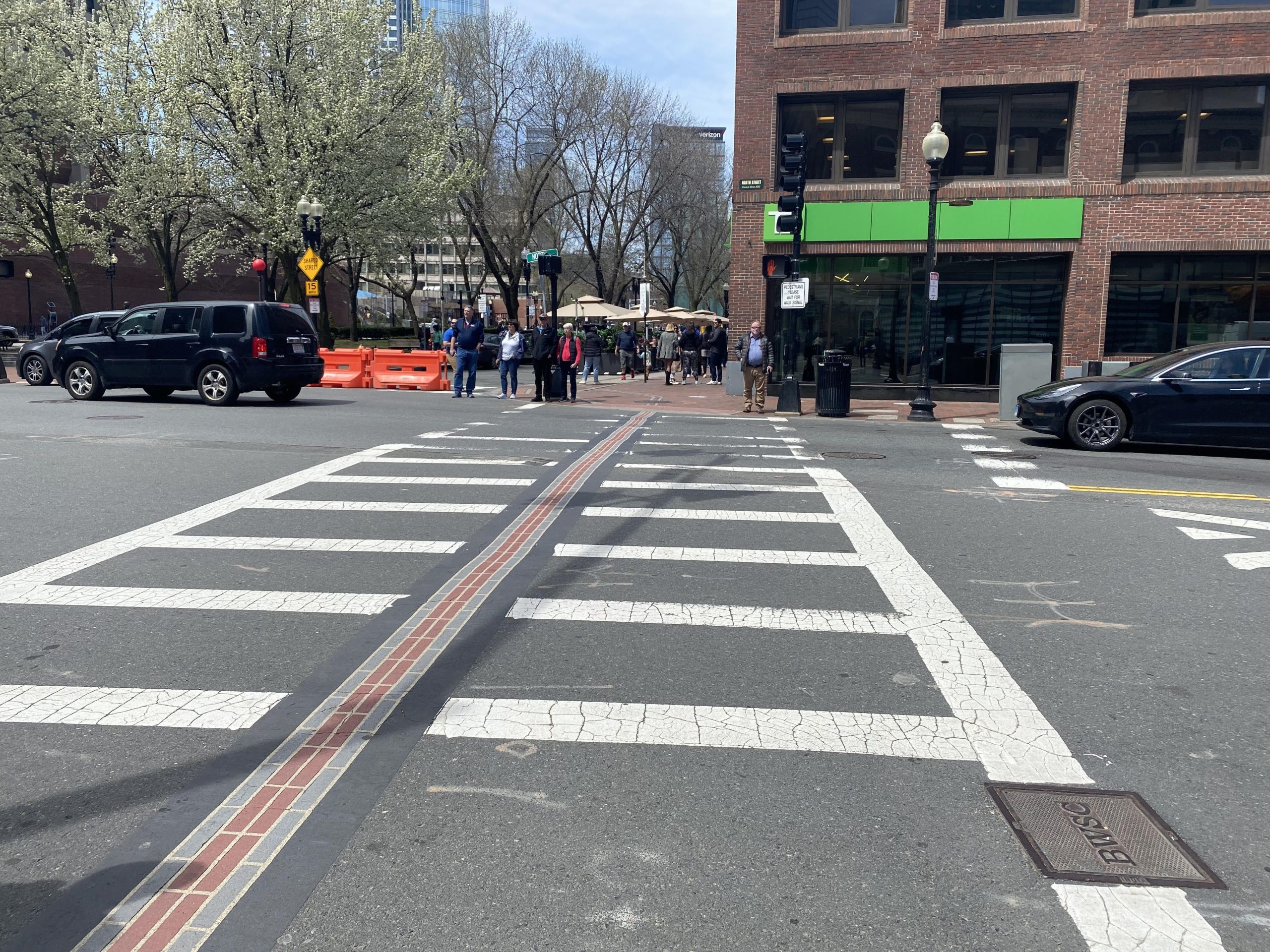
    I was particularly taken with the city’s Freedom Trail, a 2.5-mile walking path embedded in Boston’s sidewalks that leads to 16 historic sites. Far from being half-baked, I had to admit this Beantown tourist attraction was “annoyingly great.”

    Look at the Freedom Trail being all cute running through this Boston Street. Gawd! STEPHANIE FARR / Staff

    Why didn’t we have anything like this in Philly, I wondered, and could we get our own version in time for the nation’s 250th anniversary?

    I was flooded with emails in response from readers who not only agreed with me, but offered route suggestions and names for a potential Philly path. I also received a cryptic message from someone at Visit Philadelphia who said they had some things up their sleeves.

    That was more than two years ago and I’d all but given up hope. Then I received an email this month from Jenea Robinson, vice president of communications for Visit Philadelphia.

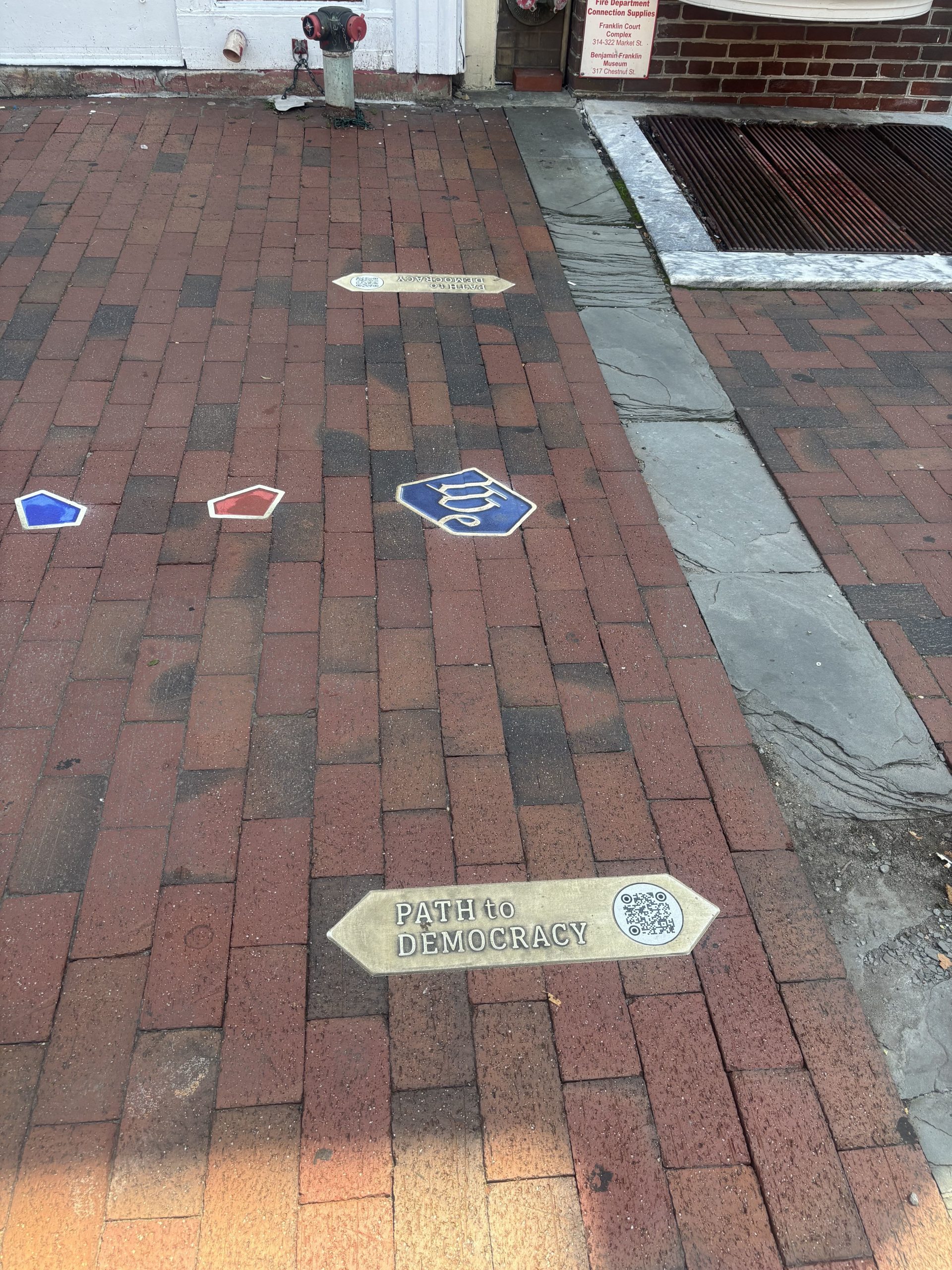
    Vinyl decals resembling ceramic tiles and a brass plaque mark the public pilot version of the Path to Democracy.Stephanie Farr / Staff

    “Because you wrote that delightfully, ‘annoyingly accurate’ story about Boston’s Freedom Trail a few years ago, I wanted to make sure you got the first look at Philadelphia’s answer to it: Path to Democracy,” she wrote.

    Could it be true? Are we actually getting our own historic trail and did someone really call my work “annoyingly accurate?!?” Be still my craggy, Philly heart!

    ‘A legacy project’

    Still in its early phases, there are currently only six stops on the Path to Democracy as it undergoes public beta testing through Labor Day. The full path, which is slated for next summer, will have 21 stops and is based on a self-guided tour Visit Philly has had on its website for years, said Kyle Stein, senior marketing project manager for Visit Philly.

    “This is something we wanted to introduce to people this year and have it be a legacy project for years to come,” he said.

    (function(){function e(){window.addEventListener(`message`,function(e){if(e.data[`datawrapper-height`]!==void 0){var t=document.querySelectorAll(`iframe`);for(var n in e.data[`datawrapper-height`])for(var r=0,i;i=t[r];r++)if(i.contentWindow===e.source){var a=e.data[`datawrapper-height`][n]+`px`;i.style.height=a}}})}e()})();

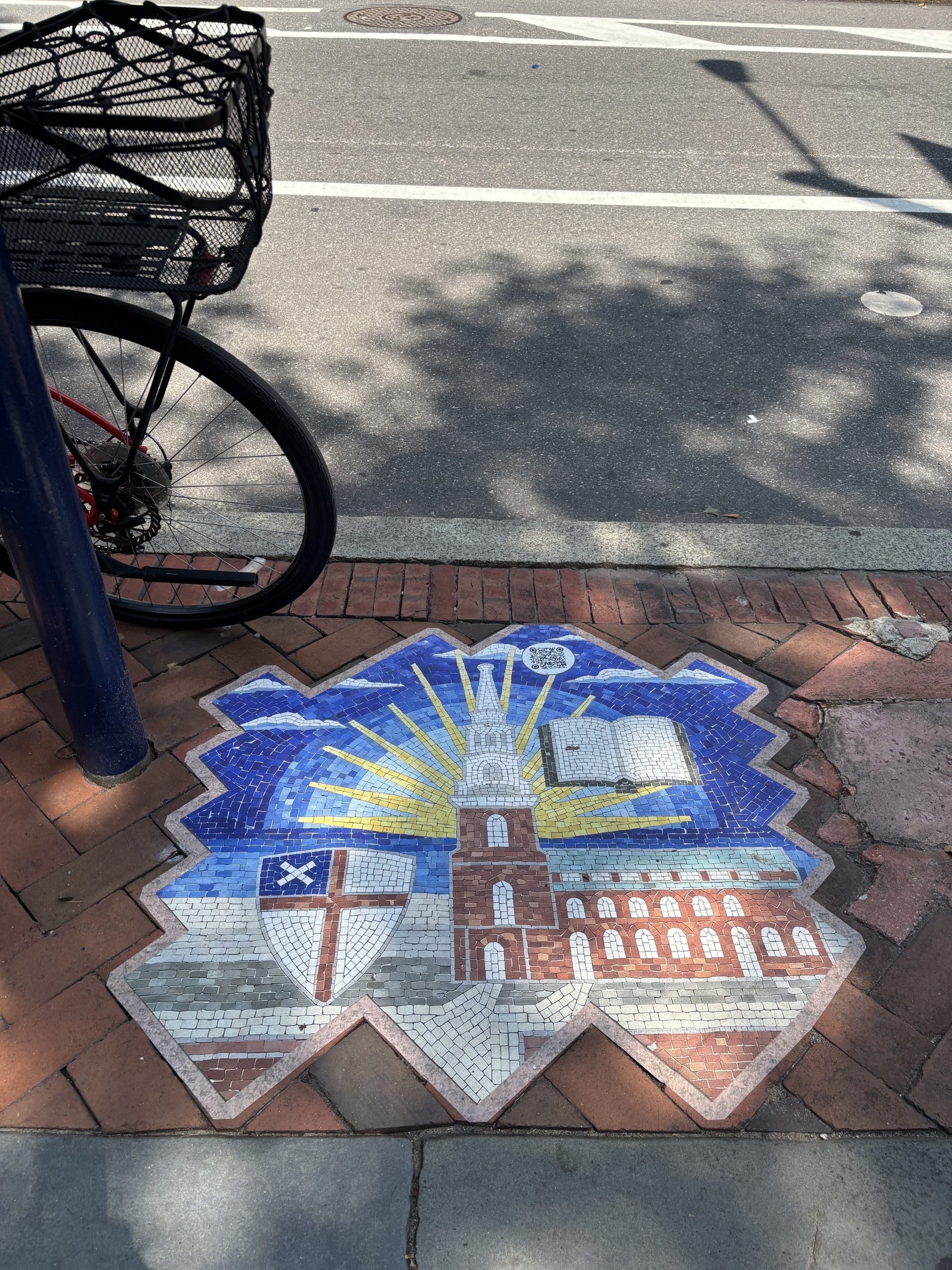
    In its final iteration, the Path to Democracy will be marked by colorful ceramic tiles, brass directional plaques, and large tile mosaics embedded in the sidewalks that will pay “homage to all of the art across Philadelphia” and particularly, to that of Isaiah Zagar, Stein said.

    “Whatever look and feel we went with had to be authentic to Philadelphia,” he said.

    For now, Visit Philly is using sturdy, eye-catching vinyl decals that resemble tiles and mosaics to mark the path and stops along it. Zagar’s studio wasn’t consulted on the project, but Stein said Visit Philly would love to work with them going forward.

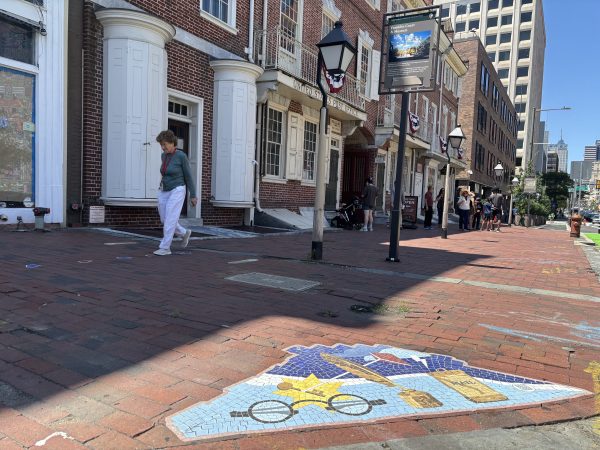
    The vinyl mosaic decal at Christ Church along the Path to Democracy.Stephanie Farr / Staff

    The Path to Democracy will not only be unique from Boston’s trail in look but in substance as well. The Freedom Trail traces Revolutionary War history, but Philly’s path will highlight sites and people that have shaped American democracy over the years.

    “It’s not just something that happened in 1776,” Stein said. “Democracy is something that is an evolving thing.”

    I knew there was only one way to suss out this path and that was to walk it myself. Plus, Stein said feedback from locals is essential during beta testing, and who doesn’t love being essential and opinionated in Philly?

    Choose-your-own adventure

    I snagged a parking space on Race Street near Second last week, knowing that the sites are all within a four-block radius from Front to Fourth and from Market to Arch Streets.

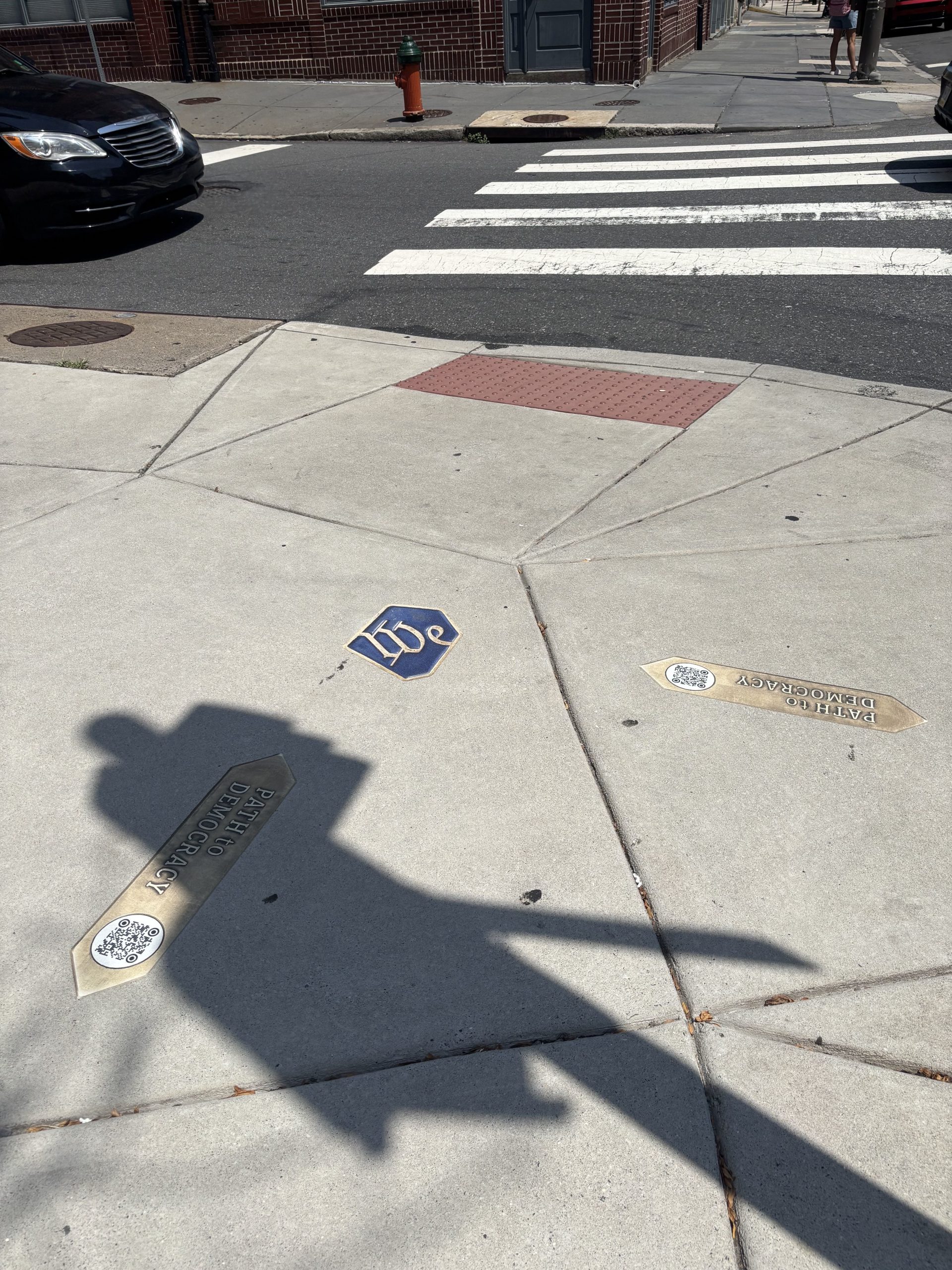
    My first stop wasn’t planned. I just kept my eyes on the ground until something caught them, which happened at the corner of Second and Arch Streets. I spotted a blue vinyl tile that said “We” (written in the script of the Declaration of Independence) and two vinyl directional decals that said “Path to Democracy” with QR codes that led to an accompanying website. One pointed up Arch Street to Third and the other pointed down Second Street to Market.

    Vinyl brass-colored decals at Third and Arch Streets in Old City denote that the Path to Democracy can be taken in one of two directions here. In the center is a “We” tile that is found on multiple spots along the path as well.Stephanie Farr / Staff

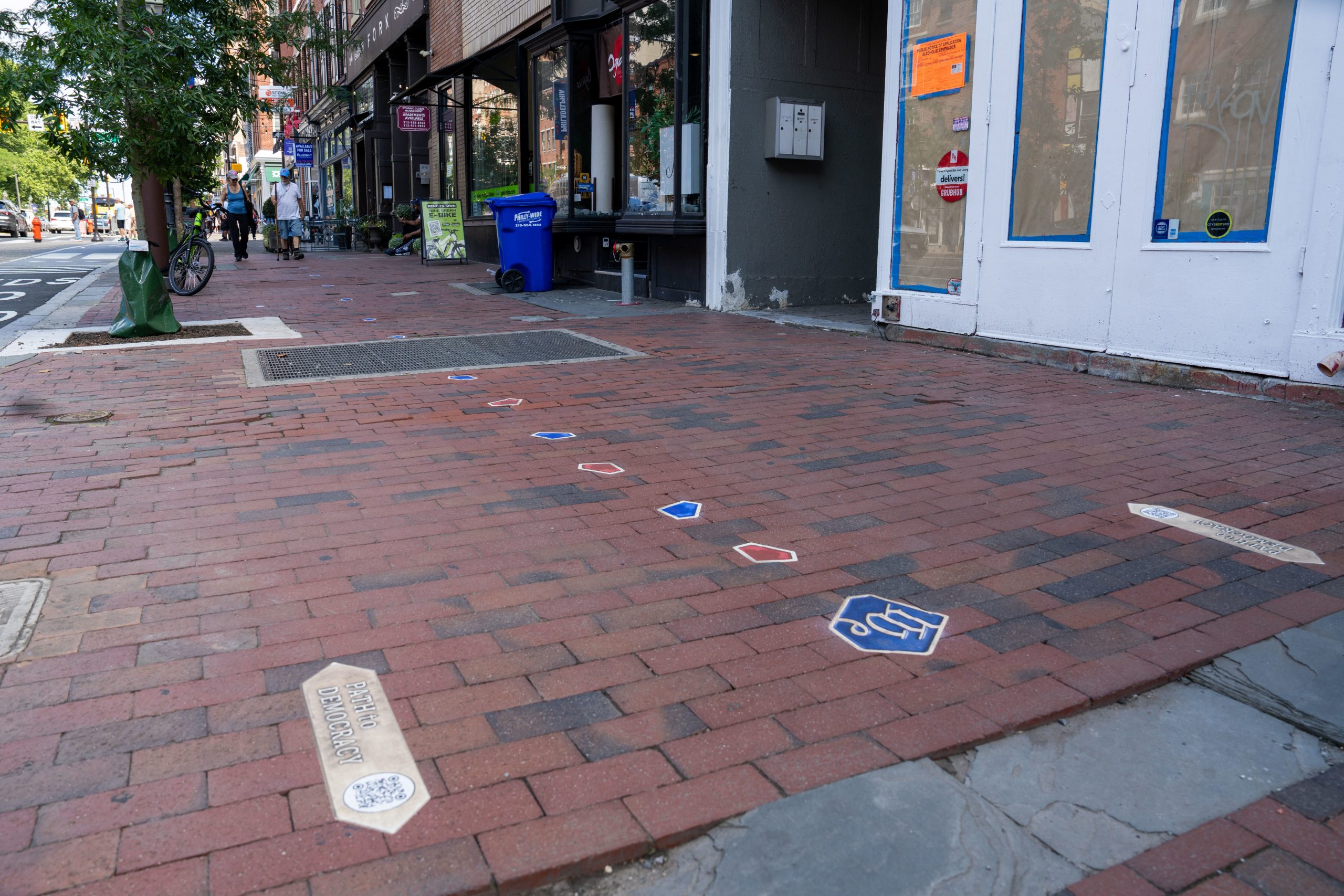
    I decided I’d follow the arrow pointing right up Arch Street. As I walked, I spotted gem-shaped blue-and-red vinyl decals that were peppered like breadcrumbs down the sidewalk and led me straight to the Betsy Ross House.

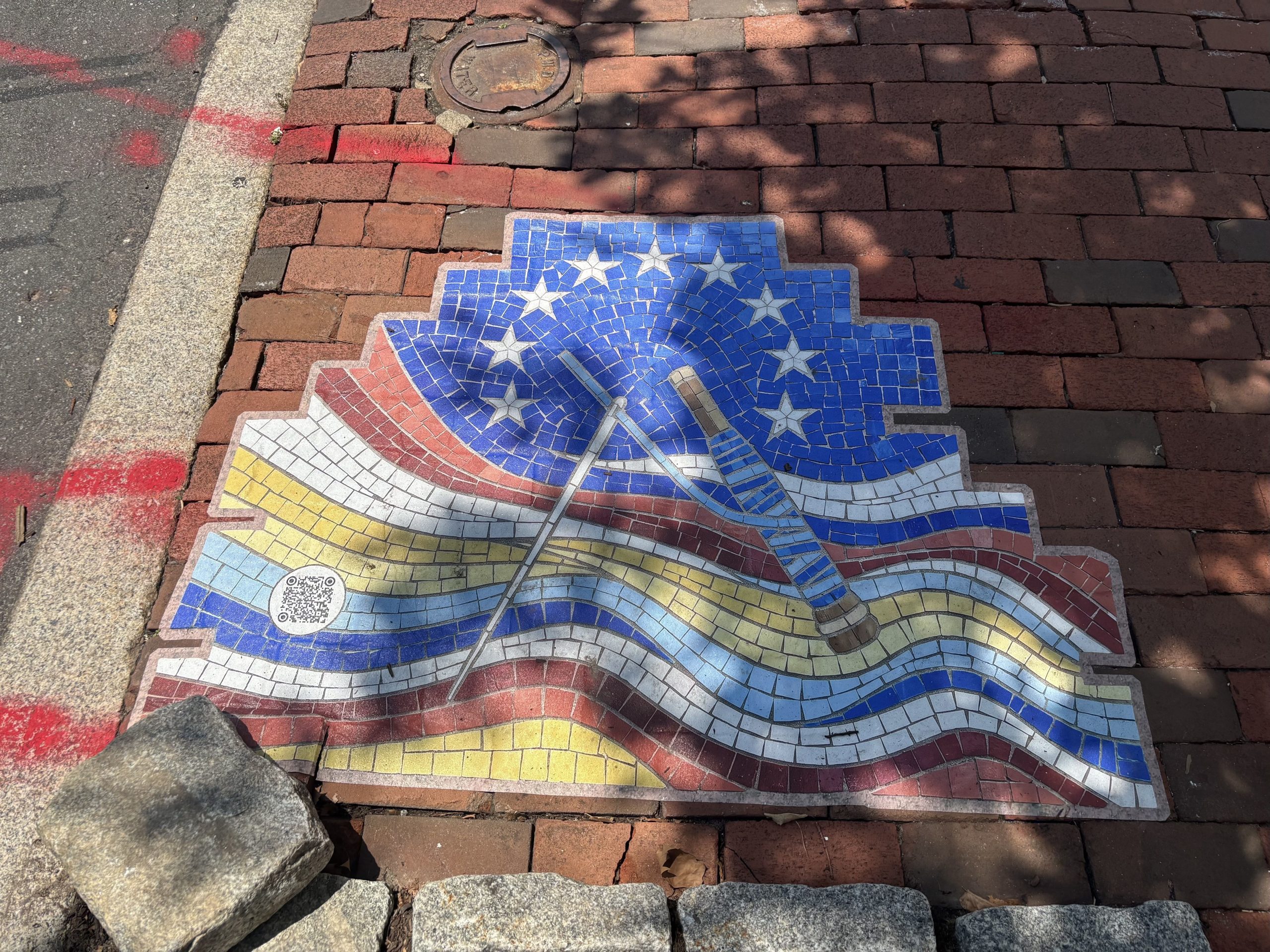
    On the sidewalk outside of the site, I spotted a lovely vinyl mosaic of a needle and thread superimposed upon a multicolored flag. A QR code on it took me to a mobile-friendly webpage about Ross. I listened to a 51-second audio clip about her life and read about the mosaic before me. Also provided on the page was the Betsy Ross House’s address, operating hours, and other useful visitor information.

    The vinyl mosaic decal outside of the Betsy Ross House along the Path to Democracy.Stephanie Farr / Staff

    At the bottom of the site was a nifty little guide showing me that I was currently a four-minute walk away from Christ Church in one direction and a two-minute walk away from the Arch Street Meeting House in the other.

    “All right, this is pretty cool,” I whispered.

    Confusing corners

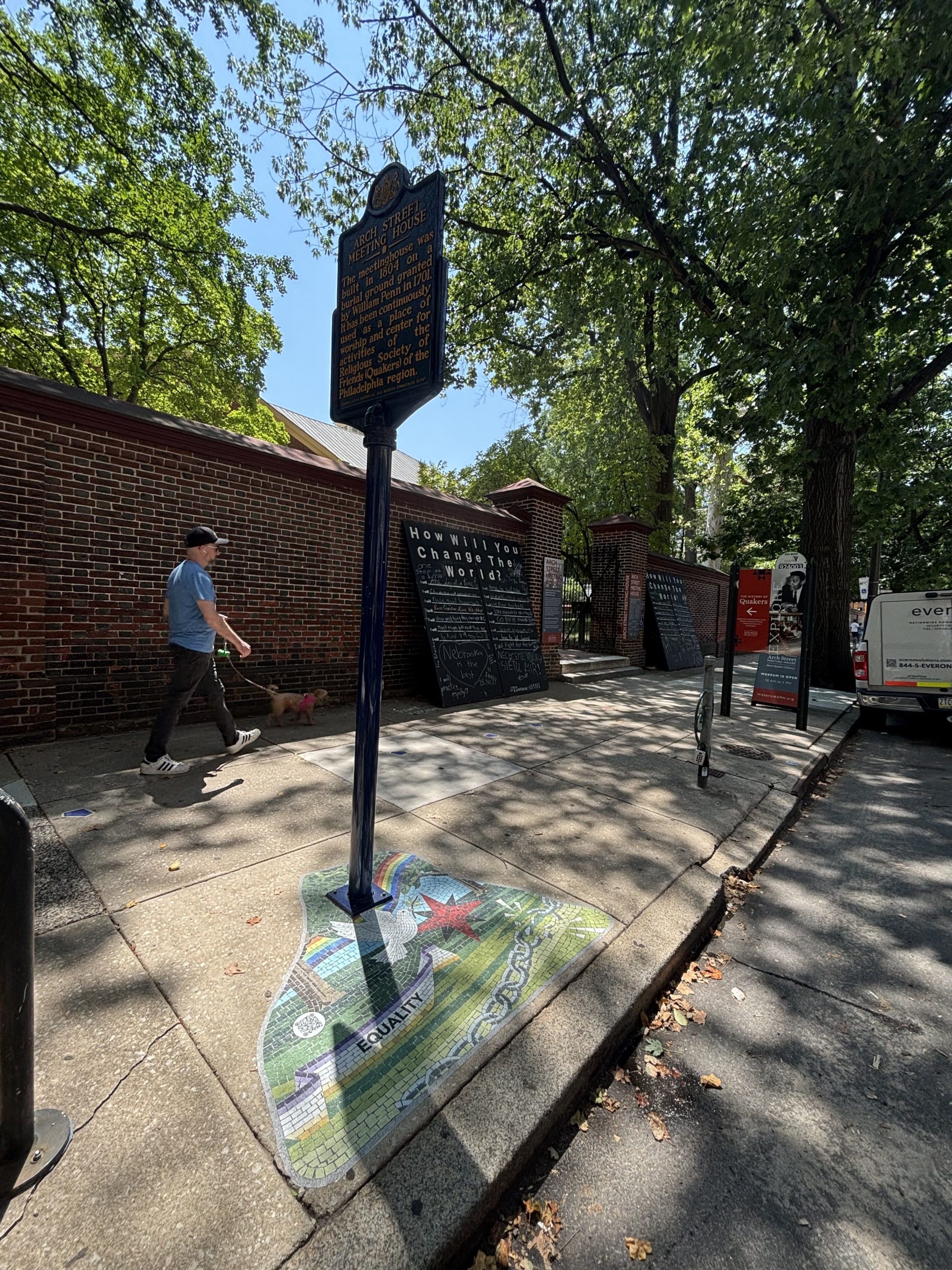
    I chose to follow the blue-and-red vinyl decals to the Arch Street Meeting House where a vibrant vinyl mosaic of a dove and the word equality was plastered on the sidewalk. The QR code led to a page about the meetinghouse and to an audio clip about how “Religious radicals founded Philly.”

    When I was done, I discovered I’d reached the end of the path, much to my chagrin. I didn’t realize it wasn’t a continuous loop and I had to retrace my steps back past the Betsy Ross House to the next site, Christ Church.

    From there, the vinyl decals led me to the southwest corner of Second and Market Streets, where a directional decal with arrows on both ends pointed me toward Front Street on my left and also to Third Street on my right.

    “Well this is confusing,” I thought.

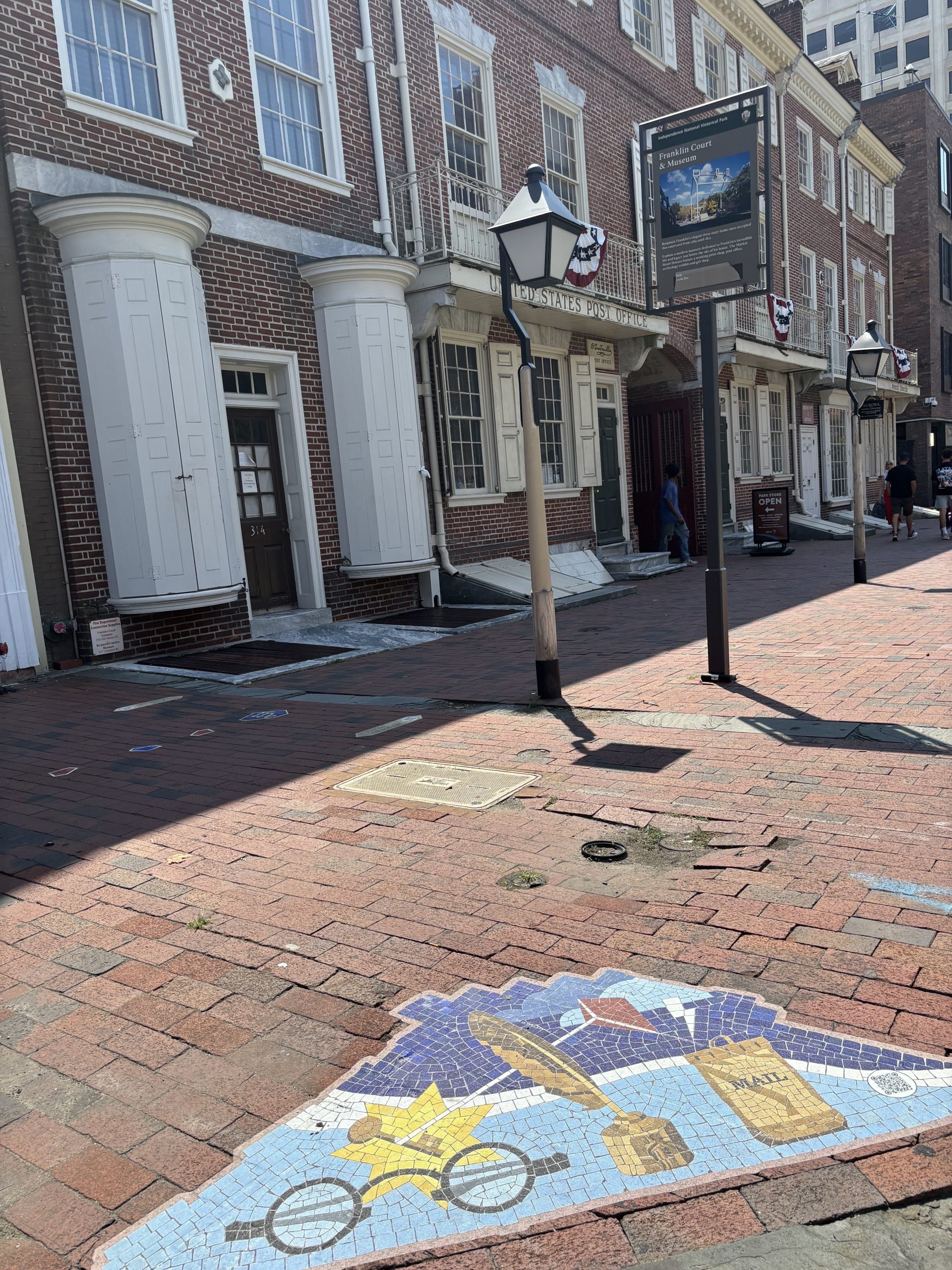
    I decided to follow the path up Market Street past Third Street to Franklin Court, where I spotted a large vinyl mosaic decal of a key, kite, quill pen, and spectacles.

    The Path to Democracy leads to just outside Franklin Court, where this vinyl mosaic decal located.Stephanie Farr / Staff

    I headed inside Franklin Court and walked around. I always forget how many privies there are in there (the place had more johns than the Second Continental Congress!).

    Franklin Court marked another terminus of the path, so I turned around and headed back down Market Street to Front to check out the other direction of the trail I’d forgone.

    Lesser-known sites

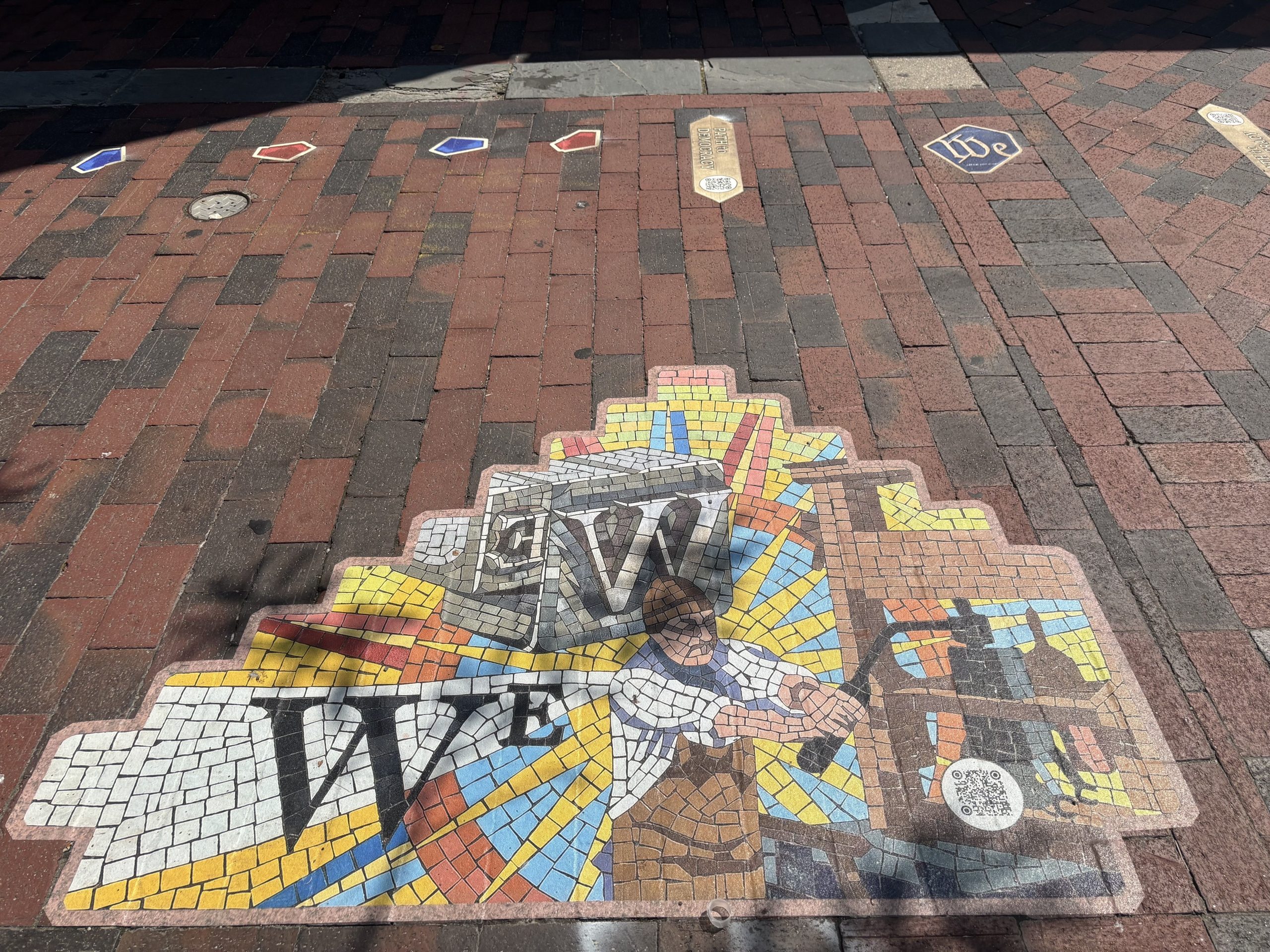
    On the southeast side of Second Street as it crosses Market, I found a large mosaic decal of a man operating a printing press. Scanning the QR code, the website told me this was once “Printers’ Row,” where many important documents — including the first copies of the Declaration of Independence — were made.

    Unlike the other sites along the path, there was nothing already at this one to indicate it was of any importance, aside from an easy-to-miss plaque embedded in a crumbling wall of a vacant building nearby.

    A vinyl mosaic decal marks the site of Printer’s Row on Market Street near Second along the Path to Democracy.Stephanie Farr / Staff

    I appreciated this more-obscure site being highlighted on the path. Stein said its inclusion in the beta test was very intentional.

    “Not every historic site in Philly is one people can enter. We wanted a tried-and-true one, like the Betsy Ross House, and lesser-known ones, like Printers’ Row,” he said.

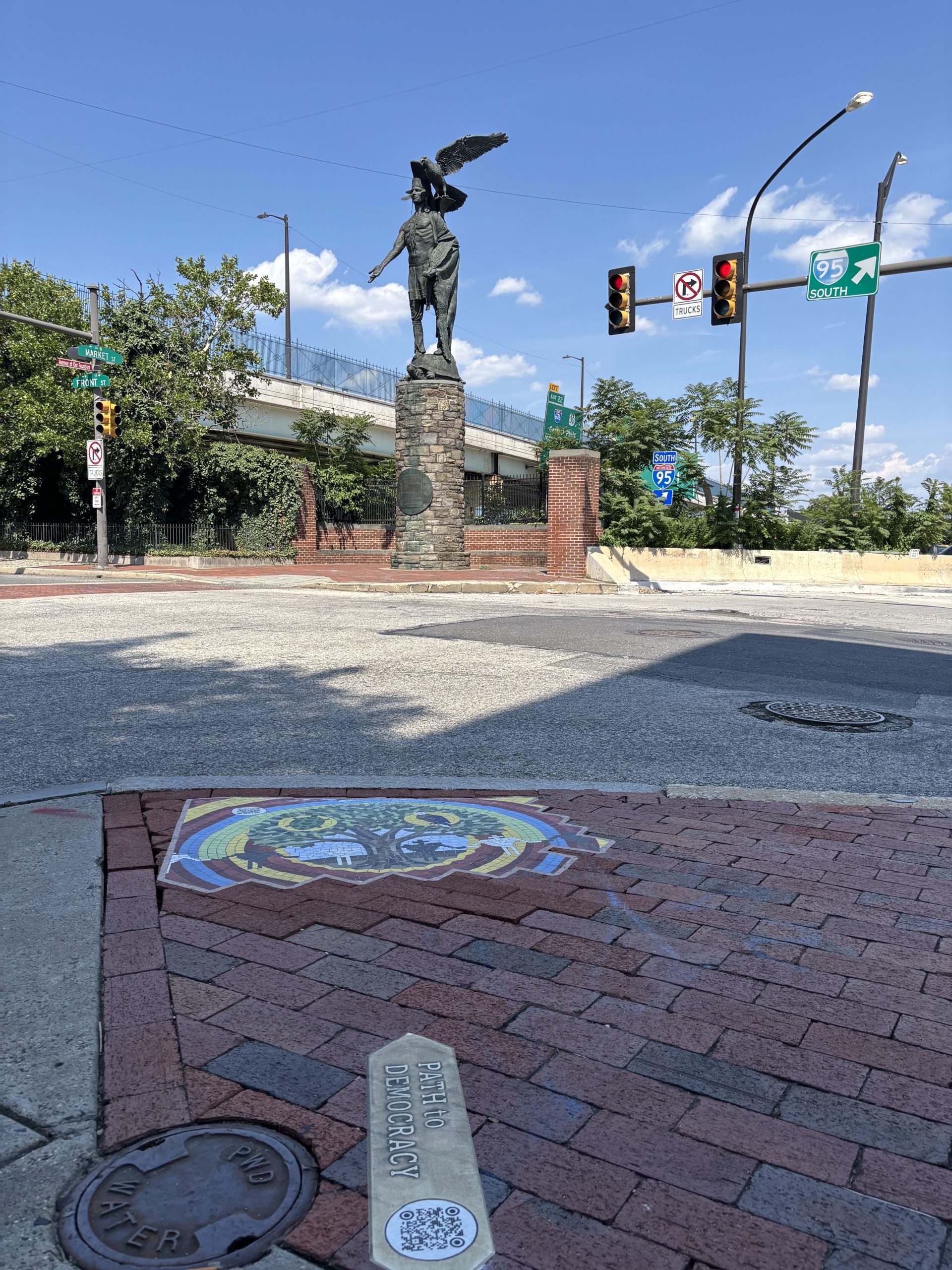
    Following the decals, I reached my final stop at the corner of Front and Market Streets. There, a vinyl mosaic decal of a tree, animals, and human figures was situated on the sidewalk catty-corner to the Chief Tamanend statue at the I-95 on-ramp.

    As I listened to the accompanying audio via the QR code, I found myself staring at the statue.

    The Path to Democracy highlights the “Chief Tamanend” statue at Front and Market Streets in Old City.Stephanie Farr / Staff

    Then, I did something I’ve never done before — I crossed the street and approached it. I stood below Chief Tamanend’s feet, I looked up at him and the eagle on his shoulder, I marveled at the details of his clothing, I read the accompanying bronze plaque.

    And I couldn’t believe that it took me this long and this path to do so.

    A worthy pursuit

    I spent about two hours walking the path, but I backtracked often and took my time. You could feasibly do it in 30-60 minutes.

    After my walk, I filled out the pilot program survey via the QR code.

    “I want more sites and would love for it to be a circular path you could start at any place and keep going around until you get back where you started, like a Phlash bus loop,” I wrote.

    Vinyl decals mark the Path to Democracy on the 300 block of Market Street in Old City during the beta testing phase of the project.Courtesy of Visit Philadelphia

    Stein said the goal is to have the path be multidirectional.

    “I think in the future we’re considering the best way to actually connect the sites,“ Stein said. ”Printers’ Row and Chief Tamanend was an opportunity to test out a spur. That will be something we may come up against in the future, some sites may not fall within a perfect pathway.”

    While I didn’t see anyone else following the path as I was exploring it, Visit Philly’s Robinson told me about 50 people a day have been scanning the QR codes.

    Though there are still some kinks to work out, the Path to Democracy shows a lot of promise. Like democracy itself, we don’t know where it will lead, but it’s a worthy pursuit — and one that requires our participation to succeed.

    So before Labor Day, go try it out and provide feedback. You could help shape a path in Philly that may be walked for generations to come.

    “We just want Philadelphians to be proud of this and be aware of it,” Stein said. “I think that this path is another way for us as Philadelphians to celebrate how great this city and these sites are.”

    The Path to Democracy leads to the Arch Street Meeting House, where a vinyl mosaic decal wraps around the site’s historical marker.Stephanie Farr / Staff
  • Our favorite restaurant sundaes | Let’s Eat

    Our favorite restaurant sundaes | Let’s Eat

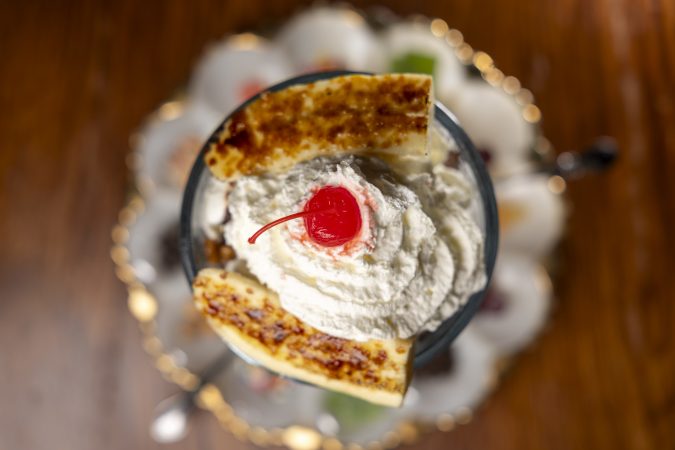
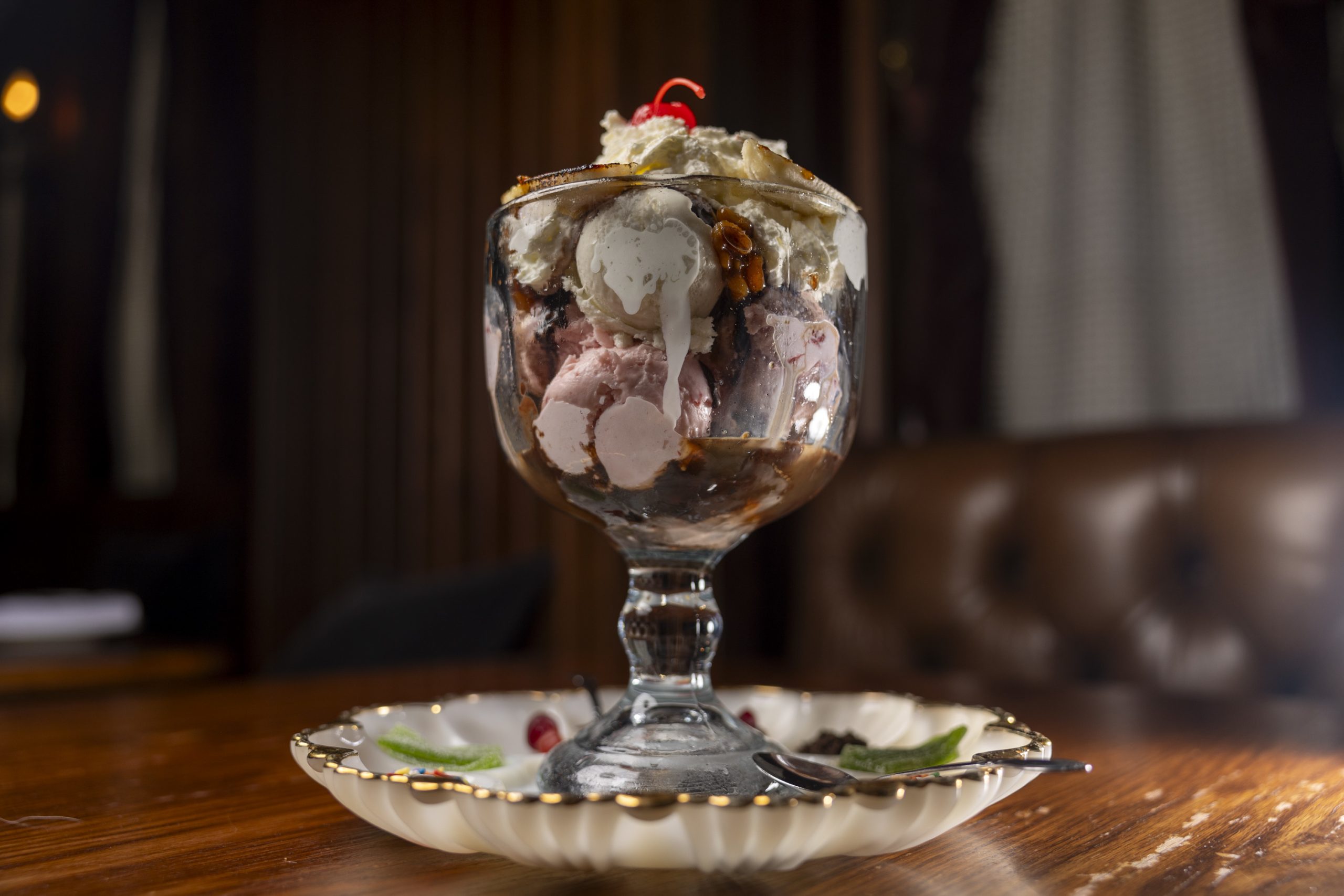
    We know how to truly cap off a restaurant meal: a decadent ice cream sundae. Here are seven we love.

    Also in this edition:

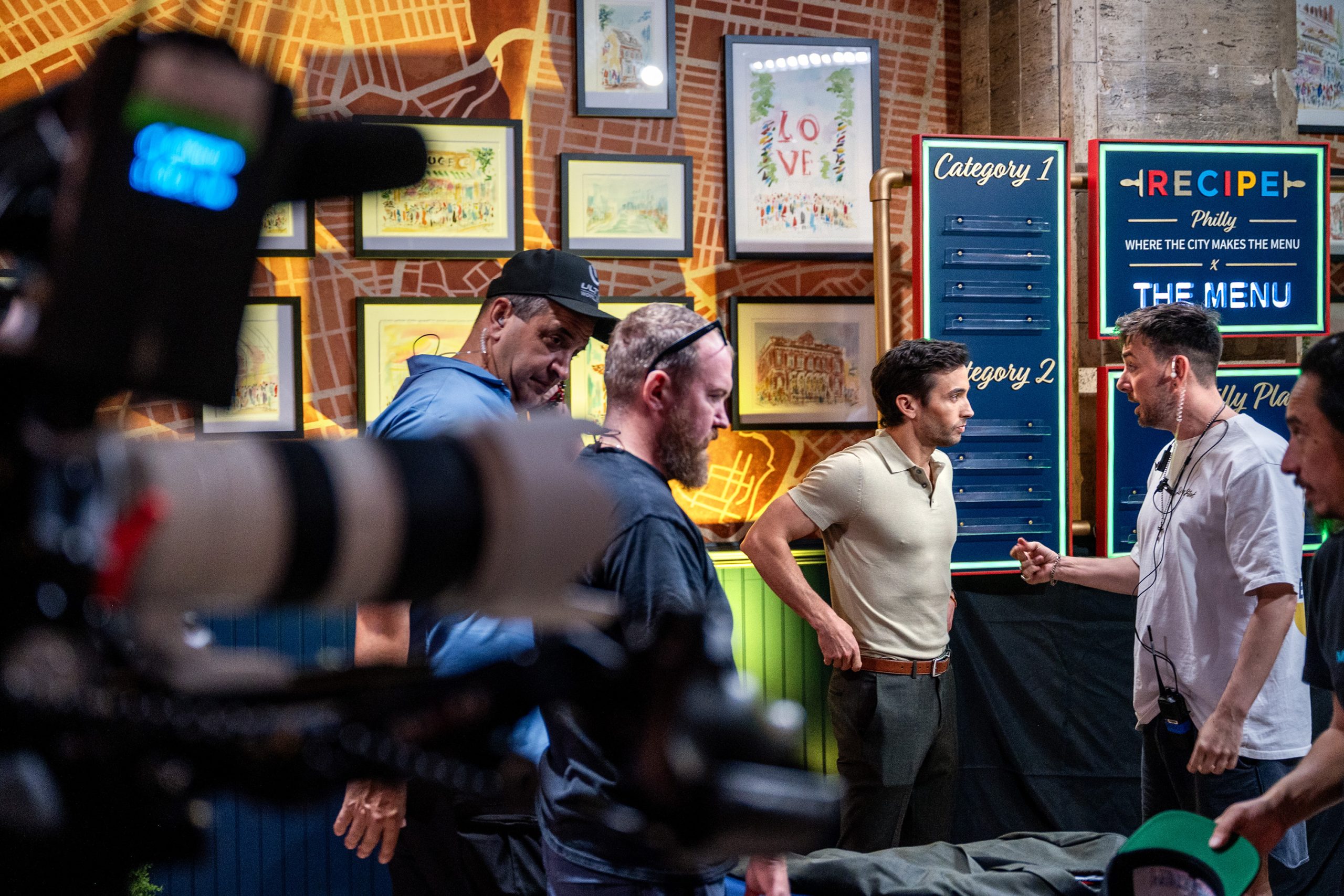
    • Home cooks make the menu: Your first look at Recipe Philly, a $3.8 million restaurant with a novel concept opening in Center City.
    • Craig LaBan review: Terra Grill in Northern Liberties.
    • News: Read on for word of new restaurants in Queen Village and Kensington, and word of a Michelin-recommended restaurant’s expansion.

    — Mike Klein

    If someone forwarded you this email, sign up for free here.

    Our favorite restaurant sundaes

    What caps a meal better than a cool and creamy ice cream sundae? Hira Qureshi shares seven of these decadent treats found on restaurant menus.

    🍧 Two Philadelphia water ice makers locked down the top prizes at a water-ice festival at the Jersey Shore.

    A new restaurant where home cooks set the menu

    Here’s your first look at Recipe Philly, where home cooks — not pro chefs — contribute the recipes to create the menu. It’s also the basis for a reality series, filming now in advance of the restaurant’s mid-August opening.

    Why is Tattooed Mom not allowed to host live shows?

    Tattooed Mom has hosted countless drag shows and burlesque performances since it opened on South Street in 1997. But the city has shut down those events (but not the bar itself) over a missing assembly license. Getting one could take six months, its owner tells Beatrice Forman.

    River Twice is expanding

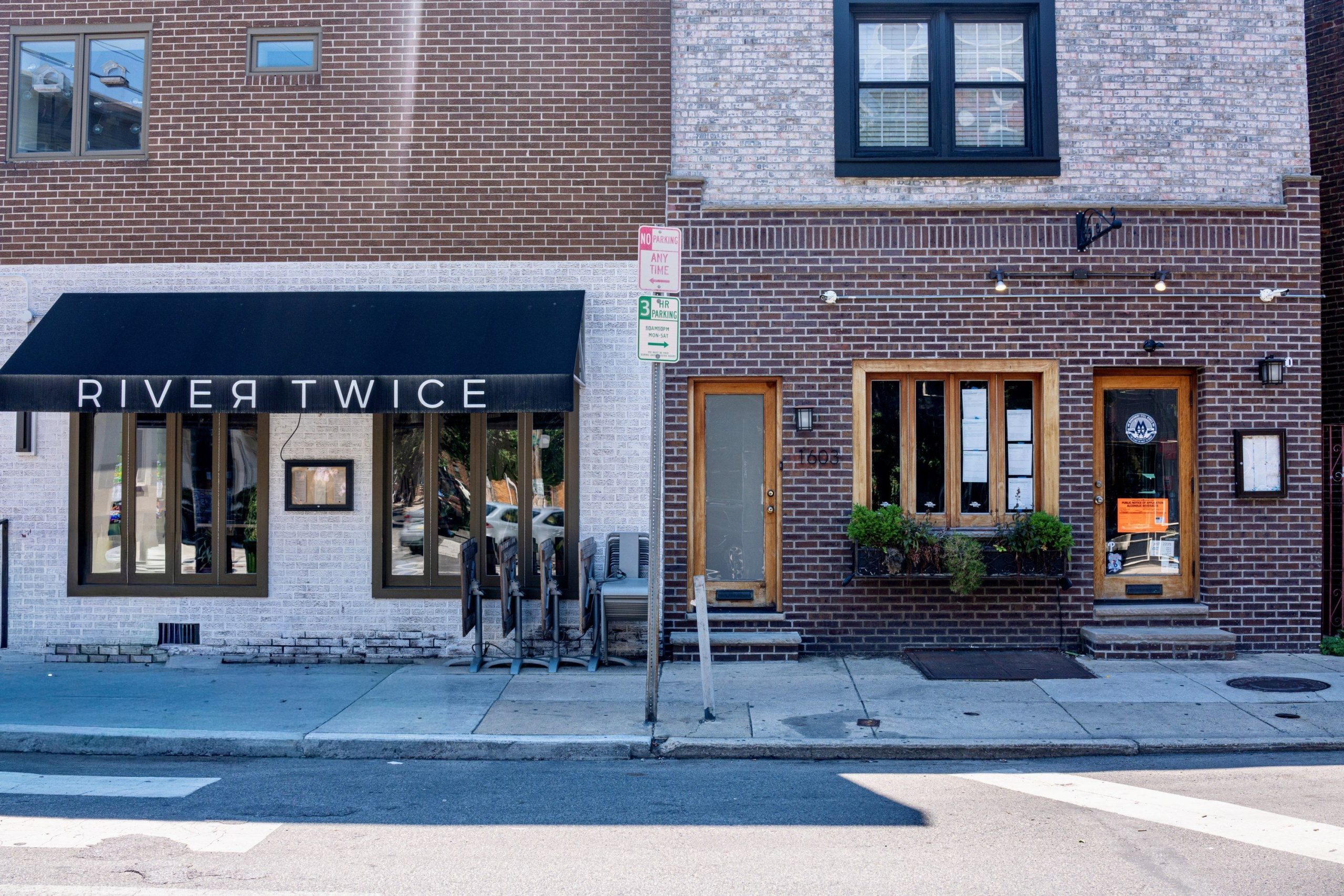
    River Twice on East Passyunk is expanding next door, and that means a real bar, more seating, and new opportunities to eat one of our favorite burgers.

    Craig LaBan reviews Terra Grill

    Critic Craig LaBan visits Terra Grill, a newcomer from globetrotting chef Laurent Tourondel in Northern Liberties’ Piazza Alta, where he found “a textbook chophouse vibe” and a “something for everyone” menu. Read on for his review.

    The best things we ate last week

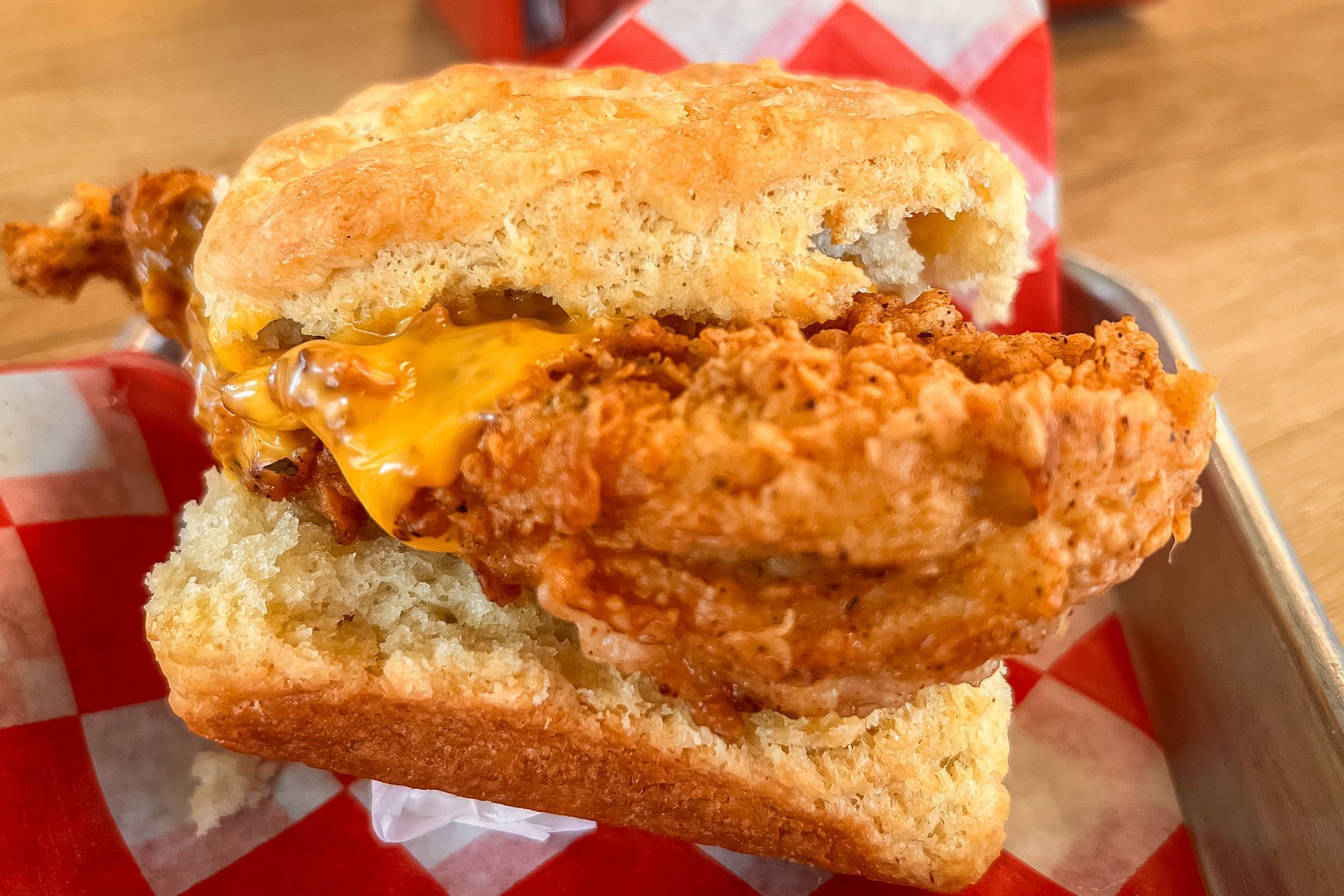
    The food team caught up with a tasty chicken biscuit sandwich in Plymouth Meeting, hot dogs in Bella Vista, loaded fries in Northern Liberties, and a winning bowl of gyu-don from a food truck.

    Scoops

    Eggcetera Haus will replace the shuttered Redcrest Kitchen at Sixth and Bainbridge Streets, likely in the next few weeks. Husband-and-wife team Rey Tamaka and Vina Kencana will operate the all-day bar-restaurant. Tamaka, who spent the last six years as head chef at an Old City brunch restaurant, will oversee a modern American menu spanning breakfast, lunch, and dinner, while Kencana will manage operations. Breakfast will feature specialty coffee from Philadelphia’s Vibrant Coffee Roasters, with dinner service adding pasta, steaks, cocktails, and comfort food. Hours will be 8 a.m.-9 p.m. daily. Queen Village/Bella Vista will get another all-day option next spring when Sabrina’s Cafe opens at Fifth and Bainbridge, down the block from mainstay Famous 4th Street.

    Sabrina’s Cafe — speaking of which — is behind a new venture aimed at the late-night crowd. Spence De Abreu, the 21-year-old son of Sabrina’s founders Robert and Raquel De Abreu, is hoping for a late-July opening of Big Spence’s, a sandwich operation at 1816 Callowhill St., a few doors from the Art Museum-area Sabrina’s. It will run via delivery services and pickup (no seating), offering six sandwiches at launch, with additional menu items expected over time. Initial hours will vary, with service planned as late as 2 a.m. during the fall, when college students are back. Opening is tentatively scheduled for July 29.

    Scampi, chef Liz Grothe’s Queen Village Italian-ish restaurant, has added a beverage program in partnership with Northeast Philly winemaker Camuna Cellars. The tie-in allows spirits and beer options from Pennsylvania producers, including Fell to Earth vermouthery. BYOB is OK, with a $15-per-bottle corkage fee. Scampi also has collabs planned for August: Percy (at Percy) on Aug. 21; Habibi Supper Club (at Scampi) on Aug. 23; and an Italian American pasta night with chef Wyatt Piazza at Kiddo on Aug. 30.

    Chimney Rustic Ales closed its brewery in Hammonton, N.J., in June 2025, in anticipation of opening in Philadelphia. Brewmaster/owner Dan Borrelli is seeing light at the end of a city-permitting tunnel, so he’s looking at a late-2026 opening at 2153 E. Lehigh Ave. in Kensington. Borrelli said this location will have a full kitchen and a chef (to be named later) serving what he calls “elevated bar food, with some seafood mixed in.” Borrelli had a seafood truck called Minnow Seafood Co. “We’re not trying to earn a Michelin star,” he said. “We just want to serve food that’s a little more upscale than you’d typically find at a brewery or neighborhood bar.” He specializes in lagers but also offers IPAs — because “they make up about 60% of the market, so you kind of have to have them.”

    Restaurant report

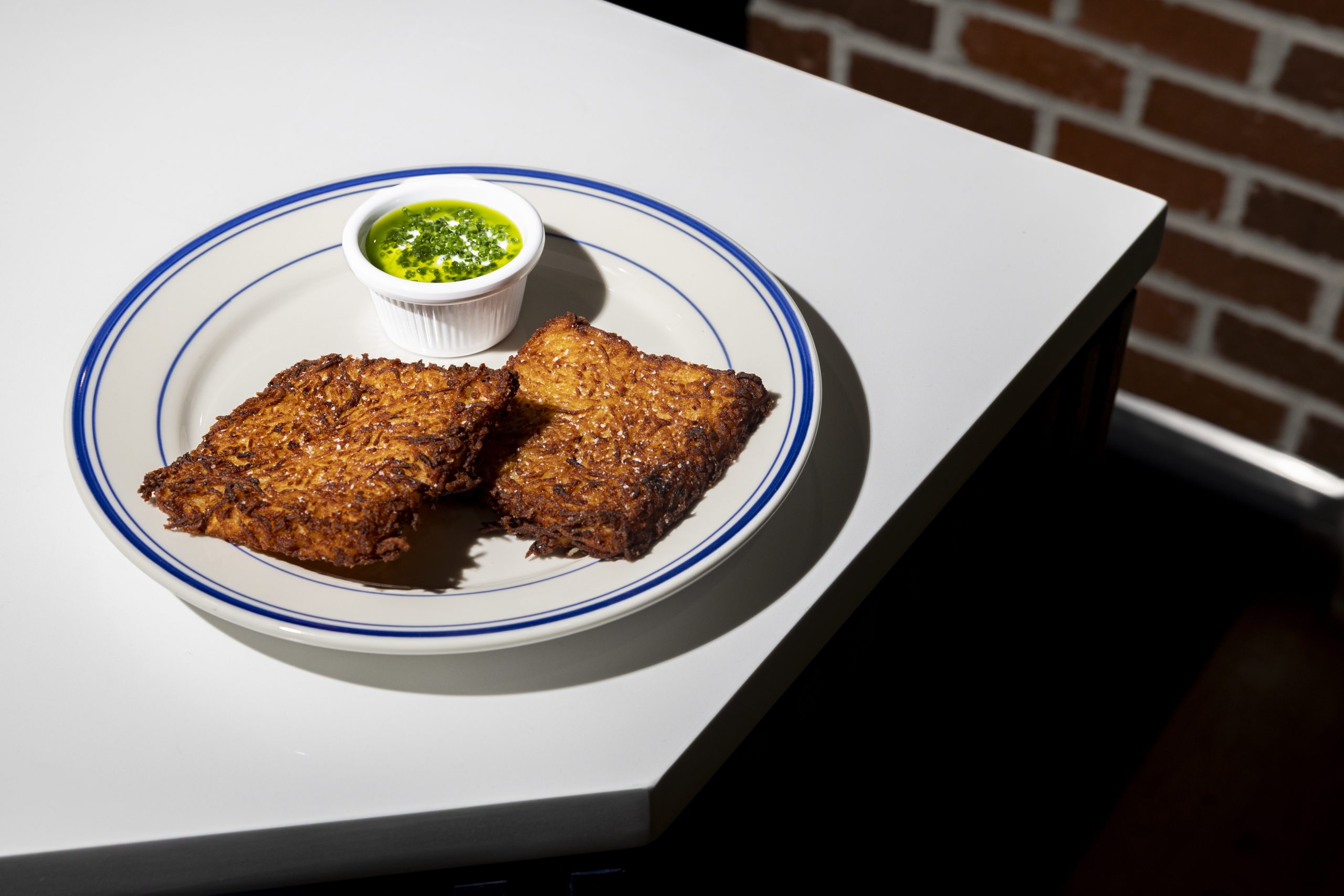
    Schmaltz, a new arrival in Point Breeze, is drawing long lines with latkes, blintzes, and a craveable breakfast sandwich.

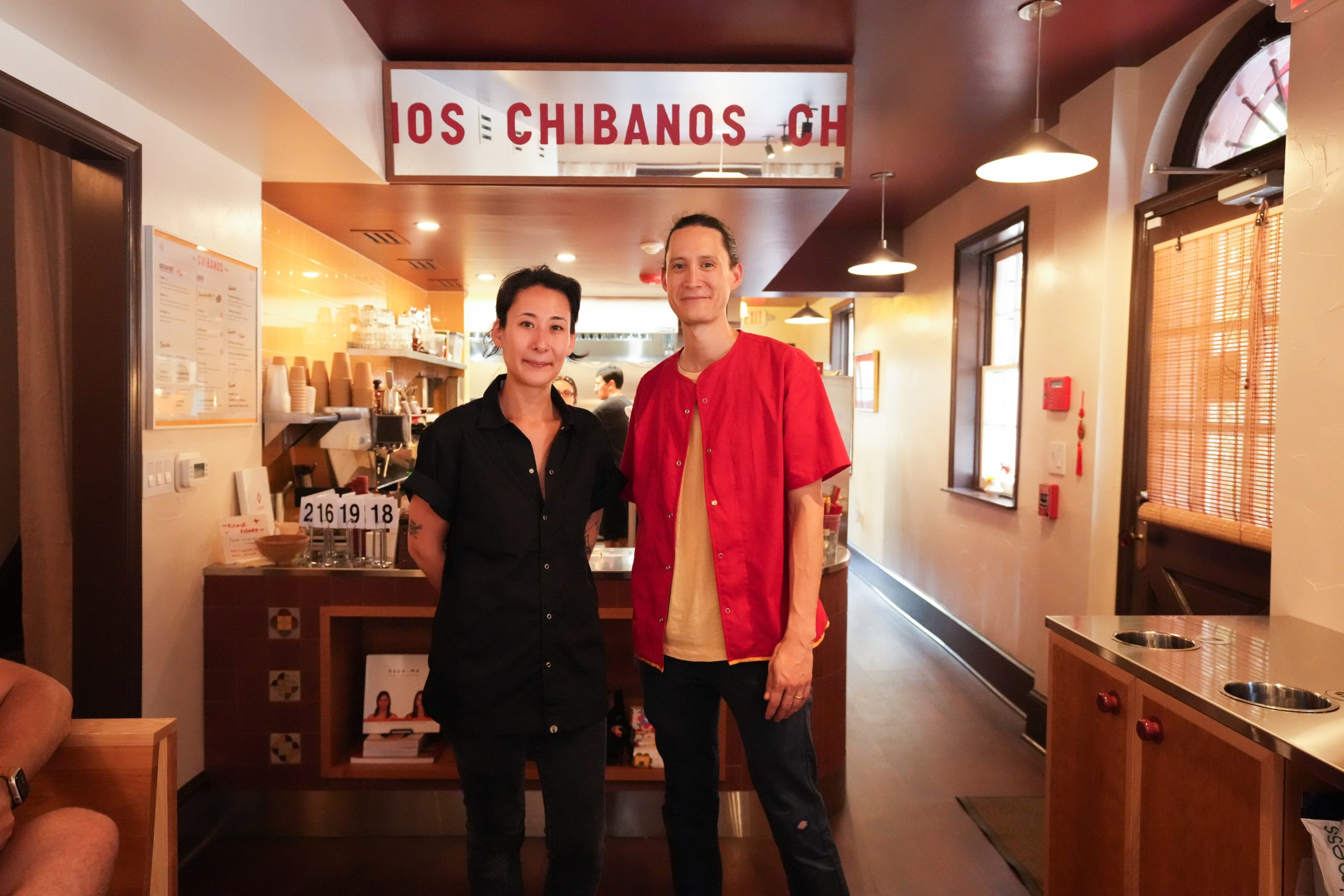
    Chibanos has opened at the former Effie’s in Washington Square West, and Delco-raised owner Evan Fong Jaroff expresses his Chinese-Cuban background through pressed sandwiches, fried yuca, flan, and croquetas. Beatrice Forman tells a fascinating story of food and culture.

    Call Your Mother, the D.C. bagel-sandwich chain, has signed a third Philly lease before the first shop even schmeared its first bagel.

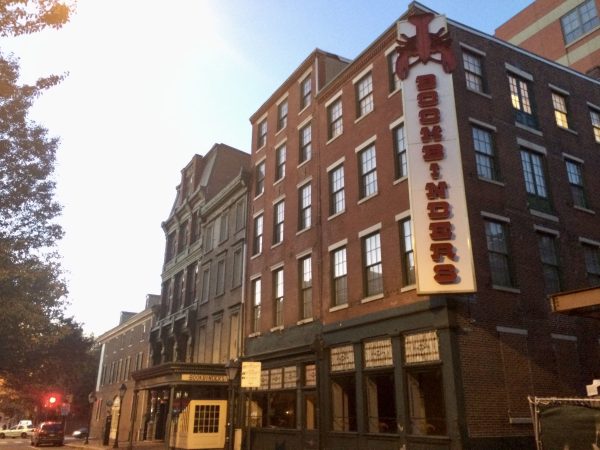
    EMei’s Dan Tsao is taking over a fourth landmark restaurant location — the home of Old Original Bookbinder’s — as part of the Sichuan restaurant’s ambitious expansion.

    Briefly noted

    Townsend on East Passyunk Avenue has been closed since early May after extensive water damage from a fire next door. Chef/owner Tod Wentz has swung part of the French menu to Oltremare, his Mediterranean seafooder at 2121 Walnut St. “Townsend at Oltremare” offers a hybrid menu from Townsend executive chef Alex Nissley through at least the end of the summer.

    Baby’s Kusina & Market in Brewerytown returns Thursday, two weeks after a plumbing issue caused a flood. One change: Dinner service has been paused for the foreseeable future. Meanwhile, Baby’s will do a popup at 11 a.m. Monday at Farina Di Vita (250 Catharine St.) with a roast pork adobo sandwich.

    Hop Sing Laundromat (1029 Race St.) is pricing all cocktails at $12 for the summer, discounted from $17-$21; it’s open from 5 p.m. Thursday-Saturday.

    ❓Pop quiz

    Local bartenders have been foraging recently for what prized ingredient to make amaro?

    A) black walnuts

    B) wormwood

    C) rhubarb root

    D) truffles

    Find out if you know the answer.

    🚗 Winners! Last week’s quiz asked you to guess how many miles Craig LaBan put on his car while scouting restaurants for his Jersey Shore dining package. We had a tie — the total was 1,034 and two readers guessed 1,000, so I ordered a runoff. Jan D. of Norristown submitted “1,005” (29 miles under) while Ed H. of Philadelphia offered “1,066” (32 miles over). What’s 3 miles among friends? I’m sending Inquirer swag to both, along with my sincere thanks for reading.

    📖 Catch up with Craig’s Shore favorites here.

    Ask Mike anything

    Please update us on a couple of bakeries, like Manna near Norris Square and Del Buono’s, where McMillan’s was in South Jersey. — Scot T.

    Saif Manna, adding a brick-and-mortar location at 110 W. Berks St. in Kensington, is aiming for a soft-opening of Manna Bakery tomorrow, followed by a grand opening on July 30. Meanwhile, the PR machine is revving up for the opening of Del Buono’s, in a partnership with Al DiBartolo’s custom-cake studio DiBartolo’s Kakery, at 15 Haddon Ave. in Haddon Township’s Westmont section. Soft opening is planned for mid-August, with an Aug. 29 grand opening tied to Haddon Township Summer Music Festival.

    📮 Have a question about food in Philly? Email your questions to me at mklein@inquirer.com for a chance to be featured in my newsletter.

    By submitting your written, visual, and/or audio contributions, you agree to The Inquirer’s Terms of Use, including the grant of rights in Section 10.

  • EMei owner leases Bookbinder’s space in Old City, his fourth landmark restaurant acquisition in a year

    EMei owner leases Bookbinder’s space in Old City, his fourth landmark restaurant acquisition in a year

    Dan Tsao, the owner of the Chinatown Sichuan restaurant EMei, has leased the former Olde Bar at Second and Walnut Streets in Old City. It’s the fourth landmark restaurant property he has taken on in the Philadelphia area in the last year.

    The building, home to Old Original Bookbinder’s for generations before becoming Olde Bar in 2015, joins the former John Henry’s Pub in Ardmore, Marra’s in South Philadelphia, and Irish Pub in Rittenhouse in Tsao’s portfolio.

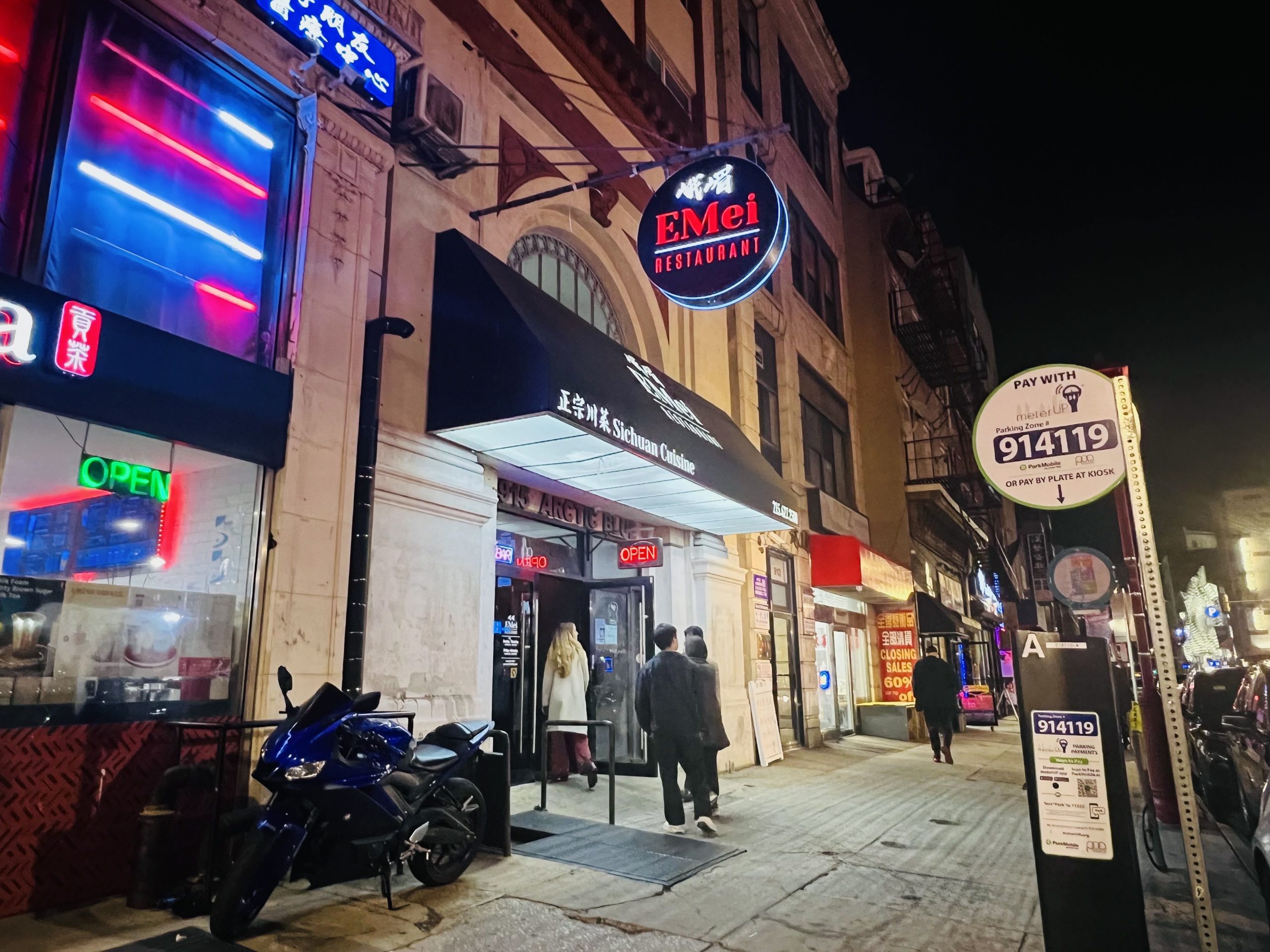
    Tsao said this deal marks the end of an expansion plan driven by the long lines and limited capacity of the basement kitchen at his restaurant at 915 Arch St. EMei is one of Philadelphia’s most acclaimed Chinese dining rooms, earning a spot on The Inquirer’s 76 list of essential restaurants in 2024.

    “People see Bookbinder’s as another restaurant,” Tsao said. “I see it as the large production kitchen we’ve been dreaming about. We’ve insisted on making everything from scratch — our chili oil, dumplings, egg rolls, scallion pancakes, sauces — you name it. We’ve never wanted to cut corners. This gives us the space to keep doing things the way we’ve always believed they should be done.”

    Dan Tsao, publisher of Metro Chinese News and other publications, and owner of EMei, in 2022.Joseph N. DiStefano

    “From the outside, it may look like we’ve been on an acquisition spree, but that really wasn’t the goal,” Tsao told The Inquirer. “Our focus now is opening these locations one at a time and making sure each one succeeds before we think about anything else.”

    Each property will have a different role, Tsao said. The former John Henry’s, on Cricket Avenue, and Marra’s, on East Passyunk Avenue, are both destined to become future EMei restaurants. Old City will first serve as a commissary kitchen before adding a dining room, bar, and event venue, while the former Irish Pub — a mixed-use building spanning 2007-11 Walnut St. — is being developed as a broader hospitality concept rather than another EMei location.

    Tsao, who emigrated from China in the 1990s and graduated from Pennsylvania State University in 1999, owns EMei and nearby TingTing’s Cafe, along with New Mainstream Press, publisher of Metro Chinese Weekly and Metro Viet News. His mother-in-law, Jinwen Yu, and chef Yongcheng Zhao opened EMei in 2011; Tsao and his wife, TingTing, took over the business in 2019. (Zhao is still the chef.)

    Dan Tsao’s restaurant EMei at 915 Arch St. in Chinatown in 2025.Michael Klein

    Tsao said the acquisitions were never intended to happen simultaneously — several independent opportunities simply surfaced within a short period. “It may look like we’re expanding quickly, but internally we’re actually slowing down,” he said.

    “The way I look at these projects is that I’m buying them partly as a long-term real estate investor and partly as an owner-operator,” he said. “That gives us the flexibility to move at our own pace, take the time to figure out each space, and make sure we do it the right way instead of rushing to open.”

    A kitchen too good to pass up

    The Olde Bar/Bookbinder’s property is different from the others: Rather than purchase the condominium space outright, Tsao signed a lease with an option to buy. The Philadelphia Business Journal first reported EMei’s application for a liquor license at the address.

    The biggest draw wasn’t the stained glass and landmark dining rooms, decked out in late-19th-century furnishings — it was the kitchen. Spanning nearly half the ground floor, it includes five walk-in refrigerators and freezers and two 32-foot cooking lines beneath exhaust hoods, allowing Tsao to begin operations without the extensive demolition and rebuilding required at his other properties.

    “If not for the kitchen space, I would not consider it,” Tsao said. “It is very hard to find such a large kitchen in Center City.”

    The property, at 125 Walnut St., includes about 13,000 square feet on the ground floor, plus 5,000 square feet of basement storage. The first phase will be largely behind the scenes: Tsao plans to use the building as a commissary kitchen to relieve pressure on the Chinatown restaurant, while also running takeout and delivery as EMei Old City. Later, he expects to open a roughly 60-seat dining room and bar, followed by an event venue. He’s considering calling the overall complex the Bindery and the bar the Publisher Bar — nods to both the building’s Bookbinder heritage and his own nearly two decades in publishing.

    The vertical neon Bookbinder’s sign on the east corner of the property “has to stay,” Tsao said.

    Work has begun at all four properties, but Tsao said they will open one at a time. Because the kitchen is largely intact, the Old City site may be the first of the new locations to begin limited operations, with dining and event spaces to follow as renovations continue in Ardmore, on Passyunk, and in Rittenhouse.

    A building with many lives

    Old Original Bookbinder’s traces its roots to an oyster saloon that Samuel Bookbinder opened in 1893 at 525 S. Fifth St. before moving to 125 Walnut St. in 1898. Over the next century, it became one of Philadelphia’s signature restaurants, drawing presidents, politicians, celebrities, and generations of diners for oysters, lobster, and its famed snapper soup. For many, it was their first ritzy dining experience in the days when people dressed up for dinner.

    It also spawned a crosstown rival after a family split. Bookbinders Seafood House opened in 1935 at 215 S. 15th St. and closed in 2003. It was later an Applebee’s, which ran from 2005 to 2020, and is now a music bar called Vinyl.

    After a major renovation and condominium conversion in the early 2000s, Bookbinder’s struggled financially and closed in 2009 amid bankruptcy. The Taxin family, who bought the original Bookbinder’s in 1945, still owns an Old Original Bookbinder’s restaurant in Richmond, Va., which opened in 1999.

    Chef Jose Garces revived the landmark in 2015 as the Olde Bar, preserving much of the historic architecture while reimagining it as a contemporary oyster house and cocktail bar.

    The restaurant filed for Chapter 11 bankruptcy protection in 2018 and later was acquired by investors. The restaurant closed for public dining in 2024 but continued as an events venue and served as headquarters for Garces Events, the catering company founded by Garces and owned by Compass Group USA. Compass closed both Garces Events and the Olde Bar last year.

  • The best things we ate this week

    The best things we ate this week

    Kibbeh nayyeh at Suraya

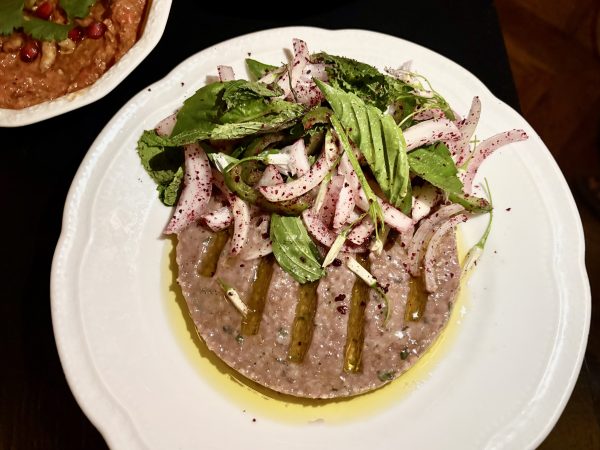
    I’ve been mesmerized by kibbeh nayyeh since my days as a teenage busboy at Phoenicia, the trailblazing Lebanese fine-dining destination just outside of Detroit in Birmingham, Mich. It was my first encounter with a dish that showcased raw meat — in this case, puréed raw lamb mixed with bulgur wheat and spices. And my determination to eat as much of it as possible while on extra-long breaks in the walk-in (instead of cleaning tables) was likely one reason I wasn’t a very good busboy. It did provide, however, one of the earliest sparks in my career as a curious eater. Now, I order it almost every chance I get.

    But no kibbeh nayyeh has stopped me in my tracks and triggered a childhood flashback quite like the incredibly soft and vividly spiced version at Suraya. One of the first recipes taught to executive chef Nick Kennedy by Maude El-Harouny — the Lebanese mother of co-owners Roland Kassis and Nathalie Richan — before Suraya’s 2017 opening, it’s a picture of the classic dish at its best. Lean lamb loin is puréed to a silky smoothness before it’s blended with bulgur, puréed onions, jalapeños, and herbs — basil, marjoram, allspice, mint, and cinnamon — before getting shaped into a dimpled pink puck with deep divots for good olive oil.

    The spreadable, pâté-like base itself is flavorful enough, but that peppery olive oil and the garnish piled on top, with sumac-dusted raw onions and basil and mint that deliver a contrast of juicy crunch and herbal freshness, elevates the dish overall to another level. One that’s powerful enough to remind me of my first transporting raw taste of kibbeh nayyeh several decades ago. Suraya, 1528 Frankford Ave., 215-302-1900, surayaphilly.com

    — Craig LaBan

    Omakase at Kissho House

    Omakase experiences in Philadelphia run the boardfrom the $78 tasting at Yuhiro in Fishtown to the $355 extravaganza in the back room of James Beard Award-winning chef Jesse Ito’s Royal Sushi & Izakaya. How about one with ambition and value, priced down the middle?

    For that, there’s chef Jeff Chen’s Edomae-style omakase at his 12-seat counter downstairs at Kissho House, which opened last year in a former Rittenhouse law office. Chen, a Hiroki alum, delivers the goods without gimmicks, from the appetizers (octopus, asari clams, and Japanese river crab) through the nigiri sequence, which caps off with a toro hand roll and clam soup, followed by strawberry monaka for dessert. Few $150 omakases include well-sourced ingredients (anago from Tsushima, akami from Spain, uni from Hokkaido), and creative bites like king salmon with dry tomato, truffle sauce, and roe in a spring roll shell, plus Wagyu with sea bream and caviar. Kissho House, 1522 Locust St., 610-332-7387, kisshohouse.com

    — Michael Klein

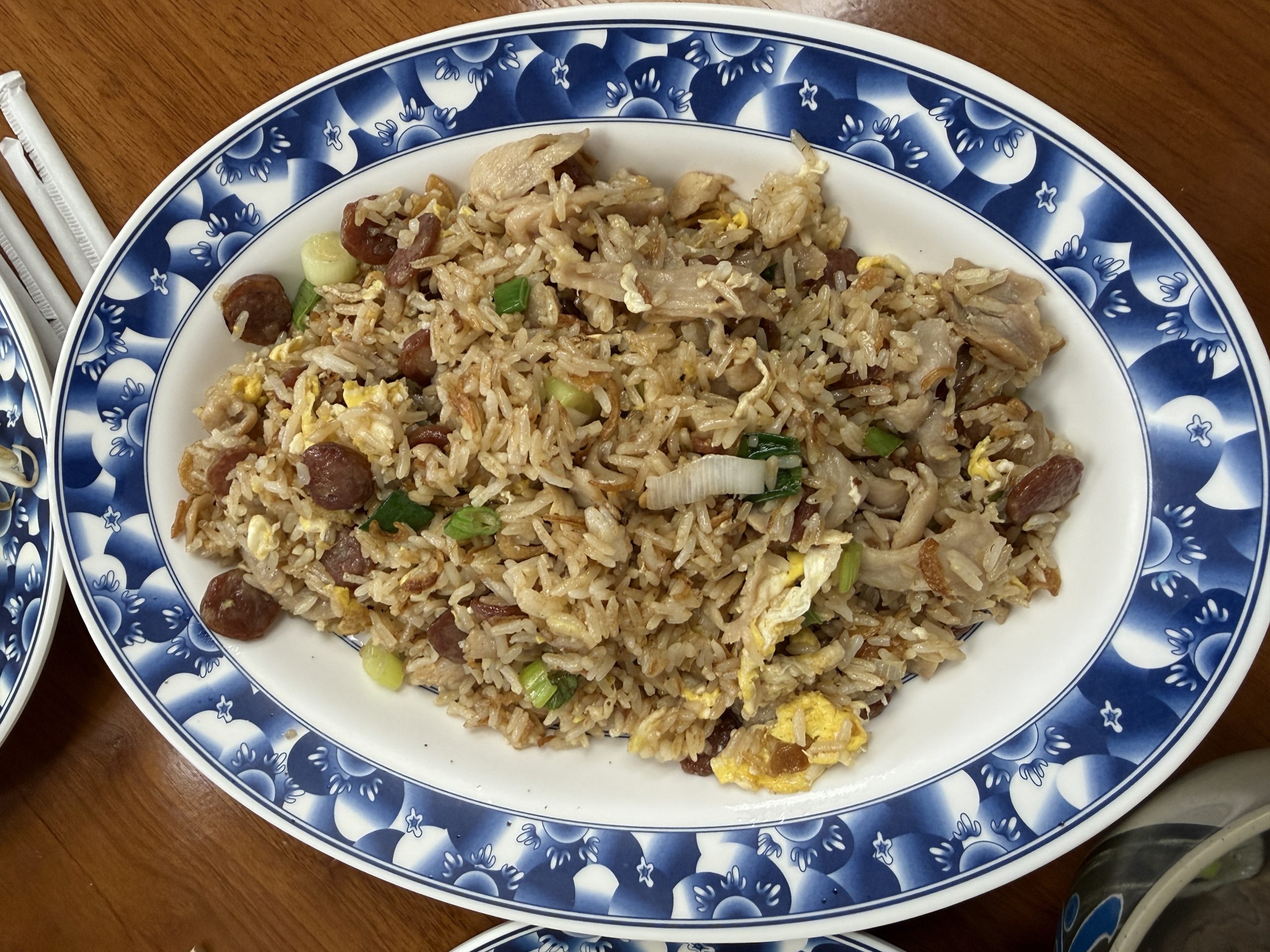
    The Bai Cha Sach Mon (chicken fried rice with chinese sausage) at Heng Seng Restaurant, 2217 S. Seventh St.Kiki Aranita / Staff

    Chicken fried rice with Chinese sausage (Bai Cha Sach Mon) at Heng Seng Restaurant

    I went to Heng Seng Restaurant in South Philly with a craving for Cambodian dry egg noodles. At $15 for a small portion, they hit the spot, bouncy and crinkled yet firm with a side of beef shank bone broth for dipping or sipping. But there was a sleeper hit: the $17 chicken fried rice (called bai cha sach mon in Khmer) with smoky, sweet lap cheong or Chinese sausage.

    I usually think of fried rice as a little silly but also a little clever — an excellent way for a restaurant to use day-old rice, which makes for better fried rice than fresh rice. So when the platter landed in front of me, I was delighted but also a little perplexed. How could these slivers of chicken be so tender and flavorful? How could the individual grains of jasmine rice have such a lovely robust texture? Heng Seng’s dishes are heavily influenced by Teochew cuisine (Chinese Cambodians are primarily Teochew Chinese, originally from the Chaoshan region in eastern Guangdong) with its exceptionally earthy, savory fried rice. With a little bit of egg, scallion, and that sweet lap cheong seeping fat into the rice, this version is certainly worth seeking out. Heng Seng Restaurant, 2217 S. Seventh St., 215-755-5390, hengsengrestaurant.com

    — Kiki Aranita

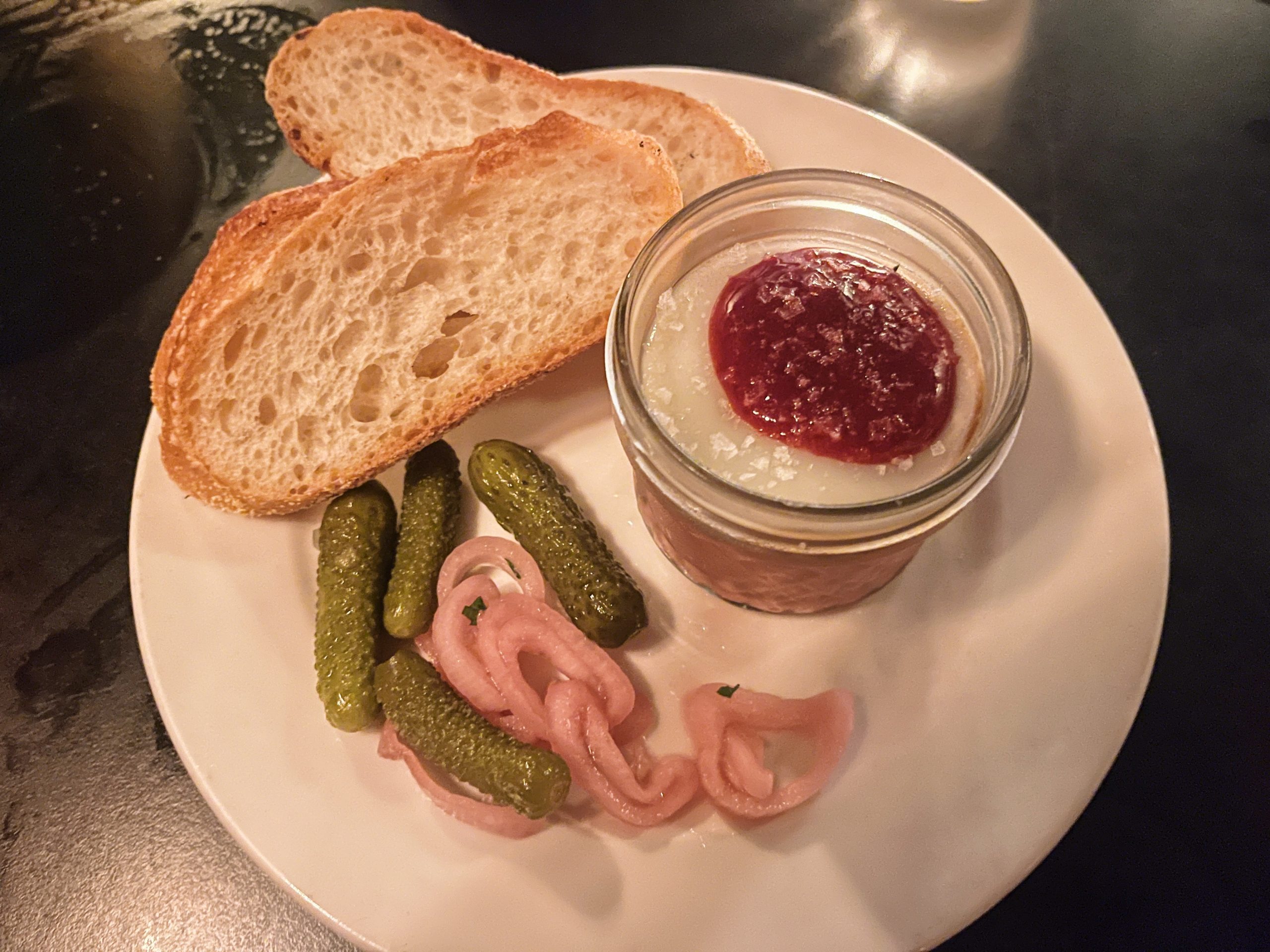
    The chicken liver mousse at Royal Boucherie, 52 S. Second St.Beatrice Forman / Staff

    Chicken liver mousse at Royal Boucherie

    I’ve long considered chicken liver mousse the gateway drug to my beloved chopped liver. Its creamy texture and less polarizing flavor is a good stepping stone to the hard stuff — the chunkier, funkier, and less ritzy mounds of chopped liver behind the counter at most respectable Jewish delis. If it’s your first time eating spreadable liver, the mousse at Old City’s Royal Boucherie is perfect, a textbook example served in a cute little mason jar with crusty bread and cornichons on the side for dipping. Topped with a seasonal berry jam and flecks of flaky salt, the mousse has all the right flavors: a little sweet, a little earthy and rich without feeling heavy. I scraped the jar clean.

    Royal Boucherie, 52 S. Second St., 267-606-6313, royalboucherie.com

    — Beatrice Forman

  • When the buzziest restaurants in Philly need a menu, this is the designer they call

    When the buzziest restaurants in Philly need a menu, this is the designer they call

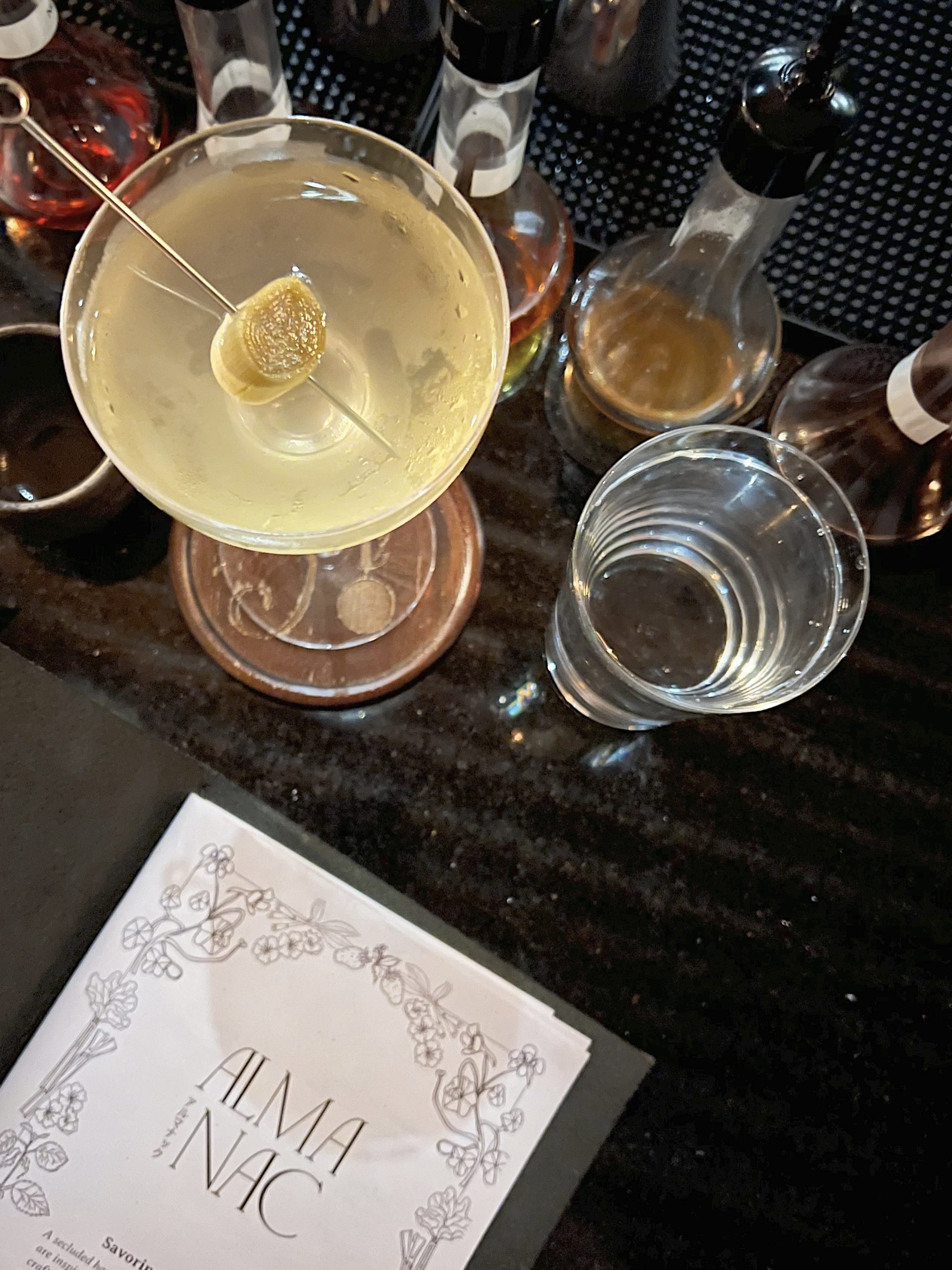
    Unless you’re paying close attention while flipping through the extensive menu at Almanac, Old City’s Japanese American cocktail bar, you might overlook some of the painstaking work that went into it. The leather-bound book’s deep green color is meant to evoke the interior of the bar. The borders of the pages hint at the seasonal ingredients that go into each cocktail, and the thin newsprint pages depicting glassware illustrations of Almanac’s complex cocktails are meant to both be a guide and evoke opening an old book.

    Kylie Silvestri is obsessed with these details.

    That’s because she is the artist and designer behind menus for some of the city’s trendiest restaurants and bars. Her roster includes Sao, Almanac, Ogawa Sushi & Kappo, Javelin, Little Coco’s, River Twice, Little Water, Habibi Supper Club and its forthcoming cafe, Slow Drinks, and the forthcoming Northern Liberties cocktail bar, Field Day. Her company, Haridelle, focuses on this meticulous hospitality branding.

    “Design is part of the holy trinity in the food service industry,” Silvestri said. “There’s the food. There’s the hospitality, and then there’s the design.”

    Almanac’s menu, designed by Kylie Silvestri.Haridelle

    Menus help set the stage for each customer’s meal, and play a big role in bringing the restaurant’s story to life.

    “The second a customer sits down — before they even taste the food/beverage — they are holding a menu in hand,” she explained. “How does the menu feel, tactilely? How does it look? It all adds to the experience and helps to tell that story. So, for me, designing them is about building the puzzle pieces together in a way that connects and relays the message eloquently, from chef-owner to customer.”

    Silvestri didn’t begin her career with a roster of small hospitality clients. She previously worked for startup groups and larger hospitality companies. In 2021, she started freelancing to build her own company, called Kylie Creative, where she developed branding for predominantly women-owned entrepreneurial businesses in the wellness industry.

    As her clientele grew, she would pick up serving shifts at restaurants in the city, including Osteria, and build connections with industry folks. Soon, a friend at the restaurant introduced Silvestri to Amanda Rucker (River Twice, Little Water), who commissioned her to design flyers for a 2022 fundraising event to support abortion access. The following year, Rucker reached out to Silvestri for branding and menu development for Little Water.

    “I naturally pivoted my design work to focus on the hospitality industry — because once you start, you never leave,” she said.

    While designing menus is just a part of her restaurant branding business, the process can take up to a month for each restaurant. There are five key steps to ensure a final product that owners are happy with.

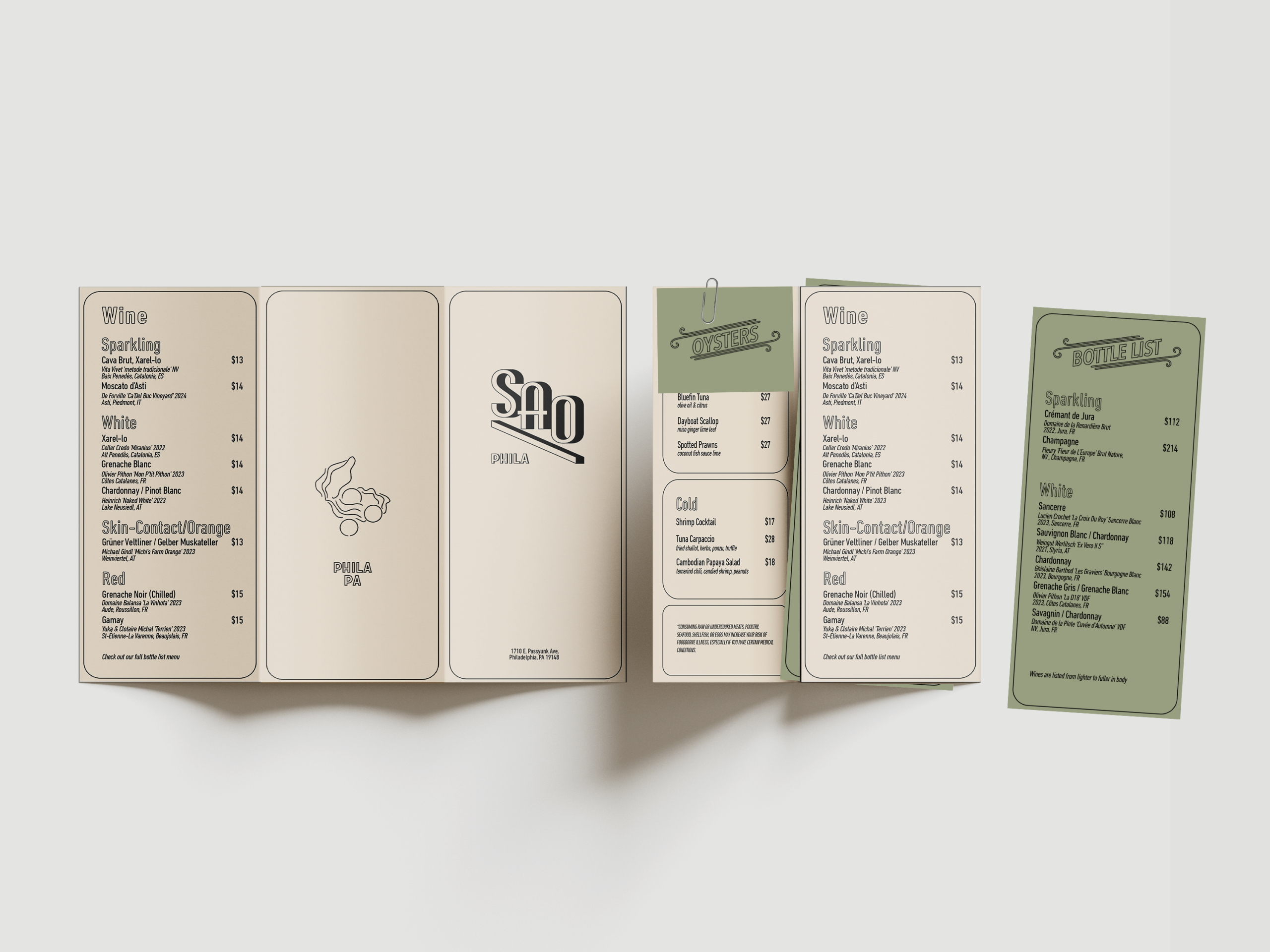
    Sao menu, by Kylie Silvestri.Haridelle

    First, Silvestri takes time to understand the owners/chefs’ vision for the menu. Then, she determines a menu system and layout with brand fonts and drawings. Walk-throughs of the restaurant/bar (in person or via renderings if it’s not built yet) help her connect the menu design to the physical space. Once the vision is mapped out, Silvestri likes to settle down at a local coffee shop to create the menus on Adobe Illustrator and InDesign. The final step is sharing paper stock samples with owners/chefs for feedback on design and tactility.

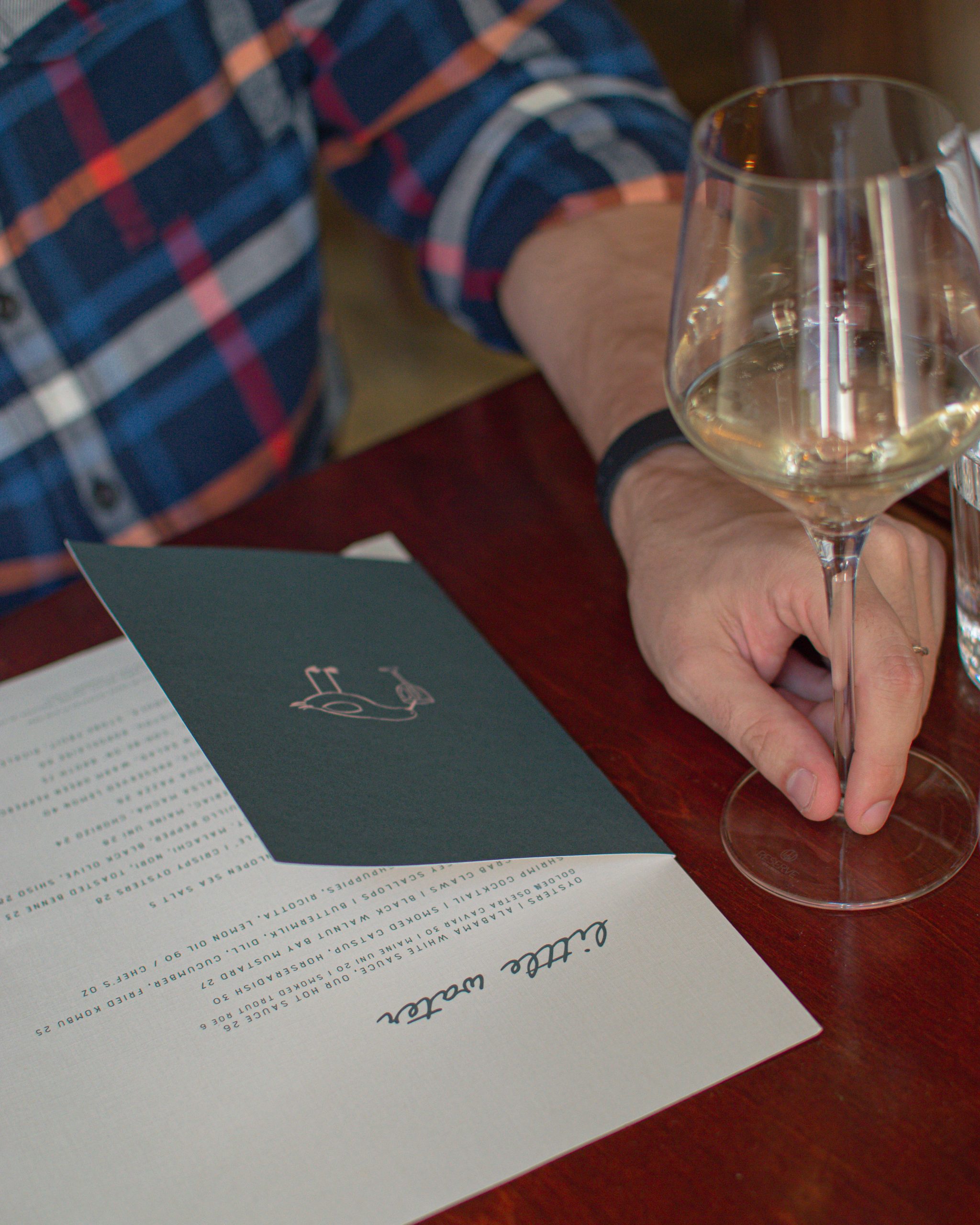
    At Little Water, the linen-textured menu was the answer to conversations surrounding technique and locale, reinforcing the feeling of the coast with dishes offering the breadth of the Gulf to Cape Cod. An illustration of a little sandpiper sipping out of a cocktail on the drinks menu showcases the personality of restaurant owners Randy and Amanda Rucker. “We tied the design to that nautical experience and having this playfulness — Randy always says that ‘We don’t take ourselves seriously; we take our food seriously,’“ Silvestri said.

    At Sao, the menu was inspired by Rachel Lorn’s family’s business down the Shore, featuring a takeout menu style that sections off the dishes in categories. There are outlines of vintage signage by Philly-based artist Darin Rowland.

    Little Water menu, by Kylie Silvestri.Haridelle

    For Habibi Supper Club and Field Day, the menus — like the restaurants — are still in development. On a recent Wednesday, Silvestri visited Field Day to chat with co-owner Katie Childs about the new bar’s branding and later chatted on the phone with Miled Finianos of Habibi Supper Club for his new cafe’s menu design.

    The menus, Silvestri explained, are “time capsules of culture, time, and space,” so every choice, from paper stock to illustration style, is made to capture that particular restaurant’s moment.

    Philly’s aim lately is on chef-owned restaurants, “or rather a focus on who is behind what,” she said, which means storytelling is more important than ever.

    “Philly’s food scene is incredibly versatile. … Each story is unique to the chef/beverage professional at the heart of the concept, making it an incredible city to work in,” she said. “I will never get tired of exploring new design styles and never feel pigeonholed to follow a specific one.”

  • How to have a Perfect Philly Day, according to historian, author, and educator Michelle Craig McDonald

    How to have a Perfect Philly Day, according to historian, author, and educator Michelle Craig McDonald

    Philadelphia historian, author, and educator Michelle Craig McDonald knows her coffee. Especially the revolutionary kind.

    McDonald, who serves as an academic adviser for PBS’s series Drive By History, is the author of the new book, Coffee Nation: How One Commodity Transformed the Early United States.

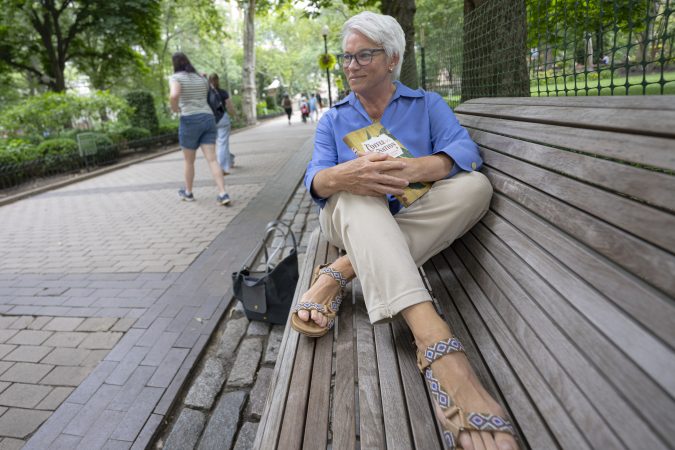
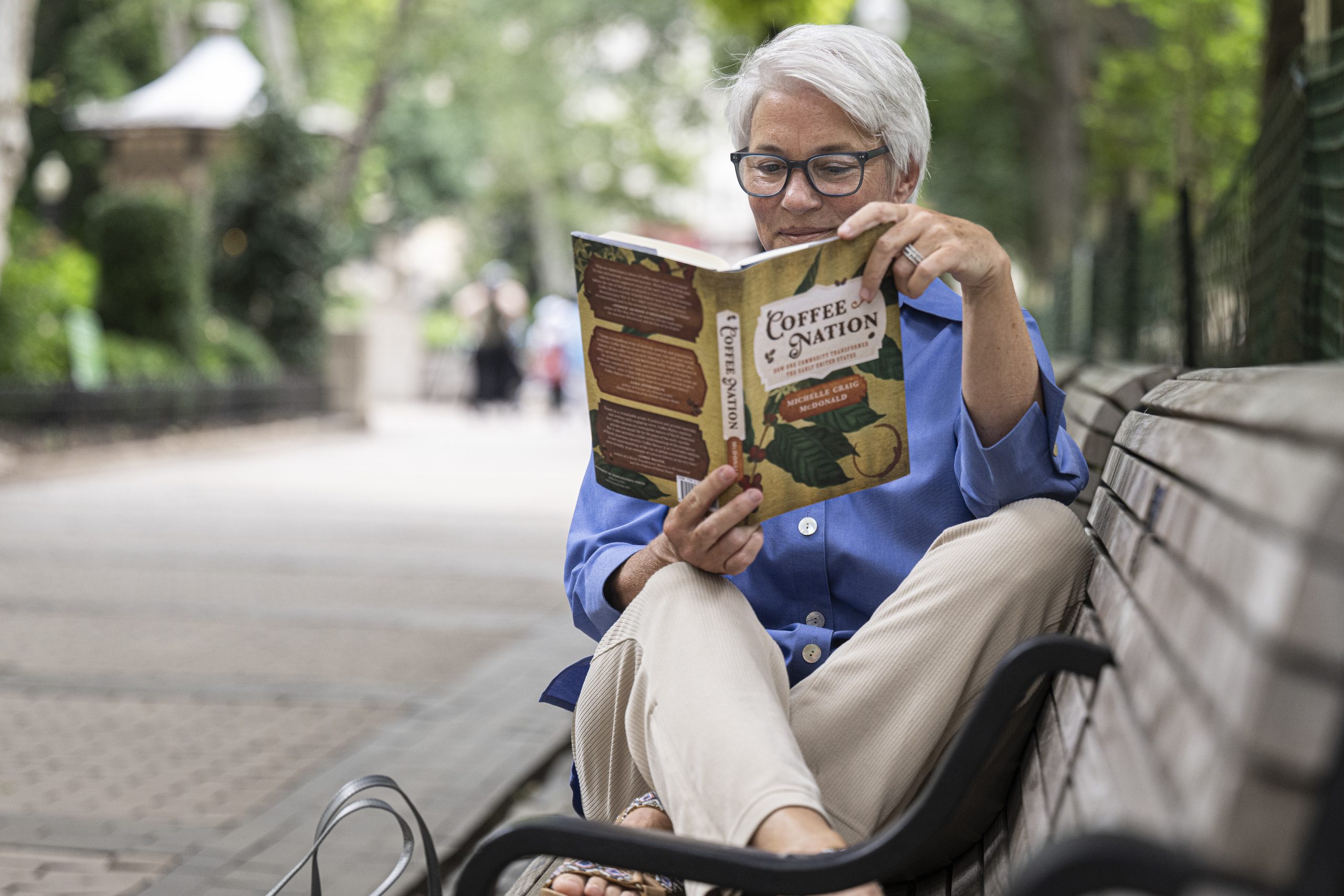
    Philly historian and educator Michelle Craig McDonald enjoys reading in Rittenhouse Square Park. She is the author of “Coffee Nation: How One Commodity Transformed the Early United States.”
    Jose F. Moreno / Staff Photographer

    Telling the story of America and coffee, McDonald traces the bean’s beginnings from slavery-based plantations of the Caribbean and South America in the early 1700s through its prominence in Colonial life to the rebranding of the exotic good as an American staple. McDonald details the emergence of coffee shops, like the Old London Coffee House at Front and Market Streets, as critical Revolutionary-era hubs for politics and business.

    “Within 50 years of our independence, the United States becomes one of the largest suppliers of coffee to the world — but we can never grow it,” said McDonald. So in this moment, when we think about independence, coffee really reminds us that the United States remains deeply tied and deeply embedded with the economies of the region. It was not just a self-sustaining nation that looked inward.”

    Given the nature of her research, it’s no surprise that McDonald’s Perfect Philly Day revolves around food and drink. McDonald, a Southern California native who lives in Rittenhouse Square with her husband and fellow historian, Roderick A. McDonald, said her perfect day includes lots of coffee and cooking, a great Philly workout, and reading crime novels in Rittenhouse Square.

    6:30 a.m.

    My coffee pot is my first spot. I’m going to need fortification if I’m going to tackle the day’s news. I just go with the tried and true Colombian roast from Trader Joe’s.

    When we are down the Shore, my favorite comes from Remedee Coffee, started by two sisters who source their beans from Colombia. It’s a great small business.

    On a perfect day, this is when we do our New York Times games — like Connections or Wordle — which we do together. My sister says it’s cheating. I like to say it’s “collaborating.”

    8:30 a.m.

    I love cooking of all kinds, but baking is my first love. My go-to on a perfect day is a batch of scones. I have a recipe that I got online from a website called Love and Lemons. It’s a base recipe. You can make anything you want. Cranberry, orange walnut, apricot, ginger almond, or my brother-in-law’s favorite, which I know because he buys the ingredients every time I visit, blueberry lemon.

    I used to head over to Metropolitan Bakery on 19th Street, which I am still mourning the loss of.

    I loved their Millet Muffins and raisin walnut bread. My freezer is stuffed with both because I bought as many as I could before they closed. And I’m slowly rationing them so I don’t lose them quickly.

    9:30 a.m.

    We have a solid division of labor in the household. I do the cooking. But my husband does the shopping. While the scones are in the oven, he may well be on his way down to the Italian Market on his vintage 1962 Schwinn bicycle — expertly serviced by Curtis at Via Bicycle on Broad Street. He’s a fan favorite!

    My husband is the provisioner of the house. I get to take what he brings back from the list — and sometimes not from the list. It feels like my own personal version of Chopped. He comes home with five ingredients and says, “What can you do with this?’”

    10 a.m.

    I’m hitting the gym. I do love eating, which means I need to pay the piper. I go to Pure Barre in Center City. It’s wonderful. It’s a class — a core-based workout that does weightlifting, planks, pushups. An hour there, any day I can get it, gives me enough brownie points for the rest of the day’s culinary adventures.

    If the weather is nice, we might substitute a bike ride down the Schuylkill River Trail. Manayunk is a great destination.

    Noon

    That’s when Small World Seafood is in the area with deliveries. It’s an Old City business that was born out of necessity. The owner provided fresh seafood to restaurants during the COVID-19 pandemic. Then he began an online business selling directly to customers. You can get anything — halibut, skate steaks, steelhead trout, oysters, clams — for a lazy cooking night.

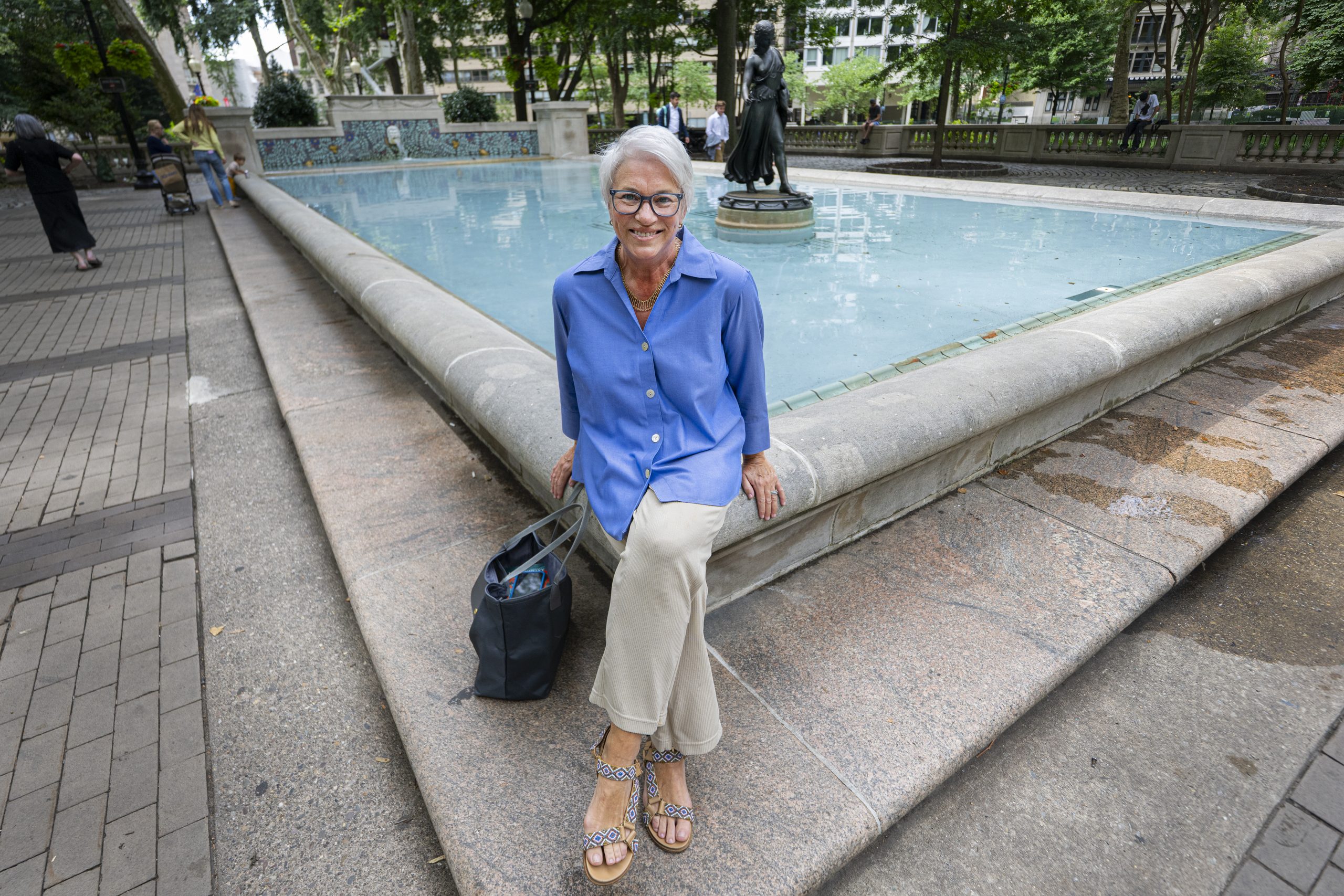
    Michelle Craig McDonald’s perfect Philly day includes lots of coffee and cooking, a great Philly workout, and reading crime fiction in Rittenhouse Square.Jose F. Moreno / Staff Photographer

    1 p.m.

    I’ve got the fish and I’m marinating it for dinner. Steelhead trout is one of my favorites, so super easy, a little bit of soy, a little bit of orange, a little bit of brown sugar, a little bit of maple, and garlic.

    2 p.m.

    On a perfect day, when I can while my time away, you will find me reading in Rittenhouse Square. I have an abiding passion for crime fiction. Ann Cleeves. Donna Leon.

    And if it’s not great weather, you could still find me reading, but probably in one of any of a dozen coffee shops that are within walking distance of my house.

    There was a great article that just ran recently in The Inquirer about the rise of Yemeni coffee shops in the city, such as Moka & Co.

    3 p.m.

    This is where it’s going to get busy. I would be remiss if I didn’t bring a little history and culture into this day. The American Philosophical Society has a wonderful project called “The Revolutionary City: A Portal to the Nation’s Founding.” It’s a partnership where five Philadelphia historical institutions — the APS, the Library Company of Philadelphia, the Historical Society of Pennsylvania, the Kislak Center at Penn Libraries, and the Museum of the American Revolution — came together to plan for 2026, and all their exhibits build on each other. Now I know that’s a long afternoon. Readers can pick and choose and see the others on their second favorite perfect Philly day [laughter].

    6 p.m.

    My husband and I cook together. If it’s Saturday, the compulsory listen is “The Many Moods of Ben Vaughn.” Cooking is my way to unwind and my husband is an excellent sous chef.

    8 p.m.

    We tend to have a leisurely meal with a glass of wine or two, and review the day’s exploits. An episode of television in the evening is a good escape. We are huge PBS fans. We love British crime dramas. We are huge fans of Shetland, a Scottish crime drama, and Vera, an old British crime drama with a curmudgeonly police detective.

    10 p.m.

    I am not a night owl. But I will confess to a wee dram of bourbon most evenings. Then, a little more light reading. And it’s time for lights out.


    This interview has been edited for length and clarity.

  • What we missed on our roundup of Philadelphia’s 76 most iconic dishes

    What we missed on our roundup of Philadelphia’s 76 most iconic dishes

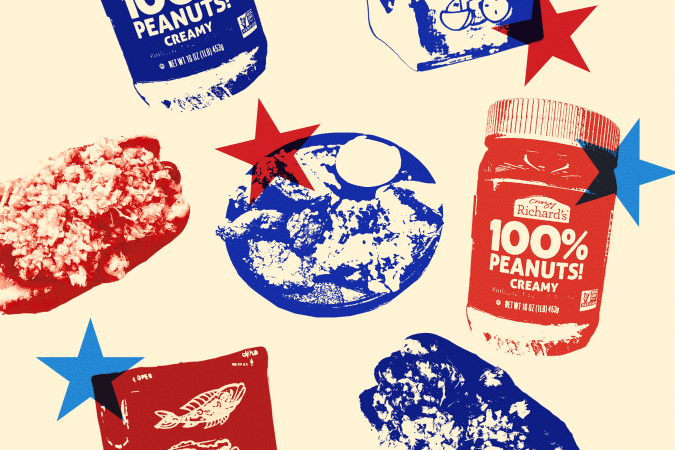
    We knew that a list of 76 iconic Philadelphia foods would leave something out. It did. After hearing from readers — and revisiting a few of our own debates — we had to mention six items that deserve a place in the city’s culinary canon. They don’t replace the original 76; they just expand the conversation.

    The ‘combo’: Hot dog and fishcake on a roll

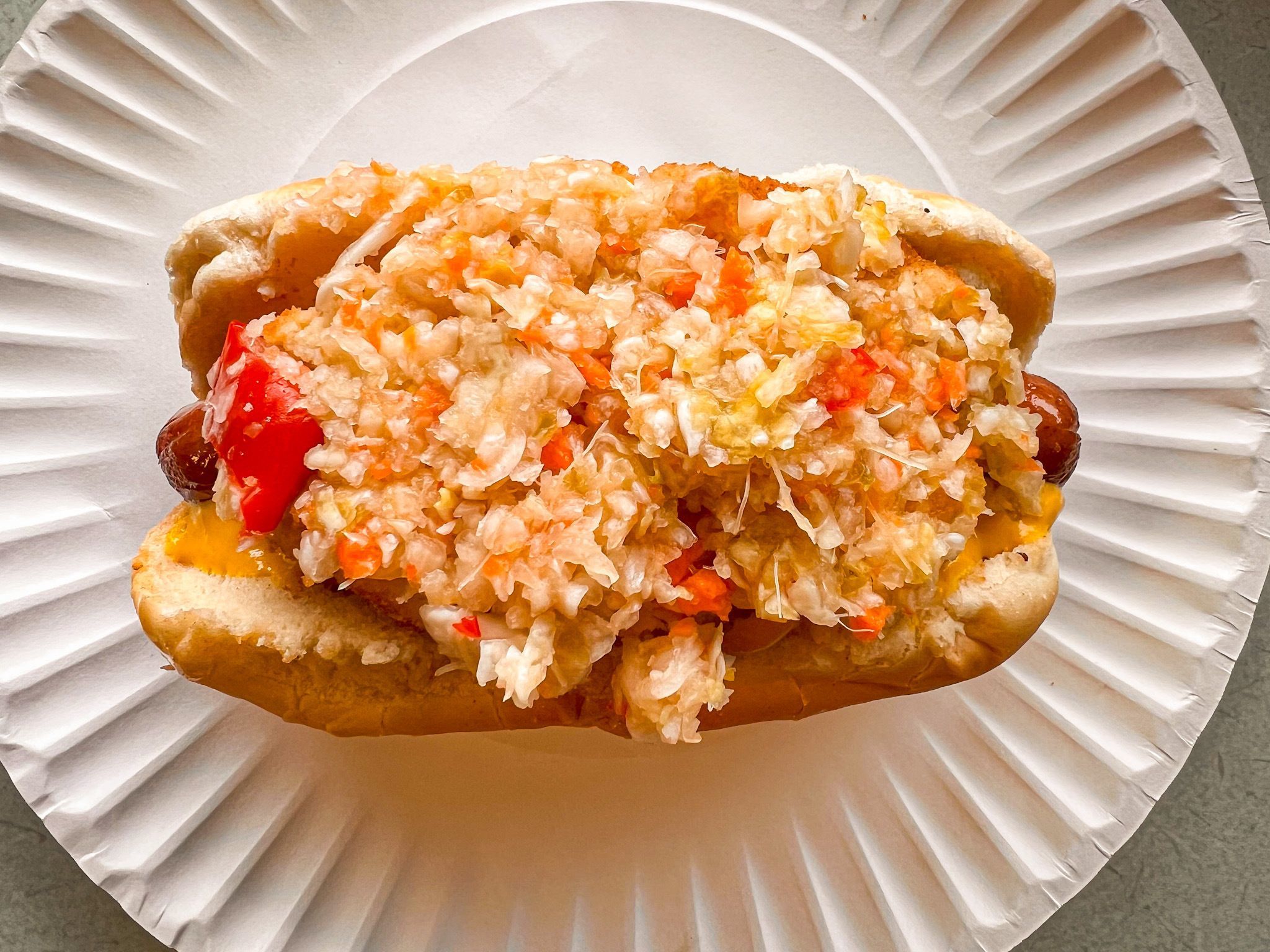
    The hot dog-fish cake combo topped with pepper hash at Lenny’s Hot Dogs in Feasterville.Michael Klein / Staff

    Long before Philadelphia claimed the cheesesteak as its signature sandwich, another pairing drew a following: the hot dog and fishcake combo. Culinary historians generally agree that Abe Levis (rhymes with “crevice”) created it in 1895 by pressing a fried fish cake atop a grilled frank on the same bun at his luncheonette on Sixth Street near Lombard.

    Instant surf-and-turf!

    Levis also created Champ Cherry, the bright-red, cider-like soda that became the combo’s traditional companion. The Old Original Levis shop changed hands several times, spawned a few short-lived offshoots, and finally closed in 1992 under owner Elliott Hirsh, who later revived Levis as a store in Abington from 2012 to 2017 while marketing Champ Cherry in cans.

    But tastes have changed and the brands are moribund, as Hirsh, now 80, acknowledged: “I’ve been actively trying to find someone that wants to take it over. And not even sell it. Just take it over. I’d hate to die and take it with me, but that’s what we’re going to do.”

    The hot dog-fishcake combo, at least, survives. Just after World War II, Levis rival Lenny’s Hot Dogs, who also sold them from a stand nearby at Fifth and Passyunk.

    Lenny’s secret sauce was the pepper hash — a sweet-and-sour relish of cabbage and bell peppers that cuts through the richness of the dish — created by owner Lenny Kravitz’s mother, Ida.

    Kravitz expanded Lenny’s to several locations from Mount Airy to Margate, N.J. In the 1980s, he sold his final shop, at 6620 Castor Ave. in the Northeast, to Wayne Knapp. Kravitz died in 1998.

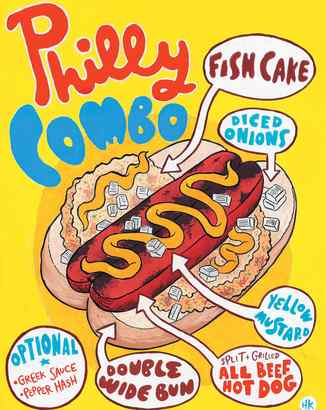
    Hawk Krall’s illustration of the “surf ’n turf” Philly combo (fishcake and frank) was originally done for SeriousEats.com.Hawk Krall

    Knapp later relocated Lenny’s to Feasterville. That shop, as well as Johnny Hot’s, John Danze Jr.’s truck stop on Delaware Avenue in Fishtown, are among the few standard-bearers of this classic. Be sure to add a squirt of yellow mustard and a smattering of diced onions, as illustrator Hawk Krall suggested in his 2009 poster print of the sandwich.

    Chicken salad and oysters

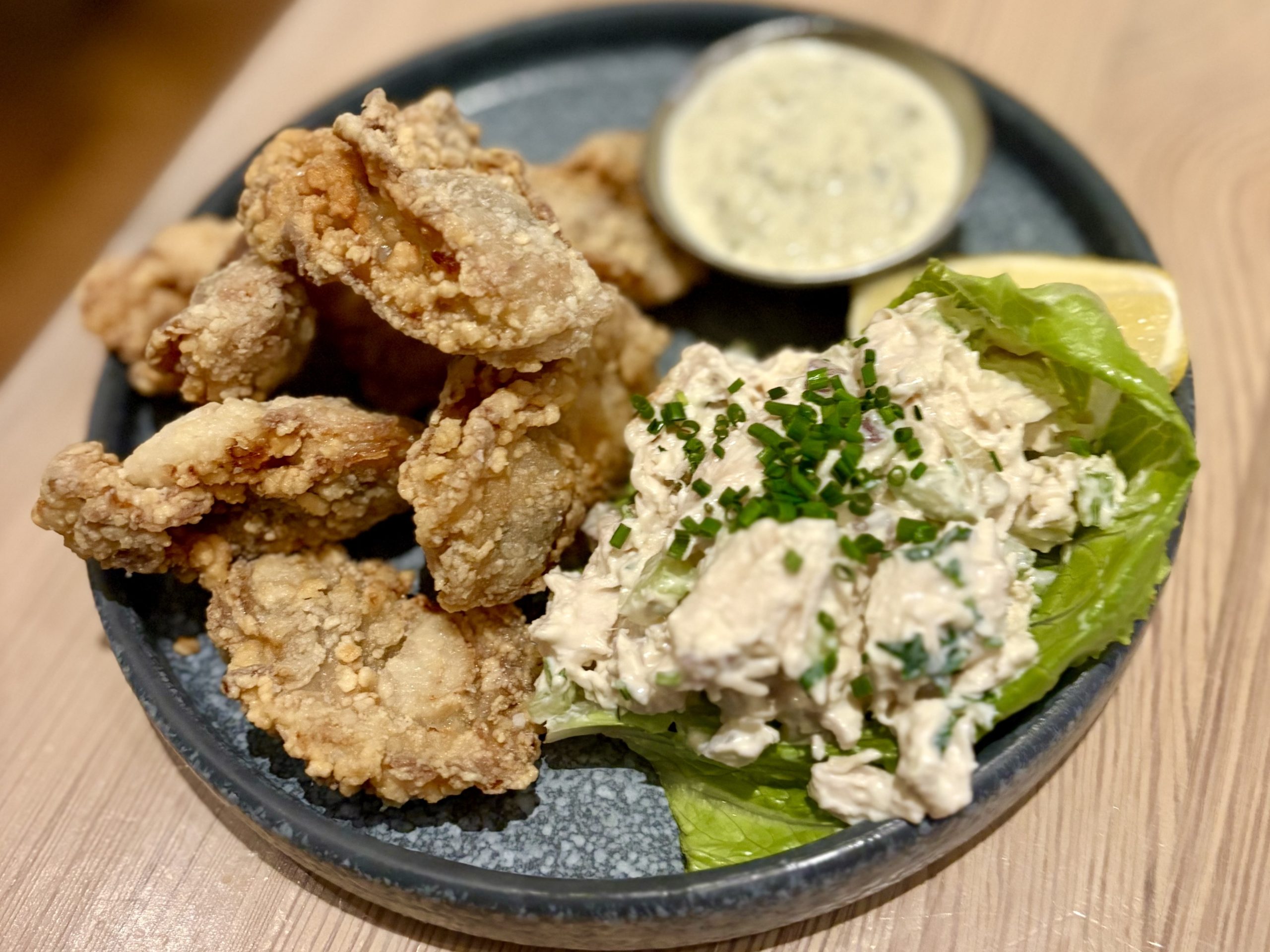
    Fried oysters with chicken salad from Oyster House.Craig LaBan / Staff

    As for another curious combo, only in Philadelphia would someone look at cool, creamy chicken salad and crunchy fried oysters and think, “Of course those belong together.”

    The unlikely pairing has been a local specialty for well over a century, dating to the city’s grand oyster houses, hotels, and taverns in the late 1800s. One popular explanation of its origin holds that tavern keepers paired cheap, plentiful oysters with more expensive chicken to stretch a serving. Food historian William Woys Weaver has noted that Philadelphia’s finest hotels elevated the dish, serving chicken salad dressed with tarragon mayonnaise and encircled by crisp fried oysters. More humble versions turned up in neighborhood brew houses and lunch counters across the city.

    Similar dishes appeared in New York, Baltimore, and Boston, and some historians believe that Philadelphia’s influential Black catering families helped popularize the combination. What is certain is that chicken salad and oysters were served at an organizing meeting of Philadelphia’s Union League in 1862.

    The combo’s popularity has ebbed in recent years, and its primary home is now Oyster House near Rittenhouse Square, whose family ownership dates back nearly 80 years.

    Crazy Richard’s Peanut Butter

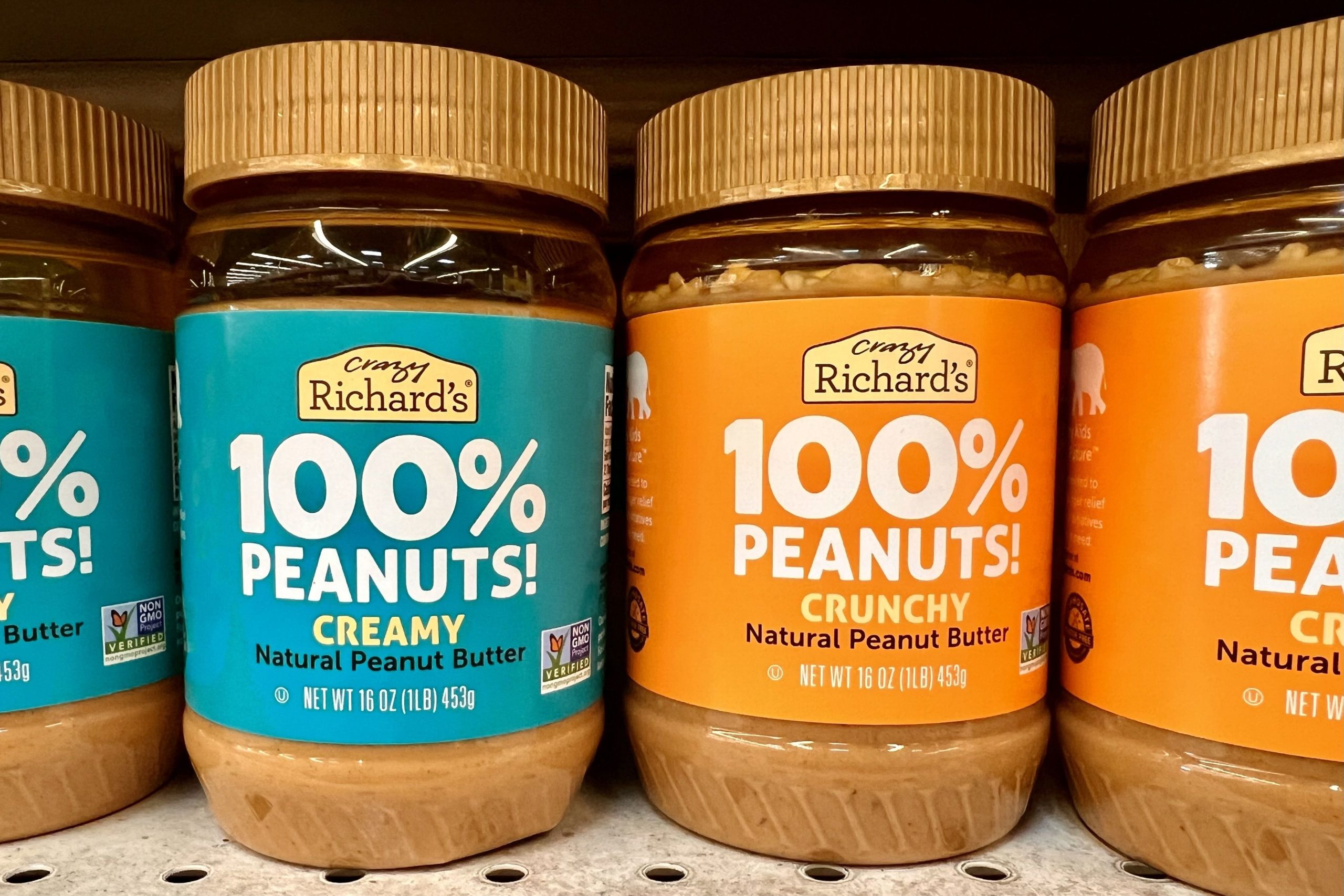
    Crazy Richard’s Peanut Butter, founded in 1972, is still available on grocery shelves.Michael Klein / Staff

    Life was all Skippy and Jif in the early 1970s when a Philadelphia music teacher decided to grind peanuts in his kitchen because he couldn’t find peanut butter that tasted the way he remembered.

    Richard Marcus was a conductor, pianist, radio host, and founder of the Society Hill School of Music & Art. Frustrated by the sweetened, homogenized spreads that dominated grocery shelves, he bought five pounds of peanuts at Reading Terminal Market, roasted them, and blitzed them in his blender. The result was nothing more than peanuts — no sugar, salt, or oils.

    Friends loved it. By 1972, they convinced him to package it. Marcus produced an initial run of about 144 jars, selling them through Philadelphia delis and health-food stores. He called it Crazy Richard’s, his wink to skeptics who thought he was nuts for marketing a peanut butter that separated naturally and required stirring.

    Word of mouth did the rest. Marcus eventually gave up his music school to run the business full time, first contracting production in Conshohocken before opening plants in Pennsauken and later Bellmawr. At its peak under his ownership, Crazy Richard’s sold about 750,000 jars a year throughout the Mid-Atlantic and Northeast and by mail. Marcus insisted that there was no secret recipe: “It’s just ground peanuts.”

    In 1991, Ohio’s Krema Nut Co. bought Crazy Richard’s and kept Marcus’ one-ingredient recipe intact. Today, 12 years after his death, the brand is sold nationwide. The “Crazy Richard” on the label is still the Philadelphia musician who proved that sometimes the simplest ideas stick.

    Fishtown Iced Tea

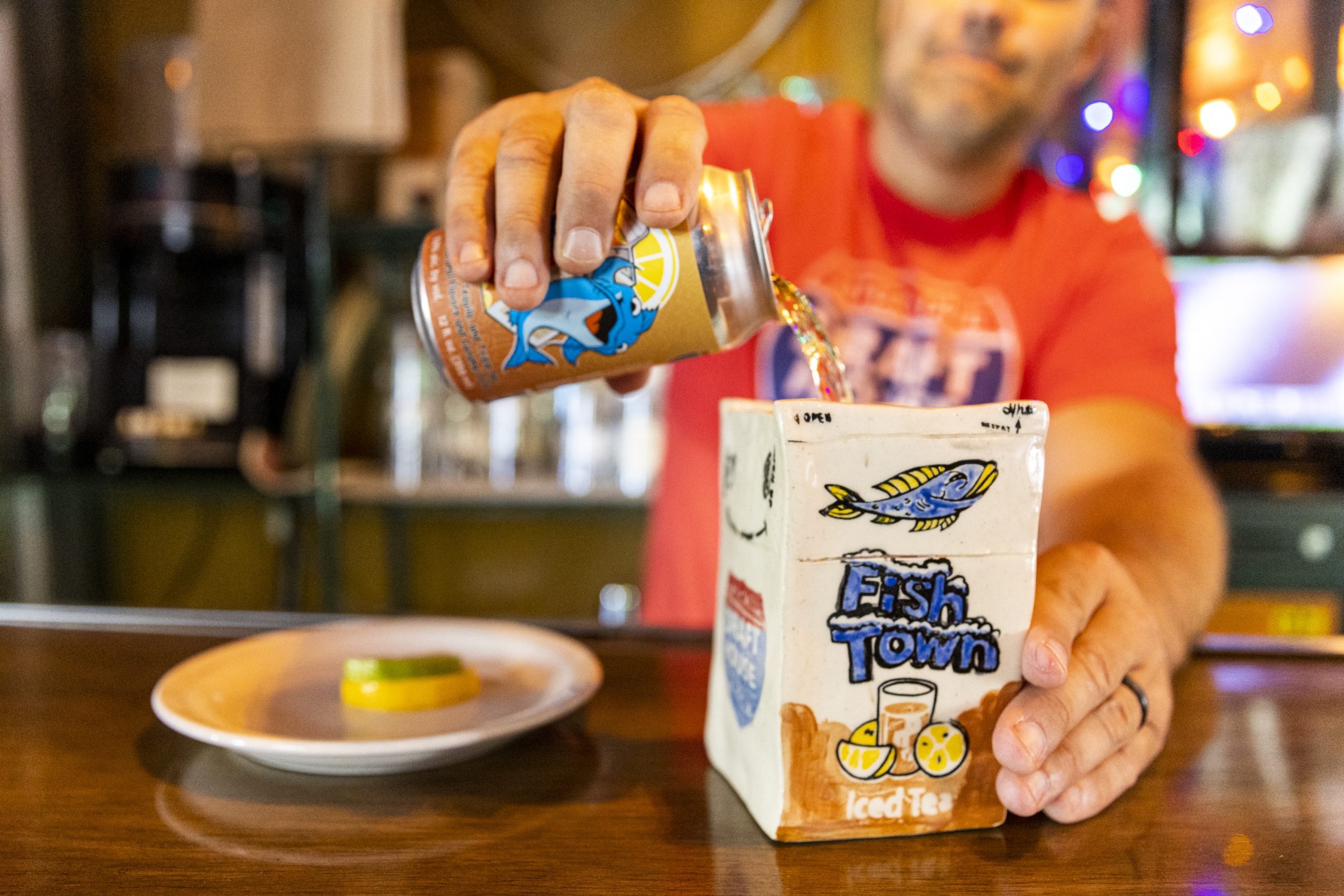
    Canned Fishtown Iced Tea is poured by Interstate Drafthouse co-owner Mike McCloskey into a custom-made ceramic carton.Tyger Williams / Staff Photographer

    Long Island has its iced tea. Why shouldn’t Fishtown? Created in 2013 at Interstate Drafthouse on Palmer Street, Fishtown Iced Tea spikes a 16-ounce carton of Arctic Splash iced tea with a shot of Jim Beam bourbon, turning a childhood lunchbox staple into an adult version of the sugary, dangerously smooth cocktail. Its roots are distinctly regional. Besides milk, Lehigh Valley Dairy, Wawa, Swiss Farms, and Turkey Hill also sold iced tea in pint cartons that generations of Philadelphians grew up drinking.

    During the pandemic, when Pennsylvania temporarily allowed to-go cocktails, Interstate sold enough Fishtown Iced Tea to keep the bar afloat. In 2022, the popularity inspired a canned version from Rectified Spirits, made with vodka, rum, tequila, and triple sec instead of bourbon.

    In a twist, the ready-to-drink cocktail debuted just as Lehigh Valley discontinued Arctic Splash cartons, ending an era for the drink that inspired it.

    Edamame dumplings from Buddakan

    The edamame dumplings at Buddakan.Tim Tai / Staff Photographer

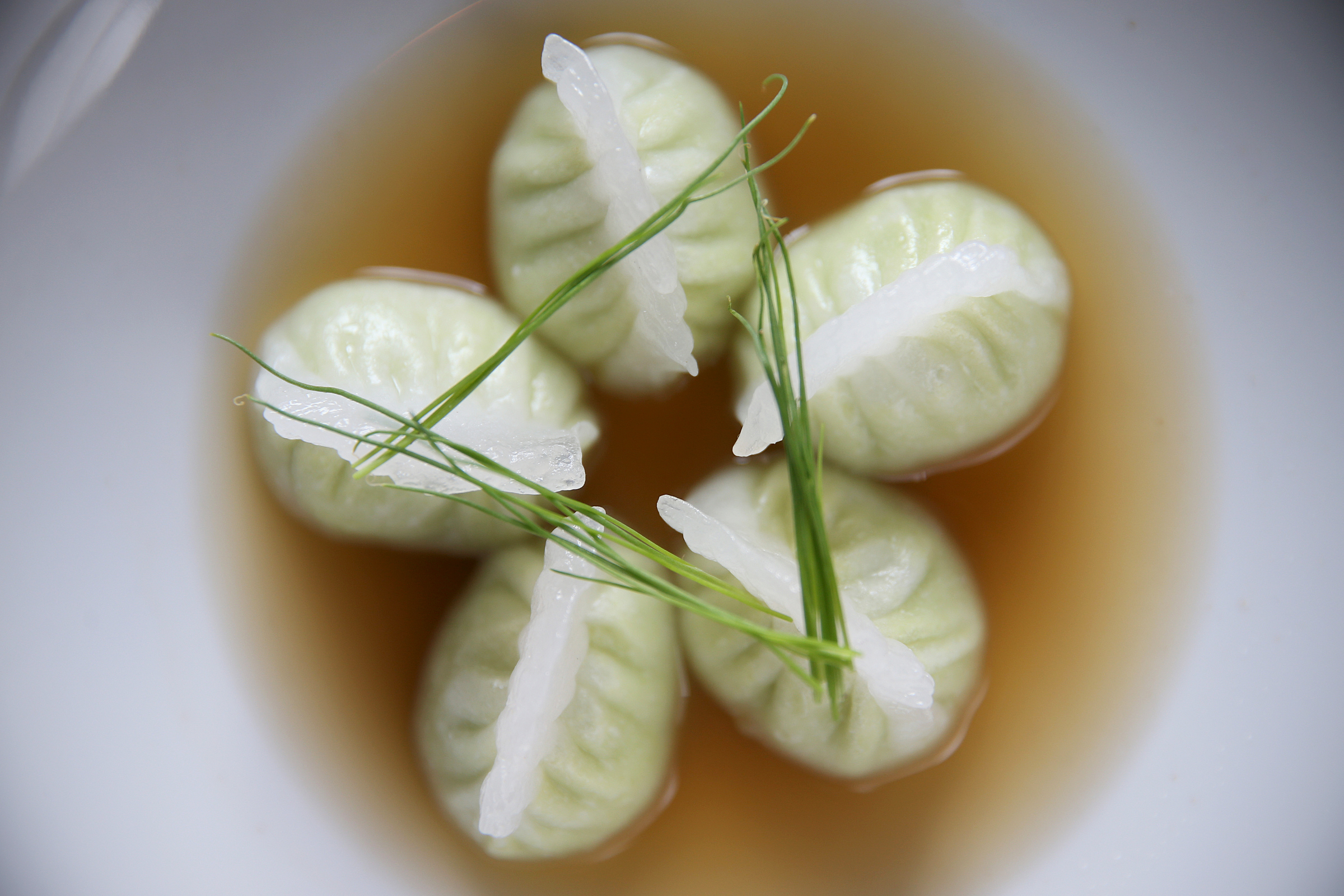
    One of Buddakan’s signature dishes is the edamame dumpling, filled with mashed soybeans and served in a truffled Sauternes-shallot broth. Michael Schulson, then chef de cuisine at Stephen Starr’s Old City destination, came up with the idea in 2000 while developing the menu for Starr’s next project, Pod, whose opening in University City was six months away. “Every dish I made, Stephen would say, ‘We’re putting this on the menu at Buddakan,’” Schulson said. “I’d say, ‘What about Pod?’”

    The original version was an edamame ravioli, featuring a yellow pasta wrapper in a caramelized Sauternes-shallot broth, transforming what was then an unfamiliar ingredient to many American diners — young Japanese soybeans — into one of Buddakan’s signature dishes. (It made it onto Pod’s menu, too.) When Buddakan New York opened in 2006 with Schulson leading the kitchen, the ravioli evolved into the translucent har gow-style dumpling that has since become its best-known form, before it later arrived on the menu in Philadelphia. It’s still a bestseller.

    After leaving Starr, Schulson adapted the concept at his restaurant Sampan, serving edamame dumplings in a caramelized shallot and sake broth, and later at Double Knot with truffles.

    Cheesesteak egg rolls

    The cheesesteak egg roll from Continental Mid-town.Courtesy of Starr Restaurants

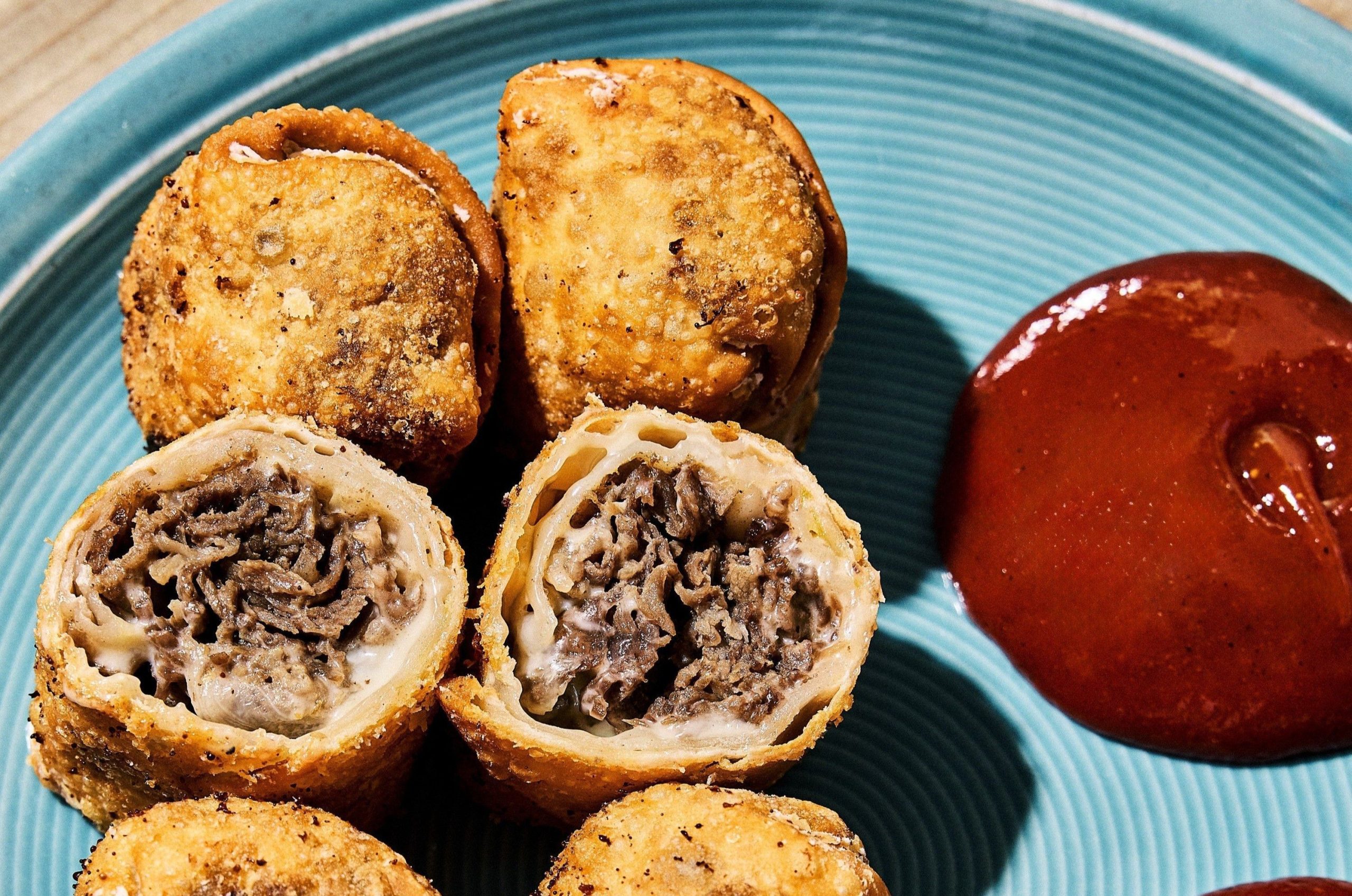
    Stuff steak and cheese into an egg-roll wrapper, deep-fry it, and you’ve got one of Philadelphia’s signature mashups: the cheesesteak egg roll.

    They’re everywhere now, from neighborhood pubs to white-tablecloth steakhouses, and go by “spring rolls” at some places, but their rise can be traced to two nearly simultaneous Philadelphia stories in the mid-1990s.

    One unfolded at the old Four Seasons Hotel on the Parkway. Former chef David Jansen said that after preparing a banquet for the New York Rangers in 1994 or 1995, prep cook Mui Lim put leftover cheesesteak filling into spring roll wrappers and fried them as a snack for the kitchen crew. They went on the menu soon after at the hotel’s Swann Lounge. Today’s Four Seasons Philadelphia, now at the Comcast Technology Center, serves wagyu cheesesteak spring rolls with sweet-and-spicy pepper relish.

    The other story played out in Old City, where the novelty became a menu staple at the Starr-owned Continental. In 1996, Starr hired Sam “Chef Sammy D” DeMarco to develop dishes for the year-old restaurant. DeMarco already served a Philly cheesesteak dumpling at First, his New York restaurant, but Starr wanted something original.

    DeMarco turned the dumpling into a cheesesteak spring roll. “It was taking a classic, nostalgic American snack and presenting it in a fresh way,” said DeMarco, now executive chef at Bungalows Resort in Scottsdale, Ariz.

    Like the old Buzz Aldrin cocktail, the roll became a classic. Starr said Continental Mid-town, near Rittenhouse Square, now sells 500 a week.

    From the Continental, the idea spread rapidly. Davio’s owner Steve DiFillippo was joining staff for a preshift meal at his former Center City Philadelphia location shortly after it opened in 1999 when chef David Boyle served cheesesteak egg rolls that his wife had made at home. DiFillippo insisted that they be added to the bar menu, overruling managers who felt that they were too déclassé for a posh steakhouse. The Boston-based Davio’s turned the line into a frozen-food item, selling millions through supermarkets and QVC until rising beef prices during the pandemic made them impractical, DiFillippo said. They’re still on the restaurant menus in King of Prussia and elsewhere.

    Though DiFillippo copyrighted the name “Philly Cheese Steak Spring Rolls” in 2002, “I’m not going to claim I invented anything,” he said. “But I was the first one to take them into stores and really commercialize them.”