Tag: Old City

  • Philly takes home two wins at the 2026 James Beard Awards

    Philly takes home two wins at the 2026 James Beard Awards

    Philadelphia can now add two more food awards to its shelf.

    Restaurants and chefs from the City of Brotherly Love took home wins in two categories Monday night in Chicago at the 2026 James Beard Awards, considered to be the most prestigious restaurant industry honor in the United States.

    The showing builds on the momentum of last year, when Mawn’s Phila Lorn took home the title of Emerging Chef, an award he dedicated at the time to “the assumption” that the Cambodian noodle house in Bella Vista wasn’t “popular enough,” “focused enough,” or ”good enough” to win.

    Now the assumption isn’t that Philly is an underdog. It’s that we’re a full-on culinary powerhouse.

    Chef Chutatip “Nok” Suntaranon’s Thai restaurant Kalaya won outstanding restaurant, an award that recognizes “consistent excellence” in food, hospitality, and operations.

    Suntaranon originally opened the restaurant — known for its ornate dumplings — in 2019 in what is currently Mawn’s location, where it was nominated in 2020 for Best New Restaurant. In 2022, Kalaya moved to a bigger space just off Frankford Avenue in Kensington, where it has flourished, earning a Michelin Guide recommendation, a spot on The Inquirer’s The 76, and, in 2023, Suntaranon’s first Beard Award for best chef, Mid-Atlantic.
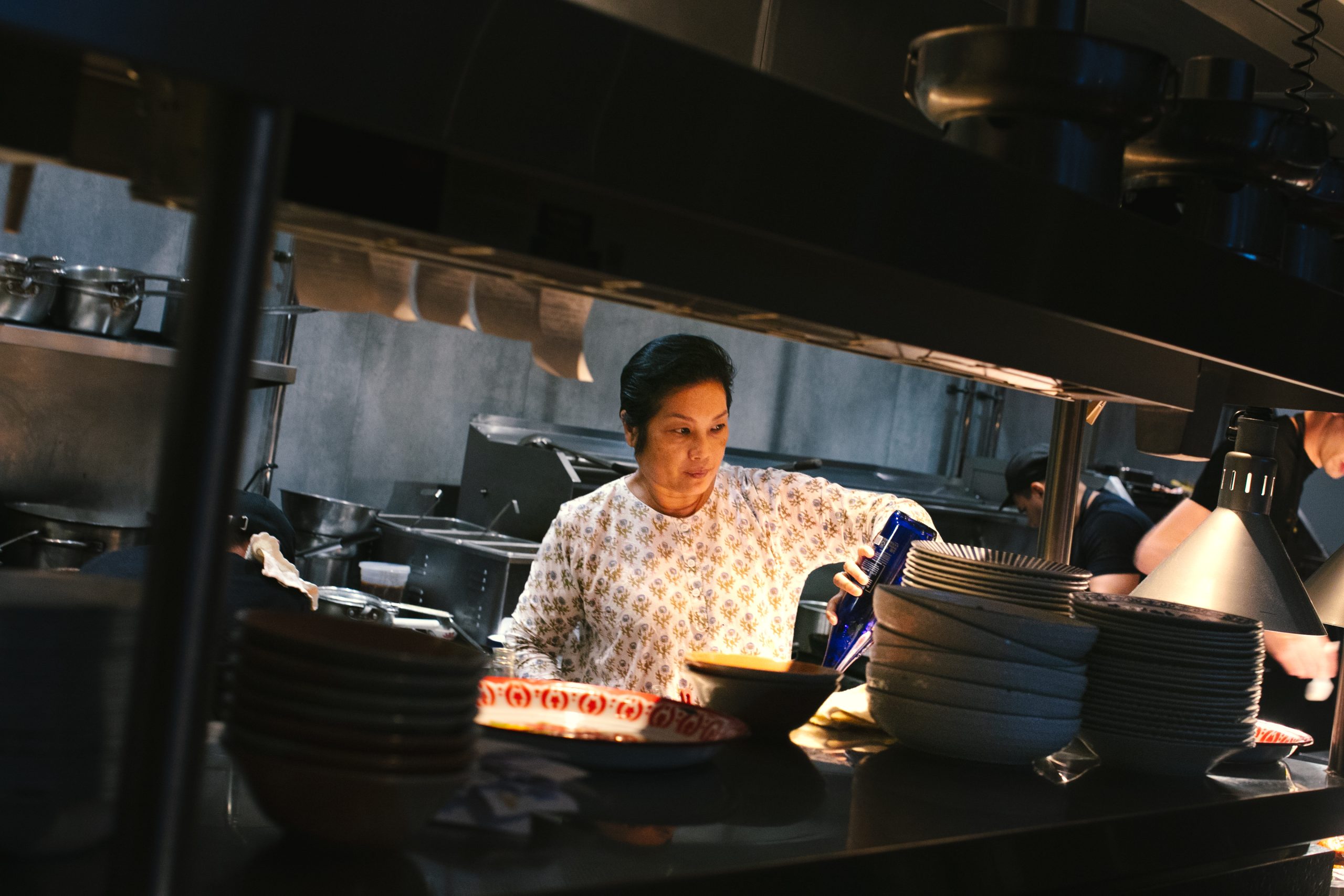
    Chef Chutatip “Nok” Suntaranon as seen through the line at her restaurant Kalaya in Fishtown on August 22, 2024.Neal Santos

    “This award means a lot to me because it’s validation for Thai food and validation for the city of Philadelphia that we’re a world-class food city,” Suntaranon, in a shimmering floor-length orange gown, said backstage.

    Chef Jesse Ito of Royal Sushi & Izakaya on Monday night took home his first James Beard Award, for best chef, Mid-Atlantic. “It’s been a long ride,” Ito said from the stage at the Lyric Opera theater.

    Indeed it has.

    The chef behind the notoriously-hard-to-get-into Queen Village omakase counter and its more casual bar and restaurant has been nominated nine times for the award, which honors the top culinary talent across Pennsylvania, New Jersey, Delaware, Maryland, Virginia, and Washington. This go-around, Ito beat out two-time finalist Amanda Shulman — whose Her Place Supper Club earned one of Philly’s first Michelin stars last year — and Omar Tate and Cybille St.Aude-Tate of Honeysuckle, who transformed their cafe-market into a Michelin-recommended prix fixe restaurant in 2025.

    During his acceptance speech, Ito invoked the oft-quoted Serenity Prayer and thanked his parents, who ran the Cinnaminson and Haddonfield sushi restaurant Fuji for 40 years, before selling. It’s where Ito worked his first restaurant job as a dishwasher, and a place he has long credited for helping him find his footing in the restaurant industry.
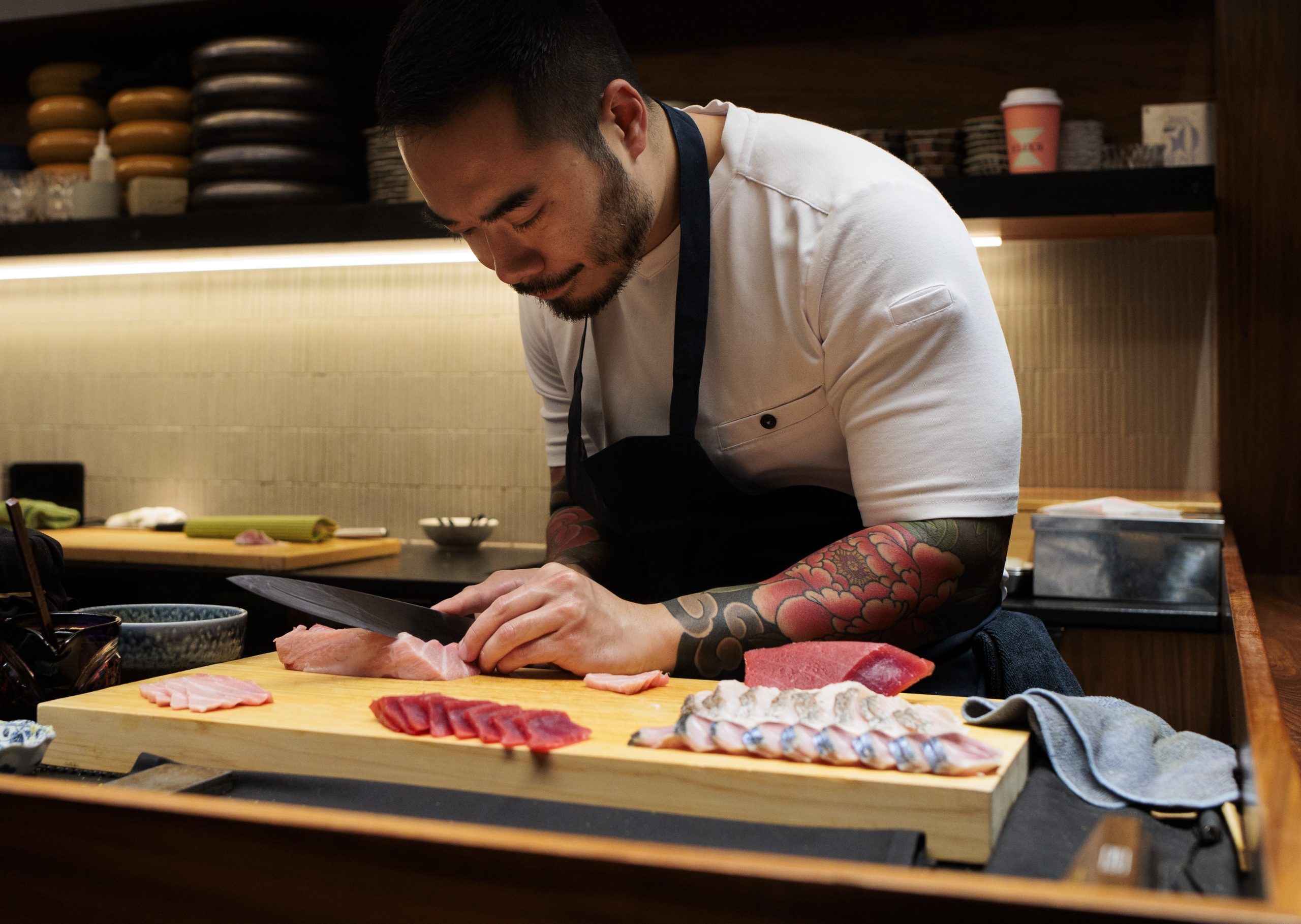
    Chef Jesse Ito prepares a course during the omakase at Royal Sushi and Izakaya on Tuesday, Oct. 28, 2025, in Philadelphia.Monica Herndon / Staff Photographer

    “We went through so much,” Ito said, choking up. “Restaurants are glamorous, and it seems great, but we went through so much hardship. I’ll never forget the struggle just to get here.”

    Royal Sushi’s success has also, at times, been its greatest challenge: The $355, 16-seat omakase prepared by Ito is one of the toughest seats to score in Philly, which potentially led to the restaurant losing out on a Michelin star last year. At the same time, the restaurant earned a spot on North America’s 50 Best Restaurants list in 2025 and high praise from The Inquirer, landing on The 76 two years in a row.

    The pendulum swing of accolades keeps Ito on his toes. He told The Inquirer over the phone Monday night that he wasn’t certain what made this year different from all the others.

    “I don’t know how it all works,” Ito said. “I came to Chicago 99% certain that I was going to lose.”

    Now that he’s won, Ito plans to celebrate by singing Harry Styles’ “Sign of the Times” and “Creep” by Radiohead at karaoke — somber choices for a victorious night.

    “They’re just my songs,” said Ito. “I have to sing them.”

    Who else represented Philly?

    Philly restaurants and chefs didn’t take home medals in every category.

    Emmett, the Levantine-inspired Kensington restaurant from chef Evan Snyder, was nominated for best new restaurant. The award ultimately went to Lei, a New York City wine bar that serves Chinese food. Named after Snyder’s first-born, Emmett had a quick rise after its January 2025 opening: In the past year, it made its first appearance on The 76 and was named one of the best new restaurants in the U.S. by Esquire magazine.
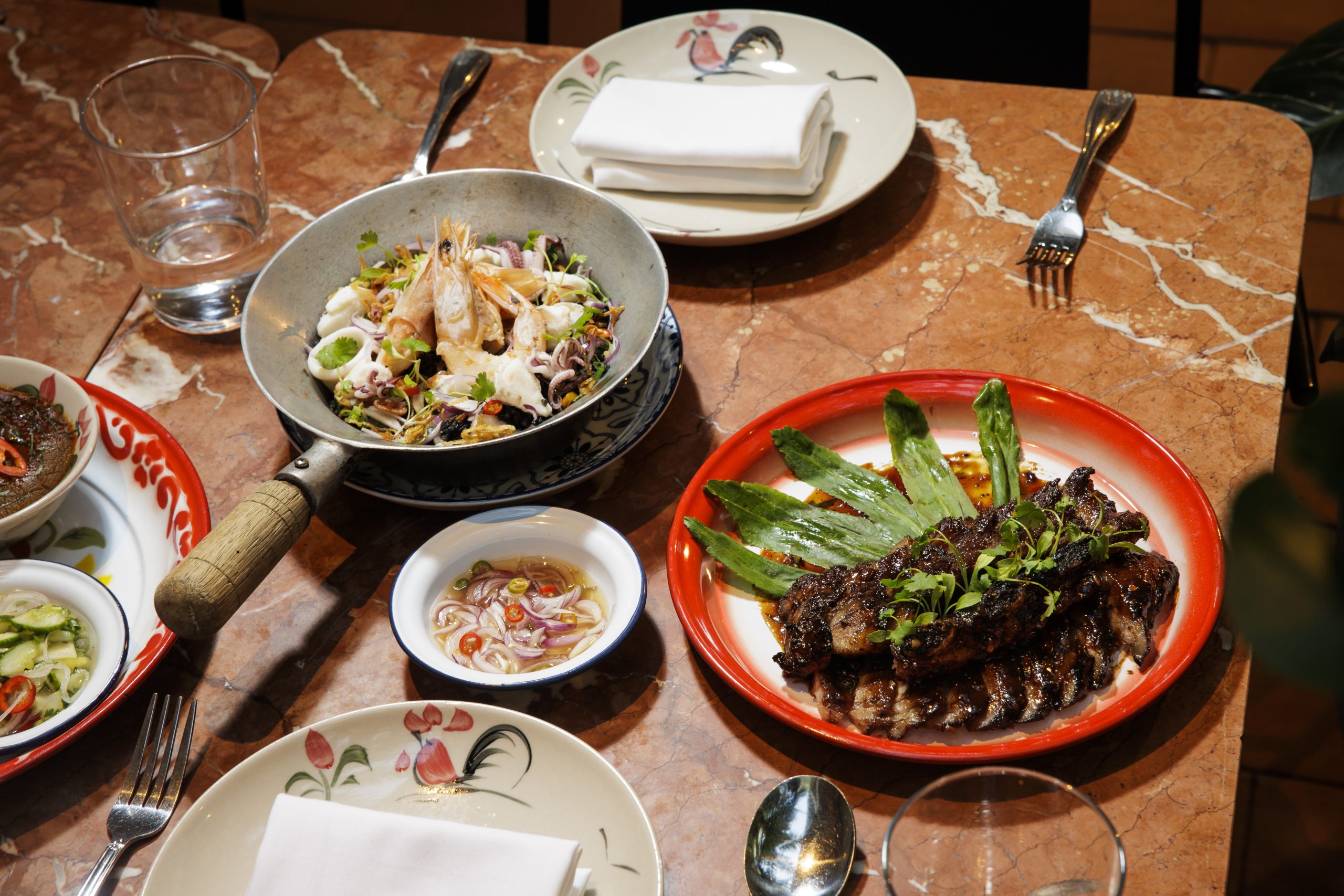
    From left: The gaeng pae, khao mun klone, and moo yaang prik at Kalaya on Wednesday, Sept. 3, 2025, in Philadelphia.Monica Herndon / Staff Photographer

    First-time nominee Justine MacNeil did not take home the award for outstanding pastry chef or baker, which went to Susan Bay of Washington’s buzzy Vietnamese restaurant Moon Rabbit. At Fiore — the East Kensington cafe MacNeil co-owns with husband Ed Crochet — the former fine dining pastry chef churns out thousands of classic Italian pastries a week, from oversize maritozzi to pistachio cornetti that have earned praise from 2017 James Beard Award-winner Greg Vernick and Inquirer critic Craig LaBan, among others.

    Friday Saturday Sunday lost out on its second Beard Award on Monday, this time for outstanding bar. Its downstairs, first-come-first-served Lovers Bar was nominated for the honor, which instead went to Portland, Ore., whisky bar Scotch Lounge, a recent addition to the list of North America’s 50 Best Bars from World’s 50 Best. Friday Saturday Sunday won its first Beard award in 2023 for outstanding restaurant, and earned one of Philly’s first Michelin stars in 2025.
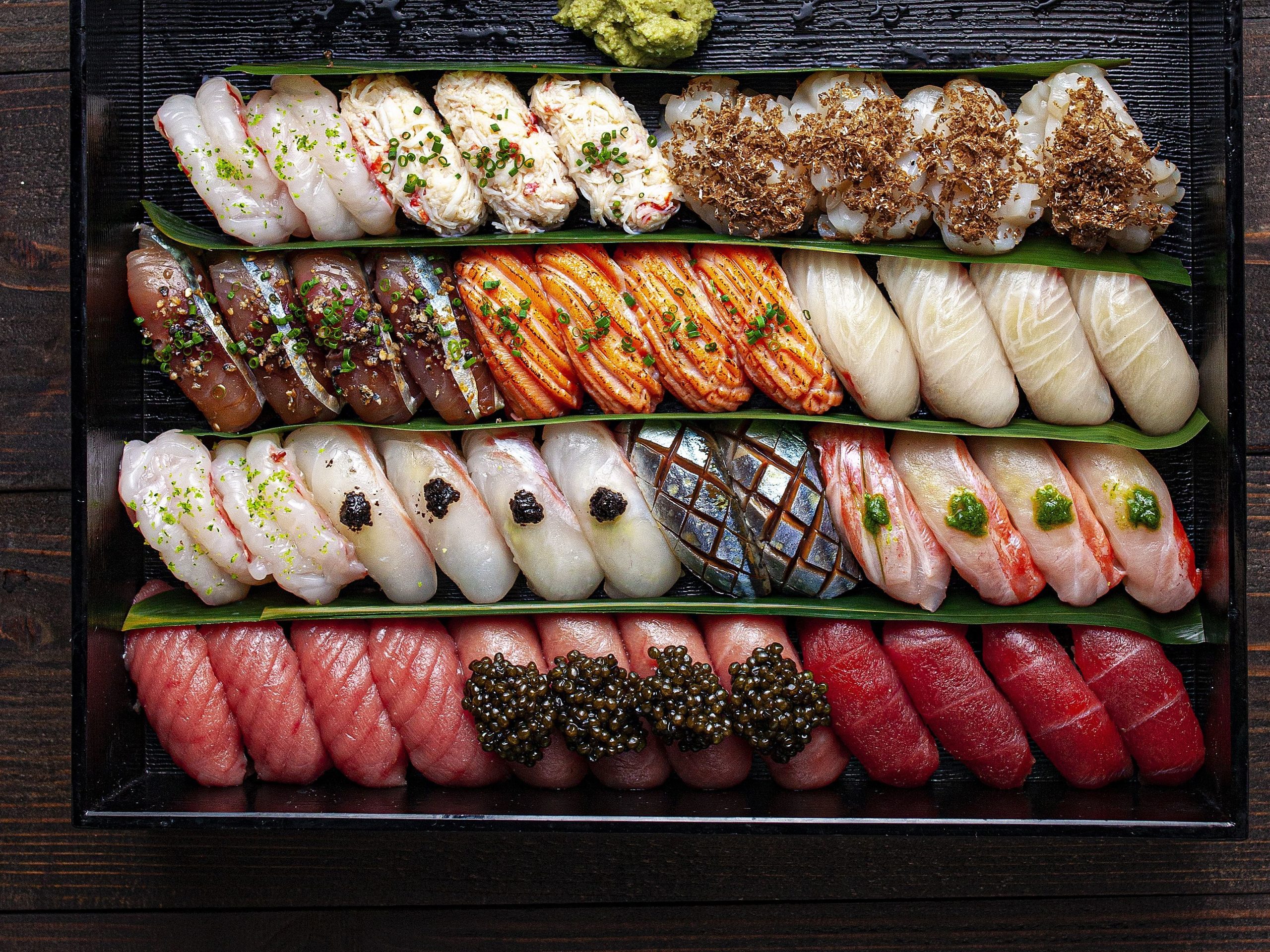
    The deluxe nigiri box for take-out at Royal Izakaya, in a photograph from 2020.Courtesy Royal Izakaya / Jesse Ito

    The Inquirer also took home hardware of its own Sunday night during the James Beard Media Awards, also in Chicago. Inquirer staff photographer Monica Herndon won for narrative photography for “The hunt for life-giving ‘country food’ in the Canadian Arctic.” The photo essay chronicled the food traditions of the Inukjuak, a remote Inuit community in northern Québec. It accompanied reporting from Inquirer food critic Craig LaBan about how the community continues to hunt and preserve foods such as caribou and beluga despite the challenges of climate change.

    Philadelphia had 13 semifinalists across eight categories when the Beard Awards were announced in January. They included chef Greg Vernick for outstanding restaurateur; Amá’s Frankie Ramirez for emerging chef; Almanac in Old City for best new bar; and deli magnate Russ Cowan and Michelin Green Star winner Ian Graye of the vegan restaurant Pietramala, both for best chef, Mid-Atlantic.

    All three were later eliminated from the finalists’ list.
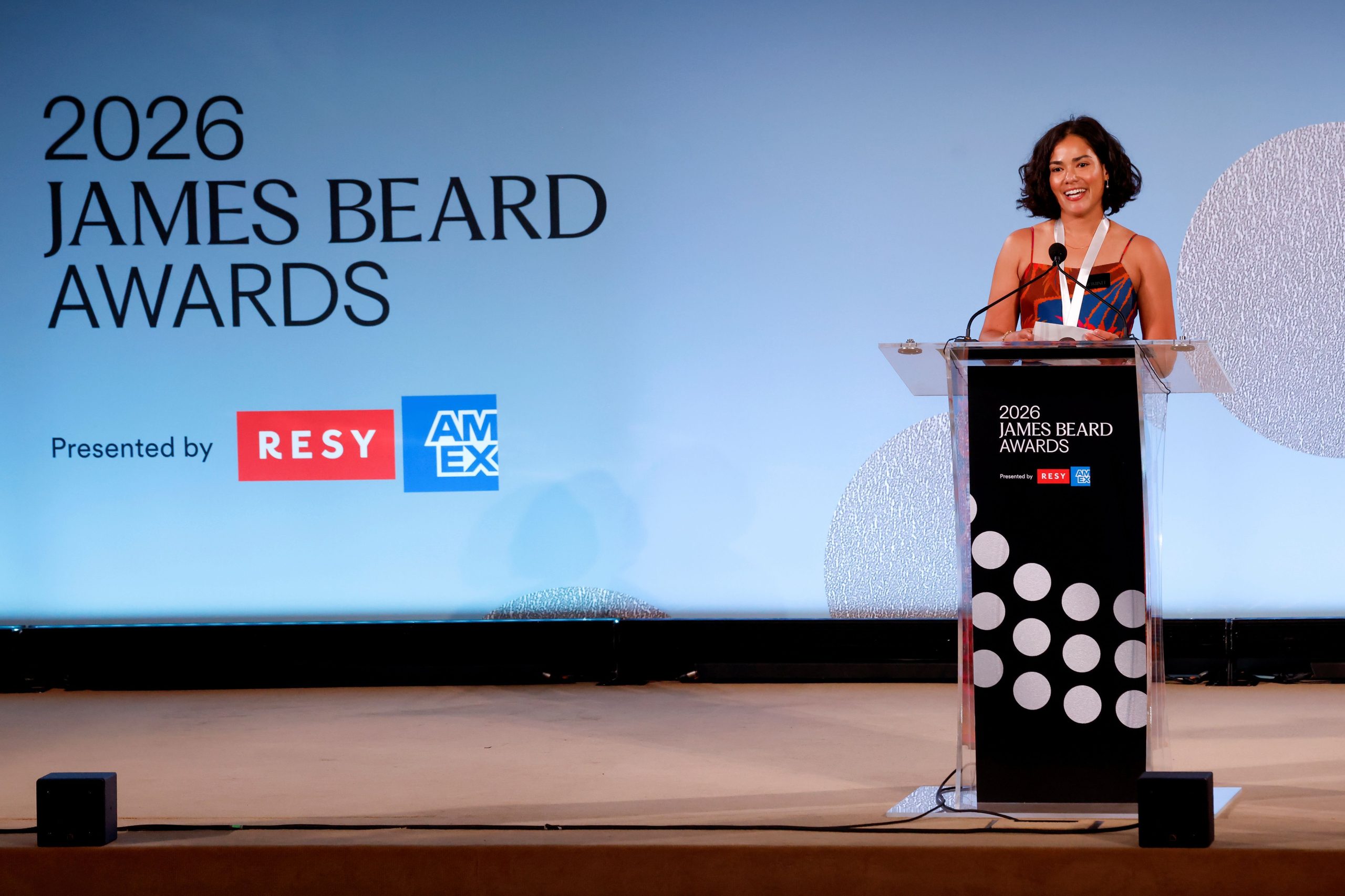
    CHICAGO, ILLINOIS – JUNE 13: Monica Herndon, winner of the Narrative Photography Award, speaks onstage during the 2026 James Beard Media Awards at the Art Institute of Chicago on June 13, 2026, in Chicago.Jeff Schear / Getty Images for the James Beard Foundation

    The night’s showing adds one more win from February when Center City stalwart Oyster House was named an American classic, which honors local restaurants across the U.S. with “timeless appeal that serve quality food and are beloved by their communities.” Representatives from the Philly mainstay were in Chicago to receive their medals in person.

    “I am very fortunate that I live in Philly. People are loving and caring [here]. People are strong, and we all come together to support one another,” Suntaranon said. “Go Birds!”
  • The Philly bars that keep secret stashes of Chartreuse

    The Philly bars that keep secret stashes of Chartreuse

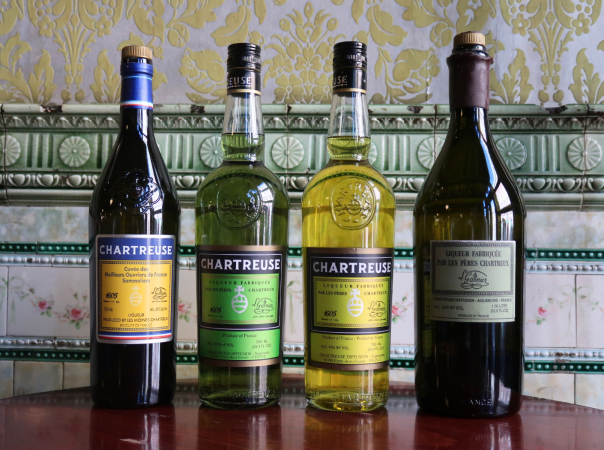
    As global supplies of Chartreuse dwindle, its mystique only deepens and its popularity increases. Luckily, Philadelphia bars have concocted not merely ways to get their hands on the spirit, a botanical liqueur produced by Carthusian monks in the Chartreuse Mountains in southeastern France, but even their own, Philadelphia-made versions.

    In 2021, the monks of the Carthusian order, an extremely secluded Roman Catholic order founded by Saint Bruno of Cologne in 1084 who adhere to a life of absolute silence and solitude, announced a cap on the production of their cordial, which they had been making since the 18th century. The recipe is culled from an ancient manuscript on the “Elixir of Long Life.”

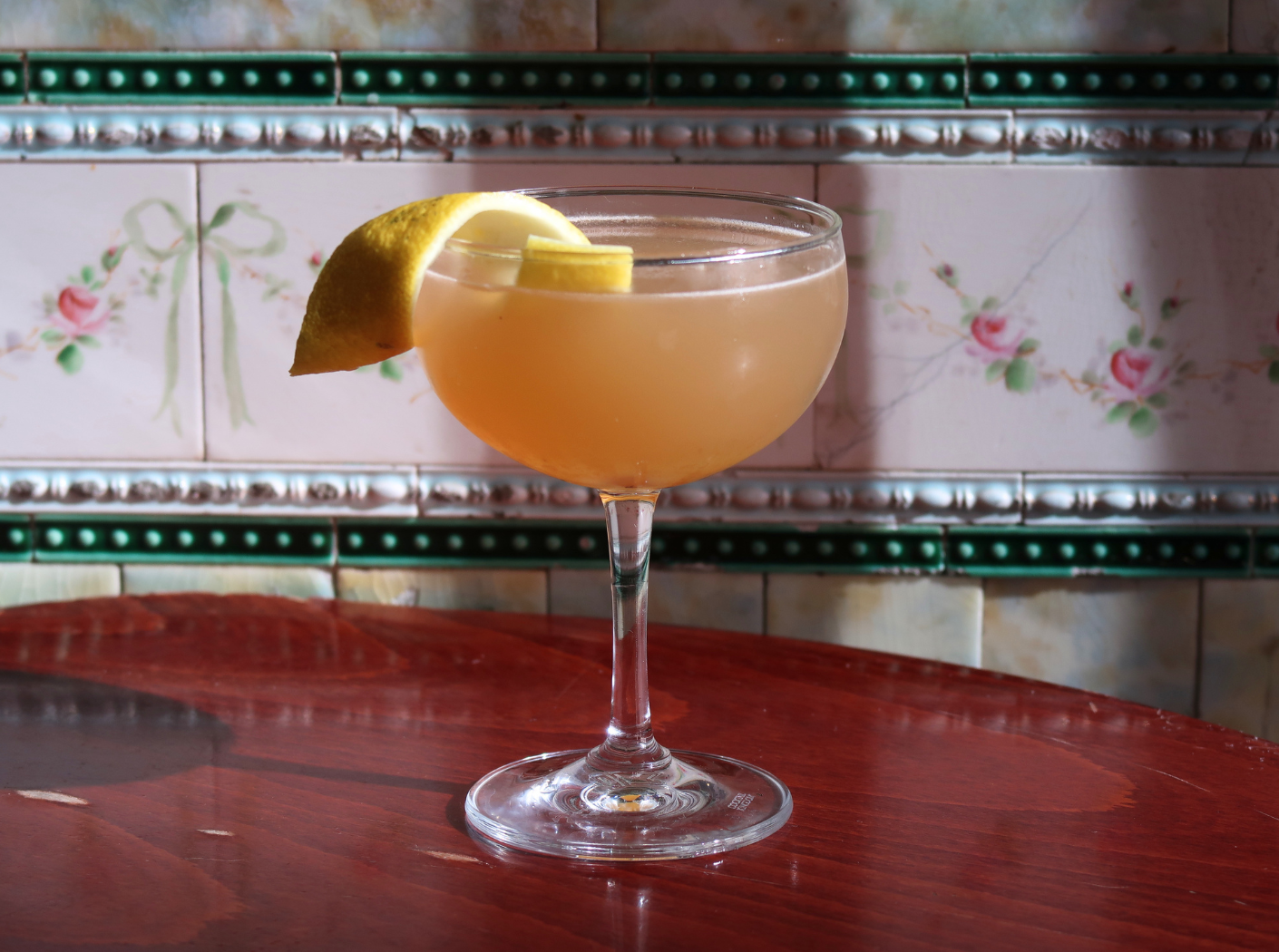
    The iconic green liqueur is made of 130 plants— there is also a Yellow Chartreuse that is milder and sweeter due to the inclusion of honey and saffron —and is the base for several famous cocktails, including the Prohibition-era Last Word and the Naked and Famous (a classic cocktail from New York’s Death & Co.). With robust alpine notes, it is also commonly served neat. It’s also a favorite of bartenders and mixologists nationwide.

    “It adds depth and character to cocktails,” said Neill Laughlin, a partner and manager at Old City’s Sassafras.

    With the rise of the craft cocktail movement in the early 2000s and then drinking habits during the pandemic, which drove people to start shaking up more cocktails at home, Chartreuse has only gotten increasingly more popular.

    The monks’ decision to limit their production has had a trickle-down effect for Philadelphia’s cocktail programs, like the one at Sassafras, run by Laughlin and Donal McCoy. Philadelphia’s bars already struggle with obtaining specialty liqueurs due to Pennsylvania’s Liquor Board restrictions. But Sassafras, who maintains its own long history (almost 50 years in business), doubled down on Chartreuse-based cocktails, adding four to their new bar program (which changes quarterly). It’s no easy feat: a search of the PLCB’s Fine Wine and Good Spirits site shows no bottles of Chartreuse in stock at all.

    Champs-Elysees at Sassafras ($16) with St-Rémy VSOP, Green Chartreuse, lemon juice, Angostura bittersSassafras

    “You need to have contacts within the PLCB,” explained Laughlin. “Certain [liquor] portfolios are broken down to different vendors and it’s a lot of homework to discover who has what products and how to get them. The liquor control board took it away from the stores and allocated Chartreuse to certain bars and restaurants — but you have to buy it in bulk.”

    And so, Sassafras has been stocking up on Chartreuse for years. Supply is never regular. “There’s no warning when the ship [from France] comes in and how much you’re going to get,” said Laughlin, who just two weeks ago, managed to obtain four cases each of Green and Yellow Chartreuse.

    “We’re comfortable offering six cocktails at Sassafras that use it,” said Laughlin. The newest cocktails at Sassafras include the 1904 ($65) featuring Yellow Spot Irish whiskey, Chartreuse VEP, and Antica Formula, Naked and Famous ($17) made with Catedral Espadin Mezcal, Aperol, Yellow Chartreuse, and lime juice, the Champs-Elysees ($16) with St-Rémy VSOP, Green Chartreuse, lemon juice, Angostura bitters. And for high rollers, the bar has also debuted one Chartreuse-based cocktail that costs $115 The Àrd-Rìgh (Irish Gaelic title meaning “High King”) is crafted with The Macallan Rare Cask, alongside Chartreuse VEP and Chartreuse MOF — “two exceptionally rare and highly coveted expressions of the French liqueur,” said Laughlin.

    The Àrd-Rìgh (Irish Gaelic title meaning “High King”) at Sassafras is crafted with The Macallan Rare Cask, alongside Chartreuse VEP and Chartreuse MOFSassafras

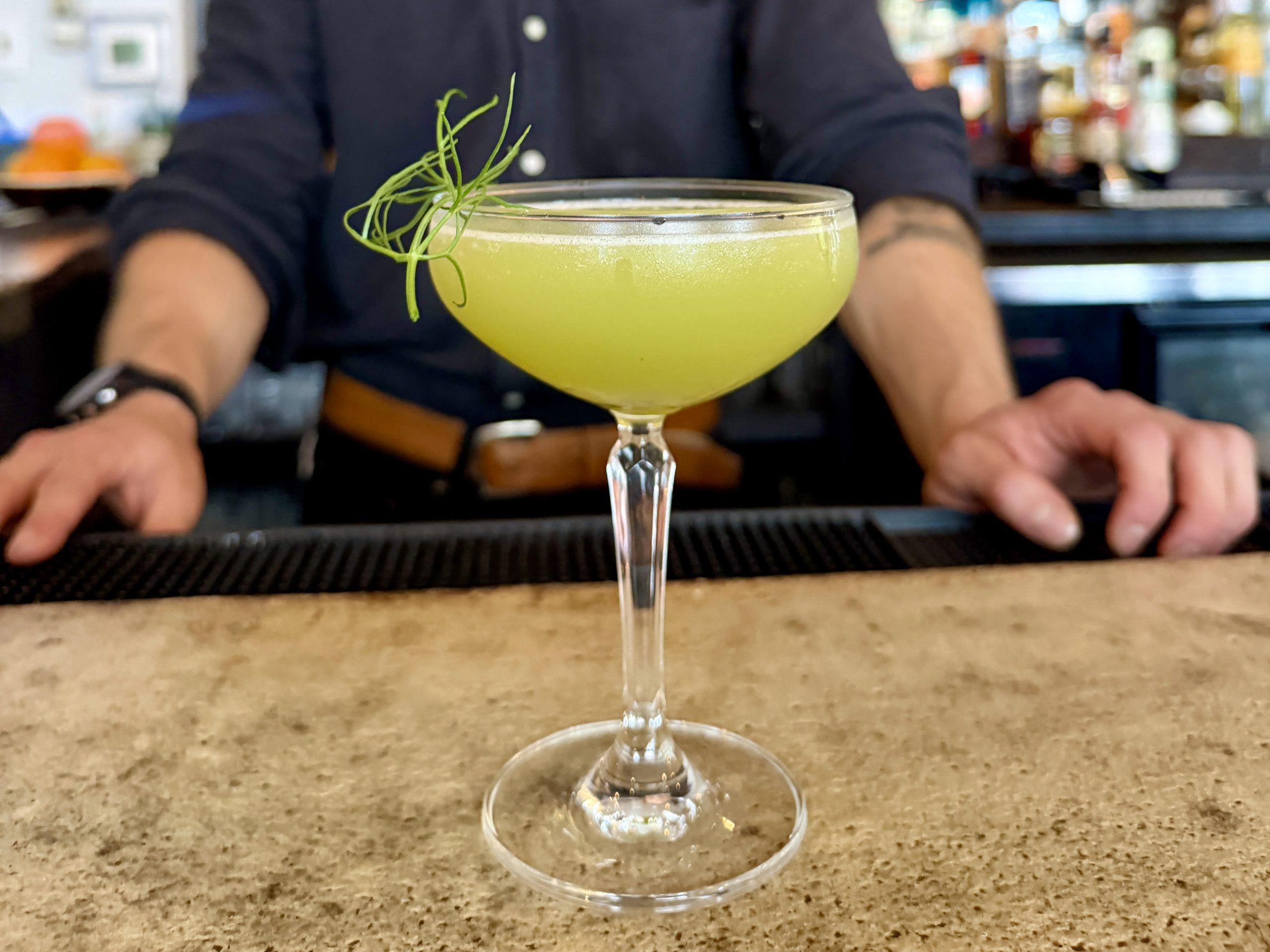
    Chartreuse has also entranced newer cocktail programs, like the one at chef Scott Calhoun’s Ember and Ash. Calhoun also recently put a Chartreuse cocktail on his menu: “Our Herb Your Enthusiasm ($19) is a play on a gimlet with Green Chartreuse, gin, charred fennel and cucumber syrup, and lime,” he said.

    Herb Your Enthusiasm from Ember and Ash on East Passyunk. The cocktail is a play on a gimlet with green chartreuse, gin, charred fennel and cucumber syrup, and lime.Lulu Calhoun

    “When we start to get low on either and our purveyor is out, I scour the PLCB online system to have bottles shipped to my local store for pick up,” said Calhoun.

    The dearth of Chartreuse has also inspired Chris Fetfatzes of Grace and Proper and Sonny’s Cocktail Joint, establishments known for crafting their own spirits like amari. Fetfatzes’ liqueur, dubbed the “Green Monk” is made with about forty botanicals and is inspired by the forty Kelpius monks of the Wissahickon, a doomsday cult that inhabited Wissahickon Valley Park in the 1690s.

    “Green Monk has a hint of chamomile, a hint of mint, and a hint of génépy with a little bit of a menthol burn,” said Fetfatzes.

    And given that it’s produced in Philadelphia and not by actual monks, a shortage is unlikely. .

  • How to have a perfect Philly day, according to Mural Arts founder Jane Golden

    How to have a perfect Philly day, according to Mural Arts founder Jane Golden

    For Jane Golden, founder and executive director of Mural Arts Philadelphia, city life is like a large quilt.

    The fabric of Philadelphia, she said, is pieced together by the people and communities that make up the region, and public art is the thread that best illuminates its beauty.

    Every time Golden steps outside her home in Spring Garden, she’s reminded of its impact and grandeur. “I pay attention to all the stories our city has to tell, and the way art can help us see each other differently,” she said.

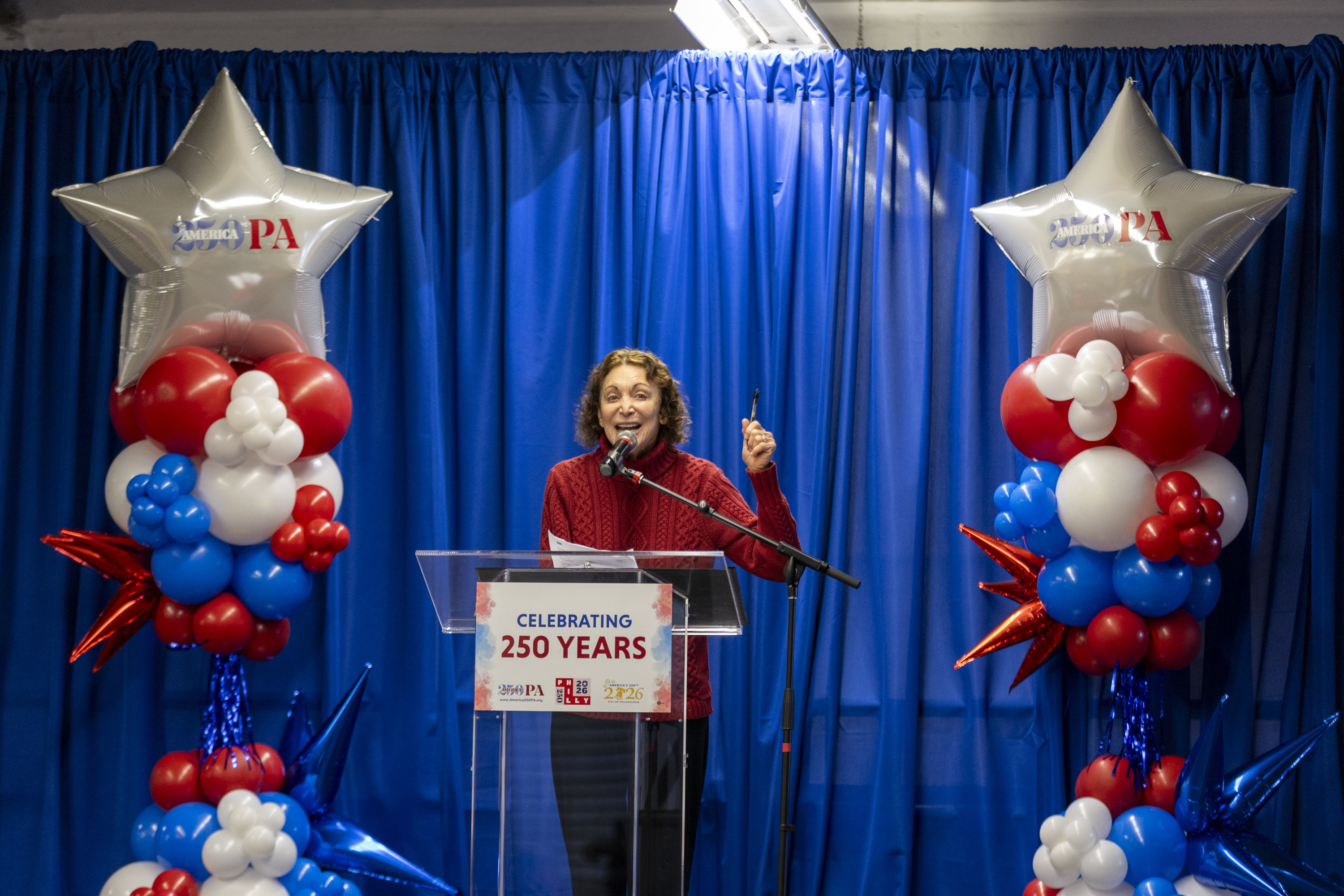
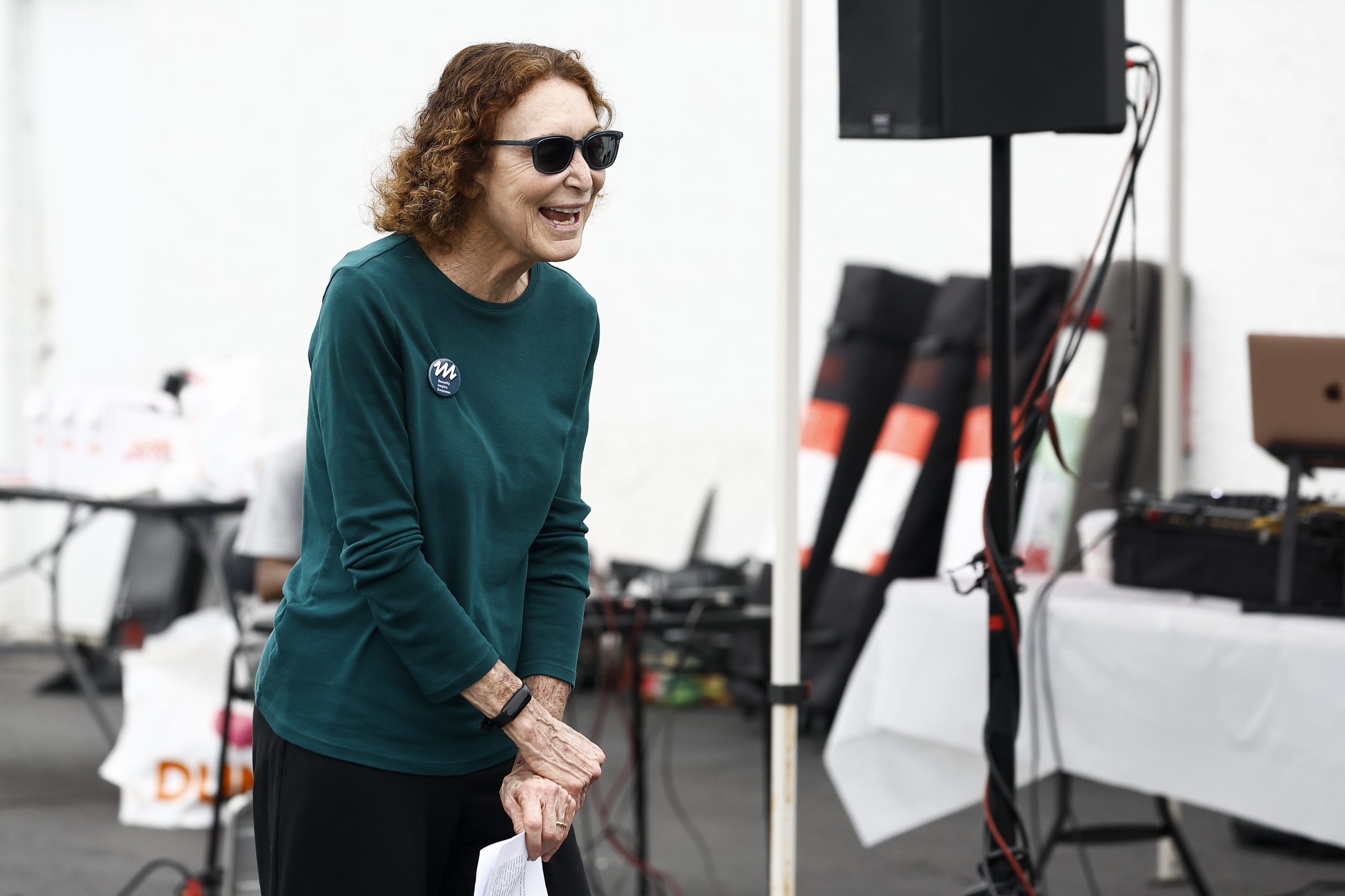
    Jane Golden, Mural Arts Philadelphia, speaks at the Bells Across PA event in celebration of America’s 250th Birthday in Philadelphia, Pa., on Friday, Jan. 16, 2026.Tyger Williams / Staff Photographer

    Next month, Golden will be moving into less familiar terrain.

    After 30 years building Mural Arts into an international arts organization, the Fairmount resident is stepping down as executive director. The search for her successor is already underway.

    For now, Golden is focused on rolling out Mural Arts’ Semiquincentennial plans, and is still carving out time to hunt for new walls in need of a makeover.

    “I can’t help myself,” she joked.

    In a perfect Philly day, Golden visits iconic murals, grabs dinner in Chinatown, and checks out new exhibitions sprawled throughout the city.

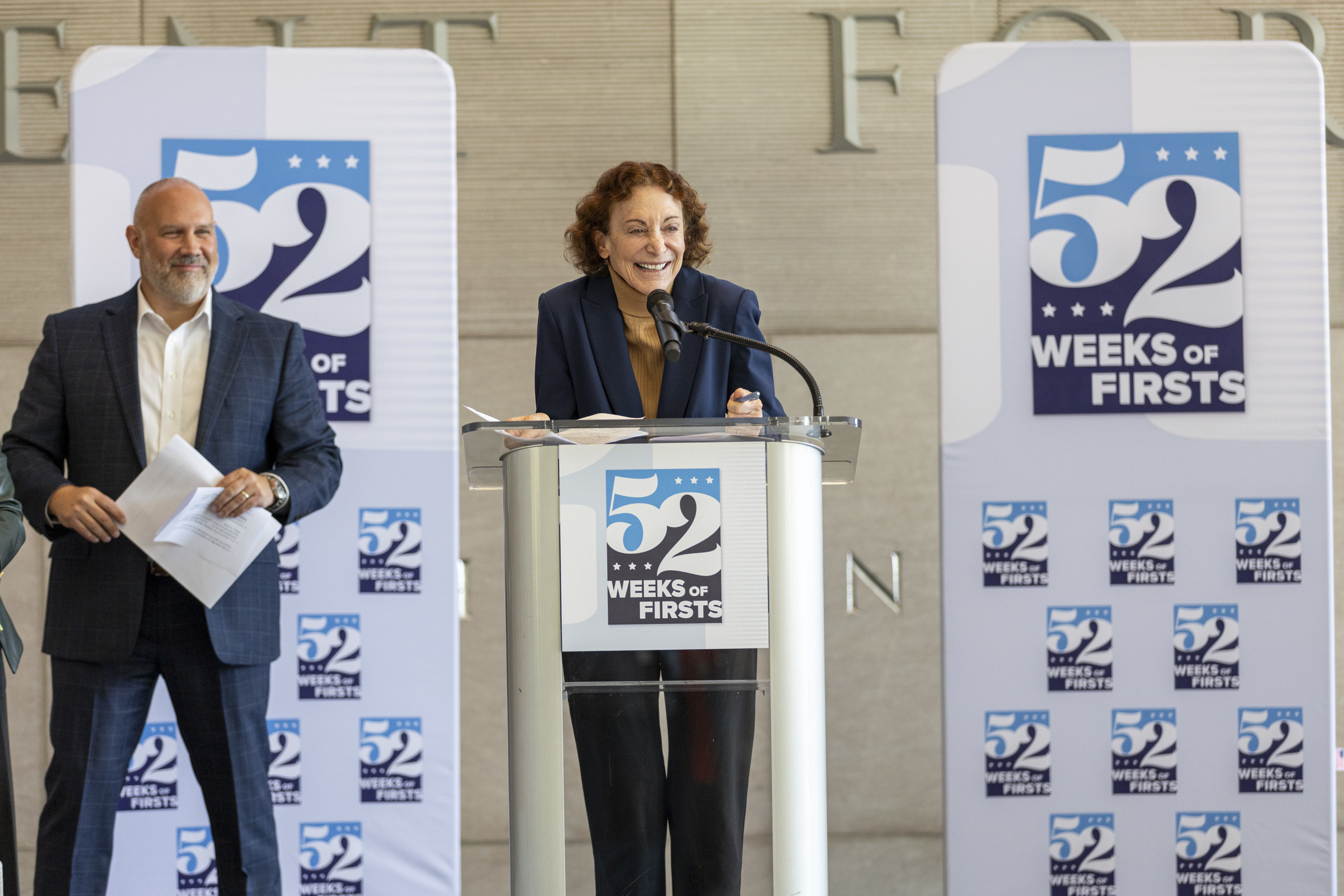
    Jane Golden, Executive Director for Mural Arts Philadelphia, speaks at the announcement for the 52 Weeks of Firsts at the National Constitution Center in Philadelphia, on Thursday, Oct. 23, 2025.Tyger Williams / Staff Photographer

    6 a.m.

    I’m always an early riser, so I wake up at 5 a.m. and walk my dog, Cleo.

    Sometimes I sleep until 7 a.m., but that’s a luxury. My cat Bella is one of the reasons I get up so early. She will take her paw, and go up and down on the blinds in my bedroom to get me up, or purr really loudly by my head. That’s better than an alarm.

    8 a.m.

    I walk from my place to the Philadelphia Museum of Art. I like to push myself, so I walk up the Rocky Steps and around the museum because I think it’s really pretty. Then I come back down by the Rodin Museum, and then we go to Twisted Grounds for coffee and a pastry because I have a sweet tooth.

    If me and my husband Tony are really feeling energetic, we walk up to Lemon Hill.

    10 a.m.

    Tony and I go to Bartram’s Garden and walk around. I go to where FloatLab is at 56th Street, and if anybody is standing around, I tell them it’s there. And if we are energized, we will kayak. I’m always a little bit like the caboose, but he’s a good kayaker.

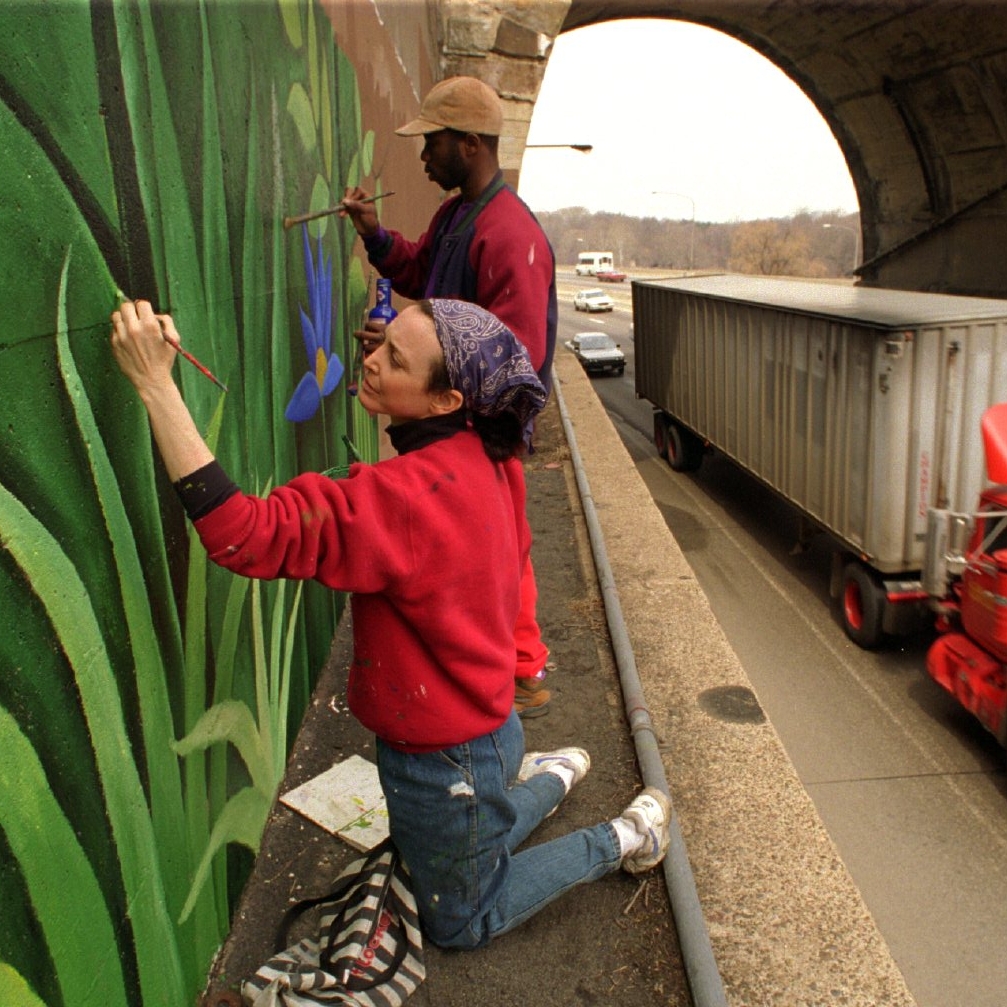
    Jane Golden, artistic director of the Anti-Graffiti Network, works on a four-story mural with the help of Haisonn Shadding high above the Schuylkill Expressway near the zoo exit. Photo from March 25, 1994Andrea Mihalik

    Noon

    For lunch, I go to Frieda in Old City. I like Frieda because there are artists’ events there, and there’s always really interesting art on display. It’s good food, but also a delightful environment.

    1:30 p.m.

    Then I walk through Old City because wherever I am, I always like to check out great walls, murals, or murals in process.

    There’s a new mural going up right next to Elfreth’s Alley by an artist named Sean Martorana. And I can’t help but visit Paradigm Gallery + Studio. I love the artists they show like Nazeer Sabree, Eustace Mamba, and there was even a Cornbread exhibition.

    3 p.m.

    At around 3 p.m., I’m going to Fishtown. There’s a new mural I have to see by Miriam Singer on the side of Mural City Cellars. They are great partners of Mural Arts. Then I’m going to walk over to 25 Oxford St. to see the new Matthew Henning mural because that’s fantastic. It’s joyful and captures the spirit of Fishtown.

    Then I go to Cake Life Bake Shop. It has delicious sweets, and then I’m going to look at the mural there that’s a tribute to the trans community called We Are Universal by Kah Yangni.

    3:30 p.m.

    Next, I’m going back to PMA to see Paul Farber’s “Rising Up: Rocky and the Making of Monuments” exhibition. I will zip through it because I’ve seen it a few times, but I want to see it a few more times before it goes away.

    Then I’ll go to the painting created by the artists at the State Correctional Institution – Phoenix. There used to be a three-story mural of Bernard Hopkins at SCI Graterford. But after SCI Graterford closed, we weren’t able to recreate it at SCI Phoenix because it’s a very different prison. So, we had the men recreate it, and now it’s on display at PMA with all their names listed, which is great. I look at that and get really inspired.

    4 p.m.

    I walk down the Parkway, and walk around the Swann Memorial Fountain. It’s just lovely. Then, I’ll slow up to look at the wall of the Sheraton, where we’re going to have a mural there soon. It’s a good wall.

    Then, I’m going by the Free Library of Philadelphia to look at the big banners.

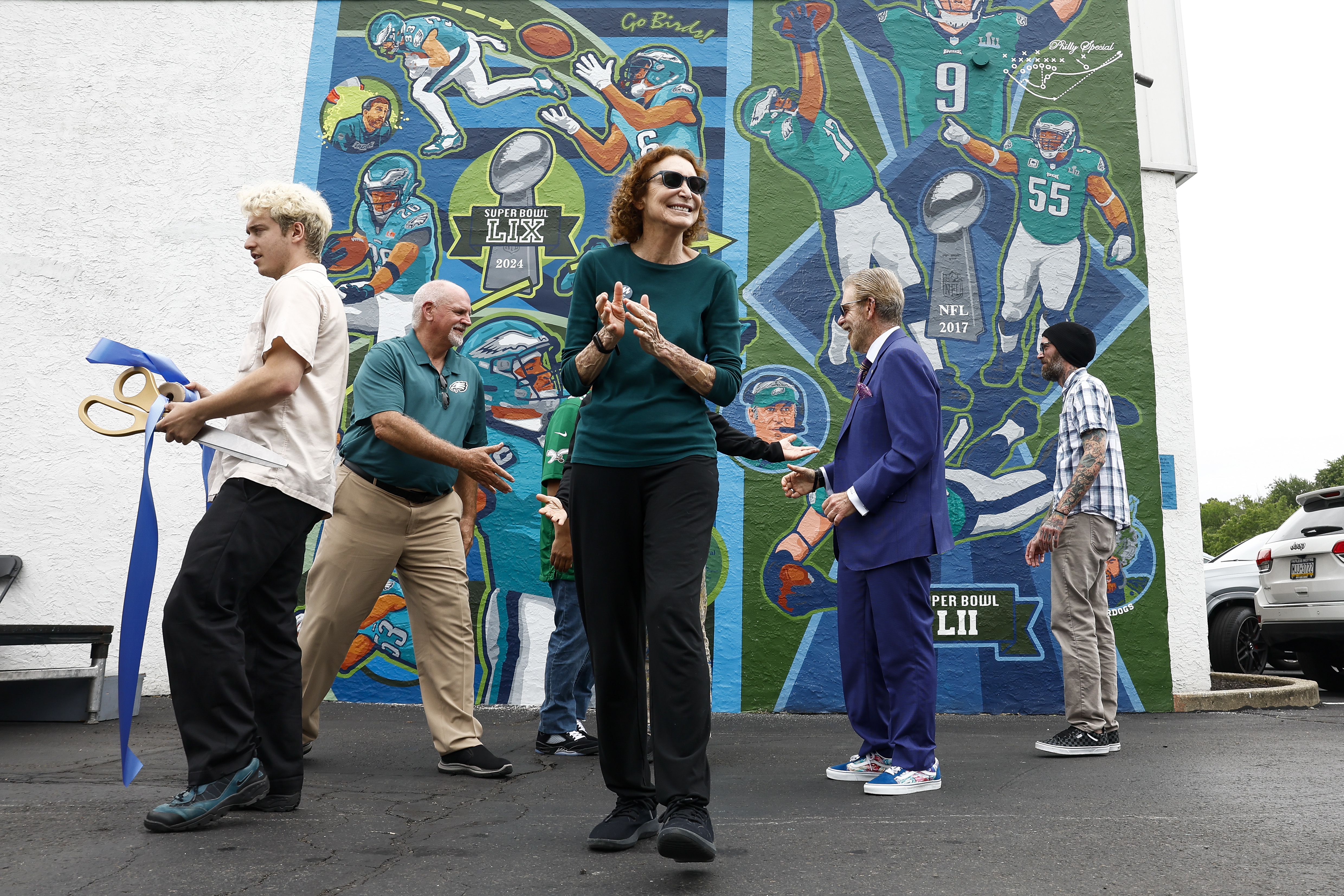
    Jane Golden, founder and executive director of Mural Arts Philadelphia, takes the stage during the dedication of the Super Bowl LIX mural at Spike’s Trophies on Tuesday, June 17, 2025 in Philadelphia. The mural is an addition to the existing City of Champions mural series by David McShane.Monica Herndon / Staff Photographer

    5 p.m.

    I cut through the City Hall courtyard to go to the Fabric Workshop and Museum. I think it’s a gem in our city. I’m going to see the exhibit “Elegy Quilts” by Jesse Krimes, and then I’ll go see other exhibits, too.

    I may not buy anything, but I’m going to go in their gift shop because I love it.

    6:30 p.m.

    After the gift shop, I’m going to meet with some friends for dinner at EMei in Chinatown. It’s really lovely food there.

    7:30 p.m.

    In the evening, I’m going to the Ministry of Awe to see Meg Saligman, who’s been a longtime colleague. I’m really proud of her for transforming an old bank building into an immersive art experience.

    I always cheer people on who give work and opportunity to artists, and she commissioned like 100 artists to do work at [Ministry of Awe]. I just love the fact that I’ve seen her career grow and thrive, and now she’s running an institution.

    8:30 p.m.

    Oh, and because I still like sweets, I’m going over to Franklin Fountain for ice cream.

    9 p.m.

    At around 9 p.m., I’ll go home to watch British mystery movies and series like Karen Pirie and Broadchurch with my husband.


    The conversation has been edited for clarity and brevity.

  • After 18 months and traffic snarls, Market Street improvements in Old City are complete

    After 18 months and traffic snarls, Market Street improvements in Old City are complete

    Brothers Allen Joseph and Anser Bhatti own Liberty Scoops ice cream and Coffee Tea & Co., both in Old City.

    They concede that the past 18 months of construction for improvements to Market Street were often tough on business, especially the coffee shop, because of fencing that had to be erected.

    Now, with the $16 million renovation of Market Street complete, and the fencing gone, Joseph said it was worth it.

    “It looks much better now,” Joseph said.

    Philadelphia officials unveiled the new look Tuesday in time for the nation’s 250th anniversary. The transformation permanently narrowed vehicular traffic, added bike lanes, and built a new public plaza.

    “As you can see, walking around the neighborhood is greatly improved,” said Job Itzkowitz, executive director of the Old City District, a business improvement organization.

    Itzkowitz noted more open space for pedestrians, shorter distances to cross the street, and new street trees and planters, among other improvements.

    “Residents, visitors, and business owners alike have already felt the impact as the fences started to come down over the last few months,” he said.

    Officials launched the overhaul in December 2024 to rebuild the corridor from Second to Sixth Streets and transform the historic stretch into a more inviting place to walk, bike, and dine.

    The work was to timed for the Semiquincentennial, which marks the 250th anniversary of the signing of the Declaration of Independence. Several other nearby landmarks have also been spruced up, such as Elfreth’s Alley, which recently unveiled a new pocket park, and the long-shuttered First Bank of the United States, set to reopen to the public on July 1 after a $27 million renovation.

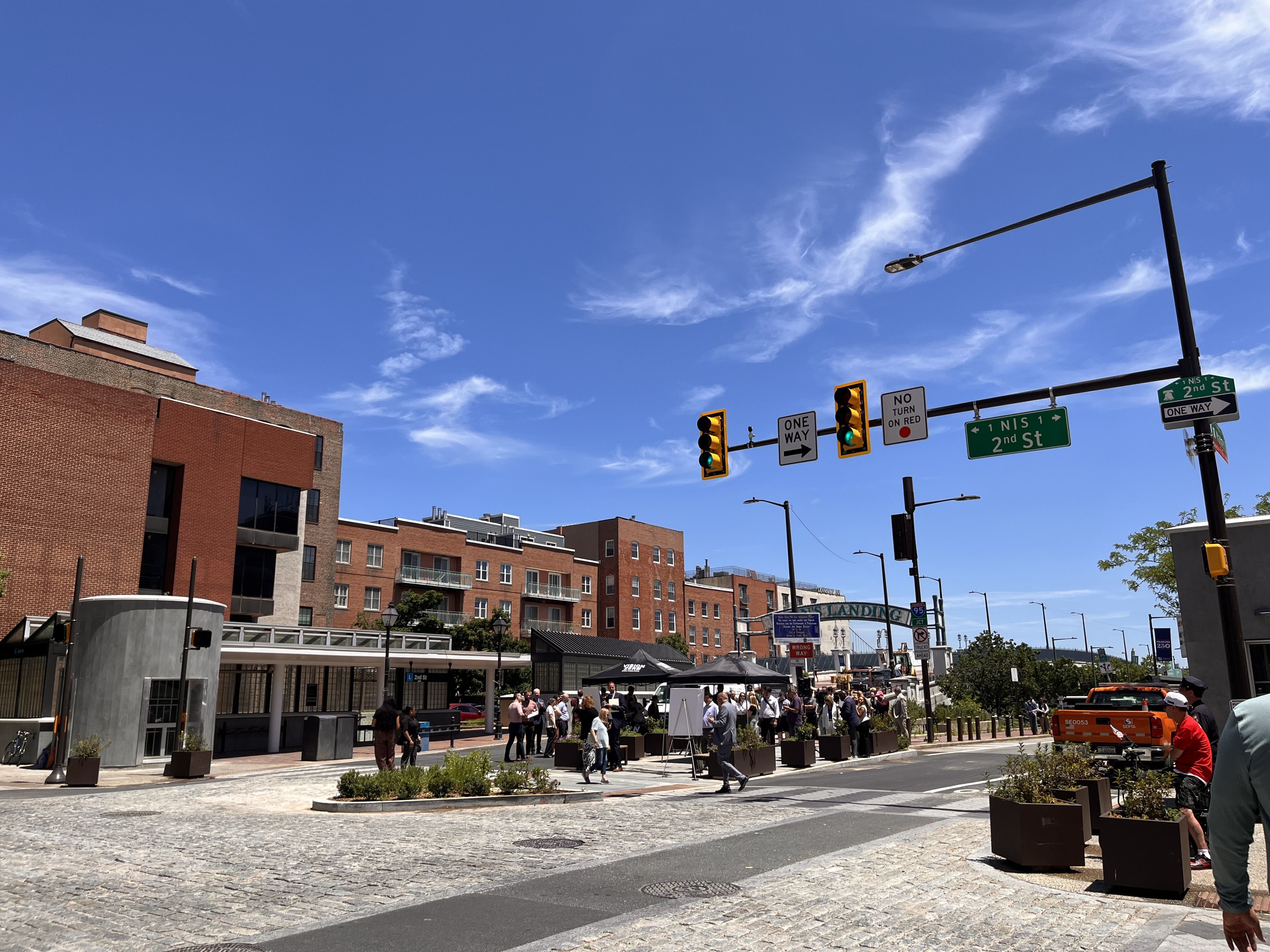
    Philadelphia city officials celebrated the completion of a $16 million renovation of Market Street, from Sixth to Second Streets. Improvements include wider sidewalks, protected bike lanes, Belgian block streetscape, and new plantings.Frank Kummer

    What’s new?

    As part of Market Street’s “road diet,” vehicles have been reduced to one lane in each direction, clearing way for protected bike lanes and adding dedicated left turn lanes at key intersections.

    Among other improvements:

    • A new curbless plaza at Second and Market Streets at the base of the ramp to Penn’s Landing, allowing easier access for pedestrians.
    • Concrete bump outs at bus stops were lengthened to make boarding easier. The raised bike lanes were installed between parking lanes and sidewalks.
    • Wider sidewalks.
    • Belgian block streetscaping.
    • 44 new street trees and 68 shrubs.
    • 55 bike racks.
    • SEPTA also improved the look of the headhouses for the Market-Frankford Line subway at Second Street.

    Officials say the transformation will reduce traffic-related injuries and deaths and better serve tourists, walkers, cyclists, transit users, and motorists.

    ‘New plaza rocks’

    The project was initiated a decade ago by Itzkowitz and the Old City District. It was managed by the city’s Department of Streets and Office of Transportation and Infrastructure Systems. The work was done by Deptford-based C. Abbonizio Contractors.

    Also taking a lead was the nonprofit Independence Historical Trust, as part of a larger plan to create better ways for tourists to navigate on foot through Independence National Historical Park, Old City, and other historic or local neighborhoods.

    “The new plaza rocks,” said Mayor Cherelle L. Parker.

    Parker said the just-completed project fits in with broader efforts to extend improvements on Market Street from City Hall to the Delaware River.

    Bill Marrazzo, chair of the nonprofit Independence Historical Trust, called completion of the Market Street project key, given its location in Old City and near Independence National Historical Park.

    “No other American city has as many cultural assets per capita as we do here in the city of Philadelphia,” Marrazzo said, “and a very high percentage of those are organized here within this one square mile of history.”

    “These improvements are truly transformational,” noted Mike Carroll, the city’s deputy managing director for transportation and infrastructure.

  • The Weccacoe Playground is living proof of Philadelphia’s macabre history of grave robbing. Now it’s inspired a surprisingly funny play.

    The Weccacoe Playground is living proof of Philadelphia’s macabre history of grave robbing. Now it’s inspired a surprisingly funny play.

    The bodies of poor and Black Philadelphians have long been exploited in the name of medical progress — even after death.

    Grave robbing was a common practice among medical schools like the one at the University of Pennsylvania in the 18th and 19th centuries, when the cholera outbreak created great demand for cadavers. Medical schools paid people to steal freshly buried corpses for medical students to conduct research in the hope of developing cures.

    Very often, a wealthy white population benefited from the cures derived from experimentation on these bodies.

    Black Philadelphians were denied burial in the city’s cemeteries, so many of these bodies were buried in potter’s fields without tombstones.

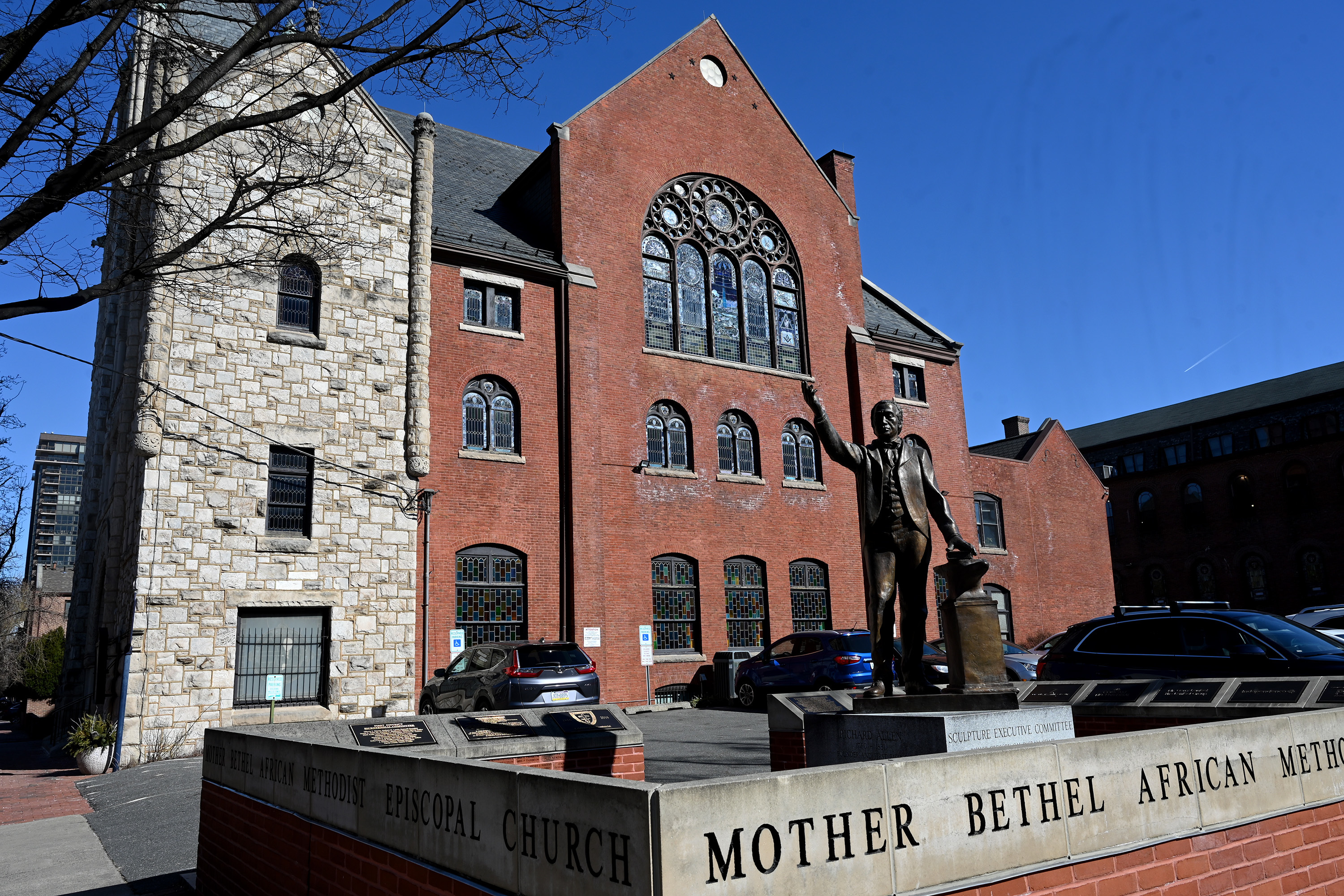
    In 1794, after being denied worship at Old City’s St. George’s Methodist Church, the formerly enslaved Richard Allen founded the Mother Bethel African Methodist Episcopal Church, considered the world’s first AME congregation. In 1810, he purchased what today is called the Bethel Burial Ground.

    A statue of Bishop Richard Allen outside Mother Bethel AME Church.Tom Gralish / Staff Photographer

    The minister, who would go on to become one of America’s most influential Black leaders, wanted Black Philadelphians to receive a dignified final resting place, with tombstones.

    Through her 2024 play The Great Privation (How to Flip Ten Cents Into a Dollar), Harlem-raised playwright Nia Akilah Robinson seeks to offer audiences a peek into this macabre history with Philadelphia roots.

    “This topic of grave robbing is a subject in which I had conversations around the dinner table with my parents,” Robinson said. “It is a practice that has a long and storied history in Philadelphia, especially institutions like University of Pennsylvania medical school, and these crimes continue today.”

    The play, set at Mother Bethel in 1832 and the present, is now being staged at Theatre Exile.

    It explores the history of grave robbing in America in the name of medical progress, through the story of a Black American mother and daughter who keep vigil over their recently buried loved ones’ graves to protect their bodies from grave robbers or “resurrectionists,” who were often white.

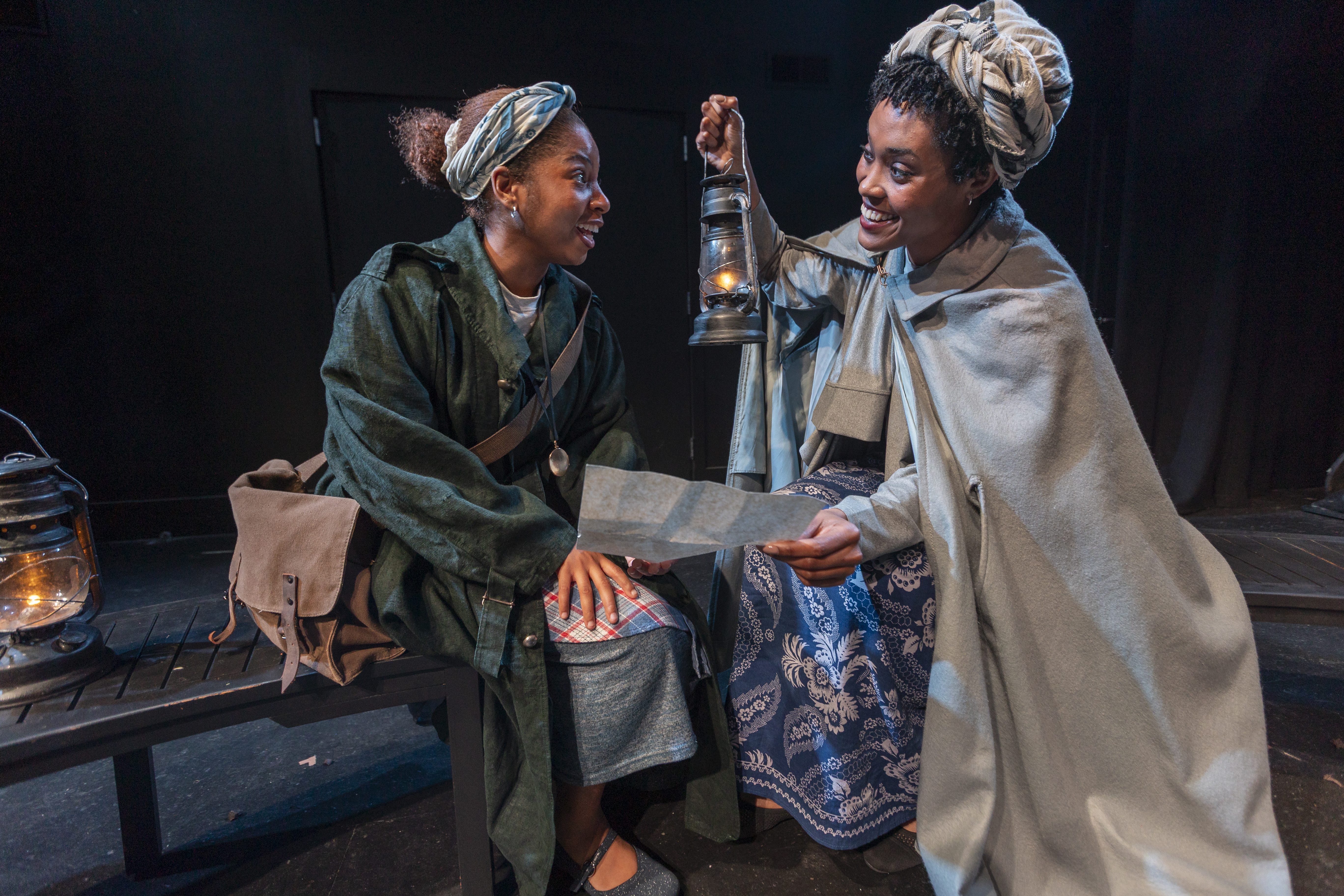
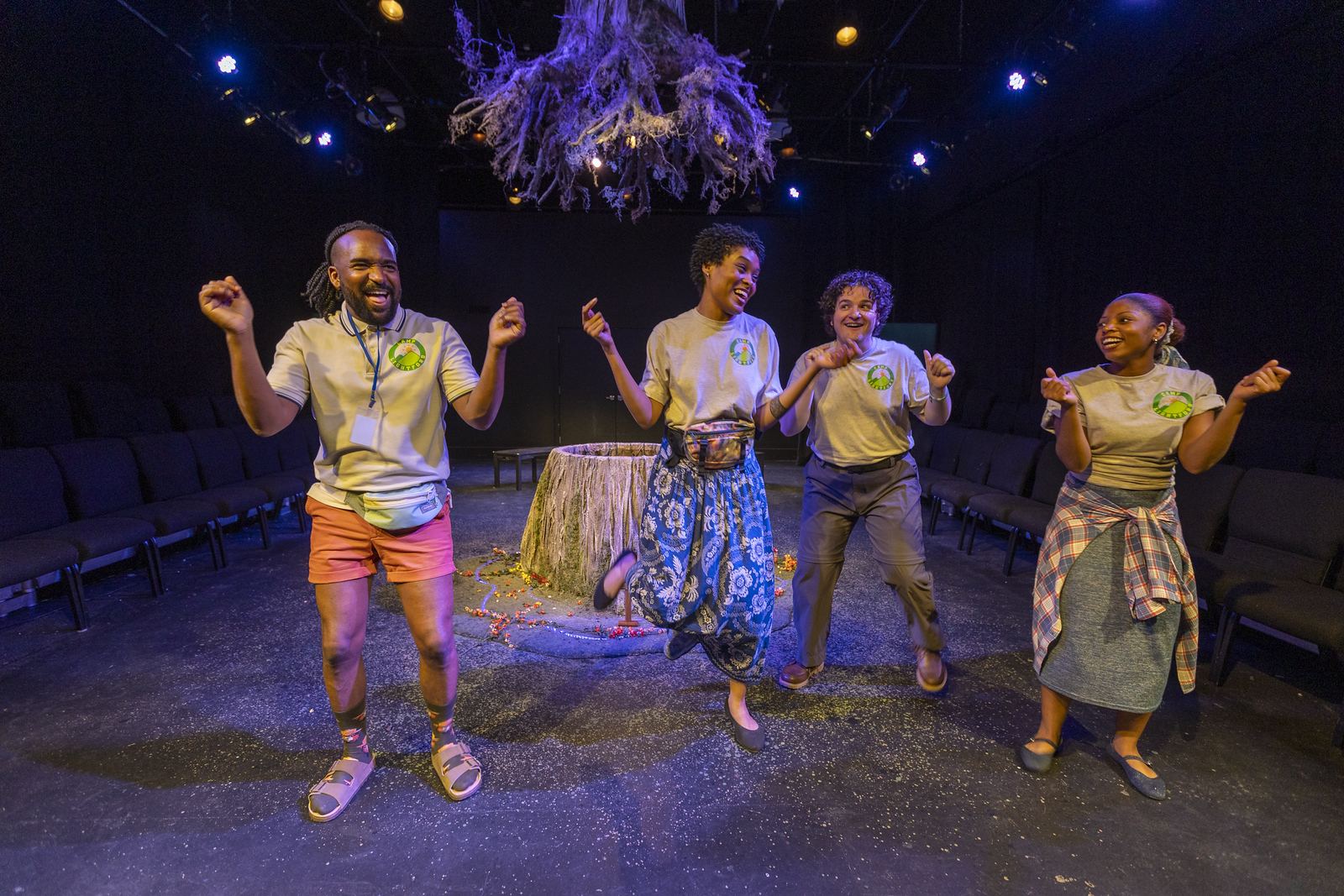
    Andre G Brown, Rayne, Aidan McDonald, and Semaja Murphy in “The Great Privation (How to Flip Ten Cents Into a Dollar)”Paola Nogueras

    “I saw the description of a play, talking about an African Methodist Episcopal Church, 1832 graveyard in South Philadelphia,” the Rev. Carolyn C. Cavaness of Mother Bethel said. “That’s Mother Bethel! That’s me.”

    “We can never divorce ourselves from where we come from and our roots,” said Cavaness, who was appointed the church’s first female pastor in 2024.

    The church sold the graveyard in 1889, and the plot of land became a playground, today called Weccacoe Playground.

    In 2014, amid a playground remodel, historian Terry Buckalew raised concerns about the human remains underground. These concerns were validated by a subsequent archaeological dig, and remodeling plans were halted until a plan for a re-memorialization of the Weccacoe/Bethel Burial Ground could take place.

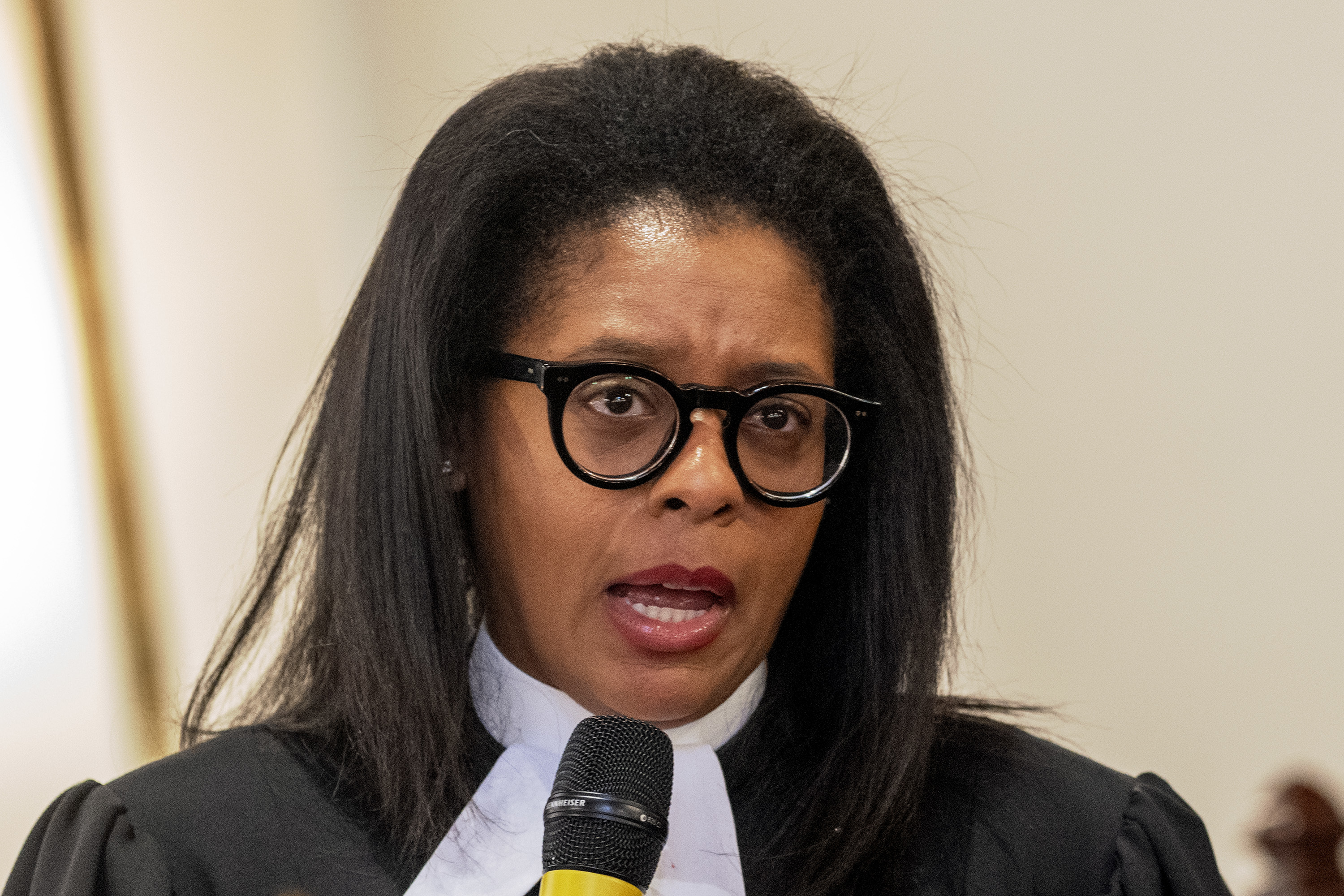
    The Rev. Carolyn Cavaness celebrates worship service Nov. 11, 2024 after Mother Bethel AME appointed her the first woman pastor in its history. CAVANESS-TBDTom Gralish / Staff Photographer

    Robinson first drove past Weccacoe Playground and Bethel Burial Ground during rehearsals for Theatre Exile’s production. Philadelphia-based director Ontaria Kim Wilson wanted her to see the place that she had been writing about.

    “When I was crossing into that block with Ontaria, as she was driving, I felt something, I can’t even explain it,” Robinson said.

    “In Philly, there is a lot of respect paid toward talking about the history through those signs of what happened here. Sometimes when I go past those [historical markers], I see a tribute, and I feel a sadness. I get why it’s there and I also [think] maybe we need more plays doing that, too.”

    Today, members of the Mother Bethel congregation, families visiting Weccacoe, and the thousands of Philadelphians and tourists walking past this small playground hold the juxtaposition of young life and centuries-old resting souls at once.

    Philadelphia-based director Ontaria Kim Wilson has directed Nia Akilah Robinson’s 2024 play “The Great Privation (How to Flip Ten Cents Into a Dollar),” which is now playing at Theater ExileCourtesy of Theater Exile

    Theatre Exile is partnering with Mother Bethel to offer the production crew a more real-world context to the story of the play. Cavaness met with Wilson and attended the first rehearsal and will participate in post-show discussions during the run of the production.

    “You always have the contesting and the non-acceptance of Black bodies being fully human,” Cavaness explained. “‘You’re not fully human, so I can do with your pieces, I can do with your body, as I see fit.’”

    Cavaness can’t help but think of Allen, who was initially buried in front of Mother Bethel.

    “They would have people guarding his body. Again, this notion of protecting the dignity and of having to reinforce that and to show that,” she said.

    Playwright Nia Akilah Robinson’s 2024 play “The Great Privation (How to Flip Ten Cents Into a Dollar),” is now playing at Theatre Exile.Courtesy of Theater Exile

    Organizations like the Mütter Museum and Penn Museum hold the remains of Black people and Native Americans in their collections and in recent years have faced significant public backlash over their acquisition and display. The Mütter has engaged in extensive community programming regarding its background as a medical history museum while receiving criticism that its efforts to repatriate the remains of Indigenous people have moved too slowly. Penn has embarked on internment and repatriation processes that some critics and families argue have been flawed and rushed.

    “We are the caretakers of this history. We are entrusted,” Cavaness said. “We have a responsibility to care for and uplift and to say their names and their stories. They just can’t go away.”

    These real-world, very local connections continue to inspire Wilson’s direction of the play in preparation for sharing it with the descendants of those buried in the Bethel Burial Ground. The Great Privation could rely on its inherent didacticism, but Wilson’s direction is focused on uplifting the love story of a mother and daughter, and Robinson’s surprisingly humorous writing.

    Robinson hopes the play can be received as a comedy, even as it holds so much grief.

    Semaja Murphy and Rayne in “The Great Privation (How to Flip Ten Cents Into a Dollar)”Paola Nogueras

    “I hope that [the audience] find themselves laughing. And I hope that Philly audiences feel like this play was written with care,” said Robinson.

    “It’s Philadelphia. It’s the birthplace. It’s another chapter in who we are as a nation,” said Wilson. “And I think it’s important that, especially during this time, we grab onto any information that we can learn about this American experiment.”

    “The Great Privation (How to Flip Ten Cents Into a Dollar)” runs through June 14, Theatre Exile, 1340-48 S. 13th St., theatreexile.org/tgp25

  • La Famiglia Ristorante still glitters after 50 years in action

    La Famiglia Ristorante still glitters after 50 years in action

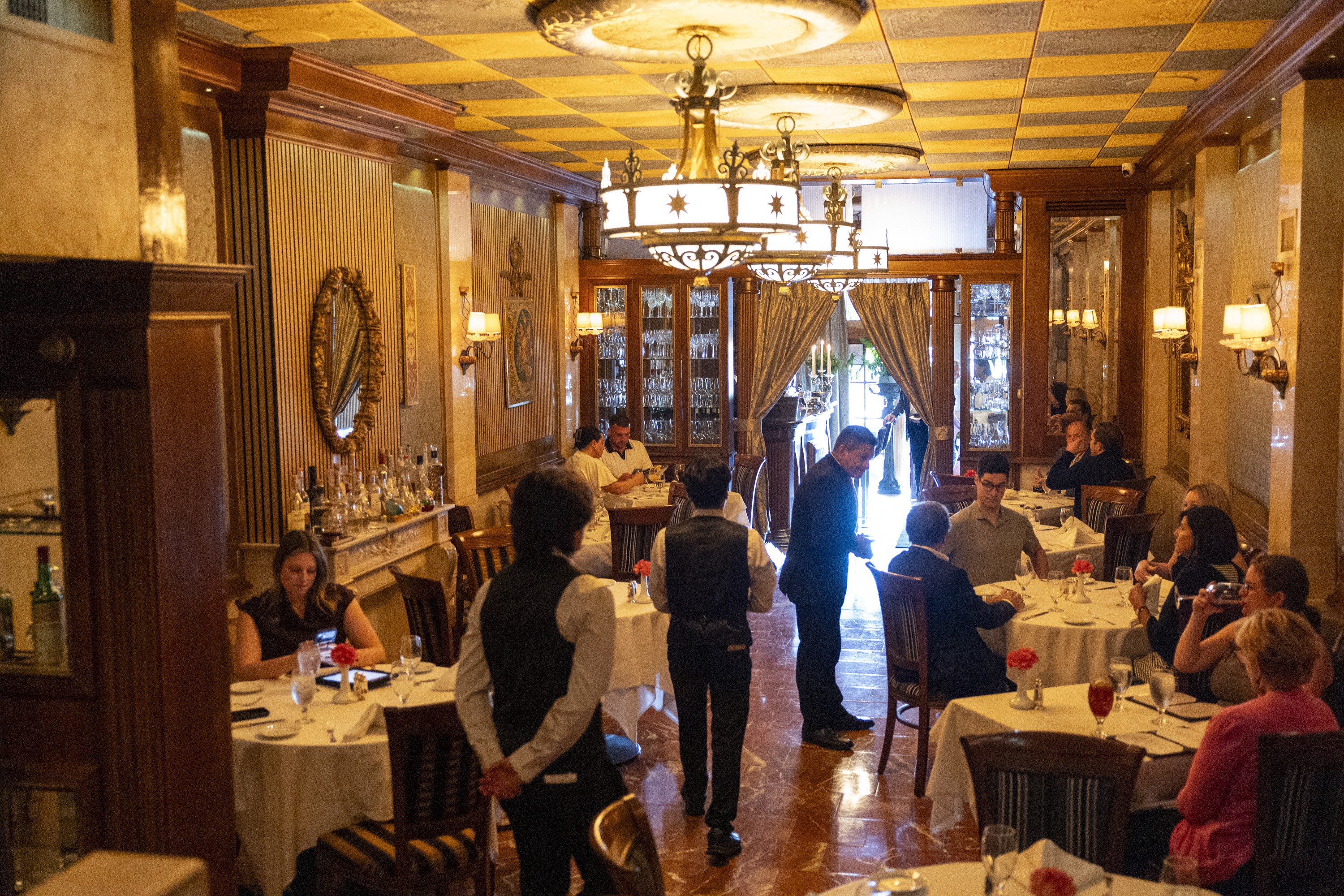
    We were led to a table lost in the shadows in the farthest corner of La Famiglia. The tall white candle waiting for us was lit and its flickering wick filled the space with a bright warm glow that revealed a posh little nook — the lavishly muraled walls wrapped around a table padded with silken napkins and not one, but two layers of linen tablecloths. Our view of the room revealed a world that still hummed with fine-dining trappings that, outside this venerable Old City space, have nearly disappeared.

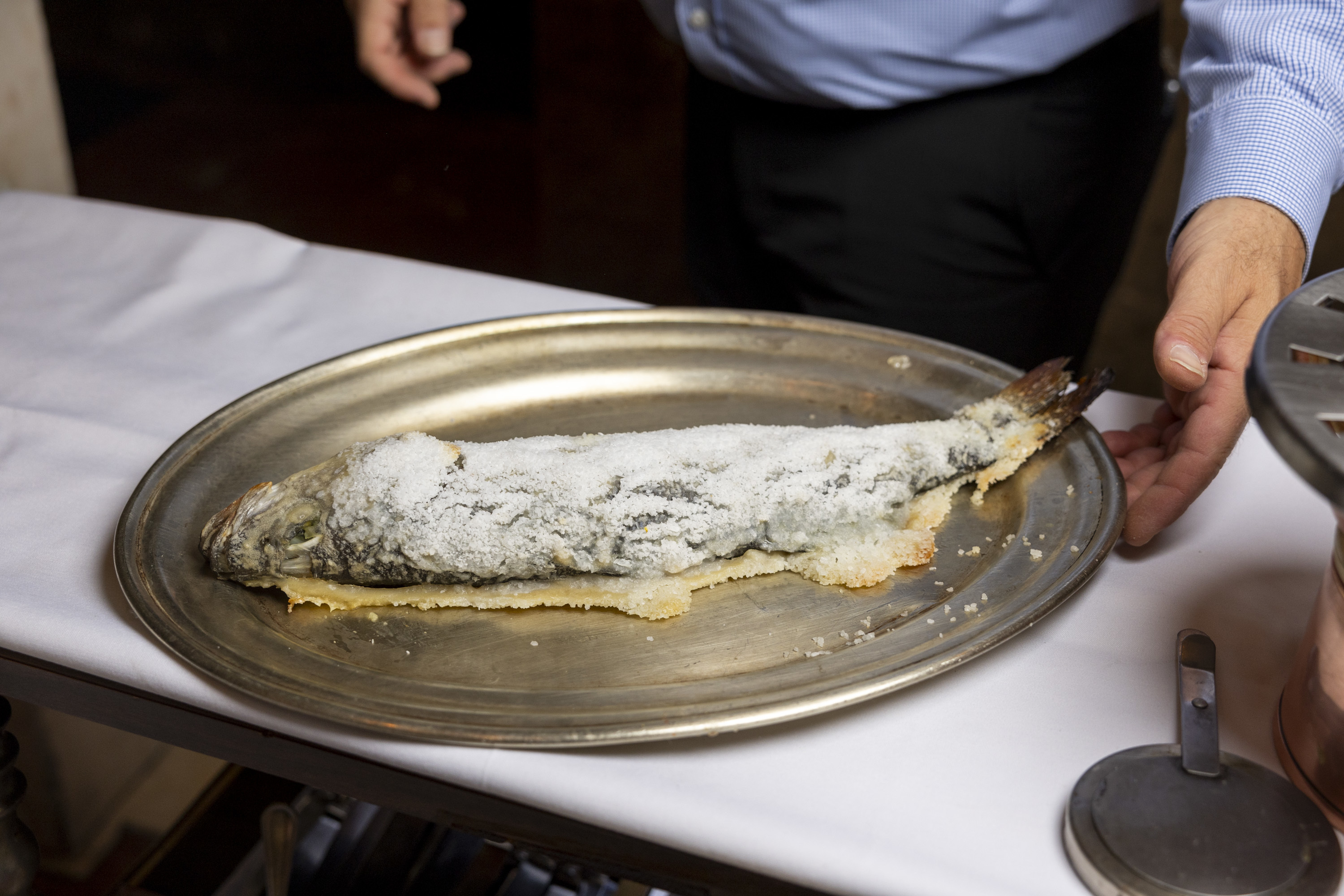
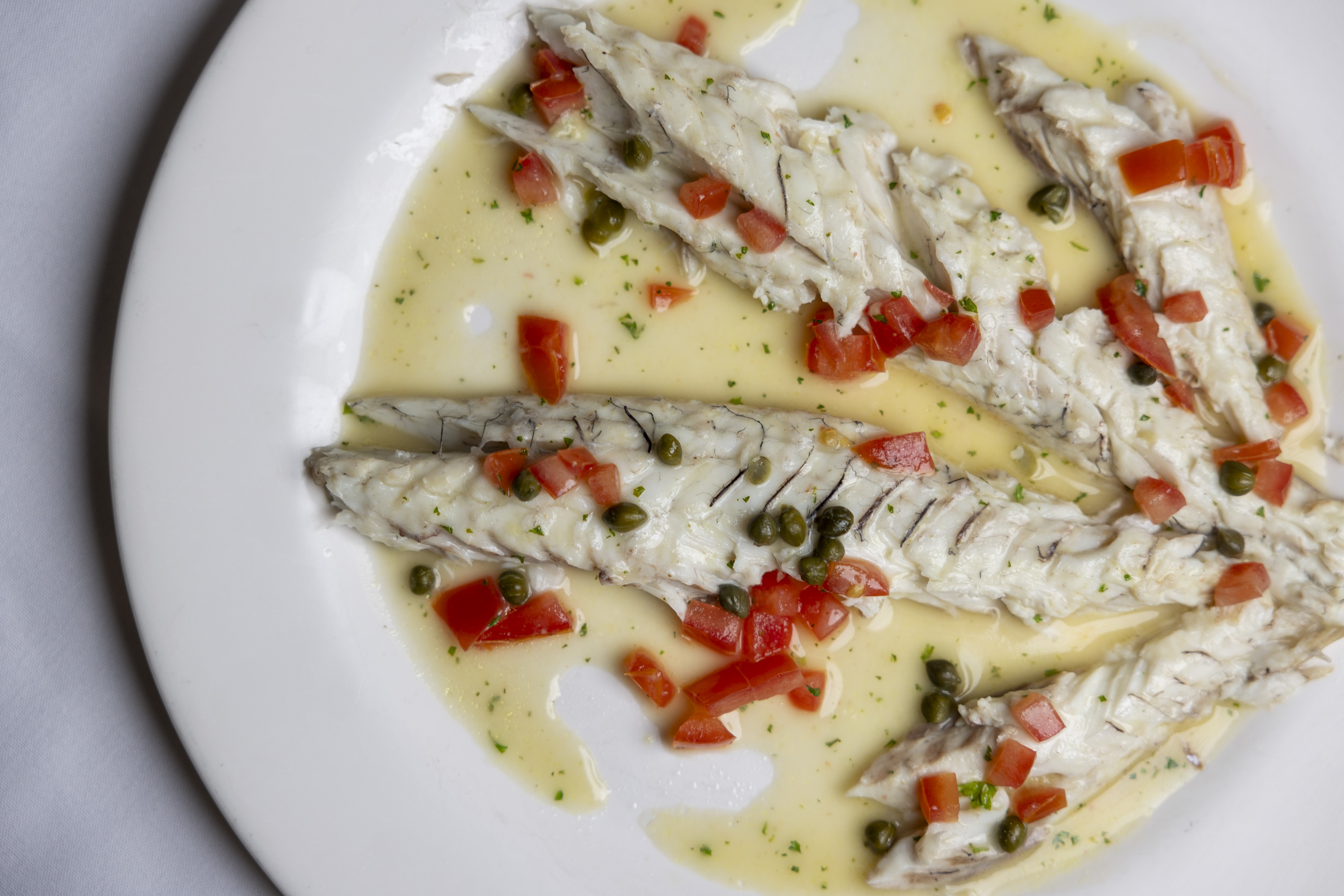
    Crisply suited servers rolled guéridons across polished pink marble floors to decant grand old wines from La Famiglia’s legendary cellar. Other carts bearing whole branzinos entombed in salt crusts paused tableside, where the fish were deftly deboned into a bloom of fillets, then glossed with olive oil, tomatoes, and capers. I haven’t seen so many men eating in blazers in years.

    The branzino at La Famiglia in Philadelphia. The fish is baked whole in salt before it is filleted tableside.Tyger Williams / Staff Photographer
    The branzino at La Famiglia.Tyger Williams / Staff Photographer

    “Back in the ‘70s and ‘80s, people used to come here really really dressed!” says co-owner Giuseppe Sena, 73, recalling the era shortly after he and his brothers founded La Famiglia in 1976 with their parents, and his father Carlo “Papa” Sena’s classic Neapolitan cooking drew the city’s most well-heeled gourmands. “The women would come in chinchilla furs and so many diamonds the restaurant would be sparkling!”

    Many longtime customers are still regulars. I ran into my retired rabbi here the same night that I ran into the retired poll judge from my local voting ward, both discerning eaters. The hushed tones and formal hospitality, as well as this menu’s fondness for center-cut meats, porcinis, and hard-to-find old wines, still appeals to a certain generation. The yet-to-retire and under 60 set? They are far rarer in the gilded confines of 8 S. Front Street, a Colonial-era building that was once a tea warehouse.

    Diners at La Famiglia in Philadelphia.Tyger Williams / Staff Photographer
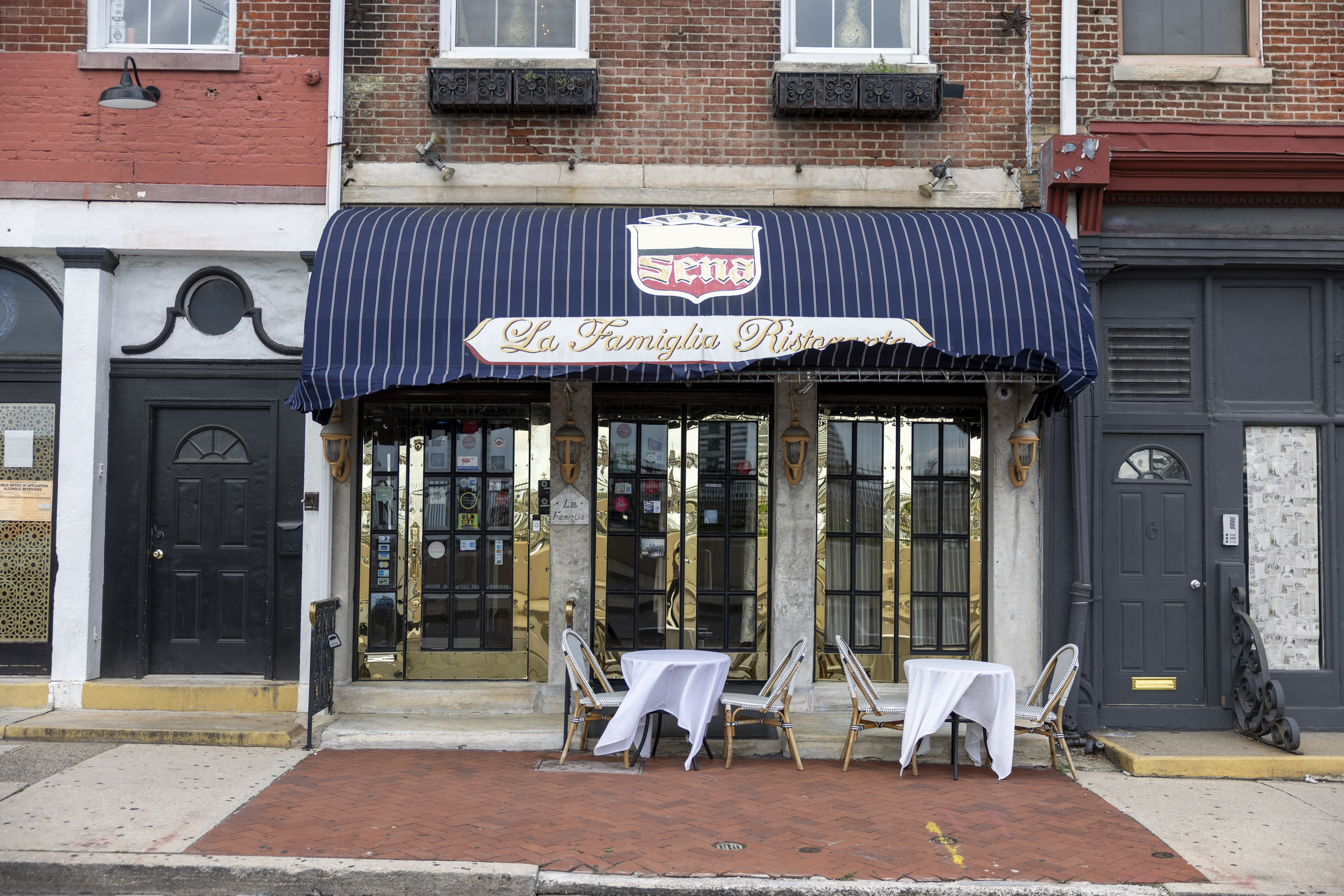
    The outside of La Famiglia.Tyger Williams / Staff Photographer

    It’s been over two decades since I last reviewed La Famiglia, and even then I considered it old-fashioned, not to mention too expensive. But revisiting this classic 23 years later, I view it now through a different and fonder lens, not only because the cooking was more consistent, but because the context has shifted.

    La Famiglia is among the last of a generation of continental-style restaurants with European-born chefs and well-starched dining rooms that ruled Philly’s fancy Italian scene in the late 20th century, including long-gone destinations such as Gaetano’s, Monte Carlo Living Room, and the original La Buca. But it has earned its status as a survivor. After two absolutely delicious recent visits, I can attest it’s clearly more than just a museum piece.

    Set against the diverse riches of Philadelphia’s current Italian dining scene, from the stalwart red gravy icons of Italian American cooking (Villa di Roma, Dante & Luigi’s) to the alta cucina of Vetri, regionalists such as Le Virtù or Irwin’s, the nostalgia revivals of Palizzi Social Club and Bomb Bomb Bar, along with fresh contemporary takes from Emilia, La Famiglia’s retro experience still occupies a unique and worthy place to dine. With check averages for a complete meal between $90 and $100, it’s still a big night out but nowhere near the top of Philly’s current price range.

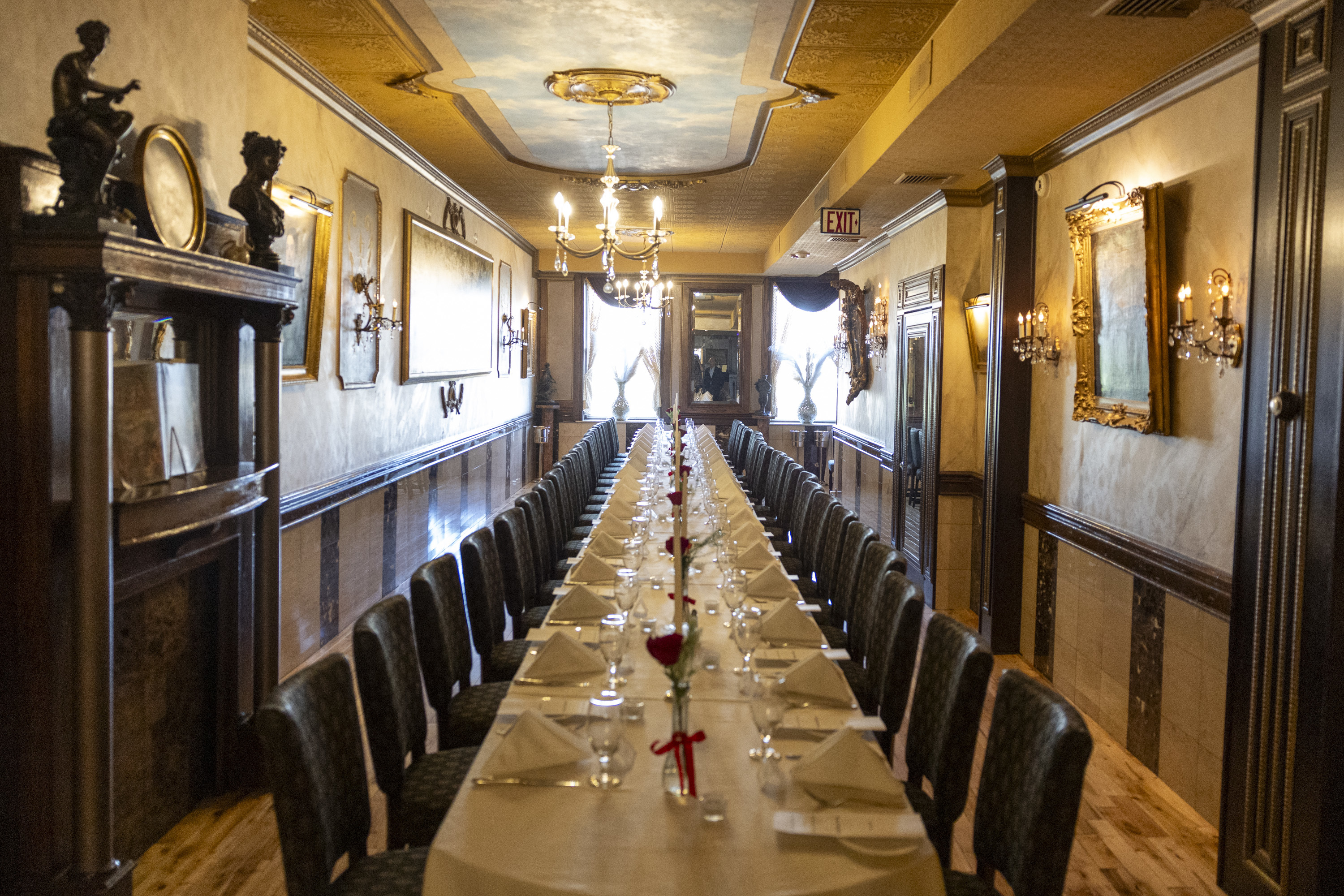
    Upstairs event space and large dining area at La Famiglia.Tyger Williams / Staff Photographer
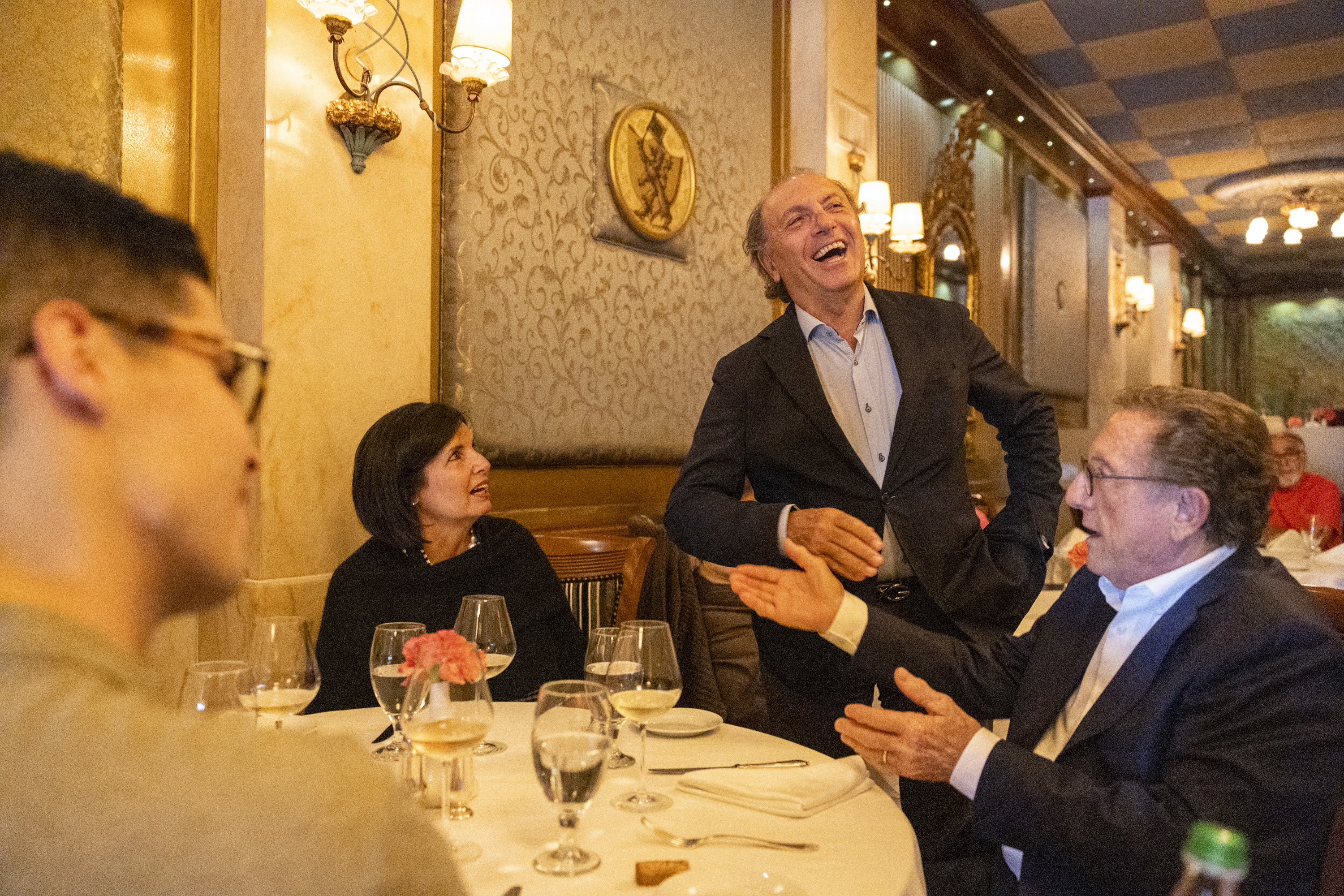
    Co-owner Giuseppe Sena shares a laugh with Dawn and Luca Sena, of Society Hill, regulars and relatives, at the restaurant in Philadelphia.Tyger Williams / Staff Photographer

    The menu isn’t exactly innovative, but has been updated multiple times over the years. An overall delicacy remains to the cooking, now under the care of current chef de cuisine Luis Yauri, that, guided by Giuseppe Sena and his nephew, Carlo, follows a direct lineage to the recipes and techniques Papa Sena had perfected at Zi Teresa in Naples before coming to Philadelphia in 1967.

    You can taste some of those original dishes on a throwback menu for the month of June in honor of La Famiglia’s 50th anniversary, including snails in spicy red sauce and gnocchi Sorrentina. But the signature pasta, penne alla Famiglia, is the only original dish that still lingers on the current menu — and for good reason. The quill-shaped tubes are glazed in a buttery sauce tinted pink with fresh tomatoes, lightly sweetened with caramelized onions and dotted with savory nubs of rendered prosciutto, the epitome of patient cooking.

    The founder’s elegant approach is also still evident in fried appetizers that employ only the finest grain of housemade breadcrumbs and an insistence on using only egg whites, rather than the more typical and heavier method of whole eggs with a flour dredge. The resulting wafer-thin snap on the crocchette just barely contains the whipped potato centers laced with three kinds of cheese. The rounds of eggplant are so sheer and deftly fried they form a fork-tender stack, along with truffled porcinis, fresh tomato sauce, and mozzarella, of a dreamy Parm-like starter called a tortino.

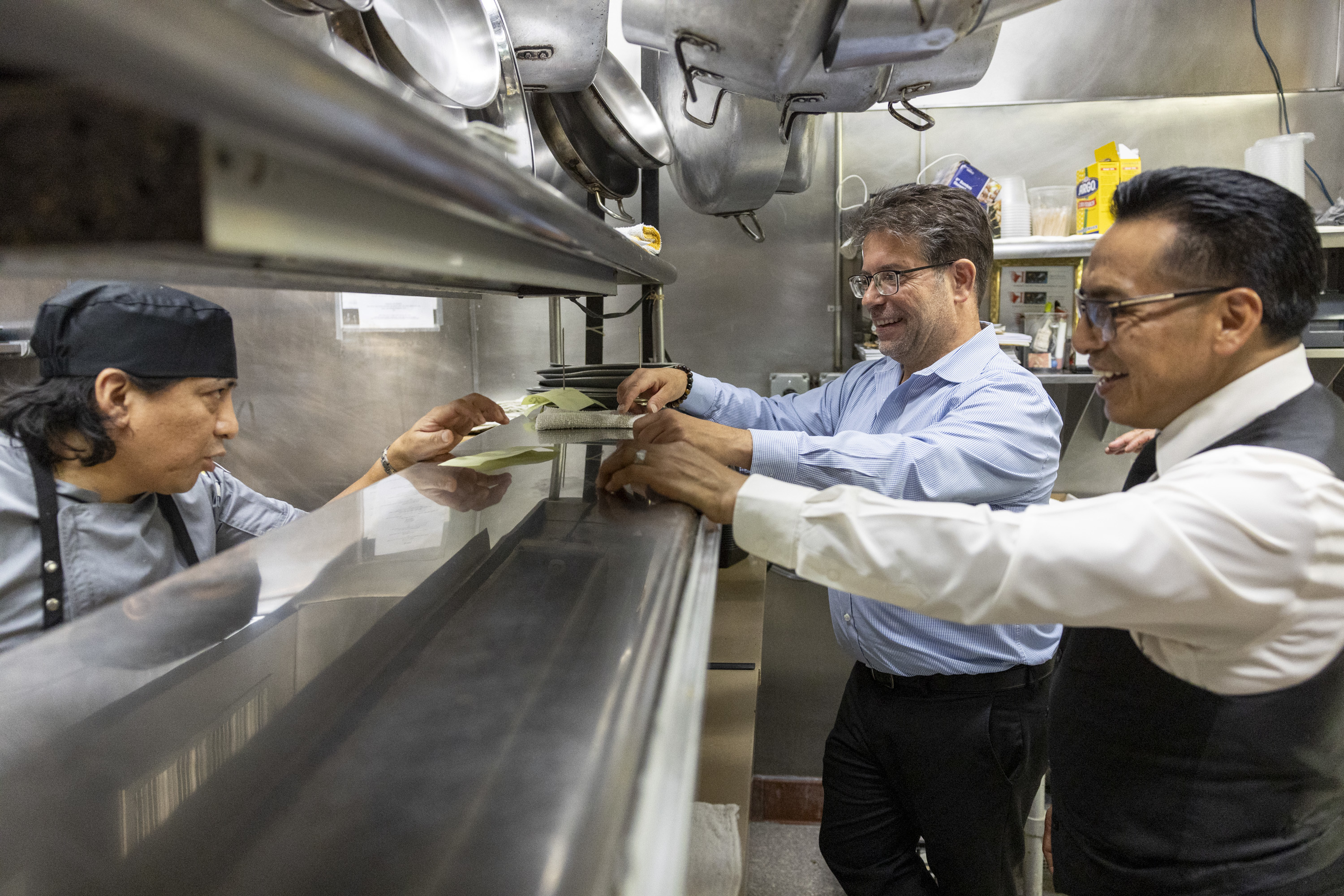
    Carlo Sena, general manager and co-owner of La Famiglia, in the back of the kitchen checking orders in Philadelphia.Tyger Williams / Staff Photographer
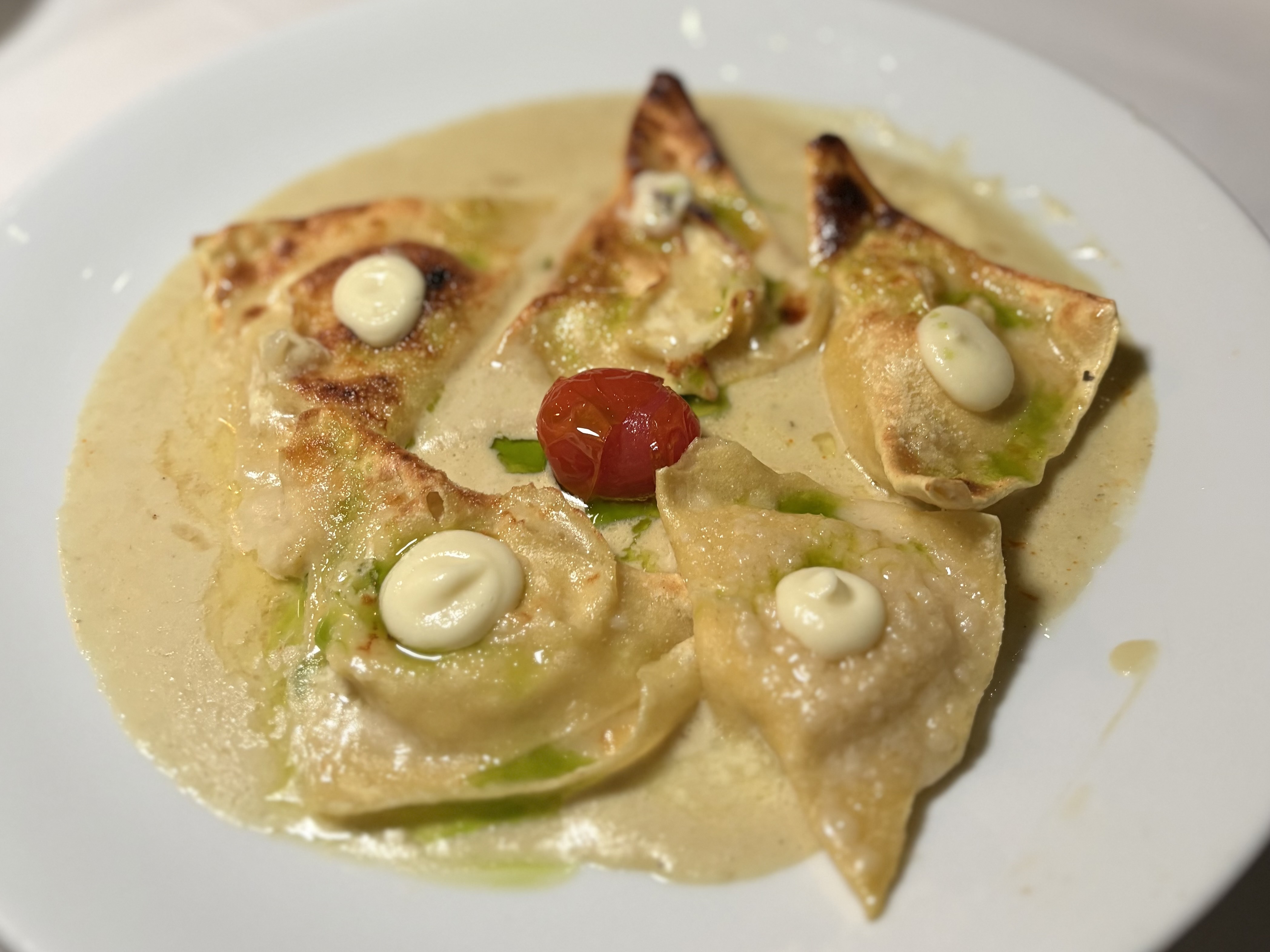
    Triangolo ravioli stuffed with burrata in eggplant cream sauce at La Famiglia.Craig LaBan / Staff

    Some of my favorite dishes here are unfashionably drab but deliver vivid flavors, like the vitello tonnato that dabbed silken-soft pads of veal tenderloin with a tonnato sauce that zinged with the briny umami of pureed tuna, capers, and anchovies. I could also taste Neapolitan sunshine in the eggplant cream that glazed the burrata-stuffed triangolo ravioli that arrived lightly broiled to a cheesy crisp.

    For the most part, these plates have largely been updated with splashes of flavorful herb oils that add colorful halos to the refined sauces that are always in service of La Famiglia’s sweet spot: luxury proteins.

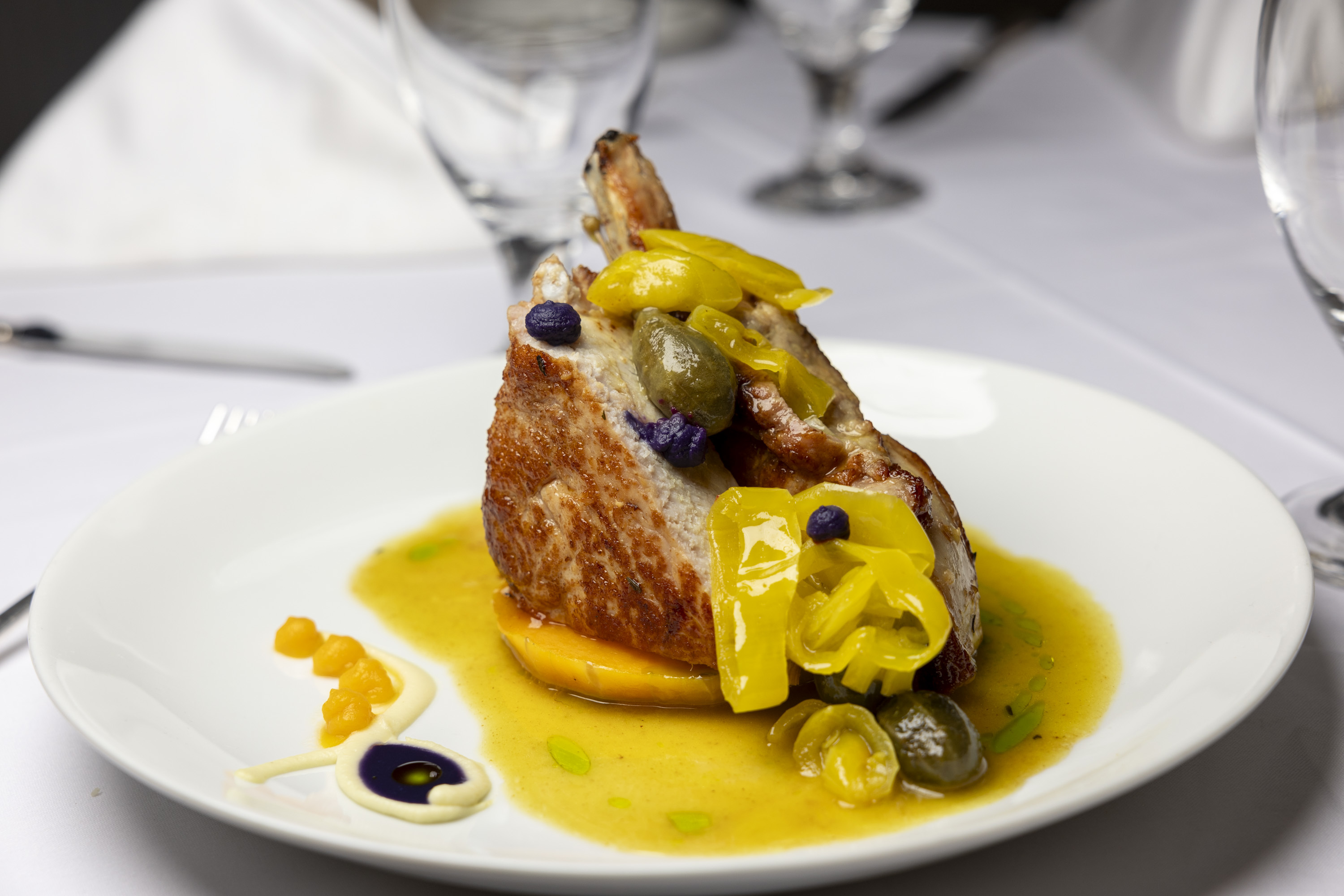
    The pork chop at La Famiglia.Tyger Williams / Staff Photographer

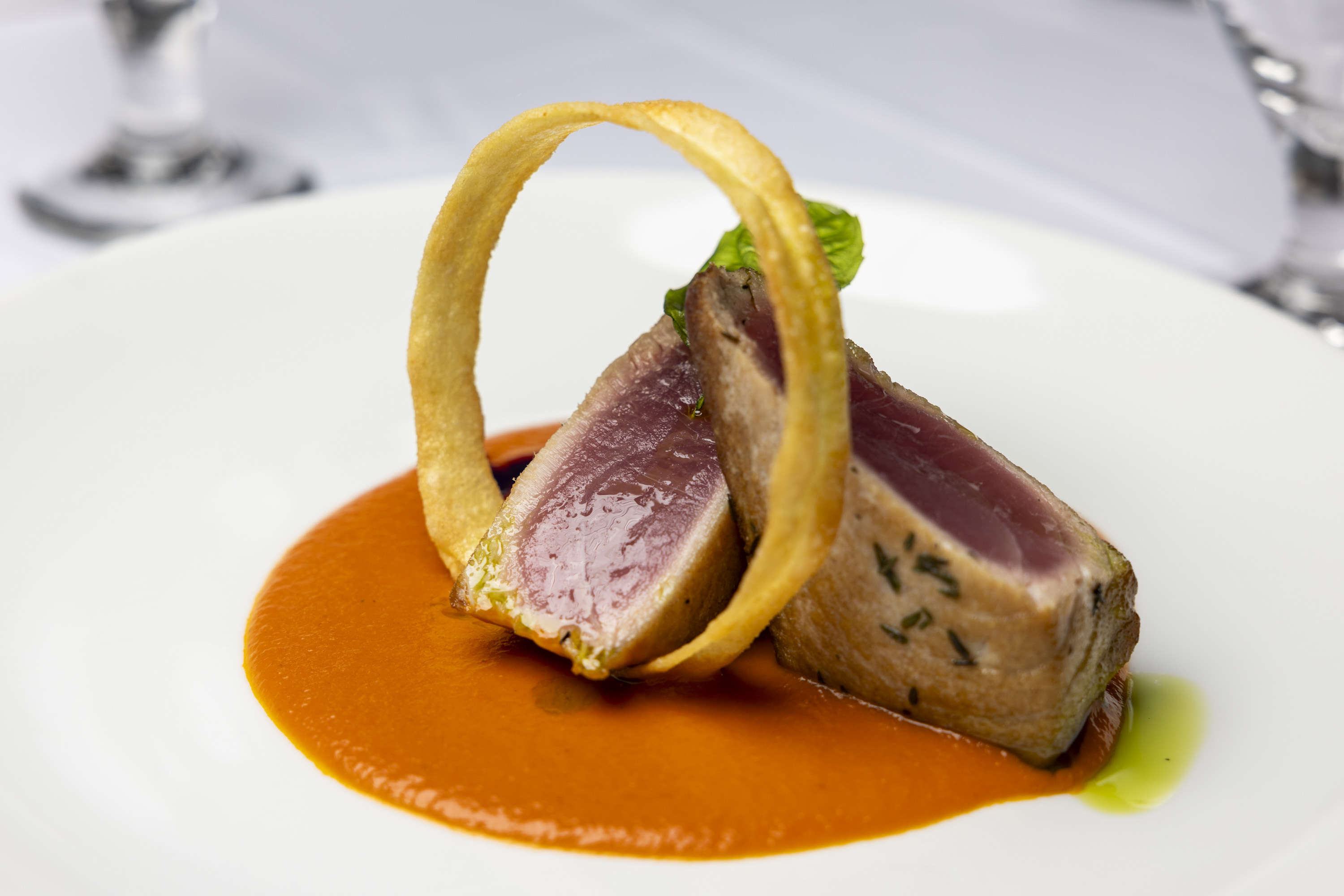
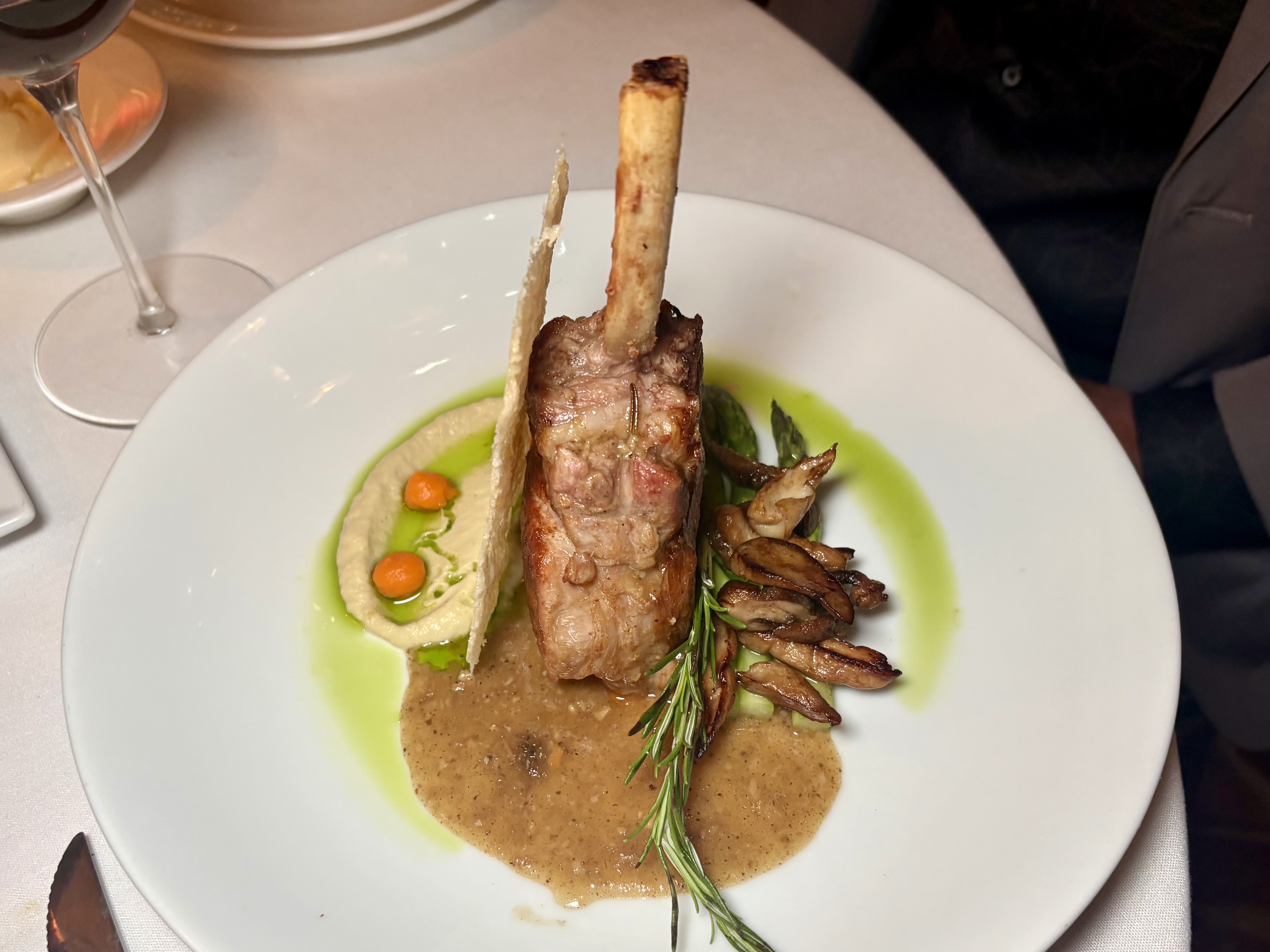
    A ruby-rare hunk of grilled ahi tuna comes sliced on the bias atop a sun spot of pureed tomatoes and olive oil, a Mediterranean tableau framed dramatically by a crispy ring of baked pappardelle. An incredibly tender veal chop arrives standing upright against a crisp frico of a Parmesan cheese over porcini cream sauce dotted with carrot mousse.

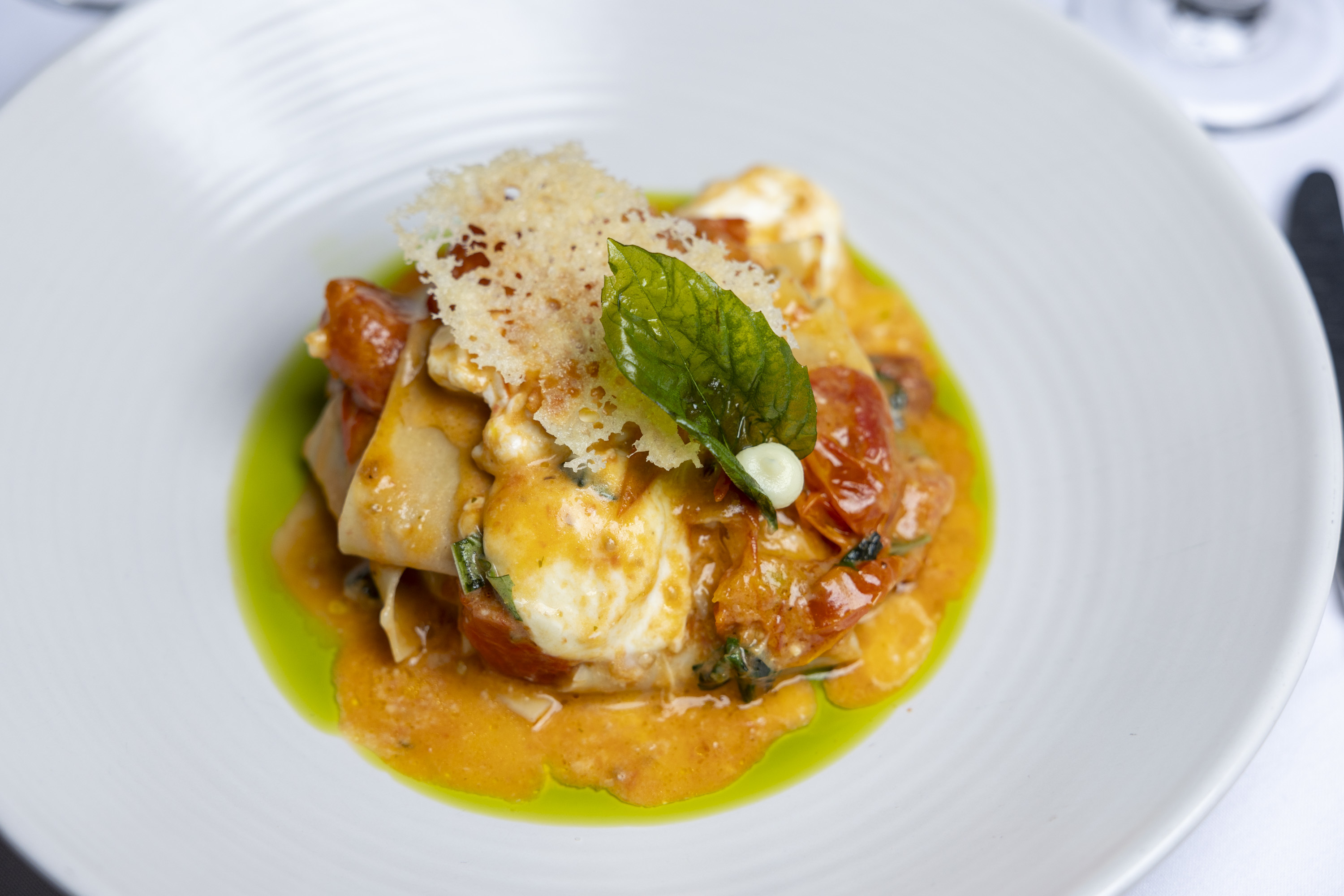
    An amazingly juicy pork chop channels South Philly swagger with zesty banana peppers added to its white wine sauce, alongside plump caper berries. Filet mignon, a plush cut I almost never order over less tender but more flavorful steaks, rises here on a rich Barolo wine sauce infused with juniper and rosemary. The veal Milanese, meanwhile, whose breadcrumbs are pounded directly into the meat, is superbly crisped before it’s topped with a juicy fresh salad of tomatoes and red onions. A pappardelle special was all about showcasing fresh burrata chunks that wept a lush milkiness into the juices of lightly roasted cherry tomatoes to form their own kind of tangy orange sauce.

    The pappardelle with burrata and roasted tomatoes at La Famiglia in Philadelphia, Pa., on Thursday, May 28, 2026.Tyger Williams / Staff Photographer
    A veal chop is served with porcini sauce at La Famiglia Ristorante.Craig LaBan / Staff

    If there was one savory disappointment, it was the puny nuggets of lump crab that came with scallops for the linguine, an uncharacteristic dip in quality for a restaurant that prides itself on luxury.

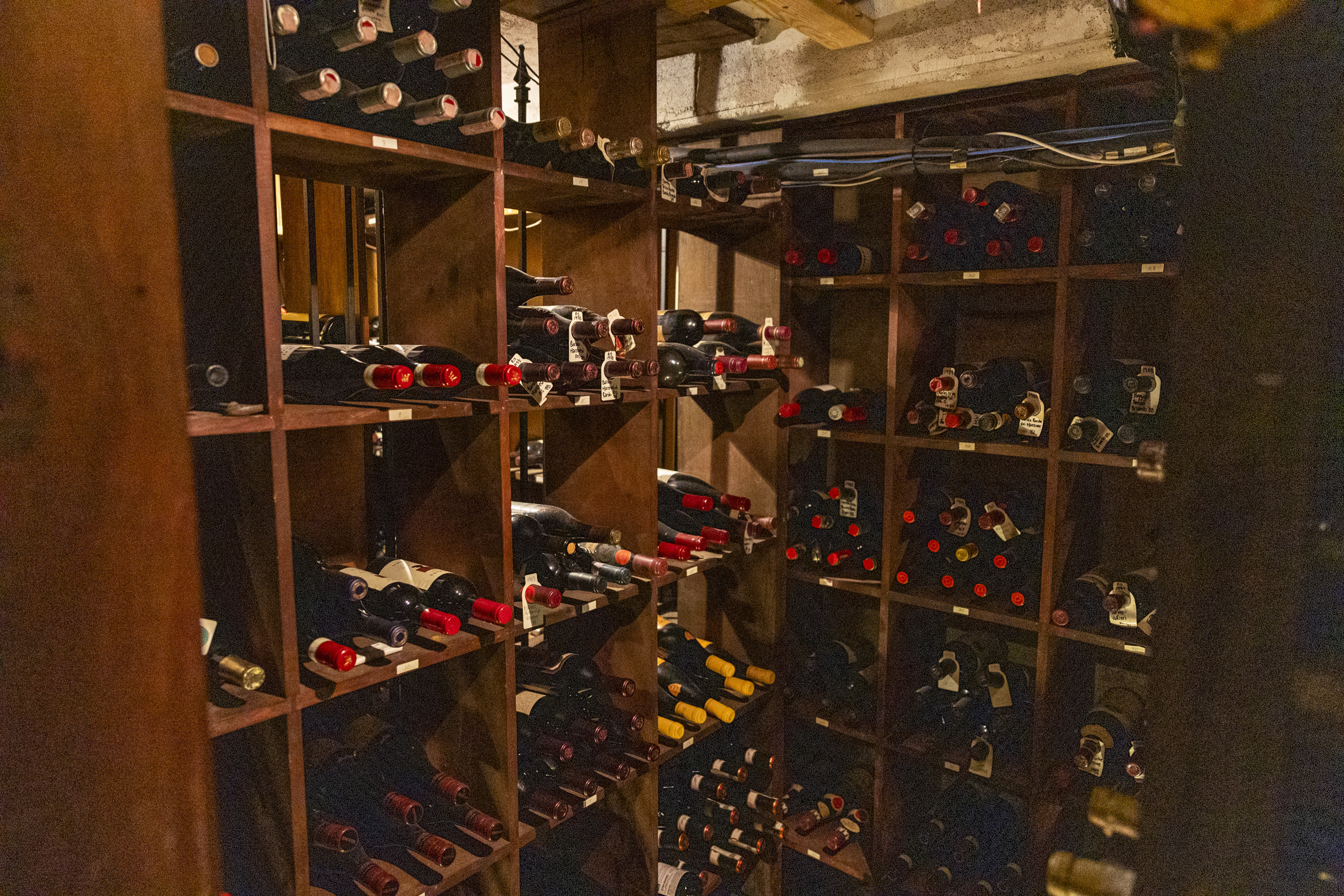
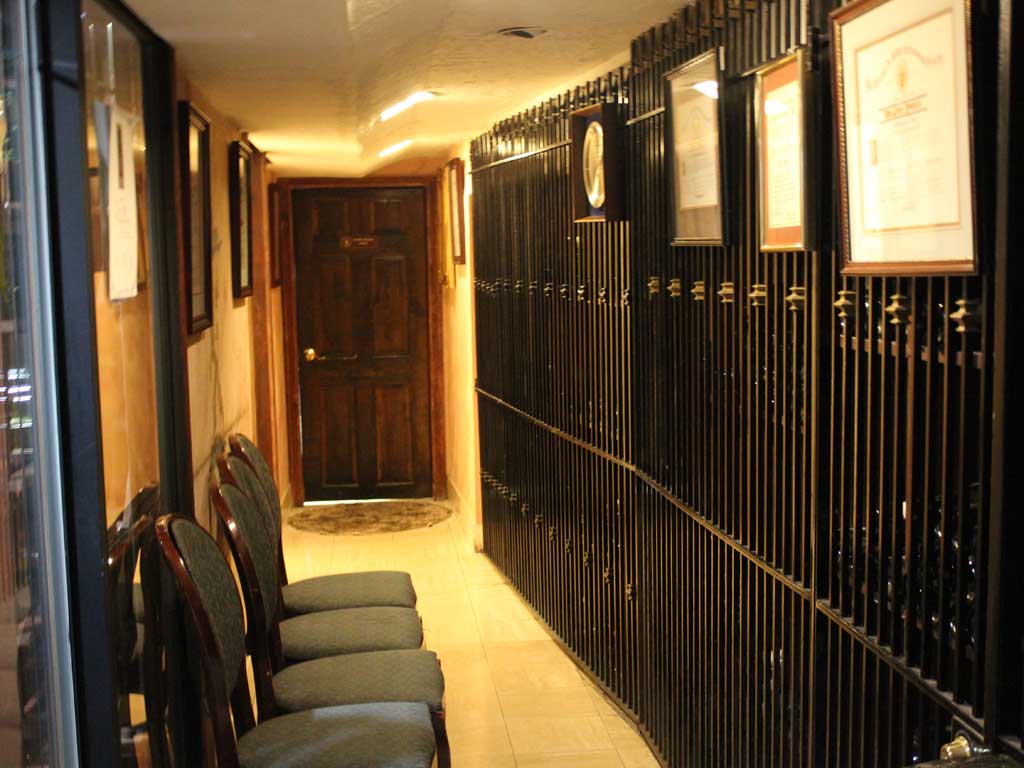
    One other gold-plated aspect of La Famiglia that remains steadfastly exceptional is the wine cellar, whose 12,000-plus bottles and 912 selections are kept in the dank chill of temperature- and humidity-controlled cages in the basement. A trip to this subterranean treasure cave is essential, not only since it’s the corridor to the restrooms, but because you can also view illuminated holes in the ground where colonial-era privies were excavated during La Famiglia’s construction in the mid-1970s, a reminder that this address occupies one of the oldest corners of the city.

    The downstairs wine cellar at La Famiglia.Tyger Williams / Staff Photographer
    Cellar at La Famiglia, 8 S. Front St.MICHAEL KLEIN / Philly.com

    Decades of collecting and careful preservation have resulted in what is still one of the city’s greatest assemblages of vino, largely Italian but international in scope, from a 1945 Brunello di Montalcino Riserva that had been walled off for protection during WWII, to 19th-century Madeiras, as well as verticals of late-’70s and early-’80s California cabs from Heitz Cellar and Beaulieu Vineyard. The restaurant has increasingly begun offering premium wines by the glass — Barolo and Amarone — as a nod to current drinking trends. (An iPad has also replaced the massive old “wine bible.”)

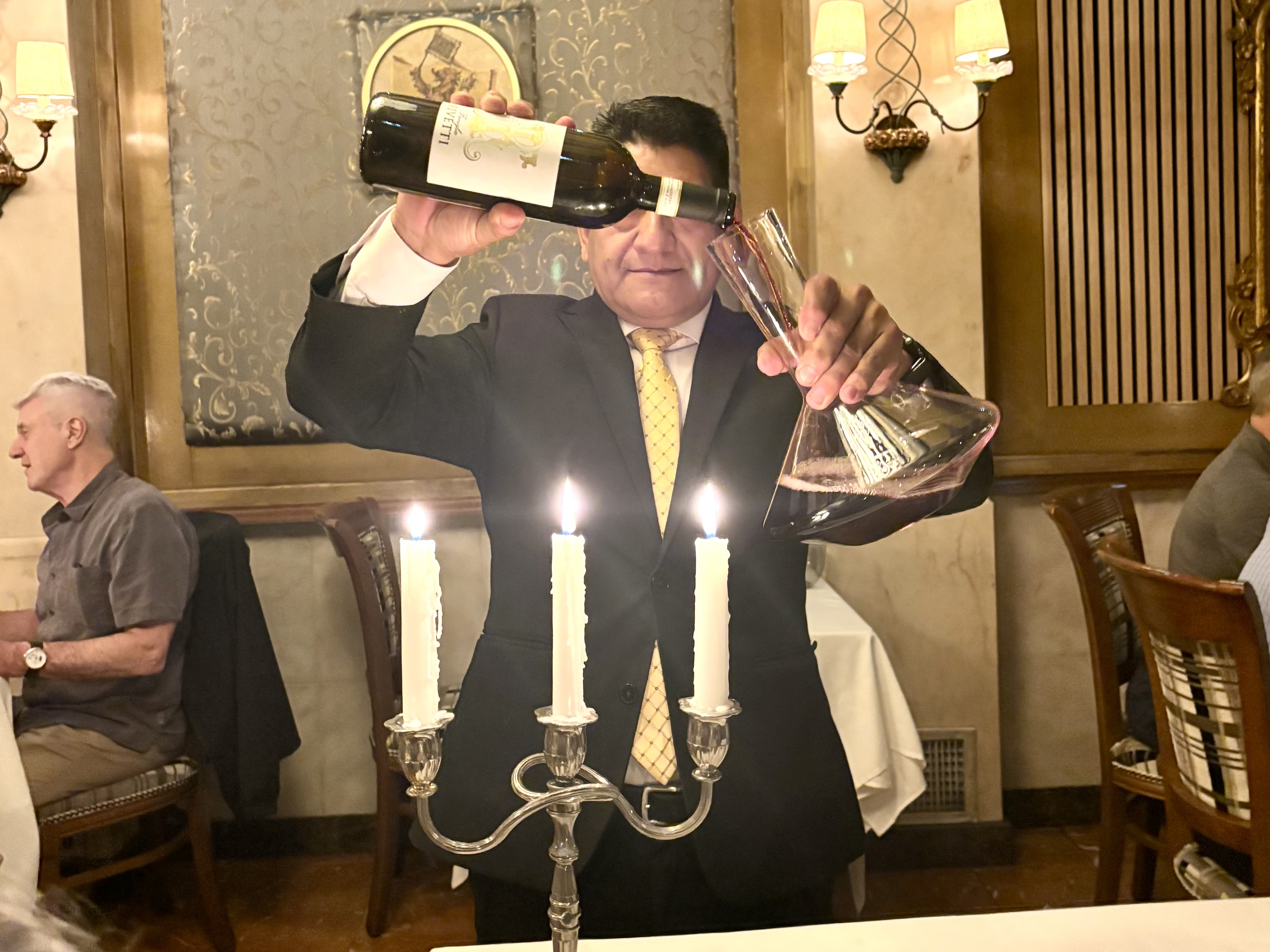
    We decided to go all in and indulge in a bottle of Barbaresco. The sky’s the limit there, including the last $4,000 bottle from 1961 that was Angelo Gaja’s first vintage. We didn’t have the time for anything so old to be opened far enough in advance (not to mention the budget), we took maître d’ Jesus “Gaetano” Maldonado’s spot-on suggestion of a 2019 Famiglia Rivetti for $195.

    Maître d’ Jesus “Gaetano” Maldonado decants a bottle of Famiglia Rivetti Barbaresco at La Famiglia.Craig LaBan / Staff

    After a careful tableside decanting over a flickering candelabra to scout for sediment, the wine was luminous within 15 minutes of touching air, a gorgeously supple red with notes of black cherries, tobacco, rose petals, and spice that boosted the flavors of every dish on our table with a shine of glamour.

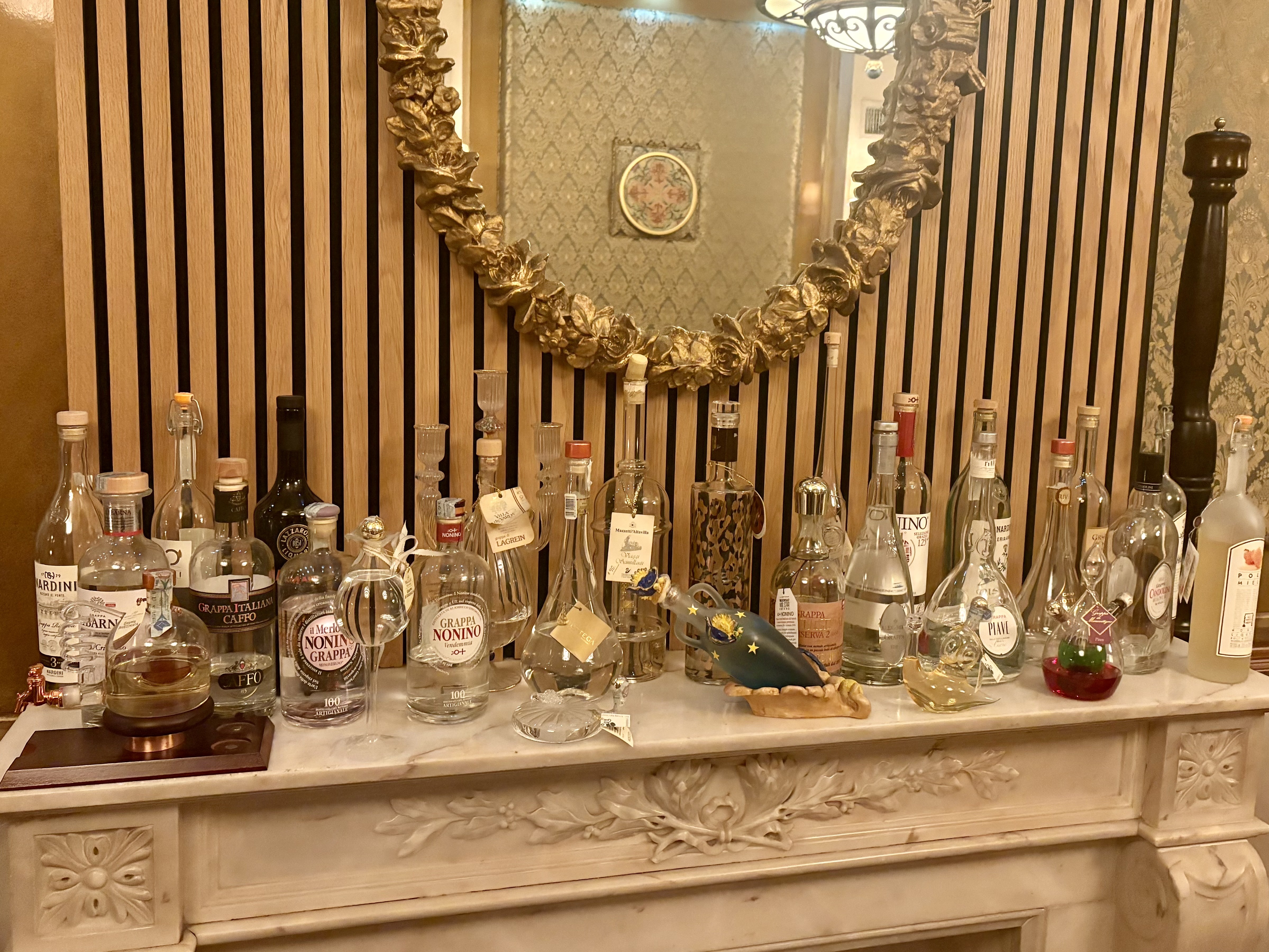
    When it comes time for dessert, La Famiglia unfortunately settles for the tiramisu, cheesecake, and cannoli clichés, which were fine but unexciting, and mostly not made in-house. But the ristorante’s alcoholic assets, not surprisingly, offer a beguiling alternative: a collection of nearly three dozen rare grappa bottles beckon from a marble fireplace mantel. I sipped a little snifter of the clear and fruity brandy, an aged Rossi d’Asiago Dal Toso Elegance made from five different grapes, and it warmed my gullet and flooded my mind with a glow of contentment that felt like a forgotten pleasure. Decadent. Out of fashion. But undoubtedly still beautiful, not unlike eating at La Famiglia itself.

    More than two dozen grappas line the fireplace mantel at La Famiglia Ristorante.Craig LaBan / Staff

    La Famiglia Ristorante

    8 S. Front St., Philadelphia, Pa. 19106, 215-922-2803; lafamiglia.com

    Dinner Tuesday through Saturday, 5 to 9:30 p.m.

    Entrees, $25-$75. Gluten-free pasta available.

    The dining room is not wheelchair accessible, except with the assistance “of two strong guys.” The bathrooms, however, are located downstairs and completely inaccessible to wheelchairs.

    Menu Highlights Arancini; crocchette di patate; vitello tonnato; tortino di melanzane; penne alla Famiglia; ravioli with burrata in eggplant cream; tuna with heirloom tomato sauce; veal chop with porcini sauce; pork chop with banana pepper-caper berry sauce; whole branzino in salt crust.

    Drinks Italian-themed cocktails are a solid start to the meal, but the legendary wine cellar is the main attraction, a 12,000-bottle collection offering some of the world’s most famous Italian, French, and American producers. While the bottles (priced with generous mark-ups) tend to suit big spenders, La Famiglia’s much improved collection of wines by the glass, with choices under $20 along with more premium options hovering below $30, keep quality sipping within reach.

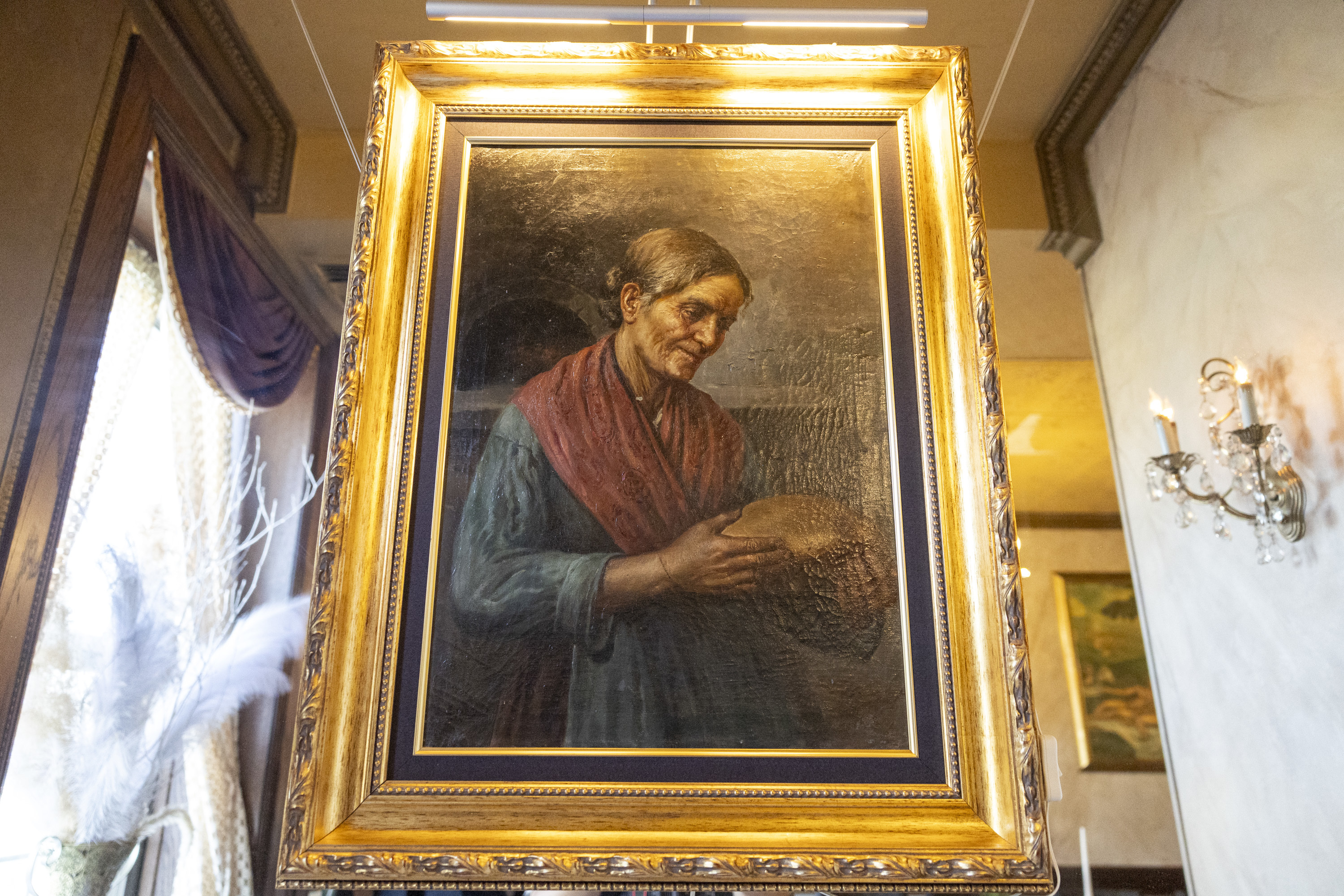
    A painting of Giuseppe Sena’s great-grandmother Rachele Labbiento, seen upstairs in the event space and large dining area at La Famiglia.Tyger Williams / Staff Photographer