Tag: no-latest

  • Hegseth talks tough as Republican doubts about his leadership grow

    Hegseth talks tough as Republican doubts about his leadership grow

    WASHINGTON — Defense Secretary Pete Hegseth has survived in office by projecting an image of strength.

    His combative style has won praise from President Donald Trump and support from the Republican base. “He loves war,” Trump said earlier this year, slapping Hegseth on the biceps.

    By many measures, though, Hegseth has never been weaker. He is leading the military through an unpopular war. Republicans in Congress complain privately — and increasingly in public — that he and his staff are dismissive of their questions and frequently unprepared for briefings.

    If Democrats win a majority in the House, Hegseth will likely face new calls for his impeachment.

    Hegseth’s firing and sidelining of senior military officers, often with no explanation, has fed mistrust and led many in the top ranks to question his leadership.

    How Hegseth manages the contradiction between his tough guy image and his growing vulnerabilities in Washington and around the world could determine whether Trump — the person Hegseth must ultimately please — keeps him in the job.

    Hegseth’s most immediate problems are in Iran, where the U.S. war shows no signs of ending, and on Capitol Hill. In the aftermath of the midterm elections, Hegseth will have to persuade a skeptical Congress to pass a $1.5 trillion defense budget and confirm nominees for key Pentagon posts. Several of his choices are being blocked by Republicans in the Senate.

    He will also have to persuade Congress to keep paying for the war, which the American people broadly oppose.

    On Wednesday, Hegseth focused on the part of the job that plays to his strengths. Onstage at a military base outside Washington, with a giant American flag behind him, he attacked the media and promoted his victories in the culture wars.

    “The complainers, the ideologues, and the poor performers are no longer in the driver’s seat. No more silly PowerPoint trainings or drag queen shows,” Hegseth said. “No more gender pronouns. No more identity months. Only the warrior ethos.”

    He also laid out an ambitious agenda that included building a massive military base and establishing a major new command focused on preparing the military for wars dominated by robots and artificial intelligence.

    Most of those initiatives will require support from lawmakers who view him with unease, if not disdain.

    A year ago, Hegseth stood on the same stage outside Washington and delivered a similar speech to a room full of more than 800 generals. He blamed them for acceding to overly restrictive rules of engagement intended to protect civilian lives. He bashed them for allowing liberal ideas, which he called “toxic ideological garbage,” to infect the force. And he accused them, without evidence, of lowering standards to accommodate women in the ranks.

    The senior officers sat stone-faced. Many said privately that they found Hegseth’s speech insulting.

    This time Hegseth’s audience included about 600 junior officers and enlisted leaders.

    Since taking office last year, Hegseth has overseen a purge of generals and admirals unlike anything the military has experienced in decades. He has fired or blocked the promotions of more than 80 generals and admirals.

    On Wednesday, Hegseth made clear that his work was not done.

    “The number-crunchers say we fired 10% of the generals and admirals across the force, and that number sounds about right,” said Hegseth, citing figures first tabulated by The New York Times. Almost half of those fired or removed were women or minority officers.

    Hegseth’s day began outside the Pentagon, where he led the 600 junior troops in pushups, stretching, and a morning run, just as he would have when he was an Army captain two decades earlier.

    To drive home Hegseth’s message of toughness and lethality, the service members traded in their military-issued workout gear for “This is War” T-shirts of the sort that Hegseth has recently modeled during his workouts, which his staff members regularly post on social media.

    But Hegseth is no longer a junior officer, and the biggest challenges he faces are not among the frontline formations.

    The war in Iran, which Trump started and Hegseth now leads, has drained the military’s stockpile of critical munitions that it needs to defend U.S. troops and allies in the Middle East, and to deter an even larger conflict with China or Russia. Replenishing those magazines could take two to three years, according to defense experts.

    The war is also creating economic problems at home. The average American could tune out the wars in Iraq and Afghanistan. “We’re at war; America’s at the mall,” U.S. troops fighting overseas often bitterly complained.

    By contrast, the war against Iran and the battle over the Strait of Hormuz have caused fuel and food prices to surge. Republican congressional candidates in Iowa, Nebraska, Ohio, and Michigan have increasingly questioned the rationale for continuing the conflict.

    “The war in Iran needs to end, and end quickly,” said Mike Rogers, the Republican Senate nominee in Michigan and an early supporter of the war.

    Hegseth’s stewardship of the military, particularly his firing of generals and admirals, has alienated Republican national security hawks in Washington.

    “It’s not the right way to treat people,” Rep. Don Bacon (R, Neb.) an Air Force veteran, said in a recent interview. “It’s not decent.”

    Hegseth’s clashes with lawmakers extend beyond the firings. Republicans in Congress have complained that he and his staff have misled or lied to them about recent decisions to pull Army brigades out of Poland and Romania.

    “We didn’t think we were treated honestly,” Bacon said.

    And lawmakers from both parties have said that they cannot get answers to basic questions about the conduct of the war in Iran, or about the Pentagon’s budget requests.

    “You want to sell people on your needs,” said Sen. Thom Tillis (R, N.C.), who cast a key vote in confirming Hegseth as defense secretary. “You want to sell people on your priorities. Then you have to engage.”

    He added: “I don’t think Hegseth has developed any productive relationships, even with Republican members.”

    The Pentagon’s recent $67 billion request to pay for operations in Iran was only seven pages, compared to the Iraq and Afghanistan spending bills, which typically ran more than 100 pages and included detailed accounting of the department’s needs.

    In his speech to the troops Wednesday, Hegseth answered some of his critics by suggesting, as he had previously, that the war against Iran had already been won.

    “Allow me to lay it out simply for the anti-American losers in our media,” he said. “These Americans, right here, and their peers, these have destroyed Iran’s navy, destroyed Iran’s air force, destroyed their air-defense systems, their leadership and their military industrial capacity, their entire defense base.”

    His analysis did not account for Iran’s large stockpile of missiles, which it continues to fire at its neighbors and oil tankers transiting the Strait of Hormuz. Nor is it likely to satisfy skeptics in Congress.

    “He’s not working with Democratic senators,” said Sen. Joni Ernst (R, Iowa). “He works very little with Republican senators.”

    Ernst added: “We need more transparency for the good of the Defense Department and the good of the nation.”

    The result is that many of Hegseth’s top priorities in Congress are going nowhere. Earlier this year, Hegseth fired or forced out the Army chief of staff, the Army secretary and the Navy secretary. Senators are refusing to confirm the leaders Hegseth has chosen as replacements.

    The defense secretary also has struggled to persuade lawmakers in the House and Senate to pay for any of the Pentagon’s spending bills. In the near term, the Pentagon will have to make do with last year’s budget of about $890 billion, or about 40% less than it is currently budgeting.

    The difference will force the Pentagon to reallocate money set aside to repair barracks, train troops and buy weapons to pay for more pressing needs, such as sustaining 50,000 troops in the Middle East. In the coming months, some of Trump’s top priorities, such as his proposed Golden Dome missile shield for the United States, will likely come to a halt.

    None of those setbacks seemed to dissuade Hegseth from sketching out an even more ambitious and costly agenda. He spoke of standing up a new autonomous weapons command led by a four-star general.

    He laid out a plan to make all U.S. military bases energy independent. “If an adversary takes down the grid by cyberattack, by sabotage, or by any means, our bases stay lit,” Hegseth said.

    He promised to launch a competition among all 50 states and governors for the new military base, which would house as many as 25,000 troops.

    “We’re talking hundreds of thousands of acres with organic power generation, modern air defenses and cutting-edge technology,” Hegseth said. “Think a fortress.”

    Hegseth barely spoke of the $1.5 trillion defense budget that the Trump administration sent to Congress earlier this year. It is a budget that even Republicans concede has little chance, in its current form, of passing.

    At some point Trump may have to make a choice.

    “Trump really likes Hegseth, and I think that’s based on style,” said Todd Harrison, a senior fellow focusing on defense at the American Enterprise Institute.

    Trump chose Hegseth in part for his bravado, which was on full display Wednesday. The question now is whether pressure from Republican lawmakers will force the president to find a leader for the Pentagon who is less politically combative and more eager to make peace with a frustrated Congress.

  • How a Cornell student went from shame to seeking justice

    How a Cornell student went from shame to seeking justice

    In October 2024, about a week after a Chi Phi fraternity party at Cornell University, the sophomore who would come to be known as Jane Doe was milling around an online forum about Greek life when she encountered a post that stopped her cold.

    “Are Chi Phi brothers Crips or Bloods because I hear they have been doing hell Gang Banging?” someone had written.

    “They do drugs and gang r*ped a sophomore,” another user said. “Report them.”

    Since the evening that began Oct. 19, 2024, Jane Doe had recounted the night’s events to her roommates without identifying herself as a rape victim. She had exchanged friendly text messages with men she would later accuse of assault. She had heard uncharitable appraisals of herself from undergraduate gossips.

    Then she read the words.

    “That’s the first time I had ever heard the narrative change that I wasn’t a whore and that I was assaulted,” Jane Doe told investigators, according to documents from a university review of the accusations obtained by The New York Times.

    Those records, which have not been previously reported, help illuminate a case that has horrified the nation and plunged one of its elite institutions into crisis. They shed light on the crucial three-week period between the fraternity party and Jane Doe’s decision to take her story to the campus police, accusing multiple fraternity brothers of sexual assault and alleging that she was coerced into taking ketamine.

    The bare facts of what happened after she made her accusations are by now well known: The Tompkins County, New York, district attorney, Matthew Van Houten, reviewed her complaint and declined to bring criminal charges, saying there was not sufficient evidence to do so. Jane Doe filed a complaint that prompted at least a dozen hearings by the school’s Title IX committee, which is supposed to ensure compliance with federal civil rights laws.

    On Sept. 16, Jane Doe also filed a lawsuit against seven men, accusing them of sexual assault. Lawyers for at least three of the accused men have broadly denied criminal wrongdoing; others have not yet made public statements.

    What had not been known publicly, until now, were the detailed filings collected during the private Title IX proceedings — hundreds of pages of emails, text messages, photographs and interviews with Jane Doe, her friends and those she accused.

    Taken together, the raw materials sketch Jane Doe’s journey from an unknown sophomore to the embodiment of another searing national dialogue about sexual assault and consent. (Although Jane Doe is identified in the documents, the Times is withholding her name.)

    Some women around her, the documents show, were quick to say they viewed the events of the evening of Oct. 19 as sexual assault. But Jane Doe, the interviews and text messages reveal, first appeared to grapple with shame, humiliation and concerns about her reputation before she began to consider herself an assault victim.

    “I don’t really remember her ever kind of citing that she had said yes to anything that occurred,” one of her roommates had said of the first hours after Jane Doe returned home the morning of Oct. 20, according to the Title IX files, which were compiled as part of the school’s formal process for investigating allegations of sexual harassment and assault.

    On page upon page, the documents make for difficult reading, vacillating between the merry shorthand of college students — asides about the gym, Snapchat, Greek life — and the blunt-force details of an alleged gang assault that the victim appeared to be processing in real time.

    From the beginning, the case has seemed to double as a referendum on so many vexing questions about what it means to be a young woman on a college campus, even a campus as nominally esteemed as Cornell’s: Who is believed, and who is coddled? How much good can Title IX do? Has anything changed, really?

    For Jane Doe, the records suggest, the first task was to make sense of what had happened to her.

    ‘A traumatic way’

    At 3:05 a.m. on Oct. 20, 2024, one of Jane Doe’s roommates sent her a text.

    “Are you coming home tonight?” she asked.

    Four minutes later, Jane Doe texted back that she didn’t know.

    The roommate went to sleep, she would tell investigators. When she woke up at 11 a.m., she uploaded a photo of her empty room to Snapchat. “Only I made it back home,” she wrote on the post.

    Around 11:15 a.m., she said, Jane Doe arrived home, still in her “big boots and small dress” from the night before, according to the roommate. She had consumed ketamine and had sex with multiple men, she told her two roommates. One roommate told investigators that Jane Doe did not use the word “rape” or “assault” yet.

    It seemed like she was “in shock,” her other roommate later told investigators, “not really understanding the gravity of what she was saying.”

    The next day, on Oct. 21, Jane Doe went to her “big sister” — a woman designated as a mentor — at Cornell’s Tri Delta sorority and told her there were rumors circulating that she was a “slut.” The big sister, a junior at Cornell, told investigators that Jane Doe added with a laugh that “unfortunately they are true.”

    “I could tell that — just from personal experiences — that what she was going through is that she had not yet processed what had happened,” the big sister told investigators.

    That same day, Jane Doe received a text message from Jonathan Newell, one of the men she would go on to accuse of sexual assault.

    “I just wanted to apologize for how things went down the other night,” Newell wrote. He then said that he and Matthew Ingalls, another of the men she would later accuse of assault, both felt terrible for being too under the influence of drugs and alcohol to “shut it down and kick people out before it got way out of hand.”

    Jane Doe replied and reassured him.

    “At the end of the day non of the sexual stuff was illegal and honestly i really liked being w u and matt,” she wrote.

    A lawyer for Newell did not respond to requests for comment. A lawyer for Ingalls declined to comment.

    The next day, on Oct. 22, Jane Doe made an appointment at Cornell Health to see a doctor because she had contracted a urinary tract infection and wanted to be tested for sexually transmitted diseases. She told the doctor she contracted the UTI “in a traumatic way,” according to a transcript of her conversation with investigators.

    “She didn’t really follow up on that,” Jane Doe said of the doctor. “She just suggested I go to therapy.”

    ‘Say it didn’t happen’

    On Oct. 23, Jane Doe texted Ingalls.

    “Bro,” she wrote, “everyone knows.”

    She said the episode was “RUINING my life temporarily” and that her reputation had been destroyed. She said all she could do was “sleep and cry all day.”

    According to the documents, Ingalls assured her that it would all blow over soon, noting “how fast nonsense spreads at this school,” and said she did not have “anything to be ashamed of.”

    “You’re right,” Jane Doe wrote. “It’ll get better.”

    Jane Doe’s sorority big sister received a text that week: “Have you heard the rumor about your little?”

    In the meantime, Jane Doe had delivered strict instructions to one of her roommates: “If anyone asks about this,” she said, according to the roommate’s testimony, “say it didn’t happen.”

    The roommate was plainly concerned. Initially, she said, Jane Doe was “kind of recounting it as this sort of crazy thing that she had done.”

    “As the days went on,” the roommate continued, “I think she kind of came to realize that it was something bad. And that she didn’t really enjoy her time there.”

    On Oct. 25, Ingalls texted Jane Doe: “U good?”

    Jane Doe replied that Newell had “def told people.”

    Days later, she sent Ingalls an image of the forum post accusing Chi Phi of gang rape.

    “???” she wrote.

    “Ridiculous,” Ingalls wrote. “I’m gonna report that.”

    Uninvited from the party

    As Halloween approached, Jane Doe’s roommates told investigators, her understanding of what had happened to her appeared to have shifted.

    Around Oct. 28, Ingalls was on the phone with Jane Doe and, according to one of her roommates who said she overheard the conversation, he apologized to her. But rather than assure him everything was OK, Jane Doe took a different tone.

    “How could you let this happen?” the roommate recalled her saying.

    “I think she wanted it to be consensual,” the roommate told investigators, looking back on how Jane Doe had processed the alleged assault. The roommate told investigators that Jane Doe had been sexually assaulted before, which made it particularly hard for her to talk openly about what had happened.

    “I’d have conversations and she would describe a part of what happened and I would tell her that that is what could be classified as rape,” the roommate said.

    At Chi Phi, the fraternity was preparing for a Halloween party, and Jane Doe was eager to attend. Text messages included in the investigation show Ingalls assuring Jane Doe that he and other fraternity members wanted her to be there.

    “chi phi is your house and you are welcome here,” he wrote, relaying the views of the fraternity’s president, who was not among those accused of sexual assault.

    “thank u i really appreciate that,” Jane Doe responded. “<3 i’ll bring my cigs tomorrow”

    But then Jane Doe received a phone call from the fraternity’s president, according to the text messages.

    She was disinvited from the party. It was for her own good, he said.

    Jane Doe sent a biting text to Ingalls.

    “I knew this was going to happen,” she wrote. “The woman will always get the short end of the stick. Yall aren’t my friends. Yall are covering your asses.”

    By Nov. 3, Jane Doe appears to have concluded that she was assaulted at the October party. She sent a text to Newell.

    “let’s be clear that 90% of what happened that night was not consensual. i was given more key than i can remember,” she said, using a shorthand for ketamine, “and i know that i told u i felt uncomfortable and i didn’t know anyone in the room.”

    The text continued with her telling him that one of her only memories was doing ketamine off of his penis “in front of everyone like a sex doll/worker.”

    Four days later, on Nov. 7, according to the documents, Jane Doe went to an emergency room in Ithaca and requested a rape kit.

    This article originally appeared in The New York Times.

  • Drugs and devices already on the market await FDA-ordered studies

    Drugs and devices already on the market await FDA-ordered studies

    When the FDA was deciding whether to approve the drug Tavneos several years ago to treat a set of rare autoimmune diseases, agency experts argued that would be a mistake, according to FDA records.

    One problem cited: The manufacturer had provided only “limited safety data.”

    As it often does, the FDA in 2021 approved the drug with a proviso: It required the manufacturer to conduct an additional yearslong safety study once the drug was on the market.

    Today, like many similar “postmarket” studies mandated by the FDA, that additional study is delayed, according to a federal database. As of last fall, only 21 of the planned 300 patients had been enrolled, the FDA said in an April letter and regulatory posting.

    Meanwhile, the FDA has identified dozens of cases of liver damage “possibly” or “probably causally associated” with the drug. That was one of the potential side effects the postmarket study was meant to evaluate.

    Tavneos illustrates the perils of the FDA’s approach to many drugs and medical devices — and the frequent lapses in follow-through.

    A KFF Health News analysis of Food and Drug Administration data found hundreds of postmarket studies listed as delayed. In some cases, the work was delayed by more than a decade or the manufacturer was still developing a plan for the study.

    As a result of delays, patients, doctors, and others could be left in a fog about the risks and benefits of the drugs or devices, even as they stake their money, their health, or their lives on the products.

    Postmarket study requirements “have often proven toothless,” said cardiologist Sanket Dhruva, an associate professor of medicine at the University of California-San Francisco who has published related research.

    The FDA’s reliance on postmarket studies reflects a balancing act.

    Making new treatments available faster can save or improve lives, especially when patients with grim prognoses and no good options have little to lose. The full risks and benefits may be revealed only over the long term, and when therapies are used by far more people than even large clinical trials enroll.

    But relying on post-approval studies to resolve questions risks exposing patients to products that do more harm than good. Whoever is paying the bills — patients, insurance companies, employers, or government health programs such as Medicare and Medicaid — can end up wasting money and rewarding manufacturers for useless or risky products.

    “Doctors rely on this evidence, patients rely on this evidence, and if that evidence is not there, it’s going to lead to a lot of uncertainty,” Dhruva said.

    Trump administration policy changes designed to hasten drugs through FDA review could leave more riding on postmarket studies, medical researchers say.

    For example, in February, FDA leaders announced that “the default requirement” for agency approvals will be one clinical trial instead of two.

    Reducing pre-approval testing “will inevitably put a lot of pressure on the post-approval system,” said Aaron Kesselheim, a professor at Harvard Medical School who has analyzed postmarket studies.

    FDA officials said the new policy would “substantially reduce costs” for manufacturers and “speed drugs to market.” Writing in The New England Journal of Medicine, they denied the change would compromise safety or efficacy, saying that “erroneous conclusions may be reached even with two, three, or four studies.”

    In response to questions for this article, a spokesperson for the Department of Health and Human Services, which includes the FDA, said postmarket studies can experience delays for legitimate reasons. “Assessing the significance of any delay requires a case-specific review,” said the spokesperson, Emily Hilliard.

    The fact that a study is delayed “should not be treated as evidence that a product has an unresolved safety or effectiveness issue,” Hilliard said.

    Amgen, the company that makes Tavneos, is still working on the postmarket research the FDA mandated, company spokesperson Alison Chartan said, adding, “We remain committed to completing this important study.”

    Amgen headquarters in Thousand Oaks, Calif. The company’s subsidiary’s drug Tavneos can cost more than $220,000 per year. Its approval has been pulled by the EU. MUST CREDIT: Eric Thayer/BloombergEric Thayer

    Behind schedule

    An FDA database downloaded by KFF Health News in August tracks the progress of postmarket studies that makers of drugs or biologics — such as vaccines and gene therapies — were required to perform or promised to perform.

    The database showed almost 600 were running behind schedule.

    Of those, more than 250 originally had final reports due before July 31, 2026 — the date that, according to an FDA webpage, the database last had been updated.

    About a third of ongoing studies were listed as delayed.

    In some cases, the FDA has granted extensions. In others, it has denied them. And in rare instances, the products were discontinued before the studies ran their course.

    Postmarket studies can involve clinical trials or other analyses of patient data. They can look at safety or efficacy. A product can be the subject of more than one postmarket study.

    The nearly 600 delayed studies involved almost 350 products, KFF Health News found.

    The FDA has defined delayed as behind the original schedule. That can mean off track or overdue.

    As of August, other FDA databases tracking medical devices listed dozens of postmarket studies as behind schedule.

    Products included:

    The CustomFlex Artificial Iris, a prosthesis implanted in the eye in place of damaged, defective, or congenitally missing irises. The protocol for a study in children was accepted in 2019, the database said. The study was meant to follow patients for five years. According to an FDA page downloaded in August, zero patients were enrolled.

    Barbara Fant of Clinical Research Consultants, to whom the FDA’s 2018 letter approving the product was addressed, said the rarity of an eye disease called aniridia poses challenges for post-approval studies. The German manufacturer, the U.S. distributor, and Clinical Research Consultants are working with the FDA to identify alternative ways to fulfill the postmarket requirements, Fant said.

    “Confirming the long-term safety of the device remains a top priority for both the study team and FDA,” Fant said.

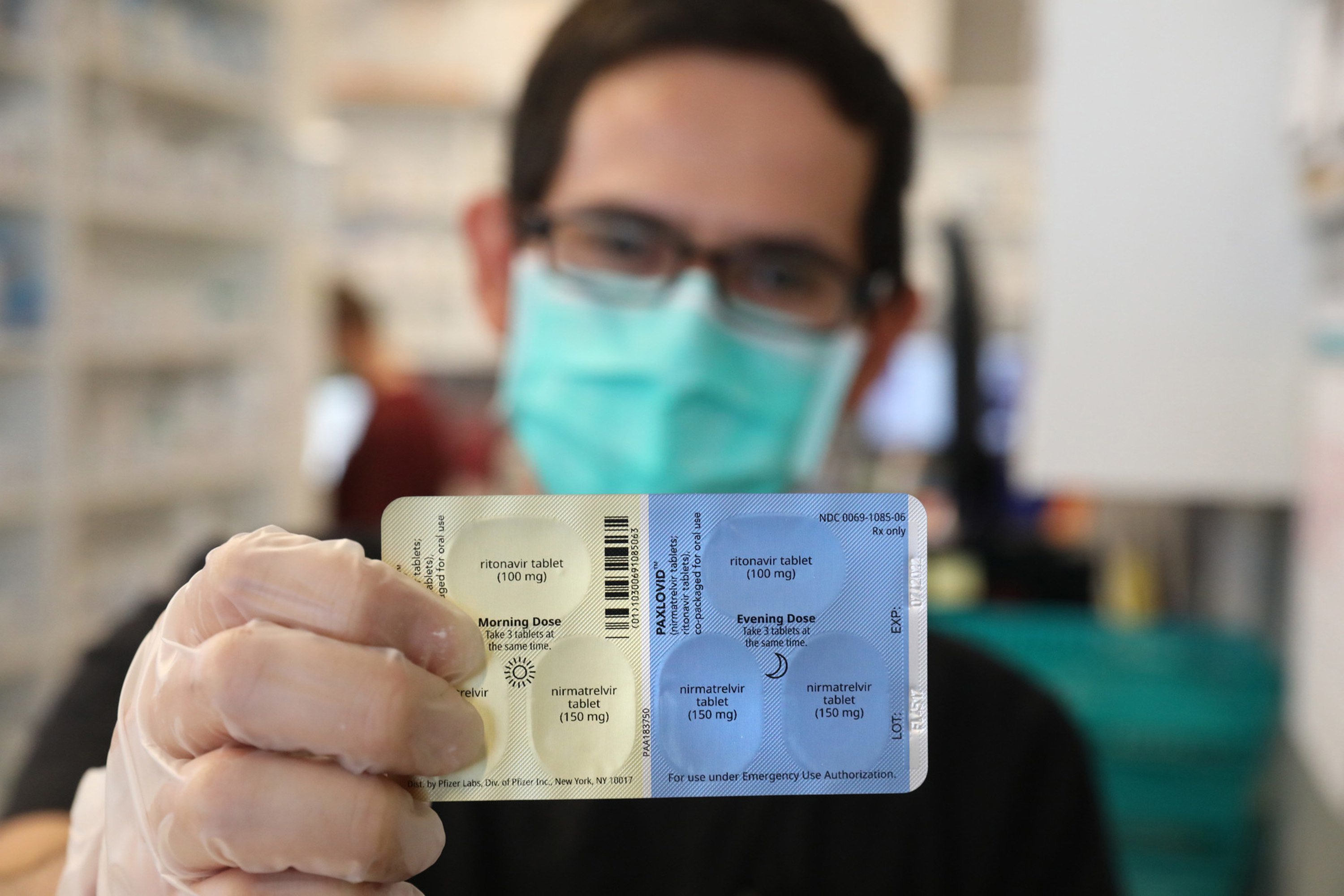
    Paxlovid, a treatment for COVID. A study to assess its safety in pregnant women was originally to be completed by the end of 2024, the FDA database said. “The trial completion and final report milestones were missed,” the database said.

    Pfizer, the manufacturer, is working with the FDA and remains committed to “submitting results as soon as practicable,” Pfizer spokesperson Jerica Pitts said.

    The Scandinavian Total Ankle Replacement system. The device and the original protocol for the clinical trial were approved in 2009. The study was meant to include a minimum of 500 subjects, the database said, but the actual number enrolled was 142. Almost half those patients had one or more adverse events, with dozens of “reoperations,” “revisions,” or “removals,” the database said.

    Rachel Colloff and Cristina Pasquino — spokespeople for Enovis, which markets STAR Ankle — did not respond to multiple inquiries. Jenny Braga, a spokesperson for Stryker, which previously sold the product, did not answer questions about the postmarket study.

    Oxaydo (originally named Oxecta), a form of the potentially addictive opioid painkiller oxycodone touted as designed to deter abuse. When the FDA approved it in 2011, it required the manufacturer, part of Pfizer, to conduct a postmarket study to assess whether it reduces “misuse and abuse, and their consequences: overdose, death, and addiction.” The final report was originally scheduled to be submitted in 2016.

    The FDA database listing the study as delayed said the agency “issued a failure to respond letter” in 2022.

    Today the issue may be all but moot.

    Control of the product passed from company to company over the years until 2023, when Acura Pharmaceuticals said in a Securities and Exchange Commission filing that patents on Oxaydo would begin expiring that year and it didn’t intend to continue marketing the drug.

    According to another FDA database, Oxaydo has been discontinued.

    The FDA has enforcement powers and uses them “where appropriate,” HHS’ Hilliard said. She did not provide requested details, and she did not answer questions about the studies listed above.

    Delay can pay

    For manufacturers, delay can pay, Harvard’s Kesselheim said. While postmarket studies are ongoing, companies can continue to sell the products.

    “Medicare and Medicaid spent more than $18 billion from 2018 to 2021 for accelerated approval drugs with incomplete confirmatory trials past their original planned completion dates,” the HHS Office of Inspector General estimated in 2022.

    The FDA can demand postmarket studies for a variety of reasons, including to address concerns that arise after a product has been approved. Some look at uses not covered by the original approval, and some are meant to shed light on serious risks that are already known.

    In April, when it approved Foundayo, a weight loss drug made by Eli Lilly, the FDA required the company to conduct additional research to assess a variety of concerns, including “retained gastric contents,” “major adverse cardiovascular events,” and “drug-induced liver injury,” as well as effects of exposure during pregnancy, such as “major congenital malformations,” “spontaneous abortions,” and “stillbirths.”

    The FDA said it approved the drug under the new Commissioner’s National Priority Voucher program, intended for products that “address critical national health priorities.” The program strives for an “ultrafast” review, the FDA has said — one to two months, instead of six months or more with other expedited pathways.

    “Postmarketing requirements and enhanced safety monitoring are a routine part of the FDA’s approach to evaluating newly approved medicines,” Eli Lilly spokesperson Kristiane Silva Bello said, “including ongoing monitoring in areas identified during clinical development.”

    ‘False Hope’

    The FDA waded into a world of uncertainty in 2016 when it granted accelerated approval to a drug for Duchenne muscular dystrophy, a degenerative disease that primarily affects boys, disabling them at a young age and ultimately killing them.

    Agency scientists had found that the drug, Exondys 51, was unproven and argued against greenlighting it.

    Ellis Unger, then a senior drug evaluation official at the FDA, wrote in an internal memo that “thousands of patients and their families would be given false hope in exchange for hardship and risk.”

    The manufacturer, Sarepta Therapeutics, conceded the uncertainty. “A clinical benefit of EXONDYS 51 has not been established,” it said when the drug, also known by the generic name eteplirsen, was approved.

    The drug, the first FDA-approved treatment for Duchenne muscular dystrophy, targeted a subset of patients with the disease.

    The FDA required Sarepta to conduct further studies and warned that it could withdraw approval if postmarket trials failed to verify a clinical benefit or were “not conducted with due diligence.”

    Sarepta Therapeutics, headquartered in Cambridge, Mass., reported to investors that its drug Exondys 51 brought in $538 million in revenue in 2025. An FDA-ordered study on the drug, ranked as the second most expensive on the market, missed a 2021 deadline. (AP Photo/Charles Krupa)Charles Krupa

    Unger issued a warning of his own: “FDA has not succeeded in withdrawing the marketing of a single drug for lack of verification of clinical benefit following accelerated approval. The reality is that if eteplirsen is given accelerated approval, it is highly likely to remain on the market indefinitely, irrespective of whether or not efficacy is verified.”

    Sarepta was originally required to submit a final report on a postmarket study by a May 2021 deadline, according to an FDA database and a 2016 FDA letter to the company.

    Almost a decade after the drug was approved, and more than five years after that deadline, the study was listed in an FDA database as delayed.

    “The final report milestone was missed, because the sponsor requested milestone extensions due to study delays,” the database said.

    Meanwhile, in 2022 the website Pharmaceutical Technology ranked Exondys 51 as the second-most expensive drug in the U.S., at an annual cost of $750,000 to $1.5 million.

    Last year, the drug generated $538 million in sales for Sarepta, according to a company presentation to investors.

    Sarepta found it difficult to recruit patients for the postmarket clinical trial, company spokesperson Tracy Sorrentino said. The target population is small, patients were hesitant to enroll, and Sarepta was competing with other clinical trials for participants, Sorrentino said.

    The study has been fully enrolled since 2023, Sorrentino said, and the company plans to provide an initial look at the data late this year.

    ‘Manipulated’

    Amgen has cited similar challenges, even as Tavneos generated $459 million in global sales last year.

    When an approved treatment is available, patients may be reluctant to enroll in a study in which they could be given a placebo, Amgen’s Chartan said.

    The clinical trial was originally supposed to be done by the end of 2030. As of July 24, just 49 patients had been enrolled, Chartan said.

    The FDA has said the study was to include 300 patients, and each patient enrolled must be followed for five years, said Hilliard, the HHS spokesperson.

    Tavneos was approved to treat severe cases of a group of diseases — known by the shorthand ANCA-associated vasculitis — in which, as the Cleveland Clinic explains, the immune system inflicts potentially fatal damage on blood vessels and organs.

    “As of January 2026, estimated real-world exposure” to Tavneos “exceeds 25,000 patient-years globally, consisting of over 6,500 in the United States and 19,000 abroad,” Amgen has said. (For context, one patient taking a drug for five years would amount to five “patient-years.”)

    A clinical trial sponsored by ChemoCentryx to secure approval of Tavneos failed to prove it was effective, the FDA now alleges. Instead of disclosing that outcome to the FDA, company personnel “manipulated” the results, the FDA alleged in an April letter to Amgen.

    Amgen, the parent company of ChemoCentryx, has denied the results were manipulated and has said the data “remain valid.”

    Nonetheless, the European Union recently revoked its approval of Tavneos.

    The FDA is trying to pull Tavneos from the market, and Amgen is fighting that effort.

    The company has a lot riding on the outcome. Tavneos can cost more than $220,000 per year, according to the drug discount website GoodRx, and when Amgen acquired ChemoCentryx in 2022 for $3.7 billion, Tavneos was the only drug ChemoCentryx had brought to market.

    In a June letter to the FDA, Amgen said the benefits of Tavneos outweigh the risks.

    The FDA disagrees.

    The FDA “can no longer conclude that there is, or has ever been, a valid demonstration of substantial evidence of effectiveness for TAVNEOS,” the agency wrote.

    Citing 76 cases of DILI — drug-induced liver injury — the agency said it was “increasingly concerned about the safety profile of TAVNEOS.” Without proof of effectiveness, at least for its approved use, “the drug’s benefits cannot outweigh its known risks,” the FDA wrote.

    Data reporter Maia Rosenfeld contributed to this report.

    KFF Health News is a national newsroom that produces in-depth journalism about health issues and is one of the core operating programs at KFF — the independent source for health policy research, polling, and journalism.

  • Letters to the Editor | Oct. 1, 2026

    Letters to the Editor | Oct. 1, 2026

    Every vote counts

    Cinnaminson Township voters narrowly approved a bond question for $57 million for our public schools. Out of nearly 3,500 ballots cast, the winning margin was just nine votes — but that doesn’t tell the whole story. What struck me was that in a township with 14,000 registered voters, only about 3,500 people actually took part in the referendum. So to my neighbors: Before you go to township council meetings to complain about your property tax increase, ask yourself if you made your voice heard in this referendum. If you didn’t vote, stay home.

    Kenneth Rayca, Cinnaminson

    Compassion required

    I recently rode a SEPTA bus through one of Philadelphia’s poorest neighborhoods. I am a devoted supporter of public transit. We did not have a car growing up in an urban environment; it’s not so much that we couldn’t afford one, but I suspect my father, a professor of philosophy, thought a car would anchor him too much to everyday aggravations. As a result, I took public transit all over the city and am, to this day, more comfortable traveling this way.

    One of the great benefits of bus travel is the opportunity to observe a wide cross-section of the city and reflect on its overall socioeconomic condition. This recent trip brought to life the struggles and suffering of many of Philadelphia’s most vulnerable — those in ill health, those experiencing homelessness, those without proper nutrition. Witnessing humanity trying to cope with life at the bottom of the economy, I felt close to tears at the corrosive cruelty of the current administration in severely cutting social safety net programs, including Medicaid and the Supplemental Nutrition Assistance Program. It occurred to me that politicians, as a requirement to hold office, should have to take bus trips like this — maybe then they can begin to understand what life is like for many who feel pain and hurt just trying to live their lives.

    Allan Irving, Swarthmore

    Economic fairness

    Reading The Inquirer Editorial Board’s series about how the president has, shall we say, expanded his wealth in the White House reminded me that the grifters have been here since way before the Trumps. The rich and powerful have long used the words communism and socialism to convince people they will lose their freedom if they vote for Democrats. The right wing says if people only listen to and vote for Republicans, their wealth will trickle down.

    Well, it hasn’t happened yet. Every year, the right wing has dismantled more rights granted by our Constitution and diminished other laws created by the government of the people. Now the right wing owns many of our financial institutions, much of our news media, utilities, healthcare, and so on.

    The path that led to a family of right-wing grifters gaining so much influence can’t be denied — but we can do something about the future. When you vote this year, remember that it’s about creating economic fairness and the sharing of power. Let’s hope we can vote our way into a more equitable future.

    Mardys Leeper, Bryn Mawr

    Join the conversation: Send letters to letters@inquirer.com. Limit length to 150 words and include home address and day and evening phone number. Letters run in The Inquirer six days a week on the editorial pages and online.

  • Horoscopes: Thursday, Oct. 1, 2026

    Horoscopes: Thursday, Oct. 1, 2026

    ARIES (March 21-April 19). More team-building today. You attract people who will benefit from knowing one another and working together for a common result. You set the tone and the rules — perhaps not formally but in the way a good leader does: by example.

    TAURUS (April 20-May 20). With your soulful depth, you don’t need extra stimuli to feel the magic of existence. Even the most mundane activity has rich potential for expressing your purpose. You’ll lift the atmosphere around you simply by showing up.

    GEMINI (May 21-June 21). Whatever else you happen to be doing, you’re also daydreaming. When you’re showering, driving, waiting in line, or even while working, your mind is combining ideas that seem unrelated and picturing things no one has made yet.

    CANCER (June 22-July 22). You’re sensitive to the subtle pressures and understated pleasures of circumstance. The one who can provide you with stress relief will win your attention. You’ll go out of your way to flow greater ease and peace through your world.

    LEO (July 23-Aug. 22). If you still behave as though your worth is tied to how productive or useful you are to others, look at who benefits when you buy into this belief: someone with a selfish agenda. You were worthy at birth, before you could produce a thing or help a soul.

    VIRGO (Aug. 23-Sept. 22). You put thought, labor and skill into the result, so of course you want someone to notice. Give people a chance to respond. And if it seems like they are missing it, or misattributing the credit, that’s unacceptable. Do something about it.

    LIBRA (Sept. 23-Oct. 23). Luck and strategy. You’ll need both and you’ll have both. As you research and apply what you learn, Lady Luck leans in, interested in what you’re up to, and she’ll assist, as always, in her own whimsical timing.

    SCORPIO (Oct. 24-Nov. 21). Your feelings are a tidal ebb, pulling away from the shore of a relationship, giving the space to the scene while you gather yourself in some deep center before returning, oxygenated by the way life moves.

    SAGITTARIUS (Nov. 22-Dec. 21). Today’s events have you convinced that it’s the principle that matters. A principled person applies principles across the board, not just where the application is convenient. Character is destiny. Fine character is fine destiny.

    CAPRICORN (Dec. 22-Jan. 19). Systems built around one person’s preferences won’t be effective for the whole group. Your redesign could be as simple as moving the chair, changing the order of operations or rewriting the form.

    AQUARIUS (Jan. 20-Feb. 18). Someone will tell you a story you’ve heard before, except one detail has changed. Wait before correcting them. People revise memories for usefulness, vanity, mercy and drama. Their new version reveals something that’s good to know.

    PISCES (Feb. 19-March 20). Say what everyone is thinking right in the moment they are thinking it and it plays as light, funny, apt. But wait, and the same words cause offense or resistance. Excellent timing is a kind of magic in and of itself.

    TODAY’S BIRTHDAY (Oct. 1). In your Year of Objectivity, you’re able to see your scene through a lens that few ever get to glimpse. By acting on the objective truth of a matter, you bypass mistakes of ego and extend yourself in ways that mean something to others, improving lives including your own. More highlights: Three big-money deals. Companions that are attentive, funny and game for adventuring. Home renovations. Taurus and Virgo adore you. Your lucky numbers are: 12, 8, 40, 33 and 1.

  • Dear Abby | Disappearing meds lead to massive family rift

    Dear Abby | Disappearing meds lead to massive family rift

    DEAR ABBY: My husband and I have been together for 16 years, married for 14. I was injured in a bad car wreck 12 years ago, and I stockpiled the leftover pain medicine. We scheduled a cruise nine years ago, and I was going to take a few with me just in case. When I went to get some, they were all gone! My oldest son had been staying here for a few months, and my immediate thought was that he may have taken them. Nobody else had been in our house. When I confronted my son, he denied it. He also stopped talking to me for months. Every so often I would ask him about it, and he continued to get angry when I did.

    I recently had two major surgeries, and they sent me home on pain meds. I went to get one about a month ago, and they were all gone! Again! I questioned my husband, and he said, “No, someone else must have taken them.” This went on for a few weeks, and I finally figured it out. It had been him the entire time. To say the least, I was devastated. My trust in him was shattered because he let me blame my son all this time, putting that relationship in jeopardy. I left our home and went to stay at a weekend place we own. I made my husband call his parents in front of me and tell them what had happened, because I knew he would otherwise make up some lie about why I left. Even so, I somehow became the scapegoat because I’m not “standing by my man.” They fail to recognize that I am the victim here. He started outpatient rehab two weeks ago, but we have done nothing for our marriage. Can this trust ever be rebuilt?

    — NEEDING DIRECTION IN VIRGINIA

    DEAR NEEDING DIRECTION: Let me postpone the answer to your question until after I urge you to apologize to your son. You and your son should consider joining a group called Nar-Anon (nar-anon.org). It is composed of people who have been affected by the drug addiction of a loved one or friend. It has meetings everywhere.

    Your husband is an addict who has broken your trust. Before deciding whether to continue being married to him, you need to know what that will mean. After initially overcoming his addiction, he may fall off the wagon. Do not allow your in-laws to guilt you into reuniting with their son. Your husband would have to be sober for a long time before you can trust him again.

    ** ** **

    DEAR ABBY: I have a standing appointment with the hairdresser I’ve been seeing for many years for my cut and style. I highlight my own hair at home. I’m wondering if coloring at home is considered in poor taste while having your hair cut professionally.

    — BEAUTY CLIENT IN NEW HAMPSHIRE

    DEAR CLIENT: No! If you prefer to color your hair at home, that is your privilege. You don’t owe anyone an apology or explanation for doing it. If someone you know implied that it is wrong, that person was misinformed.

  • Iran indicates it’s received an official U.S. response to its latest offer on ending the war

    Iran indicates it’s received an official U.S. response to its latest offer on ending the war

    Iranian officials indicated Wednesday they have received an official U.S. response to Tehran’s latest proposal to end the seven-month war, which U.S. President Donald Trump had publicly rejected just days earlier.

    The officials did not say what the response contained and whether it was a rejection.

    Iranian Foreign Minister Abbas Araghchi presented the U.S. response to President Masoud Pezeshkian at a Cabinet meeting, government spokesperson Fatemeh Mohajerani told the state-run IRNA news agency.

    “We will make every effort to bring the agreement to fruition and will firmly stand up for the rights of the Iranian people,” Pezeshkian said. “The agreement must now be based on a win-win strategy.”

    The Cabinet meeting followed Araghchi’s return to Iran after travelling to New York for last week’s U.N. General Assembly, where officials held indirect talks with U.S. officials and also met with Qatari and Pakistani mediators on the sidelines of the annual gathering of world leaders.

    Araghchi briefed the Cabinet on his trip to New York and the meetings he held there, including Iran’s conditions for reopening the Strait of Hormuz, which Mohajerani said had been conveyed through mediators.

    Araghchi last week said he floated the proposal to reopen the strait in a week if the U.S. agreed to lift its blockade of Iranian ports, release frozen Iranian assets and waive sanctions on Iranian oil sales, among other conditions.

    Trump swiftly rejected the proposal, saying Iran wanted to make a deal because it was “losing so badly” but that its offer “would not be acceptable.” Despite Trump’s public rebuffing, mediators continued working with Iran and the U.S. to try to broker a deal to end the fighting and open the strait, according to officials who were not authorized to comment publicly and spoke on condition of anonymity.

    Meanwhile, the U.S. Treasury Department unveiled new sanctions on Tuesday targeting people and companies around the globe that it accuses of being financial facilitators or enablers of Iran’s military supply chain.

    The latest action is part of the Trump administration’s “Operation Economic Outcast” campaign aimed at severing “critical financial lifelines” for the already heavily sanctioned Iranian government.

    Ten people and entities based in Iran, Hong Kong and Pakistan now face sanctions over accusations of procuring weapons and weapon components for Iran’s defense ministry as it fights its now seven-month war against the U.S.

    Iran’s economy is spiraling further

    Iran’s economy, under heavy strain before the war started, has been in a freefall since the conflict began in late February.

    The country’s currency fell to a new record low on Tuesday, with traders in Tehran exchanging more than 2.5 million rials to the U.S. dollar in a stark reflection of how the war in the Middle East has steadily eroded the Iranian economy.

    The latest decline came just 27 days after the rial hit its previous record low of 2.2 million to the dollar on Sept. 2. The currency has repeatedly reached new lows since the war began in February.

    Trump on Tuesday said that Iran is “failing very badly, very badly” and predicted anew that the war will be “over with very, very soon.”

    At the onset of the conflict, he predicted that the war would last just weeks. More recently, Trump said he expects it won’t end until after the Nov. 3 midterm elections in the U.S.

    Iranians face soaring prices for medicine amid U.S. blockade, sanctions

    Medication prices are soaring in Iran and some treatments have become hard to find, leaving patients and their families scrambling as a U.S. blockade and stepped-up sanctions squeeze the country’s pharmaceuticals industry.

    Some medicines have more than tripled in price, further straining Iranians’ finances seven months into the country’s war with the United States and Israel. Prices for food and other goods have skyrocketed even as unemployment has risen and the currency, which hit a record low this week, has lost half its value.

    The war has become an economic endurance test. Iran has tried to push world energy prices higher with attacks on the region’s oil shipping routes; the United States, in turn, has aimed to wreck Iran’s economy by blockading its ports since June and slapping it with increasingly tough sanctions.

    Iran executes 2 men on charges of violence during January protests

    Also on Wednesday, two men were executed in Iran over their role in violence during nationwide anti-government protests in January, the state-run IRNA news agency reported.

    Citing the country’s judiciary, IRNA said the men took part in unrest in the northeastern city of Mashhad that left four members of the security forces dead earlier this year. Their death sentences were upheld by Iran’s Supreme Court before being carried out Wednesday morning.

    The unrest began Dec. 28 amid anger over Iran’s collapsing currency and worsening economy and quickly spread across the country, with demonstrators increasingly calling for the overthrow of the Islamic Republic. Iranian authorities responded with a deadly crackdown.

    Rights groups say thousands were killed and tens of thousands arrested, while Iranian authorities have reported a substantially lower death toll.

  • Trump administration considers scaling back border project in Texas’ Big Bend National Park

    Trump administration considers scaling back border project in Texas’ Big Bend National Park

    WASHINGTON — The Trump administration is considering reducing the scope of a planned border project through Big Bend National Park in Texas, a contentious undertaking that has drawn bipartisan opposition over concerns it will irrevocably mar the remote, majestic area.

    The announcement on plans for the national park, made in two court filings late Tuesday, gave no details on what the government may do. In August, the Republican administration initiated a pause on construction-related activity in the park as it engaged in outreach efforts to opponents of the project. The pause ends Wednesday.

    Customs and Border Protection is “actively considering adjustments” to the work ”that would reduce its scope and avoid or minimize potential impacts, based on input received from the National Park Service and other stakeholders,” the government said in the court filing.

    The agency said it will make a final decision the first week in October and will take “several weeks” after that announcement before any “ground-disturbing work” starts.

    After intense opposition from environmentalists and local residents and business owners, CBP backed off plans this year to build a 30-foot-tall bollard wall through the park. But its intention to move forward with other measures such as a new road, lights, vehicle barriers and technology did not quell local resistance.

    After bulldozers were spotted in August clearing land in Big Bend, CBP Commissioner Rodney Scott announced a pause on all activity there and it was later expanded to the area upstream of the park. The agency has said it was only carrying out design and planning work, not full-scale construction activities.

    Opponents of the border project called on the administration Wednesday to continue the pause while coming up with a new plan.

    Bob Krumenaker, head of Keep Big Bend Wild and a former NPS superintendent at the park, said in a statement that the Border Patrol already works with the park service and local sheriffs to operate an “effective surveillance system” in Big Bend that includes ground sensors and patrols. The Coalition to Protect America’s National Parks said building in the park would be “mutilating an extraordinary landscape.”

    The project is part of a $46 billion plan by the administration to line the U.S.-Mexico border with steel bollard walls, vehicle barriers and surveillance technology to deter migrants and smugglers.

    The government has also paused work on a 61-mile piece of land stretching north of the national park along the Rio Grande River, most of which is owned by private landowners. In that area, the government plans to build a 30-foot-tall steel bollard wall designed to prevent people on foot from crossing, roads and various types of surveillance technology where appropriate, according to the court filing.

    CBP has started building the wall in a West Texas part of the broader Big Bend region, but has run into intense opposition there, including from landowners challenging the project in court.

    Also in the court filing Tuesday, the government suggested it was facing resistance in getting permission from landowners to survey and build on their property and would be referring some cases to the Department of Justice to pursue condemnation.

    The government also detailed efforts it had made to meet with people potentially affected by Big Bend projects and shared with them incidents of cartel-related violence that concerned the Border Patrol.

    The administration has been pushing forward with the border wall projects that have long been a key part of President Donald Trump’s vision for border security. The agency said it is building 12 miles of wall per week.

    But lining up against the work are private landowners, Native American tribes, environmental groups and others who question the necessity and cost of the project at a time when illegal immigration has fallen dramatically. Opponents also have accused the government of damaging Native American sites and sensitive ecology locations in its rush to finish construction.

  • A knife and a pledge: Brazil’s candidates court women with promises to combat violence

    A knife and a pledge: Brazil’s candidates court women with promises to combat violence

    RIO DE JANEIRO — Clutching an oversized knife onstage during a recent campaign stop, Brazilian presidential candidate Sen. Flávio Bolsonaro vowed to inflict chemical castration on “rapists and child abusers,” drawing thunderous applause.

    The tough-on-crime message comes as Bolsonaro seeks to appeal to women, who account for 53% of the electorate and played a decisive role in handing President Luiz Inácio Lula da Silva a narrow 2022 victory over Bolsonaro’s father, former President Jair Bolsonaro.

    “Women are starting to have a perception of their role in elections,” said Rachel Ripani, co-founder of the movement Levante Mulheres Vivas, or Rise Alive Women. “They’re seeing their vote as something that they don’t want to be manipulated.”

    Polls show Lula with a narrow lead over Sen. Bolsonaro in the Oct. 4 vote, but neither candidate is expected to win outright, making a runoff likely. Both have been courting swing voters, including women, with proposals to combat gender-based violence, a major campaign issue as violence against women reaches record levels and several high-profile cases draw attention.

    “We’re building a Brazil (…) free of femicide, where no woman, inside or outside the home, lives under the threat of violence,” Lula told heads of state at last week’s United Nations General Assembly in New York. “This is a cause that the entire world needs to embrace.”

    More than one in three women in Brazil was a victim of sexual or gender-based violence over the course of a year, the highest number since tracking began in 2017, according to a 2025 report by the think tank Brazilian Forum on Public Safety. In 2025, 1,571 women were victims of femicide, the highest annual total since Brazil defined the crime in law in 2015, the forum said. Femicide is defined as the killing of a woman in a domestic setting or out of contempt for women.

    Cases over the past year have drawn widespread public condemnation, including the alleged gang rape of a 17-year-old girl in Copacabana; the death of a woman after her ex-boyfriend ran her over, trapped her beneath his car and dragged her over concrete for one kilometer, and the alleged killing of a military police officer by her husband, a member of the same institution.

    Feminists are seeking guarantees

    Along with chemical castration, Sen. Bolsonaro proposes expanding spaces that provide shelter for victims of violence and the creation of an AI assistant that would allow victims to file reports, request a protective order, and receive guidance and support.

    Meanwhile, Lula pledged to expand protections introduced during his administration, particularly at the end of last year after a series of cases sparked demonstrations. Those measures include real-time monitoring of perpetrators of violence wearing electronic ankle bracelets.

    Both Lula and Sen. Bolsonaro have advocated for tougher penalties for those who commit the crimes of violence against women, measures that would require parliamentary approval.

    Aware of women’s electoral weight, activists are seeking to leverage that power to seek guarantees that such promises will not later be shelved.

    Feminist groups are asking that candidates sign a letter committing to tackling gender-based violence as a priority and voting for a bill that seeks to criminalize misogyny, conducting surveys to define priorities, spotlighting female candidacies on websites and putting forward a shared legislative agenda.

    Carmen Silva, a 61-year-old feminist who lives in the northeastern city of Recife, said this year her group Forum of Women of Pernambuco has two priorities: defending the limited right to abortion and a pledge to tackle the problem of gender-based violence through a multipronged approach including the introduction of education programs.

    “Of course it’s easier to get commitments during the electoral period, but when women candidates are elected, we will cash in on those demands,” she said. “It’s not only about guaranteeing that women aren’t assassinated, but about giving them the possibilities of living a dignified life.”

    Experts say part of the problem is a lack of funds to deploy protective measures and enact laws that already exist, an argument put forward by feminist candidates such as Luciana Boiteux, who is running for Rio’s state legislature.

    “We have enough laws. As lawmakers, we will be vigilant with regards to the execution of these public policies,” said Boiteux at a recent campaign event in front of Rio de Janeiro State University.

    Unequal representation by women

    As with efforts to combat violence against women, calls for increased political representation cross party lines.

    Despite Brazilian women’s electoral weight, only around 19% of lawmakers and senators are women. Brazil also has Latin America’s lowest level of female representation in politics, according to a study by Esfera Institute.

    “Women have a long history of social mobilization in Brazil, but lately it became clear to these movements that the state matters and that they need to dispute that power,” said Marlise Miriam de Matos Almeida, a political scientist at the Federal University of Minas Gerais.

    “Feminist movements have understood that it’s necessary to organize the female vote and mobilize forces to transform this quantitative power into something that allows more women to be elected,” she said.

    The assassination of local councilwoman Marielle Franco inspired some Black women to run for office, Matos Almeida said, but political violence and insufficient resources continue to hinder the participation of women in politics.

    The number of female candidates for Brazil’s lower house dropped by 24% in 2026 compared to 2022, according to the Chamber of Deputies.

    Ripani said her movement is willing to work across party lines as long as candidates and those elected declare support for their policies.

    “The priority for this election is voting for more women who fight for women,” she said. “We need to vote for people who understand our experience.”

  • Trump’s shift from ‘Housing First’ is causing upheaval for homelessness programs and many they serve

    Trump’s shift from ‘Housing First’ is causing upheaval for homelessness programs and many they serve

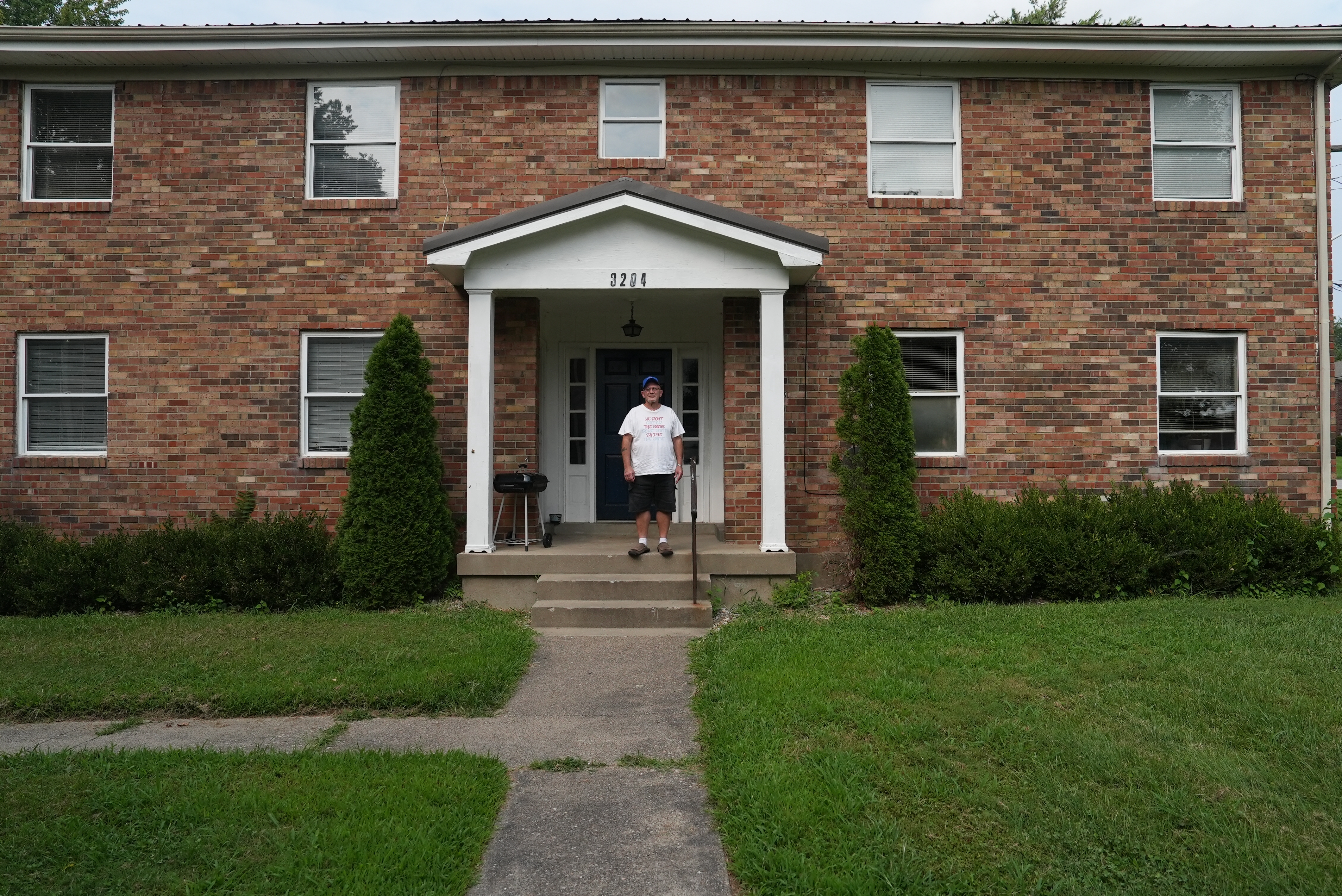
    LOUISVILLE, Ky. — Light streamed through stained-glass windows in a former church, illuminating long white tables where weary men gathered. Johnny Henderson was glad for the rest. The 71-year-old — who has one arm, heart disease, and vision problems — slept on the street the night before.

    Henderson is a regular at the St. John Center men’s day shelter. So are a great-grandfather in a wheelchair who has prostate cancer, a 54-year-old with four psychiatric disorders, and a 66-year-old with a walker who wears a hospital bracelet warning “fall risk.”

    All are potential candidates for permanent, government-subsidized apartments under a “Housing First” approach, a model rooted in the belief that people need a stable place to live before addressing other problems. But the approach that’s been central to federal government policy for more than a decade is disappearing under President Donald Trump’s administration. The upheaval, providers and advocates say, threatens the lives of some of the most vulnerable people in the nation.

    “Housing is healthcare,” said St. John executive director Ra’Shann Martin, whose organization provides housing and outreach in addition to the shelter. “The longer people stay unhoused, the more fragile they become.”

    Housing organizations across the U.S. that depend on federal funds are now reluctantly making changes to comply with new government policies that favor a “Treatment First” approach and short-term “transitional” housing — changes they fear will push people with extreme health risks back on the street or keep others, like Henderson, there.

    Planned housing projects have been scrapped in communities such as Corbin, Kentucky. Less housing is available for homeless people in places including Santa Cruz County, California. And in cities such as Louisville, nonprofits are looking at making some permanent housing temporary, including most of St. John’s 200 apartments.

    U.S. homelessness numbers have trended upward

    Across America, nearly 750,000 people were homeless last year, according to an estimate compiled by the U.S. Department of Housing and Urban Development. That number is down slightly from 2024 but up 31% from 2019.

    The portion considered chronically homeless — having a disability and long-term or repeated episodes of homelessness of at least a year — has also risen since 2019. It’s now about a quarter of the total.

    Overall, research shows, roughly half of homeless adults live with a disability, up to two-thirds have mental illness, and 2 in 5 have substance use disorder. Rates of disability, heart disease, and diabetes are two to three times higher than in the general population.

    In Louisville, outreach specialist Angel Sivado said such statistics are reflected in the people she serves, whose living conditions make it extremely difficult to care for themselves, get to doctors, or keep up with medications.

    On a recent day, she parked a St. John van near a fast-food restaurant and hiked into the woods to visit a couple living in a tent. Later, she and a colleague walked toward encampments surrounded by trees just off a highway, yelling “outreach” over the low roar of cars.

    One of their main jobs is to shepherd clients through the process for getting housing.

    “They’re not just homeless people; they’re people,” Sivado said. “They’re somebody’s son. They’re somebody’s mother. They’re someone’s daughter.”

    Occasionally, Sivado savors a victory. Before heading home, she stopped under a downtown overpass to see James Myers, 66, who is blind, has congestive heart failure, and is undergoing treatment for prostate cancer. She told him he should be in an apartment soon.

    “I’m tired. I mean, the streets will beat you down, and I think they put a few years on me,” he said, standing near his busted guitar. “I can’t wait to get off the street.”

    Others are not so lucky. Henderson, the St. John regular, survived a train accident that cost him an arm and led to a yearslong opioid addiction. Recently, he’s been dealing with heart disease, an eye problem, spinal surgery, and auditory hallucinations.

    “I’m going to die sleeping outdoors,” he said, choking up. “But I got nowhere to go.”

    The Trump administration favors ‘Treatment First’ and short-term housing

    Each person’s path to homelessness is unique. Determining the “best” solutions depends on the lens used to judge what’s best. The answer may be different if the goal is reducing overall homelessness, helping people into the job market, spending as little taxpayer money as possible, improving health outcomes — or just keeping people alive.

    The Housing First idea was pioneered by a New York nonprofit in the 1990s and has been at the heart of federal homelessness policy since 2013. Today, there are roughly 173,000 “permanent supportive housing” beds for chronically homeless people, and 235,000 for other populations, including veterans. These are long-term apartments paired with voluntary services. Tenants often must contribute 30% of their income, after certain expenses, to rent and utilities.

    Studies have consistently shown that Housing First programs keep people stably housed. Some research says they do so better than other models, including “Treatment First,” which favors mandatory services for addiction and serious mental illness. But findings on health outcomes have been mixed.

    Last year, Trump signed an executive order calling for an end to federal support for Housing First policies. His proposed budget for fiscal 2027 calls for eliminating the federal initiative that goes mostly to Housing First programs. The administration favors housing lasting up to two years, during which people would be required to get treatment.

    “Housing First has failed our most vulnerable and enabled addiction,” HUD said in an email. “HUD’s proposed reforms seek to address the root causes of homelessness and advance recovery, self-sufficiency, and competition that drives accountability.”

    Many opponents of Housing First policies don’t think services including addiction and mental health treatment should be optional.

    “That is the biggest difference between Housing First and not Housing First,” said Devon Kurtz, the director of public safety policy for the Cicero Institute. Kurtz is also concerned that permanent supportive housing was becoming a “one-size-fits-all approach,” including for populations better served by transitional housing.

    Service providers say short-term housing won’t work for some people

    Service providers acknowledge that transitional housing is a good option for some people, such as those getting on their feet after evictions. But they say most chronically homeless people can’t pull their lives together within two years and would likely wind up homeless again.

    “If you want to gradually work on reducing social services that are funded by the federal government, OK,” said Jennifer Clark, CEO and executive director of St. Vincent de Paul Louisville, which offers permanent and transitional housing. “But you cannot make a huge sweeping change and big cuts and take an ax to everything and think that there aren’t going to be consequences for some people who are really in need.”

    John Franklin, 58, said transitional housing wouldn’t work for him. He spent nearly 14 years on the streets dealing with severe alcoholism, and it took a long time to adjust to normal life. He now gets by on disability, as a throat cancer survivor with heart failure, and can’t imagine either having to fully pay for housing or surviving the streets.

    “I could not make it,” said Franklin, who shares a permanent supportive apartment in suburban Louisville with his orange tabby, Moe. “This is my safe haven.”

    Housing First provides homes and other help

    The welcome mat outside Phillip Sieveking’s permanent supportive apartment says “Home Sweet Home,” a sentiment precious to him after a couple of years on the streets.

    Sieveking lives at St. John’s Sheehan Landing, a complex with 80 furnished one-bedroom apartments plus a clinic space, food pantry, meeting rooms, and a community garden that he spends much of his free time tending.

    The former chef has diabetes but didn’t take care of it while homeless. Doctors had to amputate part of one leg. On a recent morning, he put on his prosthetic, grabbed his crutches, and slowly made his way to the garden to check on the roses, sunflowers and vegetables.

    He credits his caseworker with encouraging him to keep up with medical care and navigate systems for getting disability and food benefits. He also attends meetings at the complex, including one where residents discuss wellness and sobriety while working on art projects.

    “They have helped me, you know, go from being homeless to being a part of society,” said Sieveking, 47. “I feel blessed to be here.”

    In New Jersey, Tatiana Velez has been in permanent supportive housing since 2021, soon after connecting with the Camden Coalition, which serves people with complex health and social needs.

    After spending 18 years in prison for robbery, she had lived in abandoned buildings and struggled with opioids for a couple of years. Velez had never signed a lease or opened a bank account when, in her late 30s, she learned she was pregnant and decided she was ready to make changes.

    “I didn’t know what it was to have a roof over my head or pay the bills,” said Velez, who receives disability payments for psychological and educational disabilities.

    She now shares a first-floor suburban apartment with her daughter, 5, and a formerly homeless cat named Snowball. A preschool graduation certificate hangs on the wall.

    Policy changes rock communities

    After HUD tried to rework its homelessness grants to fit the administration’s favored policies, a consortium of local governments and advocates for homeless people sued. A federal judge agreed with them. But this month, an appeals court said the administration could move ahead.

    Meanwhile, Trump’s proposed budget calls for eliminating the $4 billion Continuum of Care program, which in 2024 awarded money to 6,500 projects. At that time, more than 60% went to permanent supportive housing, mostly to continue existing efforts. Just 1% went to transitional housing.

    Trump’s proposed changes have left homelessness organizations scrambling to figure out how to alter their housing strategies so they can keep getting federal money.

    “It’s like psychological warfare the last two years, trying to figure out how to navigate these changes that are looming right over us,” Martin, the St. John director, said.

    Dr. Robert Ratner, director of housing for health in Santa Cruz County, California, said losing permanent supportive housing funds would exacerbate problems caused by the winding down of another federal program: pandemic-era emergency housing vouchers. People set to lose those vouchers are being prioritized for available housing, meaning the county can’t help as many people who are homeless now.

    A similar dynamic is playing out at The Delores Project in Denver, which serves women and transgender and nonbinary people. Program leaders expect people already in the permanent housing on their campus will stay because they won’t have access to vouchers to move out into the community. That will mean fewer spots for new people.

    In Louisiana, the state housing agency applied to redirect federal money away from rental assistance and toward the establishment of a 200-bed shelter with strict mandates for participants. That effort was rejected by local coalitions in charge of the money, but local housing advocates worry it’s a harbinger of what’s to come.

    Some communities are seeing planned projects nixed. For 18 months, Volunteers of America Mid-States worked with Eastern Kentucky University and others on a permanent supportive housing project in Corbin that would have included childcare and access to college classes. “That project is now dead,” said CEO Jennifer Hancock.

    Many nonprofit leaders feel forced to shift toward transitional housing. In Louisville, St. Vincent de Paul and Family Health Centers-Phoenix Health Care for the Homeless are looking at converting some permanent supportive housing apartments into transitional units. St. John would only be left with Sheehan Landing after converting its 120 community apartments to transitional housing.

    The result for people like Henderson? More time on the streets as they grow older and sicker.

    “The lady in the housing office told me, she said, ‘Mr. Henderson, you got a stent in your heart. You got one eye and one arm. Something’s going to have to happen for you.’”

    But with “just a little life left,” he said, it may not happen soon enough.