Tag: no-latest

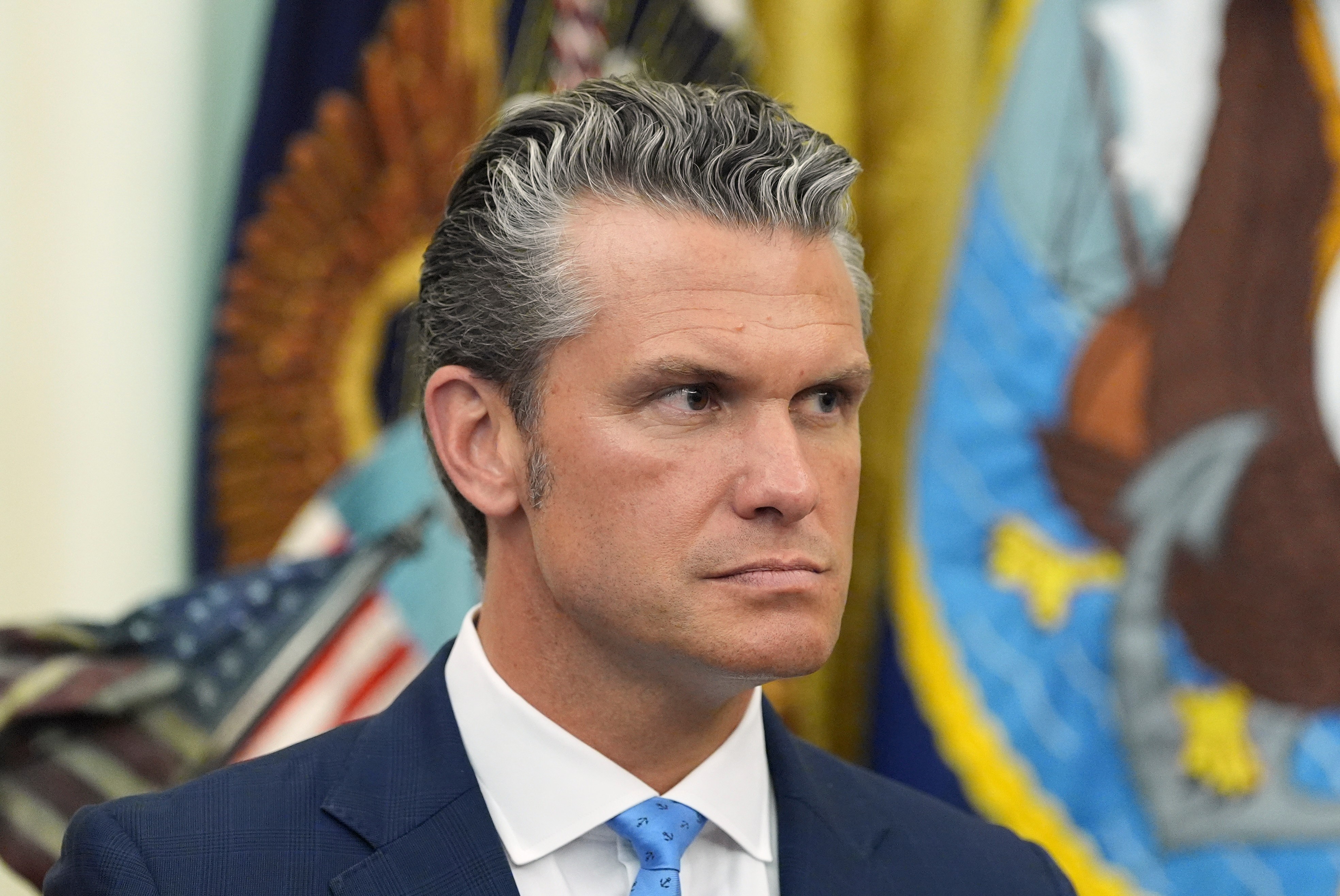
  • Army Secretary Dan Driscoll is stepping down after 18 months on the job, White House says

    Army Secretary Dan Driscoll is stepping down after 18 months on the job, White House says

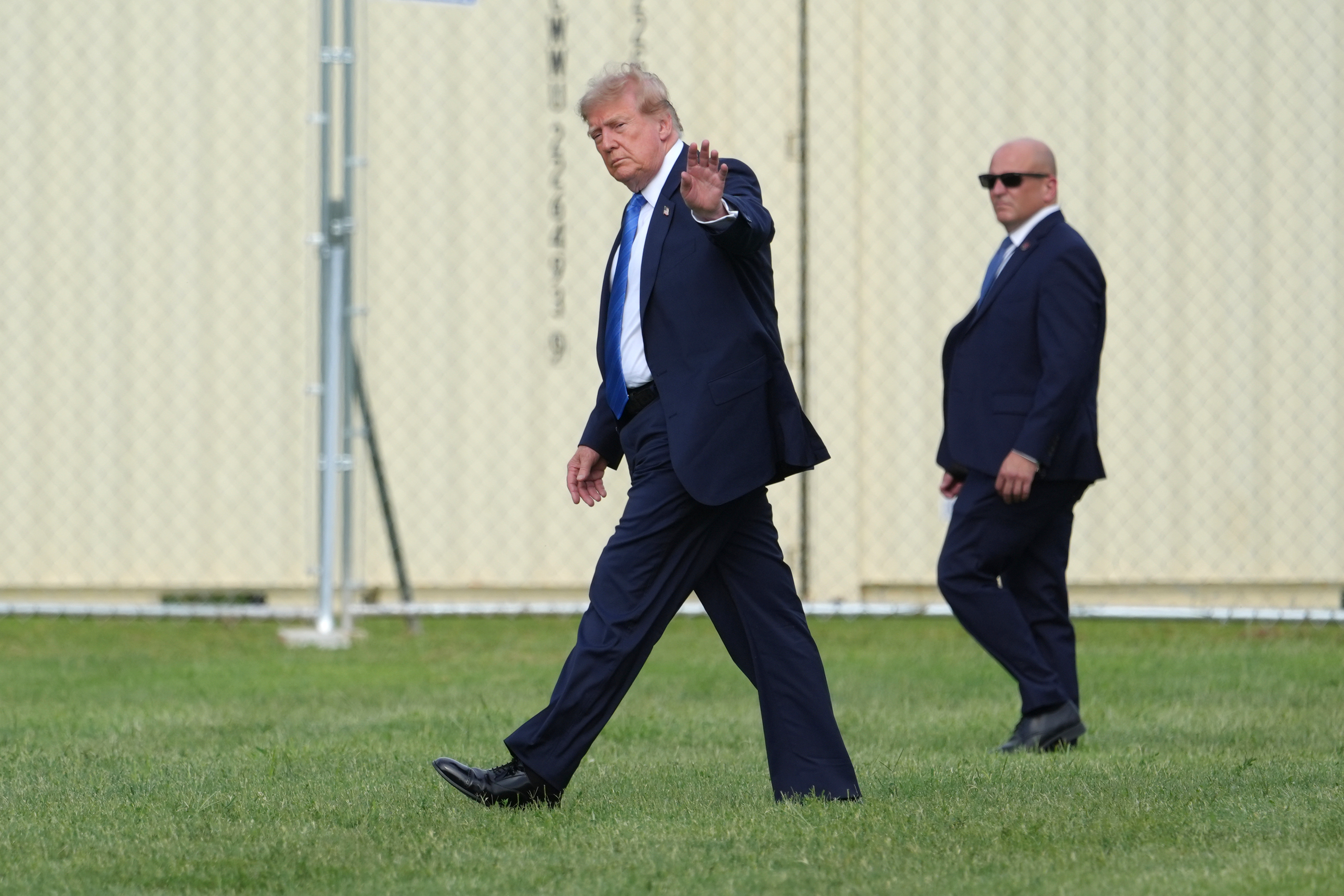
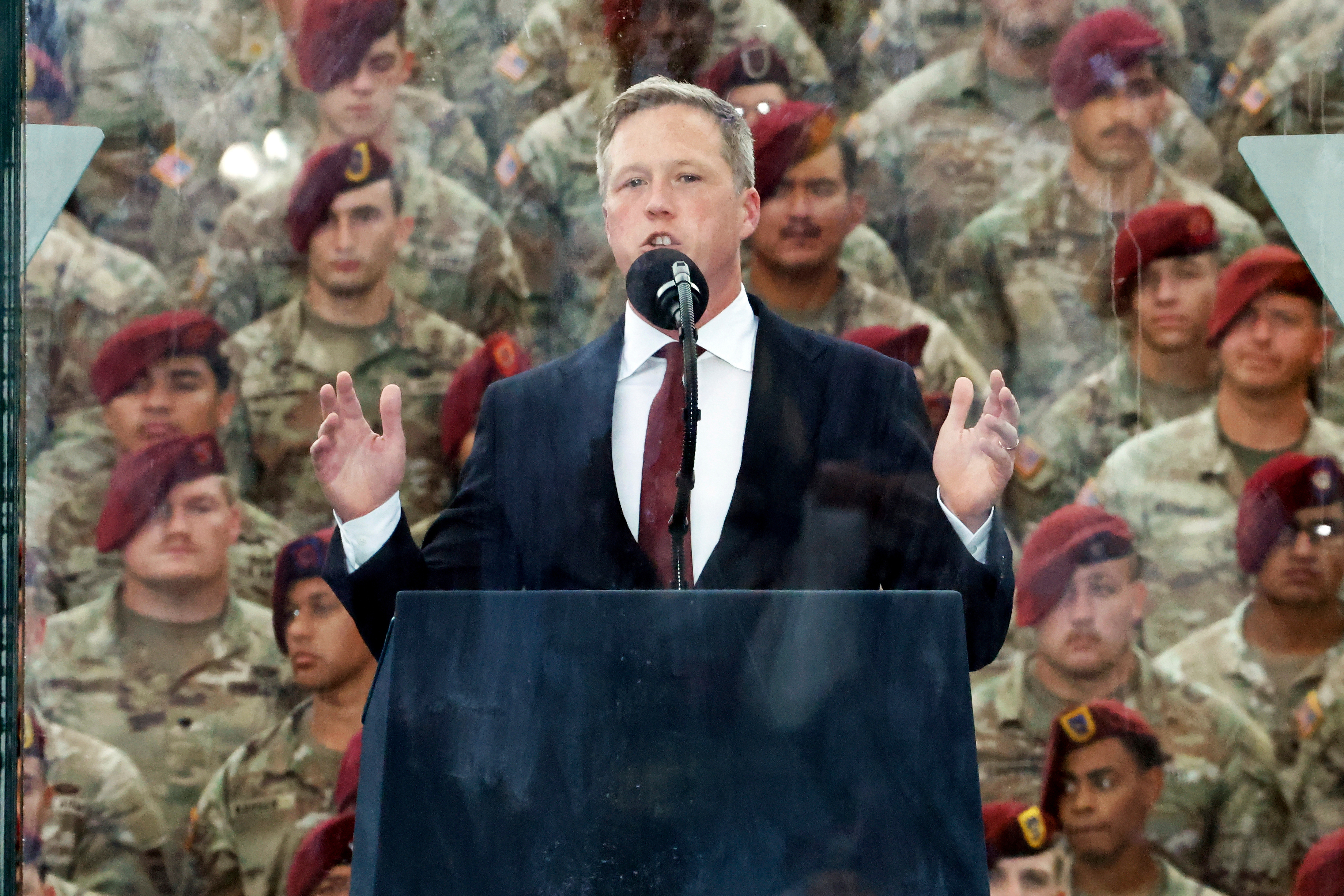
    WASHINGTON — Army Secretary Dan Driscoll is stepping down after 18 months on the job, the White House said Monday, in the latest departure of a top military leader during the Trump administration.

    No reason was given for the departure of Driscoll, who is a friend of Vice President JD Vance, but tensions with Defense Secretary Pete Hegseth have been widely reported. It marks the latest in a series of shake-ups of top military leadership, with the Army especially seeing major upheaval.

    “Secretary Driscoll has been highly effective in advancing President Trump’s agenda to Make America Strong Again at the Department of the Army by providing outstanding leadership during historic military operations, restoring an emphasis on readiness and lethality, assisting with negotiations between Russia and Ukraine, and more,” White House spokesperson Anna Kelly said in a statement.

    “The United States Army is more powerful than ever thanks to his work alongside the Commander-in-Chief and Secretary of War,” she added.

    The Pentagon referred questions to the Army. The Army had not immediately responded to an email seeking comment. A spokesperson for Driscoll had not responded to a text message.

    Hegseth suddenly ousted the service’s top uniformed leader, Gen. Randy George, in April, while the Army’s commander in Europe and Africa, Gen. Christopher Donahue, unexpectedly stepped down in June.

    Gen. Christopher LaNeve, who has made a meteoric rise under Hegseth, took George’s place as the Army’s acting chief of staff. Under LaNeve, the service is pulling the plug on a drone modernization program that Driscoll had heralded. An Army unit based in Europe was building its own drones before LaNeve directed it to end its efforts and return to being a traditional infantry battalion, officials said this week.

    Driscoll was a George ally and lamented his departure, along with both Republican and Democratic lawmakers. He told Congress in April that he and his family drove to George’s house following his resignation “and we all gave him a hug.”

    “That being said, the civilian leadership, the design of our system, is that they get to pick the leaders that they want,” Driscoll added.

    Driscoll is an Iraq war veteran, tech investor, and former adviser to Vance, whom Driscoll met at Yale Law School. When nominating Driscoll in 2024, President Donald Trump called him “a disruptor and change agent.”

    As Army secretary, Driscoll was tapped for the unusual role of key negotiator to try to end the war between Russia and Ukraine. He was also a major force behind trying to cut the red tape for military contractors to quickly develop more drones and counterdrone capabilities as warfare rapidly changes around the world.

    The Senate confirmed him in February 2025, voting 66-28, following an Armed Services Committee hearing that was largely unconfrontational and focused on how the Army could modernize its systems, improve recruiting and beef up the military industrial base.

    Driscoll noted that his father and grandfather served in the Army and he vowed to be a secretary focused on the needs of soldiers. According to the Army, Driscoll served as an armor officer from August 2007 to March 2011, deploying to Iraq from October 2009 to July 2010.

    He also ran unsuccessfully in the Republican primary for a North Carolina congressional seat in 2020, getting about 8% of the vote in a crowded field of candidates.

    His departure comes after Hegseth ousted several other generals and admirals, including the head of the Navy.

    The Pentagon abruptly announced in April that Navy Secretary John Phelan was leaving the job, becoming the first head of a military service to depart during Trump’s second term.

  • DA says a teen who recorded San Diego mosque shooting livestream has been charged with murder

    DA says a teen who recorded San Diego mosque shooting livestream has been charged with murder

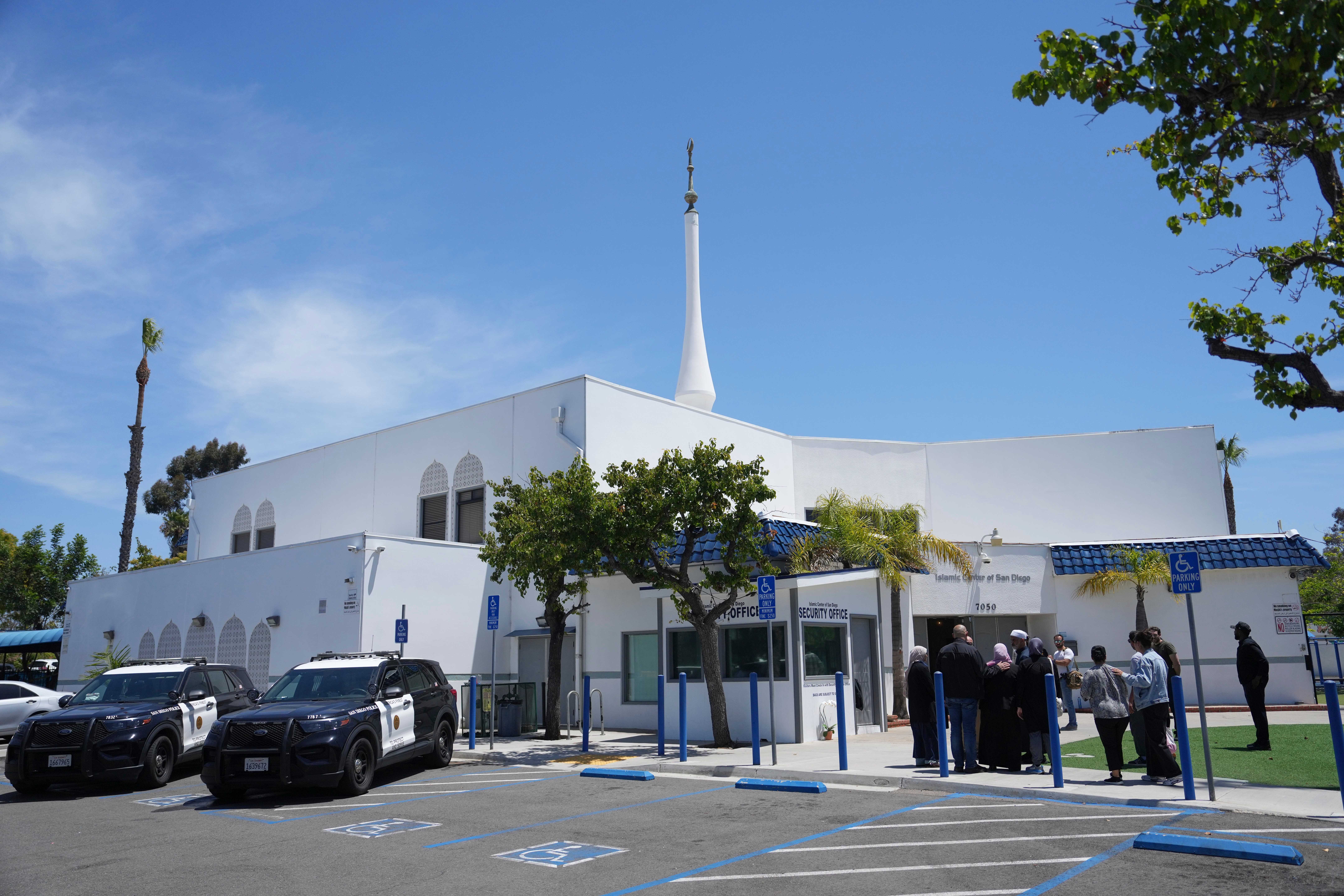
    A 17-year-old North Carolina girl who recorded a livestream of a shooting that killed three people at a San Diego mosque and disseminated the attackers’ white-supremacist writings has been charged with murder by aiding and abetting, a district attorney said Monday.

    Forsyth County District Attorney Jim O’Neill said at a news conference in Winston-Salem that the girl, identified in court records as Sarah Lindsey Santiago, was arrested last week. A grand jury indicted her on three counts of murder and one count of conspiracy Monday.

    Santiago’s attorney did not immediately return a message from the Associated Press seeking comment Monday.

    Under North Carolina law, the aiding-and-abetting charges carry the same penalties as if the girl had committed the attack herself, O’Neill said. According to the indictment, Santiago agreed prior to the attack that she would record the livestream, distribute it, and release a document written by the attackers. She carried out those tasks, it said, and she purchased a patch bearing a white-supremacist symbol and sent it to one of the gunmen to wear during the attack.

    “The individual here, locally, was the person who was recording the livestream,” O’Neill said. “She disseminated that information and she published their manifesto.”

    Cain Clark, 17, and Caleb Vazquez, 18, stormed the Islamic Center on May 18 before being driven back outside by a security guard who exchanged gunfire with them as he initiated a lockdown, helping to protect 140 children who were just steps away.

    The pair killed the guard, Amin Abdullah, and two other men before taking their own lives in a vehicle nearby. They left behind rambling writings full of vitriol against a wide range of people, and cited the shooter who killed 51 people at two mosques in Christchurch, New Zealand, in 2019, as one of their models for their violence.

    The two also planned subsequent attacks on two other targets: a Jewish temple and a predominantly Black high school, O’Neill said. He credited the guard and other victims at the mosque with having saved countless lives.

    The attackers’ writings cited a range of far-right ideological inspirations, including the notion that white people are being replaced by other populations, and detailed their motives and goals. They included hateful rhetoric toward Jewish people, Muslims, and Islam, as well as the LGBTQ+ community, Black people, women, and the political left and right.

    They indicated they were trying to accelerate the collapse of society. Vazquez wrote of having “some mental health issues” and being rejected by women.

    In a written statement, the Vazquez family said Caleb Vazquez was on the autism spectrum and had grown to resent parts of his identity. The family said they believed that, combined with exposure to hateful rhetoric online, contributed to his radicalization.

  • Congo authorities report more than 6,000 confirmed Ebola cases and nearly 3,000 deaths

    Congo authorities report more than 6,000 confirmed Ebola cases and nearly 3,000 deaths

    BUNIA, Congo — Congo’s authorities said Monday that the fastest-growing Ebola outbreak in history has topped 6,000 cases with 2,911 deaths.

    More than 1,360 people have recovered from the virus, in what authorities said was an “encouraging” development.

    The outbreak in eastern Congo is spreading under extremely difficult conditions, fueled by insecurity, displacement, a health workers’ strike, and intense population movements. The situation is particularly concerning at displacement sites, where residents already live in extremely precarious conditions.

    Last week, the virus spilled into two new health zones in the region.

    The World Health Organization has said that it remains out of control and is on track to surpass the 2014-2016 West Africa Ebola outbreak, the deadliest on record, which killed more than 11,000 people, primarily in Guinea, Liberia, and Sierra Leone.

    On Saturday, an Ebola response team was attacked on the outskirts of the town of Mambasa in Ituri province while responding to a call to secure a body. Young people armed with machetes stormed the site of the funeral, forcing the team to flee and injuring one member, a representative told the Associated Press.

    “We demand greater security so we can operate in the field and do our work without endangering our lives,” said Floribert Magene, a member of the response team.

    Bodies of those who died of Ebola can be highly contagious and lead to further spread when people prepare them for burial and gather for funerals.

    In response to the outbreak, Congolese authorities have mandated that the dangerous work of burying suspected victims be managed wherever possible by authorities, which can be met by protests from families and friends.

    The outbreak is caused by the Bundibugyo virus, a rare type of Ebola that has no approved vaccine or treatment.

    Last week, Congo began vaccinating health and other front-line workers with the Ervebo vaccine that was effective in past Ebola outbreaks caused by a different, more common type called Zaire.

    Clinical trials are underway to find a licensed vaccine for the Bundibugyo virus.

    Although the current outbreak was declared in mid-May, officials believe it had been spreading since February. It has spread from three health zones to nearly 60, with most cases and deaths occurring outside the network of monitored contacts and within communities.

    Efforts to bring the outbreak under control — from limited public gatherings to social distancing and airport closures — have disrupted life in the six provinces, particularly Ituri, which also has been ravaged by rebel violence.

    The government has introduced some measures, including installing health and sanitary equipment at some locations, but advocacy groups say more needs to be done to build trust with the community.

    While neighboring Uganda declared itself free of Ebola last month, the risk of further cross-border spread remains, WHO said last week.

  • Pentagon secretly installs military influencers in civilian roles

    Pentagon secretly installs military influencers in civilian roles

    The Pentagon has secretly installed several conservative military veterans with large online followings in government roles, declining to disclose their assignments as they amplify Defense Secretary Pete Hegseth’s viewpoints and attack those who scrutinize the Trump administration, according to people familiar with the matter and corroborating material.

    At least some of the influencers have been assigned to civilian roles that could lead to changes in policy, the people familiar with the matter said. Like others, they spoke on the condition of anonymity because of the sensitivity of the issue.

    Neither the Pentagon nor those involved have disclosed the government roles despite the Trump administration’s claims that they are running the most transparent Defense Department ever.

    Those involved include Rob Maness, a retired Air Force colonel, and Kurt Schlichter, a retired Army colonel, people familiar with the matter said. Pentagon records reviewed by the Washington Post show that both have active official government email addresses as of this past week and are assigned to the office of Anthony Tata, the undersecretary of defense for personnel and readiness. The email addresses include a “.civ” suffix, meaning they are labeled as civilian employees, rather than as military personnel or contractors.

    Both served for decades in uniform and, since retiring, have turned from the military to conservative commentary. Maness has more than 135,000 followers on X, while Schlichter has nearly 620,000.

    Another retired Army colonel and influencer, Thomas Anderson, was listed in Pentagon records earlier this year with a “.civ” email address and assigned to Tata’s office, according to people familiar with the matter and records reviewed by the Post. An attorney, he writes online under the pen name Cynical Publius and has more than 323,000 followers on X. He was no longer listed in Pentagon records late this past week, the people familiar with the issue said.

    The assignments for all three have not previously been reported. Questions have been raised online about influencers’ connections with the Pentagon, including in an article last week by the Bulwark.

    Pentagon spokesperson Joel Valdez declined to comment to the Post about whether any of the three are drawing a taxpayer-funded salary, what roles they have, or how long those jobs are expected to last. Tata did not respond to a request for comment.

    Maness and Schlichter did not respond to emails or other messages requesting comment. Anderson declined to comment in a short phone call.

    The individuals are assigned as either “special government employees” or “highly qualified experts,” people familiar with the issue said. Schlichter appears in a government database with an “HQE” designation after his name, according to material reviewed by the Post.

    SGEs are limited by law to working no more than 130 days in any 365-day period. Those with HQE status can work full or part time, with or without compensation, according to government guidance on the issue released in 2023. It was not clear what financial agreements were reached with Maness, Schlichter, and Anderson, and when each of their assignments began.

    Tata’s team has taken on a number of culture-war issues, including scrutinizing war colleges for “woke” ideology and reviewing how the Biden administration adopted COVID vaccine mandates for U.S. troops.

    Hegseth, a former Fox News personality and Army National Guard officer, has attempted to reshape the public discourse about Pentagon affairs. Last year, he imposed new restrictions on Pentagon press corps members that forced dozens of journalists out of the building and later introduced a new, primarily right-wing press corps to replace them.

    The increased attention on the Pentagon’s influence efforts comes after another conservative influencer, Jennica Pounds, accused a State Department official this month on social media of attempting to entrap her into publishing government secrets. Pounds, writing under the pen name DataRepublican, posted text messages online that showed the official approached Pounds with documents to publish and tout as a journalistic scoop.

    Sarah Rogers, the undersecretary of state for public diplomacy, later disclosed on social media that she was the official who had reached out to Pounds. Rogers posted the documents herself, saying it was not a “trap,” and Pounds later said that she regretted “making a public spectacle” and “pulling people I respect into the swirl.” Rogers has been nominated by President Donald Trump to lead the U.S. Agency for Global Media, which oversees Voice of America and other government-funded media.

    The dustup was followed by the Pentagon and Pounds disclosing that she works as a special government employee for the Defense Department. She posted on social media that she became an employee in July, after holding a credential as a journalist in Hegseth’s new Pentagon press corps until June. Pounds has said on social media that she applied for a Pentagon press pass and received it in April.

    Pounds did not respond to a request for comment.

    The disclosure has roiled social media, where some fellow influencers have defended Pounds’ work amid criticism that she should have disclosed she was working for the government.

    Adam Kinzinger, a former Republican congressman and Air Force veteran, posted that it appears the Pentagon “is using your tax dollars to hire influencers on X to put out partisan talking points.”

    “How many more people that are blue checkmarks on X that are putting out information on behalf of the federal government, and Donald Trump, and the Republican Party … are actually special government employees?” said Kinzinger.

    Maness, Schlichter, and Anderson appeared on behalf of the Pentagon’s Senior Service College Task Force at the Army War College in Carlisle, Pa., in May, two people familiar with the visit said. The task force was organized in the spring with the goal of rooting out ideology deemed “toxic” or “woke,” Hegseth said in March.

    The task force has completed its research and prepared a report that has not yet been released, one of the people familiar with the visit said.

    After initial publication of this story, Anderson said on social media on Sunday night that he was asked to join the task force after he published an article in February recommending changes to the war colleges. Anderson said he was a special government employee through July 26 with work “exclusively limited” to the task force.

    “At no time have I ever received any compensation of any kind from any government source of any kind for anything I write or have ever written on X or in any magazine or other source,” Anderson wrote.

    While in Carlisle task force members met with students and professors over a number of days and asked questions about the performance of leaders like Hegseth and Gen. Dan Caine, chairman of the Joint Chiefs of Staff, one of the people familiar with the visit said. Some students were uncertain how candid they should be and whether there would be negative consequences if administration officials did not like the answers, this person said.

    The other person familiar with the visit said the task force members had concerns about the syllabus for a class focused on how military officers communicate with Congress.

    Maness retired from the Air Force in 2011 and has run unsuccessfully for a U.S. Senate seat in Louisiana. He is listed as the chairperson of GatorPAC, a political action committee that says on its website that it wants to “drain the swamp” in Washington and find more military veterans to run for office. The PAC’s website also includes videos of an online political commentary show starring Maness.

    In an article published last month by the conservative Daily Caller, Maness argues that Hegseth’s team needs to root out “disloyal” career employees in the department and laments “careerists who treat the Pentagon as their permanent fiefdom.” That article cites his decades of military experience, but does not say whether he is a current Pentagon employee.

    In an article published Wednesday on the website Campus Reform, Maness attacked a decision made by Army leaders to pull back efforts to toughen academic requirements for college students in Reserve Officers’ Training Corps programs. “Secretary Hegseth’s outrage is justified,” Maness wrote. The article likewise does not mention any government assignment.

    Maness also had a letter to the editor published in the Post in July in which he defended Hegseth’s efforts to reduce the number of military officers who attend elite universities for fellowships. He describes himself there as a retired Air Force officer, but no government role is mentioned. A Post spokesperson said that Maness did not disclose any connection to the Pentagon before publication.

    Schlichter is a columnist with the conservative site Townhall, writing and podcasting on politics, immigration, and military affairs. On Aug. 6, he published a column calling Trump a “hero for finally fighting back against Iran.”

    “He could have waltzed into the midterms, dragging Republicans behind him toward success,” Schlichter wrote. “But he had the courage to do what was necessary to stop these bastards before they made it impossible to prevent them from getting a [nuclear] bomb.”

    On social media, Schlichter posted a video earlier this month of Hegseth praising sailors aboard the USS Abraham Lincoln, an aircraft carrier that has faced morale problems during a long deployment.

    “We are,lucky to have @PeteHegseth,” Schlichter wrote on X on Aug. 14. He describes himself on X as a retired Army colonel, lawyer, and columnist, but does not disclose current Pentagon employment.

    On social media, Anderson has been a frequent critic of journalists, fellow veterans, and others opposing the Trump administration and has defended Hegseth’s efforts to overhaul military affairs. Writing for the Federalist in April, he assessed that there is “a cancer in America’s military ranks, and it must be expunged before it’s too late.”

    This past week, he repeatedly defended Pounds on X for serving as a special government employee as he also declined to answer questions from several people about whether he was an SGE employee, too.

    “The law does not view such people the same as civil servants, and they are legally allowed to continue whatever other private endeavors they were undertaking,” Anderson wrote. “In many cases, they are prohibited from revealing their status because of the sensitive nature of their work.”

    Another military influencer, John Konrad, also defended Pounds while noting he had discussions with the administration this spring about becoming a special government employee at the Pentagon. Konrad, a former member of the U.S. Merchant Marine and founder of the maritime website gCaptain, said that the Pentagon sought him out for a role and he later felt “ghosted.”

    The Pentagon also brought on Jerry Dunleavy, a journalist with the conservative Just the News, to assist Hegseth’s team with an ongoing review of the fall of Afghanistan. The Pentagon disclosed Dunleavy’s involvement in May.

    Dunleavy previously worked as an investigator for the GOP-led House Foreign Affairs Committee during an earlier investigation of the collapse in Kabul and quit in protest, saying the committee had not gone far enough.
  • This principal in Nepal evacuated 900 students before flooding swept away their school

    This principal in Nepal evacuated 900 students before flooding swept away their school

    BIDUR, Nepal — Rajendra Dawadi was inside his classroom when a colleague rushed in with a warning: Floodwaters were racing through Nepal’s Trishuli Valley, tearing apart homes, bridges, and entire villages.

    Then a teacher received another warning by phone. Moments later, a parent arrived to take her child home. The danger had not yet been confirmed, but Dawadi, the principal, had little time to act. He rang the school bell and ordered his students and staff out of the building and toward higher ground.

    “I immediately decided to stop … school” and get the children out, he told the Associated Press.

    As he followed them to a nearby hill, the floodwaters rose behind him. From the safety of the hillside, he turned to watch the school where he had once been a student — and where he had spent years teaching — disappear beneath a torrent of water, mud, boulders, and debris. Two staff members could not make it and remain missing.

    Dawadi’s decision to evacuate the school saved at least 900 students from last week’s devastating flash floods in Nepal, unleashed after a glacial collapse in the Himalayas. The disaster has killed over 900 people across Nepal and China, while more than 4,700 remain missing.

    As Nepal grapples with the catastrophic natural disaster, Dawadi’s story has emerged as a striking example of foresight and courage.

    The Tribhuvan Trishuli Secondary School had 1,643 students. At least 900 were on campus that morning, while some students were still making their way to school. Dawadi ordered those already there to leave and called bus drivers to tell them not to come.

    One bus, packed with students, had already reached the school when Dawadi told the driver to turn back, he said. The bus crossed a newly constructed bridge and, moments later, the old bridge beside it collapsed.

    For Dawadi, the scale of the destruction has become personal, as the school had been both his workplace and a large part of his life.

    “I have no words. I got education from that school. And I gave education at that school,” he said.

    The destruction of Dawadi’s school was not an isolated loss.

    Across northern Nepal, the floods have left thousands of children without classrooms, disrupted their education, and raised fears that the disaster could cost them months of schooling. Charity group Save the Children said in a statement that at least 69 schools in northern Nepal have been completely destroyed, putting the education of nearly 19,000 students at risk.

    Dawadi’s quick thinking and swift response during the disaster have been hailed as an act of heroism. When he returned to the site of the school days later, parents embraced him as they thanked him for saving their children.

    “Their parents hugged me, they cried with me,” he said. “They were emotional.”

    Student Suvina Tamang, 14, said the building was swept away shortly after the students had been evacuated. “I will thank him when I see him” for saving my life, she said.

    But Dawadi is reluctant to accept the role of hero. For him, rescuing his students was his responsibility. Now he says, students will need psychological counseling. Then, lessons must begin again, even if the school must temporarily relocate.

    His appeal to the Nepalese government is simple: rebuild the schools and get children back to classes.

  • Democrats want the midterms to be about Trump. He does, too.

    Democrats want the midterms to be about Trump. He does, too.

    For vulnerable politicians, the safest place to be in a difficult midterm year is usually far from an unpopular president.

    Donald Trump has other plans.

    Next week, as primaries give way to a perilous general election campaign for vulnerable Republicans, Trump will headline two nights of a GOP political convention in Dallas. Over the next two months, his super PAC plans to run advertisements that feature his name and play up his political record. And although he will not appear on any ballot in the midterms, he has told voters they should behave as if he is. Even the party’s program for prized congressional recruits, previously known as “Young Guns,” has been renamed the “MAGA Majority.”

    It is a risky strategy two months before Election Day. Vulnerable Republicans cannot afford to antagonize Trump because they need his help to turn out his base and tap into the $400 million war chest he controls. And he is not extending the leeway past presidents have for candidates to run their own races, even if that means keeping their distance.

    Trump has told aides he wants ads paid for by his super PAC, MAGA Inc., to tout his second-term record, according to two people familiar with the conversations. Advisers already prepared some ads for the Texas Senate race and showed them to Trump, who provided detailed feedback, said the people, who spoke on the condition of anonymity because they were not authorized to discuss internal strategy.

    Some donors, skeptical of the strategy, have become resistant to giving more money to Trump’s super PAC while it sits on hundreds of millions of dollars without sharing any plans about how it will use the money, said a Republican strategist involved in Senate races, speaking on the condition of anonymity to discuss unfinished plans.

    The Trump-centric approach marks a reversal from 2022, when the super PAC ran ads in competitive Senate races that did not mention Trump — a sign that his own advisers accepted his liabilities. A MAGA Inc. spokesperson declined to comment, saying the PAC doesn’t reveal its plans through the media.

    As his poll numbers have fallen to record lows, Trump has repeatedly insisted that his record deserves to win in November. He has argued that voters are overlooking his economic achievements and defended the Iran war and its economic costs as the price of preventing Tehran from obtaining a nuclear weapon.

    At a Las Vegas rally in early August, Trump touted rising manufacturing investment, record stock market gains, and falling prices, despite a more complicated economic picture with rising inflation. “We had the greatest economy in the history of our country in my first term,” he said. “But this is blowing it away.”

    “Trump doesn’t want people distancing themselves from him. He sees it as a personal insult,” said Tevi Troy, a presidential historian and former White House domestic policy adviser under President George W. Bush. “His greatest power is his ability to destroy a Republican who goes against him.”

    Trump’s posture differs from that of his recent predecessors — and even from his own first-term approach. But Troy said Trump’s political calculation is rooted in a simpler reality: In an era of heavily gerrymandered districts, many races are increasingly decided by which side can turn out its own voters.

    “What we’ve seen over the course of the past decade is, when Trump is on the ballot, you get better turnout if you’re a Republican,” Troy said.

    Trump has not been able to deliver every candidate he supports to victory. His picks recently lost gubernatorial primaries in Iowa, Georgia, Wyoming, and Minnesota, as well as House races in Tennessee and Michigan. He snapped that losing streak Tuesday when Darline Graham, his choice to succeed her late brother, Sen. Lindsey Graham, won South Carolina’s GOP Senate runoff, and Mike Mazzei narrowly won a runoff to be the Republican nominee for Oklahoma governor.

    General-election polling underscores the risk for vulnerable Republicans. Trump’s approval ratings remain historically low, and national polls show Republican House candidates running six points ahead of him among registered voters: 44% support the GOP for Congress, while 38% approve of Trump. Republican Senate candidates are also outperforming the president by about two points on average, though some of that gap reflects large numbers of undecided voters in several races.

    That gives Republicans in the most competitive districts an incentive to calibrate their proximity to Trump — embracing him where he remains an asset while trying to keep their contests from becoming referendum on his presidency.

    “The president’s going to look right in the camera and say, ‘I am on the ballot,’” House Speaker Mike Johnson (R., La.) said of the Dallas convention on Thursday at an event with vulnerable Rep. Monica De La Cruz of Texas. “Because even though his name isn’t, right, his administration, his legacy, the America-first agenda is.”

    The Dallas convention forces Republicans to decide between angering swing voters by appearing with Trump or angering Trump by staying away. None of the Republicans in competitive Senate races responded to questions from the Washington Post on whether they will attend.

    “It’s going to be a Trumpapalooza you’re not going to want to miss!” RNC Chairperson Joe Gruters said in a social media video.

    Aides to one Republican who has announced his plans to skip Dallas, Rep. Tom Barrett of Michigan, rejected the suggestion that he is distancing himself from Trump. They noted that Barrett has appeared with the president several times, including at a General Motors proving ground in Milford last month.

    “Attending a convention two months before an election in a top target seat was never a consideration,” Barrett spokesperson Jason Roe said. “It has nothing to do with the optics and everything to do with where the voters are.”

    Roe said voters already understand the basic political alignment between Barrett and Trump. “I think it’s pretty baked in with voters that Republican members of Congress support the Republican president, and vice versa,” he said, adding that Barrett is “running on his record of accomplishment for the 7th District.”

    Natalie Baldassarre, a spokesperson for the Republican National Committee, said Republicans cannot escape being associated with Trump’s policies and that Democrats will make the link regardless.

    “The Democrats are going to brand our candidates with the president no matter what, so it’s not beneficial for Republicans to run against his agenda and bleed from both sides of the political spectrum,” she said. “The president has cut taxes, lowered drug costs, secured our border — Republicans should be touting that in battleground races across the country.”

    Rep. Jamie Raskin (D., Md.) has argued that Democrats should make Trump’s record inseparable from the Republicans running alongside him, portraying GOP candidates as enablers of what he calls the administration’s “illegal war” and “disastrous economic policies.” In a recent fundraising appeal, Raskin said Democrats could build a “Blue Wave” by tying Trump and “MAGA Republicans” together and making the election a judgment on their shared record.

    So far Republicans have tiptoed around putting space between themselves and Trump. The campaign website for Ralph Alvarado, running with Trump’s endorsement for a Kentucky congressional seat in a district Trump won by 15 points, removed references to Trump from its website, replacing “America First Fighter” with “Independent Leadership.”

    The political calculus varies by race, said Republican strategist Alex Conant. Some House Republicans, particularly those representing suburban swing districts, may be better able to court independent voters with distance from the president. But many of the Senate contests likely to determine control of the chamber are unfolding in Republican-leaning states, where Trump remains a potentially powerful turnout engine.

    “So distancing yourself from Trump isn’t going to help you win a Republican state like Texas or Ohio,” Conant said.

    Trump also may have little use for Republicans who seek to separate themselves from his actions. He has long prized loyalty, and said he expects his administration to face extreme pressure from Democrats if they retake either chamber.

    “I think he views a disloyal Republican as just as useless as a Democrat,” Conant said. “And if he’s looking at what the next two years hold, it’s probably going to be impeachment fights and a lot of other big fights. He’s probably not looking to have anybody there who’s not loyal.”

    In a polarized, heavily gerrymandered country, Trump is betting that turning out voters already inclined toward Republicans matters more than persuading those in the middle — and that he can summon voters who might otherwise stay home when his name is absent from the ballot, Troy said.

    That distinguishes him from recent presidents who, when their popularity sagged, generally gave endangered members of their own party room to run away from them.

    In 2006, Bush largely confined his late campaigning to places where Republicans believed he could still help, while vulnerable GOP candidates advertised their independence from him and avoided appearances with him. Eight years later, Barack Obama watched endangered Democrats criticize his policies, skip his visits, and keep him out of some of the states where they faced the toughest races.

    President Joe Biden made that accommodation almost a running joke. During the 2022 midterms, as some vulnerable Democrats kept their distance from an unpopular White House, Biden frequently told candidates: “I’ll come campaign for you or against you — whichever will help the most.”

  • More mail ballots are arriving late this cycle, and they’re getting tossed

    More mail ballots are arriving late this cycle, and they’re getting tossed

    The rate at which mail votes have been rejected for arriving late has ticked up in primaries this year and general elections last year in roughly a dozen states, prompting election officials to worry that the U.S. Postal Service is ill-equipped to deliver ballots in the fall midterms.

    The states studied by the New York Times include some of the most critical battleground House and Senate seats where control of Congress will be determined, as well as key races for governor and secretary of state. The Times obtained data from California, Colorado, Maine, Maryland, Michigan, Nebraska, New Jersey, Pennsylvania, Utah, Virginia, Wisconsin, and Washington.

    In Wisconsin, which hosts an open race for governor, a competitive House election plus contests for both chambers of the state legislature, lateness accounted for about 5,000 rejected mail ballots in the spring primary this year, or 78% of all tossed ballots. During the last spring election, in 2023, the figure was roughly 2,300, or 47% of all tossed votes.

    The increase is particularly striking when comparing primaries in 2024 and this year. In Michigan’s primary earlier this month, more than 10,000 mail ballots were rejected for arriving after the state’s deadline of 8 p.m. on Election Day. That is nearly double the number of ballots rejected in 2024. In Washington, the number of late-arriving mail ballots increased from about 16,000 to more than 20,000 in the same period.

    The rise in rejected ballots comes at a time of immense upheaval at the Postal Service, where a budget crisis has prompted widespread complaints about delivery delays. The increase also comes as President Donald Trump and his allies are trying to transform the 251-year-old agency into a central player in their quest to restrict mail voting and otherwise overhaul the nation’s elections.

    Roughly two dozen states sued the government over the president’s executive order governing mail voting, which would require states to hand over voter information and would empower the Postal Service to block mail ballots from being sent or delivered in states that do not comply. The moves have especially alarmed Democrats, who fear the president could use the Postal Service to tip the scales of a midterm election that polls show currently favors their party. Trump has stated publicly that curtailing mail voting is good for Republicans.

    A federal judge issued a ruling Thursday blocking the Postal Service from proceeding after concluding that the agency’s plan appeared to overstep its legal mandate and could spark chaos by changing rules fewer than 70 days before an election. The administration is appealing.

    Meanwhile, the uptick in rejection rates for mail ballots this year could fuel the partisan battle. The ballots that were tossed because they arrived too late represent a fraction of the overall mail ballot total — the Postal Service typically delivers more than 95% of mail ballots on time. But the agency has curtailed its services in the face of budget shortfalls in recent years, leading to slower mail delivery across the country.

    Election officials say the rise in rejections, along with the general sentiment out of Washington, have prompted them to scramble to put safeguards in place to ensure that voters’ ballots are counted.

    In Colorado, Jena Griswold, the Democratic secretary of state, has rapidly increased the number of drop boxes across the state — by 78% since 2018 — so voters can return their ballots without concerns of postal delays or interference.

    “We did change the law last legislative session,” Griswold said in an interview. “Mail ballots are going out sooner, and drop boxes are going out sooner. That is in direct response to the uncertainty coming from D.C. and Trump’s attacks on our democracy.”

    In a statement, the Postal Service countered claims that the agency has become unreliable by noting that more than 95% of mail ballots have arrived on time in recent elections.

    “There are any number of factors that may impact the timeliness of a returned ballot,” the statement said. “As such, our consistent message to voters who choose to vote by mail is to mail early.”

    Following the 2020 election, when a deluge of voters opted to vote by mail during the coronavirus pandemic, the agency developed new procedures to prioritize on-time delivery for mail ballots. After a court case in 2021, the Postal Service agreed to maintain the new measures for all even-year federal elections through 2028.

    William Hensley, a former election mail specialist at the Postal Service who helped establish the new procedures, said the fact that mail ballot delays were more prevalent in odd-year and primary elections suggested that the measures were effective. But he conceded that structural changes within the agency slowing service across the board were also affecting ballots.

    As part of a 10-year plan established in 2021 to shore up the Postal Service’s finances through structural changes, the agency set up regional distribution centers to process mail and increased the delivery-time standards for first-class mail, from three days to five.

    The Postal Service further slowed down mail in 2024 when it implemented a centralized system that postmarks mail when it reaches regional centers, not when it first enters the mail stream. The delay has particularly affected mail voting, especially in states that rely on postmarks to determine if a ballot is valid.

    These cost-cutting changes have so far not made a substantial dent in the agency’s multibillion dollar deficit, but they have slowed the delivery of mail votes. Election officials are starting to notice.

    In Wisconsin’s state Supreme Court election in April, several hundred ballots arrived a day late in Dane County, home to Madison, the state capital, according to Scott McDonell, the county clerk.

    “That was highly unusual,” he said. “In the past, we would only see a handful.”

    In a survey by the Wisconsin Elections Commission, two-thirds of clerks reported observing problems with mail delivery times in that election.

    “The worst mail delivery day of the week is Tuesday (unfortunately for elections!) and our office jokingly but sadly refers to it as ‘no mail Tuesday,’” read one submission from a clerk in Waukesha County.

    McDonell, who is a Democrat, says he now tells voters to use drop boxes, vote early in person, or mail their ballots at least two weeks before Election Day.

    In Washington, a universal mail-voting state, more voters are using drop boxes than trusting the Postal Service with their ballots, said Stuart Holmes, the state’s elections director.

    “The Postal Service, these are great people, hardworking people,” Holmes said about the state’s local postal employees. “But their operation has become unreliable.”

    In Washington’s primary earlier this year, 75% of rejected mail ballots were tossed because they arrived too late.

    Ricky Hatch, a Republican election official in Utah, a state that relies almost exclusively on mail voting, said he had noticed a nationwide increase of election officials encouraging voters to mail their ballots early because of Postal Service slowdowns.

    “We’ve definitely morphed over time from going from ‘Hey, get your ballot in before the deadline’ to ‘Mail your ballot at least a week early, if you want to have it counted,’” Hatch said.

    Now, he added, the advice is even more cautious: “Better yet, use a drop box.”

    This article originally appeared in the New York Times.

  • Trump’s deals in Africa could cut U.S. health aid by more than half, analysis shows

    Trump’s deals in Africa could cut U.S. health aid by more than half, analysis shows

    The Trump administration is working to cut global health funding to developing nations by tens of billions of dollars by 2030, according to a new analysis of the secretive agreements U.S. officials have pursued with more than a dozen governments to date.

    The planned cuts — targeting programs that combat the spread of HIV/AIDS, Ebola, and tuberculosis, among other deadly diseases — appear to reduce U.S. spending on global health initiatives to less than half of Washington’s output in 2024, the analysis found.

    The research was conducted by two nonprofits, Public Citizen and Partners in Health, organizations that have taken a deeply skeptical view of President Donald Trump’s “America First” approach to global health policy.

    Their analysis offers the most detailed reading yet of the bilateral health agreements drawn up by the State Department with 34 countries after the Trump administration, upon taking office last year, paused all U.S. foreign assistance and dismantled the U.S. Agency for International Development.

    Public scrutiny of the agreements has been limited, as the administration, citing a desire to protect what it says are “sensitive” negotiations, has refused to disclose the text outlining their terms. The State Department said earlier this year that it would release them only after all were signed, though it has not disclosed a timeline for that to happen.

    The analysis by Public Citizen and Partners in Health relies on documents that the nonprofits recently obtained from the U.S. government after suing the Trump administration and other previously disclosed material detailing what is contained in many — though not all — of the agreements.

    It questions, among other things, how the Trump administration’s plan to reduce global health spending in developing countries over the next several years accounts for billions of dollars in related funds already appropriated by U.S. lawmakers. Since Trump’s return to office, the Republican-led Congress has voted to keep the amount of U.S. global health funding relatively constant despite the administration’s push for greater self-sufficiency among recipient countries.

    There’s a “big, yawning gap” between how much money lawmakers have apportioned and how much the United States intends to spend via the deals it is reaching with developing countries, said Vincent Lin of Partners in Health, noting that the administration, according to its own accounting, is far behind on spending money related to HIV/AIDS prevention.

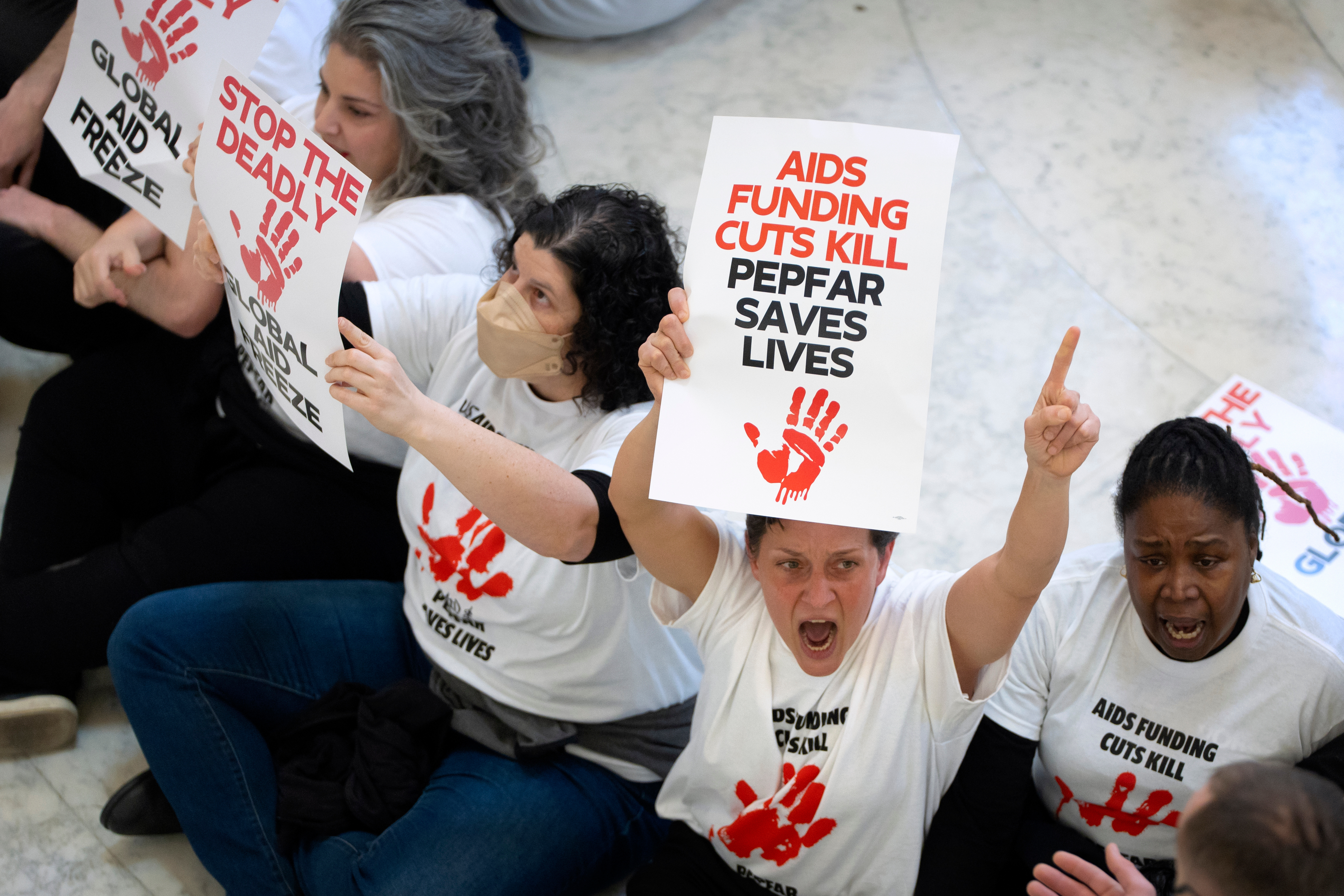
    The State Department said in response to questions about the analysis that it does intend to spend the money apportioned by Congress and that more global health money could go to religious aid organizations and what has been dubbed an “innovation fund” to support the use of new U.S. technology in fighting disease. The department did not address the slow pace of HIV/AIDS funding, which Congress approved separately under the President’s Emergency Plan for AIDS Relief (PEPFAR), a long-running global health effort.

    A State Department spokesperson, Tommy Pigott, said in a statement that the Trump administration is defining the “next phase of U.S. global health foreign assistance in a way that prioritizes greater efficiency, transparency, country self-reliance, and American innovation.”

    In most cases, the agreements specify that countries receiving diminished U.S. health funding must at the same time increase their own spending.

    The State Department said that the deals reached so far amounted to $14.5 billion in new U.S. assistance, alongside more than $10.1 billion in “co-investment” from recipient countries.

    The analysis by Public Citizen and Partners in Health shows that across 17 countries whose full agreements were reviewed, and an 18th where just the top-line figures have been revealed, the Trump administration is seeking to reduce global health funding by 59% from 2024 levels by 2030.

    For decades, global health funding has enjoyed bipartisan support in the U.S., with lawmakers arguing that it is both morally correct and in the self-interest of wealthier nations to combat disease globally.

    The Trump administration has sought to reshape this consensus, emphasizing “trade over aid” and criticizing global aid structures, but it has encountered resistance from Congress, which rejected a budget that sought to cut global health spending by $6.2 billion. (Lawmakers later approved a $615 million reduction compared with the previous year.)

    The funding reductions pursued by the Trump administration are most pronounced in poorer African nations that have relied on tens of millions of dollars annually in U.S. foreign assistance to support their fight against HIV, the analysis by Public Citizen and Partners in Health shows.

    Burundi, for example, among the poorest countries in Africa, will see its U.S. health funding fall to 22% of baseline levels, according to the nonprofits’ analysis. Rwanda sees the sharpest drop among the documents examined, with U.S. funding falling to just 3% of what it received before Trump reentered office, the analysis shows.

    While recipient countries are expected to ramp up their own health spending to fill the gap, Public Citizen and Partners in Health have raised doubts about how feasible some of those targets are. They note, too, that the agreements include language detailing penalties for noncompliance, including further cutting U.S. funding.

    “Sierra Leone is supposed to make up a 71% U.S. funding drop in less than five years,” said Peter Maybarduk of Public Citizen, referring to another poorer nation being asked to step up its health funding. “It’s going to be very difficult, and if a country like that falls behind, and then is punished for that, then of course the health problems compound.”

    The State Department said in response to questions that the differing rates were based on a model that evaluated a range of factors, including the wealth of a country and its vulnerability to diseases, and analyses that looked at “the level of instability and conflict in a country.”

    Beyond its planned cuts to bilateral health funding, the Trump administration is behind on spending money appropriated by Congress under PEPFAR, according to tracking by Lin and other analysts. It’s an enormous concern to advocates for disease prevention in developing countries.

    PEPFAR funding must be spent within five years, Lin noted, meaning the administration has not breached the law by underspending it. Still, it could lead to a situation in which programs break down before the funds can be spent, he said.

    “Right now, it looks like a dramatic underspend by billions of dollars … leading to preventable suffering and death,” said Maybarduk. “If that’s not the case, the burden is on the State Department to tell us how.”

  • Do DEI bike paths exist? The Trump administration says yes

    Do DEI bike paths exist? The Trump administration says yes

    Four years ago, after Joe Biden fell from a bike, Donald Trump made a pledge to the American people.

    “I will never, ever ride a bicycle,” he declared.

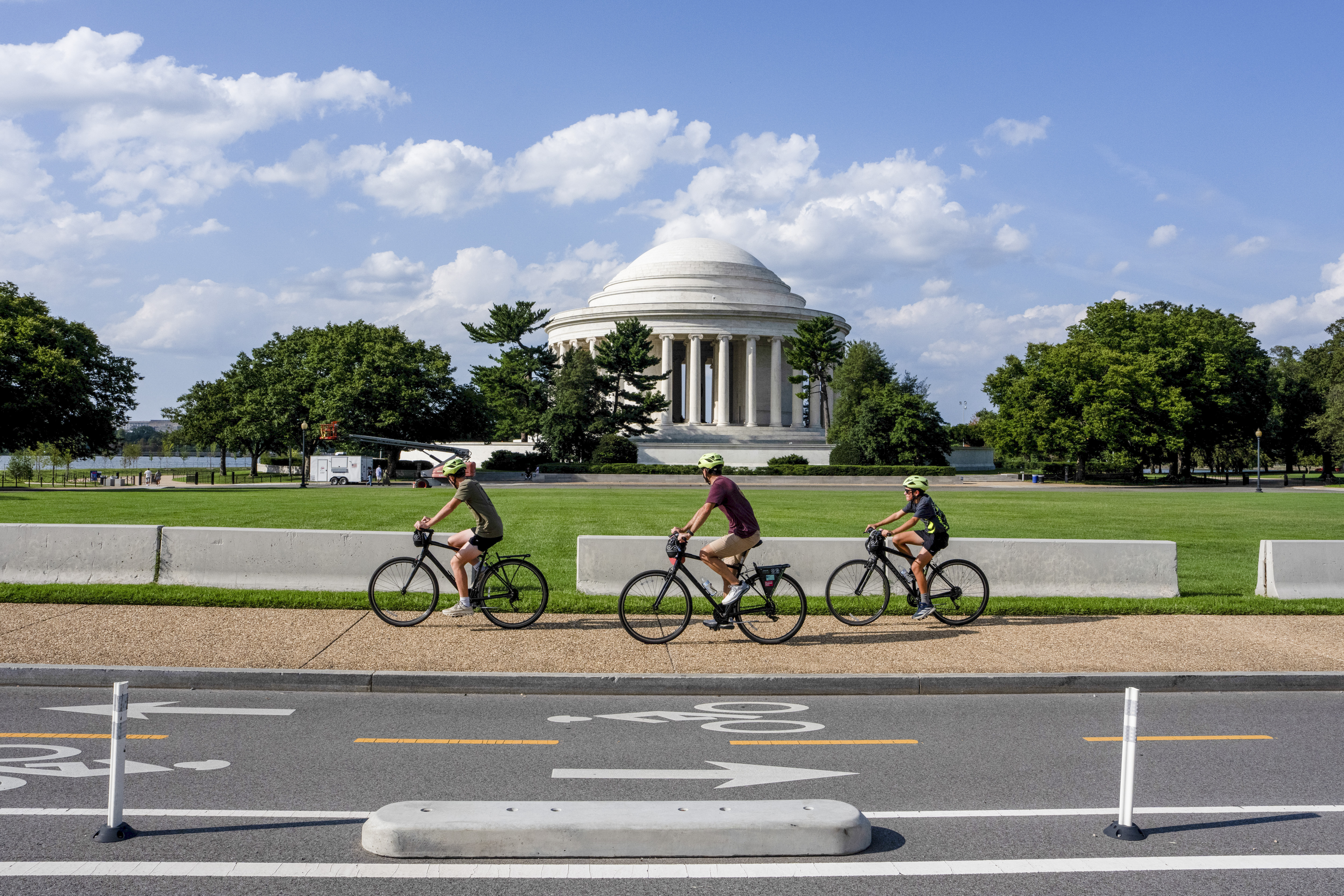
    The joke landed because Trump is known to be more of a limo-and-golf-cart sort of guy. But more recently, his administration has begun acting on its deep aversion to cycling, revoking federal grants for what it calls “DEI bike lanes.”

    In a high-profile move this year, the administration even tried to remove a bike lane near the White House.

    Sean Duffy, Trump’s transportation secretary, has argued that when bike lanes cut into space for cars and trucks, the result is more congestion, “longer travel times and wasted fuel.”

    But Duffy and his colleagues have also deployed rhetoric that suggests the bicycle is hopelessly lefty, belonging in the same category as green-haired baristas, Rosie O’Donnell, and yard signs professing that love is love.

    Last month, the Transportation Department told National Public Radio that liberals believe “that everyone should ride a bike to their shoebox-sized apartment to eat crickets to achieve a phony climate agenda.”

    The attacks are depressing to longtime cycling advocates like Bill Nesper, executive director of the League of American Bicyclists. “There is something there that they’re playing on, which is ‘Look at that dork on a bike,’” Nesper said.

    Whether this strategy pays off politically remains to be seen. A 2025 YouGov poll showed that 76% of Americans supported bike lanes in and around places where they live, including 66% of Republicans. But it also showed that only one-third of Americans are pining for more.

    As it is, many communities in the U.S., regardless of politics, have embraced bike-friendly policies, on the grounds that bikes are good for the planet and for the body, and address congestion by taking cars off the road. Often inspired by bike-friendly European cities such as Copenhagen and Amsterdam, the moves are a major shift in the way communities in the U.S. approach transportation planning.

    There are 4,400 directional miles of protected bike lanes today, up from 108 directional miles in 2000, according to PeopleForBikes, an industry trade association and advocacy group. (Directional miles are miles that can be traveled in one direction; with a two-way bike lane 1 mile long counting as two directional miles.)

    The group notes that more than 25,000 miles of rail beds have been converted to bike-friendly trails, double what it was two decades ago.

    But the Trump administration is trying to put the brakes on the trend.

    In Nashville, Tenn., the future of an ambitious series of bike lanes, called the East Nashville Spokes project, is up in the air after the Trump administration froze a $9.3 million grant, prompting a court battle that remains unresolved.

    In Washington this year, the administration announced it was tearing out the 15th Street bike lane as “part of the president’s initiative to revitalize” the city. But in a 61-page ruling in April, Judge Amy Berman Jackson temporarily blocked the demolition plan citing an “absence of reasoned decision-making” in justifying the removal.

    In Fairfield, Ala., a majority Black city of 9,500 people southwest of Birmingham, the administration canceled an $11.7 million grant for a bike and walking path, originally awarded under the Biden administration as part of a “sustainability and equity” program. Advocates had said that 17% of the families in the area do not have access to a car.

    In an interview, the city’s mayor, Herman Carnes Jr., said he did not know why the grant had been canceled. “It got ripped away from us,” he said.

    Bike lanes have long enjoyed bipartisan support. In 1967, Ronald Reagan, then the Republican governor of California, signed a law that for the first time allowed city governments to create bicycle lanes.

    Ray LaHood, a Republican who served as transportation secretary under President Barack Obama, avidly supported federal money for bike projects. He once wrote of “the end of favoring motorized transportation at the expense of nonmotorized.”

    But as the bike-lane revolution picked up steam — along with calls to make cities more walkable — some conservatives feared that it amounted to a series of intrusive social engineering schemes.

    In a few conservative circles, city planning even became falsely linked to dark conspiracies about Agenda 21, a nonbinding United Nations resolution encouraging sustainable development, and the voguish concept of the “15-minute city,” which said that people should be able to walk or bike to amenities such as grocery stores in 15 minutes or so.

    It was not long before the bicycle itself was portrayed as a political cause supported by left-wing dingbats.

    In 2020, Matt Walsh, the right-wing pundit, painted cyclists as childish hobbyists.

    “If you want to play with your bike, go to a park, or a bike trail in the woods, or maybe Daddy can take you down to the tennis court near the playground so you can ride your Big Wheel,” he said.

    Last year, Trump poked fun at Pete Buttigieg, the Biden-era transportation secretary, for riding a bike, tossing in a gratuitous reminder that Buttigieg is gay.

    “Buttigieg, who has no clue, you know, he drives to work on his bicycle, in all fairness, with his husband on the back, which is a nice, loving relationship,” he said.

    At a conference last year, Duffy suggested that the idea of European bike-friendly cities were unsuitable for Americans. “We’re not Europe,” he said, citing vehicle sizes. “I don’t think we should necessarily buy into the European model.”

    This summer, Duffy pushed for more change. On July 22, Duffy wrote a letter to a group of senators, urging them to restrict future funding for bike lanes and support removing ones “that contribute to congestion.”

    To Nester, the letter represented something “much worse” than canceling or stalling individual grants. Duffy, he said, was now calling for ripping out existing lanes and advocating for “a systematic change in transportation law to restrict the funding of bike lanes overall.”

    Hostility to bike lanes, in fact, can be found in surprising places.

    In Boston, Mayor Michelle Wu, a progressive Democrat, had put in miles of lanes, but eventually slowed down because of complaints.

    Her administration is navigating opposition in some traditionally Black neighborhoods to a plan to redesign Blue Hill Avenue, a major thoroughfare. Much of the criticism has been directed at a proposal for a center-running bus lane, which some say will create new traffic problems.

    But a plan to add bike lanes has also rankled such critics as Reggie Stewart, a real estate agent and climate and environmental justice chairperson of the Boston NAACP.

    “You’re taking away parking and adding to an already congested corridor,” he said.

    Stewart and others are now asking the Trump administration to rescind an $80 million grant to fund the project.

    “Ironically, in my climate and environmental justice work, we’re opposing a lot of what Trump is for,” Stewart said.

    But in this case, he said, the president might be an ally.

    “Mayor Wu,” Stewart said, “falls into that category of liberals who think they know best without having real conversations with the people affected.”

    Marcela Dwork, a spokesperson for the city of Boston, said officials would continue “to work with community members” on the design proposal, with a number of meetings scheduled for September.

    This article originally appeared in the New York Times.

  • Trump says he will report NBC host to FCC for ‘rebuke or punishment’

    Trump says he will report NBC host to FCC for ‘rebuke or punishment’

    President Donald Trump, angered by a comment that NBC anchor Kristen Welker made about his endorsements in the midterm elections, said Sunday he would report her to the Federal Communications Commission for a “rebuke or punishment” in his latest call for the agency to take action against broadcasters.

    Welker, ahead of the airing of her show Meet the Press, told NBC D.C. affiliate WRC-TV that Trump is “going to loom large” over the November midterm elections. She noted that he endorsed several candidates in the primaries and said he had “some mixed results.”

    Trump took issue with Welker’s characterization, insisting in a Truth Social post that his record of endorsements is, “without question, the strongest Endorsement in the History of Politics.”

    “Because of this purposeful inaccuracy, she will be reported to the FCC for rebuke or punishment,” Trump said in a post on Truth Social, saying he hoped its chairperson, Brendan Carr, “will take this Threat to our Country very seriously.” In a later post, Trump also complained about polls used by media organizations, without giving details, saying, “FCC TO THE RESCUE!”

    Trump’s calls for FCC action are the latest move by his administration to seek investigations and sanctions against journalists and media companies. The FCC did not immediately respond to a request for comment.

    In a statement, NBC News said, “Kristen is one of the best in the business and we stand by her.”

    Welker is a Philadelphia native and a former reporter and anchor for NBC10.

    In the Sunday comments, Welker pointed out that Trump’s most recent pick of Sen. Darline Graham in South Carolina’s GOP Senate primary was successful.

    Other major candidates in competitive primaries who won with a Trump endorsement include Texas Attorney General Ken Paxton, who defeated Sen. John Cornyn in the state’s GOP Senate primary runoff, and Julia Letlow, who defeated Sen. Bill Cassidy in the Louisiana GOP primary for the Senate seat.

    Some candidates Trump endorsed lost their primaries. Among them were GOP gubernatorial candidates Burt Jones in Georgia and Randy Feenstra in Iowa, and Rep. Cory Mills (R., Fla.), who was seeking reelection. As of Sunday, four Trump-endorsed House candidates and six Trump-endorsed statewide candidates have lost their GOP primary races.

    Historically, U.S. presidents have usually preferred to stay out of the fray in House and Senate primary races to preserve party unity. But Trump has taken pride in the power of his endorsement, especially in a year when his name is not on the ballot. On the campaign trail, he’s told voters: “What I really want you to do is pretend, please, that I’m on the ballot.”

    Carr, who since becoming FCC chairperson in Trump’s second term has relished the role of media enforcer, has previously warned that he would deny or revoke government-issued licenses if broadcasters run what the agency deems “fake news.”

    Under the Communications Act of 1934, the FCC has the power to issue broadcast licenses, and it has the authority to monitor that licensed stations serve the “public convenience, interest, or necessity.” It can enforce this by enacting broadcast programming restrictions, but it must adhere to First Amendment limitations.

    While the FCC has the limited ability to revoke stations’ broadcast licenses, it has not done so in over 40 years, and its powers do not include revoking licenses because of a disagreement over a viewpoint expressed on the station. Experts have said that revoking a license or censuring a news station because the president disagrees with its content would amount to a violation of the First Amendment.

    In March, Carr threatened to remove broadcast licenses over news coverage of the U.S.-Israeli war in Iran — a move Trump endorsed.

    Last month, the president demanded that ABC and NBC lose their government-issued broadcast licenses because they did not interrupt regularly scheduled programming to air one of his speeches.

    The FCC also mounted a separate battle against ABC over the summer after the president criticized the network’s late-night comedy host Jimmy Kimmel.

    As the FCC conducted an early review of its eight local broadcast licenses, ABC sued the agency, alleging that the commission’s review is unconstitutional under the First Amendment.