Tag: no-latest

  • Postal Service plans may keep voters from getting ballots, whistleblower says

    Postal Service plans may keep voters from getting ballots, whistleblower says

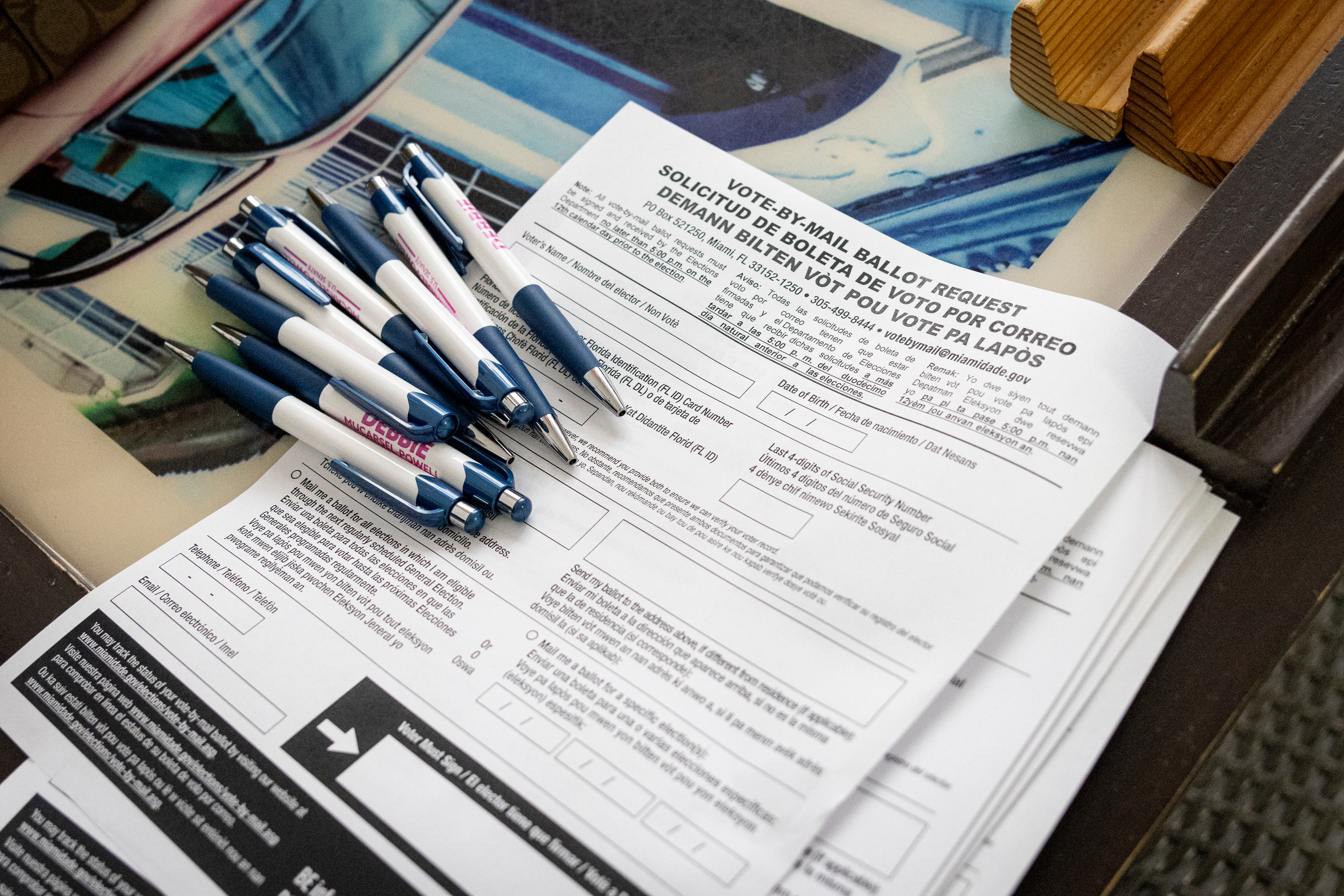
    An anonymous federal official warned in a disclosure to Congress that a rushed and insufficiently tested U.S. Postal Service system could prevent large numbers of Americans from receiving mail ballots this fall if courts approve President Donald Trump’s plans for the midterm elections.

    The disclosure, made public Tuesday morning by Sen. Richard Blumenthal (D-Connecticut), says the Postal Service has adopted an internal “zero-percent failure policy” under which an entire batch of ballots would be rejected if a single barcode sampled by a postal employee could not be scanned or matched with information submitted through a new online portal. A batch could contain tens of thousands of ballots, according to the disclosure.

    “The Postal Service has designed a system to disenfranchise millions of Americans,” Blumenthal said in a call with reporters.

    Postal officials and the White House did not immediately provide comment.

    In public statements, the Postal Service has previously said information submitted through the portal will be updated immediately. It has said postal employees will not determine voter eligibility or check names and addresses for accuracy. The rule does not disclose the sampling formula or zero-failure policy described in the whistleblower disclosure.

    The fight over the Postal Service’s plans is rooted in an executive order from Trump that seeks to overhaul mail voting. A judge has blocked those plans for now, but the administration is seeking to reinstate them ahead of this fall’s midterm elections.

    If the administration gets its way, state and local election officials would have to upload lists of voters to an online portal the Postal Service is designing. Postal employees would refuse to deliver to anyone who is not on those lists.

    The unnamed official alleged that the portal was assembled under constantly changing requirements and with as few as four working days available for customer testing before a planned launch.

    If the Postal Service’s plans go into effect, election officials will confront new challenges when they mail ballots in large batches. Postal workers plan to scan barcodes on a sample of envelopes to ensure the voters appear on the state’s list, according to the whistleblower. If they find even one mismatch, they will refuse to accept the entire batch, the whistleblower said. That means a single mismatch in a batch of 10,000 ballots would prevent the 9,999 other ballots from being mailed until discrepancies were resolved.

    “As designed, the process is entirely unforgiving,” the disclosure said. “It could delay ballots by the thousands in repeated verification cycles — and thus prevent states from mailing enormous numbers of ballots.”

    State and local officials often mail ballots in large batches to manage them as effectively as possible. Some states send ballots to all registered voters, and they must place millions of ballots in the mail in a short period.

    Many election officials have expressed alarm about the Postal Service’s overall plans under Trump’s executive order because they don’t believe they have been adequately thought through for a fast-approaching election.

    Among the issues they worry about are potential mismatches for mundane reasons. States constantly update their voter rolls, and the lists they send to the Postal Service could be out of date within minutes as new voters register and existing ones update their registrations because they’ve moved.

    The Postal Service has said states can update their voter lists, but election officials have expressed concerns that the new online portal won’t be able to handle a steady stream of updates.

    The whistleblower disclosure could add to those concerns and bolster legal challenges to the executive order and postal rules.

    The disclosure, dated Sunday, was submitted to Blumenthal by Whistleblower Aid on behalf of an anonymous federal official it represents.

    The organization described the unnamed whistleblower as a “federal official with direct knowledge of potentially catastrophic problems in the development” of the Postal Service’s plans and said the official feared reprisal by administration officials if identified.

    Blumenthal sent the disclosure late Monday to Postmaster General David Steiner and asked him to provide documents about the Postal Service’s plans.

    Blumenthal is the ranking Democrat on the Permanent Subcommittee on Investigations for the Senate Committee on Homeland Security and Governmental Affairs.

    States and voting rights groups sued over the executive order soon after Trump signed it in March. The Supreme Court last week allowed work on the executive order to proceed for the moment, but days later a lower court blocked it.

    The administration is seeking to get it reinstated but faces timing challenges. Officials in North Carolina are preparing to start mailing ballots on Friday under a state law requiring them to send them to those who ask for them starting 60 days before an election. Other states are set to start mailing their ballots in the following days and weeks.

    The whistleblower said the Postal Service stopped working on the portal around June 25 after a federal judge blocked implementation of Trump’s directive, then resumed work around July 29 while that order remained in effect.

    The disclosure said work continued after the judge issued a new order on Thursday barring the Postal Service for 14 days from taking further preparatory steps that would apply to all states for the November election. In a brief ruling Monday, the judge said the Postal Service could work on the portal for states that want to voluntarily use it.

    Postal officials planned to launch the portal on Tuesday, according to the whistleblower. One of the whistleblower’s attorneys, David Kligerman, said work on the portal had continued in recent days but didn’t know whether the Postal Service was sticking with its plan to make it available on Tuesday.
  • Donald Trump Jr.’s firm leads $1 billion funding round for Polymarket

    Donald Trump Jr.’s firm leads $1 billion funding round for Polymarket

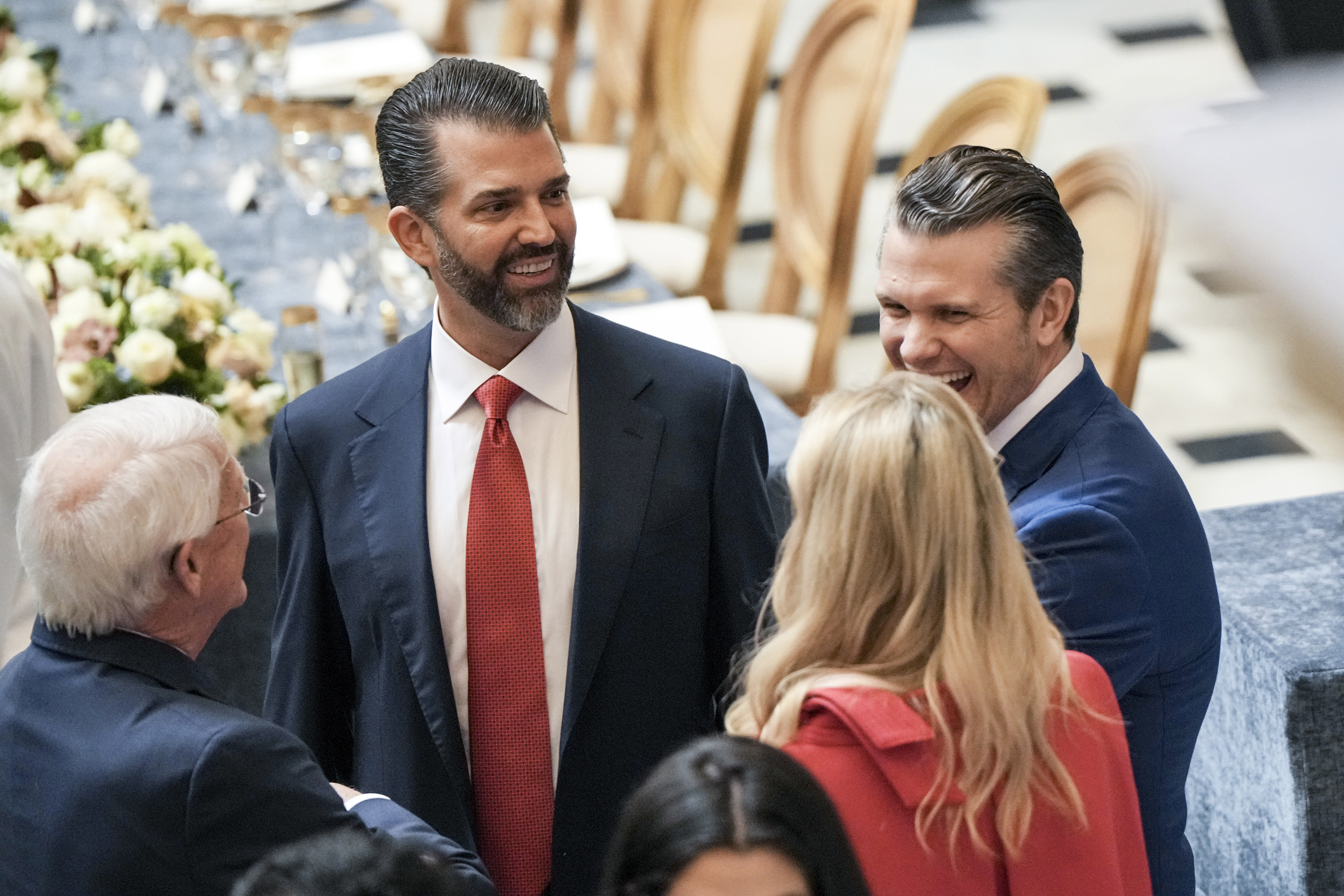
    Donald Trump Jr.’s venture capital firm, 1789 Capital, is leading a new funding round in Polymarket that values the prediction market at $21 billion, a spokesperson for 1789 Capital said Monday.

    Polymarket plans to raise $1 billion, including around $300 million from 1789 Capital, the spokesperson, Alexa Henning, said. The investment firm previously invested about $200 million in the prediction market, which is currently valued at about $15 billion.

    Prediction markets such as Polymarket and Kalshi have exploded in popularity over the past year. The platforms allow users to place wagers on the outcome of a wide variety of events, such as what the president will say in a speech or who will get married on “Love Is Blind.”

    The Trump family has built up a financial stake in the industry since last year. Donald Trump Jr. joined Kalshi as an adviser last year and received shares in the company worth more than $300,000. He also began advising Polymarket and invested in it via 1789 Capital.

    At the same time, his father, President Donald Trump, has taken steps to boost the industry. Michael S. Selig, whom the president appointed to lead the Commodity Futures Trading Commission, which oversees prediction markets, has spoken enthusiastically about the companies and sued states that tried to regulate them. The president declared on Truth Social that prediction markets would “thrive” under his leadership and said Selig was “respected by all.”

    Bloomberg earlier reported that 1789 Capital was leading Polymarket’s funding round.

    Many of the companies that 1789 Capital has invested in have large government contracts, while others, like Polymarket, have benefited directly from new Trump policies or rollbacks of existing laws, The New York Times has reported. The investment firm also bought shares in some of the most coveted private companies before many went public, including SpaceX, Anduril, Cerebras and Reflection AI.

    Two years ago, 1789 Capital managed a few hundred million dollars. It now oversees more than $3 billion.

    Donald Trump Jr. told the Times this year that he invested as a private citizen and held “no policy position and no role within the administration whatsoever.”

    This article originally appeared in The New York Times.

  • How the Pentagon is getting into the Venezuelan oil business under Trump

    How the Pentagon is getting into the Venezuelan oil business under Trump

    WASHINGTON — As the U.S. government faced shortcomings in the country’s weapons manufacturing, the Pentagon set up a new office that would make investments to help boost defense industrial production.

    That effort, which began in 2022 during the Biden administration, is now taking a sharp turn with the Pentagon’s involvement in an oil production deal between the United States and Venezuela that President Donald Trump announced on Friday.

    The Pentagon’s little-known Office of Strategic Capital, which reports to the deputy defense secretary, is the leading U.S. government entity in forming a partnership with a private oil producer whose founder, Alejandro Betancourt López, is a powerful and polarizing figure in international commerce.

    Trump said Pete Hegseth, the defense secretary, and Marco Rubio, the secretary of state and White House national security adviser, reached the agreement with the Venezuelan government on securing billions of barrels of oil reserves “through a partnership with private business.”

    The deal would give the U.S. government the option to take up to a 35% stake in the parent company of Betancourt’s firm, North American Blue Energy Partners. This would come in the form of a financial instrument known as a warrant, plus preferential access to much of the oil that the company produces.

    Warrants would give the government the right to buy shares in the oil company at a predetermined price. The value of warrants, which can be bought and sold, fluctuates based on the value of the company that issued them.

    In this case, the warrants would be what are known as penny warrants, according to two people familiar with the deal, meaning they could be converted into shares for very little money, often just 1 cent.

    Typically, companies issue warrants in exchange for something of value. During the coronavirus pandemic, for example, the federal government bailed out U.S. airlines with more than $50 billion in grants and loans to help the companies pay employees and cover other costs. In return, the Treasury Department received warrants from roughly a dozen airlines, most of which it later sold to private investors.

    In this case, the deal would come “all at zero cost to the United States,” the White House said in a statement Monday night. The federal government’s partnership and seal of approval could make it easier for the company to raise money from private investors and also shield it from legal scrutiny or political upheaval in Venezuela.

    In a statement, Betancourt said the deal would unleash Venezuela’s potential “to the great benefit of both Venezuelans and Americans.”

    During the Biden administration, the Office of Strategic Capital made loans to private companies to bolster strategic industrial production in the United States, and asked for repayment of the loans with interest at below-market federal rates. In the Trump administration, the office has typically asked companies to give it warrants as well as repay the loans.

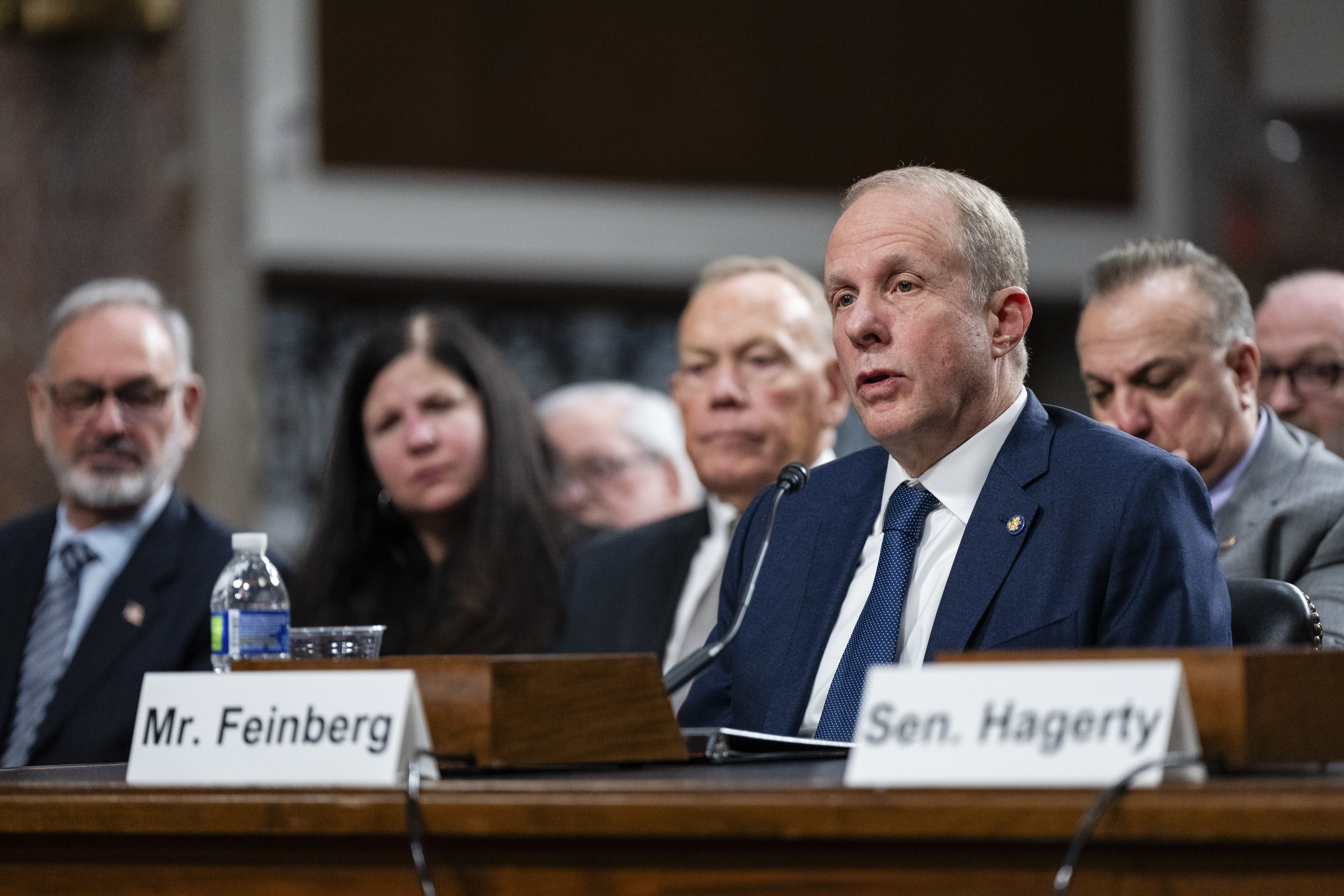
    The office falls under Stephen A. Feinberg, the deputy secretary of defense. Feinberg, a billionaire businessperson and political appointee under Trump, has been tasked with trying to help rejuvenate the U.S. defense industrial base. Feinberg approves the office’s deals.

    The office was founded under the previous defense secretary, Lloyd Austin. At that time, in 2022, U.S. officials were concerned about the fact that critical items for certain weapons systems were made in China. They were also grappling with weaknesses in arms production exposed by Russia’s war against Ukraine and global supply chain problems exposed by the pandemic.

    Those issues have become even more acute, given the drawdown of U.S. weapons stockpiles during the war against Iran that Trump and Israel started six months ago.

    The office’s initial $1 billion loan authority has ballooned to $100 billion, largely because of a boost from Trump’s major domestic policy legislation that Congress passed in July 2025.

    The director of the office is now David Lorch, who worked at Cerberus Capital Management, the private equity firm cofounded by Feinberg. In November, the month Lorch started his job, the office announced a loan of $620 million to Vulcan Elements and one of $80 million to ReElement Technologies to increase domestic magnet production and “significantly bolster U.S. critical minerals supply chains.” The office said it would get warrants from those companies.

    That kind of financing would help the United States decrease its dependency on Chinese manufacturing. But Vulcan Elements has financial ties to the president’s oldest son, Donald Trump Jr., which prompted Democratic senators to criticize the arrangement. Peter Navarro, a White House aide and friend of the younger Trump, requested the financing, ProPublica reported.

    By July, the other company, ReElement Technologies, a rare earths firm, had withdrawn from the loan process because it was struggling to meet federal due diligence standards, Reuters reported.

    On Saturday, the chief Pentagon spokesperson, Sean Parnell, said in a statement that the office “does not take equity stakes in private companies.” The White House’s statement on Monday about the deal contradicts Parnell’s assertion.

    In addition to receiving warrants, the federal government would be guaranteed 20% of the oil that Betancourt’s company produces “at production cost,” according to the White House, meaning at a favorable price. The State Department would also have right of first refusal to buy the remaining 80% of the company’s output.

    That would put the State Department in an unusual role since it is oil companies and other traders who typically buy and sell oil. Any decision to buy oil to refill U.S. government stockpiles would require authorization, including from Congress, and typically be handled by the Energy Department.

    In any case, it would most likely take years for new projects in Venezuela to generate meaningful amounts of oil.

    Betancourt, the U.S. government’s partner, received no-bid oil contracts in Venezuela many years ago. He has been under investigation in Spain and Switzerland on accusations of money laundering and tax fraud. He usually lives in Britain and was barred from foreign travel by the British government while he was in that country because of an extradition agreement with Switzerland, where prosecutors had issued an arrest warrant.

    However, Rubio wanted to get Betancourt to Venezuela to work on oil deals and production, and the State Department in recent months pressed the Swiss and British governments to ease up on him, said a person with knowledge of that effort.

    “Mr. Betancourt has never been charged with a crime in any jurisdiction,” Sara Chouraqui, general counsel for North American Blue Energy Partners, said in a statement Saturday.

    This article originally appeared in The New York Times.

  • Rescuers comb through mud and debris as Nepal-China floods leave more than 1,000 dead

    Rescuers comb through mud and debris as Nepal-China floods leave more than 1,000 dead

    KATHMANDU, Nepal — Rescue teams with search dogs combed through mud, rocks and debris Tuesday in Nepal and China looking for thousands of people still missing after catastrophic flooding tore through communities across the Himalayas, leaving more than 1,000 dead.

    Nepal’s disaster agency said Tuesday that 987 deaths had been counted there, with 3,916 people missing, including 583 foreigners. Chinese authorities, in their latest update on Sunday, reported 16 deaths and 546 people still missing, including 261 foreigners.

    The scale of last week’s disaster was hampering rescue efforts in both regions, with landslides, destroyed roads and widespread damage cutting off remote areas. Crews faced challenging conditions as they searched unstable terrain and piles of debris, raising fears the death toll could rise as rescuers reach isolated communities.

    Rescuers race to reach missing hydropower workers

    In Nepal, rescuers were racing to reach hundreds of workers believed to be trapped inside tunnels at hydropower projects damaged by the floods. About 900 workers are missing from 12 projects, with roughly 500 believed to be trapped in tunnels, according to Nepalese authorities.

    Brig. Gen. Raja Ram Basnet, Nepal’s army spokesperson, said teams assisted by foreign experts were working at several hydropower projects. Visuals released by the army showed rescue teams entering dark, debris-filled tunnels, wading through mud and water and climbing over rocks as they searched for signs of life.

    On the Chinese side, rescue crews scoured areas hit by mudslides, particularly around the Gyirong Port border crossing, which was destroyed.

    Some rescuers, aided by search dogs, searched gaps among rocks and debris for signs of life. Other teams used heavy machinery to clear a major highway leading to Gyirong Port, hoping to clear the way for equipment, personnel and supplies to reach the disaster zone, according to China’s state-run Global Times newspaper.

    Relief operations expand to reach stranded communities

    At least 11,814 people have been rescued so far, according to Nepalese authorities. Emergency crews were using helicopters and other aircraft to reach stranded communities in areas where roads and bridges have been destroyed by the flooding and landslides.

    Authorities on Tuesday also stepped up efforts to provide assistance to survivors in areas where roads and other transportation routes had been damaged or cut off.

    Chinese Foreign Ministry spokesperson Guo Jiakun said China’s second batch of relief supplies for Nepal was expected to ship Tuesday, including drones, DNA testing and water purification equipment. Chinese DNA testing experts will also help Nepal identity bodies, he said.

    Bimal Sharma, a helicopter pilot who has been flying rescue and relief missions since the disaster began, said he was shocked to see the devastation in Timure, a border town close to Tibet that he has known for years.

    “It felt like I was flying over an entirely different landscape,” he said.

    Sharma said he has had little opportunity to speak with the people he rescued, but their expressions told him how deeply the disaster had affected them.

    “I can see the pain in their eyes. It’s heartbreaking,” he said.

    The disaster began with a glacial collapse high in the Himalayas

    The Aug. 26 disaster began with a chain of events high in the Himalayas. A glacial collapse sent large amounts of rock, ice and meltwater into valleys below, triggering powerful floods downstream.

    Scientists studying satellite imagery said the collapse appears to have involved the failure of bedrock beneath a glacier in the Himalayan region. The rockfall was powerful enough to register as a magnitude 5.2 seismic event.

    The resulting surge of water and debris entered rivers that flow through valleys in Tibet and Nepal, causing them to rise rapidly. Floodwaters swept away homes, buildings, roads and bridges and carried mud and rocks downstream.

    Nepal’s Prime Minister Balendra Shah said that the disaster highlighted the need for action to combat climate change.

    “This incident has indicated that the risks we face in the Himalayan region are increasing with climate change,” Shah said in a social media post Monday night. “Therefore, this region must be alert, and at the same time, it is time for us to strongly raise the issue of disasters caused by climate change before the international community.”

  • Decades after Tupac’s murder, a talkative gang member is convicted

    Decades after Tupac’s murder, a talkative gang member is convicted

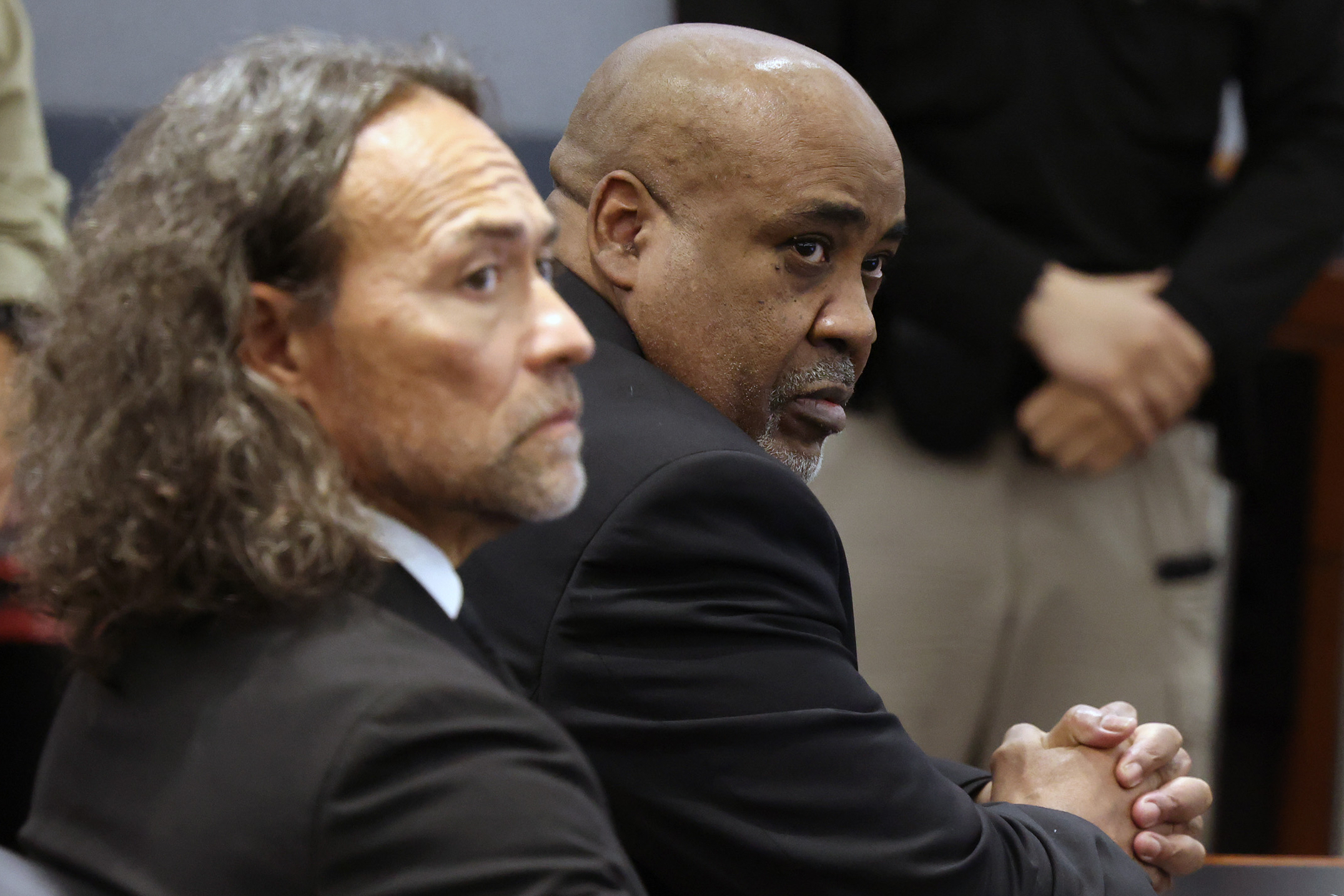
    A jury in Las Vegas on Monday found a man guilty of orchestrating the 1996 murder of Tupac Shakur, delivering a conviction nearly 30 years after one of hip-hop’s most notorious killings.

    Duane Keith Davis, 63, was accused of obtaining the gun used in the shooting and pursuing Shakur during a gang war that had become entangled with a feud between East Coast and West Coast hip-hop labels.

    After about three hours of deliberations, the 12 jurors announced they had found Davis guilty of first-degree murder. Members of Shakur’s family who were seated in the courtroom embraced and passed around tissues to wipe away tears.

    Straight-faced but agitated after the verdict, Davis addressed the judge to promise he would appeal. He is scheduled to receive his sentence — up to life in prison — on Oct. 13.

    In a three-week trial, prosecutors depicted Davis as a shot caller for a group of Crips from Compton, California, who were out for revenge on the night of Sept. 7, 1996, when they happened to encounter Shakur in a black BMW stopped at a traffic light. Shakur, who was 25 and in the prime of his career, was shot four times and died at a hospital days later.

    A socially conscious poet who was on his way to becoming a cultural icon, Shakur became only more popular as he was increasingly associated with violence and gang culture. His death turned him into a hip-hop martyr, joined only six months later by Christopher Wallace, the rapper known as the Notorious B.I.G., a onetime friend who turned into a bitter rival.

    After Wallace was gunned down in Los Angeles in March 1997, the shootings became twin tragedies that had never led to a conviction, until now.

    For years, the Shakur case had languished as important evidence, including the murder weapon, remained missing and key witnesses — including Shakur’s label boss, Marion Knight, known as Suge — refused to cooperate. The standstill turned the case into fodder for true-crime enthusiasts and conspiracy theorists.

    Then, in 2008, Davis began speaking to the police in an effort to avoid drug charges that could have put him in prison for life. Law enforcement considered him untouchable because he had shared the information under an agreement that he could not be charged based on it.

    But prosecutors changed their calculation once Davis began repeatedly addressing the shooting publicly — in podcasts, a documentary and a 2019 memoir.

    “I’m one of the only living eyewitnesses to Tupac’s killing,” read the introduction to the memoir, “Compton Street Legend.”

    Under the mistaken belief that he was fully immune from prosecution, Davis effectively handed prosecutors the evidence they needed to bring a case.

    After he was indicted on a charge of murder in 2023, Davis, who is known by the nickname Keffe D, asserted that the statements in his memoir and in interviews were fictional stories invented to turn a profit on the hip-hop media circuit.

    “Mr. Davis is attempting to escape responsibility for a crime everybody knows he committed — even him,” Marc DiGiacomo, a prosecutor in the case, said in court Monday, “and he admits to it seven or eight times over the course of 30 years.”

    Throughout the trial, Michael Sanft, Davis’ lawyer, argued that the prosecution’s case was based on presumptions rather than hard facts, and that it was absurd to rely on Davis’ own statements, which were riddled with inaccuracies and inconsistencies.

    “What facts do they have to even put Keffe D in a car in Las Vegas on Sept. 7, 1996? What facts?” he said at the trial.

    The two weeks of testimony at Clark County District Court chronicled a story that had long been told in books, podcasts and true-crime specials, but never at a murder trial.

    Prosecutors painted a picture of simmering gang tensions in Compton between local sets of Bloods and Crips, the temperature increasing by their entanglement with the bicoastal rap beef of the 1990s.

    The Bloods were aligned with Shakur and Knight’s Los Angeles-based Death Row Records, prosecutors said, while the Crips were hired to provide security when New York’s Bad Boy Records, run by Sean Combs, traveled out West.

    In 1996, two gang skirmishes sent hostilities boiling over.

    There was a brawl over a Death Row chain between young Crips and Bloods at a Southern California mall. Then, in September, both sides converged in Las Vegas for a Mike Tyson prizefight. After the fight, Orlando Anderson, a member of the Crips who had been present at the mall, received a beating by a group of men that sent him to a hospital.

    Among the assailants, identified to jurors on hotel security footage at the MGM Grand, were Shakur and Knight.

    According to Davis’ account to the police and in interviews, he obtained a .40-caliber Glock from an associate and set out with a group of Crips to find Shakur and his boss. “Them jumping on my nephew gave us the ultimate green light,” his memoir read.

    Driving around Las Vegas in a white Cadillac, the group spotted Shakur on the road, visible in the passenger’s seat of a black BMW driven by Knight.

    In an interview with law enforcement in 2009, Davis described how his associate behind the wheel made a U-turn to pull up alongside Shakur and Knight’s vehicle.

    A woman in a car nearby, Ingrid Stokes, testified that a hail of gunfire erupted. “All hell broke loose,” she told jurors.

    The BMW was riddled with bullet holes, the tarmac glinting with spent cartridge cases. Knight had been grazed in the head; Shakur, in far worse condition, was loaded into an ambulance.

    Garry Dale, a former police officer who rode with Shakur on the way to the hospital, testified that he had asked him to divulge the names of the assailants but that Shakur had brushed him off.

    “We’ll take care of it,” Shakur replied, according to Dale.

    Word soon spread in Compton that Anderson had been the person to open fire in retaliation for the beating at the MGM Grand, but other accounts suggest it was Deandrae Smith, who had been sitting next to him in the back seat. Davis is the only person still alive who was said to have been in the white Cadillac.

    Although Davis did not testify, the prosecution centered its case on his own words, played for the jury through audio of interviews with police officers, documentary filmmakers and YouTube personalities.

    Prosecutors acknowledged that his statements could be inconsistent, and they did not embrace everything as true. His repeated allegation that Combs had offered him $1 million to kill Shakur and Knight, which the music mogul has vehemently denied, was left on the far periphery of the case.

    In total, the jury heard more than eight hours of Davis’ voice, according to prosecutors.

    “I didn’t tell nobody, nothing, that we killed Tupac,” Davis said in 2009, when he was speaking to the police.

    He added: “I was gonna keep this secret.”

    This article originally appeared in The New York Times.

  • Letters to the Editor | Sept. 1, 2026

    Letters to the Editor | Sept. 1, 2026

    Hero betrayed

    Doris Miller was a sailor serving aboard the battleship USS West Virginia in World War II. During the attack on Pearl Harbor, his ship was bombed and strafed with enemy gunfire. He disregarded his own safety and carried his mortally wounded captain to a safer location. Returning to his ship, although untrained, he operated a .50 caliber Browning anti-aircraft gun. Miller successfully shot down several enemy planes until he ran out of ammunition and was ordered to abandon ship.

    Fast-forward to today. We have a U.S. president who avoided any type of service in our military due to bone spurs. This commander in chief wants to take the naming of an aircraft carrier away from Miller, a bona fide war hero, and put his own name on the ship. Outrageous, despicable, and scandalous! Every combat veteran, everyone who served in the military, and every American should be sickened by the very thought. Let me ask you, in a moment of extreme distress, who would you want to have your back: Doris Miller or Donald Trump?

    William D. Markert Jr., Vietnam veteran, Warminster

    Mission creep

    U.S. Immigration and Customs Enforcement is back in the news with its record-breaking July arrest total of nearly 50,000. Most arrests were made in Texas and Florida, largely due to financial incentives offered to cooperating local police departments. An arrest of a Haitian immigrant in Key West, Fla., who was seeking asylum due to death threats in his country of origin is particularly concerning. According to The Inquirer, the restaurant owner, who employed the Haitian as a cook and supervisor, claimed: “He was an excellent worker, he learned very fast, he never had any problem with the law …. He was a nice kid; he was a family man.” I wonder if any ICE agents who responded to the ad that ICE would rid our nation of the “worst of the worst” are getting second thoughts about their mission?

    John Groch, West Chester

    Memorable footnote

    As Donald Trump attempts to whitewash history by rewriting the story of George Washington’s house on Independence Mall, a significant footnote has been widely overlooked. On Friday evening, April 18, 2008, five days before the Pennsylvania primary, a presidential candidate rose to speak from almost the exact site where enslaved people lived and served the nation’s first president. The young senator addressed an overflow crowd of more than 35,000. Barack Obama lost the primary five days later, but would go on to become the country’s 44th — and first Black — president.

    Martha Jablow, Philadelphia

    Grid collapse

    Cuba’s national power grid has collapsed several times this year. Not a neighborhood, not a province — the whole island, all at once, over and over. Hospitals are rationing care. Ventilators are going quiet. Water pumps have stopped. In parts of the country, the outages exceed 20 hours at a stretch. This isn’t a natural disaster. It’s an oil blockade the Trump administration has enforced since January, letting a grand total of one tanker reach Cuban shores in seven months. Congress can end it. There is a privileged resolution sitting in the House right now, H.Con.Res.106, that would force a vote to stop these unauthorized hostilities. House Democratic leadership just has to schedule it. Will you tell your member of Congress to call for the vote?

    Andrew Mills, Lower Gwynedd

    Join the conversation: Send letters to letters@inquirer.com. Limit length to 150 words and include home address and day and evening phone number. Letters run in The Inquirer six days a week on the editorial pages and online.

  • Horoscopes: Tuesday, Sept. 1, 2026

    Horoscopes: Tuesday, Sept. 1, 2026

    ARIES (March 21-April 19). The doubt: If I cannot make the move now, I may lose my chance. The remedy: Use the delay to sharpen your approach. When you are able to make a move, you’ll be so ready.

    TAURUS (April 20-May 20). The doubt: I lack enough money, time or security to begin. The remedy: Build from what is already stable. One dependable resource will support the next. Every dream needs a foundation. It’s not glamorous or showy; it’s just necessary.

    GEMINI (May 21-June 21). The doubt: I have too many ideas and no clear path. The remedy: Choose the idea that keeps coming back to you. Give it one concrete task. Contact with the work will turn possibilities into clarity and evidence.

    CANCER (June 22-July 22). The doubt: Pursuing this may take something away from the people I love. The remedy: Design a version that includes their needs and yours. And remember, the key element of your future is the “you” in it.

    LEO (July 23-Aug. 22). The doubt: What if the result fails to match the magnificent vision? The remedy: Make something real enough to revise. Most ideas don’t have a flawless debut, but the imperfect first version can be worked into something grand.

    VIRGO (Aug. 23-Sept. 22). The doubt: I have overlooked the flaw that will undo everything. The remedy: Look for the next necessary correction, rather than every possible thing that can go wrong. Revision and repair belong inside the plan from the beginning.

    LIBRA (Sept. 23-Oct. 23). The doubt: Moving forward may upset the balance or cost me someone’s approval. The remedy: Honest conversation. Ultimately withholding your true desire will be too much work. A fair arrangement makes room for every person involved.

    SCORPIO (Oct. 24-Nov. 21). The doubt: If I reveal how much this matters, I will surrender my power. The remedy: If you care, care. Controlling or revealing your feelings doesn’t guarantee an outcome; it only keeps you from fully entering the experience.

    SAGITTARIUS (Nov. 22-Dec. 21). The doubt: Choosing one path will make my future smaller. The remedy: Treat commitment as a way of traveling to a distant destination. It may be one road, but the view changes with every step.

    CAPRICORN (Dec. 22-Jan. 19). The doubt: If success takes this much effort, perhaps I chose the wrong goal. The remedy: Try to see difficulty as information, not as the final verdict. Necessary work is rewarding. Hard-won goals are more satisfying to attain.

    AQUARIUS (Jan. 20-Feb. 18). The doubt: My idea is too unusual for systems or people to support. The remedy: Find the part others can use now. People are more likely to welcome the innovation that comes through a familiar door.

    PISCES (Feb. 19-March 20). The doubt: Turning this dream into practical steps will drain its magic. The remedy: Let the vision keep its mystery. The steps don’t need it. Spells have recipes. Illusions have instructions. Structure doesn’t steal from imagination; it protects it.

    TODAY’S BIRTHDAY (Sept. 1). Welcome to your Year of the Expanded Comfort Zone. You’ve noticed that when you’re out of your element, you grow. So you’re willing to push yourself into new situations, and life will bring the ones that intrigue and embolden you to become the person you want to be. More highlights: Those you’ve taught will make you proud. Your team wins more than the prize they were going for. Relationships blossom; adventure ensues. Aquarius and Taurus adore you. Your lucky numbers are: 4, 10, 33, 7 and 18.

  • Dear Abby | Oldest sibling needs help with widowed Mom

    Dear Abby | Oldest sibling needs help with widowed Mom

    DEAR ABBY: My father passed away three months ago, leaving my mom alone for the first time in her life. She lives nearby, so my wife and I have been doing what we can. We have her over several times a week, and we visit and call to check in often.

    Mom is having a hard time and sometimes forgets to eat or get dressed if we don’t remind her. There has been a lot of legal stuff to do following Dad’s death, decisions she’s not up for, so we’re doing that, too. I’m trying to get her professional help (counseling and help at home), but there are waiting lists, and it’s going to take time. I’m also mourning Dad, and it’s been a lot.

    What I’d really like is for my brothers to step up. One lives in the next town. The other is only a couple of hours away. Neither one has been to see Mom since the funeral, and it doesn’t sound like they’ve been calling her often.

    I’m the oldest, and they are used to me taking care of things, but this is more than I can handle alone. I have told them that directly. They both say they want to help, but then they don’t. I have tried giving them specific tasks (for example, to call Mom in the morning before 10 on a certain day), and they agree but then don’t follow through. We usually get along.

    They are both successful people with good jobs and families, so I don’t understand why they are slacking here. I think they’re just used to Mom being the caretaker and can’t see that the roles are reversed now even though we’re all in our 40s and no longer little boys. How do I get them to start shouldering their share of the responsibility here?

    — IN CHARGE IN WISCONSIN

    DEAR IN CHARGE: Because your brothers cannot be trusted to step up and give your mother more time, there is another way they can take some of the responsibility off your shoulders. They can offer money in lieu of time. Each could chip in so that their mother has a caregiver or companion to help her with the household chores. They should also contribute toward grief or psychological counseling until she is stronger. If you suggest all of that, you may find they magically begin calling Mom more often!

    ** ** **

    DEAR ABBY: I am at my wits’ end. I support myself and my boyfriend of 14 years. I have no extra money to support anyone else. My boyfriend’s mother, who is our neighbor, treats him like a dog and always has. She constantly asks him for stuff. He gives her things that I have worked for — cigarettes, soft drinks, food, etc. It all adds up, and I can’t do it anymore. Please give me any advice that you have.

    — TIRED

    DEAR TIRED: You have learned the hard way that your boyfriend and his mom are a package deal, and they are both deadbeats. Get out of there and stop letting them use you. Find a place of your own, block his calls, and experience the satisfaction of living on your own. Once you’ve done that, I’m sure you can find yourself a much better man — or you may decide you don’t need one.

  • House lawmakers return to Washington with a stopgap funding bill atop the list of priorities

    House lawmakers return to Washington with a stopgap funding bill atop the list of priorities

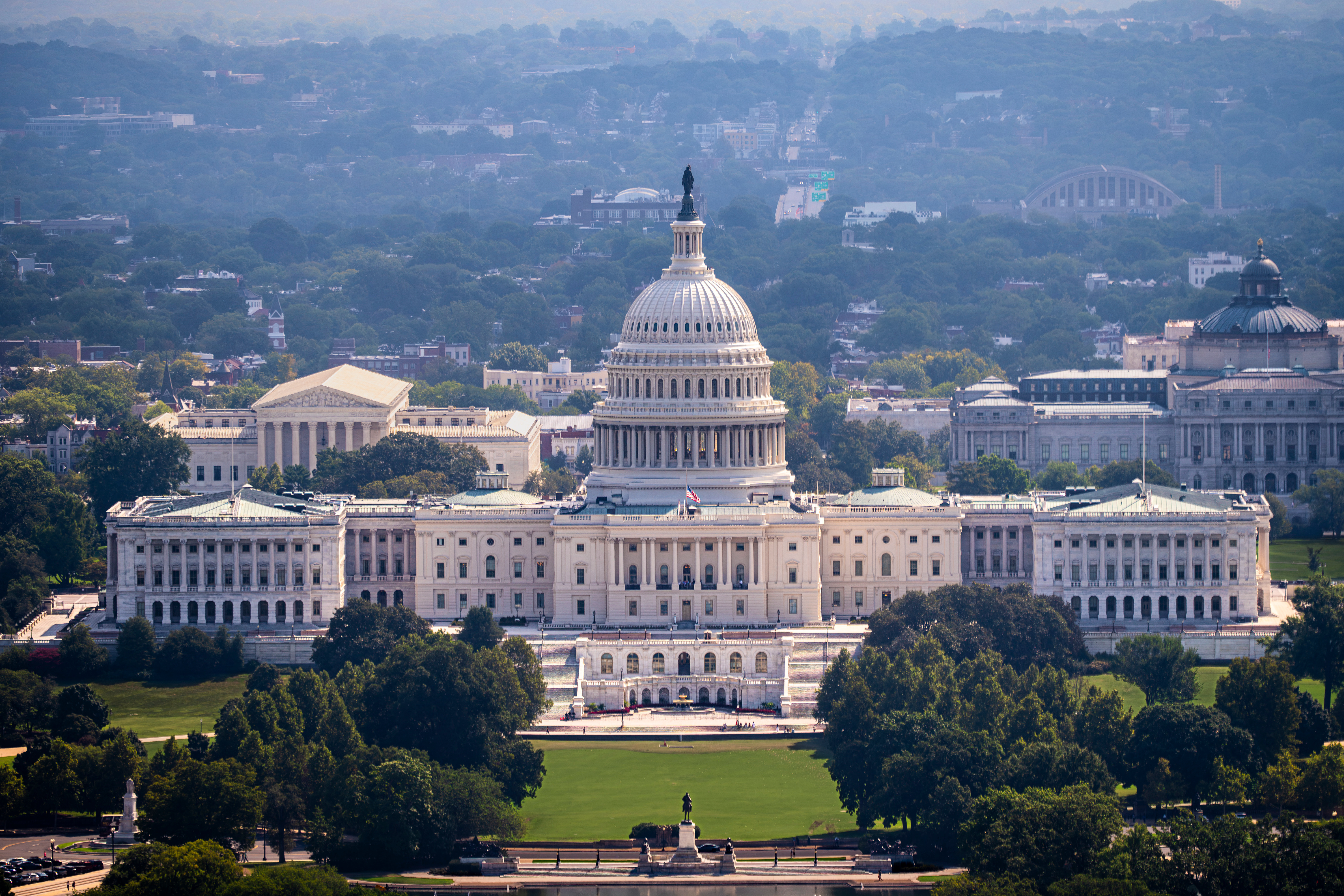
    WASHINGTON — House lawmakers returned to Washington on Monday with a short to-do list after five weeks back in their home districts. The first order of business is most likely a vote on a stopgap spending bill designed to keep the federal government fully funded through early December, removing the possibility of a shutdown before the midterm elections.

    With election season getting underway, votes are also expected on measures designed to amplify the GOP’s messaging strategy going into November, most notably a resolution condemning socialism. Republicans are trying to tie the Democratic Party in general to the democratic socialist candidates who have succeeded this year in running for office.

    “The first thing is we’ve got to make sure this government gets funded and we don’t have another Democratic shutdown,” Speaker Mike Johnson told reporters as he prepared to open the chamber for business. The funding vote will most likely take place today.

    One significant item that did not make its way onto the House schedule this week is a Senate-passed bill that imposes sanctions on key segments of the Russian economy and allows President Donald Trump to impose steep tariffs on goods imported from countries that buy the vast majority of Russian oil and gas. The effort led by the late Sen. Lindsey Graham aims to deprive Russian President Vladimir Putin of revenue used to finance the war against Ukraine.

    The bill passed 86-11 in the Senate. House passage would send the bill to Trump’s desk for his signature. However, some key House Democrats oppose the bill. Democratic leader Hakeem Jeffries said the legislation risks providing Trump and his administration with new sanction and tariff authorities that “we believe they will abuse.”

    “I have serious concerns with the legislation,” he told reporters.

    The return to Washington also brings a renewed focus on improper behavior by lawmakers as the House will have its first chance to act on a recommendation from the House Ethics Committee to censure Rep. Chuck Edwards (R., N.C.) for engaging in persistent unprofessional and inappropriate conduct toward two young female aides in his congressional office.

    Edwards implores colleagues to reject censure vote

    Edwards has disputed the committee’s conclusion that he failed to adhere to the spirit of the rules prohibiting sexual harassment and unwanted advances toward House staffers. He points to the committee’s conclusion that found no evidence he “engaged in sexual activity or explicitly propositioned any individual under his employ.”

    Edwards said he was not asking lawmakers to approve of every gift, compliment, or social interaction, but to distinguish between conduct that someone might find unconventional and conduct that actually establishes sexual harassment.

    “Individual acts that were not themselves prohibited were gathered together, assigned the most damaging possible interpretation, and then used collectively to support a conclusion far more serious than the underlying evidence,” Edwards wrote in a letter to colleagues first reported by NOTUS.

    The committee said Edwards provided the two staffers with lavish and recurrent gifts, made comments regarding their dress and appearance, invited them to intimate dinners and vacations, sent notes regarding his effusive affection, and invited them to other activities as a way to spend time together.

    A vote to censure registers the House’s deep disapproval of a lawmaker’s conduct that does not meet the threshold for expulsion. Edwards dropped his reelection plans after the committee’s report came out.

    Lawmakers are working to avoid another shutdown

    The short-term funding bill underwent some significant changes in the Senate, which made it more palatable for Democrats. It delays a proposed rule from the Office of Management and Budget that would give political appointees more power over the distribution of federal grants. It also includes language to ensure the administration can’t transfer funds to the Border Patrol.

    But a provision that delays for one month a federal ban on intoxicating hemp THC products has prompted criticism from many GOP lawmakers. As a result, GOP leaders will likely place the bill on a fast-track process that avoids a separate procedural vote, bypassing any Republican efforts to block or stall the legislation. Suspension bills require a two-thirds vote to pass, meaning a significant number from both parties need to support the measure for it to pass and advance to Trump’s desk.

    Lawmakers are anxious to avoid the possibility of a shutdown as voters weigh their options going into November. The funding bill passed by a 90-6 vote in the Senate, showing that lawmakers from both political parties want to avoid a repeat of the two historic shutdowns that occurred this past year.

  • Army Secretary Dan Driscoll is stepping down after 18 months on the job, White House says

    Army Secretary Dan Driscoll is stepping down after 18 months on the job, White House says

    WASHINGTON — Army Secretary Dan Driscoll is stepping down after 18 months on the job, the White House said Monday, in the latest departure of a top military leader during the Trump administration.

    No reason was given for the departure of Driscoll, who is a friend of Vice President JD Vance, but tensions with Defense Secretary Pete Hegseth have been widely reported. It marks the latest in a series of shake-ups of top military leadership, with the Army especially seeing major upheaval.

    “Secretary Driscoll has been highly effective in advancing President Trump’s agenda to Make America Strong Again at the Department of the Army by providing outstanding leadership during historic military operations, restoring an emphasis on readiness and lethality, assisting with negotiations between Russia and Ukraine, and more,” White House spokesperson Anna Kelly said in a statement.

    “The United States Army is more powerful than ever thanks to his work alongside the Commander-in-Chief and Secretary of War,” she added.

    The Pentagon referred questions to the Army. The Army had not immediately responded to an email seeking comment. A spokesperson for Driscoll had not responded to a text message.

    Hegseth suddenly ousted the service’s top uniformed leader, Gen. Randy George, in April, while the Army’s commander in Europe and Africa, Gen. Christopher Donahue, unexpectedly stepped down in June.

    Gen. Christopher LaNeve, who has made a meteoric rise under Hegseth, took George’s place as the Army’s acting chief of staff. Under LaNeve, the service is pulling the plug on a drone modernization program that Driscoll had heralded. An Army unit based in Europe was building its own drones before LaNeve directed it to end its efforts and return to being a traditional infantry battalion, officials said this week.

    Driscoll was a George ally and lamented his departure, along with both Republican and Democratic lawmakers. He told Congress in April that he and his family drove to George’s house following his resignation “and we all gave him a hug.”

    “That being said, the civilian leadership, the design of our system, is that they get to pick the leaders that they want,” Driscoll added.

    Driscoll is an Iraq war veteran, tech investor, and former adviser to Vance, whom Driscoll met at Yale Law School. When nominating Driscoll in 2024, President Donald Trump called him “a disruptor and change agent.”

    As Army secretary, Driscoll was tapped for the unusual role of key negotiator to try to end the war between Russia and Ukraine. He was also a major force behind trying to cut the red tape for military contractors to quickly develop more drones and counterdrone capabilities as warfare rapidly changes around the world.

    The Senate confirmed him in February 2025, voting 66-28, following an Armed Services Committee hearing that was largely unconfrontational and focused on how the Army could modernize its systems, improve recruiting and beef up the military industrial base.

    Driscoll noted that his father and grandfather served in the Army and he vowed to be a secretary focused on the needs of soldiers. According to the Army, Driscoll served as an armor officer from August 2007 to March 2011, deploying to Iraq from October 2009 to July 2010.

    He also ran unsuccessfully in the Republican primary for a North Carolina congressional seat in 2020, getting about 8% of the vote in a crowded field of candidates.

    His departure comes after Hegseth ousted several other generals and admirals, including the head of the Navy.

    The Pentagon abruptly announced in April that Navy Secretary John Phelan was leaving the job, becoming the first head of a military service to depart during Trump’s second term.