Tag: no-latest

  • Symbolic funerals held in Nepal for those feared lost as some missing tourists make contact

    Symbolic funerals held in Nepal for those feared lost as some missing tourists make contact

    KATHMANDU, Nepal — Tourists previously reported missing in Nepal have made contact with authorities, officials said Wednesday, as families of locals still unaccounted for after last week’s catastrophic floods held symbolic funerals for their loved ones.

    Nepal’s Foreign Ministry said 324 foreign nationals have been rescued, while another 590 from 39 countries remain missing following the Aug. 26 floods that killed at least 1,118 people and left more than 3,900 missing.

    Australian Prime Minister Anthony Albanese said Wednesday that the number of Australians missing in the disaster had fallen from 43 to 38 after five were confirmed safe overnight.

    “Amidst all of this tragedy, we are seeing some positive news. Today, another five Australians have been confirmed safe,” Albanese told reporters in Palau, where he is attending a regional summit.

    “We hope, of course, for positive news further, and we’re doing everything we can to work with authorities,” Albanese added.

    Sunil Sharma, a spokesperson for the Nepal Tourism Board, said at least five other tourists who were previously reported missing had contacted authorities by email or telephone in recent days.

    It is thought the disaster happened when a glacial collapse in the Himalayas sent rock, ice and meltwater into valleys below, triggering powerful floods downstream. The surge entered rivers flowing through Tibet and Nepal, causing them to rise rapidly. Floodwaters swept away homes, buildings, roads and bridges, carrying mud and rocks downstream.

    Families hold symbolic funerals

    Some families in Nuwakot, one of Nepal’s worst-affected districts, have held symbolic funerals for relatives still missing, hoping to free their souls after they were presumed dead.

    In Hindu tradition, cremation is an important final rite, and for some families, performing the ceremony even without the bodies of their loved ones provides a sense of spiritual release.

    Mukunda Rijal said his cousins and their daughters had not been found, prompting the family to perform a symbolic funeral for them.

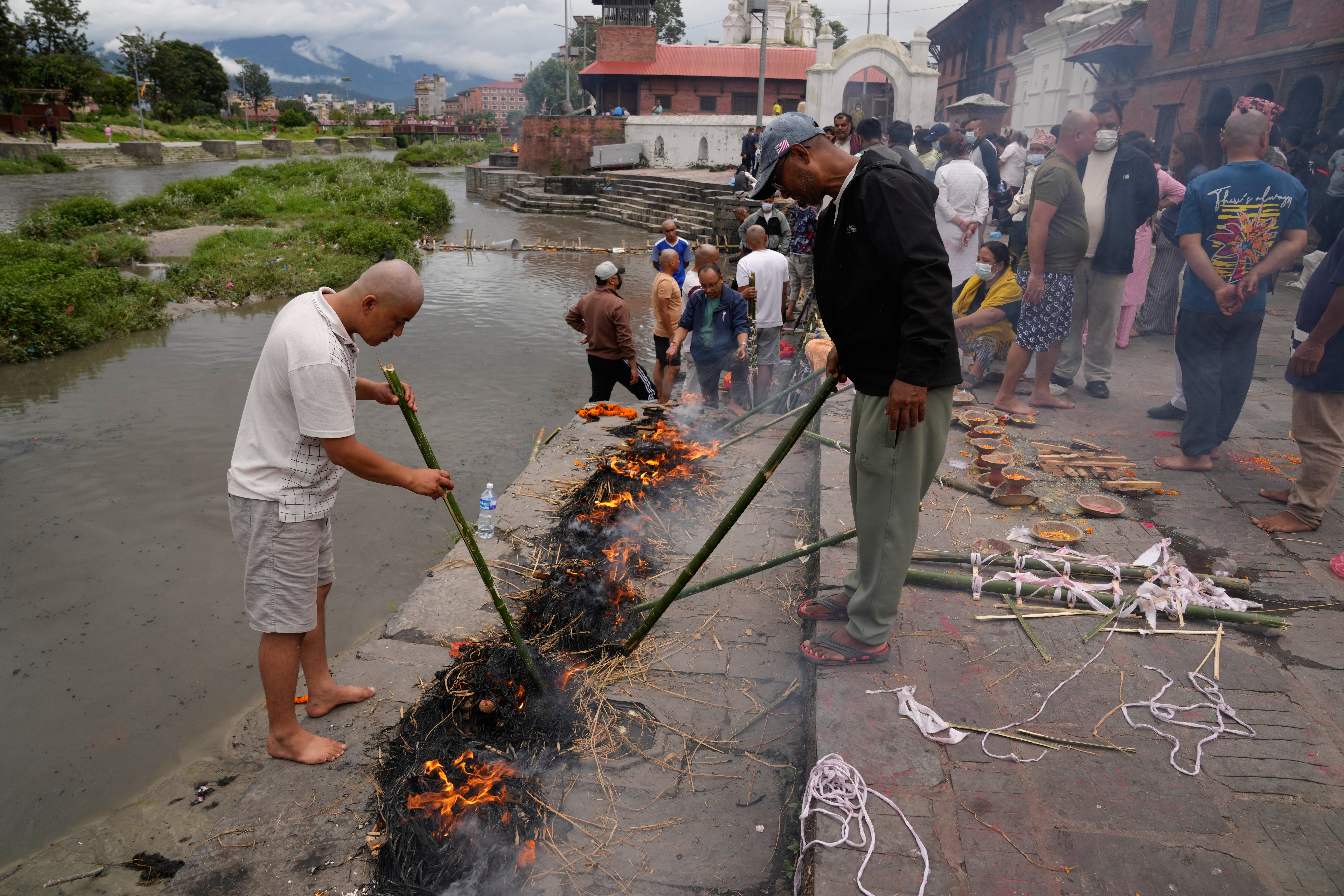
    Along the banks of the Trishuli River, a priest placed straw effigies representing the missing family members and covered them with small piles of wood before setting them alight. The symbolic funeral pyres were surrounded by offerings to Hindu deities as relatives gathered to perform the final rites.

    Authorities in Nepal have also been burying recovered bodies in temporary graves until they can be identified. They are preserving DNA samples, photographing distinguishing facial features and recording other identifying details to help match the remains with missing people and eventually return them to their families.

    China builds access road for rescue crews

    On the Chinese side, rescue crews completed a makeshift road to the disaster site at Gyirong Port on the Nepal border, state broadcaster CCTV reported on Wednesday.

    Crews have been clearing access for heavy machinery to be used in the search at the border crossing complex, which was washed away by the floods. The road leading to the crossing was destroyed and buried under water, mud and rocks.

    At least 21 people have been killed and 541 remain missing in China, according to the Chinese state news agency Xinhua.

    Survivors find shelter in Kathmandu

    Some flood survivors are fleeing the devastation to seek shelter in Nepal’s capital, Kathmandu.

    Around 400 survivors, mostly from the town of Timure, about 65 miles west of Kathmandu, have been staying at the Yellow Gumba monastery. The shelter is being organized by locals and relatives, with relief supplies donated by individuals and charity organizations.

    Riya Tamang, 21, who fled with her 10-month-old baby as the floodwaters approached, is among those taking shelter at the monastery. She lost her grandparents in the disaster.

    “I was the last one to leave the house. It was so difficult to escape,” she said.

    Her husband, who works as a cook in Gyirong town on the Chinese side of the border, also survived, and the couple now stays in touch through video calls.

  • How much is that gene-edited dog in the window?

    How much is that gene-edited dog in the window?

    For thousands of years, we have been trying to craft our ideal canine companions. We have honed their abilities to perform an array of specific tasks, from fetching waterfowl to staring down wayward sheep. We have reshaped and refined their bodies, producing sausage-shaped dachshunds, polka-dotted Dalmatians, bushy-browed schnauzers, and deeply wrinkled Shar-Peis.

    And we have done it using nothing more sophisticated than good old-fashioned selective breeding.

    Now our canine engineering efforts are entering a new era. Earlier this month, Kindred Companion Sciences, a biotech startup based in New York, revealed that it had used the technique known as CRISPR to create the first gene-edited, hypoallergenic dogs. Thanks to a single genetic tweak, the dogs — two undeniably adorable beagles — appear unable to produce a protein that can leave some people red-eyed and wheezing.

    Still, it’s a long way from the lab to the laps of pet owners across America. (It has been 2½ years since scientists announced a gene-edited, hypoallergenic cat, but such felines are not yet available to the public.) More time and data are needed to determine whether Kindred has truly delivered on its promise of hypoallergenic dogs, experts said. Can a single gene edit reliably stave off the sniffles in humans?

    An even more critical question: What does it mean for dogs? Will our efforts to create pets that are more convenient for us have unintended health consequences for them?

    History is not encouraging. Since the Victorian era, when dog fanciers began to create and codify modern dog breeds, our quest for the perfect pooch has yielded dogs that are inbred, disease-prone, and saddled with extreme physical traits — super flat faces and ultralong backs — that compromise their welfare.

    “We’ve created an enormous amount of inherited diseases in dogs, often unintentionally, because of our pursuit of certain traits that appeal to us,” said Rowena Packer, an expert on companion animal welfare at the Royal Veterinary College in London. “I just think we have a lot more responsibility to think more critically about the dogs that we create.”

    Dog design

    For all the canine diversity we’ve managed to create through selective breeding, a truly hypoallergenic dog remains something of a holy grail. Breeders have created all manner of low-shedding dogs and purportedly hypoallergenic dogs (behold the labradoodle and all of its doodle-y descendants). But these dogs still produce proteins that, secreted through their skin, saliva, and urine, can trigger human allergies.

    Gene editing provides a “simple, elegant” way to solve the problem at the source, said Matt Walker, cofounder and CEO of Kindred, who has suffered from dog allergies his whole life.

    Kindred began with canine cells, using CRISPR to disable a gene known as Can f 1, which codes for one of the main canine allergens. Then, the scientists used a basic cloning technique to transfer the edited genomes from these cells into dog embryos. They implanted the embryos in a surrogate beagle mother, who gave birth to two puppies: Alfie and Bailey, who are now almost 2 years old.

    The company has detected no trace of the allergen in either dog, and Walker, who adopted Bailey, has experienced no allergic reactions. (Alfie was adopted by one of Walker’s colleagues.) The dogs appear to be developing normally.

    “No red flags, no yellow flags — so far, the animals seem completely healthy,” Walker said. “That said,” he added, “this is the starting point of our work.”

    Indeed, for all its purported precision, gene editing can have unpredictable consequences. Medical issues might appear later in the dogs’ lives, or when the company starts producing enough dogs to spot rare side effects.

    Or, of course, they could turn out to be perfectly healthy. But it’s too soon to say, and we’re likely to see more efforts to create gene-edited dogs in the future. Where do we want to draw our ethical lines?

    Thirty years ago, when genetic engineering was still in its infancy, philosopher Bernard Rollin proposed an ethical principle he called the “conservation of welfare,” which held that we should not modify animal genomes in ways that left the animals “worse off, in terms of suffering” than their unmodified forebears.

    That’s a sensible starting point. But it’s a low bar. And it doesn’t address all the ethical implications of making gene-edited dogs, which may require using additional animals to serve as test subjects, egg donors, and surrogate mothers.

    “I think we get sometimes so excited about the idea of what technology can fix, particularly biotechnology — we’ve got to remember that, generally, we use a lot of animals to get to that end ‘product,’” said Lisa Moses, a veterinarian and bioethicist at Harvard University.

    Ethicists have also questioned whether we should bring gene-edited dogs into a world that already has more dogs than it can care for, especially when the goal is not to create a healthier animal, but one that better meets our human needs.

    “Should we use sophisticated biotechnology to create the animals we want, rather than changing how we relate to the animals who already exist?” said Jessica Pierce, a bioethicist at the University of Colorado Anschutz Medical Campus. “That’s a question of priorities, and perhaps misplaced priorities.”

    Walker sees it differently. His allergies would prevent him from ever adopting a shelter dog, he said; gene editing is the only thing that has made it possible for him to have a relationship with dogs. “I’m also really invested in applying this work to service dogs for people who are allergic,” he said.

    “People’s ethical barometers are set differently,” he added. “For me, this feels justified by the potential benefits, as long as animal health is protected.”

    Good breeding

    Dog lovers can, in good faith, come down on different sides of the Kindred question. But if we’re going to discuss the ethics of dog creation, experts agreed, we need to ask ourselves some hard questions not just about our new gene-editing tools, but also about our long-standing breeding practices.

    “At the end of the day, they’re both producing animals for companion purposes,” said Alison Van Eenennaam, an expert on animal genomics and biotechnology at the University of California, Davis. “It’s not the technology that’s creating the ethical issues.”

    We’ve done plenty of harm without modern biotechnology. And there are ways to use gene editing to improve canine lives — even, in some cases, to undo some of the damage done through selective breeding. In a 2022 study, scientists showed that it was technically possible to use gene editing to “correct” a genetic mutation associated with hip problems in Labrador retrievers.

    But these hip problems stem from a variety of risk factors — both genetic and environmental — and most canine health conditions probably cannot be cured by editing just one gene, experts said.

    Improving dog welfare is likely to require an array of complementary approaches. These include revising breed standards, opening up closed breeding pools, performing widespread genetic screening, and educating the public about the welfare costs of breeding dogs with certain physical traits.

    Experts have been calling for these reforms for years, with limited success. But they are necessary if we want to bring our behavior in line with the values we claim to hold. We are, after all, a society that is so besotted with dogs that we have startups trying to develop canine longevity drugs — and editing genes so that people can live alongside creatures that would otherwise give them hives.

    Life with Bailey has been “amazing,” Walker said. “I didn’t really appreciate, when people say pets are part of your family, what that really means. But she really is a part of our family.”

    His wife had grown up with dogs, he added, and had long bemoaned his allergies. “She always said that this was the one thing she wished she could change about me,” he said.

    Indeed, as news of Kindred’s hypoallergenic dogs spread across the internet this month, one Facebook commenter raised precisely that possibility: “Why doesn’t he alter himself instead of the beagles?”

    Alas, we can’t yet edit dog allergies out of our own genomes. But that doesn’t mean we can’t evolve.

    This article originally appeared in the New York Times.
  • Advocacy groups, fearing federal intimidation, plan to deploy poll watchers

    Advocacy groups, fearing federal intimidation, plan to deploy poll watchers

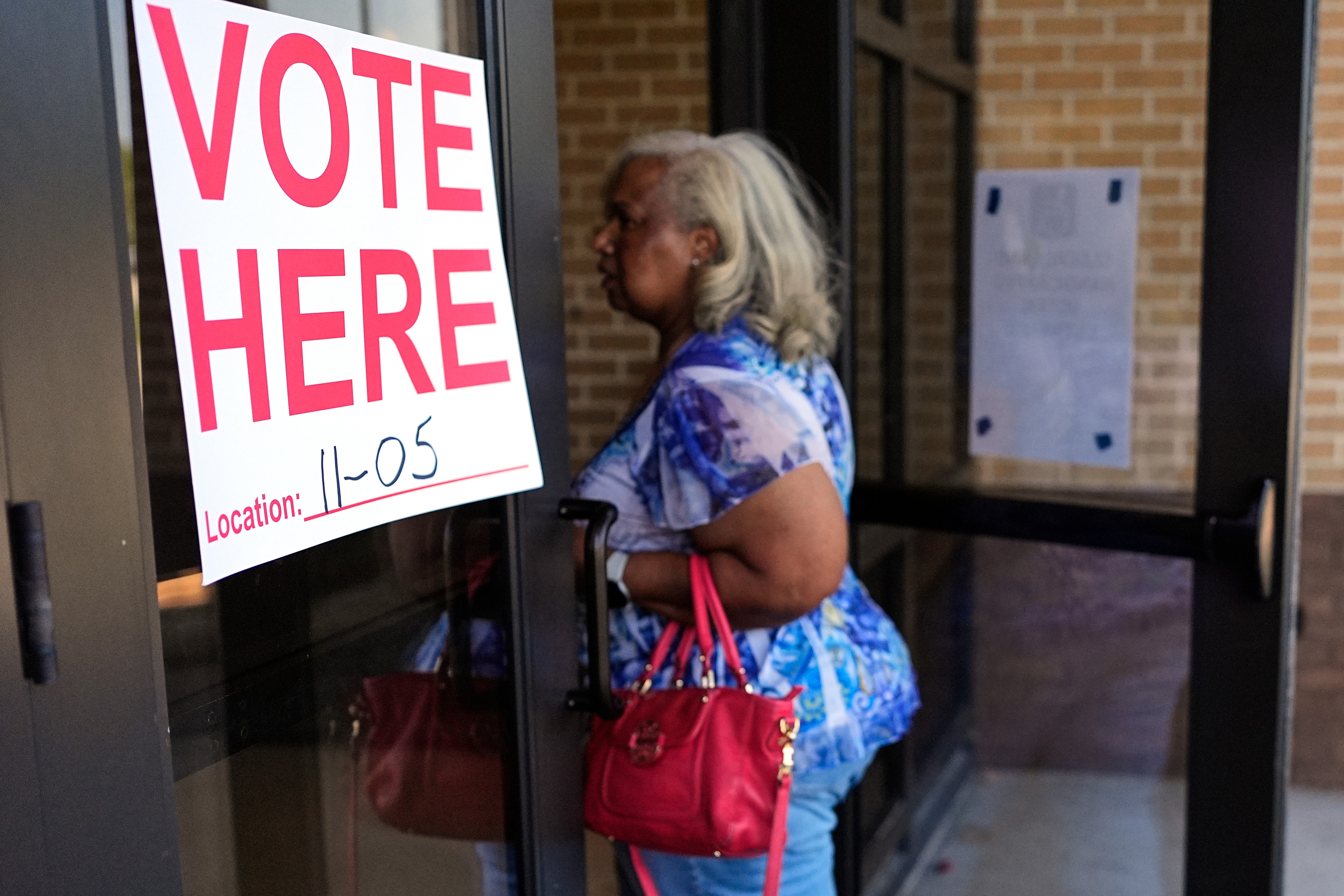
    A coalition of civil rights and advocacy groups plans to deploy hundreds of poll watchers this fall at heavily minority precincts to counter what organizers say is a threat of voter intimidation from President Donald Trump’s administration.

    The National Action Network, the American Federation of Teachers, and the Save America Movement are launching the Vote Safe project, which they described as a nonpartisan initiative set to begin during early voting and culminate in the Nov. 3 midterm elections. They are focusing on Michigan, Ohio, Georgia, and North Carolina, all of which are competitive in the battle for control of the Senate.

    Trump has routinely raised alarms about the threat of voter fraud this fall, stoking fears among his followers and prompting calls for preemptive action. He has urged Republicans to nationalize elections, and some administration officials haven’t ruled out deploying agents to polls, even though federal law prohibits doing so.

    “There is really an unprecedented threat to our elections this year, and it’s coming from our own government,” Mary Corcoran, executive director of the Save America Movement, said in an interview. Corcoran co-founded the group along with Lincoln Project co-founder Steve Schmidt to counter what they see as the excesses of Trump’s MAGA movement.

    Those locations were chosen as politically significant areas with large populations of people of color that could be vulnerable to intimidation, she said. The idea is to have trained community members — such as faith leaders, teachers, veterans, and firefighters — at polling places, so voters “can go there with confidence,” Corcoran said. “We want to replace that fear with comfort and knowledge.”

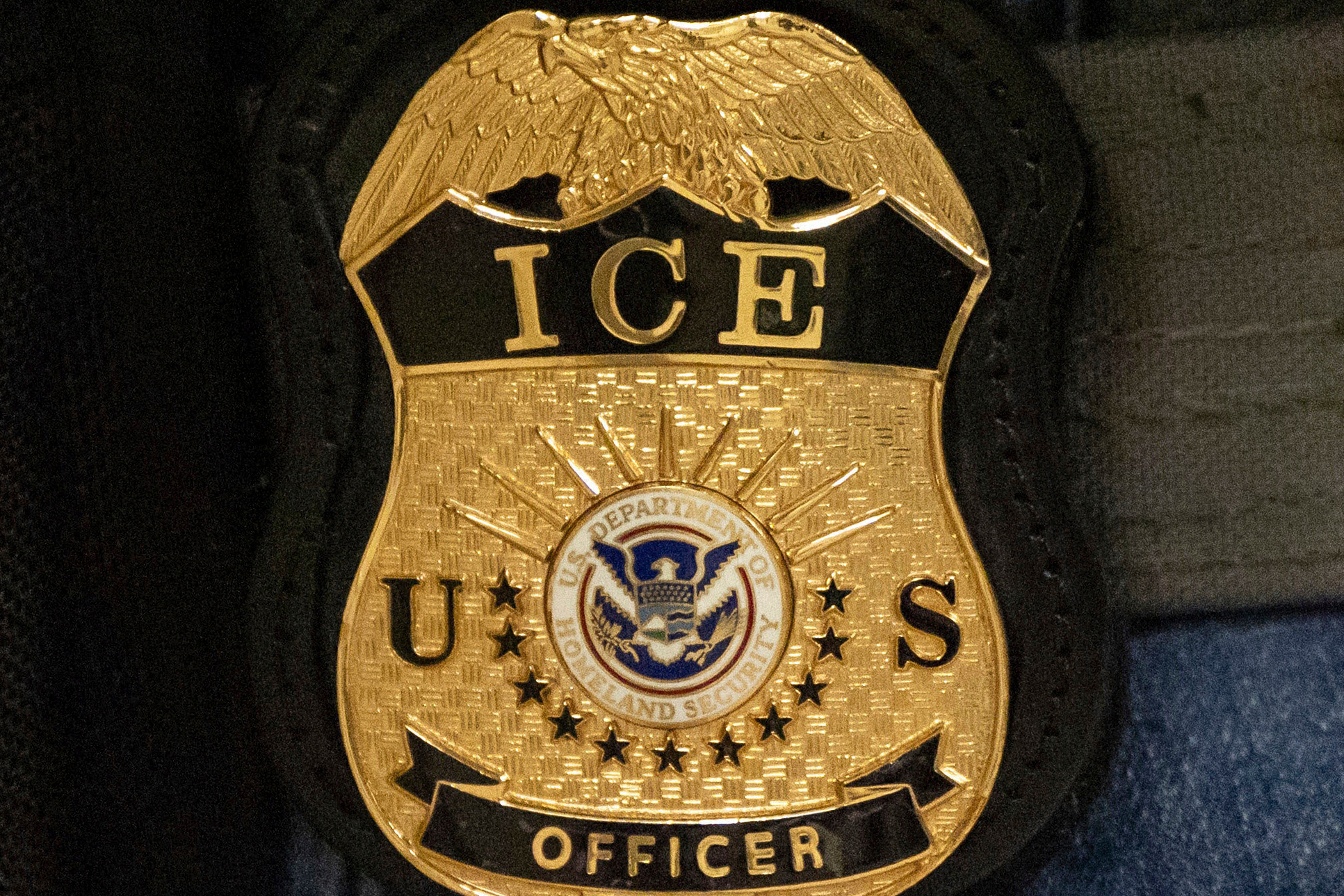
    Homeland Security Secretary Markwayne Mullin said at a news conference Tuesday that Immigration and Customs Enforcement agents aren’t meant to patrol polling places but may be present if they are serving a warrant or responding to a threat. Then-White House spokeswoman Karoline Leavitt said at a news conference this year that she “can’t guarantee that an ICE agent won’t be around a polling location in November” but added that she hadn’t heard Trump discuss plans to do so.

    Former Trump strategist and podcaster Stephen K. Bannon has suggested that ICE deployments at airports could serve as a “test run” for similar efforts at election sites.

    While both political parties have increasingly deployed poll watchers since 2020, recent years have seen clashes over charges of voter intimidation. During 2022’s midterm elections, a court order stopped armed, masked individuals from photographing people casting early ballots in Arizona. This year, the Justice Department has said it plans to send 1,000 monitors to the polls.

    Organizers said they modeled the Vote Safe initiative after a project the Save America Movement undertook last year to station observers and videographers in areas of the country with a heavy ICE presence in hopes of preventing violence.

    Corcoran said volunteers are being trained in local election laws and techniques to de-escalate tense situations. They will be clearly identified with Vote Safe insignia, she said, and none will be armed.

    Vote Safe plans to deploy poll watchers around Detroit, Atlanta, Cleveland, and Charlotte, in the 20 precincts in each area with the highest expected turnout of racial-minority voters.

    Citing the Supreme Court’s recent weakening of protections for minority voters in the Voting Rights Act, the organizers said they want to ensure that voters of every ethnicity feel welcome at polling places. They also want to protect voters from having their immigration status inappropriately challenged.

    “No voter should have to wonder whether exercising their constitutional right will put them at risk,” the Rev. Al Sharpton, founder of the National Action Network, said in a statement. “If anyone thinks the presence or threat of federal agents will frighten our communities away from the polls, they are badly mistaken.”

    Randi Weingarten, president of the American Federation of Teachers, said in a statement that the coalition’s goal is for voters to feel there is “someone standing beside them who knows their rights and knows the law,” so they can cast a ballot with confidence.

  • China presses the U.S. for answers after a man dies hours after entering ICE custody

    China presses the U.S. for answers after a man dies hours after entering ICE custody

    The Chinese government is pressing for answers after a Chinese man died hours after being taken into custody by U.S. Immigration and Customs Enforcement in a U.S. territory.

    Lianyong Wei, 51, died Aug. 23 at a hospital in the Northern Mariana Islands, ICE announced in a news release Tuesday.

    Wei was arrested Aug. 21 by the Northern Mariana Islands Department of Public Safety on criminal charges stemming from an alleged assault on a family of five at their home, according to ICE. He was taken into ICE custody the next day pending removal proceedings.

    ICE said a guard at the lockup in Saipan found Wei unresponsive during routine morning checks on Aug. 23. He was taken to a hospital emergency room, where he was pronounced dead after “life-sustaining interventions were initiated,” the agency said, noting that the cause of his death is under investigation.

    Wei entered the U.S. territory in February 2019 and was authorized to stay for two weeks, according to ICE. U.S. authorities began removal proceedings in July 2026, and Wei’s next hearing had been scheduled for this month.

    The Chinese Consulate General in Los Angeles said it had been notified of Wei’s death.

    “We have expressed serious concerns to the relevant U.S. authorities over this incident and required a timely and thorough investigation into the cause of Mr. Wei’s death, notification of the findings, measures to prevent any recurrence of similar incidents, and assistance to the family of the deceased in handling the aftermath,” the consulate said in a statement.

    Wei is at least the fifth Chinese national who has died in the custody of ICE or the U.S. Border Patrol since March 2025, according to tracking by The Associated Press. Two of the first four deaths have been ruled suicides, and the other two were the result of medical complications.

    At least 57 ICE detainees have died since President Donald Trump returned to office in January 2025, a death rate that has alarmed public health experts, advocates for immigrants, and the Mexican government.

    ICE hasn’t said whether Wei received the medical intake screening, which the agency promises to detainees within their first 12 hours in custody. Medical experts say a thorough screening is critical to preventing deaths.

    It’s unclear why it took ICE more than a week to acknowledge Wei’s death, which was announced by authorities in the Northern Mariana Islands on Aug. 24. ICE has said it aims to issue a news release on detainee deaths within two business days.

    The lockup in Saipan has held an average of 18 ICE detainees on any given day this year, according to ICE data. Roughly 50,000 people live in the Northern Mariana Islands.

    “Following this incident, the Department is reviewing relevant procedures and will implement any necessary corrective actions to strengthen prevention and response measures,” Northern Mariana Islands corrections commissioner Anthony Torres said in a statement.

  • How the Supreme Court locks away its own history

    How the Supreme Court locks away its own history

    In early 2016, Justice Antonin Scalia died of a heart attack on a Texas ranch, sending his Supreme Court colleagues into a period of grief and uncertainty. Behind closed doors, they had to contend with another piece of unsettling news.

    Scalia, the leading light of the conservative legal movement, had left no plans for his working papers, according to five people aware of the situation. For a Supreme Court justice, this was the equivalent of dying without a will. With no instructions for creating an archive or opening it to the public, the definitive inside account of his work — and the court’s — could be lost or emerge with uncomfortable speed.

    So following his death, his colleagues entered into private negotiations to try to head off any such situation in the future.

    In a series of memos and conference meetings, Chief Justice John Roberts led the surviving justices in discussions about imposing a more uniform seal for their own papers, according to several people with knowledge of the process.

    The absence of instructions from Scalia and ensuing confidential conversations, which have not previously been reported, help explain why the nation’s highest court can be so difficult to understand. The ultimate record of the court’s work is considered the personal property of each justice, to dispose of or share as he or she chooses. And many of the justices have valued confidentiality over transparency and chosen to postpone scrutiny of their work for years to come.

    In contrast with the executive branch, which is required to preserve and ultimately make public a record of its inner workings, there are no laws to determine what the justices save, shred, burn, or reveal, or when. The court does not share any information about policies or plans for records; a spokesperson for the court did not respond to written questions.

    People familiar with the episode after Scalia’s death, who spoke to the New York Times on the condition of anonymity because of the court’s sensitivity over disclosure of internal workings, recalled that a consensus was reached but had differing memories of its terms and how solid or lasting it was.

    Still, the death of Justice Ruth Bader Ginsburg, just a few years later, provides a clue: Her Supreme Court papers went, at her direction, to the Library of Congress on the condition that no case file would be opened until every justice involved in the matter had died, a restriction that could lock away many documents for decades.

    Although some justices in previous eras arranged for their papers to be released not long after their own deaths, the trend on the Roberts court has been to impose much tighter restrictions, serving to further obscure a branch of government that has resisted calls for more transparency.

    Each year, the justices carefully compose and edit about 60 opinions in argued cases to share with the world. The fuller, richer narratives of each case, showing the behind-the-scenes stories of how members of the court pressured, persuaded, and prevailed over one another to arrive at those opinions, are hidden away in the justices’ working papers — their confidential internal memos and opinion drafts.

    The justices have said they want to keep those internal exchanges out of view, contending that secrecy protects the authority and finality of their decisions.

    Because of the court’s lack of transparency, it is impossible to say what will become of the inner history of its current work — which scholars say is more crucial, and more endangered, than ever.

    And people familiar with the court’s operations say they worry some of the most authoritative and revealing records are not being saved at all. That is because some work is now conducted digitally, via emails and texts. Those people, who spoke on the condition of anonymity to describe internal matters, said they were unaware of any consistent procedures for saving electronic records.

    The revelations found in past justices’ working papers have been so potent, they have caused bruised feelings among the justices and blowups among government institutions.

    And because no law governs the preservation of the justices’ work, each justice, assisted by staff, builds his or her own archival trove, deciding which memos, drafts, voting sheets, and meeting notes to preserve — or not.

    One spring morning in 1993, the justices opened their morning copies of the Washington Post to find detailed accounts of their internal debates. Earlier that year, Justice Thurgood Marshall, the first Black member of the court, had died, and his papers had been donated to the Library of Congress. With no announcement, the library had opened his papers for public review, and Post reporters had been digging through the newly released archive.

    The surprise release led to a brawl over how to interpret the justice’s written instructions. In a furious public letter, Chief Justice William Rehnquist took a swing at the Library of Congress, accusing it of “bad judgment” and of opening the records, some only two years old, prematurely. Marshall’s family sided with the chief justice, asking a senator to request that the papers be resealed. The library defended its reading of Marshall’s instructions. The papers stayed open.

    In the wake of that controversy, the justices considered establishing common timelines for releasing their papers but could not come to a consensus, according to the papers of Justice Harry Blackmun, who chose to make his papers public five years after his death.

    “‘This is the people’s court; it’s not our court,’” Harold Hongju Koh, a Yale University law professor and former Blackmun clerk, recalled his boss saying. “‘Who cares if we’re embarrassed. The main purpose here is to educate the public.’”

    The 2004 release of Blackmun’s papers again caused shock at the court, because of the unvarnished portrait they revealed. His 24-year chronicle of his time on the court exposed tensions among the justices, his own heavy reliance on clerks, and a bombshell: In 1992, the court had come close to overturning Roe v. Wade, but a centrist coalition of justices had secretly worked together to save the federal right to abortion. The precedent had been far more vulnerable than outsiders realized.

    A year after that release, Roberts joined the court as chief justice. The court’s new leader was reserved and disciplined. He rarely gave interviews or delivered speeches.

    The fullest record of the Roberts court is hidden away in its basement.

    In the bowels of the Supreme Court, below the red-velvet grandeur of the courtroom and the shuffle of tourists, the justices are assigned storage rooms in which they store case files, said people familiar with the court’s practices.

    Access to the records in the basement is highly restricted. But every year, about three dozen new people are allowed to read some of them: the justices’ incoming law clerks, who arrive for yearlong apprenticeships.

    Reading those files clears away the mystery that surrounds the court, say those who have seen them. Clerks often ask to read the insider accounts of the most game-changing decisions. But the deeper education is in learning about the dynamics among the justices.

    In public remarks, the justices have argued that their judicial independence requires keeping these kinds of exchanges private so they can bat around ideas and change positions.

    But some scholars question why papers should be sealed long after a justice has retired.

    The Trump era has transformed and heightened the importance of the current justices’ working papers: They will one day provide the public’s first opportunity to understand why the court ruled as it did in some emergency matters.

    “The more cases get decided without full opinions, the more important it is to get access to the papers,” Stuart Banner, a legal historian at UCLA, said in an interview.

    But it is virtually impossible to estimate when — if ever — the public might see those records.

    This article originally appeared in the New York Times.

  • Iran fires on its Gulf neighbors, retaliating for U.S. strikes after a wedding was hit

    Iran fires on its Gulf neighbors, retaliating for U.S. strikes after a wedding was hit

    Iran fired on U.S. allies in the Gulf early Wednesday following a night of American bombardment that Iranian state media says included a deadly strike on a wedding party.

    The latest violence came after a monthlong lull in fighting. The six-month war has led to a spike in oil prices, roiled the global economy and posed increasing political problems for U.S. President Donald Trump’s Republican Party ahead of November midterm elections.

    Fighting has escalated since the American military hit Iranian rocket launchers on an island in the Strait of Hormuz over the weekend, saying Iran was planning to use them to lay mines. Iran retaliated by firing missiles at American bases in Jordan that were intercepted.

    American military resources are stretched and political pressure in Washington is mounting, while Iran’s economy has been battered by sanctions and an American naval blockade. Iran’s currency hit another record low on Wednesday, with traders in Tehran exchanging 2.20 million rials for one U.S. dollar, a 10% hike from last week’s record.

    Neither side can continue indefinitely between full-scale war and a truce, said Hamidreza Azizi, senior Iran analyst at the Crisis Group, an international think tank.

    “At some point, one of the sides may see a need to escalate in order to break this cycle,” he cautioned. “So that could bring the two sides to a point that they have been trying to avoid until now, which is a full-scale war.”

    The struggle is focused on the Strait of Hormuz and oil prices

    The latest flare-up in violence came as the standoff seemed to be shifting slightly more in the U.S.’ favor, with the price of oil around $80 a barrel and Iranian leaders talking about growing economic hardships, said Sascha Bruchmann, an analyst with the International Institute for Strategic Studies’ Middle East office in Bahrain.

    “The U.S. is trying to reinstall some kind of confidence into the global oil markets … and the Iranians had to respond to that by reinserting insecurity and doubt,” Bruchmann said.

    Since the fighting resumed, the price of Brent crude oil, the international standard, has climbed to around $95, up more than 30% from the start of the war.

    U.S. Secretary of State Marco Rubio said Iran will “continue to feel the squeeze” from the United States until it drops any nuclear weapons ambitions and ends support for armed groups in the Middle East. Iran has always insisted its nuclear program is peaceful.

    U.S. allies in the region fend off Iranian attacks

    Following the strikes on Jordan, U.S. Gulf allies Kuwait and Bahrain said they had also come under attack, without reporting any casualties.

    “You will soon see that Iran’s new strategy on the battlefield, in diplomacy, and in confronting the economic blockade will shatter your foundations,” the recently appointed head of Iran’s powerful Supreme National Security Council, Mohsen Rezaei, said on X.

    In Iraq, where Iranian-backed forces are active, Kurdish authorities said they had intercepted 10 drones laden with explosives in the Irbil area. Iranian television reported that American bases in Irbil had been targeted.

    Israel’s military also said that Iran-backed Hezbollah fired two explosive drones at its soldiers in southern Lebanon, without causing casualties.

    The U.S. Central Command said Tuesday’s strikes focused on Iranian military targets, including air defense sites, radar systems and maritime assets.

    Strike on wedding killed 4 and wounded dozens, Iranian officials say

    One U.S. strike hit a home hosting a wedding in Kuhestak, a small coastal town overlooking the Strait of Hormuz, according to Iranian state media.

    Four people were killed — two women and two children, aged 4 and 16 — and at least 68 were wounded, the state news agency IRNA and state TV said Wednesday. Just after the strike, Ahmad Nafisi, the province’s deputy governor, had told Iranian state television that five people were killed. There was no explanation for the change.

    Several heavy explosions shook Kuhestak, with fireballs that lit up the night sky, according to security camera footage carried by the semiofficial Fars news agency.

    Images from Iran’s semiofficial Tasnim news agency showed several hospitalized children being treated for injuries at a hospital in the nearby town of Minab, where a U.S. missile strike on the opening day of the war hit a primary school, killing more than 100 children.

    Footage from the Iranian Red Crescent showed rescue workers entering a damaged home in the wake of the strike. It showed a hole in the roof of one house in a neighborhood of densely packed homes.

    Experts say a ‘very precise’ weapon appears to have been used

    Two weapons experts told The Associated Press that images of fragments of a missile, which Iranian media said was used in the strike, were from a U.S.-made SLAM-ER cruise missile.

    Trevor Ball, an analyst with Armament Research Services, said the SLAM-ER was “developed as a very precise weapon” that can be retargeted in flight by a human operator watching by infrared camera.

    N.R. Jenzen-Jones, director of Armament Research Services, said the air-launched missile is also used by the United Arab Emirates and Saudi Arabia. Neither has reported carrying out any recent strikes on Iran.

    “Make no mistake: these crimes will not go unpunished,” Ebrahim Azizi, chairperson of the Iranian parliament’s National Security and Foreign Policy Committee, said on X.

    U.S. Central Command spokesman Capt. Tim Hawkins said the U.S. military was “aware of the reports, which originated from Iranian state media, and we are looking into them.” He would not say if CENTCOM had launched a formal investigation.

    Separately, Iran has said four members of its paramilitary Revolutionary Guard and 10 members of the Guard’s volunteer Basij forces died in the U.S. attacks. A total of 108 people were injured in the latest round of attacks, state broadcaster the Islamic Republic of Iran Broadcasting quoted the country’s health minister as saying.

    The Strait of Hormuz remains largely shut down

    During last month’s lull in fighting, the U.S. ramped up economic pressure on Iran as Washington sought to fully open the Strait of Hormuz.

    About a fifth of the world’s traded oil was shipped through the key waterway before Israel and the U.S. attacked Iran on Feb. 28 and Iran largely shut it down in response. Despite many pronouncements from Washington that the strait is open, only a handful of ships are making the passage each day and Iran has regularly attacked vessels.

    On Wednesday, Saudi shipping company Bahri said two Filipino sailors were killed in an attack late Monday as their vessel transited the strait.

    A ceasefire deal reached in June quickly fell apart amid exchanges of strikes that same month. Mediator Pakistan has been working to restart talks.

    Late Tuesday, Trump said he would not force Iran to the bargaining table.

    “I couldn’t care less if they sign a worthless, to them, agreement. I like our position now much better, with almost total control of the Hormuz Strait, and their economy totally collapsing. They are just playing out the inevitable. When are the Iranian people going to rise up and fight?” Trump wrote on social media.

  • Poll shows nearly 90% of Americans believe government corruption is widespread

    A record number of Americans believe there is widespread corruption in the U.S. government, reaching the highest level of distrust in two decades, according to a Gallup poll released Wednesday.

    The survey of 1,000 people conducted in May and June reflects the surging bipartisan frustration with the country’s political institutions and the people who run them.

    Nearly 90% of U.S. adults said corruption was widespread in the government, a 10 percentage point jump from last year, according to Gallup’s poll. The United States also has the highest level of perceived government corruption compared with other countries with advanced economies as of 2025, the year of the latest available data.

    Since 2006, the percentage of Americans perceiving widespread corruption stayed mostly in the 70s, Gallup’s data shows. It began to sharply rise in 2024.

    In 2024, when Joe Biden was president, 57% of Democrats said government corruption was widespread. In 2025, after President Donald Trump returned to the White House, that percentage rose to 76 and climbed to 91 this year, according to Gallup’s data.

    As November has grown nearer, Democratic leaders have homed in on anti-corruption messages in their quest to retake Congress. Democrats repeatedly accused the president of breaking his promise to get rid of waste, fraud, and abuse in Washington, instead enriching himself, his family and his allies through the federal government.

    During an event to mark the final 100 days before the midterm elections, House Minority Leader Hakeem Jeffries,(D, N.Y.) debuted a new line in his stump speech: “We are going to hold the crooks accountable.”

    On the other side of the aisle, Republicans’ view of corruption has stayed relatively steady since 2024, suggesting that their perception of the issue does not hinge on the party in power as much as it does for Democrats. This year, 83% of Republicans and 90% of independents said corruption was widespread.

    That finding suggests that Americans are accessing political news and information — and that corruption is breaking through as an issue, said David Szakonyi, a political science professor at George Washington University.

    “There is a broad base consensus for the fact that something is broken in Washington,” Szakonyi said.

    The new poll does not shed light on where exactly Americans believe the corruption is. It posed a very broad question — “Is corruption widespread throughout the government in this country, or not?” — without identifying specific people, agencies or administrations.

    But over the last year, Democratic voters and lawmakers have criticized the Trump administration for what they have called “self-dealing” initiatives — including a $1.8 billion payout fund to compensate administration allies who felt they were unfairly investigated that was later abandoned and no-bid contracts given to Trump allies.

    During his presidency, Trump has made historic financial gains, charged by ventures including cryptocurrency that his administration is tasked with regulating. White House officials have said the president and his relatives have not nor would they engage in conflicts of interests.

    No formal federal public corruption charges have been brought against Trump administration officials since the president retook the office in 2025.

    Democrats have dealt with high-profile corruption investigations within their party in recent years. Among them was the case of former senator Bob Menendez of New Jersey, who was sentenced to 11 years in prison for a corruption case involving bribes that totaled nearly $1 million in cash and other items. More recently, Rep. Henry Cuellar (D, Texas) was facing bribery, money laundering and conspiracy charges before Trump pardoned him.

    In June, another poll had similar findings about government corruption views among American political groups. The Brennan Center for Justice survey, which polled 2,000 registered voters, found that majorities of Republicans, Democrats, and independents viewed corruption as “a very big problem” facing the federal government.

  • Smithsonian changes course, will put Latino museum in existing building

    Smithsonian changes course, will put Latino museum in existing building

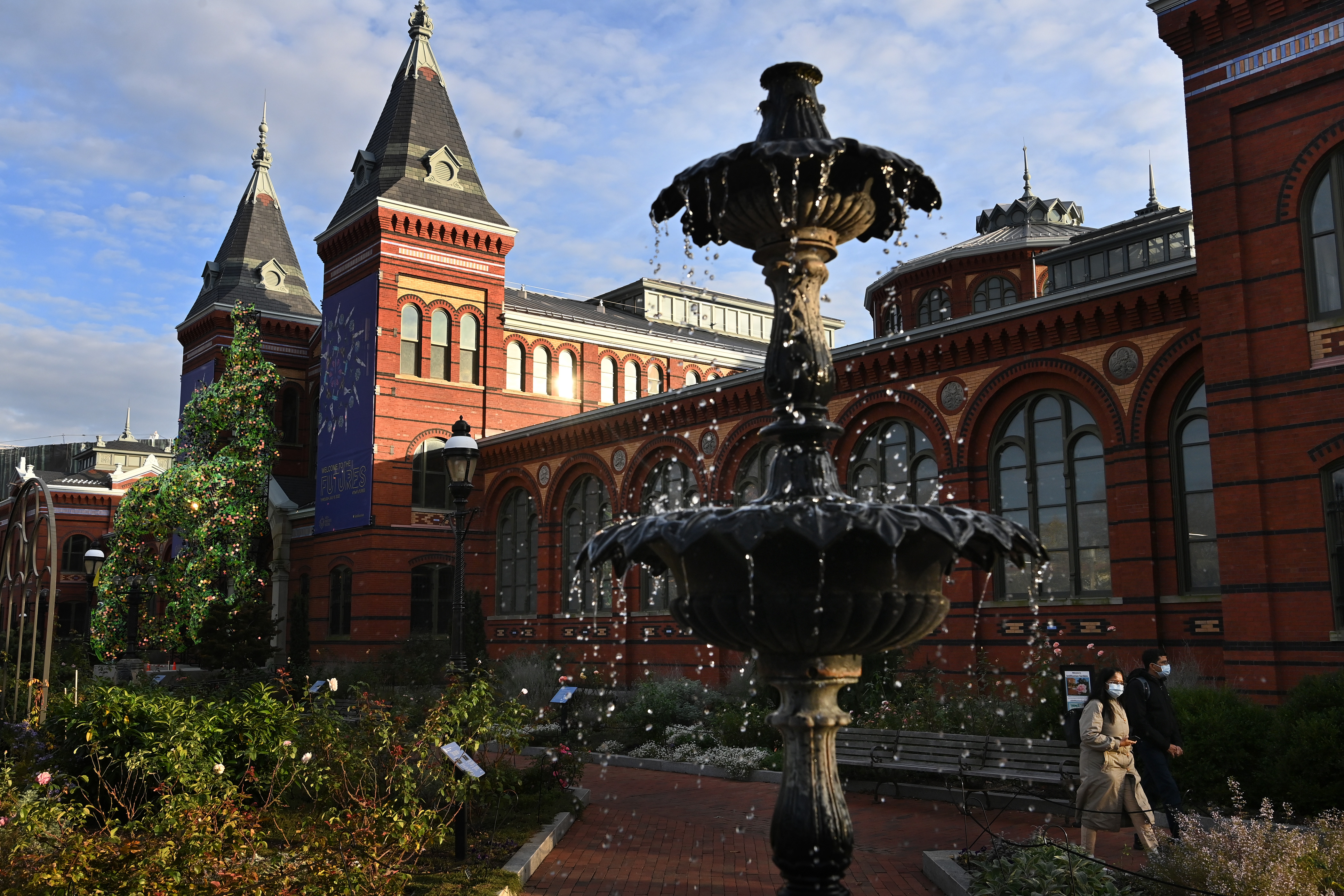
    The Smithsonian Institution announced Monday that it will put its National Museum of the American Latino in a 145-year-old building on the National Mall instead of constructing a new one.

    The Smithsonian’s Board of Regents voted Monday to house the American Latino museum, which Congress created in 2020 but which has lacked a permanent home, in the Arts and Industries Building, a 258,000-square-foot redbrick Victorian structure next to the institution’s headquarters.

    Jorge Zamanillo, the museum’s director, called the decision “a major milestone in a dream and effort of decades in the making.”

    “Designating the Smithsonian’s Arts & Industries Building as the home of the National Museum of the American Latino places the U.S. Latino story at the heart of the National Mall and the American story,” Zamanillo said in a statement. “We could not be more excited to build on the rich legacy of this historic building and transform it into a next generation museum that celebrates the history, culture, and contributions of Latinos in the United States.”

    The decision revives a plan the Smithsonian considered but discarded years ago, a major shift for a project whose supporters have spent decades pushing for a new building on the National Mall designed specifically for the museum. It also gives the Smithsonian a path forward that does not depend on Congress approving construction on one of the undeveloped sites the institution previously selected.

    The Smithsonian had chosen two sites near the Washington Monument for its two new museums — one across from the National Museum of African American History and Culture and another between the U.S. Holocaust Memorial Museum and the Tidal Basin. Both are controlled by the National Park Service and sit within the Reserve, an area of the Mall where Congress has restricted new construction.

    Because the Smithsonian owns the Arts and Industries Building, the institution can decide how to use it without additional legislation.

    That distinction could prove important. Building a Smithsonian museum from scratch can take a decade or longer, even after Congress authorizes it. The National Museum of African American History and Culture took more than a decade to build after its 5-acre site was chosen.

    In a statement Monday, the regents noted that Congress directed them to consider the Arts and Industries Building when it authorized the Latino museum in 2020 and said their selection of a site is now complete.

    The decision also separates the Latino museum’s path from that of its counterpart, the Smithsonian American Women’s History Museum. The two museums were created together in 2020 and had been pursuing potential sites in lockstep, but legislation needed to move the women’s museum forward ran into a congressional roadblock this spring.

    The House rejected that legislation after Republicans added provisions restricting how the museum could present transgender women and giving President Donald Trump greater control over its site. The Smithsonian has said a new building for the women’s museum would still be roughly a decade or more away.

    The regents’ decision Monday returns to an idea almost as old as the campaign for the Latino museum itself.

    Latino advocates began pressing for a national museum after a Smithsonian-commissioned report in 1994, titled “Willful Neglect,” sharply criticized the institution’s treatment and representation of Latino Americans. The Smithsonian created what became the Smithsonian Latino Center in 1997, but supporters continued pushing for a full-fledged museum.

    Then-Rep. Xavier Becerra (D., Calif.) began sponsoring legislation in 2003 to create a commission to study the idea. Congress approved the commission five years later, and in 2011 it recommended creating a Smithsonian museum devoted to Latino history and culture, estimating that the project would cost $600 million. Among the locations under consideration was the Arts and Industries Building.

    The building resurfaced as a proposed home in 2016, when Becerra and then-Sen. Bob Menendez (D., N.J.) introduced legislation that would have placed the museum there and added an underground annex. The historic building presented challenges for a modern museum: Its soaring ceilings and skylights were not designed for conventional exhibitions.

    Congress finally authorized the museum in December 2020, during the final weeks of Trump’s first term, as part of a massive spending and pandemic-relief package that also created the women’s history museum. Arts and Industries was among four finalist locations for the two museums in 2022, but the regents ultimately chose the two undeveloped sites on the Mall instead.

    That same year, the Latino museum opened its first physical exhibition space, the 4,500-square-foot Molina Family Latino Gallery inside the National Museum of American History.

    The project has also become entangled in the second Trump administration’s broader campaign to reshape the Smithsonian.

    Trump’s proposed 2026 budget sought to eliminate separate funding for the stand-alone museum and instead integrate Latino programming across the Smithsonian. The proposal drew objections from Democrats as well as Republican members of the Congressional Hispanic Conference, who called eliminating the museum’s funding a “disservice to the American public.” A White House official said at the time there was no reason to provide construction funding because Congress had not approved a site.

    The museum’s programming has also drawn criticism from conservatives. It’s first exhibition, “¡Presente! A Latino History of the United States,” addressed immigration, LGBTQ rights, and criminal justice reform alongside figures including Celia Cruz and Roberto Clemente. Republican lawmakers criticized the exhibition’s portrayal of Latinos, and a planned follow-up exhibition on Latino youth movements was later scrapped.

    Mike Gonzalez, a senior fellow at the conservative Heritage Foundation and a longtime critic of the Latino museum, has argued that the problem goes deeper than individual exhibitions. He contends that the museum was conceived to portray Latinos primarily as victims of discrimination rather than as part of a shared American story.

    The Smithsonian ”could never win a vote in Congress to house the Latino Museum anywhere else,” Gonzalez wrote Monday on X. He first wrote about the Smithsonian’s change in plans in the Washington Examiner this month.

    The building the regents selected Monday carries its own unusually rich Smithsonian history.

    Arts and Industries opened in 1881 as the institution’s second building and the first Smithsonian facility designed as a public museum. Over the decades, it served as an incubator for collections that eventually moved into the National Museum of Natural History, the National Museum of American History, and the National Air and Space Museum.

    The building closed in 2004 because of structural problems. A renovation that took nearly 12 years and cost $55 million stabilized the structure, although it has been used only intermittently since. The Smithsonian temporarily reopened it in mid-June to celebrate America’s 250th anniversary but plans to close it again at the start of next week.

  • Employer health costs are expected to spike in 2027

    Employer health costs are expected to spike in 2027

    Large and small employers are bracing for what looks to be the sharpest increase in healthcare costs in more than two decades. The cost per worker is projected to go up an average of 11% next year, or somewhat lower if workers’ insurance benefits are reduced, according to a U.S. survey released Wednesday.

    The employers’ final costs, after they make changes to health plans, are still expected to increase about 8% next year, the steepest since 2003, according to Marsh, the benefits consultant formerly known as Mercer.

    More than a third of the 1,800 employers surveyed said they anticipated that costs would rise at least 10% after making cuts.

    “This year was a rough year, and next year looks like it will be even rougher,” Beth Umland, director of employer research for health and benefits at Marsh, said in an interview.

    The Marsh survey is the latest report by an employer group or benefit consultant predicting a sharp rise in healthcare costs next year. Many Americans, even those with insurance, are already struggling to afford care, according to various surveys, and healthcare has become a top issue for voters.

    “This seems to be a new normal,” said Ellen Kelsay, the CEO of Business Group on Health, which represents large employers that offer health benefits.

    From 2018 to 2027, healthcare costs could increase 76%, roughly twice the rate of general inflation, according to a survey the employer group released last month. For next year, companies predicted a 9.2% median increase, which fell to 8% after they made benefit changes.

    The cost of providing coverage to employees is becoming an existential business issue, said Mike Pasterick, an executive at insurance broker Aon, which issued its own projection last month. Aon estimated employers’ costs would rise 9.5% next year, pushing the average cost per employee above $19,000 if no changes are made. “This is impacting the companies in a very material way,” he said.

    The upshot is that about 160 million people under 65 who rely on employers for health insurance will again confront higher costs and shoulder more of the burden. More and more, workers are facing year-over-year increases that further stress household budgets already dealing with the growing expenses of groceries and gasoline.

    Workers are facing higher premiums, deductibles and copays, which require them to carry a larger share of their medical bills. Some companies are cutting benefits by discontinuing coverage of expensive GLP-1 drugs to treat obesity, or dropping coverage for spouses who have other insurance options.

    Employers and benefits consultants cited a number of factors contributing to higher costs: rising prices for hospital care and prescription drugs, including expensive medicines for cancer, and robust demand for GLP-1 drugs to treat conditions like diabetes.

    But they also pointed to new contributors like hospitals’ and doctors’ use of artificial intelligence to increase payments through better documentation of care. They also blamed increasing reimbursements to some doctors who are out of network and are exploiting a new consumer protection law that allows them to challenge what they were originally paid.

    The pressure by hospitals and doctors to charge employers even more is likely to intensify with looming cuts to government plans like Medicaid, the federal-state program for low-income individuals. Hospital groups are already seeing an increase in the number of patients who don’t have insurance or can’t pay their bills, and many are expected to charge employers more to help make up for lost revenue.

    Many employees are already being asked to pay significantly more of their medical bills. Workers are paying an average of 10% more in out-of-pocket costs in 2026 — some $2,167 — than they were last year, Aon estimated.

    These kinds of increases are not sustainable, said Rosa Novo, the benefits administrator for Miami-Dade County Public Schools, which covers about 45,000 employees and their families. “It’s become really, really difficult, extremely difficult,” she said. The bulk of the system’s costs are for hospital care, she said, but among the fastest-growing expenses are pharmacy costs.

    For the first time, the school system is exploring new ways of delivering care. “We’re having to reinvent the way we operate,” Novo said. The system is considering contracting directly with hospitals and doctors for some of its employees’ care, like imaging, rather than relying on its insurer to negotiate for it. The system is also starting to demand more visibility into what it pays for care, requiring audits and detailed information about claims.

    “I personally see a readiness to do things differently,” said Elizabeth Mitchell, the CEO of the Purchaser Business Group on Health, which represents employers. She said employers were more interested in seeing more information from insurers about how they were spending their money and consideration of alternatives.

    “It’s more than just talk,” she said, saying many companies are revisiting their arrangements with their insurer or pharmacy benefit manager.

    Like the Miami-Dade school system, many companies are in discussions directly with local hospital groups or other organization to provide care outside their traditional insurance plans. Others are contemplating ways to steer patients to select hospitals or doctors, either by charging them less to see those providers or limiting where employees can get care.

    “We’re seeing a lot of employers taking a closer look at the network,” said Eric Miller, a vice president at Segal, another benefits consultant, despite concerns that employees will be upset if they can’t see their longtime doctor or go to the hospital of their choice.

    “Unequivocally, there is more openness to change and disruption than there ever has been,” he said.

    Smaller employers may be making the most significant changes, said Shawn Gremminger, the CEO of the National Alliance of Healthcare Purchaser Coalitions, many of whose members are smaller companies.

    “I think it’s the smaller market where the pain is most acute,” he said.

    While some are considering moves like offering employees a fixed amount of money to pay for a plan, others are taking a close look at the giant companies that sell them insurance or pharmacy benefit management. In the alliance’s most recent survey, 54% of employers said they were working with one of the three largest pharmacy benefit managers, a drop from 63% the year before. Many said they were moving to one of the smaller pharmacy benefit managers, many of which promise more transparency about how they operate and what they pay for drugs.

    “We may be seeing a tipping point,” Gremminger said.

    This article originally appeared in The New York Times.

  • Six takeaways from the Massachusetts primaries

    Six takeaways from the Massachusetts primaries

    Massachusetts, as it turns out, is a good state in which to be a very old Democratic incumbent.

    Three Democrats who have been in office since long before the iPhone was in stores all won renomination Tuesday. Sen. Ed Markey, 80, and Reps. Richard Neal, 77, and Stephen F. Lynch, 71, are all likely to return for additional terms.

    Each faced challengers who had called for a new generation of leadership. Markey coasted past Rep. Seth Moulton, 47, who ran to the middle, while Neal and Lynch both fought off progressive challengers.

    Markey has been in office for 50 years. Neal has represented western Massachusetts since 1989. Lynch first won election from South Boston in 2001. The state’s Democrats do not seem inclined to reject their incumbents.

    Here are six takeaways from the Massachusetts primary results:

    Voters didn’t care about Markey’s age

    The party still scarred by former President Joe Biden’s public meltdown during the 2024 campaign was not convinced that an octogenarian senator should not serve another six years.

    Perhaps if Markey, 80, had faced a younger challenger with better political relationships than Moulton, he would have been in trouble in Tuesday’s Democratic primary. But Moulton has spent his career challenging his party’s orthodoxy and its leaders.

    That record left Markey the political space he needed to paint himself as the progressive in the race, campaigning on the ideas of the future — even though he has been in Congress for 50 years.

    In the waning days of the Massachusetts primary, several Democrats described Moulton as having the generational change message the party needed but being the wrong messenger to deliver it.

    Markey said throughout the campaign that he would resign his seat if his advanced age left him unable to properly fulfill his Senate duties. He is now favored to win in November, which would have him serve in the Senate until he is 86 years old.

    Moulton’s trans remarks weren’t forgotten

    If Massachusetts were a general election battleground state, perhaps Moulton’s skepticism about trans athletes’ participation in youth sports might have played better among primary voters.

    But from the moment Moulton entered the race last October, Markey used his remarks questioning transgender girls’ participation in girls’ sports as a battering ram against him. Not only did it galvanize the LGBTQ vote for Markey, it also helped frame him as the progressive candidate.

    It was the same formula that powered Markey’s last primary triumph in 2020 against another younger, more moderate Democrat, Joe Kennedy III.

    Moulton eventually offered a qualified apology for his remarks, which came the day after President Donald Trump won a second term in the 2024 election. But by then the state’s progressive voters had heard for months from Markey and his supporters that Moulton, during tough times, was willing to toss trans people aside.

    Dan Koh wins, thanks to Biden and Harris

    A lot of Democrats rolled their eyes when Dan Koh rolled out endorsement videos from Biden and former Vice President Kamala Harris.

    Koh, who was a White House aide for Biden, was running against Tram Nguyen, a progressive state legislator, for Moulton’s House seat north of Boston.

    Tying one’s political identity to a presidential administration a lot of Democrats would like to move past was a unique strategy. No other Democrat in a competitive primary this year had video testimonials from both Biden and Harris. (He also had a lot of help from a pro-AI super political action committee.)

    The strategy worked. Koh won a relatively easy victory over Nguyen and four other candidates. In a heavily Democratic district, he is all but certain to enter Congress in January as a legacy of the Biden administration.

    Stephen Lynch and Richie Neal hang on

    Markey was not the only old guy to hang on Tuesday. Neal and Lynch both fended off younger challengers for their House seats.

    Unlike Markey, Neal and Lynch both faced progressive upstarts. And while both won by margins closer than they have achieved in previous races, they are both likely to return to Congress for another two years.

    Massachusetts has not elected a Republican to any of its congressional seats since 1994. As long as that remains the case — and it is widely expected to — five of the nine members of the Massachusetts House delegation next year will be 63 or older. Both senators will be 77 or older. And efforts by young challengers to oust the state’s older incumbents have failed time after time.

    The pollsters got one right

    The polling industry has gotten a lot of grief lately after Democratic primary results were way off from the forecasts of the final surveys in Michigan and Wisconsin, followed by a big upset in the Florida Senate race.

    In Massachusetts, Big Polling got it right.

    Emerson College and the University of New Hampshire released polls in the final week before the primary showing Markey as getting more than 60% of the vote — blowout numbers.

    They turned out to be right on target.

    Getting the numbers right is something of a triumph for pollsters as they head into the final general election sprint in election battlegrounds.

    Ambitious Democrats are already looking toward 2030 and ’32

    The next two Massachusetts Senate contests could feature a pileup of ambitious Democrats from competing wings of the party.

    The state’s Senate races in 2030, when Sen. Elizabeth Warren, now 77, would face reelection, and 2032, when Markey’s next term would end, are likely to be open-seat contests.

    Markey said in July that the term he was running for now would be his last. Warren would be 81 in 2030.

    Massachusetts has no shortage of Democrats who have been eyeing upcoming Senate openings. Reps. Ayanna Pressley and Jake Auchincloss have barely disguised their interest in the seats. Mayor Michelle Wu of Boston is a popular progressive. Marty Walsh, the former Boston mayor who served as Biden’s labor secretary, could also mount a run.