Tag: no-latest

  • Horoscopes: Thursday, Sept. 10, 2026

    Horoscopes: Thursday, Sept. 10, 2026

    ARIES (March 21-April 19). Maybe identity is a group of ideas you pull together about yourself. And maybe changing just a few in the constellation is enough to flip the whole image. You’ll challenge what you think of yourself and suddenly see someone new in the mirror.

    TAURUS (April 20-May 20). You keep returning to something you suspect is a waste of time. But there must be something there or you wouldn’t participate. Once you name it, you’ll feel more in control of what this pastime actually does for you.

    GEMINI (May 21-June 21). Striving for efficiency sometimes means spending leisurely hours with the people who have ways to help you. Since relationships are often a shortcut to the goal, building them can be one of the most “efficient” things you do.

    CANCER (June 22-July 22). When everything feels good at home, the rest of your life seems to move without friction. You save time by cutting to the chase. You have the confidence to say no to things that won’t make much of a difference.

    LEO (July 23-Aug. 22). It doesn’t seem like it should be true, but looking the part will have an outsized effect on what you can accomplish. People will do their best for you because you seem powerful — like someone they don’t want to let down.

    VIRGO (Aug. 23-Sept. 22). This is your moment to be new in whatever way you wish. You can start the things you think will make a difference. You can end the things that were dragging you down. You’re in complete control.

    LIBRA (Sept. 23-Oct. 23). You’re no conformist, not in the world and not even in your own mind. You saw yourself one way, and you won’t stick with that. Fresh examples drop into your world for a kind of success you hadn’t considered.

    SCORPIO (Oct. 24-Nov. 21). Everything is expensive whether it’s recession times or not, because life takes energy. You’ll look at that energy cost even more than dollar cost, especially when emotions are involved. Emotions can be the most expensive energy expenditure of all.

    SAGITTARIUS (Nov. 22-Dec. 21). Memories are a way of marking time, and travel is a way of creating memories. In that way, the money you spend on travel seems to give you more life because it gives you more memories. In the end, the dollar cost hardly registers.

    CAPRICORN (Dec. 22-Jan. 19). If a situation isn’t going to work, it’s better to know quickly so you can get on with the business of finding an arrangement that all parties can sustain instead of wasting time in the limbo of “maybe.”

    AQUARIUS (Jan. 20-Feb. 18). For Band-Aid rips and intergalactic travel, faster is better. For many other things, speed is a thief of experience. Don’t go so fast you miss the scenery, the joke or the dull moment that’s a chance to connect with a stranger.

    PISCES (Feb. 19-March 20). Today’s problem brings out the scientist in you. You’ll come up with a hypothesis, test it and collect the data. The last part is key to making your effort count and figuring this one out.

    TODAY’S BIRTHDAY (Sept. 10). Your heart will often be made giddy in this, your Year of Cupid’s Arrow. It’s not all about romance. It’s finding exactly the thing that captivates you, aiming well and enjoying the unbridled joy that comes with actually having your heart’s desire. More highlights: You’ll belong to a small, skilled and powerful group making a difference. Your generosity changes a life. New vitality and athleticism. Scorpio and Sagittarius adore you. Your lucky numbers are: 10, 2, 32, 48 and 6.

  • Dear Abby | Sexagenarian ‘problem child’ disrupts family harmony

    Dear Abby | Sexagenarian ‘problem child’ disrupts family harmony

    DEAR ABBY: I have a younger brother who has moved back to the area where the rest of our siblings live. He went for 30 years without keeping in close contact with anyone during that time. He’s the youngest of 10 children, and our mother spoiled him rotten. He’s in his 60s now and still acts like an immature spoiled child. Our father had to bail him out of financial situations more times than I can count. Despite that, he hated our father and announced it when he came home for Dad’s funeral.

    The problem we’re having now is that he constantly tries to stir up problems between the rest of us. Until he returned, we were a close-knit family. None of my other family members want anything to do with him, and they refuse invitations to get together if he will be there.

    Abby, I love my brother, but I’m tired of his behavior. He had a drug problem when he lived out of state. He claims he’s clean now, but he has now replaced the drugs with alcohol. How can I get my family back without him if he isn’t willing to admit he is the problem?

    — SIBLING SITUATION IN WISCONSIN

    DEAR SIBLING: Stop inviting your brother to these gatherings. The sooner you do, the sooner he will learn the consequences of trying to stir up trouble among the siblings. Unless there are consequences for his behavior, it won’t stop. His behavior isn’t unusual for an addict. By that, I mean it is common for an addict to replace his drug addiction with another one and even more common to deny having a problem.

    There’s a program that was created decades ago called Al-Anon. Al-Anon (al-anon.org) is an offshoot of Alcoholics Anonymous, created for anyone who is affected by a loved one’s drinking. It holds meetings everywhere, and you should have no trouble locating one near you. Attend some of those meetings, which are free of charge. When you do, you will meet others with problems similar to the one you are having.

    ** ** **

    DEAR ABBY: I have been planning a dream trip to Europe with some family members. The people I’m traveling with are young and like to take selfies everywhere, which takes a lot of time. I don’t care about doing that type of thing. They are “girly girls,” and I am plain. I never know what to do while they are doing these things. They love hair and makeup and take up valuable time with these activities. I don’t begrudge them this, but do you have any advice on what to say or do while I wait around?

    — FRETTING THIS TRIP

    DEAR FRETTING: When people take selfies as they travel, part of the fun is capturing themselves against picturesque landscapes, famous landmarks or works of art. If you don’t want to be in the photos, keeping a visual record of your journey can still be fulfilling. Develop your photo or video skills by focusing on the scenery the girls are using as backdrops. If you are artistically inclined, a sketchbook may be more your speed. If images aren’t your thing, bring a travel journal in which you can jot down your impressions and favorite aspects of the places you visit.

  • Ding! Ding! Ding! The long, strange fight over your car’s seat-belt chime.

    Ding! Ding! Ding! The long, strange fight over your car’s seat-belt chime.

    David Kidd is an expert in something that some people hate and others tend to just tolerate: seat-belt warning systems — the “ding ding ding” chimes and flashing dashboard lights that serve as reminders to buckle up.

    He’s spent years testing different systems in cars and trucks as part of his work at the Insurance Institute for Highway Safety. So he knows very well that the incessant chimes can be annoying.

    They’re “an irritant,” he admits. But he prefers a different term.

    “We use the word ‘motivating,’” Kidd said.

    The lowly seat belt is still considered the best way to avoid serious injury or death in a crash. Forget air bags, anti-lock braking systems, or any other new-fangled safety technology. Unbelted occupants are roughly twice as likely to be killed in a car crash.

    Buckling up works.

    So does nagging. Kidd’s research found that belt warnings came in a variety of tones and volumes, but if they are “heard and persistent,” people respond.

    The seat-belt chime is such a recognizable refrain that when pop star Olivia Rodrigo needed an iconic car sound to open her hit song “Drivers License” a few years ago, she reportedly used a recording of the seat-belt beep in her mom’s car.

    The “buckle up” reminders were set to become even more widespread this month, when new federal safety regulations were supposed to require more persistent chimes not just for the driver’s seat but for the front passenger seat, as well. But automakers objected, saying they couldn’t be ready in time. Regulators backed down. So the new rules have been delayed for another two years — 2028 at the earliest — when some rear-seat warnings would be required, too.

    The National Highway Traffic Safety Administration said in a statement that it found the automakers’ worries “have merit.”

    Others were not convinced.

    “It was a bit of mystery to us why this has taken so long already. And now it’s going to take even longer,” said Peter Kurdock, general counsel for Advocates for Highway and Auto Safety, which began pushing for the new rules in 2007.

    “It’s disappointing,” he said.

    The technology is not cutting-edge. Europe has required seat-belt alarms in new vehicles since 2021. Some automakers, such as Volvo and Subaru, already have voluntarily installed them in vehicles sold in the U.S.

    But the fight over the warning chimes feeds into Americans’ long-running love-hate relationship with seat belts.

    Seat belts are still seen by some as a question of choice and freedom.

    State laws and education campaigns have helped soften some of those attitudes. Today, 49 states require adults in the front to buckle up. The lone holdout is New Hampshire, which lives up to its license plate motto of “Live Free or Die.” Just 34 states plus D.C. require adults to wear seat belts in rear seats. (Children are covered by different restraining-device requirements.)

    Still, researchers know some people remain militant in their opposition. They’re the ones buying $6 devices and printing 3D tools to fool the alarm. They sit on top of buckled seat-belt straps. They watch online videos claiming to reveal the hidden tricks to deactivate the warning chimes.

    “Those that don’t like seat belts are really hardcore against buckling up,” Kurdock said.

    These holdouts are why U.S. seat-belt usage rates have largely flatlined in the last decade, according to NHTSA observational studies. The unbuckled make up a minority of all vehicle occupants, but they die at a much higher rate in crashes: Roughly half of all vehicle fatalities involve unbuckled occupants.

    At one point, federal officials tried a much tougher tactic than just chimes.

    In 1974, the federal government required many cars to have ignition interlock devices that prevented a car from even starting until the front occupants were buckled up. Motorists hated it. It blew up in NHTSA’s face.

    “That got a lot of blowback that reached Congress,” Kidd said.

    The idea was quickly pulled, and Congress banned NHTSA from requiring interlocks. Lawmakers then went further and limited seat-belt warning chimes to a fleeting eight seconds.

    Some advocates say this is why NHTSA has seemed reluctant ever since to even tinker with seat-belt warnings.

    In 2007, Public Citizen and Advocates for Highway and Auto Safety petitioned NHTSA to change the belt-reminder rules and add them for rear seats.

    Little happened for years.

    In 2012, Congress passed a bill that abolished the eight-second chime limit and required federal officials to create new warning rules for seating positions besides the driver’s seat. It was a start, but a very slow one.

    “The chime is very important,” said Shaun Kildare, research director for the Advocates for Highway and Auto Safety.

    While NHTSA worked on a plan, the lack of government action created an opening for the Insurance Institute for Highway Safety, which rates vehicles on a series of safety metrics. It began rating cars and trucks on the quality of their seat-belt reminders with the 2021 model year.

    IIHS wants seat-belt chimes to last at least 90 seconds and be easy to hear, among other criteria. The chimes should annoy drivers enough to get them to buckle up — but not so much that they complain.

    “It was: Get them to wear a seat belt, but at the same time not email their congressperson to demand a change,” Kidd said.

    Compliance has been voluntary, but some automakers have jumped at the chance to make a good showing. IIHS saw rapid adoption, even without federal regulations, Kidd said.

    At first, less than 20% of vehicles scored IIHS’s top “good” ranking for seat-belt reminders. Five years later, 71% of vehicles qualified.

    “You’ve had a complete change in the seat belt reminders in the new vehicles,” he said.

    In 2025 — 13 years after Congress asked for a plan — NHTSA finally unveiled its blueprint for overhauling the nation’s seat-belt warning system.

    The new rules will require a chime lasting at least 30 seconds for either an unbuckled driver or front passenger when the vehicle starts up, and if they are still unbuckled when the vehicle reaches slightly faster than 6 mph, a second chime will play endlessly until the seat belt is secured.

    That’s the rule that was supposed to hit new vehicles on Sept. 1. A rule requiring a 30-second chime if someone unbuckled a seat belt in the rear seats was set to start in September 2027.

    But in April, NHTSA acquiesced to arguments from the Alliance for Automotive Innovation, an industry trade group, that the changes “require significant hardware and software changes” and would need more testing.

    Now, regulations for both front- and rear-seat warnings are being pushed back to September 2028.

    Despite the delay, automakers still “support efforts to increase seat belt use and for decades have voluntarily and proactively installed seat belt reminder systems across the vehicle fleet,” Audrey LaForest, communications director for the Alliance, said in a statement last week.

    Kurdock, whose group first petitioned for this change nearly 20 years ago, was in disbelief.

    “This is not a new technology. Seat-belt reminders have been in cars for a very long time,” he said.

    Kidd said he was frustrated with what he saw as an unnecessary delay. He has estimated that nearly 1,600 lives could be saved annually if all vehicles had more noticeable and persistent seat-belt warnings leading to more people buckling up.

    “The disappointing piece is we’ve known what to do for a long time,” he said, “but we just haven’t done it.”


  • Hockey player and coach-turned-broadcaster Barry Melrose dies at age 70

    Hockey player and coach-turned-broadcaster Barry Melrose dies at age 70

    Barry Melrose, a hockey player-turned-coach who led the Los Angeles Kings to the 1993 Stanley Cup Final before going on to a long career in broadcasting the sport, has died. He was 70.

    ESPN announced Melrose’s death Wednesday after his wife informed the network.

    “From the flowing locks of his distinctive mullet to the flared lapels of his trademark long suit coats, Barry Melrose cut an unmistakable figure whenever you were fortunate enough to run into him at a rink or catch him on your television screen,” NHL Commissioner Gary Bettman said. “You were even more fortunate if you engaged him in conversation or listened to his analysis because he never failed to boost your love of the game of hockey.”

    Melrose stepped away from his analyst role in 2023 after being diagnosed with Parkinson’s disease. Wayne Gretzky at the time said Melrose was “bigger than any team.”

    Melrose had a relatable everyman’s broadcasting style, bringing a sense of humor to his insights, and was easily recognized by his goatee and slicked-backed hair.

    “For decades, Barry Melrose was one of the most distinctive and trusted voices in hockey,” ESPN said in a statement. “His knowledge of the game was deep, his candor was refreshing and his passion was unmistakable.”

    From rural Kelvington, Saskatchewan, Melrose broke into pro hockey with the Cincinnati Stingers of the now-defunct World Hockey Association in 1976. He played three seasons in Cincinnati — the last teaming with a young Mark Messier — and, following the WHA’s demise, made the transition to the NHL with Winnipeg in 1979.

    Melrose went on to play for Toronto and Detroit, where he closed his career following the 1985-86 season.

    He finished with 10 goals and 33 points and 728 penalty minutes in 300 career NHL regular-season games, and he skated in seven more in the playoffs. His WHA totals were five goals and 32 points and 343 penalty minutes in 178 games with Cincinnati.

    Melrose turned to coaching and led the Adirondack Red Wings to win the American Hockey League Calder Cup championship in 1992.

    The following year, Melrose was hired by the Kings, where he brought a sense of colorful flare and instant success to Los Angeles. In his rookie season, he coached a Kings team that featured Gretzky to make a memorable playoff run. They reached the final before losing to Montreal in five games.

    Melrose finished with a record of 79-101 and 29 ties over two-plus seasons in L.A. before being fired midway through the 1994-95 season.

    He was hired by ESPN in 1996 and left broadcasting for what became a brief stint coaching the Tampa Bay Lightning in Steven Stamkos’ rookie season in 2008-09. Melrose was fired 16 games into the season following a 5-7-4 start and returned to broadcasting.

    Melrose also was known for his long-ball hitting prowess in fast-pitch softball, joining fellow Kelvington-area NHL players Wendel Clark, Joey Kocur, Kelly Chase and Kevin Kaminski and others in the offseason in Saskatchewan to form what some call the “the toughest team there ever was.”

  • Supreme Court is asked to settle Missouri dispute causing electoral chaos

    Supreme Court is asked to settle Missouri dispute causing electoral chaos

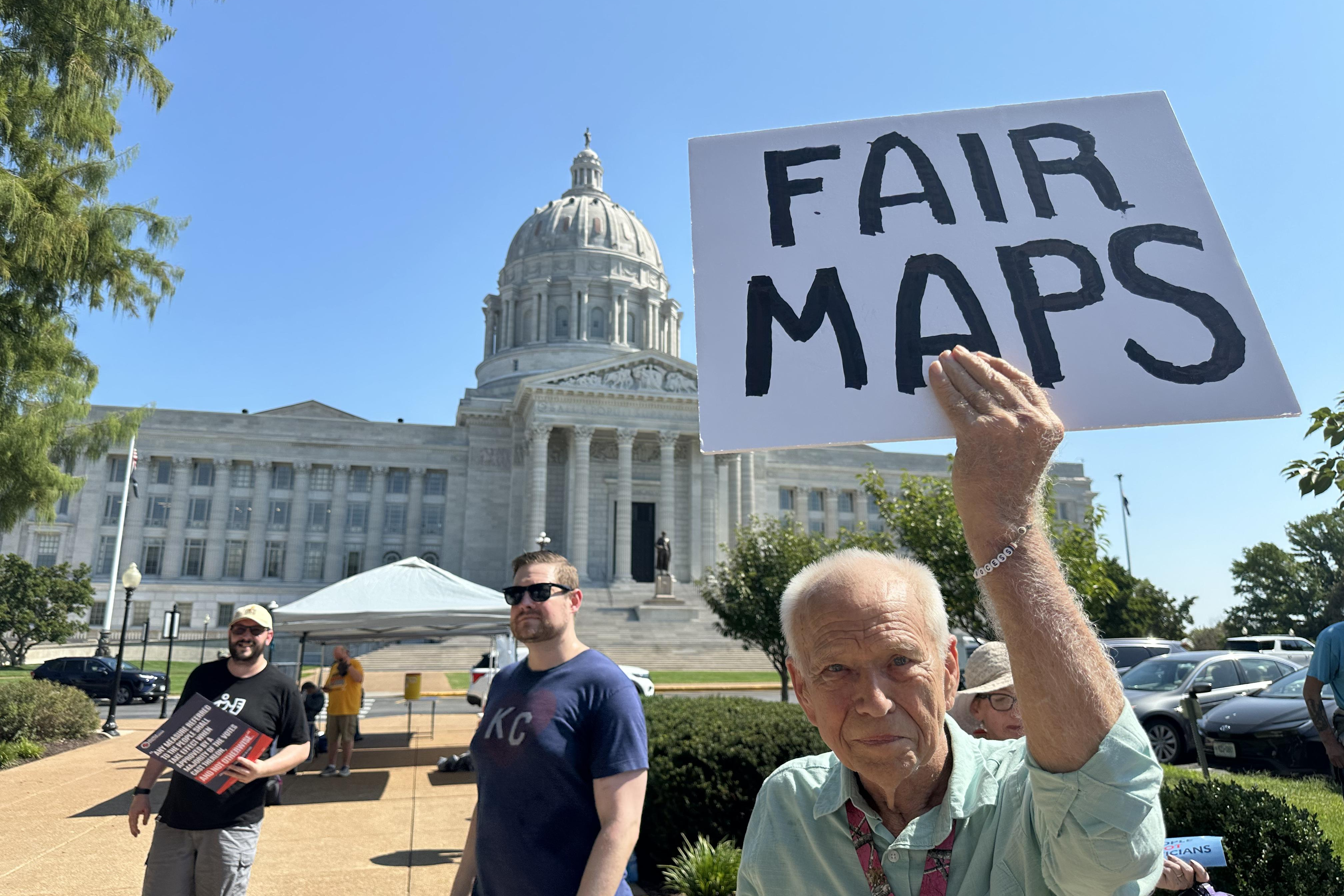
    A group seeking to block Missouri from using a new congressional map that favors Republicans in November’s midterm elections has asked the Supreme Court to intervene.

    The appeal is the latest twist in an extraordinary legal fight that has plunged the state into electoral confusion just as it was supposed to finalize ballots and shortly before it begins distributing mail-in versions to voters.

    People Not Politicians, an anti-gerrymandering group, asked the Supreme Court to review the case late Wednesday afternoon, just minutes after its appeal was rejected by a federal appeals court.

    In a brief ruling, a three-judge panel of the U.S. Court of Appeals for the 8th Circuit said they did not have jurisdiction, or the plaintiffs had not met the legal bar, to obtain an injunction against Missouri’s use of the new map.

    The legal uncertainty has left voters and election administrators unsure about what Missouri map will be in play less than two months before voters head to the polls on Nov. 3.

    Roy Temple, a longtime Democratic strategist in Missouri and former head of the state Democratic Party, said voters “can’t possibly understand who they’re going to be voting for.”

    “There is a great deal of chaos,” Temple said. “The sad part is that it’s almost entirely inflicted by people whose responsibility was to ensure the orderly conduct of elections.”

    The appeals court ruling came after a furious night of legal developments Tuesday, as Supreme Court Justice Brett M. Kavanaugh and a federal judge in Missouri issued conflicting rulings less than a half-hour apart about whether the state could use the new map.

    Republicans currently hold six of Missouri’s eight congressional seats, and the new map, adopted by the GOP-controlled state legislature, is designed to give the party a good shot at picking up an additional seat.

    Kavanaugh denied an appeal by Missouri Secretary of State Denny Hoskins to overturn a Missouri Supreme Court ruling last week blocking the new map, without giving his reasoning. The state high court had ordered Missouri to use a 2022 map that gives Democrats a better chance of keeping two seats.

    But soon after Kavanaugh denied the appeal, a federal judge, Stephen Clark, a Trump appointee in the St. Louis area, ordered Hoskins in a separate case to use the new, more GOP-friendly electoral map.

    Hoskins and the state’s Republican leadership quickly announced that they would abide by that ruling. But the anti-gerrymandering group, People Not Politicians, appealed Clark’s temporary restraining order to the U.S. Court of Appeals for the 8th Circuit.

    “If the TRO remains in effect, elections officials will effectively be in contempt of either the Missouri Supreme Court or the federal district court if they implement either HB 1 or the 2022 map, leaving ballots and voters in flux,” attorneys for People not Politicians wrote in the group’s filing.

    HB1 refers to the law that created the new map. It was adopted by the legislature last year at the behest of President Donald Trump, who has urged GOP-controlled states to draw maps more favorable to Republicans to help the party retain control of Congress in a difficult election year.

    The result has been a nationwide redistricting war in which at least 20 states have redrawn — or are in the process of redrawing — legislative maps to favor one party or the other.

    The Missouri Supreme Court also threatened to hold Hoskins, the state’s top election official, in contempt late Tuesday. The state’s high court ordered Hoskins to explain why he approved the new congressional map favoring the GOP despite its order blocking it. It was set hold a hearing on the issue on Thursday.

    People Not Politicians collected more than 300,000 signatures to force a statewide referendum on the new Missouri map in November’s election.

    Hoskins rejected the petitions, saying the state constitution did not permit referendums on congressional redistricting. People Not Politicians sued.

    A federal judge upheld Hoskins’s move, and the state held its August primaries for November’s contests using the GOP-friendly map. Afterward, the state Supreme Court issued its ruling blocking the use of the new map.

    Missouri Attorney General Catherine Hanaway, a Republican, said in a statement that this would leave state officials in an impossible position: holding a general election using different maps than were used in the primaries.

    “We maintain that changing the congressional map in between the primary and general elections is simply not feasible and profoundly unjust to Missouri voters,” Hanaway said.

    State Sen. Rick Brattin, the GOP nominee in the district redrawn to favor Republicans, said in a social media post that he was disappointed in the U.S. Supreme Court ruling. He is taking on Democratic Rep. Emanuel Cleaver.

    Brattin praised the temporary restraining order from the lower court that preserves the maps used in the primaries, saying it would ensure that “voters will not be disenfranchised by being forced to vote in a different district for November.”

    “The stakes are high for our nation in the upcoming election,” Brattin posted on X, “and I look forward to continuing to campaign across the 5th District, where I know many voters feel like it’s time to send eleven-term incumbent Emanuel Cleaver home.”

    Former U.S. senator Claire McCaskill, a Democrat, called Hoskins “lawless” and said he had intentionally waited to act until “he thought it was too late for anybody to do anything about it.”

    It was extraordinary that the conservative state Supreme Court ruled against him, McCaskill said, noting that five of its seven members were appointed by Republicans.

    “So it was really a very strong signal that they had gone too far, but according to the new Republican Party, the law is a mere nuisance that can be avoided if there is political gain to be made,” McCaskill said.

    Boone County court clerk Brianna L. Lennon said that she has been left “in a holding pattern” while the various courts and officials decide the shape of this fall’s elections.

    “I am hoping that they move quickly,” Lennon said, adding that her county and its 125,000 voters are “heavily impacted by which map we’re going to use.”

    About 40% of Boone County voters are directly affected, she said, both because the congressional district numbers change depending on which map is in effect and because the boundary shifts across the entire county.

    Because the situation has been fluid for much of the year, Boone County has preset its election systems with both maps, Lennon said. That process involves manually linking each street address to a particular precinct based on each of the competing maps, she said, so that every voter has double precinct assignments until the situation is resolved.

    “So the question is not, ‘Oh my gosh, what do we do?’ It’s just, ‘Tell us which map to use,’” she said.

    But the clock is ticking. Missouri uses paper ballots, and court clerks have been in regular contact with printing vendors to ensure there’s time to get them prepared. Ballots have to go to military and overseas voters by Sept. 18, Lennon said, and early absentee voting begins Sept. 22.

    In Boone County, the practice is to test voting equipment three to four weeks before Election Day, which means officials will need paper ballots by then. Election Day — Nov. 3 — is now seven weeks away.

    “So it will be a crunch, I think, to get the ballots printed,” Lennon said. “But it’s still doable at this time.”

  • New Apple CEO unveils latest iPhone lineup, including a foldable model called Duo

    New Apple CEO unveils latest iPhone lineup, including a foldable model called Duo

    CUPERTINO, Calif. — Apple on Wednesday unveiled its latest generation of iPhones, including a widely anticipated foldable version called Duo.

    The company’s new CEO, John Ternus, who took over from Tim Cook on Sept. 1, introduced the latest lineup at the company’s Cupertino, Calif., headquarters.

    After cycling through other updates to the iPhone, the Apple Watch and AirPods, Ternus told the audience inside the Steve Jobs Theater that “actually there is one more thing,” in a nod to the trademark phrase from Jobs that the company’s legendary late founder himself borrowed from the 1970s detective show Columbo.

    The foldable phone has the “largest display ever on an iPhone, yet fits into your pocket,” Ternus said.

    The phone opens to a 7.6-inch display that is 80% larger than the newest iPhone 18 Pro. It will let people use an Apple Pencil on the phone, a capability previously reserved for iPad users. Duo, Ternus said, “will redefine the experience of using a foldable phone.”

    The Duo lets users split the screen to use two different apps on the device, or two windows of the same website for things like comparison shopping. With a starting price of $1,999, it is the most expensive iPhone yet.

    The Duo “was always going to eclipse Apple’s other announcements at the event,” said Ben Wood, chief analyst at CCS Insight. “The device adds a distinctive new design to the iPhone lineup and marks the company’s entry into the niche foldable smartphone category.”

    Wood said that while there is certain to be demand for the Duo, which costs less than some analysts had anticipated, foldables still account for less than 5% of the overall smartphone market.

    New iPhone 18 models

    The iPhone 18 Pro and 18 Pro Max, Ternus said, bring improvements to the battery, camera, and performance. They will start at $1,199 and $1,299, respectively. Customers can preorder the phones starting on Sept. 12 and they will be available on Sept. 18, although the Duo will be available on Oct. 23.

    The new models feature a long battery life — 45 hours of video playback for the Pro Max — and faster charging. The camera offers what Apple called “cinematic effects” from regular video captured on the phone, as well as new options for manual controls and “smart focus tracking,” which lets users focus on a single moving subject, such as a kid during a soccer game.

    Apple is also focusing on Siri’s new AI capabilities with the new phones, emphasizing privacy and security to stand apart from rivals who are further along in incorporating AI.

    Many of Apple’s biggest rivals, such as Samsung, Motorola, and Google, have already come out with foldable smartphones. But Apple is not one to rush on new technologies.

    “The foldable launch is straight out of Apple’s playbook: Wait for the product to work out its kinks and for the market to offer glimpses of viability, then enter and shape the category,” said Forrester analyst Dipanjan Chatterjee. But, he added, the question will be whether it can expand demand for what’s still a niche product category.

    Compared with earlier generations, the iPhone 18 costs about $100 more due partly to a global memory chip shortage. The iPhone 17’s price ranges from $799 to $1,999 depending on the model.

    Earlier this year, Apple unveiled artificial intelligence advances, including upgrades to its Siri assistant, emphasizing a focus on privacy and day-to-day use as the company tries to catch up with rivals on AI.

    Ternus takes center stage

    The keynote address for Ternus was his opportunity to set the tone for his vision of Apple’s future, Chatterjee said.

    “John Ternus inherits perhaps the most successful consumer technology juggernaut in modern times. That is both a boon and a burden for him. Tim Cook’s perfected execution, scale, and monetization set a high bar, and Ternus must extend that run,” Chatterjee said. “But he must sustain that momentum while positioning Apple to disrupt itself in the near future, when the iPhone, or any smartphone for that matter, will cease to be the consumer’s primary conduit to the world.”

    Wood noted that, with all the excitement around the Duo, the official arrival of Ternus as CEO “felt like less of a story” than he’d expected.

    “This event marks a seamless transition from Tim Cook, and its timing to coincide with the iPhone Duo was undoubtedly planned,” Wood said. “However, despite the media frenzy about this new device, it is the broader strength of Apple’s hardware, software and services that will drive the company forward.”

  • Trump administration proposes changes to census that could exclude millions

    Trump administration proposes changes to census that could exclude millions

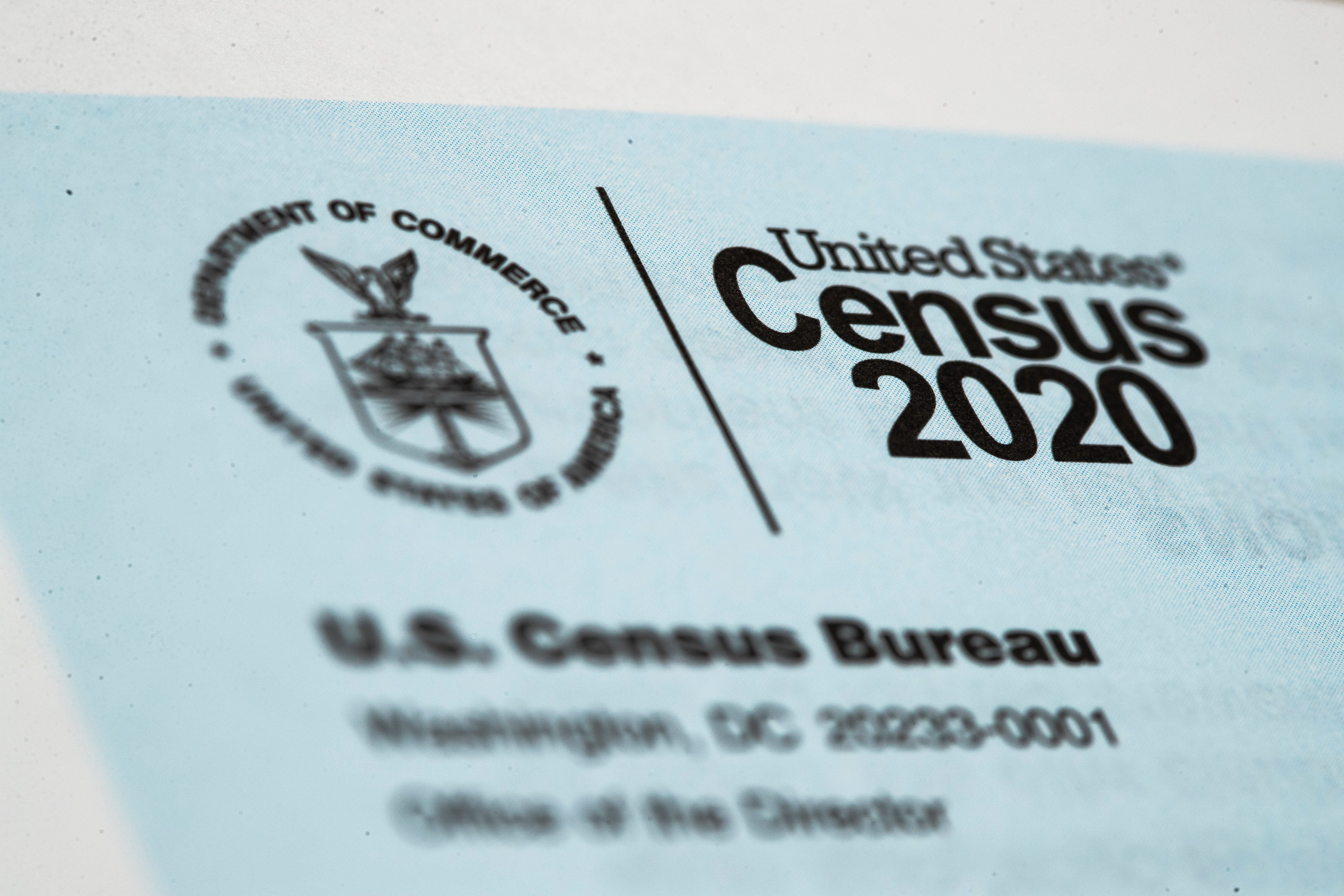
    Millions of residents could be excluded from the U.S. census, congressional representation could be reshaped, and federal funds could be reallocated across states under changes proposed by the Trump administration.

    In the proposal posted to the federal register Wednesday, the Census Bureau suggested adding a citizenship question to the decennial questionnaire, which President Donald Trump has wanted since his first term.

    The proposal argues that the census count should exclude any undocumented immigrants and noncitizens without permanent residency because they are “not true inhabitants, members of the body politic, or persons with a ‘usual residence’ in the United States due to their lack of a sufficient tie and allegiance to the United States.”

    Under the newly proposed rules, refugees and asylum seekers would be excluded from the population count.

    Trump administration officials also want to prohibit the Census Bureau from asking certain demographic questions, including about race, ethnicity or sexual orientation, claiming the survey “should be colorblind and should not be distorted in any way by questions about immaterial personal characteristics.”

    The census has collected data on race and ethnicity since 1790.

    Trump has for years pushed to alter how the American population is tallied every decade, including unsuccessful efforts to add a citizenship question to the 2020 Census. The Supreme Court ultimately froze that plan, saying Trump officials had provided a “contrived” reason for wanting such information.

    Trump later said the citizenship question was needed to affect the redistricting process, an argument the Justice Department did not use in its legal defense. Census results every 10 years determine how the House’s 435 seats are allocated among states.

    “Number one, you need it for Congress — you need it for Congress for districting,” Trump said in 2019. “You need it for appropriations — where are the funds going? How many people are there? Are they citizens? Are they not citizens? You need it for many reasons.”

    Last August, Trump announced he was directing the Department of Commerce to again overhaul the census, amid a nationwide redistricting battle.

    “People who are in our Country illegally WILL NOT BE COUNTED IN THE CENSUS,” he wrote on Truth Social then.

    The Trump administration’s latest proposal will almost certainly face legal challenges. The 14th Amendment of the U.S. Constitution mandates that representatives in Congress be apportioned to states based on “the whole number of persons in each state,” without specifying citizenship or immigration status.

    Currently, the U.S. census counts native-born U.S. citizens, naturalized U.S. citizens, non-citizen U.S. nationals, lawful permanent residents and temporary migrants, such as foreign students, refugees, asylum seekers and undocumented immigrants.

    New York Attorney General Letitia James, who led a lawsuit against Trump’s efforts to change the 2020 Census, said Wednesday the state is again exploring legal options to fight back against the administration’s proposed changes to the 2030 Census.

    “The Constitution is clear. Every person living in the United States, regardless of immigration status, must be counted in the census,” she wrote on X.

    Civil rights and public health groups have also warned against the removal of questions about race and ethnicity from the census, saying doing so would hamper officials’ ability to address health disparities, starting with how to appropriately allocate federal funding.

    “If you change what the census counts, then you change where the money can help most,” Vi D. Le and Melanie Klein of the Federation of American Scientists wrote last week.

    “Removing race and ethnicity data does not make health disparities go away,” they wrote. “It merely makes them harder to find, harder to measure, and harder to fix.”

  • U.N. nuclear watchdog board reports Iran to the U.N. Security Council for the first time in 20 years

    U.N. nuclear watchdog board reports Iran to the U.N. Security Council for the first time in 20 years

    VIENNA — The U.N. atomic watchdog’s board on Wednesday reported Iran to the U.N. Security Council for the first time in 20 years, citing it for failure to cooperate in a long-running investigation into uranium traces detected by inspectors at undeclared sites.

    Western officials suspect that the traces could provide evidence that Iran had a secret nuclear weapons program until 2003. Iran says that it’s not pursuing nuclear weapons, and that its program is entirely peaceful.

    Reporting Iran to the Security Council opens the country to possible sanctions and asset freezes, though such punitive measures are unlikely because Iran’s allies Russia and China hold veto power on the panel.

    Twenty-three countries on the International Atomic Energy Agency’s 35-member board of governors voted for Wednesday’s resolution at IAEA headquarters in Vienna.

    China, Russia, and Niger opposed it, while eight countries abstained and one didn’t vote as it was in arrears, according to diplomats who spoke on condition of anonymity to describe the outcome of the closed-door vote.

    The resolution was put forward by the United States, Britain, France, and Germany.

    The diplomatic move has been under consideration since June 2025, when the IAEA board found Iran officially in noncompliance with its nonproliferation obligations because of Tehran’s lack of cooperation in the investigation.

    Iran’s ambassador to the U.N. in Vienna, Reza Najafi, rejected the resolution, describing it as a “political tool” and saying that it ruined confidence in the IAEA’s “independence, impartiality, and credibility.”

    He suggested that compliance with any obligation to allow U.N. inspections of nuclear sites inside Iran was, in any case, impossible at the moment because of the country’s continuing war with the U.S. and Israel.

    The U.S. this week destroyed five Iranian oil tankers and Tehran hit back at American targets in Jordan, the latest burst of back-and-forth strikes that have lurched the sides back toward open hostilities in a more than 6-month-old war.

    The draft resolution, which was seen by The Associated Press, requested IAEA Director General Rafael Grossi to report the agency’s concerns “to the Security Council and the General Assembly of the United Nations, in accordance with the relevant provisions of the IAEA Statute.”

    The resolution also reiterated its call upon Iran “to urgently remedy its non-compliance” with previous agreements and to take steps deemed necessary by the IAEA to assure “the non-diversion of nuclear material.”

    Since Israel and the U.S. struck Iran’s nuclear sites during the 12-day war in June 2025, Iran hasn’t given IAEA inspectors access to nuclear sites that were affected by the strikes. The IAEA also has been unable to verify the status of Iran’s stockpile of near weapons-grade uranium since the June bombing.

    Najafi said that airstrikes by the U.S. and Israel made safe access for inspectors to Iran’s nuclear sites “materially impossible.” He said that Iran has “neither stopped nor suspended its safeguards obligations,” adding that “performance is currently impossible under continuing military operations and persistent threats.”

    Iran’s Deputy Foreign Minister Kazem Gharibabadi echoed that sentiment in an post on X.

    “They attack Iran’s safeguarded nuclear facilities, disrupt the normal verification process, and then use that very disruption as a pretext to pass a resolution at the IAEA Board of Governors,” he said.

    According to the IAEA, Iran maintains a stockpile of 972 pounds of uranium enriched up to 60% purity — a short, technical step away from weapons-grade levels of 90%.

    That stockpile could allow Iran to build as many as 10 nuclear bombs, should it decide to weaponize its program, IAEA chief Grossi warned in an interview last year with the AP. He said that it doesn’t mean that Iran has such a weapon.

  • The psychological toll of Cuba’s multiple crises is pushing many islanders to the breaking point

    The psychological toll of Cuba’s multiple crises is pushing many islanders to the breaking point

    HAVANA — Sweltering nights. Water and power shortages. Dwindling fuel and crumbling homes. Limited public transportation and weak cell phone signals.

    The psychological toll of daily life in Cuba is pushing many to their breaking point on this island of nearly 10 million people, with no relief in sight as a U.S. energy embargo persists and longtime economic and financial troubles deepen.

    “Before there was hope,” Yomeidis Felicó Riverón said. “Right now, what people have lost is exactly that.”

    Felicó Riverón is a primary care physician, but she has embraced an additional role as Cubans grind through their days.

    “They come and cry about their troubles, because they have no one else to vent to,” she said of her patients. “We end up having to play psychologist.”

    Children attend a workshop to make gift bags and perfume in Havana last month.Ramon Espinosa

    Parents shield children from Cuba’s realities

    On a recent sunny afternoon, six girls and one boy crowded around a table as their parents sat in the background, trying to fan away the stifling heat.

    The children were learning how to make gift bags and perfume, a free workshop that offered them a brief respite from Cuba’s realities.

    “My son doesn’t know if there’s food or if there’s no food,” Felicó Riverón said, confiding that she never tells him when she doesn’t have money to buy something he wants.

    Instead, she distracts him: “Let’s go play, let’s go to the park. We’ll come back another day.”

    Dianne Tamayo was among the mothers present that day. The workshop served as an oasis for her and her daughter. Tamayo socialized and temporarily forgot what awaited at home.

    “My husband is my rock,” she said. “When I’m going crazy, my husband tells me, ‘Sit down, breathe … let’s put on some music.’”

    He sometimes has to remind Tamayo that their daughter is coming home from school soon, and that they need to keep their troubles, anxieties, and frustrations to themselves.

    “I do the best I can with the tools I have, but there’s still a moment where I get overwhelmed,” she said.

    Tears fell as she confided that she doesn’t have anything in her life that relaxes her, and that she has never questioned how to release her feelings about life in Cuba.

    “They are exterminating us,” she said, “and we remain complacent.”

    U.S. Embassy issues health alerts

    Cuba’s crises worsened after President Donald Trump announced in late January that he would impose tariffs on any country that sells or provides oil to the Caribbean country. Longtime U.S. sanctions also have taken their toll, Cuba’s government said.

    From March 2025 to the end of February, “the U.S. policy of economic strangulation” amounted to more than $8 billion, “a record figure,” according to Cuban Foreign Affairs Minister Bruno Rodríguez.

    Island-wide blackouts have increased this year, and daily outages now surpass 24 hours. As a result, water is often scarce, and small protests have erupted, despite the fear of being detained, as anger and frustration boil over.

    The situation has worsened to a point that the U.S. Embassy recently issued two public health alerts.

    On Aug. 28, the embassy noted that “Cuba’s water supply infrastructure is increasingly unstable ” and that there are “residential neighborhoods experiencing long periods without water from municipal or public sources.”

    On Friday, the embassy warned of an increase in gastrointestinal illnesses linked to the “degradation of the water and energy infrastructure. …. Recent cases have included E. coli, norovirus, Shigella, and other gastrointestinal pathogens.”

    Water and power shortages persist, but 81-year-old Havana resident Oscar Joaquín López said that he doesn’t dwell on what he lacks.

    “Why?” López said. “Because it drives you crazy, and nobody is going to drive me crazy.”

    On a recent afternoon, he leaned against the doorframe of his home as he watched his 58-year-old roommate fill up nearly a dozen plastic containers with water that flowed from a pipe on the street. They had been without water for several days, so they acted quickly.

    With temperatures hovering above 90 degrees, López said that he sits in his doorframe until midnight to catch a breeze from the nearby ocean, a steel pipe nearby to ward off any intruders. After midnight, he goes to bed, hoping the wooden slat he wedged into his window will catch any wind, however slight.

    Nearby, 62-year-old mason José Laó Faviel dug through overflowing garbage on the street, looking for food to feed his pig and her 10 piglets, because he had none to give them.

    “What are you going to do?” he said. “We’re living through difficult times.”

    Minutes later, another man rifled through the same pile of garbage. After opening several bags, he found something to eat.

    Cubans find solace in family

    Sweat gathered around Armando Lafita’s brow as the 60-year-old pushed a cart through the crumbling buildings in Old Havana. Authorities have evacuated some residents in the area for safety reasons, but those with nowhere else to live now sleep on the street, ducking inside their building when they need something.

    Lafita’s cart was filled with red roses and white ginger lilies, Cuba’s national flower. He sells them for 10 to 40 cents a bunch, but sometimes he goes home without a single sale.

    “Everybody is fighting to survive here,” he said. “It’s getting harder every day.”

    Like many Cubans, Lafita said the only thing that keeps him going is family: his 19-year-old son.

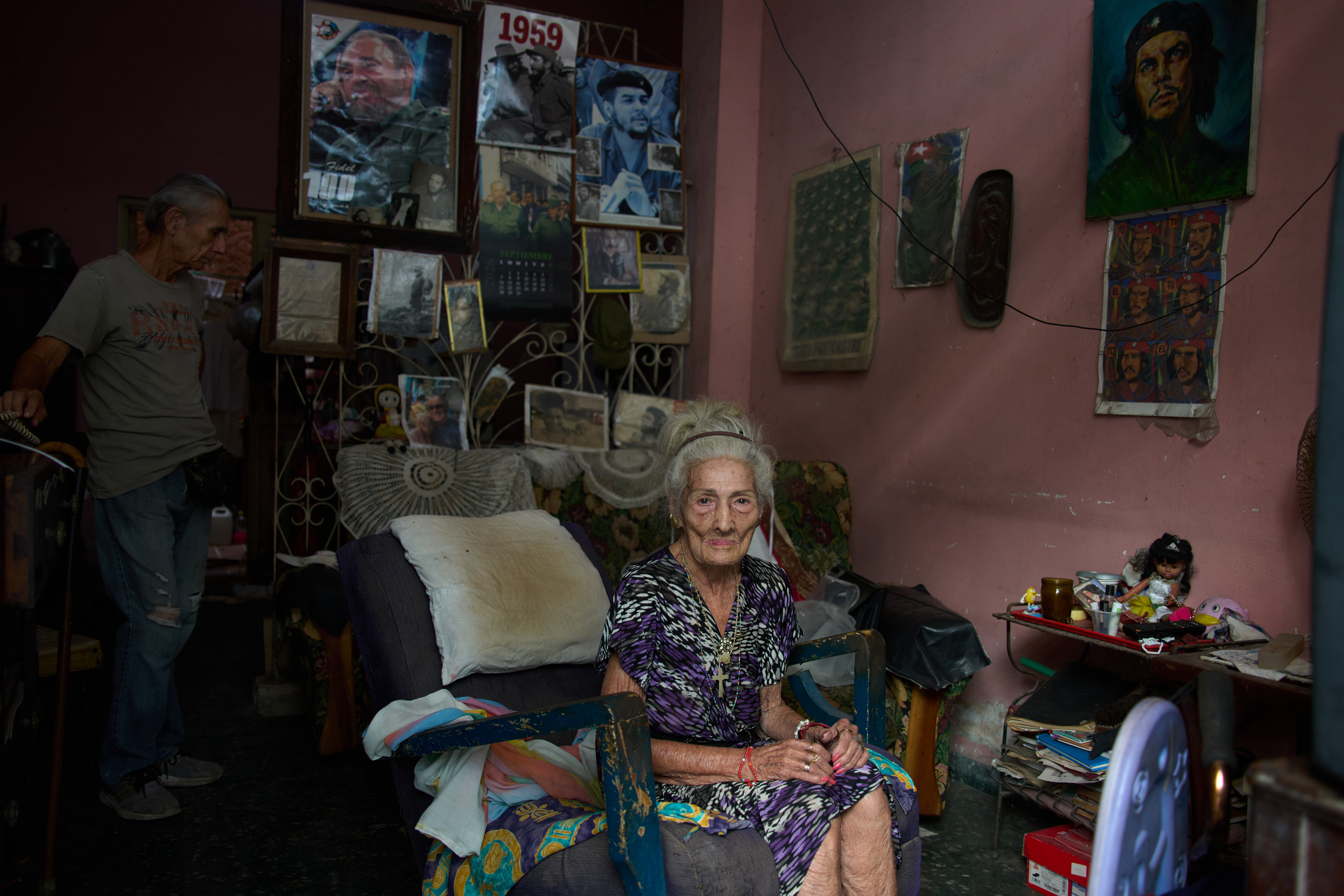
    José Manuel Borroto Díaz, 70, and his 93-year-old mother, Teresita del Rosario González Ricardo, lean on each other to keep going.Ramon Espinosa

    It’s the same reason that 70-year-old José Manuel Borroto Díaz and his 93-year-old mother, Teresita del Rosario González Ricardo, keep going: They have each other.

    “Our situation is like something out of a movie, but we’re going to press on,” said Borroto, a retired aviation official who was in Angola during Cuba’s military intervention in the 1970s.

    Across the island, Cubans are pressing on even as the crises deepen, including 90-year-old Lázaro Alfonso Oviedo. He recently attended a weekly gathering to help raise the spirits of elderly people.

    Oviedo danced and sang in a deep, robust voice “to forget for a little while the suffering the empire puts us through,” he said, referring to the United States.

    “We are not going to give up,” he said as he praised Cubans’ unwavering resilience. “We get it precisely from the spirit forged by the revolution itself — a revolution spanning more than 60 years.”

  • Hours after a Russian attack destroys their home, a Ukrainian couple gets married

    Hours after a Russian attack destroys their home, a Ukrainian couple gets married

    KYIV, Ukraine — On the eve of her wedding, Liudmyla Ryzhak pressed her delicately embroidered dress, laid out a full white tulle skirt and her soon-to-be husband’s traditionally patterned shirt, then hung them on the bedroom door.

    After repeated delays caused by the war with Russia, she was only hours away from marrying her partner, a 43-year-old Ukrainian soldier, in a ceremony in the capital.

    But as the couple slept, a Russian strike hit a warehouse across the street from their building, sending a blast wave through the apartment and threatening to stop the wedding scheduled for Tuesday morning.

    The pair were soon digging their wedding clothes out of the rubble. Ryzhak, 33, had to pull her skirt from beneath the debris, shaking off pieces of broken glass.

    Strike followed visit by U.S. envoys

    The strike came soon after U.S. envoys visited Ukraine on Sunday, a trip that brought a lull in Russian attacks. The assaults then resumed with drones and missiles. Explosions were heard in Kyiv for almost five hours overnight. Strikes continued during the day Tuesday.

    Like many others in Kyiv, the couple decided the attacks would not derail their lives and forged ahead with the ceremony. It had taken a long time for her fiancé, Leonid Ryzhak, to make it back from the front lines in eastern Ukraine.

    “If God gave me a continuation of life, then why should I put it off?” the bride said. “For someone, it ended. And who can guarantee this won’t happen again tomorrow? That tomorrow won’t come for us? At least for now, I have the right to be happy. Both him and me.”

    Liudmyla and Leonid awoke from the blast, which blew out the apartment’s windows and scattered its furniture. A burned curtain hung in shreds.

    Their ears deafened by the explosion, the couple’s only immediate thought was the risk of a second strike. They fled to a shelter with Liudmyla’s 6-year-old daughter and two guinea pigs but without the cat, which had hidden in fright and could not be found.

    They were lucky: By the time the second strike hit, they were already safe. The apartment was rendered uninhabitable until repairs are made.

    A friendship deepened into love

    The two met three years ago through mutual friends, coming together as adults who weren’t looking for anything serious. Both had children from previous marriages.

    But the friendship deepened. She supported him through his deployments to the front, and slowly the relationship grew into love. Leonid Ryzhak, who serves as part of a team that deploys bomber drones in the Pokrovsk area, arrived in Kyiv for a long-awaited vacation a week and a half earlier, just as near-constant air-raid alerts and daytime attacks began disrupting life in the capital.

    For six days straight, the couple went to the registry office but could not submit their documents because of constant air-raid sirens.

    When they finally succeeded, they were assigned Sept. 8. Nobody could have predicted that their apartment would be badly damaged on the same day.

    It wasn’t the first time for Liudmyla, who owns a Kyiv pet store. She had already lived through one attack, on Aug. 20, when a strike cut the gas lines and shattered windows in her home. She was badly frightened and for a time was afraid to go back.

    Eventually, ordinary life pulled her back in: The wedding was coming, and the children had to go to school.

    More attacks hit as they wait at registry office

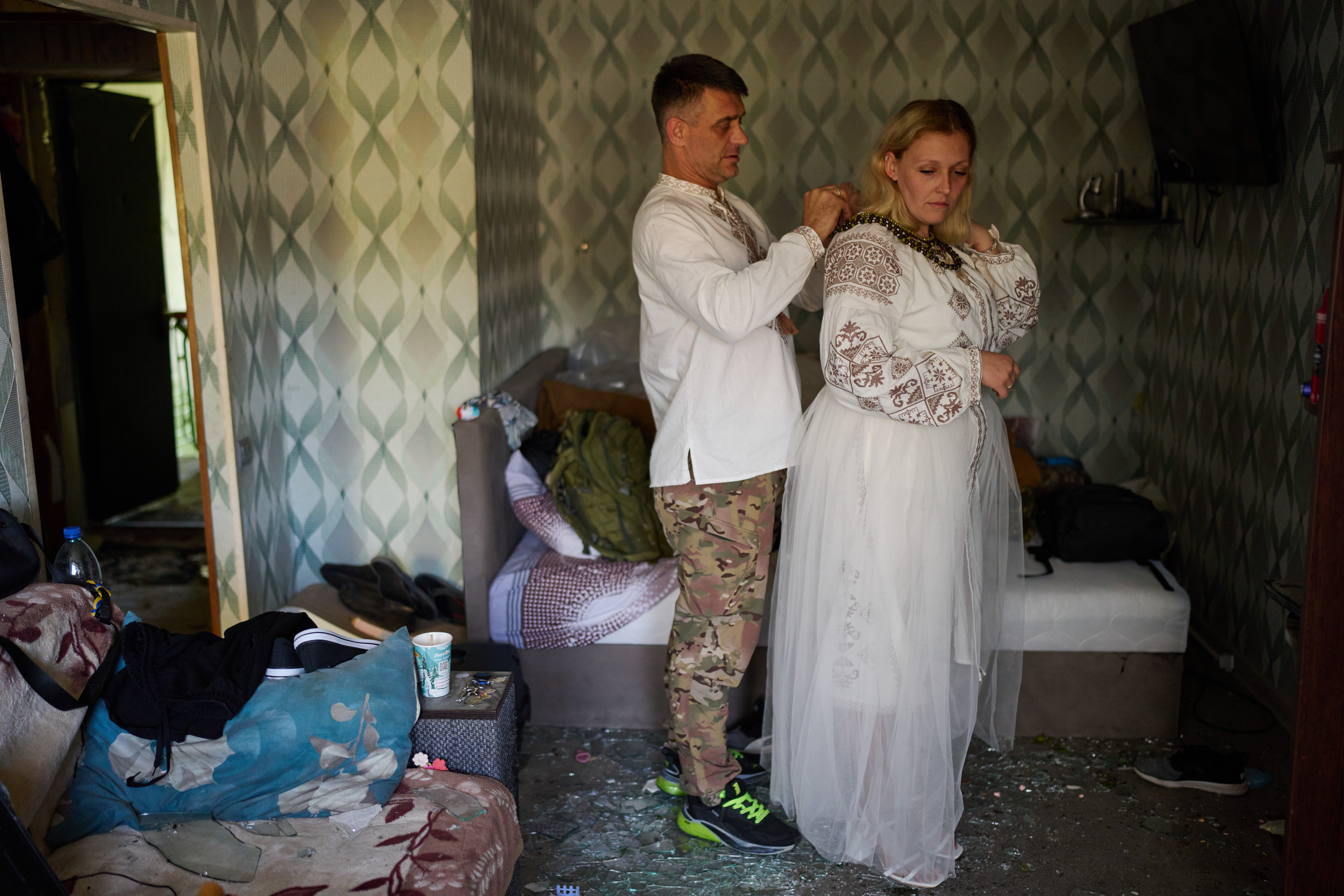
    Eventually, the two put on their wedding clothes and headed to the registry office.

    Leonid tried to keep their spirits up. What mattered most to him, he said, was for his bride to be smiling.

    “It’s fine. We’ll get through it,” he said.

    When they stepped outside their apartment, the courtyard looked almost apocalyptic, with a column of black smoke rising behind a brightly colored children’s playground. Neighbors clearing debris stopped to congratulate the couple.

    “We should all be celebrated, that we survived,” Liudmyla replied.

    The couple arrived at the registry office on time, at 10:40 a.m.

    Leonid wore an embroidered vyshyvanka, a traditional Ukrainian shirt, with a pattern that matched the one on Liudmyla’s dress.

    In place of black dress pants, he wore army trousers — he couldn’t dig his own out of the rubble — and black sneakers with fluorescent yellow soles and laces, for the same reason. Liudmyla’s white tulle overlay had tiny, barely visible holes that were torn as she pulled it out from the rubble and broken glass.

    Shortly after they arrived, a siren sounded: Another attack had begun, and the registry office closed for safety. The couple waited in the courtyard, unsure how long it would last.

    Explosions echoed nearby as strikes hit surrounding districts and fires broke out. Almost three hours passed before the alert finally ended, and the couple hurried back inside.

    Against all odds, they became husband and wife

    Just before entering the hall for the ceremony, they paused, trading nervous jokes.

    “I didn’t even get to finish the repairs at home,” Leonid joked about their now-wrecked apartment.

    “I’ve never had such a spectacular day,” his bride replied.

    The ceremony went ahead as the officiant told them, “Love is when two people become a team.”

    Moments later, the two were officially married.

    “We’re gaining a new life, because we survived,” Liudmyla said. “You could probably call [it] a new life because it could have ended today, and none of this would happen.”

    In a different scenario, “I wouldn’t be wearing this dress. Someone would be picking out something else for me instead, something darker.”