Tag: no-latest

  • Trump’s grand midterm convention finale: ‘I’m a little bit tired of politics’

    Trump’s grand midterm convention finale: ‘I’m a little bit tired of politics’

    DALLAS — In 2024, President Donald Trump accepted the Republican presidential nomination by promising to “lead America back to the summit of human achievement and greatness.”

    In 2026, he closed out an unusual midterm convention organized in his honor by saying he was a little bored of politics. He seemed more interested in telling supporters to swear on something holy — which seemed to be himself — that they would go out and vote for Republican candidates in November.

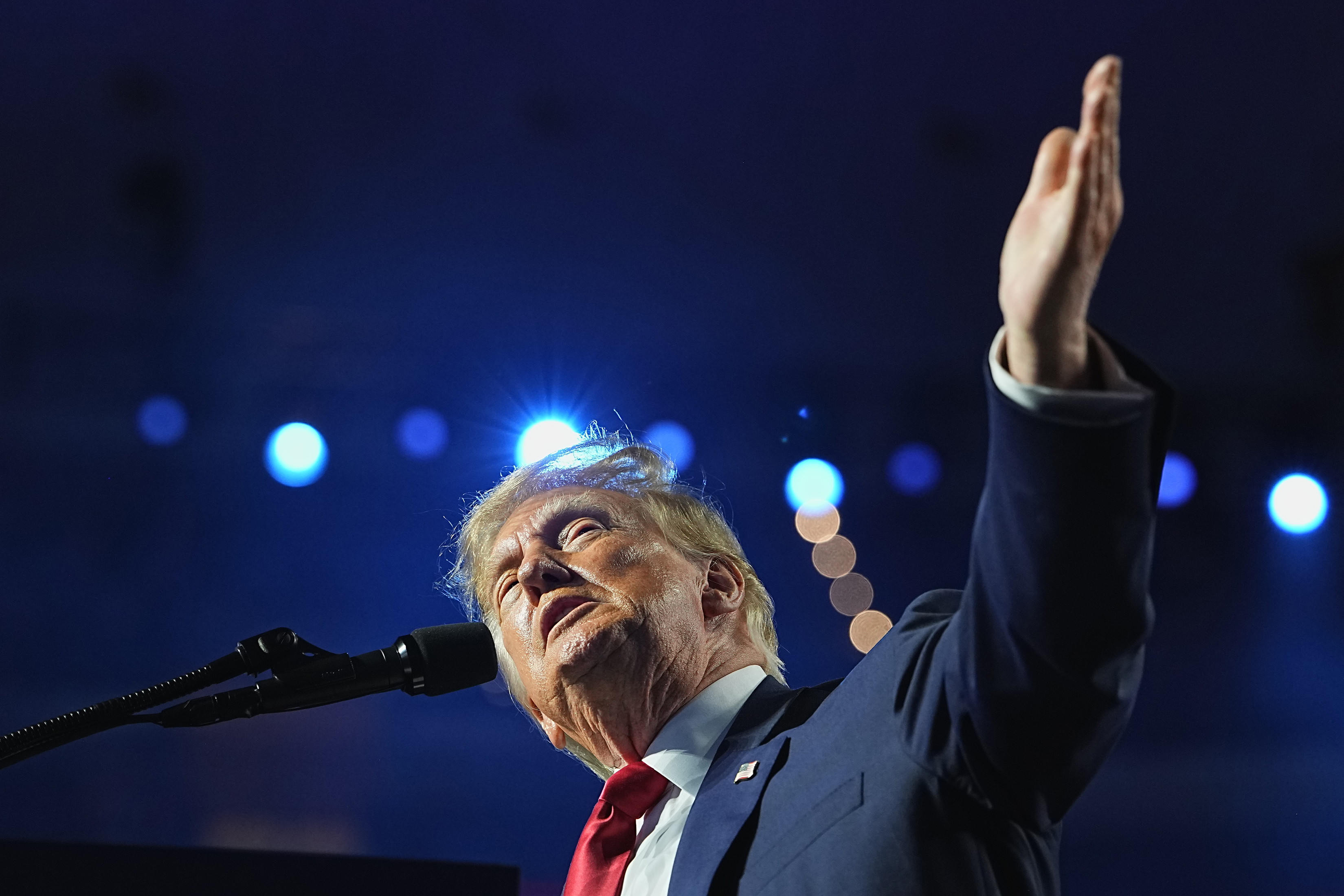
    “Please raise your right hand,” Trump instructed a rowdy crowd of thousands inside a Dallas arena on Thursday evening. Many of them complied. “I pledge to the greatest president in the history of the United States that loves us so much he can’t even breathe that I will go out with my family, my friends, I will do it any way — I don’t care if I’m registered or not, I’m going to try and cheat like hell, like they do.” (Trump usually frowns on election fraud.)

    He added: “I am going to go out, and I’m going to get my friends, my family, and we are going to vote on November 3.”

    Speaking for a grand total of nearly 2 1/2 hours over two days in Texas, Trump made it very clear, onstage and in interviews, that he would be relying on the strength of his political brand to see his party through what appear to be daunting midterm elections. He would not be straying much from his comfort zone to help vulnerable Republicans. In fact, the president said Thursday evening, he was kind of over this.

    “We’re going to have a good time listening to music,” Trump said, name-checking Christopher Macchio, an opera singer who closed out the evening. “I’m getting a little bit tired of politics now.”

    Before taking the stage for the second night in Dallas, Trump was asked by Laura Ingraham of Fox News whether he intended to campaign harder than he ever had before.

    “No,” he replied bluntly. Asked by Ingraham whether or not he thought his legacy was on the line ahead of the midterm elections — “Isn’t this just as important, Mr. President?” — Trump seemed almost blasé about the possibility of Republicans losing one or both chambers of Congress. “I’ll block all their bad stuff for two years. It won’t be the same, but I’ll be a blocker, what can I tell you?”

    The whole spectacle was a window into the mindset of Trump and his advisers, who point to recent history as proof that he is capable of beating long odds through brashness, sheer will and an intense connection with his supporters. That relationship is unmatched in modern politics. During his own speech, Vice President JD Vance, the perceived front-runner for the 2028 Republican nomination, asked the crowd to chant his name because it felt “pretty cool.”

    Trump does not have to make such requests. But instead of focusing his energy on Republicans in difficult races — some of whom skipped the event completely — he directed the focus back to himself while he was in Texas. He pleaded with voters to engage in make-believe, and to “please pretend” that he was the one on the November ballot. That exercise might work against him in competitive races where the war with Iran is unpopular and where voters feel that their worries about the prices of gas and groceries are being ignored.

    He put a new twist on an old tactic by offering free money — $5,000 to every American adult — if Republicans keep control of Congress. On his first night in Dallas, he asked voters for patience: The war with Iran, he assured supporters, “will be over very shortly after the election.” All of these promises and pleas amounted to a maximalist, midterm-era version of the “in two weeks” rhetorical tool he relies on when he is under pressure, to vow that something good will happen a few news cycles down the road.

    “Food prices and almost every other item are rapidly going down,” Trump told the crowd Wednesday. “And by the way, oil will be going down as soon as we win the war with Iran, which is taking place right now. We’ll win it. We’re winning it. We control the Hormuz Strait. I think we should call the Hormuz Strait, we should call it the Trump Strait.”

    At moments, Trump almost seemed to be in conversation with himself about his endorsement style, which, in one crucial race at least, has featured a mix of insults and shrugging. On both nights, he defended the disparaging way he has talked about the appearance and character of Ken Paxton, the Texas attorney general running for a Senate seat after Trump directed primary voters to oust Sen. John Cornyn. Those voters complied and put an otherwise reliable seat into play.

    “I said, ‘I don’t really like the way he looks. I don’t like it,’” Trump said of Paxton on Wednesday. “But you know what I do like? He was the greatest attorney general in the history of Texas.”

    By Thursday, he was basically saying to hell with it: “You better do me a big, the biggest favor you’ve ever done me,” Trump told supporters as Paxton watched from the sidelines and smiled through what was at least his third humiliation ritual of the Texas event. “You’ve got to do this for me. You’ve got to pretend I’m on the ticket.”

    Again and again, Trump turned to other priorities, the most pressing of which seemed to be the crowd size in Dallas. There is a reason that political conventions are not held during the midterms. This expensive, two-day event, designed as a tribute to Trump, functioned more like a temperature check, and there were moments when interest seemed lukewarm. Rows of seats in the American Airlines Center stayed empty throughout the affair. Endangered Republicans, sensing a brush fire rather than a lit torch brightening the way forward, steered clear.

    “No empty seats! Fake news,” Trump exclaimed Thursday, spending about three minutes affirming that the busy arena was packed when it wasn’t.

    And so it went on in that vein in Texas, with little new except for a promise of free money, a pledge of allegiance gimmick, and a few glimpses of an 80-year-old president pondering a future in which he is not firmly in control.

    “I want you to remember me in four or five years when this country’s rocketing,” Trump said Wednesday, somewhere near the beginning of a meandering and nearly two-hour speech. “Remember, I’m the one that got it started.”

    By the time he was ready to depart Dallas, he didn’t seem too interested in the particulars of the future, the strength of Republican candidates or the validity of his promises. He suggested to his devoted supporters that he might be “standing with you one of these days.” But for now, he just wanted to chill out and listen to music. He sped through the last lines of a speech finale he knows by heart after a decade at the center of national politics.

    “I just want to say, we will make America great again,” Trump said dutifully. “We will make it greater than ever before.”

    Then the tenor took the stage. Red, blue, white and gold balloons began to fall from the ceiling. The president swayed to the music, lost in the moment.

    This article originally appeared in The New York Times.
  • Trump loyalist steps down from ‘grand conspiracy’ case

    Trump loyalist steps down from ‘grand conspiracy’ case

    A loyalist prosecutor handpicked by the Justice Department to lead a contentious conspiracy investigation into several of President Donald Trump’s political opponents abruptly quit his job on Thursday, according to two people familiar with the matter.

    The prosecutor, Joseph diGenova, had been in charge of what Trump’s allies have often referred to as the “grand conspiracy,” a sprawling inquiry based in the U.S. attorney’s office in South Florida that has sought to implicate federal officials who have investigated Trump in a single plot to deprive him of his rights.

    DiGenova’s resignation was the latest setback in the case that began last year and has dragged on for months. Even though members of his team have issued numerous grand jury subpoenas to federal law enforcement and intelligence officials who have sought over the past decade to hold Trump accountable in a series of criminal inquiries, diGenova had yet to obtain an indictment.

    “It was an honor and privilege to serve the president and the department,” DiGenova told CNN and CBS during phone interviews on Thursday.

    A spokesperson for the U.S. attorney’s office did not respond to a message seeking comment.

    Trump has repeatedly put pressure on prosecutors to bring criminal charges against his opponents, calling them out in private meetings and in social media posts. He has also expressed displeasure about the slow pace of the retributive investigations he has helped to set in motion.

    But time and again, Trump’s desire for vengeance and his willingness to break through the walls of independence that have traditionally separated the White House and the Justice Department have resulted in failure. Judges and grand juries have repeatedly stymied his attempts to strong arm prosecutors into bringing charges.

    Sometimes, as in the case of diGenova, prosecutors themselves have effectively reminded him that it is no simple matter to file indictments against people without real evidence or viable legal reasoning. The resignation was likely to cause consternation among far-right influencers who have long heralded the grand conspiracy case as the Trump administration’s most aggressive effort to go after the president’s critics.

    From the beginning, the influencers pushed for charges to be brought against the widest array of Democrats possible, asserting that a cabal of “deep state” operatives — led by former President Barack Obama — had worked for years to destroy Trump and deserved to be punished.

    With his move, diGenova became the second prosecutor who has either resigned or been removed from the case. The prosecutor in charge of an early phase of the investigation was forced to leave in the spring after telling her superiors that there was not sufficient evidence to bring charges against one of its first targets, John Brennan, a former CIA director who provoked Trump’s ire by helping to assemble an intelligence assessment that determined that Russia had sought to interfere in the 2016 presidential campaign.

    The grand conspiracy inquiry has long been the most fevered of the many revenge investigations that Trump has demanded the Justice Department undertake. It has involved prosecutors seeking to link disparate criminal inquiries into the president — including the Russia investigation and a separate investigation into Trump’s mishandling of classified documents — as an overarching, multiyear scheme to damage his political prospects.

    From the outset, diGenova faced an uphill battle in seeking to prove the basic theory of his case: that the various inquiries into Trump — conducted by different prosecutors and spanning nearly a decade — could be reasonably tied together in a single conspiracy. Those hurdles have led several current and former prosecutors in the office in southern Florida to wonder whether the investigation was largely a show put on to placate Trump.

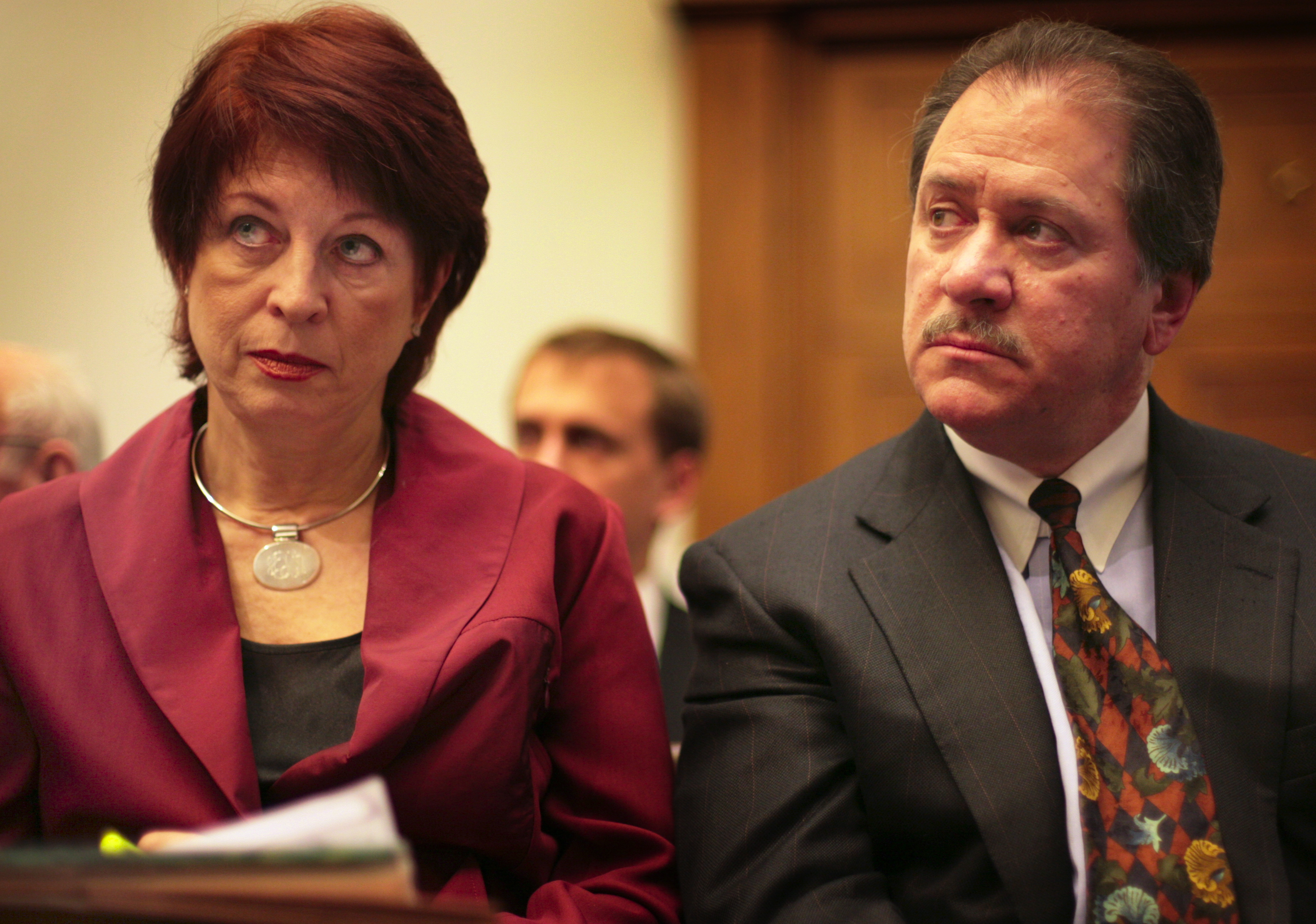
    DiGenova, a former U.S. attorney from the Ronald Reagan era who had not worked as a prosecutor in nearly 40 years, took control of the case in April after his predecessor, Maria Medetis Long, was kicked off the investigation. At 81, he was an unusual choice to oversee an inquiry involving multiple targets that quickly grew to include at least a dozen prosecutors, including his wife, Victoria Toensing.

    Moreover, diGenova was a longtime ally of Trump’s who had publicly claimed that the Russia investigation was a plot by law enforcement to frame him and keep him out of the White House. DiGenova had also worked as a lawyer for Trump’s 2020 campaign, supporting his false assertions that the election that year had been rigged against him.

    While Brennan was the initial focus of the inquiry, it has also involved an effort to implicate former FBI Director James Comey, who has been charged in a separate case in North Carolina. Late last month, diGenova’s office issued a subpoena demanding testimony from one of Comey’s close confidants.

    More recently, subpoenas had been issued to federal agents who took part in the August 2022 search of Mar-a-Lago, Trump’s private club and residence in Florida, in the classified documents investigation.

    This article originally appeared in The New York Times.
  • After 9/11, Islamophobia shaped a generation of Muslim New Yorkers

    After 9/11, Islamophobia shaped a generation of Muslim New Yorkers

    NEW YORK — Once-friendly neighbors started to keep their distance. Undercover police officers began to monitor community events. And passersby would give them dirty looks on the street, and sometimes harass them, when they left home in hijabs or other religious garb.

    Many American Muslims have faced a quarter-century of suspicion and hostility since the Sept. 11 attacks, which reshaped life for all Americans.

    In New York, a generation of Muslim New Yorkers responded to the Islamophobia by organizing their communities. Mosques hosted makeshift legal clinics. Small businesses became hubs in a citywide civil rights network. Muslims of different racial, ethnic and linguistic backgrounds formed alliances the city had not seen before.

    Their political organizing helped, years later, to elect the city’s first Muslim mayor, Zohran Mamdani. But anti-Muslim prejudice endures, echoing the Islamophobia that arose in the earliest days after Sept. 11.

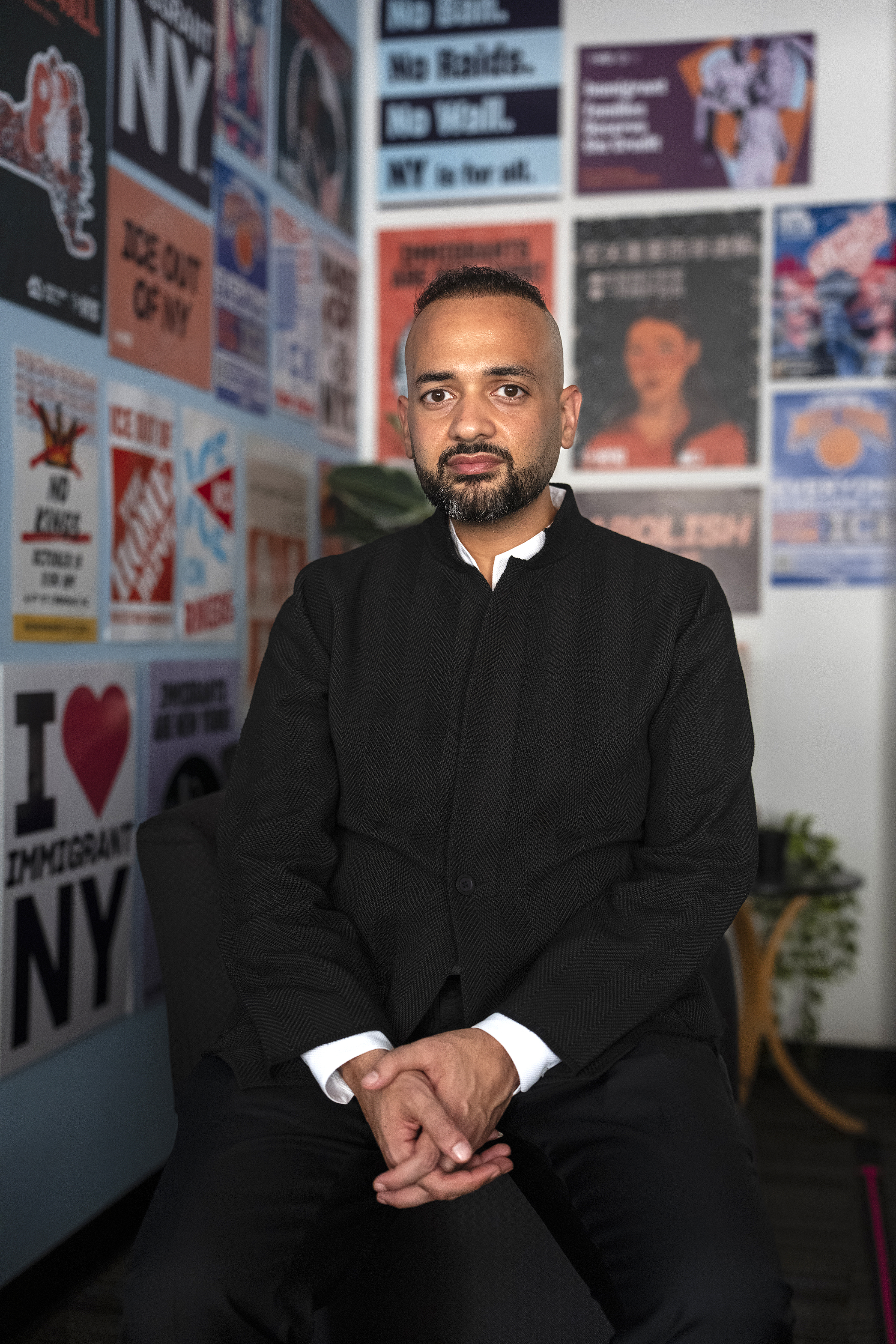
    Murad Awawdeh was 14 in September 2001. The post-9/11 backlash, and the grassroots response of his friends and neighbors, led him to trade his biochemistry studies — and his mother’s American dream of having a doctor in the family — for a career in civil rights.

    “I think that day belongs to everyone who lived it and what came after belongs to a smaller group of us,” said Awawdeh, 39, who is now the president and chief executive of the New York Immigration Coalition and a confidant of Mamdani. “That part of the story this country still has not told itself honestly.”

    The Sept. 11 attacks left many Muslim American communities scarred by heavy-handed law enforcement tactics and the suspicion, if not outright hostility, of classmates, co-workers, elected officials and cable news commentators who blamed all Muslims for the terrorism they, too, had experienced that day. That experience spurred many to take political action.

    “If you look at prior to 9/11, for the most part, Muslim Americans were not politically involved,” said Afaf Nasher, the executive director of the New York chapter of the Council on American-Islamic Relations. But, she added, “When you’re pushed against the wall, you’re either going to run in fear or you’re going to push back, and political empowerment was certainly one way that we are pushing back.”

    The ascent of Mamdani has turned New York into perhaps the most prominent example of American Muslim success in the post-9/11 world. But the history of the city since the attacks has also highlighted the many challenges that Muslims in the United States continue to face.

    Those include a history of police surveillance, backlash faced by high-profile Muslims in politics or the arts, and attacks on Islamic religious expression, including the construction of mosques and the wearing of religious clothing such as hijabs. Those biases have also affected followers of other faiths, in particular observant Sikh men, whose turbans are often mistaken for a form of Islamic dress.

    Such sentiments have compounded in many ways since the start of the war in the Gaza Strip, which most Muslim Americans have vigorously opposed. Opponents of that war have been accused of terrorist sympathies, and some, including Columbia University protester Mahmoud Khalil, have been arrested and threatened with deportation for their advocacy. That has led some Muslims to say the war in Gaza has created an environment akin to the months and years after Sept. 11, when Muslim Americans feared that they could be marked as terrorist sympathizers for speaking out against the war on terror.

    After Sept. 11, many Muslims in New York found themselves under covert police surveillance. Asad Dandia, 33, a public historian, was a plaintiff in a 2013 class-action lawsuit against the Police Department over its surveillance of the city’s Muslim neighborhoods, a program that was assisted by the CIA.

    He had come under police surveillance after starting a charity as a teenager to feed poor families in his neighborhood. The police spying program was exposed in 2011 and caused a public uproar that led to its ending by 2018 after a series of legal settlements and other initiatives.

    Today, Dandia is the official historian of the borough of Brooklyn and an informal adviser to Mamdani. One of his lawyers in the 2013 lawsuit, Ramzi Kassem, is the mayor’s chief legal counsel.

    “We went in the span of 10 years from suing the government to being the government,” Dandia said. “And I think that is a classic and quintessential New York and American story.”

    Mamdani is one of several Muslims who have become prominent in American public life in recent years. Others include Reps. Ilhan Omar and Rashida Tlaib, Michigan Senate candidate Abdul El-Sayed, Academy Award-winning actor Mahershala Ali, model Bella Hadid, and comedians Ramy Youssef and Hasan Minhaj.

    “Muslim America now has a greater cultural footprint, more institutional power and a lot more support from allies, comrades and friends all throughout the country,” Dandia said. “Now when people think of Muslim America, they have names and faces they can point to.”

    But despite these successes, many challenges remain. Mamdani, who was 9 on Sept. 11, has said the Islamophobic backlash to the attack lingered and “became a fact of life.”

    According to a Pew Research Center survey conducted this year, 43% of American adults said Muslims are less patriotic than other Americans, and 42% said Muslim Americans are having a negative impact on the country. When asked to explain their views, respondents often cited the Sept. 11 attacks.

    By some measures, the survey showed that public attitudes toward Islam were more negative now than they were immediately after the attacks. In March 2002, 25% of American adults said Islam was more likely than other religions to encourage violence, but that number rose to 51% in the survey conducted this year.

    Those views have become highly polarized, with Republicans expressing far more negative views of Islam than Democrats, a change from after the attacks when supporters of both parties held similar views. Today, anti-Muslim sentiments have surged anew in some parts of the country with almost every election cycle.

    Donald Trump campaigned for president in 2016 on a pledge to bar immigrants from Muslim countries and has restricted immigration from those nations and others that he views negatively during both his first and second administrations. In his second term, Trump has cracked down on students and universities over protests against the war in Gaza, portraying student demonstrators as supporters of terrorism and equating their arguments with antisemitic hate speech.

    That has included the arrest of young Muslim activists, including Khalil at Columbia and Rumeysa Ozturk, who helped write an opinion piece critical of Israel for the student newspaper at Tufts University.

    Kambiz GhaneaBassiri, a professor of religion and politics at Washington University in St. Louis, said the embrace of Islamophobia by the Trump administration posed a serious threat to Muslim Americans. But for Americans who are skeptical or critical of Trump, it may have also helped to undermine anti-Muslim arguments.

    “People forget now the degree to which Islamophobia was not something that was just on the right but was present on both sides,” GhaneaBassiri said.

    As an example of the reaction to Trump’s policies, he pointed to protests at airports against the president’s immigration restrictions in 2017 as a moment that “kind of shocked” some Muslim activists and organizations. They had become accustomed to pushing for their rights with few allies and little positive coverage in the news media, but the airport protests were filled with non-Muslims.

    “Before that moment, if they criticized the state, their loyalty was always questioned by people on both the right and the left,” GhaneaBassiri said.

    But in New York, Mamdani’s election has shown the resilience of anti-Muslim suspicion in both parties.

    During last year’s mayoral campaign, Mamdani was accused of supporting terrorism by critics in both parties, including the campaign of former Gov. Andrew Cuomo, his main rival in the race, and Sen. Kirsten Gillibrand, who apologized after she falsely claimed in an interview that he had made “references to global jihad.”

    The hate is nothing new to the mayor’s allies. Shahana Hanif, who in 2021 was the first Muslim woman elected to the New York City Council, was in elementary school when the attacks took place. She came of age as American policy and cultural attitudes shifted against the nation’s Muslims.

    At age 10, she wrote a letter to President George W. Bush asking him to put a stop to the hate that seemed to engulf so much of the country. For Hanif, a Bangladeshi native of Brooklyn, it was an early form of organizing that helped inform her political career decades later.

    “Seeing the injustice my community experienced” propelled her into progressive political organizing, Hanif said. “I can’t take away the Muslim part of it and just say, ‘Oh, no, this is only happening to us because we’re Bangladeshi immigrants,’ or ‘This is only happening to us because I’m a daughter of immigrants or I’m a woman of color,’” she said. “That association of being Muslim is certainly part of it.”

    New York’s Muslim political and civil rights leaders said they also saw opportunities to keep building on their post-9/11 organizing work.

    Nasher, the executive director of CAIR, said that her group and others like it saw their efforts as an outgrowth of the discrimination they faced and a way to guard against its happening to others.

    “That’s not just because we’re Muslim — it’s because we’re American,” she said. “And you would think that as our fellow Americans, people would want every American to be politically engaged.”

    This article originally appeared in The New York Times.
  • ‘You know what happens if you don’t vote’: 7 takeaways from the GOP convention

    ‘You know what happens if you don’t vote’: 7 takeaways from the GOP convention

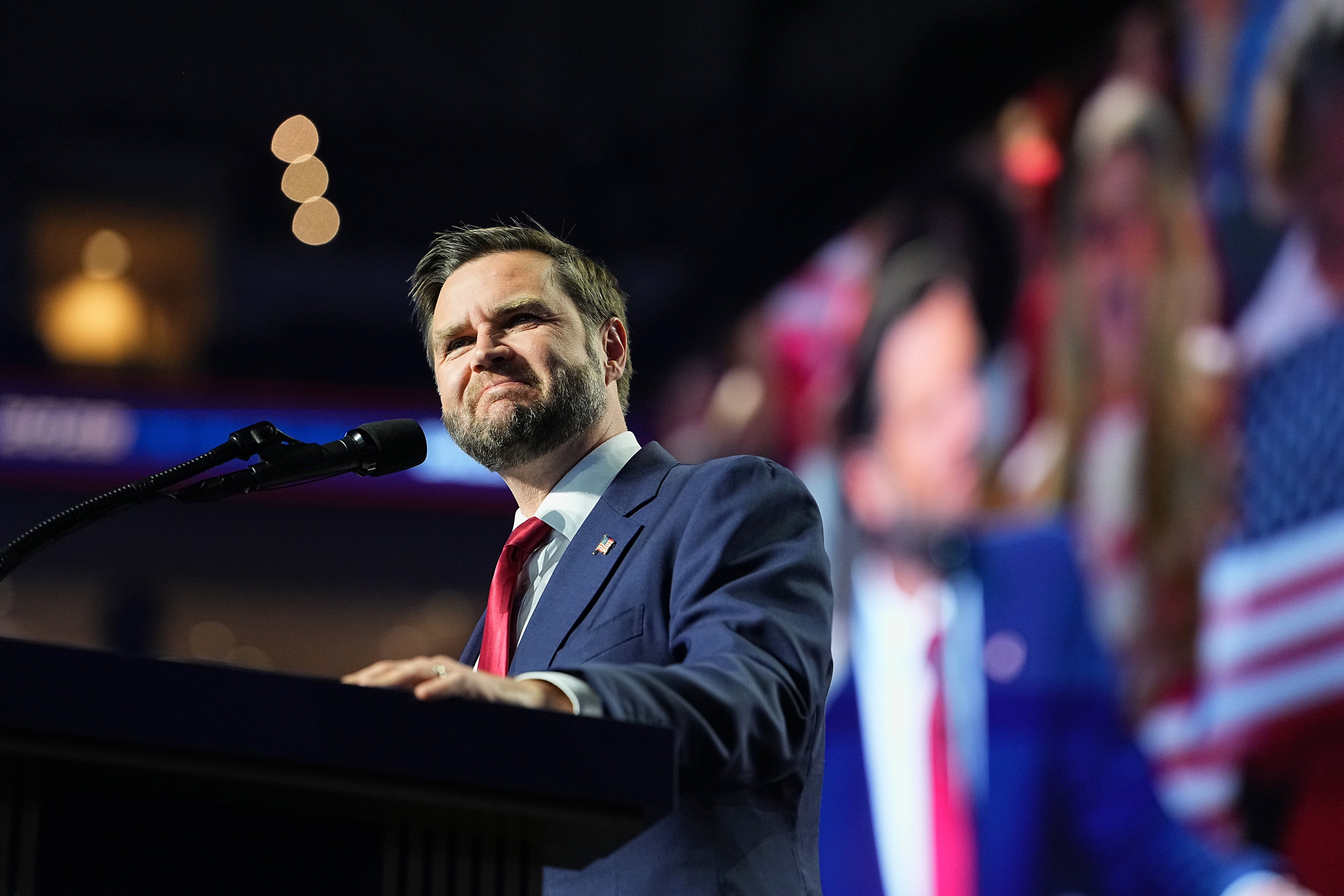
    Vice President JD Vance was billed as the headliner of the second night of the Republican convention, but President Donald Trump stole the show.

    With a hug and a handshake, Vance exited stage right after his speech as Trump returned to the place he likes most — center stage — to make his final pitch of the convention to keep Republicans in power.

    At one point Trump asked attendees to raise their right hands and pledge to him that he would vote with their family and friends. Dutifully, they did.

    “You know what happens if you don’t vote?” Trump said. “You go to hell.”

    The two-day rally in Dallas came as Trump’s approval has sagged below 40% and Republicans fear losing control of both the House and Senate. Republicans hoped the gathering would help energize a base beleaguered by high prices and the Iran war to turn out in droves. But the two days of red meat tossed from the stage seemed unlikely to satiate independent voters whose support has flagged.

    Here are seven takeaways from the convention:

    Vance makes his 2026 (and 2028) pitch

    Vance arrived in Dallas widely considered the front-runner in the 2028 Republican presidential primary. His speech offered some early clues about how he might approach a campaign.

    Vance focused on restoring the primacy of the traditional nuclear American family, a theme he has championed in the administration. He did not mention the war in Iran, an operation he has defended publicly but raised concerns about privately. But he issued a plea for conservatives not to abandon the White House over policy.

    “Do not throw the baby out with the bathwater,” he urged.

    Vance speaks in a far more scripted political style than Trump. He caught fire with the crowd when he snapped back at a protester who interrupted his remarks by waving Palestinian and Mexican flags. “My friend, if you love Mexico so much, get your ass over there,” he said.

    But he failed to sustain the kind of enthusiasm that Trump commanded either night. Nor did he win anything beyond perfunctory praise from the president, who quickly ushered him off the stage.

    As the balloons fell, it was the president alone, along with a tenor singing. Trump is not giving up his crown quite yet.

    Trump throws an affordability Hail Mary

    Trump has called affordability — a top buzzword for Democrats this year — a “hoax.” In his speech Wednesday night, the president claimed that prices are on their way down. At the same time, he rolled out an audacious plan to address people’s concerns about costs: a massive cash giveaway.

    He branded his dubious and detail-free plan to send $5,000 to every American adult a “Trump Dividend.”

    But Trump was virtually the only one talking about it.

    A day later, the splashy $1 trillion-plus plan barely made a ripple on the convention stage.

    The president’s own son, Donald Trump Jr., didn’t so much as mention it.

    Neither did the speaker of the House.

    Neither did the vice president.

    Only Trump did.

    If the president wants the dangled cash to be a major factor in the midterms, the rest of the Republican Party didn’t use the rest of the convention to sell it.

    Republicans have a new rogues’ gallery of liberal villains

    Forget about Nancy Pelosi.

    In Dallas, Republicans made clear that the former House speaker has been dethroned from her decades-long position as the party’s favorite political villain.

    Speaker after speaker assailed Hasan Piker, a leftist online streamer, and Abdul El-Sayed, the Democratic Senate nominee in Michigan, for pushing what they described as an extreme and anti-American agenda. Their images, including Piker’s naked torso, were broadcast on the jumbotron over the stadium. Even Rep. Alexandria Ocasio-Cortez of New York, who is a frequent target of the right, got less airtime.

    At one point, Speaker Mike Johnson outlined the new rogues’ gallery of liberals — “Hasan Piker and Bernie Sanders and AOC and Abdul El-Sayed and Zohran Mamdani” — while casting the rest of the Democratic Party as squishes who would succumb to them.

    In their attacks on Piker and El-Sayed, several convention speakers embraced anti-Muslim rhetoric, including a promise popular among conservative activists to “ban Shariah law.”

    “We must stand and defeat the Islamists,” Sen. Ted Cruz of Texas said in his speech.

    GOP frames the election as common sense versus crazy

    Republicans know that Trump is unpopular. They are banking on making Democrats unpopular, too — or at least unappealing and unelectable.

    Over and over, speakers cast Democrats as out of the mainstream, frequently calling them socialists, communists and even worse. At times they stretched the truth. Democratic socialists might have won a number of Democratic primary victories since 2024, but no serious figure in the party is promoting communism.

    “You guys are going to trigger the commies,” Donald Trump Jr., the president’s son, said at one point as the crowd chanted “USA! USA! USA!”

    Vance, in the closing of his speech, summed up the message so many had delivered before him over two days: “It’s about the party of common sense beating the party of the crazies.”

    Texas is a 2026 battleground

    Six months ago, when it first emerged that Republicans were likely to pick Dallas for this convention, it was unclear whether Texas would wind up as a top midterm battleground.

    It’s clear now.

    A parade of speakers — from the president on down — used their precious time onstage to talk about Texas’ razor-close Senate race. They sought to boost Ken Paxton, the Texas attorney general (even as Trump mocked his sartorial choices on back-to-back nights), and tear down James Talarico, the Democratic nominee. On the eve of the convention, Trump’s super political action committee had reserved $10 million in ads to help Paxton.

    “Tala-freako maybe tops the list,” Vance said of Trump’s nickname for Talarico.

    But it wasn’t just the Senate race. Republicans gerrymandered the state in 2025 to create as many as five new safely Republican House seats. But Republicans running in several of those seats appeared at the convention, seeking a boost in regions that Trump won handily.

    Was it must-see TV? Early signs suggest no

    Trump has long been known as a master of the television audience. Not this time. An average of 2.5 million people tuned in to watch his Wednesday night speech on Fox News, one of the few major TV networks that aired the remarks in full, according to preliminary figures from Nielsen. That was an average primetime audience for the network, based on the most recent quarterly statistics, and below the usual viewership for programs at that time.

    In other words, no Trump bump.

    To be fair, the president’s programming faced some steep competition. The first game of the National Football League season was on at the same time as his speech. The season’s second game was on Thursday during Vance’s and Trump’s speeches.

    Republicans make their bid to buck history

    Parties in power traditionally attempt to expand their appeal in midterm elections through targeted outreach to independent voters. That was not the strategy charted by Trump and his allies in Dallas.

    Only a handful of speakers offered any kind of outreach to moderate voters (one of those exceptions was Rep. Mike Lawler of New York). Far more focused their remarks on stoking fears of Shariah, transgender athletes and Democratic candidates who were repeatedly described as communists. Again and again, Trump begged his supporters to “pretend” that he would be on the ballot — an attempt to get enough of them out to prevent the usual losses for the party in power.

    Trump and his allies are staking their chances on their ability to drive their own voters to the polls. At the top of the list are Trump loyalists who typically skip midterm elections.

    This article originally appeared in The New York Times.
  • Saudi airstrikes hit Yemen’s rebel-held Mokha airport as Houthis take an island near a key strait

    Saudi airstrikes hit Yemen’s rebel-held Mokha airport as Houthis take an island near a key strait

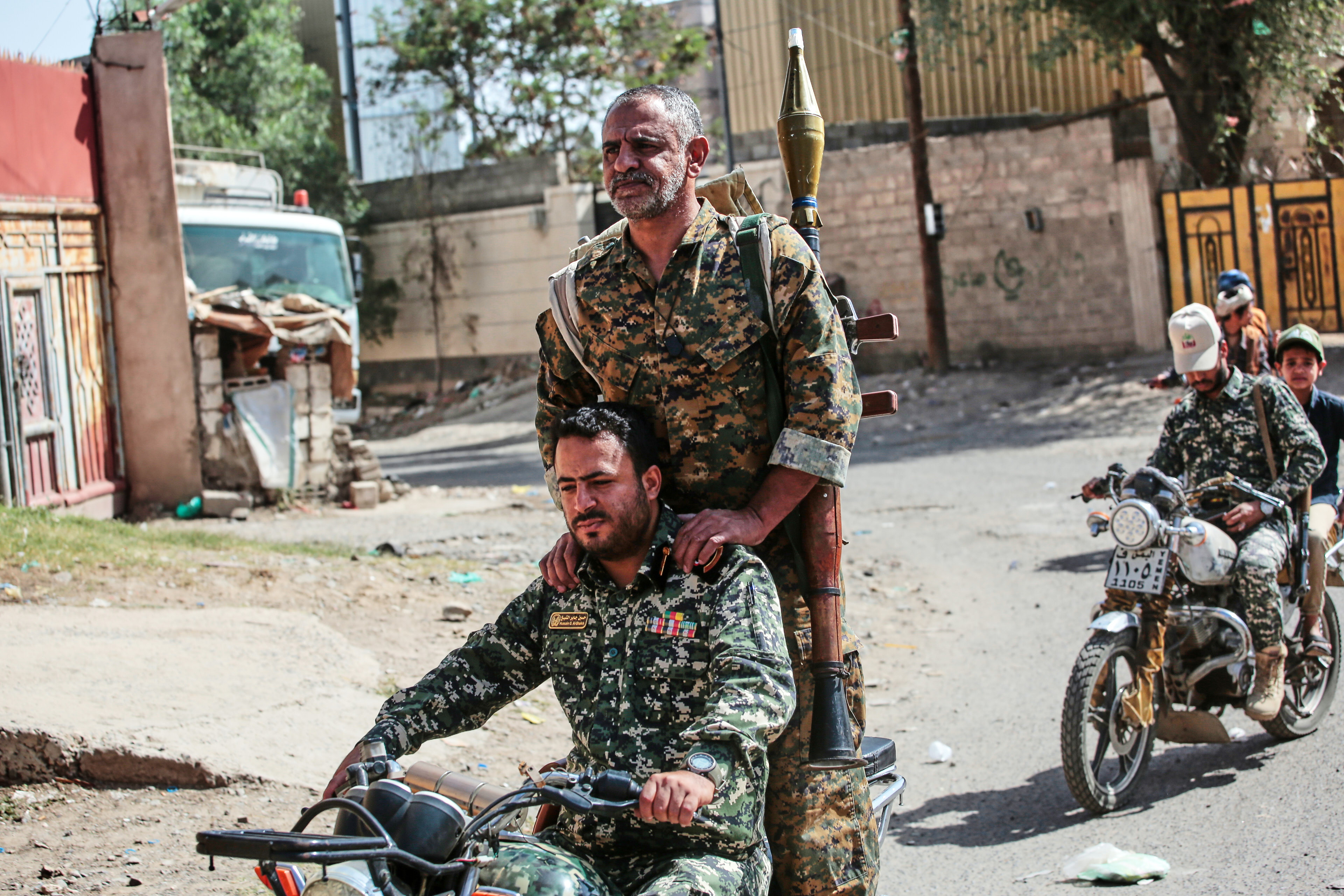
    CAIRO — Yemen ‘s Iranian-backed Houthi rebels captured a strategic island in the Bab el-Mandeb Strait at the entrance of the Red Sea, two officials said Friday in a swift advance that further threatens Saudi oil exports through one of the world’s key commercial lanes.

    Saudi Arabia responded with airstrikes against the airport in the key port city of Mokha that the Houthis seized on Thursday, a Houthi broadcaster said. There was no immediate report of damage or deaths.

    The capture of Mayun, a tiny, barren volcanic island in the strait, was confirmed by a senior military official with Yemen’s internationally recognized government and by a Houthi official. Both spoke on condition of anonymity because they were not authorized to talk to journalists.

    The island, also known as Perim, is about 3.5 kilometers (2 miles) off Yemen’s west coast.

    The strait is a key alternative to the Iran-choked Strait of Hormuz. But there is “no need for international concern,” Hazam al-Assad, a member of the rebels’ political bureau, told The Associated Press, saying they are responding to Saudi aggression, and “our forces have a bank of big important targets” in case Riyadh keeps up the strikes.

    Earlier Friday, Iran’s government called for an end to Saudi Arabia’s blockade of Yemen, throwing its support behind its ally, the Houthis. In its first statement since the rebels entered the port, Iran’s Foreign Ministry also called for a return to negotiations between Saudi Arabia and the Houthis.

    There was no immediate Saudi comment on Friday.

    The rebels’ capture of Mokha, overlooking tanker routes out of the Red Sea, could boost Iran’s strategy of driving up world oil and gas prices to pressure the United States, experts say. It also raises concerns of a new front opening after more than six months of war in the region – one in which Saudi Arabia is forced to respond.

    Experts say the developments in Yemen could give Tehran more leverage in any negotiations with the U.S. On Wednesday, the spokesperson for Iran’s powerful Revolutionary Guard called for any negotiated settlement with the U.S. to include Yemen, the first explicit reference to that front.

    Events threaten a key Strait of Hormuz alternative

    The Houthis’ entry into Mokha on Thursday was their biggest territorial gain in years against their Saudi-backed Yemeni opponents. It brought them within 50 miles (80 kilometers) of the Bab el-Mandeb, a strait that has become an important alternative for global shipping as Iran targets vessels in the Strait of Hormuz.

    A senior military official with Yemen’s internationally recognized government told the AP they were stunned that the Saudi air force didn’t strike the Houthis earlier, as they were advancing on Mokha. He assessed that Saudi Arabia didn’t get a green light from the U.S. to embark on a large-scale air campaign.

    The official, who spoke on condition of anonymity because he wasn’t allowed to speak to the media, also blamed “lack of coordination” between Yemen’s army and allied forces, saying it gave the Houthis “a priceless opportunity.”

    The Houthis had already attacked Saudi shipping in the Bab el-Mandeb and Red Sea since declaring a blockade there in July, as well as oil infrastructure inside Saudi Arabia. The Houthis said it was in response to the kingdom’s blockade of Houthi-held parts of Yemen, in place for years.

    New disruption to the waterway could mean trouble for all shipping and for the price of crude oil, which has now soared again. Saudi Arabia has increasingly relied on the Red Sea and Bab el-Mandeb to export its crude since Iran has been targeting vessels in the Strait of Hormuz. About 12% of the world’s goods are typically shipped through the strait.

    Shipping through the Bab al-Mandeb had fallen by about 60% since the Houthis began attacking some ships there in late 2023 while expressing solidarity with Palestinians in Gaza. Shipping increased this year as Saudi Arabia sought alternatives to the Strait of Hormuz, but renewed Houthi threats have “curtailed” that activity, according to Lloyd’s List Intelligence.

    Saudi Arabia, which earlier this week said it had always offered “opportunities for negotiation,” also has said it has the right to defend itself in response to the Houthis’ blockade. The foreign ministers of Iran and Saudi Arabia spoke Thursday about diplomatic efforts to “restore stability” to the region, Iran’s Foreign Minister Abbas Araghchi said on social media.

    The fighting risks a return to civil war

    In a statement released Friday, the National Defense Council of Yemen’s Saudi-backed and internationally recognized government on Thursday strongly condemned the Houthis’ renewed attacks on Saudi Arabia.

    The council also acknowledged that Yemen’s government is on the front line of freedom of navigation, and called for international support as the Houthis swept along the Red Sea coast toward the Bab el-Mandeb.

    The escalating fighting threatens to end a fragile truce that had largely halted Yemen’s civil war since 2022.

    At stake are the 40 million people in the Arab world’s poorest country who fear a return to the conflict that killed 150,000 and brought many others to the brink of famine.

    The surge in fighting in the past week has sent over 46,000 people fleeing, and “overnight, large numbers of people were reportedly seen leaving Mokha with their belongings,” the U.N. migration agency said Friday.

    The Houthis have been at war with Yemen’s government since 2014, when the rebels swept from their mountainous heartland and seized much of northern and central Yemen, and the capital of Sanaa. Saudi Arabia entered the war the following year on behalf of the government.

  • New iPhones arrive, but you can keep your old phone longer by caring for it

    New iPhones arrive, but you can keep your old phone longer by caring for it

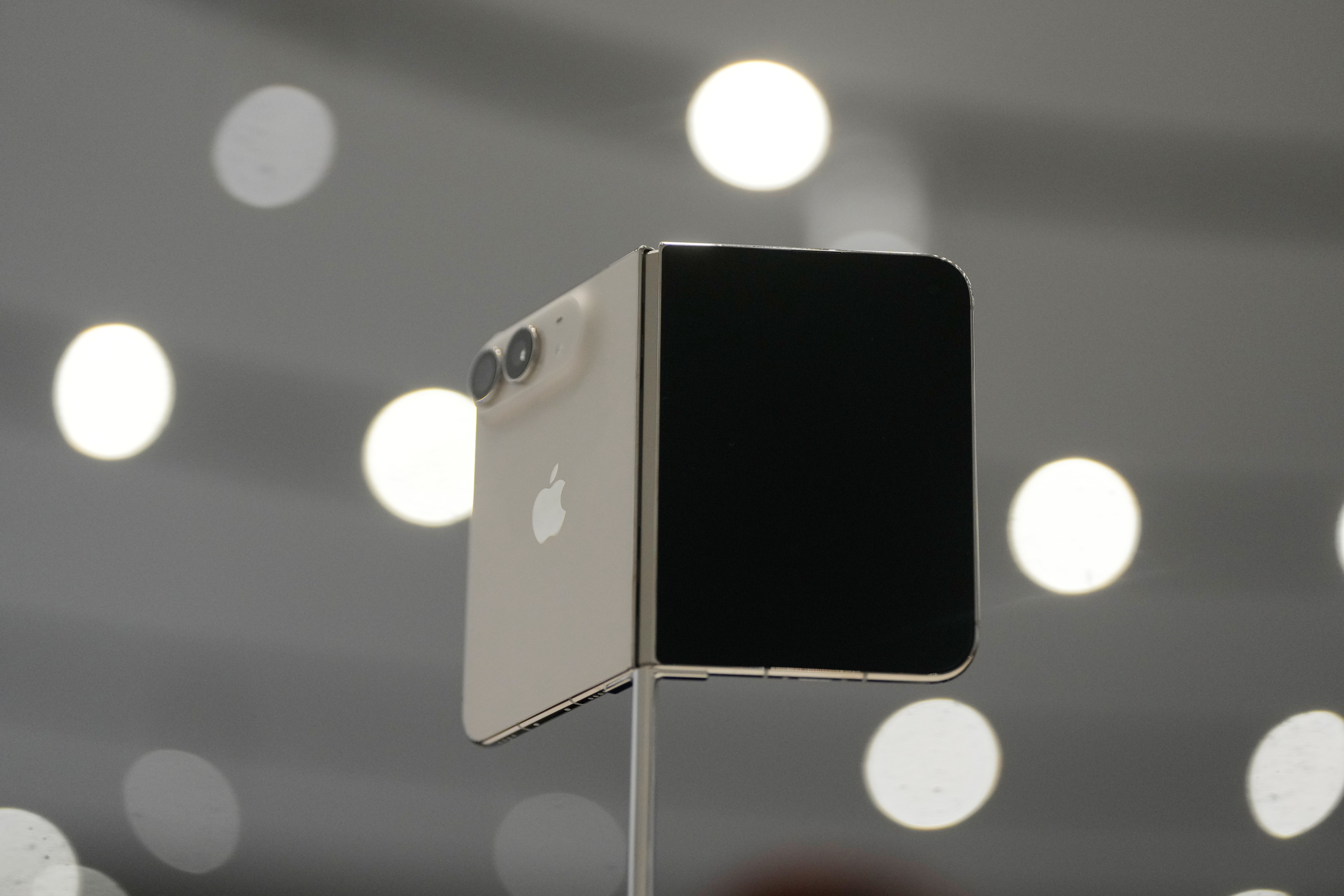
    Apple’s latest iPhones, unveiled this week, come with new features, better cameras, and hefty price tags — including a folding model with a starting price of $1,999. If you’re planning to splurge on a new iPhone 18, you will want to take care of it to make it last as long as possible.

    Or save money by holding on to your current device, whether it is Apple or Android, to get the most life out of it.

    As smartphone technology has matured and innovations have become more incremental, people have stopped buying into the idea that they need to upgrade to the newest phone. There is also an environmental push to keep old phones out of landfills as electronic waste becomes a larger sustainability issue. Modern smartphones are also just sturdier and better able to survive dunks and drops.

    The typical smartphone replacement cycle is now four years, according to Counterpoint Research. Some device owners boast in online forums that they have had phones last more than seven years.

    Here are some pointers on extending your phone’s life:

    Take care of your phone’s battery

    The biggest factor in a phone’s longevity is the battery. A rechargeable battery’s life span is related to its “chemical age,” which is based not only on the manufacturing date but also on factors including “temperature history and charging pattern,” according to Apple. The company says that as lithium-ion batteries chemically age, they hold less charge, which results in “reduced peak performance.”

    Samsung warns against running a lithium-ion battery down completely, because that could shorten its life.

    “The battery is absolutely often the first thing to go in most people’s phones,” said Elizabeth Chamberlain, director of sustainability at the device-repair website iFixit.

    Lithium-ion batteries typically last about 300 to 500 charging cycles before degrading noticeably to the point that they can’t last a day without needing a charge, she said. “Many people will hit 500 cycles in two years. Heavy users will get there faster.”

    Batteries get stressed if they are completely drained or fully charged, Chamberlain said.

    So avoid letting your battery die, and also avoid charging it all the way to 100%, “unless you really need a full charge,” she said. “Aim to keep the battery between 20% and 80% charged.”

    If you are in the habit of plugging in your phone when you go to bed, Apple and Samsung both have charging optimization technology that improves battery life by delaying a full charge based on your daily routine.

    This feature, which is on by default in iOS, pauses charging at 80% and then charges to 100% just before you wake up.

    Phone batteries shouldn’t get too hot or cold

    Device makers warn against exposing phones to extreme heat or cold, both of which can damage batteries.

    Apple says batteries warm up as they charge, which can shorten their life span. It warns against using your phone or charging it in very hot temperatures, above 95 degrees.

    Samsung says you shouldn’t leave your phone in, for example, a car’s glove box when it is very hot or cold. And don’t put it in a freezer either — it’s a myth that it can prolong battery life.

    Google, which makes the Android operating system and Pixel phones, says hot batteries drain faster, even when they are not in use, and that can damage the battery.

    Adjust your phone’s power options to boost battery life

    Tweak your device settings so apps or features use less power, which extends your battery’s daily life and the time between charging cycles.

    You can turn down your phone’s screen brightness, turn on the dark theme and reduce the time for the screen to power off. Enable the auto-brightness feature, which adjusts screen brightness according to the level of ambient light. Also check battery usage in your settings to see if there are any power-hungry apps you can switch off or uninstall.

    If the power level dips below 10%, iPhone users can turn on low power mode to stretch their battery’s life before it needs recharging. Samsung’s Android phones have a similar “power saving mode.” You can also leave it on all the time, but it might affect your phone’s performance.

    Phone cases and screens are essential protection

    Phones are sleek capsules with glossy surfaces, meaning they can easily slip from your hand. A sturdy protective case is essential to help cushion the blow from accidental drops.

    However, beware that some phone cases can retain heat, so your phone might stay hot even if it seems cool, Chamberlain warns.

    Don’t forget a screen protector. Plastic versions are cheap but can scuff easily, according to iFixit, which recommends TPU film or tempered glass because they offer better protection against scratches and drops.

    Keep your device clean

    Keeping your phone in your pocket or purse means ports and sockets collect debris that needs to be cleaned out.

    Chamberlain said that when a phone stops charging, often the problem is simply that the charging port is jammed with lint, preventing the cable from connecting.

    You can buy kits with brushes, picks, swabs and dust blowers to give your phone’s ports, speaker and microphone grilles a thorough cleaning. But in a pinch, use a toothpick and a clean toothbrush.

    Update the software regularly

    Software is another important factor in a phone’s life span. Experts advise keeping your operating system and apps up to date so they have the latest privacy, security and battery management features.

    That will be easier to do as your phone ages because some device makers have been extending the time limit for providing updates.

    Google has pledged to provide Pixel 8 and newer phones with seven years of Android and security updates, compared with four to five years for older models. Samsung pledged in 2024 to extend its operating system updates to seven years.

    Apple said Wednesday that iOS 27 will be available on Sept. 14 and the oldest phone with which it will be compatible is iPhone 11, released in 2019.

    Some phones are designed to be easily repaired

    Sometimes your phone will have a problem that can only be solved by repairing it, usually involving paying someone else to fix it.

    But there are device makers that are making it easier to repair phones yourself. Netherlands-based Fairphone makes phones it says are designed for longevity, which come with a stripped-down version of Android and can be easily disassembled using a mini screwdriver. Replacement batteries, screens and other spare parts can be ordered online.

    Fairphone’s Chief Technical Officer Chandler Hatton said the company aims to have its devices last at least five years.

    “What we’re trying to do is to support people to be able to use their device for longer,” Hatton said.

  • Letters to the Editor | Sept. 11, 2026

    Letters to the Editor | Sept. 11, 2026

    Reflections

    As we remember the tragedy of the 9/11 attacks 25 years ago, standing united on the principles of justice remains as vital today as it has been for the past 25 years. With the spread of misinformation, fearmongering, and political polarization, it has unfortunately become far too easy to focus on our differences and forget the struggles shared by all our fellow Americans. We are witnessing countless innocent lives lost around the world — each one reminding us of the devastating consequences of war.

    As an Ahmadi Muslim American, it is my duty not only to condemn those who twist religion for their own political gain, but to stand up for all those whose rights are being usurped and attacked, be it a Muslim or non-Muslim alike. In his Farewell Sermon, the Holy Prophet Muhammad (may the peace and blessings of God be upon him) said, “Hurt no one so that no one may hurt you,” reaffirming the importance of all human life. In this crucial time when the most vulnerable among us are under attack, let us reaffirm our nation’s commitment to justice for all.

    Ataul Wadood Bhatti, Philadelphia

    . . .

    I was getting ready to head to Northeast Philadelphia to photograph a story for The Inquirer, where I had been a staff photojournalist since 1993. With a cup of coffee in hand, I remember being somewhere between the kitchen and the living room when the phone rang.

    The calm, distinct voice of Berford Gammon, assignment editor at the newspaper, came through at 8:55 that morning.

    “I want you to head to New York,” he said.

    “What’s going on?” I asked.

    “Turn on your TV.”

    I clicked on the remote, and a picture of smoke billowing from a tower of the World Trade Center framed against the background of a deep blue, cloudless New York skyline filled the screen. My eyes locked onto the grainy image as my wife stood close.

    I remember saying, “What a tragic accident,” thinking a small plane probably had navigated off course. That thought vanished as quickly as it arrived at 9:03 a.m., when United Airlines Flight 175 slammed into the World Trade Center’s south tower. The morning talk shows quickly abandoned their banter as the unsettling words of terrorism, attacks, and deliberate filled the airwaves.

    I grabbed my cameras and stepped out into the cool 60-degree morning.

    I stopped briefly in the newsroom to pick up extra equipment. Small groups of people were gathered around television sets as American Airlines Flight 11 was identified as the first plane to hit the north tower.

    I heard reports that hijackers had crashed American Airlines Flight 77 into the western facade of the Pentagon in Washington, D.C., at 9:37 a.m. Stunned, I instantly thought of Pearl Harbor and my father, who had told me what it was like on the morning of Dec. 7, 1941.

    As I headed to New York, a report of a fourth plane, United Airlines Flight 93, had crashed at 10:07 a.m. into a field in Shanksville, Pa., with 40 passengers and crew on board.

    As I pulled off the New Jersey Turnpike to take photographs, a changed New York skyline missing its twin vertical icons filled the viewfinder. It was hard to imagine the lives lost and the damage done.

    The north tower burned for about 102 minutes and then collapsed. The south tower burned for almost an hour and then imploded. In the attacks on Sept. 11, nearly 3,000 lives were lost, and 10,000 people were treated for injuries.

    I stayed in New York for the next seven days working with reporters from the paper and photographing what followed an unthinkable event.

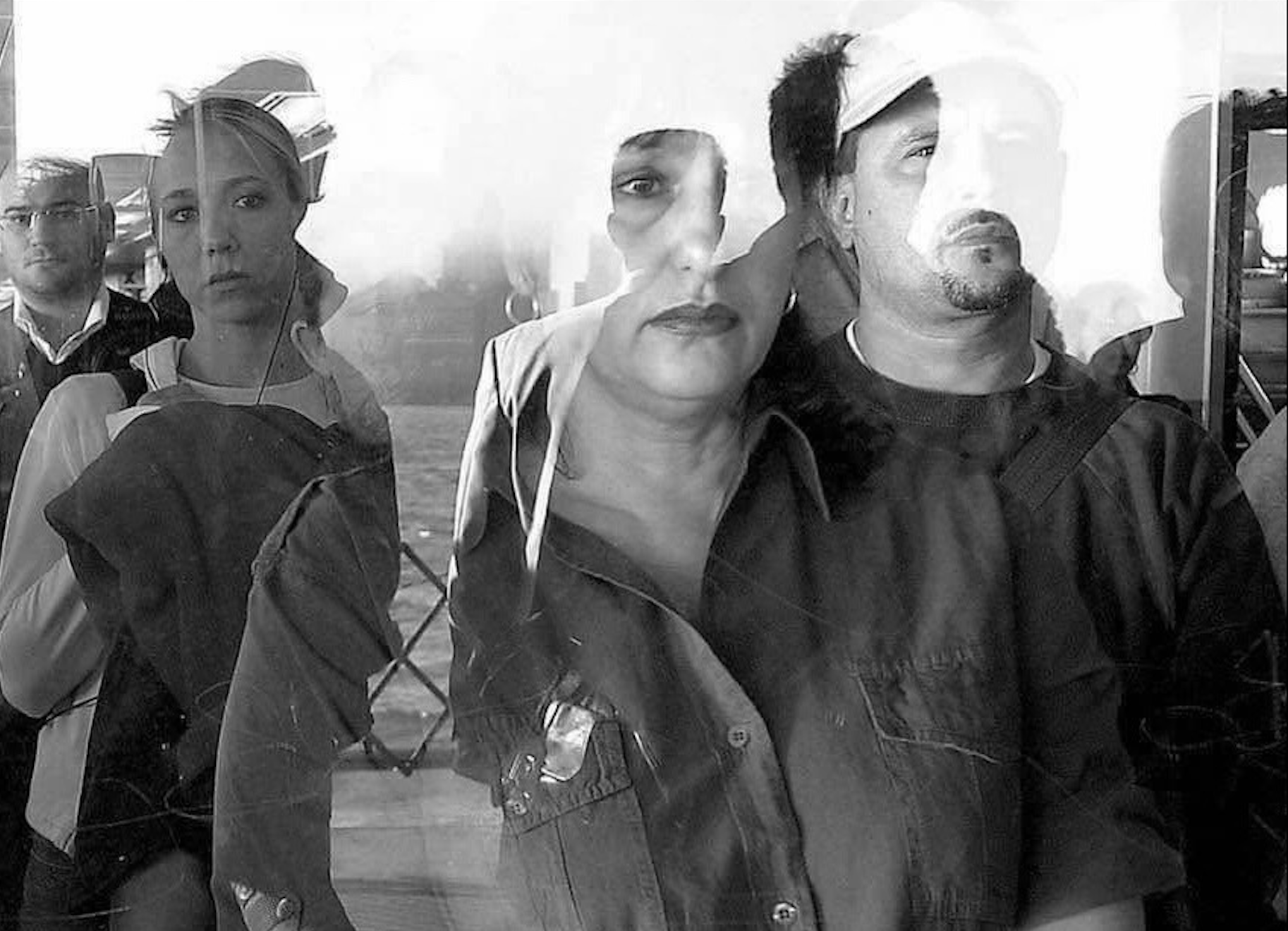
    On Sept. 17, I caught a ferry from Staten Island with people heading back to the southern tip of Manhattan for the first time since the attacks. The mood was somber. Two men spoke a couple of sentences. Most passengers were silent for the 25-minute ride.

    The world was a different place.

    Peter Tobia, Philadelphia

    The writer is a former visual journalist at The Inquirer.

    . . .

    Twenty-five years after 9/11, America needs to remember what once held us together.

    For two weeks after the attacks, we opened the doors of our church in New York City every night. People came to pray, share their stories, search for information about friends and family members, and grieve. Some simply needed somewhere to sit with other people who understood what they were experiencing. The church was packed.

    Those who did not live through those days in New York may not fully understand how quiet the city became. Manhattan was virtually cut off. Cell service was extremely limited. The normal machinery of everyday life simply stopped; fighter jets flew overhead. Smoke continued to rise from Lower Manhattan, and everywhere there were reminders that our city and our nation had been attacked.

    Yet, amid the fear and devastation, something remarkable happened. We came together.

    New Yorkers, famous for their impatience, became more patient. Strangers talked, and people helped each other. Churches filled. First responders ran toward danger while thousands of ordinary citizens searched for ways to serve. Political labels suddenly seemed less important. Race, class, neighborhood, and status became secondary to something larger. We knew we were together. We were New Yorkers, but more importantly, we were Americans.

    As we mark the 25th anniversary of Sept. 11, I find myself wondering what happened to that spirit, not the fear or grief of that terrible day, but the unity that followed it. We don’t need another attack to remind us that there are things more important than our political parties, ideological tribes, and personal ambitions. But somehow that spirit must be recovered. America needs a new breed of patriotism — a mature patriotism that rises above personalities and political parties, allows honest disagreement, and acknowledges America’s failures while remaining committed to its promise and founding ideals.

    Differences and debate are not the problem; they are essential to a free society. Americans will disagree about taxes and spending, immigration, education, the size and role of government, and a host of other issues. What concerns me is that disagreement has increasingly been replaced by distrust, contempt, and even hatred.

    We no longer simply believe the other side is wrong. Too often we assume they are evil, stupid, un-American, or determined to destroy the country. Once we reach that point, compromise becomes impossible, friendships across political lines become suspect, and winning becomes more important than the principles we supposedly want our politicians to defend.

    Michel J. Faulkner, Philadelphia

    . . .

    In the autumn of my mother’s sixth grade school year, an enemy of this country attacked Pearl Harbor and sent the world she knew into a spiral.

    In the autumn of my sixth grade year, an enemy of democracy assassinated President John F. Kennedy and filled the world of my generation with sadness, anger, anxiety, and apprehension.

    In the autumn of my daughter’s sixth grade year, an enemy of freedom used planes as missiles on Sept. 11, and the shockwaves from their attacks rippled across her small world — spilling into Girl Scout meetings and coursing over sidewalk playdates.

    In each of those instances, the message being sent to each child was that the normal, the dependable, and the safe could be shaken — because there “were no innocent people.”

    My mother got through it, I got through it, and my children have, too — with each of us carrying our own “I remember what it felt like when it happened” moment.

    I have a 5-year-old grandson. Can’t help but wonder what will happen when he hits sixth grade. Or, in this accelerated world, sooner.

    Keith Mason, Cinnaminson

    Join the conversation: Send letters to letters@inquirer.com. Limit length to 150 words and include home address and day and evening phone number. Letters run in The Inquirer six days a week on the editorial pages and online.

  • Horoscopes: Friday, Sept. 11, 2026

    Horoscopes: Friday, Sept. 11, 2026

    ARIES (March 21-April 19). When you trust that all things are connected, you will find that every path eventually leads to the desired destination. And yet… if there’s a map — and there is — it’s more efficient to get it and use it to figure out the most direct route.

    TAURUS (April 20-May 20). It’s easier to love who you are when you’re not constantly bombarded by other options. Options are only useful at the intersections of life. You don’t need them when you’re content on the correct road. Prevent distractions.

    GEMINI (May 21-June 21). Today points out once again your supertalent for versatility. You’ll blend when you need to, stand out when it’s advantageous and make your group proud the whole way. Your value to them is undeniable.

    CANCER (June 22-July 22). It falls on you to make a sale by closing a deal in the traditional sense, selling yourself as an option for a role, or selling an idea. Whatever the goal, your influence will work best when it’s practically undetectable.

    LEO (July 23-Aug. 22). Just when you think you know how you’ll feel when certain events come to pass, you discover that your emotions will not be predicted or controlled. But they will submit to being sorted, tolerated, managed and above all, felt.

    VIRGO (Aug. 23-Sept. 22). As for the thing you weren’t able to accomplish back there, it just wasn’t time yet. Keep at it in whatever small way is currently possible, and more will be possible in the future. The key is simply knowing that this isn’t over.

    LIBRA (Sept. 23-Oct. 23). You’ll be reminded how much easier it is to give good advice than to live by it. You know what the right thing for you is; the trick is getting your whole self to agree, because you do contain multitudes. Following your own wisdom will be so satisfying today.

    SCORPIO (Oct. 24-Nov. 21). The world measures success by various metrics. You find yourself valuing contribution more than recognition. It feels good to know your time and energy have made someone else’s path a little smoother.

    SAGITTARIUS (Nov. 22-Dec. 21). You got this long ago, but some around you are still learning: To accept that there are things in life you can’t change is to accept adulthood. You’ll watch immature notions of power give way to reality.

    CAPRICORN (Dec. 22-Jan. 19). Favors get passed around, and not always fairly. They may not go to the ones who worked hardest, but rather to the ones who have pleased the boss. “Whoever obeys the gods, to him they particularly listen.” — Homer

    AQUARIUS (Jan. 20-Feb. 18). There’s a time for transformation, and that time is when the cycle you’re in comes to a close. To transform all the time is a waste of the great amount of energy, and the considerable risk that transformation demands.

    PISCES (Feb. 19-March 20). Do you wish you could sidle up to the person in your dream role, just to get a feel for what that experience is really like? Today you’ll realize that you can have a version of that, if you actively seek it out.

    TODAY’S BIRTHDAY (Sept. 11). It’s your Year of Three Crossroads where you’ll learn you can absolutely trust your inner guidance. Your conscience will braid with your passions and preferences, steering you to a dream destination. Others may have resources, but your own improvisational skills are all you need. More highlights: Freedom from an obligation and the funds to invest in your ideas. Holding hands with a soulmate. Sagittarius and Taurus adore you. Your lucky numbers are: 5, 38, 4, 11 and 29.

  • Dear Abby | Good friend dies during ‘off-again’ phase

    Dear Abby | Good friend dies during ‘off-again’ phase

    DEAR ABBY: My friend “Ben” and I had many ups and downs in our 30-year friendship. Three years ago, we had one of our periodic blowouts and stopped speaking. I found out recently that he passed away a year later, and I was never informed. The obituary I found online does not mention a cause of death.

    I wrote a letter of condolence to his wife, but it was returned, and I found out that she moved away from the house where she and Ben had been living. I would like to know what happened to my friend, as he was only in his early 50s. Although we were not speaking at the time of his death, we had many years of friendship under our belts, and I cared about him. I found a Facebook page for his wife, but this seems an impersonal way of reaching out on such a sober topic. Any suggestions?

    — CARED FOR HIM IN THE SOUTH

    DEAR CARED: If you and Ben had mutual friends, a way to find out the information you’re looking for, including his widow’s address, might be through them. Do it privately. To approach her online asking for the details of his death would be off-putting, insensitive and possibly hurtful in light of the fact that you were estranged at the time of his death.

    ** ** **

    DEAR ABBY: My 63rd birthday is coming up. I do not like celebrating my birthday and never have. I would prefer that the day be ignored. I know my wife of almost 38 years, our two boys and their significant others are planning something. I would prefer they spend the money on themselves or at least donate it to some worthy charity rather than spend it on me. Given that birthdays are important to them, must I just grin and bear it, or should I say something and risk causing ill will?

    — OLDER IN ISRAEL

    DEAR OLDER: Surely your wife, who has been with you for nearly four decades, knows your feelings on this subject. Tell her you know something is afoot, and gently mention that you would prefer that the celebration be kept small. Name the charity of your choice, and tell her you hope the birthday budget will be sent there rather than spent on you.

    If your wife ignores your plea and a massive fete does materialize, do your best to endure it with grace and a smile. Remember that these people are celebrating you because they love you.

    ** ** **

    DEAR ABBY: I’m married, and I’ve recently started developing a crush on my co-worker. We have worked together for four years. I’m not going to pursue anything, because cheating is against my morals. I just feel bad for having these feelings. What can I do to get my feelings toward my co-worker in check?

    — CRUSHING IN ILLINOIS

    DEAR CRUSHING: The guilt you are experiencing is a good thing; it has kept you from making a terrible mistake. If it’s any comfort, bear in mind that crushes like this usually lessen in time, even if they make the present somewhat uncomfortable.

    ** ** **

    TO MY READERS: Happy New Year to my friends of the Jewish faith! During this time of repentance, observant Jews reflect on their lives and make amends, seeking a closer relationship with God. Happy Rosh Hashanah!

    — LOVE, ABBY

  • The push to remove lead pipes is on. Thousands of water systems still don’t know where theirs are

    The push to remove lead pipes is on. Thousands of water systems still don’t know where theirs are

    Kathryn Pilgrim knew the century-old Victorian she bought in Dunkirk, New York, came with old plumbing. She replaced pipes she suspected of containing lead and later installed a kitchen filter designed to remove heavy metals.

    But six years after buying the house, she still can’t be sure that her tap water is lead-free because she doesn’t know what material was used for the pipe that runs under her front yard and connects to the city water supply. Dunkirk is nearly two years behind schedule on an inventory that would give Pilgrim and other residents that information.

    Dunkirk, which supplies water to about 5,000 homes and businesses, is one of more than 1,300 public water systems cited by the U.S. Environmental Protection Agency for failing to meet an October 2024 deadline to hand in an inventory of the water lines that could be leaching the heavy metal into Americans’ drinking water, an Associated Press analysis of the agency’s enforcement data shows.

    Roughly 6,300 water systems serving 3.8 million Americans have still not submitted a required list of how many lead service lines remain in use.

    Those inventories are critical for cities to replace all lead pipes by an upcoming 10-year deadline. Failing to document the lines also means residents won’t know if their homes have a potential source of lead exposure.

    Pilgrim, a special education teacher who has fostered teenagers, had been educated on the dangers of lead, especially in paint. The colon cancer survivor’s concerns extended to her drinking water.

    “I just thought there was some stuff in the water that might not be great,” she said.

    Officials with the city of Dunkirk did not respond to requests for comment.

    Lead pipes are abundant across New York and many communities around the country with older infrastructure. The city of Buffalo’s data shows 45% of its service lines — which connect homes and businesses to the water supply — are made of lead, the third-highest rate of any major city. The city of Fredonia, which neighbors Dunkirk, reported 28%.

    Lead is a priority under Trump administration

    Lead is a neurotoxin that can stunt children’s development, lower IQ scores, and increase blood pressure in adults. Roughly 4 million homes and businesses are still connected to water utilities via lead pipes, according to the EPA’s latest estimate.

    How much lead is entering the building depends on factors like the water chemistry and the pipe’s condition, but lead service lines remain the most significant source of the heavy metal, according to the EPA.

    The EPA has touted its work on lead lines as a key environmental win. About three-quarters of the drinking water enforcement orders issued by the EPA since President Donald Trump’s return to office were related to missing inventories.

    Most water systems with missing inventories are small — 84% provide drinking water to fewer than 500 people, the AP analysis shows. Many are small housing developments, mobile home parks, or schools.

    The EPA said it turned to enforcement only after efforts to help water systems comply were unsuccessful. Utilities need the inventories to prepare for a 2027 deadline requiring most drinking water providers to replace their lead lines within 10 years, the agency said. The Trump administration has also defended that aggressive deadline, enacted under Biden, in court.

    Rob Hayes, a senior director with Environmental Advocates of New York, said it is a rare environmental regulation the Trump administration has not sought to scrap.

    “It speaks to the universal popularity of getting lead out of drinking water,” he said.

    Inventories are not easy

    About 3,500 water systems reported they don’t know what their service lines are made of. One in five service lines nationwide were reported as having unknown materials.

    Many utilities are racing to identify unknown pipes by next year, when they must begin replacing them.

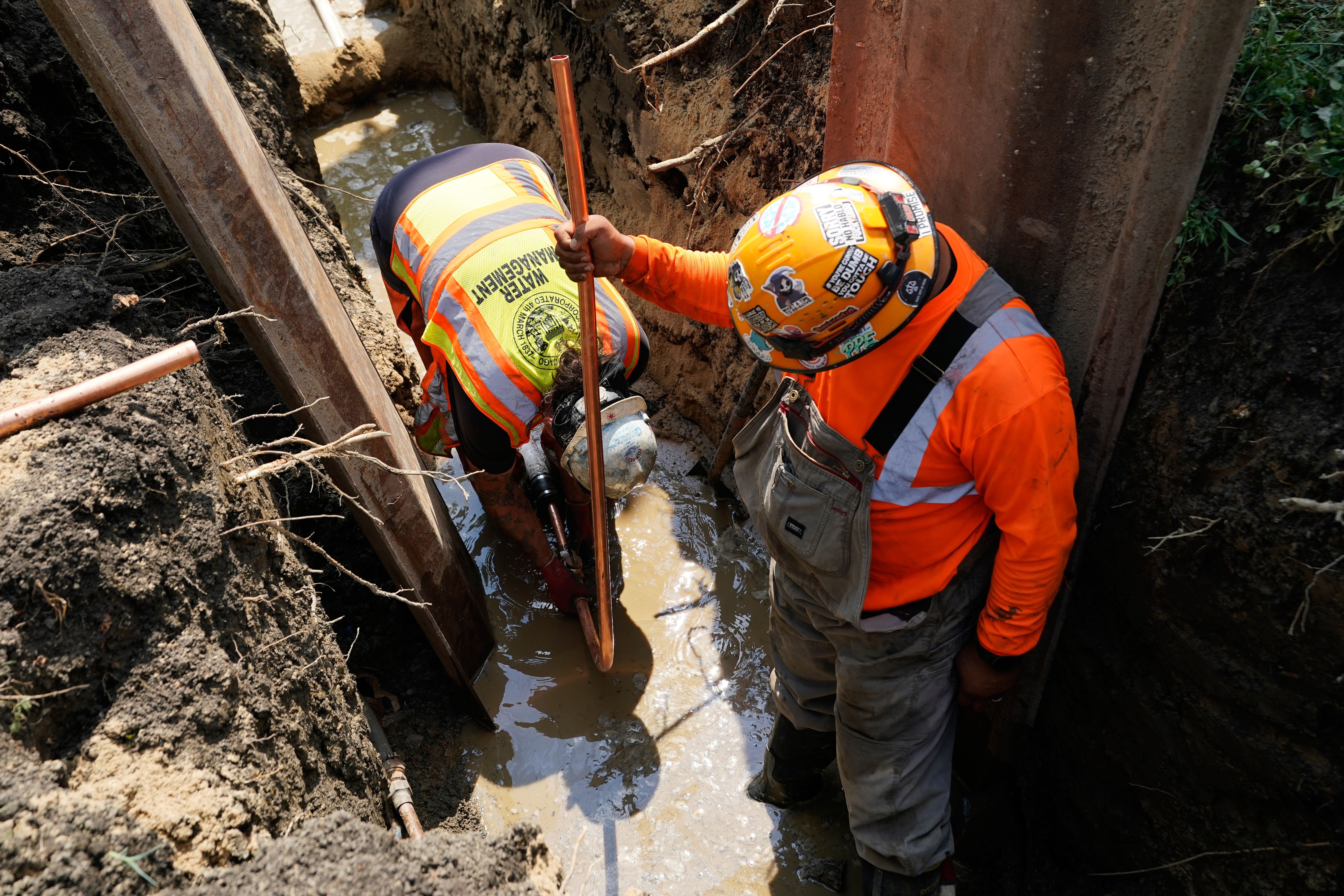
    In Chicago, home to the most lead lines of any city in the country, crews are working block-by-block, digging up the pipes that branch off from the utility’s main line. The city still doesn’t know the material of close to one in 10 service lines. So in those cases, crews may have to excavate them to check the material, said Patrick Schwer, the city’s water quality director.

    “We are digging through every single piece of information that we have associated with every single service line trying to find any indications of the material,” he said. “We’re scouring millions of work orders, trying to pull at little threads of information.”

    Lead pipes for public water date as far back as the late 1800s and were prevalent all the way to the 1950s. Lead was a preferred material at the time because it was resistant to corrosion, and as a result, the original lines remain in use decades later.

    Chicago advises residents with unknown lines to assume they are made of lead if their building predates 1986, when it was banned under the U.S. Safe Drinking Water Act.

    Records of the installations were often lost, incomplete, or illegible. Lapses in recordkeeping have made it difficult for some utilities to complete their inventories, said Joshua Klainberg, senior vice president with the New York League of Conservation Voters.

    Still, Klainberg said, leaving residents in the dark about whether they should take precautions by not submitting an inventory at all is “unforgivable.” Even an incomplete inventory can alert people they may have a lead service line, allowing them to take precautions such as running the tap, using filters — the highest-quality of which can remove most lead — and cooking only with cold water, he said.

    Limited funds for replacements

    For utilities, not knowing what is in the ground will carry an even stiffer consequence beginning in 2027. Starting then, they are required to replace 10% of lead water pipes each year, usually with copper or plastic pipes. But lines made of unidentified materials will be included in that target, said Erica Galante-Johnson, a lead policy analyst with the Environmental Policy Innovation Center.

    “The more unknowns, the more lines a system needs to replace every year,” Galante-Johnson said.

    And each replacement is expensive, usually costing between $8,000 and $15,000, according to EPIC.

    In Chicago’s case, “the city is actively going after every single dollar that we can,” from the federal and state governments, Schwer said. The city still needs to replace about 393,000 lead service lines.

    Most funding for identifying and replacing lead pipes comes from the 2021 bipartisan infrastructure law, with states distributing it. This is the final year of dedicated federal funding for lead projects, though previously allocated money will continue flowing to communities.

    Water systems without an inventory will fall even further behind as national efforts shift toward replacements, Hayes said.

    “If they can’t even get an inventory together, how the heck are they going to get the resources and the manpower and the kind of coordination between governments together to actually get workers out on the street and dig these pipes out of the ground?” he said.