Tag: no-latest

  • Plumbing the shipwrecks of an infamous pirate cove

    Plumbing the shipwrecks of an infamous pirate cove

    History might be written by the winners, but the seafloor keeps a more faithful record. For Sean Kingsley, a British marine archaeologist who built his career studying submerged ruins in the Mediterranean and trade routes along the Levantine coast, shipwrecks offer an unvarnished honesty that paper records often distort.

    Over the last three decades, Kingsley has poked around some 350 sunken sites from the shallow, sun-bleached waters off Israel to the bruising, deep-sea trenches off the Irish coast. With a doctorate from the University of Oxford, he is an independent scholar and the founder and editor of Wreckwatch, both a quarterly and a popular YouTube channel. He funds his fieldwork in part by consulting for high-profile clients like Allen Exploration, an outfit known for its recovery and documentation of historical wrecks, for whom he founded and manages a scientific journal, Ocean Dispatches. He publishes some research in peer-reviewed journals; most is directed toward media outlets and the public.

    Recently, Kingsley secured the ultimate golden ticket: exclusive access to the forbidden, heavily guarded harbor of Nassau, the capital of the Bahamas. Nassau has long traded on its reputation as the world’s premier pirate sanctuary, but its waters never yielded an authenticated brigantine — a two-masted sailing ship — until now. During an undersea expedition off the island of New Providence last fall, a research team led by Kingsley and Michael Pateman, the director of the Bahamas Maritime Museum, discovered — but did not touch or disrupt — six shipwrecks, three of which date back to the golden age of piracy, from 1690 to 1725.

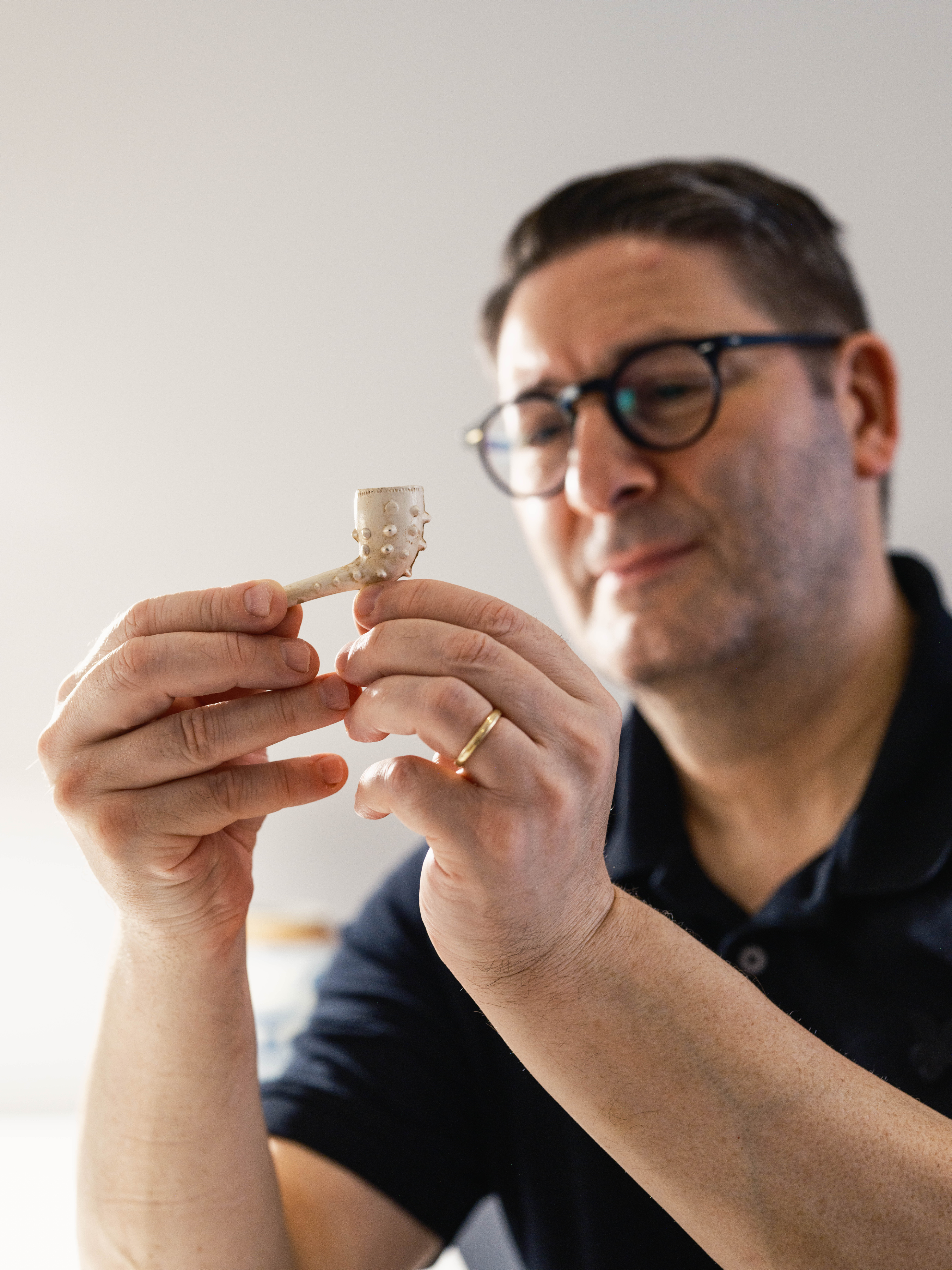
    The debris field was a textbook spread of freebooter booty: iron cannons, musket balls, swivel cannons, ballast stones, glass wine bottles, and 143 clay tobacco pipes stamped with the royal crest of England. But the real prize was a wooden hull burned down to the waterline — a classic pirate trick for torching evidence. Kingsley suspects that this charred skeleton is none other than the Fancy, the 46-gun flagship of Henry Avery.

    In 1695, Avery, known as the King of Pirates, pulled off history’s most outrageous high-seas heist, ambushing a Mughal Empire fleet and vanishing with a haul worth roughly $150 million today. To secure Nassau as a safe haven, Avery apparently took his cut of the plunder and gave the vessel to the local proprietary governor as a glittering bribe.

    Kingsley and his colleagues combined local maritime lore with cutting-edge tech to map Nassau’s sunken history. They interviewed fishers and sailors to trace where colonial ships went down. They then overlaid old maps with satellite imagery to pinpoint the wrecks. Finally, they used administrative logs to build a three-dimensional digital model of the infamous pirate hub.

    To Mallory R. Haas, an archaeologist who runs the SHIPS Project, a community initiative in England that tracks local wrecks, Kingsley’s Nassau expedition represents the ultimate antidote to modern boredom. She noted that by using rigorous science to revive fabulous, real-world adventures, Kingsley’s mission “has the potential to pull together the historic background research, getting the stories from early divers who know these sites well, looking at it with an archaeological perspective and inspiring a new generation of explorers.”

    This conversation has been condensed and edited for clarity.

    Q: Treasure Island, the Robert Louis Stevenson novel, depicted the pirate base in Nassau as a desperate web of untrustworthy murderers and alcoholics. But you have written that it was more a mix of cowboy frontier town and 18th century holiday camp.

    A: You can read all the history you like, but only when you sail around New Providence do you appreciate the true way of the pirates. Anchored above the cannon wreck’s ruins in the middle of nowhere was when reality hit me. Avery, Blackbeard, and the Flying Gang could pillage an ocean of bottomless loot. But they knew the odds of getting out of piracy with their heads attached to their necks were small. Piracy was escapism from the system, living in a small shantytown, sticking it to the man and the ultimate freedom of the high seas. The pirates lived for today, and damn tomorrow — a merry life and a short one.

    Q: Nassau Harbor has been heavily gouged and modified by modern dredging. Were you surprised to find intact pirate-era wooden hulls surviving beneath such heavy industrial disturbance?

    A: I wouldn’t have been surprised if nothing survived and our team left empty-handed. Underwater trophy-hunting found important relics in the years before laws came into effect in the 1990s. On-the-spot accounts leave no doubt that eye-watering underwater heritage was chewed up and lost since 1969.

    Q: So, you’re underwater beneath Nassau’s old bridge, battling strong currents and dodging an aggressively moody bull shark. How exactly do you still manage to get the mapping done?

    A: In the end, the bark was worse than the bite. The twice-daily riptides were managed by precision dives in slack water. When visibility was poor, the team relocated to quieter parts of the harbor. Much to my delight, the grumpy bull sharks decided we were small fry and left us to it.

    Q: Your team uncovered iron cannons and rail-mounted swivel guns — devastating antipersonnel weapons. What does the positioning of the swivel gun mounts on the wreck site reveal about how the crew structured its deck defenses?

    A: Not much. Swivel guns were the antipersonnel artillery of choice for pirates to fire on boarding parties and enemy cannon crews. But the shallow cannon site is poorly preserved on an exposed coral reef, ripped by hurricanes. Nassau was also the Caribbean epicenter of the wrecking industry, and salvors undoubtedly “fished” the wreck in the 18th or 19th century. Archaeologists are left with cultural breadcrumbs and the miracle that anything survives.

    Q: Is it true that the pirates in Nassau rarely attacked ships flying their native flags?

    A: Many English pirates were deeply patriotic. Both Avery and Benjamin Hornigold, the godfather of Nassau’s pirates, refused to attack English traders. French and especially Spanish sailors constantly ignored the peace at the end of the War of the Spanish Succession in 1714 and continued to attack shipping and Nassau itself. Foreign belligerence gave Blackbeard and many pirate lords what they felt was a rightful license to unleash hell on the high seas. Other pirates, such as the psychopath Charles Vane, supported Catholic pretenders to the throne and had no reservations blitzing the Protestant king’s trade.

    Q: In 1718, surrounded by British warships in the harbor, Vane set a captured French vessel ablaze and sent it straight at the royal flotilla as a floating bomb, using the chaos to escape. When you return to the site next year, any chance you will encounter what’s left of the fire ship?

    A: I imagine that if the French ship sank midchannel at the harbor entrance, it would likely have been dredged away. But never say never.

    Q: One of your premier finds is a large hull burned down to the waterline. Are there specific structural anomalies or patterns of charred wood that differentiate an accidental ship fire from a pirate’s effort to destroy evidence?

    A: The archaeological magic relies on overlapping evidence, firming up proof with each layer. The wooden hull was burned, seemingly stripped of shipboard items, and was built with wooden treenails, a shipbuilding philosophy largely tied to the 1690s through the first half of the 18th century. Of the 504 ships that historical accounts show were lost inside the harbor, 89% date to after 1750. The combination tentatively suggests that the burned hull went down before then, in the golden age of piracy.

    Q: If Avery’s ship, Fancy, truly met its end in the harbor, what evidence would turn a compelling match into an absolute certainty?

    A: An elephant tusk from Avery’s pretend slaving venture to the African coast. A merchant’s seal stamped “H.A.” A loose Indian ruby lost in the bilges. But the tree species of the ship’s timber needs to be of a British or European genus. A dendrochronological tree-ring reading from around 1690 would also be compelling.

    Q: You have expressed a desire to map the entire port using underwater drones. How does autonomous technology stack up against old-school divers when you are dealing with dangerous tides and zero visibility?

    A: Nassau’s colonial-era harbor was huge; it was said that 500 ships could fit inside, including the British Royal Navy’s whole fleet. Our project worked low-tech. But what lies below will never be discovered if you don’t go high-tech. Autonomous underwater vehicles deploying side-scan sonar, sub-bottom profilers and cameras can map in days what it would take marine archaeologists years. AUVs can work at night and in harsh environments, taking human failure out of the equation.

    Q: Films like Pirates of the Caribbean have turned historical privateers into cartoon cutouts. Did the rogues of the open waters really swagger through history in crushed velvet and rakish eye patches?

    A: The pirates of the Hollywood imagination were devilishly handsome, well-to-do swashbucklers who overcame moral challenges to return to their rightful place in society. The wrecks we explored are real, gritty touchstones of how life almost always ended brutally for these sea dogs. Almost all were hanged or died in sea storms. There was no Hollywood happy ending.

    This article originally appeared in the New York Times.
  • Al-Qaeda regroups in Afghanistan, 25 years after 9/11

    Al-Qaeda regroups in Afghanistan, 25 years after 9/11

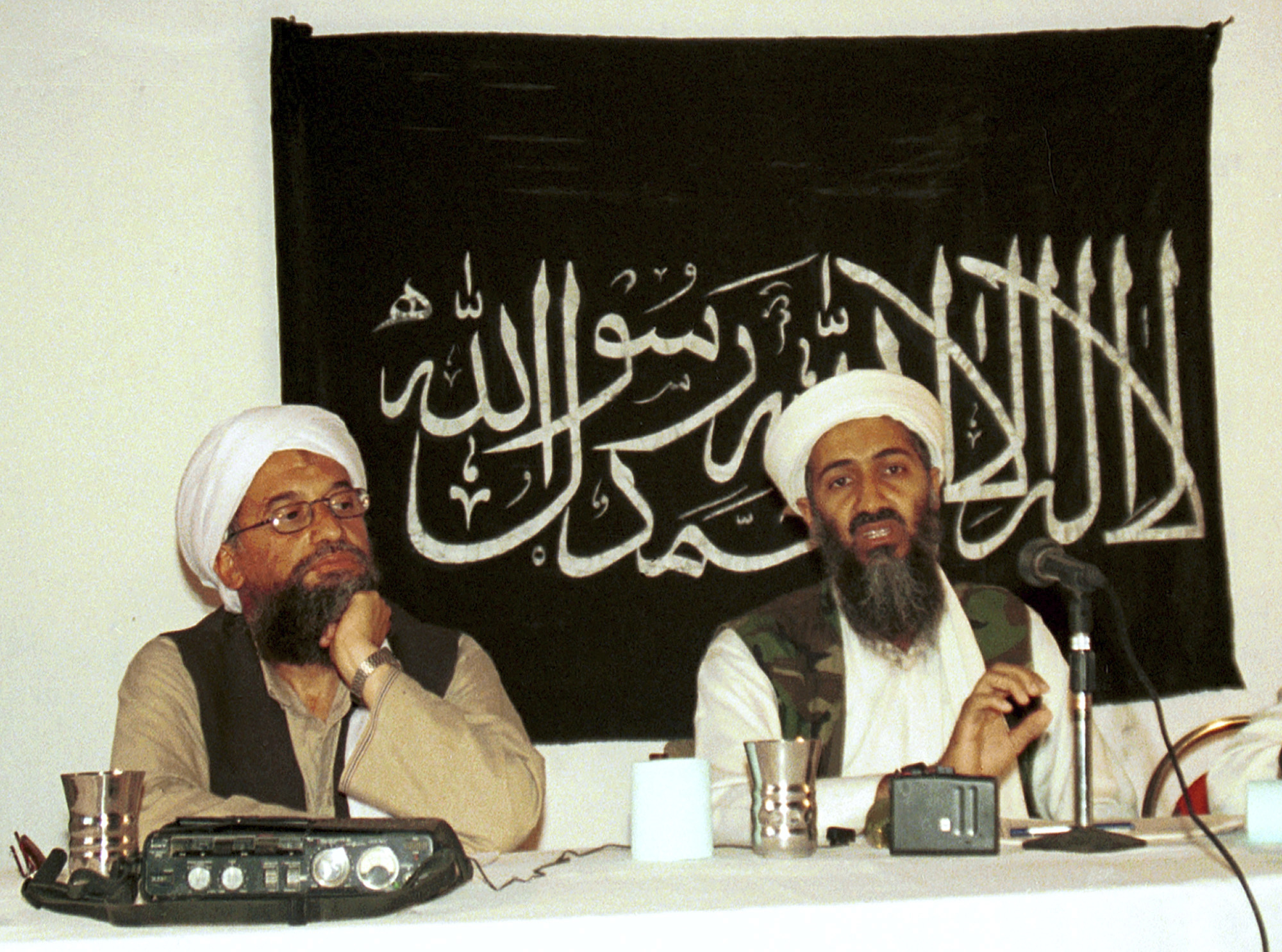
    Al-Qaeda’s plans for the Sept. 11, 2001, attacks took root in dusty, mud-walled compounds in Afghanistan that served for years as terrorist training camps.

    A quarter-century later — despite decades of U.S. military and counterterrorism operations aimed at eradicating those strongholds — al-Qaeda is again operating training camps in Afghanistan, according to U.S. and Western intelligence officials and a United Nations organization responsible for monitoring terror networks.

    The terror organization and its offshoots have set up at least eight training sites over the past three years, taking advantage of the Taliban’s return to power in Kabul and the security void created by the 2021 U.S. military withdrawal, according to U.N. reports and security officials.

    Other terror groups, including an affiliate of the Islamic State, al-Qaeda’s main rival, also have set up new training sites, officials said, giving militant Islamist groups a foothold in at least 14 of Afghanistan’s 34 provinces.

    These officials and others in this article spoke on the condition of anonymity to discuss intelligence matters.

    Because the Taliban has again provided “a permissive environment,” a U.N. report said, al-Qaeda has been able “to consolidate, with the presence of safe houses and training camps across Afghanistan.”

    There are notable differences from the pre-9/11 period, officials and counterterrorism experts said.

    The groups now training in Afghanistan seem more focused on regional fights than mounting elaborate plots against the United States or its allies. They appear to be constrained by Taliban hosts wary of again drawing the wrath of global powers. And with al-Qaeda’s top leaders still believed to be hiding in Iran or elsewhere, no Osama bin Laden-like figure has emerged to galvanize followers.

    Even so, the reappearance of training camps is a cause of growing concern.

    “They’re not following the pre-9/11 game plan of going after the far enemy,” said Bruce Hoffman, a counterterrorism expert at Georgetown University. “But I think they hope that with local and regional gains they can start to rebuild momentum. They haven’t forgotten us.”

    The U.S.’s failure to dismantle al-Qaeda’s training camps in the 1990s still looms as one of the major missed opportunities to prevent the Sept. 11 attacks.

    The idea of flying hijacked planes into U.S. buildings was first proposed by 9/11 mastermind Khalid Sheikh Mohammed in 1996 at an al-Qaeda complex in Tora Bora, Afghanistan, according to the U.S. 9/11 Commission.

    Bin Laden later approved the operation at a site near Kandahar. Before storming the cockpits of four transatlantic flights, all 19 of the hijackers had spent time at al-Qaeda camps or safe houses in Afghanistan.

    U.N. and other security officials said they had recently investigated claims that al-Qaeda was seeking to re-establish a presence at Tarnak Farms, a sprawling compound near the Kandahar airport where one of the first CIA Predator drone surveillance flights caught a pre-9/11 glimpse of bin Laden. A Washington Post examination of satellite imagery found no visible sign of resumed activity at Tarnak.

    The new camps are being used to train fighters on weapons, explosives, and guerrilla tactics that would be familiar to the thousands of recruits who passed through al-Qaeda’s camps in the 1990s, officials said. But they also cited indications of instruction on the use of encryption, artificial intelligence, drones, and other technologies that were in their infancy in 2001.

    The number of militants in Afghanistan considered part of core al-Qaeda, the parent group that spawned affiliates and imitators, is probably 100 or fewer, said Colin Smith, coordinator of a U.N. monitoring team that tracks the threat posed by terror groups and oversees international sanctions on them.

    Instead of spearheading operations, “we’ve seen al-Qaeda acting as a consulting service for other groups,” Smith said. “Giving them advice and training on things like covert operations and information security.”

    The arrangement has put core al-Qaeda in a supporting role to larger affiliates including Tehrik-e-Taliban Pakistan, or TTP, a group that seeks to overthrow the government in Pakistan and establish an Islamic state.

    A U.N. report in 2024 said that al-Qaeda operatives in Afghanistan’s Kunar province were “conducting suicide bomber training for TTP.”

    The Pakistan-focused group is believed to have as many as 7,000 fighters in Afghanistan, Smith said. U.N. reports said that TTP had established camps in at least four Afghan provinces “with al-Qaeda and Taliban involvement,” and that the group has carried out hundreds of cross-border attacks on Pakistani military outposts and other targets.

    Al-Qaeda’s main rival has also worked to establish a foothold in Afghanistan. An Islamic State affiliate known as Islamic State-Khorasan, for the historical region of Khorasan, has attracted about 2,000 recruits and used northern Afghanistan as its “main hub” for training and planning operations across Central Asia, according to officials and U.N. reports.

    Al-Qaeda and the Islamic State remain fierce rivals, fighting for dominance of the jihadist movement and overseeing splinter groups that compete with one another, officials said.

    Both groups seem focused mainly on recruiting operatives from within Afghanistan or neighboring states, unlike in the 1990s when al-Qaeda attracted thousands of foreign fighters from Saudi Arabia — where 15 of the 19 9/11 hijackers were from — and other Middle Eastern countries.

    “What I’ve seen from al-Qaeda media suggest that they’re not really looking for foreign fighters right now,” said Sara Harmouch, a terrorism expert at George Washington University who tracks the group’s propaganda and social media messages. “They don’t want eyes on them as they try to rebuild these capabilities.”

    U.S. and other security officials said that their ability to monitor the new training camps has been hampered by a drawdown in CIA personnel and other U.S. intelligence capabilities that accompanied the 2021 military withdrawal. The U.S. has since shifted resources to the war in Iran and other priorities.

    Even so, the killing of Ayman al-Zawahiri, who succeeded bin Laden as al-Qaeda’s leader, in a 2022 drone strike in Kabul showed that the U.S. has intelligence and strike capabilities that survived the chaotic pullout of U.S. forces.

    Al-Qaeda is now led by Saif al-Adel, an Egyptian, who spent years helping to run training camps in Afghanistan after his 1988 arrival. But al-Adel is believed to remain in hiding in Iran, officials said, underscoring the organization’s concern about security in its former stronghold.

    Terror watch lists, travel surveillance, and other security measures adopted after 9/11 would likely put any visitor to Afghanistan’s training camps under intense scrutiny, officials said. Instead, al-Qaeda and the Islamic State have sought to recruit operatives online and urged sympathizers in Western countries to stay in place for “lone wolf” operations.

    Many of these plots have been disrupted. In a recent case, a 35-year-old woman in Albany, N.Y., was arrested last month and charged by the Justice Department with pursing an “ISIS-inspired” terror plot to bomb the state capitol.

  • Police say more arrests coming in death of Mississippi woman found hanging from tree

    Police say more arrests coming in death of Mississippi woman found hanging from tree

    Mississippi police said Saturday they were still investigating the death of Tasia Fortune, a Black woman found hanging from a tree last month, a day after a man was arrested in connection with the killing.

    Loved ones painted a picture of Fortune as a mother, athlete, and woman of faith who they hoped would not solely be remembered for her horrific death.

    Additional arrests are expected in the case, Jackson Police Chief RaShall Brackney said Friday. Police sought and arrested 51-year-old Jarques Ratliff, who is Black, when they encountered him walking on the street, authorities said. Ratliff should appear in Jackson Municipal Court no later than Monday morning, said André de Gruy, Mississippi’s state defender.

    Brackney said Ratliff had an “association” with Fortune but would not elaborate on their relationship. She called Ratliff’s arrest on a murder charge “an important development” in the investigation.

    “But it is not the conclusion. This case remains active, and additional arrests will be pending as our investigators continue to follow the evidence wherever it leads,” Brackney said Friday. “We understand that this case has received media attention from across the globe, and across this community.”

    Police provide little new information on Saturday

    The state medical examiner’s office determined Thursday evening that the death was a homicide, Brackney said, allowing police to execute the warrants they already had on hand.

    Police did not respond to calls and messages from the Associated Press on Saturday about potential updates to the investigation beyond confirming it was still going on.

    Ratliff was charged with murder, Hinds County jail records stated Saturday. The jail report stated that Ratliff was a resident of Jackson and contained little other information.

    It couldn’t immediately be determined if he had a lawyer, and a message was left for the public defender’s office. If represented by a public defender, it would be the Hinds County public defender, de Gruy said.

    Fortune’s mother said she is grateful to police

    Christy Spivey, Fortune’s mother, said Friday after police told her of the arrest, “I just started crying and told them ‘thank you, thank you, thank you.’”

    Spivey said police did not share a motive or whether DNA led them to the arrest. Spivey said she did not know the man who had been arrested, but she was asking her daughter’s friends if they knew him. Spivey described the family as “in disbelief” and “shock.”

    “We still don’t have a lot of answers,” Spivey said.

    Police discovered Fortune’s body hanging in the backyard of an abandoned home in Jackson on Aug. 3.

    Spivey said she was certain that her daughter, 29, would not have killed herself.

    “Absolutely not. Even if she could climb that tree, no, no, she would never, ever, ever,” Spivey said.

    Fortune was a mother, an athlete, and a deeply religious person

    An obituary about Fortune posted on the website of Tucker Funeral Home in Central City, Ky., in August stated that Fortune’s “path was not always easy, and there were highs and lows.” It also stated that she skipped her junior year of high school, was a star cross-country runner, and had a strong faith in God. Services were held last month in Kentucky.

    “She leaves behind a powerful legacy of resilience, rooted deeply in her unwavering faith. Even in her darkest hours, she never stopped believing in her Savior,” the obituary stated.

    Fortune was also the mother of four children, but she rarely saw two of them, Spivey said. The last time Spivey saw her daughter was in late July for a planned family reunion in Kentucky that was canceled, but her daughter came to see her anyway.

    “When she was there, there was this pull, like a spiritual pull to her. I needed her. I guess God knew that was going to be it,” Spivey said.

    Spivey said she and Fortune’s father faced racism and violence as a mixed-race couple in Crittenden County, Ky., before Fortune was born.

    Fortune was taken from her parents and placed in foster care as a child. During her high school years, she moved around among group homes and eventually ran away to Mississippi. The obituary stated that she had lived in Jackson for 10 years.

    Spivey wasn’t sure where Fortune was living at the time of her death but said her daughter had been struggling with homelessness in recent years. Fortune had two sisters and was close with them. The father of one of her children was verbally and physically abusive to Fortune, Spivey said.

    Before she died, Fortune had talked about starting a cleaning business and was trying to get her life in order.

    “Say her name. Keep it going,” Spivey said. “Because I’m not going to stop until I get answers.”

  • GOP and Democratic officials in Nashville unite over renaming airport for Dolly Parton

    GOP and Democratic officials in Nashville unite over renaming airport for Dolly Parton

    NASHVILLE, Tenn. — In Nashville, Tenn., the Republican-dominated state government and Democrat-controlled city government are engaged in an ugly battle for control of the city’s airport.

    But there’s one thing the two sides can agree on: Nashville International Airport should be renamed to honor Tennessee’s favorite daughter, Dolly Parton. The change would make Parton the first woman whose name adorns one of America’s 50 busiest airports.

    Lydia Popovich, a Parton superfan who started a petition for the name change in 2025, said on Friday that Parton had gracefully batted down the idea of naming the airport after her, as she did with many other proposed honors during her lifetime. That includes a bill brought by Tennessee lawmakers in 2021 to place a statue of her on the Capitol grounds.

    Parton asked lawmakers to withdraw the bill but expressed a hope that it might happen “somewhere down the road several years from now or perhaps after I’m gone if you still feel I deserve it.”

    Effort to rename airport gained steam after Parton’s death

    After Parton’s death two weeks ago, the airport naming idea seemingly caught fire, with Popovich’s petition reaching more than 175,000 signatures — not that the officials competing to run the airport needed the push.

    At a meeting Friday of the state-controlled Metropolitan Nashville Airport Authority, a motion directing the airport CEO to begin the renaming process was unanimously approved by board members praising Parton to the heavens. Airport officials said the change could take a year or more and involves working with Parton’s estate to determine how they might split profits from merchandise sales, among other things.

    Bipartisan agreement on name change is a departure

    There are two Metropolitan Nashville Airport Authorities: one run by the state and the other controlled by the city, a bifurcated regulatory system that was created in 2023 amid a partisan dispute between the GOP-run state and the Democratic-run city. Who actually controls the airport has been in dispute ever since, with competing boards taking the reins only to be deposed as courts rule and are overturned.

    Despite the acrimony, Nashville’s Democratic Mayor Freddie O’Connell and the competing, city-controlled Metropolitan Nashville Airport Authority are also in support of the name change, according to O’Connell spokesperson Alex Apple.

    “The FAA’s going to get two votes from two boards, both in favor,” Apple said.

    Stuart McWhorter, a member of the state-controlled board and deputy to Tennessee’s Republican Gov. Bill Lee, briefly mentioned the dispute at the Friday meeting. He suggested that in the spirit of Parton, “We can get beyond the litigation and get back to working together.”

    Supporter of name change: ‘She’s the best of Tennessee’

    Born in poverty in the foothills of the Great Smoky Mountains, Parton became an icon whose popularity crossed generational, geographic, and political boundaries. In addition to writing and recording hit songs such as “Jolene” and “I Will Always Love You,” she starred in Hollywood films including 9 to 5 and Steel Magnolias.

    Popovich, who attended the Friday meeting and spoke in favor of the proposal, was in tears after the unanimous vote in favor.

    “It’s been a really beautiful experience, especially as you’re grieving someone that was such a great loss,” she told the Associated Press. “She’s the best of Tennessee. She’s the best of the humans on the planet. She was this magical person that provided light and guidance to all of us.

    “Unfortunately she’s left us, but now we get to celebrate her and get to tell the world how much Tennessee loved her.”

  • Trump touches a nerve while in Ireland by saying reunification would be ‘fantastic’

    Trump touches a nerve while in Ireland by saying reunification would be ‘fantastic’

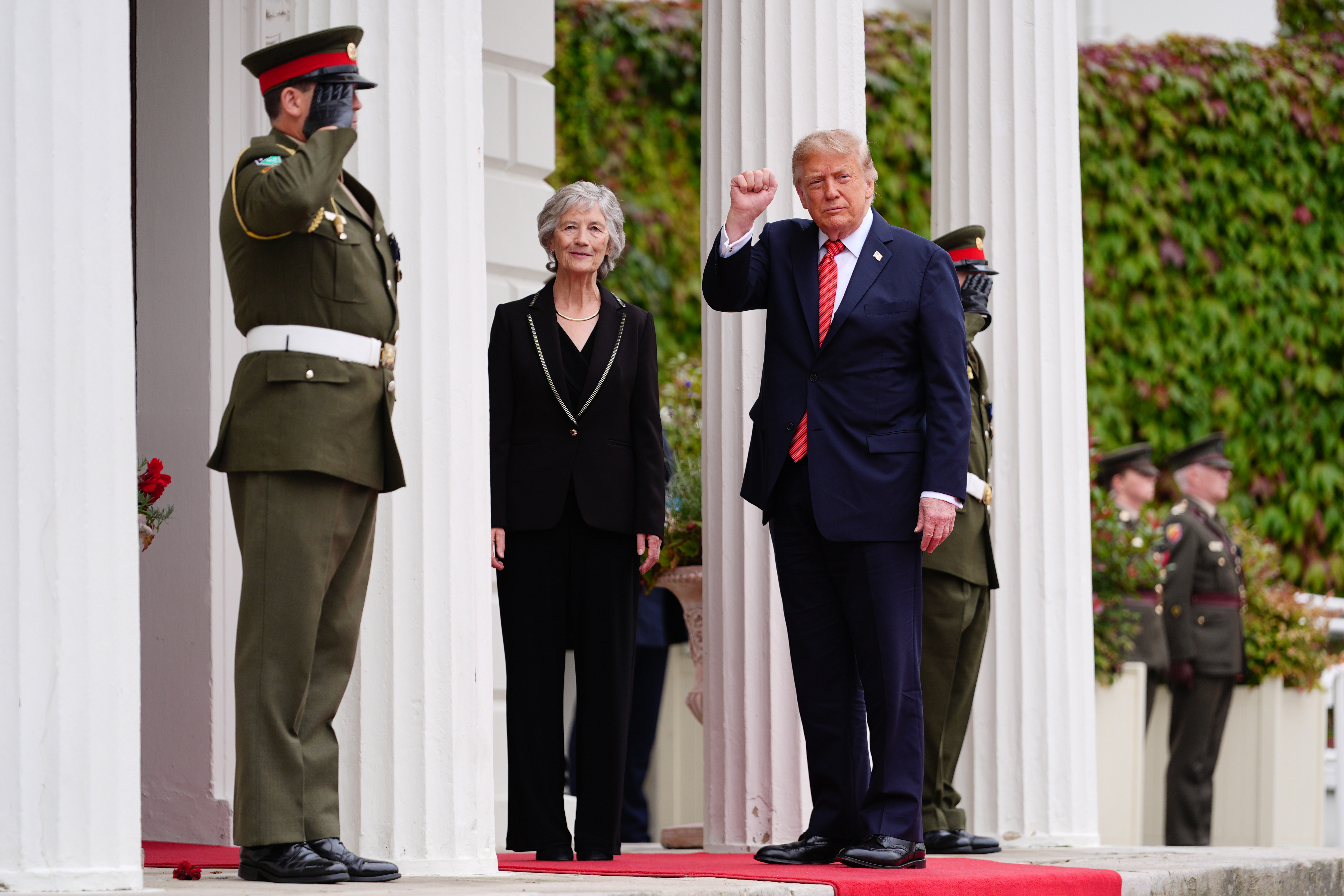
    DUBLIN — U.S. President Donald Trump said Saturday that a unified Ireland would be “fantastic” as he waded into a complex and politically charged subject during a weekend visit to a tournament at his Irish golf course.

    At a meeting with Irish Prime Minister Micheál Martin in Dublin, Trump said he would love to see the reunification of the Republic of Ireland with the United Kingdom’s Northern Ireland.

    “I don’t want to cause any problems but I’d love to see it unified,” Trump told a reporter who sought his opinion on the issue. ”It’s going to happen eventually. It may as well happen now.

    “I think it would be a fantastic thing,” the Republican president said, adding that ”the U.K. will have something to say about it, obviously.”

    At his next stop, Trump acknowledged there is “no good answer” to the reunification question as he addressed business leaders from both countries gathered at the U.S. ambassador’s residence.

    The Irish unity debate is heated

    Competing visions of Northern Ireland — whether Irish or British — drove decades of violence in the six-county region that has a Protestant majority and has remained part of the U.K.

    Previous American presidents, including Democrat Joe Biden, who has strong emotional ties to Ireland, have avoided commenting directly on the subject.

    Ireland, long dominated by its bigger neighbor Britain, became a self-governing Catholic-majority country a century ago. Northern Ireland was split between two main communities: nationalists, most of them Catholic, who desired union with the rest of Ireland, and largely Protestant unionists, who wanted to stay British. Tensions eventually exploded in the Troubles involving paramilitary groups on both sides and British troops.

    A 1998 peace accord that the United States was instrumental in negotiating largely ended the violence, but left Northern Ireland’s ultimate status unresolved. That agreement allows for a vote on unification if it appears likely a majority of people would vote for it. U.K. Prime Minister Andy Burnham said Wednesday that the U.K. would only consider allowing a referendum “when public opinion has changed to the point where the call has to be considered.” Burnham’s office referred back to that comment when asked about Trump’s statement.

    Trump’s comments Saturday, along with recent statements about the Falkland Islands, a small British overseas territory in the South Atlantic Ocean that Argentina calls Las Malvinas, could also be viewed as a dig at Britain, given his anger over London’s refusal to be drawn into the U.S.-Israeli war against Iran.

    Trump also talked about the Falkland Islands

    Trump once more raised the prospect of conflict between the U.K. and Argentina over the Falklands. Argentina’s President Javier Milei, a Trump ally, has recently restated his country’s claim to the territory of about 3,500 people, which is about 300 miles east of the southeast coast of Argentina.

    Trump has previously said Washington could reconsider its neutral stance on the islands’ sovereignty. On Saturday, he expressed skepticism that Britain would be able to retake the Falklands as it did after Argentina invaded in 1982.

    “I’m sure I’ll be called into that potential disaster, but if they do, I’ll probably be able to settle, settle it out,” he said.

    A meeting with the Irish president who criticized Trump

    Trump also held talks in Dublin with Irish President Catherine Connolly, a left-wing politician who joined protesters when Trump visited Ireland in 2019 during his first term in office. She is now Ireland’s elected, largely ceremonial head of state. A supporter of the Palestinian cause, Connolly in the past has criticized U.S. policy in the Middle East and called Trump a “bully.”

    Connolly said in a statement after the meeting that she conveyed to Trump “the strong view of the Irish people that the normalization of war and genocide can never be accepted.” She gave Trump several gifts, among them a collection by the late Irish poet Michael Longley that includes the sonnet “Ceasefire.”

    Asked about the meeting, Trump first had his protocol chief, Monica Crowley, answer before he was pressed and said it was “very nice.” “We discussed a lot of things, quickly,” Trump said.

    Trump’s presence irks some Dubliners

    Police put up a cordon around Dublin’s 1,750-acre Phoenix Park, where Connolly, Martin, and U.S. Ambassador Edward Walsh have residences and welcomed Trump.

    A protest march drew thousands to central Dublin. Trump had left the city and was on the way to his Doonbeg golf course on the country’s Atlantic coast by the time the demonstration began.

    Many in the crowd waved Irish or Palestinian flags and chanted “Donald Trump not welcome here” and “Irish government, shame on you!”

    Paula Butler said she came with a contingent from the Dublin Rape Crisis Centre to oppose the American president’s “attitude to women, to refugees, to migrants.”

    She was unimpressed by Trump’s support for Irish unity, a popular cause in Ireland.

    “What he knows about Irish unity, I’d say I know more on my little finger,” Butler said.

    Kim Mathis, who moved from Florida to Dublin last year with her partner, said, “Part of the reason we moved to Ireland was to get away from Trump and all of his horrific policies.”

    She said dealing with Trump is “a global conundrum” for governments. “It would be really nice if politicians would just say, ‘Stay home.’”

    Eric Trump defends family’s presence in Ireland

    Speaking to Irish national broadcaster RTE on Friday in Doonbeg, Trump’s son Eric said the course is the largest employer in the area.

    “Go down to Morrissey’s tavern in Doonbeg and hear from a real Irish person as to whether or not they like President Trump and the Trump family, go have them attest to what we’ve done for the country and what we’ve invested in the country and the love and respect that our family has always shown them,” he said.

    Trump’s visit is the latest example of blending his official duties and personal interests.

    He spends most weekends playing golf at his clubs in Florida, New Jersey, and Virginia. His attendance at the Irish Open continues his trend of appearing at high-profile sporting events and having a hand in organizing some of them in ways that benefit his family business. His clubs in Doral, Fla., and Bedminster, N.J., have hosted professional golf tournaments this year.

    Last year, Trump went to Scotland for five days to play golf at his club in Turnberry and later inaugurated a Trump golf course in Balmedie, Aberdeenshire. During that visit, he held talks with the British prime minister and the president of the European Commission.

    Asked if he would return to Ireland next year for the Ryder Cup, Trump said, “I will. Absolutely.”

  • Trump administration blocks $25 million in funding for national parks

    Trump administration blocks $25 million in funding for national parks

    The Trump administration has blocked more than 130 projects in national parks across the country worth at least $25 million, according to internal documents reviewed by the Washington Post — funding that had already been secured for some of the most visited parks for work such as fire preparedness in California, prehistoric mound protection in Iowa, and sled dog care in Alaska.

    The Interior Department, which oversees the National Park Service, said in a statement it “disapproved” a raft of planned agreements with groups it said work against administration priorities. The agreements were rejected last month and would have allowed the parks, including Yellowstone, Yosemite, and Zion, to pay outside partners for various projects in the next fiscal year that begins Oct. 1, the documents show.

    Similar to issuing government contracts, the Park Service often partners with outside organizations when specialized expertise or work is needed, allowing it to do work without hiring additional full-time federal employees. The blocked funding instead puts additional pressure on a national park system that has struggled with losing roughly a quarter of its staff since President Donald Trump took office last year and launched efforts to shrink the government.

    The changes appear to most affect Joshua Tree National Park, which had at least 10 planned partnership agreements blocked. That park’s partnership agreements would have hired at least 16 people, helped recover areas in the park burned in wildfires, and removed rodents that carry hantavirus from historic buildings, among other activities listed in the documents.

    “If this work is not completed, the park will be unable to fight wildfire. Fires will be larger and fire suppression will be more expensive,” the documents read, describing the impact if a fire preparedness project at Joshua Tree does not gain funding.

    Interior spokesperson Aubrie Spady confirmed that the department “disapproved a number of partnership agreements with groups actively working against the best interests of the American people and the priorities of this administration.”

    “This decisive action is ensuring that these taxpayer dollars are being used in alignment with the administration’s objectives to make life more affordable for Americans, unleash domestic energy production, and expand access to our public lands,” Spady added.

    She did not give further details on the agreements or partner organizations affected.

    The entire batch of more than 100 disapproved projects had already secured funding sources generally through congressional appropriations, existing federal programs that fund activities such as fire prevention and recovery, or competitive internal processes to fund the most pressing park needs.

    The projects were seeking review by the Interior Department as a final step before the agreements could be signed and the funding released.

    Trump launched efforts at the start of his latest term to purge the government of work on diversity, equity, and inclusion (DEI), climate change and other areas deemed to be “woke” or liberal causes. Since January 2025, entire government departments have been shuttered, and thousands of grants have been canceled. Spady did not respond to questions on whether the agreements or organizations specifically ran afoul of those administration-wide policies and did not elaborate on why the agreements were blocked.

    The Great Basin Institute, a nonprofit conservation group, was the top outside organization to see its partnerships blocked and confirmed that Interior blocked more than 70 of its proposed partnership agreements, worth at least $12.7 million.

    Peter Woodruff, chief executive of the Great Basin Institute, said the Interior Department did not notify the institute directly. Instead, staff at partnering parks told them of the news, saying that it was because of funding priorities and issues of compliance with secretarial and presidential orders.

    Beyond that, Woodruff said he does not know why the agreements were blocked.

    “GBI’s standards remain staunchly nonpartisan through six presidential administrations, with a mission of supporting public lands management and the agencies charged with that mission,” Woodruff wrote in a letter to Interior asking for clarity on what policies the partnership flouted.

    “GBI has no advocacy directives and does not engage in or support any actions counter to Executive Orders or Secretarial Orders.”

    The Great Basin Institute had reaffirmed its commitment to its own diversity goals in 2020, during the first Trump administration, according to pages on its website that have since been removed but are available on a third-party archiving site.

    Woodruff said that statement reflects past views of leadership from before Trump’s 2025 executive order on DEI.

    Current institute leadership “can unequivocally state operations are in full compliance with all federal laws, regulations, and executive orders, and does not engage in unlawful preference or discriminatory practices,” he said.

    Four Park Service staffers, who were not authorized to speak to the media, said they received no details about why their agreements were disapproved beyond a message included in the documents that said “Disapproved by DOI.”

    The message said the Park Service and Interior had reviewed the request, and any questions should be directed to regional or associate directors, without elaborating further.

    DOI approved more than 700 other agreements this year through early August. Projects of less than $50,000 do not require Interior review.

    Money not spent on the disapproved projects could be diverted elsewhere by the Interior Department, some of the staffers said, although it is not clear where the money would go.

    “The real question is where did this $25 million go to?” said Elaine Leslie, a former Park Service acting superintendent and wildlife biologist who reviewed the disapprovals list. “$25 million worth of funding was set aside for these projects. Where is it?”

    Spady did not respond to questions about the money being redirected.

    The blocked partnerships also include one at the Effigy Mounds National Monument in Iowa, where there are more than 200 prehistoric Native American mounds, many of which were used for burials or shaped like animals.

    An outside partner would remove trees on the mounds at the monument’s Sny Magill unit to ensure they are not damaged.

    “The mounds at Sny Magill will remain at risk from tree fall that might expose the human remains buried within these mounds,” the internal documents said. “Sixty-one of the proposed tree removals are currently within a mound risking severe damage should the tree fall.”

    Another partnership with the San Francisco Zoological Society would have helped raise and release juvenile San Francisco garter snakes in the Golden Gate National Recreation Area to ensure the endangered species does not go locally extinct, according to the documents.

    One blocked agreement would have hired three people to provide day-to-day care for sled dogs in Alaska’s Denali National Park and Preserve. Park rangers use dog sleds to more easily traverse the park and assist visitors in the winter.

    “Without funding, kennel operations will lose essential support, reducing dog care capacity, limiting winter patrol readiness, and decreasing visitor engagement,” the document says.

  • As Iran proxies activate in Yemen and Iraq, Trump’s Mideast morass deepens

    As Iran proxies activate in Yemen and Iraq, Trump’s Mideast morass deepens

    AMMAN, Jordan — As the U.S.-Israeli war against Iran opened with the killing of the Iranian supreme leader, Ayatollah Ali Khamenei, President Donald Trump said the bombing would continue “throughout the week, or, as long as necessary to achieve our objective of PEACE THROUGHOUT THE MIDDLE EAST AND, INDEED, THE WORLD!”

    More than six months later, turmoil in the Middle East is only growing, while Trump seems to have no path out of the quagmire.

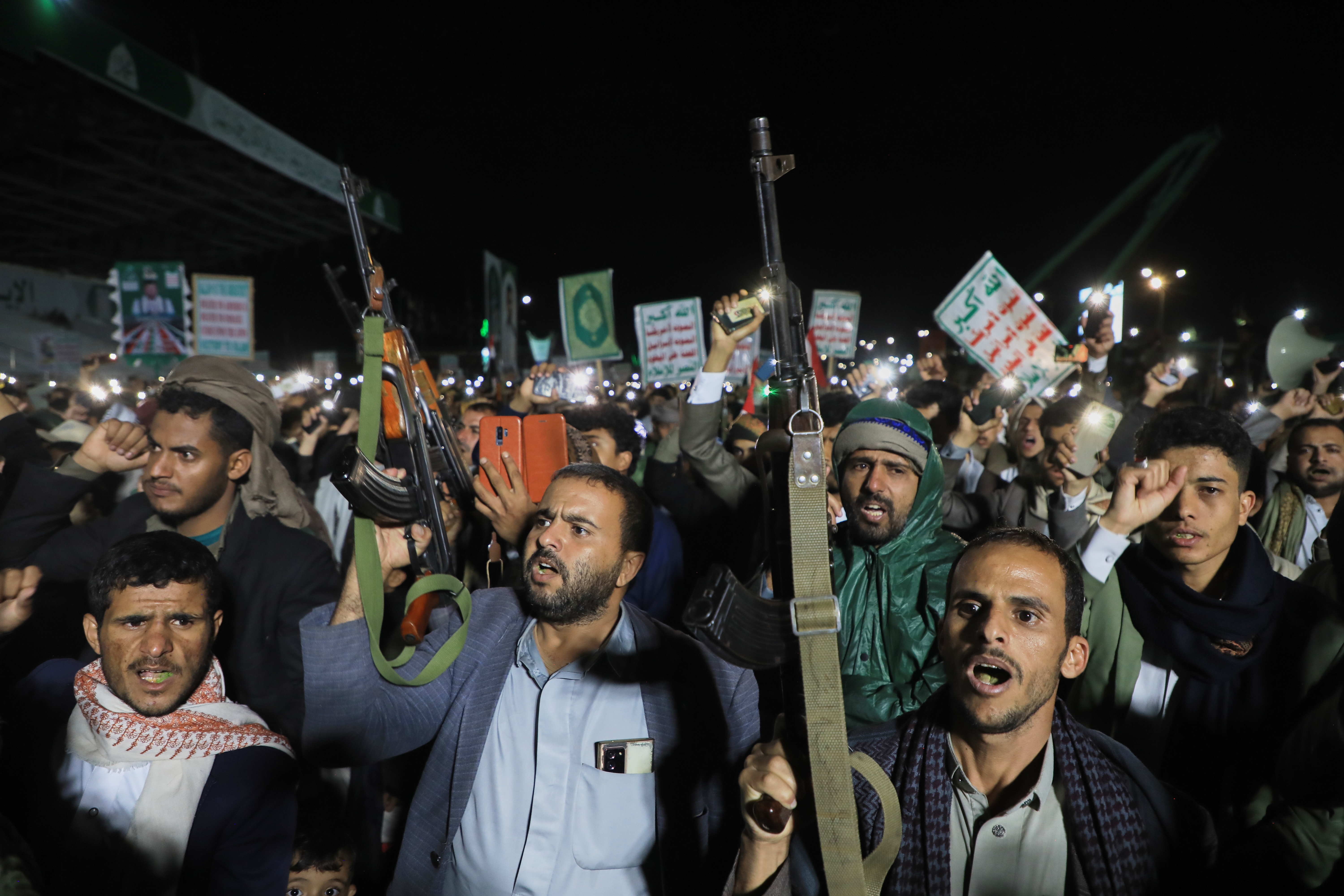
    As of Friday, two of the most important corridors for global energy shipments — the Strait of Hormuz, gateway to the Persian Gulf, and the Bab al-Mandab Strait, at the mouth of the Red Sea — were largely closed, respectively under control of the Iranian regime and the Houthis, Iran’s proxy in Yemen.

    Also on Friday, Iraqi militants allied with Iran struck Saudi Arabia’s East-West pipeline, through which the Saudis had been rerouting oil to bypass the blocked Strait of Hormuz.

    The global economy, already battered, is reeling. On Feb. 27, the day before the U.S.-Israeli bombing campaign began, the price of oil opened at just over $70 per barrel. On Friday, it briefly hit $110.

    A gallon of gasoline in the United States now costs $4.30 on average, compared to $2.98 when the war began, according to AAA.

    With U.S. munition stocks depleted and American bases in the region at constant risk of being targeted by airstrikes, the Trump administration has shifted away from military action to a financial pressure campaign branded Operation Economic Outcast.

    But while there are signs that a U.S. naval blockade is squeezing the Iranian economy, with inflation soaring, the currency collapsing, and acute fuel shortages, the regime, now led by Khamenei’s son, Ayatollah Mojtaba Khamenei, remains firmly in control. And the recent military successes of Iran’s proxies suggest Tehran’s leverage has only increased in recent days.

    “This is the moment that Iran has been preparing for and building toward for years,” said Adam Baron, a fellow with the Future Security Program at New America, a Washington think tank, who studies the Houthis. “It is as if a trigger has been pulled and the regional network activated.”

    “Even if the conflict has weakened Iran, which it has, one of the biggest takeaways five or 10 years from now will be how strong, integrated, and adaptable Iran’s regional network has proven to be at exactly the moment that it needed it.”

    Trump, visiting Ireland to attend the Irish Open golf tournament, which is being staged at one of his resorts there, dismissed questions about the blocked waterways.

    Asked about the developments in Yemen that appeared to choke off Saudi Arabia’s remaining outlet for oil exports, Trump said he had spoken by phone with Crown Prince Mohammed bin Salman and that everything would be “fine and dandy.”

    “Everything will work out just fine,” Trump said. “It’s all going to work out fine.”

    In Dublin, where hundreds of anti-war demonstrators gathered to protest his visit, Trump said he believed that Iran was responsible for the attack on Saudi Arabia’s East-West pipeline.

    “I think they are — probably they are. They are on the balls of their feet right now,” he said, adding that he was not concerned by the advances of Iranian-backed Houthi fighters along Yemen’s Red Sea coast, suggesting their target was Saudi Arabia.

    “The Houthis called us and they don’t want to fight with us,” Trump said. “They don’t want us to go after them and would much prefer not having us involved, and they’re letting most ships go through. It’s just one country they’re not too happy with. And we’ll get that straightened out.”

    Saudi Arabia, however, is arguably Washington’s most important Gulf ally. And even before the pipeline was hit by drones, Saudi oil exports last month reached their lowest point in more than a decade.

    The conflict in Yemen is an example of how the situation in the region has deteriorated since the start of the U.S.-Israeli war on Iran.

    In February, Yemen’s long civil war was on pause, thanks to a tenuous but still intact U.N.-brokered ceasefire. Fighting has now roared back to life.

    A Yemeni official who is part of the internationally recognized, Saudi-backed coalition government said there is desire for the Trump administration to intervene militarily against the Houthis, as it did in 2025.

    Trump’s comments on Saturday, however, suggested that was unlikely.

    Meanwhile, Israel has ramped up its strikes in southern Lebanon, threatening a fragile U.S.-brokered ceasefire there.

    Ways out of the quagmire are difficult to discern.

    With the war becoming a liability for Republicans ahead of the midterm congressional elections, Trump has used recent appearances, including at a GOP midterm convention and at a 9/11 memorial on Friday, to defend his decision to attack Iran.

    Saudi Arabia may feel compelled to step up military action against the Houthis, to keep oil exports flowing. Riyadh, so far, seems to be moving cautiously.

    In a statement early Saturday, Saudi Arabia’s foreign ministry said it would refrain from retaliating against the Iraq-based militias to give Baghdad time to address the problem.

    The rest of the Middle East, particularly nations in the Persian Gulf and Jordan, which host U.S. forces, have paid a steep price for a war that its leaders actively sought to avoid.

    Since February, Iran has intermittently lobbed missiles and drones at Gulf nations and Jordan, saying it is targeting U.S. military forces but at times hitting civilian infrastructure.

    When leaders from across the Gulf convened last week at a conference in Abu Dhabi, capital of the United Arab Emirates, discussion centered not on when the war would end, but on how to find a way through the morass.

    In Jordan, which over the past week was the target of 20 Iranian drones, there is immense fatigue — and confusion over what would constitute a good outcome.

    “We are in the middle of a war that we don’t want to see anyone win,” said Oraib Rantawi, a senior adviser with the Amman-based Al Quds Center for Political Studies, explaining that Jordanians don’t want to see a strong Iran, holding sway over the region, nor an all-powerful Israel.

    “We are under pressure,” Rantawi said. “And we are in the middle.”

  • Dear Abby | Relative’s gift came with strings attached

    Dear Abby | Relative’s gift came with strings attached

    DEAR ABBY: About 15 years ago, my nephew gave me a birthday gift of a baseball bat signed by a top player. I love baseball, so it was a lovely gift. After I thanked him, he said, “When my son is older, I would like you to give it to him.” We have been estranged now for at least 10 years because his spouse dislikes our family for some reason.

    Am I obligated to find a way to get the bat back to him? Looking at their Facebook over the years, I see no signs that there is any interest in baseball in this son or their family. I am in my later years and have been trying to downsize and pass on some of my things. I would rather pass it on to a grandchild of mine who loves and currently plays baseball and would treasure it.

    — DOWNSIZING BASEBALL FAN

    DEAR FAN: This family has chosen to cut ties with you. They cannot reasonably expect you to track down a grandnephew with whom you have no relationship. In fact, it was crass of your nephew to put a stipulation on the gift in the first place. Pass the bat to the grandchild you know and love.

    ** ** **

    DEAR ABBY: I’ve been married for 20 years. My in-laws and I have had a decent relationship. My husband, our three teenage children and I have been living with them for 10 years. It was rough at first, but things got better. My in-laws received and spent three cushy inheritances (close to $3.5 million) over the last 22 years. They also maxed out a reverse mortgage within the past two years. Abby, they have not one dime of it left! Things started to go downhill about four years ago. My husband and I have bailed them out financially too many times to count. We’re not financially struggling, but our nest egg (that we worked hard for and was to go toward buying our own home) is nearly gone. The in-laws have slid back into their old ways again — not paying bills, not cleaning up after themselves, not helping with household chores, neglecting their health, etc.

    My in-laws gave us their powers of attorney for health and finance a few months ago. They agreed to allow us to help them get organized, make a budget, clean up their house, make appointments and hold them accountable. They invariably play the victim and complain when we try to discuss things. Over the past eight months, I’ve had two breakdowns. This is affecting my mental and physical health. My kids want nothing to do with their grandparents. I’m not perfect, but I do have self-respect. Please help!

    — ON EDGE IN WASHINGTON

    DEAR ON EDGE: It’s time to recognize that your in-laws may have a problem that you and your husband are not equipped to handle. That you now have their powers of attorney may (or may not) save all of you. For everyone’s sake, stop enabling them and enlist the help of a licensed financial counselor to help straighten out this mess. Go online and look for an accredited or certified credit counselor affiliated with the National Foundation for Credit Counseling (nfcc.org.). Their “slide back into their old ways” may have a medical explanation, which means your in-laws need to be evaluated medically and neurologically. Please don’t wait.

  • Horoscopes: Saturday, Sept. 12, 2026

    Horoscopes: Saturday, Sept. 12, 2026

    ARIES (March 21-April 19). The usual things need to be tended to before you can move on to the “fun stuff.” Doing the chores in a different order will make it go better, if only because the novelty quickens and sharpens you.

    TAURUS (April 20-May 20). When you’re uncertain, resist the pressure to answer right away. You probably don’t yet know what people really want. Slow the conversation down so you can hear the clues, like a change in the voice, and themes that repeat. Follow the tension.

    GEMINI (May 21-June 21). To aim and miss is hard enough when done in private. Missing in front of people takes real guts. But if most people around you aren’t even trying, any mistake you make proves you’re braver. You’re actually living.

    CANCER (June 22-July 22). Your experience isn’t isolated. Many people are navigating the same kinds of obstacles. Changes in your own life really do mirror something happening all around you. Communities are forming.

    LEO (July 23-Aug. 22). You discover that compatibility has less to do with agreeing about everything and more to do with enjoying ordinary days. Routines become cozy. Greetings become warmer, goodbyes become shorter, and home starts looking like another person’s face.

    VIRGO (Aug. 23-Sept. 22). You are like the universal key that can, with a certain amount of jiggling, fit into a lot of different situations today, so you can afford to be choosy. There’s that one that will click like it’s made for you.

    LIBRA (Sept. 23-Oct. 23). It will feel good to shed some of the things you’ve stored for year. Your efforts to need less, appreciate more and be generous in any way you can be will not only make life better for you, but also influence all around you.

    SCORPIO (Oct. 24-Nov. 21). You’re caring less about what people think of you, and the less you care, the more they like you. Without the distraction of having to please, small, wonderful things happen today, including the fact that you simply have more energy.

    SAGITTARIUS (Nov. 22-Dec. 21). “Do as I say, not as I do” may be uniquely human, as the other animals don’t spend nearly as much time directing each other. You’ll follow your advice to others and teach them twice.

    CAPRICORN (Dec. 22-Jan. 19). What you need most today is willpower — not because times are hard, but because they are not. Staying on track can be much more of a challenge on ordinary days, but surround yourself with good examples and you’re golden.

    AQUARIUS (Jan. 20-Feb. 18). It is said that ability is nothing without opportunity. The trick is in pursuing the opportunity, even before you know what it looks like. You can practically smell it now, like cookies baking in the distance.

    PISCES (Feb. 19-March 20). To demand perfection of yourself is hardly fair. Even if asking for perfection nets you better results than if you hadn’t, the stress is too high a cost to be worthwhile today. A gentle, tolerant spirit takes you further.

    TODAY’S BIRTHDAY (Sept. 12). It’s your Year of the Zephyrs, when pleasant surprises drift in on the westerly wind. Change is easy, love is breezy; prepare for storms and then enjoy when they dissipate before they can ever reach you. Someone’s always having a good time; this year, it’s you. More highlights: Children inspire. Businesses meld, benefiting all. You’ll change your financial strategy and do what you wanted to do with less. Cancer and Libra adore you. Your lucky numbers are: 42, 31, 26, 9 and 3.

  • Contractor blames its own repairs, not vandals, for Reflecting Pool failure

    Contractor blames its own repairs, not vandals, for Reflecting Pool failure

    WASHINGTON — The contractor that renovated the Lincoln Memorial Reflecting Pool has told the Trump administration that errors in its own work and flaws in the repair plan, not vandalism, caused the pool’s new blue liner to peel and break loose, according to government documents reviewed by the New York Times.

    President Donald Trump has repeatedly blamed vandals wielding knives or box cutters for damage to the pool’s “American flag blue” liner, even after the Justice Department dropped charges that it had brought against people accused of vandalizing the national landmark.

    But the documents, which have not previously been reported, make clear that the contractor, Atlantic Industrial Coatings, found problems in the design and the execution of the renovation. The documents include Atlantic’s reports to the government as well as daily progress updates from the National Park Service over the past two months.

    Atlantic blamed its own errors in a report dated Aug. 14 and then provided more detail Sept. 2, the documents show. The Justice Department, which had charged several people with vandalizing the pool in early July, began moving to dismiss the cases July 31.

    Because of “human oversight,” workers in some areas did not spray enough of the primer that made the layers of the liner stick together, Atlantic said in the documents. But the bigger problem, the company said, was that the repair plan laid out in the contract called for the layers of liner to include two chemicals that turned out to be incompatible.

    The chemical on top reached a temperature hotter than what the compound underneath could withstand, and the heat caused the bottom layer to blister and come loose, the documents show. The contractor said it had not expected that outcome because it was very uncommon to mix the two products in that way.

    The failure illustrates the consequences of the Trump administration’s rushed effort to renovate the pool this spring. In a hurry to finish the work before the nation’s 250th birthday on July 4, the government bypassed competition and gave Atlantic a no-bid contract to carry out an untested approach designed in part by the general manager of one of Trump’s golf clubs.

    The government has agreed to pay Atlantic $14.7 million for its work. The contractor has said it will repair the pool, which is under warranty, again.

    Katie Martin, a spokesperson for the Interior Department, did not directly address questions about the contractor’s findings but issued a statement that appeared to continue blaming vandals for the damage, saying that they had “repeatedly reached into the pool and ripped at the coating.”

    Martin said Atlantic was now “well on its way” to repairing the pool. She did not say when it would be refilled.

    Representatives for Atlantic did not respond to requests for comment.

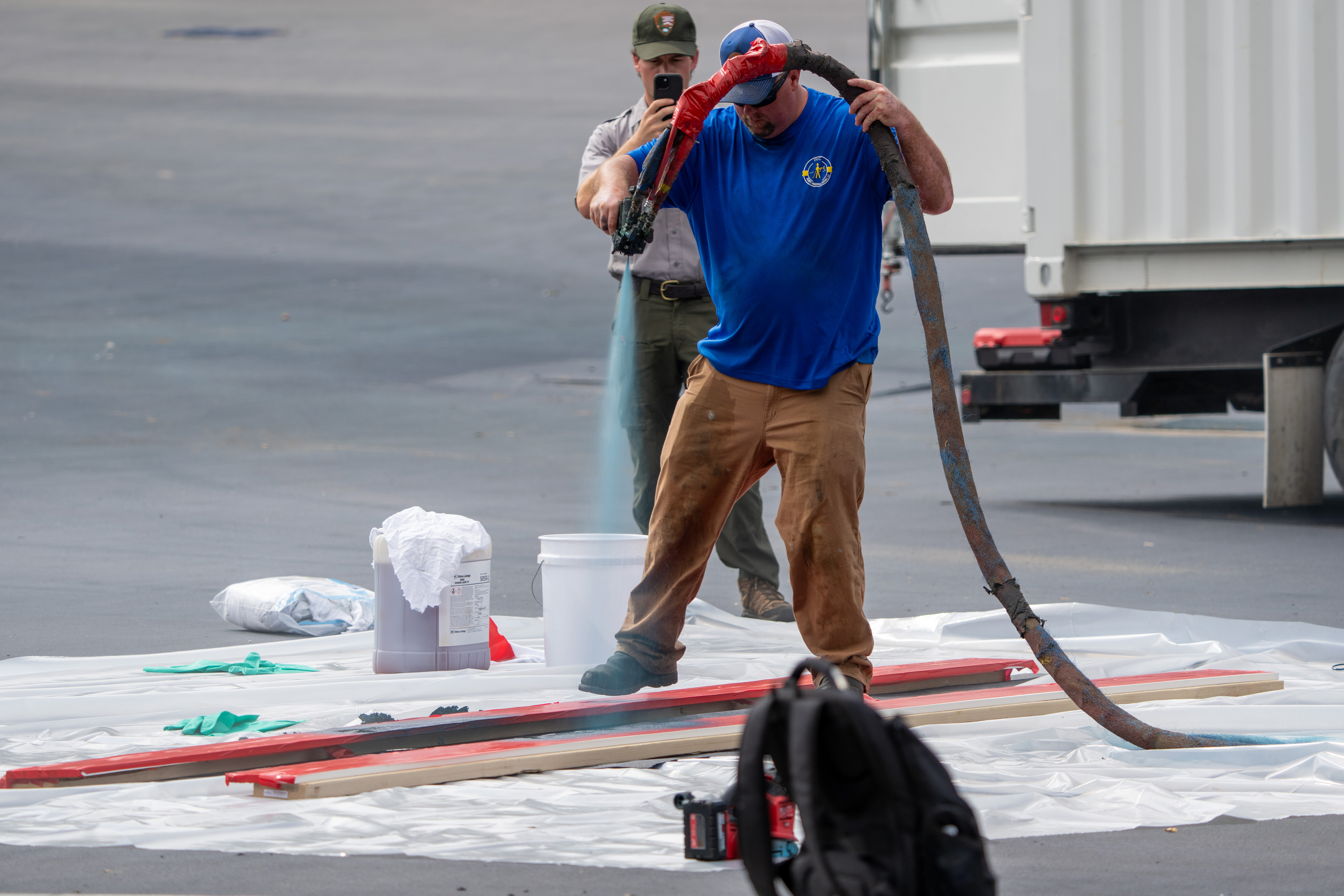
    The pool is still drained, and repairs appear to be ongoing: On Thursday, the pool was full of workers. Some were seen tearing up large strips of the blue lining, while another sprayed a new layer of coating as a man in a shirt reading “Atlantic Coating Inspection” watched.

    The documents show that, to redo the repairs, Atlantic said it would use a smaller team of workers that would be closely supervised, and that it would consult an adviser from the manufacturer of the compounds used in the liner.

    The manufacturer, Rhino Linings, did not immediately respond to a request for comment. Its CEO, Pierre Gagnon, said in a June statement that the peeling liner was “limited to isolated areas” of the pool.

    The documents also show that Atlantic did blame vandals for cuts in the caulking around the pool’s edge that National Park Service workers had previously reported to the police. But the company did not link those cuts to the peeling of the blue liner on the pool’s floor, which Trump repeatedly blamed on “sick people” wielding knives or razors.

    Federal prosecutors acted on the president’s claims on July 2, when they announced the indictment of David Hearn, a former Olympic canoeist accused of pulling up a piece of the liner, on a felony vandalism charge.

    But in a remarkable reversal a few weeks later, prosecutors sought to dismiss the charges against Hearn and three others accused of vandalizing the landmark. Jeanine Pirro, the U.S. attorney in Washington, wrote that the Interior Department had misled her staff about the extent to which the damage had stemmed from vandalism rather than a “botched installation.”

    Trump continued to blame vandals for the damage even after that, though he conceded in a social media post Aug. 9 that “there is no video or proof.”

    “There was also some contractor error done by rushing the job for a July 4th opening,” Trump said in that post. “But it was a very small area of this massive Pool, and was relatively inconsequential.”

    Trump said then that the pool would reopen “shortly.” But it remains drained a month later. The documents reviewed by the Times help explain why. They show that repairing the pool has been a challenging and involved task.

    On Aug. 13, the contractor began power-washing the pool to remove loose chunks of blue liner, according to the documents. By the end of the next day, workers had filled one large trash bag, but many more bits of liner remained stuck to the pool’s concrete slabs and would need to be removed later with razor blades, hammers, and crowbars.

    After removing the loose pieces, the documents show, Atlantic sought to reapply the blue coating, only to encounter the same problems as before: Blisters would appear under the surface, between layers of the lining. Early this month, the company concluded that the problem was the interaction between the two compounds and stopped layering the hotter one on top, the documents show.

    That reduced the blisters, the documents show. But it did not stop them completely.

    Also early this month, the contractor identified a new potential culprit: sweat. It said that a worker, wearing a protective suit under the hot Washington sun, was leaving droplets of sweat on the coating, which were then trapped when new layers were sprayed on top.

    To try to solve that problem, the documents show, the man then opened the top part of his protective suit and wrapped cloth around his head and wrists to contain the sweat. The documents reviewed by the Times do not say if that stopped the blisters.

    A National Park Service employee had notified workers Aug. 14 that Trump would be flying over the pool on Marine One that day, according to the documents. Gregory Wischer, a political appointee at the Interior Department, also visited the reflecting pool that day to personally supervise this work, the documents show.

    Wischer, a former executive at a metal processing company, originally joined the Trump administration last year to work on critical minerals policy. But he has since shifted his focus to the Reflecting Pool renovation and the president’s other pet projects in Washington.

    In March, Wischer met with David Schutzenhofer, the manager of a Trump Organization golf club in New Jersey who helped plan the pool’s renovations, according to Interior Department visitor logs. And Monday, Trump wrote on social media that Wischer had updated him on work to clean and wax statues of Italian poet Dante Alighieri and French hero Joan of Arc in a park in Northwest Washington.

    This article originally appeared in the New York Times.